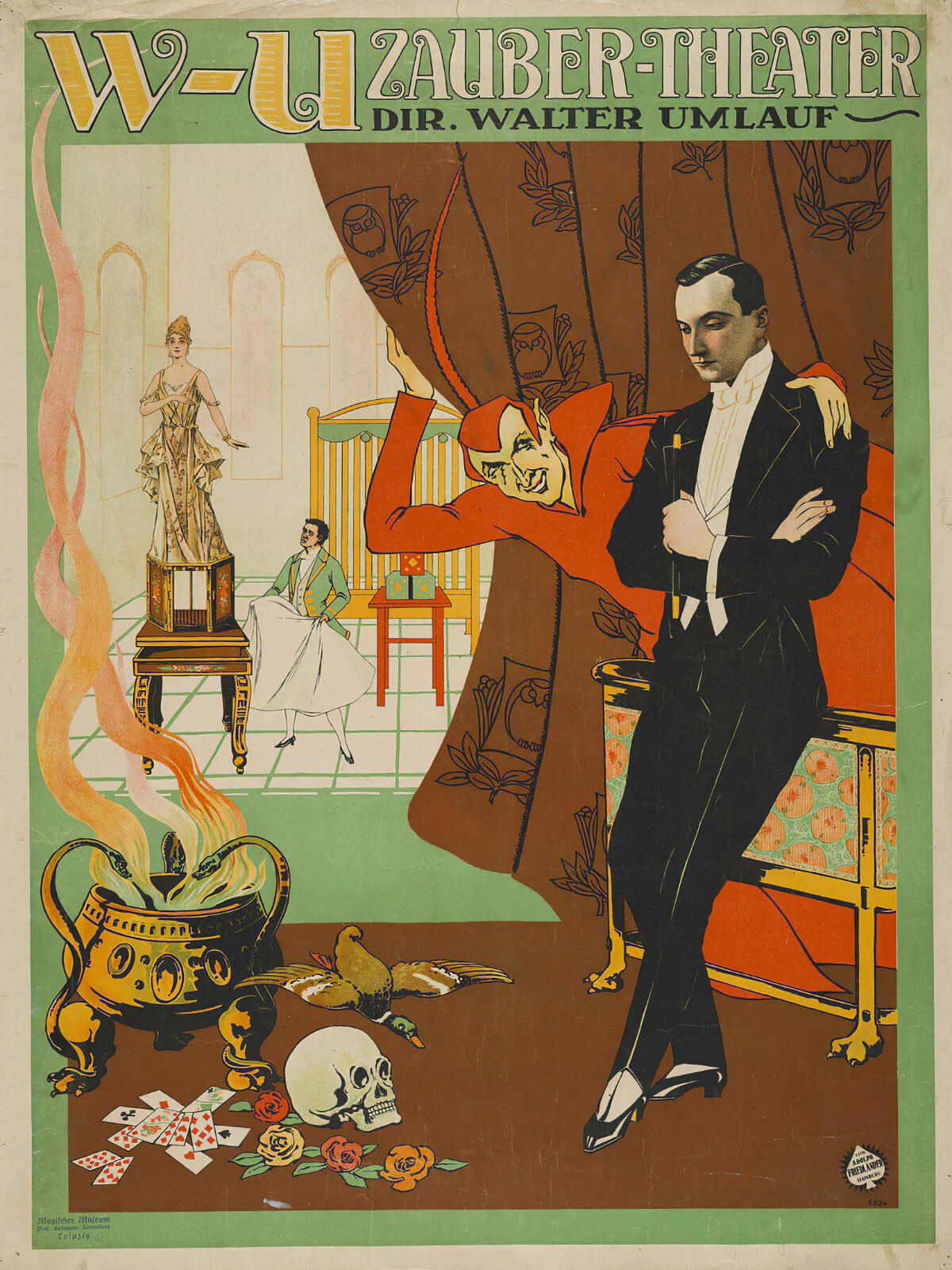

Before television, before the internet, a single printed poster had to do all the work. In the late 1800s and early 1900s, magicians relied on large, eye-catching posters to pull crowds into vaudeville theatres, carnivals, and circus tents. These weren’t simple flyers — they were bold, carefully crafted pieces of graphic art designed to create wonder before the curtain ever rose.
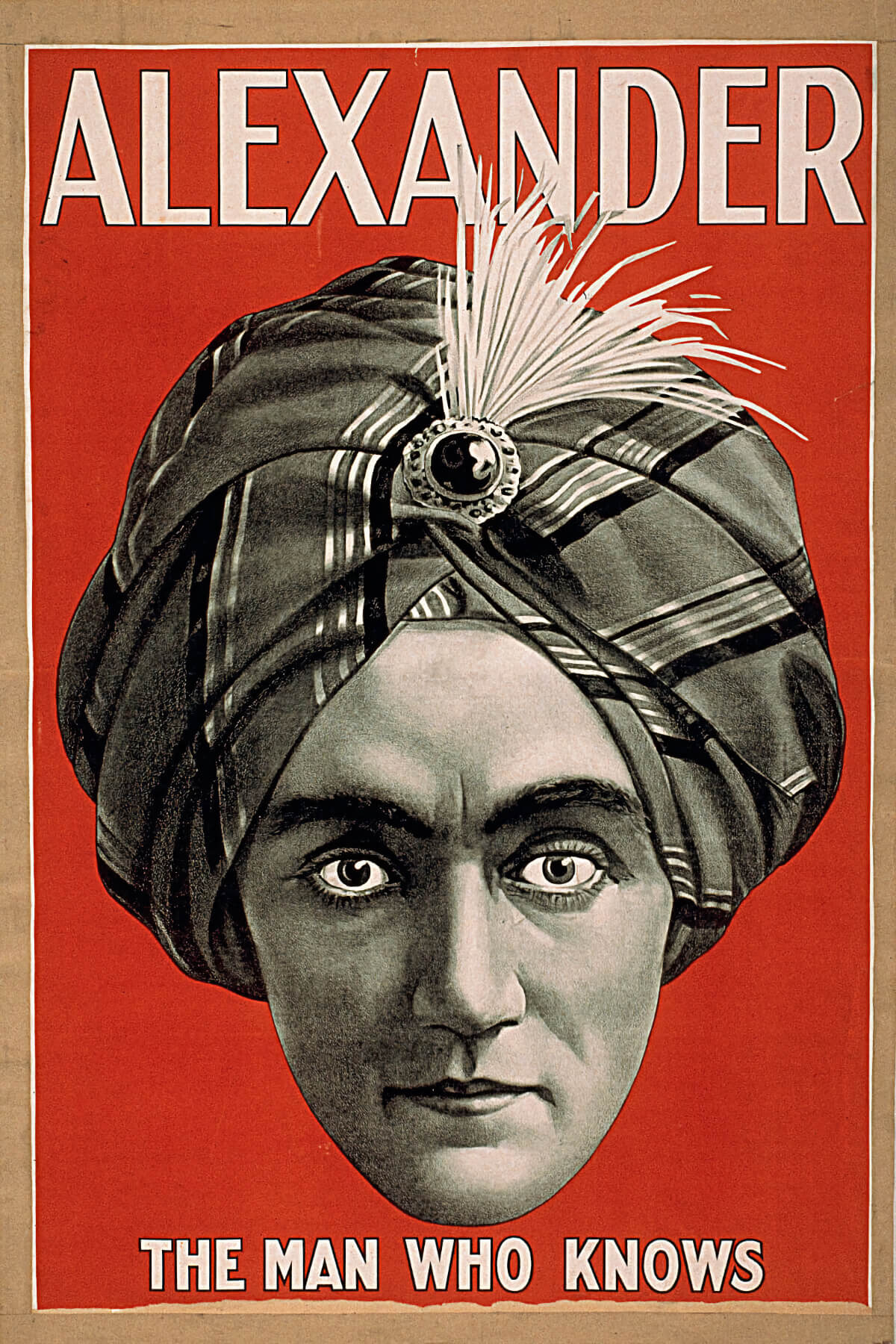
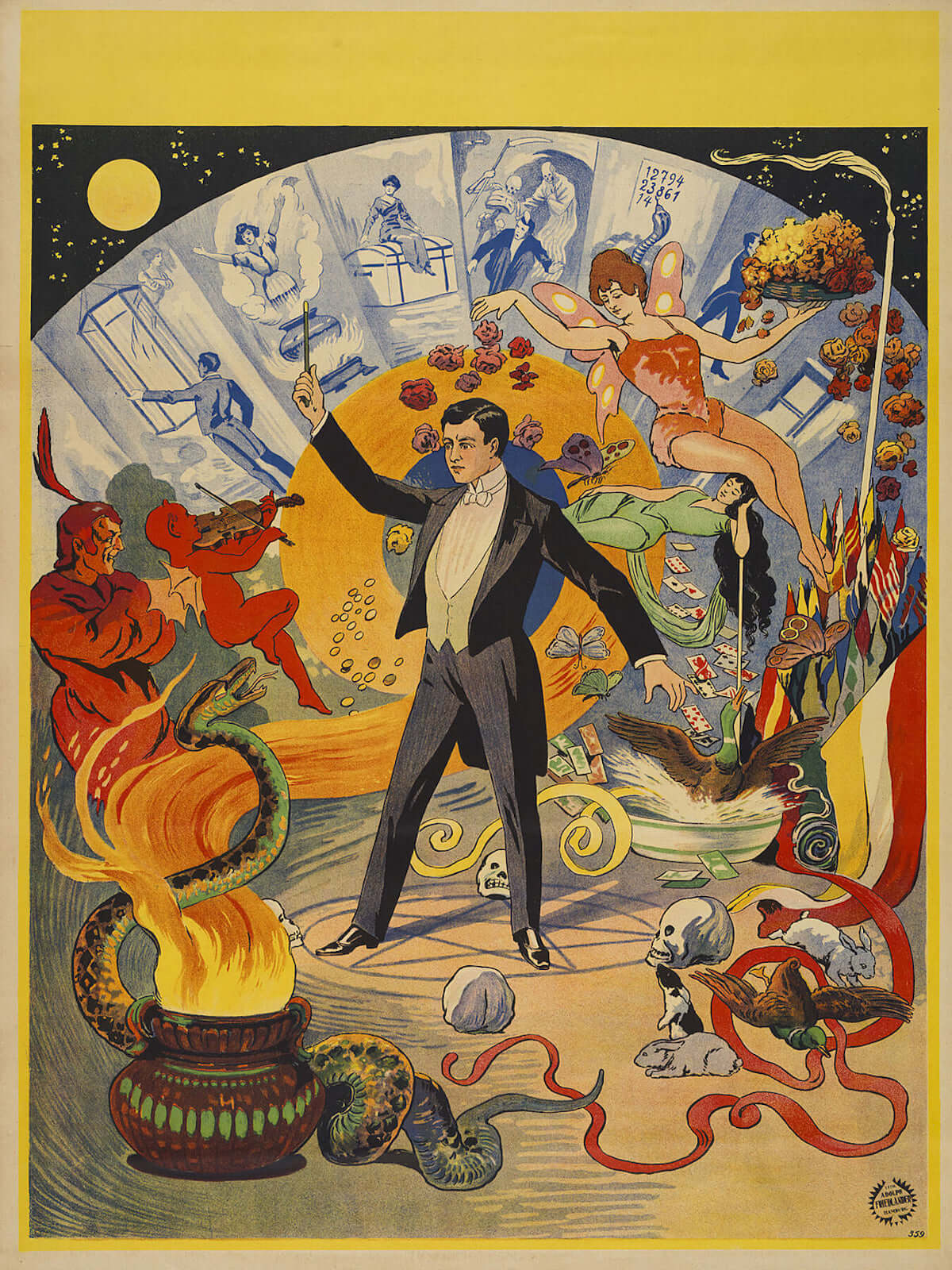
The visual style of these posters leaned heavily on Art Nouveau and Art Deco influences. Designers used rich colors, dramatic lettering, and swirling decorative elements to set a mystical tone. Stars, crescent moons, and celestial symbols appeared again and again, linking the performer to something greater than a simple stage trick. The magician was framed not just as an entertainer, but as someone who operated on the edge of the impossible.
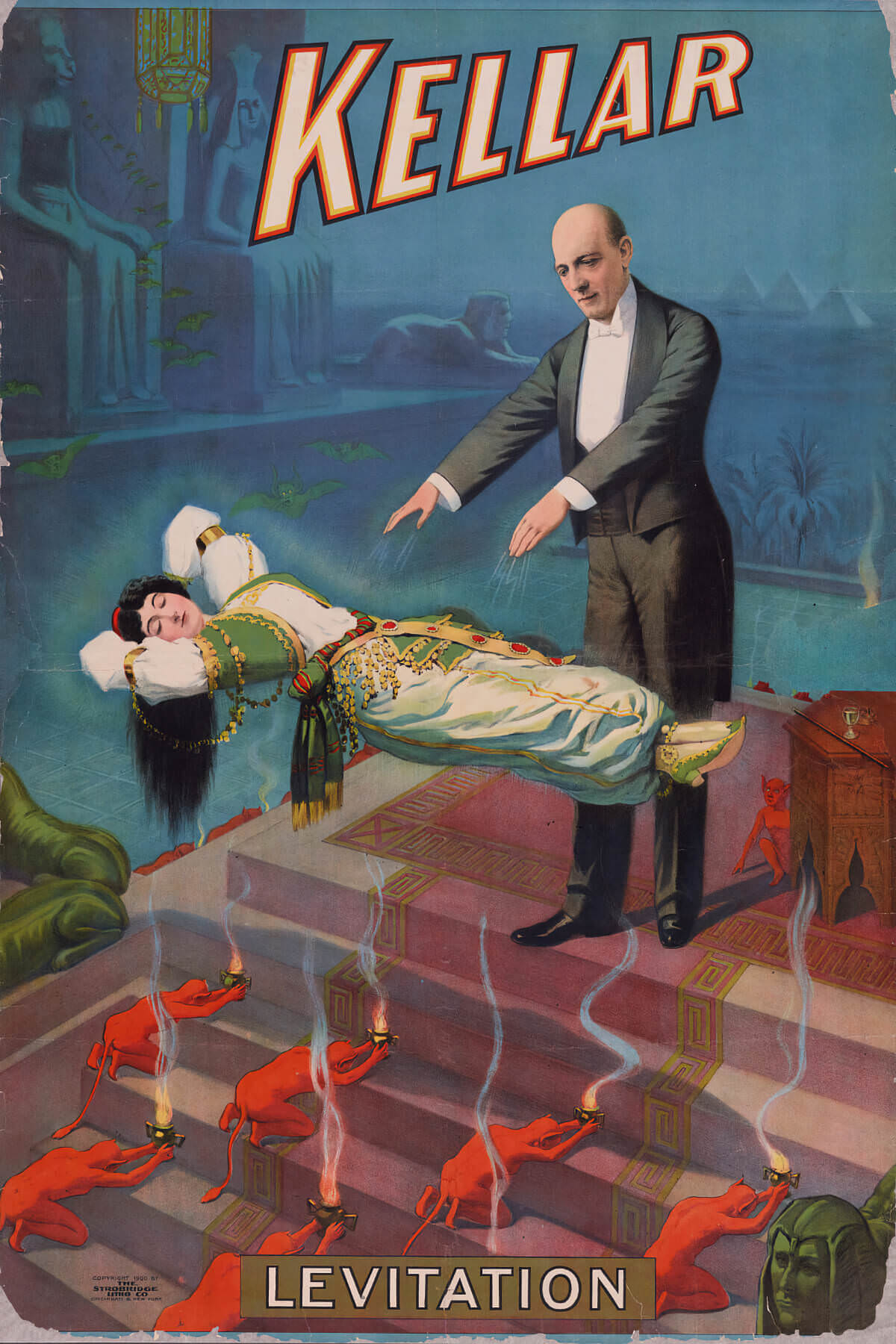
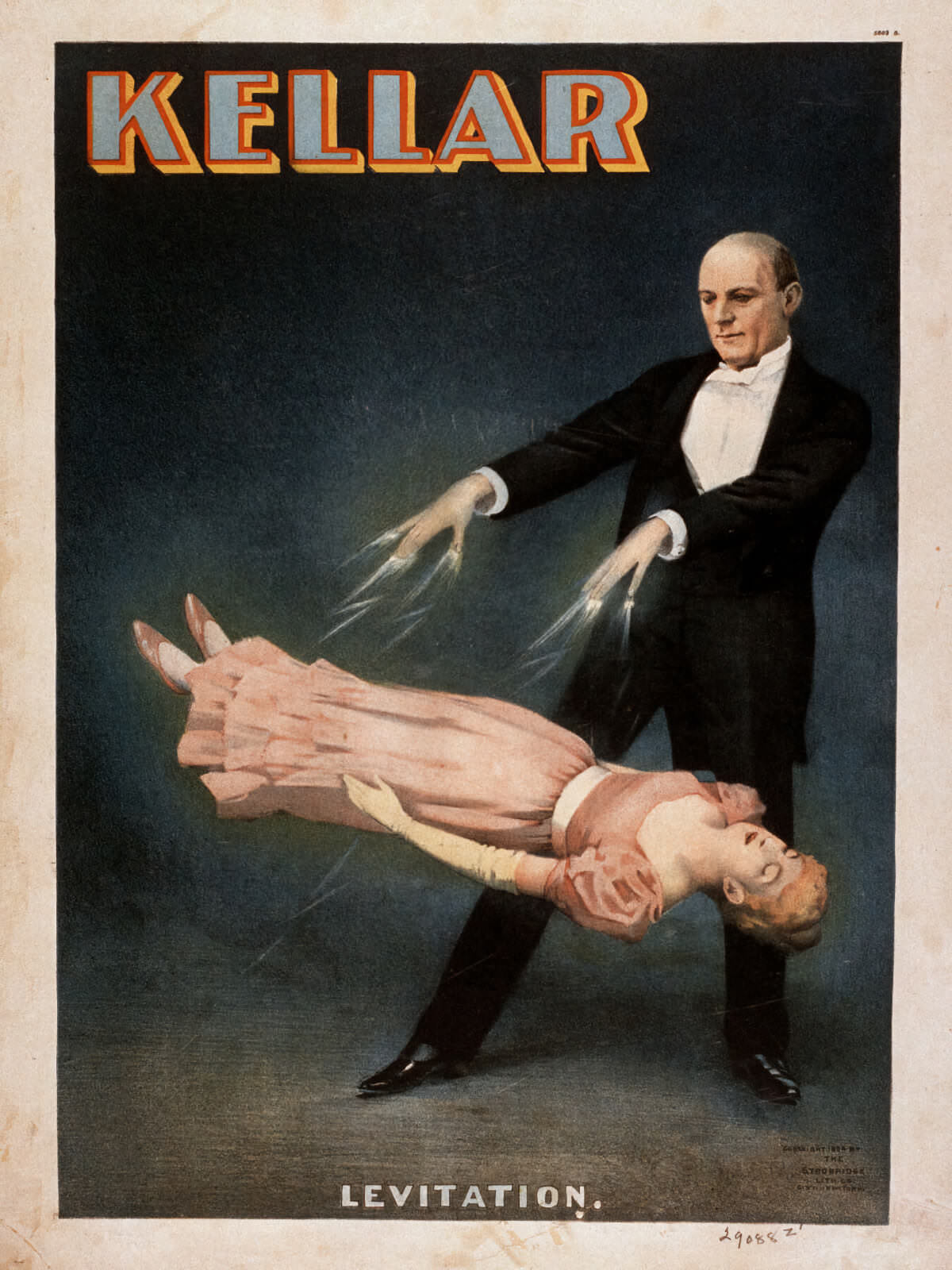
Harry Kellar was one of the biggest names in American magic, and his posters reflected that status. His levitation act was a headline attraction, and lithograph printers brought it to life in vivid detail to advertise his shows.
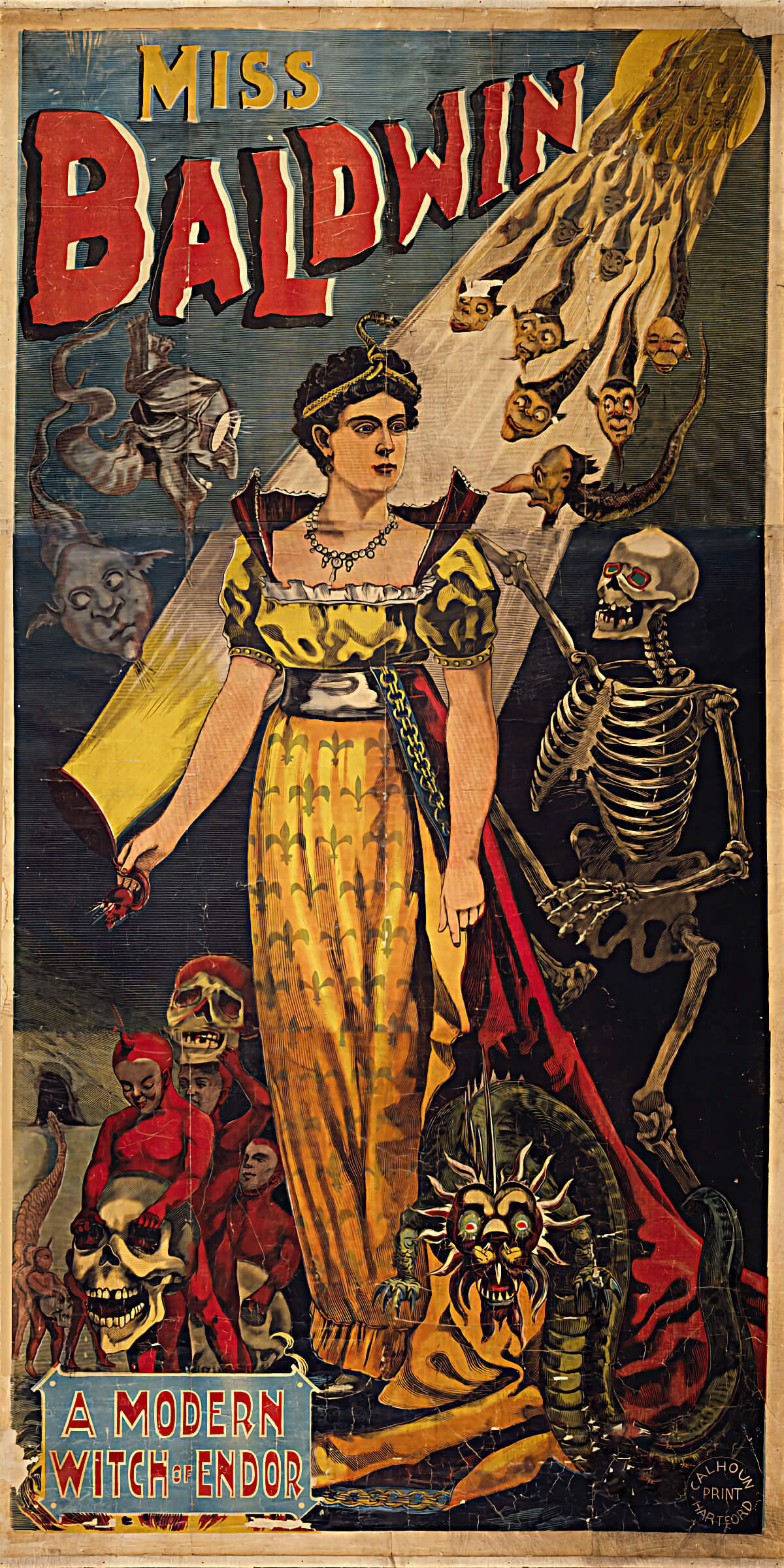
Women performers also had a strong presence in magic marketing. Miss Baldwin’s 1870 poster cast her as a “Modern Witch of Endor,” leaning into supernatural imagery that was meant to unsettle and intrigue audiences in equal measure.
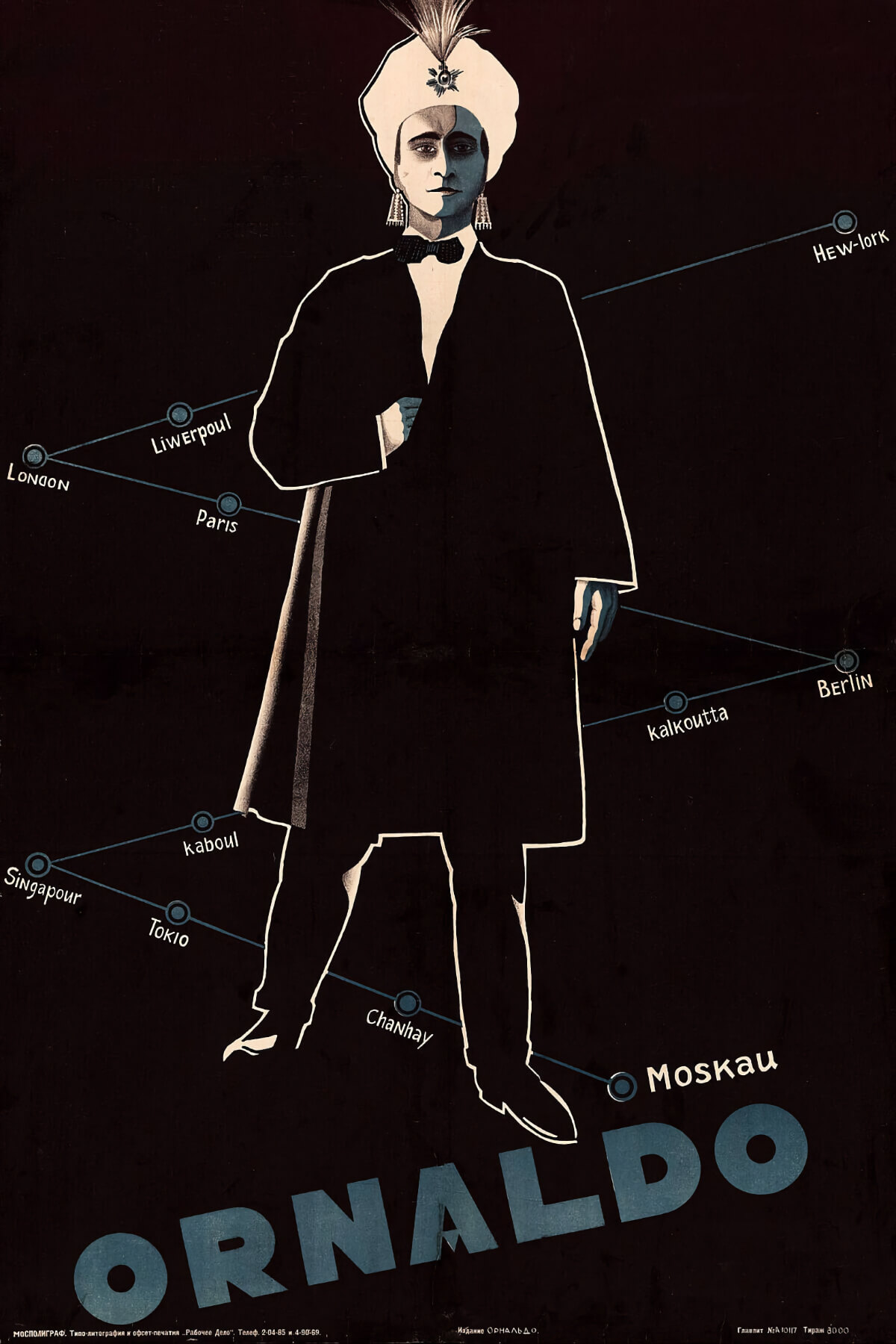
Touring magicians depended on posters more than anyone. As they moved from town to town, advance teams would plaster local venues and storefronts with their promotional art days before the show arrived. The poster was the first impression — and often the only one.
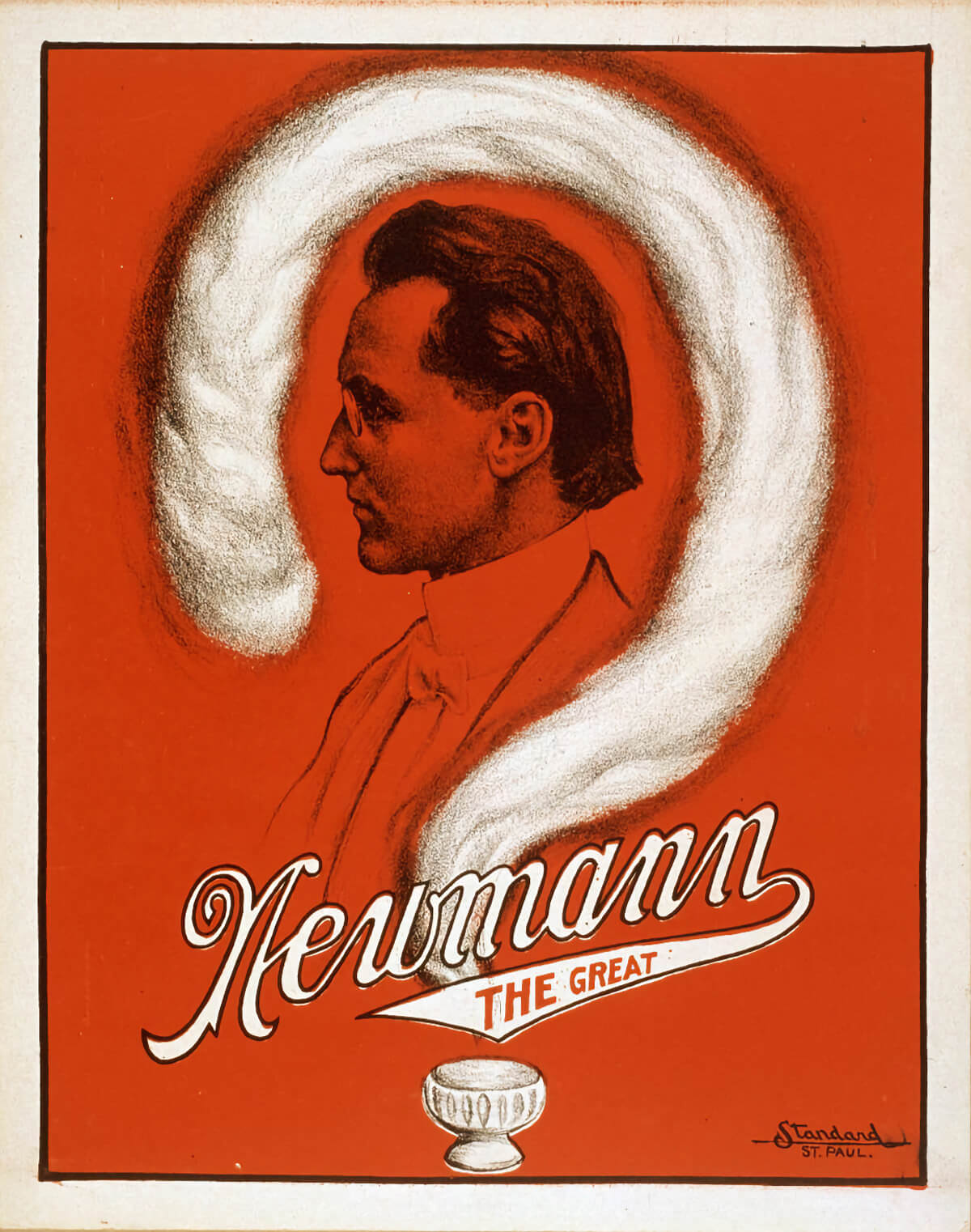
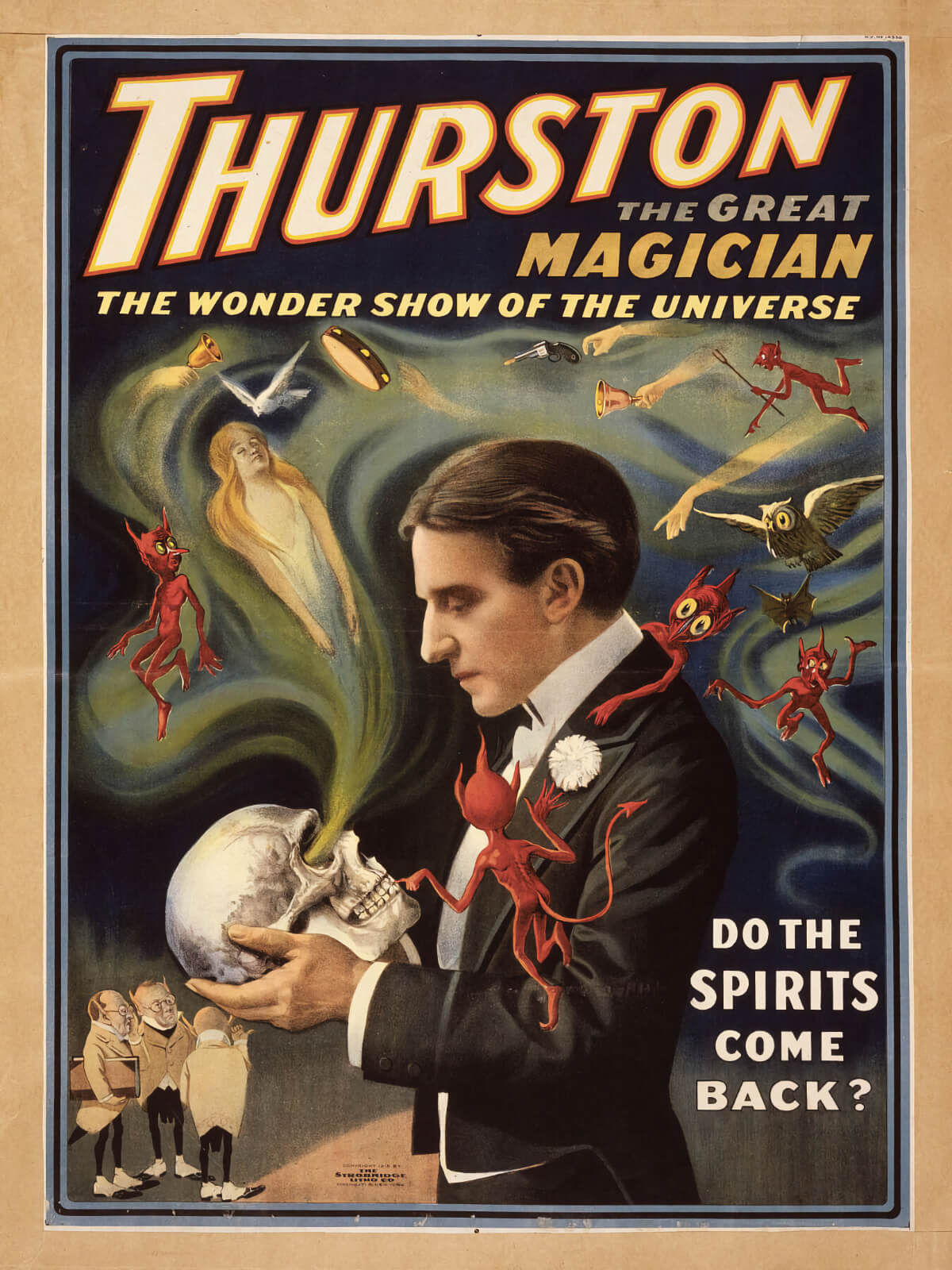
Howard Thurston was among the most famous magicians of his era, and his promotional materials matched his ambition. His 1914 poster billed his act as “the Wonder Show of the Universe” — a claim bold enough to fill any seat in the house.
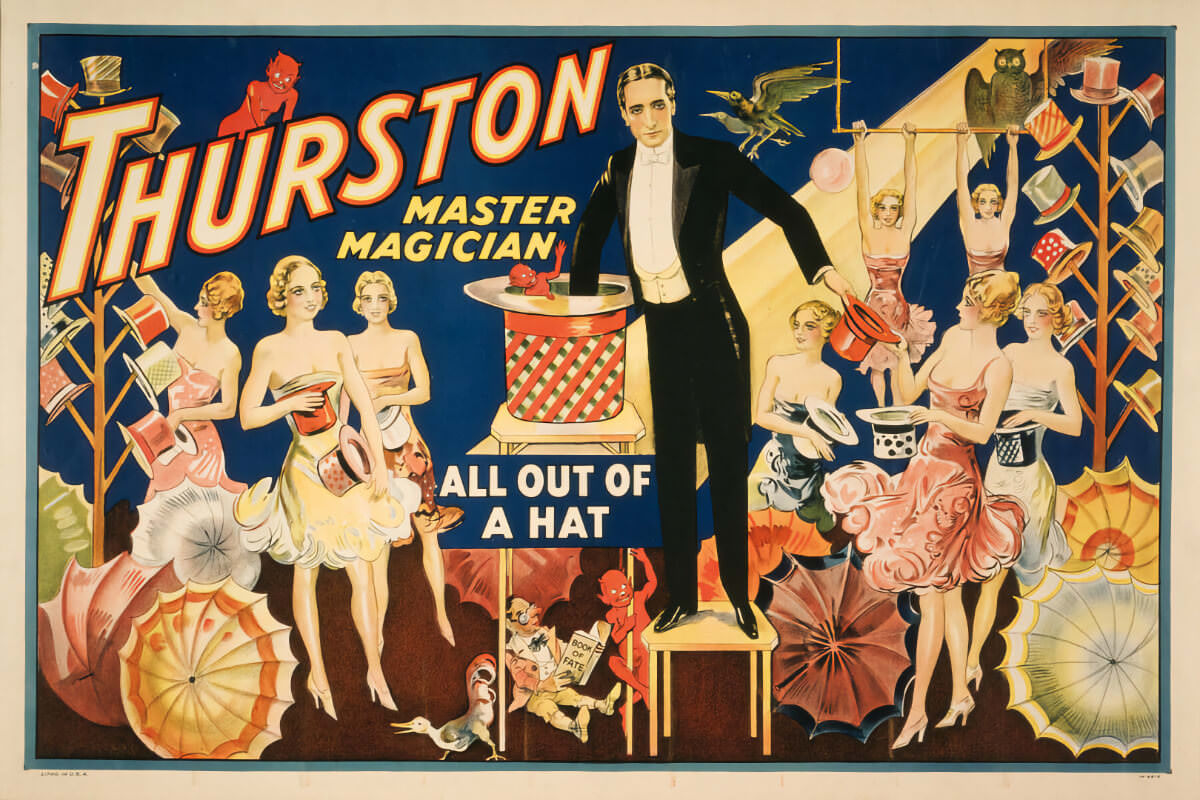
Lithography firms like Adolph Friedländer’s Hamburg-based printing house became closely tied to the magic world, producing some of the most recognizable posters of the period. Their work appeared across Europe and was exported internationally, giving acts a polished, professional look that smaller local printers couldn’t match.
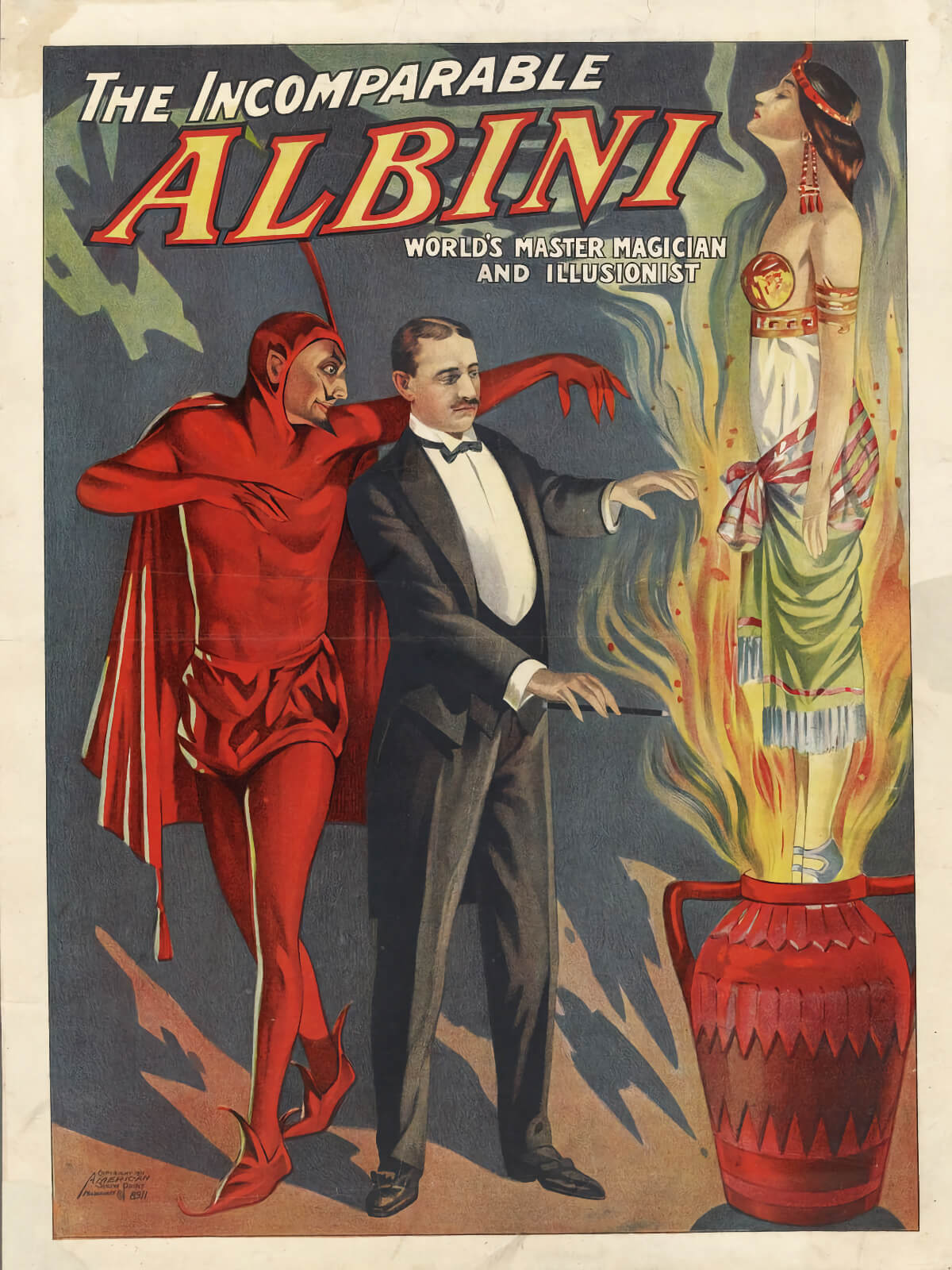
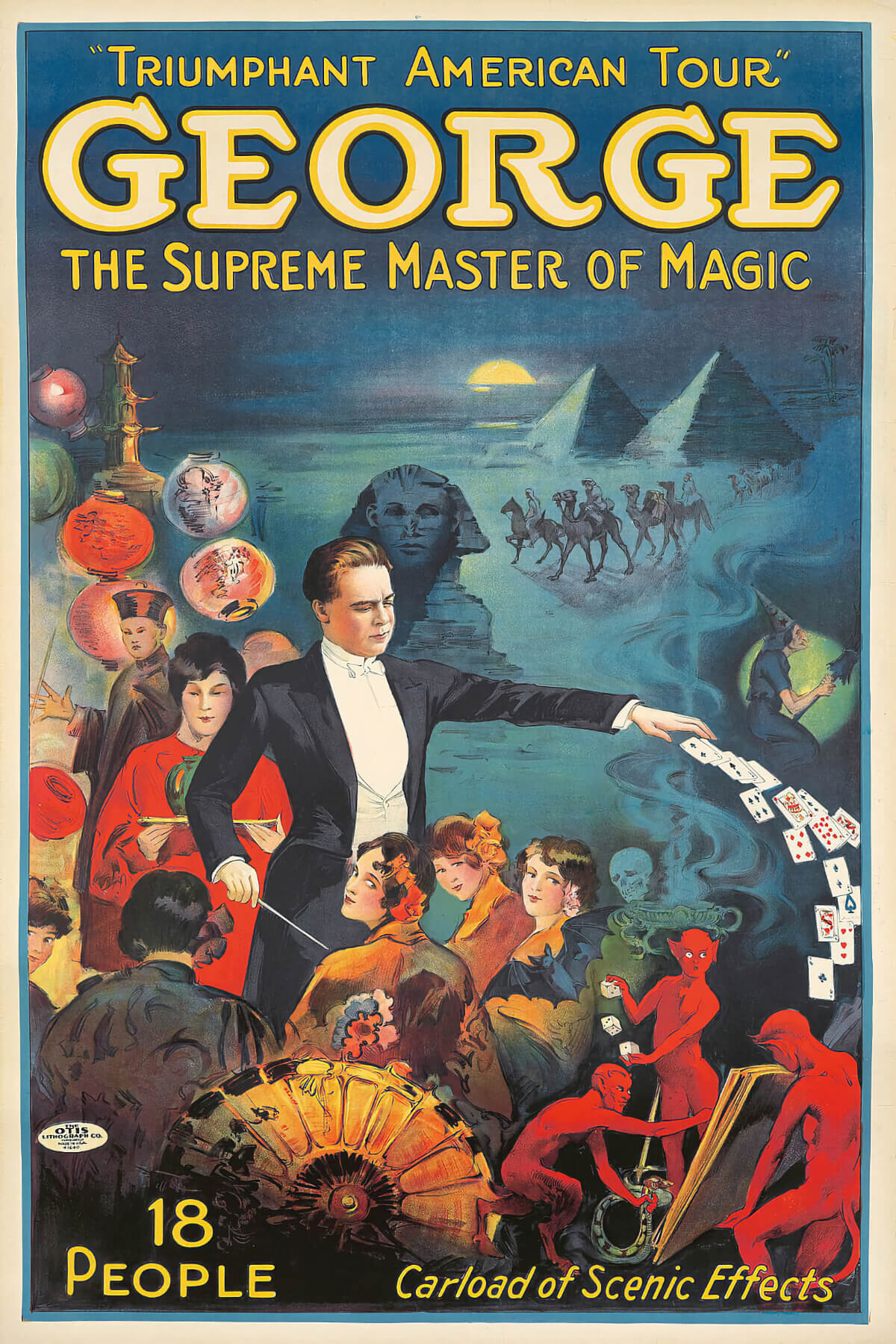
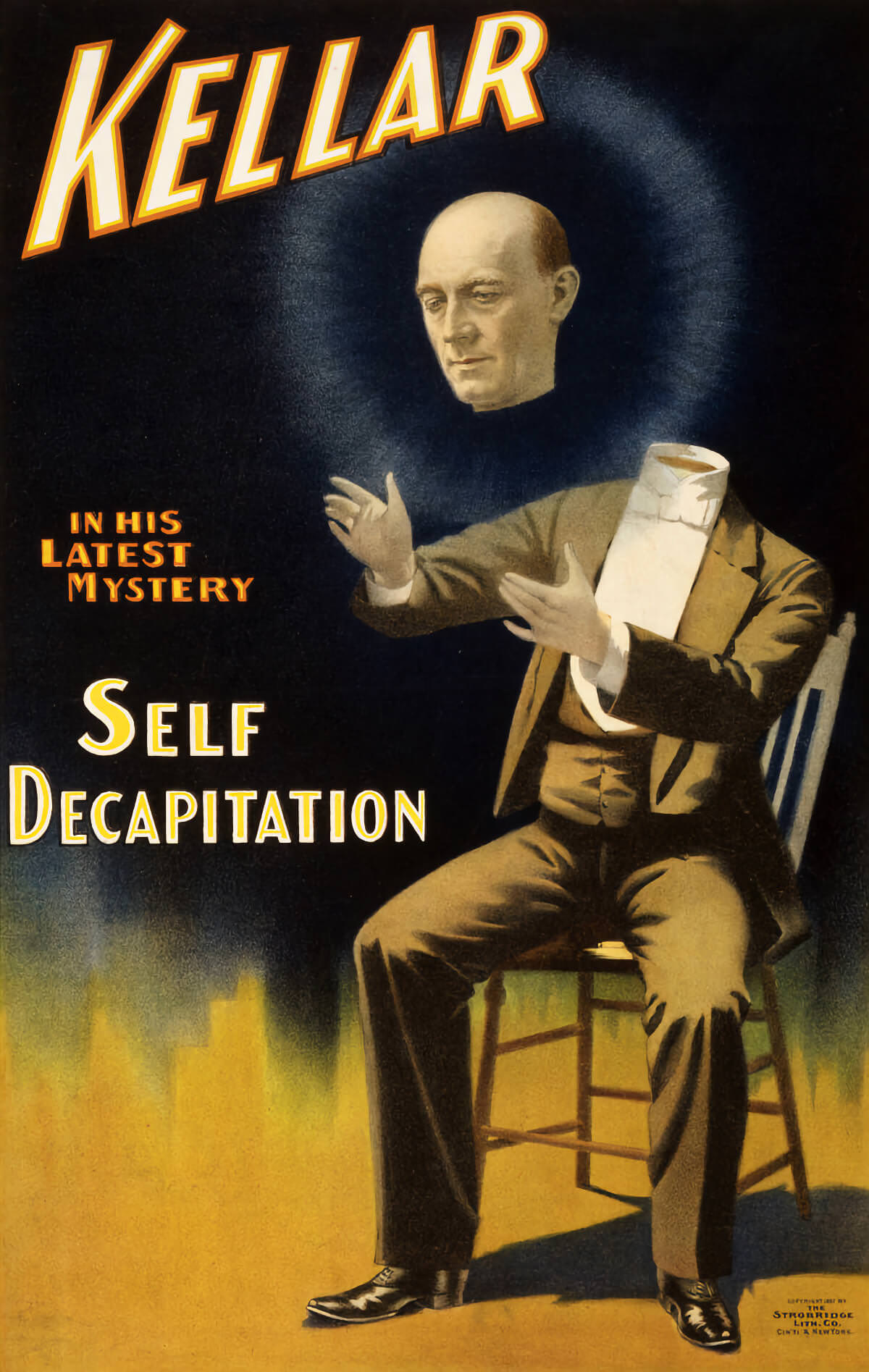
Some posters promoted specific illusions rather than just the performer’s name. Kellar’s 1897 self-decapitation poster is a striking example — the image was designed to shock passersby into buying a ticket to see how it was done.
Today, these posters are collected as artifacts of both entertainment history and graphic design. Several have sold at auction for thousands of dollars. They document a specific moment when the printed image was the most powerful advertising tool a performer had — and the magicians of the era used it to full effect.