
Fort Worth in the 1950s was a city caught between two identities — a cattle town with deep Western roots and a fast-growing industrial center pushing toward a modern future. After years of depression and wartime sacrifice, the city entered the decade with real economic momentum. New jobs, new neighborhoods, and new ways of living were reshaping what it meant to call Fort Worth home.
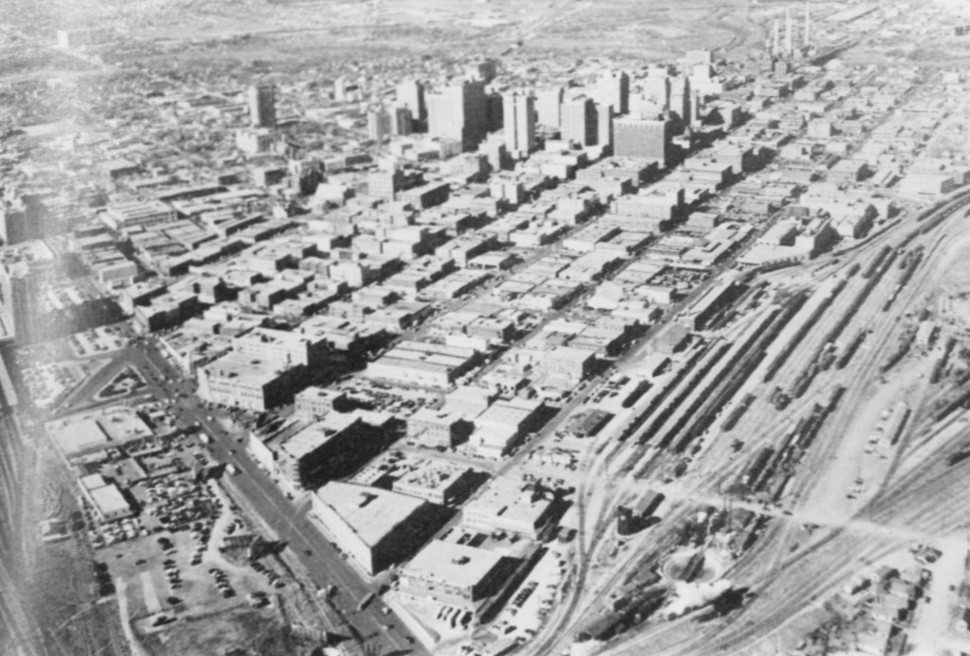
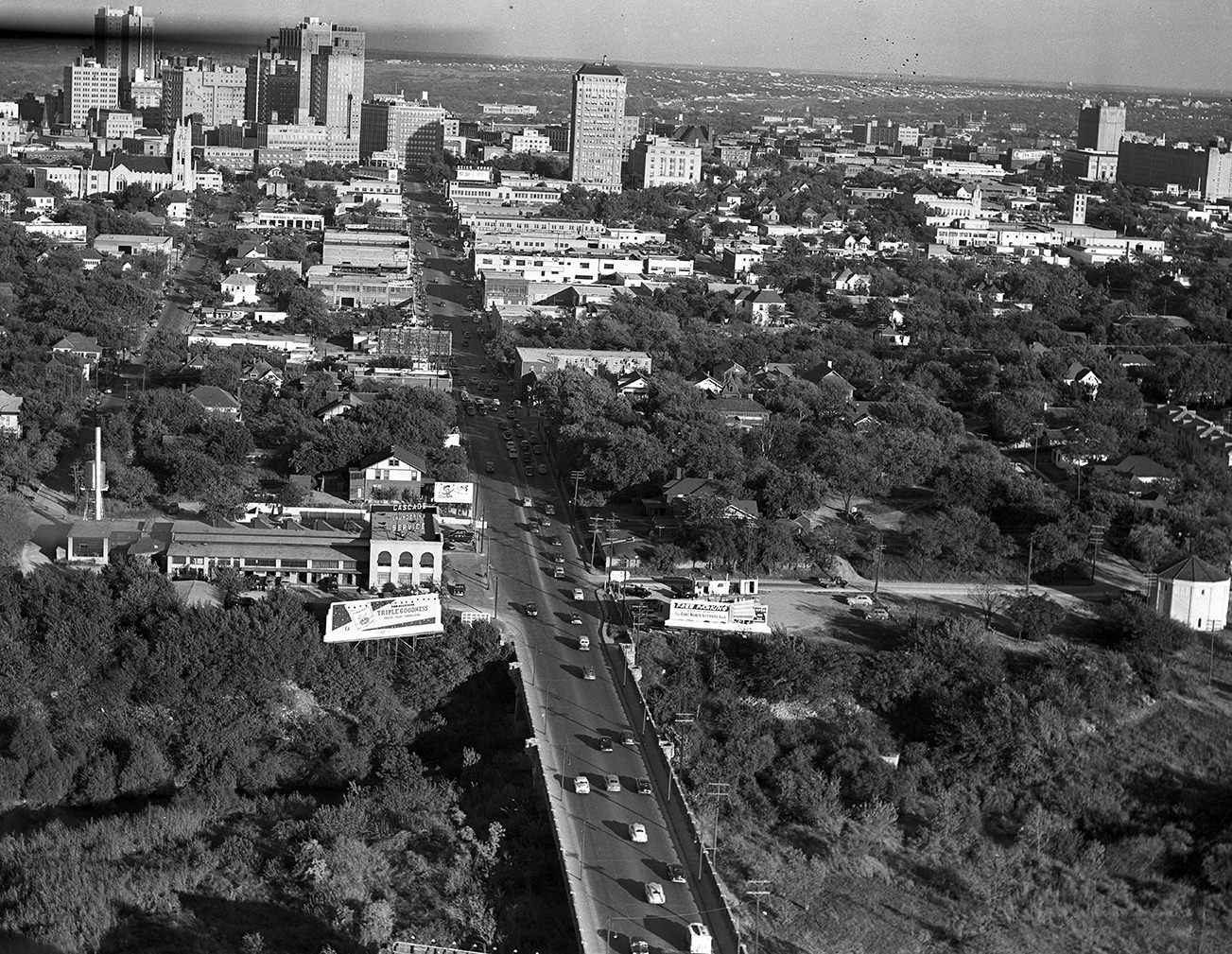
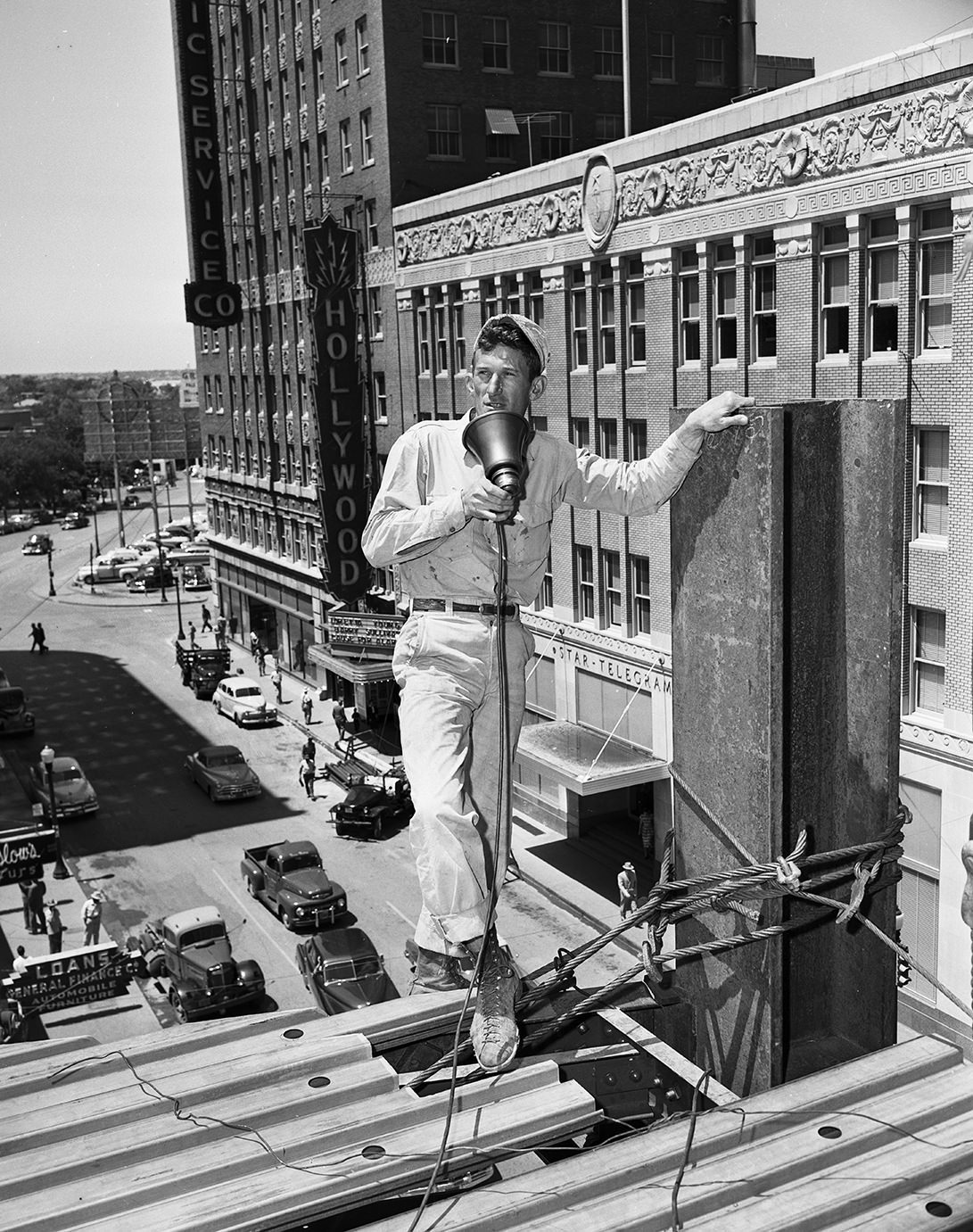
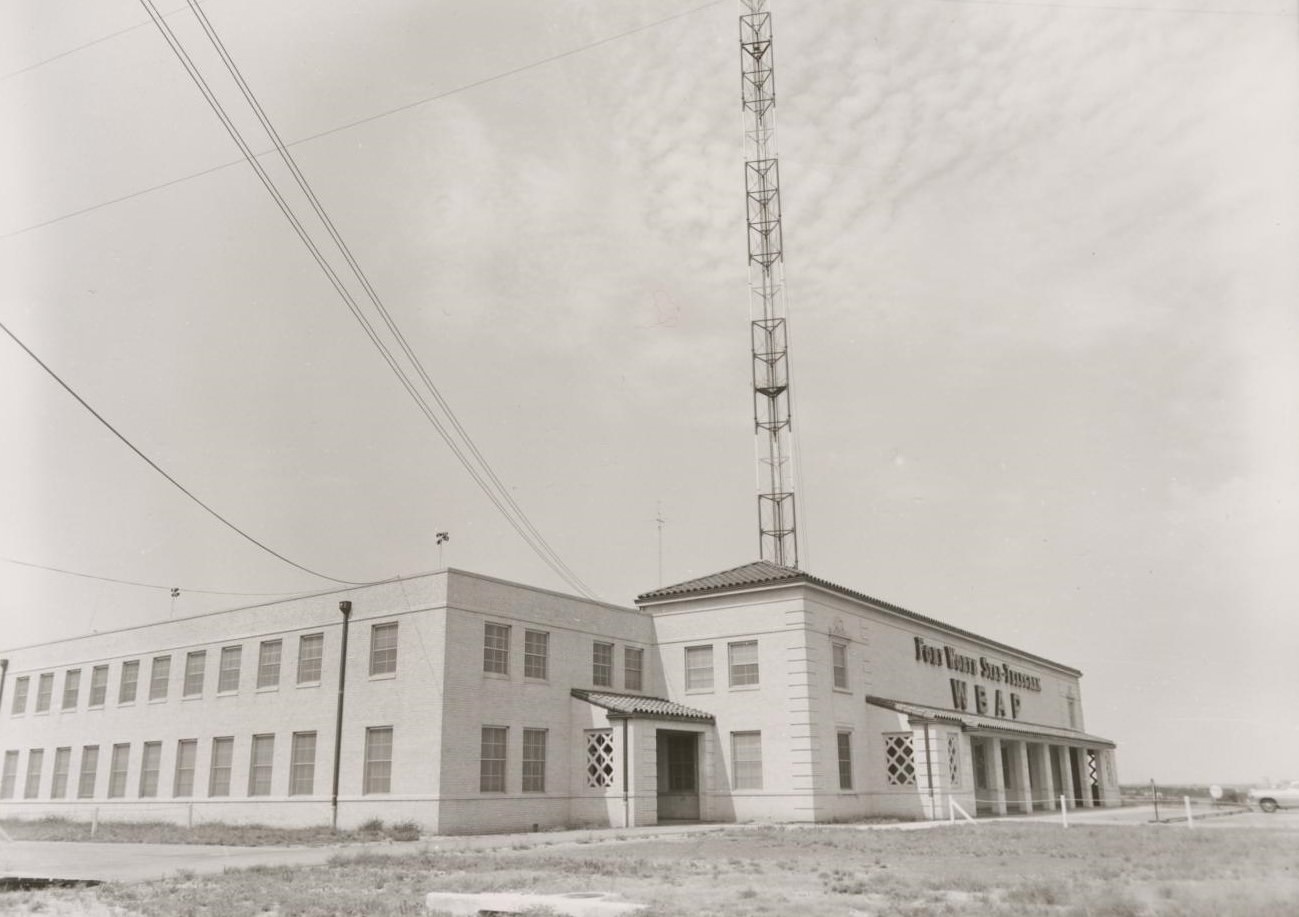
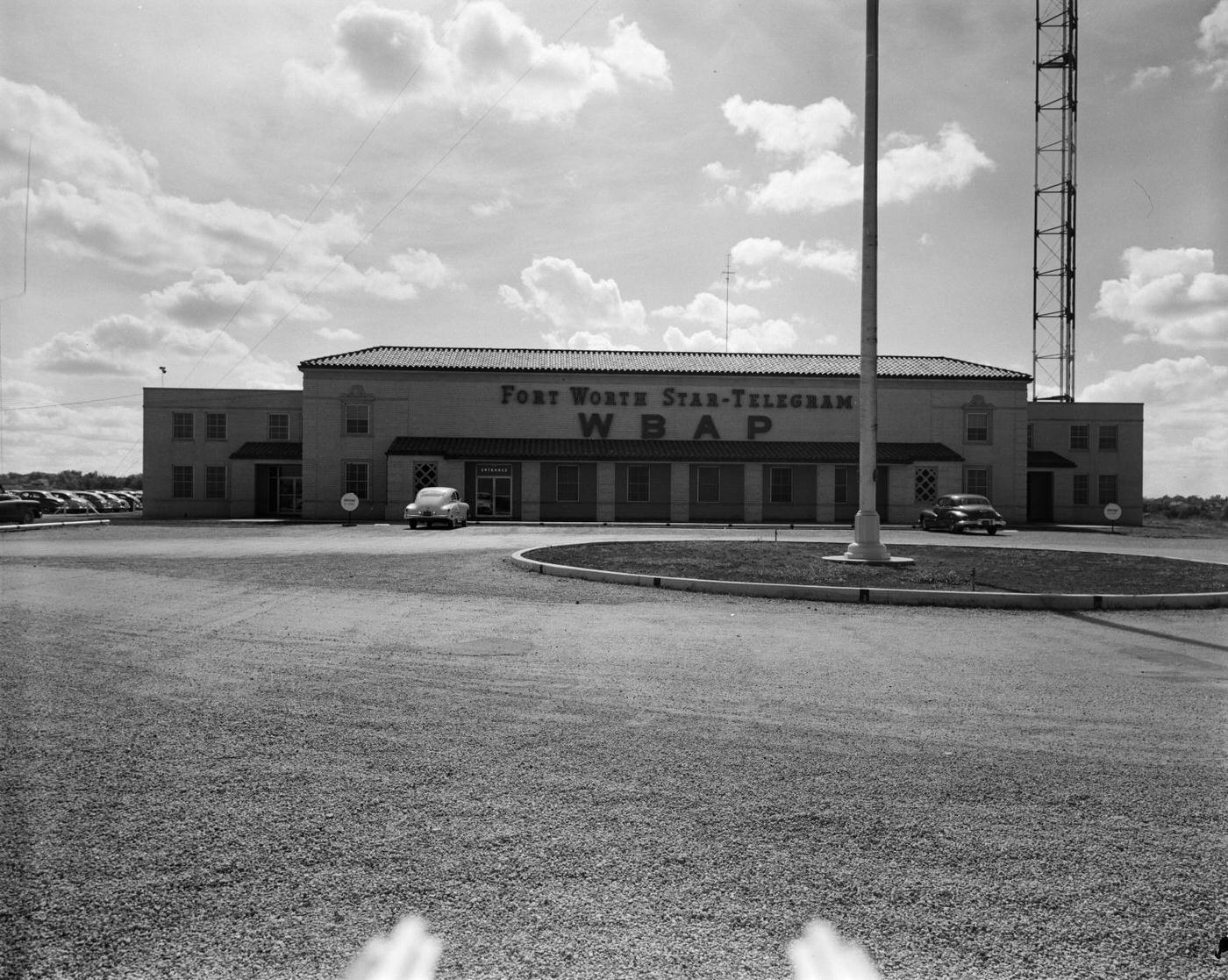
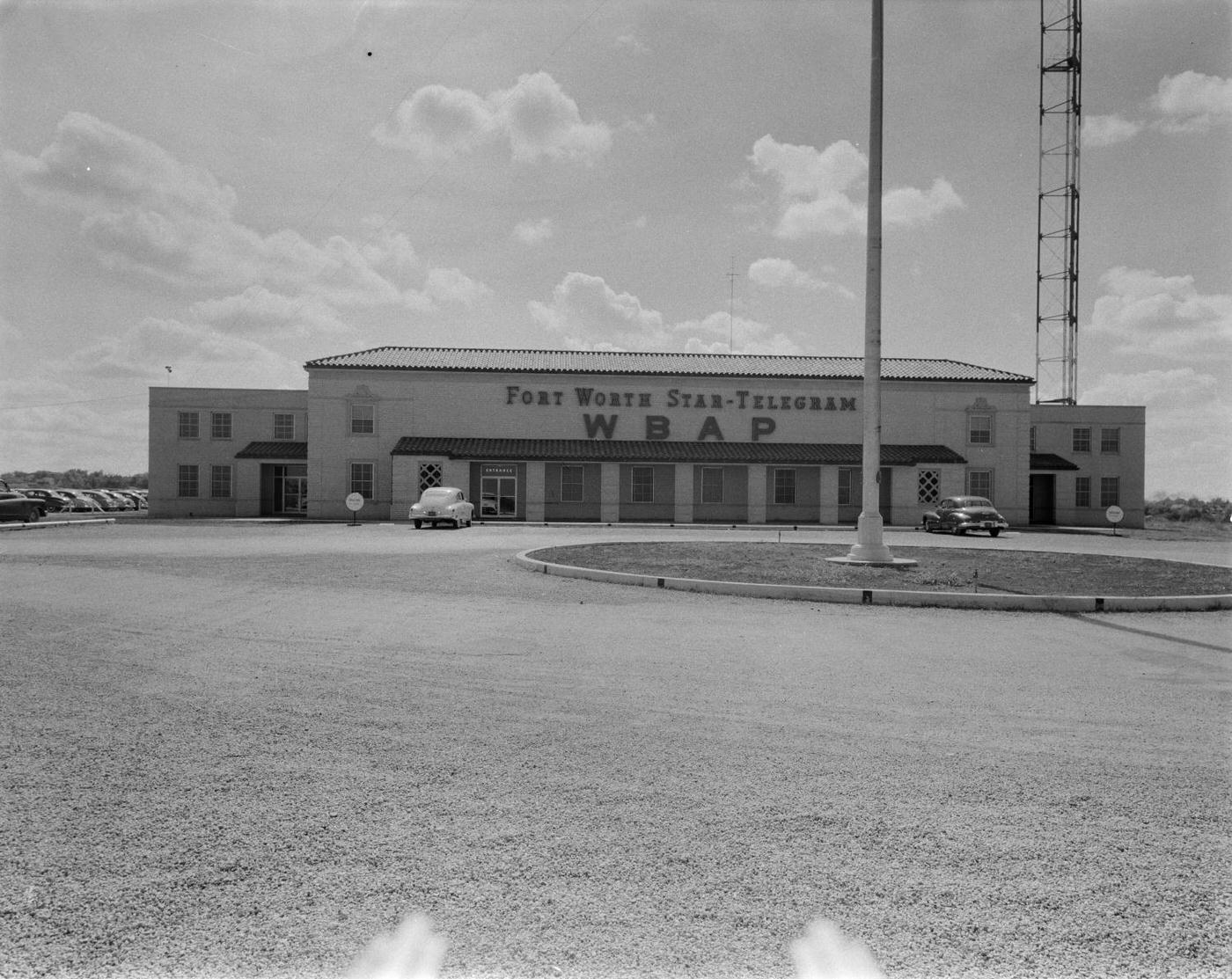
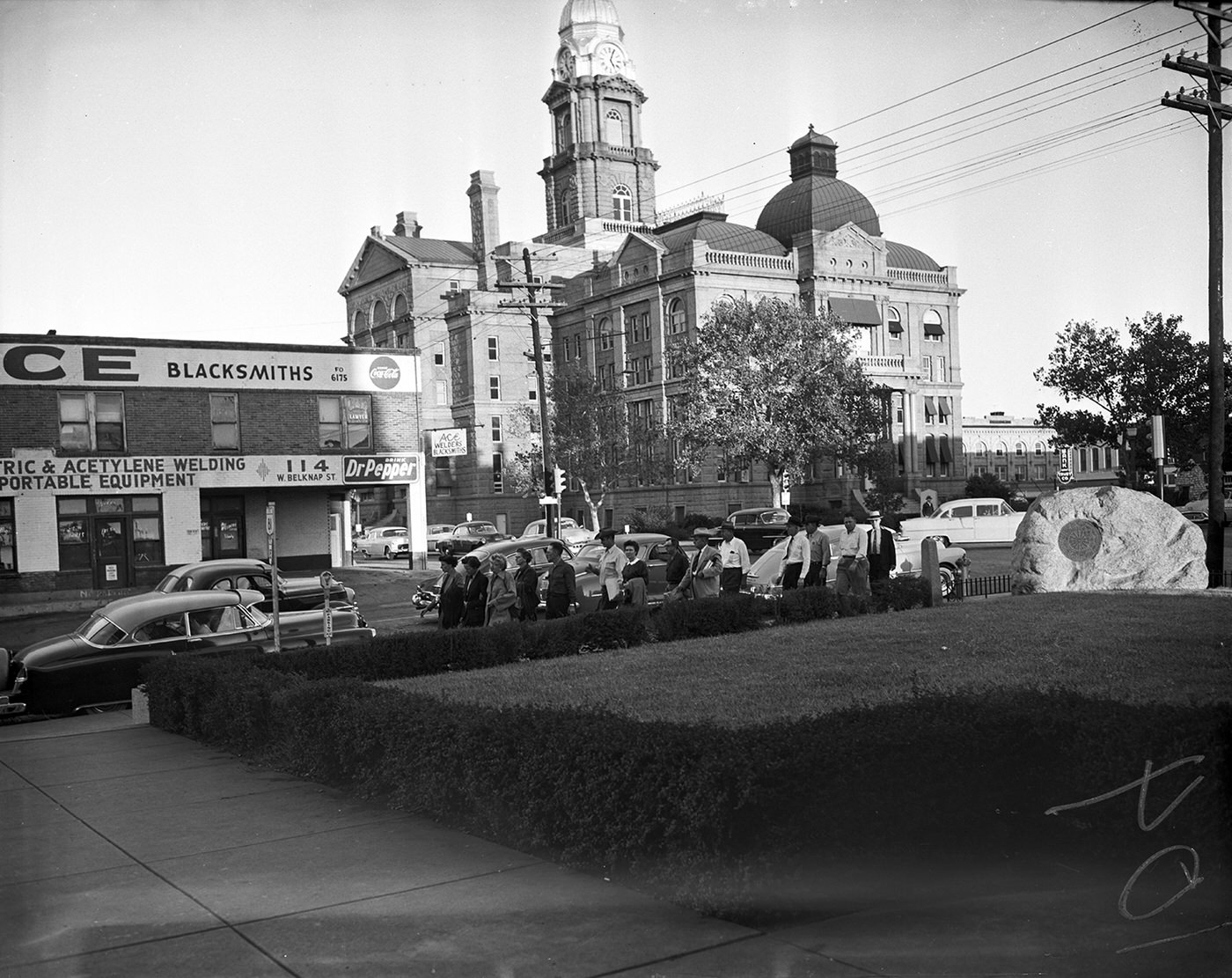
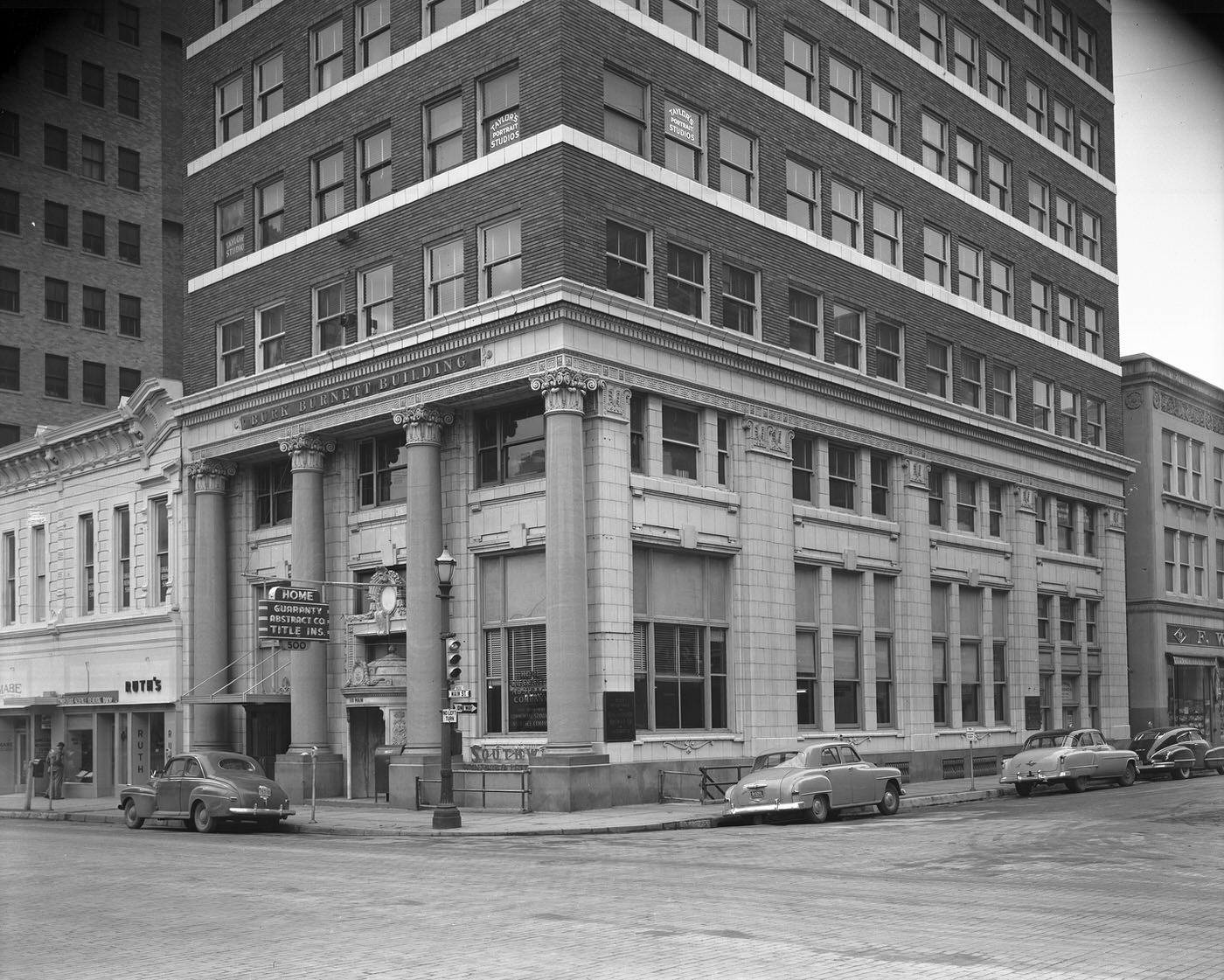
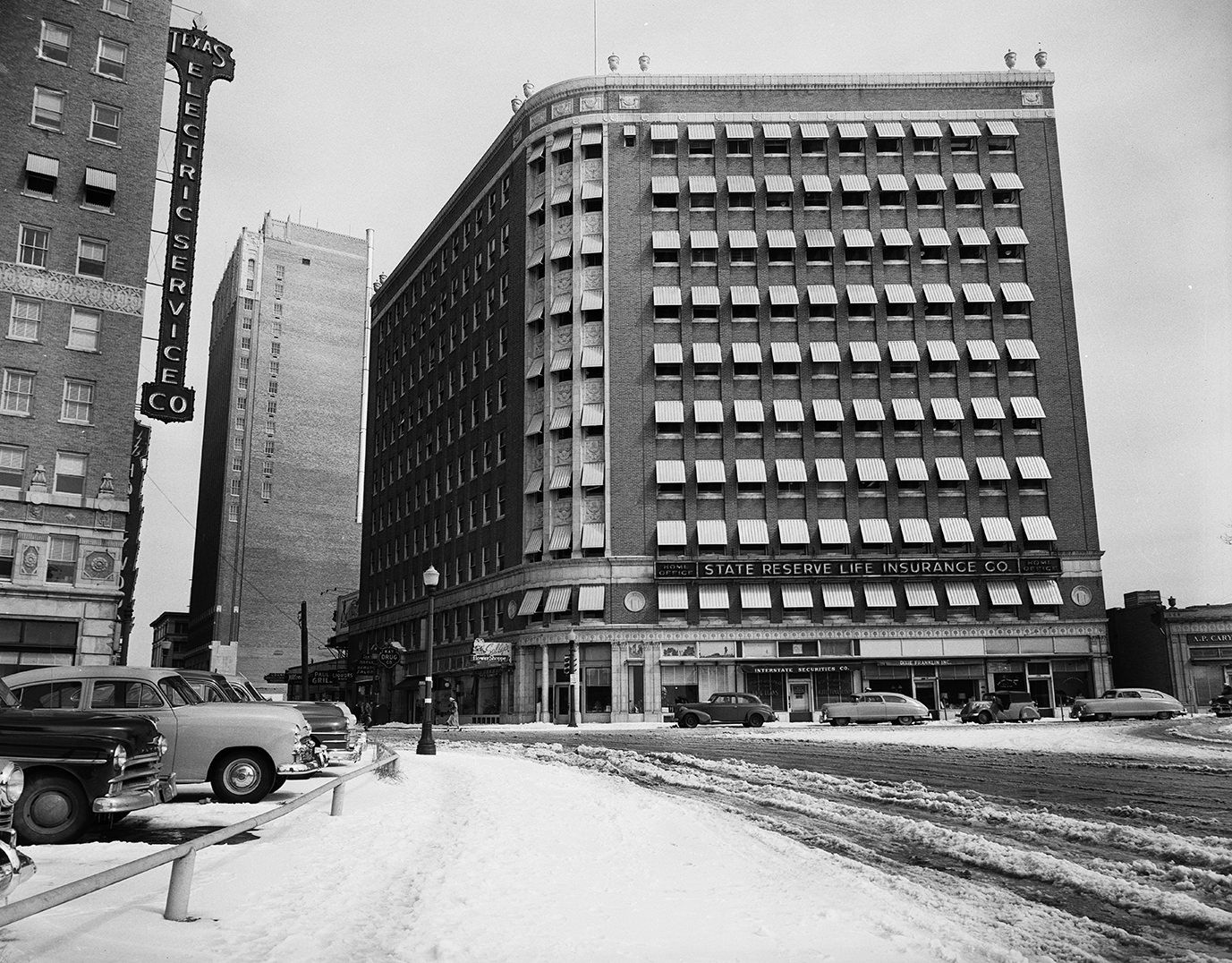
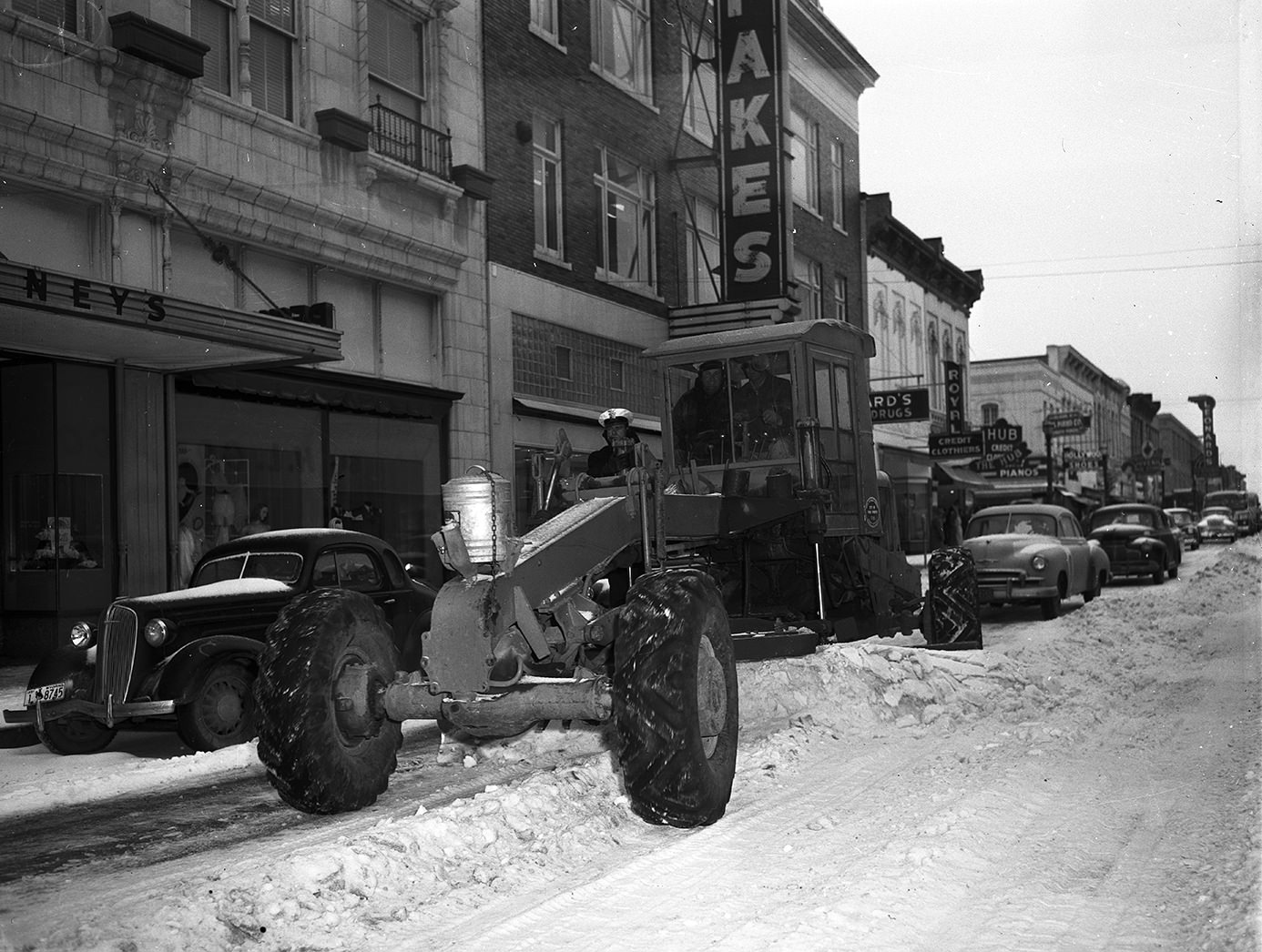
Downtown Fort Worth remained the city’s commercial heart at the start of the decade. Tall office buildings lined the streets alongside department stores, movie theaters, and busy lunch counters. Workers filled the sidewalks on weekdays, and shoppers packed the stores on weekends. The Star-Telegram, Fort Worth’s major newspaper, kept its operations in a prominent building that anchored the city’s media presence.
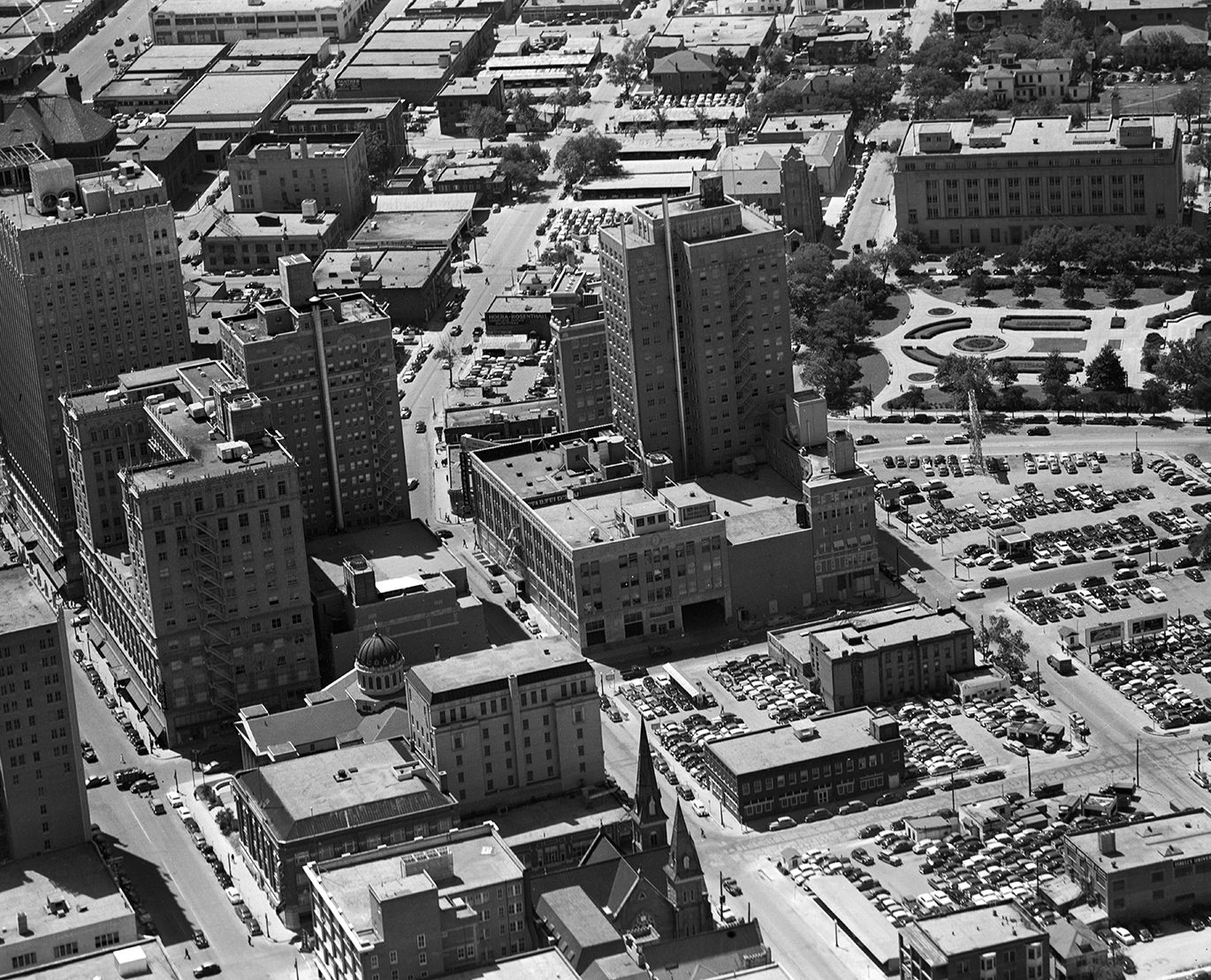
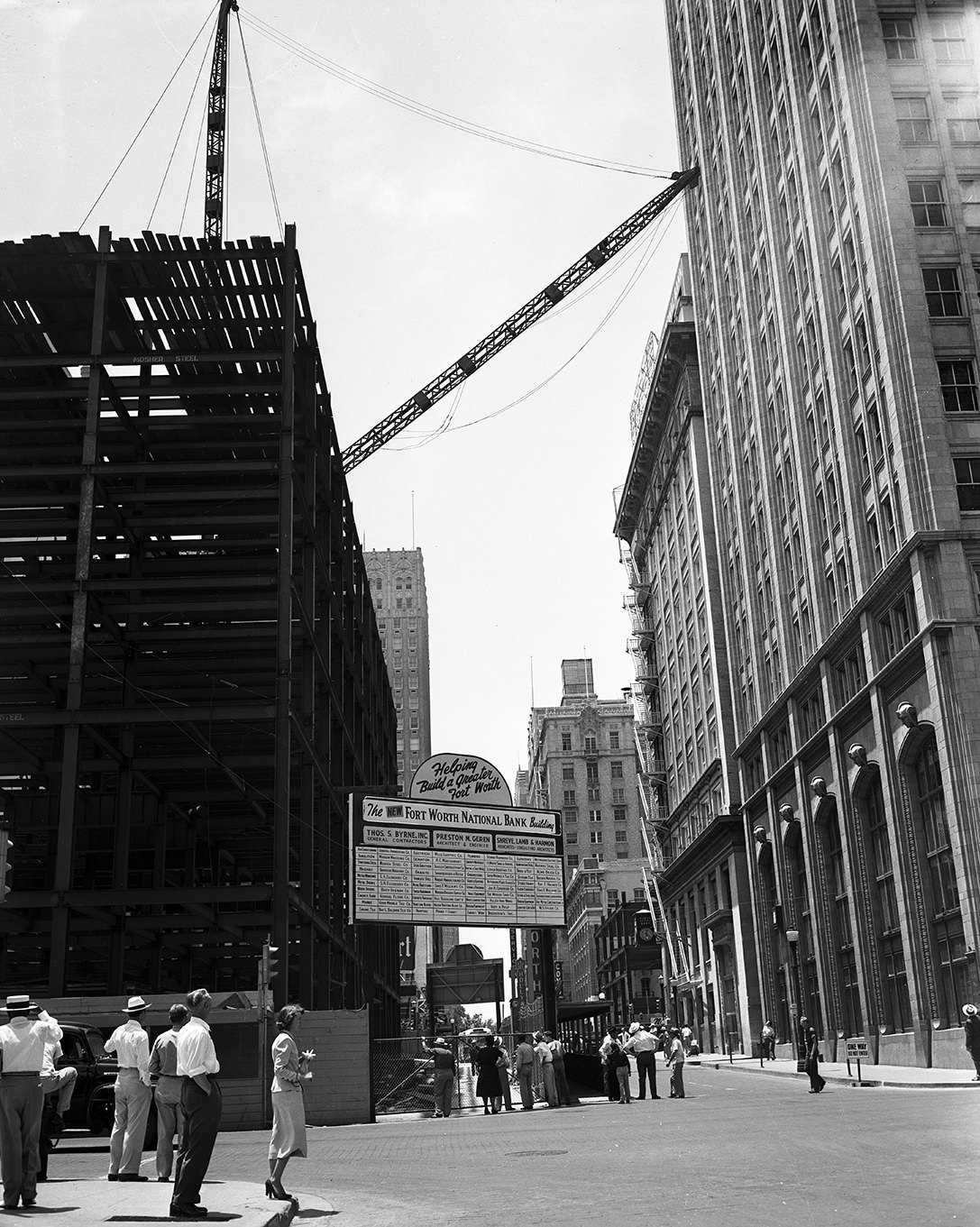
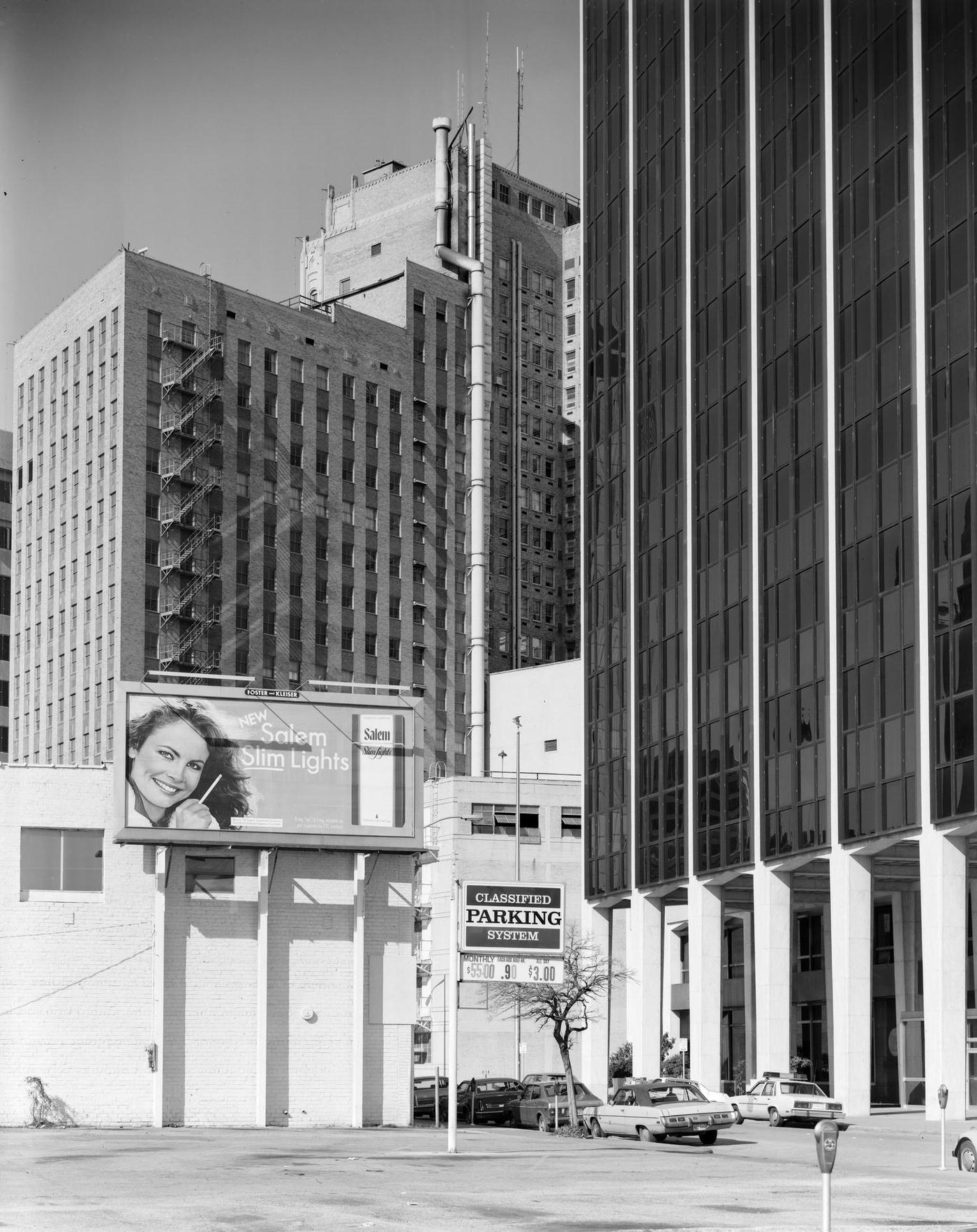
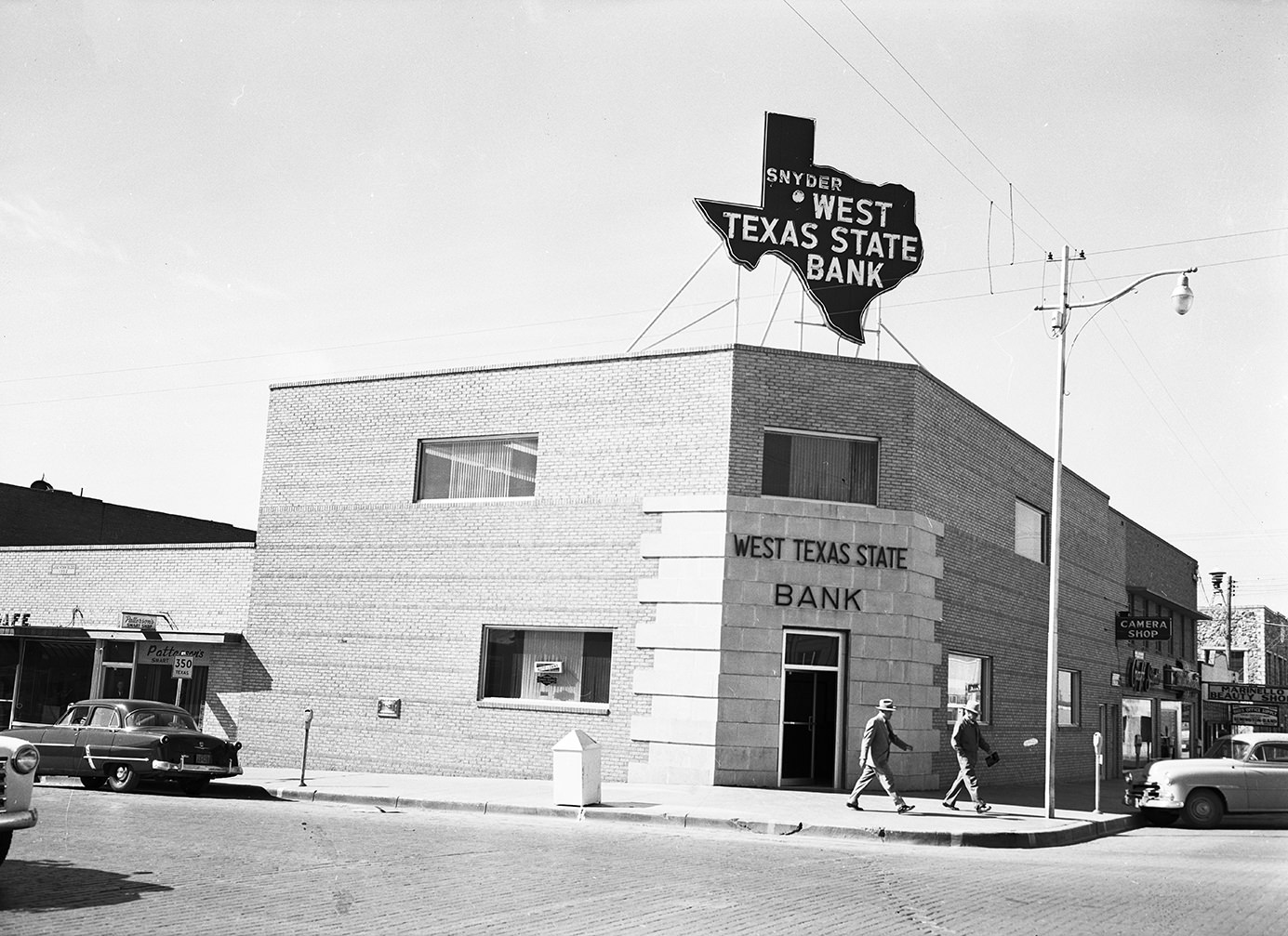
Construction was constant downtown. Excavators broke ground for the new Fort Worth National Bank skyscraper across Main Street from Hotel Texas, and steel frameworks climbed skyward on multiple blocks. Workers raced to finish office buildings and new commercial structures as businesses competed for space in the growing city center.
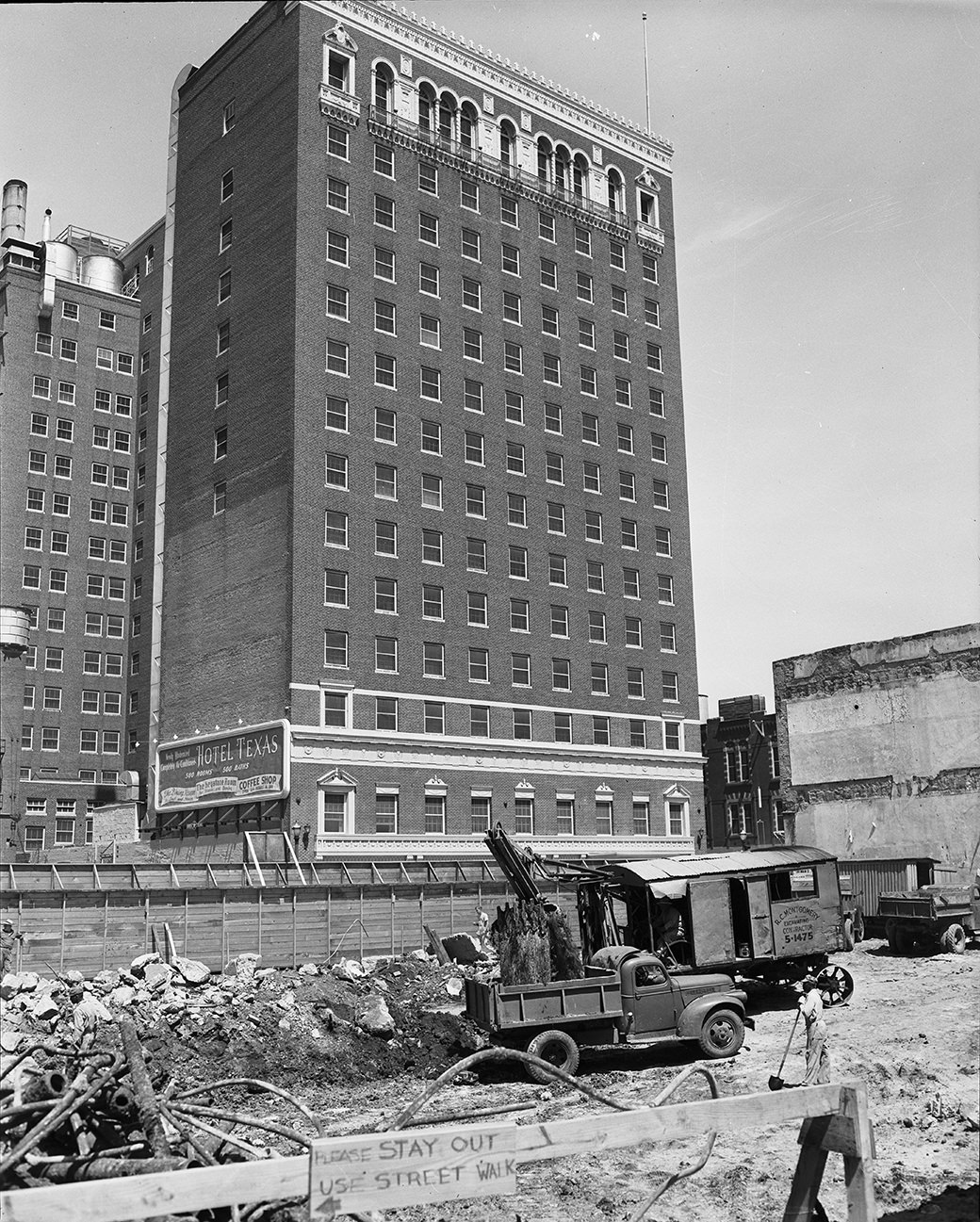
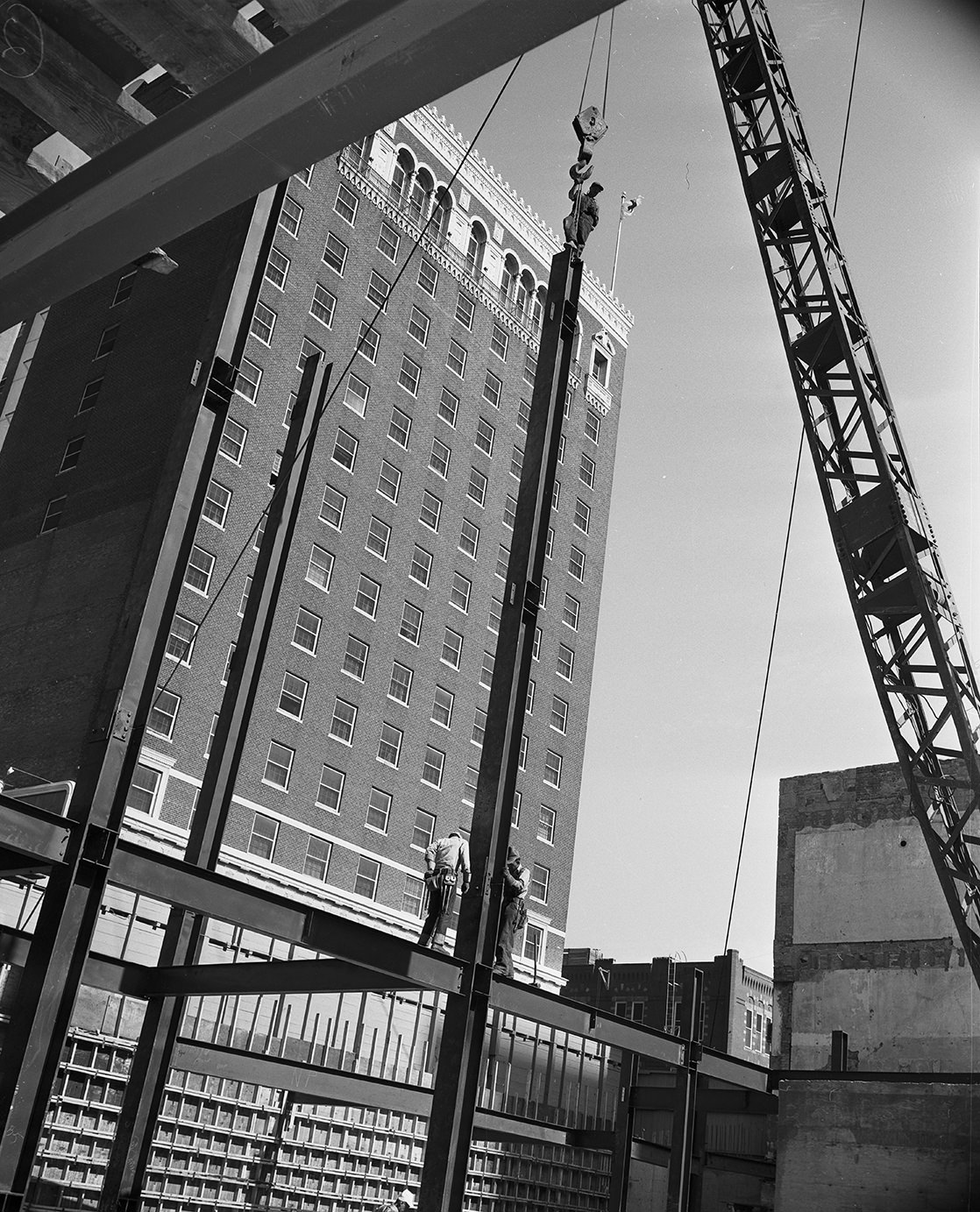
The construction boom wasn’t without its dangers. In 1951, an accident at the Fort Worth National Bank Building site made the risks of the era’s rapid development visible. Workers pushed forward regardless, and the completed skyline reflected the city’s determination to grow upward as well as outward.
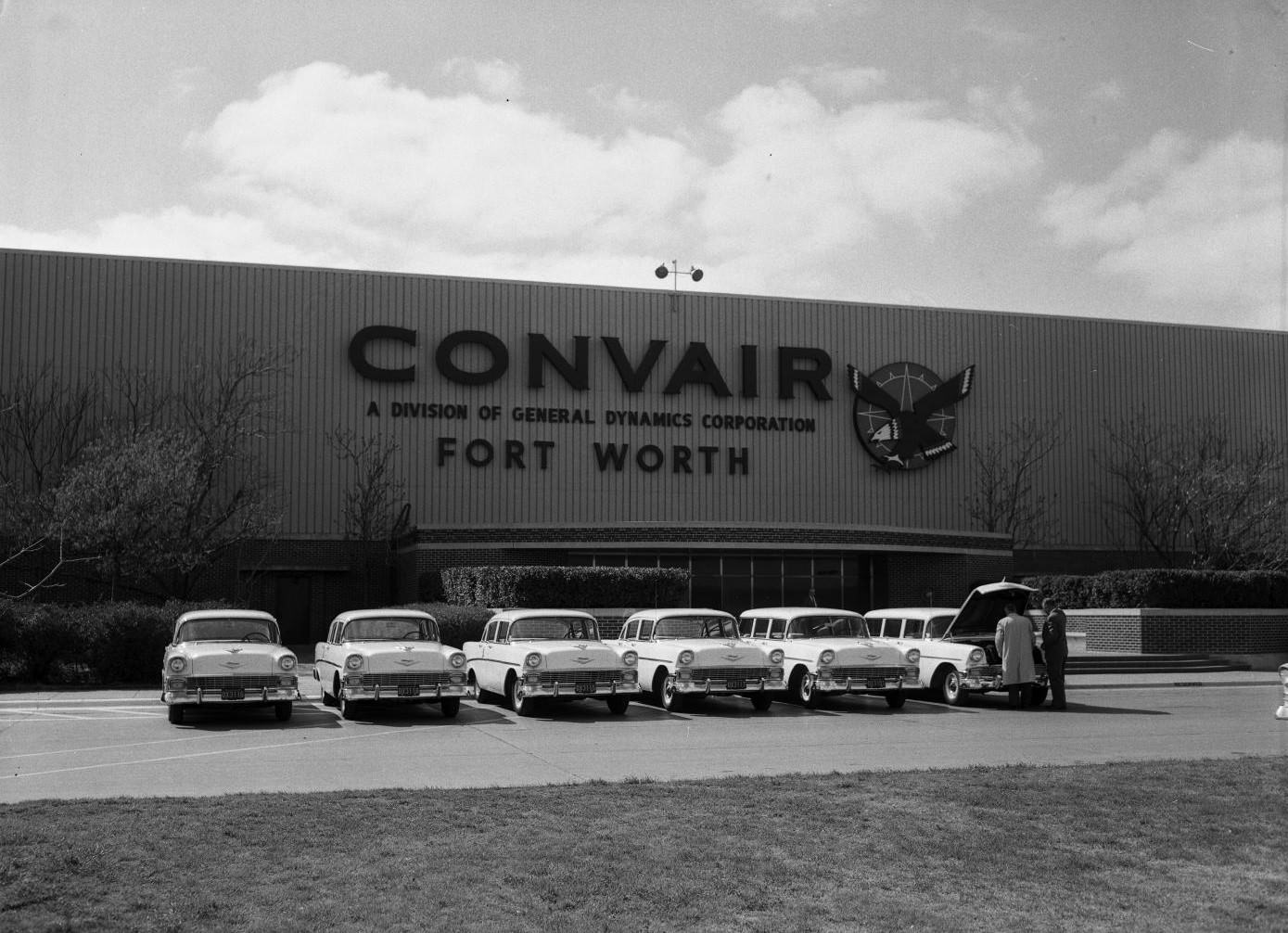
No single industry shaped Fort Worth’s 1950s economy more than aviation and defense. The Cold War drove massive demand for military aircraft, and Fort Worth was at the center of that production. Consolidated Vultee Aircraft Corporation — which would later reorganize as Convair and eventually become part of General Dynamics — operated a sprawling plant on the west side of the city. Thousands of workers clocked in each day to build some of the most advanced military aircraft in the world, including the massive B-36 bomber.
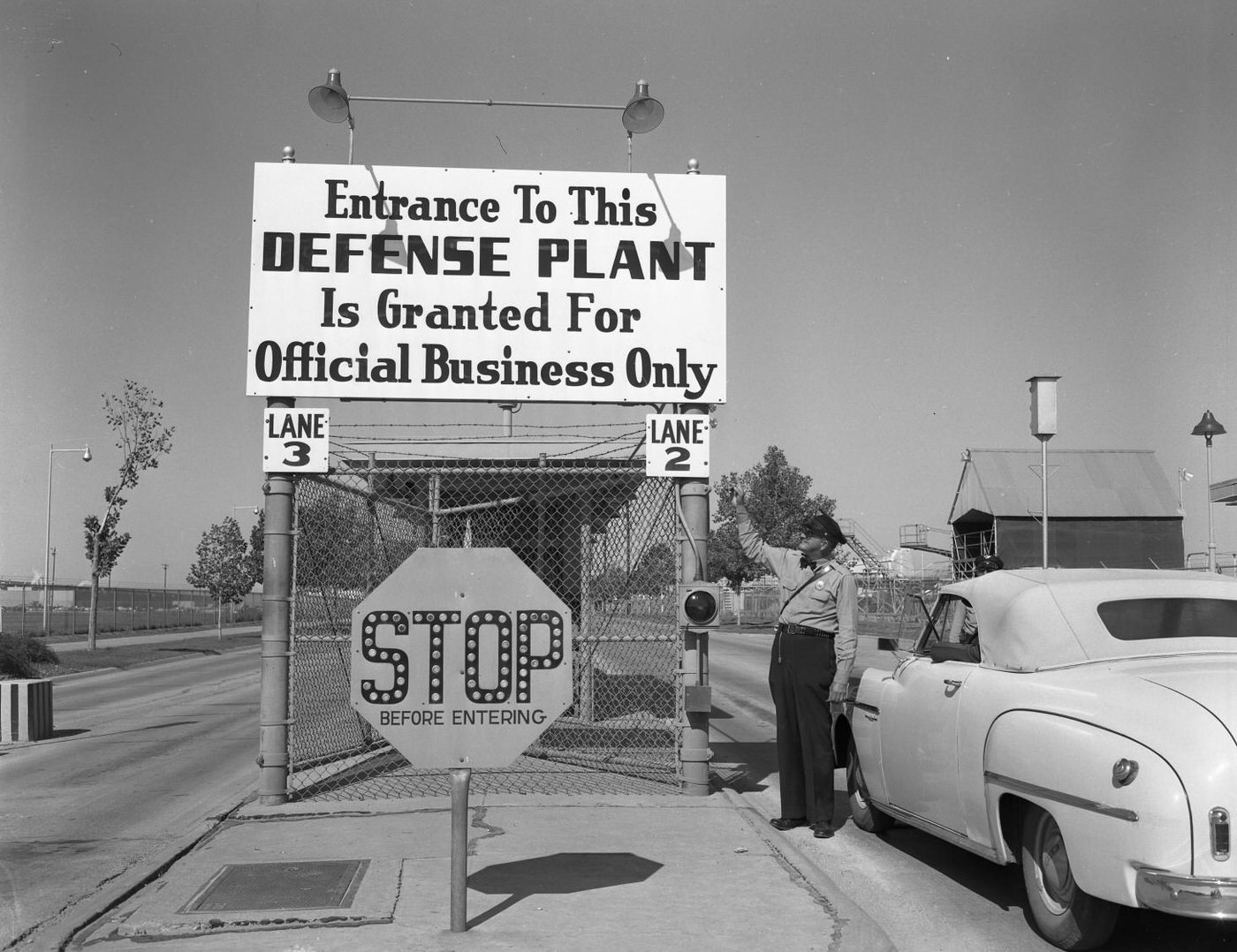
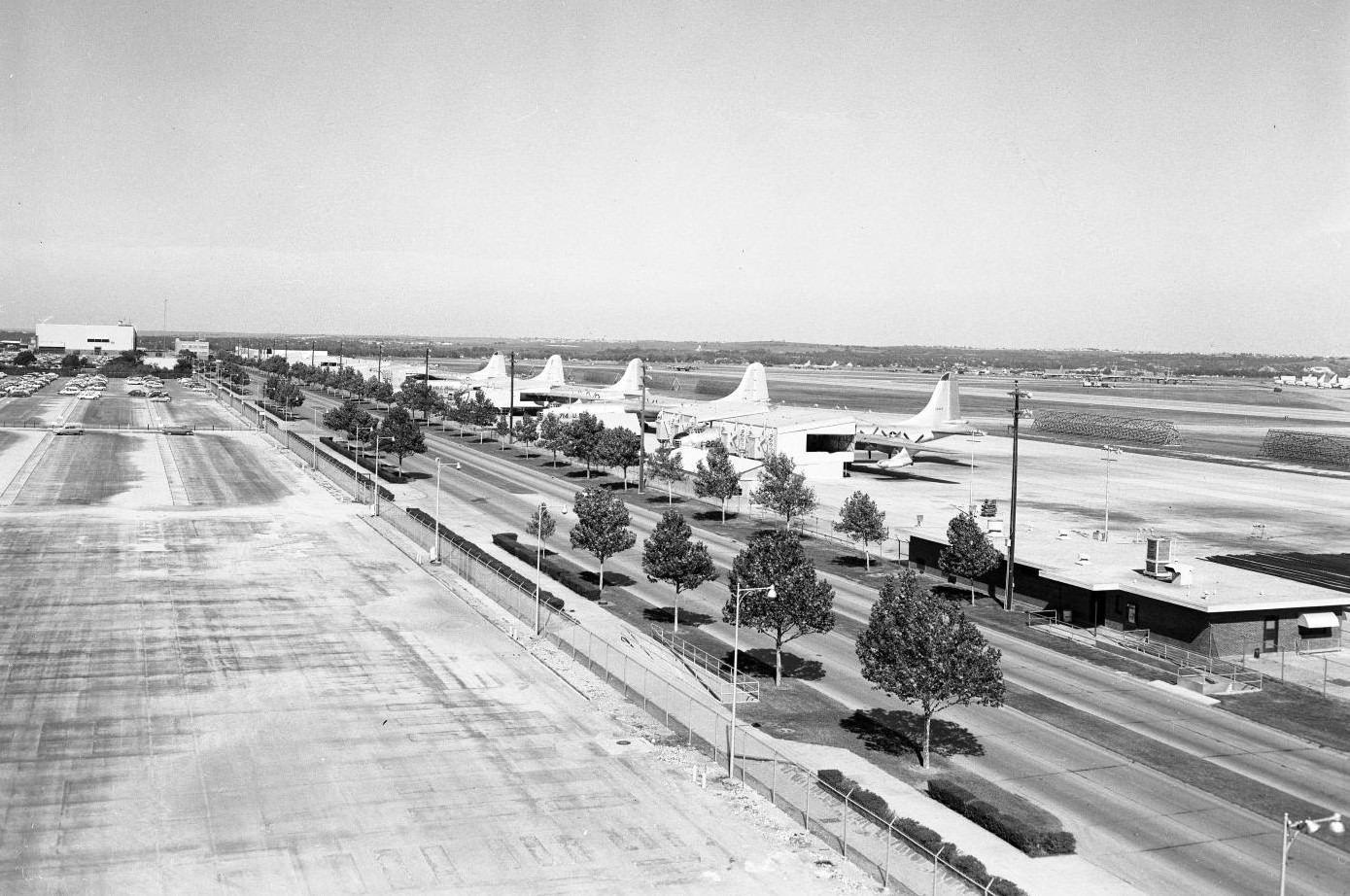
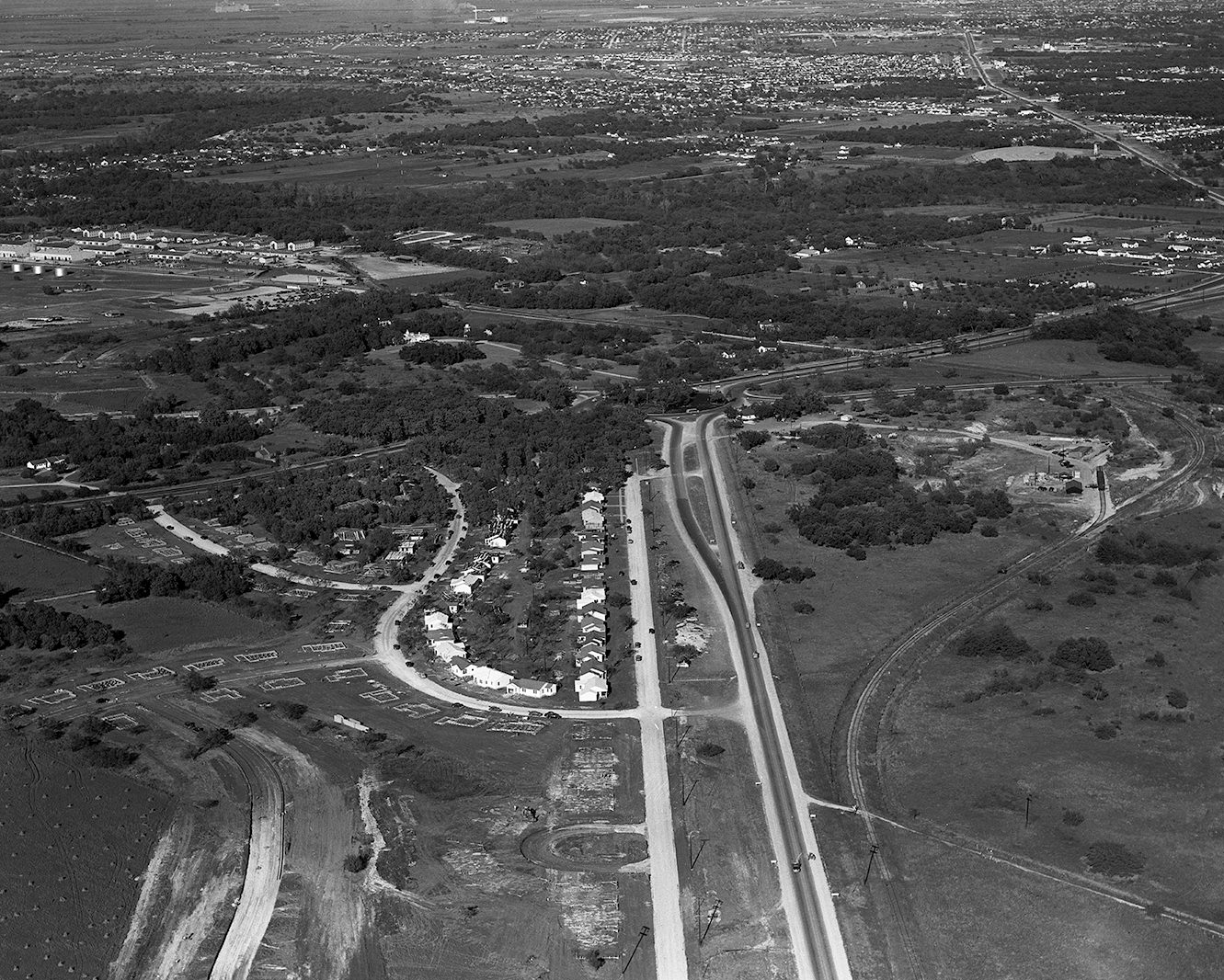
The plant’s sheer size was hard to overstate. Aerial photographs from the era show a sea of parked cars surrounding the facility during shift changes, with workers streaming in and out around the clock. A dedicated access road was opened in 1953 just to handle the traffic. Carswell Air Force Base, located nearby, added another military dimension to the city’s landscape and brought officers and enlisted personnel into the local economy.

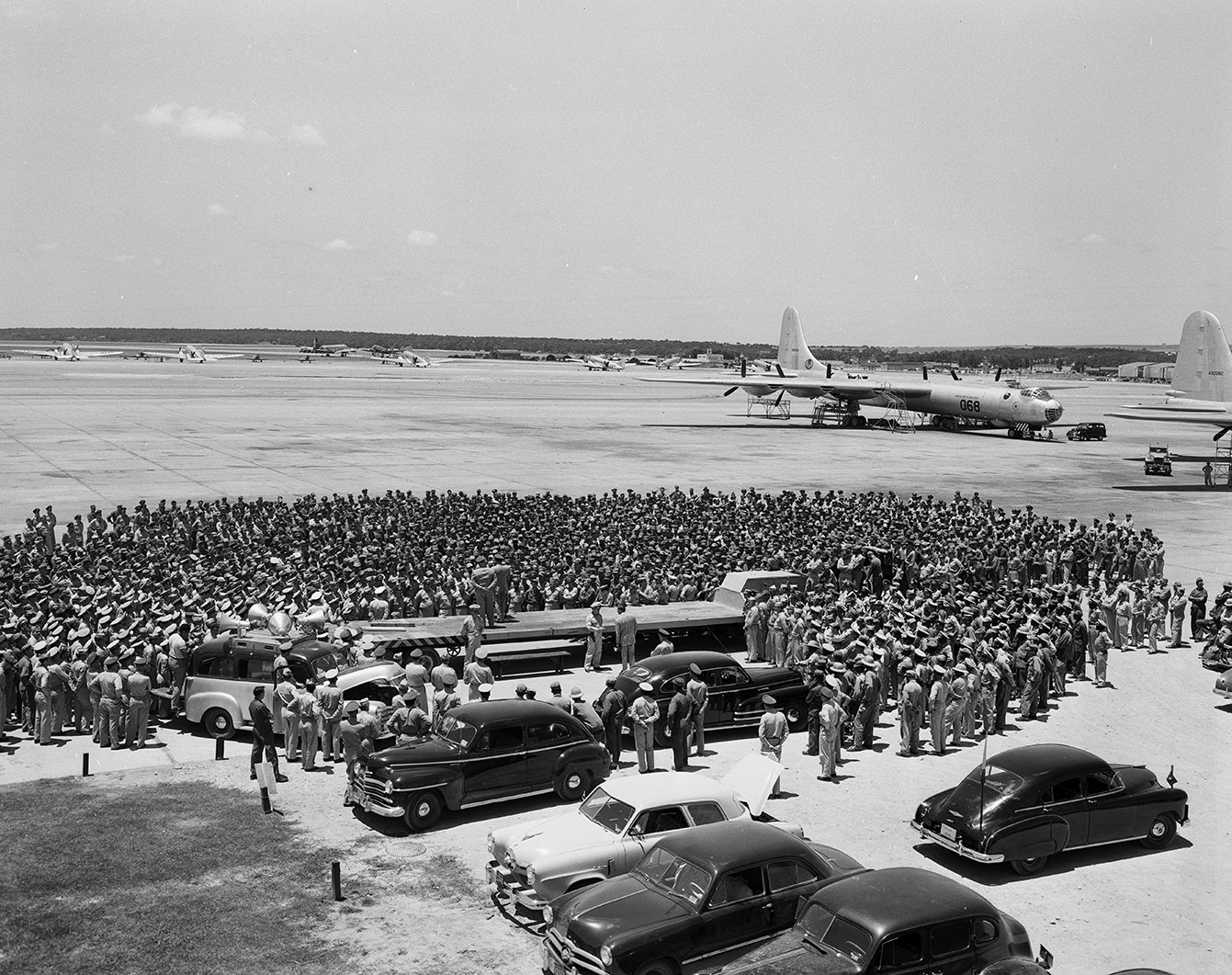
Major General Roger Ramey commanded Carswell during the early part of the decade. His farewell ceremony in 1950 drew a notable crowd and highlighted how closely the base was woven into the city’s civic life. Fort Worth residents saw military figures not as distant figures but as neighbors and community members.
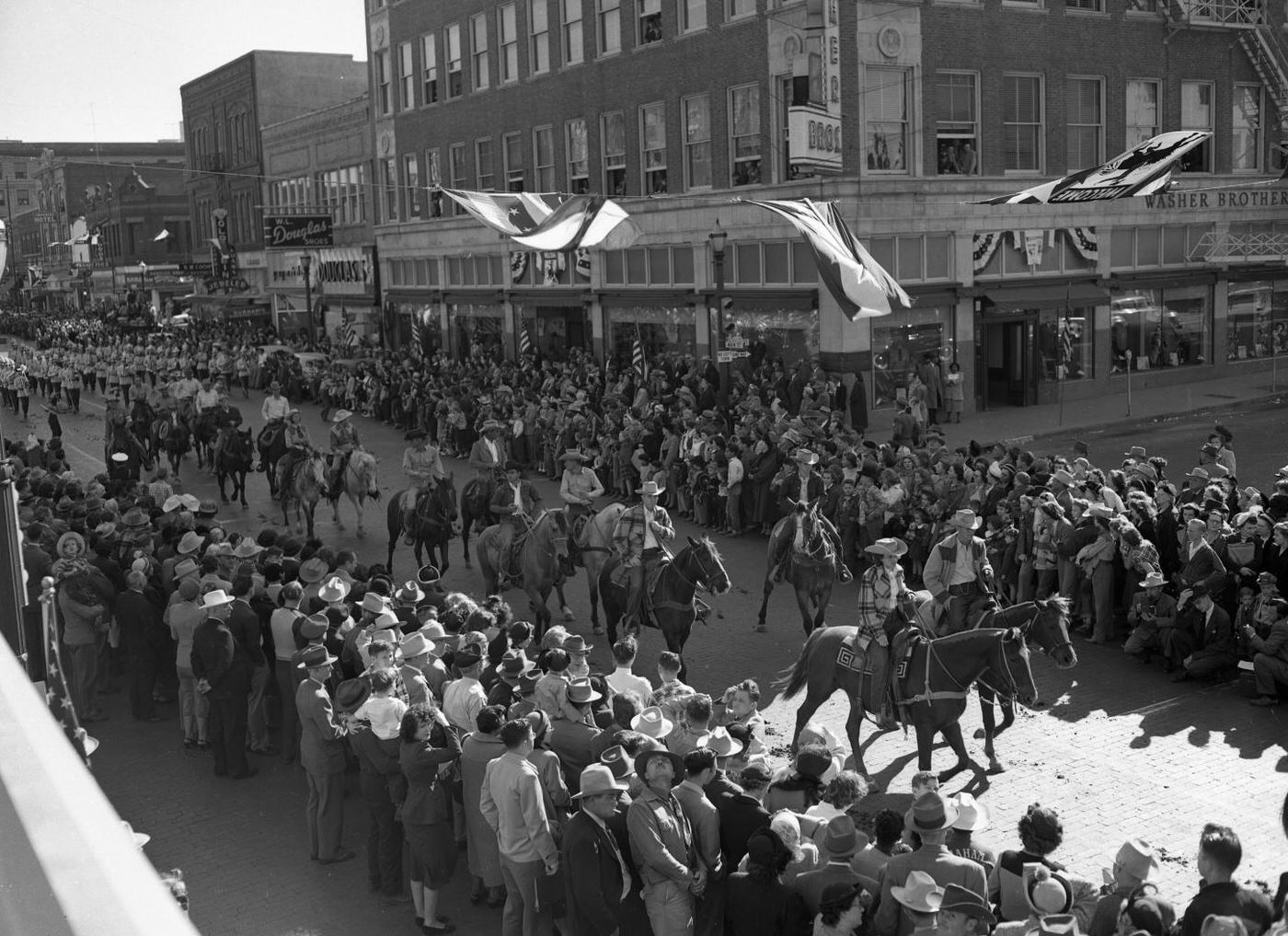
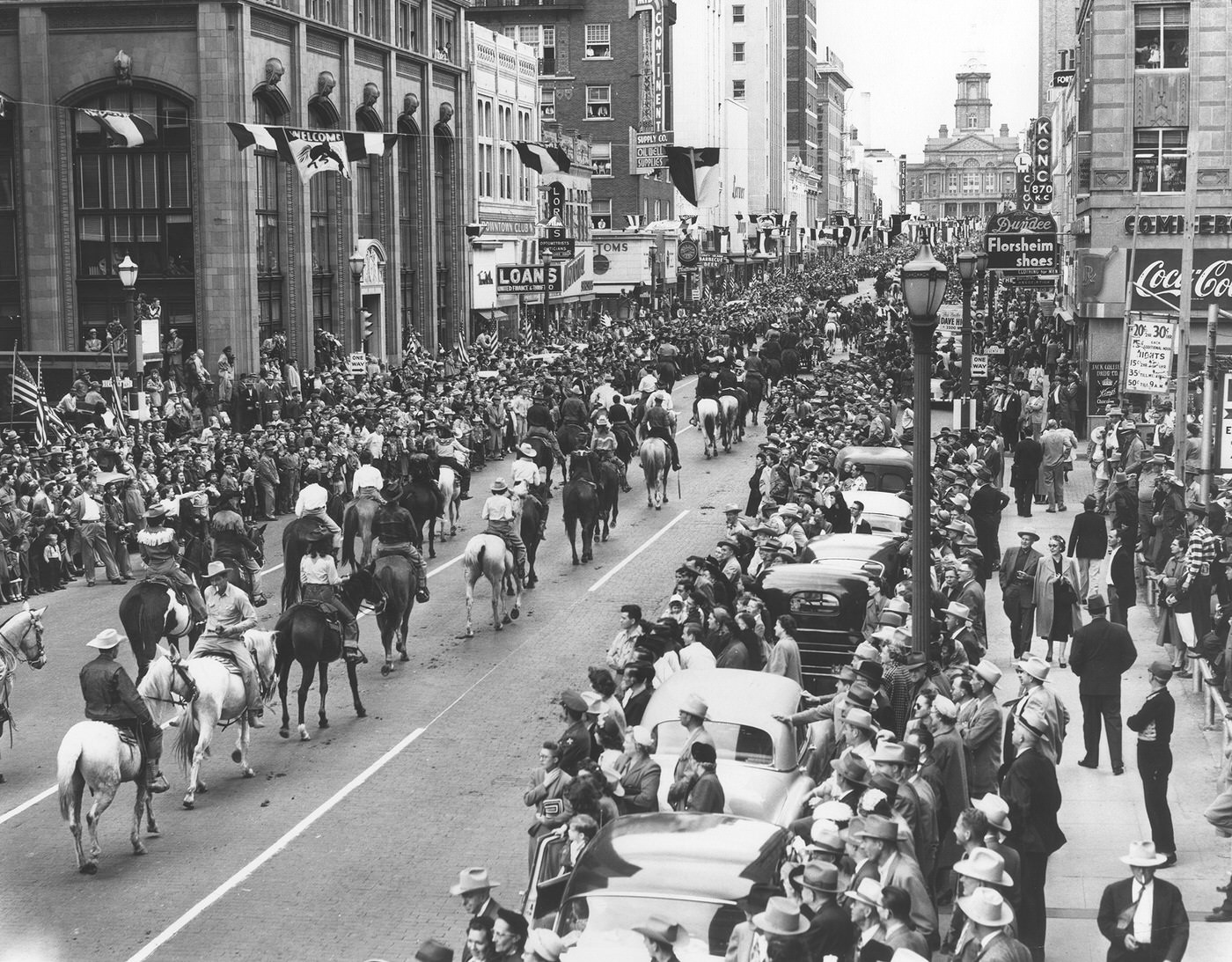
Fort Worth’s cattle heritage never disappeared. The Fort Worth Stockyards remained a working hub for livestock trading and continued to host the annual Fat Stock Show, one of the city’s most celebrated traditions. The Stock Show parade drew crowds to downtown streets each year, with riders on horseback carrying American and Texas flags past cheering spectators.
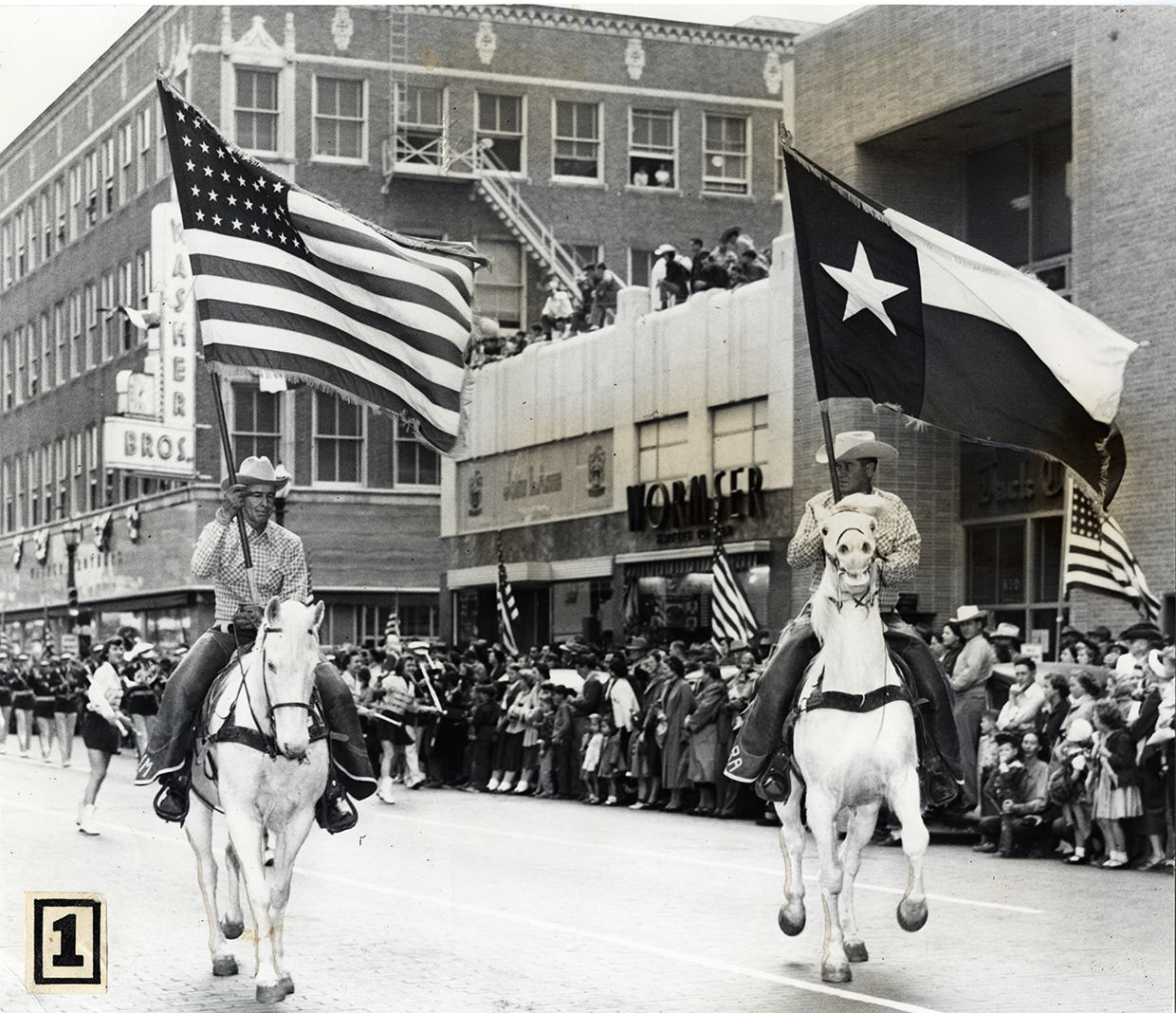
The parade connected Fort Worth’s ranching past to its present in a visible, public way. Even as aircraft plants hummed on the west side and office towers rose downtown, the Stockyards and their traditions reminded residents of how the city started. Convair employees joined the 1951 Fat Stock Show parade alongside cattlemen, a fitting image of Fort Worth’s dual identity.
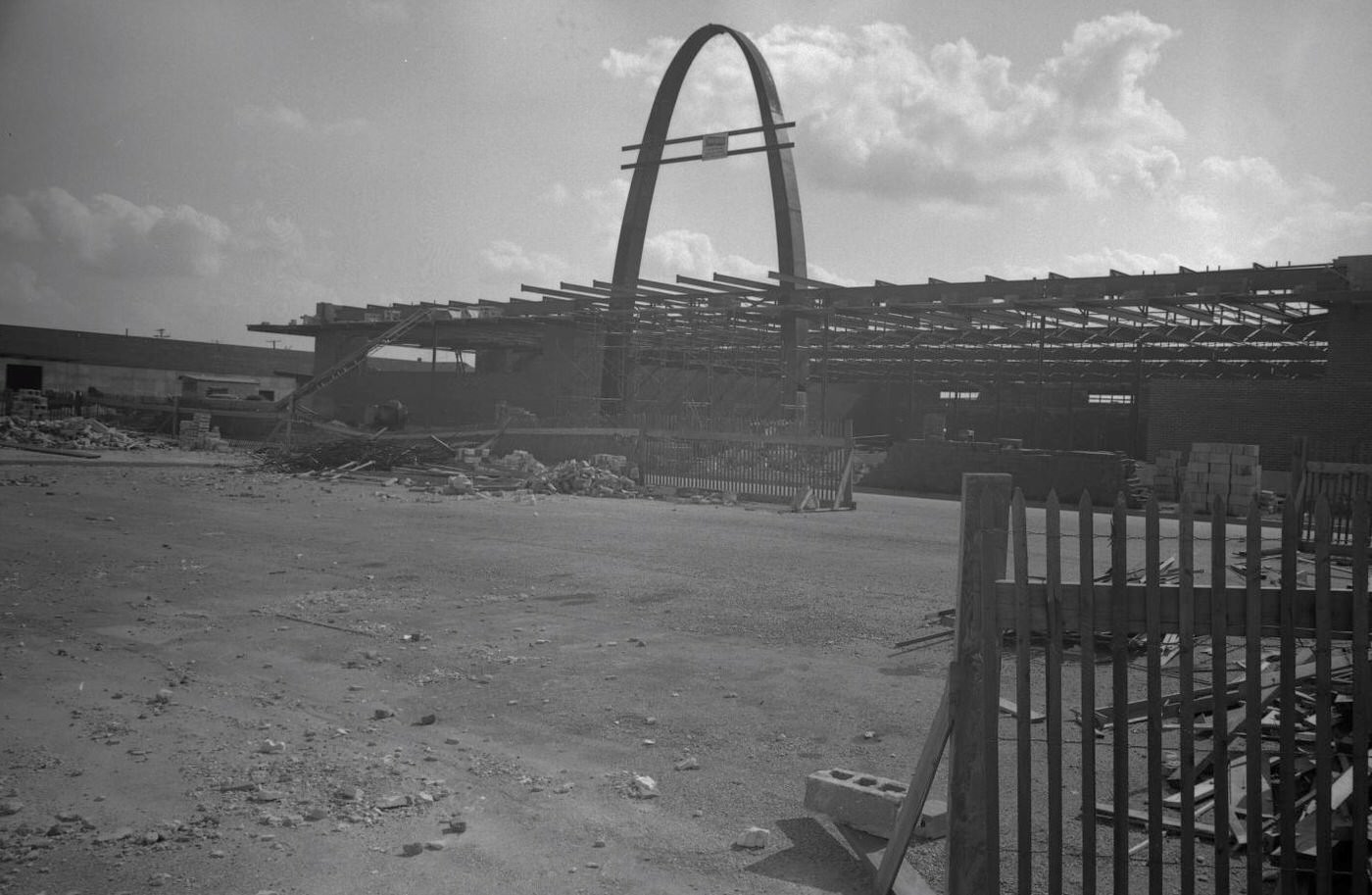
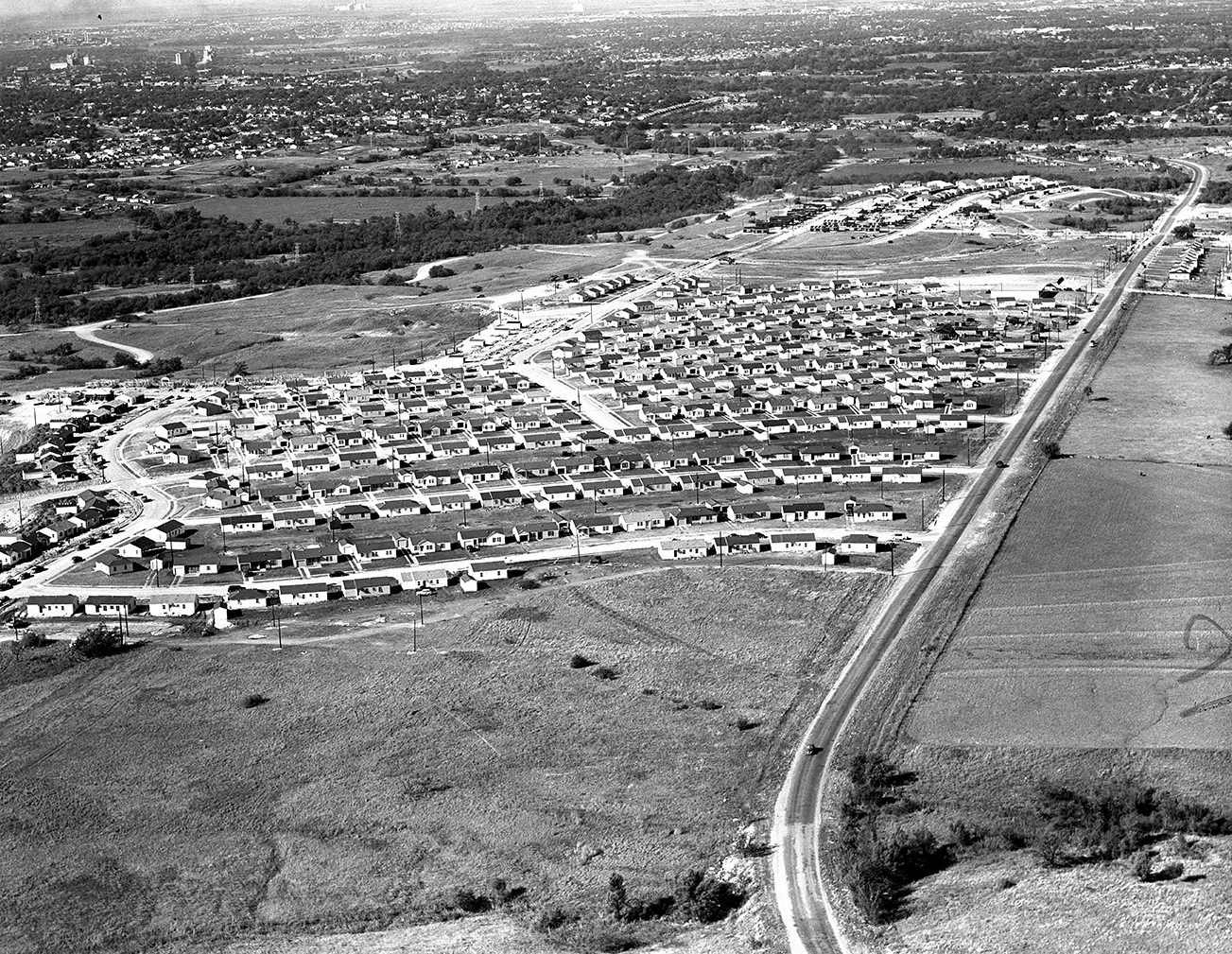
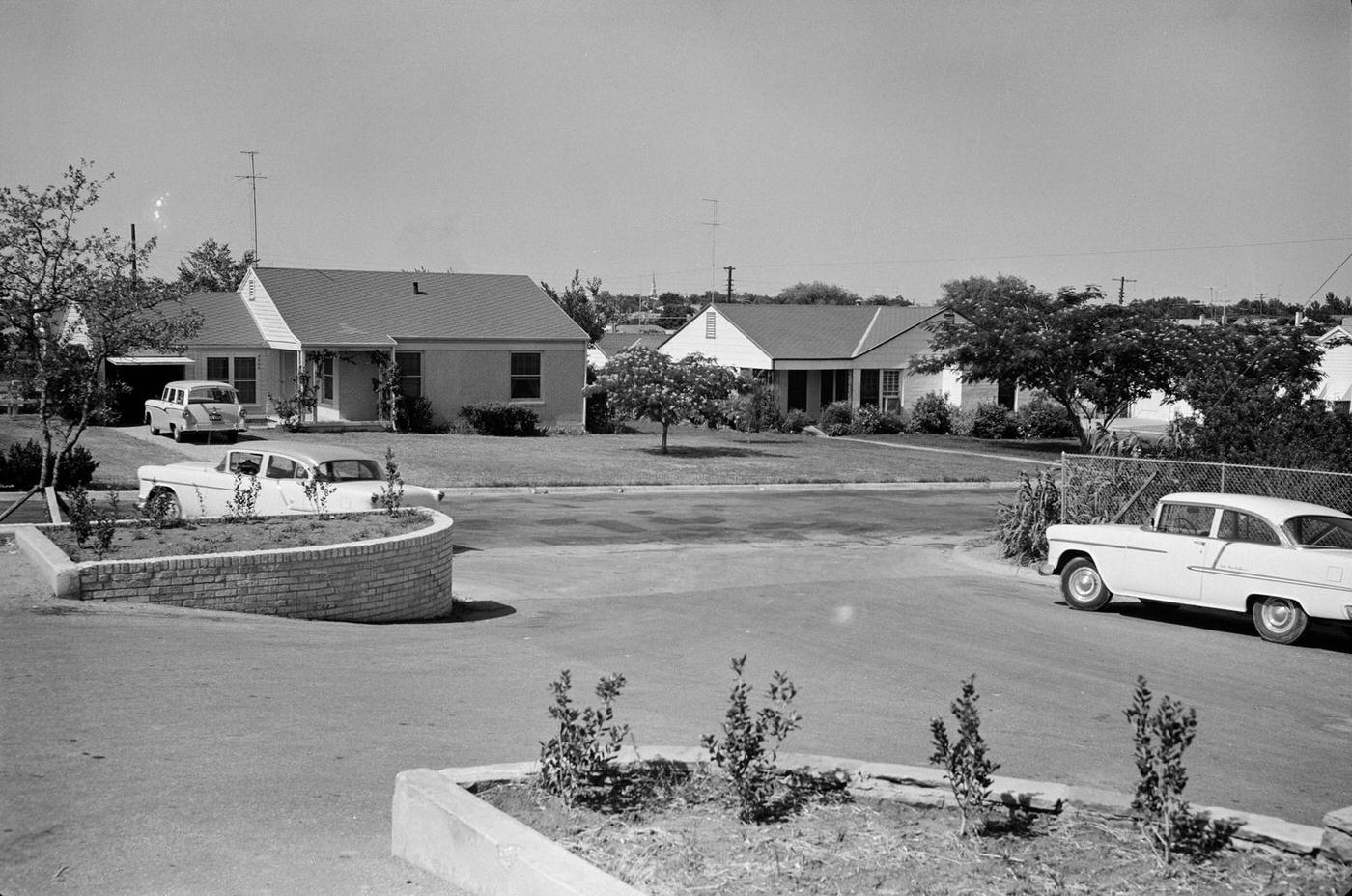
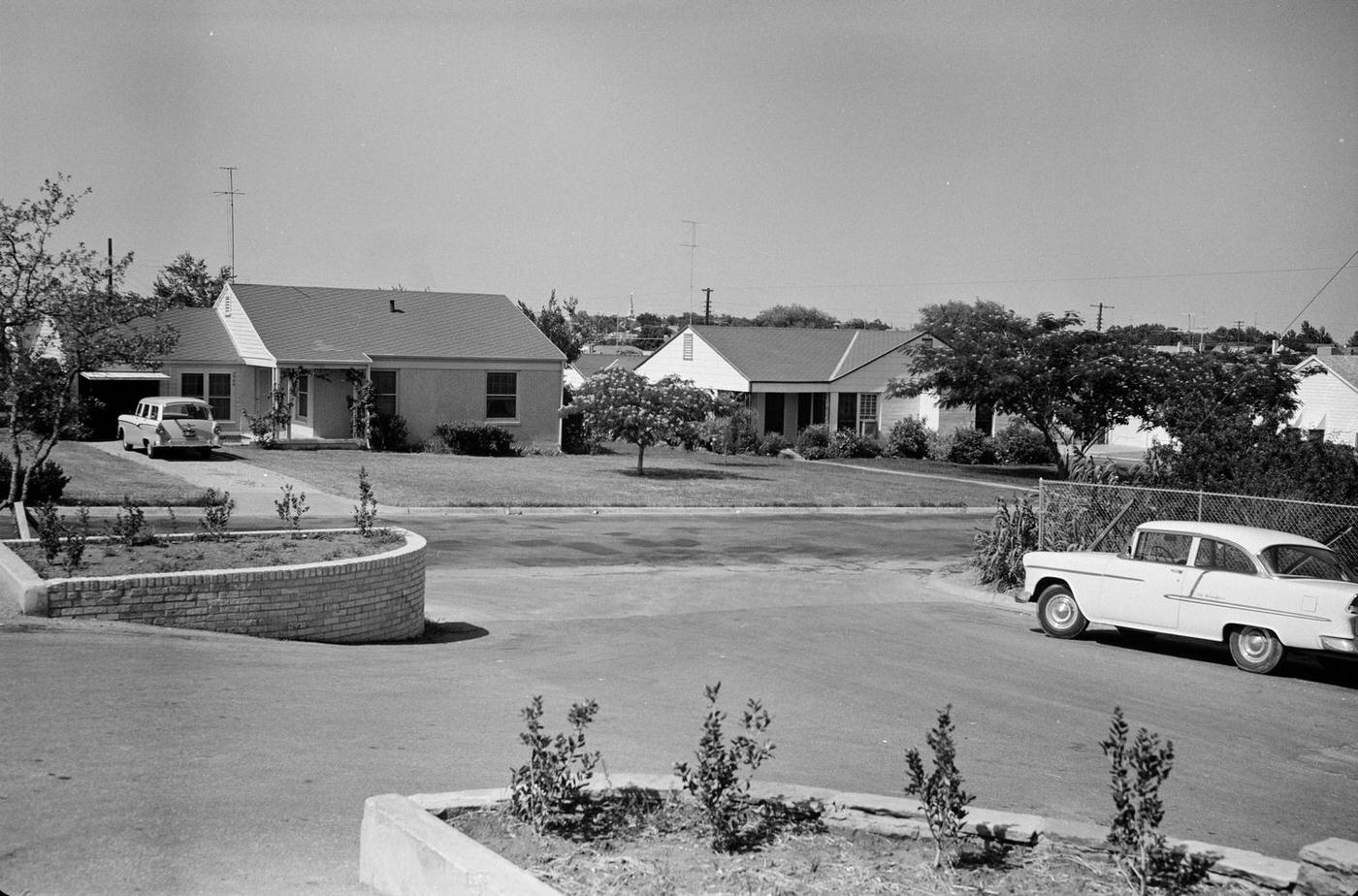
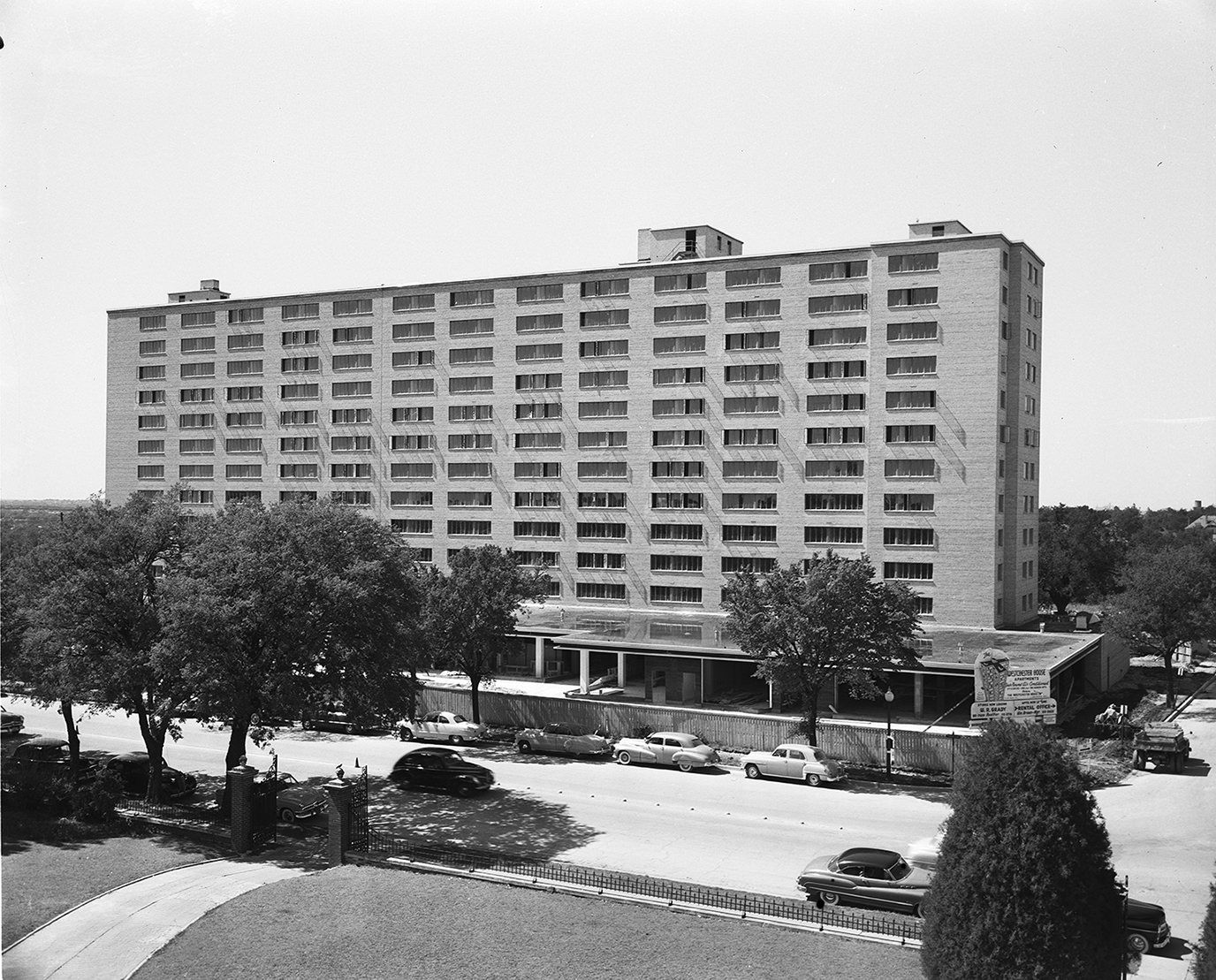
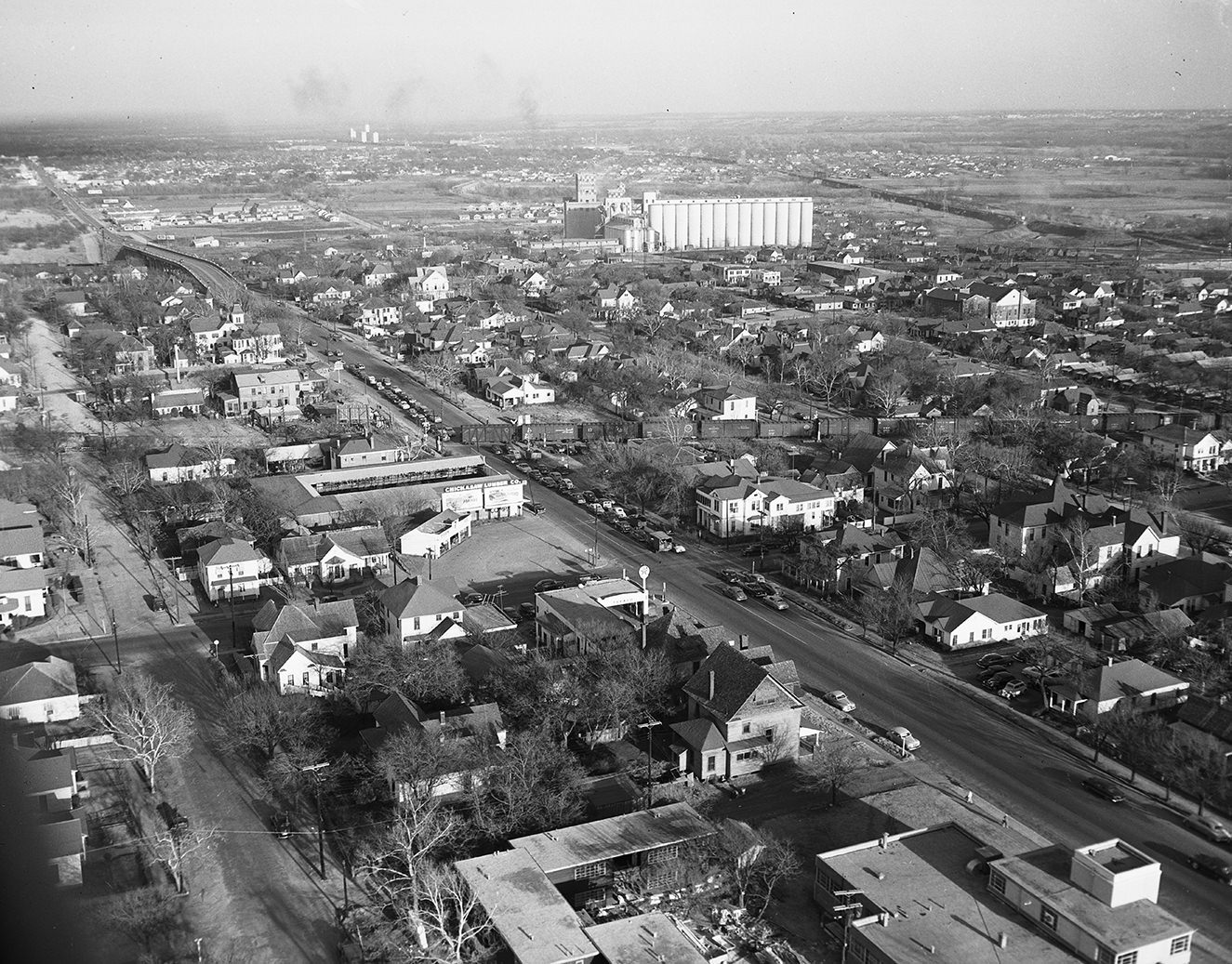
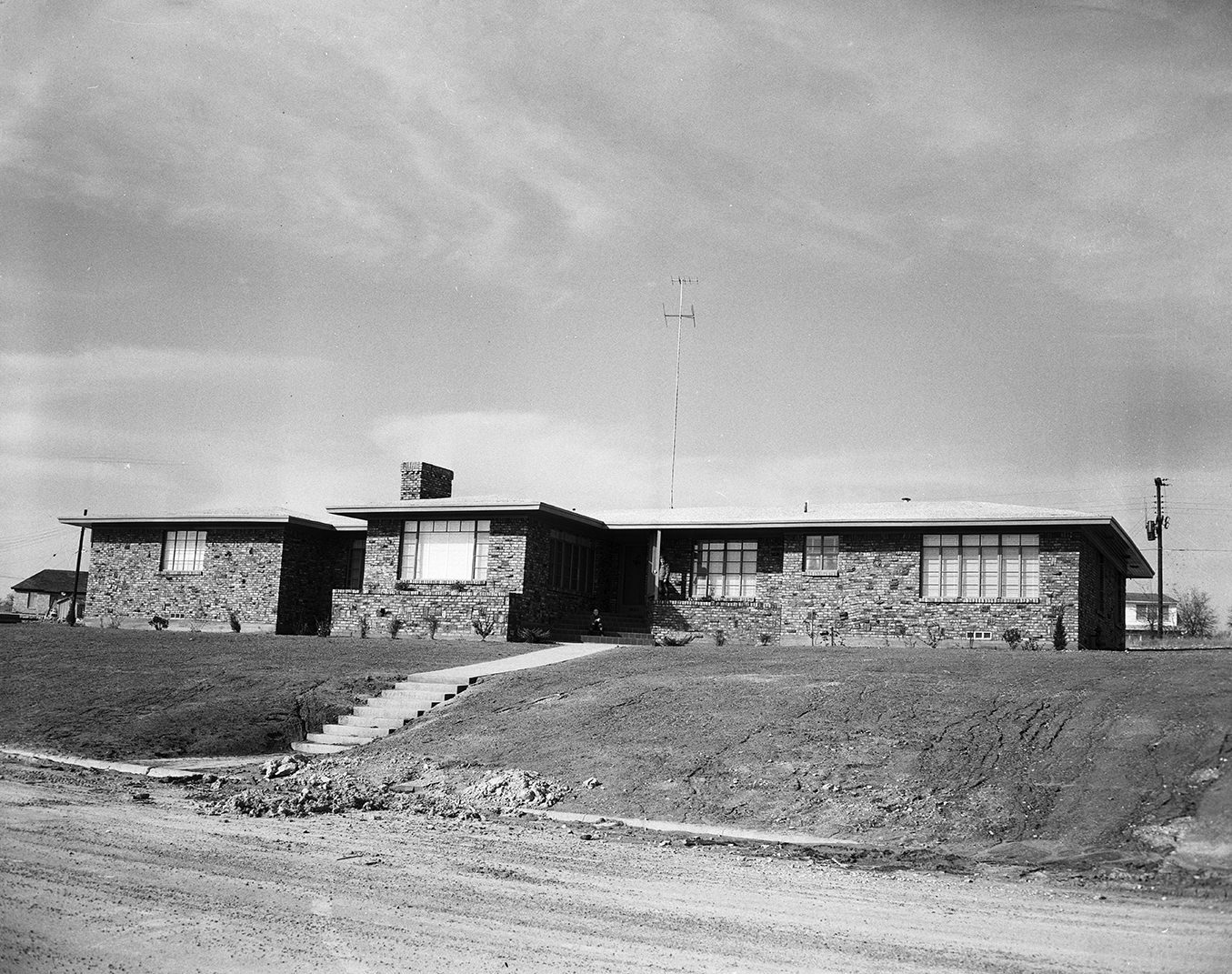
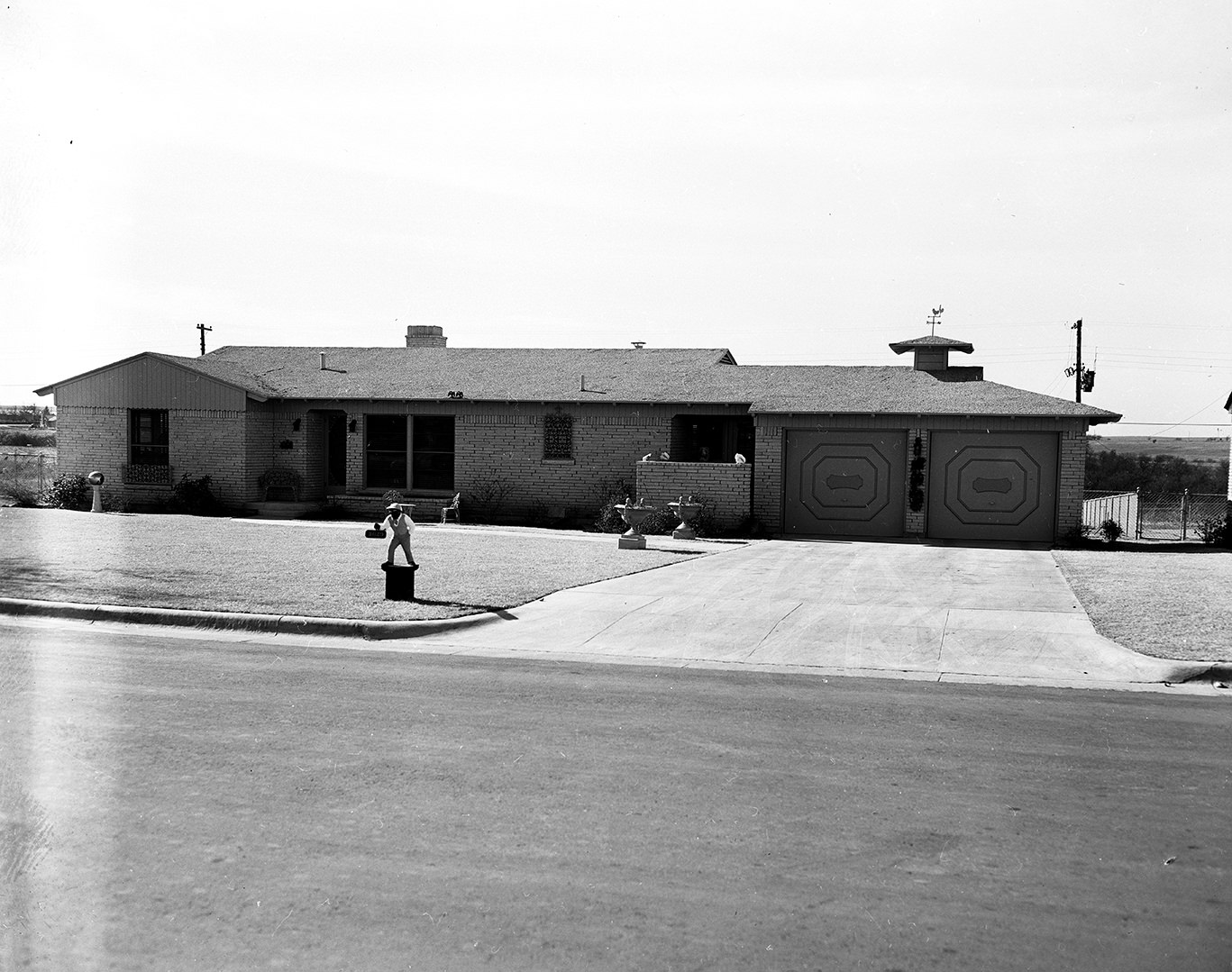
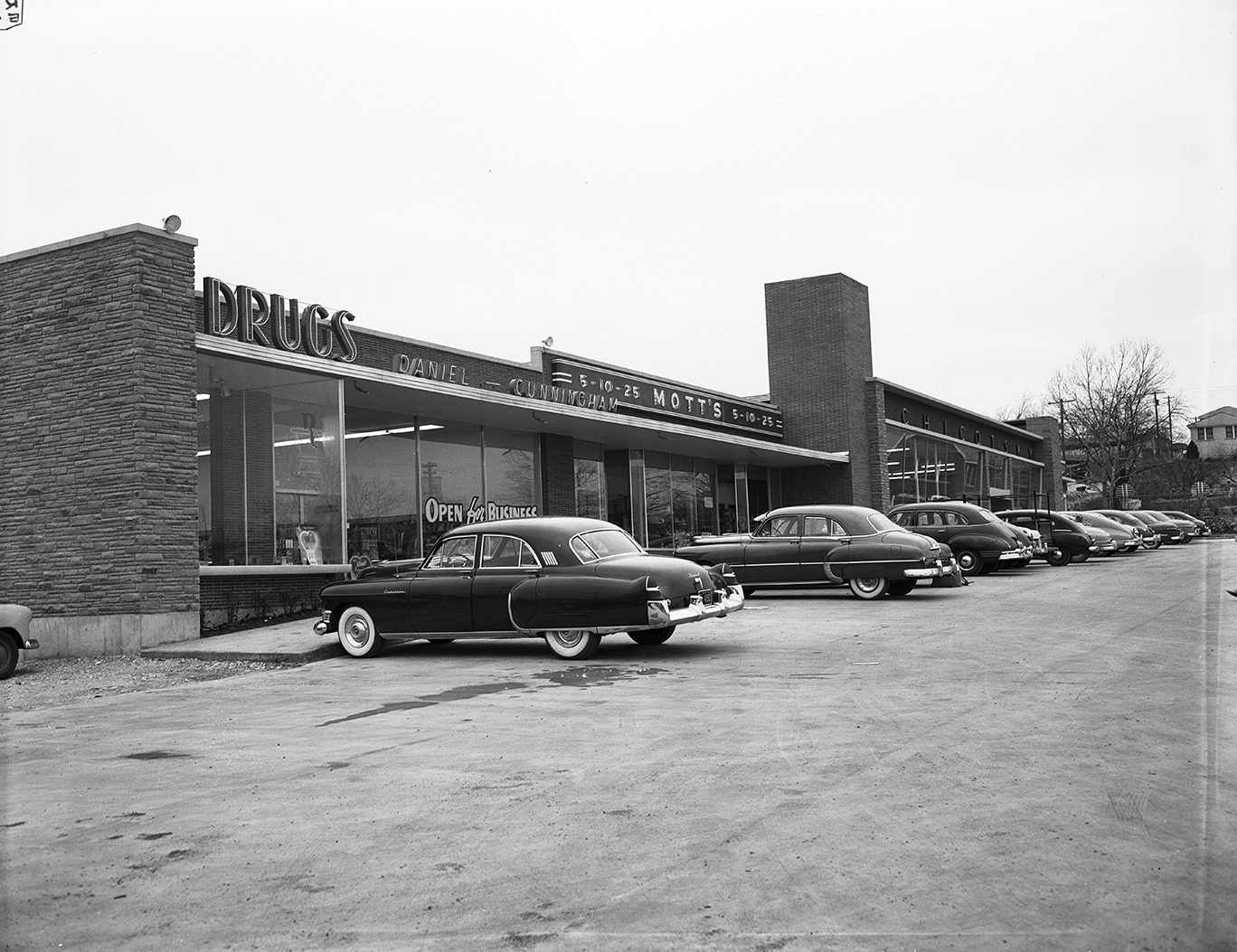
As more families bought cars, Fort Worth spread outward. Suburban neighborhoods grew quickly on land that had recently been farmland. New houses sat on wider lots, and shopping centers followed the residents outward from downtown. The Westcliff shopping center, under construction in 1952 and open for business by 1953, was a clear sign of this shift — retail moving closer to where people actually lived.
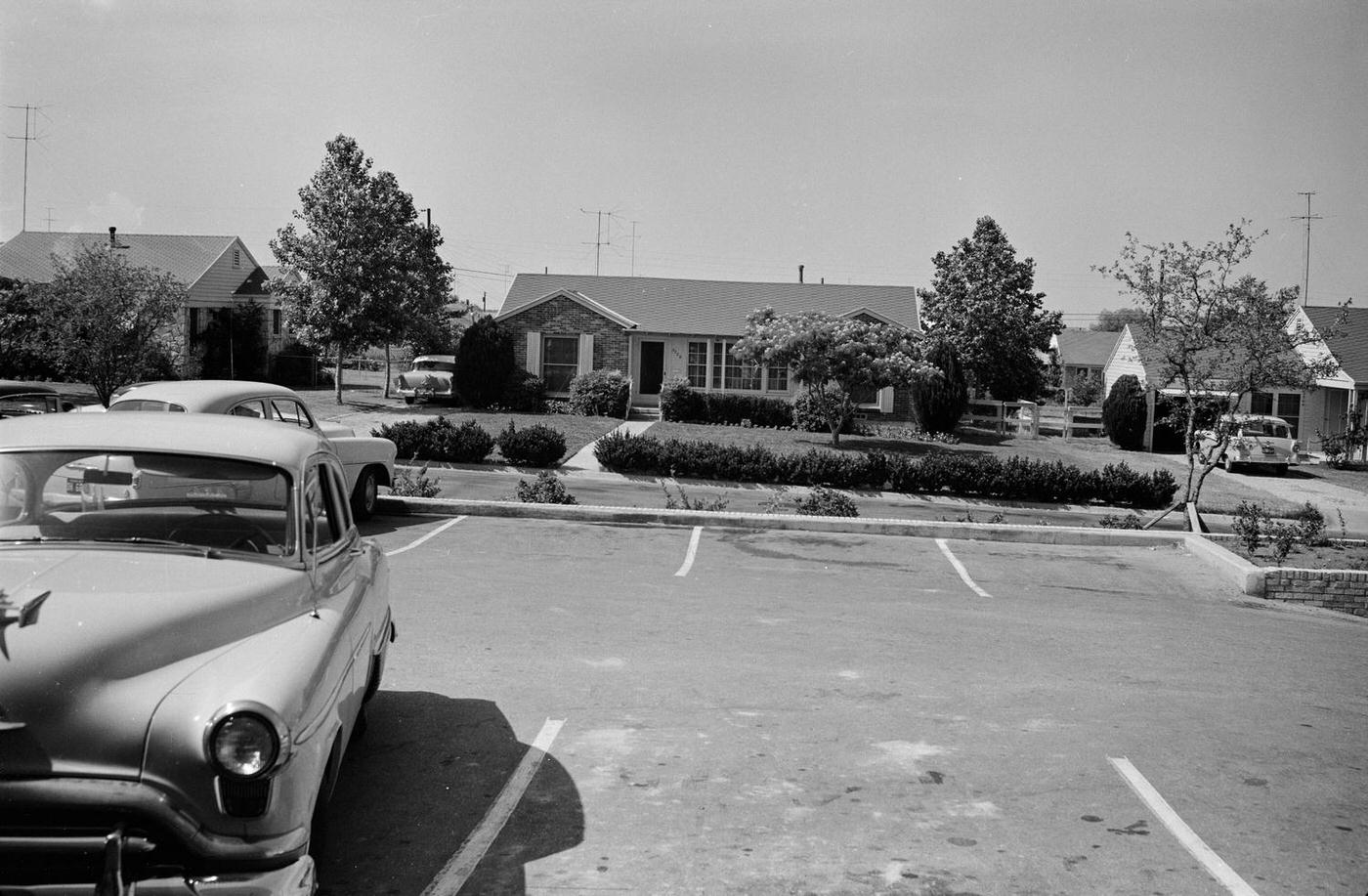
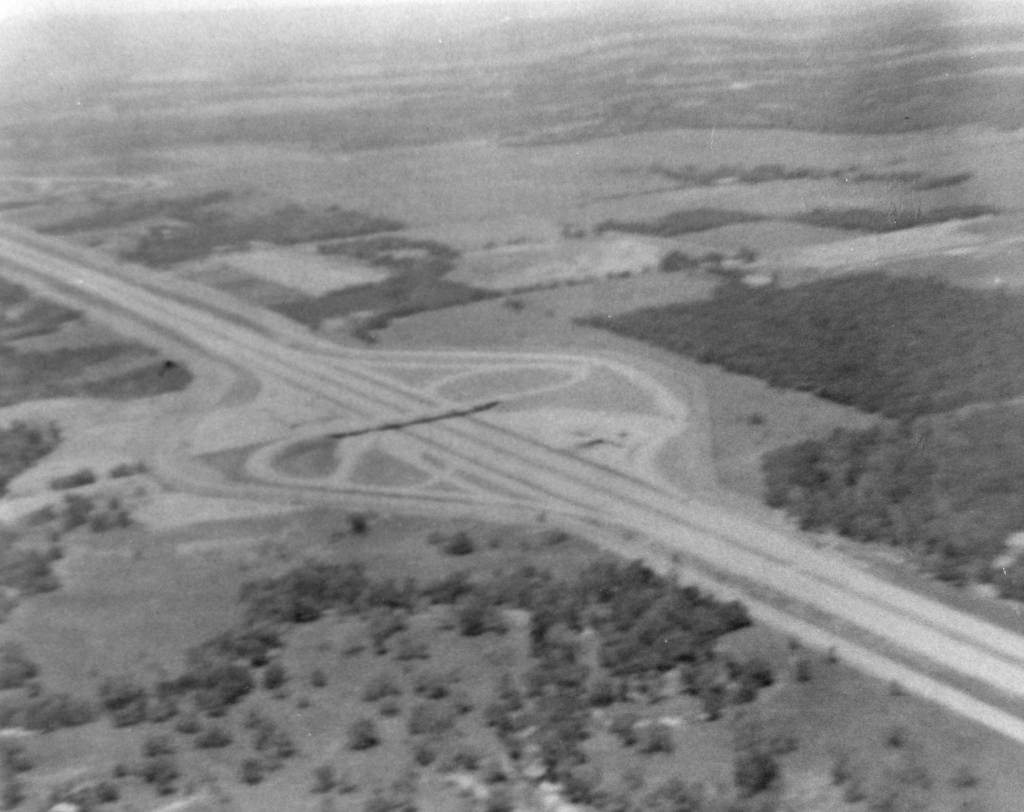
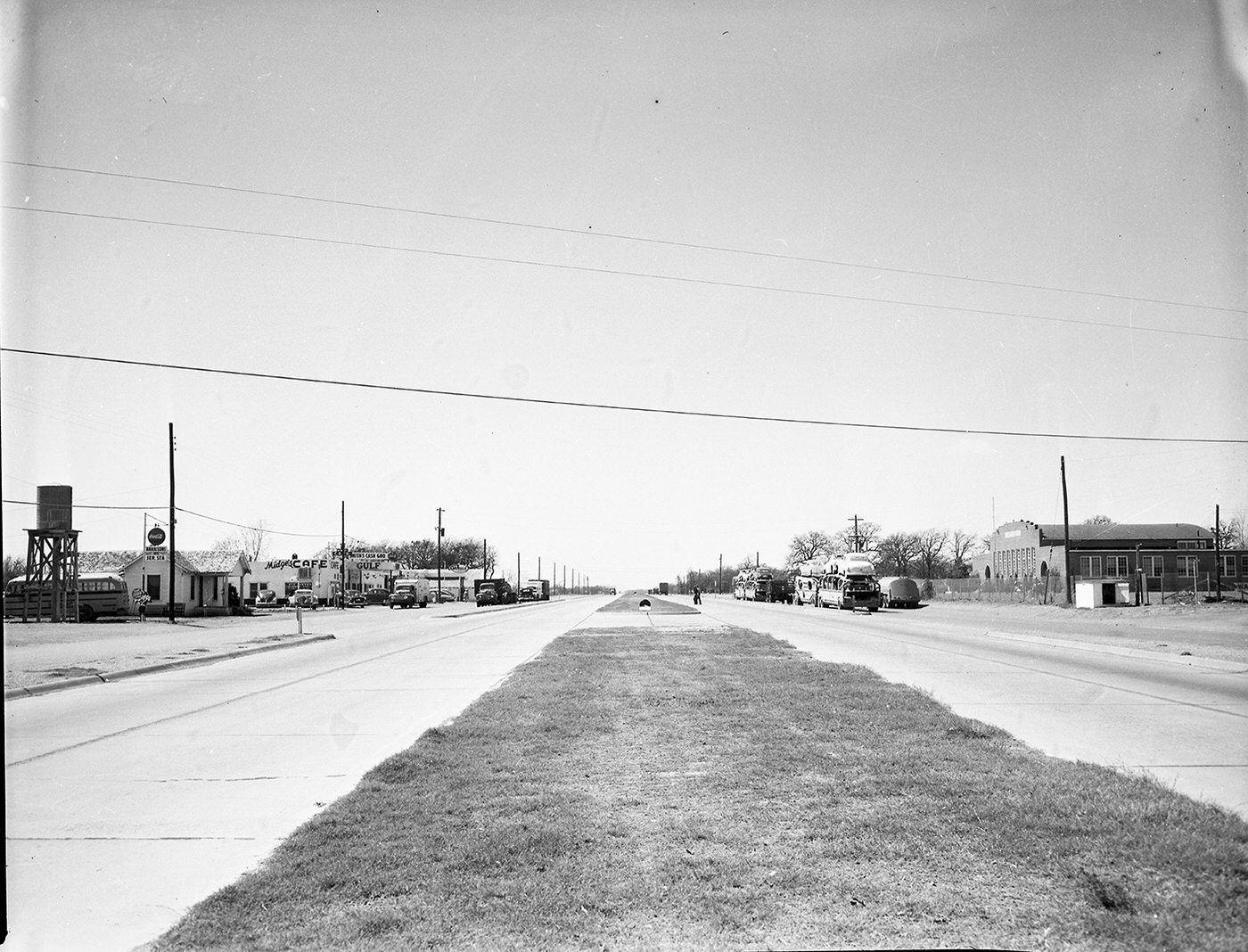
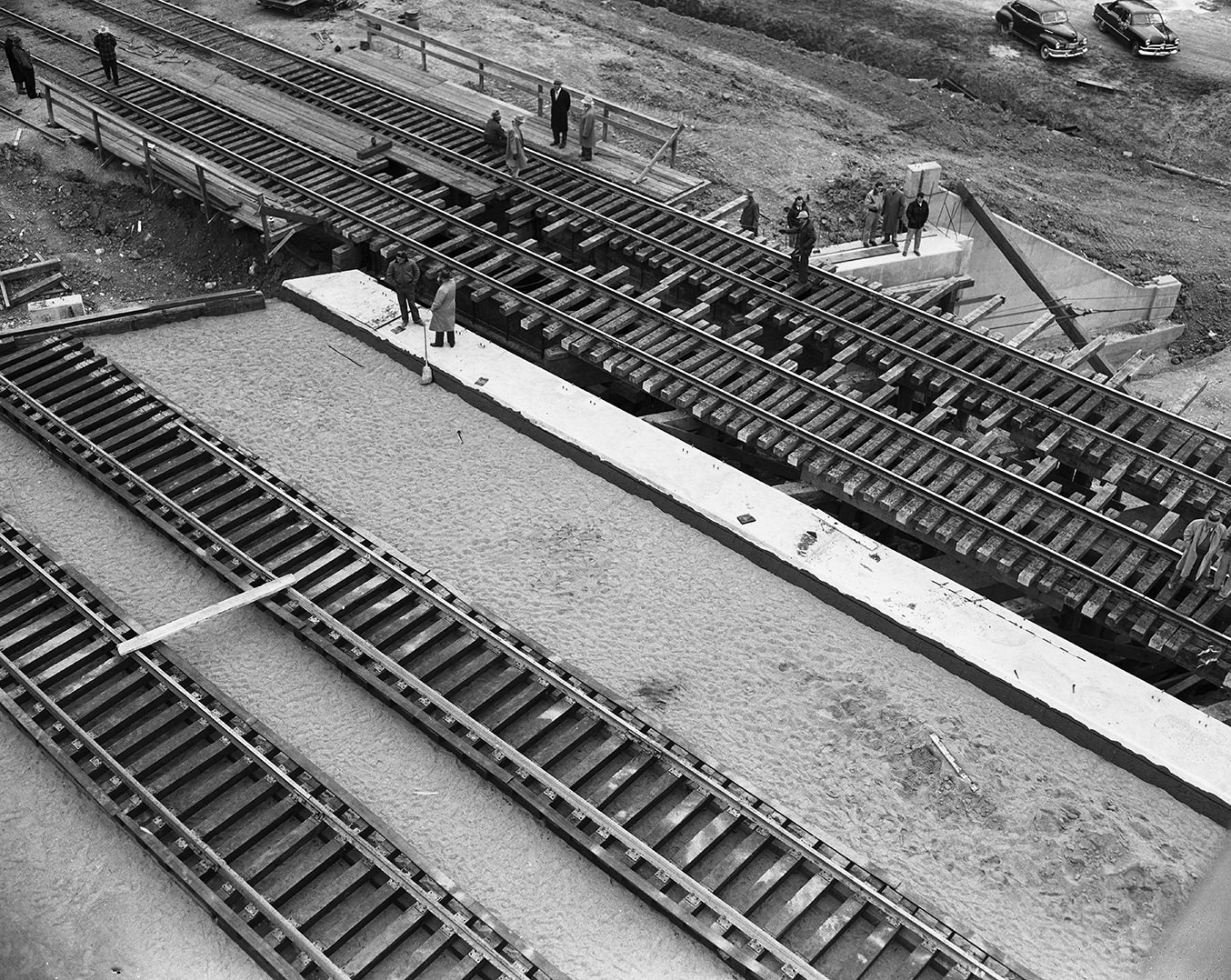
Neighborhood streets filled with parked cars told the story of how central the automobile had become. Traffic jams appeared at busy intersections, and the city began planning underpasses and new roads to keep pace with demand. The intersection of West 7th Street, Camp Bowie Boulevard, and University Drive became a bottleneck that required attention, while the Dallas-Fort Worth Turnpike began taking shape to connect the two cities more efficiently.
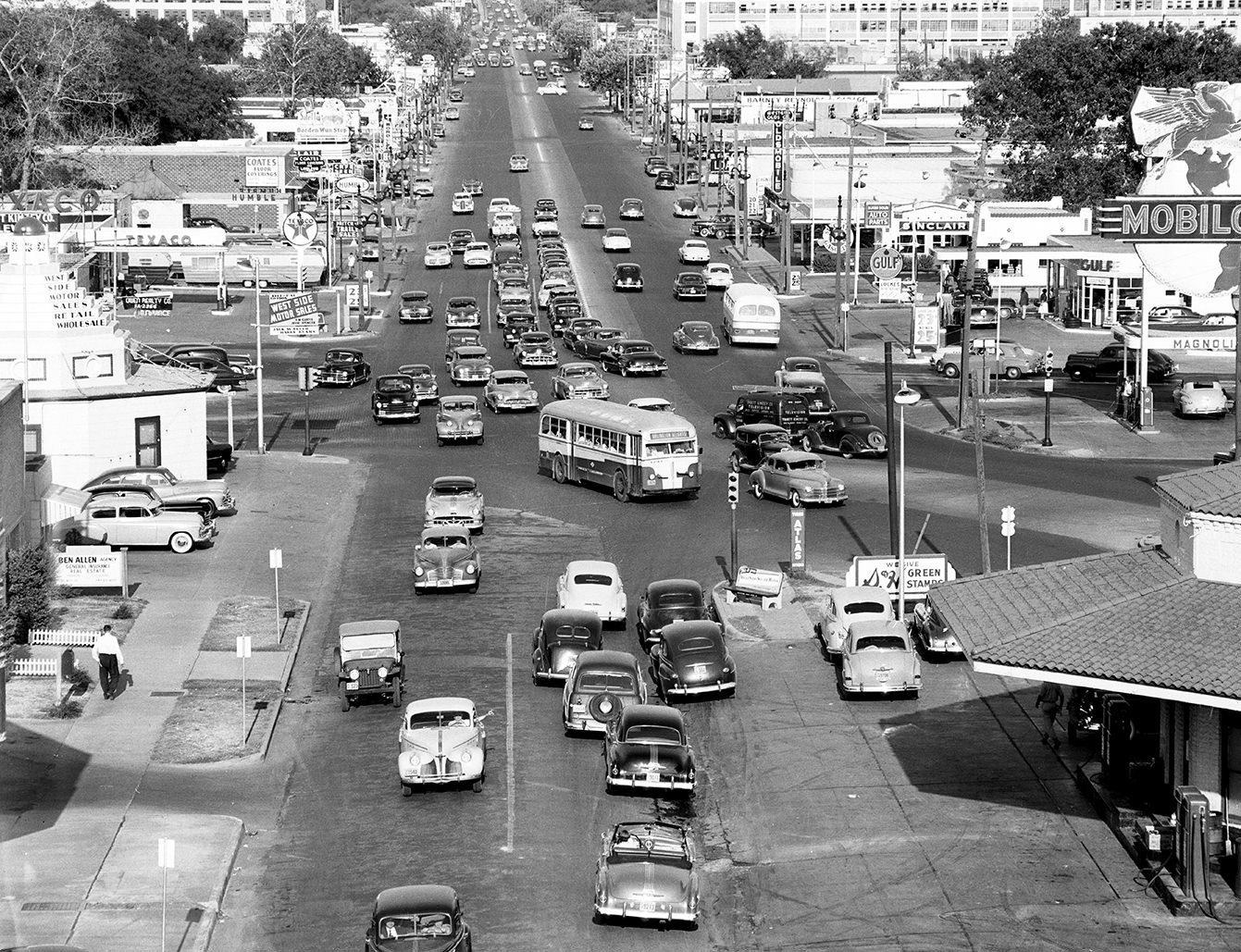
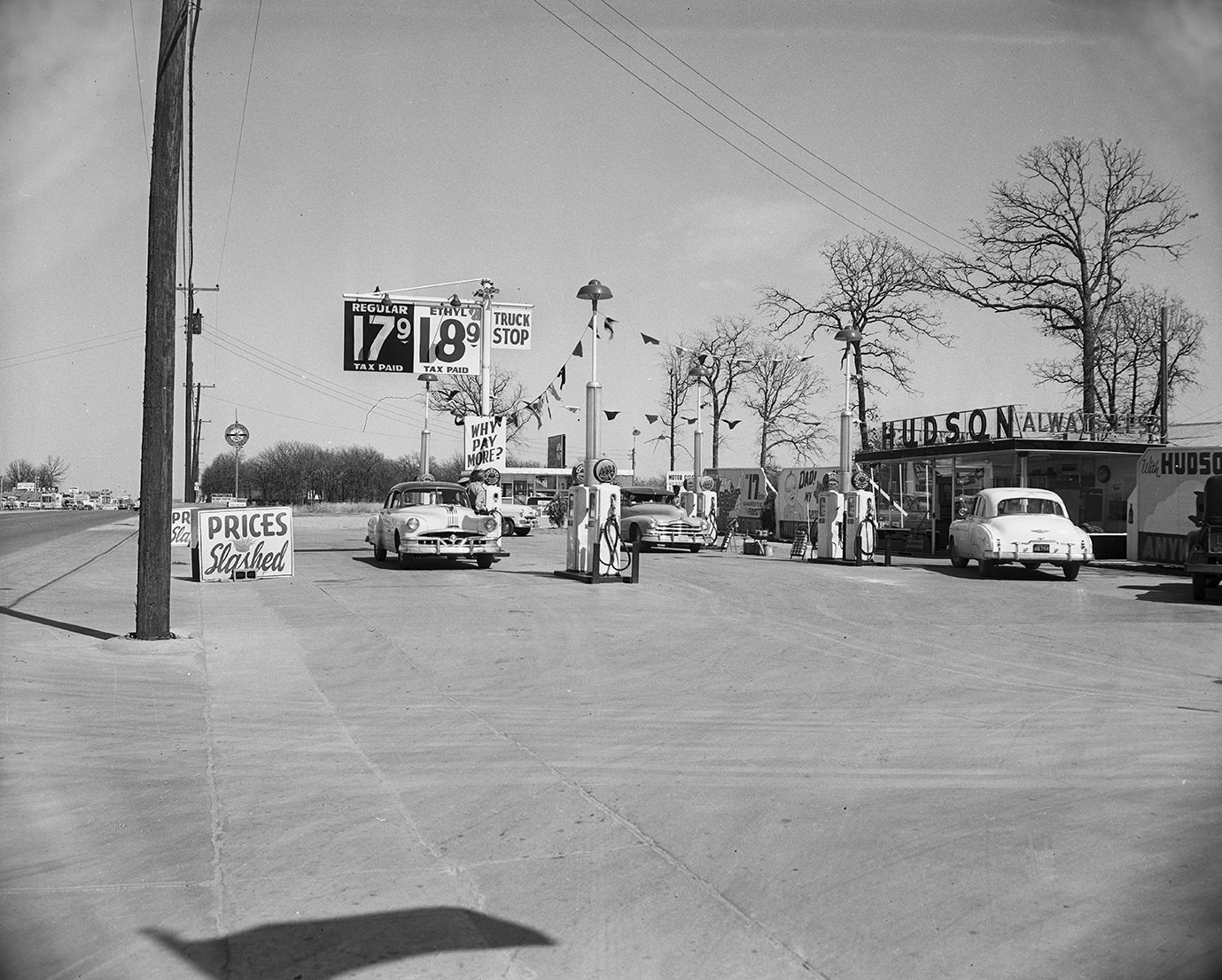
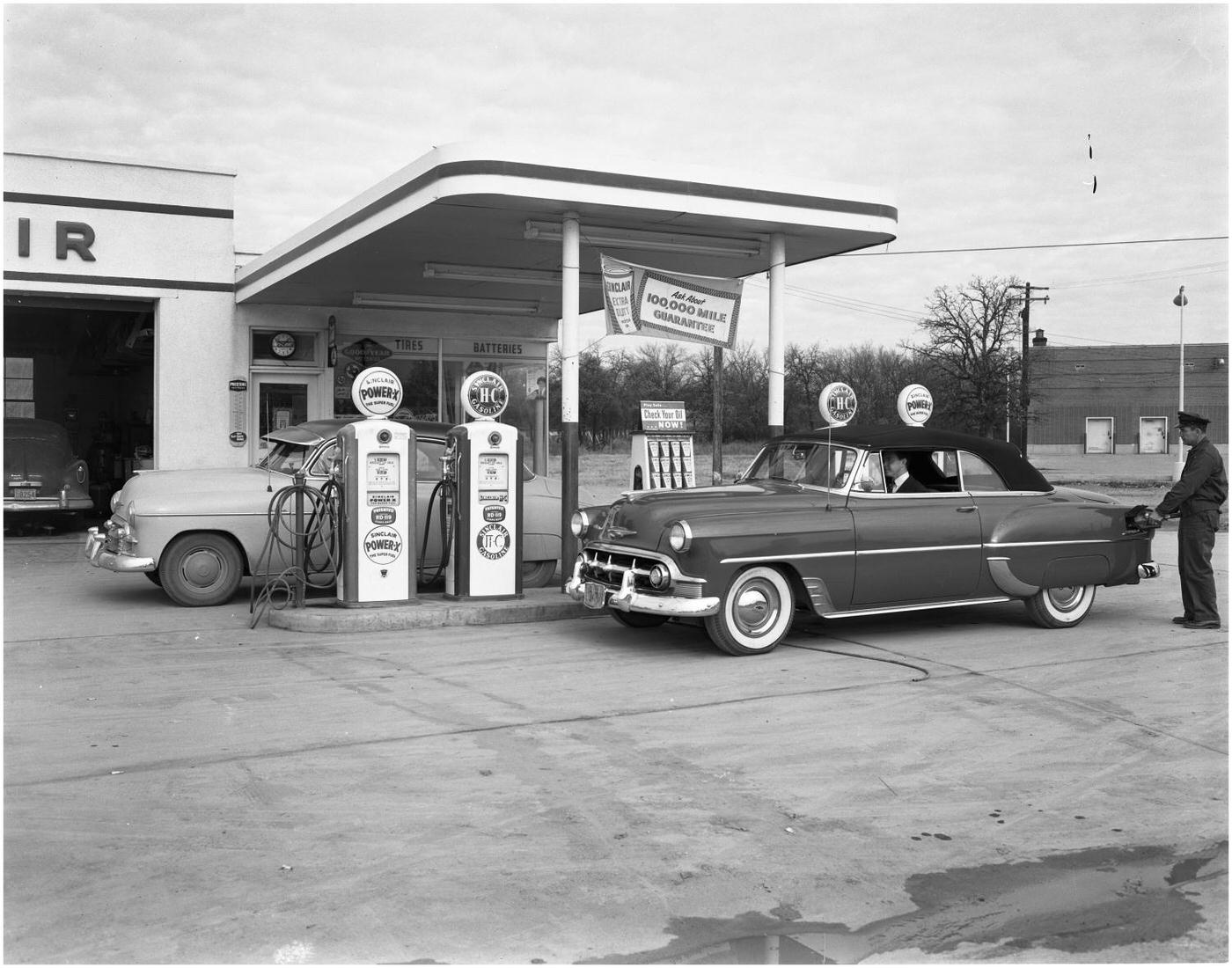
Gas stations became fixtures on Fort Worth streets, and competition between them was fierce. In 1954, the Hudson Service Station on East Belknap Street openly competed in gasoline price wars, posting prices designed to pull drivers away from competitors. Fueling a car was a routine part of daily life, and businesses knew it.
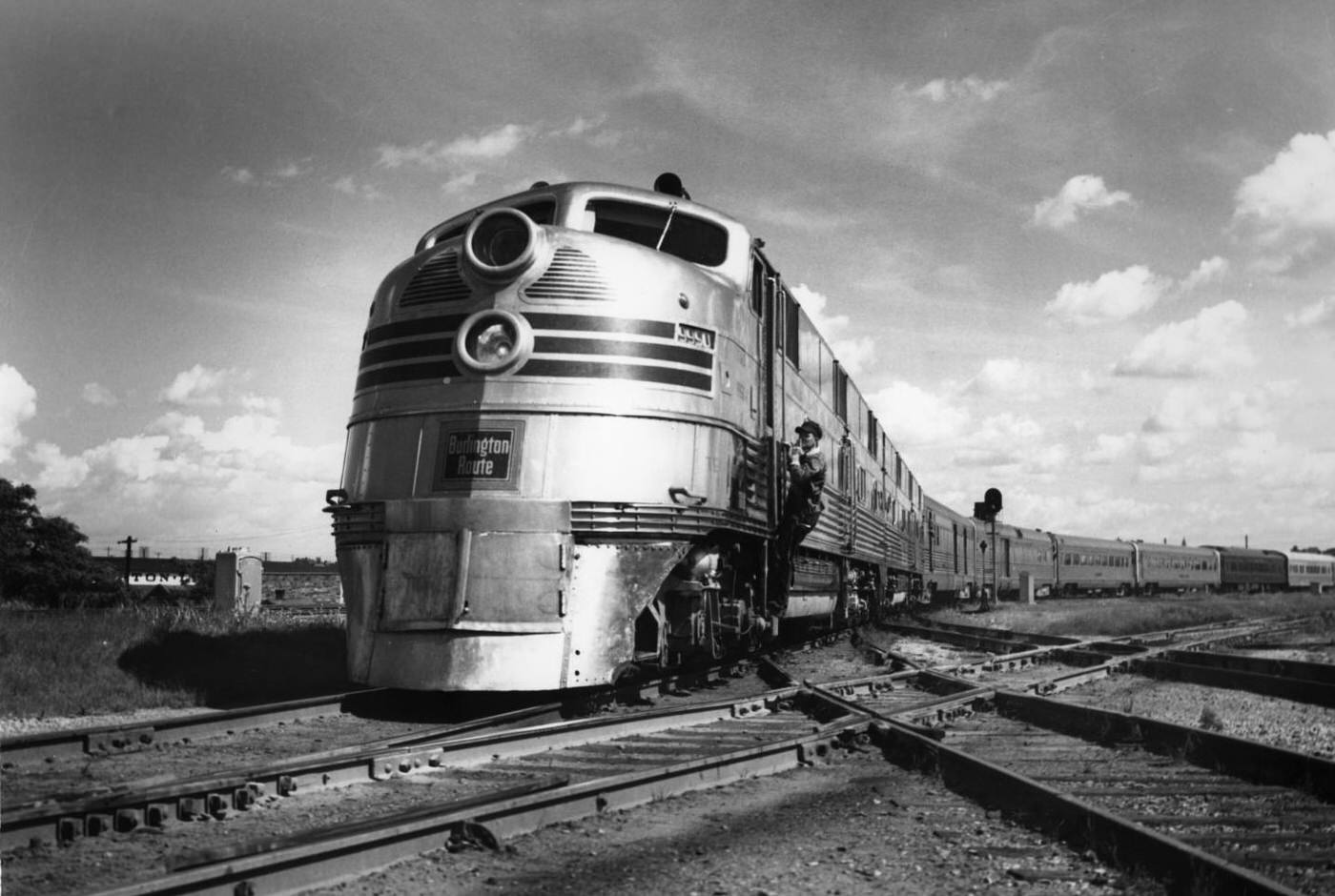
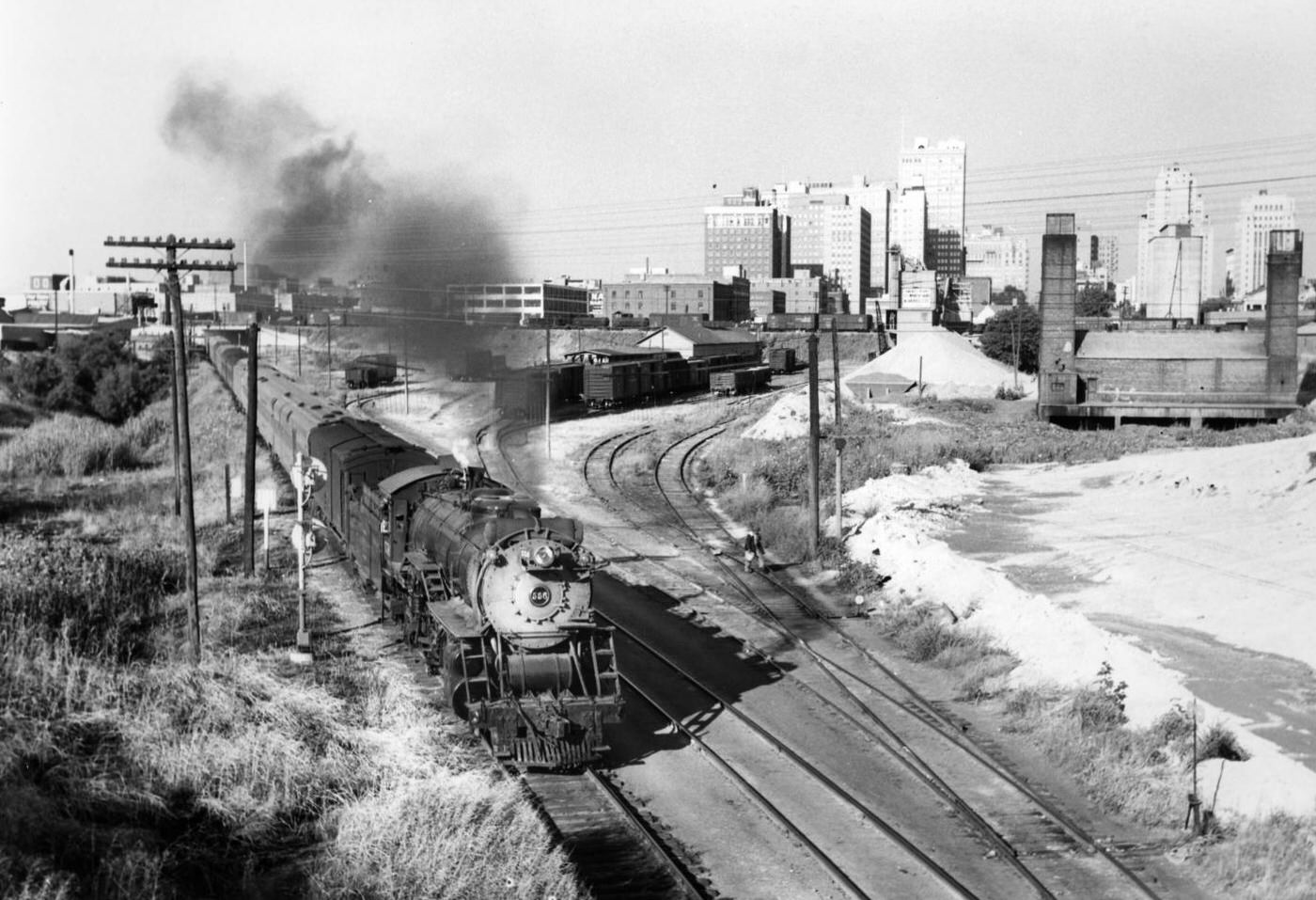
Rail travel still played a role in Fort Worth’s transportation network. The Fort Worth and Denver Railway’s Texas Zephyr ran a regular route connecting Fort Worth to Dallas and points north. The sleek passenger train was a familiar sight at the depot in 1950 and continued operating into the mid-decade, though the automobile was steadily taking priority over passenger rail for most residents.
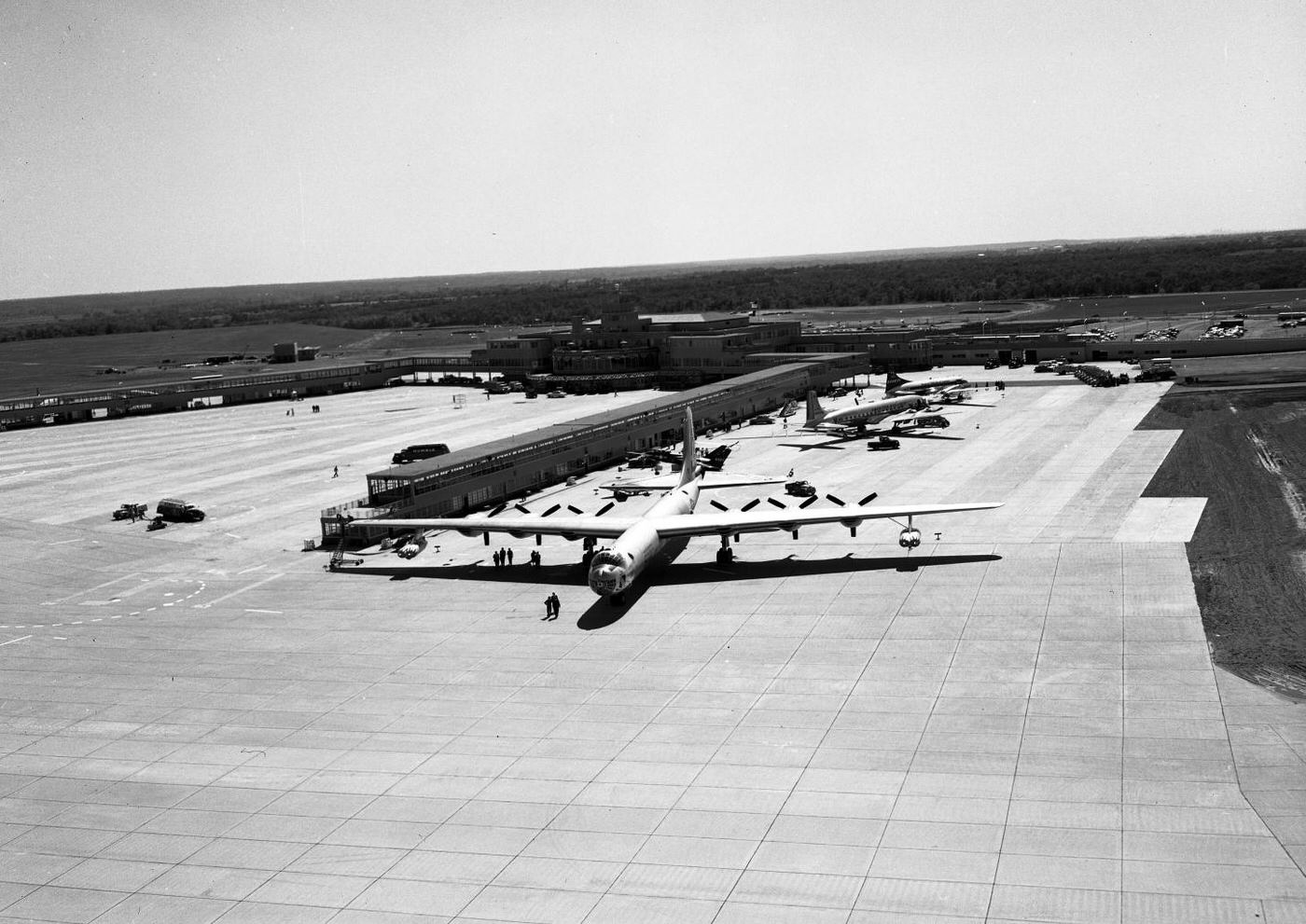
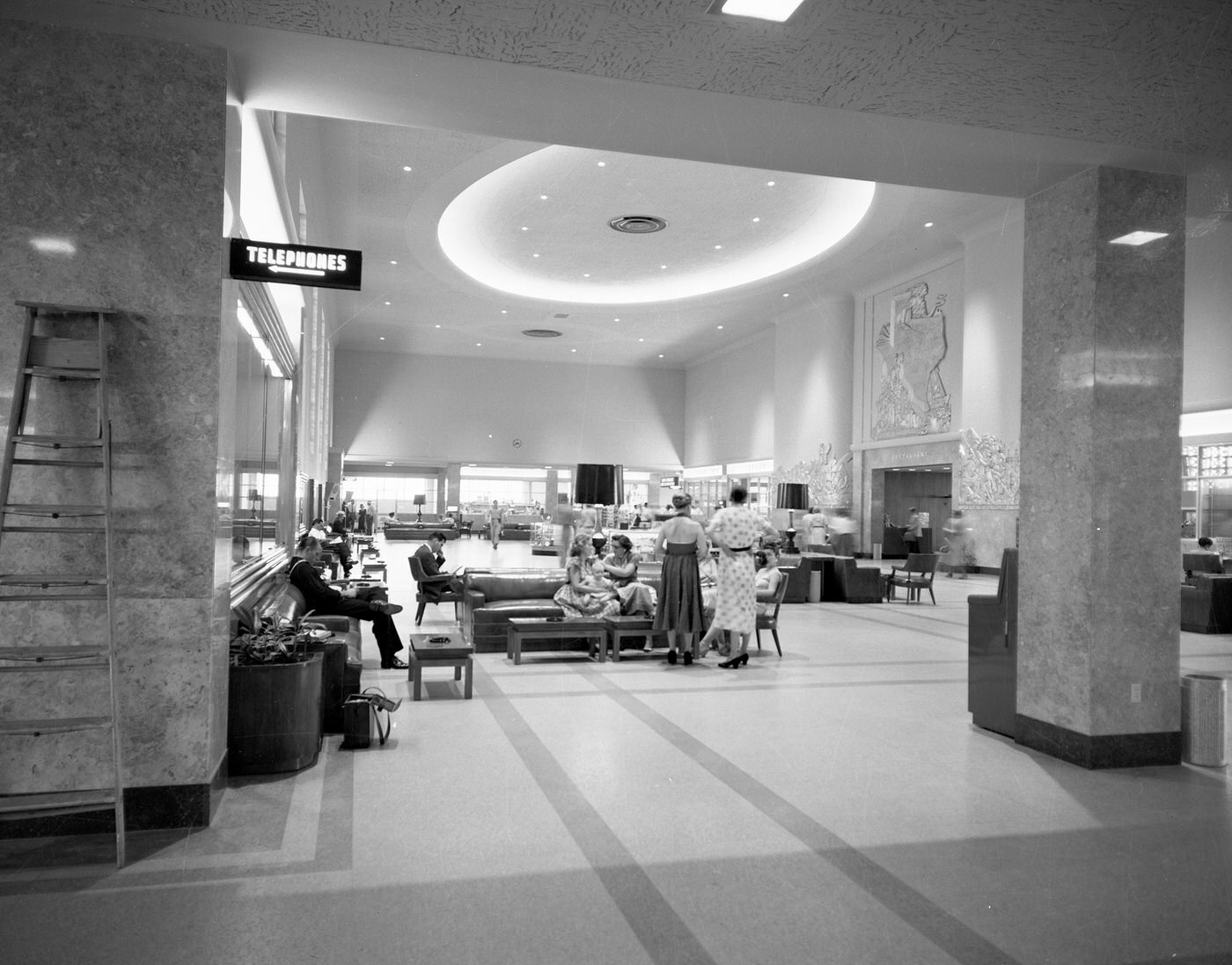
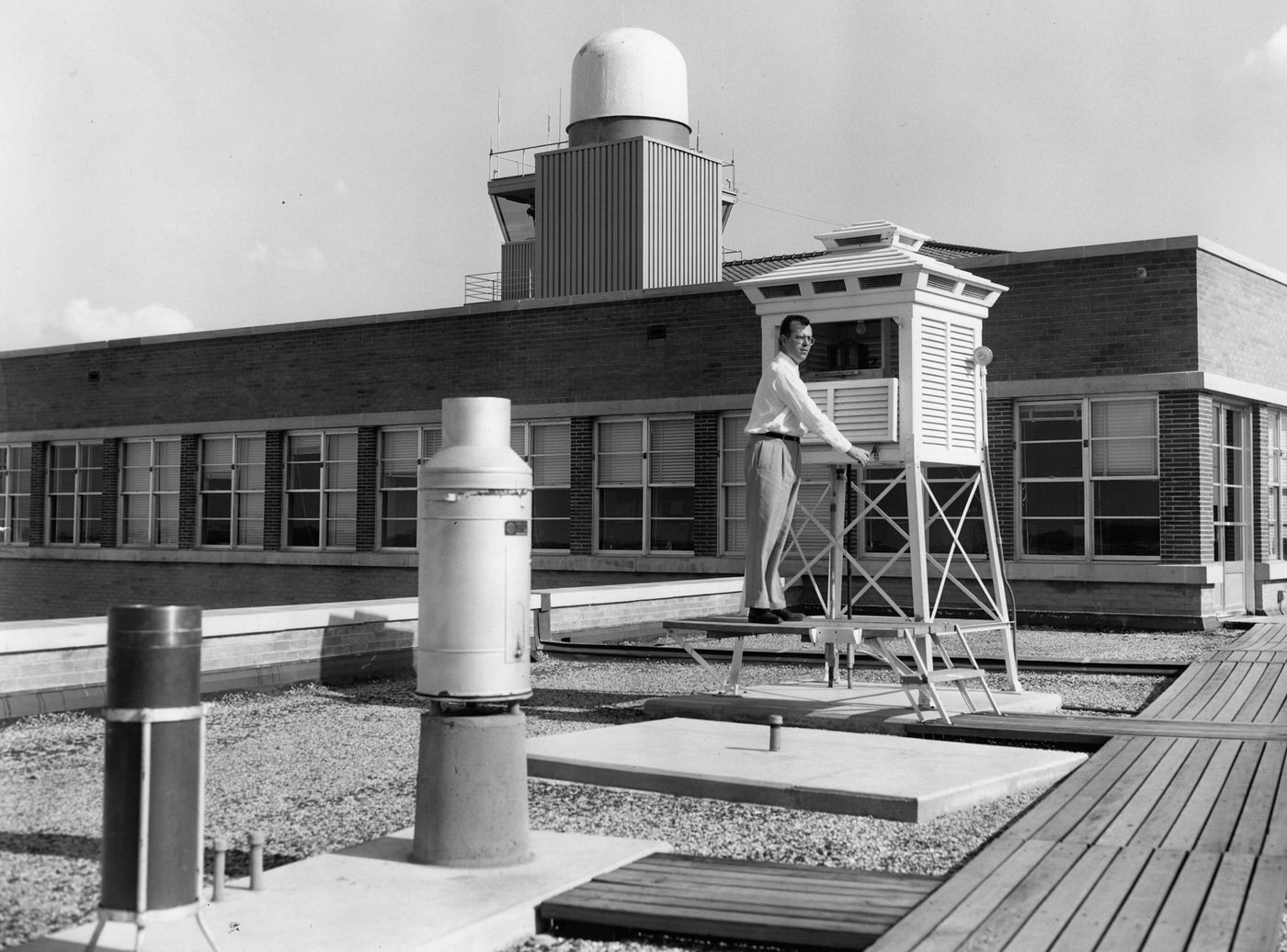
Greater Fort Worth International Airport, also known as Amon Carter Field, served commercial aviation and reflected the city’s growing connections to the wider country. Its lobby was modernly appointed for the era, and three aircraft lined its ramp in 1953. A radar station at the facility marked the increasing sophistication of air travel infrastructure in the region.
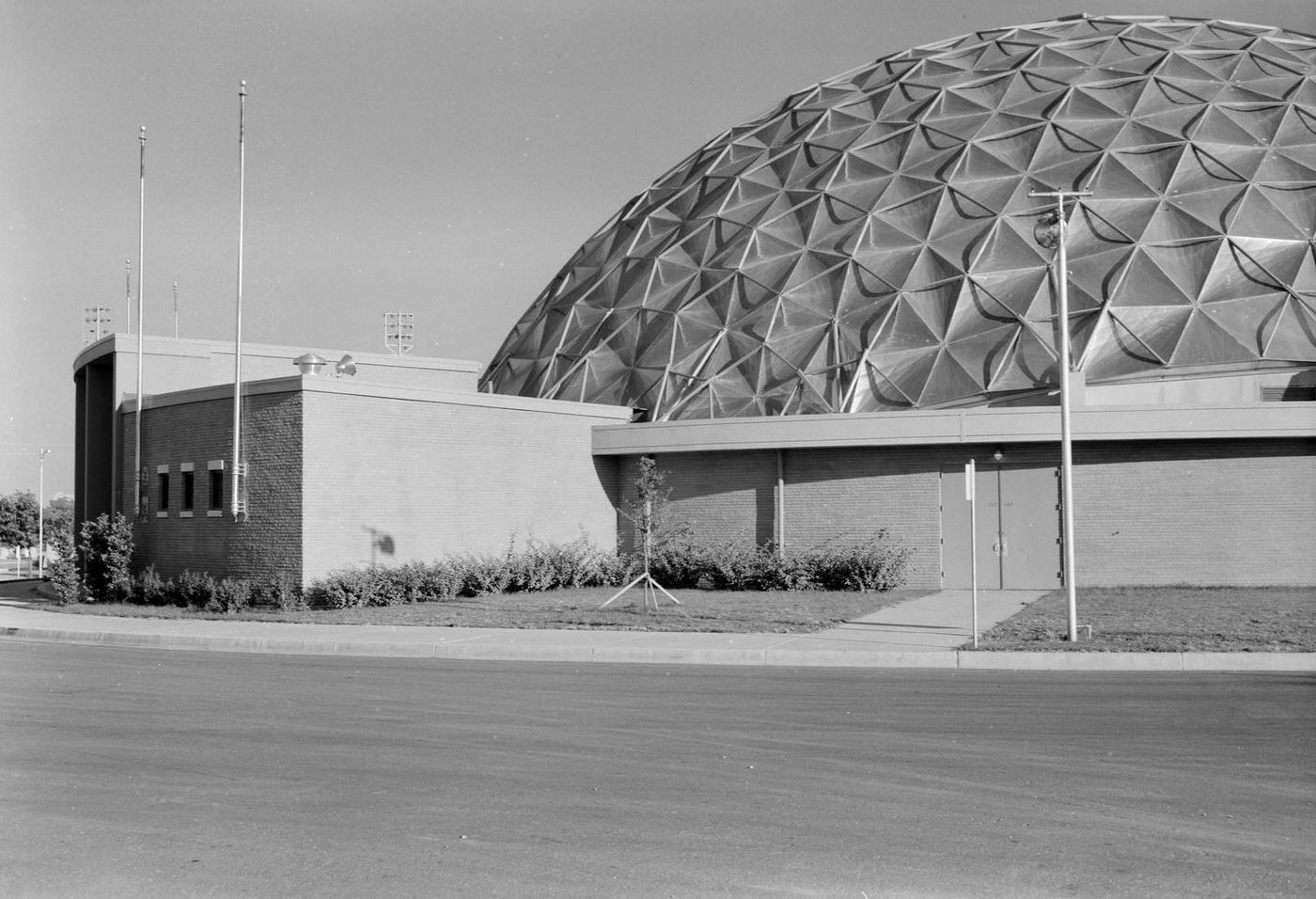
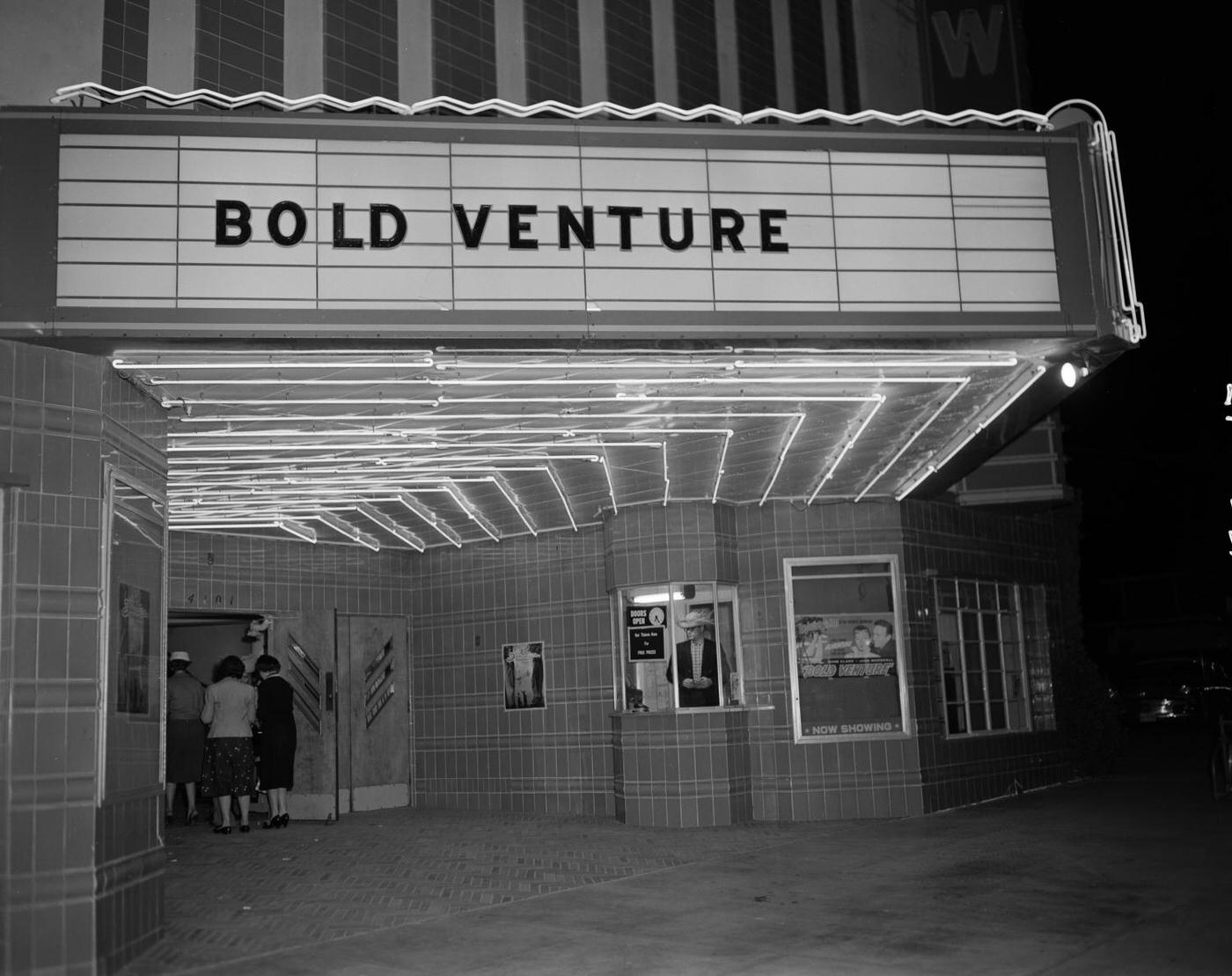
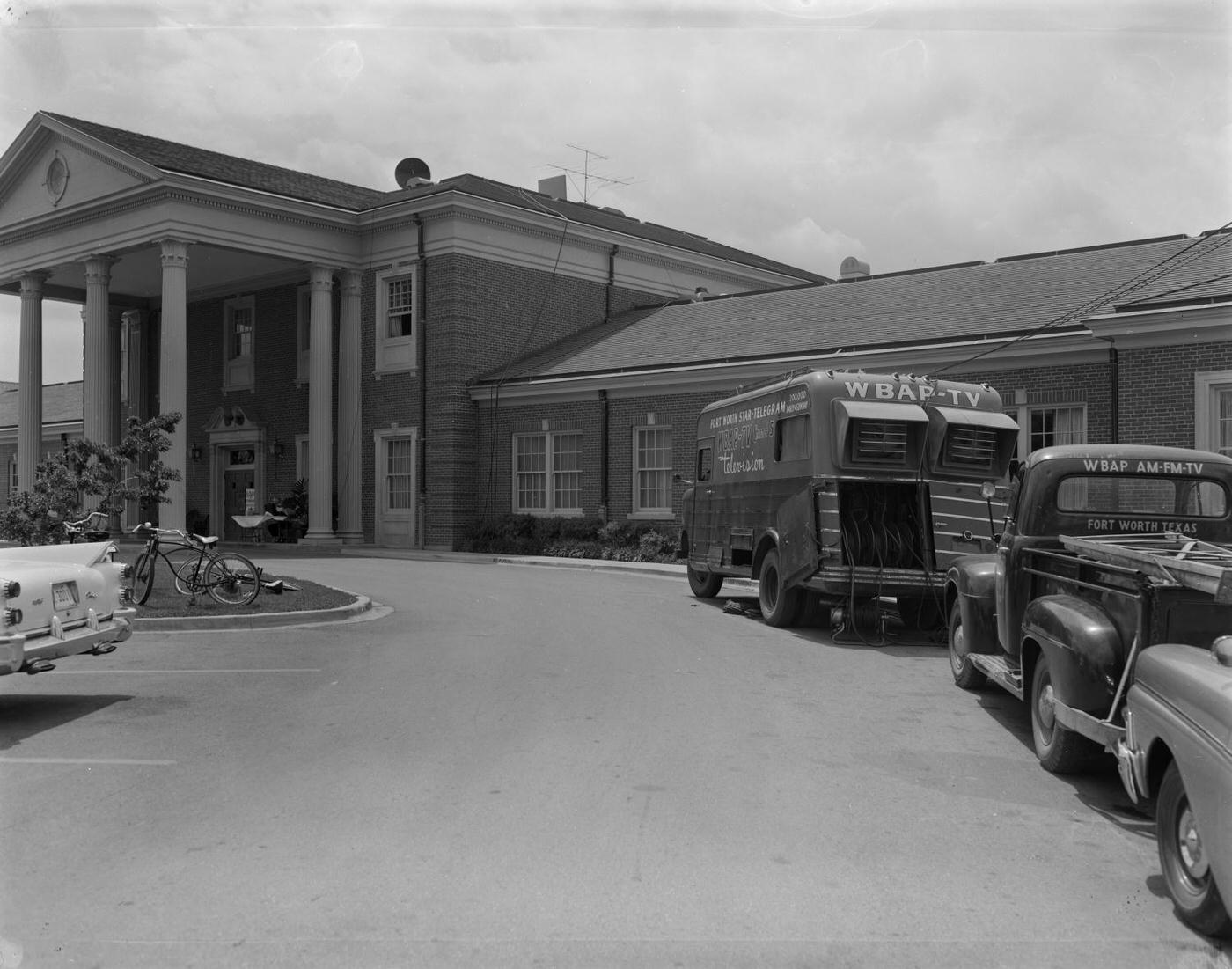
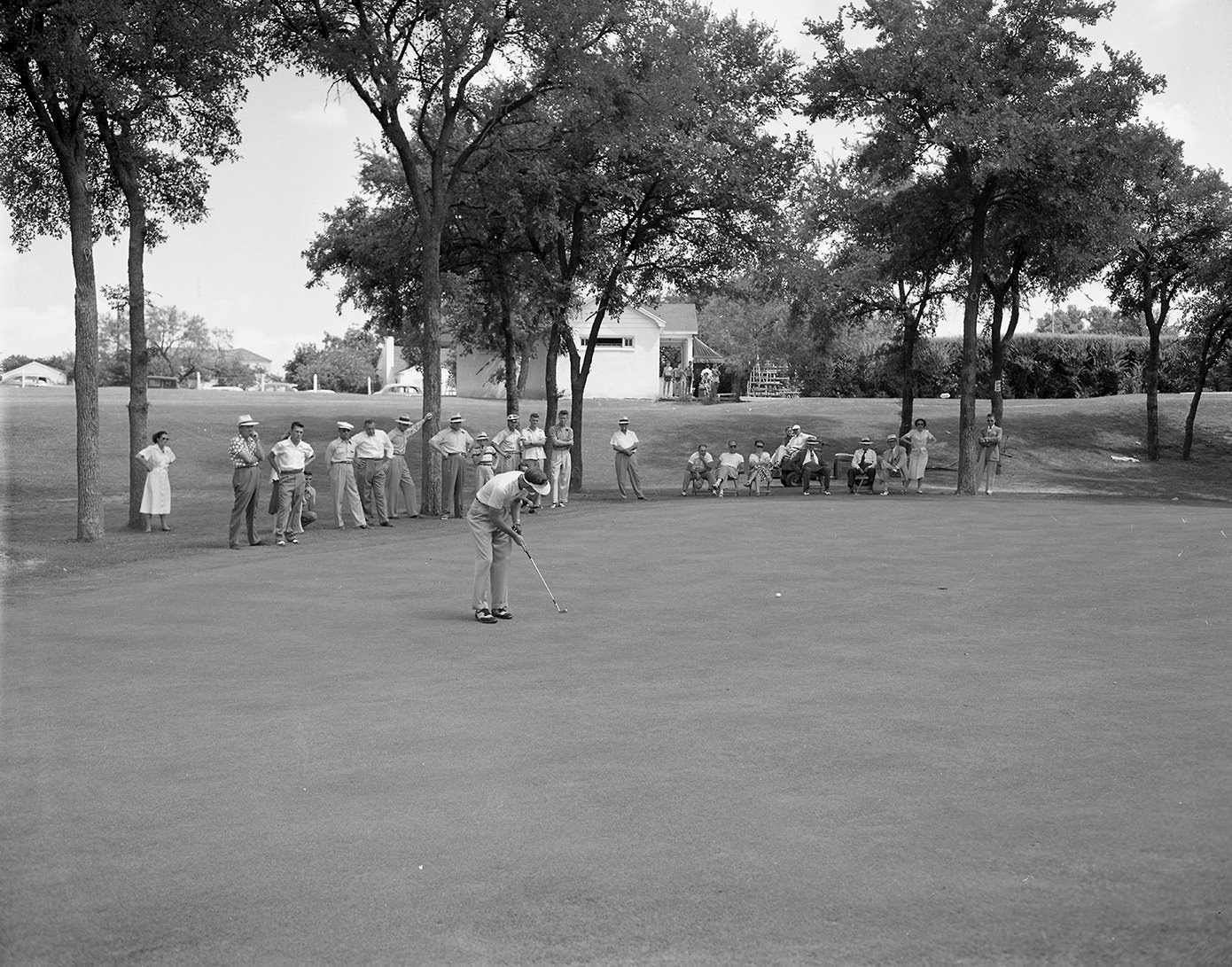
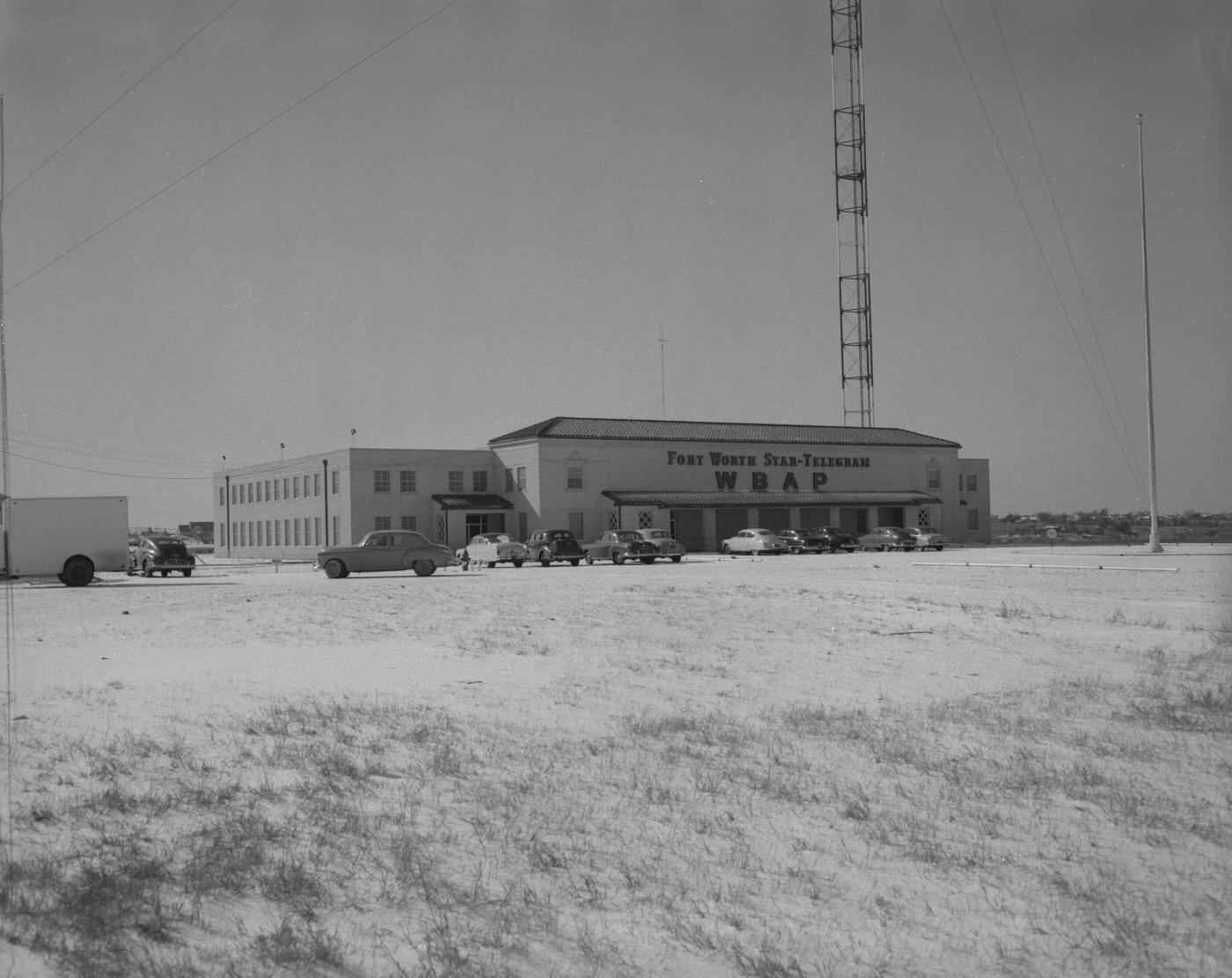
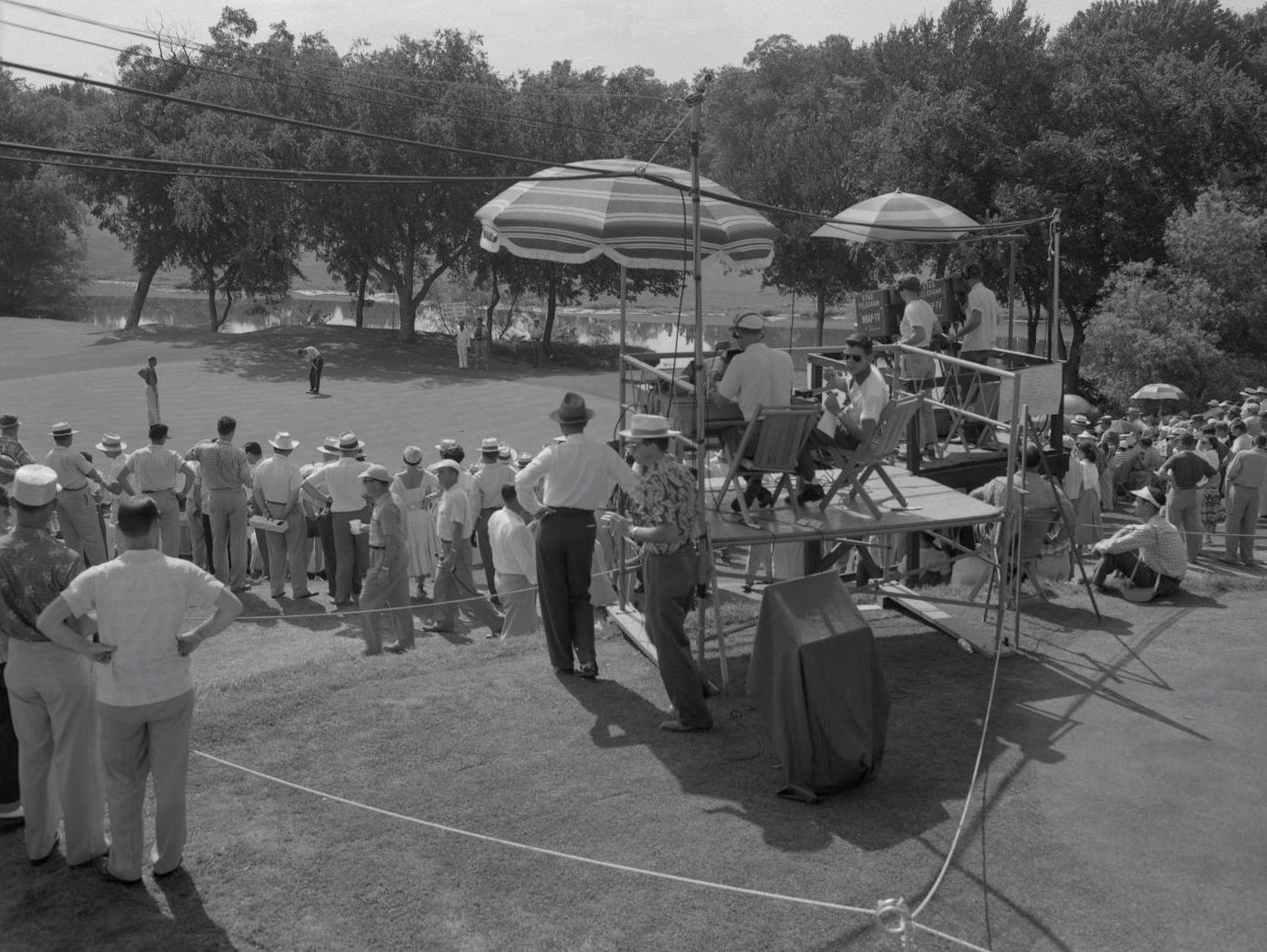
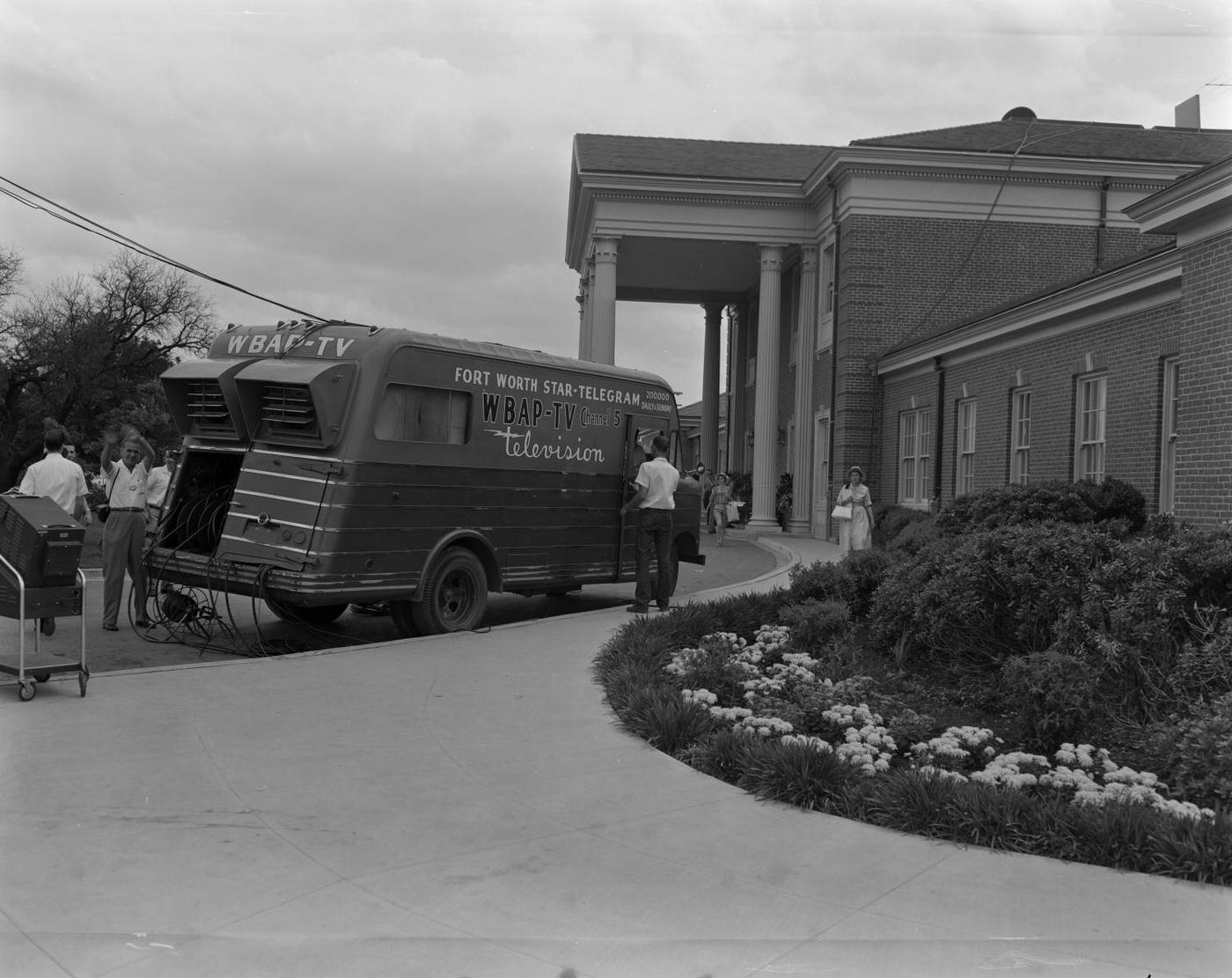
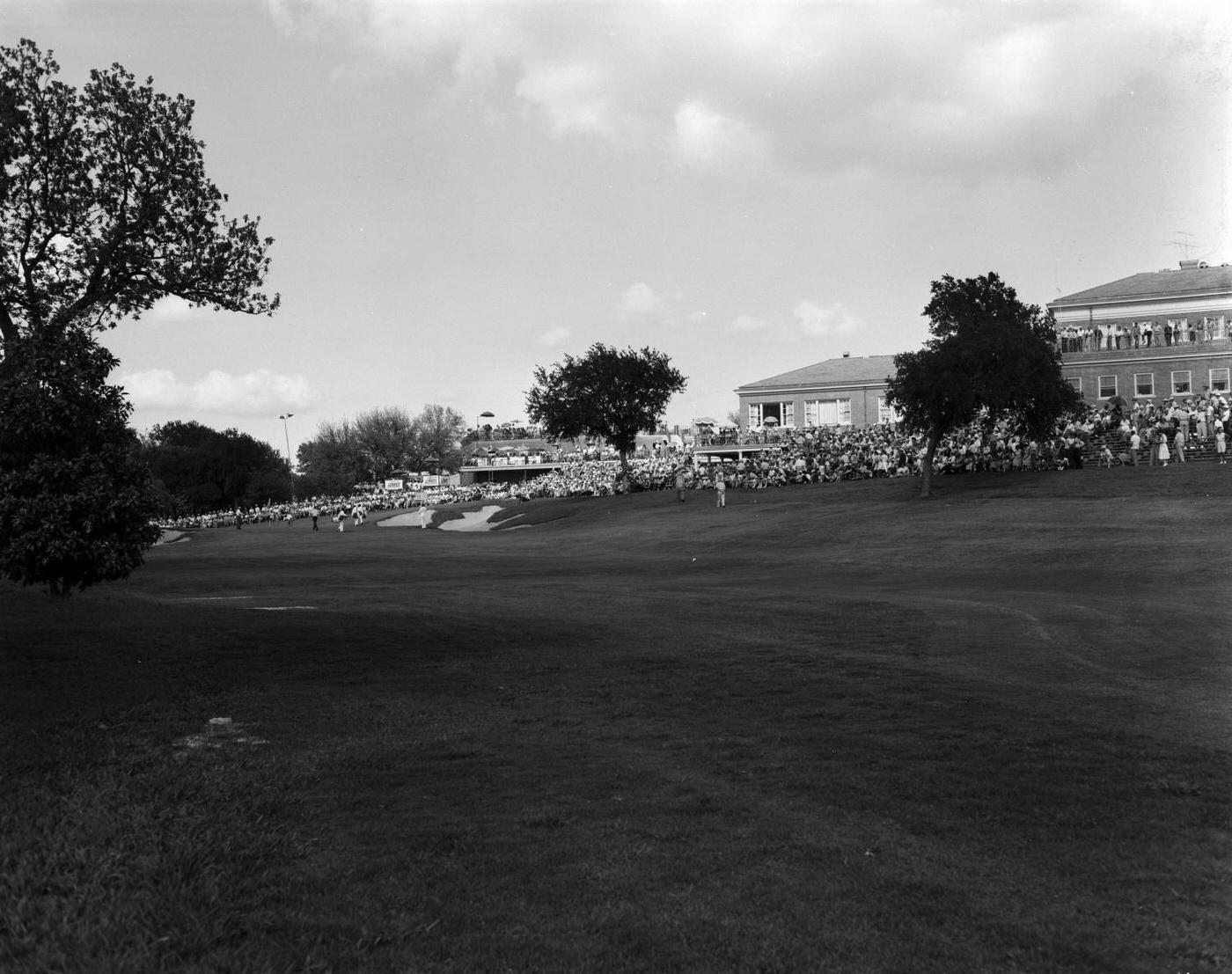
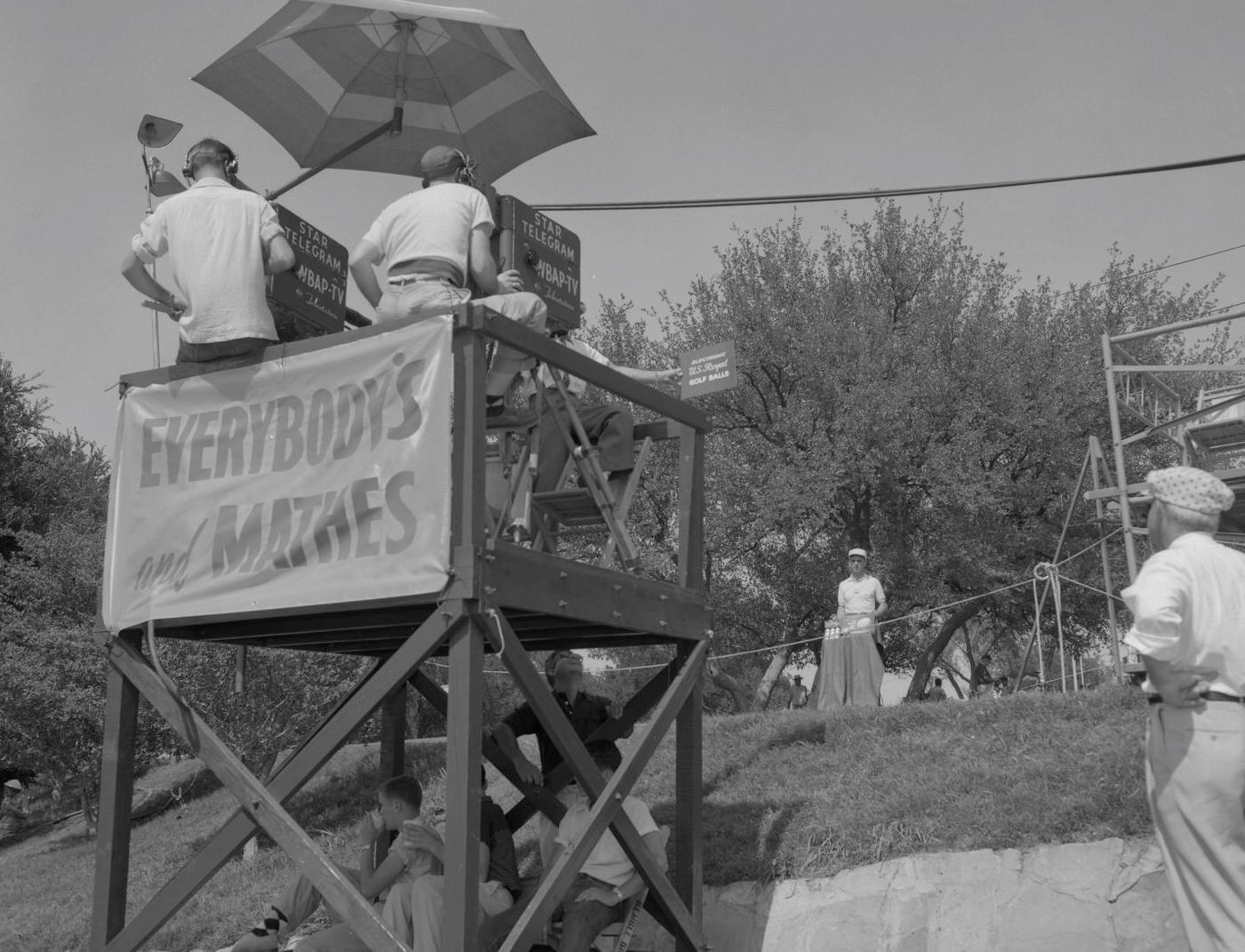
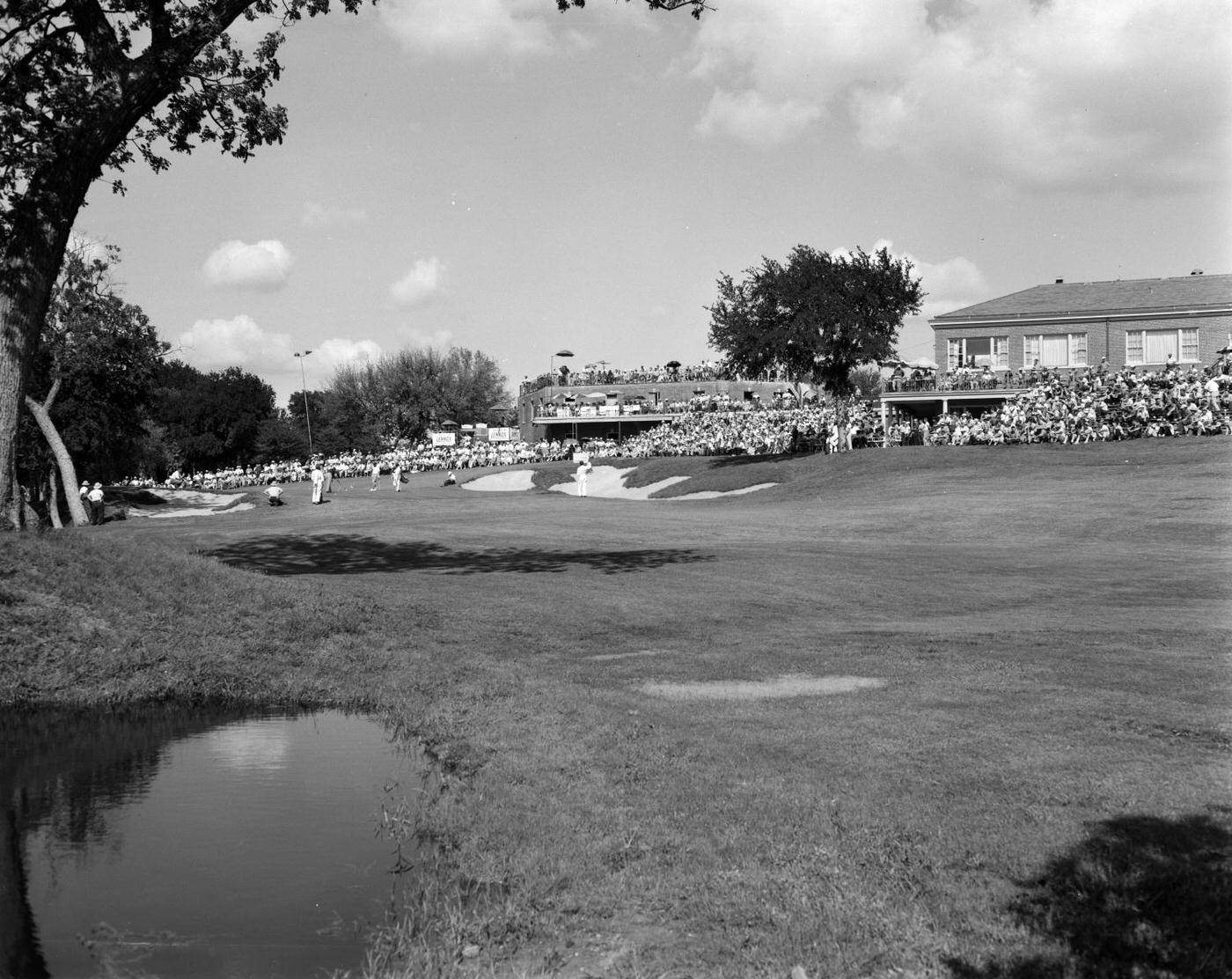
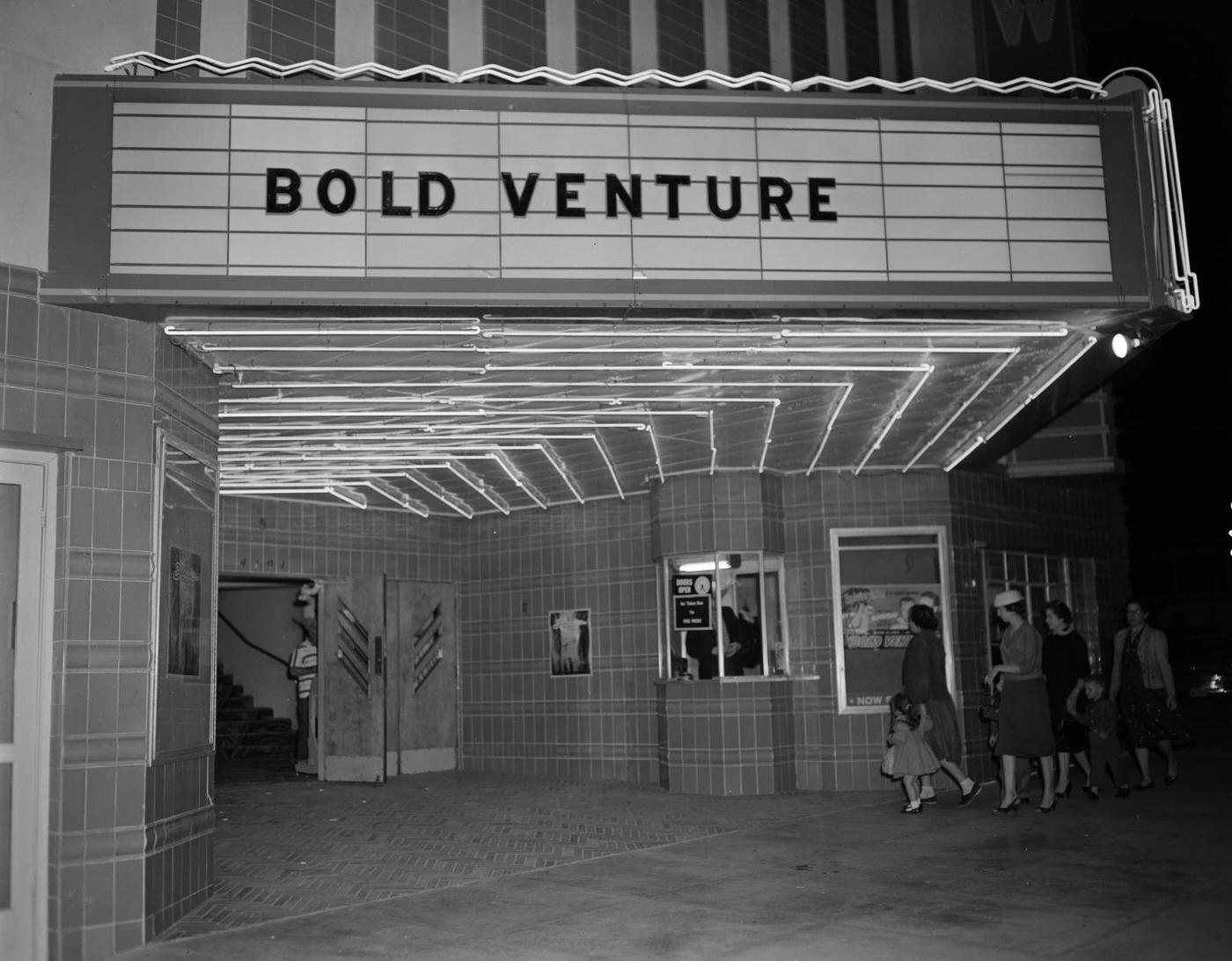
Fort Worth’s cultural life in the 1950s extended well beyond industry and commerce. The Casa Mañana Theatre offered live entertainment in a distinctive domed building that became one of the city’s most recognizable structures. Movie houses like the Gateway Theatre drew audiences to showings throughout the decade. Colonial Country Club hosted prominent golf events regularly filmed and broadcast by WBAP-TV, Fort Worth’s television station, which was itself connected to the Star-Telegram media operation.
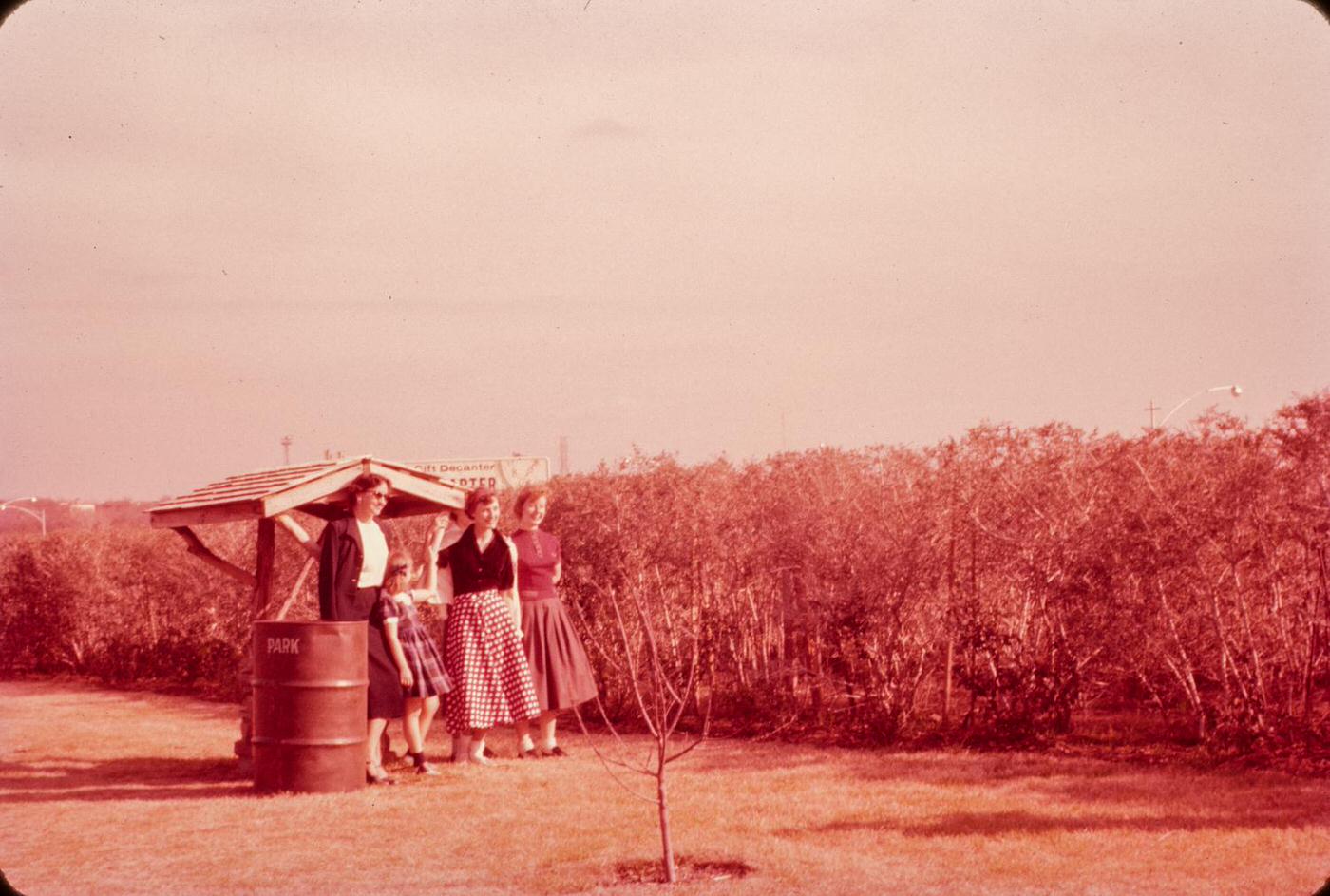
The Fort Worth Botanic Garden offered residents a quieter escape. By 1956, the garden’s hedge maze was a popular attraction where visitors wandered through tall green walls on pleasant afternoons. The gardens had been a fixture of the city for years and remained well-used throughout the decade.

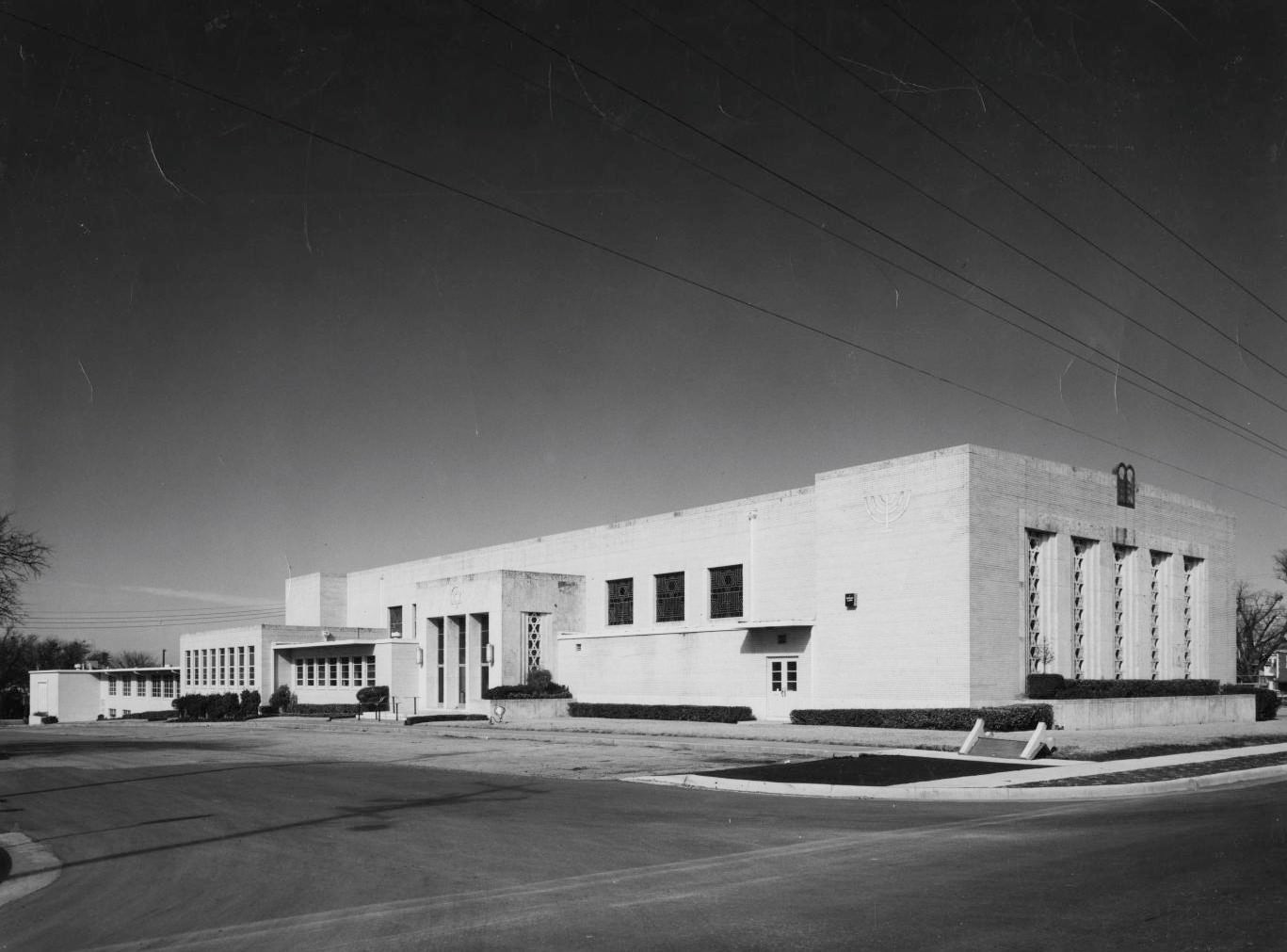
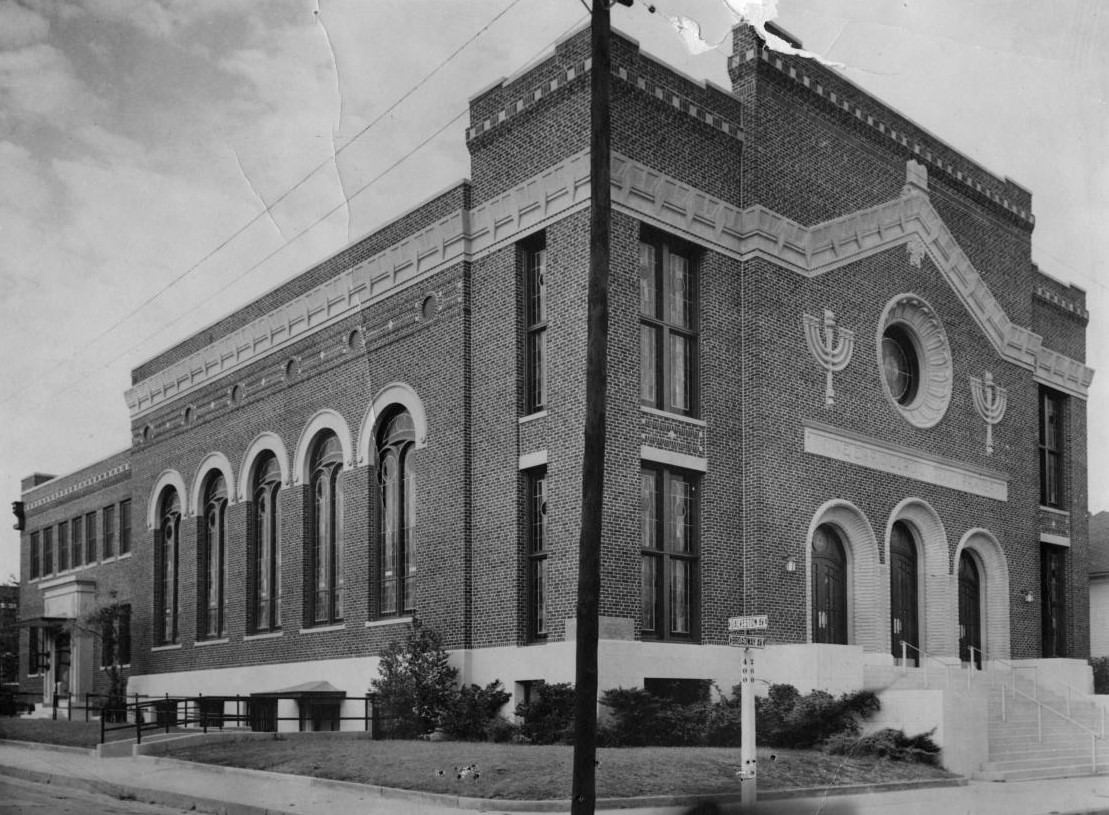
Fort Worth’s religious community was also growing. The Ahavath Sholom Congregation opened its third synagogue in 1952, and Beth-El Congregation’s synagogue stood as another marker of the city’s Jewish community. Churches were active across the city’s neighborhoods, including Saint Andrew’s Methodist Church on Missouri Avenue.
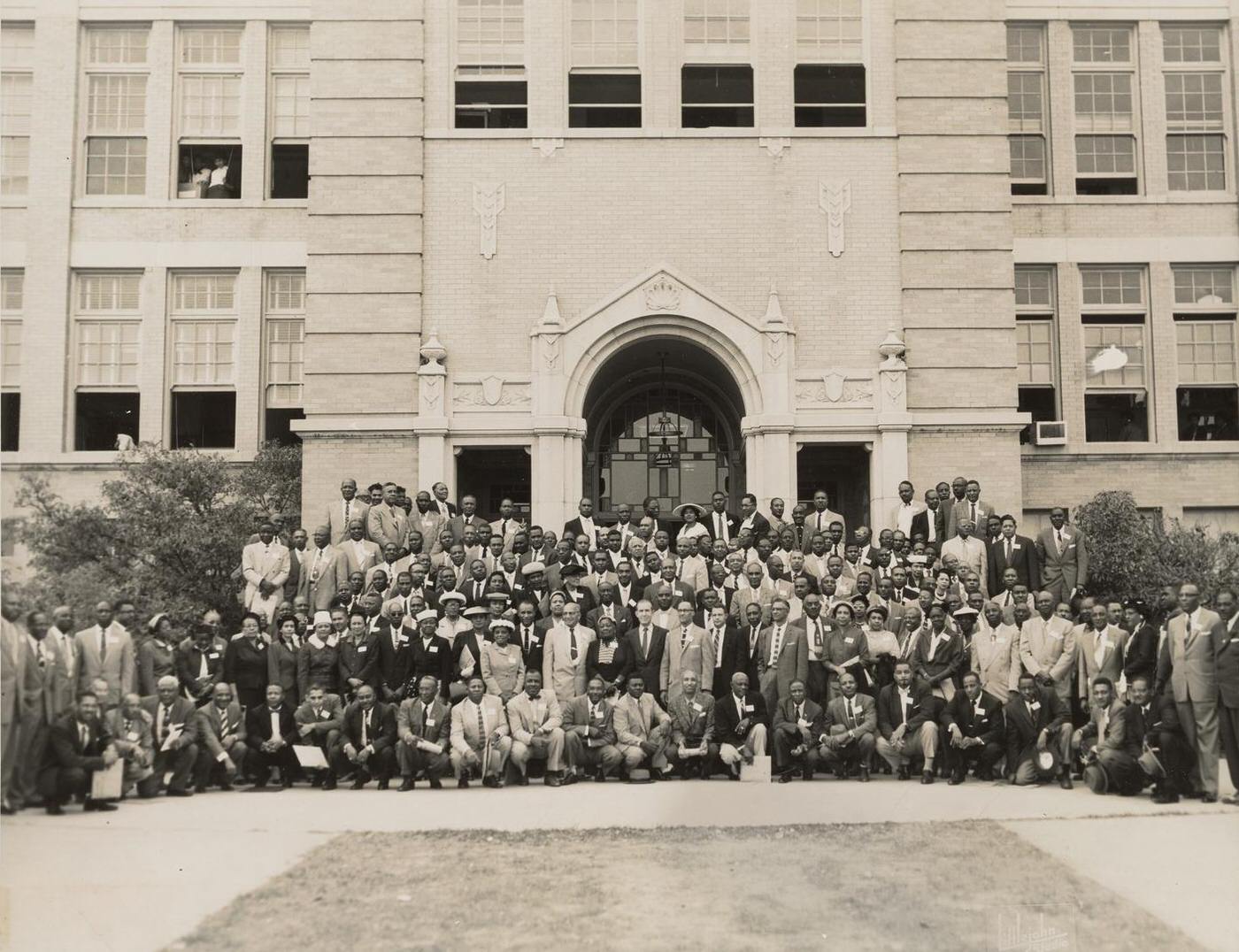
Daily life in Fort Worth in the 1950s was shaped just as heavily by what residents could not do as by what they could. Racial segregation was legally enforced across Texas and the broader South, and Fort Worth was no exception. African Americans faced separate and unequal facilities in schools, parks, pools, transportation, and public spaces. I. M. Terrell High School, one of the city’s Black schools, held a Principals’ Conference in 1956, a gathering that reflected the parallel institutional world Black residents built and maintained under segregation.
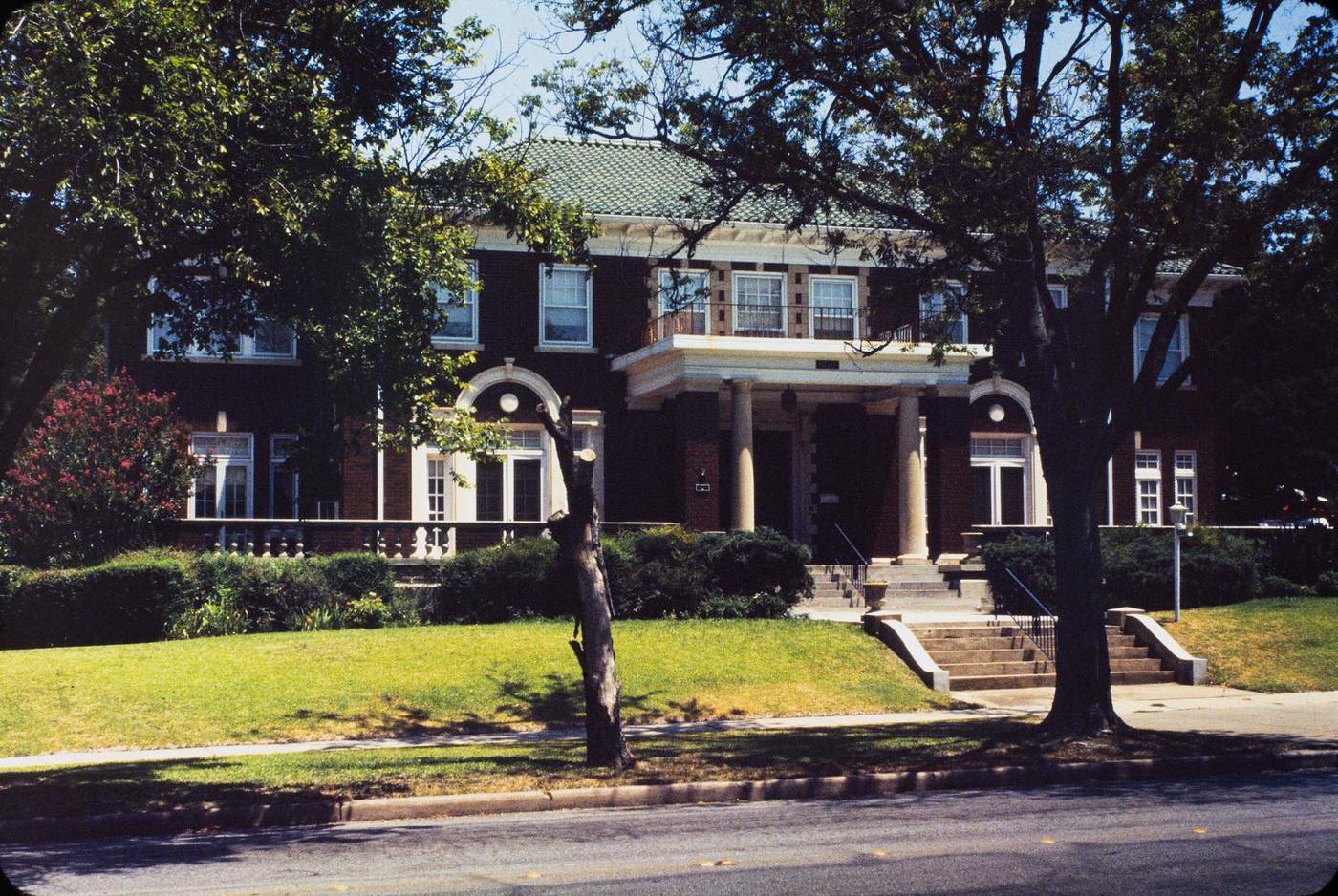
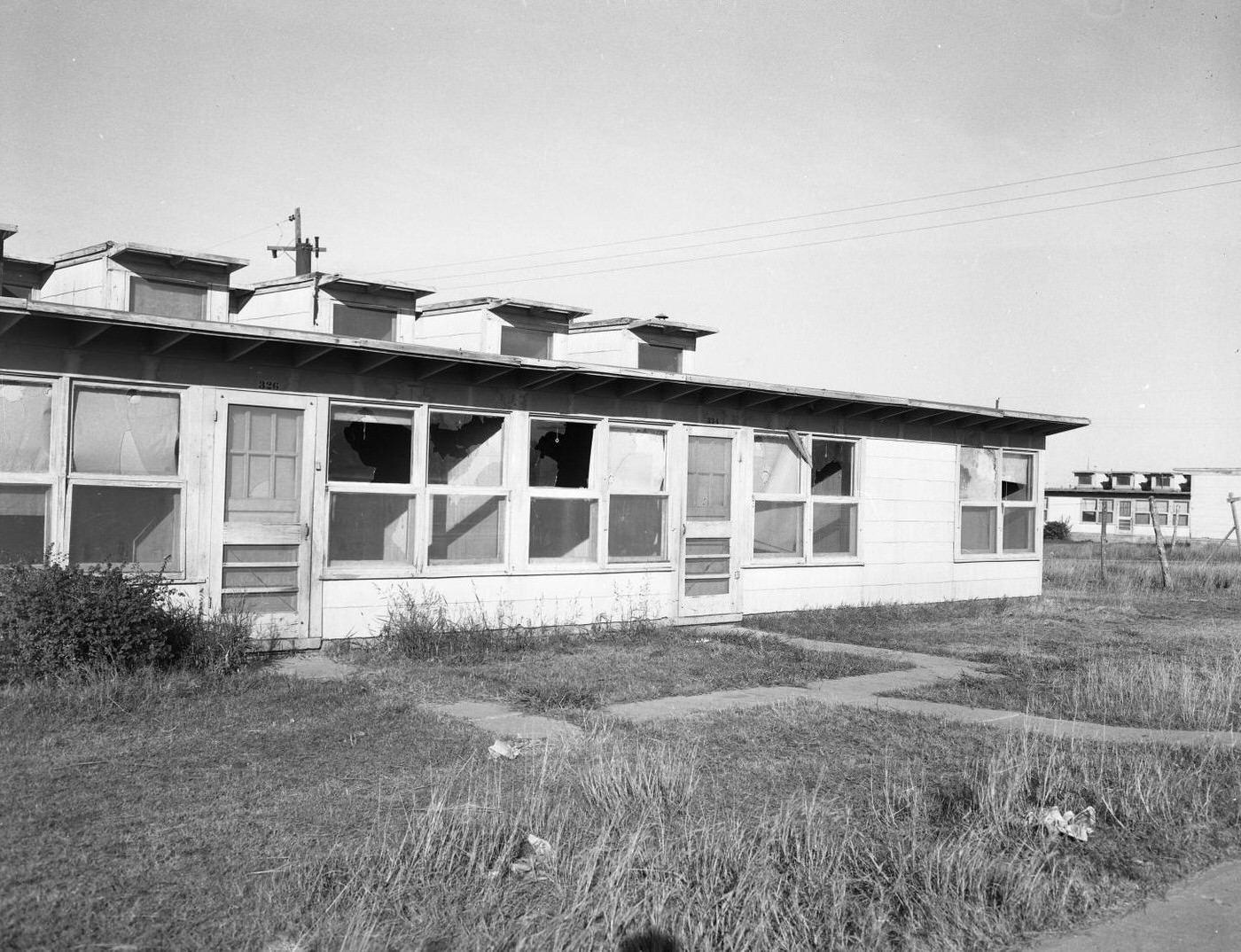
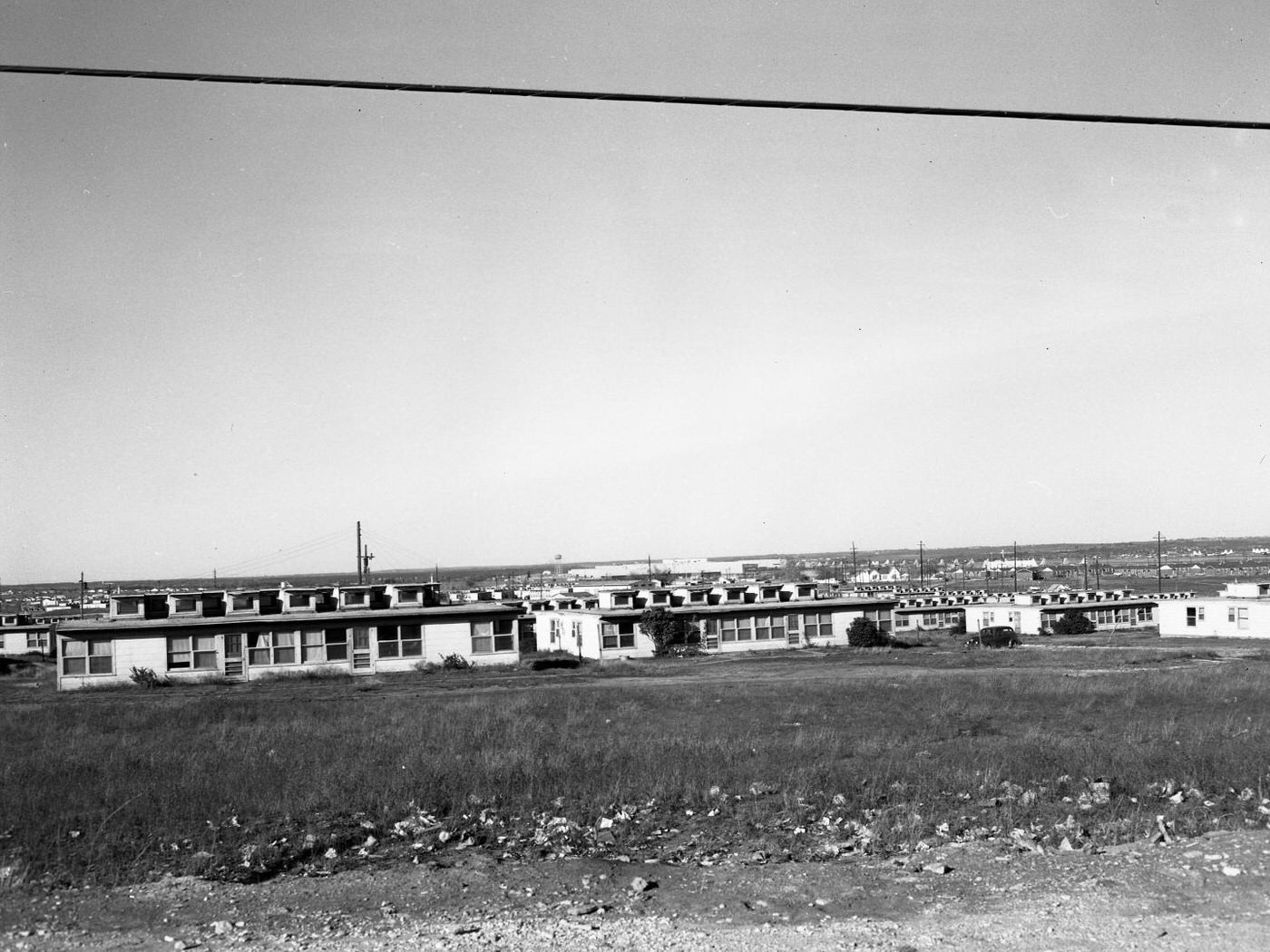
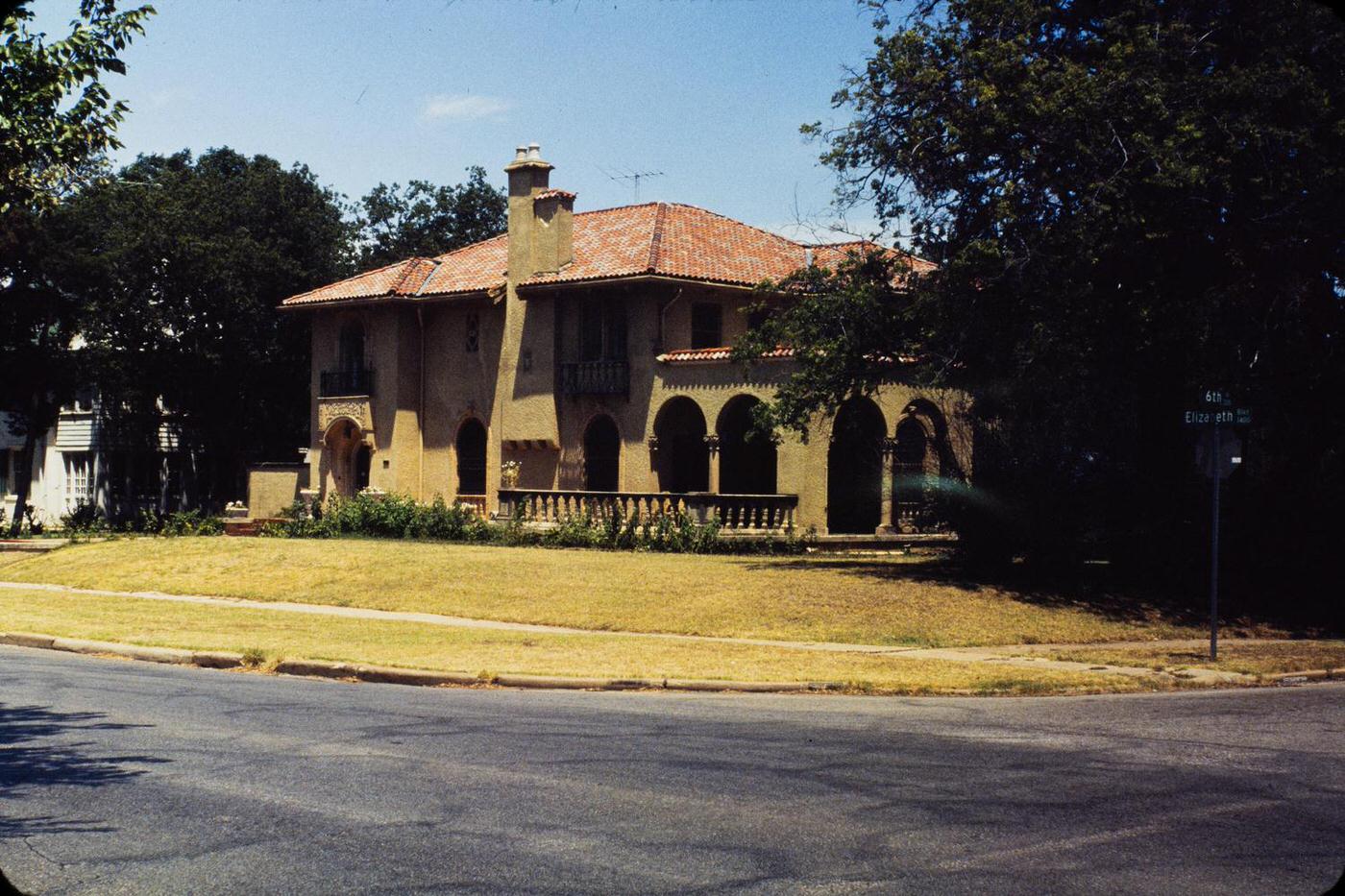
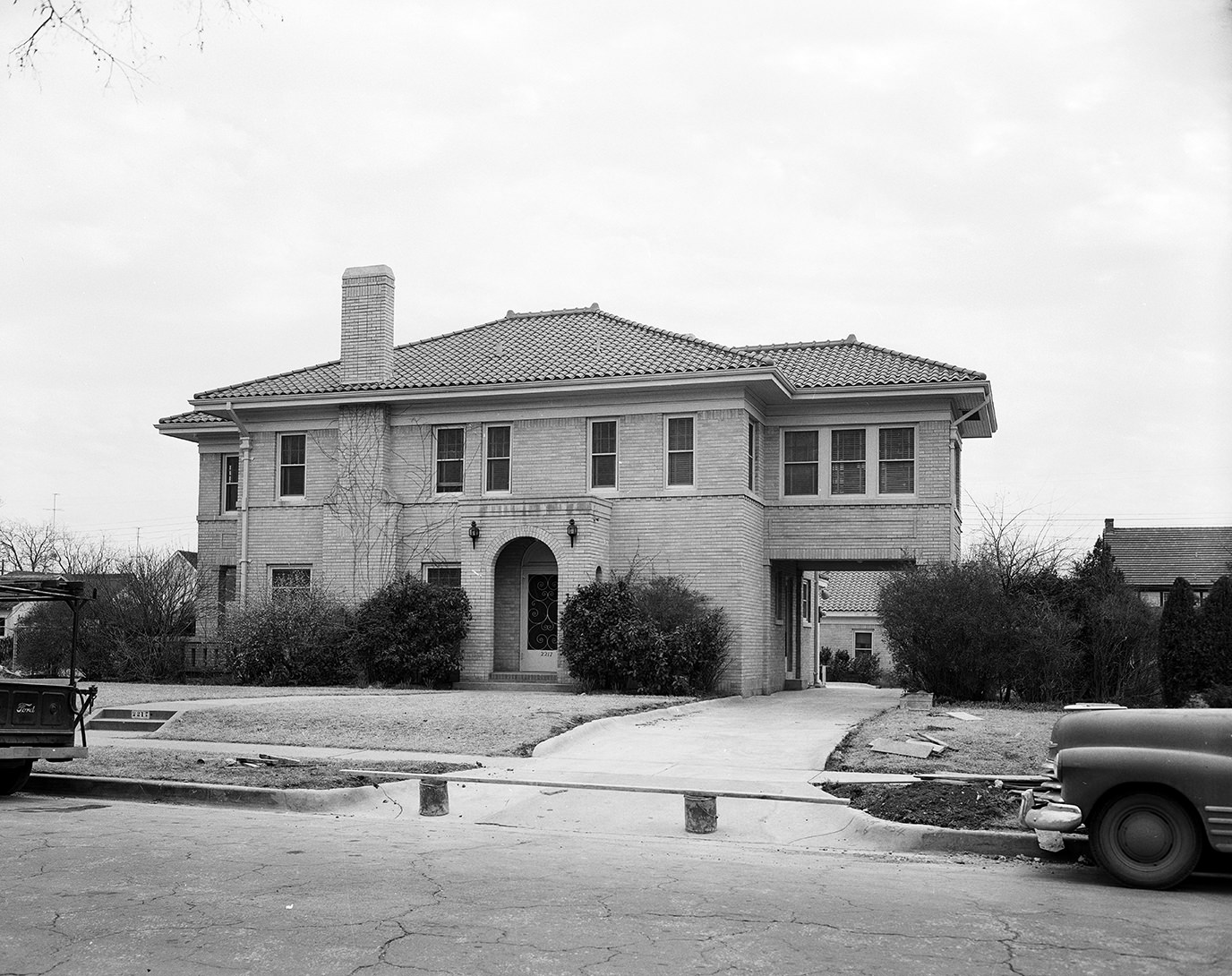
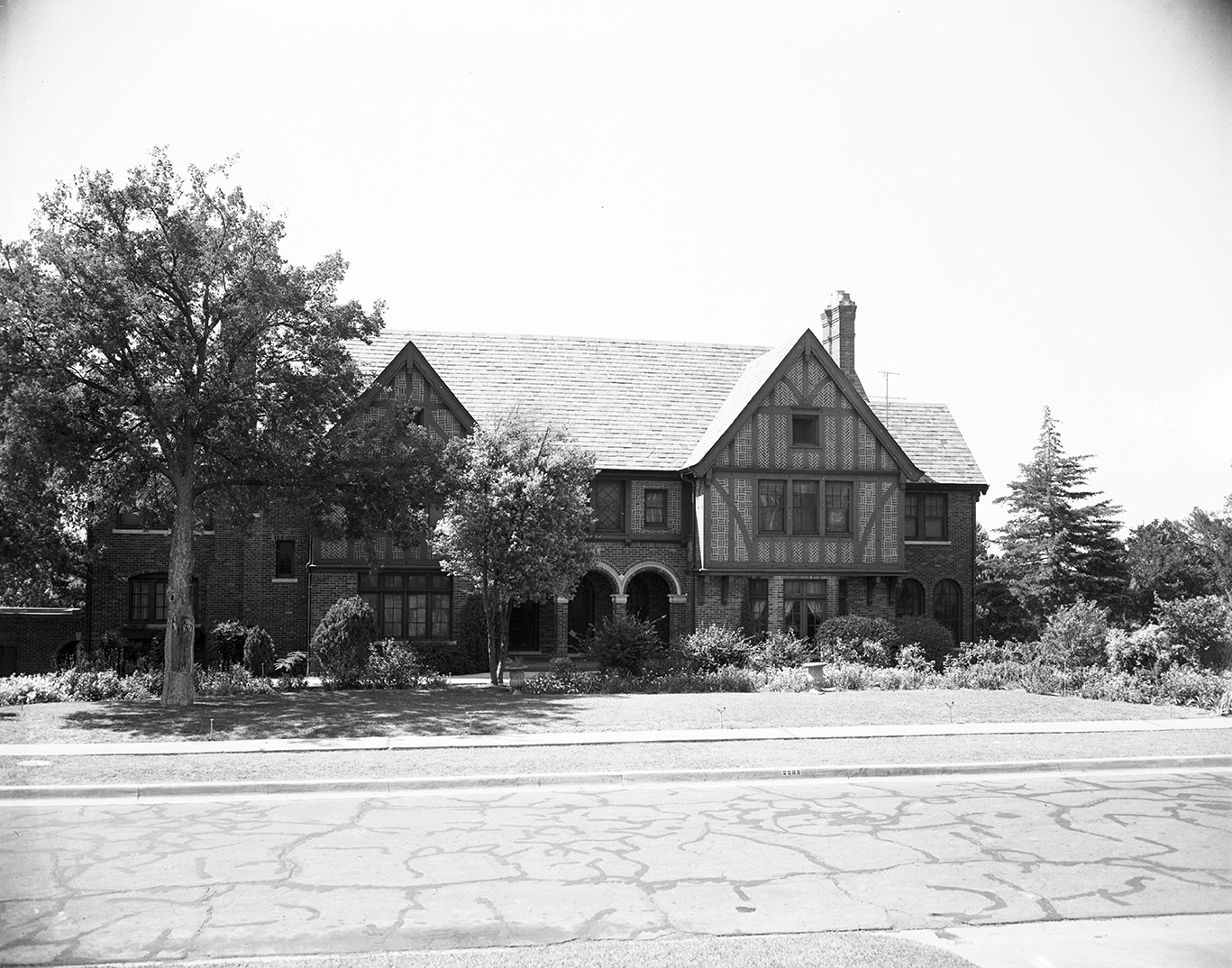
Neighborhoods on Elizabeth Boulevard showcased the comfortable, established homes of Fort Worth’s middle and upper-middle class. Large two-story houses with wide lots lined the boulevard, reflecting the prosperity that defense industry jobs and oil-related commerce had brought to many residents. Other parts of the city were in transition — old homes near Carswell were slated for demolition to make way for Liberator Village, housing built for military families.
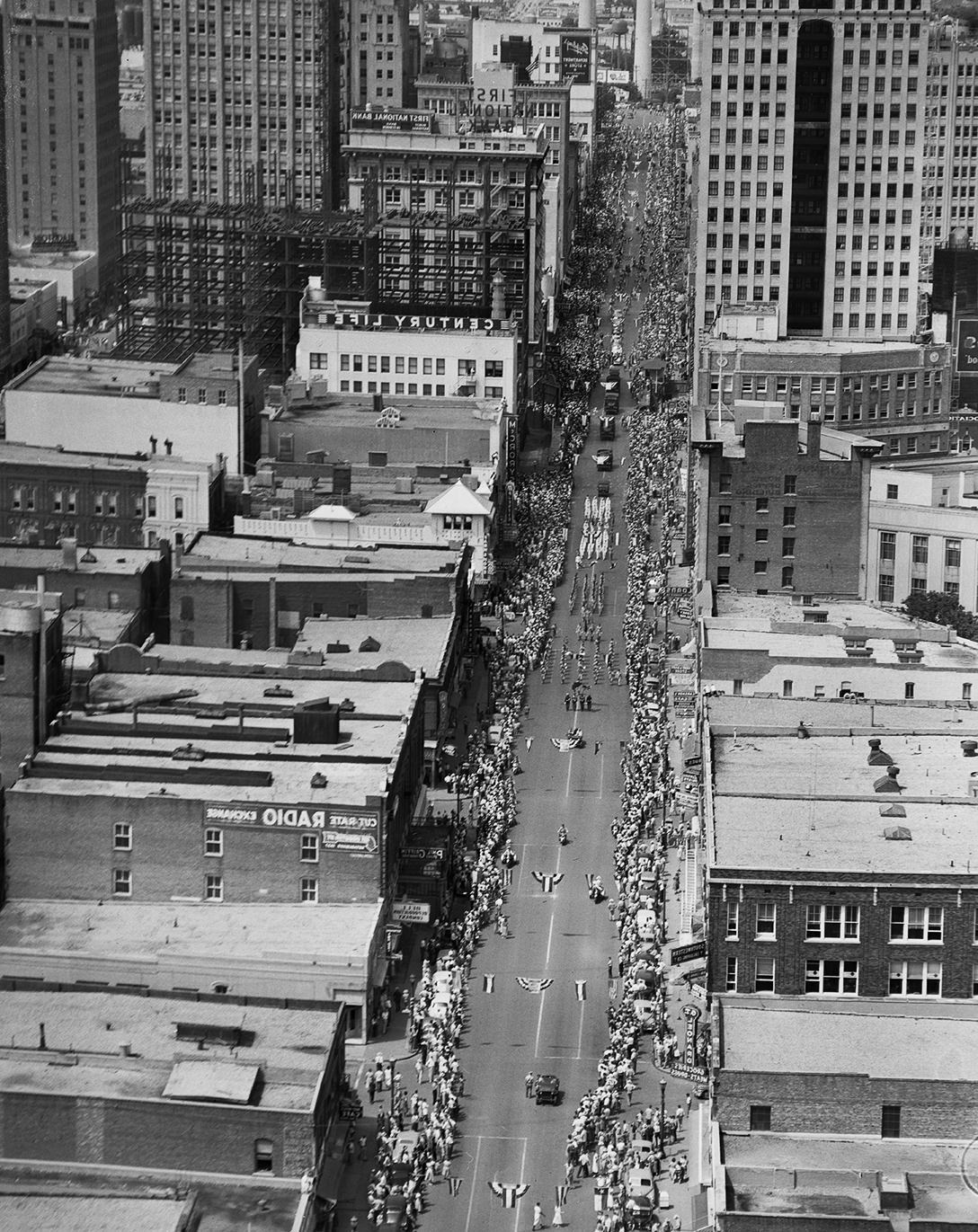
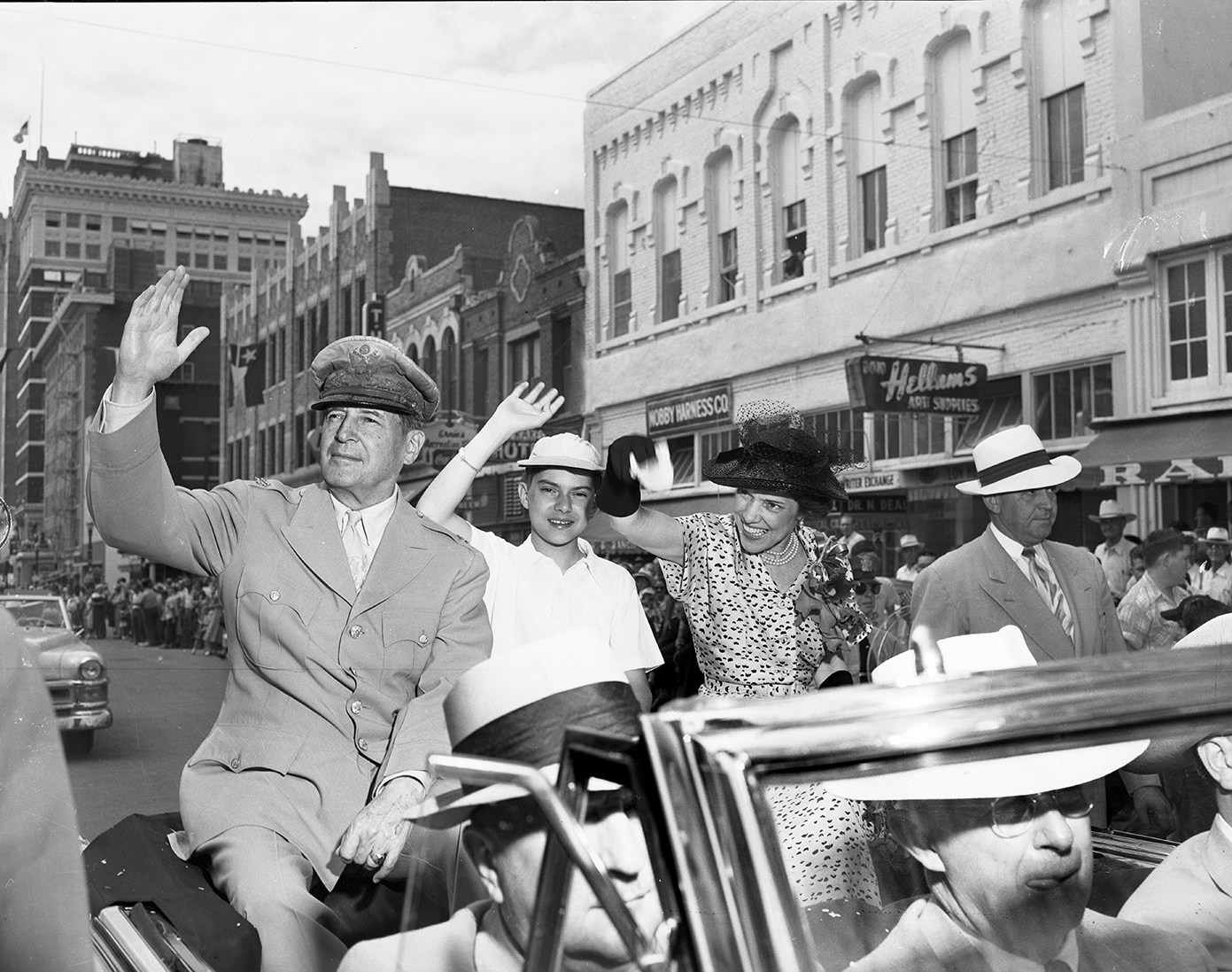
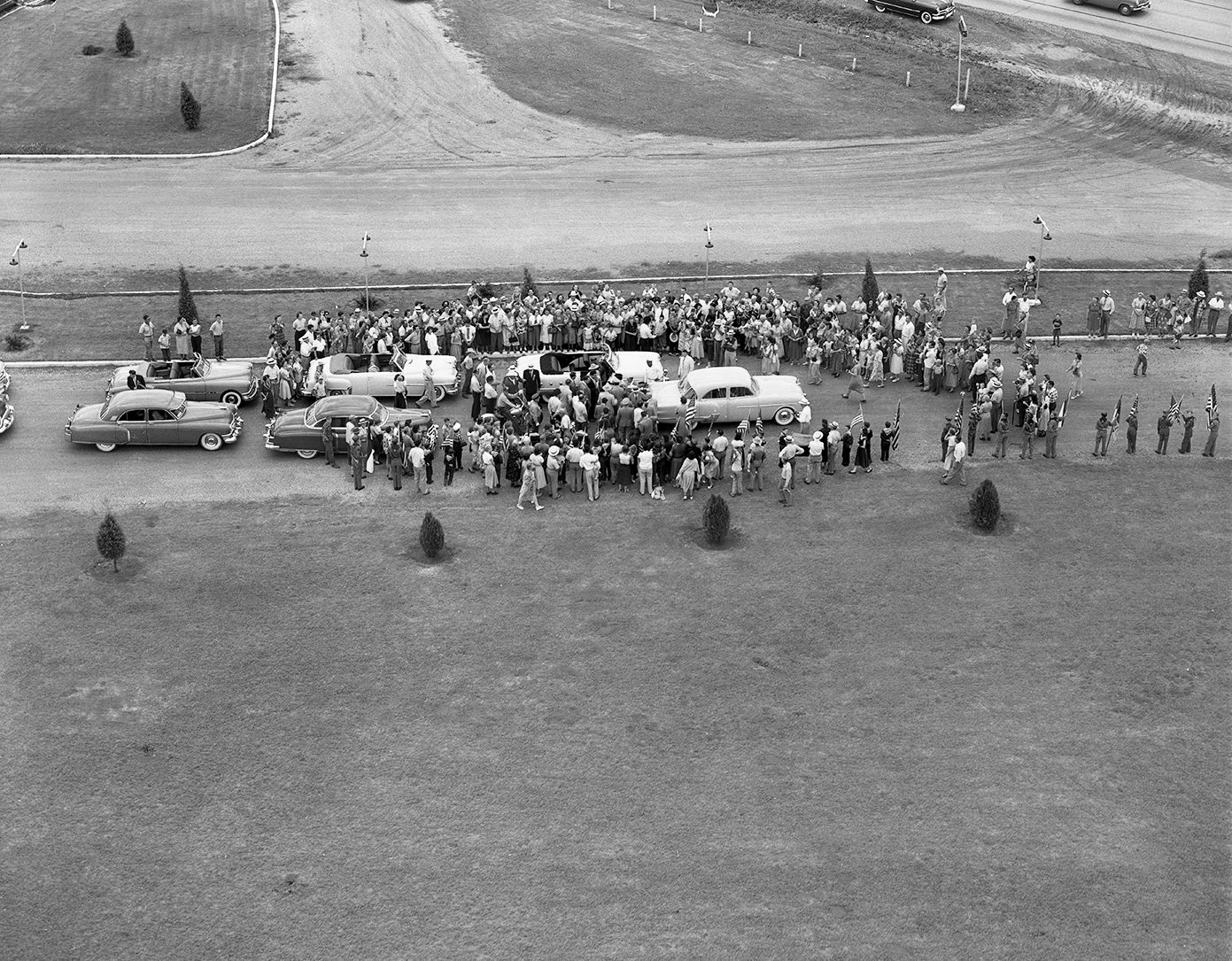
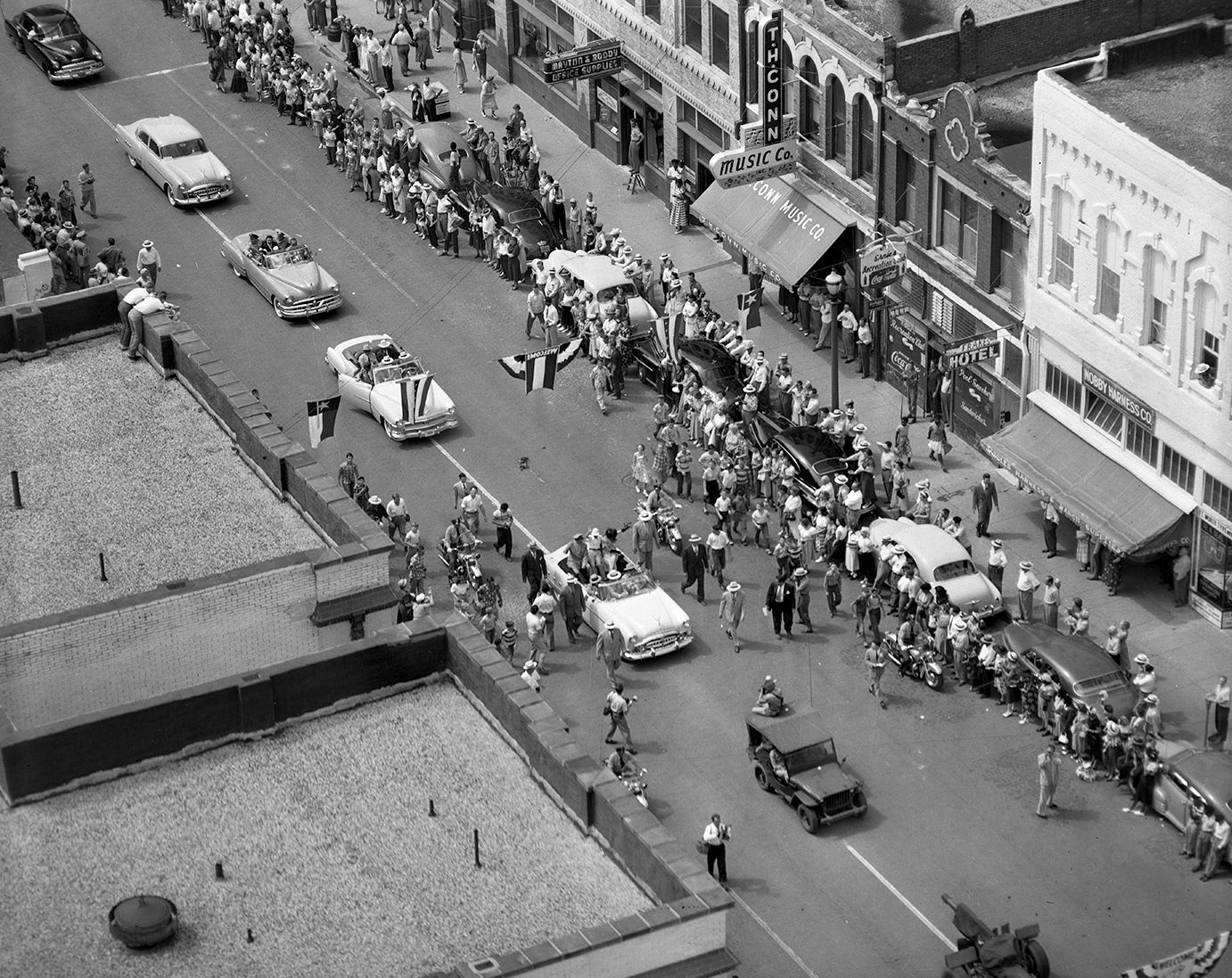
In 1951, Fort Worth turned out in enormous numbers when General Douglas MacArthur visited the city following his removal from command in Korea. Crowds packed the streets for the parade, with aerial photographs showing dense lines of spectators stretching across multiple downtown blocks. MacArthur and his family greeted the crowd from an open car, and thousands more gathered at the Pike Drive-In Theater as he arrived.
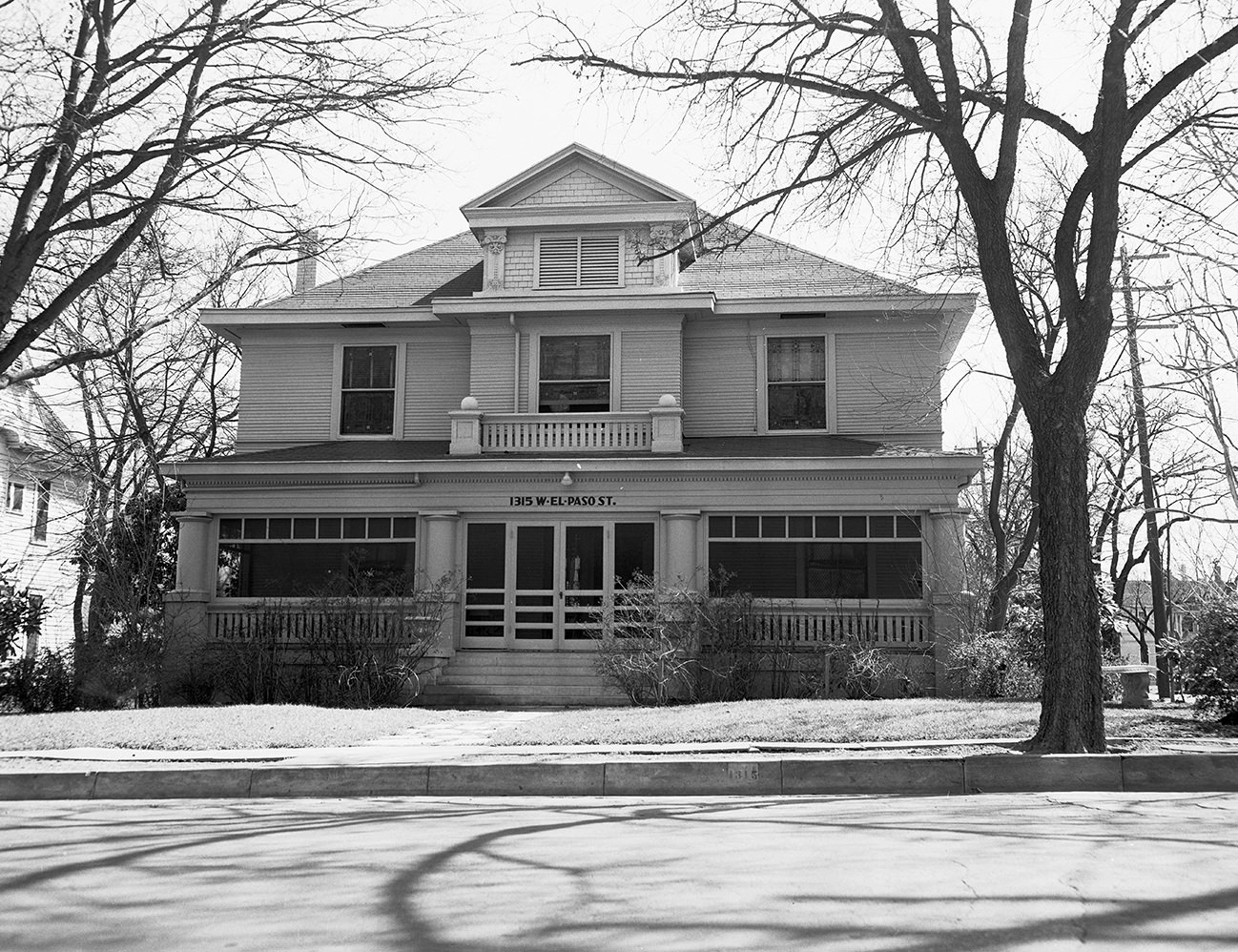
Social institutions provided support and care throughout the decade. The Lena Pope Home’s Babyland operation served young children in need, and the Edna Gladney Home at 1315 West El Paso Street provided adoption services. These organizations were part of a network of civic and charitable institutions that helped anchor Fort Worth’s community life beyond industry and commerce.

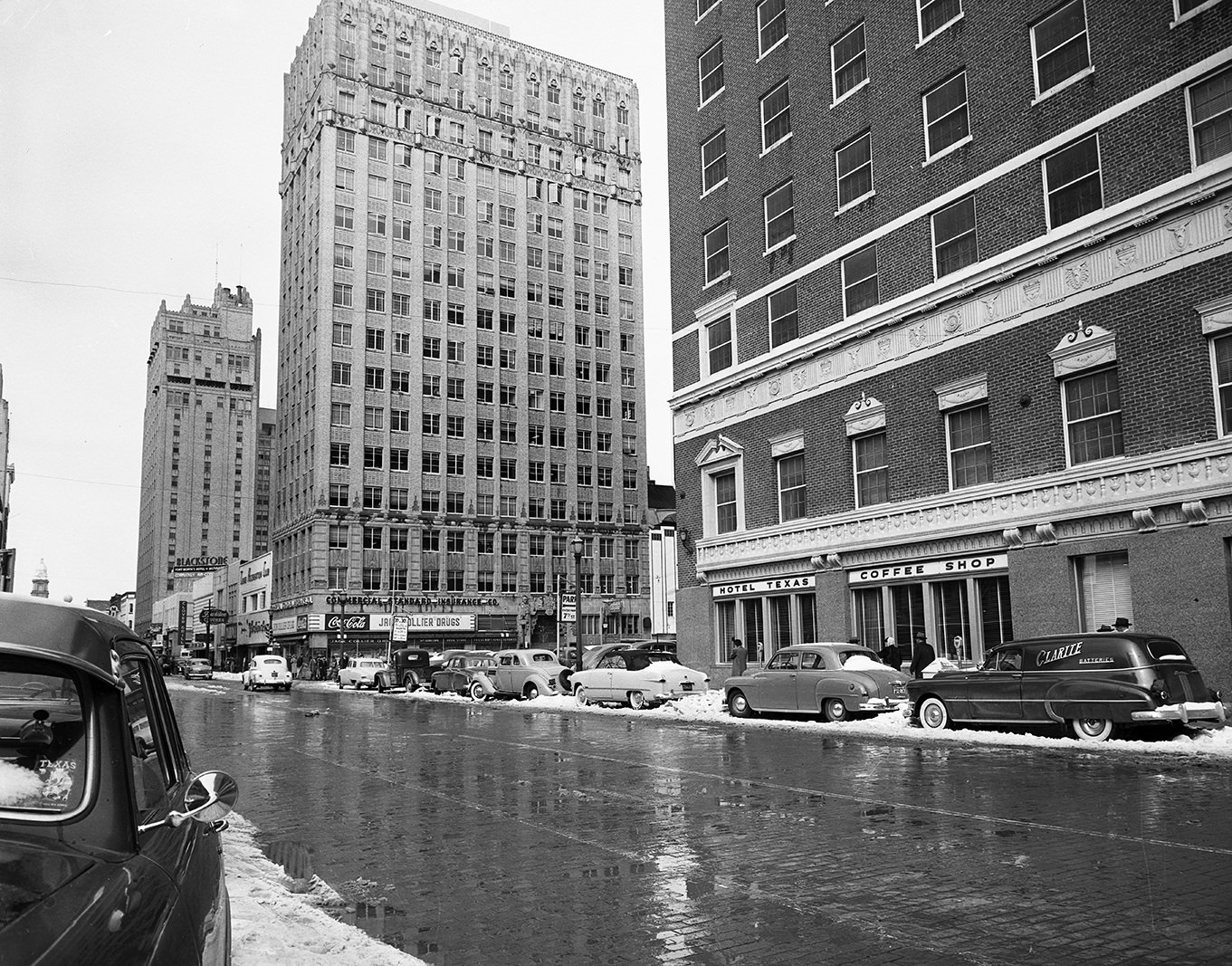
The city’s insurance sector was a notable part of the white-collar economy. Multiple insurance companies kept prominent offices downtown, including Millers Mutual Fire Insurance Company, the Life Insurance Company of America, Commercial Standard Insurance, and National Farm Life Insurance. Their buildings were part of the business district’s fabric and employed hundreds of Fort Worth residents.

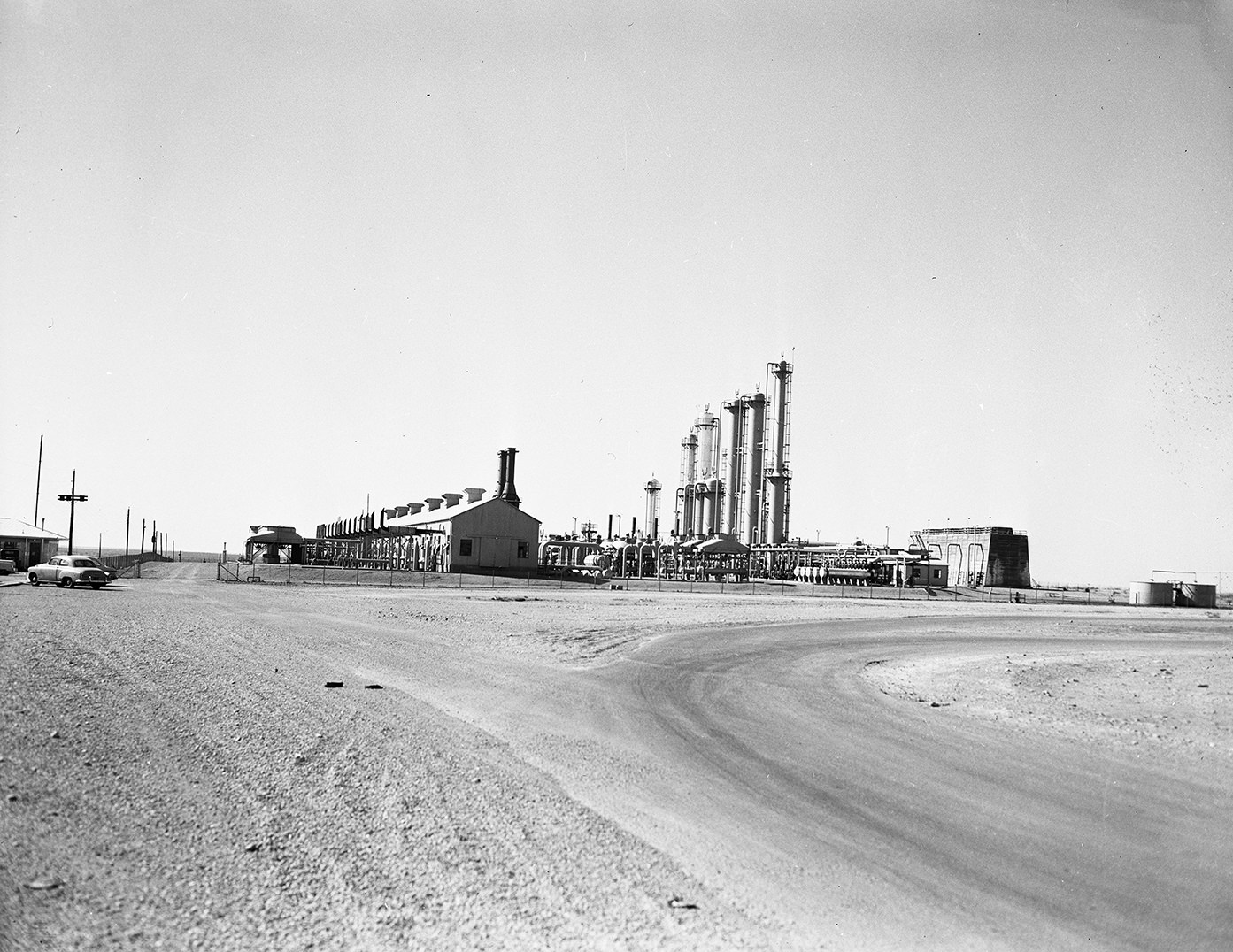
Oil refining added another layer to the city’s industrial base. The Magnolia Petroleum Company operated a refinery on the North Side, one of three petroleum plants located within Fort Worth’s boundaries. This tied the city to West Texas oil fields and the broader energy economy that was fueling postwar American growth.

Fort Worth in the 1950s was a place of visible contradictions. Cranes rose over new bank towers while cattle still moved through the Stockyards. Military aircraft rolled out of massive plants while families settled into freshly built ranch homes on the suburban fringe. Public schools educated thousands of children while legal segregation kept Black students in separate, unequal buildings. The decade captured a city in the middle of becoming something different — growing faster than it could fully understand, and not yet ready to reckon with all of the changes that growth would demand.















My hometown – my Dad worked at WBAP/KXAS-TV from 1962-1979, and was an eyewitness to the Kennedy Assassination. He went to Poly High School and won a championship in Marksmanship as a ROTC student