Hey There! Before You Go. 😧
Get the best vintage content straight into your inbox!

Don't worry, we don't spam

50+ Rare Historic Photos That Give A Glimpse Of New York From the Late 19th Century

By the close of the 19th century, New York had cemented itself as the economic engine of the United States. In 1884 alone, nearly 70% of all U.S. imports passed through the city’s ports. The streets were alive with commerce, construction, and constant movement — a city that never stood still. These photographs capture that world in remarkable detail, from the grand avenues of Manhattan to the crowded tenement blocks of Lower Manhattan.

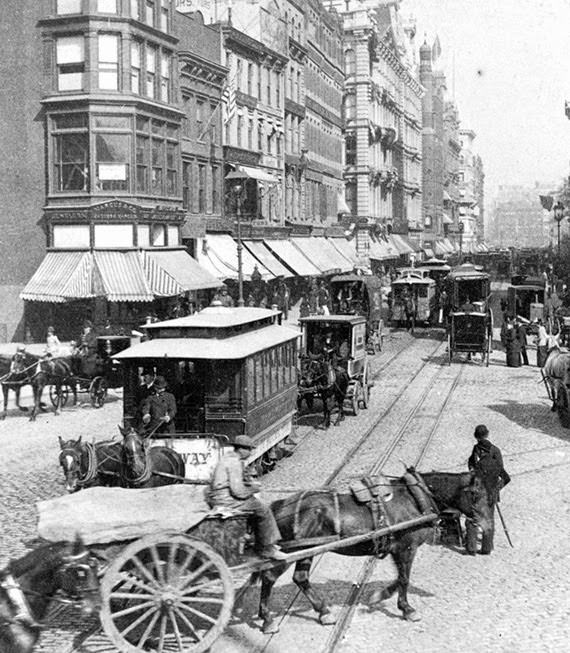
Broadway, Looking North from 66th Street, 1890
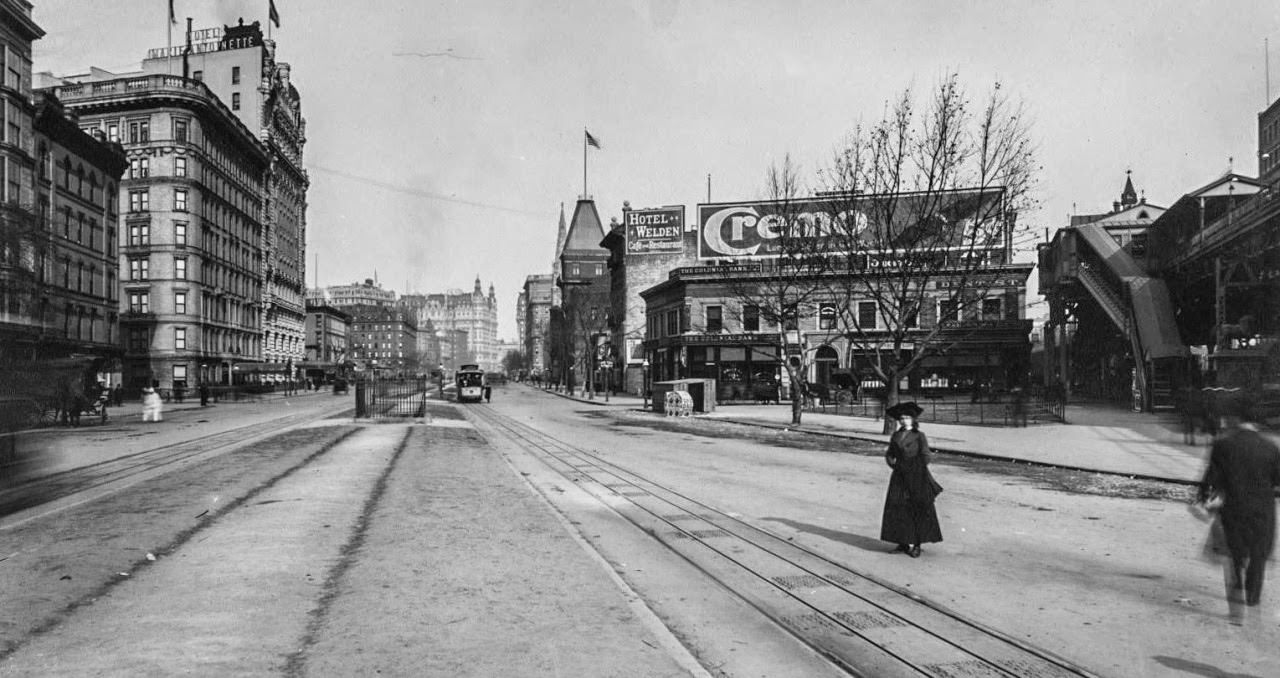

Broadway was the spine of the city. By 1890, it stretched far beyond the dense commercial districts downtown, cutting through neighborhoods that were still taking shape. Horse-drawn carriages shared the wide boulevard with pedestrians, and the buildings lining its edges reflected the ambitions of a city growing at a relentless pace.

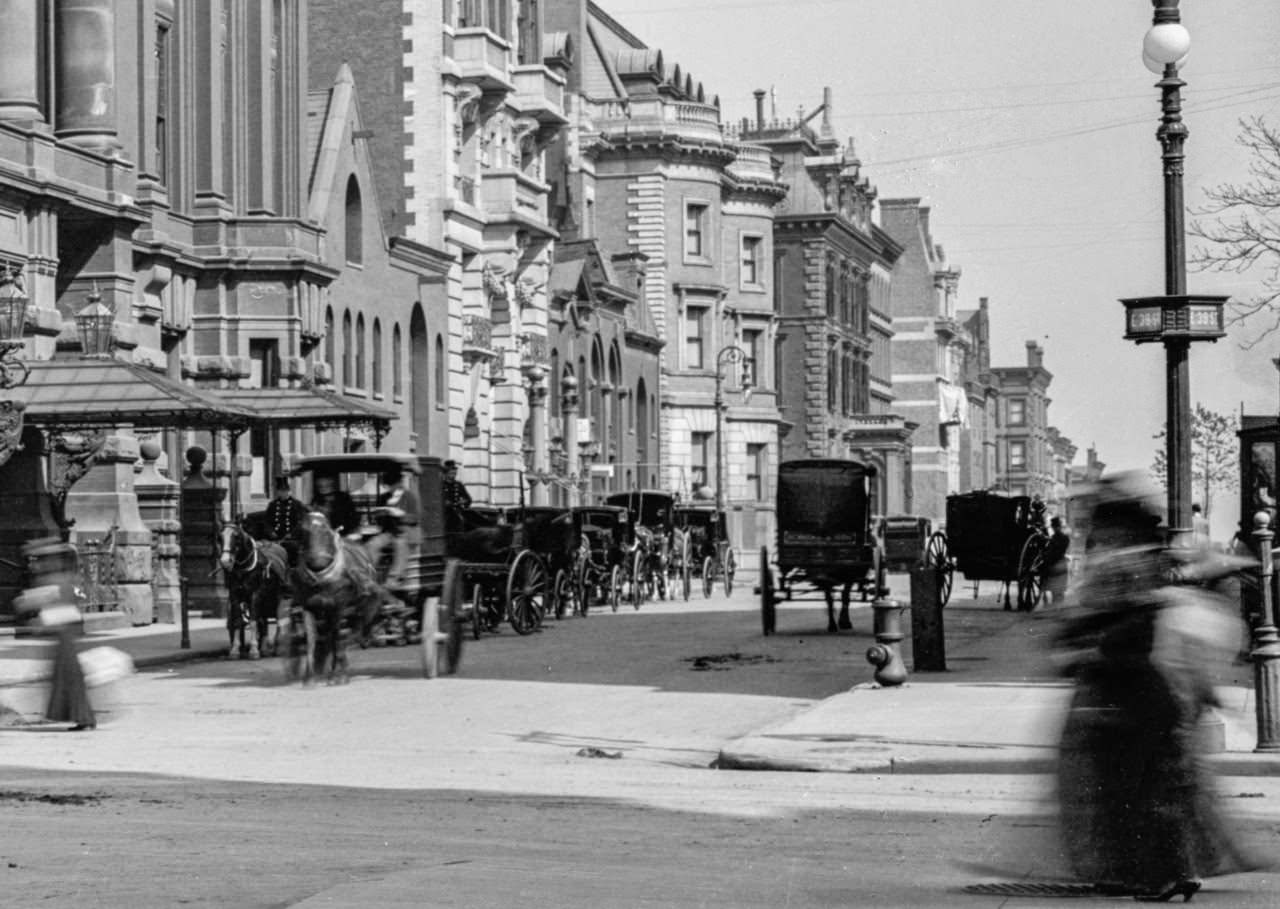
59th Street, Looking West from Grand Army Plaza, 1894
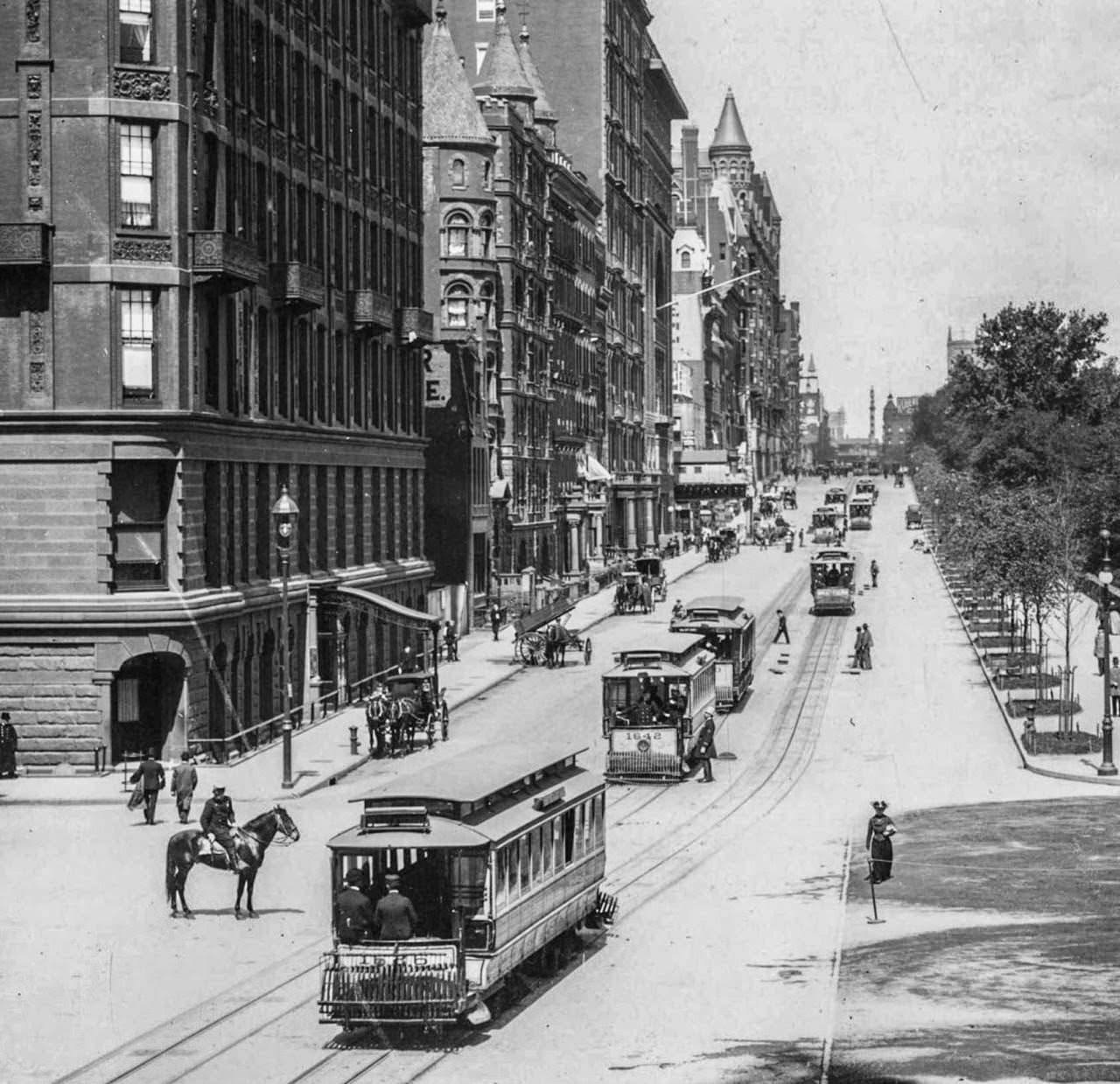

Grand Army Plaza sat at the southeastern corner of Central Park, one of the city’s most recognizable crossroads. These two views from 1894 show a neighborhood defined by wide open streets and stately buildings — a sharp contrast to the overcrowded blocks just a few miles south, where immigrant families were stacked into tenement housing with little light or air.

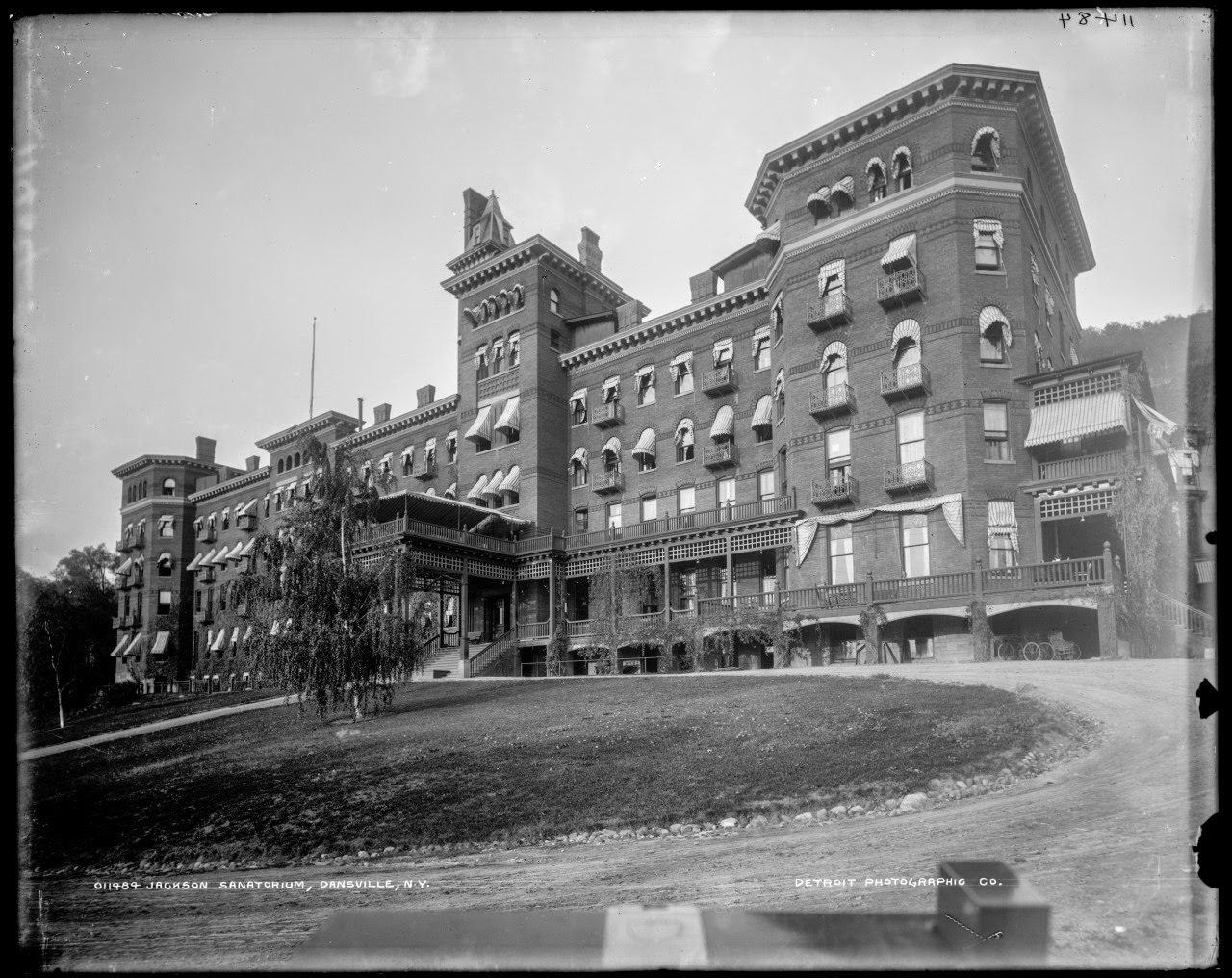
The Jackson Sanatorium, Dansville, 1890

Health was a constant concern in New York during this era. Mass overcrowding in Lower Manhattan made the city a breeding ground for yellow fever, cholera, and tuberculosis. Institutions like the Jackson Sanatorium in Dansville served those who could afford to escape the city’s worst conditions, while the urban poor had no such option.

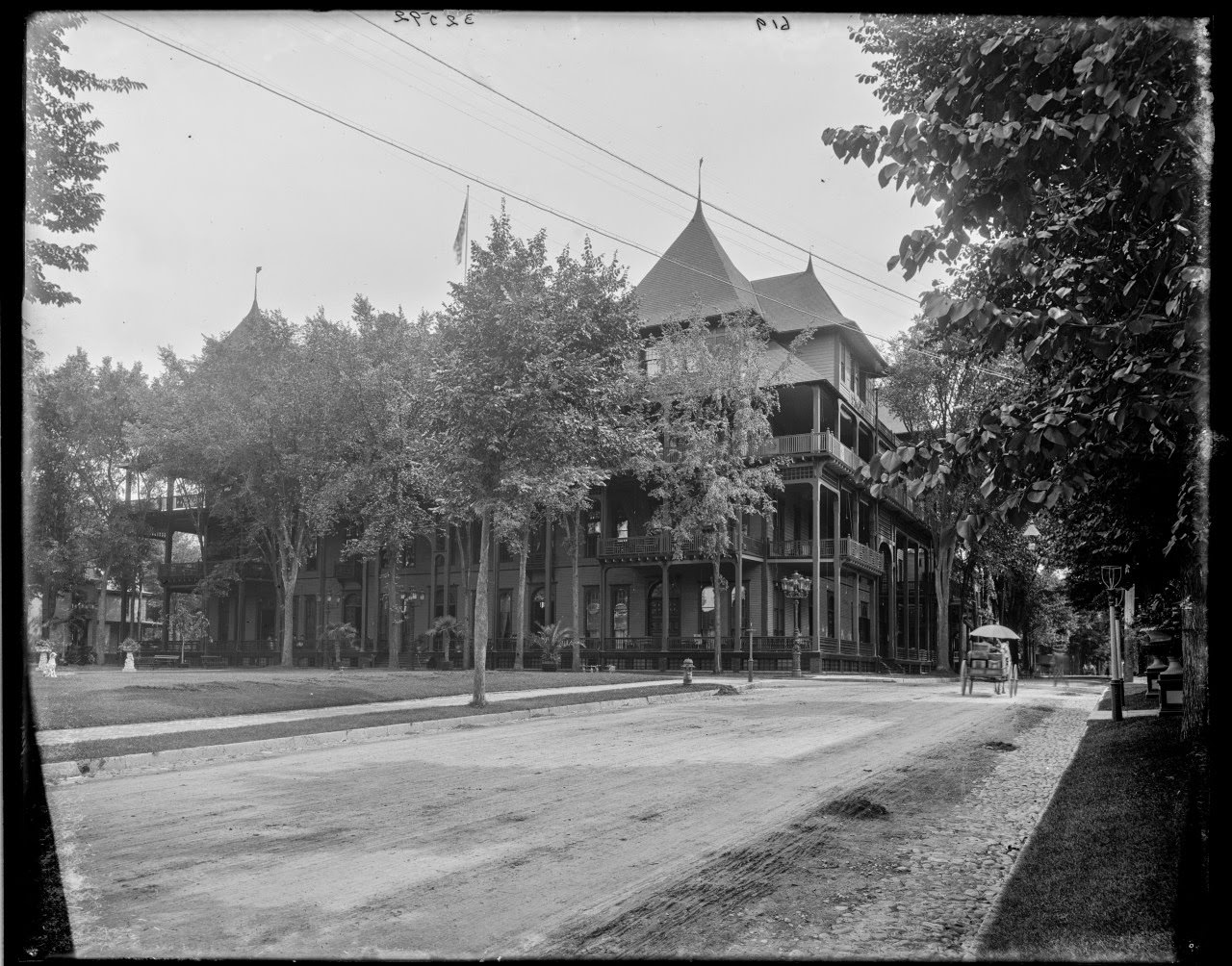
The Windsor Hotel, Broadway and WIlliam Street, Saratoga, 1900
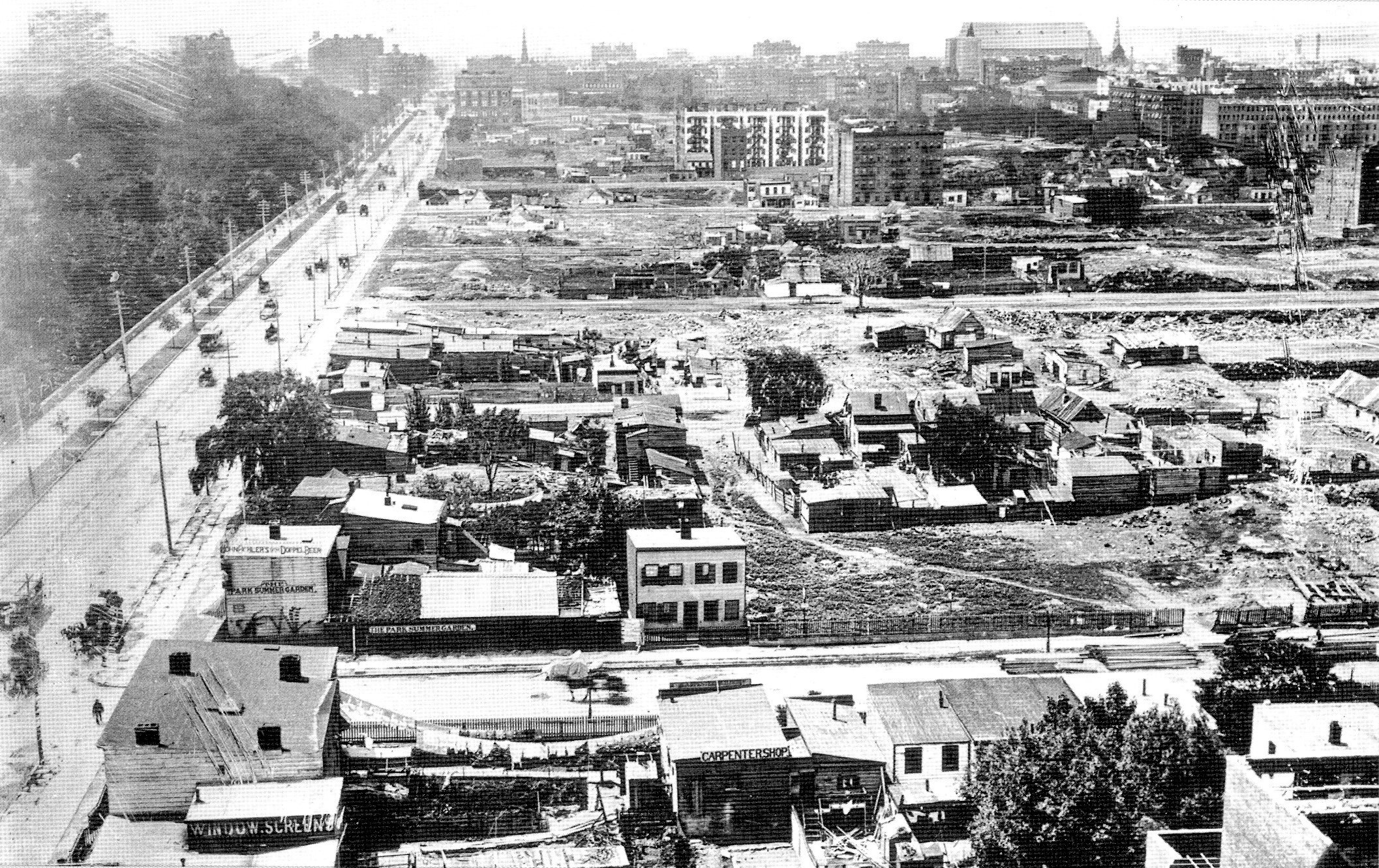
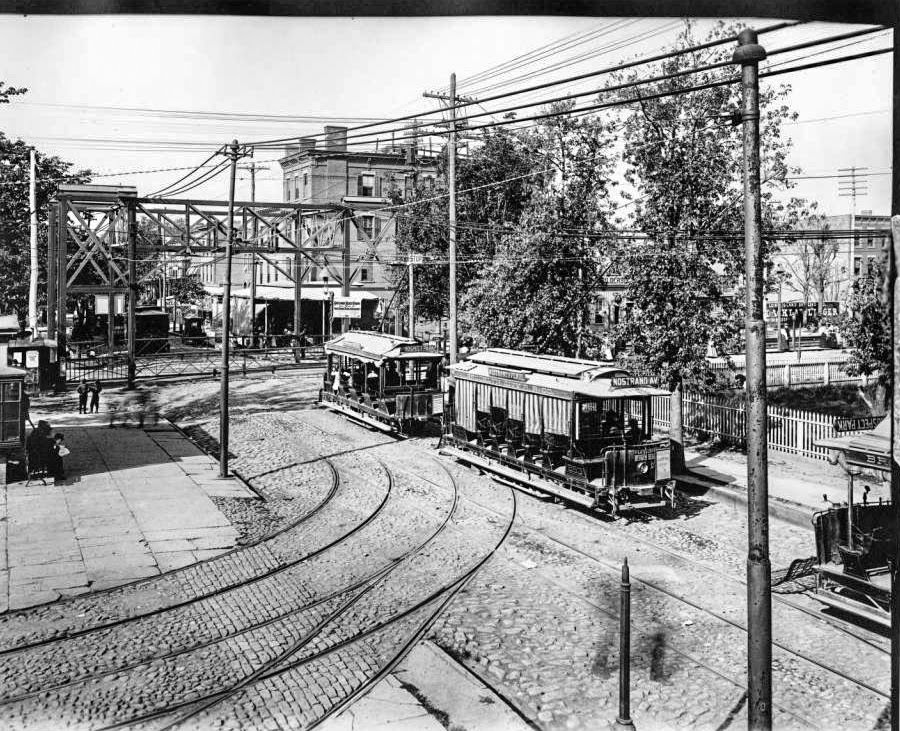
181st Street at the East River, 1891

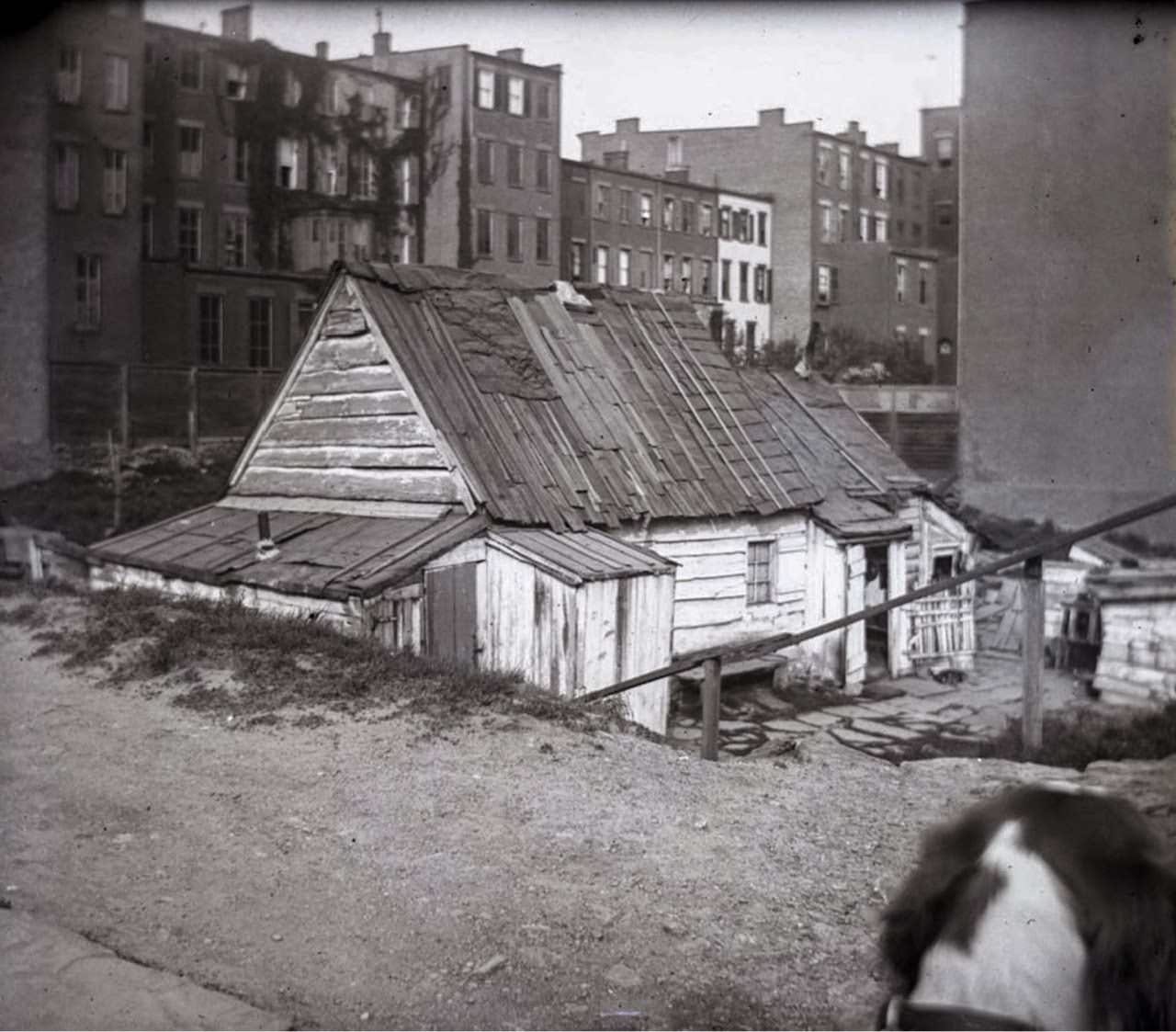
The upper reaches of Manhattan, near 181st Street and the East River, still had a semi-rural feel in 1891. Development was steadily pushing northward, but the pace of change varied dramatically across the borough. Meanwhile, at the heart of Midtown, civic infrastructure was being built on a grand scale.

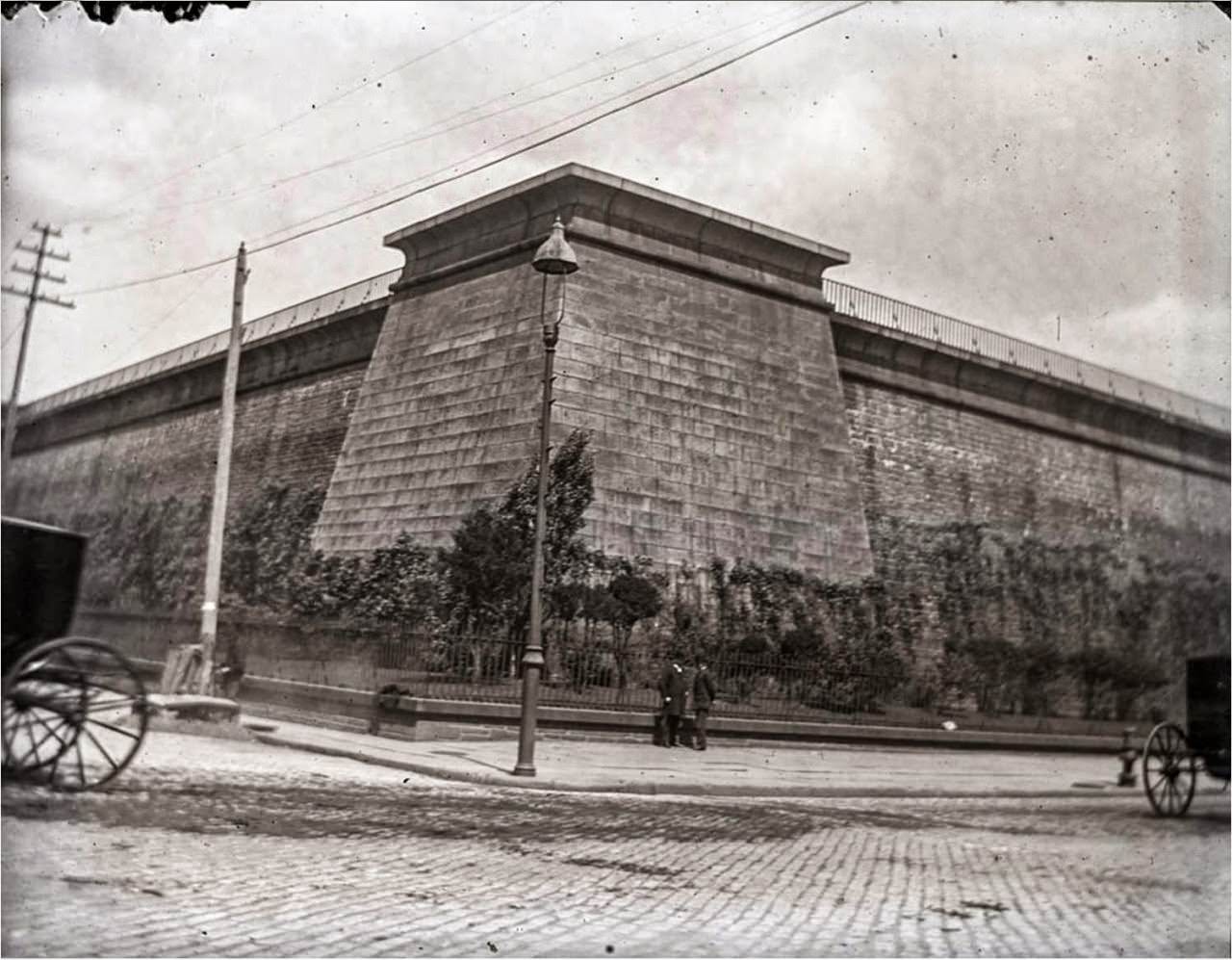
The Croton Aqueduct Distributing Reservoir, 40th Street and 5th Avenue, 1891

The Croton Aqueduct Reservoir at 40th Street and 5th Avenue was a massive Egyptian Revival structure that held the city’s freshwater supply. It sat on the same block where the New York Public Library would later be built. By 1891, clean water delivery was essential — disease outbreaks had already proven what happened when the system failed.

Madison Avenue at 77th Street, 1891
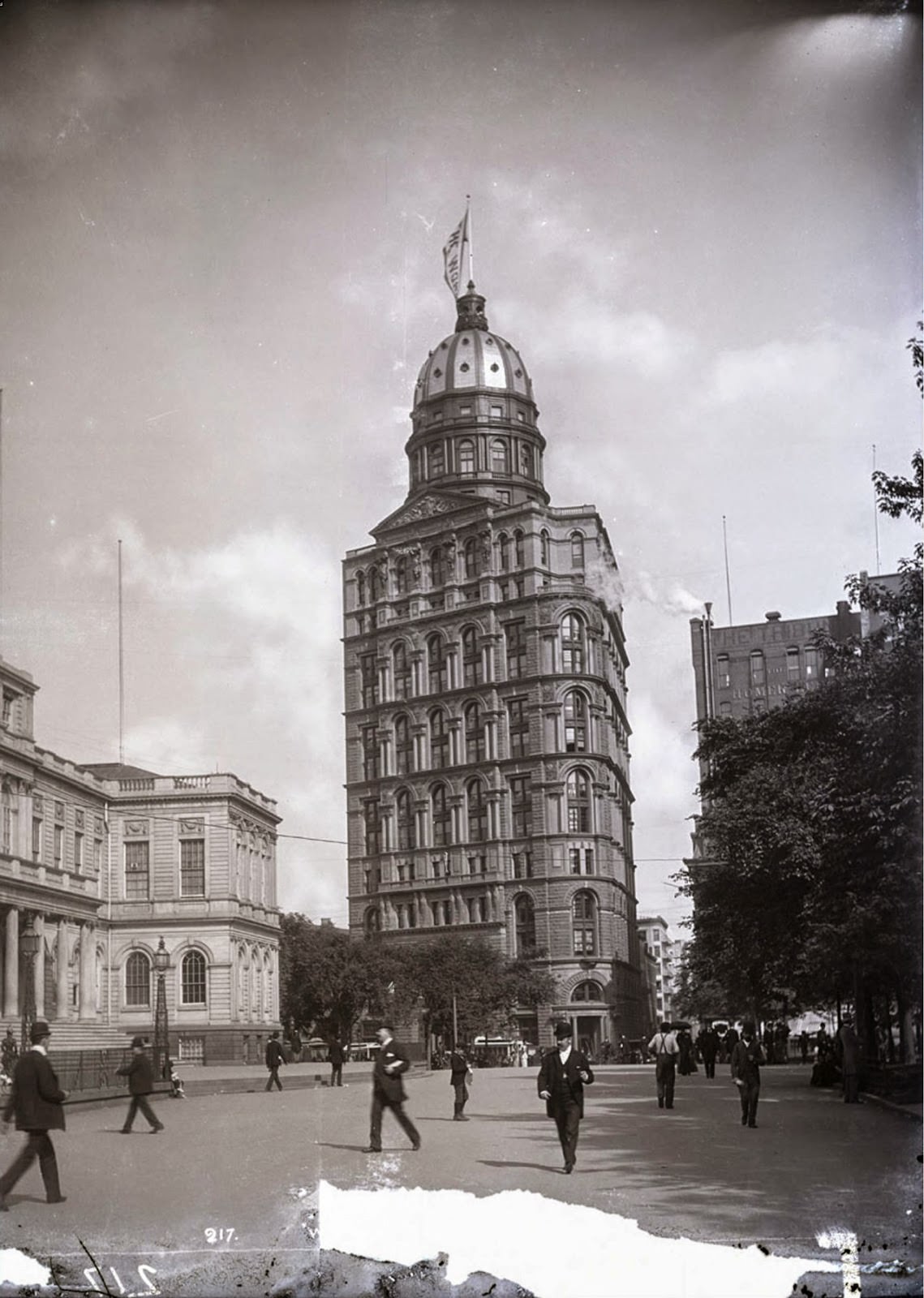
The World Building, 1891

The World Building, completed in 1890, was the tallest building in the world at the time of its construction. At 309 feet, it towered over lower Manhattan and served as the headquarters of Joseph Pulitzer’s New York World newspaper. It was a symbol of the city’s vertical ambitions at a time when the skyline was just beginning to climb.

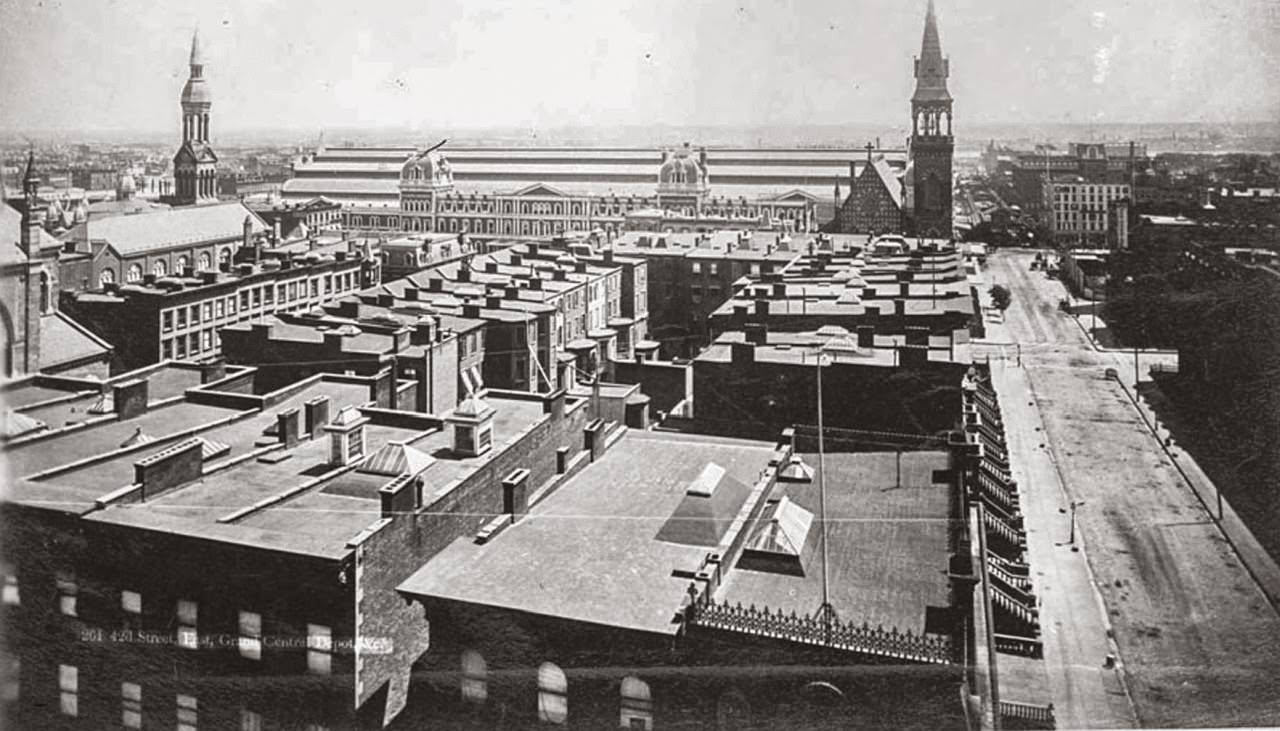
Looking East along 42nd Street toward Grand Central Depot , 1880

42nd Street in 1880 was already one of the most important corridors in the city. Grand Central Depot anchored the eastern end, pulling in rail traffic from across the northeast. The street itself was a mix of commercial buildings, horse-drawn traffic, and the early infrastructure of a city trying to manage explosive growth.

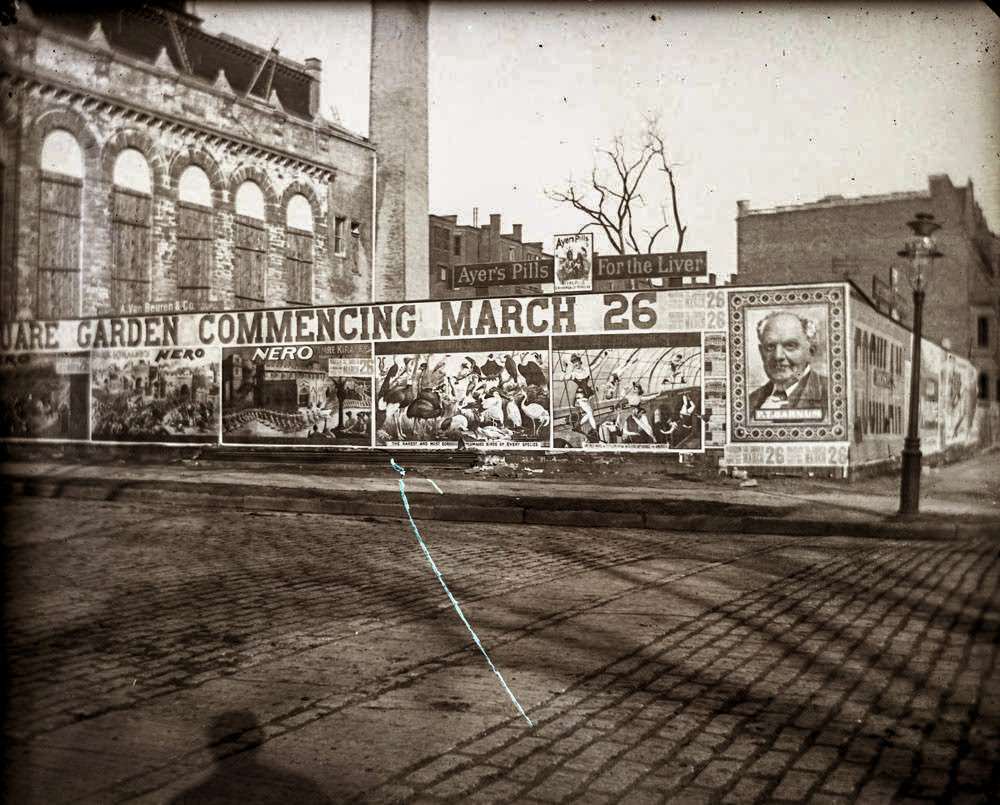
Advertising for Barnum and Bailey's Circus, 5th Avenue and 75th Street,  1891
Advertising for Barnum and Bailey’s Circus, 5th Avenue and 75th Street, 1891
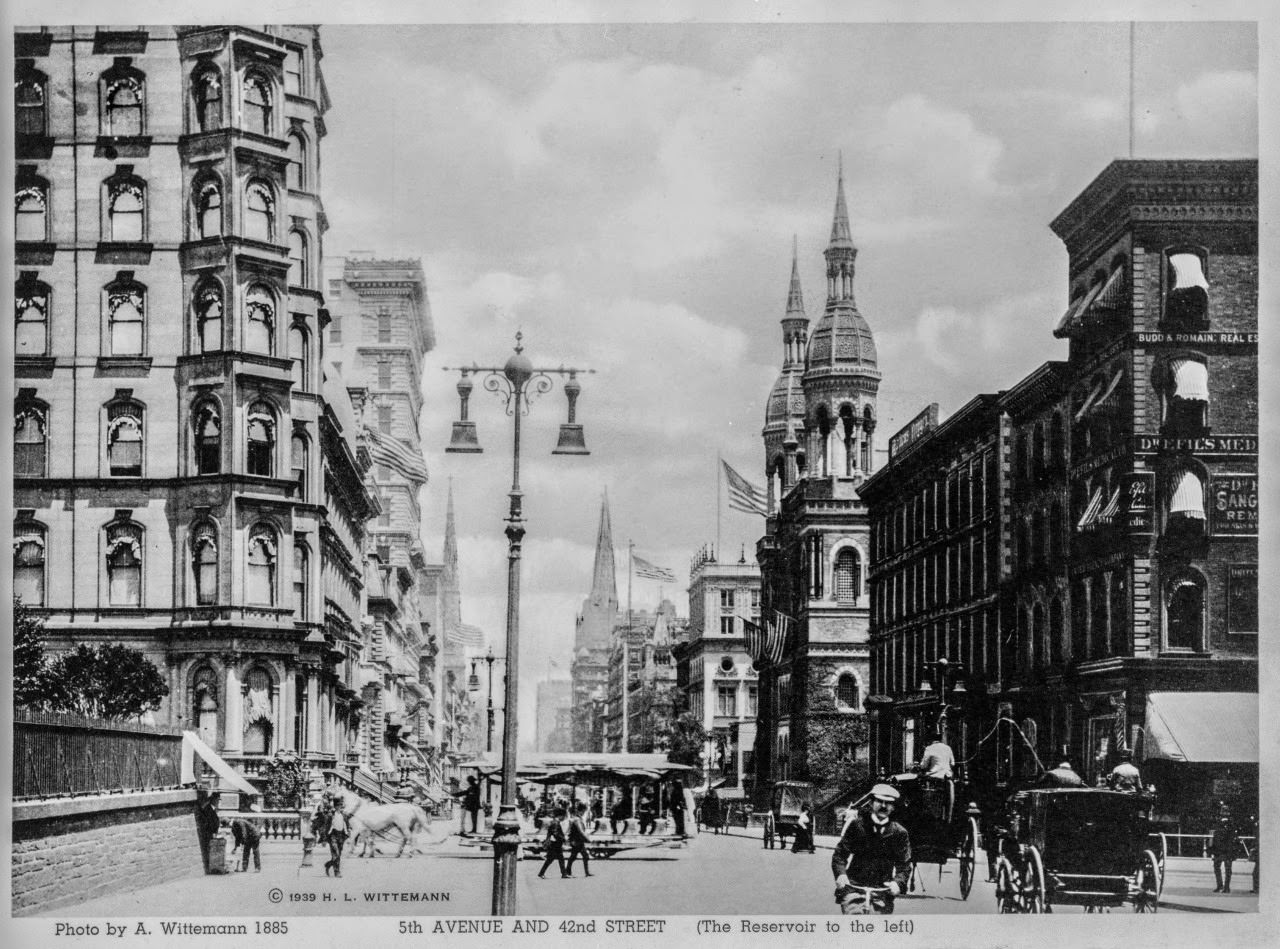
5th Avenue at 42nd Street Looking North, 1885

Fifth Avenue in 1885 was lined with the homes of New York’s wealthiest families, grand churches, and prestigious clubs. It was the address that signaled status. Barnum and Bailey’s circus advertisements plastered on its corners a few years later showed how even the most refined blocks couldn’t escape the energy of mass entertainment in this era.

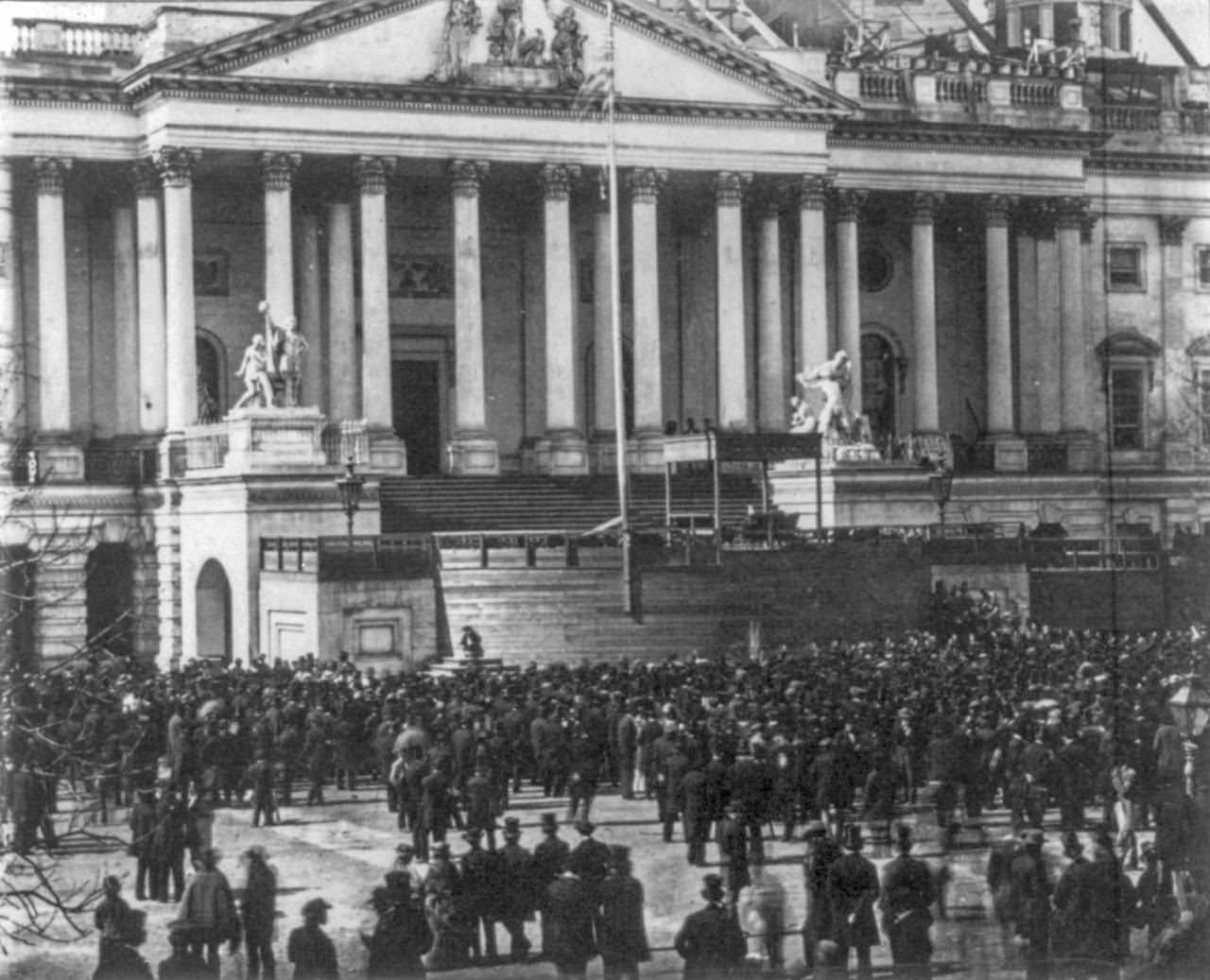
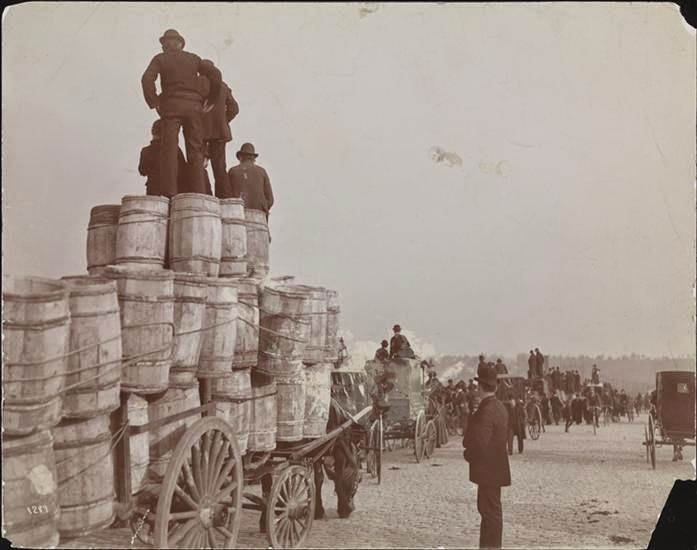
A crowd gathers for Abraham Lincoln's inauguration, March 4, 1861
A crowd gathers for Abraham Lincoln’s inauguration, March 4, 1861

New York’s political life in the late 19th century was shaped by events that began decades earlier. The city had watched Lincoln’s inauguration with a deeply divided public — New York merchants had strong financial ties to the South. By the 1890s, the city’s politics had shifted toward machine politics, immigration policy, and the coming presidential contests.

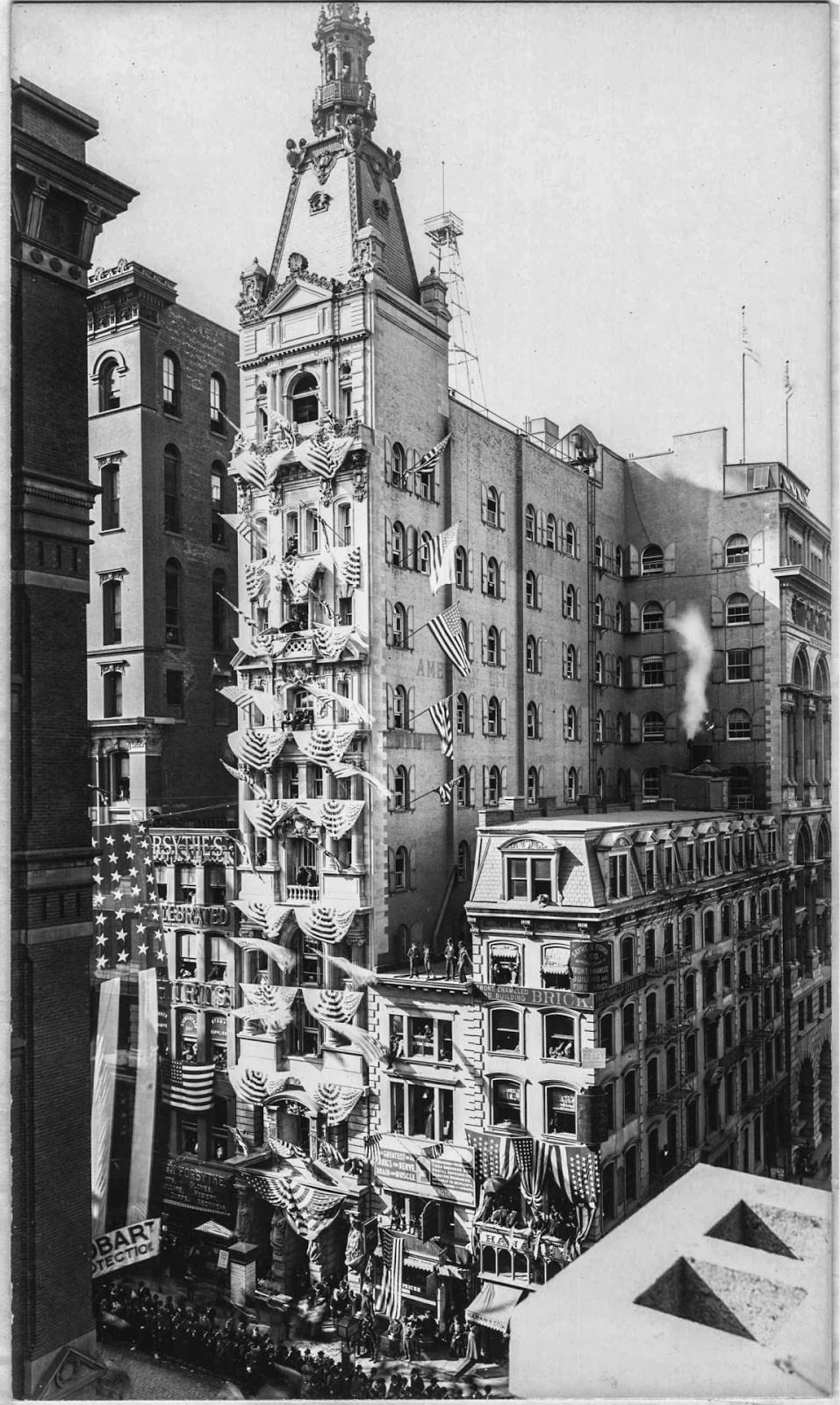
201-207 Broadway, Decorated for a Parade Promoting William McKinley and Garret Hobart for the Presidential Election, 1896.
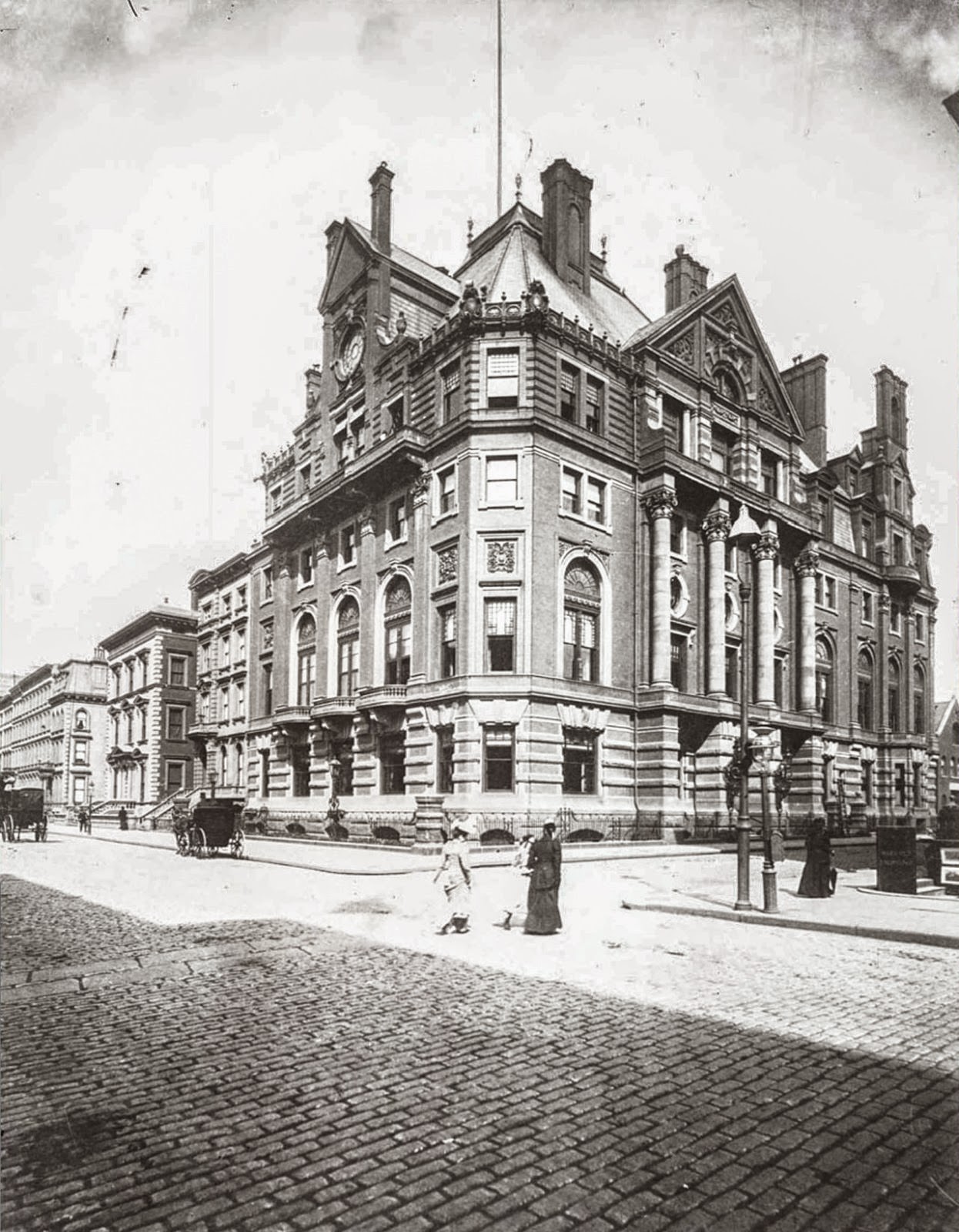
The Union League Club, 5th Avenue and 39th Street, 1885

The Union League Club was one of the most influential political organizations in the city. Founded during the Civil War to support the Union cause, it remained a powerful force in Republican politics through the Gilded Age. Its 5th Avenue location placed it among the city’s most powerful institutions.

Looking East down 39th Street from 5th Avenue, 1900
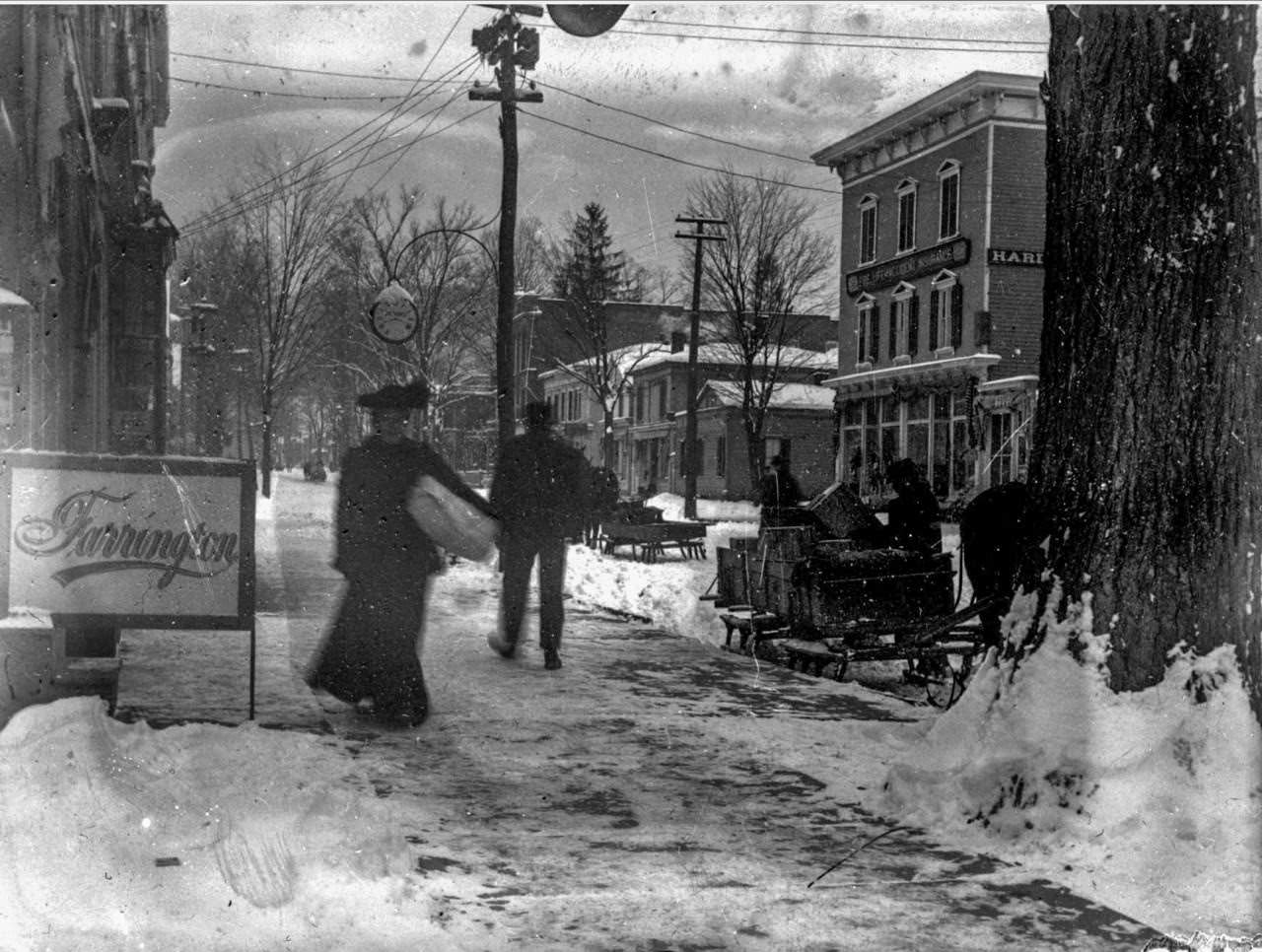
Main Street, Delhi, 1890

Not all of New York’s story played out in Manhattan. Towns like Delhi in Delaware County had their own rhythms — quieter, slower, but still connected to the broader changes sweeping the state. The 1890 photograph of Main Street, Delhi captures a small-town New York far removed from the tenements and skyscrapers of the city.

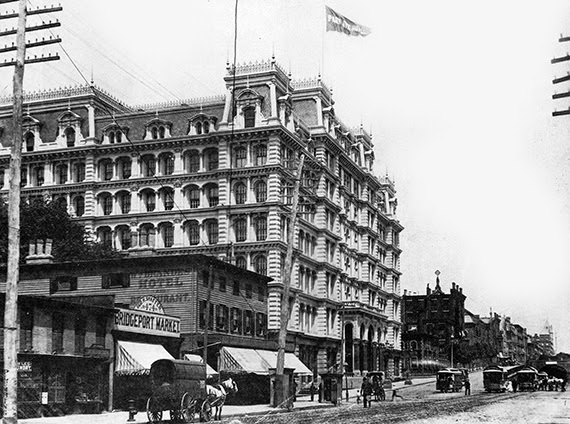
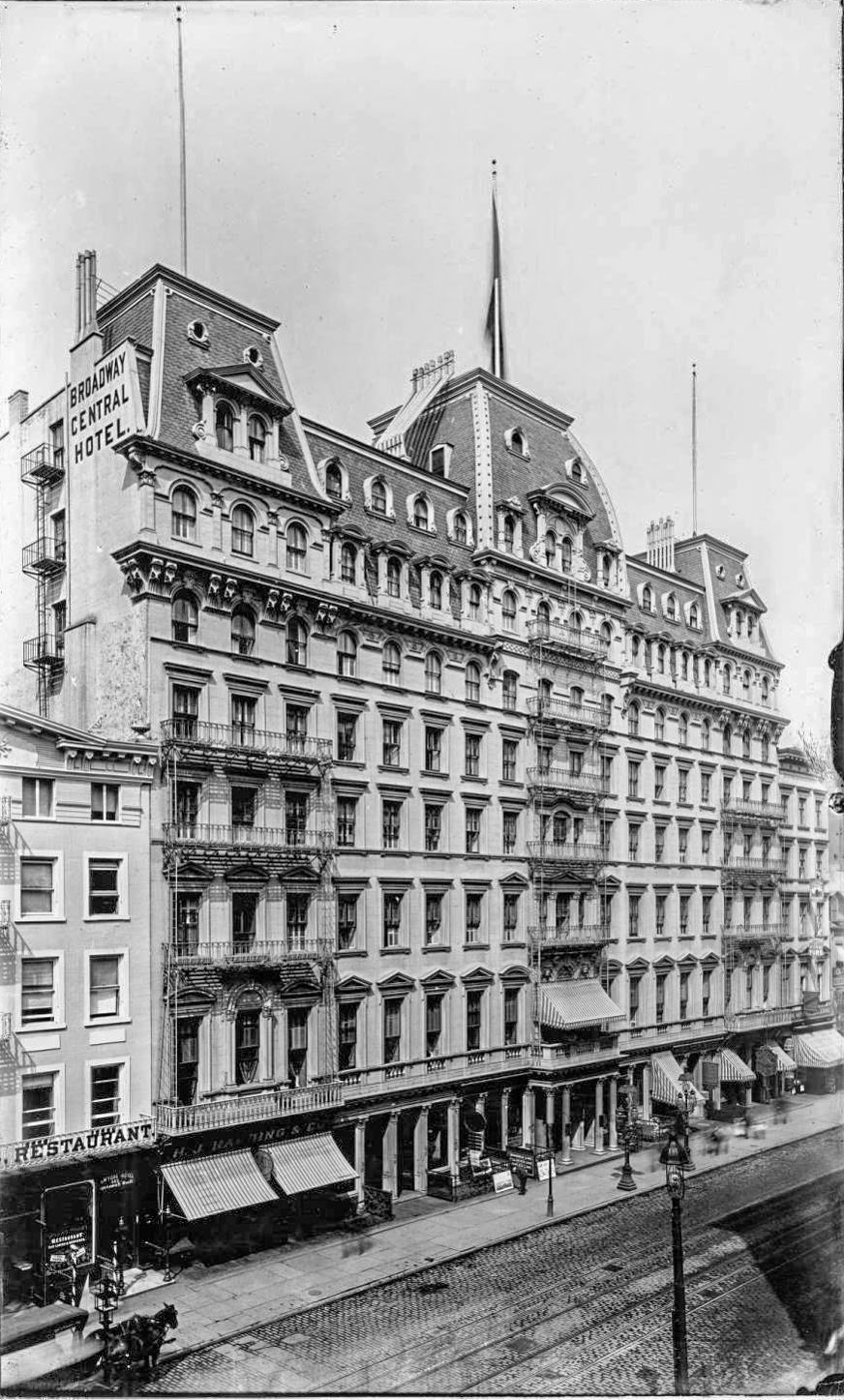
The Broadway Central Hotel, Broadway at Bond Street, 1890
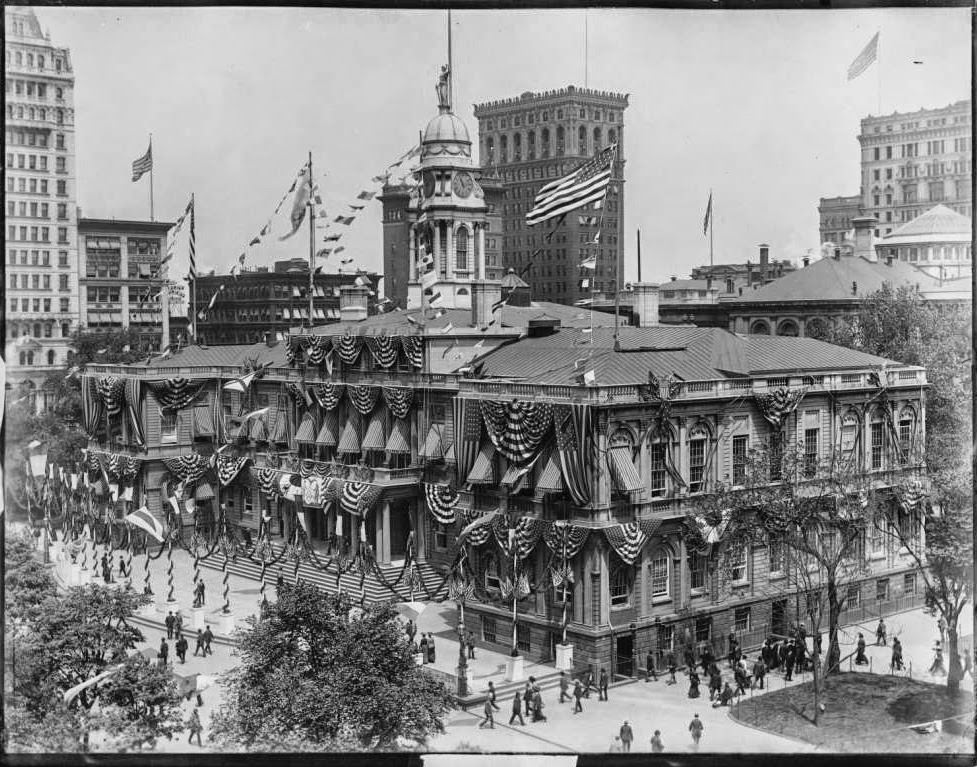
City Hall in its fanciest dress for the Dewey Parade, 1898

In 1898, Admiral George Dewey’s victory at the Battle of Manila Bay made him a national hero. New York threw him one of the grandest parades the city had ever seen. City Hall was decorated from top to bottom, and crowds packed the streets to celebrate. The image captures a city that knew how to put on a spectacle.

Atlantic and Norstrom Avenues, Brooklyn, 1895
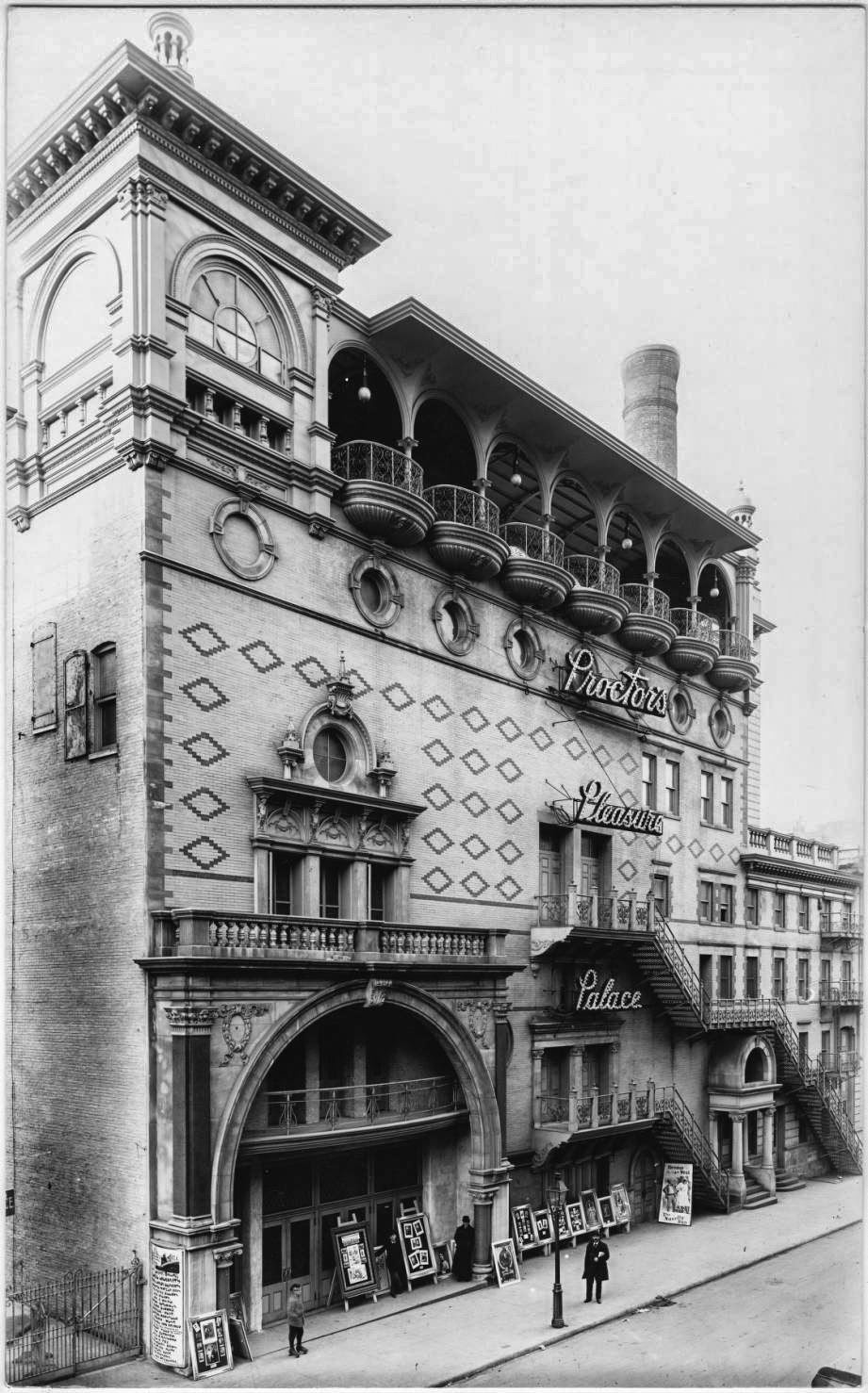
Proctor's Pleasure Palace, 58th Street and Lexington Avenue, 1895
Proctor’s Pleasure Palace, 58th Street and Lexington Avenue, 1895

Entertainment venues multiplied across the city in the 1890s. Proctor’s Pleasure Palace on 58th Street and Lexington Avenue offered continuous vaudeville performances, drawing audiences from across the social spectrum. These theaters were central to city life, giving working-class New Yorkers an affordable escape from long hours and cramped living conditions.

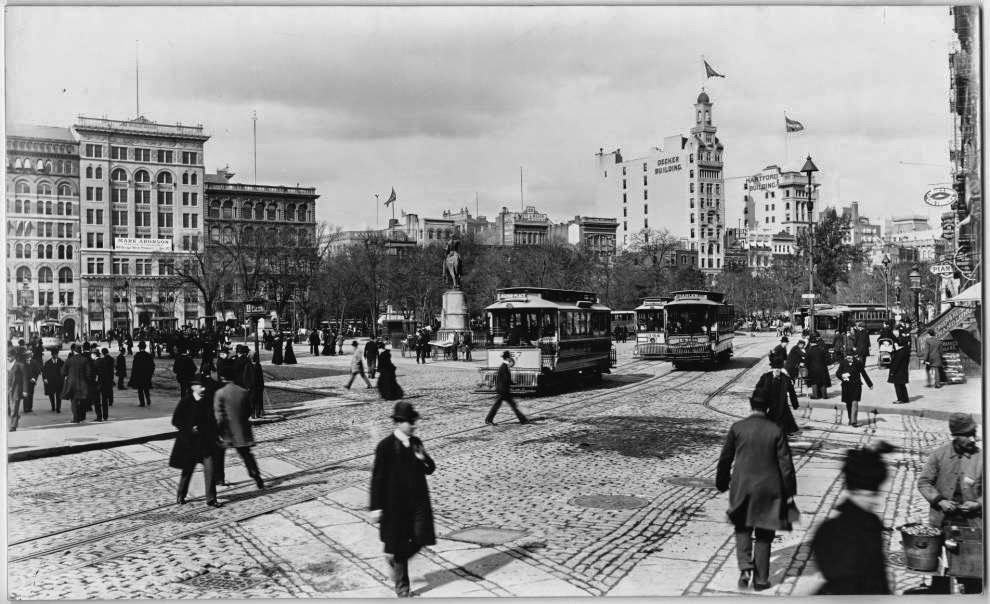
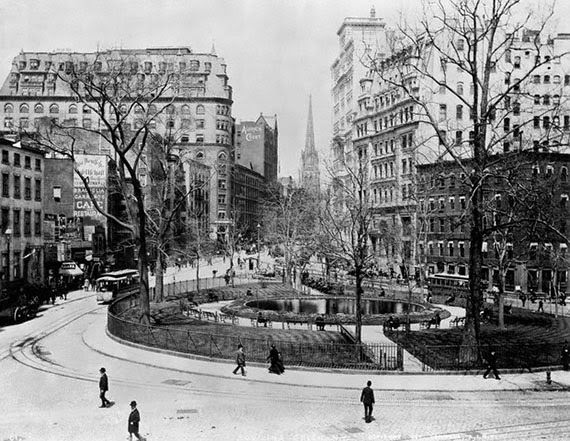
Union Square, 1900
Union Square, 1900
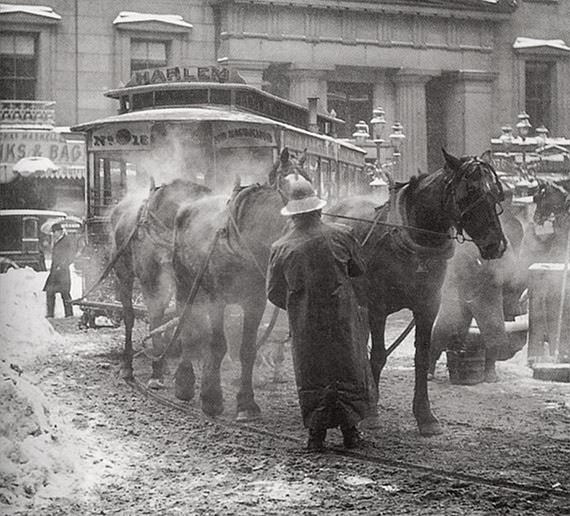
Harlem, after the Blizzard of February 13, 1899

Winter in New York was brutal. The Blizzard of February 1899 buried Harlem under deep snow, grinding the neighborhood to a halt. Horse-drawn carts hauled snow through the streets, and police officers managed the chaos. These conditions fell hardest on the city’s poorest residents, many of whom had no adequate heating in their tenement rooms.

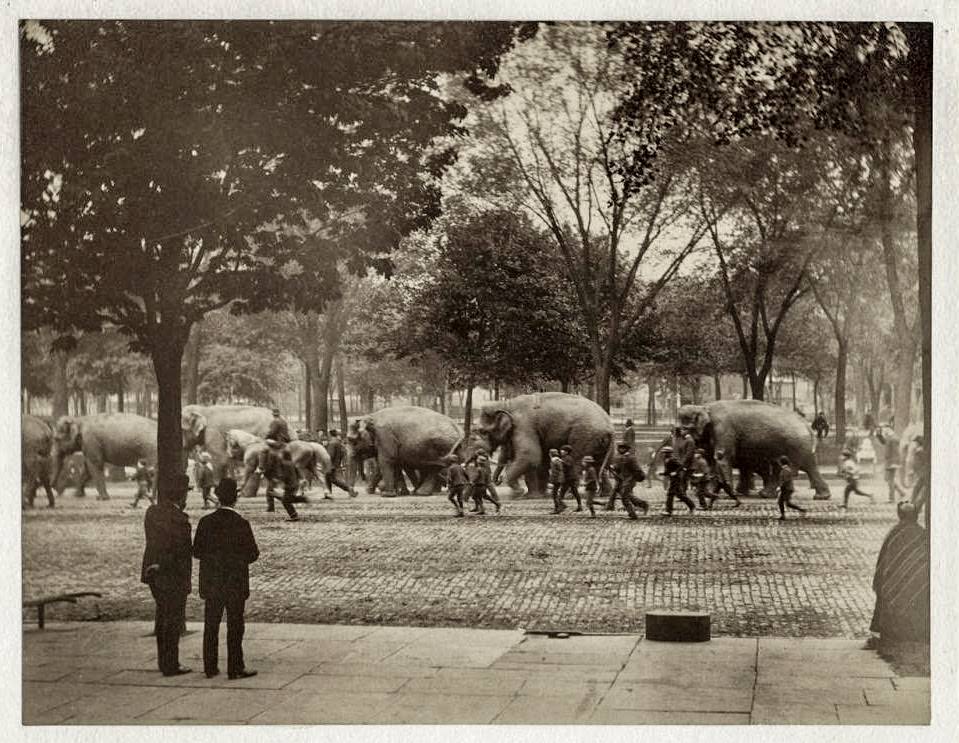
Circus Parade, Washington Park, Albany, 1880
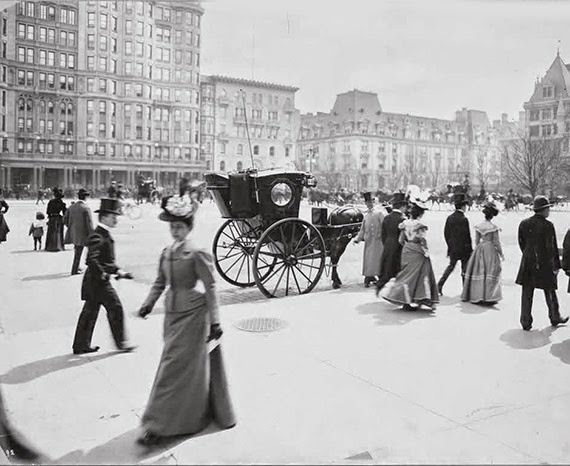
Madison Square, 1899

Madison Square in 1899 was one of the busiest intersections in Manhattan. It sat at the junction of Broadway and Fifth Avenue, surrounded by hotels, restaurants, and commercial buildings. The original Madison Square Garden — designed by Stanford White — stood nearby, and the square itself was a daily gathering point for thousands of New Yorkers.

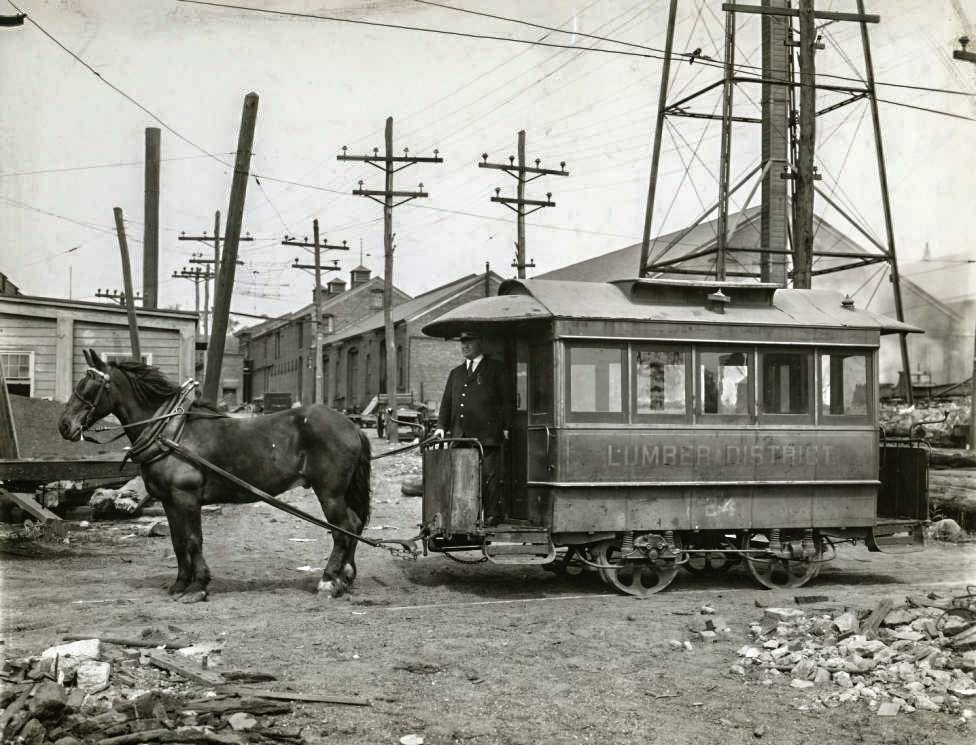
Lumber District Horse Car, 1890

Horse-drawn streetcars were the backbone of urban transit in 1890. They moved workers, goods, and passengers across the city’s grid, though the system was slow and the streets were often clogged. Engineers were already laying the groundwork for something faster.

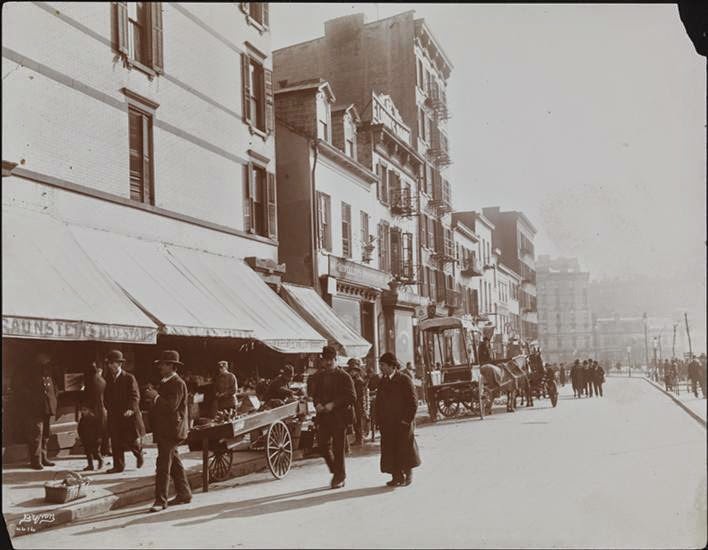
Hester Street crowded with women shopping and push-cart peddlers, 1898
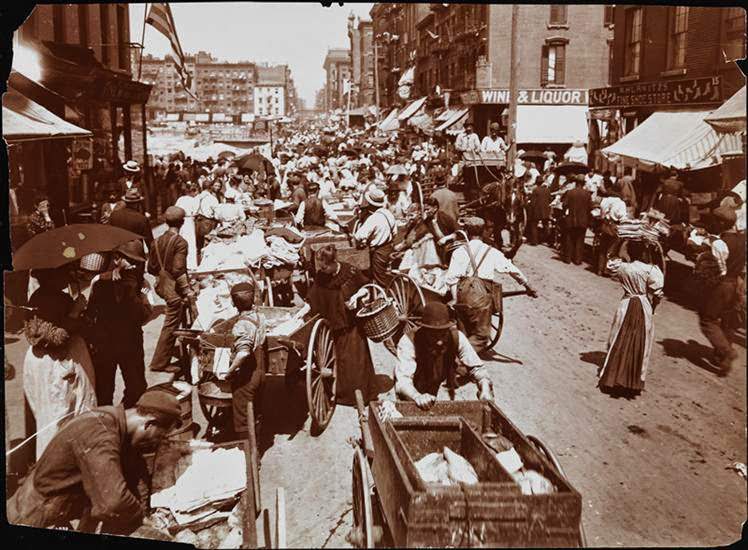
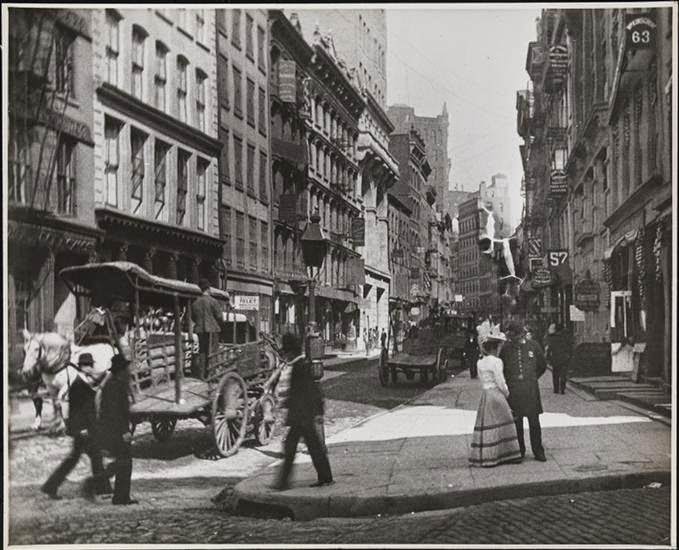
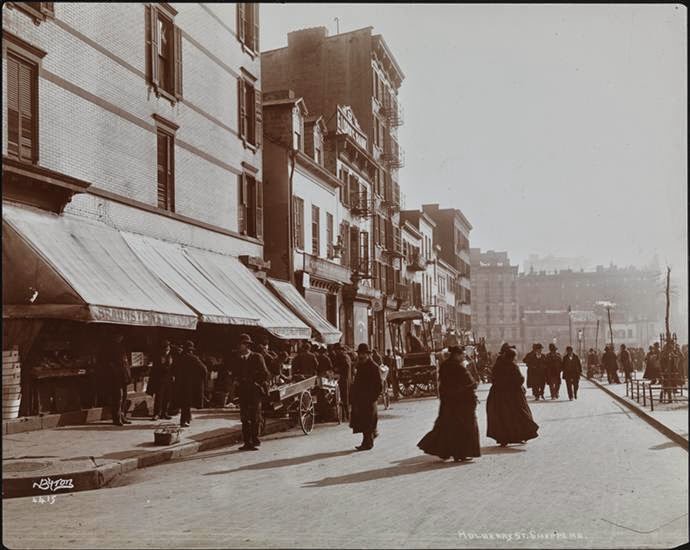
Pedestrians and push-carts on Mulberry Street, 1898

Between 1855 and 1890, an estimated 8 million immigrants passed through Castle Clinton at Battery Park. Many of them settled on the Lower East Side, turning streets like Hester and Mulberry into dense, vibrant corridors of commerce and daily survival. Push-cart peddlers sold food, clothing, and household goods to families who had little money and less space.

View of Maiden Lane, 1891
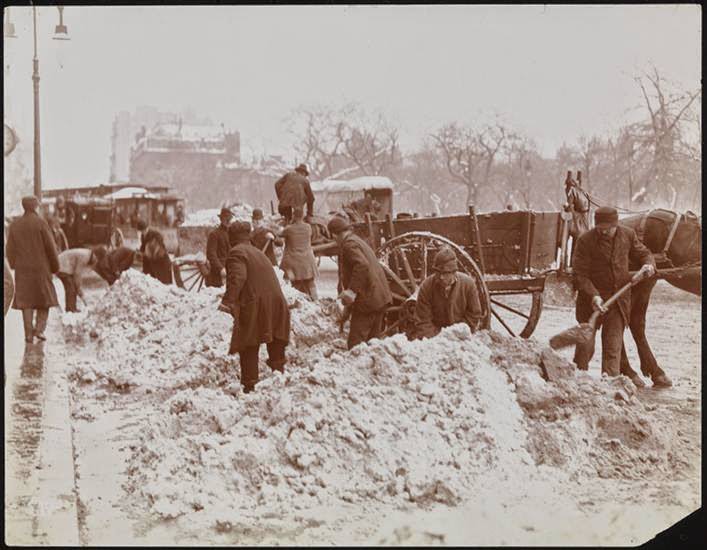
A police officer handing something to a horse-cart driver hauling snow, 1899
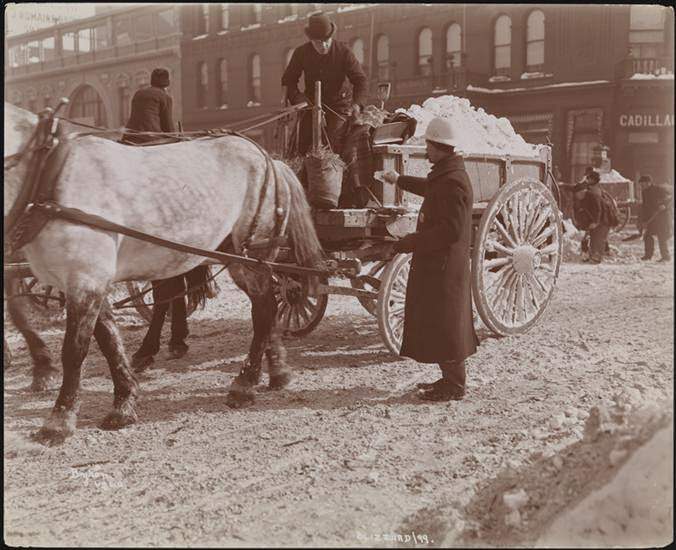

Snow removal in the 1890s was entirely manual. Horse carts loaded with snow made endless runs through the city’s streets, guided by drivers working through bitter cold. The police presence during snowstorms was common — managing traffic, keeping order, and coordinating the slow process of clearing the roads.

Harlem River Bridge overlooking Manhattan Field, 1895
Mulberry Street, 1898

Mulberry Street was the heart of Little Italy in the 1890s. Italian immigrants packed the block with food vendors, social clubs, and family businesses. Journalist Jacob Riis documented these streets extensively during this period, exposing the dangerous overcrowding to a broader American public that had little idea how the other half lived.

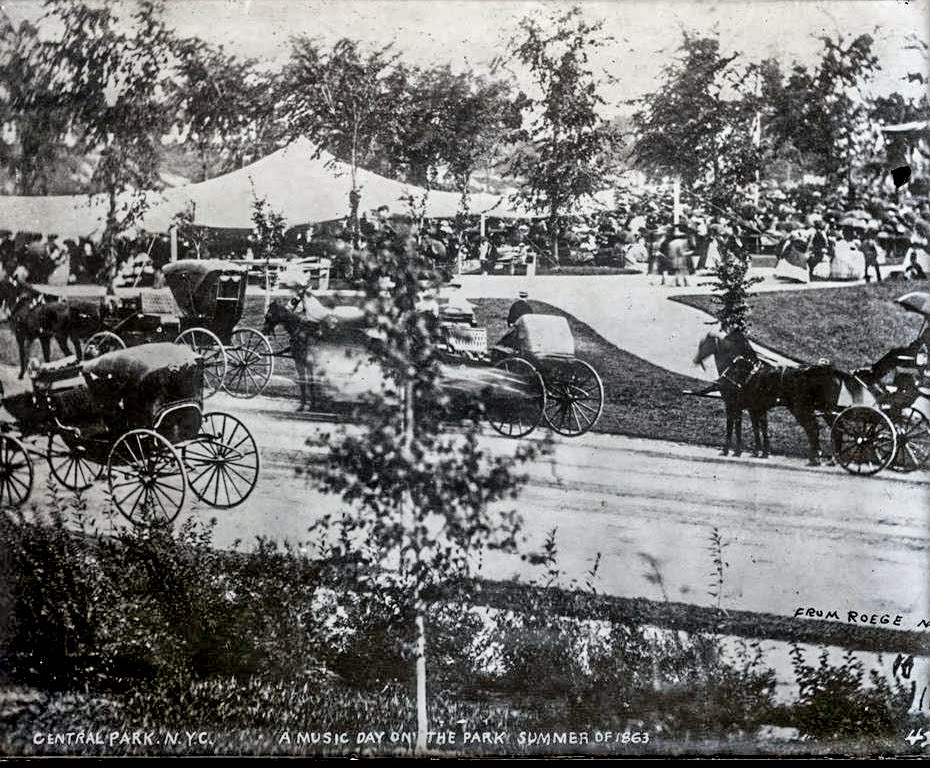
Central Park,1900
Central Park,1900
Park Row near Broadway, 1896

Park Row, near Broadway, was known as Newspaper Row. By the mid-1890s, the block housed the offices of nearly every major New York daily, including the New York Times, the Tribune, and Joseph Pulitzer’s World. The concentration of press power in one location made it one of the most competitive and influential blocks in American journalism.

Madison Square, 1898
Parade, Street Cleaners, Fifth Ave. & 42nd St., 1896

Street cleaning was a serious public health matter in the 1890s. Commissioner George Waring Jr. transformed the Department of Street Cleaning in 1895, outfitting workers in white uniforms and running the department like a military operation. The annual parade of street cleaners down Fifth Avenue was both a civic celebration and a statement about the importance of sanitation.

Hester Street, 1898
Hester Street, 1898
Coney Island, 1896
Coney Island, 1896

Coney Island in 1896 was the working-class playground of New York. Accessible by train from Brooklyn, the beachfront drew enormous crowds during summer months. Amusement rides, food stands, and bathhouses lined the shore, offering a rare chance for factory workers and tenement dwellers to step outside the grind of city life.

Central park west, 1890
Mulberry Bend, 1890
Mulberry Bend, 1890

Mulberry Bend was one of the most notorious slums in New York City. The sharp curve in Mulberry Street created a dense pocket of poverty where crime and disease were constant. Jacob Riis photographed the area extensively and campaigned for its demolition. By 1897, it was torn down and replaced with Columbus Park.

Laying cable line for trolleys in Union Square, 1891
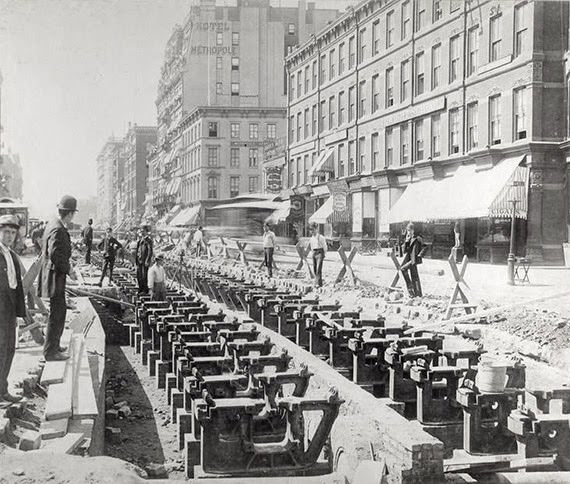

In 1891, construction crews dug up Union Square to lay cable lines for a new trolley system. Cable cars replaced horse-drawn streetcars on key routes, offering faster and more reliable service. The work was disruptive, but the city accepted the short-term chaos for the long-term gain. New York’s transit network was evolving rapidly.

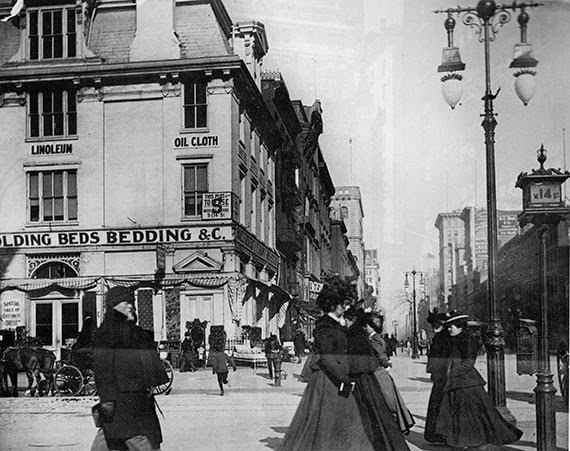
5th Avenue and 14th Street, 1890
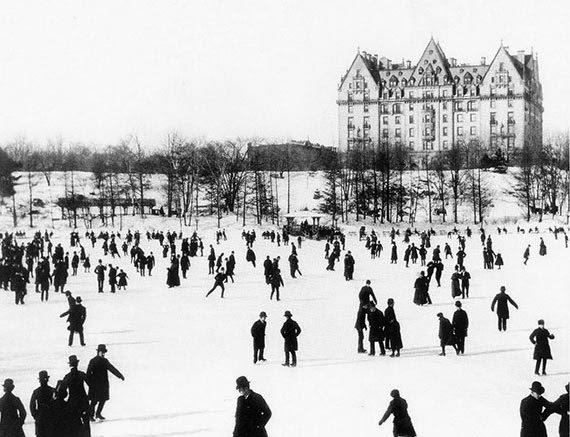
Central Park Ice Skating, 1890

Central Park’s skating ponds drew New Yorkers from every background during winter. Ice skating in the park was one of the few leisure activities that mixed social classes, if only briefly. The park itself was less than 30 years old in 1890, and it had already become essential to the city’s identity.

Park Avenue South, 1890
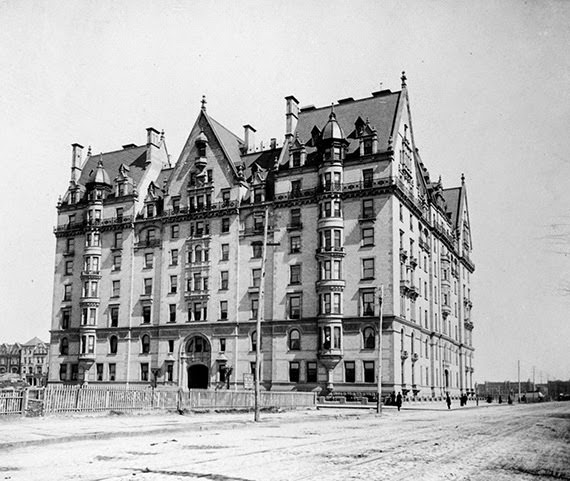
The Dakota at Central Park West, 1890

The Dakota apartment building opened in 1884 on Central Park West. At the time, the neighborhood was so undeveloped that critics joked the building was as remote as Dakota Territory — which is how it got its name. By 1890, the surrounding streets had filled in considerably, and the Dakota stood as one of the finest addresses in the city.

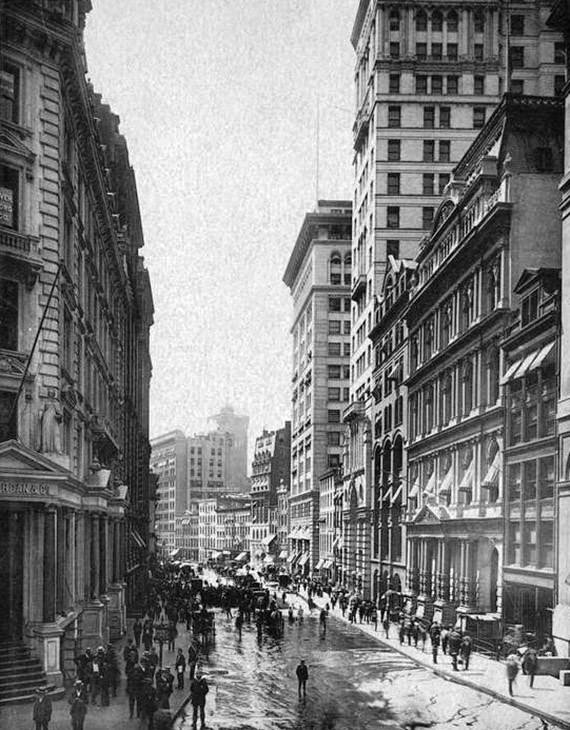
Stock Exchange, 1890

The New York Stock Exchange was the financial center of the nation by 1890. It anchored Wall Street’s dominance in American commerce. The same year, nearly 70% of U.S. imports flowed through New York’s port, making the city’s financial institutions directly tied to the movement of goods from around the world.

Broadway and Union Square, 1892
Grand Central, 1893
Grand Central, 1893

Grand Central Depot in 1893 was already one of the busiest rail terminals in the country. Trains arrived and departed constantly, carrying commuters, travelers, and freight. The building that stood in 1893 would eventually be replaced by the Grand Central Terminal that still stands today, completed in 1913.

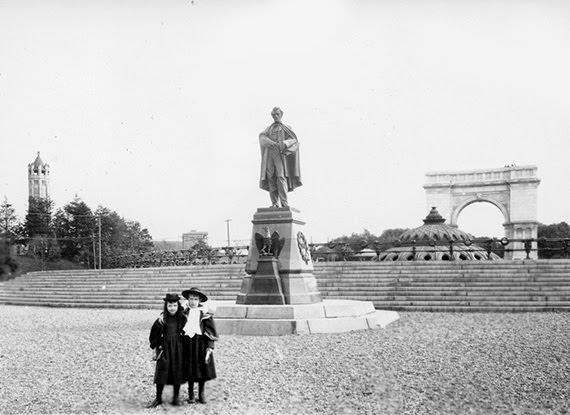
Grand Army Plaza Brooklyn, 1894
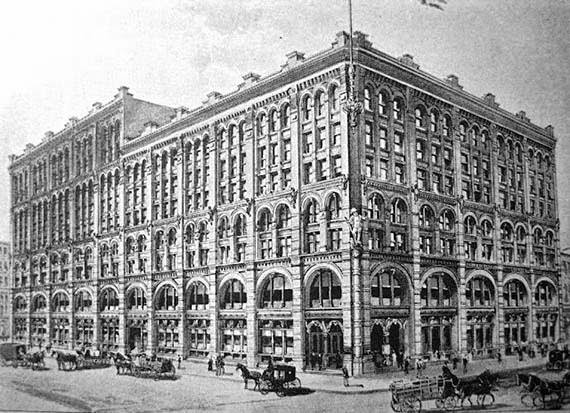
The Puck Building, 1895

The Puck Building on Houston Street was completed in 1886 and served as the home of Puck magazine, America’s first successful humor publication. By 1895, it was one of the most recognizable buildings in lower Manhattan, with its distinctive Romanesque Revival red-brick facade and golden statue of Shakespeare’s Puck above the entrance.

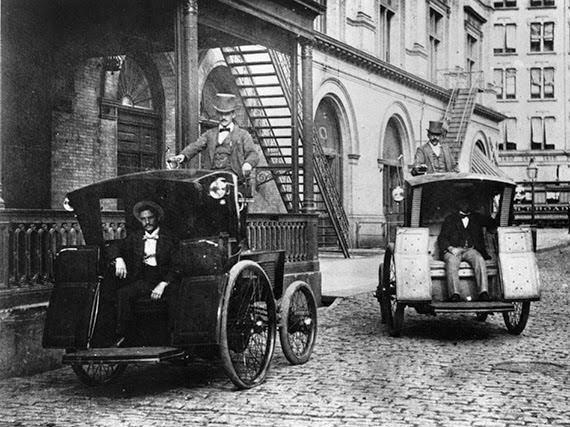
First Electric Taxis, 1896

In 1896, New York introduced its first electric taxis. The Electric Carriage and Wagon Company put a fleet of battery-powered cabs on the streets, predating gasoline-powered taxis by several years. They were quiet, clean, and surprisingly fast for the era. New Yorkers were already experimenting with what the next century of transportation would look like.

5th Avenue and 59th Street, 1897
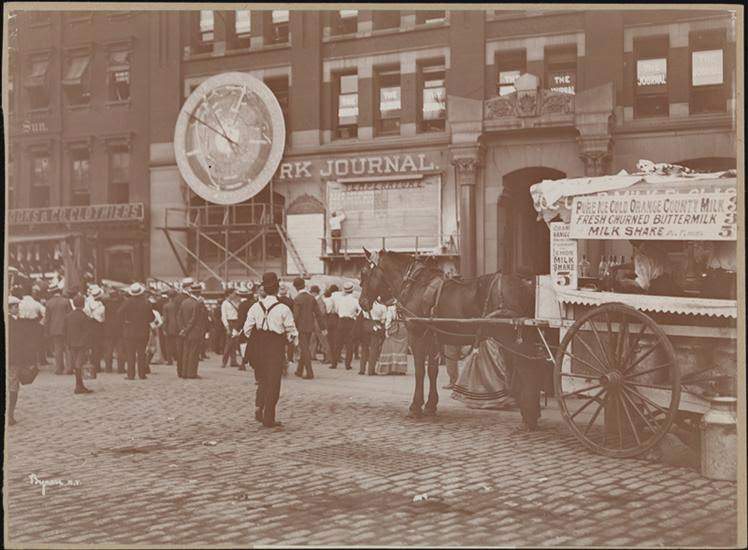
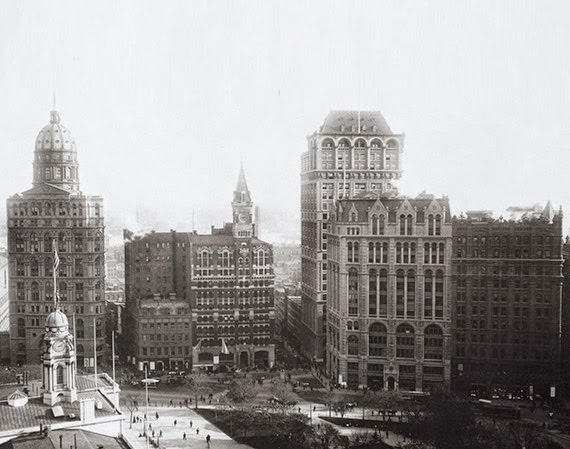
Newspaper Row, 1897
Newspaper Row, 1897

By 1897, Newspaper Row was at its peak. The circulation wars between William Randolph Hearst’s New York Journal and Pulitzer’s World were in full force. The two papers competed fiercely for readers with sensational headlines, large illustrations, and aggressive reporting — a style that would define American journalism for decades.

Bowling Green Park, 1898
Brooklyn Bridge and Lower Manhattan, 1899
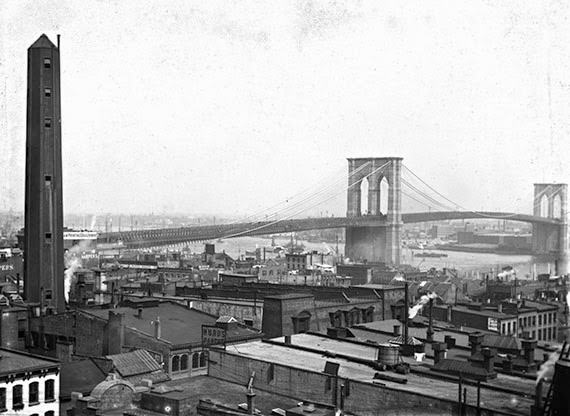

The Brooklyn Bridge had been open since 1883, and by 1899 it had become one of the defining symbols of New York. Its towers rose higher than any other structure in the Western Hemisphere at the time of its completion. Seen from a distance alongside lower Manhattan’s skyline, the bridge made clear just how much the city had built in a single generation.

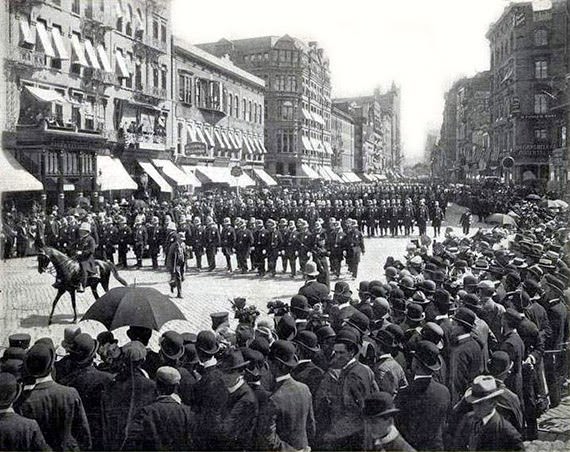
Police Parade, Bowler Hats, Hardly Any Women, 1899
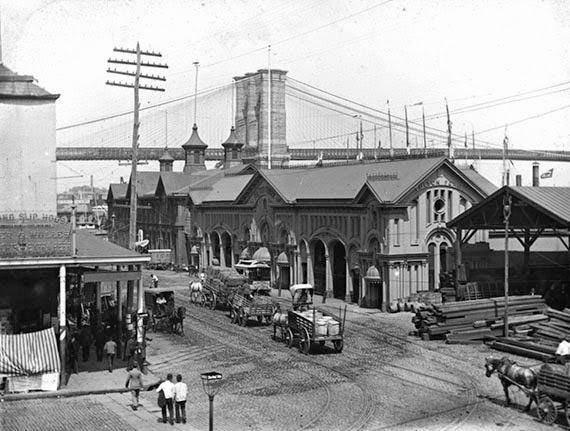
South Street Ferry Building, 1899

The South Street waterfront was one of the busiest in the world in the 1890s. Ferry buildings connected Manhattan to Brooklyn and New Jersey, carrying thousands of passengers each day before the subway era. The docks were packed with goods moving in and out of the port that handled the majority of the nation’s imports.

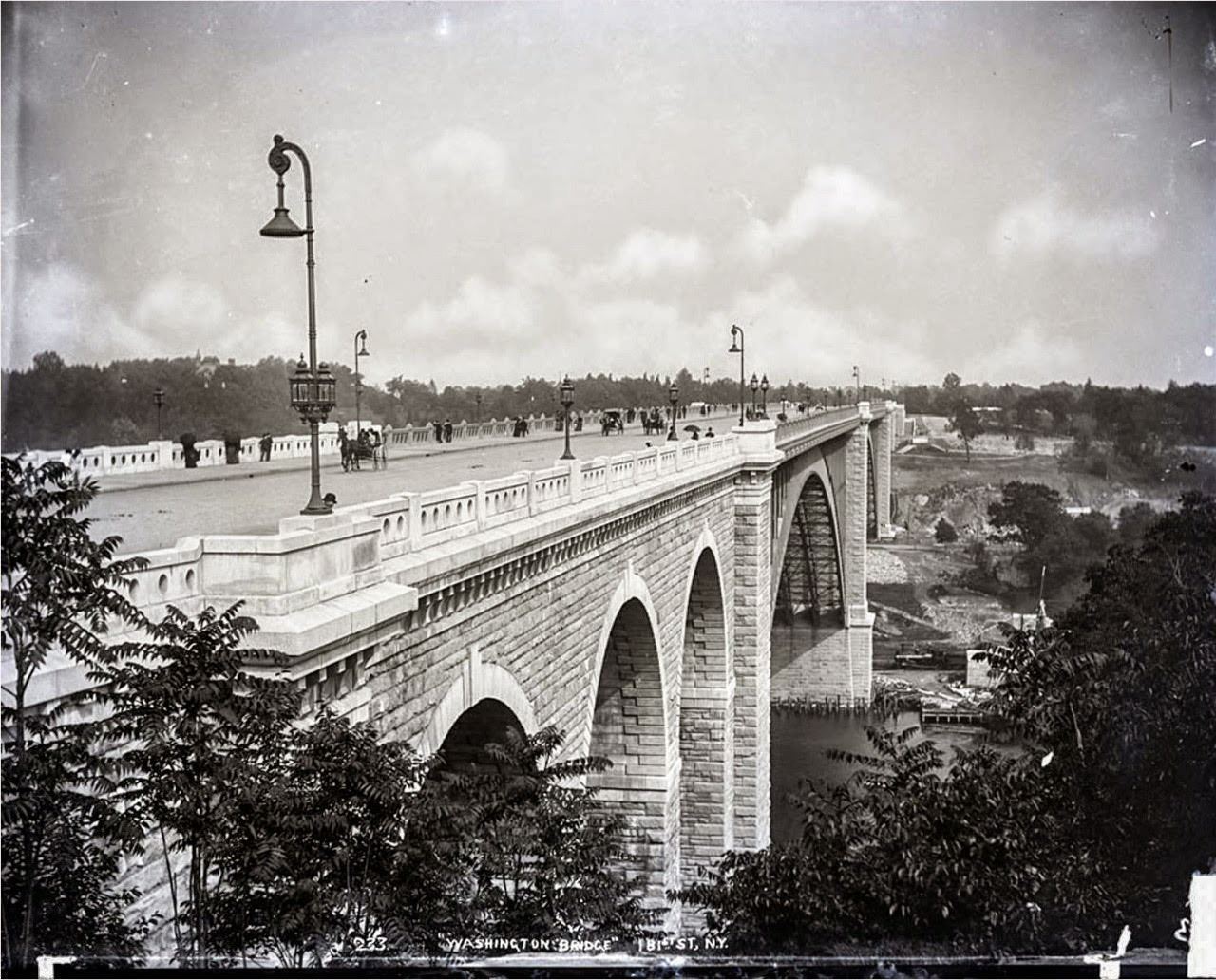
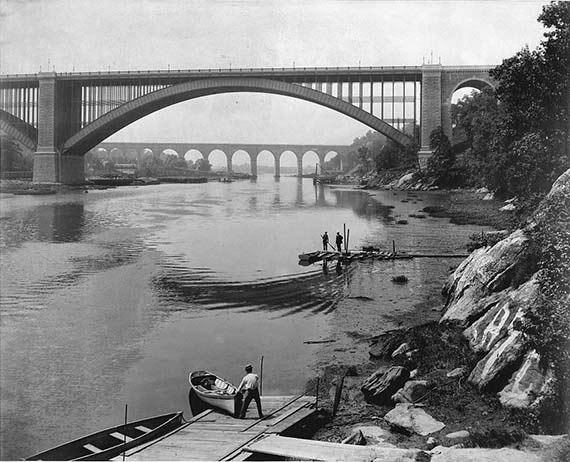
High Bridge (The Aqueduct Bridge), 1899
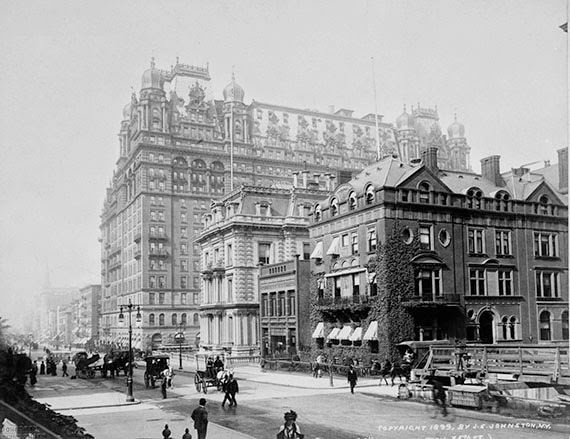
Waldorf Astoria Original Site at 5th Ave and 35th Street, 1899

The original Waldorf Astoria was built in two stages — the Waldorf Hotel in 1893 and the Astoria Hotel in 1897 — on Fifth Avenue between 33rd and 34th Streets. By 1899, it was the most famous hotel in the world, hosting royalty, heads of state, and the American elite. The site would later be demolished to make way for the Empire State Building.

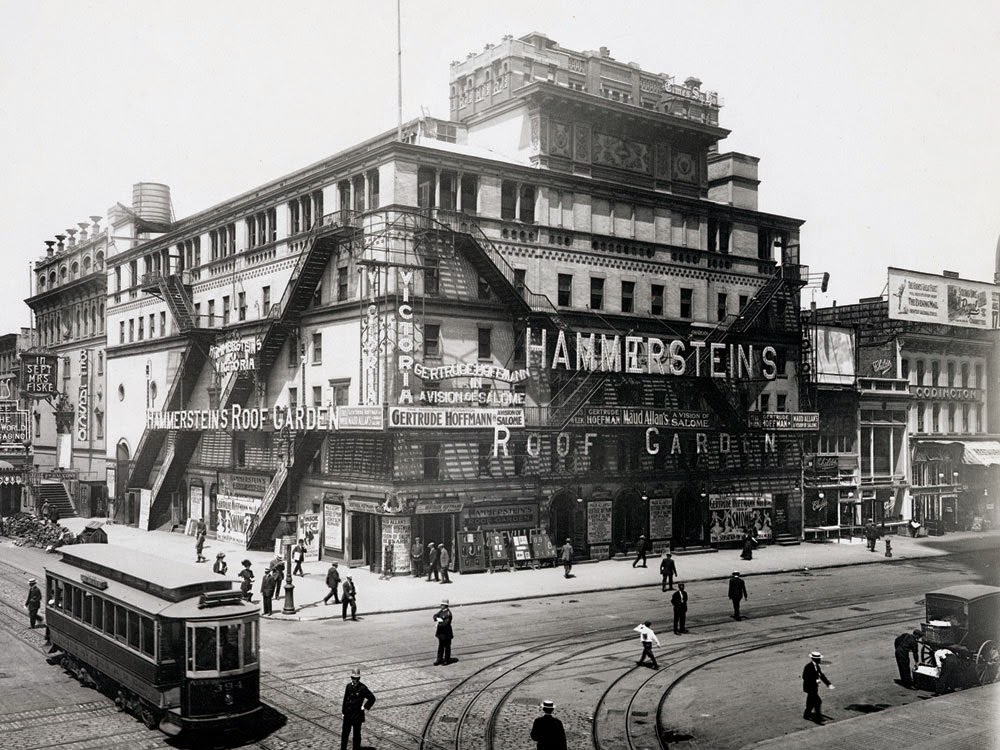
Hammerstein's Victoria Theatre and Roof Garden
Hammerstein’s Victoria Theatre and Roof Garden
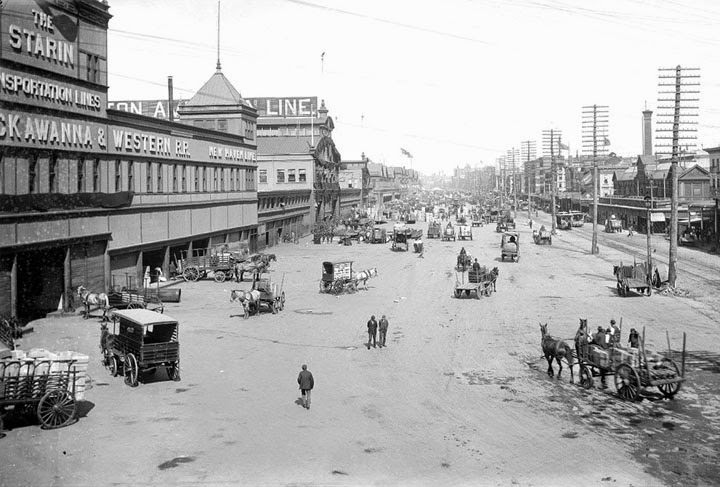
A view of bustling port area on West Street, 1899

West Street along the Hudson River waterfront was a constant rush of ships, wagons, and workers in 1899. Cargo from Europe, South America, and beyond was unloaded daily onto the docks. The port was the engine that kept New York’s commercial dominance alive, and these streets reflected exactly how much trade flowed through the city every single day.

Brooklyn Bridge Under construction, 1872
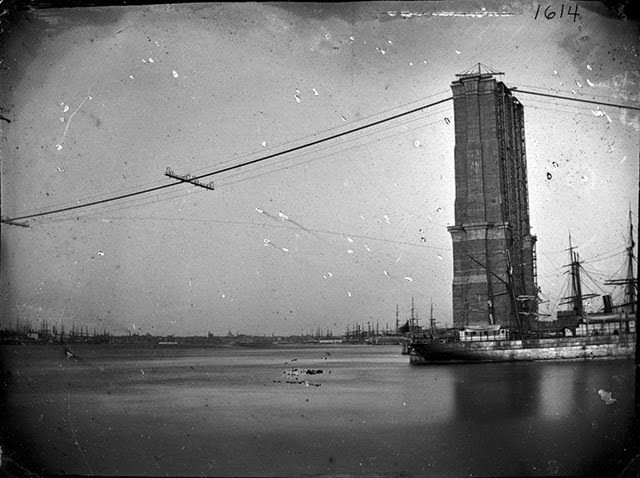

Construction on the Brooklyn Bridge began in 1869 and took 14 years to complete. This 1872 photograph shows the towers in their early stages, rising from both the Manhattan and Brooklyn sides of the East River. The project cost the lives of at least 27 workers and left chief engineer John Roebling dead from an injury sustained at the start of the project.

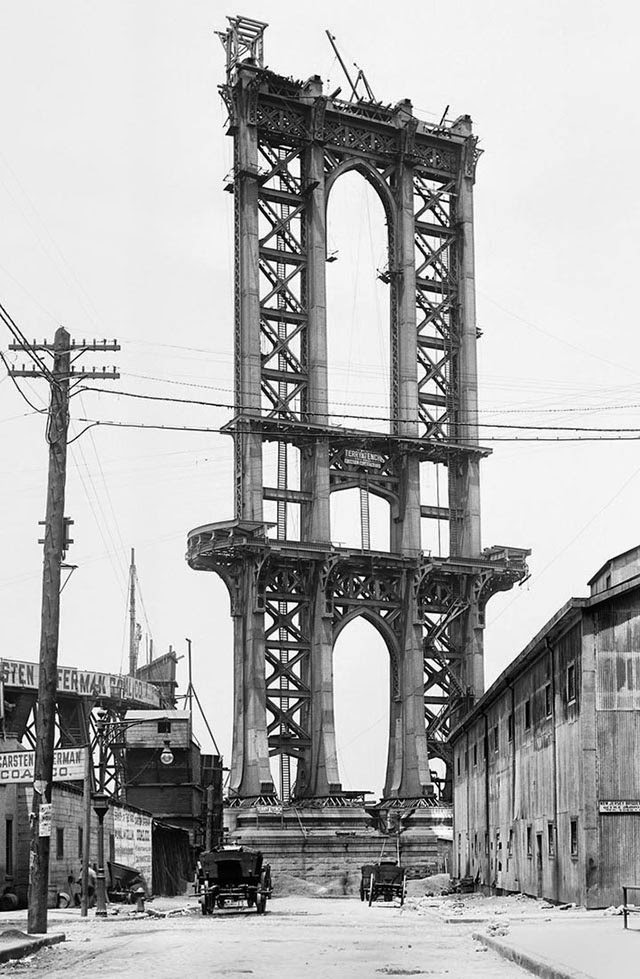
Manhattan Bridge
Manhattan Bridge
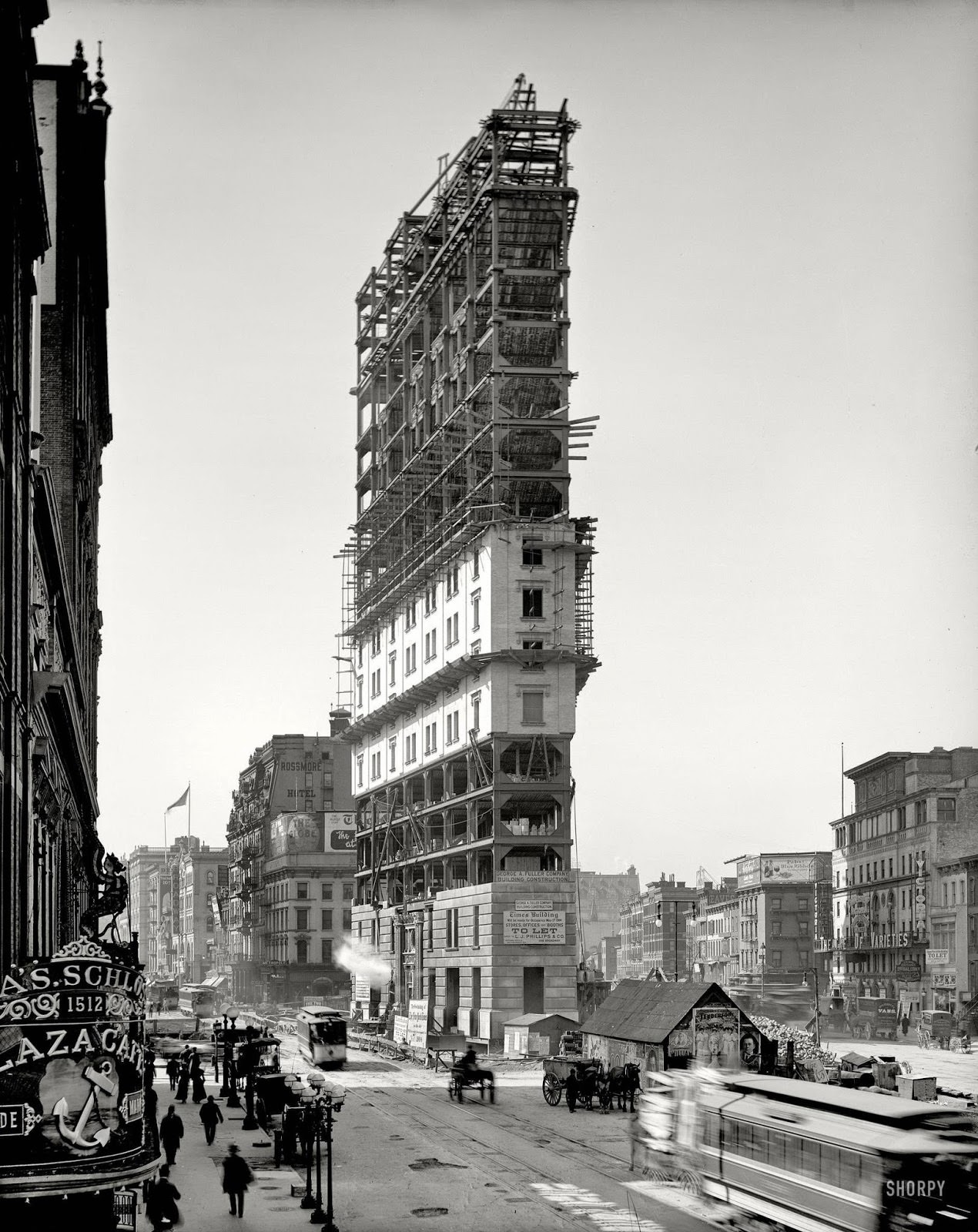
Times Square under construction

Times Square as a named destination did not yet exist in the 1890s. The area was then called Longacre Square, a center for the carriage trade and horse stables. Photographs showing its construction offer a rare look at a block on the edge of transformation — one that would become one of the most recognizable intersections on earth within a few years of the new century.

Playing children near dead horse, 1899
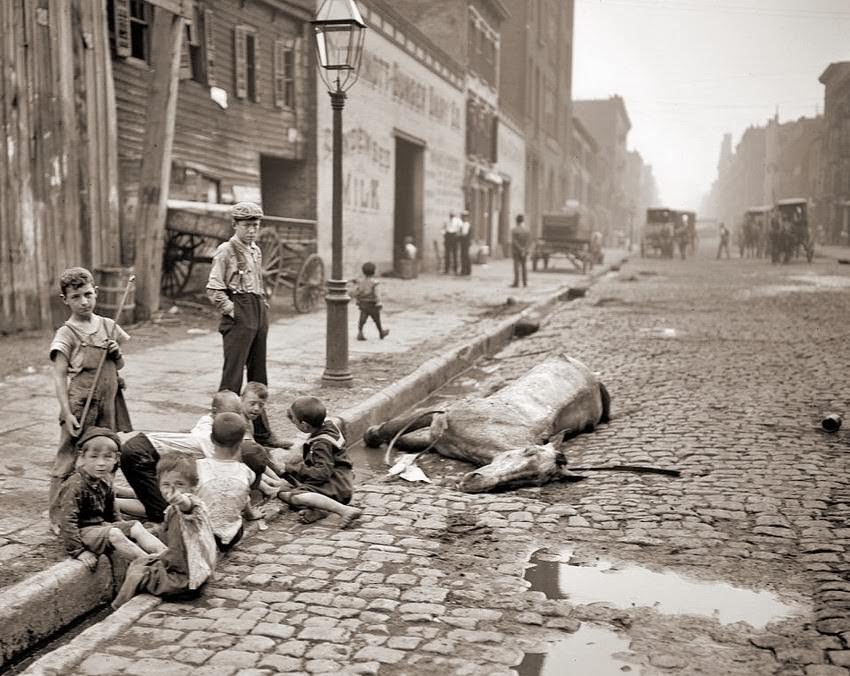

New York’s streets in the 1890s were filled with horses — and all the problems that came with them. Dead horses were a common sight, especially in summer, and their removal was slow. Children played in and around these streets regardless. The 1899 photograph of children near a dead horse is not unusual for the era; it is an accurate window into what daily street life actually looked like.

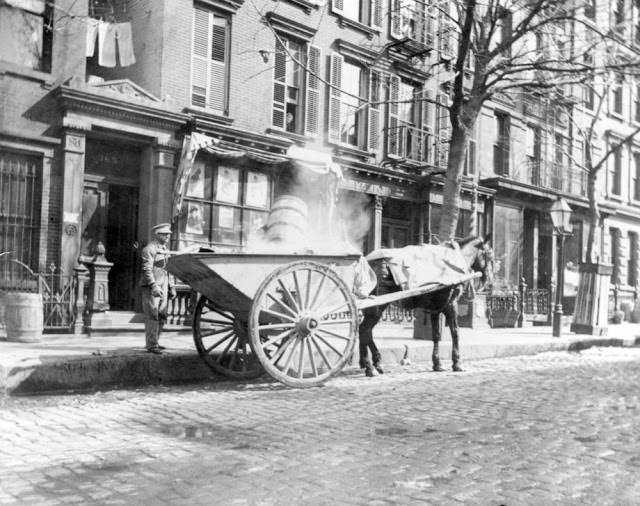
Horse-drawn ash cart. New York City, 1896
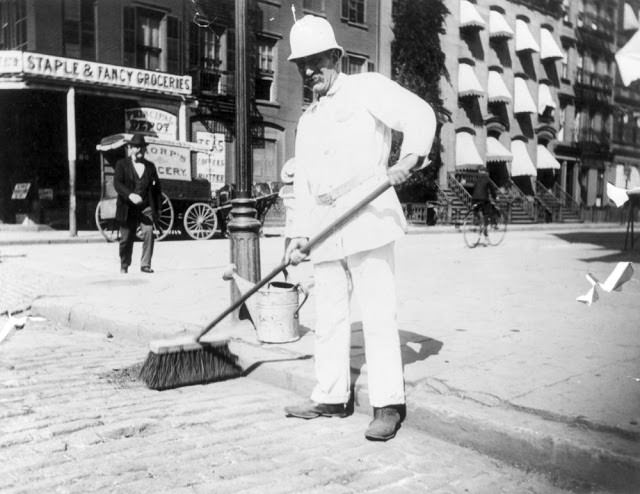
Street cleaner. New York City, 1896

George Waring’s street cleaning reforms in 1895 put uniformed workers on the streets with a clear mission: keep the city clean. Before his tenure, New York’s streets were so filthy that disease spread rapidly and the smell was overwhelming in summer months. Ash carts and street sweepers became a standard sight by 1896, and mortality rates from preventable diseases began to fall.

Electric omnibuses at the Flatiron Building
Bathing 1896 Far Rockaway Beach, 1896

Far Rockaway Beach drew bathers from across the city every summer. The beach was accessible by the Long Island Rail Road, making it a popular destination for New Yorkers who wanted a day by the ocean. The bathing fashions of 1896 were heavy by modern standards — full-length wool suits for both men and women were the norm.

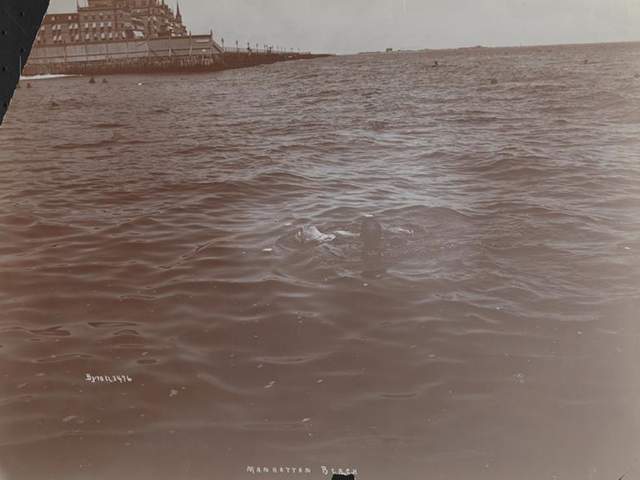
A ghost swimming, Manhattan Beach, 1896
Sports-Bathing 1897 Far Rockaway Beach, 1897
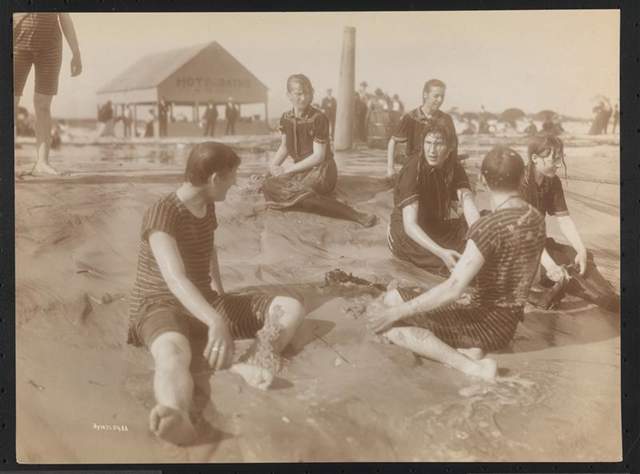

Manhattan Beach, located at the eastern end of Coney Island, was a more upscale resort than its neighbors to the west. The long-exposure photograph labeled ‘a ghost swimming’ captures a swimmer blurred by the camera’s shutter speed — a common photographic artifact of the era that gives the image an eerie quality. Far Rockaway in 1897 shows beachgoers engaged in what was then called ‘sports-bathing,’ a more active approach to seaside recreation that was growing in popularity as the century drew to a close.

Enjoyed this post? Get new ones in your inbox.

Leave a Comment

Your email address will not be published. Required fields are marked *

Share this Post 🥺

Please take a moment to share this content. Your support is greatly appreciated! 🙌🙏

Share this Post 🥺

Please take a moment to share this content. Your support is greatly appreciated! 🙌🙏
Scroll to Top
 
Hey Friend, Before You Go.. Please like & follow for more interesting content