
In 1946, British designer Benjamin Bowden unveiled a bicycle that looked like it belonged on a movie set about the year 2000. With sweeping curves, hollow organic voids in the frame, and built-in electronics, it was unlike anything anyone had seen on two wheels. Bowden called it the Classic, and he presented it at the “Britain Can Make It” exhibition in London. The goal was simple: show the world what the future of bicycle design could look like.
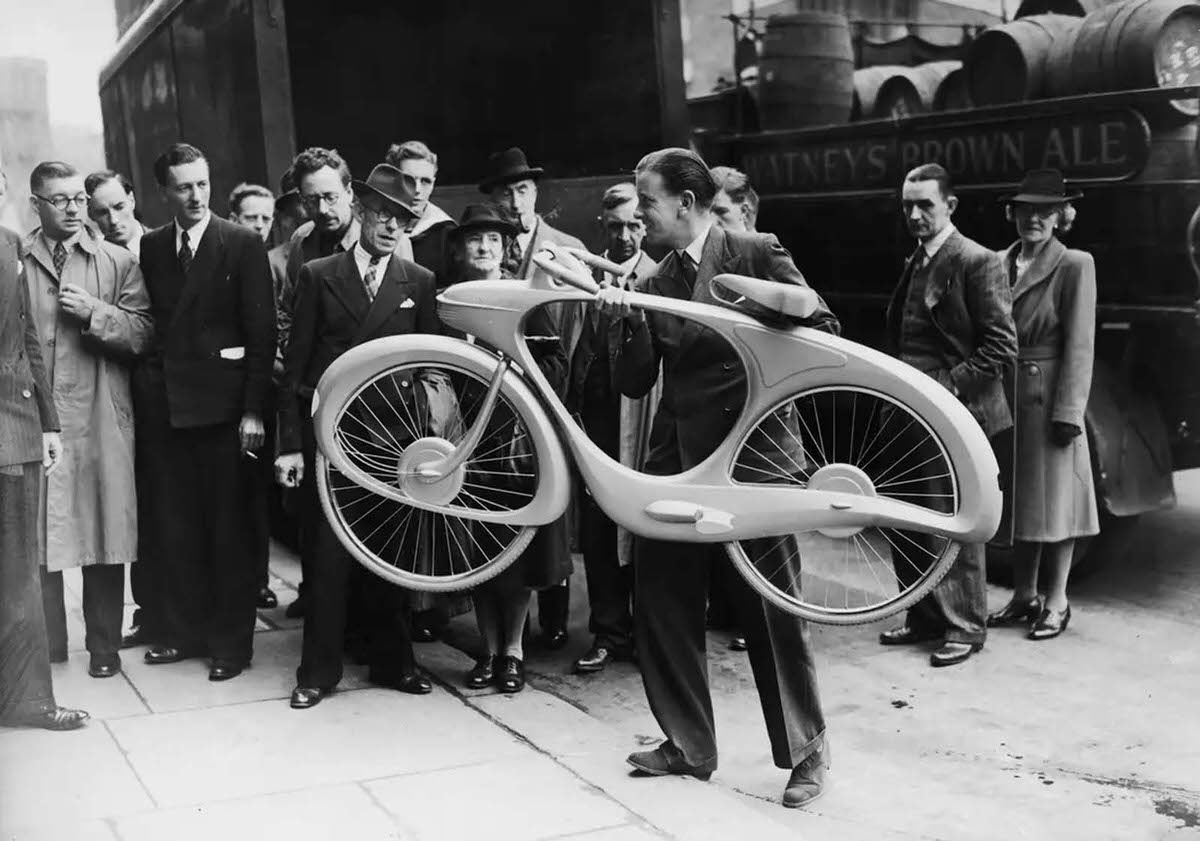
The Classic’s frame was made from two steel clamshell halves pressed together into a single monocoque shell — a construction method borrowed from aircraft design. The fork and mudguard were formed as one continuous piece. Its flowing, amoeba-like shape pushed the prewar streamlined style into something far more organic, as if the bicycle had grown rather than been built. Inside the hollow frame, Bowden packed batteries that powered a radio, a horn, and lights. When the rider coasted downhill, a hub dynamo stored the energy and then gave a powered boost going back uphill.
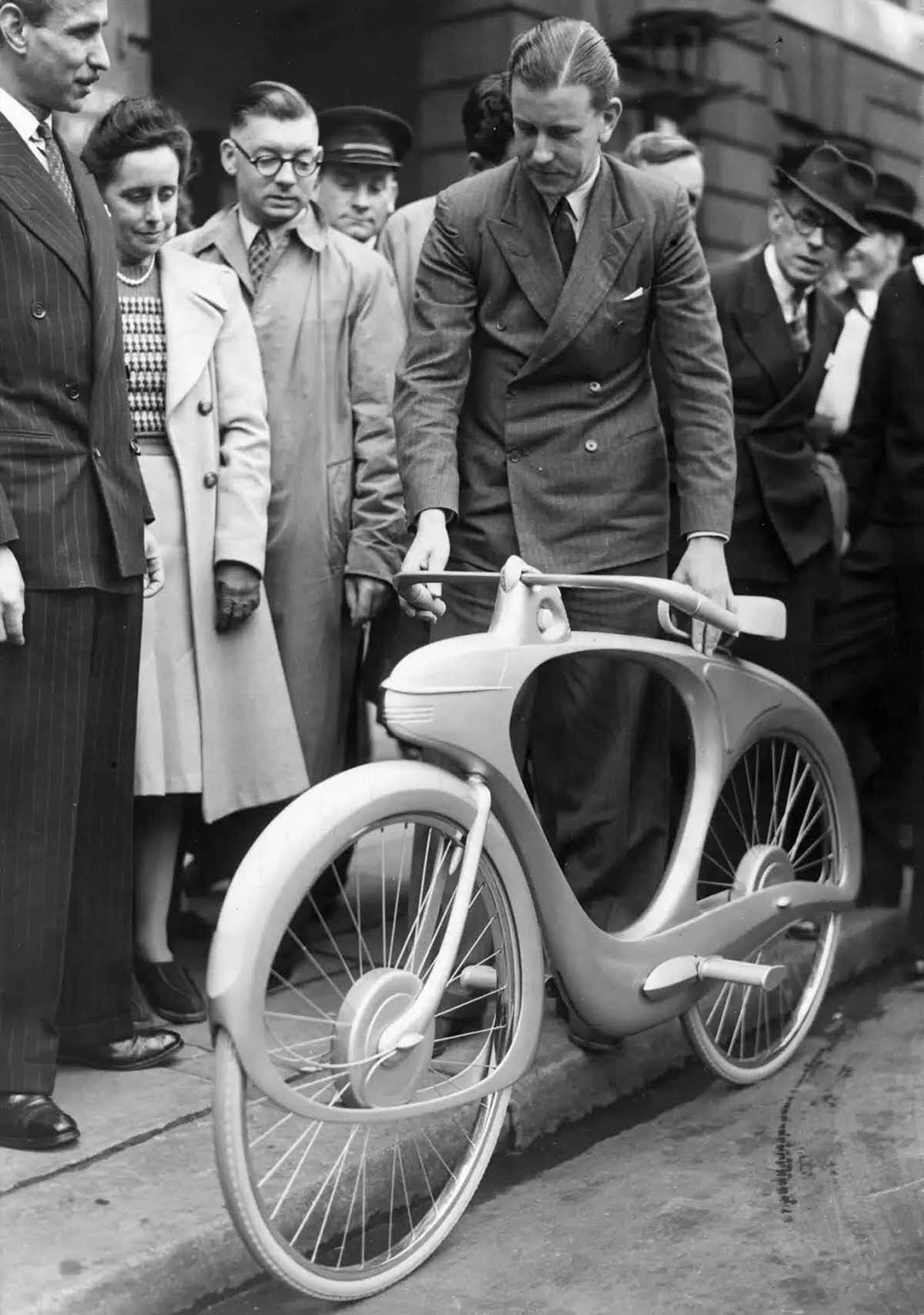
The public was fascinated. But British bicycle manufacturers were not. Producing the Classic would have required a massive overhaul of their existing machinery and factory setups. No one was willing to take on that cost, and the project stalled. Bowden spent over a decade trying to find a production partner before finally looking across the Atlantic.
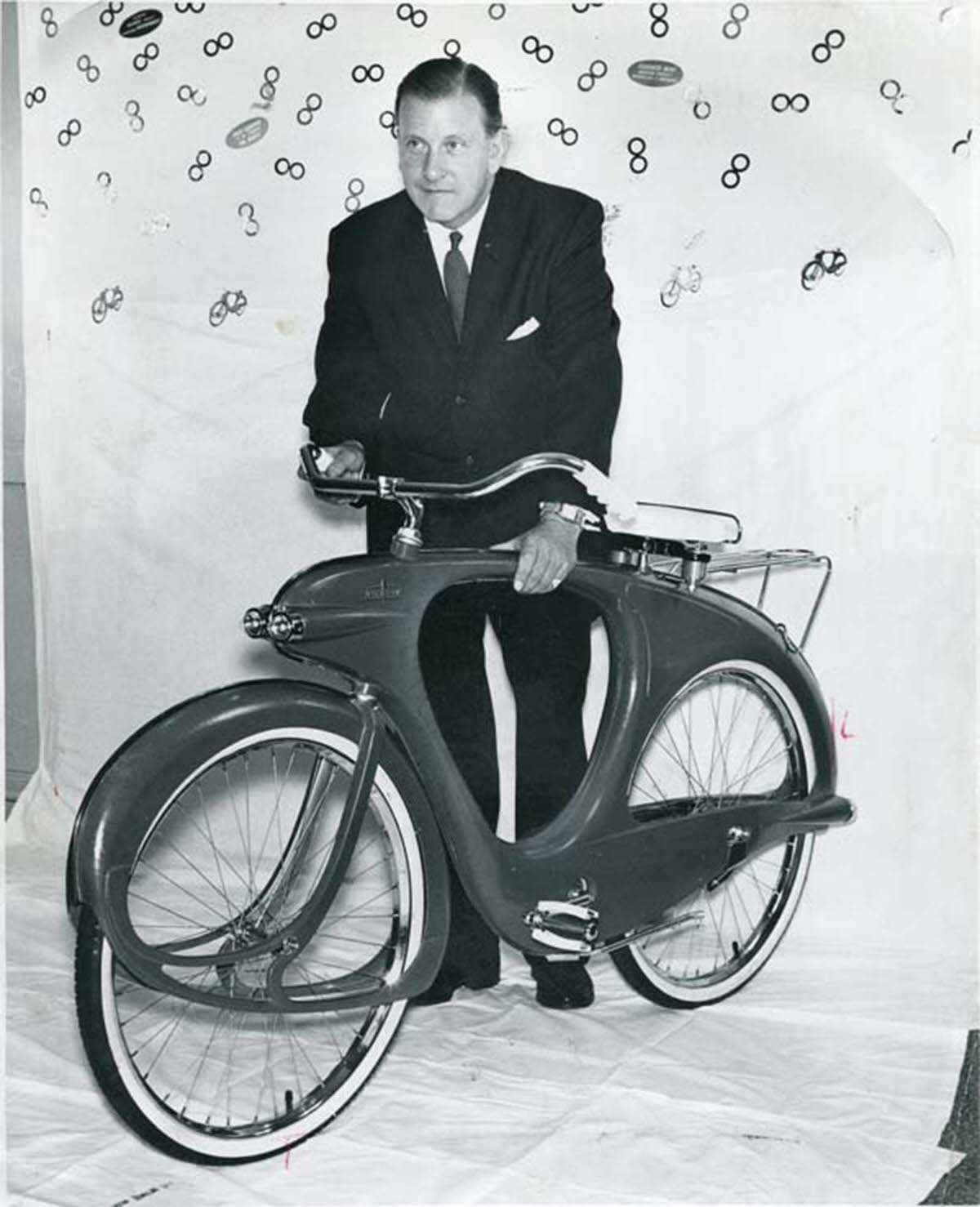
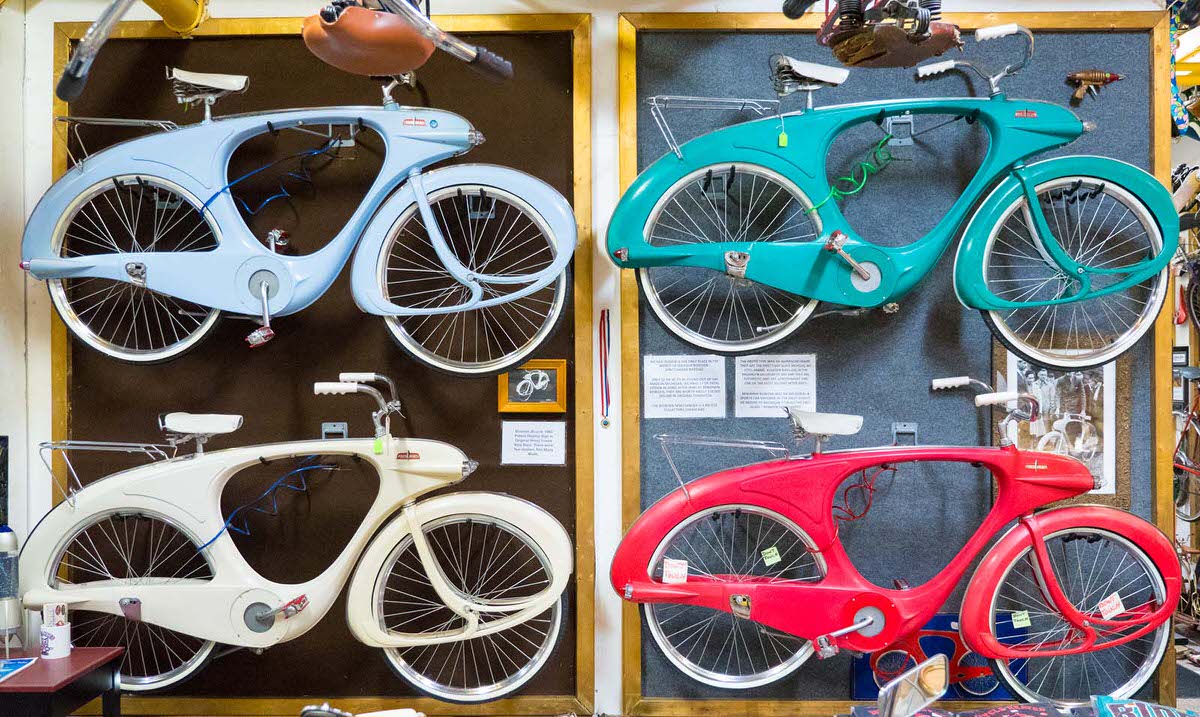
In 1960, Bowden moved to the United States and found backers willing to manufacture the bicycle in Michigan. The American manufacturer proposed building the frame from fiberglass instead of aluminum, which cut production costs. Bowden agreed, but he dropped the hub dynamo system entirely, replacing it with a standard sprocket-and-chain drive. The bike lost its most technically impressive feature, but it kept its radical look. To tap into the excitement around the Space Race, the name was changed from the Classic to the Spacelander.
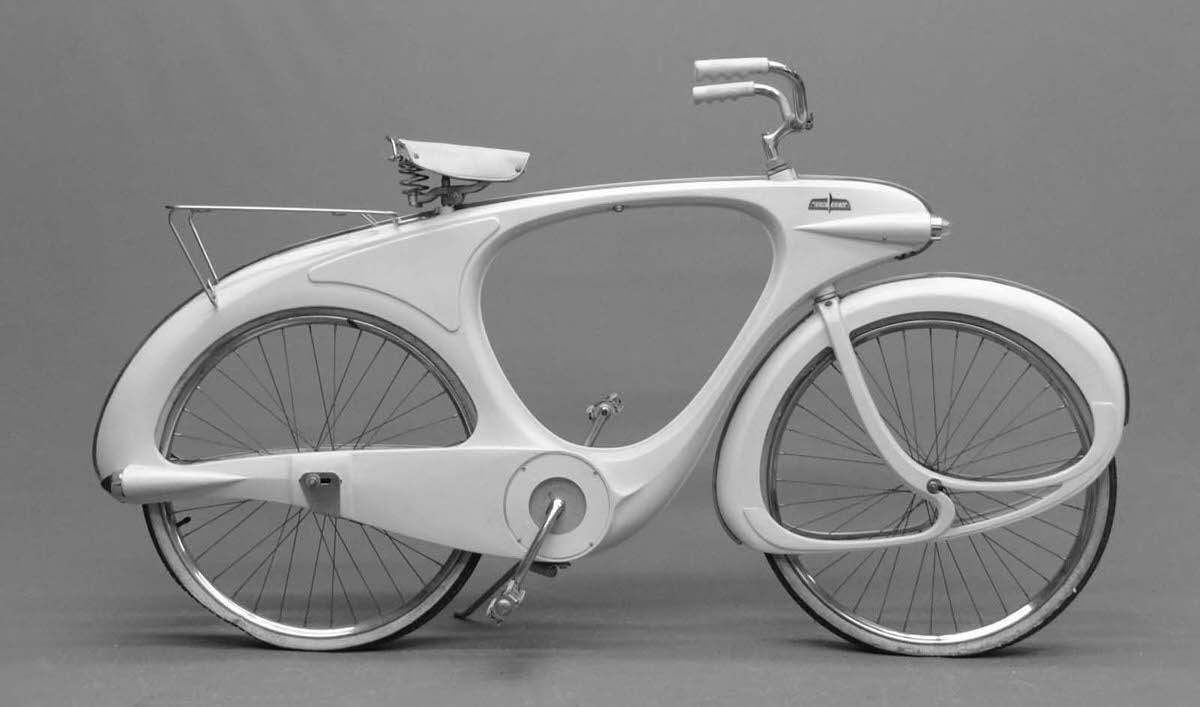
The Spacelander launched in 1960 in five colors: charcoal black, cliffs of Dover white, meadow green, outer space blue, and stop sign red. At $89.50, it was one of the most expensive bicycles on the American market. The pressure to meet demand meant Bowden had to rush development, and that showed. The fiberglass frame was brittle and prone to cracking. Distributors struggled to market something so far outside the norm.
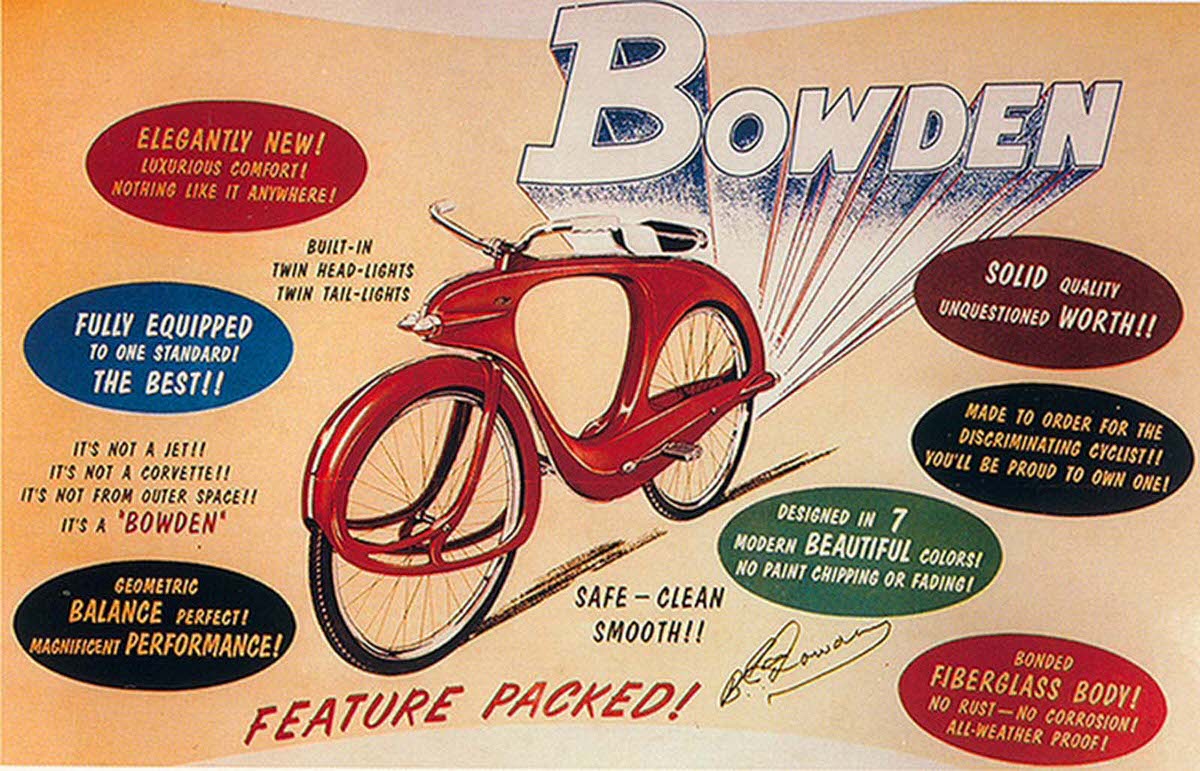
Advertising leaned hard into the futuristic angle, trying to sell the Spacelander as the next step in personal transportation. The ads were bold and eye-catching, but they couldn’t overcome the bike’s practical problems — or its steep price tag.
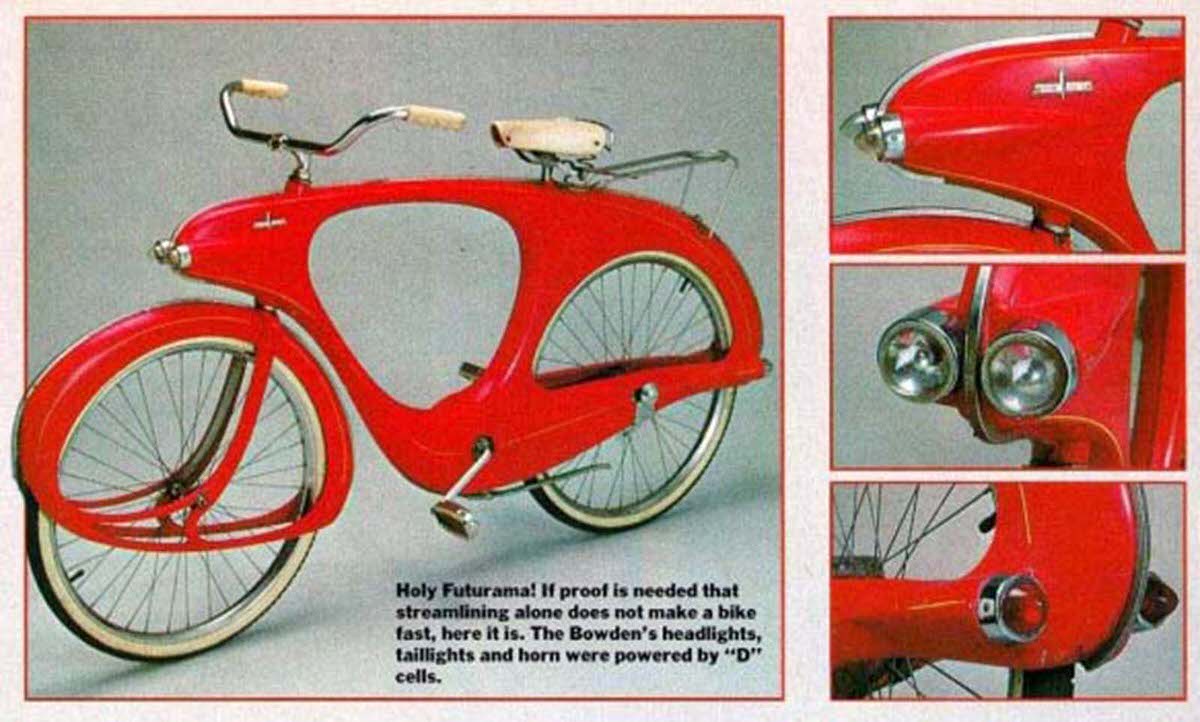
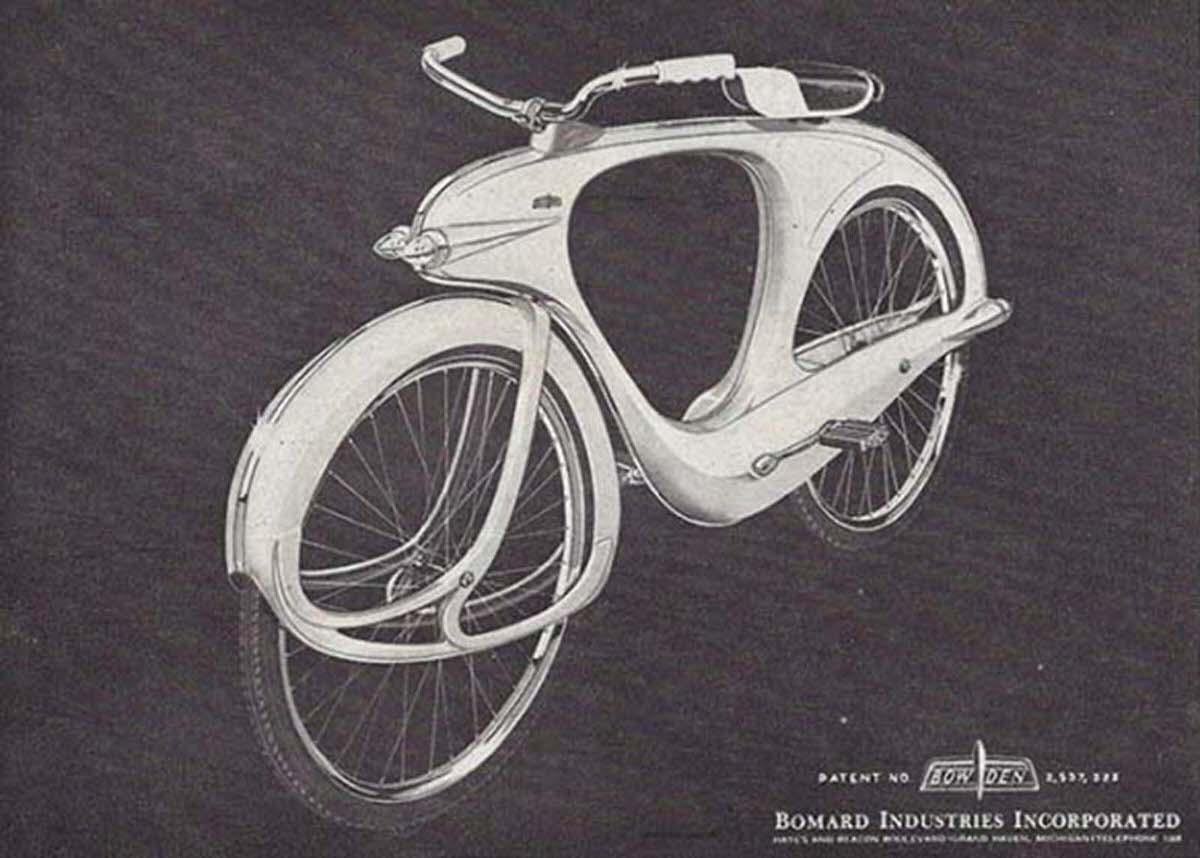
Production came to a halt after just 522 bicycles were shipped. Parts had been manufactured in larger quantities in anticipation of stronger sales, but those leftover components went unused. The Spacelander was a commercial failure by any measure — too expensive, too fragile, and too unconventional for the average buyer.
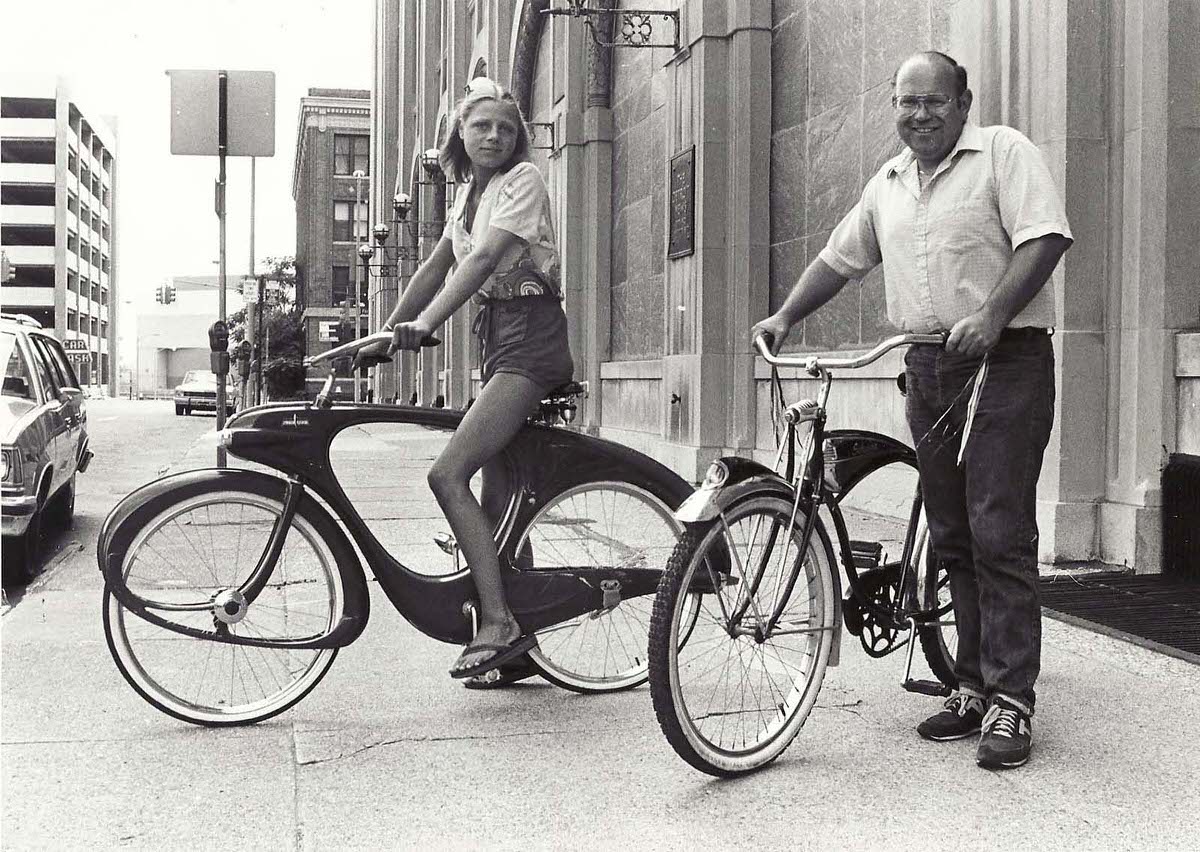
Decades later, collectors took notice. In the 1980s, surviving Spacelanders became sought-after objects, prized for the very qualities that made them hard to sell originally. Of the 38 known remaining examples, 17 are held by the Bicycle Museum in Pennsylvania. Today, they sit under museum lights — the relics of a design that tried to leap decades into the future and paid the price for it.


The article caught my attention. According to other sources, the Classic was made of aluminum. The Bowden Company has a direct relationship with its other enterprises. Bowden was known for the aluminum-bodied Healy 2.4: the ubersportscar of his day.
Some of them were probably fiberglass. There are 17 bicycles at Bicycle Heaven in Pittsburgh if you’re ever there.
Original Classics were made of aluminum or steel. Fiberglass was used for the successor Spacelanders
I have a picture of my uncle with one of these bicycles.