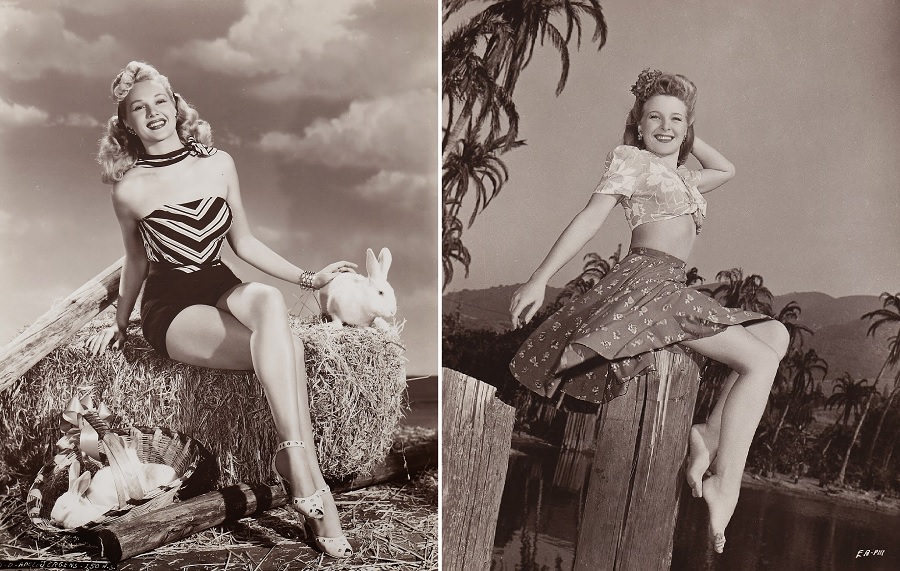
Long before social media turned every casual snapshot into a public event, Hollywood studios knew exactly how to stage a photograph. Publicity shots were deliberate, carefully lit, and designed to sell a star’s personality just as much as their latest film. Among the most charming of these studio-era images are the ones featuring bicycles — a prop that managed to make even the most glamorous celebrity look approachable, fun, and real.
The bicycle appeared in Hollywood photography across nearly every decade, from the early 1930s all the way into the 1990s. Stars used bikes in everything from scripted movie scenes to casual off-set publicity shoots. The result is a remarkable collection of photographs that doubles as a visual timeline of American pop culture and fashion. Some of the biggest names in film history show up in this collection — and the range of personalities on display is just as wide as the decades they span.
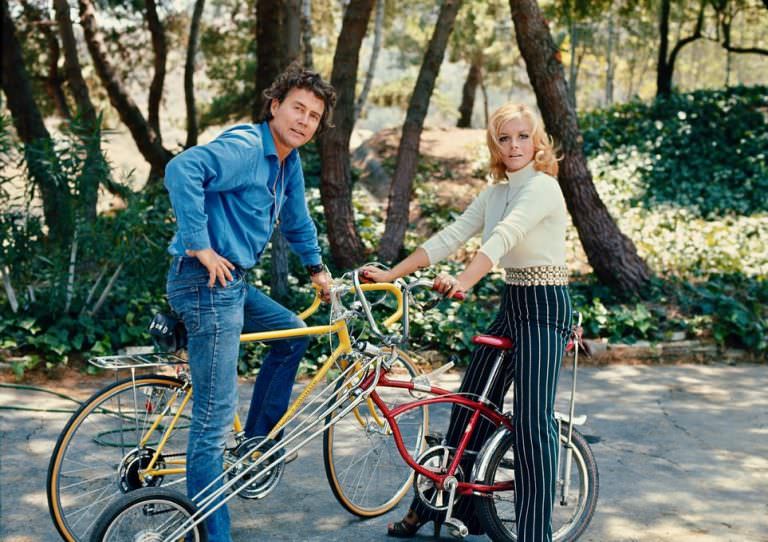
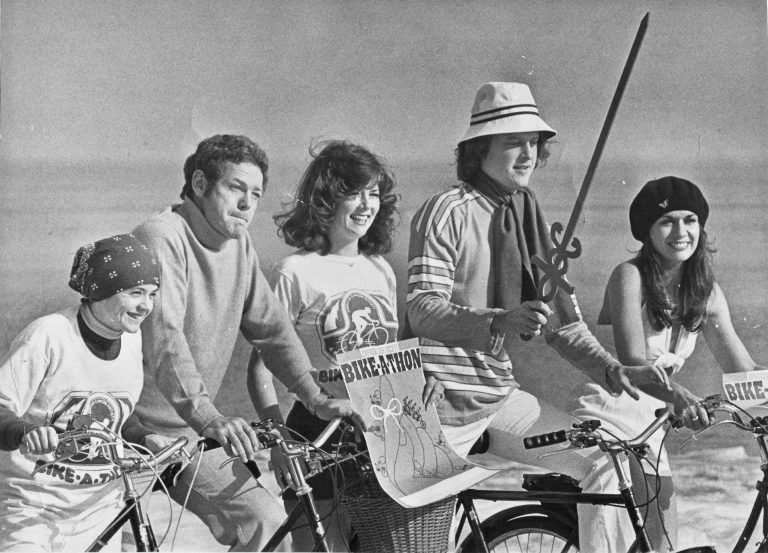
Ann-Margret and her husband Roger Smith brought their natural chemistry to this 1972 photo. The couple had married in 1967 and remained one of Hollywood’s most stable pairs. By the early 1970s, Ann-Margret was at the peak of her career, fresh off acclaimed performances that earned her serious industry recognition. Seeing the two of them together with their bikes gives the photo an easy, candid warmth that studio portraits often lacked.
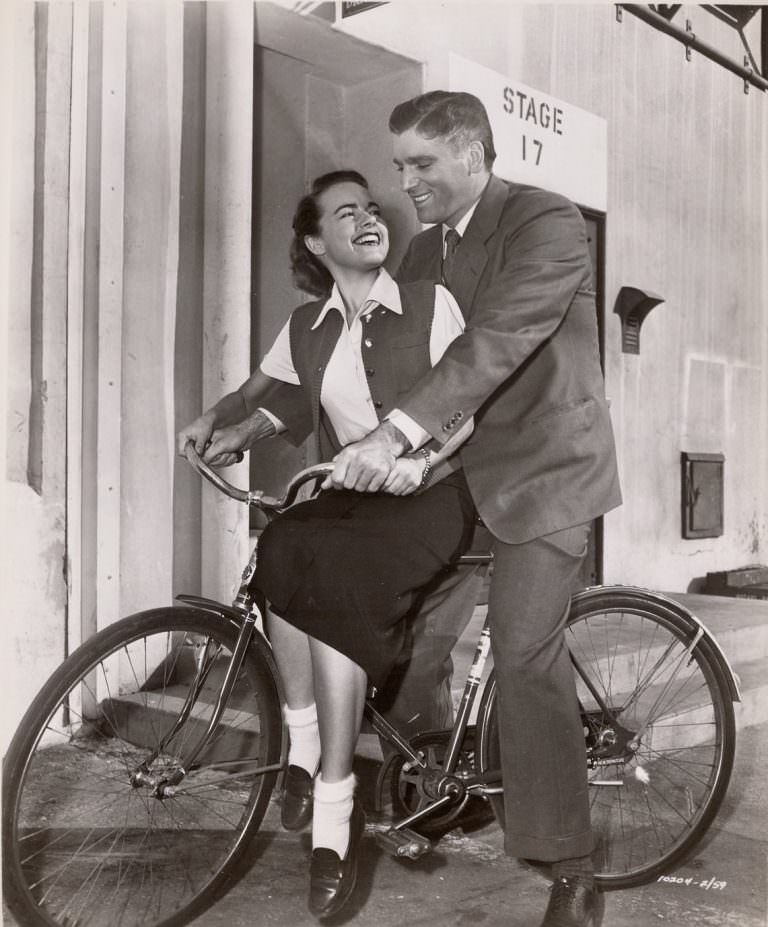
Burt Lancaster was one of the most physically imposing stars of the 1950s — an ex-circus acrobat who brought genuine athleticism to his roles. Terry Moore, a five-time Academy Award and Golden Globe nominee, was no stranger to the camera either. Their 1953 photo together puts two of that era’s most recognizable faces side by side on a single bike, a pairing that feels both unlikely and completely at ease.
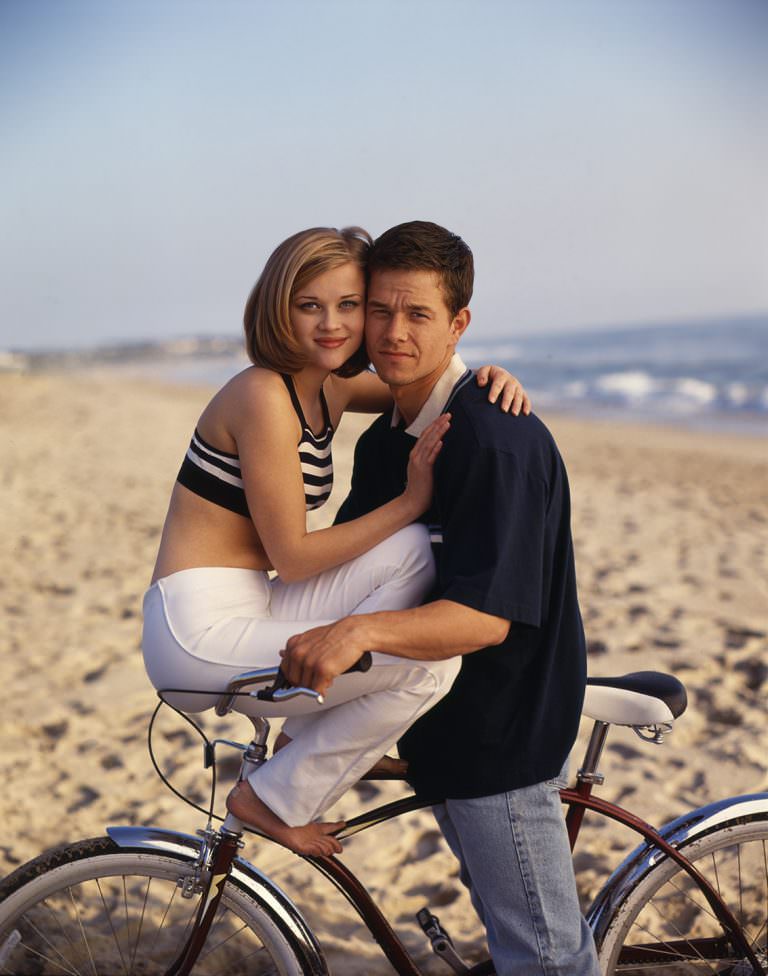
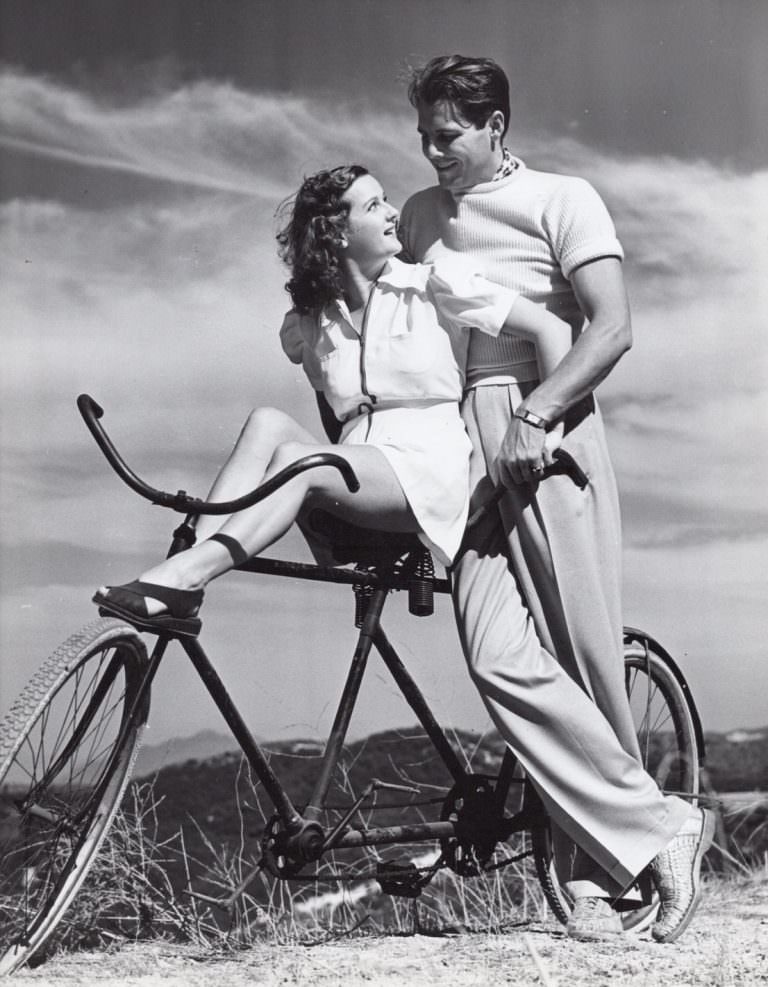
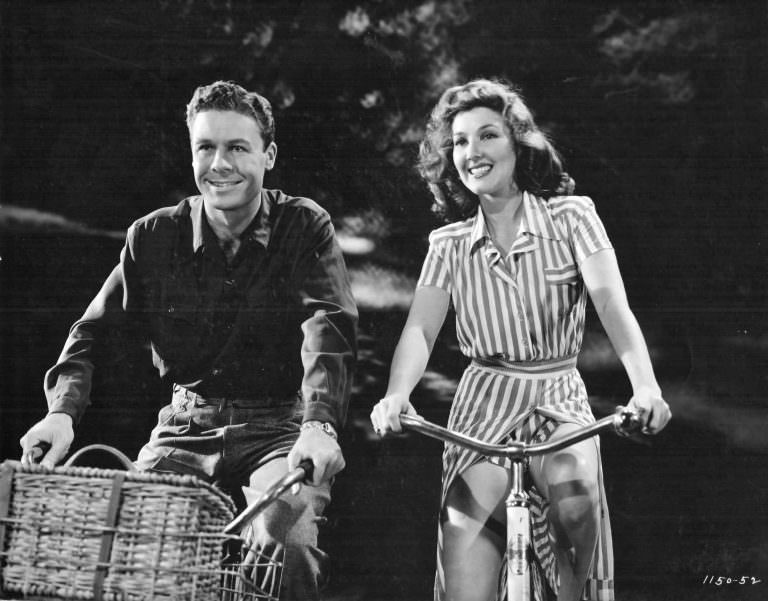
The 1930s were a golden age for studio photography, and this 1938 image of James and Gertrude Ellison captures the relaxed elegance of that period perfectly. James Ellison was a working Western actor known for his roles in B-pictures and serials. Photos like this one — casual, outdoors, unpretentious — were a deliberate contrast to the formal portrait sessions that dominated studio walls.
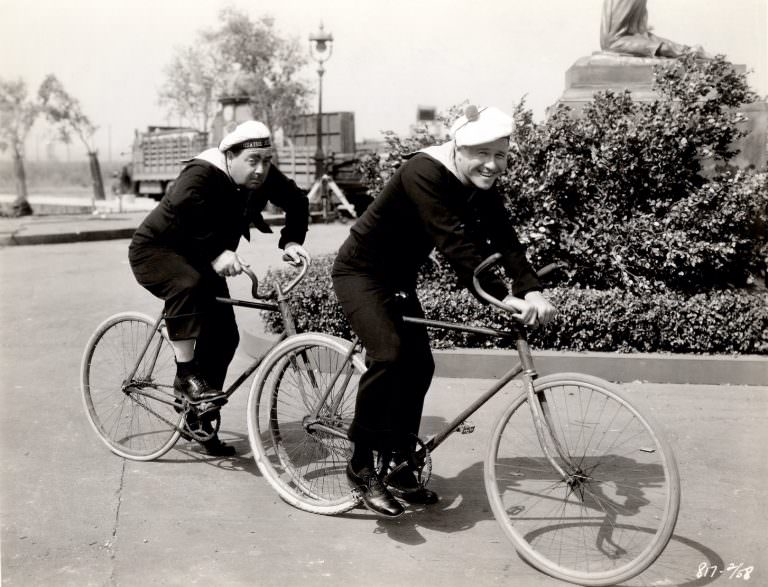
By 1930, Hollywood was still adjusting to the arrival of sound in film. Comic actors like Eugene Pallette and Jack Oakie were finding their footing in the new format, and publicity photos helped keep their names visible between releases. Both men had distinctive screen presences — Pallette with his unmistakable gravelly voice, Oakie with his broad, physical comedy style. Their bike photo together leans into that playful energy.
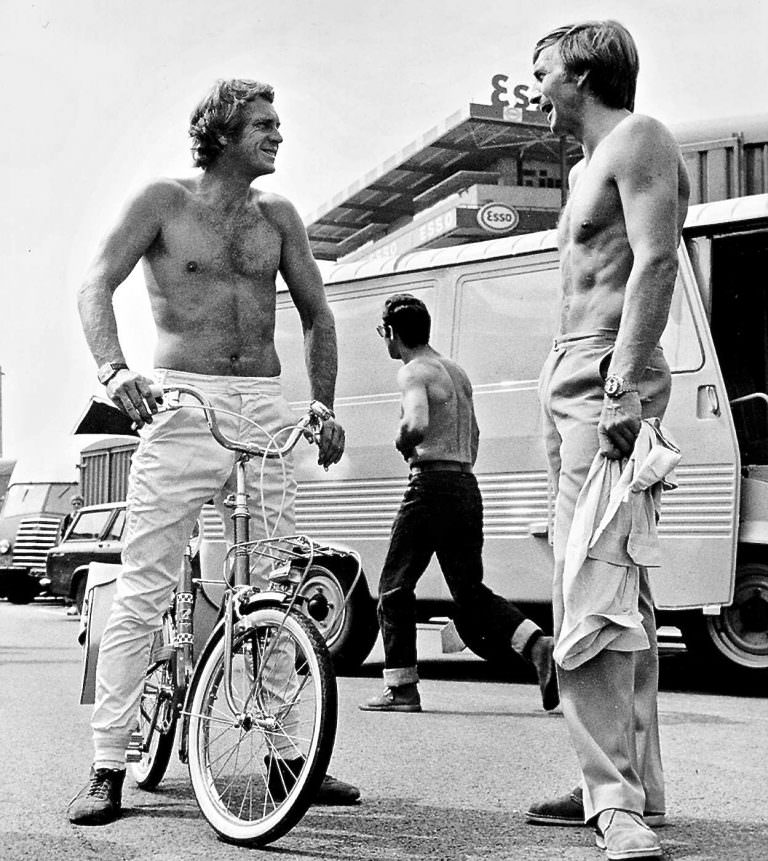
Steve McQueen’s love of speed and machines was well documented throughout his life. He raced motorcycles, drove cars competitively, and brought a genuine mechanical fluency to roles that called for it. This shirtless bicycle photo is entirely consistent with the off-screen image he cultivated — physical, unguarded, and effortlessly cool. McQueen rarely looked posed, even when he clearly was.
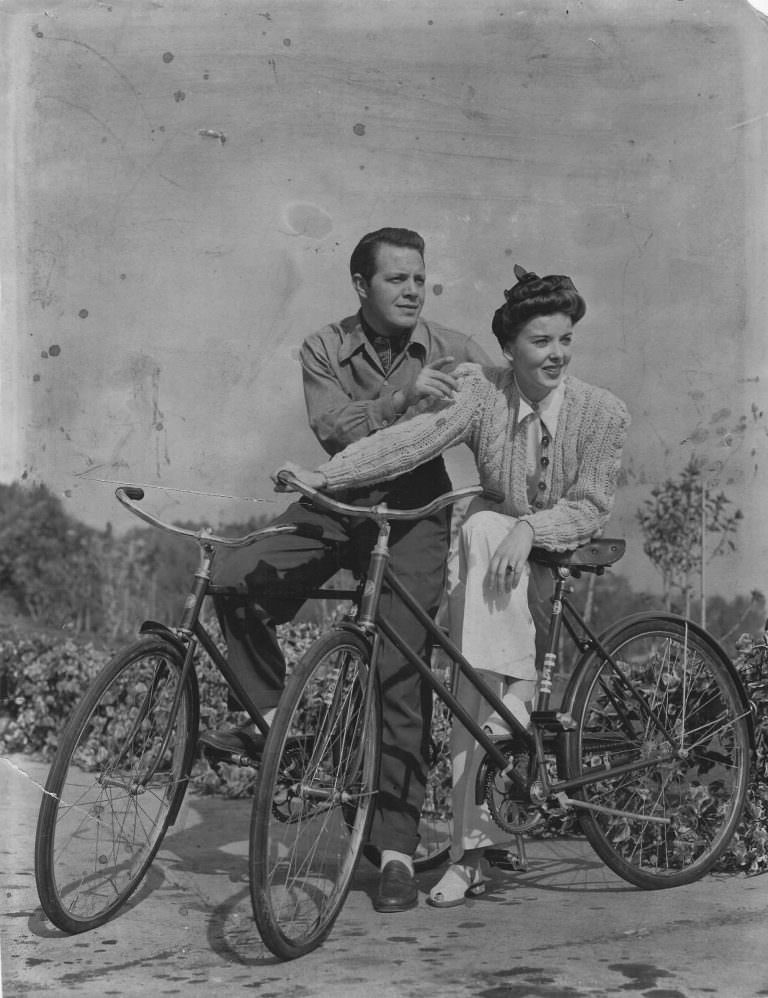
Louis Hayward and Ida Lupino were married from 1938 to 1945, and during that time they were one of Hollywood’s notable couples. Lupino in particular stands out in film history not just as an actress but as one of the first women to direct major Hollywood features. Their bike photo together documents a more personal, private side of two people better known for their work on screen.
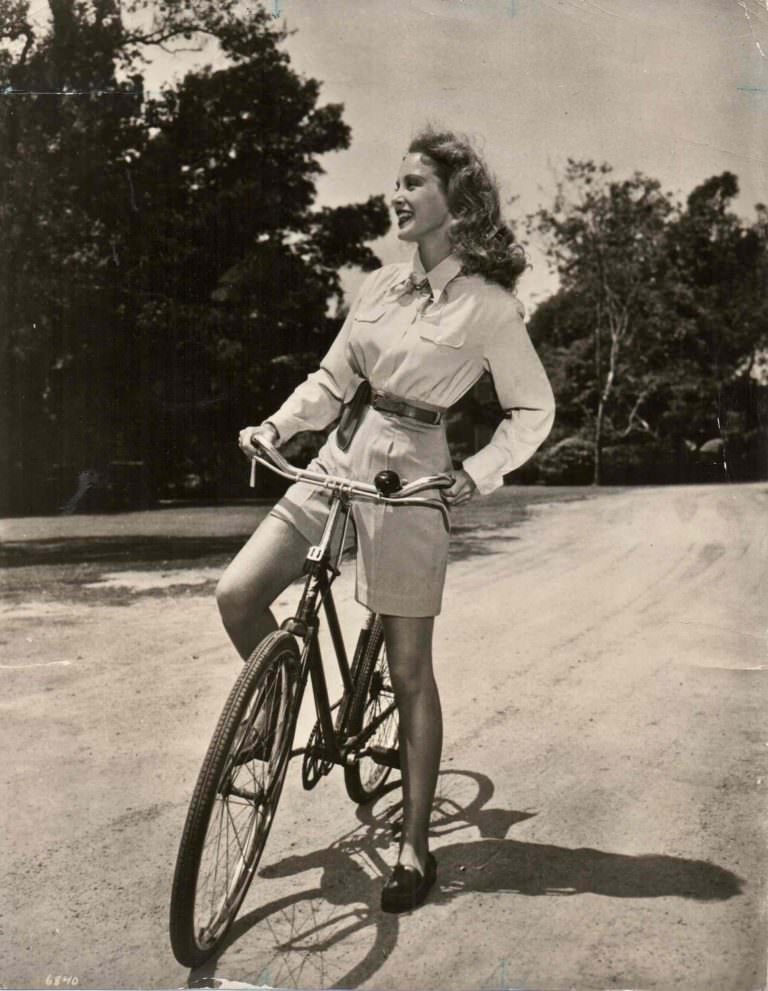
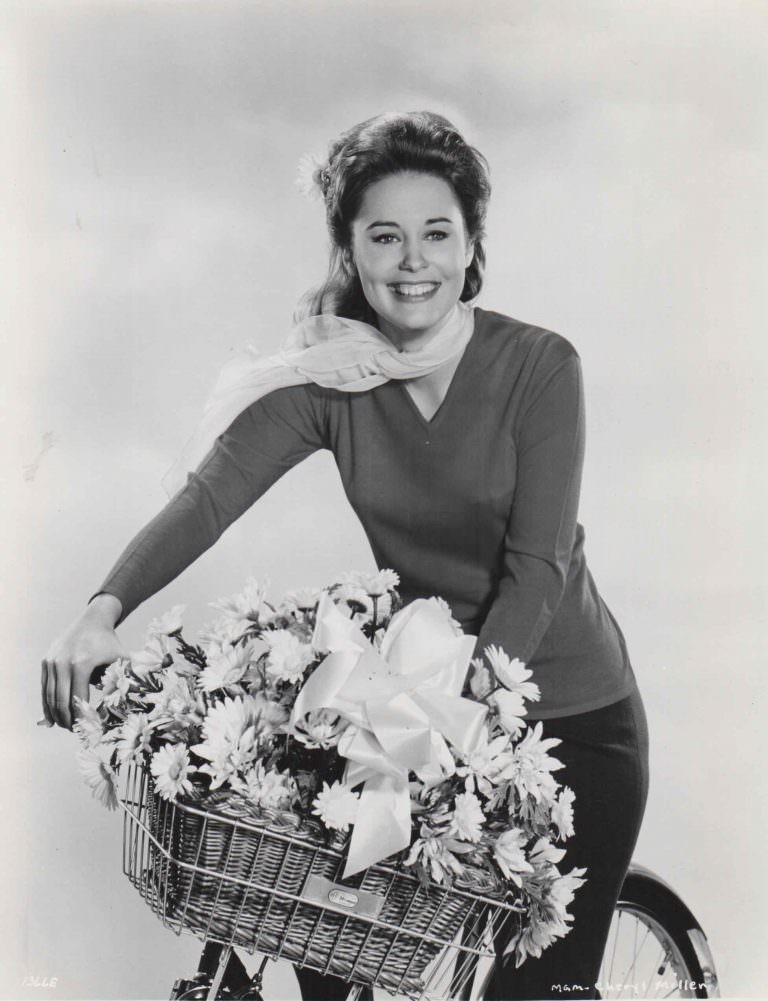
Janet Leigh is best remembered today for one of the most famous scenes in horror film history, but her career stretched across decades and dozens of roles. Known for her elegance and screen presence, Leigh brought that same composed quality to this bicycle photo. Even in a casual setting, she looks every inch the movie star.
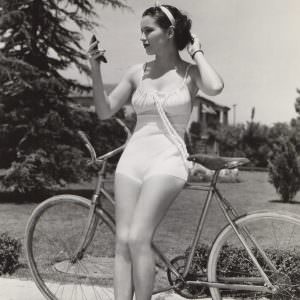
June Travis was a Warner Bros. contract player in the mid-1930s whose work appeared alongside major stars of the era. This image of her leaning on a bicycle while checking her makeup is a small, perfect moment — glamour and practicality coexisting in a single frame. It’s the kind of photo that feels accidental but was almost certainly staged to look exactly that natural.
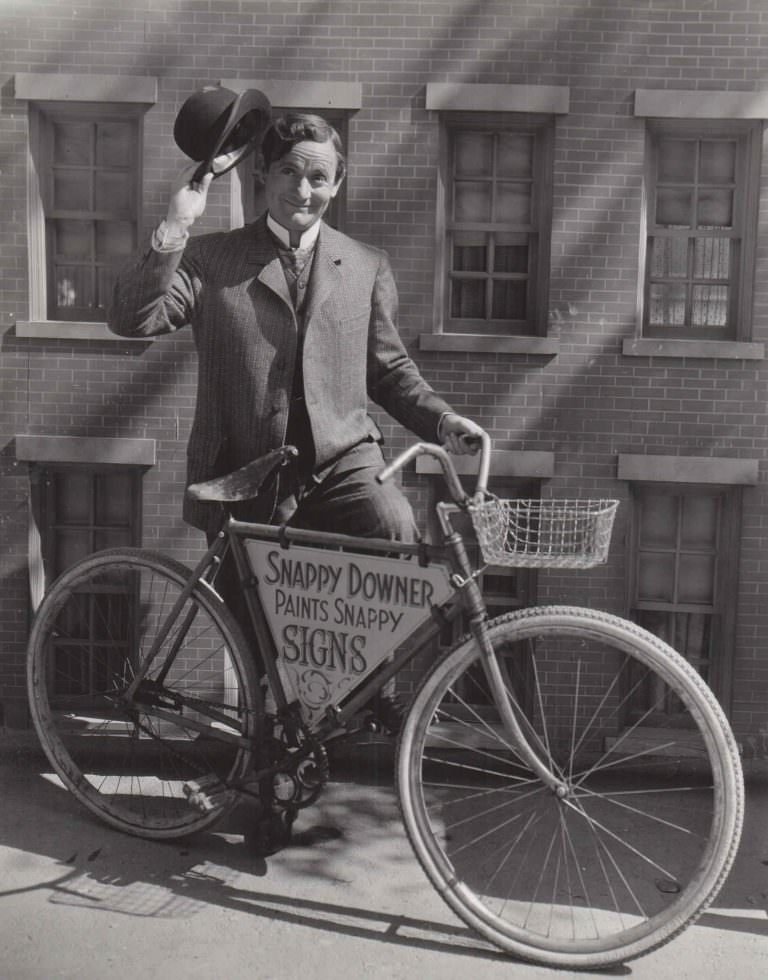
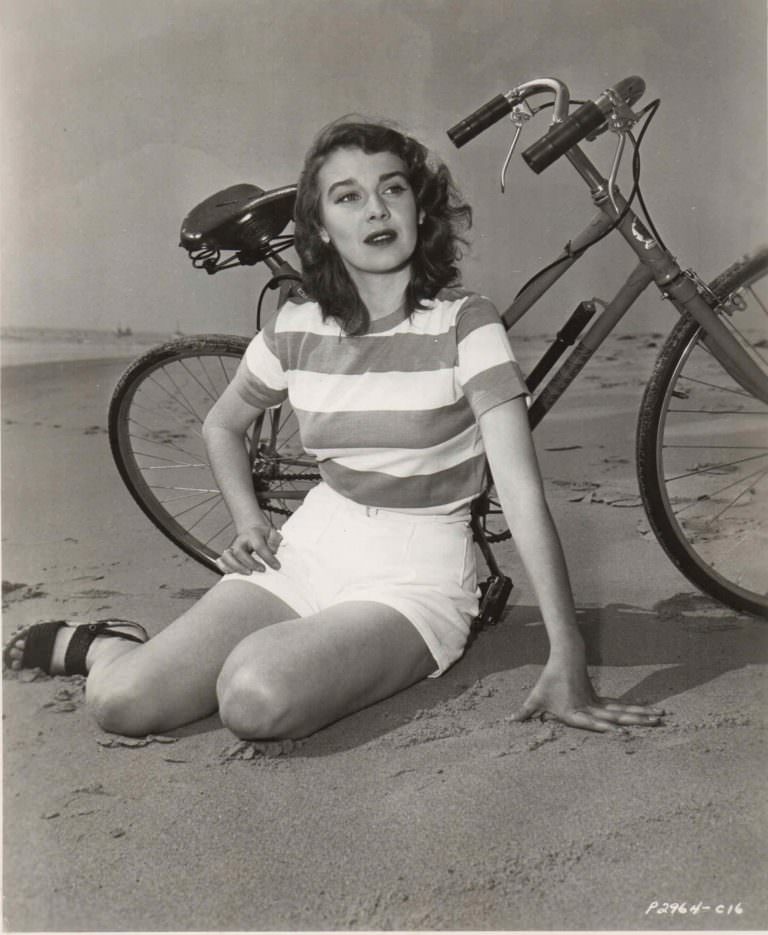
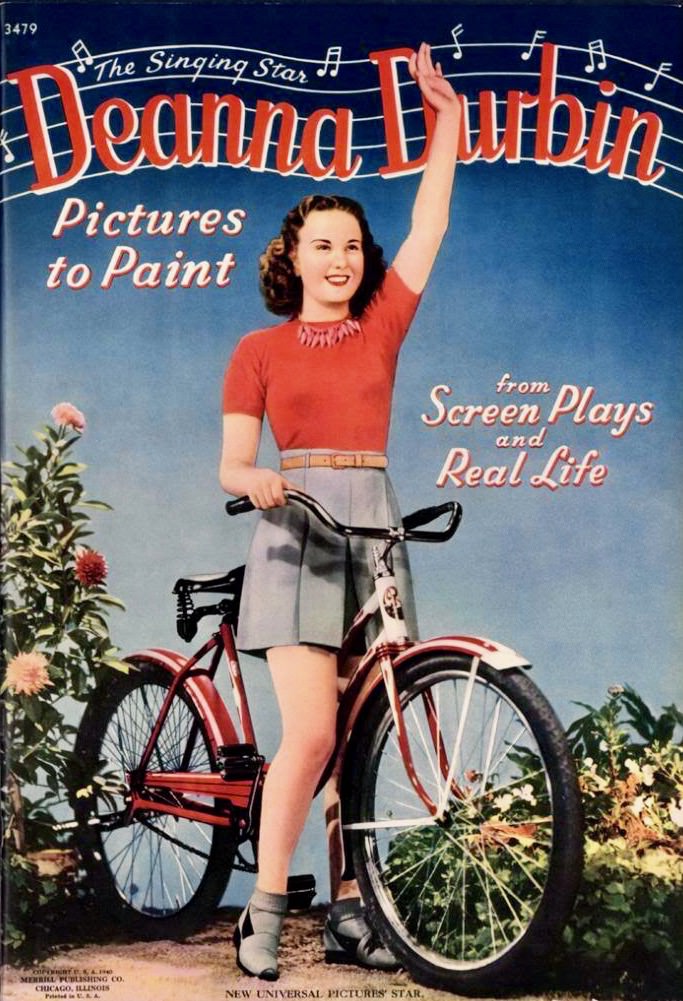
Deanna Durbin was one of Universal Pictures’ biggest box office draws in the late 1930s and early 1940s, credited by some historians with single-handedly saving the studio from bankruptcy. Her wholesome, girl-next-door image made a bicycle a perfect prop — accessible, cheerful, and entirely on-brand. This colorful photograph captures that carefully constructed public persona at its most vivid.
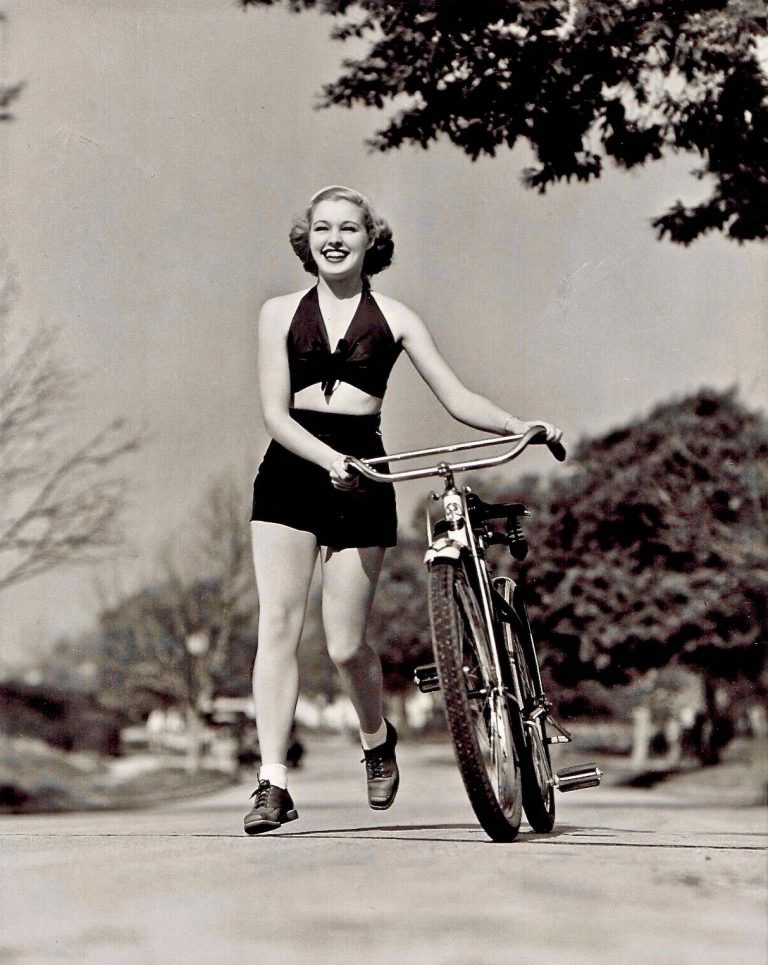
Betsy Drake, best known as the third wife of Cary Grant, was also a capable actress and later a practicing therapist. Her beach-side bicycle photo has an unhurried quality to it — relaxed, sun-soaked, and entirely removed from the pressures of the studio system. Mary Beth Hughes, meanwhile, brings a completely different energy in her photograph: movement, momentum, and a sense of spontaneity.
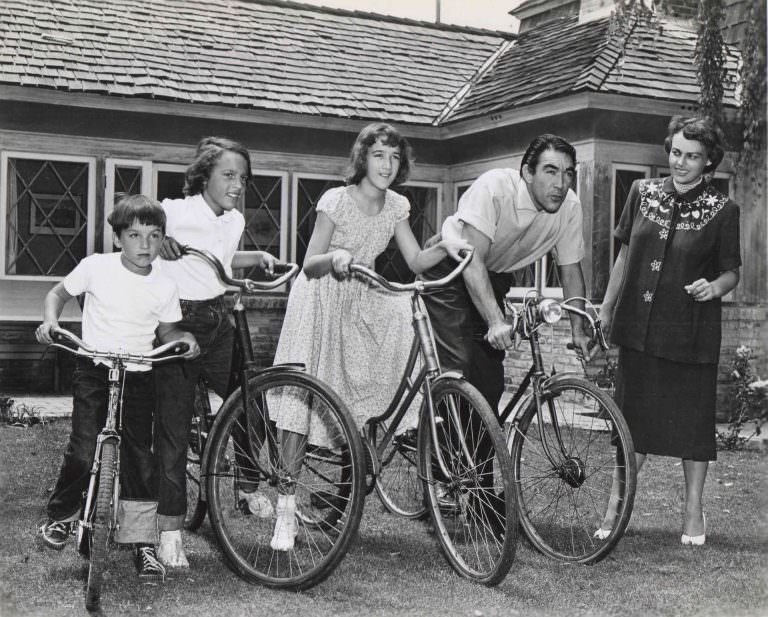
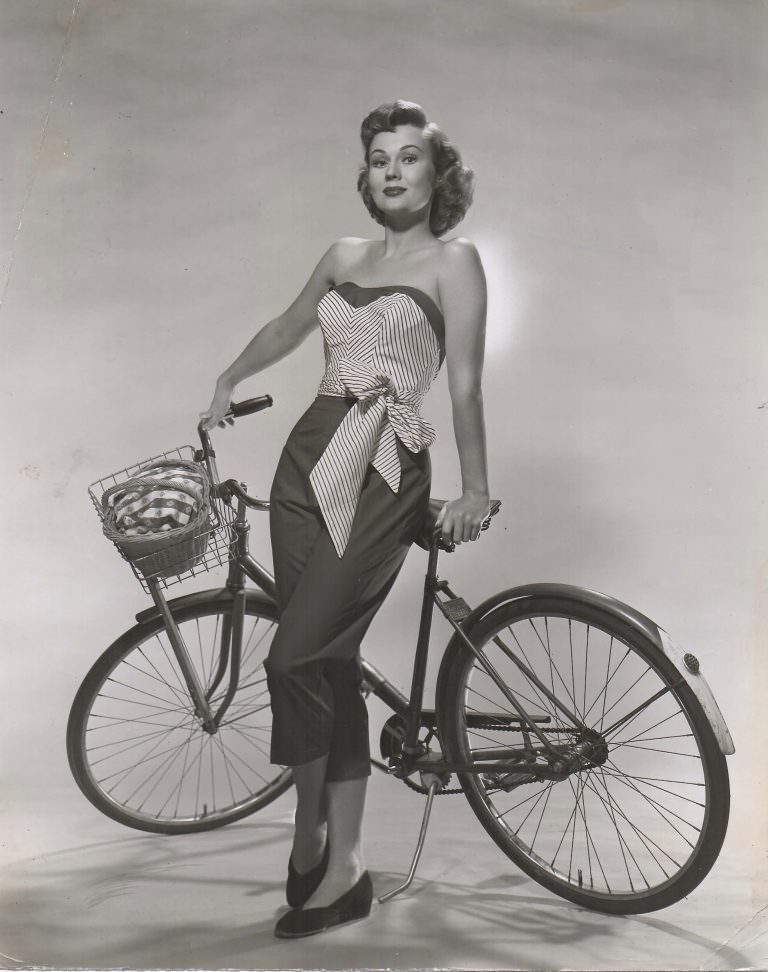
Anthony Quinn won two Academy Awards during his career and worked across six decades in film. Seeing him in a casual bike photo with children strips away all the gravitas of his screen performances and shows a far more relaxed side. Virginia Mayo, one of Warner Bros.’ most prominent blondes of the 1940s and 1950s, brings her trademark poise to her own bicycle photograph — even leaning on a bike, she commands the frame.
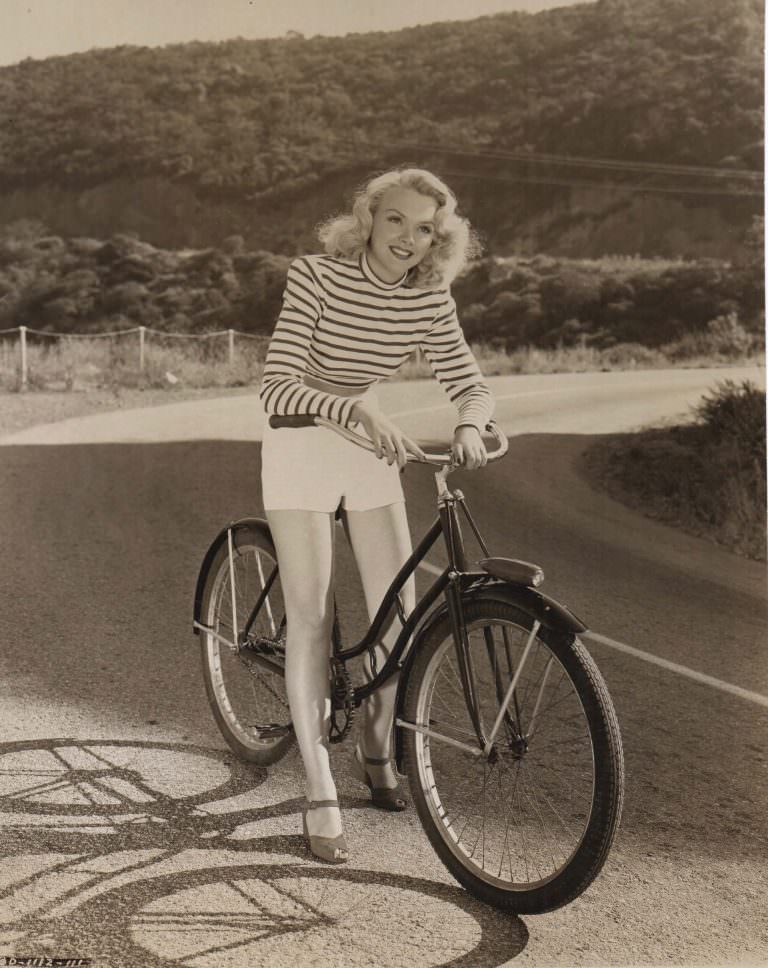
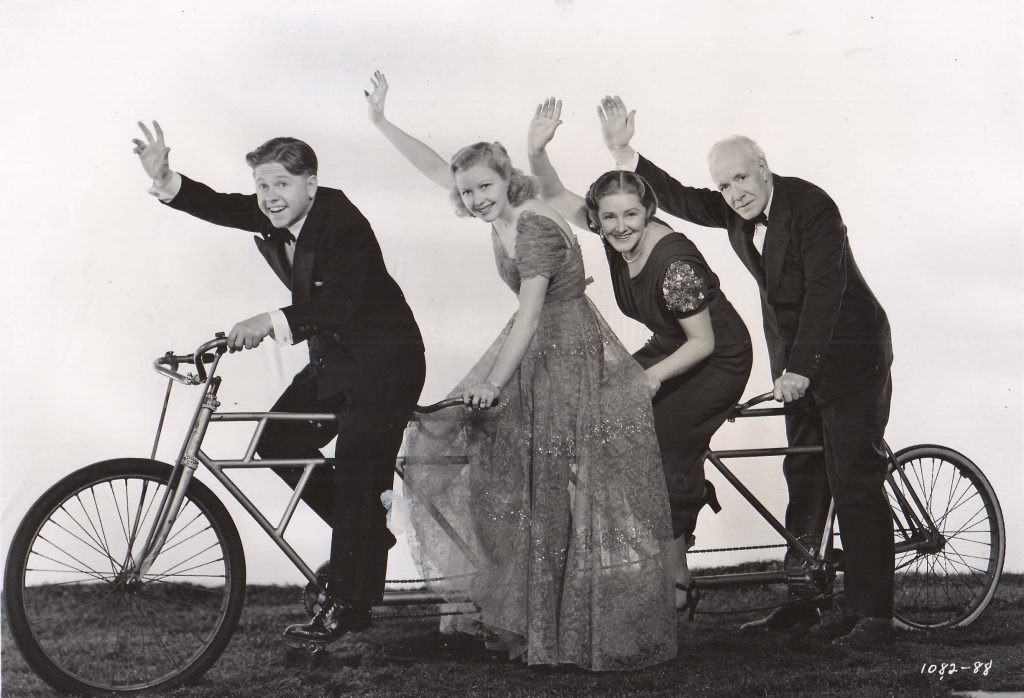
The Andy Hardy film series, which starred Mickey Rooney alongside Cecilia Parker, Fay Holden, and Lewis Stone, was one of MGM’s most reliable franchises through the late 1930s and into the 1940s. Their group bicycle photo fits perfectly within the wholesome, small-town American world those films depicted. Martha Tilton, known primarily as a big band vocalist who sang with Benny Goodman, presents a different kind of star quality in her solo bicycle shot — musical, feminine, and full of personality.
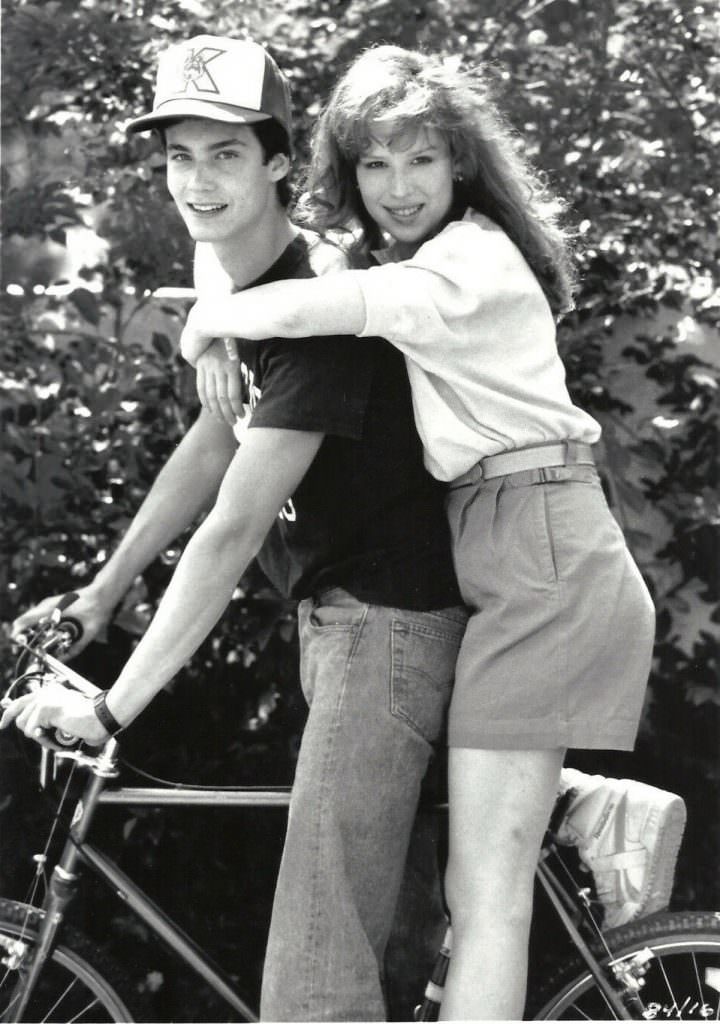
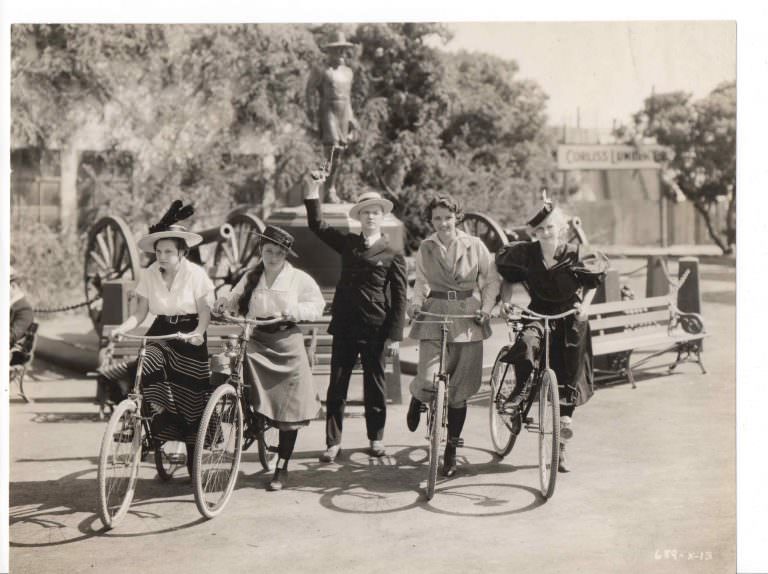
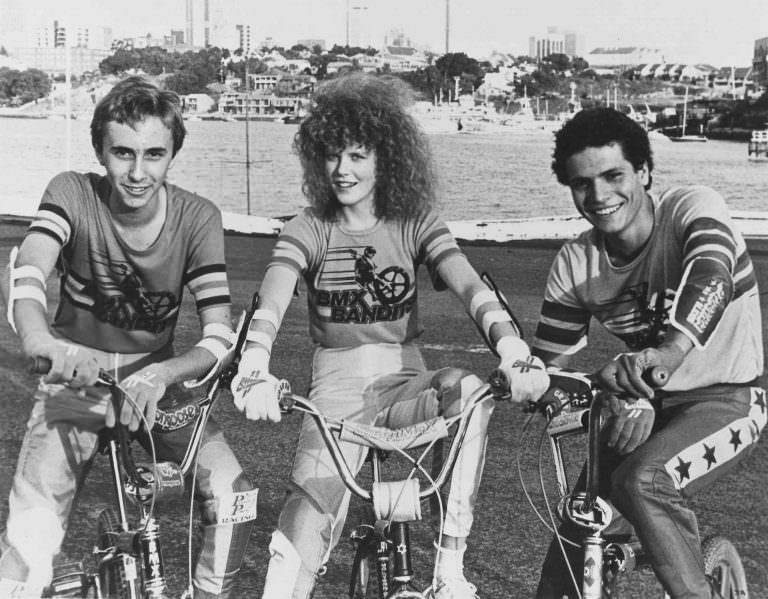
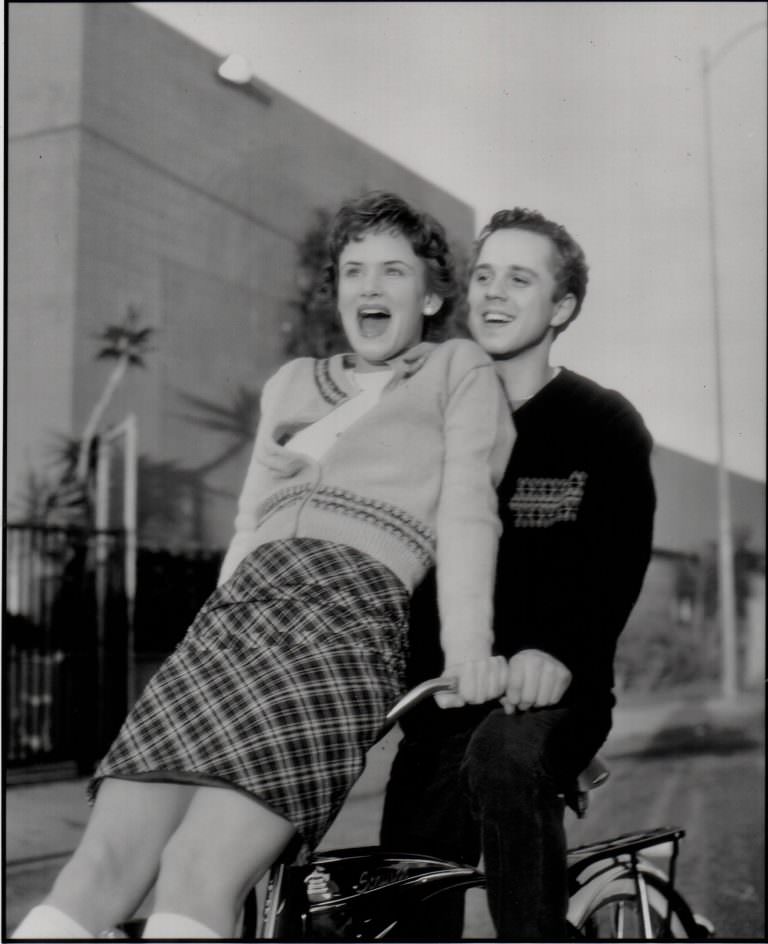
Molly Ringwald became one of the defining faces of 1980s teen cinema, and her photograph with Randall Batinkoff carries that decade’s casual, youthful spirit. The contrast with older images in this collection — like the startling shot of Lee Tracy firing a starting pistol to send a group of women cyclists off on a race — shows just how broadly the bicycle crossed Hollywood eras and genres.
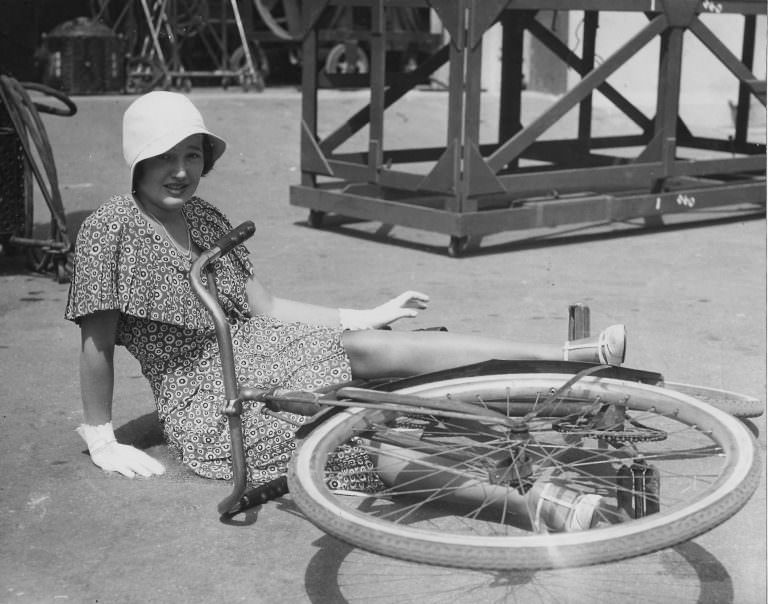
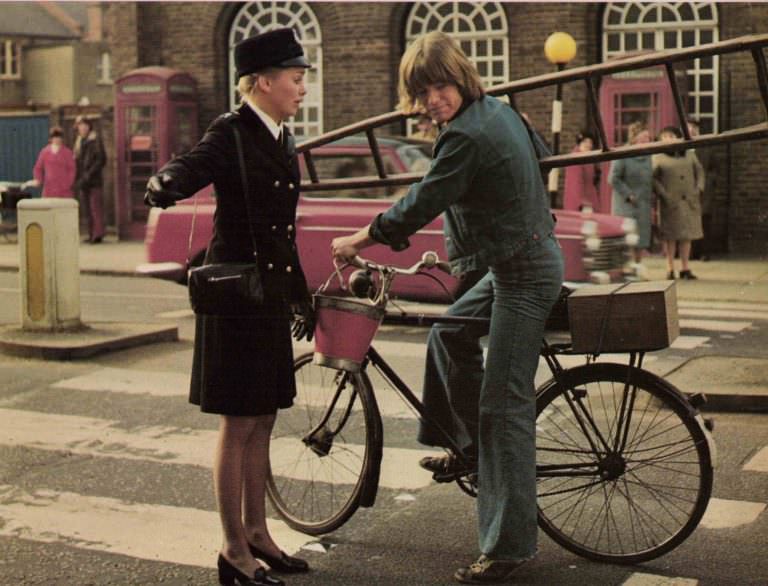
Not every bicycle photo in this collection was designed to show a star at their most composed. Arline Judge’s photograph of her falling off a bike is a deliberate comedic pose — Hollywood stars of the 1930s were often encouraged to show a self-deprecating side to endear themselves to audiences. The result is a photo that feels genuinely funny even decades later.
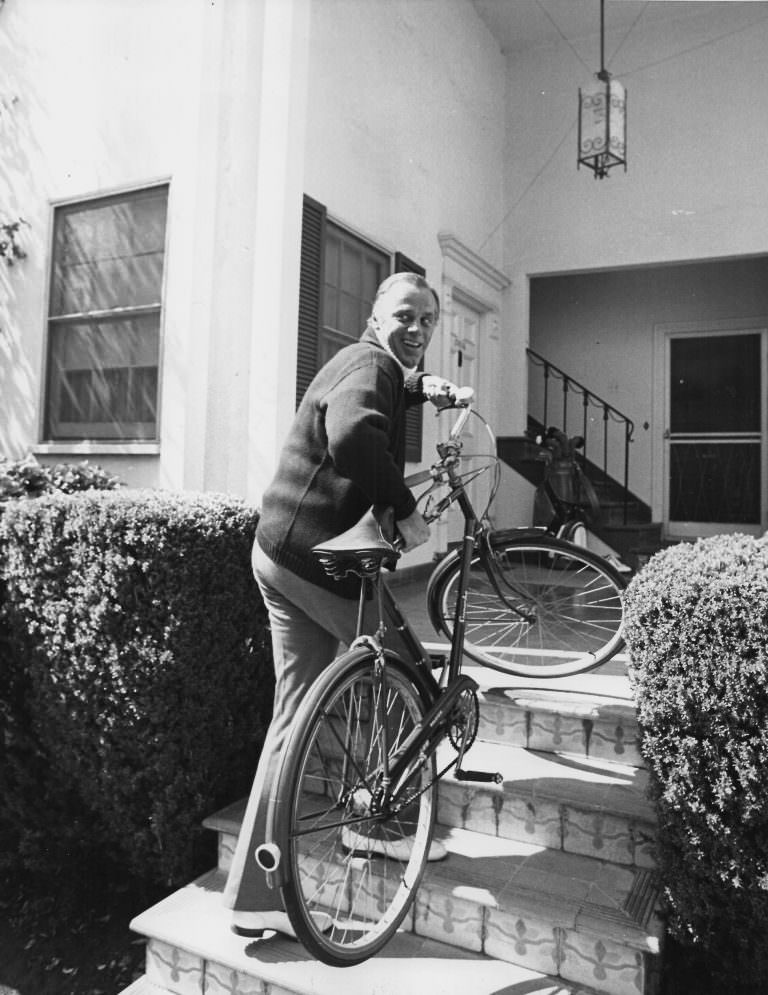
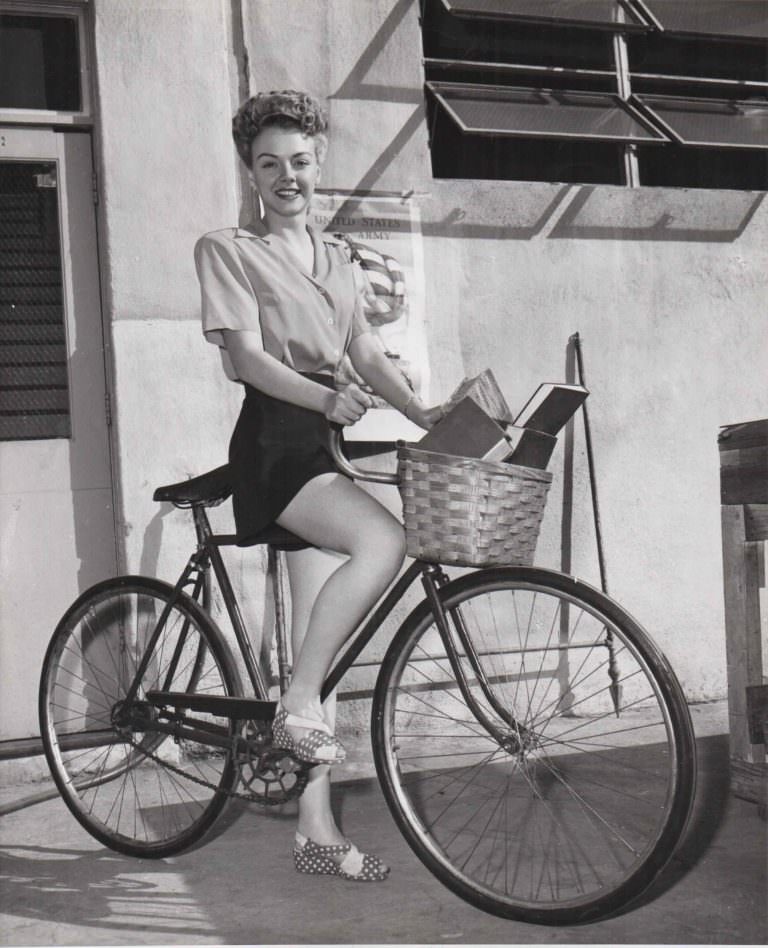
McLean Stevenson, best known for his role as Lieutenant Colonel Henry Blake on M*A*S*H, brings a light comedic touch to his bicycle photo — carrying the bike rather than riding it, which says everything about his particular brand of humor. Leslie Brooks, a Columbia Pictures actress of the 1940s, takes a more industrious approach in her photo, riding while delivering books in a shot that doubles as a charming piece of wartime Americana.
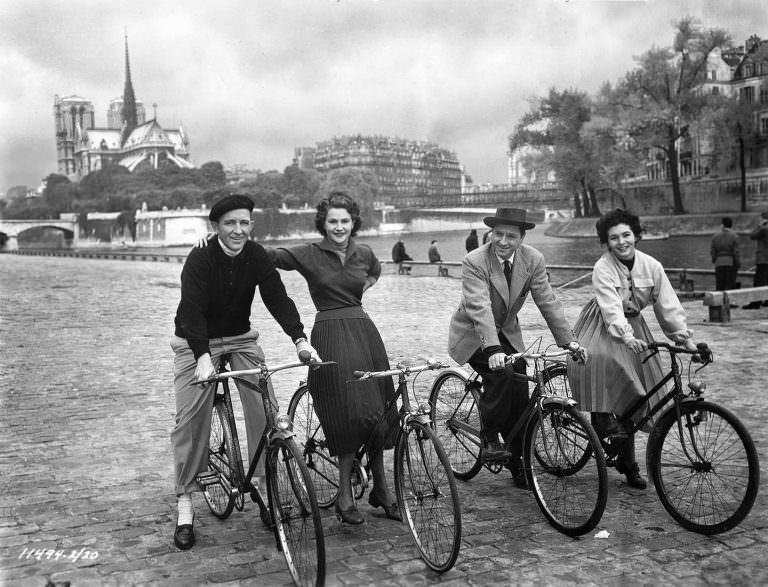
Bing Crosby remained one of the most recognizable entertainers in American history well into the 1950s and beyond. His group bicycle photo with Nicole Maurey, Claude Dauphin, and Maria Mauban has an international flavor to it — a gathering of French and American talent that reflects the transatlantic film productions becoming more common in that era.
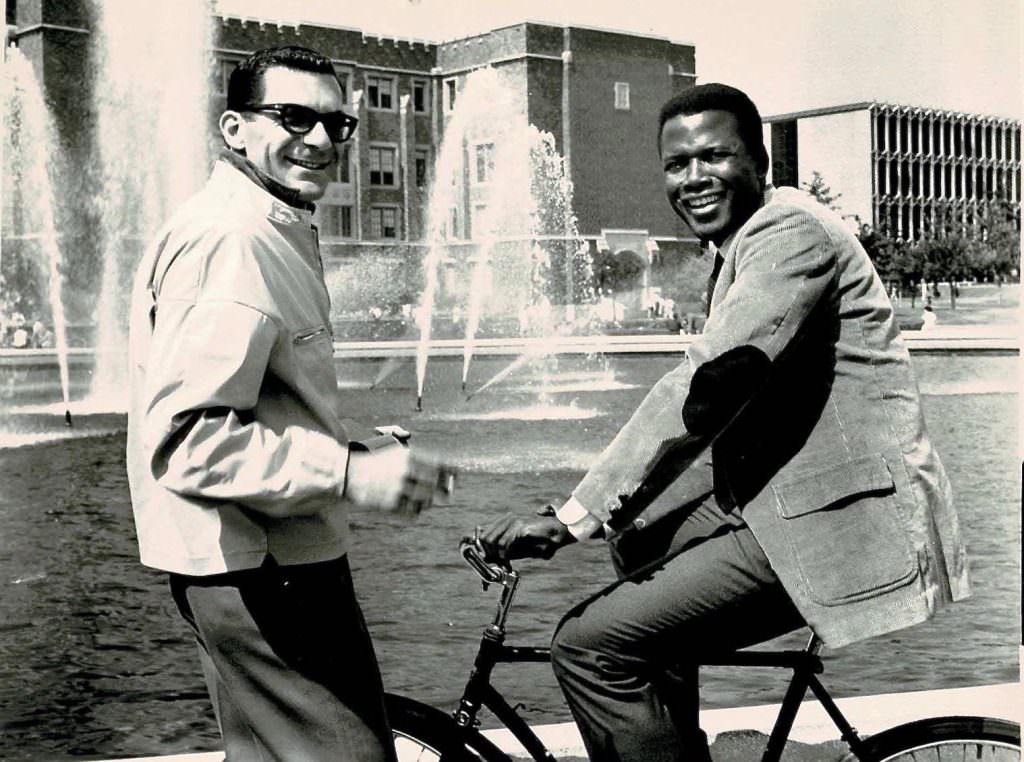
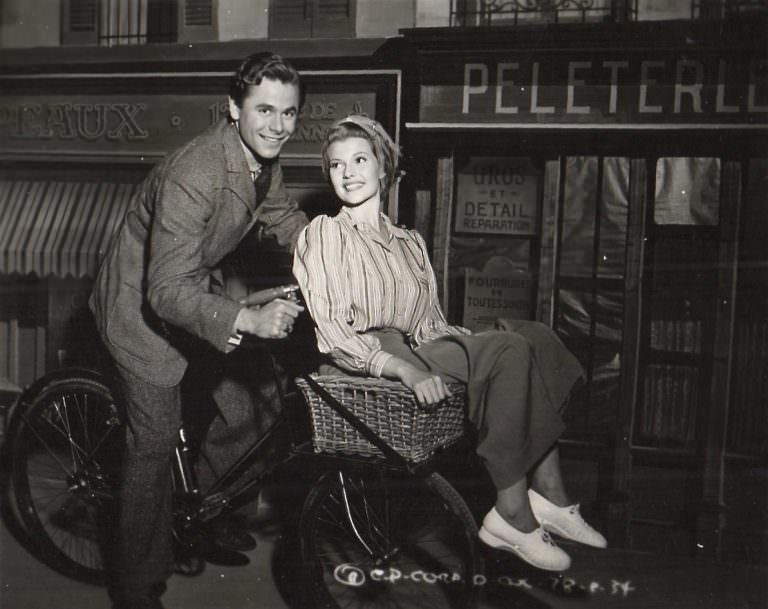
Sidney Poitier’s on-set bicycle photo, with director Sydney Pollack visible in the background, offers a rare glimpse into the working environment on a film production. Glenn Ford and Rita Hayworth’s photo is a different kind of treasure — two of Columbia Pictures’ biggest stars together on a single bike, the kind of image that publicity departments carefully crafted to hint at chemistry both on and off screen.
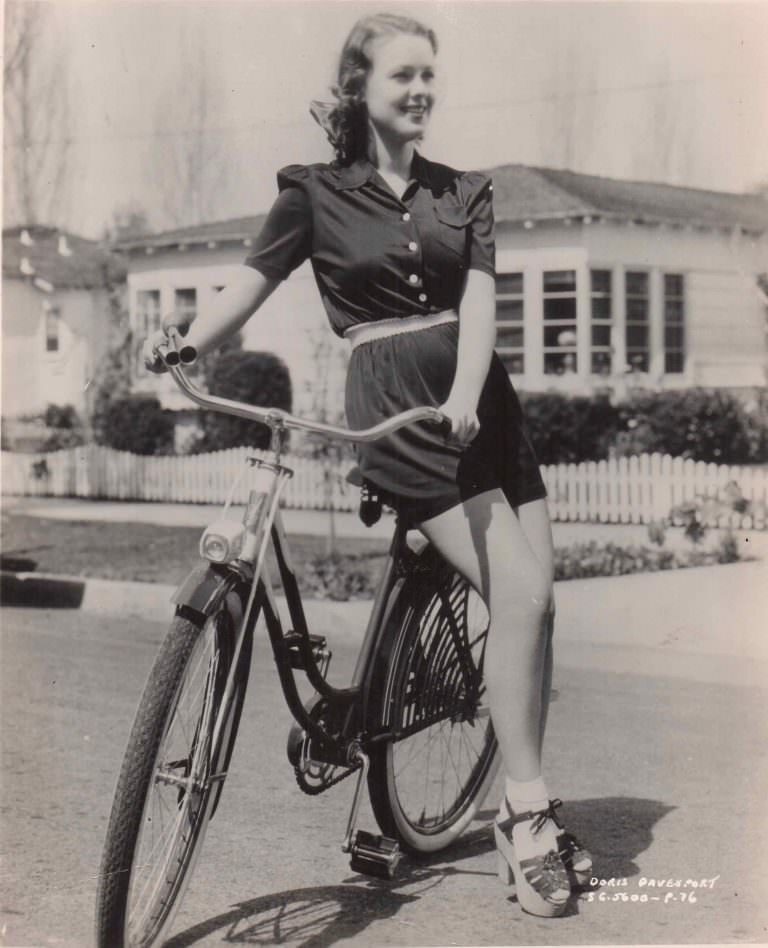
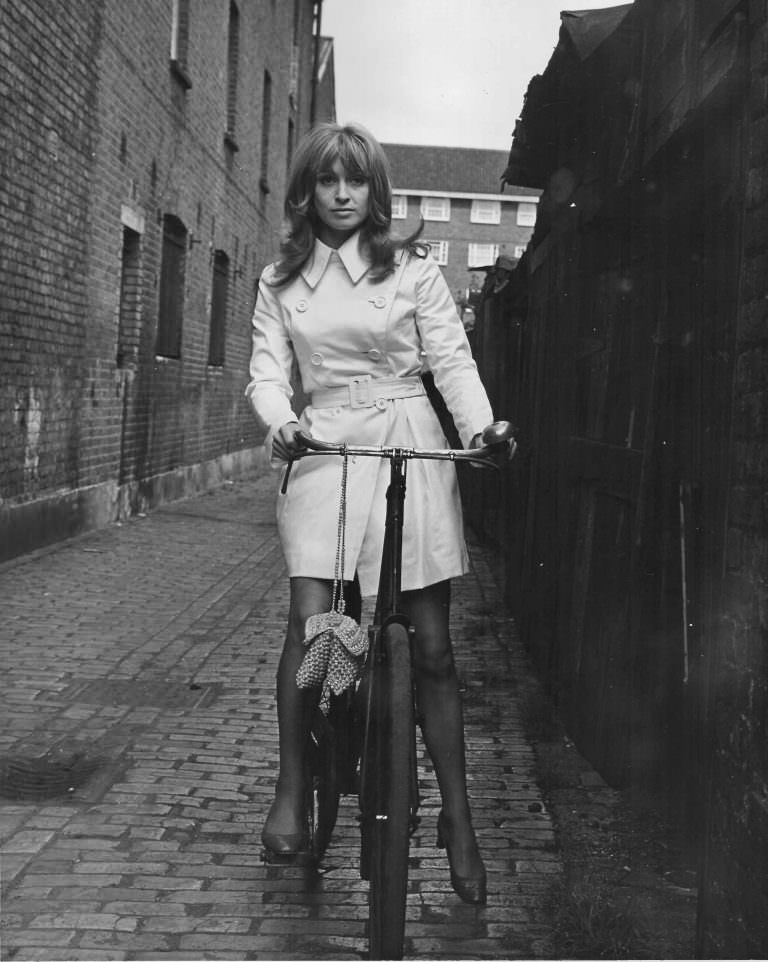
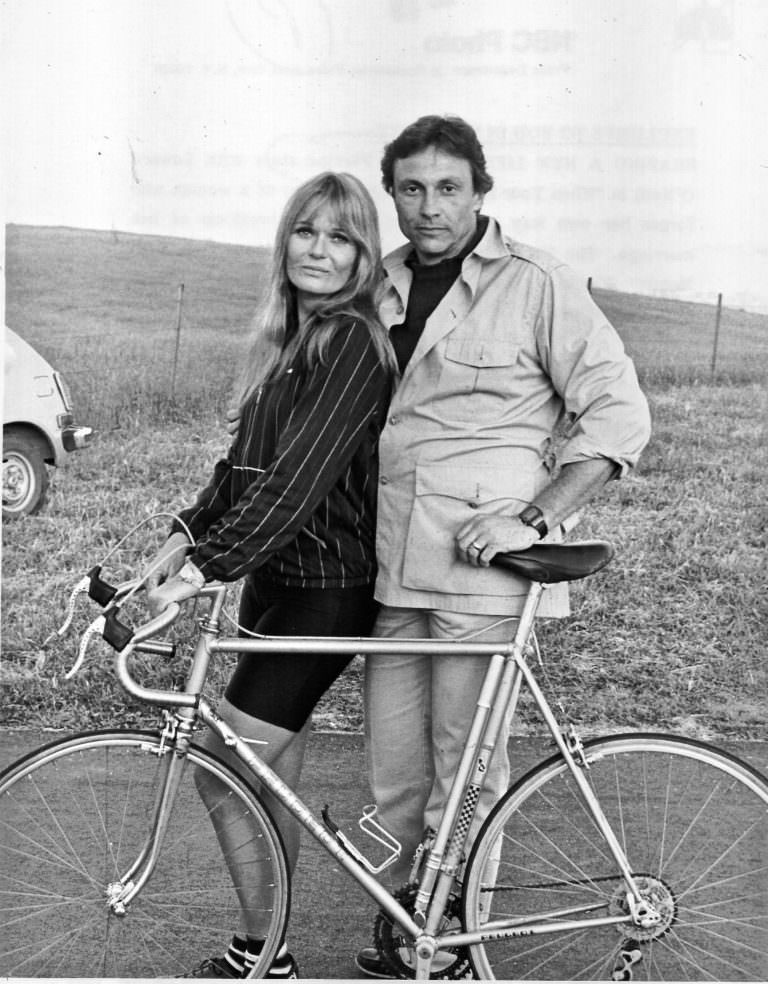
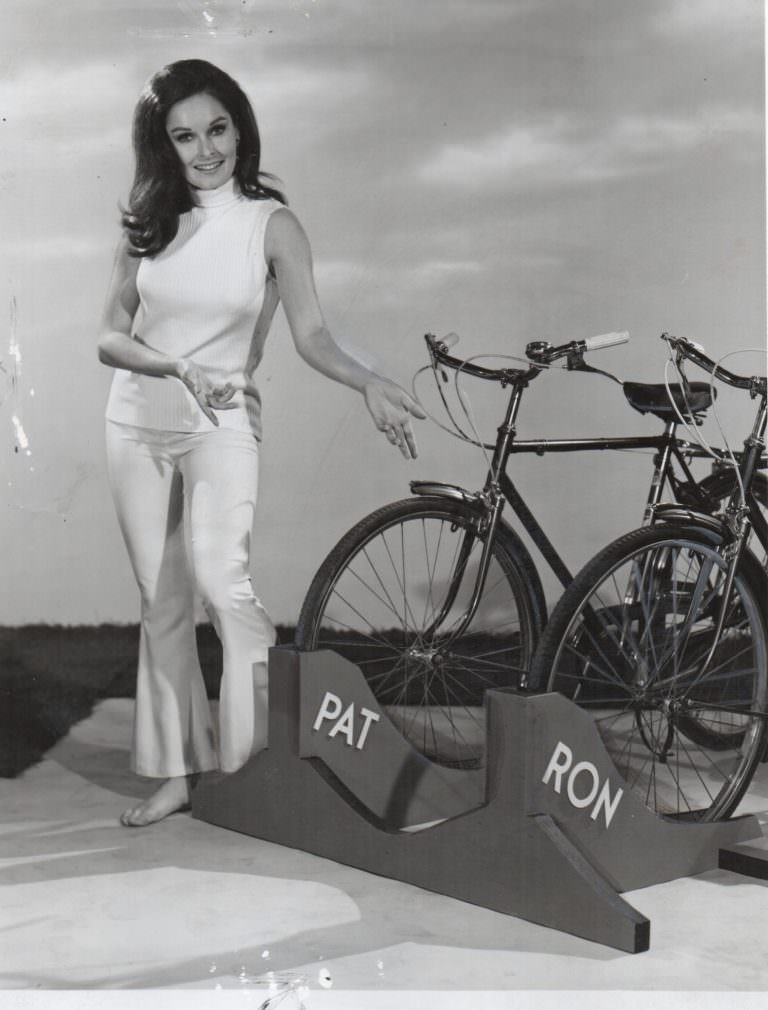
Doris Davenport’s modeling photograph positions the bicycle almost as a fashion accessory — the star is clearly the draw, and the bike is her backdrop. Juliette Lewis and Giovanni Ribisi, both known for edgier, independent film work in the 1990s, bring a completely different sensibility: less posed, more raw, the bicycle just a piece of their shared moment.
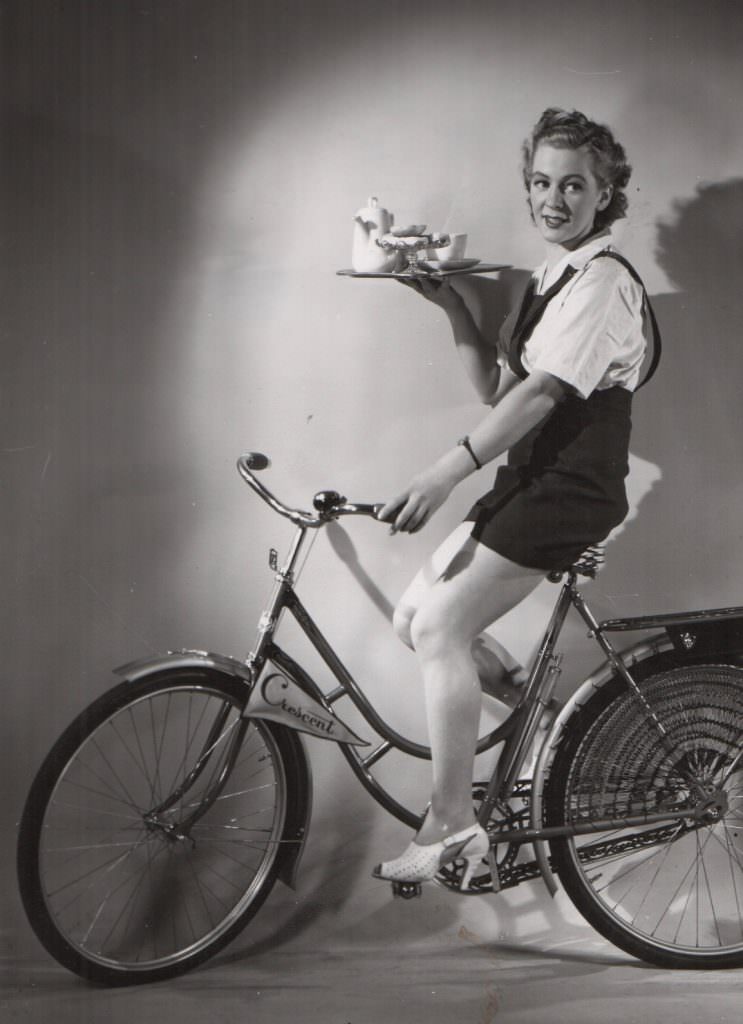
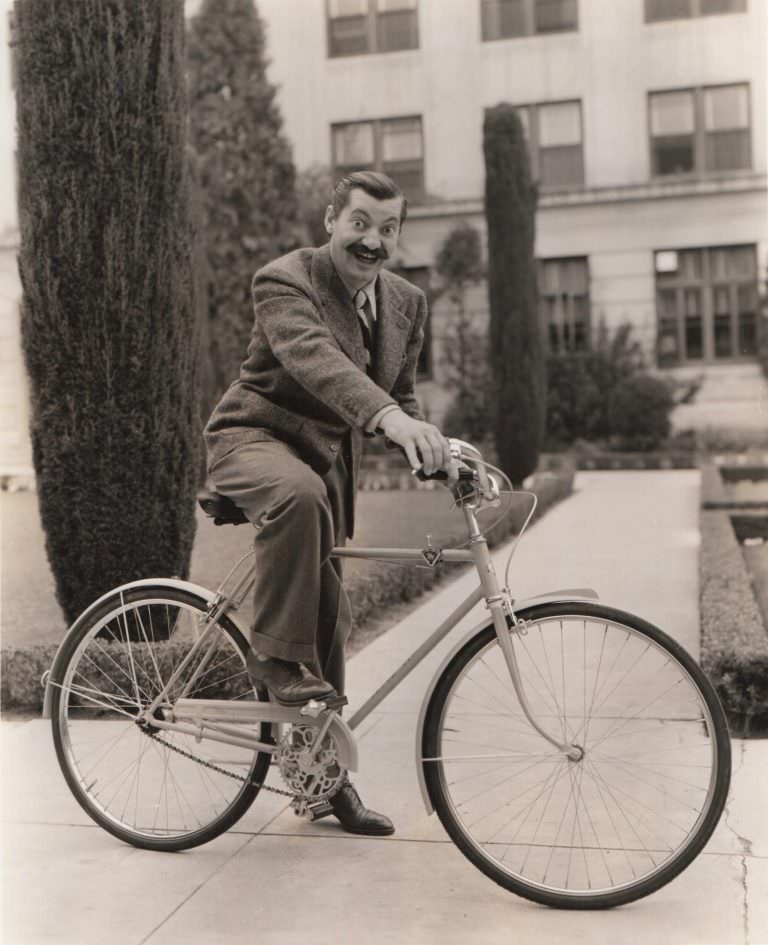
Jerry Colonna was a comedian and musician best known as Bob Hope’s sidekick on radio, screen, and USO tours. His bicycle photo leans into his comedic persona — wide-eyed and larger than life even in a simple publicity shot. Siri Olson’s photo, meanwhile, adds a detail that makes it genuinely memorable: she’s on the bike with a cup of coffee, which is either a sign of impressive balance or a very carefully staged prop.
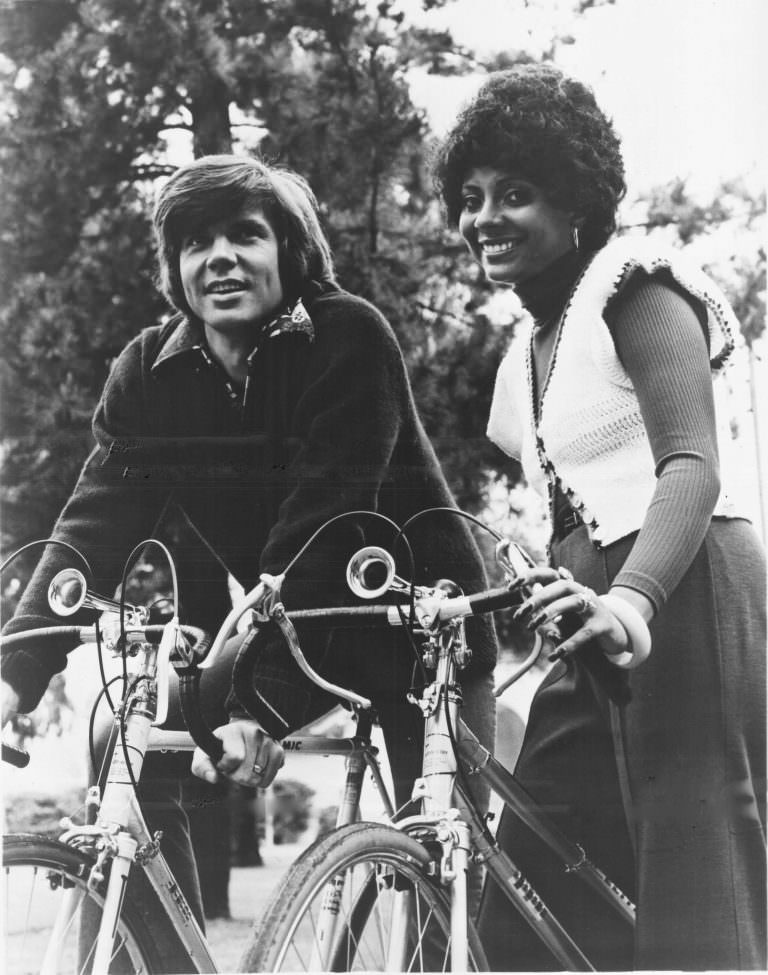
John Davidson and Leslie Uggams were both familiar television faces by the time their bicycle photo was taken — Davidson from variety and talk shows, Uggams from her Tony Award-winning Broadway work and television appearances. Their photo has the cheerful, crowd-pleasing energy of the entertainment circuit they both moved in.
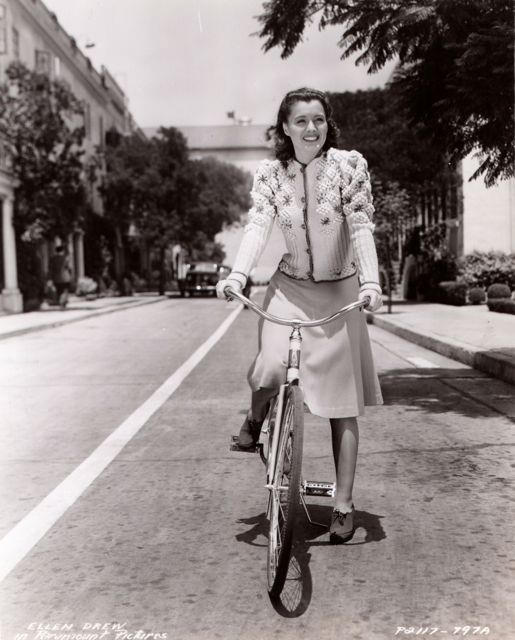
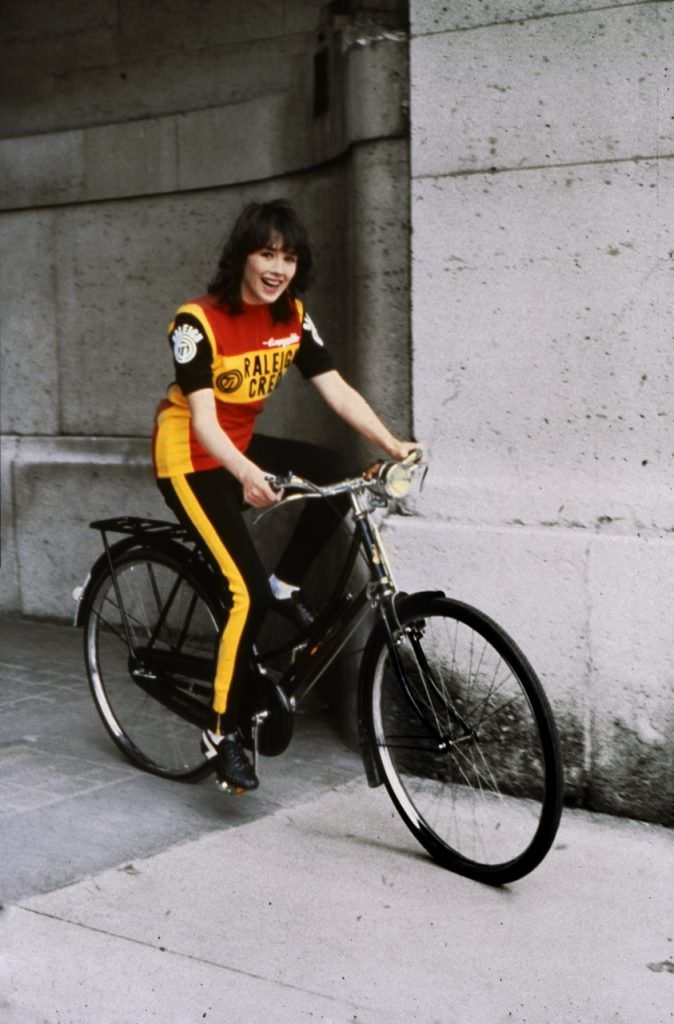
Ellen Drew was a Paramount Pictures actress whose career spanned the late 1930s through the 1950s. Her bicycle photograph is a clean, elegant publicity shot that shows the studio system’s approach to even the most casual image — nothing accidental, everything considered. French actress Isabelle Adjani, one of Europe’s most decorated film performers and a five-time César Award winner, brings an entirely different European sensibility to her own bicycle image.
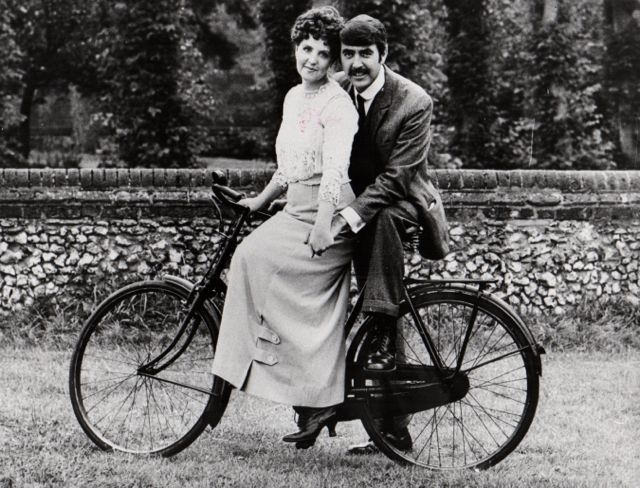
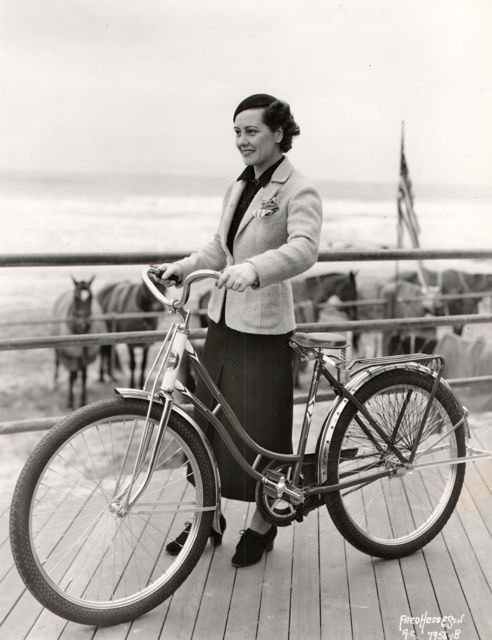
Gladys Swarthout was an opera singer who crossed over into film during the 1930s, making her a Paramount Pictures contract player with an unusual background. Her appearance at the opening of an Atlantic City bike lane turns her bicycle photograph into a genuine historical document — a record of a public event rather than a studio session.
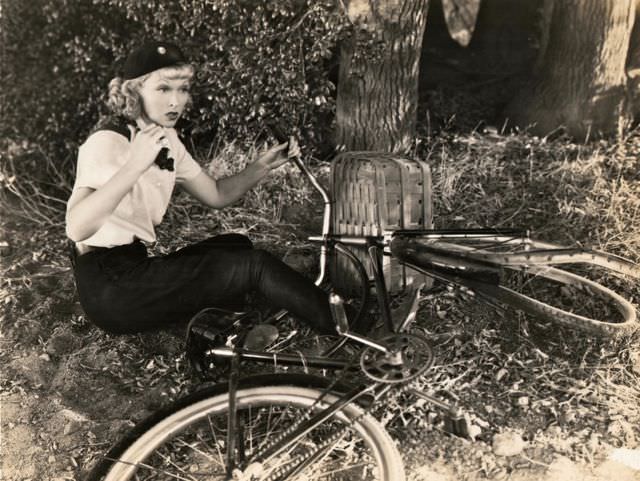
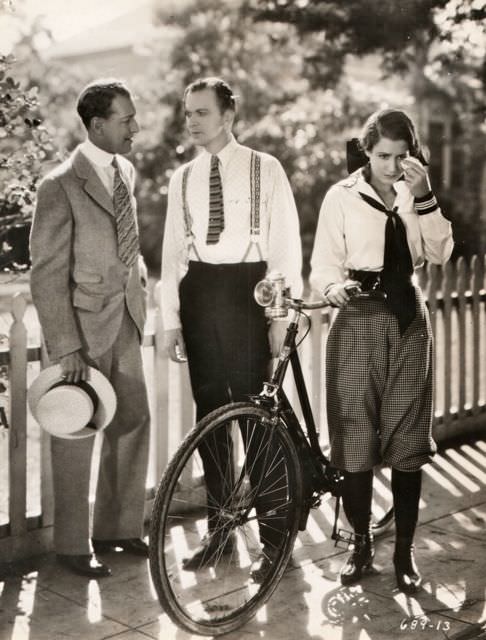
Joyce Compton, like Arline Judge, threw herself into a comedic fall-from-a-bike photo with complete commitment. Mae Clark’s image tells a more dramatic story — she appears to be crying over a bike while Otto Kruger and Lee Tracy stand nearby, apparently too deep in discussion to notice. Whether this is from a movie scene or a staged publicity shoot, it’s one of the most visually interesting images in the entire collection.
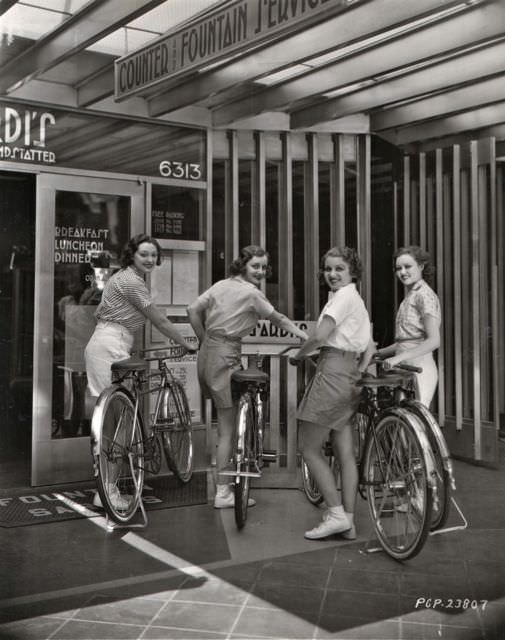
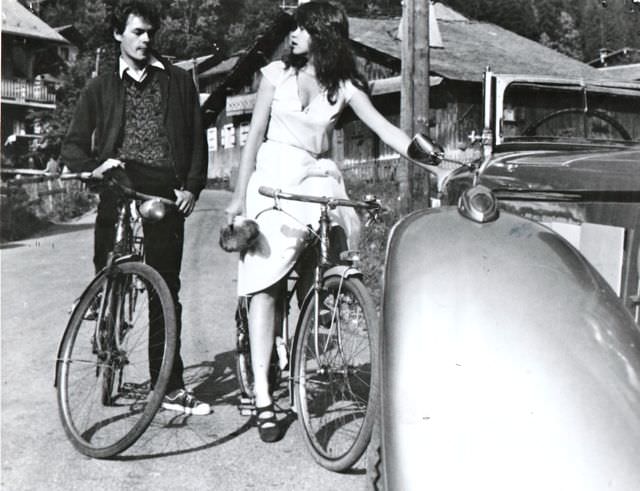
The group photograph of Kathleen Burke, Mari Colman, Grace Bradley, and Lona Andre parking their bikes together is a rare slice of early 1930s Hollywood. Burke was fresh off her notable role in Island of Lost Souls when this image was likely taken. Maria Schneider and Robert Hossein, appearing in a photo from a decidedly different era of European cinema, bring a grittier, more naturalistic quality to their bicycle image.
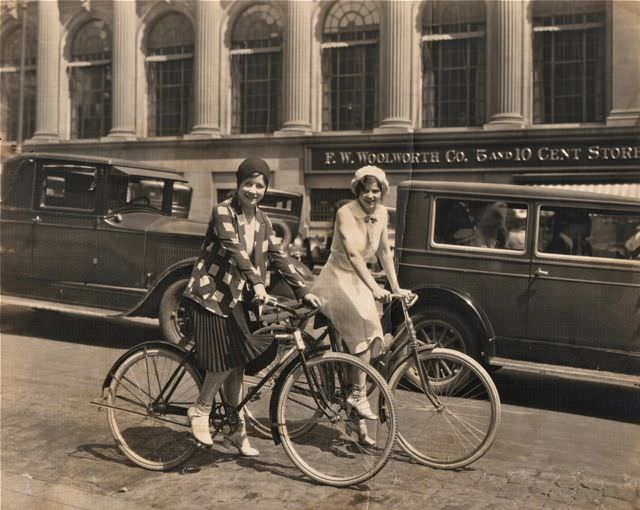
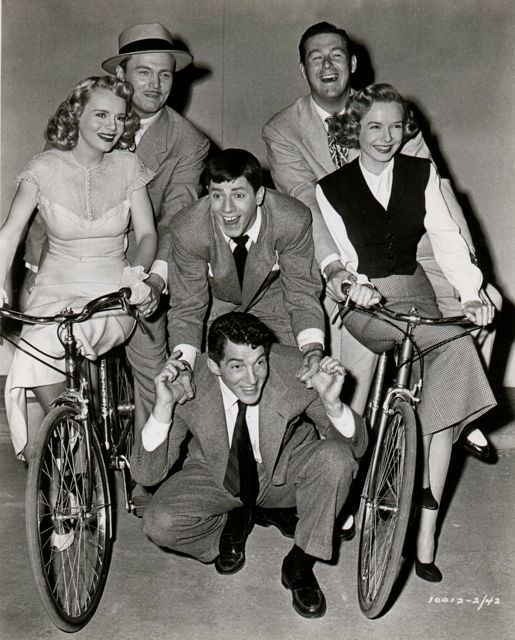
The photograph of Marie Wilson, John Lund, Diana Lynn, and Don DeFore riding bikes comes with one of the most entertaining captions in this entire collection — the note that Jerry Lewis rides Dean Martin adds a layer of slapstick absurdity that fits Lewis’s public image perfectly. Diana Lynn was one of Paramount’s most versatile actresses in the 1940s, and the group shot captures that studio era’s easy camaraderie between contract players.
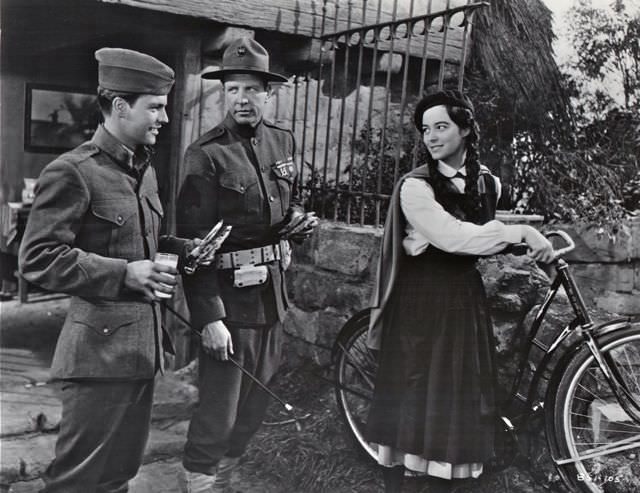
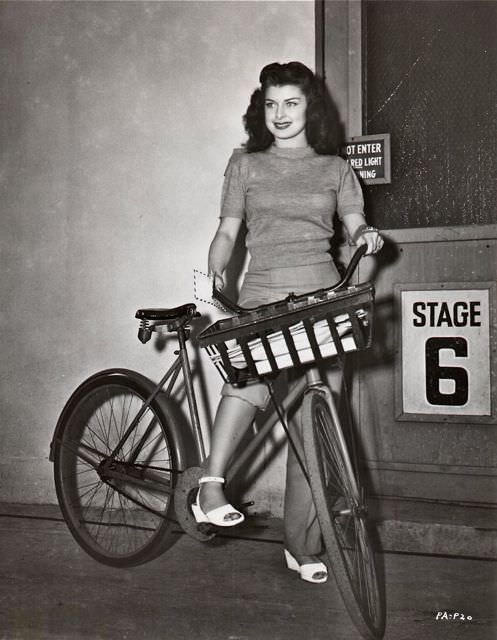
Marisa Pavan, the twin sister of actress Pier Angeli, earned an Academy Award nomination for Best Supporting Actress for her role in The Rose Tattoo in 1955. Her bicycle photo, described as goo-goo eyed, shows a playful side that her dramatic film roles rarely called for. Patricia Alphin’s Bike to Work Day photo puts the bicycle in an entirely real-world context, grounding the collection in everyday life rather than Hollywood fantasy.
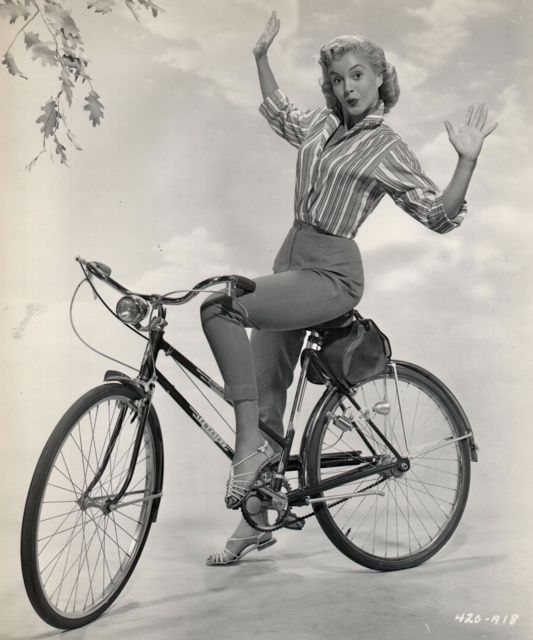
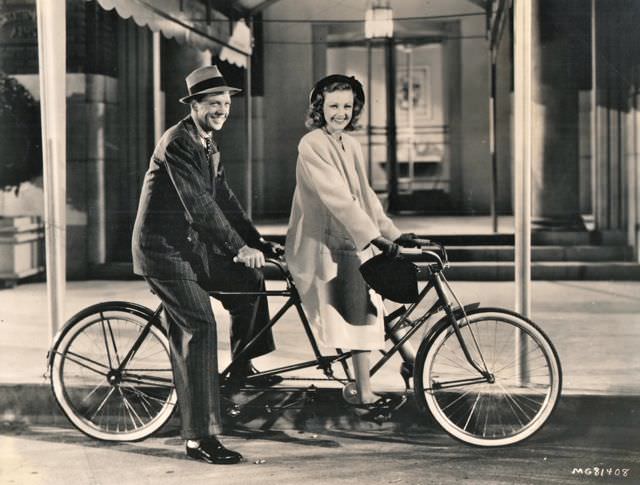
Dan Dailey was a song-and-dance man who earned an Academy Award nomination for Best Actor for his work in When My Baby Smiles at Me in 1948. Virginia Grey was a studio fixture at MGM for years, appearing in dozens of films across two decades. Their bicycle photo together is a natural fit — two professionals equally comfortable in front of a camera, with or without a script.
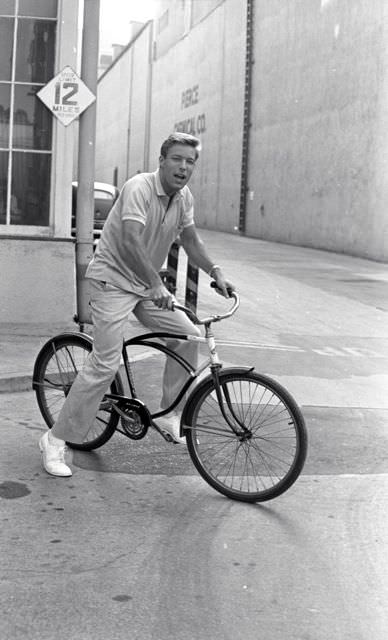
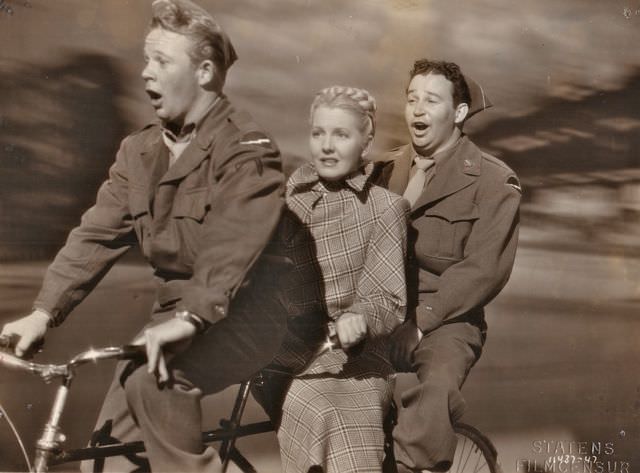
Richard Chamberlain’s bicycle photo reflects the kind of clean-cut, television-ready image he projected throughout his career. Jean Arthur, one of the most respected dramatic actresses of the 1930s and 1940s, appears in her bicycle photograph alongside Bill Murphy and Stanley Prager in a shot that likely connected to a specific film or theater production.
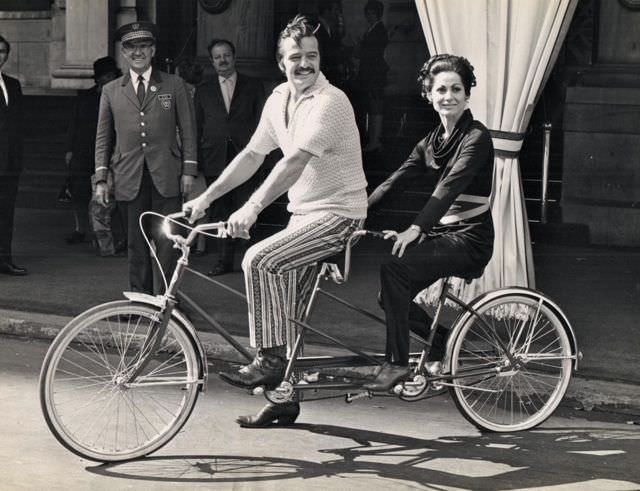
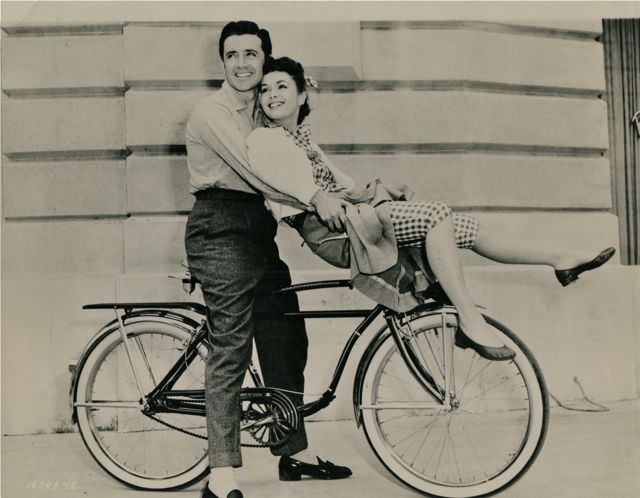
Robert Goulet and Carol Lawrence, both veterans of the original Broadway cast of Camelot, bring a theatrical charm to their bicycle photo. Vic Damone and Debbie Reynolds were two of the most recognizable names in American entertainment during the 1950s — Damone as a crooner and Reynolds as a film actress and dancer. Their shared bicycle photo is exactly the kind of lighthearted publicity image that kept both their names in circulation.
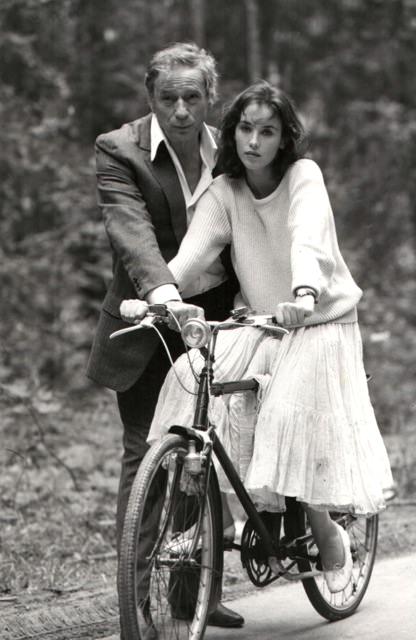
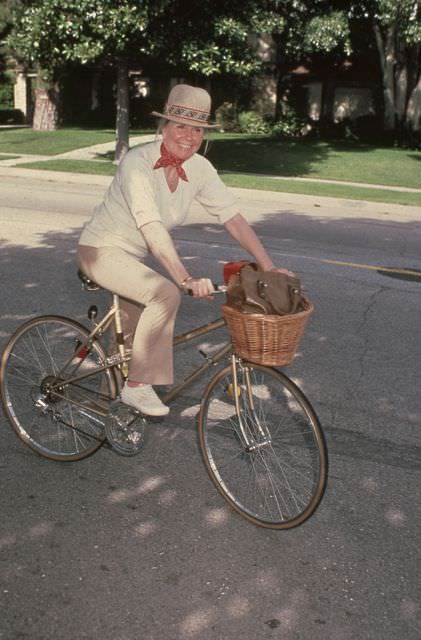
This second photograph of Isabelle Adjani, captioned simply as her learning, documents the actress in a moment of genuine effort rather than polished performance. Doris Day’s 1980 bicycle photo is one of the most striking images in the collection for its date alone — by 1980, Day had been retired from film for over a decade, having made her last movie in 1968. The photo serves as a reminder that her public life continued long after the credits stopped rolling.
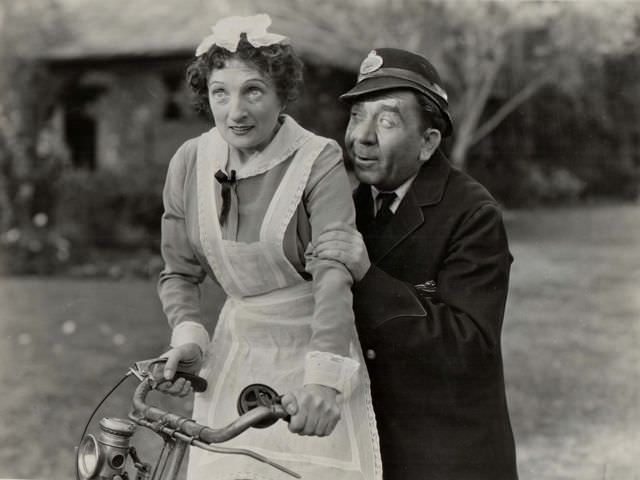
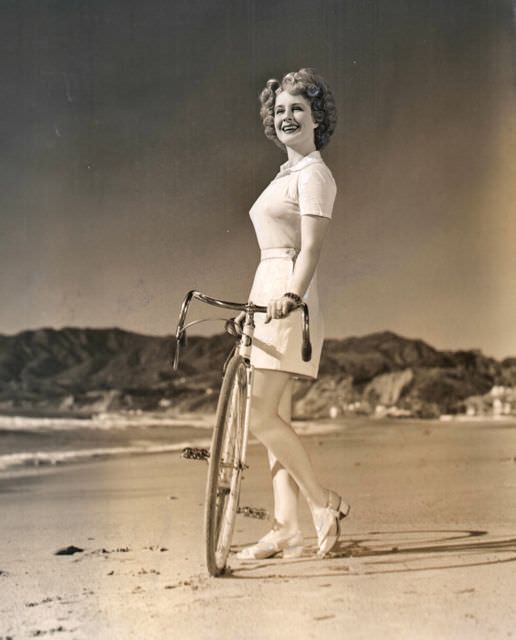
Una O’Connor, the Irish character actress best known for her scene-stealing screaming in horror films like The Invisible Man and Bride of Frankenstein, appears here in a completely different mode — riding a bicycle while Herbert Mundin grabs hold, a shot that plays directly into physical comedy. The collection closes with Norma Shearer, one of MGM’s biggest stars of the early sound era and a five-time Academy Award nominee, coasting on a bicycle with the effortless ease of someone who spent decades commanding every room she entered.