
In the late 19th century, a unique piece of technology emerged from the workshops of J. Lancaster & Son in Birmingham, England – the Lancaster Watch Camera. This fascinating device, a blend of artistry and innovative engineering, offered a glimpse into the nascent world of covert photography during the Victorian era. Although not a spy camera in the traditional sense, the Lancaster Watch Camera epitomized the period’s fascination with miniaturization and discreet technology.
Lancaster & Son: The Visionaries Behind the Camera
The mastermind behind this ingenious device was James Lancaster, the founder of J. Lancaster & Son. Established in the mid-19th century, the company was renowned for its photographic equipment and contributions to the early development of cameras. Lancaster’s vision was to create a camera that was not only functional but also portable and discreet, reflecting the Victorian era’s fascination with gadgetry and innovation.
Design and Craftsmanship
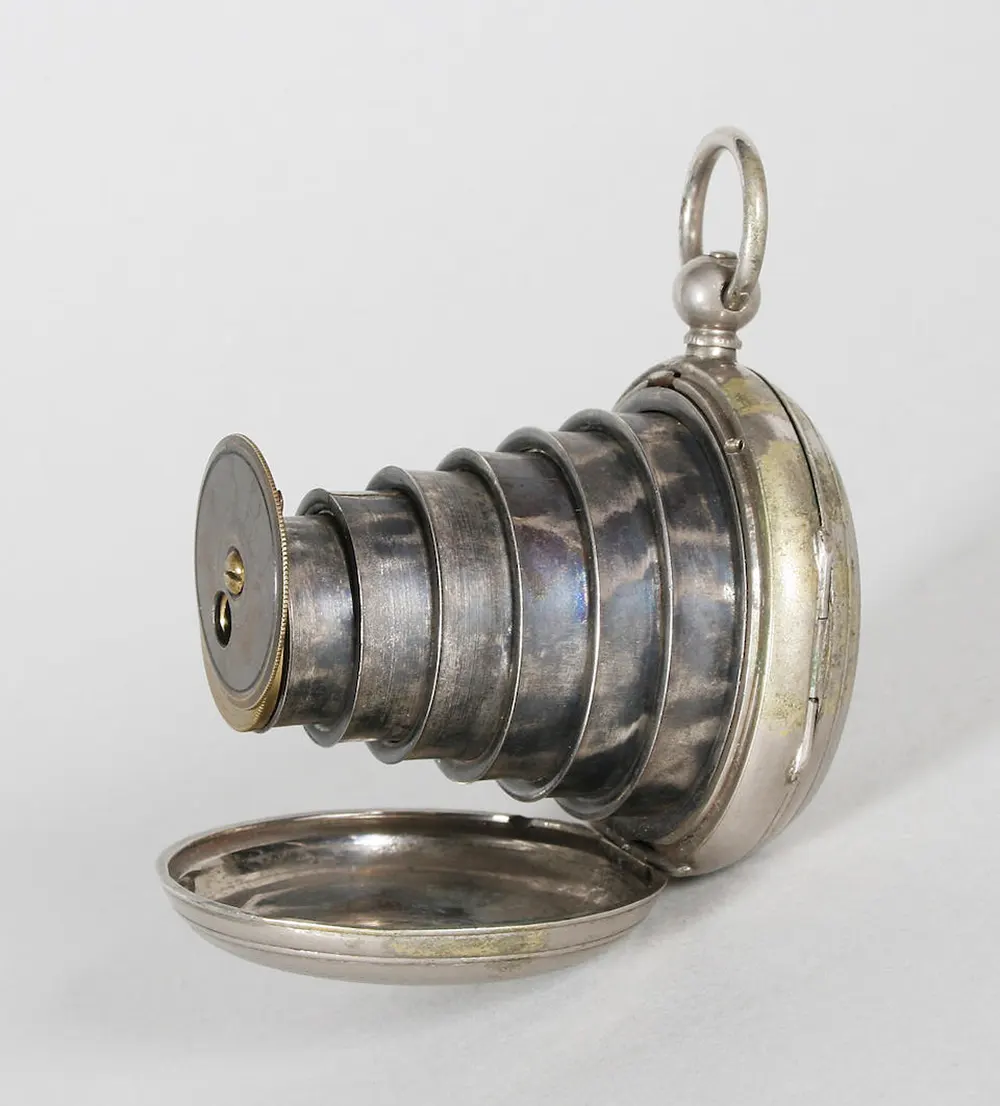
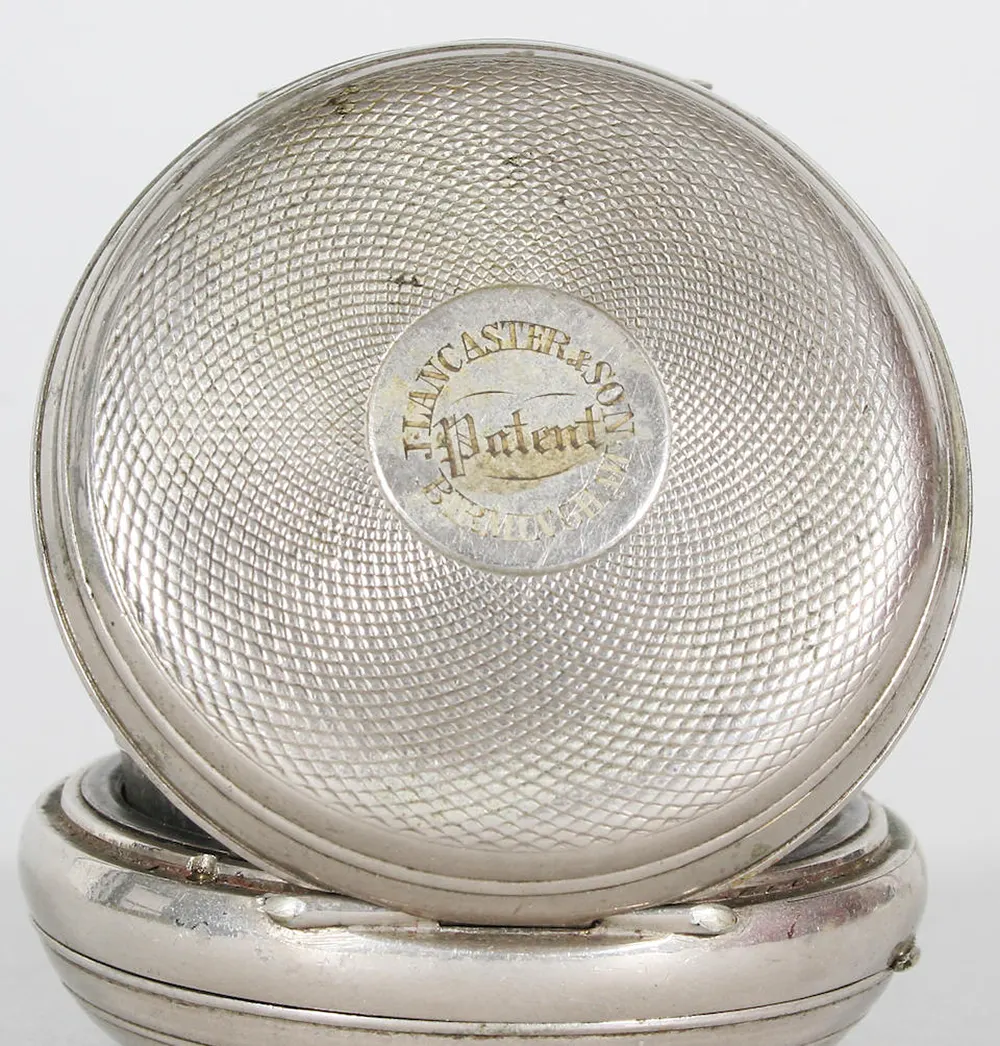
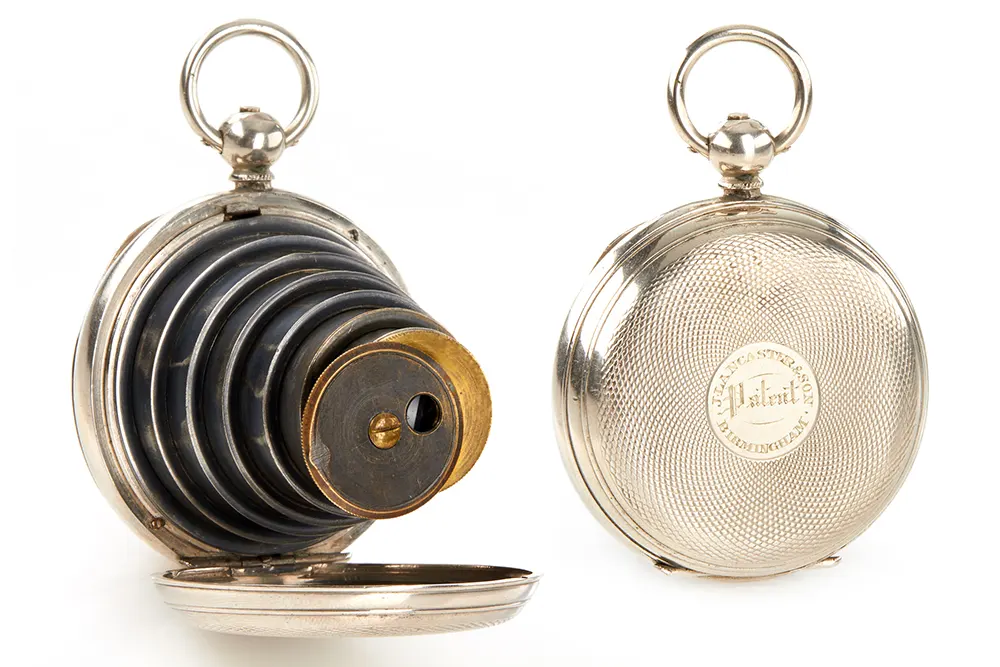
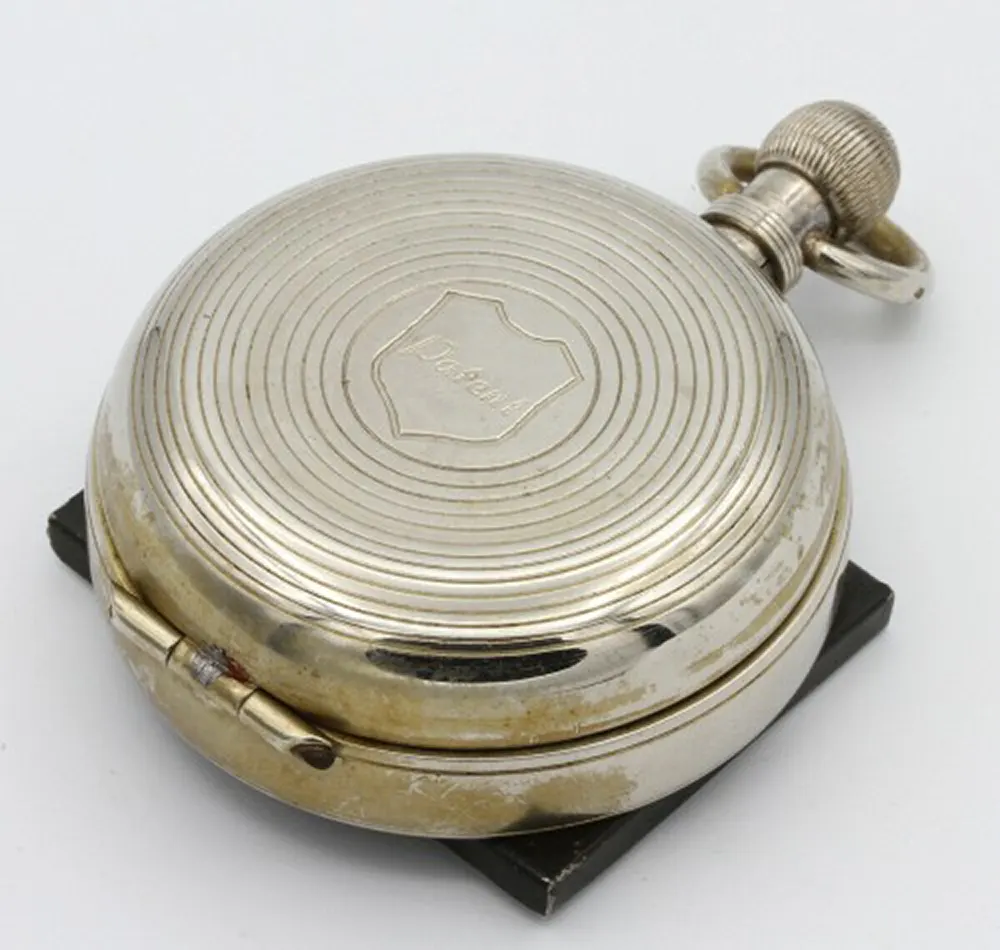
The Lancaster Watch Camera was a marvel of design, resembling a hunter-type pocket watch with intricate nickel plating and engine turning. Its compact size and elegant appearance made it a discreet accessory that could be easily carried in a waistcoat pocket. The camera’s external roundel was engraved with ‘J Lancaster & Son Patent Birmingham’, a mark of its authenticity and craftsmanship.
The Mechanics of the Camera
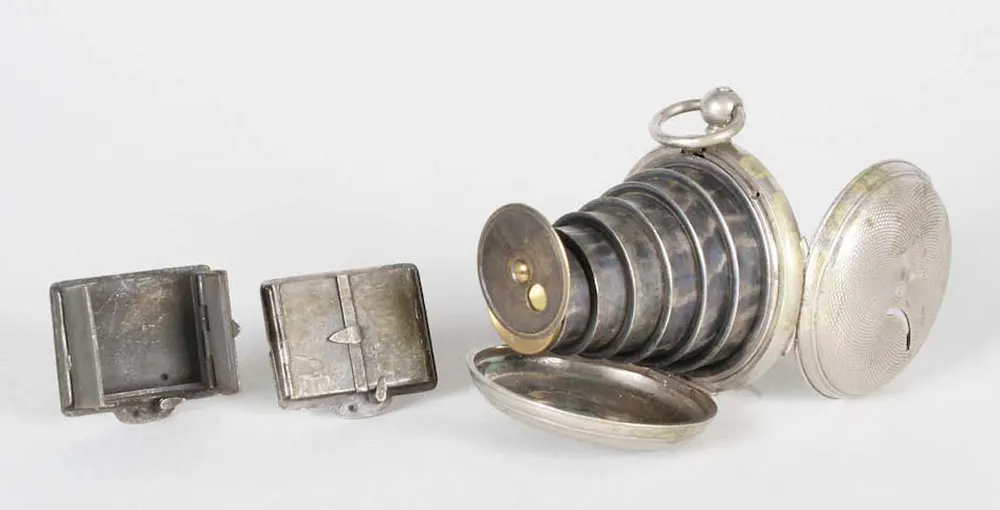
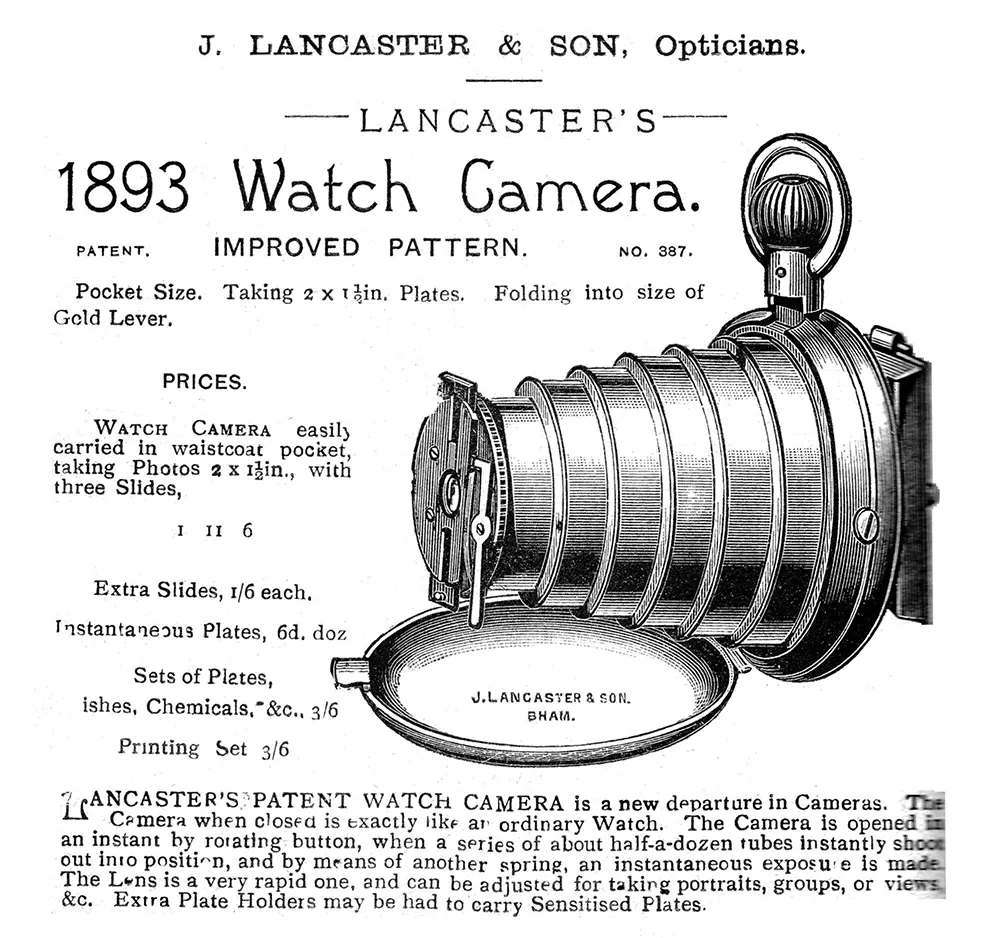
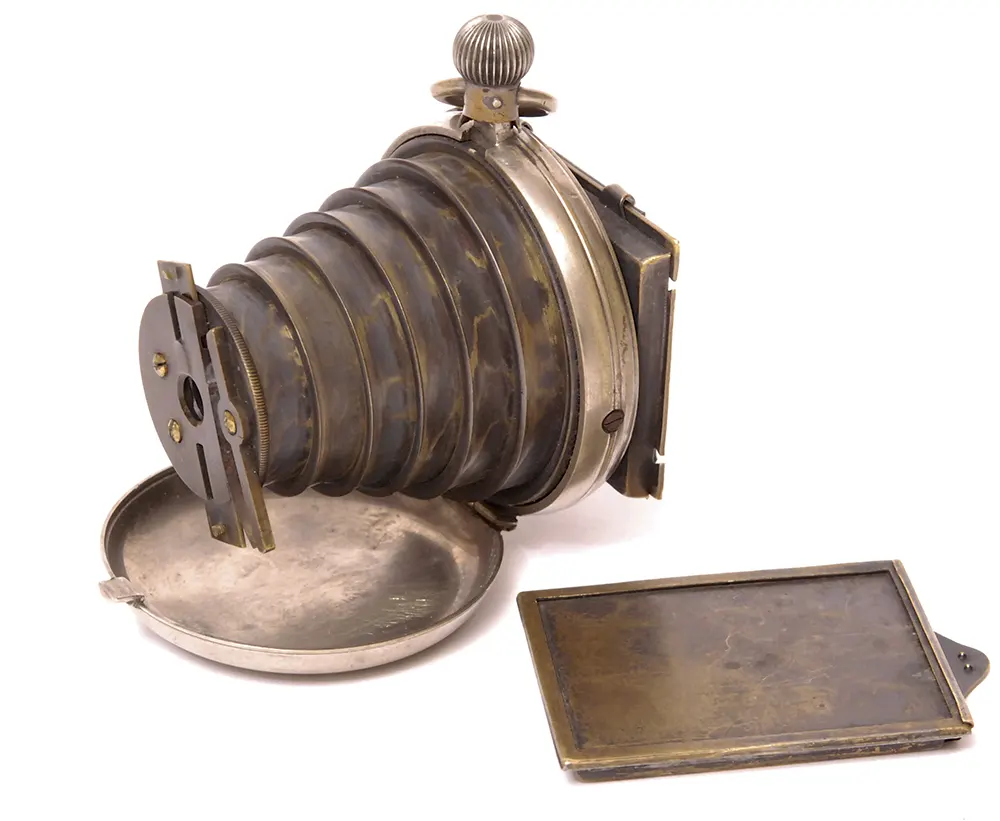
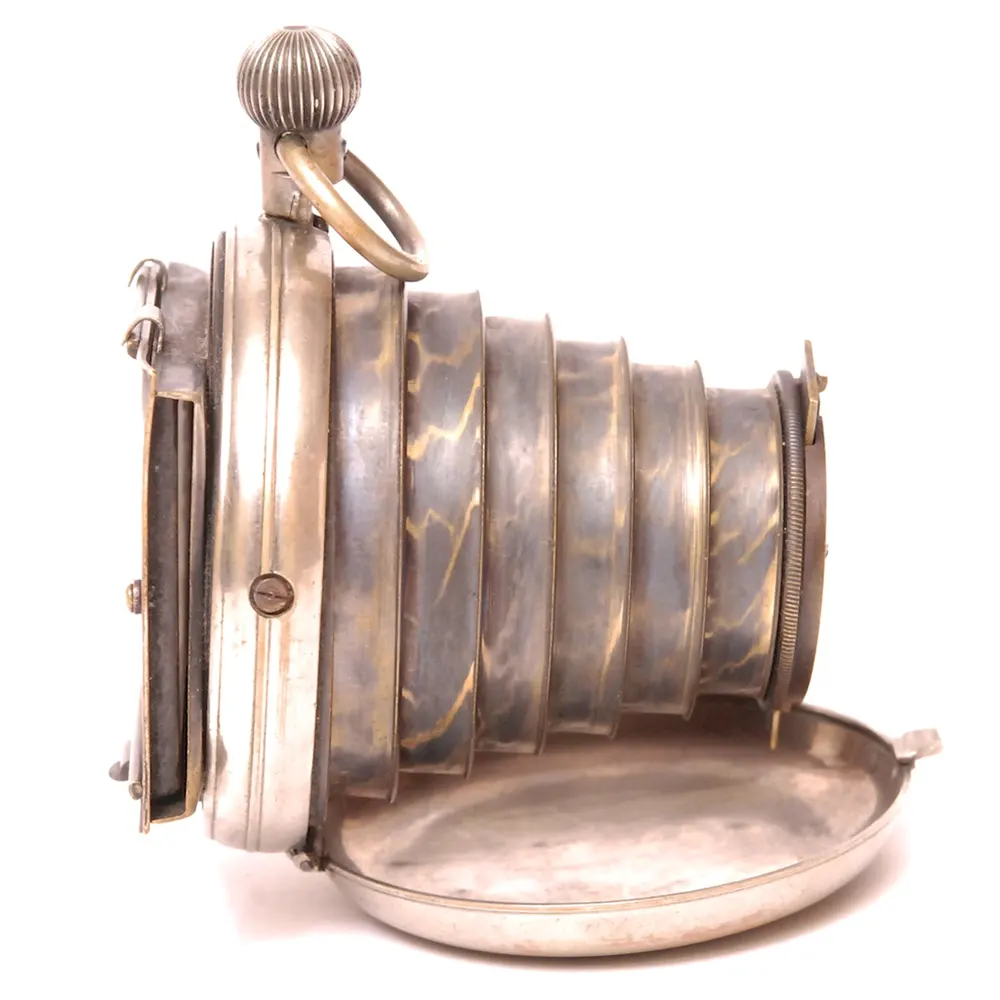
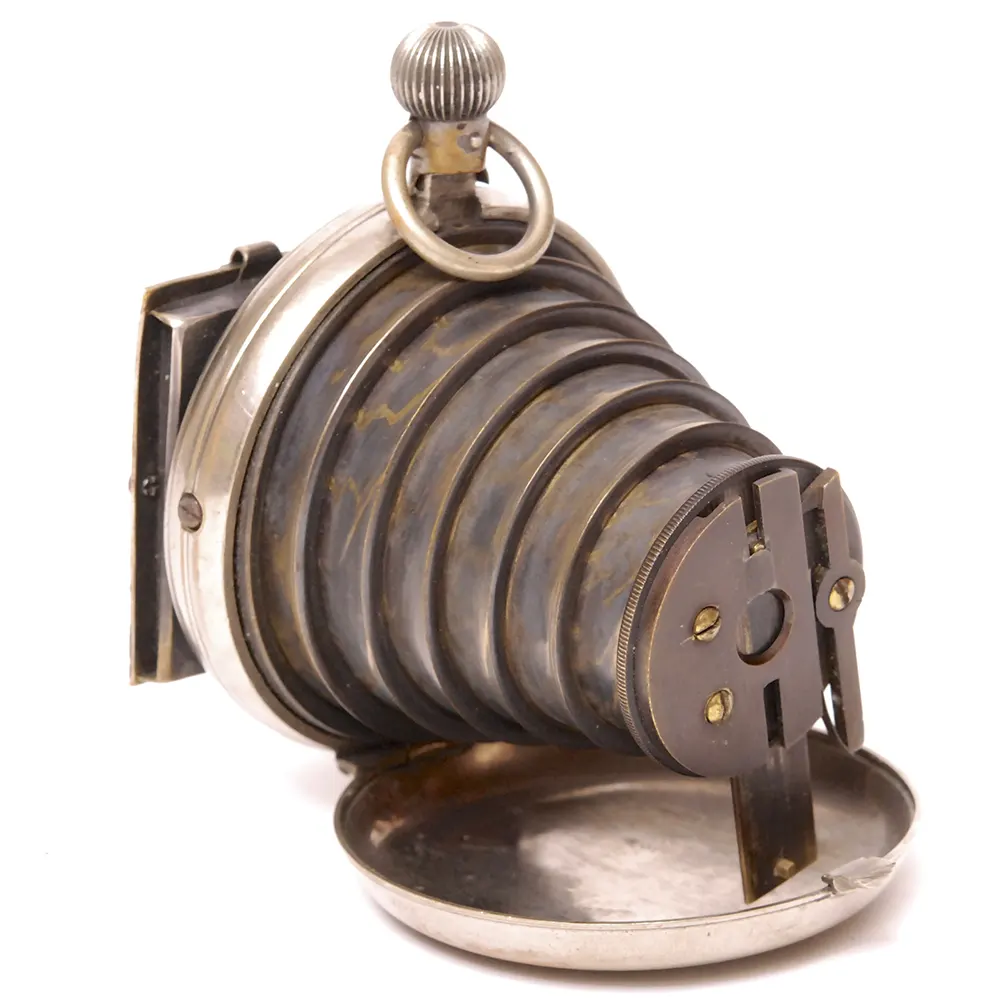
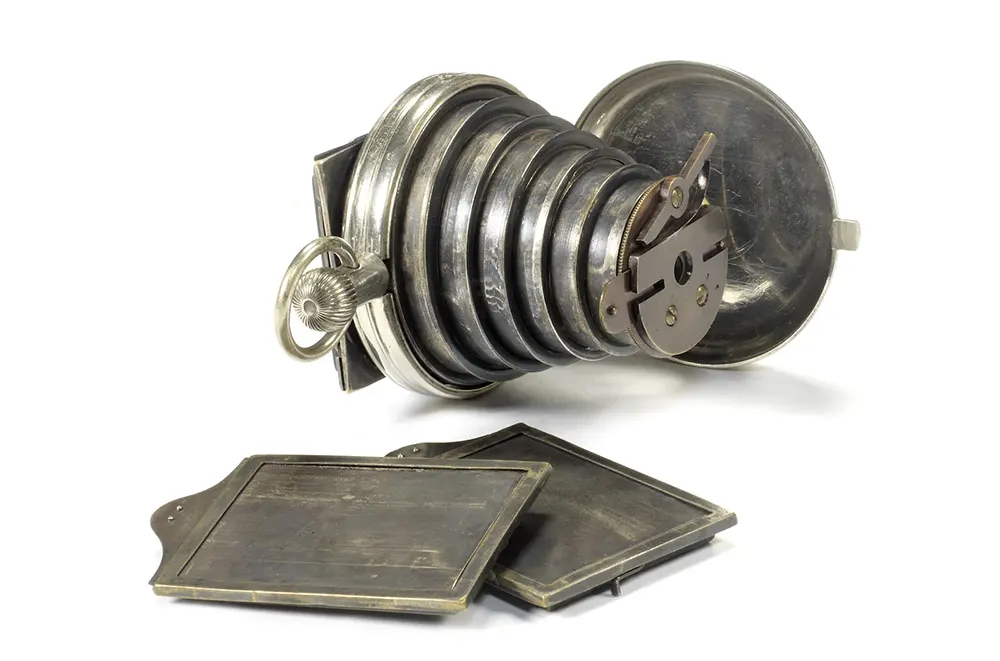
The camera’s most striking feature was its self-erecting mechanism. Upon opening, it extended six spring-loaded telescopic tubes, forming the bellows necessary for taking a photograph. This feature was not only innovative but also demonstrated the advanced level of mechanical engineering at the time.
In its initial versions, the camera featured an internal meniscus lens accompanied by a simple hand-turned rotary shutter. As technology progressed, later models were equipped with a more advanced drop shutter. These modifications showcased Lancaster’s commitment to improving and adapting the camera’s design.
The Challenge of Usability
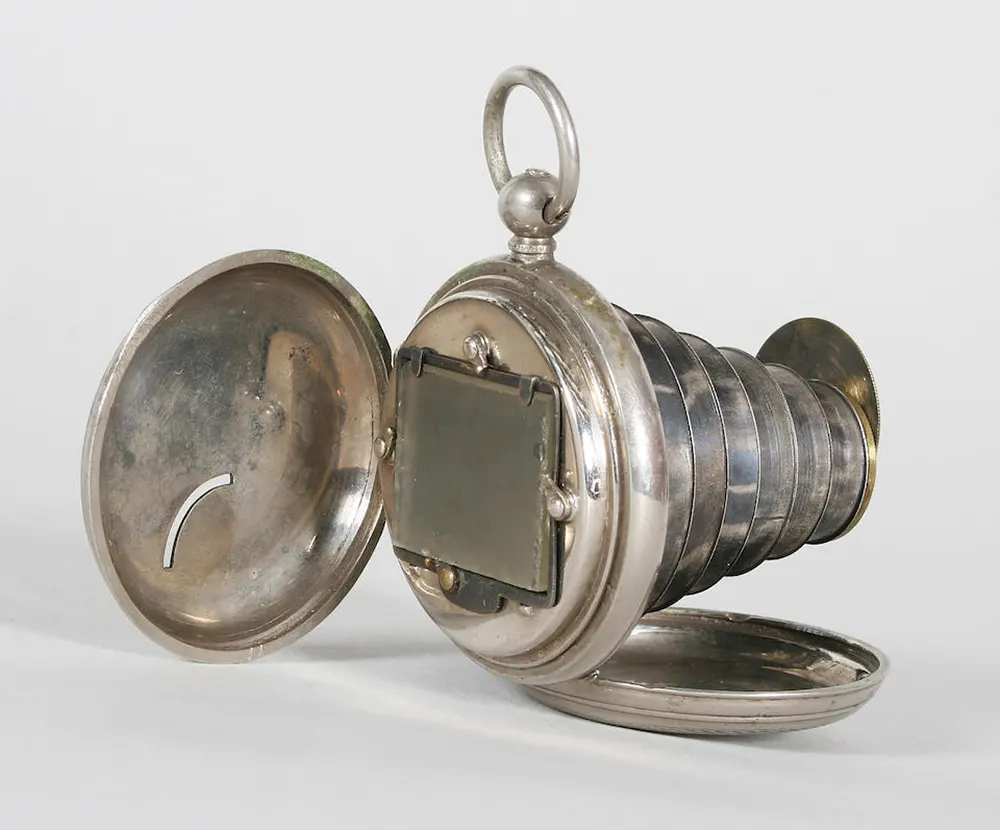
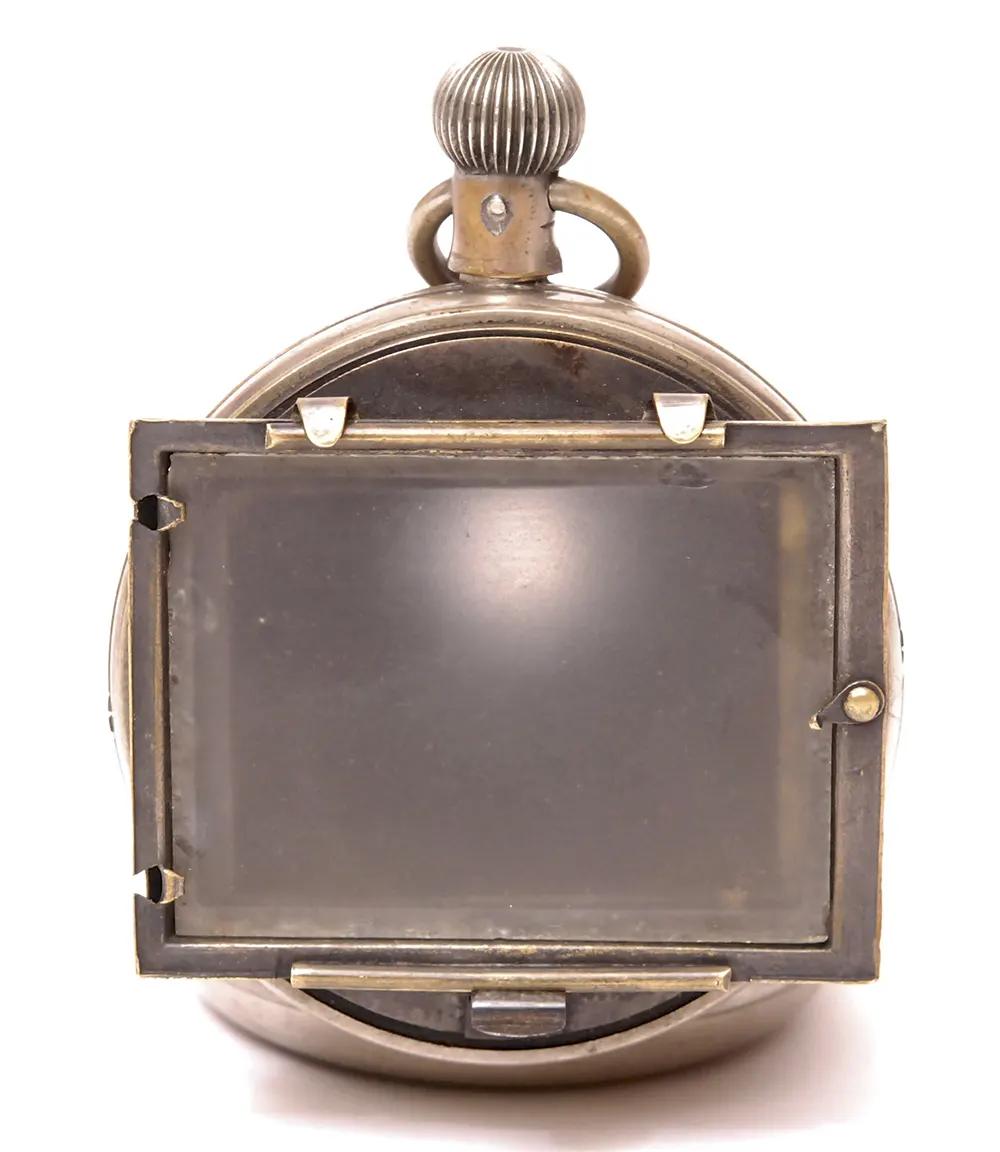
Despite its ingenious design, the Lancaster Watch Camera had its practical challenges. The ground glass screen needed to be removed for each exposure by releasing four tiny catches and replaced with a metal sensitized material holder. This process was cumbersome and required careful handling, a limitation for quick or spontaneous photography.
To address these usability concerns, an improved model was introduced in 1890. This version featured a larger screen frame and conventional dark slides, enhancing user-friendliness but sacrificing some of the original model’s discreetness. The introduction of a drop shutter in this model was another significant improvement.
Variants for Men and Women
The production of the Lancaster Watch Camera saw variations tailored for both men and women. The ladies’ version was more petite, producing exposures measuring 1 1/4 inches by 1 inch. In contrast, the larger men’s model produced snapshots of 2 inches by 1 1/2 inches. This differentiation in size and design underscored the Victorian era’s attention to gender-specific accessories.
The Lancaster Watch Camera remains a significant artifact in the history of photography. It represents a period where technological innovation met everyday practicality. The camera not only exemplifies the ingenuity of its era but also provides insight into the Victorian society’s fascination with discreet and portable technology.