Chicago expanded into a metropolis of three million people by the early 1920s, fueled by union stockyards, rail depots, and steel mills along the Calumet River. The city police department could not keep pace with this growth. Ward bosses ran protection rackets with saloon keepers, while bootleggers organized armed syndicates to sell illicit alcohol. Editors at newspapers like the Chicago Daily News and the Chicago Tribune sent staff photographers straight to crime scenes with heavy four-by-five press cameras and magnesium flash powder. These photographers raced squad cars across town to photograph dead gangsters on the pavement, police line-ups, and trials inside crowded Cook County courtrooms.
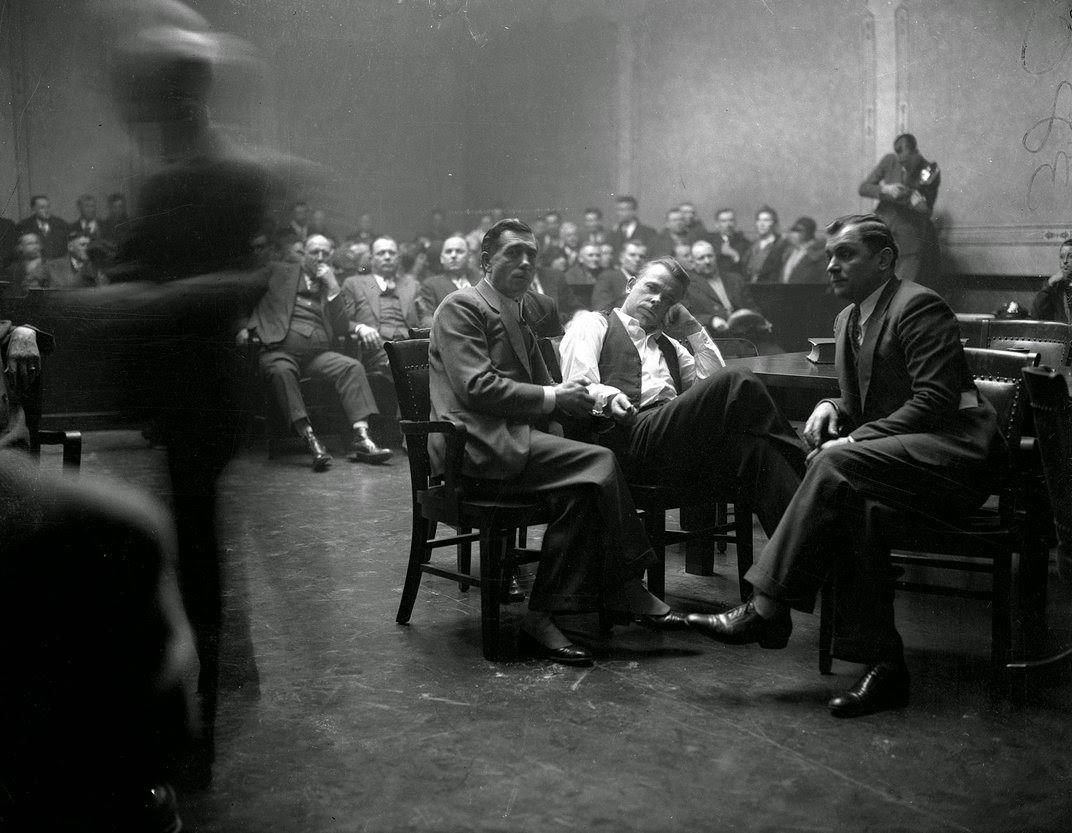
Midwestern bank robbers used the city as a base and a hiding spot. John Dillinger, Baby Face Nelson, and Homer Van Meter rented walk-up apartments on the North Side throughout 1933 and 1934, blending into the crowds. Dillinger dyed his hair, underwent crude facial surgery on Crawford Avenue, and carried forged papers while shopping in the Loop. Cook County authorities responded with heavy security when they brought outlaws to trial. Inside the Criminal Courts Building on West Hubbard Street, bailiffs chained prisoners to solid oak tables and posted armed deputies along every wall. Judges kept defendants under constant guard, fearing confederates would storm the building with machine guns.
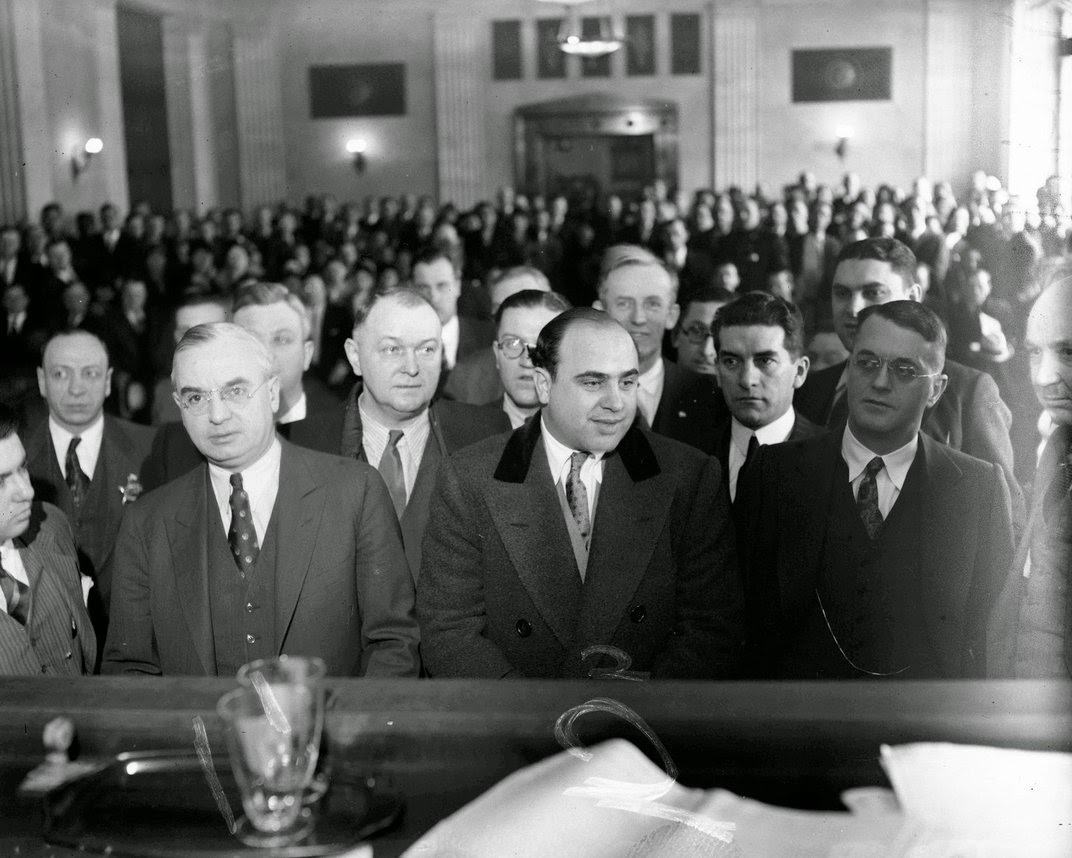
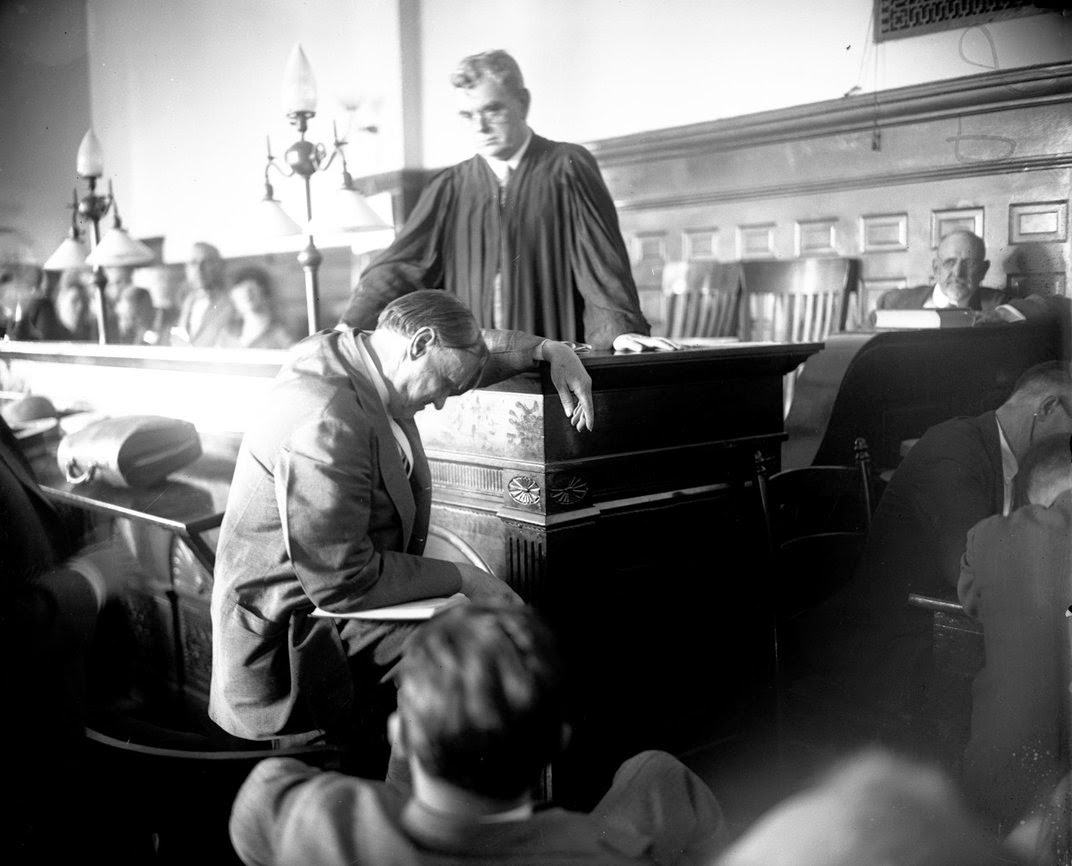
Violent crime extended well beyond bootleggers and bank robbers. On May 21, 1924, two wealthy University of Chicago students, nineteen-year-old Nathan Leopold and eighteen-year-old Richard Loeb, kidnapped fourteen-year-old Bobby Franks in Kenwood. They killed the boy with a chisel inside a rented car, poured hydrochloric acid over his face, and stuffed his body into a railway culvert near Wolf Lake. Leopold dropped his custom eyeglasses near the culvert, allowing detectives to trace the murder back to him within ten days. Their families hired Clarence Darrow to defend them. Inside Judge John R. Caverly's courtroom, Darrow argued against the death penalty, securing life sentences for both men at Joliet penitentiary.
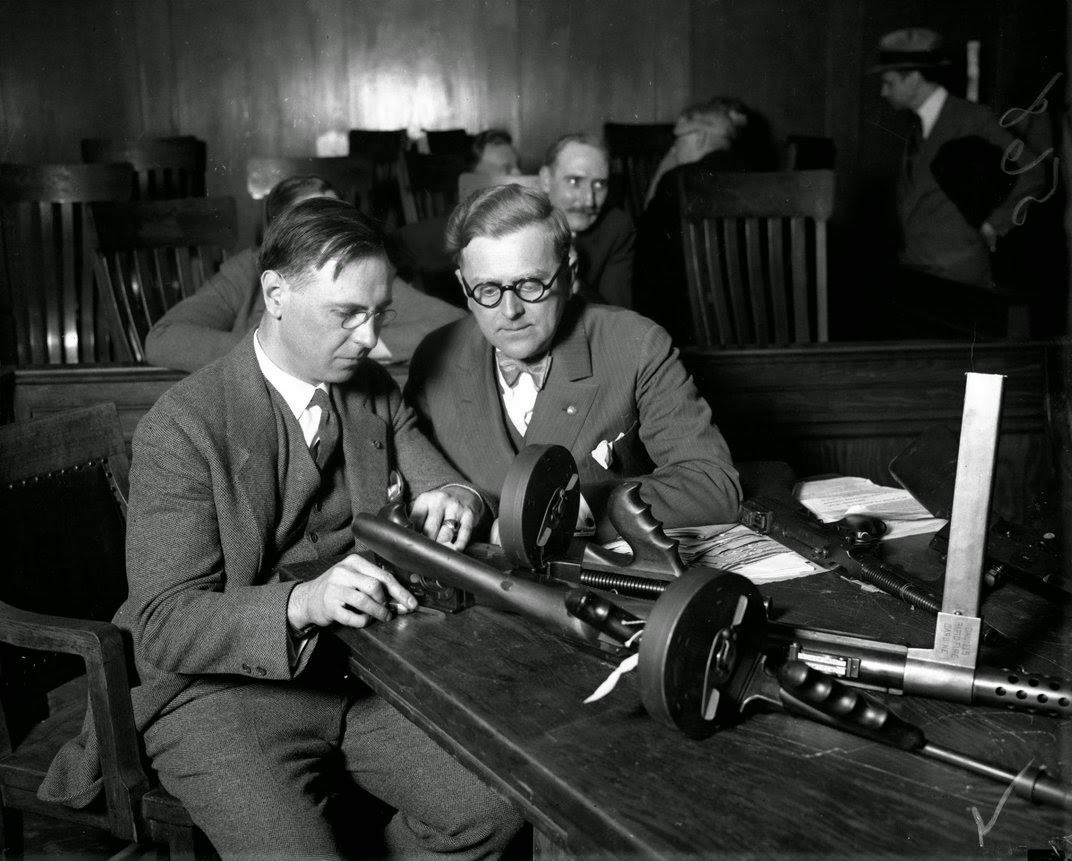
Gang warfare reached an apex on the morning of February 14, 1929, inside the SMC Cartage Company garage at 2122 North Clark Street. Four gunmen, two dressed in stolen police uniforms, lined up seven associates of George "Bugs" Moran against a brick wall. The attackers fired seventy rounds from Thompson submachine guns and shotguns before fleeing in a black Cadillac. Six victims died instantly, while enforcer Frank Gusenberg survived two hours with fourteen bullet wounds, telling police that nobody shot him. Coroner Herman Bundesen brought in ballistics expert Calvin Goddard, who used a comparison microscope to match test-fired slugs against bullets dug from the wall. Goddard's work linked the weapons to Fred Burke, a killer for Al Capone.
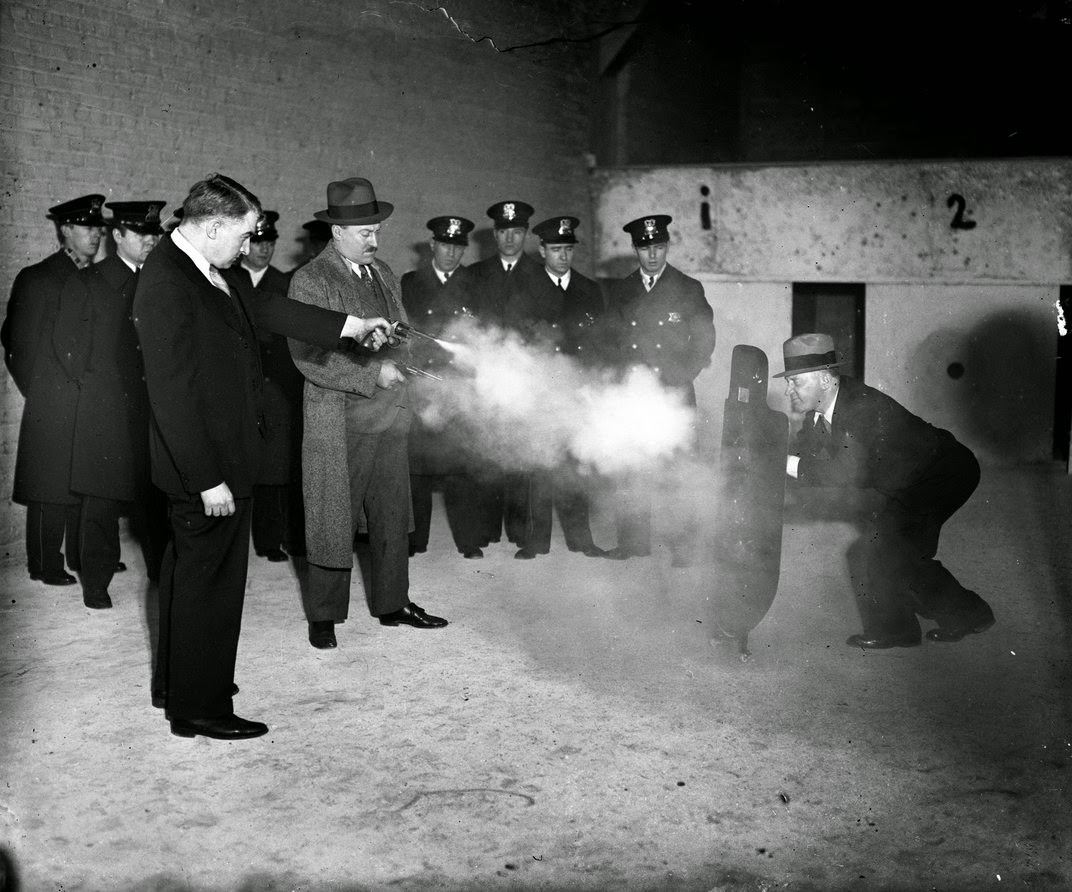
Patrol officers struggled to defend themselves against automatic weapons. During the late 1920s and early 1930s, the Chicago Police Department tested experimental protective gear in precinct courtyards and firing ranges. Private inventors demonstrated wheeled steel shields equipped with narrow viewing slits and gun ports. Patrolmen shoved these hundred-pound metal barriers across cobblestones during mock skirmishes, but the contraptions jammed on curbs and gutters. Frontline officers rejected the clumsy shields, choosing instead to carry double-barrel shotguns, tear gas canisters, and high-velocity Colt .38 revolvers in their squad cars.
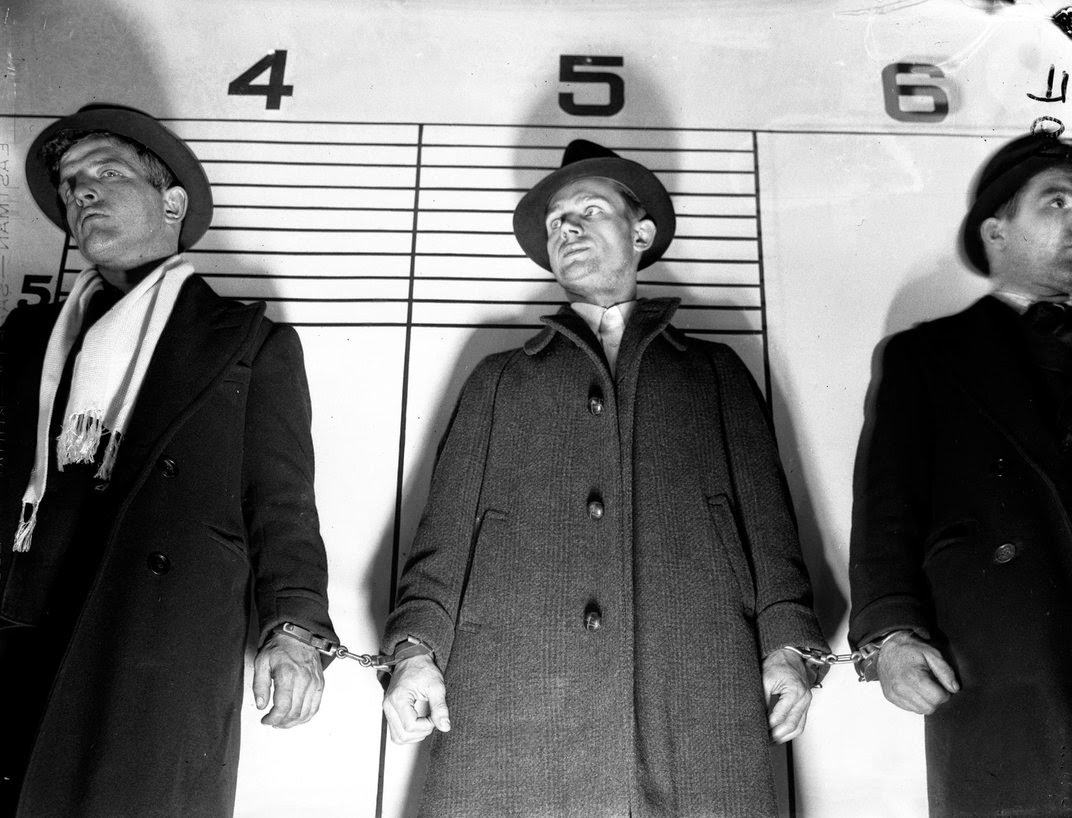
Detectives relied on physical lineups at the Harrison Street police station to pin crimes on suspects. Investigators gathered suspected thieves and safecrackers under bright carbon-arc lamps while witnesses watched from behind wire screens. In late 1924, police arrested Joseph Schuster, an ex-convict suspected in the shooting of off-duty patrolman Arthur Sullivan. Sullivan had interrupted a shoe store robbery and taken two bullets to the chest. Detectives hauled Schuster into the central lineup room, where three witnesses identified him from a line of seven men. Police filed the identification records alongside Schuster's fingerprint cards in the central records bureau.
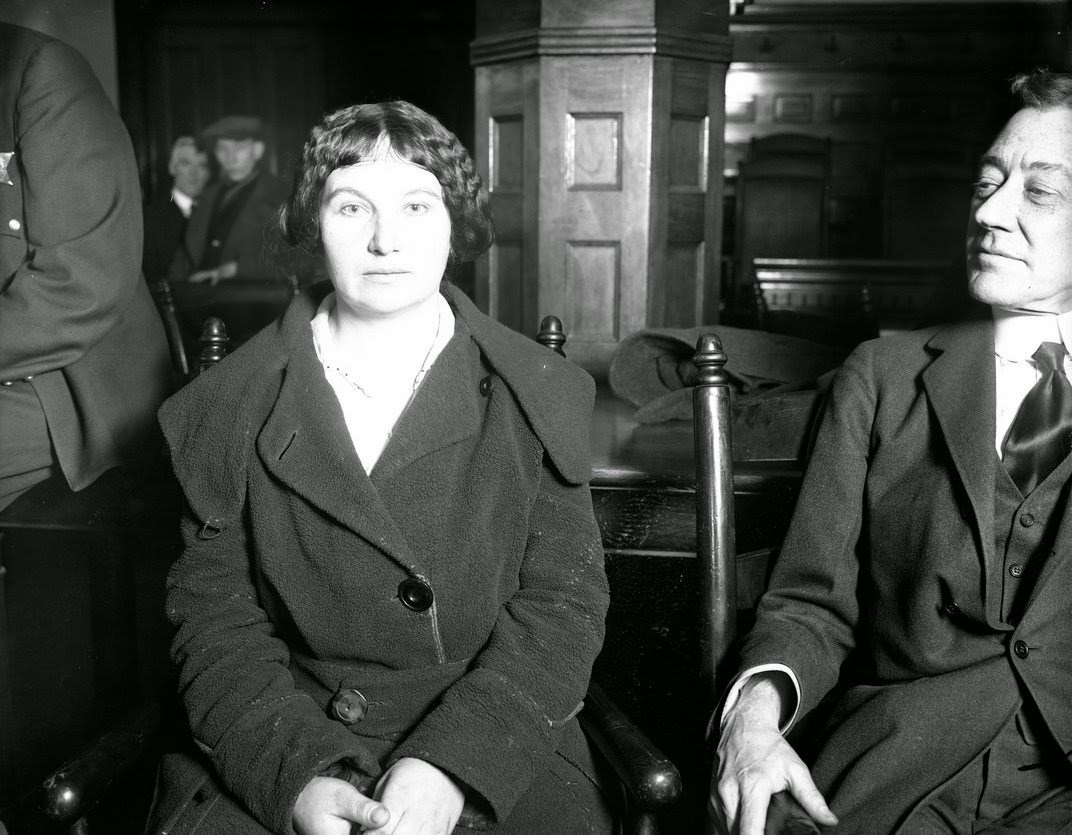
City health inspectors and federal agents fought another battle against dealers selling lethal alcohol substitutes. Mary Wazeniak ran an unlicensed South Side saloon on 33rd Street, selling bootleg whiskey cut with denatured industrial wood alcohol to factory workers. When laborer John Smolenski drank three glasses of her liquor and died forty-eight hours later, prosecutors charged Wazeniak with murder. Health officials testified that the whiskey contained fatal levels of pure methanol. In March 1923, an Illinois court convicted her of manslaughter, making Wazeniak the first woman in state history sent to prison for selling fatal alcohol.
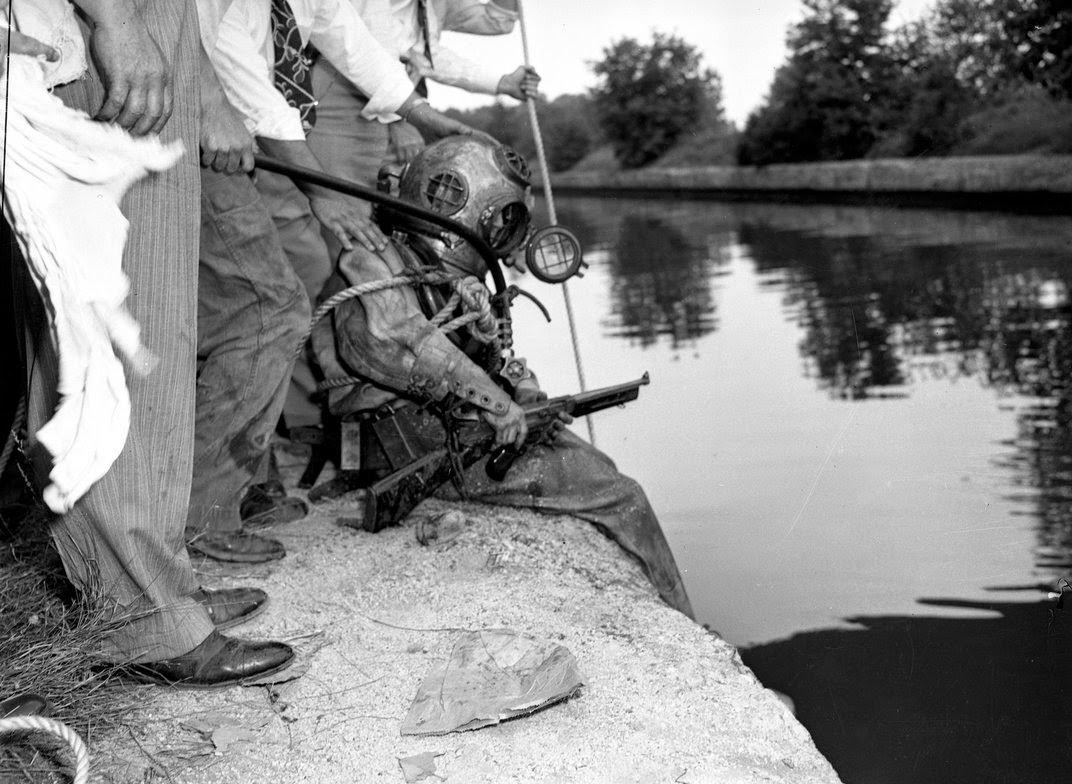
Disposing of weapons and stolen goods was easy in a city crossed by industrial waterways. The Chicago Police Marine Unit spent weeks each spring dragging iron grappling hooks along the bottoms of the Chicago River and the Sanitary and Ship Canal. Divers in brass helmets and lead-weighted boots walked through thick mud under drawbridges, recovering evidence by hand. Crews dragged up iron office safes, sawed-off shotguns with filed serial numbers, and revolvers wrapped in grease rags. On September 18, 1930, a dredging crane working near the 18th Street bridge pulled up an abandoned Buick containing two rusted pistols, three sets of stolen plates, and forty empty cartridge casings.