Hey There! Before You Go. 😧
Get the best vintage content straight into your inbox!

Don't worry, we don't spam

The Bruising History of Vintage Roller Derby: Skaters, Brawls, and Banked Tracks in Chicago

Leo Seltzer was running dance marathons in Oregon when he noticed a magazine poll stating that 93 percent of Americans owned roller skates. He moved his promotional efforts to the Chicago Coliseum on South Wabash Avenue, opening the first Transcontinental Roller Derby on August 13, 1935. Twenty-five two-person teams entered the building to skate 4,000 miles around an oval wooden track, simulating a cross-country trek from New York to San Diego.
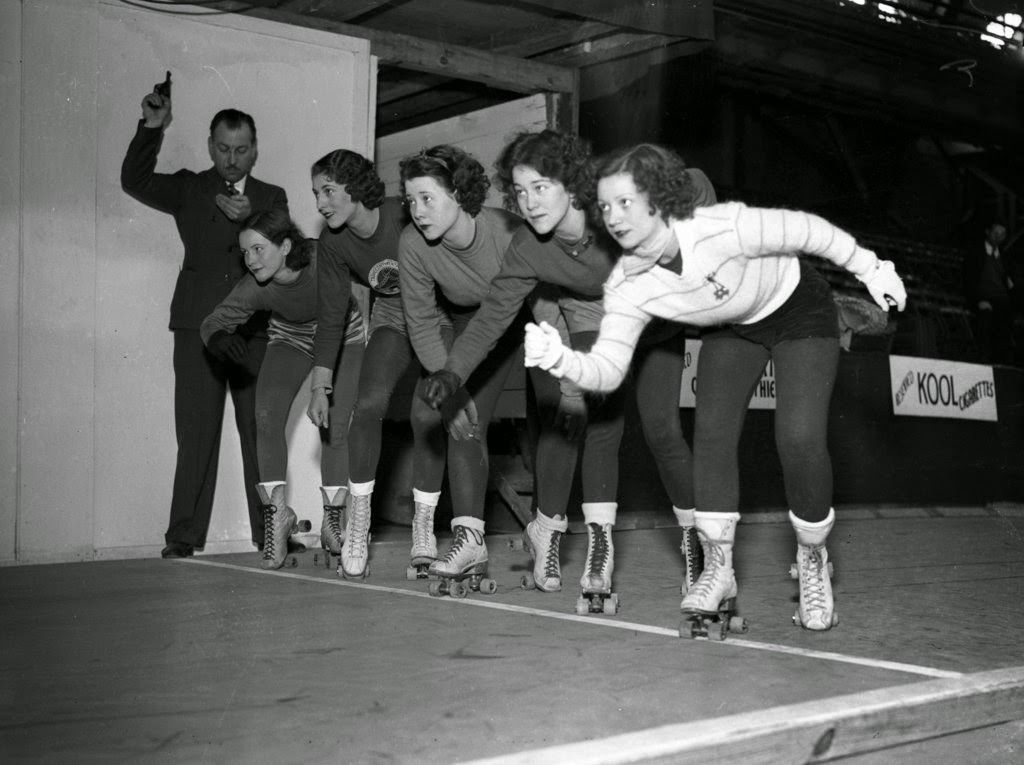
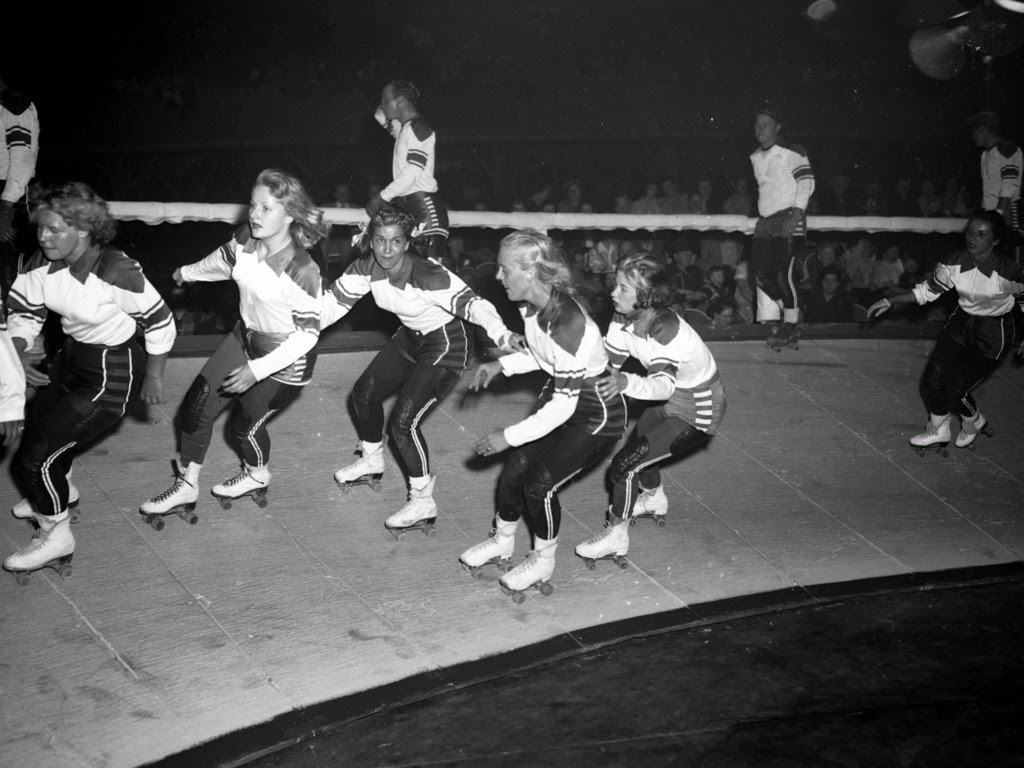
Roller derby skaters Louise Thomas, Elizabeth “Libby” Hoover, Pudge Dyer, Jayne Cummings and Mildred Arndt are started by Harry Newman, 1930s
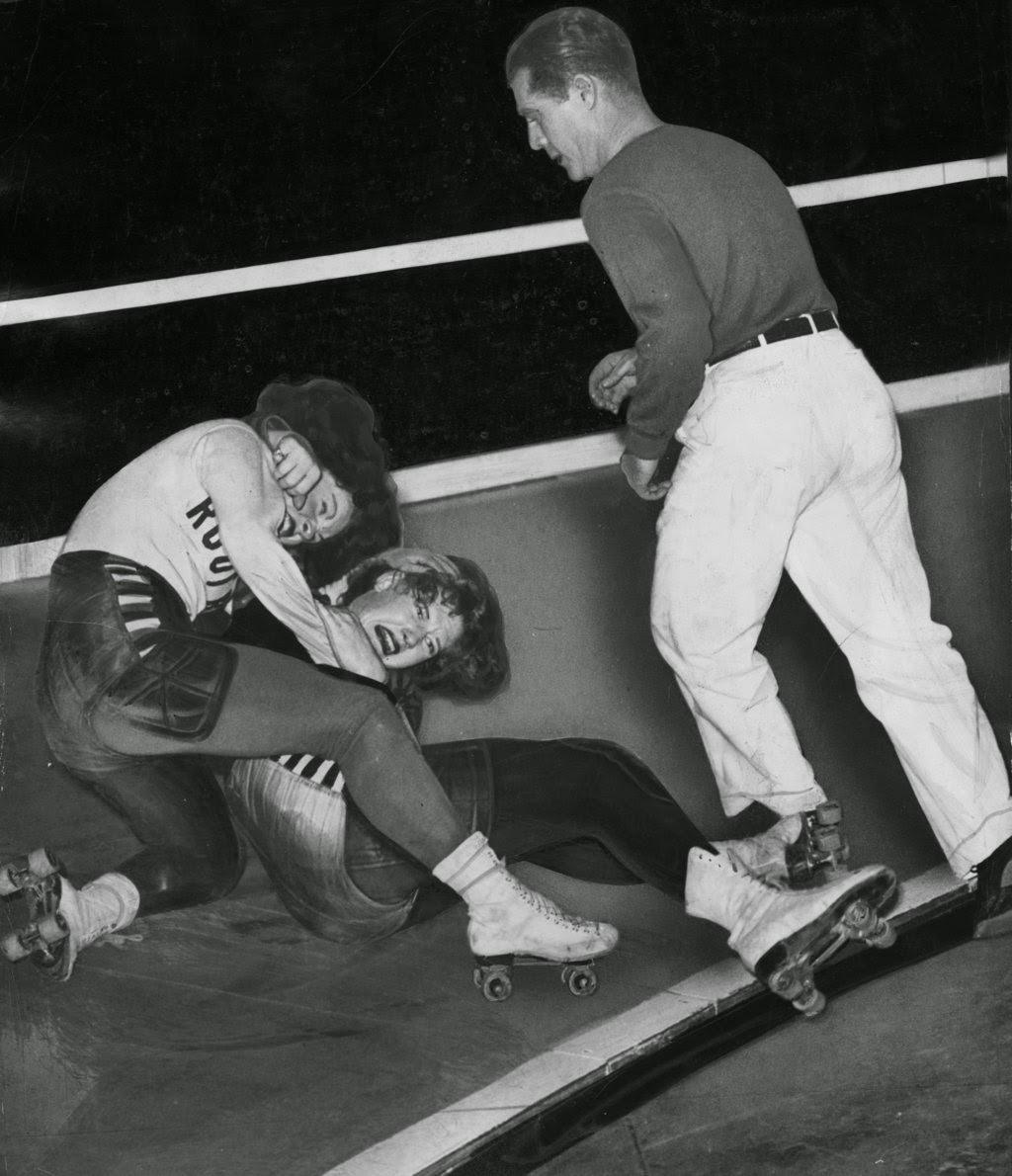
A referee goes in to break up a skirmish during a Coliseum match between Virginia Balzer of the Chicago team and Virginia Ogden of the California team, where the referee revealed the loss of some hair and a few loose teeth, 1940s

Early races lasted up to eleven hours a day for nearly a month. Competitors had to circle the banked track twenty-four times to complete a single mile, stopping only for mandatory rest periods on cots placed inside the infield. Exhausted skaters fell asleep while rolling, crashing into wooden guardrails and leaving deep splinters in the unpainted pine floorboards.
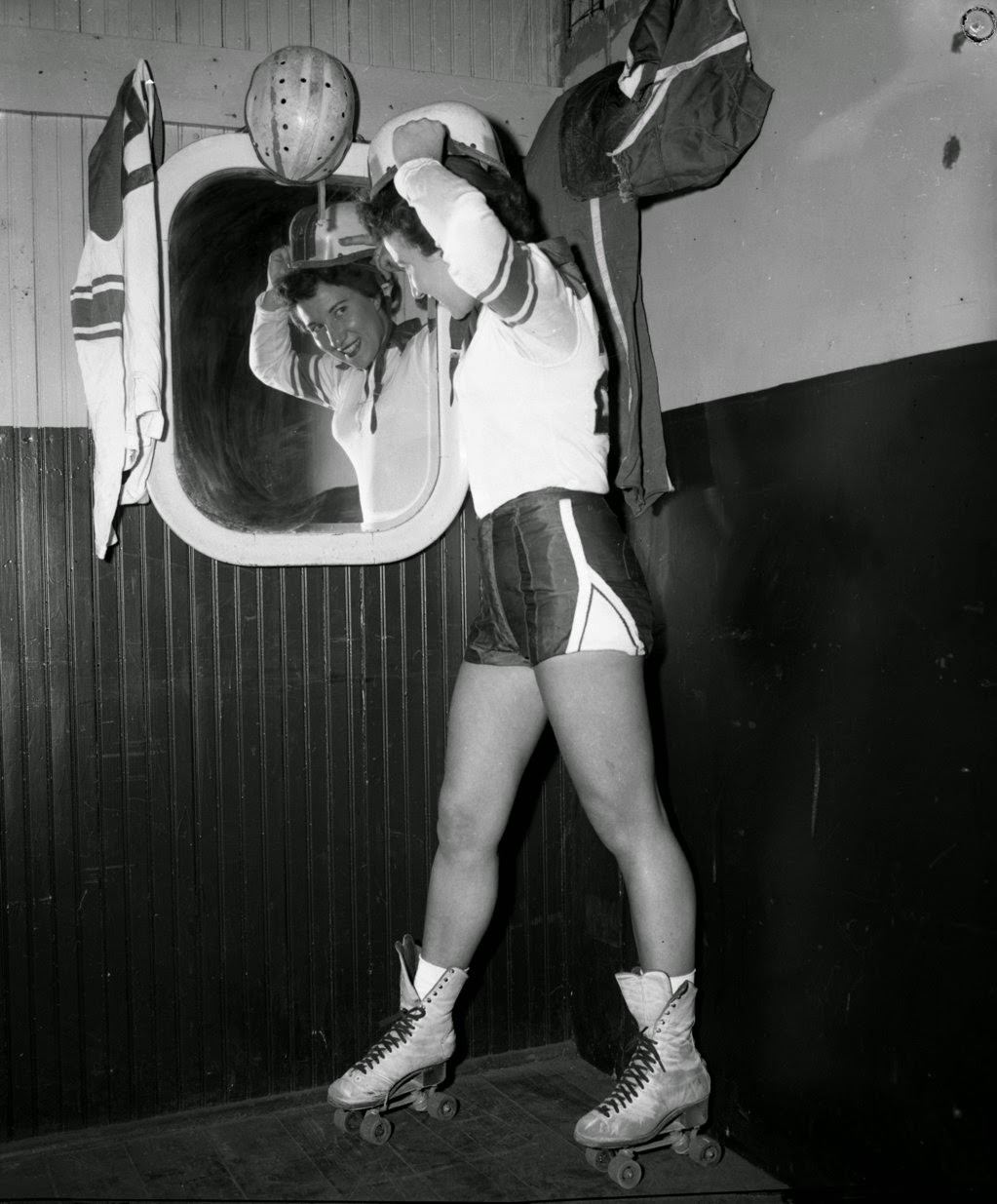
Roller Derby participant Harriette “Babe” Topel at the Coliseum, 1950s

Sportswriter Damon Runyon watched a match in the late 1930s and told Seltzer that the audience only woke up when skaters collided. Seltzer rewrote the rulebook to formalize the violence, establishing five-skater teams consisting of blockers, pivots, and jammers. The new format turned the endurance race into a full-contact sport where jammers scored points by lapping members of the opposing pack.
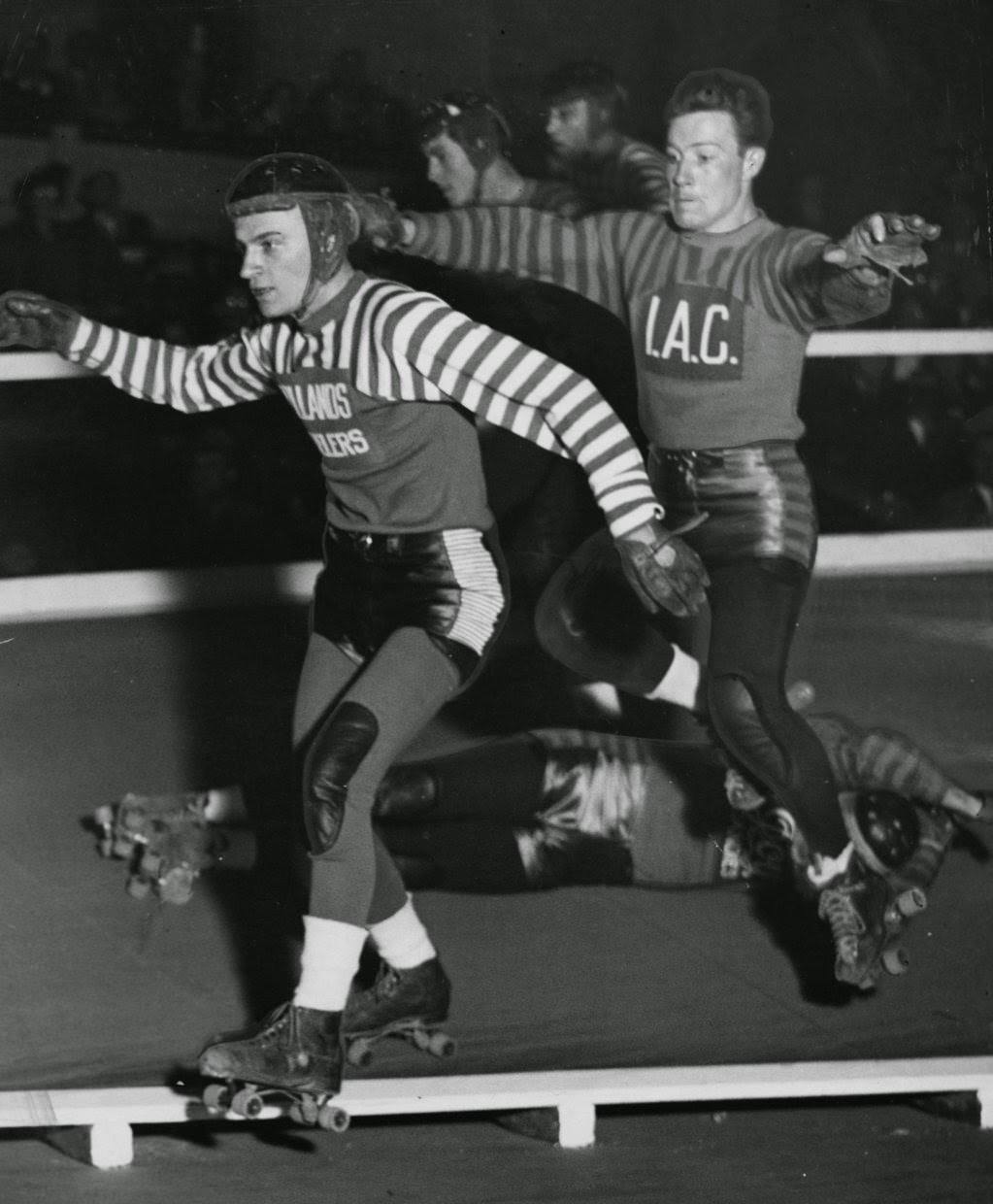
Bill Bogash and Bob Satterfield step over a fallen skater during a Coliseum match, 1940s
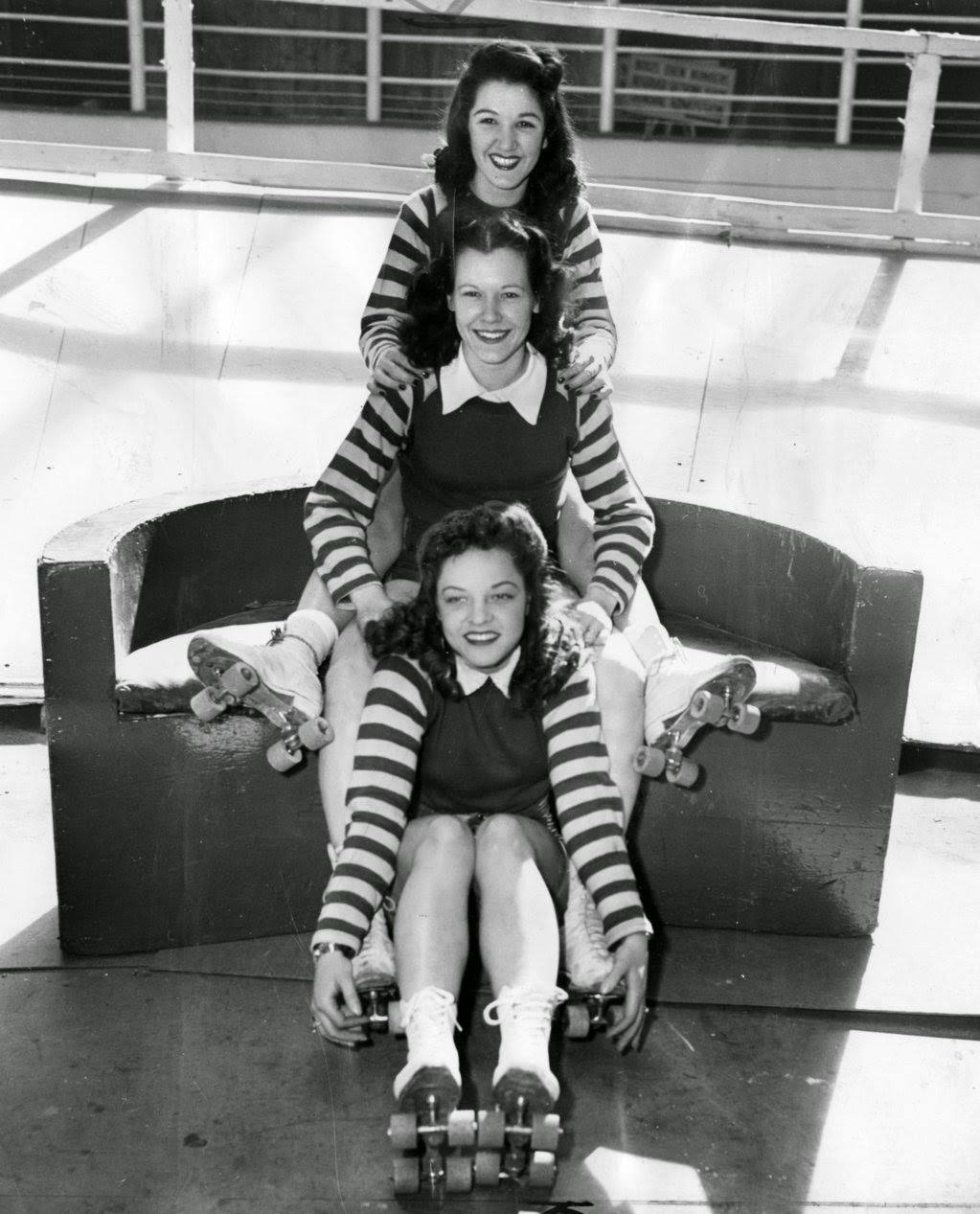
Mary Lou Palermo, Gerry Murray, and Katy King represented Chicago at the roller derby tournament which opened at the Coliseum in Chicago, 1940s
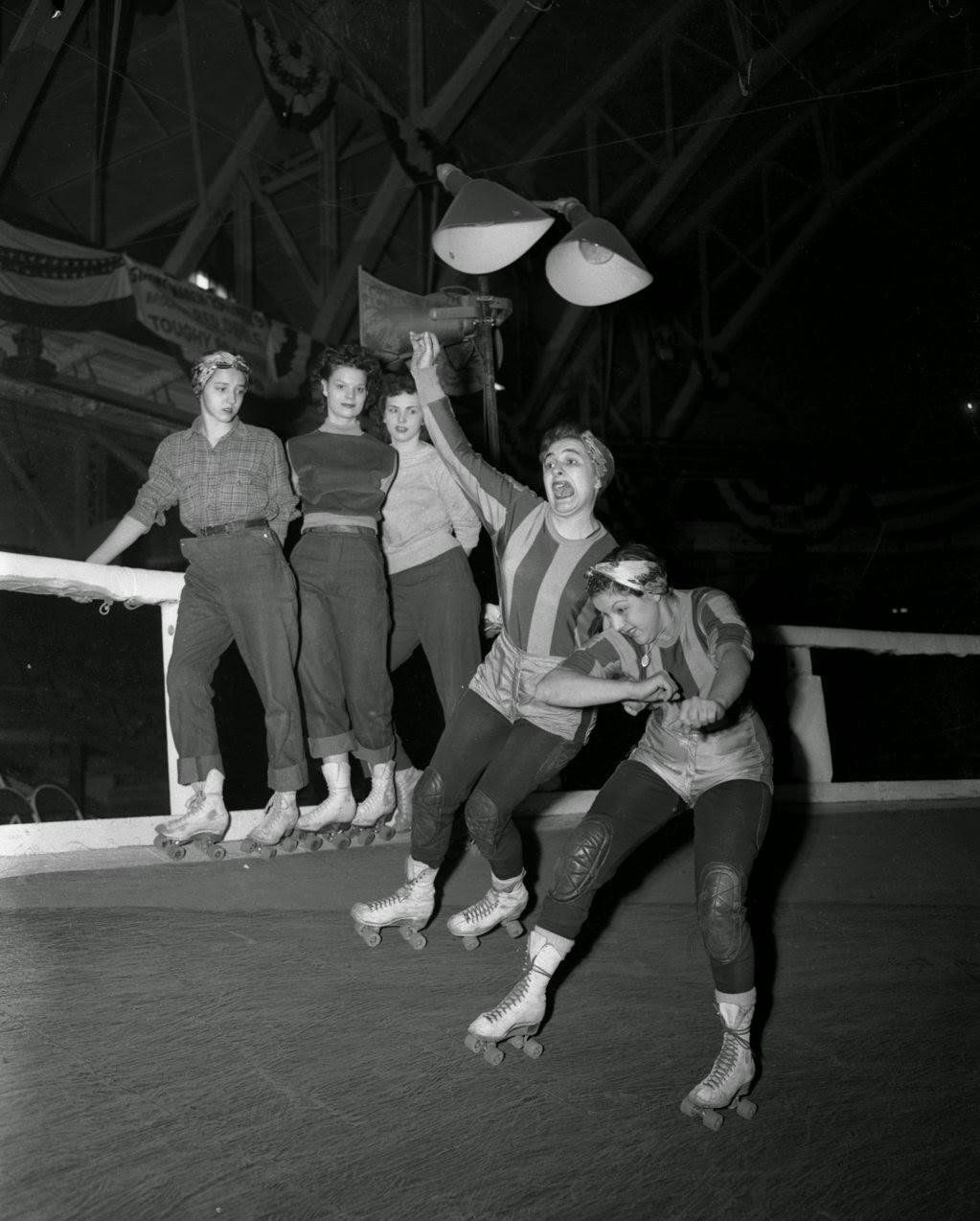
Roller derby veterans Mary Casey and Terry Anderson practiced a move while trainees Betty Backus, Barbara Begley and Irene Van Kirk watched along the rail during a tryout at the Coliseum, 1950s

Skaters maintained their own equipment before every heat. They stripped down hard maple wheels with wire brushes, tightened heavy truck bolts with pocket wrenches, and greased ball bearings with petroleum jelly. Men and women wore high-topped leather boots with reinforced toe caps, stitching torn canvas patches over the leather between periods to keep the boots rigid.
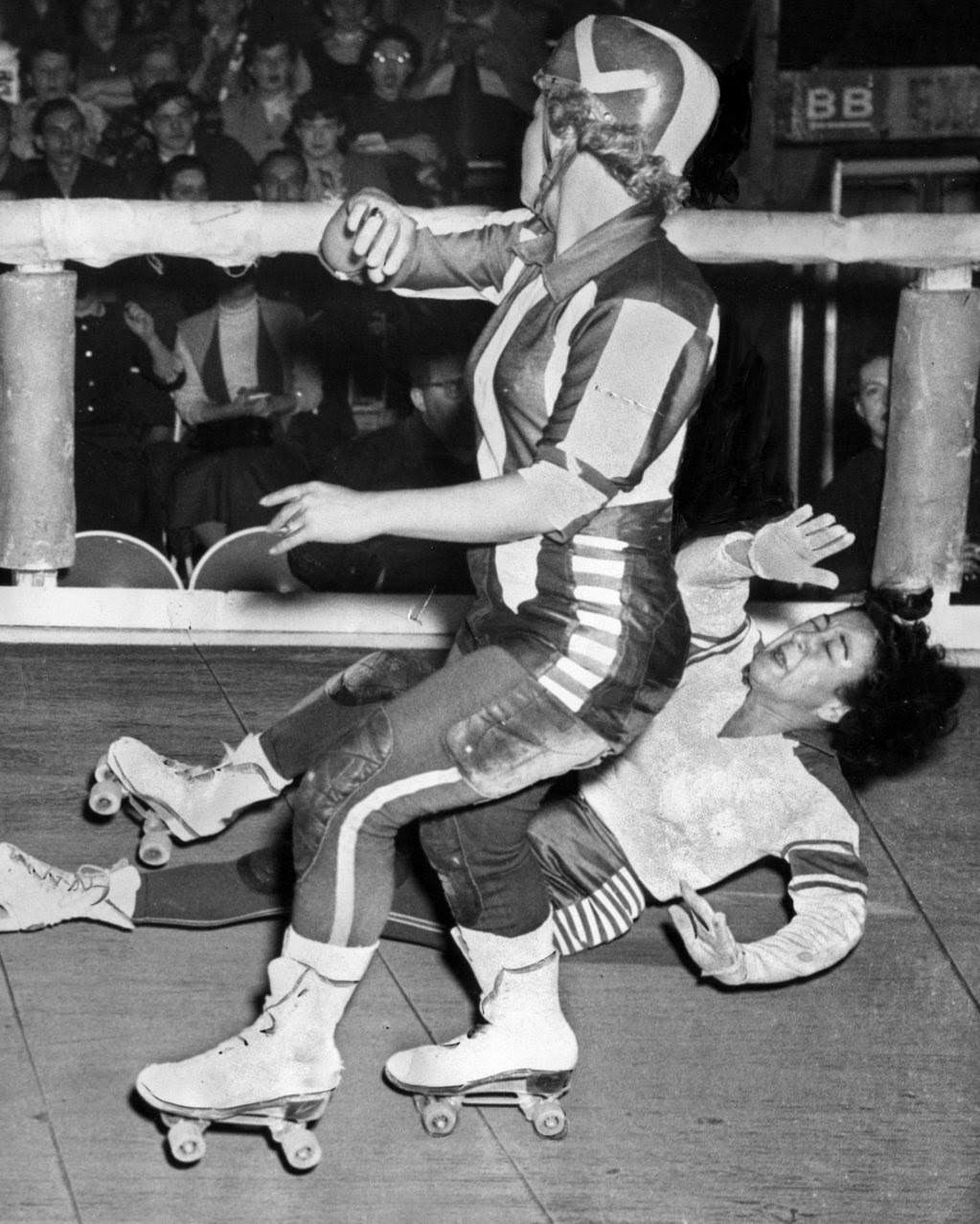
Mary Youpelle of the Chicago Westerners hits the floor after being blocked by Midge “Toughie” Brasuhn of the Brooklyn Red Devils in a roller derby at the Coliseum, 1950s
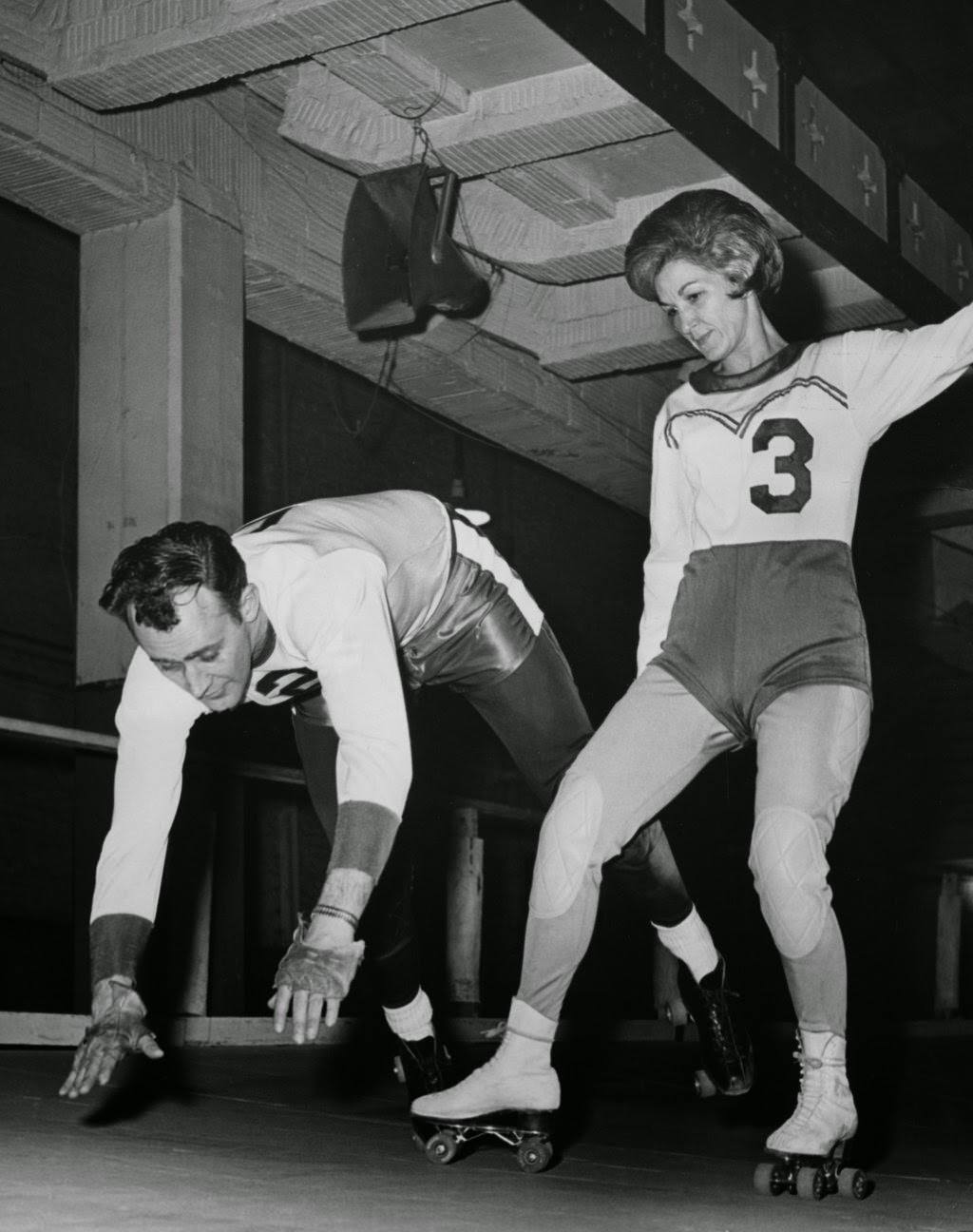
Mary Lou Palermo trips teammate Bob Venter in a skills demonstration at a training school in Chicago, 1960s
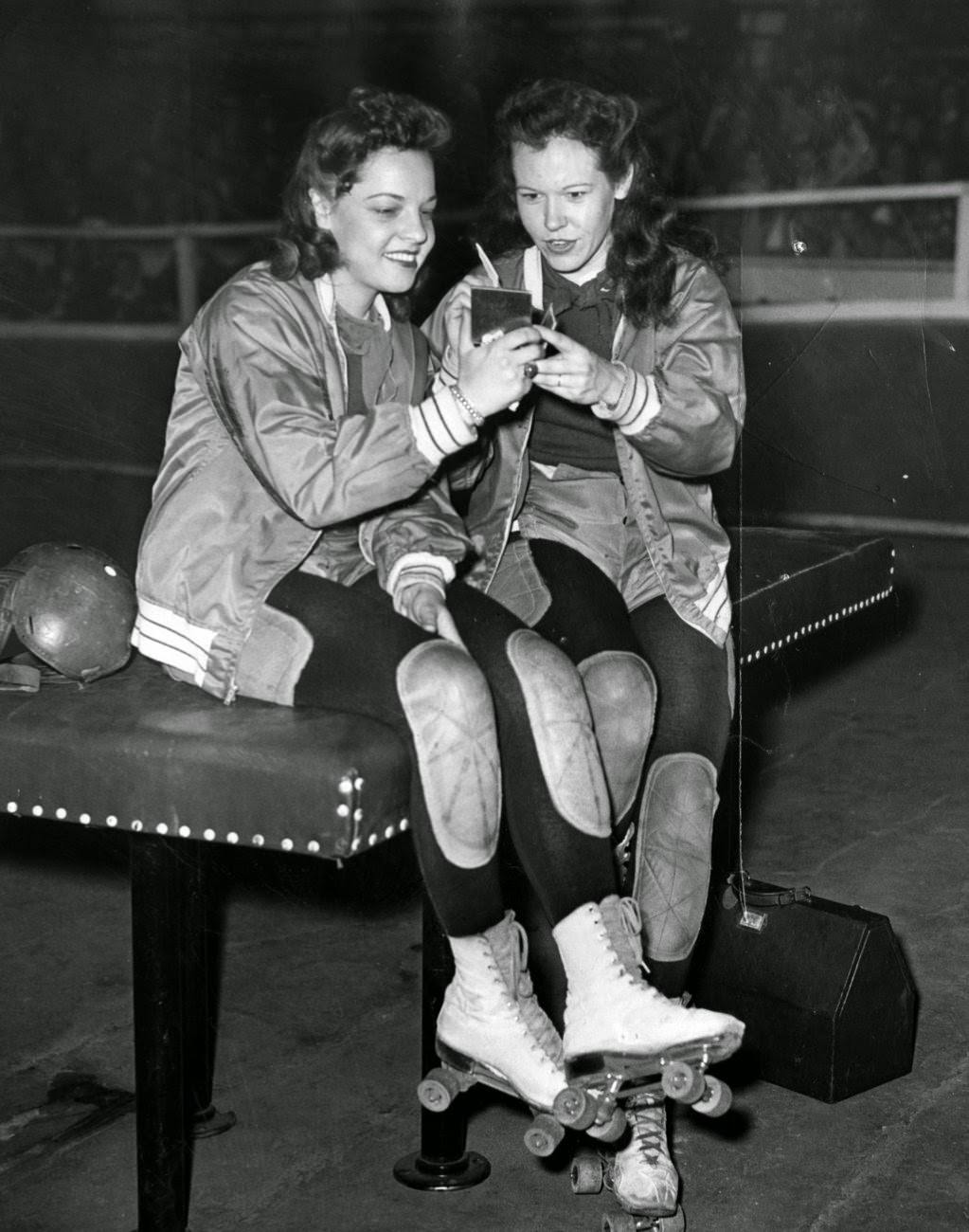
Katy King and Gerry Murray of the Chicago team apply make-up before skating into the roller derby ring, 1940s

The women skated under the same rules and physical contact allowances as the men. Skaters like Gerry Murray and Marjorie Lawson drew thousands of paying spectators, regularly knocking opponents off the banked curves with open-hand shoves and legal hip checks. Referees used brass whistles to penalize illegal tripping, but skaters frequently ignored the calls to settle grudges directly on the infield grass.
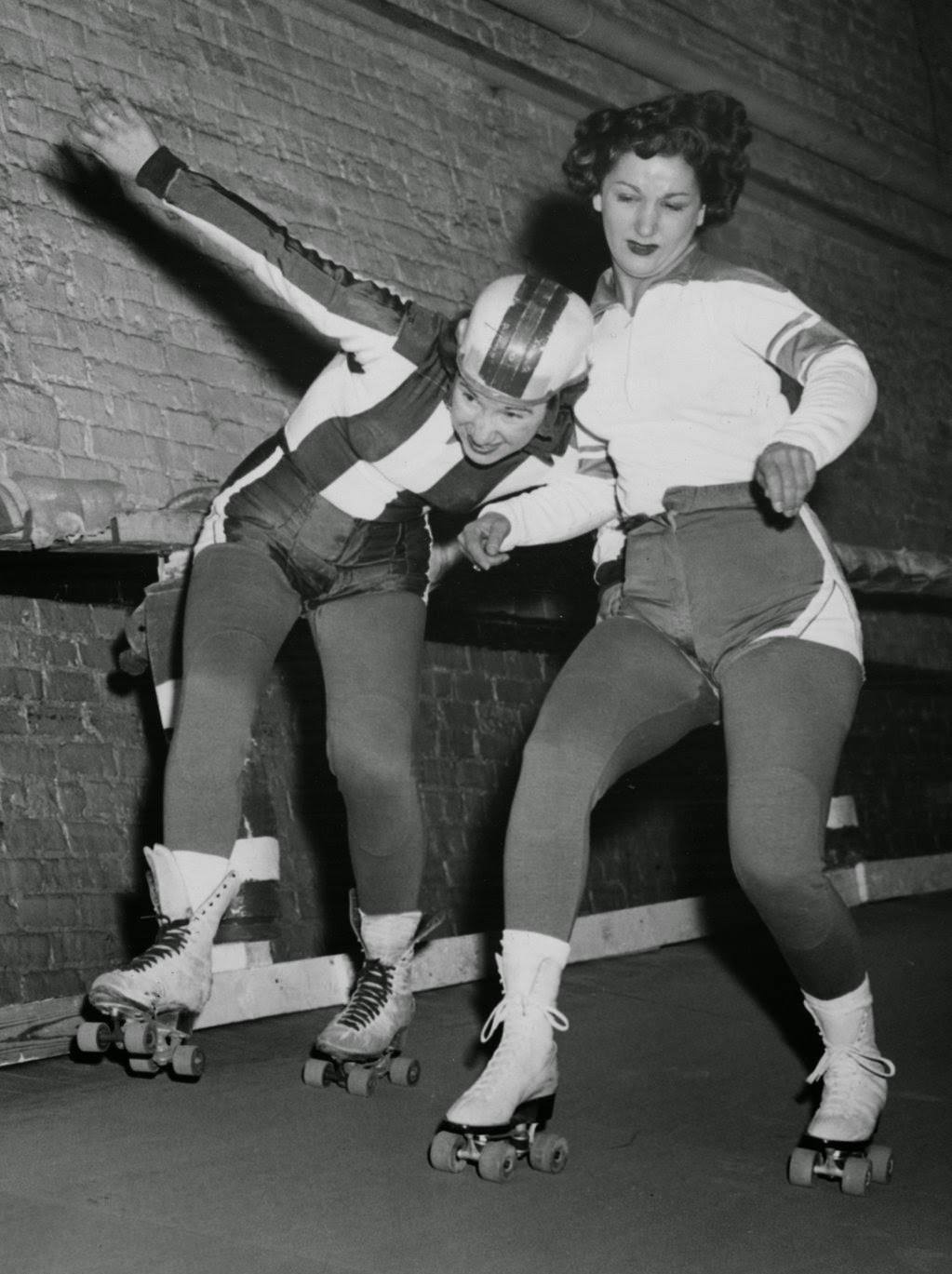
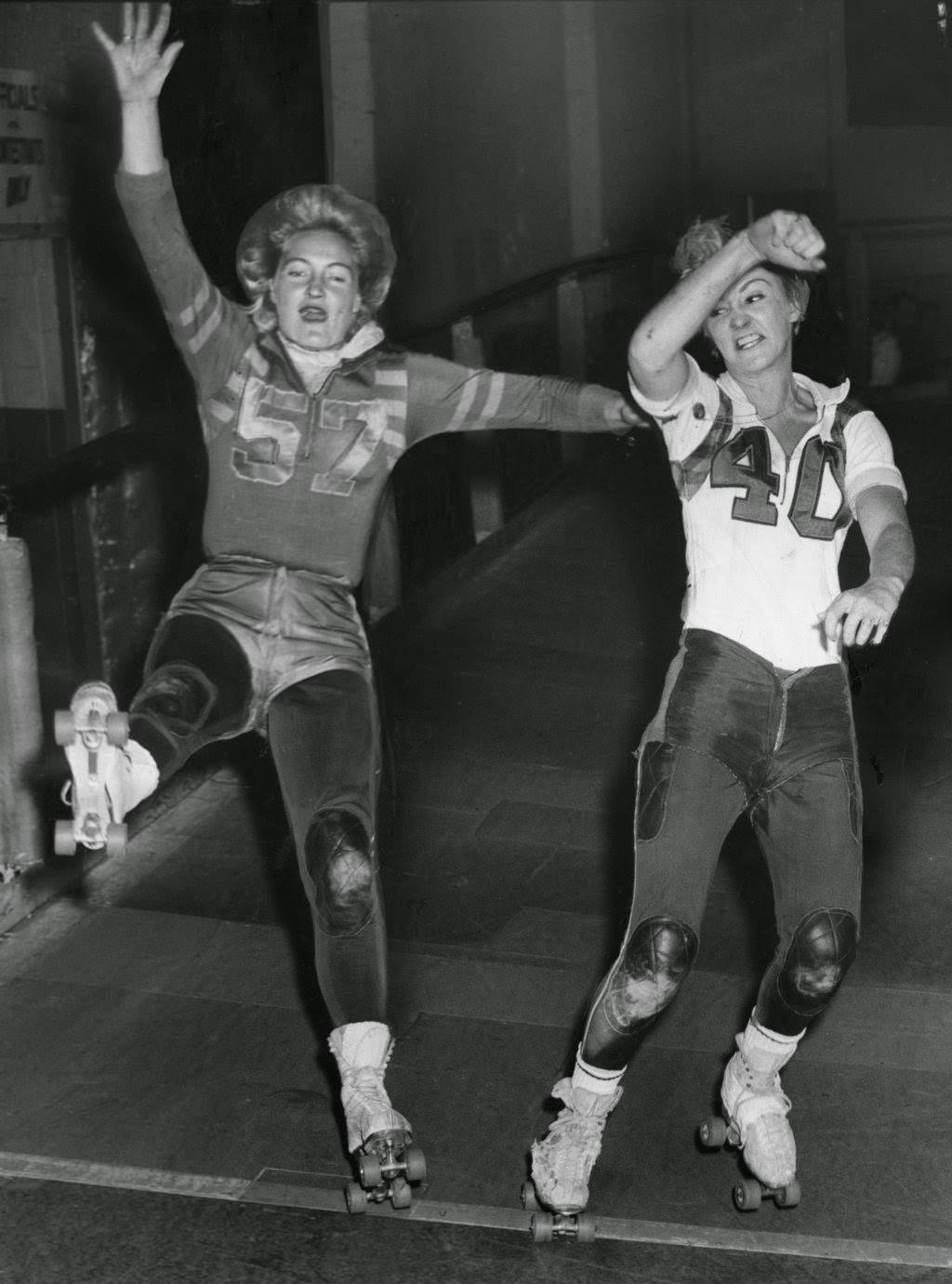
Harriette “Babe” Topel tries to stay on her feet as she gets blocked by Mary Lou Palermo at the Coliseum, 1950s
Joan Weston and Cathy Reed collided in a practice to prepare for an upcoming series at the Coliseum, 1960s
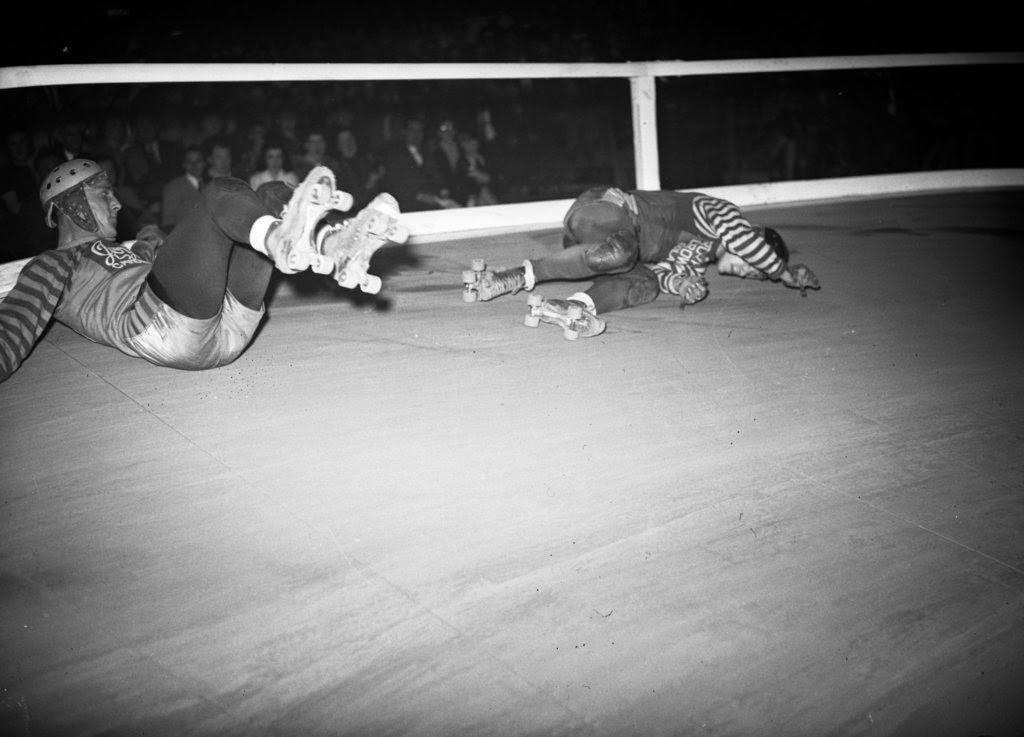
Louis Stasiuk of the New York roller derby team and Paul Gorski of the Chicago roller derby team tangle and spill during the sixth annual roller derby that opened at the Coliseum, 1940s

Chicago newspapers covered the sport alongside Major League Baseball, running box scores and injury reports in morning editions. Medical teams at the Coliseum kept rolls of adhesive tape, smelling salts, and needle kits next to the team benches. Broken ribs, separated shoulders, and fractured collarbones occurred almost nightly as skaters hit speeds above thirty miles per hour on the timber track.
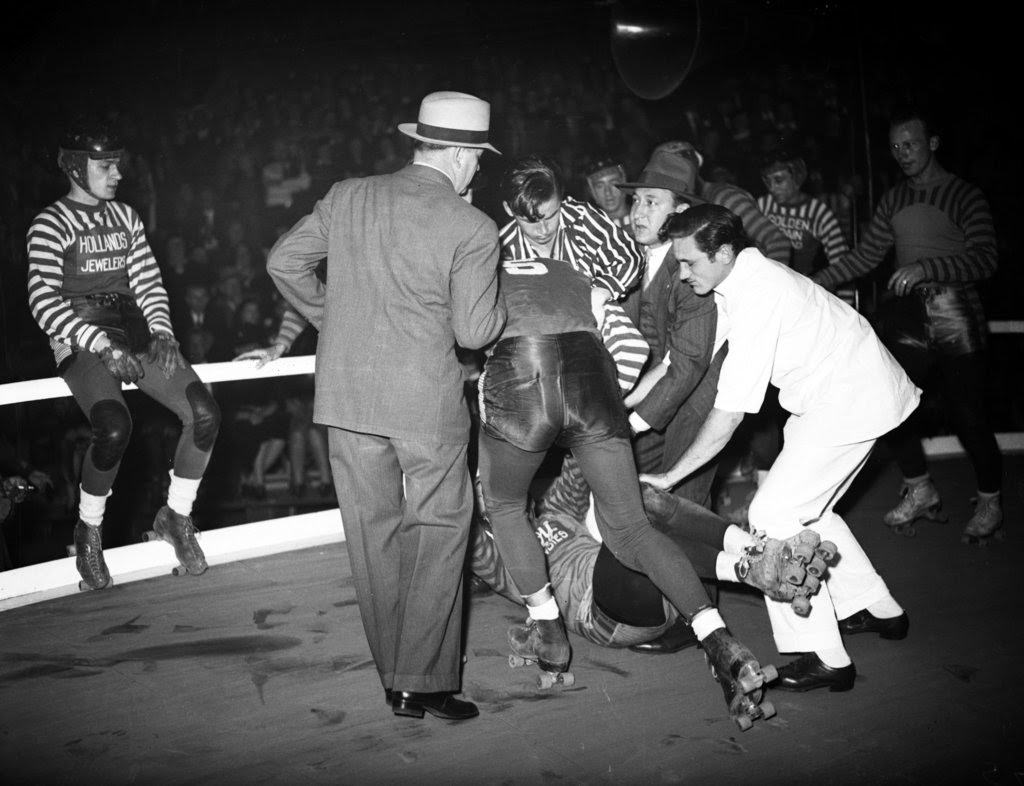
Louis Stasiuk of the New York roller derby team and Paul Gorski of the Chicago roller derby team tangle and spill, then start to fight with Chicagoan Johnny Rosasco joining the fight during the sixth annual roller derby that opened at the Coliseum, 1940s
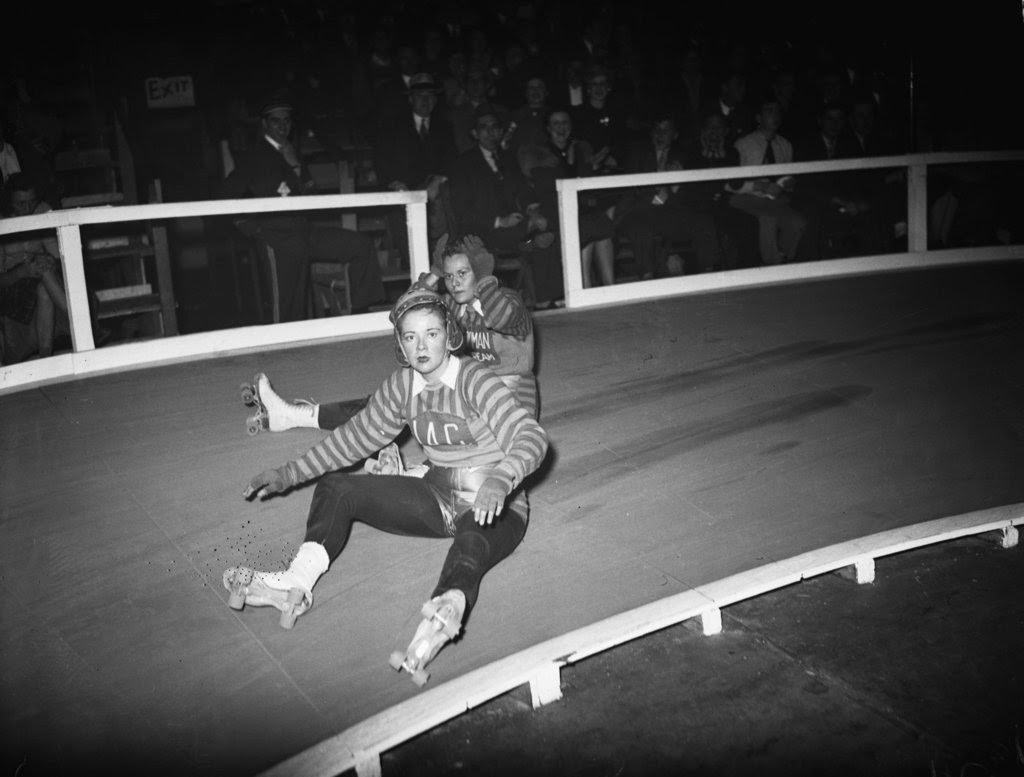
Ronnie Powell and Jeanne Goette of the New York team take a seat during the sixth annual roller derby at the Coliseum, 1940s

Seltzer courted local working-class crowds by offering discounted admission coupons through butcher shops, unions, and newspaper delivery routes. Thousands of delivery boys packed the upper balconies on designated promotional nights, cheering for local squads like the Chicago Westerners. The crowd threw rolled-up programs and coins at visiting skaters from New York who played the villainous heels.
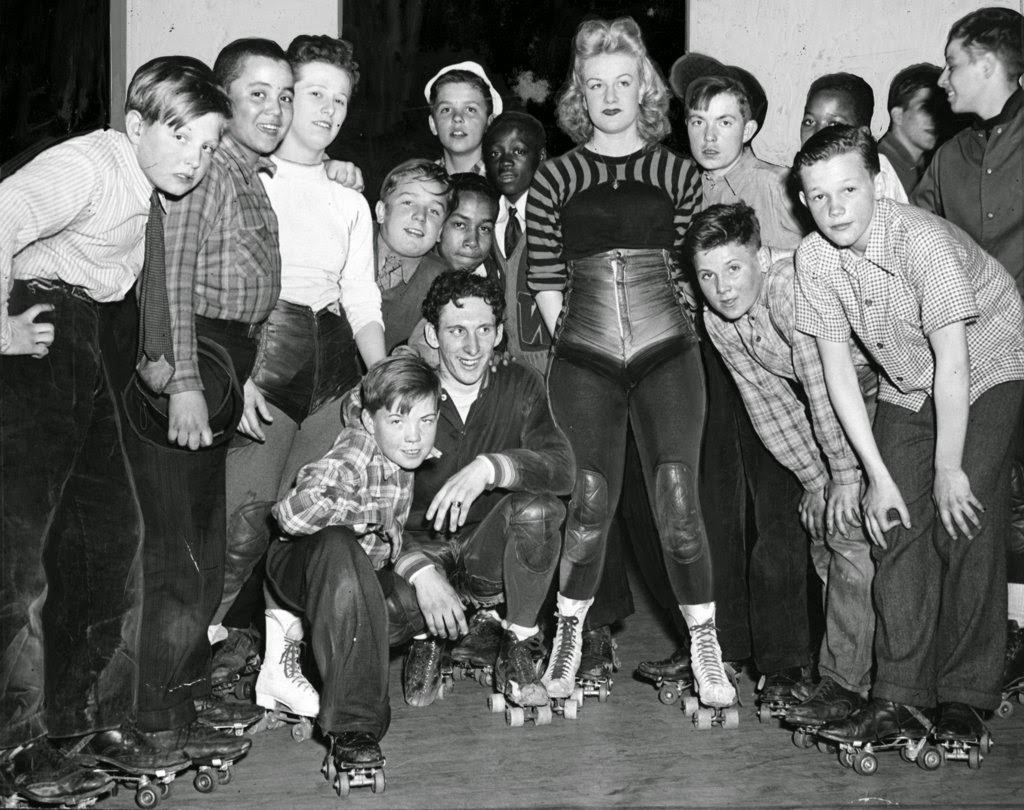
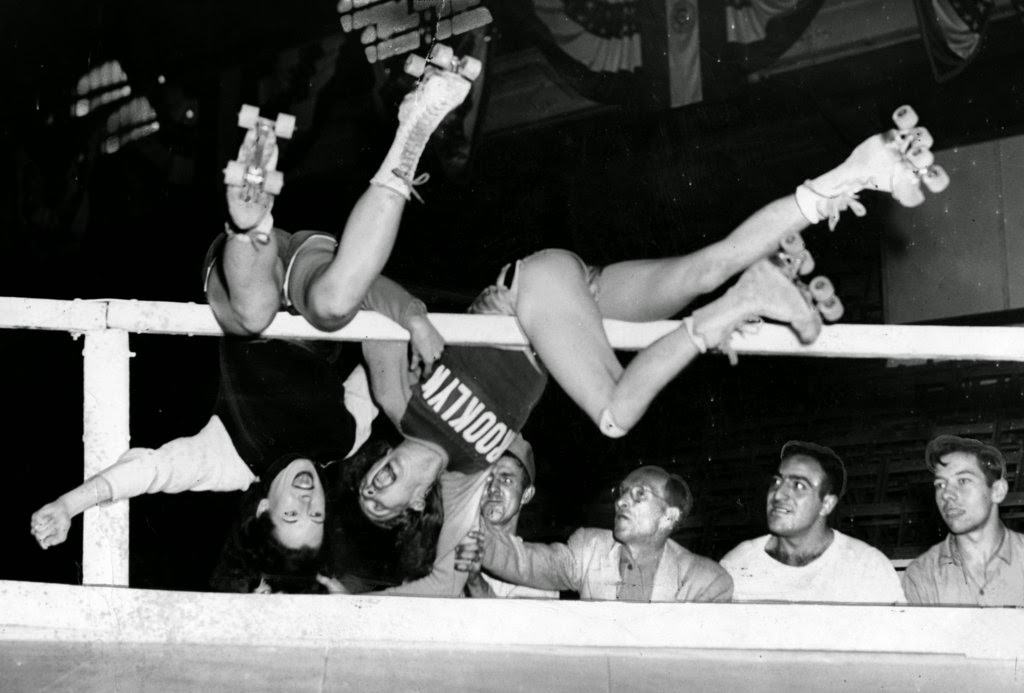
Newspaper carriers are treated to a free night of roller derby at the Michigan Avenue Armory, gathering around Chicago roller derby star Dorothy “Johnnie the blonde bombshell” Kobusch, 1940s
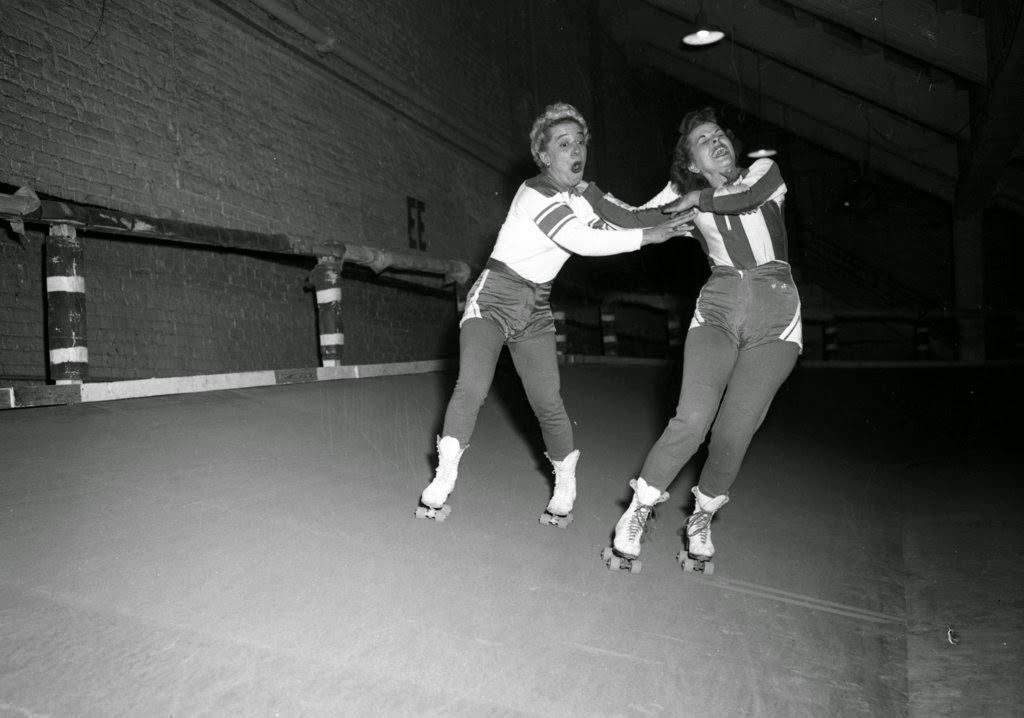
Gerry Murray of Chicago and Annabelle Kealey of Brooklyn collide with the rail on a turn during a match, 1940s

Speed variations on the high-banked wooden turns created continuous hazards. If a pack slowed down to box in an opposing jammer, trailing skaters coming around the sixty-degree banking had nowhere to go except over the rails. Crashes frequently sent skaters tumbling headfirst into the press box or into the lap of spectators seated in ringside wooden chairs.
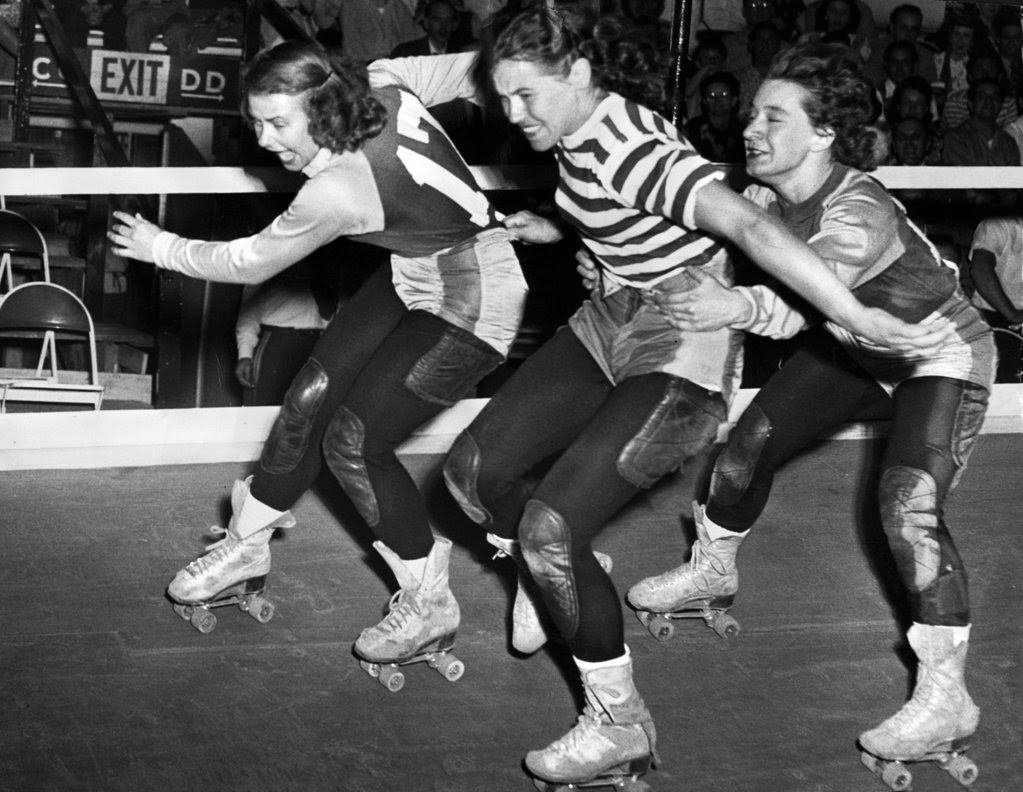
Gerry Murray stays on her feet as Midge “Toughie” Brasuhn tries to take her out while Vera Minenko tries to stay upright, 1940s
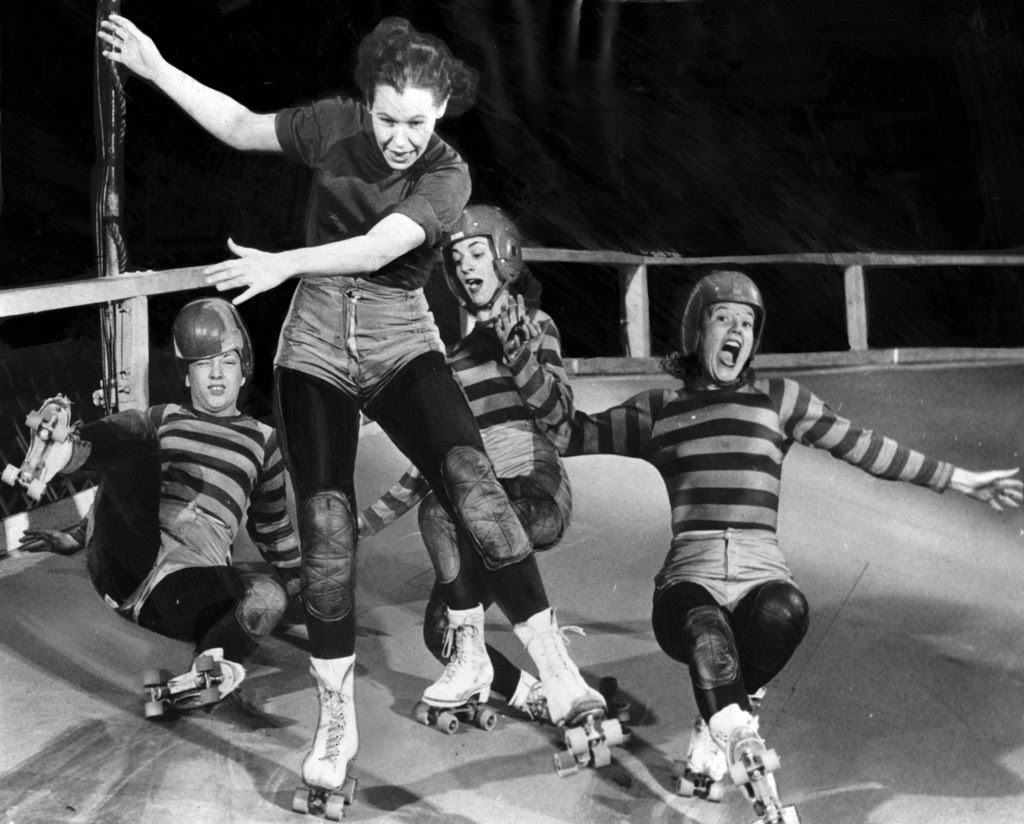
Pileups occur when some of the ladies are brash enough to attempt a scoring drive, where helmets may be flung off and the wooden wheel contest might turn into a hair-pulling match, 1940s
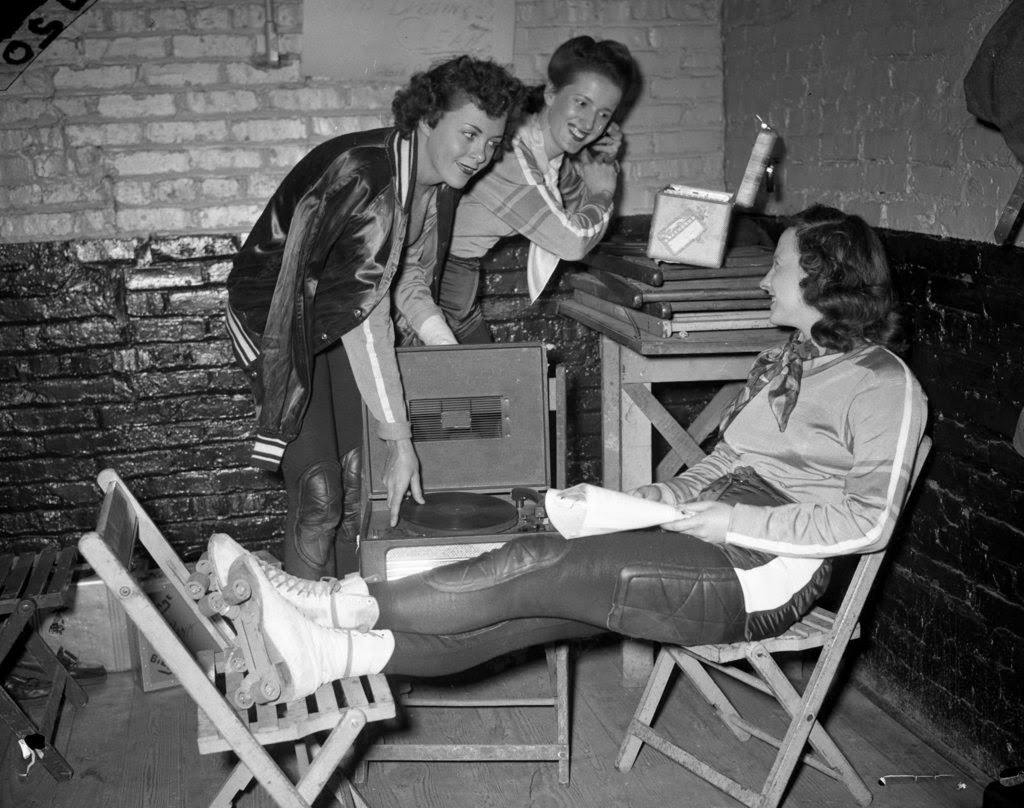
Monte Jean Payne, Chicago roller derby captain, Marilyn Bullock and Catherine Virva of McKinley High School in Chicago are in the dressing room during a roller derby at the Coliseum, 1940s

Penalized athletes sat in an open penalty box situated directly on the infield, separated from the track by a low pine barricade. Skaters spent two-minute penalties shouting profanities at the timekeepers or throwing wet towels at opponents circling the oval. When two fighters entered the penalty box together, fistfights often resumed behind the barrier while play continued on the track.
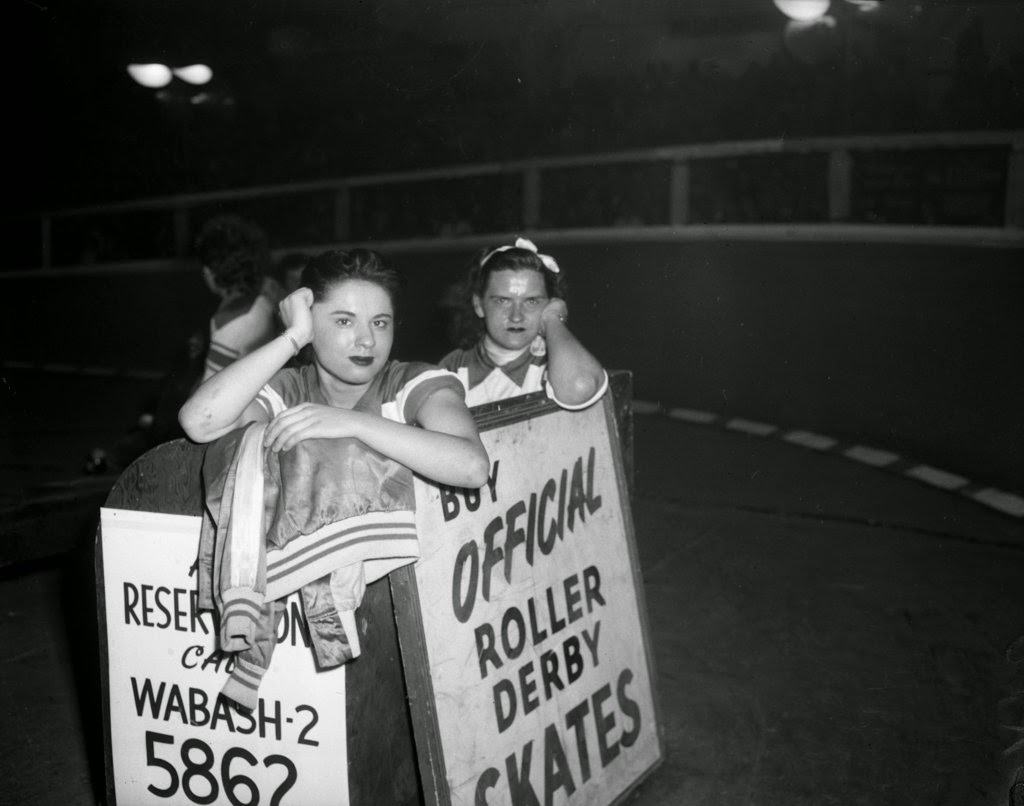
Chicago Westerners Roller Derby skaters Ann Pernice and Eleanor Weber watch from the penalty box at the Coliseum at a Roller Derby, 1950s
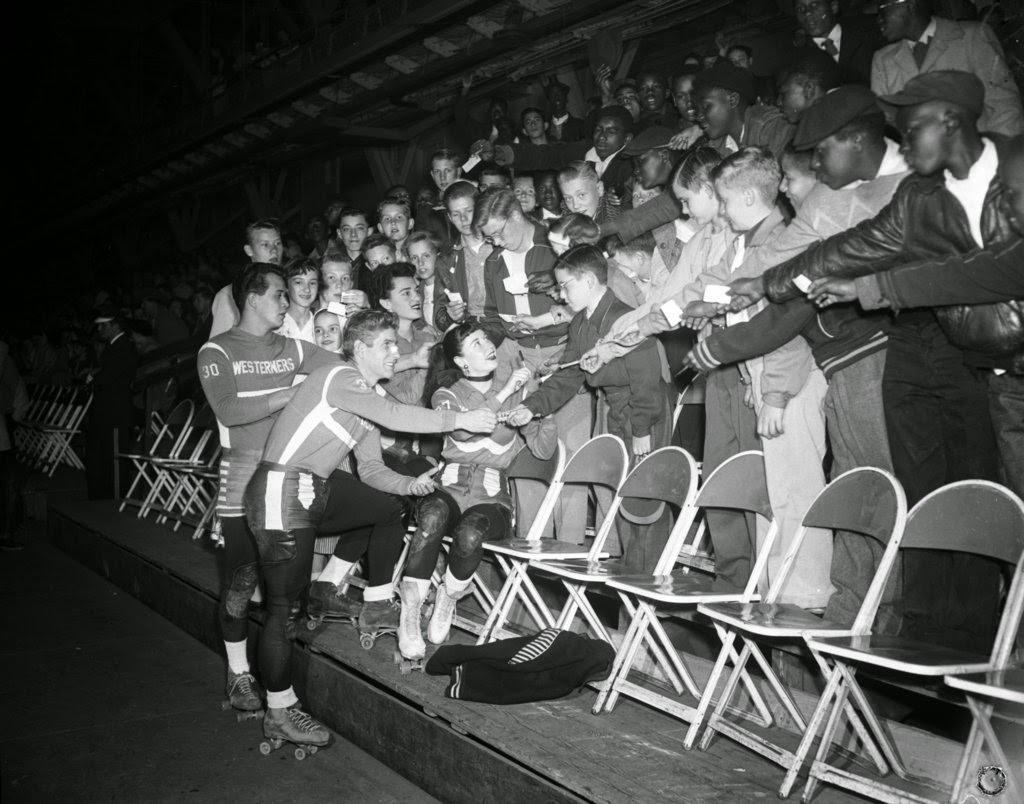
News carriers wave their tickets to get autographed from Fred Noa, Bert Wall, Dolores Doss and Bobbie Mateer of the Chicago Westerners roller derby team at the Coliseum, 1950s
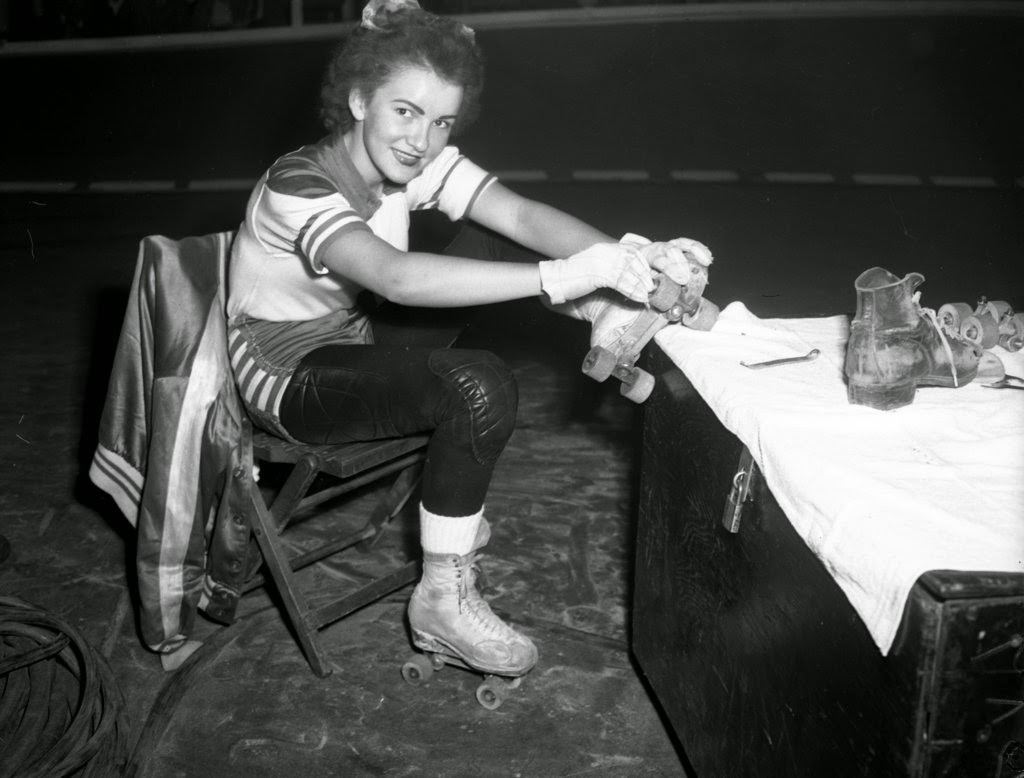
Mary Gray, a member of the Chicago Westerners roller derby team, repairs her skates between periods at a roller derby at the Coliseum, 1950s

Rivalries between stars drove box office receipts. Midge "Toughie" Brasuhn joined the circuit in 1941, skating with a trademark snarl, a missing front tooth, and green eye shadow. Her physical battles against Gerry Murray packed arenas from Chicago to Madison Square Garden, with both women landing elbow strikes and forearm smashes to the chest while racing along the top rail.
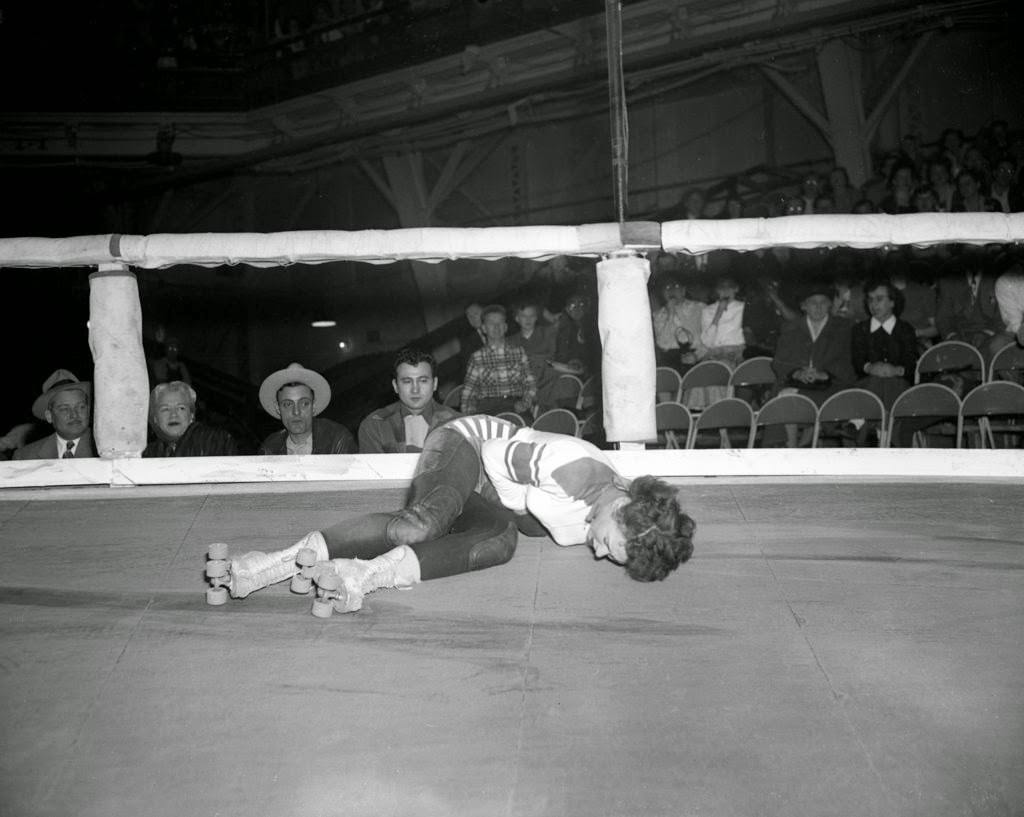
Virginia Rushing from Oklahoma City doubles over in pain after receiving a belt in the midsection during a roller derby at the Coliseum, 1950s
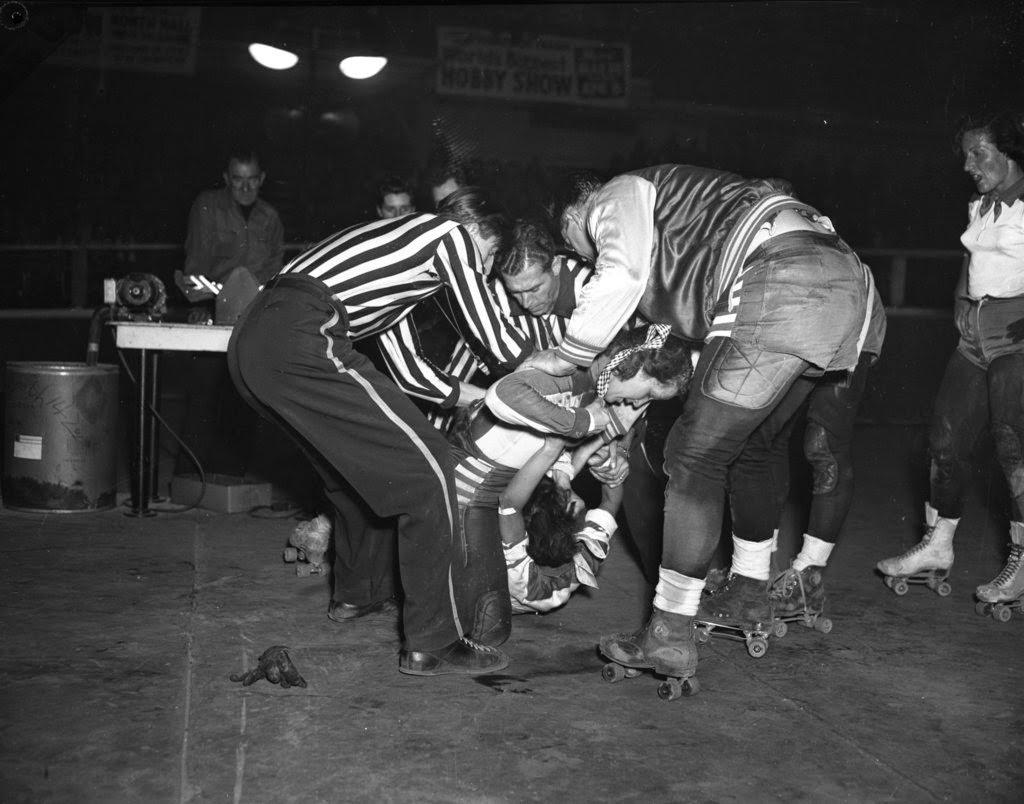
Referees and skaters try to pry loose Mary Lou Palermo of the Jersey team from the grip she has on the hair of Betty Boyd of the Chicago Westerners in a roller derby at the Coliseum, 1950s
Women speed on a banked track during a roller derby in Chicago, 1900s

Track officials struggled to enforce basic safety rules. Referees were struck by stray elbows, tripped by trailing skates, and pushed into the infield when trying to break up hair-pulling brawls between skaters. Seltzer required all skaters to carry basic medical insurance, but most competitors treated their own cuts with iodine and covered bruised knees with thick layers of sheepskin padding.
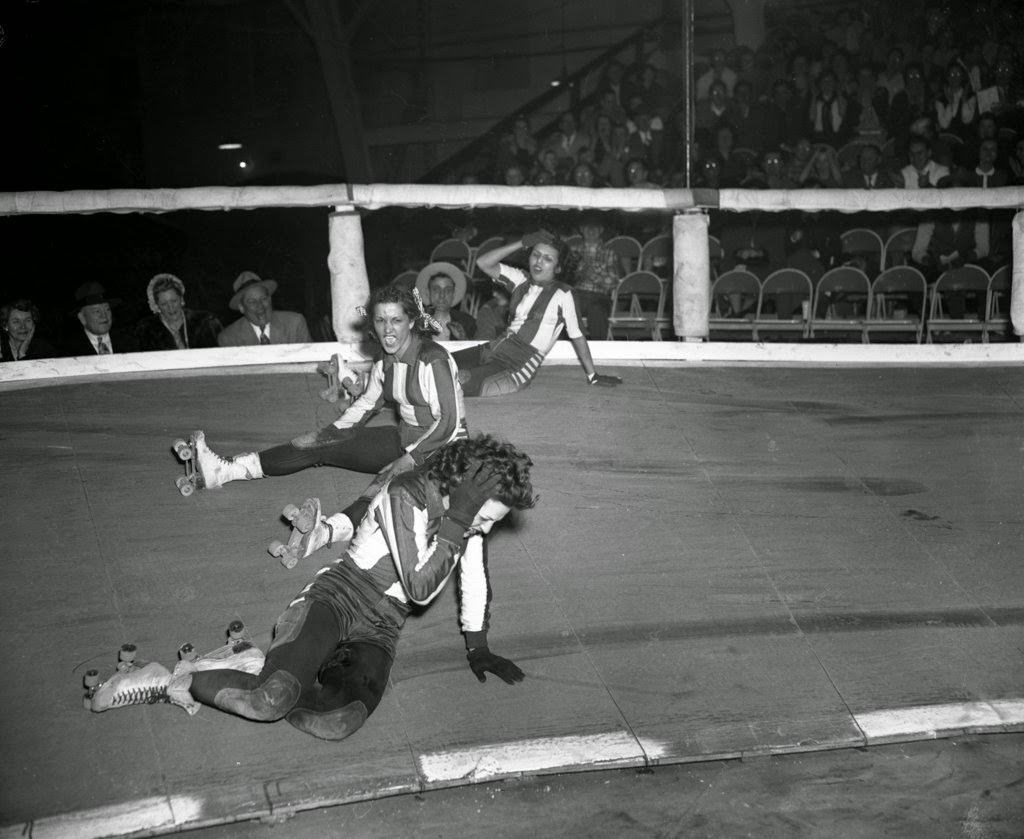
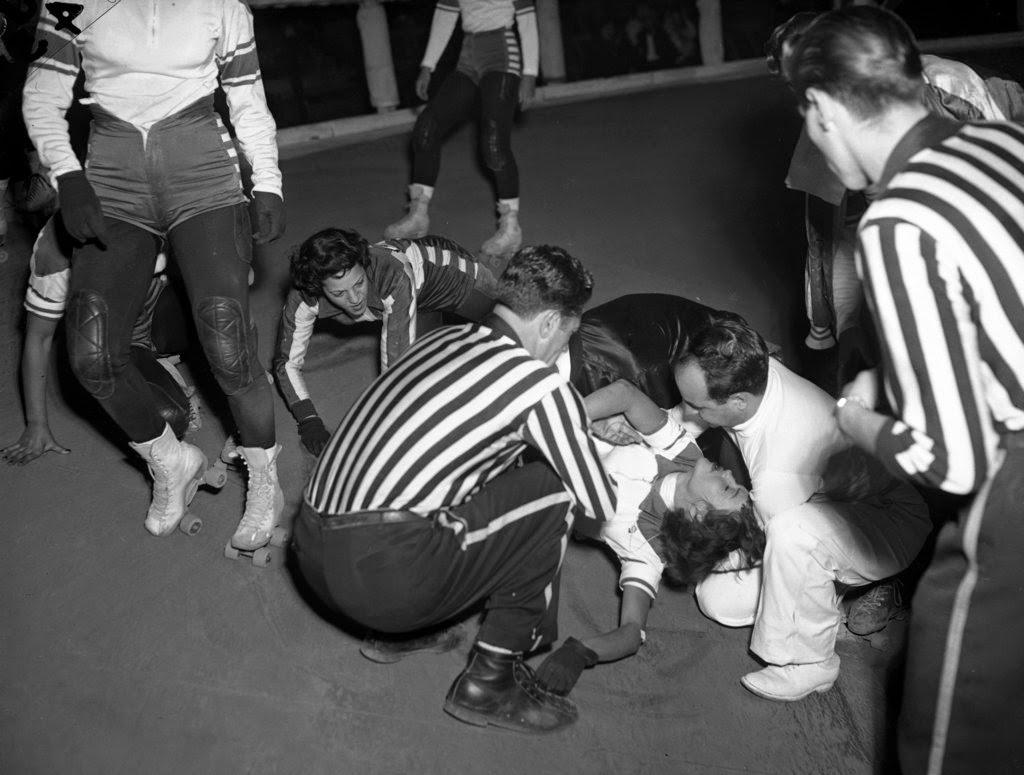
Mary Lou Palermo yells to the Jersey Jolters who caused a three-way spill at the Roller Derby at the Coliseum, 1950s
A referee and a doctor aid Betty Boyd of the Jersey Jolters, who was knocked out in a fall during a roller derby at the Coliseum, 1950s
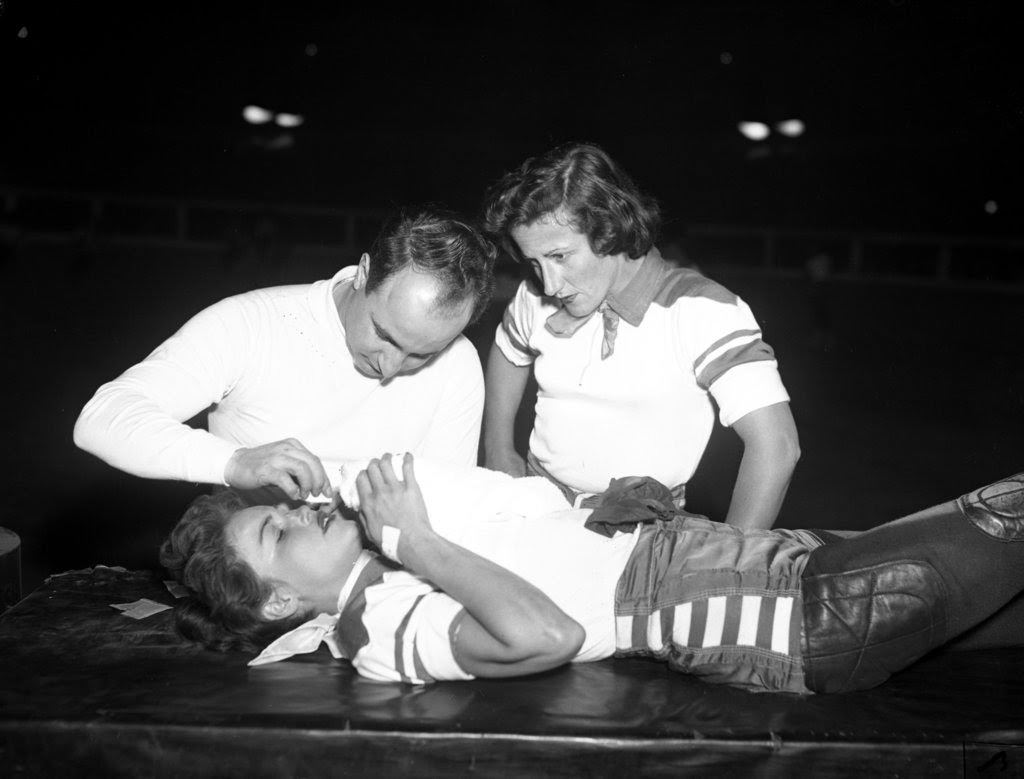
Betty Boyd of the Jersey team is treated by Dr. James Alvian as her teammate and captain Annis Jansen watches at a roller derby at the Coliseum, 1950s

Behind the arena floor, both teams shared narrow basement locker rooms divided only by canvas curtains. Athletes taped each other's wrists and ankles with zinc oxide tape, applied red lipstick, and shared liniment bottles before the opening whistle. Once on the track, the cooperation vanished as players targeted previously injured shoulders and knees to force opponents off the roster.
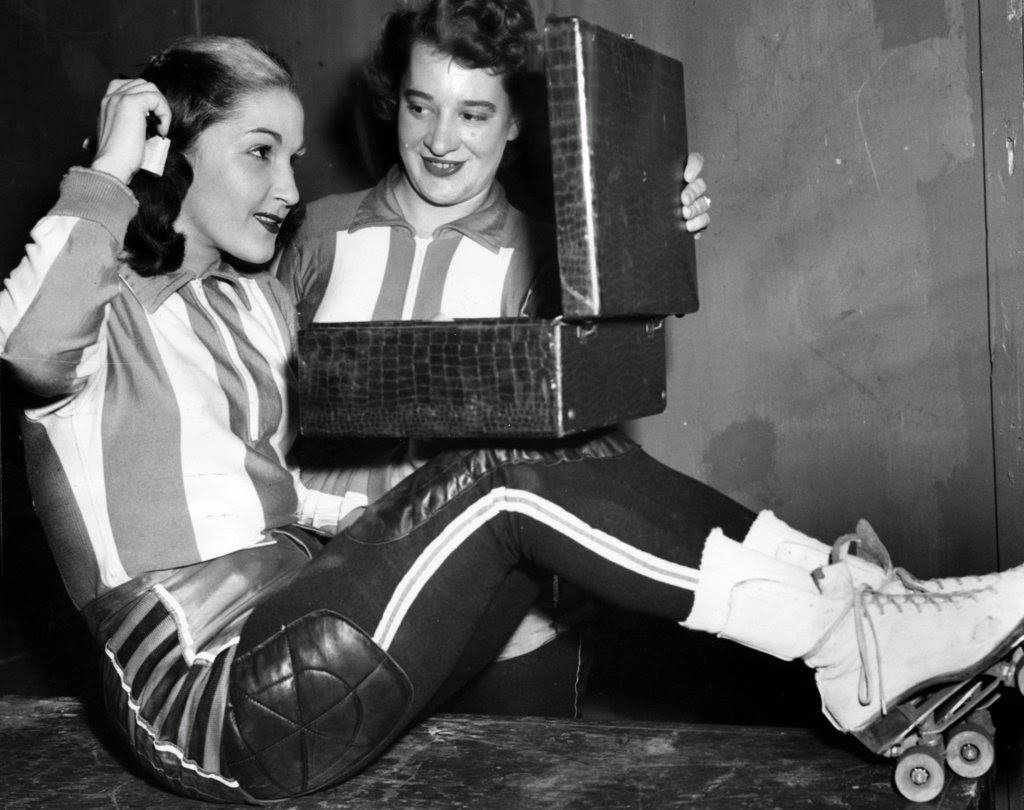
Mary Lou Palermo and Midge “Toughie” Brasuhn were teammates for the Jersey Jolters and did hair and make-up before a smash-mouth playoff match in Chicago, 1950s
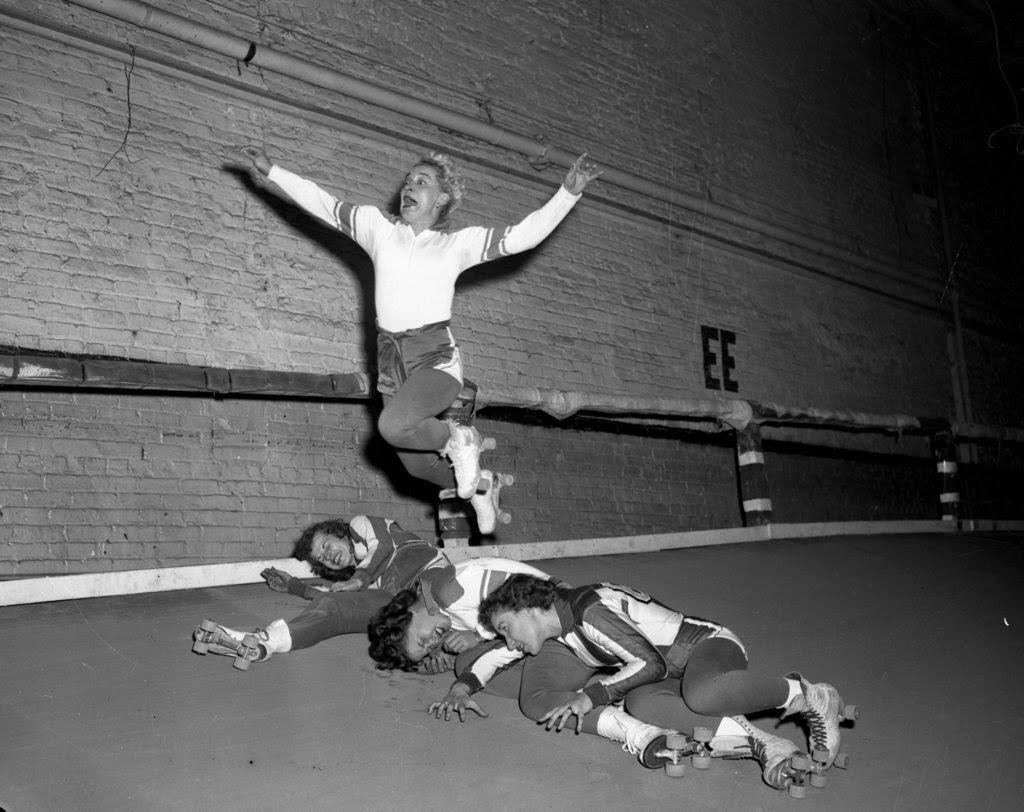
Marjorie Clare “Toughie” Brasuhn flies over Betty Clements, Mary Lou Palermo and Harriette Topel at a roller derby at the Coliseum, 1950s
Toughie Brasuhn and Betty Clements at a roller derby at the Coliseum, 1950s

In 1948, CBS began broadcasting matches from New York, and Seltzer established the National Roller Derby League with six permanent franchises. By late 1949, games moved permanently to television, drawing millions of viewers each week while the live touring circuit continued filling city armories across the country.
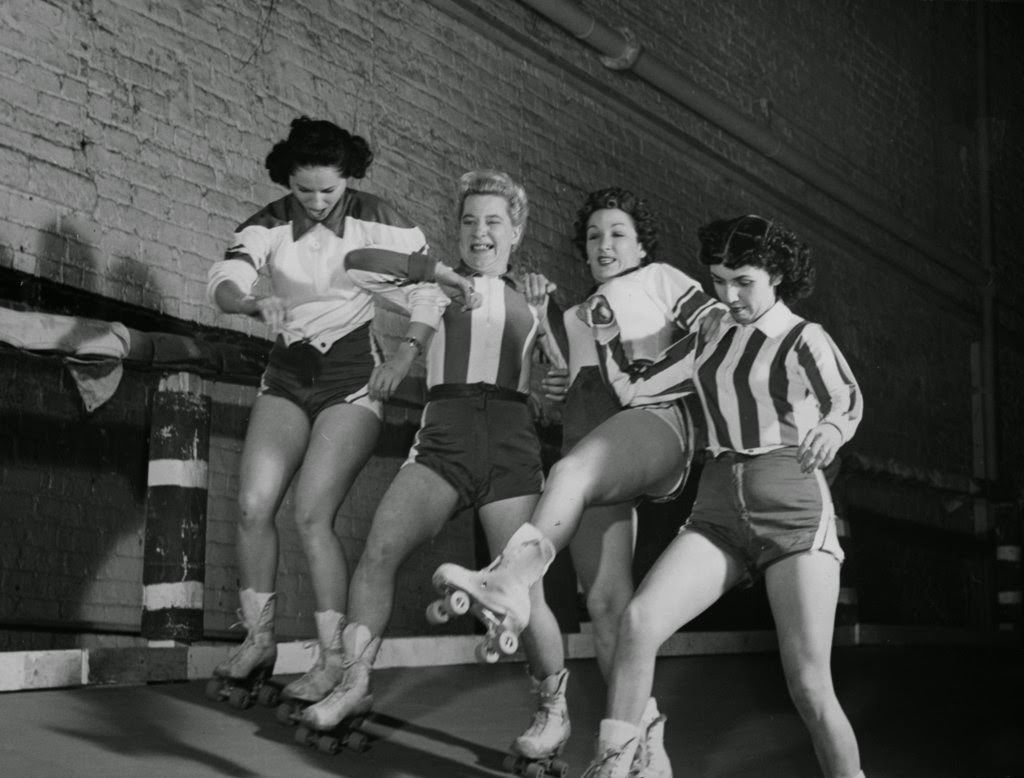
Anne Pernice, Midge “Toughie” Brashun, Mary Lou Palermo and Jean Porter get tangled up during a match at the Chicago Coliseum, 1950s
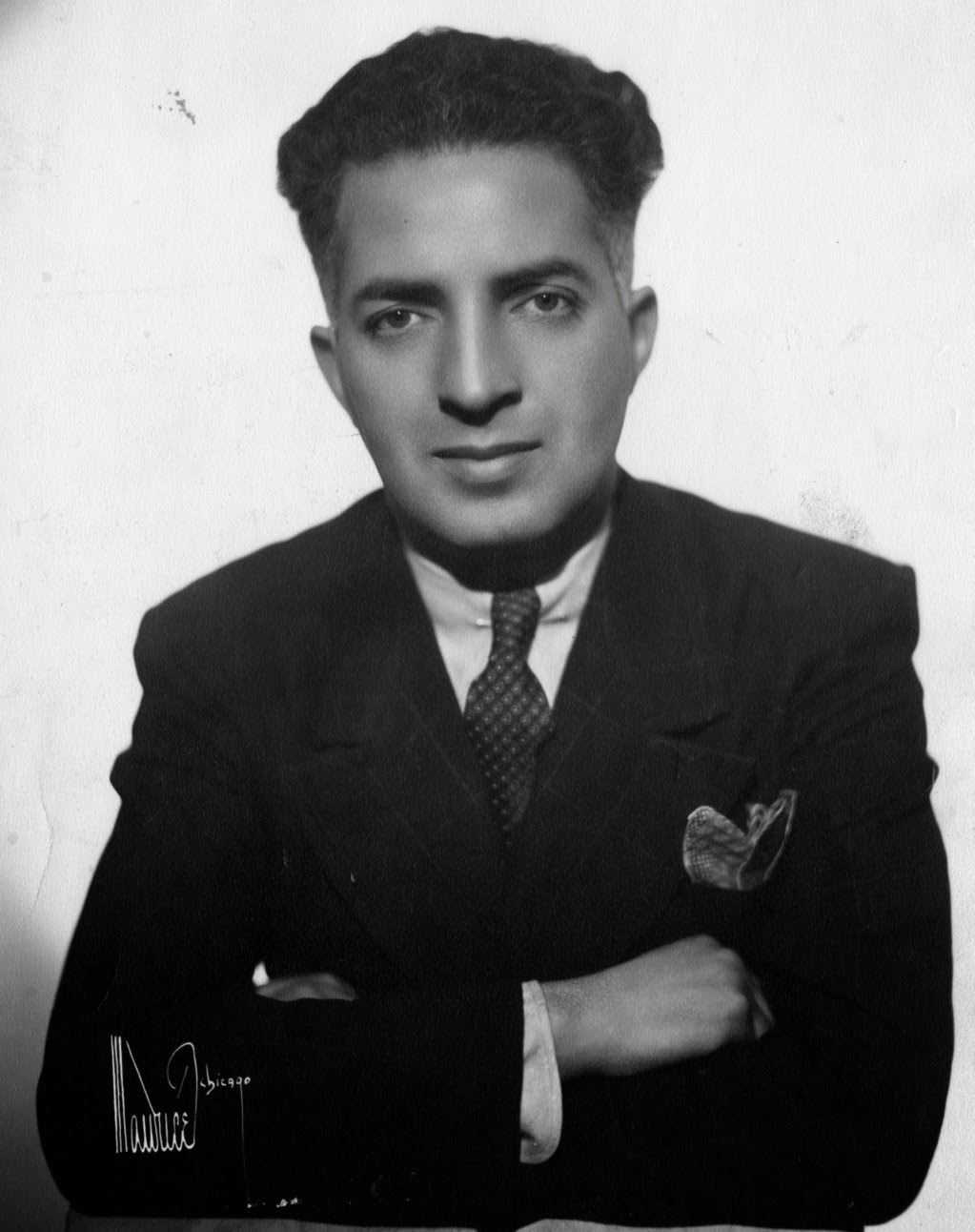
Leo Seltzer, a sports promoter for the Chicago Coliseum who invented roller derby, 1940s
Enjoyed this post? Get new ones in your inbox.

Leave a Comment

Your email address will not be published. Required fields are marked *

Share this Post 🥺

Please take a moment to share this content. Your support is greatly appreciated! 🙌🙏

Share this Post 🥺

Please take a moment to share this content. Your support is greatly appreciated! 🙌🙏
Scroll to Top
 
Hey Friend, Before You Go.. Please like & follow for more interesting content