
Soccer fans are crazy; they always have a strong emotional connection to their favorite teams; they support them through good and bad times. Soccer is an international league that crosses cultural barriers, allowing people to share their love for the game with other fans worldwide. Here below are some crazy British football fans from the early 20th century.
#1 A group of Everton supporters outside St Paul’s Cathedral, London, before making their way to Crystal Palace for the FA Cup final between Everton and Newcastle United, which Everton won 1-0, 1906
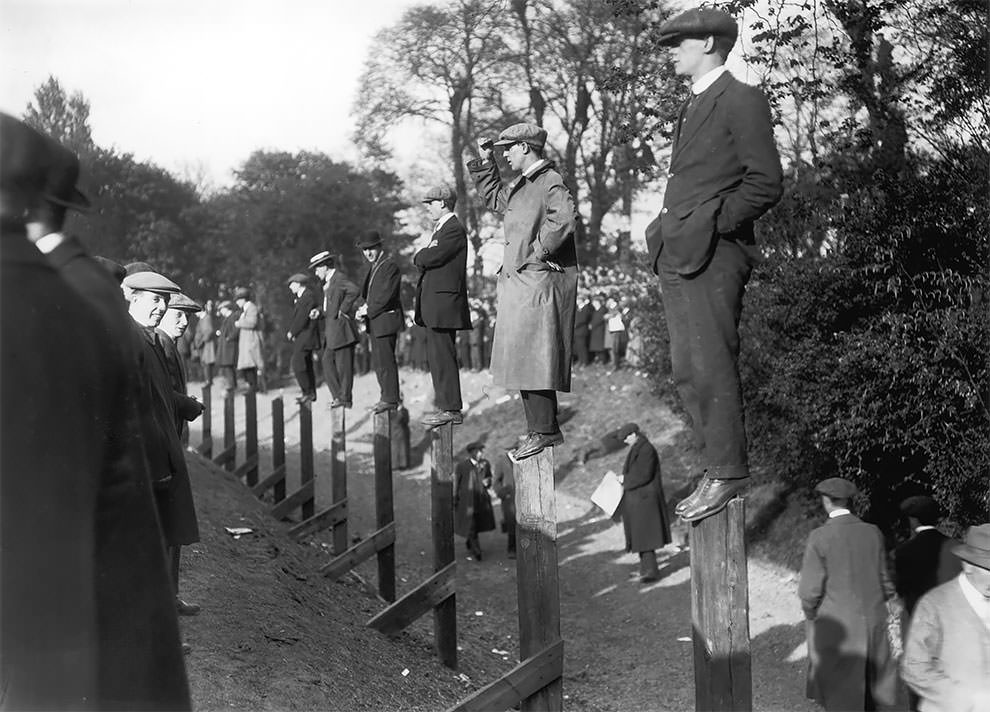
#2 Football fans find a novel way of watching the Burnley vs Liverpool FA Cup Final at Crystal Palace in south London. Burnley won 1-0, 1914
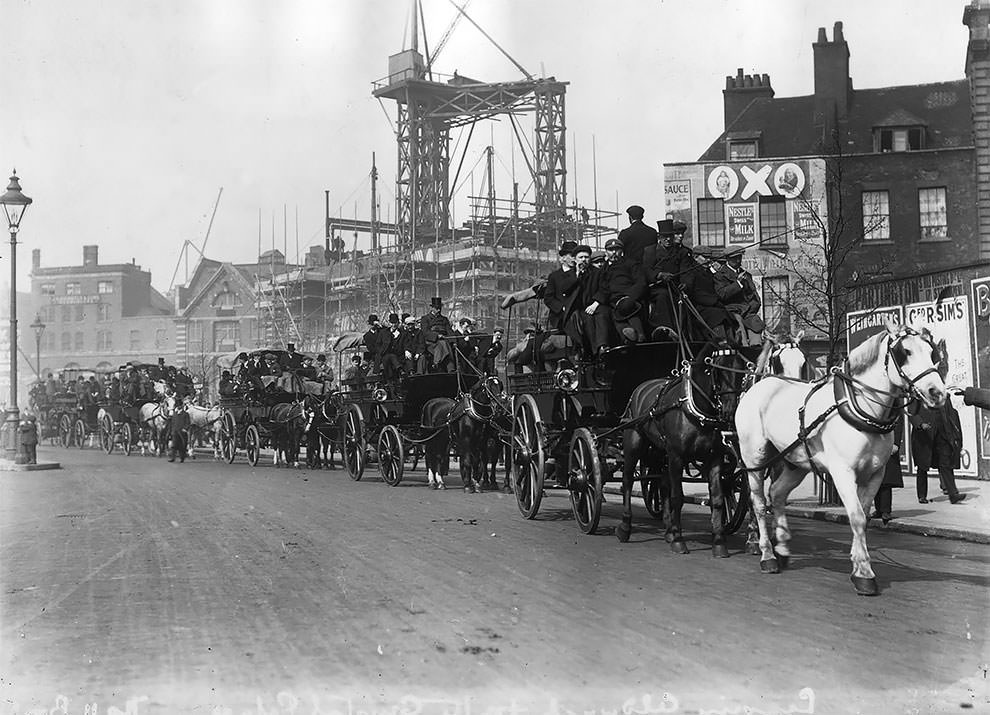
#3 A group of Liverpool supporters on their way to Crystal Palace in the back of a horse-drawn bus for the FA Cup Final against Burnley, 1914
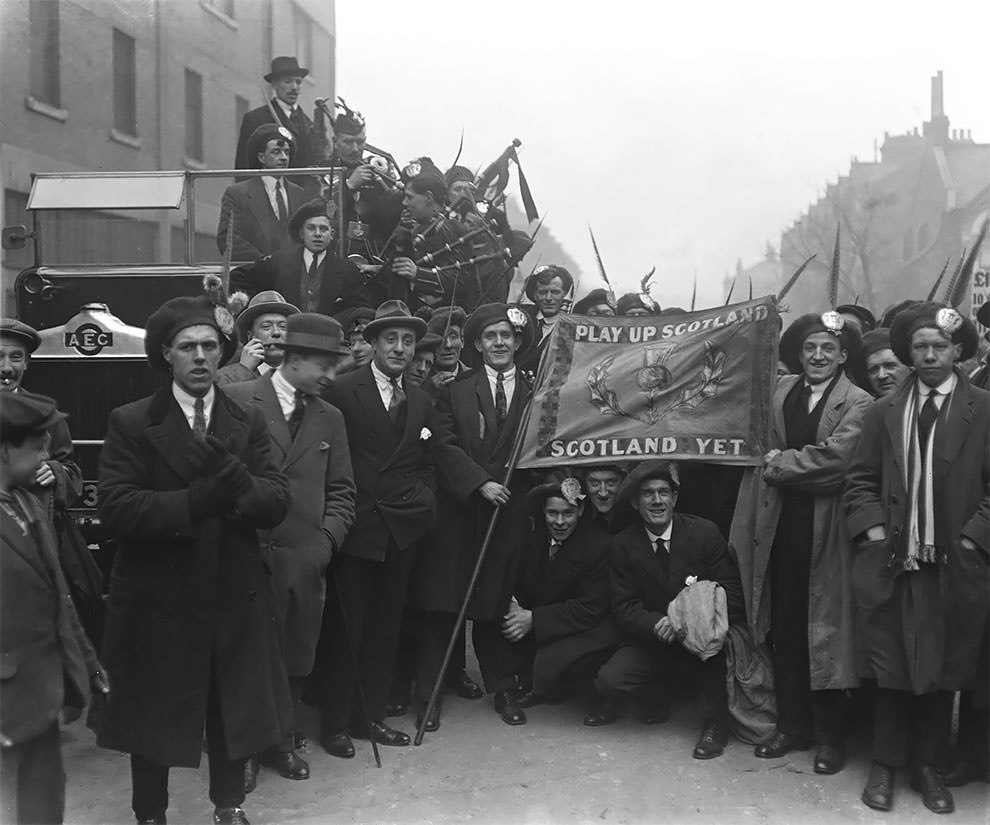
#4 Scottish supporters before an English League V Scottish League match at Highbury, London, March 1921
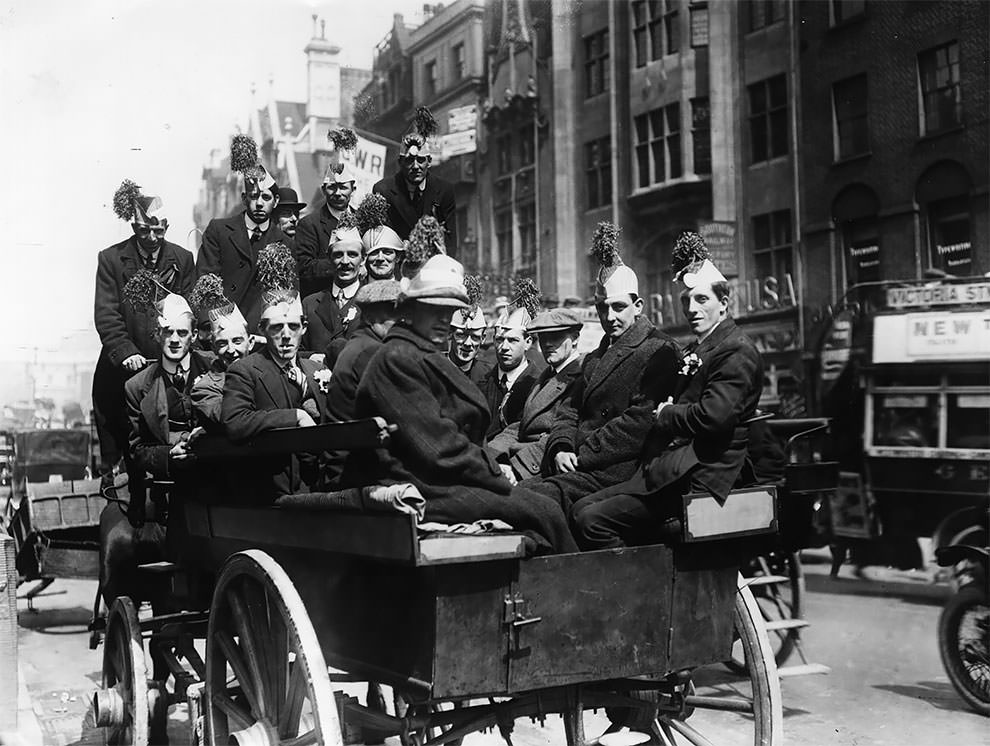
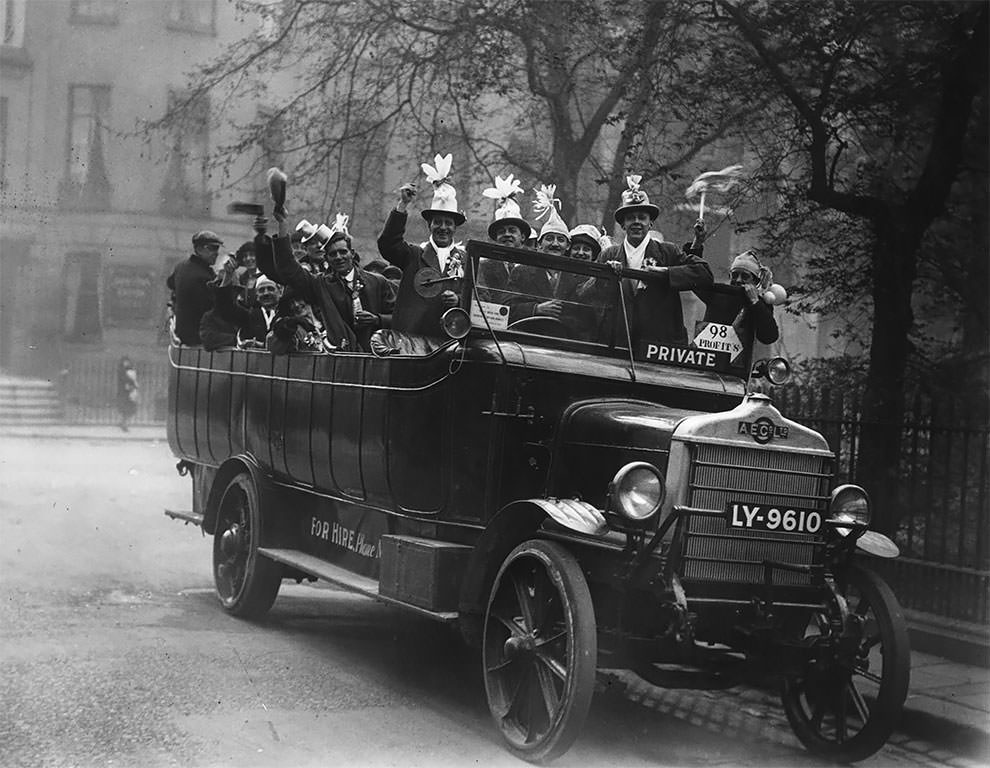
#5 A private bus load of football fans on their way to the newly completed stadium at Wembley for the FA Cup final between West Ham United and Bolton Wanderers, 28th April 1923
#6 West Ham United supporters arrive at Wembley, London, for the first FA Cup Final to be held there, between West Ham and Bolton Wanderers. West Ham would lose the final 2-0, 1923
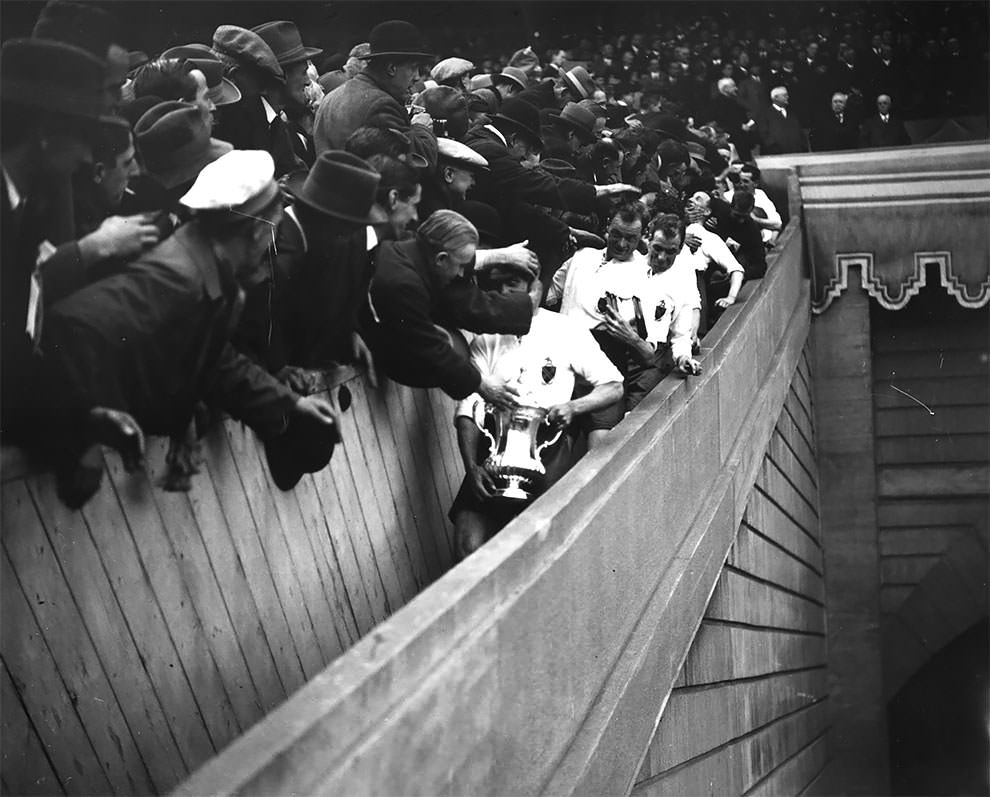
#7 Supporters congratulating members of Bolton Wanderers FC at Wembley after their victory over Manchester City in the final of the FA Cup, April 1926
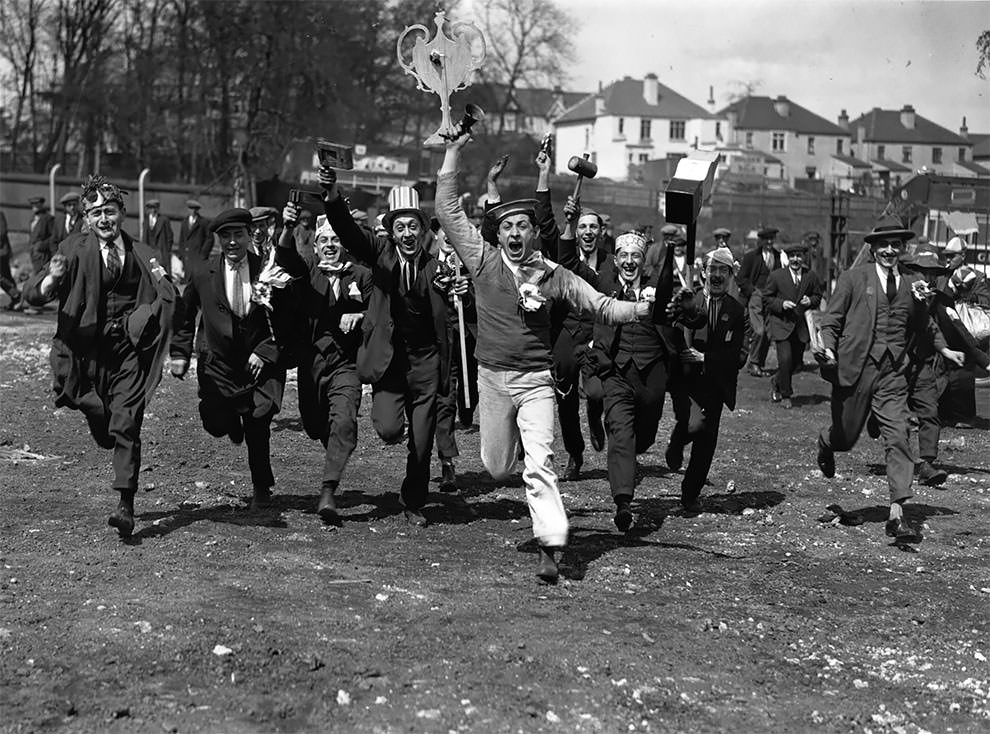
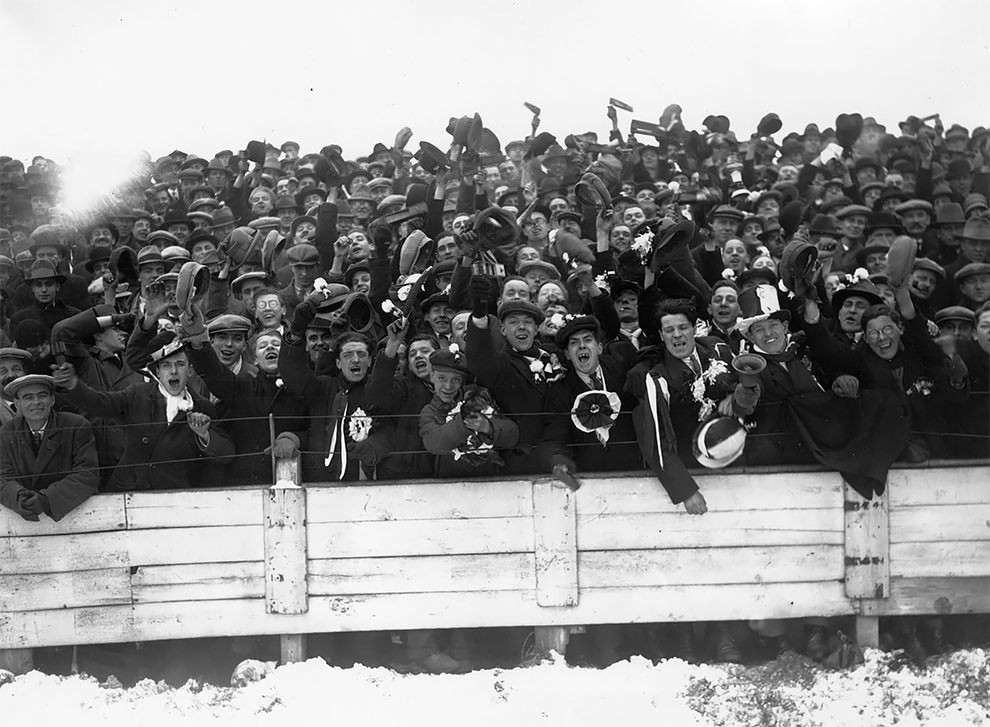
#8 Arsenal supporters cheering during the FA Cup Tie match against Swindon Town, 16th February 1929
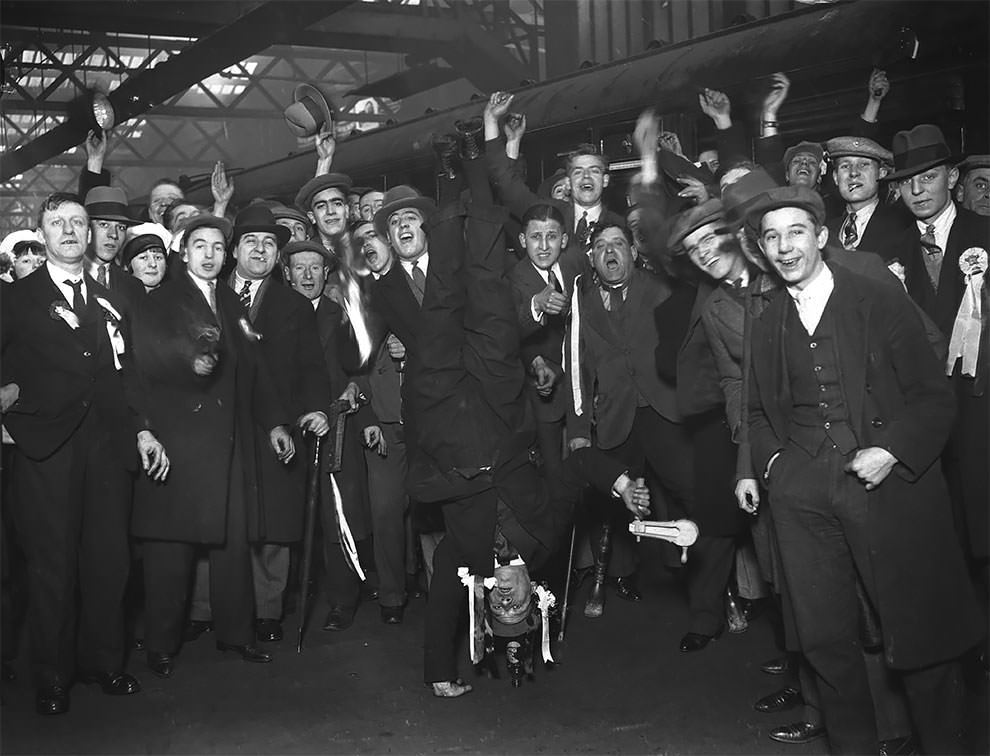
#9 An Arsenal fan performs a one handed handstand at Euston Station to entertain his fellow supporters on their way to Birmingham for the FA Cup replay, 29th January 1930.
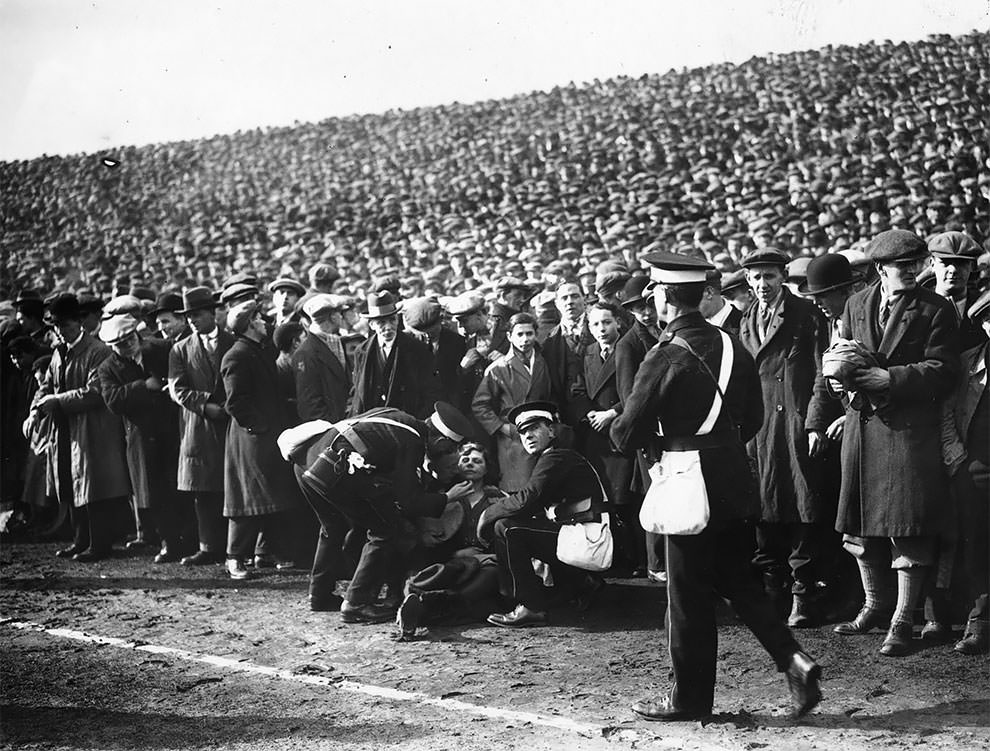
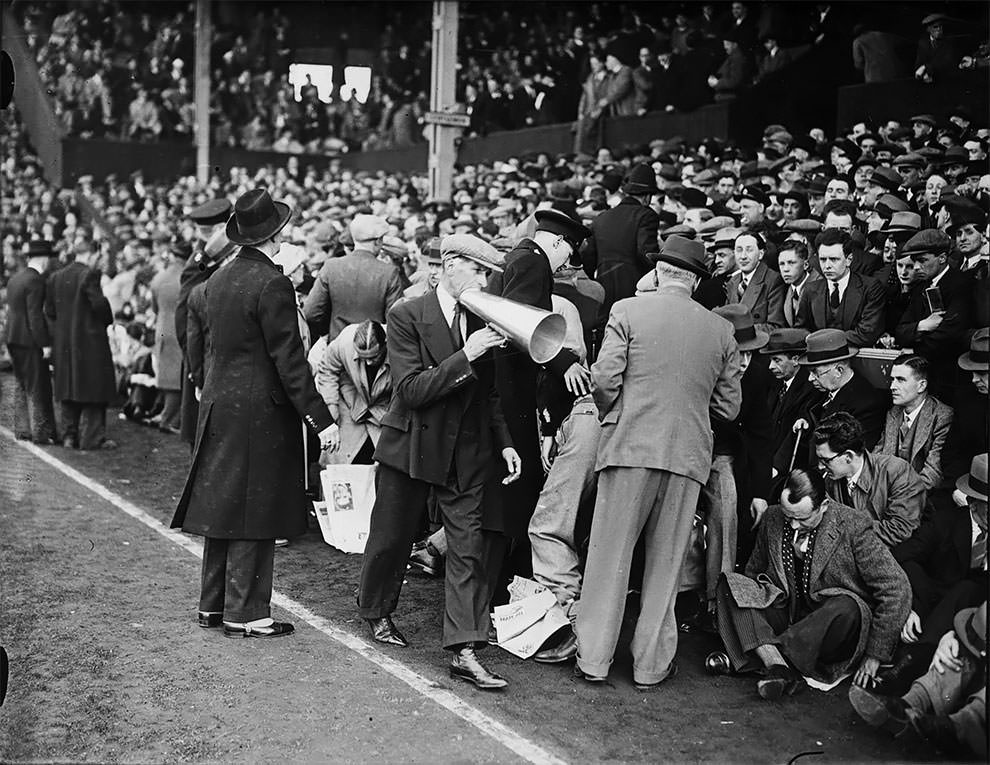
#10 A woman who has fainted receives medical attention on the pitch sidelines during the FA Cup Semi-Final between Sheffield Wednesday and Huddersfield Town at Old Trafford, 22nd March 1930
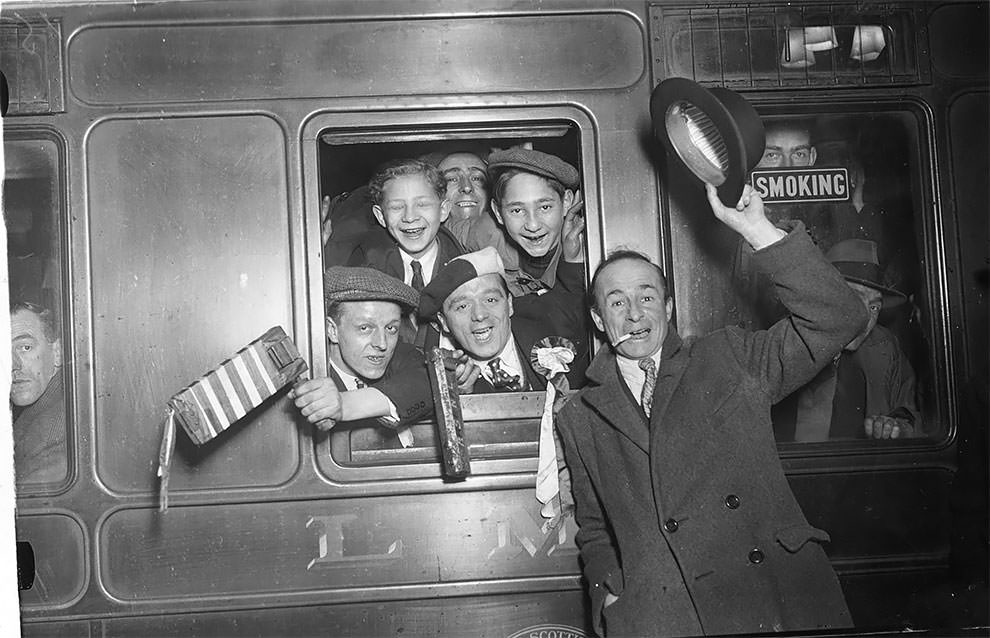
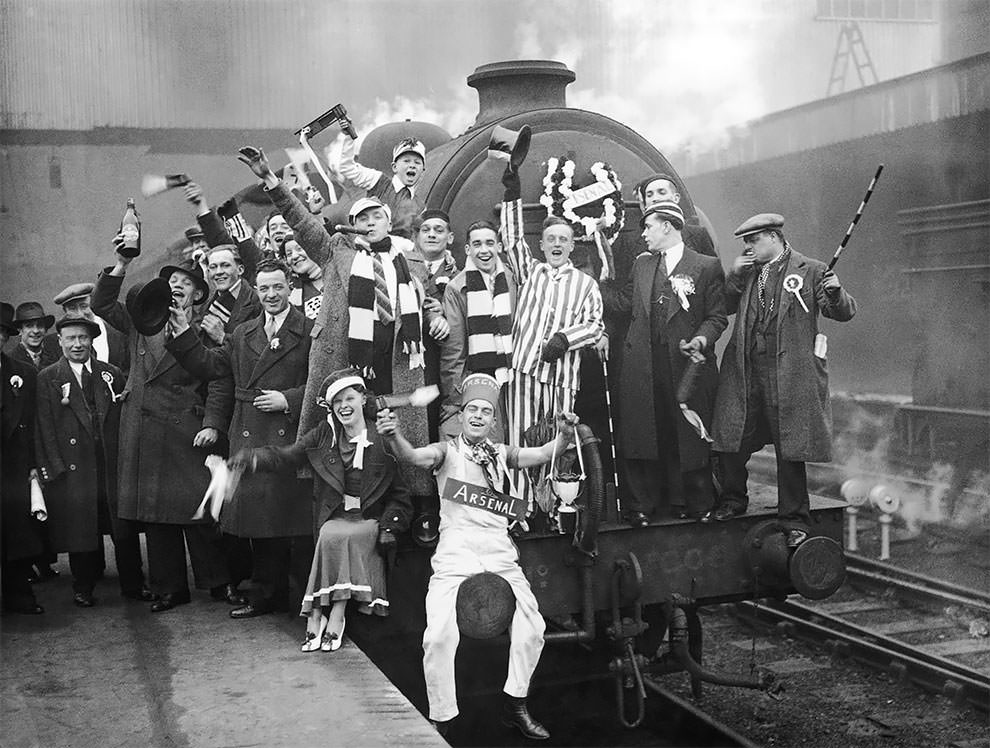
#11 Arsenal football supporters cheering from the train carriage window as they leave Euston Station, London, on their way to Birmingham for their team’s match against Aston Villa which they lost 3-5, 19th November 1932
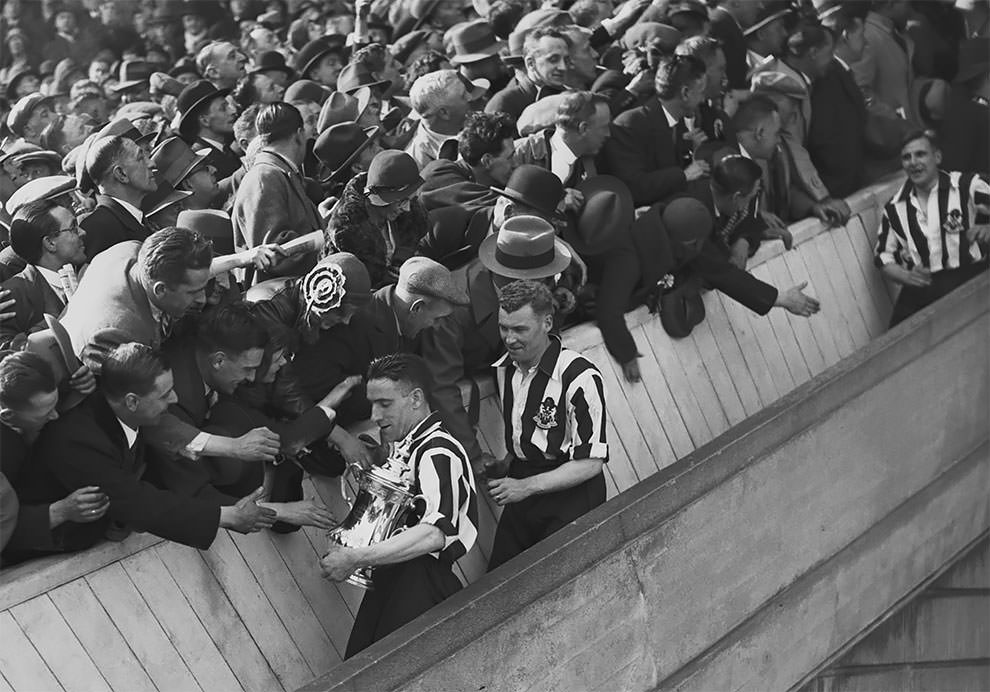
#12 Newcastle United forward Jack Allen (1903–1957, left) is congratulated by fans after the presentation of the FA Cup trophy at the final against Arsenal at Wembley Stadium, 23rd April 1932.
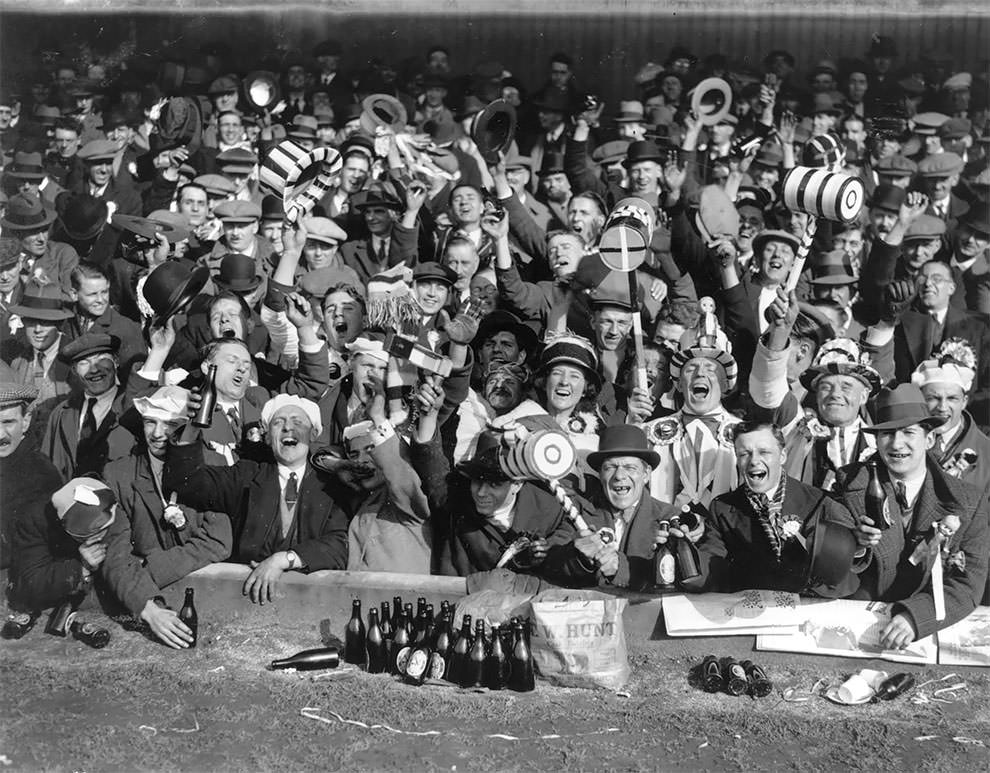
#13 Supporters of West Ham United FC at a FA Cup semi-final match against Everton at Wolverhampton Wanderers ground, The Hawthorns. (Photo by Topical Press Agency/Getty Images). 1933
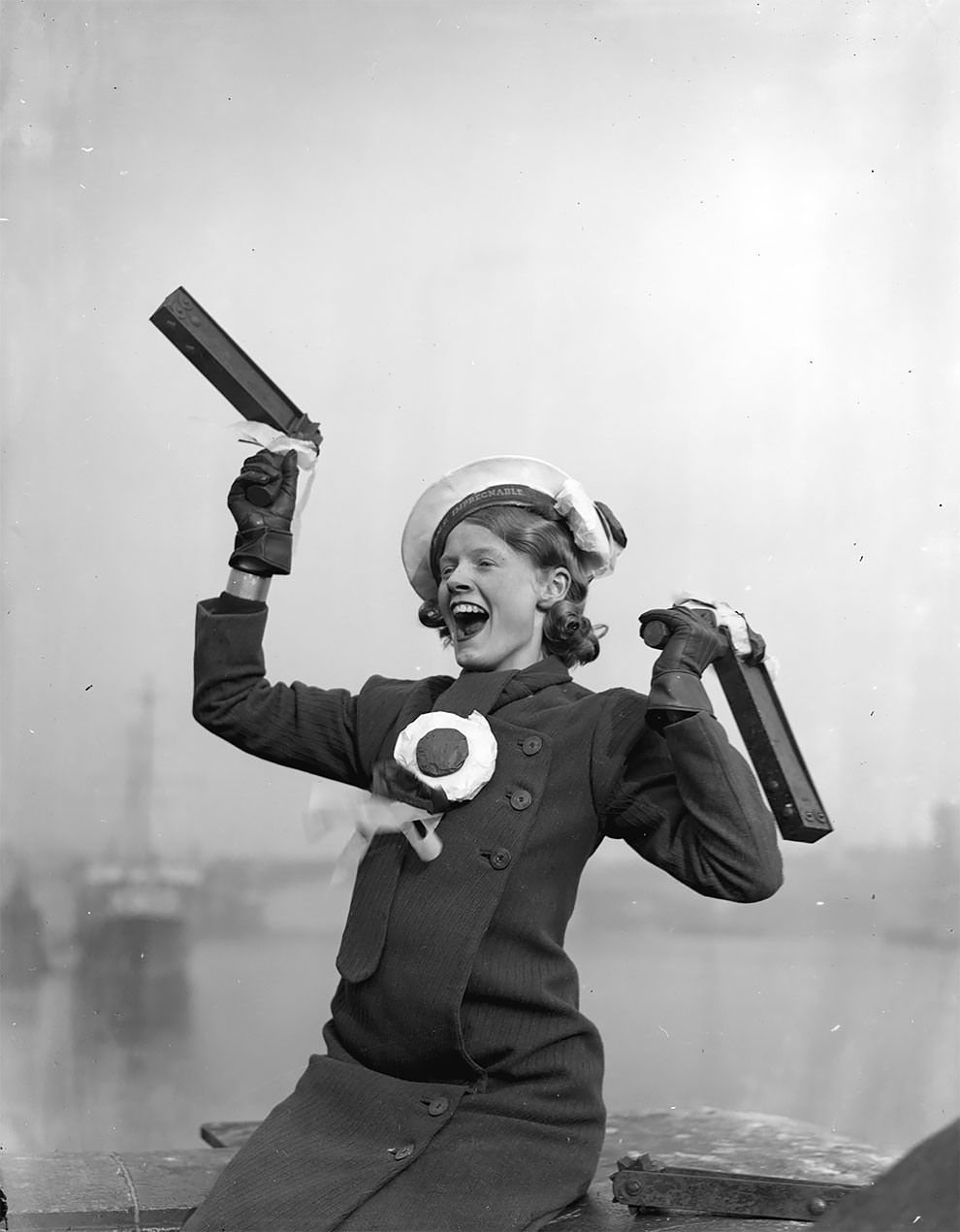
#14 A Portsmouth football fan with a rattle in each hand cheering for her team before their FA Cup final against Manchester City, which the latter won 2-1, 28th April 1934
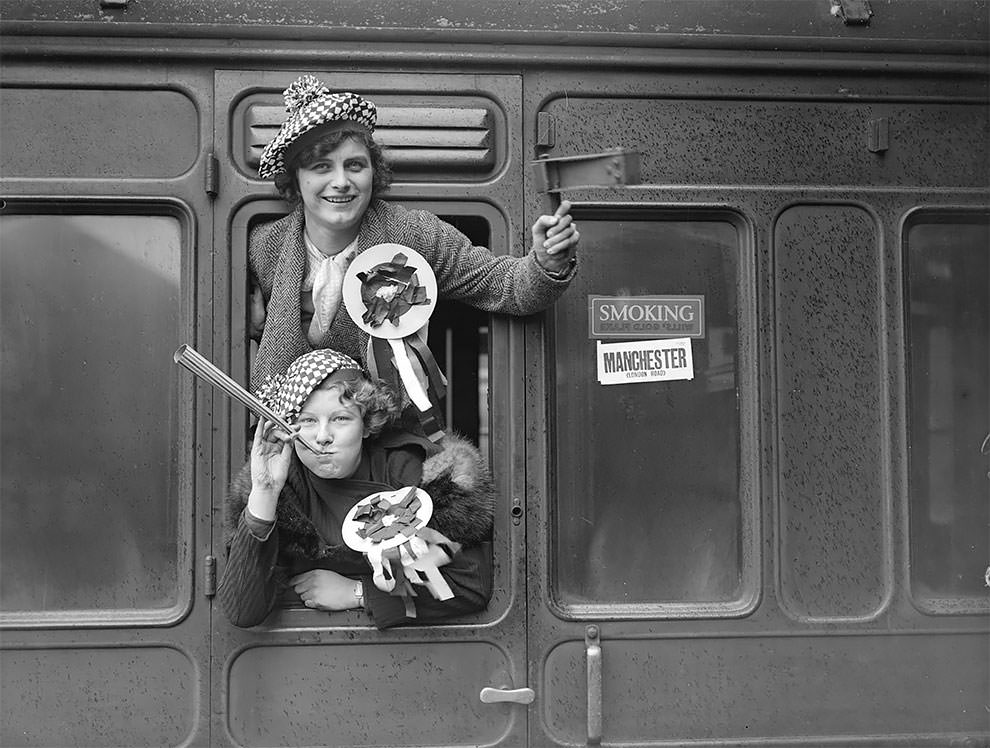
#15 Manchester City FC fans with rattles and rosettes are in a train at Euston which is waiting to take them to White Hart Lane for a cup-tie match against Tottenham Hotspurs, 12th January 1935
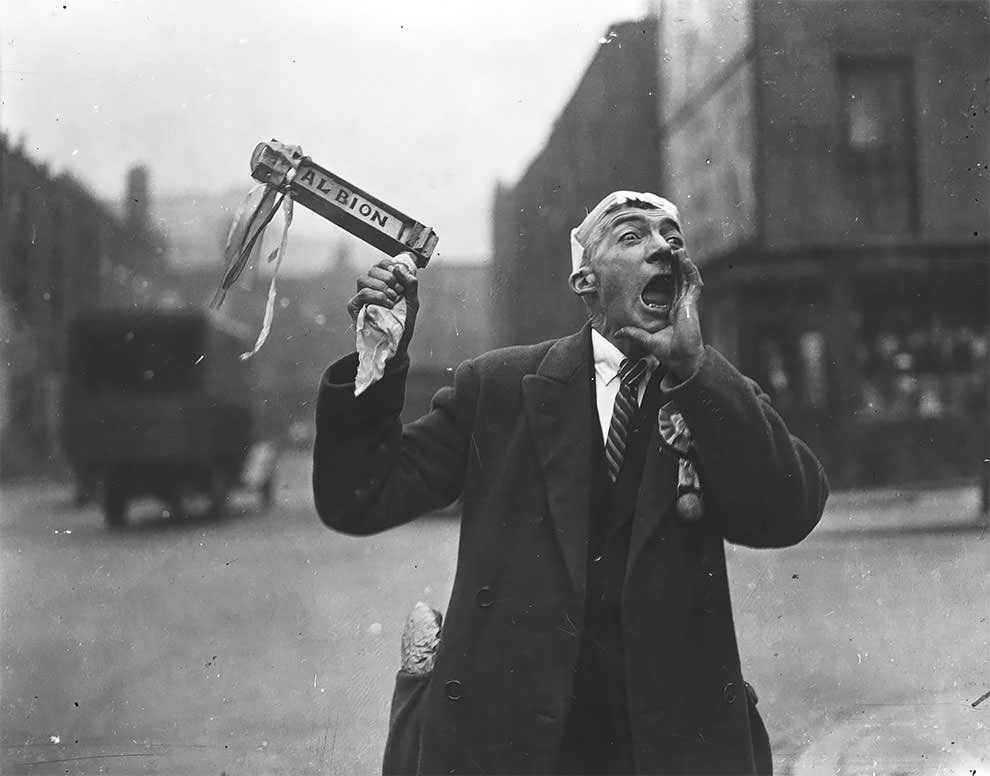
#16 A West Bromwich Albion FC fan waves his rattle and cheers as he makes his way to Wembley Stadium for the FA Cup final between West Bromwich Albion and Sheffield Wednesday. Sheffield Wednesday won the match 4-2, 27th April 1935
#17 Arsenal fans at King’s Cross to catch the special trains to Huddersfield for the FA Cup semi final against Grimbsy, 21st March 1936. Arsenal won 1-0, 1936
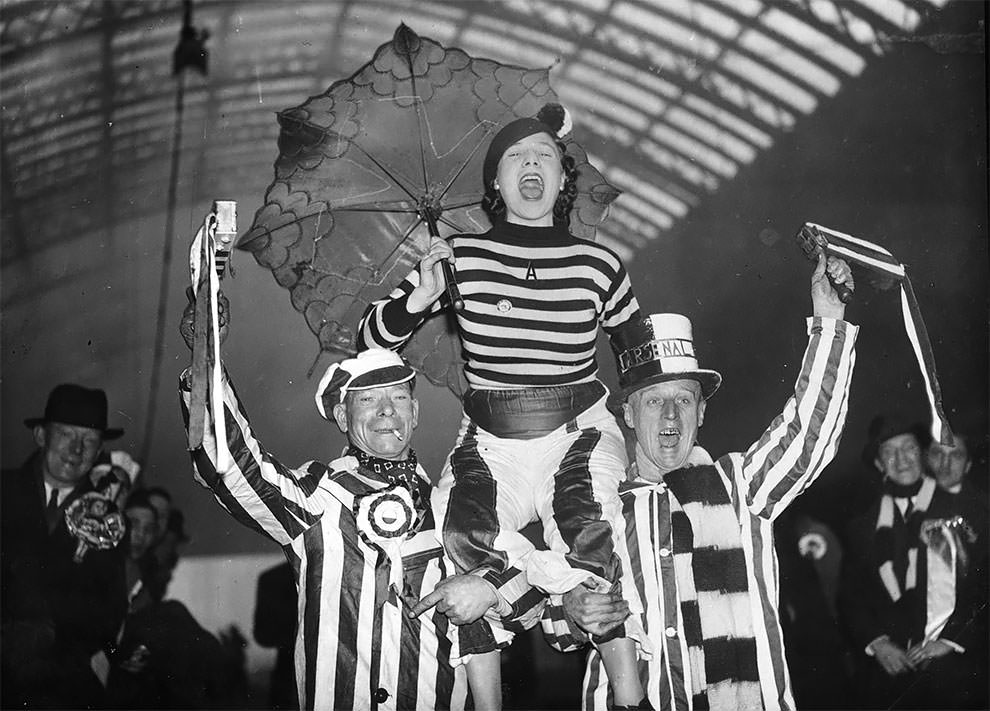
#18 Arsenal football supporters cheering for their team at St. Pancras Station, London, as they make their way to Chesterfield, 16th January 1937
#19 Officials persuading football fans to clear the touch lines before the sixth round FA Cup tie between Brentford and Preston North End at Brentford, Middlesex, 5th March 1938
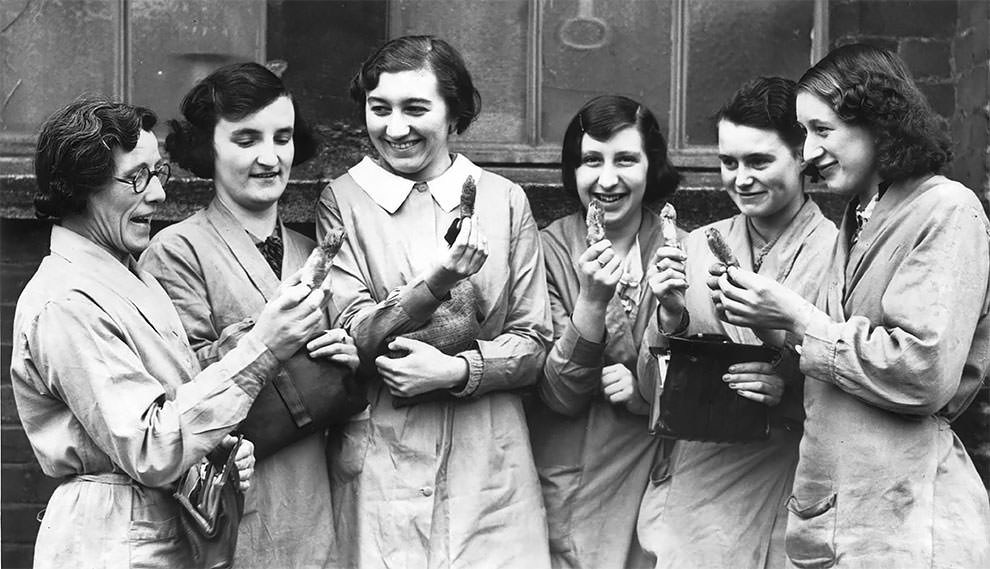
#20 Yeovil factory workers who support Yeovil football club, with their rabbits’ feet which they hope will bring their team luck in their FA cup match against Sheffield Wednesday, 11th January 1939
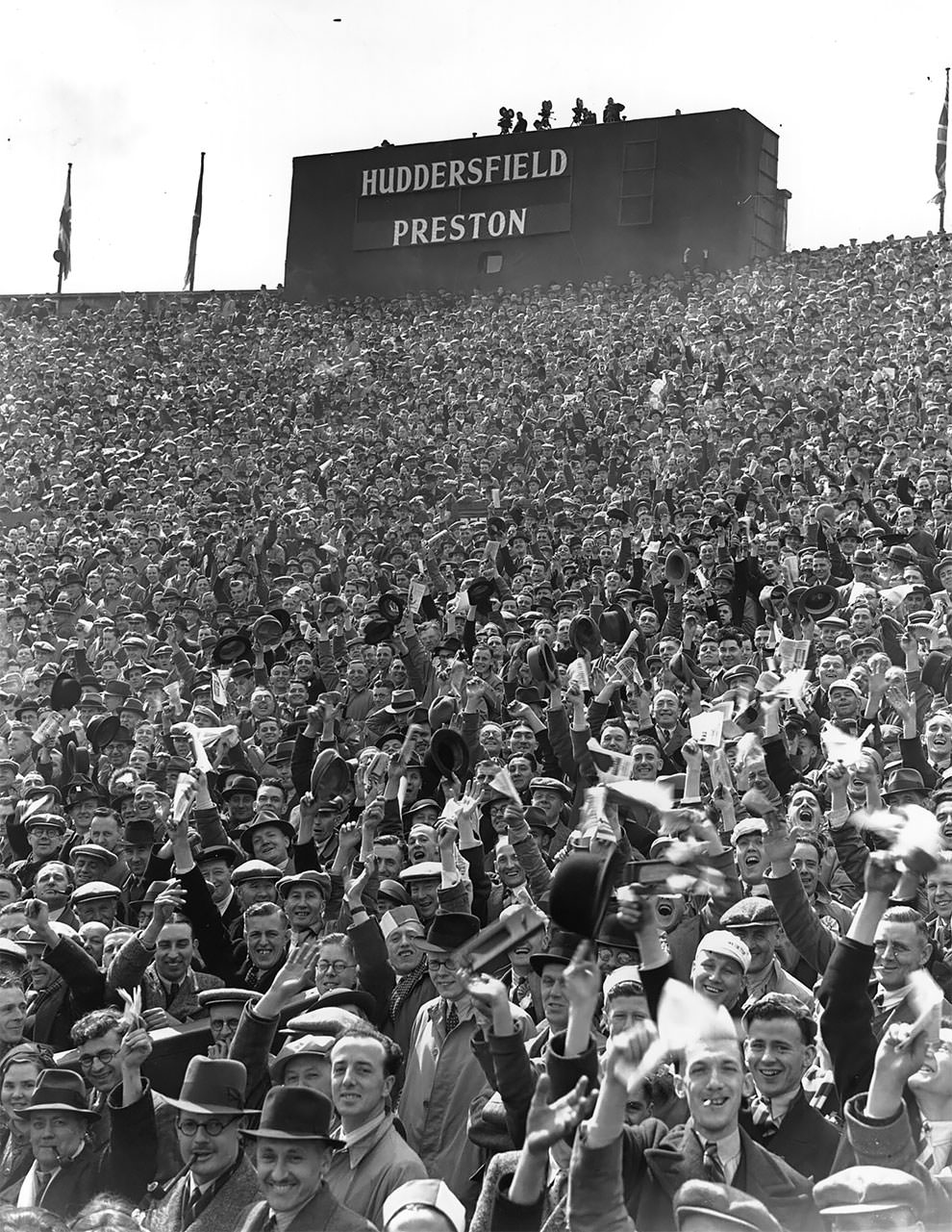
#21 Crowds of supporters fill the stands at Wembley Stadium for the FA Cup Final between Preston North End and Huddersfield Town. Preston won 1-0 after extra time, 30th April 1938
Enjoyed this post? Get new ones in your inbox.