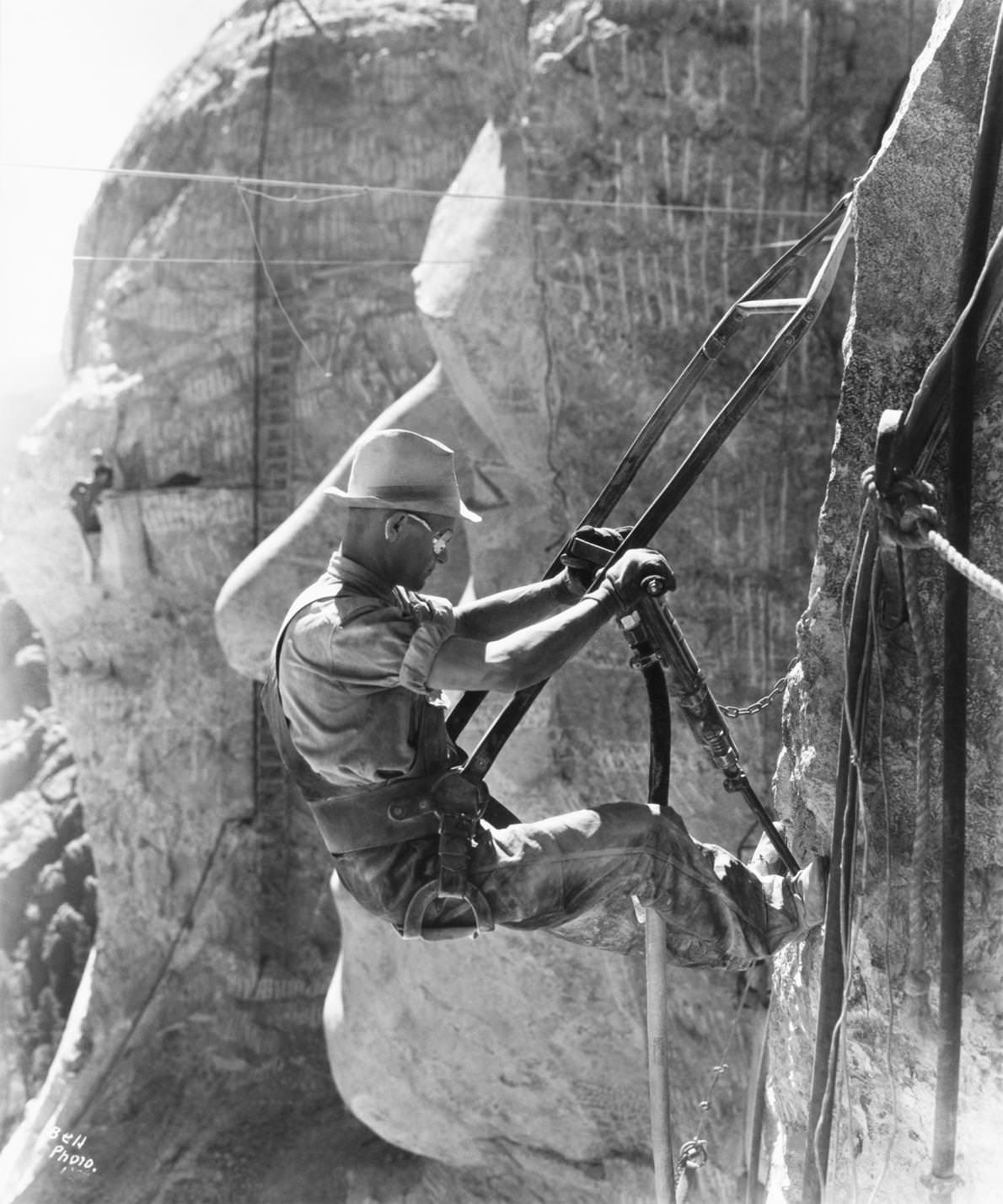
Between 1935 and 1941, Mount Rushmore underwent its most dramatic transformation. Work crews drilled, blasted, and chiseled through solid granite in South Dakota’s Black Hills, shaping four presidential faces that each stood 60 feet tall. Every cut had to be precise. One miscalculated blast could destroy months of progress.
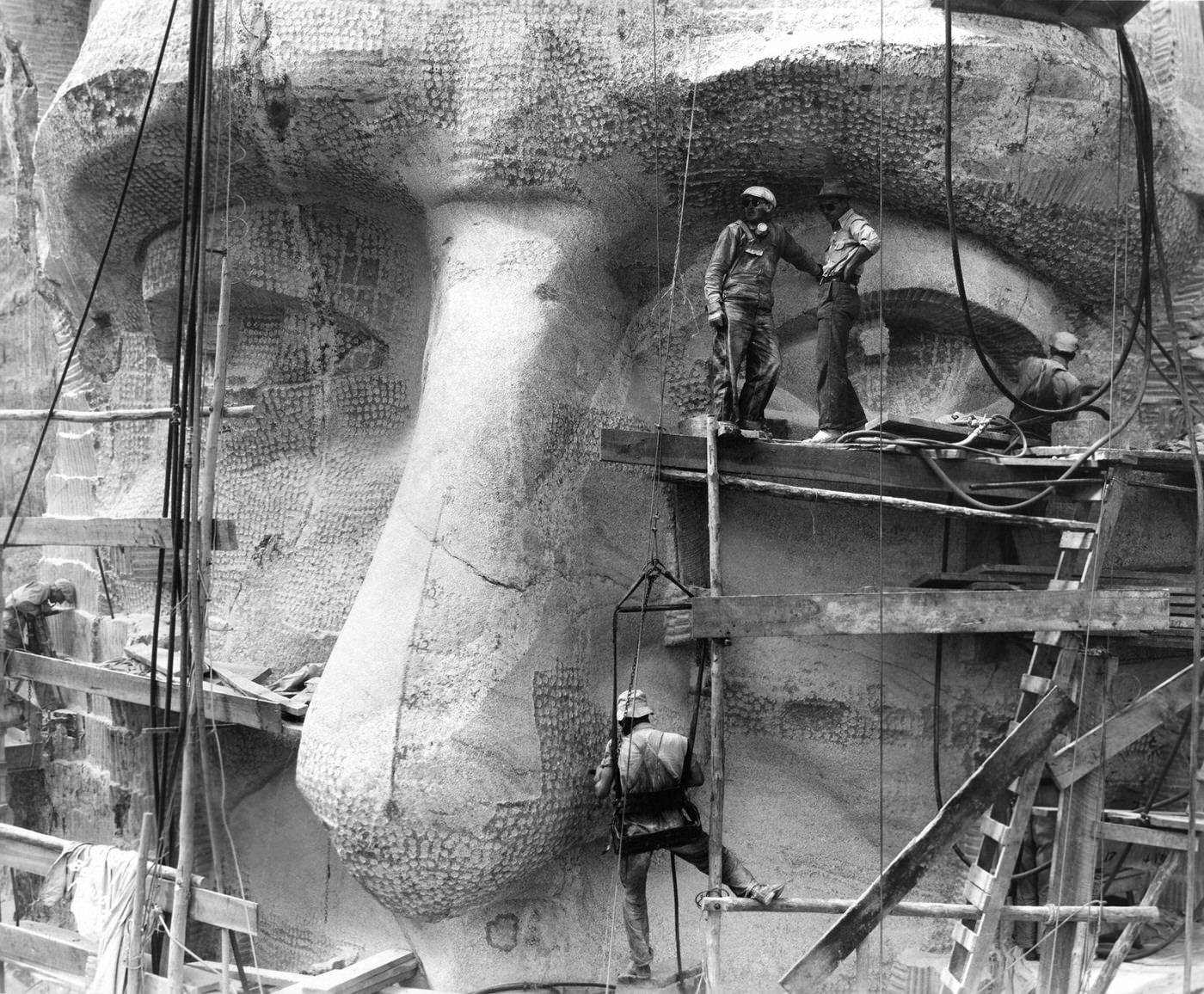
Dynamite did roughly 90% of the removal work before finer carving began. Sculptor and project director Gutzon Borglum oversaw every stage, balancing artistic vision with the demands of a live blasting site hundreds of feet above the ground. Workers dangled from ropes in bosun chairs — small swinging seats — as they chipped stone from near-vertical cliff faces. There were no safety nets.
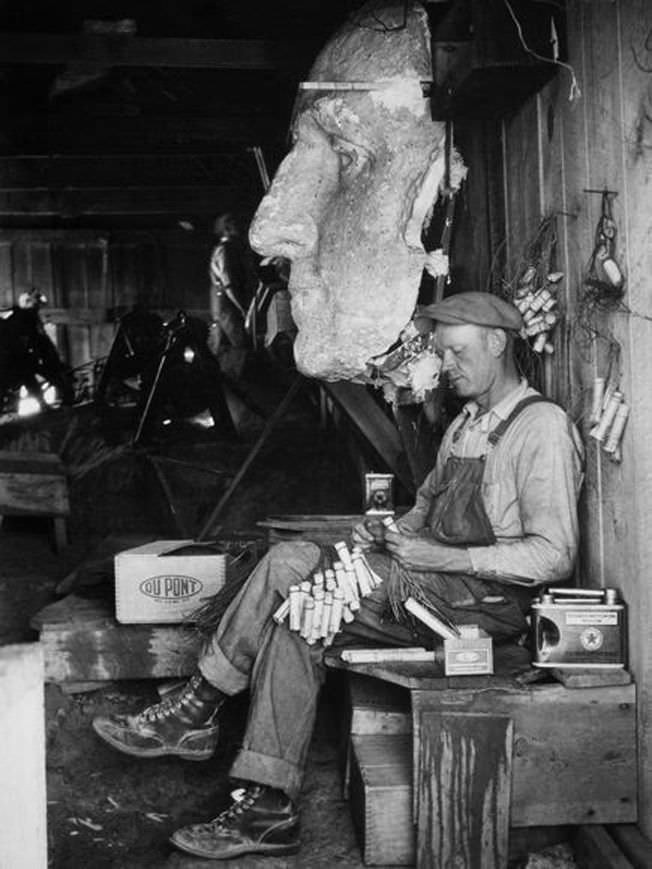
George Washington’s face was completed by 1936 and served as the scale model for the remaining three. Thomas Jefferson’s carving hit an early setback when the original site cracked beyond repair. Borglum ordered the entire section blasted away and restarted Jefferson’s face on the opposite side of Washington, costing the crew several months of labor.
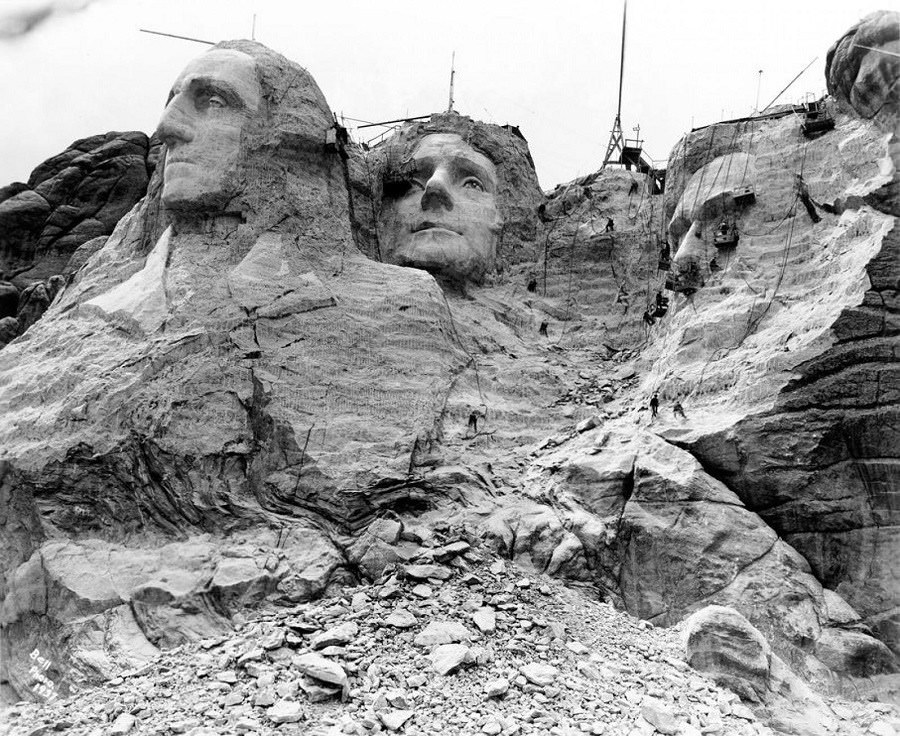
By 1937, Theodore Roosevelt’s face was taking shape, with carvers using jackhammers and hand chisels to render his distinctive glasses and mustache in hard granite. Lincoln’s face followed, his solemn expression emerging from the mountain by 1939. The conditions throughout were punishing. Summer heat and winter freezes in the Black Hills pushed men and equipment to their limits.
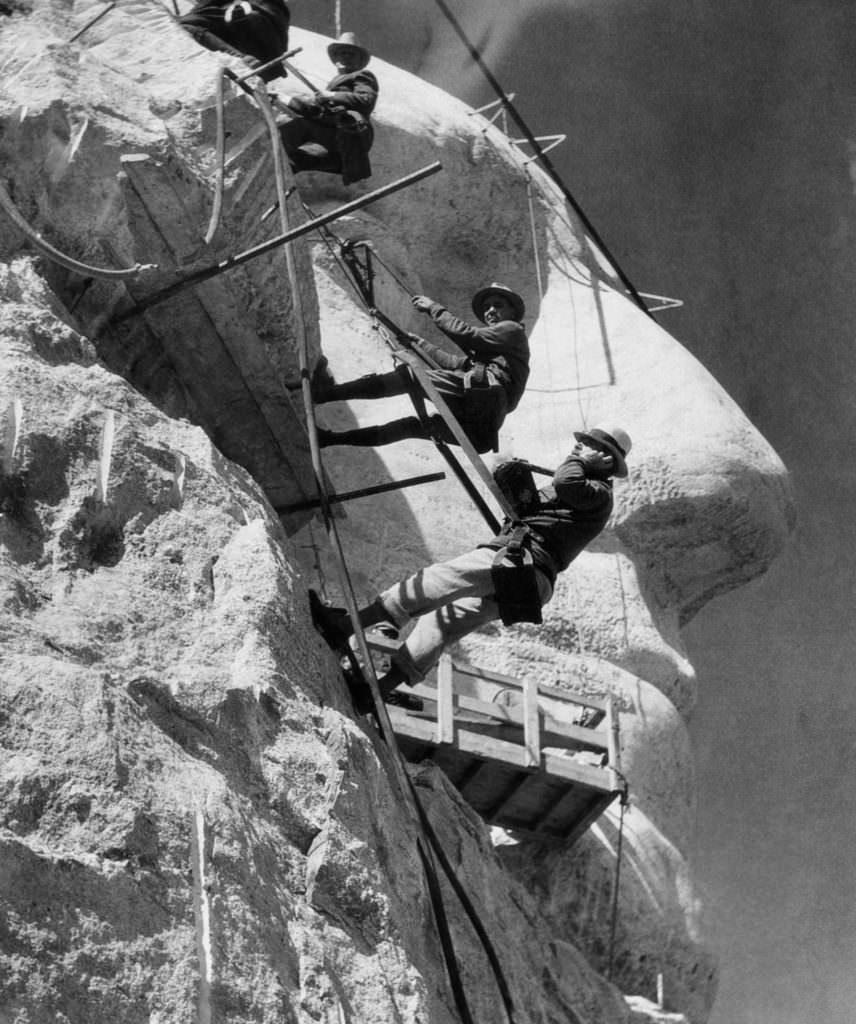
Up to 400 workers rotated through the site, most of them experienced miners who understood how to handle explosives safely. They earned an average of 50 cents an hour — a solid wage during the Great Depression — but the danger was constant and real.
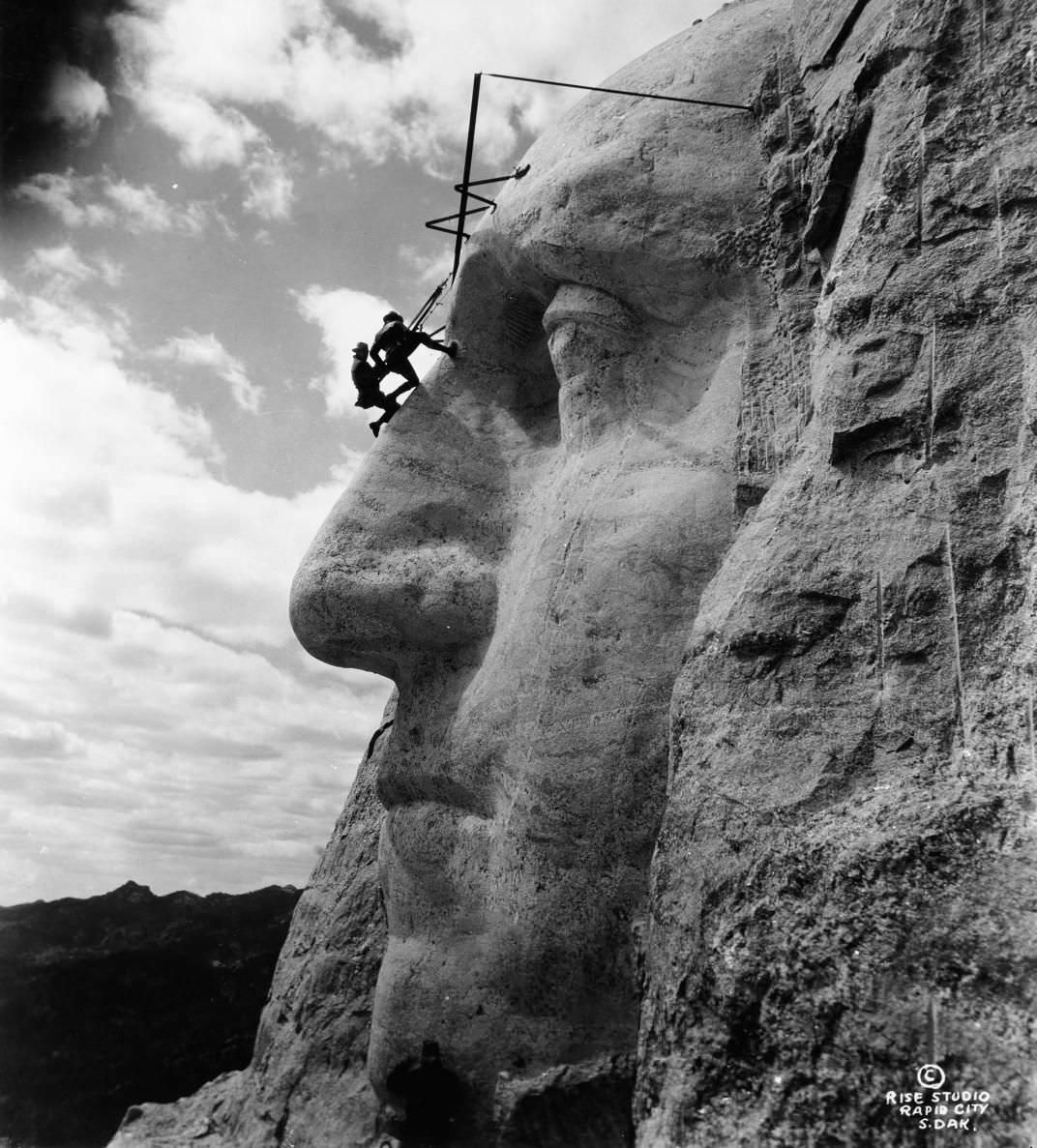
Borglum’s original design called for each president to be carved from head to waist, with inscriptions telling the story of American history. That plan never came to be. Federal funding dried up as the country turned its attention toward World War II. Borglum died in March 1941, and his son Lincoln took over to complete what remained.
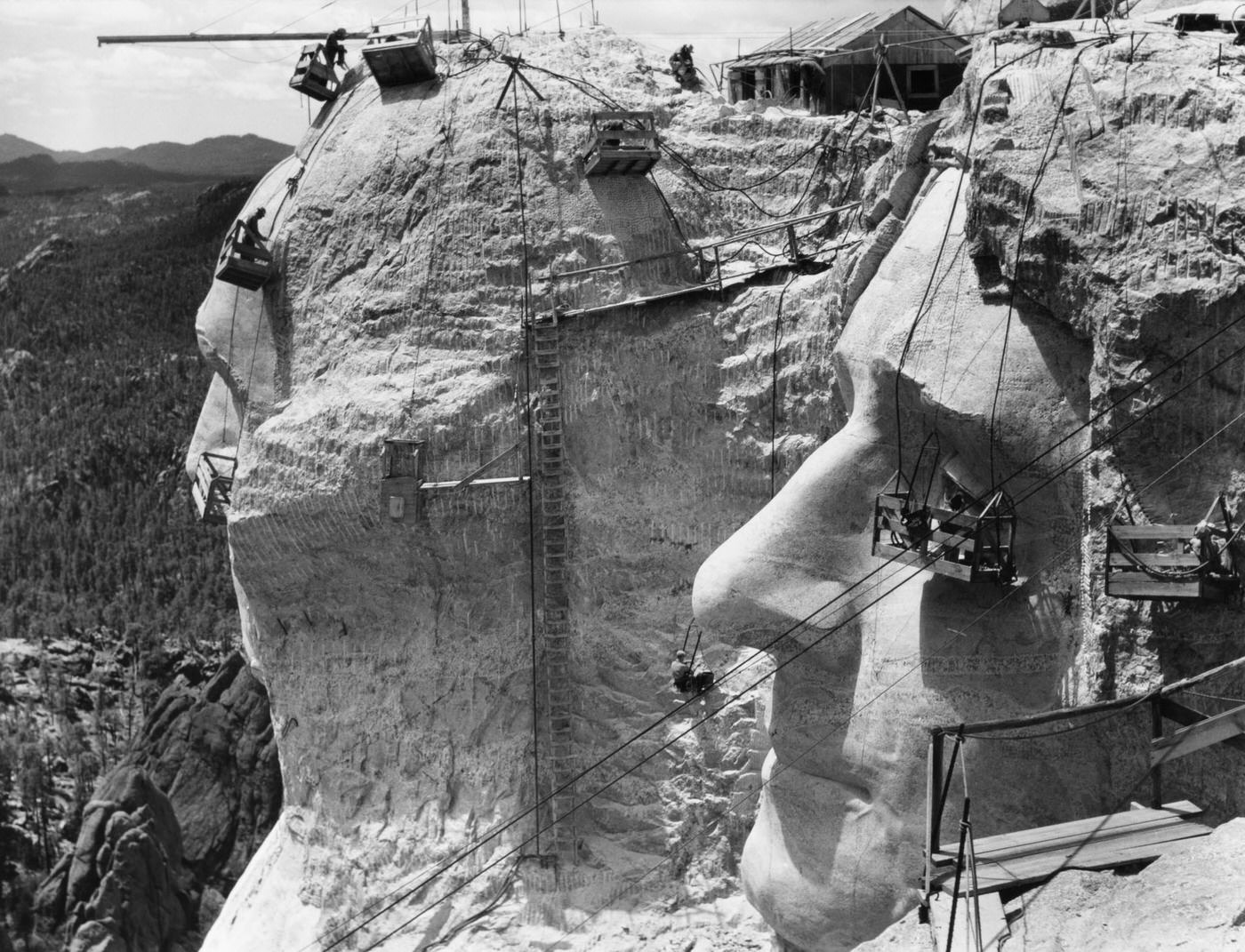
The last drill bit left the granite in late October 1941. In total, the project removed over 400,000 tons of rock across 14 years of work. The four faces were complete, but the mountain itself was left unfinished — a permanent record of ambition meeting the hard limits of time and money.