
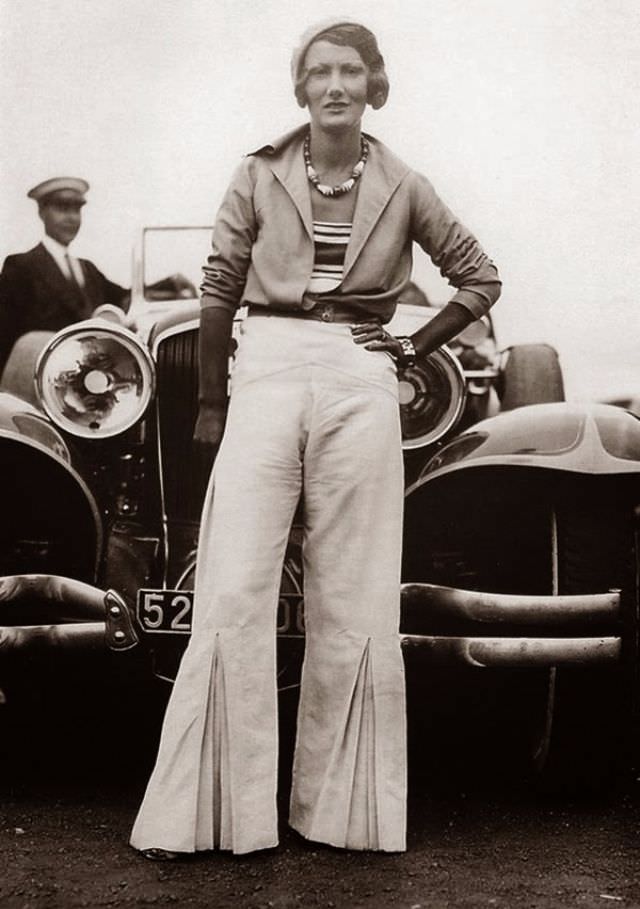
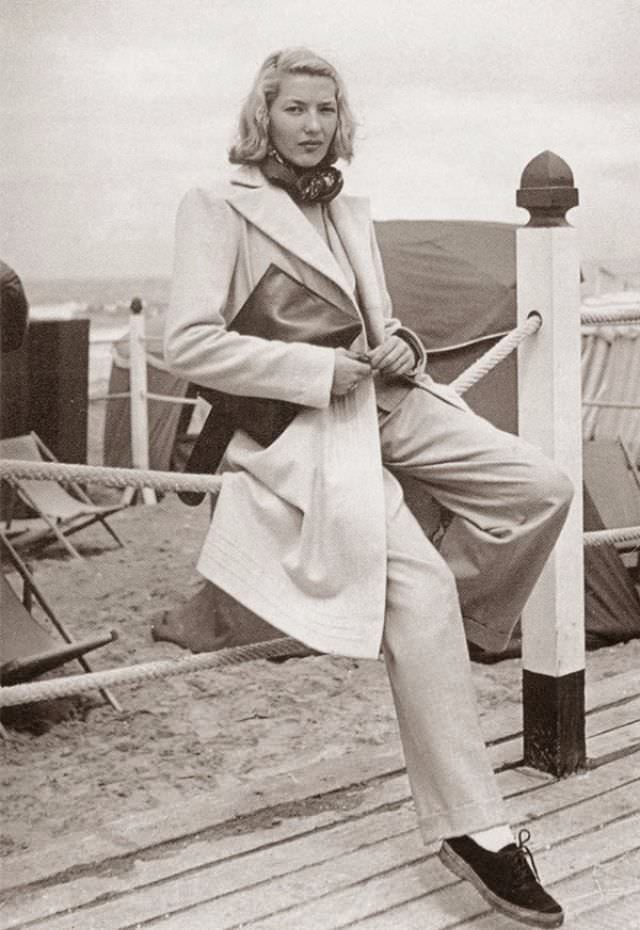
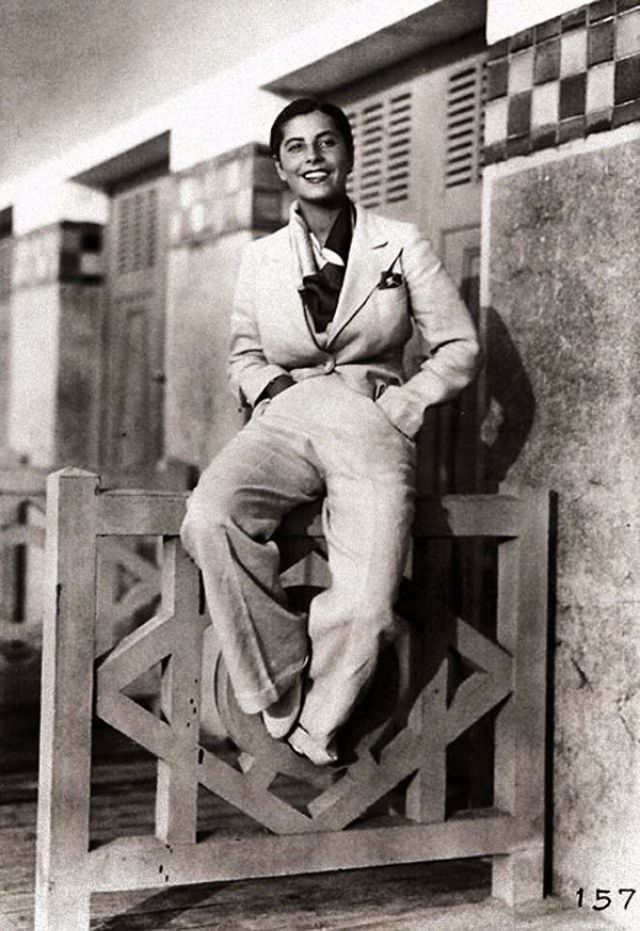
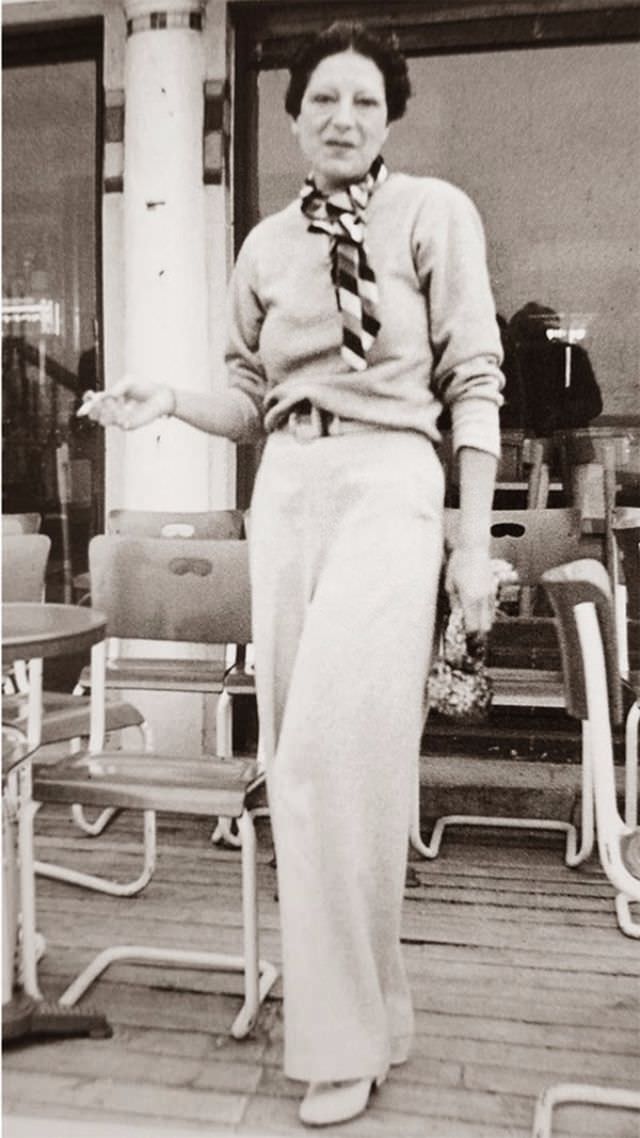
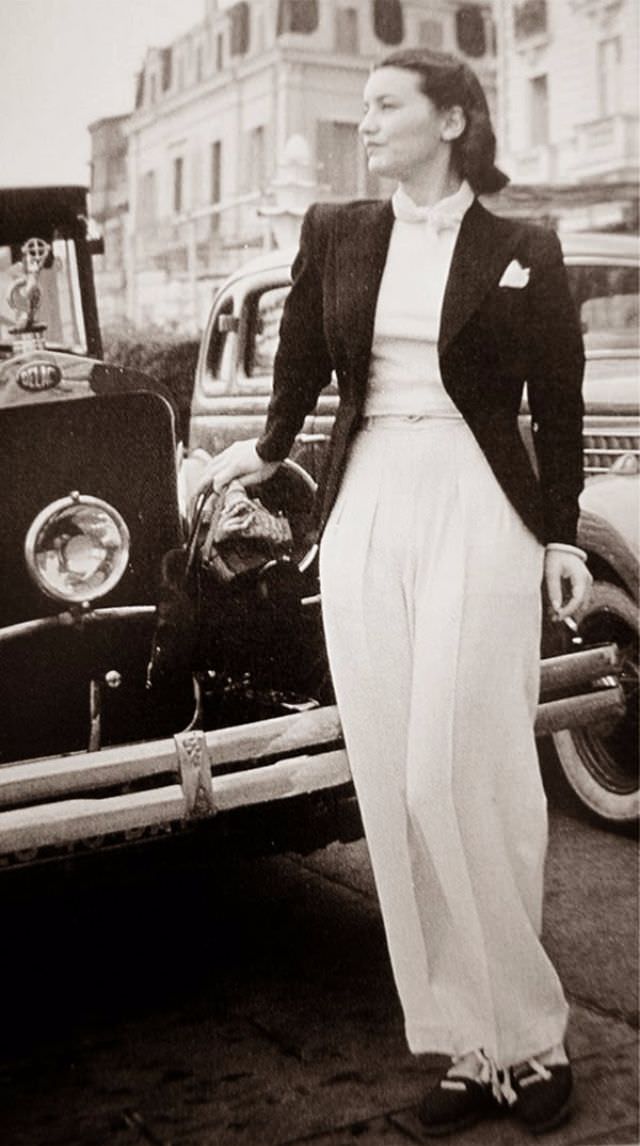
In the early 1930s, women’s wardrobes began making room for something bold. High-waisted, wide-leg trousers arrived at a time when skirts and dresses still ruled, and they made an immediate statement. These pants didn’t just sit at the waist — they soared above it, creating a long, elegant line that flattered the figure while allowing real freedom of movement.
Marlene Dietrich gave the trend a defining moment. Her tuxedo-clad appearance at the opening of The Sign of the Cross — complete with a wing collar, masculine topcoat, and tailored trousers — sent a clear signal. Pants could be glamorous and powerful. Photographers captured the look, newspapers printed it, and women had a new visual reference for sophistication beyond the expected dress and heels.
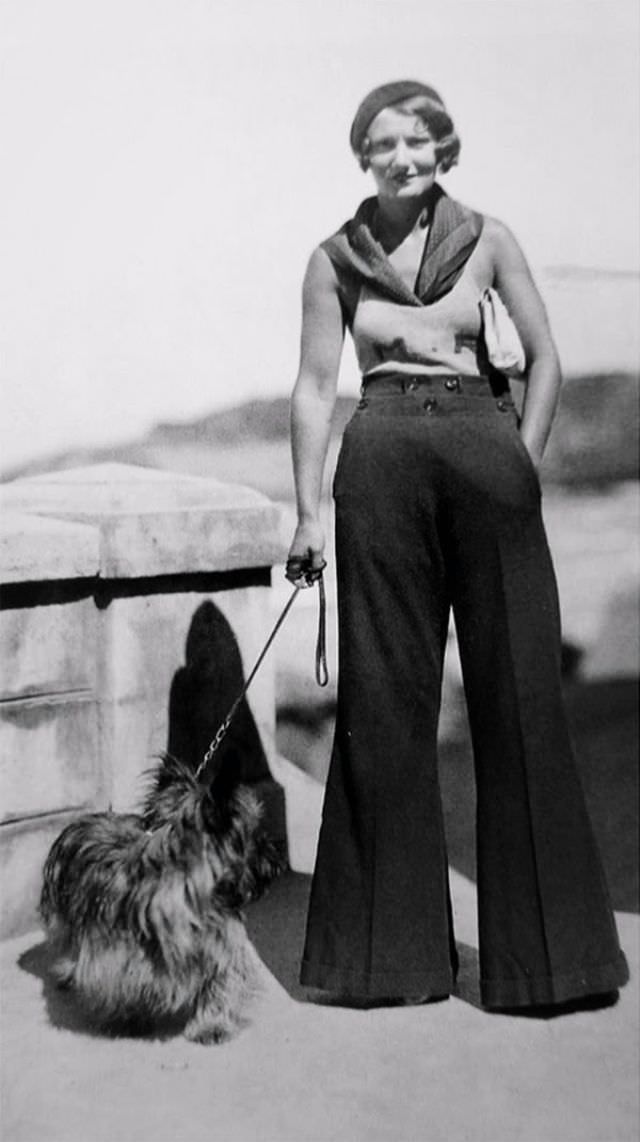
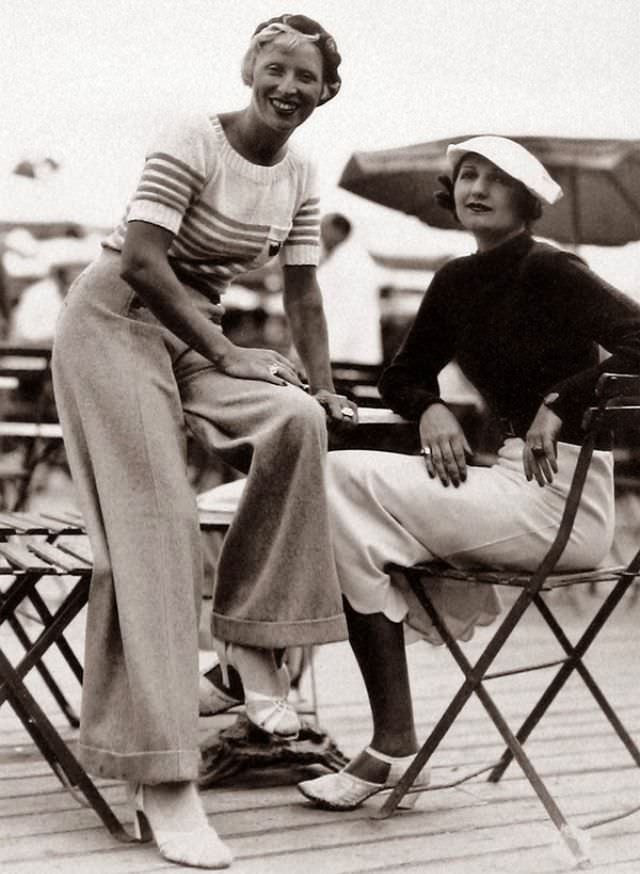
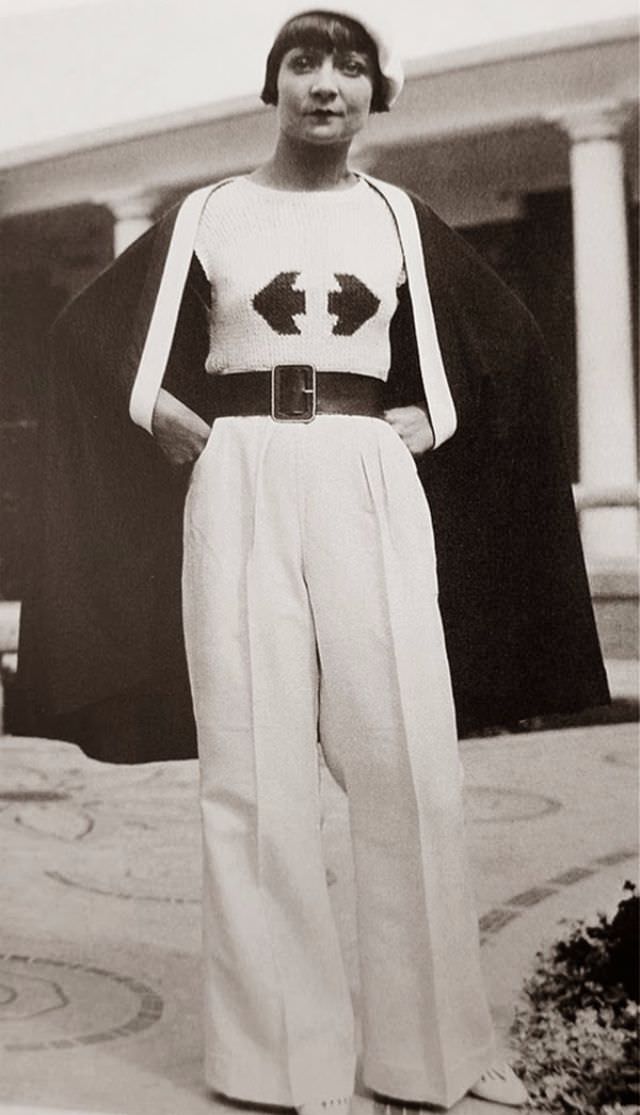
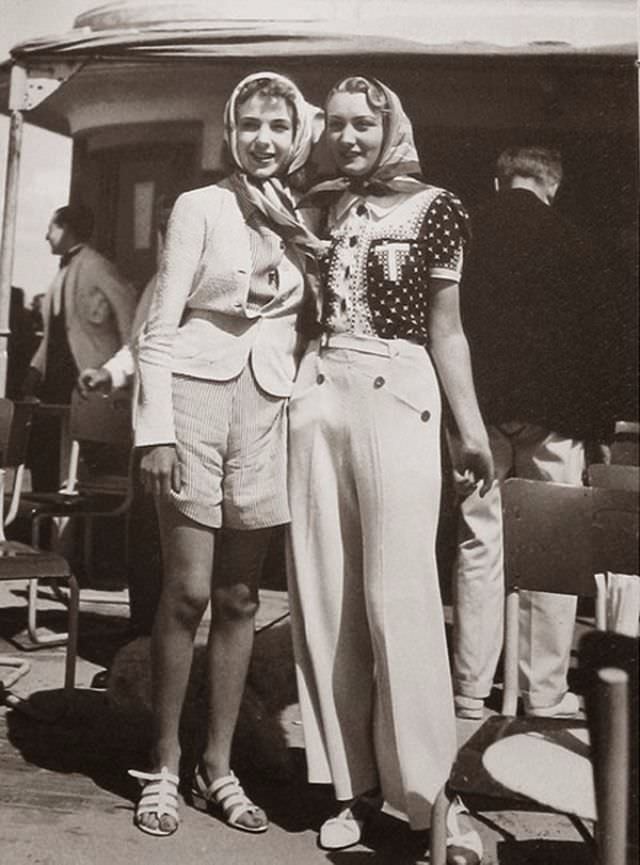
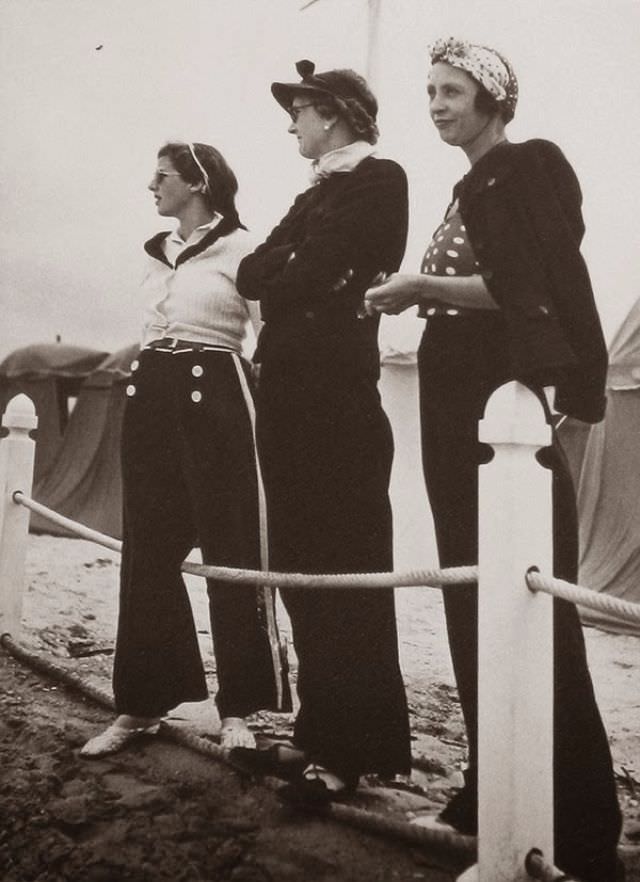
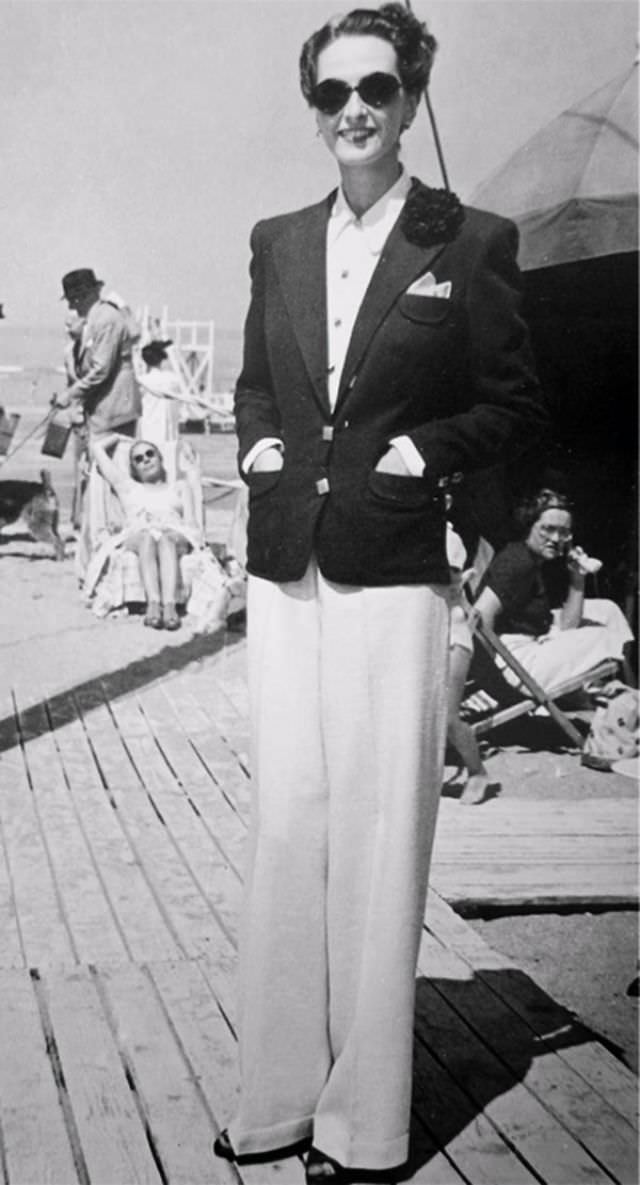
For everyday summer wear, these trousers became especially popular in white or navy blue. Sailor-style buttons and nautical-inspired belts gave them a crisp, sporty energy. The wide legs flowed with each step, while the high waist elongated the body into a sleek silhouette without heavy tailoring.
Paired with striped tops, short-sleeved sweaters, or sleeveless blouses, the look balanced sharpness with ease. The combination worked because each piece complemented the other — nothing competed, everything clicked.
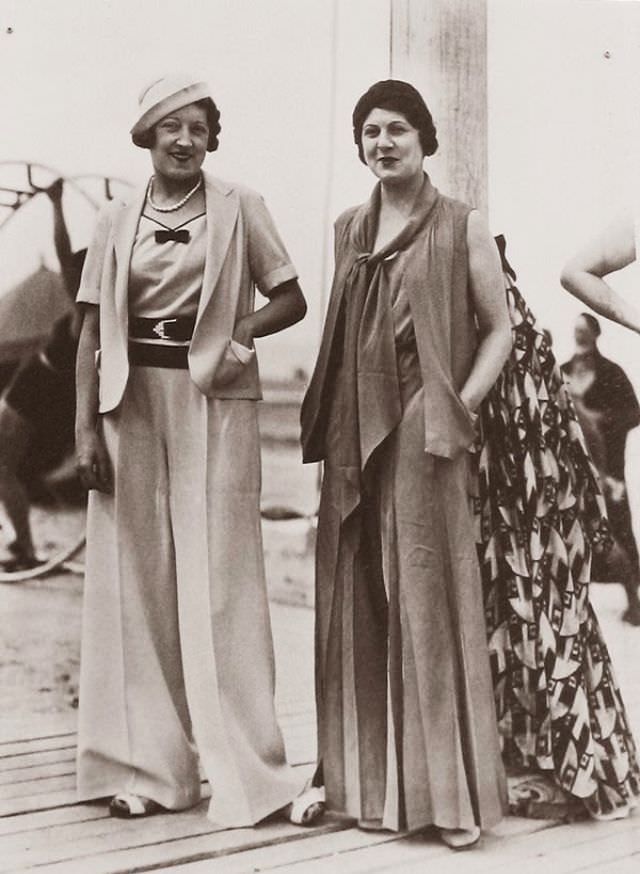
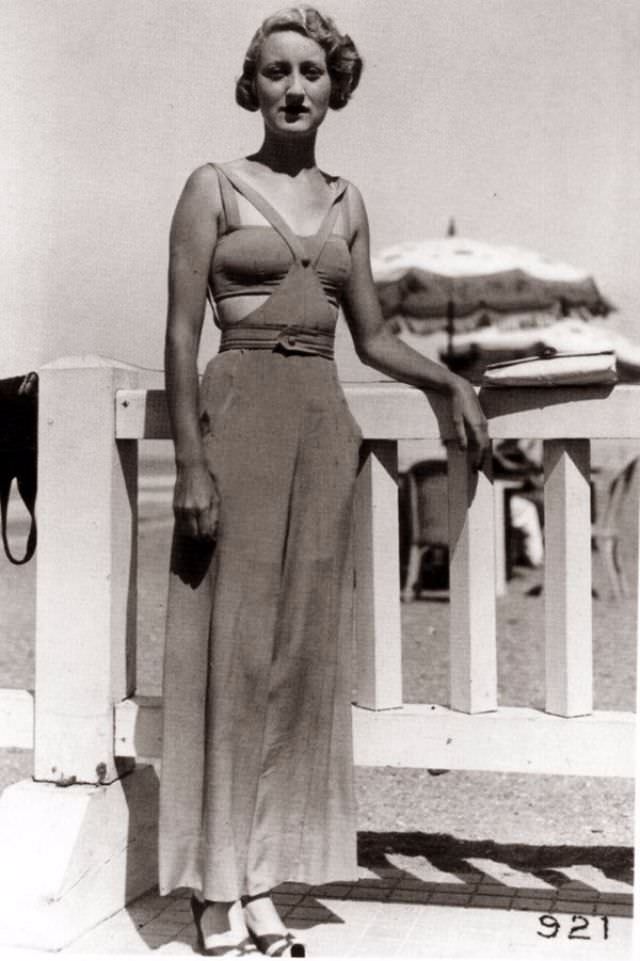
Beaches in the 1930s became informal runways for beach pajamas — a flowing, wide-leg style made from soft rayon or cotton. They came in airy pastels, playful florals, and bold geometric stripes. Some featured attached overall-style straps; others were part of a full jumpsuit. Women wore them to lounge, stroll, and play sports without sacrificing elegance.
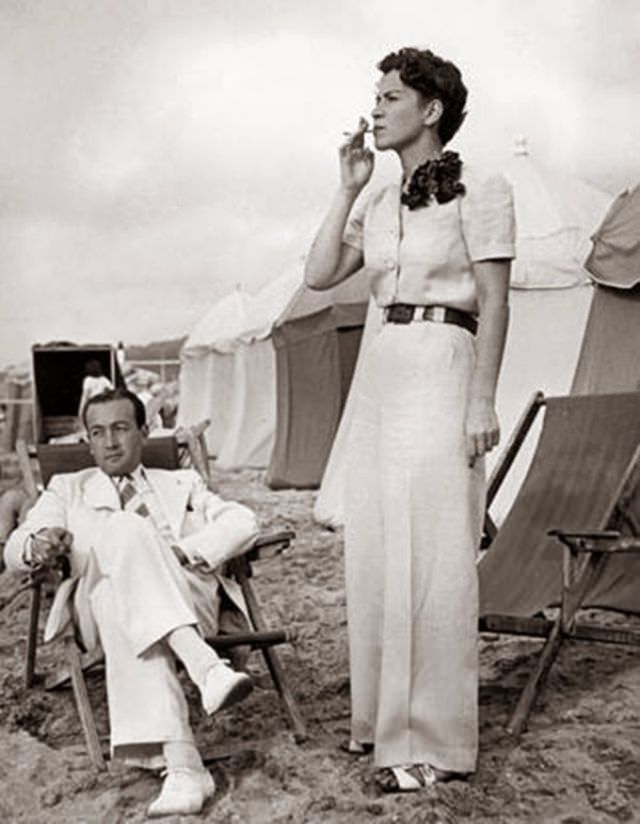
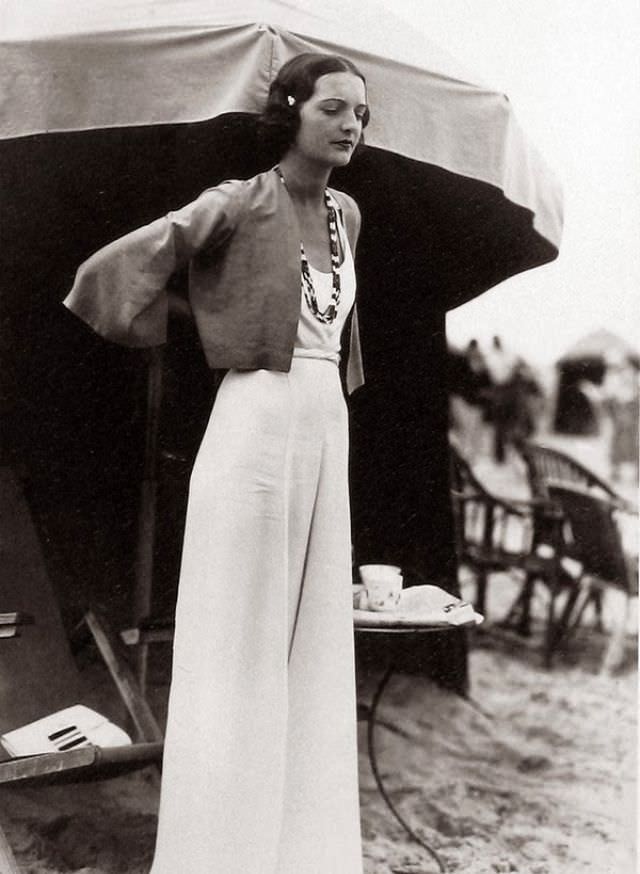
Palazzo pants offered an evening-ready version of the same idea. Cut from fluid fabrics that caught the light, they paired with halter tops, cropped jackets, or tucked-in blouses. The volume in the legs was balanced by a cinched high waist, producing an hourglass shape that was both relaxed and polished.


#5 is very modern. She has the Tinder swipe right or swipe left arrows on her top.