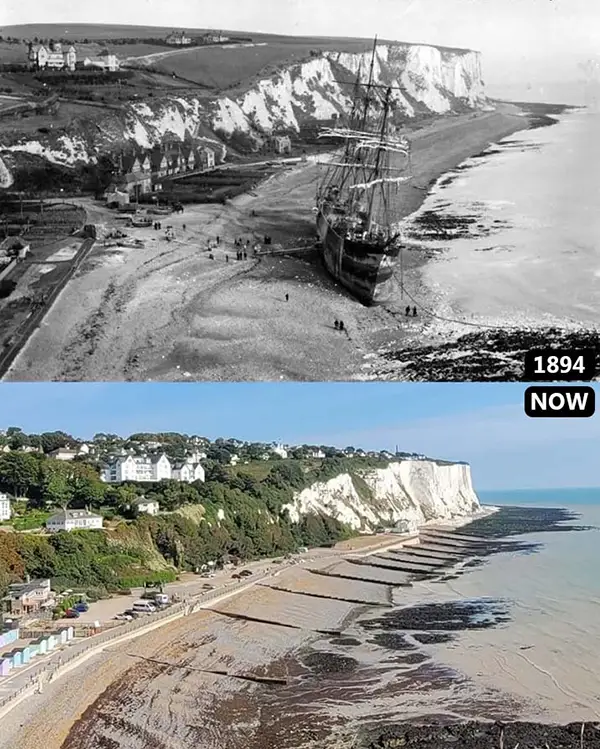
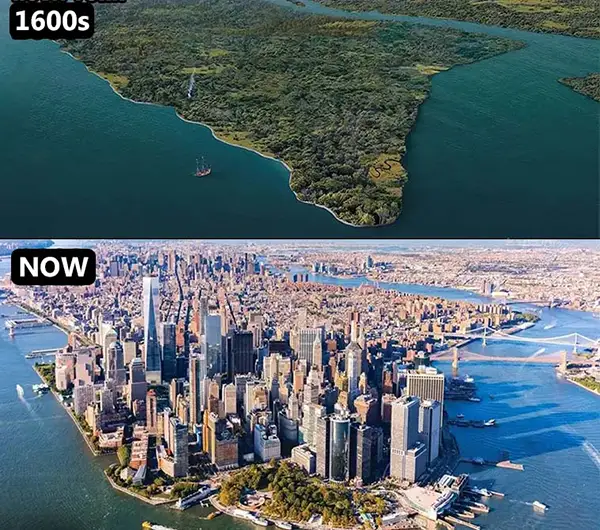
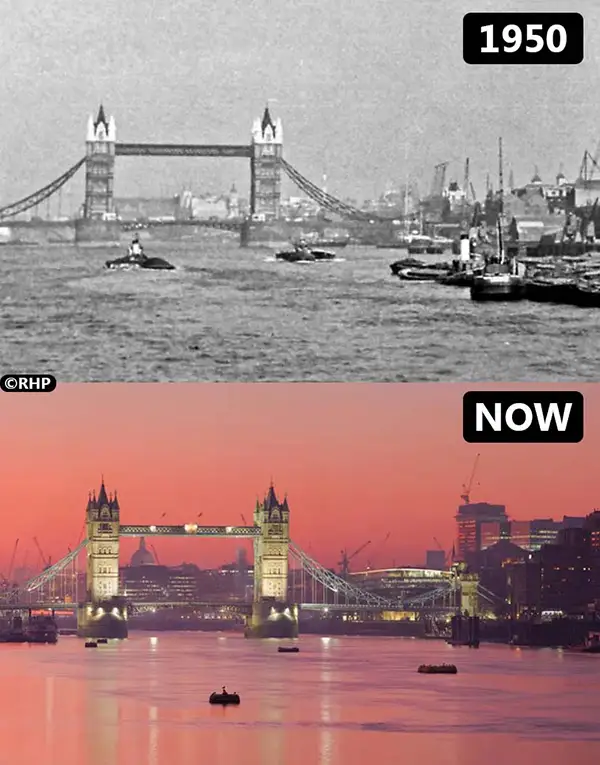
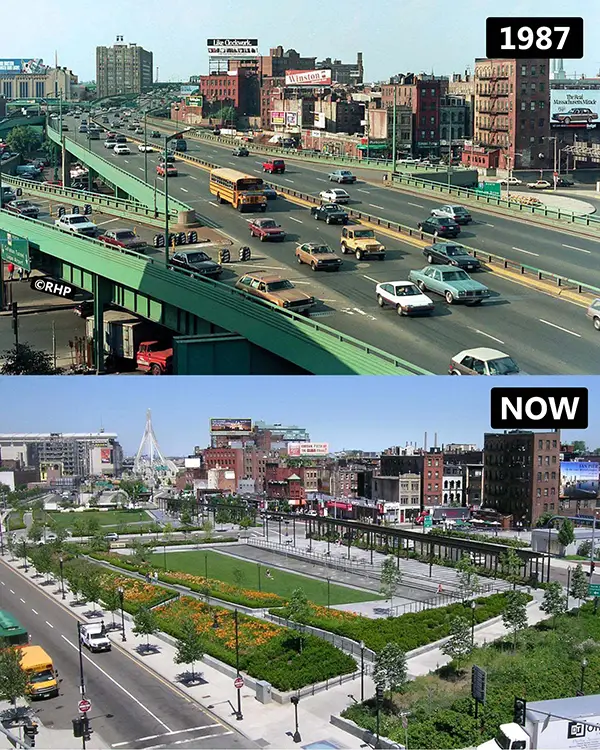
Cities are never finished. Streets are widened, skylines climb higher, and buildings that once defined a neighborhood are torn down to make room for something new. Then-and-now photos capture these shifts in a way no written description fully can. From a single vantage point, decades apart, they reveal how completely a city can reinvent itself — or how stubbornly certain corners hold on to the past.
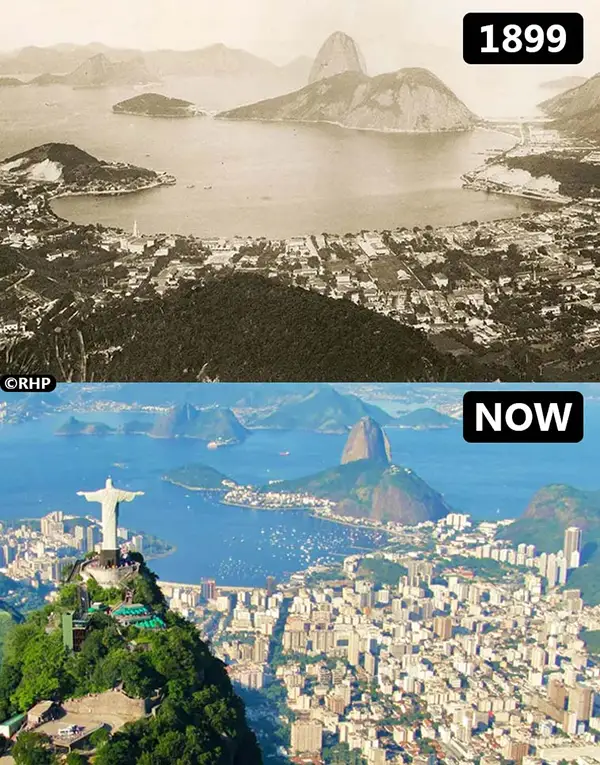
Old photographs tend to show calmer, less crowded streets. Buildings were shorter, often decorated with carved stone details, arched windows, and ornate facades. Pedestrians shared roads with horse-drawn carts or early automobiles. Power lines ran overhead in loose tangles, and streetlights were sparse. People dressed formally even for short outings, and traffic signals were nowhere to be found.
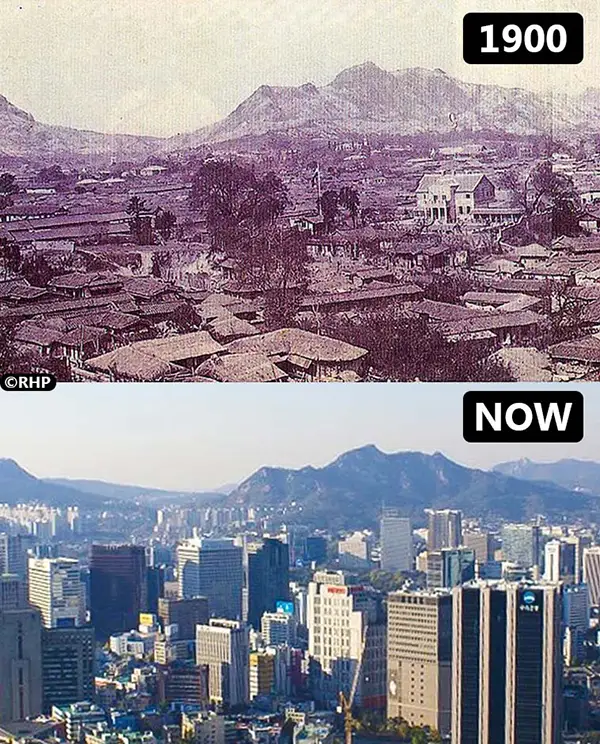
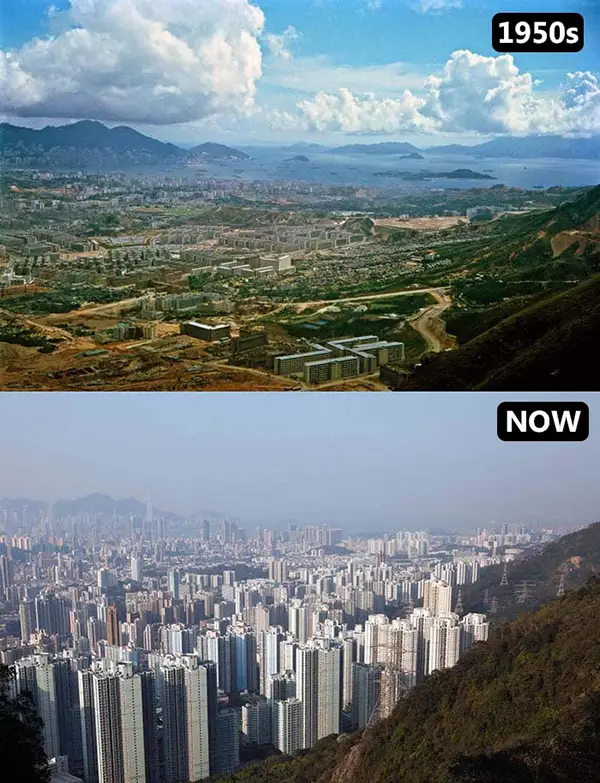
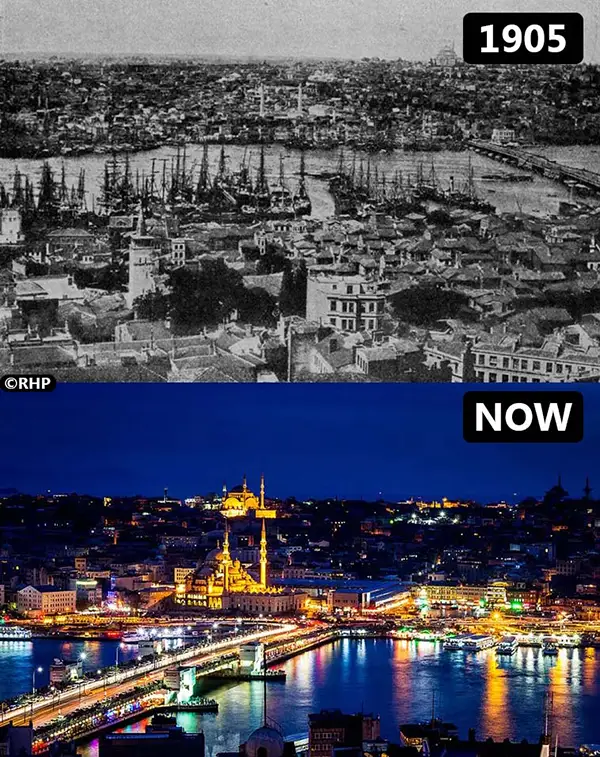
Modern photos tell a different story. Glass-covered skyscrapers now dominate horizons that were once defined by church spires or low rooftops. Wide, multi-lane roads have replaced cobblestone paths. Underground rail systems and elevated tracks move millions of people each day through cities that once relied on foot traffic and horse-drawn wagons.
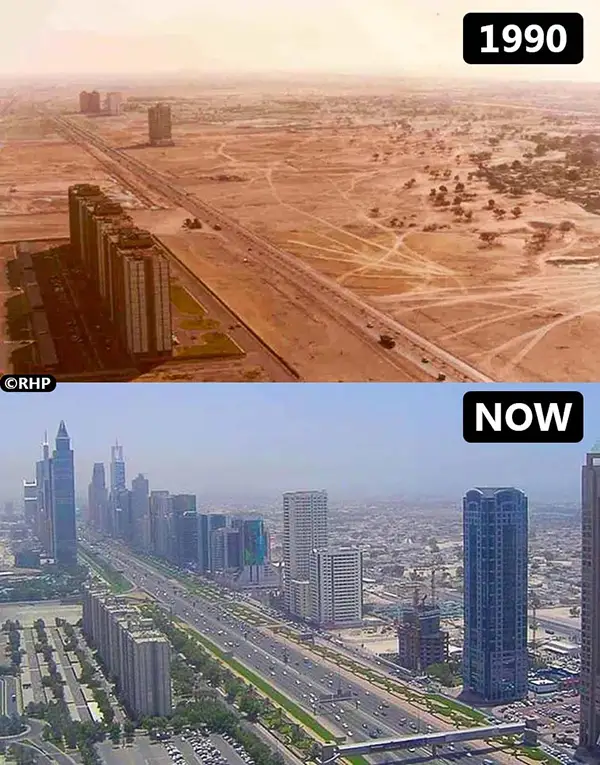
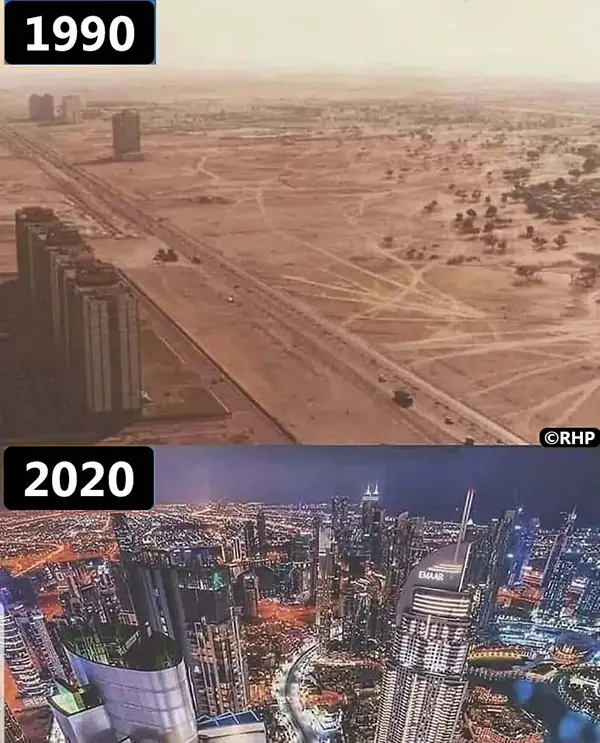
Few cities illustrate rapid transformation as starkly as Dubai. In just a few decades, it grew from a modest desert settlement into a skyline of record-breaking towers and man-made islands. The before-and-after contrast is almost hard to believe when viewed side by side.
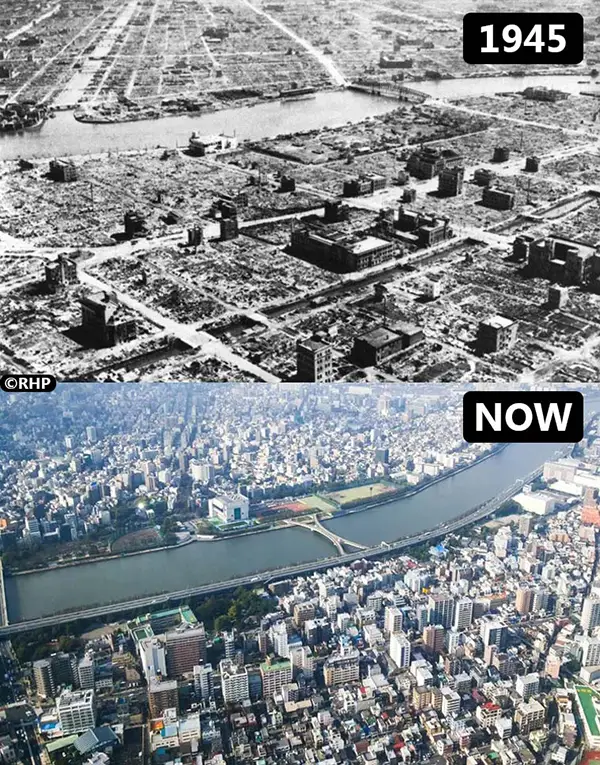
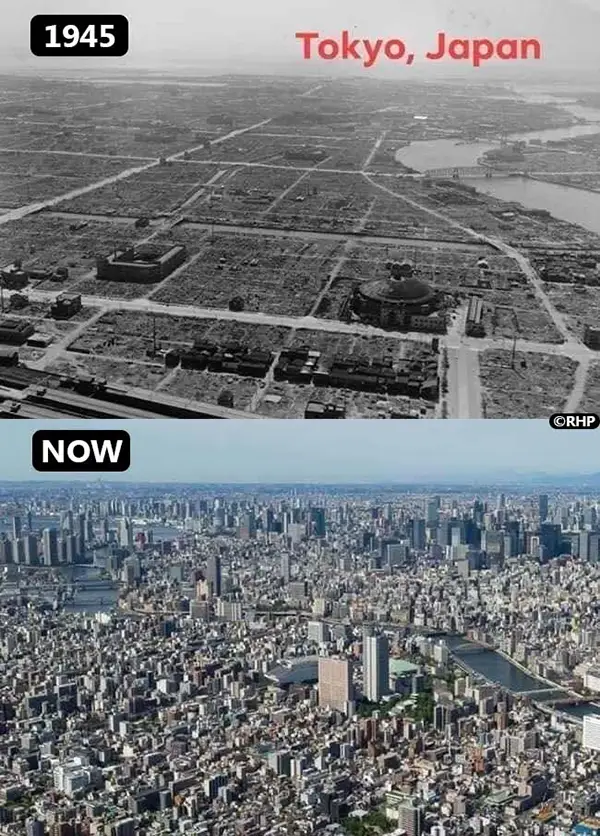
Tokyo’s transformation is equally dramatic, though shaped by destruction rather than oil wealth. American firebombing raids in 1945 reduced much of the city to ash and rubble. What rose in its place became one of the world’s most densely built and technologically advanced urban centers.
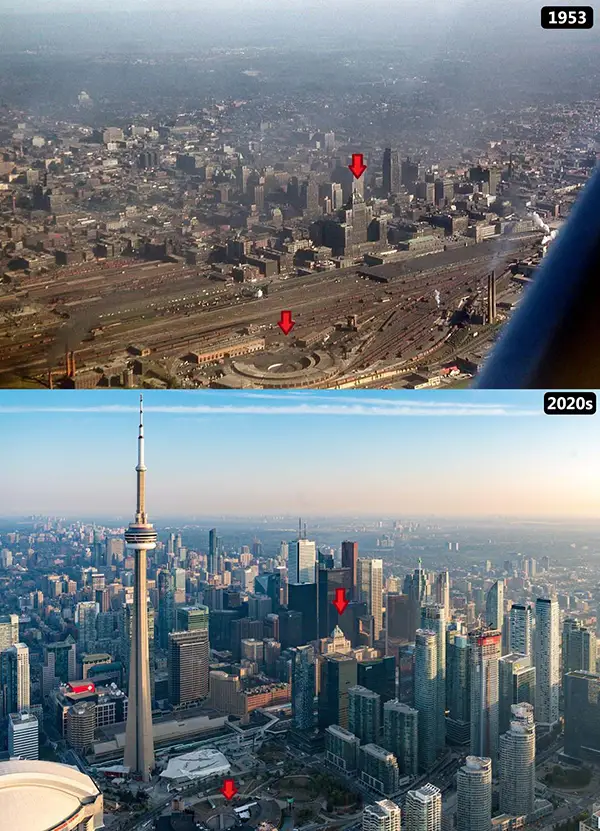
Toronto in 1953 was a mid-sized city with a modest downtown core and wide open spaces at its edges. By the 2020s, those edges had filled in with dense residential towers, and the skyline had grown into one of North America’s most recognizable.
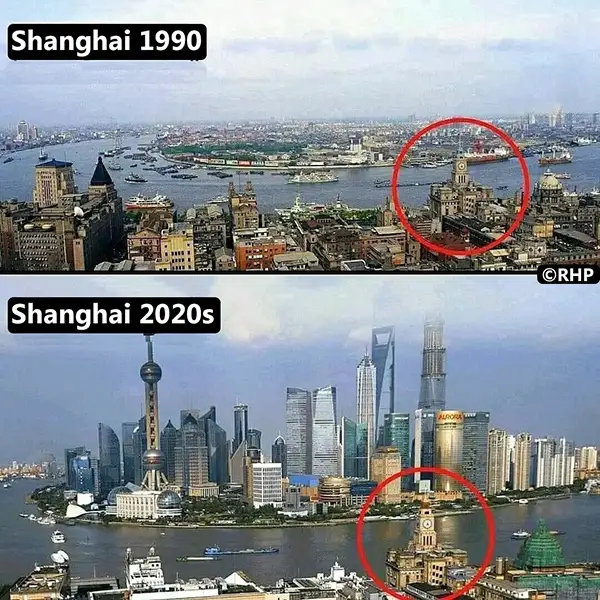
Shanghai’s Pudong district was largely farmland and low warehouses as recently as the early 1990s. Within two decades, it became home to some of the tallest buildings on Earth, a testament to China’s rapid urban expansion.
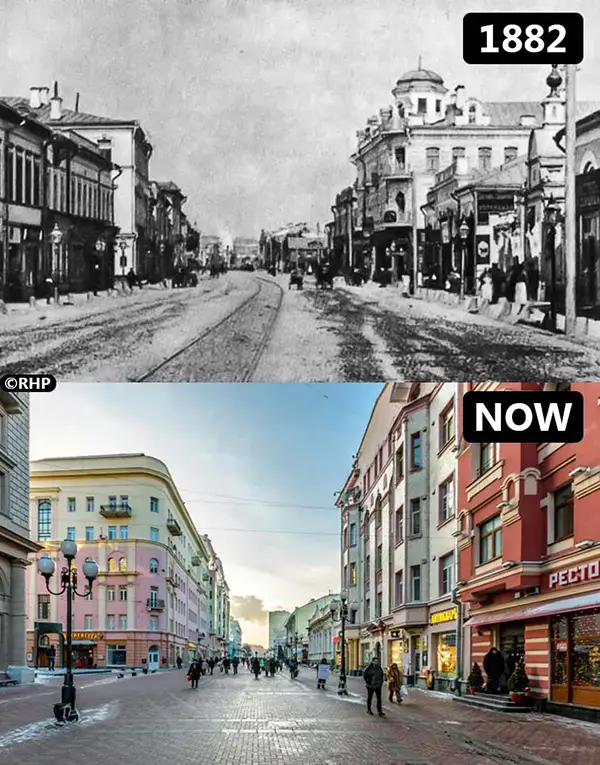
Paris stands apart from many cities in this comparison. Its historic boulevards, lined with Haussmann-era buildings, have been carefully preserved. The wide avenues and uniform stone facades that define the city today look remarkably similar to photographs taken over a century ago — a deliberate choice rooted in strict architectural planning laws.
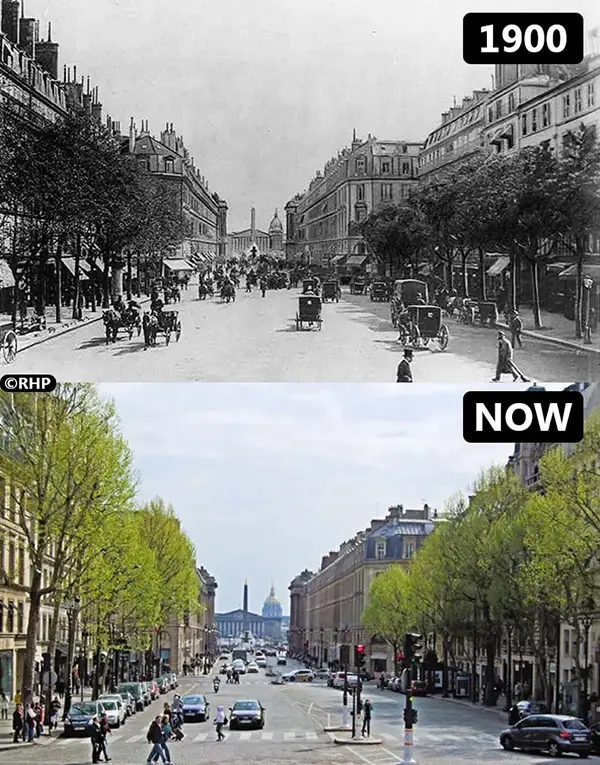
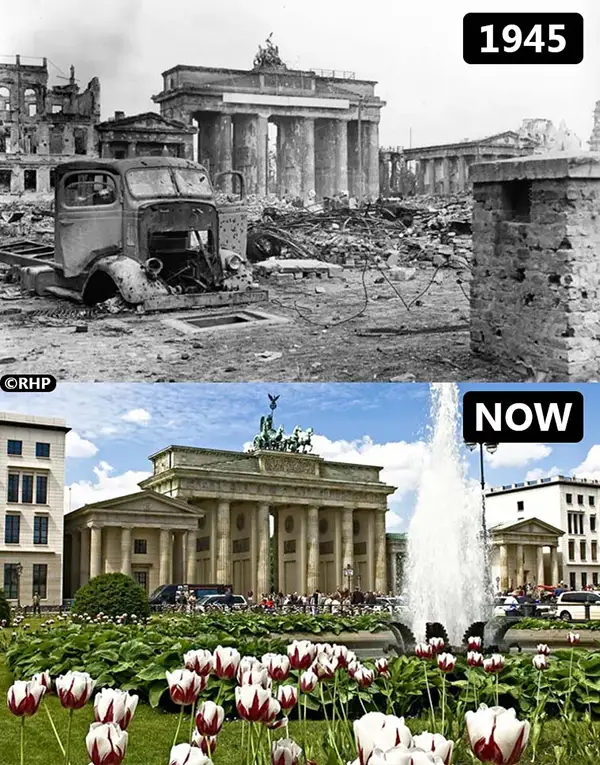
Berlin’s transformation carries the weight of history. Divided by a wall for nearly three decades, the city reunified in 1990 and spent the following years rebuilding entire districts from the ground up. Today, modern architecture sits directly beside restored pre-war buildings.
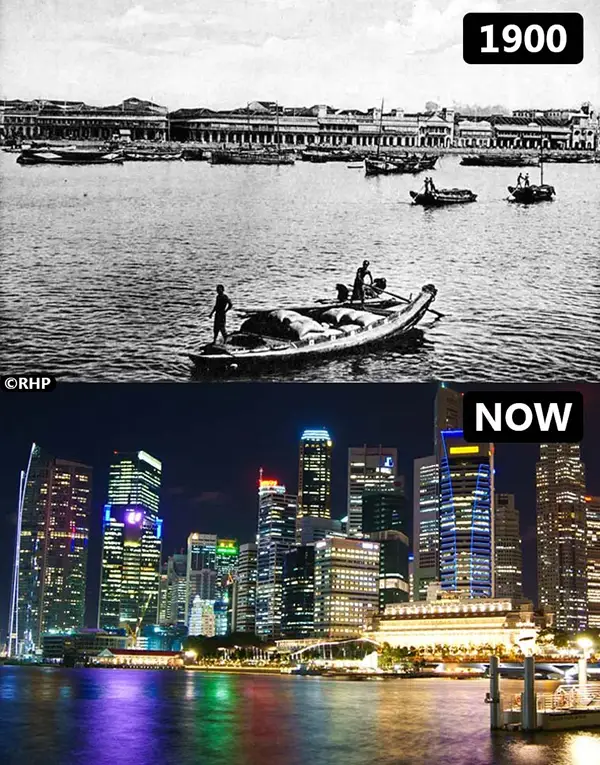
Singapore transformed from a colonial port city into a planned metropolis of green corridors, elevated walkways, and densely packed high-rises — all within roughly 60 years of independence. Land reclamation projects physically expanded the island itself to accommodate the growth.
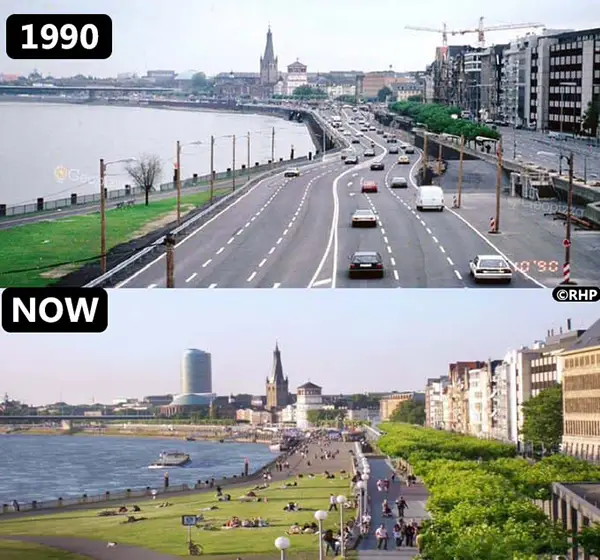
Not every urban change means adding more. Düsseldorf made headlines by tearing out a highway that cut through the city’s waterfront and replacing it with a public park. The decision returned green space to residents and reconnected the city to the Rhine River.
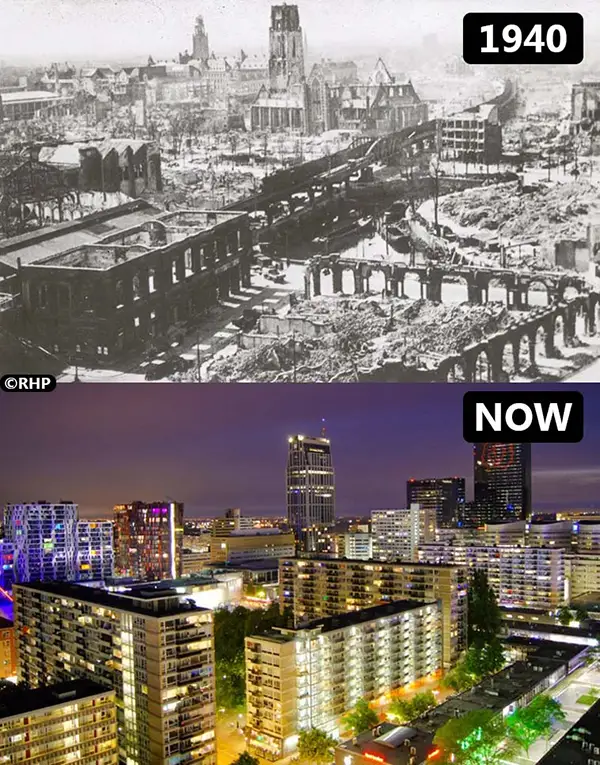
Rotterdam was nearly leveled by German bombing in May 1940. Rather than rebuild in the old style, the city used postwar reconstruction as an opportunity to experiment with bold modern architecture. Today it is one of Europe’s most architecturally distinctive cities.
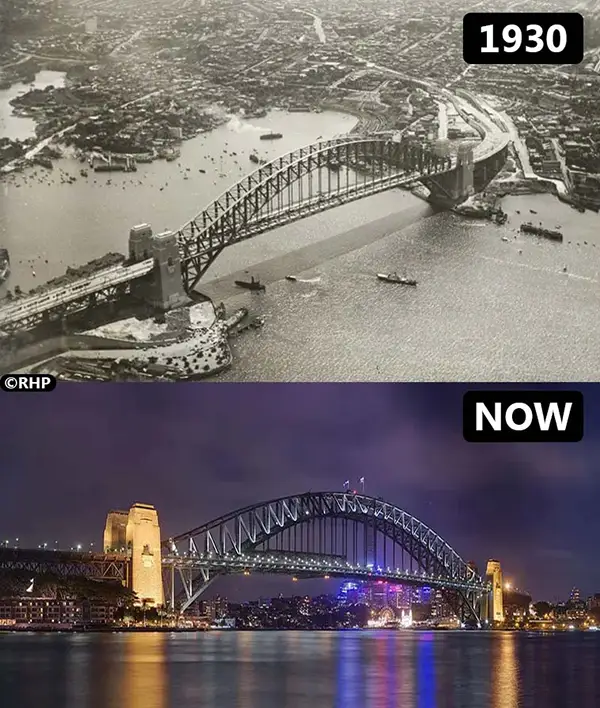
Not all cities follow an upward trajectory. Detroit reached its peak population in 1950, when its auto industry employed hundreds of thousands. Decades of factory closures and population flight left entire neighborhoods abandoned. Then-and-now photos of Detroit show streets that were once packed with activity now lined with vacant lots and crumbling buildings.
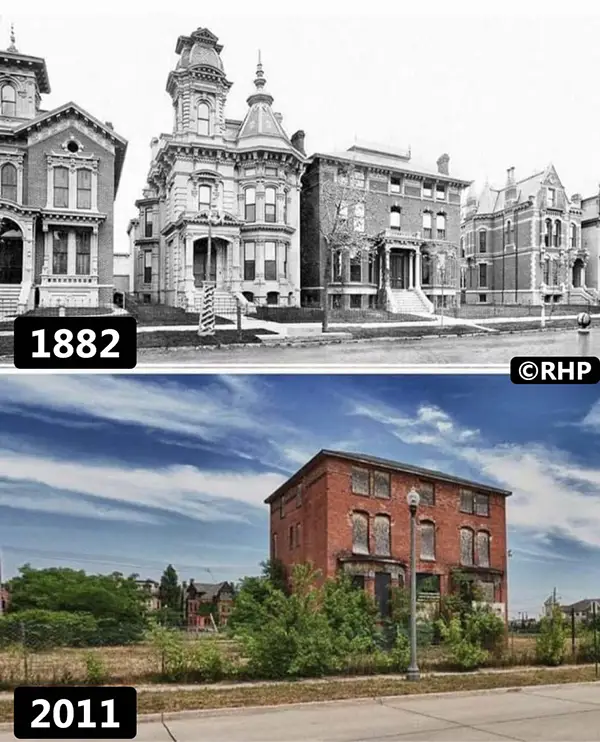
Deadwood, Dakota, was a booming gold rush town in the 1870s and 1880s. Main Street was packed with saloons, gambling halls, and supply stores serving miners and fortune seekers. Today that same street is a quiet tourist destination, its wooden storefronts preserved or restored to evoke the frontier era.
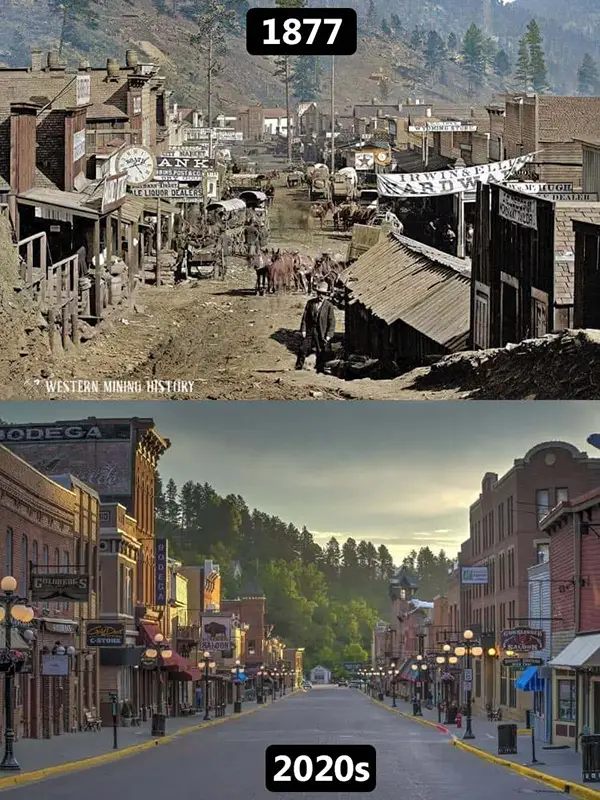
Dresden is one of history’s most striking examples of reconstruction. Allied firebombing in February 1945 destroyed the city’s famous baroque core, killing tens of thousands of civilians. Over the following decades, particularly after German reunification, the city painstakingly rebuilt landmark structures like the Frauenkirche using original stones recovered from the rubble.
Some transformations are quieter. St. Margaret’s Bay in Nova Scotia shows how even small coastal communities shift over generations — modest fishing villages slowly giving way to seasonal cottages, then permanent residences, as roads improved and the region became more accessible to city dwellers.