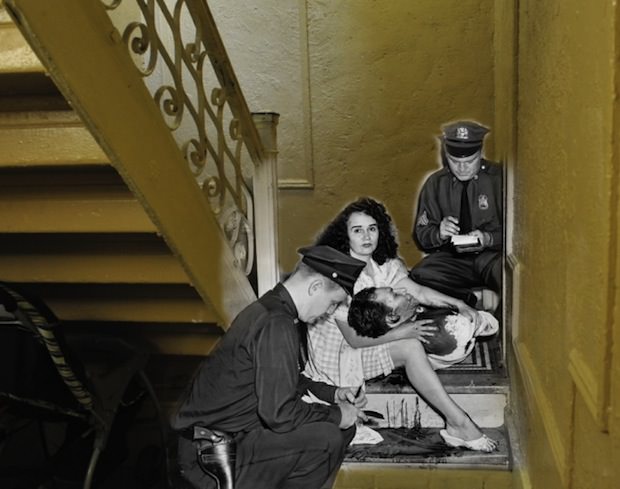
New York City’s streets hold more history than most people walking them will ever know. Photographer Marc Hermann set out to make that history visible. He dug through the vast photo archive of the New York Daily News, searching for images taken at real crime scenes, accidents, and disasters from decades past.
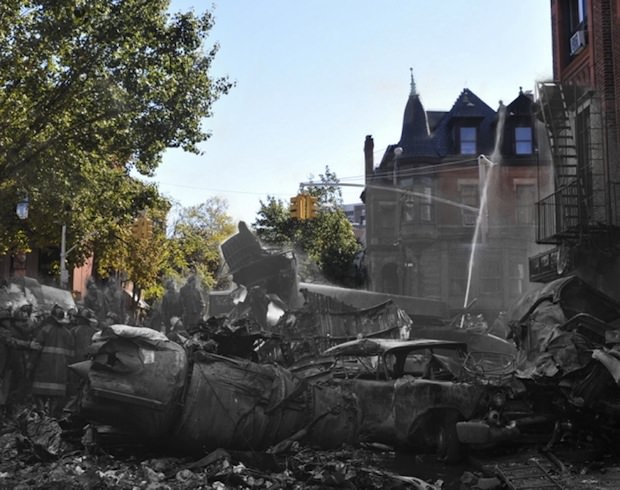
The old photographs tell hard stories. A stolen car wrapped around a light pole. A child killed on her tricycle. A gangster shot dead inside his own vehicle. These weren’t distant events — they happened on specific corners, in front of specific buildings, on streets that still exist today.
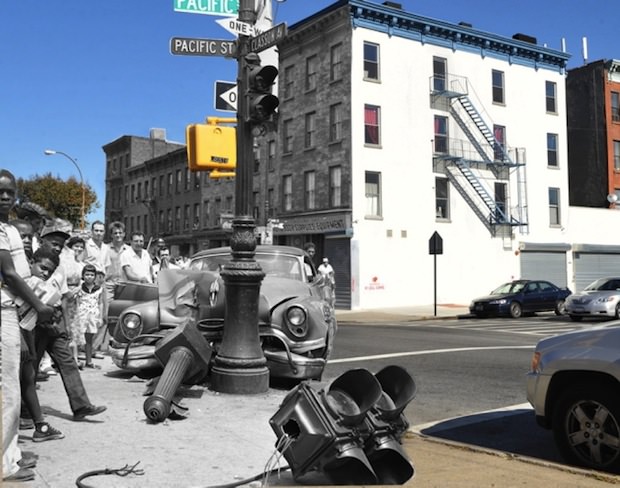
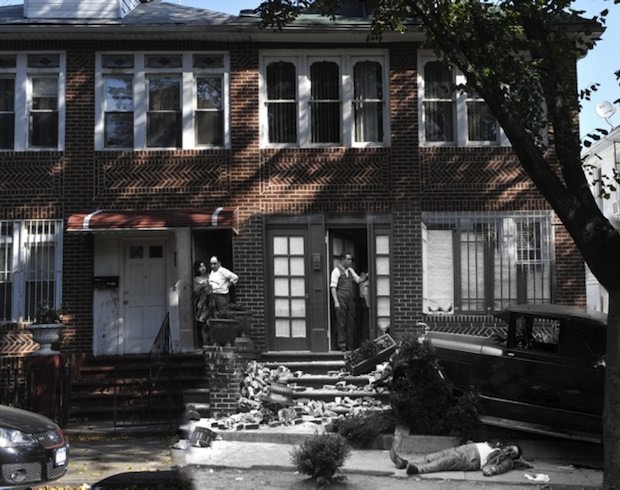
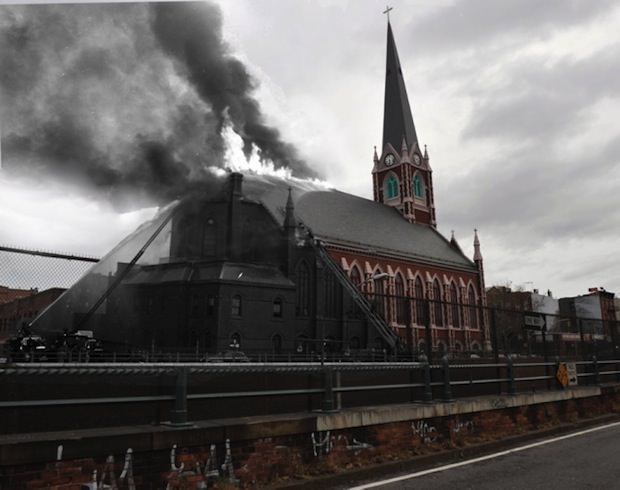
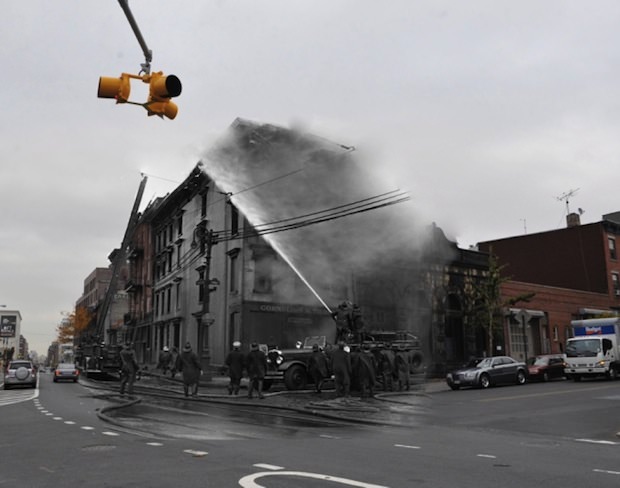
Hermann tracked down the exact locations where each original photo was taken. He matched angles, sight lines, and framing with precision, so the modern shot lines up directly with the old one. The result pairs the chaos of the past with the calm of the present at the same spot.
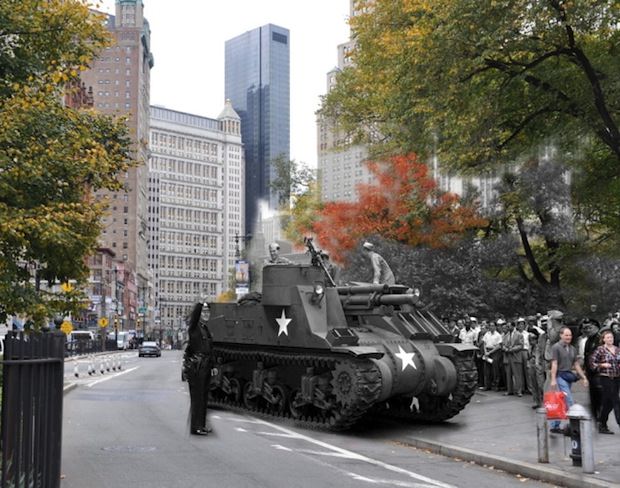
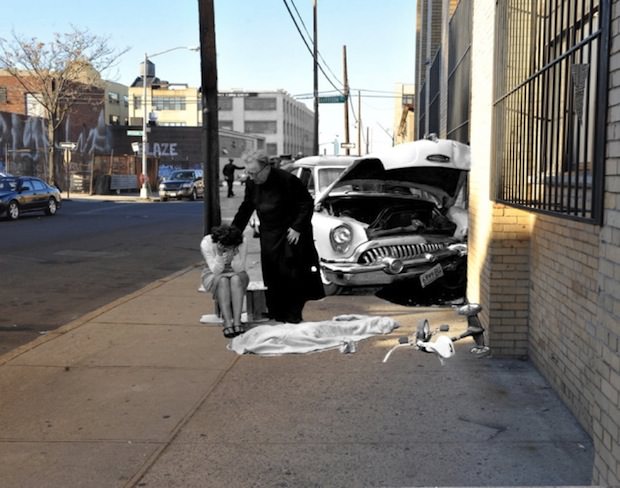
Some of the archived images are deeply disturbing. The 1928 death of gangster Frankie Yale shows his car slammed into a Brooklyn stoop after he was shot from a passing vehicle. The 1957 murder of Salvatore Santoro left him dead in his own apartment vestibule on Hicks Street. These scenes were documented in sharp, unflinching detail by Daily News photographers.
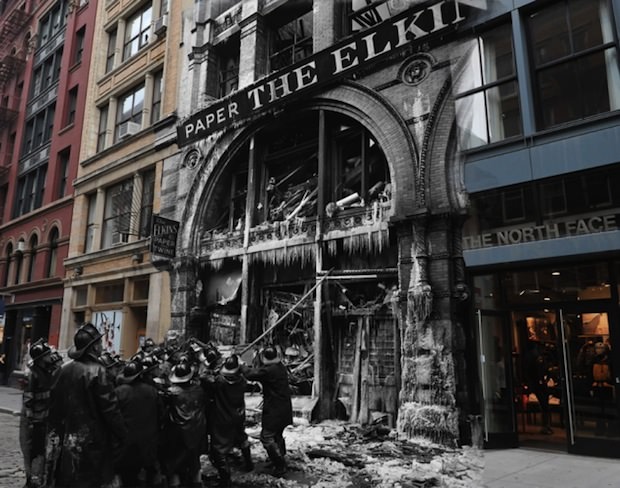
Fires appear throughout the archive with grim regularity. Firefighters battled a blaze at the Sacred Hearts of Jesus and Mary & St. Stephen Roman Catholic Church in January 1951, and another at the Fulton Fish Market in 1961. The buildings in these photos still stand on the same blocks, now surrounded by modern storefronts and parked cars.
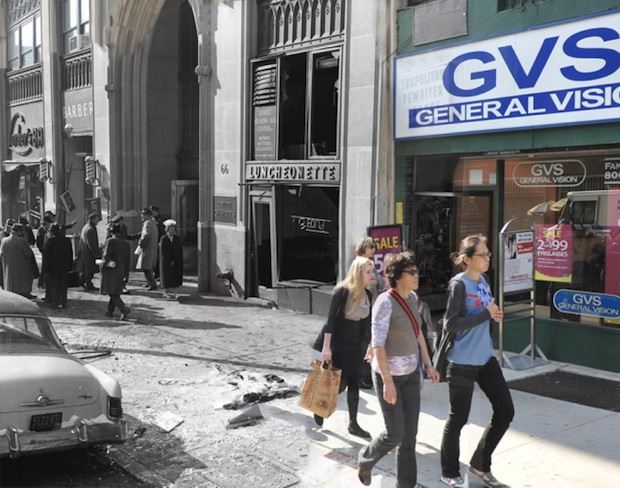
Not every image captures crime. Detective Michael Dwyer died by suicide in Prospect Park on July 30, 1950. Edna Egbert climbed onto a window ledge at her Dean Street apartment in Brooklyn on March 19, 1942, while officers struggled to pull her back. These were human crises, photographed in real time.
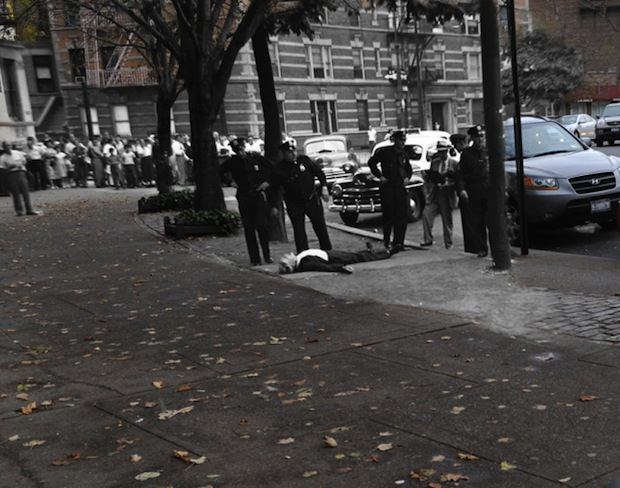
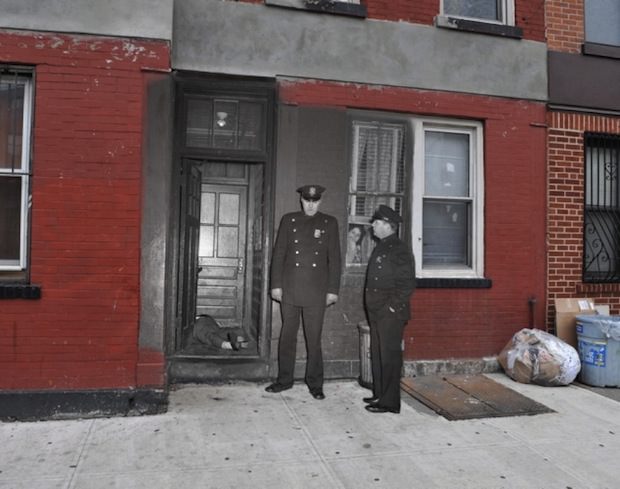
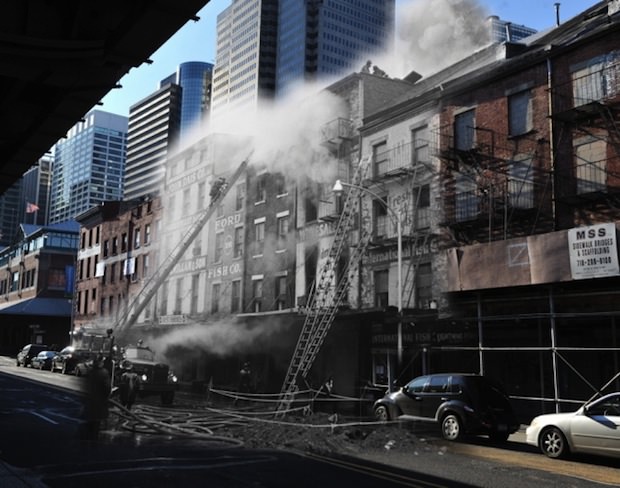
What makes the series so striking is how ordinary these locations look today. The same fire hydrants, stoops, and lampposts that witnessed violence or tragedy now sit in plain sight on unremarkable blocks. Pedestrians pass them without a second glance. Hermann’s project makes that invisible history suddenly visible.
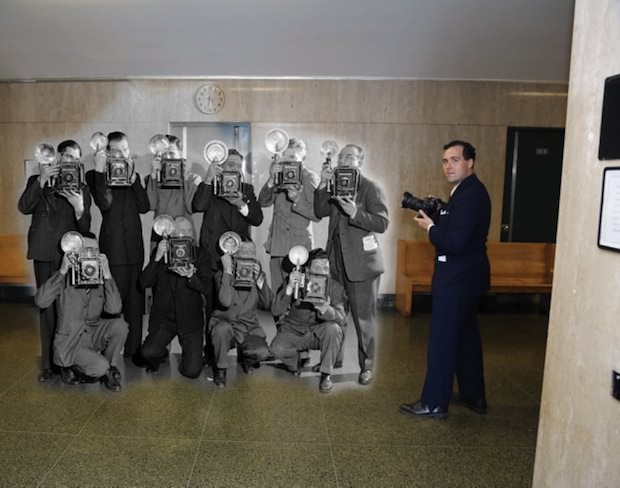
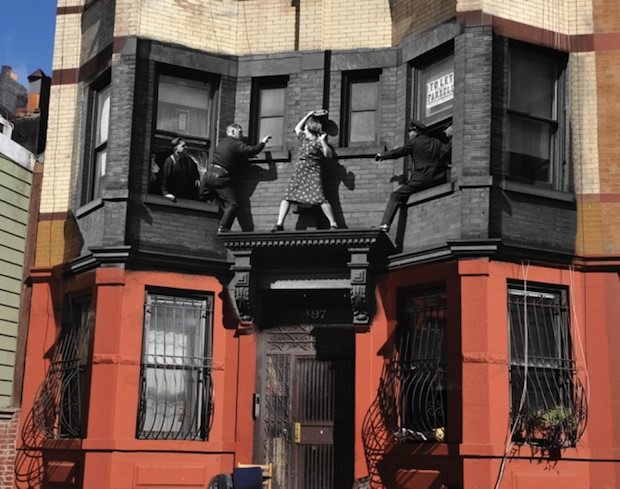
On September 25, 1961, James Linares was shot by his girlfriend’s husband and photographed bleeding in her arms on the street. That corner still exists. The archive holds these moments frozen, and Hermann’s lens reveals just how thin the line is between New York’s violent past and its present-day sidewalks.