The 1920s were a turning point for Greece. The country was still adjusting after World War I, and a massive population exchange with Turkey mid-decade brought hundreds of thousands of refugees into Greek territory. This reshaped communities across the mainland and islands almost overnight. Against this backdrop, photographers captured the faces of everyday Greeks — peddlers, farmers, monks, and women doing needlework — freezing a world in transition.

Rural life appears throughout these portraits. On Corfu, village scenes show women and children gathered on stone steps, olive harvesters carrying baskets, and girls standing on the stairways of fishing homes. These were tight-knit communities where daily labor was visible and shared.

The population exchange with Turkey left a direct mark on the landscape. Refugees resettled across Macedonia and other regions, bringing their own customs with them.

Clothing in these portraits tells its own story. Traditional regional dress — embroidered vests, layered skirts, and distinctive head coverings — remained common, especially in rural areas and among older generations. Crete in particular produced striking examples of national costume worn by both men and women.

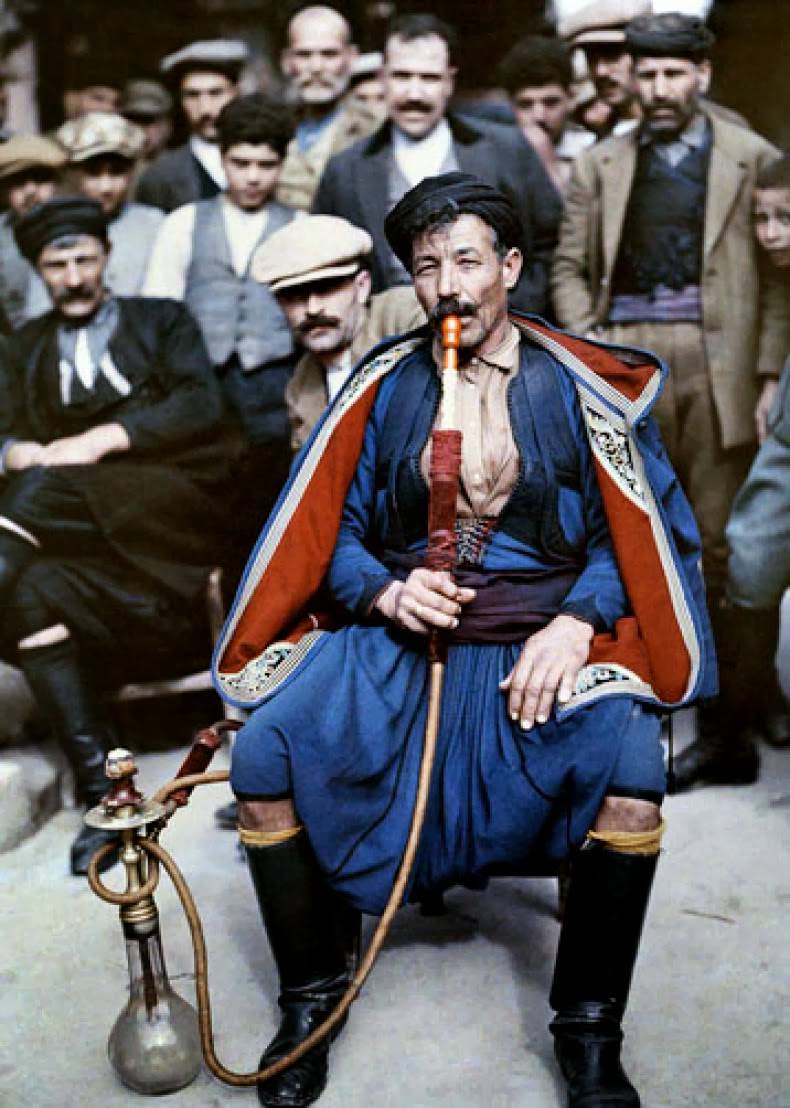


Everyday work is woven into many of these images. Women knit, filter drinking water, husk corn in open fields, and labor outside their homes. These weren’t posed scenes of leisure — they were snapshots of real, ongoing work.


Men appear in roles ranging from muleteer to monk. Religious life held a strong presence, as seen in portraits from monasteries and the sacred community of Mount Athos.
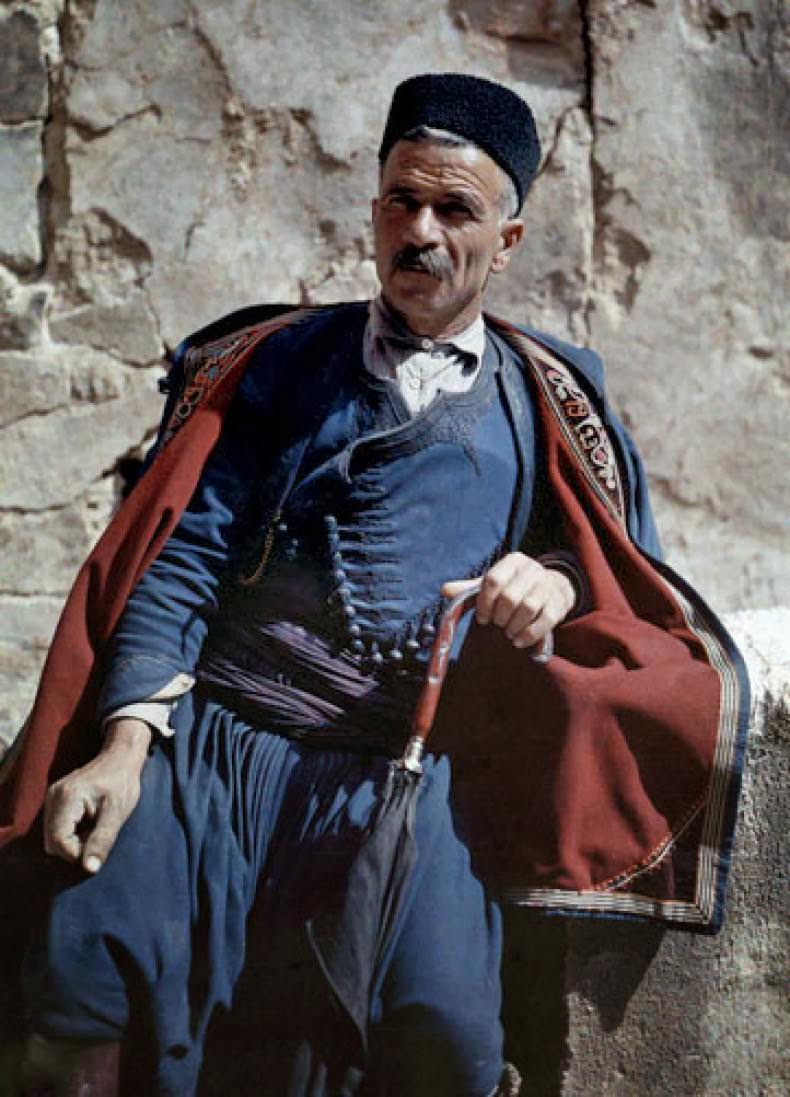


Expressions across these portraits range from composed formality to quiet intensity. The direct gazes of subjects — whether a woman knitting in Aivali or a hunter resting under an olive tree in Crete — carry a weight that no caption fully explains.