
Frank Sinatra was born on December 12, 1915, in Hoboken, New Jersey. From the time he was a teenager, he had one clear goal: become a singer. He grew up listening to Bing Crosby and spent his early years performing in local clubs and dance halls across New Jersey, building his voice and developing the style that would one day make him a household name. Those years were not glamorous. Sinatra had a strained relationship with his parents, no steady income, and no guarantee that any of it would ever pay off. Show business was brutally competitive, and he was just another young man with ambition.
On November 26, 1938, that already-difficult path got a lot harder. Sinatra, then 23 years old, was arrested in Bergen County, New Jersey. The charges were seduction and adultery, both tied to an alleged affair with a woman named Antoinette Della Penta, who was said to be married. At the time of the arrest, Sinatra was still a struggling, largely unknown performer. He had not yet joined the Tommy Dorsey Orchestra. He had not yet recorded a hit record. He was simply a young man trying to make it — and now he had a criminal charge hanging over his head. The police took him in, processed him, and photographed him, as they did with anyone who passed through their doors.
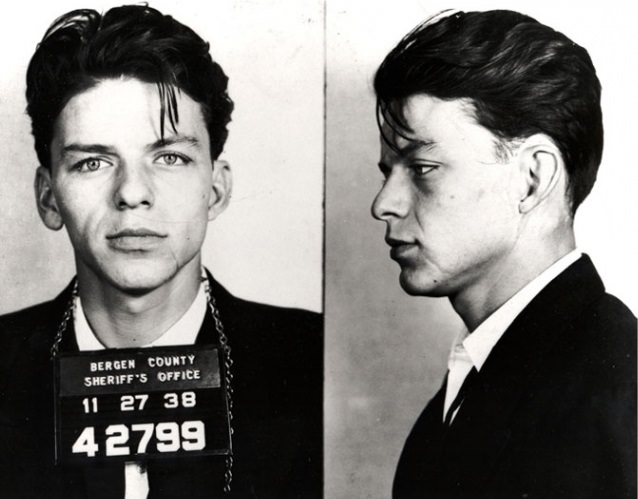
That black-and-white photograph is one of the most recognizable mugshots in American history. It shows a young, clean-shaven Sinatra with his hair neatly combed and a calm, serious expression on his face. He is wearing a suit and tie. Even in a police booking photo, the sharp sense of style that would define him for decades is already visible. There is no panic in his face, no dishevelment. He looks composed — more like a man sitting for a portrait than one who has just been arrested. The image offers a rare, unguarded look at Sinatra before the fame, the fame, and the mythology set in.
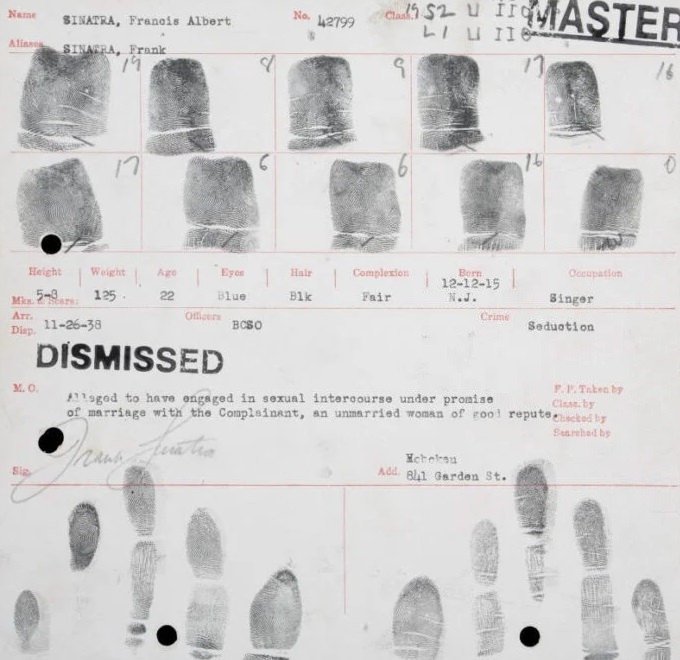
As part of the booking process, Sinatra’s fingerprints were also taken and recorded by Bergen County authorities. These records, preserved alongside the mugshot, document the full scope of his arrest and processing through the local justice system that day.
The charges against Sinatra did not hold up for long. The seduction charge rested on a law that was outdated and almost never enforced — one that made it illegal for an unmarried man to have sexual relations with a married woman. When investigators looked more closely at the case, the foundation of the charges crumbled entirely. Antoinette Della Penta, it turned out, was not married. She had misrepresented her marital status, and with that key fact gone, the case against Sinatra fell apart. The charges were dropped, and he walked away without a conviction.
The arrest received little attention at the time, partly because Sinatra was not yet famous enough for the public to care. Within just a few years, that would change completely. He joined the Tommy Dorsey Orchestra and quickly became its star attraction, drawing enormous crowds of young fans who became known for screaming and fainting at his performances. By the early 1940s, Frank Sinatra was one of the most popular entertainers in America.
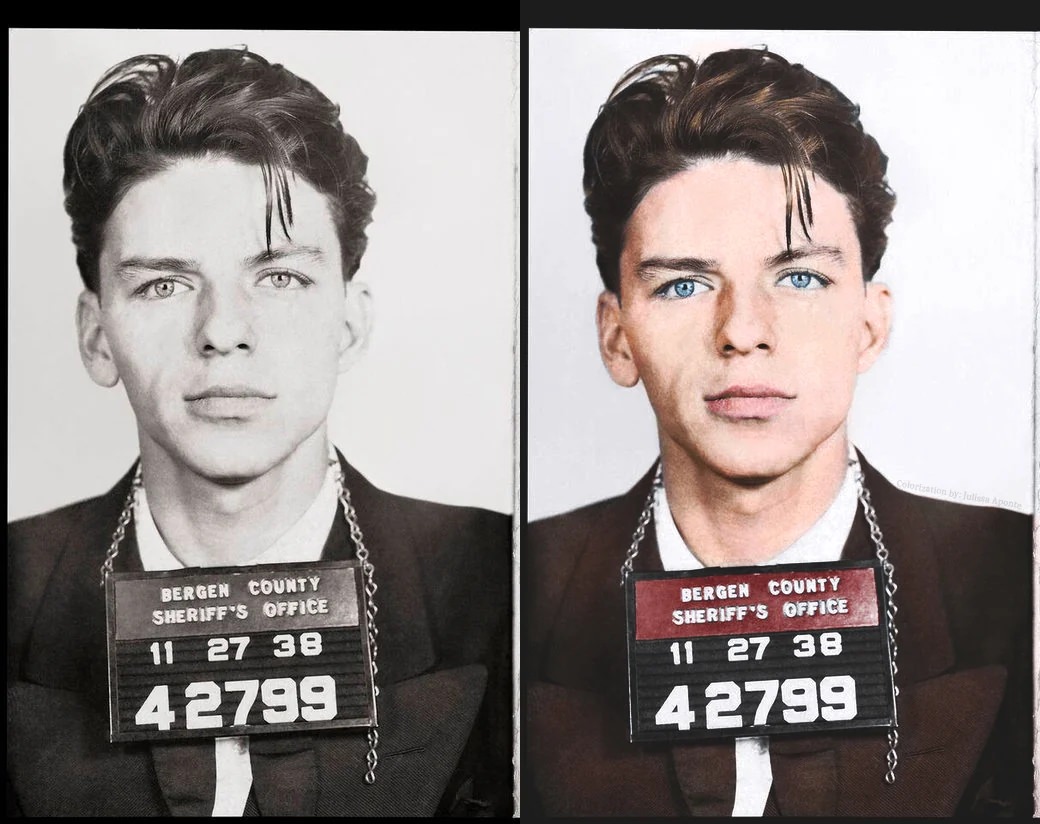
Over the decades, his career expanded far beyond music. He won an Academy Award for Best Supporting Actor for his role in “From Here to Eternity” in 1953. He accumulated 11 Grammy Awards. He received the Presidential Medal of Freedom. He performed for more than five decades, becoming one of the defining figures of 20th-century American entertainment. Through all of it — the sold-out concert halls, the Rat Pack, the Hollywood film sets, the tabloid stories about his romantic life and alleged connections to organized crime — the mugshot from that November night in 1938 remained a striking artifact.
What makes the image so compelling is the contrast it represents. The man in that booking photo had nothing yet. No hit records, no film credits, no international fame. He was a 23-year-old from New Jersey sitting in a police station, facing charges that could have derailed everything before it even started. The fact that he walked out of that station, kept performing, and eventually became “Ol’ Blue Eyes” is what gives the photograph its weight. It is not just a mugshot. It is the beginning of a story that very nearly ended before it had a chance to start.



Corrections:
Sinatra was 22 years old in November 1938.
The complaint, as written in the fingerprint report dated November 26th 1938, was “an unmarried woman of good repute”. She doesn’t seem to be claiming to be married but of being tricked into sexual intercourse “under promise of marriage”. The report classifies the crime as “Seduction”, not adultery.
He was also arrested several times on charges of disorderly conduct, assault, and other misdemeanors throughout his life.