Hey There! Before You Go. 😧
Get the best vintage content straight into your inbox!

Don't worry, we don't spam

Demonstrations and Protests at Trafalgar Square: Historic Photos Show the Fight for Public Voice Over the Years

Trafalgar Square sits at the heart of London, flanked by the National Gallery and within walking distance of the Houses of Parliament. Since it opened to the public in the 1840s, it has drawn far more than tourists. Its wide open ground and proximity to government buildings made it a natural gathering point for anyone who wanted those in power to hear them. Speakers climbed the bases of statues and the steps of the National Gallery to address crowds below. Banners stretched across the stone. Chants echoed off the surrounding buildings.

The authorities understood the square’s potential from the start. The fountains — now one of its most photographed features — were installed partly to reduce the open floor space available to large crowds. The tactic did not stop the protests. It barely slowed them.

The suffragette movement was among the most prominent early causes to use the square. In 1908, Keir Hardie and Emmeline Pankhurst stood together before a crowd demanding votes for women.
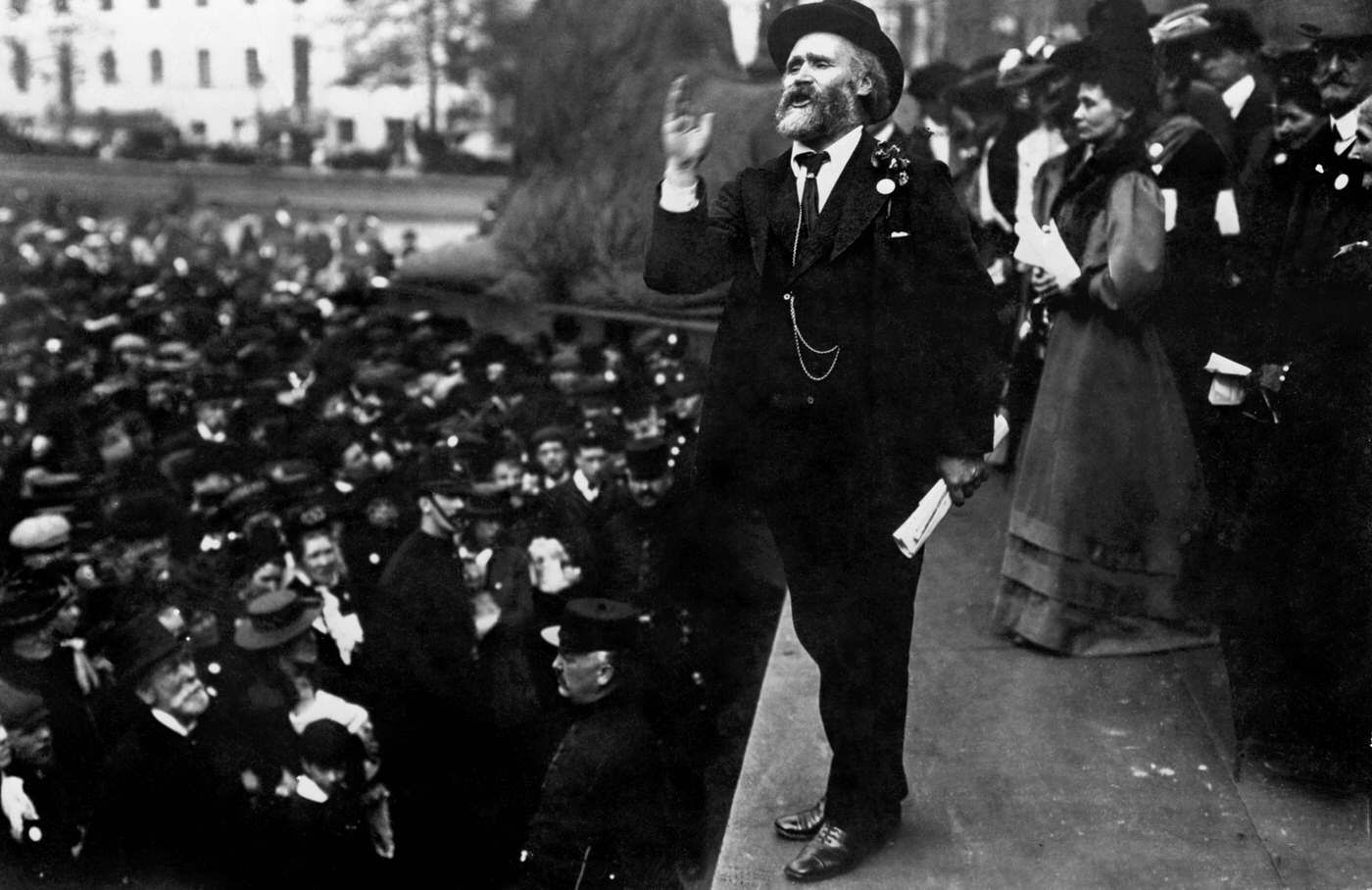
Keir Hardie and Emmeline Pankhurst at a Women's Suffrage demonstration in Trafalgar Square, 1908.
Keir Hardie and Emmeline Pankhurst at a Women’s Suffrage demonstration in Trafalgar Square, 1908.

The following year, Emmeline’s daughter Christabel took to the square as well, continuing the campaign with the same urgency.
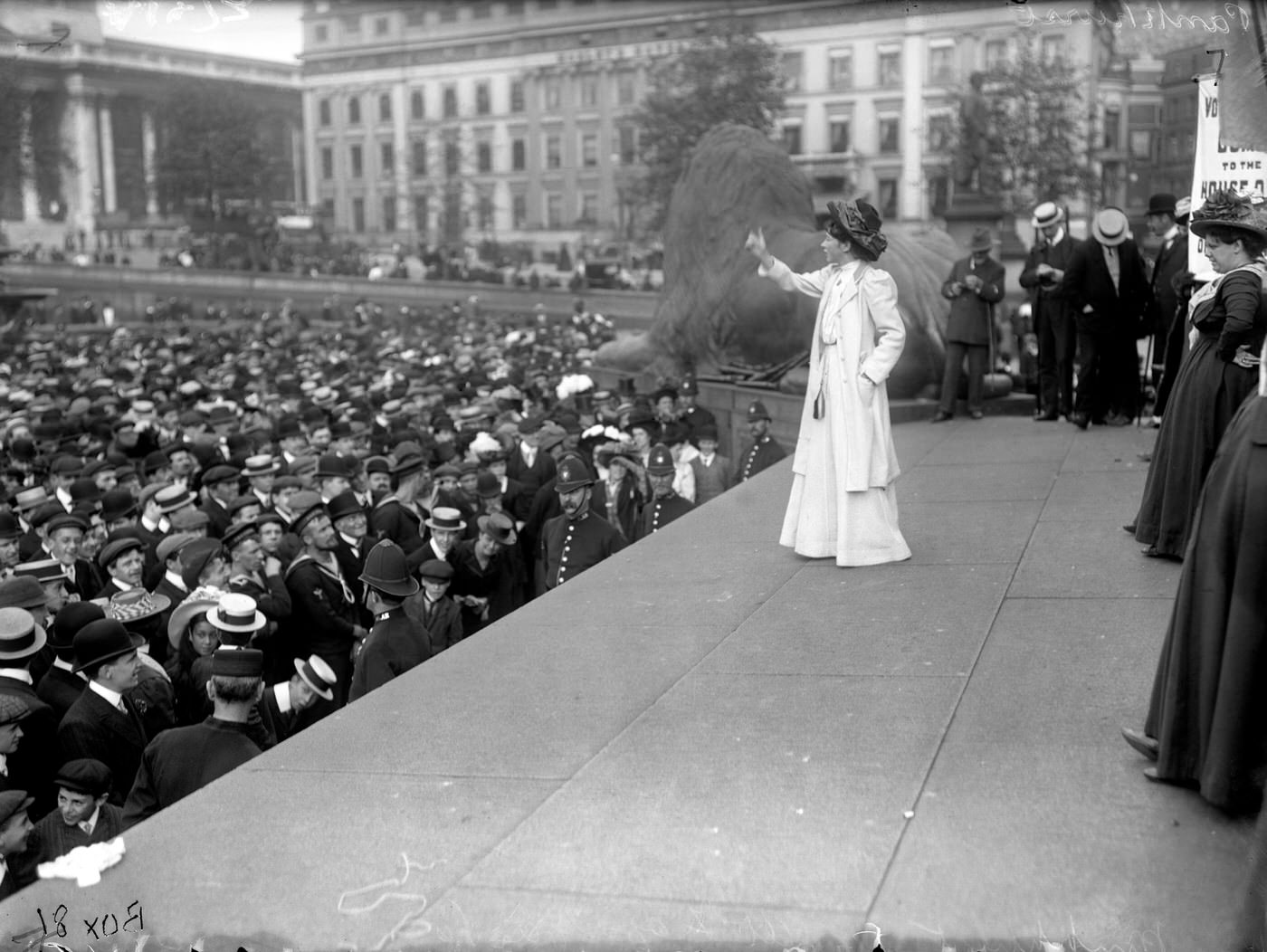
Christabel Pankhurst addressing a crowd at Trafalgar Square, 1909.

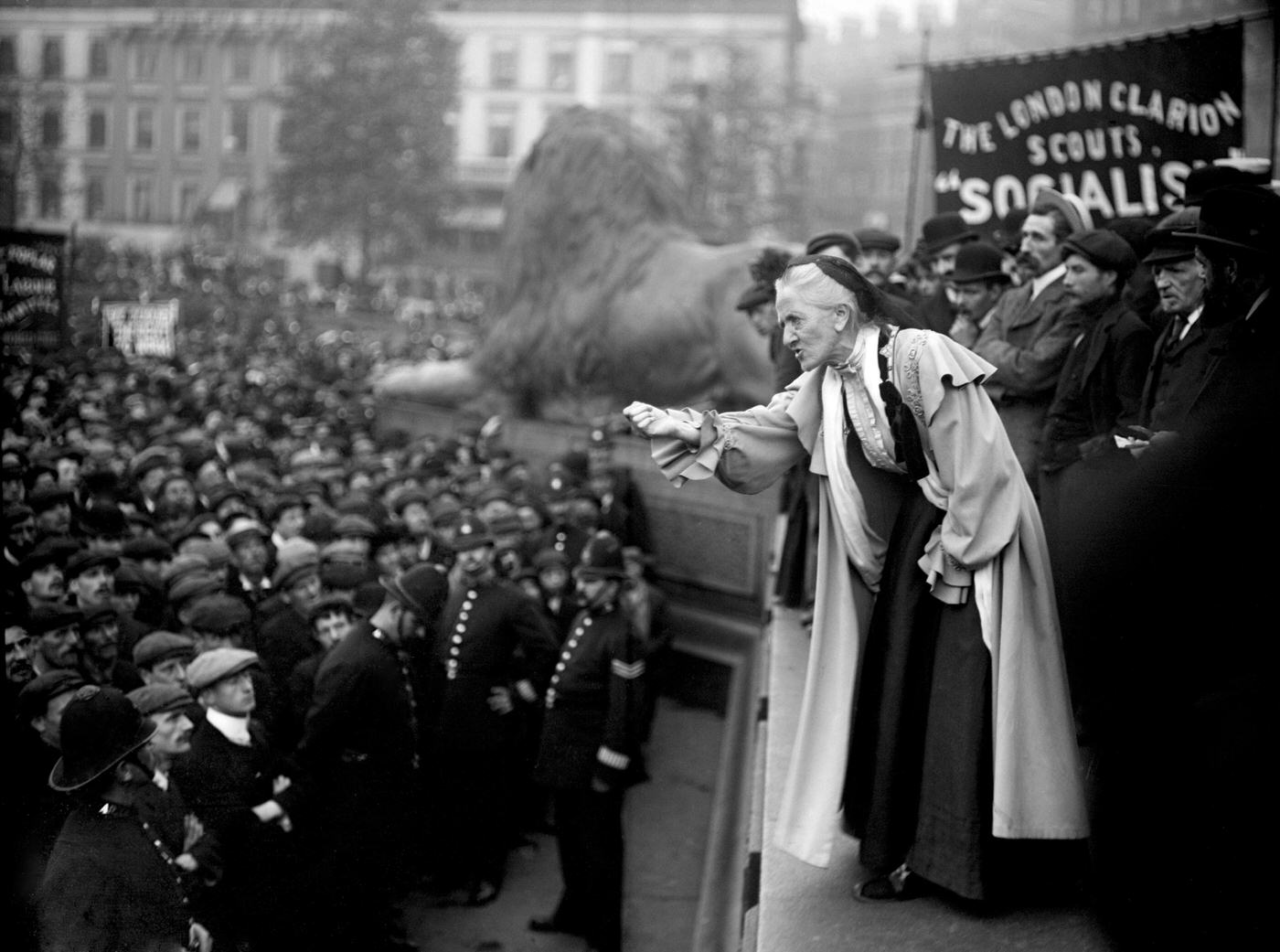
In 1910, playwright George Bernard Shaw appeared at an anti-vivisection protest, while activist Charlotte Despard addressed her own crowd the same year. The square was hosting multiple causes across a single decade, and each one drew on the square’s visibility and symbolic weight.
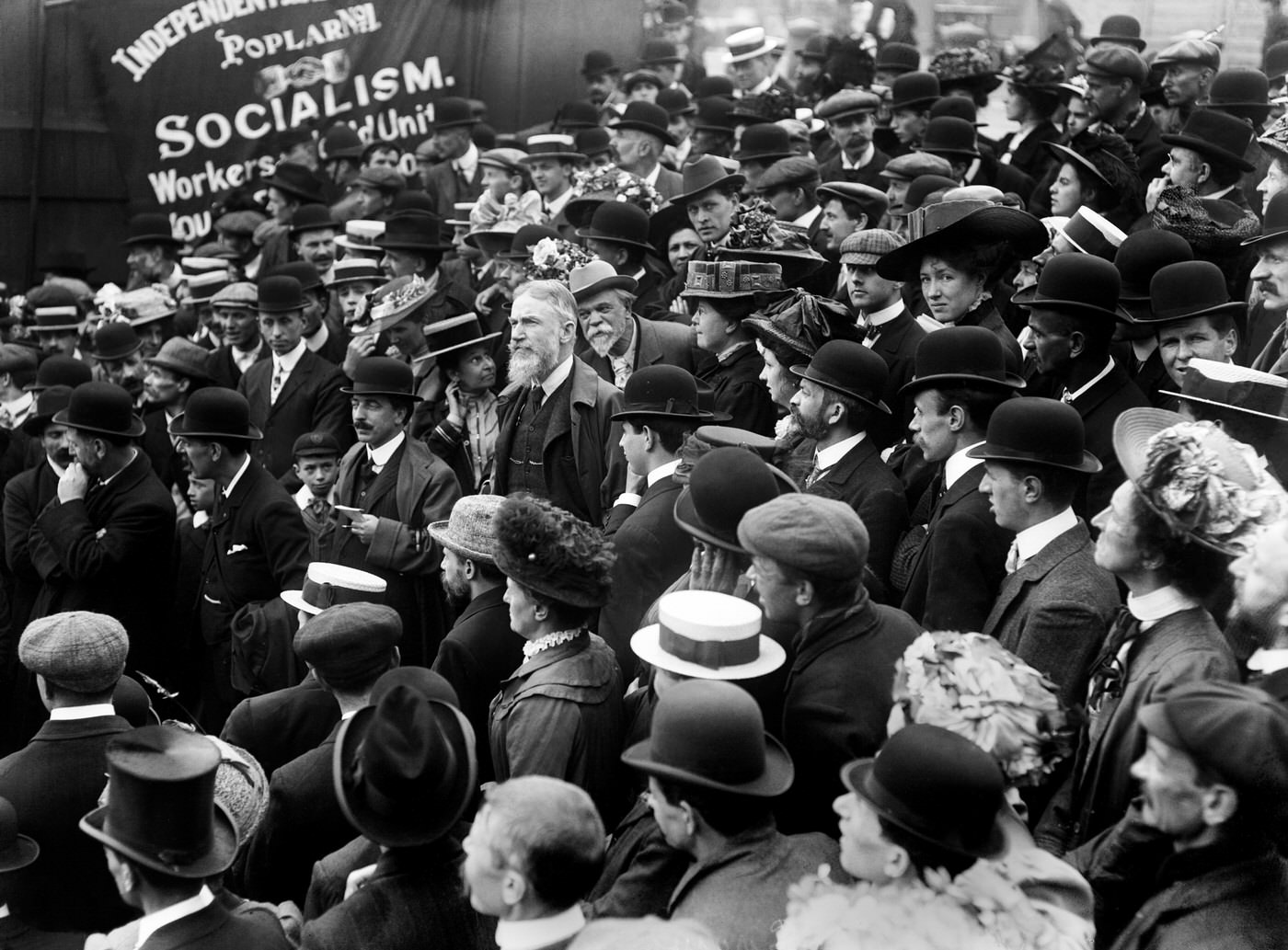
George Bernard Shaw at an anti-vivisection protest in Trafalgar Square, 1910.
Charlotte Despard speaking to a crowd in Trafalgar Square, 1910.

Emmeline Pankhurst returned to the square in 1916 alongside Norah Dacre Fox, this time to speak on the Rumanian Crisis — proof that the suffragette leaders saw Trafalgar Square as a platform for international concerns, not just domestic ones.
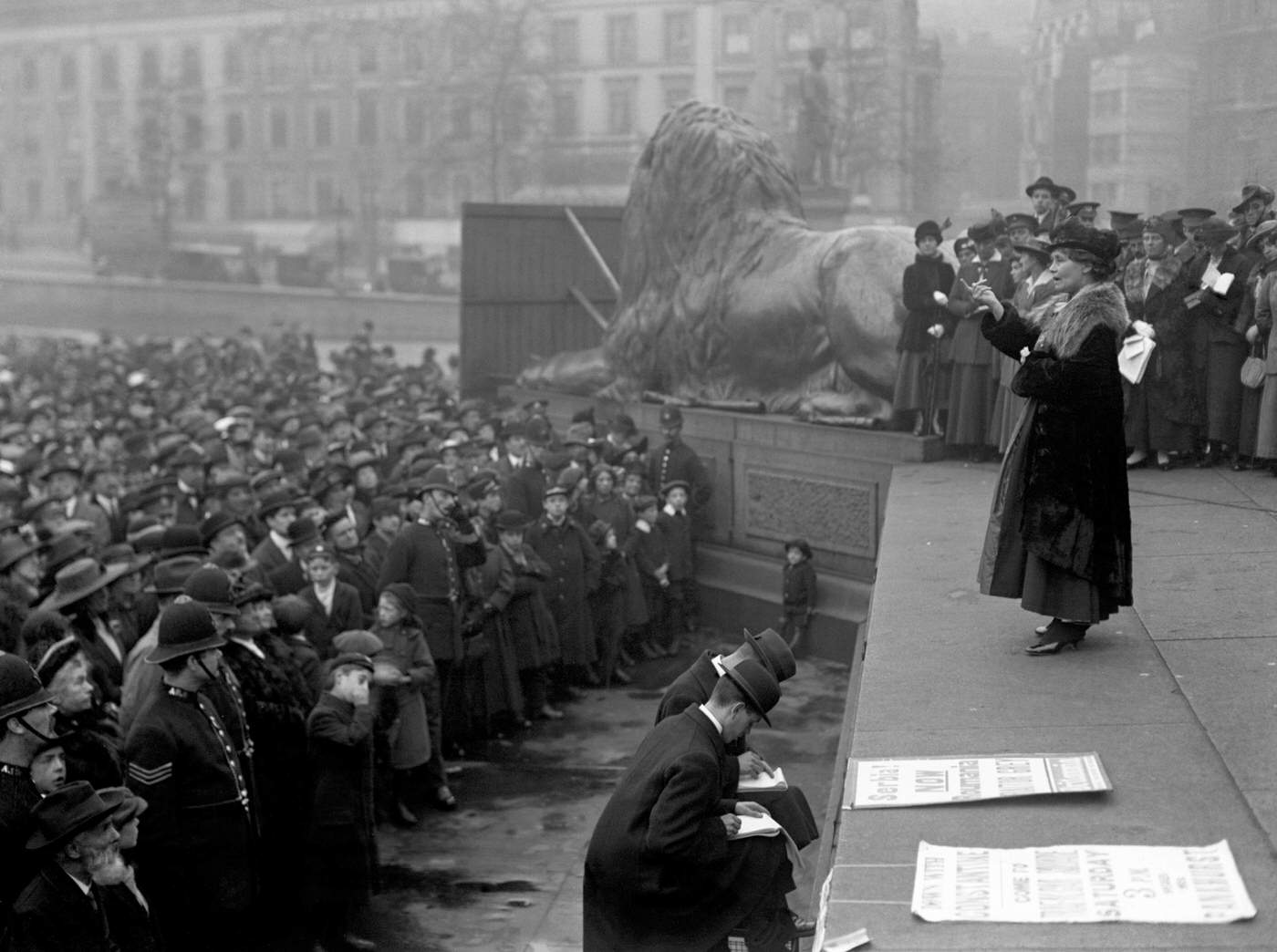
Emmeline Pankhurst and Norah Dacre Fox speaking at a Trafalgar Square meeting on the Rumanian Crisis, 1916.

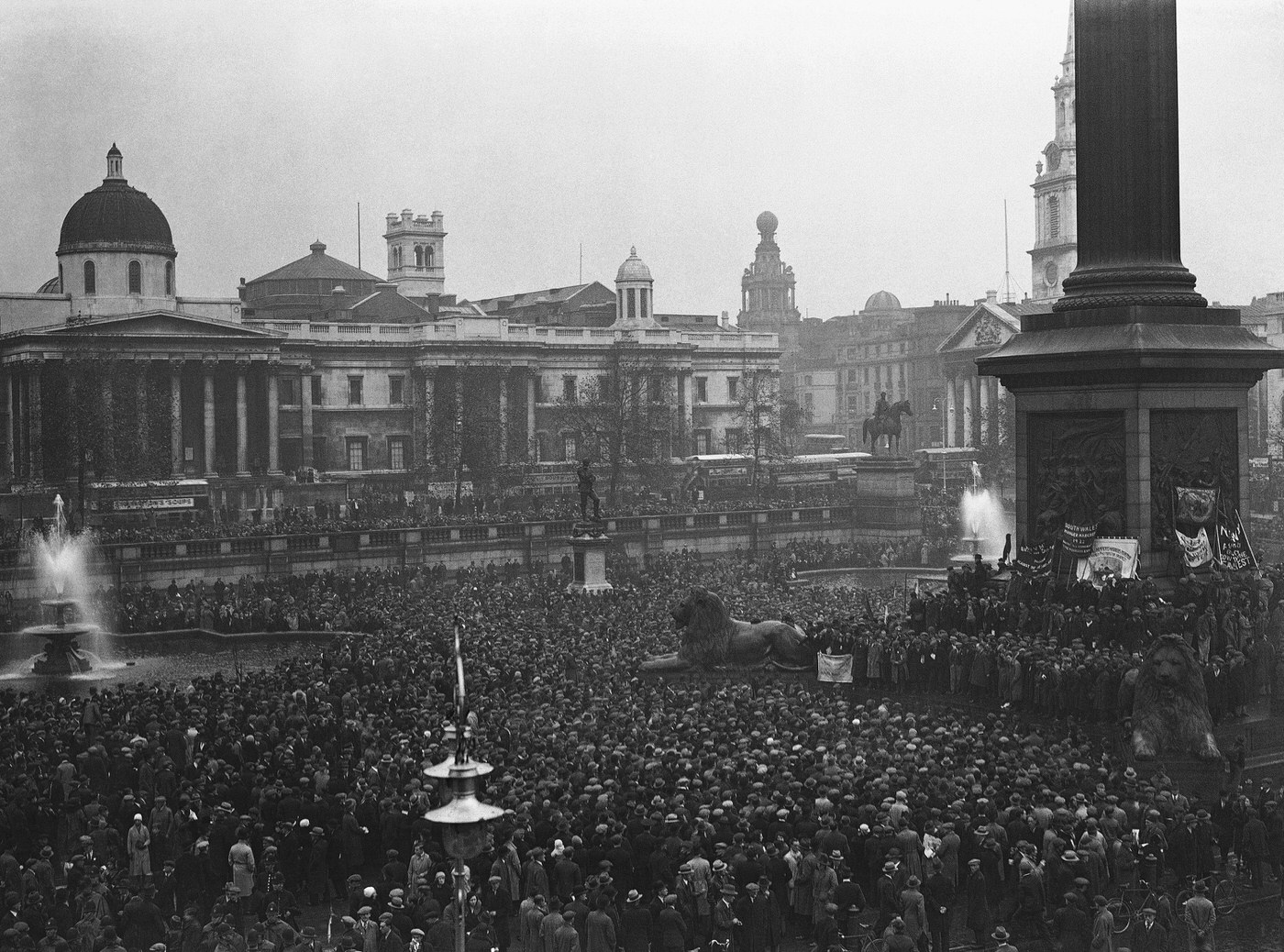
Through the 1920s and 1930s, the square became a rallying point for workers, the unemployed, and those watching the rise of fascism in Europe with alarm. In 1927, a crowd gathered there to memorialize Sacco and Vanzetti, the two Italian-American anarchists executed in the United States that same year. By 1932, mass unemployment had driven thousands to the square to protest their conditions directly.
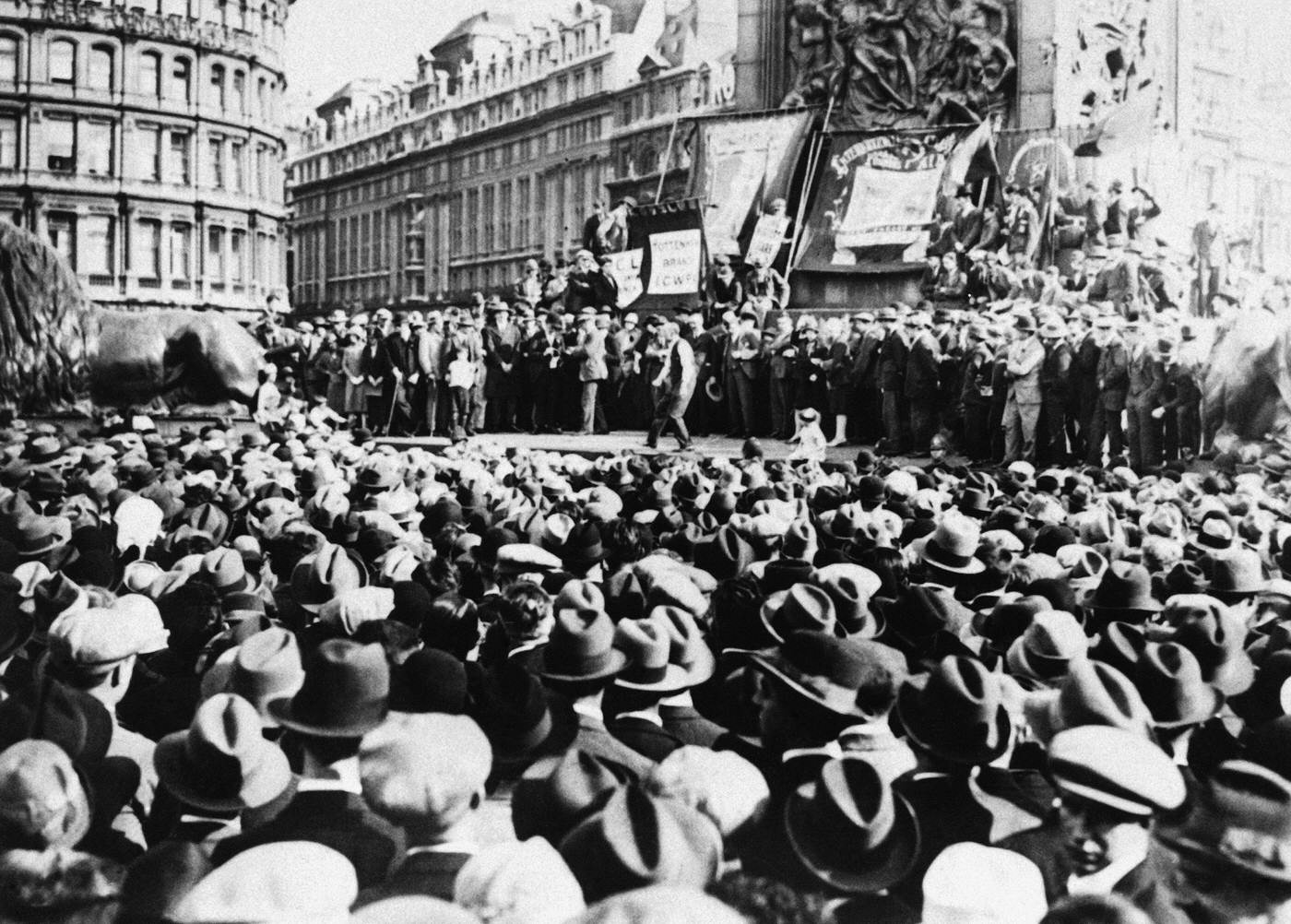
A memorial demonstration for Sacco and Vanzetti in Trafalgar Square, 1927.
A demonstration of unemployed people in Trafalgar Square, 1932.

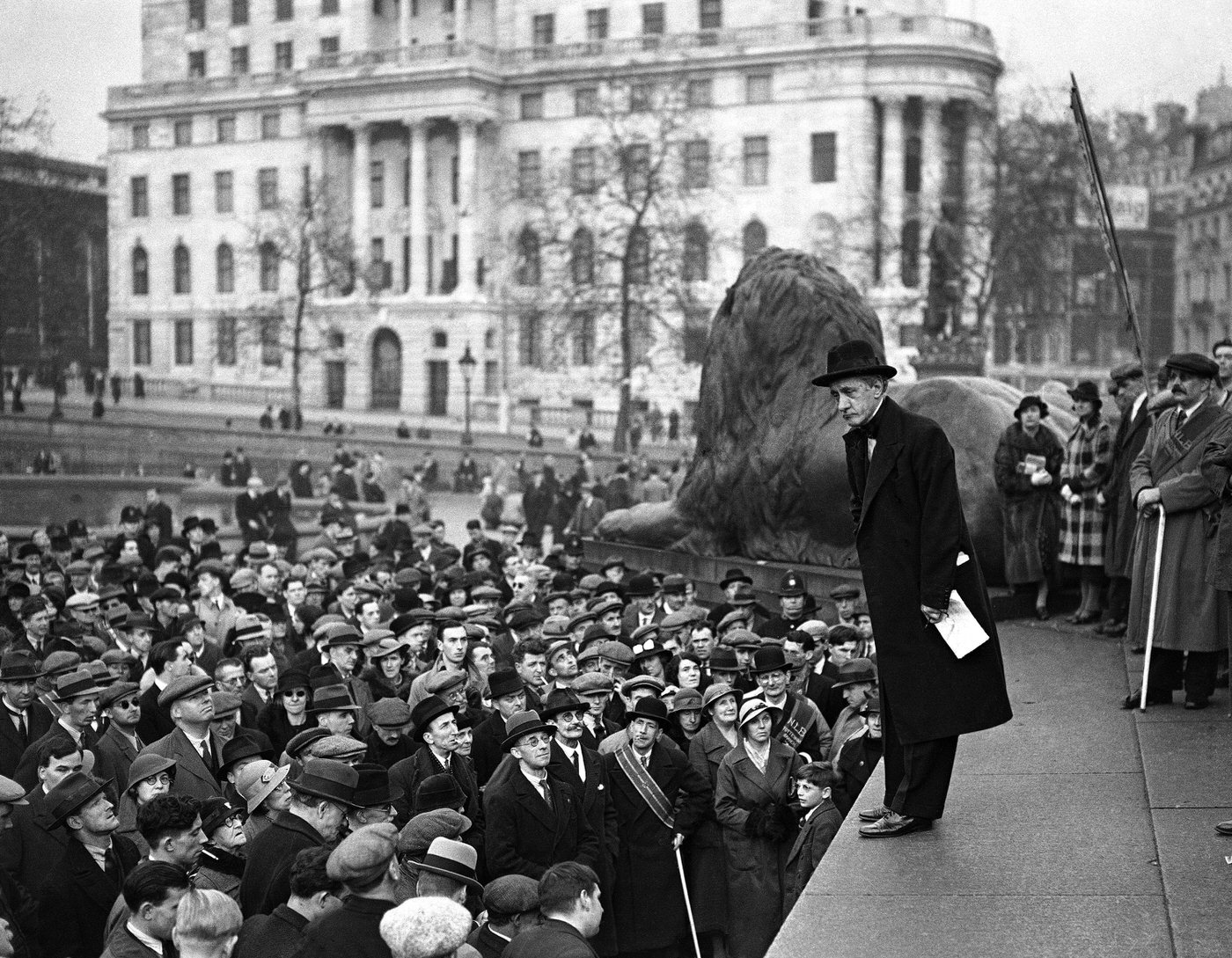
In 1934, the Hunger Marchers brought their desperation directly to the capital. Two years later, journalist Hannen Swaffer addressed blind marchers at the square — a demonstration that disability and poverty were being ignored by the government.
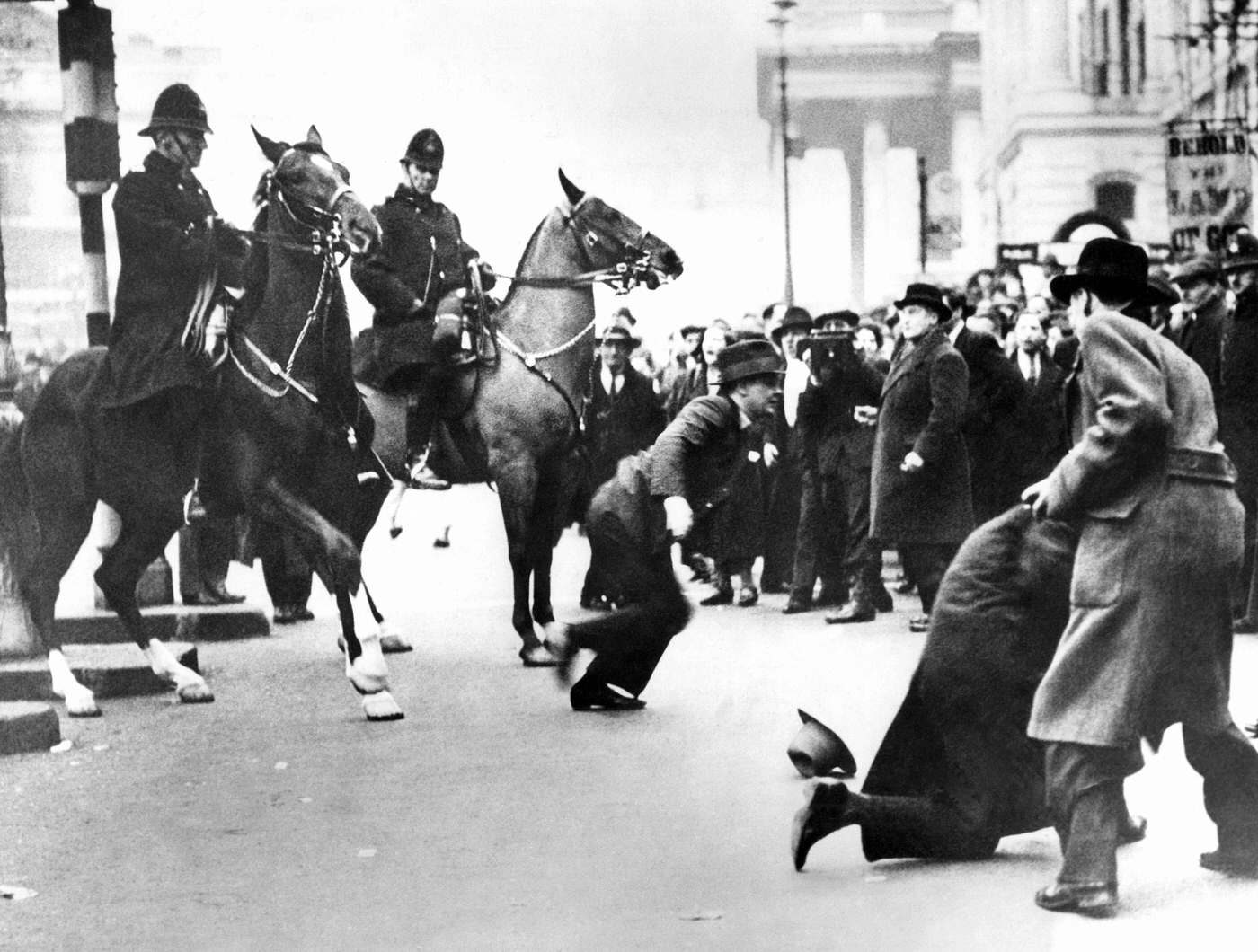
An incident during the Hunger Marchers' demonstration in Trafalgar Square, 1934.
An incident during the Hunger Marchers’ demonstration in Trafalgar Square, 1934.
Hannen Swaffer addressing blind marchers in Trafalgar Square, 1936.

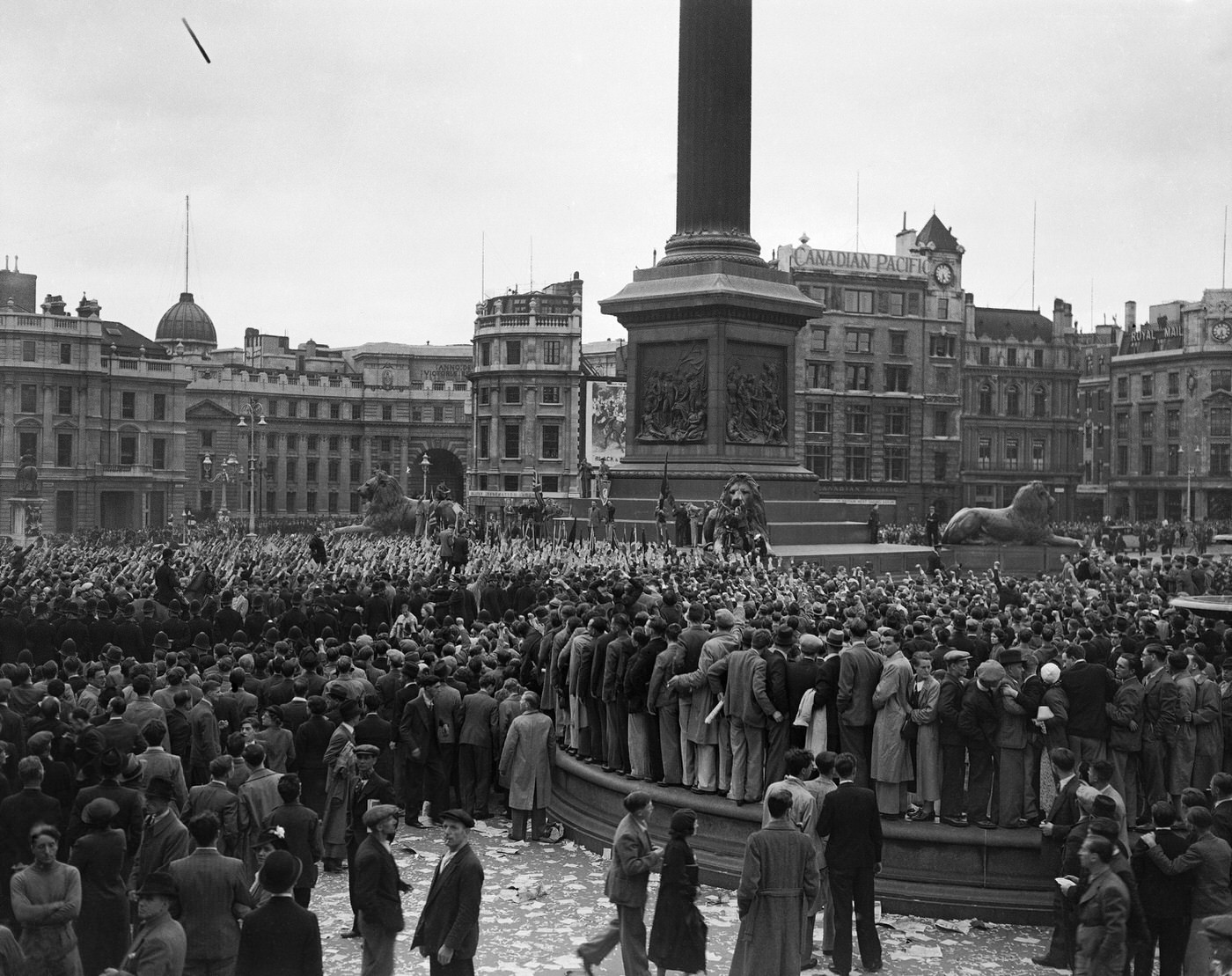
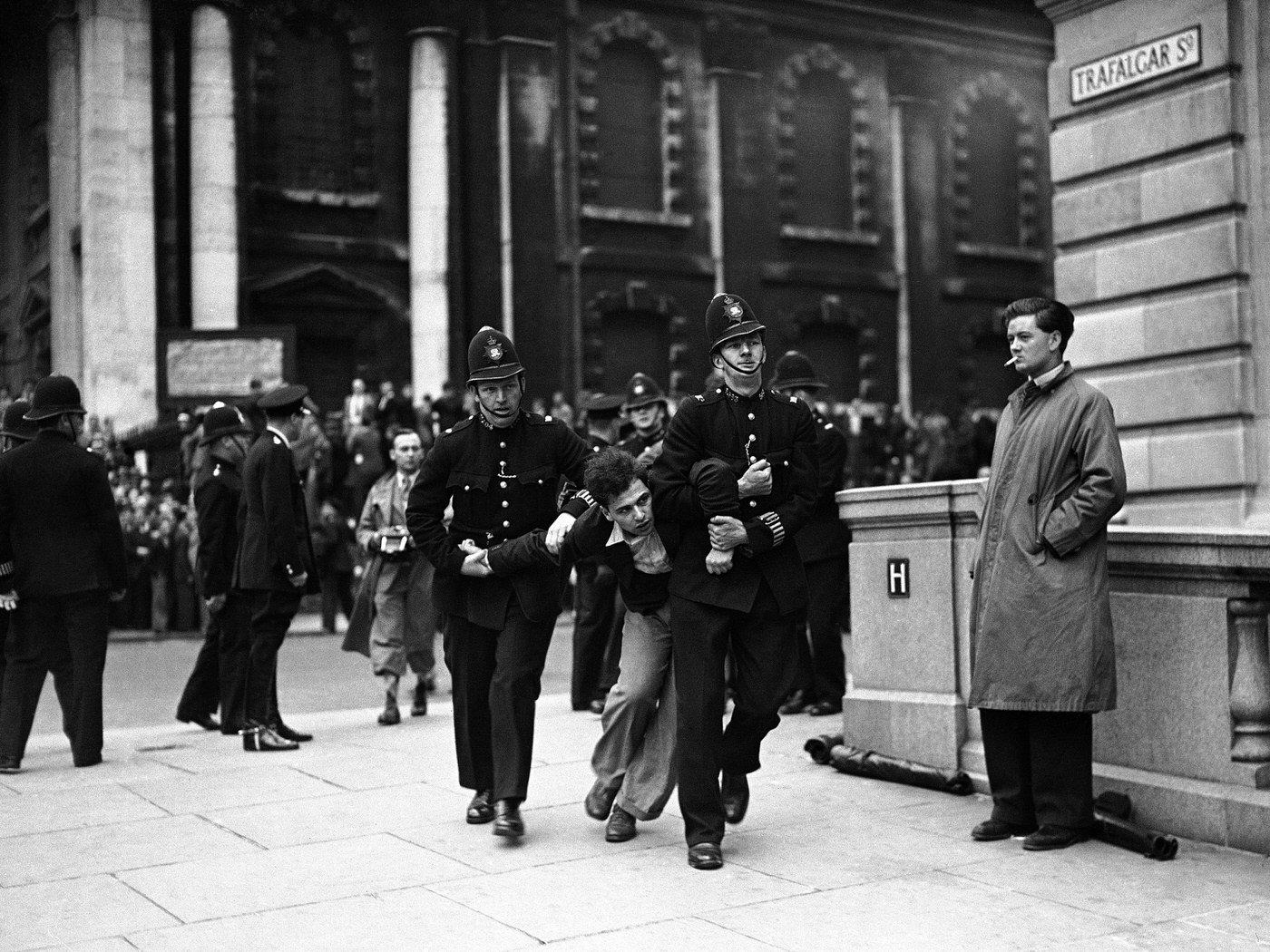
1937 was a particularly turbulent year at the square. Sir Oswald Mosley led a fascist march through the area, which brought direct, violent confrontations with both communist counter-protesters and police. Young and old demonstrators clashed with officers in scenes that made international headlines.
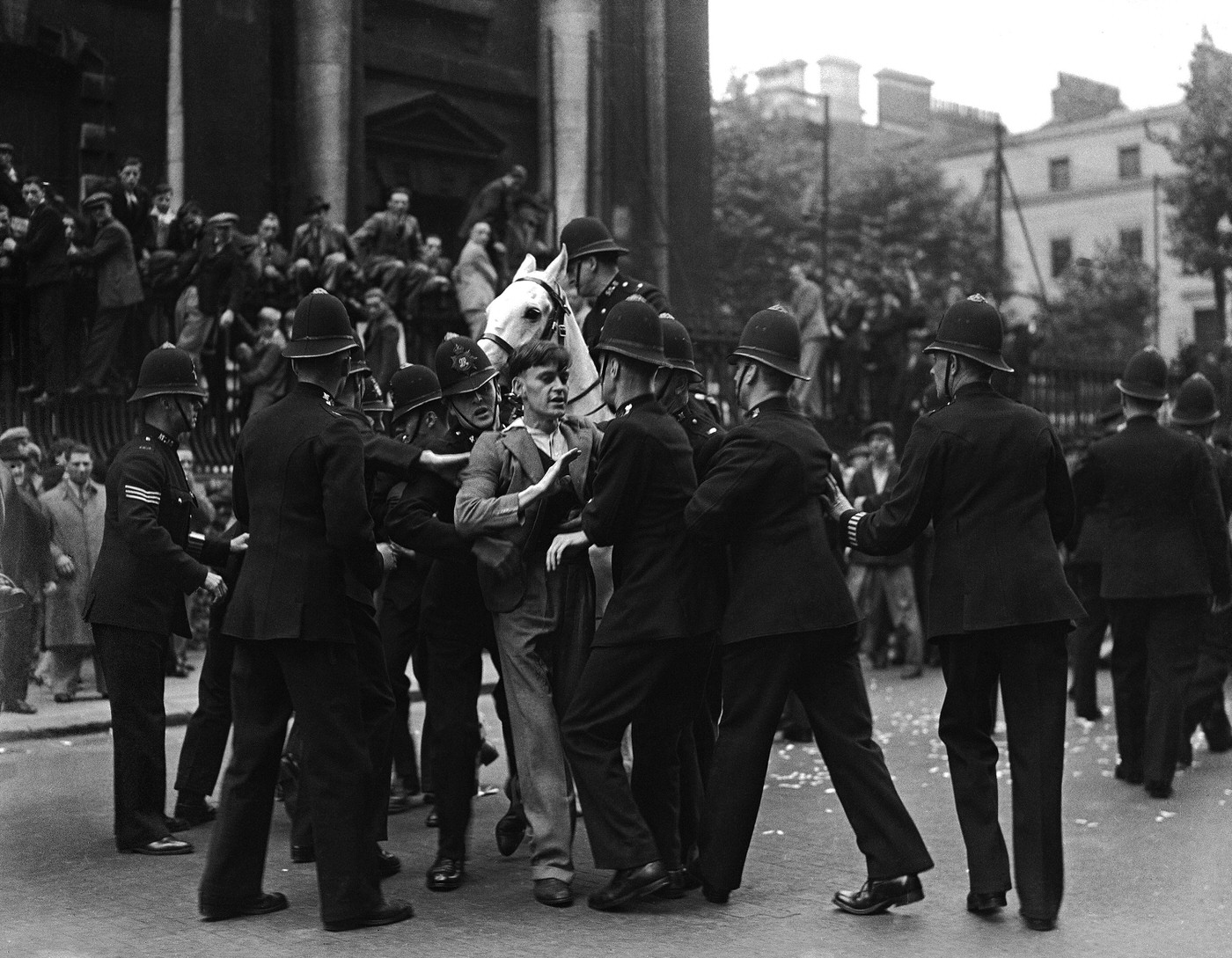
A young demonstrator clashing with police during Sir Oswald Mosley's fascist march in Trafalgar Square, 1937.
A young demonstrator clashing with police during Sir Oswald Mosley’s fascist march in Trafalgar Square, 1937.
A demonstrator clashing with police during Sir Oswald Mosley's fascist march in Trafalgar Square, 1937.
A demonstrator clashing with police during Sir Oswald Mosley’s fascist march in Trafalgar Square, 1937.
Sir Oswald Mosley's fascist march in Trafalgar Square, showing communists and fascists, 1937.
Sir Oswald Mosley’s fascist march in Trafalgar Square, showing communists and fascists, 1937.

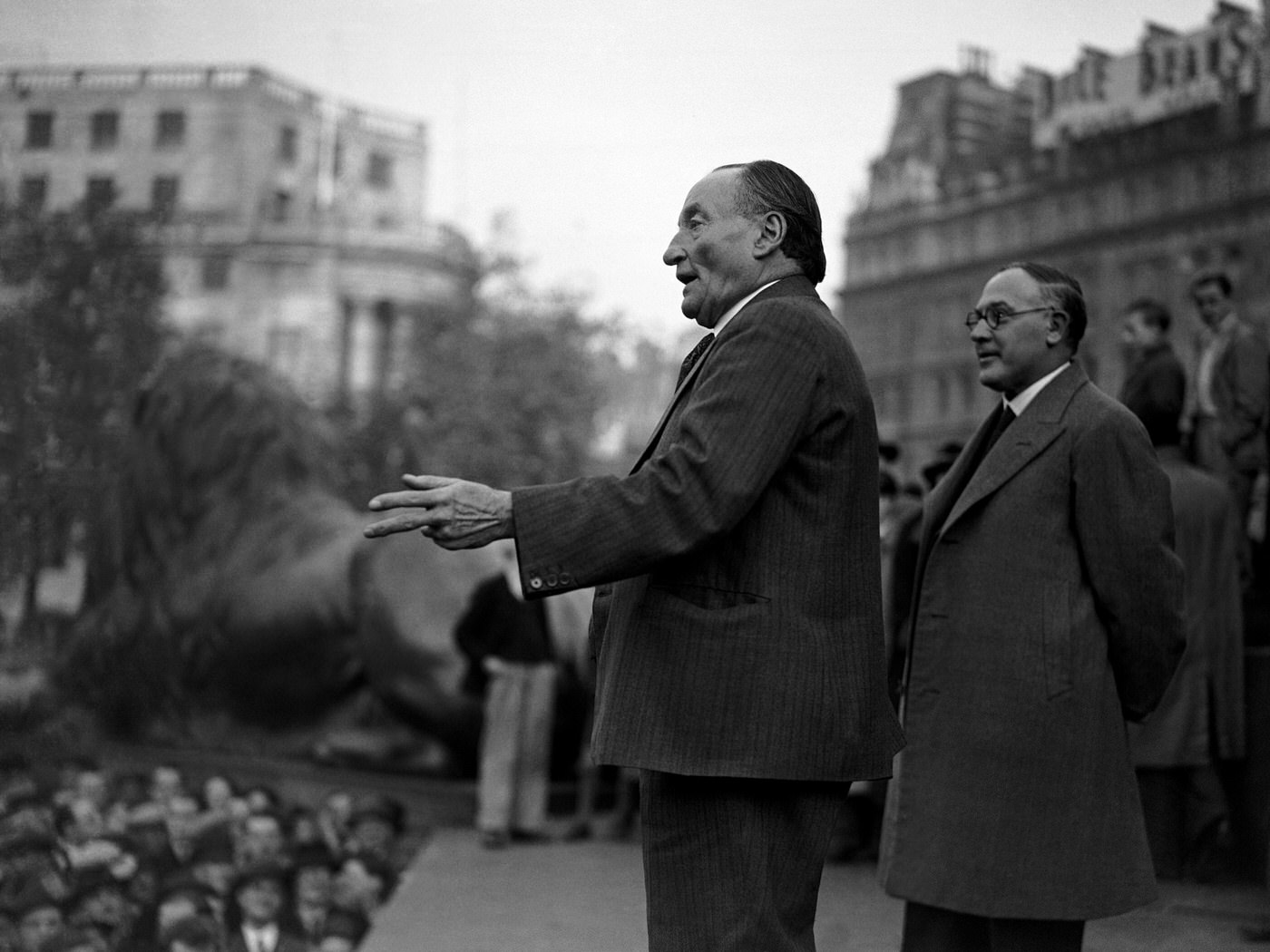
That same year, Ellen Wilkinson addressed a demonstration in support of the International Labour Policy on Spain, and Ben Tillett led a protest against Japanese military aggression in China. The square was absorbing the anxieties of a world lurching toward another global war.
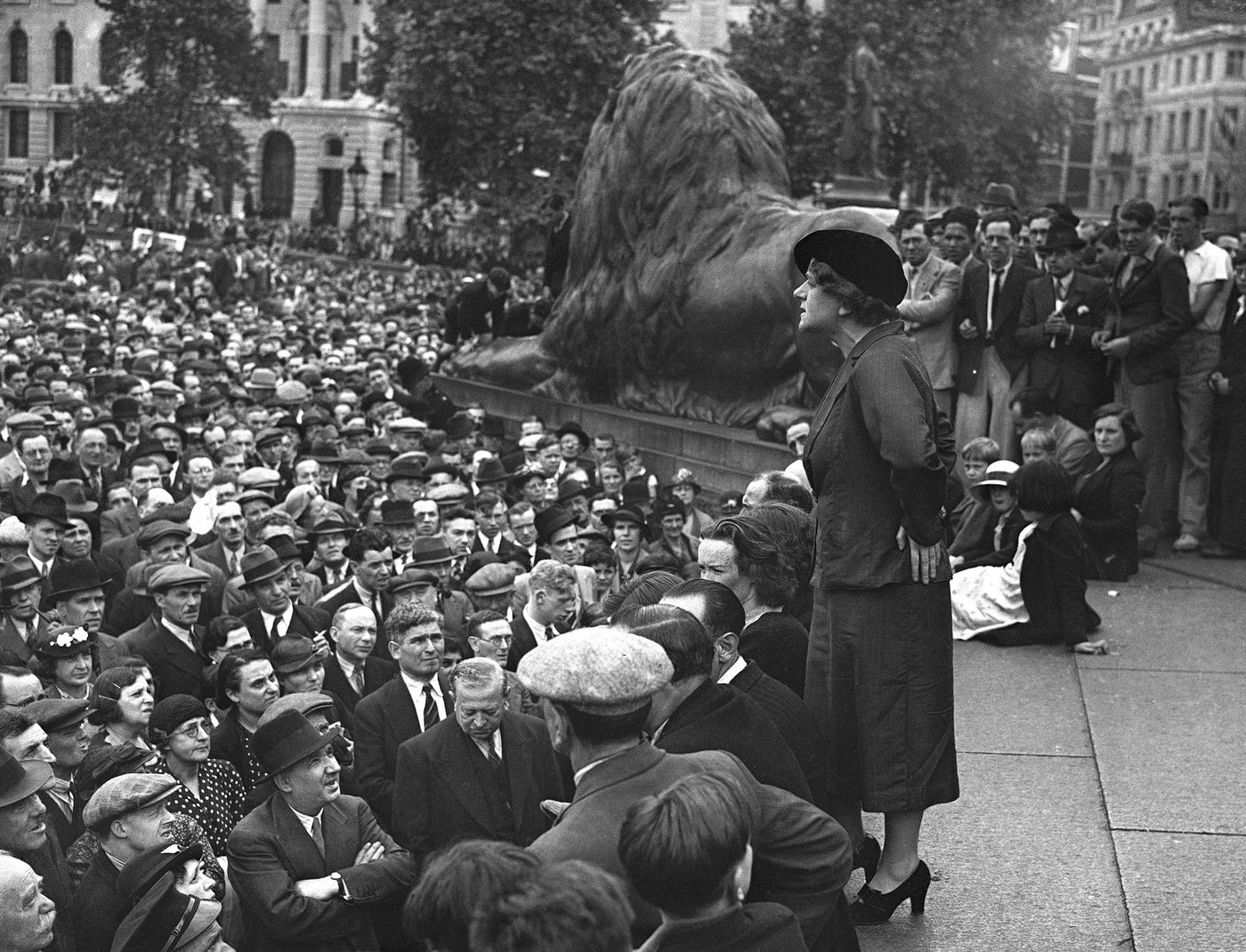
Ellen Wilkinson addressing a demonstration in Trafalgar Square supporting the International Labour Policy on Spain, 1937.
Ben Tillett addressing a protest against Japanese aggression in China in Trafalgar Square, 1937.

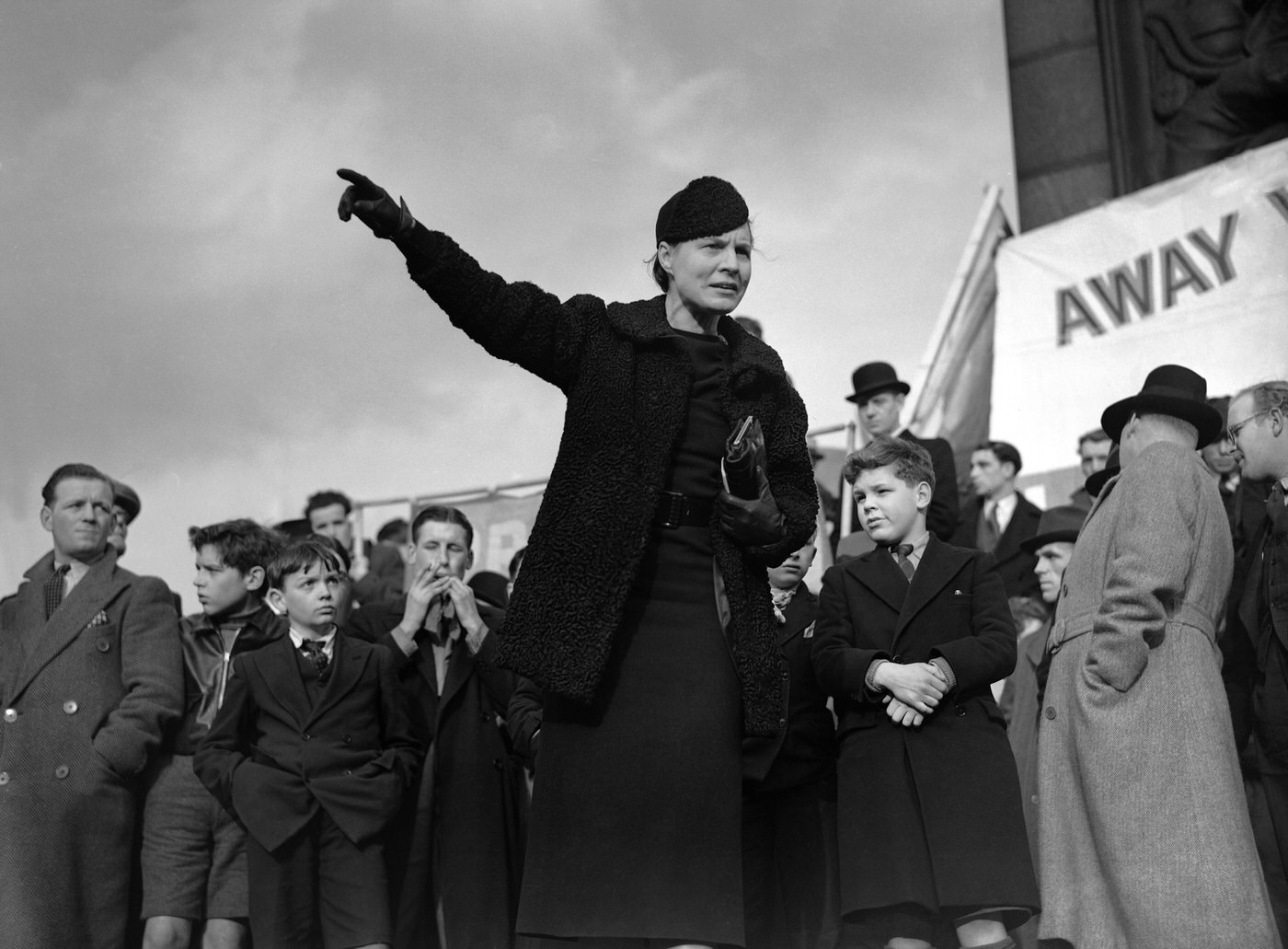
As Spain fell to Franco in 1939, both Lord Strabolgi and Dr. Edith Summerskill addressed separate protests in the square against what demonstrators called the betrayal of Spanish democracy.
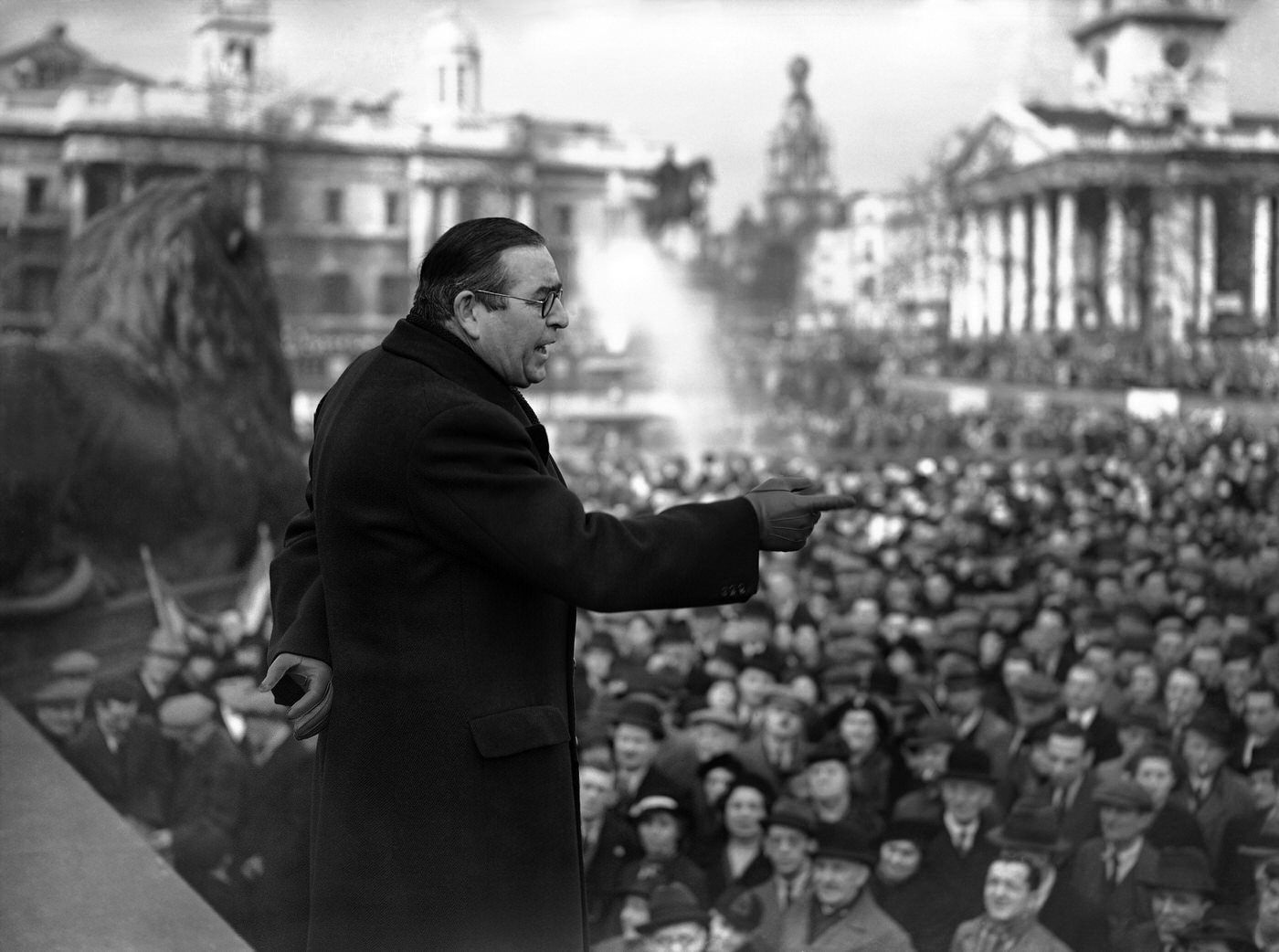
Lord Strabolgi addressing a protest against the betrayal of Spanish democracy in Trafalgar Square, 1939.
Dr. Edith Summerskill addressing a protest against the betrayal of Spanish democracy in Trafalgar Square, 1939.

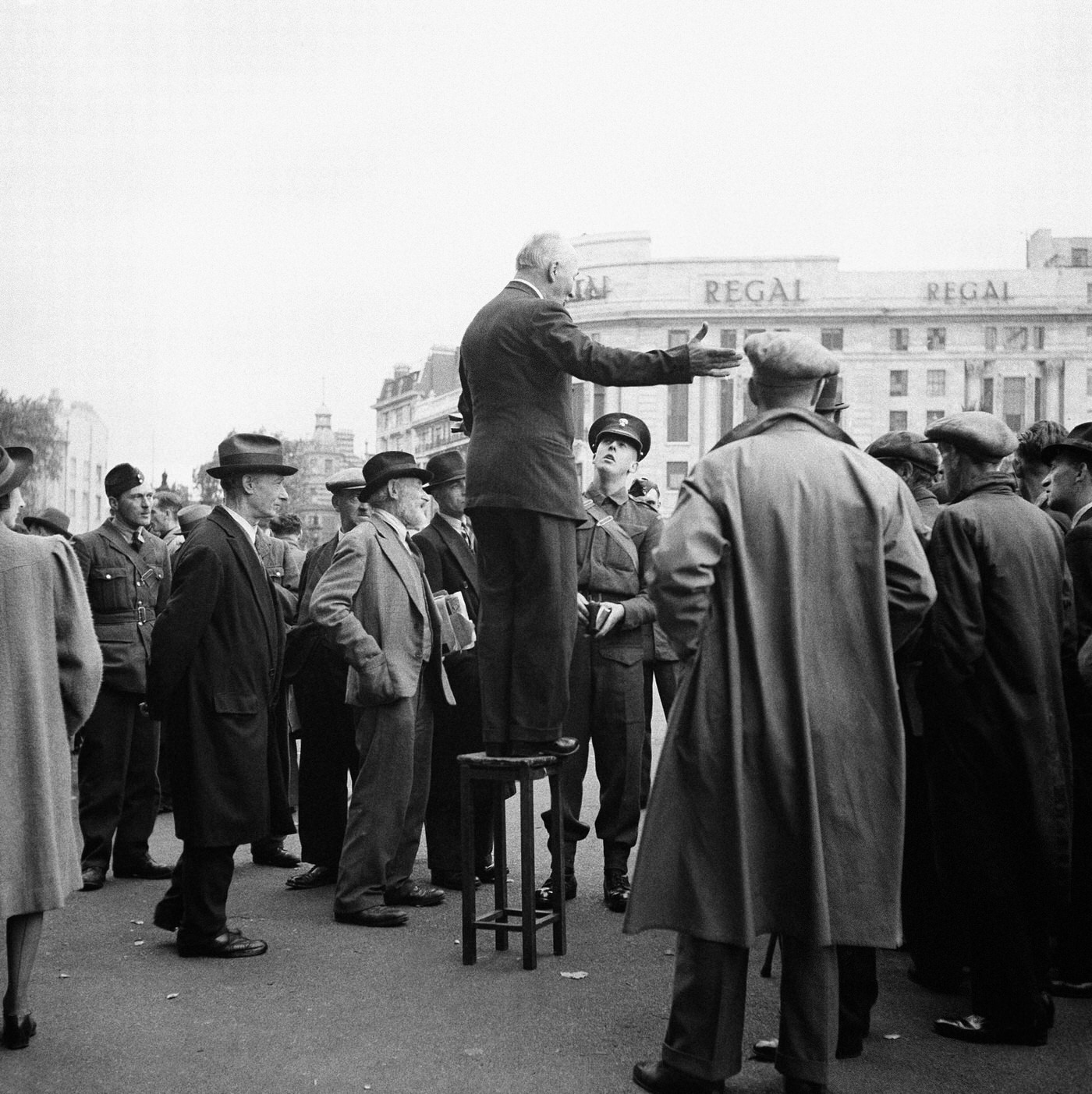
During the Second World War, the square remained active. Lady Nancy Astor spoke there in 1941 demanding equal injury compensation for women in wartime. That same year, mass meetings pushing for Allied aid to Russia drew enormous crowds — some of the largest gatherings the square had seen.
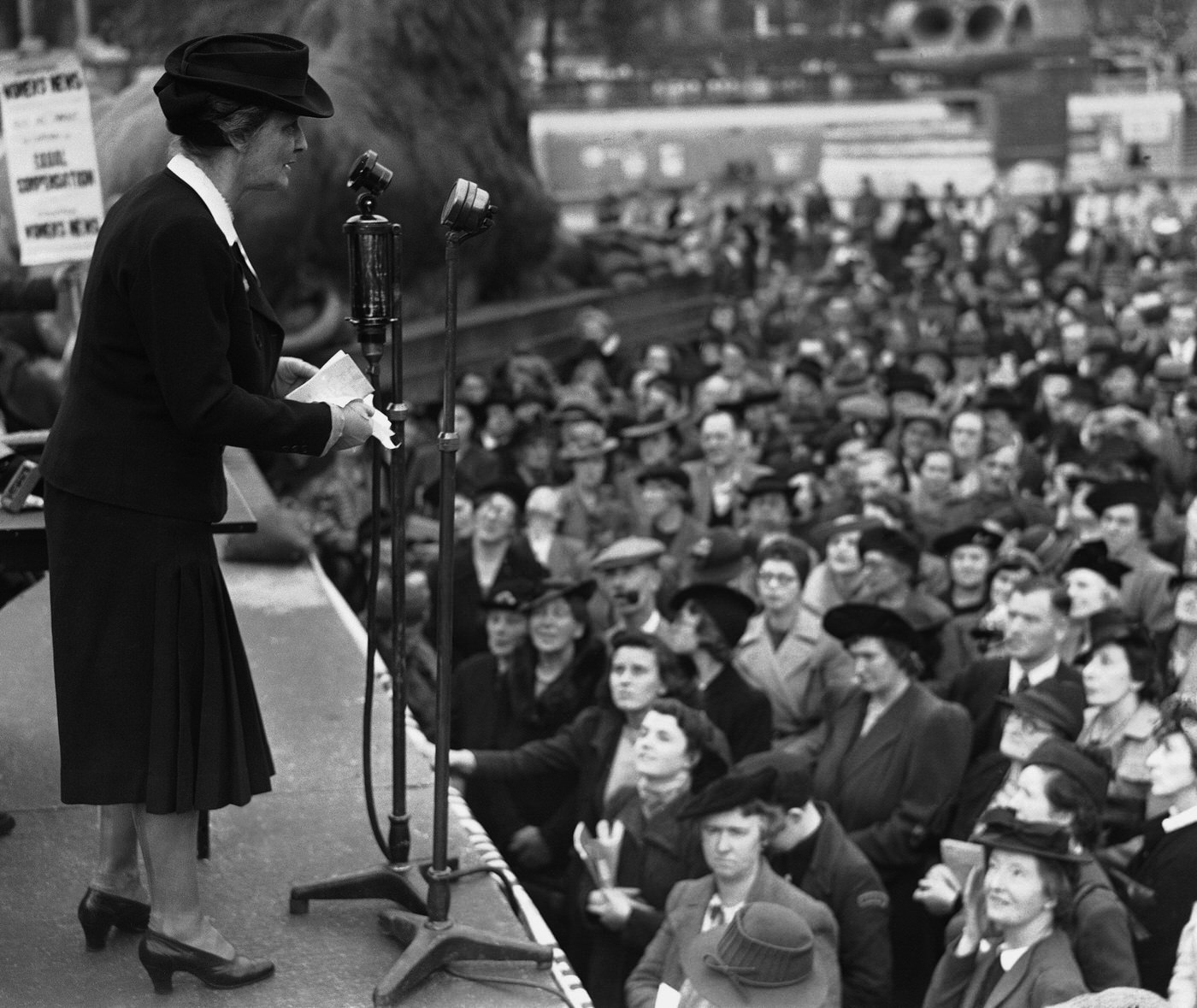
Lady Nancy Astor speaking at a Trafalgar Square meeting demanding equal war injury compensation, 1941.
A mass meeting for 'Aid to Russia' in Hyde Park, 1941.
A mass meeting for ‘Aid to Russia’ in Hyde Park, 1941.
A mass meeting for 'Aid to Russia' in Hyde Park, 1941.
A mass meeting for ‘Aid to Russia’ in Hyde Park, 1941.

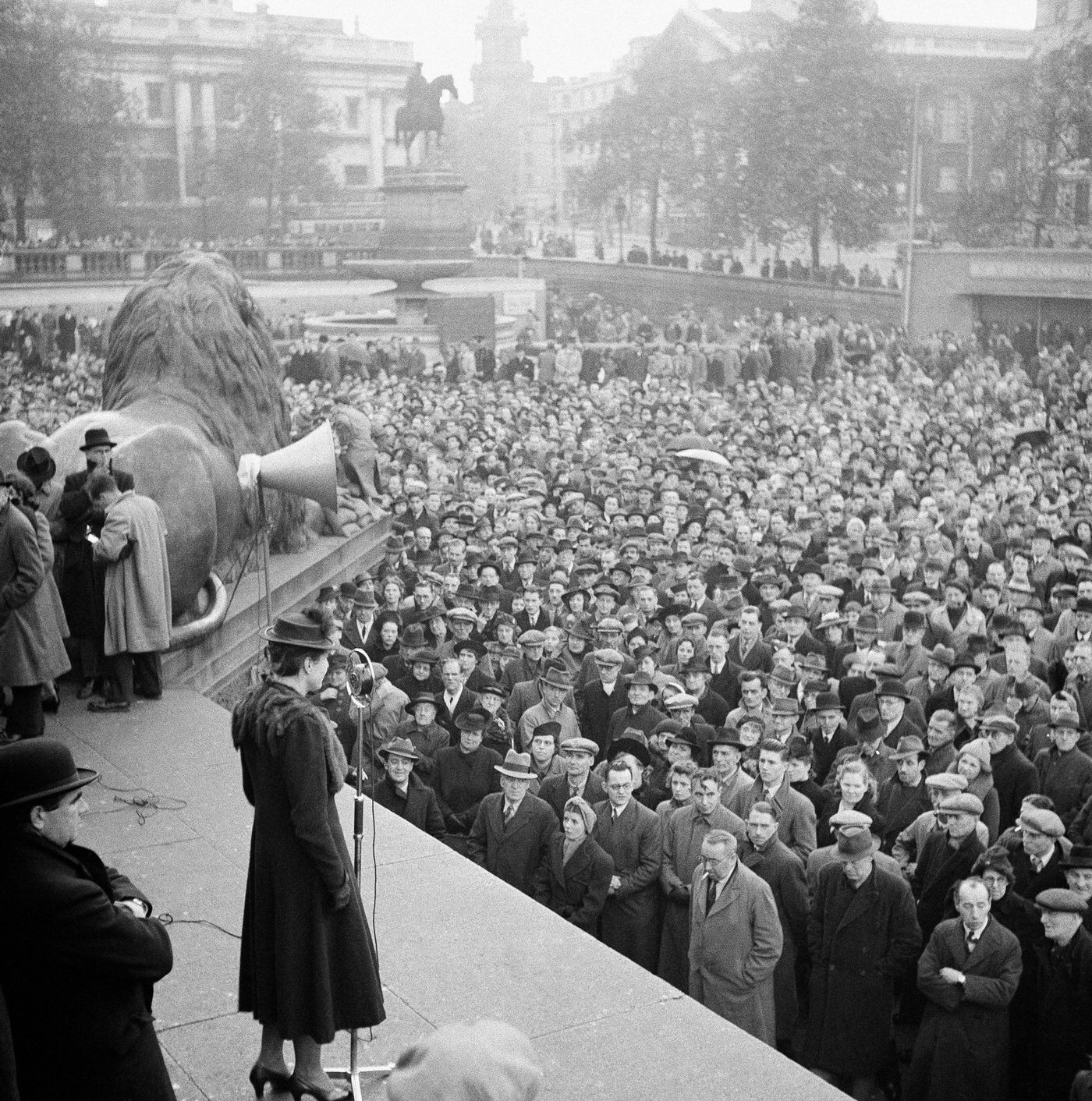
In 1942, a rally demanding the opening of a second front against Nazi Germany featured Fred Cotton addressing a large crowd. By 1943, the square hosted an Allied nations ‘Wings for Victory’ march with American contingents marching alongside British participants.
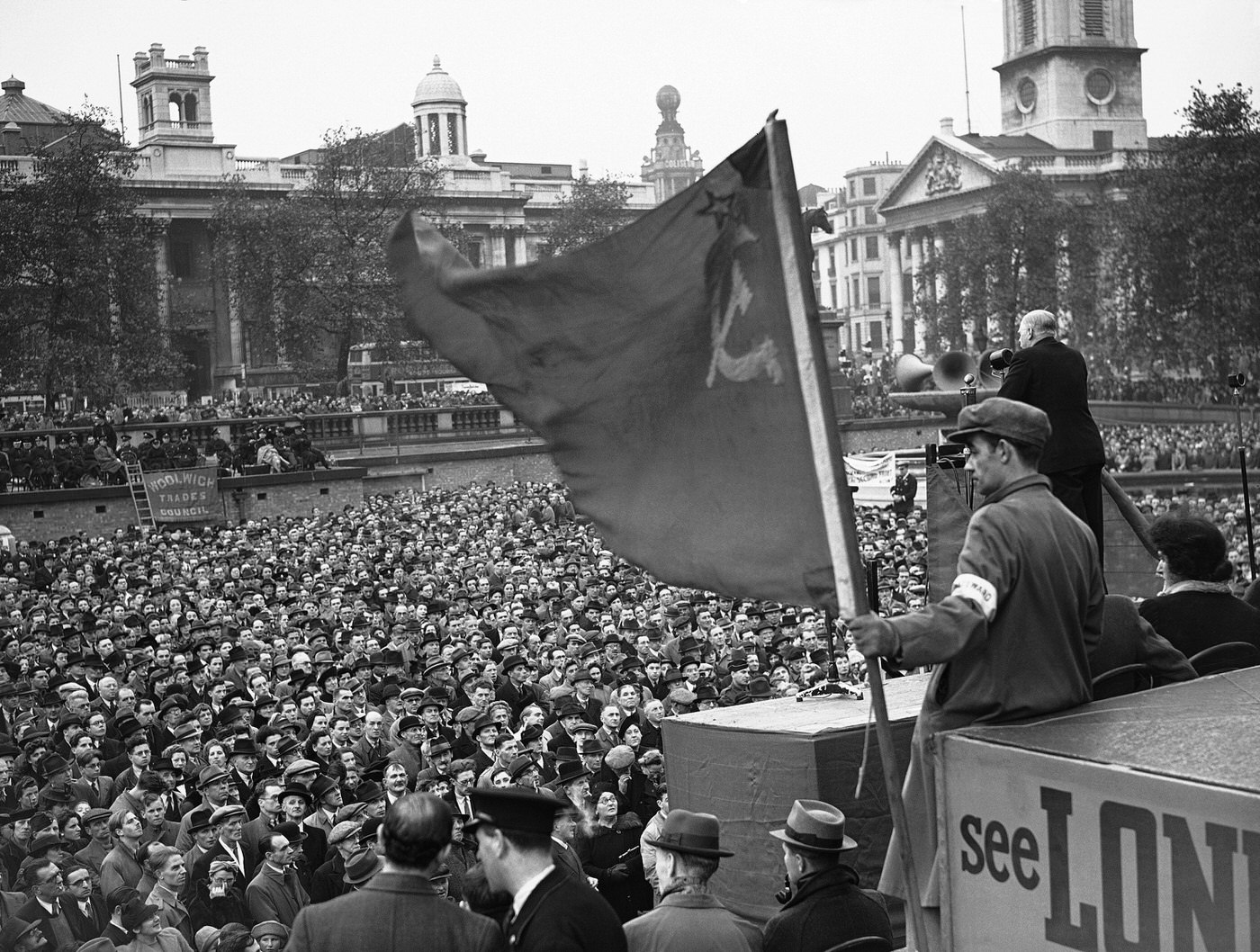
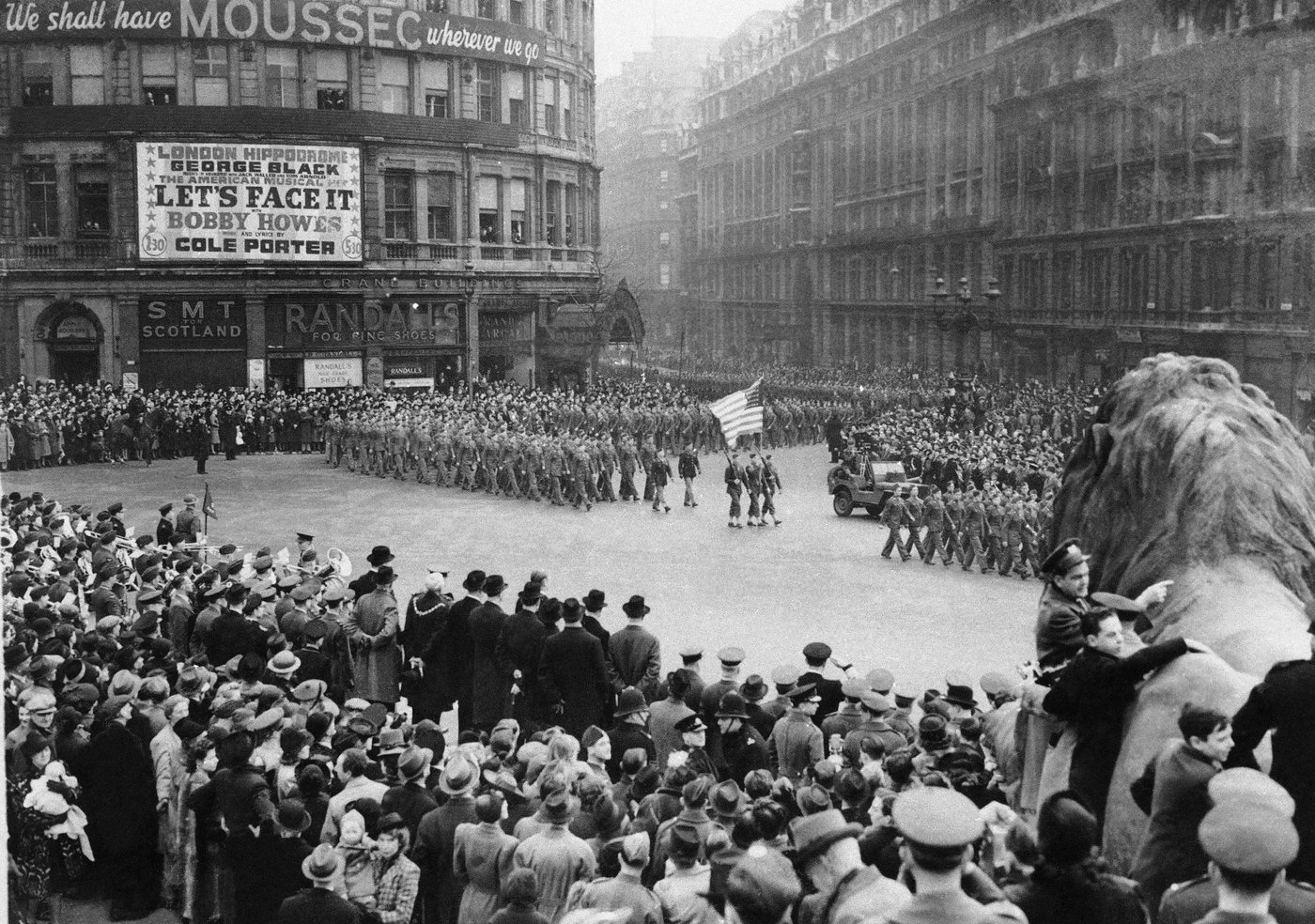
A rally in Trafalgar Square demanding a second front, featuring Fred Cotton, 1942.
An American contingent at an Allied nations "Wings for Victory" march in Trafalgar Square, 1943.
An American contingent at an Allied nations “Wings for Victory” march in Trafalgar Square, 1943.

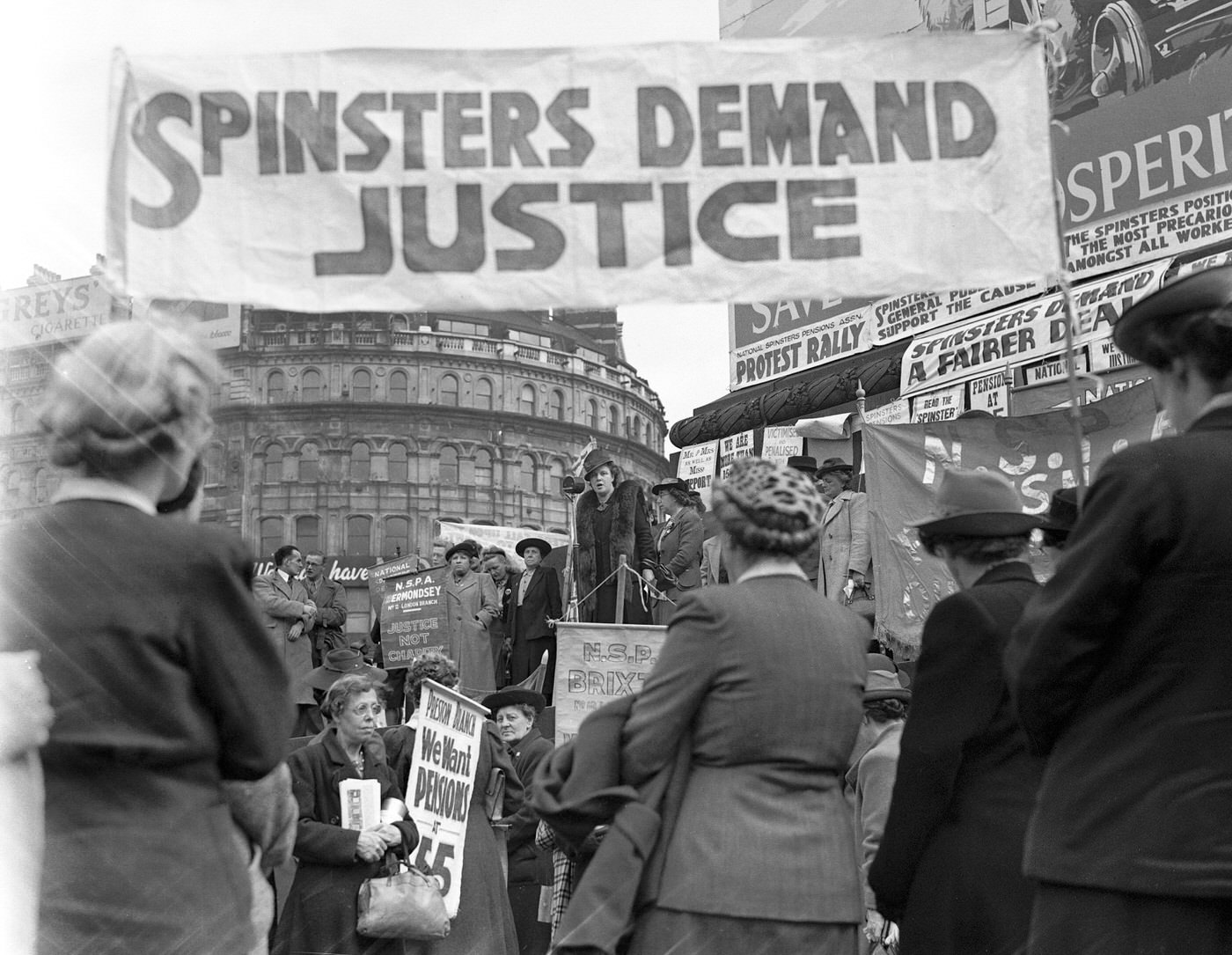
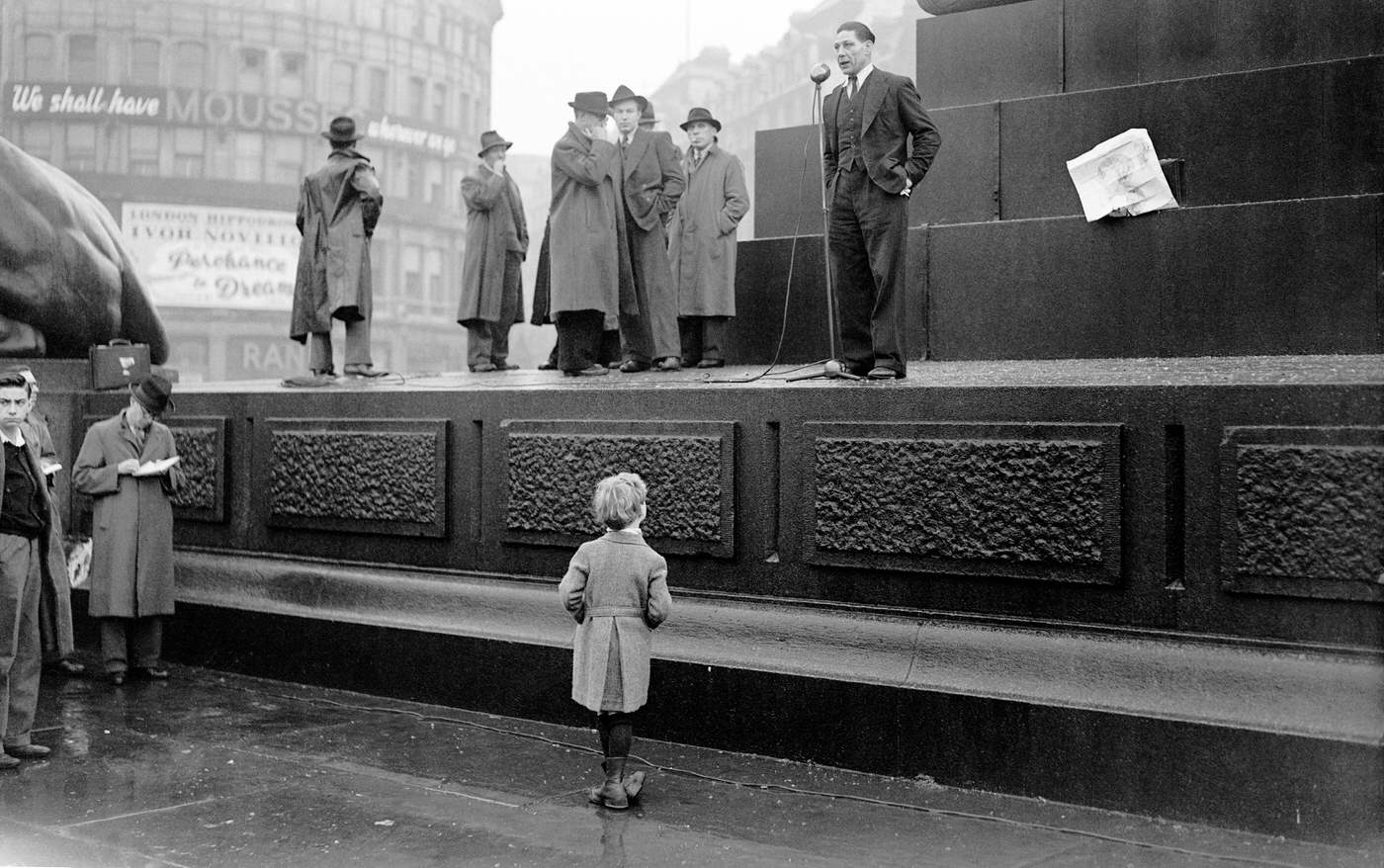
The post-war years brought new causes. In 1944, Dr. Haden Guest led a demonstration against British policy in Greece. In 1945, speakers rallied in support of striking London dockers. A 1946 spinsters’ rally demanded pension rights at age 55. Each demonstration made a specific, targeted demand — the square was not used for vague discontent but for precise political pressure.
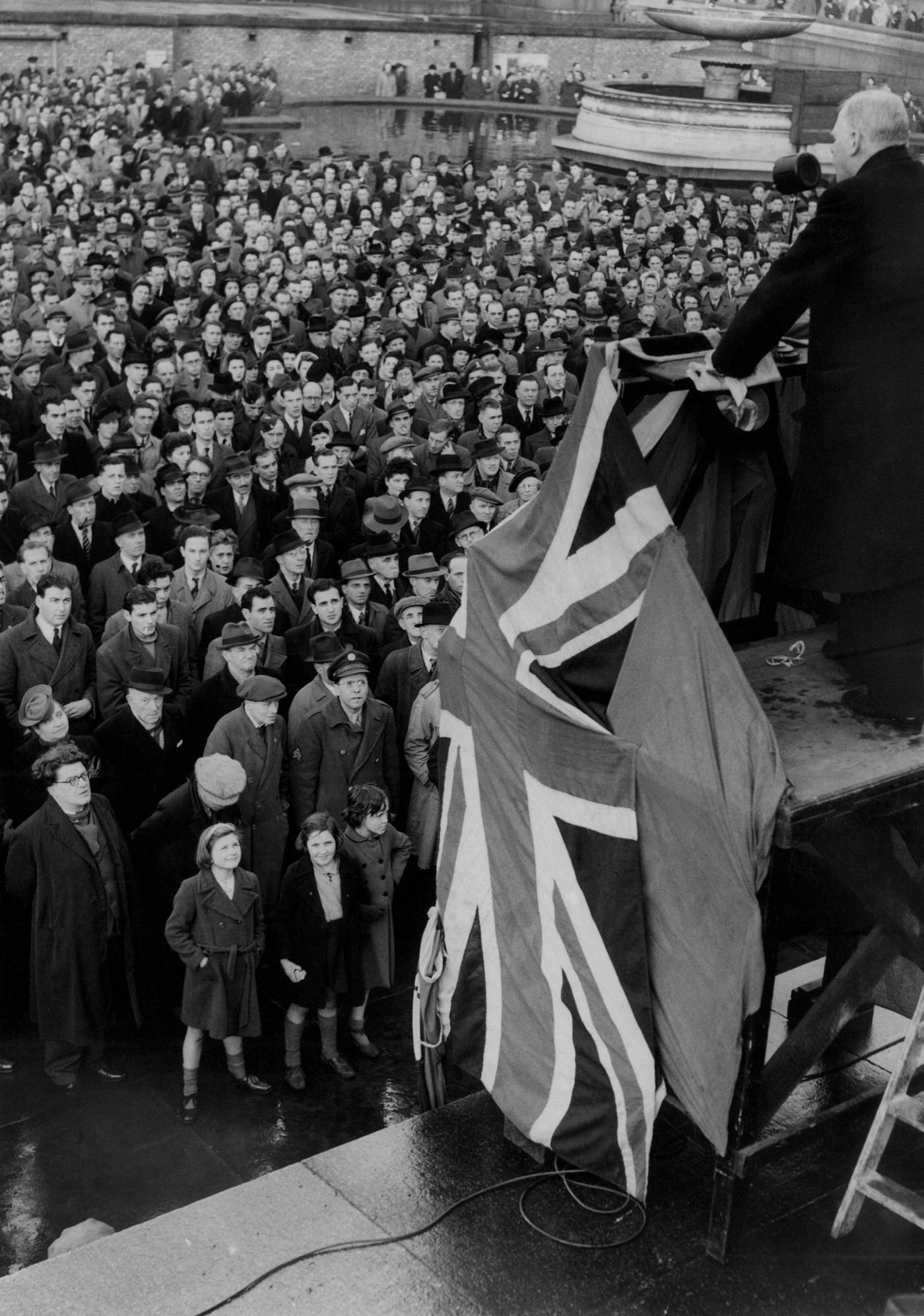
A demonstration against British policy in Greece in Trafalgar Square, featuring Dr. Haden Guest, 1944.
A man speaking in support of striking London dockers, 1945.
A Spinsters' rally in Trafalgar Square demanding pensions at age 55, 1946.
A Spinsters’ rally in Trafalgar Square demanding pensions at age 55, 1946.

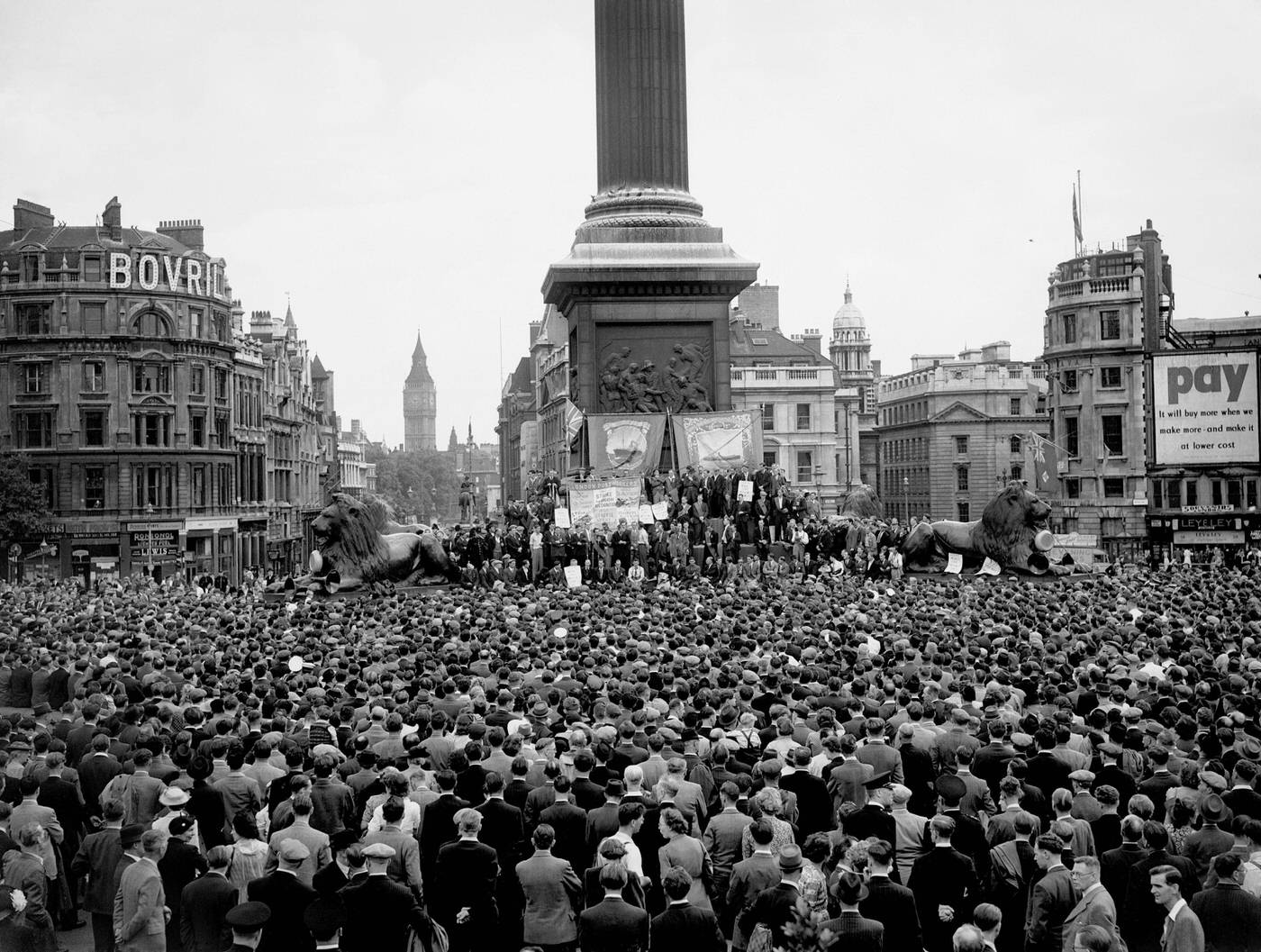
By the late 1940s, labour politics dominated the square. Willie Gallacher launched his party’s election campaign there in 1949, and dockworkers on strike used the square as their public stage the same year.
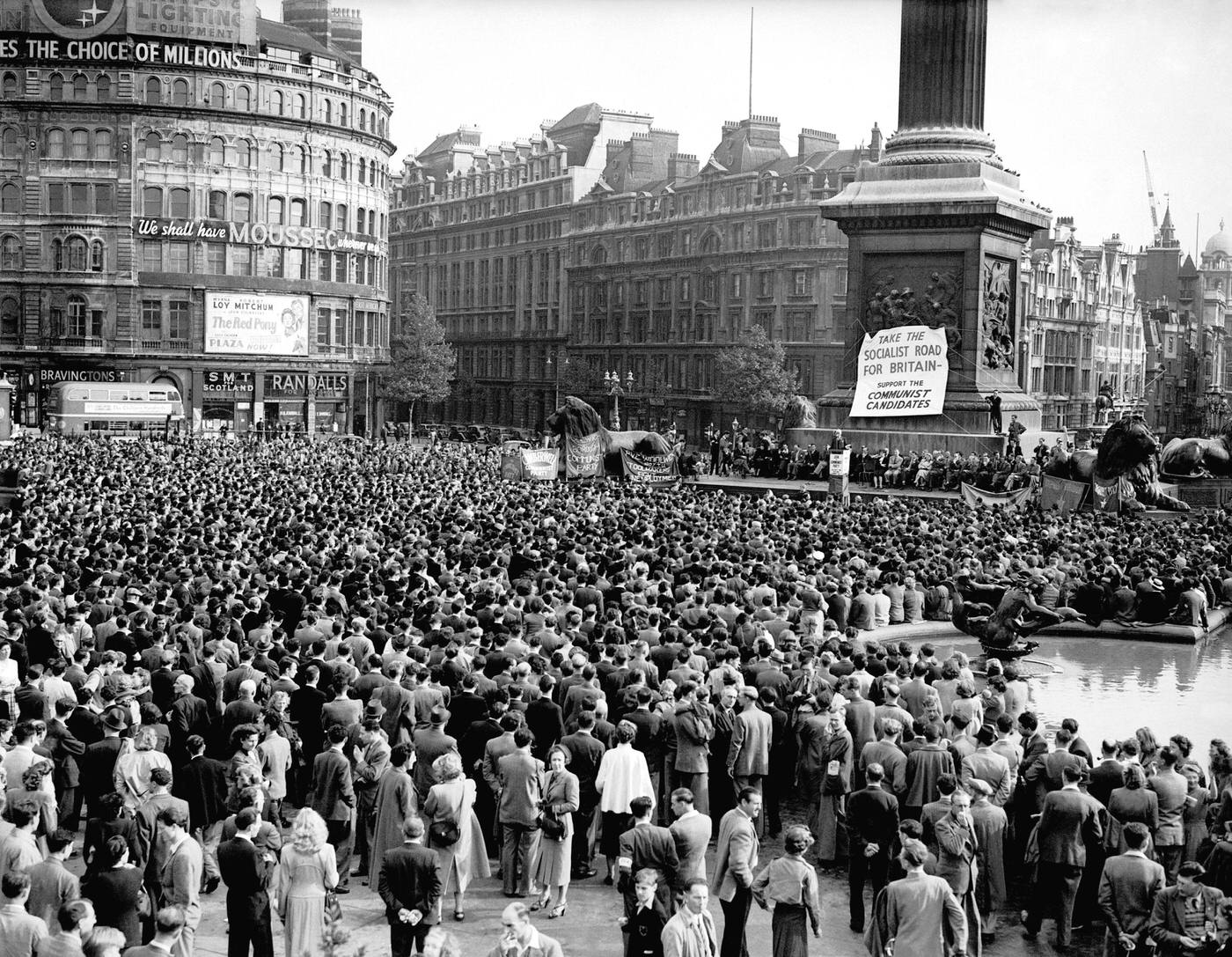
Willie Gallacher launching his party's election campaign in Trafalgar Square, 1949.
Willie Gallacher launching his party’s election campaign in Trafalgar Square, 1949.
Dockworkers' strike in Trafalgar Square, 1949.
Dockworkers’ strike in Trafalgar Square, 1949.

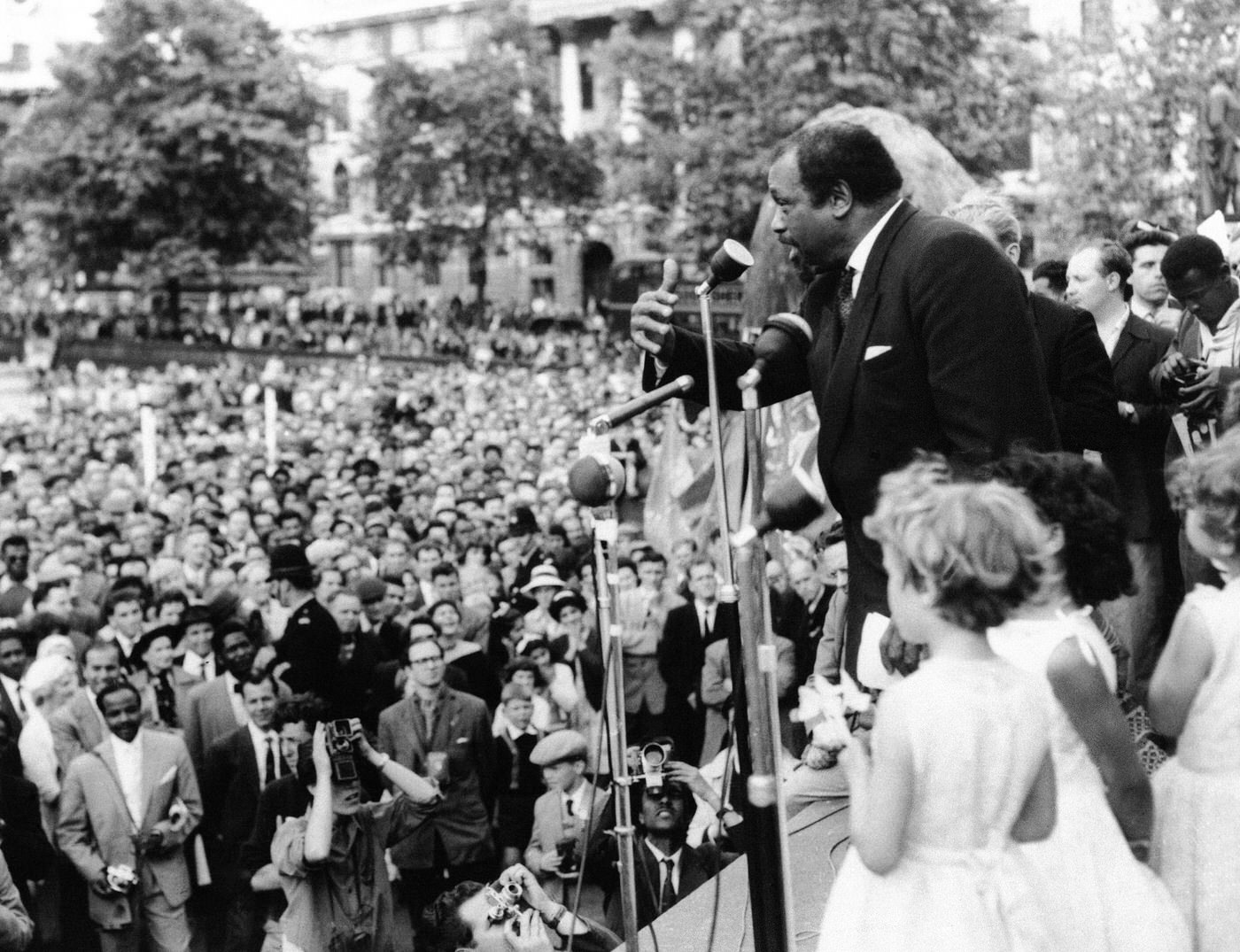
The 1950s saw the nuclear question dominate public debate. In 1957, a mass meeting against nuclear weapons testing filled the square. The Campaign for Nuclear Disarmament — CND — made Trafalgar Square the finishing point of its famous protest marches. American singer and activist Paul Robeson spoke there in 1959 at an anti-H-bomb demonstration.
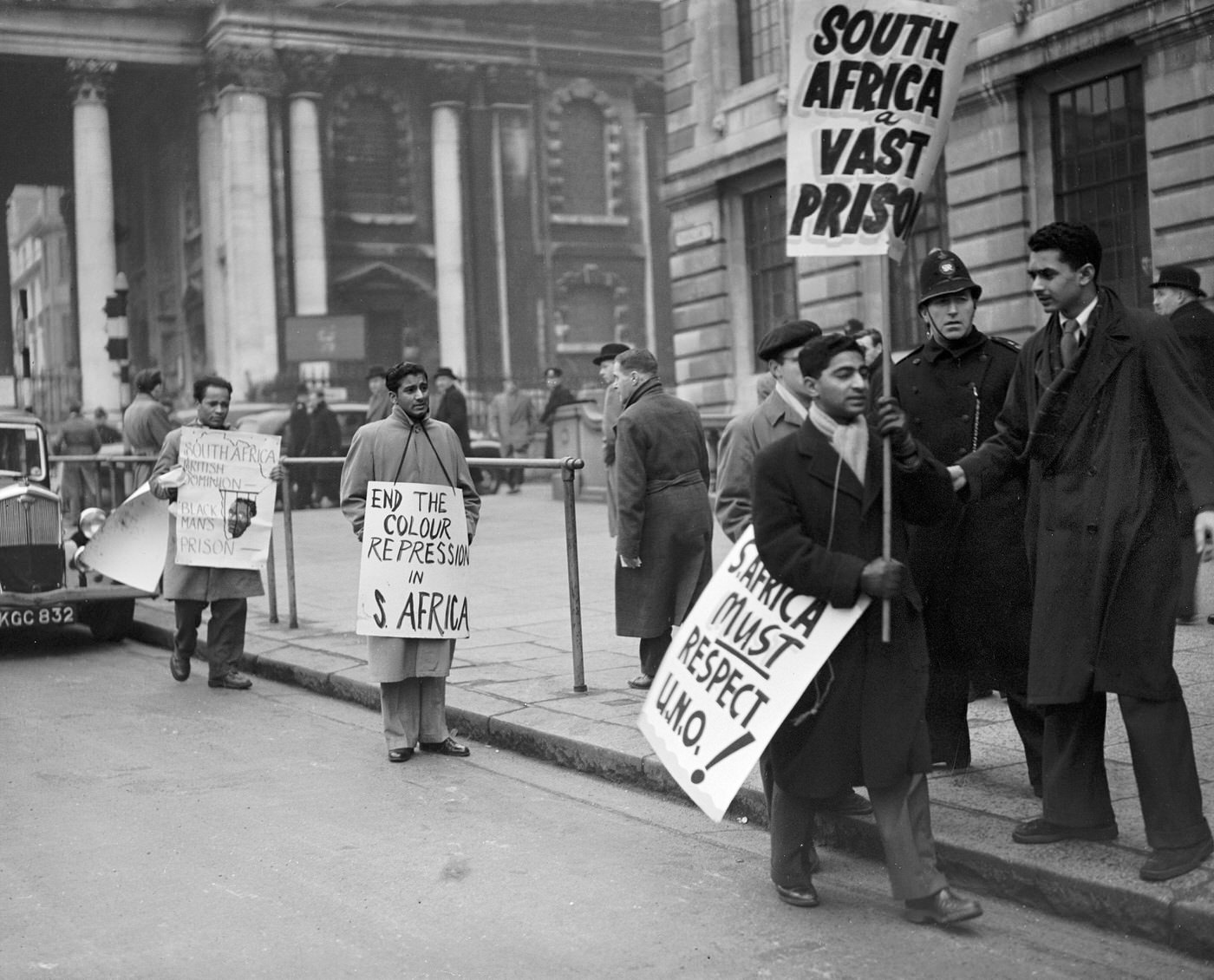
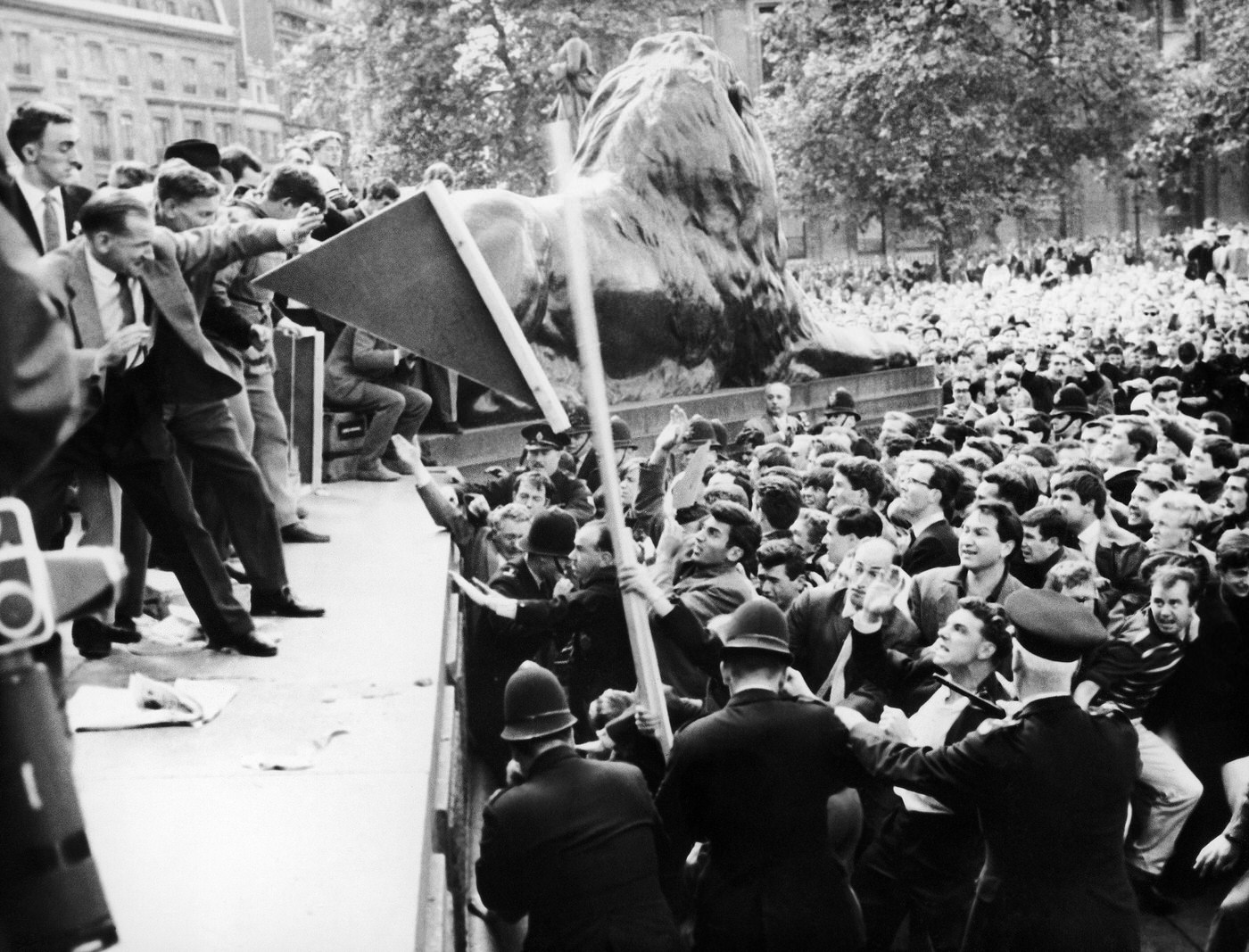
Police advising South African students demonstrating in Trafalgar Square, 1951.
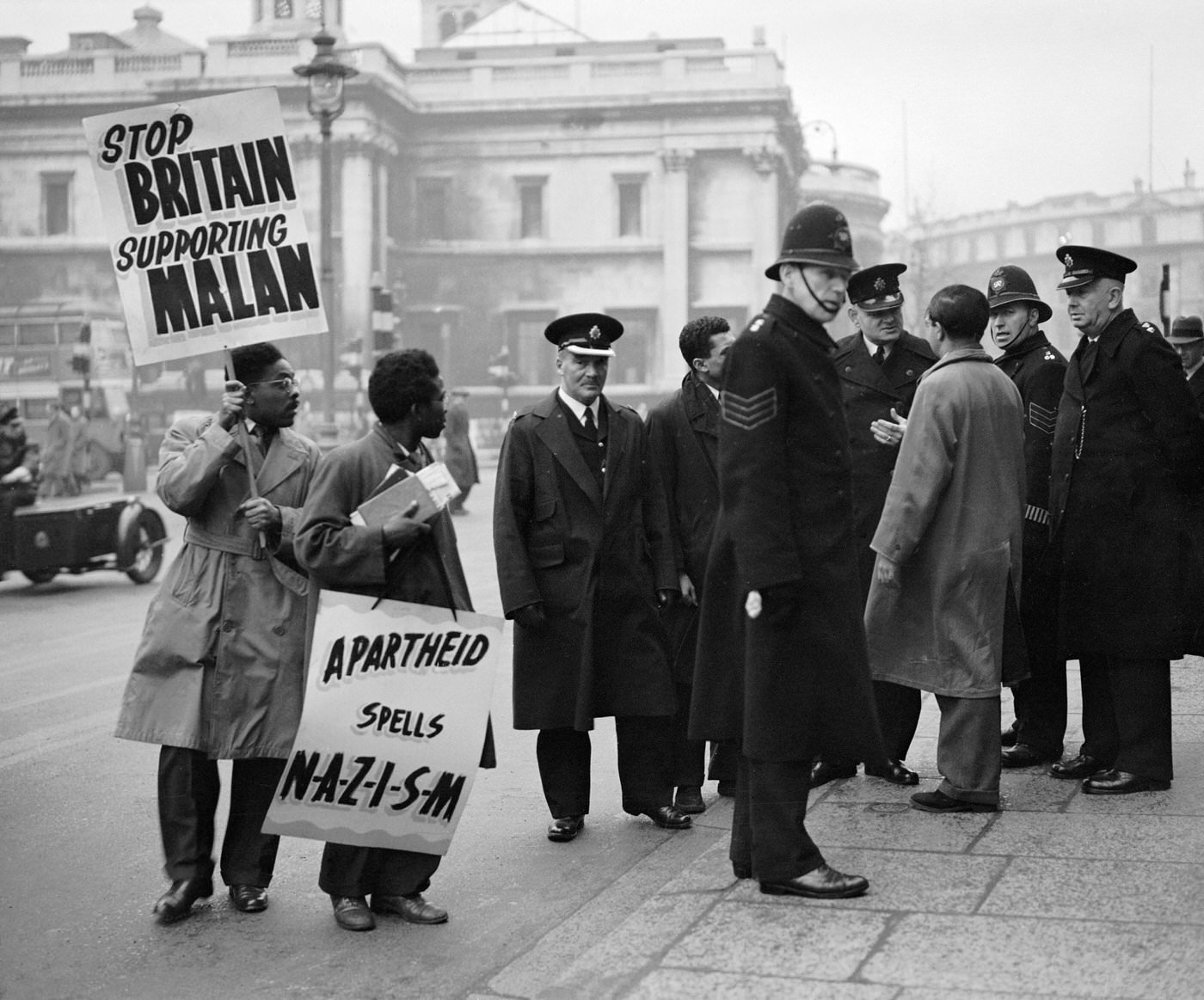
A demonstration in Trafalgar Square, 1951.
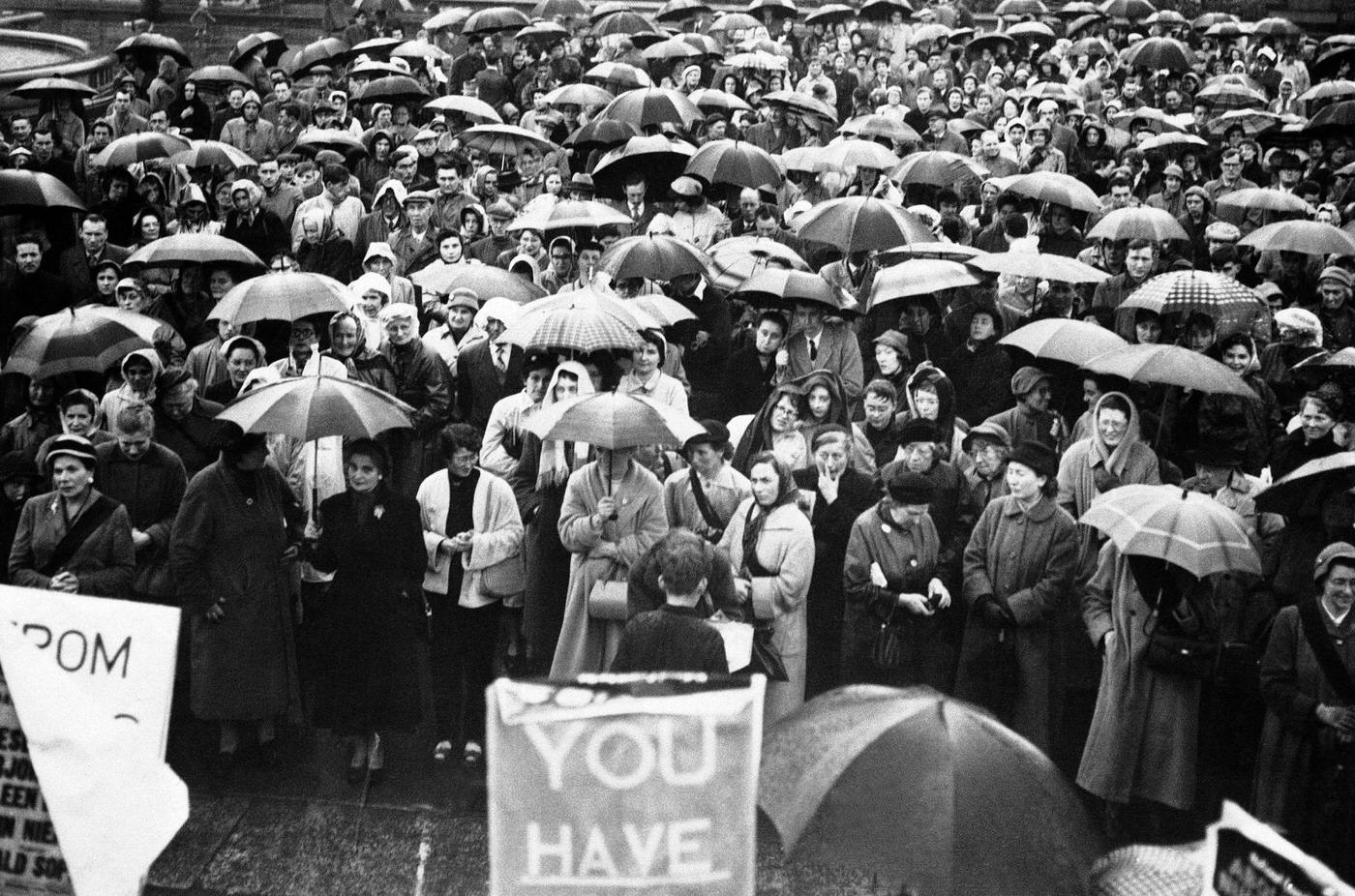
A mass meeting against nuclear weapon tests in Trafalgar Square, 1957.
Paul Robeson speaking at an anti-H-bomb demonstration in Trafalgar Square, 1959.

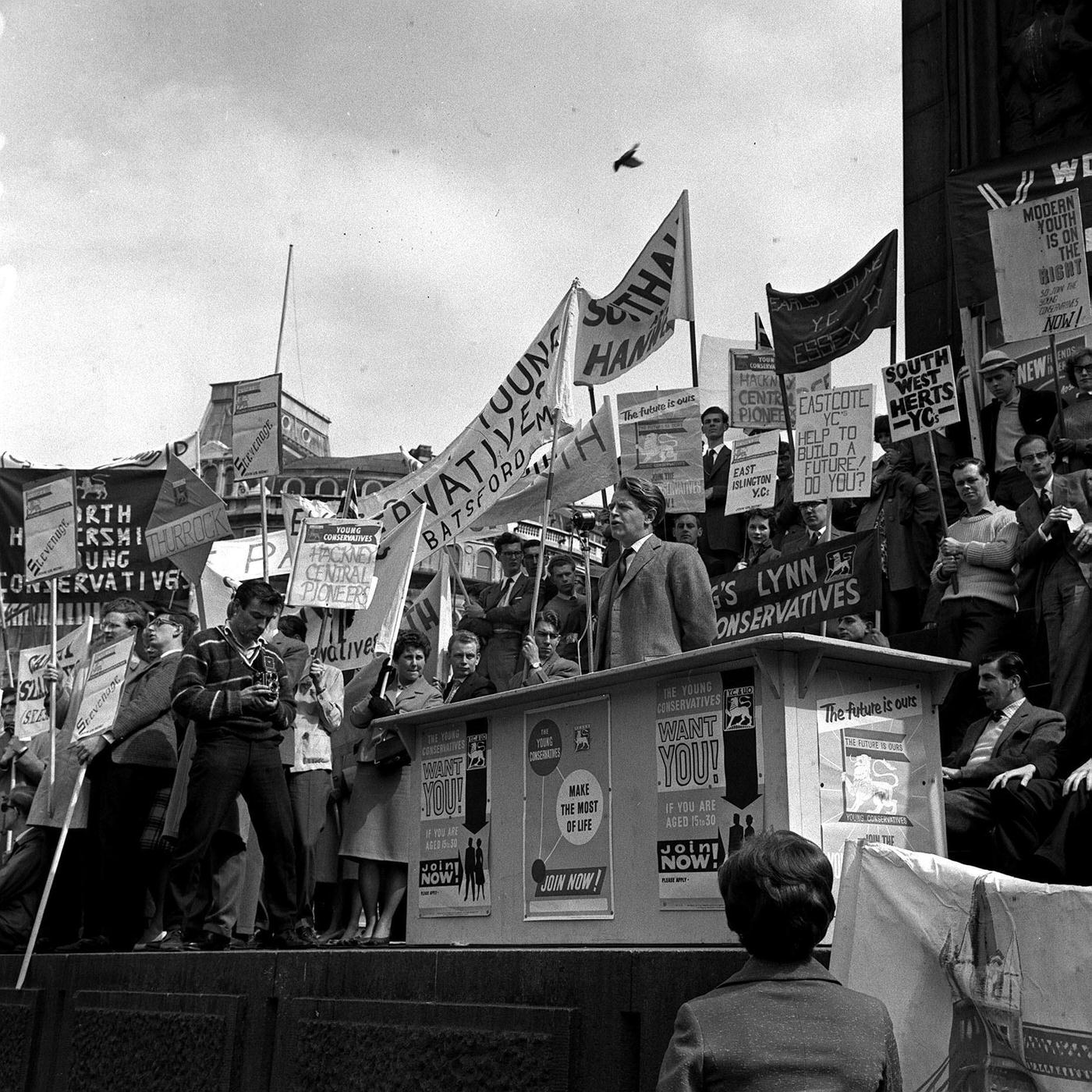
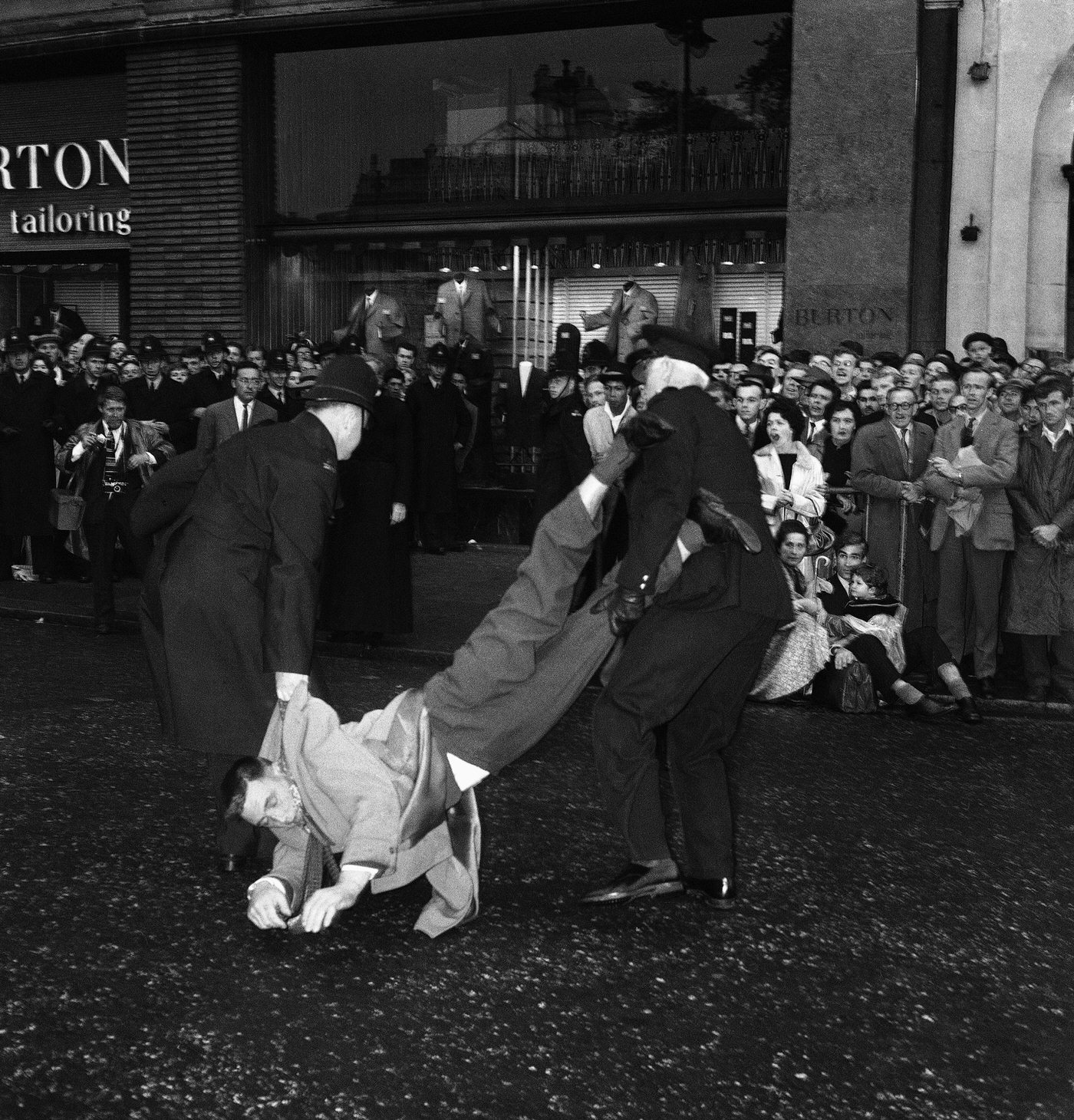
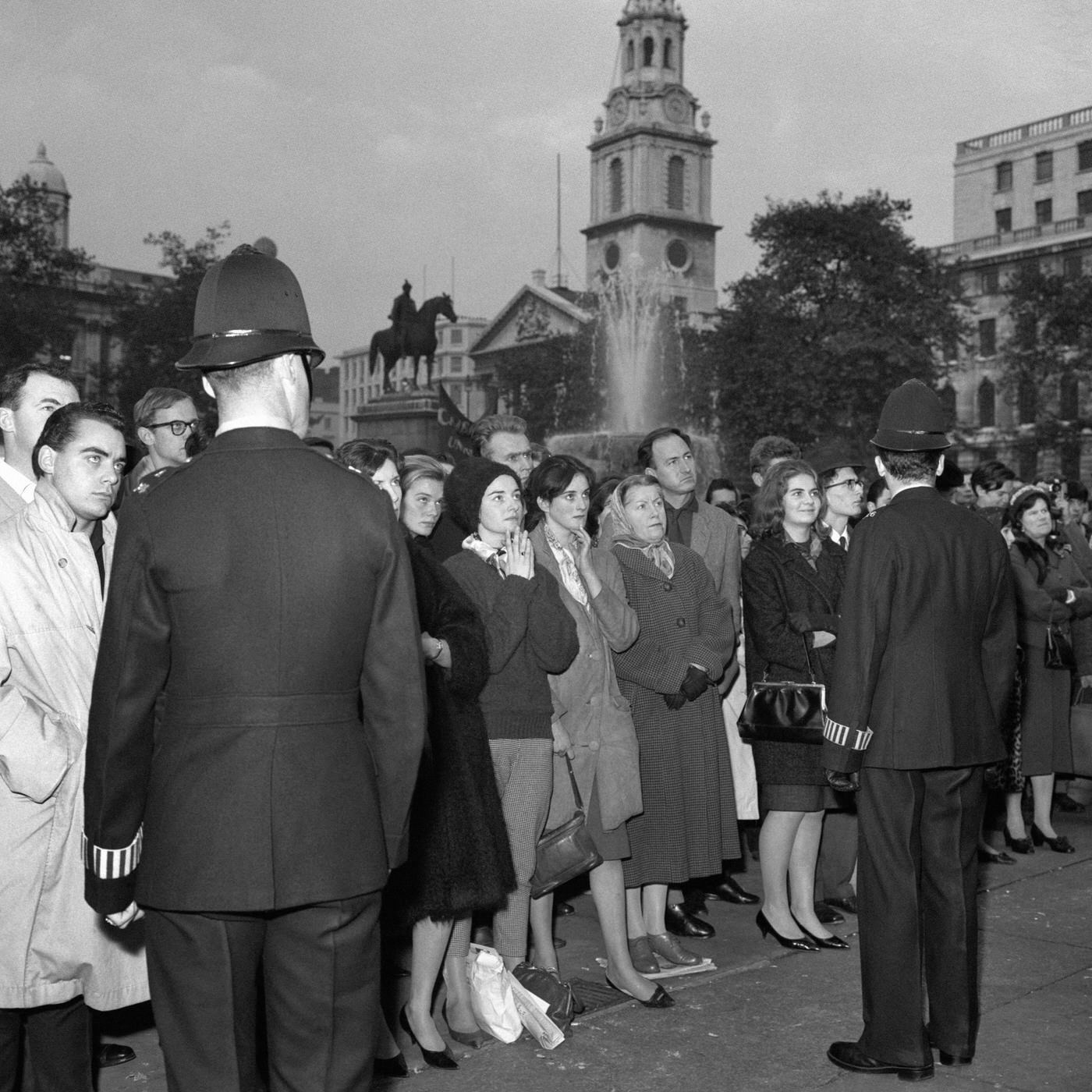
Into the 1960s, Ban the Bomb rallies continued. Some demonstrators were arrested directly in the square. The Committee of 100 — a direct-action offshoot of CND — organised its own sit-down protest meetings there in 1961. That same year, Christopher Chataway addressed a Young Conservatives rally, a reminder that the square was used across the political spectrum.
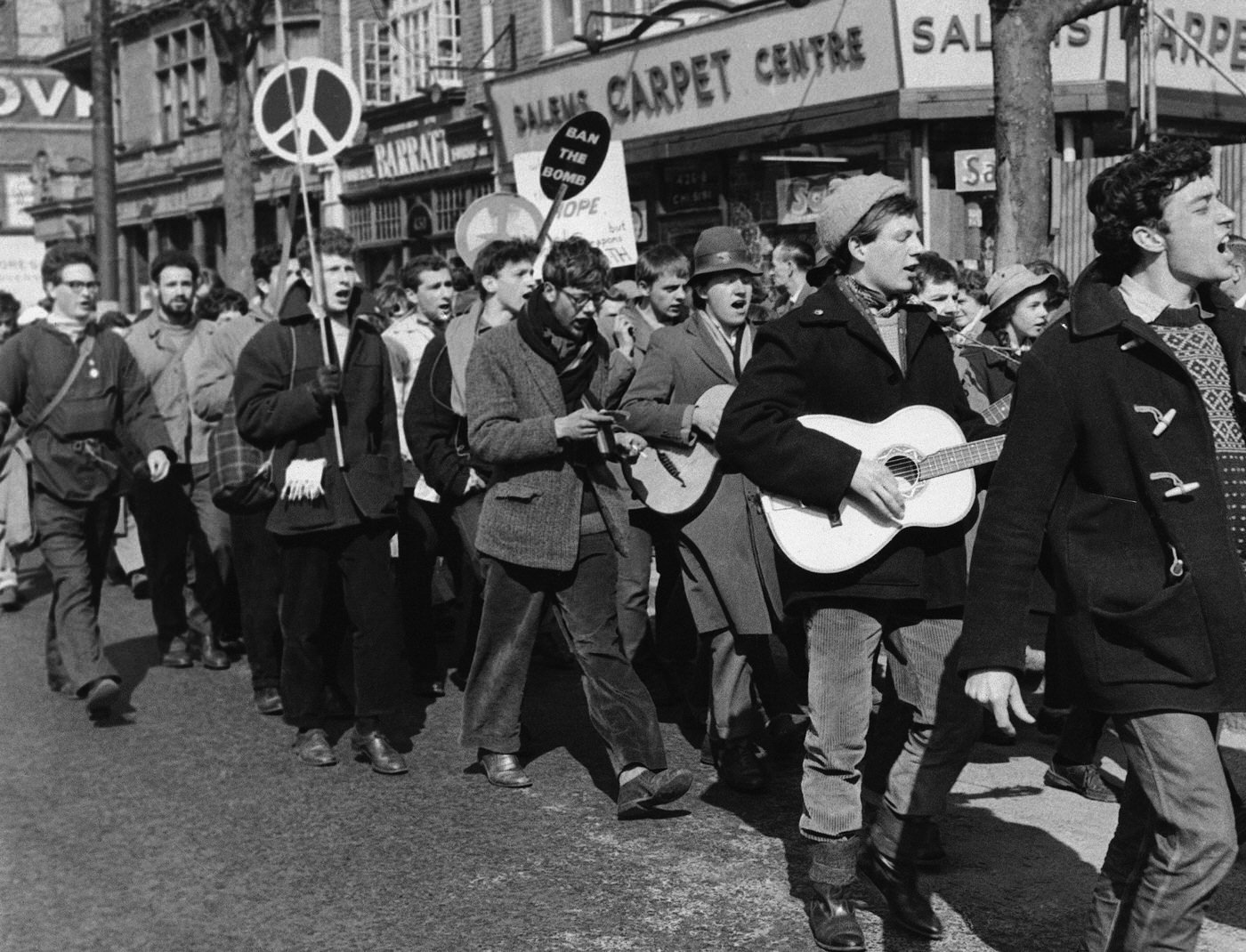
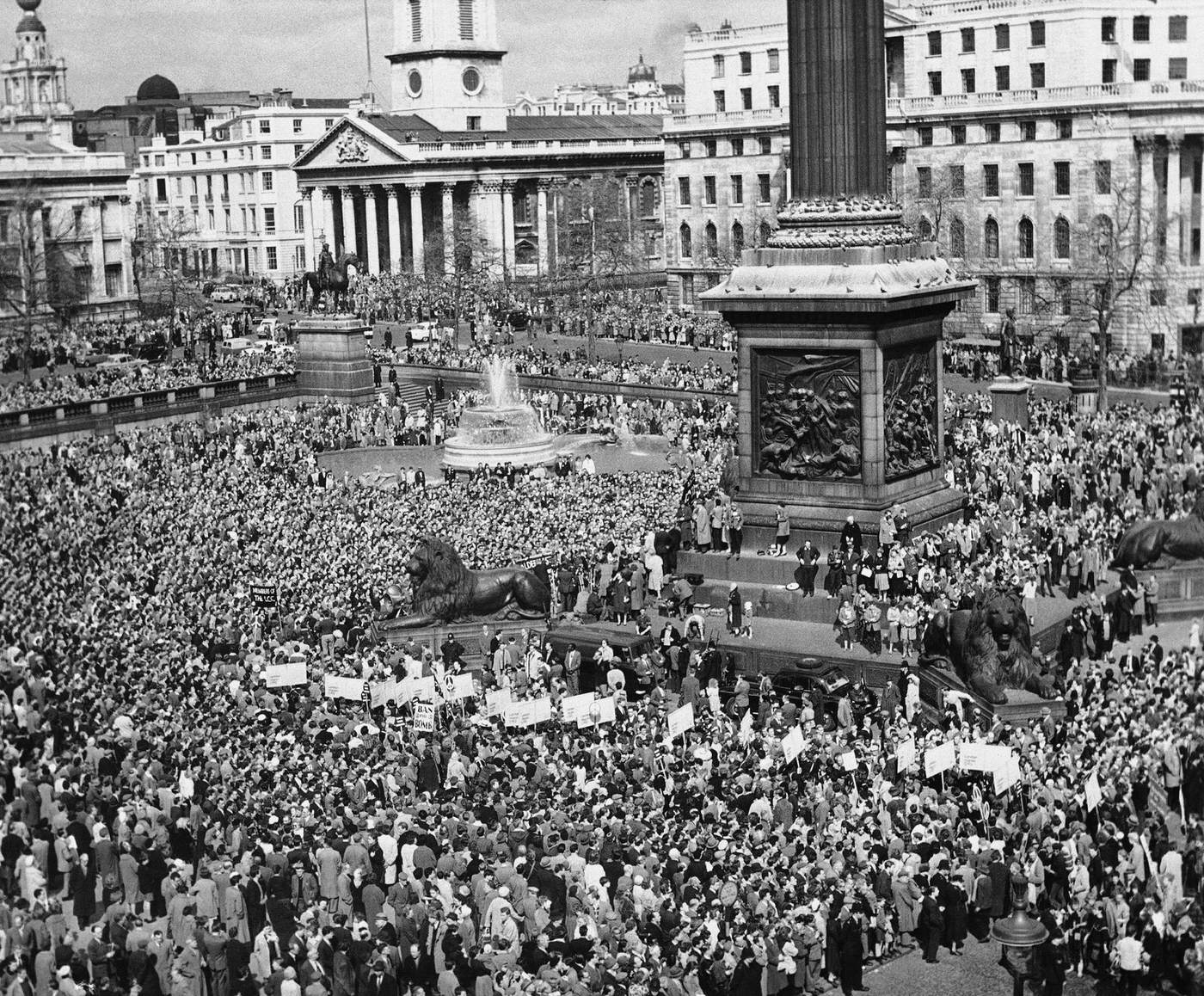
An anti-H-bomb demonstration in Trafalgar Square, 1960.
A "Ban the Bomb" demonstration in Trafalgar Square, 1960.
A “Ban the Bomb” demonstration in Trafalgar Square, 1960.
Christopher Chataway speaking at a Young Conservatives rally in Trafalgar Square, 1961.
A demonstrator being arrested at a Ban-the-bomb rally in Trafalgar Square, 1961.
A protest meeting in Trafalgar Square organized by the Committee of 100, 1961.

In 1962, nurses took to the square to protest their pay — a rare workplace demonstration by a profession not typically associated with strikes. That same year, a National Socialist Party rally and a separate clash between police and members of the British Union of Fascists showed that far-right politics continued to collide with the square’s history of opposition.
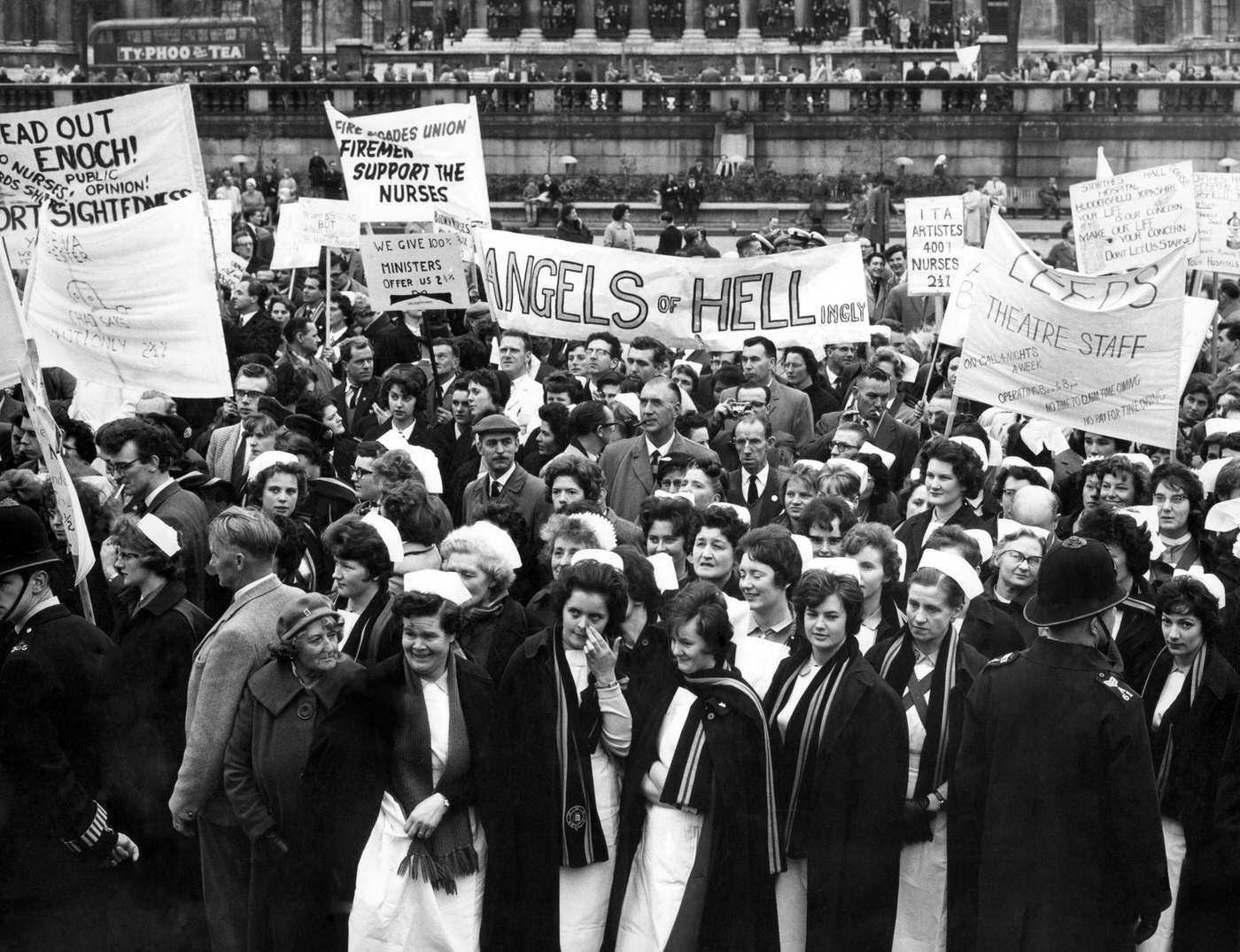
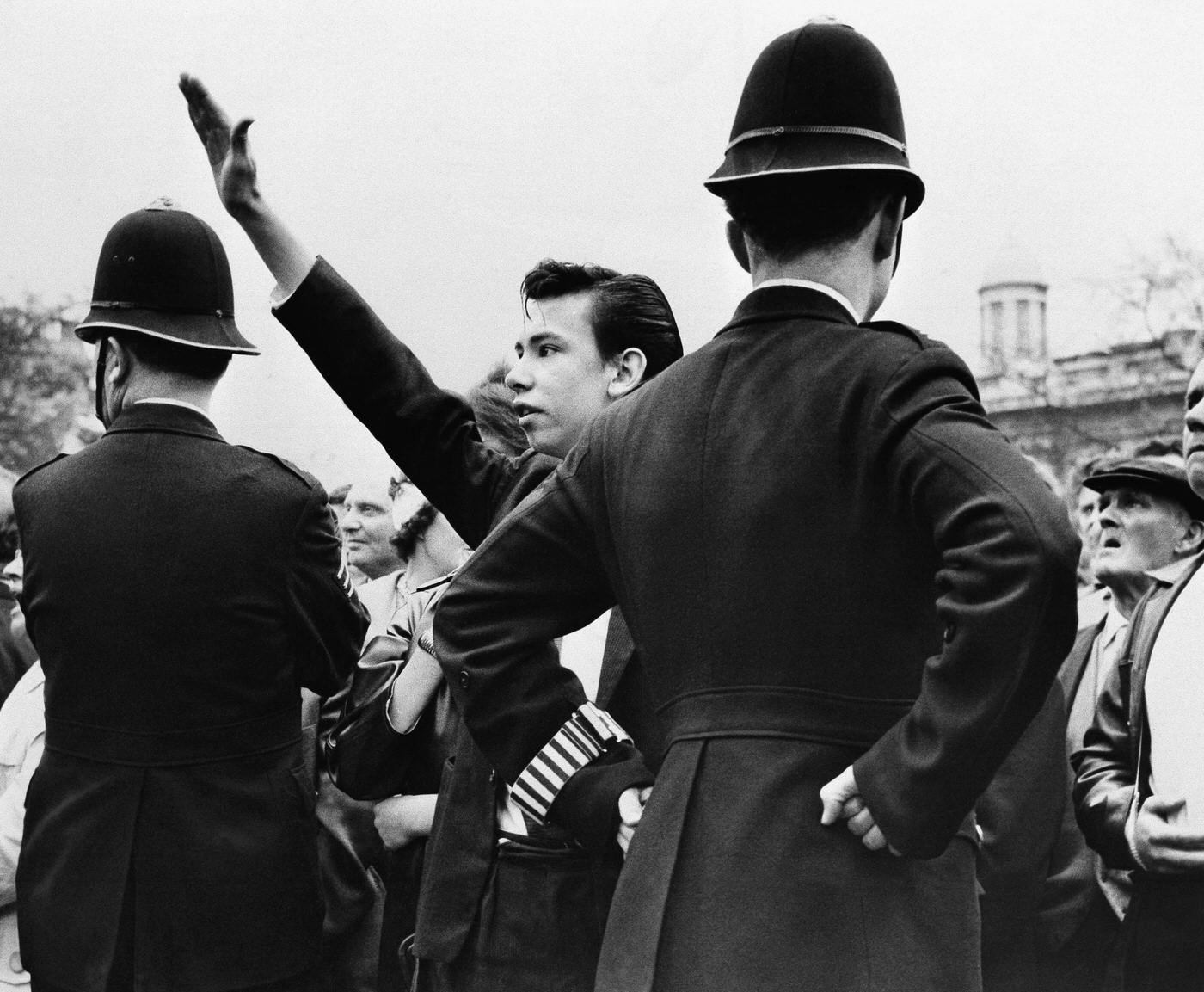
Nurses protesting pay rates in Trafalgar Square, 1962.
A National Socialist Party rally in Trafalgar Square, 1962.
A clash between police and members of the British Union of Fascists in Trafalgar Square, 1962.

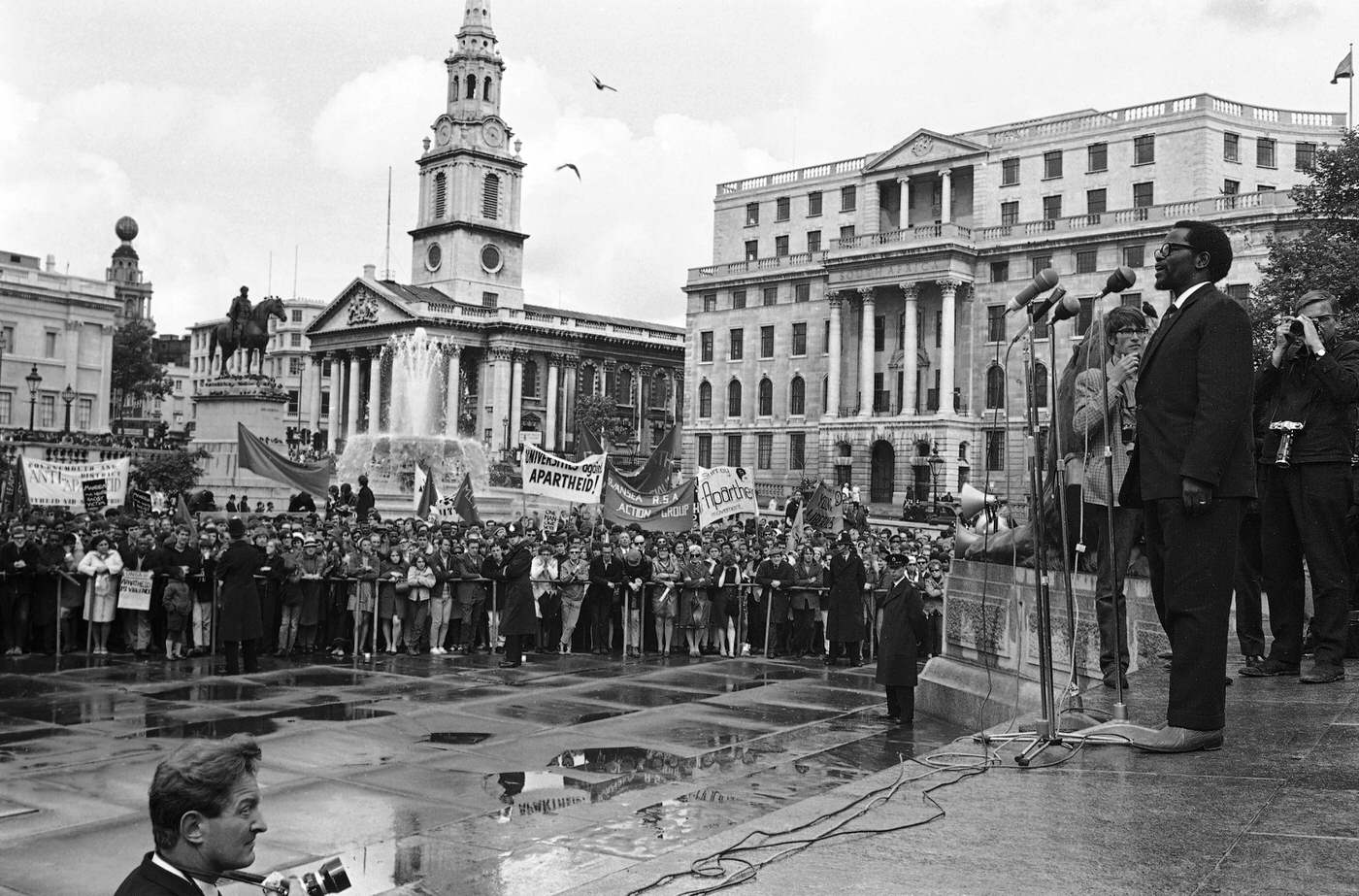
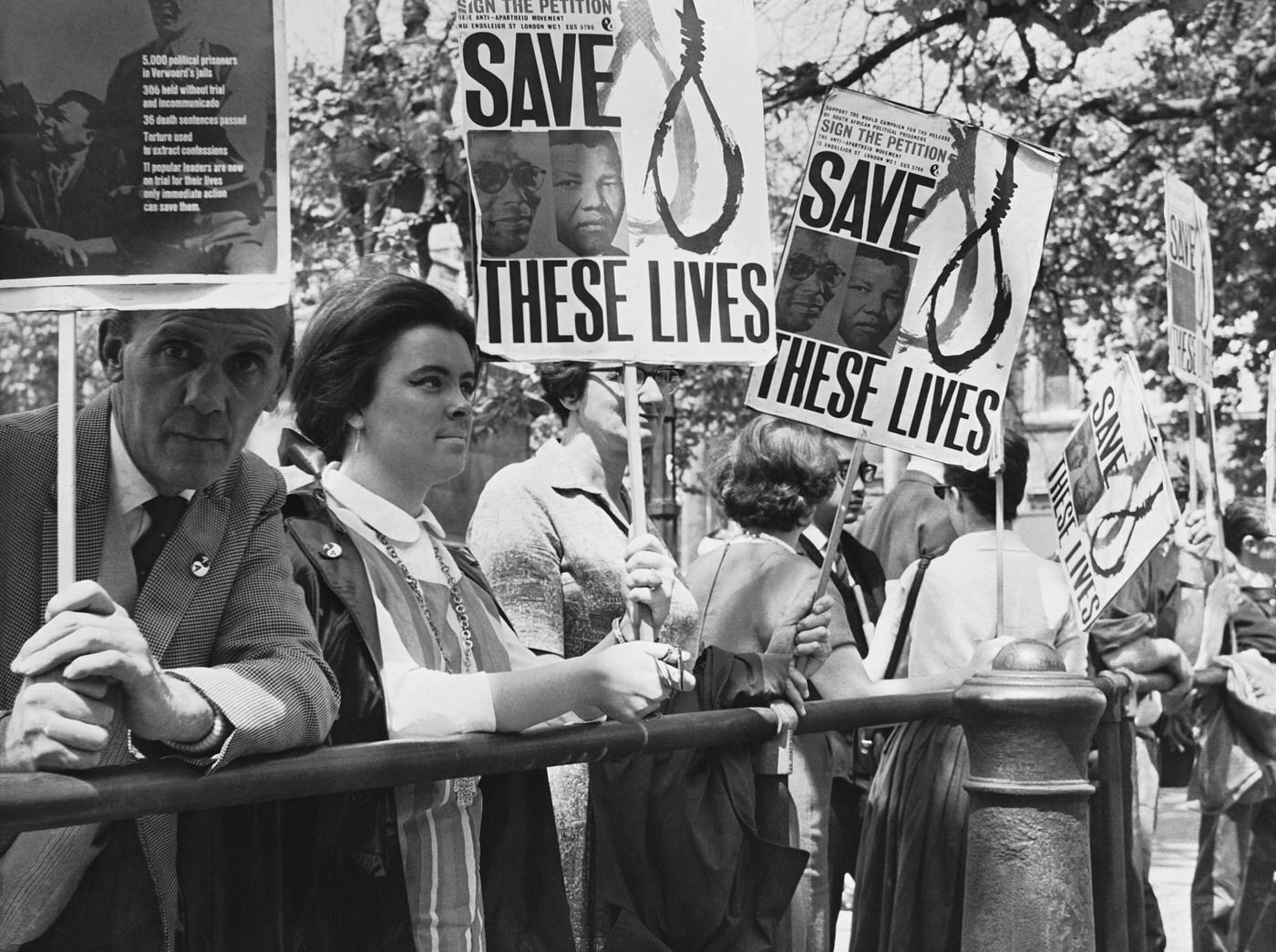
Anti-apartheid demonstrations became a fixture through the 1960s and beyond, with the South African Embassy on the edge of the square making it a direct target for protesters. Woodrow Wyatt addressed an anti-apartheid meeting in 1963. Oliver Tambo, then leader of the African National Congress in exile, spoke at the South African Freedom Day Rally in 1968.
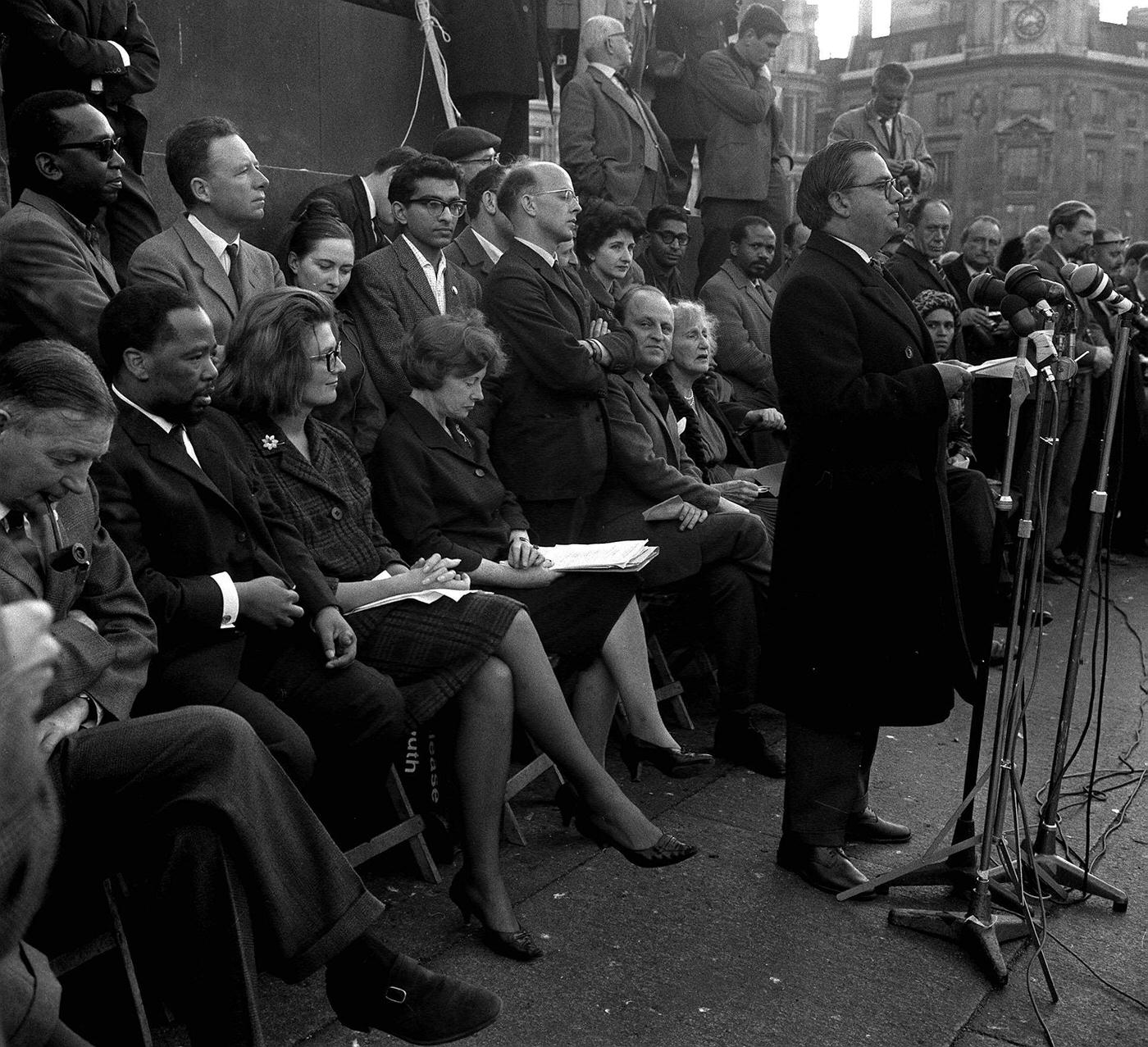
Woodrow Wyatt speaking at an anti-apartheid meeting in Trafalgar Square, 1963.
An anti-apartheid demonstration outside the South African Embassy in Trafalgar Square, 1964.
Oliver Tambo addressing the anti-apartheid movement's South African Freedom Day Rally, 1968.
Oliver Tambo addressing the anti-apartheid movement’s South African Freedom Day Rally, 1968.
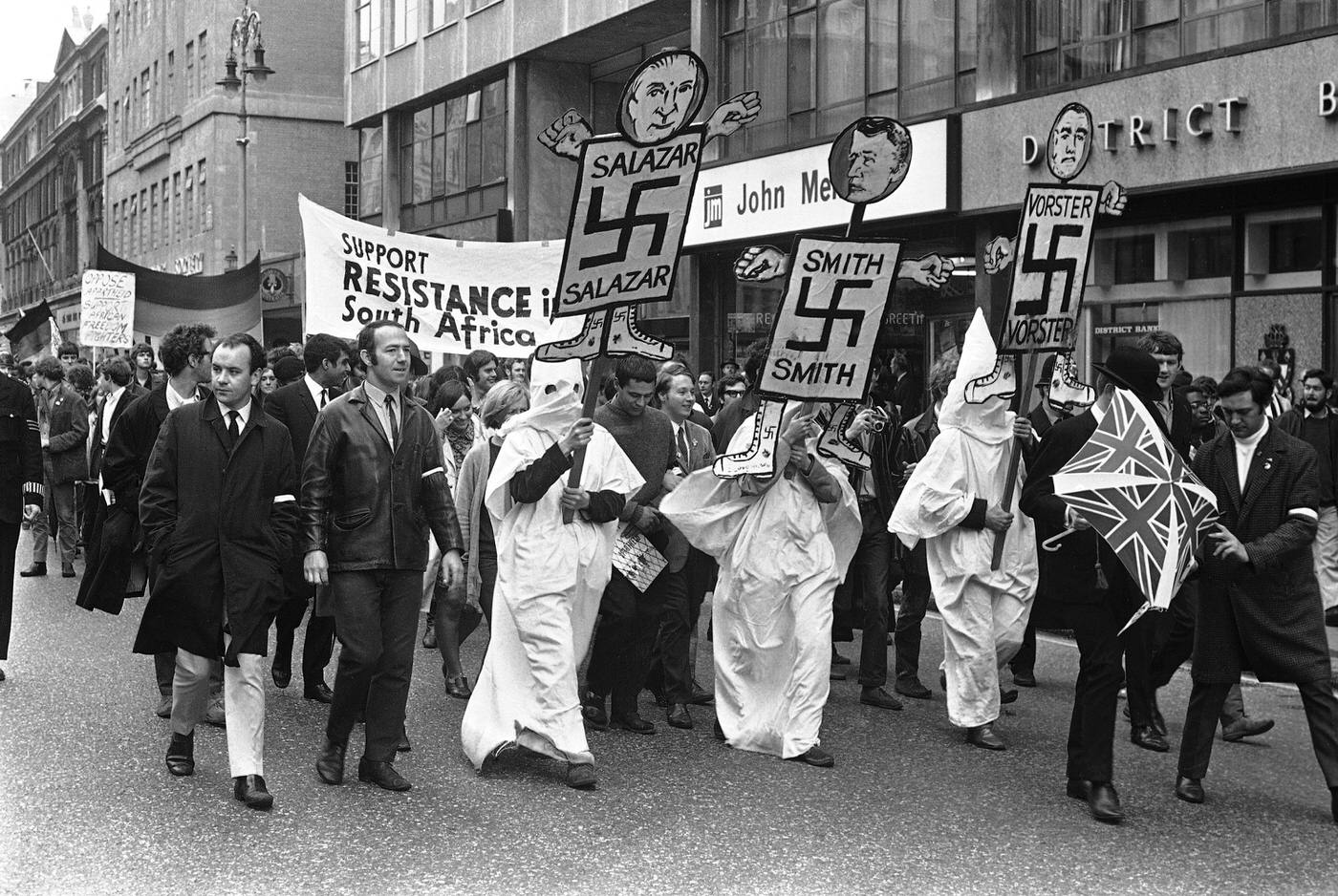
Anti-apartheid demonstrators with Nazi symbols in Trafalgar Square, 1968.
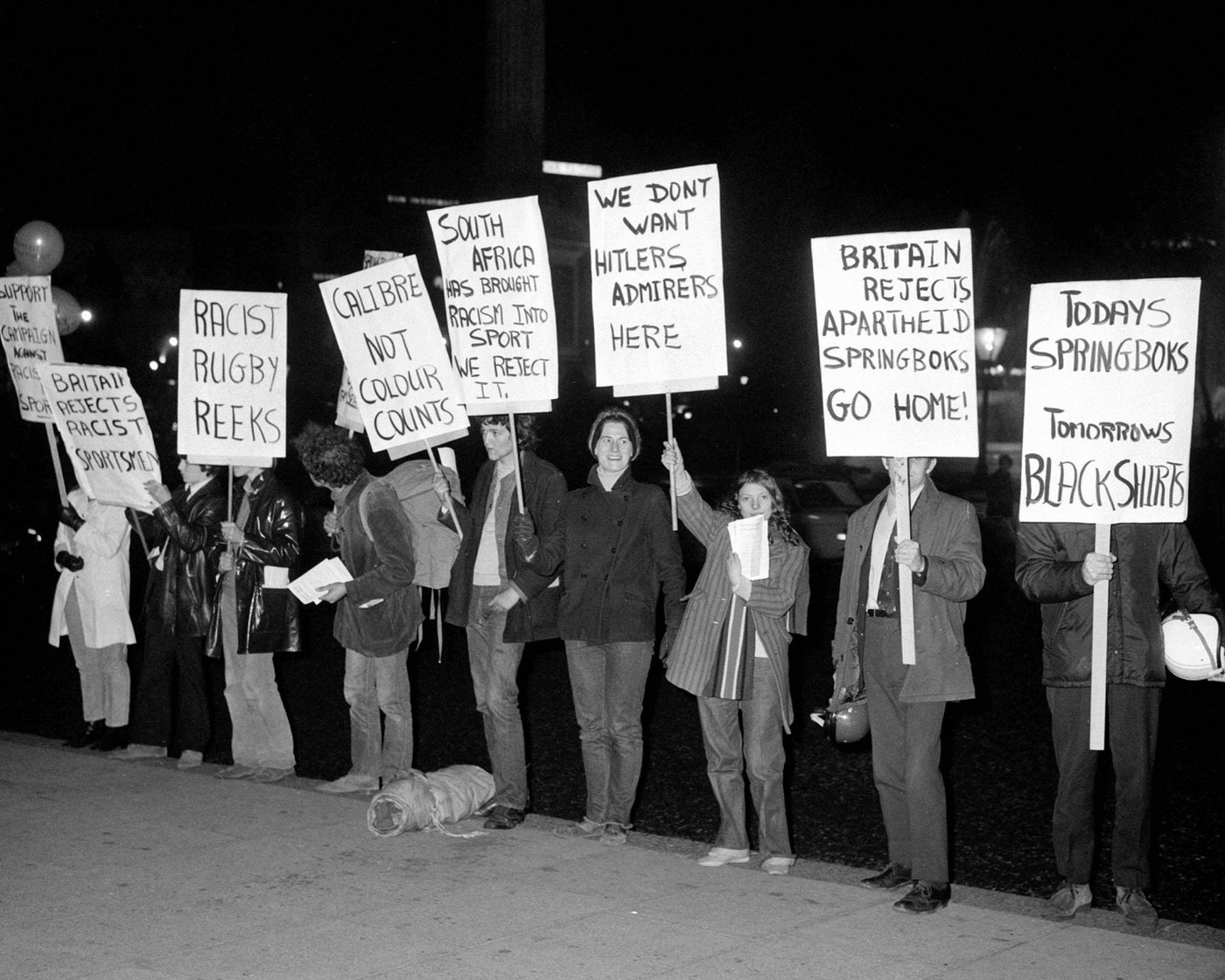
Anti-Apartheid protestors outside the South African Embassy in Trafalgar Square, date unknown.

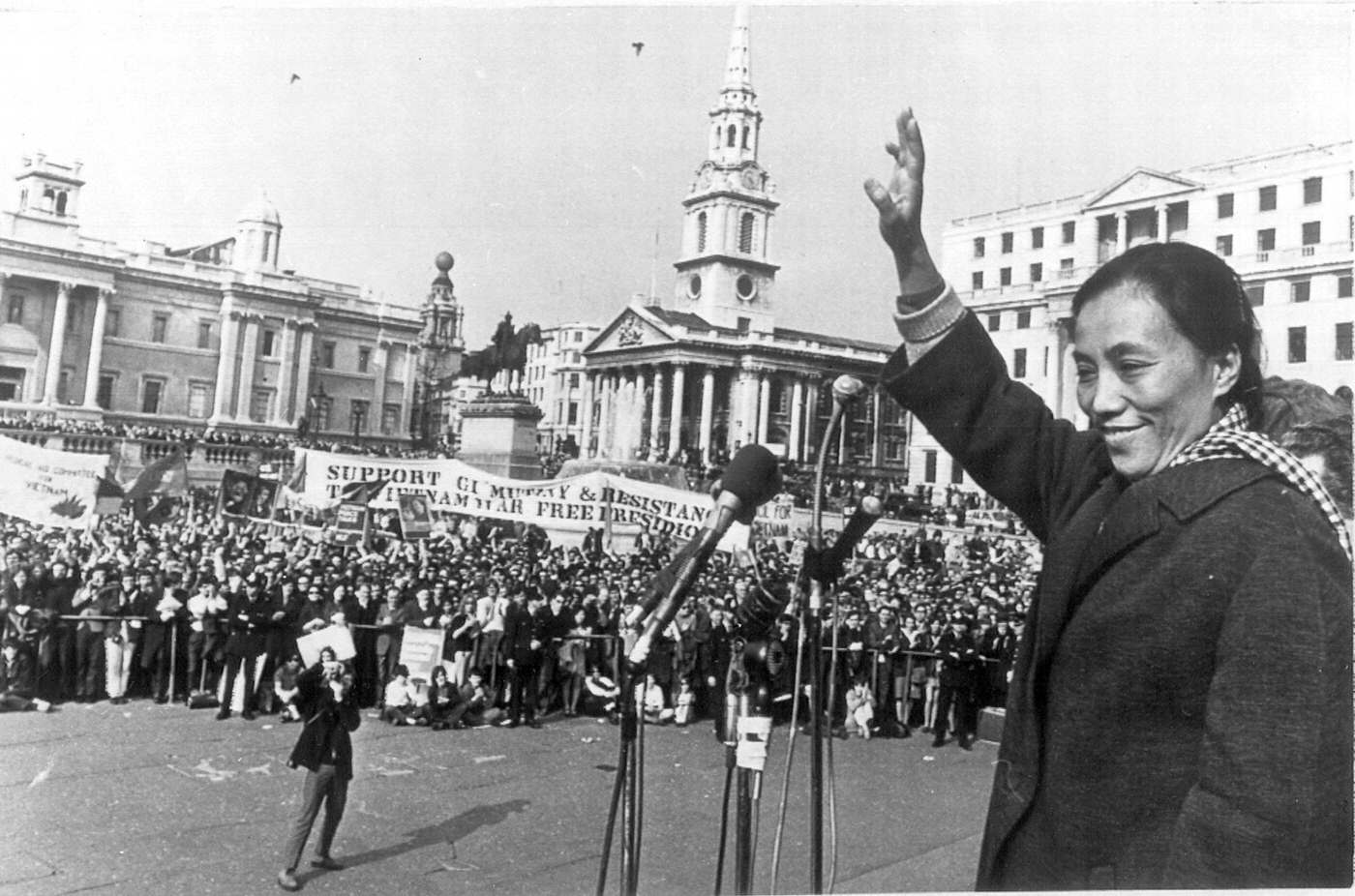
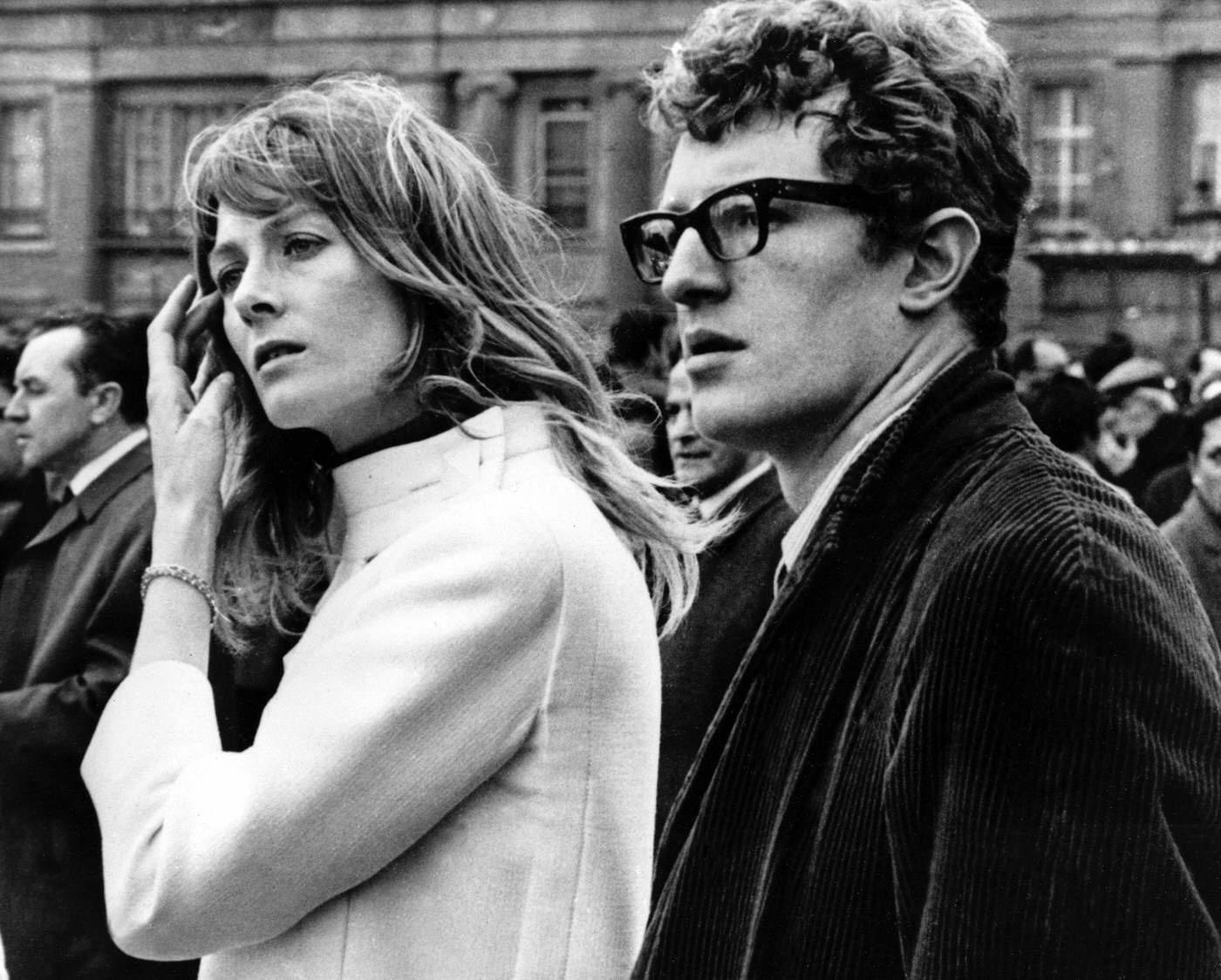
The Vietnam War drew some of the decade’s largest crowds. Actress Vanessa Redgrave led demonstrators toward the U.S. Embassy in 1966, and returned with her brother Corin to an anti-Vietnam War rally in 1968. In 1969, Madame Nguyen Thi Binh — a senior figure in the Vietnamese communist movement — arrived at the end of a CND march at the square.
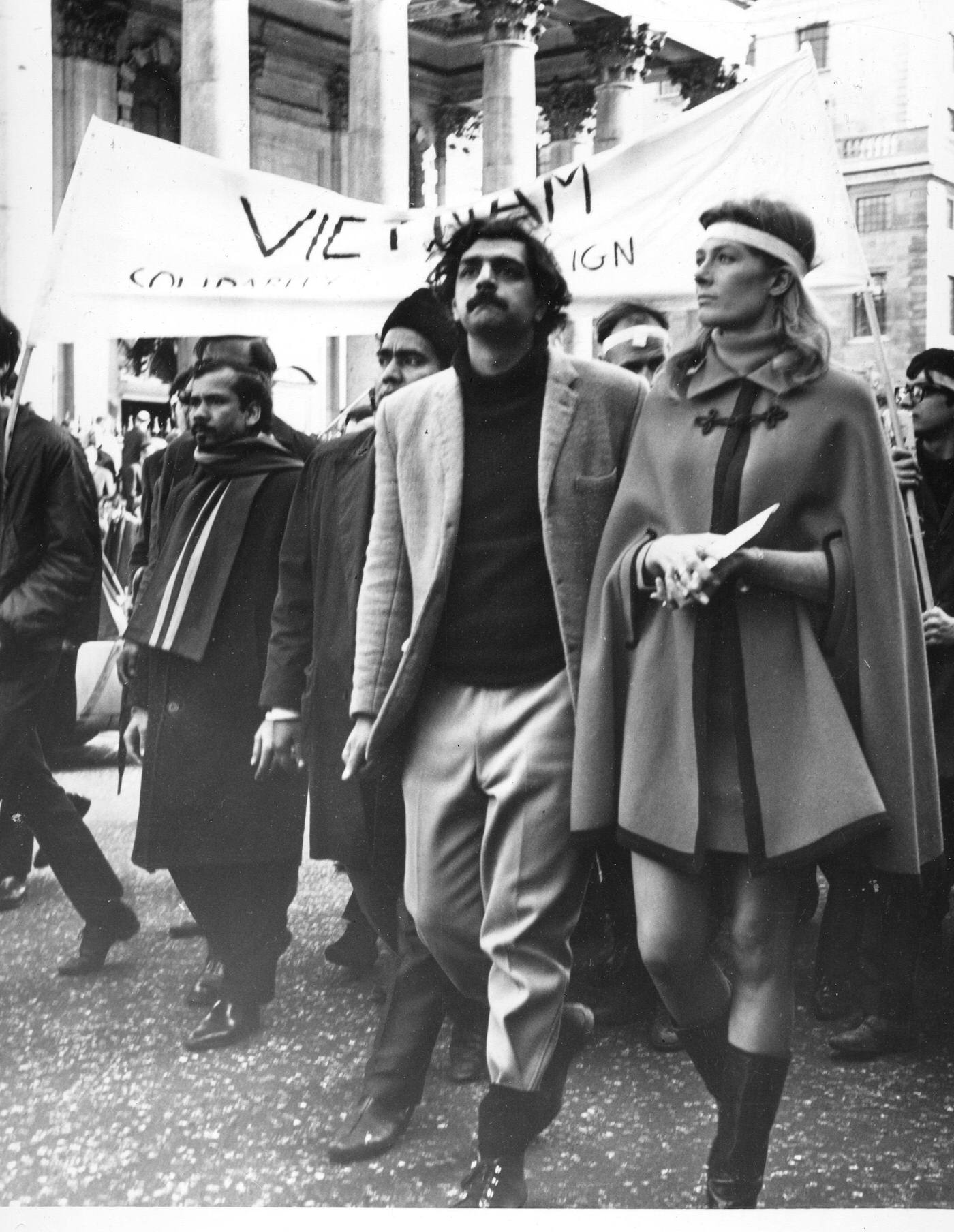
Vanessa Redgrave leading anti-Vietnam War demonstrators to the U.S. Embassy, 1966.
Vanessa Redgrave and Corin Redgrave at an anti-Vietnam War rally in Trafalgar Square, 1968.
Madame Nguyen Thi Binh at a Campaign for Nuclear Disarmament march ending in Trafalgar Square, 1969.

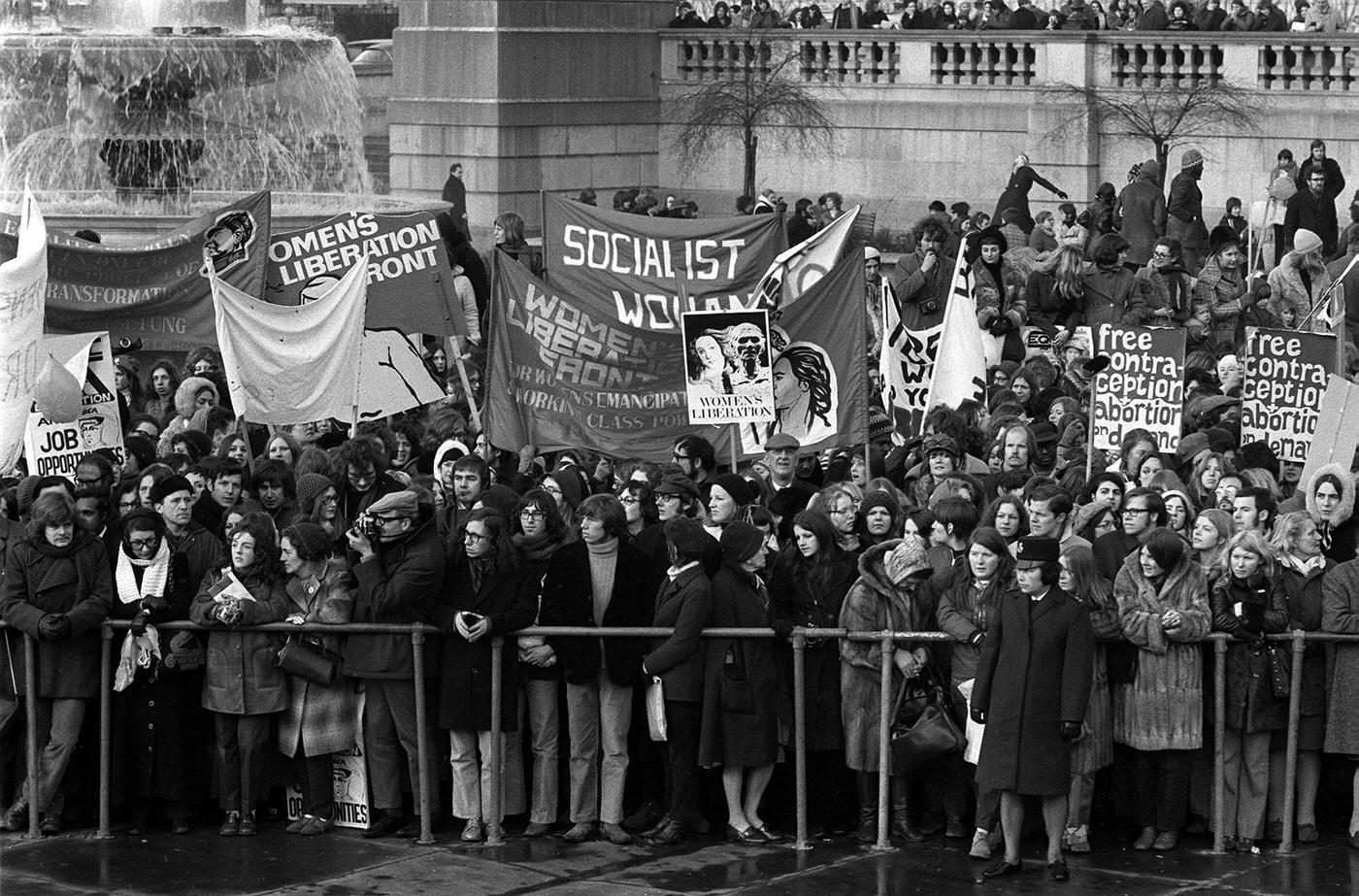
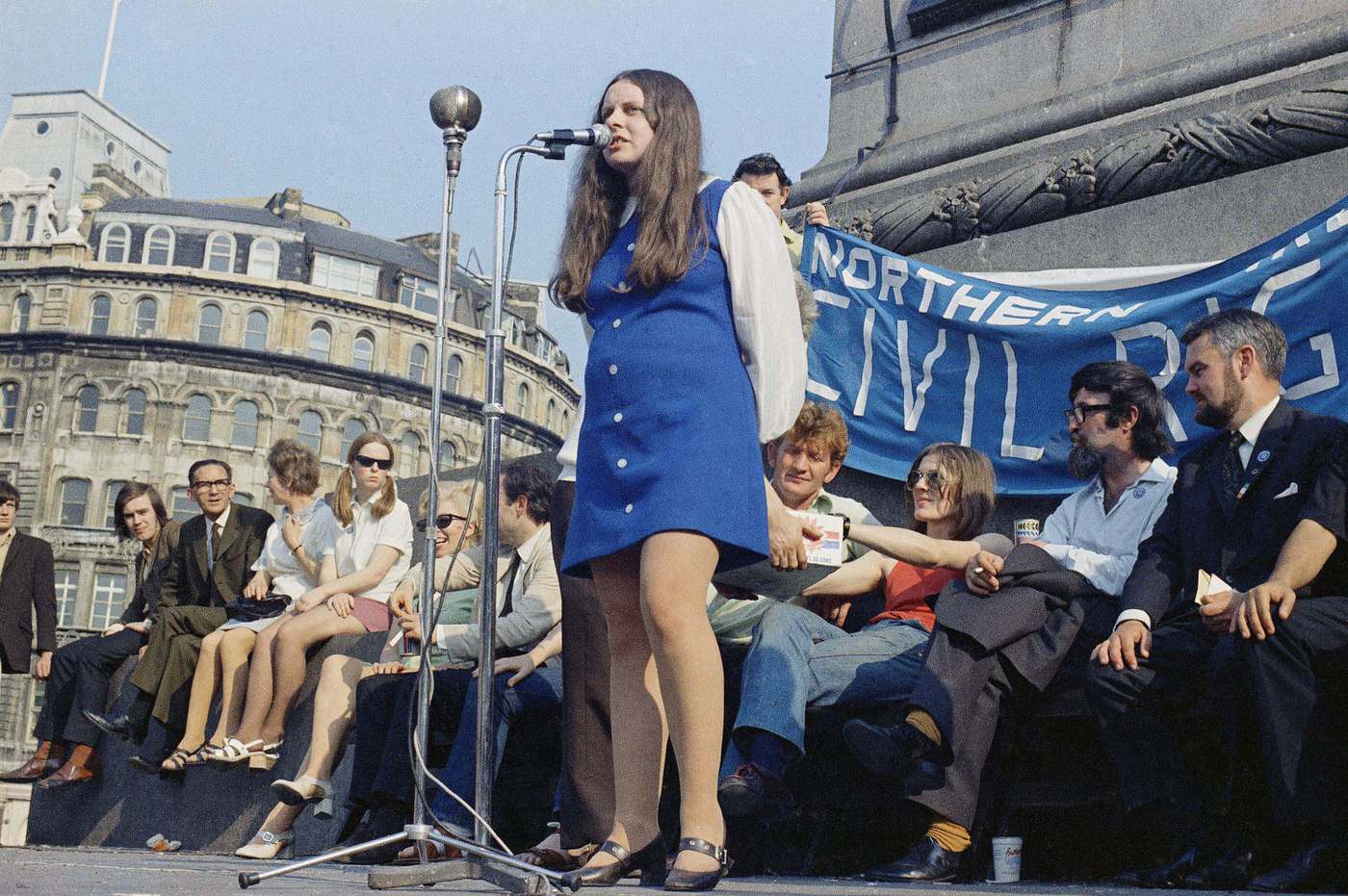
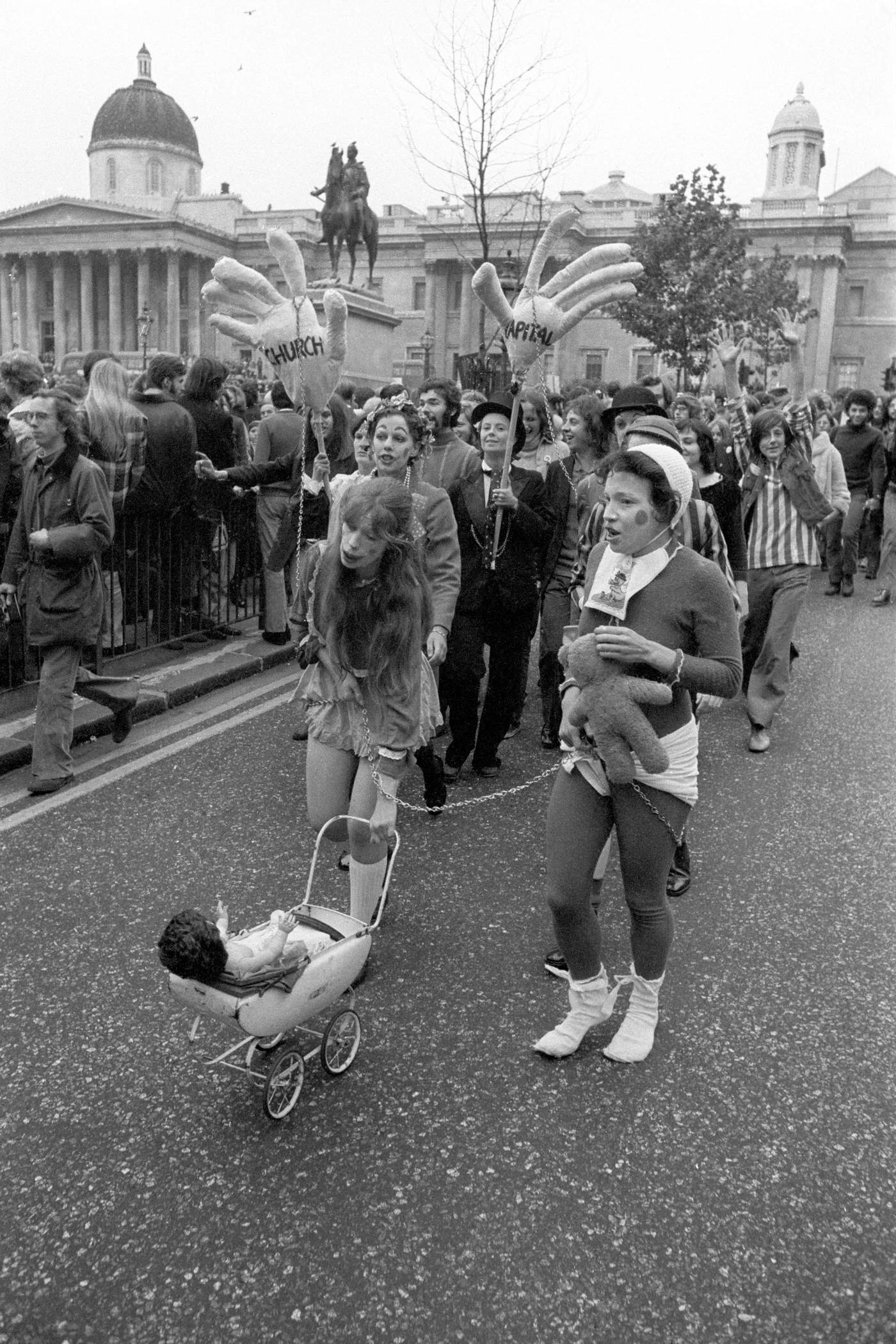
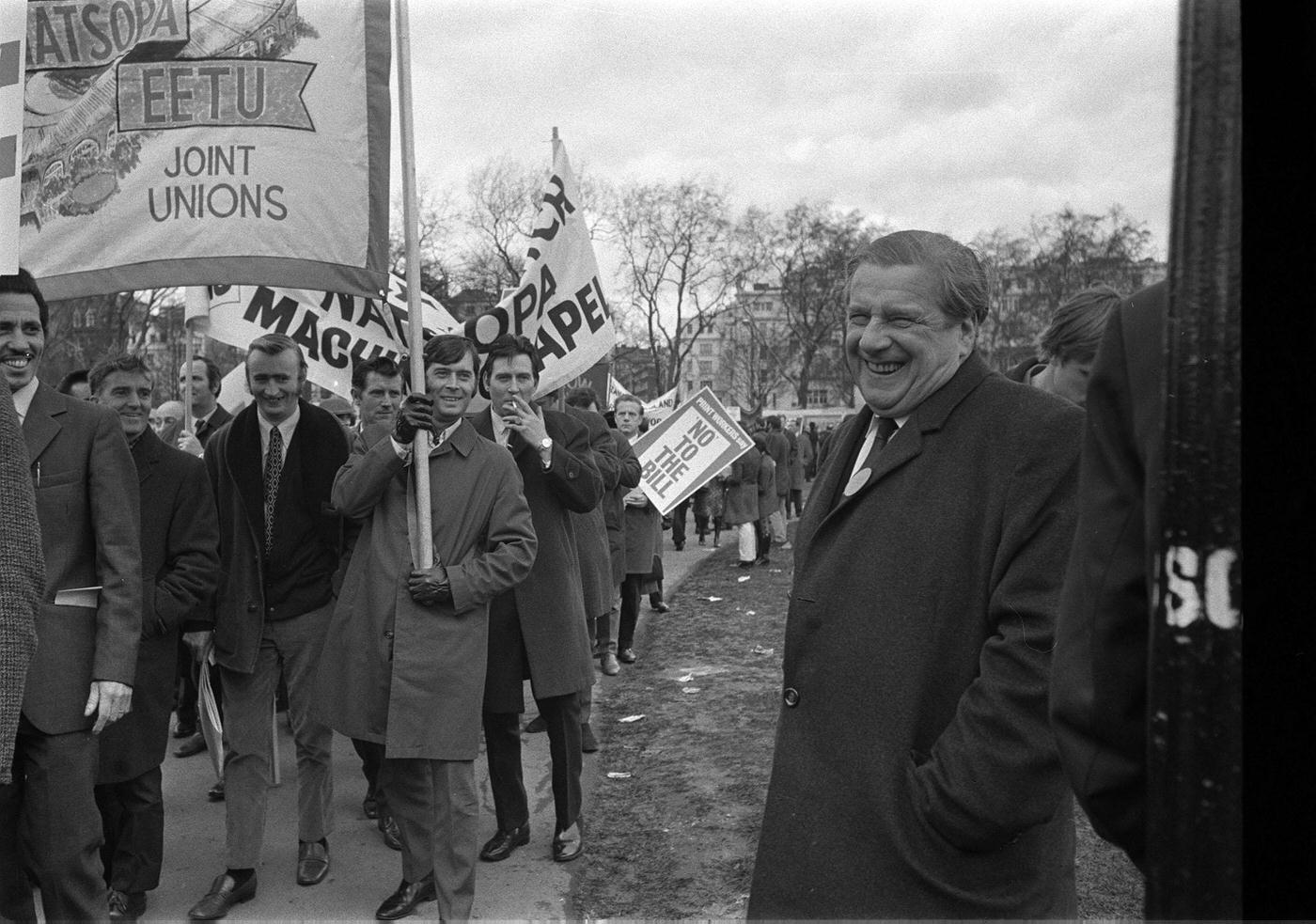
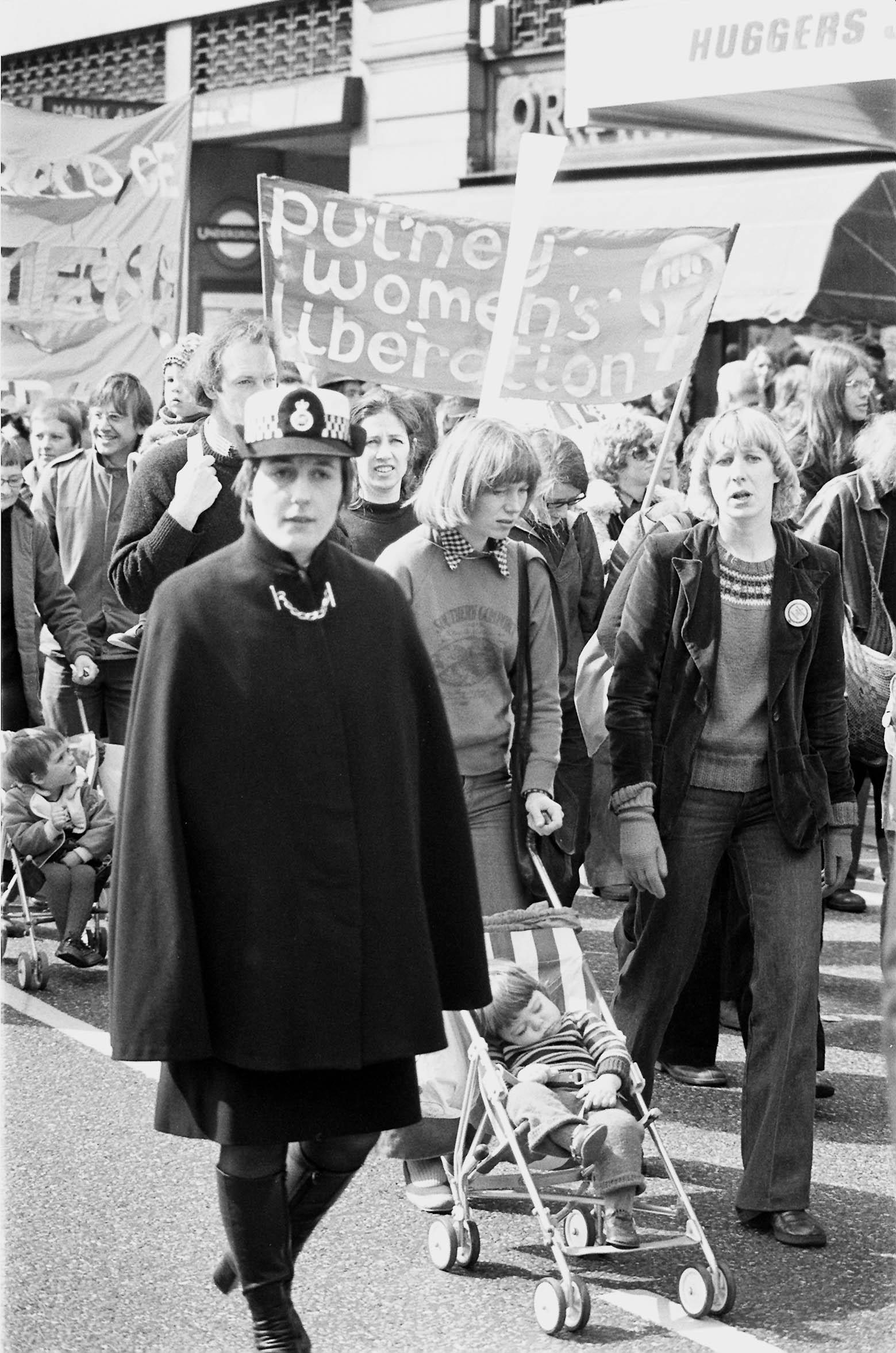
The early 1970s saw the square host demonstrations on several fronts at once. A TUC march against the Industrial Relations Bill arrived from Speaker’s Corner in 1971. Women’s rights campaigners filled the square demanding equality that same year. Bernadette Devlin, the Irish republican politician, addressed a rally there in 1971. A Women’s Liberation Street Theatre group used the square to protest against the Festival of Light.
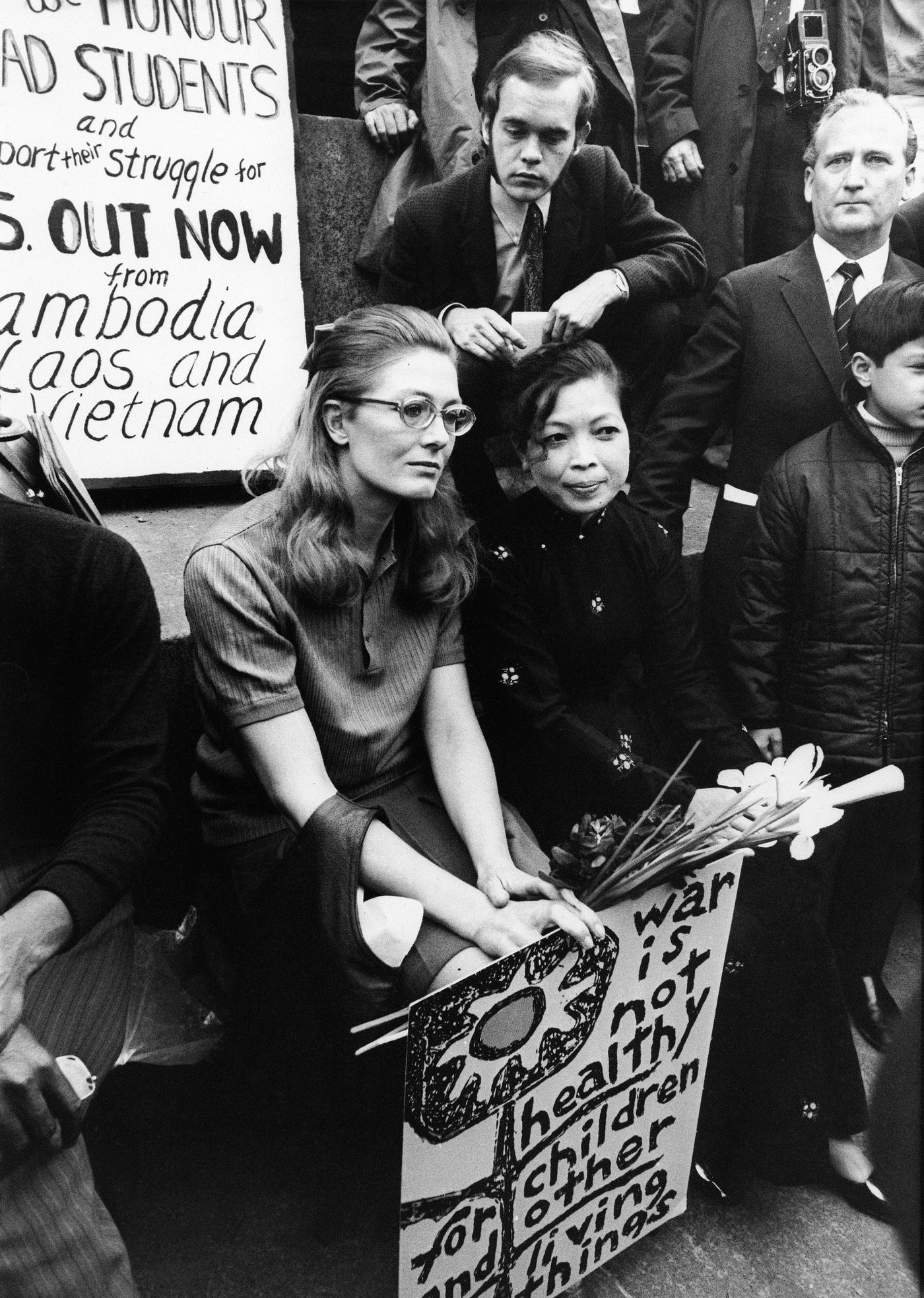
Vanessa Redgrave and Madame Lin Qui leading a march to the United States Embassy, 1970.
A TUC march from Speaker's Corner to Trafalgar Square against the Industrial Relations Bill, 1971.
A TUC march from Speaker’s Corner to Trafalgar Square against the Industrial Relations Bill, 1971.
A crowd in Trafalgar Square demanding equal rights for women, 1971.
Bernadette Devlin speaking at a rally in Trafalgar Square, 1971.
Women's Liberation Street Theatre demonstrating against the Festival of Light, 1971.
Women’s Liberation Street Theatre demonstrating against the Festival of Light, 1971.

Miners’ families used the square as a platform during the industrial disputes of the 1970s and 1980s. Supporters of the National Abortion Campaign marched there in 1976. That same year, peace campaigners from Northern Ireland — including Joan Baez, Betty Williams, and Mairead Corrigan — arrived at the square after the Ulster Peace People march.
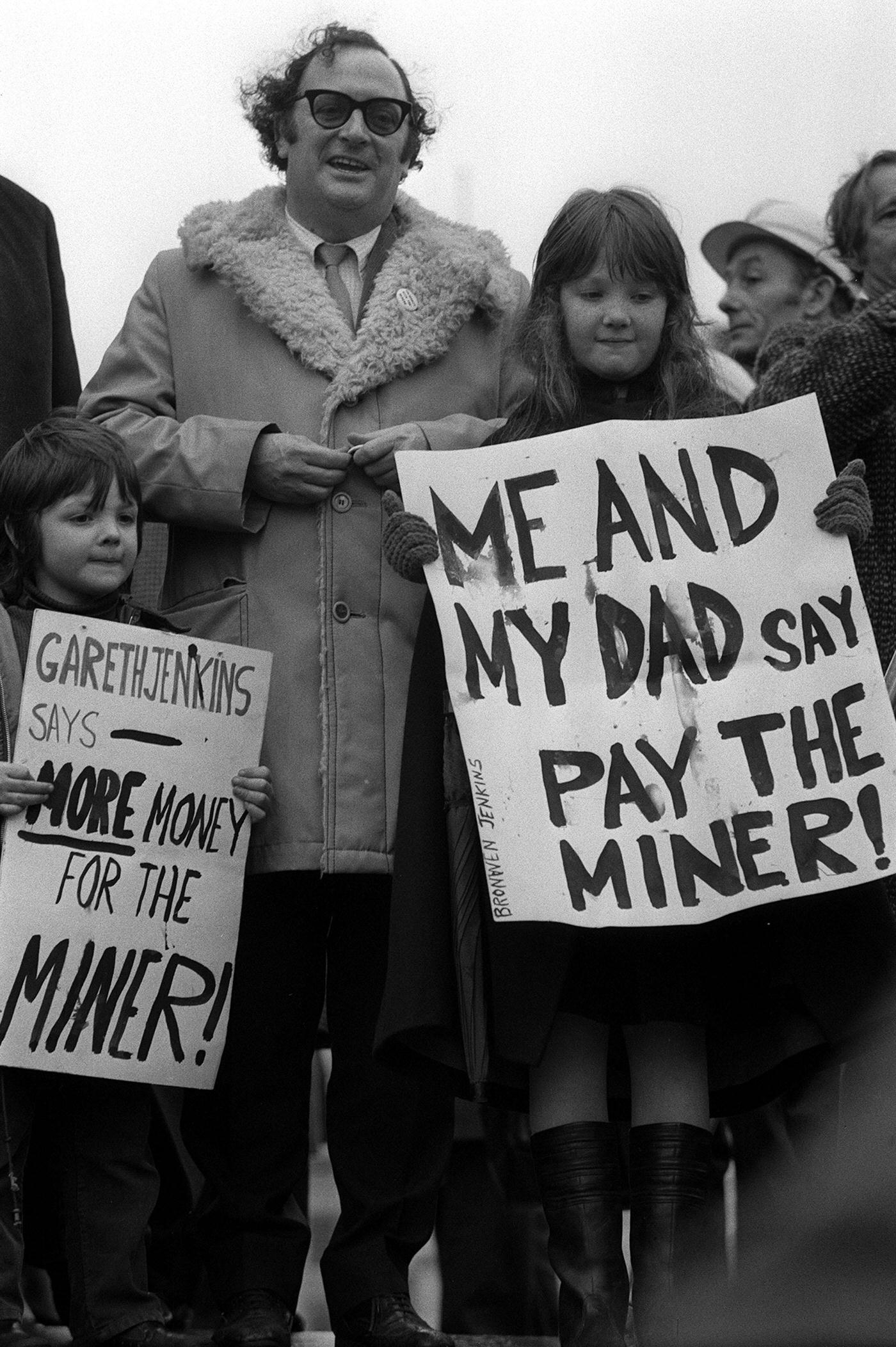
Gareth and Bronwen supporting their father at a miners' rally in Trafalgar Square, date unknown.
Gareth and Bronwen supporting their father at a miners’ rally in Trafalgar Square, date unknown.
Supporters of the National Abortion Campaign marching to Trafalgar Square, 1976.
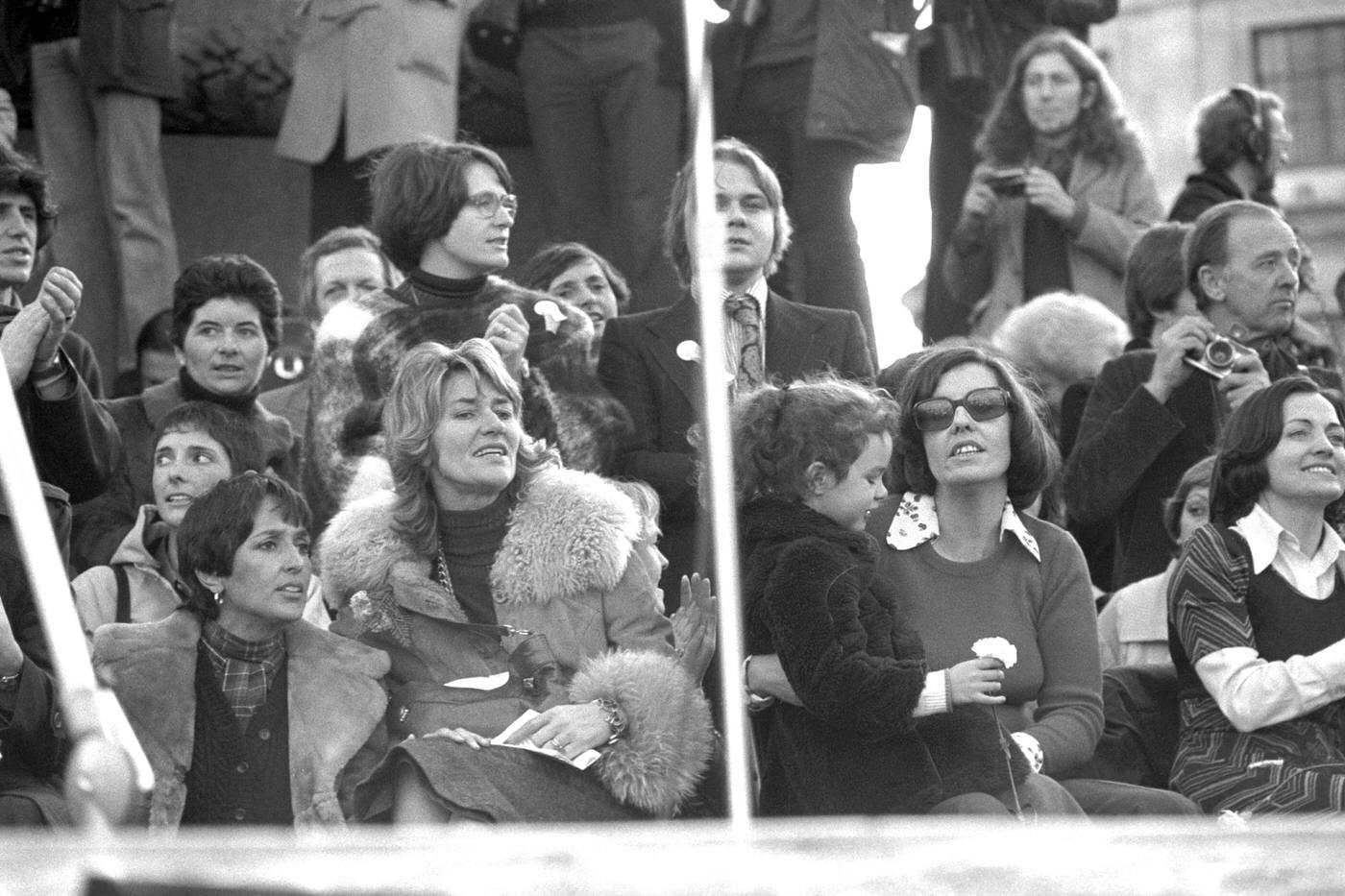
Joan Baez, Jane Ewart-Biggs, Betty Williams, and Mairead Corrigan arriving in Trafalgar Square after the Ulster Peace People march, 1976.

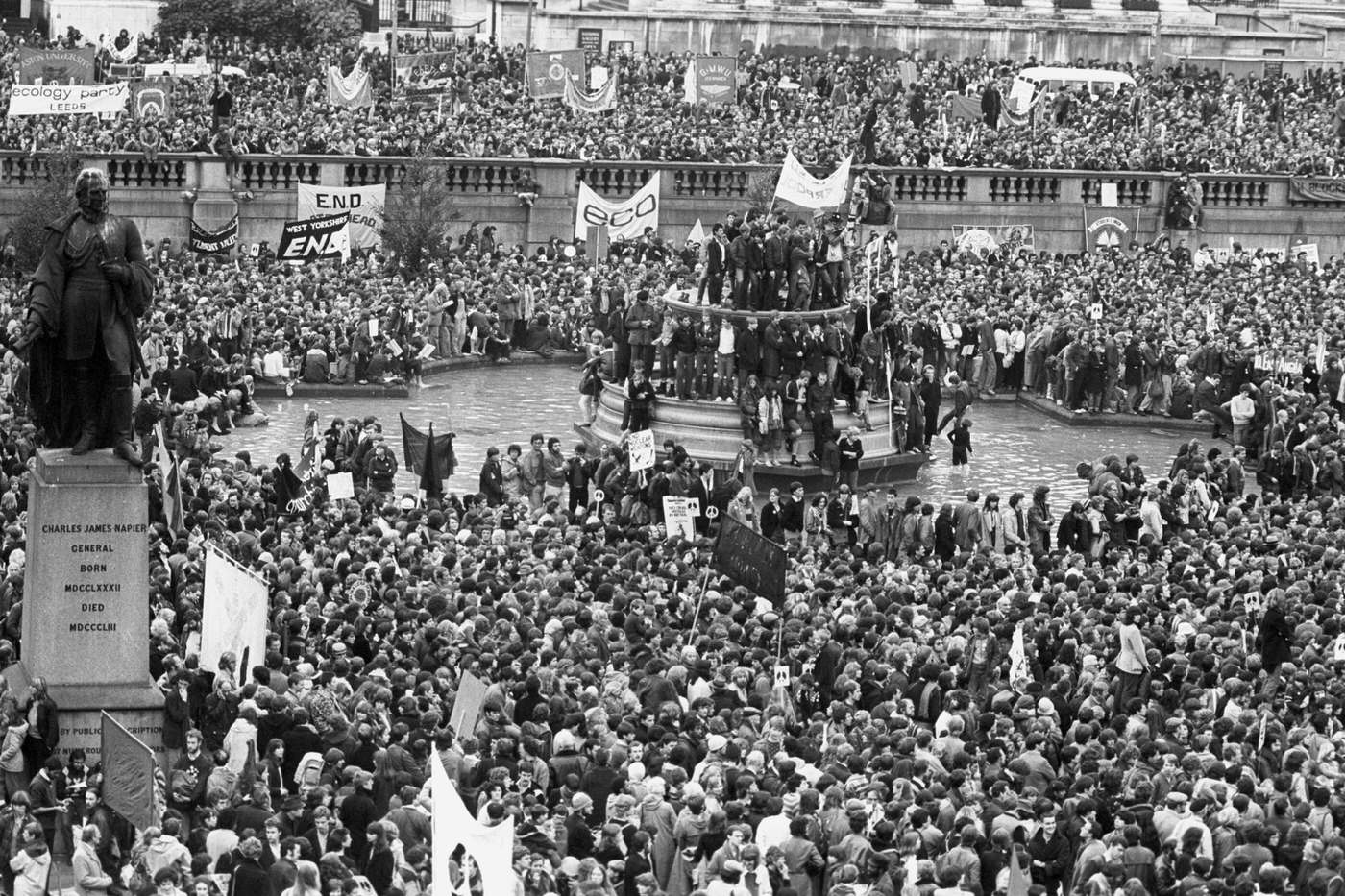
Gay rights demonstrators marched to the square in 1978 for a rally organized by the National Gay News Defence Committee. Two years later, CND filled the square again as Cold War tensions escalated with the Soviet invasion of Afghanistan.
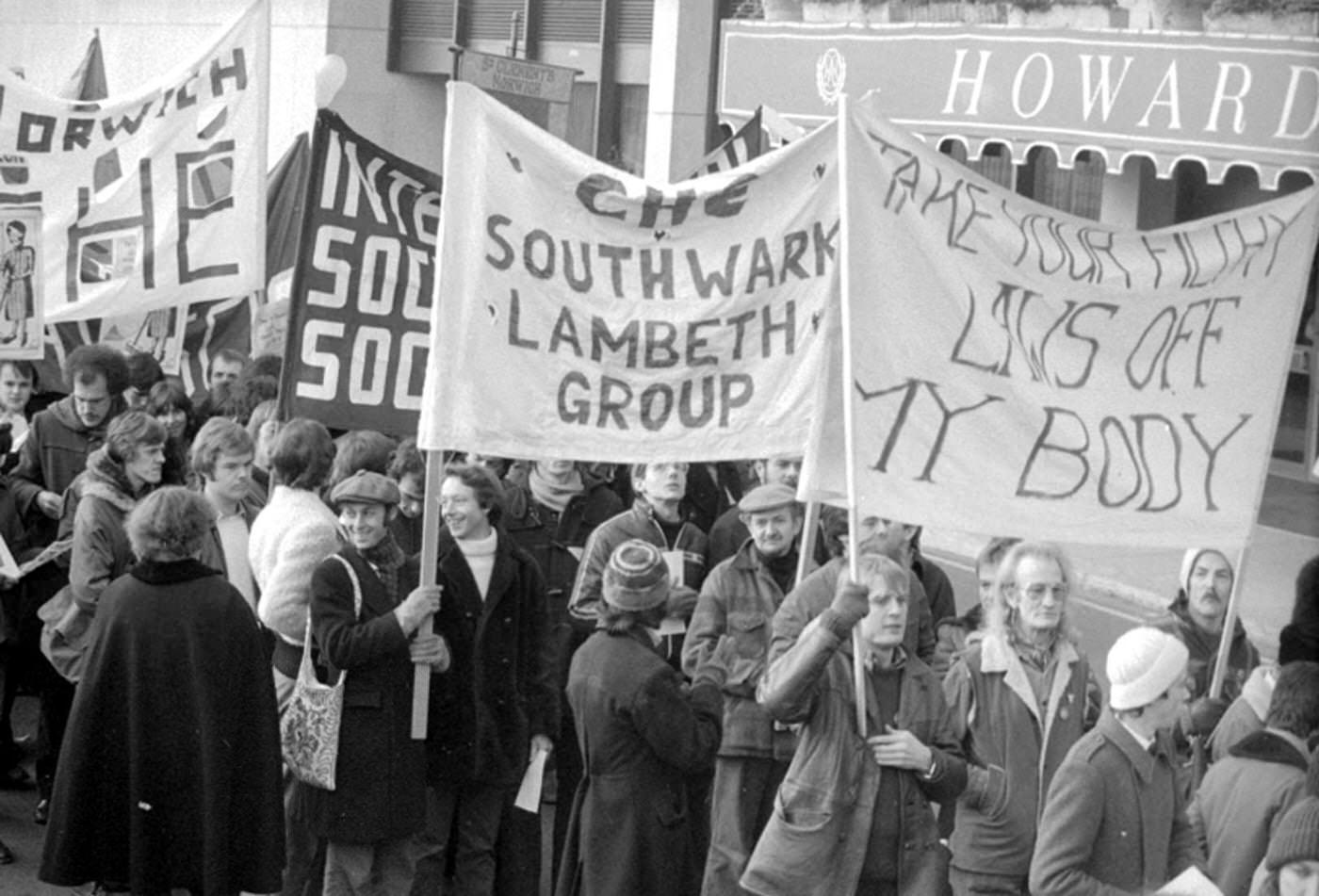
Demonstrators marching to Trafalgar Square for a rally organized by the National Gay News Defence Committee, 1978.
A Campaign for Nuclear Disarmament demonstration in Trafalgar Square, 1980.

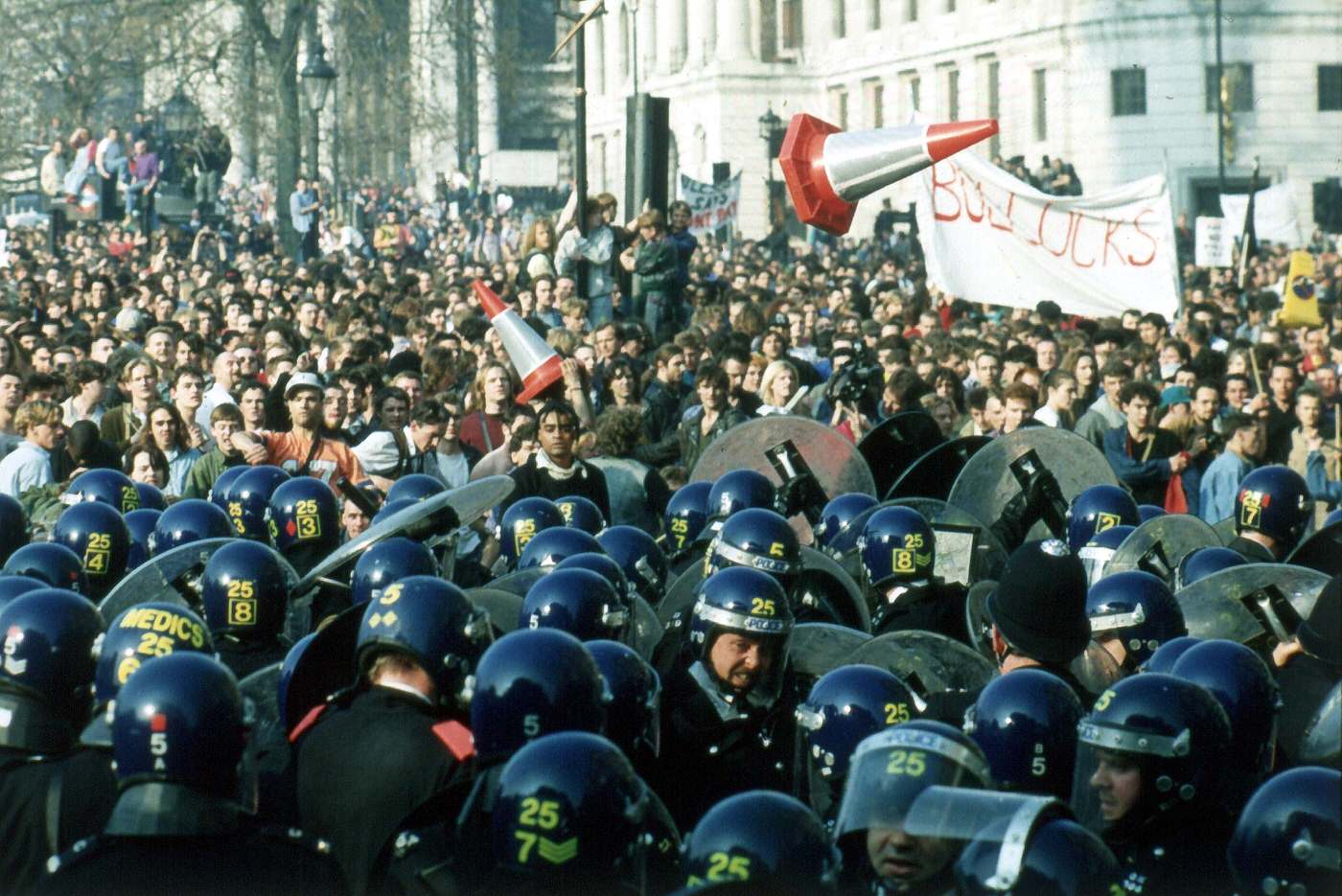
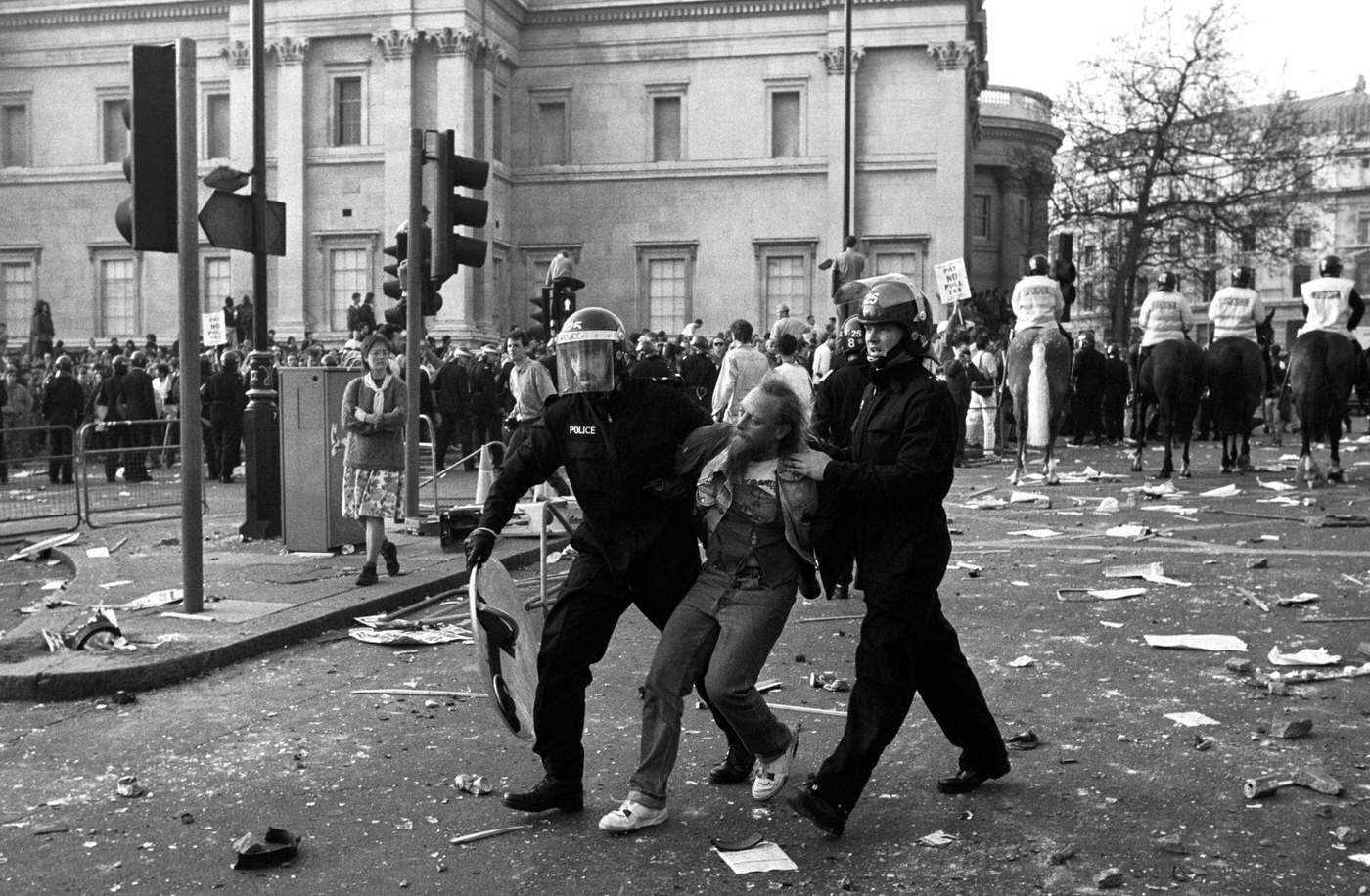
The most violent episode in the square’s modern history came in March 1990. An anti-poll tax demonstration — protesting Margaret Thatcher’s deeply unpopular Community Charge — turned into a full-scale riot. Demonstrators pelted police with missiles. Cars were set on fire. Injuries and arrests numbered in the hundreds. It remains one of the most significant civil disturbances in post-war British history.
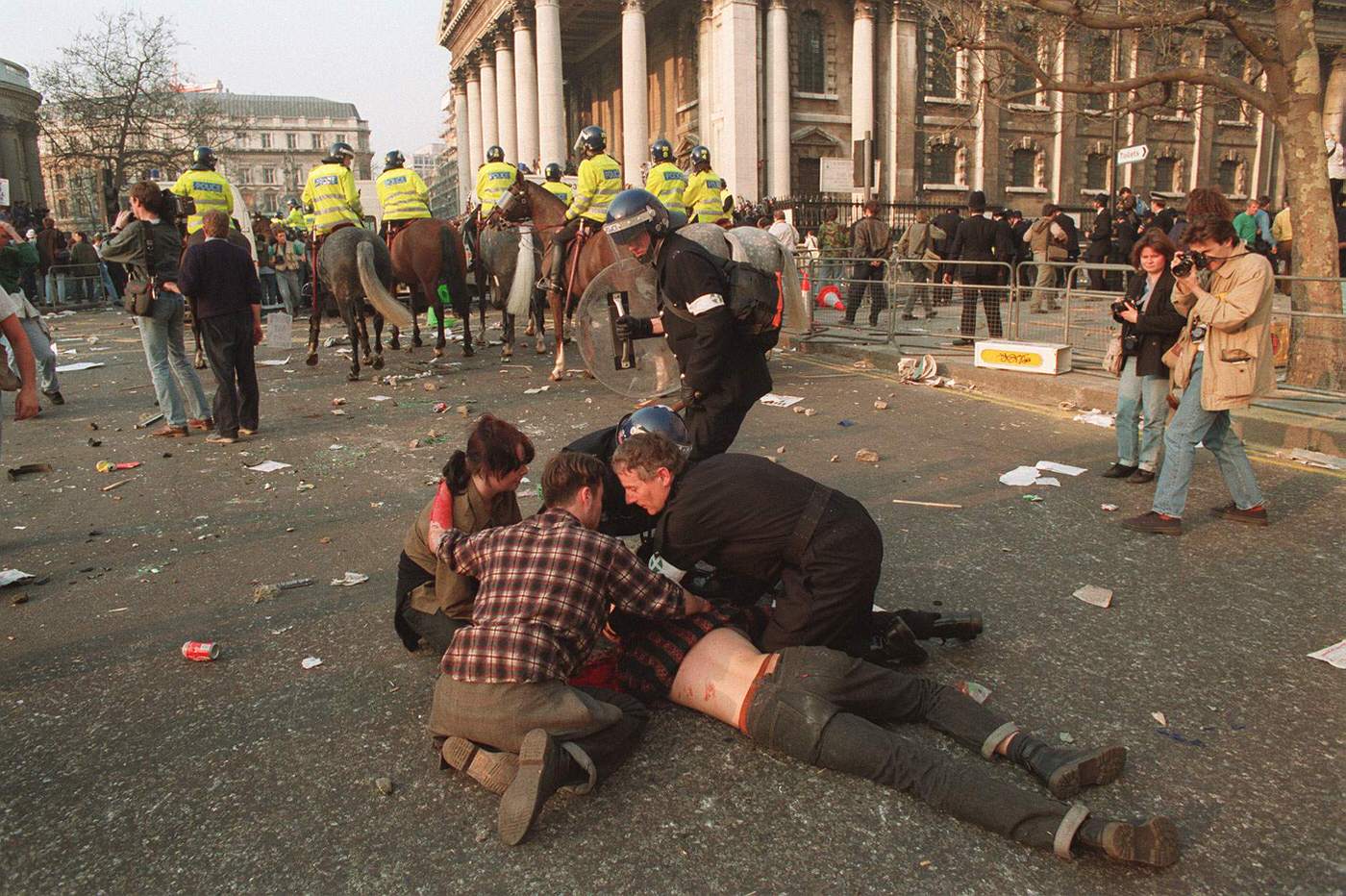
An injured protester during rioting after an anti-poll tax demonstration in Trafalgar Square, 1990.
A demonstration against the Poll Tax that turned into a riot in Trafalgar Square, 1990.
Anti-Poll Tax demonstrators pelting police with missiles in Trafalgar Square, 1990.

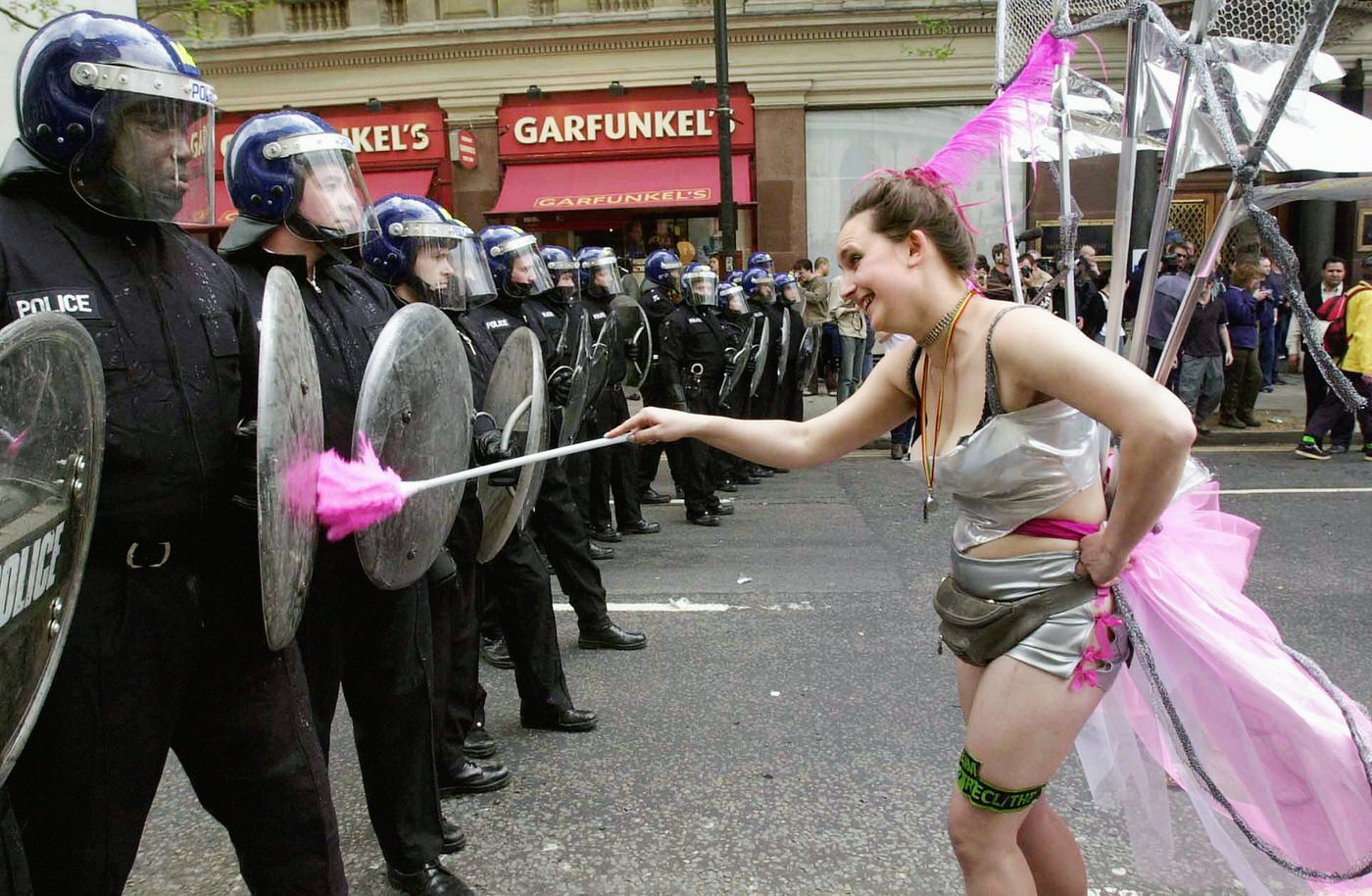
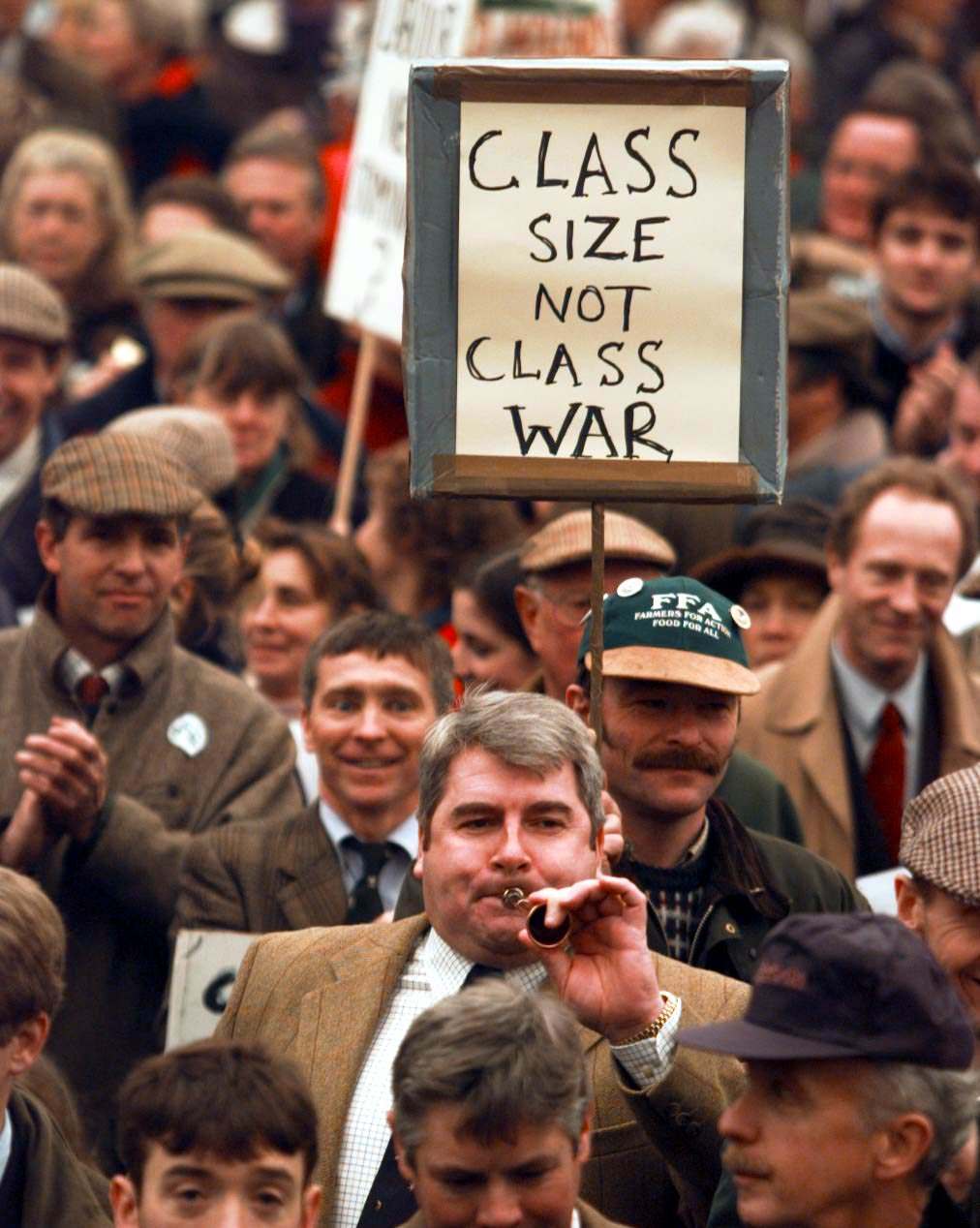
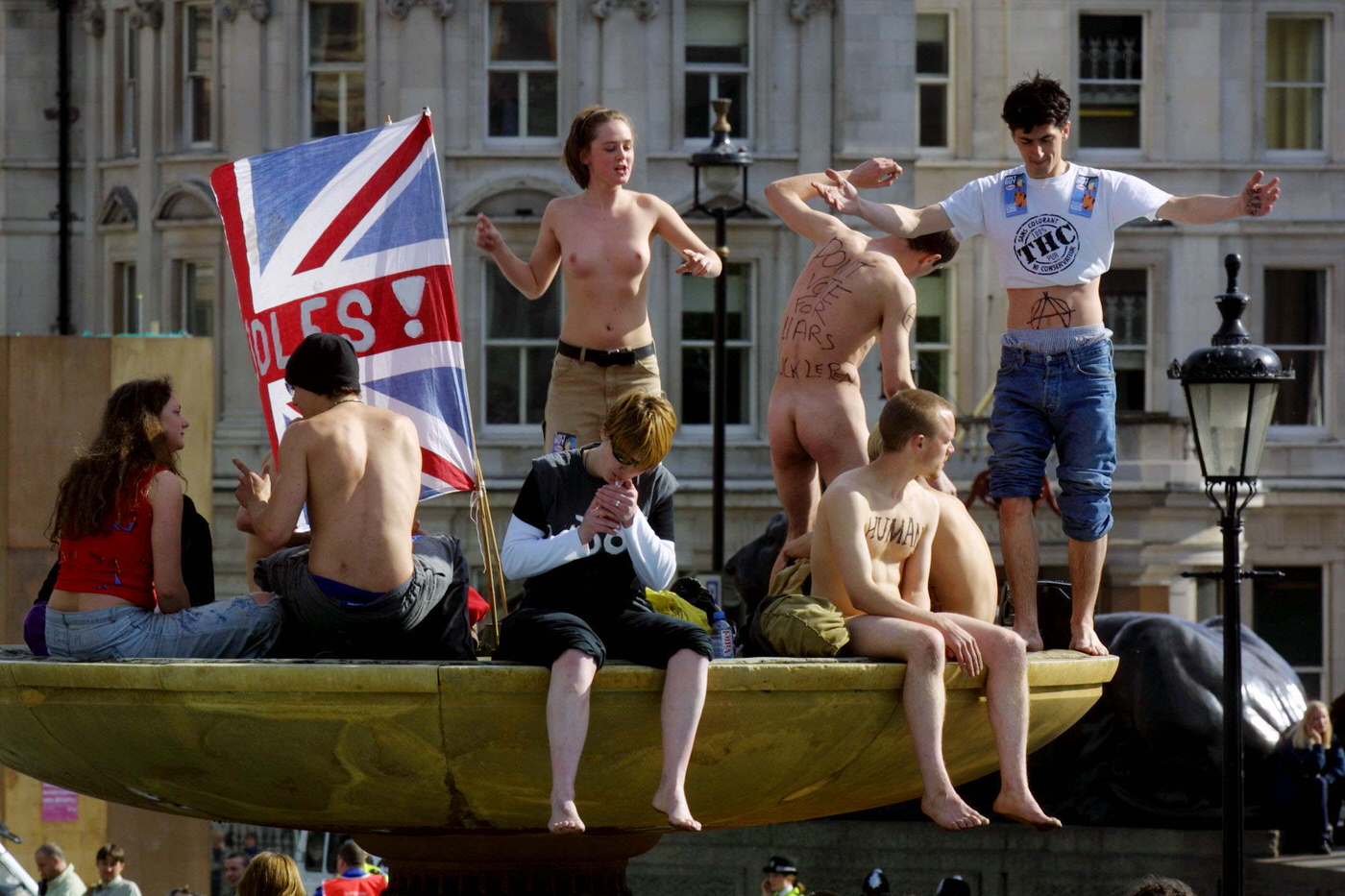
The 1990s and 2000s brought fresh waves of protest. Gay rights activists staged a sit-down protest in the Haymarket in 1994. Anti-capitalist demonstrators clashed with riot police in 2000, with some photographed by police monitoring the crowds. Pro-hunting campaigners also used the square that year, demonstrating that protest there was never the property of any single ideology.
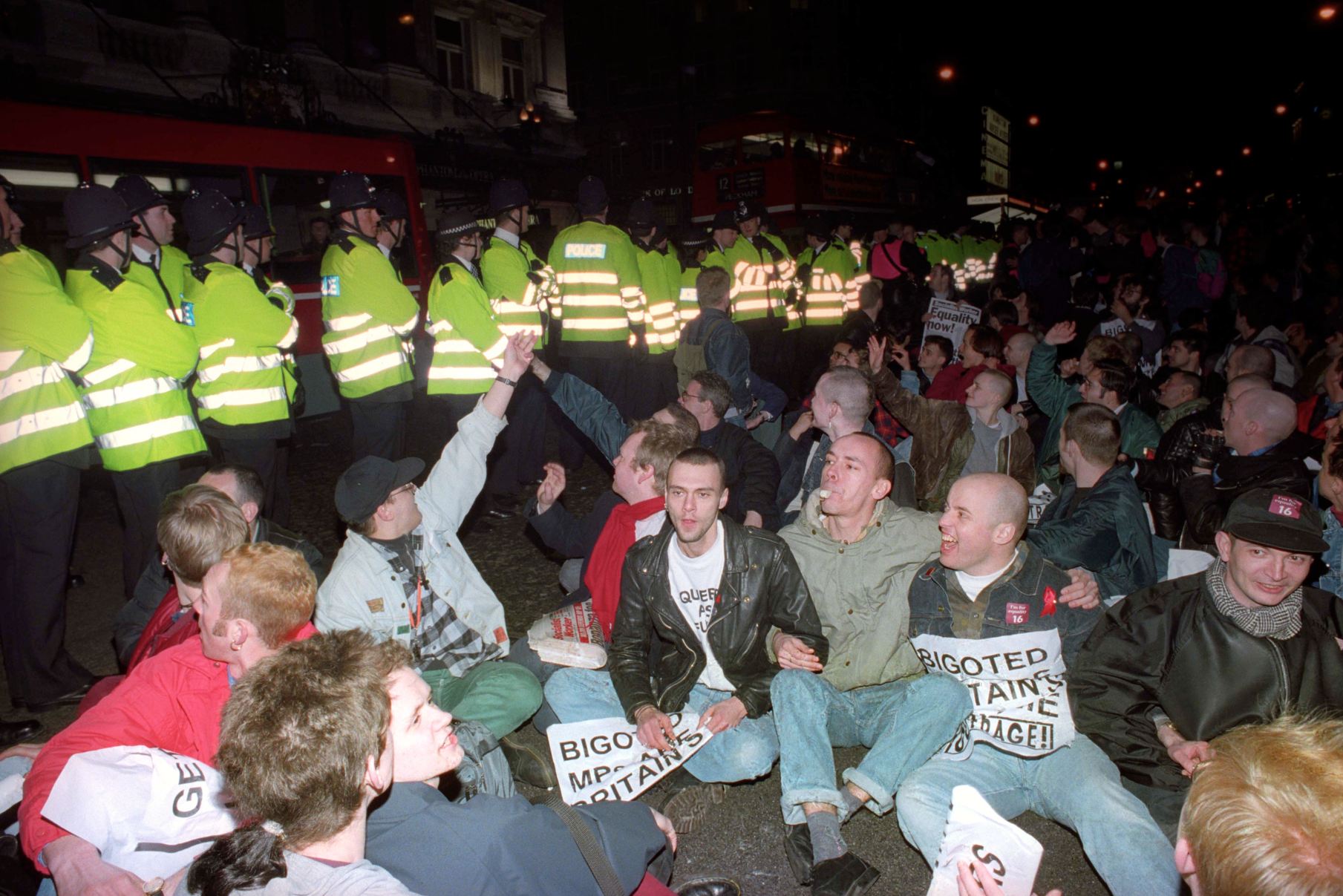
Gay rights activists staging a sit-down protest in the Haymarket, 1994.
An anti-capitalist demonstrator being photographed by police in Trafalgar Square, 2000.
An anti-capitalist demonstrator taunting riot police in Trafalgar Square, 2000.
Pro-hunting demonstrators in Trafalgar Square, 2000.

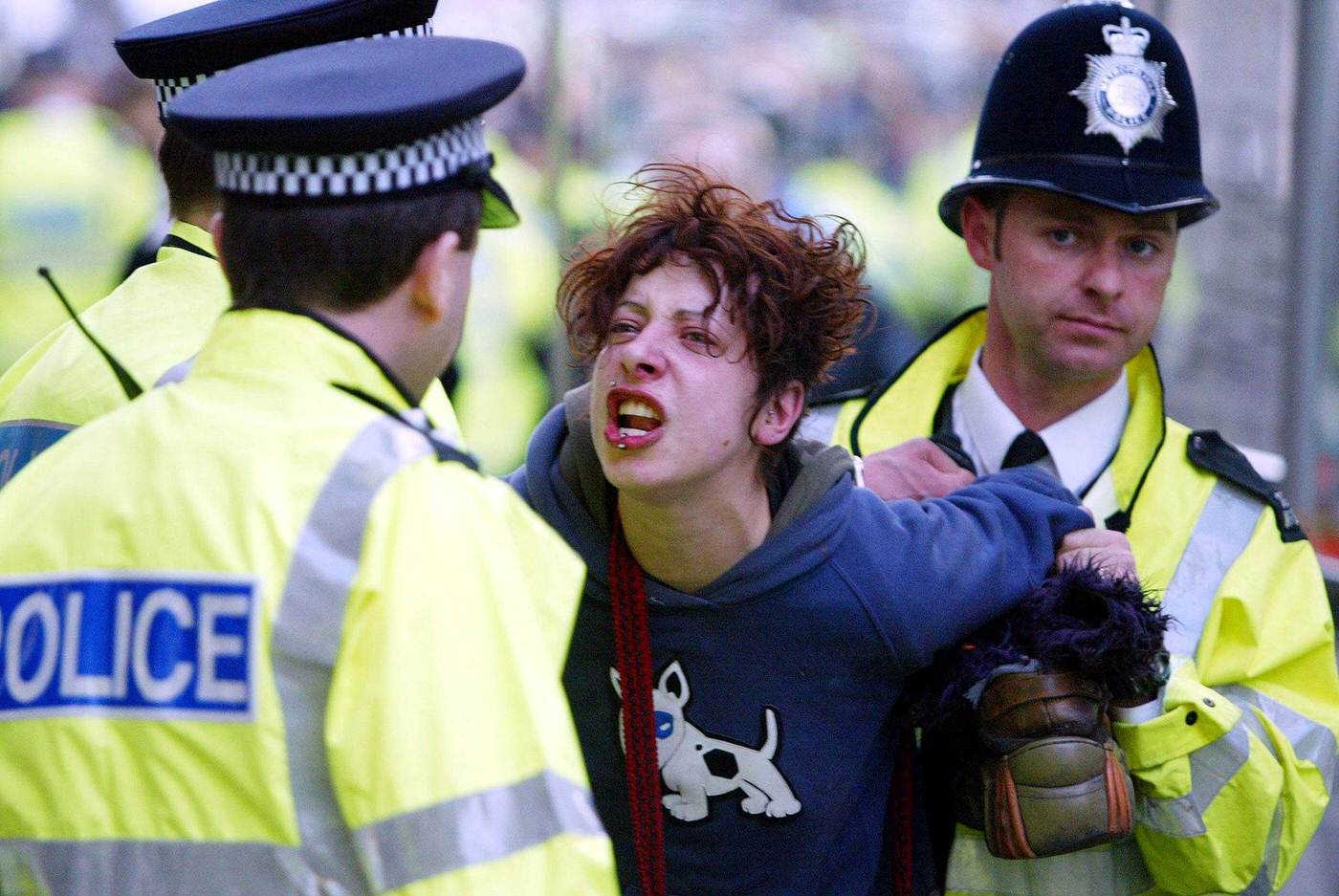
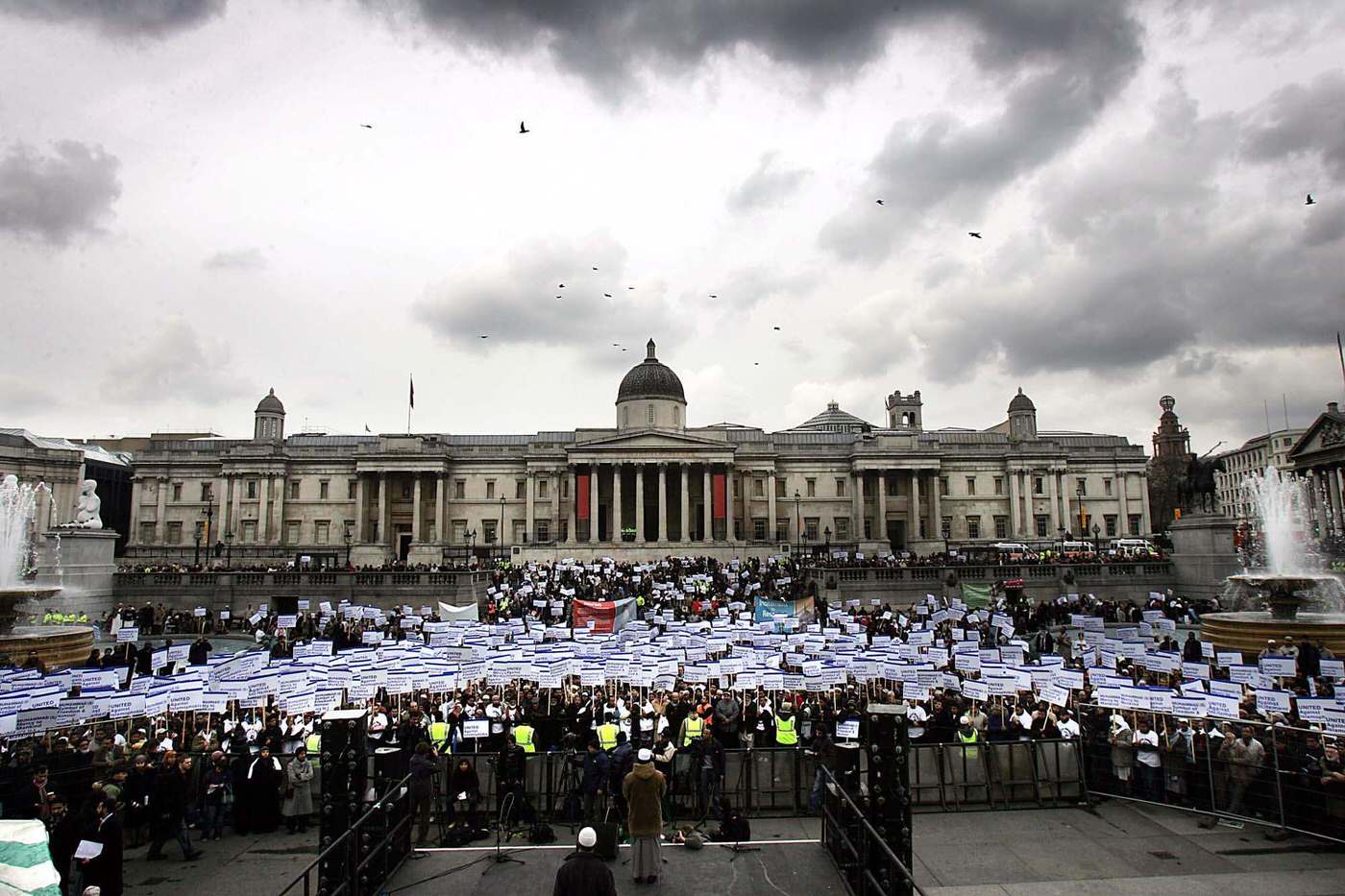
In 2002, British Muslims gathered at the square to protest Israeli actions against Palestinians. May Day protests the same year drew demonstrators to the square once again. In 2003, a woman was led away by police during May Day protests — one arrest among many that year as the global anti-war movement intensified following the invasion of Iraq.
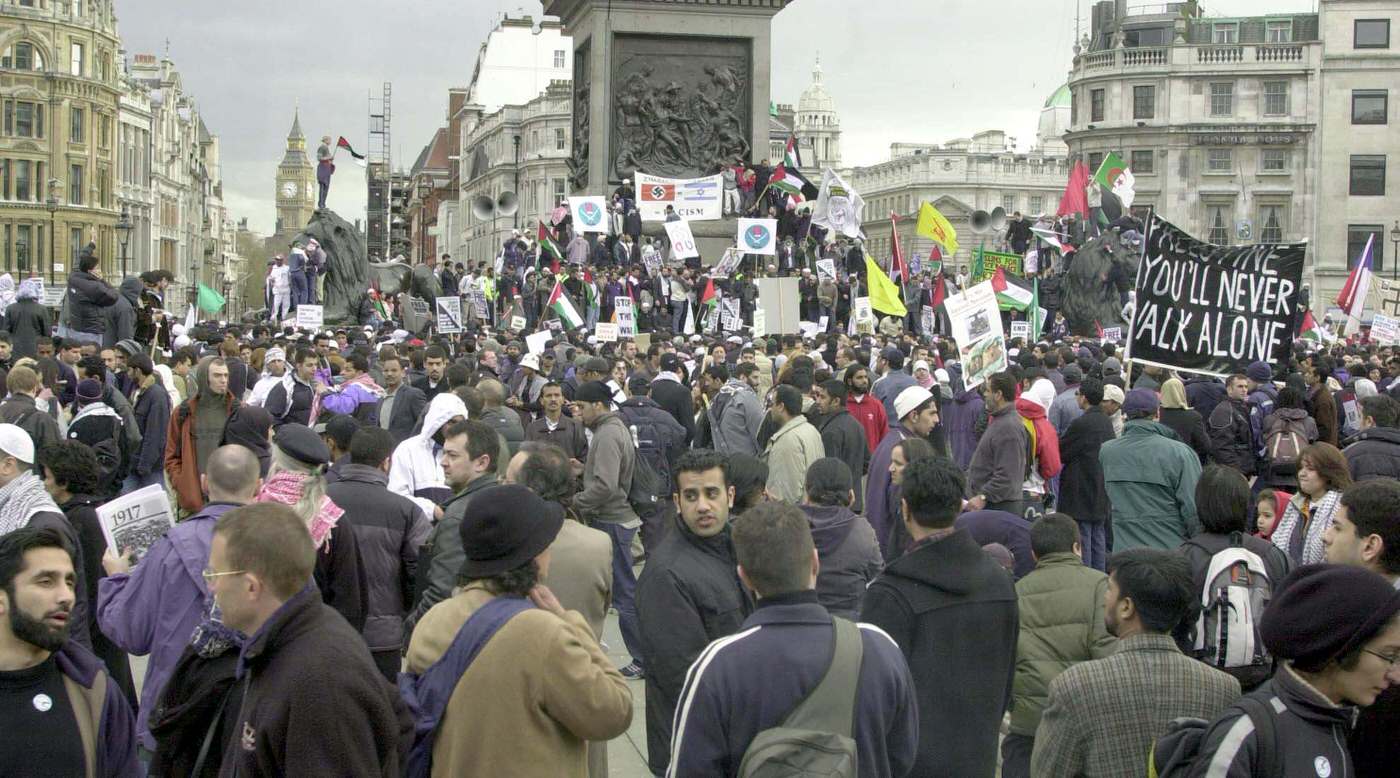
A demonstration by British Muslims protesting Israeli actions against Palestinians, 2002.
May Day protesters in Trafalgar Square, 2002.
A woman being led away by police during May Day protests in Trafalgar Square, 2003.

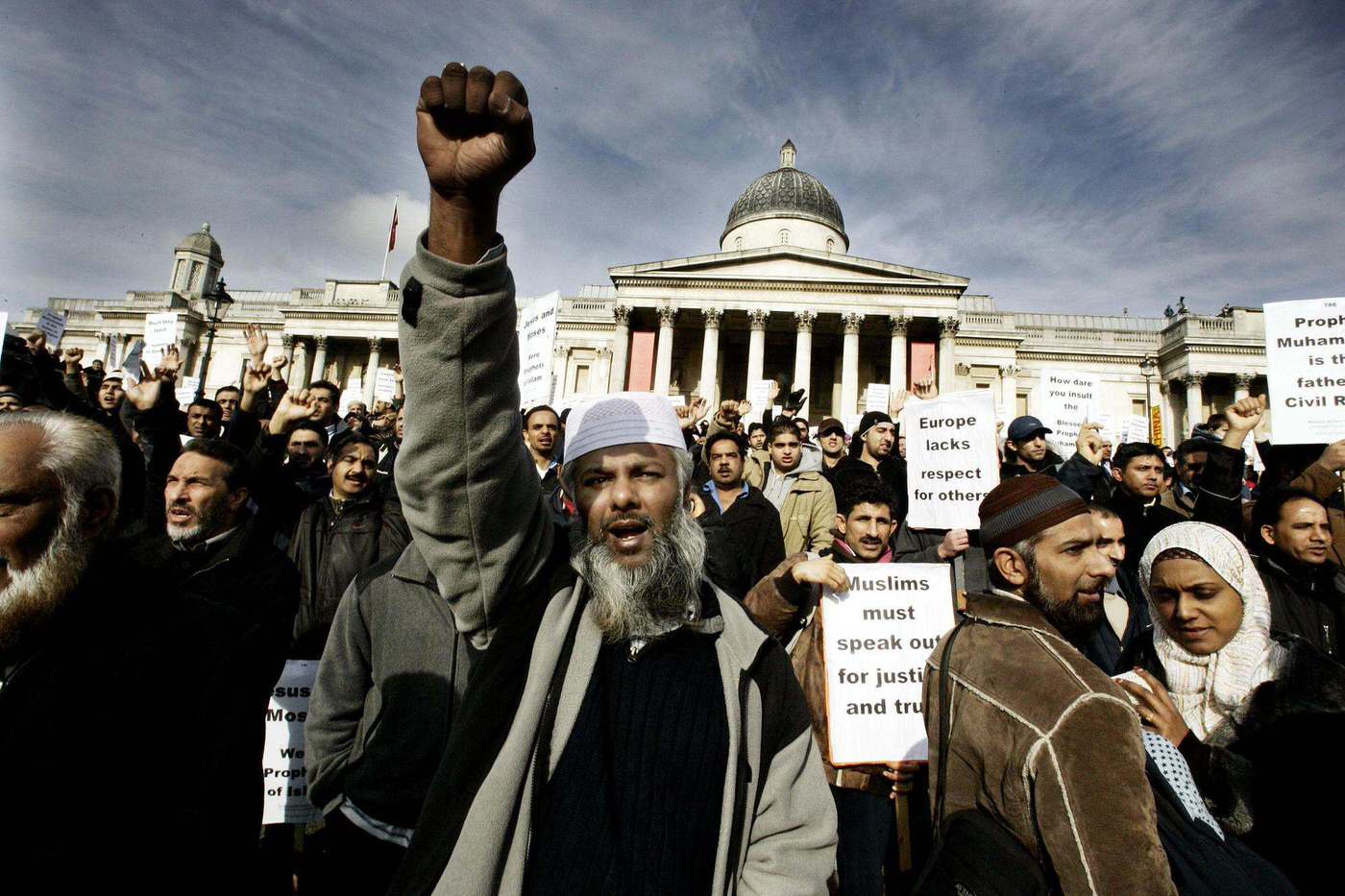
Anti-nuclear protesters returned to the square in 2004 for another CND-organised march, and a separate anti-war protest organised by CND took place the same year. Islamophobia rallies brought demonstrators to the square in 2006, adding to a long list of causes that had claimed the same stone ground.
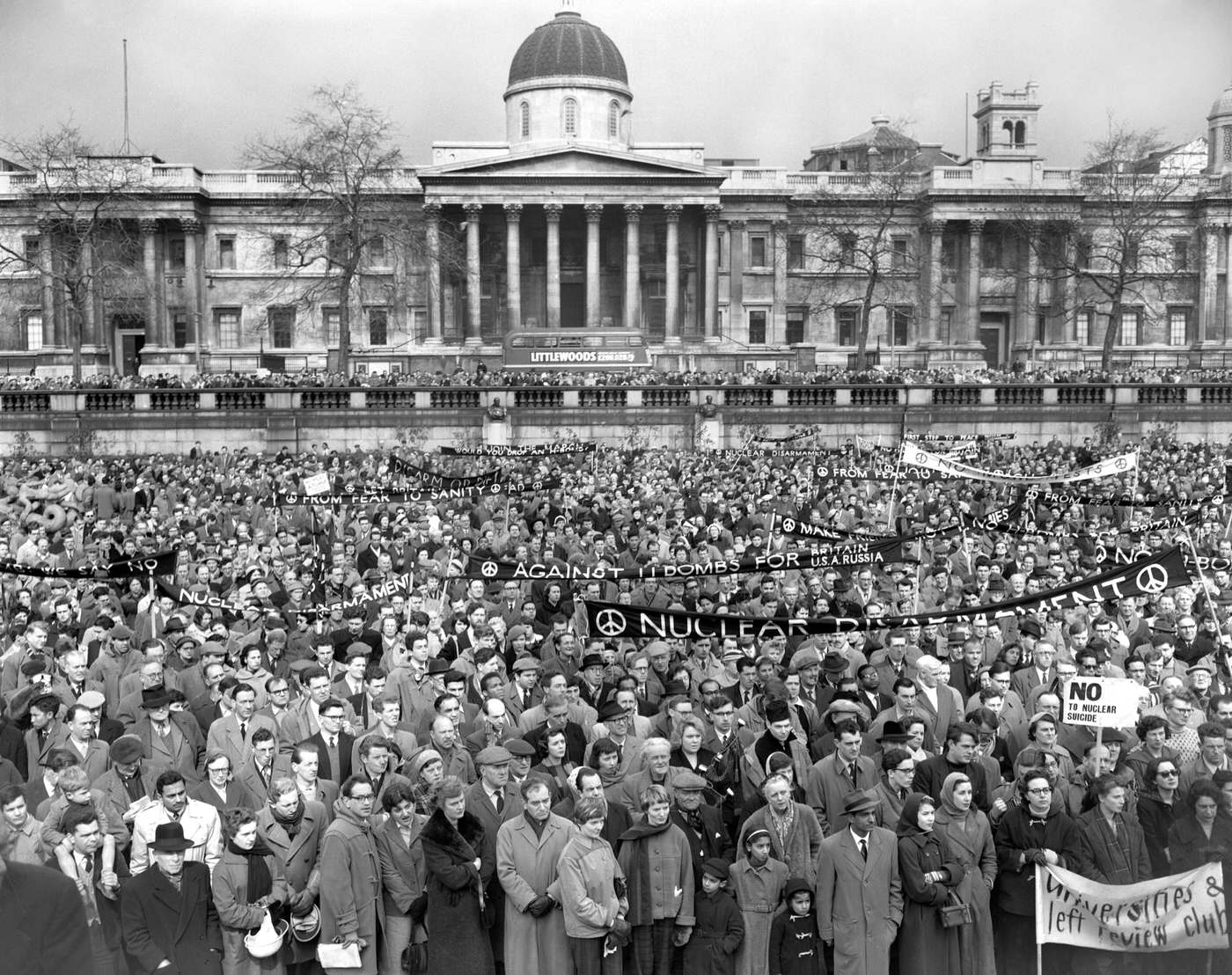
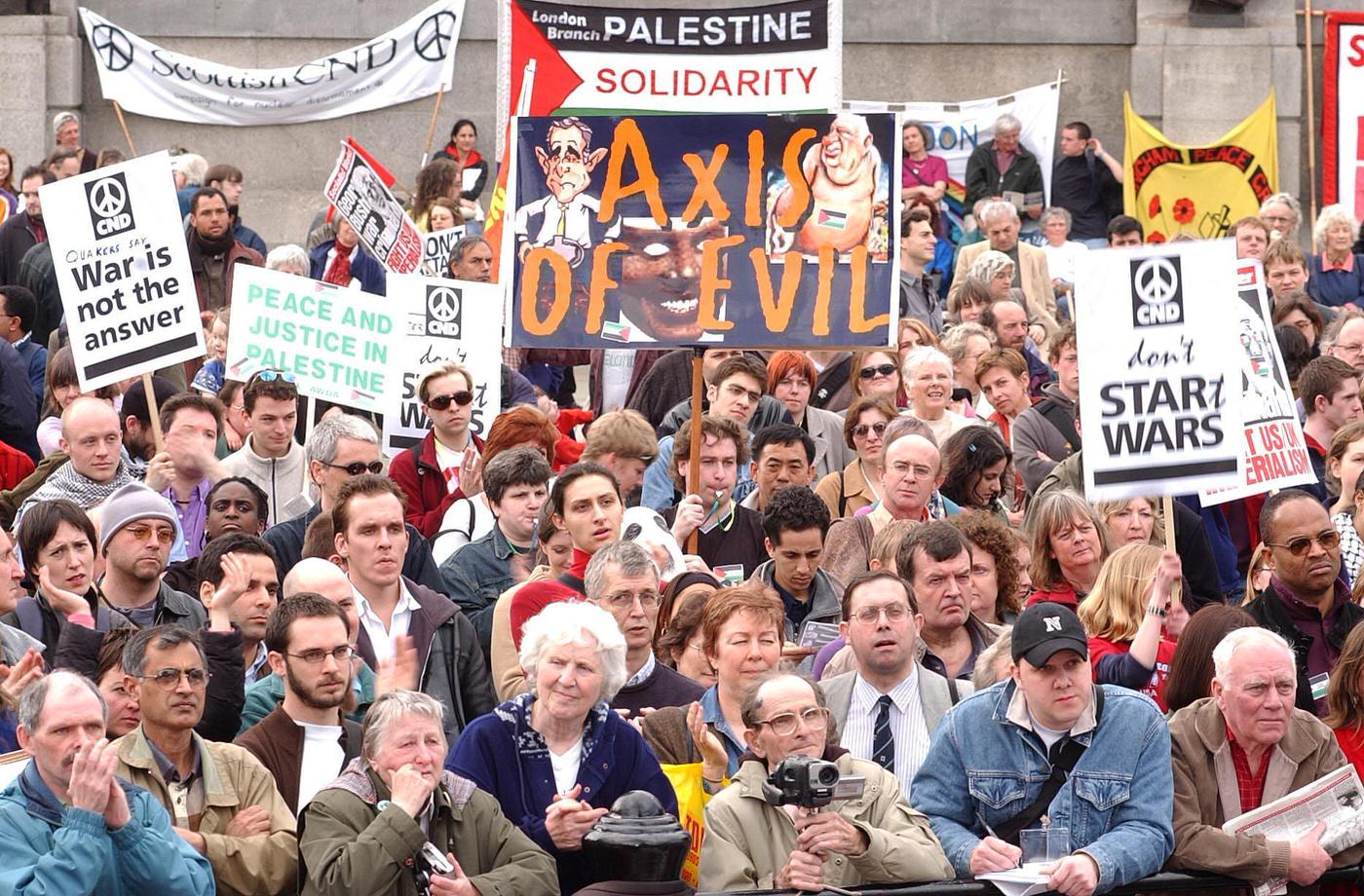
Anti-nuclear protestors gather in Trafalgar Square for a protest march, 2004.
An anti-war protest in Trafalgar Square organized by CND, 2004.
An Islamaphobia rally in Trafalgar Square, 2006.

Security cameras now watch over the square constantly, a visible sign of how authorities monitor public assembly in the modern city.
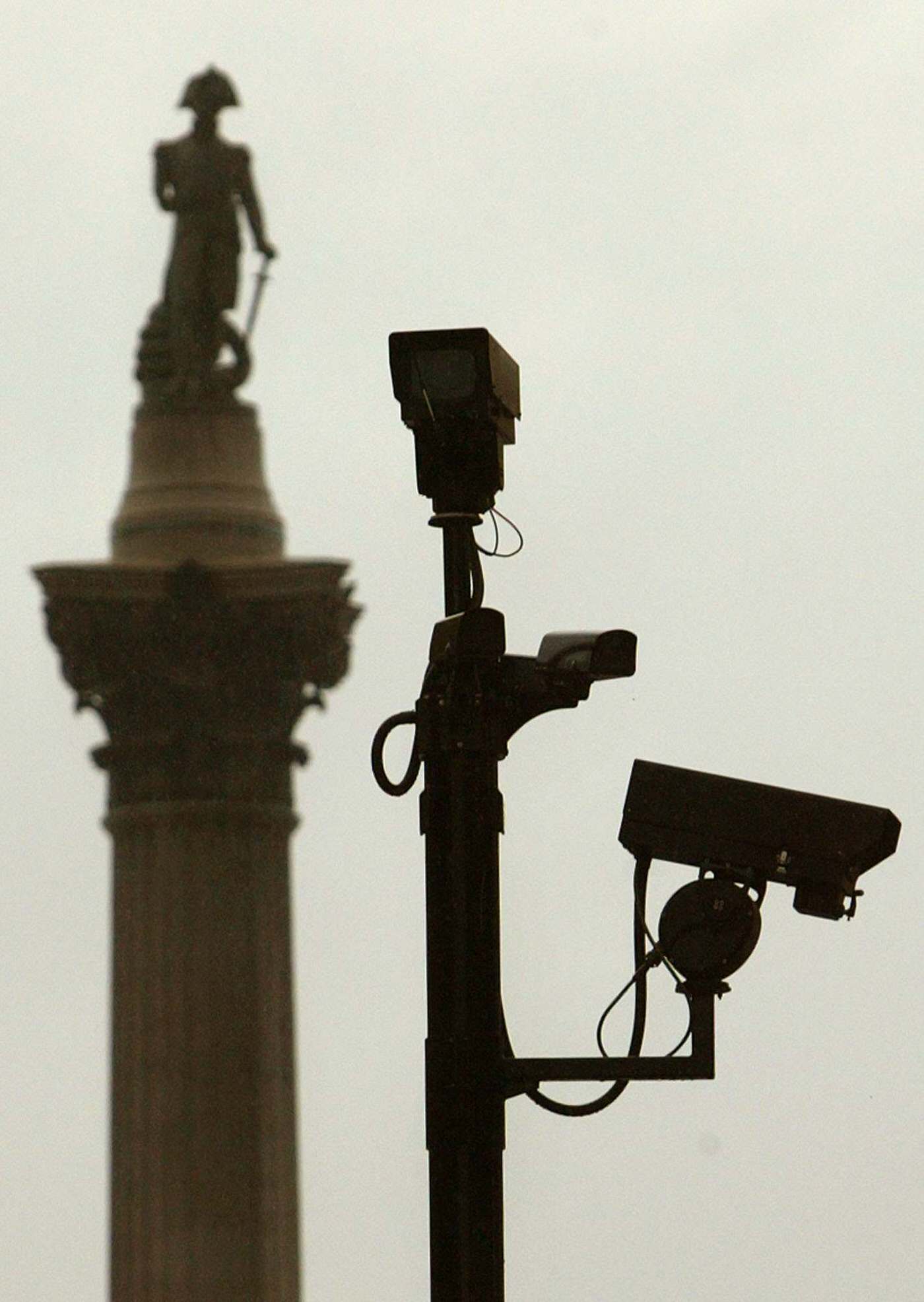
Security cameras in Trafalgar Square.

CND marches against military strikes on Afghanistan brought further crowds to the square, as did anti-war protests linking Trafalgar Square to Hyde Park in coordinated demonstrations across central London.
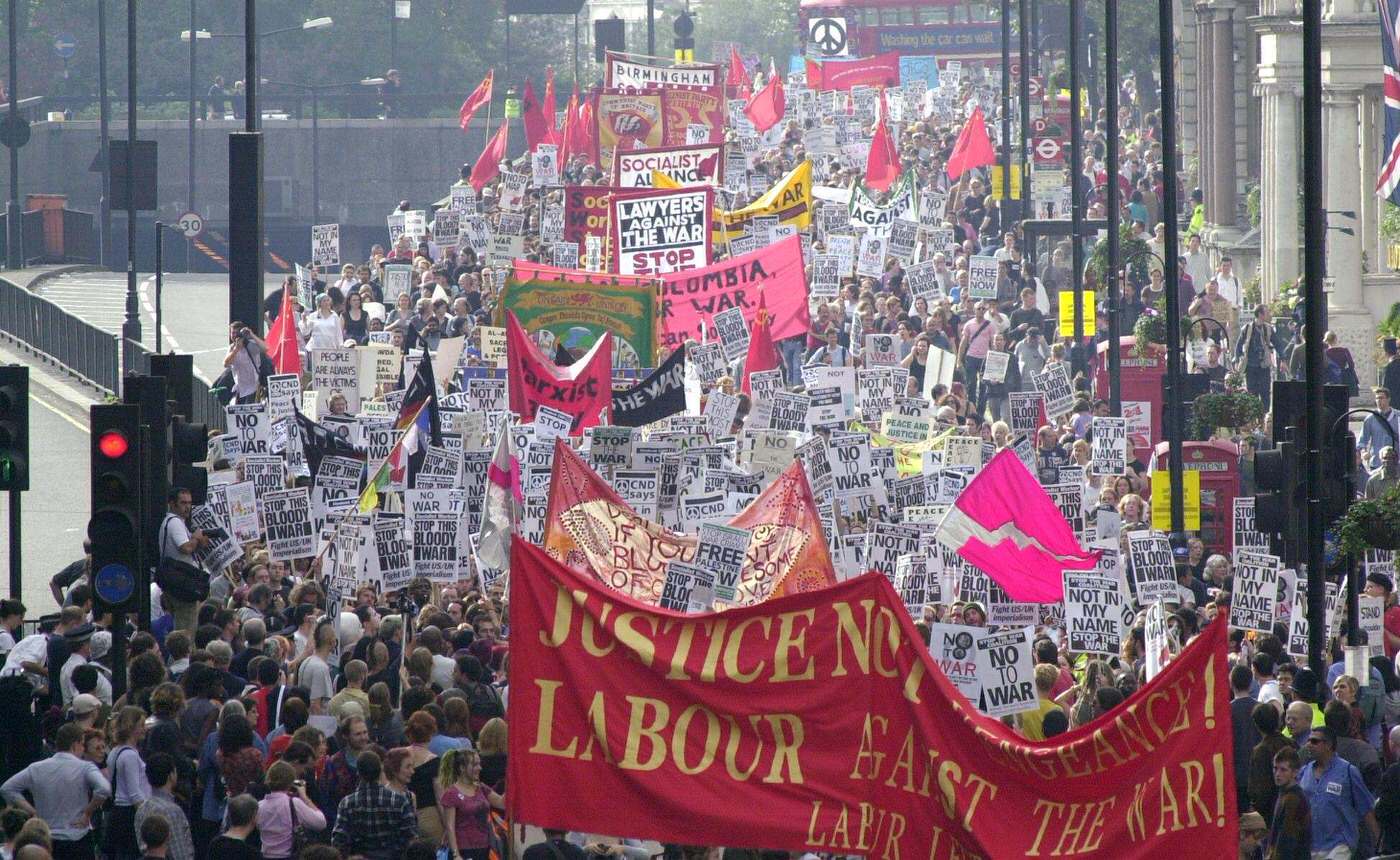

A CND march from Hyde Park to Trafalgar Square against military strikes on Afghanistan, date unknown.
Enjoyed this post? Get new ones in your inbox.

Leave a Comment

Your email address will not be published. Required fields are marked *

Share this Post 🥺

Please take a moment to share this content. Your support is greatly appreciated! 🙌🙏

Share this Post 🥺

Please take a moment to share this content. Your support is greatly appreciated! 🙌🙏
Scroll to Top
 
Hey Friend, Before You Go.. Please like & follow for more interesting content