Hey There! Before You Go. 😧
Get the best vintage content straight into your inbox!

Don't worry, we don't spam

WWII Home Front in Vivid Color Pictures: Documenting Factories, Women at Work, and Civilian Efforts

When the United States entered World War II in late 1941, the war did not only play out on distant battlefields. Across American cities and towns, civilians transformed their daily lives to support the fight. Factories retooled overnight. Women entered industries they had never worked in before. Soldiers trained on home soil. To document and promote all of it, the U.S. government created the Office of War Information (OWI) in 1942.

The OWI’s job was direct: control and distribute information about the war. It fed approved news, films, radio content, and photographs to media outlets across the country. The goal was to keep Americans informed and motivated. Working alongside the Farm Security Administration, the OWI launched one of the most ambitious photography projects in American history — capturing daily life between 1939 and 1944 through thousands of images.

A colored mechanic in the motor maintenance section at Fort Knox, Kentucky, 1942.

Roughly 1,600 of these photographs were shot in Kodachrome color film. At the time, color photography was expensive and uncommon, making these images especially striking. Photographers Alfred Palmer and Howard Hollem were among the most productive contributors, producing vivid color records of factory floors, military bases, and the workers powering the home front through 1942 and 1943.
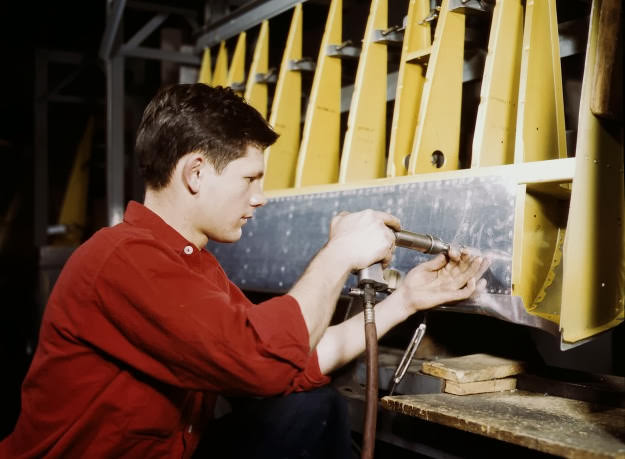
A riveter at work at the Douglas Aircraft Corporation plant in Long Beach, California, 1942.

The Douglas Aircraft Company plant in Long Beach, California, was one of the most photographed sites of the entire project. Its vast assembly floors were filled with workers producing aircraft around the clock. Men and women worked side by side on riveting jobs, building the planes that American and Allied forces desperately needed.
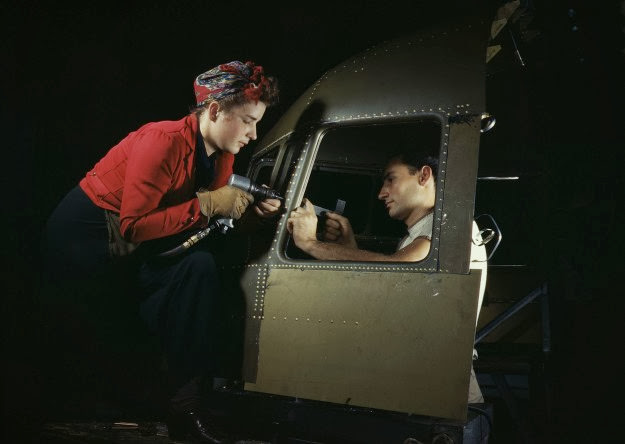
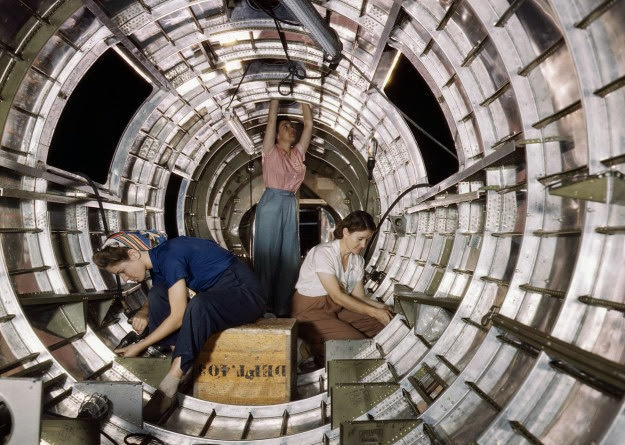
Men and women work on riveting jobs at the Douglas Aircraft plant in Long Beach, California, 1942.
Women workers install fixtures on a B-17F bomber tail fuselage section at Douglas Aircraft Company, Long Beach, California, 1942.

With millions of men shipped overseas, American industry faced a severe labor shortage. Women filled that gap directly, taking on physically demanding roles that had previously been held almost exclusively by men. At Douglas Aircraft alone, women installed fixtures on B-17F bomber fuselages, inspected cargo transport inner wings, and worked on nose sections — all for aircraft heading into active combat.
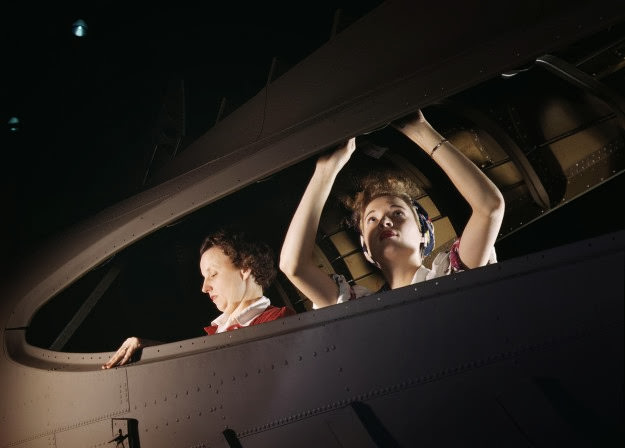
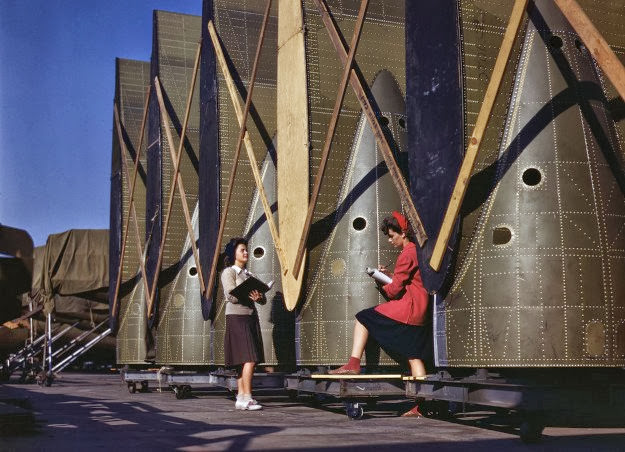
Women at the Douglas Aircraft Company help produce planes, Long Beach, California, 1942.
Women inspectors check cargo transport innerwings at Douglas Aircraft Company in Long Beach, California, 1942.
WWII Home Front in Vivid Color Pictures: Documenting Factories, Women at Work, and Civilian Efforts

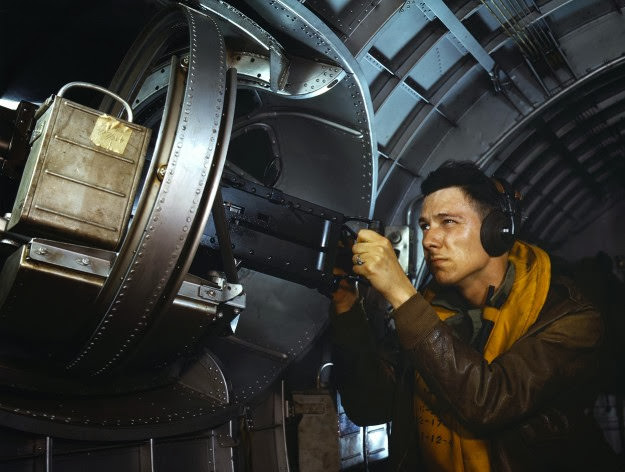
Military readiness was another major theme the OWI documented. Across bases throughout the country, crews received briefings before missions, NCOs maintained bomber gun systems, and combat units prepared for deployment. At Langley Field in Virginia, a combat crew received final instructions before boarding a YB-17 bomber — a scene that captured the controlled tension of wartime aviation.
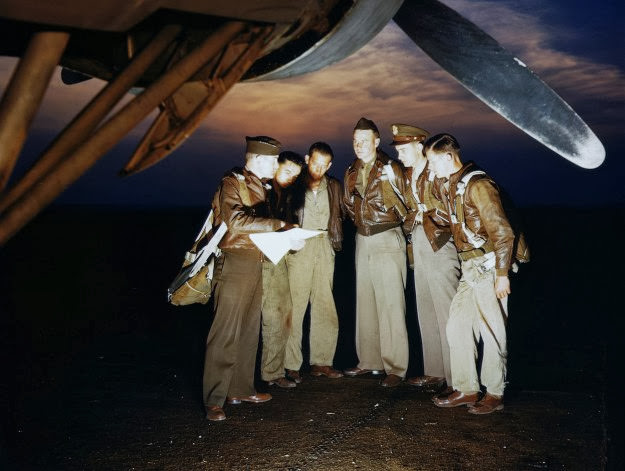
A combat crew receives final instructions before taking off in a YB-17 bomber at Langley Field, Virginia, 1942.
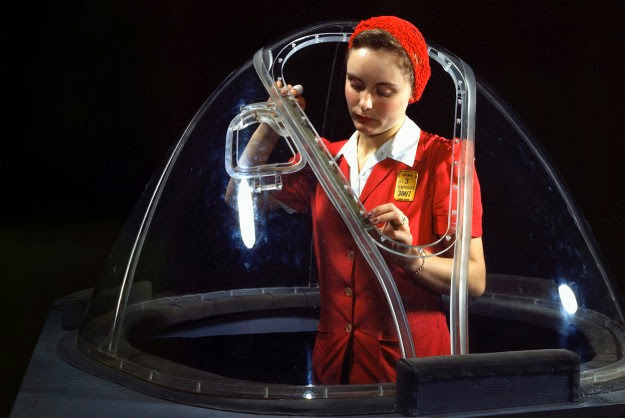
A woman works on a B-17F bomber nose section at the Douglas Aircraft Company in Long Beach, California, 1942.

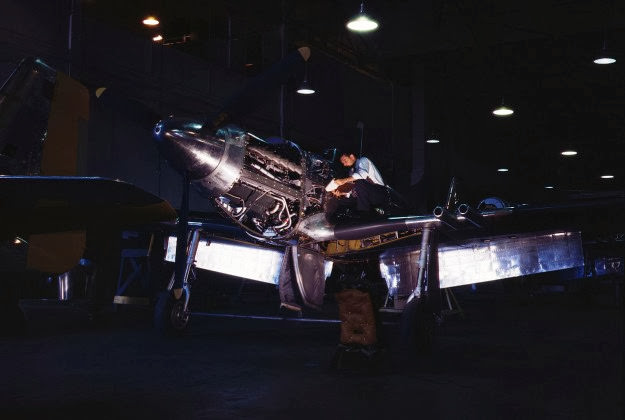
While workers built bombers on the ground, the aircraft those factories produced were already filling the skies. The P-51 Mustang, one of the most effective fighter planes of the war, was photographed in flight over Inglewood, California — not far from the North American Aviation plant where it was built.
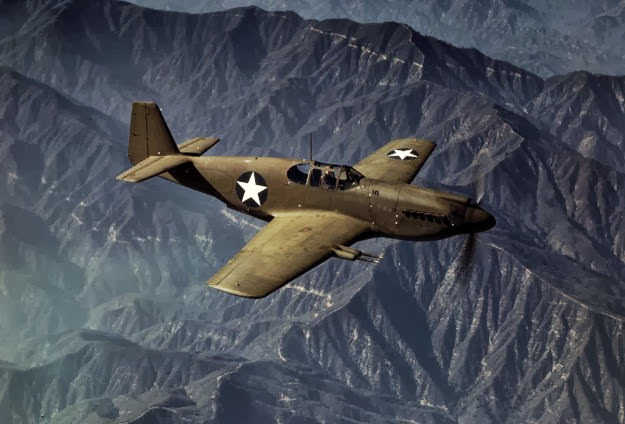
A P-51 Mustang fighter in flight over Inglewood, California, 1942.
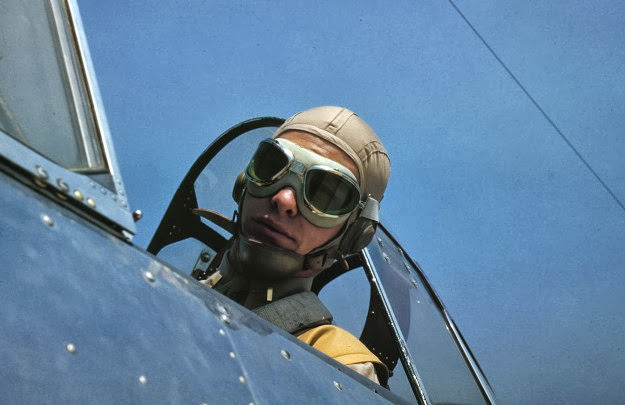
A Marine lieutenant glider pilot in training at Page Field, Parris Island, South Carolina, 1942.

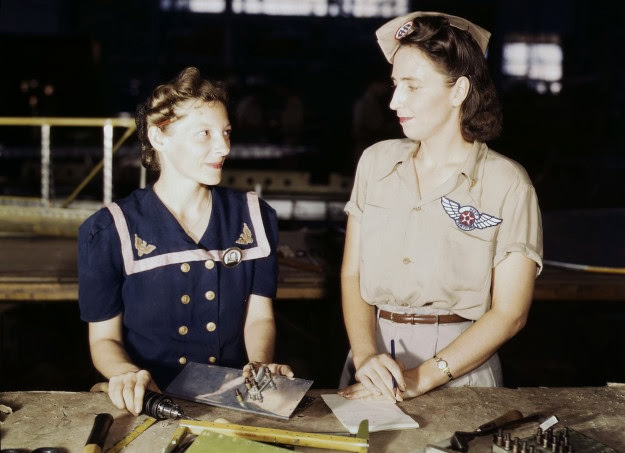
Training extended far beyond infantry drills. At Douglas Aircraft, women were formally trained as engine mechanics — a technical skill that had long been considered out of reach for female workers. These training programs weren’t symbolic. They were practical responses to the war’s industrial demands.
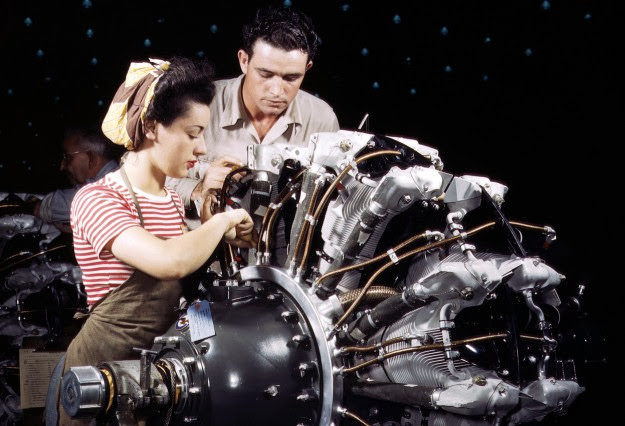
Women are trained as engine mechanics at the Douglas Aircraft Company in Long Beach, California, 1942.
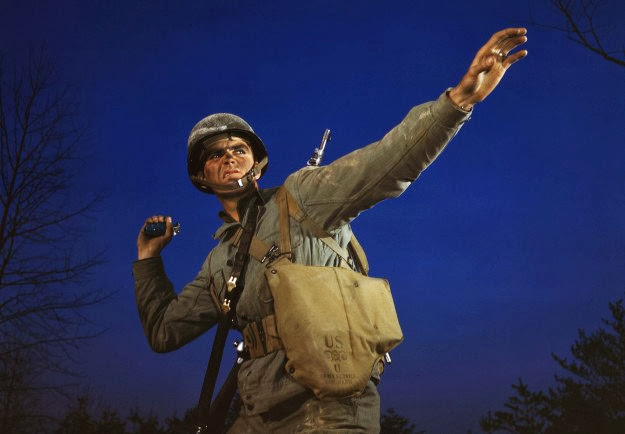
An infantryman in training holds a pineapple at Fort Belvoir, Virginia, 1942.

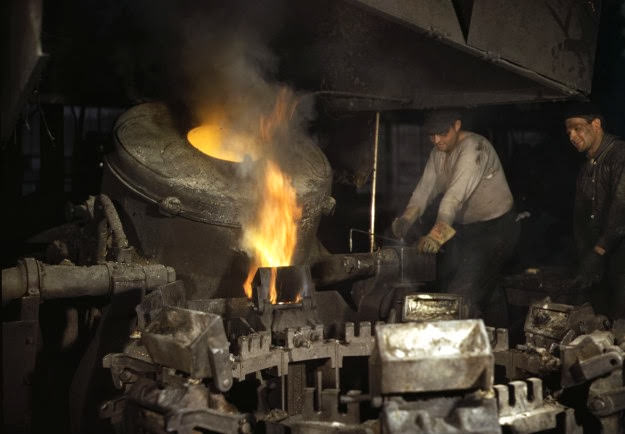
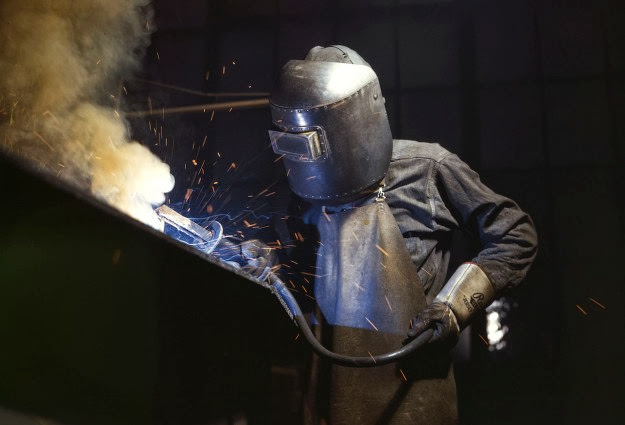
Industrial production extended well beyond aircraft. Across the country, factories that once served civilian markets were producing military supplies around the clock. At Tube Turns, Inc. in Louisville, workers formed large pipe elbows for Army use. At Chase Brass and Copper Co. in Ohio, workers cast billets from electric furnaces. At Combustion Engineering in Chattanooga, welders built boilers for naval ships.
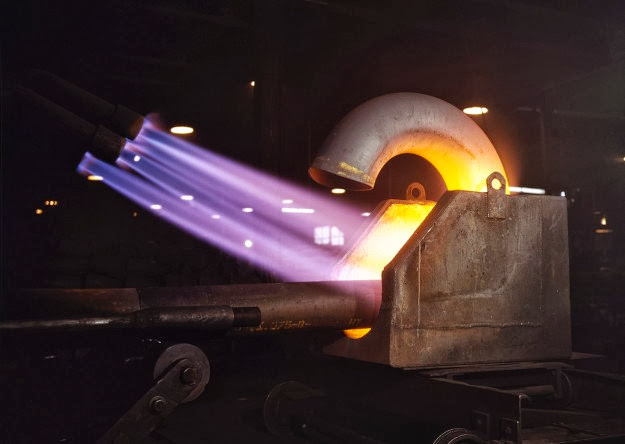
Large pipe elbows for the Army are formed at Tube Turns, Inc., Louisville, Kentucky, 1941.
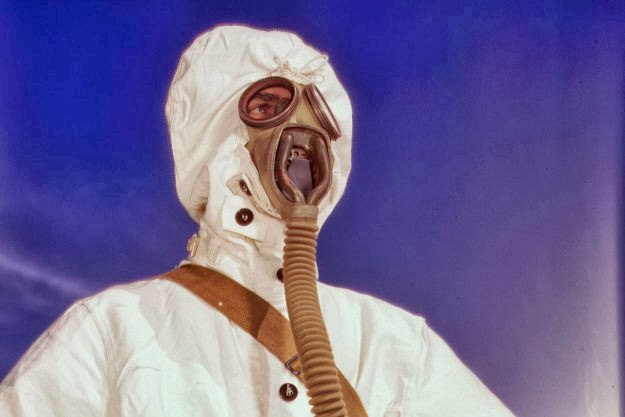
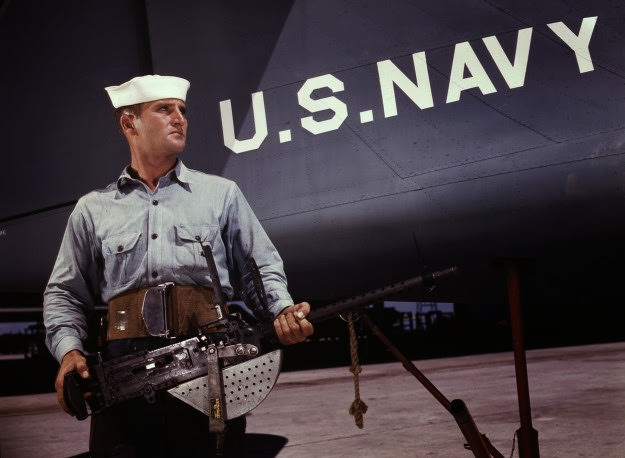
A sailor at the Naval Air Base wears protective clothing and a gas mask in Corpus Christi, Texas, 1942.

The Naval Air Base in Corpus Christi, Texas, was another hub of home front activity captured by OWI photographers. Virginia Davis worked there alongside her husband. Lorena Craig took on physically demanding work at the same facility. And in one of the most sobering images of the entire collection, widows of men killed at Pearl Harbor were photographed on the job at the same base — continuing the war effort even after bearing its deepest cost.
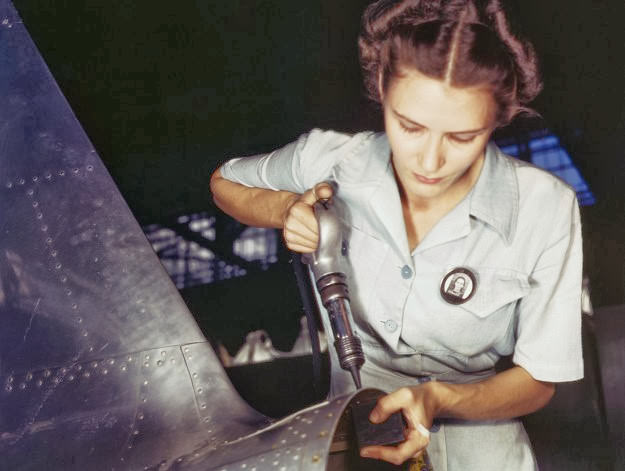
Virginia Davis works at the Naval Air Base in Corpus Christi, Texas, with her husband, 1942.
A huge building, formerly an aircraft dock, houses aircraft sub-assembly shops at the Goodyear Aircraft Corp., Akron, Ohio, 1941.

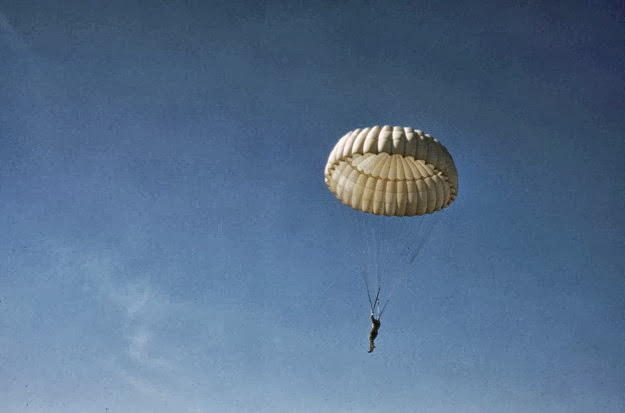
Parris Island, South Carolina, served as a training ground for Marine Corps operations that went far beyond standard infantry preparation. Glider pilots trained at Page Field, Marine gliders flew over the island, and paratroopers jumped from aircraft as part of the growing airborne program. These were not rehearsals — they were preparations for real combat operations.
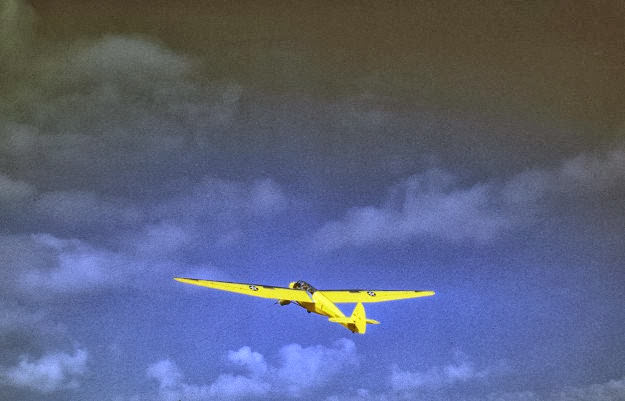
A Marine Corps glider in flight over Parris Island, South Carolina, 1942.
A Marine parachuting at Parris Island, South Carolina, 1942.

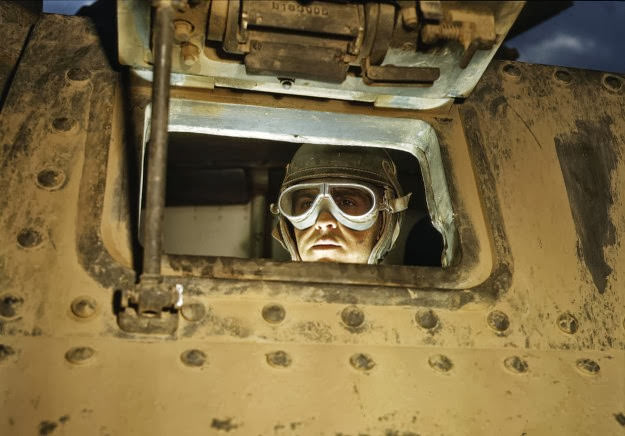
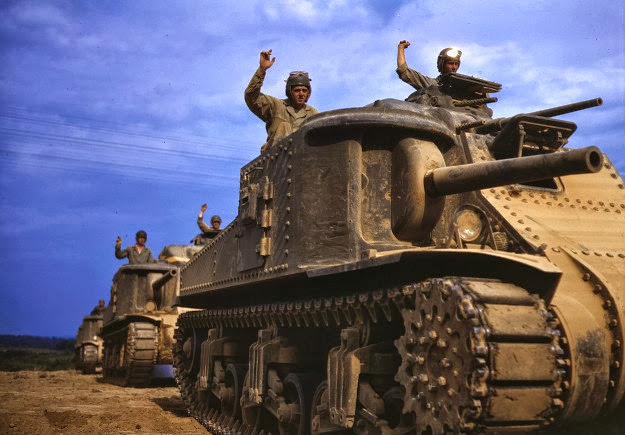
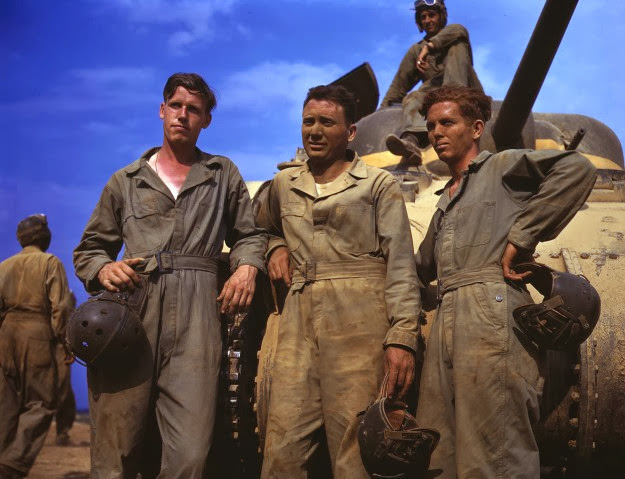
Fort Knox, Kentucky, was the center of American armored force training. M-3 and M-4 tanks ran maneuvers across the base as commanders, drivers, and crews learned the mechanics of armored warfare. OWI cameras captured everything from individual tank crew portraits to full columns of tanks moving in formation — the face of American ground power taking shape.
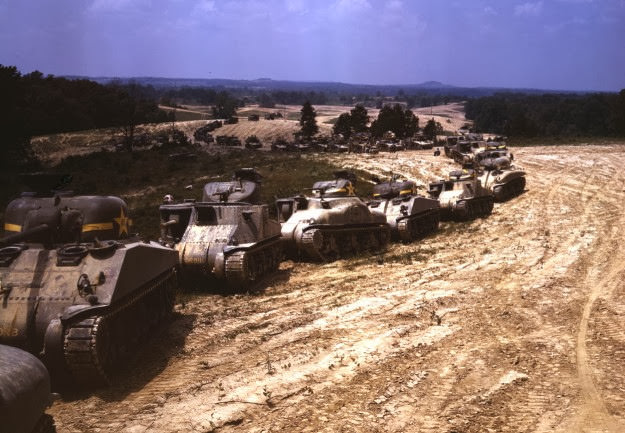
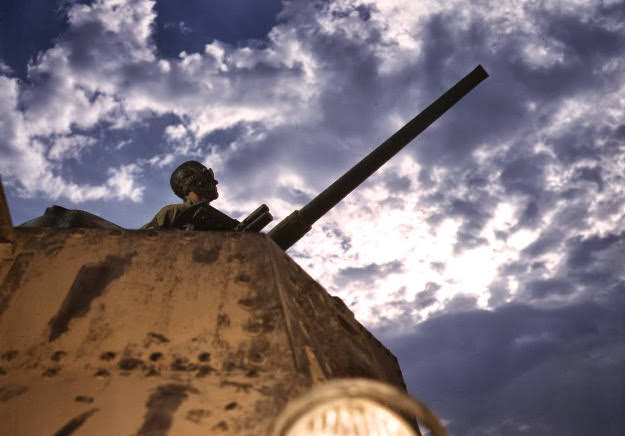
M-4 and M-3 tanks in training maneuvers at Fort Knox, Kentucky, 1942.
A tank commander at Fort Knox, Kentucky, 1942.
A tank driver at Fort Knox, Kentucky, 1942.
M-3 tanks at Fort Knox, Kentucky, 1942.
A tank crew in front of an M-4 tank at Fort Knox, Kentucky, 1942.

Back at Corpus Christi, the labor effort was broad and visible. Civilian workers like Lorena Craig performed jobs that matched any male counterpart in physical intensity. Elmer J. Pace learned Navy plane construction on site. J.D. Estes contributed to base operations. Each person photographed represented the wider civilian machinery keeping the military functioning from within U.S. borders.
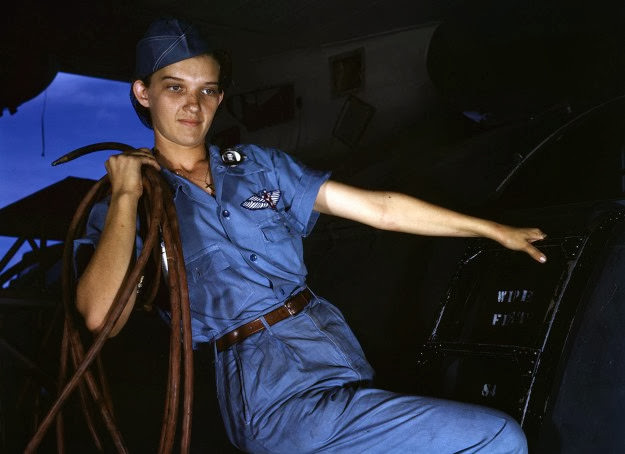
Lorena Craig works a man-size job at the Naval air base in Corpus Christi, Texas, 1942.

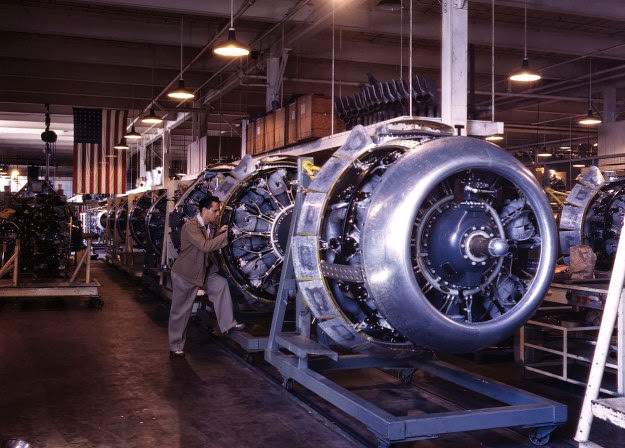
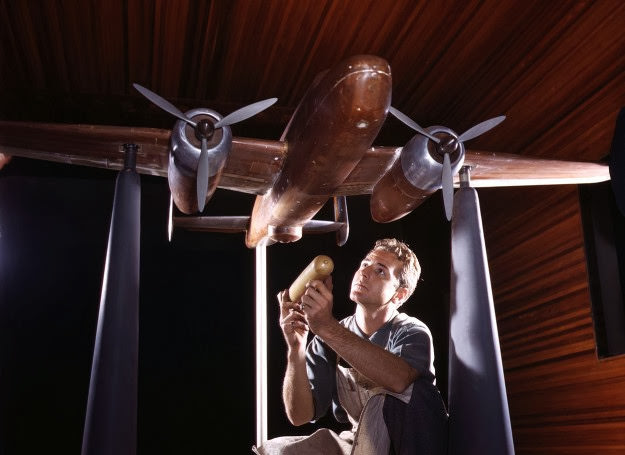
North American Aviation’s plant in Inglewood, California, produced both the B-25 Mitchell bomber and the P-51 Mustang. OWI photographers documented the full production process — from wind tunnel testing of scale models to outdoor assembly lines, engine cowling installation, and the final assembly line where finished bombers waited for delivery. A separate North American facility in Kansas City, Kansas, also rolled B-25s along outdoor assembly lines.
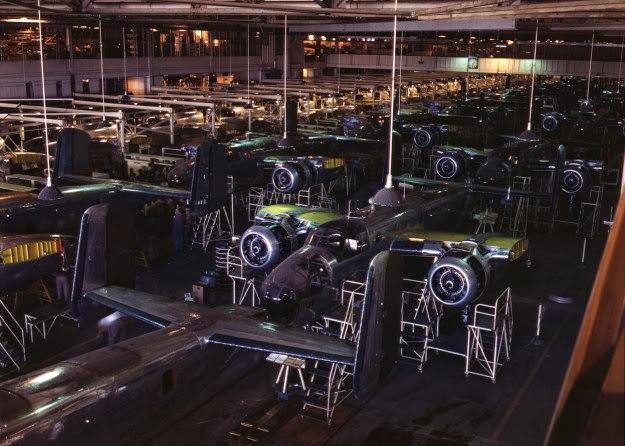
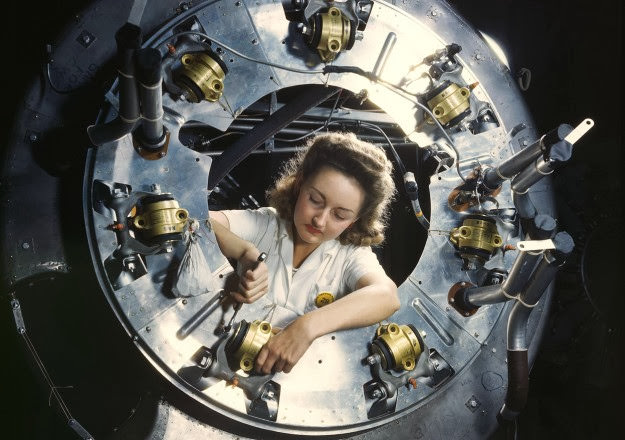
The B-25 final assembly line at North American Aviation's Inglewood, California, plant, 1942.
The B-25 final assembly line at North American Aviation’s Inglewood, California, plant, 1942.
Part of a cowling for a B-25 bomber motor is assembled at North American Aviation's Inglewood, California, plant, 1942.
Part of a cowling for a B-25 bomber motor is assembled at North American Aviation’s Inglewood, California, plant, 1942.
Cowling and control rods are added to B-25 bomber motors at North American Aviation, Inglewood, California, 1942.
An experimental scale model of the B-25 plane is prepared for wind tunnel tests at North American Aviation, Inglewood, California, 1942.
A P-51 Mustang fighter plane under construction at North American Aviation, Inc., Los Angeles, California, 1942.
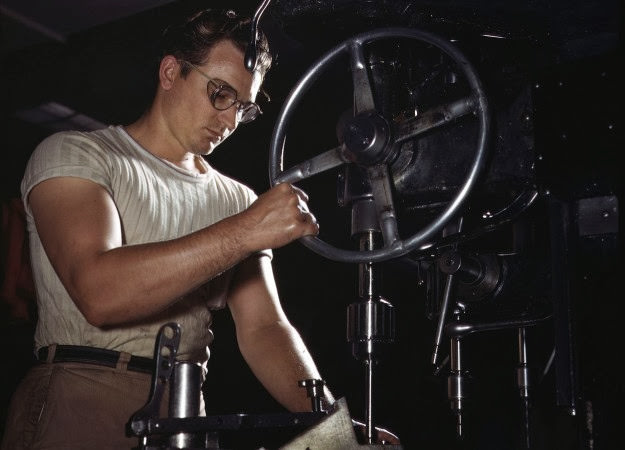
An employee runs mounting holes in a dural casting at North American's machine shop in Inglewood, California, 1942.
An employee runs mounting holes in a dural casting at North American’s machine shop in Inglewood, California, 1942.
B-25 bombers at North American Aviation, Inc., are hauled along an outdoor assembly line in Kansas City, Kansas, 1942.

Even the materials used in everyday production became part of the war effort. At Douglas Aircraft, Annette del Sur publicized a salvage campaign — collecting scrap materials that could be recycled into new military hardware. Nothing was wasted. Every piece of metal, every discarded part, had potential value on the production line.
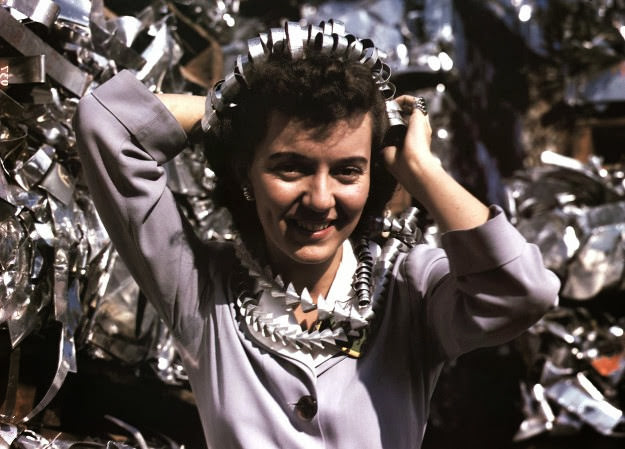
Annette del Sur publicizes a salvage campaign at Douglas Aircraft Company, Long Beach, California, 1942.
Casting a billet from an electric furnace at Chase Brass and Copper Co., Euclid, Ohio, 1942.

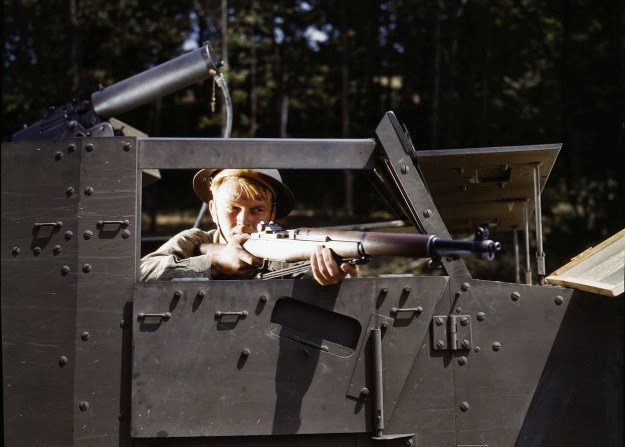
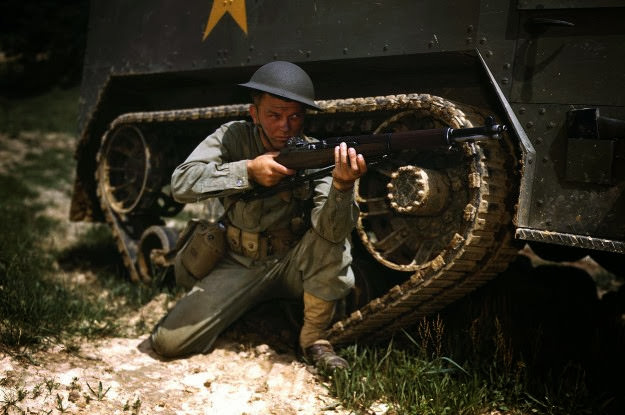
At Parris Island, Marine units also trained in barrage balloon operations — large tethered balloons used to protect areas from low-flying aircraft. Meanwhile, soldiers at Fort Belvoir practiced grenade handling, and at Fort Knox, young armored forces soldiers trained with Garand rifles. Each photograph captured a distinct piece of the home front’s enormous scope.
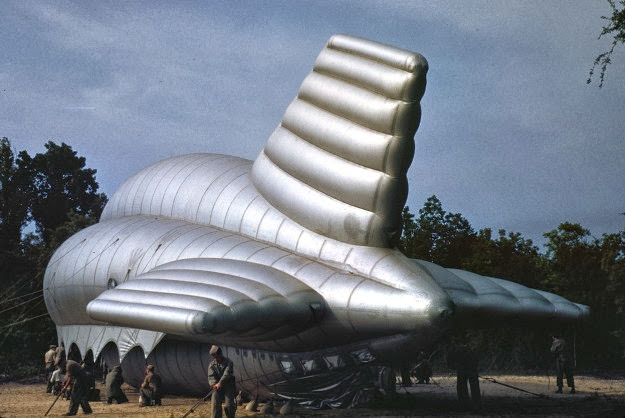
U.S. Marines bed down a barrage balloon at Parris Island, South Carolina, 1942.
A welder makes boilers for a ship at Combustion Engineering Co., Chattanooga, Tennessee, 1942.
A young armored forces soldier holds a Garand rifle at Fort Knox, Kentucky, 1942.

Consolidated Aircraft Corporation in Fort Worth, Texas, contributed Liberator bombers to the Allied air campaign. Workers crowded the assembly floor of the massive plant, while lathe operators precision-machined parts for transport planes. The scale of production at a single facility like Consolidated was staggering — dozens of aircraft in various stages of assembly visible in a single frame.
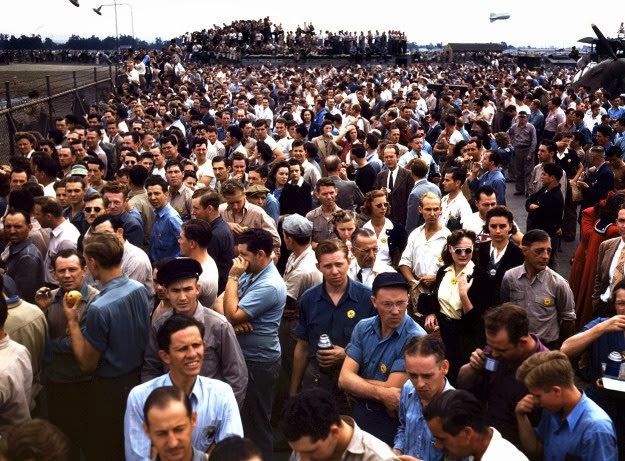
Workers on Liberator Bombers at Consolidated Aircraft Corp., Fort Worth, Texas, 1942.
A lathe operator machines parts for transport planes at Consolidated Aircraft Corporation, Fort Worth, Texas, 1942.
A non-commissioned officer works on a YB-17 bomber machine gun, 1942.

As the sun set over Langley Field, the silhouette of a Flying Fortress against the Virginia sky became one of the defining images of the OWI project — a single aircraft representing the enormous industrial and human effort that put it there. The scenes were often posed for the camera, but the people, the planes, and the work were entirely real.
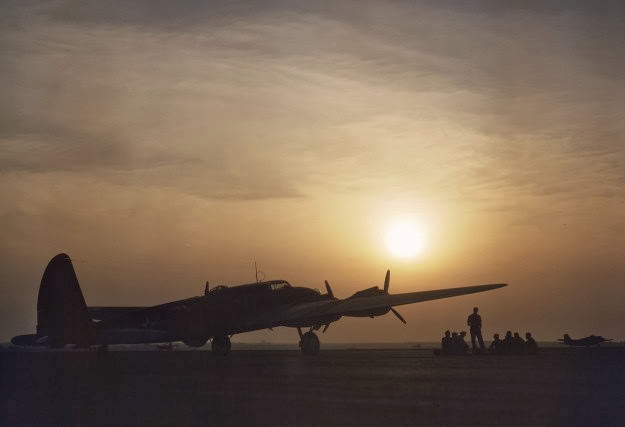
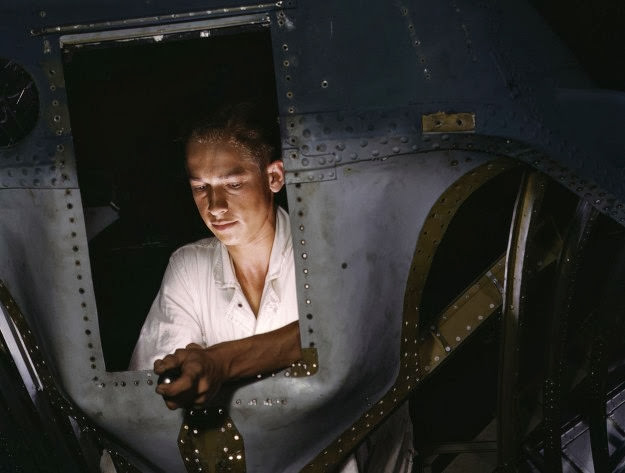
Sunset silhouette of a flying fortress at Langley Field, Virginia, 1942.
Elmer J. Pace learns Navy plane construction at Corpus Christi Naval Air Base, Texas, 1942.

Production extended into specialized manufacturing as well. In Manchester, Connecticut, a water stretching machine was used to process parachute shroud lines — a detail that shows just how far the war’s industrial reach extended. Parachutes meant the difference between life and death for paratroopers and downed airmen, and their manufacture required precision.
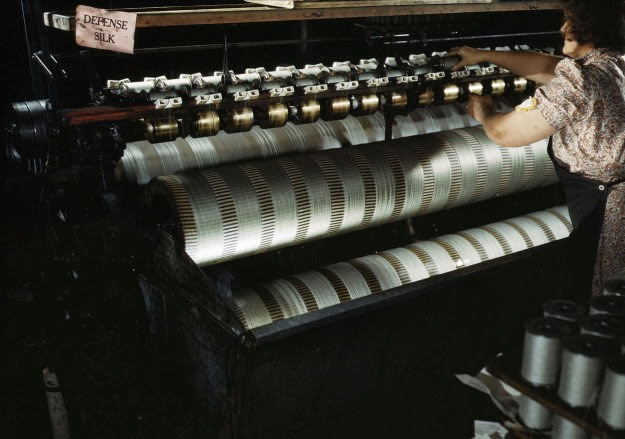
A water stretching machine stretches parachute shroud lines in Manchester, Connecticut, 1942.
J.D. Estes at the Naval Air Base, Corpus Christi, Texas, 1942.
Pearl Harbor widows work at the Naval Air Base in Corpus Christi, Texas, 1942.
Enjoyed this post? Get new ones in your inbox.

Leave a Comment

Your email address will not be published. Required fields are marked *

Share this Post 🥺

Please take a moment to share this content. Your support is greatly appreciated! 🙌🙏

Share this Post 🥺

Please take a moment to share this content. Your support is greatly appreciated! 🙌🙏
Scroll to Top
 
Hey Friend, Before You Go.. Please like & follow for more interesting content