Few album covers in music history are as instantly recognizable as the one on Nirvana’s “Nevermind.” Released in September 1991, the image of a naked baby swimming toward a dollar bill on a fishhook became one of the defining visuals of an entire generation. But the story of how that image came to exist — who made it, how it was shot, and what every element means — is just as fascinating as the record itself.
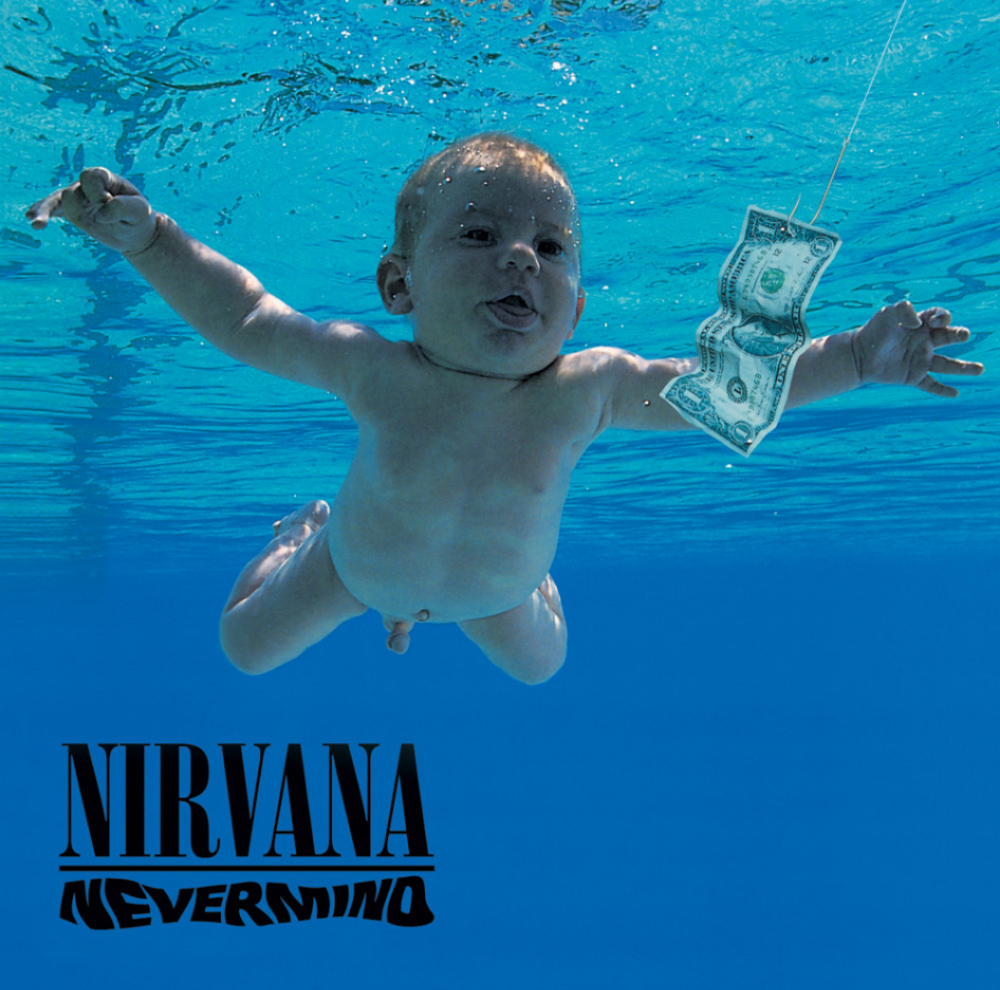
DGC Records hired graphic artist Kirk Weddle to develop the visual concept for the album. Weddle received a rough music demo from the label and was asked to create something that matched the raw energy in Nirvana’s sound. He didn’t start with a finished idea. Instead, the concept came to him after he came across a photograph of a baby swimming underwater. The image struck him immediately. He saw it as the perfect way to express the innocence and vulnerability he heard in the music.
Weddle organized an underwater shoot at a pool in Santa Monica, California. The baby he chose for the job was Spencer Elden, who was only a few months old at the time. Weddle selected Elden specifically for his chubby cheeks and round belly — physical features he believed would give the image a sense of playfulness rather than solemnity. Elden’s parents were present throughout the shoot, and the baby was never in the water for more than a few seconds at a time.


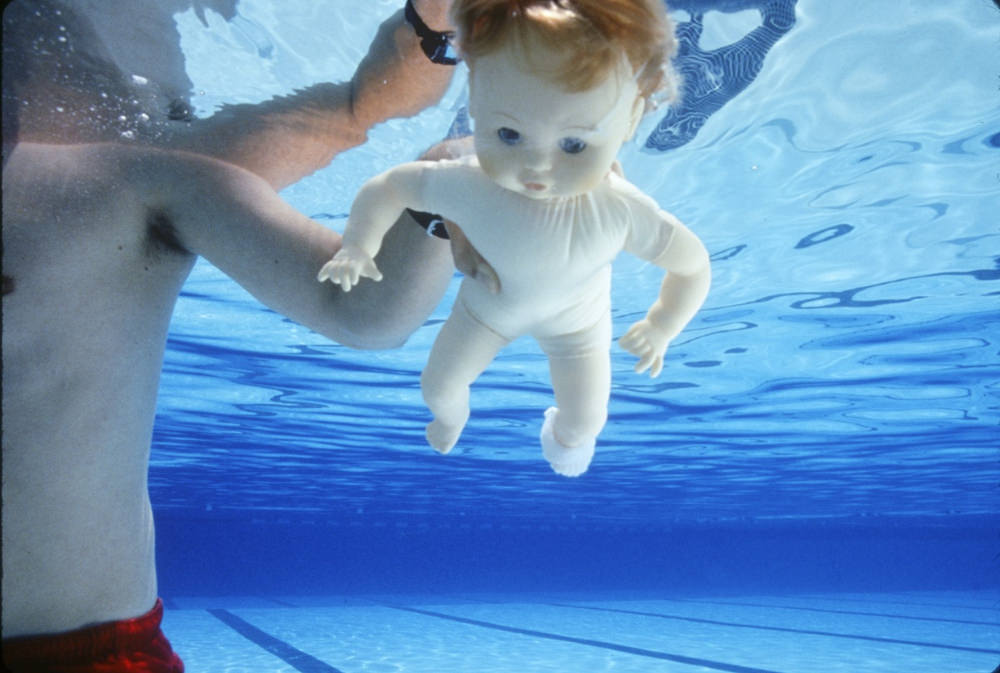
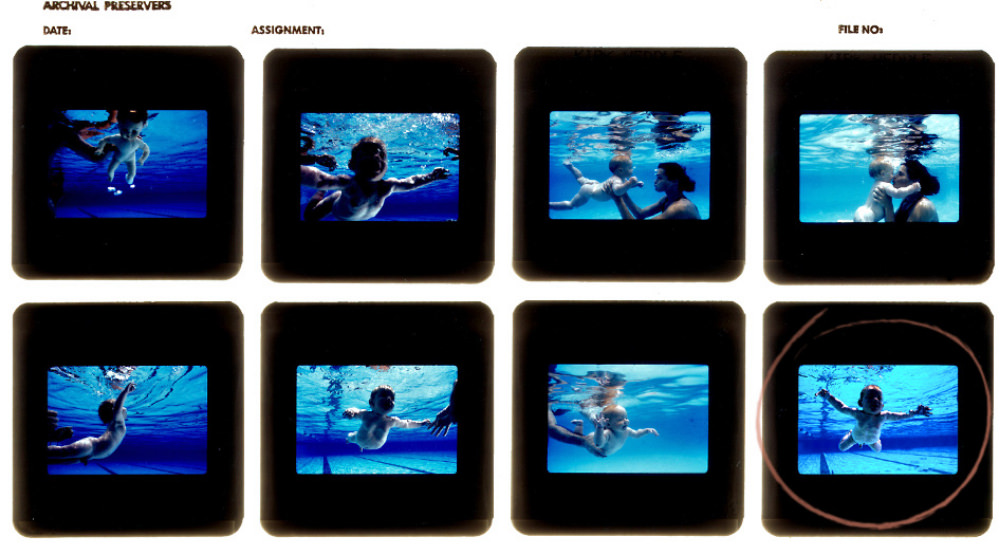
Getting the right shot underwater required careful preparation. Before Elden entered the pool, the team ran test shots using a doll to work out angles, lighting, and framing. These tests allowed Weddle to plan exactly how the final images should look before putting a real infant in the water. The proof sheet from that day shows just how methodical the process was.
Once the photographs were developed, Weddle and the design team worked through a process of compositing — combining and altering elements from multiple shots to produce the final image. A marked-up print shows exactly what changes were planned: adjustments to color, the positioning of the dollar bill on the fishhook, and other fine details that didn’t exist in the raw photographs.
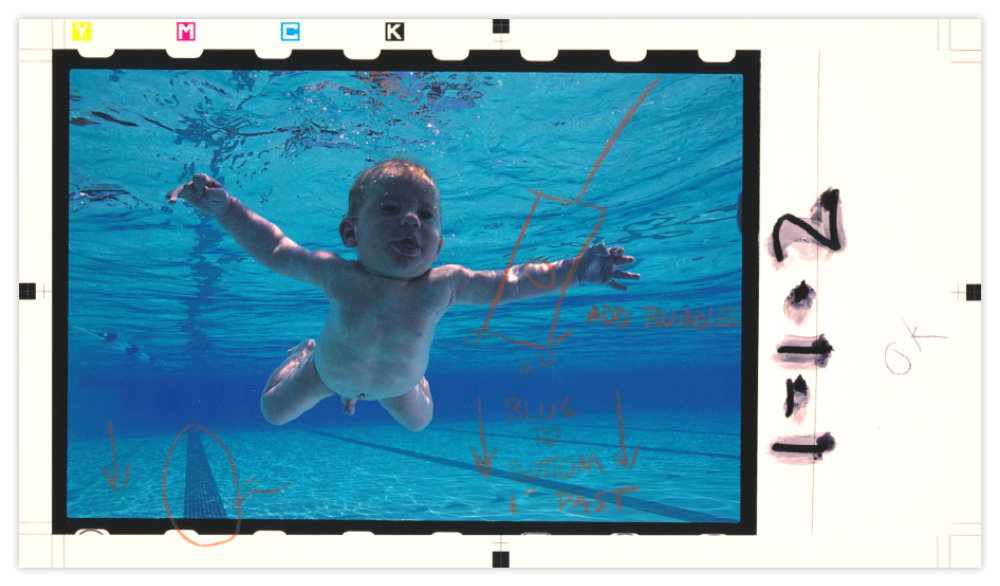
Comparing the marked-up photo to the finished product makes clear just how much deliberate craftsmanship went into the final version. The dollar bill dangling from a fishhook wasn’t an accident or an afterthought — it was a calculated symbol. It represented the loss of innocence and the commercialization of alternative music, with the grunge movement’s deep resistance to materialism baked directly into the image.
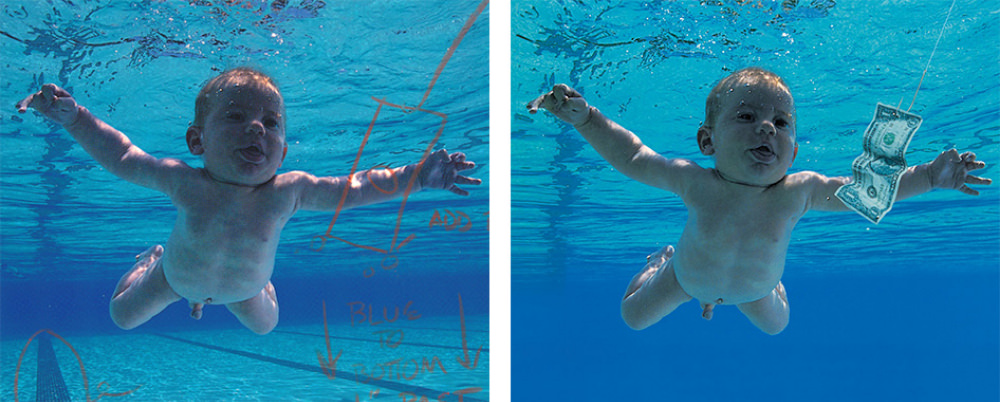
The baby reaching toward money on a hook told a story without a single word. A child, unaware of what it’s chasing, swimming after something that exists only to catch and exploit. For Nirvana and their label, it was a pointed commentary on mainstream culture — a critique embedded in an image that would itself go on to sell millions of copies worldwide. The tension in that irony was entirely intentional.