
By 1905, New York City was in the middle of one of the most dramatic transformations any city had ever seen. Decades of economic growth had fueled construction on a scale that reshaped the skyline, the streets, and the daily lives of millions. Towering new buildings replaced low-rise blocks. Parks and grand public squares were carved into the city fabric. Wealthy residents built mansions along wide avenues, while architects competed to push their designs higher and higher into the sky.
But this was a city of two very different worlds existing side by side. Beneath the glitter of the prosperous upper class lived hundreds of thousands of immigrants crowded into tenements, working long hours in sweatshops, and carving out lives in tightly knit ethnic neighborhoods. Both worlds were essential to what New York was becoming. These photographs capture the city in that pivotal year — its grandeur and its grit, its hustle and its stillness.
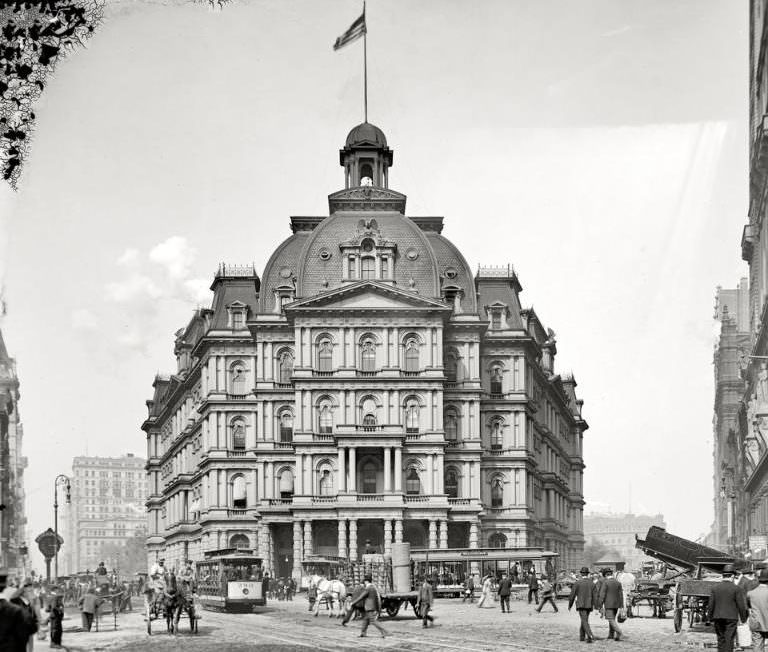
The City Hall Post Office was one of the most ornate federal buildings in the city. Its elaborate stonework and detailed facade reflected how seriously civic institutions took their public image at the turn of the century. It would eventually be torn down, making it one of many architectural losses the city would suffer in the name of progress.
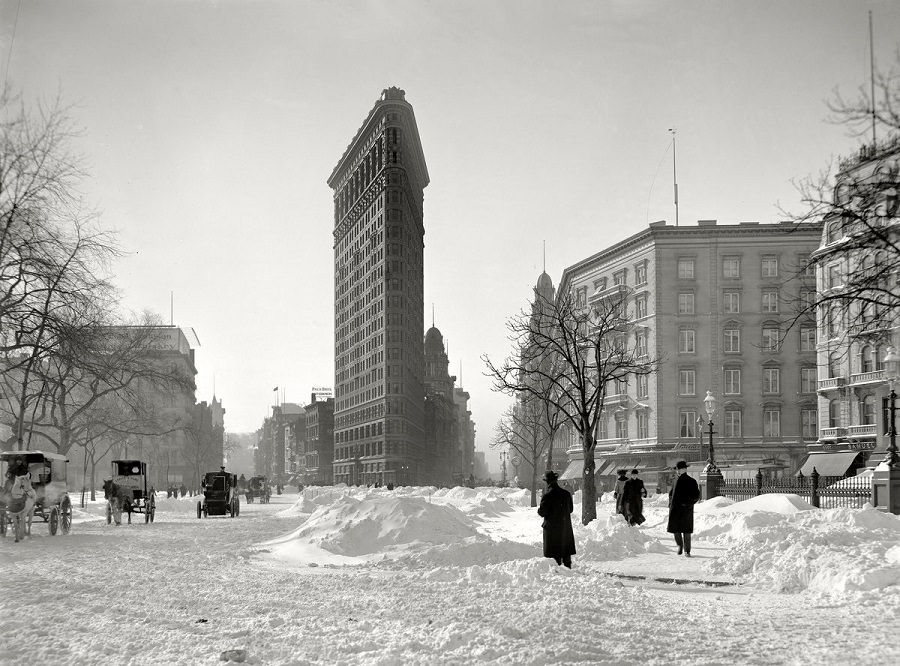
The Flatiron Building, completed in 1902, was still a novelty in 1905. Standing 22 stories tall on the triangular plot where Broadway crosses Fifth Avenue at 23rd Street, it stunned New Yorkers and visitors alike. Its unusual wedge shape made it an immediate landmark, and it signaled clearly that the city’s future was vertical.
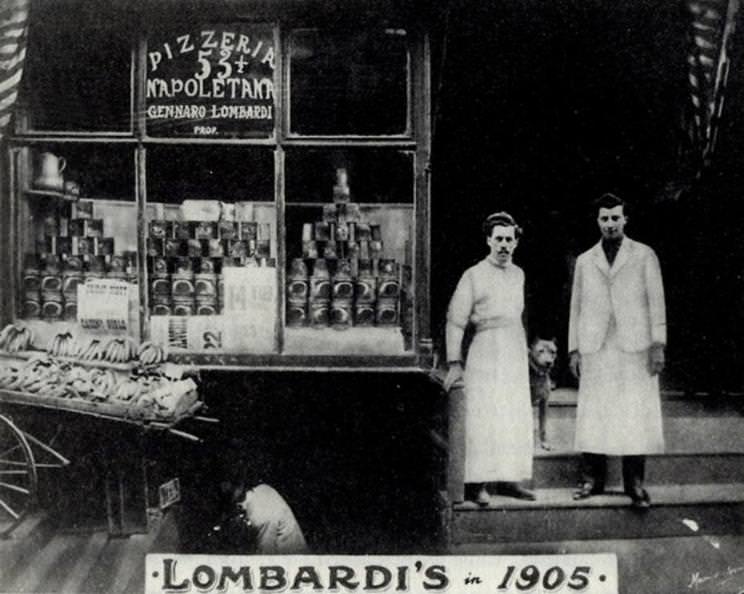
Italian immigrants brought more than just their labor to New York. Lombardi’s, widely recognized as the first licensed pizzeria in the United States, was already operating in Manhattan by 1905. Located in Little Italy, it served the kind of food that Italian workers knew from home — coal-fired, simple, and sold for pennies. What started as working-class street food was quietly becoming part of American culture.
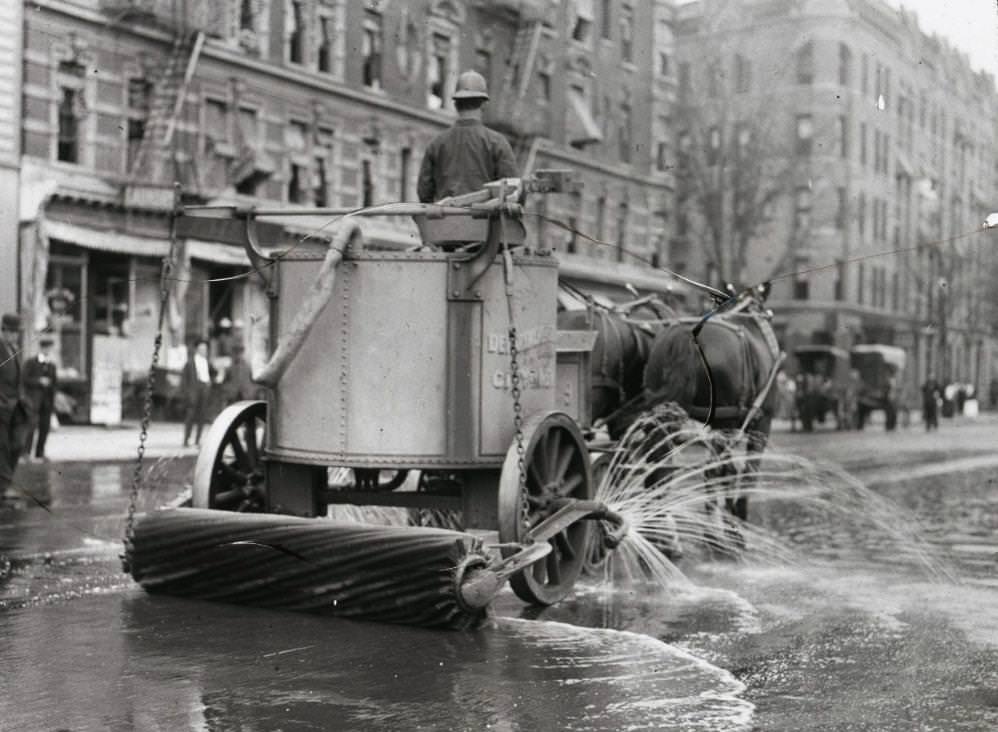
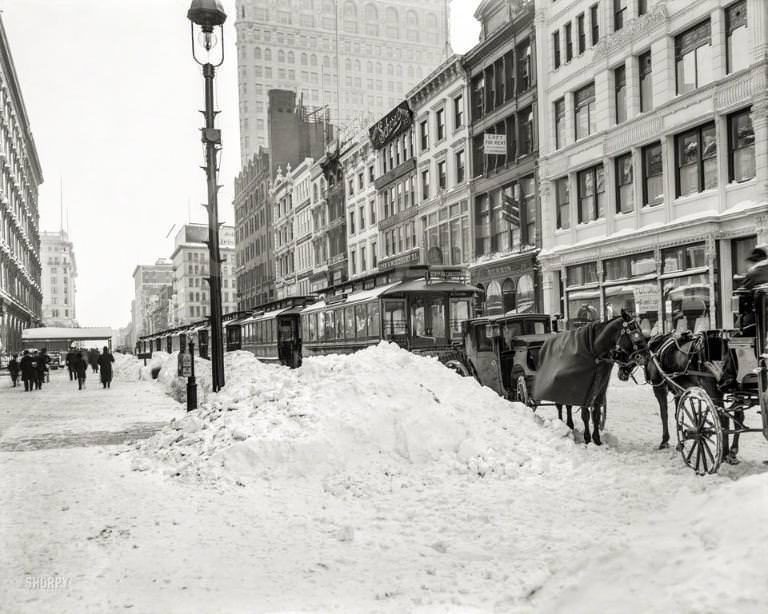
Street cleanliness in 1905 was a political and public health issue. The city focused its sanitation efforts heavily on commercial and wealthy districts, while poorer neighborhoods were largely left to fend for themselves. The winter of 1905 brought heavy snowfall that piled up on streets still shared by horses, carriages, pedestrians, and the growing number of electric streetcars.
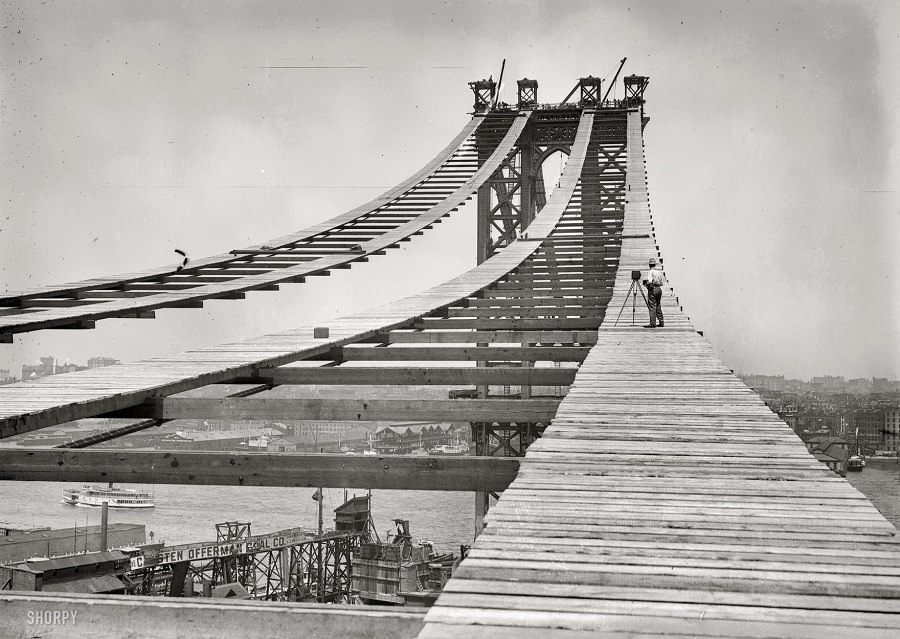
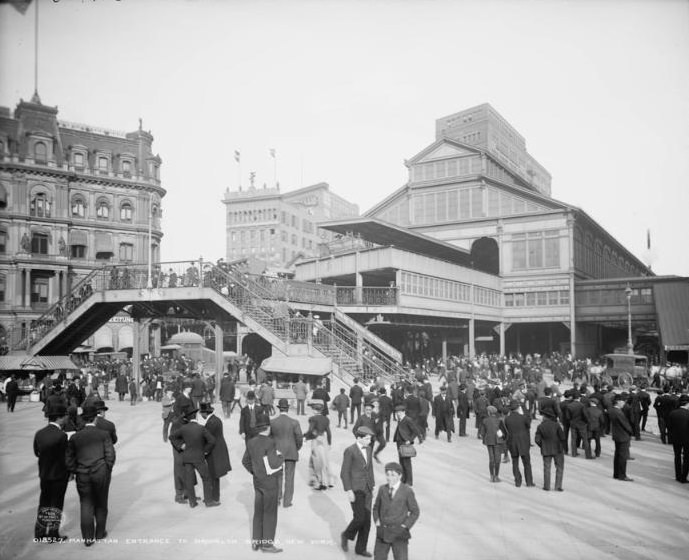
The Manhattan Bridge was under active construction in 1905. It would open in 1909, connecting Manhattan to Brooklyn and easing the enormous pressure on the Brooklyn Bridge, which had been the only fixed East River crossing since 1883. The scale of the project was immense — steel towers rising from the river, cables being strung across, and thousands of workers operating around the clock.
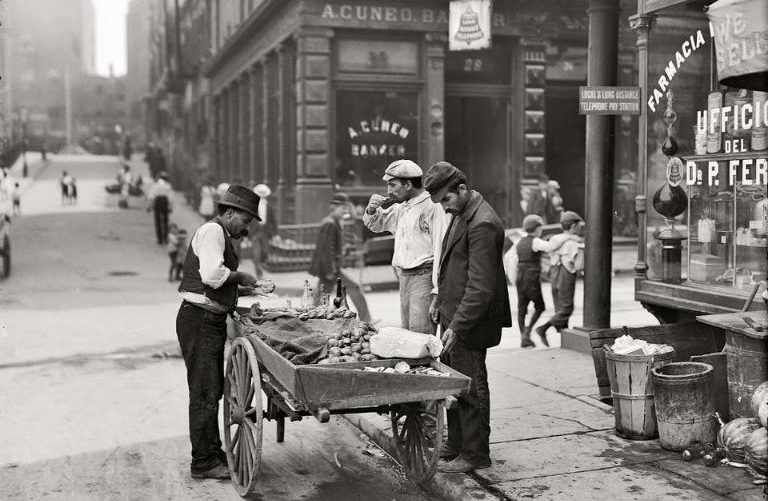
Street vendors were a constant presence in 1905 New York. Clam sellers, fruit carts, and pushcart merchants lined the commercial districts, serving workers and shoppers who had little time and little money to spare. Many of these vendors were recent immigrants who spoke little English but had found a way to earn a living in the city’s informal economy.
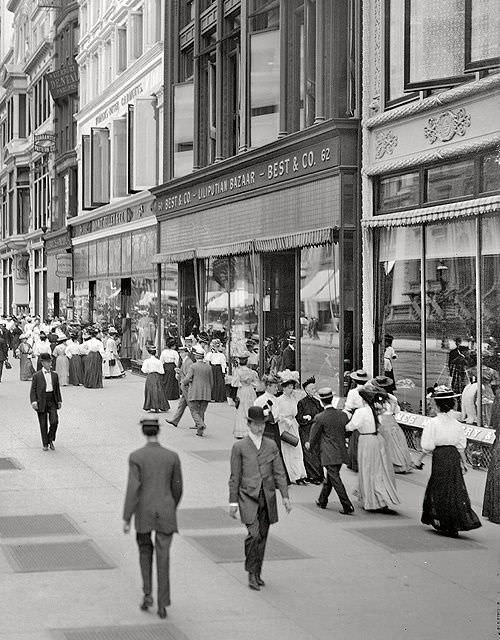
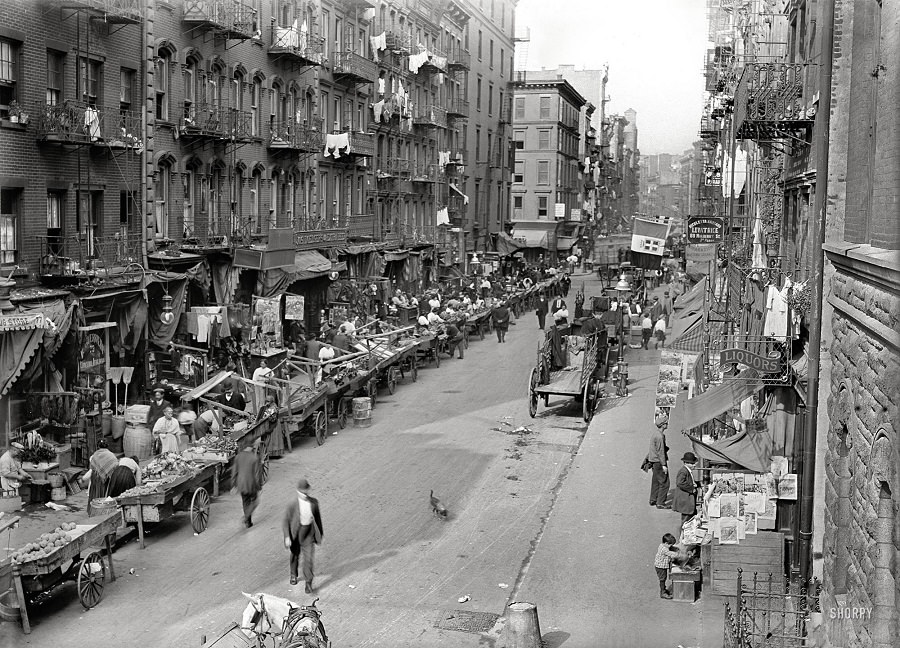
Immigrant communities in 1905 New York tended to cluster tightly by nationality. Italians settled together in Little Italy. Jewish immigrants packed into the Lower East Side. Chinese immigrants lived in Chinatown. These weren’t just cultural preferences — they were survival strategies. Living near people who spoke your language, shared your customs, and understood your struggles made an overwhelming city far more manageable.
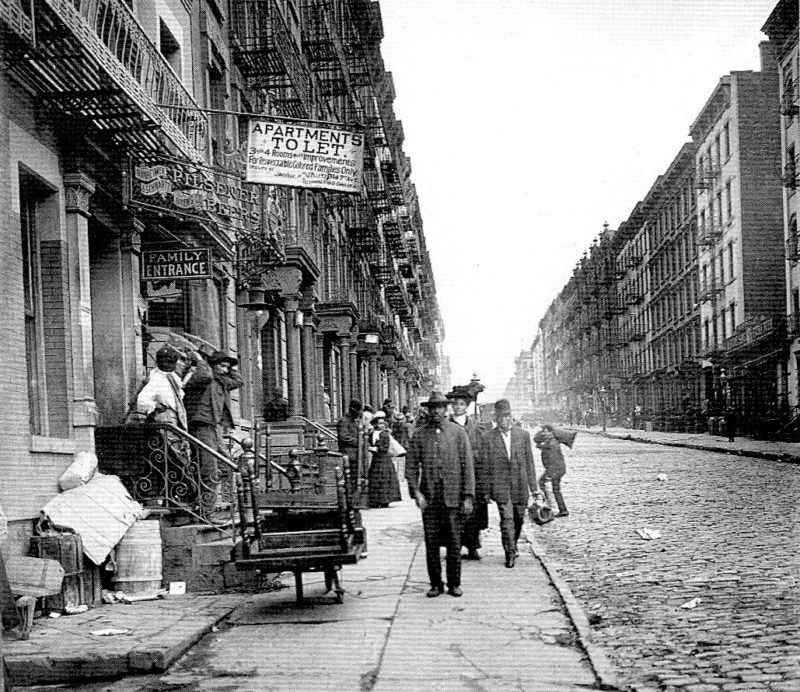
In 1905, Harlem was still a predominantly white, working-class neighborhood experiencing rapid overdevelopment. Speculators had built far more apartment buildings than the market could absorb, leaving many units vacant. The large wave of Black migration to Harlem that would define the neighborhood’s identity in later decades had not yet begun in earnest. At this moment, Harlem was simply another dense, crowded part of a city that never stopped expanding.
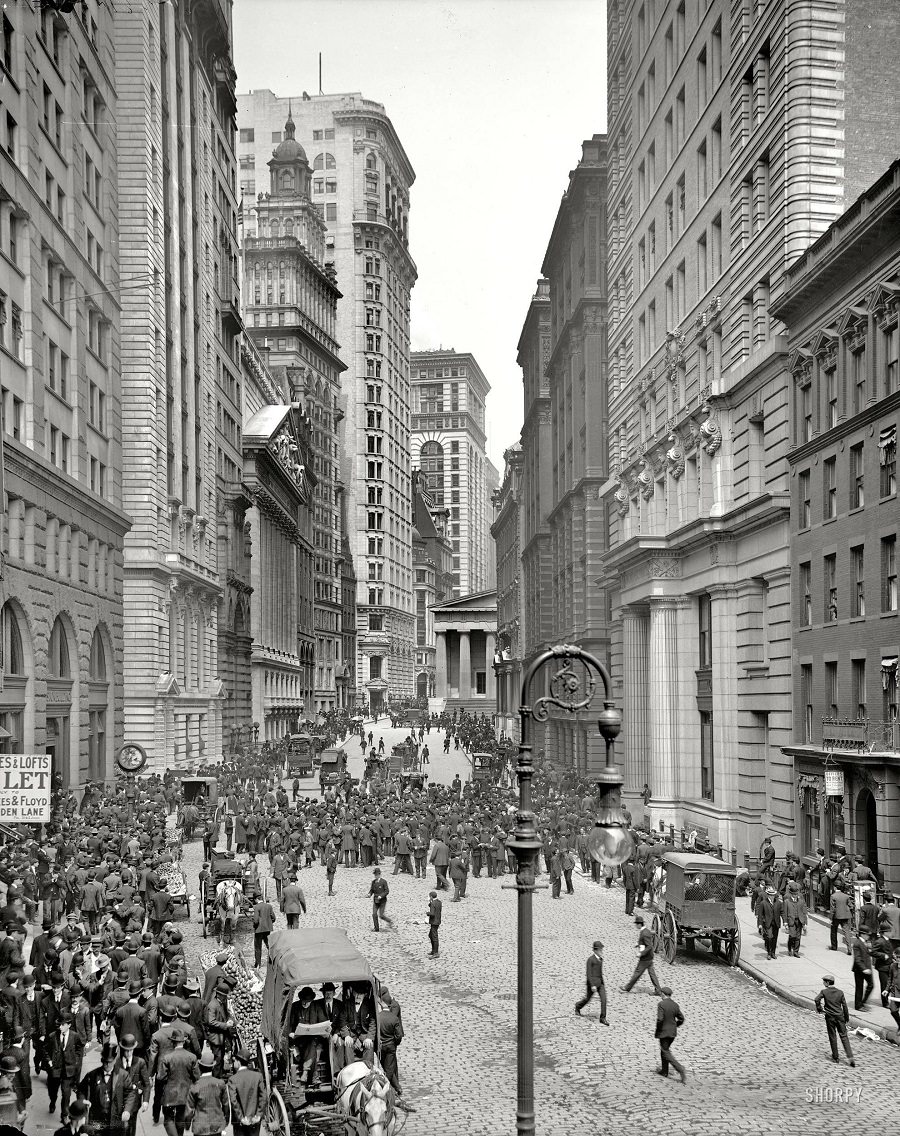
Wall Street and the surrounding financial district in 1905 were already humming with the energy of American capitalism at full speed. Banks, brokerage houses, and insurance companies lined the narrow downtown streets. The New York Stock Exchange had moved into its current building on Broad Street in 1903, and trading volume was surging. The district wasn’t yet the global financial symbol it would become, but the machinery was clearly in motion.
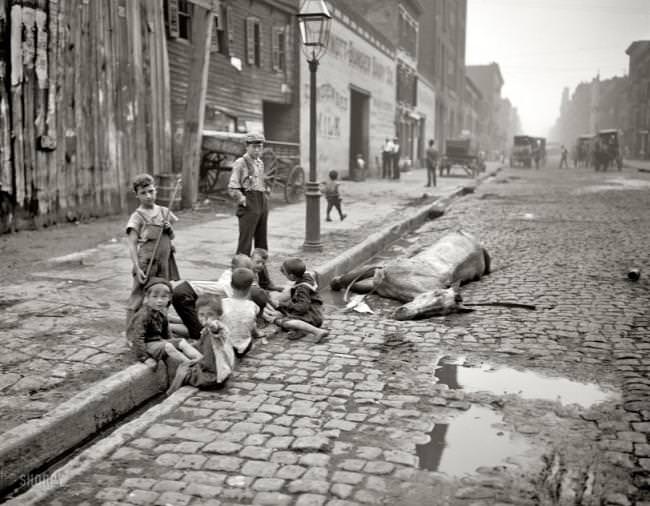
Horses were still the primary engine of city logistics in 1905. They pulled delivery wagons, streetcars, and carriages across every neighborhood. The work was brutal — cobblestone streets, heavy loads, and relentless schedules wore animals down quickly. Dead horses on city streets were not an uncommon sight. The city employed workers specifically to remove carcasses, which could number in the hundreds per day across the five boroughs.
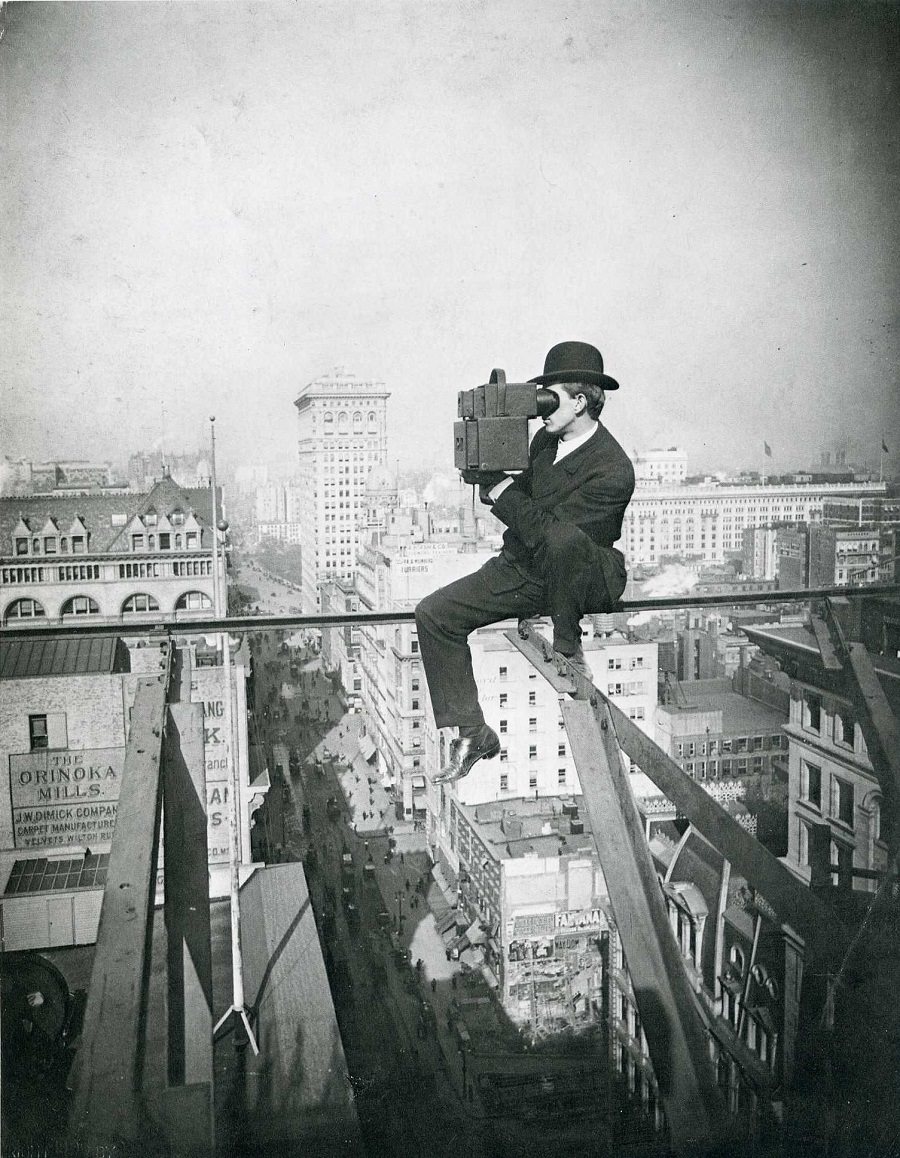
The Brooklyn Bridge, opened in 1883, was still the most famous structure in the city in 1905. Thousands of pedestrians, cyclists, and horse-drawn vehicles crossed it every day. Meanwhile, Fifth Avenue remained the city’s most prestigious address — a corridor of wealth where department stores, churches, and private clubs stood shoulder to shoulder. Photographers were already drawn to its elevated views and constant movement.
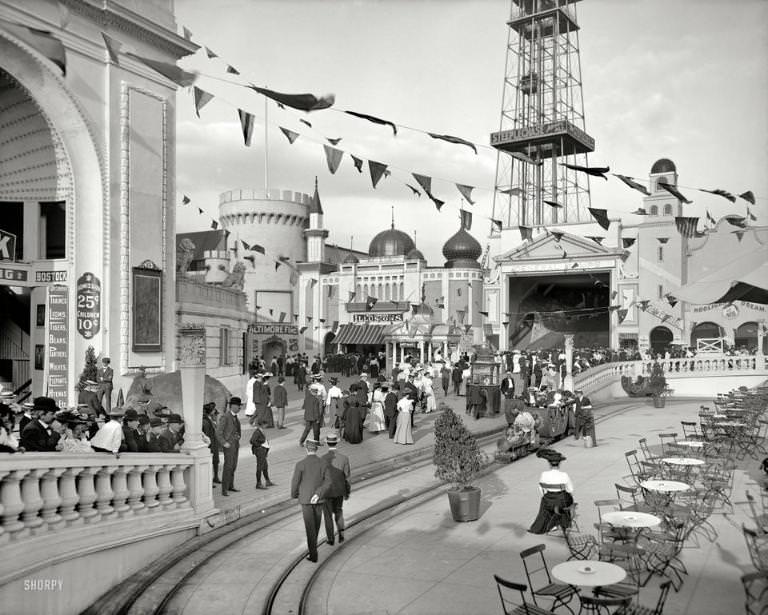
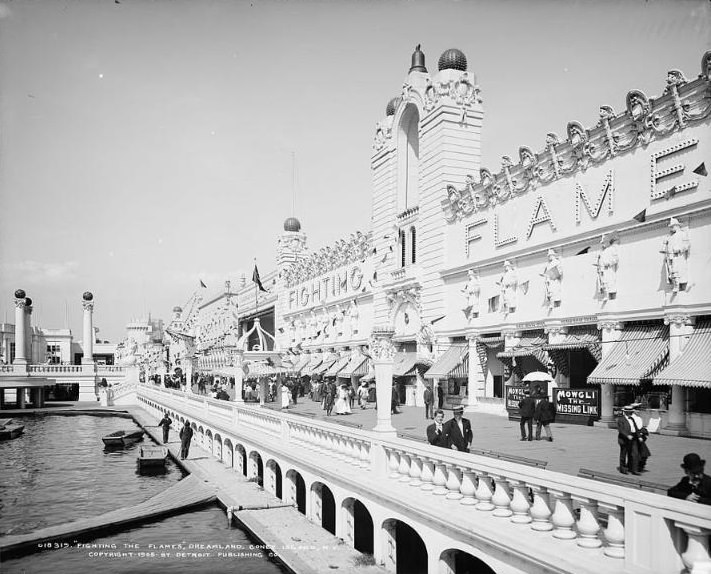
Coney Island was the city’s great escape valve. For a nickel on the subway, working-class New Yorkers could reach the beach and the amusement parks that lined it. Dreamland Park, which opened in 1904, was the most elaborate of these — a gleaming white fantasy of towers, electric lights, and spectacular attractions. On summer weekends, over a million people visited Coney Island, making it the most visited amusement destination in the world.
Fire was a constant threat in a city packed with wooden tenements, gas lamps, and industrial buildings. The New York City Fire Department in 1905 was still transitioning from horse-drawn steam engines to motorized apparatus, a process that would take another decade to complete. Fires in densely built neighborhoods could spread fast, and the death tolls in tenement fires were often devastating.
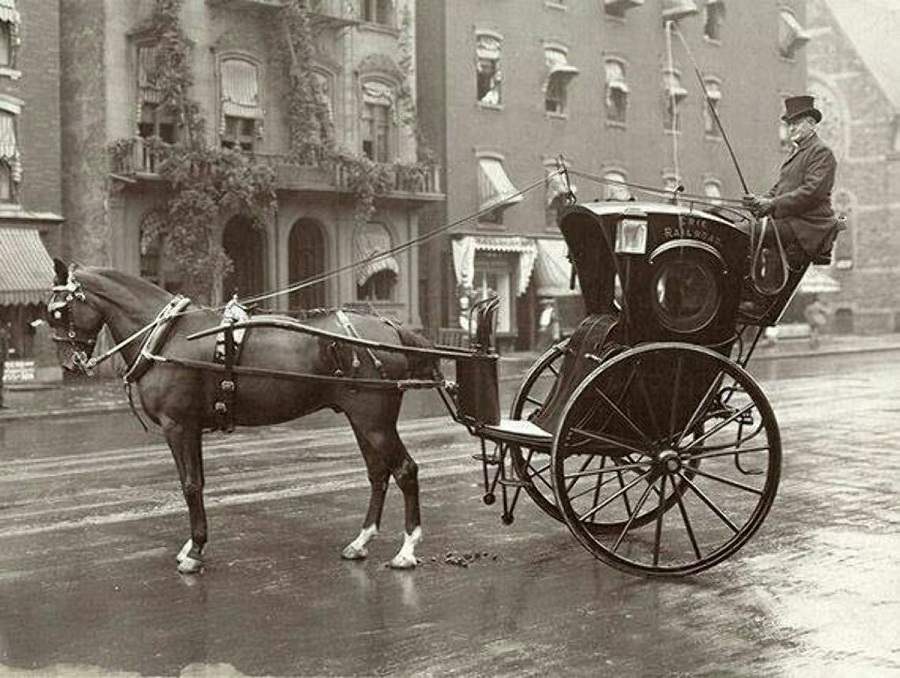
Motor taxis appeared on New York streets around 1907 in large numbers, but early gasoline-powered cabs were already being tested in the city by 1905. For most New Yorkers, transportation still meant the elevated rail, the streetcar, or their own two feet. But for wealthier residents, the automobile — whether private or hired — was becoming a status symbol and a practical alternative to the horse-drawn cab.
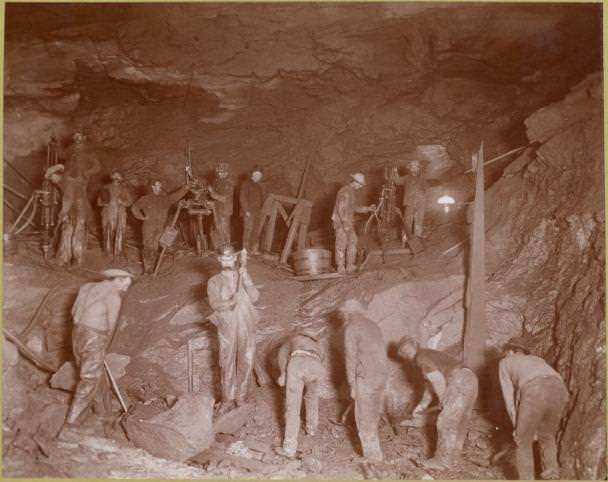
New York’s first subway line had opened in October 1904, just months before these photographs were taken. Construction crews were already extending the system in 1905, drilling and blasting through Manhattan bedrock to push the tunnels further north and south. The workers were overwhelmingly immigrants — Irish, Italian, and Eastern European men doing dangerous work for low wages. The subway they built would knit the city together in ways that no previous transit system had managed.
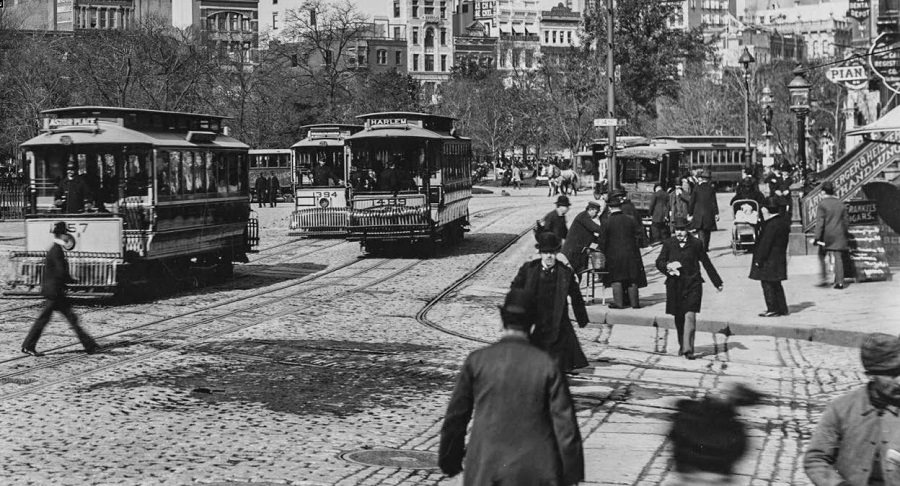
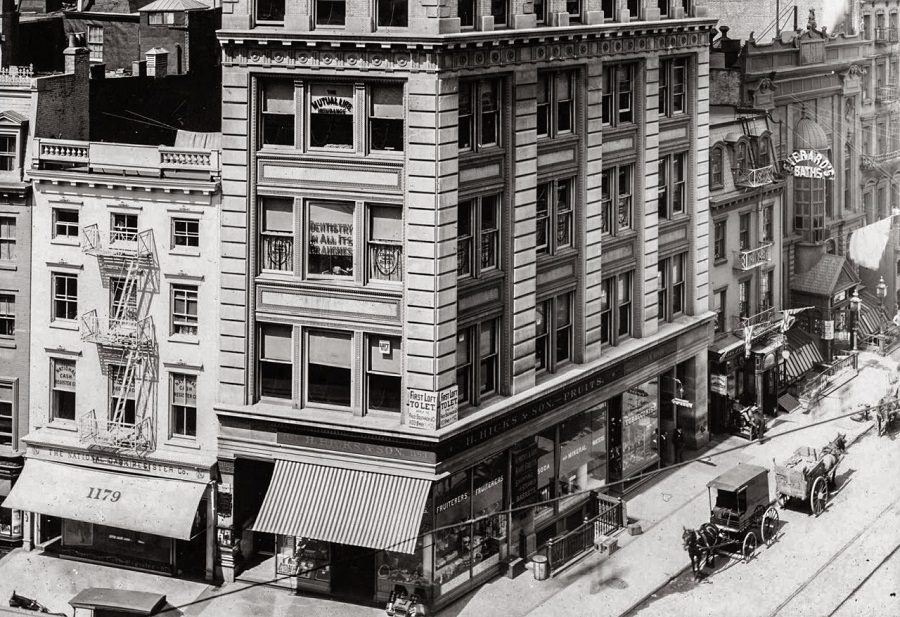
Union Square in 1905 was a commercial and political hub. Department stores and theaters surrounded it, while labor organizers and political speakers regularly drew crowds to its open spaces. Just blocks away on 28th Street and Broadway, fruit sellers set up shop in the shadow of the city’s entertainment district. The blocks around there were already being called Tin Pan Alley — the heart of America’s popular music publishing industry.
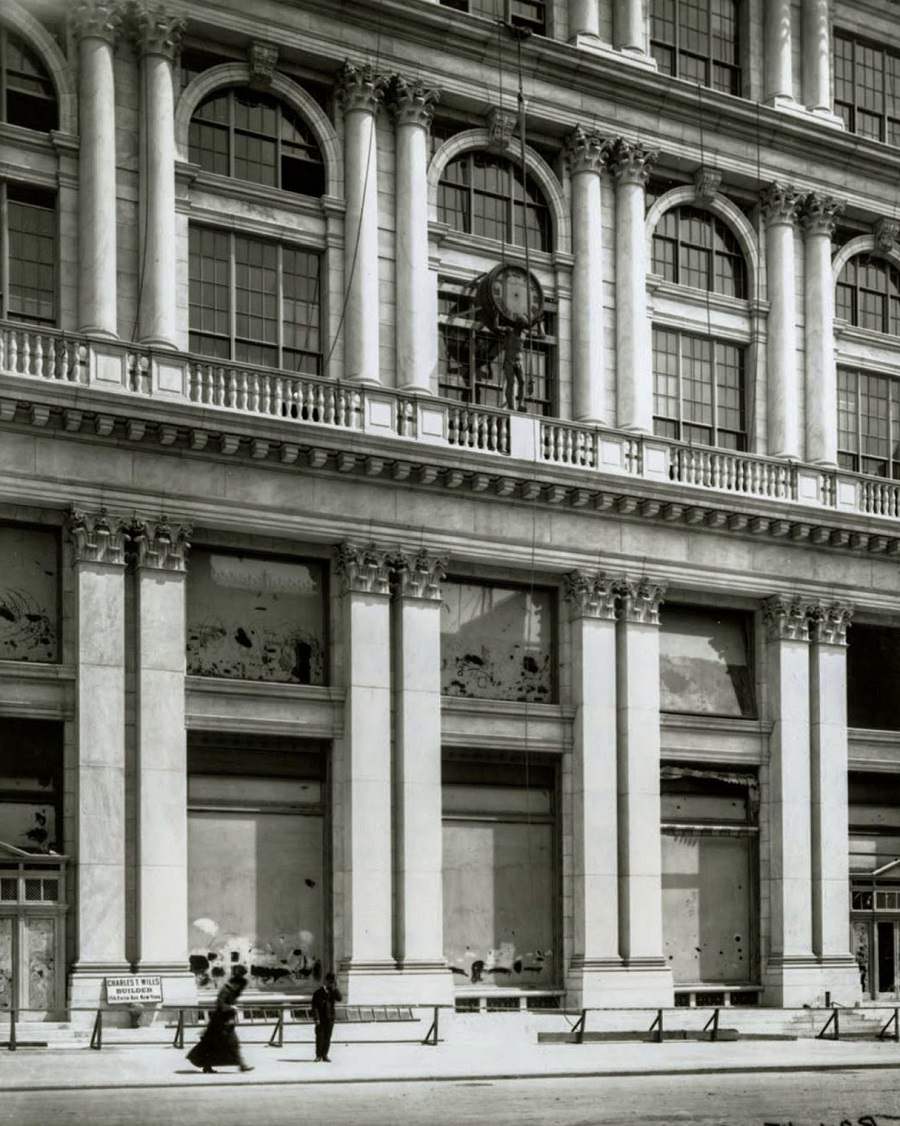
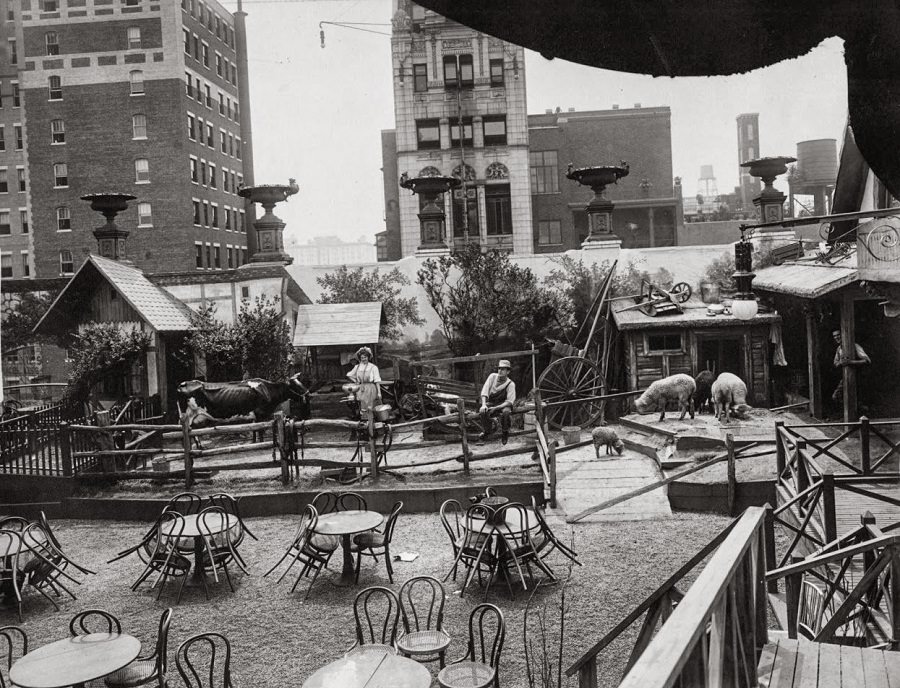
Tiffany & Co. on Fifth Avenue was already one of the city’s most recognizable luxury institutions by 1905, catering to New York’s well-heeled elite. A short distance uptown, the Belasco Theater offered a different kind of indulgence — rooftop beer gardens were a popular feature of New York theaters at the turn of the century, giving audiences a place to drink and socialize above the noise of the street.
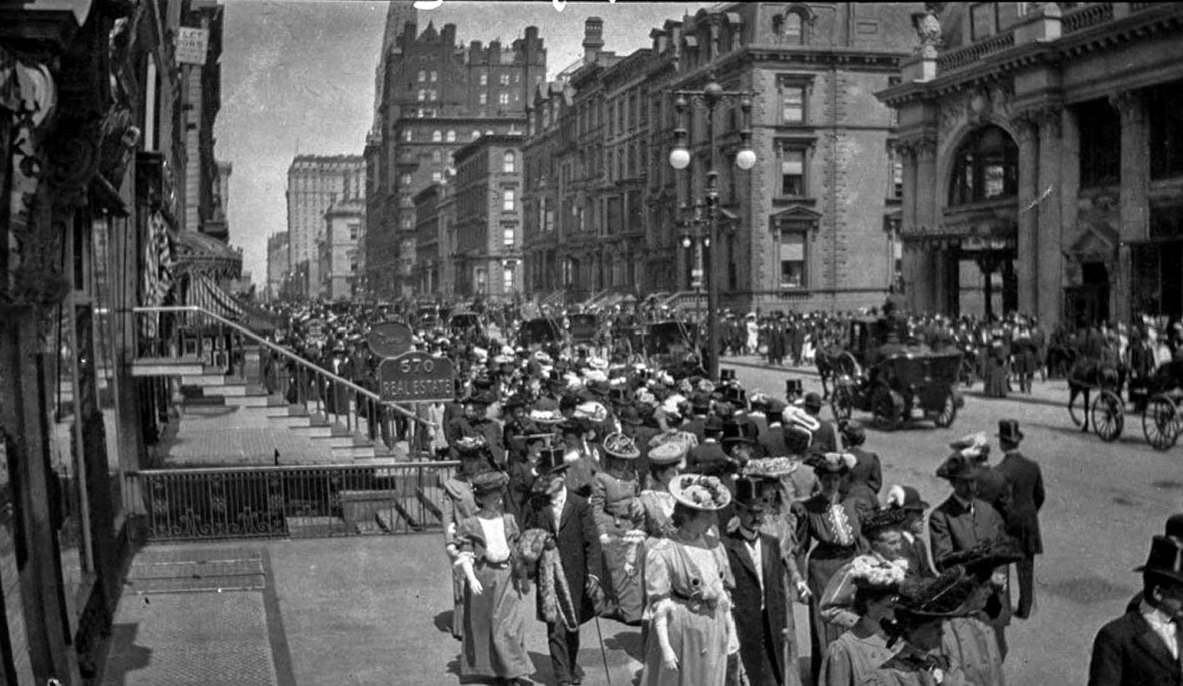
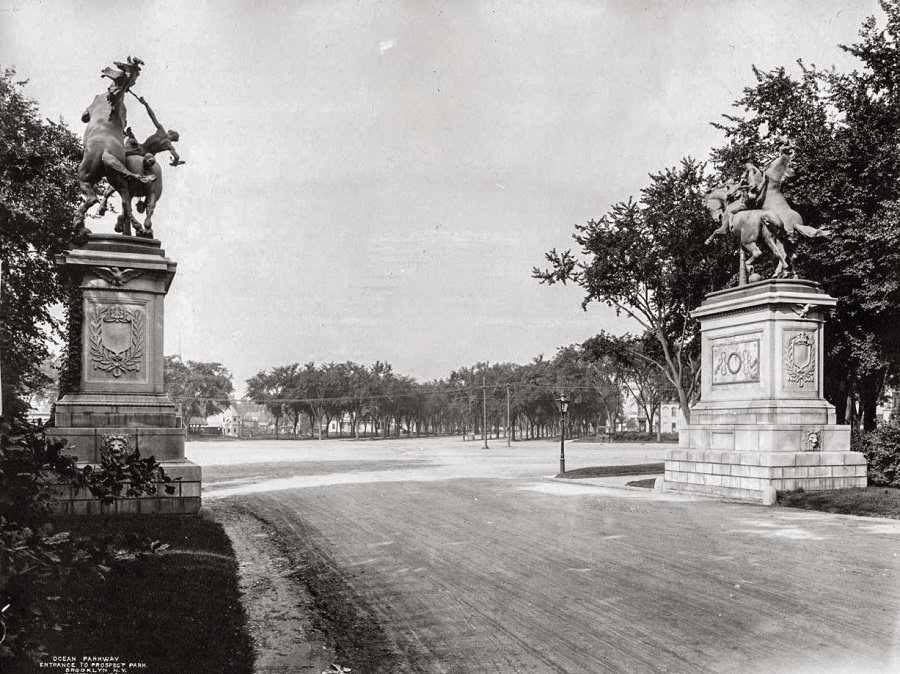
Sunday on Fifth Avenue was a social ritual for New York’s upper and middle classes. Dressed in their finest, residents promenaded along the avenue to see and be seen. In Brooklyn, Prospect Park — designed by Frederick Law Olmsted and Calvert Vaux, the same team behind Central Park — offered a more relaxed kind of Sunday. Its Ocean Parkway entrance gave visitors arriving from the south a grand, tree-lined approach to the park’s lawns and meadows.
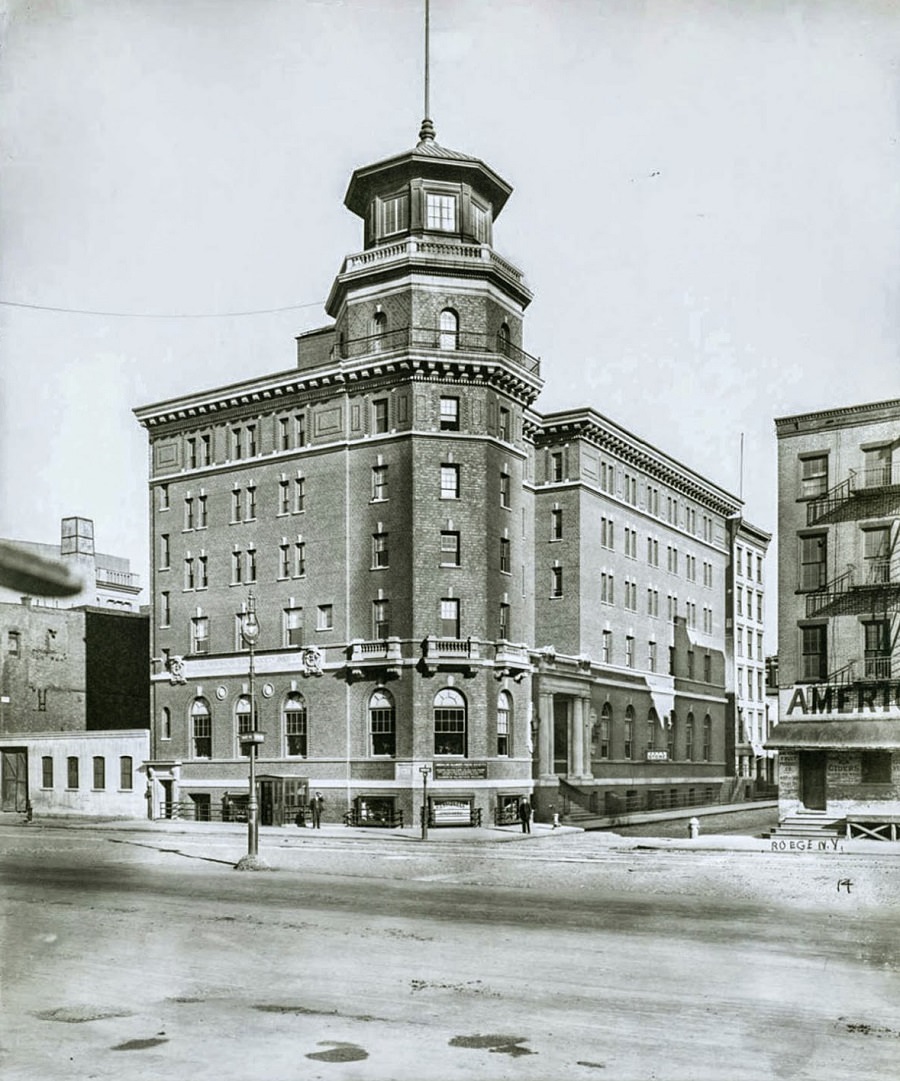
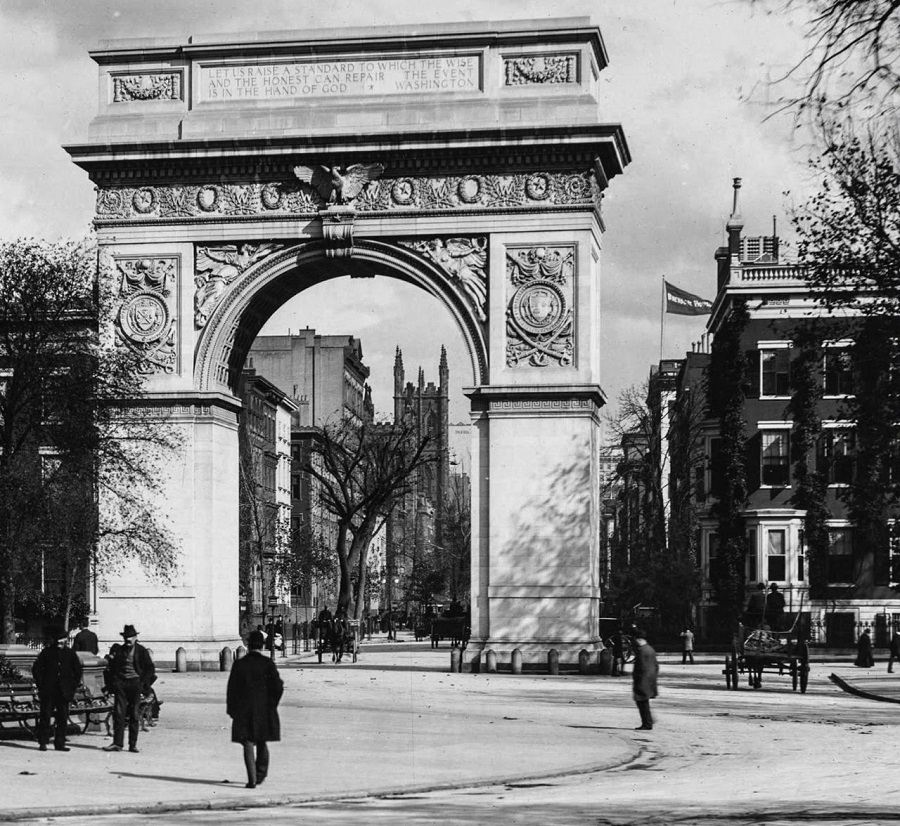
The waterfront at Jane and West Streets served sailors who passed through one of the world’s busiest ports. The Sailors’ Home run by the American Seaman’s Friend Society provided lodging, meals, and social services to merchant seamen between voyages. Not far from the docks, Washington Square Park anchored the northern end of Greenwich Village. The triumphal arch at its entrance, completed in 1895, had already become one of the city’s most beloved landmarks.
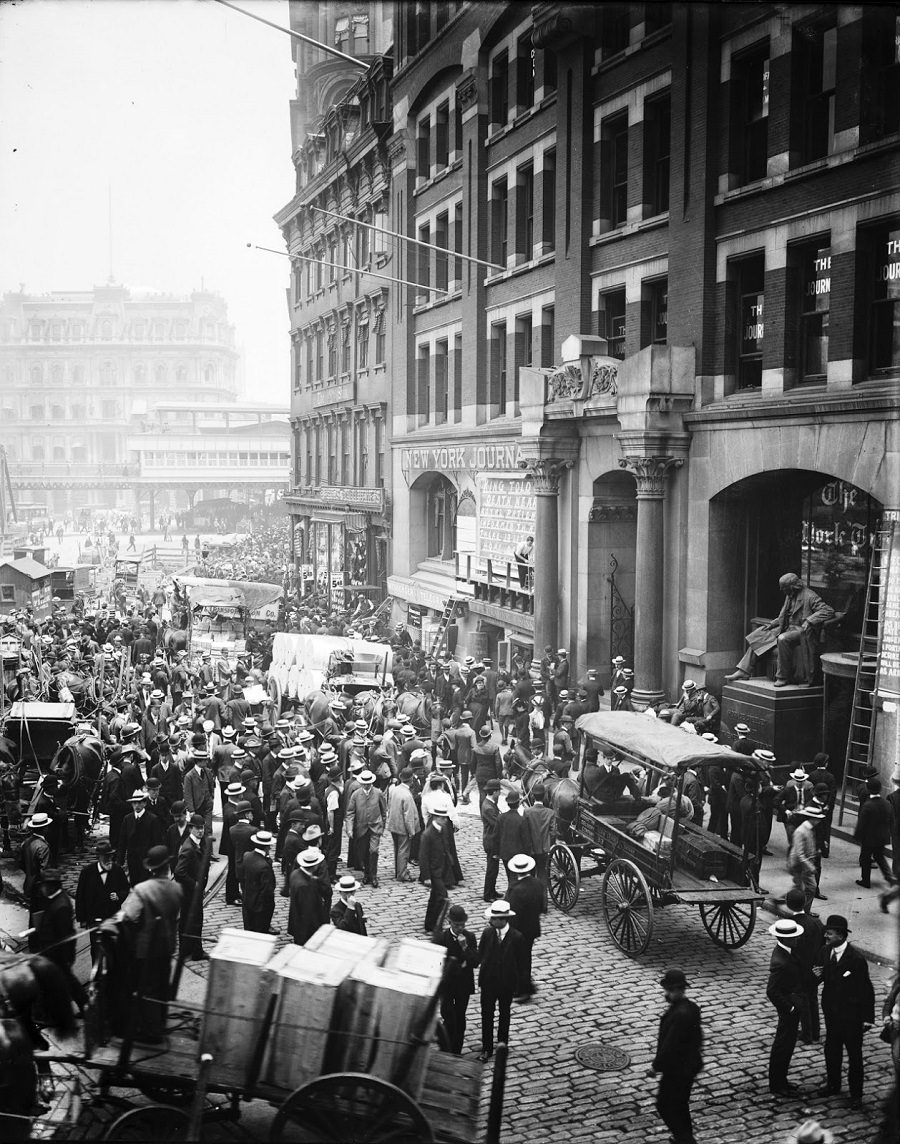
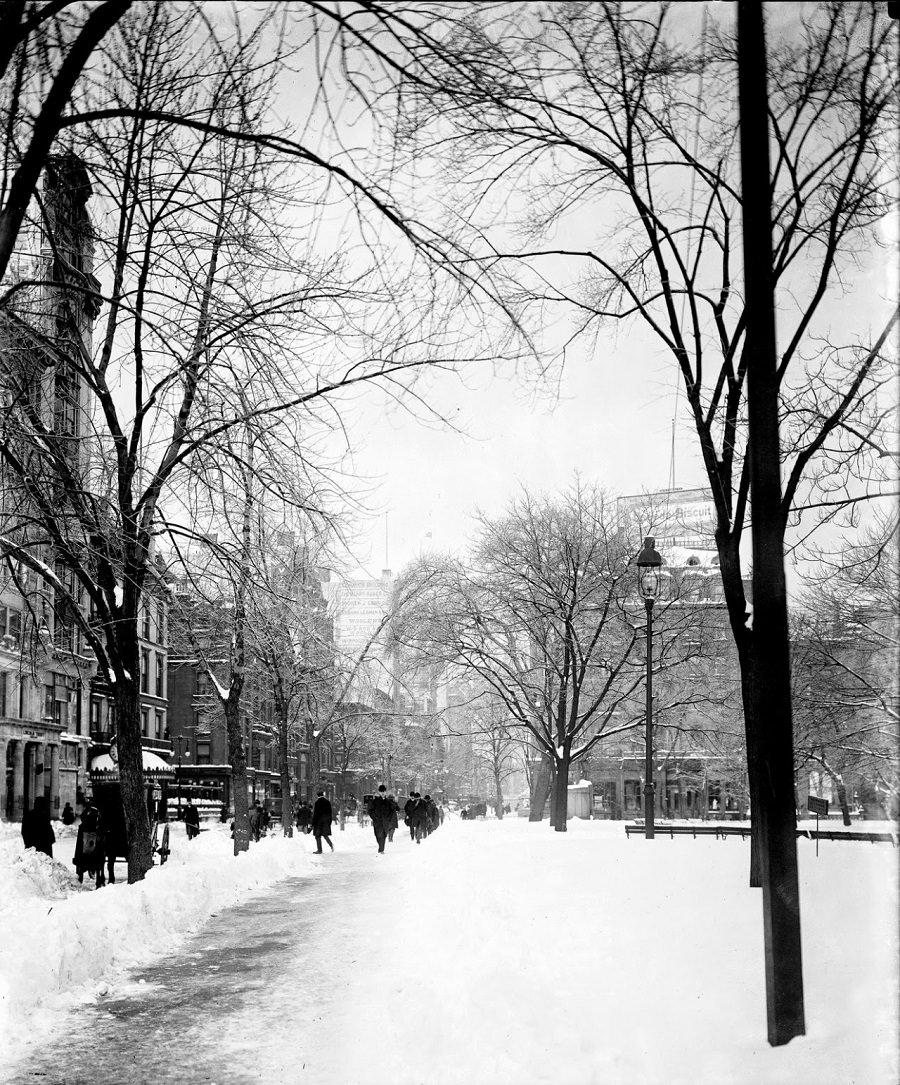
The New York Tribune Building at Spruce and Nassau Streets was one of the city’s early high-rise newspaper headquarters, its clock tower visible for blocks. The press was a powerful institution in 1905 New York — the city supported dozens of daily newspapers competing fiercely for readers. Further north on Fifth Avenue at 25th Street, the mix of commercial buildings and private residences showed how quickly the avenue’s character shifted from block to block.
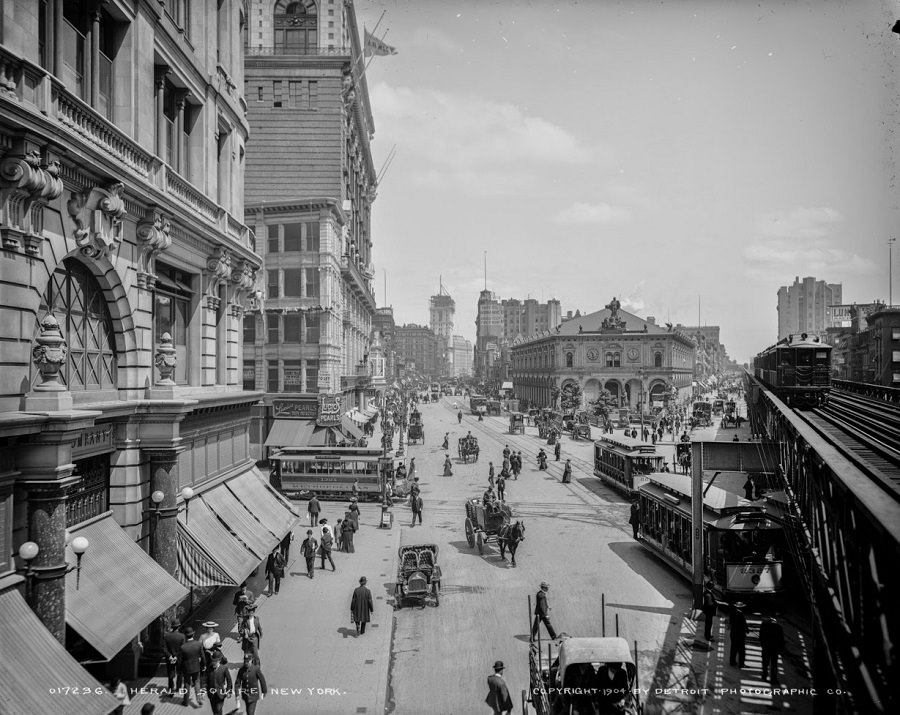
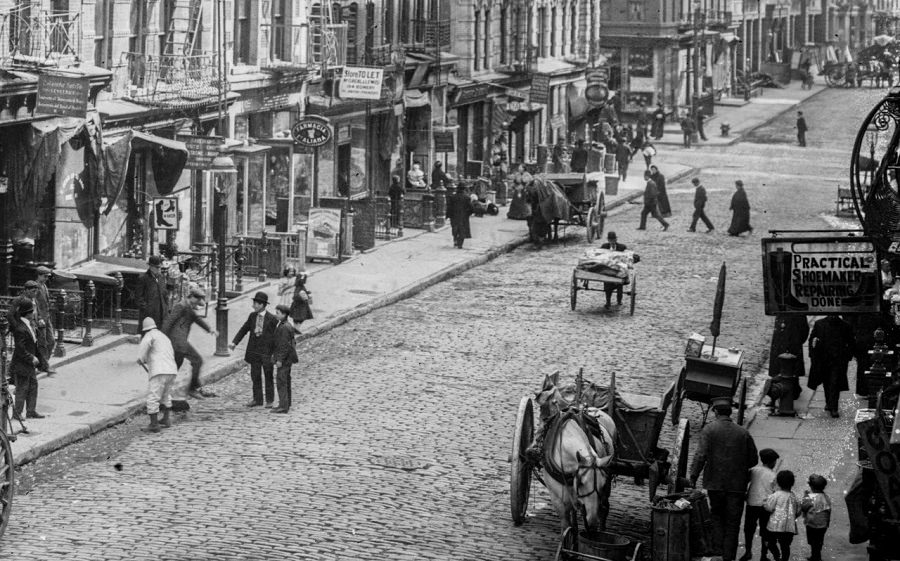
Herald Square, where Broadway and Sixth Avenue converge at 34th Street, was a major commercial crossroads in 1905. Macy’s had moved to its current location there in 1902, anchoring the area as a shopping destination. A world away in terms of atmosphere, Mott Street in Chinatown was densely packed with residents, merchants, and the rhythms of a community that had built itself largely in isolation from the rest of the city.
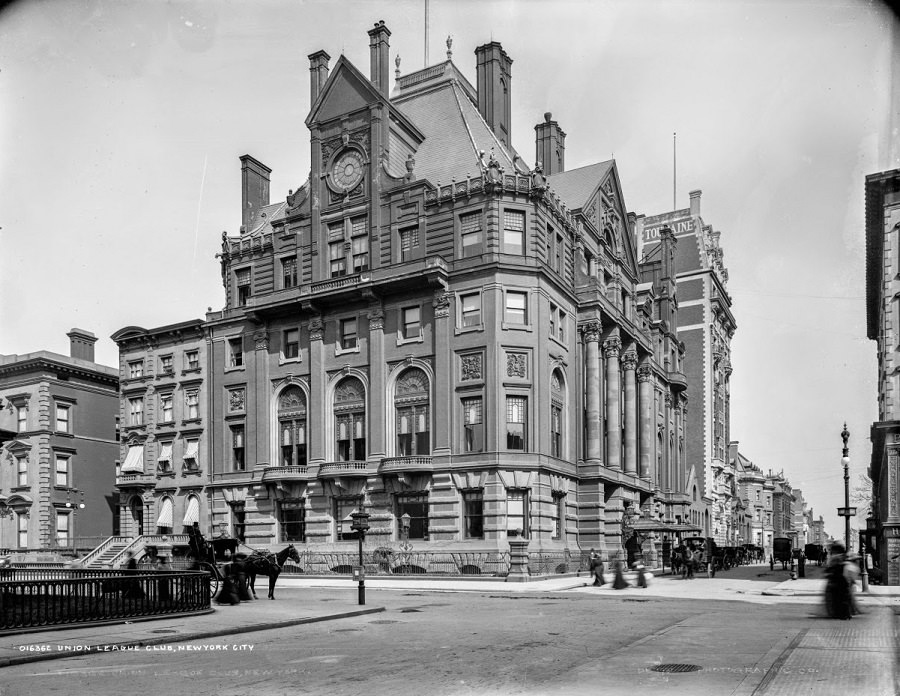
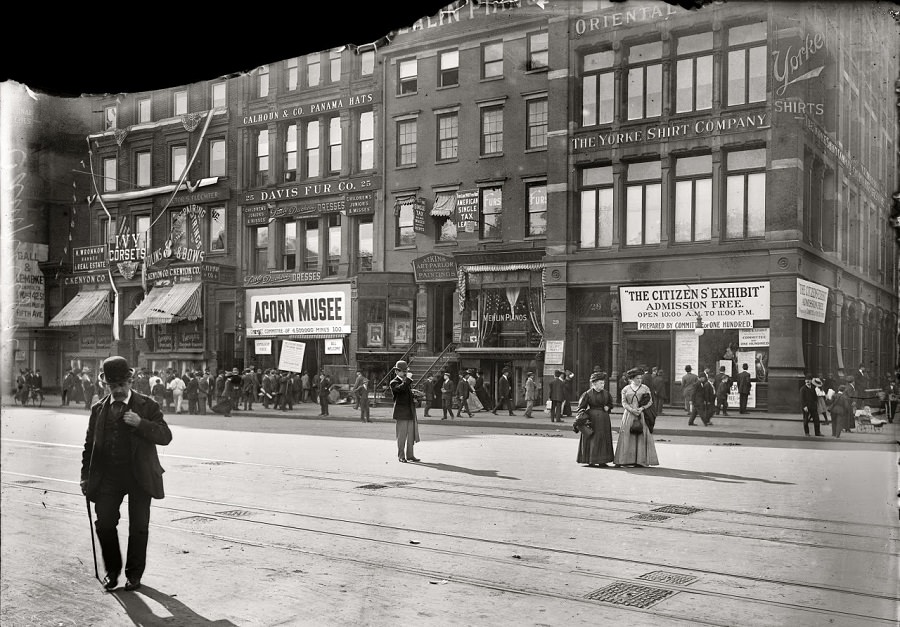
The Union League Club on Fifth Avenue and 39th Street was one of the city’s most exclusive social institutions, founded during the Civil War by supporters of Abraham Lincoln and the Union cause. By 1905, it was a gathering place for Republican politicians, financiers, and industrialists. Blocks to the south, the Acorn Musee near Union Square offered a very different kind of attraction — a wax museum and dime museum format that drew working-class crowds with its curiosities and spectacles.
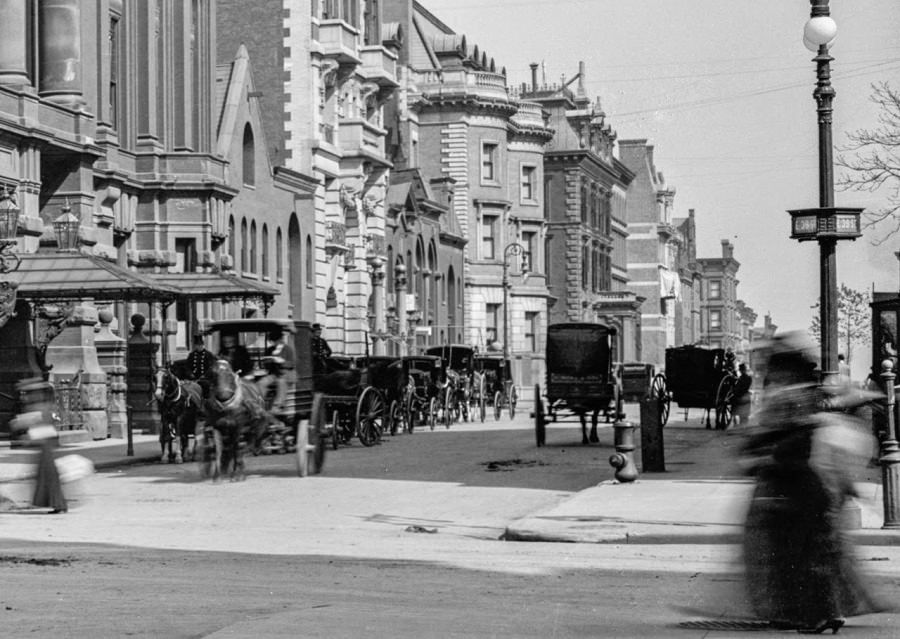
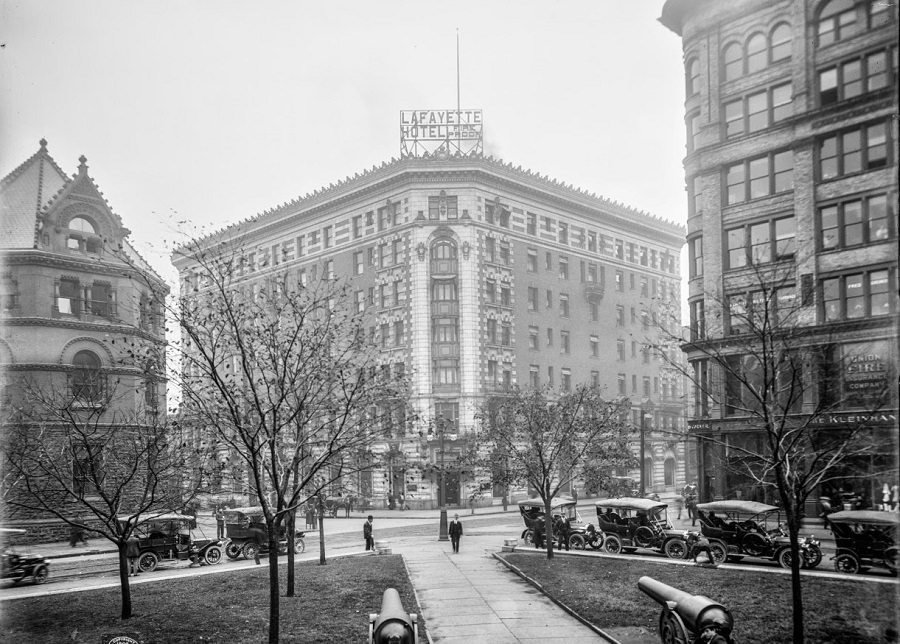
Looking east down 39th Street from Fifth Avenue in 1905 revealed a streetscape in transition — brownstones and older commercial buildings standing alongside newer, taller structures pushing upward. Lafayette Square, with its combination of the Buffalo Public Library and the Hotel Lafayette, captured another side of the era’s civic ambition: the belief that grand public institutions and fine hotels were signs of a city worth taking seriously.
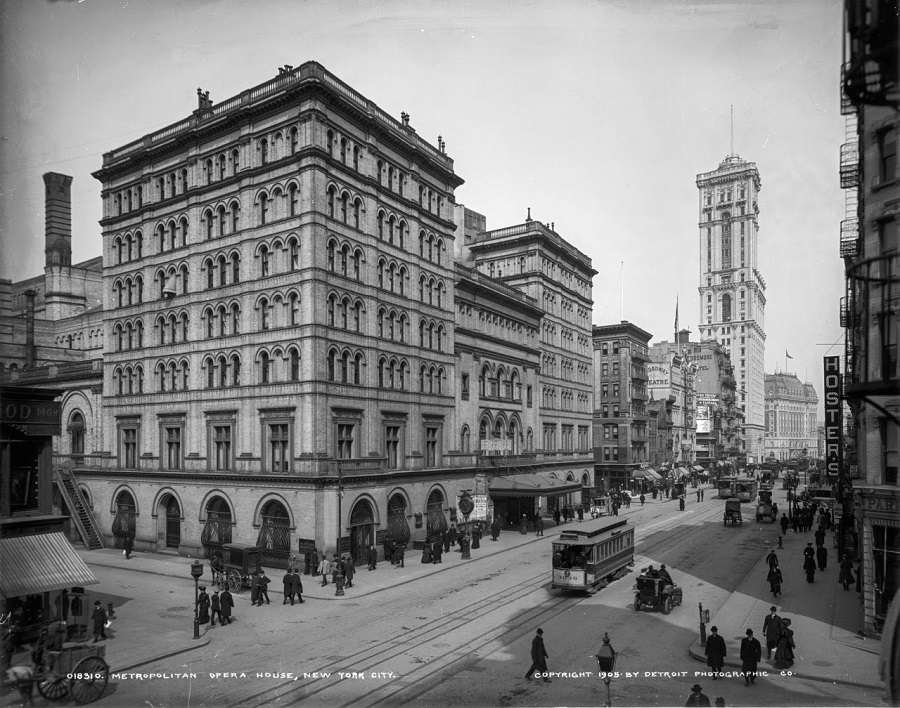
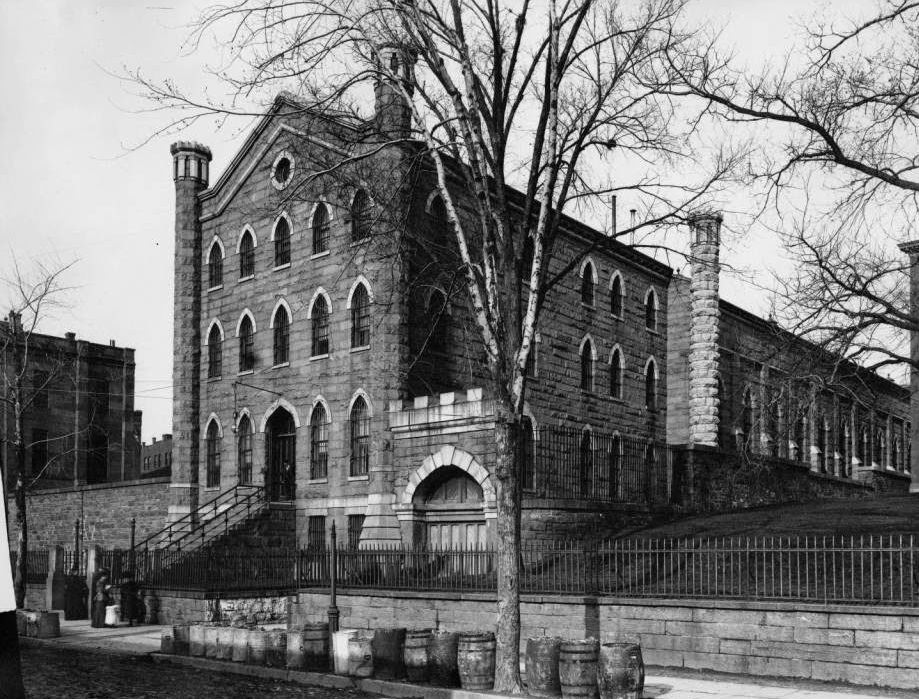
The Metropolitan Opera House at 39th Street and Broadway was the heart of New York’s high-culture social scene. Built in 1883, it drew the city’s wealthiest families to its ornate interior for performances by the world’s leading singers and conductors. The Raymond Street Jail in Brooklyn, by contrast, was a forbidding Gothic structure that held prisoners awaiting trial and sentenced inmates alike. Its dark stone walls and cramped conditions were a stark reminder of how differently the justice system treated those without money or connections.
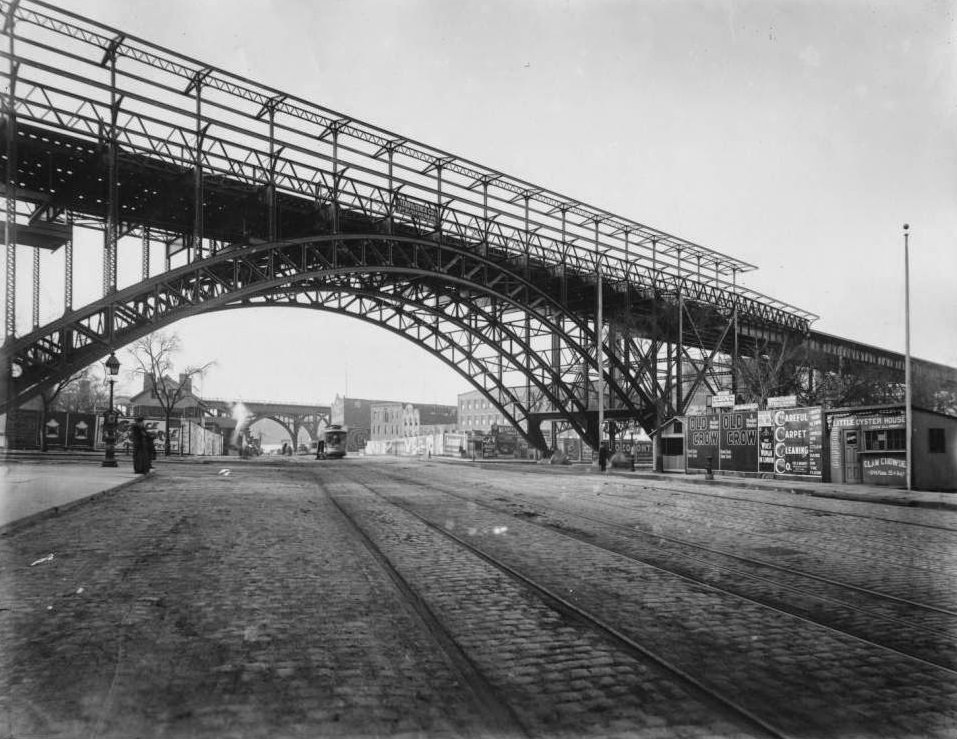
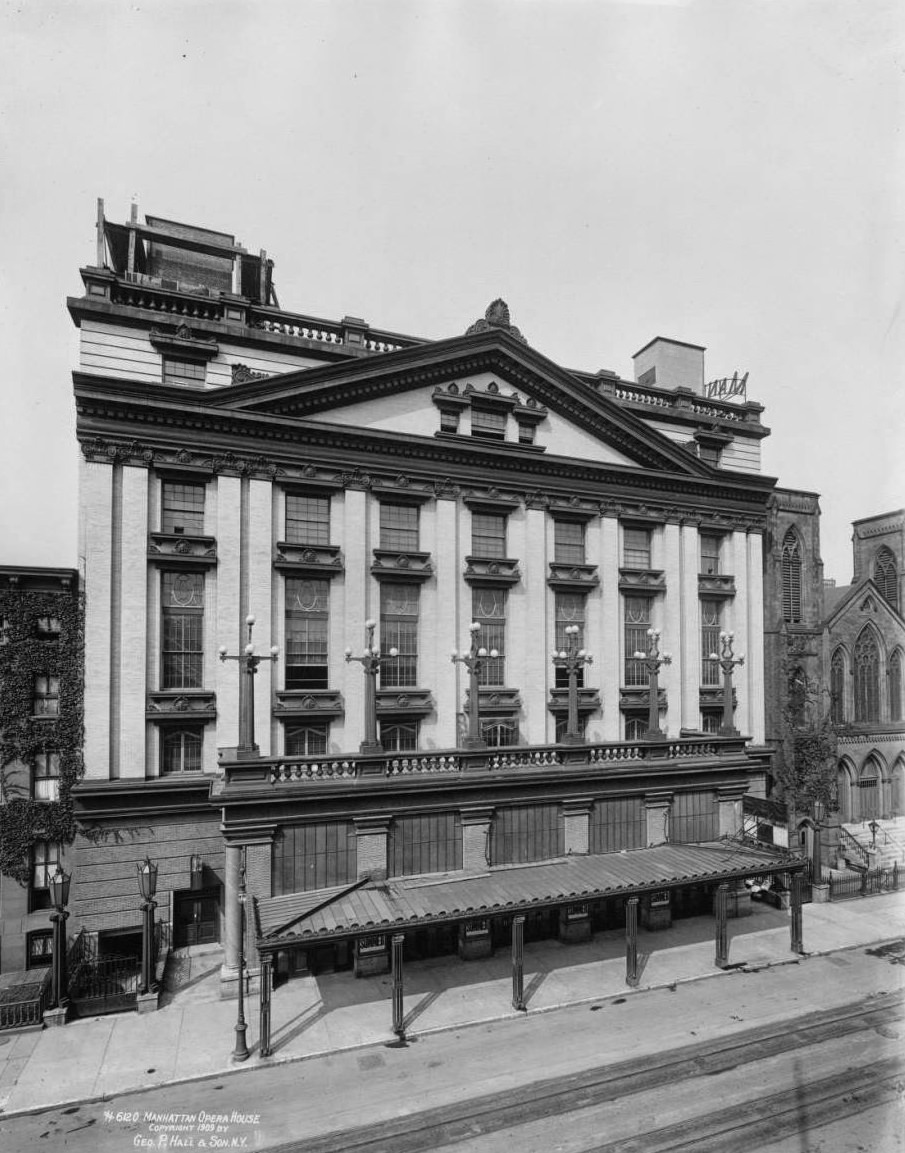
The 125th Street Viaduct carried traffic across the Manhattanville valley, connecting upper Manhattan neighborhoods that would otherwise have been separated by a sharp drop in elevation. It was a piece of infrastructure most New Yorkers took for granted but that engineers had spent years designing. The Manhattan Opera House on West 34th Street was a newer rival to the Met, opened by Oscar Hammerstein I in 1906 to challenge the older institution’s monopoly on grand opera.
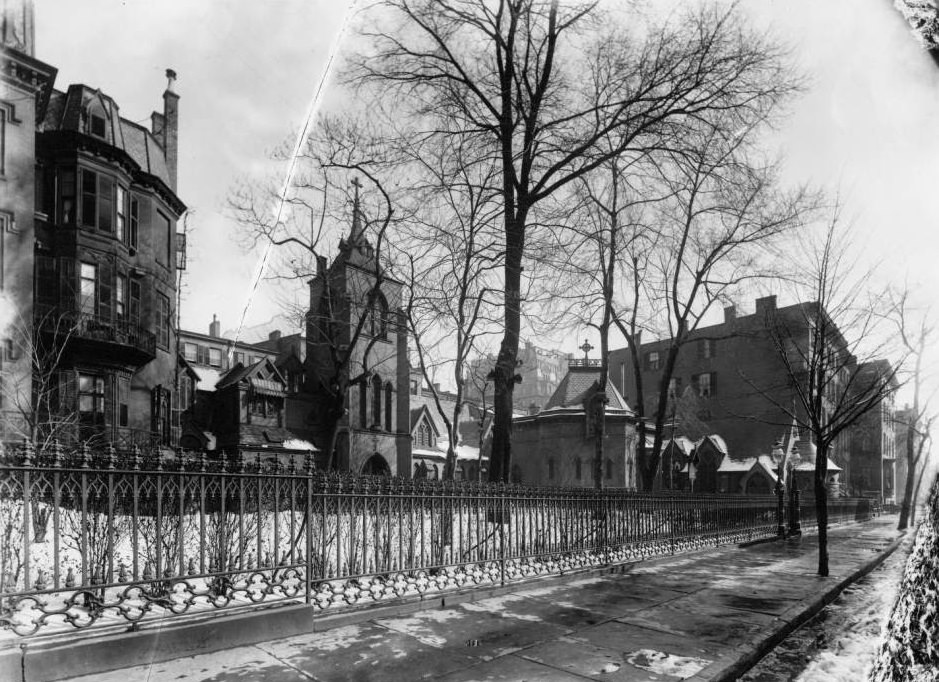
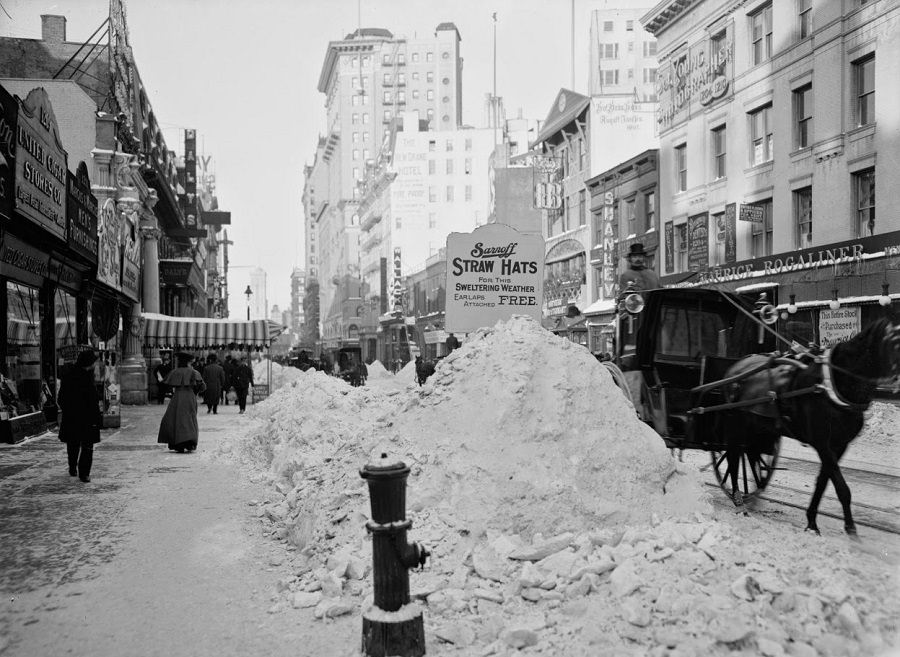
The Church of the Transfiguration on East 29th Street had earned its nickname — the Little Church Around the Corner — decades earlier when a nearby church refused to hold services for an actor. It became known as a welcoming parish for theater people and artists. Summer in New York in 1905 meant heat with no air conditioning, and straw hats were a practical necessity for anyone spending time outdoors. Street vendors sold them at every busy corner.
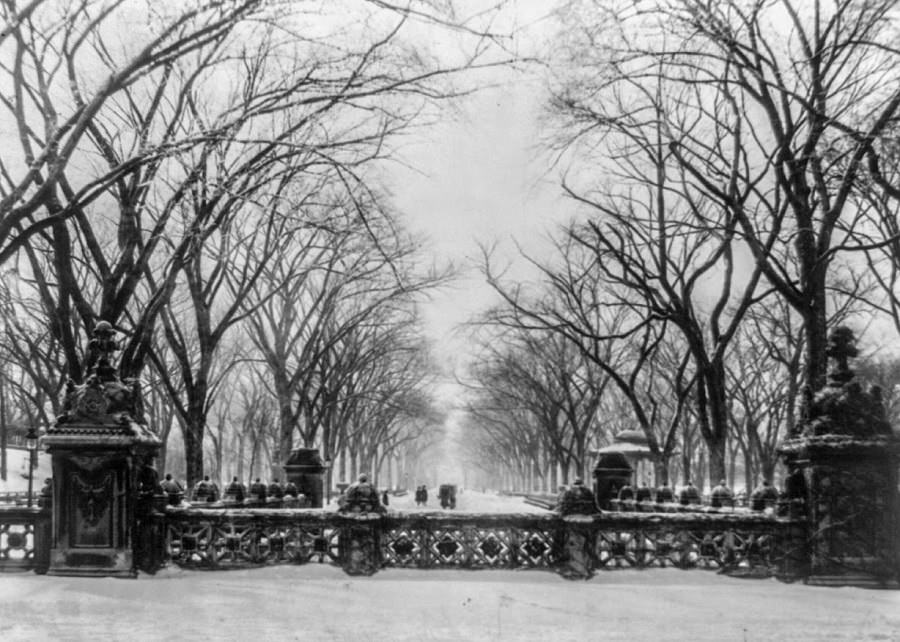
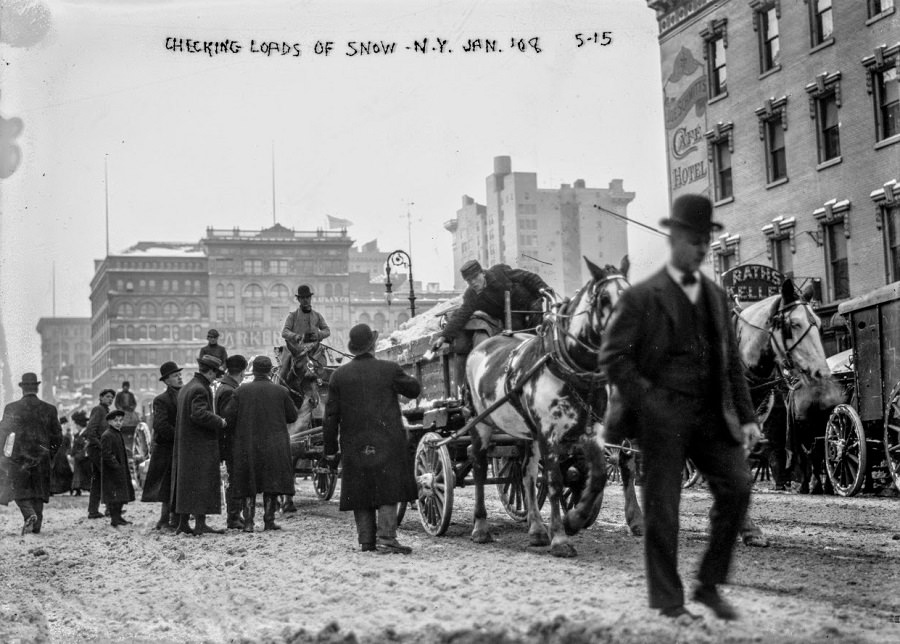
Central Park in 1905 was already 45 years old and deeply woven into the life of the city. It served wealthy carriage riders on its drives and working-class families on its lawns and meadows simultaneously. Snow removal was a labor-intensive operation handled almost entirely by hand — armies of workers with shovels cleared streets and sidewalks after each storm, piling snow onto horse-drawn carts and hauling it to the rivers.
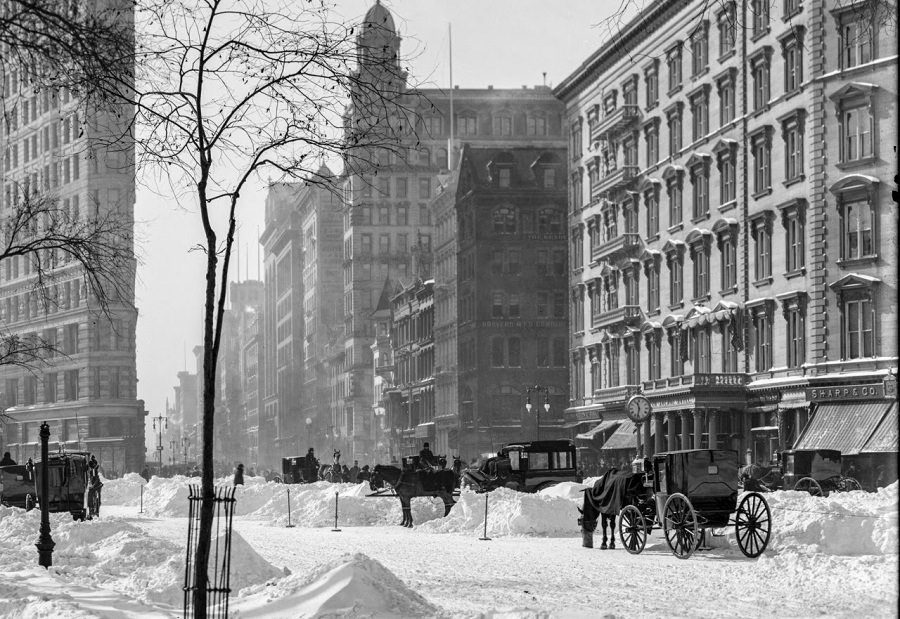
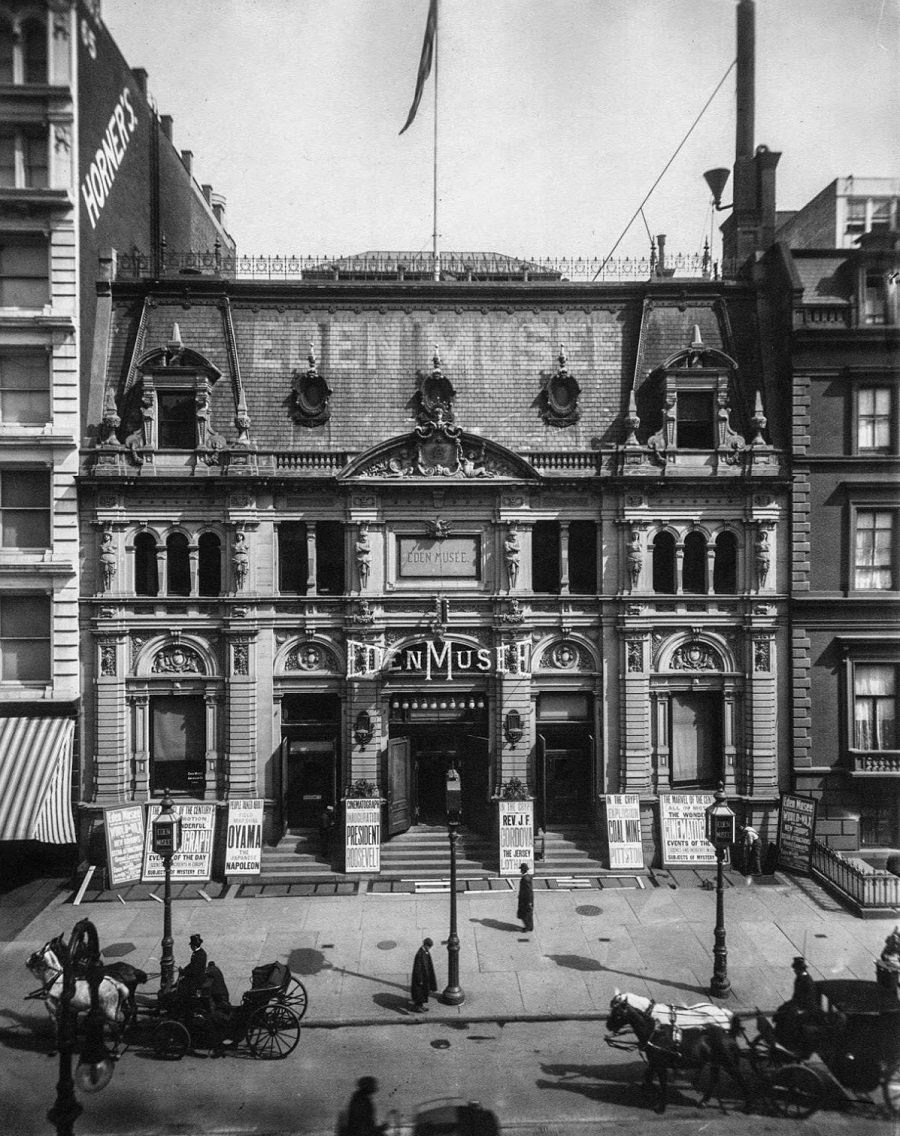
After a snowstorm, Fifth Avenue took on a quieter character — the usual traffic of carriages and pedestrians thinned out, and the white-covered street revealed the avenue’s grandeur in a different light. Nearby on 23rd Street, the Eden Musee was a well-established wax museum and entertainment venue that had operated since 1884. Its Chamber of Horrors and rotating exhibits of historical and celebrity figures drew steady crowds from every class of New Yorker, making it one of the most visited attractions in midtown Manhattan.




