In the 1920s, variety stages across Europe and beyond hosted jugglers, magicians, and contortionists of every kind. But one performer left audiences — and scientists — completely stumped. Her name was Thea Alba, a German entertainer who earned the title “The Woman With Ten Brains.” That name was not a publicity gimmick. It was a description of something her body could actually do.
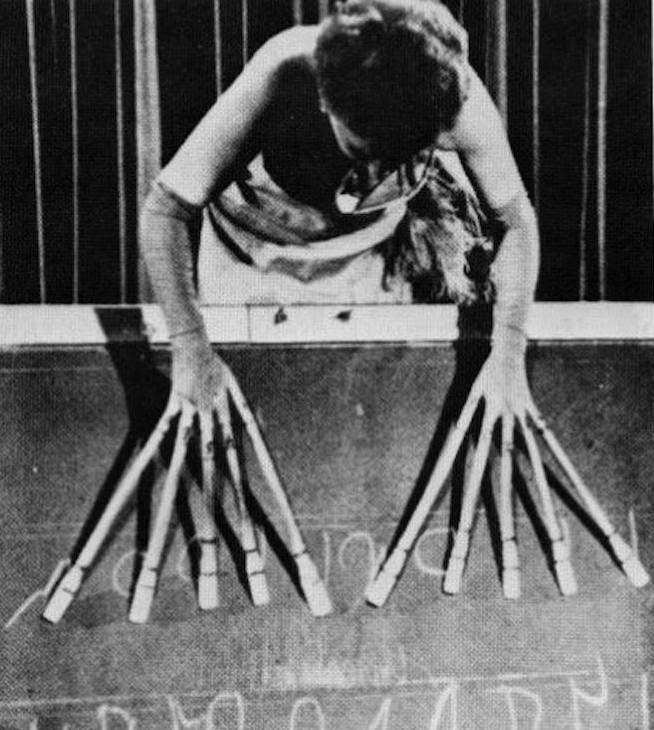
Thea’s signature act centered on her ability to control all ten fingers completely independently of one another. Most people struggle to write legibly with their non-dominant hand. Thea wrote clearly and accurately with every single finger at the same time. She used custom-made pen holders that allowed each finger to grip its own writing instrument. In a single, fluid motion, she produced ten separate lines of text — ten different names, ten different numbers — all at once. Each piece of writing was clean, readable, and distinct.
To understand why this was so remarkable, consider what writing actually demands from the brain. Forming letters requires constant decisions — the shape of each character, the spacing between words, the pressure applied to the page. Doing this with one hand already occupies significant mental resources. Thea’s brain managed ten separate streams of that process simultaneously, with no errors and no hesitation. Scientists and doctors who attended her performances examined her closely, looking for any sign of trickery. They found none. Her skill was entirely genuine.
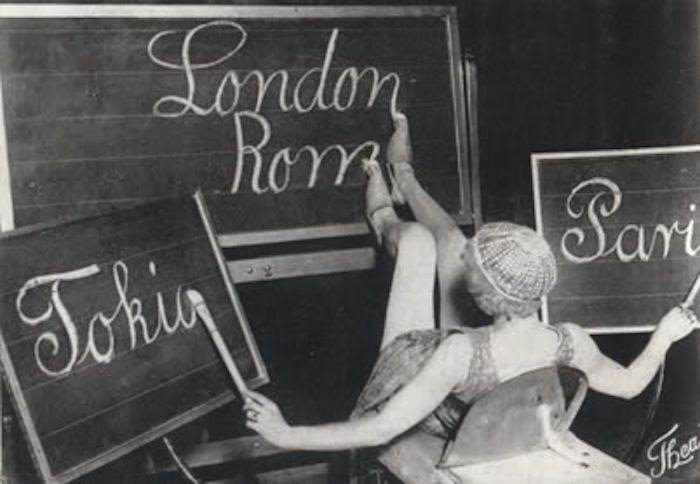
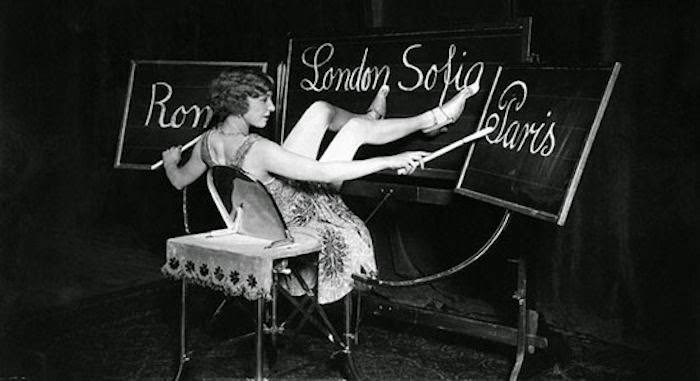
Thea did not stop at her hands. She expanded her act to involve her entire body as a writing instrument. Seated in a specially built chair that gave her access to multiple writing surfaces at once, she gripped pens between her toes and held another firmly between her teeth. Her hands, feet, and mouth moved in different directions across different surfaces, producing five or more separate pieces of legible text at the same time. Not a single line shook or trailed off. Each one read as clearly as if it had been written in a quiet room with full concentration.
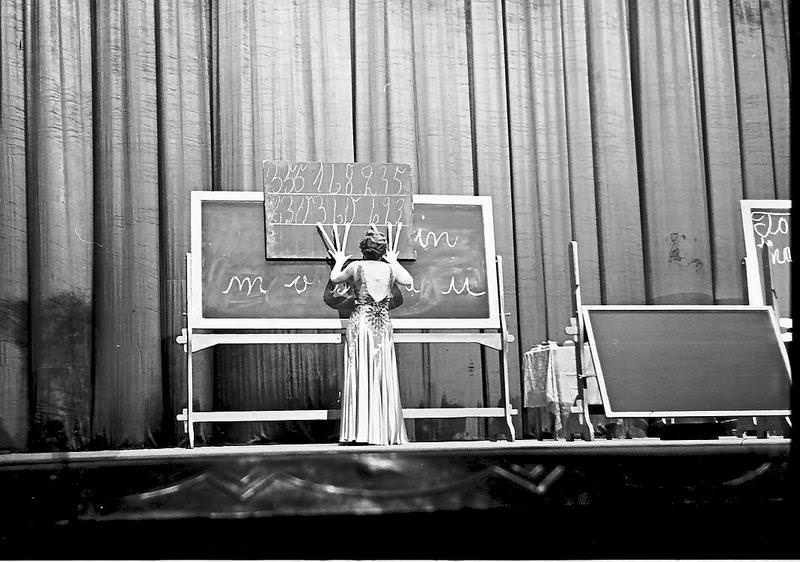
Then came the detail that elevated her act from physical spectacle to something closer to a neurological puzzle. Thea could write in three different languages at the exact same time. While her left hand produced text in German, her right hand wrote in English. Her feet or mouth, meanwhile, worked through French. This was not simply a matter of muscle memory or repetition. It meant that her brain was actively organizing grammar, vocabulary, and sentence structure in three distinct linguistic systems simultaneously — and keeping them from bleeding into one another. She never mixed the languages up. Not once, in front of a live audience.
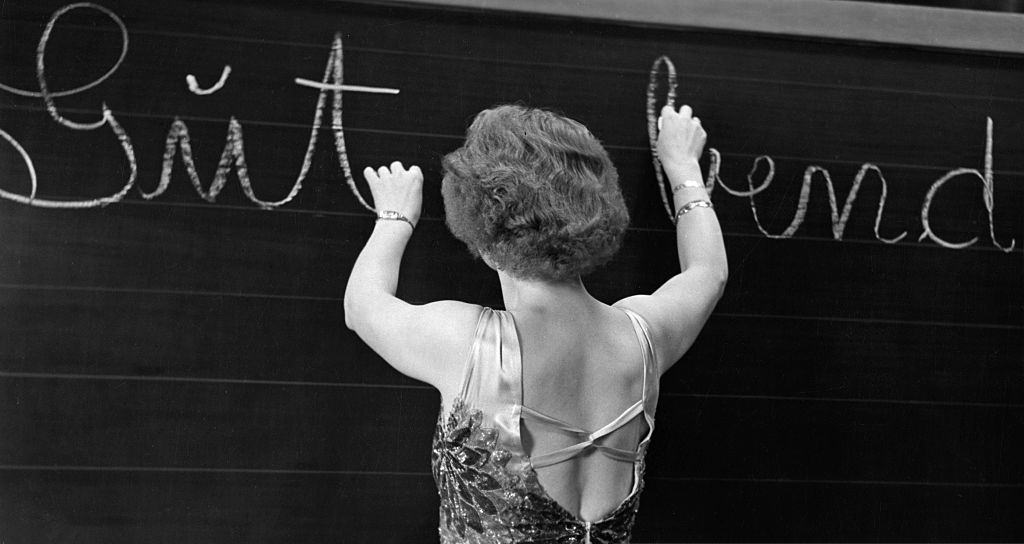
Thea trained for years to reach this level of control. The process required her to teach her mind to split its attention across multiple independent physical tasks without letting any one of them degrade in quality. During performances, she maintained a calm, composed expression while her body carried out what looked like organized chaos. Observers noted that she showed no visible strain. Her face remained still while her limbs moved in a flurry of coordinated motion across every available surface.
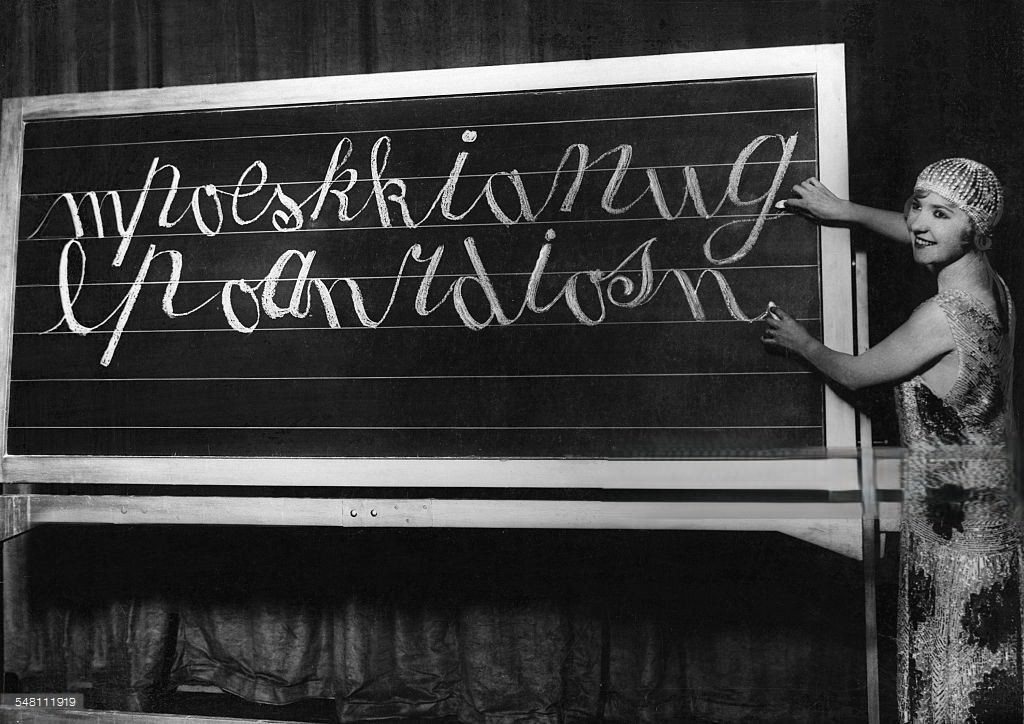
She also incorporated mirror writing into her shows — producing text in reverse, readable only when held up to a glass — to push the spectacle further. The medical community of the era was openly fascinated. The human brain was not yet fully understood in the 1920s, and Thea’s abilities challenged what physicians believed about the limits of divided attention and motor control. She was not simply an entertainer. To the scientists who watched her, she was a living demonstration that the brain’s capacity for parallel processing was far greater than anyone had mapped. Thea Alba performed at a time when the world was still figuring out what the human mind was capable of — and she kept exceeding every answer they came up with.