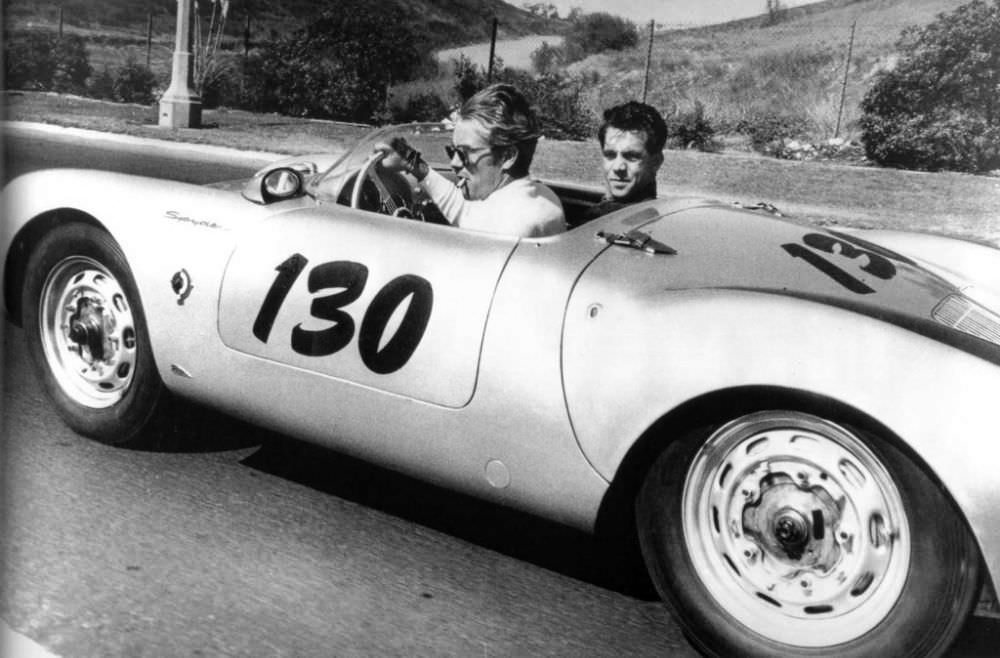
On the morning of September 30, 1955, James Dean climbed into a brand-new silver Porsche 550 Spyder and pointed it north toward Salinas, California. He was twenty-four years old, already a Hollywood star, and eager to compete in an upcoming auto rally. The car was a high-performance racing machine that Dean had nicknamed “Little Bastard.” He had the number 130 painted on the hood and both doors. He had owned it for only nine days.
Earlier that week, Dean had planned to tow the Porsche to the race behind his Ford station wagon. At the last minute, he changed his mind. He wanted to drive it himself to get a feel for how it handled on the open road. His mechanic, Rolf Wuetherich, took the passenger seat. Photographer Sanford Roth and Dean’s friend Bill Hickman followed behind in the station wagon. The group left Los Angeles in the early afternoon, heading up toward California’s central coast.
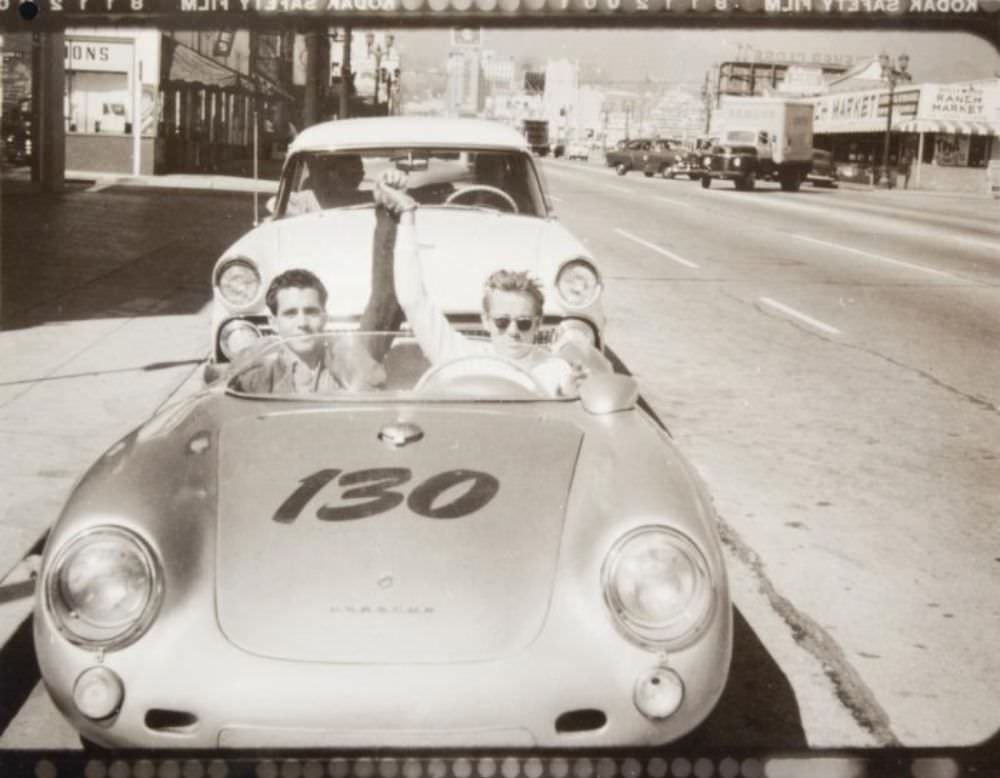
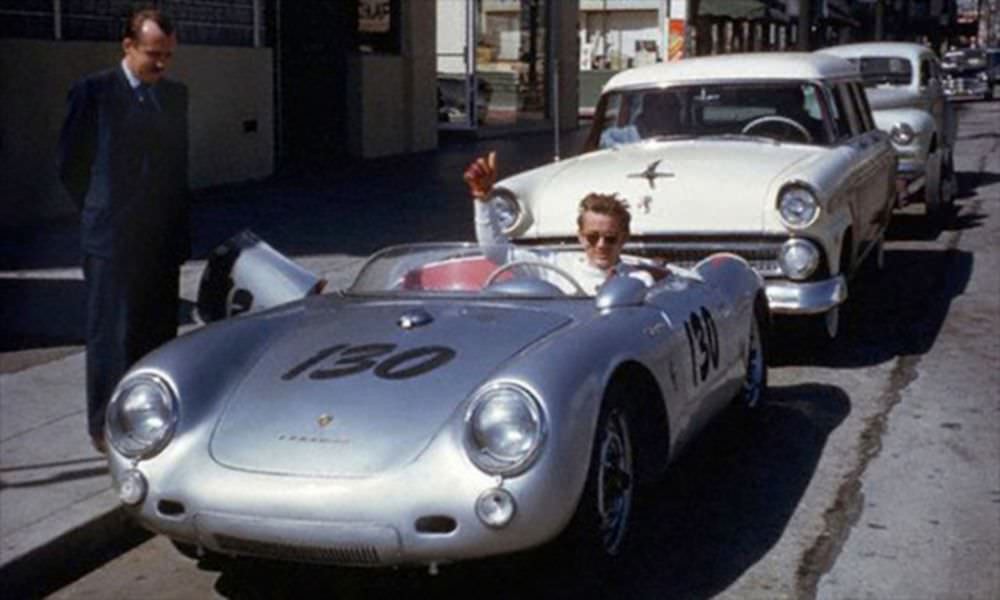
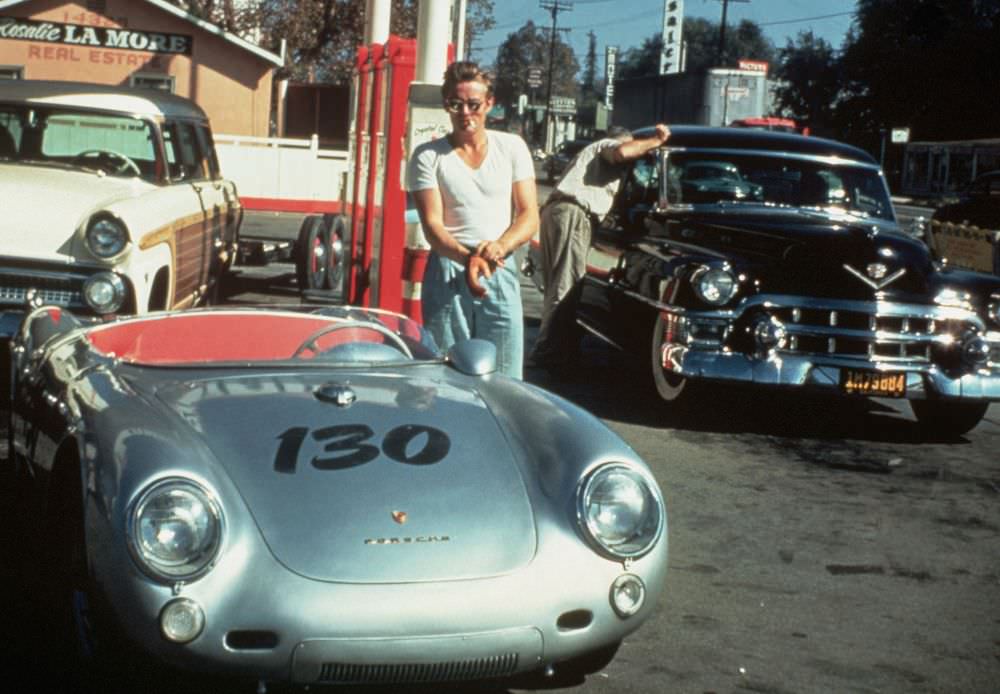
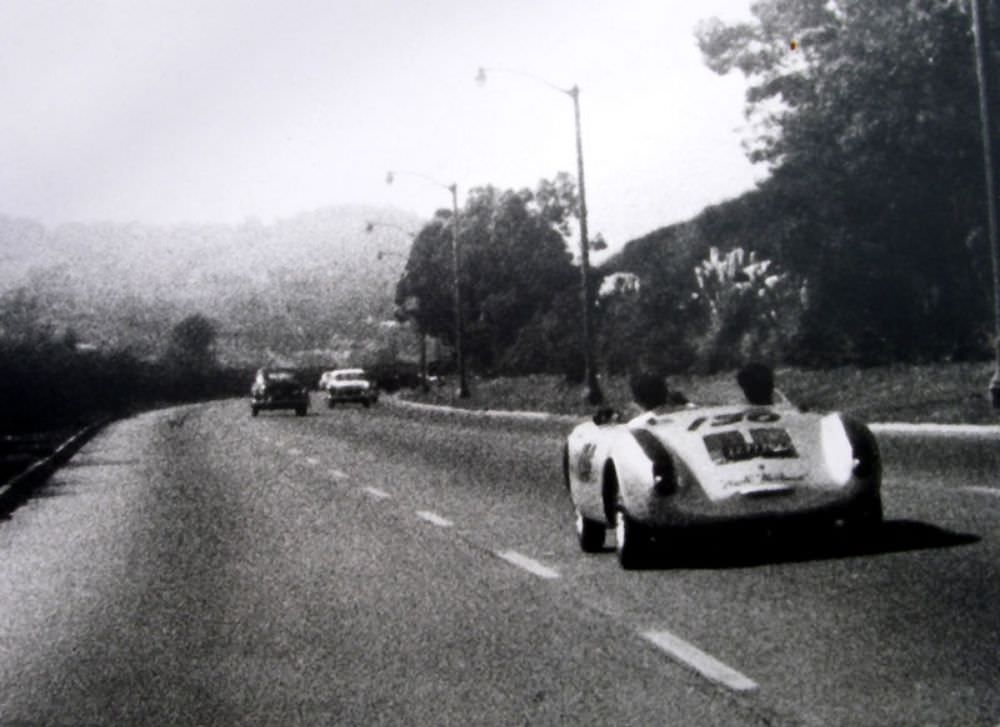
Sanford Roth kept his camera out for the entire trip. He photographed Dean at gas stations, during roadside stops, and behind the wheel as the miles rolled by. The images from that afternoon show a relaxed but focused young man. Dean wore a light-colored jacket and dark trousers. He chatted with Wuetherich and checked on the car’s performance with the kind of attention a driver gives a machine he’s still getting to know.
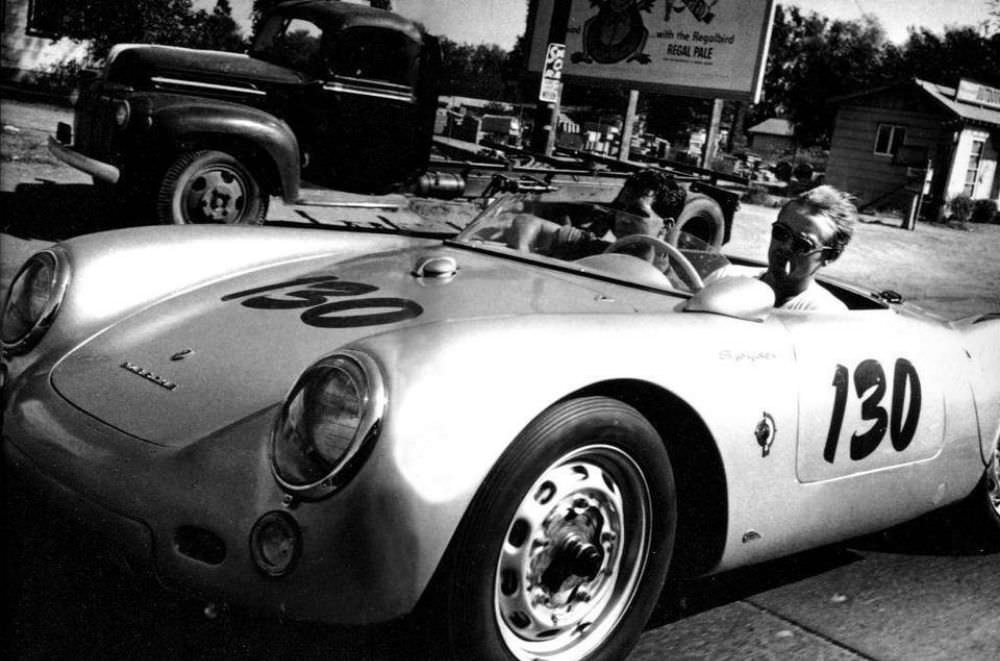
The drive north had an easy, road-trip quality in those early hours. Dean was in his element — a fast car, open highway, and a race waiting at the other end. The silver Porsche was nearly invisible against the pale California landscape, low to the ground and built for speed. Roth captured the pair as they moved through suburban streets before reaching the open road, the camera preserving moments that neither man knew would be among the last.
Around 3:30 p.m., near the town of Bakersfield, a California Highway Patrol officer pulled the Porsche over for speeding. Roth was there with his camera for that, too. The photographs from the traffic stop show Dean standing by the roadside, looking mildly annoyed at the interruption. He signed the ticket, tucked it away, and got back behind the wheel. The group pressed on toward the junction of Highway 466 and Highway 41.
As the afternoon wore on, some of Roth’s most debated photographs were taken at a gas station along the route. Dean stands beside the Porsche in what many have called the last confirmed image of him alive. The station stop was routine — fuel, a stretch, a few words between the group — but the photographs taken there carry a weight that only hindsight gives them.
By 5:30 p.m., the sun had dropped low enough to cast long shadows across the flat highway. Dean was driving westbound on Highway 466, now known as State Route 46. The Porsche moved quickly across the dry landscape. Traveling eastbound on the same road was a 1950 Ford Tudor driven by Donald Turnupseed, a twenty-three-year-old college student. As the two vehicles neared the junction with Highway 41, Turnupseed began a left turn. He did not see the low, silver sports car coming from the opposite direction.
The Ford moved directly into the Porsche’s path. Dean reportedly told Wuetherich that the other driver had to see them. Neither car had time to stop. The Porsche slammed nearly head-on into the much heavier Ford. The impact crumpled the lightweight sports car almost instantly. It spun off the road and came to rest near a telephone pole in a cloud of dust and debris. Turnupseed walked away with minor scratches and a bruised nose. Wuetherich was thrown clear of the Porsche and survived, though he suffered a broken leg and serious head injuries. James Dean remained trapped inside. The steering wheel and dashboard had crushed his chest and neck. He was pronounced dead before the ambulance reached the hospital in Paso Robles.
Roth and Hickman arrived at the crash scene just minutes after the impact. Roth began photographing immediately. The images he captured show the front end of the Porsche completely flattened, debris scattered across the dry grass, and the Ford Tudor sitting on the road with heavy damage to its front right side. Emergency workers later used tools to extract Dean from the wreckage. His body was eventually returned to his hometown of Fairmount, Indiana, for burial.
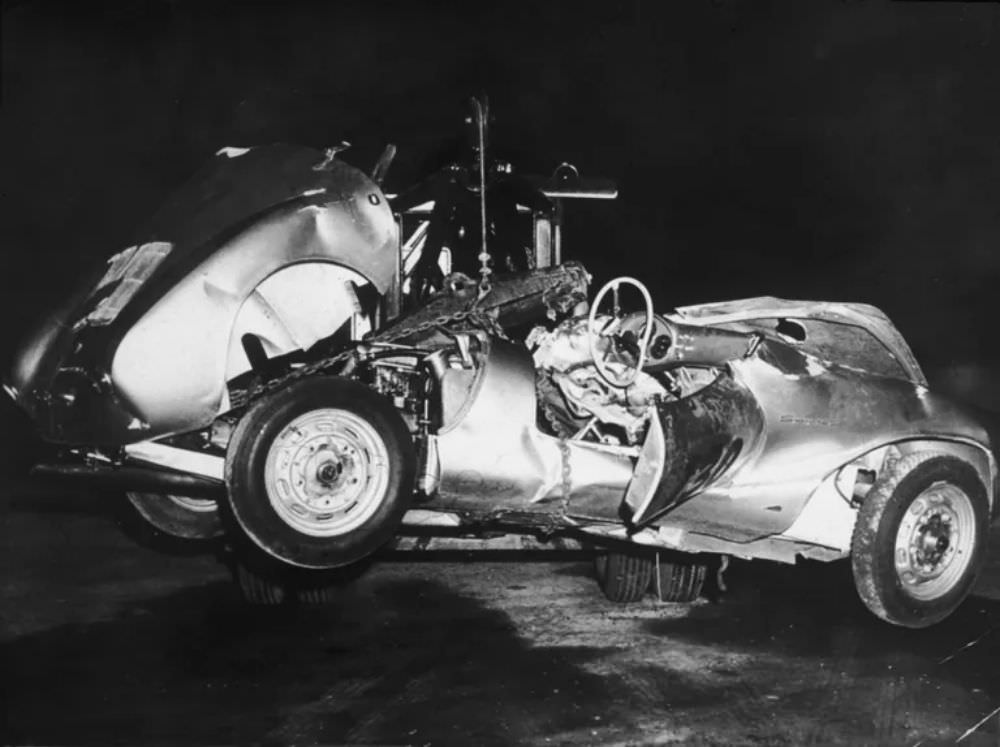
The photographs Sanford Roth took that day form a complete and unflinching record of James Dean’s final hours. They begin with a young man grinning behind the wheel of a car he loved and end with a tangle of silver metal being hauled away from a California highway. No staged shoot or studio portrait captured Dean as honestly as these roadside images did. They are a straight-line document of one afternoon — ordinary at the start, catastrophic at the end.