
Mexico at the turn of the 20th century was a country of sharp contrasts. Magnificent stone churches, ancient pyramids, and bustling city plazas existed alongside deep rural poverty and political tension. These photographs, taken between 1900 and the early 1920s, capture everyday Mexican life during one of the most turbulent periods in the country’s modern history.
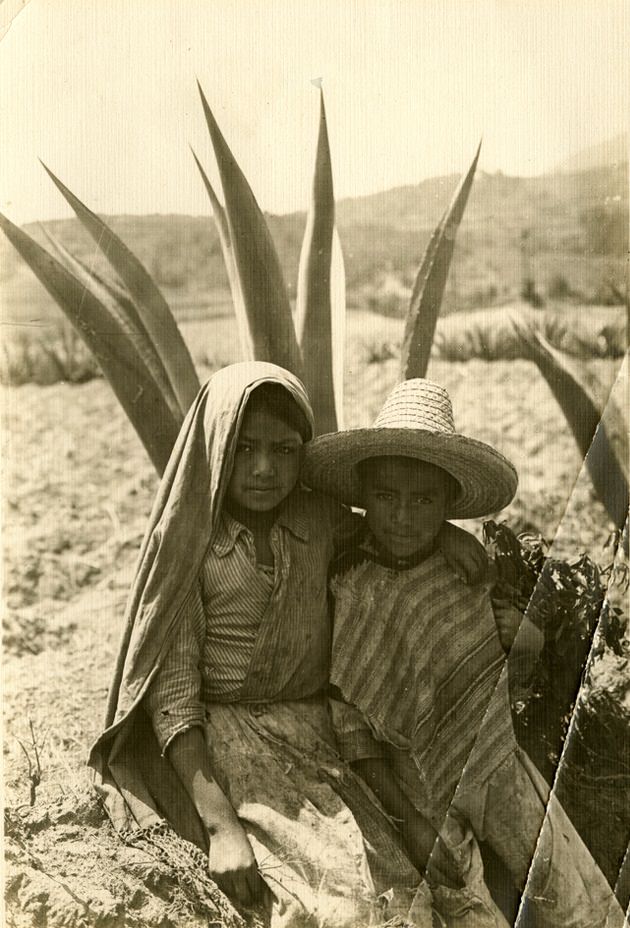
For most of this period, Mexico was ruled by President Porfirio Díaz, who had held power since 1876. His government favored the wealthy elite and foreign investors while largely ignoring the rural poor and indigenous communities. Land was concentrated in the hands of a small number of powerful landowners, and laborers had little legal protection. These photographs of indigenous children from 1907 reflect lives that existed almost entirely outside the benefits of Díaz’s modernization programs.
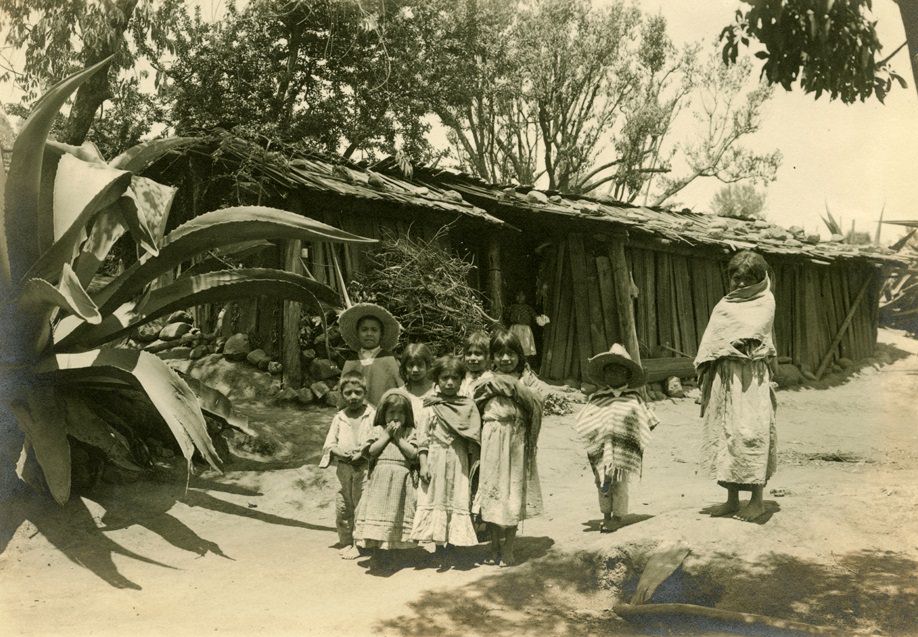
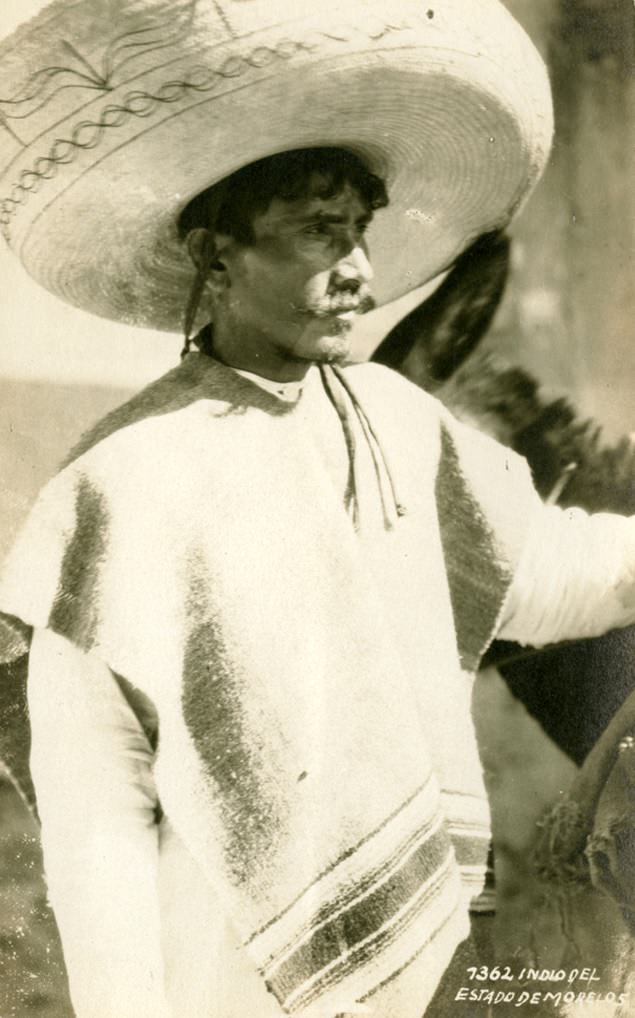
The state of Morelos, south of Mexico City, was home to large sugarcane plantations that depended heavily on indigenous labor. By 1908, conditions there were especially grim. The global Panic of 1907 had slashed demand for Mexican exports — copper, silver, gold, and zinc — sending shockwaves through the economy. The Díaz regime responded by cutting imports of horses, mules, mining machinery, and railroad supplies, deepening an economic depression that lasted through 1908 and 1909. Rural communities felt this hardest.
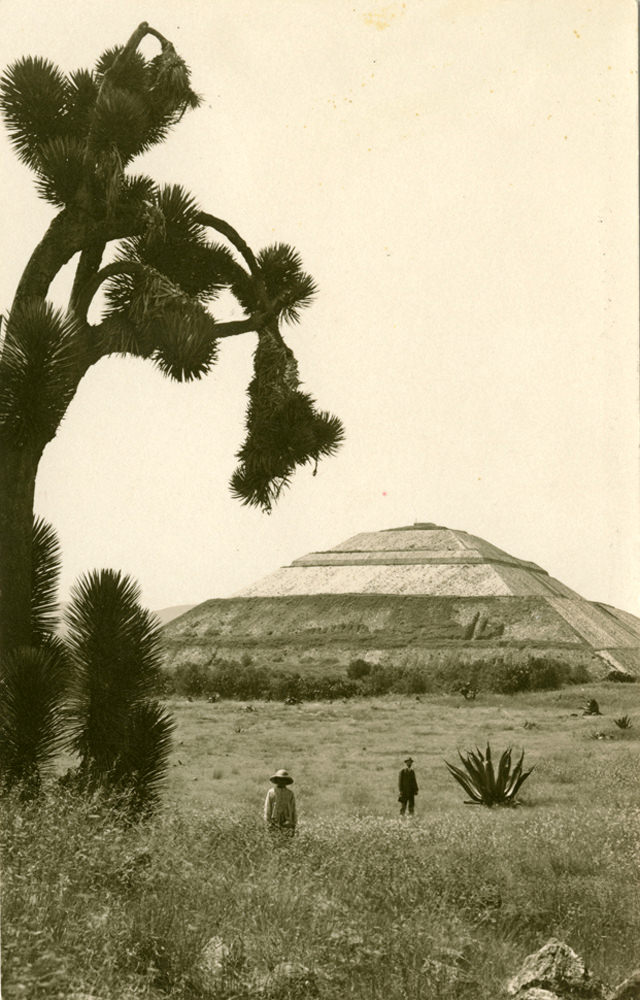
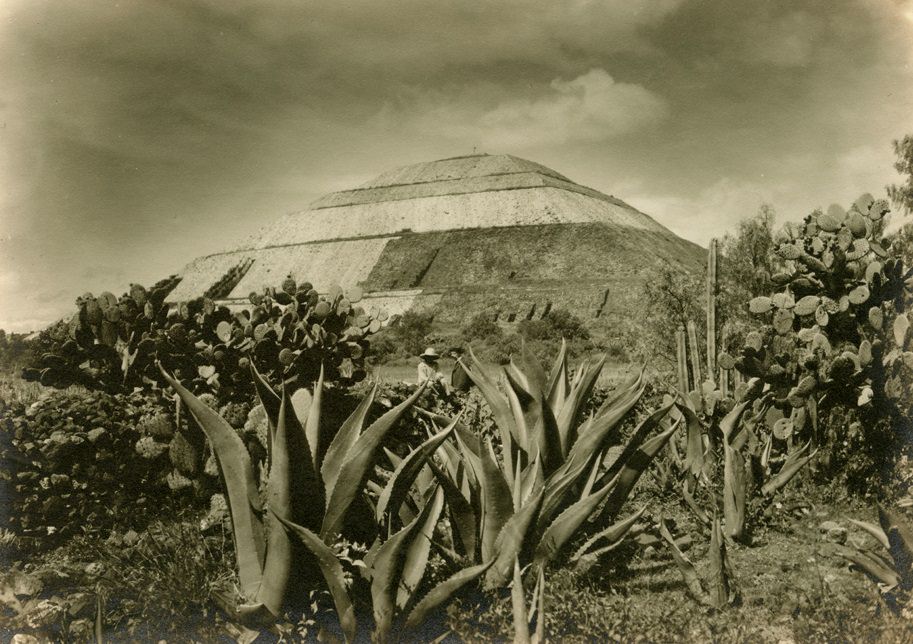
While political tension simmered, Mexico’s ancient monuments stood as reminders of civilizations that had risen and fallen long before. The Pyramid of the Sun at Teotihuacan, photographed here in 1904, is one of the largest structures in the ancient Americas. It was built around the first or second century AD by a civilization that archaeologists still do not fully understand. By the early 1900s, the site was already drawing visitors and researchers from around the world.
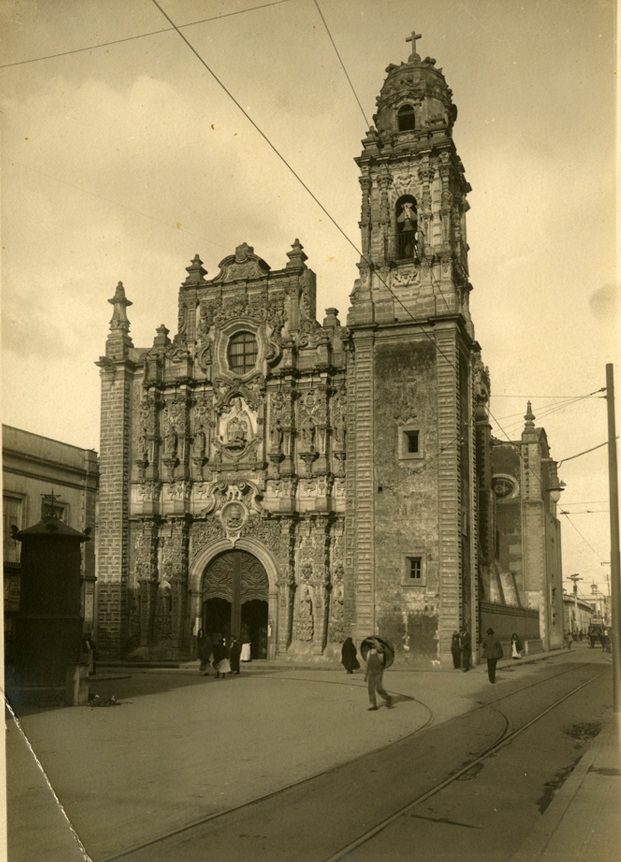
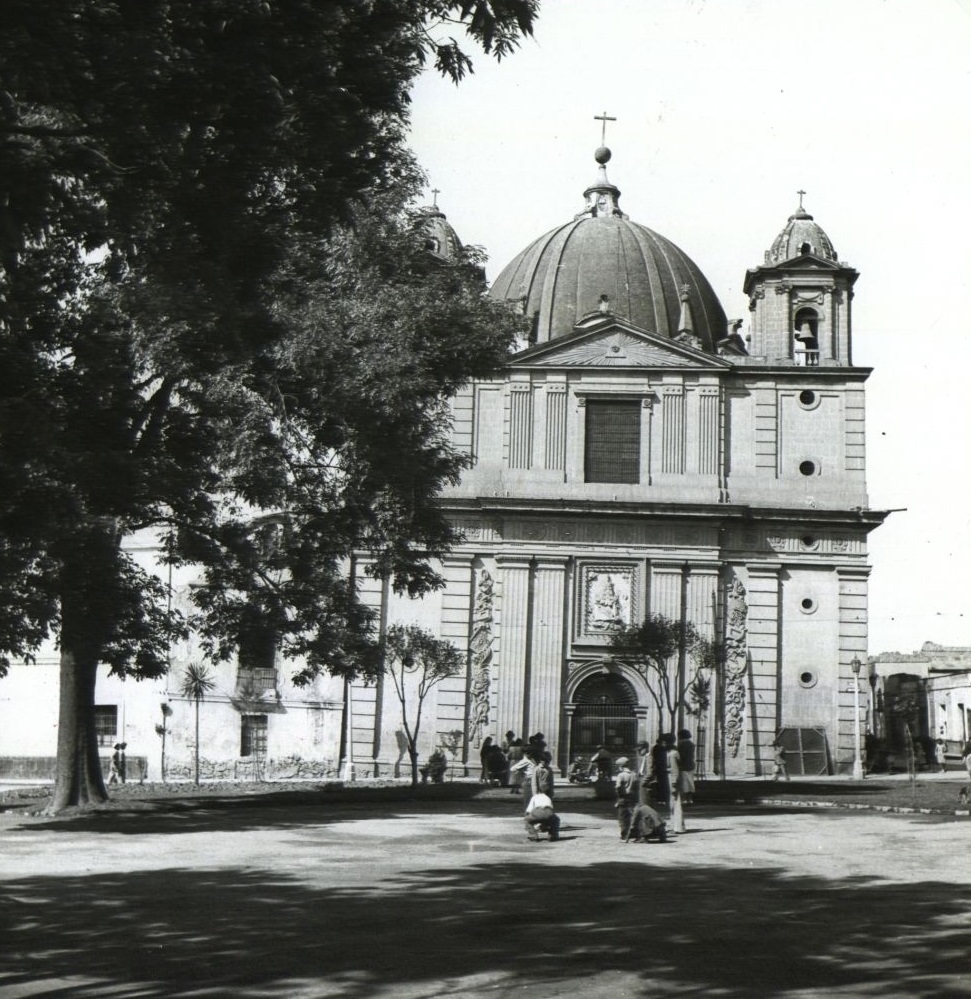
Mexico City itself was a city of dense history layered over even older foundations. The colonial-era church of La Santísima, completed in the 18th century, stood just blocks from the main plaza in the heart of the capital.
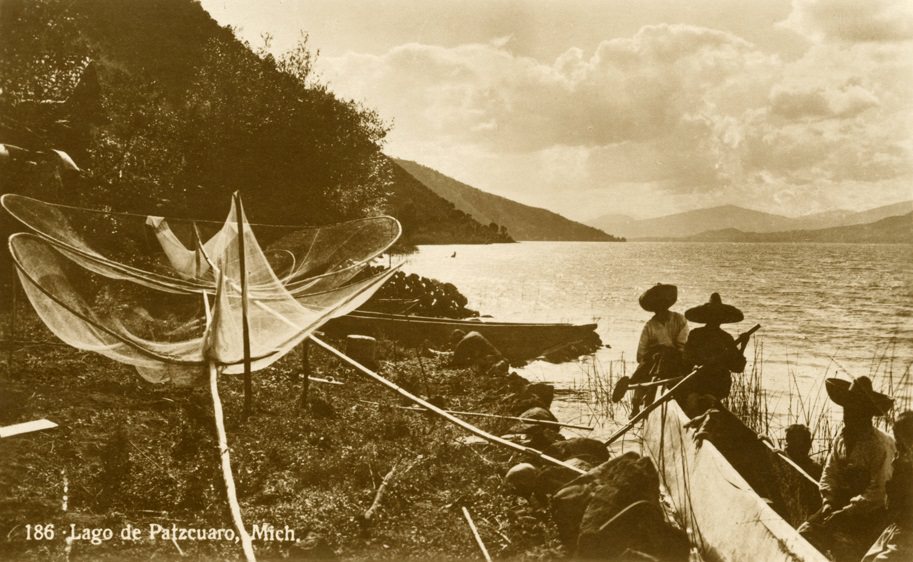
Outside the capital, Mexico’s landscape was equally striking. Lake Pátzcuaro in the state of Michoacán was home to the Purépecha people, who had famously resisted Aztec conquest centuries earlier. By 1905, their communities still fished the lake using traditional butterfly nets, a practice that continued well into the 20th century.
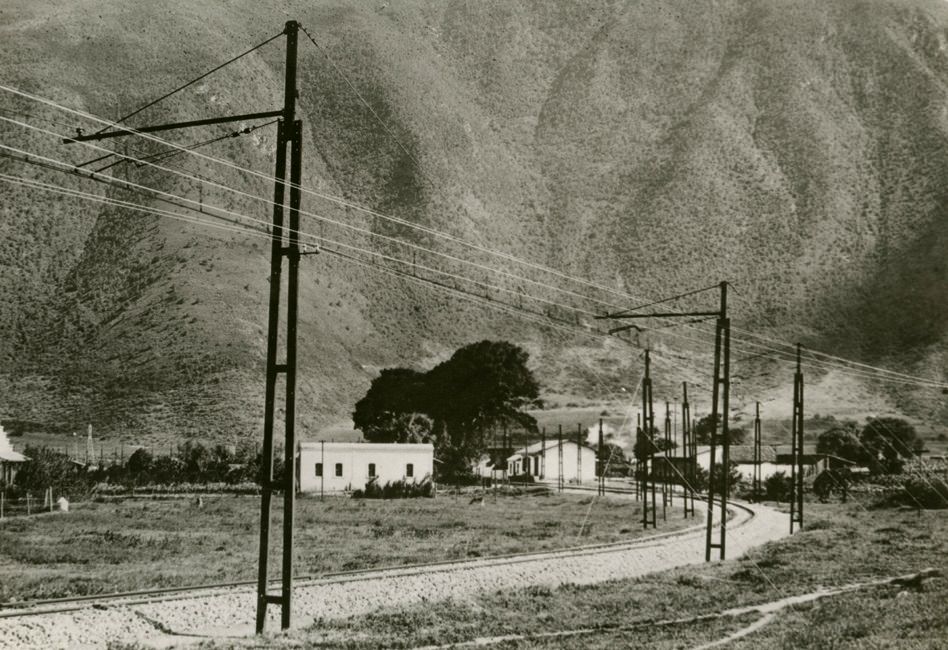
The town of Maltrata in Veracruz sat along the route of the Ferrocarril Mexicano, one of Mexico’s earliest railroads, which connected the port of Veracruz to Mexico City through dramatic mountain terrain. Rail expansion was one of the signature projects of the Díaz era, funded largely by foreign capital. It moved goods and people faster than ever before, but the benefits flowed mostly to large landowners and export businesses rather than to the communities the trains passed through.
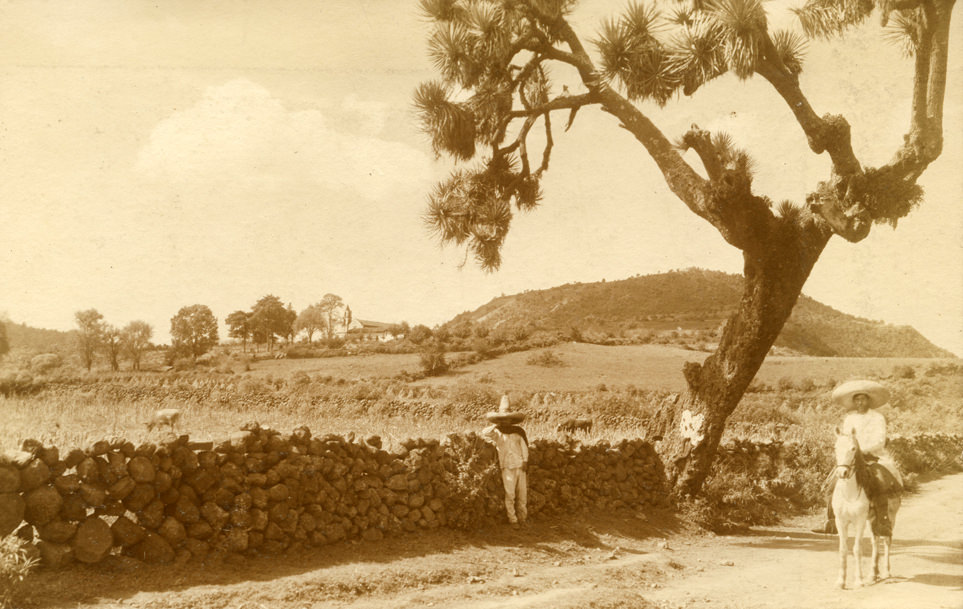
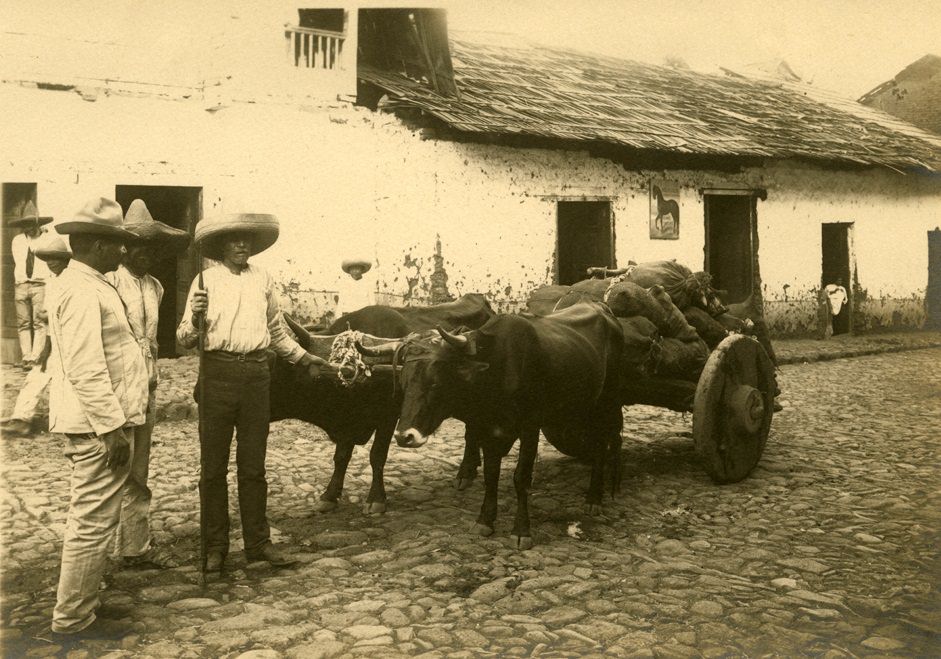
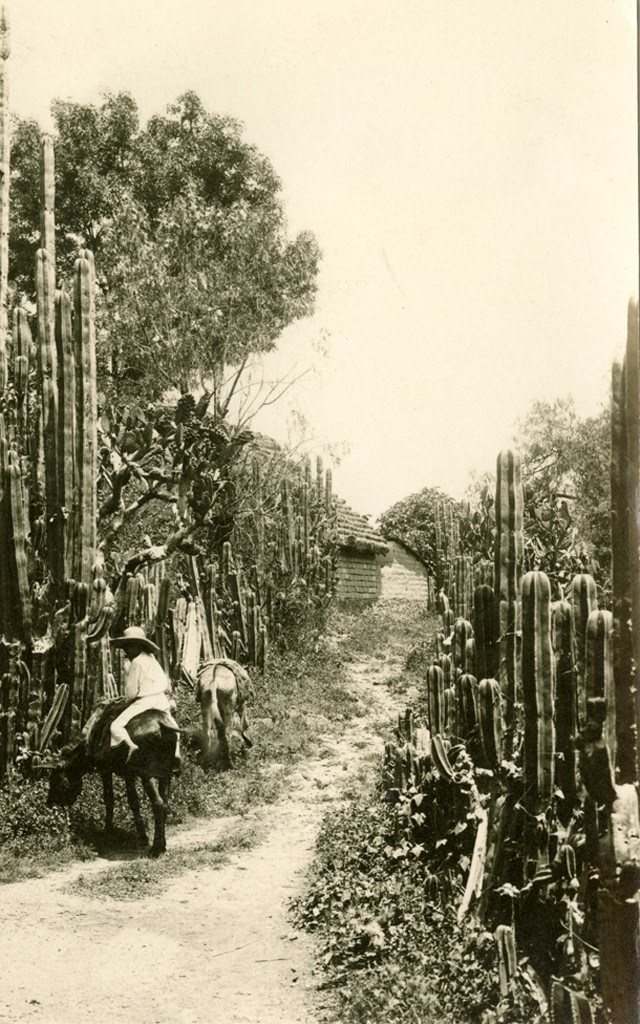
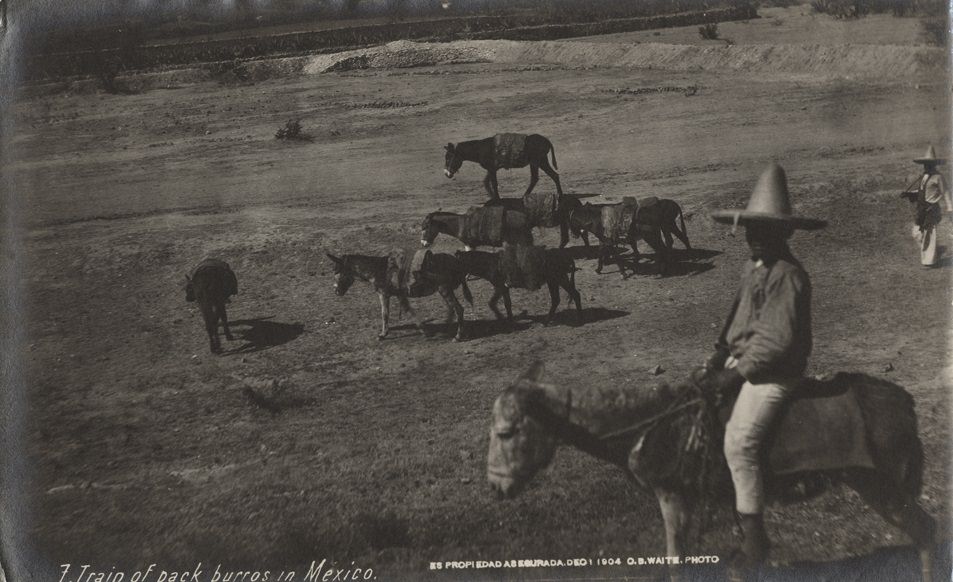
Working animals were essential to daily life across Mexico. Oxen pulled plows and carts through fields, while mules and burros carried goods along mountain trails that no wagon could navigate. This dependence on animals was one reason the Díaz government’s cut in mule and horse imports during the 1908–1909 depression hit rural workers so directly.
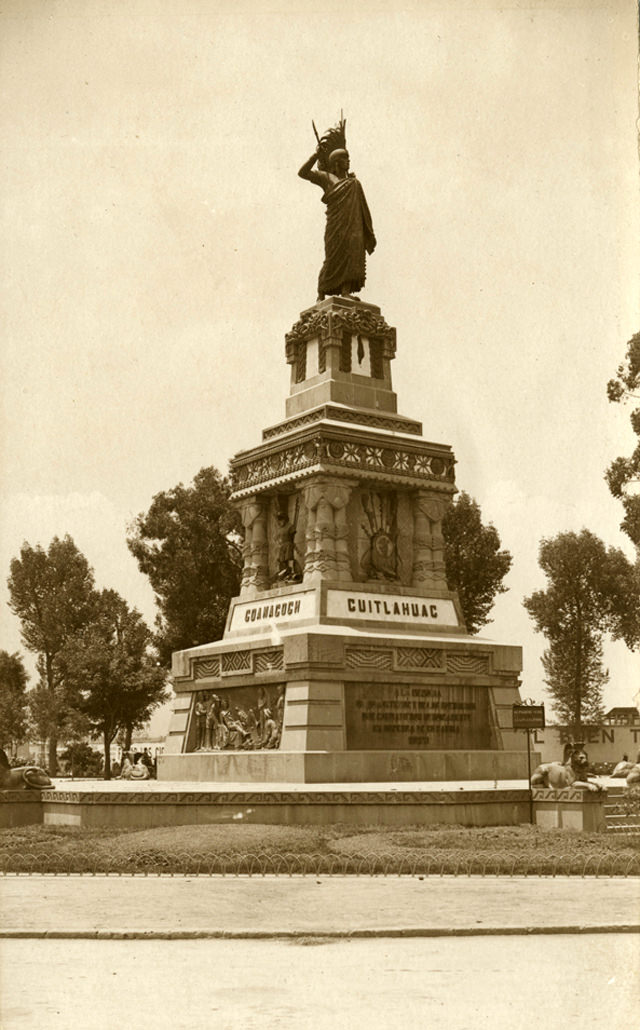
Mexico City’s public spaces displayed a mix of colonial architecture and newer monuments built to project national pride. The Monument to Cuauhtémoc, the last Aztec emperor who resisted Spanish conquest, was erected on the Paseo de la Reforma in 1887. It stood as a symbol of indigenous heritage at a time when the government’s policies were doing little to protect the people descended from that heritage.
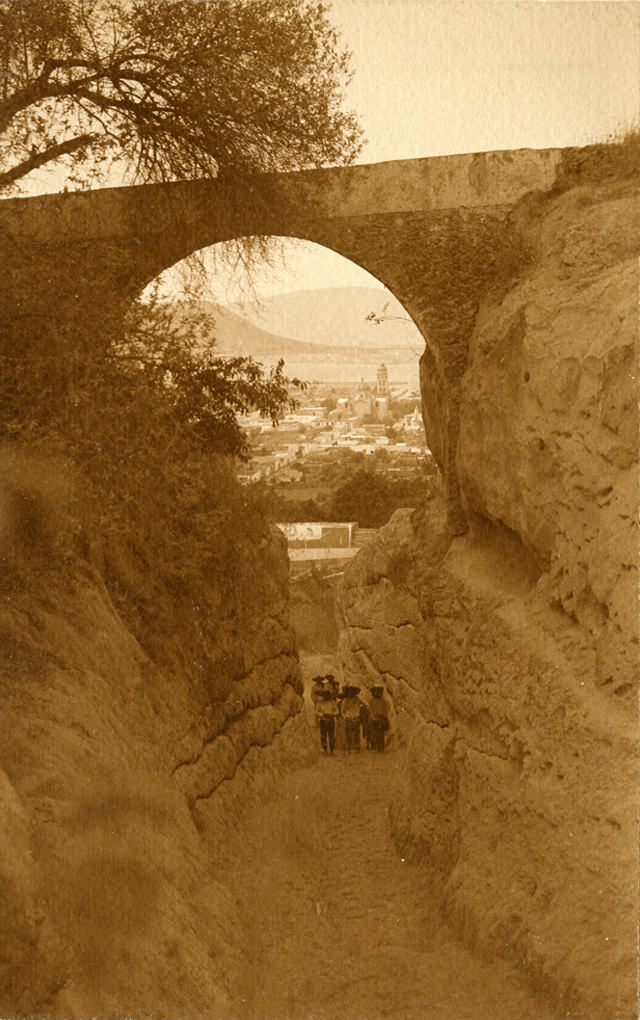
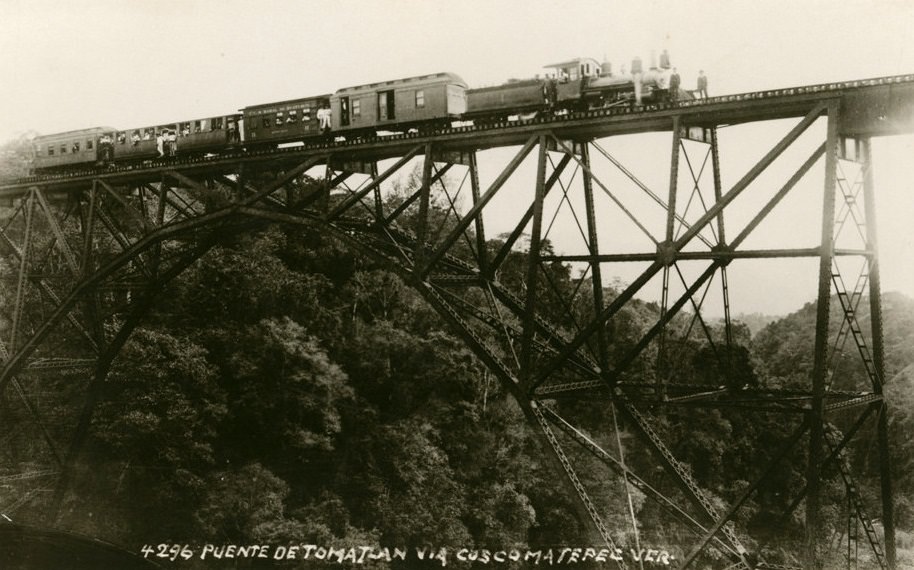
Infrastructure across rural Mexico was basic at best. Bridges like the one at Tomatlan in Veracruz were critical links across river gorges that would otherwise cut communities off entirely. Many of these structures were built during the colonial era and were still in use a century later.
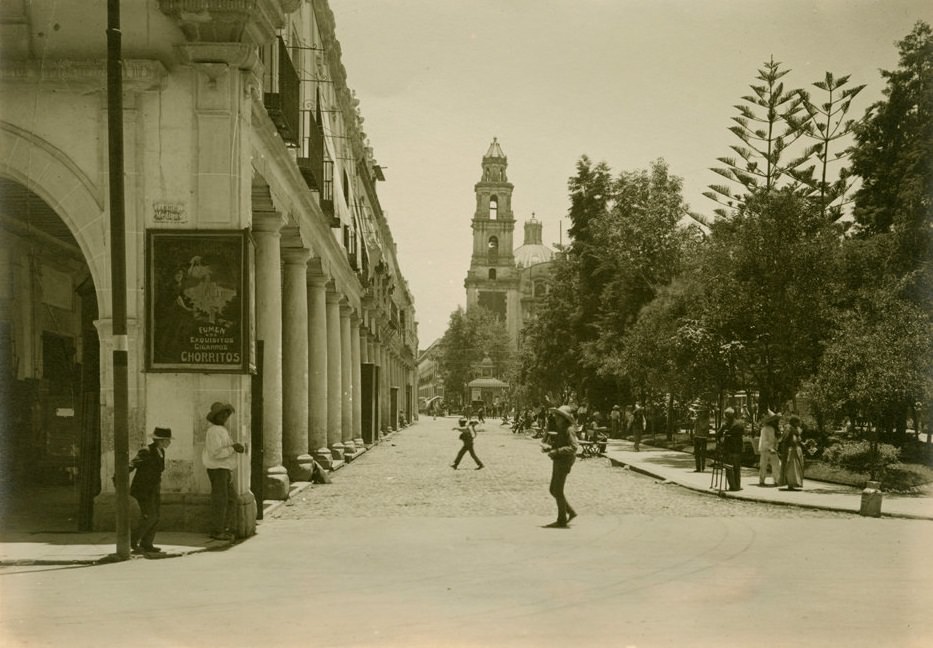
The church of Santo Domingo in Mexico City was one of the oldest and most ornate in the country. Built by the Dominican order in the 16th century and rebuilt after flooding in the 17th, it anchored a plaza that had long served as a center of public life. By the early 1900s, that plaza was still surrounded by vendors, scribes, and daily street activity.
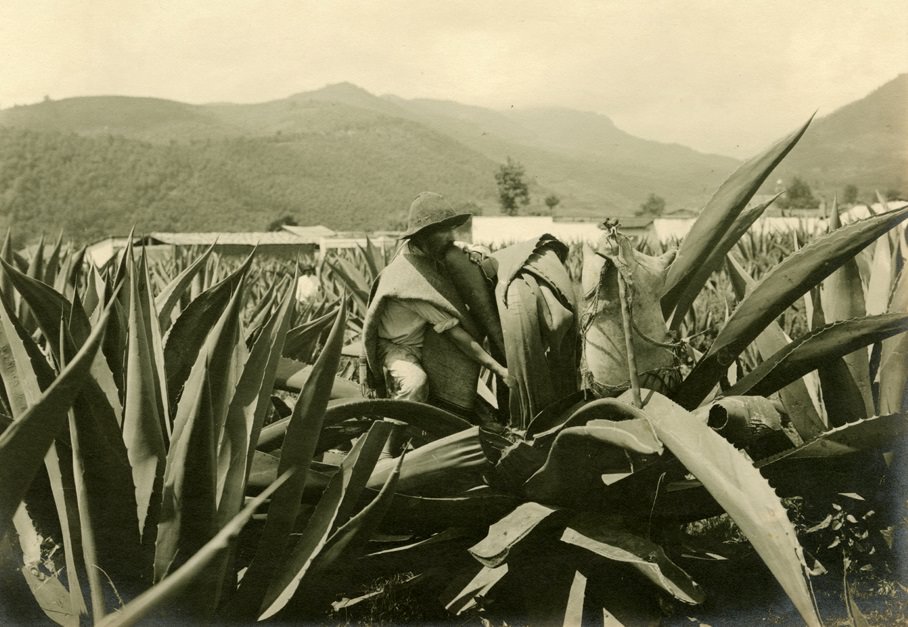
A tlachiquero was a worker who harvested aguamiel — the sweet sap of the maguey plant — used to produce pulque, an alcoholic drink that had been consumed in Mexico since pre-Columbian times. The job required puncturing the maguey’s central cavity daily and extracting the liquid using a long gourd called an acocote. Pulque was a staple drink for working-class Mexicans and remained popular well into the 20th century.
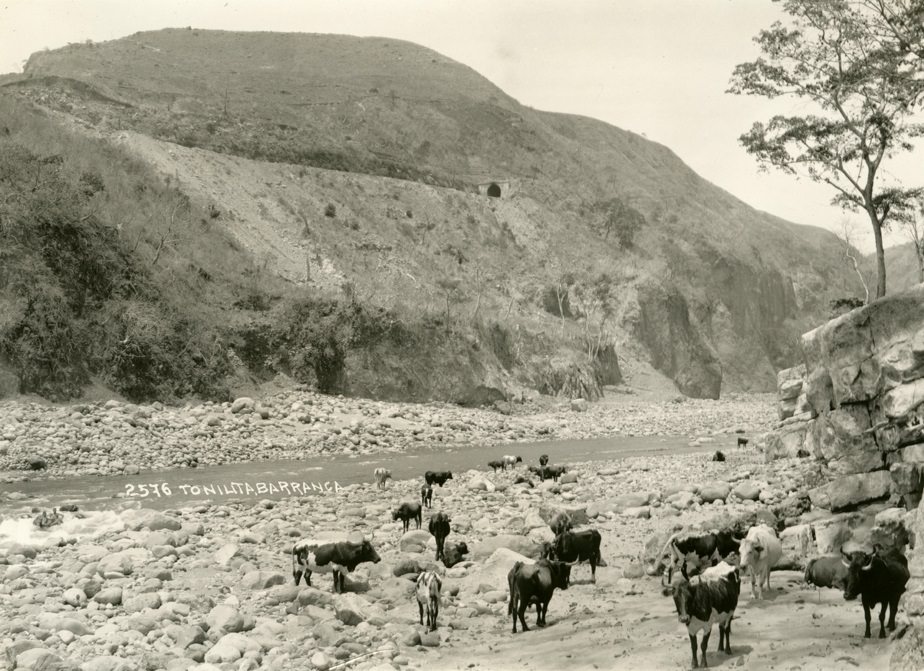
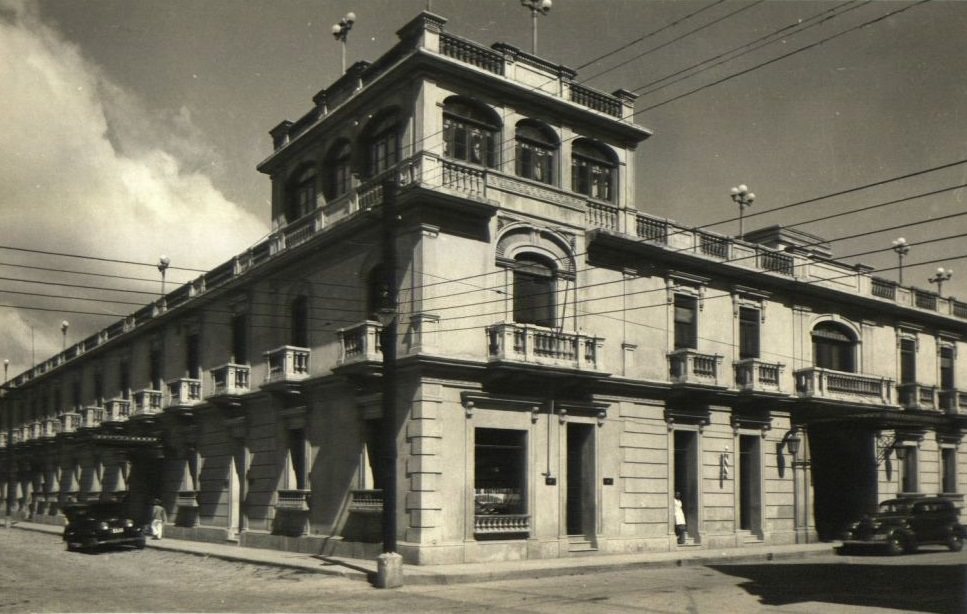
Rail travel changed the pace of Mexican commerce dramatically in the early 1900s. Trains connected cities that had previously been days apart by horse or mule. Near the Hotel Europa, trains arrived regularly, bringing passengers, mail, and goods from across the country. The railroad network was one of the few parts of the Díaz-era economy that directly touched people at multiple income levels.
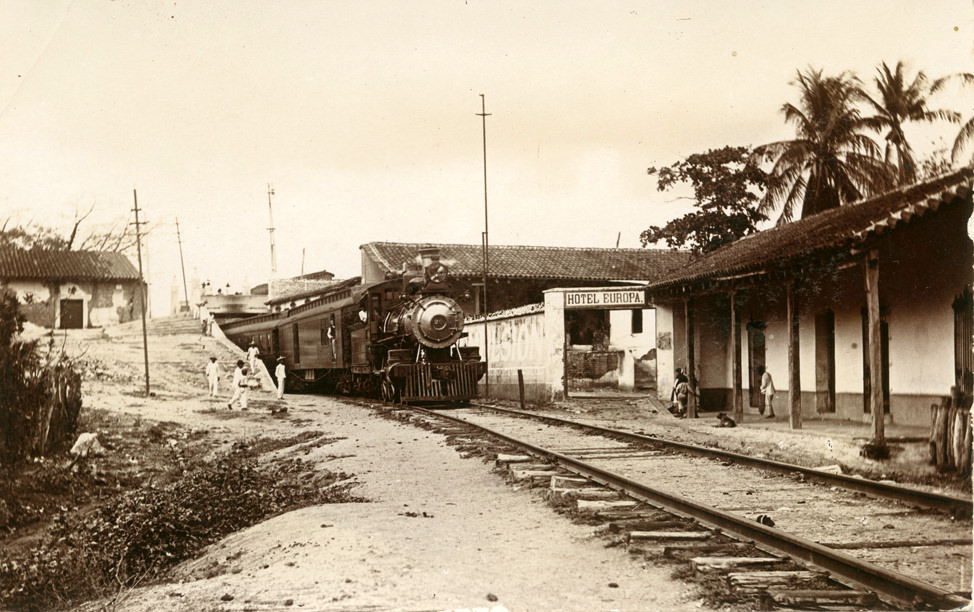
Train stops were economic opportunities. Vendors lined the tracks at stations along the Ferrocarril Mexicano route, selling food, drinks, and crafts to passengers through the windows. These informal markets were a reliable source of income for local communities and a defining feature of rail travel in Mexico during this era.
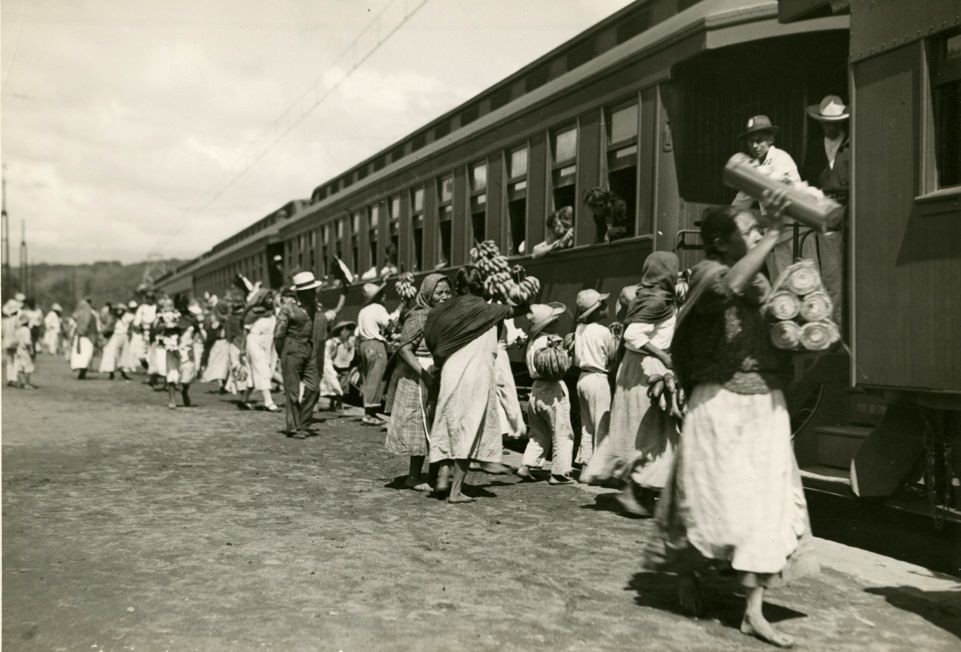
The port city of Veracruz was Mexico’s most important gateway to the Atlantic world. Its central plaza was a social hub, lined with cafés and arcades where residents gathered in the evenings. The city’s tropical heat and its role in trade gave it a distinct character — more cosmopolitan and commercially active than many inland towns.
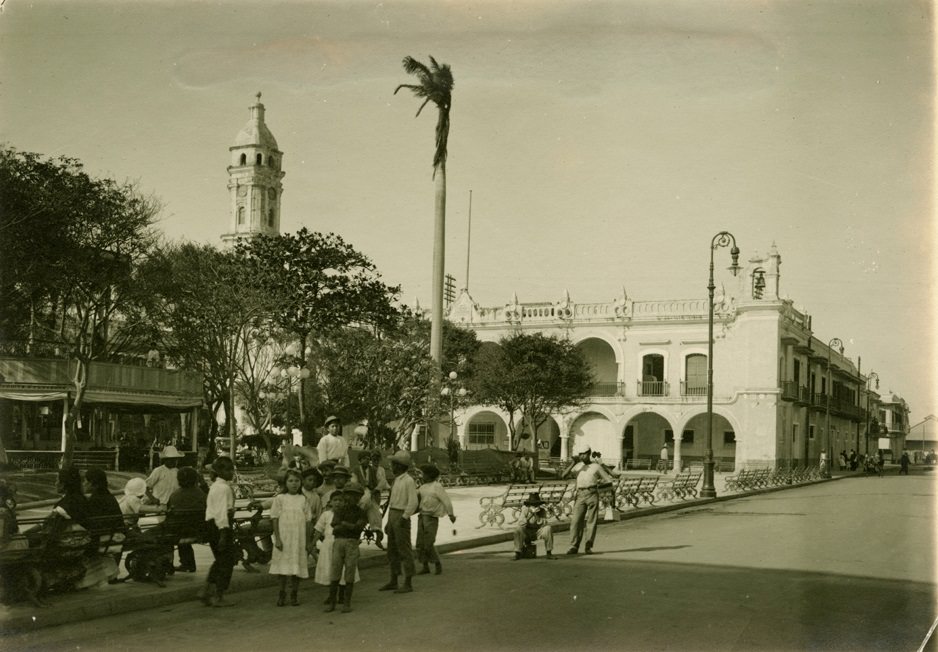
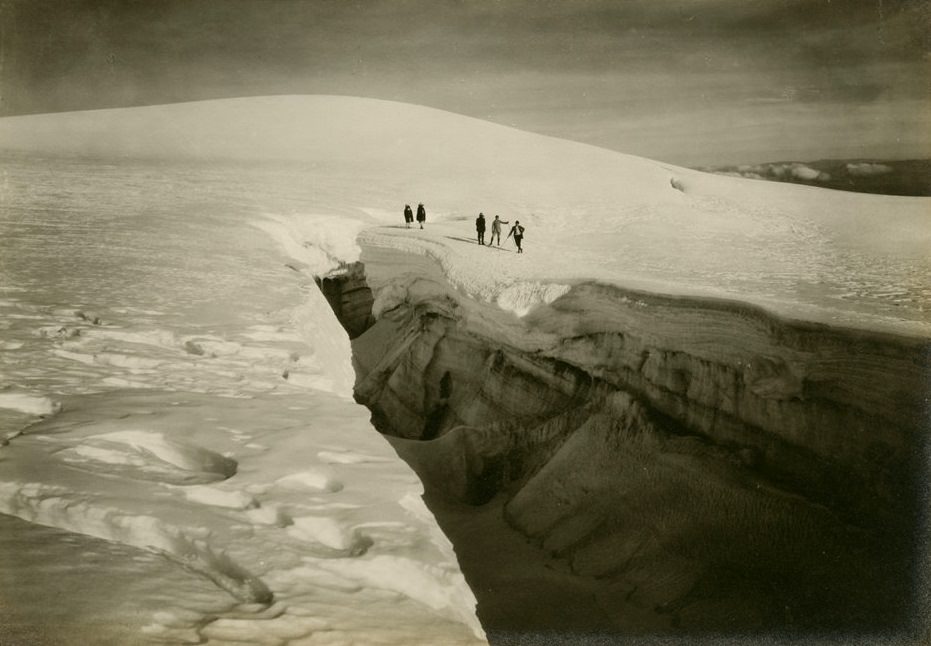
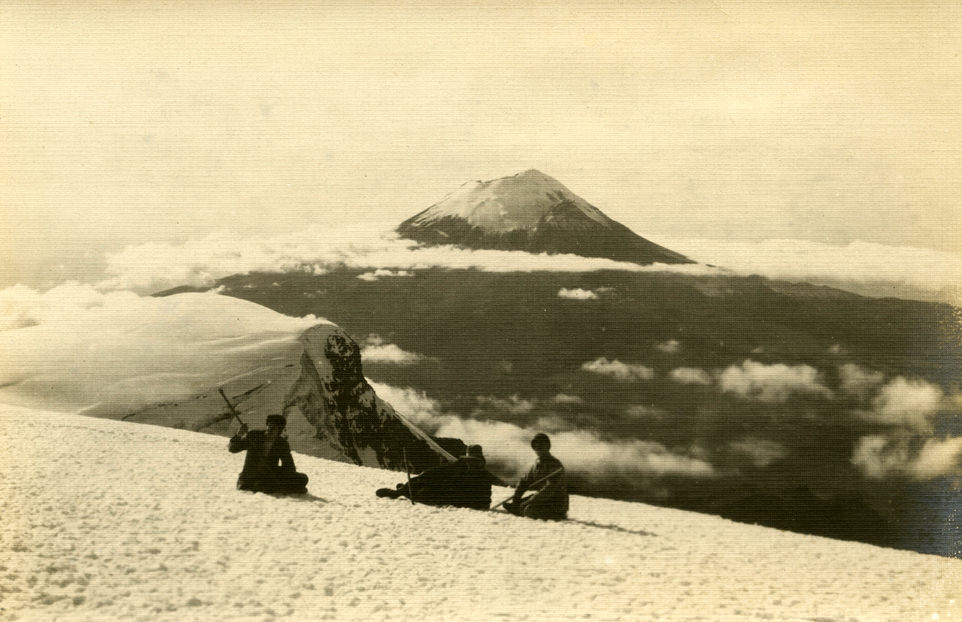
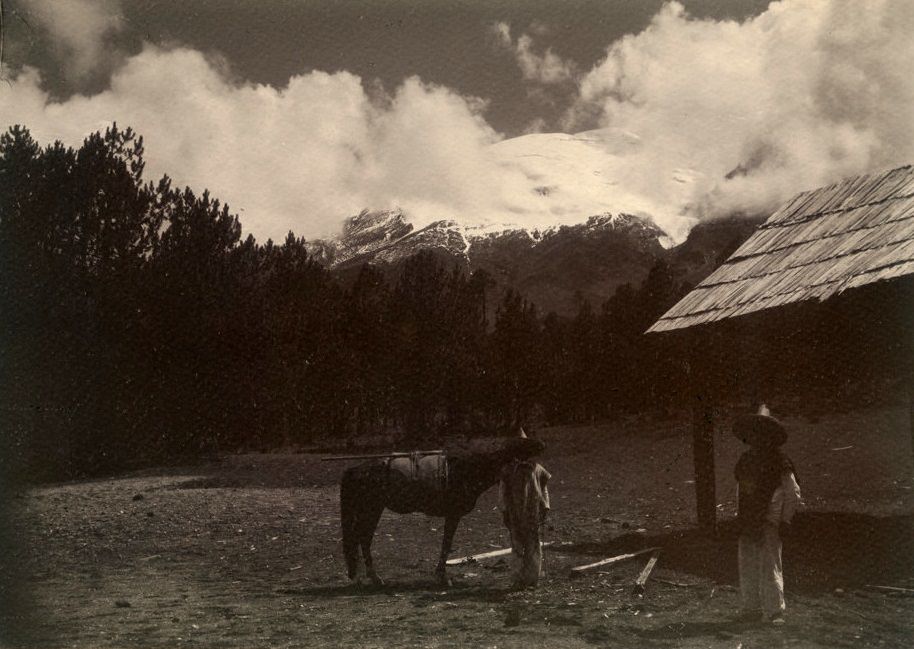
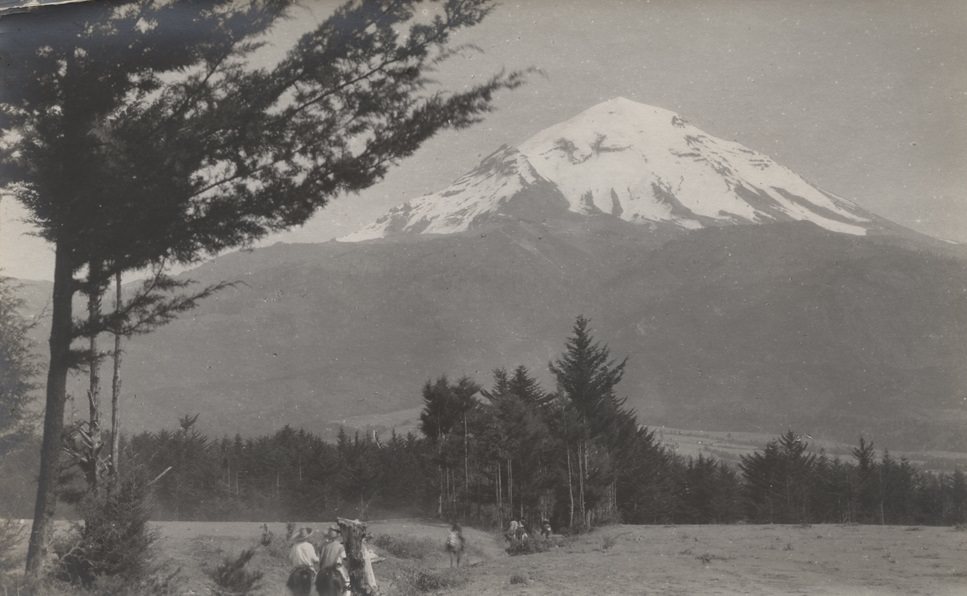
The town of Amecameca, nestled at the foot of the Popocatépetl and Iztaccíhuatl volcanoes in the State of Mexico, served as a staging point for climbers and travelers heading into the high peaks. The volcanoes dominated the skyline for miles in every direction.
Iztaccíhuatl, known as the “White Woman” for its snow-covered ridgeline, rises to over 17,000 feet. Together with the active stratovolcano Popocatépetl, the two peaks formed one of the most photographed natural landmarks in Mexico. These images from 1908 capture the volcanoes in sharp winter clarity.
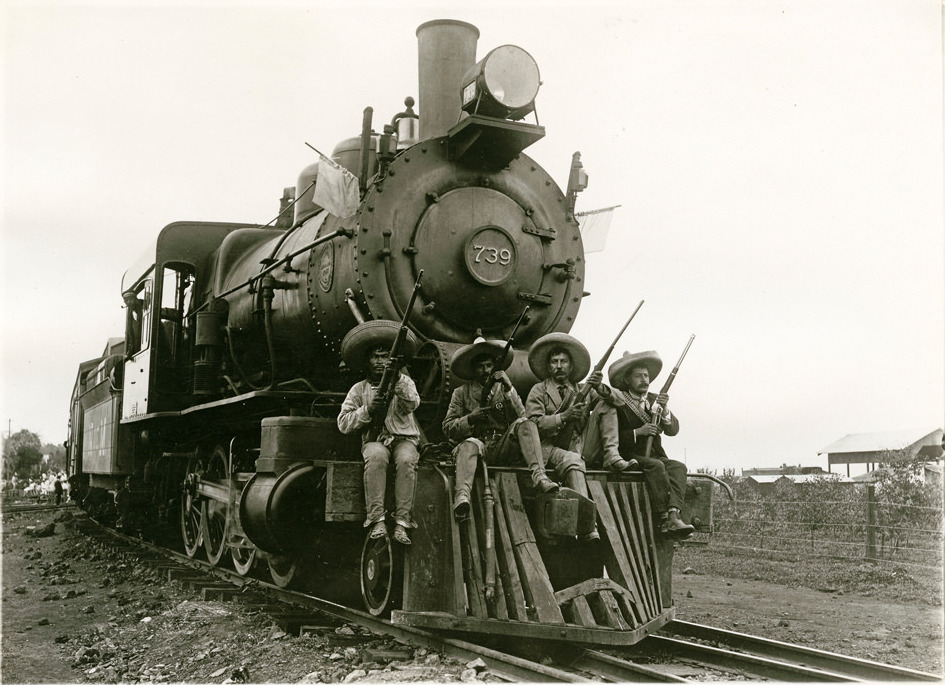
By 1910, the anger over Díaz’s rigged re-election and years of inequality boiled over into open rebellion. Francisco Madero called for revolution, and armed groups rose up across the country. Díaz was forced into exile in France in 1911. Madero was elected president that same year, but the violence did not stop. In February 1913, a military coup led to Madero’s arrest and assassination. The photograph below, taken in Cuernavaca in 1911, shows Zapatista forces — followers of the revolutionary leader Emiliano Zapata — alongside the Banco Nacional de México. Zapata’s army fought primarily for land reform and the rights of rural and indigenous communities in Morelos.
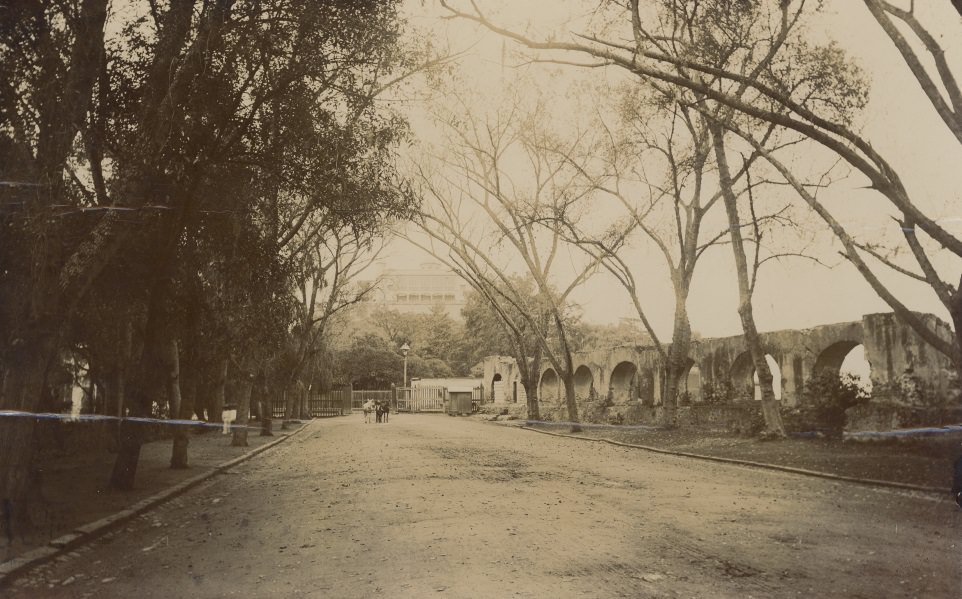
Even as the revolution unfolded, Mexico City’s streets and buildings were photographed extensively by visiting tourists and journalists. These 1900 images show the capital at its most composed — grand facades, wide boulevards, and public monuments that the Díaz government had spent decades building to project an image of order and progress.
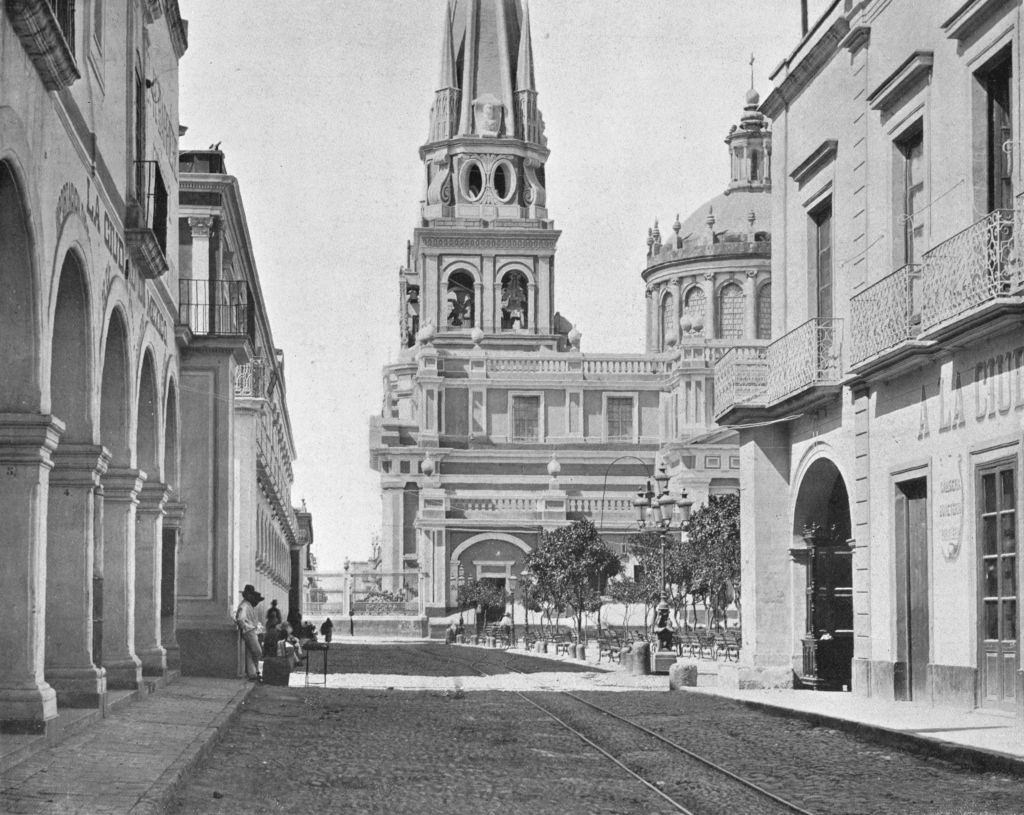
Guadalajara, Mexico’s second-largest city, was anchored by its twin-towered cathedral, which had been under construction and renovation for centuries. By 1901, it was a fully functioning religious and civic centerpiece. The cathedral’s neoclassical towers — rebuilt after earthquakes — had become a symbol of the city itself.
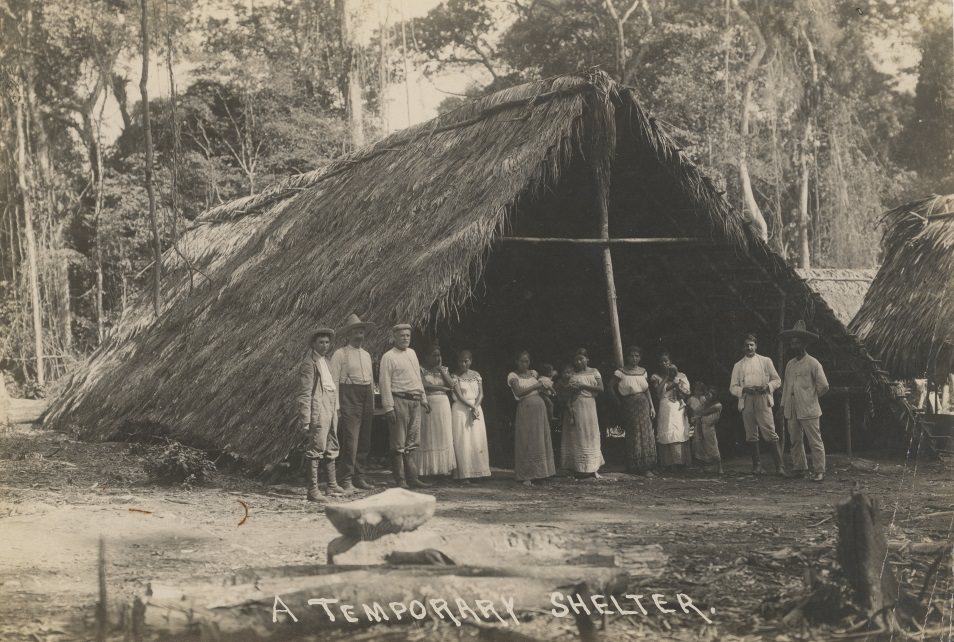
Across rural Mexico, shelter was simple and built from available materials. Temporary structures made from wood, thatch, and adobe were common across agricultural regions, where workers often lived close to the fields they worked.
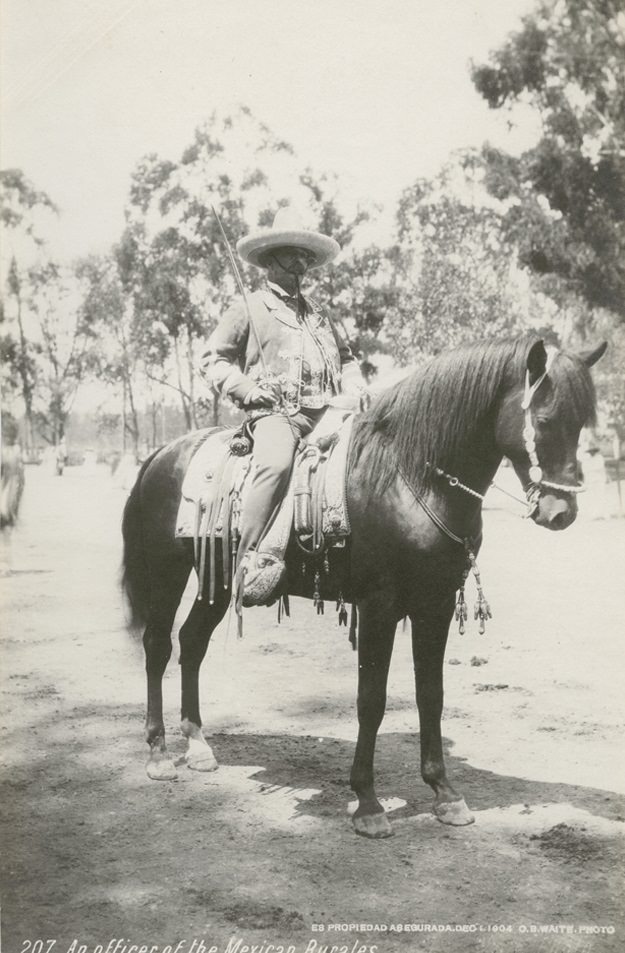
The Rurales were a federal police force created under Díaz to enforce order in the countryside. Officers were armed and mounted, and the force was known for its harsh methods. They were often used to suppress labor unrest and protect the interests of large landowners — a role that made them deeply unpopular among rural communities.
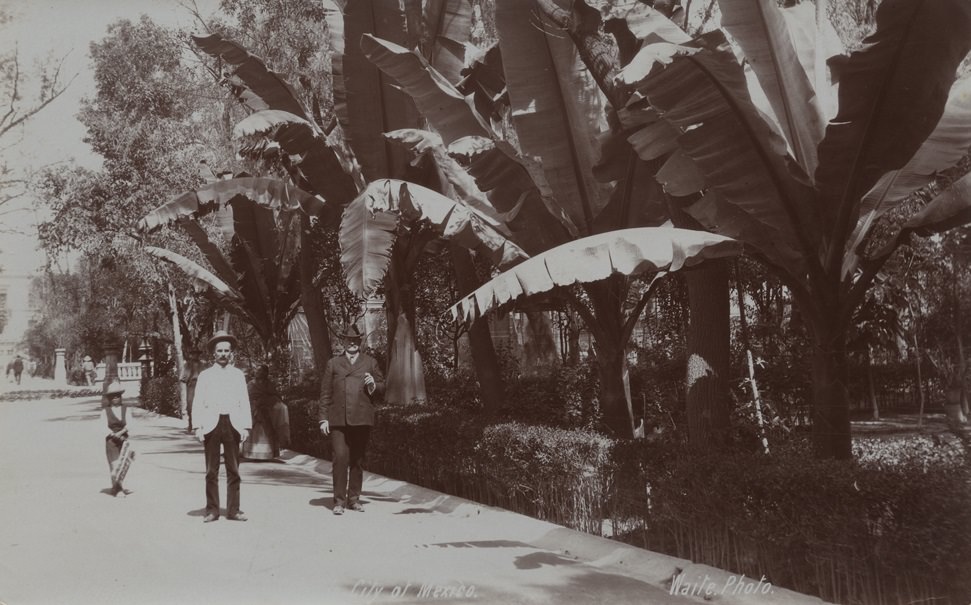
The Alameda Central in Mexico City was one of the oldest public parks in the Americas, dating back to the 16th century. By the early 1900s, it was a well-maintained urban retreat filled with fountains, sculptures, and tree-lined walkways — a stark contrast to the poverty visible just beyond its edges.
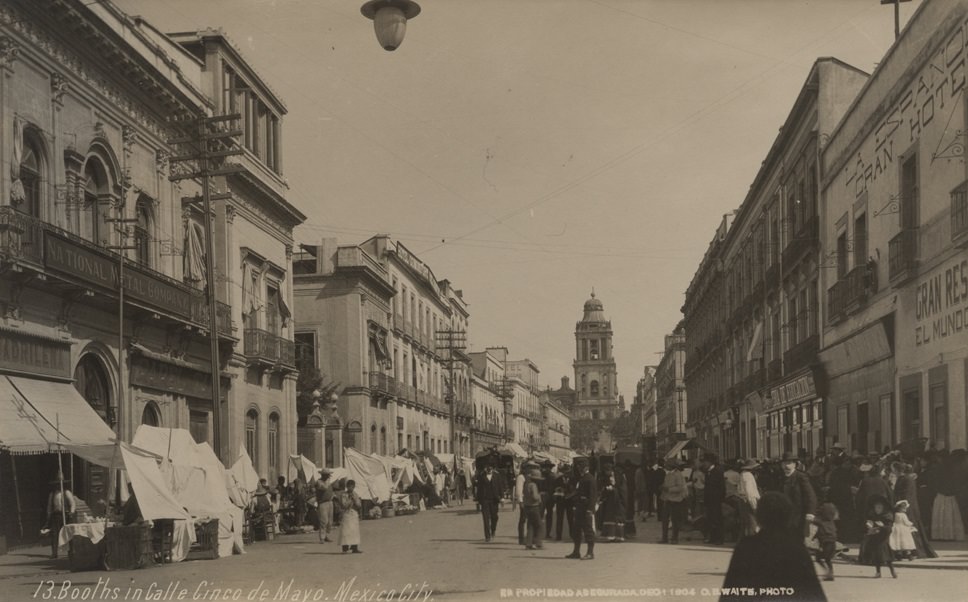
Calle Cinco de Mayo was one of Mexico City’s busiest commercial streets, named for the 1862 Battle of Puebla. Vendors set up temporary booths along its length, selling everything from food to fabric. Foot traffic was constant, and the street connected the Zócalo — the main plaza — to the western parts of the city center.
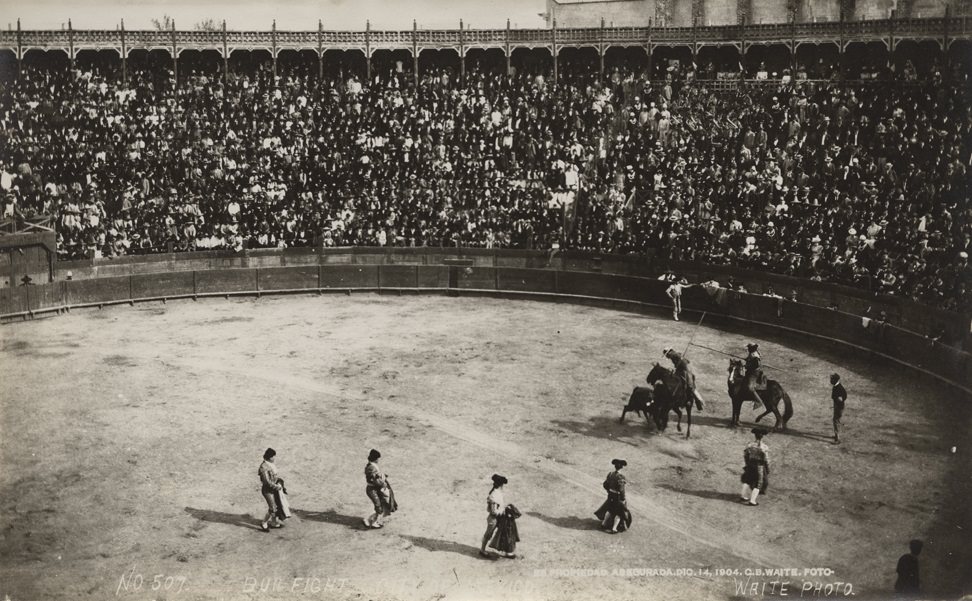
Bullfighting had been practiced in Mexico since the Spanish colonial period. By the early 1900s, Mexico City’s bullring drew large crowds from across the social spectrum. The spectacle was one of the most popular public entertainments in the capital.
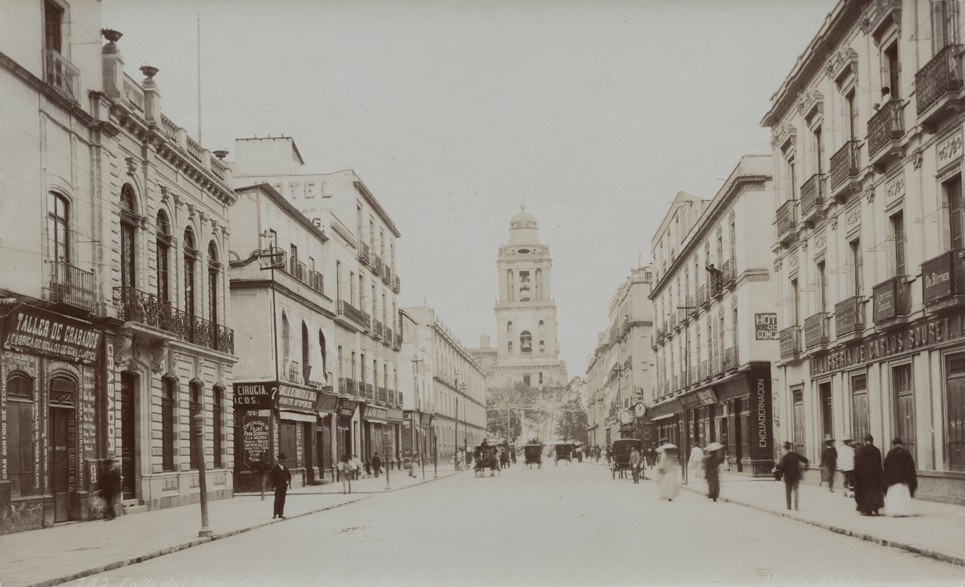
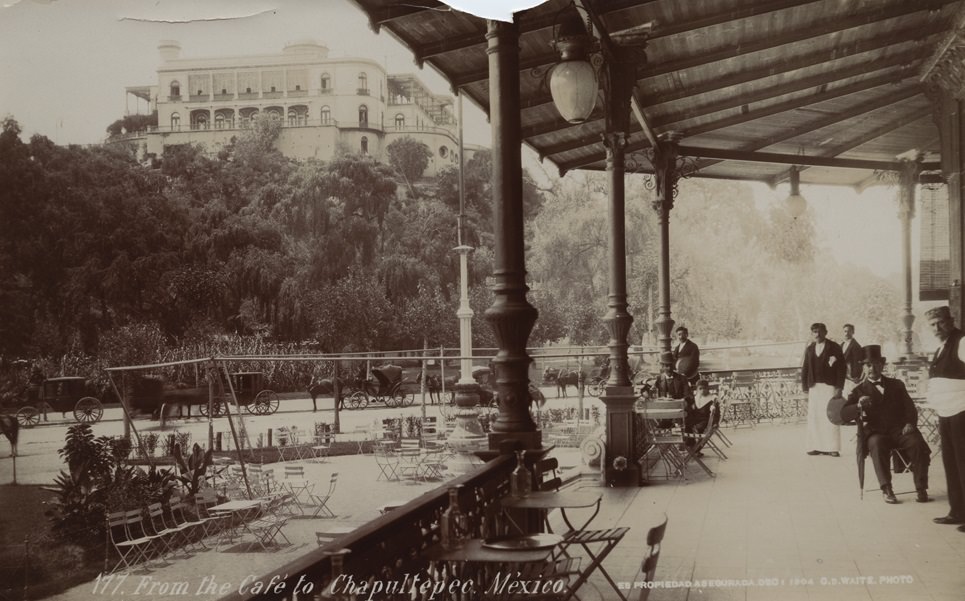
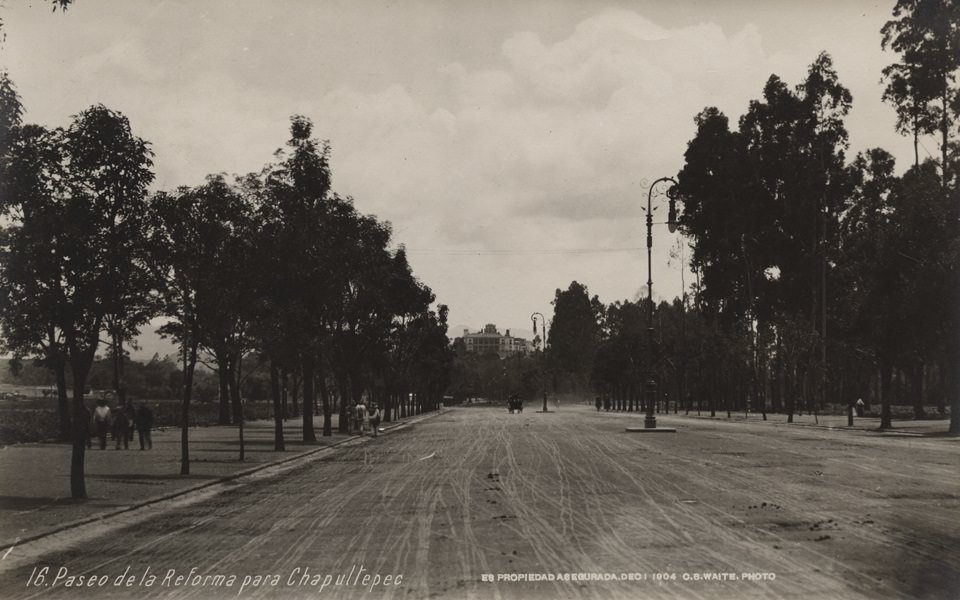
Chapultepec Castle sat atop a rocky hill at the western end of the Paseo de la Reforma. Originally built as a military academy, it had served as the residence of Emperor Maximilian I in the 1860s. Under Díaz, it became the official presidential residence. Its grounds and the surrounding forest made it one of the most distinctive landmarks in the capital.
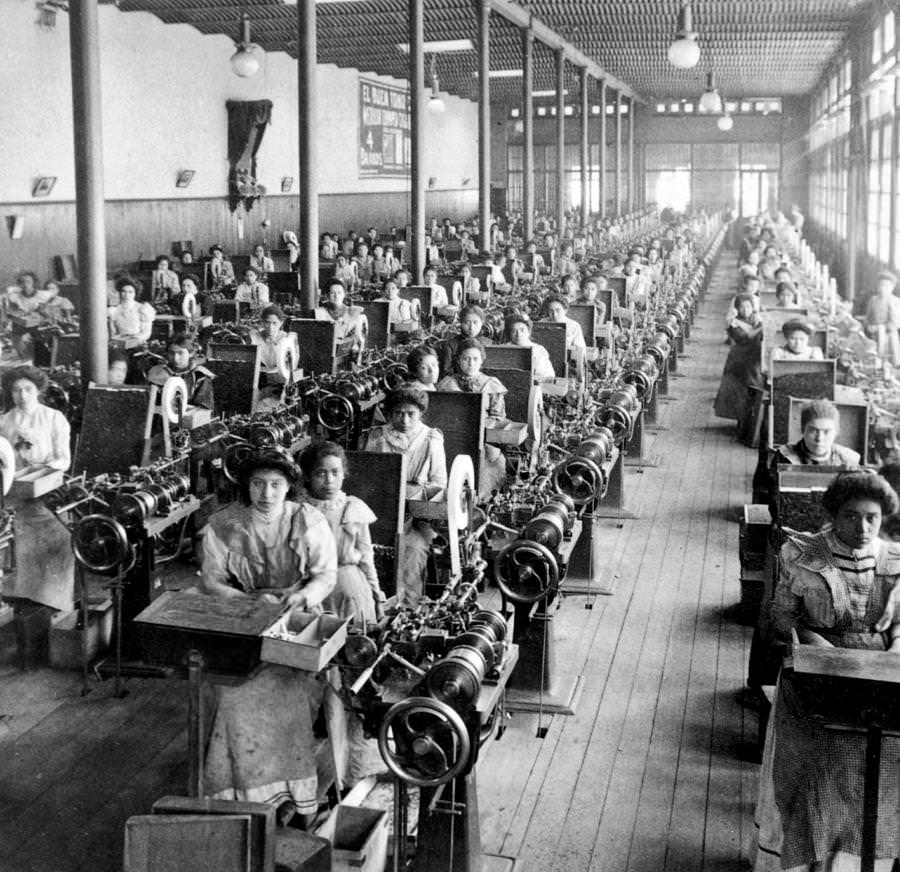
Mexico City’s cigarette factories employed large numbers of workers, many of them women, in the early 1900s. The tobacco industry was one of the capital’s significant manufacturing sectors. Working conditions in these factories were difficult — long hours, poor ventilation, and low wages were common.
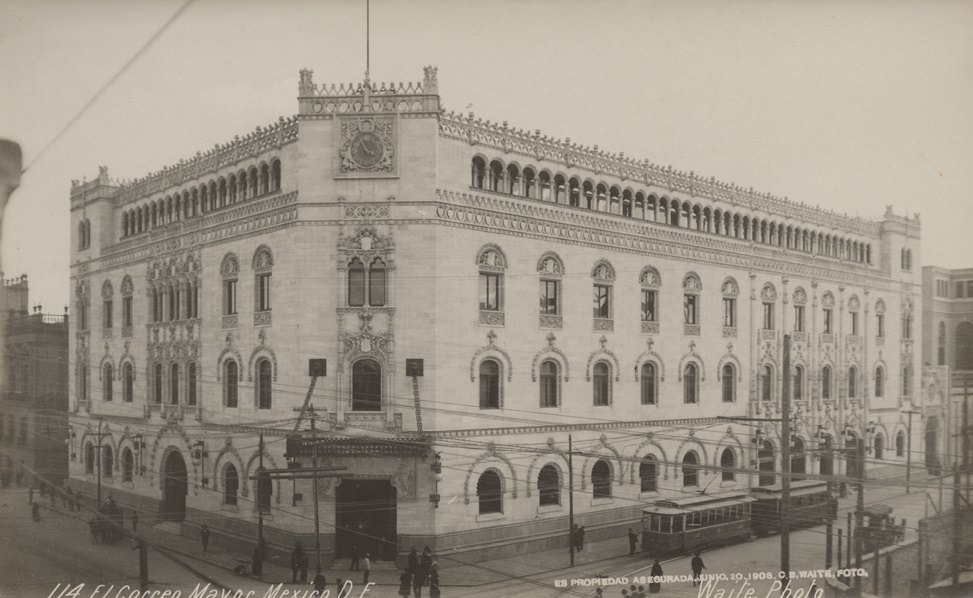
The Correo Mayor — Mexico City’s central post office — was the hub of the country’s mail system. By 1908, the building being photographed here was nearing the end of its life; a grand new post office building, the Palacio Postal, was completed in 1907 just nearby and became one of the most ornate government buildings in Latin America.
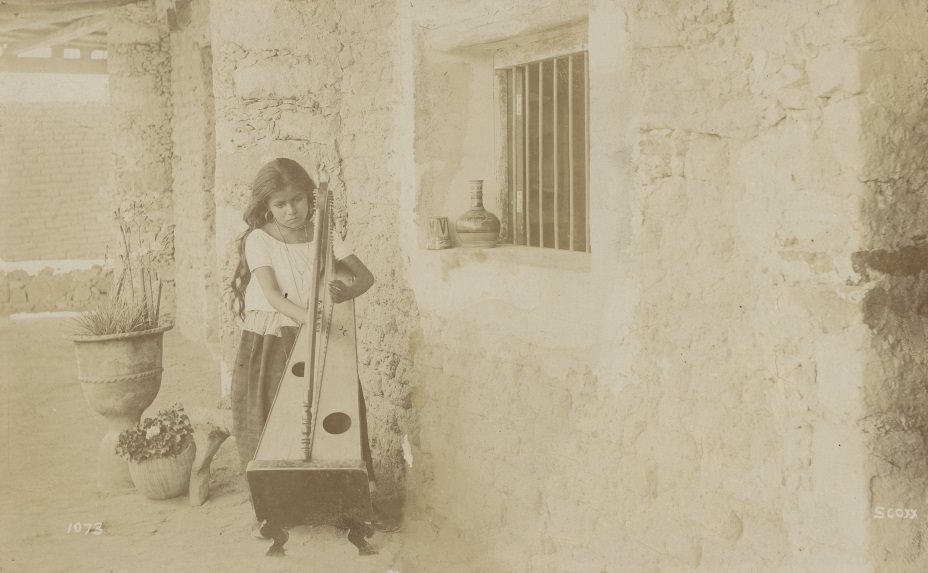
Music was woven into daily Mexican life at every level. This 1905 photograph of a girl playing harp reflects the role of traditional instruments in household and community culture. The harp had been introduced to Mexico through Spanish missionaries and became a core instrument in regional folk music traditions across the country.
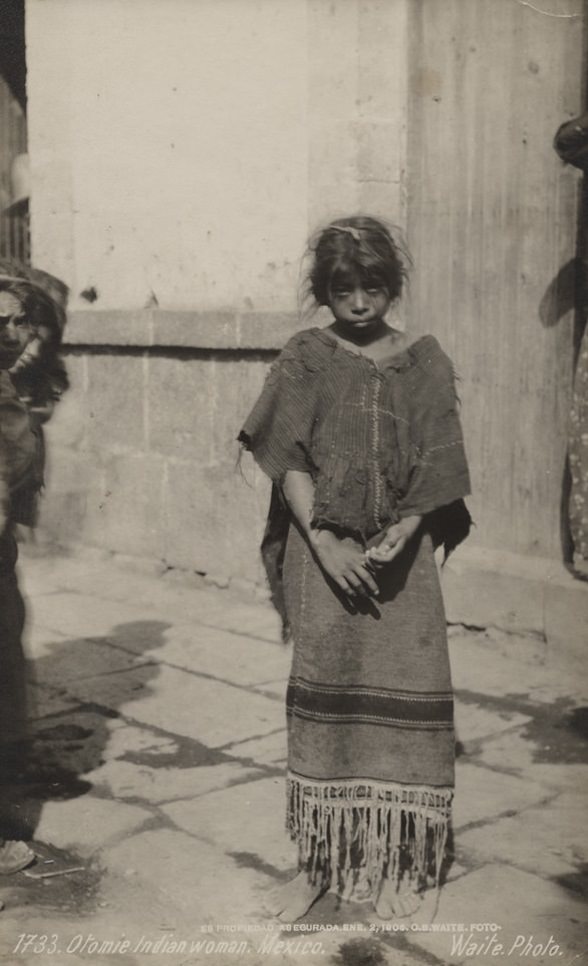
The Otomí people are one of the largest indigenous groups in Mexico, with communities spread across several central states. This 1905 portrait documents traditional dress in careful detail — clothing that encoded identity, region, and community affiliation in its patterns and materials.
The Paseo de la Reforma was Mexico City’s grandest boulevard, modeled after the Champs-Élysées in Paris. Díaz used it as a showpiece of his modernization project, lining it with monuments, trees, and elegant buildings. The route ran from the historic center of the city all the way to Chapultepec Park.
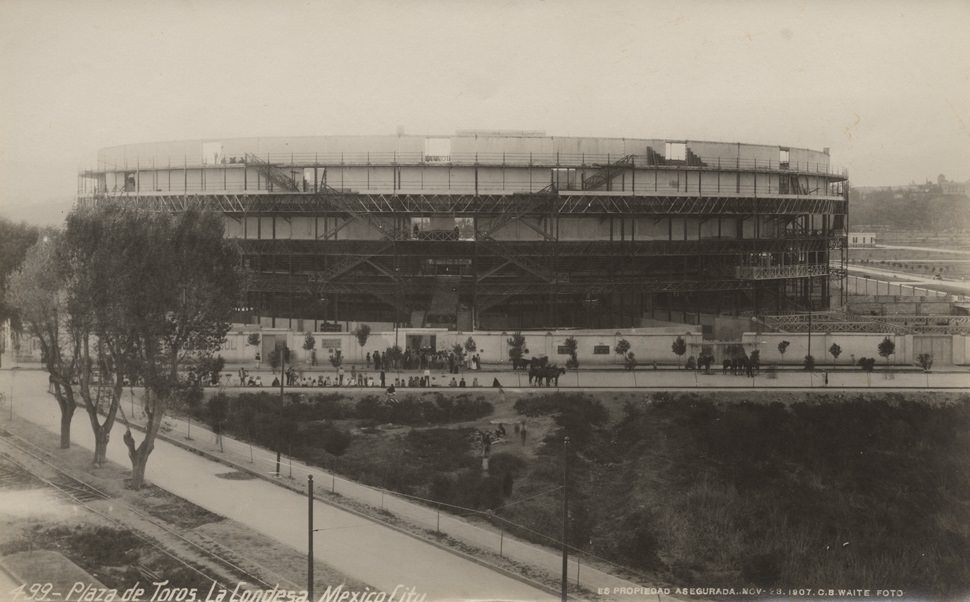
Bullfighting venues ranged from permanent arenas to temporary structures. The Plaza de Toros La Condesa in Mexico City was one of the capital’s established bullrings, drawing regular crowds on fight days. The sport’s following cut across class lines in ways that few other public events could.
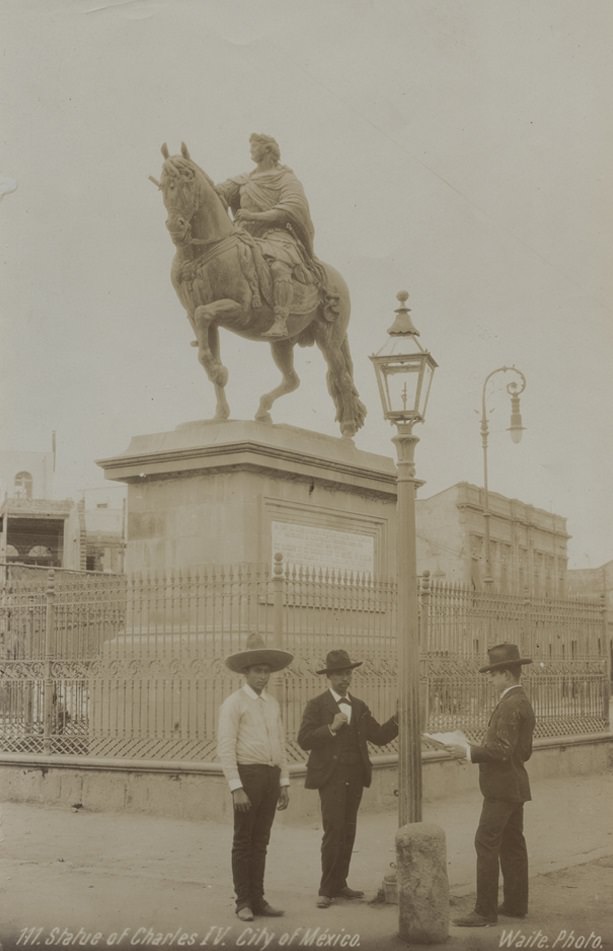
The equestrian statue of King Charles IV of Spain — known as “El Caballito” — had a complicated history in Mexico City. Completed in 1803 by sculptor Manuel Tolsá, it was one of the finest bronze works in the Americas. After Mexican independence, there were calls to melt it down, but it survived and was moved several times before finding a permanent home.
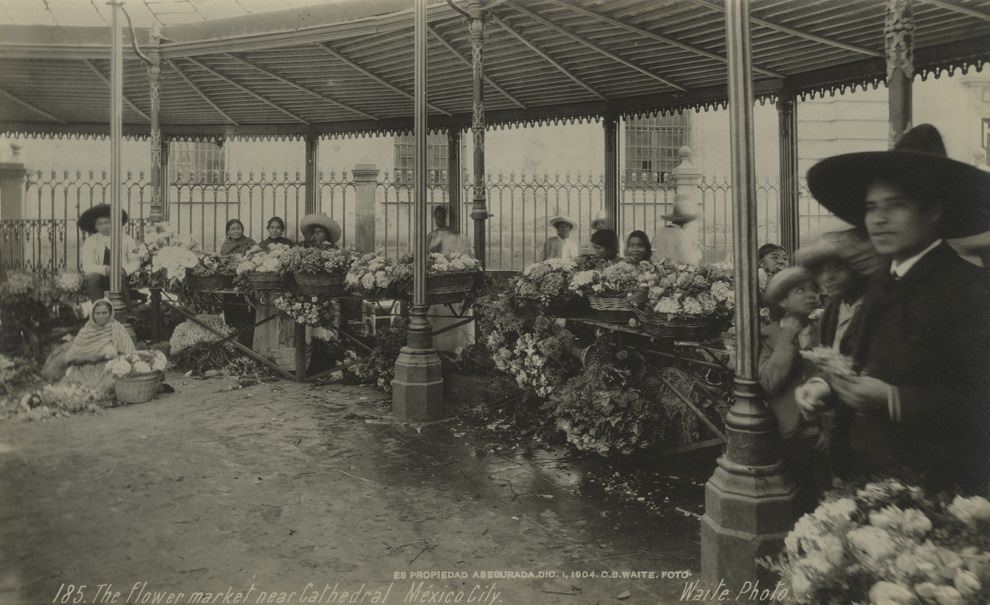
The flower market near the Metropolitan Cathedral was a sensory landmark in the heart of Mexico City. Vendors arranged blooms in enormous piles and clusters, and the market drew buyers from across the city every morning. Flowers played an important role in religious observances, funerals, and daily household decoration.
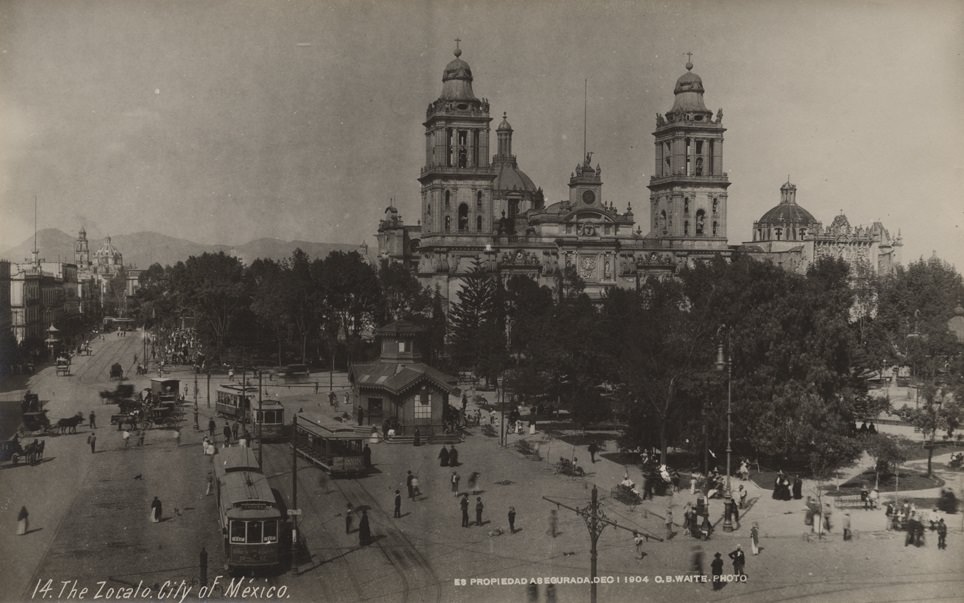
The Zócalo — formally the Plaza de la Constitución — was and remains the political and symbolic center of Mexico. Bordered by the Metropolitan Cathedral, the National Palace, and government buildings, it had been the main public square since the Aztec capital of Tenochtitlan stood on the same ground. By 1904, it was the stage for official ceremonies, military parades, and everyday city life.
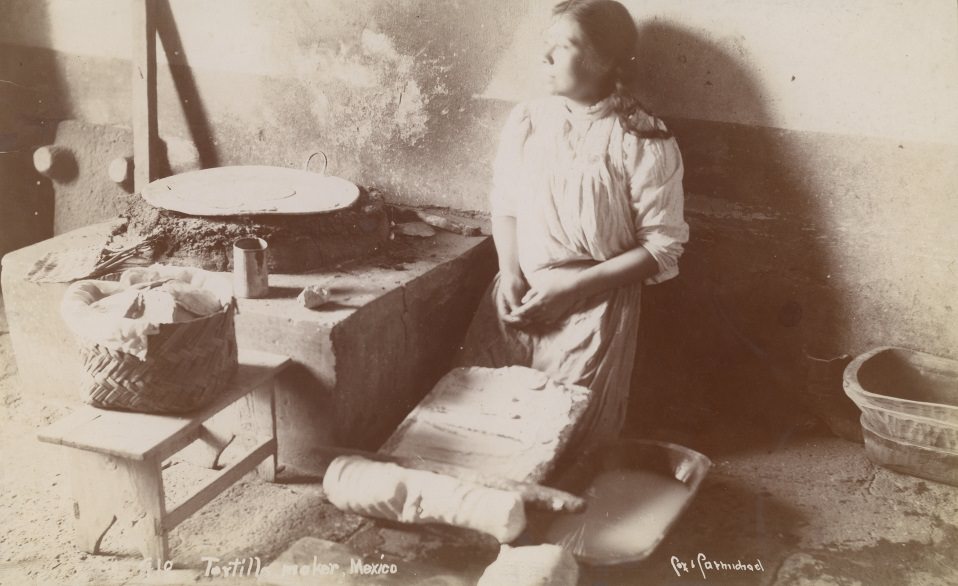
Tortilla making was one of the most labor-intensive daily tasks in Mexican households. Women spent hours each day grinding dried corn on a metate — a stone grinding surface — then shaping and cooking the tortillas on a comal over an open fire. This photograph from 1905 documents a practice that had remained essentially unchanged for thousands of years.
Pack burros were the backbone of transport in areas where roads were too rough or narrow for wagons. Long trains of burros moved goods — firewood, produce, pottery, and building materials — through mountain paths and city streets alike. They were far cheaper to maintain than horses and could navigate terrain that horses could not.
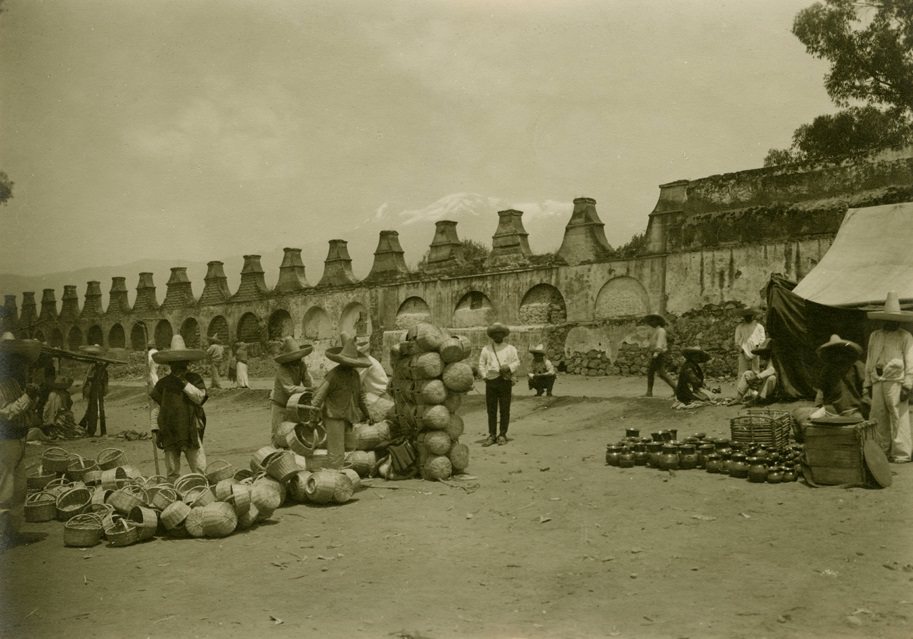
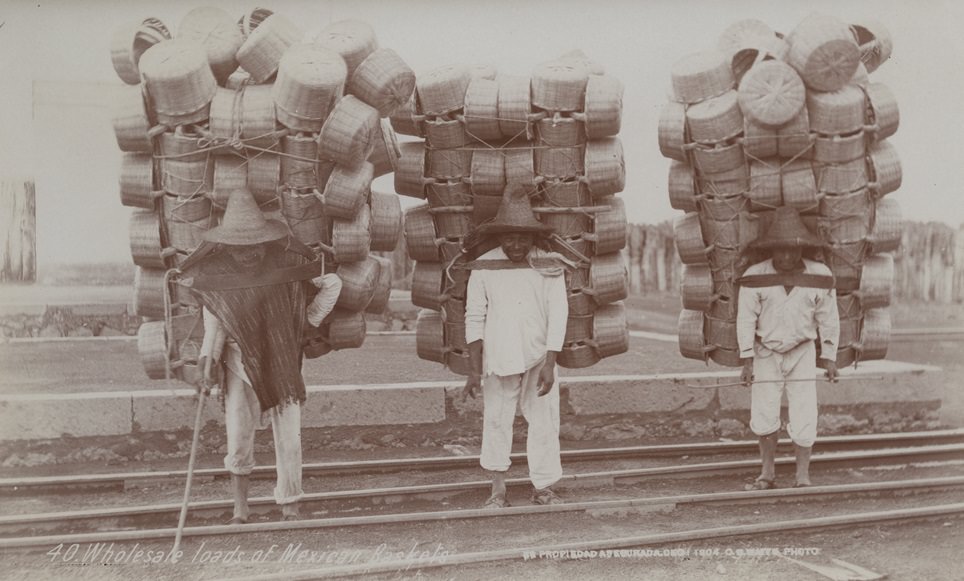
Basket weaving was a significant craft industry across Mexico, with distinct regional styles passed down through generations. Wholesale loads like those shown here were sold in bulk at markets in major cities. The trade supported artisan communities throughout the country and supplied homes, markets, and businesses with essential everyday goods.





Very interesting photographs. It’s a special spirit which is enshrined in old things.
Thank you for showing this. Marcel