In March 1913, severe and unrelenting storms swept across the northeastern United States, bringing torrential rains that swelled rivers beyond their absolute limits. In Upstate New York, the melting winter snow combined with heavy precipitation to turn the normally steady Genesee River into a raging torrent. The resulting disaster, known historically as the Rochester Great Flood of 1913, shattered all previous high-water records and paralyzed the commercial core of the city. Downtown streets, bustling business districts, and residential neighborhoods near the riverbanks were rapidly submerged under feet of freezing, debris-laden water. Local industries ground to a halt as cellars flooded and first-floor storefronts disappeared beneath the rising tide. City officials and emergency workers faced an unprecedented crisis as residents became trapped in homes and commercial buildings. Fortunately, local photographers like Albert R. Stone meticulously documented the unfolding catastrophe, capturing daily survival, daring rescues, and the sheer scale of the inundation with astonishing clarity. These surviving images provide an invaluable window into a defining moment of urban crisis, illustrating how a major American city confronted sudden and overwhelming natural devastation.
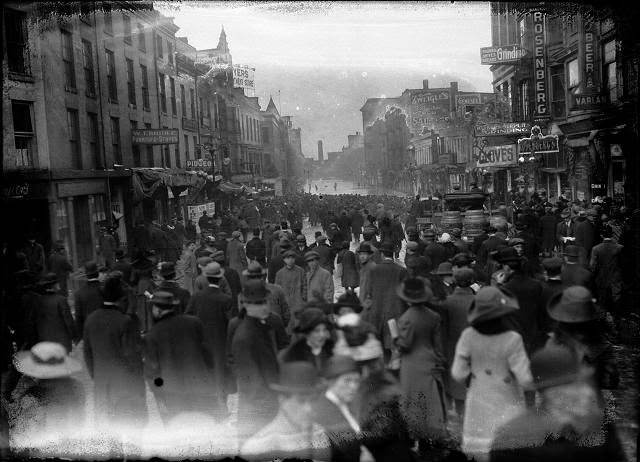
As the Genesee River breached its banks, the bustling commercial hub of Front Street transformed into an inland lake. Large crowds quickly gathered on dry pavement to stare in disbelief at the swirling waters blocking the opposite end of the thoroughfare. Well-known local businesses, including Varlan's Hotel, Rosenberg's Pawnshop, and various provision companies, found their entrances cut off by the advancing current. Merchants and employees scrambled to salvage valuable goods from their basements before the water levels climbed too high. Pedestrians bundled in heavy coats huddled together on street corners, watching goods float past storefronts that usually welcomed steady streams of shoppers. The atmosphere mingled nervous anxiety with grim curiosity as citizens realized the sheer magnitude of the flood. Police officers struggled to maintain order as onlookers pressed forward to catch a glimpse of the submerged lower levels. This initial phase of the disaster set the tone for days of disruption, forcing the entire community to adapt to an aquatic landscape overnight.
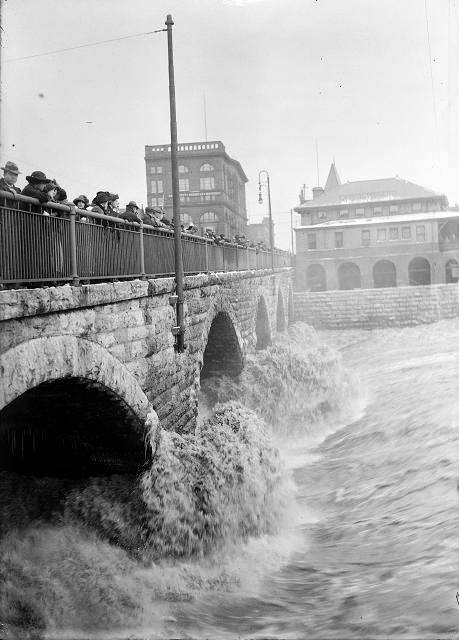
Spectators lined the sturdy stone railings of the Court Street Bridge to watch the violent force of the river bearing down on the municipal infrastructure. Below the city dam, massive walls of churning brown water slammed relentlessly against the stone arches of the bridge. Debris, broken tree limbs, and chunks of winter ice battered the masonry as the river roared through the central channel. Citizens from all walks of life abandoned their daily routines to monitor the water gauges from elevated vantage points. The pressure exerted on the bridges and dams caused widespread anxiety among municipal leaders who feared catastrophic structural failures. Despite the danger, public fascination drew hundreds of onlookers to the river crossings to witness the raw power of nature unleashed upon the city. This collective watchfulness underscored the vulnerability of urban centers built along major waterways before modern flood control systems were established. The bridge became an impromptu community forum where rumors, news of upstream conditions, and expressions of concern were exchanged among the anxious populace.
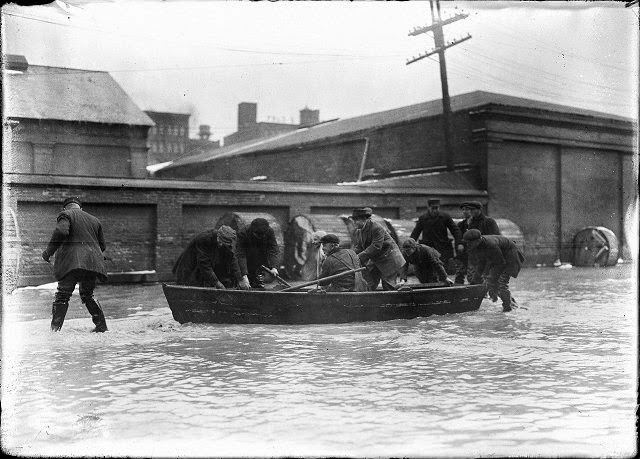
With traditional street transportation entirely rendered impossible, boats quickly became the primary mode of travel through the flooded business district. Men navigated wooden rowboats down submerged avenues that had previously echoed with the sound of horse-drawn carriages and electric streetcars. Makeshift docks were improvised at second-story windows and elevated platforms to allow stranded citizens a safe means of departure. These watercraft served as lifelines for delivering essential provisions to individuals trapped above the waterline. The surreal sight of rowboats gliding past brick storefronts became a common daily reality for the duration of the crisis. Navigating these urban channels required immense skill due to submerged fences, hidden signposts, and strong undercurrents created by the constrained river. Community solidarity emerged as ordinary citizens volunteered their own boats and physical strength to assist neighbors in distress.
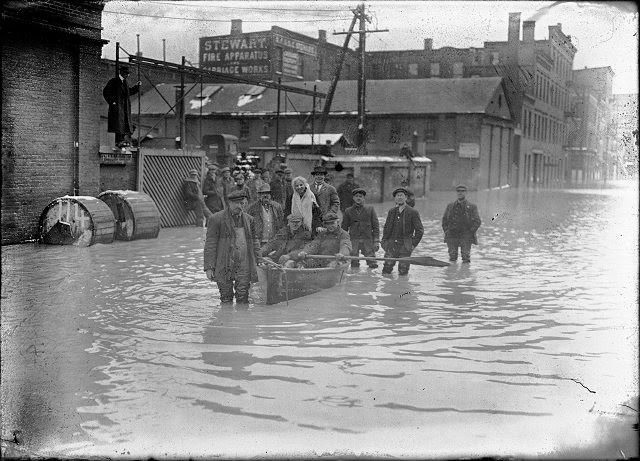
Emergency rescue operations moved into high gear as organized crews utilized rowboats to pluck trapped residents from dangerous structures. In the middle of flooded Front Street, a rescue team successfully evacuated a woman from a dangerously inundated building. All historical records for high water in Rochester were officially broken during these grueling hours of rescue work. Volunteers and municipal workers pulled survivors over the gunwales of their boats, offering blankets and reassurance against the biting March chill. Many victims had retreated to upper floors as the icy water rapidly consumed their living and working spaces. The rescue crews operated tirelessly against fading daylight and freezing temperatures, risking their own safety to prevent loss of life. These daring missions highlighted the bravery of local volunteers who stepped forward when municipal services were stretched past their limits. Every successful extraction brought immense relief to the gathered crowds watching from dry ledges.
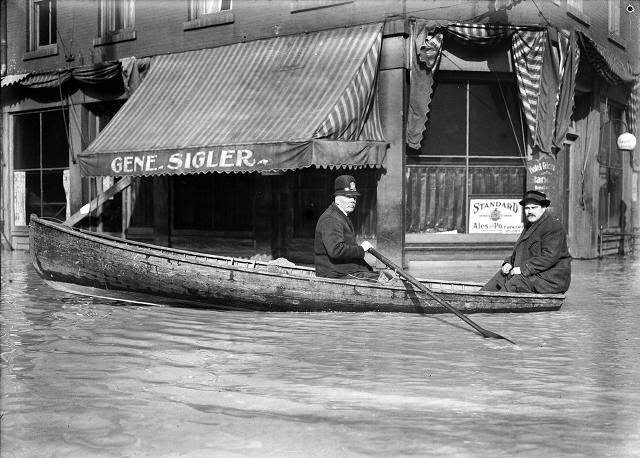
Law enforcement maintained a visible presence throughout the disaster, adapting their standard patrols to the aquatic environment. A Front Street policeman conducted his regular beat from a wooden rowboat, ensuring that looted property remained protected and stranded residents received aid. He and another oarsman slowly maneuvered past the Hotel Richmond located at the corner of Front and Market Streets. The brick facade of the hotel stood defiantly against the brown water while its lower level remained completely submerged. Police patrols were essential for preventing accidents in the hazardous maze of floating debris and swift currents. Officers also monitored structural stability, warning curious onlookers away from weakened walls and compromised sidewalks. This unconventional style of policing required officers to master the handling of small craft while wearing heavy uniforms and equipment. Their steady presence offered vital reassurance to business owners who had abandoned their valuable inventories to the rising flood.
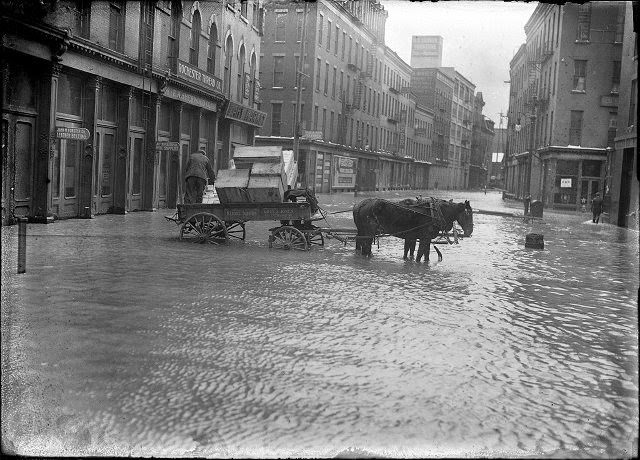
Away from the immediate riverfront, adjacent industrial zones like Mill Street experienced severe inundation that halted local manufacturing. A horse and wagon stood abandoned in the middle of Mill Street at Andrews Street, surrounded by deep, stagnant water. Prominent local enterprises including the Rochester Thread Company, F.A. Sherwood Company, and Fahy Market saw their operations instantly paralyzed. Raw materials and finished goods stored in ground-floor warehouses suffered catastrophic damage from moisture and silt. Workers attempted to secure heavy machinery, but the rapid influx of water made many industrial buildings entirely inaccessible. The silent, deserted wagons and shuttered factories underscored the economic toll inflicted by the overflowing river. Rebuilding efforts in these manufacturing sectors would take months once the waters finally receded, straining the local economy. The image of the stranded wagon became a powerful symbol of industry abruptly silenced by natural forces.
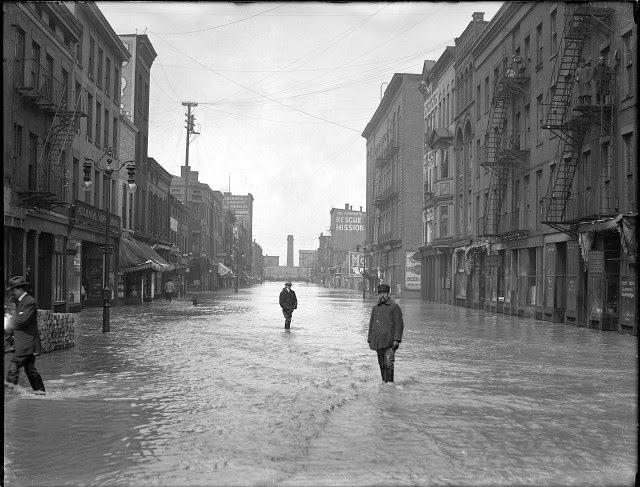
As water levels began a slow and agonizing retreat in certain pockets, portions of Front Street reappeared covered in thick mud and debris. Men stood ankle-deep in lingering water outside the Atlantic Supply House on the left and the People's Rescue Mission on the right. The rescue mission quickly shifted its function from a night shelter to an active distribution hub for displaced workers and destitute families. Volunteers in heavy boots waded through the muck to assess structural damage and begin the massive cleanup operation. The air smelled heavily of river silt, damp masonry, and heating coal washed out from flooded cellars. Despite the grim conditions, a sense of collective purpose drove the community to reclaim their devastated streetscape. Merchants inspected their ruined inventories while municipal laborers cleared clogged storm drains to speed the drainage process.
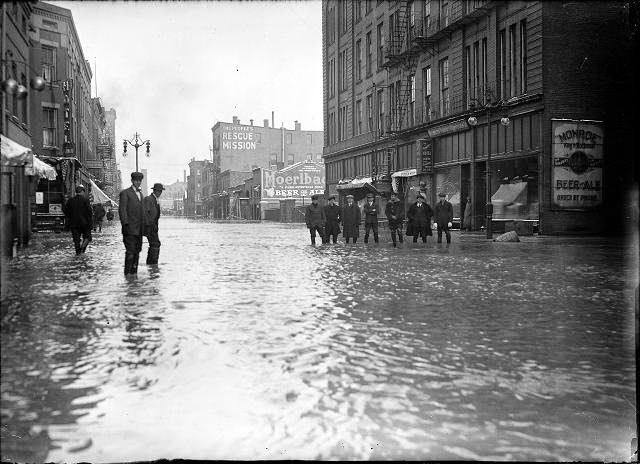
Cleanup crews and business proprietors continued their tedious labor along the waterlogged commercial corridor of Front Street. Several men stood ankle-deep in water directly in front of the Rochester Poultry and Commission Company, with the People's Rescue Mission visible in the background. The destruction of perishable food inventories created immediate health concerns for health inspectors monitoring the disaster zone. Workers worked swiftly to discard ruined provisions and sanitize floors before mold and disease could take hold in the damp buildings. The stark reality of financial ruin hung heavily over many small business owners who lacked flood insurance coverage. Yet, mutual aid networks formed rapidly as neighboring merchants shared tools, cleaning supplies, and manpower. The perseverance displayed in these mud-soaked alleys demonstrated the resilient spirit of Rochester's working class during an era before federal disaster relief.
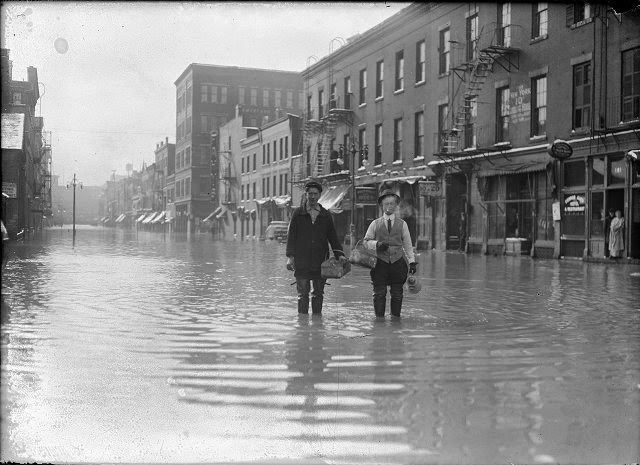
Daily survival in the disaster zone required resourcefulness, particularly in feeding stranded citizens and rescue workers. Two men stood ankle-deep in water on Front Street while carefully carrying a large coffee pot and woven baskets. Nearby, a man and a woman peered cautiously out of a raised doorway, observing the desolate street conditions. Hot meals and coffee provided by relief organizations were delivered on foot and by boat to sustain those working in the freezing environment. These small acts of daily care maintained community morale while physical recovery efforts crawled forward. The presence of food distribution points directly in the flooded corridors ensured that no isolated resident went entirely forgotten. Simple human connection amid the ruins offered comfort to those facing the daunting prospect of rebuilding their lives.
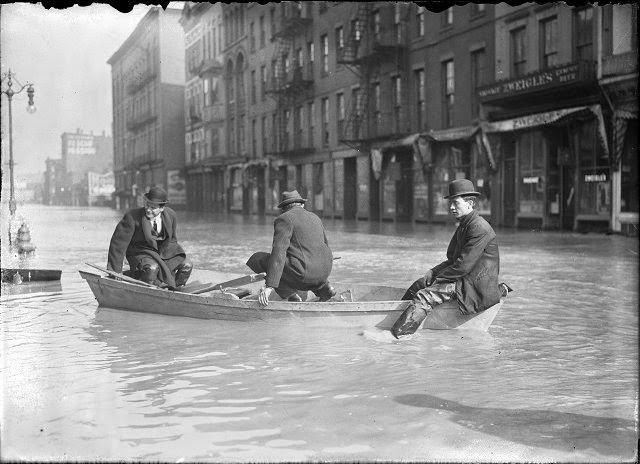
Rowboats remained an essential lifeline for navigation as residents and workers traversed the watery expanse of Front Street. Three men packed tightly into a wooden rowboat smoothly maneuvered past the iconic establishment of J.G. Zweigle's. The famous local sausage maker and purveyor sustained severe water damage, temporarily halting its popular commercial operations. The men in the boat surveyed the submerged doorways and windows, checking on adjacent properties for signs of forced entry or structural collapse. Such patrols helped maintain security across the deserted business district while owners remained evacuated. The quiet put-put of oars against water provided a strange soundtrack for a street usually filled with the clatter of horse hooves and delivery wagons. This routine aquatic travel underscored how thoroughly the flood had rewritten the geography of downtown Rochester.
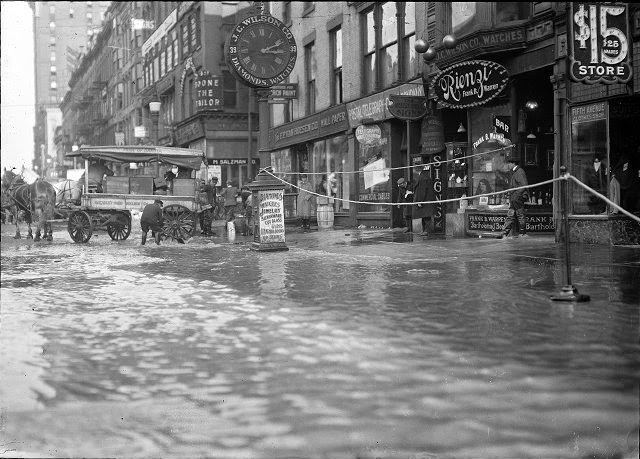
The commercial heart of the city along Main Street East at Graves Street suffered a devastating blow as the floodwaters infiltrated deeply. Store cellars filled completely with water, while every first-floor retail space was entirely submerged up to the window sills. A solitary horse and wagon stood patiently at the curb while men gathered on the raised sidewalk to survey the damage. Prominent local businesses including the F.P. Van Hoesen Company, the Postal Telegraph Cable Company, and the Fifth Avenue Clothes Shop were forced to close their doors. Even a local bar named Rienzi found its taps silenced by the invading river water. Pedestrians watched from dry elevated points as merchandise floated uselessly inside darkened display windows. The paralysis of Main Street East severed critical communication and retail arteries, plunging downtown commerce into a deep freeze.
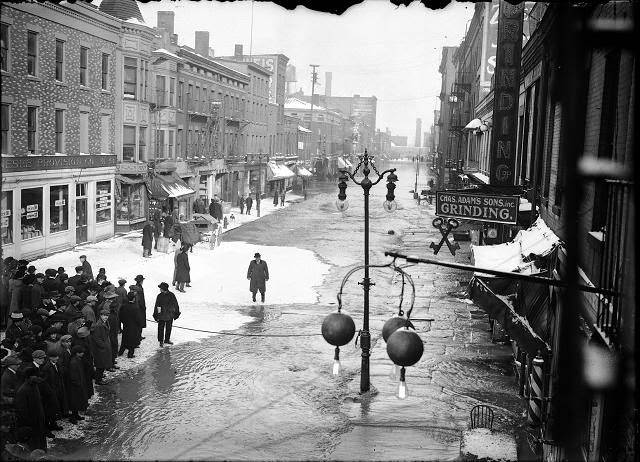
As freezing temperatures returned to the region, pockets of ice began forming across the stagnant pools remaining on Front Street. Rochesterians gathered in heavy winter coats at the water's edge, gazing out at the reflective, icy puddles coating the pavement. A prominent sign for Charles Adam's Sons, Inc., grinding specialists, hung crookedly overhead as a testament to the violent forces that had swept through. The combination of floodwaters and sudden spring freezes created treacherous conditions for anyone attempting to walk through the district. Icicles hung from doorframes while workers chipped away at frozen debris blocking essential entryways. This stark transformation from liquid deluge to ice-covered wasteland added a layer of physical misery to an already exhausted populace. Community members shared shelter and warmth wherever possible while waiting for the weather to turn mild.
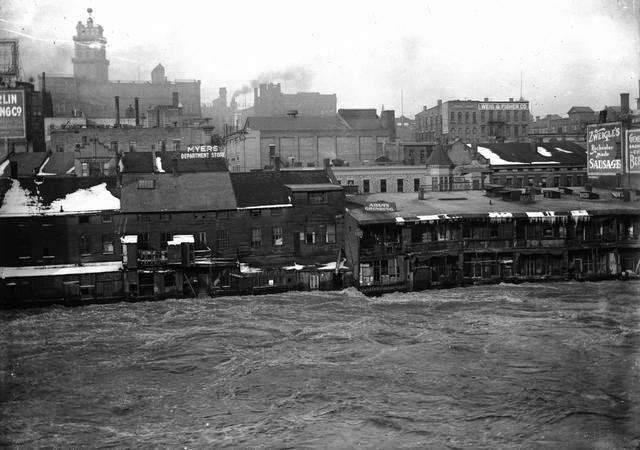
An exceptional rear-view perspective captured from across the swollen river revealed the true vulnerability of the Front Street buildings. The Genesee River raged at its peak high-water stage, pressing aggressively against the rear foundations of downtown commercial establishments. Myer's Department Store, Charles Adam's grinding shop, and Zweigle's sausage establishment were all clearly visible from this elevated angle. Further in the background, the Weis and Fisher Company furniture warehouse stood near Brown Street, surrounded by saturated ground. In the distant upper left corner, the majestic tower of the Powers Building stood tall above the watery chaos. This panoramic view illustrated how deeply the commercial district intertwined with the river, leaving buildings exposed on both street and water fronts. Municipal archivists preserved this dramatic visual evidence to study the exact hydraulic pressures exerted during major flood events.
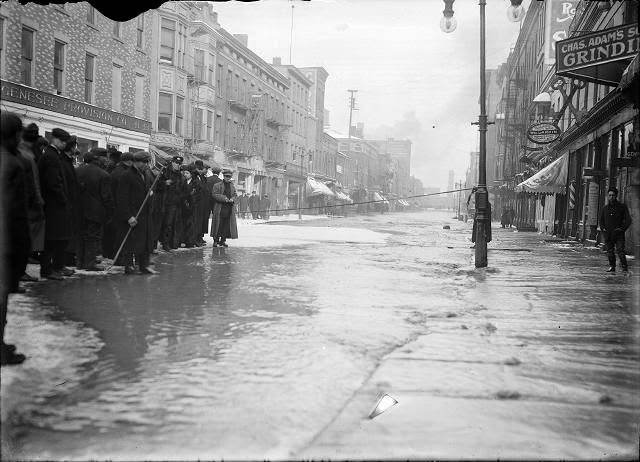
City authorities rushed to cordon off hazardous zones to prevent civilian injuries as water levels hovered near critical thresholds. A group of citizens stood at the dry edge of Front Street directly in front of the Genesee Provision Company. A thick rope barrier was strung across the street near Charles Adam's Grinding shop and the William H. Larkin Hotel. Police officers stationed nearby turned back curious onlookers who attempted to venture past the safety ropes into deeper water. The makeshift barricades served as physical reminders of the invisible dangers lurking beneath the surface, including open manholes and washed-out foundations. Business owners used these cordoned perimeters as staging areas to coordinate cleanup crews once the water receded. The crowd gathered along the rope barrier reflected the intense local interest in every small shift in the river's behavior.
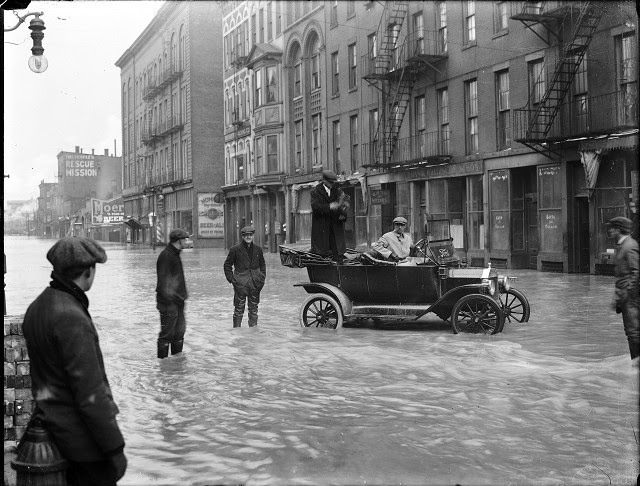
The emergence of early motor vehicles added a modern element to the nineteenth-century streetscape caught within the flood. Two men in a Ford automobile paused directly in the middle of flooded Front Street while navigating the shallow waters. One of the men held a camera, documenting the historic inundation for personal records or local newspapers. Several other citizens stood nearby in ankle-deep water, watching the automobile navigate the submerged thoroughfare with caution. Early motor cars like the Ford were prized for their high clearance, yet engines remained highly vulnerable to stalling if water reached the electrical wiring. This intersection of early automotive technology and natural disaster captured a transitional era in urban American history. Drivers tested the limits of their machines in environments previously dominated exclusively by horses and foot traffic.
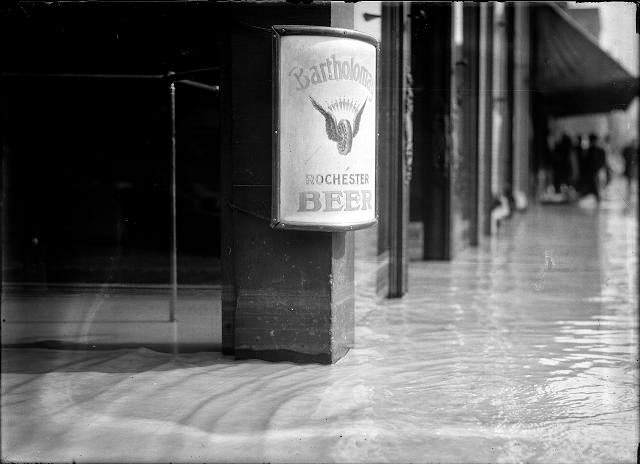
A close-up inspection of the flooded shop fronts along Front Street revealed the relentless nature of the encroaching river. Murky brown water poured directly across thresholds, soaking interior floors and destroying wooden displays. A prominent Bartholomay Beer sign attached to a wooden post stood half-submerged, advertising a local beverage now entirely inaccessible. The silent storefronts absorbed the relentless moisture as shopkeepers waited anxiously for the crest to pass. Debris floating in the current bumped rhythmically against brick walls and display windows with every passing ripple. This intimate view of urban destruction highlighted the quiet, creeping damage that affected thousands of small merchants across the city. Without modern pumping equipment, shop owners could only watch and wait for gravity to pull the water back toward the riverbed.
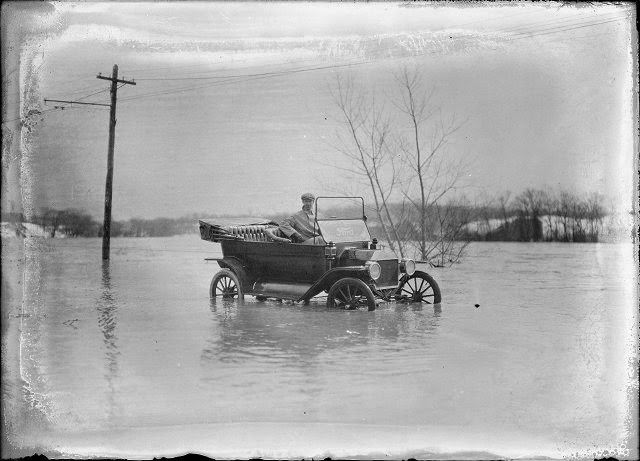
Automotive transport faced severe challenges throughout the wider metropolitan area as major thoroughfares succumbed to the overflow. A motorist sat inside a stalled Ford automobile on Plymouth Avenue, where water reached halfway up the wooden-spoke wheels. The Genesee River had completely overrun its banks in this residential and commercial district, turning a major avenue into a vast lake. Drivers quickly learned the perils of attempting to cross flooded intersections where hidden potholes and deep trenches awaited beneath the surface. Passersby watched from dry sidewalks as the stranded driver assessed the damage to his engine compartment. Such scenes became commonplace across Rochester as commuters and delivery drivers found their regular routes entirely severed. Municipal authorities eventually erected warning signs at major intersections to prevent further motorists from stranding their vehicles in deep water.
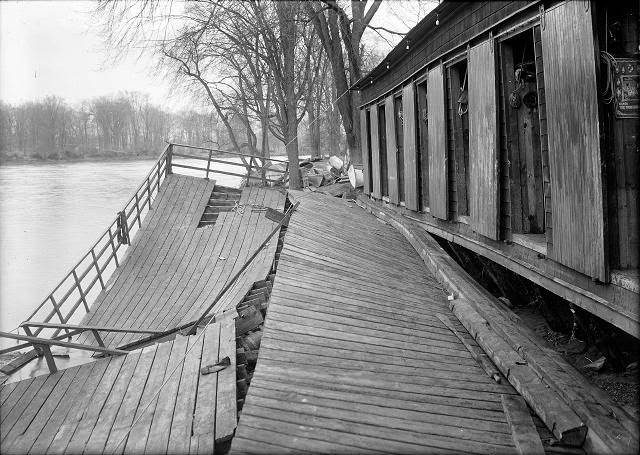
Beyond the commercial downtown, Rochester's park systems also absorbed heavy structural damage from the rampaging river currents. The Durand boathouse located within Genesee Valley Park displayed major architectural damage after the floodwaters finally receded. The Genesee River, having returned to its peaceful state, flowed smoothly past the splintered docks and mud-covered grounds. Park maintenance crews faced a massive labor undertaking to clear fallen timber, repair structural foundations, and restore recreational spaces for spring visitors. Boathouses and riverside pavilions had taken the brunt of the fast-moving current, suffering broken pilings and warped flooring. The stark contrast between the tranquil river and the damaged park structure emphasized the destructive aftermath left behind by sudden spring floods. Local park officials immediately began assessing repair costs to ensure public access could resume ahead of the warmer summer months.
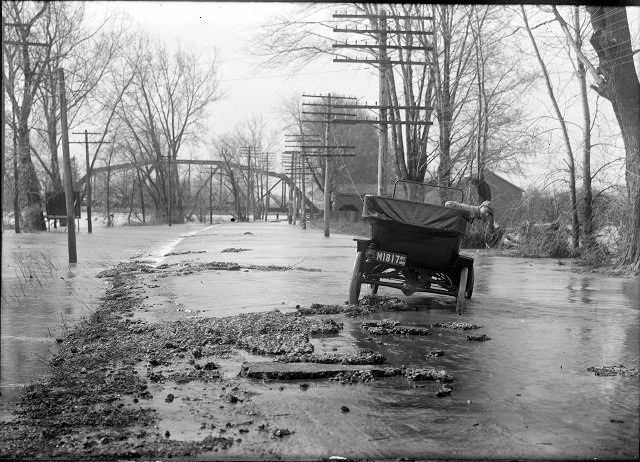
Inspection tours along the outer roadways allowed civic leaders and curious citizens to survey the extensive rural and suburban damage. A man leaned out from the window of an automobile to examine the severe erosion along River Road. The swollen river had chewed away at road embankments, collapsing sections of pavement and stranding nearby properties. Documenting these outlying areas was crucial for allocating county road repair funds and restoring vital transportation links between rural suppliers and the city. Motorists navigated cautiously along unstable shoulders, aware that further erosion could trigger sudden road collapses. These exploratory drives provided a comprehensive understanding of how widely the storm's impact had spread beyond downtown commercial blocks. The scarred landscape along River Road remained a visible reminder of the river's vast geographic reach during peak flood stages.
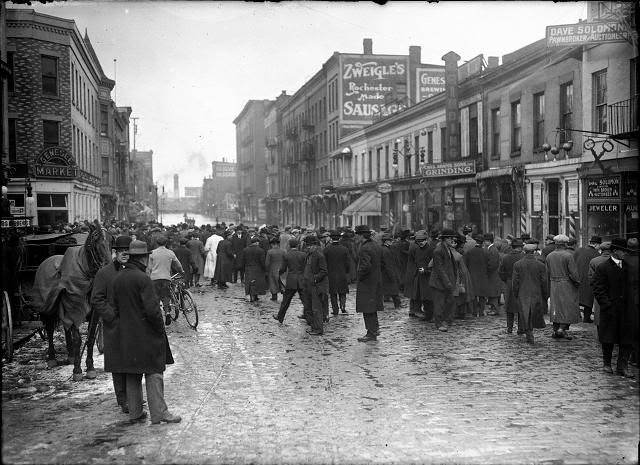
As water levels slowly dropped, life began returning to the perimeter of Front Street, where crowds gathered to witness the recovery. A man with a horse and buggy stood alongside pedestrians at the exact boundary of the remaining floodwaters. Prominent local establishments including Dave Solomon Pawnbroker and Auctioneer, Charles Adam's Grinding shop, and Zweigle's were visible in the background. The return of horse-drawn transport signaled an incremental restoration of commercial activity to the beleaguered street. Shopkeepers swept thick mud from their entryways while discussing repair estimates with neighbors and municipal officials. The mingling of pedestrians, buggies, and early automobiles created a chaotic street scene filled with energy and determination. This transitional phase marked the difficult pivot from emergency survival back toward long-term urban reconstruction.
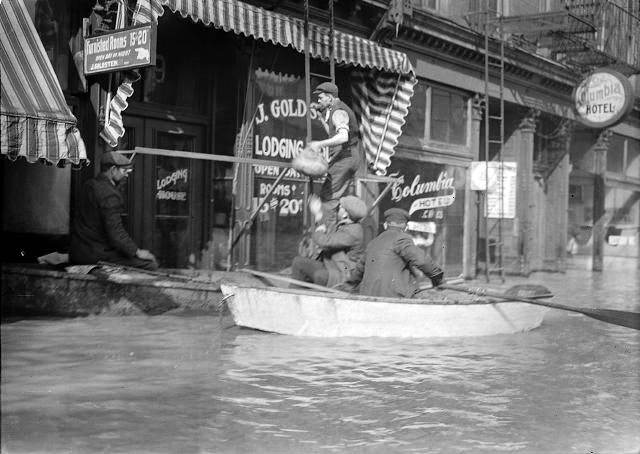
Relief efforts required innovative methods to reach families stranded on upper floors throughout the commercial district. Men climbed a wooden ladder extending from a rowboat to deliver essential food packages directly to windows of marooned residents. This rescue operation took place directly in front of Jacob Goldstein's Lodging House and J.C. Vine's Columbia Hotel. Families who had retreated upward to escape the rising waters relied entirely on these daring boat deliveries for daily sustenance. The delivery men balanced provisions carefully while maintaining their footing on swaying ladders suspended over deep water. Hotel operators opened their upper rooms to shelter displaced neighbors, fostering a remarkable spirit of communal support. These coordinated supply lines prevented widespread hunger and ensured that vulnerable residents survived the worst days of isolation.
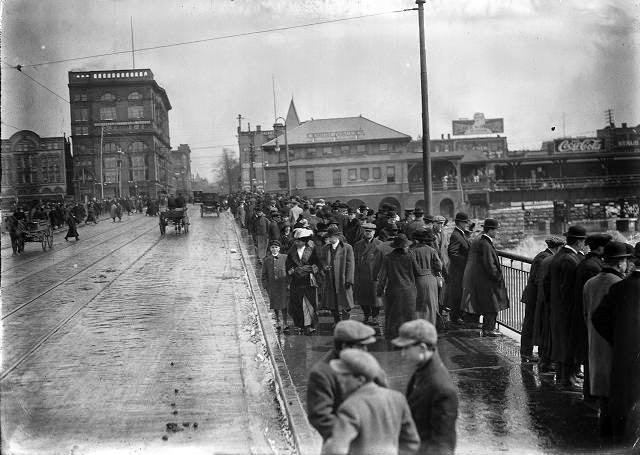
Public fascination with the historic crest drew massive throngs of sightseers to every elevated vantage point in the city. Pedestrians crowded the sidewalks of the Court Street Bridge, gazing down at the swirling brown waters below. A steady stream of horse-drawn carriages and early automobiles maneuvered carefully past the dense crowds of onlookers. Police officers stood at key intervals to keep traffic moving and prevent pedestrians from blocking the roadway entirely. The bridge functioned as an observation deck where citizens shared updates on neighborhood conditions and discussed the mounting recovery costs. This shared public experience fostered a strong sense of community solidarity in the face of natural disaster. The vibrant street life on the bridge contrasted sharply with the silent, abandoned storefronts located just blocks away.
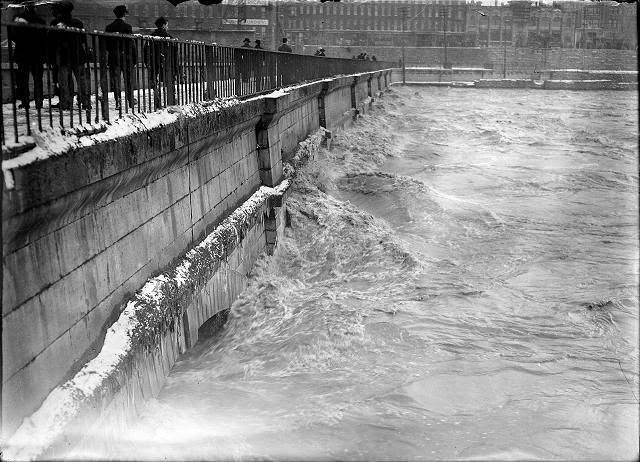
Hydraulic forces converged violently around the historic aqueduct near Broad Street, creating massive whirlpools facing South Avenue. The stone structure, designed to carry canals across the river, faced an immense test as debris slammed against its ancient masonry. Foaming brown water swirled turbulently through the stone arches, threatening nearby retaining walls and municipal utilities. Engineers monitored the aqueduct constantly to ensure that structural shifting did not trigger catastrophic downstream flooding. The roaring sound of water echoing through the stone channel could be heard blocks away, dominating the city's acoustic landscape. This critical junction highlighted the complex water management challenges that Rochester faced as an industrial hub built around a powerful river. Preserving these vital municipal assets required round-the-clock vigilance from city engineers and work crews.
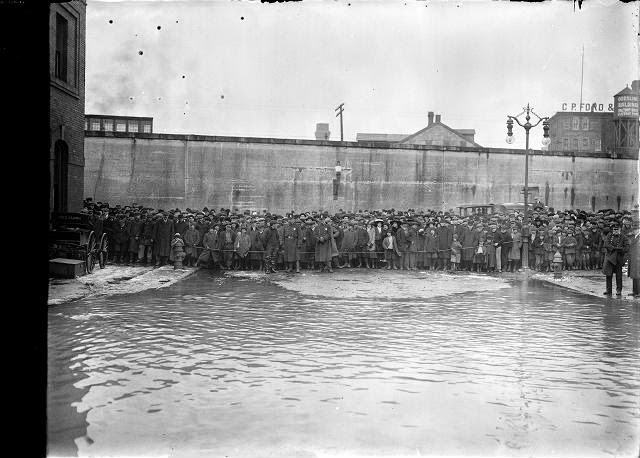
Police officers maintained strict perimeter control as large crowds pushed toward the water's edge on flooded Front Street. Officers linked arms and raised wooden barriers to hold back curious citizens eager to witness the receding waterline. The chaotic scene captured the tension between public curiosity and necessary municipal safety protocols in a disaster zone. As the floodwaters finally began their steady retreat back into the natural riverbed, the true scale of destruction became visible. Pavement was buckled, storefronts were caked in thick silt, and millions of dollars in inventory were ruined. By early April 1913, emergency operations officially concluded, transitioning the city into a massive, multi-month rebuilding effort. Merchants salvaged what they could, insurers processed endless claims, and city leaders began discussing long-term flood mitigation projects to prevent future catastrophes. The great flood ended not with a sudden halt, but through the grueling, collective labor of a resilient city determined to rise from the mud.