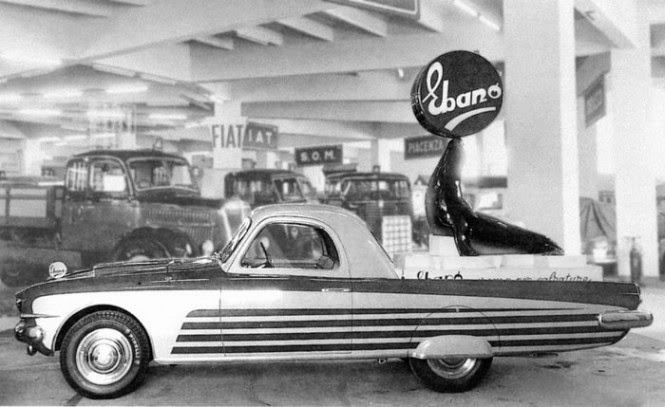
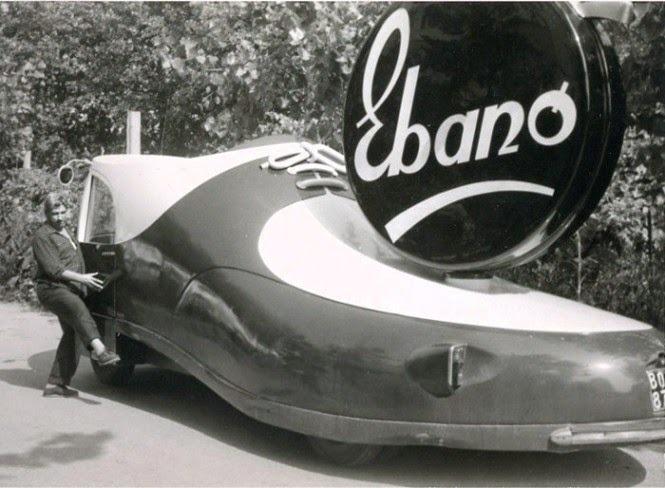
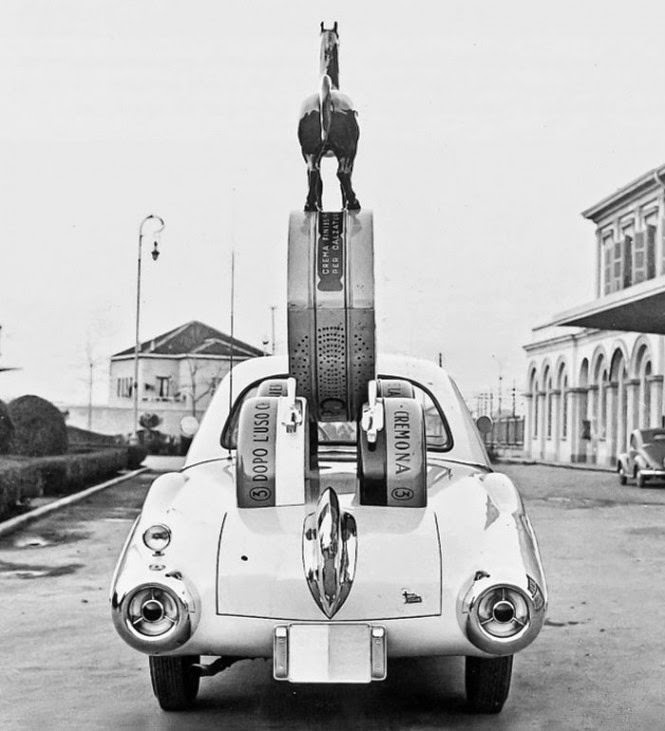
In mid-twentieth-century Italy, coachbuilders designed specialized automobiles to promote commercial products on public roads and at cycling competitions. Companies hired bodyshops to convert production vehicle chassis into rolling advertisements. The shoe polish industry made extensive use of these customized vehicles. Grazia bodyshop in Bologna built a car shaped entirely like an oversized shoe to advertise Ebano polish. The carrozzeria Fissore manufactured a pick-up style vehicle for Ebano, as well as a custom car for Cavallino shoe polish with a large aluminum storage box and brand logo mounted on the rear.
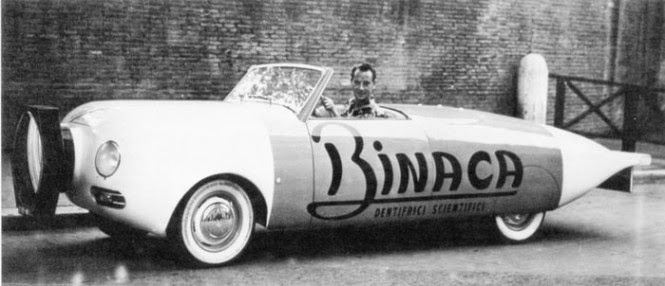
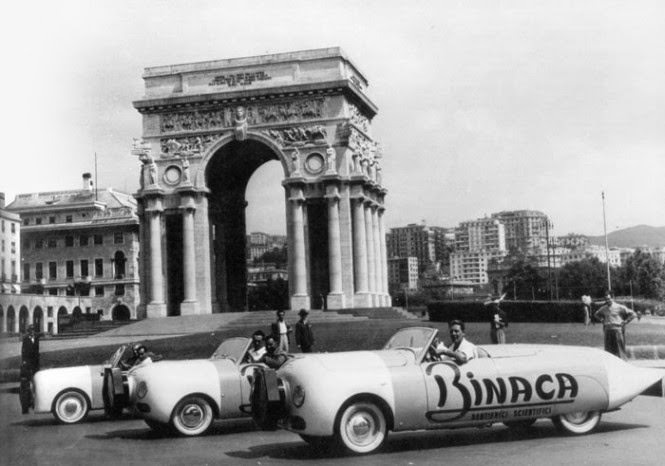
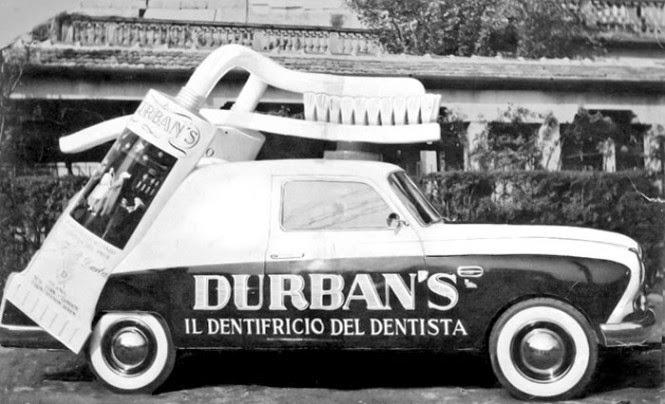
Toothpaste manufacturers also hired Italian bodyshops to create distinctive marketing fleets. The Boneschi bodyshop built specialized advertising cars for Binaca toothpaste. Multiple Binaca promotional cars drove in the publicity caravan during the 33rd Giro d'Italia bicycle race. Fissore constructed a dedicated advertising vehicle for Durban's toothpaste, mounting product tubes and signs over the vehicle body.
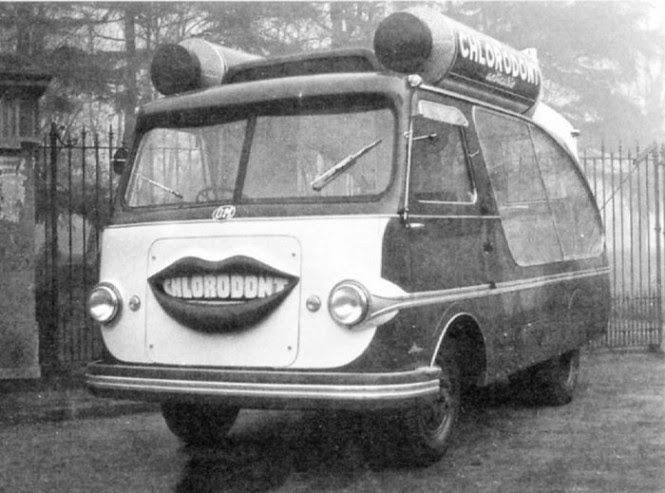
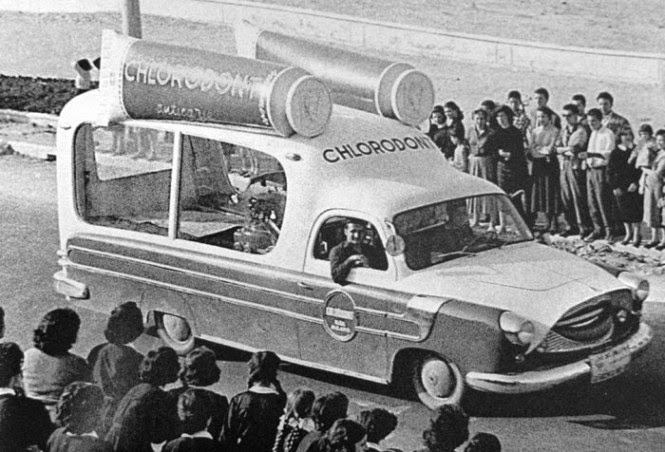
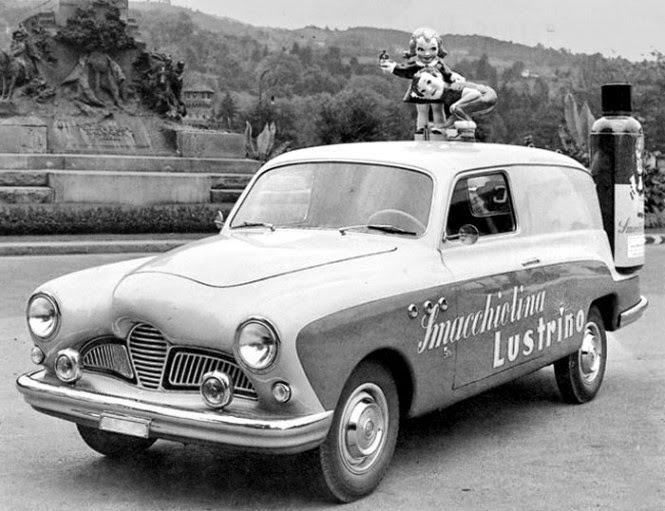
Chiorodont toothpaste ordered advertising cars from custom bodyshops, including Boneschi. These Chiorodont vehicles displayed oversized product names and modified coachwork. Fissore built a station-wagon style body on a Fiat 1100 chassis for promotional cleaning products. The roof of this Fiat 1100 carried three-dimensional figurines representing the brand characters Smacchiolina and Lustrino.
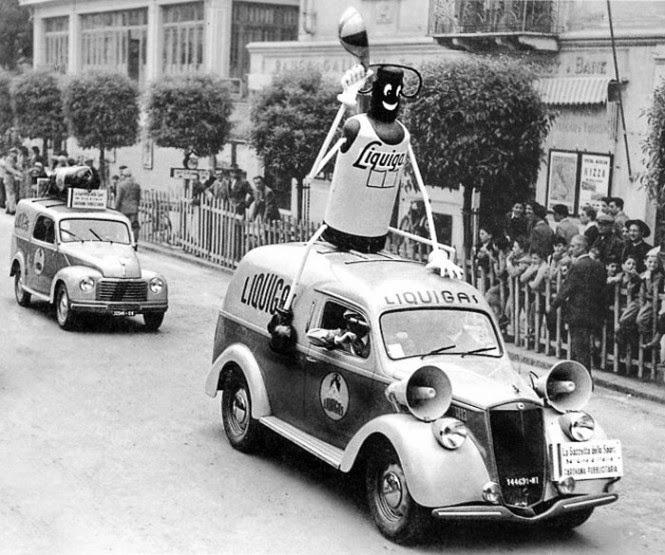
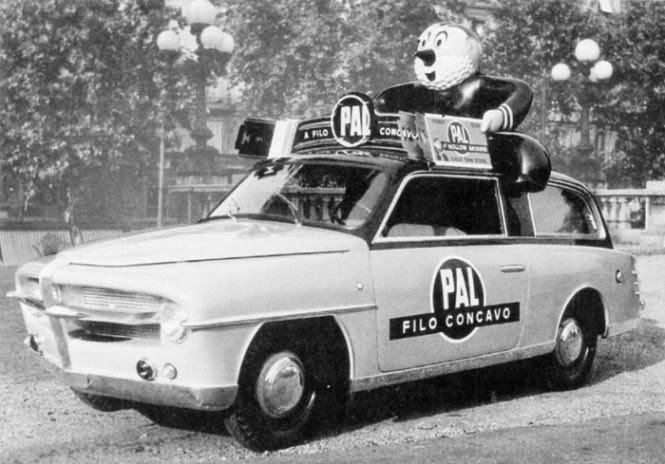
Fuel companies and personal grooming brands promoted their wares on Italian highways and during cycling events. A Lancia van joined the 34th Giro d'Italia with the silhouette of the Liquigas puppet alongside a replica liquefied petroleum gas cylinder. Boneschi constructed an estate car to market Pal hollow ground blades, fitting an oversized model of a safety razor to the roof.
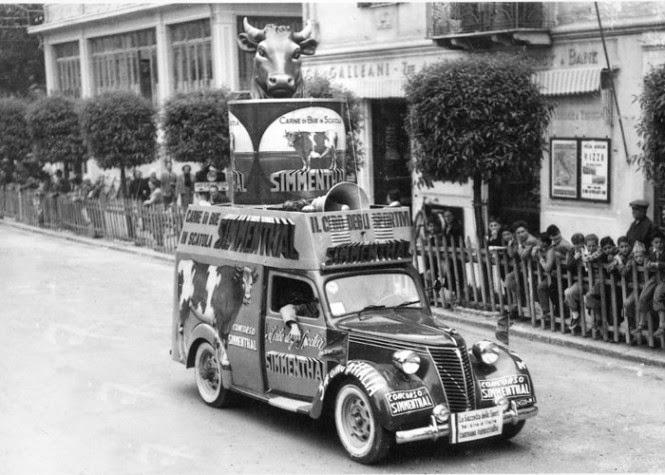
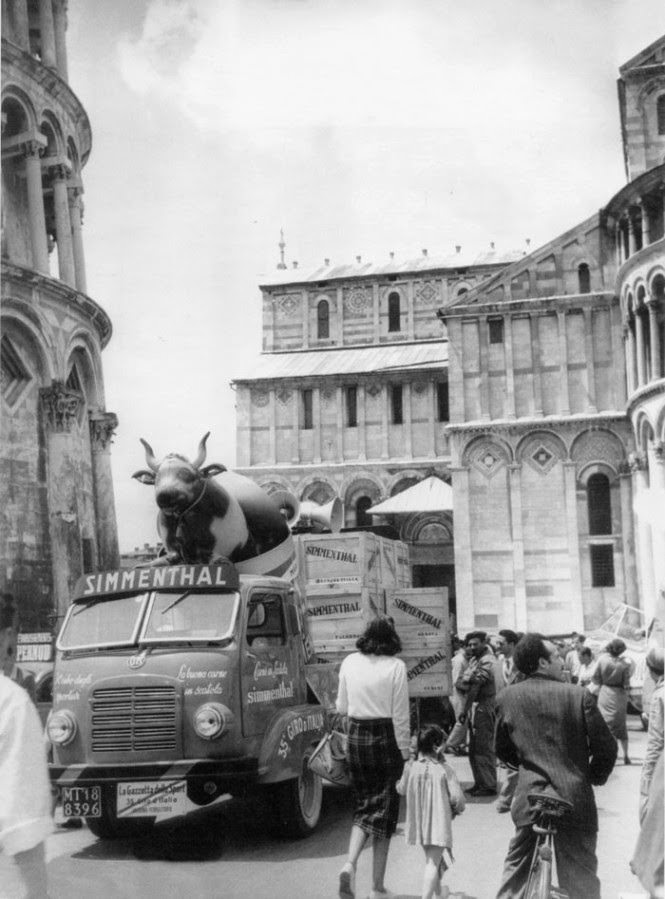
Food companies placed custom sculptures directly onto their promotional fleets. During the 34th Giro d'Italia, a Fiat 1100 drove the route featuring a large replica of a Simmenthal canned meat tin mounted behind the passenger cabin. For the 35th Giro d'Italia, Simmenthal deployed a promotional vehicle topped with a large sculpted cow.
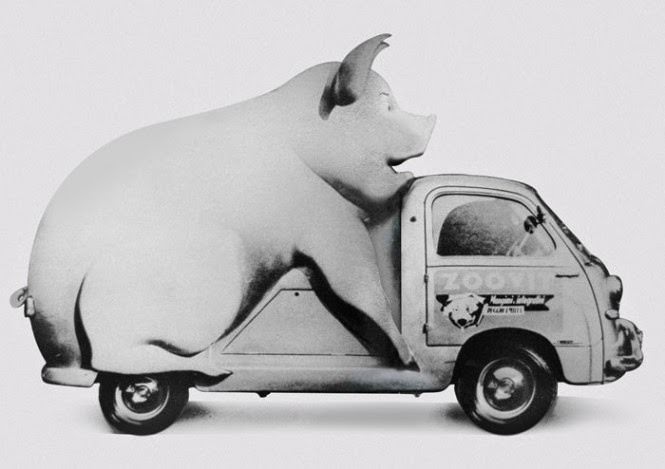
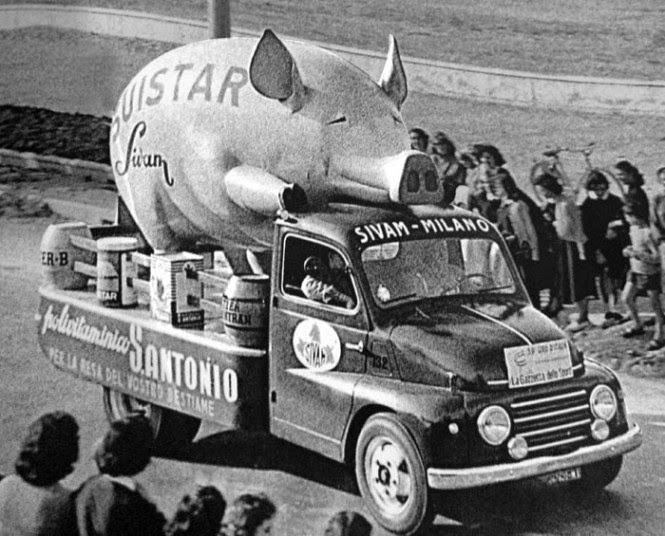
Agricultural and veterinary businesses built advertising vehicles to reach rural and urban audiences. Zoovit manufactured a specialized vehicle for its animal feed products, featuring a sculpted rooster and farm animals mounted over the cab. The firm SIVAM, an acronym for Società Italiana Veterinaria Agricola Milano, operated a customized promotional car bearing its corporate title across the sides.
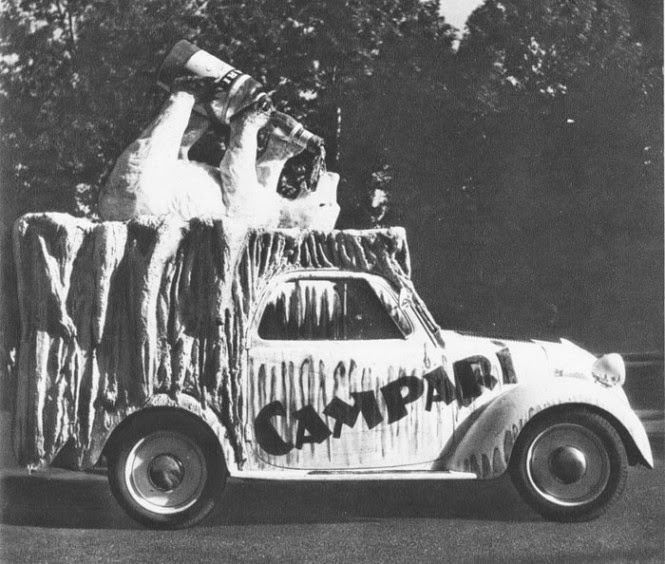
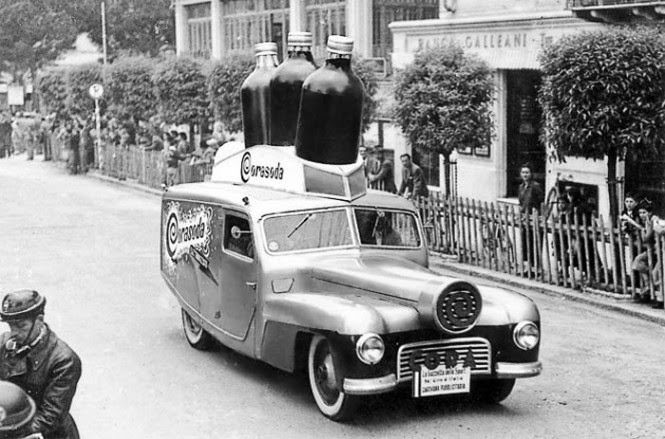
Beverage makers adapted small passenger cars to advertise bottled refreshments. A Fiat Topolino was customized with a three-dimensional statue of the glutton bear drinking Campari Cordial from an oversized bottle. The Cora company advertised its Corasoda beverage using an automobile with a specialized roof modification and lettering that displayed the product name.
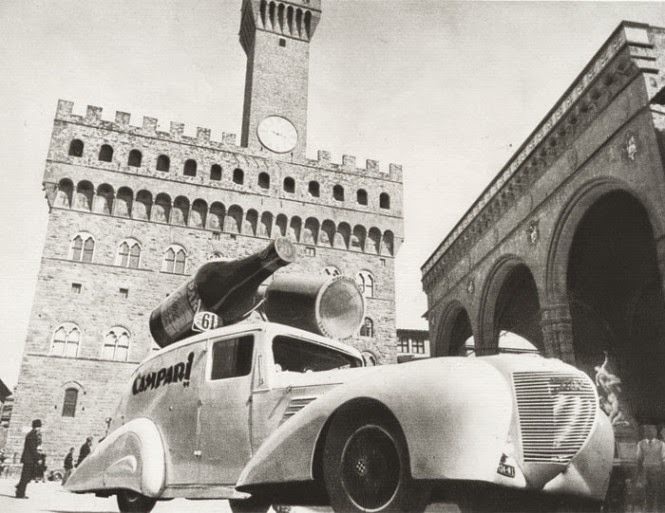
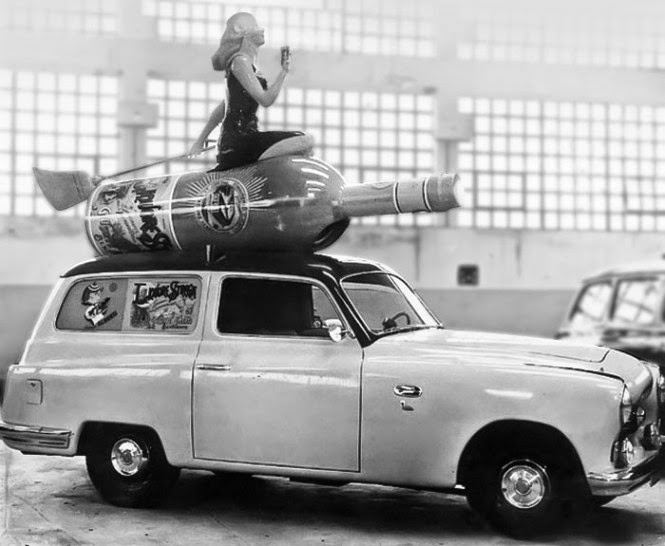
Promotional cars appeared in major Italian bicycle races before World War II. During the 1938 Giro d'Italia, a customized Packard carried oversized Campari bottles on its roof while parked outside the Palazzo Vecchio in Florence. Later, Strega Alberti liquor commissioned a promotional car featuring an enlarged liqueur bottle integrated into the rear trunk section.
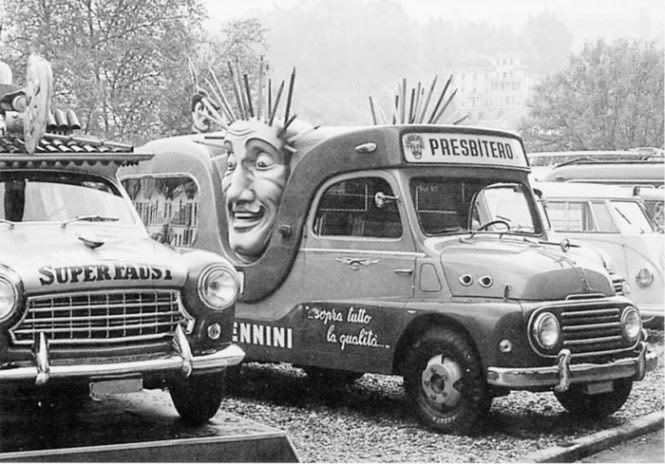
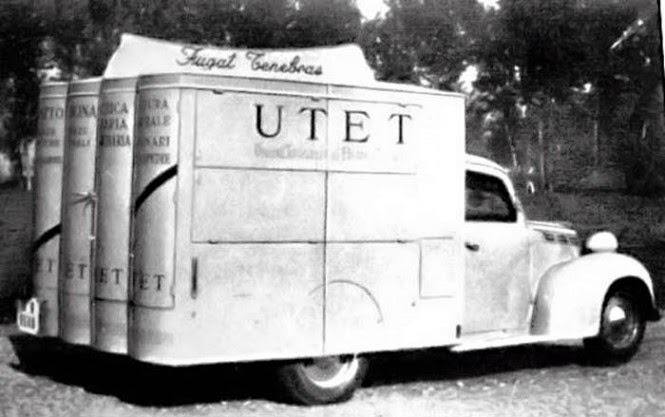
Office supply manufacturers and book publishers also commissioned unique vehicle bodies. The Coriasco bodyshop in Turin built an advertising car for Presbitero, placing large replica pen nibs and colored pencils along the roofline. Coachbuilder Scall in Turin customized a Fiat 1100 EL for the UTET publishing house, mounting open-book structures and publisher crests directly on the bodywork.