Today, the diet industry is a machine. Over 50 million Americans go on a diet every single year, and they collectively spend around $66 billion on weight-loss products annually. The pressure to be thin comes from every direction — celebrities, magazines, social media, and advertising. But flip back the calendar to the 1930s, 1940s, and 1950s, and you’ll find a world where the exact opposite message was being sold to women.
During those decades, being thin wasn’t considered attractive. It was considered a problem. Newspapers and magazines ran ads that warned women about the dangers of being “skinny” and promised them a better life if they could just put on a few pounds. The reasons these ads gave were sometimes practical, often strange, and occasionally jaw-dropping by today’s standards.

The mid-20th century beauty ideal centered on curves. A fuller figure was seen as a sign of health, femininity, and attractiveness. Being underweight, on the other hand, was associated with weakness, poor health, and being unappealing to men. Advertisers leaned into all of these ideas hard, and the ads they produced are a fascinating window into how dramatically beauty standards can shift over time.

One of the biggest players in this space was WATE-ON, a supplement brand that became well known for its weight-gain products. WATE-ON ran ads in major magazines throughout the 1940s and 1950s, targeting thin women with promises that their product would help them fill out their figure fast. The ads featured before-and-after style storytelling, showing a thin, unhappy woman transforming into a curvier, confident one.

The reasons these ads gave for gaining weight ranged from sensible to absurd. Looking better in a bathing suit was a common selling point. So was attracting a husband or keeping a man’s interest. Some ads flat-out told women that men found thin women unattractive. Others warned that being skinny made a woman look old, tired, or sickly.


A number of ads tied weight gain directly to confidence and social success. A thin woman, according to these advertisements, was someone who got passed over at parties, ignored by men, and pitied by friends. Gaining weight, the ads promised, would fix all of that. She would become the life of the party, admired and desired.

Some of the ads went even further, framing thinness as a medical issue. They used language that sounded scientific, claiming that underweight women suffered from poor energy, weak nerves, and even reduced sexual desire. Gaining weight, they argued, would correct all of these problems. Whether any of these claims had medical backing was rarely questioned at the time.


Magazines of the era weren’t shy about running these ads alongside their regular editorial content. A woman might read a fashion spread on one page and then turn to an ad telling her she was too thin on the next. The messaging was constant and consistent: curves were the goal, and products existed to help you get there.


The language used in these ads is striking. Words like “scrawny,” “bony,” and “skinny” were thrown around as insults. One recurring theme was the embarrassment of being seen in a swimsuit with a thin figure. Ads promised women they would no longer feel ashamed at the beach once they gained weight. The shame-based marketing worked in both directions — just aimed at a different body type than it is today.


Some ads targeted women who had recently been ill or had lost weight due to stress or hardship. These positioned weight gain as recovery — a return to health and normalcy. The framing was sympathetic, but the product being sold was still a weight-gain supplement, and the underlying message was the same: thin is bad, fuller is better.


Celebrities and icons of the era reinforced these standards in ways that advertising alone couldn’t. The most admired actresses and pin-up models of the 1930s through 1950s had fuller, curvier figures. This made the ads feel culturally accurate — they reflected what audiences actually saw celebrated on movie screens and magazine covers.


The products being advertised weren’t just supplements. Some ads promoted high-calorie foods, vitamin tonics, and pills that claimed to stimulate the appetite. A few advertised specific meal plans or powders to be mixed into drinks. The variety of products available shows just how much demand there was — or at least how much advertisers believed they could manufacture.


Men were often written into these ads as the measuring stick for a woman’s success. Ads frequently depicted a thin woman being ignored or rejected by men, while a curvier woman attracted attention and admiration. The message was clear: gaining weight made a woman more desirable, and being desirable to men was presented as the ultimate goal.


What makes these ads so striking today isn’t just the reversed beauty standard — it’s the boldness of the claims. Modern advertising is heavily regulated when it comes to health claims. But in the 1930s and 1940s, a supplement brand could promise that its product would make a woman more attractive, more energetic, more sexually appealing, and more socially successful, all in a single ad.


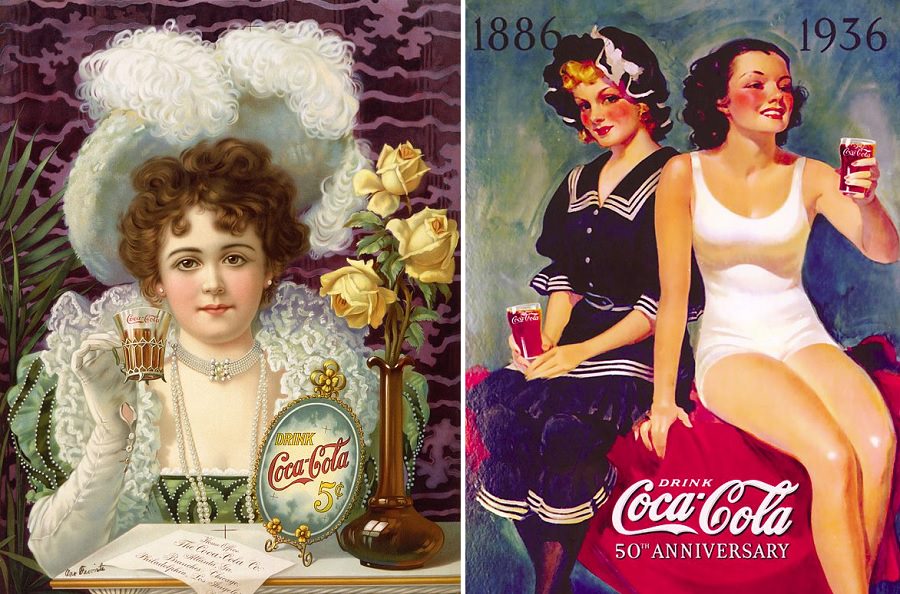
The art style of the ads is also worth noting. Many were illustrated rather than photographed, which gave advertisers full control over how the idealized female body was depicted. The illustrated women in these ads had hourglass figures, full hips, and rounded arms. These images set the visual standard that the ads then promised readers they could achieve.


By the late 1950s and into the 1960s, the ideal began to shift. Thinner models started appearing more frequently on runways and in magazines. The cultural obsession with thinness that dominates advertising today began to take hold, and the weight-gain ads slowly faded from the pages of mainstream publications.


Looking back at these ads now, they serve as a clear reminder that beauty standards are not fixed facts — they are constructed, marketed, and sold. The same advertising industry that once told women to gain weight pivoted to telling them to lose it, using the same tactics, the same shame-based language, and the same promise that changing your body would change your life.