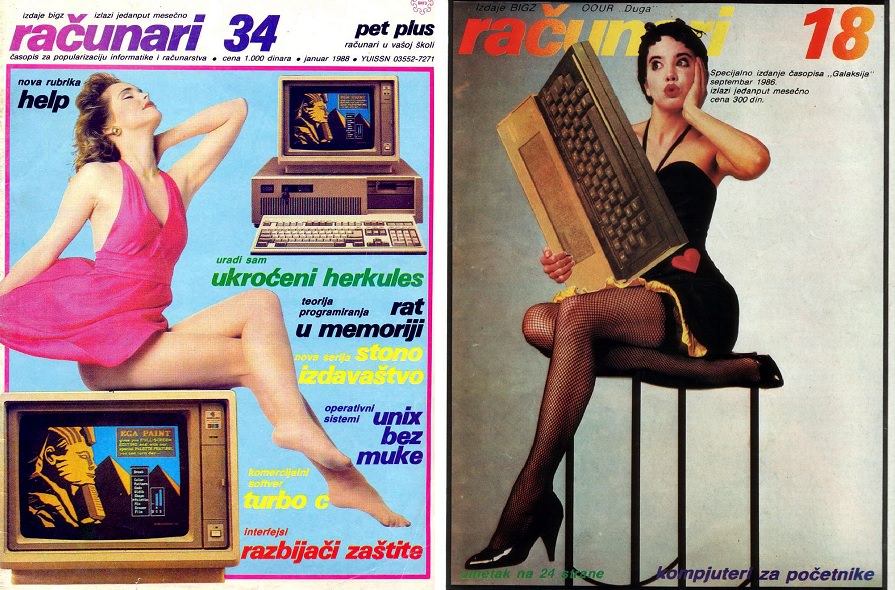
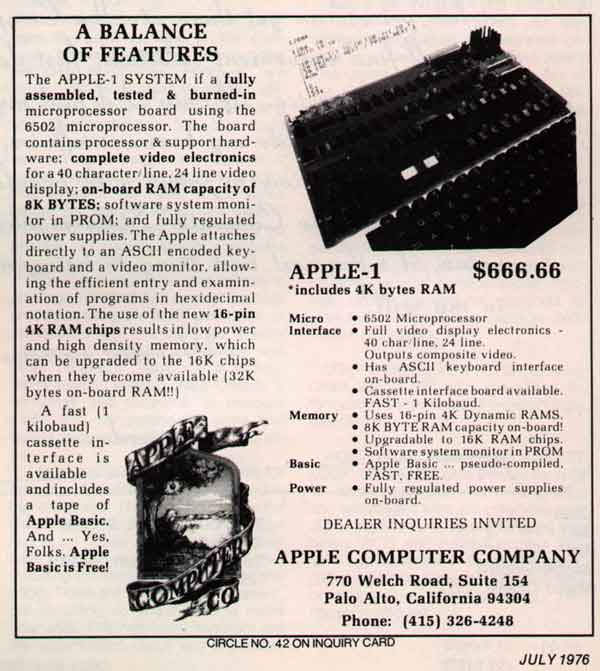
Apple Computer Inc. was founded in 1976, and from the start, it had to solve a unique problem: convincing ordinary people that a personal computer was something they actually needed. Its earliest ads ran in magazines like BYTE and Scientific American, targeting electronics hobbyists who already spoke the language of circuits and code.
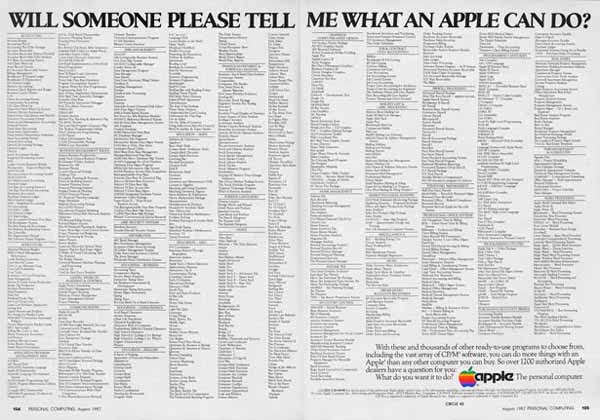
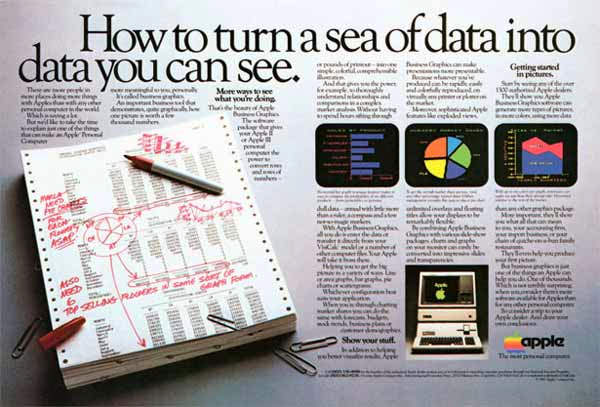
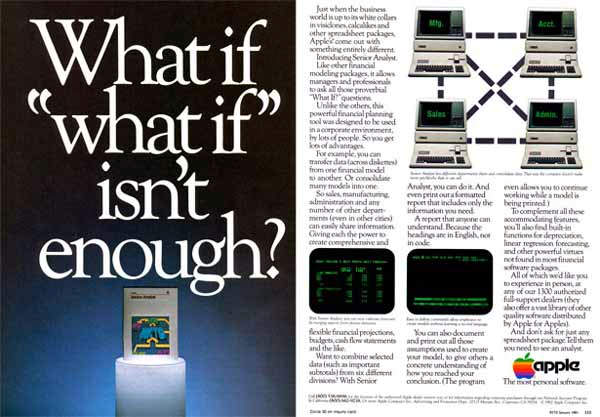
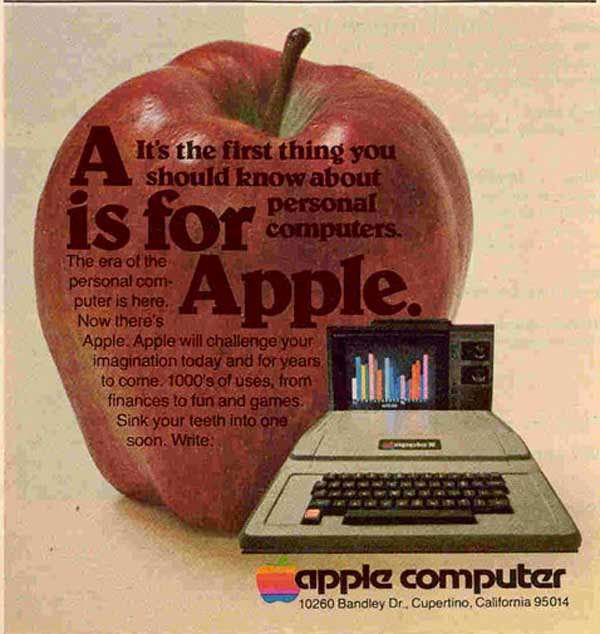
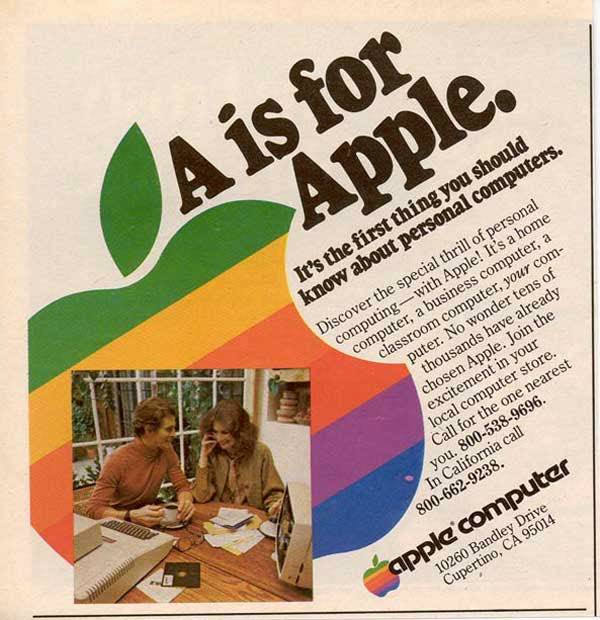
Those first Apple II ads were packed with text. They listed technical specs, explained color graphics capabilities, and highlighted the built-in BASIC programming language. One early ad headlined “A is for Apple” walked readers through how the computer could manage a stock portfolio, teach a child arithmetic, or organize household finances. The tone was educational — designed to make the idea of owning a computer feel less intimidating.
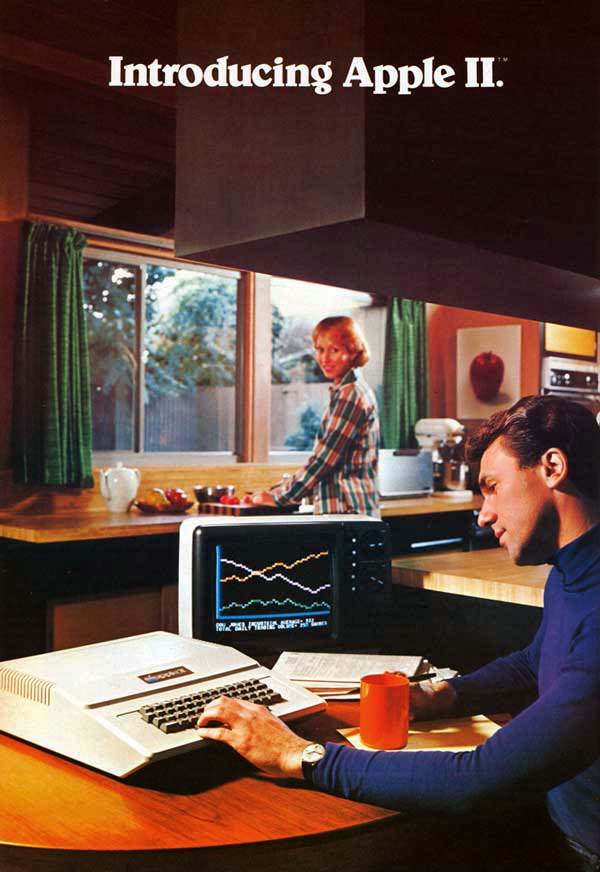
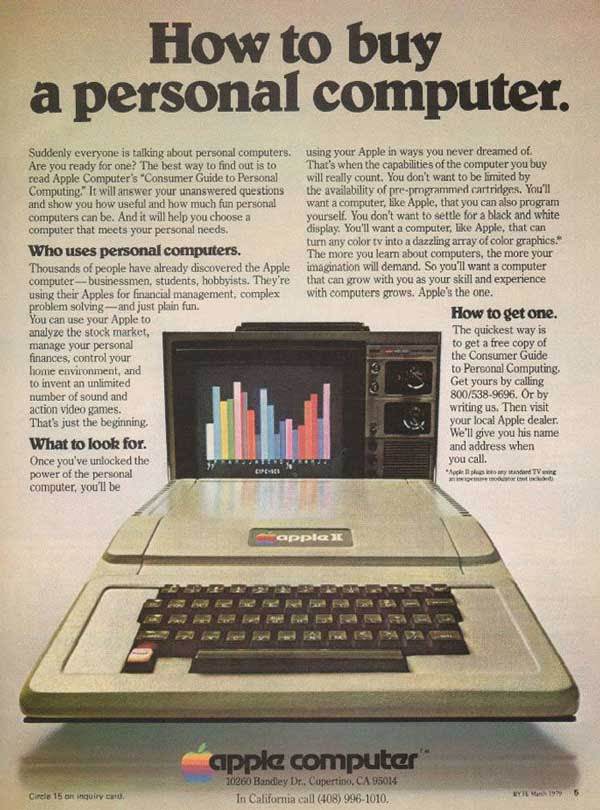
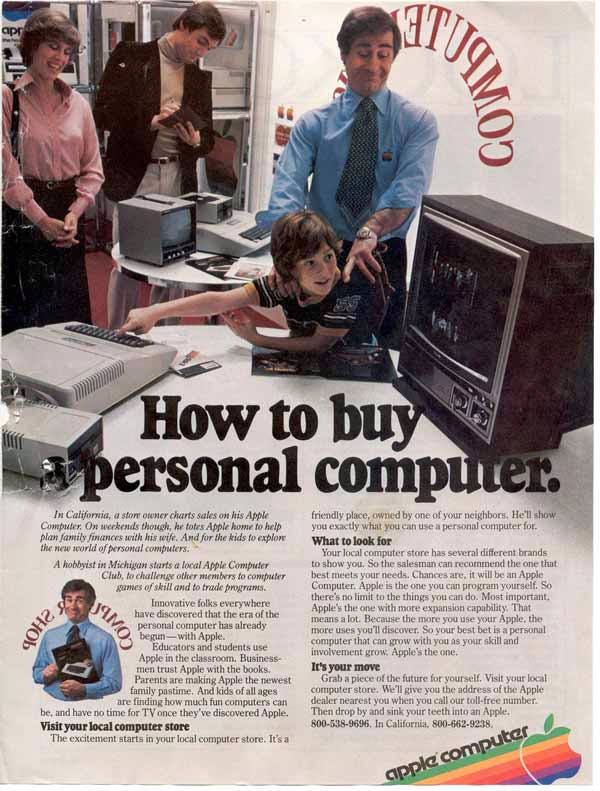
A 1979 ad took a more practical angle. It showed a man using an Apple II in his kitchen under the headline “How to buy a personal computer.” Below it ran a checklist of features a good personal computer should have — and the Apple II checked every box. It was a straightforward sales pitch dressed up as consumer advice.
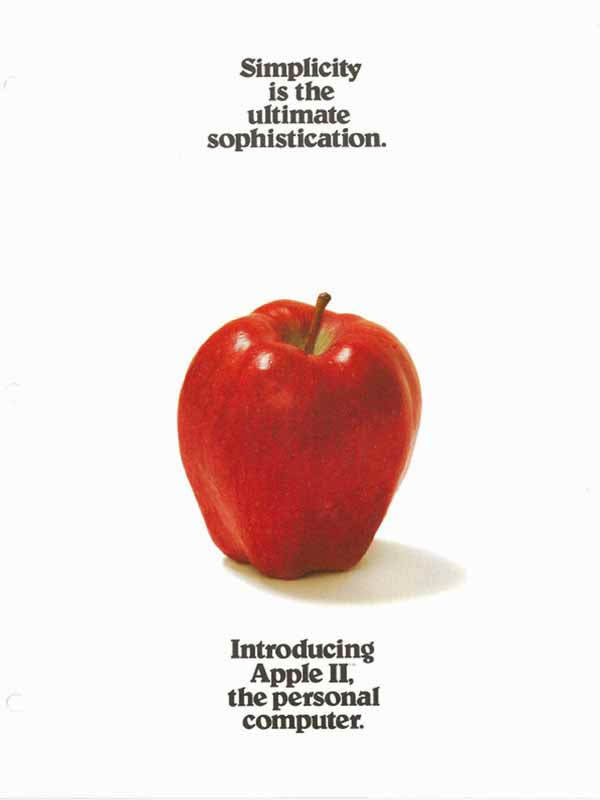
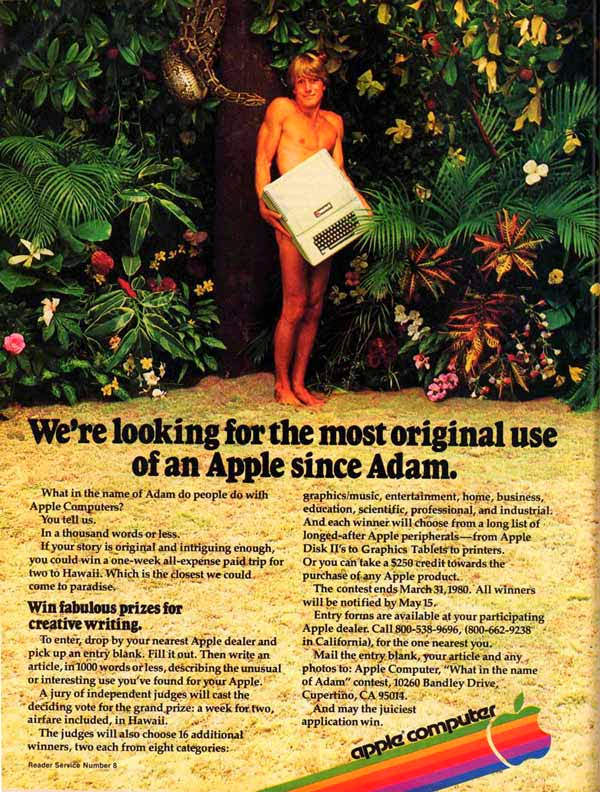
As the 1980s began, Apple’s ads grew more ambitious. A 1981 campaign featured an image of Adam and Eve in the Garden of Eden, with a serpent offering an apple. The headline: “We’re looking for the most original use of an Apple since Adam.” The ad invited users to submit creative applications for a contest — a clever way to both engage the community and showcase what the machine could do.
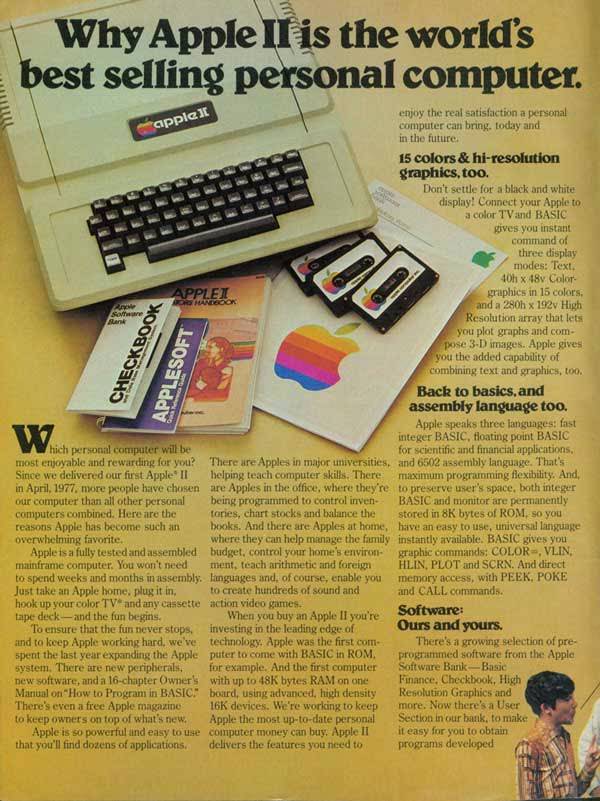
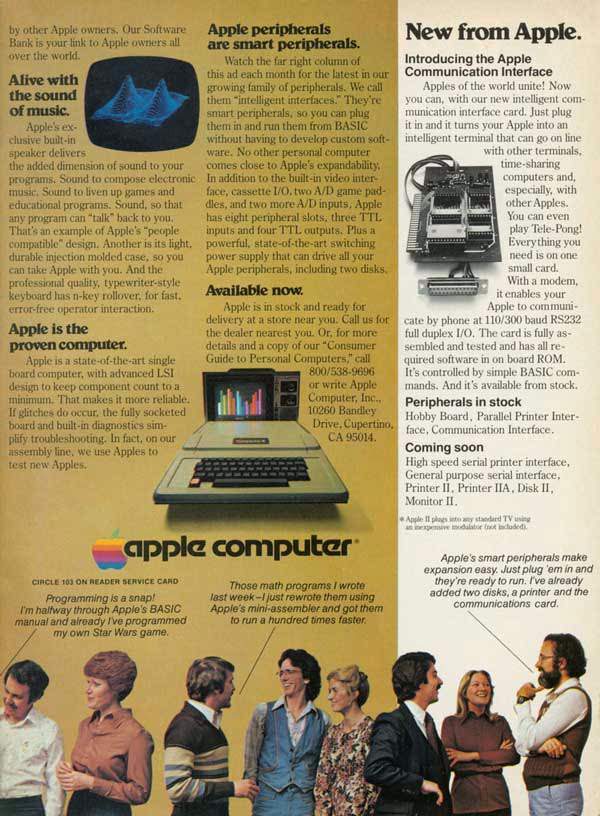
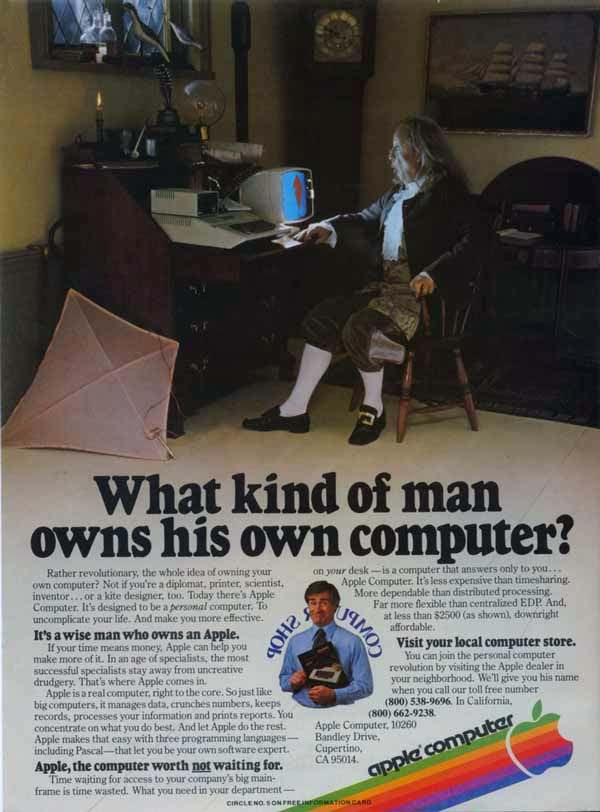
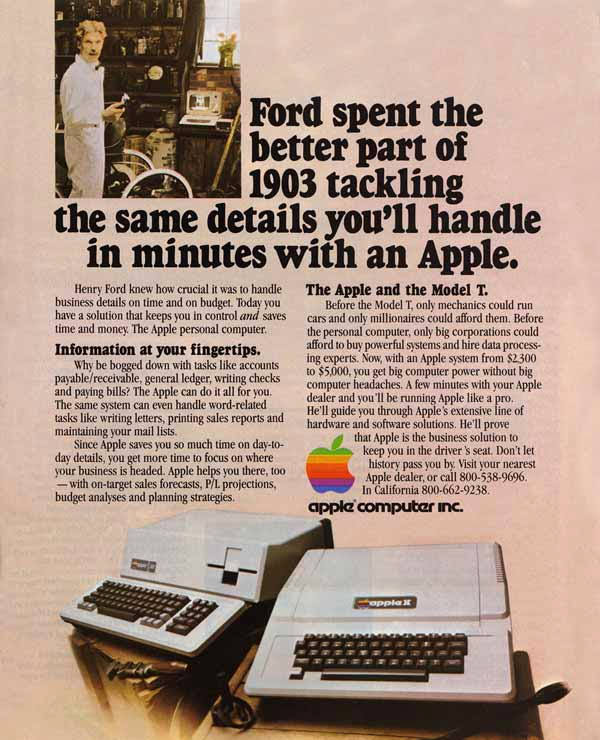
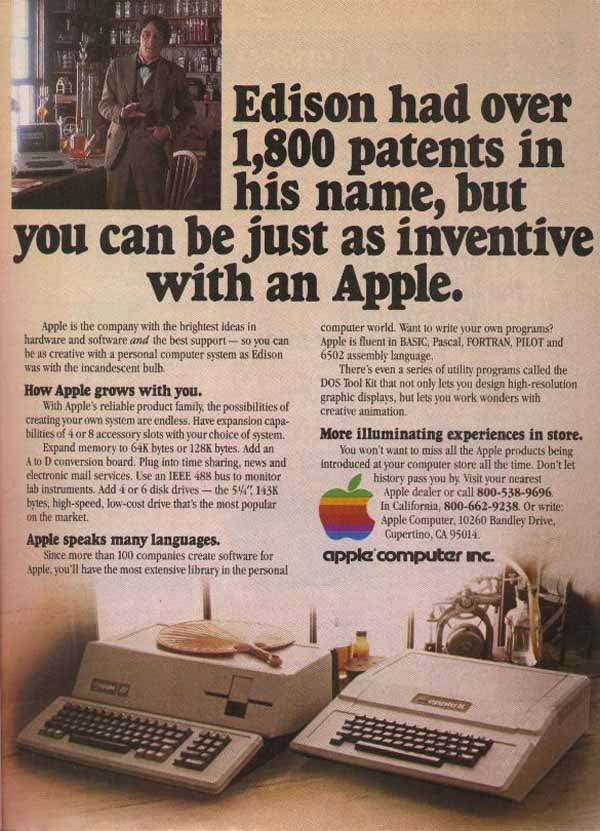
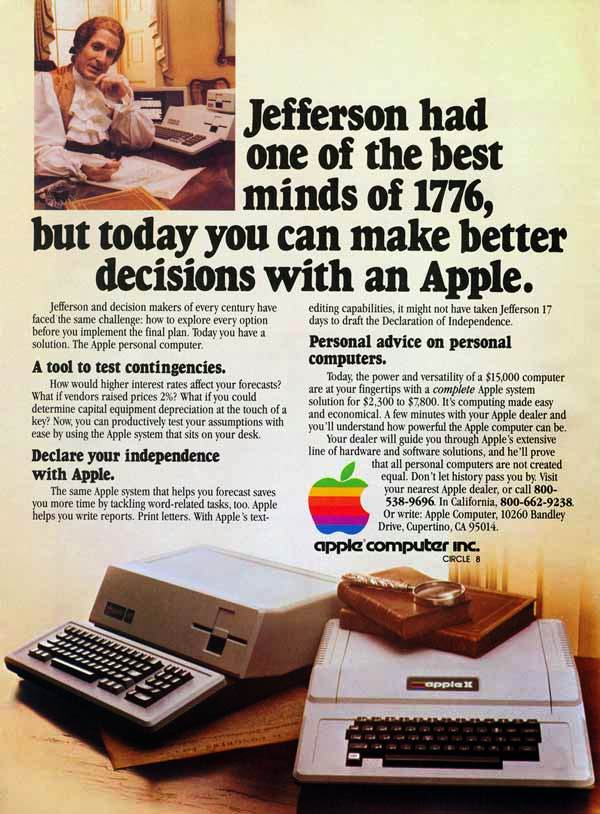
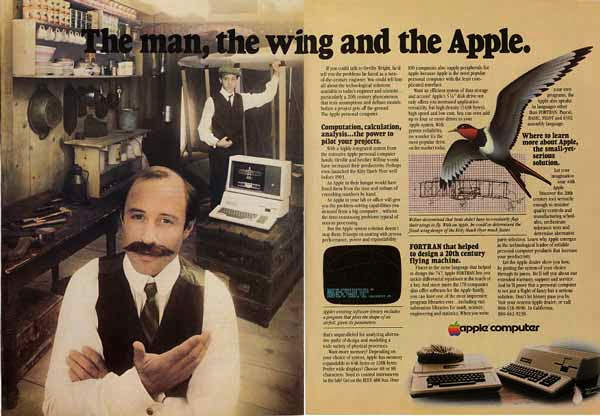
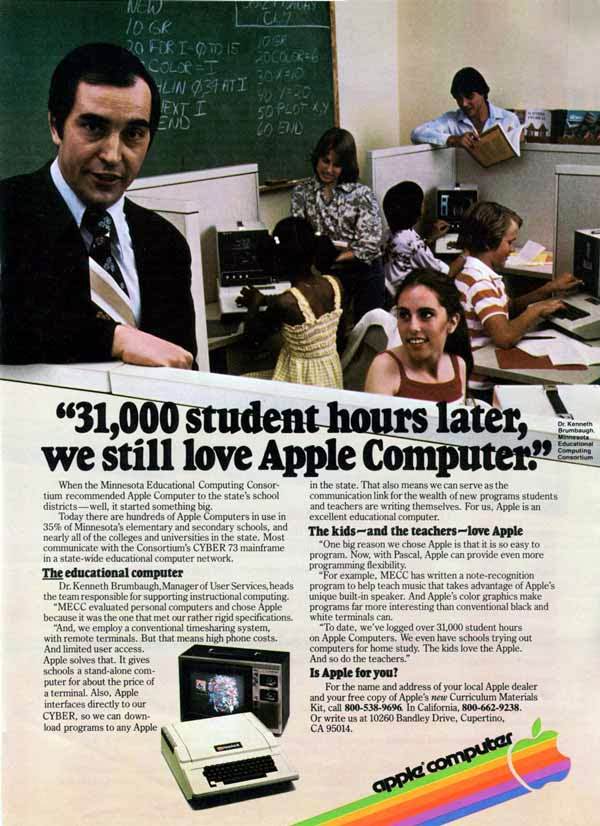
Around this time, Apple ran a campaign called “The Newton of our day.” It featured portraits of historical figures like Thomas Edison and Henry Ford, positioning the Apple computer as a tool for modern-day innovators. The layout was consistent across these ads: one bold image at the top, a strong headline, and dense columns of text below.
Then came January 1984. Apple aired a television commercial during the Super Bowl to announce the Macintosh. Directed by Ridley Scott, the ad — titled “1984” — showed a grey, uniform society ruled by a Big Brother-like figure on a giant screen. A lone female athlete runs in and smashes the screen with a sledgehammer. The final text read: “On January 24th, Apple Computer will introduce Macintosh. And you’ll see why 1984 won’t be like ‘1984’.” It aired nationally just once.
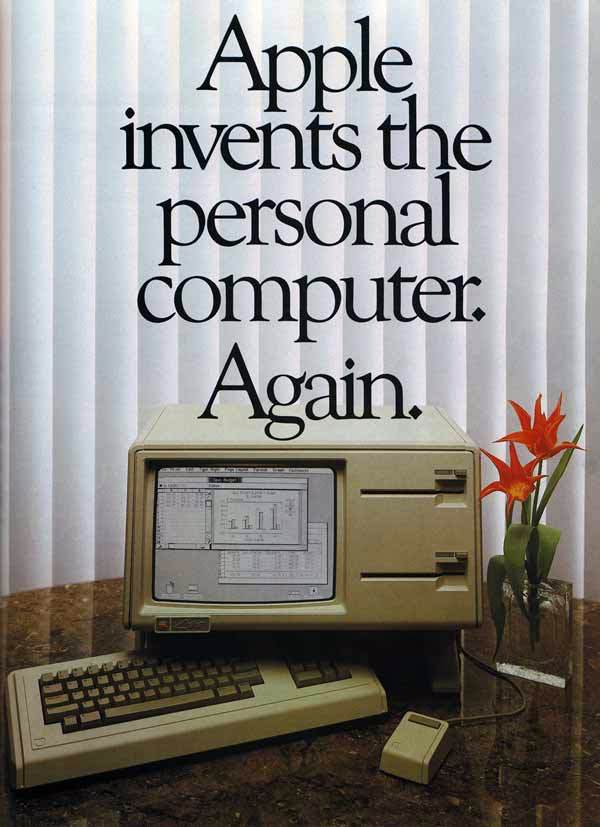
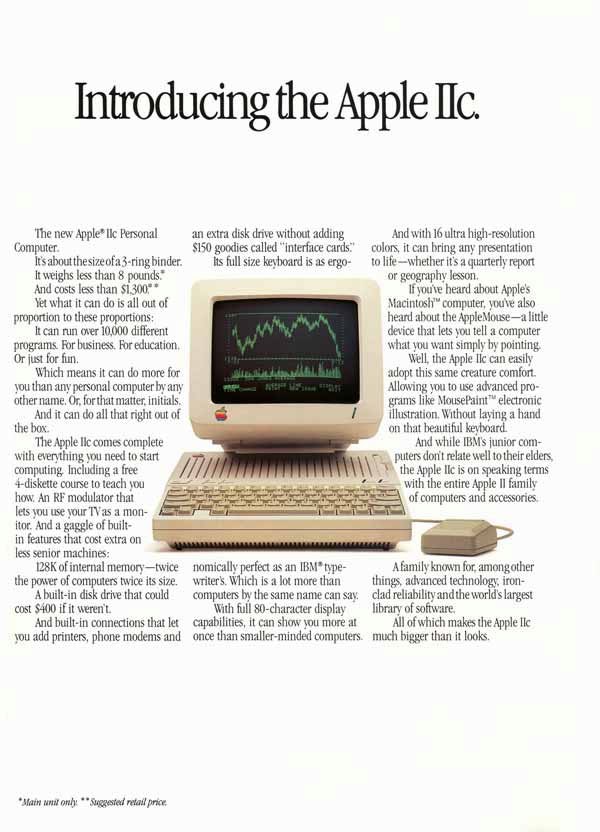
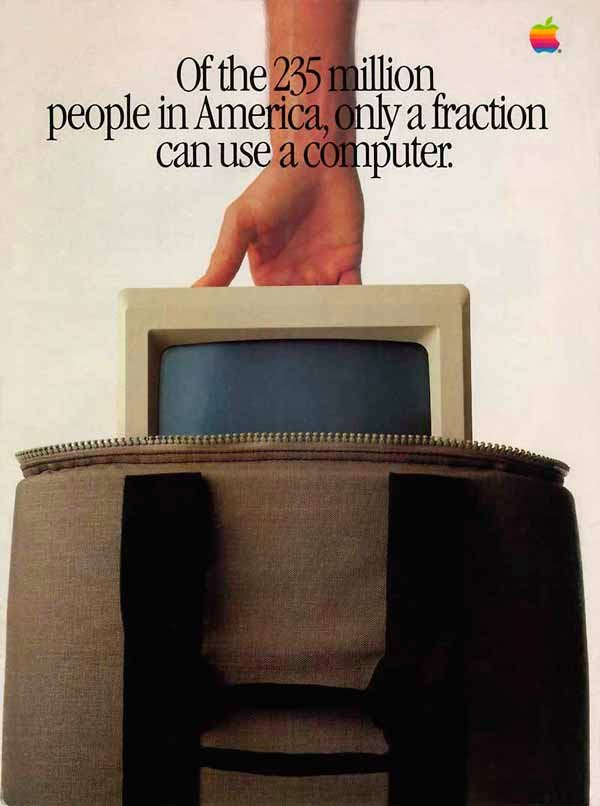
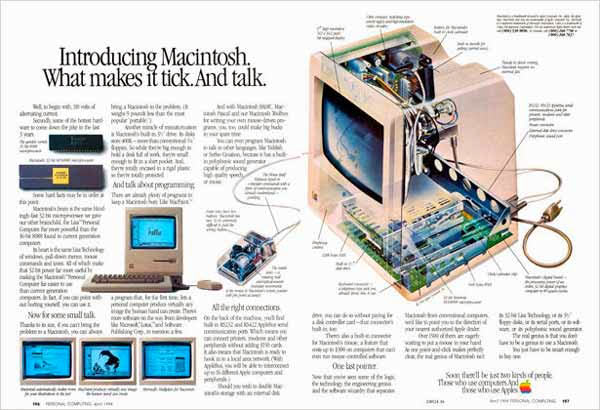
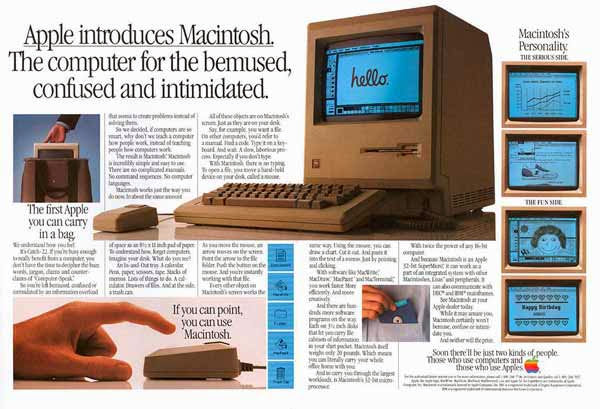
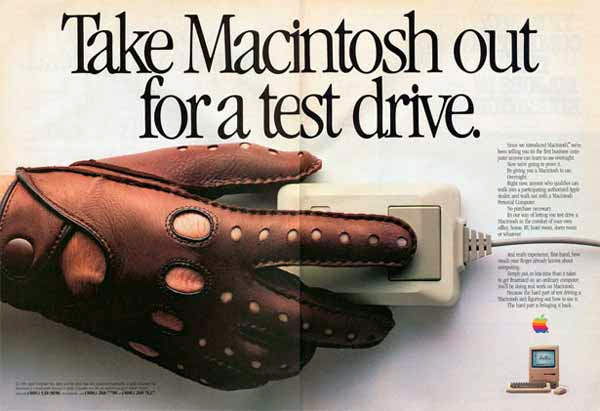
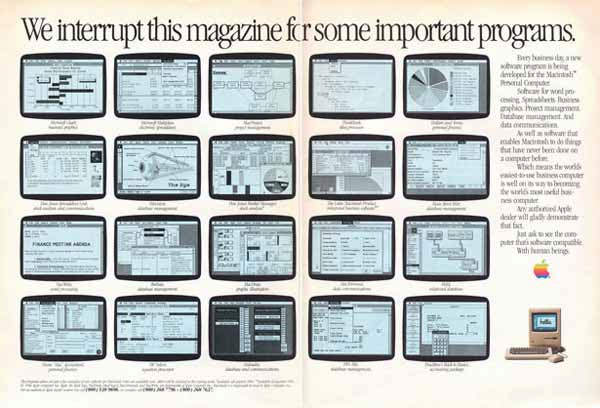
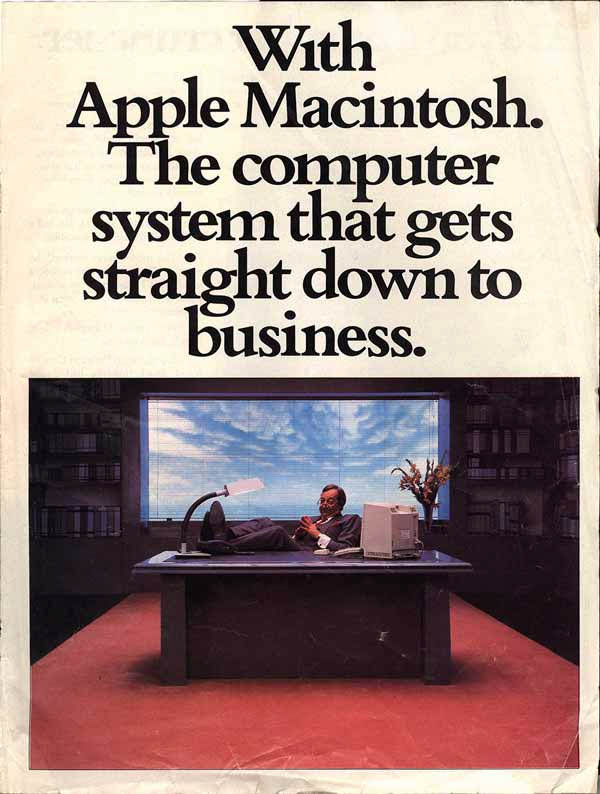
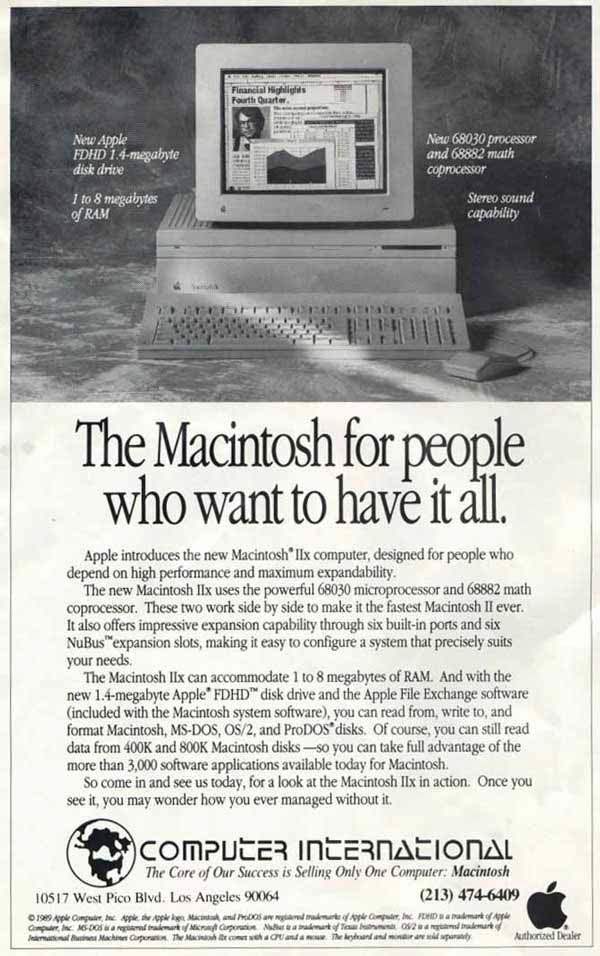
The commercial generated enormous media coverage. Apple followed it with a multi-page print insert in major magazines explaining what the Macintosh was. The ads showed its graphical interface — windows, menus, fonts, and icons — and introduced readers to a pointing device called a “mouse.” For most people, this was their first look at a computer you could operate by pointing and clicking rather than typing commands.