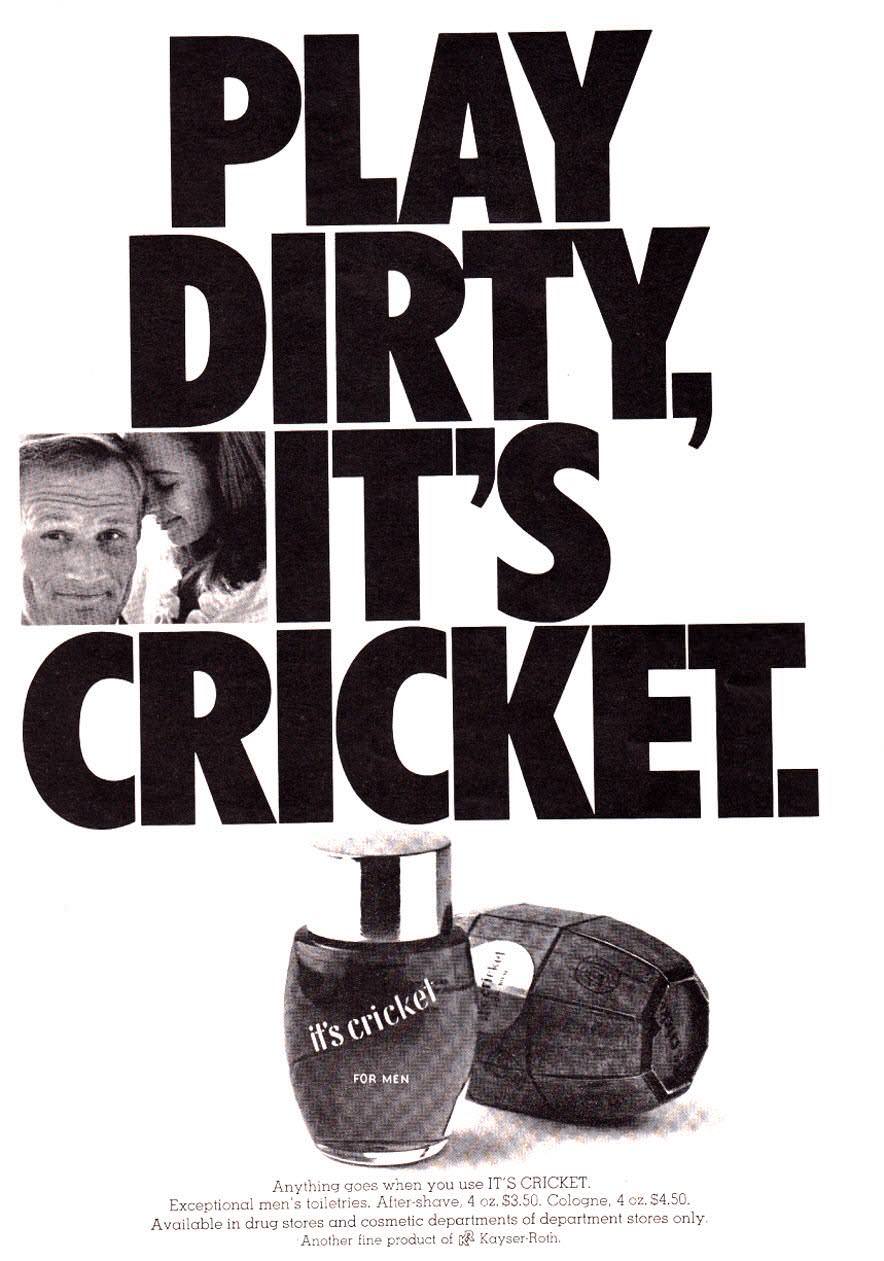

Aftershave was never just a skin product. By the 1960s, it had become a vehicle for selling an idea — specifically, an idea about what kind of man you were. Advertisers understood that men were less likely to buy grooming products unless those products were tied to something bigger than skincare. So they tied them to power, sex appeal, and status.
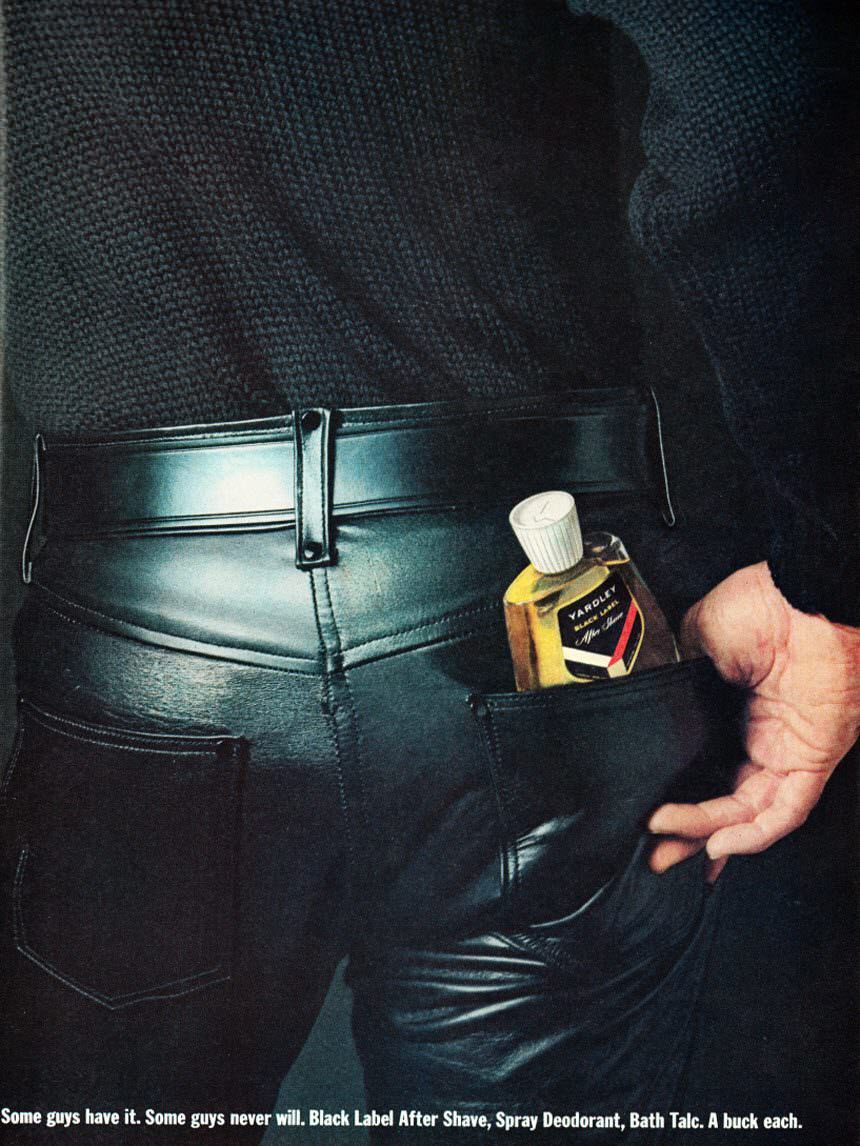
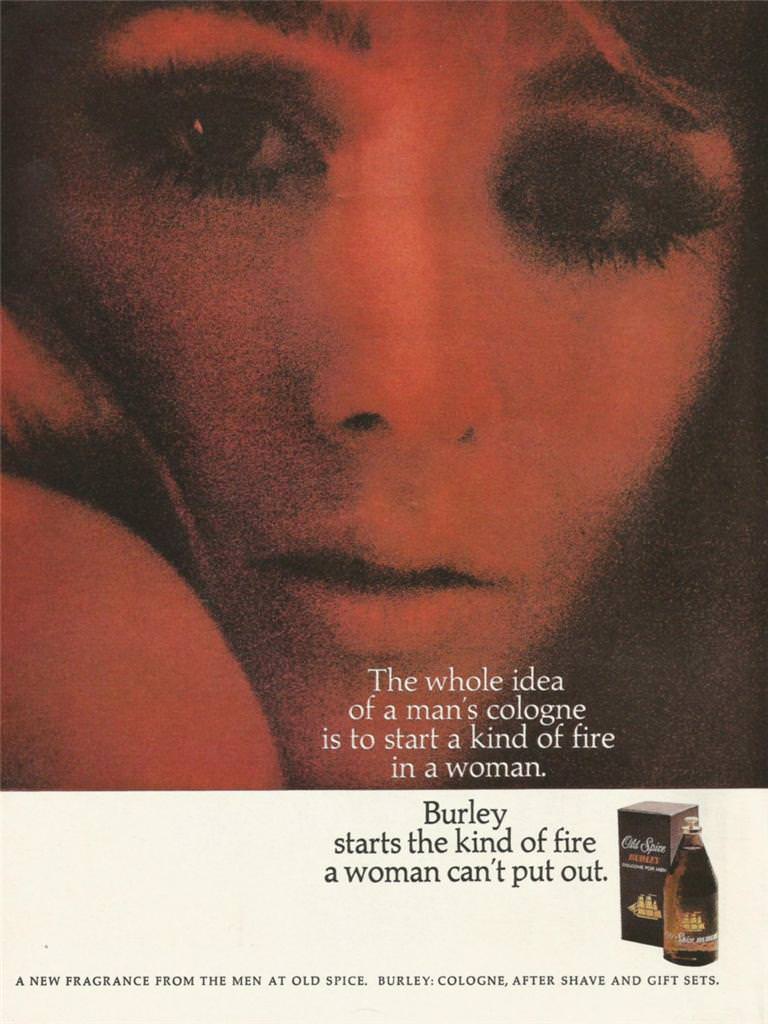
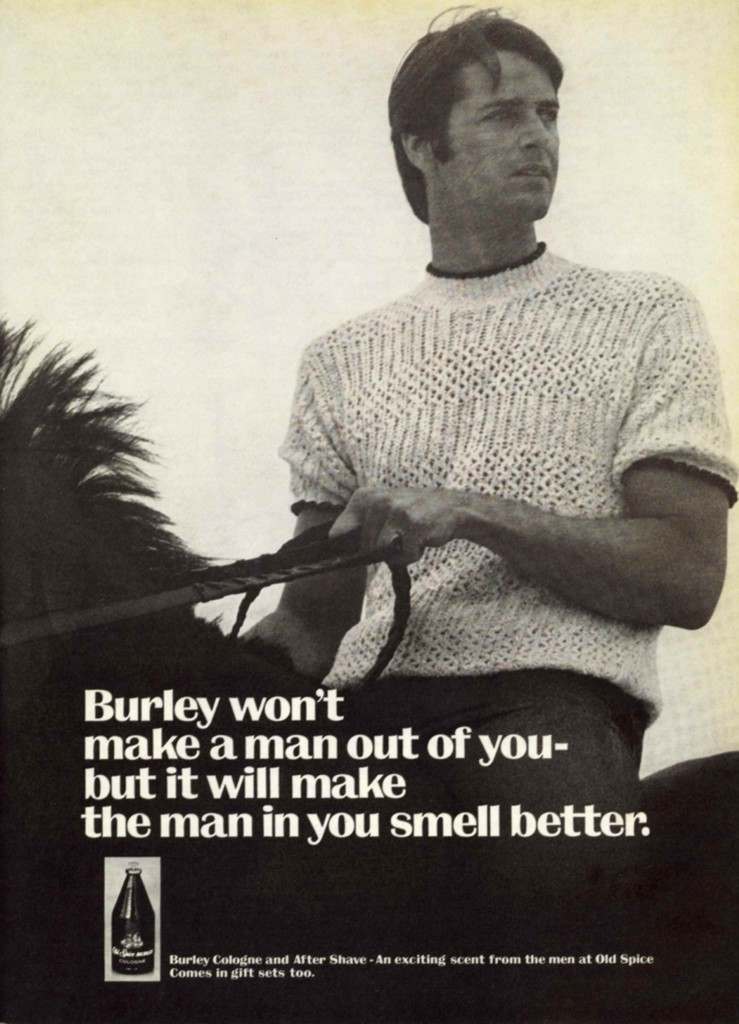
The ads that filled magazines throughout this era relied on a narrow but consistent image of masculinity. Men were shown as athletic, confident, and irresistible to women. A bottle of aftershave sat at the center of that fantasy. Brands leaned hard into names that sounded strong and outdoorsy — words like “Burley,” “Teak,” and “Denim” weren’t chosen by accident.
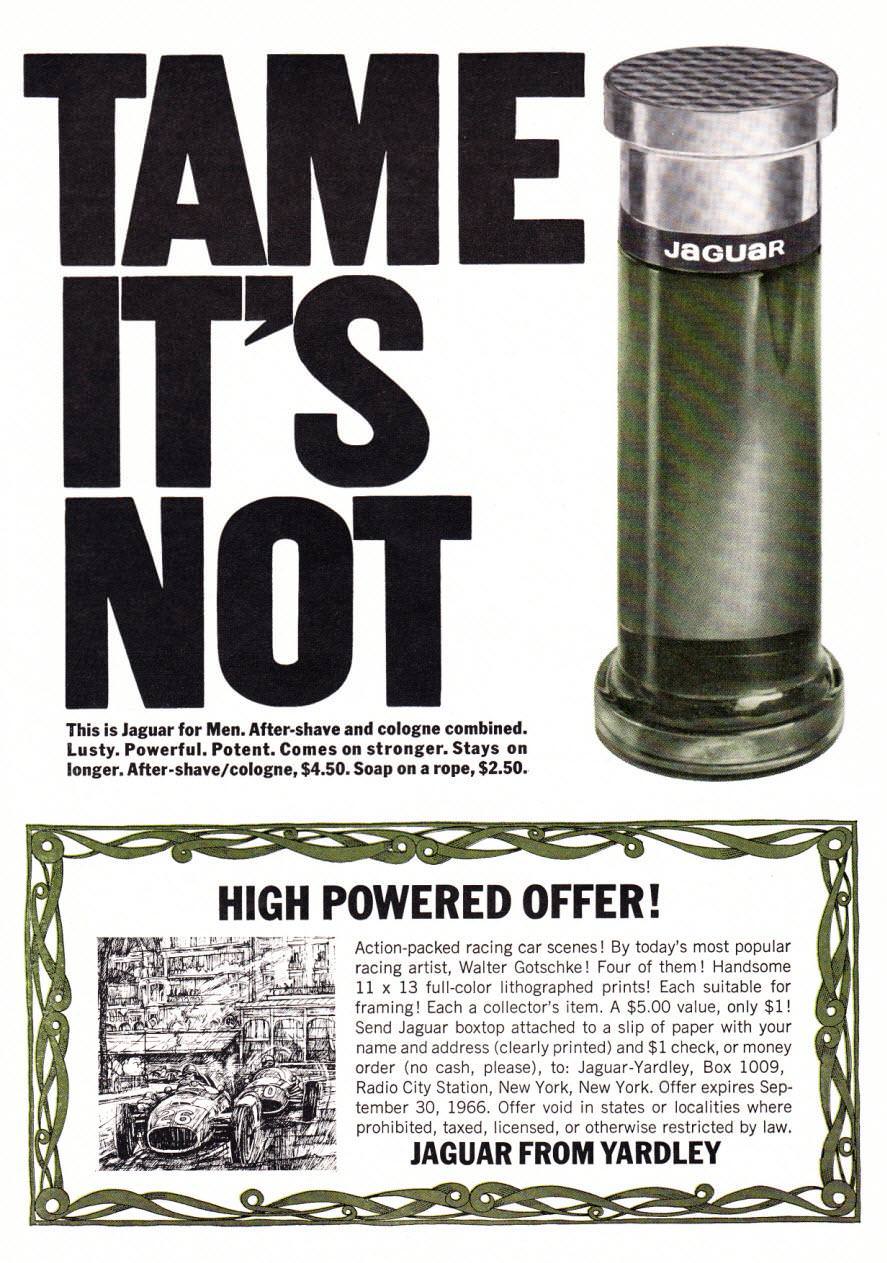
Some brands went for sleek sophistication rather than ruggedness. Jaguar for Men, for example, borrowed the prestige of a luxury car brand to promise a different kind of masculinity — one built around wealth and refinement.
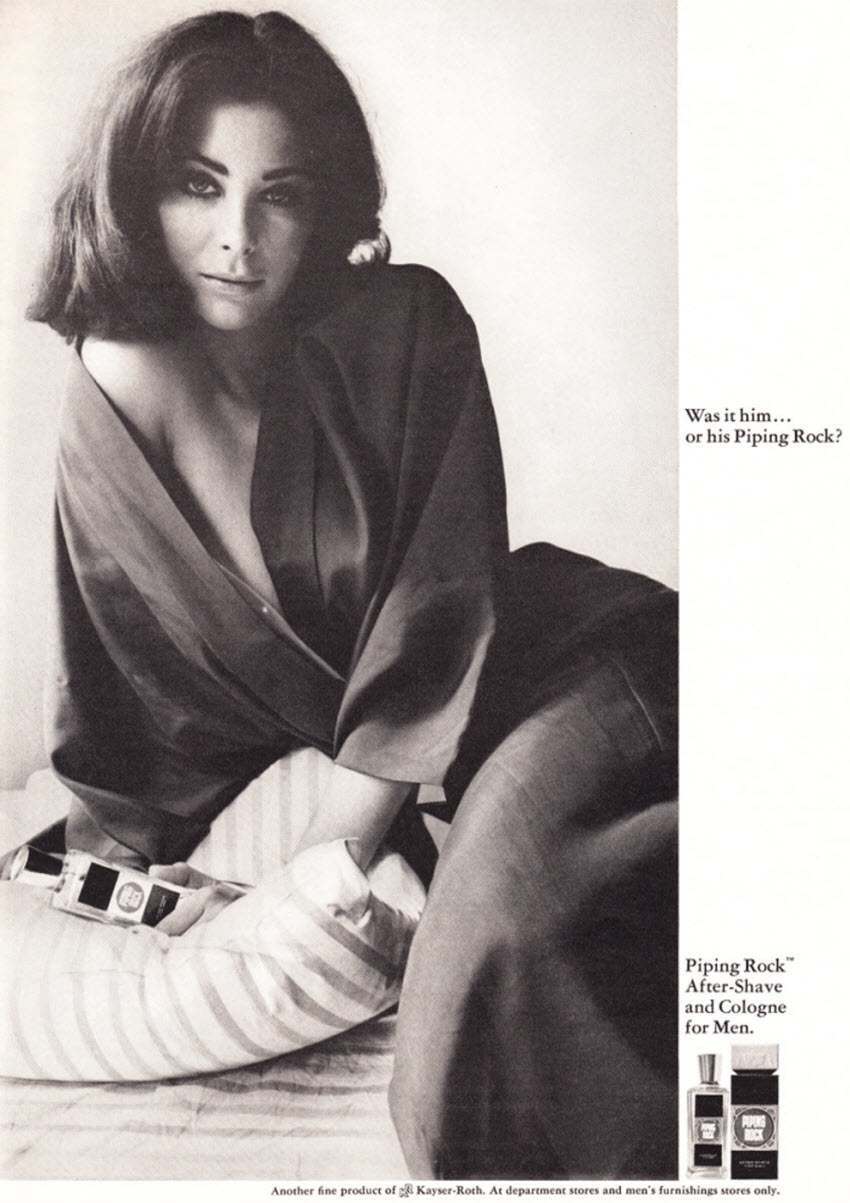
Other ads played up wholesome, all-American charm. Piping Rock kept things clean-cut, positioning its scent as the choice of the respectable, put-together man. The visual language across these ads was deliberate and consistent — groomed but masculine, polished but never soft.
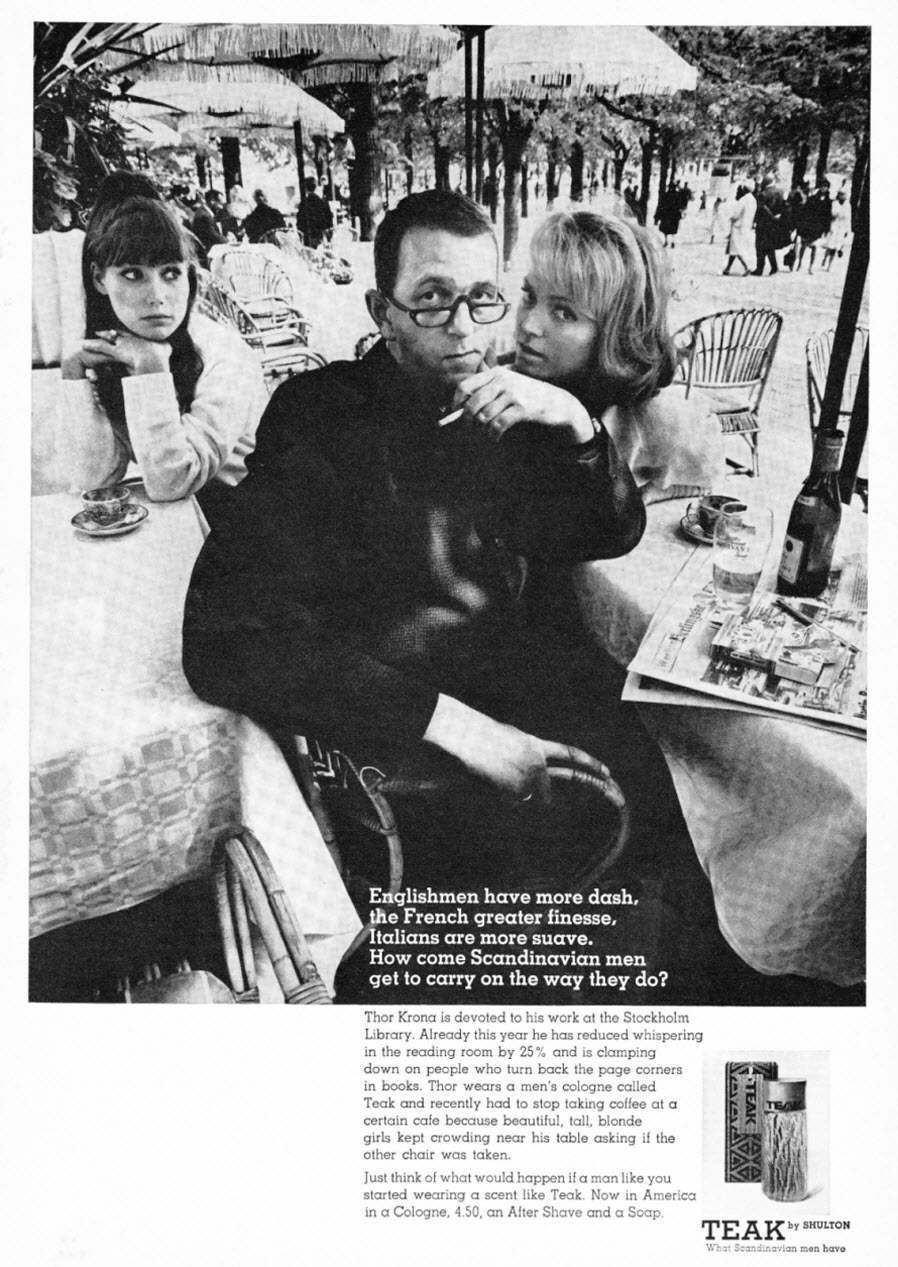
Earthy, wood-inspired names were a reliable formula. Teak by Shulton connected its scent directly to raw, natural materials — the kind of man who wore it was implied to be equally solid and grounded.
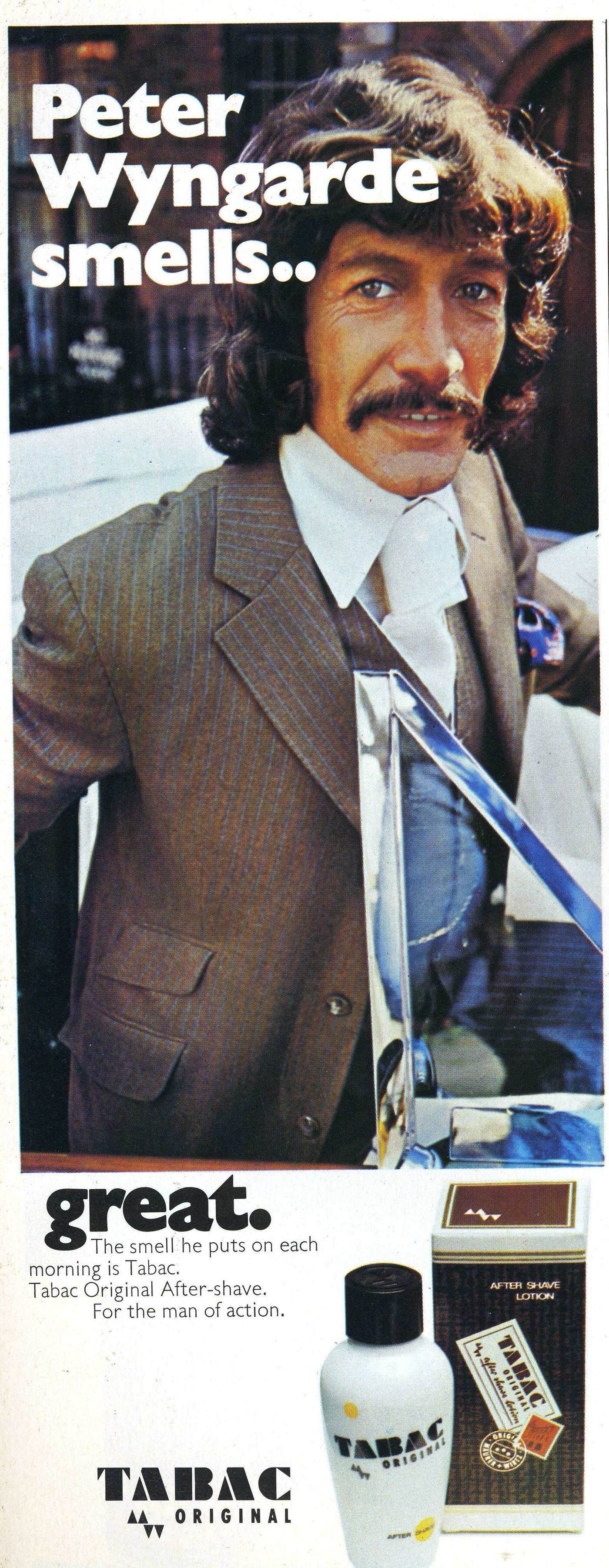
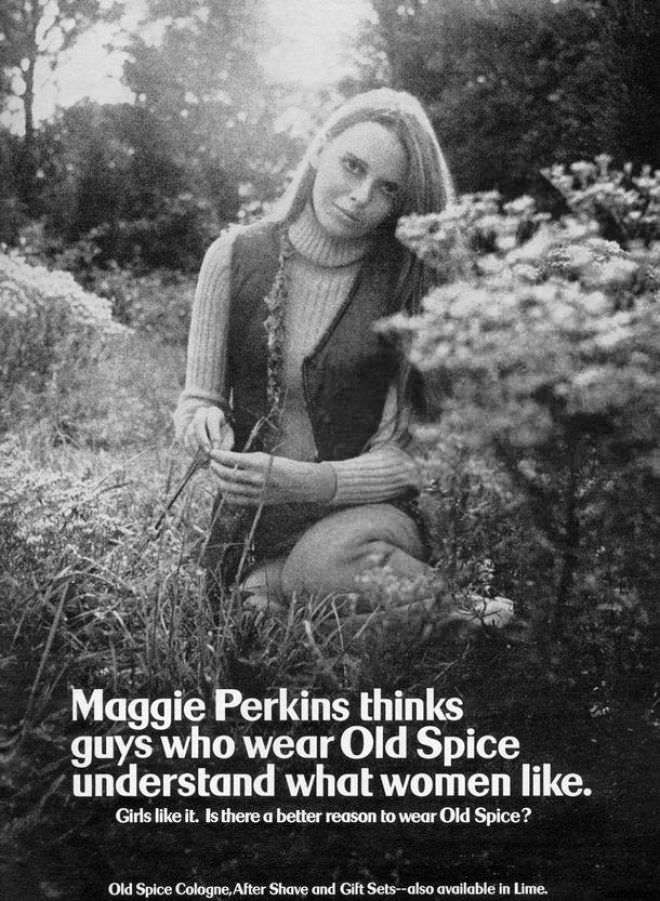
Old Spice was one of the most recognized names in the game. By 1969, its advertising had built a decades-long reputation around naval imagery and the idea of the well-traveled, worldly man. The brand didn’t need to shout — its identity was already firmly established in the minds of American consumers.
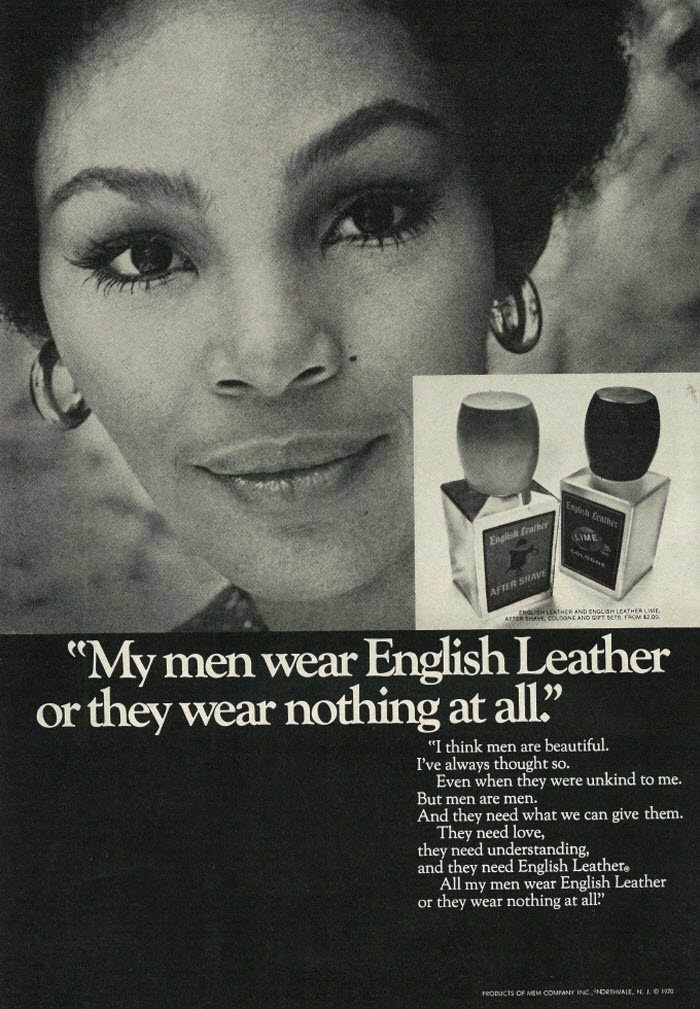
English Leather took a different angle, making women the centerpiece of its pitch. Its famous tagline put the promise squarely on attraction — the scent wasn’t just for the man wearing it, it was for the women who couldn’t resist it.
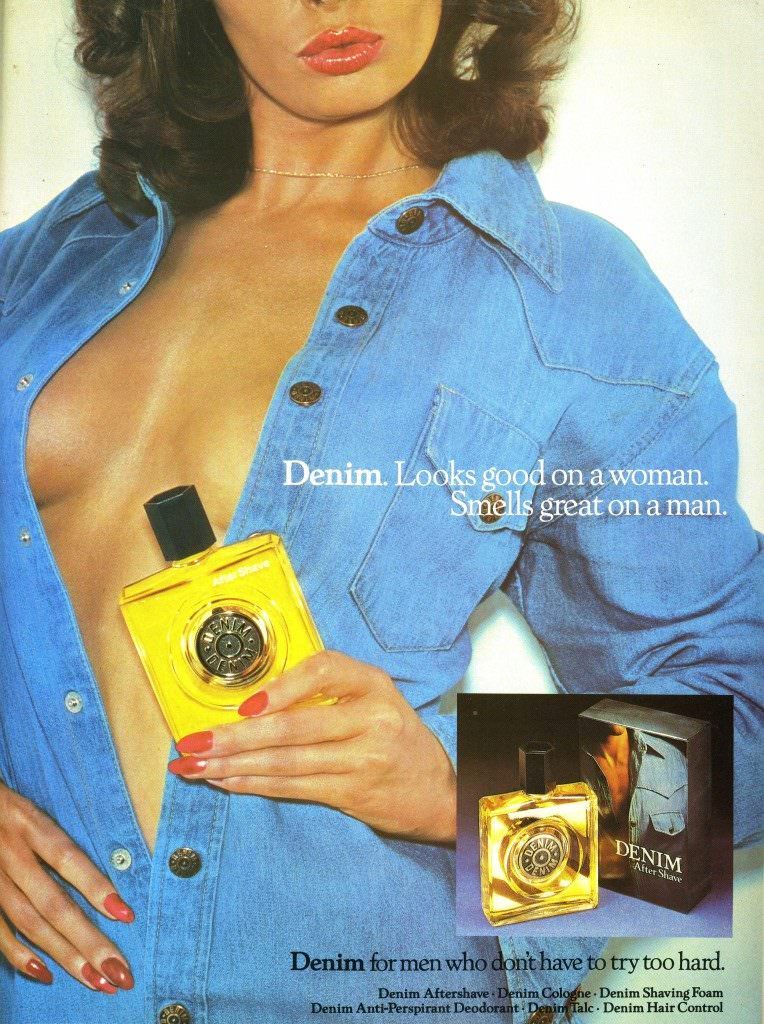
By the mid-1970s, counterculture had worked its way into mainstream advertising. Denim aftershave, launched in 1977, targeted a younger, more rebellious buyer. Its ads dropped the polished executive archetype in favor of a rougher, more casual masculinity.
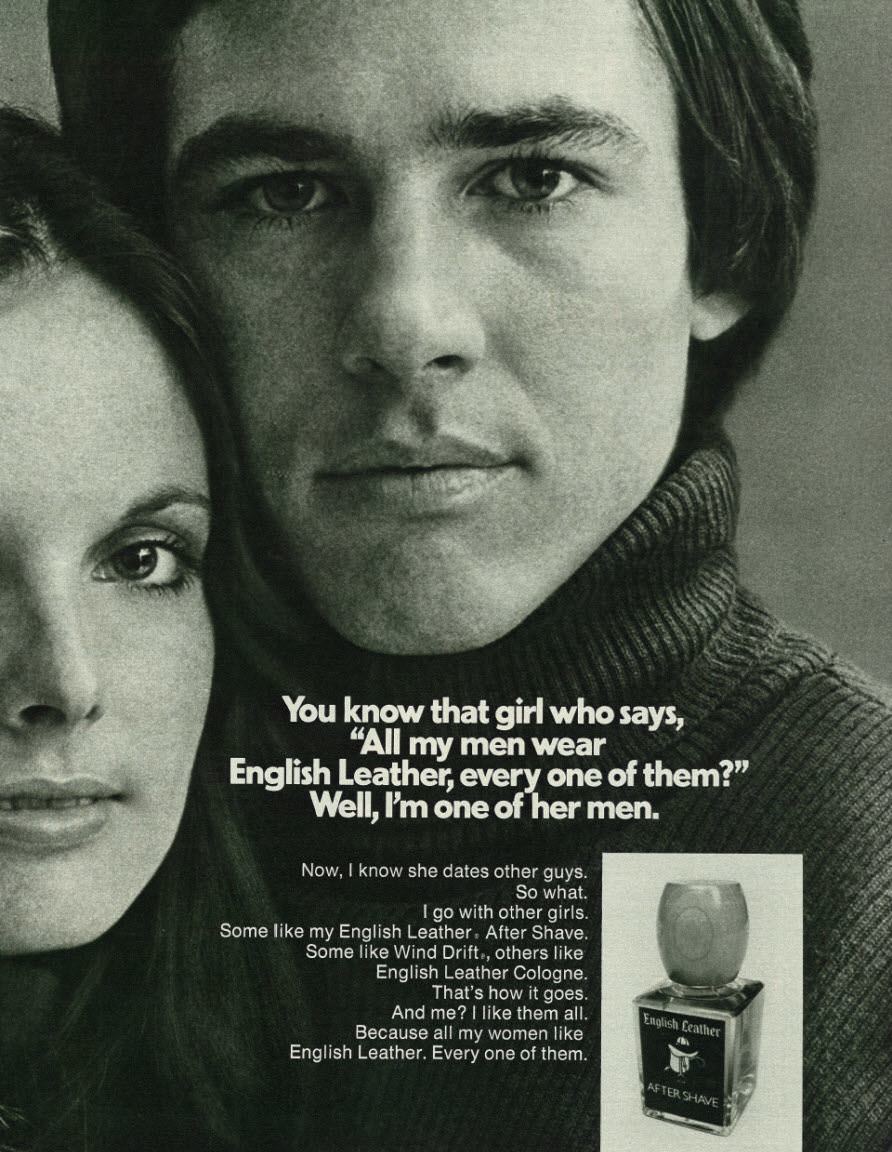
English Leather’s campaigns evolved across the decade, but the core message stayed the same. The 1972 version of its ads continued to frame the scent as a tool of attraction, with women doing the pursuing and the man’s aftershave as the reason why.
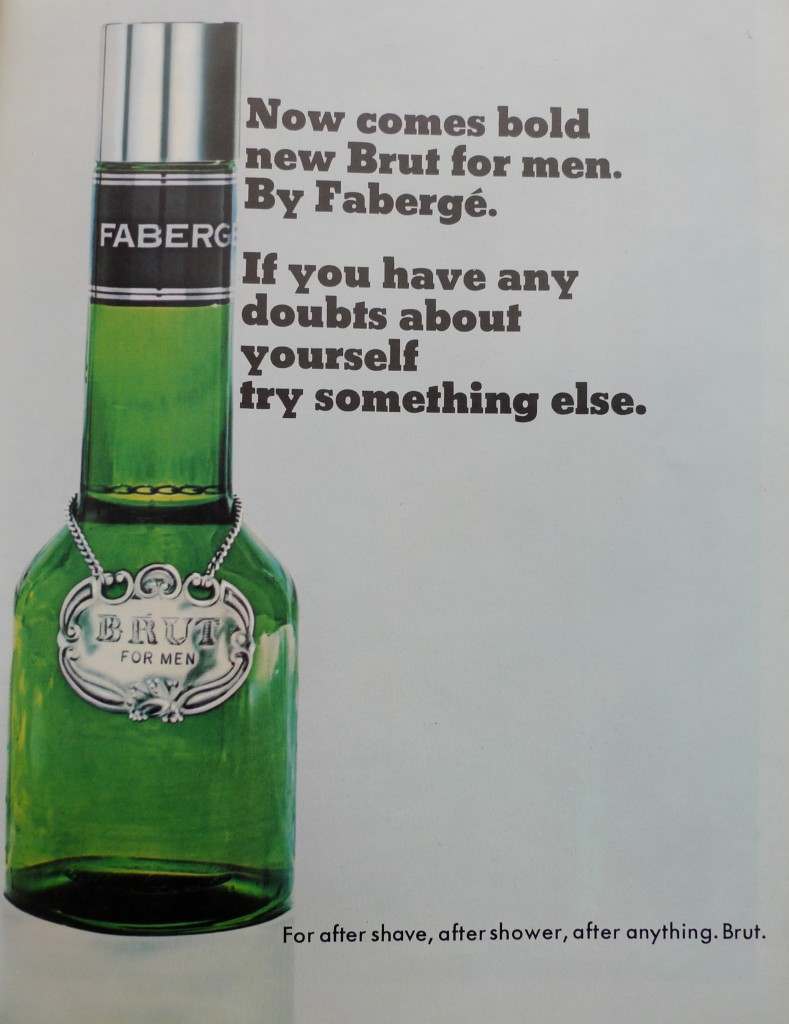
Brut was among the boldest in its approach. Its 1967 ads used words like “the great one” and leaned on celebrity endorsements to position the scent as the top choice for dominant, competitive men. The messaging was direct: wear this and win.
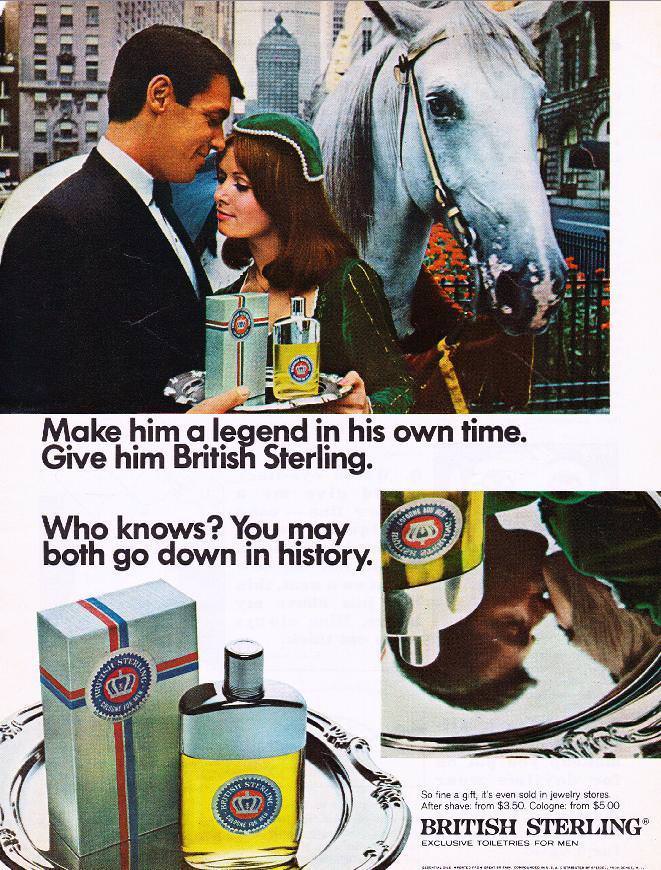
British Sterling played up transatlantic prestige. The name alone carried connotations of class and old-world authority, and its 1968 ads made full use of that association to distinguish the brand from its American competitors.
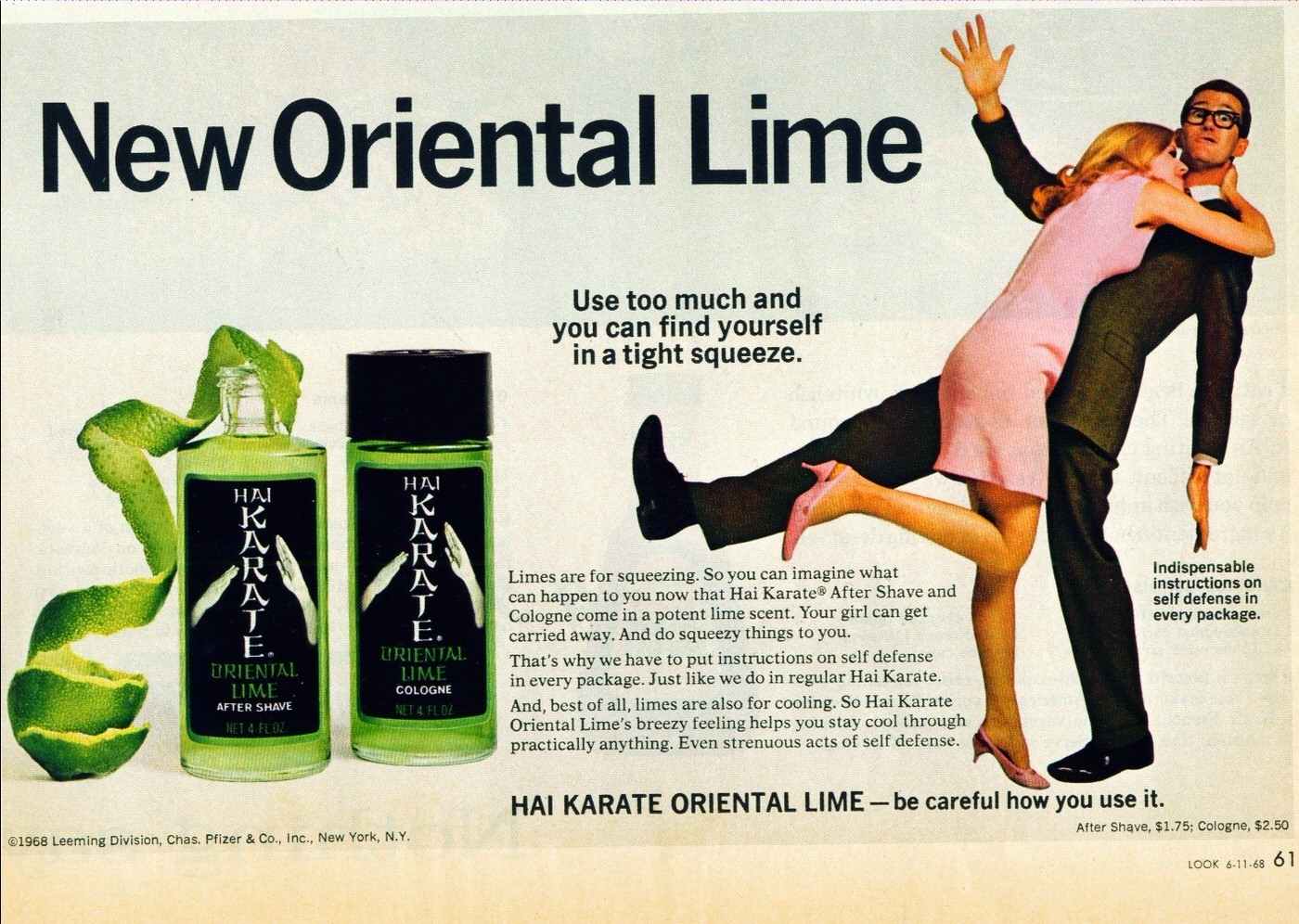
Not every brand went for the rugged or the regal. New Oriental Lime offered something lighter and more citrus-forward, signaling a man who was sharp and fresh rather than brooding or imposing.
Some ads tied grooming directly to leisure and sport. It’s Cricket, from 1966, connected aftershave to the gentleman athlete — a man who played hard, looked good doing it, and smelled even better afterward.