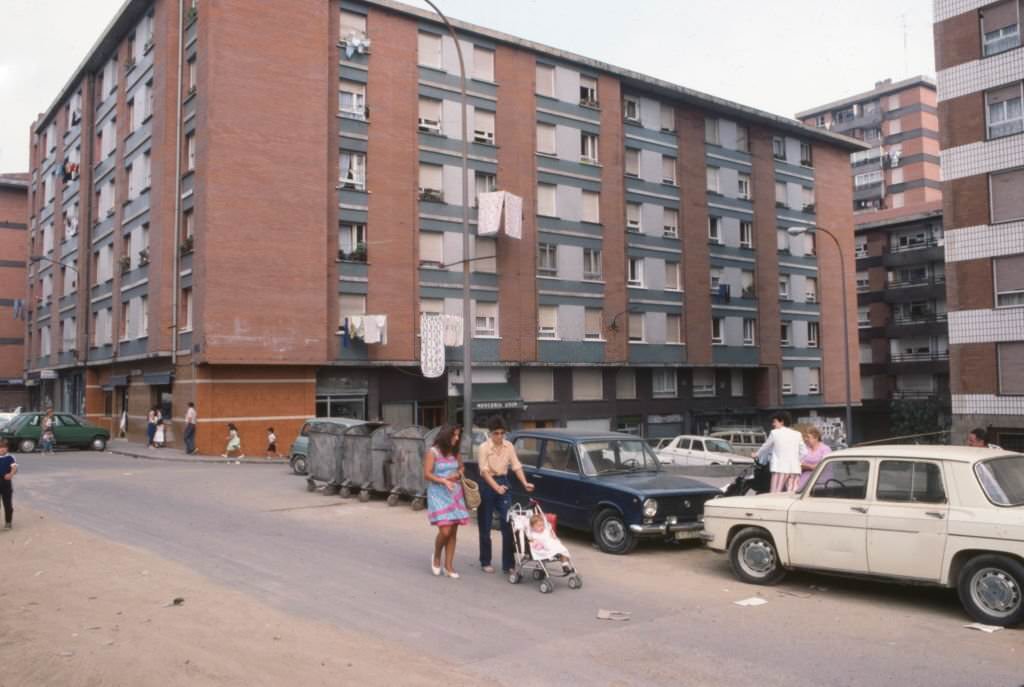
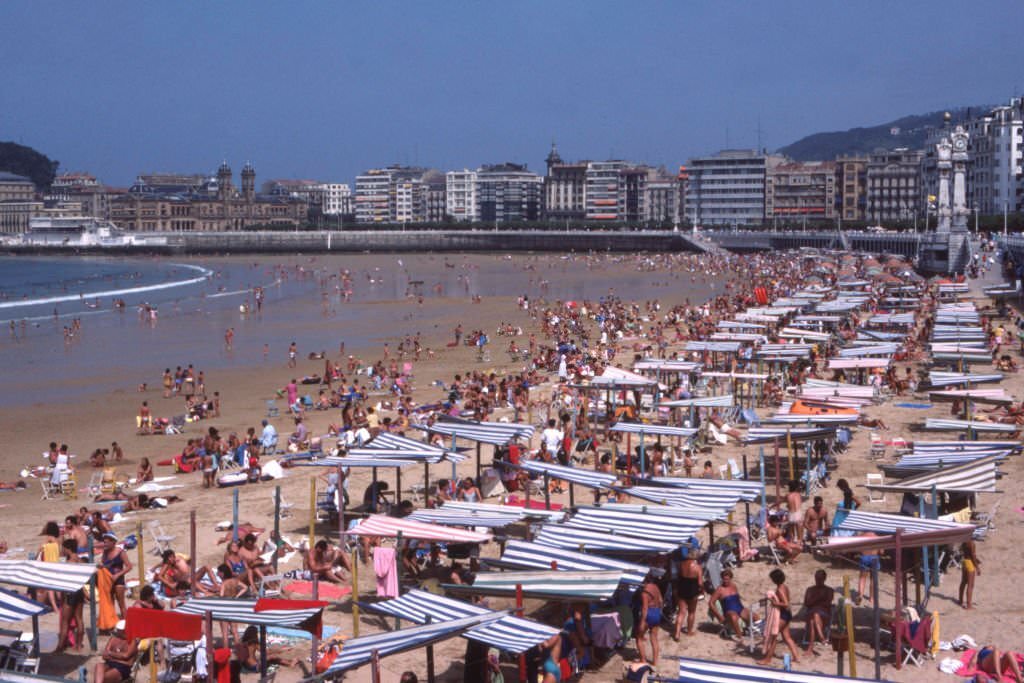
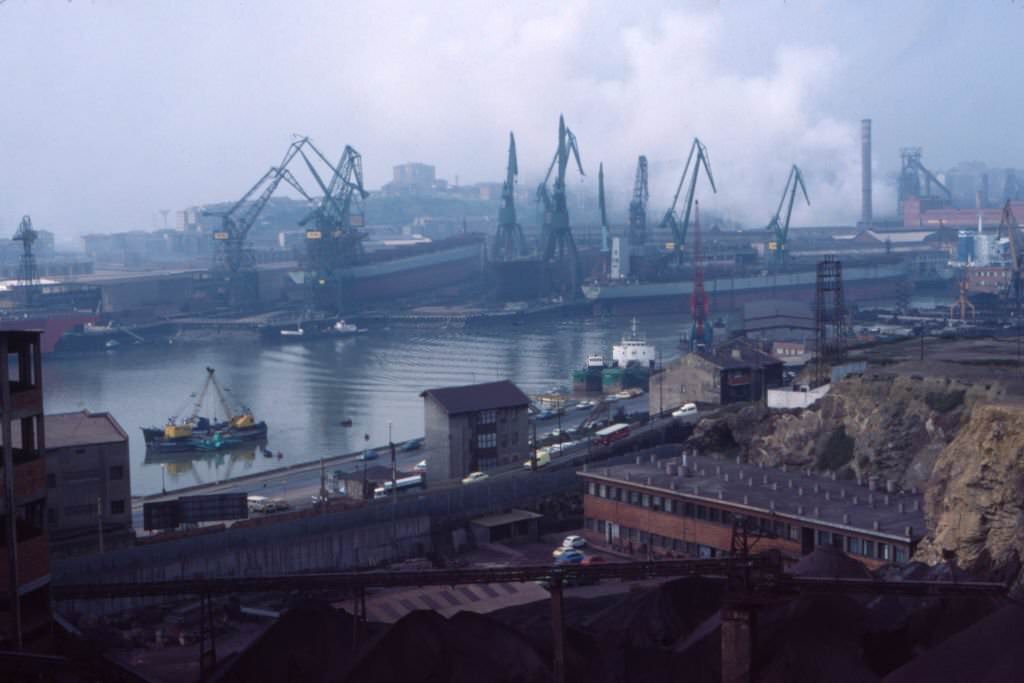
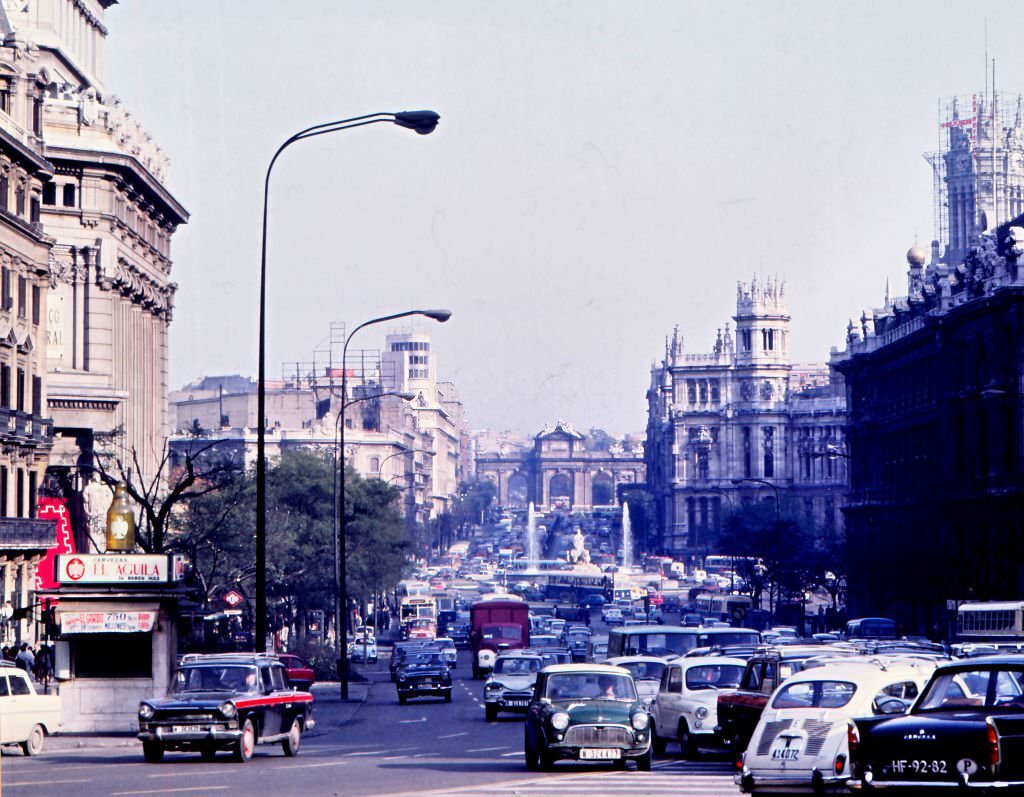
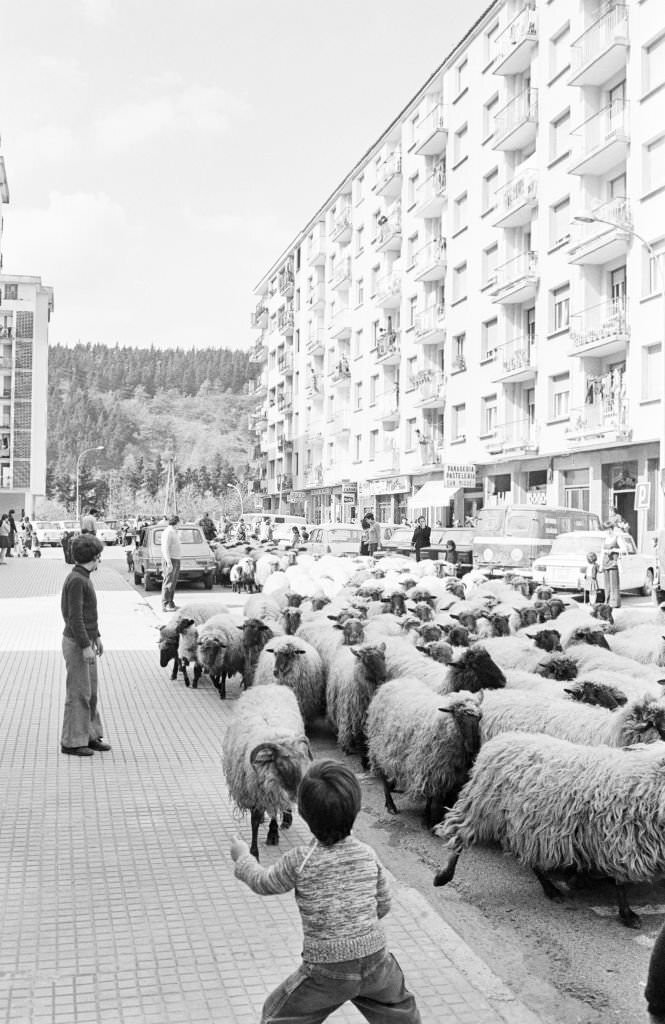
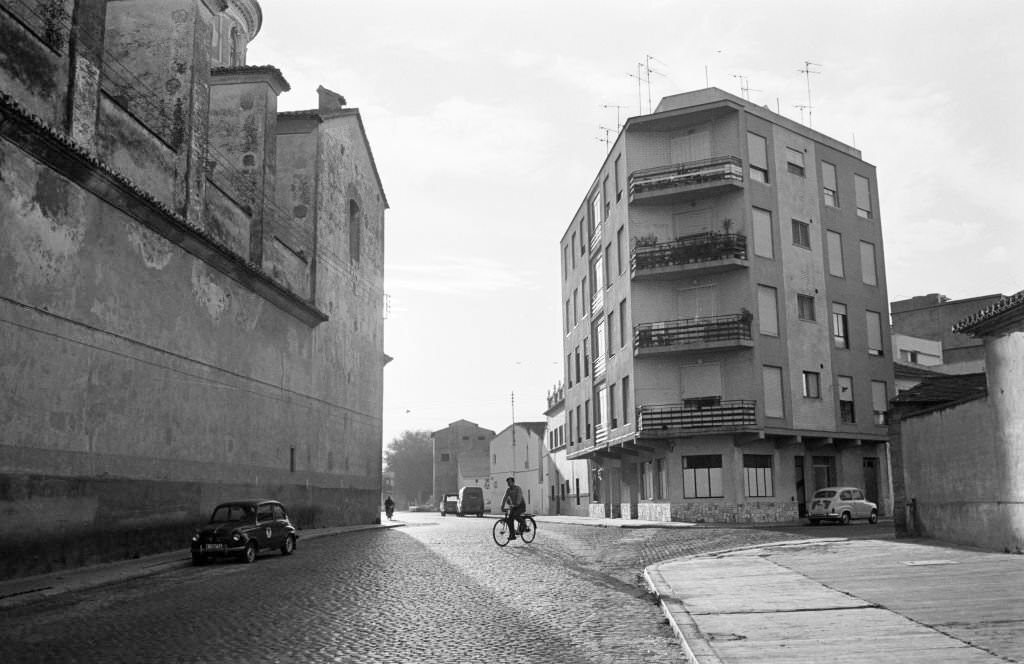
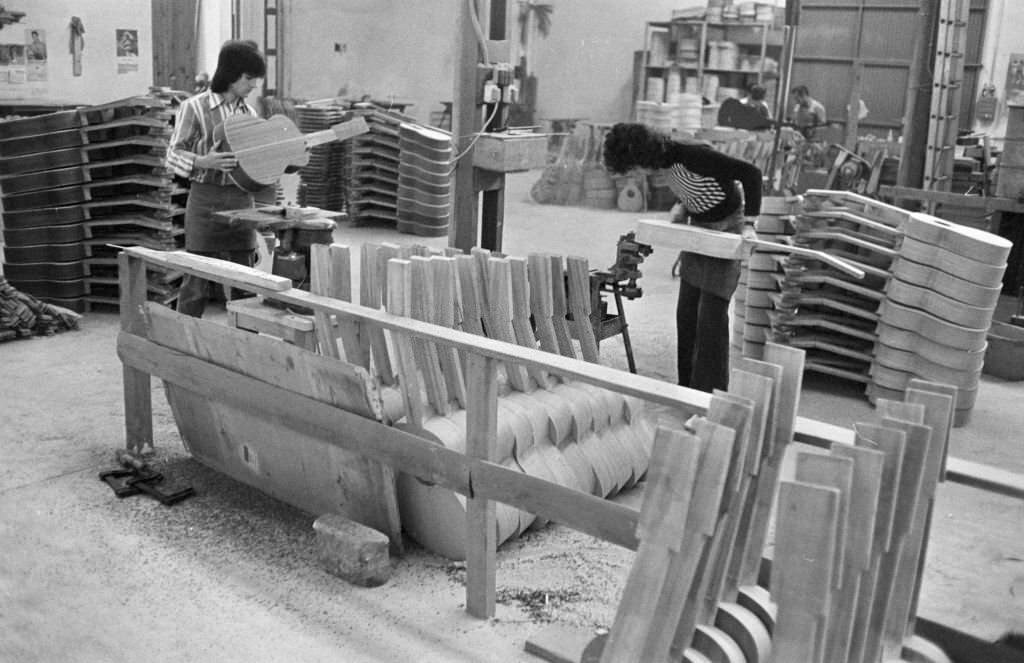
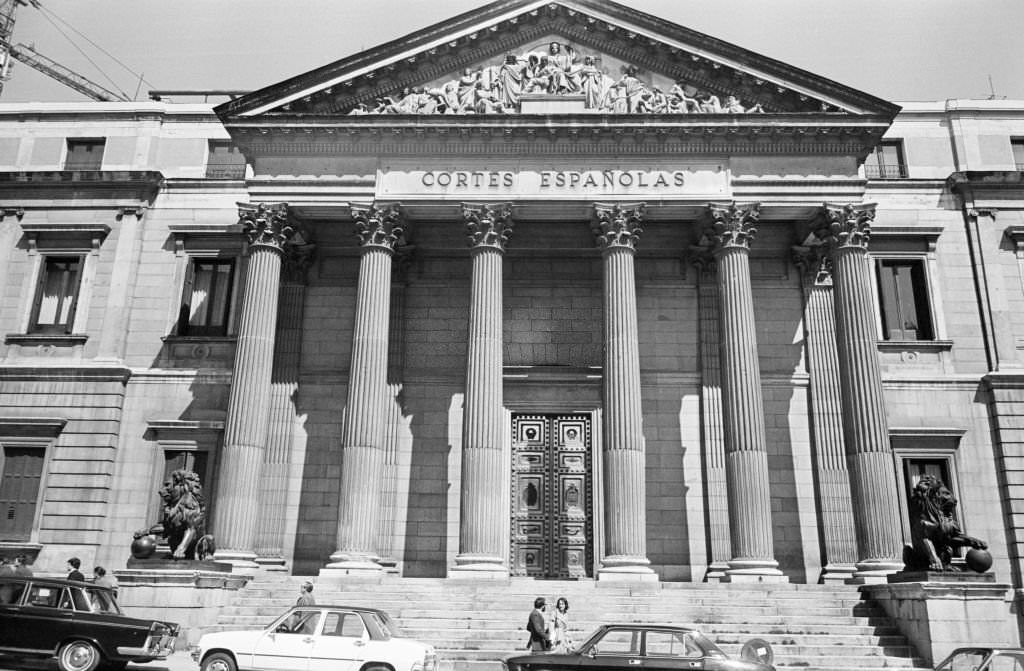
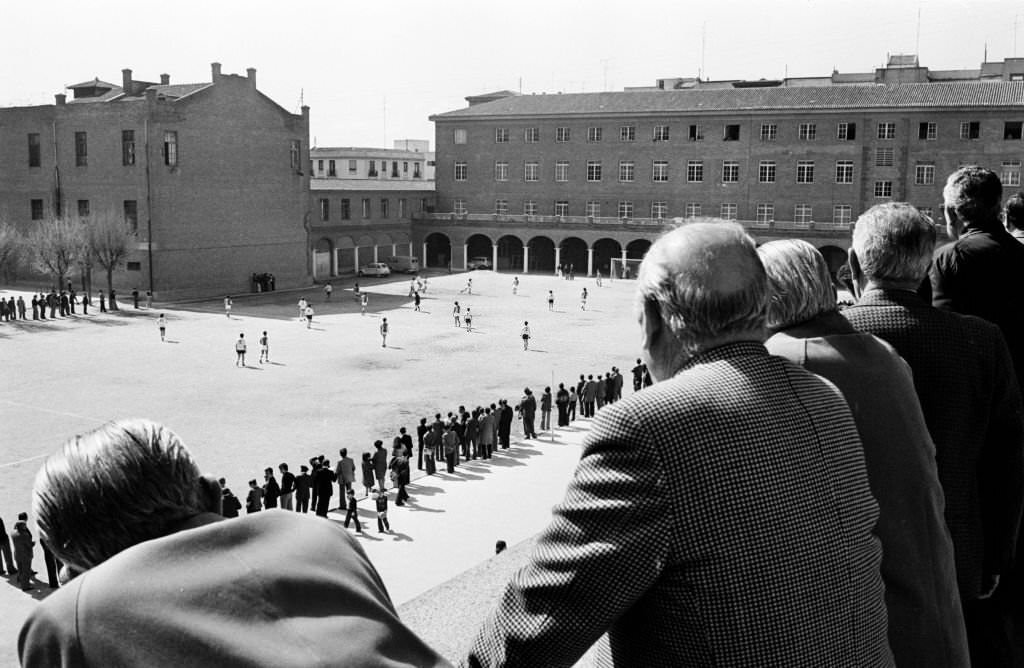
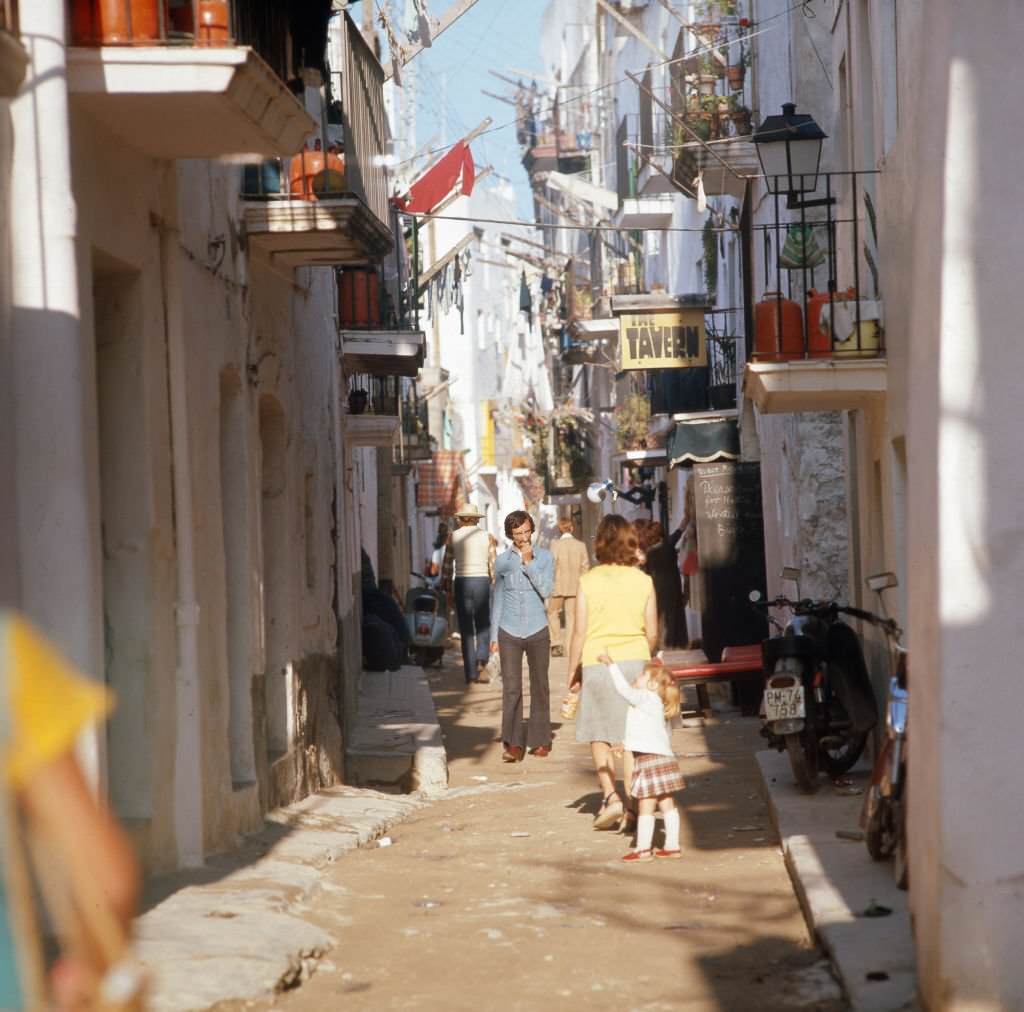
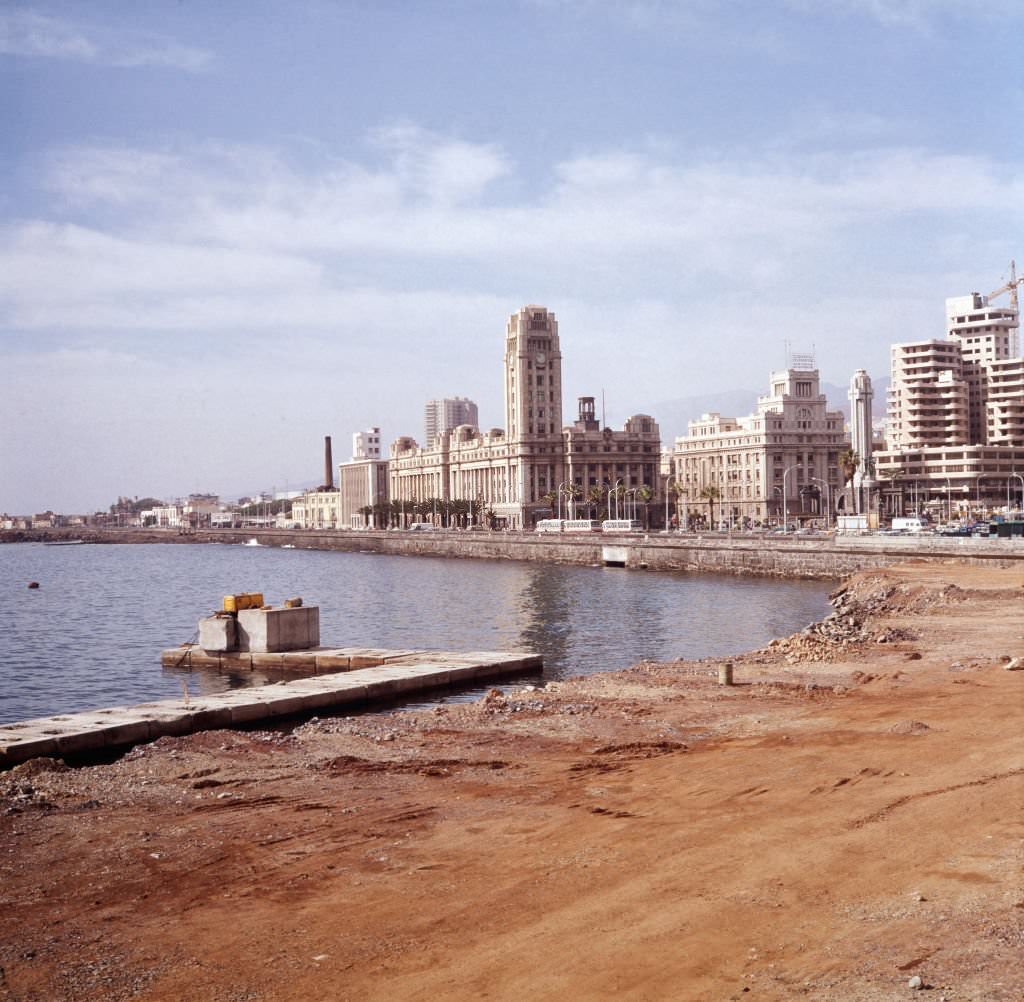
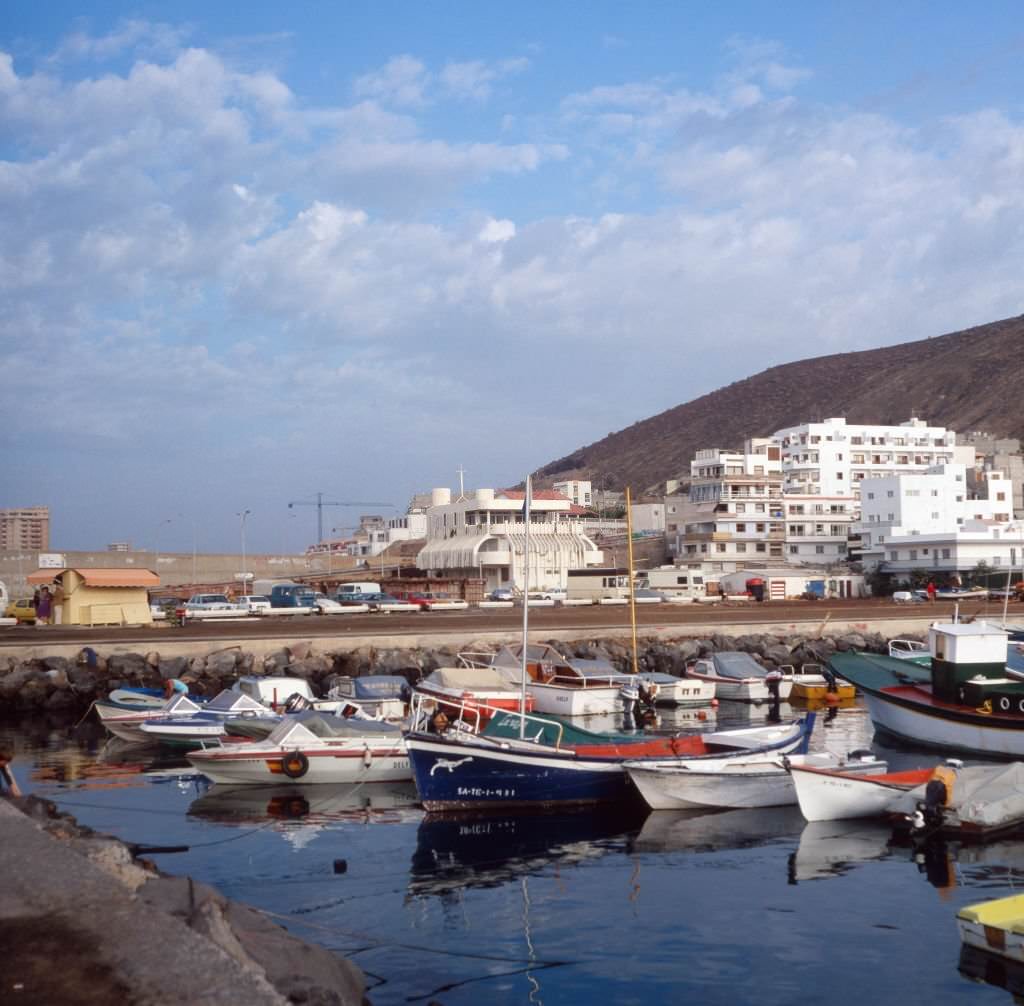
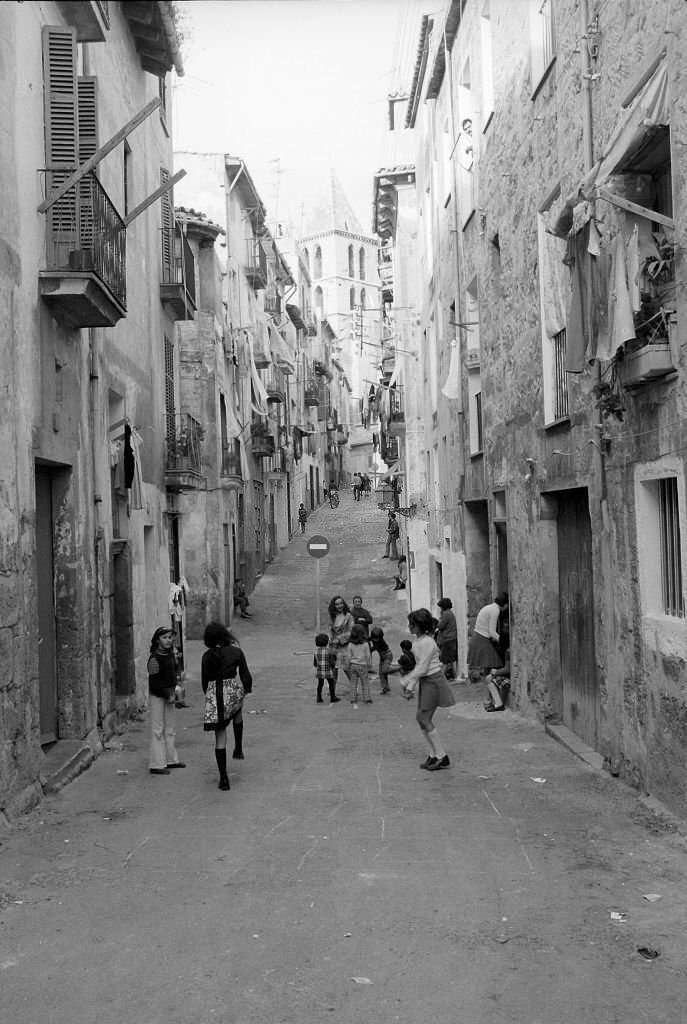
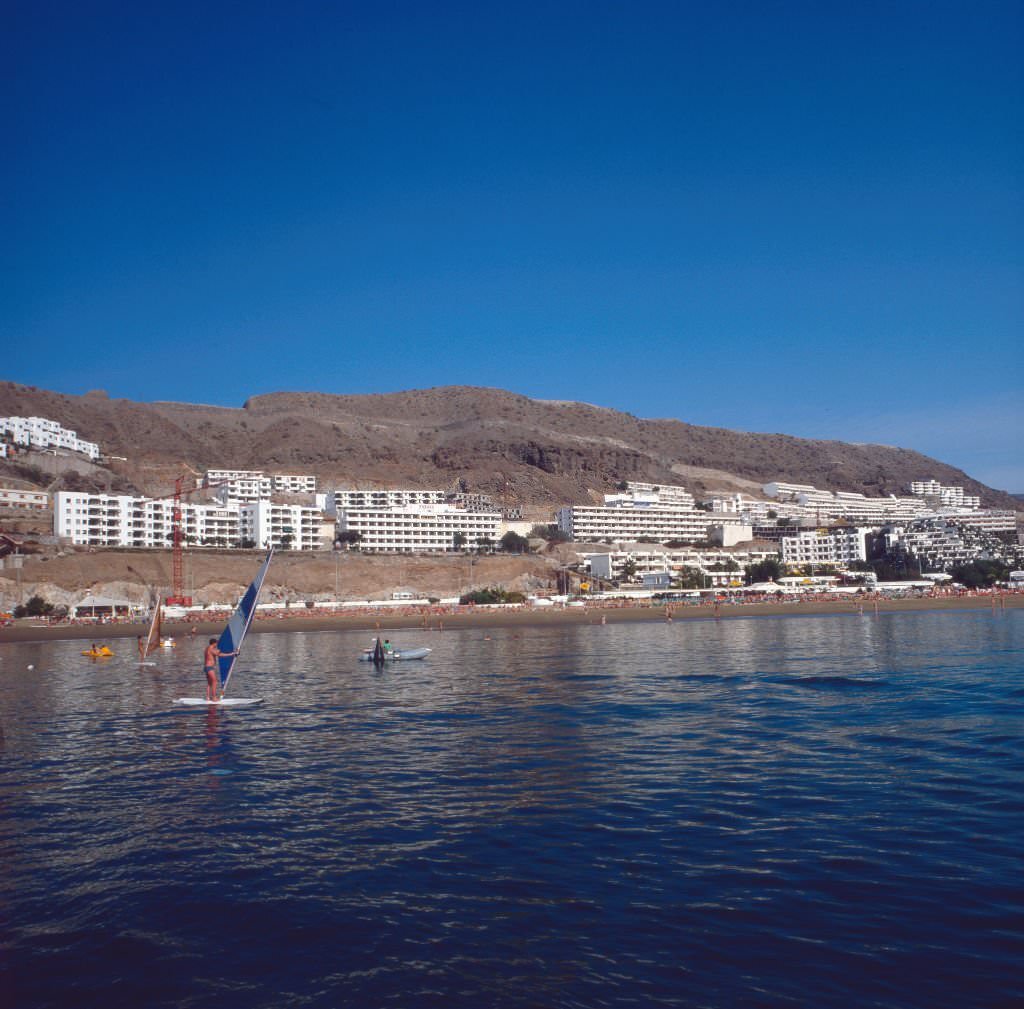
Spain in the 1970s was a country in motion. Cities were swelling, the Franco regime was crumbling, beaches were filling with foreign tourists, and old rural ways were giving way to industrial life. The photographs from this decade tell a story of contrast — whitewashed hilltop towns alongside nuclear power plants, donkey carts overtaken by Mercedes taxis, and street protests just blocks from packed holiday resorts. Together they paint one of the most turbulent and visually rich decades in modern Spanish history.
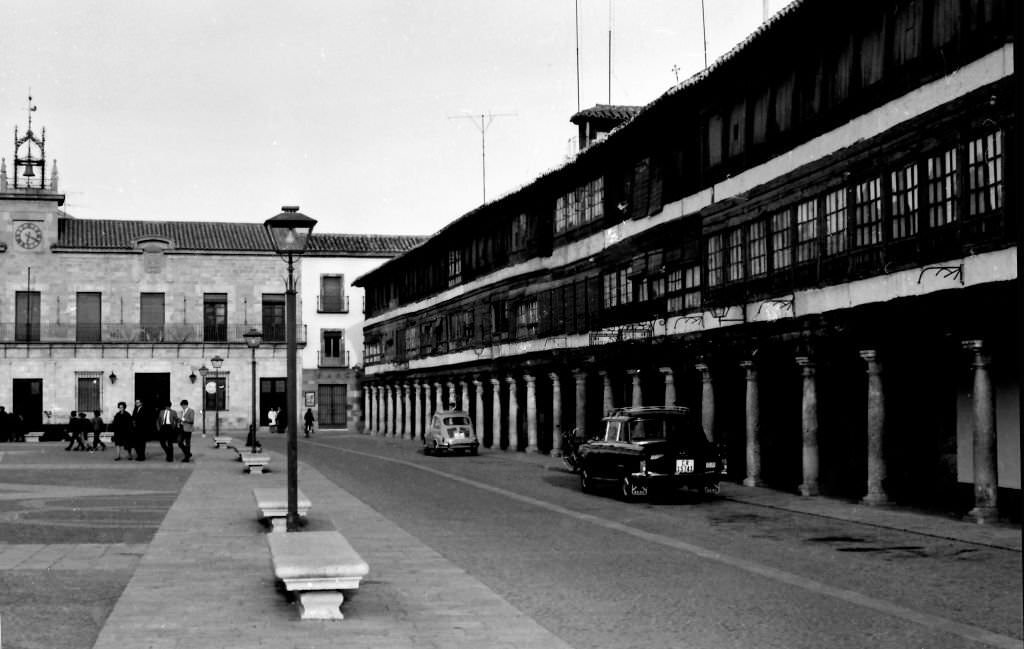
Plaza Mayor of Ciudad Real, Castilla La Mancha, Spain, 1972.
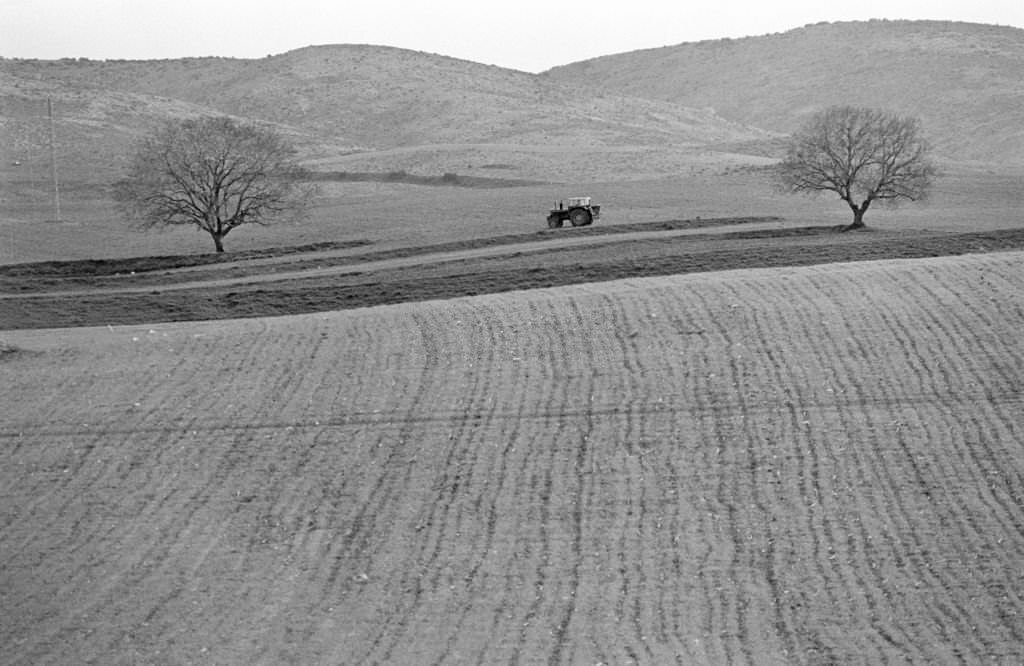
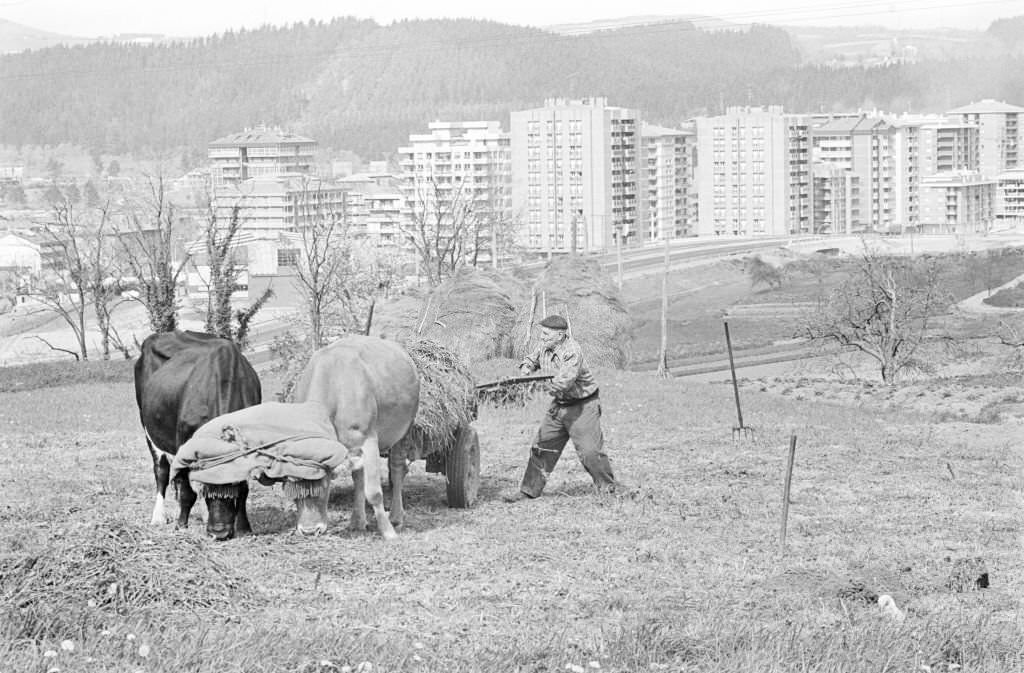
The Spanish economic boom of the 1960s carried its momentum deep into the 1970s. Agriculture had become more mechanized — the number of tractors in Spain grew sixfold during the boom — and that mechanization pushed millions of rural workers off the land and into the cities. Five million Spaniards left the countryside during the 1960s and 1970s combined. Around one million went further, moving to other Western European countries entirely. By the mid-1970s, entire stretches of Extremadura and the high Castilian plateau appeared nearly empty.
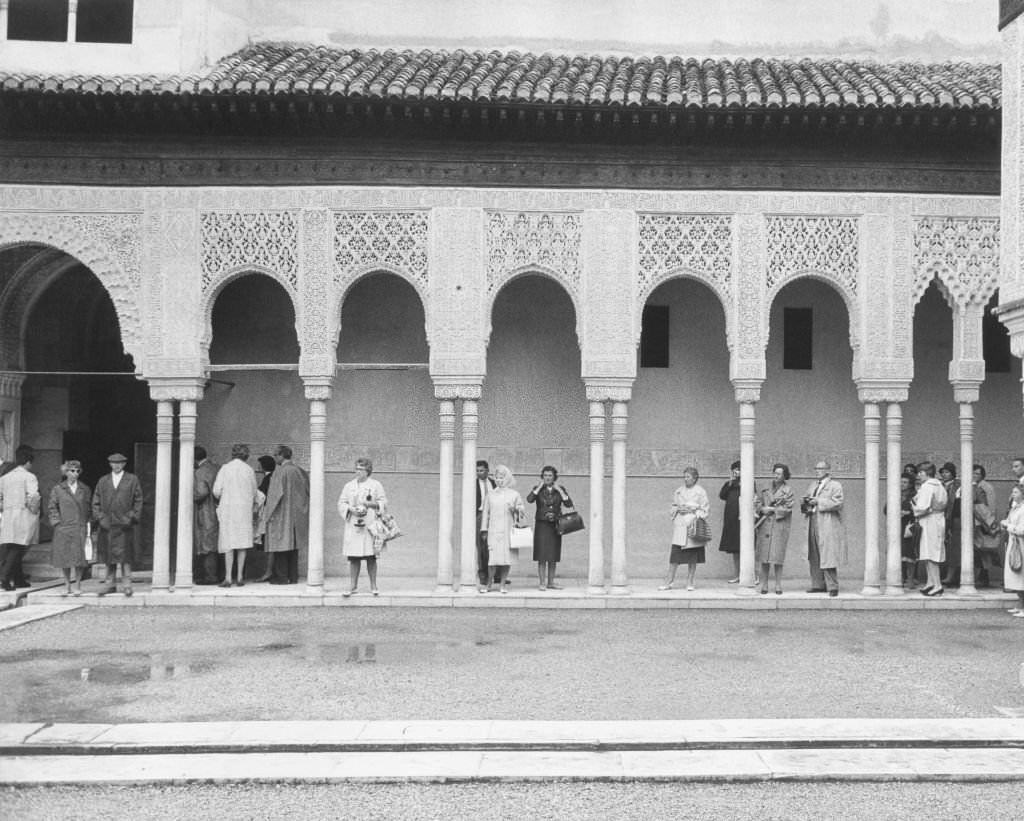
Moorish-style walls and columns with filigree ornaments, Granada, 1970s
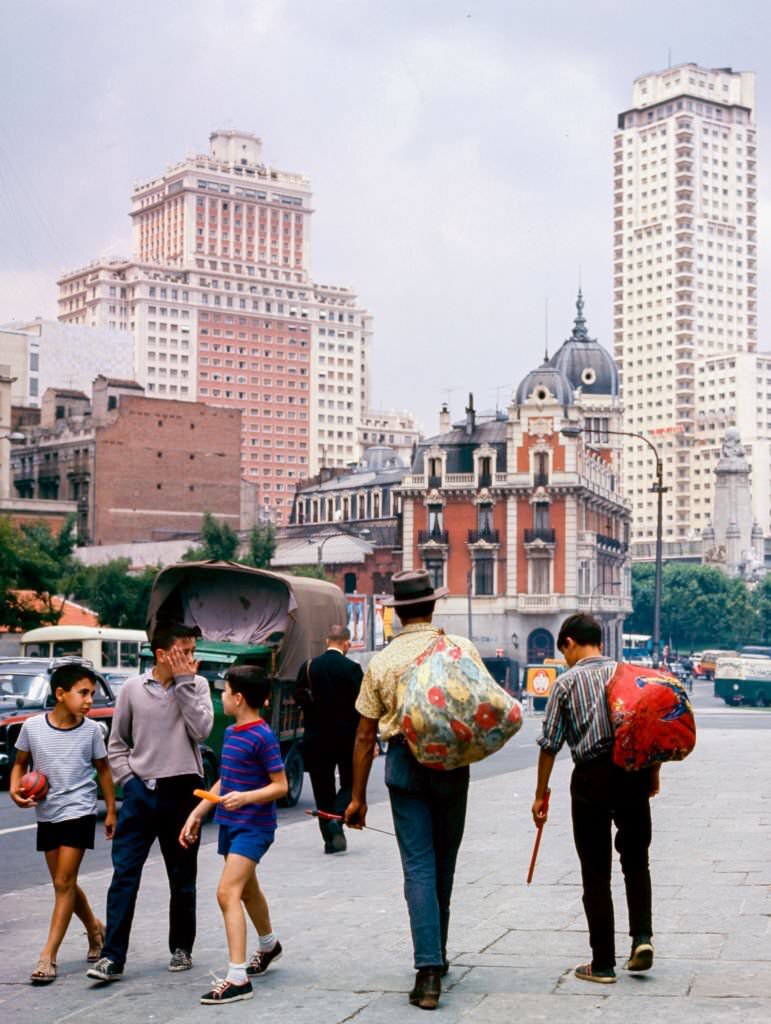
The cities that absorbed these migrants grew fast. Urban areas expanded at an annual rate of 2.4 percent through the decade. By 1970, migrants already made up 26 percent of Madrid’s population and 23 percent of Barcelona’s. These weren’t just demographic shifts — they reshaped neighborhoods, strained housing, and transformed the cultural character of Spain’s largest cities.
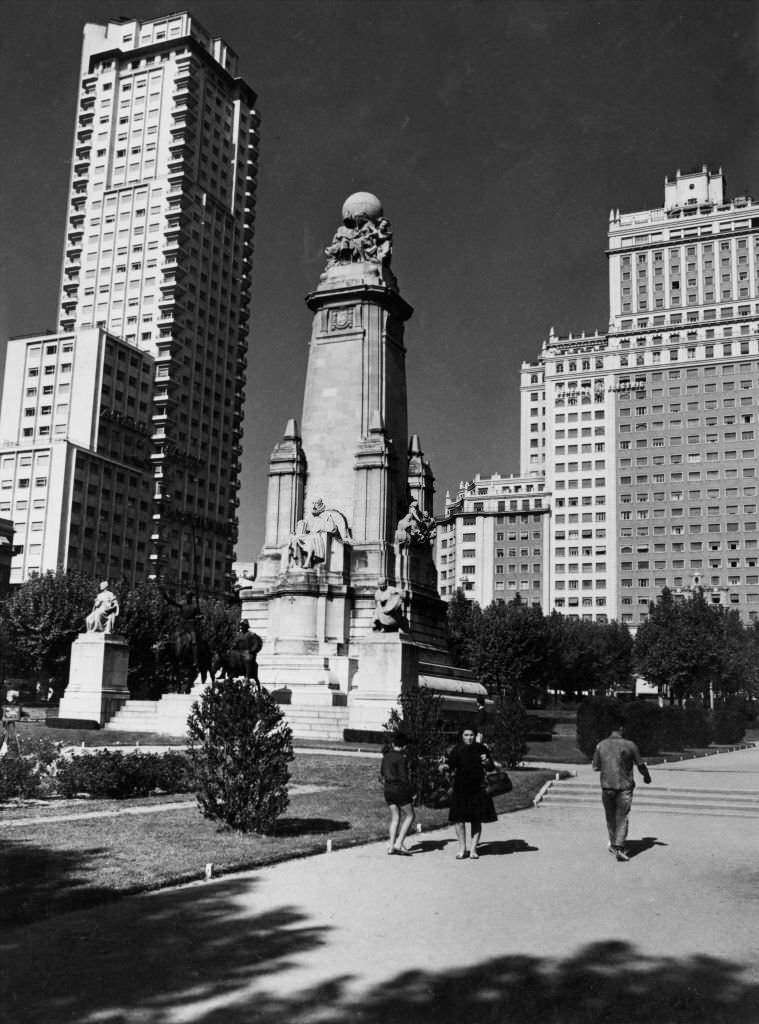
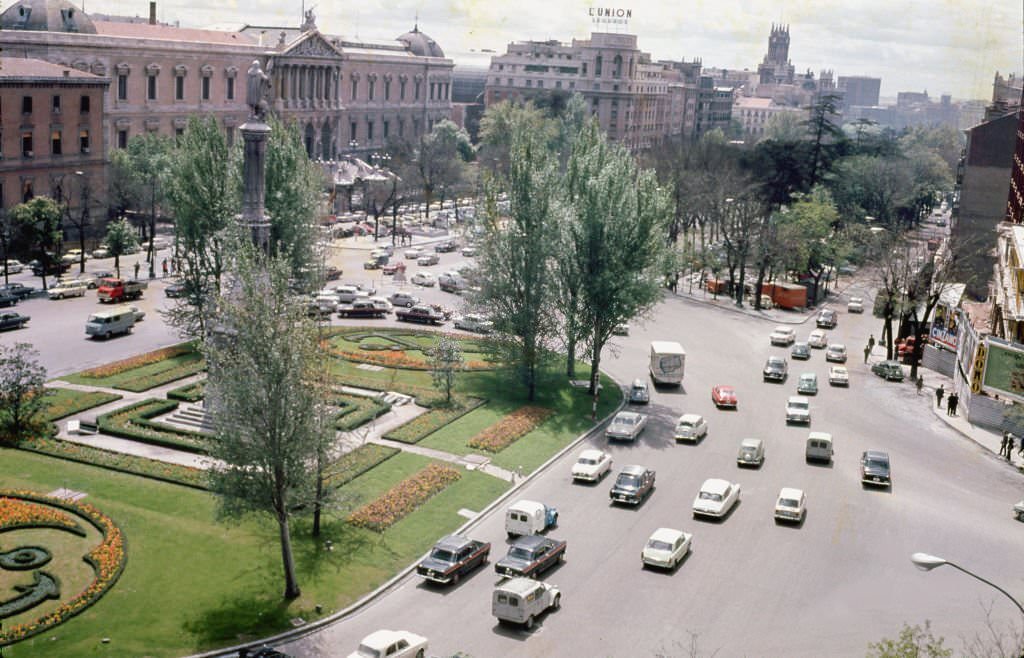
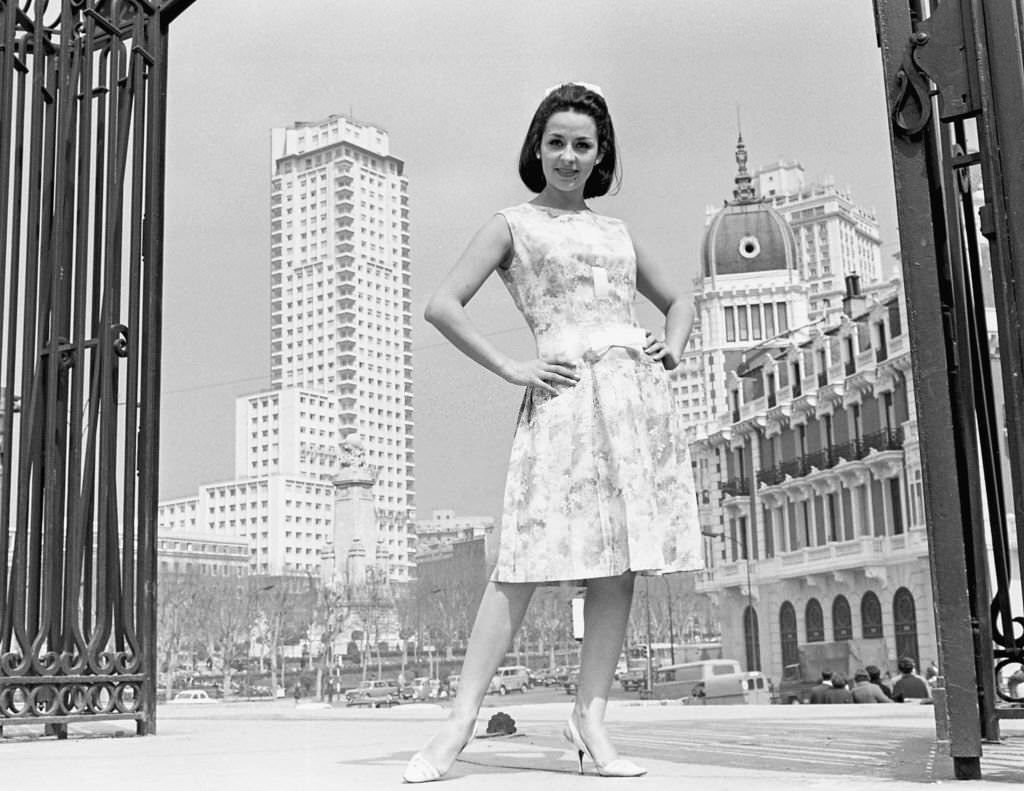
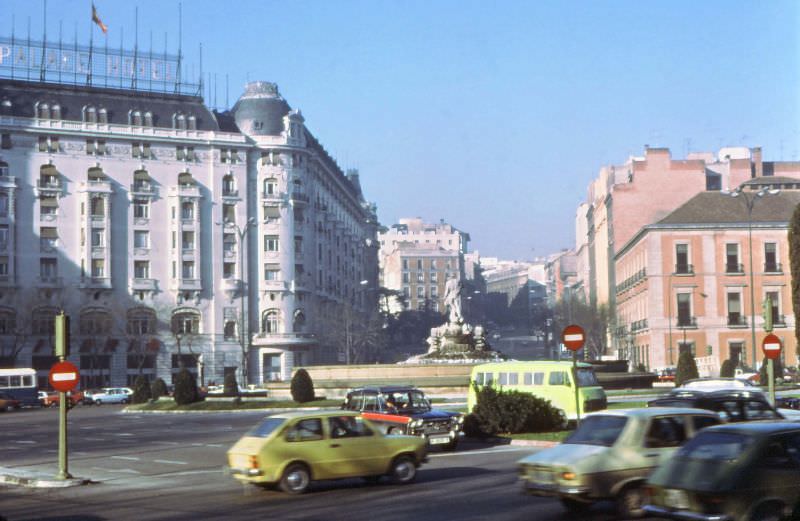
Placa de Espana, Mardird, 1970s
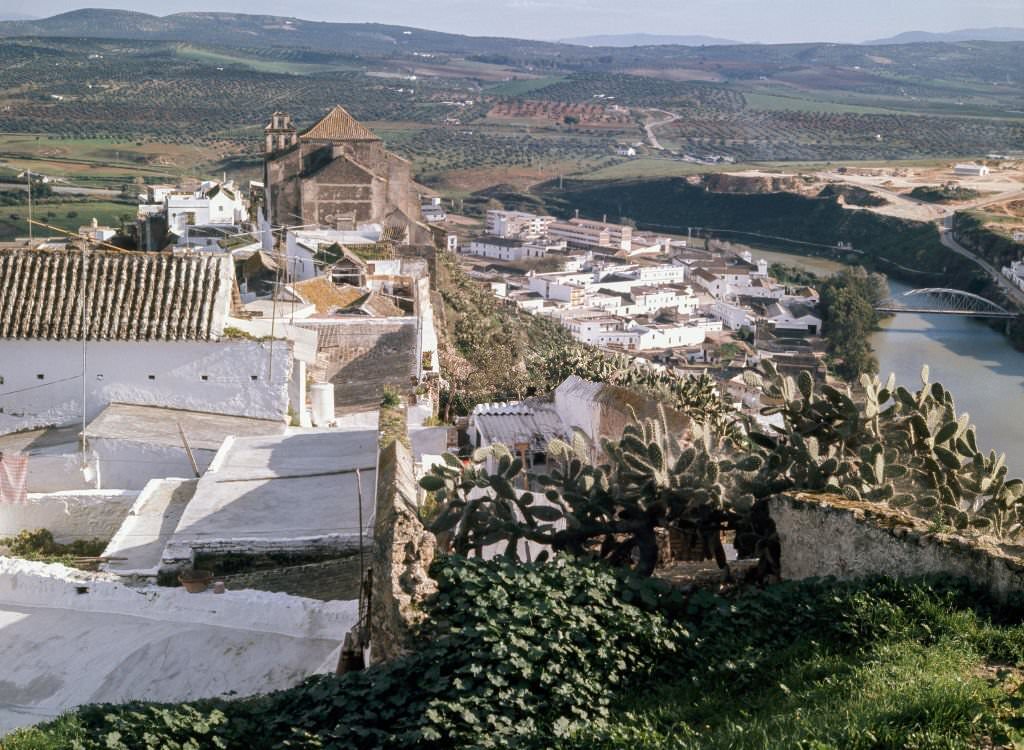
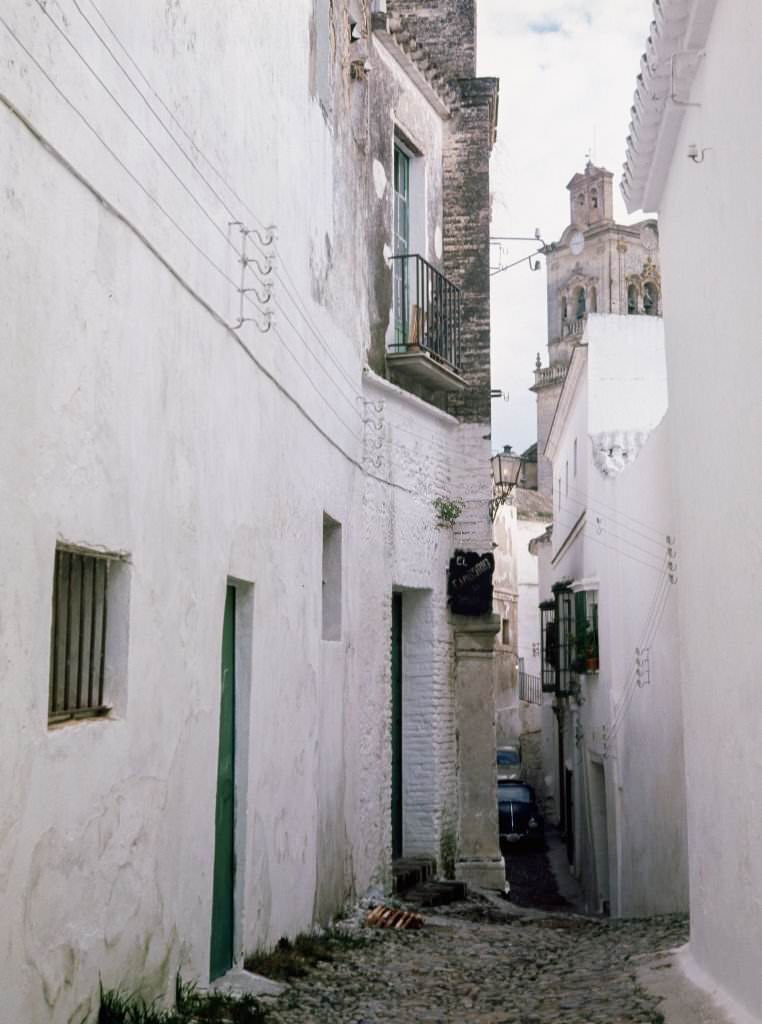
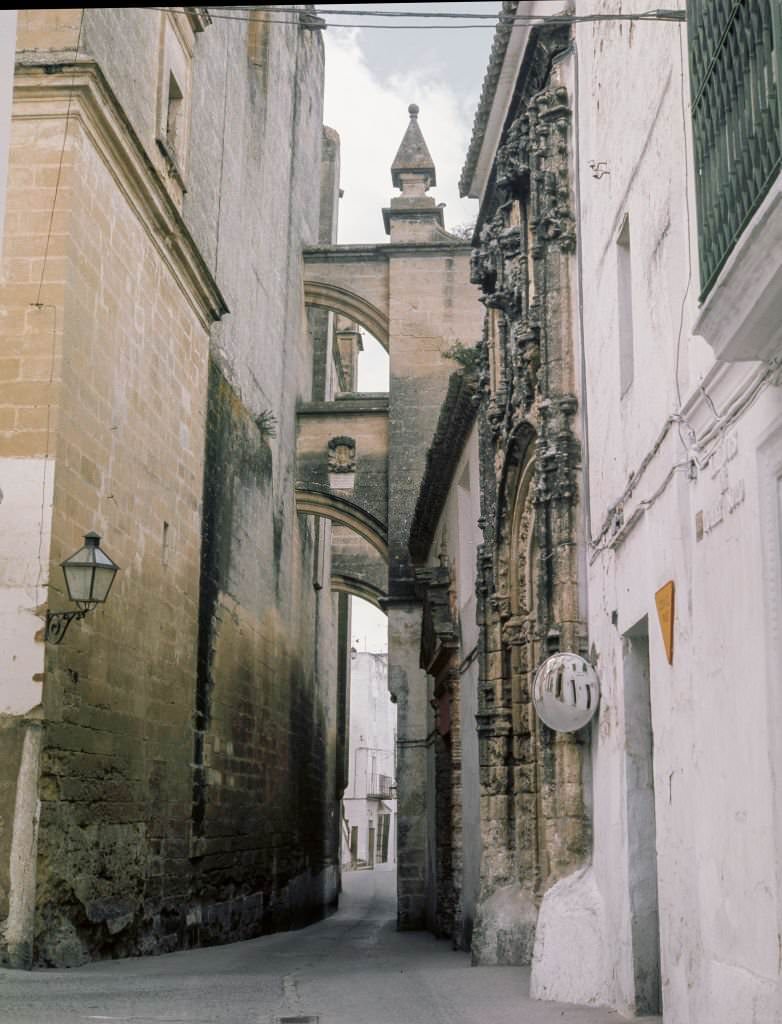
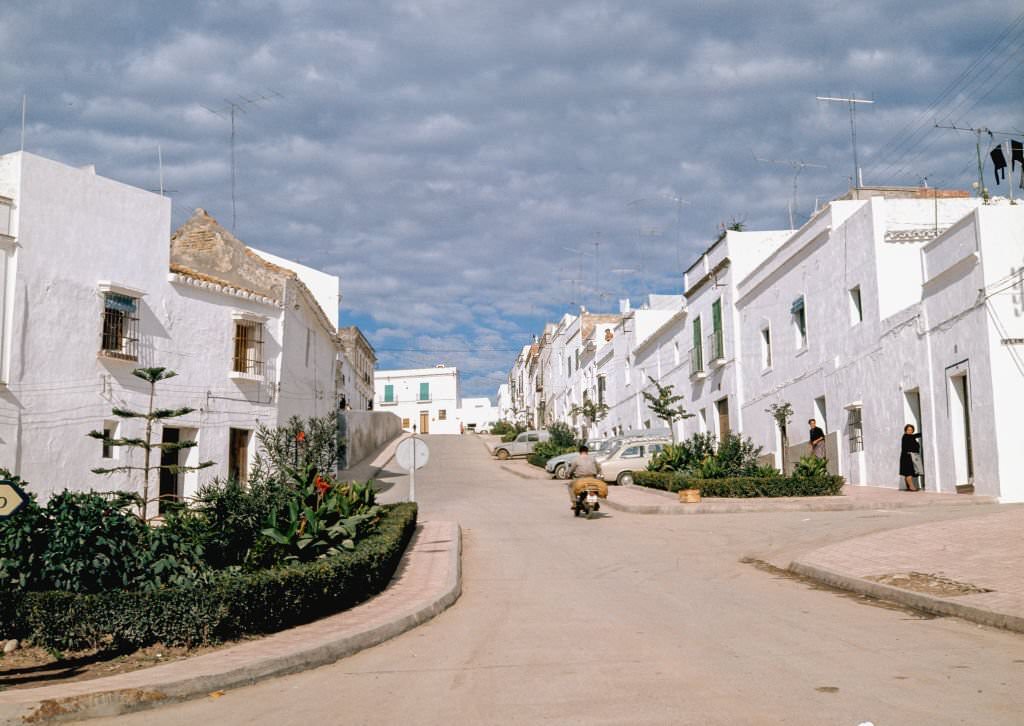
While the cities grew, Spain’s ancient towns and historic regions held onto their character. Andalusia, in particular, remained a world unto itself — its whitewashed hilltop villages, narrow cobblestone streets, and Moorish-era architecture unchanged by the decade’s economic churn.
Arcos de la Frontera, 1972, Jerez, Andalucia, Spain.
Arcos de la Frontera, 1972, Jerez, Andalucia, Spain.
Arcos de la Fontera, typical streets, 1972, Jerez, Andaluicia, Spain.
Arcos de la Fontera, typical streets, 1972, Jerez, Andaluicia, Spain.Arcos de la Frontera, general view, 1972, Jerez, Andalucia, Spain.
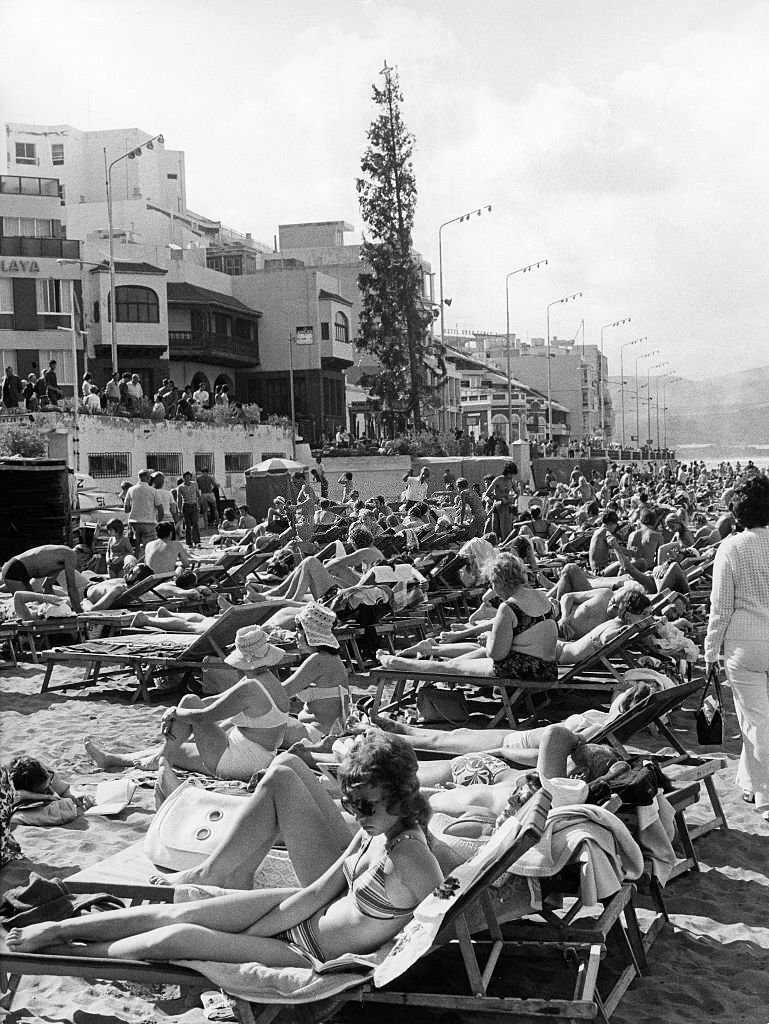
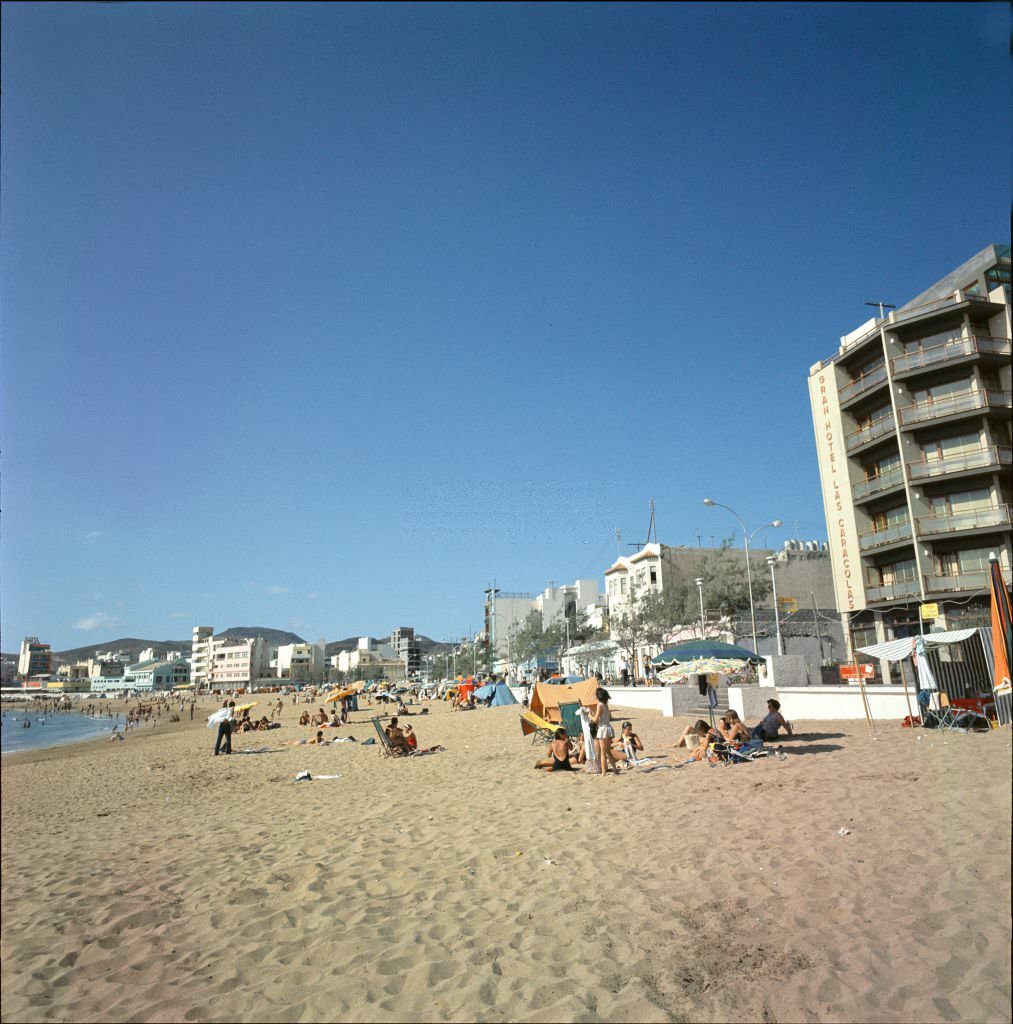
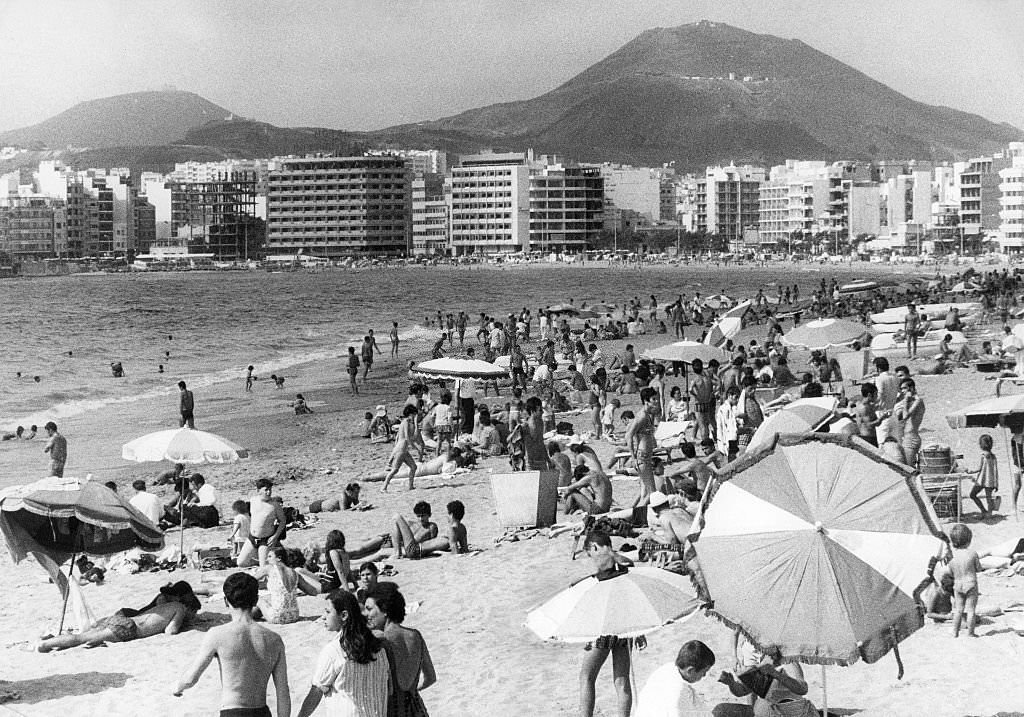
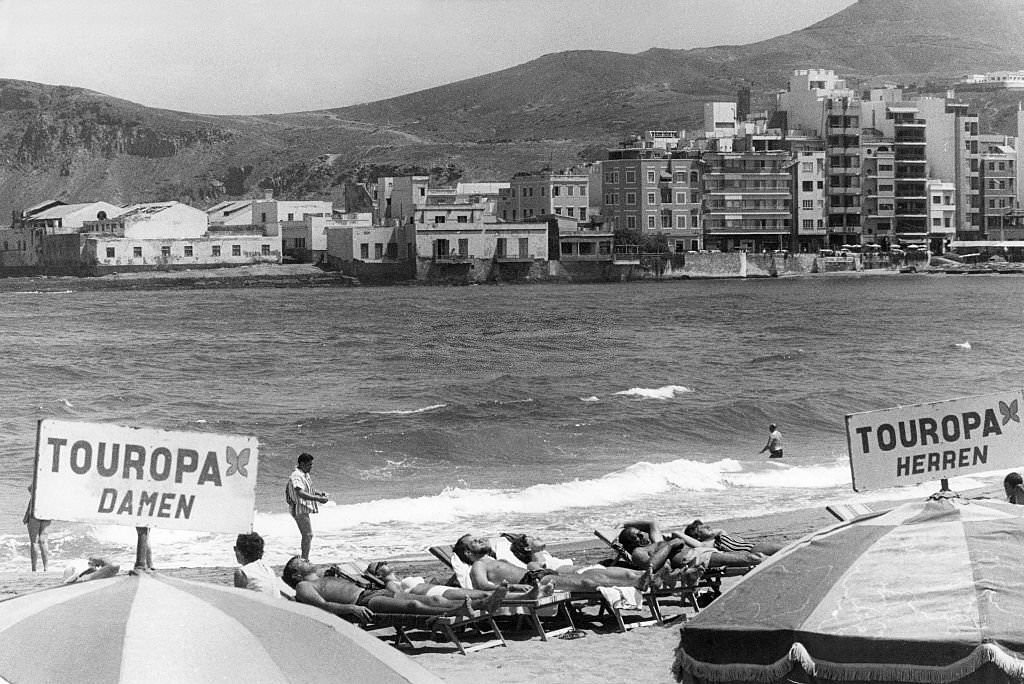
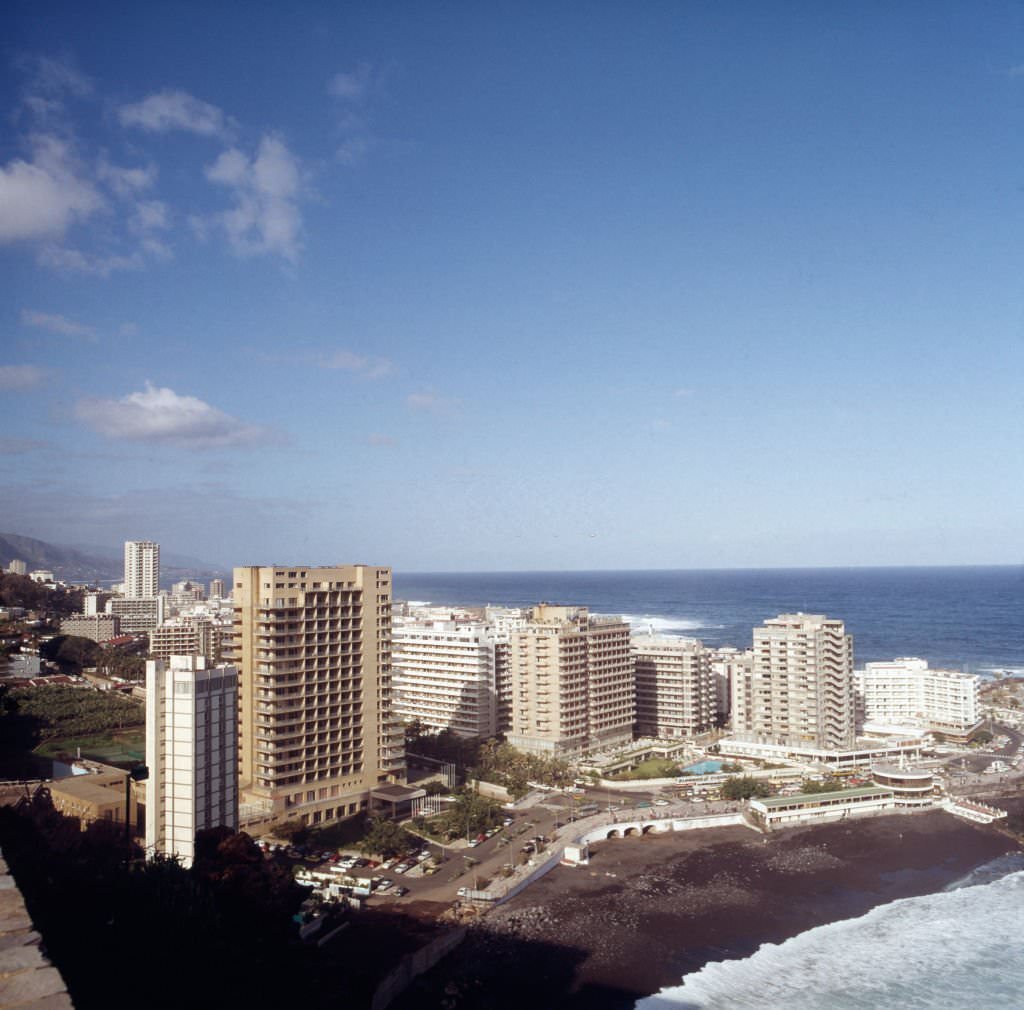
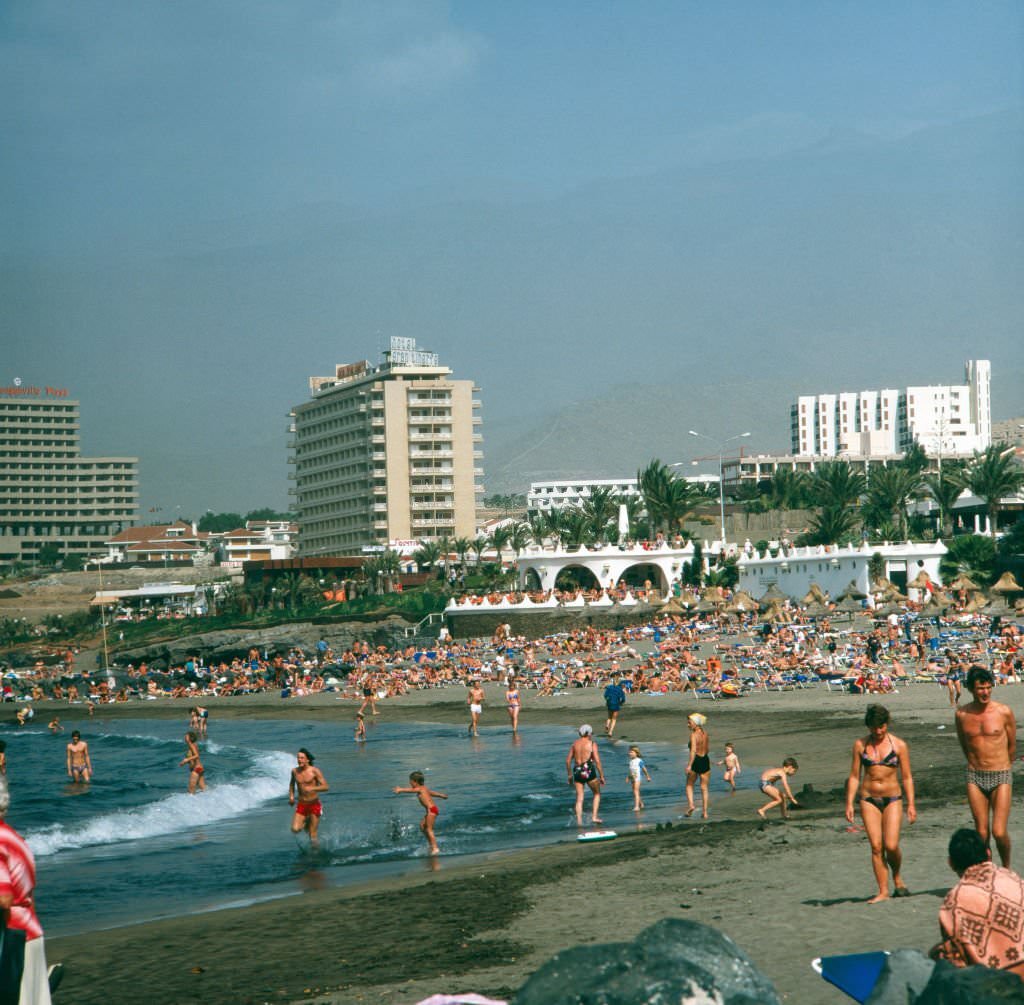
Tourism was already transforming Spain’s coastline and islands. The Canary Islands — Las Palmas, Tenerife, Gran Canaria — drew sun-seeking visitors from across Europe, their beaches lined with tourists who brought foreign currency and a new kind of economy to the Atlantic shore.
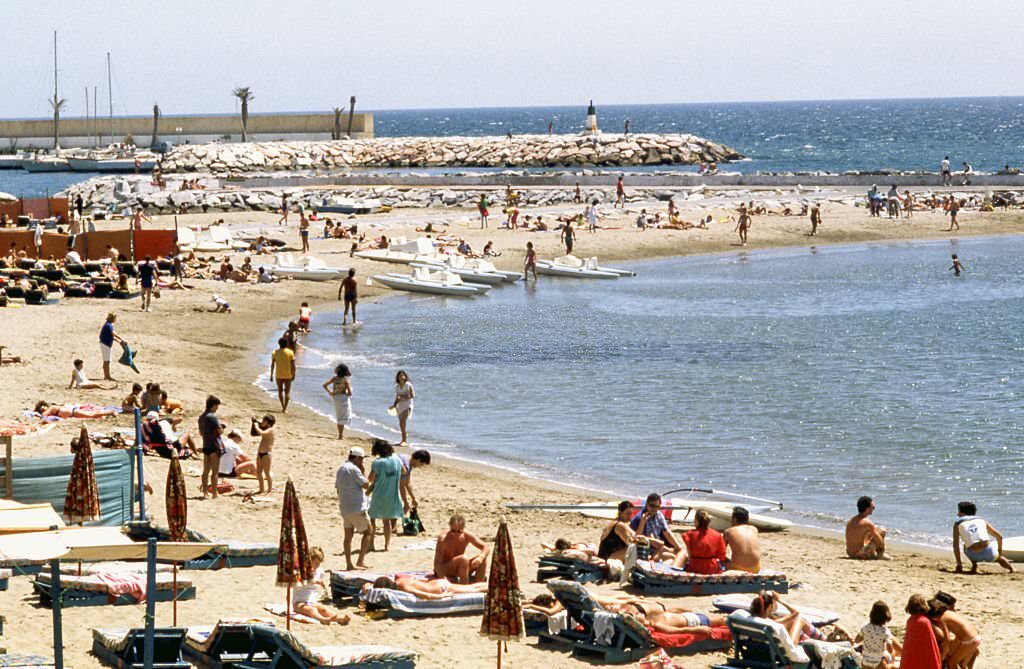
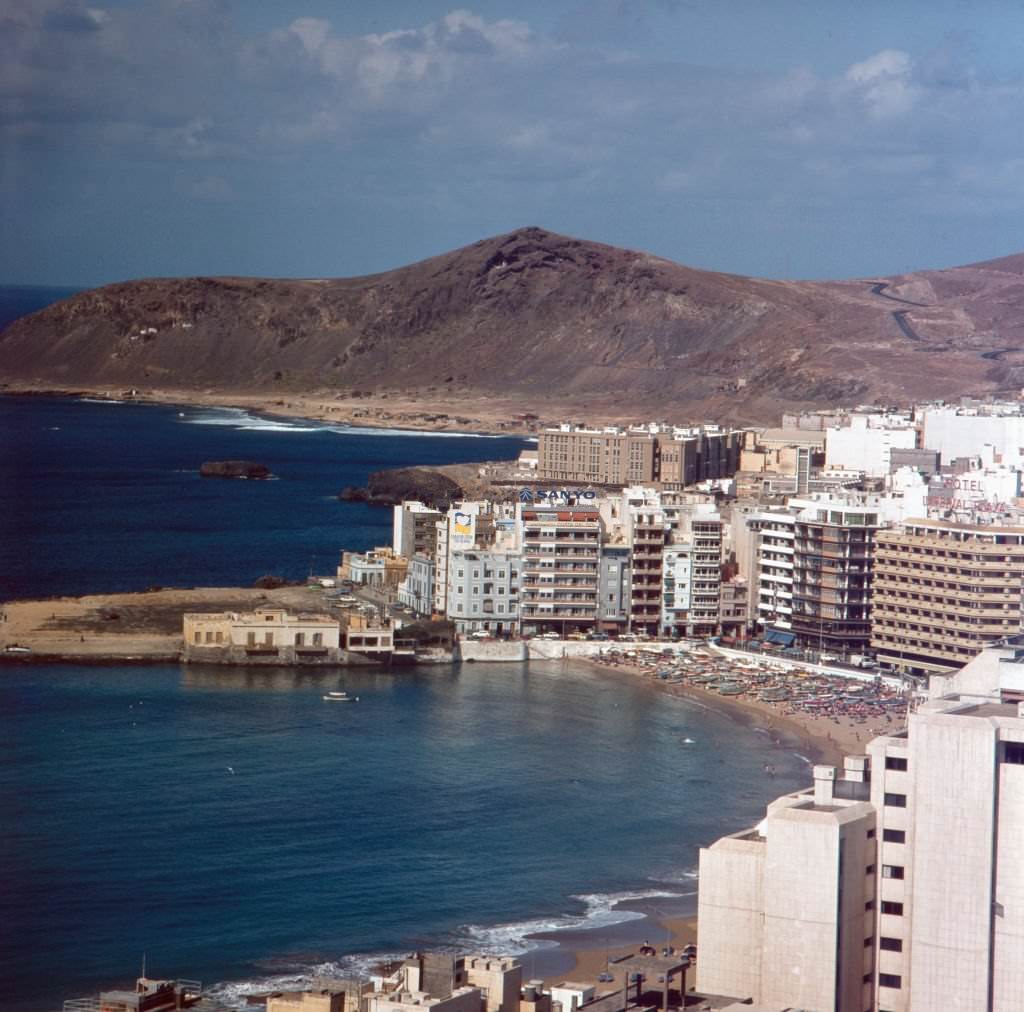
Tourists on the beach in the port city of Las Palmas, 1972
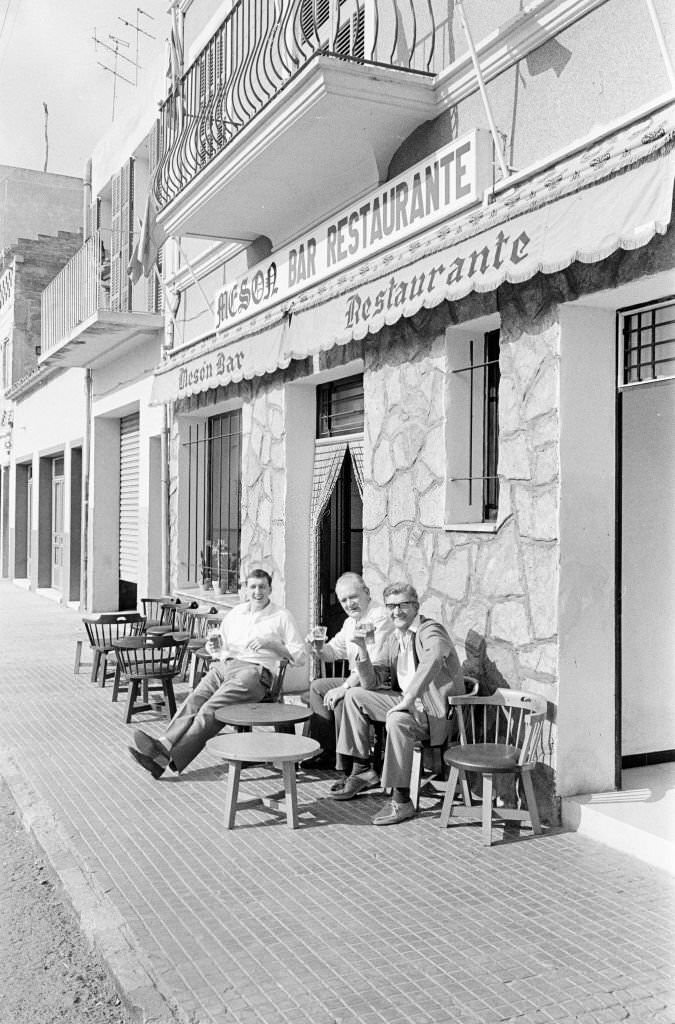
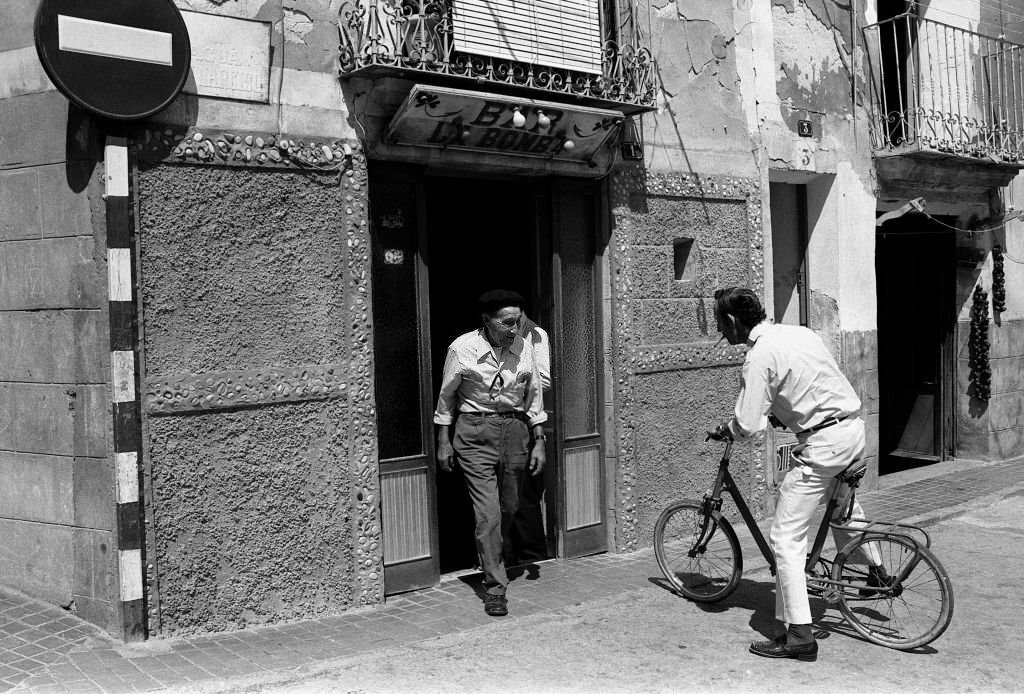
Time for a beer, Majorca, Spain, August 1971.
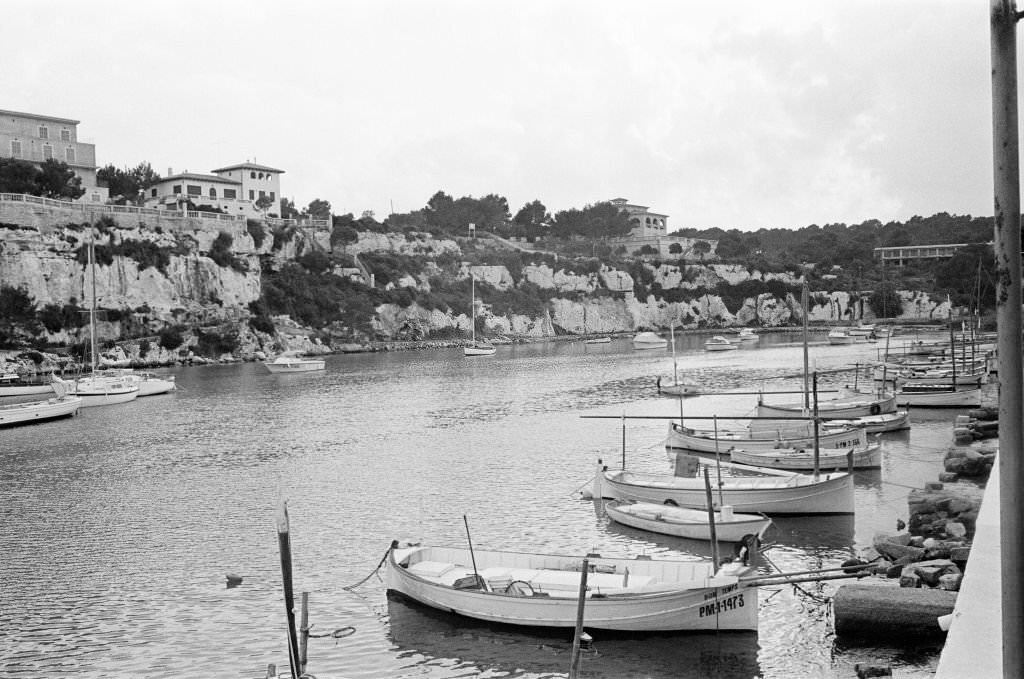
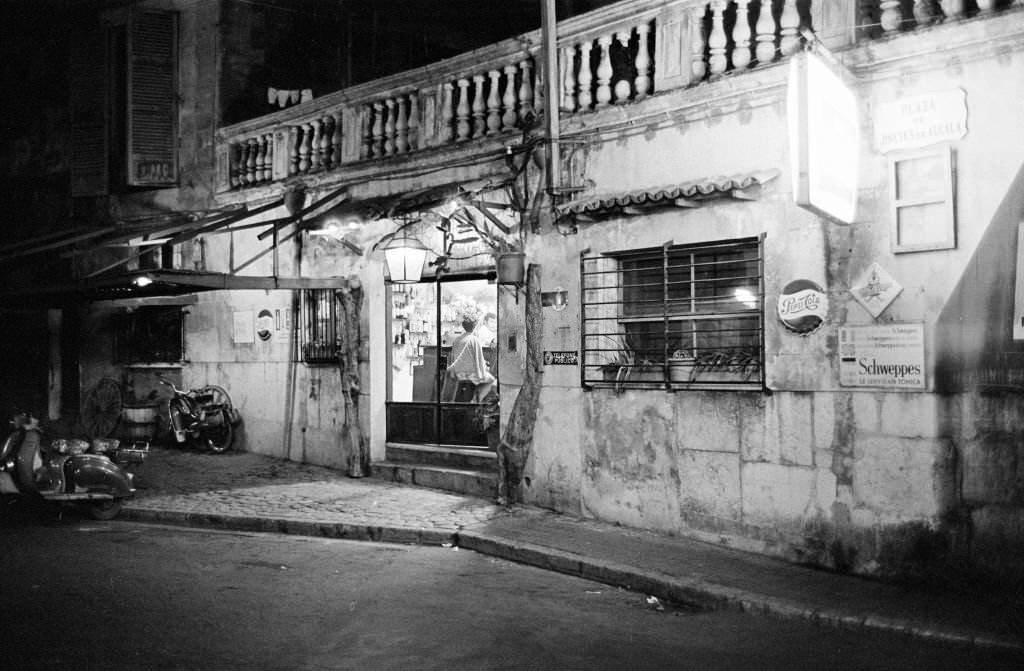
Majorca, Spain, August 1971.Exterior of Bar, Majorca, Spain, August 1971.
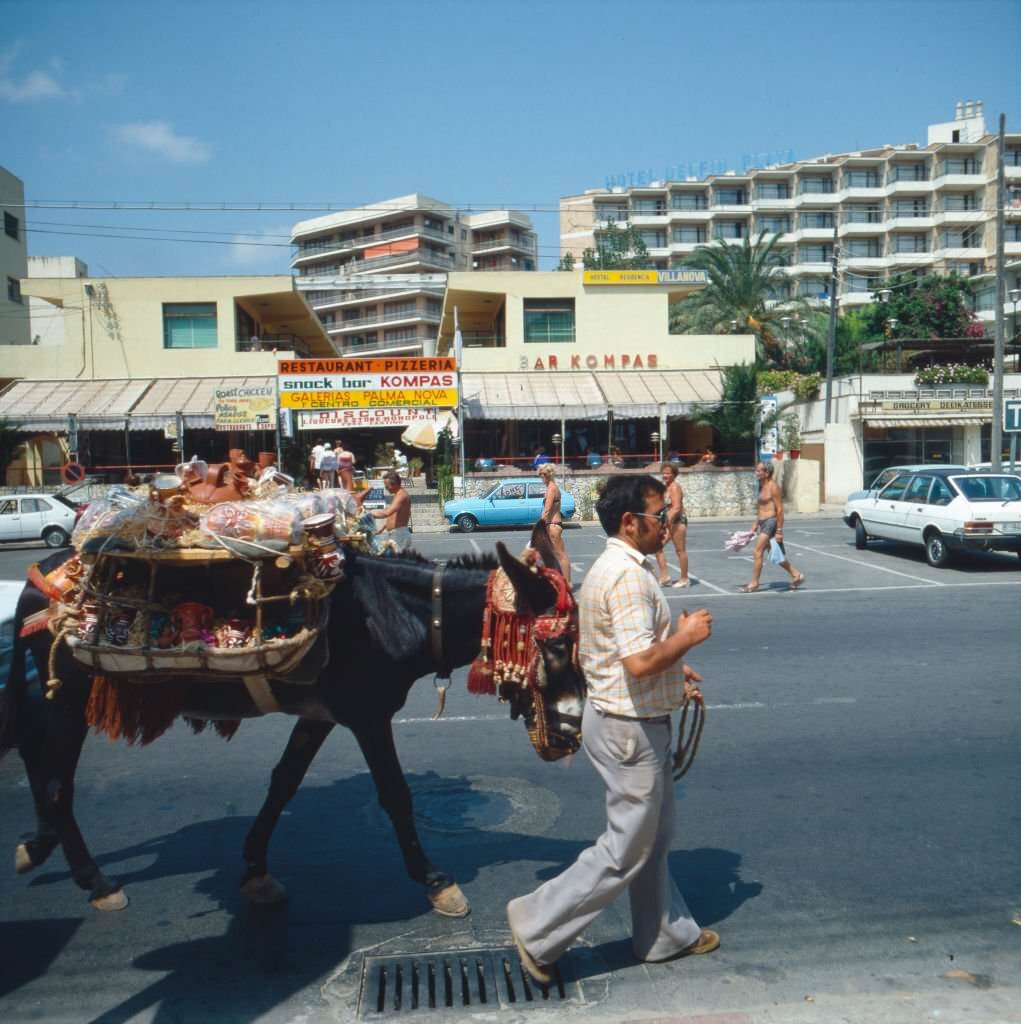
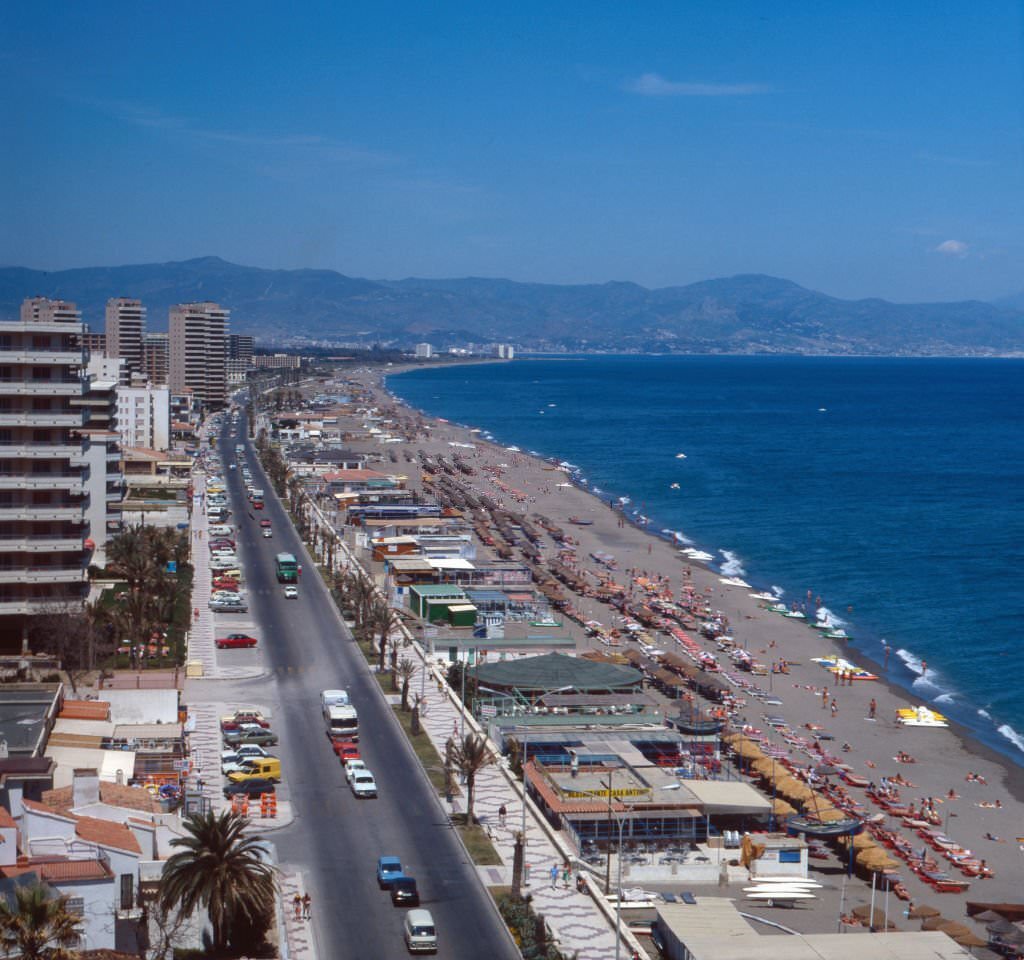
Majorca, Ibiza, and the Costa del Sol had already become magnets for European holidaymakers by the early 1970s. Hotel complexes, beach bars, and resort infrastructure spread rapidly. For many foreign visitors, Spain in this era meant cheap sun, cheap beer, and an escape from the grey skies of northern Europe — while for Spain itself, the tourism revenue was a vital economic lifeline.
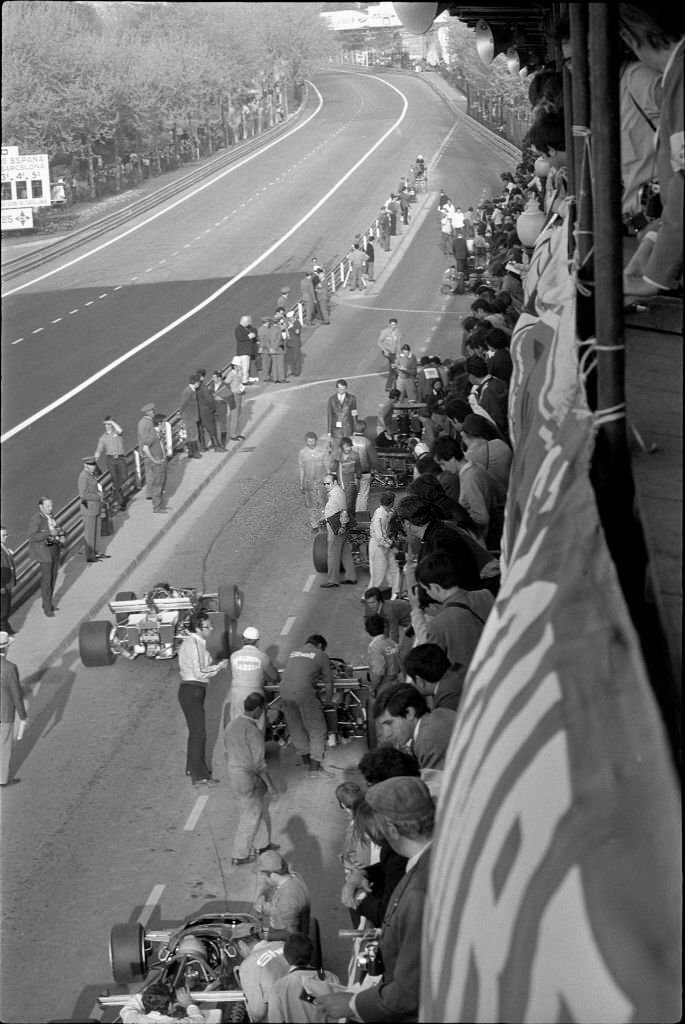
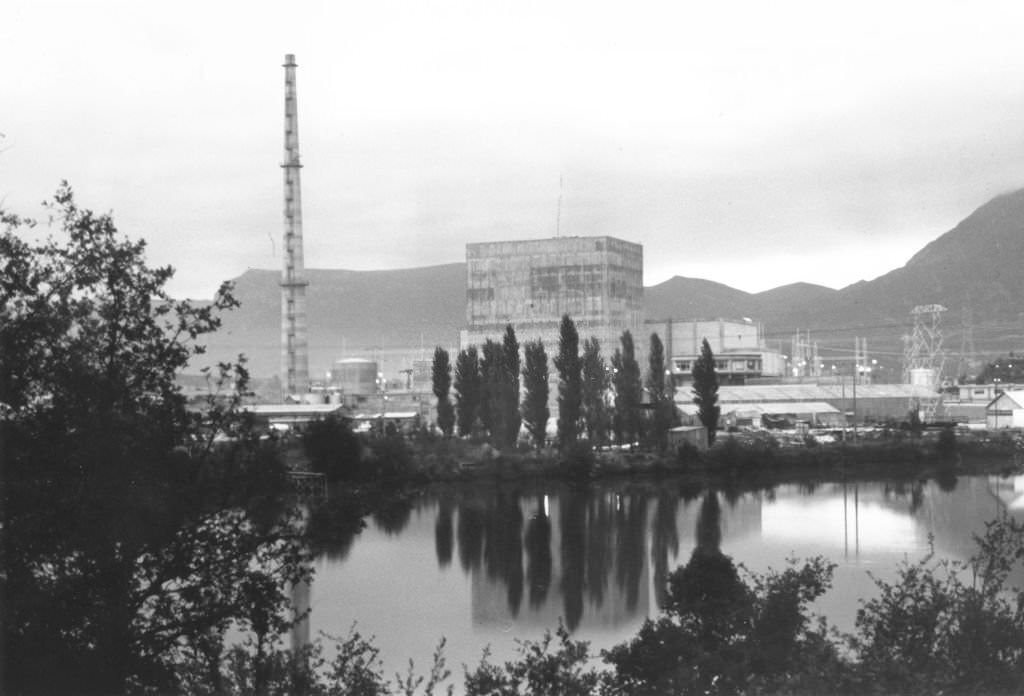
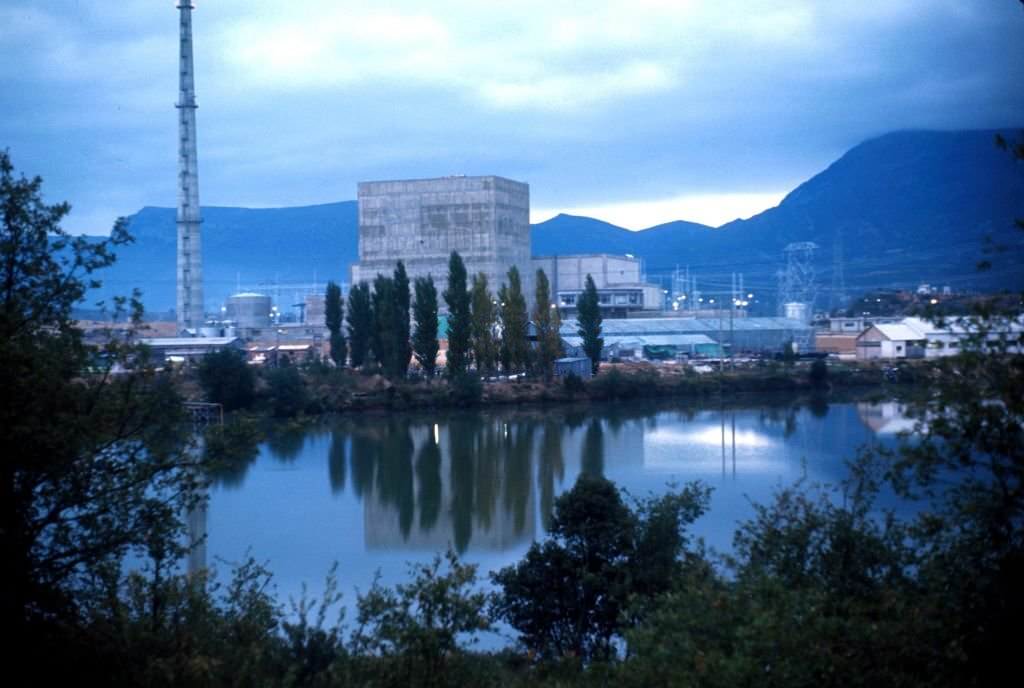
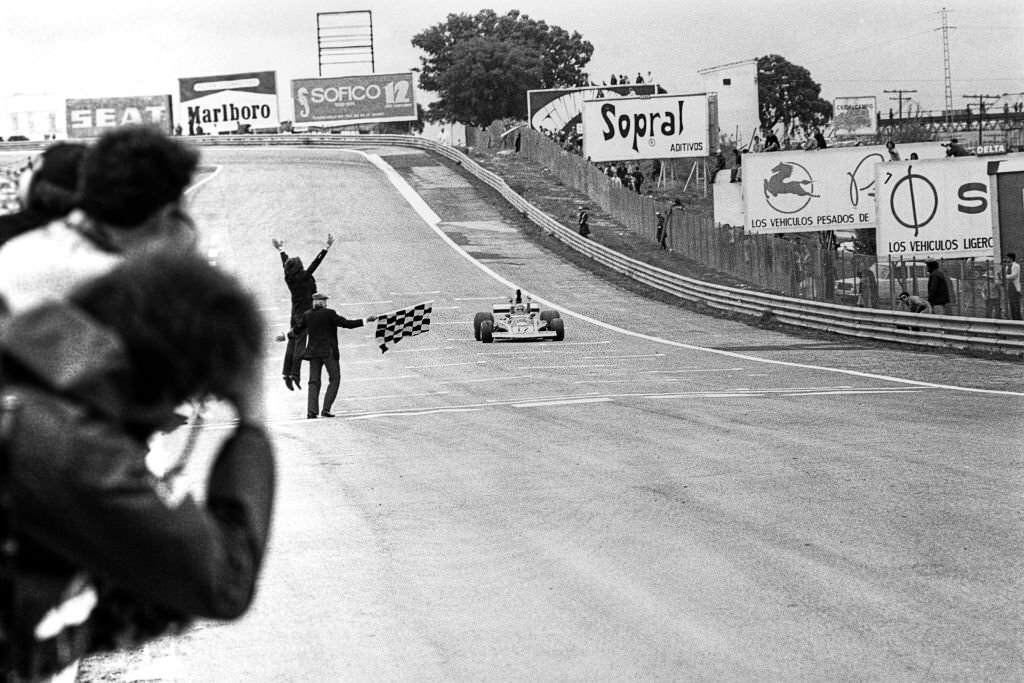
GP of Barcelona, 1971Obscured view of Santa Maria de Garona Nuclear Power Plant, with the Ebro river in the foreground, Burgos, Spain, 1971.
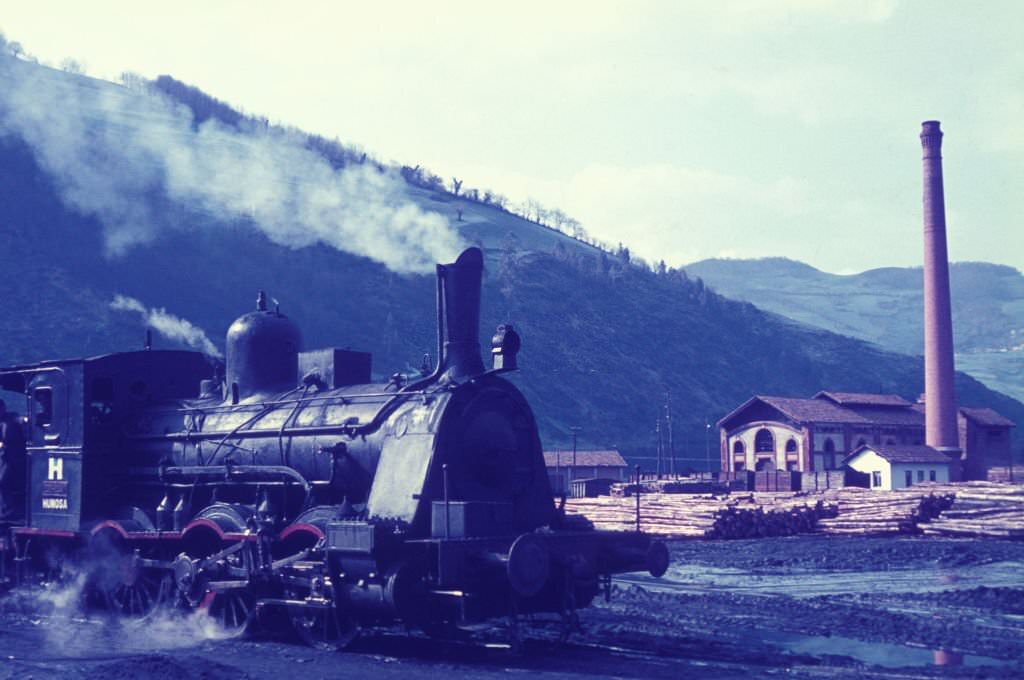
Spain’s push toward modernization was visible in its infrastructure. The Santa María de Garoña nuclear power plant, situated along the Ebro river in Burgos, represented the regime’s ambition to industrialize at scale. Meanwhile, older forms of industry — like the coal-mining operations in Asturias — still ran on vintage equipment, some of it dating back to the 19th century.
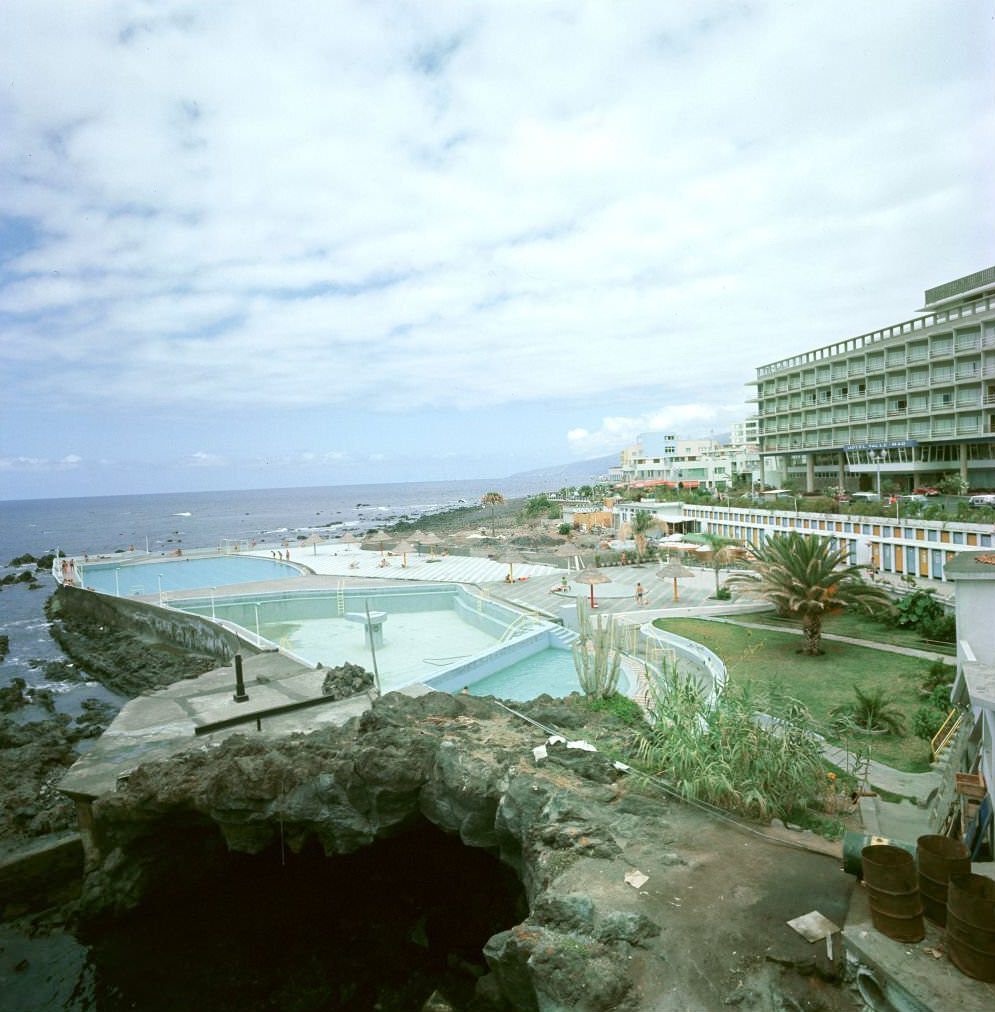
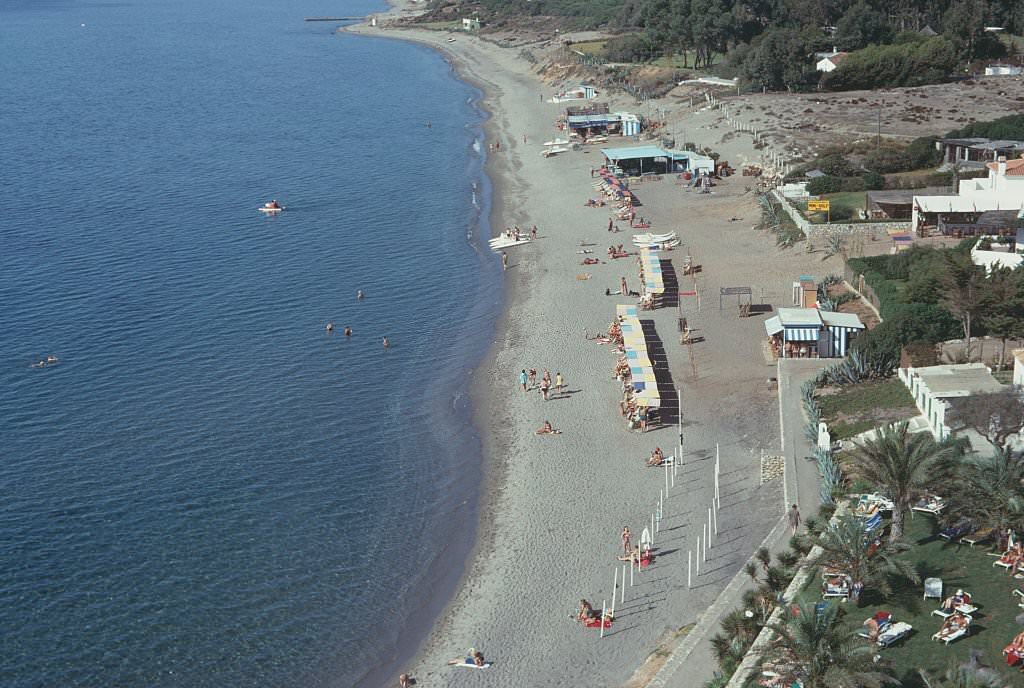
Spanish vintage ‘Eslava’ built by Hartmann of Chemnity in 1881 working for the Minas de Aller complex Ujo. Monday 5th April 1971.Tourism, hotel on Tenerife 1970A high angle view of the beach at Atalaya Park, Málaga, Spain, October 1970.Bathers on the beach, Tenerife 1970
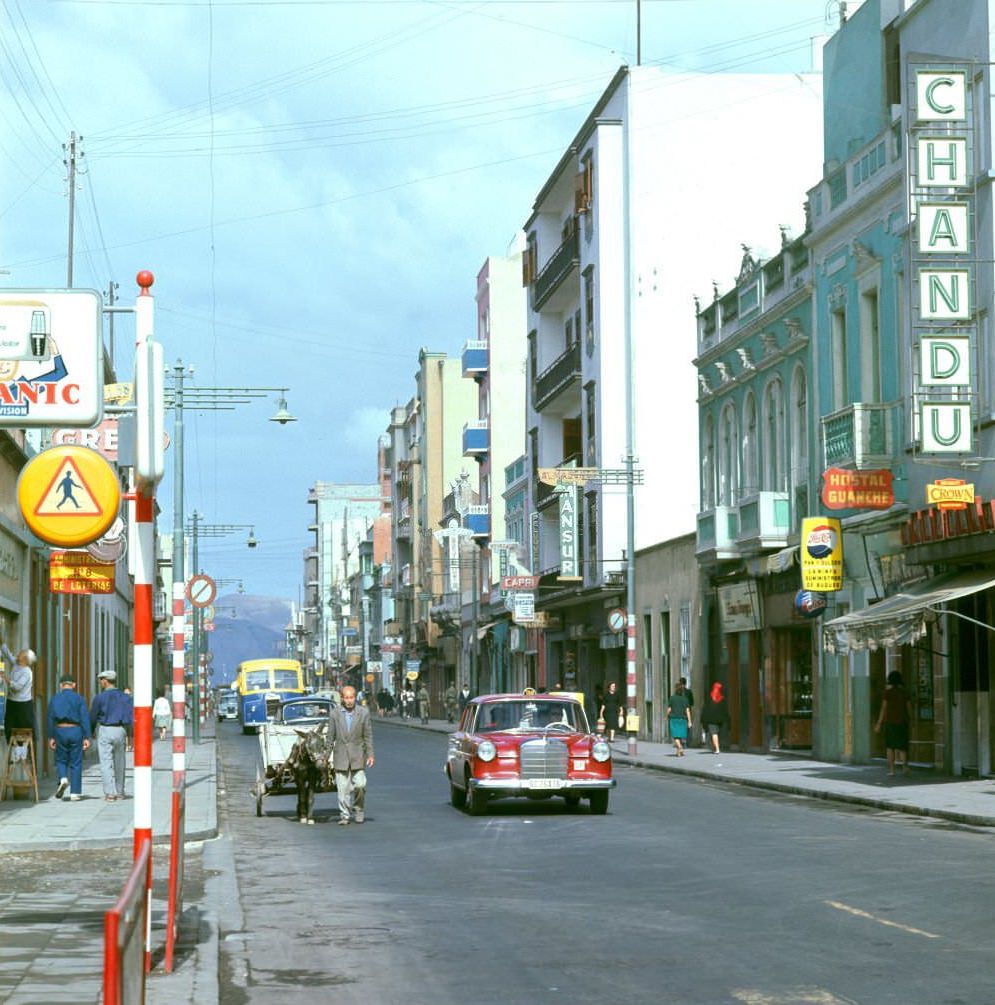
Tenerife in 1970 captured the decade’s central tension perfectly. A Mercedes taxi overtaking a man on a donkey cart was not an unusual sight — it was everyday reality. The old and the new existed side by side in a country that was modernizing faster than most of its citizens could fully absorb.
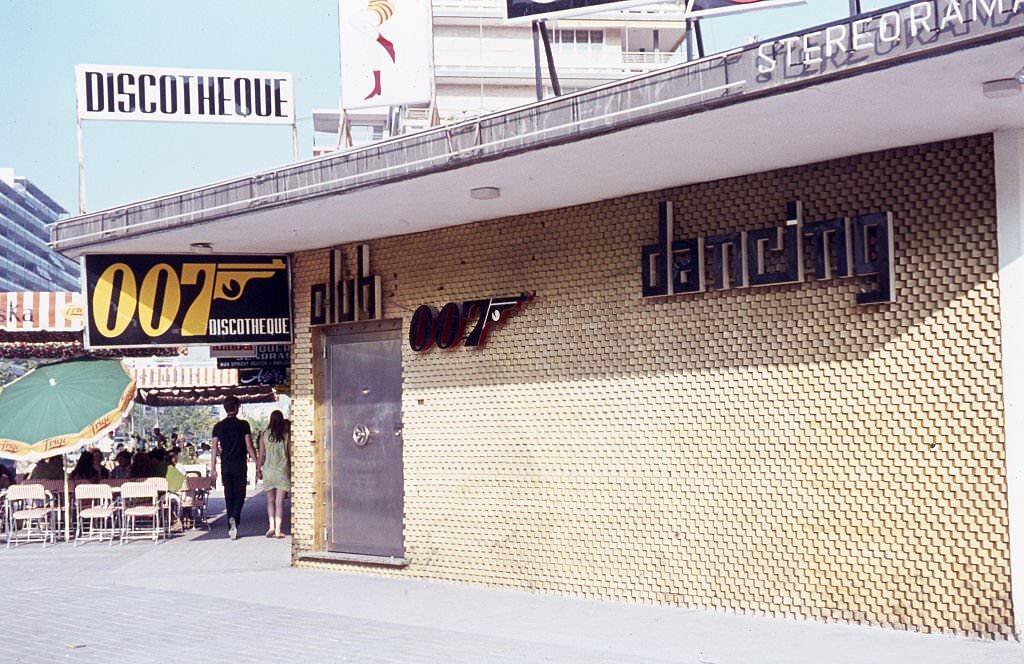
Mercedes taxi overtakes man with donkey cart, Tenerifa 1970Gran Canaria Spanien – Badebucht von Las Palmas, 1970Gran Canaria Spain – Beach of the port city, 1970Disco in Spain, 1970
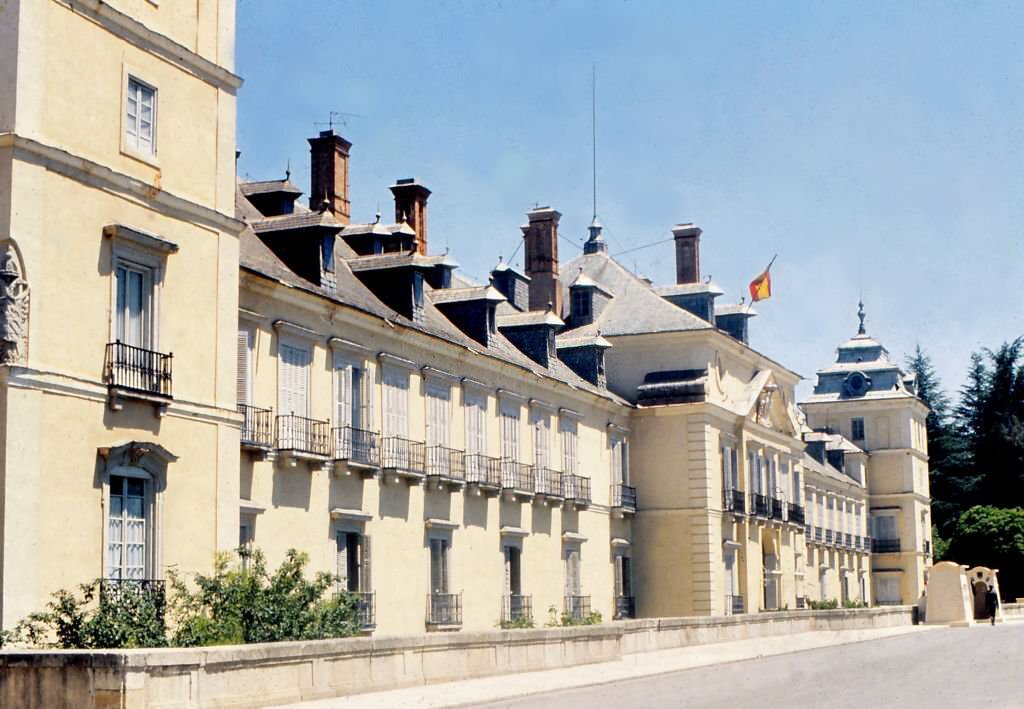
Francisco Franco, Spain’s dictator since the Civil War, governed from the Palace of El Pardo outside Madrid. By the early 1970s, his regime faced growing pressure from all directions — reformers pushing for change, hardliners resisting it, and armed separatists willing to use violence to force the issue.
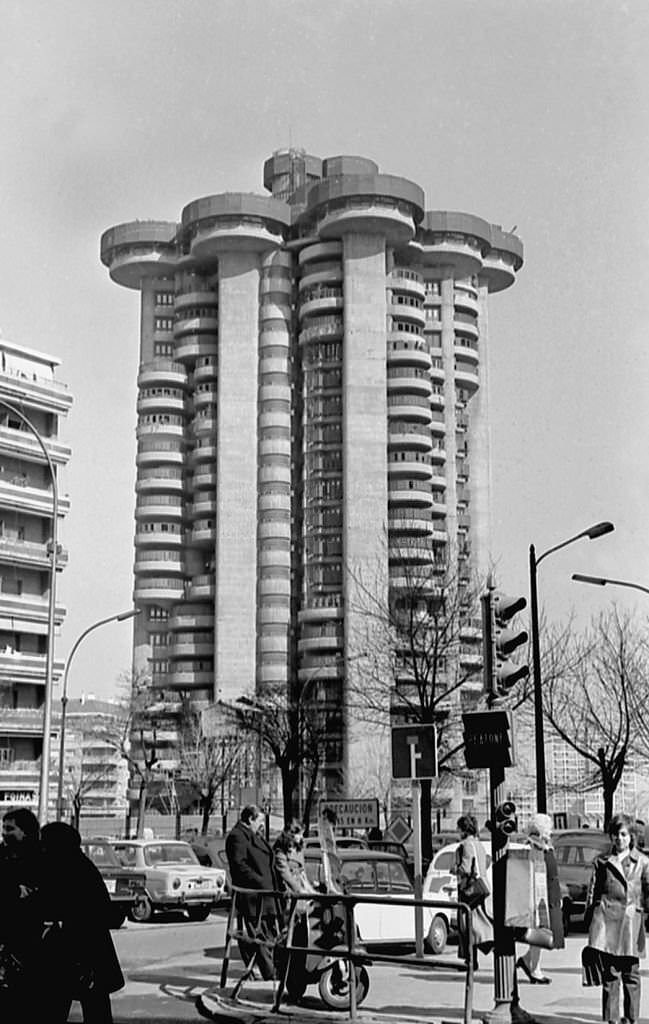
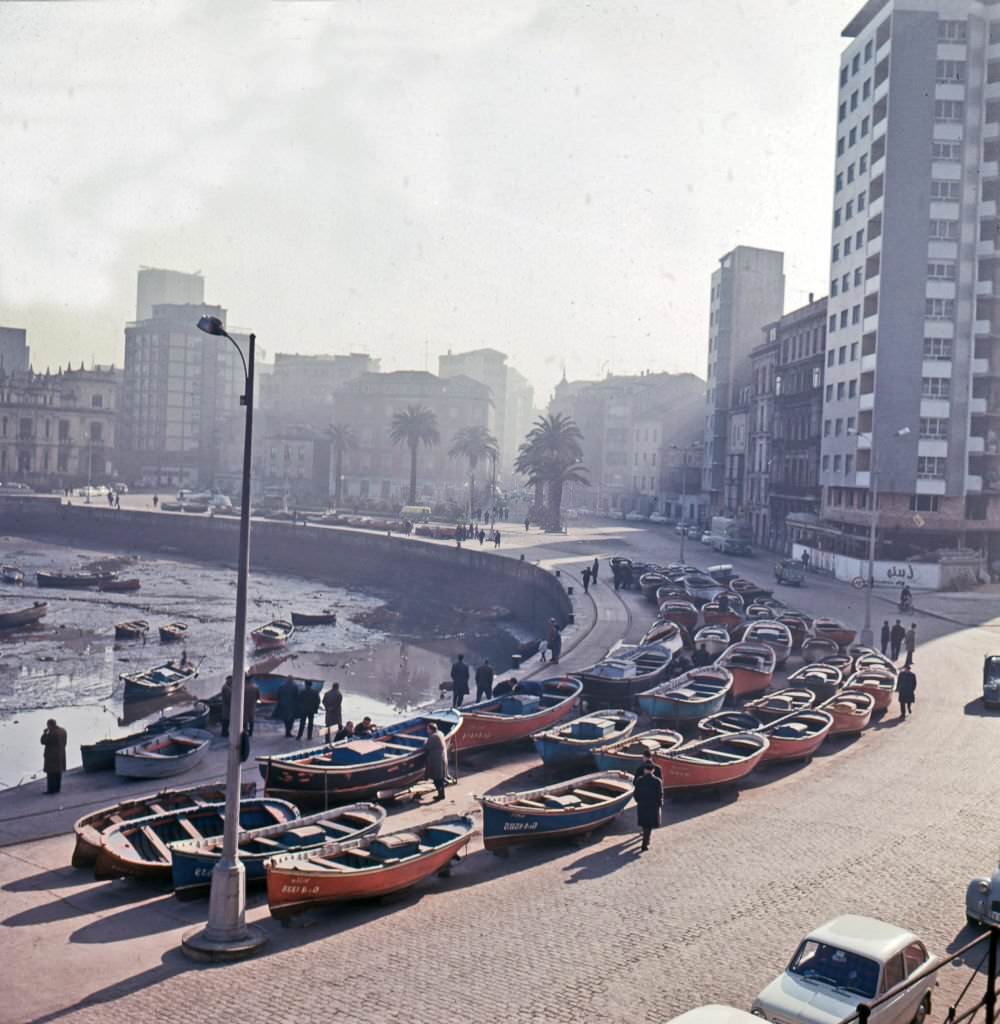
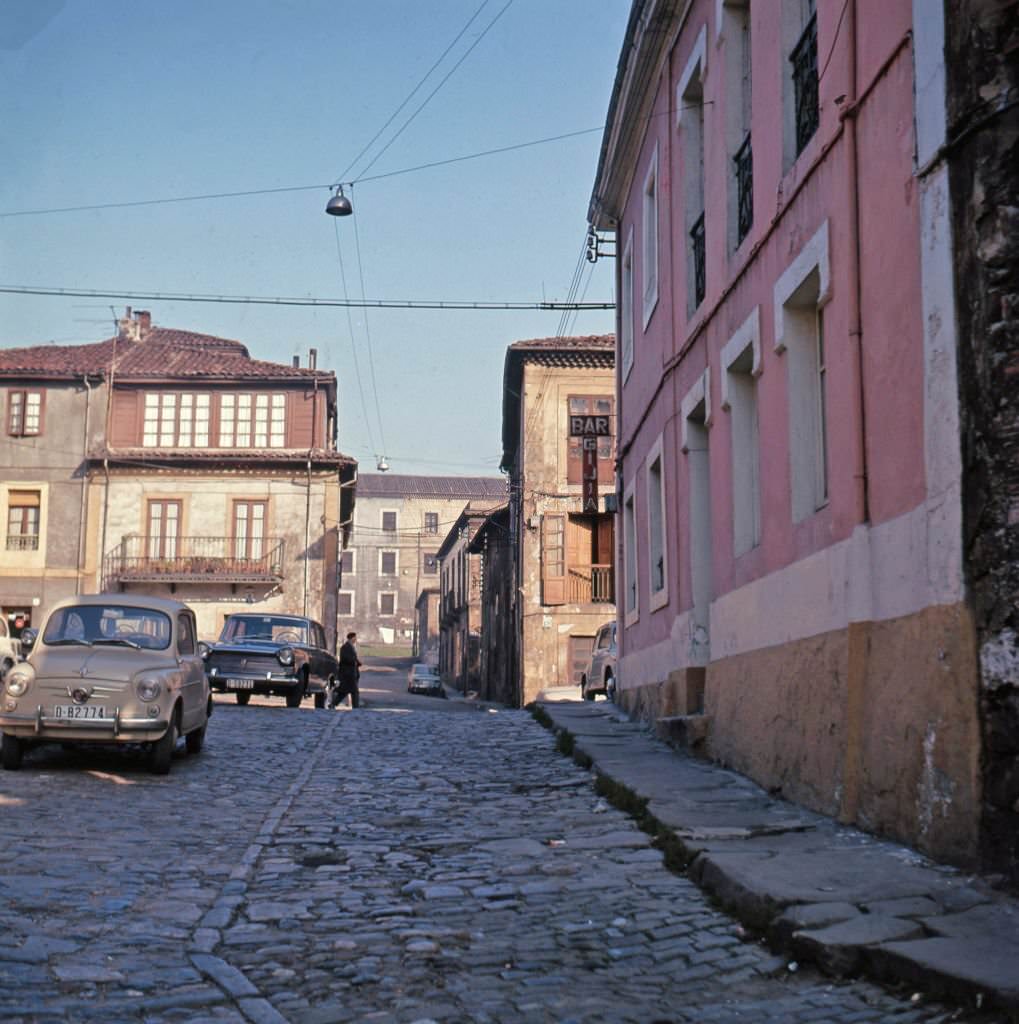
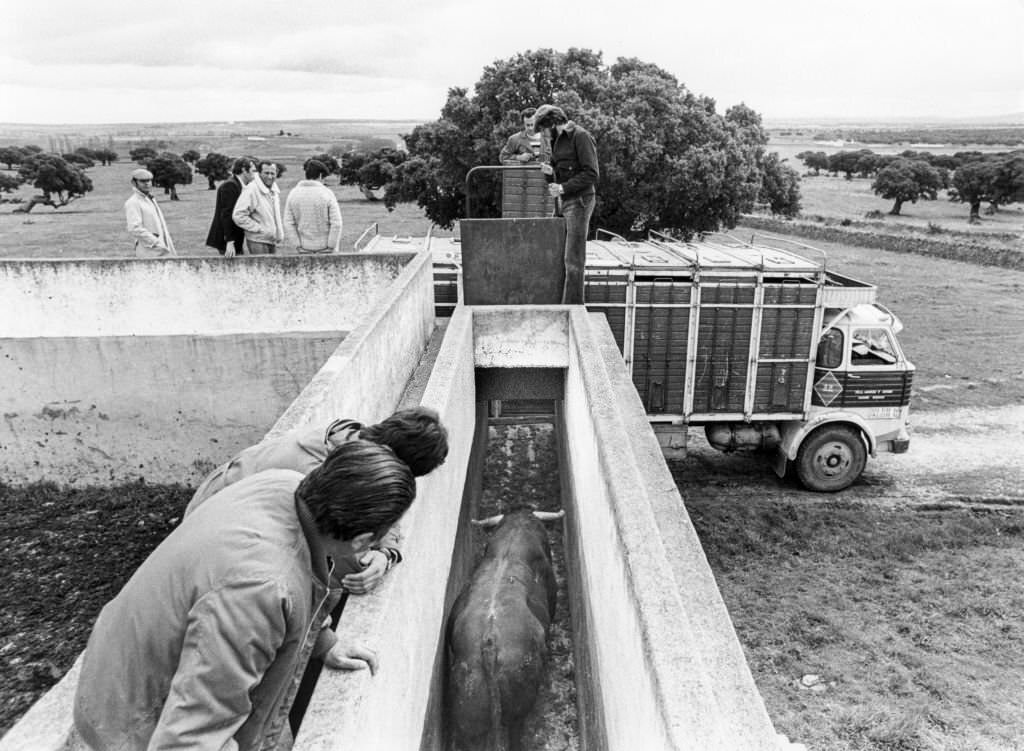
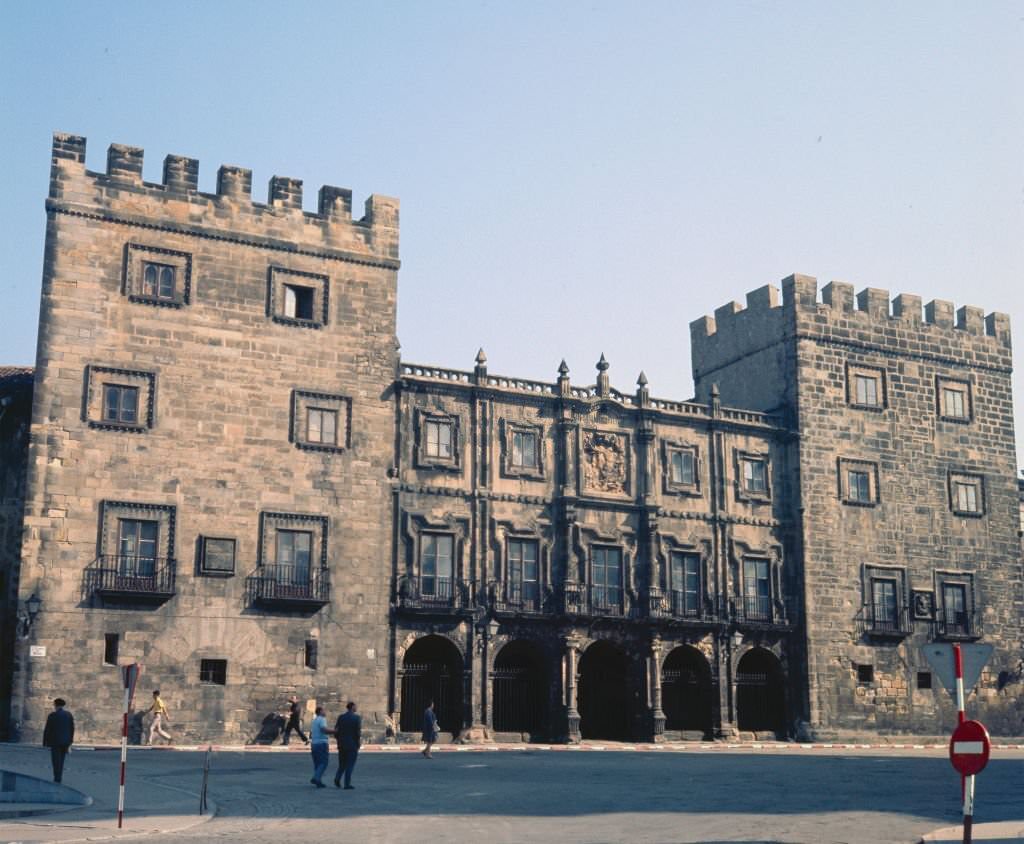
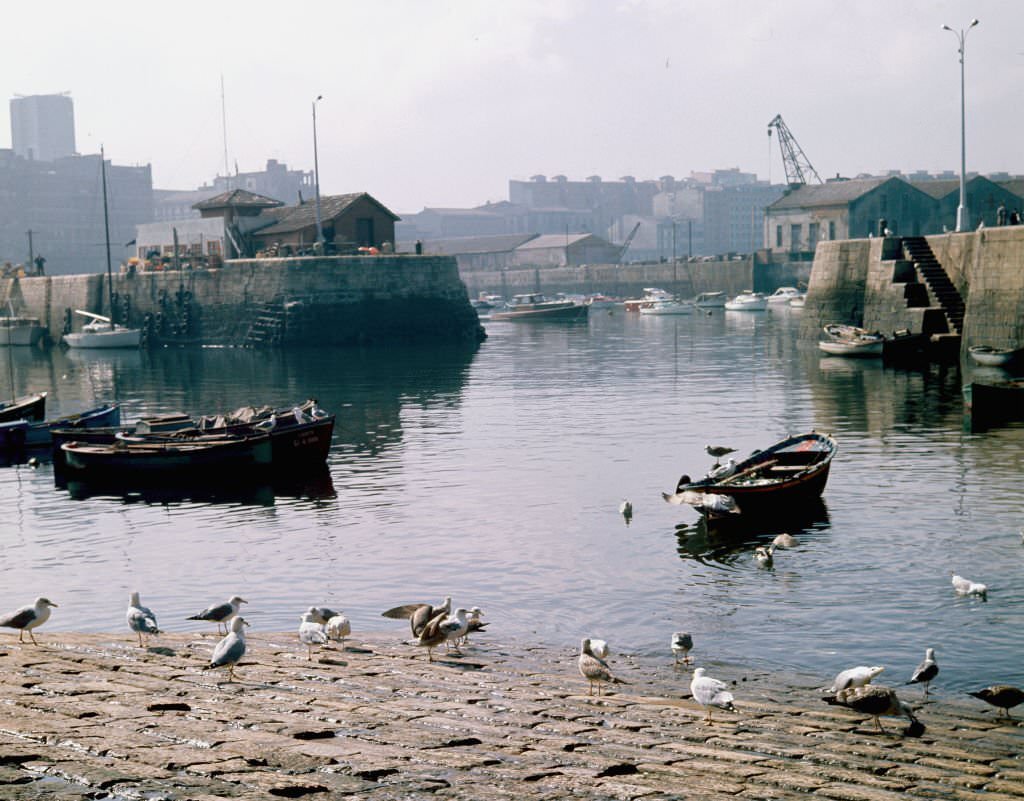
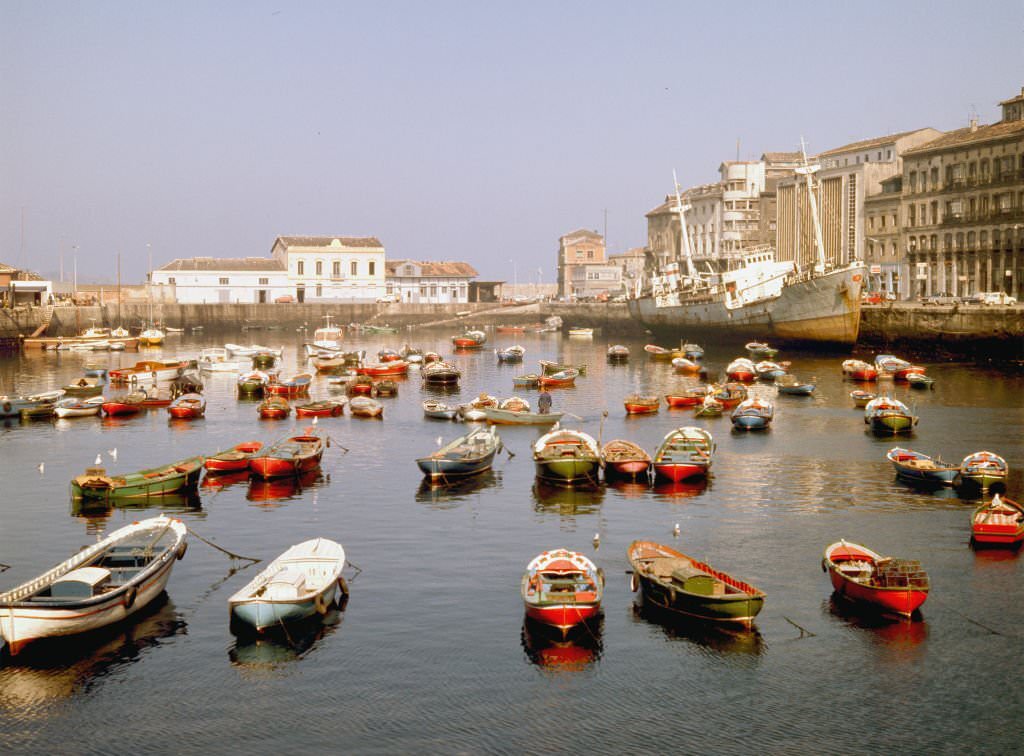
Palace of El Pardo, former residence of Francisco Franco Bahamonde, currently residence of foreign heads of state on an official visit to Spain.The White Towers approximately in 1970 in Madrid, Spain.Number of boats in front of San Lorenzo beach in Gijon, Spain and surroundings, 1970.Citylife scenes in Gijon, Spain and surroundings, 1970.A general view of Felix Boix Street, near Plaza de Castilla, with the Colegio de Nuestra Señora de la Consolacion in the background, in Madrid, Spain, 1970.The Cathedral of Saint Mary of Burgos, 1970Loading a bullfight bull into a truck, in Salamanca, Spain, 1970
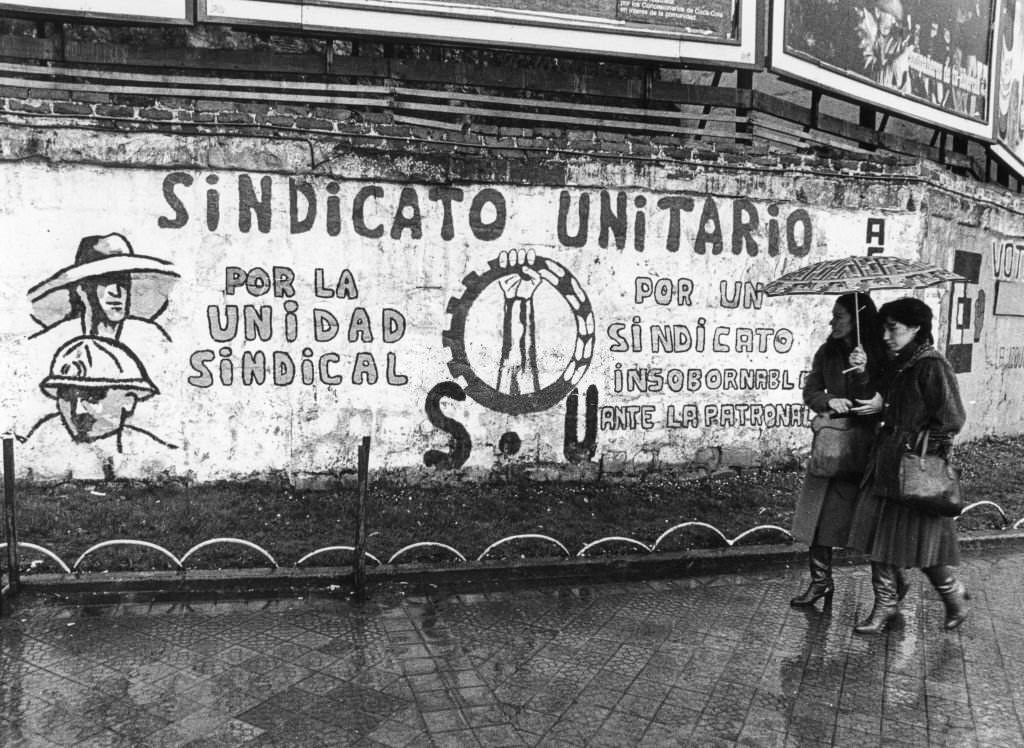
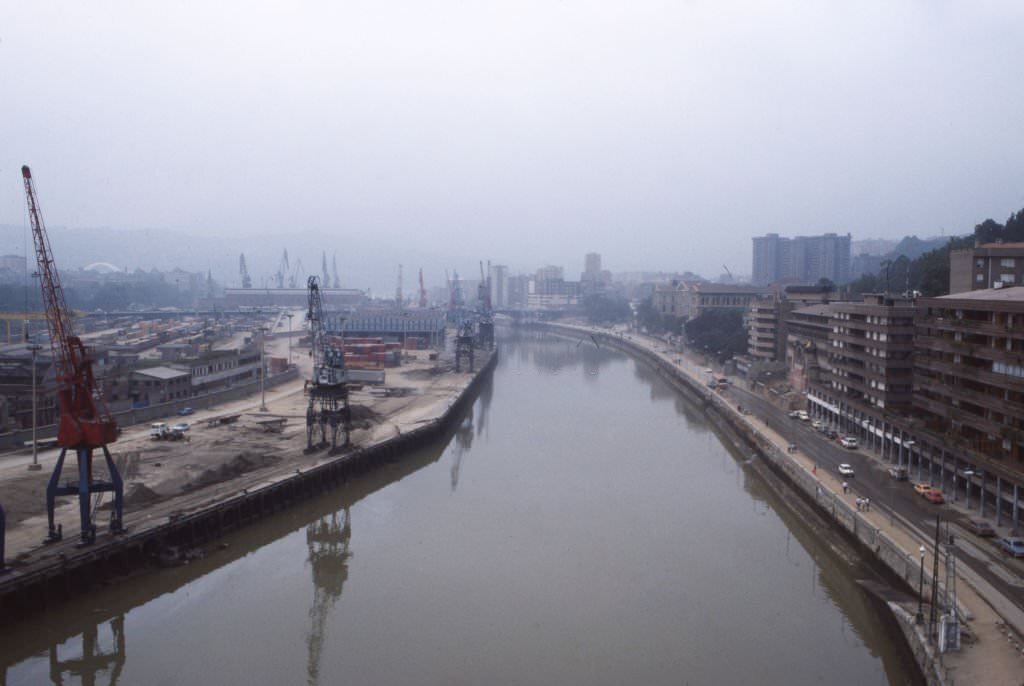
The Basque Country was a flashpoint. Bilbao’s industrial port on the Nervión river was a center of working-class life and labor unrest, and the walls of the city bore political murals that reflected the tensions simmering just beneath the surface. The Basque nationalist organization ETA had been active since the late 1950s, but by the early 1970s it had escalated its campaign dramatically.
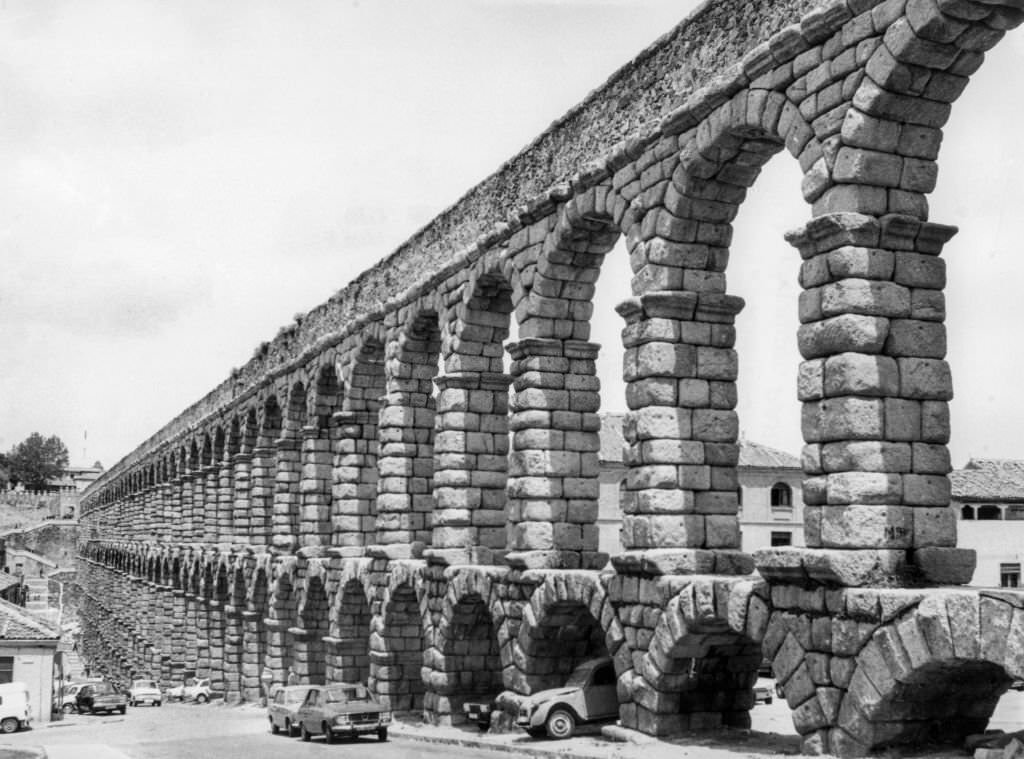
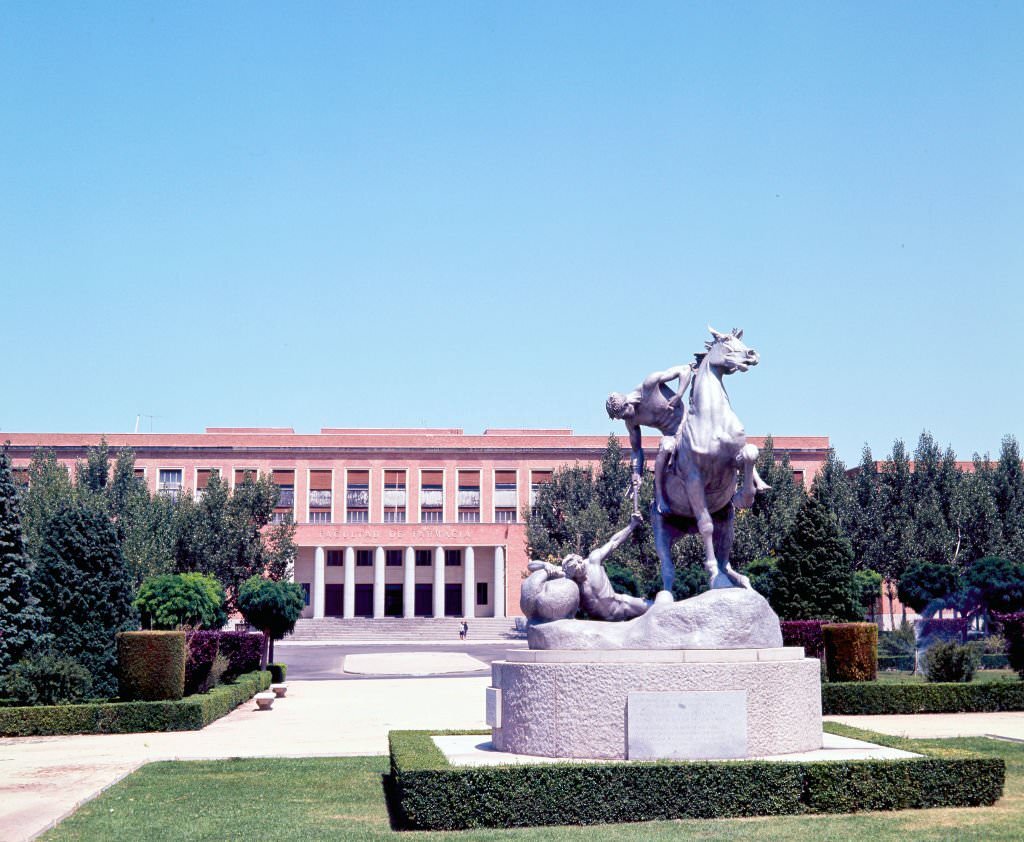
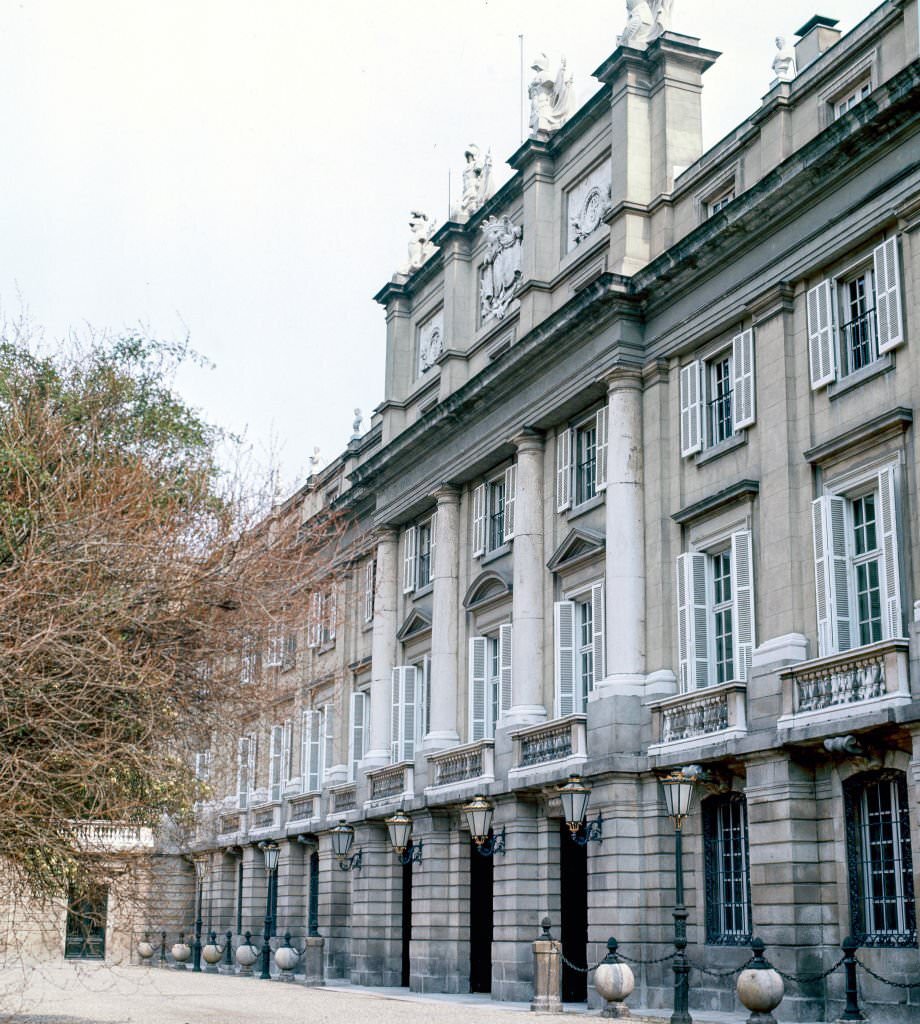
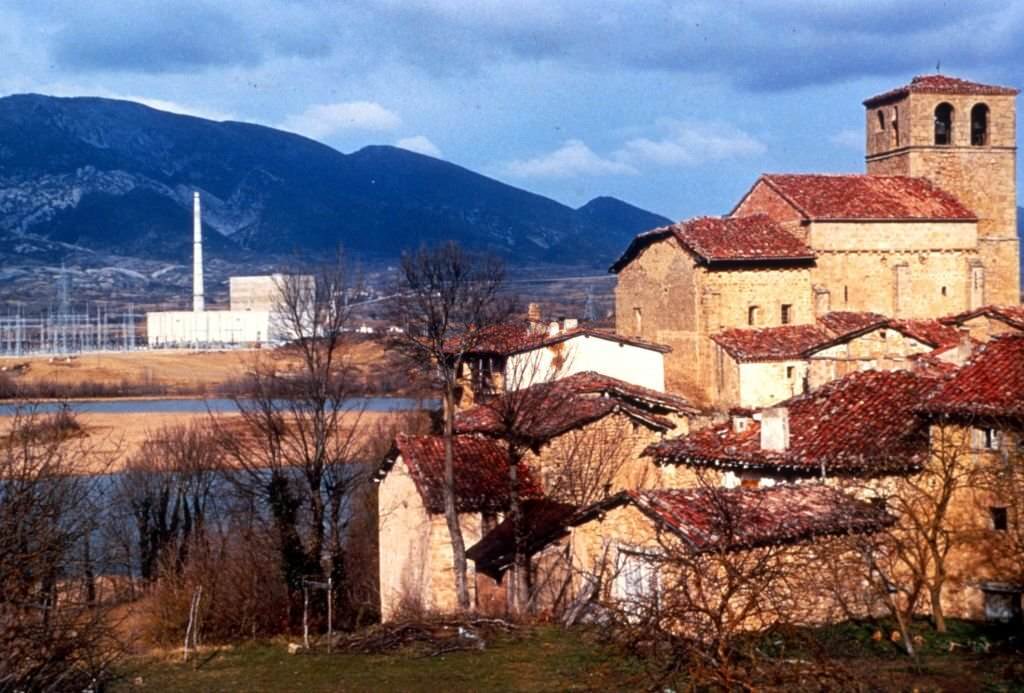
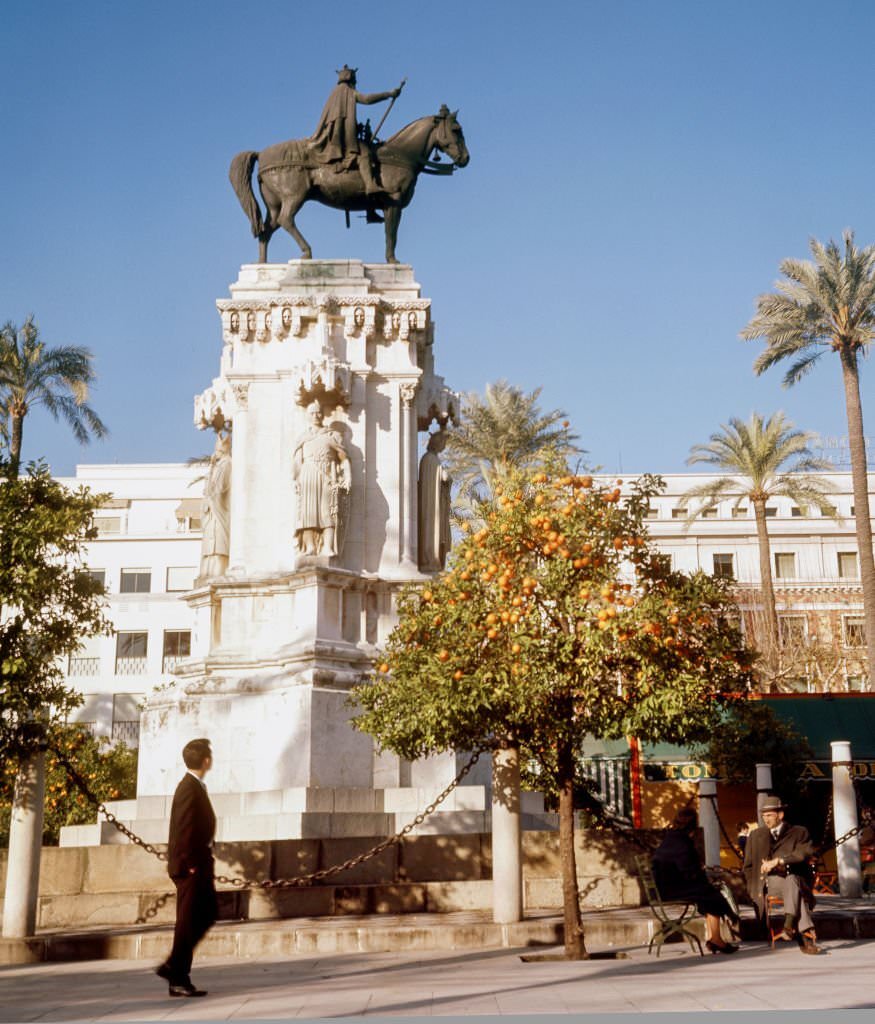
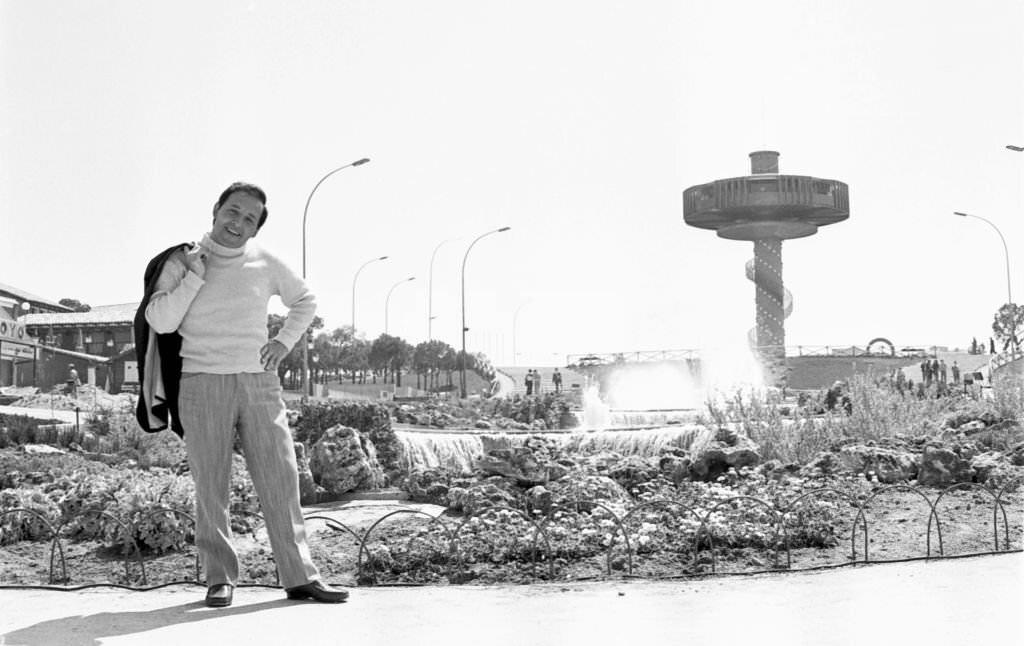
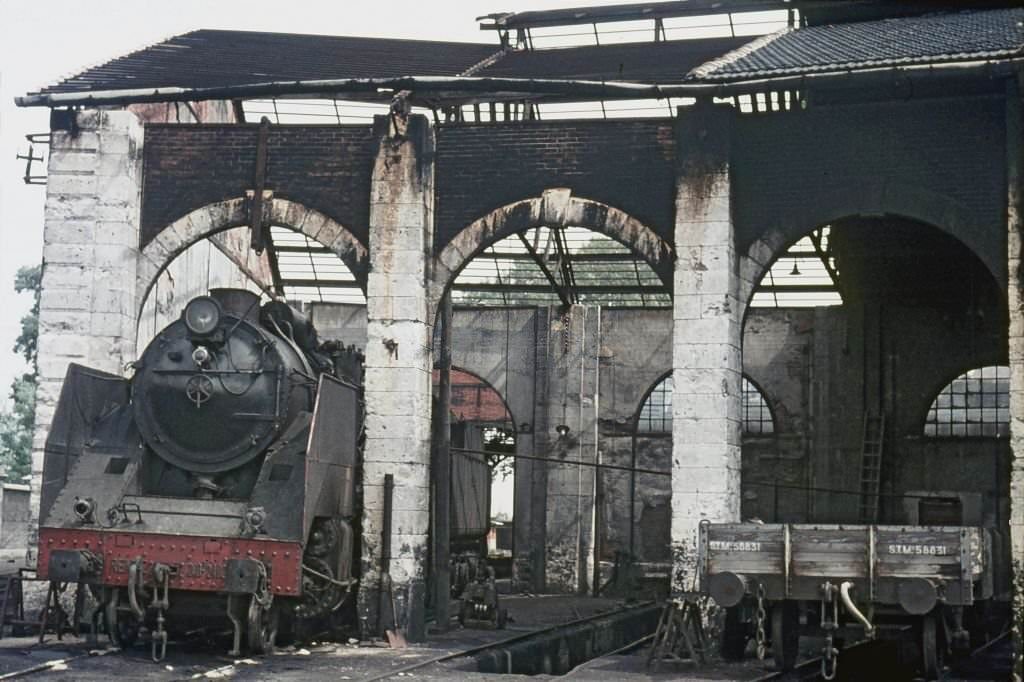
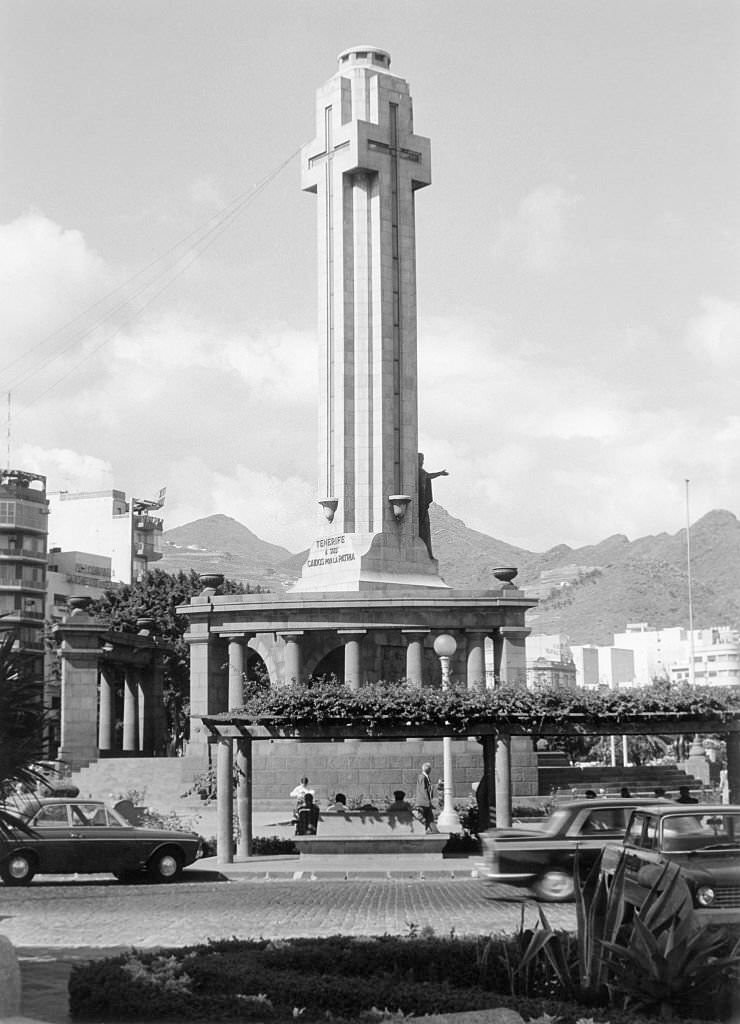
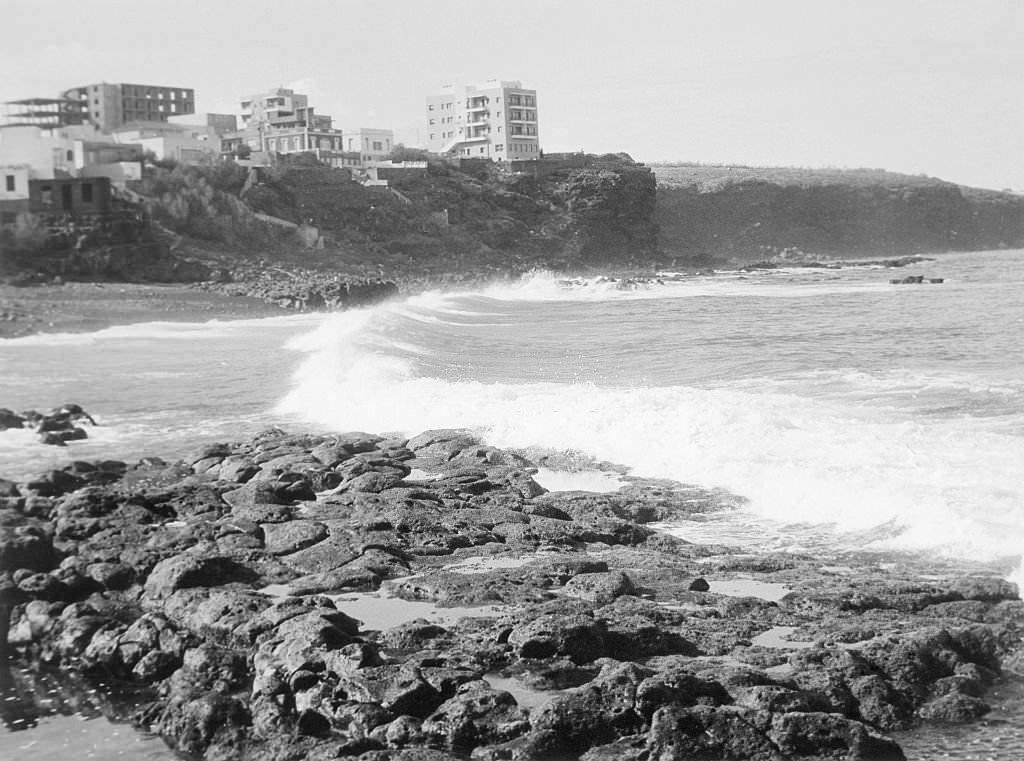
Fresco of the Sindicato Unitario in Bilbao, Spain, 1970The Roman aqueduct in Segovia, SpainPort on the Nervion at Barakaldo, on the outskirts of Bilbao, 1970Working class residential area in Bilbao, 1970, Spain.La Concha beach in San Sebastian, 1970Port on the Nervion at Barakaldo on the outskirts of Bilbao in the 1970s, Spain.The ‘Alcala Street’, which begins at the “Puerta del Sol” and crosses the whole city until it ends at the motorway that goes to airport, Madrid, Spain, 1970.View of Anna Hyatt Huntington’s ‘Los portadores de la antorcha’ (The Torch Bearers) outside the Medical school at the University City of Madrid, Spain, 1970.Exterior view of the Palacio de Liria, hereditary home of the Dukedom of Alba, Madrid, Spain, 1970.Obscured view of the Santa Maria de Garona Nuclear Power Plant, with the Ebro river in the foreground, Burgos, Spain, 1970.Mid shot of medieval stone buildings and leafless trees, with the Ebro river, Santa Maria de Garona Nuclear Power Plant, and mountains in the background, Burgos, Spain, 1970.Plaza Nueva, 1970, Seville, Andalusia, Spain.Italian singer Torrebruno in the Fairground of Madrid, 1970, Spain.A Renfe languishes in the closed depot at Aranda on Thursday 27th August 1970.Plaza de Espana with the ‘Cruz de los Caidos’ in the capital Santa Cruz, 1970The surf of the Atlantic at Bajamar, 1970The volcanic crater area ‘Las Canadas’, 1970
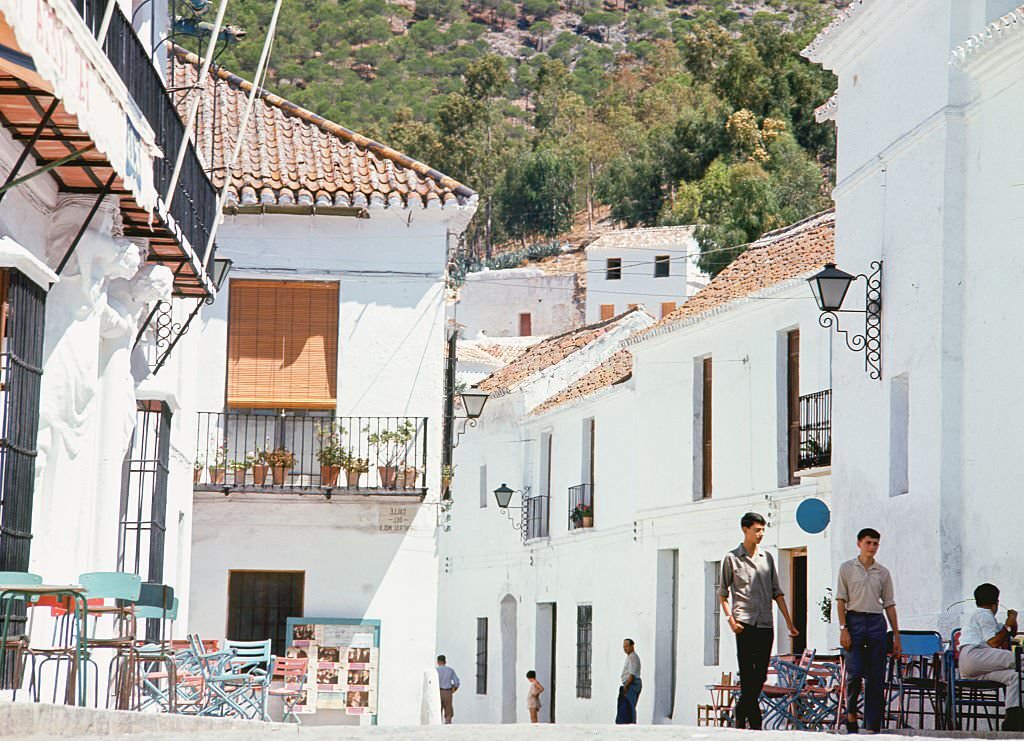
Spain’s rural towns, away from the political turmoil of the cities and the Basque Country, continued their own slower rhythms. Places like Mijas in Málaga province, perched above the coast, remained largely unchanged — their steep streets and whitewashed facades offering little hint of the political storms gathering at the national level.
View of the city of Mijas, 1975, Malaga, Spain.
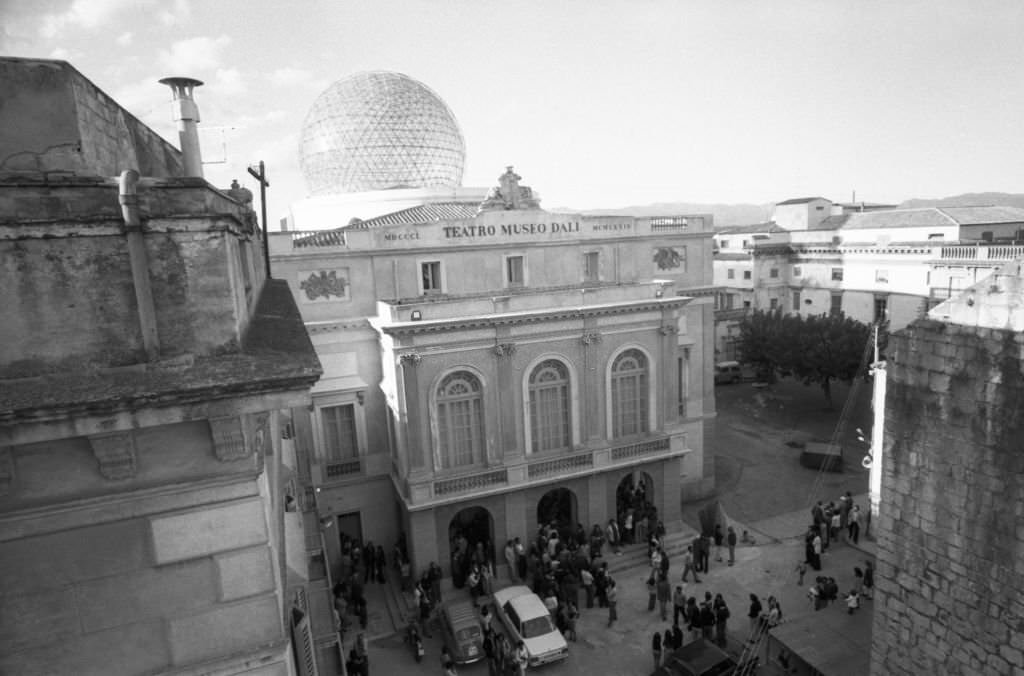
In September 1974, Salvador Dalí opened his Theatre-Museum in Figueres — a surrealist monument to his own work and the most visited museum in Spain after the Prado. Dalí was one of the few cultural figures of the era who moved freely through Franco’s Spain without apparent tension, his eccentricity serving as a kind of armor.
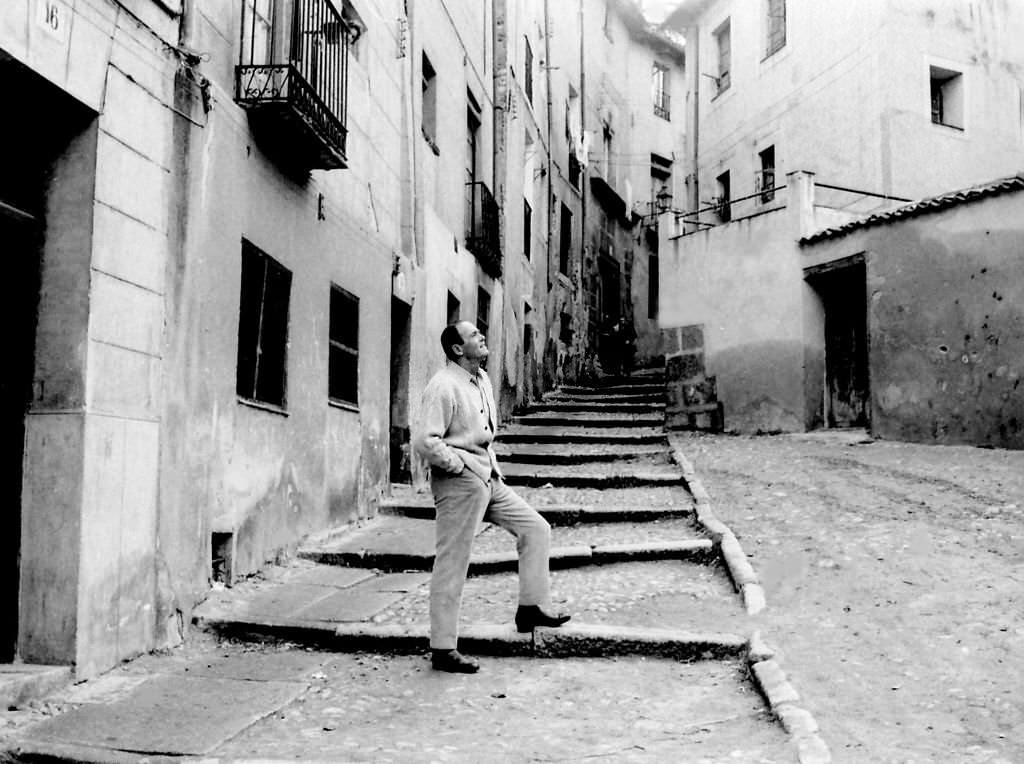
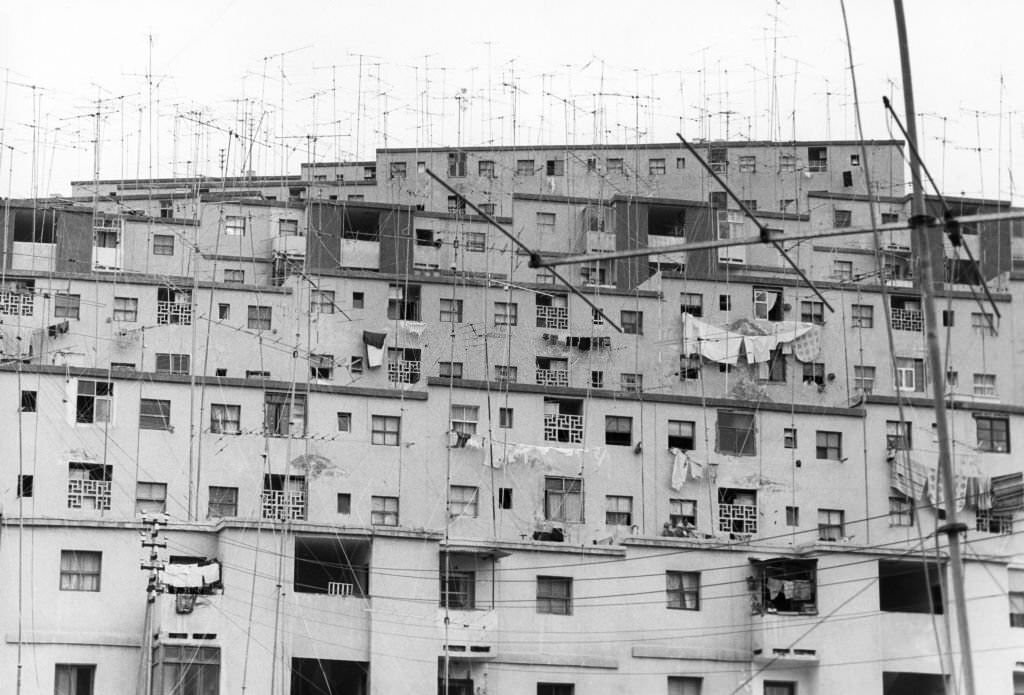
Facade of Salvador Dali’s theatre-museum in Figueras on September 28, 1974.Nicki Lauda, Luca di Montezemolo, Grand Prix Of Spain, 1970During a break from filming The Battle of the Ardennes, the American actor Henry Fonda visits the city of Segovia, Spain, 1974.Television antennas on buildings in Las Palmas, in 1974.
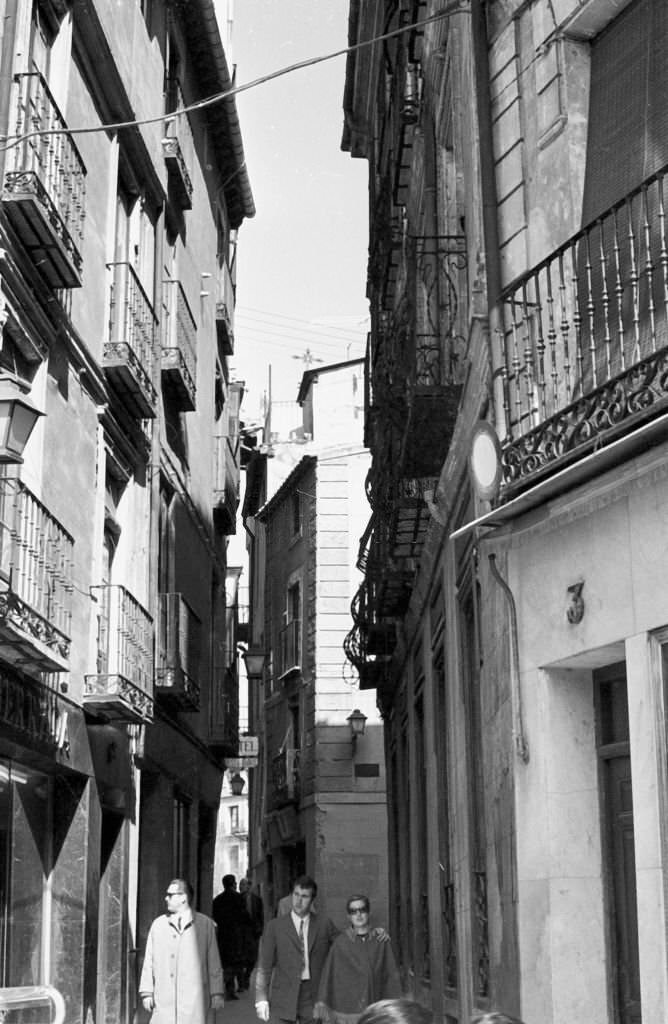
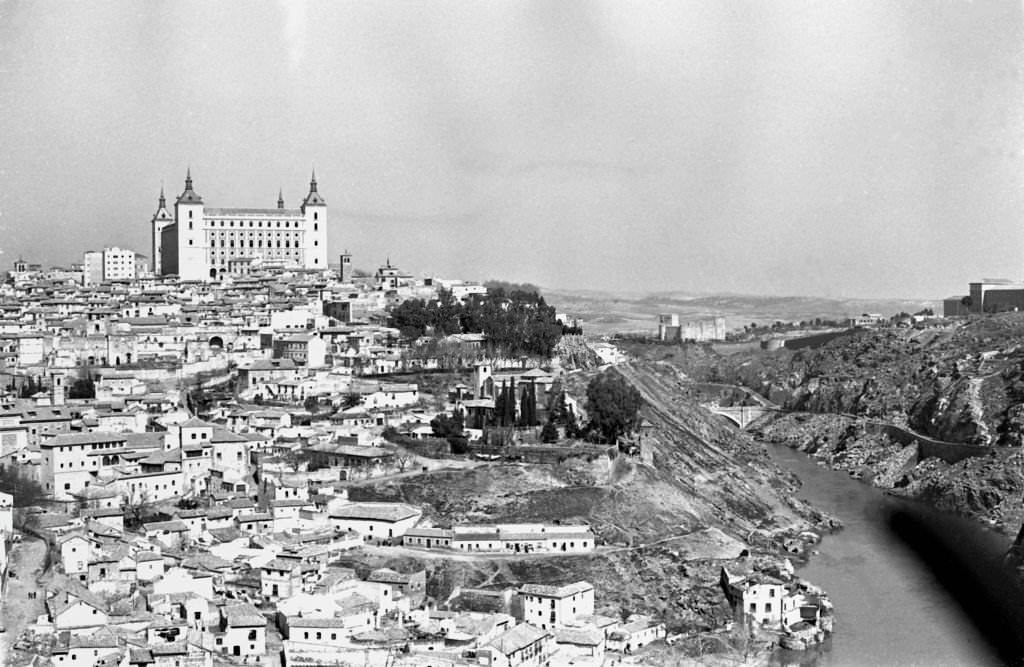
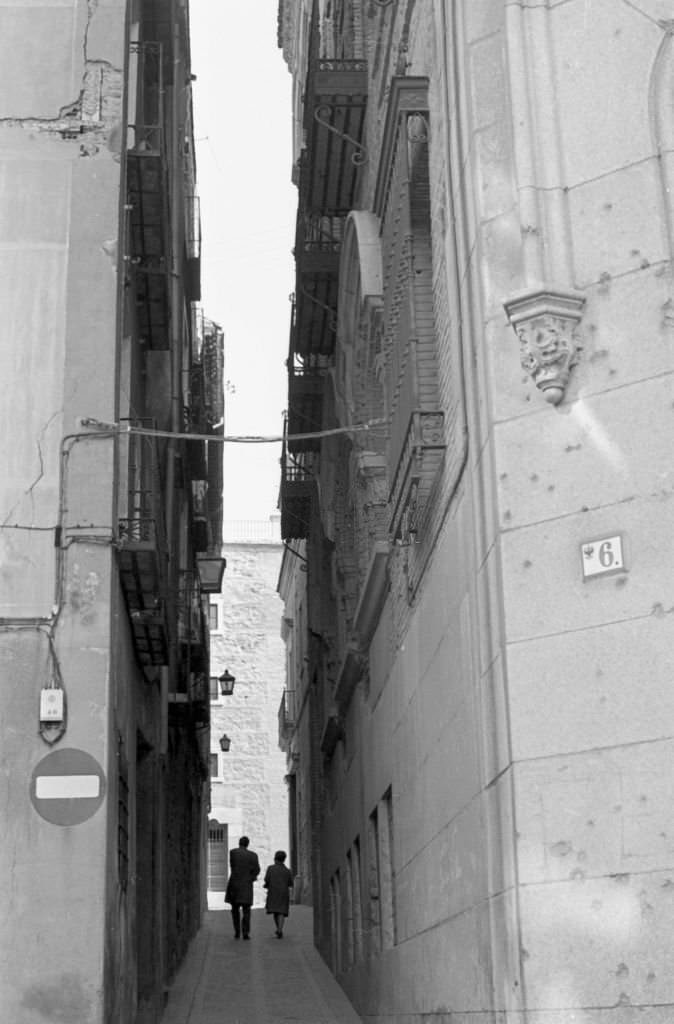
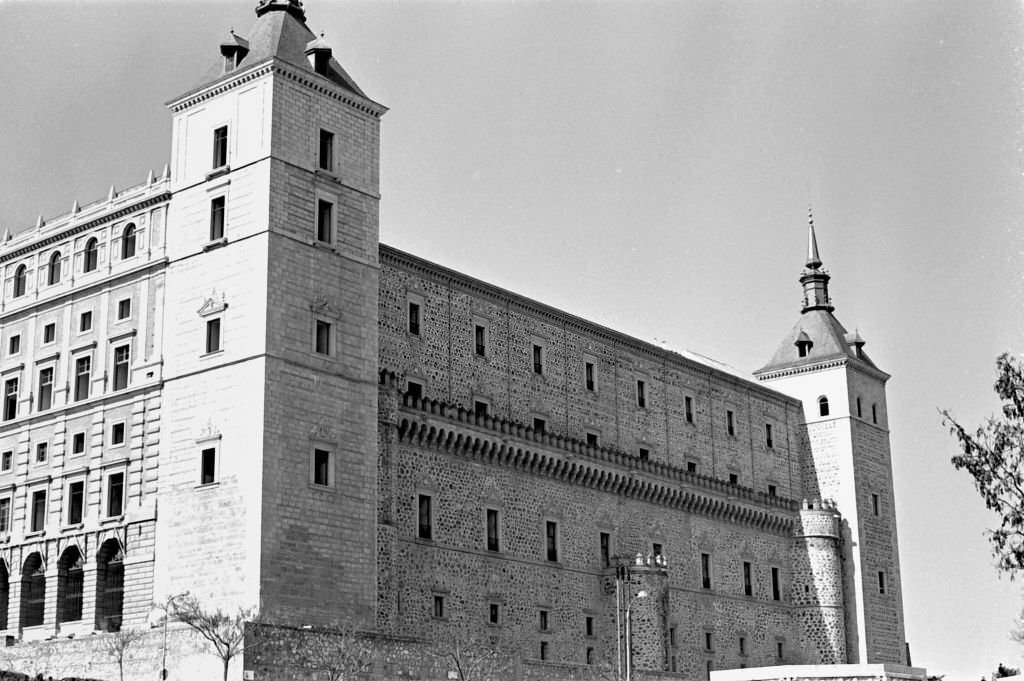
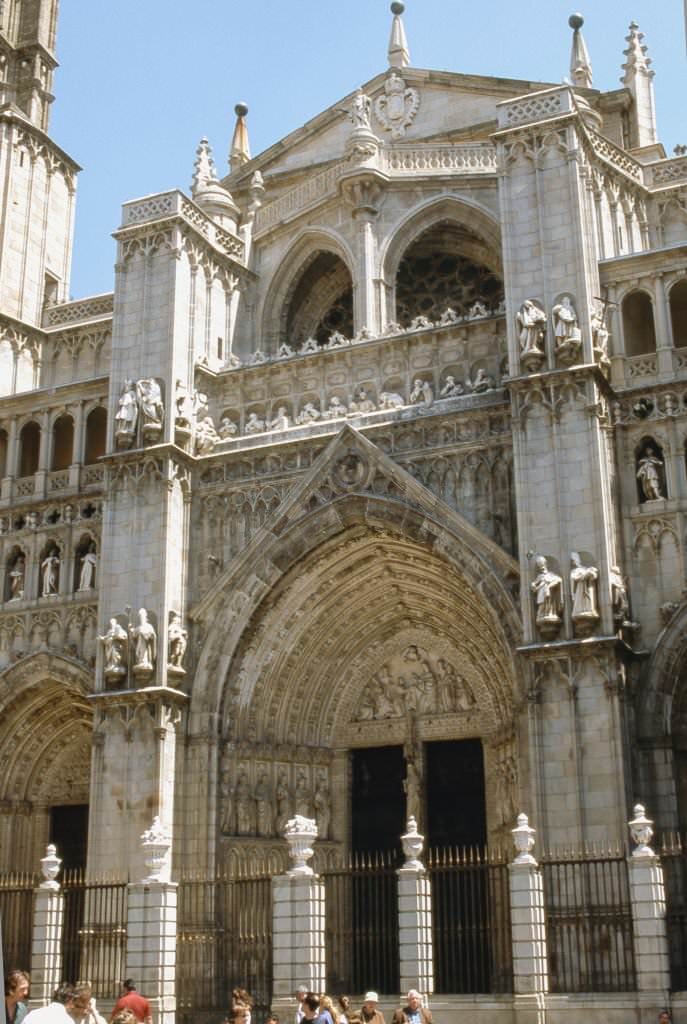
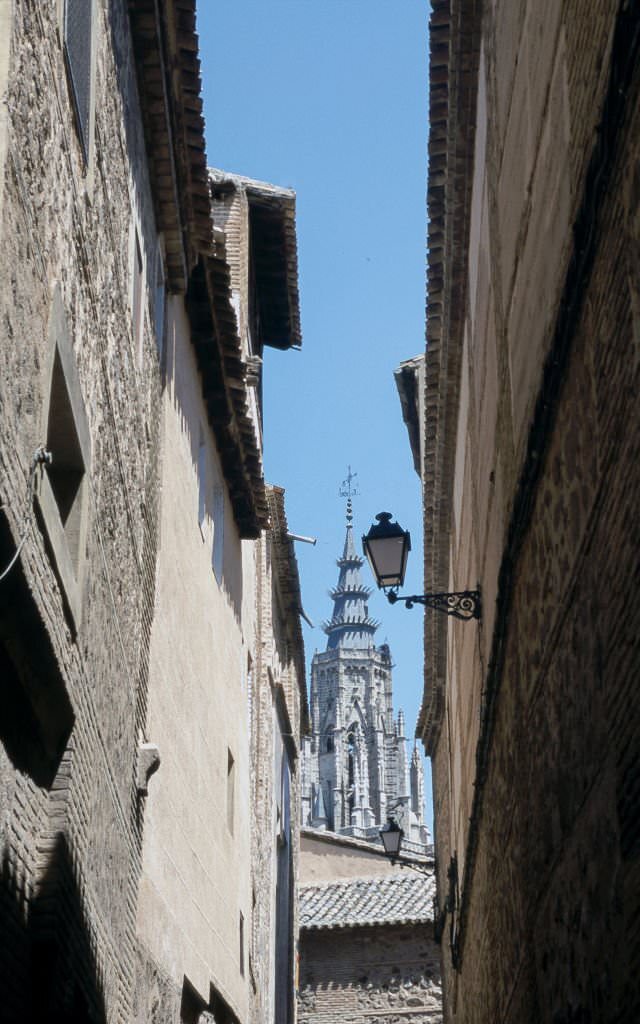
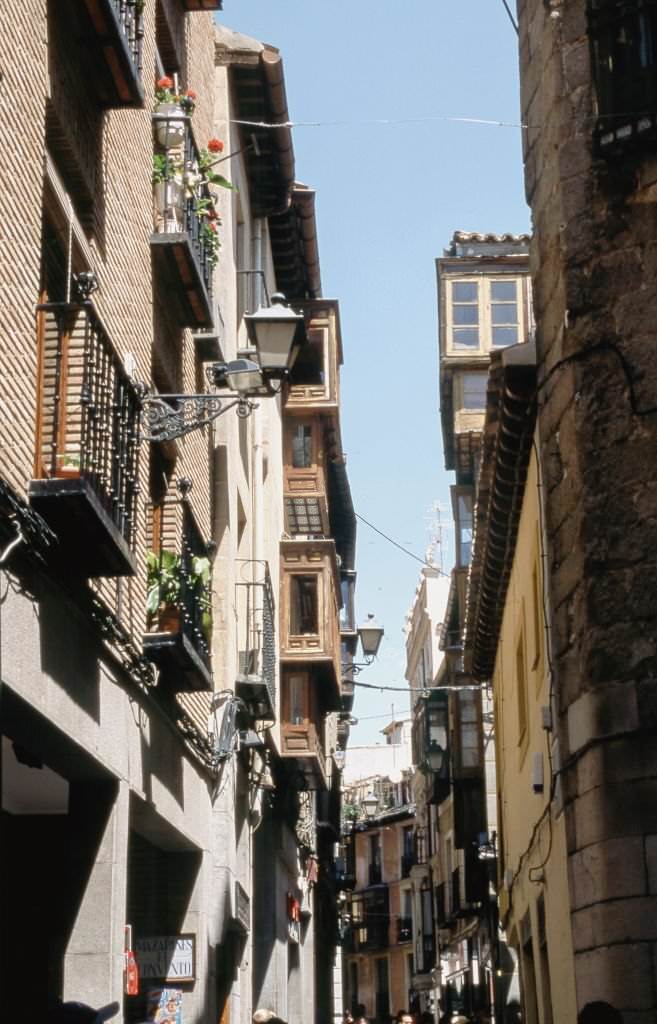
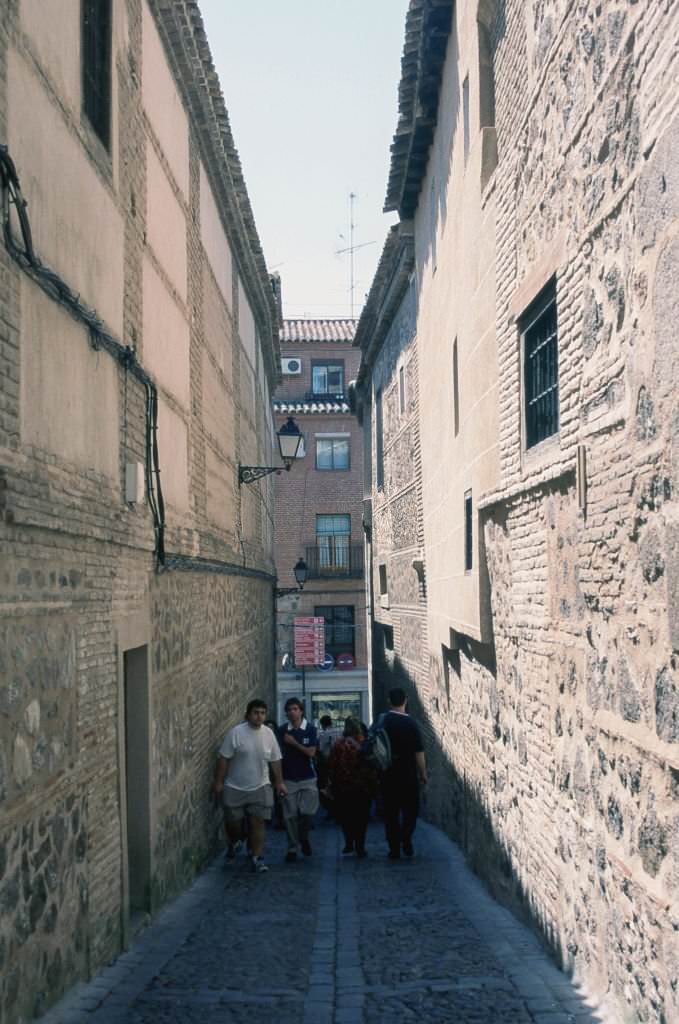
Toledo, one of Spain’s most historically layered cities, drew both tourists and photographers throughout the decade. Its medieval streets, Gothic cathedral, and hilltop fortress — the Alcázar — made it a living museum of Spanish history spanning Roman, Moorish, Jewish, and Christian eras.
A typical little street of Toledo, 1974, Castilla La Mancha Spain.View of Toledo, 1974, Castilla la Mancha, Spain.A typical little street of Toledo, 1974, Castilla La Mancha Spain.The strength “El Alcazar”, 1974, Toledo, Castilla La Mancha, Spain.
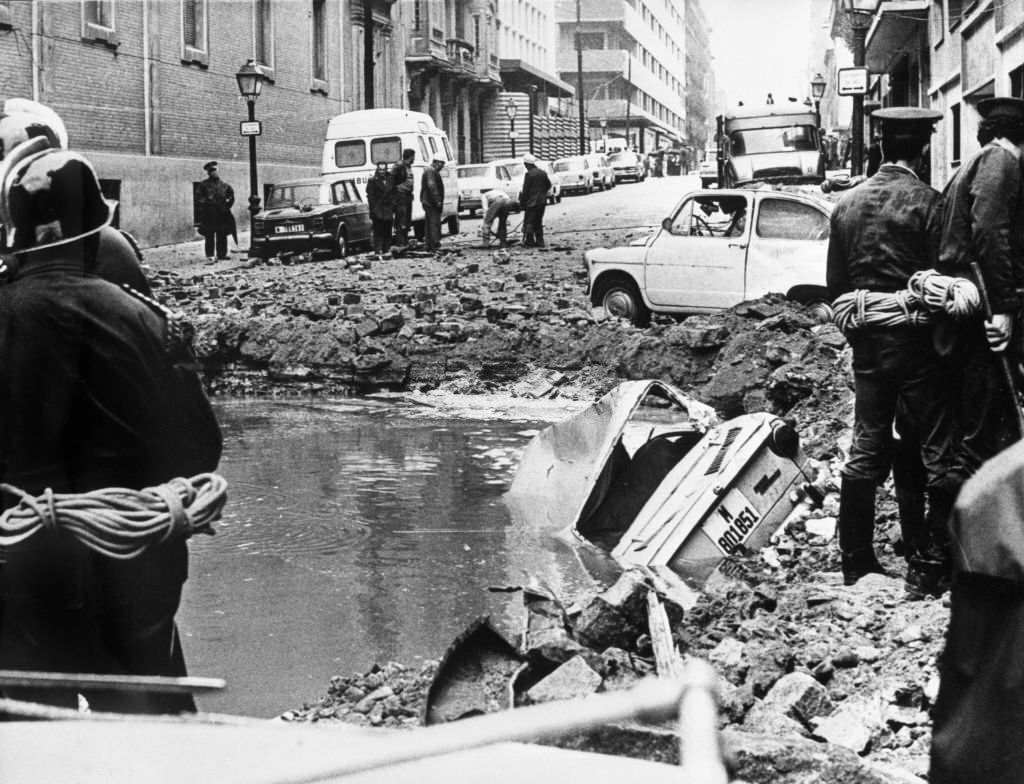
ETA’s most consequential act came on December 20, 1973. The group assassinated Admiral Luis Carrero Blanco, Franco’s prime minister and chosen successor, in Madrid. ETA operatives had spent months tunneling beneath the street where Carrero Blanco traveled each morning. The bomb blast was so powerful it threw his car over a nearby building. Carrero Blanco had been the embodiment of hard-line Francoism — the one man believed capable of holding the regime together after Franco’s death. His assassination shattered Franco’s continuity plans and plunged the regime into its worst governmental crisis.
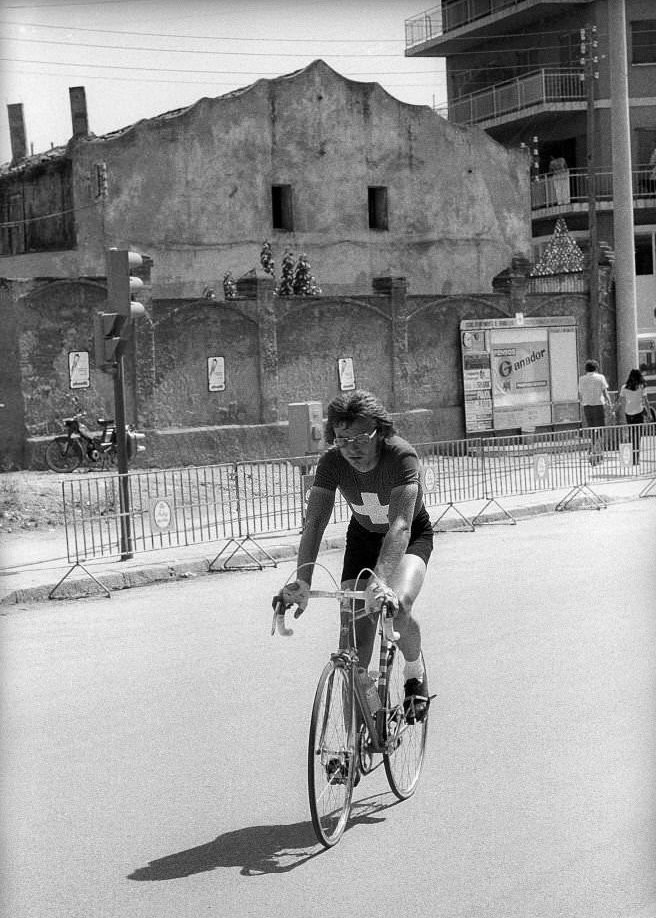
Terrorism – ETA bomb attack kills Spanish Prime Minister Admiral Luis Carrero Blanco, MadridCyclism WCH Barcelona, 1973
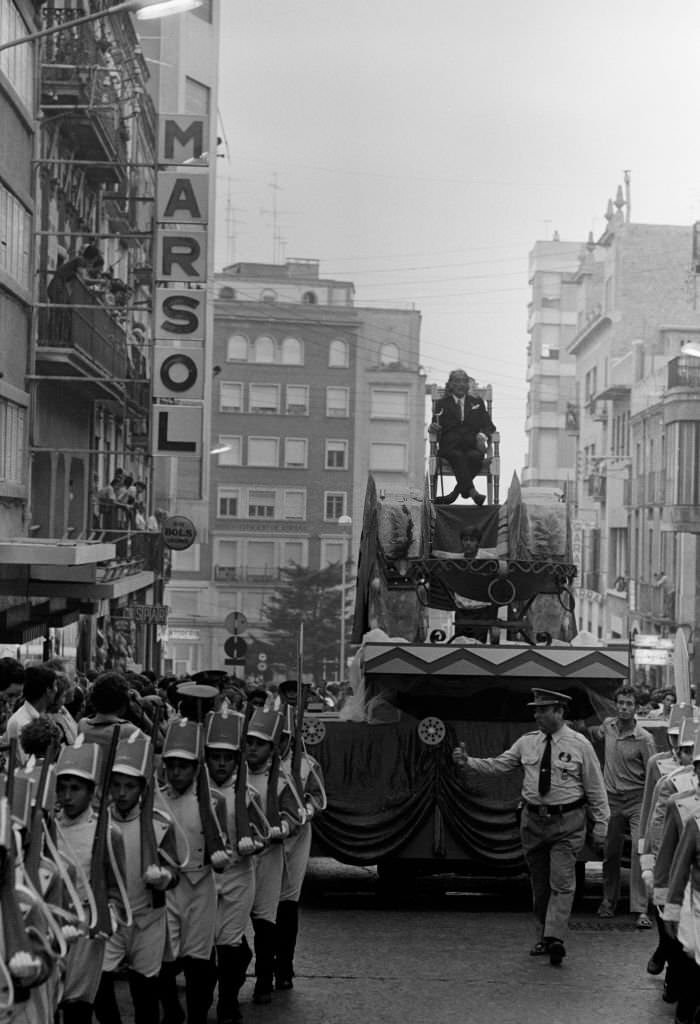
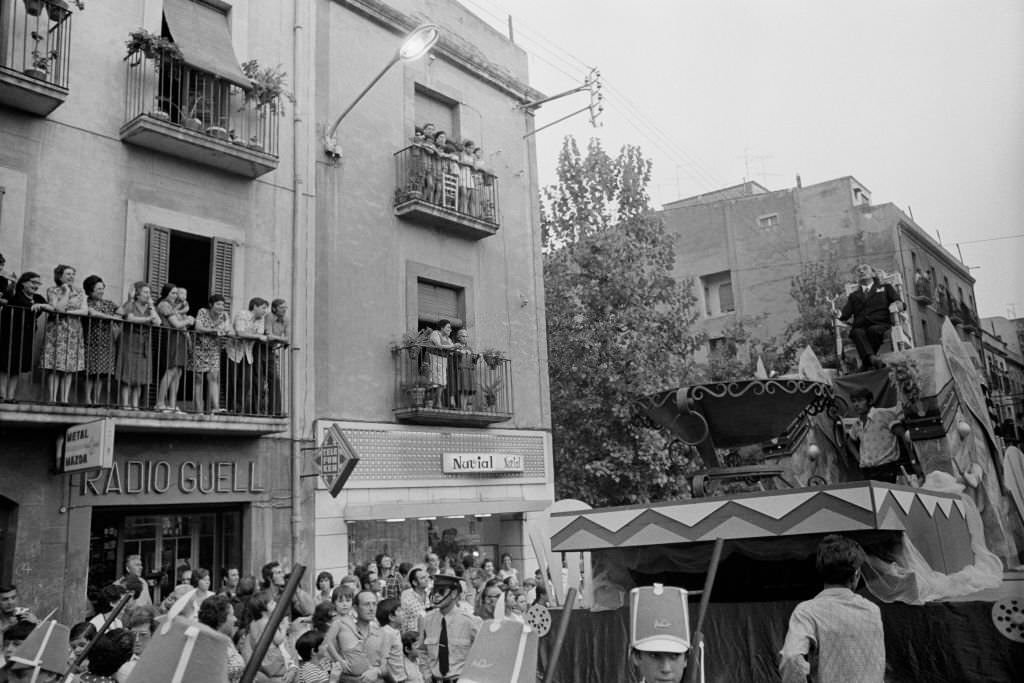
While political violence dominated the headlines, cultural life in Spain continued. Salvador Dalí made his presence felt beyond his museum — in August 1973, he made a theatrical entry into Tarragona on a chariot, in full view of an astonished crowd. These moments of spectacle stood in sharp contrast to the violence being carried out elsewhere in the country.
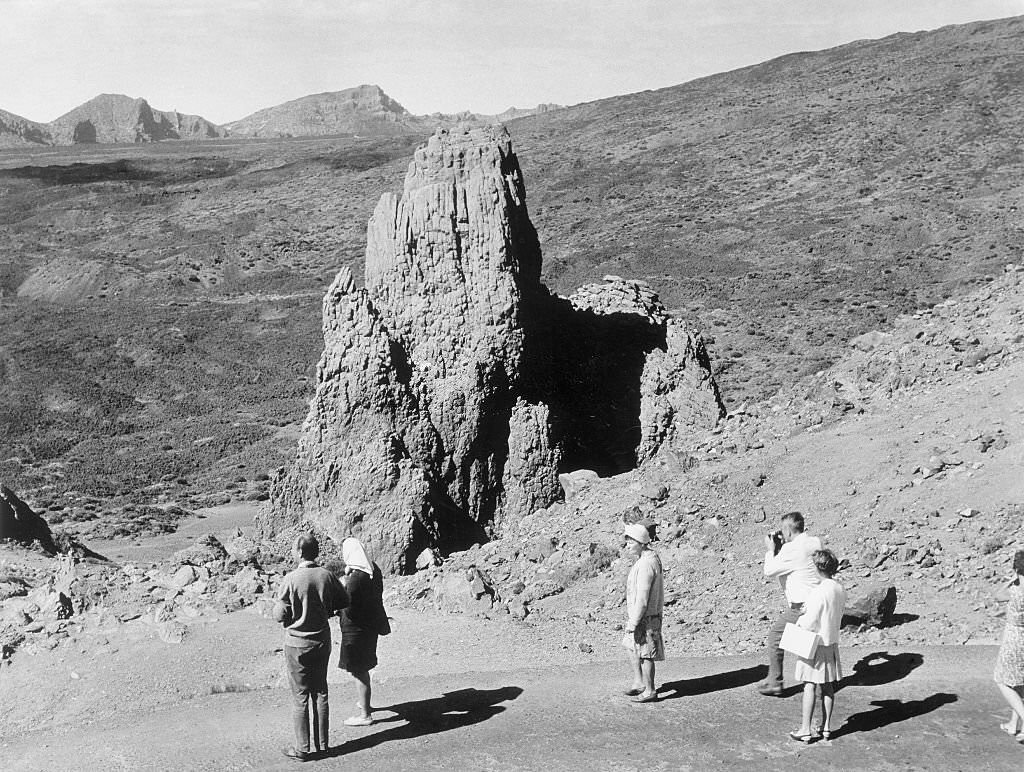
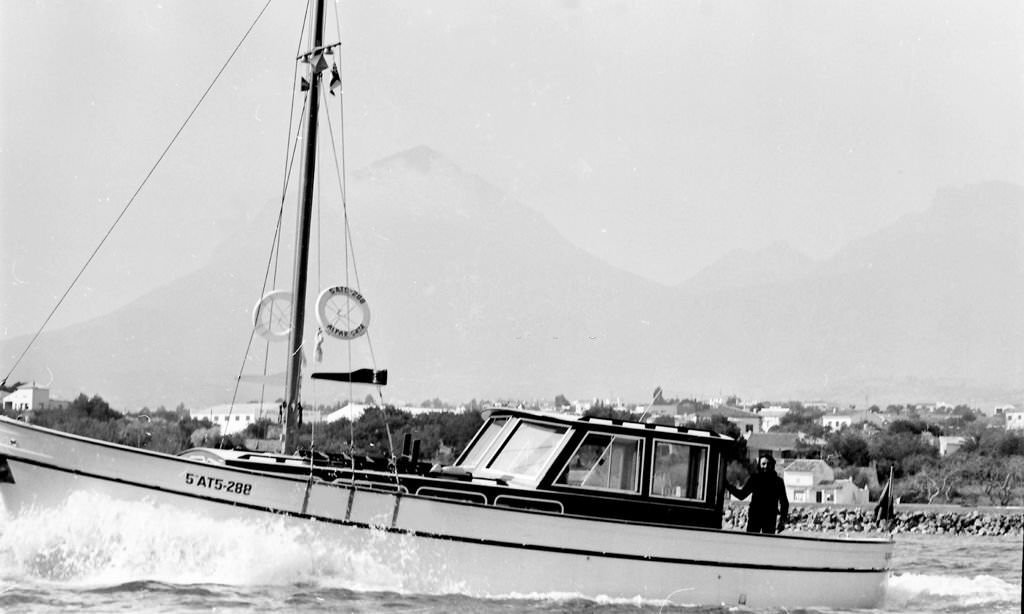
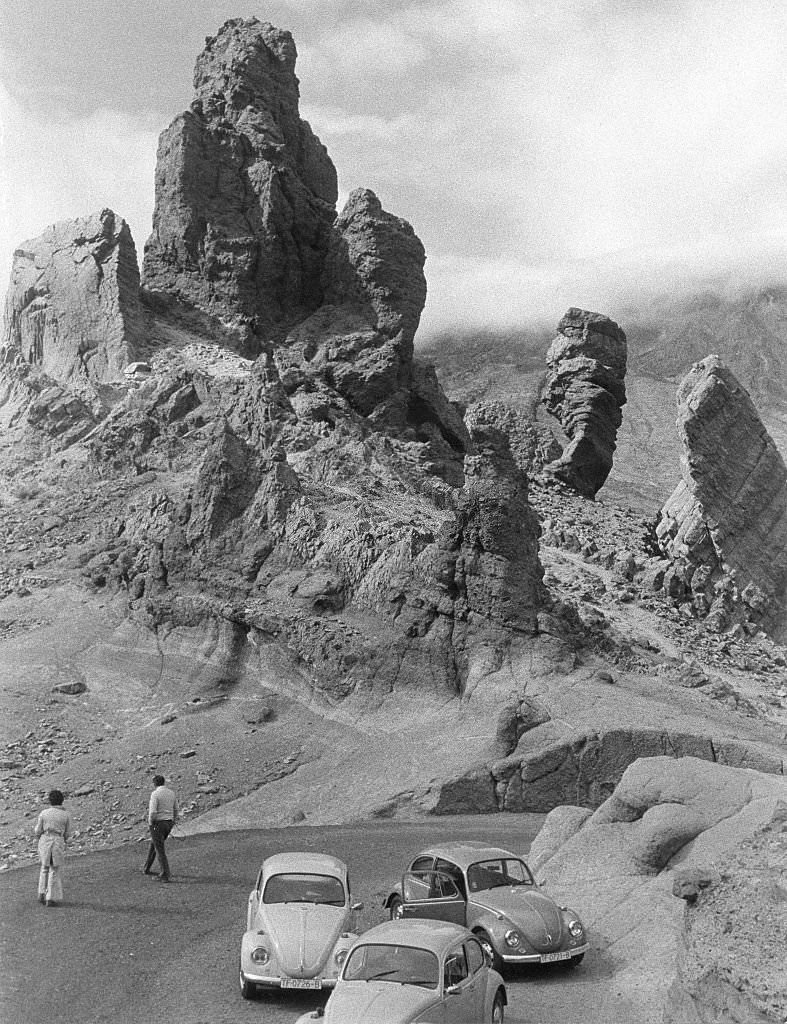
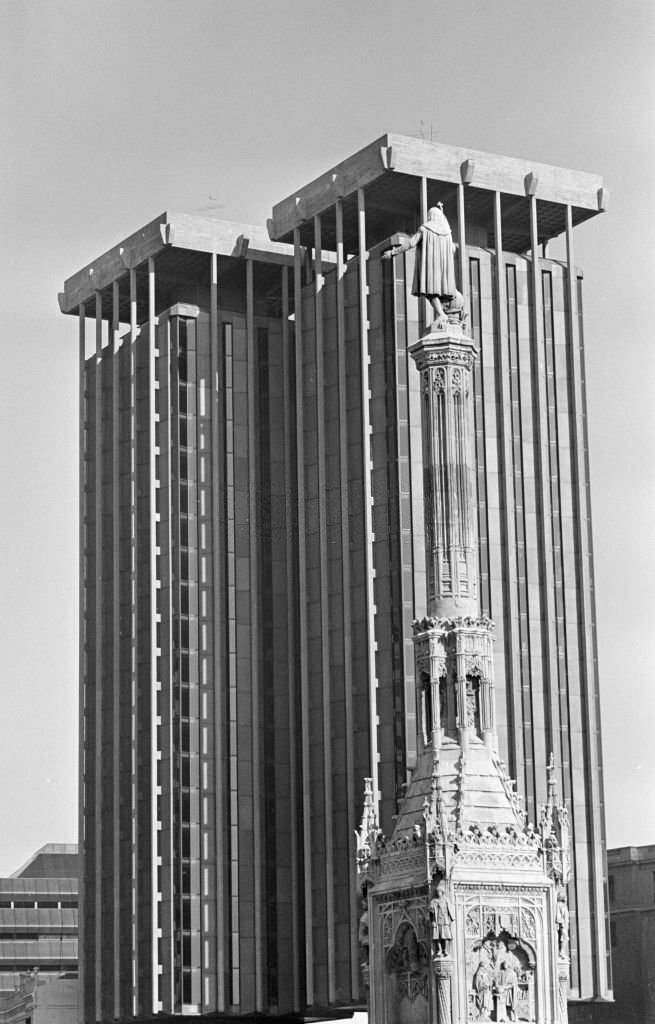
Triumphant entry of Salvador Dali on a chariot in Tarragona on August 17, 1973, Spain.Triumphant entry of Salvador Dali on a chariot in Tarragona on August 17, 1973, Spain.Spanish dancer Antonio Gades on his boat, Valencia, Spain, 1973Formentera, fishing boat at the beach, 1970sThe “Colon Place”, 1973, Madrid, Spain.Lava rock and gorse bushes in the Valle de Ucana below the ‘Pico de Teide’, 1973Rock formations ‘Los Roques’ in the volcanic crater area ‘Las Canadas’ – 1973
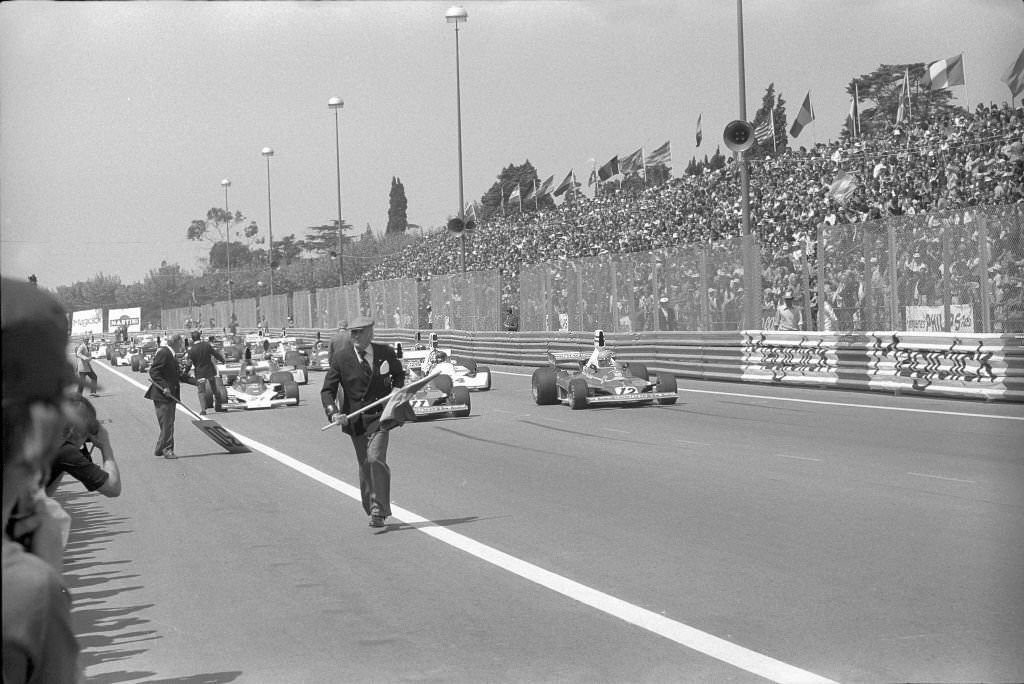
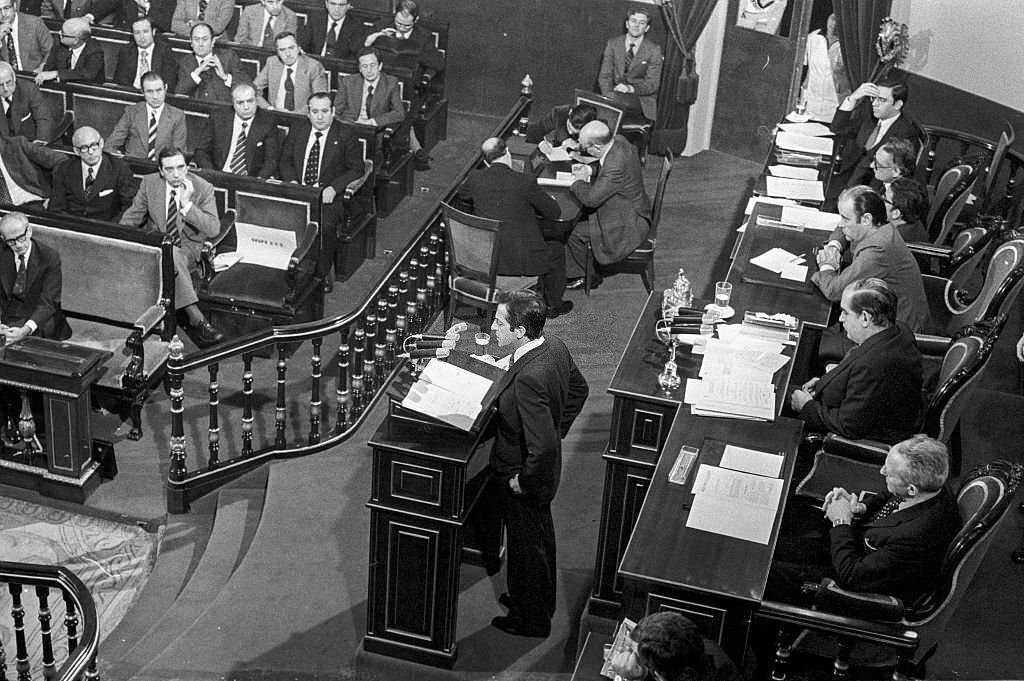
After Carrero Blanco’s killing, Carlos Arias Navarro became prime minister. In his first speech to Spain’s parliament, the Cortes, on February 12, 1974, he promised a degree of liberalization — including the right to form political associations. But the promise satisfied almost nobody. Hard-line Francoists on the right viewed any reform as a threat to the entire system. Radical reformers on the left refused to accept anything short of a complete break from the past. Arias Navarro was caught between two immovable forces, and his government staggered forward without resolving either.
GP of Spain 1975
The “maletillas”, aspiring bullfighters, in the “Plaza de España”, 1975, Madrid, Spain.
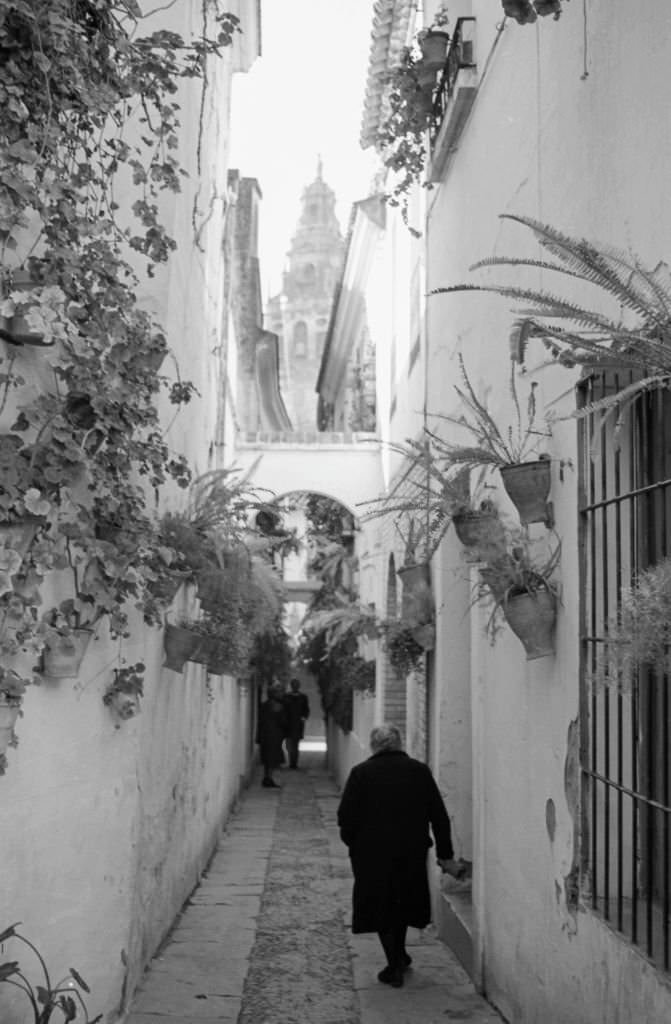
The “Street of the Flowers”, Cordoba, 1975, Andalusia, Spain
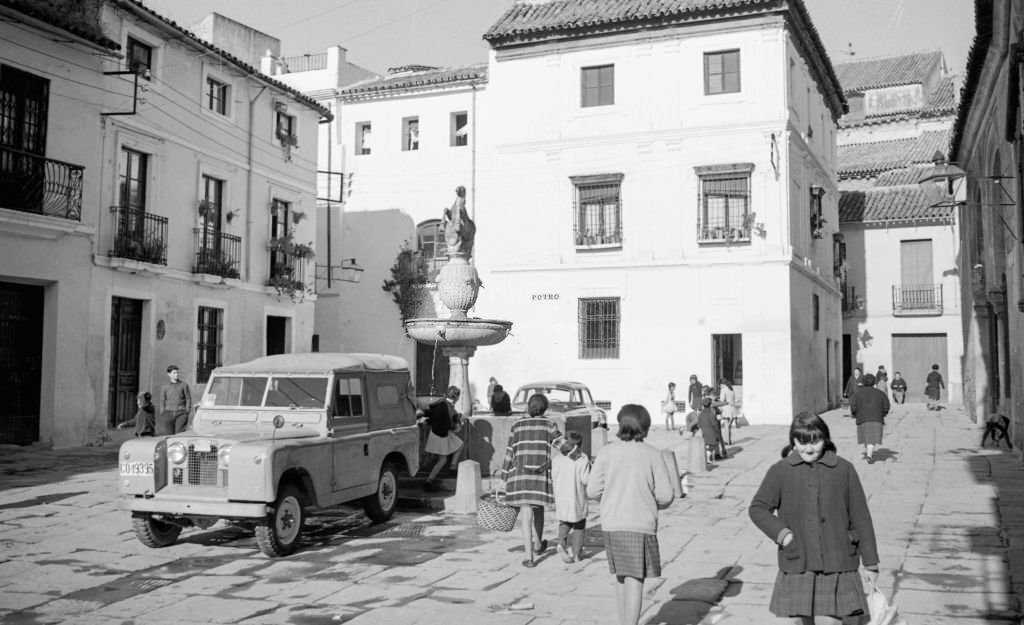
The “Plaza del Potro”, 1975, Cordoba, Andalusia, Spain.
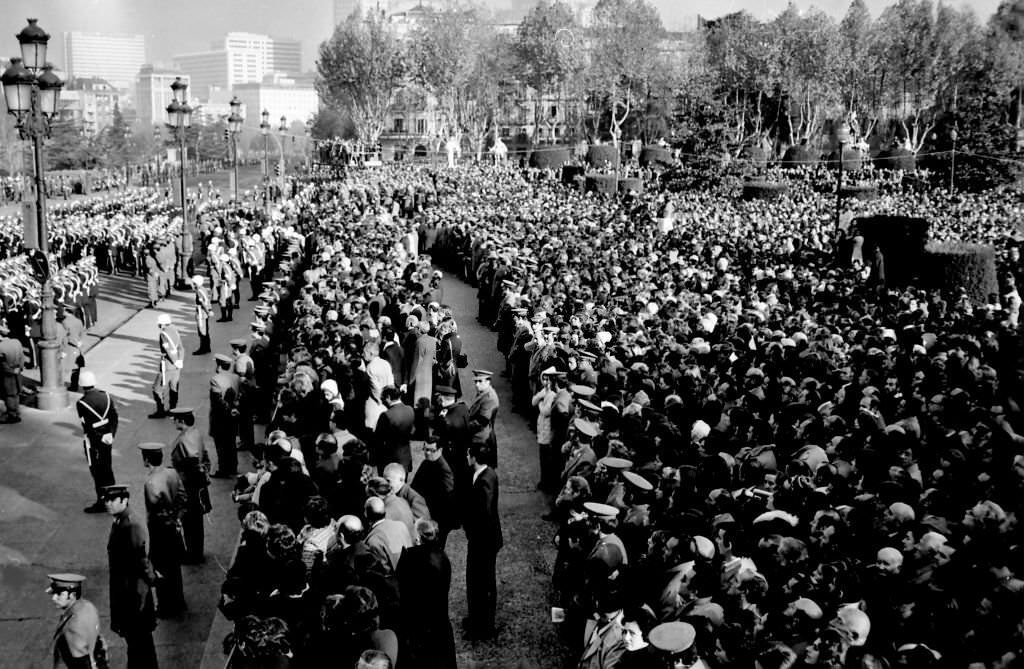
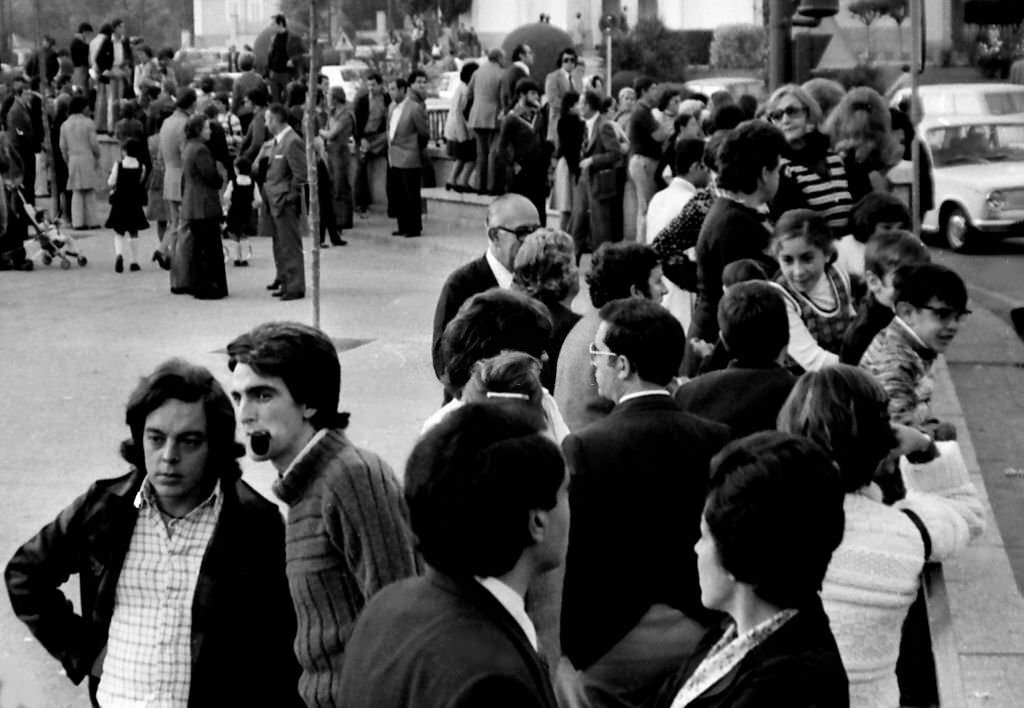
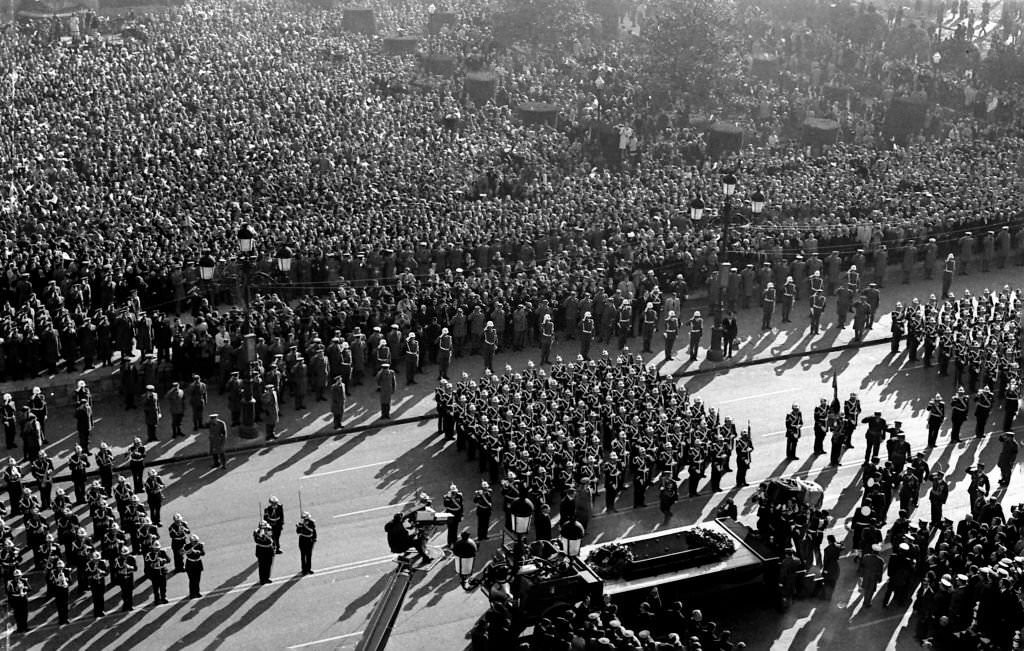
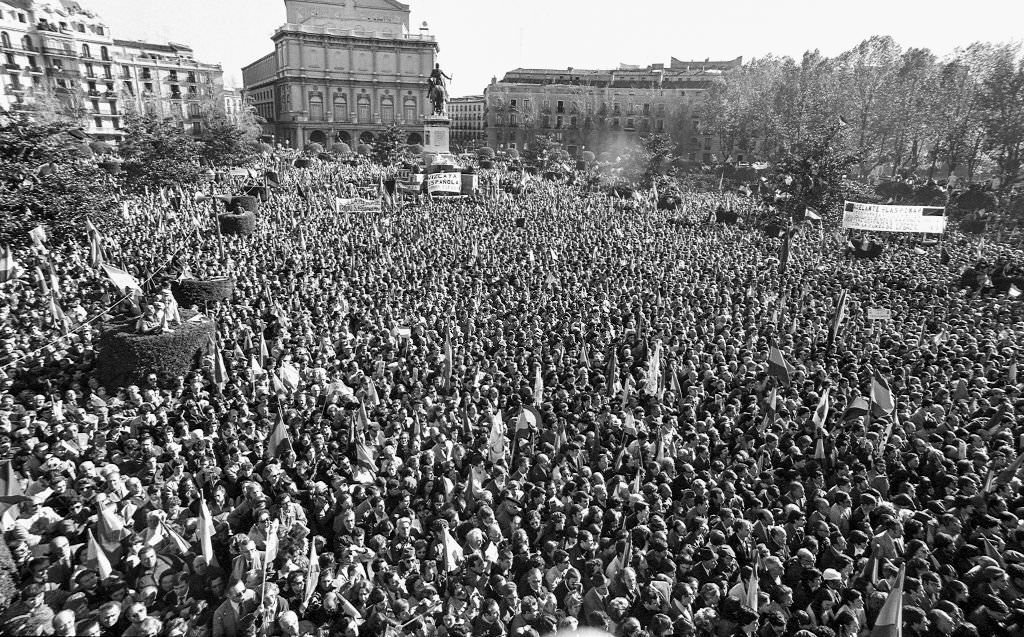
Francisco Franco died on November 20, 1975. His burial drew massive crowds in Madrid, and the Plaza de Oriente filled with supporters of the regime — many of them members and sympathizers of Fuerza Nueva, the far-right political party that had formed around Francoist ideology. Crowds also gathered outside La Paz hospital in Madrid during the long weeks of Franco’s illness, waiting for news. When he finally died, it marked the end of nearly four decades of authoritarian rule.
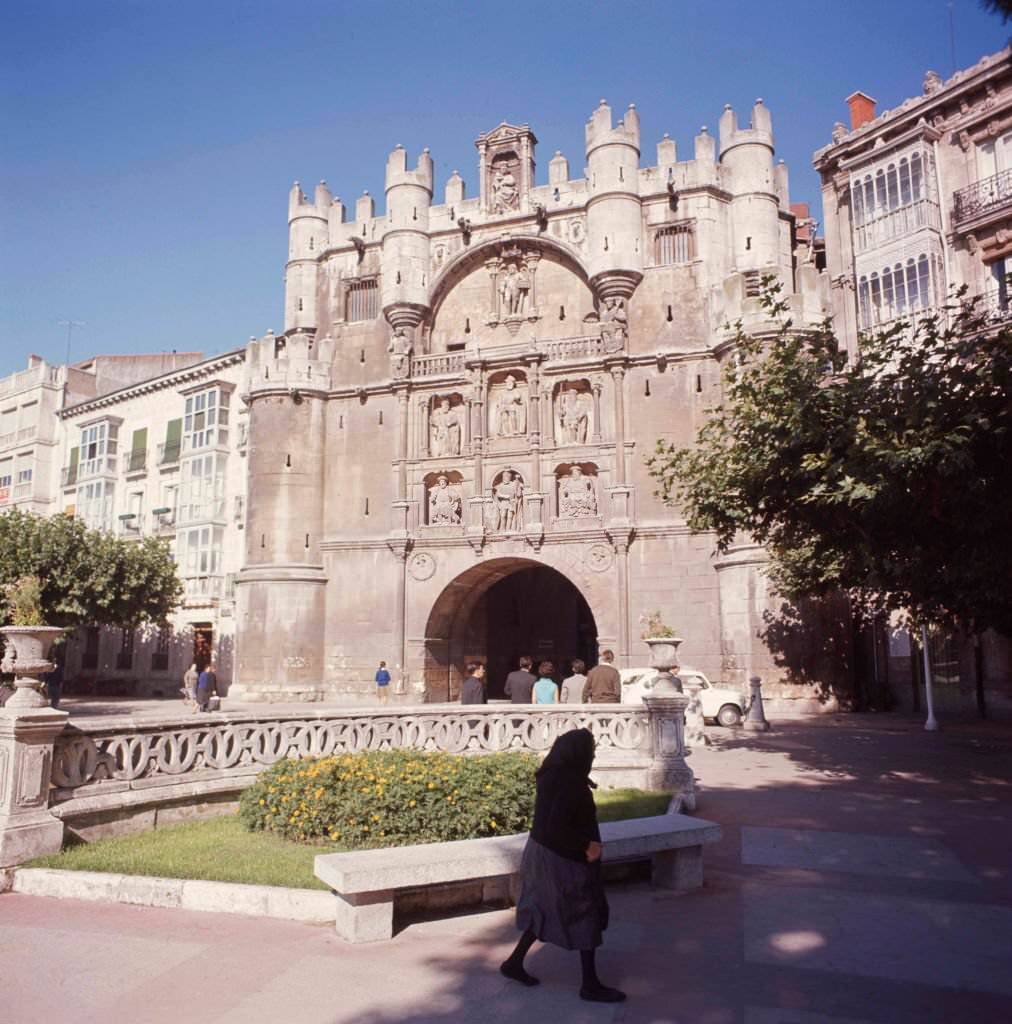
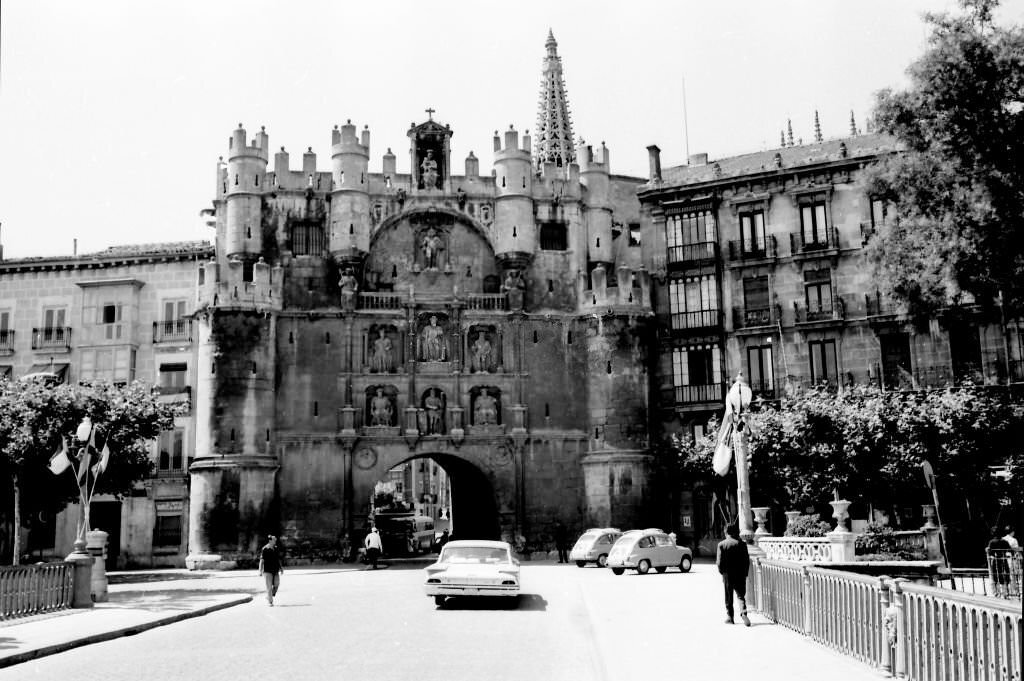
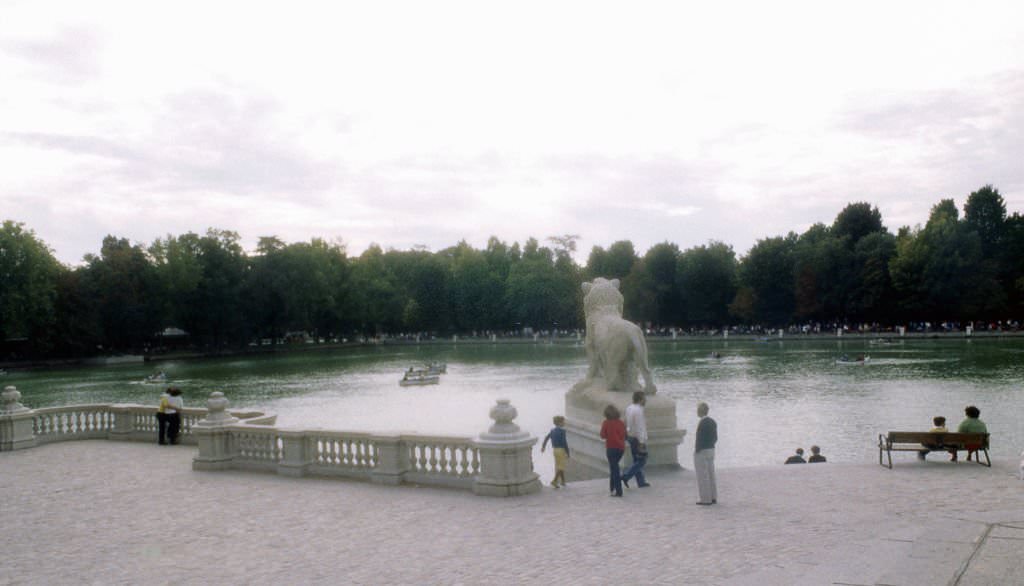
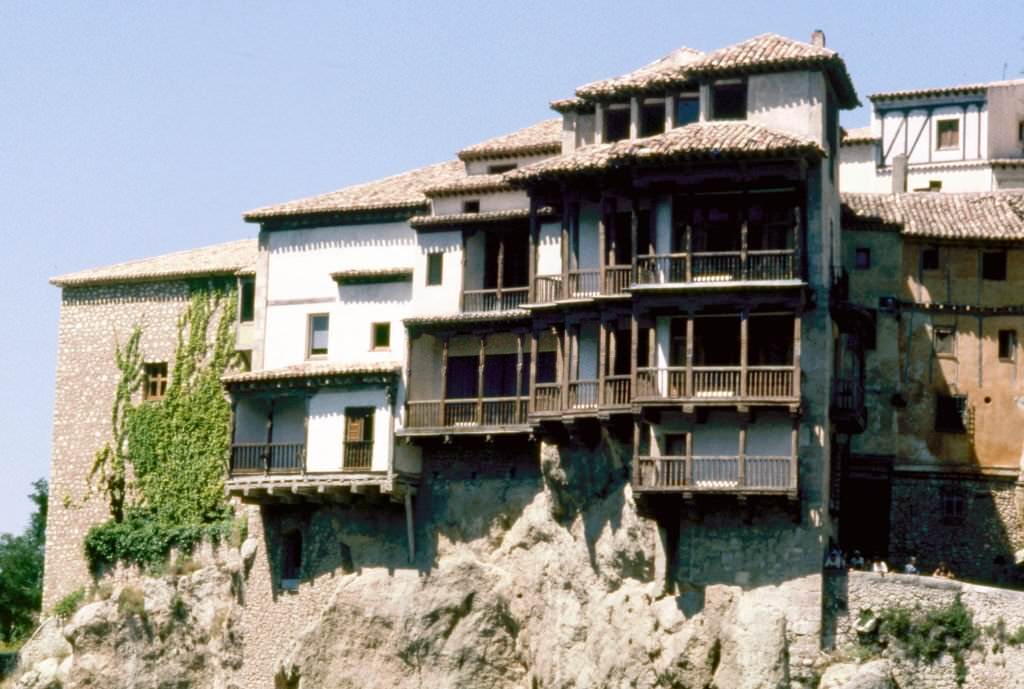
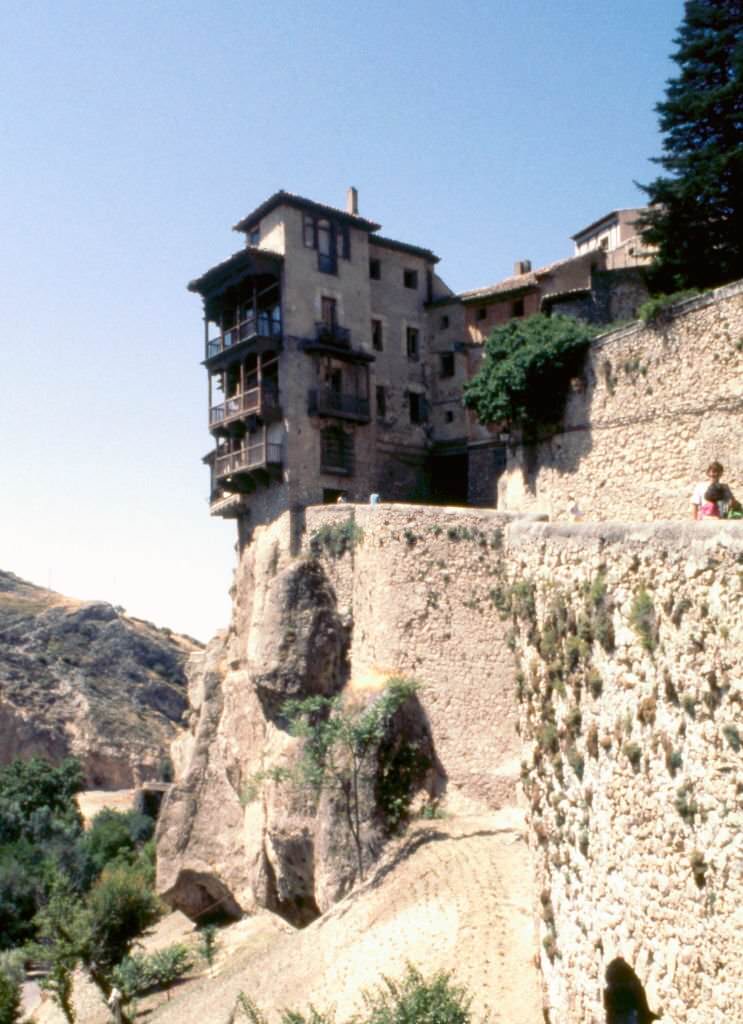
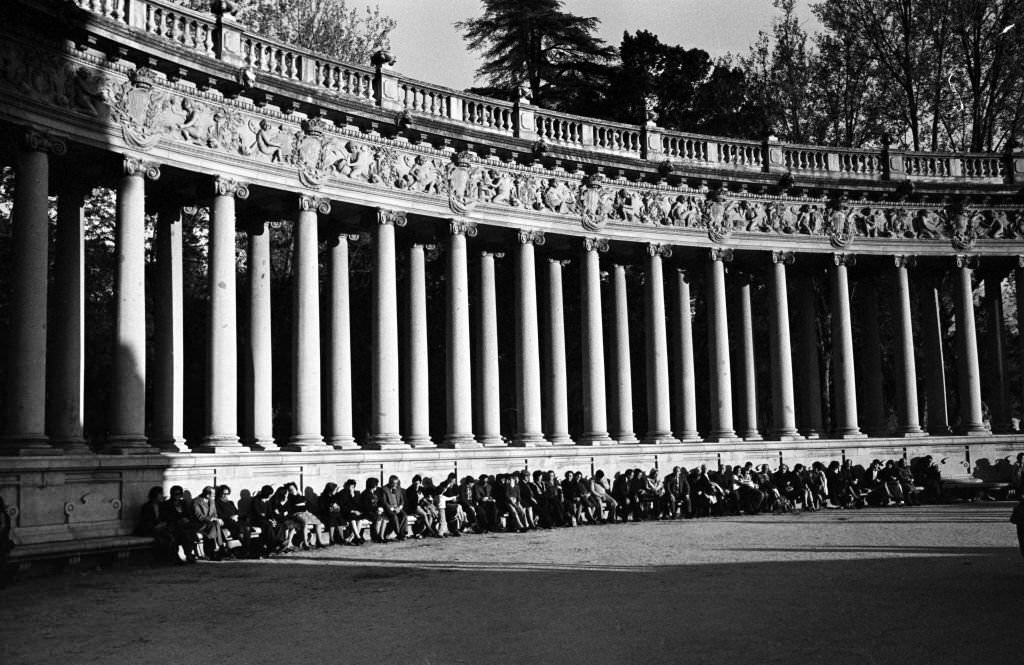
Burial of Francisco Franco, Madrid, Spain, 1975.People waiting for news about the health of Francisco FrancoBurial of Francisco Franco in the Plaza de Oriente, Madrid, Spain, 1975.The Arch of Santa María , one of the most emblematic monuments of the city of Burgos, was one of the old twelve access gates to the city in the Middle Ages, 1975The “Park of Retiro”, 1975, Madrid, Spain.Demonstration of “Fuerza Nueva” the party of Francisco Franco’s sympathizers, in the Plaza de Oriente, 1975, Madrid, Spain.The Hanging Houses of Cuenca, 1975, Castilla La Mancha, Spain.
The Hanging Houses of Cuenca, 1975, Castilla La Mancha, Spain.
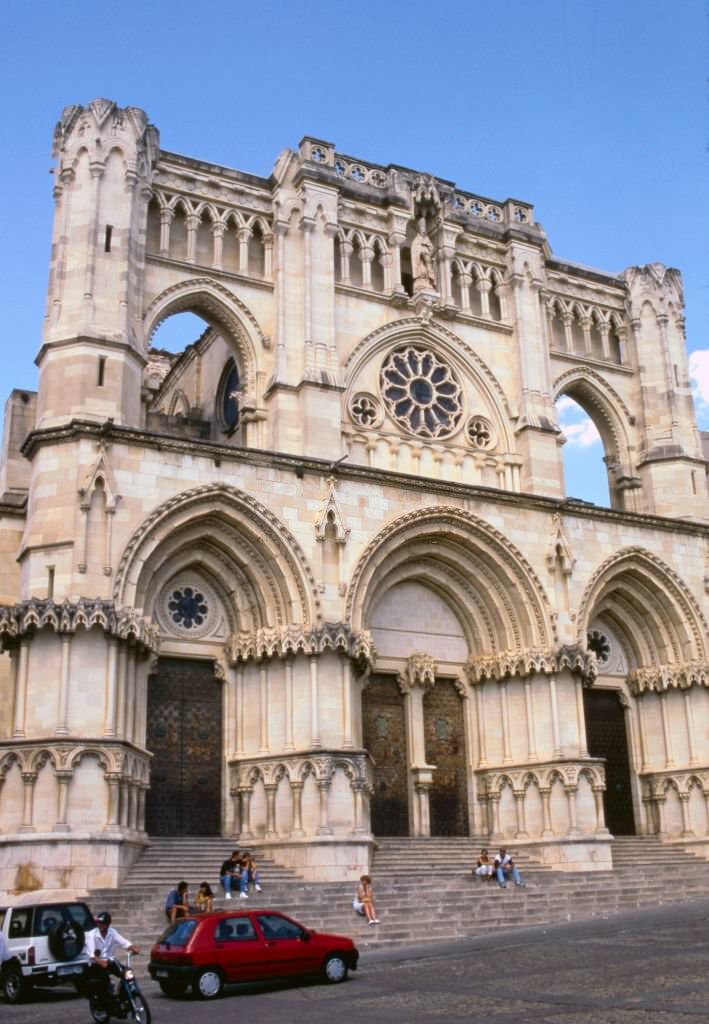
The Cathedral of Cuenca, 1975, Castilla La Mancha, Spain.
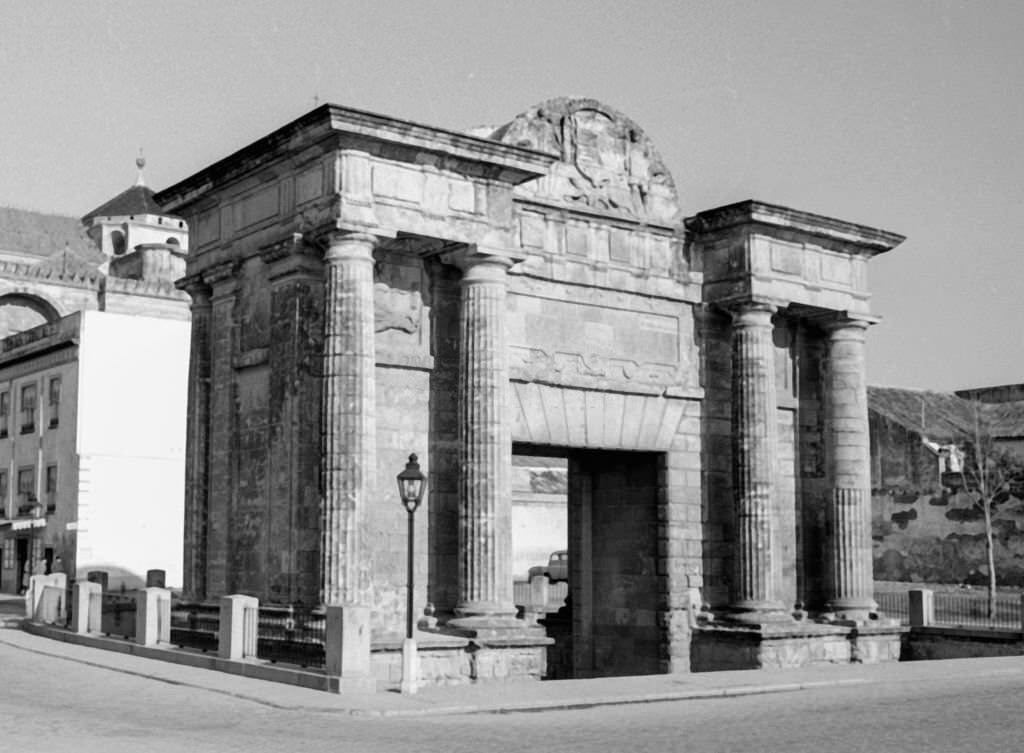
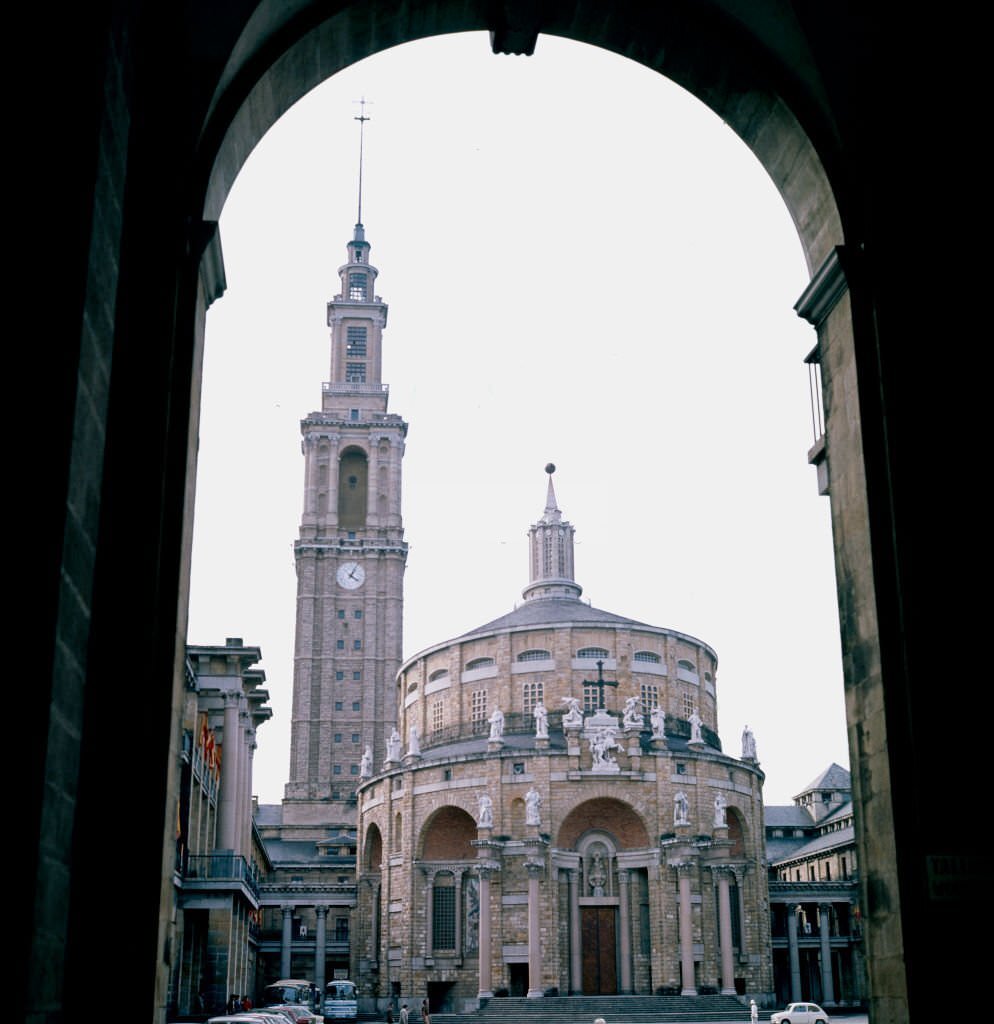
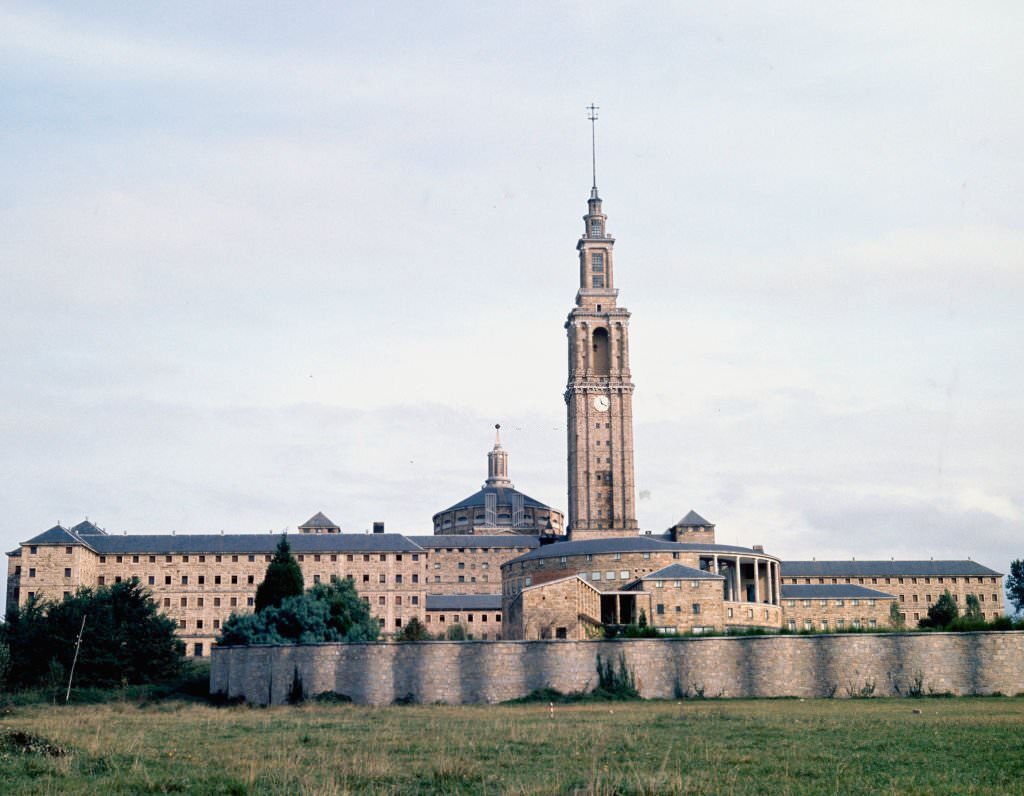
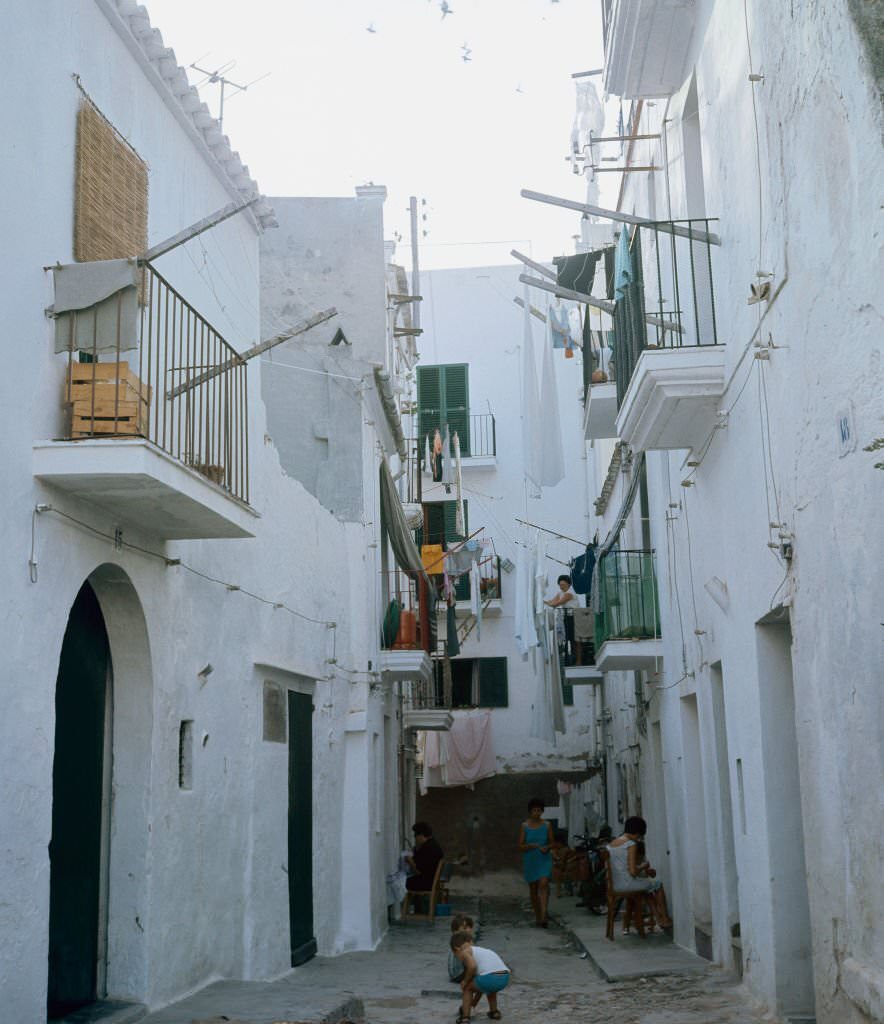
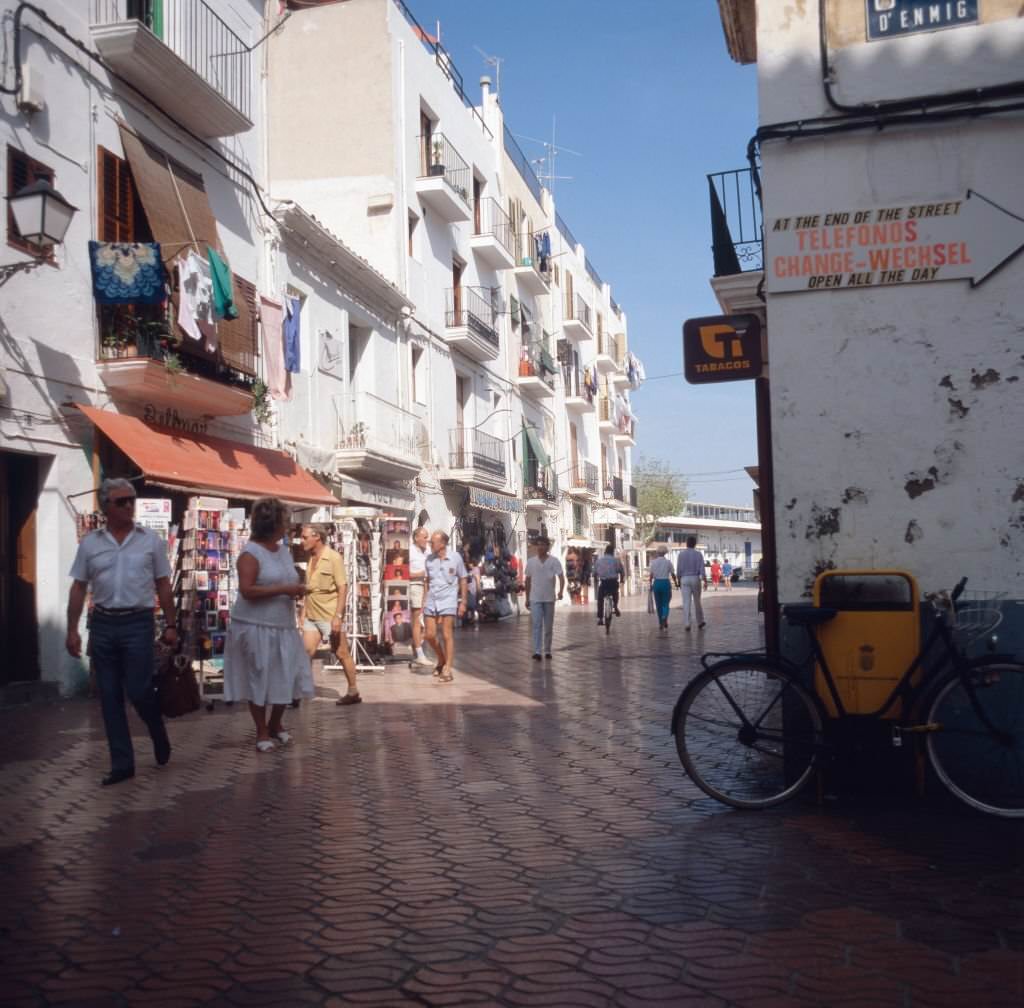
The “Puerta del Puente”, 1975, Cordoba, Andalusia, Spain.Sunbathers enjoying the beach at El Médano on Tenerife, Canary Islands, Spain, 1975.The round church, within the University “Laboral” of Gijón, Spain, 1975.The Univerisity “Laboral”of Gijón. Its tower, with its 130 m., is the tallest stone building in Spain, Asturias, 1975.View of the Palace of Revillagigedo, Gijon, Spain, 1975.Port of Gijon, Asturias, Spain, 1975.View of the port of Gijon, Asturias, Spain, 1975.Typical street of Ibiza, Balearic Islands, Spain, 1975, Spain.
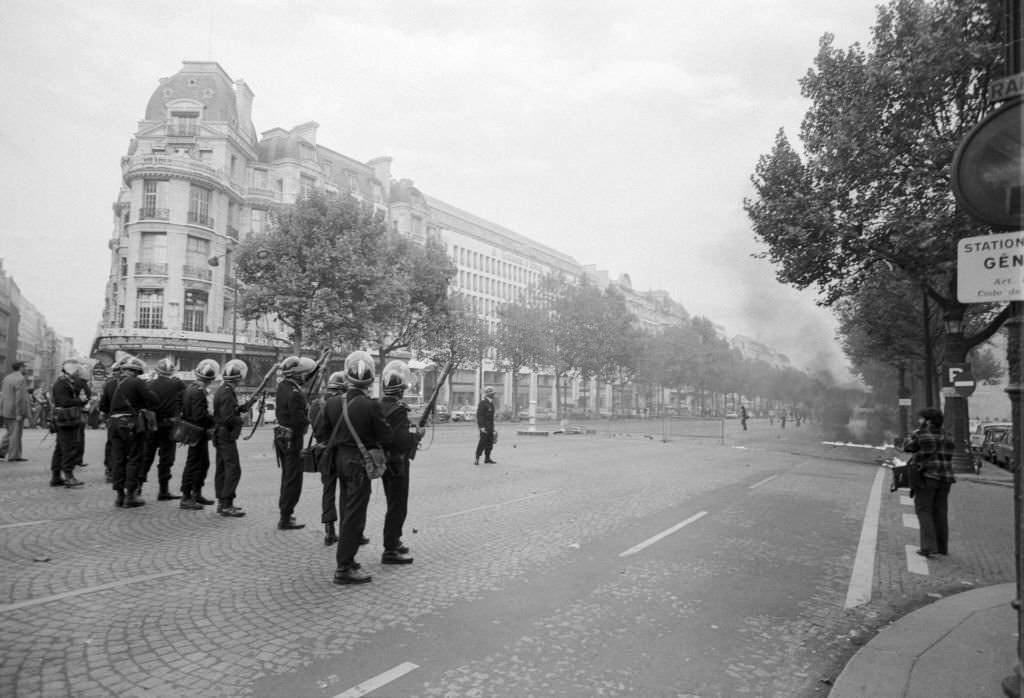
Even as trials of Basque nationalists in Burgos sparked violent protests across the country in September 1975 — with burnt cars, smashed shop windows, and street battles — Spain’s coastal resorts continued their seasonal routines. The contrast was stark: on one stretch of coast, riot police; on another, sunbathers.
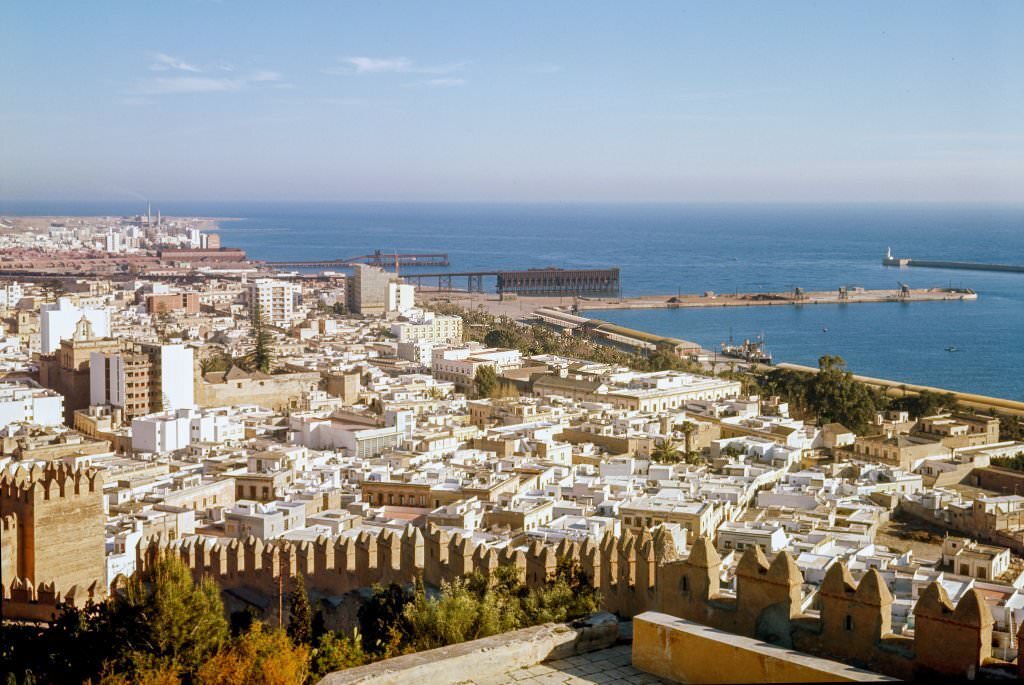
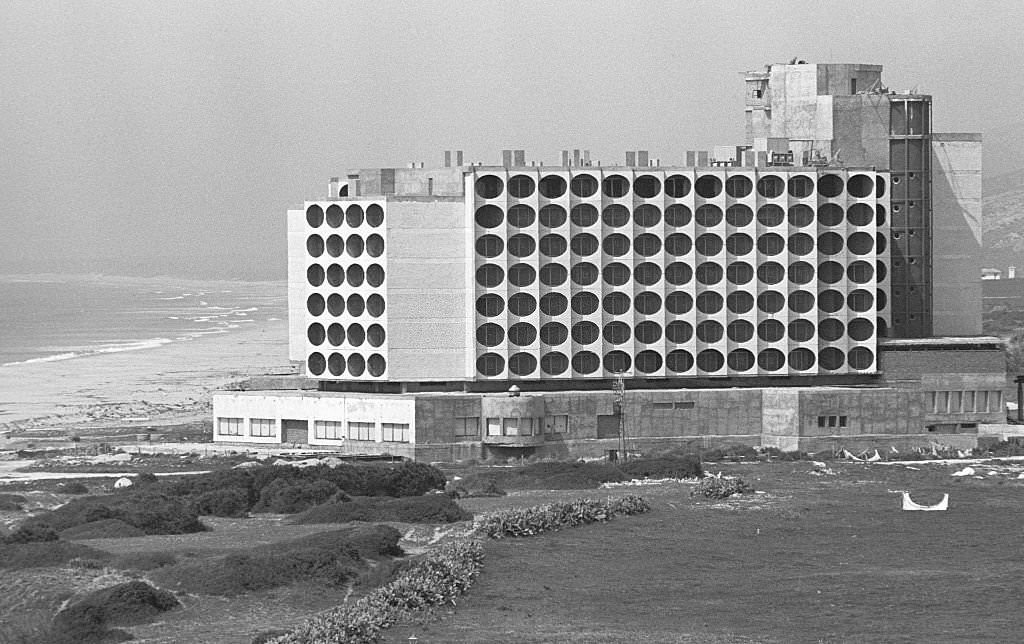
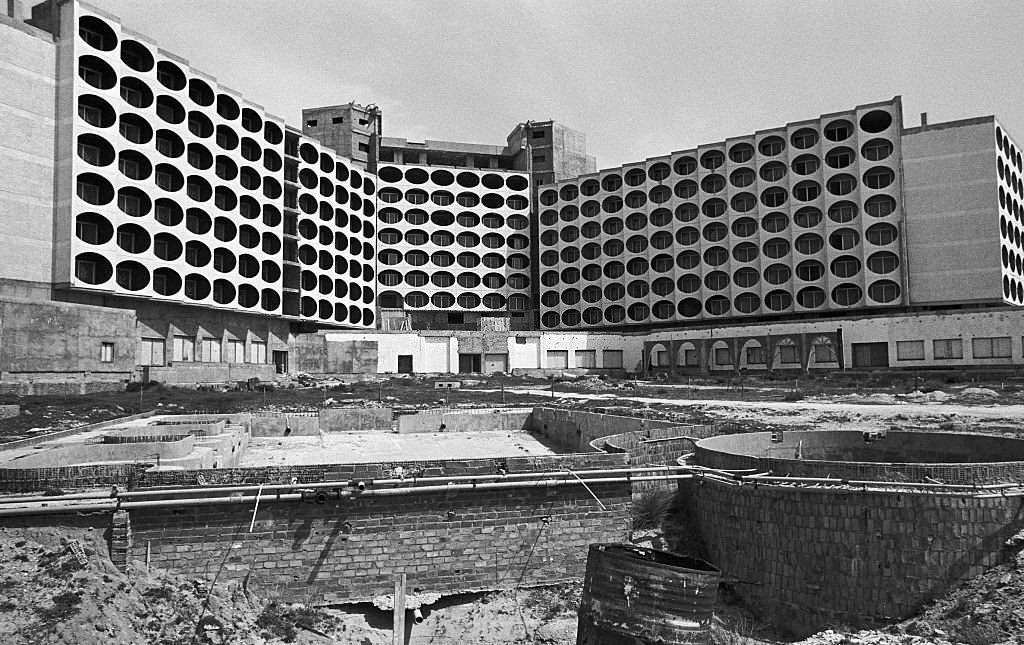
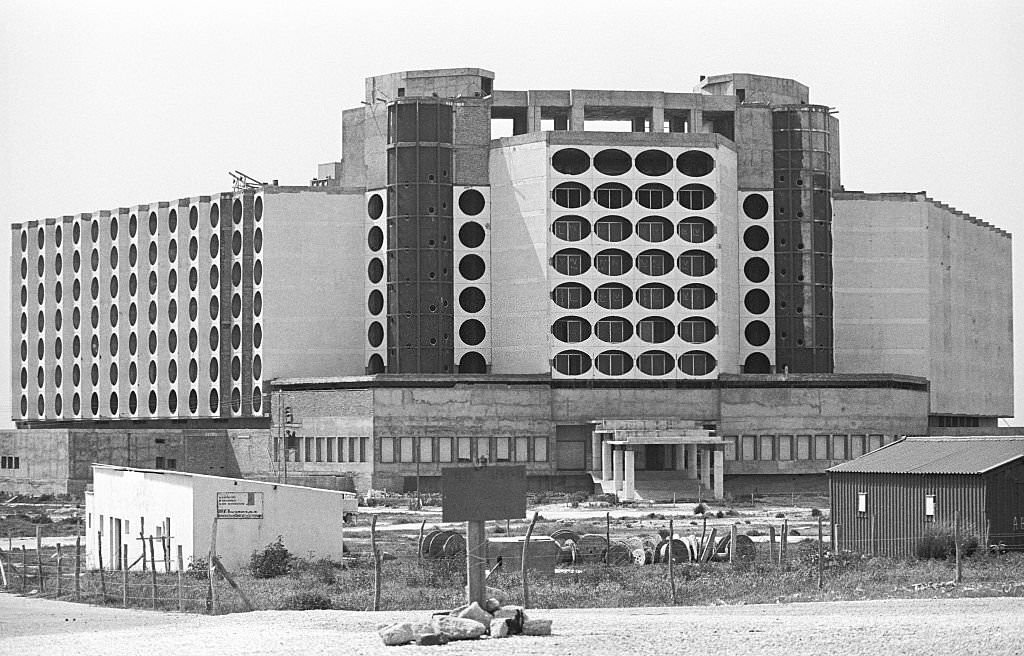
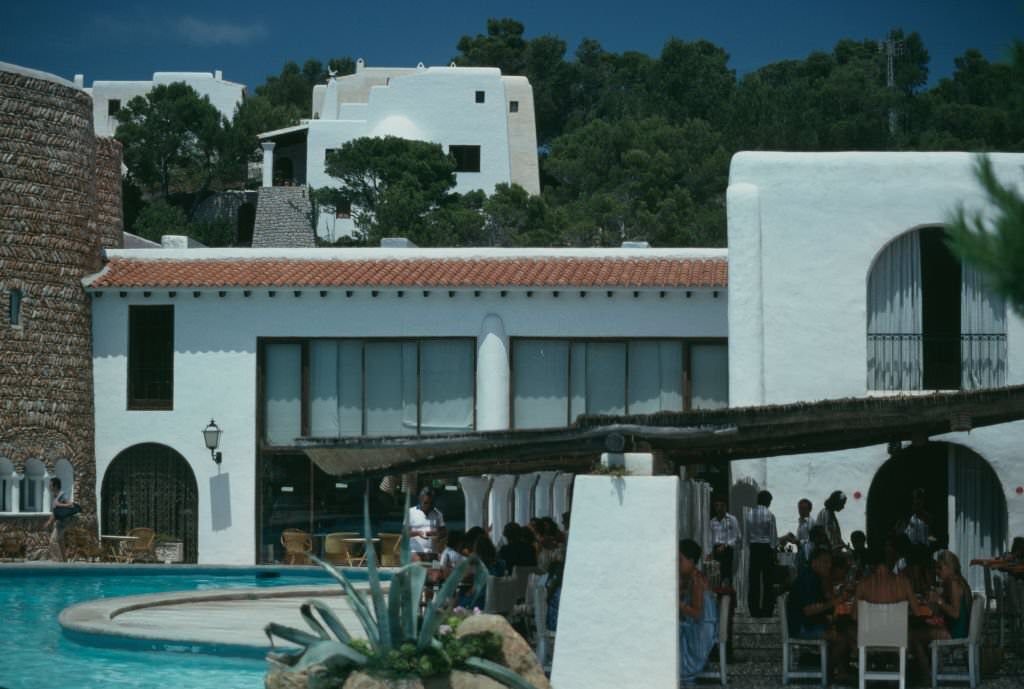
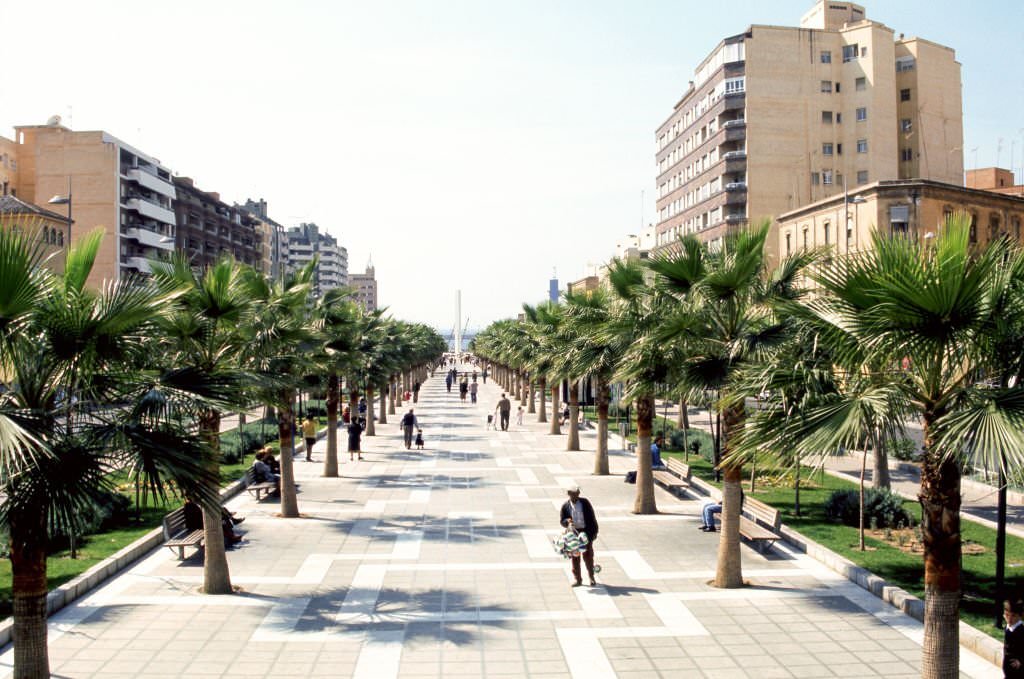
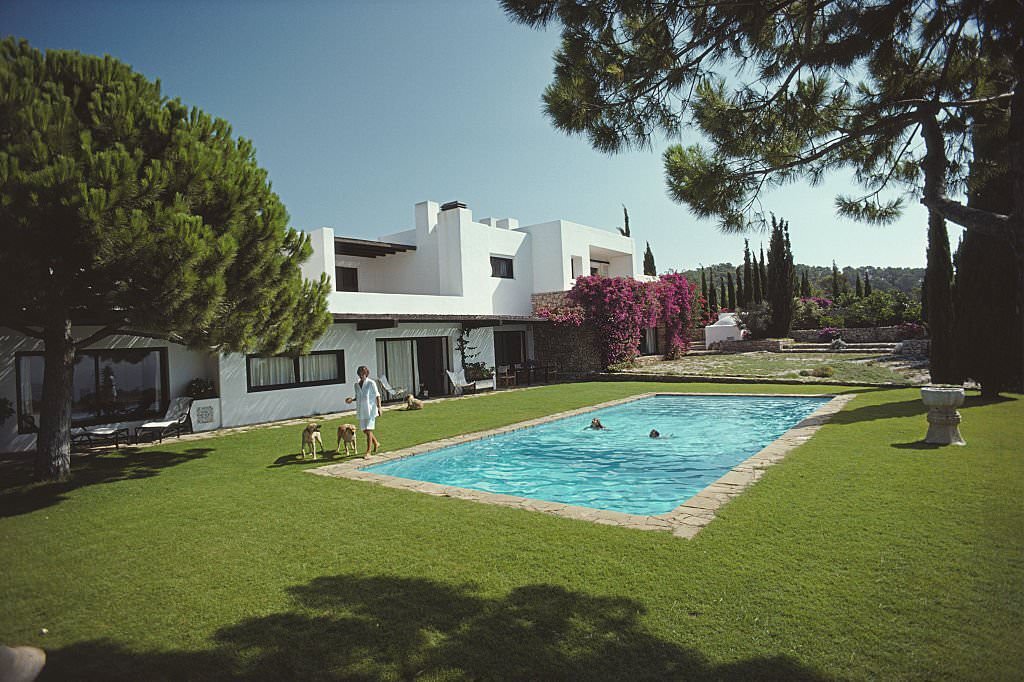
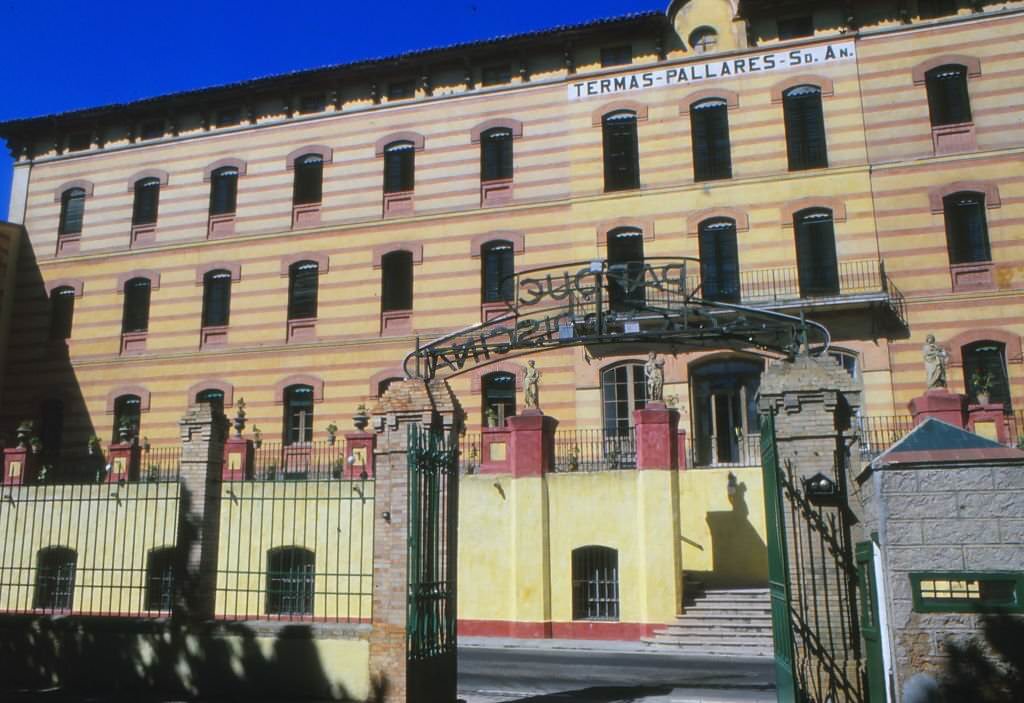
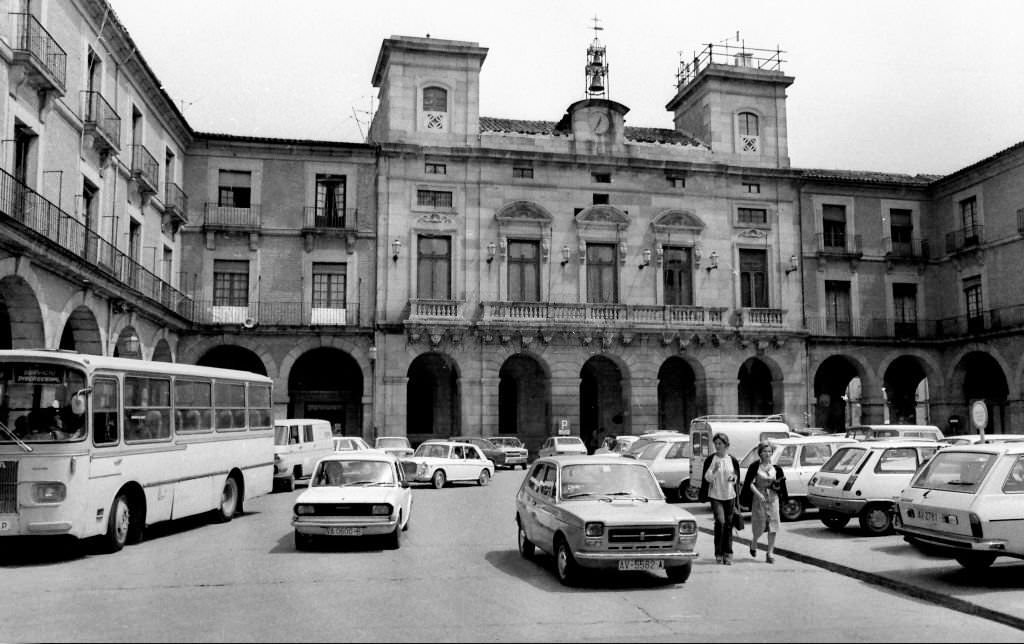
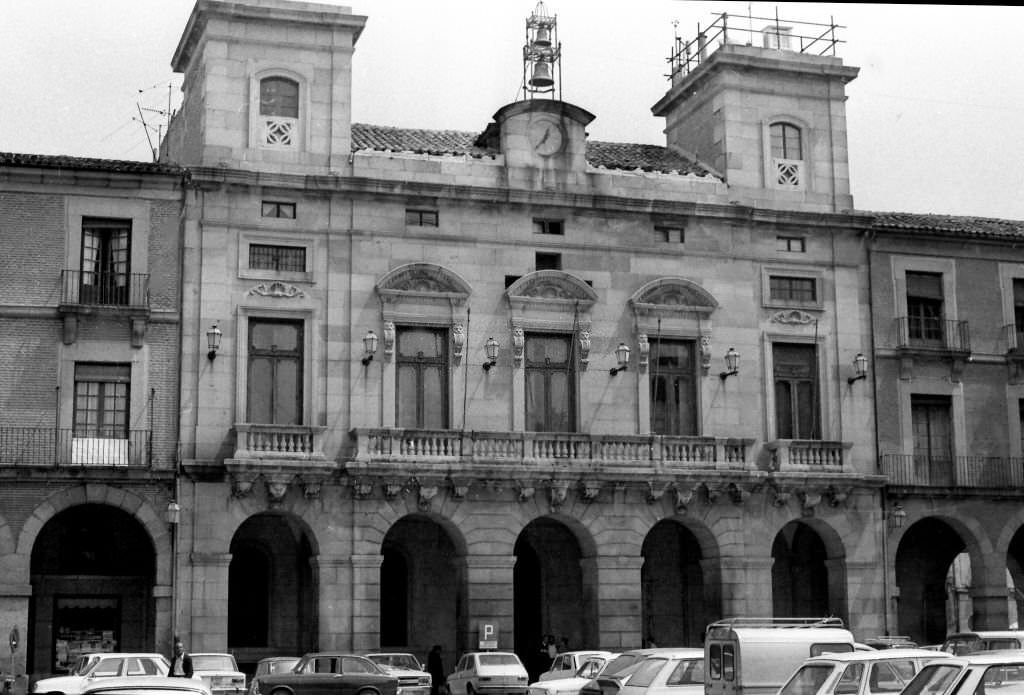
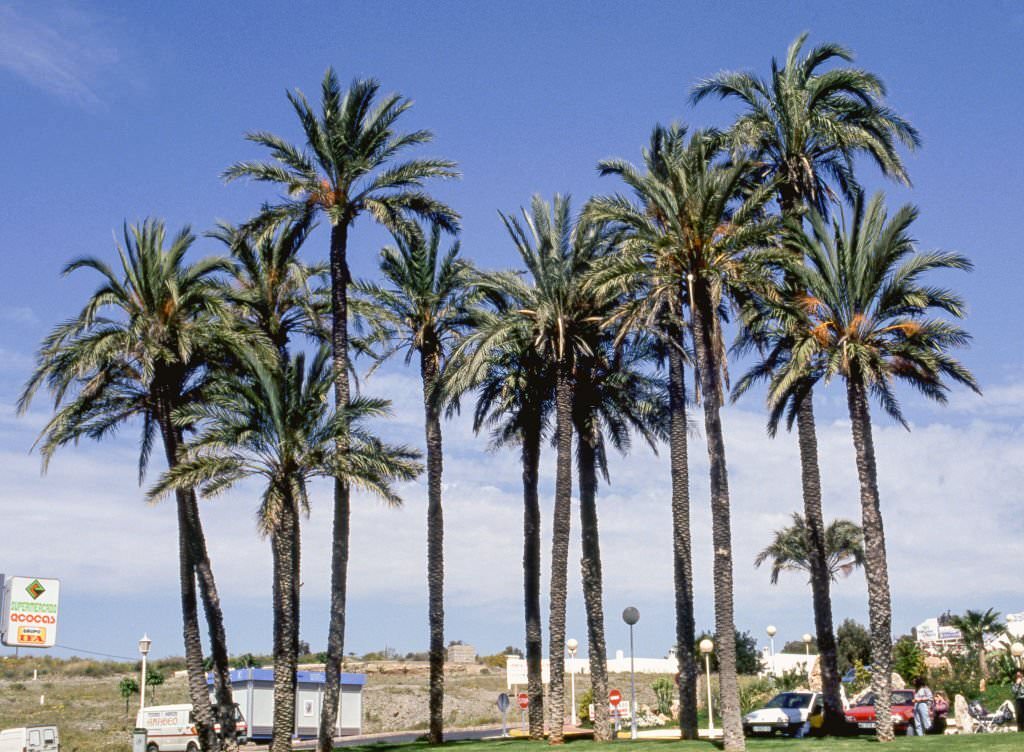
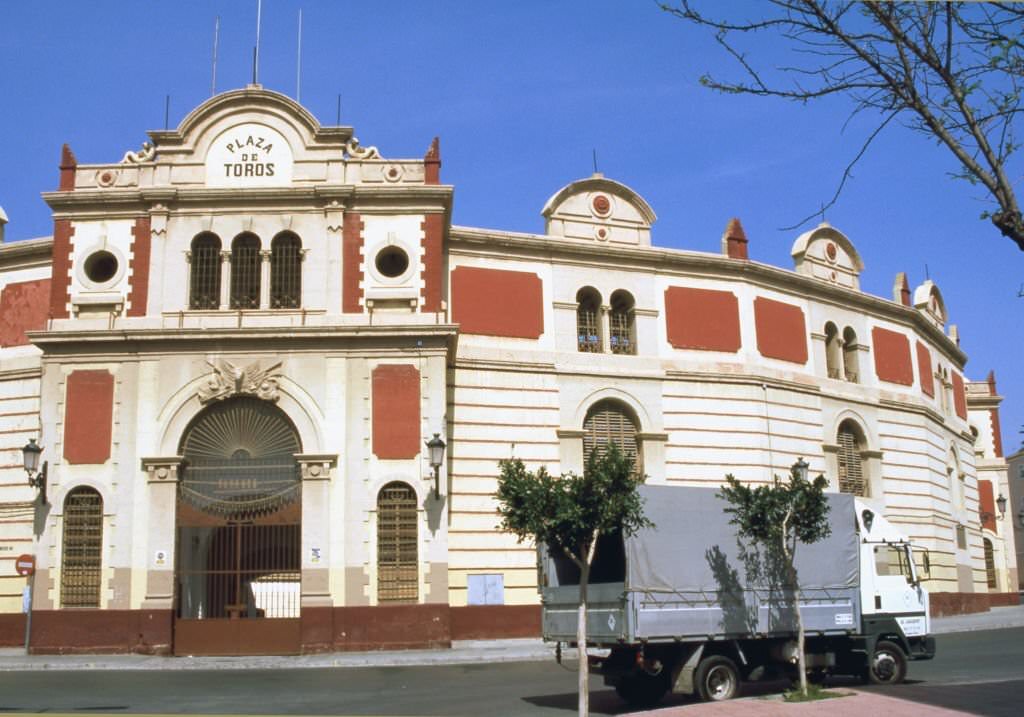
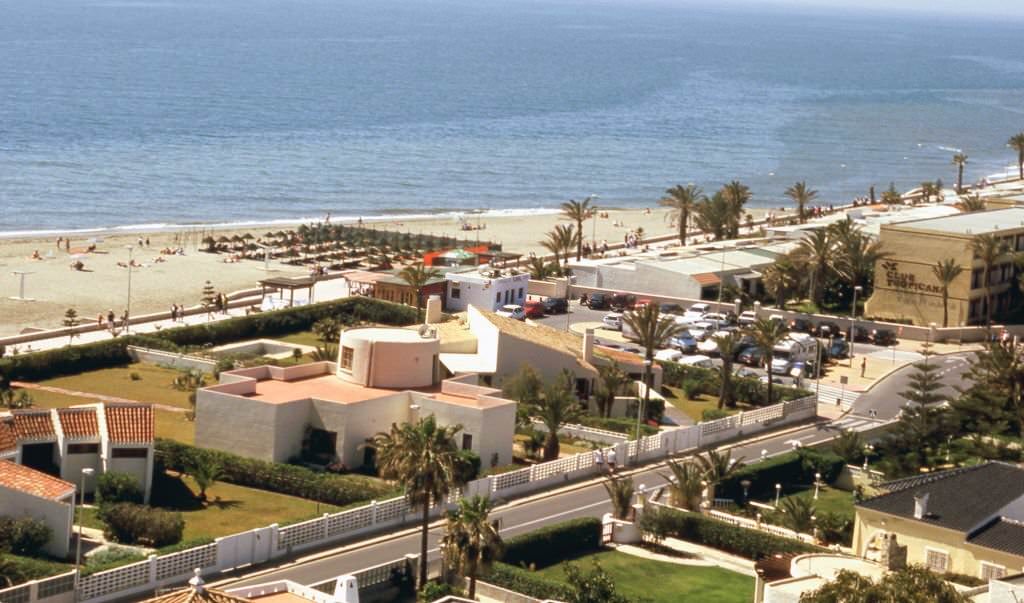
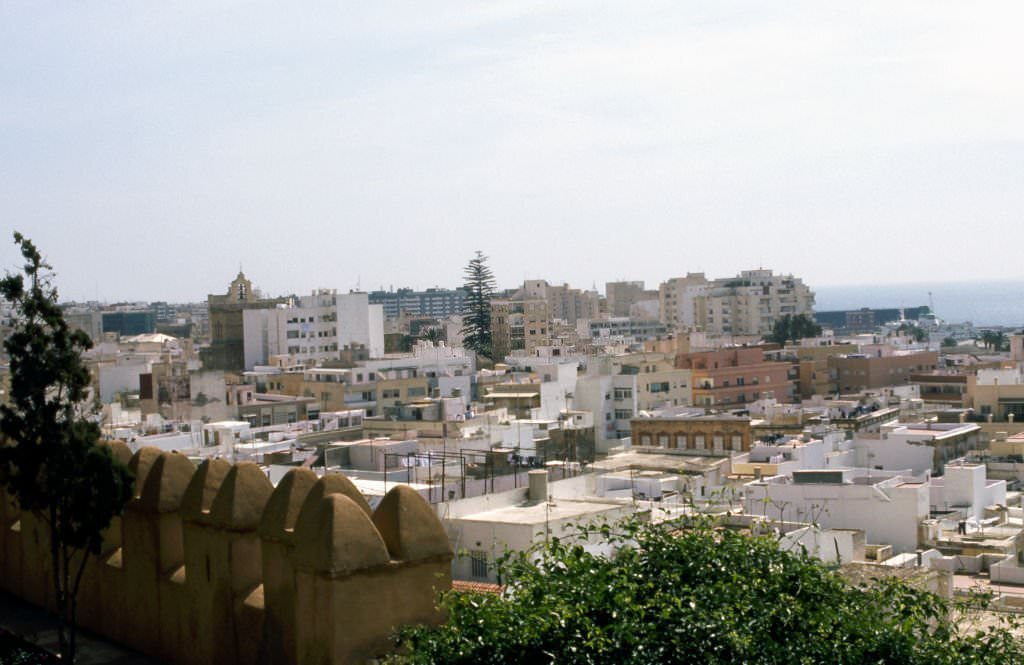
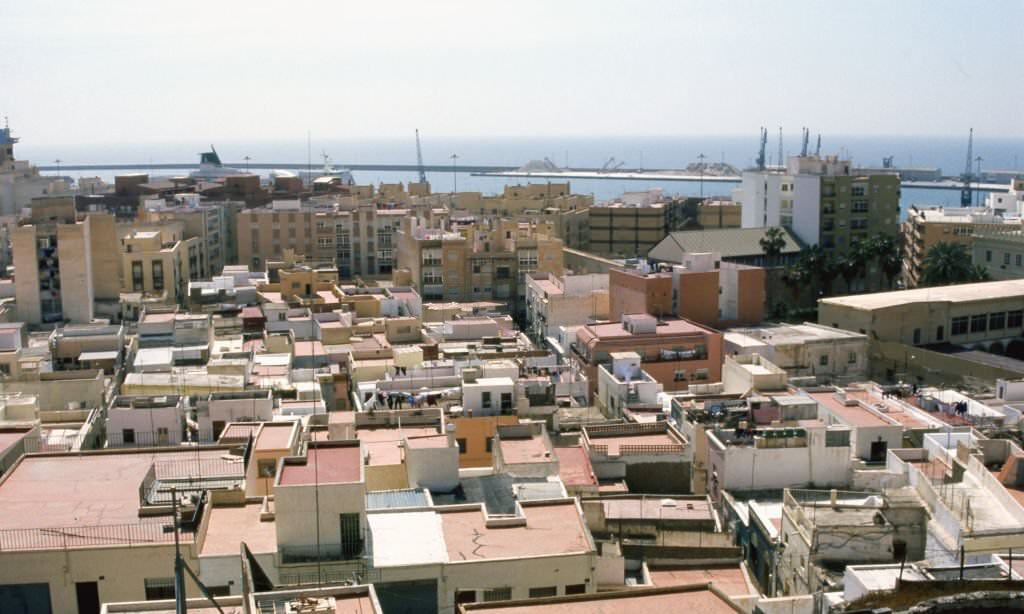
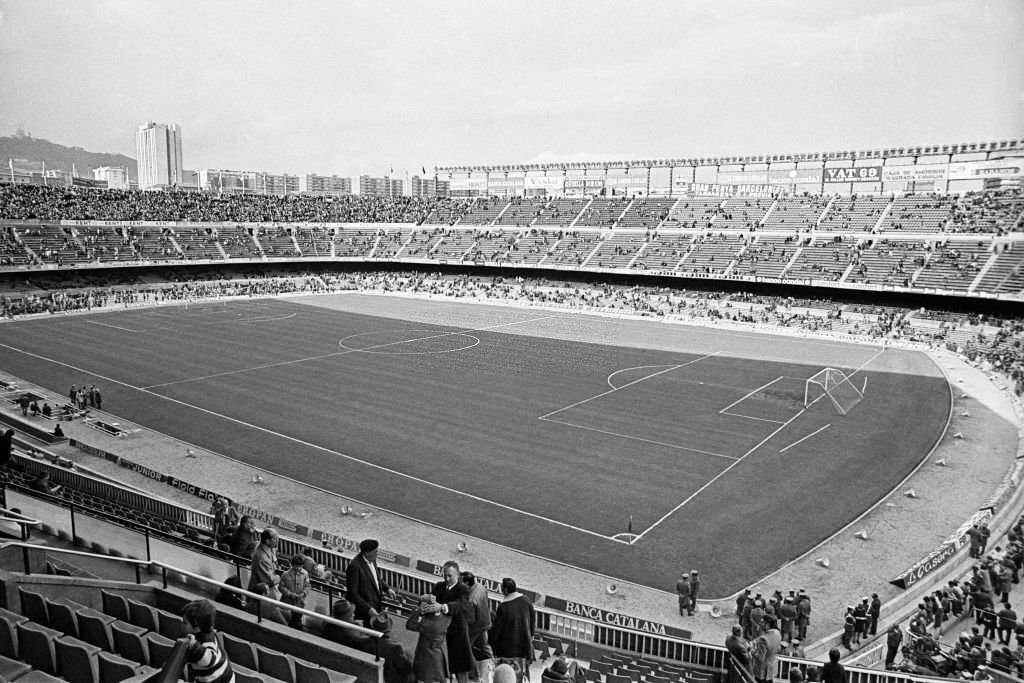
Hotel ruins on the beach south of Cape Trafalgar, 1978Hotel ruins on the beach south of Cape Trafalgar, 1978Hotel ruins on the beach south of Cape Trafalgar, 1978Dinera on a poolside terrace at the Hacienda Na Xamena hotel in Port de Sant Miguel, Ibiza, Spain, 1978.Federico Garcia Lorca Avenue, 1978, Almeria, Andalucia, Spain.Fosca, Vera, & Fiona Bertran holidaying in Roca Llisa, on the island of Ibiza, Spain, 1978.Zaragoza, Alhama de Aragon, “Pallares” spa, Aragon, Spain, 1978.Town Hall of Avila, Castilla y León, Spain, 1978.Town Hall of Avila, Castilla y León, Spain, 1978.Palm tree Almeria, Andalusia, 1978Bullring of Almeria, 1978General view of Almeria, 1978, Andalusia, Spain.General view of Almeria, 1978, Andalusia, Spain.General view of Almeria, 1978, Andalusia, Spain.General view of Almeria, 1978, Andalusia, Spain.General of view Camp Nou, home to Barcelona FC.
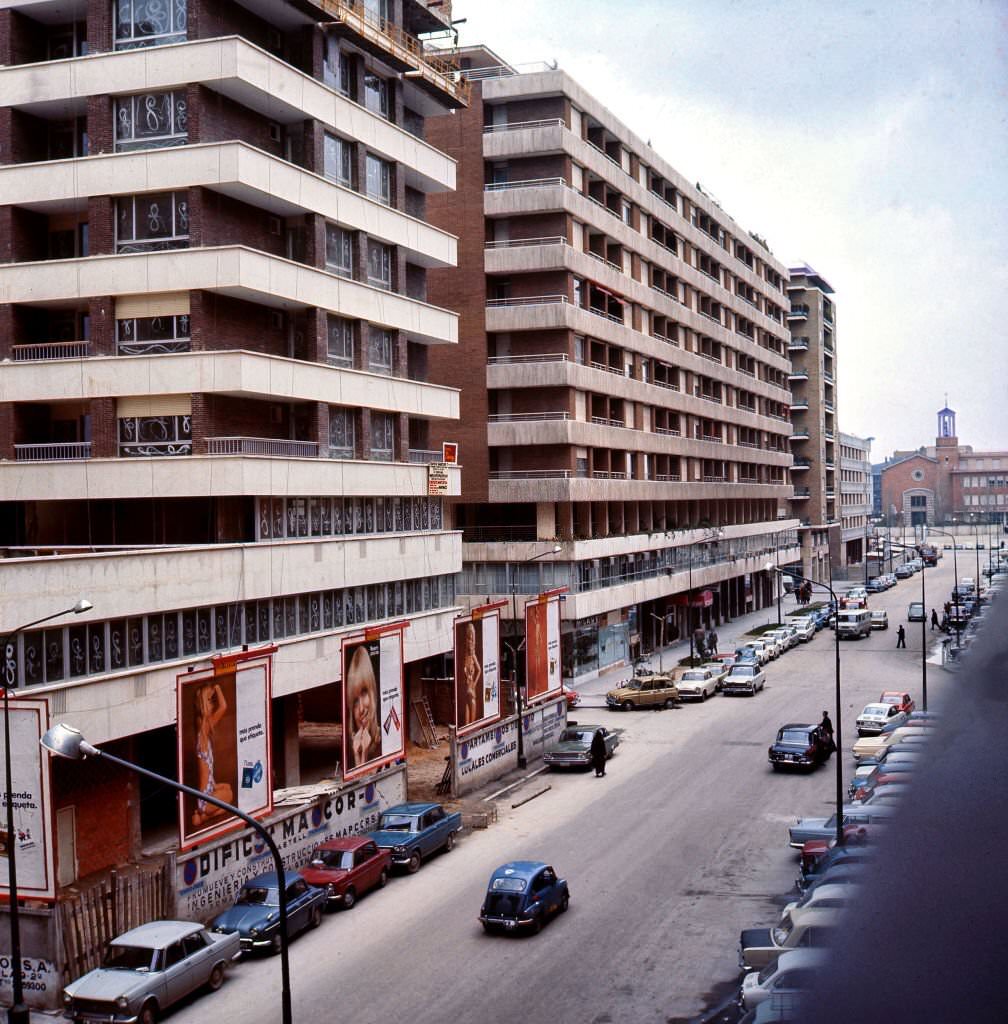
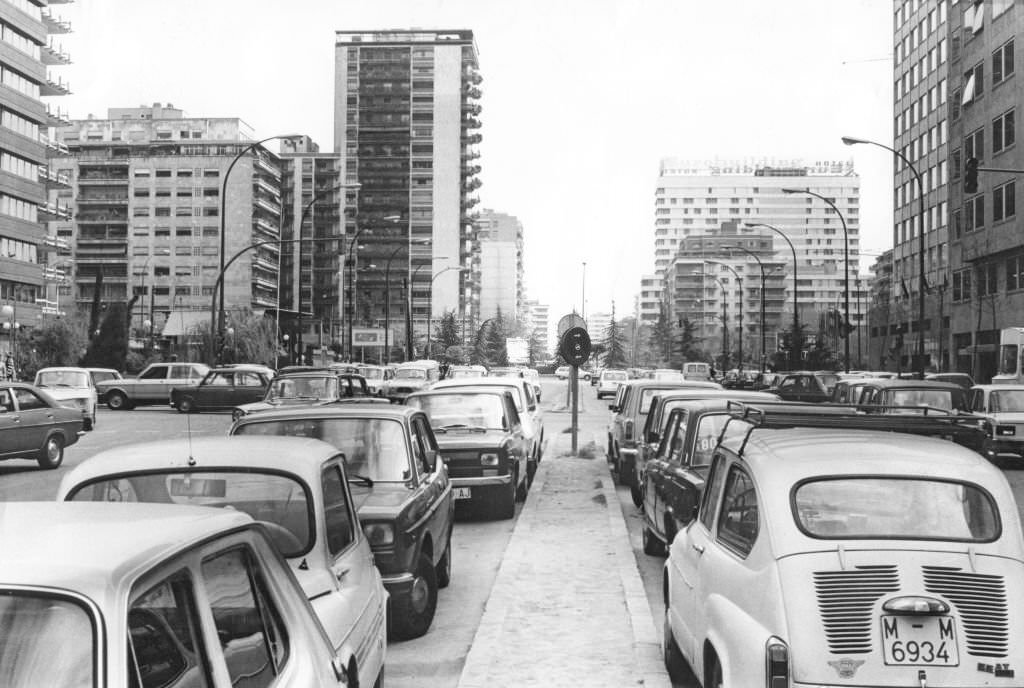
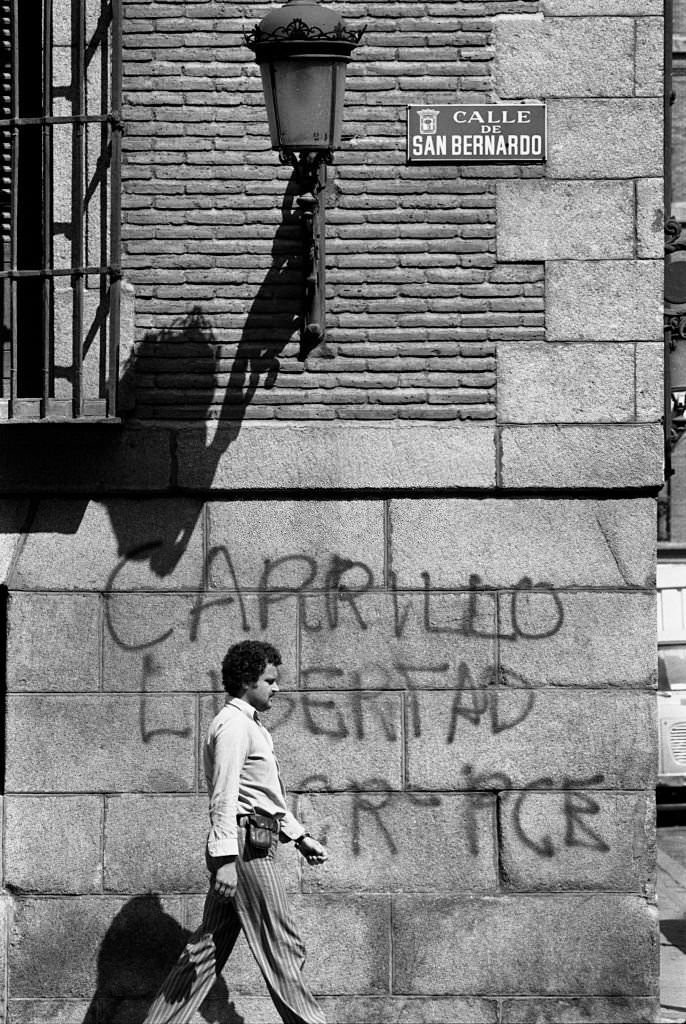
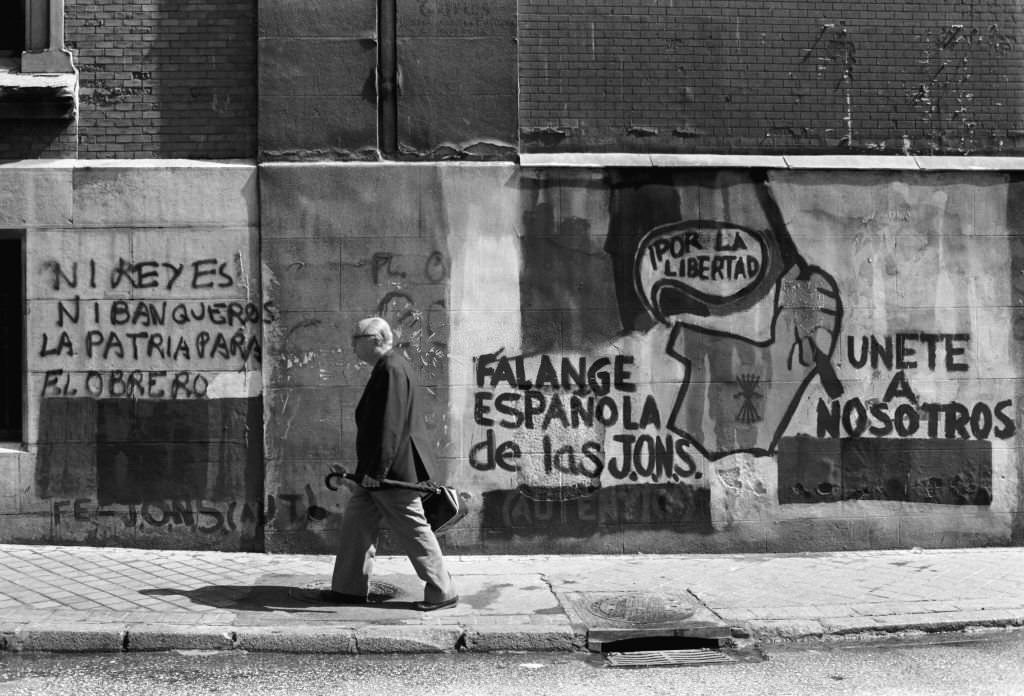
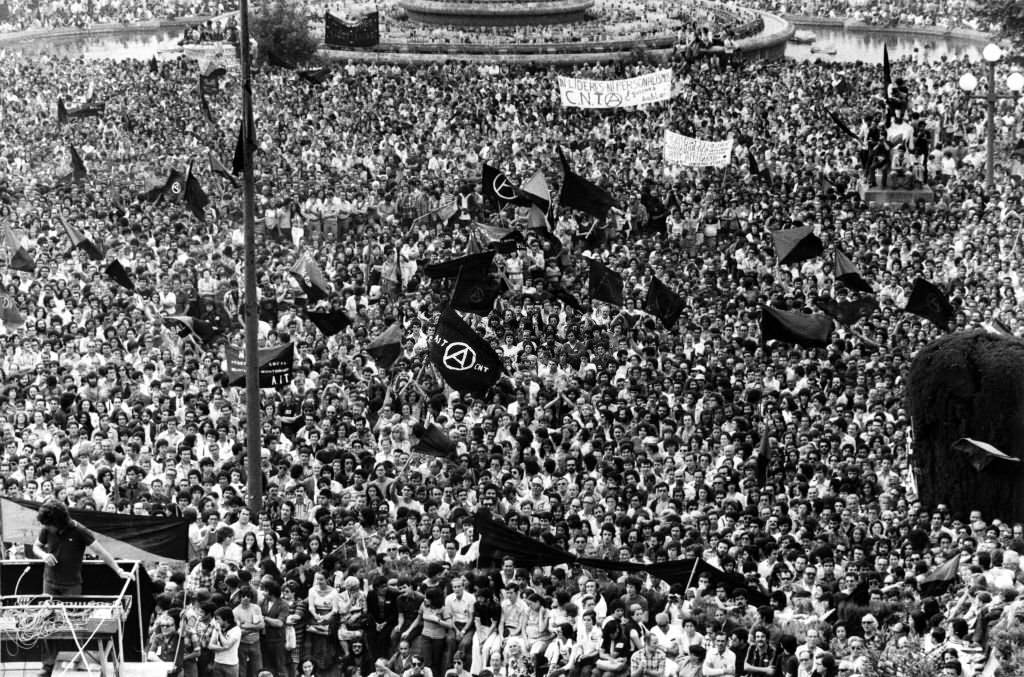
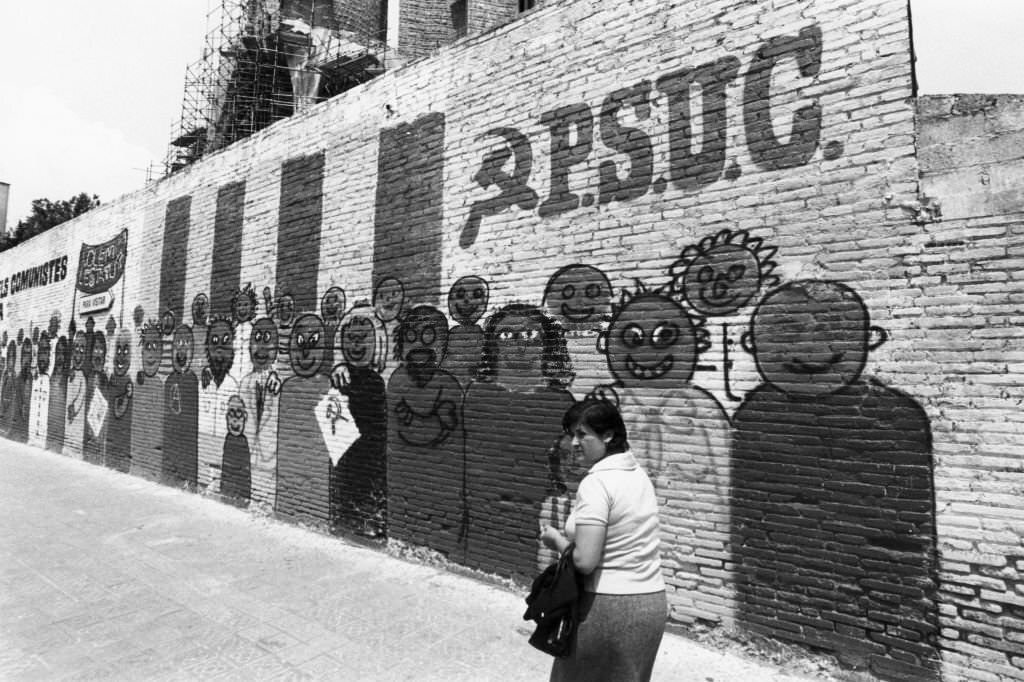
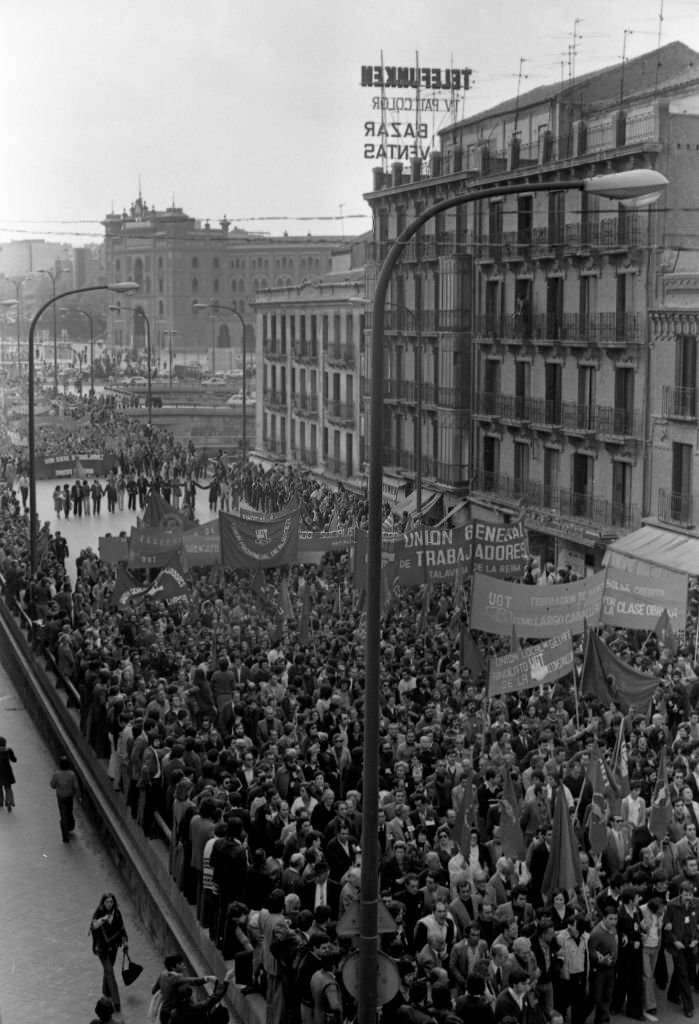
With Franco gone and King Juan Carlos I on the throne, Spain began what became known as the Transition — a carefully managed shift toward democracy. New buildings rose on Madrid’s Avenida del Generalísimo in 1977, the same year Spain held its first free general elections in over four decades. Political parties that had been banned for decades — communist, socialist, anarchist — suddenly operated in the open. Murals appeared on walls in Barcelona. The CNT, the historic anarcho-syndicalist union, held its first meeting in Barcelona in July 1977. Streets that had been controlled by Francoist order now hosted open political debate.
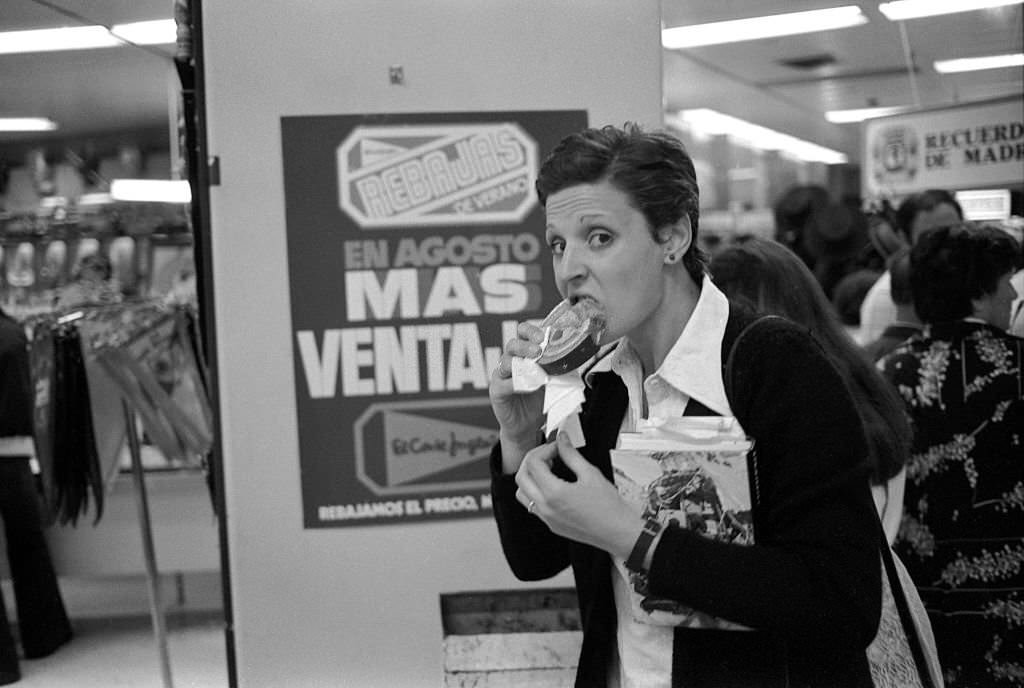
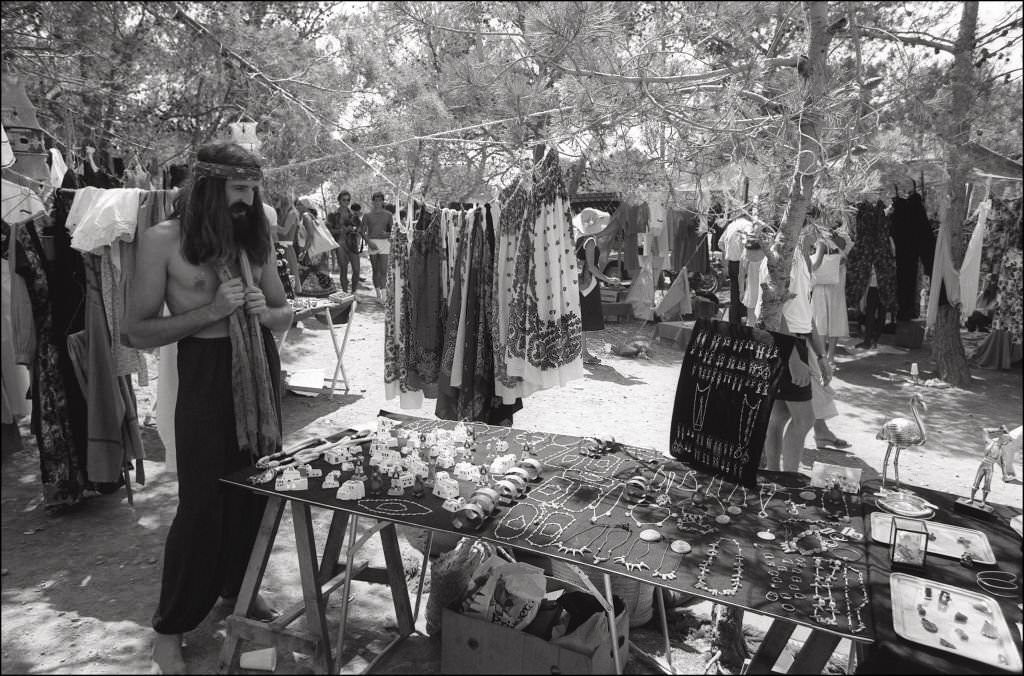
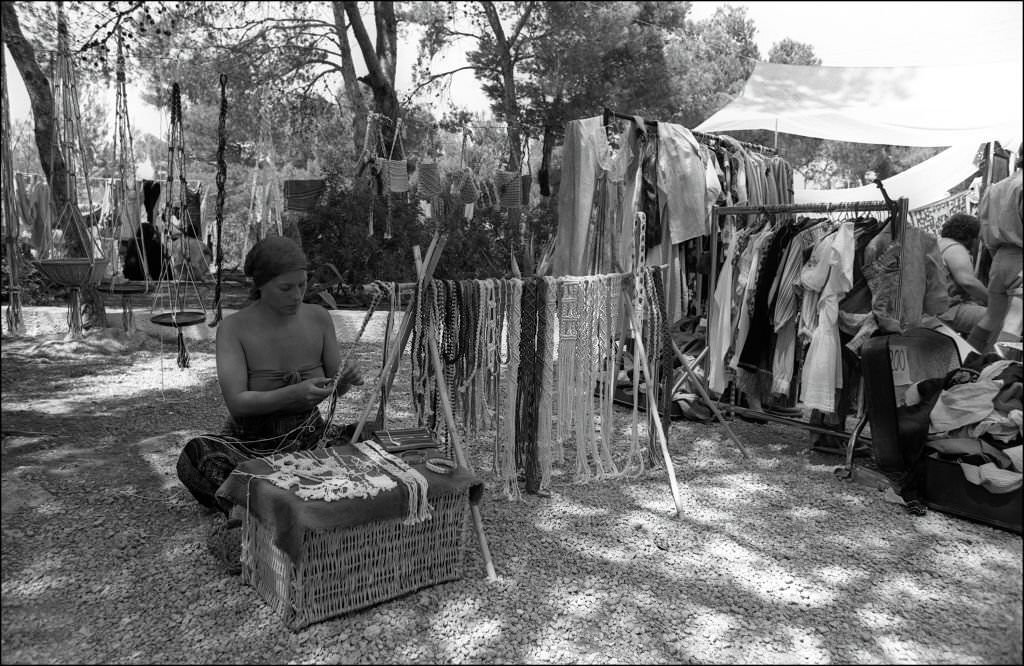
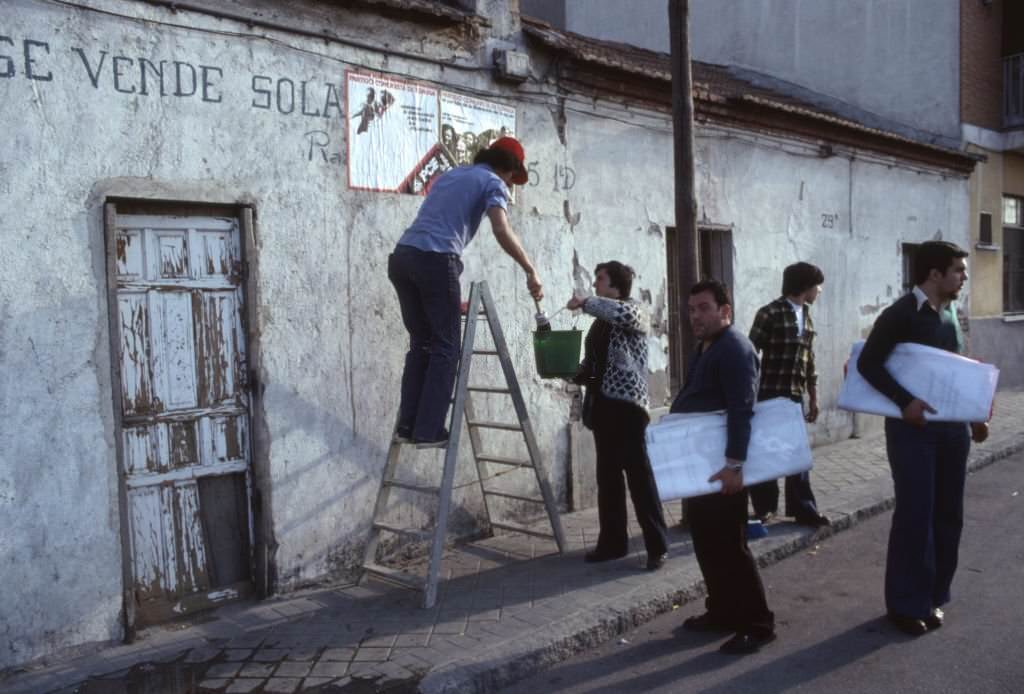
New buildings on Avenida del Generalisimo in Madrid. Recording from September 1977.Woman eating a pastry in a department store in Toledo, Spain, August 21, 1977.A man walking down San Bernardo Street in Madrid, Spain, August 20, 1977.Political graffiti on a wall in Madrid, Spain, August 20, 1977.The Hippies market, 1977.The Hippies market, 1977.The CNT, central Anarcho syndicalist, held its first meeting in Barcelona on July 2, 1977.Mural of the PSUC (Unified Socialist Party of Catalonia) in Barcelona, in June 1977.
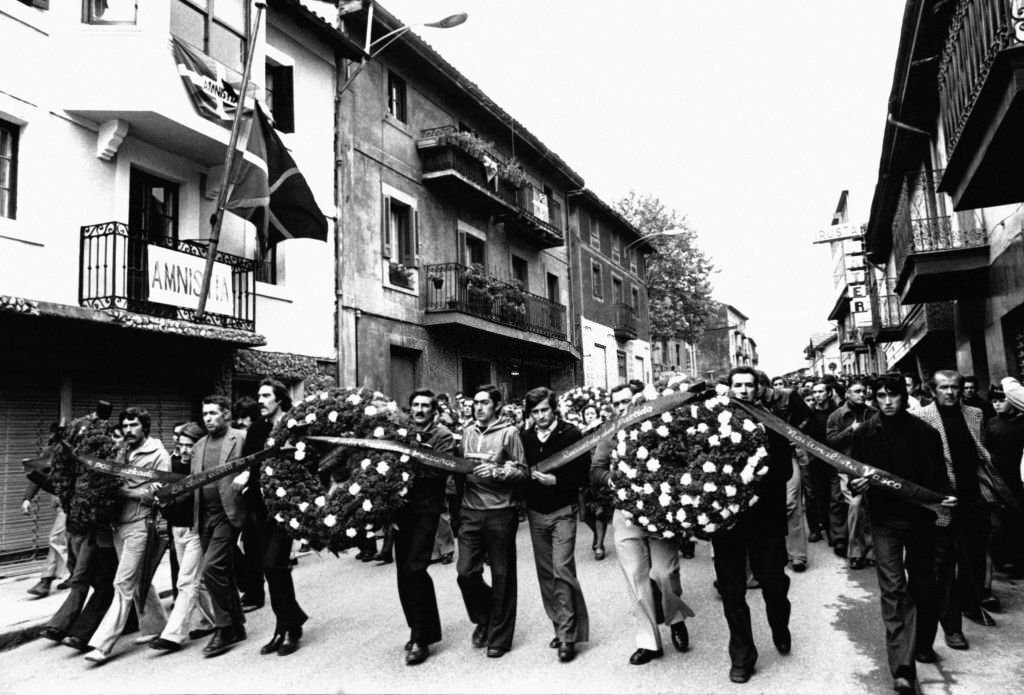
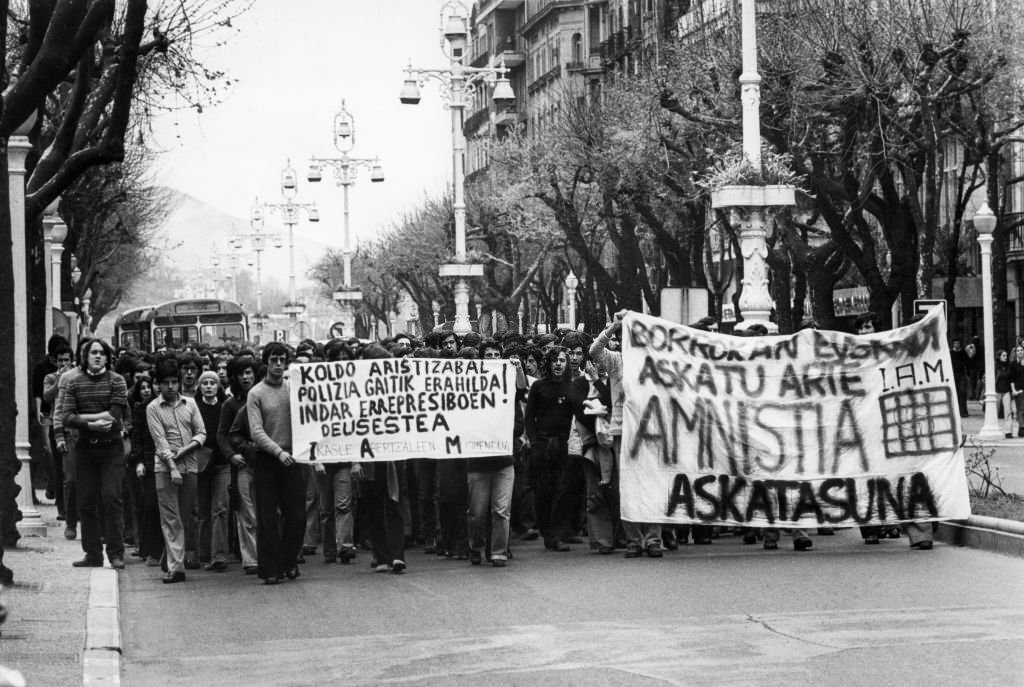
In the Basque Country, the transition period did not bring calm. Demonstrations filled the streets of Bilbao and San Sebastian. Protesters buried their dead publicly, and amnesty marches drew thousands. The trial of 16 Basque nationalists in Burgos in September 1975 had already triggered some of the worst street violence of the decade — burnt cars, shattered storefronts, and confrontations with police. The violence did not stop with Franco’s death.
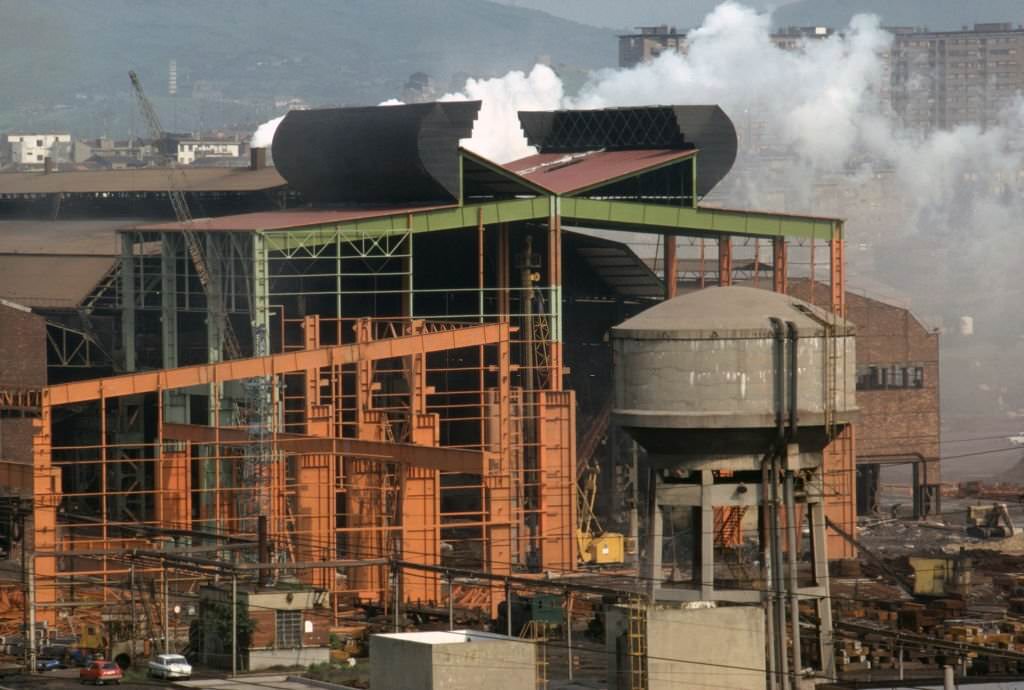
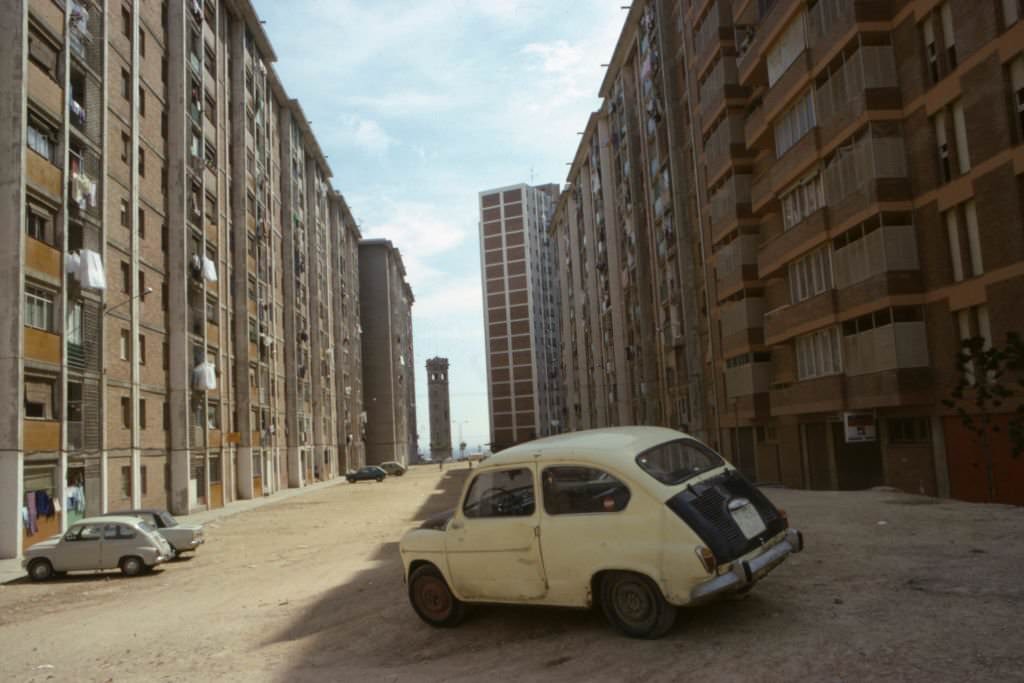
Burial of a protester in the Basque CountryDemonstration in Bilbao, Spain On May 16, 1977Port on the Nervion at Barakaldo, on the outskirts of Bilbao, in May 1977, Spain.Fiat 500 car dented and parked between buildings in the Cornella district, May 1977, Barcelona, Spain.Posters of the Spanish Communist Party during the campaign for the 1977 Spanish general electionsDemonstration of the ‘week for amnesty’, in May 1977 in Bilbao, Spain.
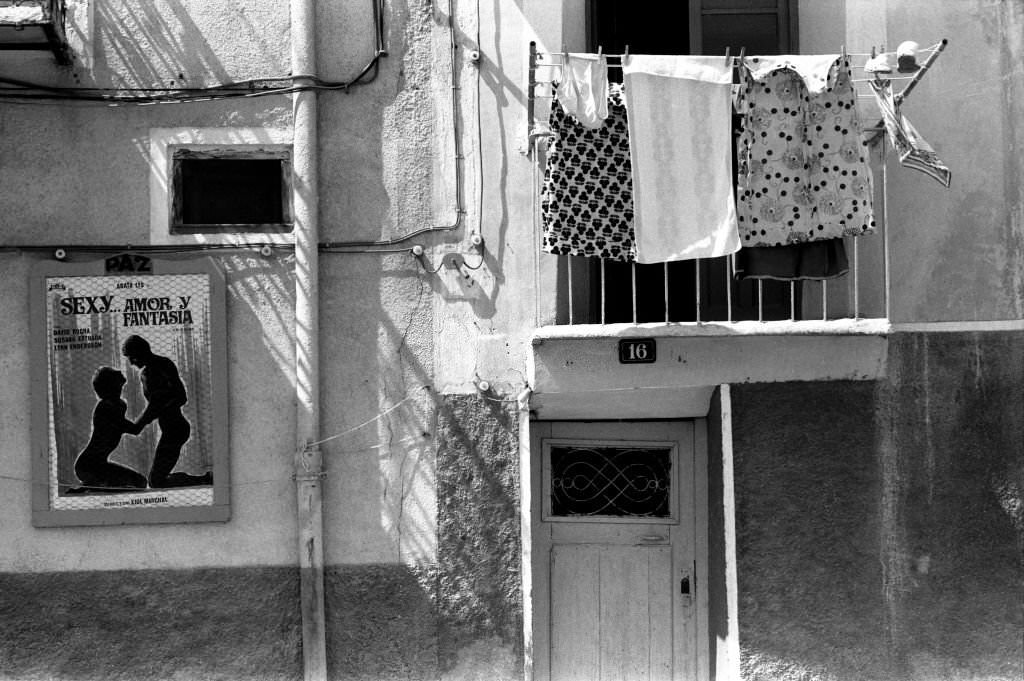
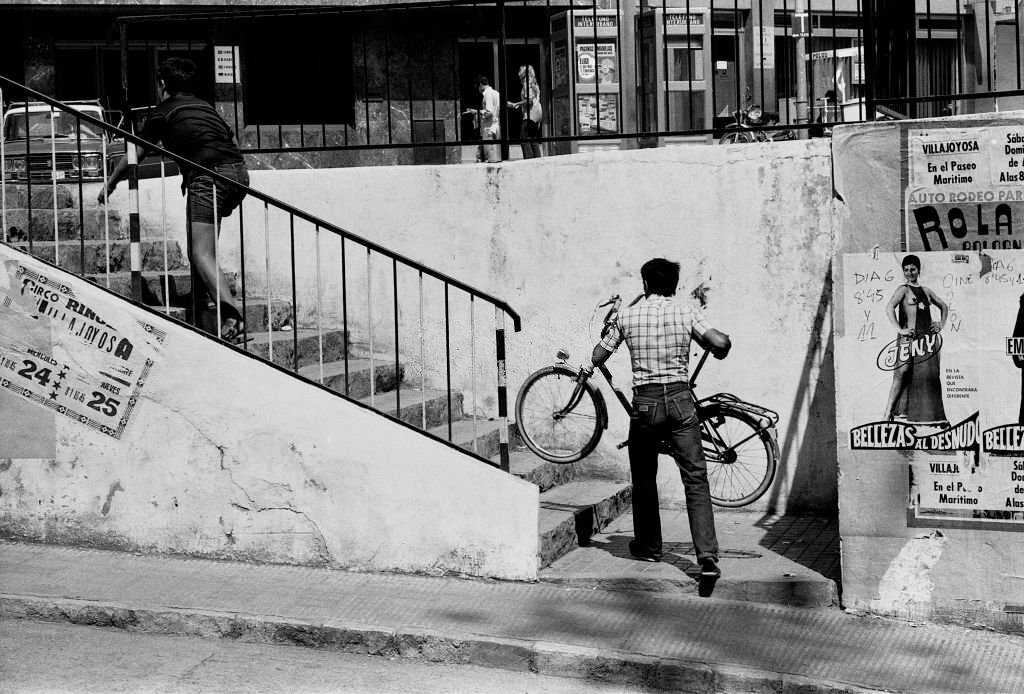
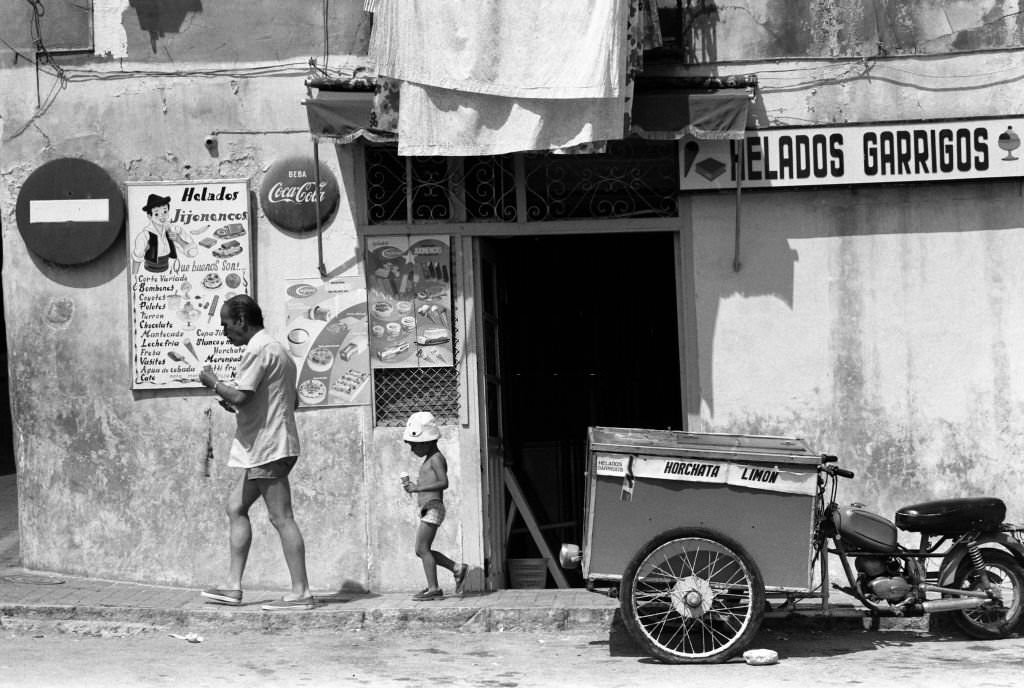
Daily life in coastal towns like Villajoyosa, on the Valencia coast, went on at its own pace. Laundry hung from windows, ice cream shops opened their shutters, and movie posters plastered the walls. Alongside a poster for ‘Sexy amor y fantasia,’ fishermen were still hauling nets at dawn in nearby Almuñécar, watched by curious early-morning spectators on the beach.
Laundry hanging from a window and movie poster ‘Sexy amor y fantasia’ on September 4, 1977, Villajoyosa in Spain,Scene of daily life in Villajoyosa in Spain, September 4, 1977Shop of an ice cream parlor in Villajoyosa, Spain, September 4, 1977.Villajoyosa, Spain, 1977Life in Spain during the process of democratic transition, 1977
Life in Spain during the process of democratic transition, 1977
Life in Spain during the process of democratic transition, 1977
Life in Spain during the process of democratic transition, 1977Life in Spain during the process of democratic transition, 1977Life in Spain during the process of democratic transition, 1977Life in Spain during the process of democratic transition, 1977Spain, 1977
Spain, 1977
Spain, 1977
Spain, April 1977Spain, April 1977Spain, April 1977Spain, April 1977Spain, April 1977Spain, April 1977Spain, April 1977Spain, April 1977Spain, April 1977Spain, April 1977Spain, April 1977Spain, April 1977Spain, April 1977Spain, April 1977Spain, April 1977Spain, April 1977Spain, April 1977Spain, April 1977
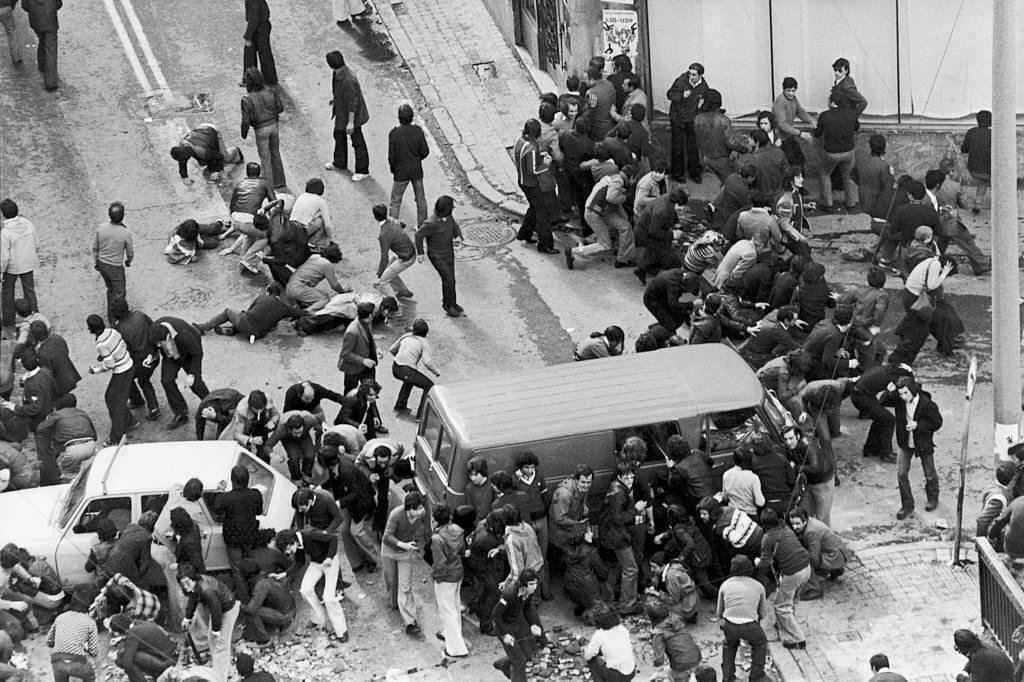
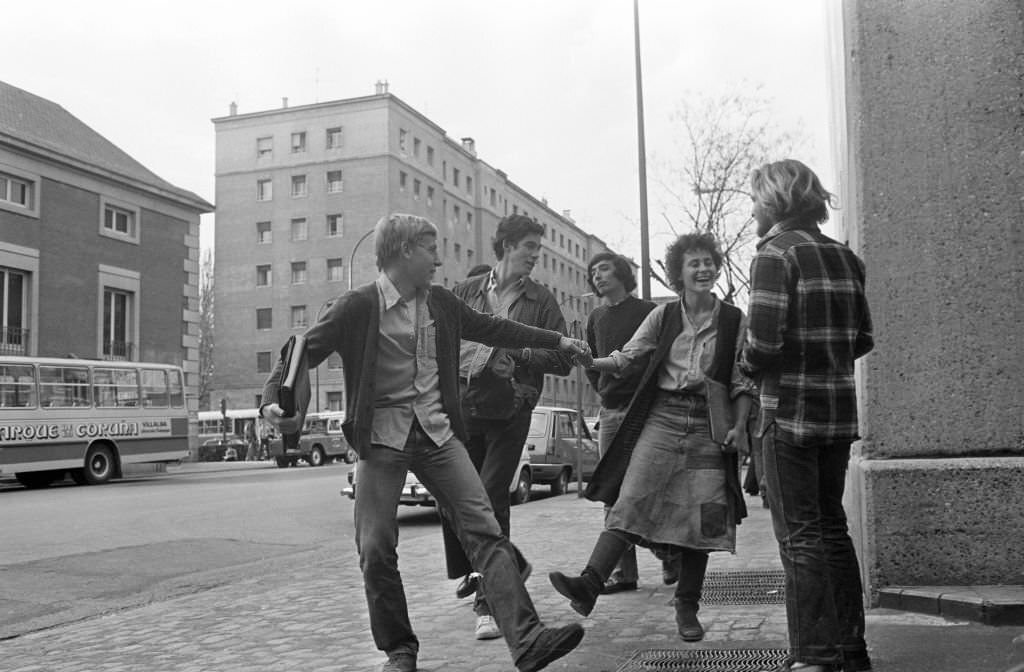
Student demonstrations rocked San Sebastian in March 1977 after a protester was killed. The streets of the Basque city filled with young demonstrators demanding justice. These scenes — marching students, riot police, burning barricades — were by then a recurring feature of life in the north of Spain.
Demonstration of students after the death of a demonstrator, March 16, 1977, in San Sebastian, Spain.Demonstration of students after the death of a demonstrator, March 16, 1977, in San Sebastian, Spain
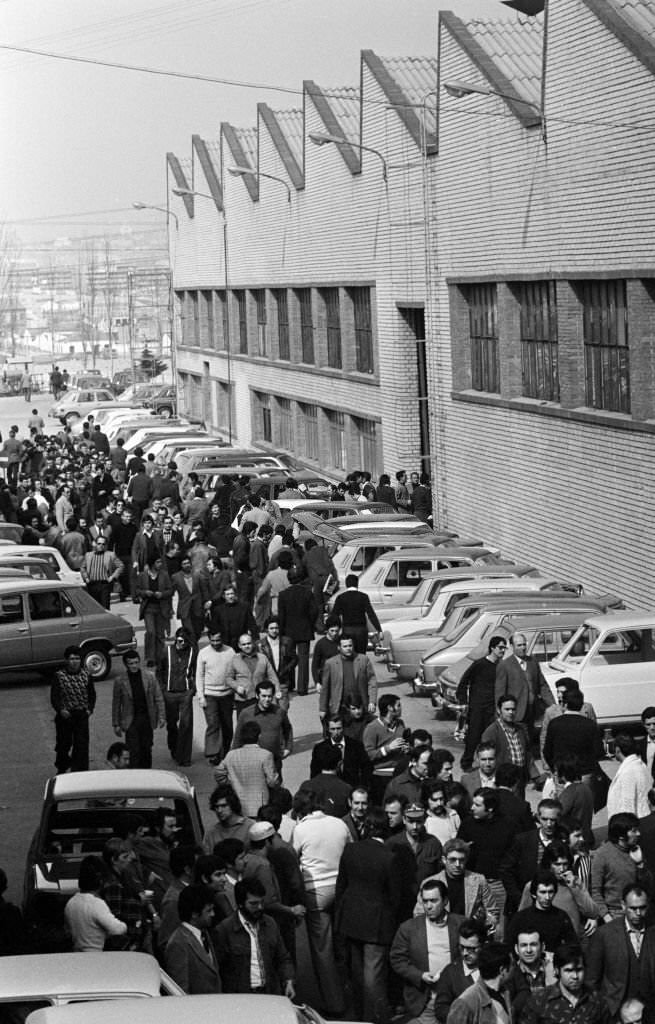
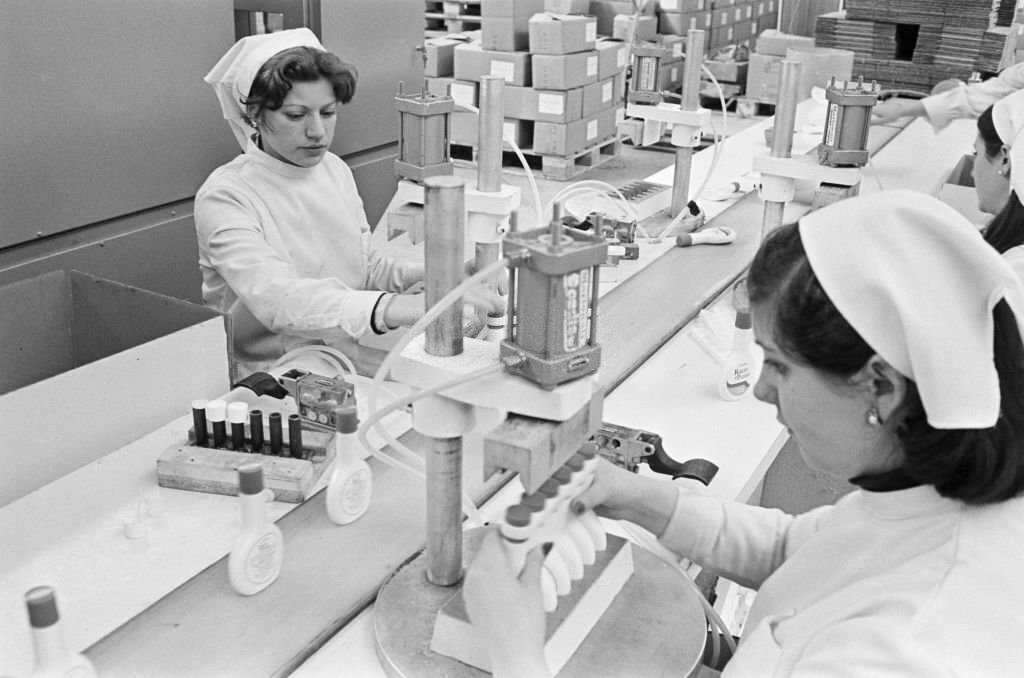
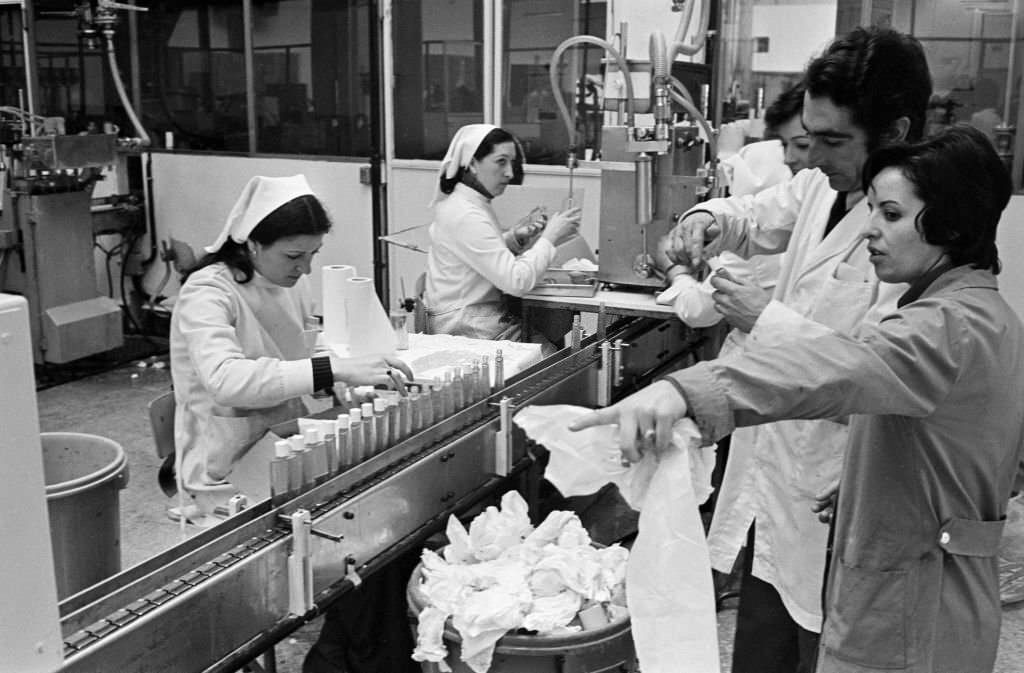
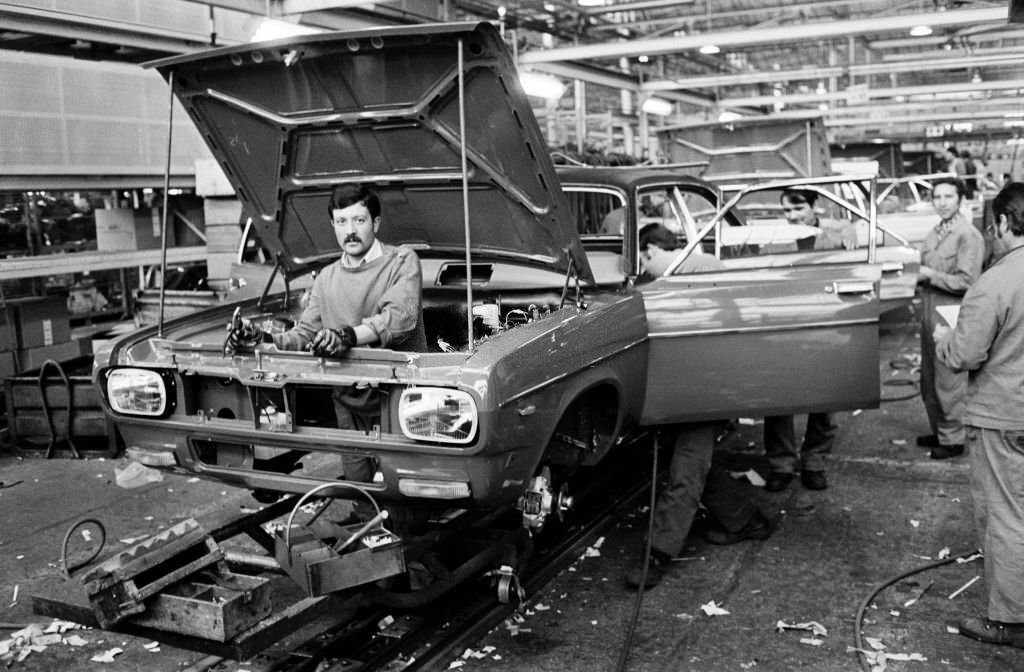
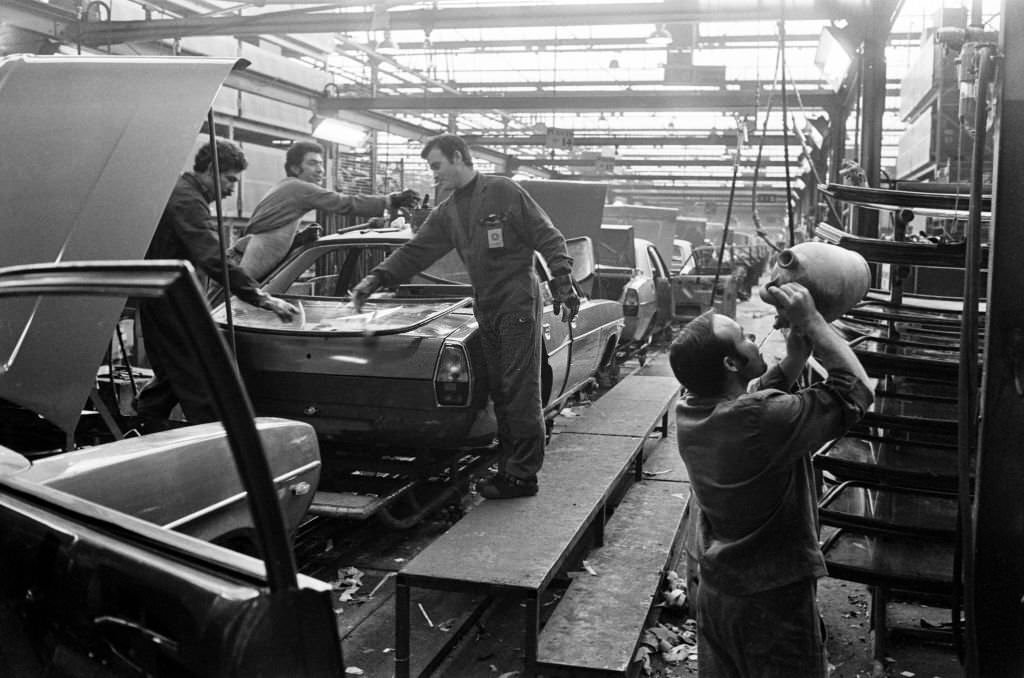
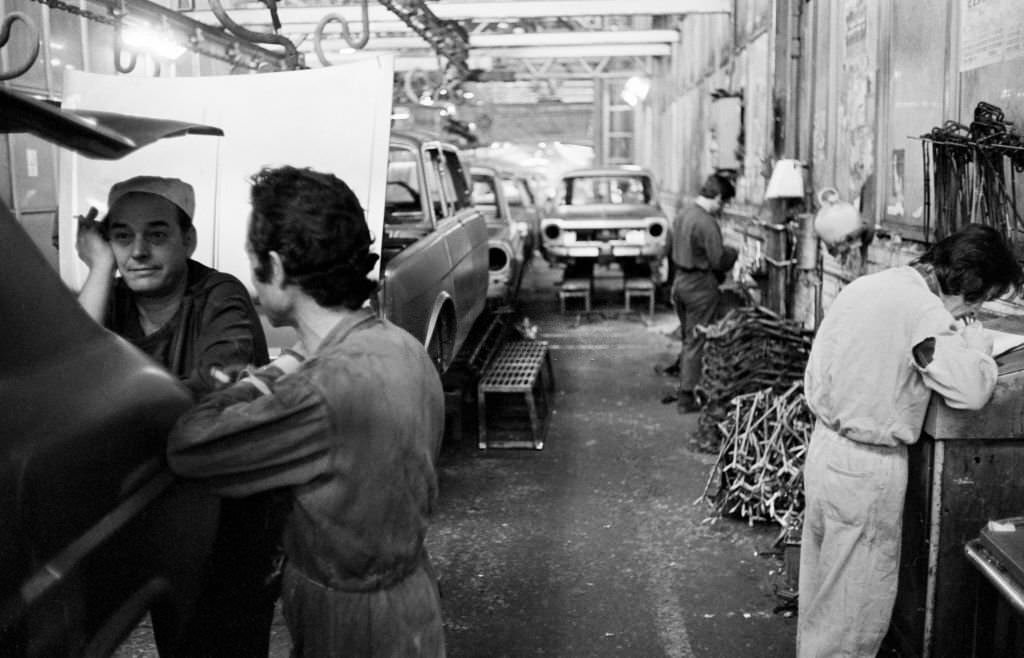
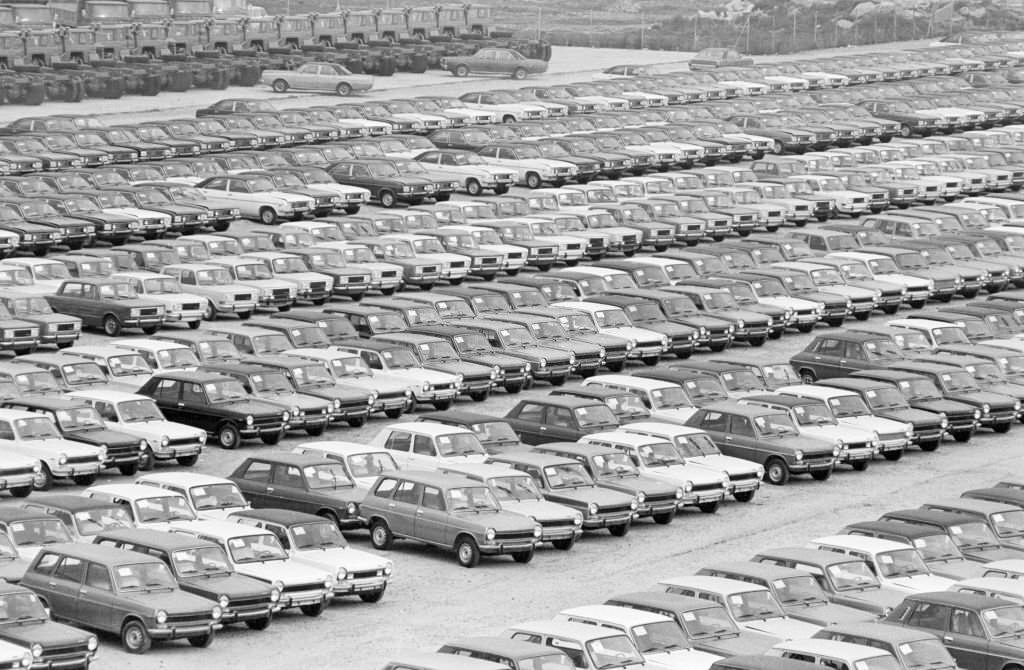
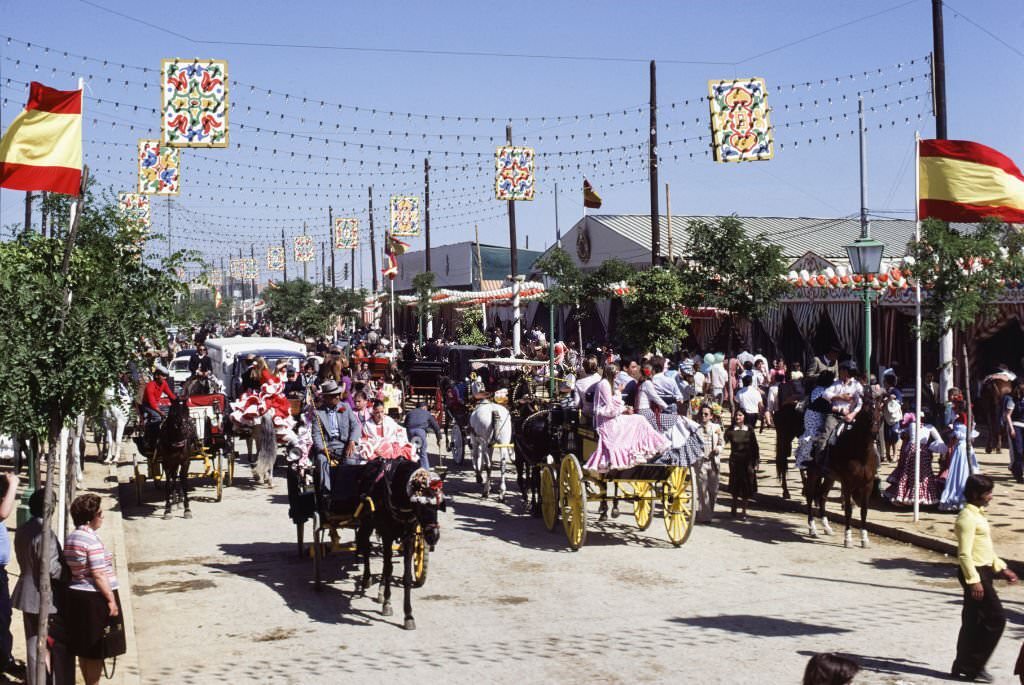
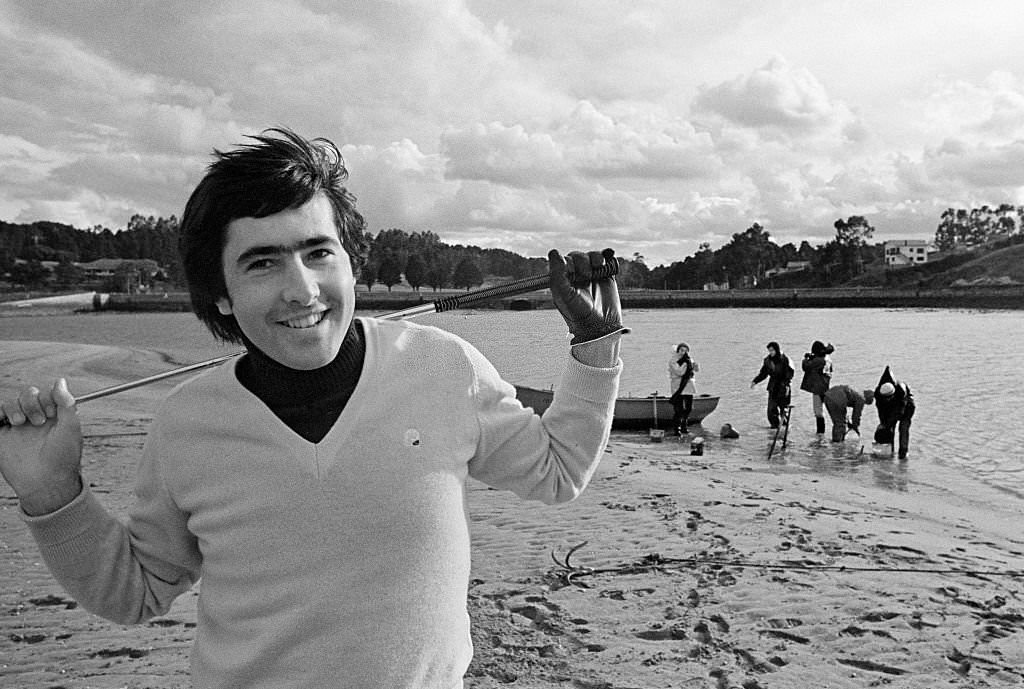
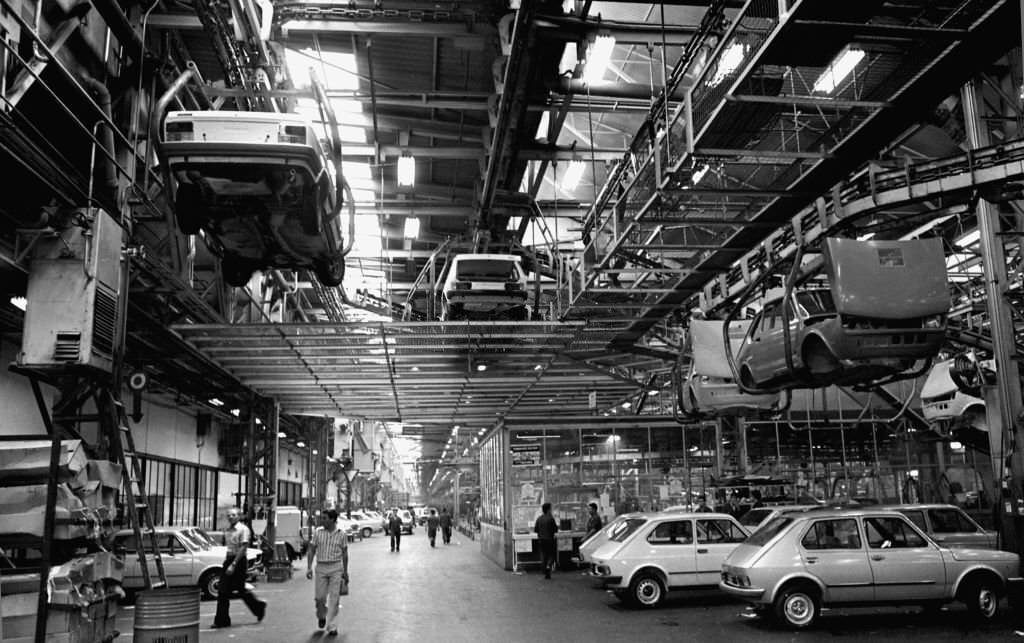
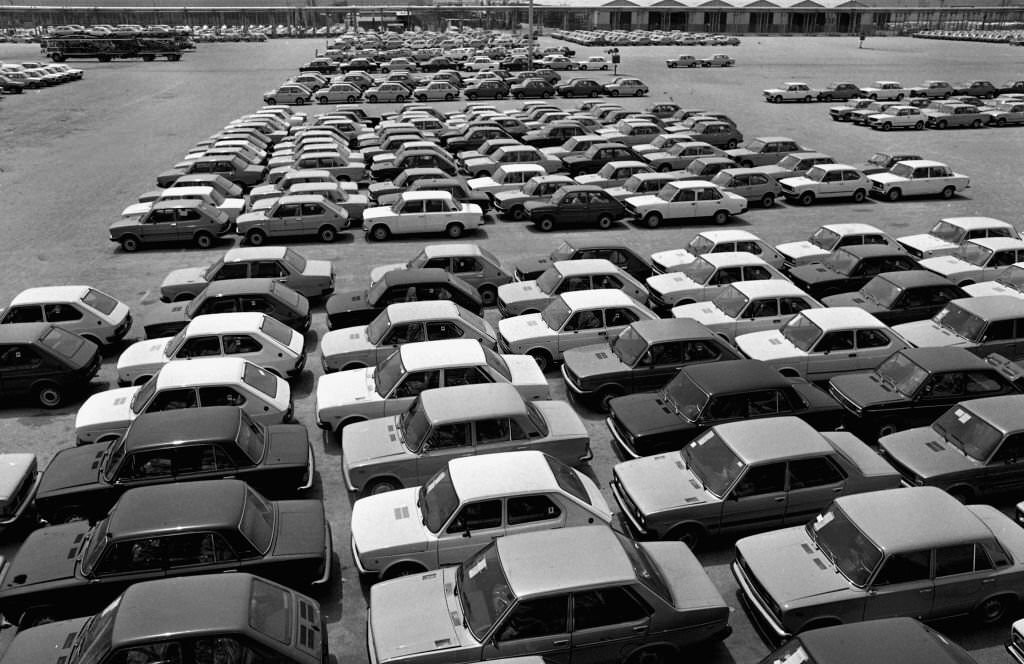
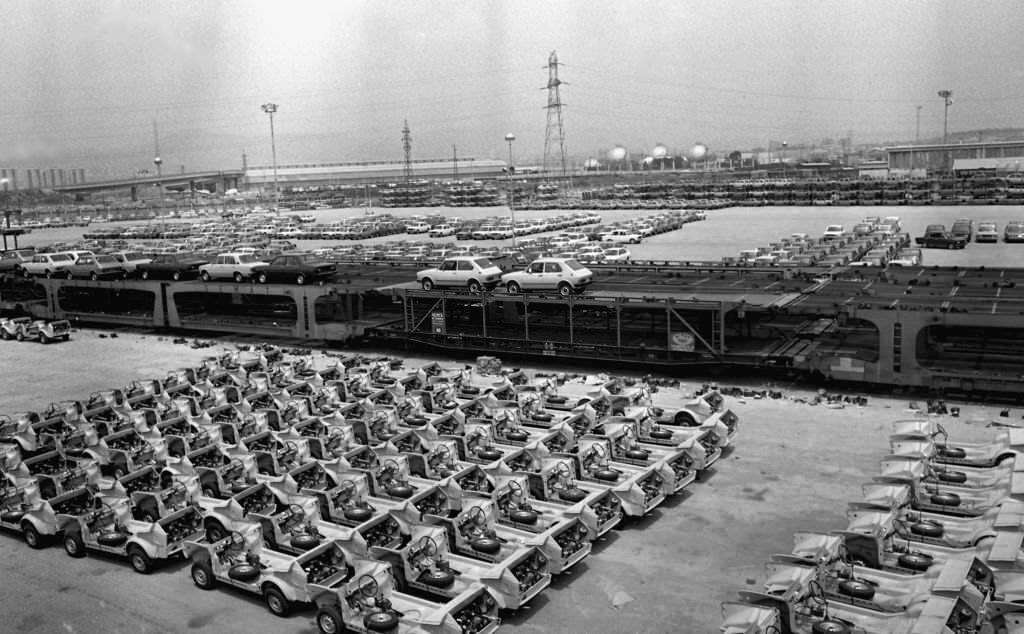
Away from the political turmoil, Spanish cultural traditions held firm. In Seville, the Feria de Abril in 1977 brought out decorated horse-drawn carts in full Andalusian style. Young golfer Severiano Ballesteros was photographed practicing near his home in Pedreña that same year — still relatively unknown, but already shaping the skills that would make him a world champion. The SEAT factory in Barcelona ran its assembly line around the clock, producing the affordable cars that were appearing on Spanish streets in growing numbers.
Carts decorated during the Feria de Abril in Seville, in 1977, Spain.Severiano Ballesteros during a practice session near his home at Pedrena, Spain, 1977.Seat factory assembly line, Barcelona, Spain, 1977.Seat factory, Barcelona, Spain, 1977.
Seat factory, Barcelona, Spain, 1977.
The Cathedral, 1977, Castilla La Mancha, Toledo, Spain.
A typical little street , 1977, Toledo, Castilla La Mancha Spain.
A typical little street, 1977, Toledo, Castilla La Mancha Spain.
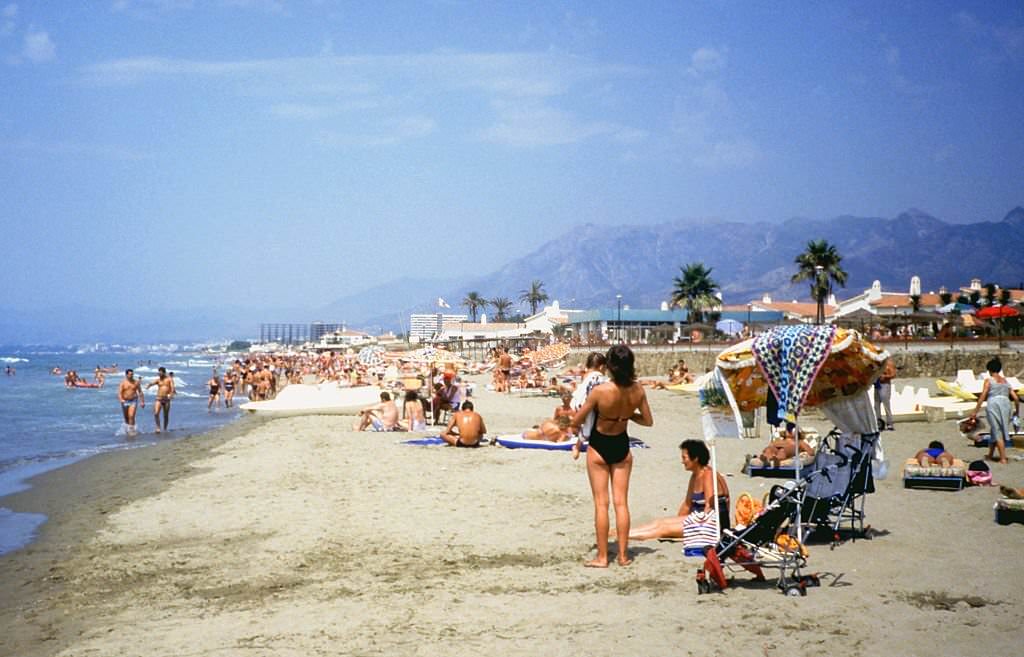
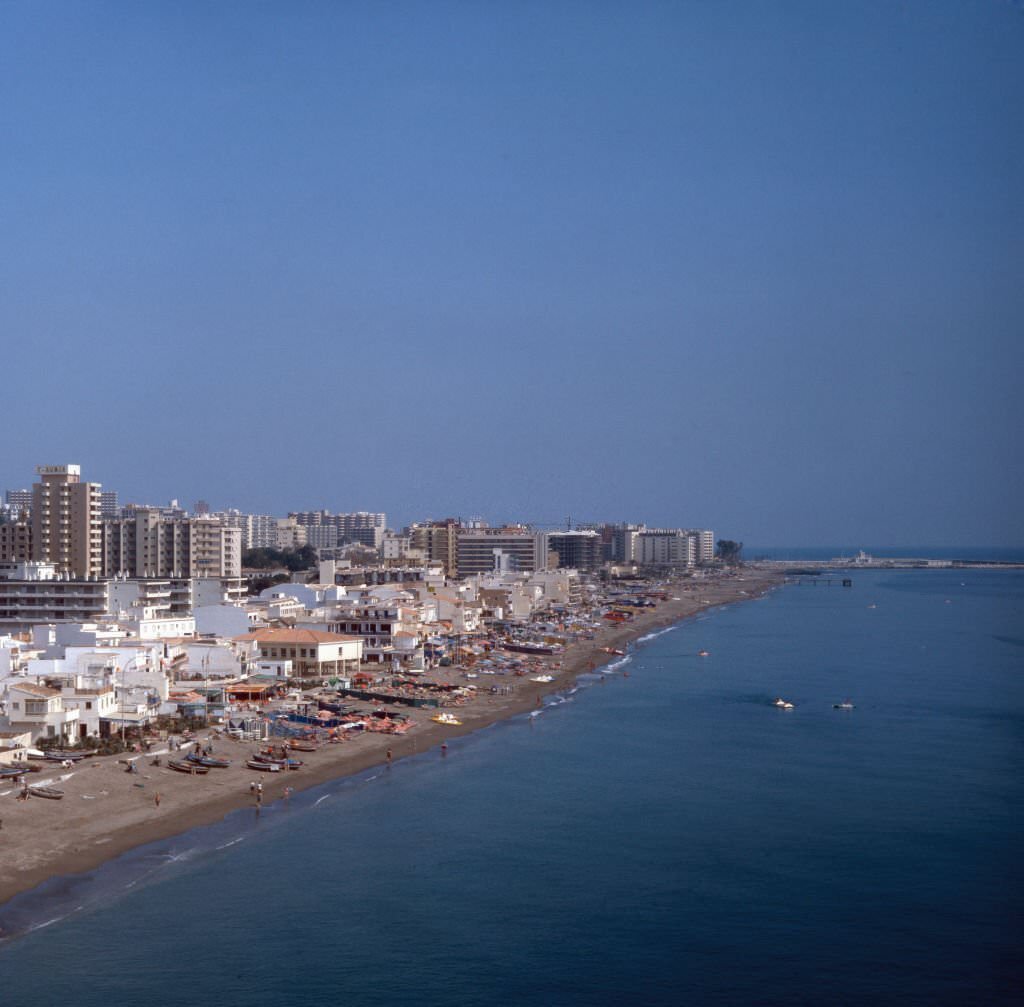
View of the beach of Marbella, 1977, Malaga, Andalusia, Spain.The beach of Marbella, 1977, Malaga, Andalusia, Spain.
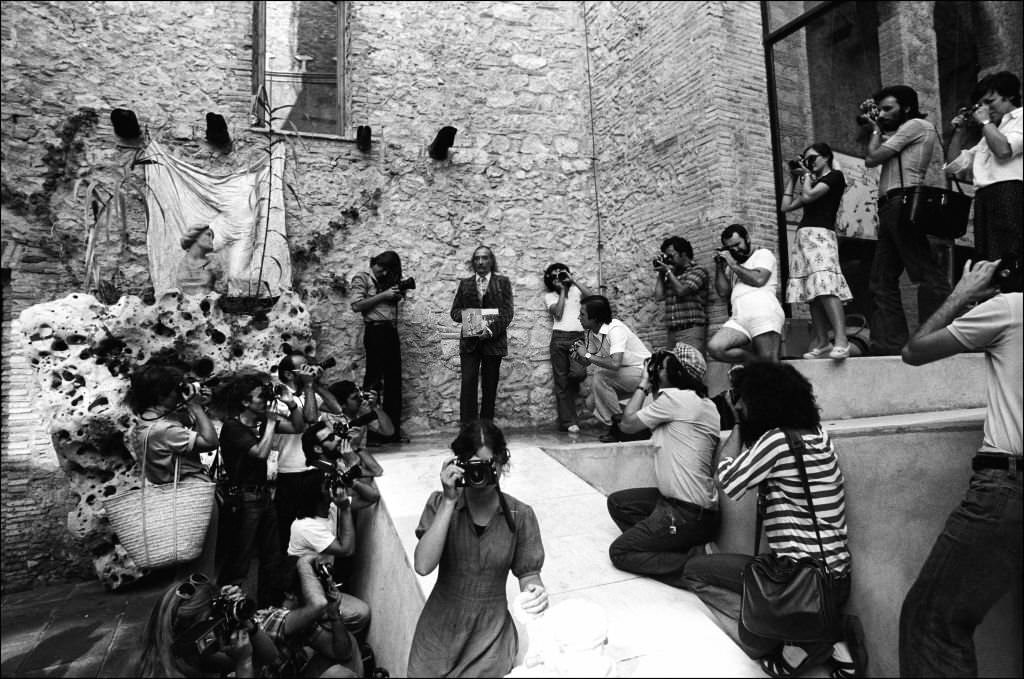
Salvador Dalí, well into his seventies by the late 1970s, continued to engage the public — giving impromptu art lessons to fans gathered outside his museum in Figueres. His persona had become as much a part of Spain’s cultural identity as the Alhambra or the bullfight.
Salvador Dali gives free art lesson to his fans in Figueres
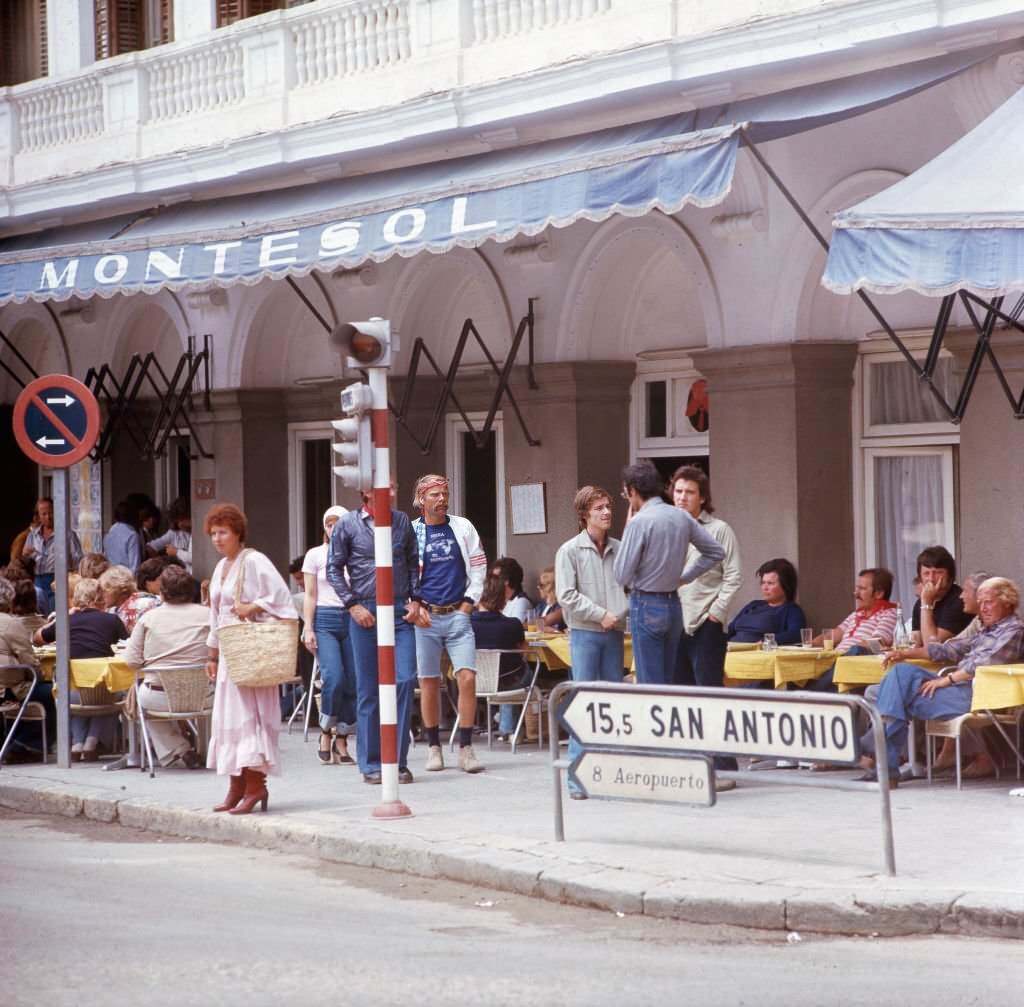
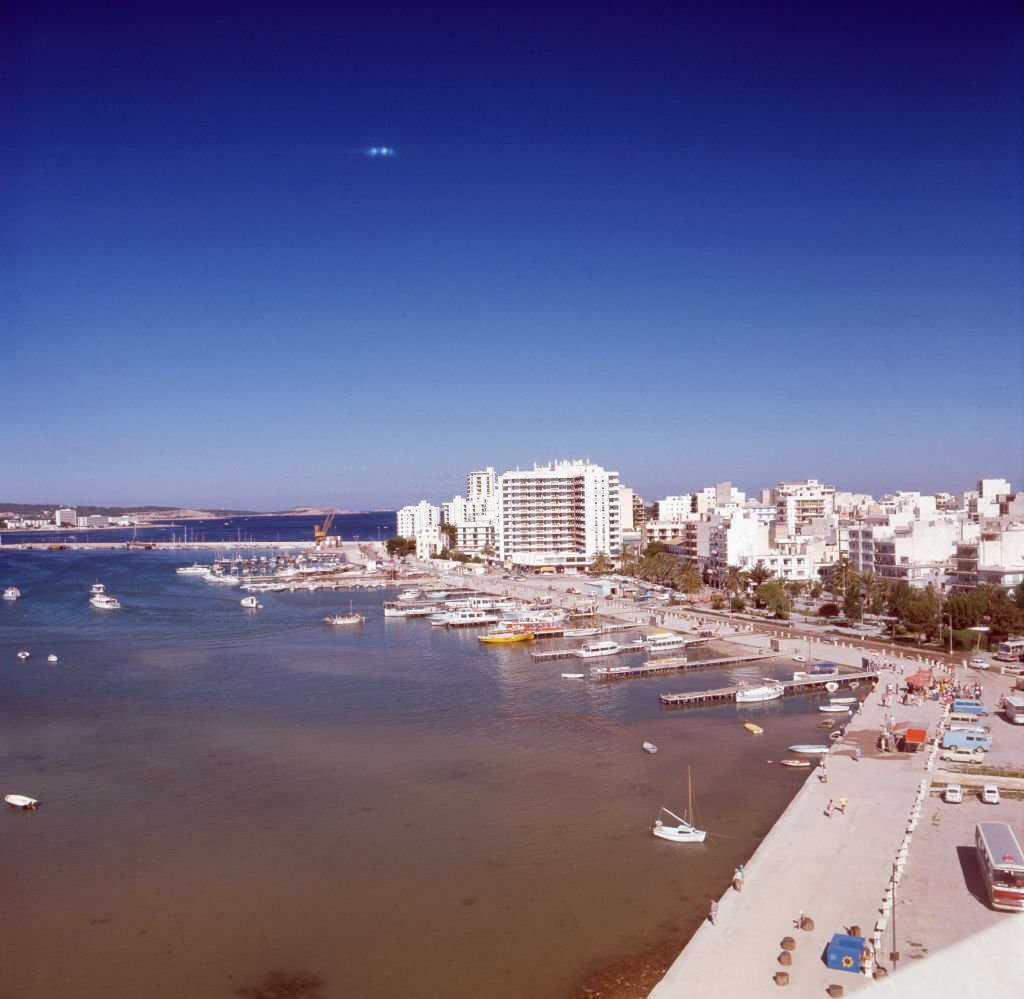
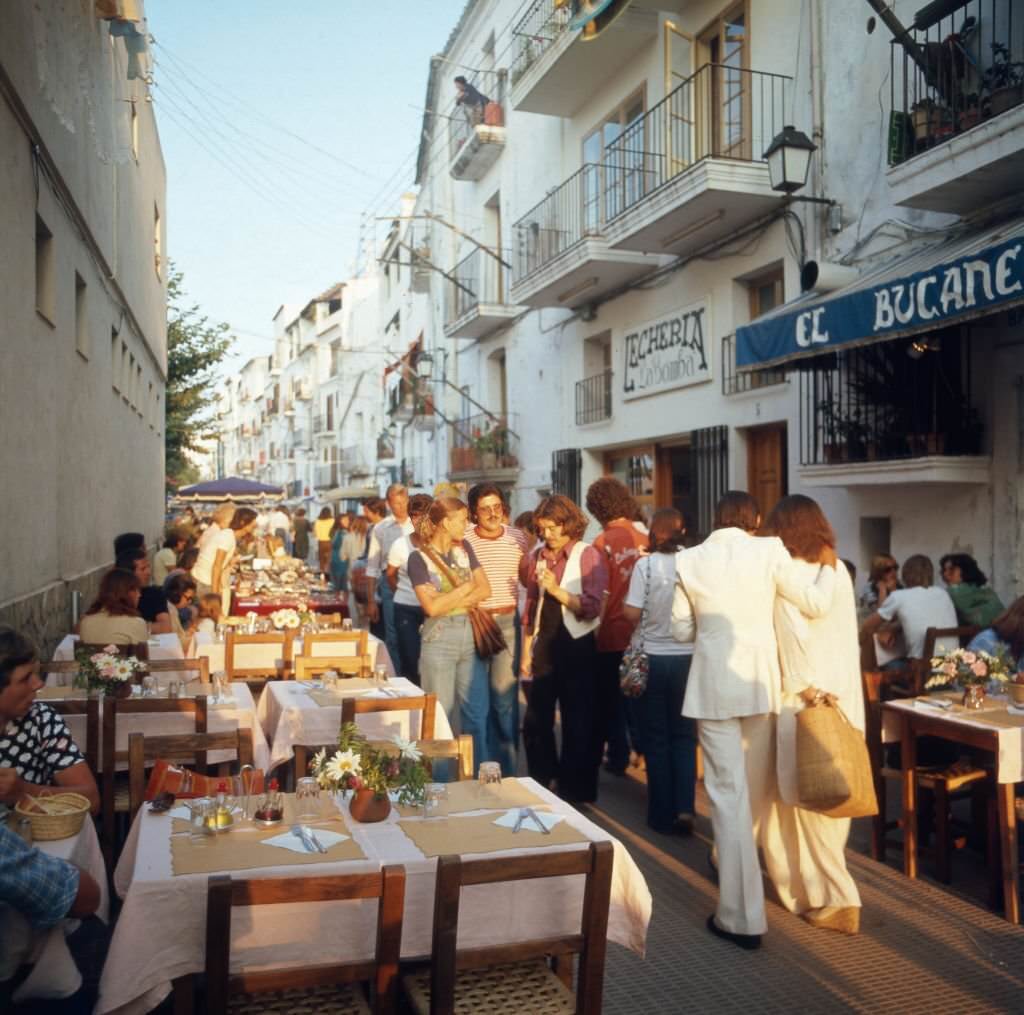
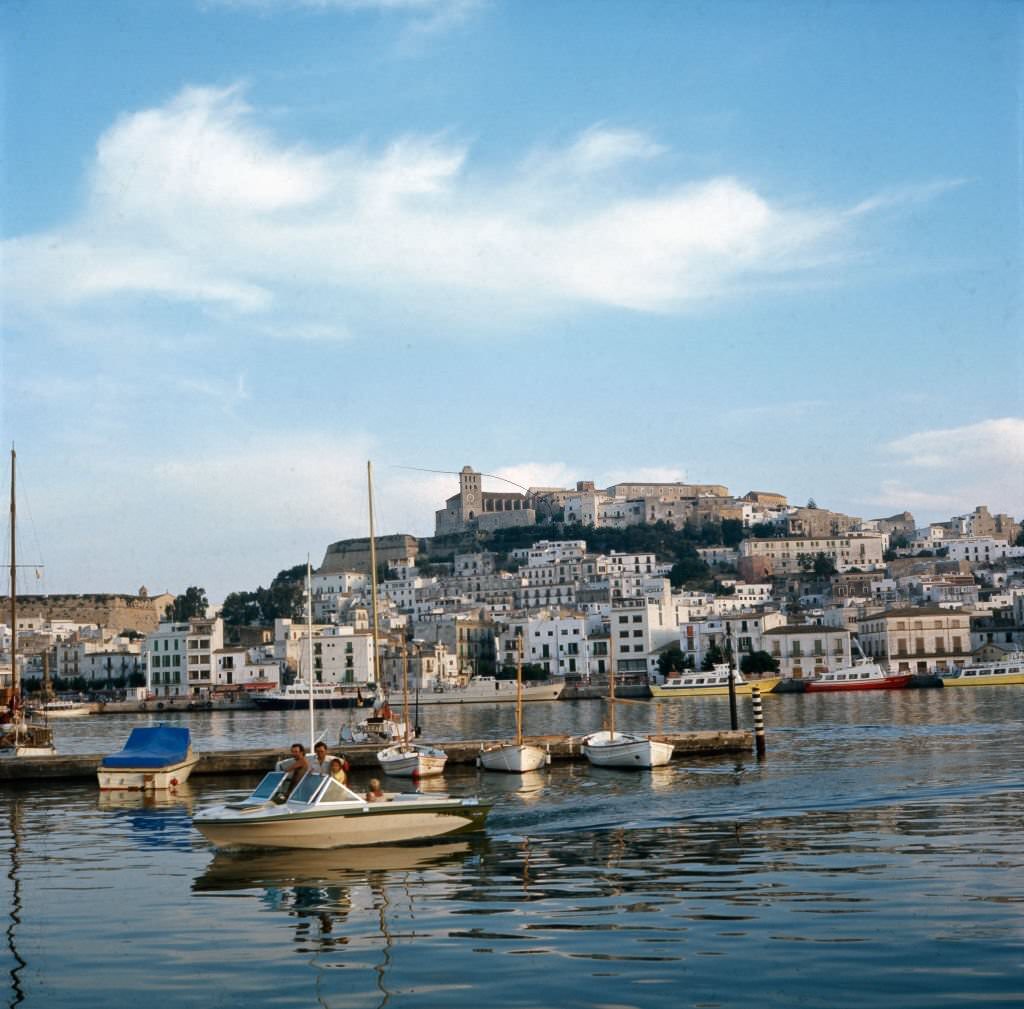
Ibiza in the mid-1970s was already operating as a dual world — a place where local café society in Ibiza Town mixed easily with an influx of European tourists seeking sun, freedom, and nightlife. The island’s relaxed atmosphere drew a crowd that grew larger each summer, and its reputation as a destination for the unconventional was well established before Franco was even in the ground.
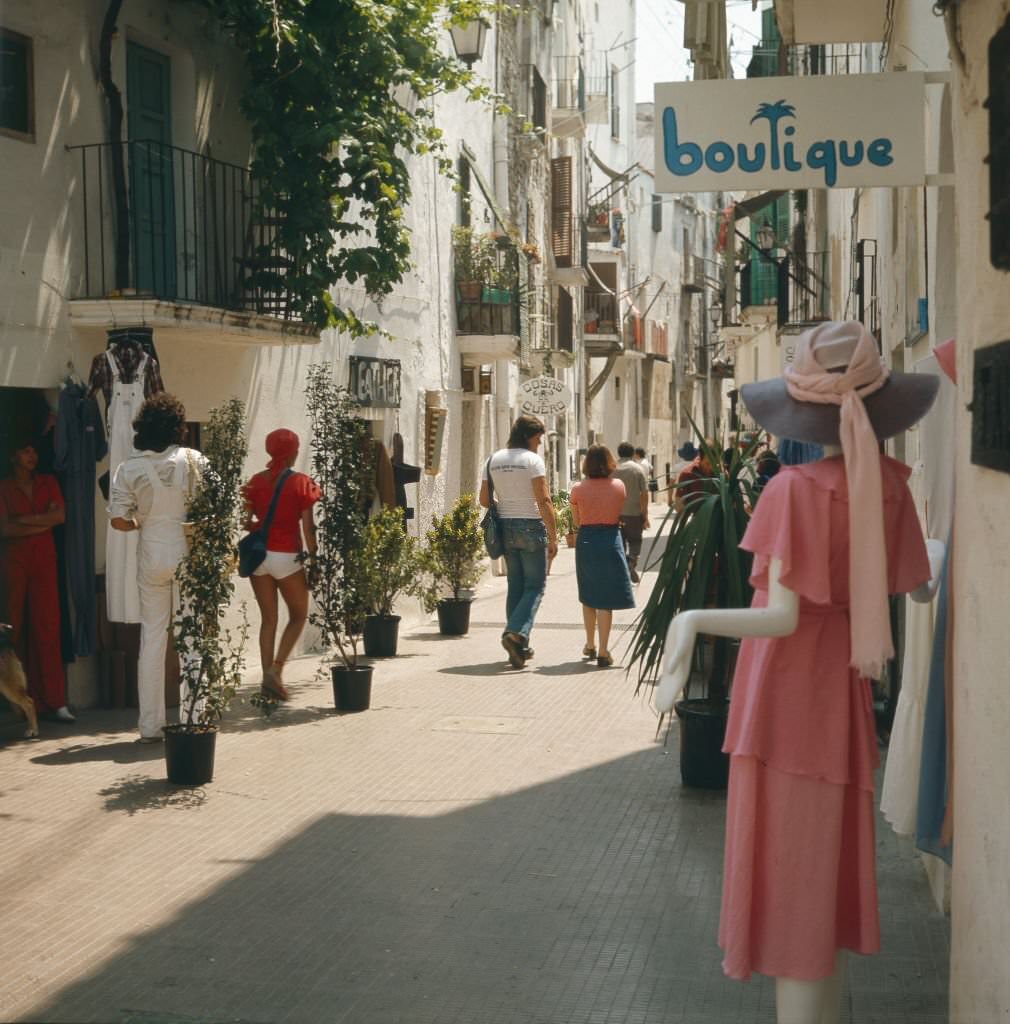
Friendly atmosphere in cafe Montesol in Ibiza Town; Ibiza 1976.Summer vacation in Sant Antoni de Portmany on the island of Ibiza, 1976Summer vacation in the city of Ibiza, 1976Summer vacation in the city of Ibiza, 1976Ibiza, 1976Summer vacation in the city of Ibiza, 1976
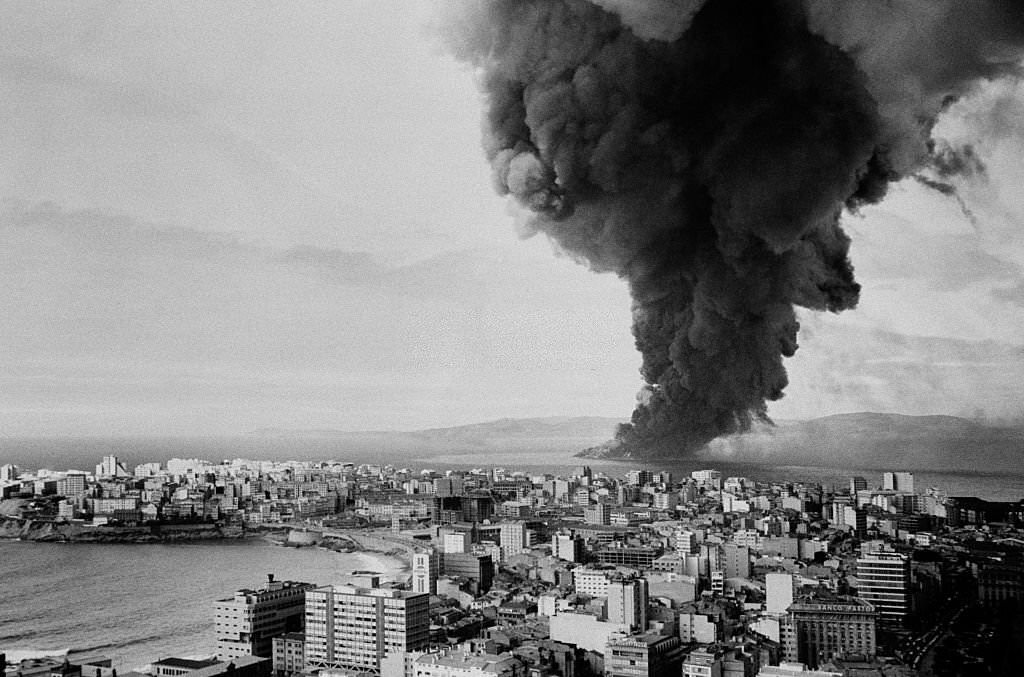
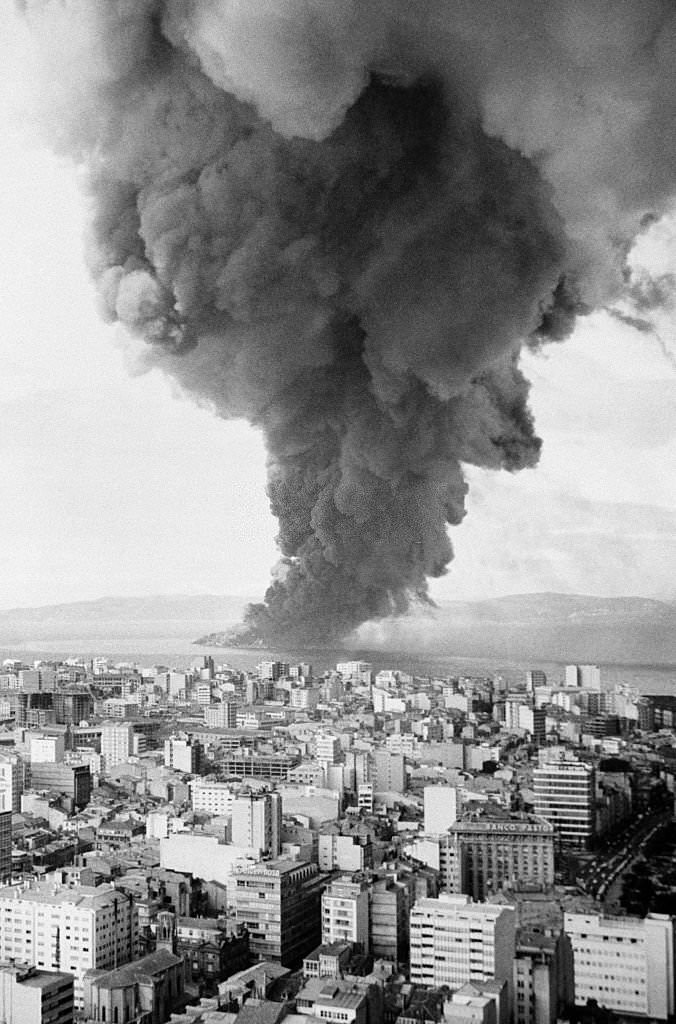
On May 12, 1976, the oil tanker Urquiola caught fire and sank near the coast of La Coruña in Galicia. The disaster left a massive oil spill along the coastline, one of the worst environmental disasters in Spanish waters to that point. The images of the burning tanker were among the most dramatic news photographs of the year.
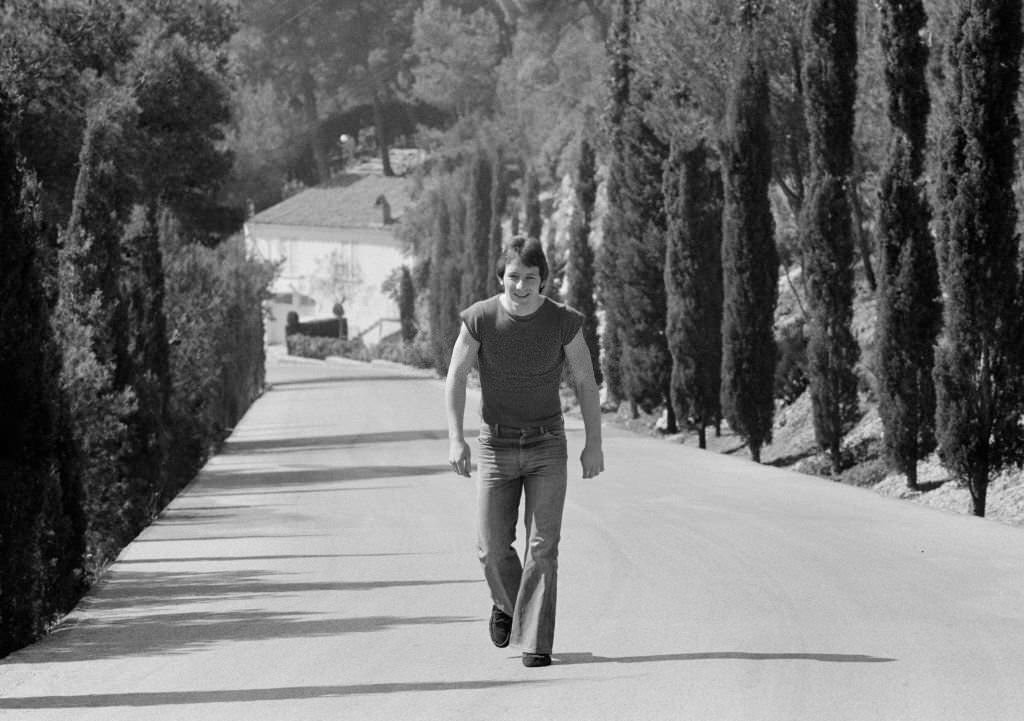
Sinking and fire of the oil tanker Urquiola near the coast of La Coruña in Spain, May 15, 1976.Sinking and fire of the oil tanker Urquiola near the coast of La Coruña in Spain, May 15, 1976.Liverpool footballer Jimmy Case taking a walk near to the team’s hotel in Barcelona, prior to the UEFA Cup Semi Final, 1976
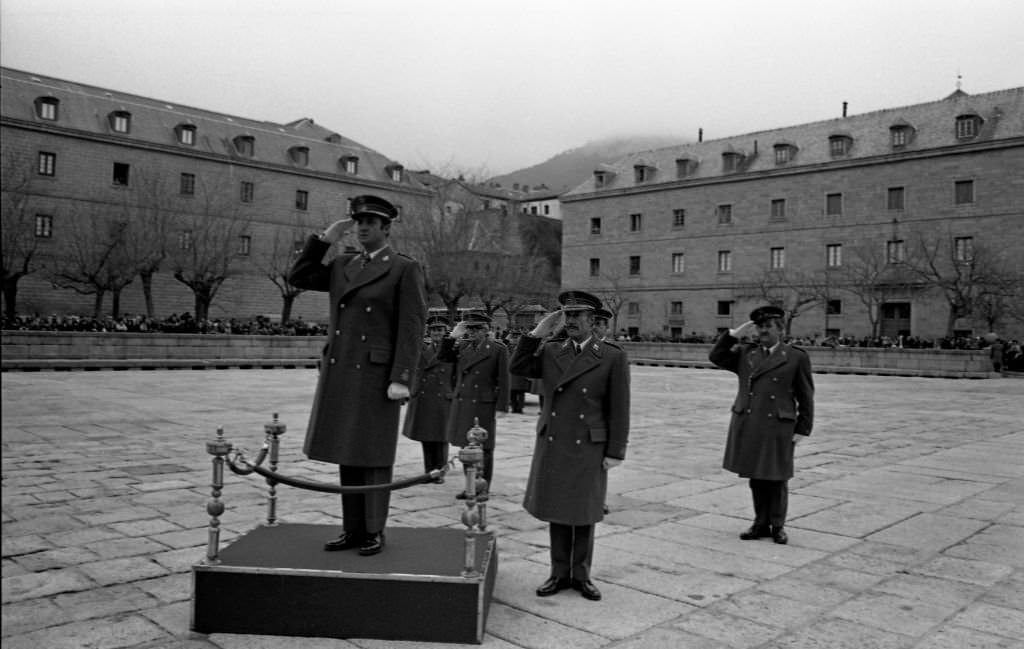
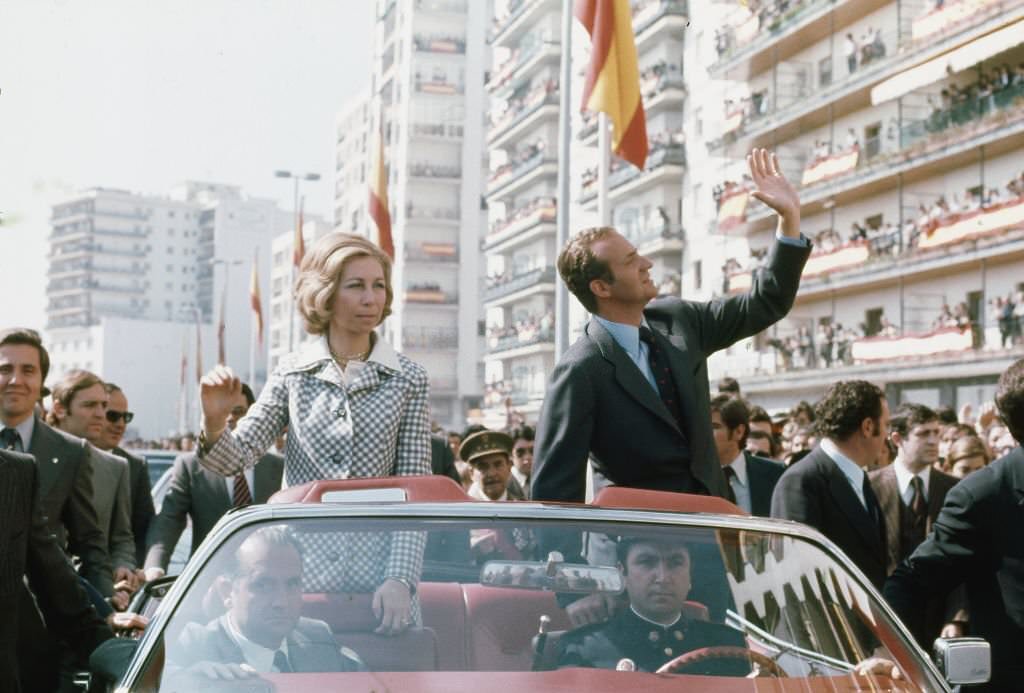
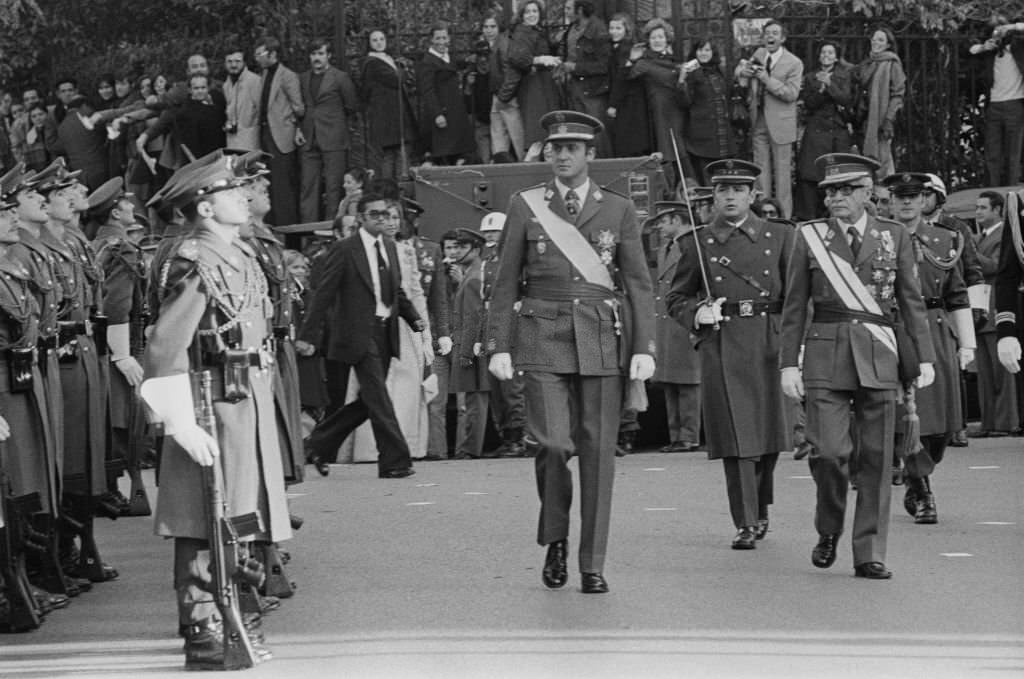
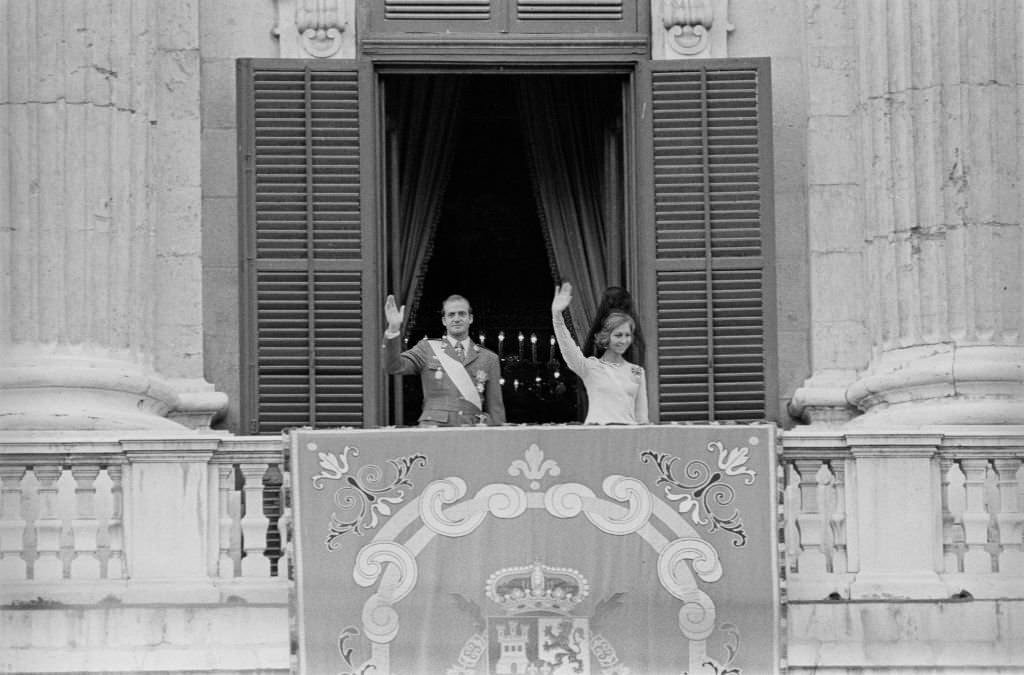
The new royal family moved quickly to establish legitimacy. King Juan Carlos I and Queen Sofía attended the funeral ceremonies for King Alfonso XIII at the monastery of San Lorenzo del Escorial in February 1976, and later that year traveled to Andalusia in a show of national unity. When Juan Carlos acceded to the throne following Franco’s death, the royal procession to the Palace and the couple’s appearance on the palace balcony marked the start of a new constitutional era.
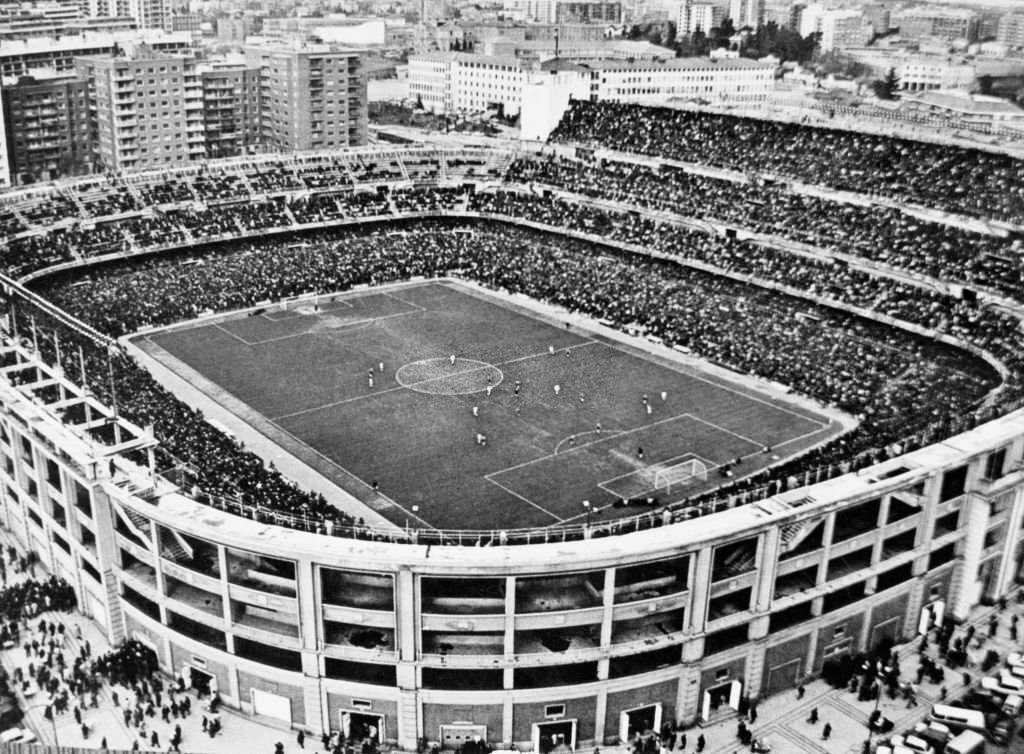
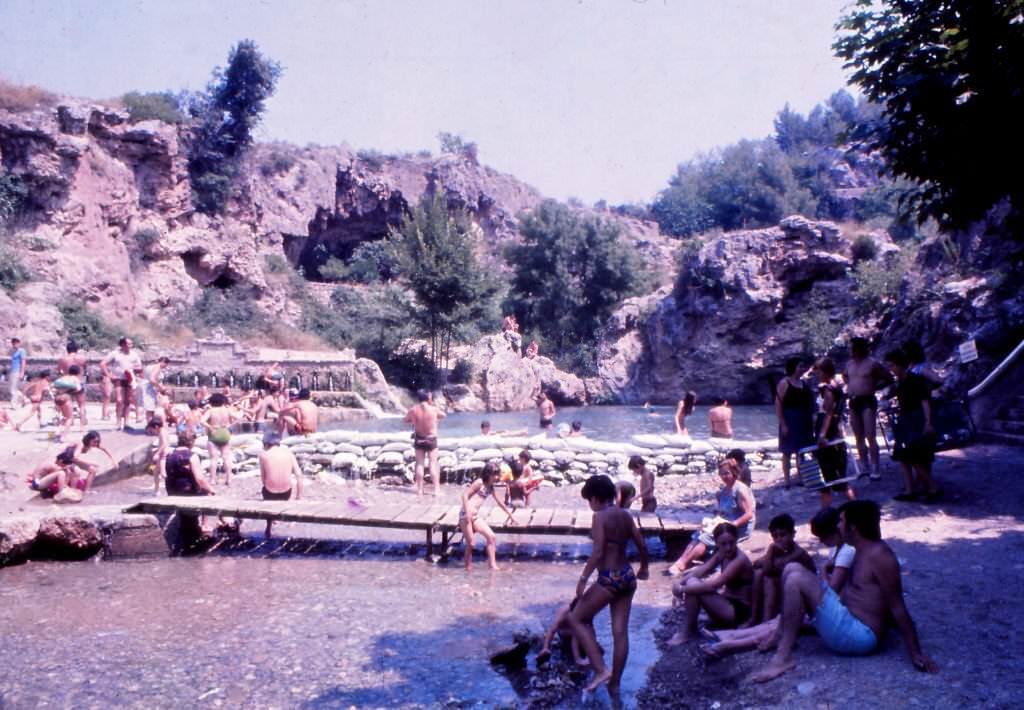
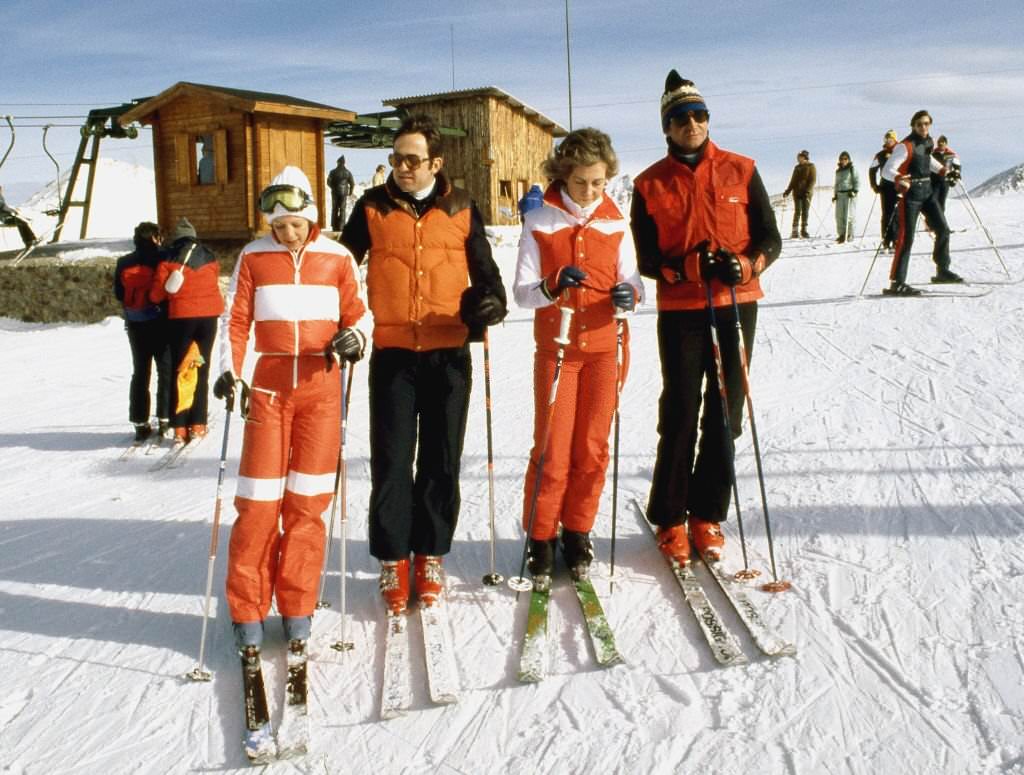
The Kings of Spain, Don Juan Carlos de Borbon and Doña Sofia de Grecia attend the funeral ceremonies for Alfonso XIII in the chapel of San Lorenzo del Escorial, Monastery where the mausoleum of the Royal House is located on February 28, 1976 in Madrid, Spain.Spanish Kings Juan Carlos and Sofia during a visit to Andalusia, Seville, Spain, 1976.Aerial view of Estadio Santiago Bernabeu, 1976People bathing in the Anoya river, Capellades, Barcelona, 1976.Snow vacation for Spanish King Juan Carlos and Queen Sofia with Kings of Greece Constantino and Ana Maria, Baqueira Beret, Lerida, Spain, 1976
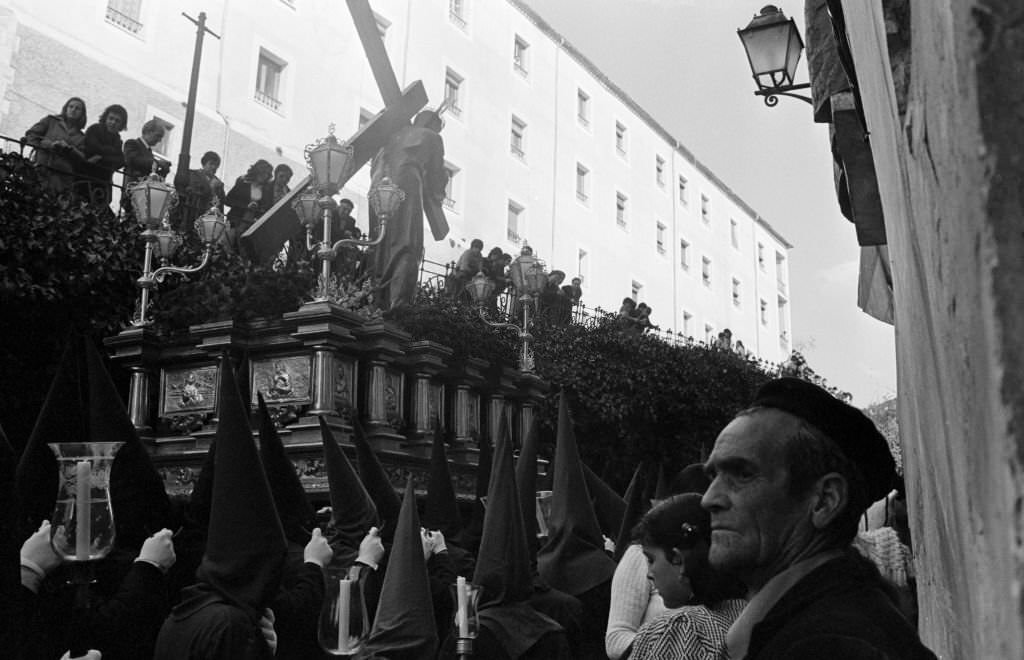
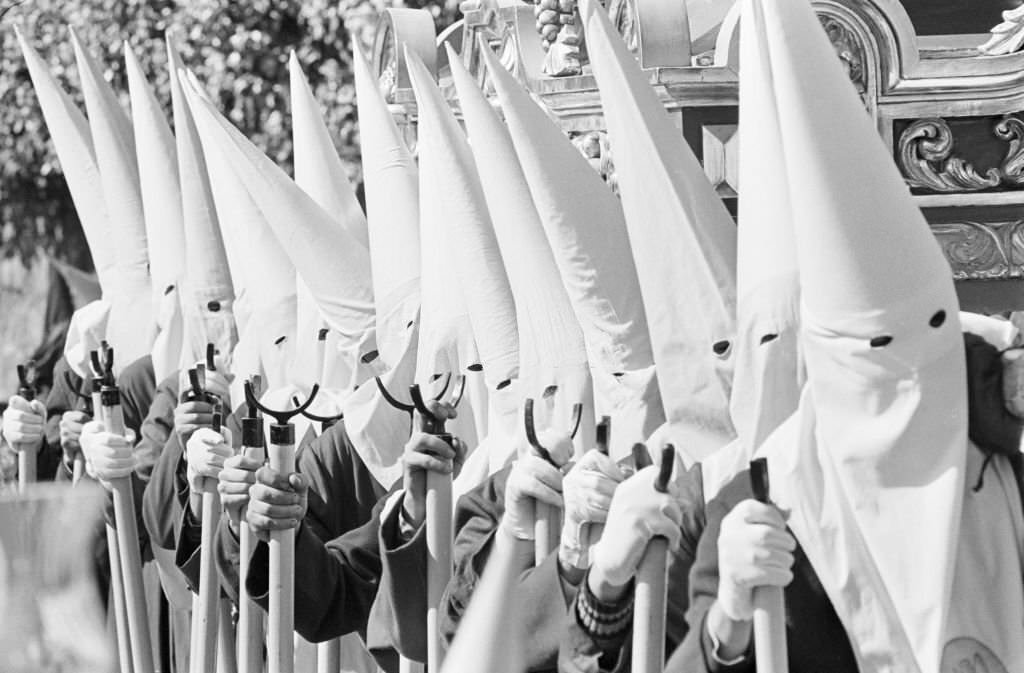
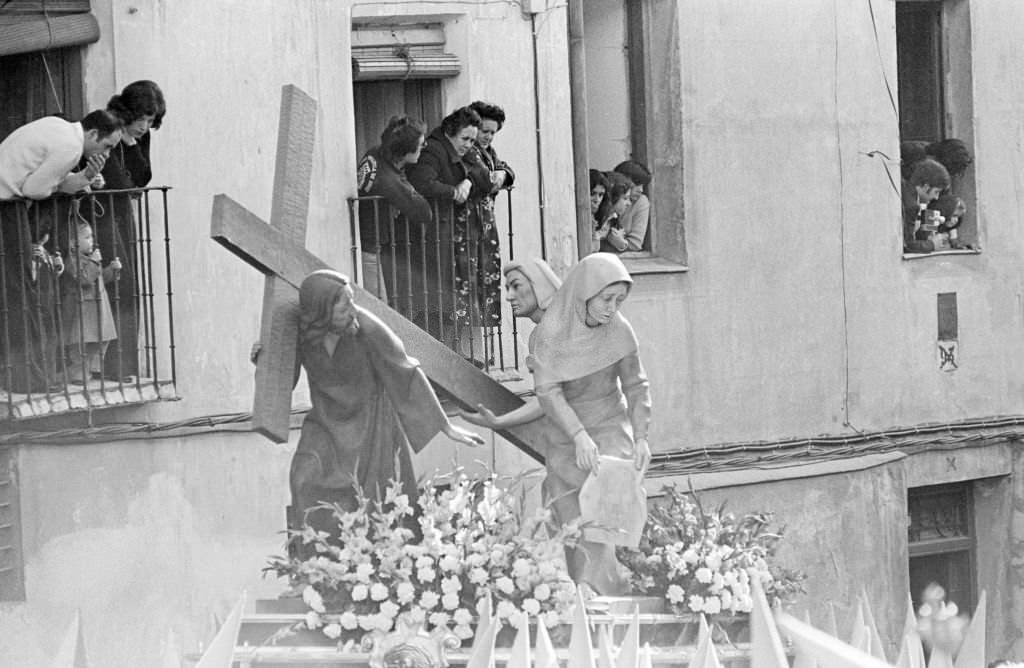
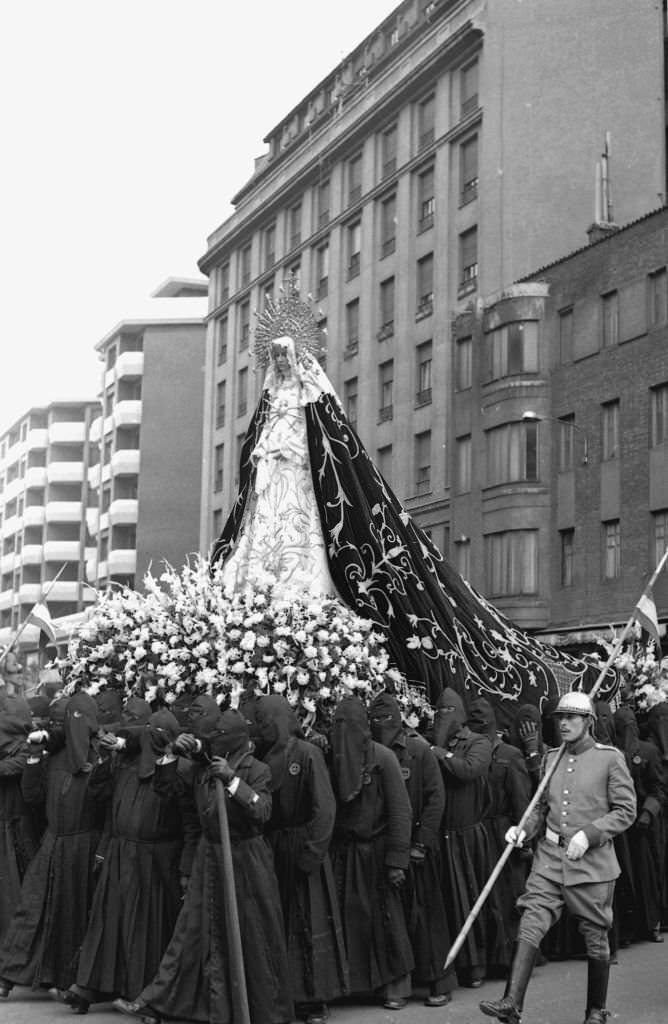
Procession of Holy Week in Madrid, Spain, 1976.
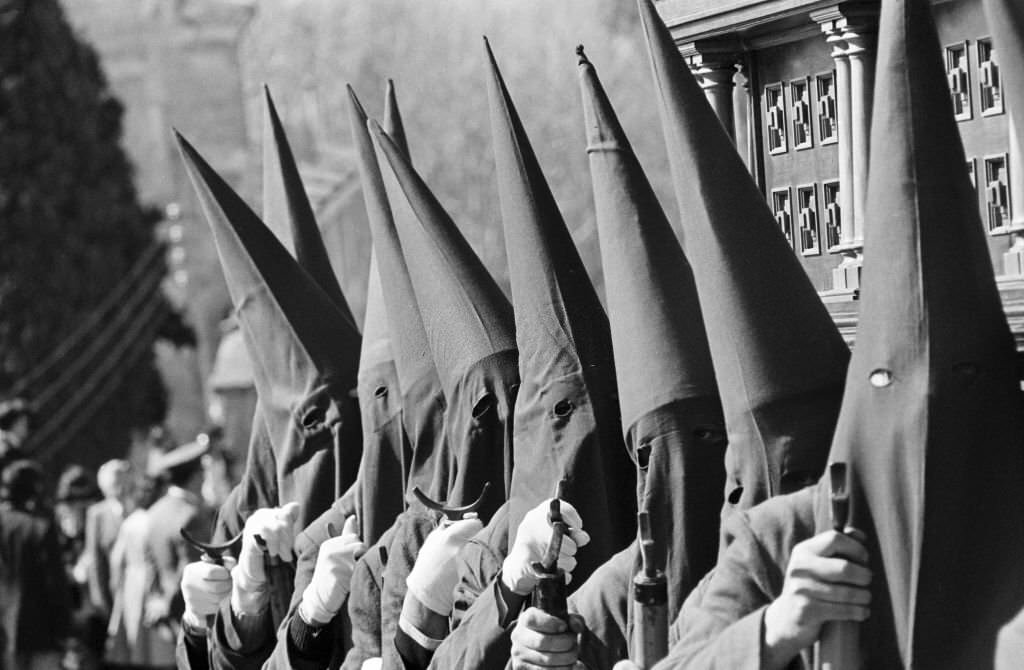
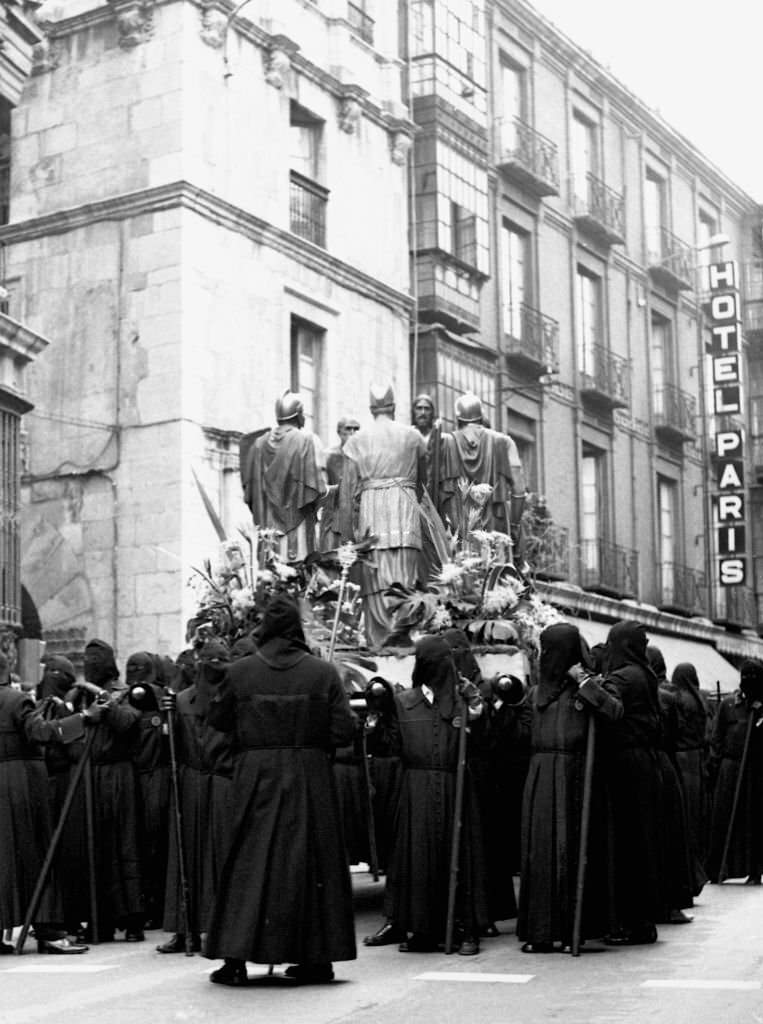
Procession of Holy Week in Madrid, Spain, 1976.
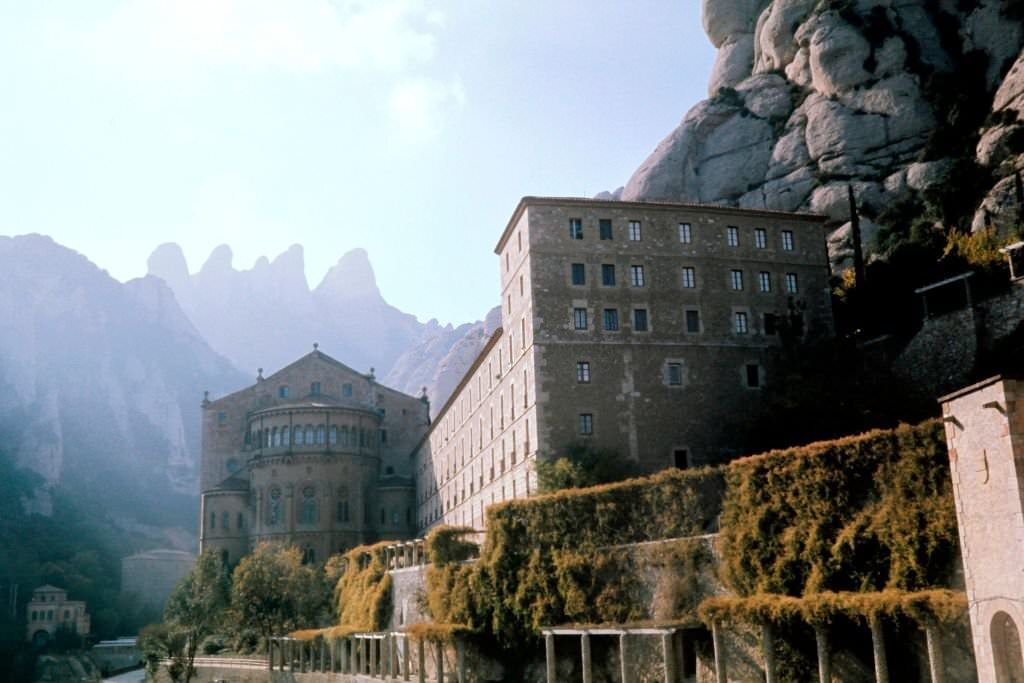
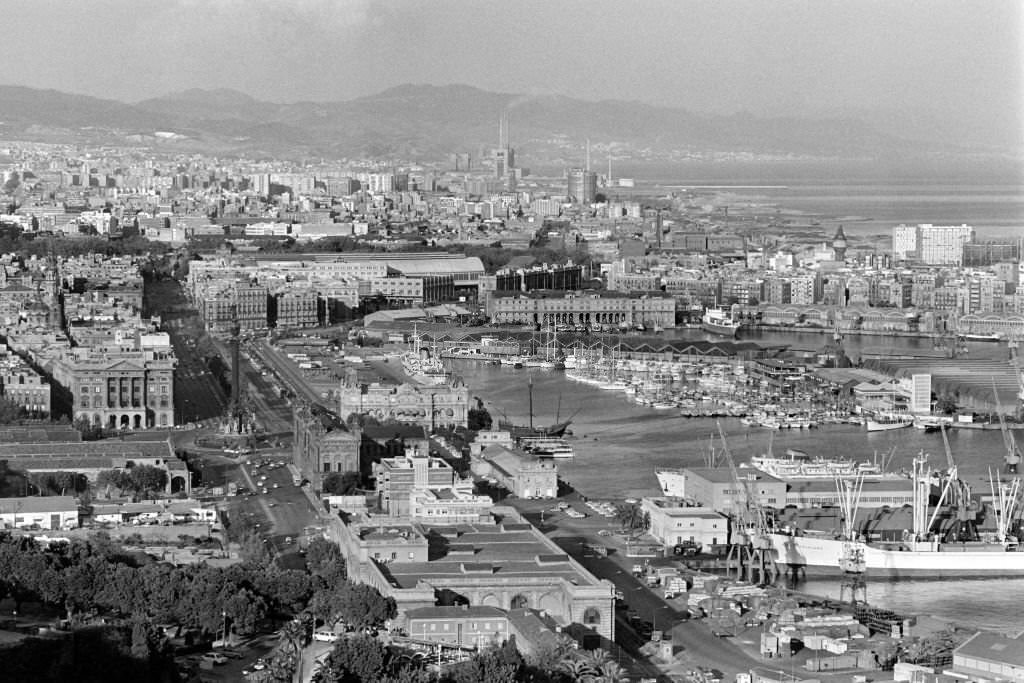
Tourists in San Antonio, Ibiza, Balearic Islands, 1976.The Place of Neptuno,1976, Madrid, SpainThe Argentine actress Doris Coll, 1976, Madrid, Spain.Following the solemn mass for the accession to the throne of King Juan Carlos, the royal procession went to the Royal Palace in Madrid.Following the solemn accession to the throne mass, King Juan Carlos and his wife Queen Sophie went to the balcony of the Royal Palace in Madrid to greet the population.The Benedictine monastery of Santa Mara de Montserrat, northwest of Barcelona, 1976A general view taken on November 1, 1975 shows the harbour of Barcelona.
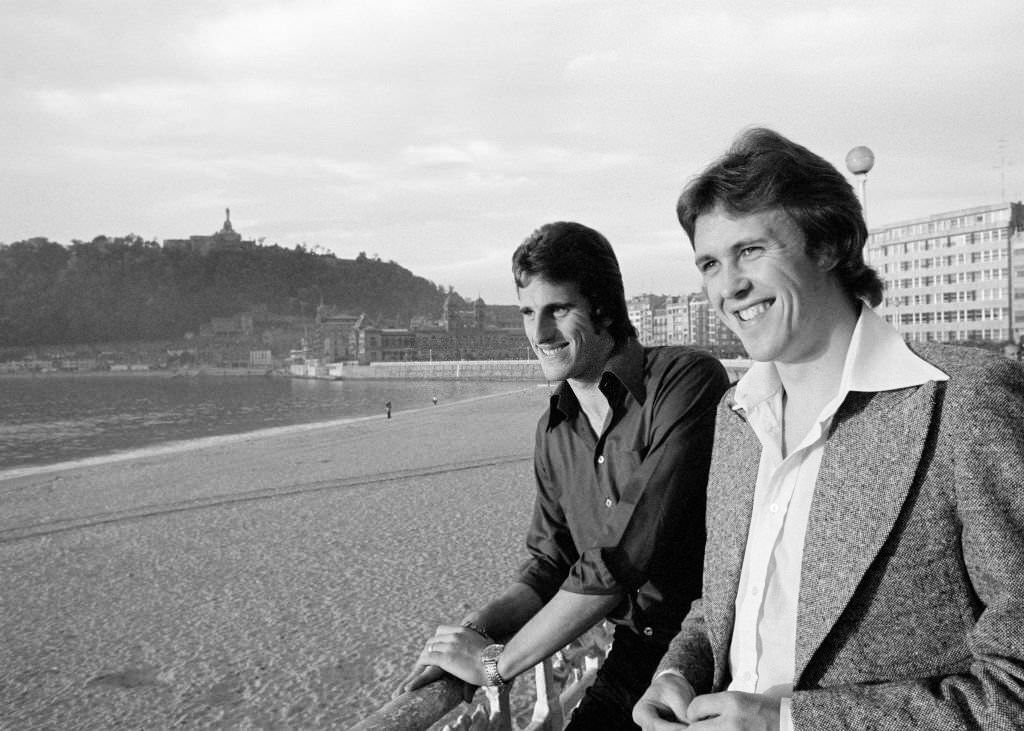
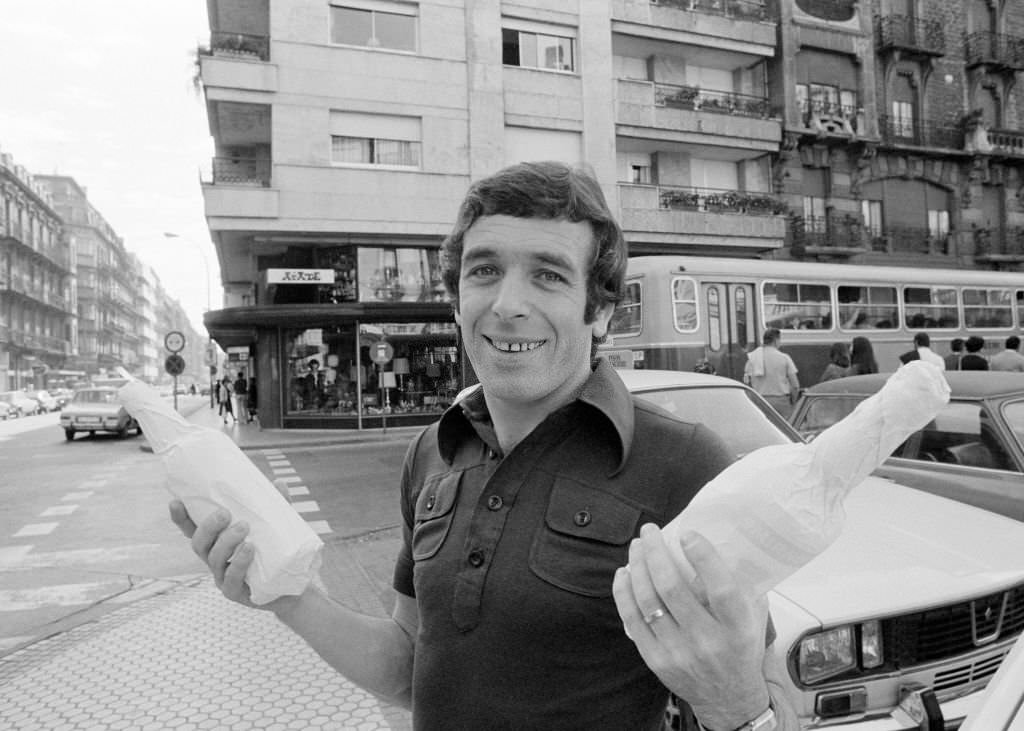
Foreign football clubs visiting Spain in 1975 found a country on the edge of an historic turning point. Liverpool players sightseeing in San Sebastian ahead of their UEFA Cup tie against Real Sociedad encountered a city that was beautiful, tense, and deeply politicized all at once. Weeks later, Franco would be dead.
Liverpool team-mates Ray Clemence and Phil Neal find time to take in some sightseeing prior to the UEFA Cup Second round First Leg tie between Real Sociedad and Liverpool at the Estadio de Atotxa on October 22, 1975 in San Sebastian, Spain.Liverpool footballer Ian Callaghan buying gifts to take home prior to the UEFA Cup Second round First Leg tie between Real Sociedad and Liverpool at the Estadio de Atotxa on October 22, 1975 in San Sebastian, Spain.
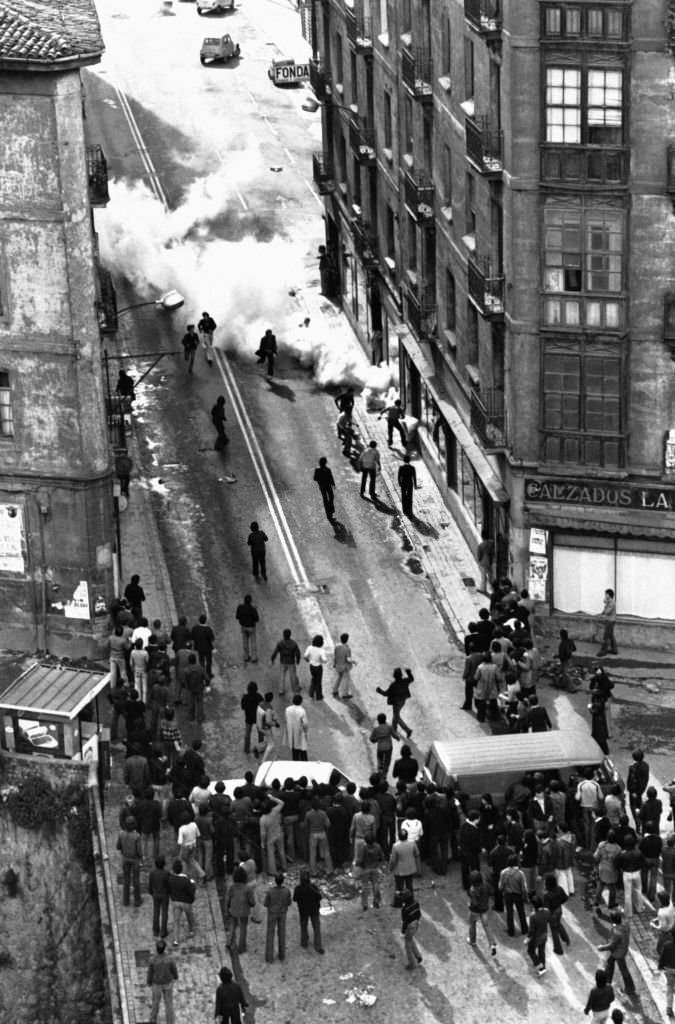
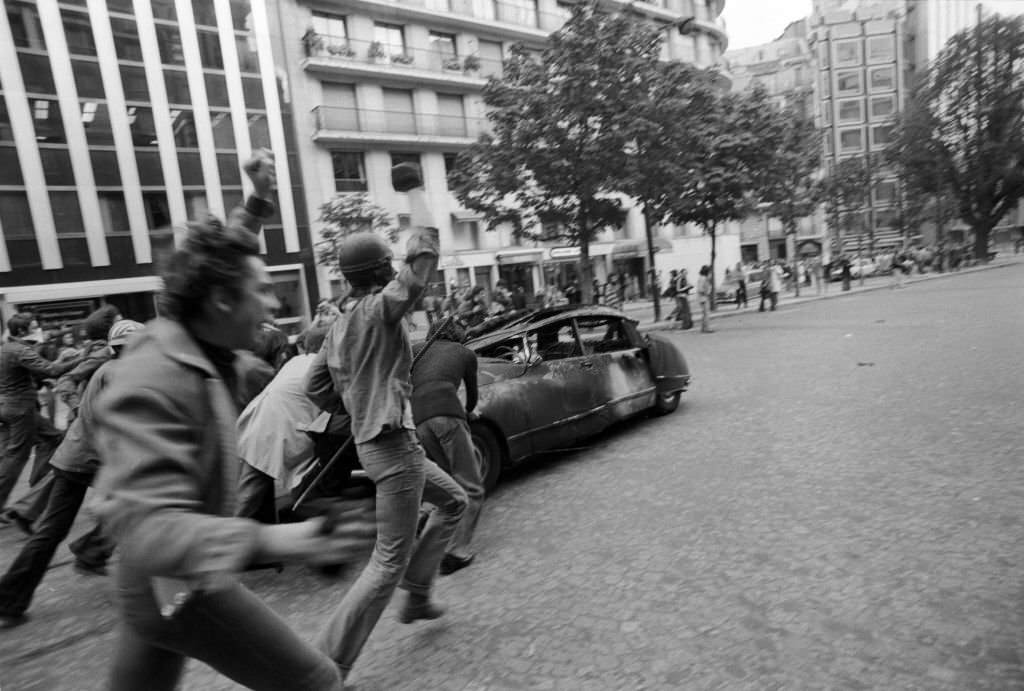
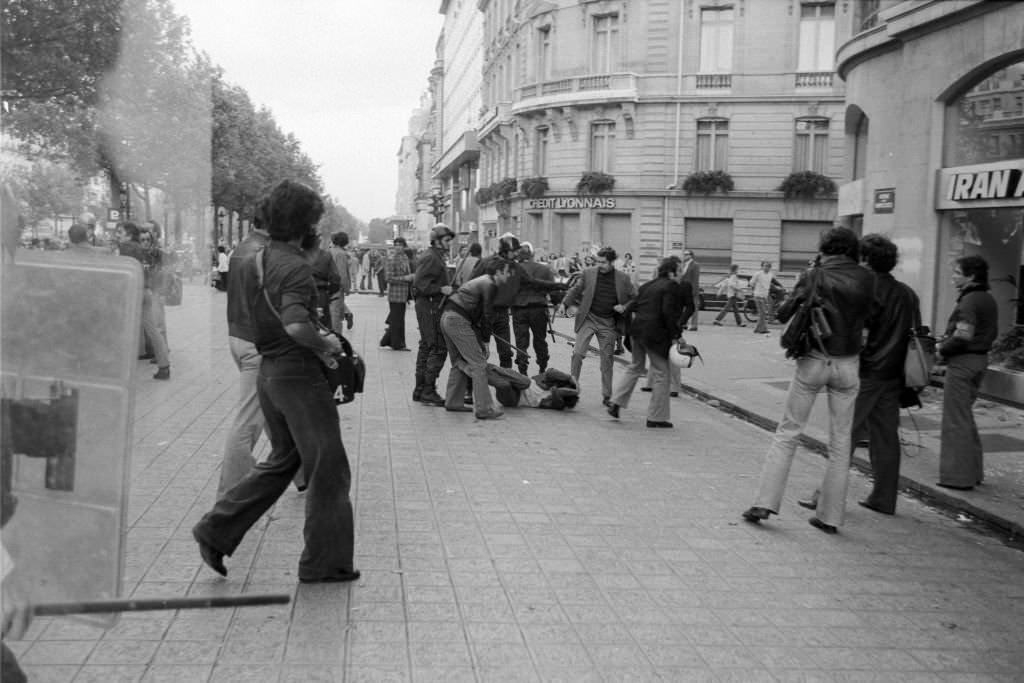
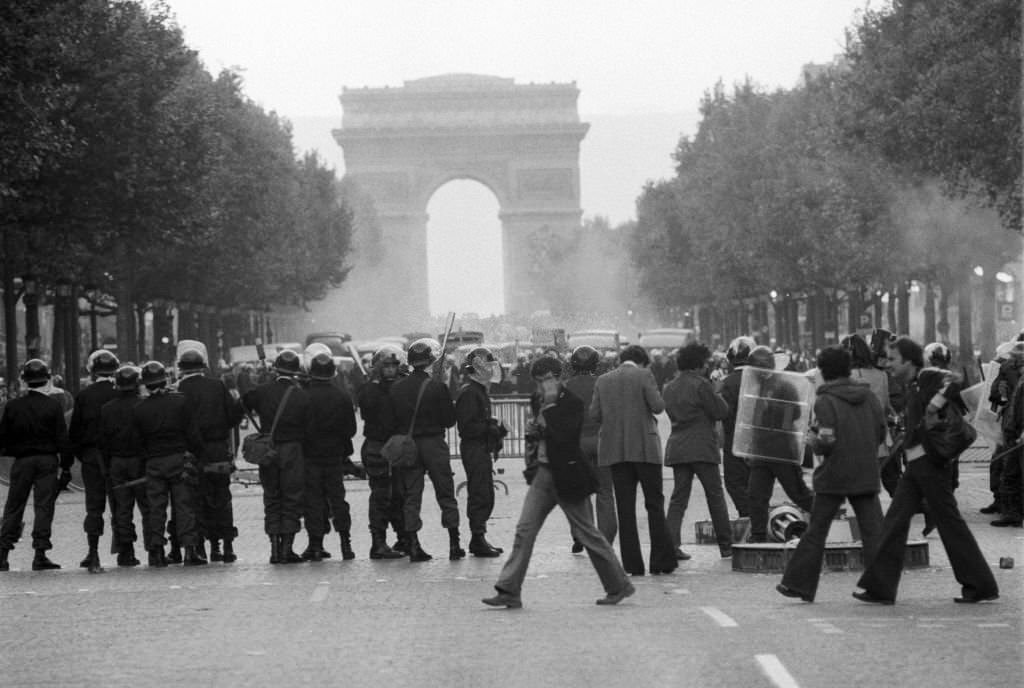
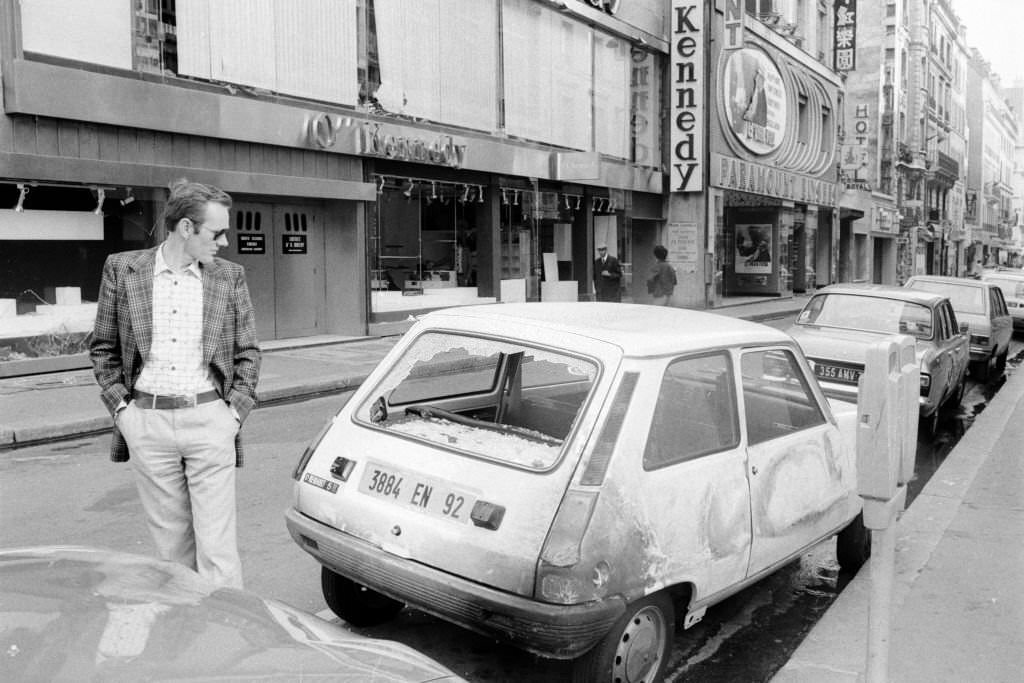
In September 1975, demonstrations erupted in Burgos during the trial of 16 Basque nationalists. Protesters set fire to cars and smashed shop windows. The city’s streets bore the wreckage of the clashes — scorched vehicles, broken glass, and storefronts stripped bare. These were not isolated incidents; they reflected how deeply the Basque question had fractured Spanish society.
Violent demonstration during the trial of 16 Basque nationalists in Burgos, Spain, September 28, 1975.Demonstration during the trial of 16 Basque nationalists in Burgos, Spain, September 28, 1975.Demonstration during the trial of 16 Basque nationalists in Burgos, Spain, September 28, 1975.A passer-by looks at a burnt-out car following a violent demonstration during the trial of 16 Basque nationalists in Burgos, Spain, September 28, 1975.Smashed windows and looted shops during a violent demonstration during the trial of 16 Basque nationalists in Burgos, Spain, September 28, 1975.Violent demonstration during the trial of 16 Basque nationalists in Burgos, Spain, September 28, 1975.
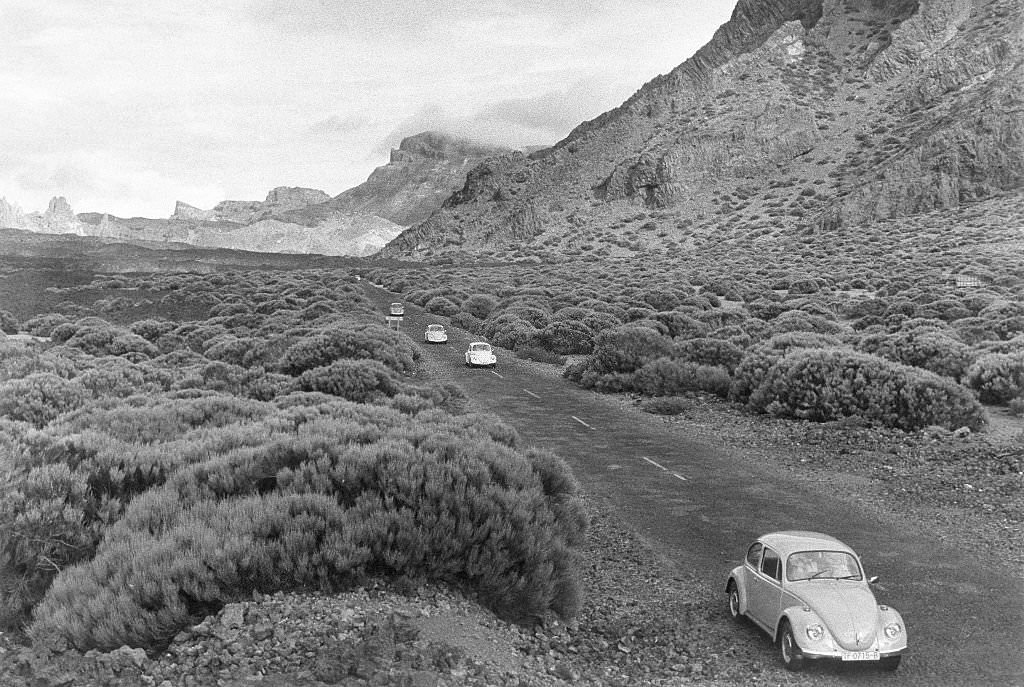
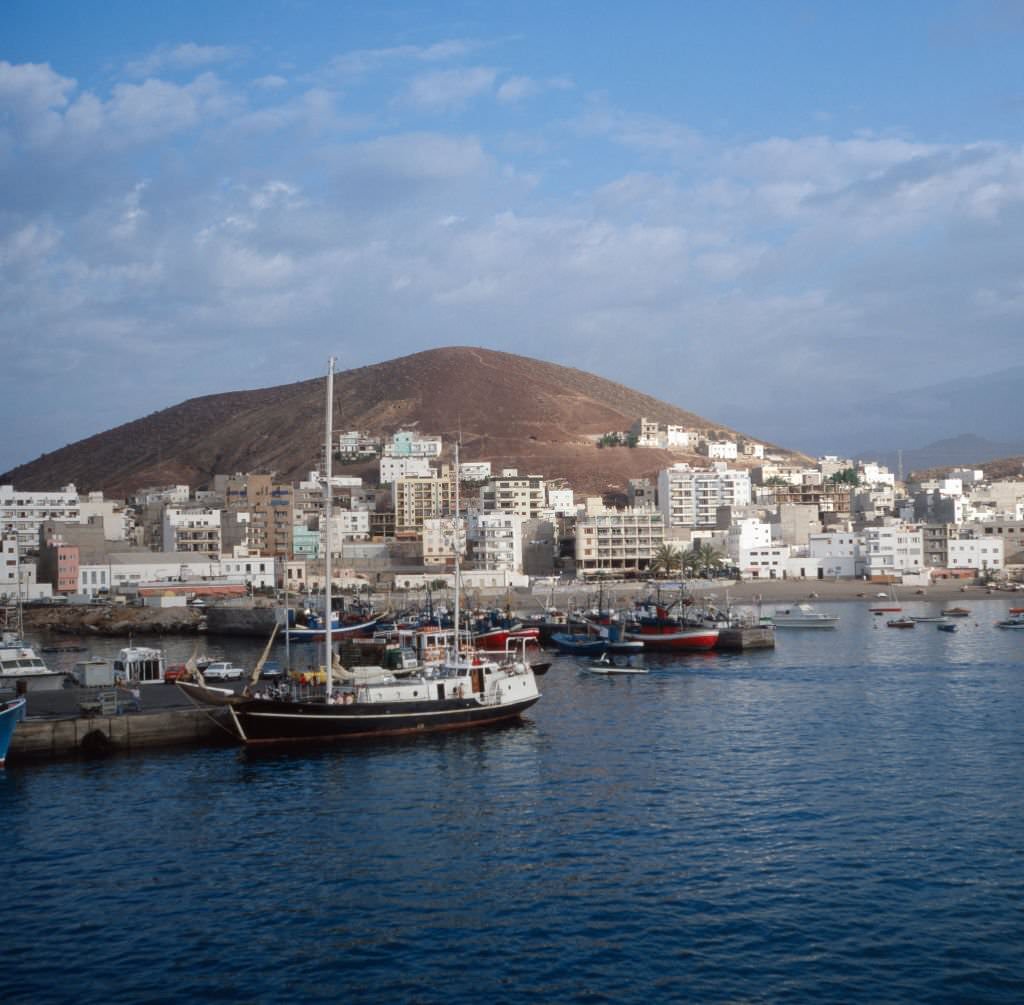
Tenerife and the other Canary Islands remained a world apart from mainland political tensions. The volcanic landscape — craters, lava fields, rocky Atlantic shores — drew visitors seeking something more dramatic than the flat sandy beaches of the Costa del Sol. The island’s geography, from the summit of El Teide to the surf at Bajamar, gave photographers a backdrop unlike anywhere else in Spain.
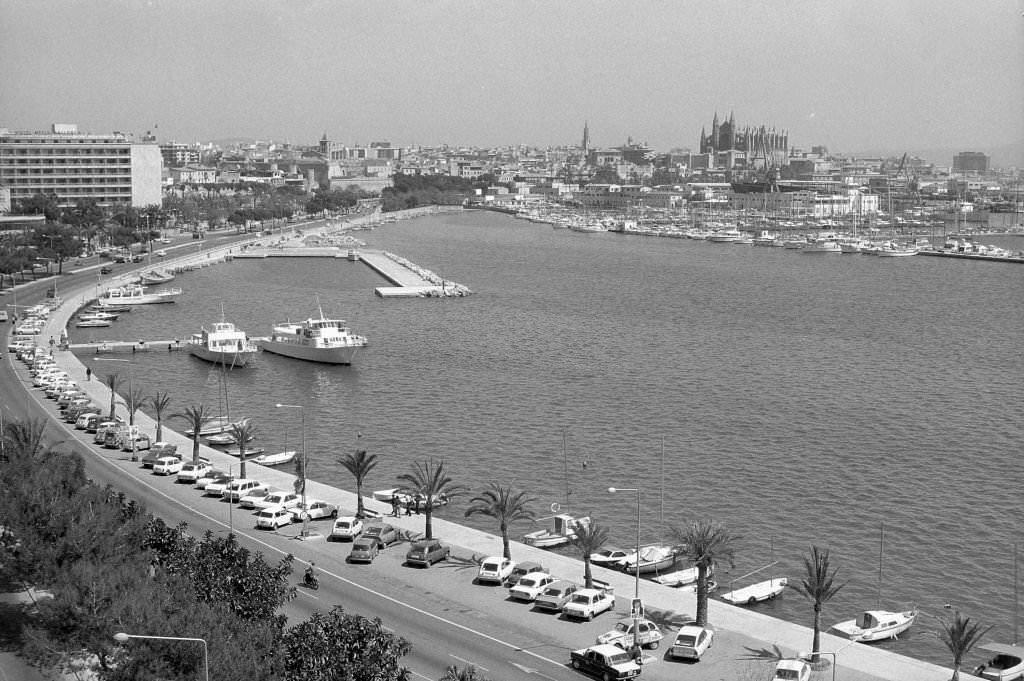
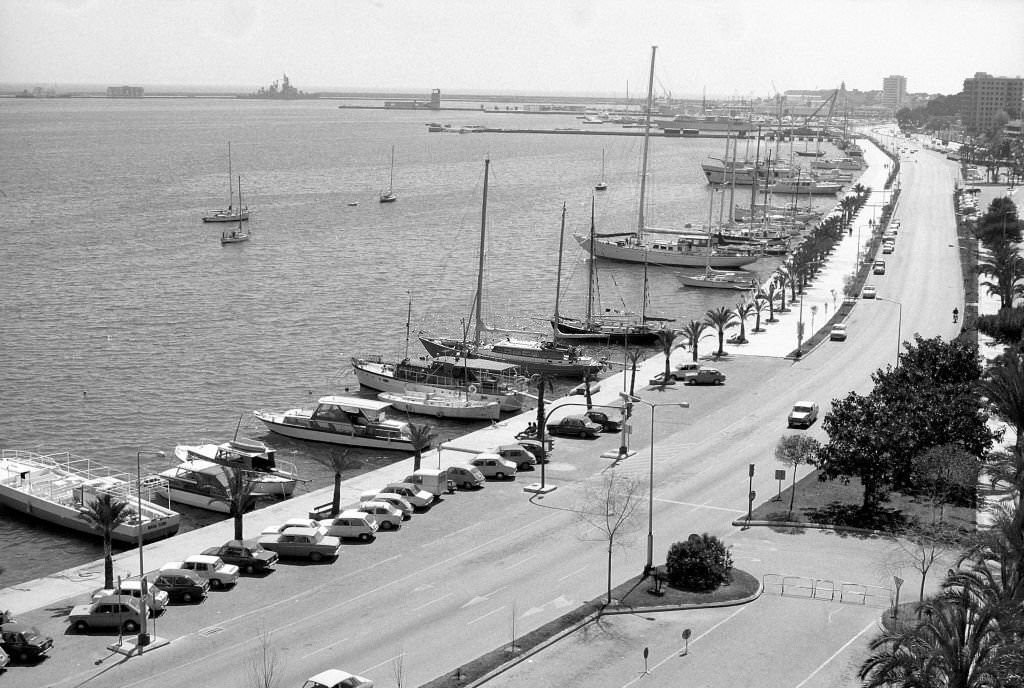
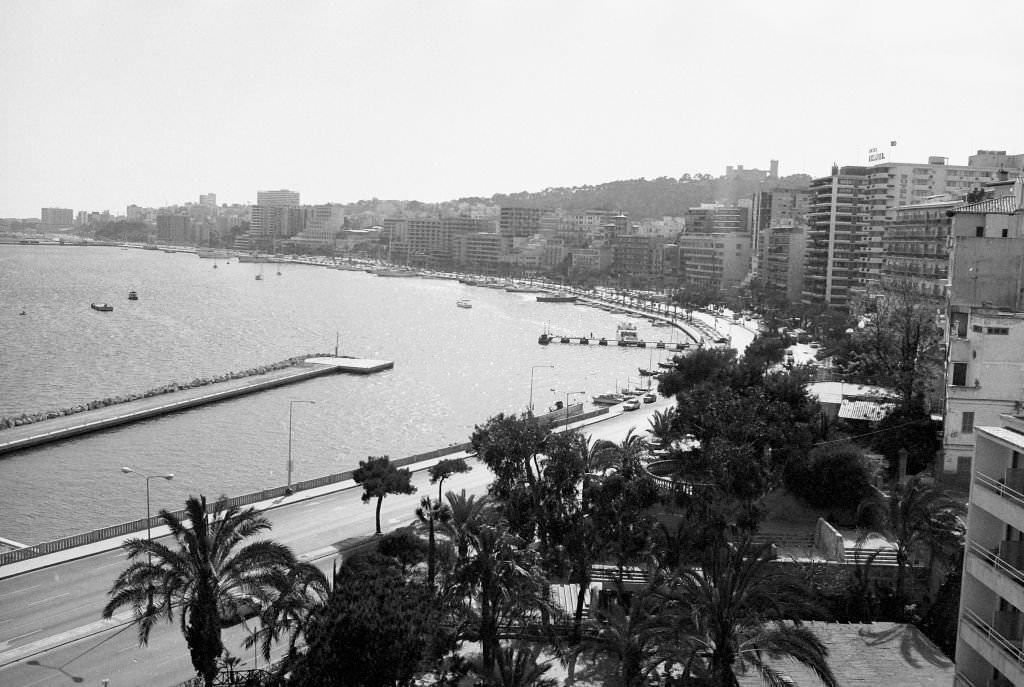
A journey to the volcanic island Tenerife, Spain 1970s.Tenerife, 1970sTenerife, 1970sTenerife, 1970sTenerife, 1970sPalma de Mallorca 1975Palma de Mallorca 1975Palma de Mallorca 1975Palma de Mallorca 1975
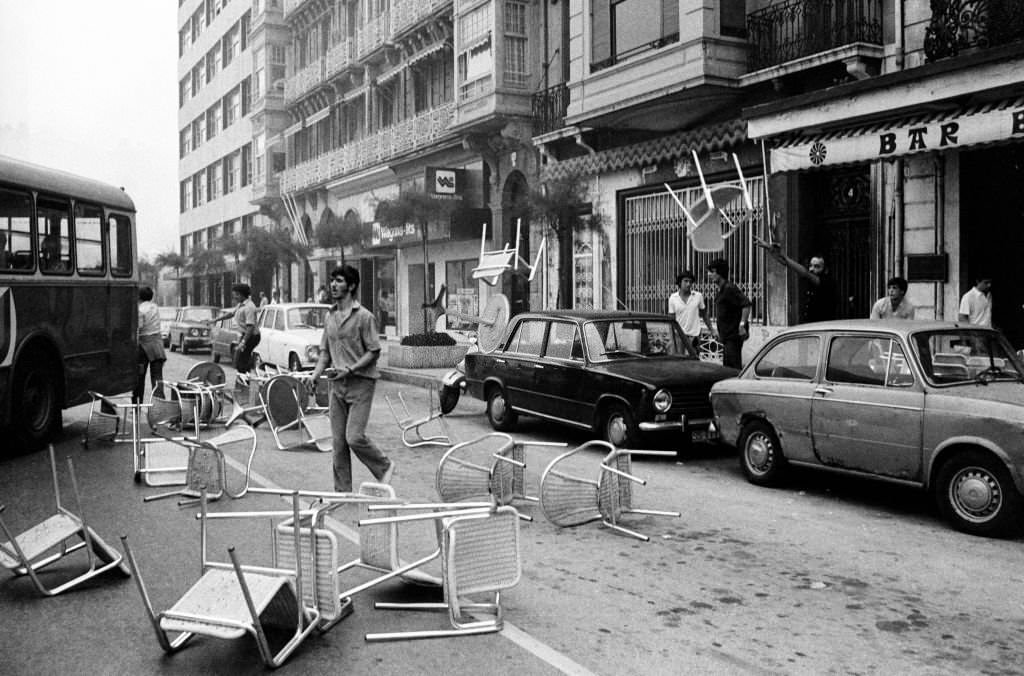
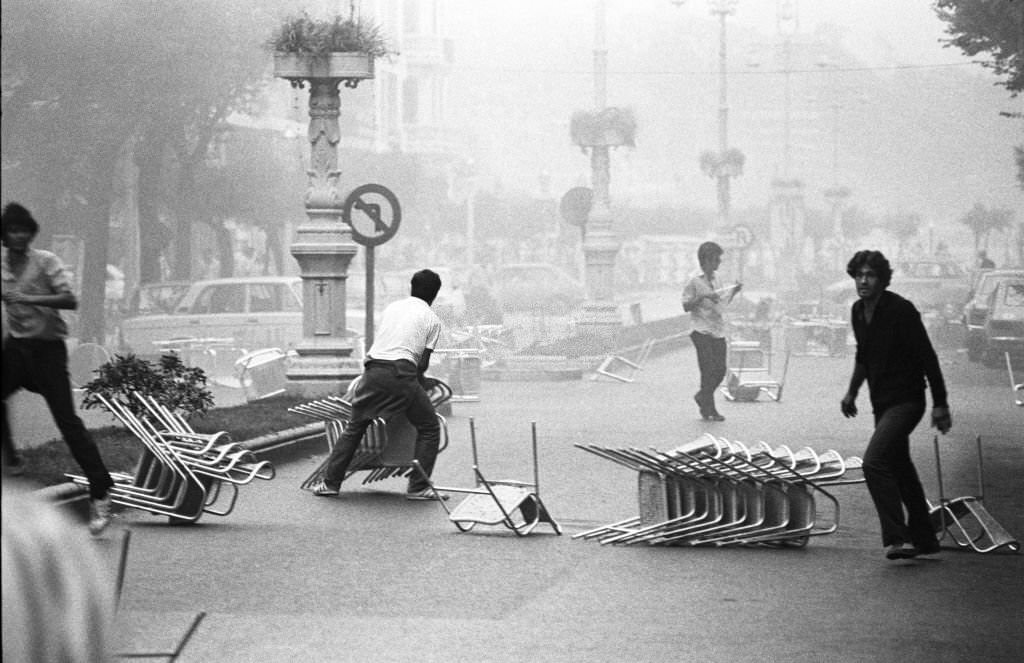
By 1979, the transition to democracy was formally underway, but the Basque Country remained restless. In San Sebastian, protesters threw café tables and chairs into the street to build barricades, demanding autonomy. The scene captured something essential about late-1970s Spain: even as the country moved toward democratic governance, the unresolved national question in the Basque region continued to produce open confrontation.
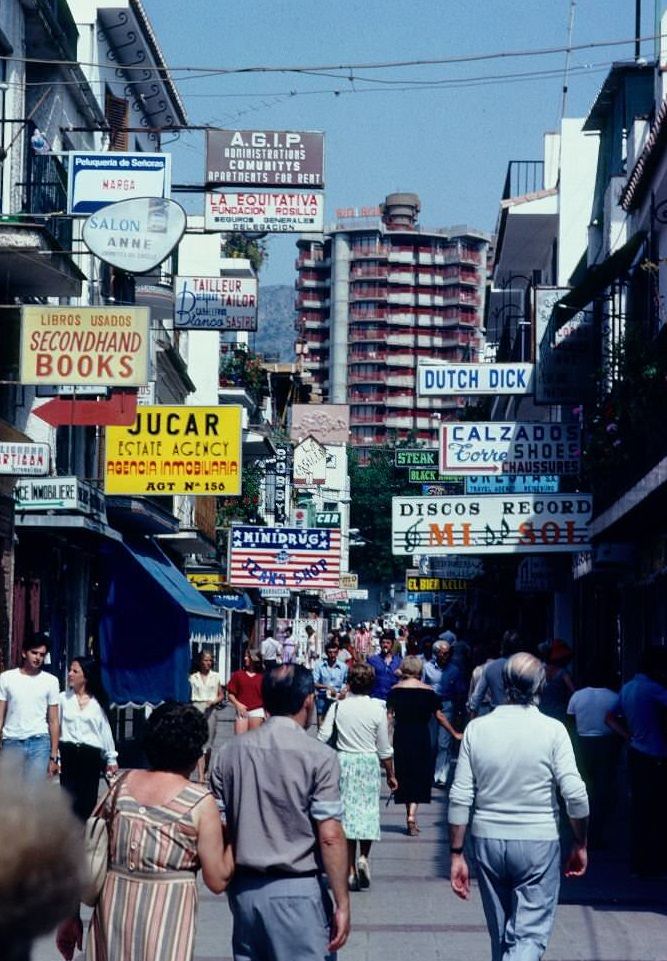
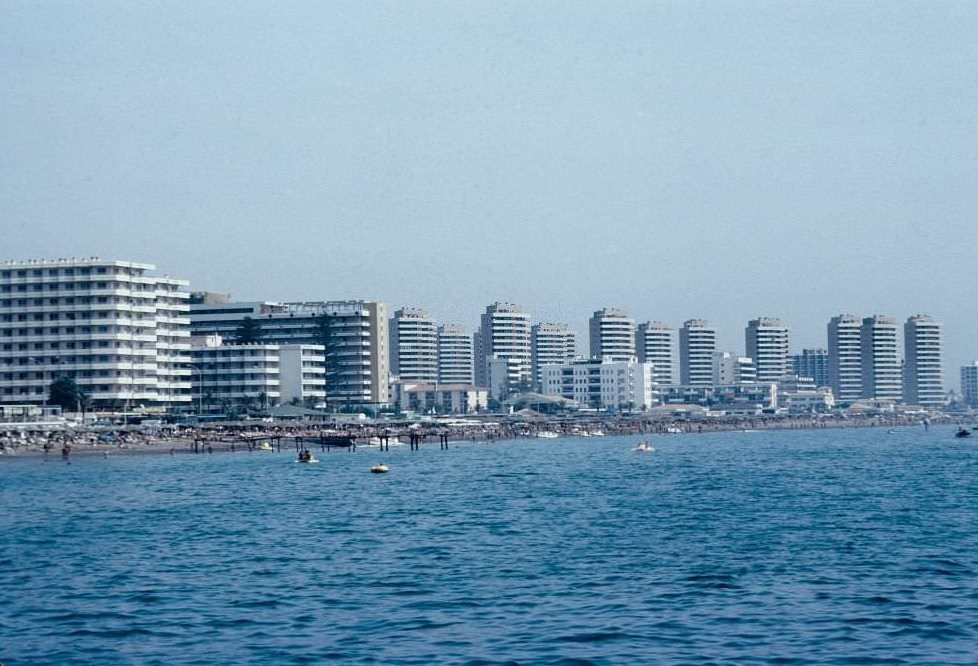
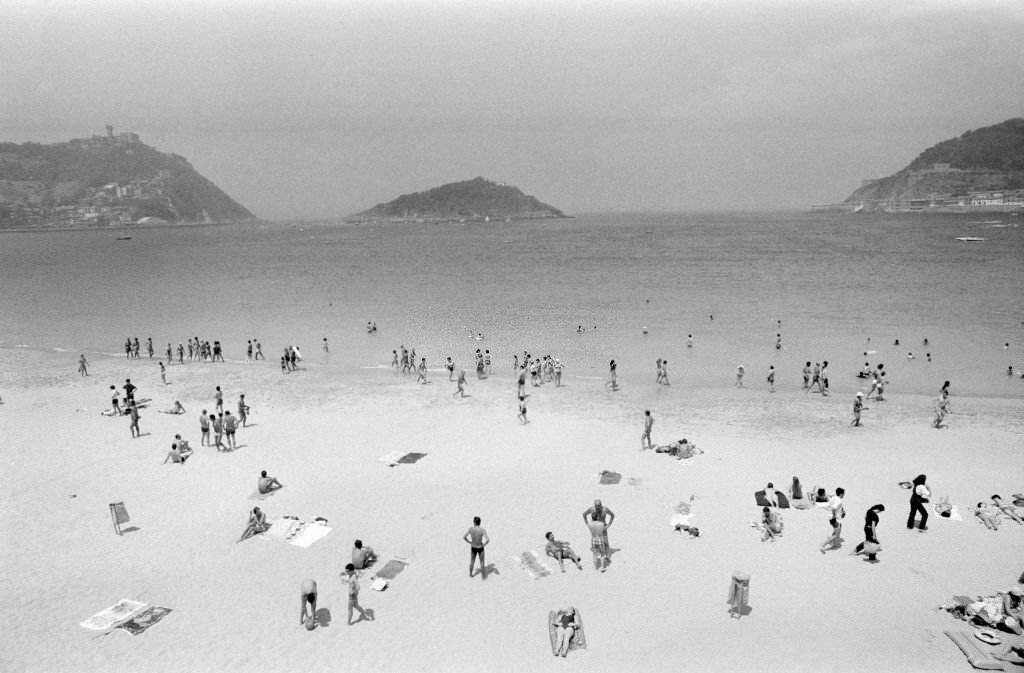
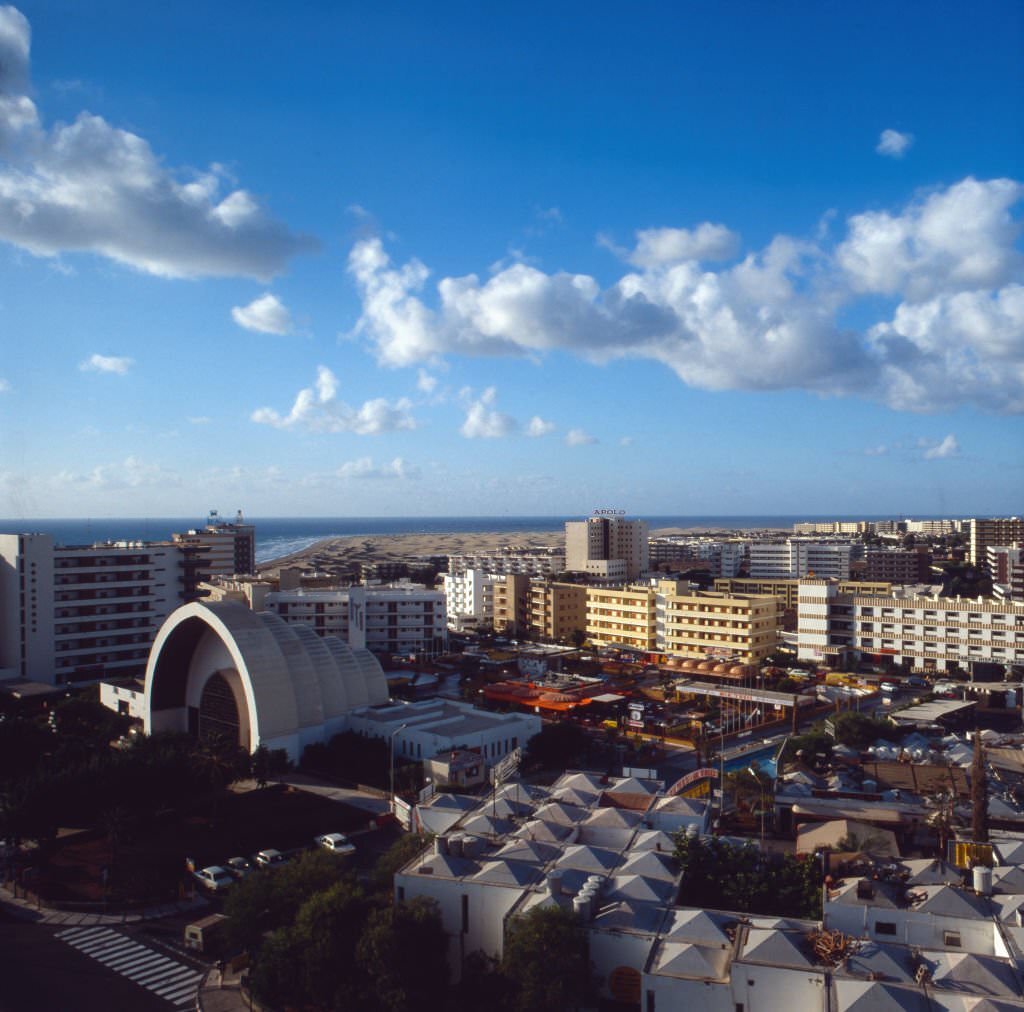
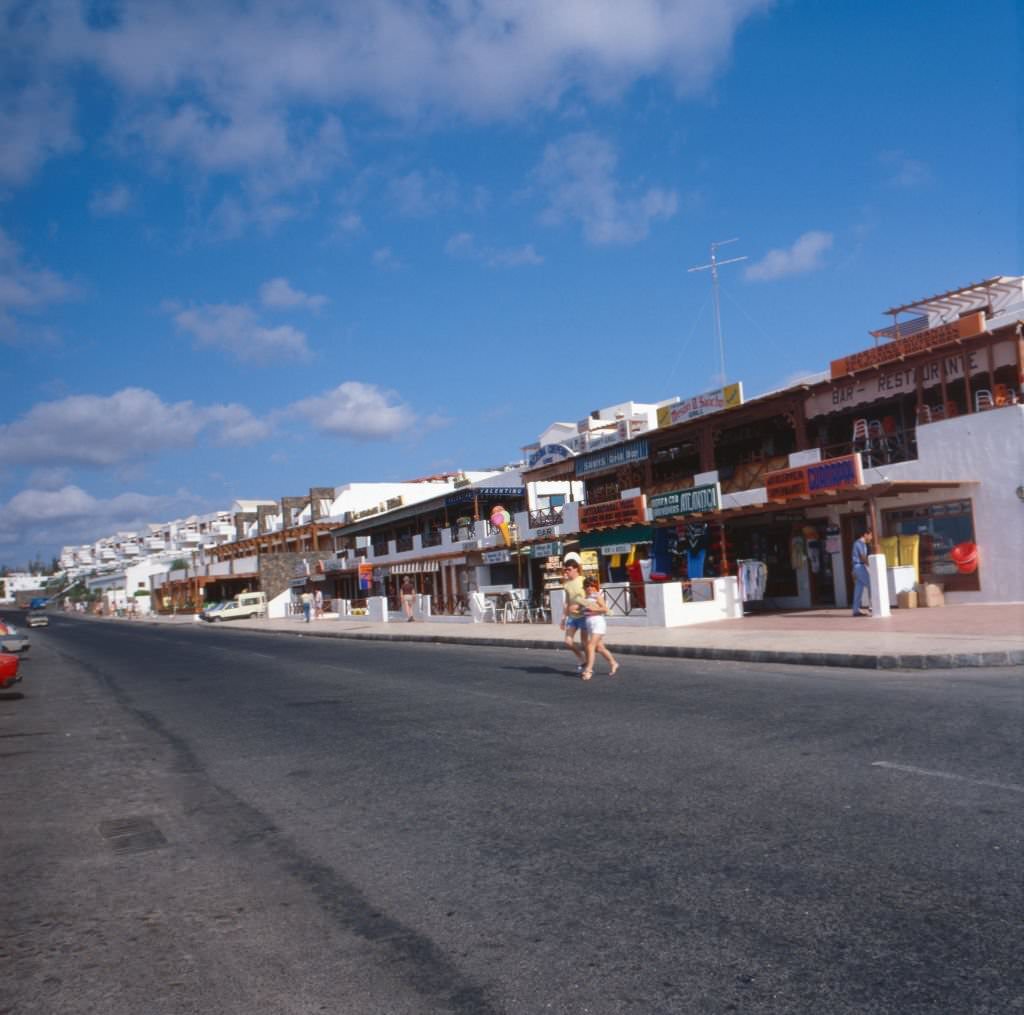
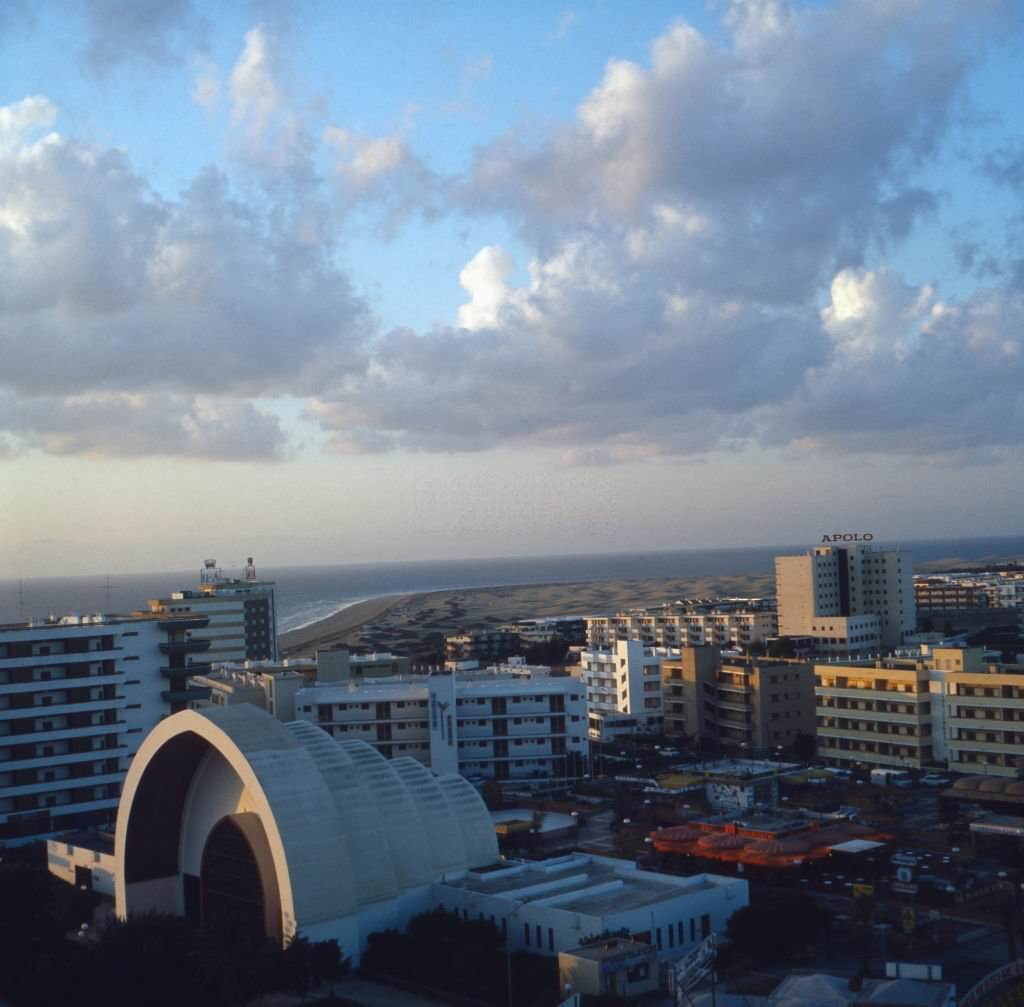
Basque protestors demanding autonomy for the Basque Country attempt to create a street barricade by throwing cafe tables and chairs onto the road in San Sebastian, Spain, 1st September 1979.Basque protestors demanding autonomy for the Basque Country attempt to create a street barricade by using cafe tables and chairs in San Sebastian, Spain, 1st September 1979.Mall in Torremolinos, Costa del sol 1979Beach at Torremolinos, Costa del sol 1979Beach in the Basque Country in July 1979 in Spain.Trip to Ibiza, Spain 1970s.Gran Canaria, Spain 1970sGran Canaria, Spain 1970s.Gran Canaria, Spain 1970s.Mallorca, Spain 1970s.Beach holiday in Torremolinos, Costa del Sol, Spain 1970s.Lanzarote, Spain 1970s.Gran Canaria, Spain 1970s.Gran Canaria, Spain 1970s
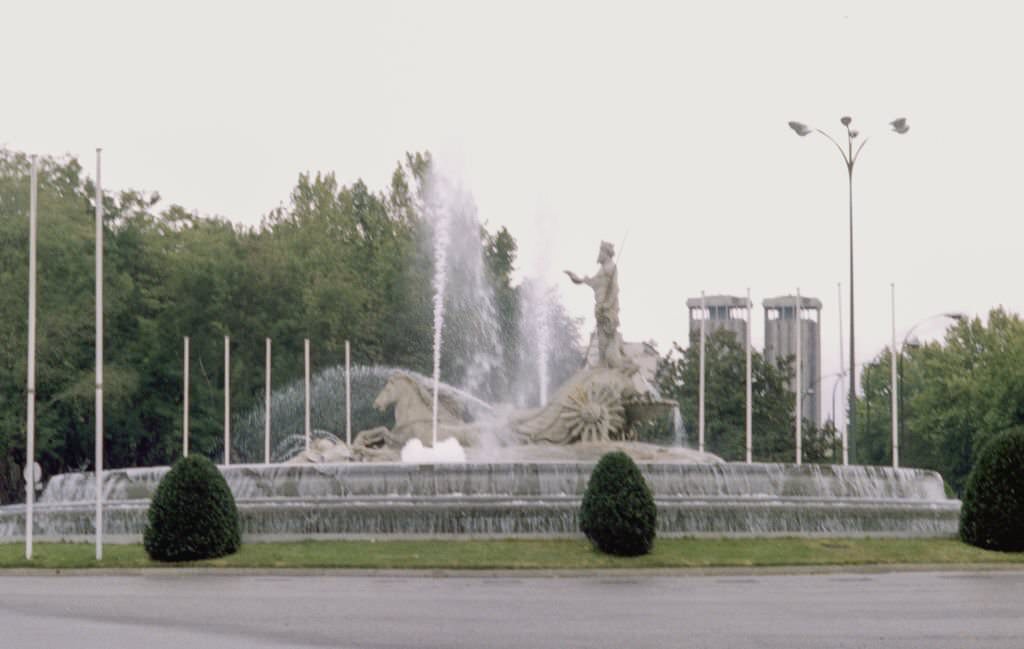
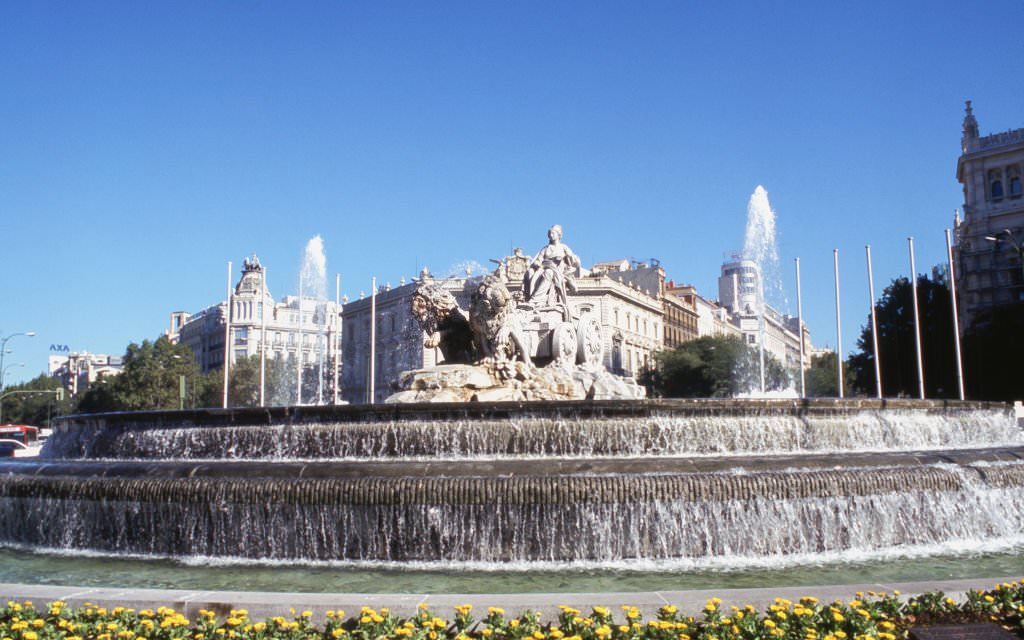
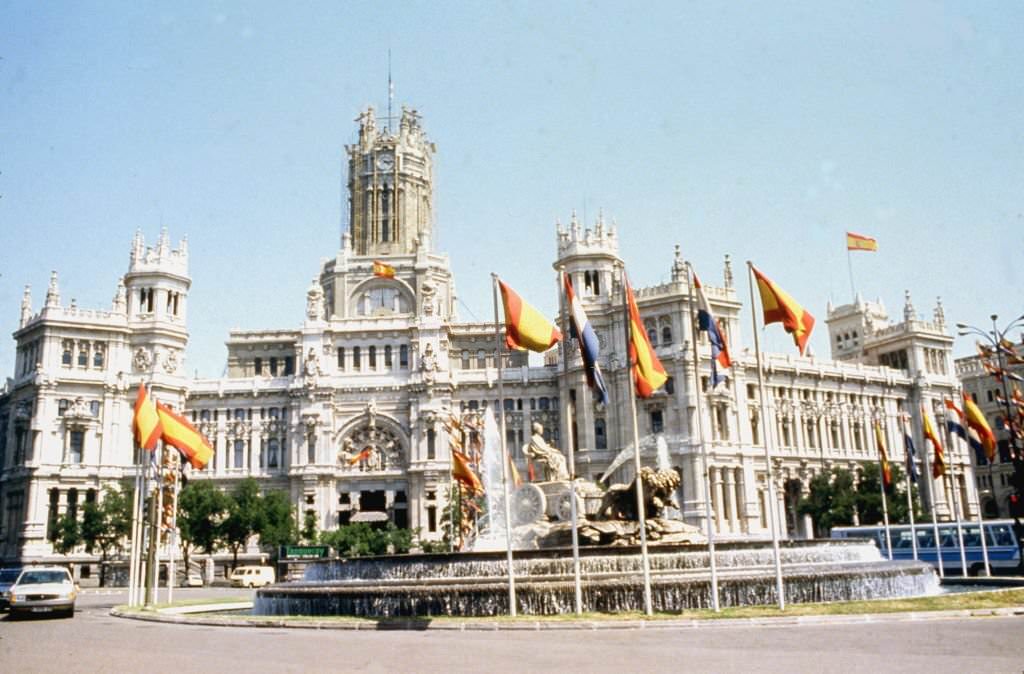
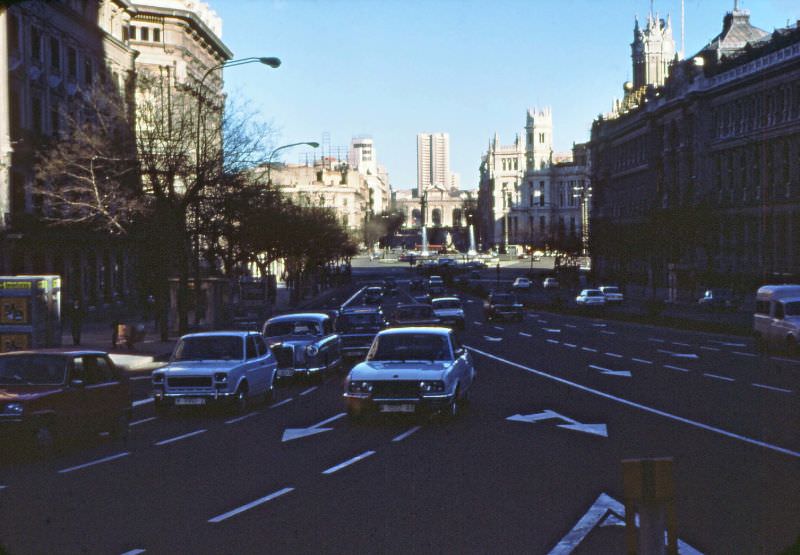
Madrid’s iconic Fuente de Cibeles — the fountain at the center of the city’s grand roundabout — stood as it always had, a fixed point in a city that was changing around it. New apartment buildings rose on former avenues named after the regime. The street names were changing, the buildings were changing, and the political system was changing. But the fountain remained.
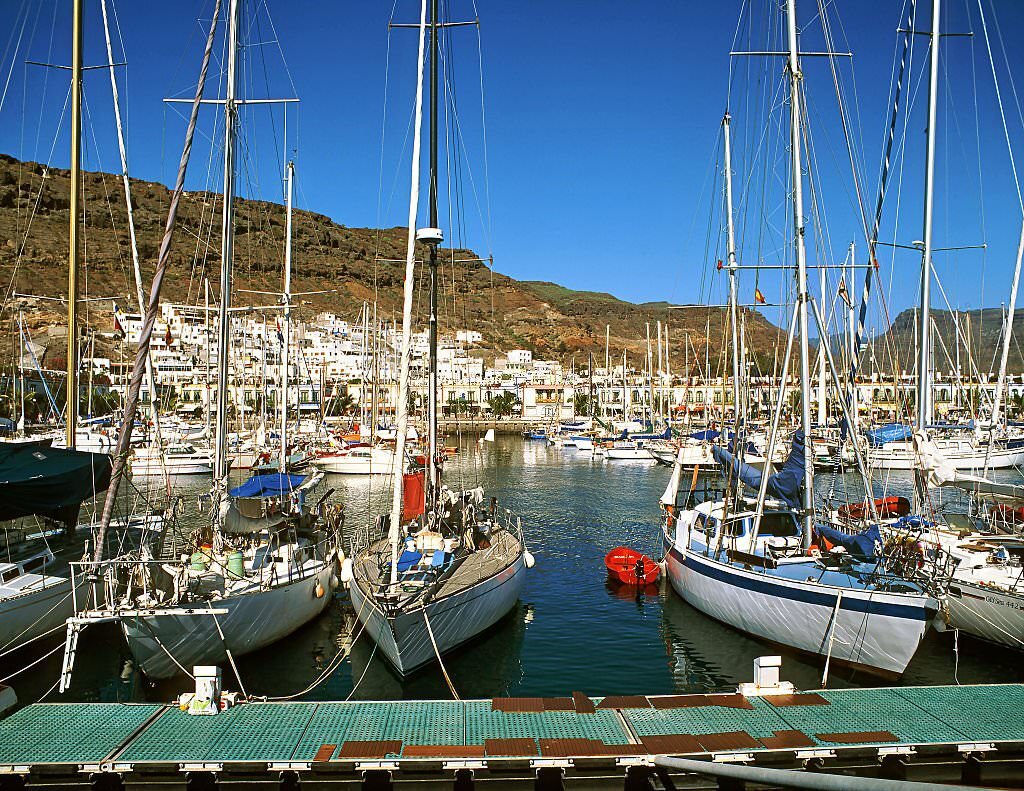
The source of Cibeles’ Place, 1979, Spain.The source of “Cibeles’ Place, 1979, Spain.Port of Puerto Mogan Gran Canaria, 1979
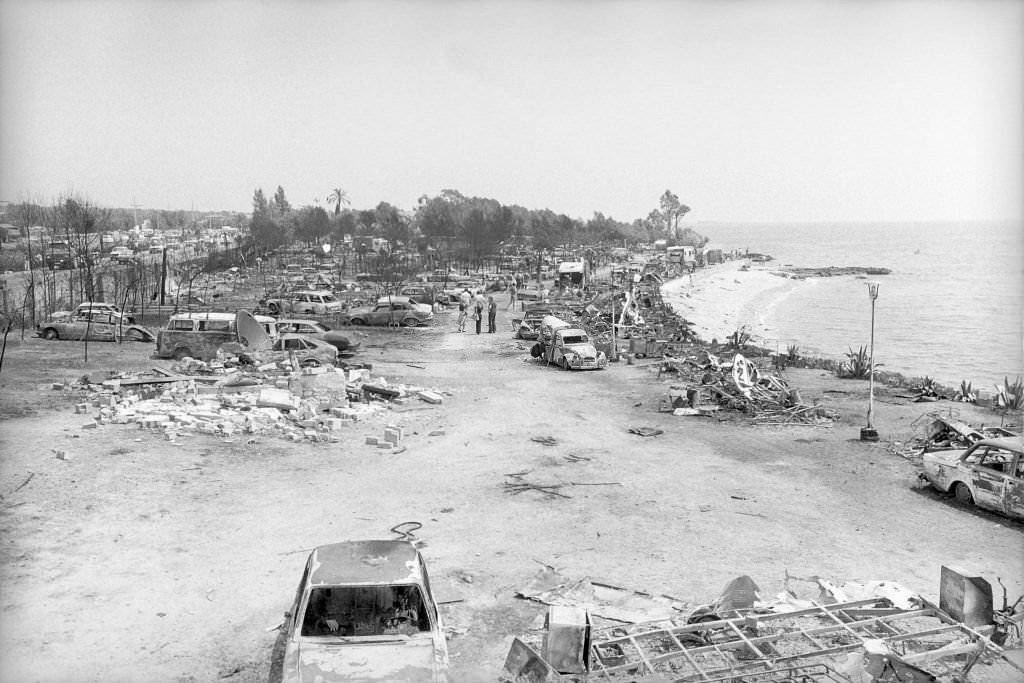
On July 11, 1978, a tanker truck carrying liquefied propylene exploded at the Los Alfaques camping site near Tarragona. The explosion and resulting fire killed over 200 people and injured hundreds more — the deadliest peacetime disaster in Spain’s modern history. The victims were mostly foreign tourists on summer holiday. The disaster exposed the dangers of transporting flammable materials on roads that passed near heavily populated coastal areas.
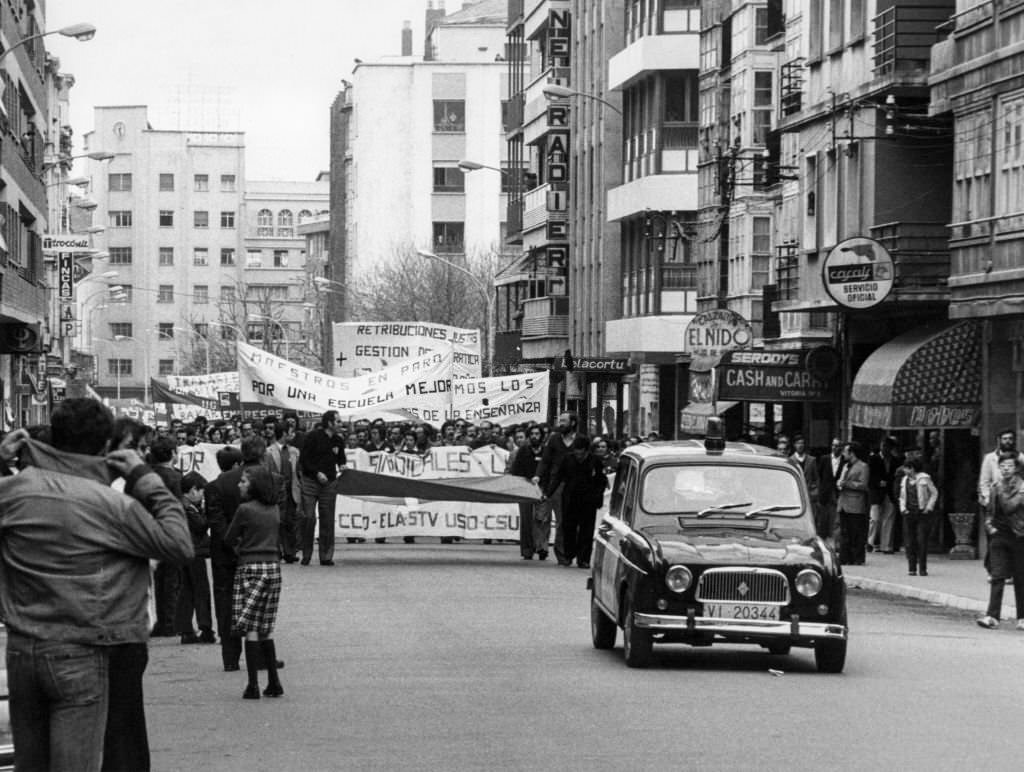
Gas explosion at camping Alfaques, Spain 1978Demonstration of May 1, 1978, in Vitoria-Gasteiz, Spain.
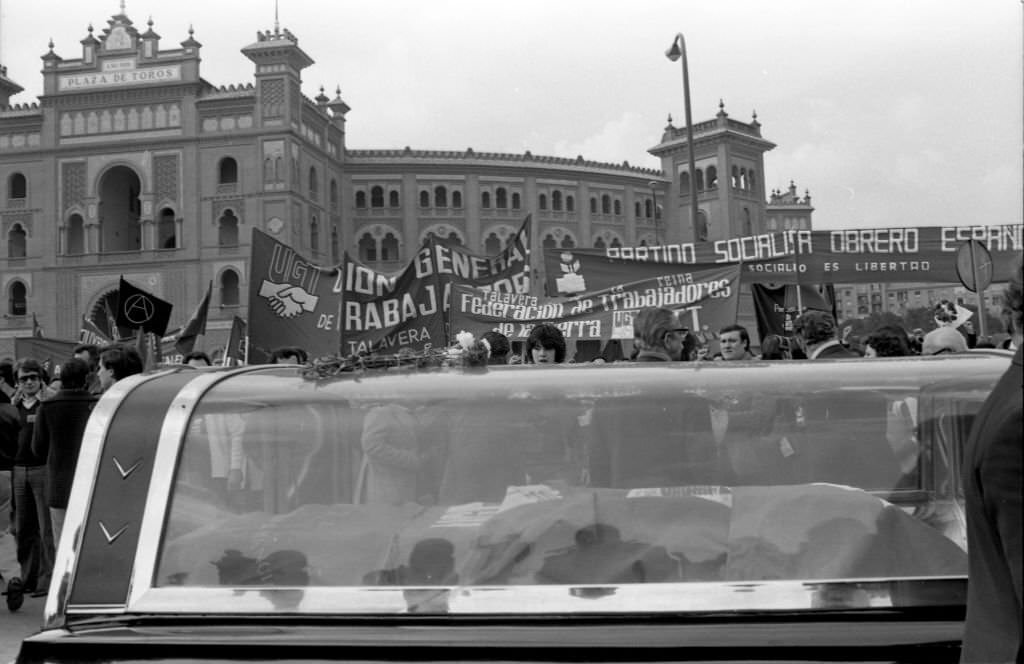
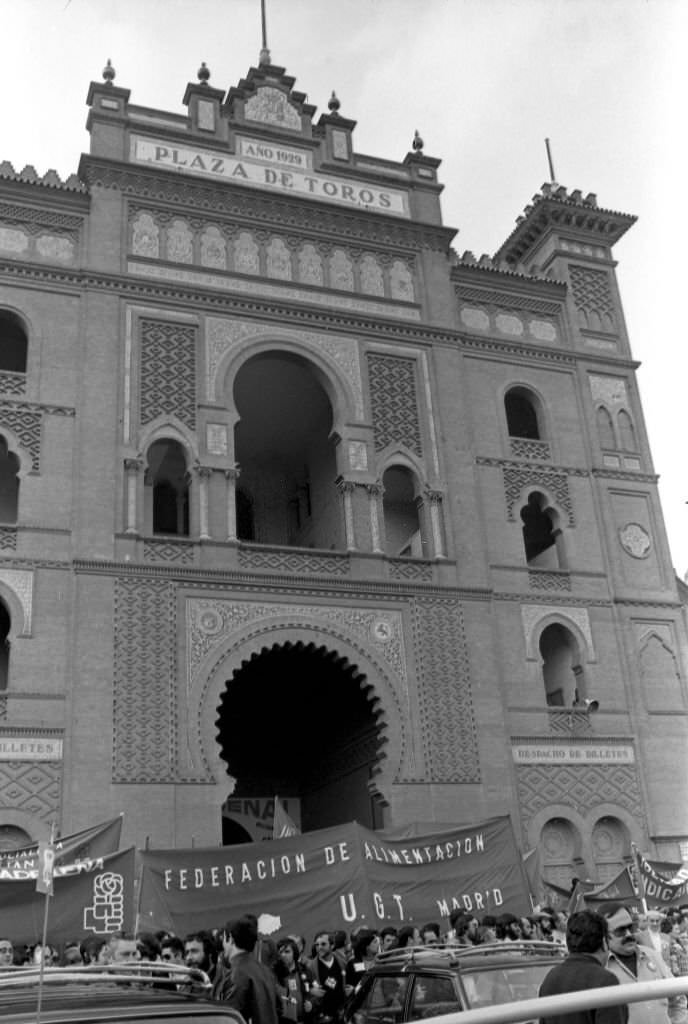
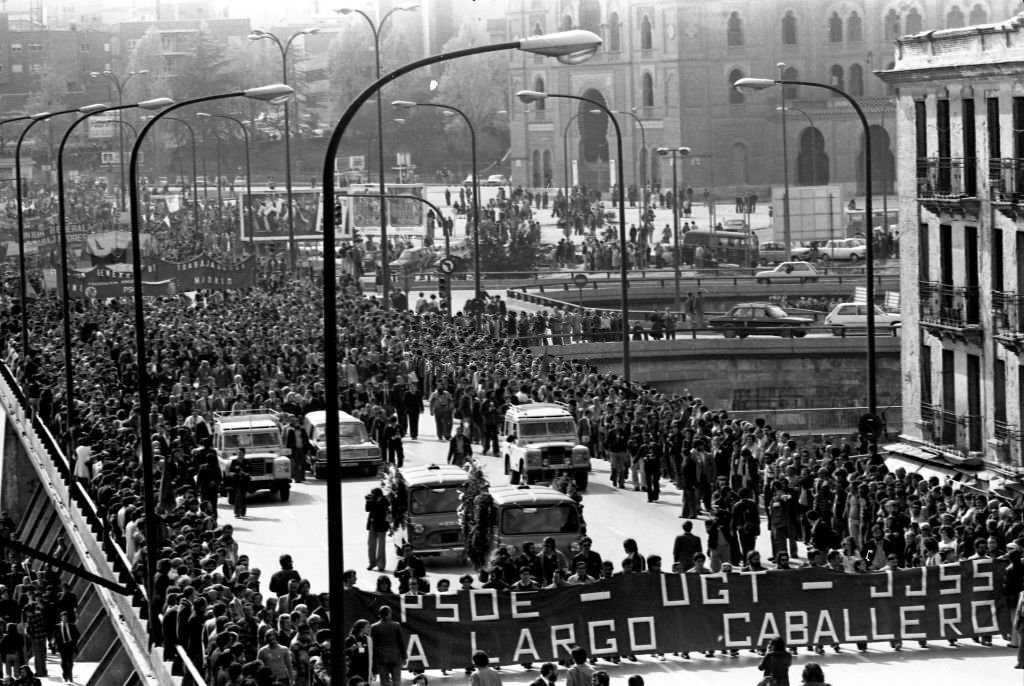
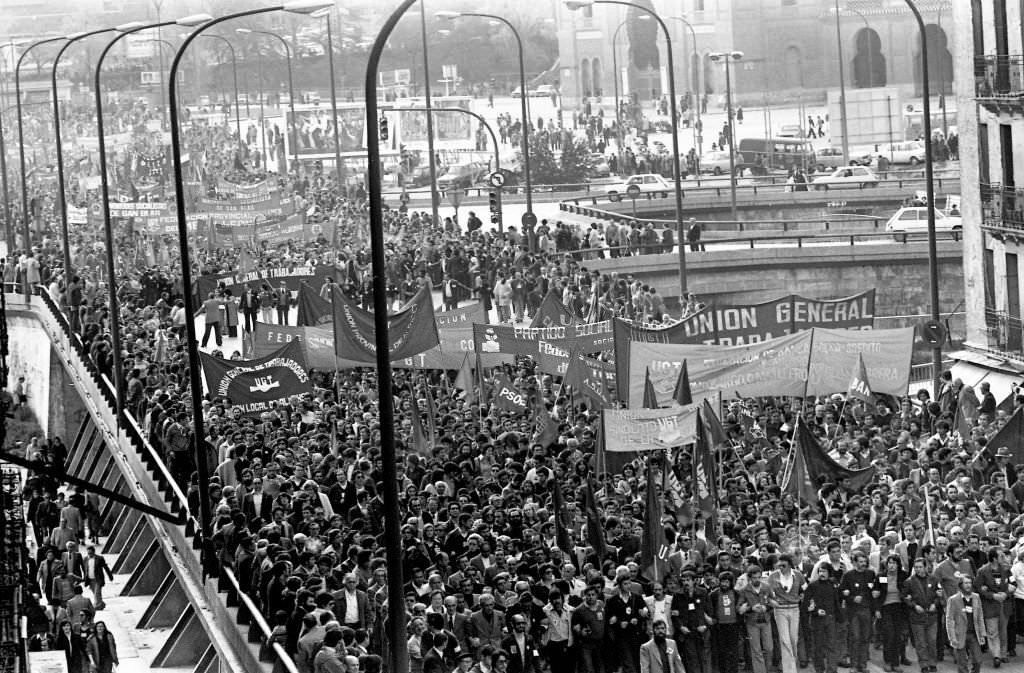
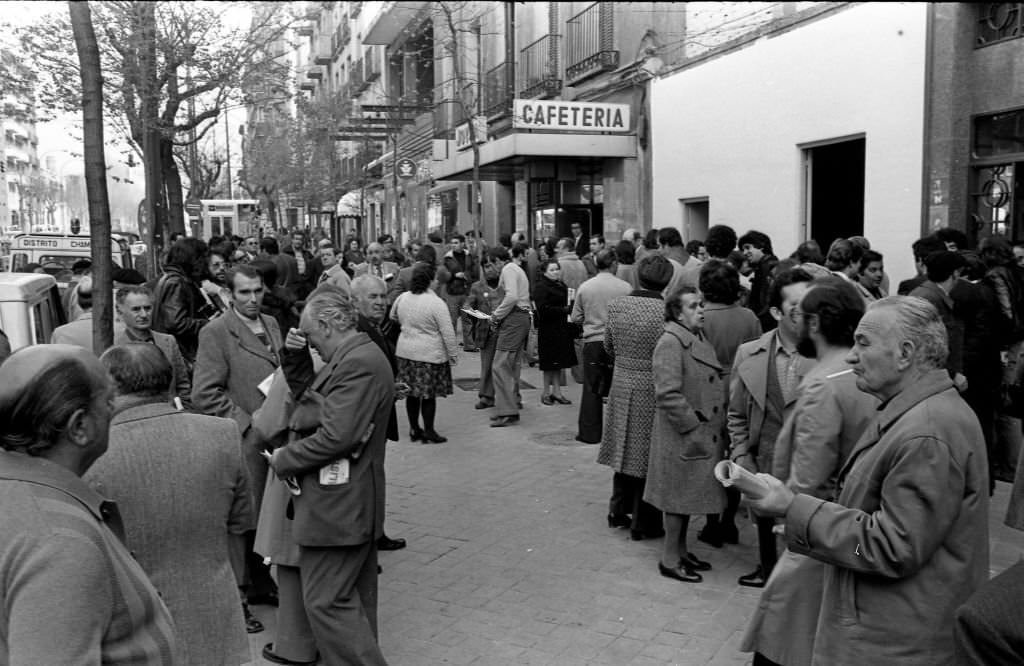
In 1978, Spain repatriated the remains of Francisco Largo Caballero — a former prime minister of the Second Republic who had died in exile in Paris in 1946. His burial in Madrid’s Civil Cemetery was a symbolic act of historical reclamation. Thousands attended. It was one of the clearest signals that Spain’s new democratic order intended to acknowledge, rather than erase, the history that Francoism had suppressed for nearly four decades.
Burial of Francisco Largo Caballero on the return to Spain of the remains of the former president of the II Republic and socialist leader, buried in Paris in 1946 in exile and buried in 1978 in the Civil Cemetery of Madrid.
Burial oFrancisco Largo Caballero in Madrid, 1978
Burial oFrancisco Largo Caballero in Madrid, 1978
Burial oFrancisco Largo Caballero in Madrid, 1978Burial of Francisco Largo Caballero on the return to Spain of the remains of the former president of the II Republic and socialist leader, buried in Paris in 1946 in exile and buried in 1978 in the Civil Cemetery of Madrid.Burial Of Francisco Largo Caballero in Madrid, 1978
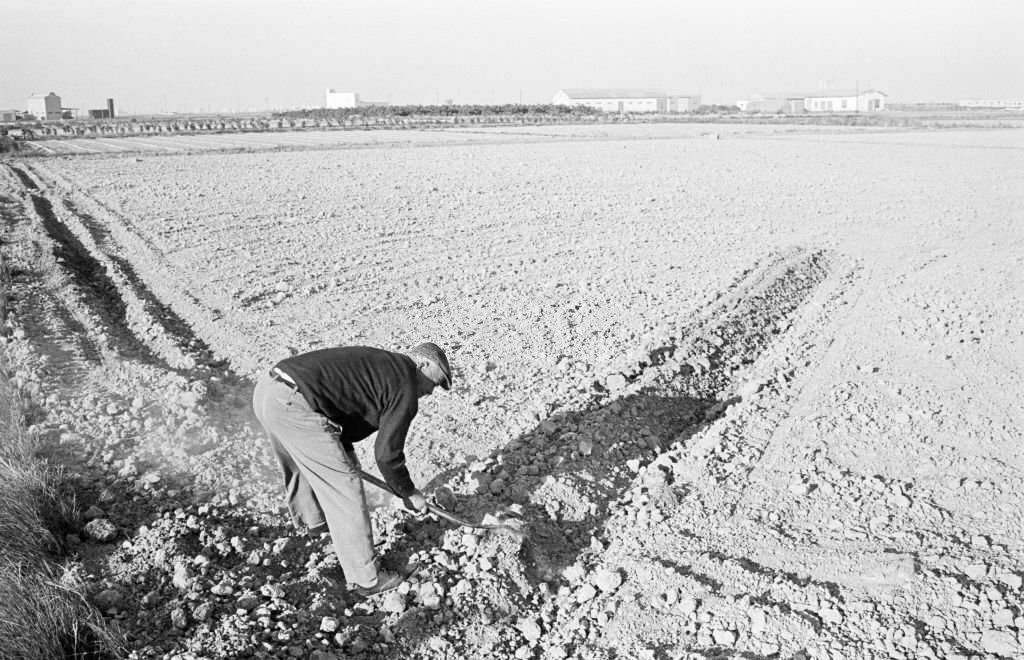
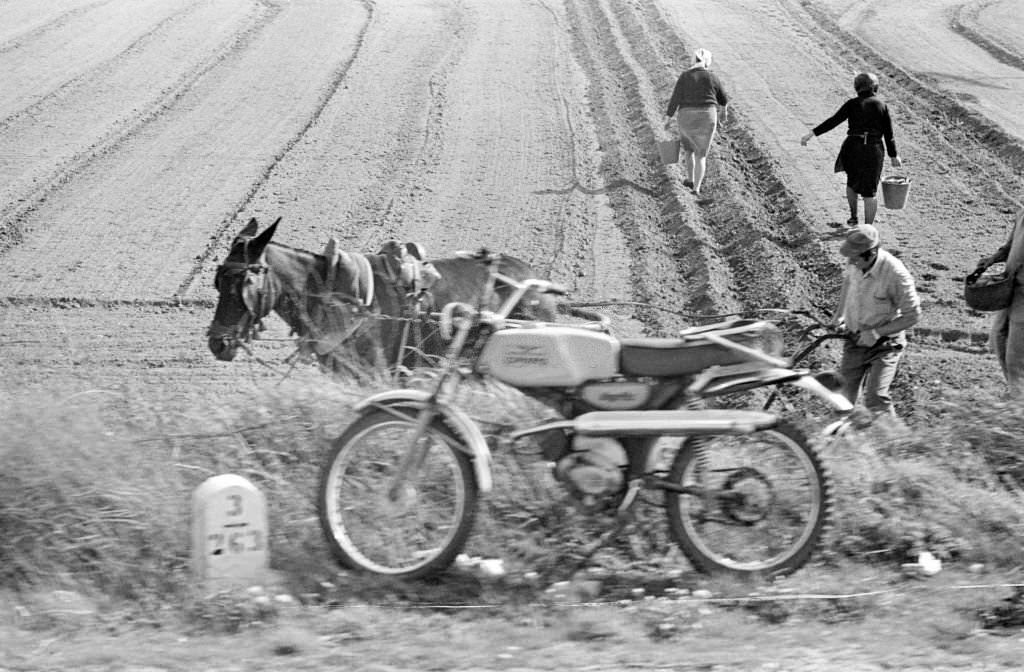
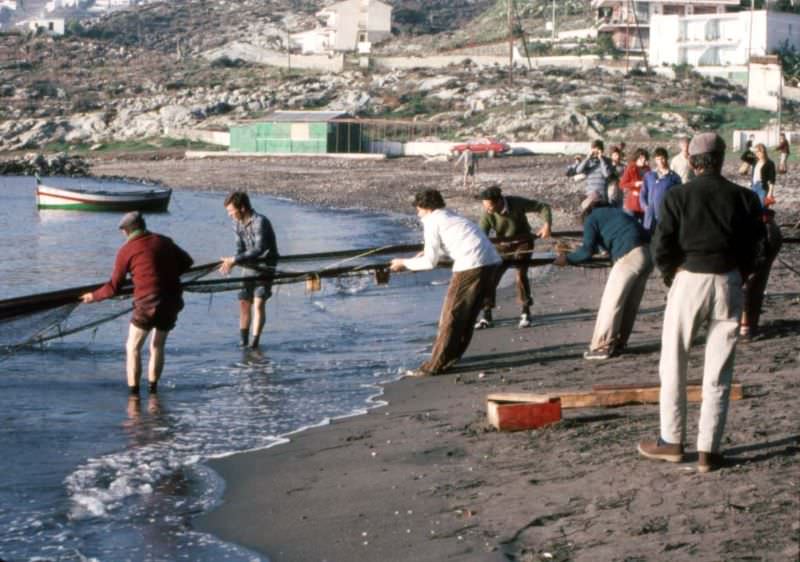
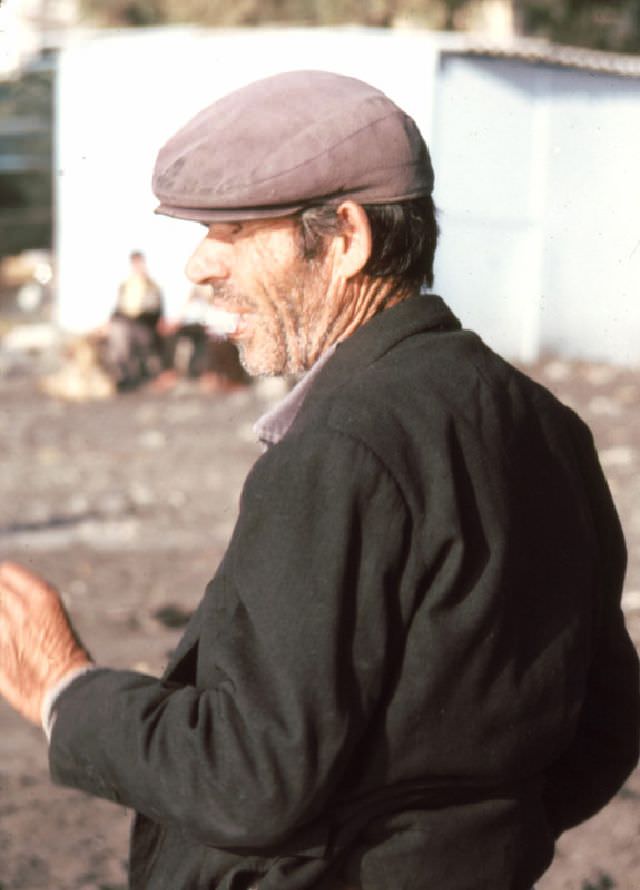
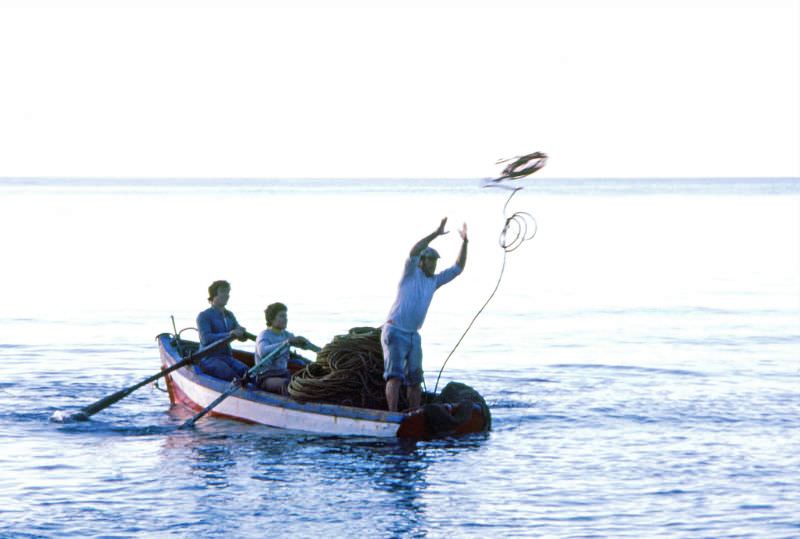
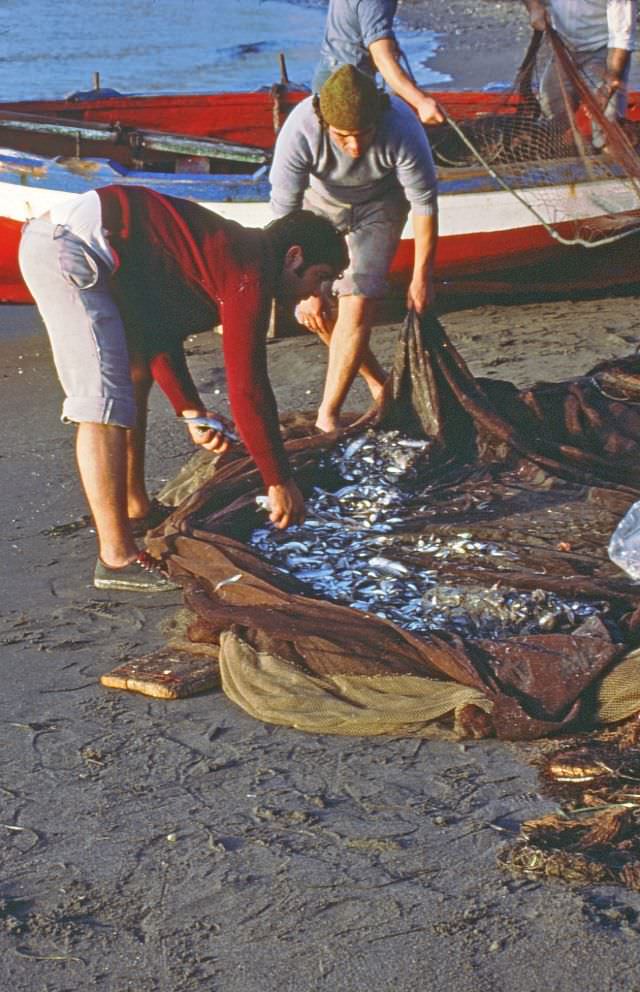
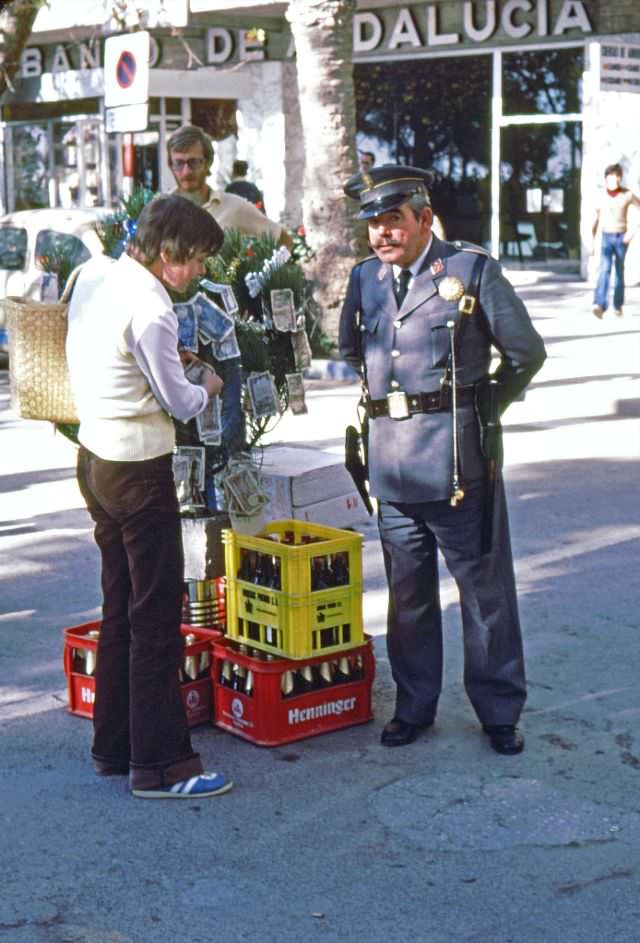
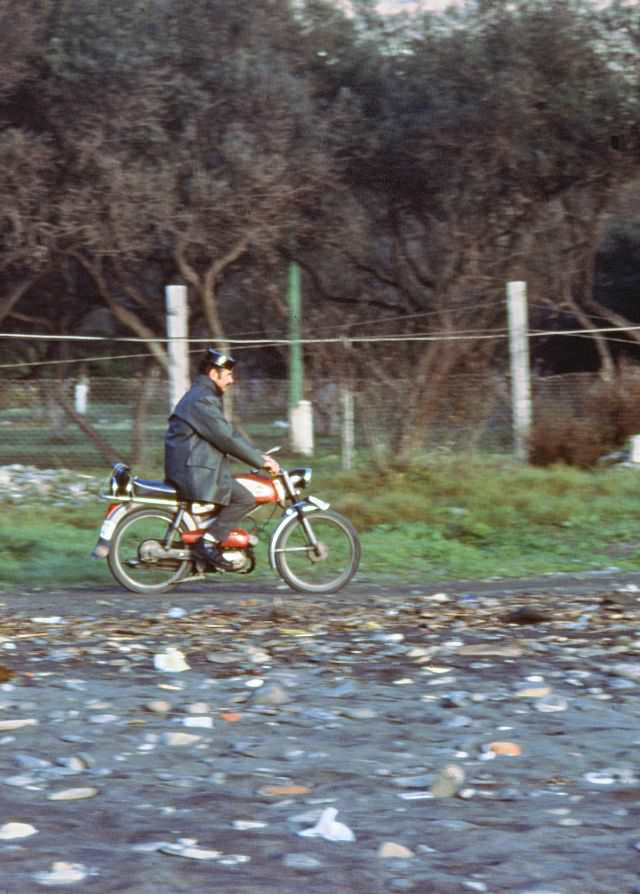
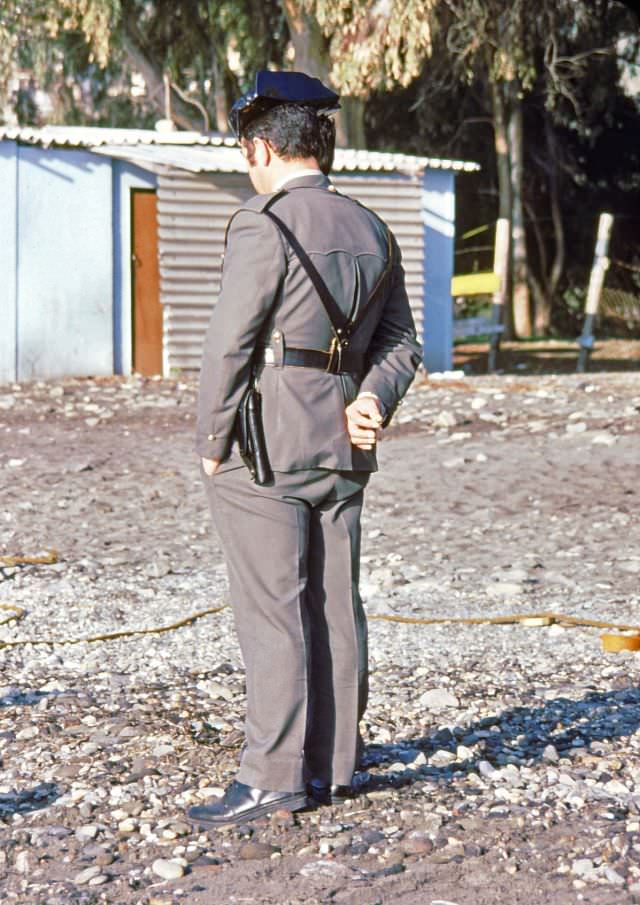
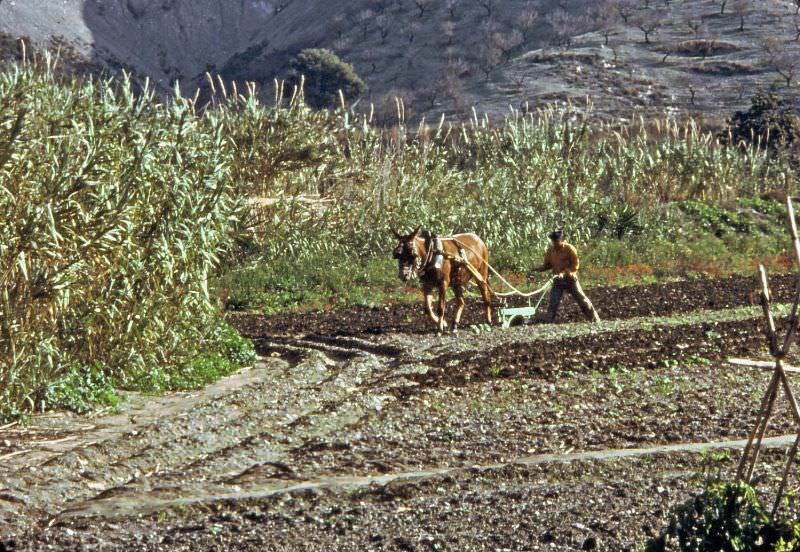
Along the southern coast, fishing towns maintained routines that had changed little in decades. In Almuñécar, fishermen hauled in their nets at first light while spectators watched from the beach. A local policeman did his rounds. Farmers still worked with mules and ploughs in nearby Salobreña. The gap between these coastal villages and the industrial cities of the north was enormous — as if two entirely different countries existed within the same borders.
Early morning hauling in the fishnets, Almuñécar, 1977Beach spectator at morning fishing, Almuñécar, 1977Fisherman casts his line off the beach, Almuñécar, 1977
Fishermen inspect their catch on the beach, Almuñécar, 1977
Money on the Christmas tree and beer in plastic crates are gifts to local policeman, Almuñécar, 1977
Officer on patrol, Almuñécar, 1977
Watching early morning fishing, Almuñécar, 1977
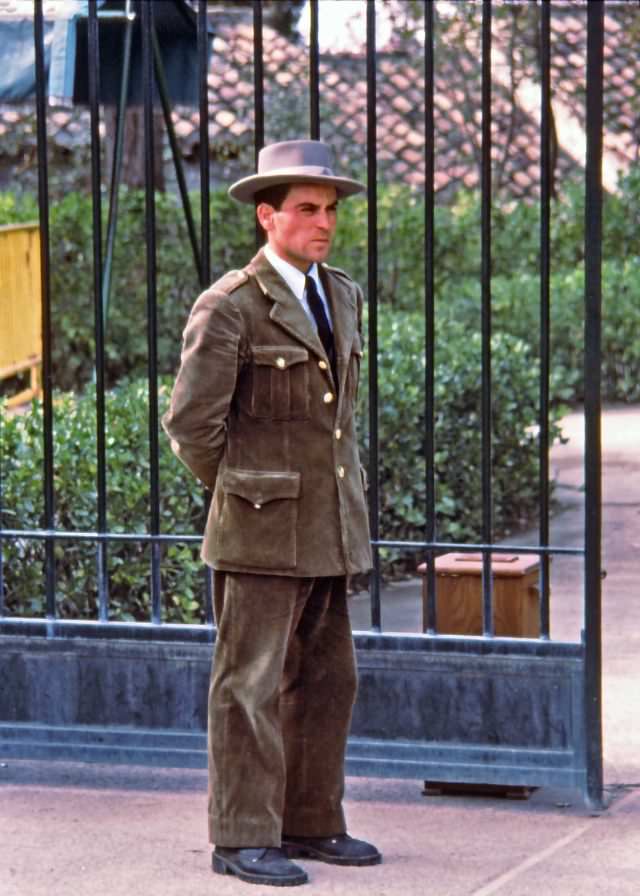
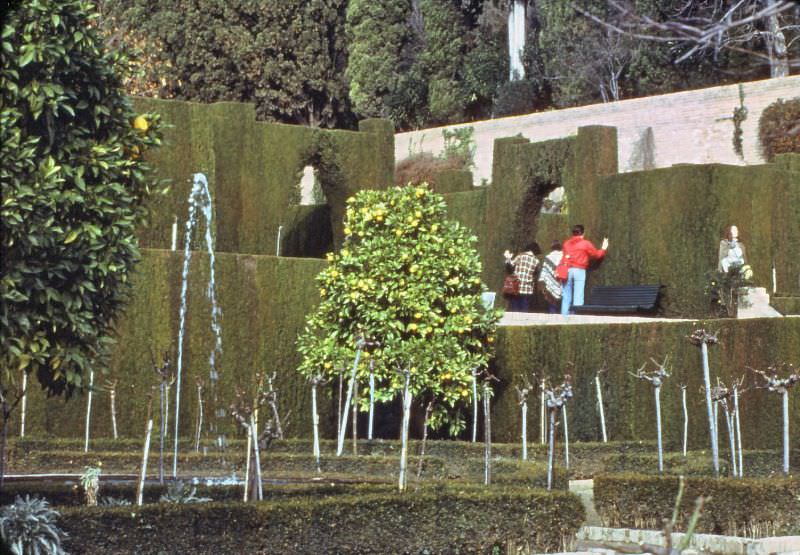
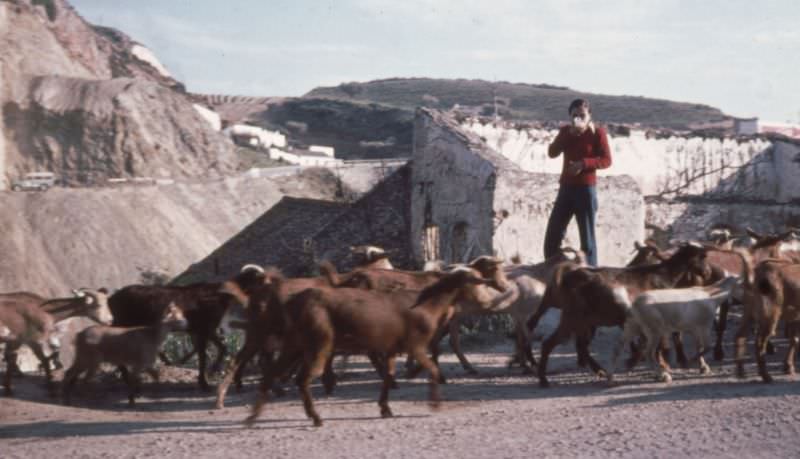
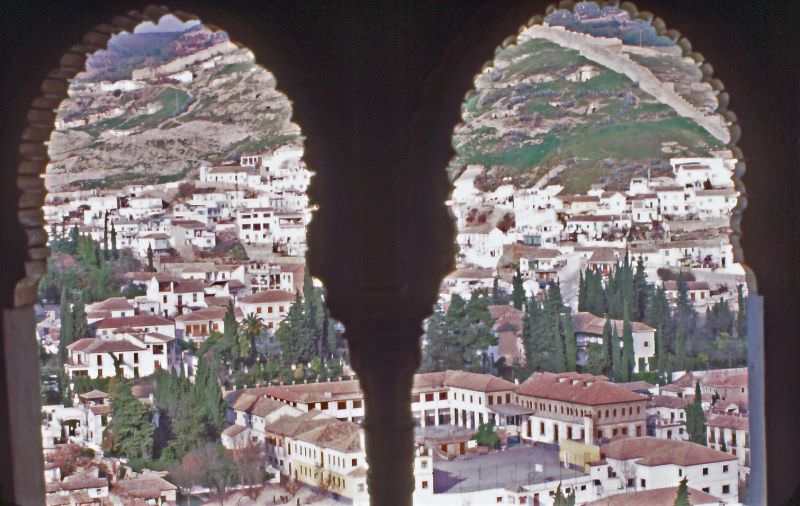
Security guard, Alhambra, Granada, Andalusia, 1977Farmer using a mule and plough, Salobreña, Andalusia, 1977Generalife, Alhambra, Granada, Andalusia, 1977Goat herder waving, Costa del Sol, Playa Granada, Motril, Andalusia, 1977View from Oratory Alhambra, Sacromonte, Granada, Andalusia, 1977
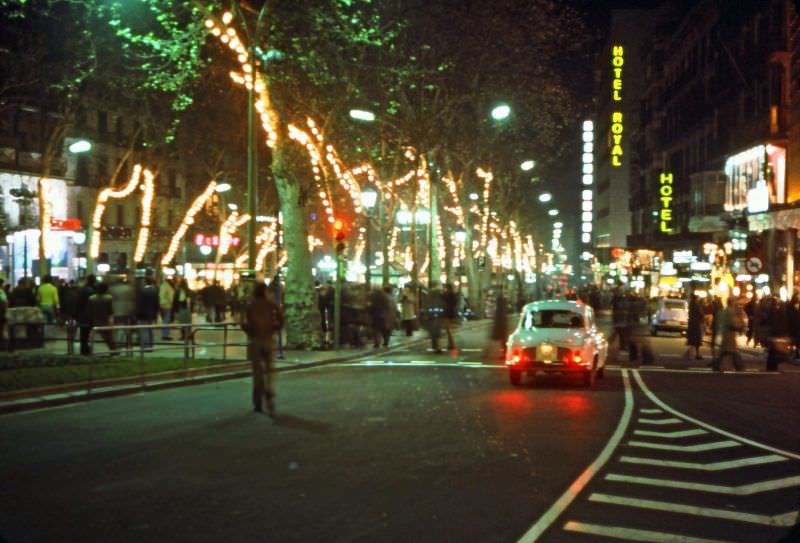
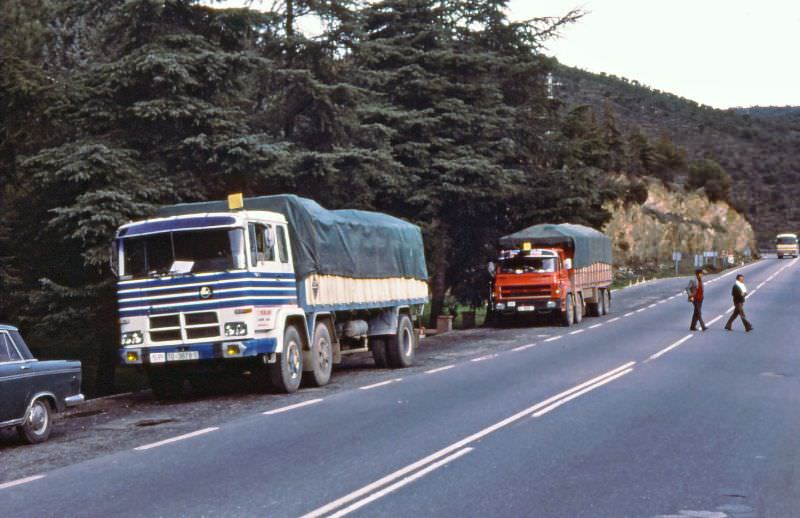
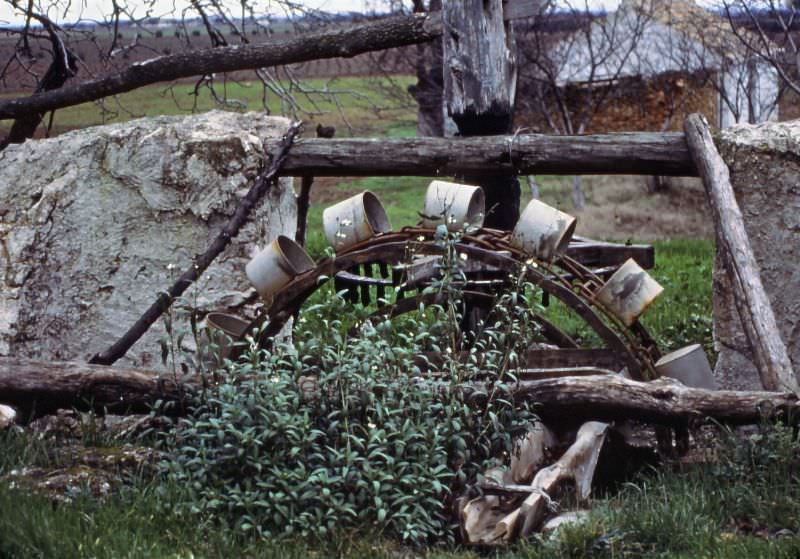
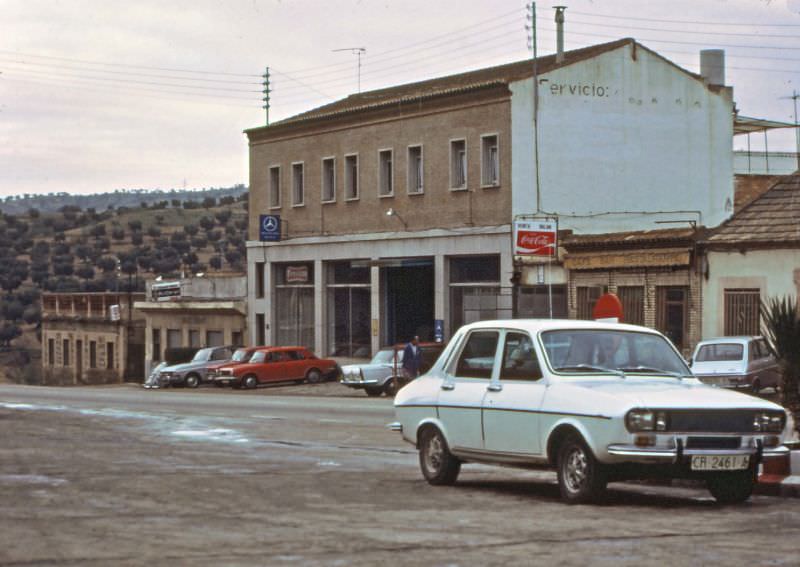
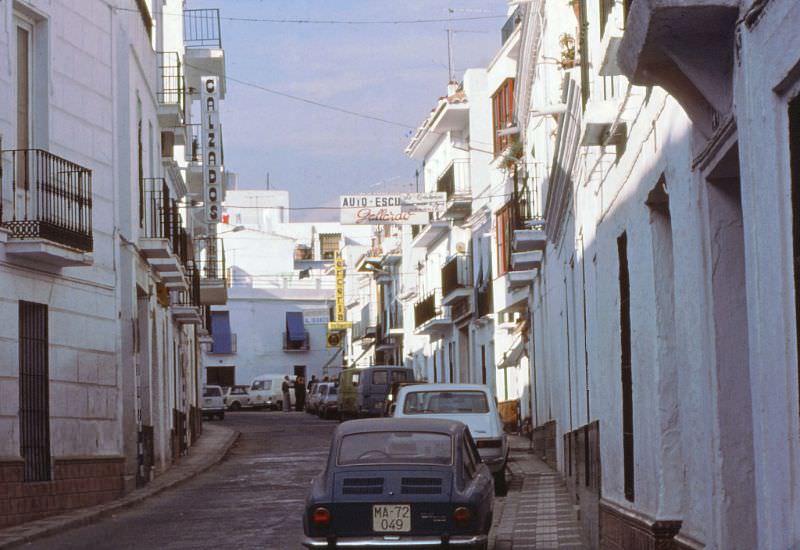
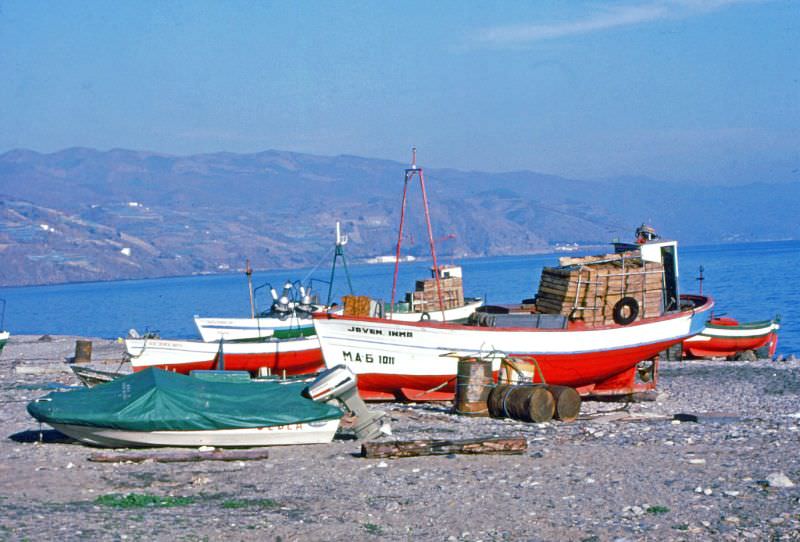
In Barcelona, Las Ramblas came alive at night with traffic and pedestrians moving through the city’s most famous boulevard. Further inland, on the road between Madrid and Granada, trucks pulled into rest stops along the Castile-La Mancha plateau — the same plateau that had been emptying of its people for the better part of two decades. Water wheels still turned in the countryside, and village main streets like Campillo’s remained unhurried.
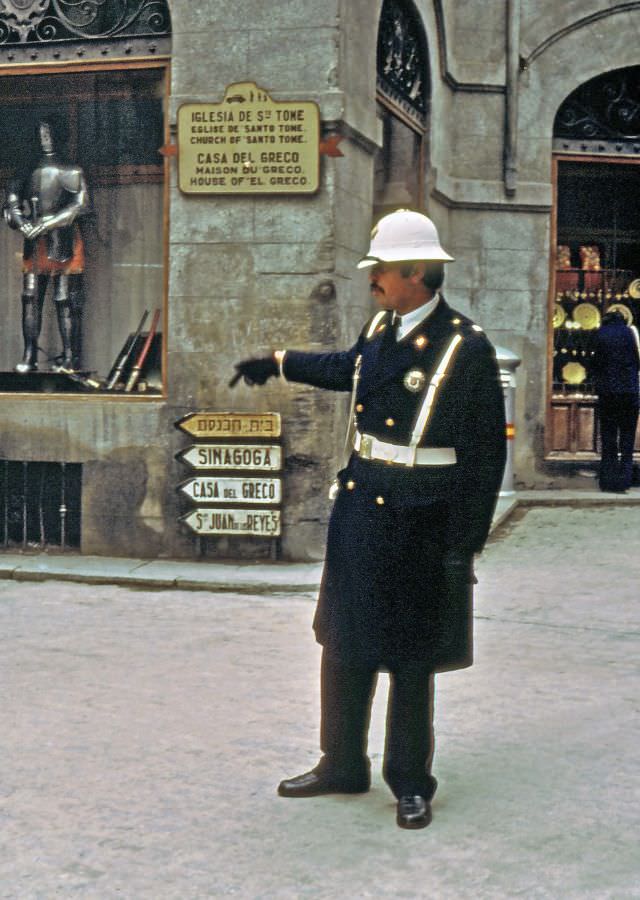
Barcelona traffic, Los Ramblas at night, 1977Trucks at rest stop, Madrid to Granada road, Castile-La Mancha, 1977Water wheel, Castile-La Mancha, 1977Palos de Moguer, Madrid, 1977Palos de Moguer, Madrid, 1977Main street of Campillo between Jaen and Granada, 1977Nerja street scene, 1977Six fishing boats on the beach, 1977Policeman directing traffic, Toledo, 1977
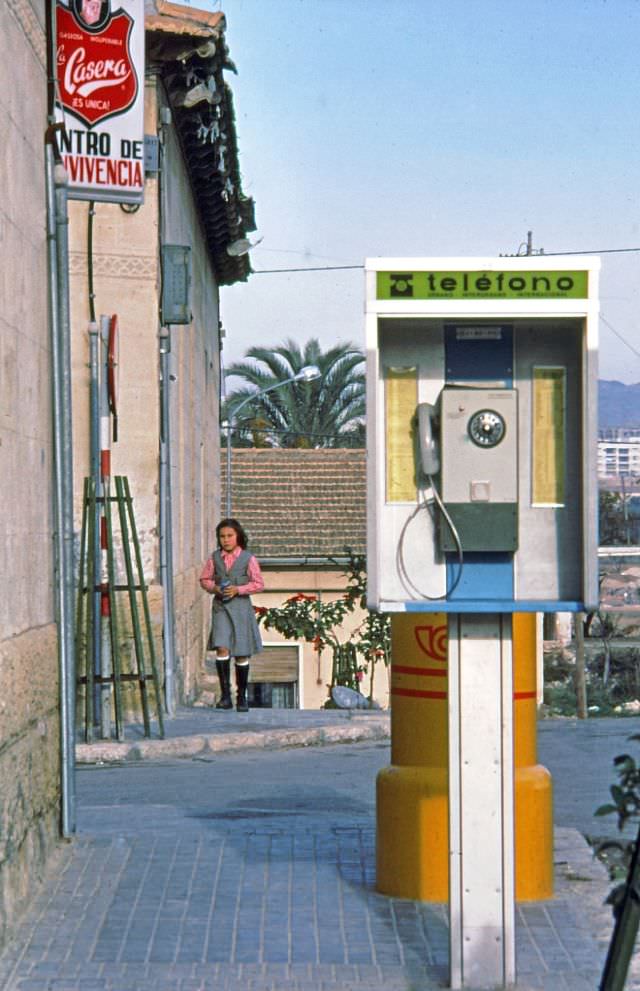
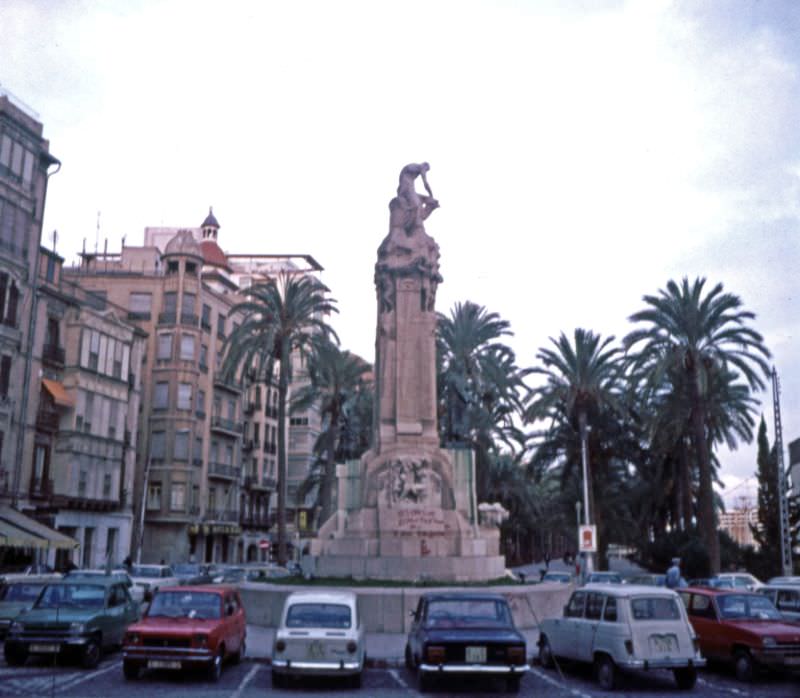
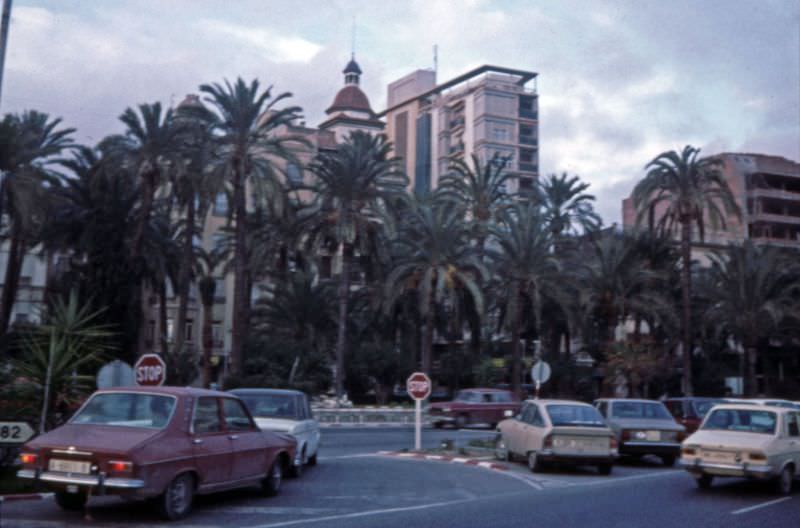
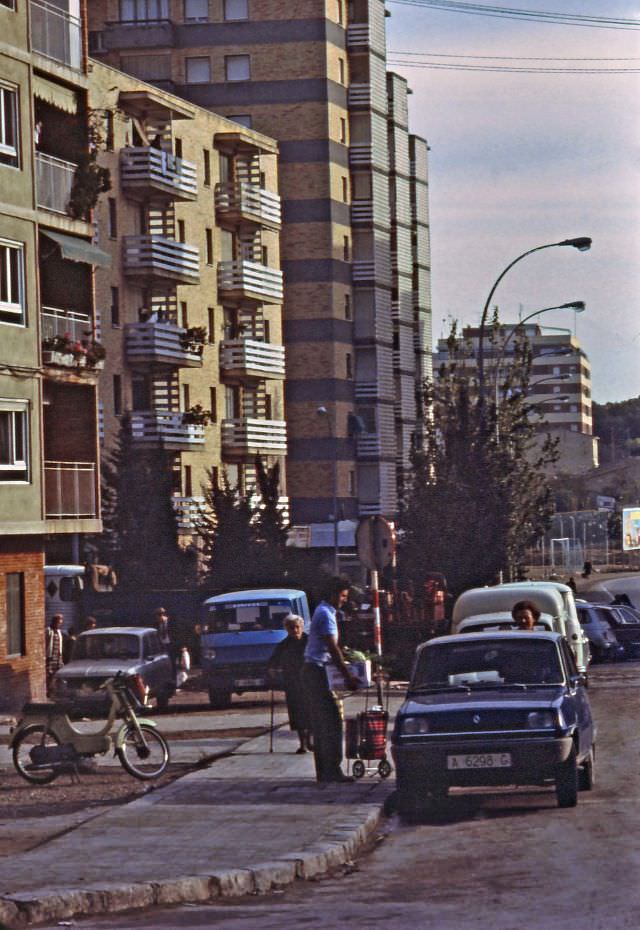
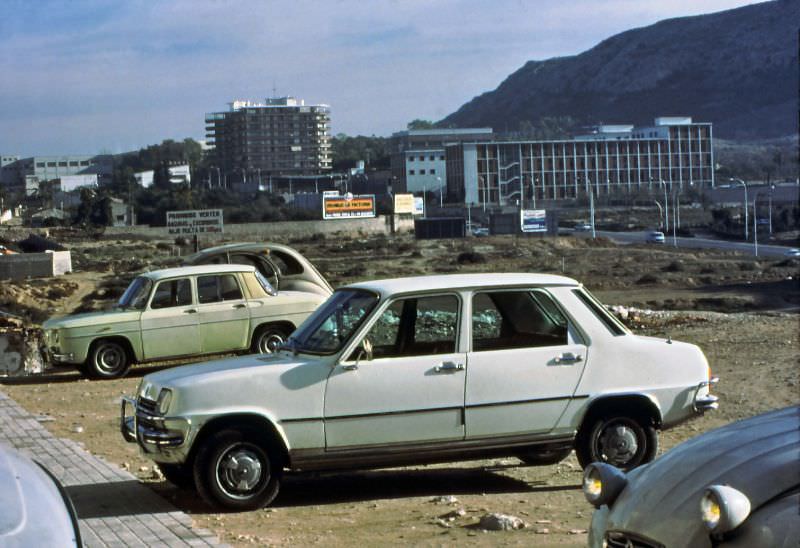
In Alicante and the surrounding Valencia region, life in 1977 had a quiet domestic rhythm. A schoolgirl walked toward a payphone in uniform. Christmas shoppers browsed the stores. Renault R5s and Fiat 500s filled the streets. The political drama unfolding in Madrid and the Basque Country felt remote here — though a Fiat with a dented fender parked between buildings in Barcelona’s Cornella district was a reminder that the cities had their own edges and pressures.
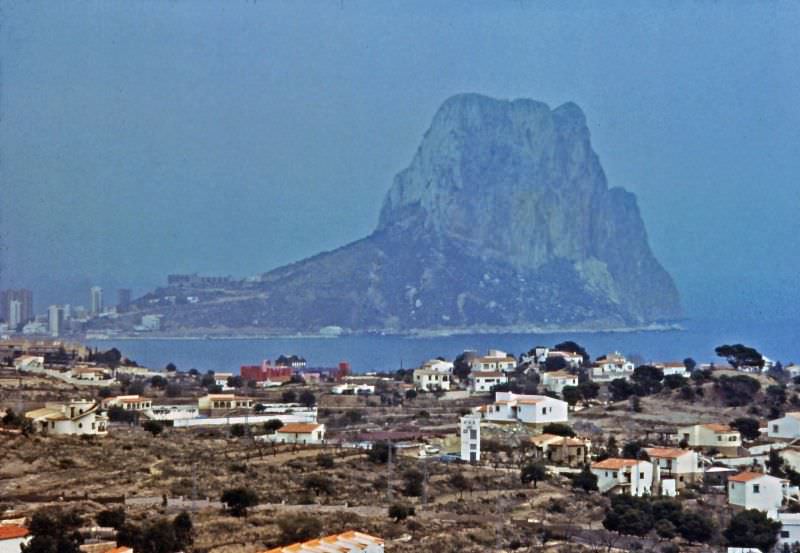
A school girl in her uniform walking towards a mailbox and pay telephone, Barrio Benaluá, Alicante, Valencia, 1977Calp, Valencia, 1977Cars & monument Alicante, Alicante, Valencia, 1977Cars in Alicante, Valencia, 1977Christmas shopping, Alicante, Valencia, 1977Renault R5 with trunk, Alicante, Valencia, 1977