

On May 15, 1935, the Moscow Metro opened its doors for the first time. The system launched with a single line stretching 11 kilometers and 13 stations. It was the first underground railway in the Soviet Union — a major achievement the Soviet government promoted with enormous pride. The photos below were taken in those first months of operation, capturing a transit system unlike anything the country had ever seen.
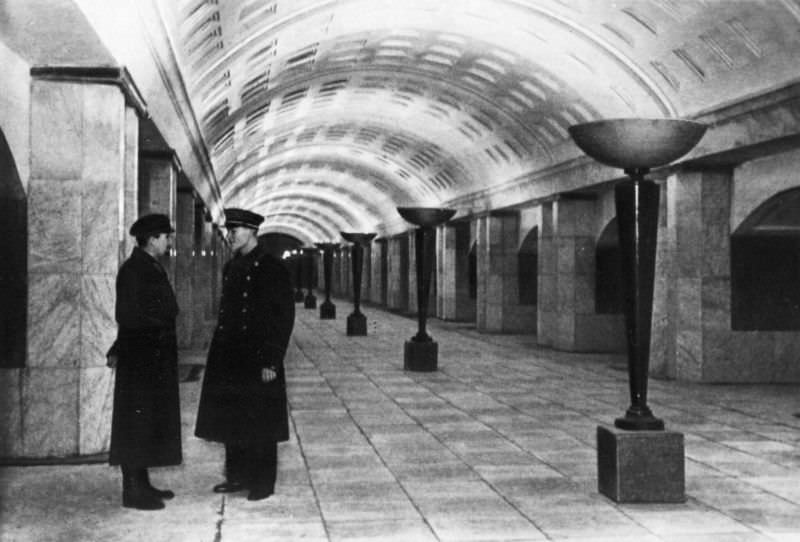
Stalin’s government did not build the Metro simply to move people from one place to another. Each station was designed as what Soviet planners called a “palace of the people” — grand public spaces meant to reflect the power and ambition of the Soviet state. The architectural style was socialist classicism: high ceilings, ornate columns, decorative tile work, and large chandeliers. Working-class citizens who had never set foot in a palace could now pass through one every day on their commute.
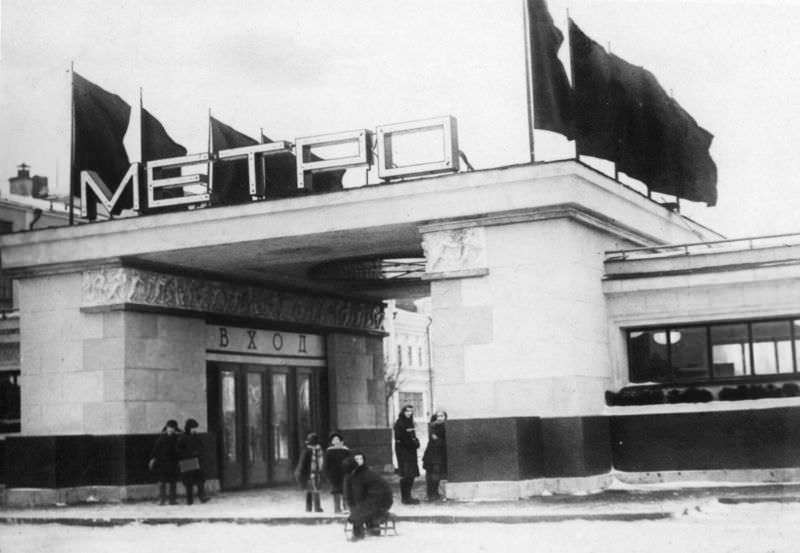
Sokolniki was one of the original 13 stations on the first line. Its design was relatively restrained compared to some of the more elaborate stations built in later years, but it still reflected the attention to detail that defined the Metro’s early construction. Wide platforms, clean lines, and decorative elements marked it as something far beyond a typical transit stop.
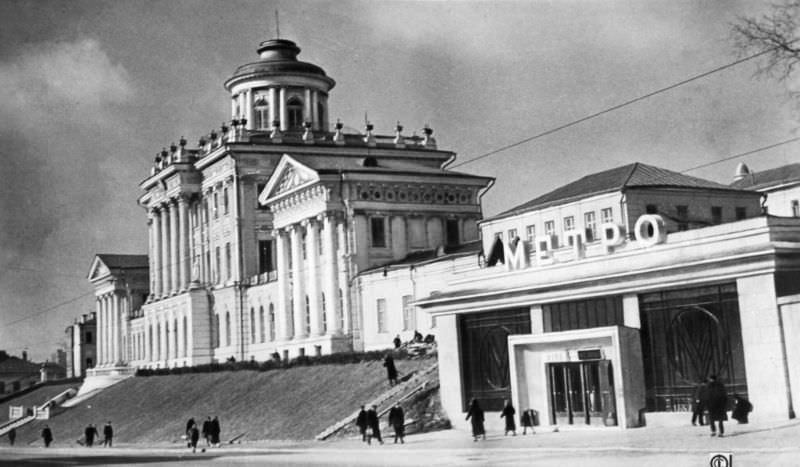
The Lenin Library station sat near one of the Soviet Union’s most important cultural institutions — the state library that bore Lenin’s name. The station’s entrance and halls were designed to match the cultural significance of the area above ground. These early stations connected ideology with architecture in a very deliberate way.
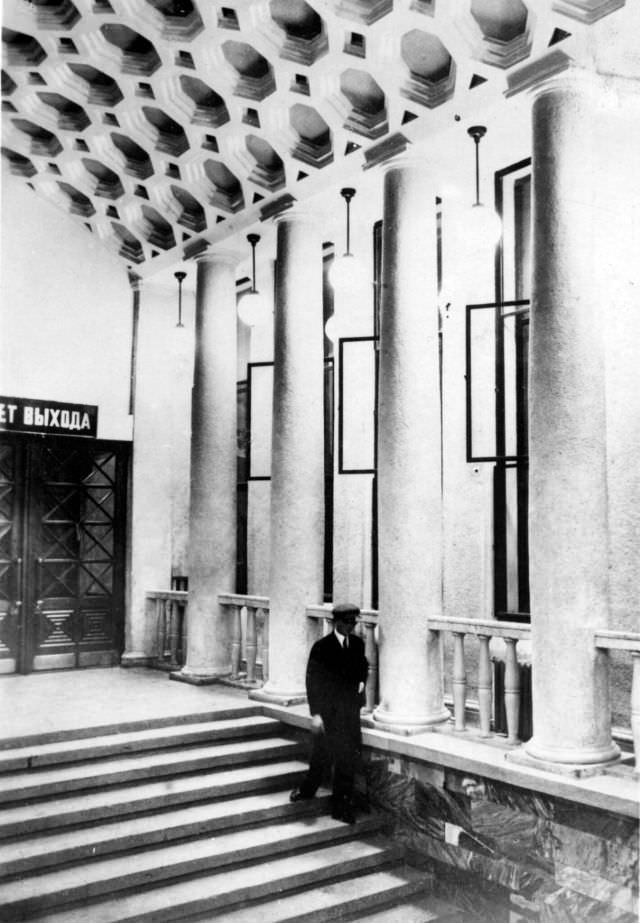
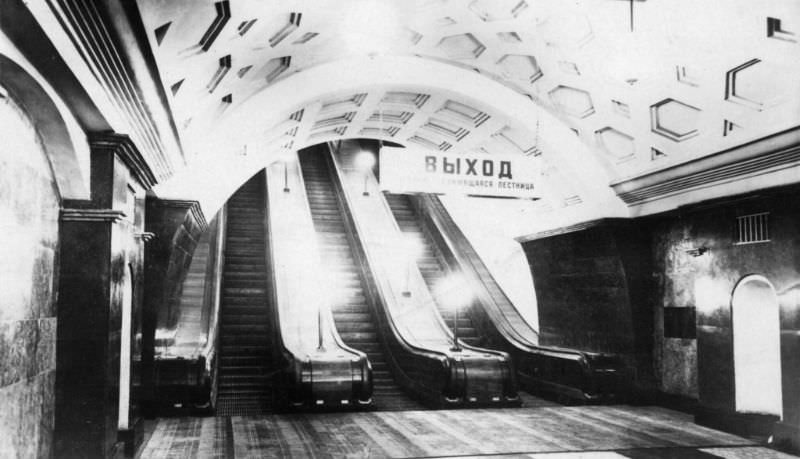
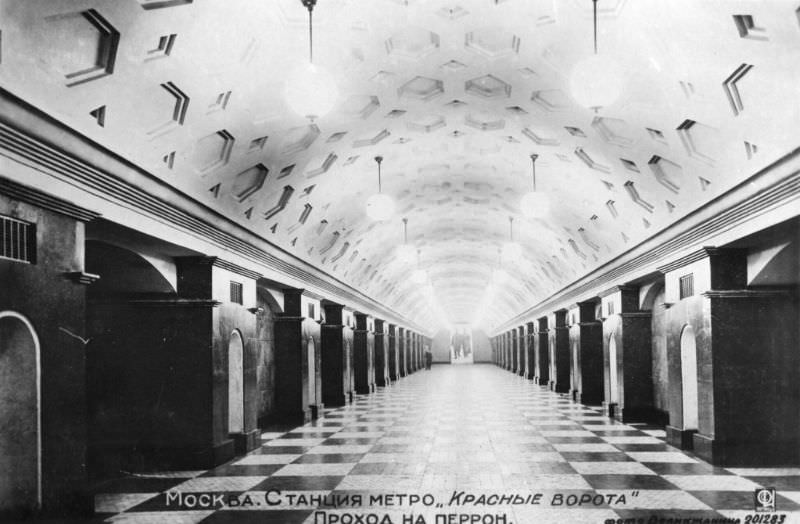
The Red Gates station featured one of the Metro’s most notable engineering elements: its escalators. For most Moscow residents in 1935, riding an escalator was a completely new experience. The station sits deep underground, and the long escalator ride down was itself a spectacle. The Red Gates station reaches a significant depth, and its escalators were among the longest in the system at the time.
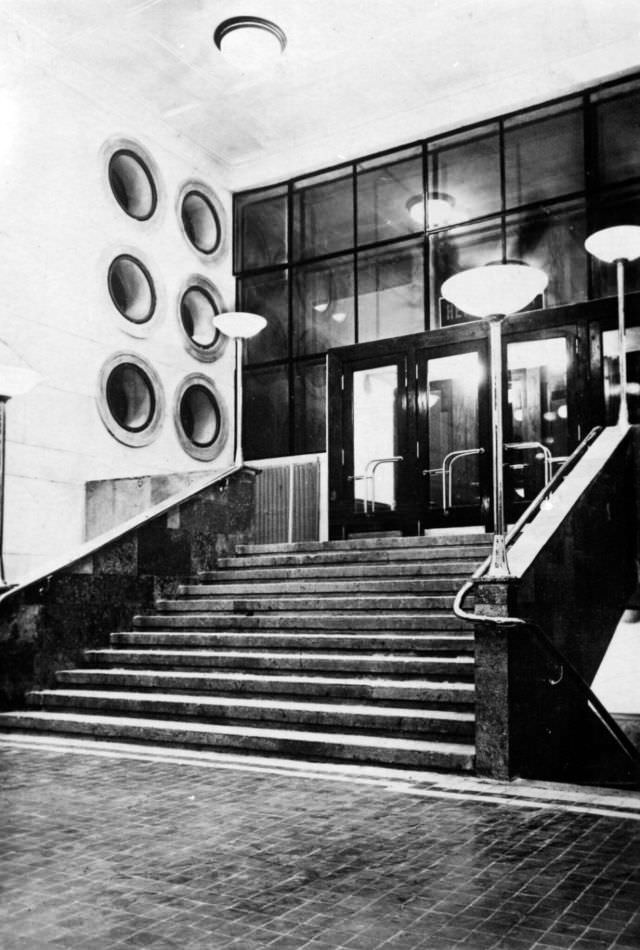
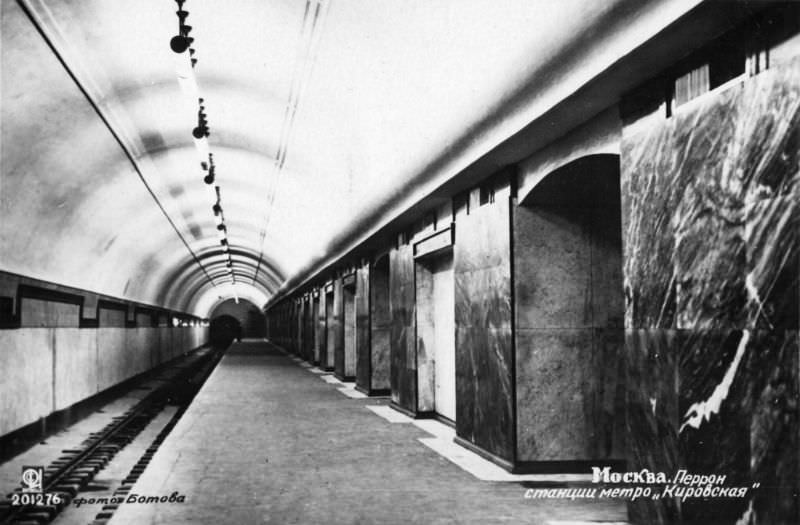
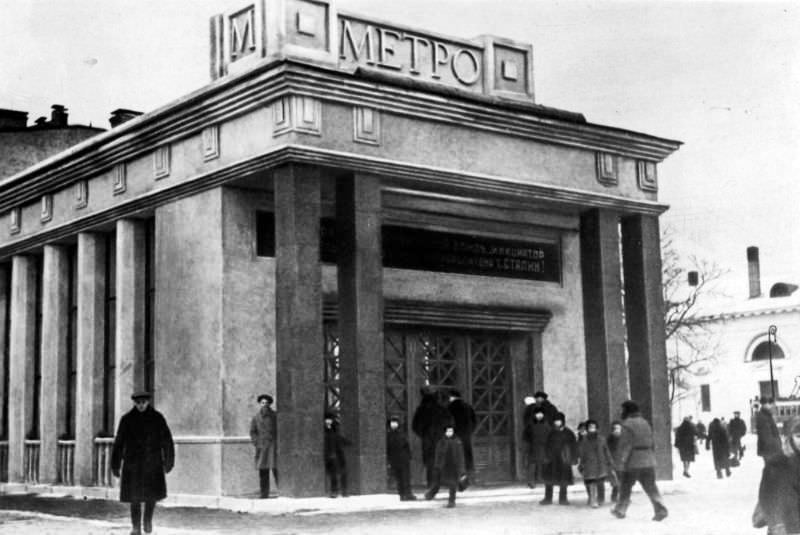
The vestibule of the Kirovskaya station shows how much thought went into the transitional spaces of the Metro — not just the platforms, but the entrance halls and passages leading riders underground. Arched ceilings and clean stonework were standard even in these functional areas. Nothing was left as bare concrete if it could be decorated.
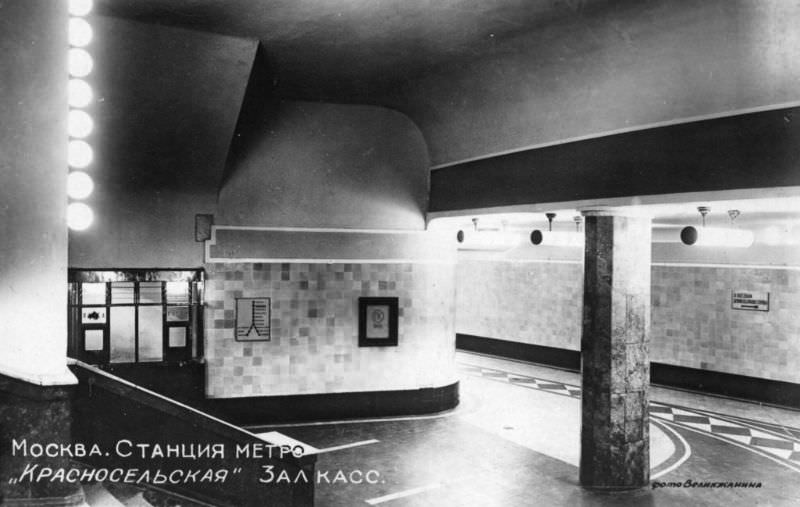
Ticket halls like the one at Krasnoselskaya were the first interior spaces passengers encountered. These halls had to handle large crowds while still projecting the visual authority the Soviet government wanted. High ceilings, symmetrical layouts, and carefully placed lighting accomplished both goals.
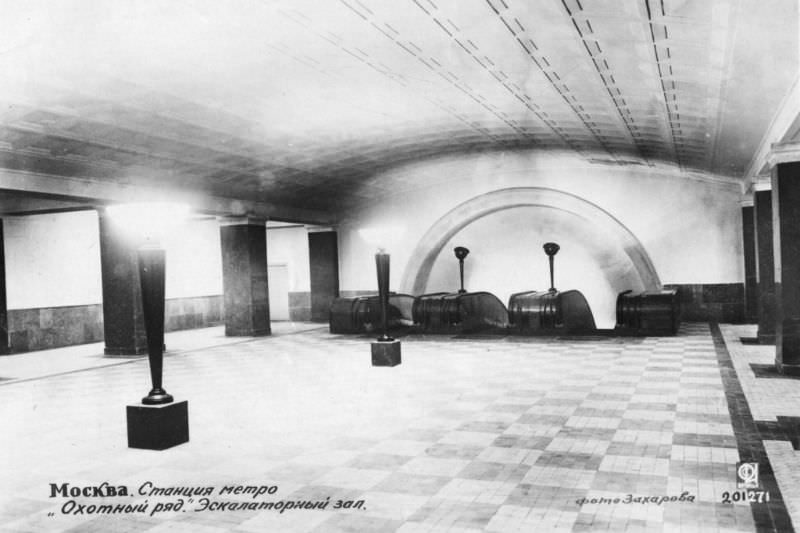
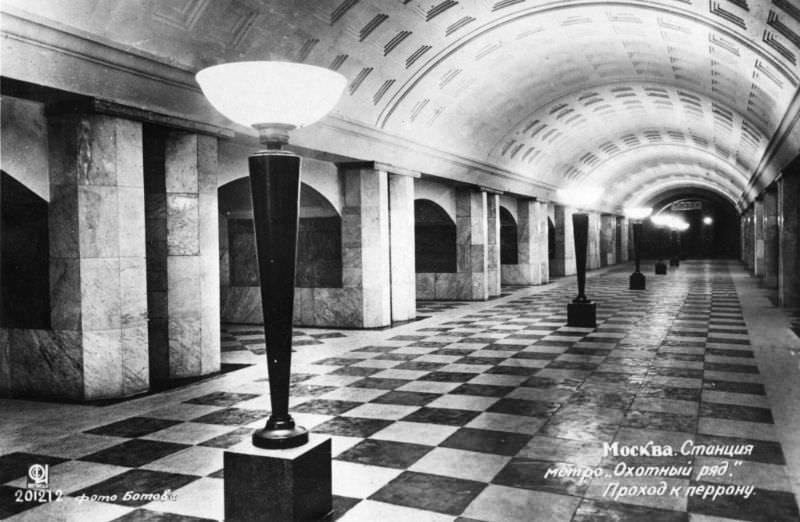
Okhotny Ryad was one of the central stations on the original line, and its escalator hall and platform exits were photographed extensively in 1935. The station’s location near the heart of Moscow made it a busy hub almost immediately after opening. These photos show the space still fresh — the stone floors unscuffed, the walls unmarked by years of commuter traffic.
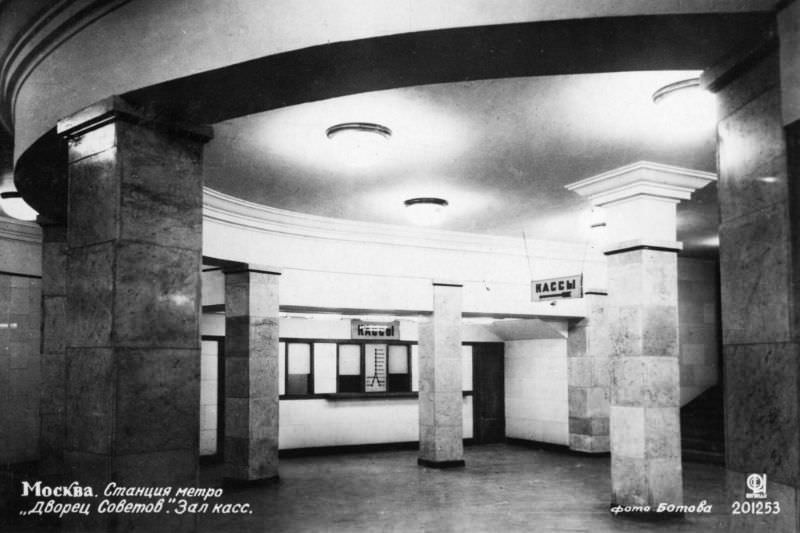
The Palace of Soviets station took its name from a massive construction project planned for the area above — a skyscraper that was meant to be the tallest building in the world and a monument to Soviet power. The building was never completed, but the station named for it stood as a reminder of those ambitions. Its ticket hall, seen here in 1935, carried the grand architectural language of the whole Metro system.
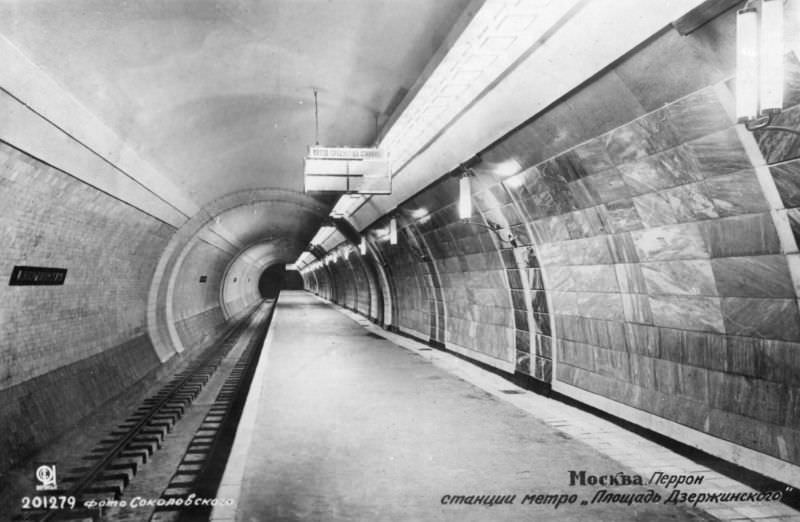
Dzerzhinski Square was named after Felix Dzerzhinsky, the founder of the Soviet secret police. The platform at this station reflected the same decorative ambitions as the rest of the system — wide, well-lit, and built to impress. The station’s name would later be changed, but in 1935 it stood as one of the original 13.
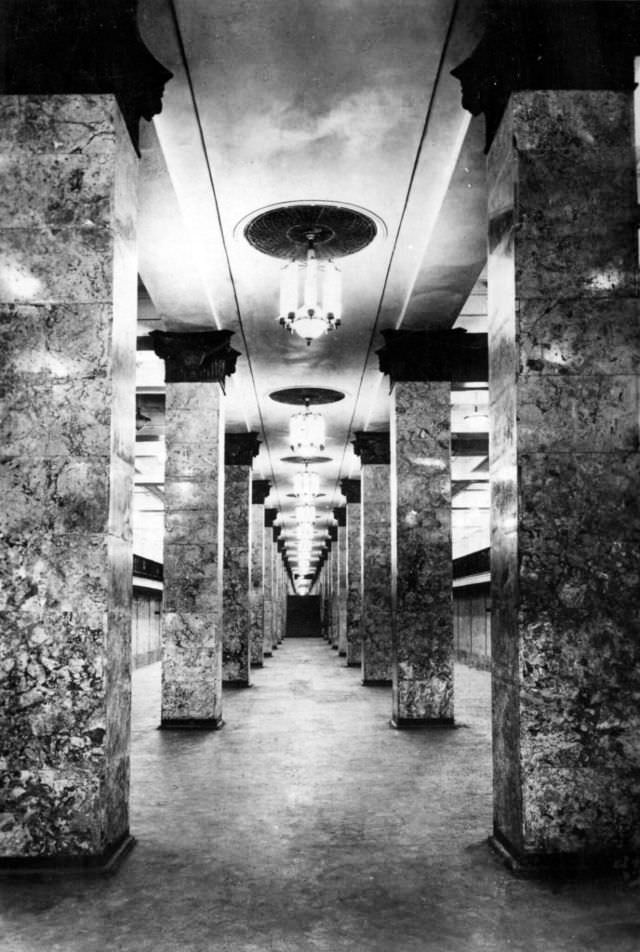
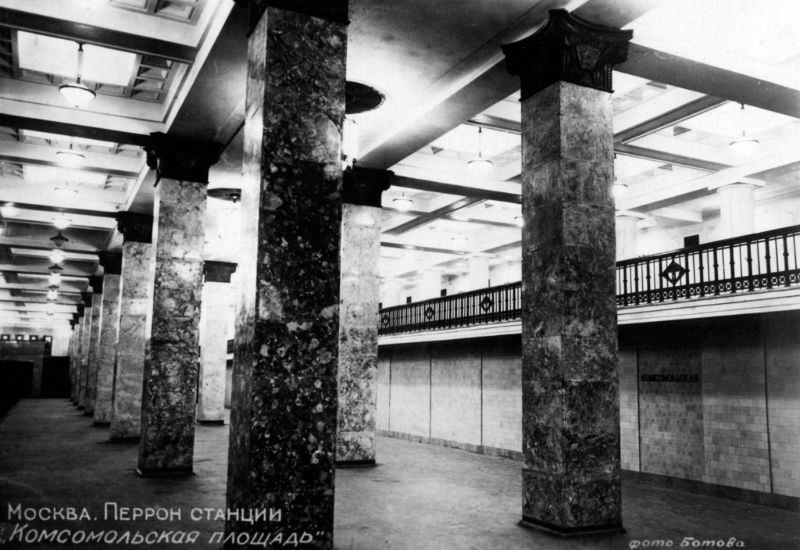
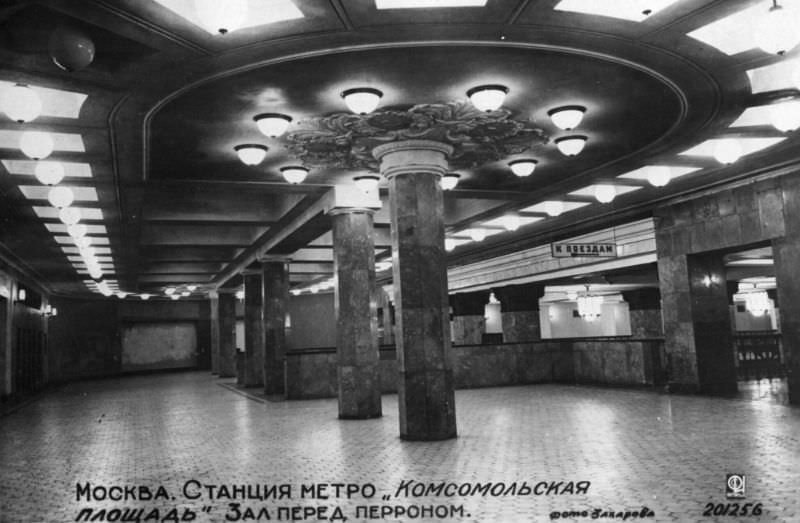
Komsomolskaya Square station served one of the busiest transportation hubs in Moscow, located near three major railway terminals. Its platform was built to handle the heavy foot traffic of travelers arriving and departing the city. Even in 1935, the station saw enormous use. These two platform views show the scale of the space and the quality of the original construction.
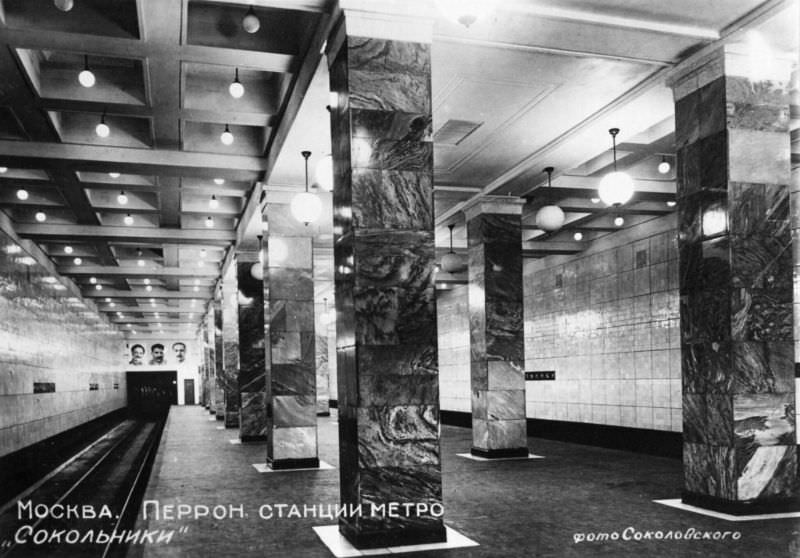
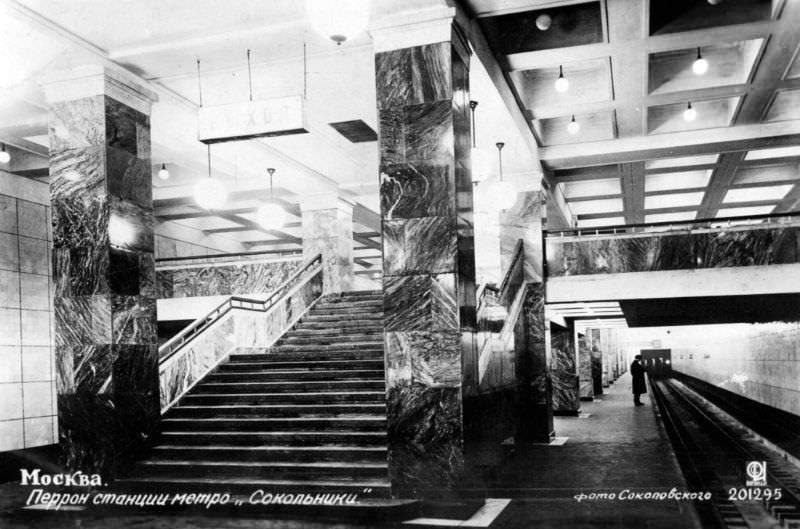
Sokolniki served as the northeastern terminus of the first Metro line. These platform photos capture both the architectural character of the station and the practical layout that made it functional as an end-of-line stop. Passengers boarded and exited here before the system had expanded further into the city’s outskirts.
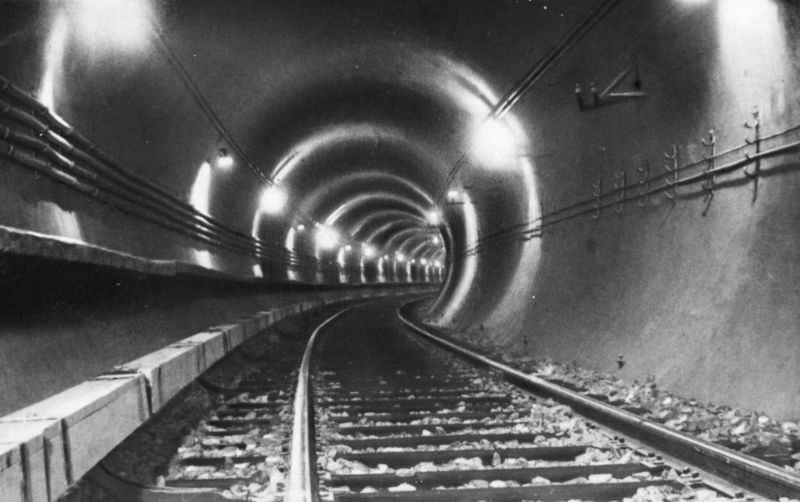
This rare image of the Kirov section’s single-rail tunnel gives a view passengers never saw during normal operation. The tunnels running beneath Moscow’s streets were an enormous engineering undertaking. Workers dug through unstable soil and worked around existing city infrastructure. The tunnels had to be precise — a slight miscalculation could cause the ground above to shift or collapse.
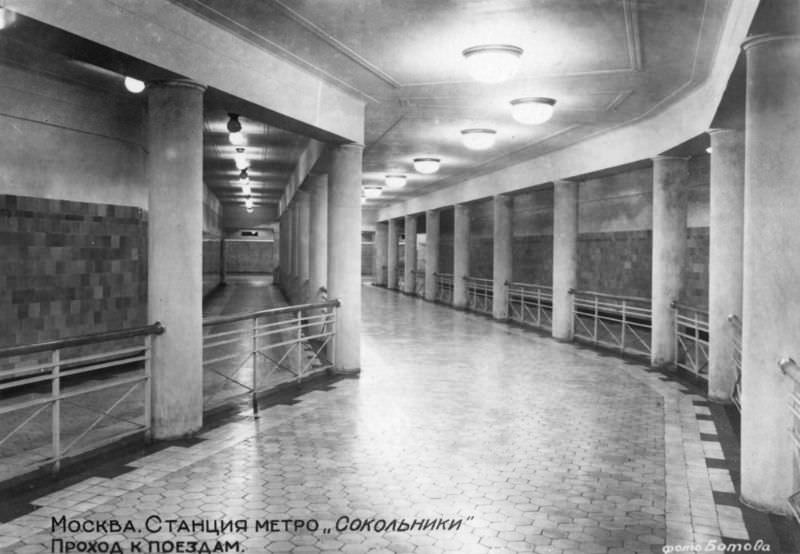
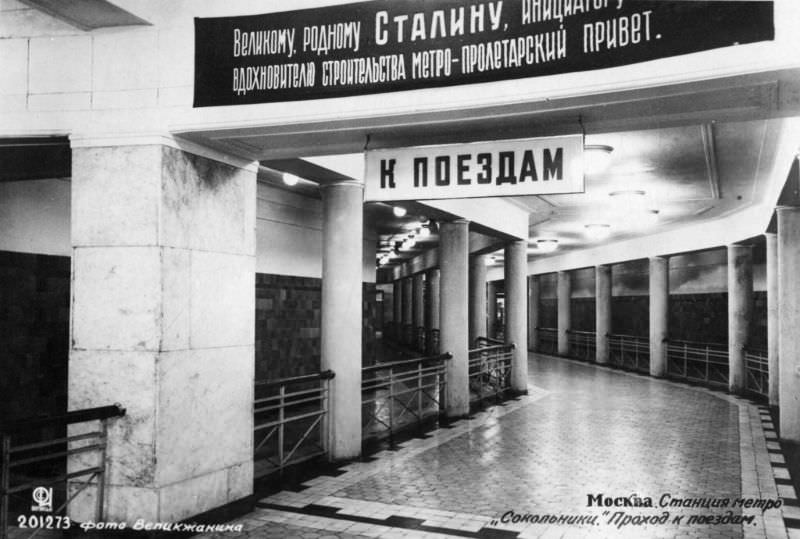
The passages leading from the ticket halls down to the trains at Sokolniki show the consistent design language used throughout the Metro. Arched ceilings and tiled walls carried through every section of each station. No part of the passenger journey was left unfinished or plain. Even the corridors connecting spaces received decorative treatment.
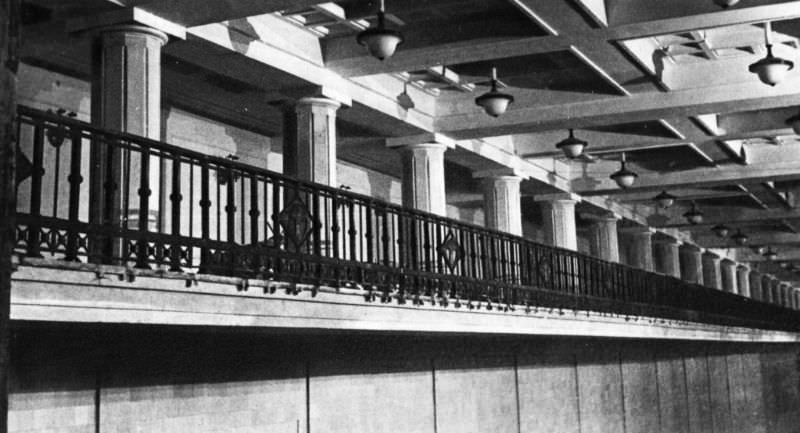
The balcony level at Komsomolskaya Square station was an unusual architectural feature that gave the space a multi-level grandeur rare for a subway station. Looking down from the balcony onto the platform below, the scale of the hall becomes fully apparent. This design choice reinforced the idea that these stations were public monuments, not just transit infrastructure.
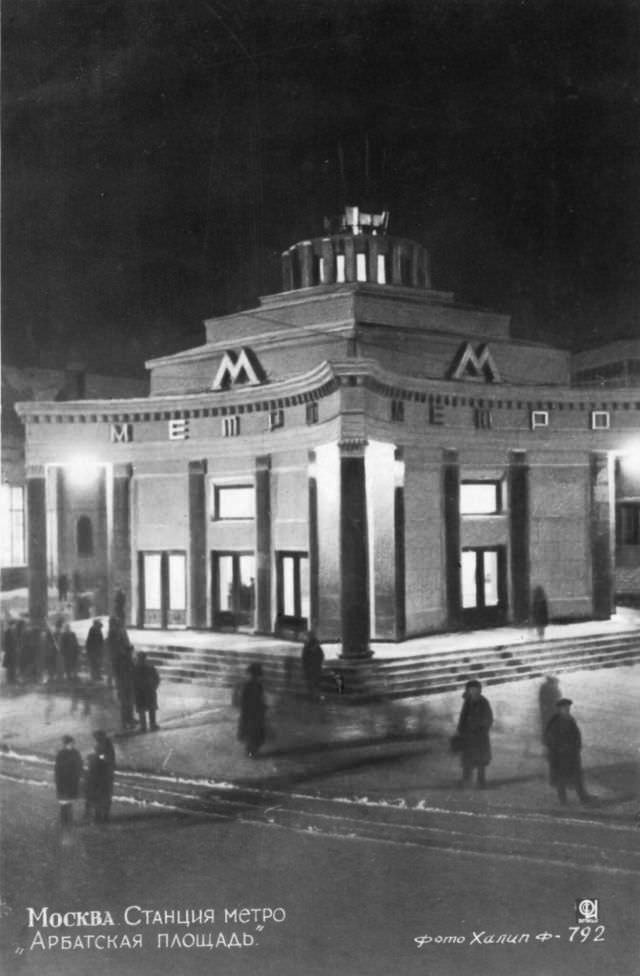
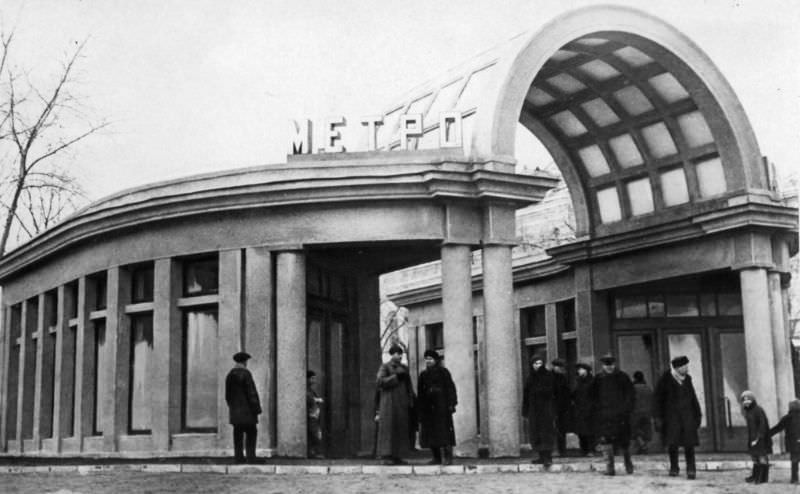
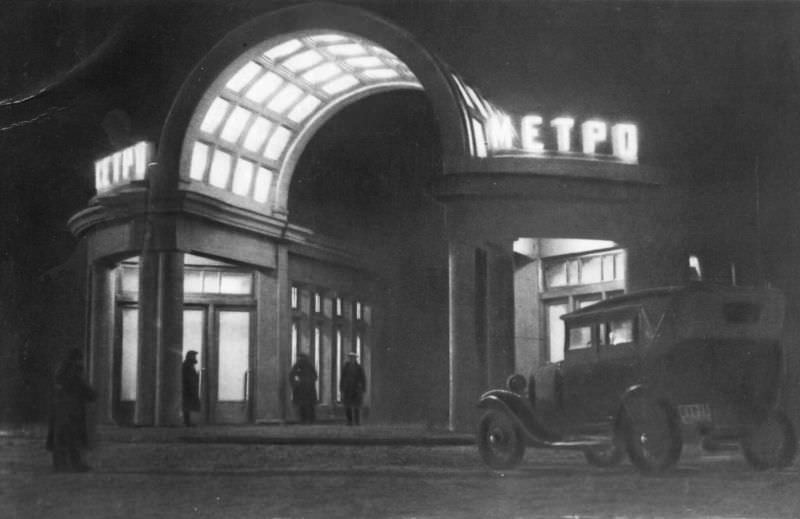
The Kropotkin Gate station, shown here in two views, was named after the nearby historic gate that once marked the boundary of old Moscow. Its design followed the same principles as the rest of the system — strong columns, clean geometry, and a sense of permanence built into every surface. These stations were constructed to last, and most of the original 13 are still in daily use today.
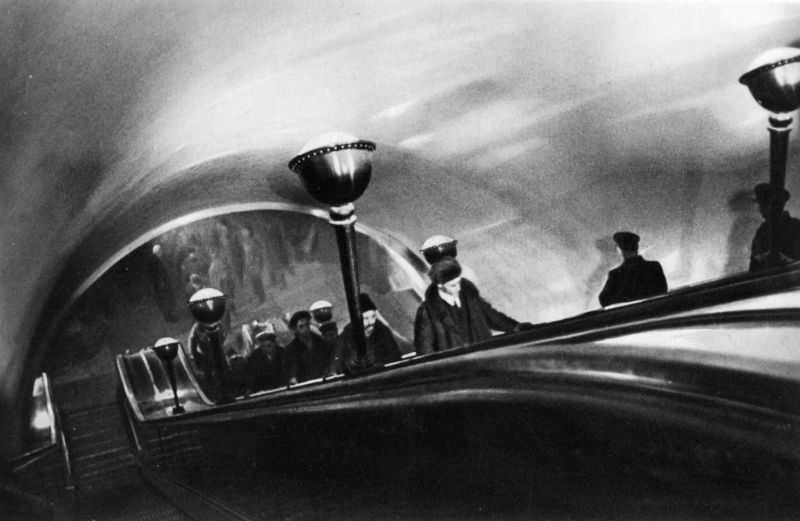
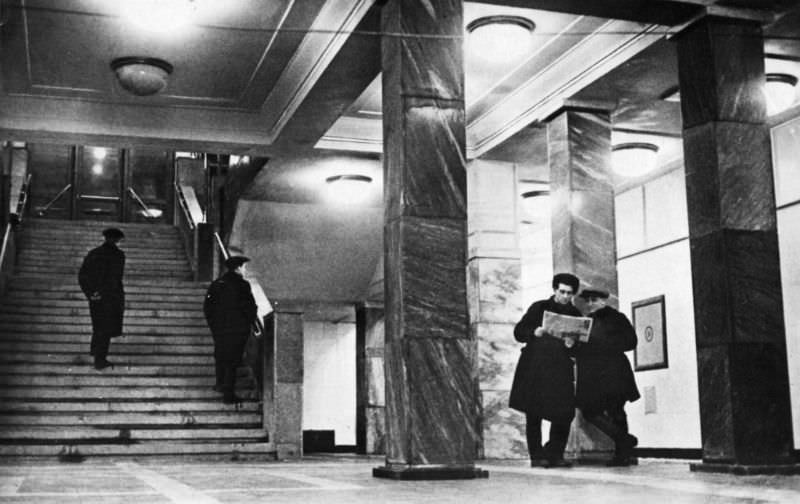
The distribution hall at Okhotny Ryad directed passengers between the escalators and the platform exits. These connector halls were critical to managing passenger flow, especially at busy central stations. The 1935 photos show a system that was thoroughly thought through — from the deepest tunnel to the surface entrance.
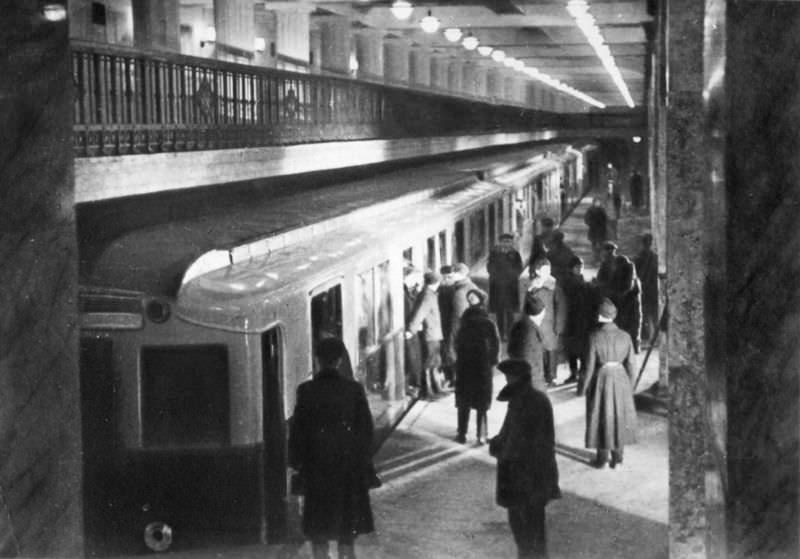
One of the most striking images in this collection shows an actual Metro train sitting at the Komsomolskaya Square platform. The rolling stock used in 1935 was Soviet-built and represented a significant industrial achievement. Seeing the train inside the grand station hall underscores how intentional the contrast was — utilitarian machinery operating inside spaces designed to feel monumental.
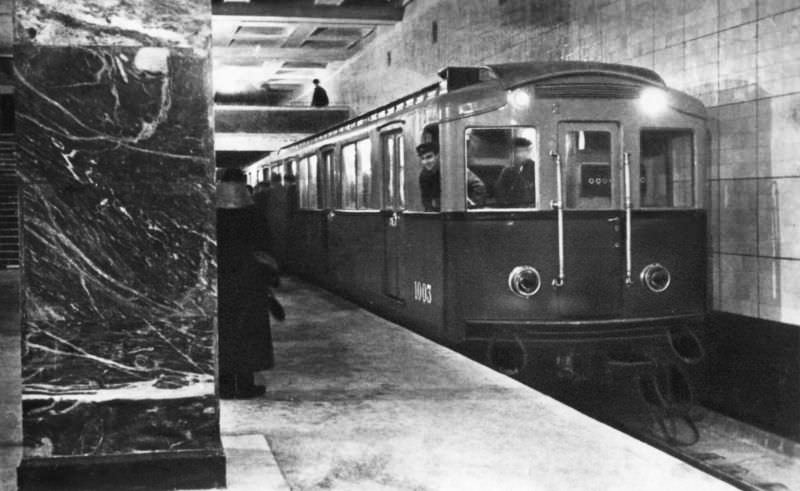
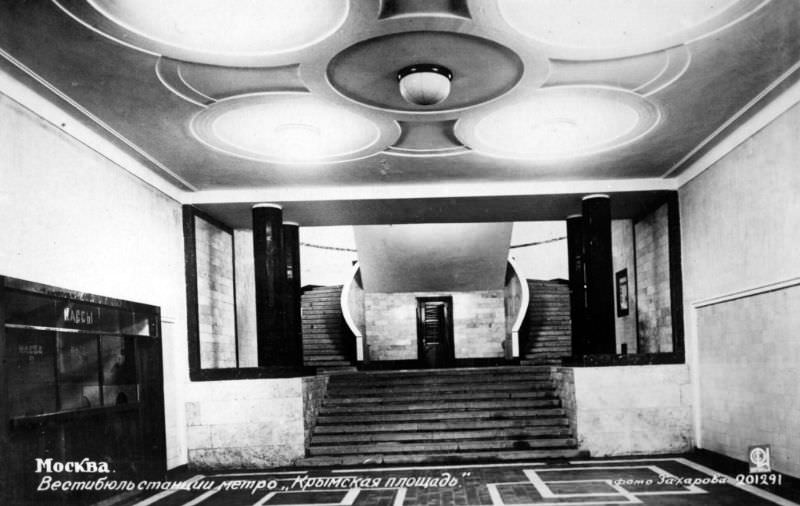
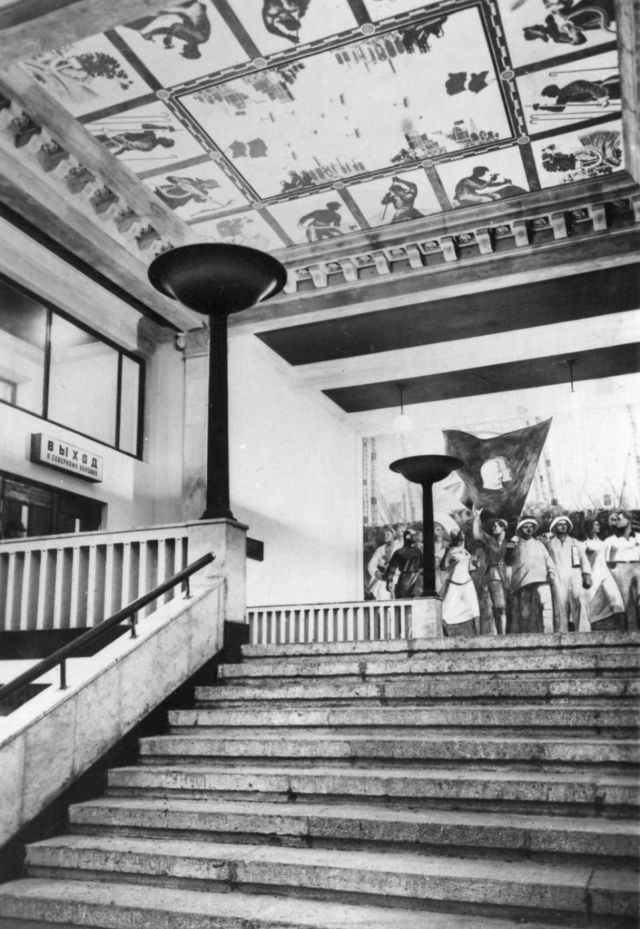
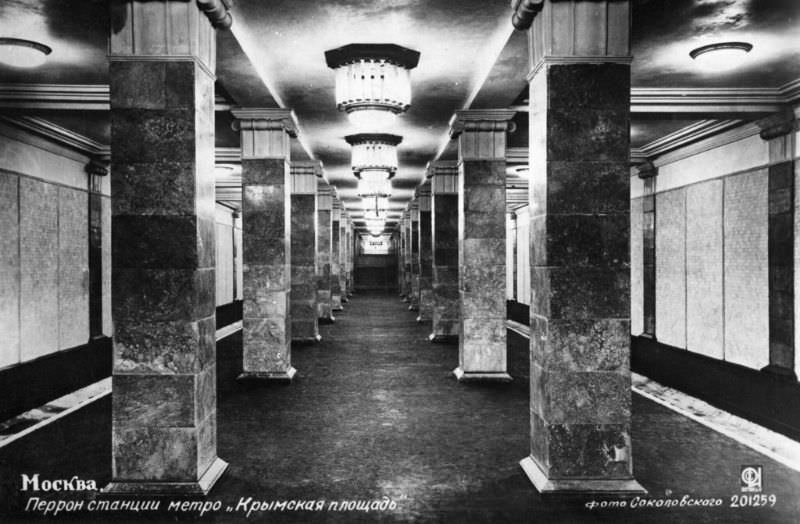
The vestibules of the Crimean Square and Komsomolskaya Square stations were the first architectural statements passengers encountered when entering the Metro. These spaces set the tone before riders even reached the escalators. High ceilings, decorative moldings, and carefully considered proportions were present from the very first step inside.
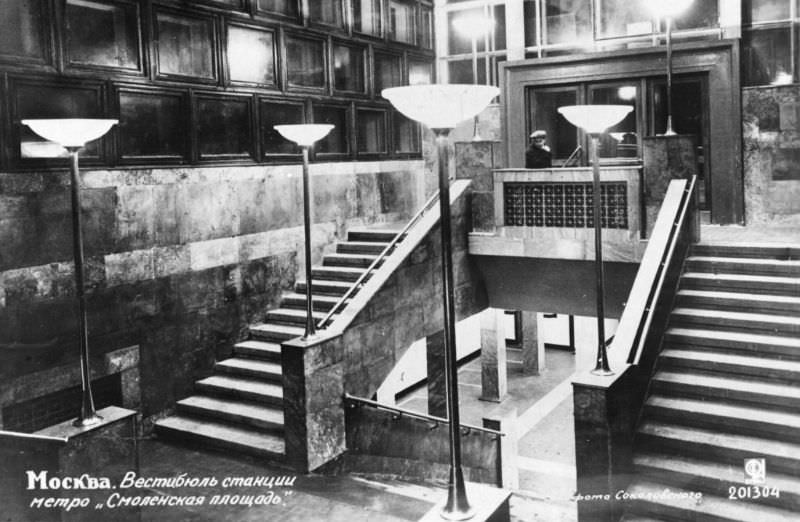
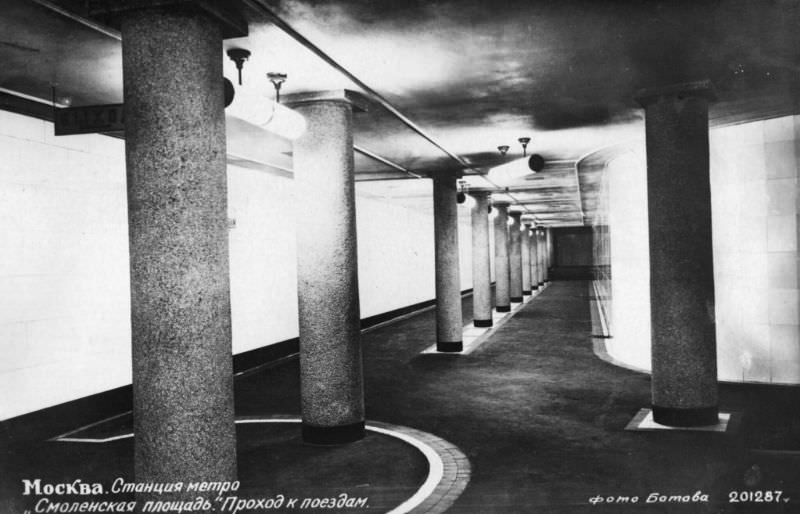
The vestibule at Smolensk Square rounds out this collection of 1935 photographs. Taken together, these images document a transit system that was unlike anything built before in the Soviet Union. The Moscow Metro opened as both a functional railway and a statement of state power — every column, every chandelier, and every tiled wall deliberately crafted to make that point.
