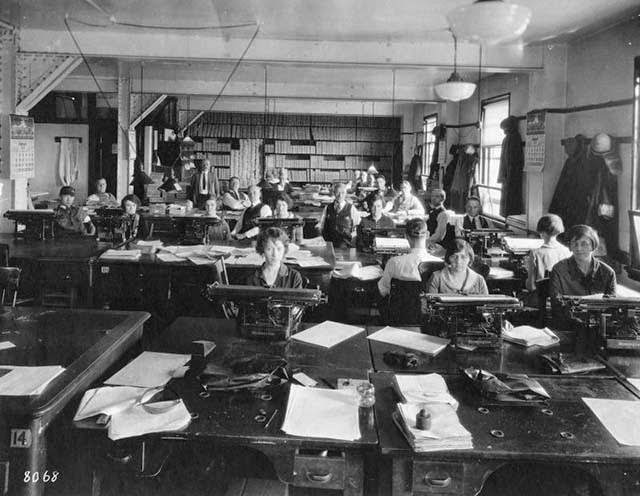
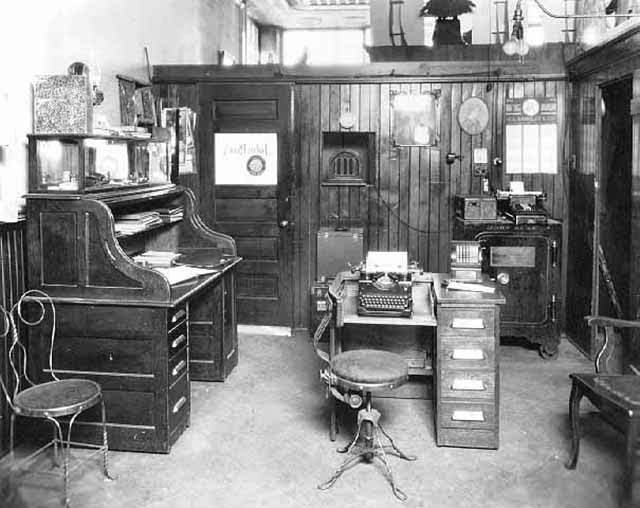
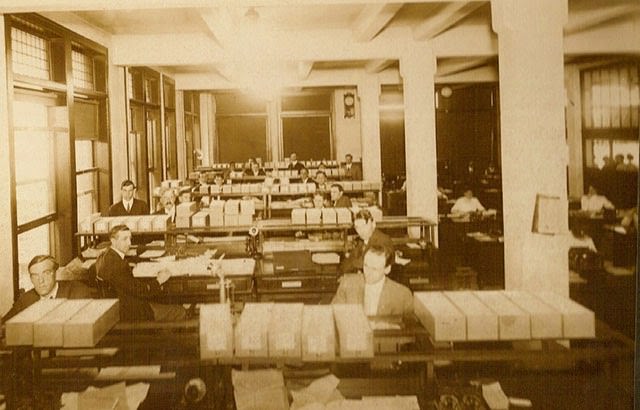
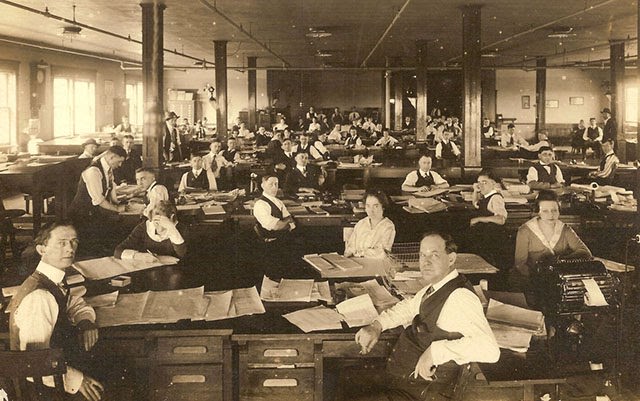
The 1920s American office was a loud, busy, and highly organized machine — powered entirely by human hands. No computers, no digital files, no internet. Every letter was typed by hand, every number was cranked through a mechanical adding machine, and every message traveled through pneumatic tubes or a Western Union envelope. Skyscrapers in New York and Chicago filled entire floors with clerks, typists, and bookkeepers, all working in tight formation from 9 AM to 5 PM — and often Saturday mornings too.
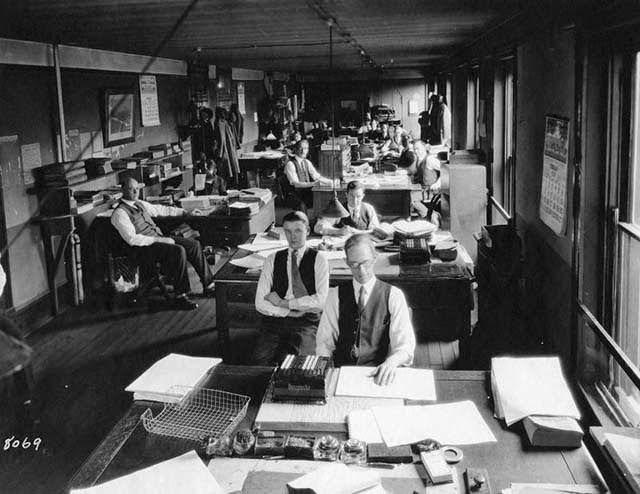
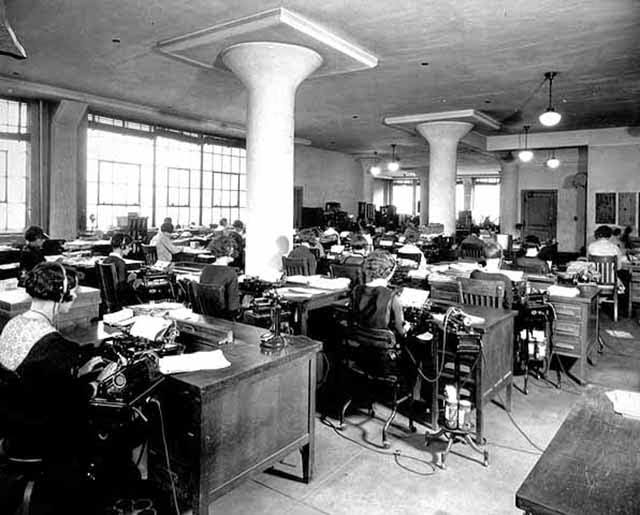
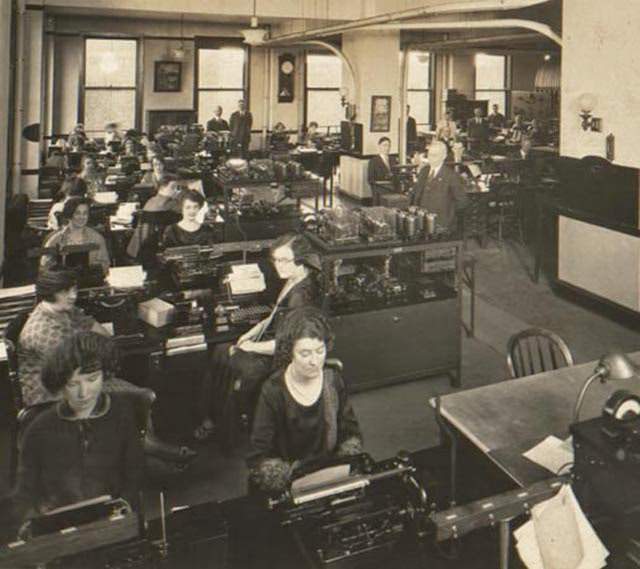
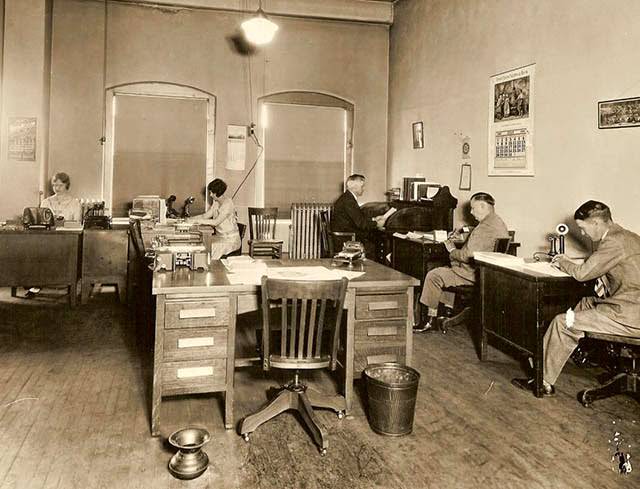
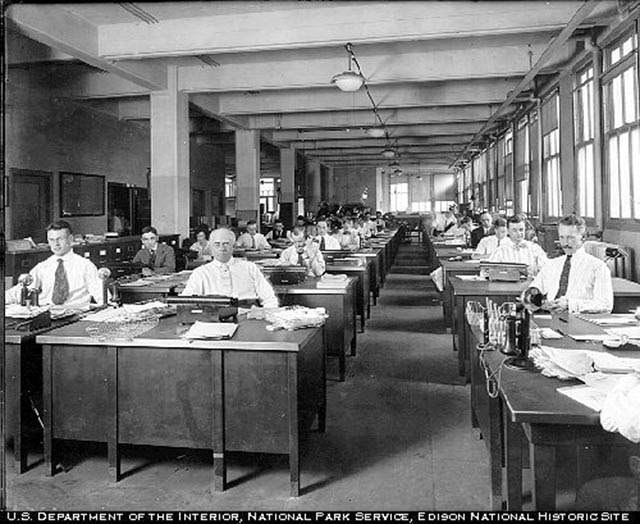
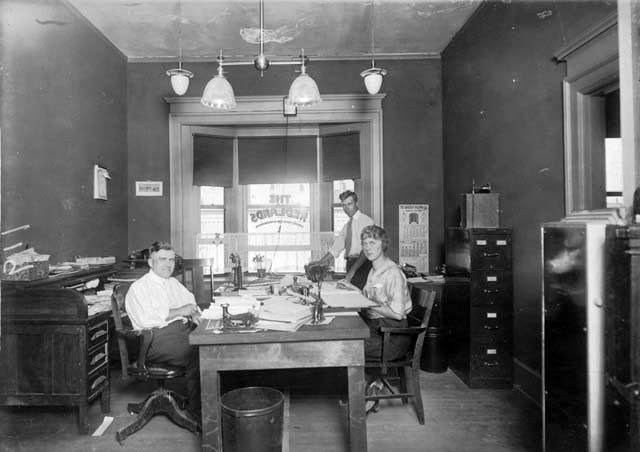
The standard office layout was called the “bullpen.” Dozens of desks sat in long, straight rows inside a single large room. Managers watched from private offices along the perimeter, often separated by glass partitions that gave them a clear view of the floor. The noise was constant — typewriter keys striking metal, telephone bells ringing, and the shuffle of paper moving from desk to desk. High ceilings helped move the air, and large electric ceiling fans provided the only relief from summer heat, since air conditioning did not yet exist.
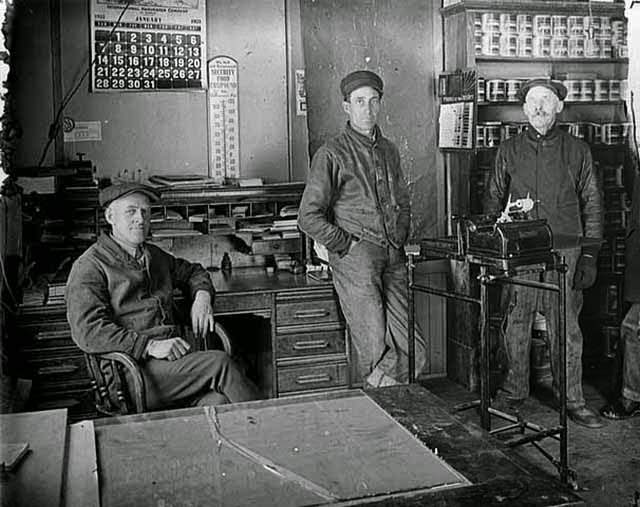
The typewriter dominated the office landscape. Brands like Underwood, Royal, and Remington built heavy cast-iron machines that required real force to operate. Each keystroke drove a metal arm into an ink ribbon pressed against the page. Making a correction meant scrubbing the ink off with a small circular eraser. To produce multiple copies at once, typists layered sheets of carbon paper between the pages — usually enough for three or four copies per strike.
Stenographers were a critical part of the workflow. A stenographer sat with a manager during a meeting and captured his words in shorthand — a system of symbols and abbreviations that stood in for full words and phrases. Gregg and Pitman were the two most widely used shorthand methods. Once the meeting ended, the stenographer returned to her desk and typed out a formal letter from her notes. These workers were almost always women, and they formed the backbone of daily office communication.
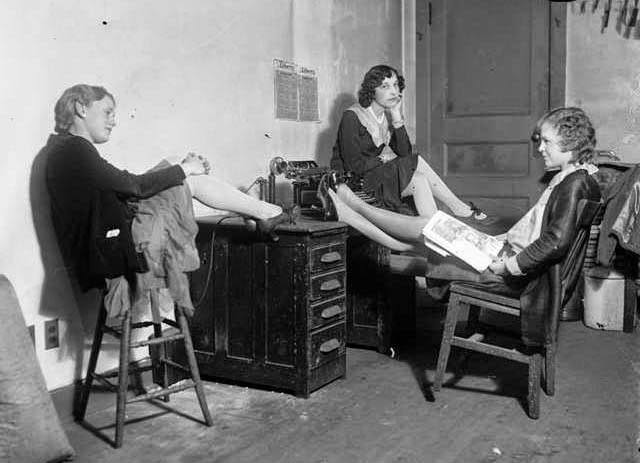
The 1920s saw a sharp rise in the number of women working in offices. They filled roles as typists, file clerks, and stenographers — positions that offered steady wages and a degree of financial independence that previous generations of women rarely had access to. They lived in city apartments, bought fashionable clothing, and built professional lives. Despite this, men held nearly every managerial and executive role. The “office boy” — a young male errand runner who sharpened pencils and refilled inkwells — ranked above most women in the office hierarchy in terms of promotion potential.
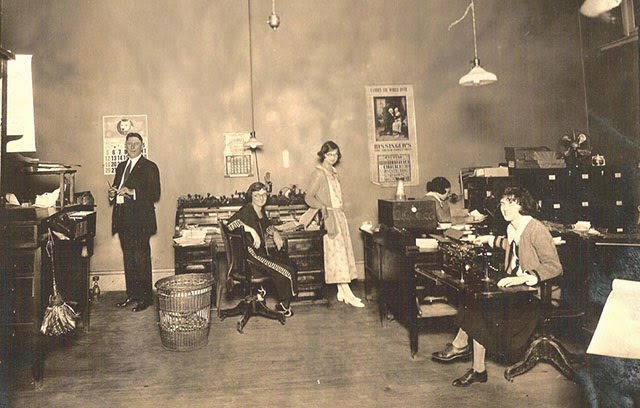
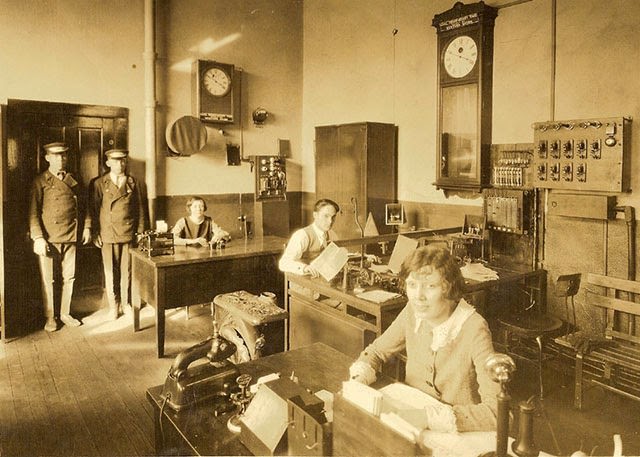
The telephone was becoming a standard desk fixture, though it worked very differently than it does today. Most phones were the “candlestick” style — a tall vertical base with a separate earpiece. To make a call, a worker picked up the receiver and waited for the office switchboard operator to connect the line. This operator managed a large PBX board, plugging and unplugging patch cords to route calls within the building or to an outside line. Rotary dials appeared toward the end of the decade, letting workers dial local numbers on their own, but long-distance calls remained expensive and required operator assistance.
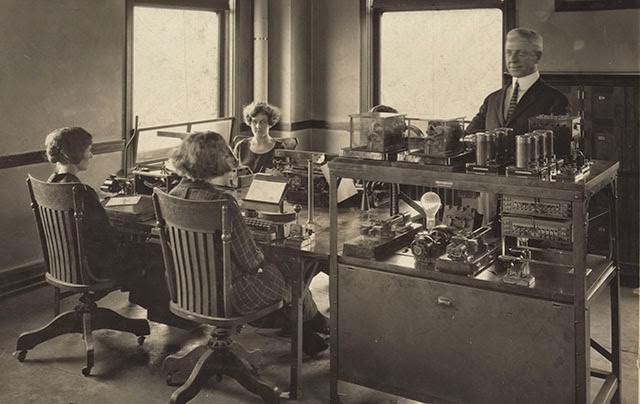
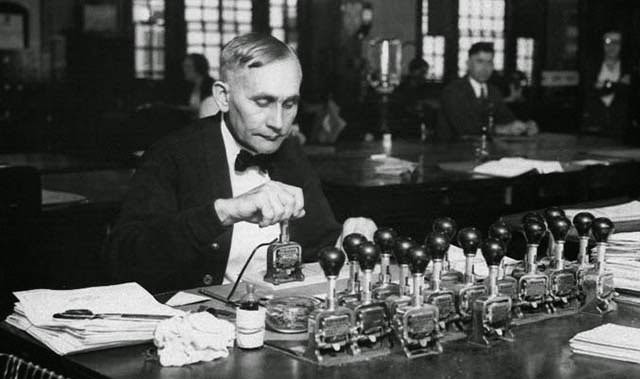
For urgent outside communication, businesses relied on Western Union. Messengers in uniform regularly appeared in office lobbies carrying yellow envelopes with telegram messages inside. These telegrams were the fastest way to send critical business news across the country. Standard transactions traveled more slowly, through formal typed letters sealed with a wet sponge roller, stamped on a mechanical franking machine, and sent through the postal system.
Moving documents inside a large building was solved with pneumatic tubes. An employee placed a memo or contract into a metal canister and fed it into a pipe in the wall. Air pressure shot it to another department in seconds — far faster than a messenger walking between floors. Large office buildings had networks of these tubes connecting departments across multiple floors.
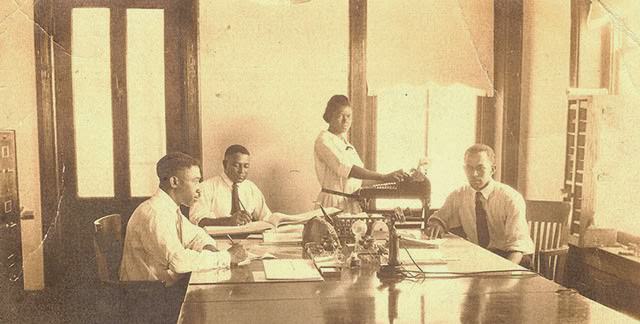
Financial records lived in large, hand-written ledgers. Bookkeepers used fountain pens to record every transaction by hand, then verified the totals using mechanical adding machines. These devices had rows of numbered buttons and a hand crank on the side. Pulling the crank caused the machine to print a result onto a thin paper strip. Accountants spent hours cross-checking their handwritten entries against those printed strips to make sure every number matched.
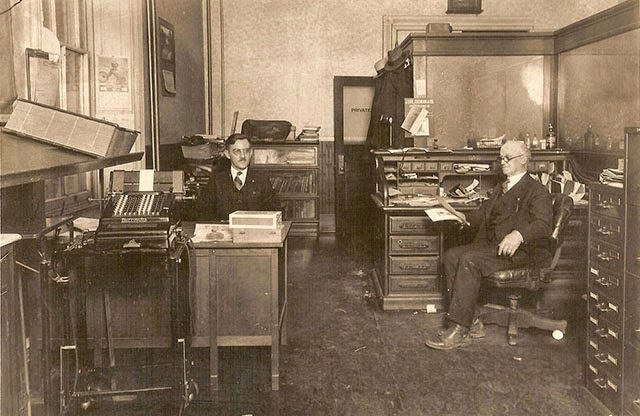
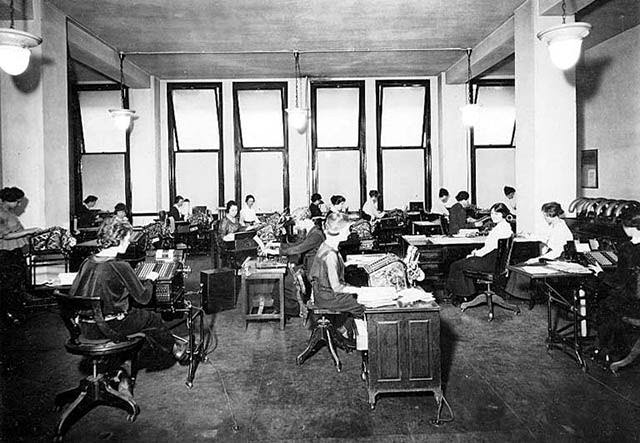
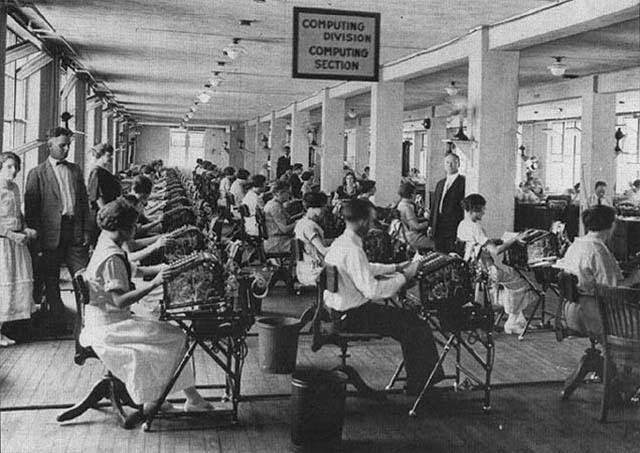
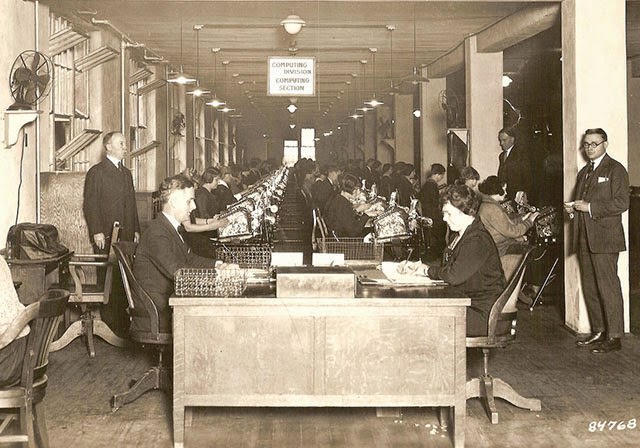
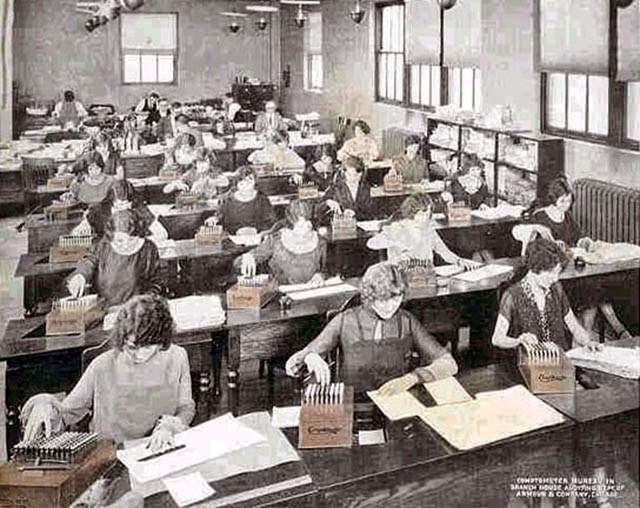
Calculating machines came in several competing brands, and large organizations often had entire rooms filled with them. Comptometers, Monroe calculators, and Burroughs machines each had their own method of operation. Workers trained specifically to use them quickly and accurately, because a single wrong entry could throw off an entire column of figures.
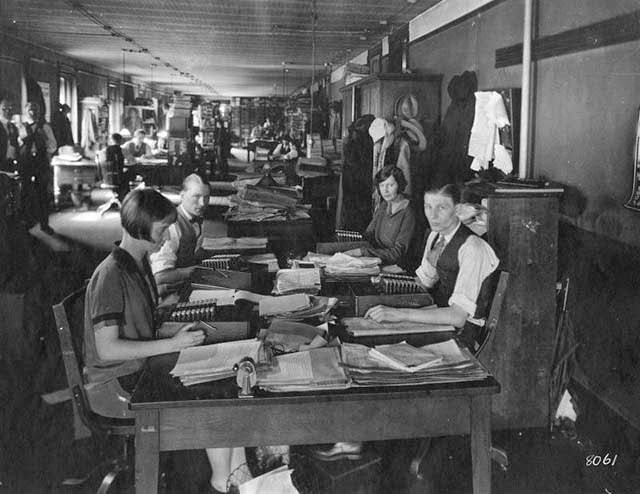
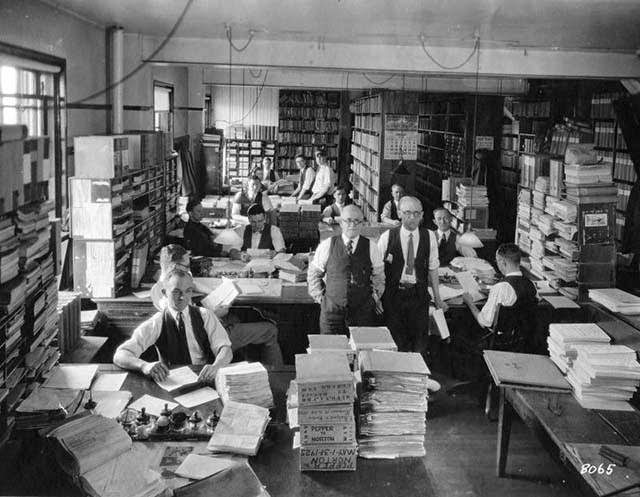
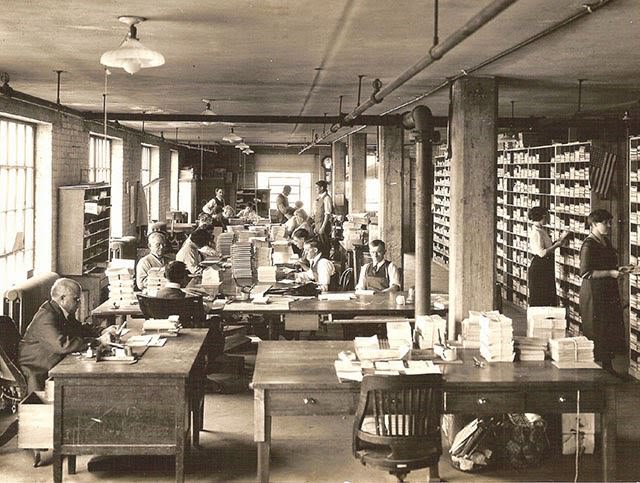
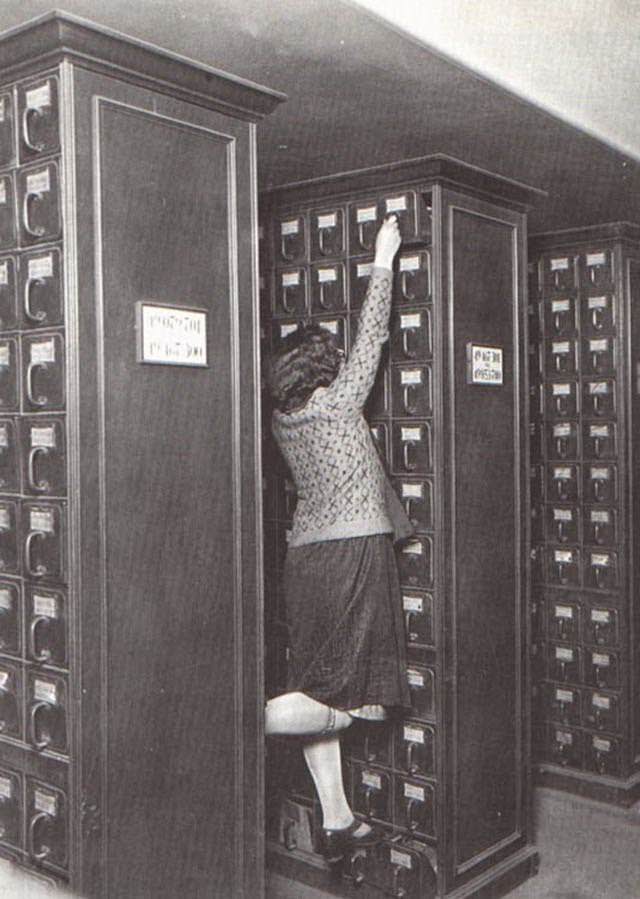
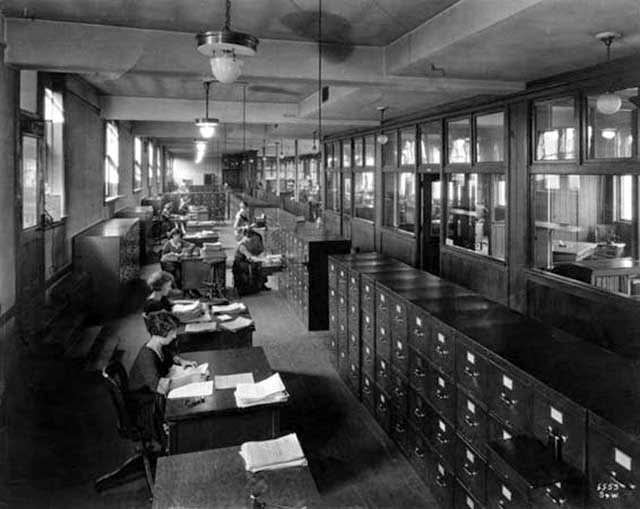
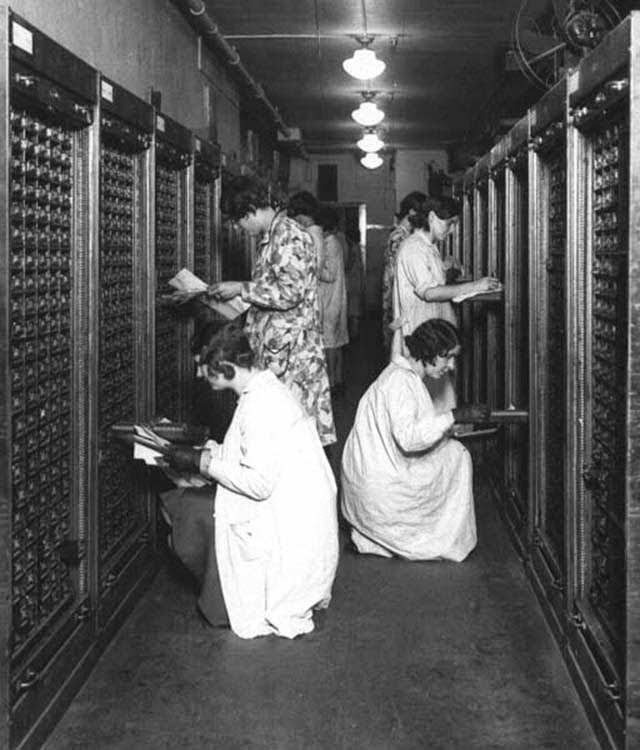
Without digital databases, every piece of information the company needed existed somewhere on paper. Steel and oak filing cabinets stood in rows, stuffed with manila folders organized alphabetically or by date. Large companies kept dedicated file rooms where clerks spent their entire workday locating, retrieving, and re-filing documents. Finding a single contract sometimes took several minutes of searching through drawer after drawer.
Some offices used the Addressograph system to speed up mass mailings. Metal address plates were embossed with names and addresses using Graphotype machines, then stored in organized files. When a mailing was needed, the plates were run through the Addressograph machine, which stamped the address onto each envelope automatically. It was one of the earliest forms of office automation.
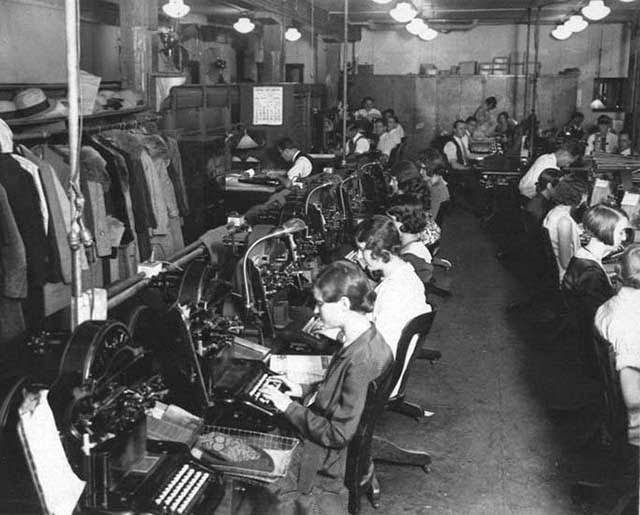
Dress codes were strict and non-negotiable. Men wore three-piece wool suits in navy, charcoal, or brown, paired with detachable stiff collars fastened to their shirts with metal studs. No man entered the office without a tie. Women wore professional dresses with hemlines just below the knee, cloche hats, and Mary Jane shoes. Stockings were required for women regardless of the season. Jewelry was minimal — a string of pearls or a small brooch. The clothing reinforced the tone of the workplace: disciplined, serious, and precise.
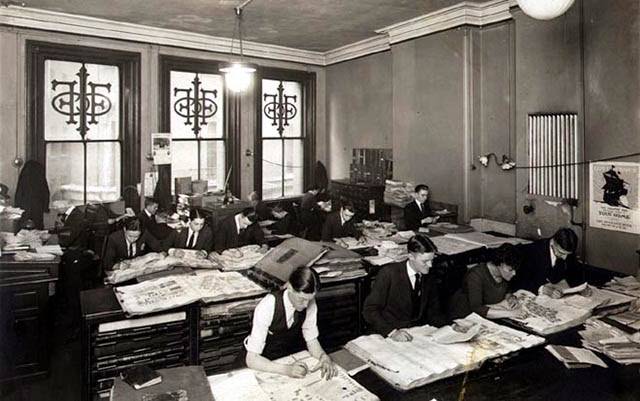
Smoking was permitted throughout the office, and most desks had a glass or metal ashtray sitting on them. The air in many offices carried a visible layer of blue smoke by afternoon. Water came from large glass bubblers or ceramic dispensers, and workers shared metal cups or small pleated paper cups. The water cooler was the one spot where brief, informal conversation was accepted — a quick exchange about a baseball score or the latest silent film before returning to the desk.