Florida in the 1940s was a state pulled in many directions at once. World War II reshaped nearly every corner of the peninsula. The federal government built over 170 military installations across the state, turning flat scrubland and beachfronts into training grounds. Soldiers poured into camps like Blanding and the Pensacola Naval Air Station from every part of the country. Along the Atlantic coast, residents followed strict blackout rules at night — painting the top halves of their car headlights black and hanging heavy curtains over windows to keep city lights from silhouetting ships offshore, where German submarines patrolled.
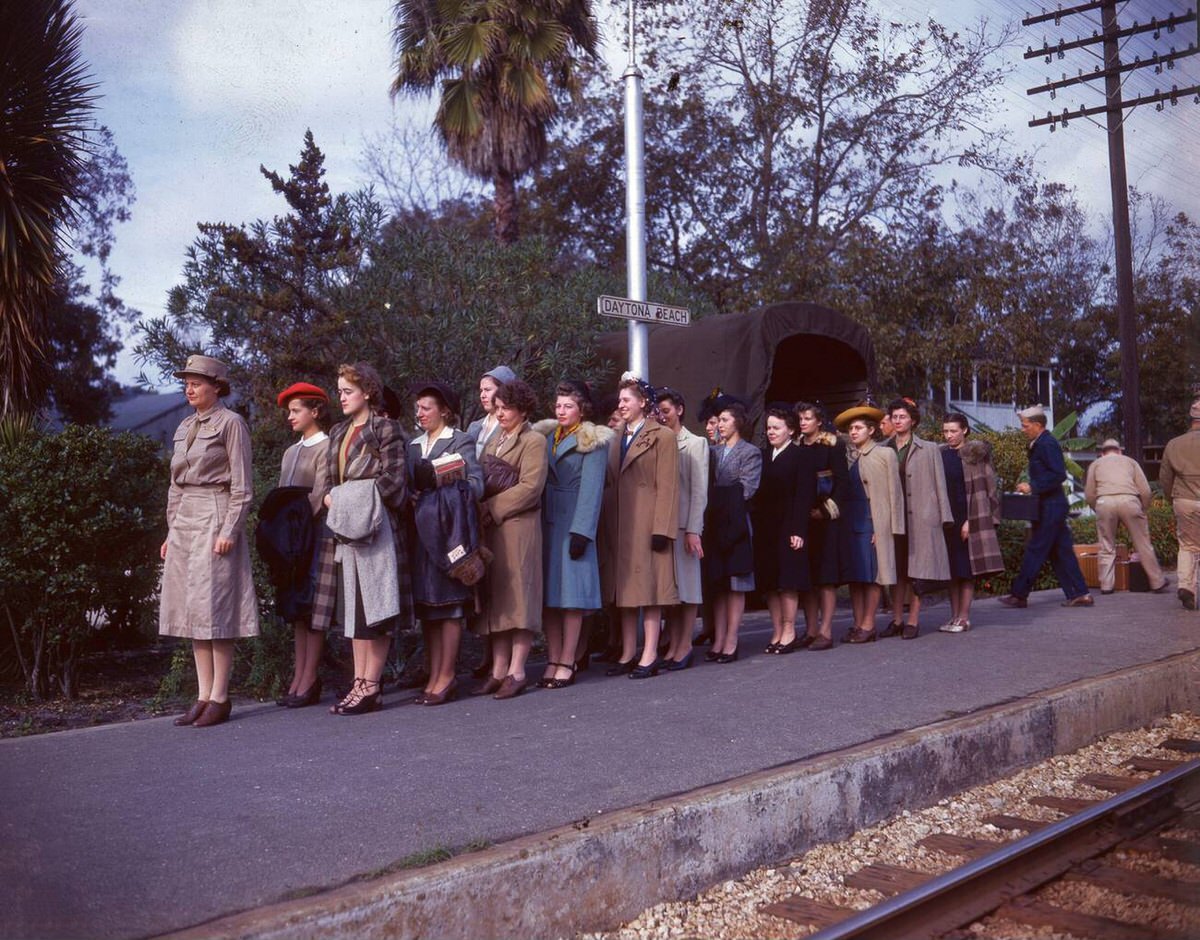
Women’s Army Auxiliary Corps at Daytona Beach, Florida, 1940s
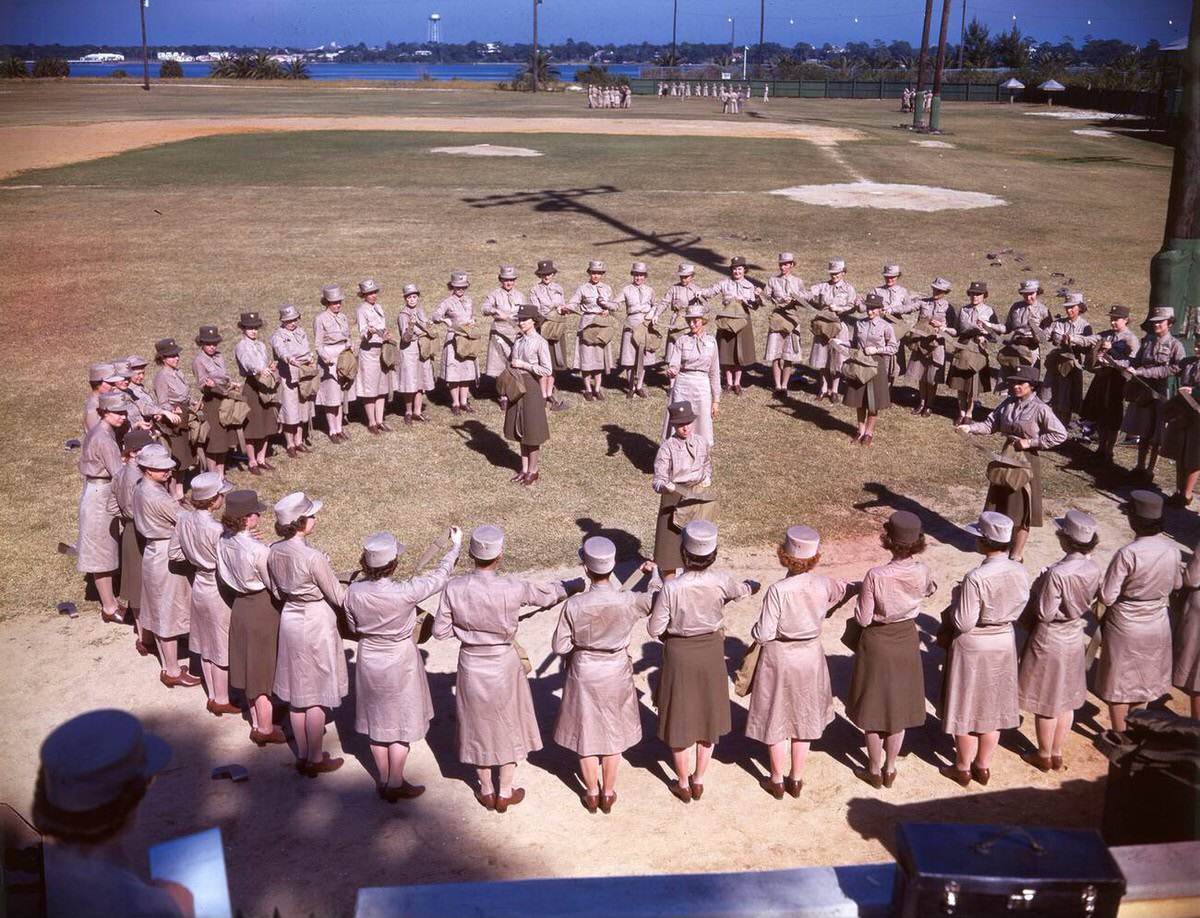
Women took on expanded roles during the war years, including military service. The Women’s Army Auxiliary Corps trained at sites across Florida, including Daytona Beach.
Women’s Army Auxiliary Corps in training, 1940s
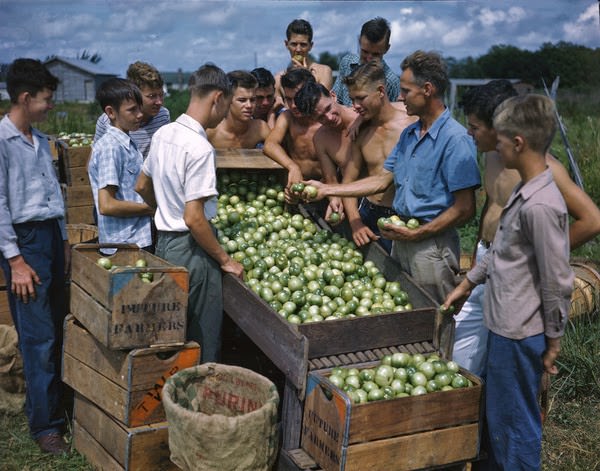
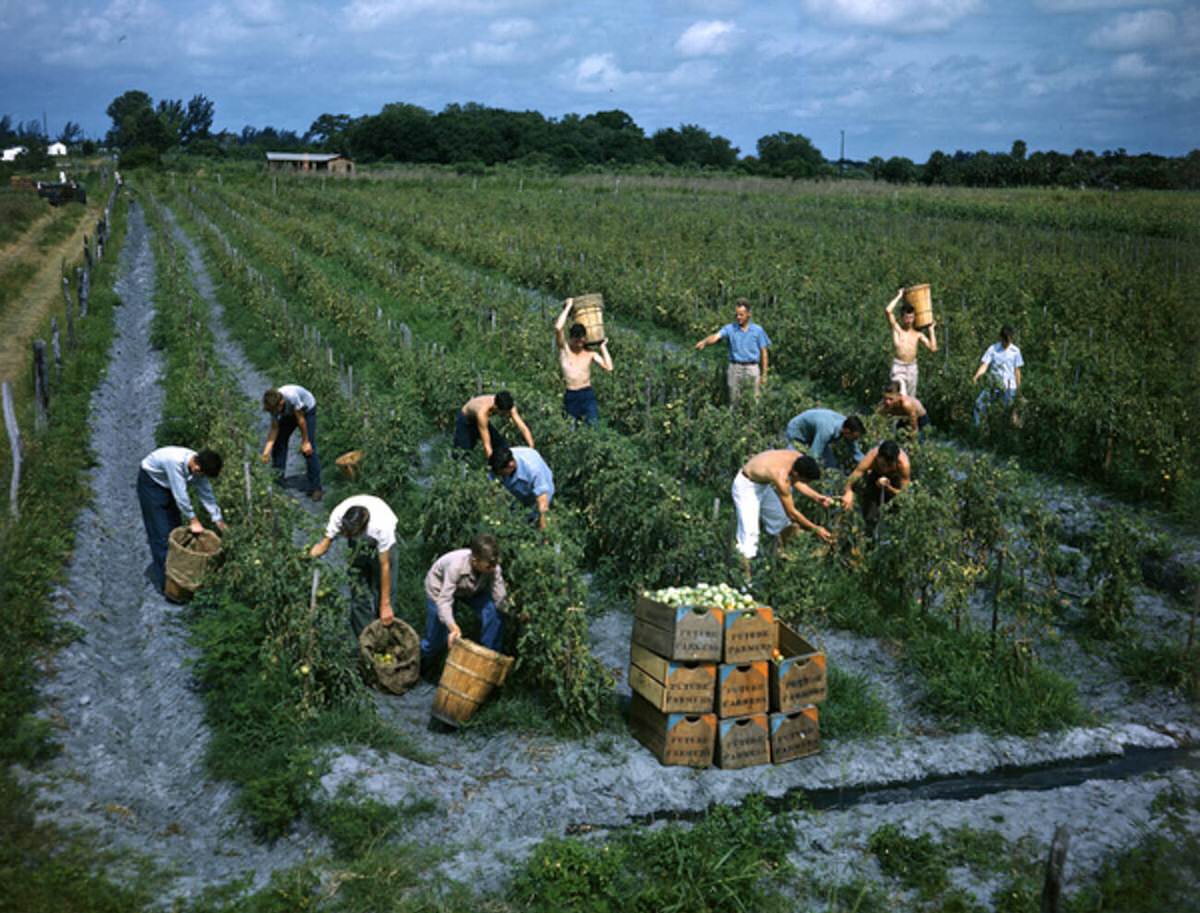
While the war dominated daily life, Florida’s agricultural backbone kept turning. The citrus industry processed millions of boxes of oranges and grapefruits into canned juice shipped to soldiers overseas. In the fields around Palmetto, young members of the Future Farmers of America packed tomatoes alongside adult workers.
Future Farmers of America packing tomatoes in Palmetto, Florida, 1947Future Farmers of America members picking tomatoes in Palmetto, Florida, 1940s
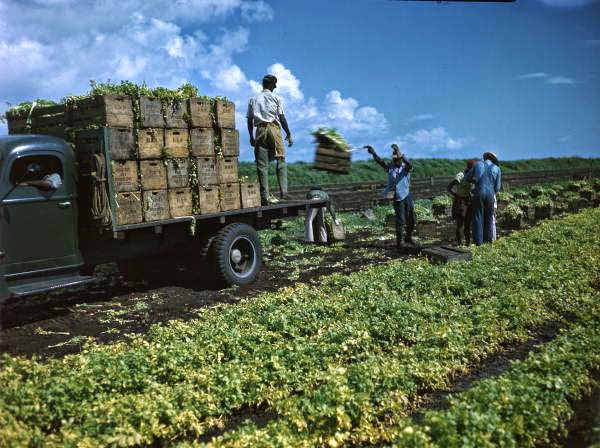
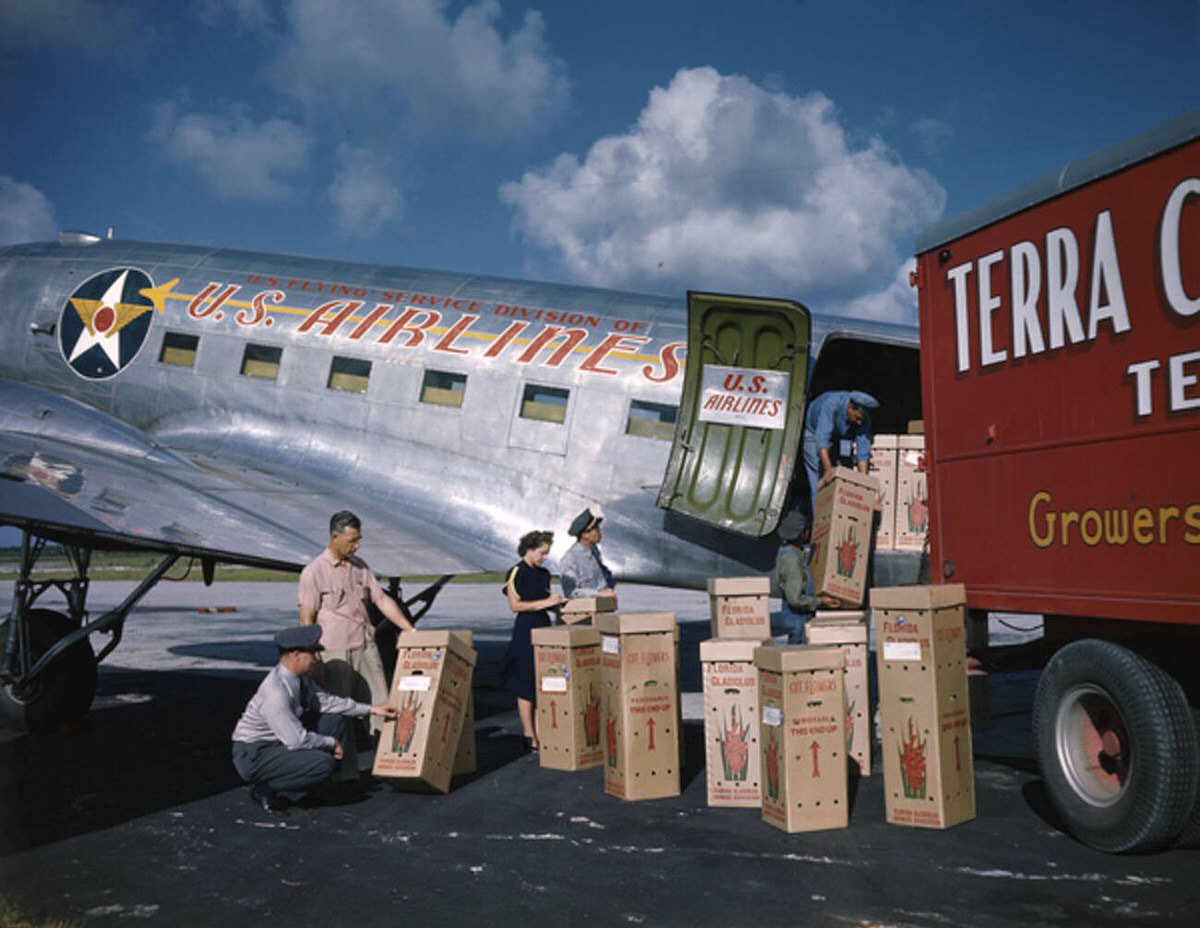
Celery and gladiolus flowers were also major crops. Workers at Burquest and Stockbridge Company loaded crates of celery onto trucks near Sarasota, while Terra Ceia Island Farms shipped gladiolus blooms by plane from Sarasota Airport.
Burquest and Stockbridge Company employees loading celery crates onto trucks near Sarasota, Florida, 1945Gladiolus flowers from Terra Ceia Island Farms being loaded onto a plane at Sarasota Airport, 1940s
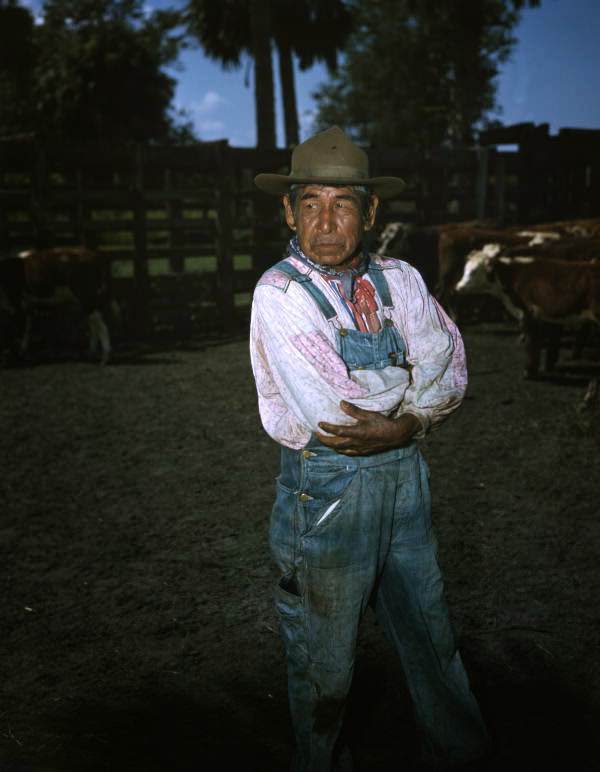
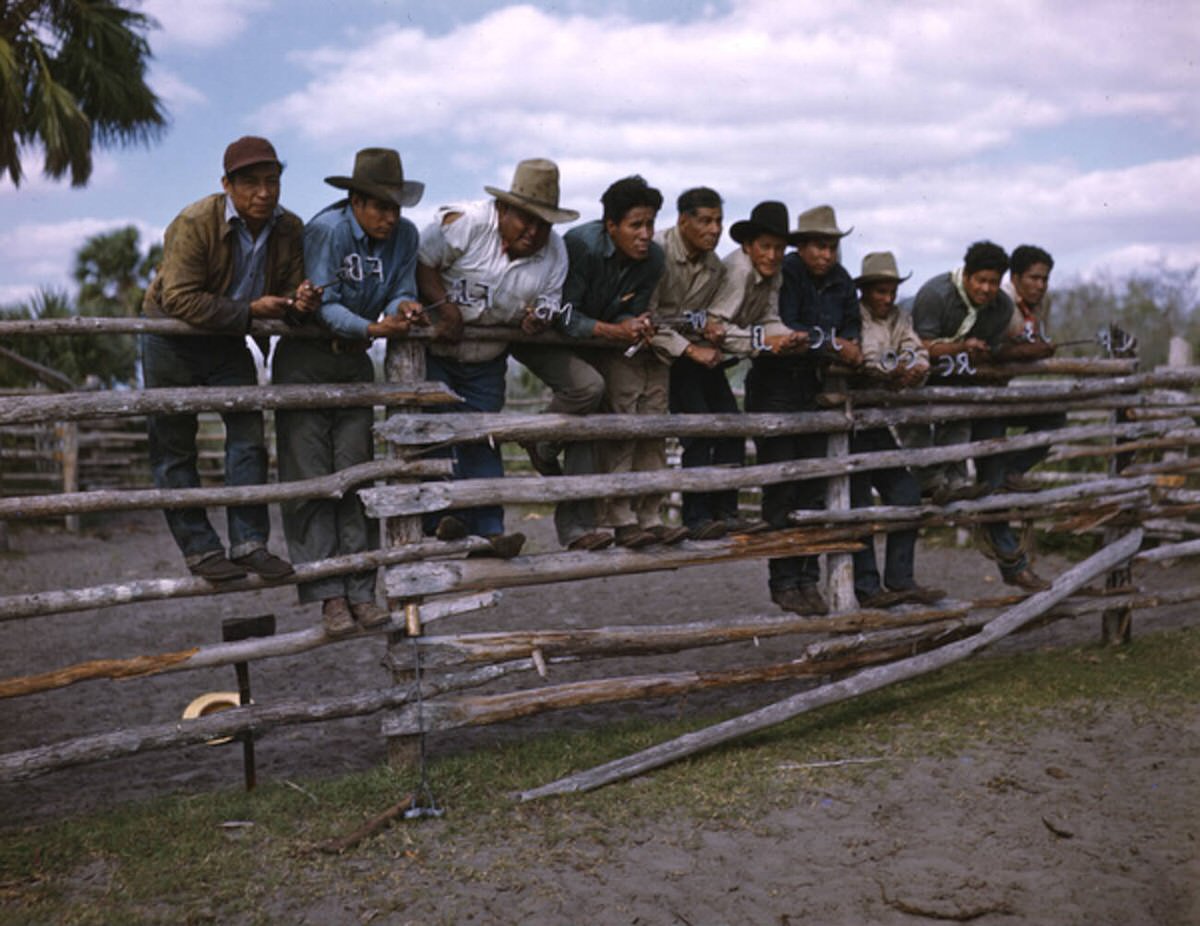
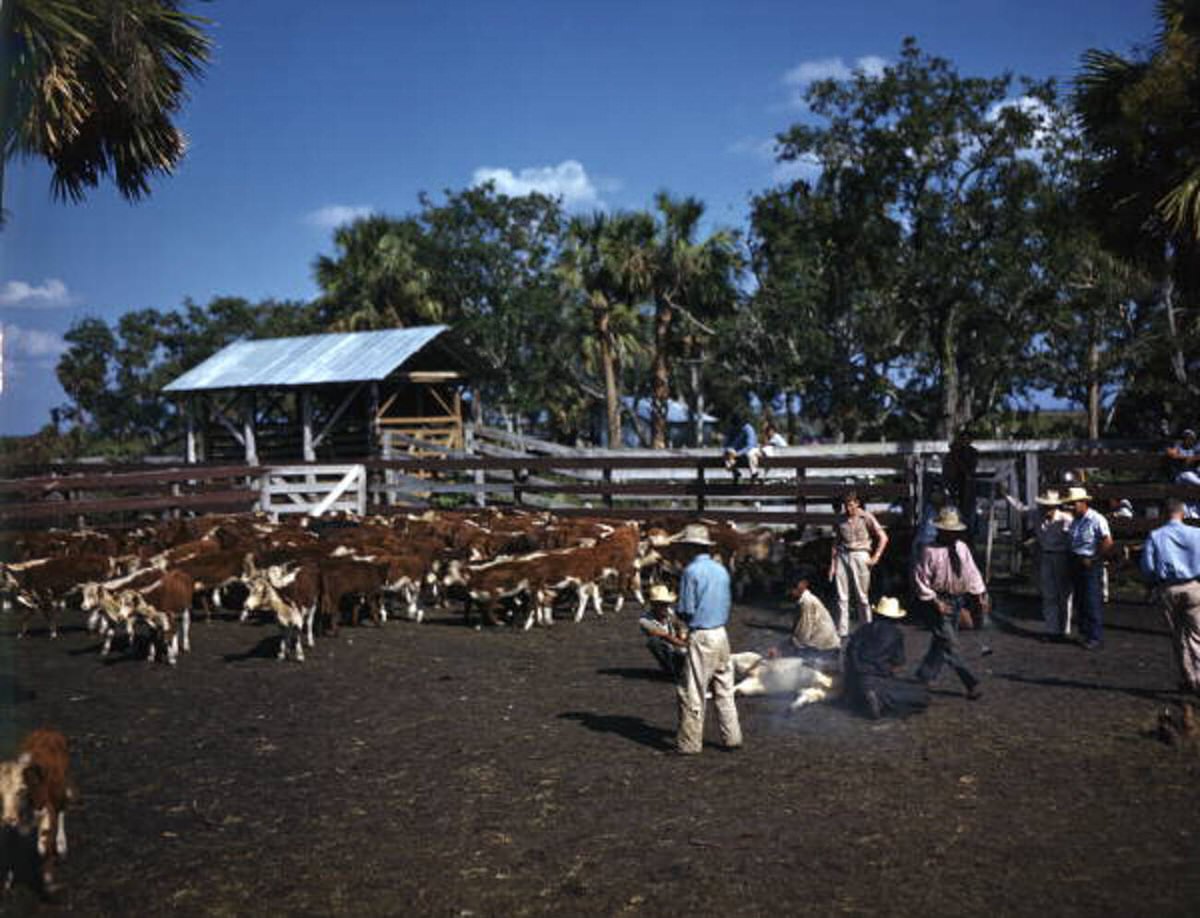
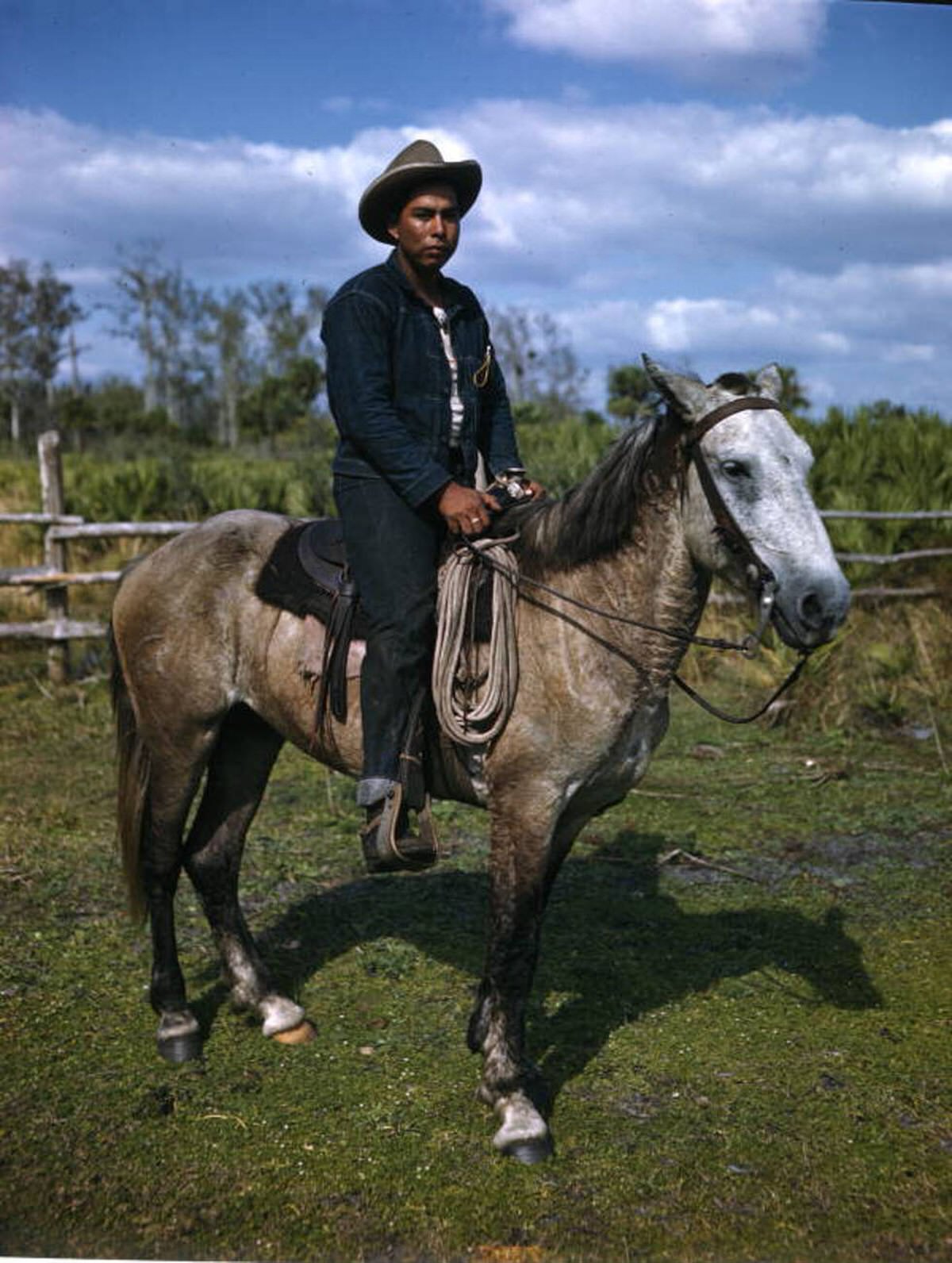
In the interior of the state, cattle ranching was a defining way of life. Seminole cattlemen worked the ranges at the Brighton and Big Cypress Reservations, branding calves and driving herds much as Florida ranchers had done for generations. Charlie Micco was among the well-known Seminole cattlemen at Brighton during this era.
Seminole cattleman Charlie Micco at the Brighton Reservation, 1949Seminole cattlemen using branding irons at the Big Cypress Seminole Indian Reservation, 1940sCalf branding at the Brighton Seminole Indian Reservation in Florida, 1940s
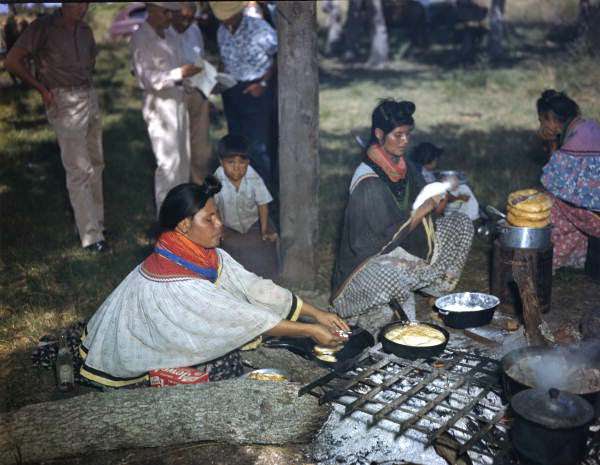
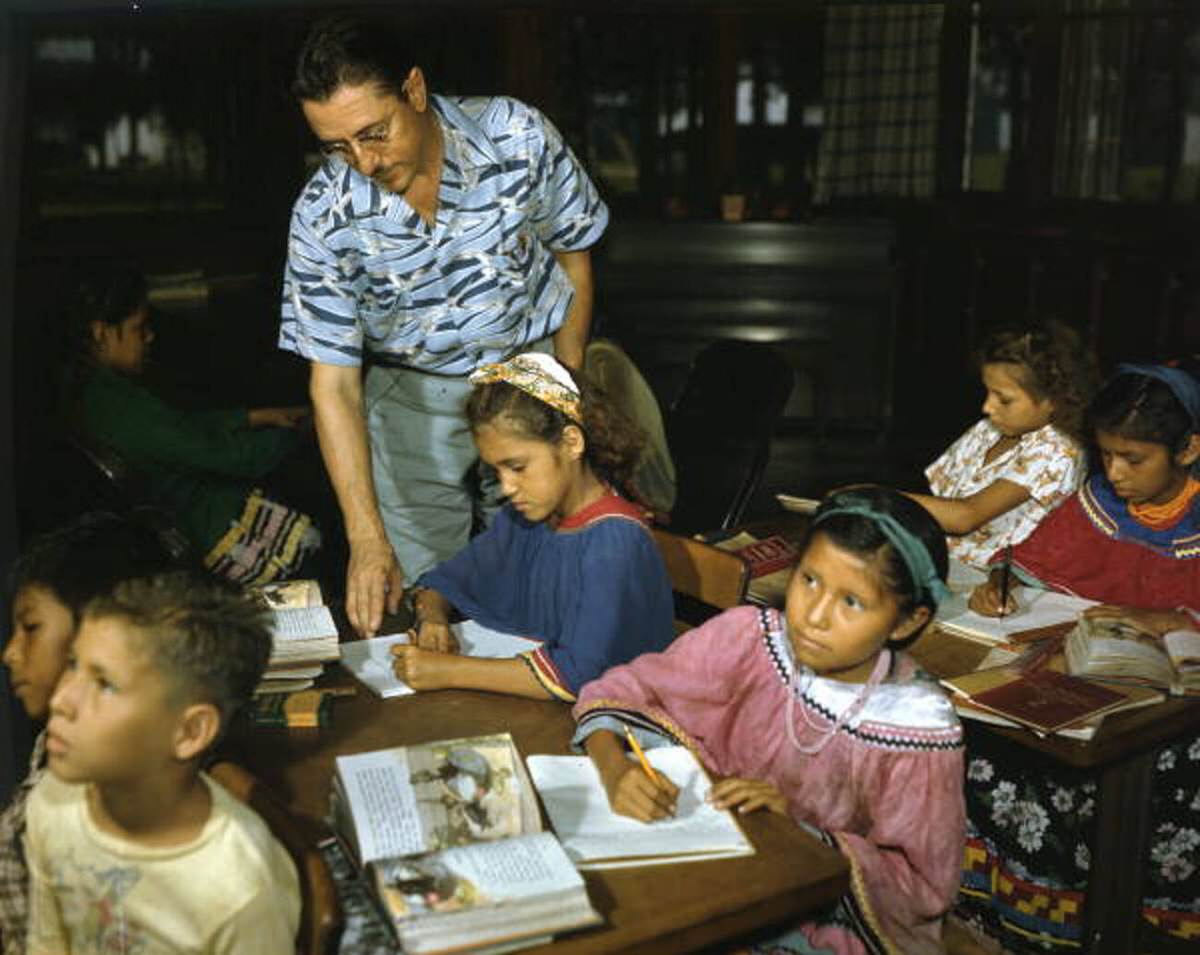
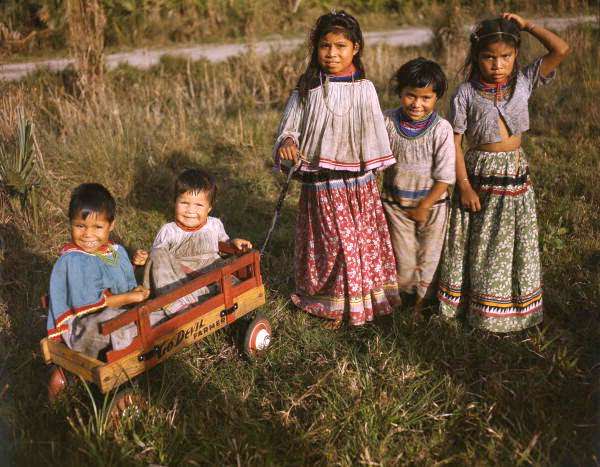
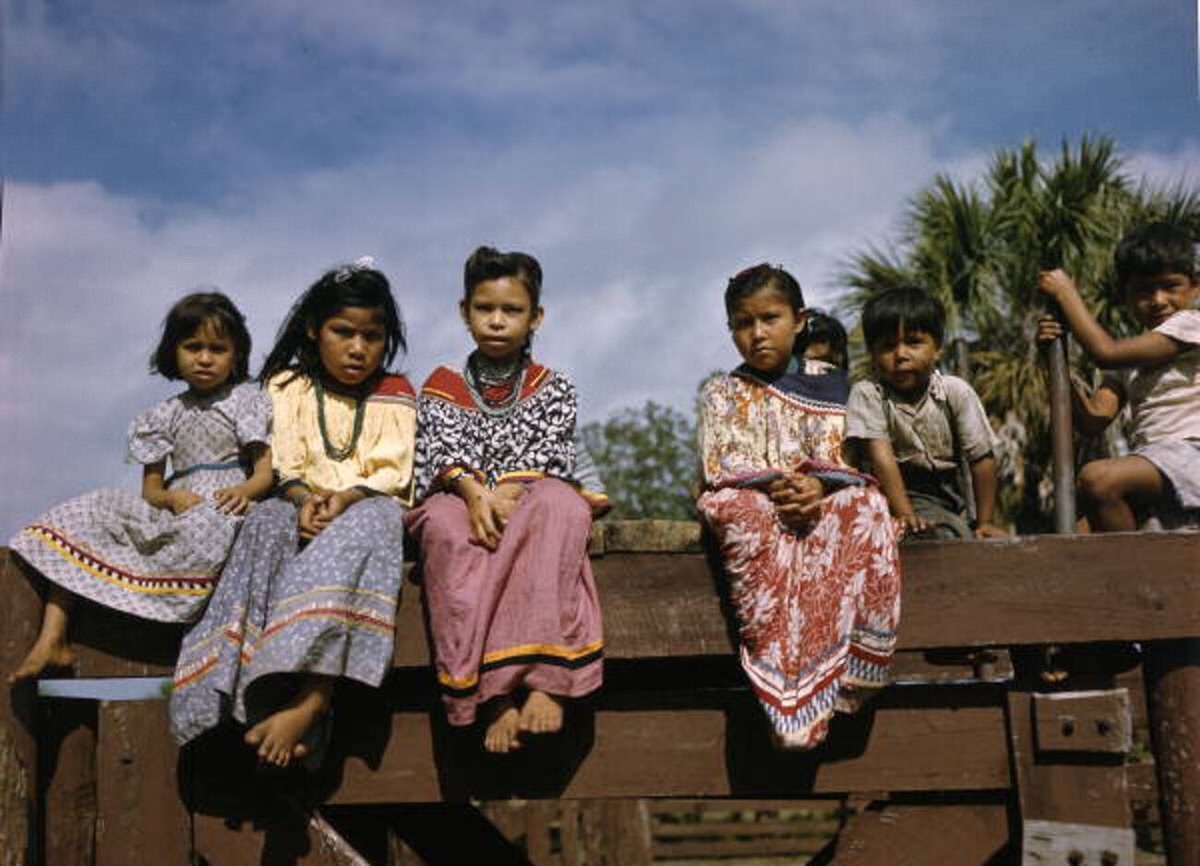
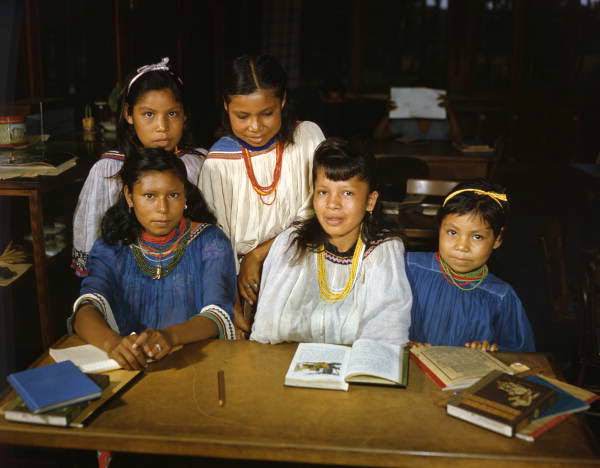
Life at the Brighton Reservation extended well beyond cattle work. Seminole families raised children there, attended the government school, and gathered during the annual roundup. Women cooked large meals during the cattle roundup at Big Cypress, while children watched the branding and attended classes taught by instructors like William Boehmer.
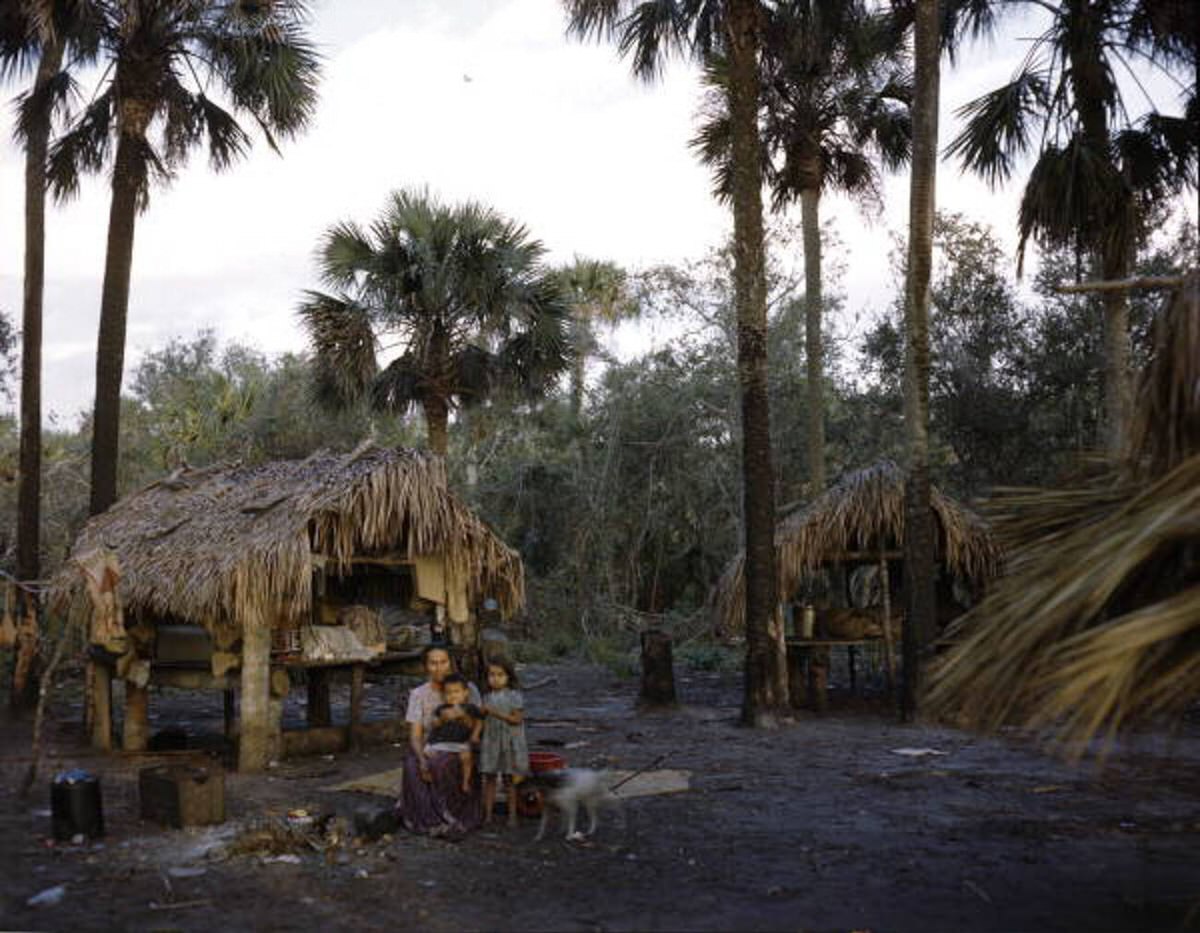
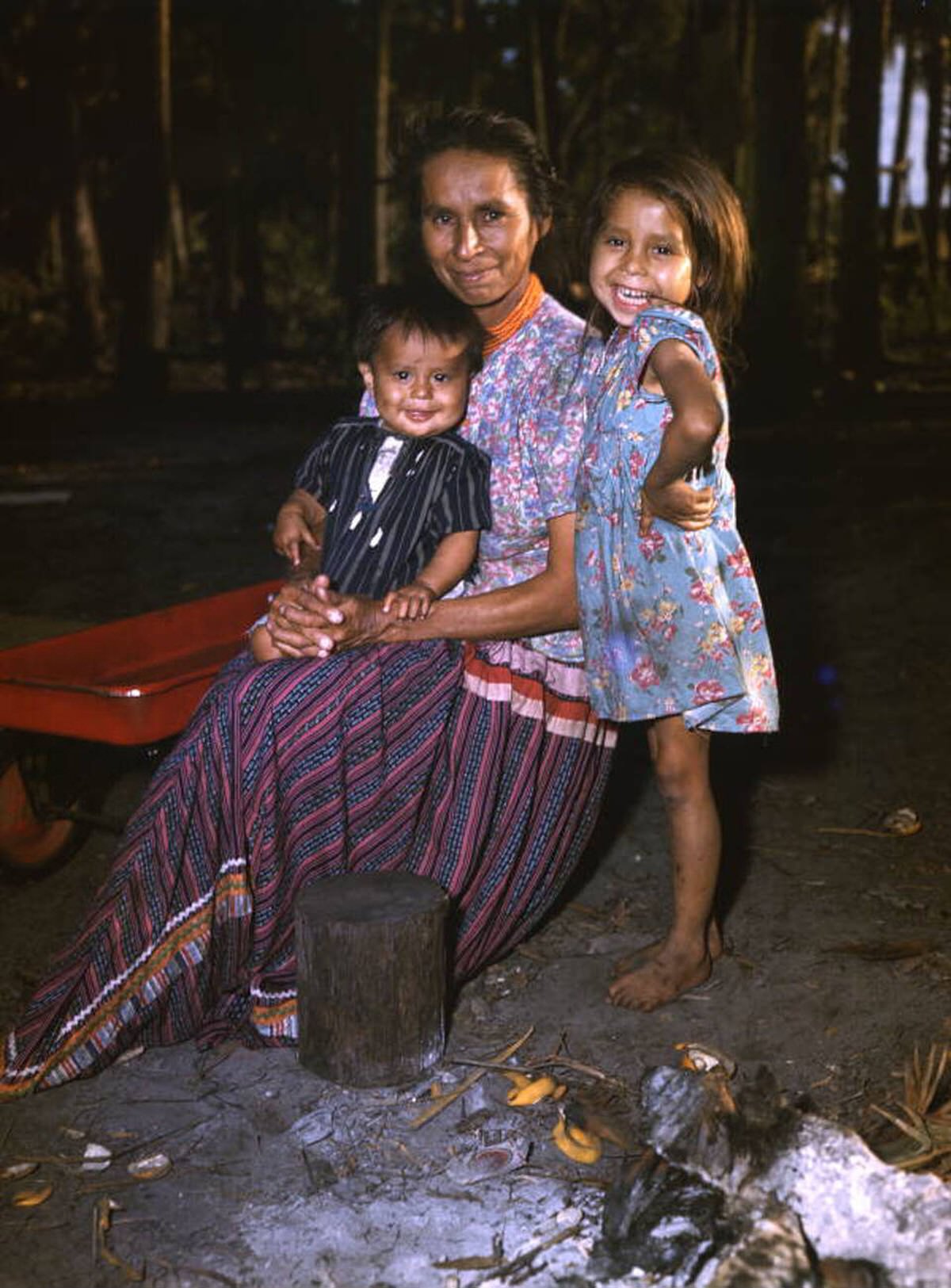
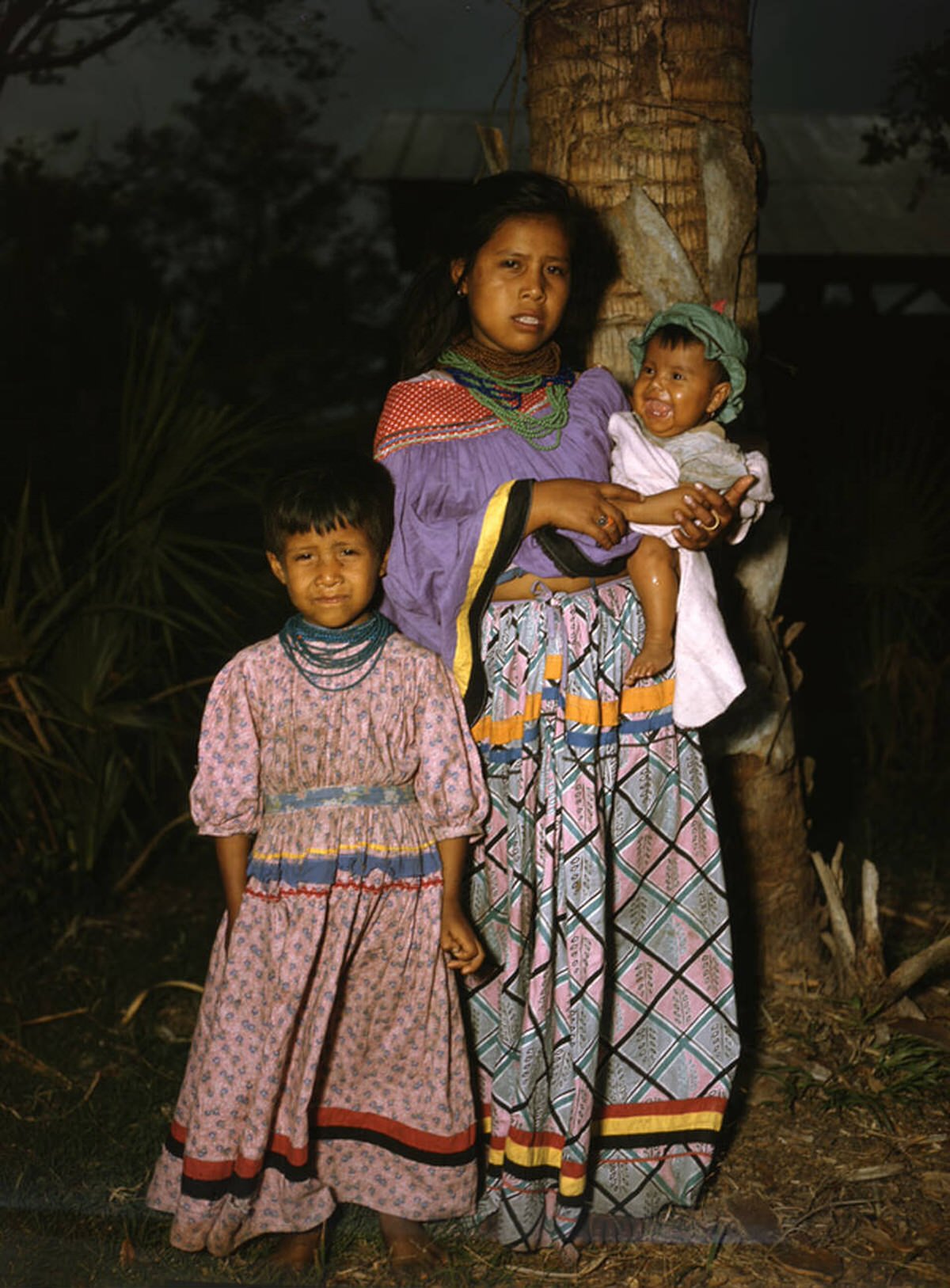
Women cooking during the annual cattle roundup at the Big Cypress Reservation, Florida, 1949William Boehmer teaching Seminole children at the Brighton Indian Day School, 1940sSeminole children at the Brighton Reservation, Florida, 1948Seminole mother and her children at a camp on the Brighton Seminole Indian Reservation, 1940s
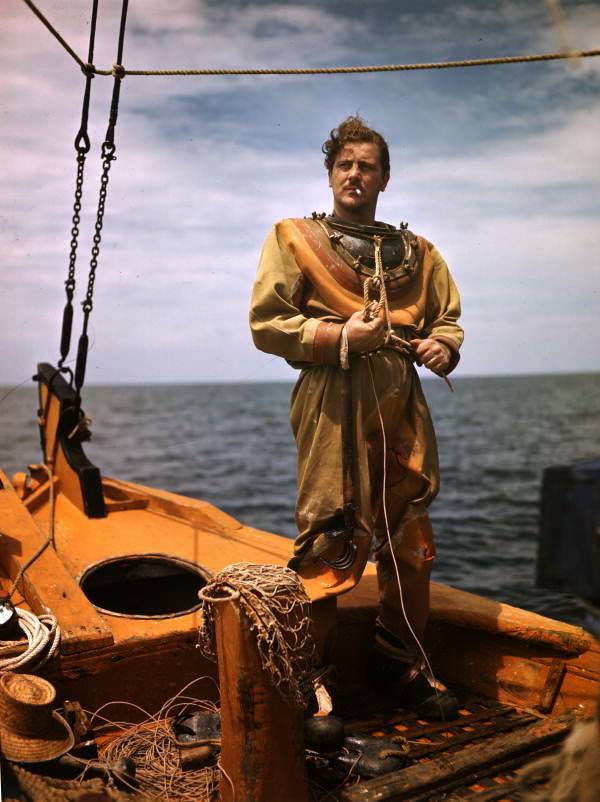
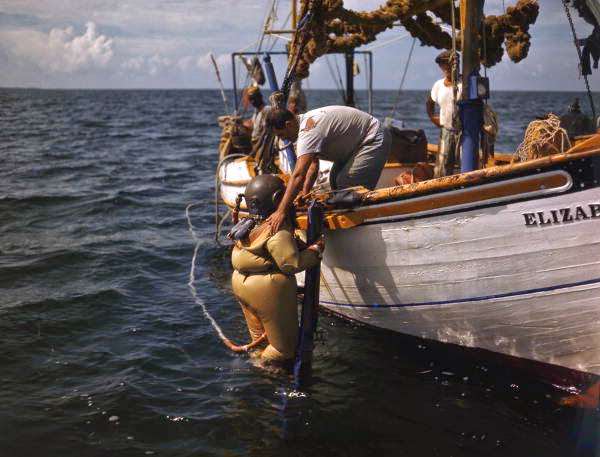
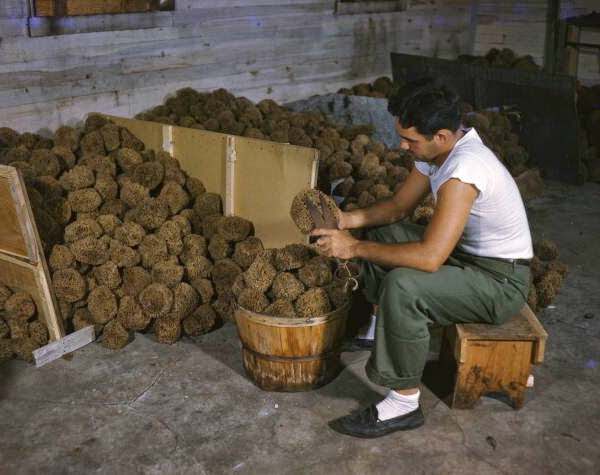
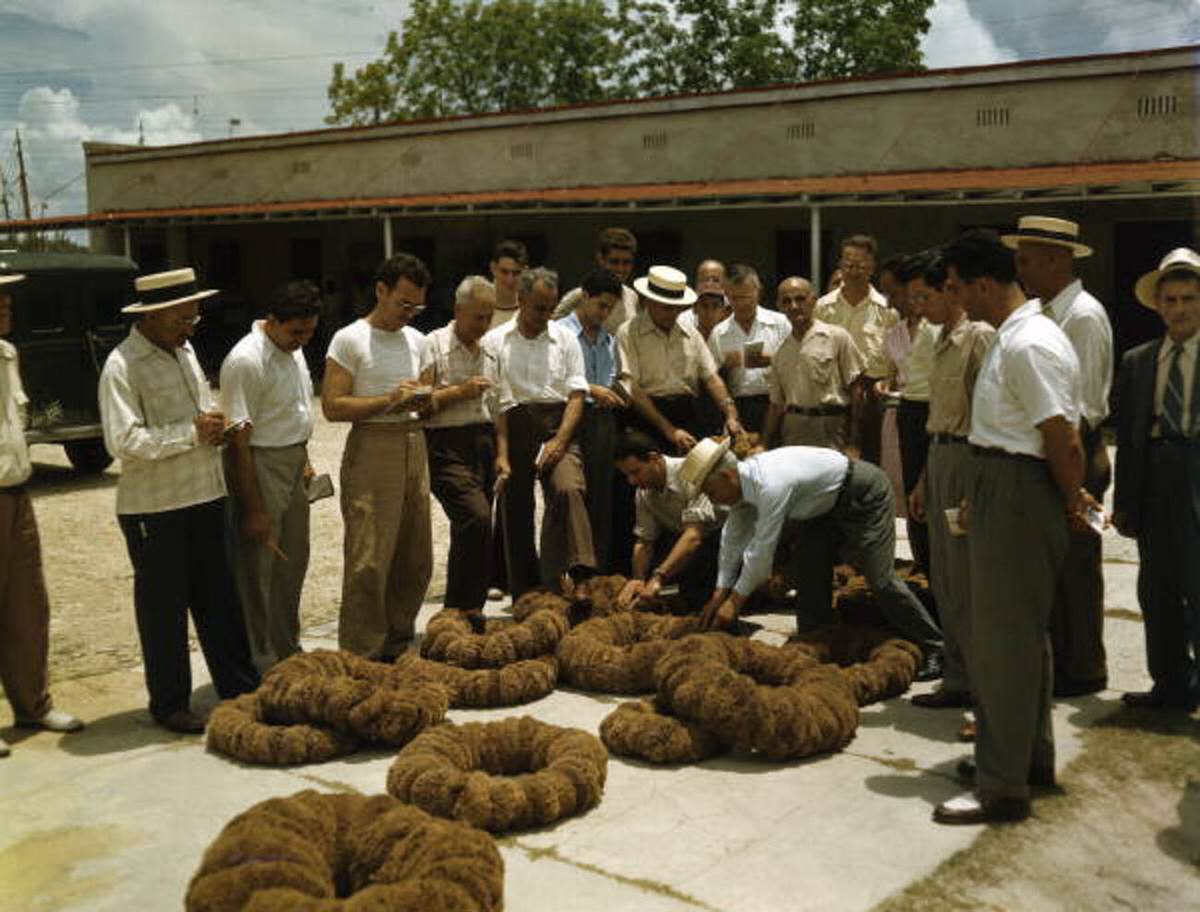
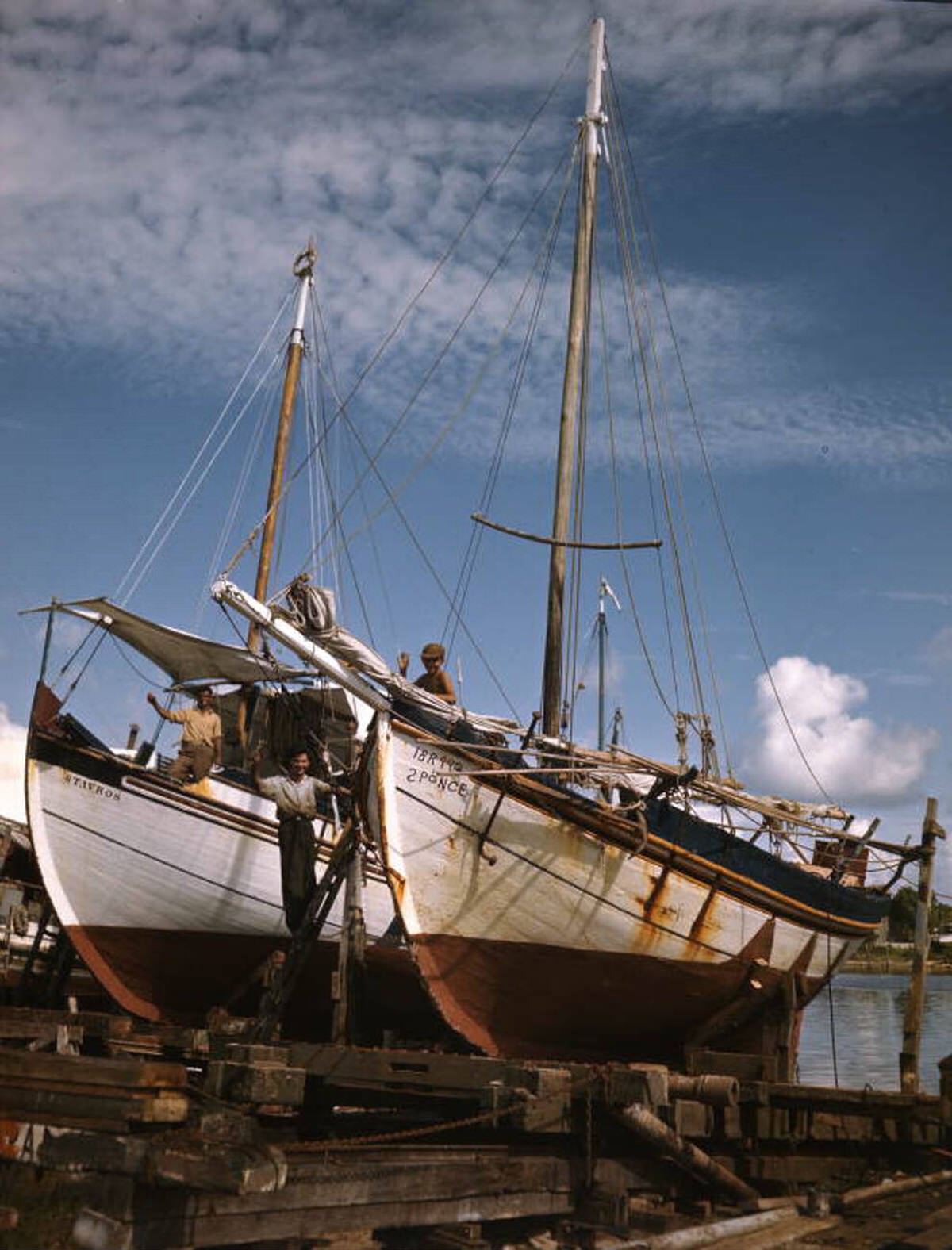
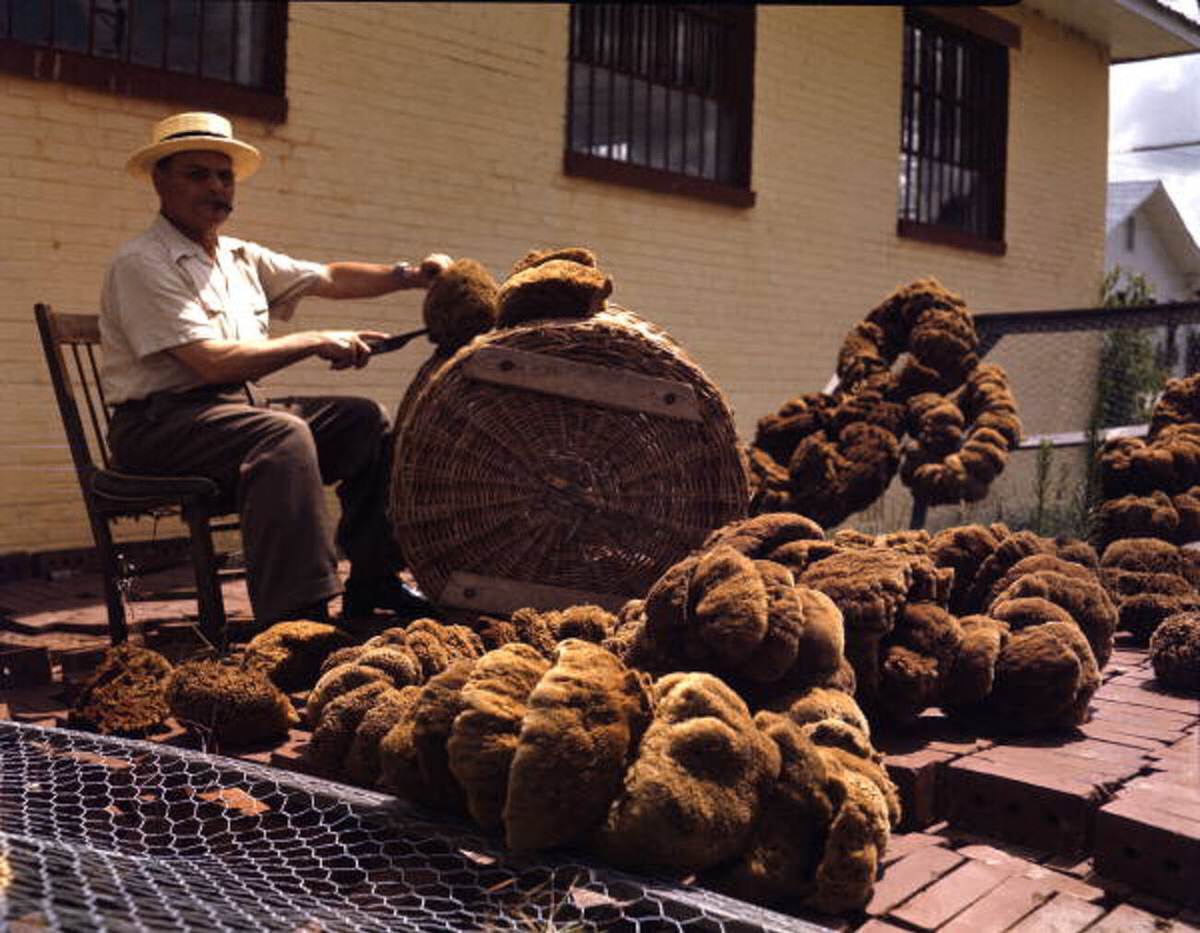
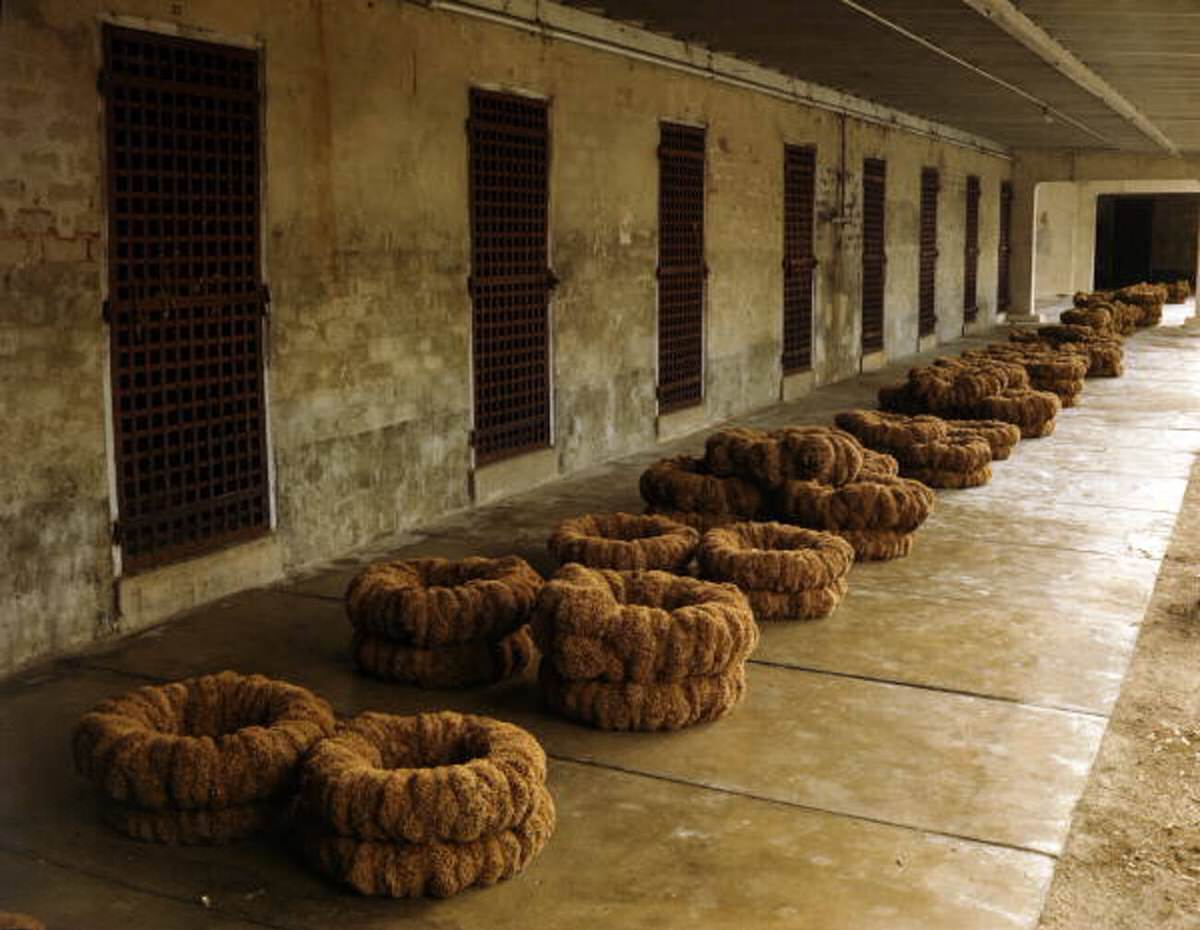
Tarpon Springs was a world apart. The Gulf Coast town had been built largely by Greek immigrants who came to harvest sponges from the seafloor. Divers like John Gonatos suited up in heavy canvas and copper-helmet diving gear to descend into the Gulf and pull sponges by hand. Back on shore, workers trimmed and sorted the sponges before they went to auction.
Sponge diver John Gonatos in Tarpon Springs, Florida, 1945Sponge diver entering the water near Tarpon Springs, Florida, 1945Trimming and sorting sponges in Tarpon Springs, Florida, 1942Sponge auction in Tarpon Springs, Florida, 1940s
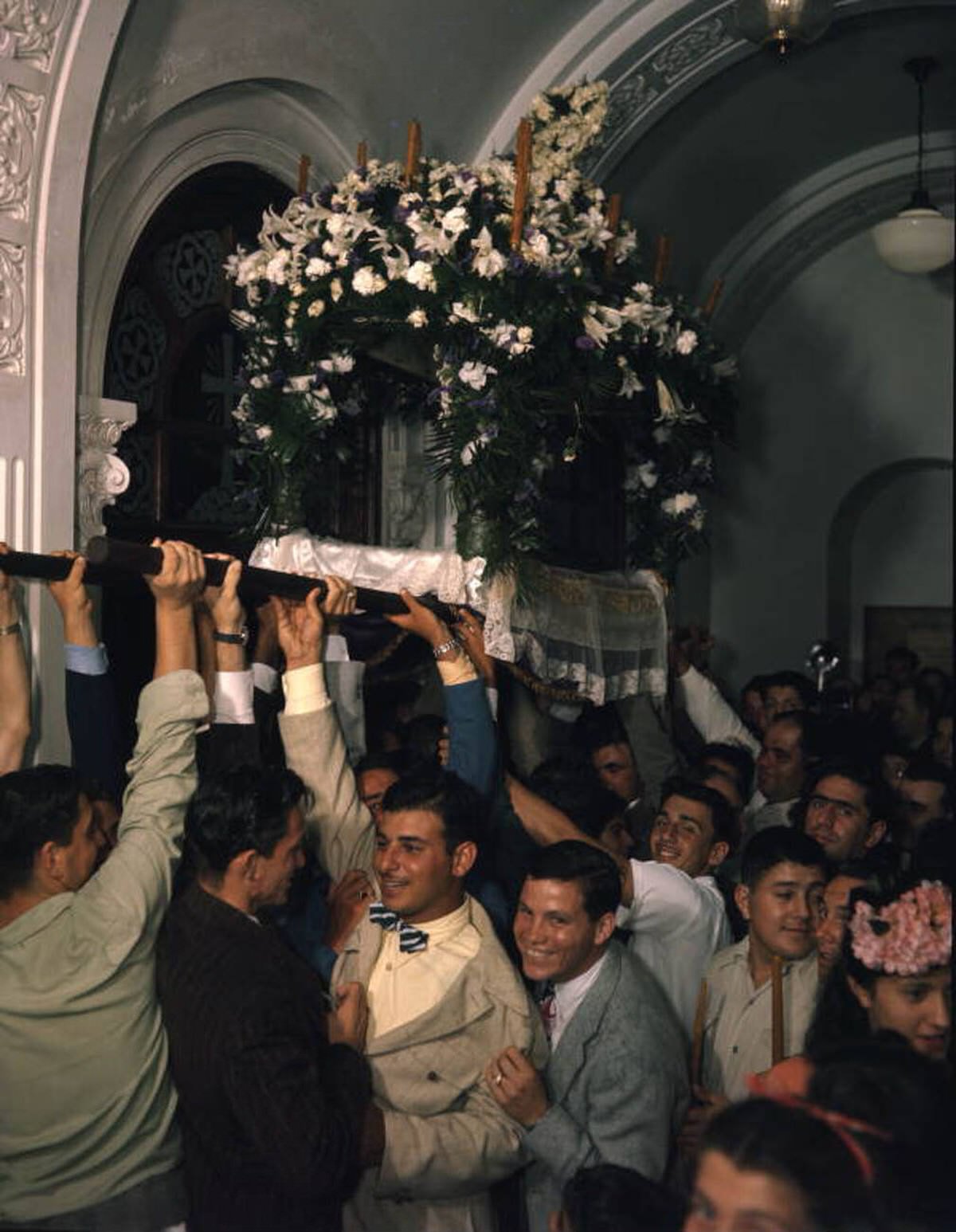
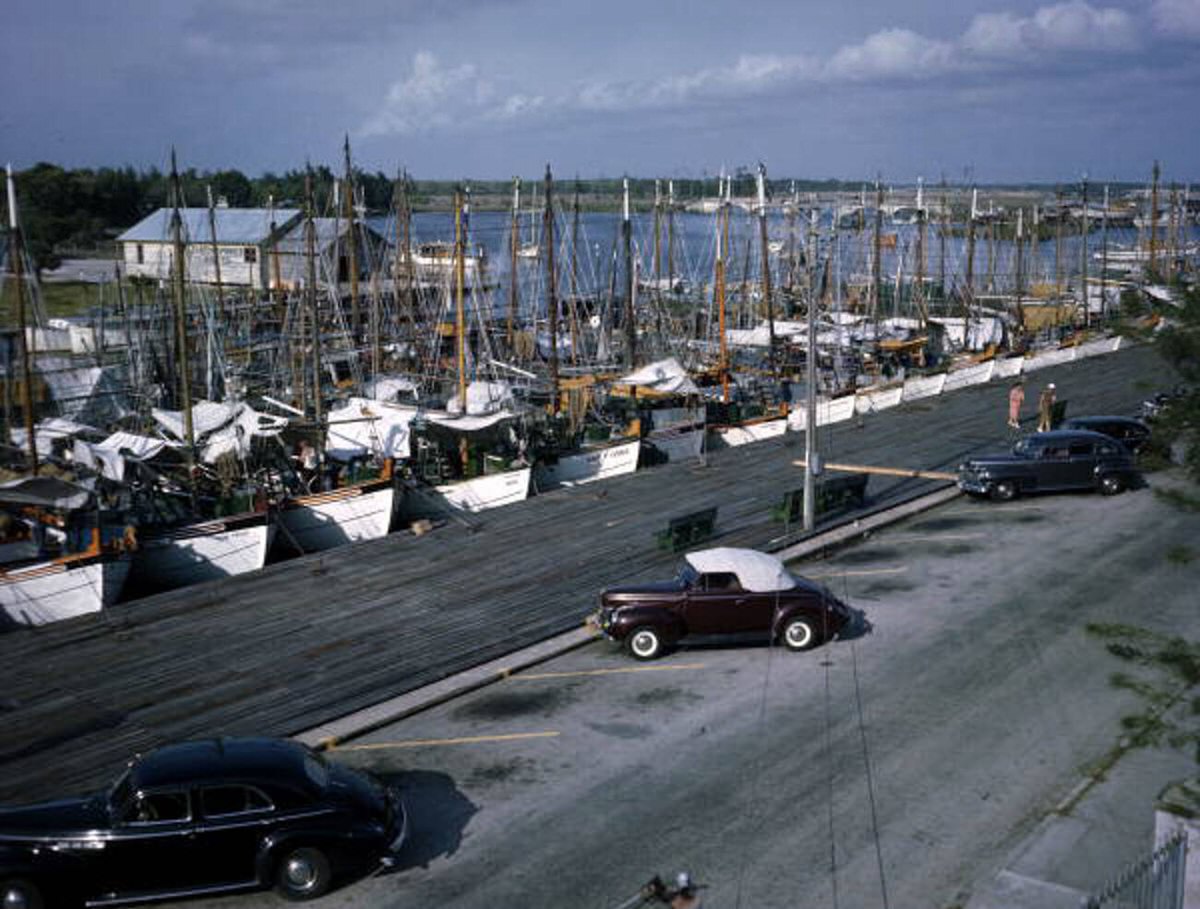
Greek Orthodox faith was at the center of Tarpon Springs community life. The town’s St. Nicholas Cathedral held major religious services, including Good Friday processions and the annual Epiphany celebration, when the sponge fleet gathered at the dock near the cathedral.
Epitaphios carried during a Good Friday service at St. Nicholas Greek Orthodox Cathedral in Tarpon Springs, 1940sSponge fleet at St. Nicholas dock in Tarpon Springs during Epiphany services, 1940s
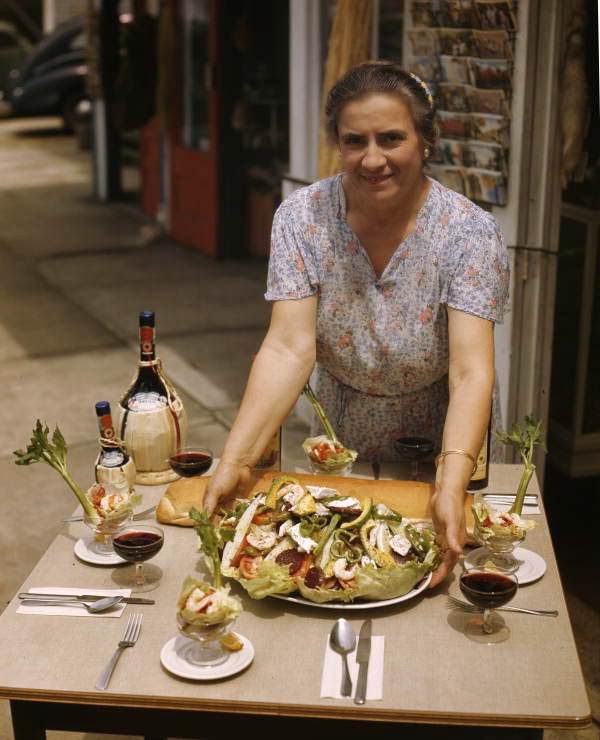
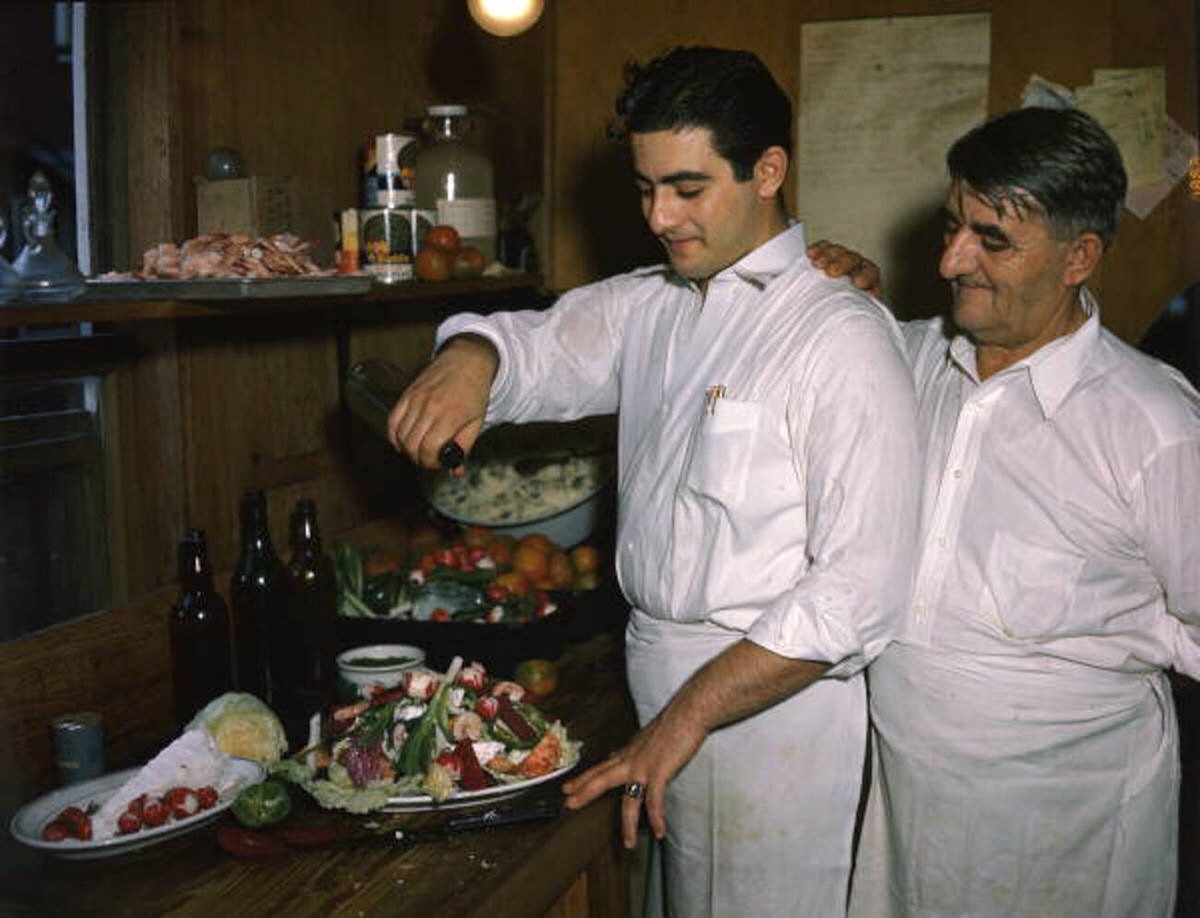
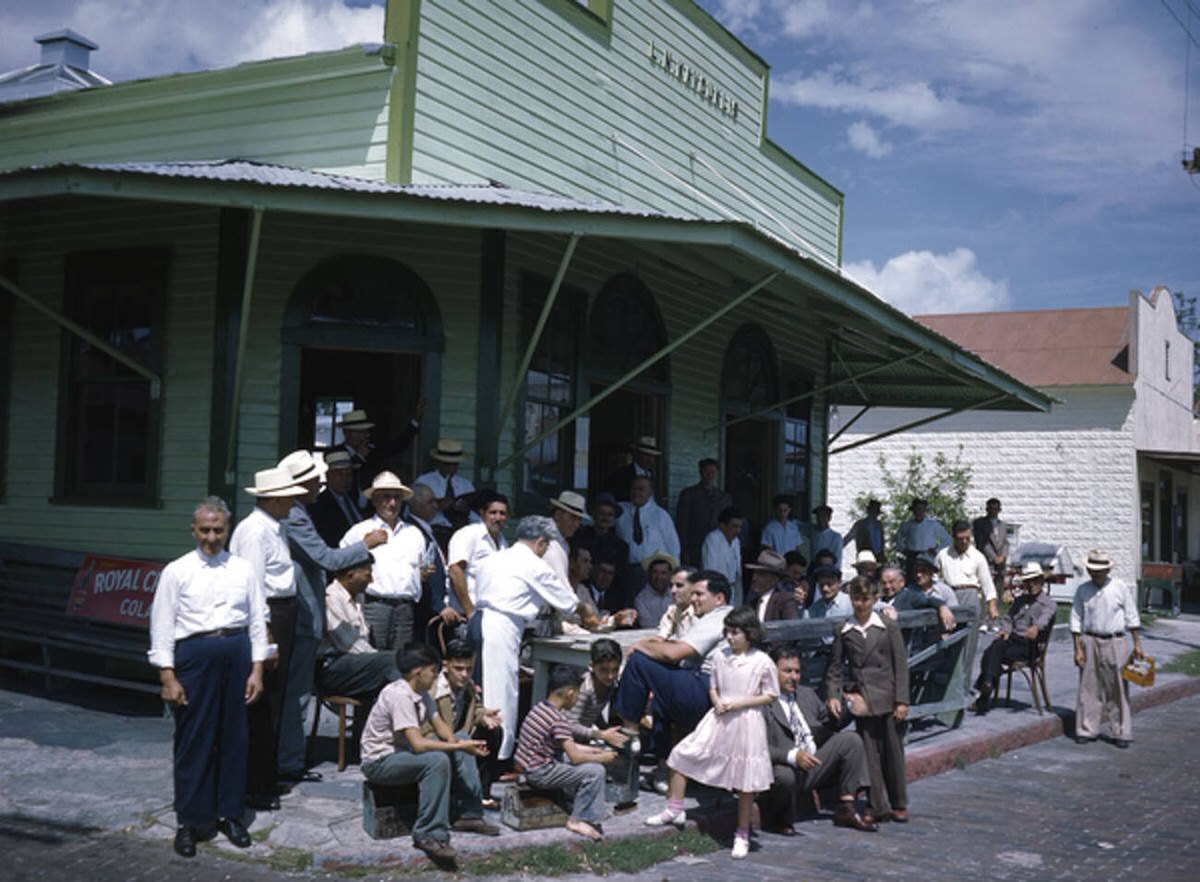
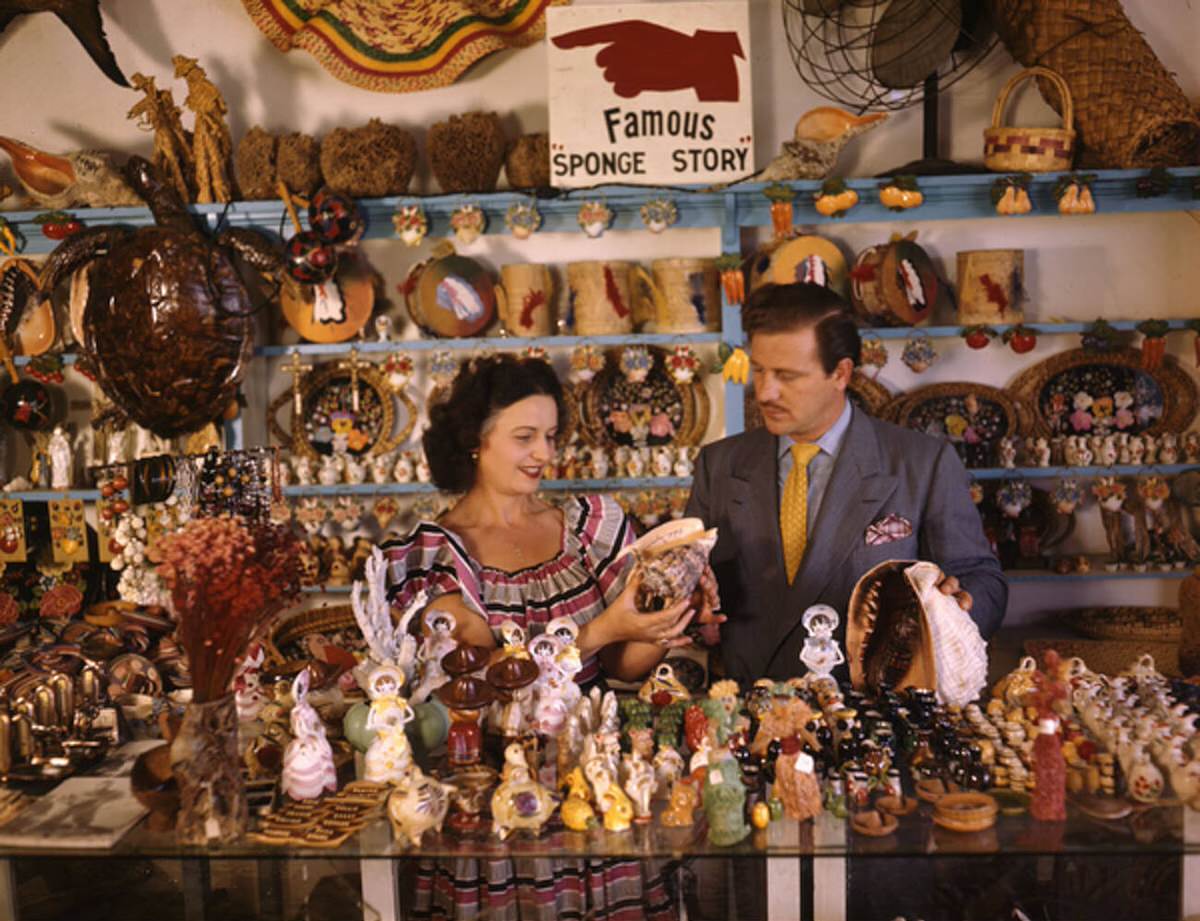
Greek-owned restaurants and shops lined the streets near the docks. Maria Pappas served Greek luncheons, while Louis and Michael Pappas prepared Greek salads at the Riverside Cafe. John M. Gonatos ran a curio shop with his assistant Niki Vasilikis, and the Lazaros Coffee Shop was a local gathering spot.
Maria Pappas serving a Greek luncheon in Tarpon Springs, Florida, 1947Louis and Michael Pappas preparing a Greek salad at the Riverside Cafe in Tarpon Springs, 1940sLazaros Coffee Shop in Tarpon Springs, Florida, 1940s
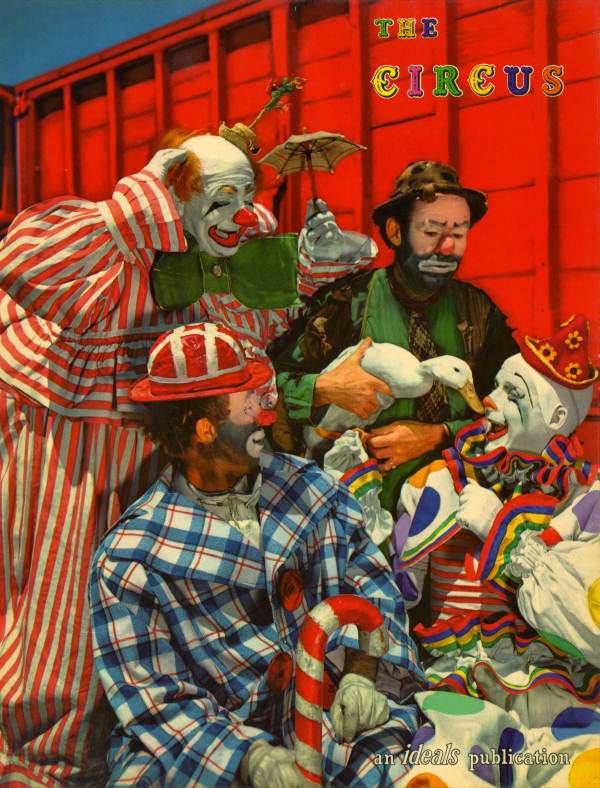
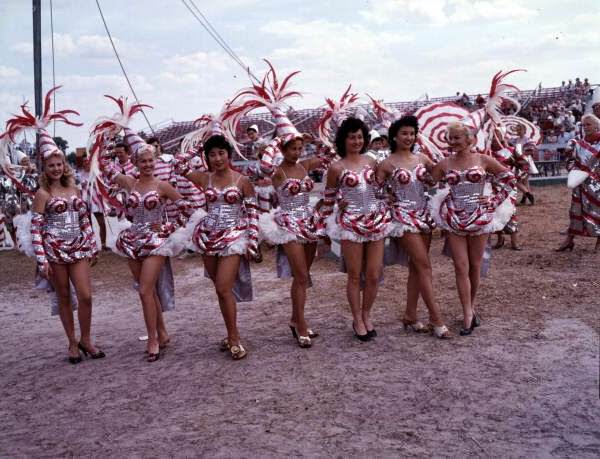
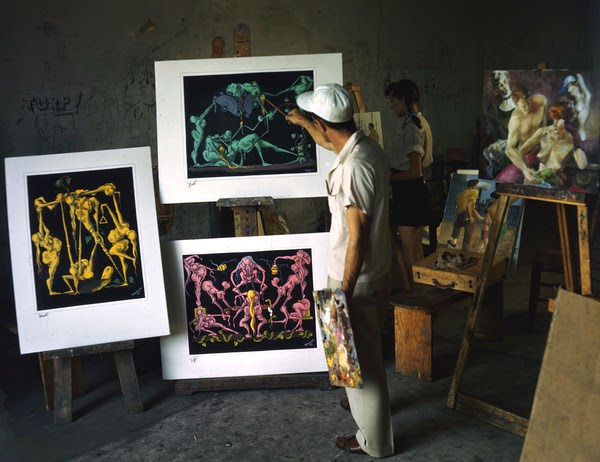
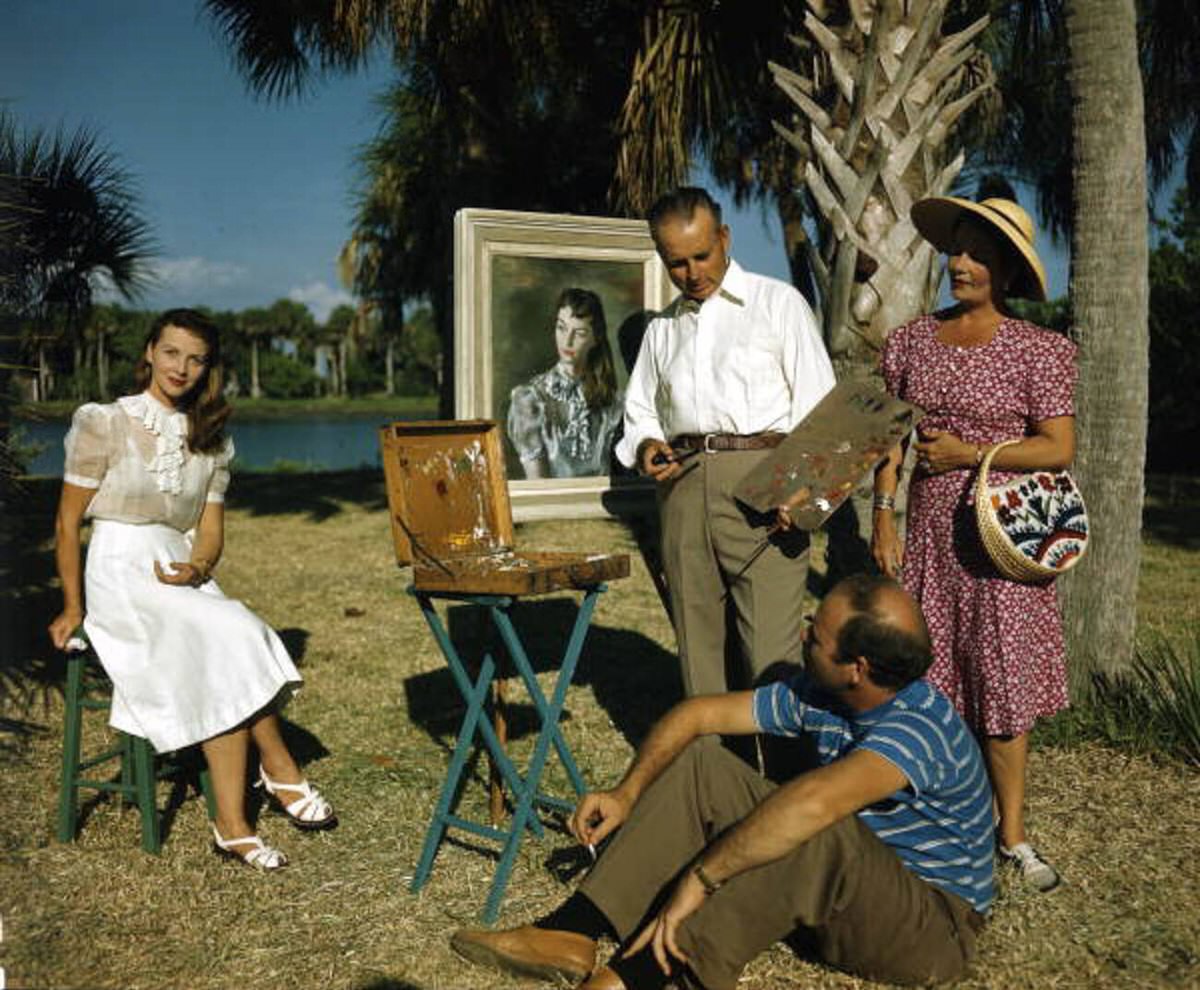
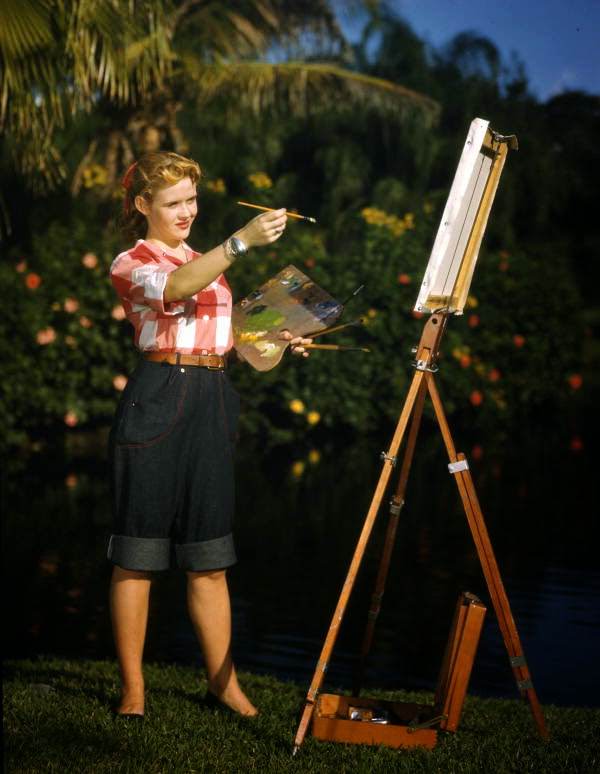
Sarasota had its own distinct identity, shaped heavily by the Ringling Circus, which kept its winter quarters there. Performers, clowns, and acrobats filled the city every off-season. The Ringling School of Art also drew painters and instructors. Local artists like Jerry Farnsworth painted portraits, while Candy Tilton Ulrich set up her easel at Sarasota Jungle Gardens.
Ringling Circus clowns in Sarasota, Florida, 1947Ringling Circus performers at winter quarters in Sarasota, Florida, 1950Laurence A. Kavanaugh at the Ringling Art School in Sarasota, Florida, 1947Jerry Farnsworth painting a portrait of Mrs. Ben Stahl in Sarasota, Florida, 1940s
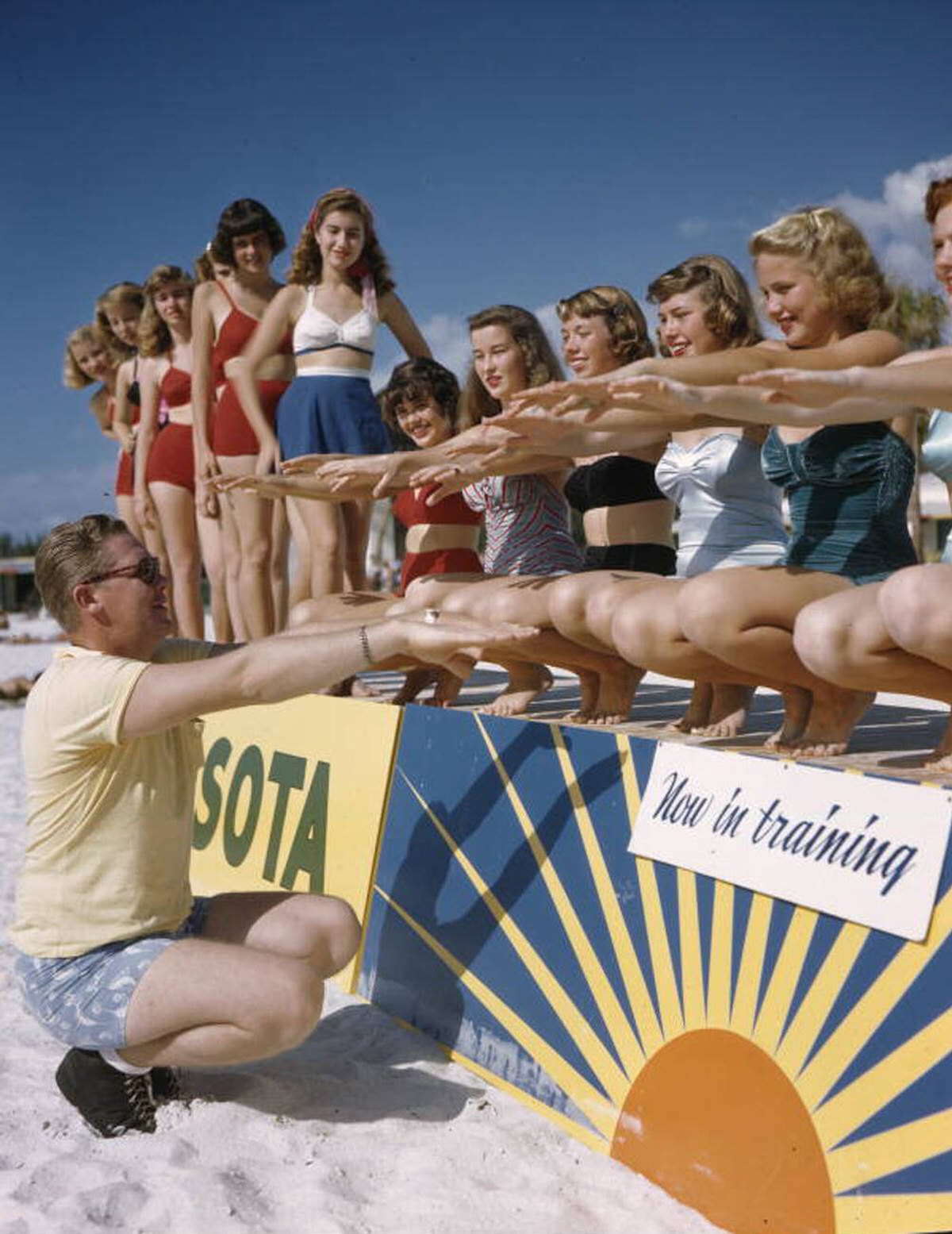
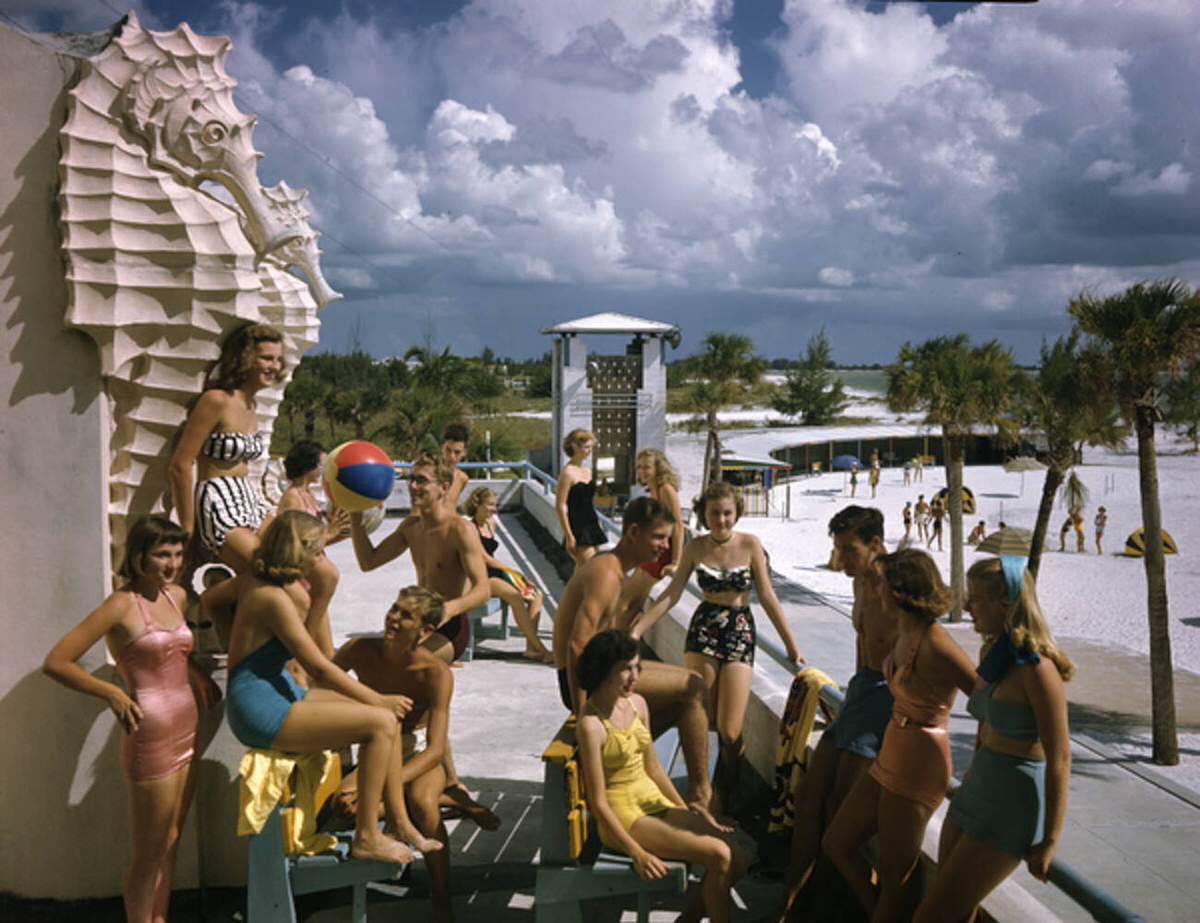
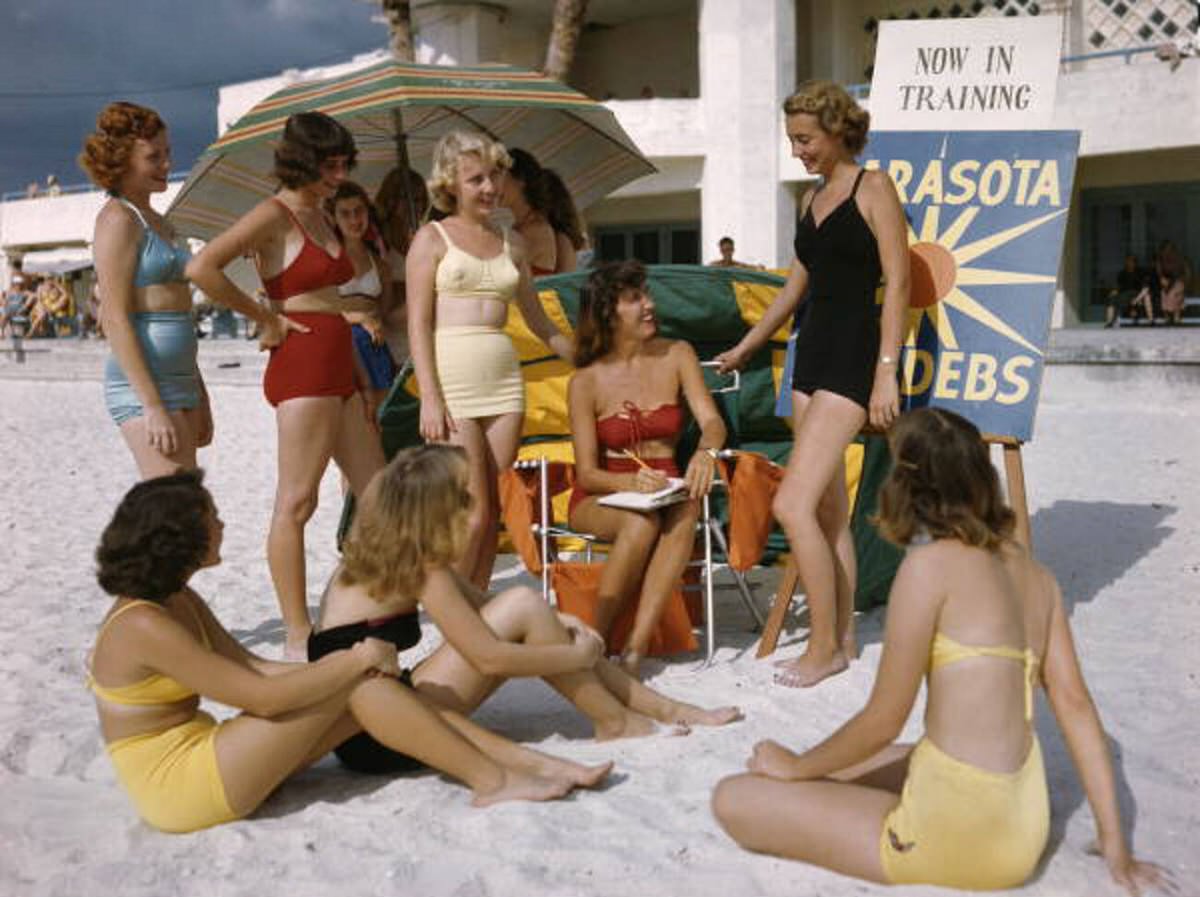
Lido Beach, just outside Sarasota, was a popular gathering spot. Ballet instructor Ray Ross worked with the Sarasota Sun-Debs on the sand, and the Municipal Casino at Lido Beach drew young crowds throughout the season.
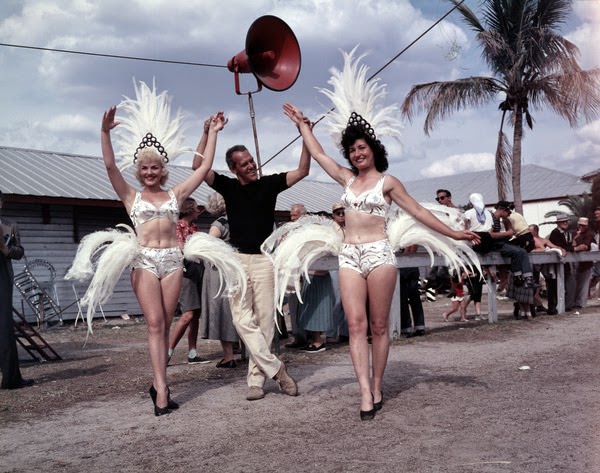
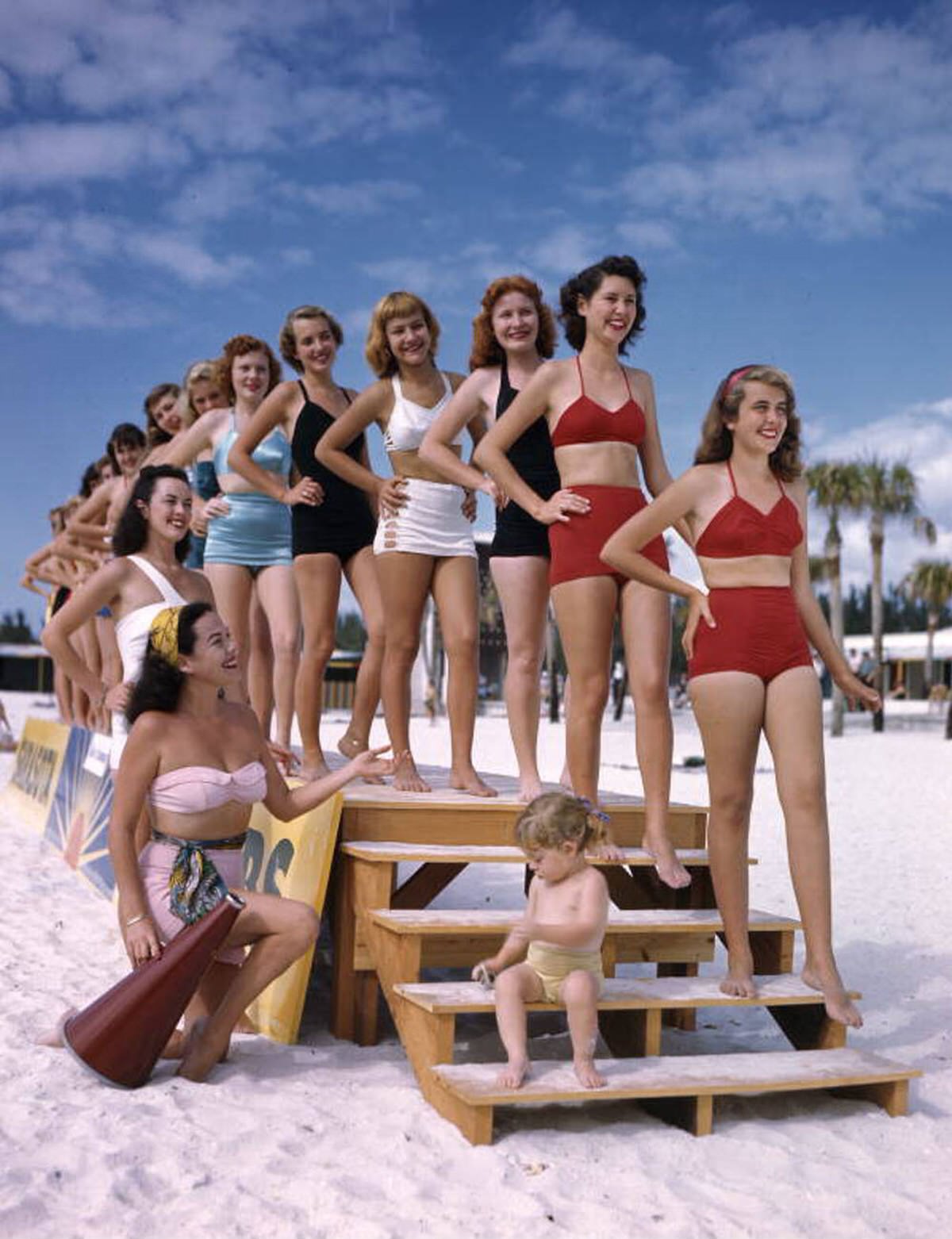
Ballet instructor Ray Ross with the Sarasota Sun-Debs at Lido Beach, Florida, 1940sYoung men and women at the Municipal Casino at Lido Beach, Florida, 1940s
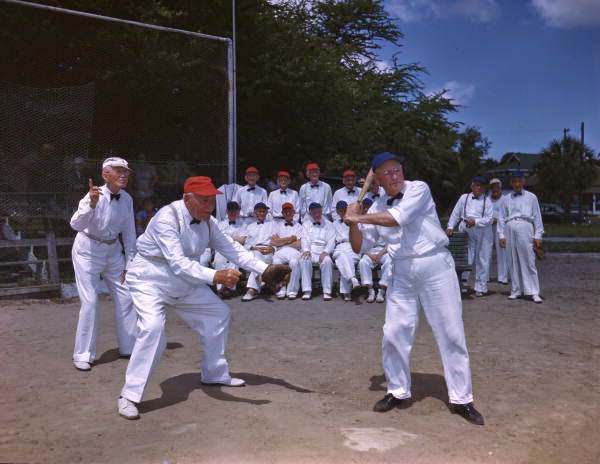
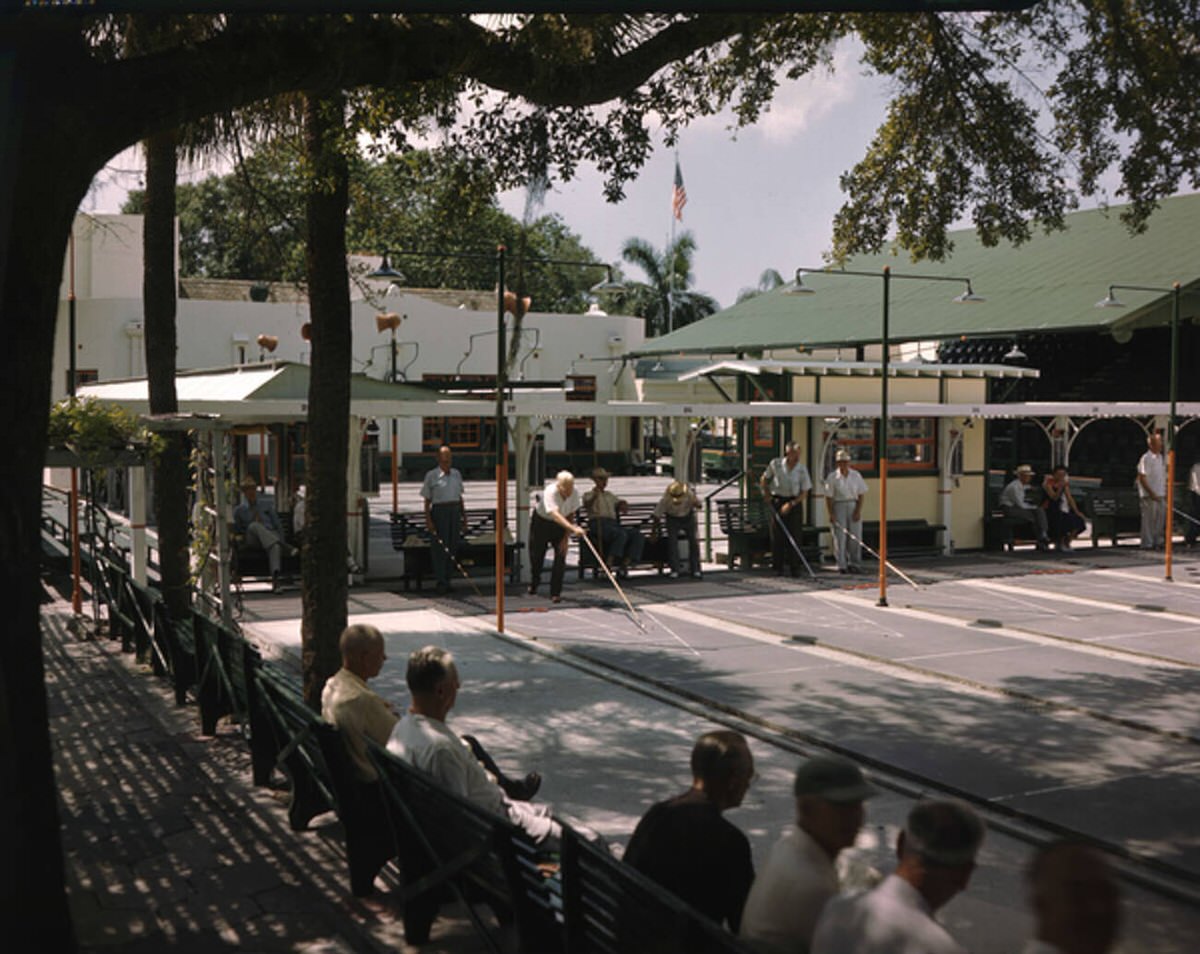
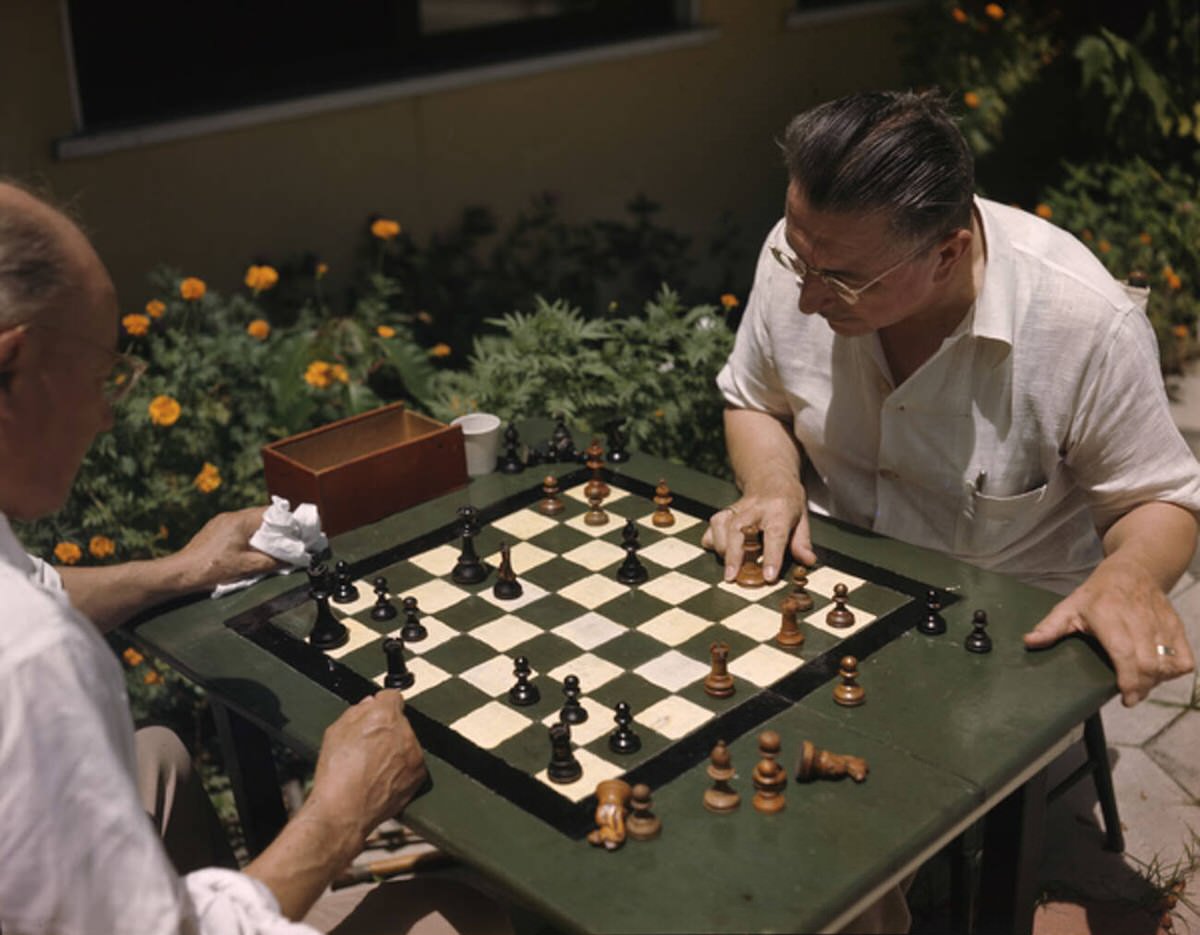
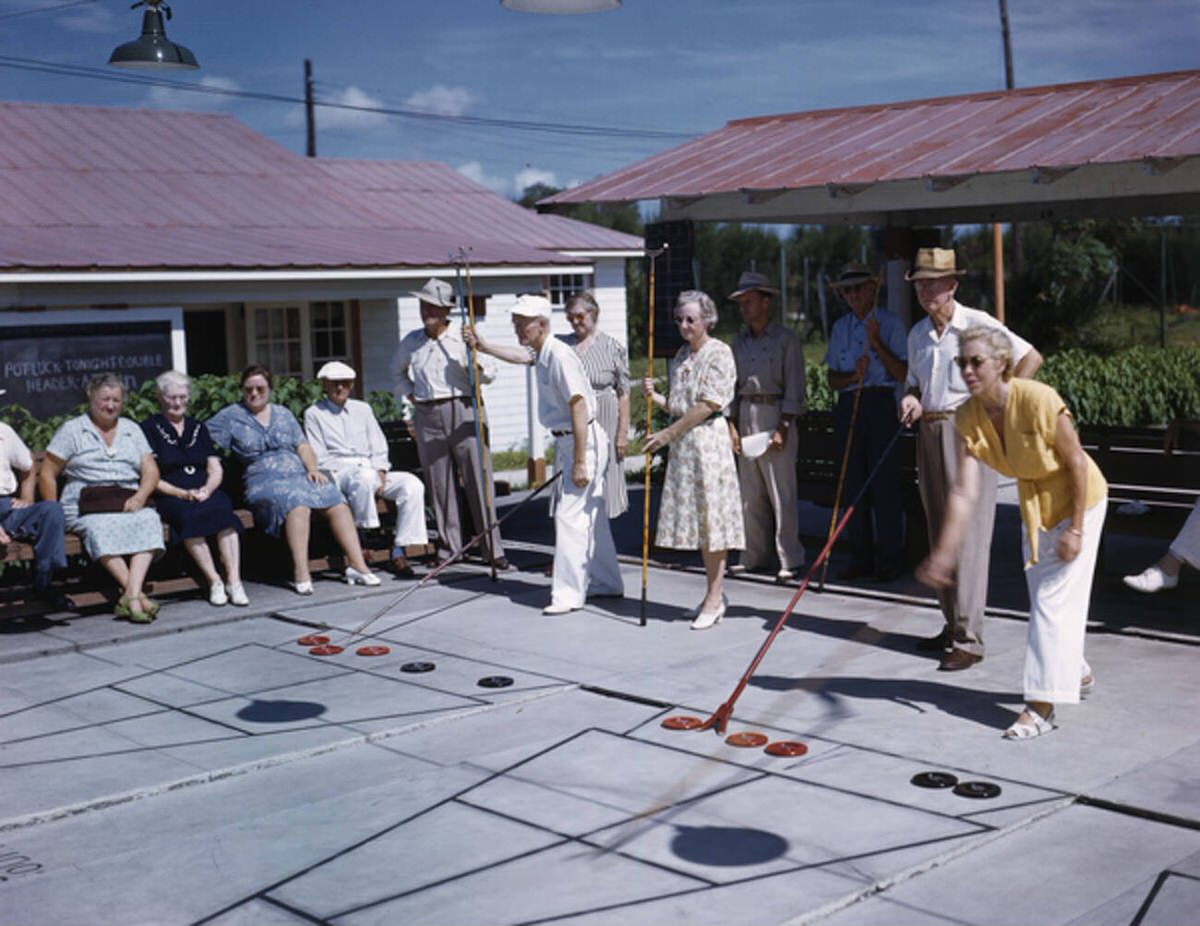
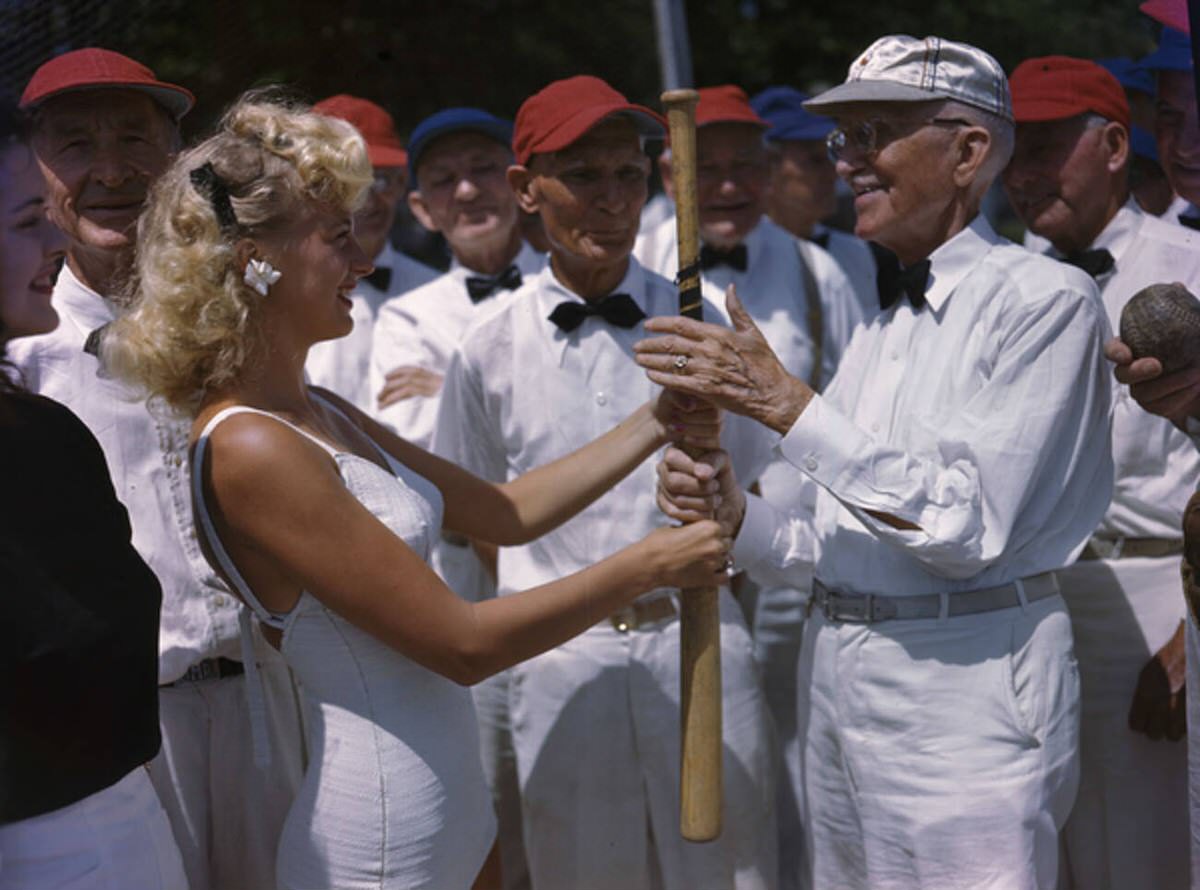
St. Petersburg developed a strong reputation as a retirement destination. Retirees played shuffleboard at Mirror Lake Park and outdoor chess in the open air. One of the city’s most celebrated groups was the Three-Quarter Century Softball Club, made up entirely of players aged 75 and older.
Members of the Three-Quarter Century Softball Club in St. Petersburg, Florida, 1947Retirees playing shuffleboard at Mirror Lake Park in St. Petersburg, 1940s
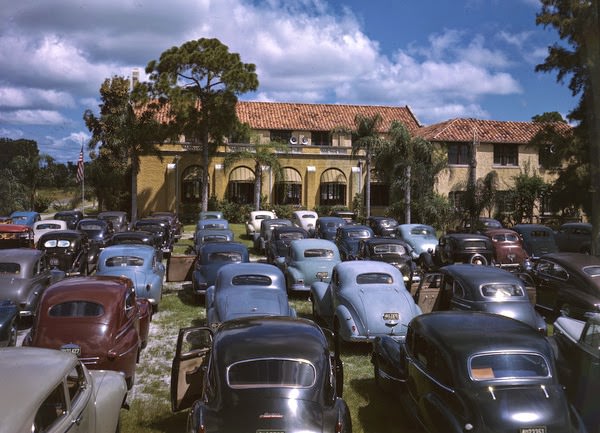
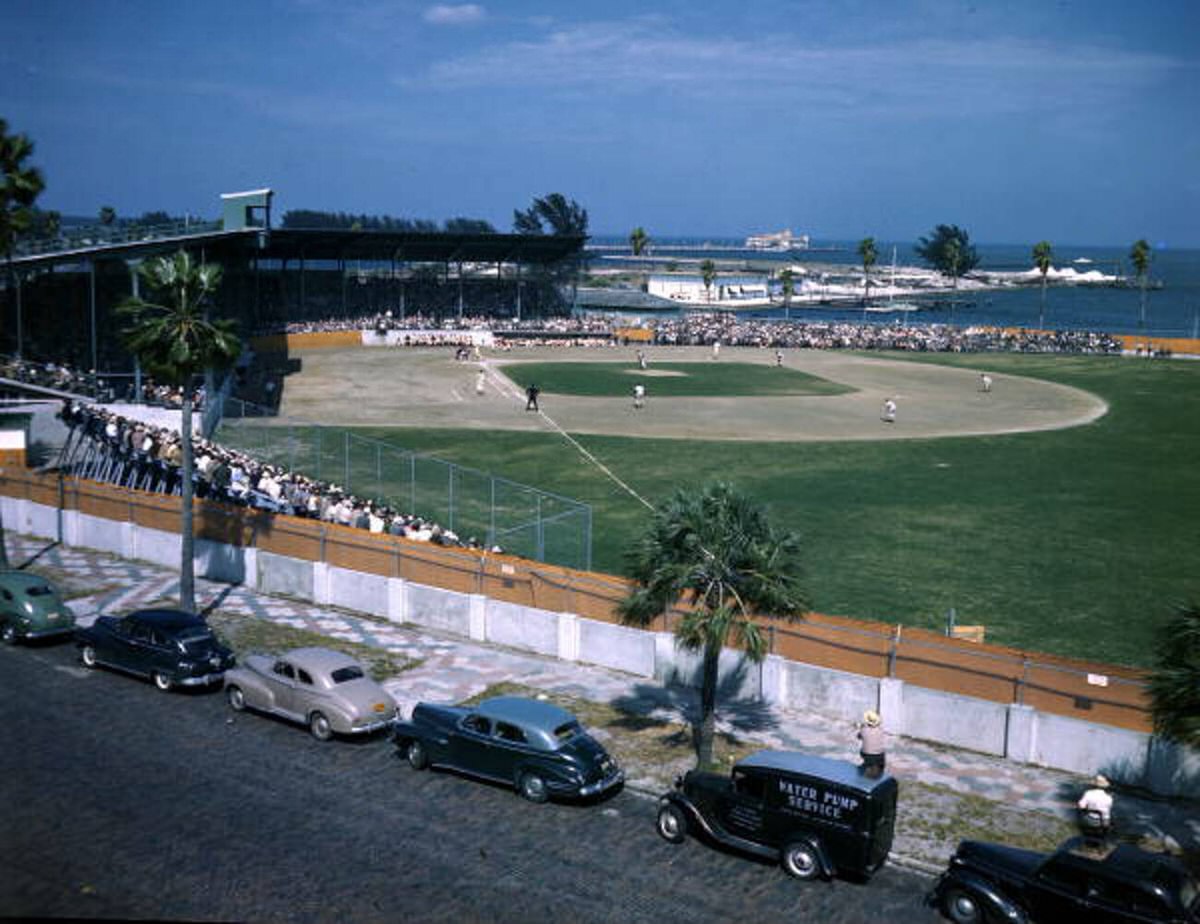
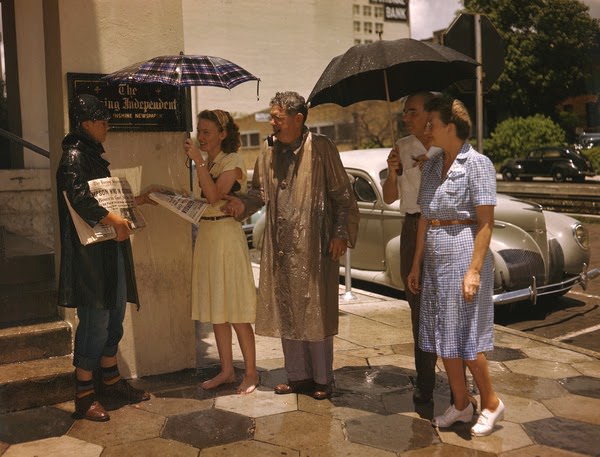
The city also had its own quirks. Pasadena Community Church ran a drive-in church service, allowing worshippers to attend from their cars. The Evening Independent newspaper was distributed on the streets, and baseball games at Al Lang Field drew regular crowds.
Pasadena Community drive-in church in St. Petersburg, Florida, 1947Baseball game at Al Lang Field in St. Petersburg, Florida, 1940s
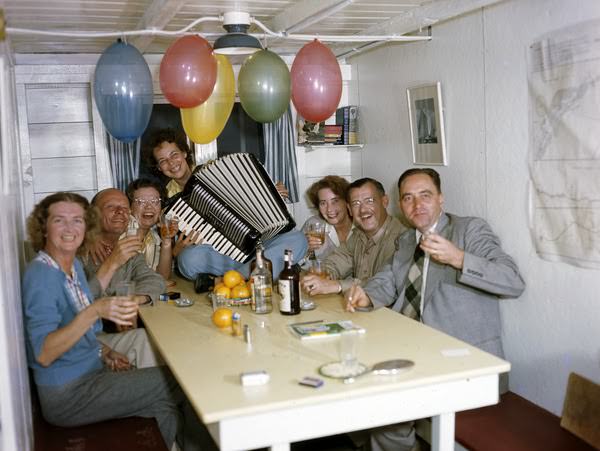
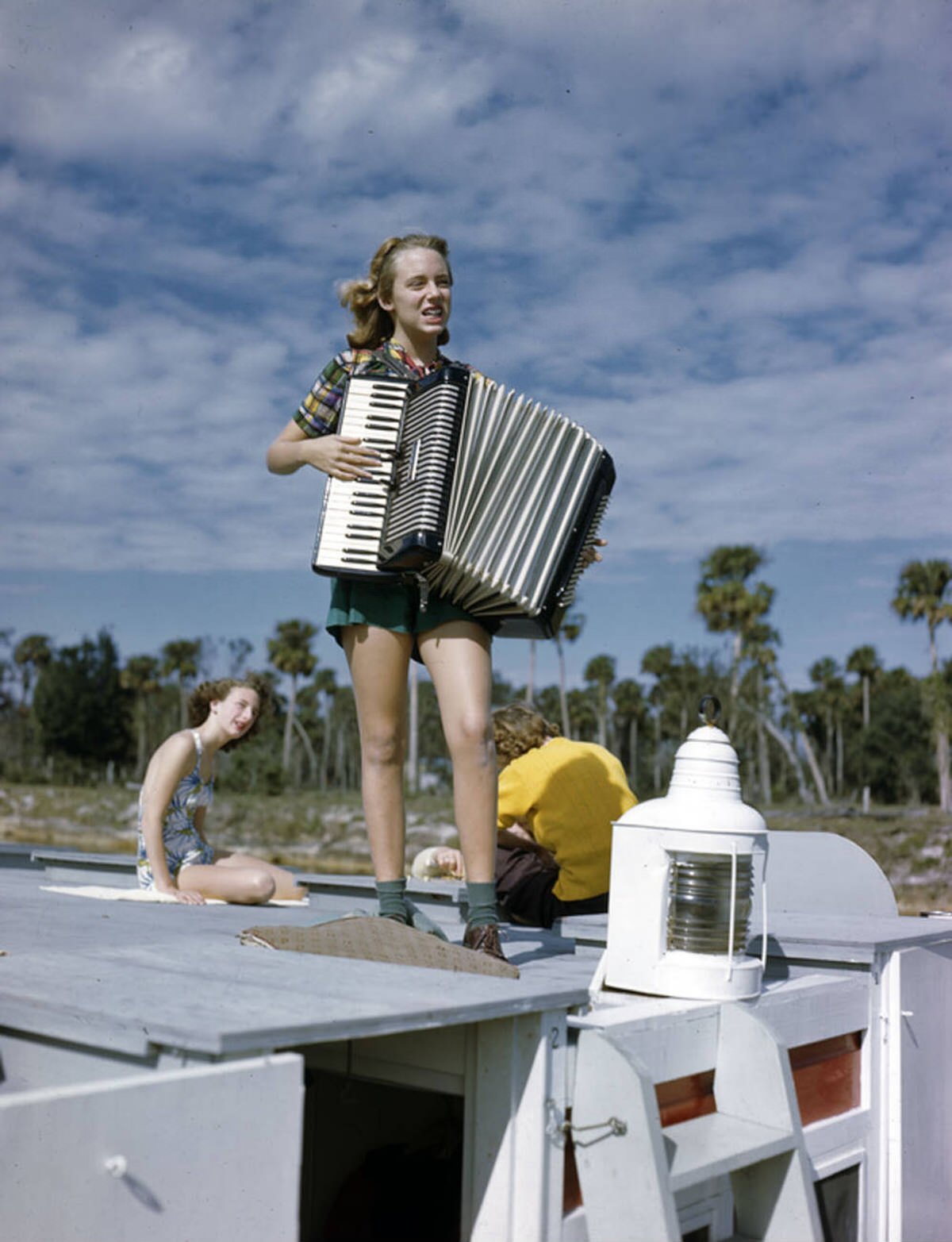
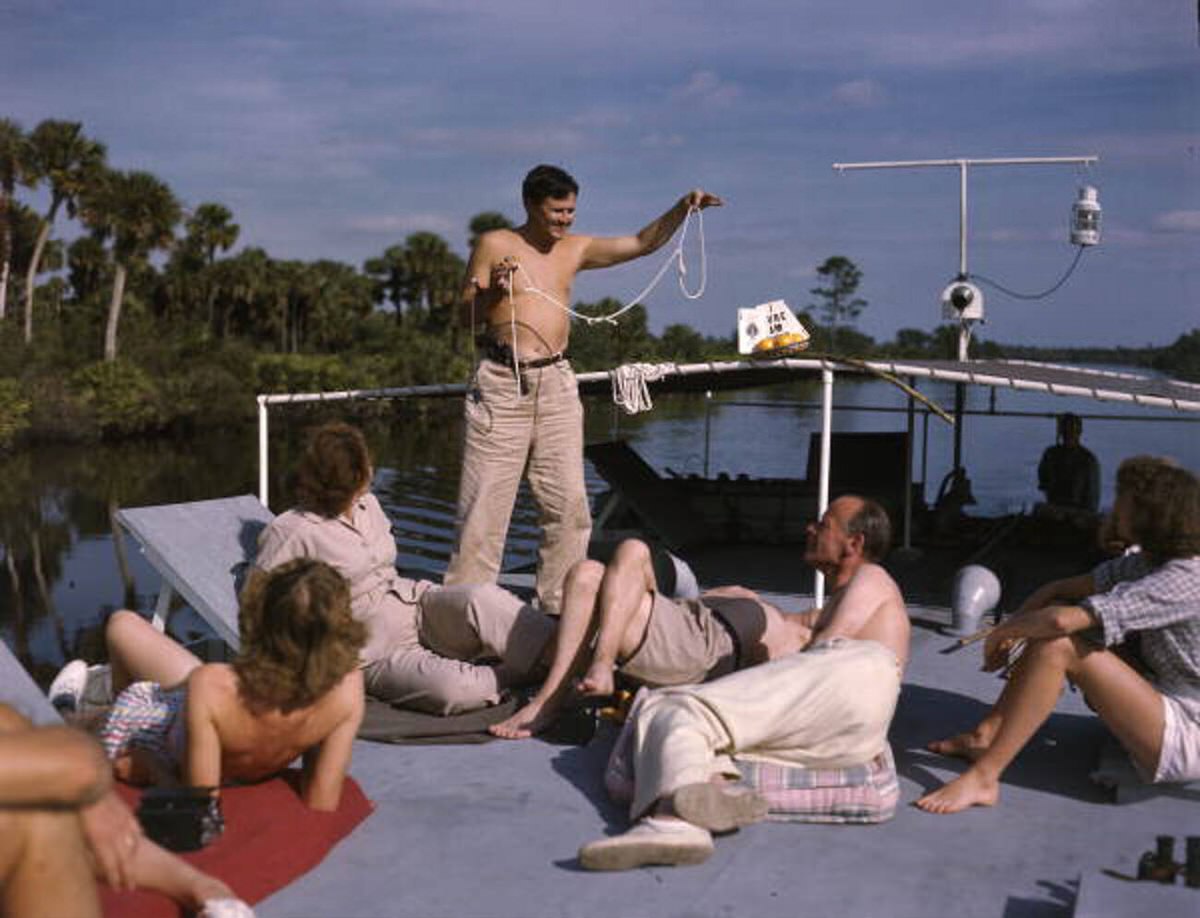
On the rivers and waterways, a more relaxed kind of life played out aboard shantyboats. Mabel and Archie lived on a vessel called the Lazy Bones, drifting along the Caloosahatchee River. Their boat was a social hub — Joe Steinmetz performed magic tricks on deck, Lois Duncan Steinmetz played the accordion, and the New Year’s Eve party of 1947 was celebrated onboard.
Mabel and Archie aboard their shantyboat Lazy Bones on the Caloosahatchee River, 1940sNew Year’s Eve party aboard the shantyboat Lazy Bones, 1947Lois Duncan Steinmetz playing the accordion aboard the Lazy Bones shantyboat, 1940s
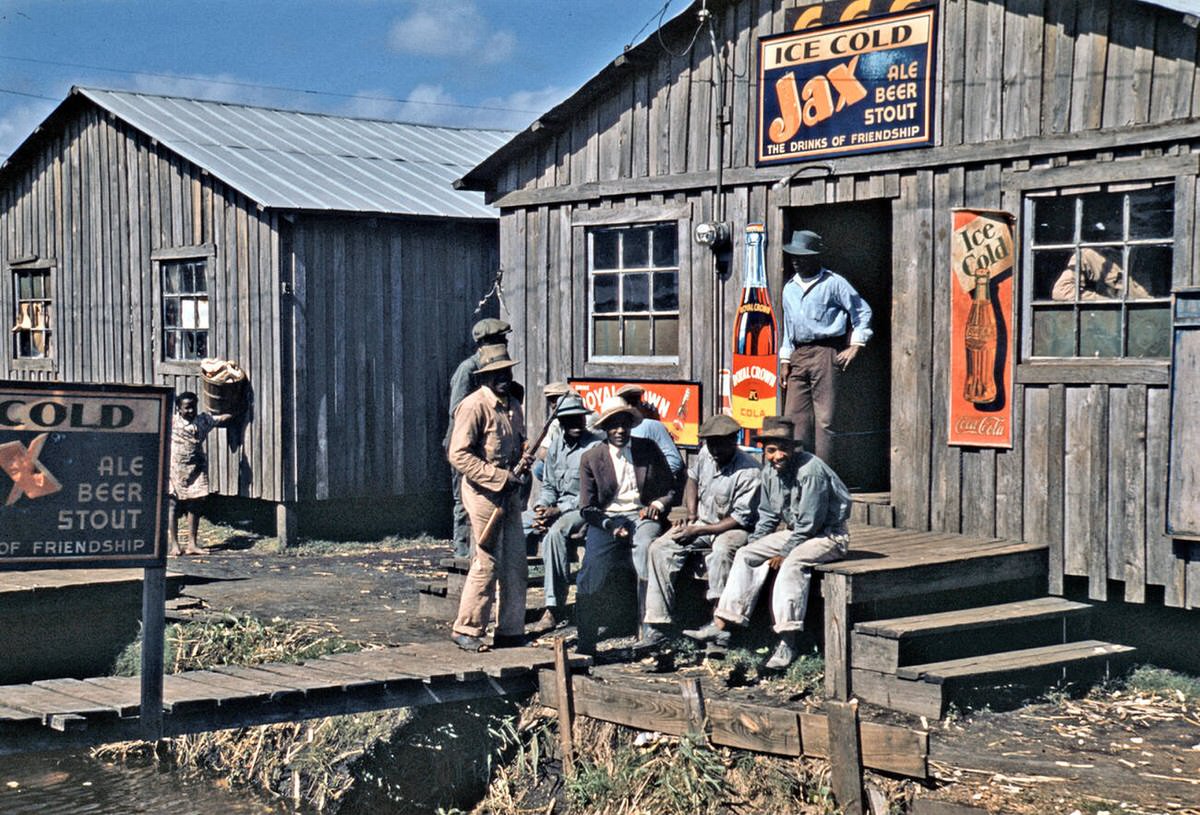
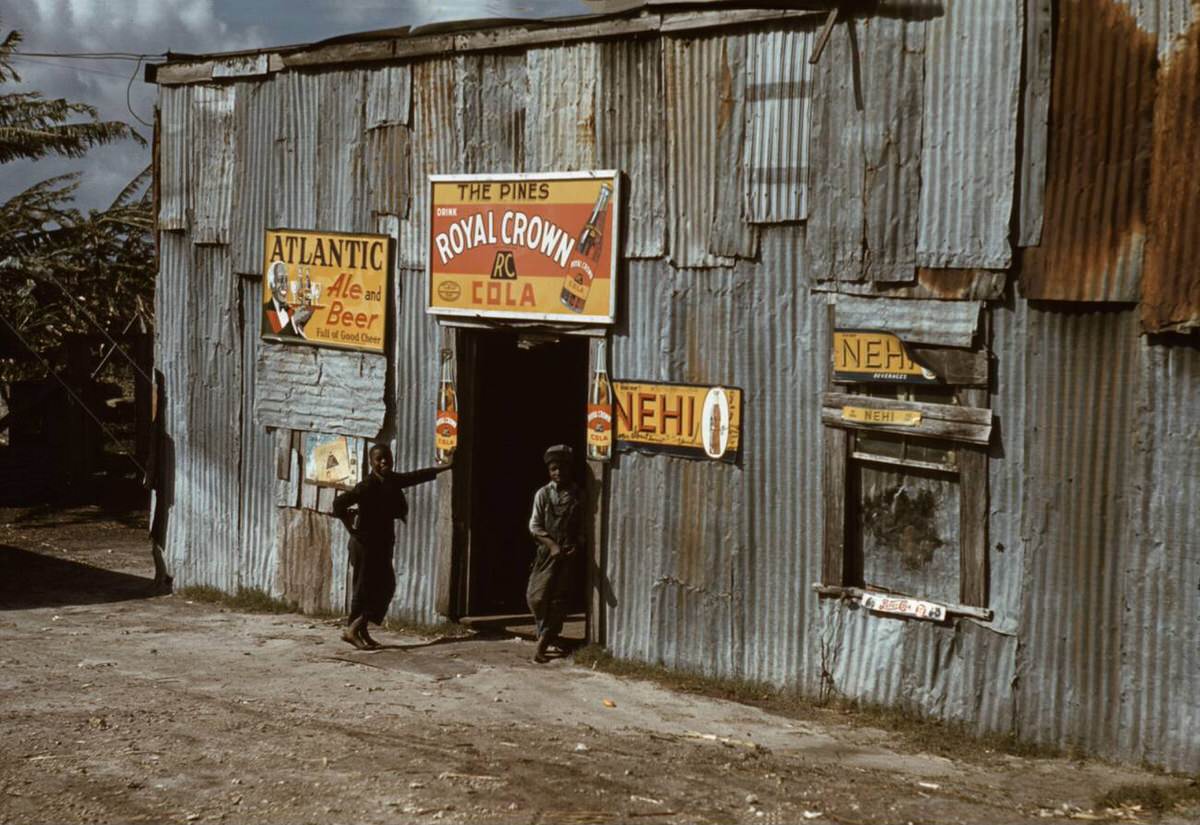
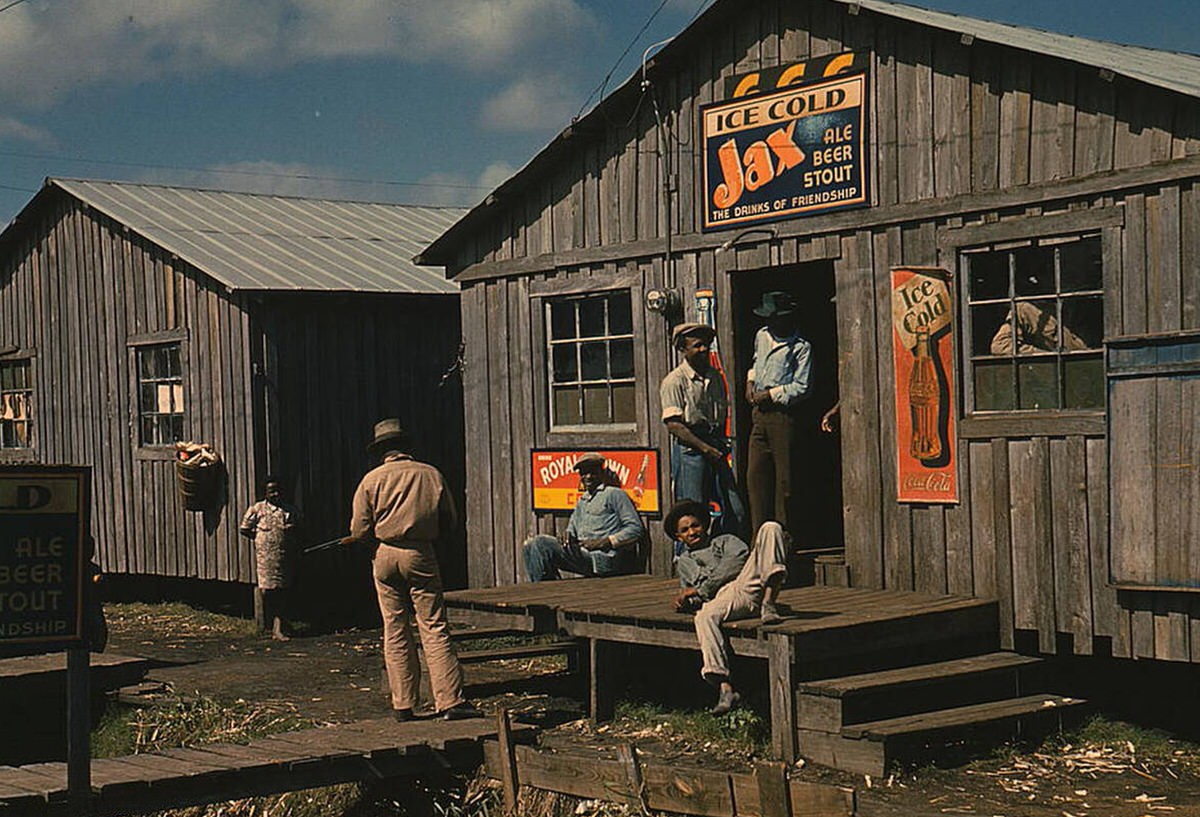
Migratory farm workers, many of them Black, lived and worked under very different conditions. In Belle Glade, near Lake Okeechobee, workers lived in basic housing near juke joints — small roadside bars that provided music and social life after long days in the fields. Racial segregation controlled where Black Floridians could eat, work, and gather.
Juke joint in Belle Glade, Florida, 1944Black migratory workers by a juke joint in Belle Glade, Florida, 1941
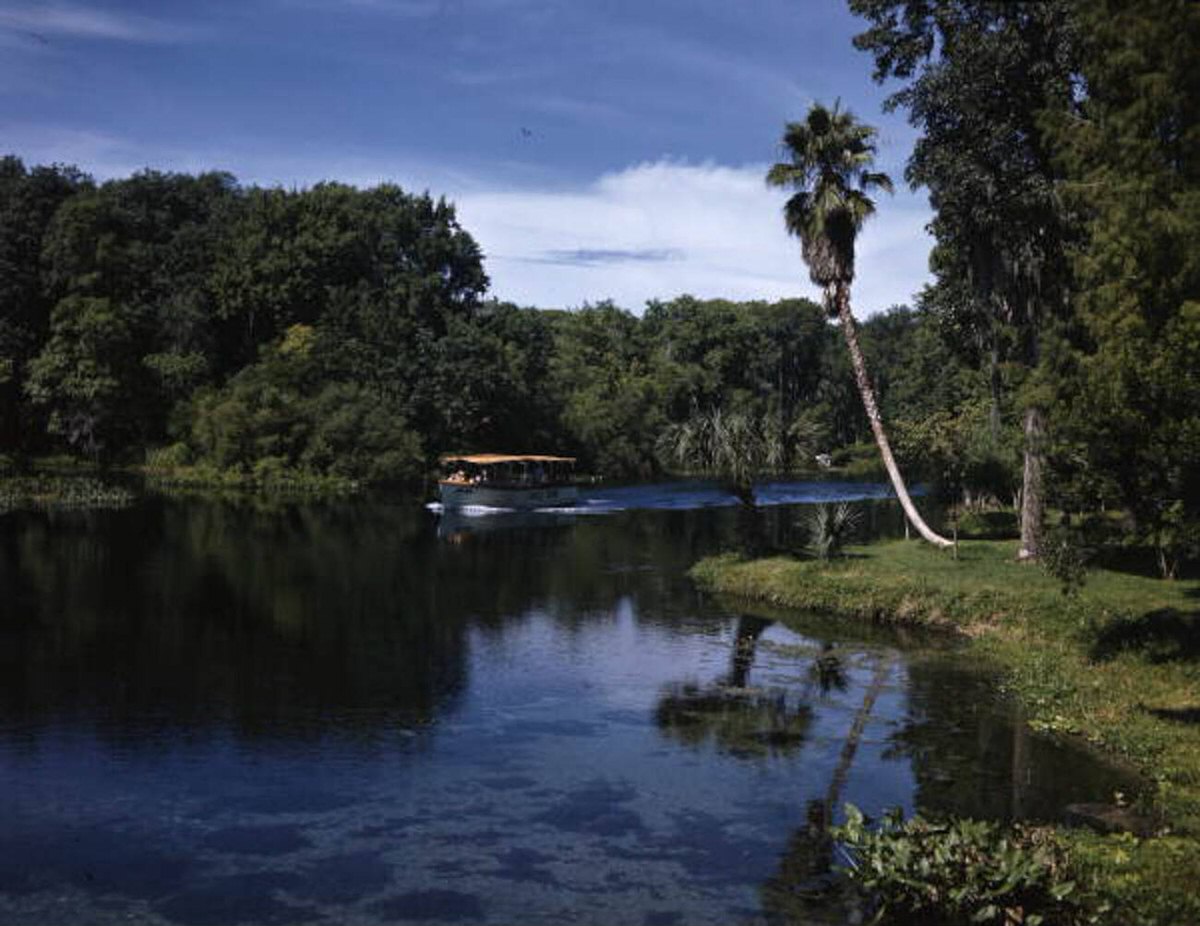
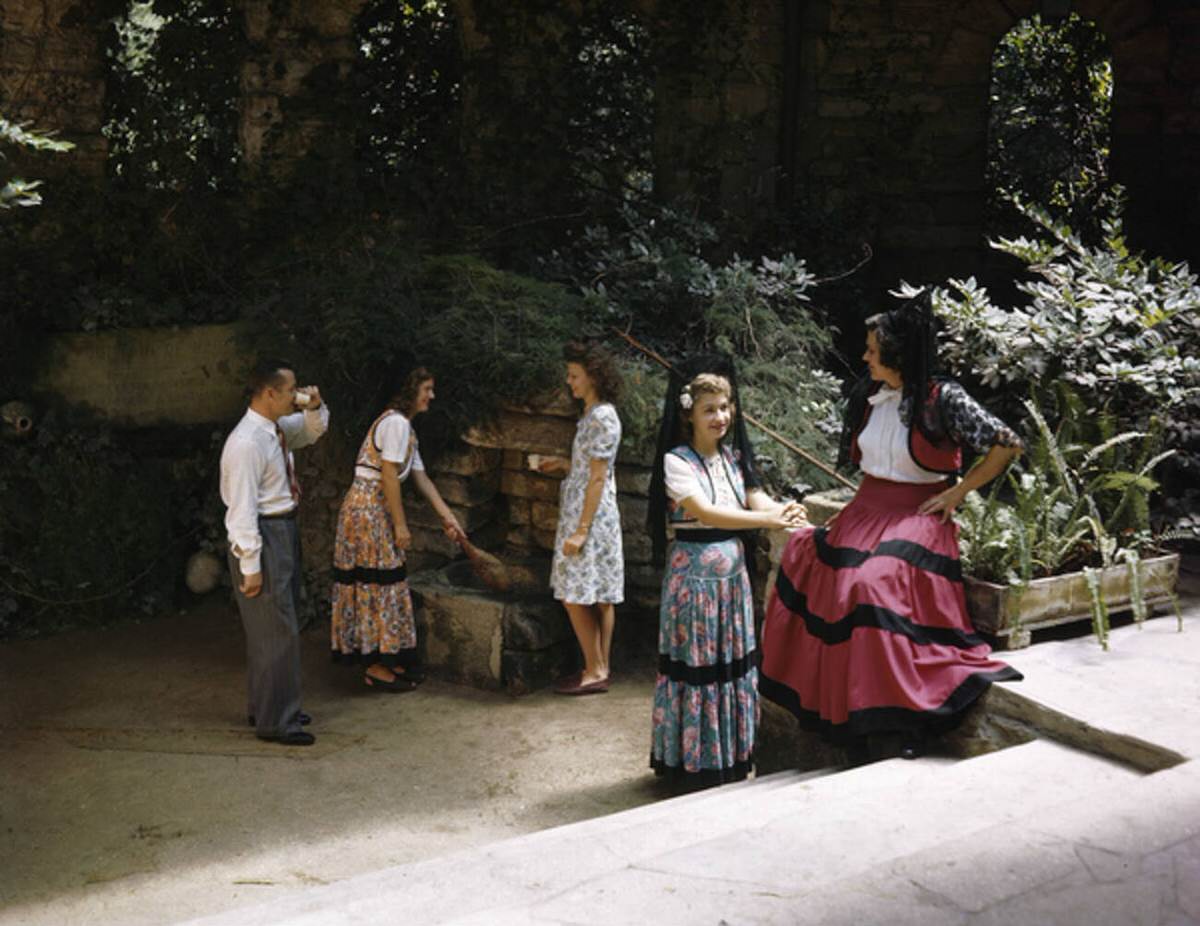
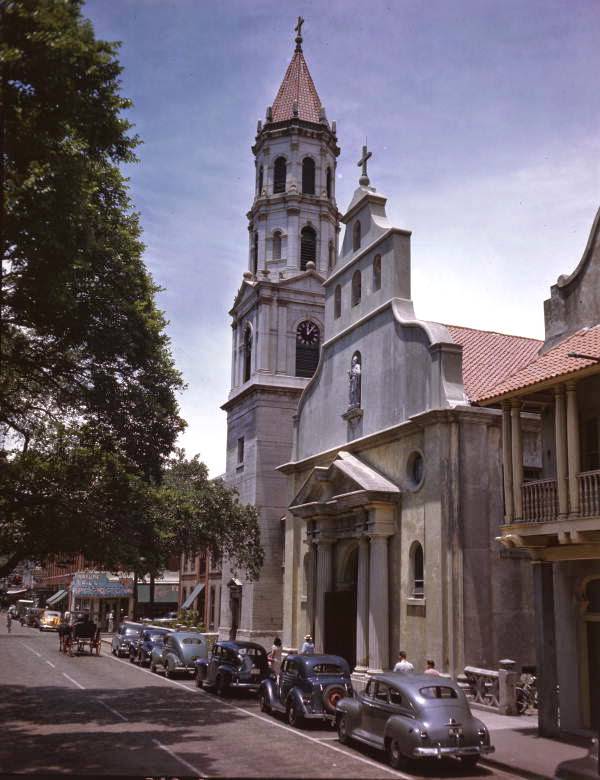
Tourism persisted throughout the war years. Visitors came to see roadside attractions like Silver Springs near Ocala, where Jay Dee’s jungle cruise took passengers through the crystal-clear river by glass-bottom boat. In St. Augustine, tourists visited the Fountain of Youth, and the old Spanish cathedral stood as one of the oldest Catholic parishes in the country.
Jay Dee’s jungle cruise at Silver Springs in Ocala, Florida, 1940sVisitors at the Fountain of Youth in St. Augustine, Florida, 1940sSt. Augustine Cathedral, 1945
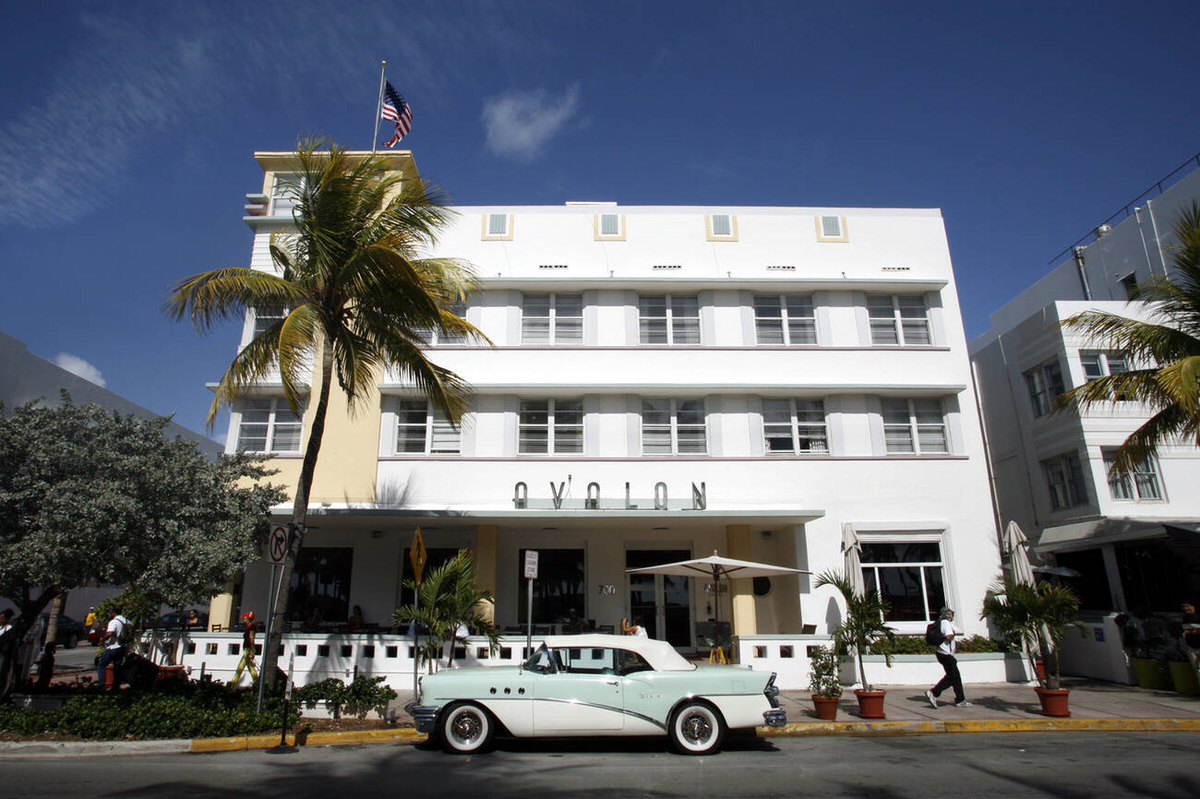
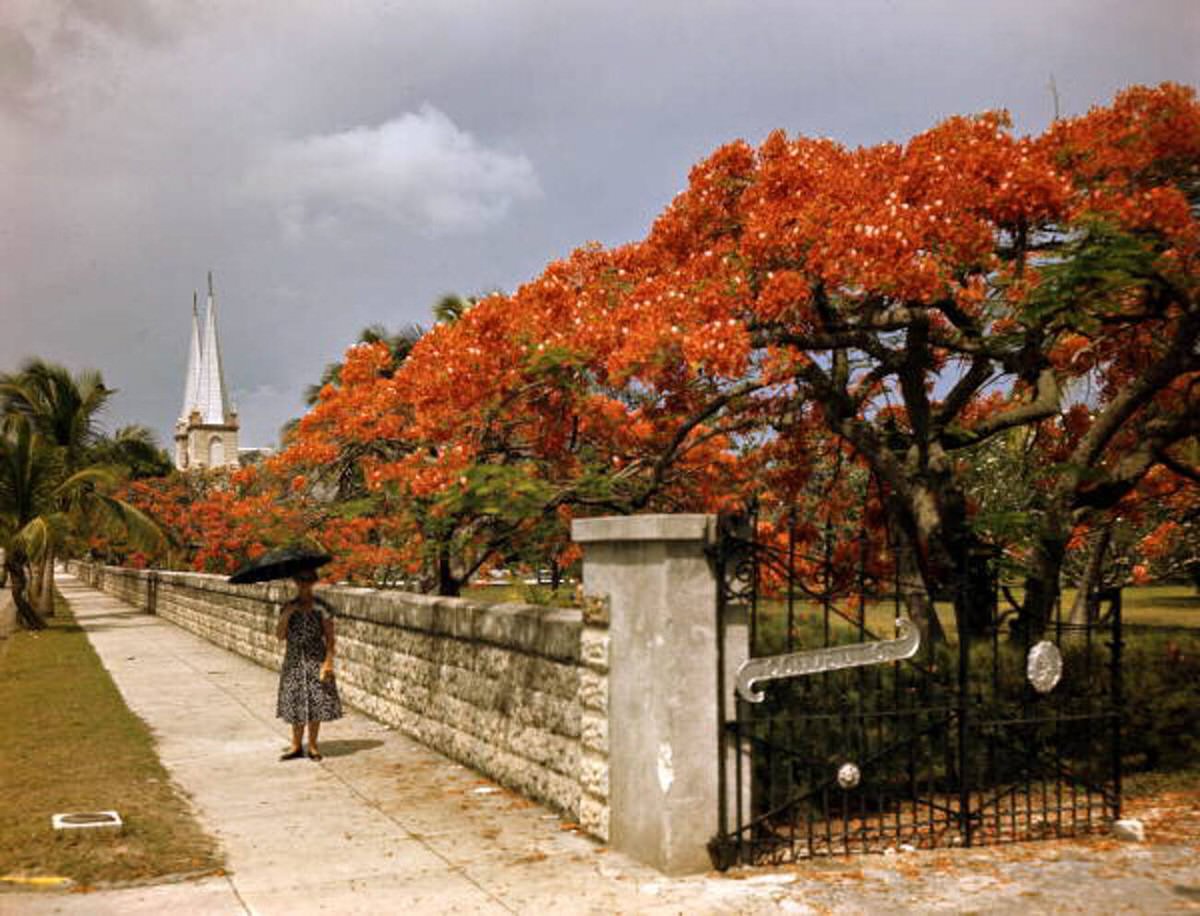
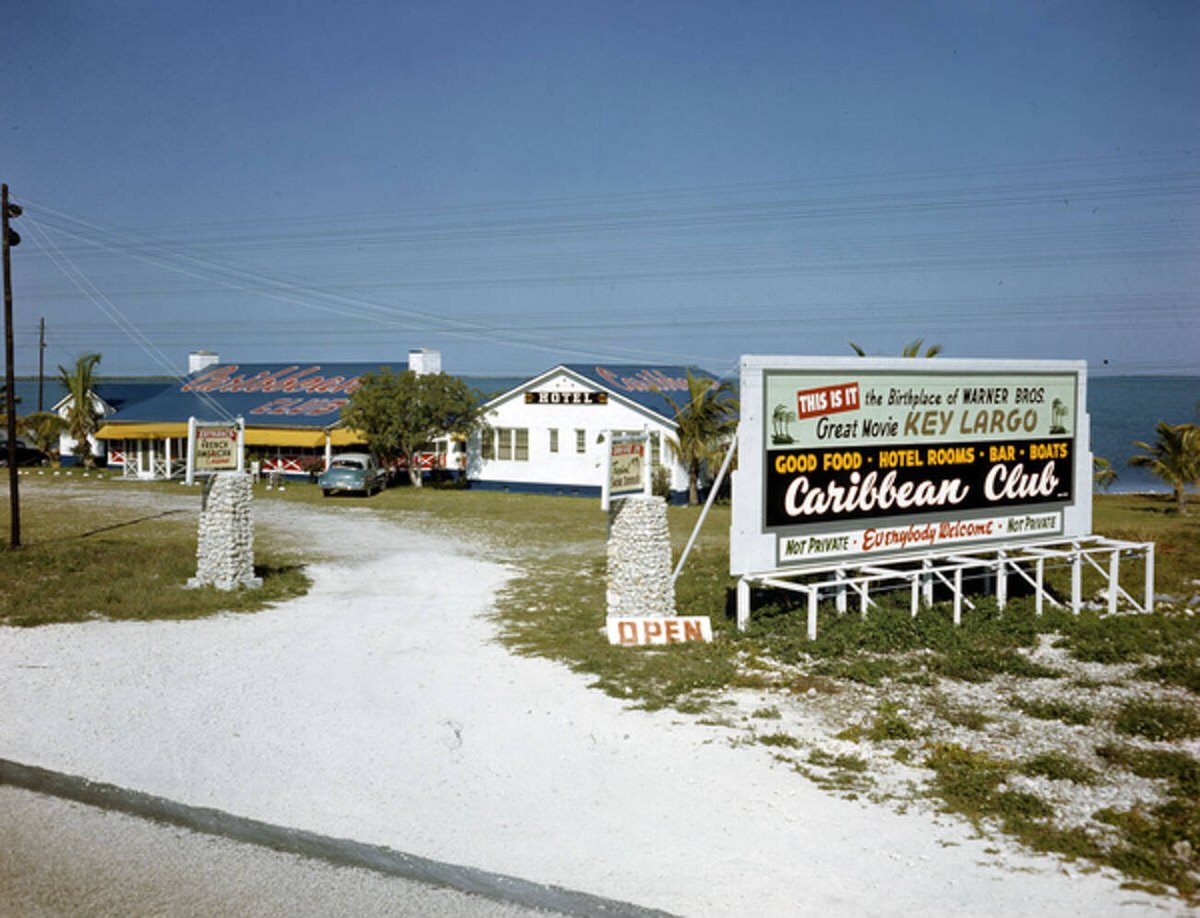
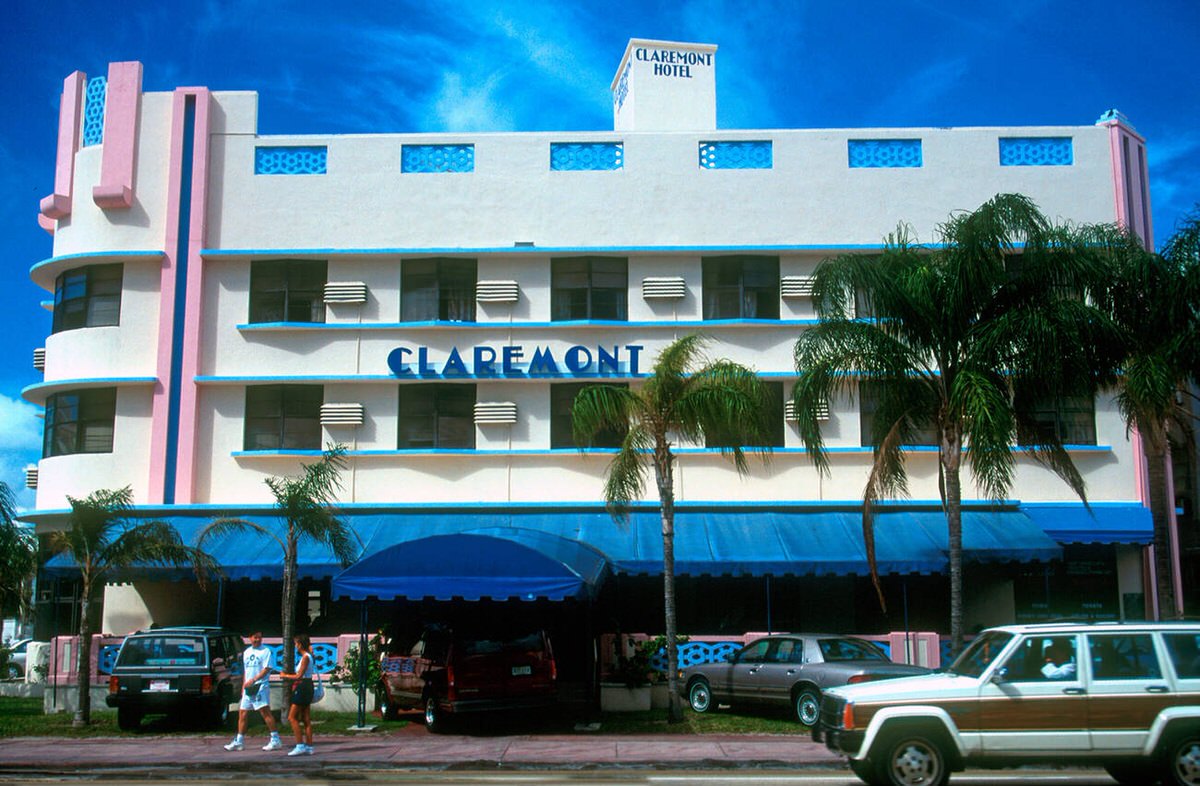
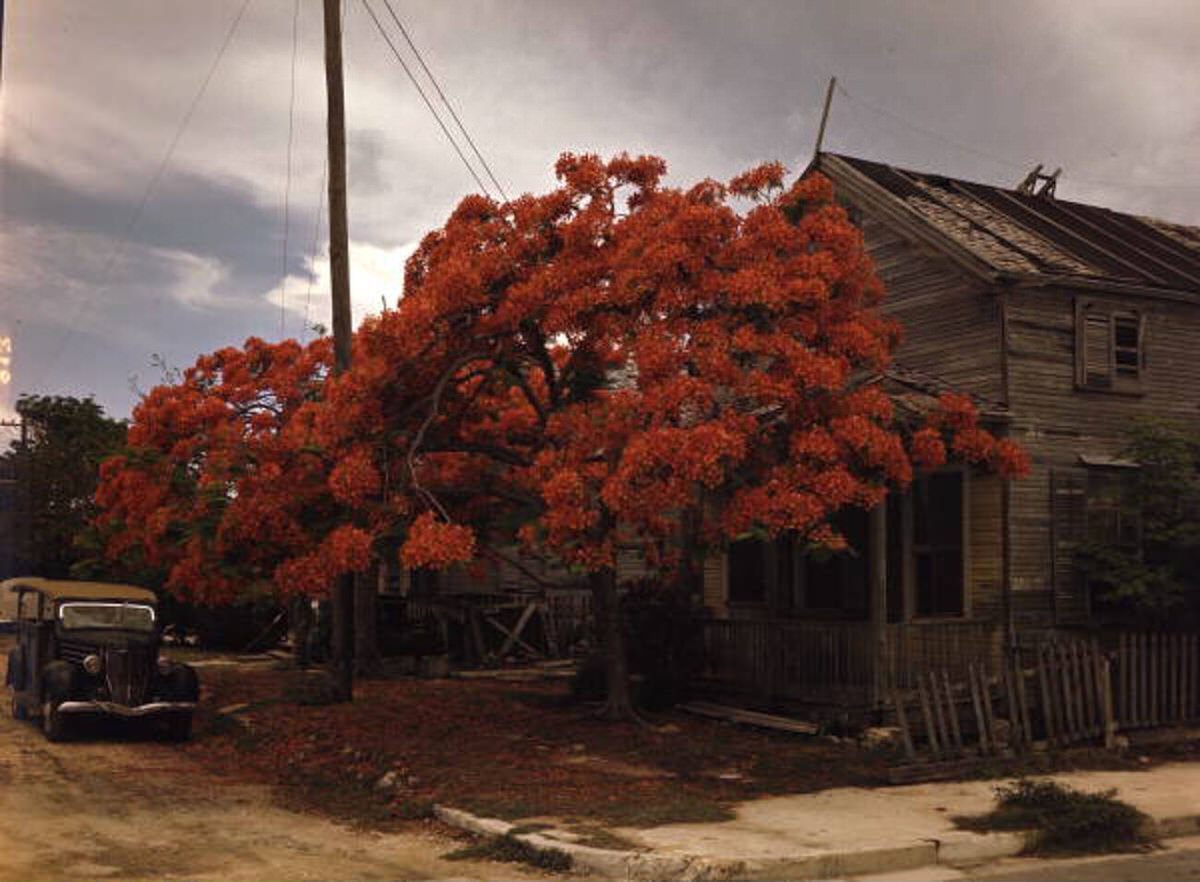
Miami’s South Beach hotels represented a more glamorous side of the state. Art Deco buildings like the Avalon and Claremont Hotels lined Ocean Drive, drawing vacationers even during wartime restrictions. Key West bloomed with Royal Poinciana trees, and Key Largo’s Caribbean Club was a waterfront destination on the way down the Keys.
Avalon Hotel on Ocean Drive in South Beach, Miami, 2009Royal Poinciana flowers in bloom along Truman Avenue in Key West, 1940sCaribbean Club in Key Largo, Florida, 1948
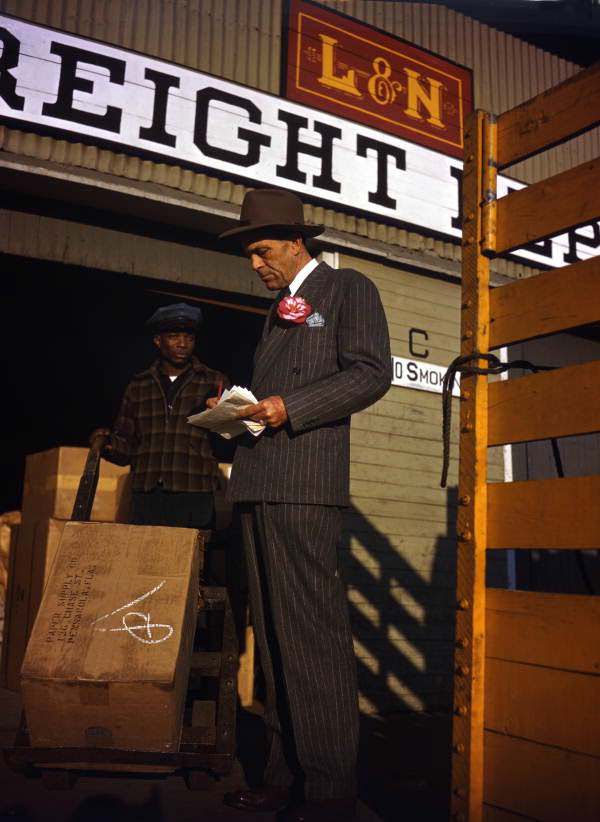
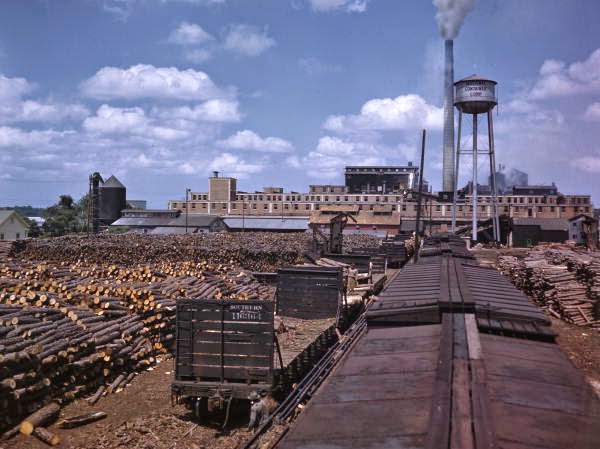
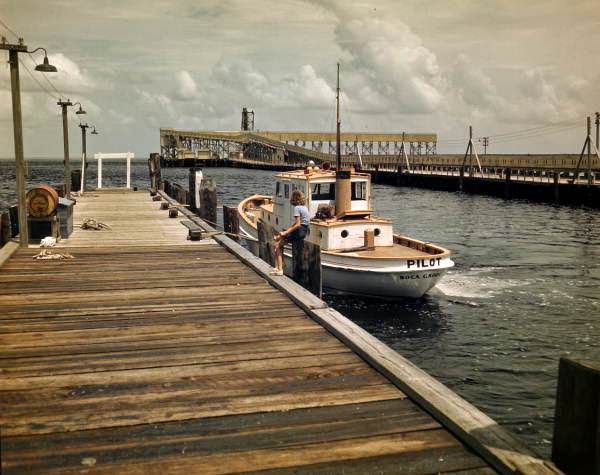
Industrial and freight activity kept the state’s economy moving. The L&N Freight Depot in Pensacola handled shipments moving through the Panhandle. The National Container Corporation mill in Jacksonville processed lumber. In Boca Grande, a pilot boat sat docked near the phosphate elevator, part of the mineral export trade that ran through Charlotte Harbor.
H.G. Champlin at the L&N Freight Depot in Pensacola, Florida, 1945National Container Corporation Mill in Jacksonville, Florida, 1945Pilot boat docked near the phosphate elevator in Boca Grande, Florida, 1947
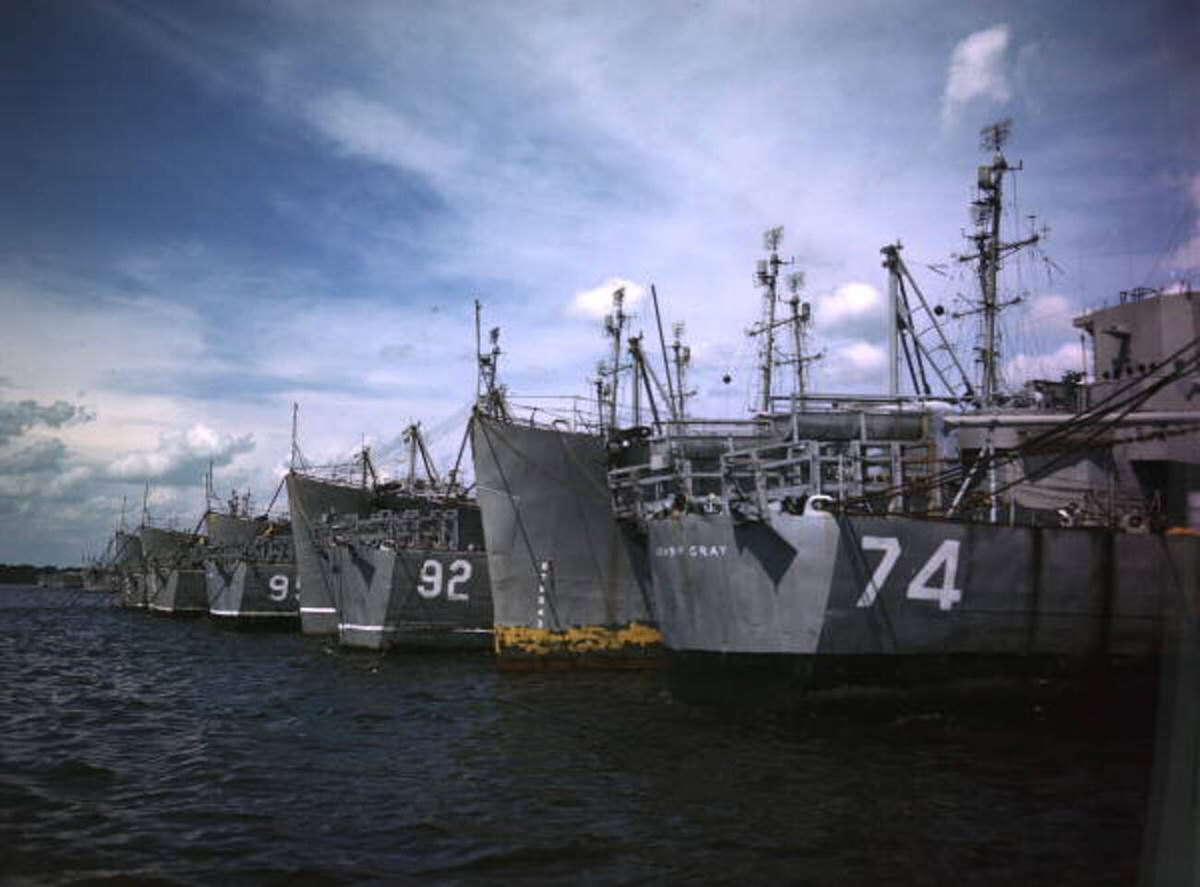
After the war ended, Navy vessels were towed to Green Cove Springs on the St. Johns River, where they were mothballed in long rows — a fleet frozen in peacetime, waiting to see if they would be called on again.
U.S. Navy ships mothballed at Green Cove Springs, Florida, 1940s
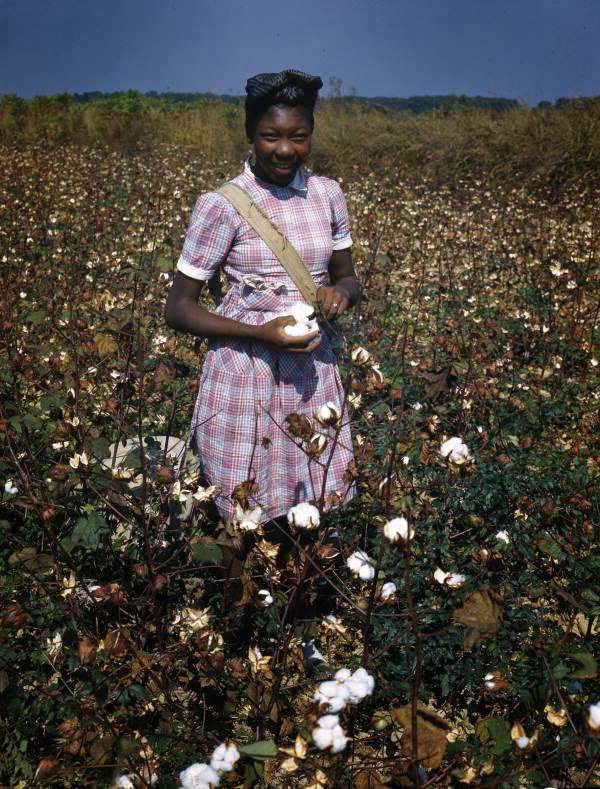
The cultural range of 1940s Florida appears across these photographs — from Greek Orthodox processions to Seminole cattle roundups, from circus acrobats to shantyboat New Year’s parties, from cotton fields to art schools. Each image preserves a moment in a decade when Florida was being pulled simultaneously into the modern world and still holding fast to older, deeply rooted ways of life.
Egg cracking tradition in Tarpon Springs, Florida, 1947
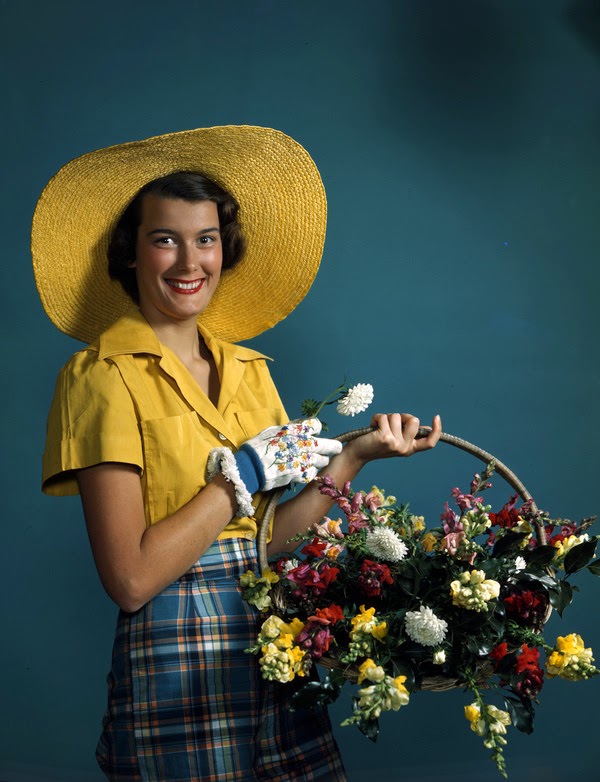
Model with a basket of flowers in Sarasota, Florida, 1945
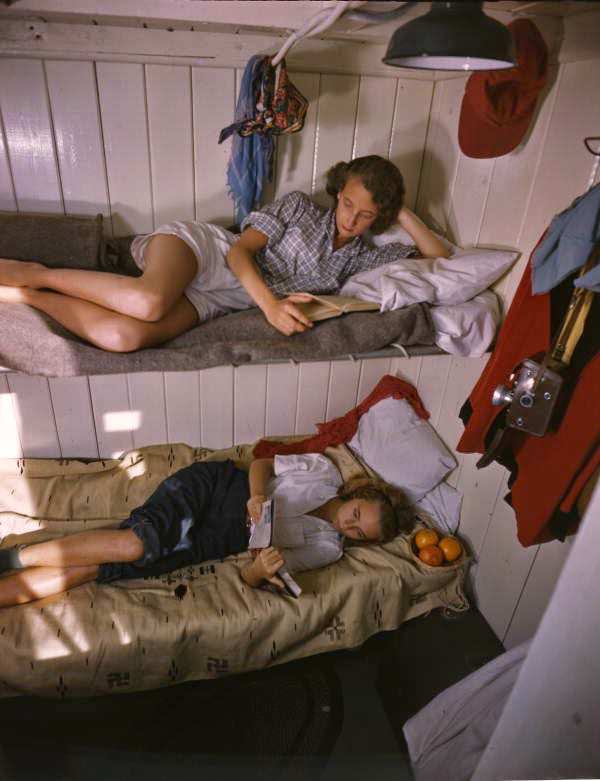
Young women reading aboard the shantyboat Lazy Bones, 1947
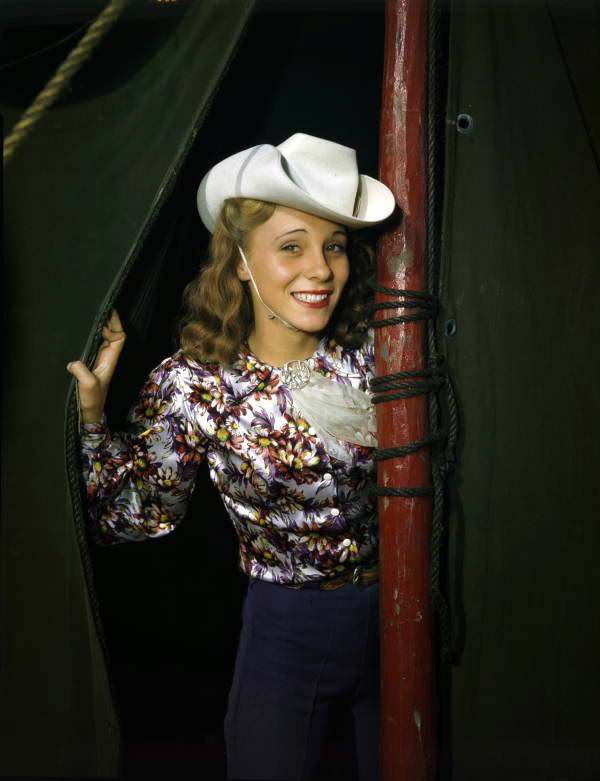
Ringling Circus performer in Sarasota, Florida, 1950Ringling Circus performers at winter quarters in Sarasota, Florida, 1950Candy Tilton Ulrich painting at Sarasota Jungle Gardens, 1948Living quarters and a juke joint for migratory workers in Belle Glade, Florida, 1940s
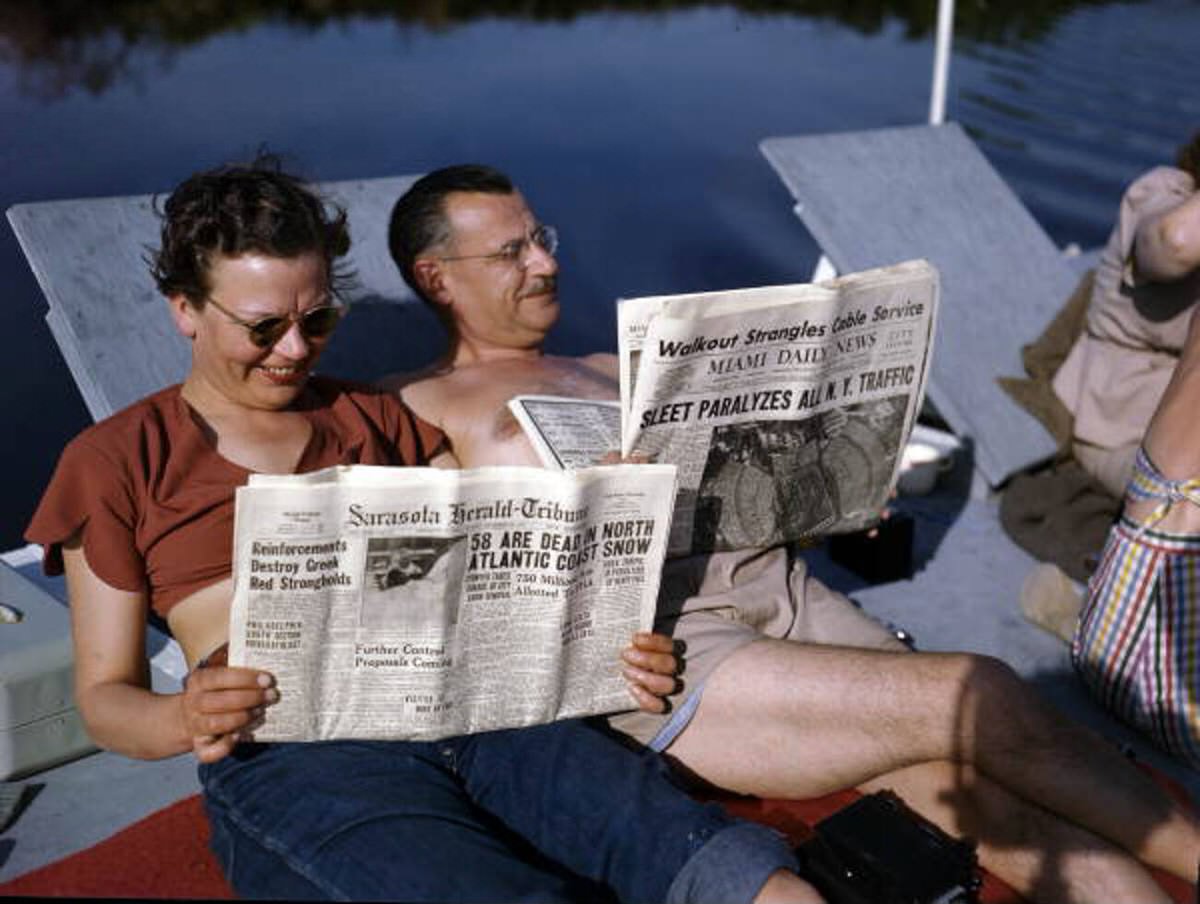
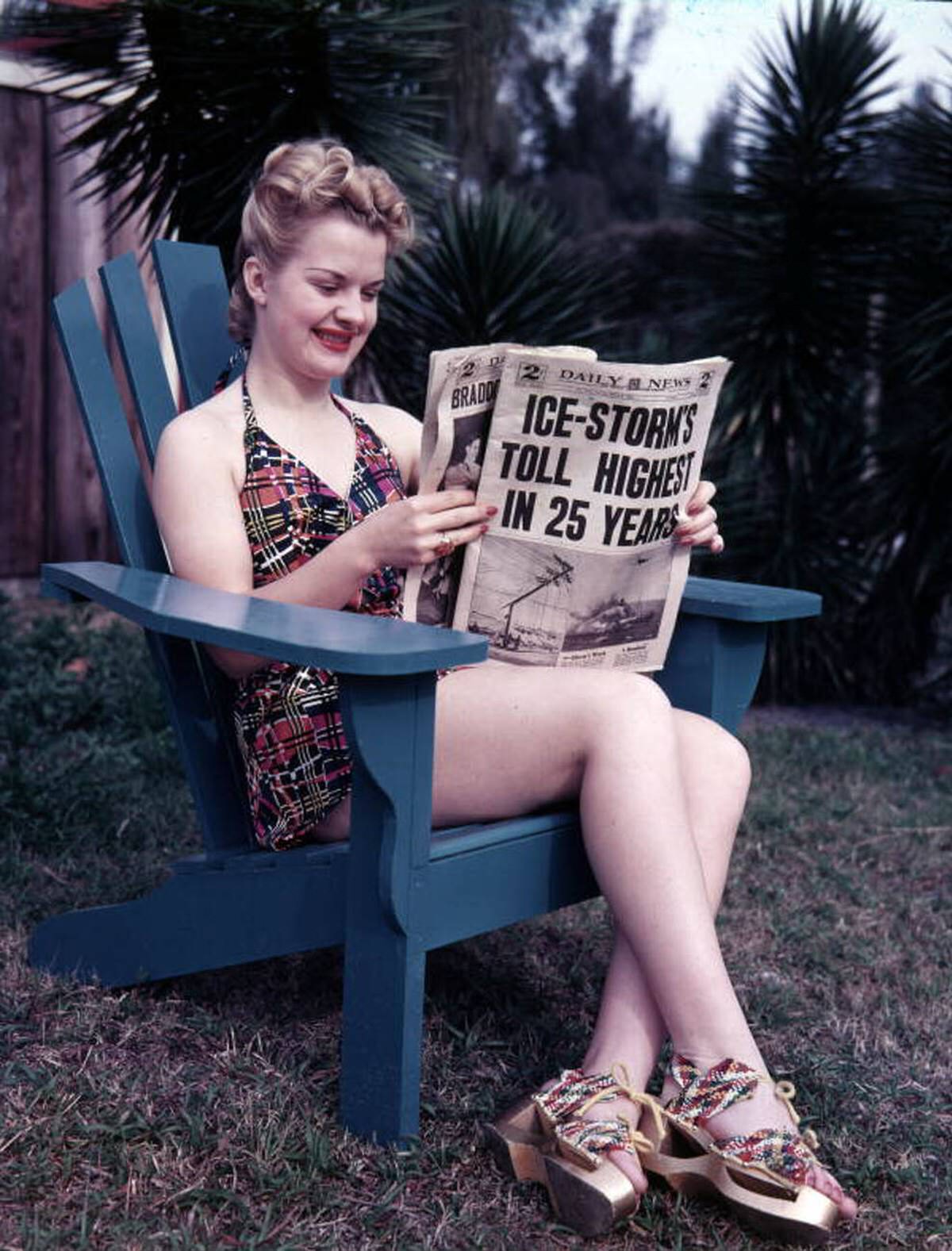
Woman in Sarasota reading about winter storms while sitting in an Adirondack chair, 1940s
Greek sponge boats on ways in Tarpon Springs, Florida, 1940s
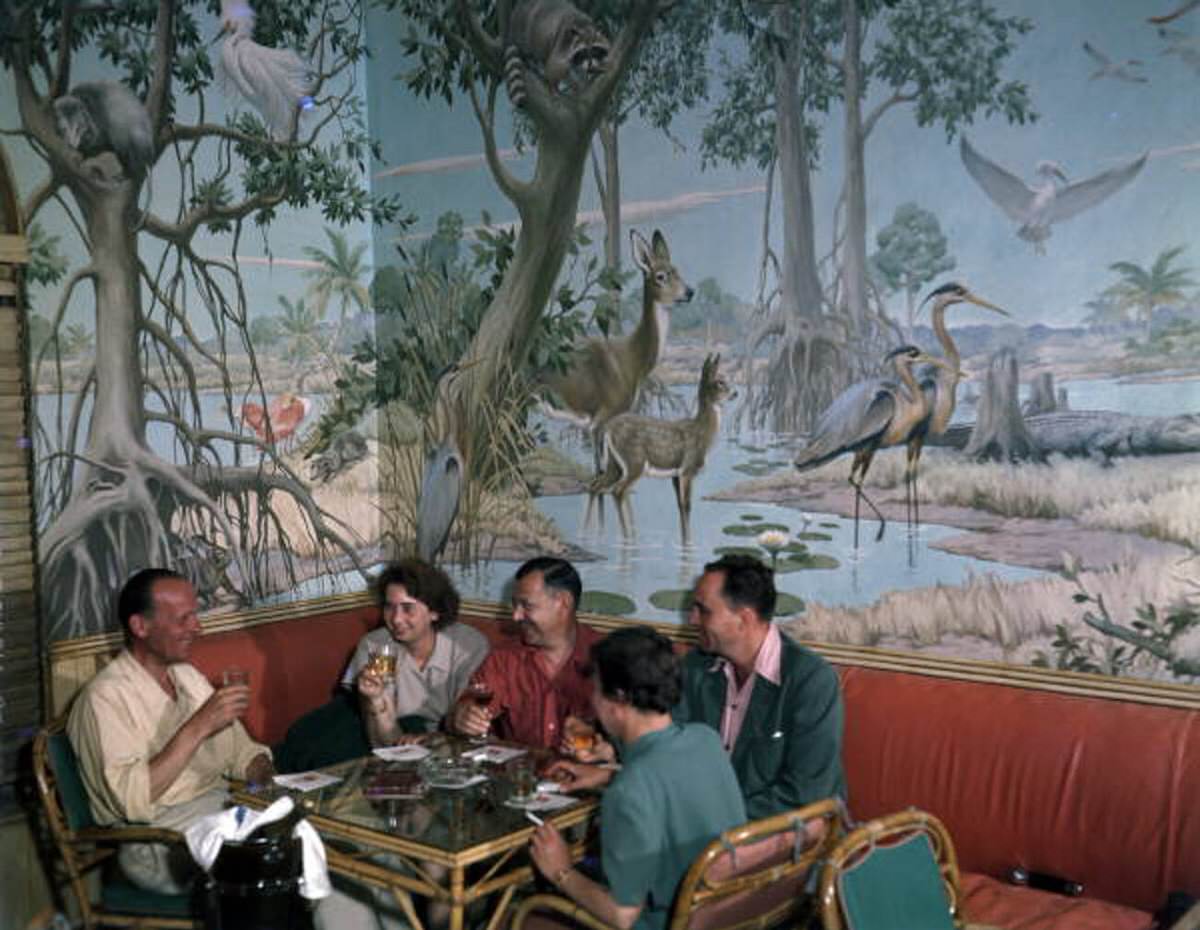
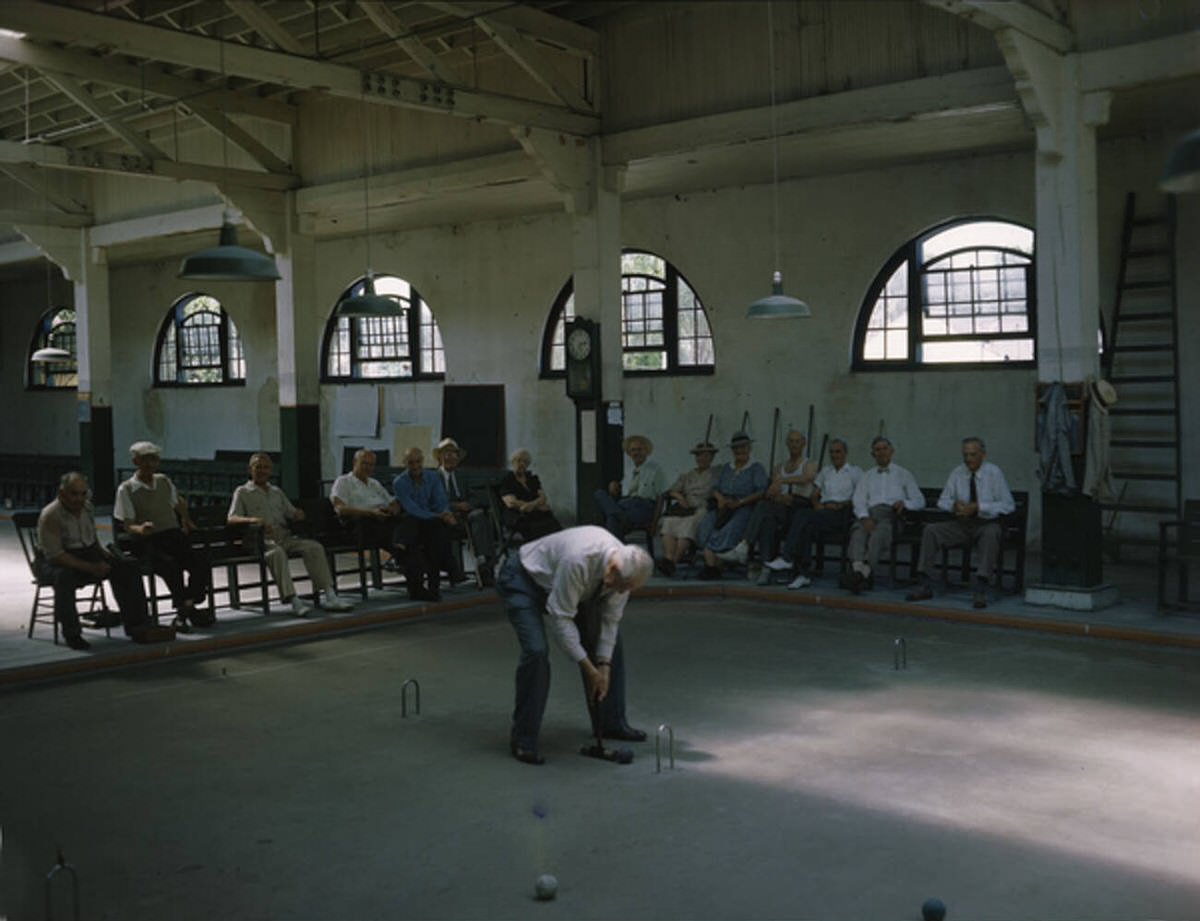
Men playing chess outdoors in St. Petersburg, Florida, 1940sEverglades Lounge at the Clewiston Inn in Clewiston, Florida, 1940sRetirees playing indoor croquet in Sarasota, Florida, 1940sRetirees playing shuffleboard in Sarasota, Florida, 1940s
Nora Carrol and Lois Duncan Steinmetz modeling swimsuits in Sarasota, Florida, 1940s
Seminole mother and her children at the Brighton Seminole Indian Reservation, 1940s
Sarasota Sun-Debs at Lido Beach, Florida, 1940sYoung women with members of the Three-Quarter Century Softball Club in St. Petersburg, Florida, 1940sWorkers trimming sponges in Tarpon Springs, Florida, 1940s
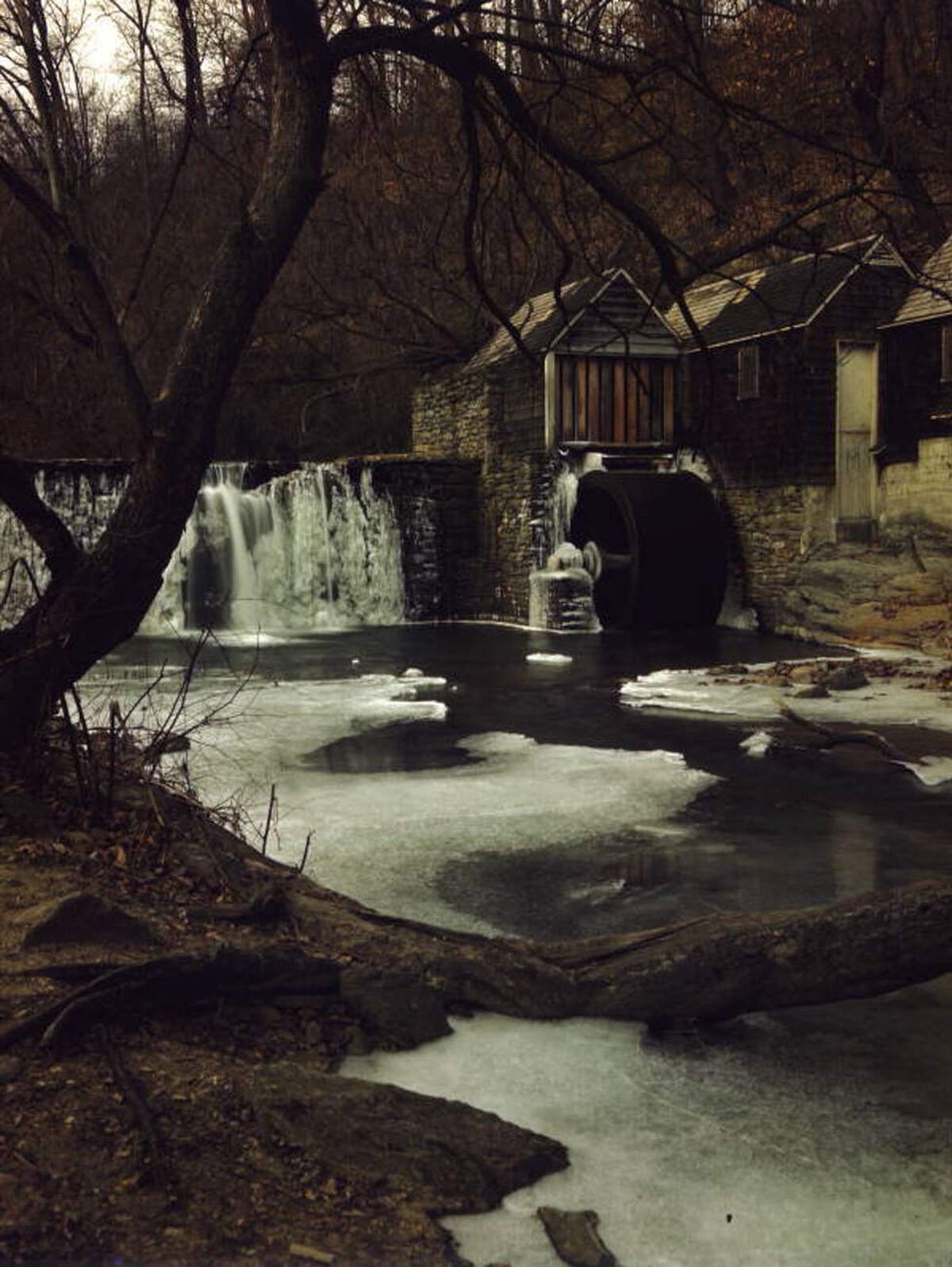
Old water mill near Philadelphia, Pennsylvania, during winter, 1940s
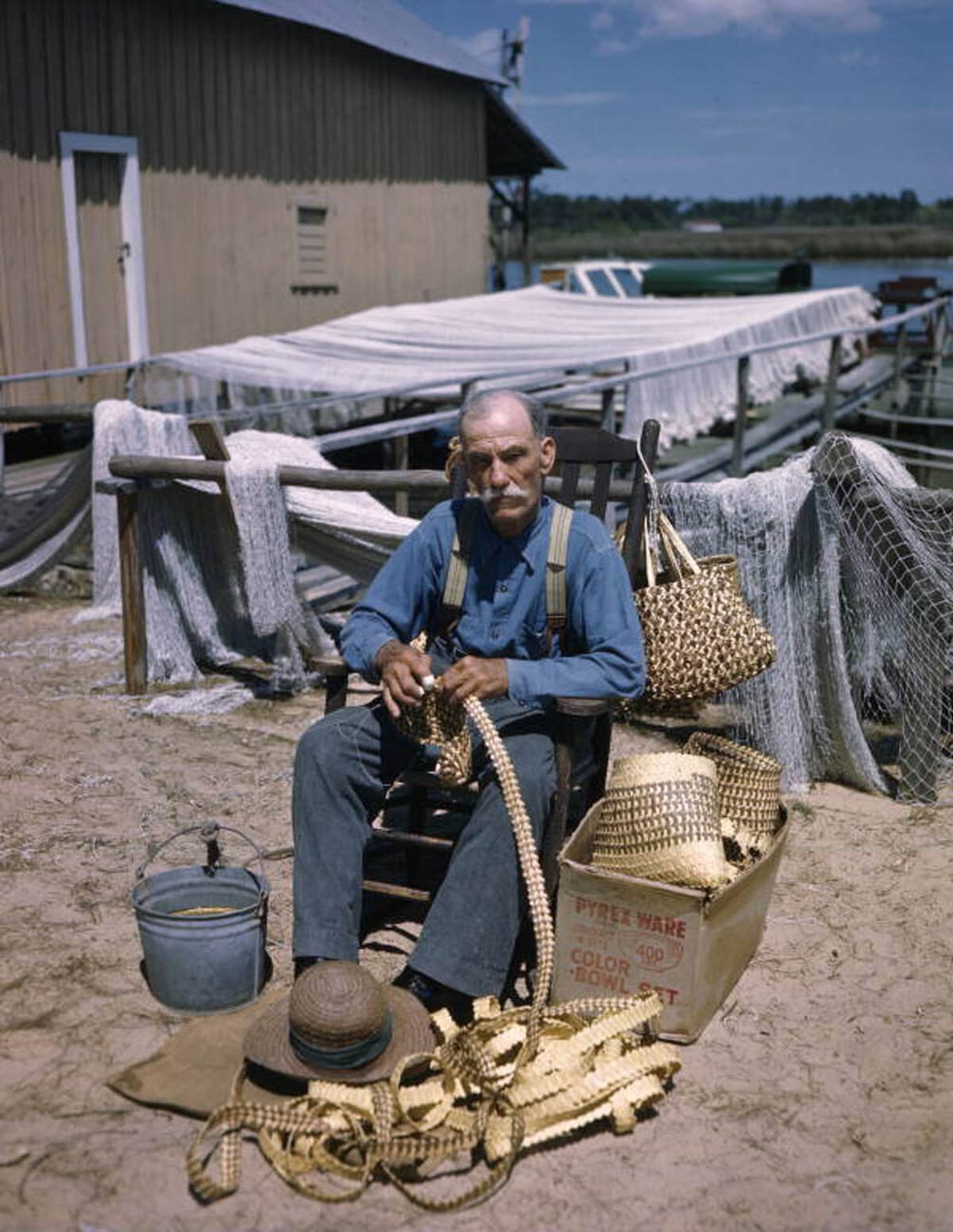
Basket maker Moses Pinder at work in Tarpon Springs, Florida, 1940s
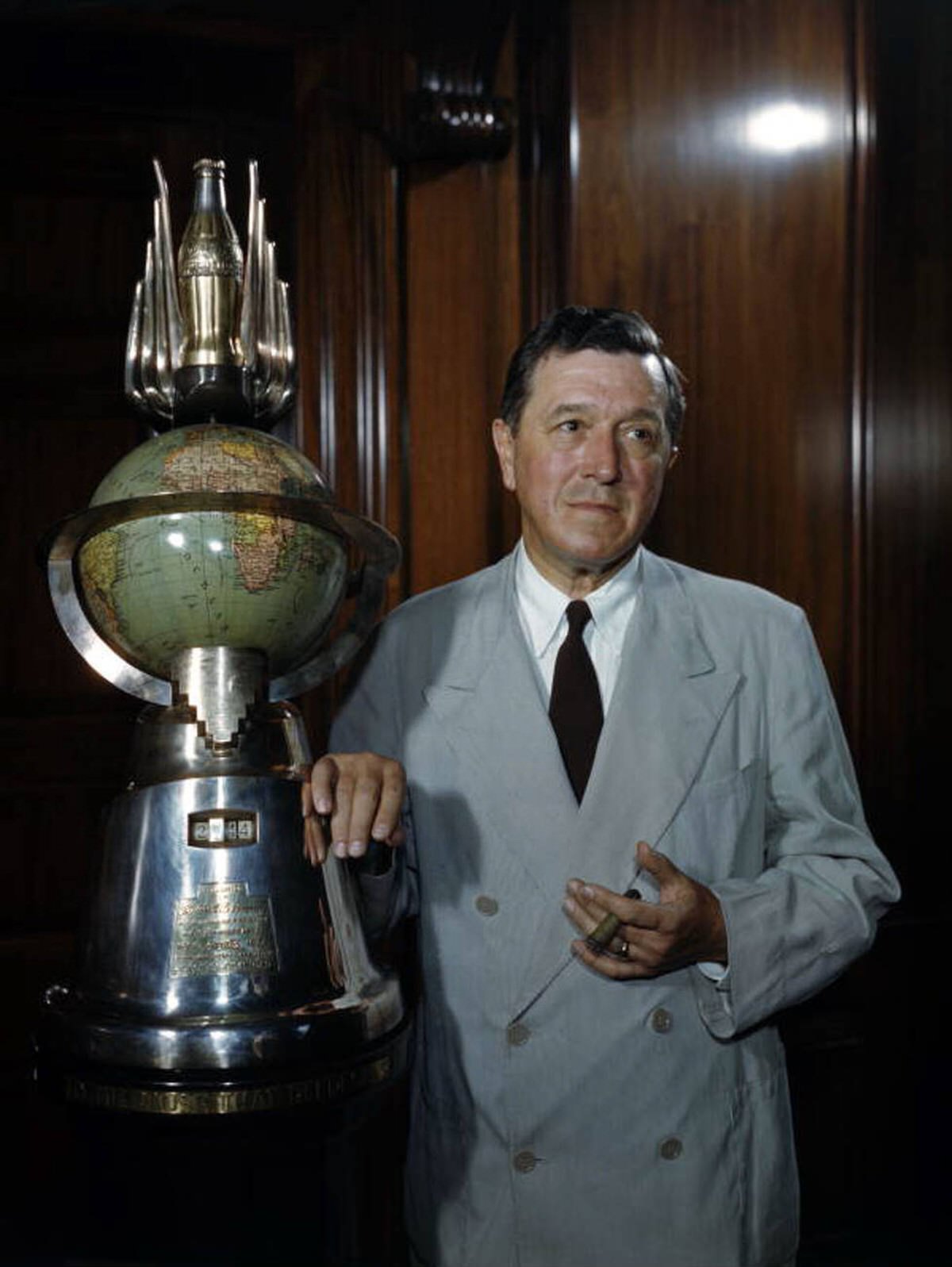
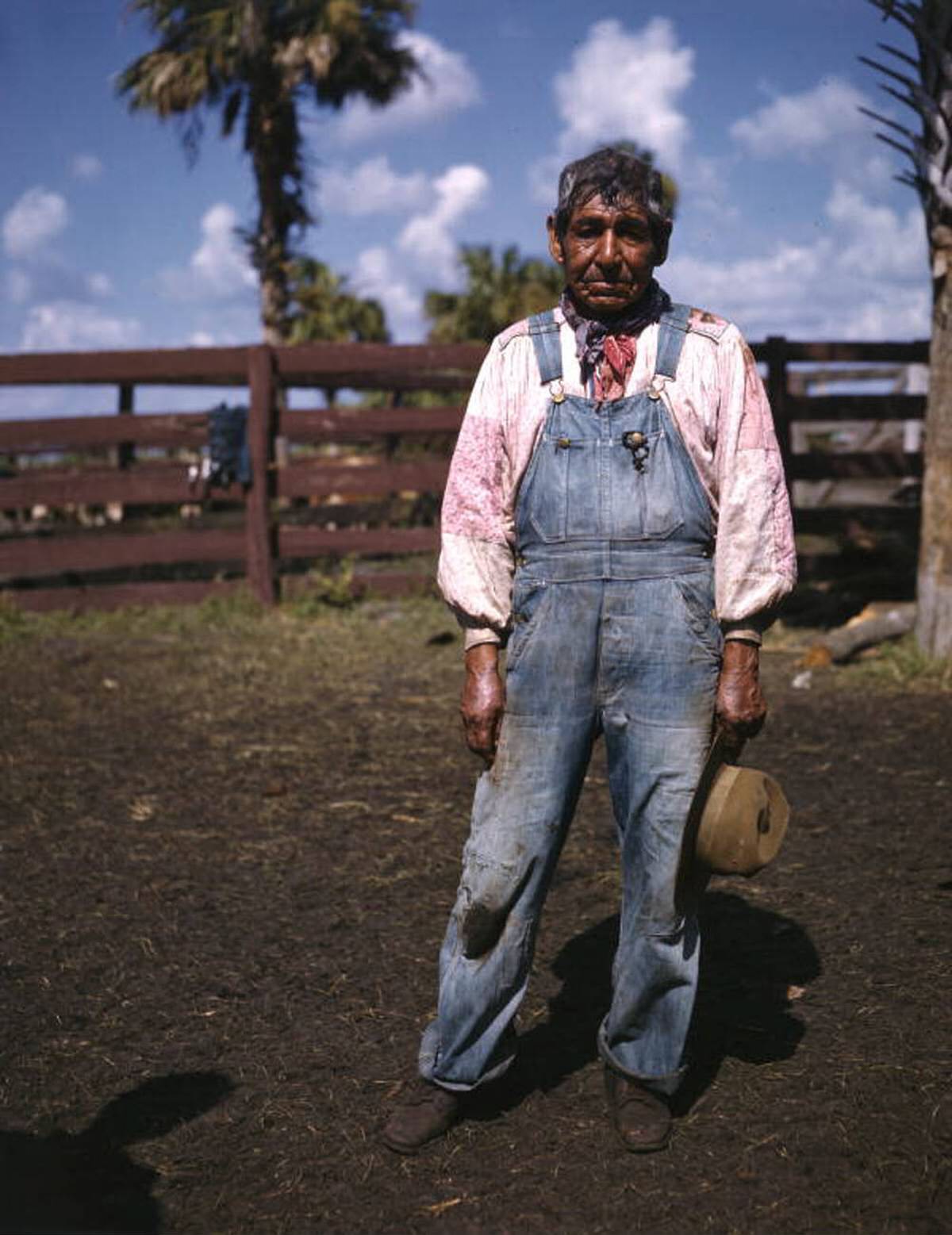
Robert Winship Woodruff, President of the Coca-Cola Company, 1940sSponges stacked in Tarpon Springs, Florida, 1940sSeminole cattleman on the Brighton Reservation in Florida, 1940sChildren observing calf branding on the Brighton Seminole Indian Reservation, 1940s
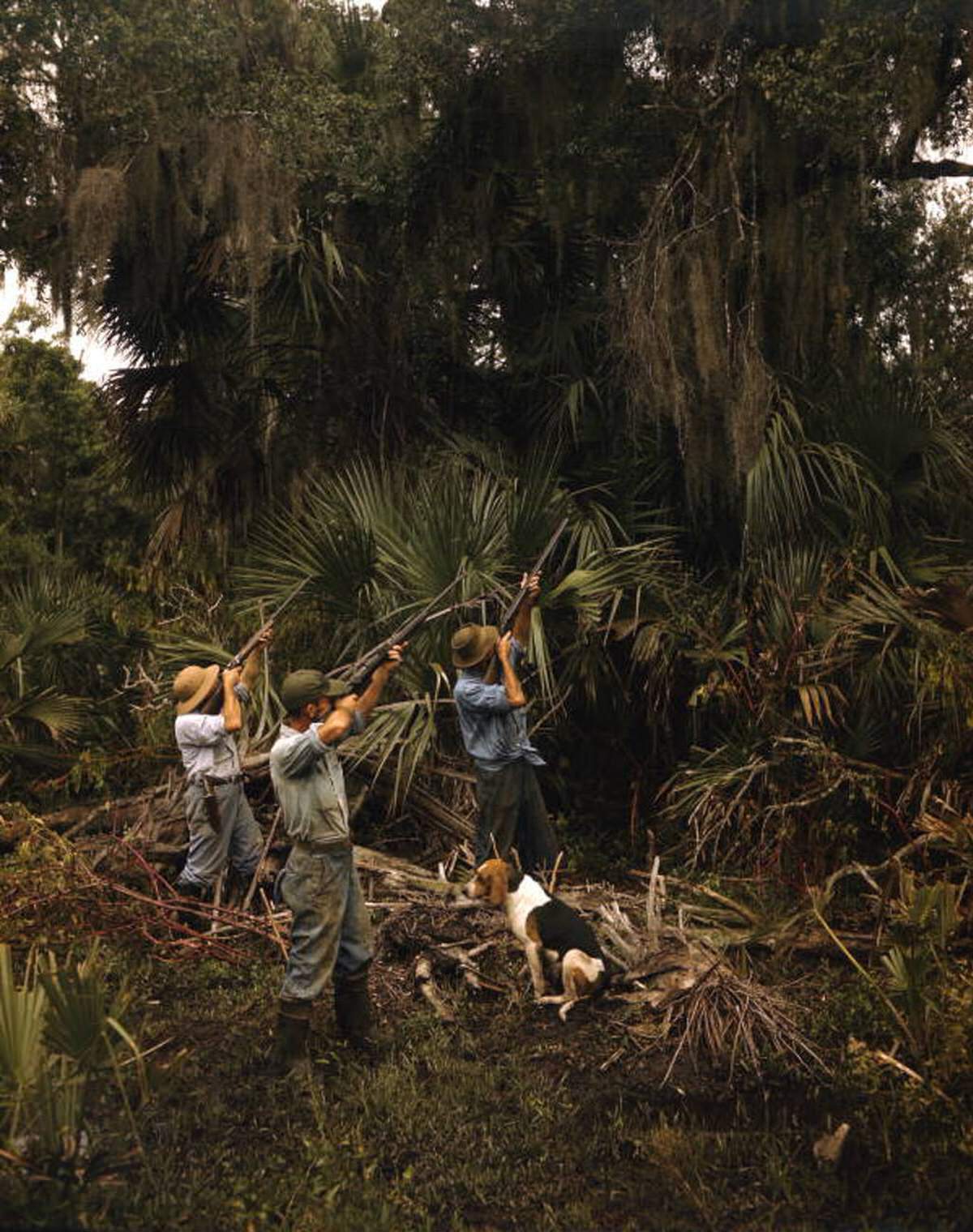
Texas Jim Mitchell and companions hunting in the Florida Everglades, 1940s
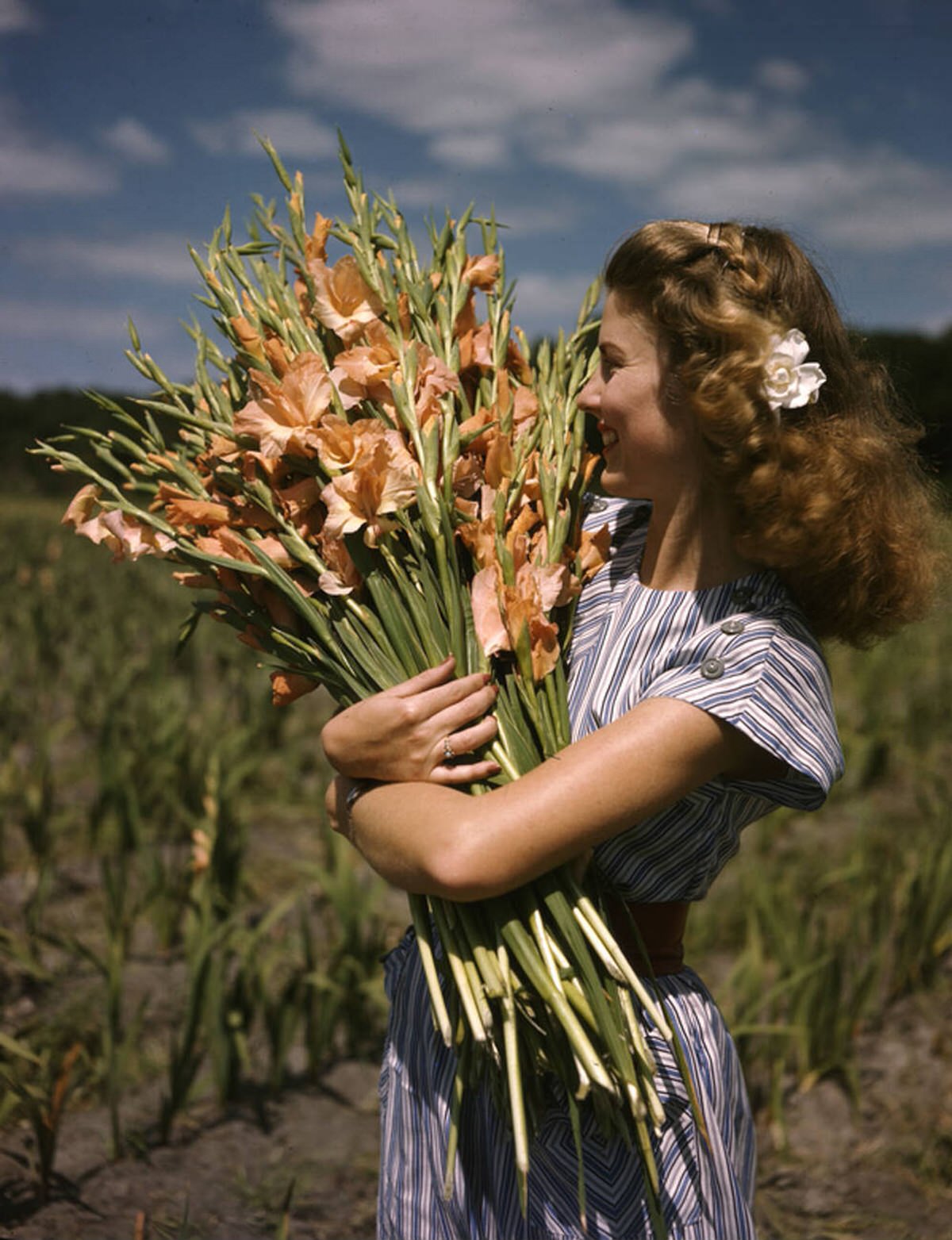
Woman holding gladiolus flowers at Terra Ceia Island Farms, Florida, 1940s
Seminole cattleman Charlie Micco at the Brighton Seminole Indian Reservation, 1940s
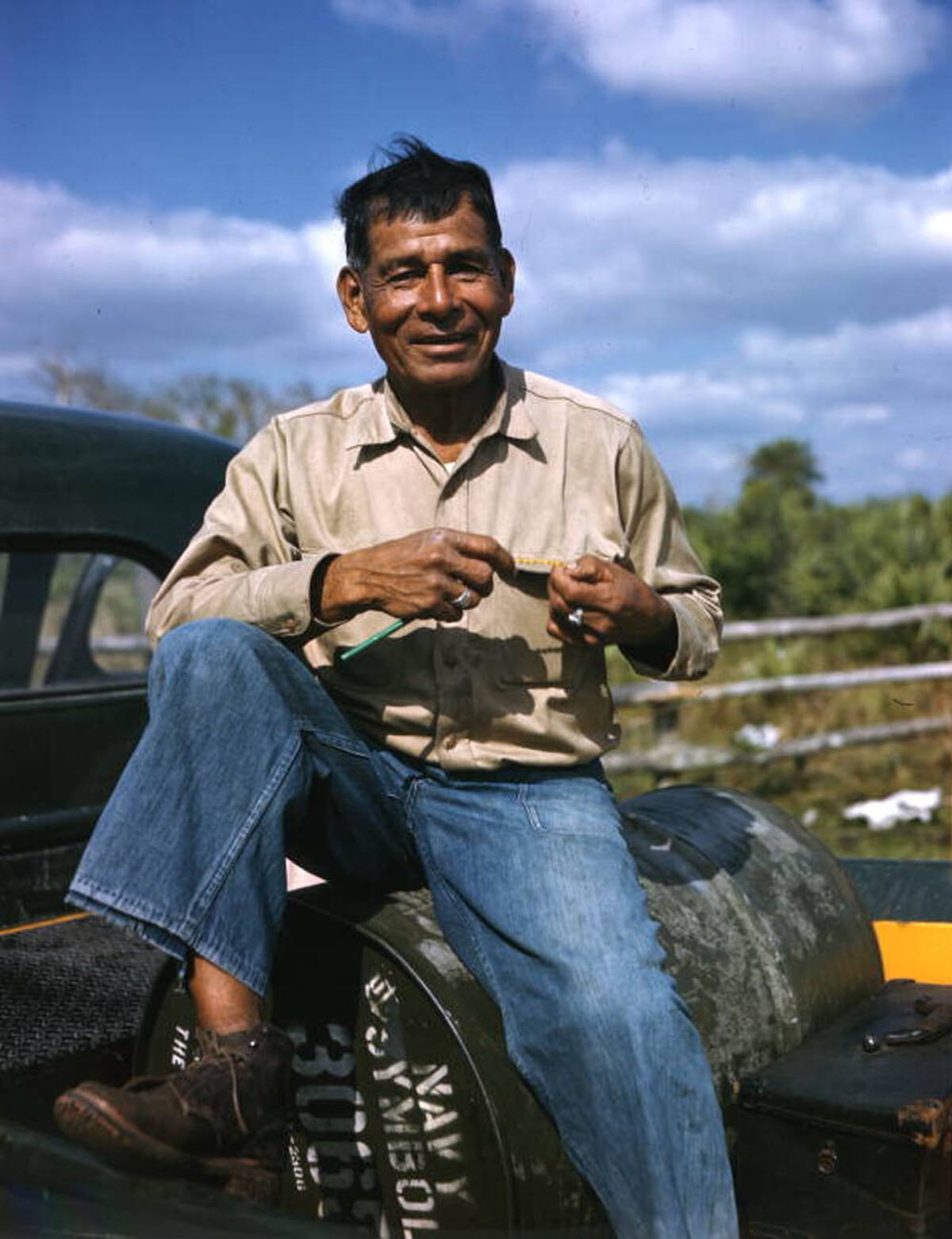
Lonnie Buck at the Brighton Seminole Indian Reservation, 1940s
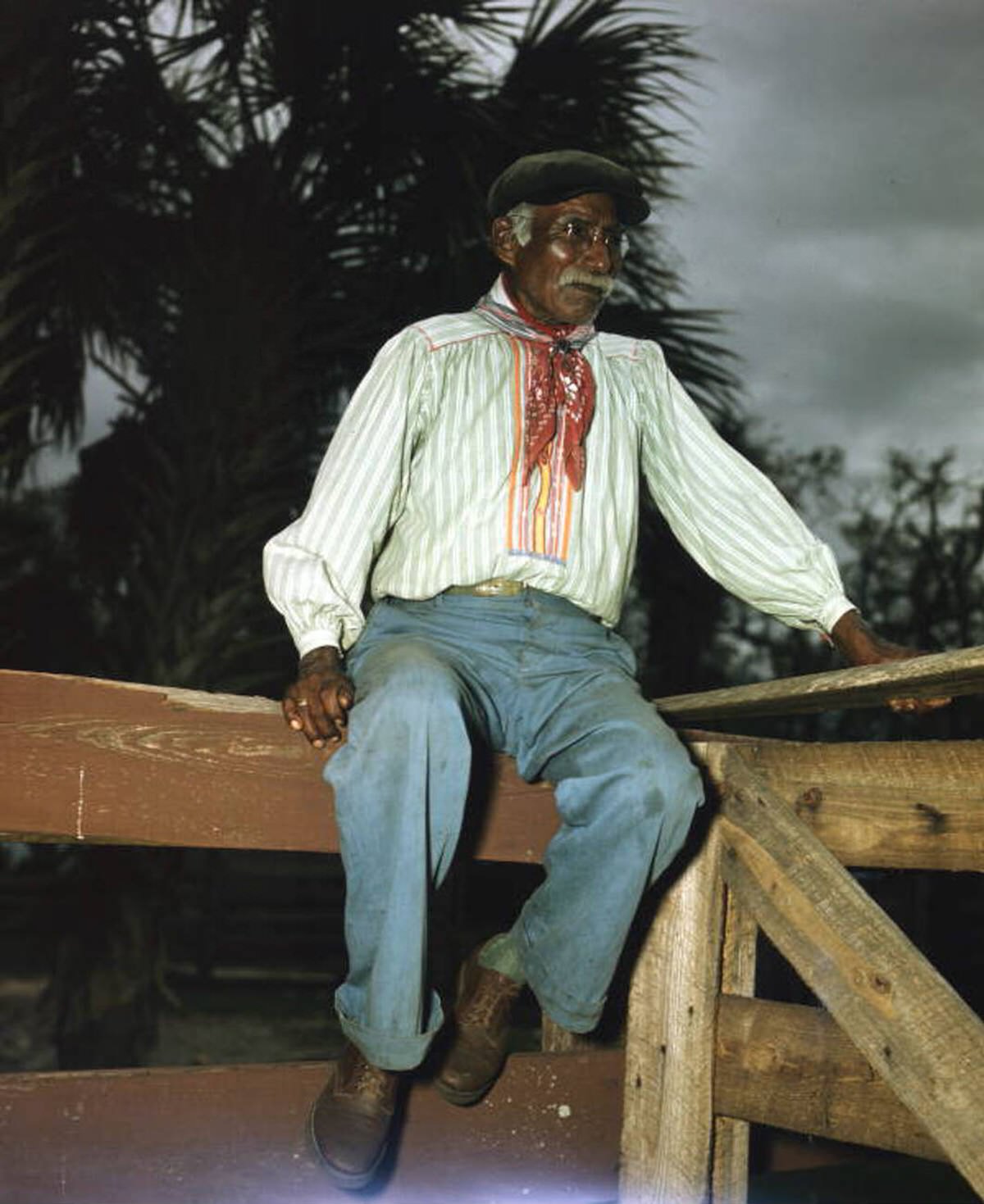
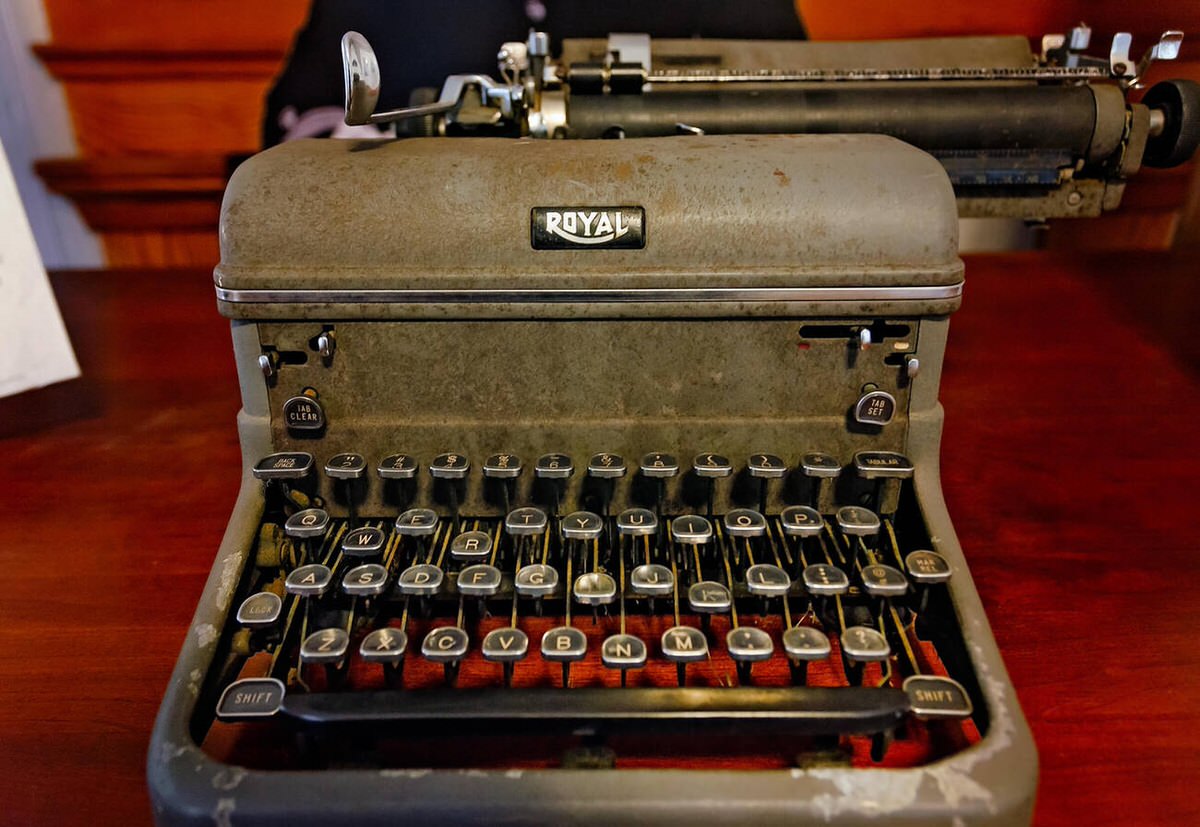
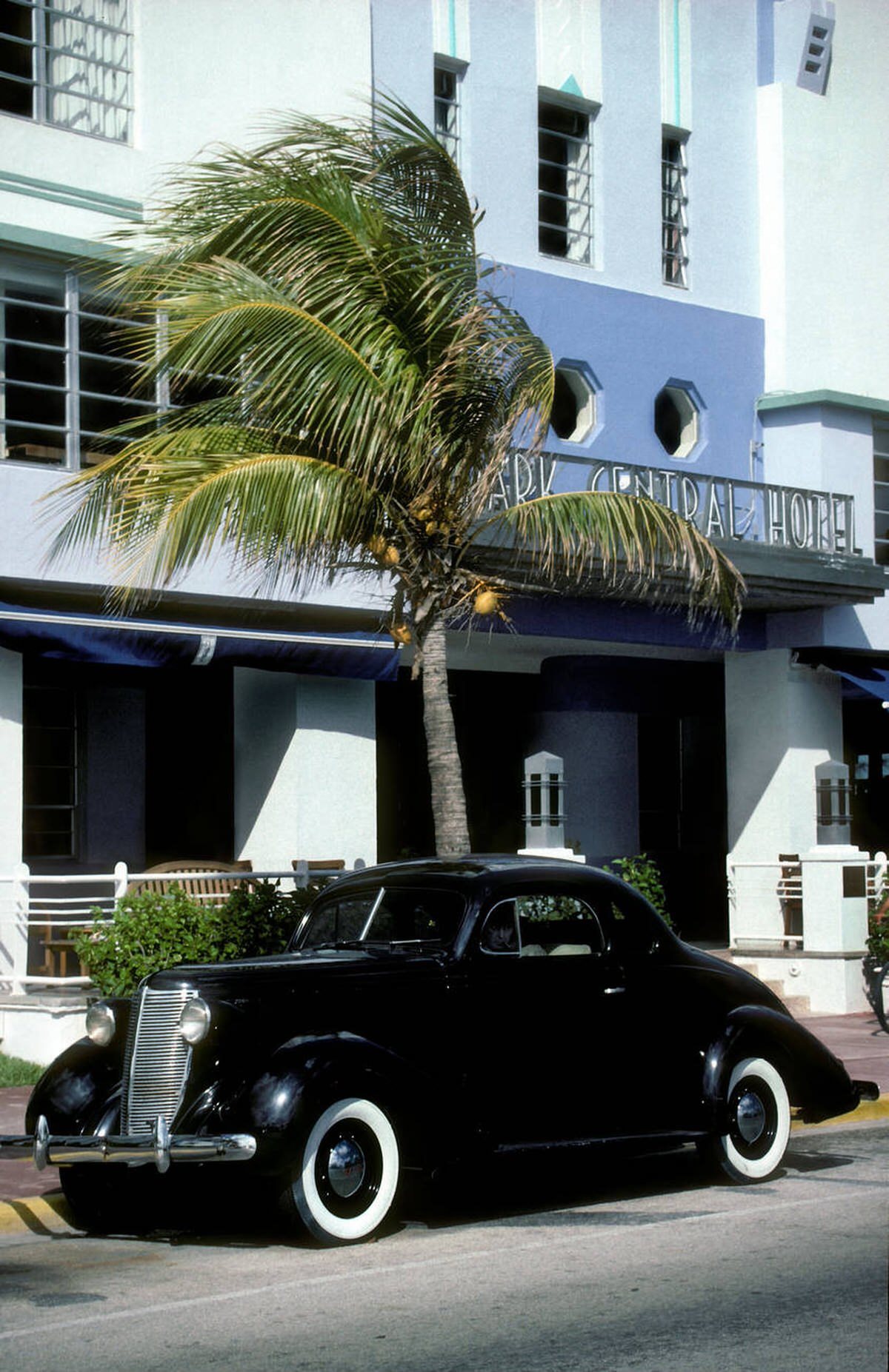
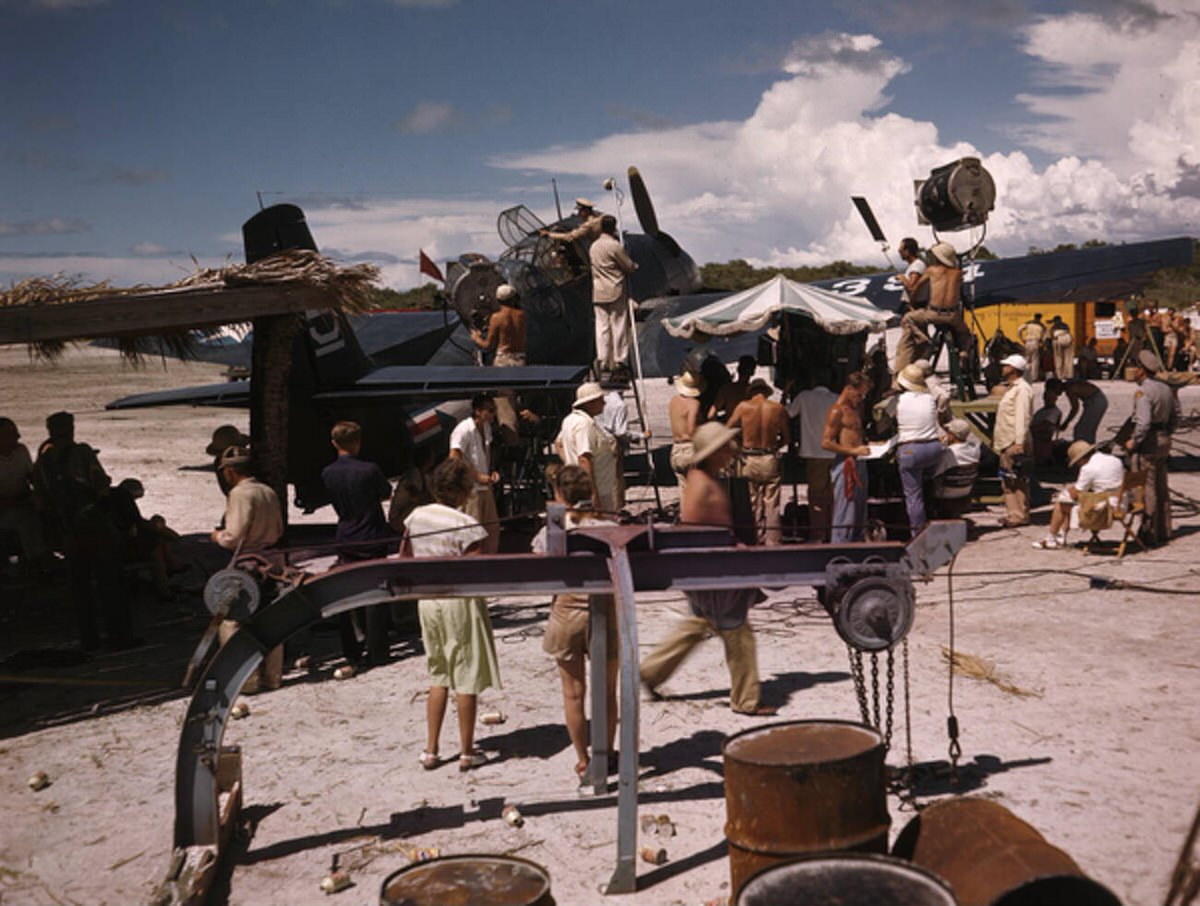
Billy Bowlegs III at the Brighton Reservation in Florida, 1940sRoyal KMM manual typewriter at the Pensacola Lighthouse and Museum, 20191940s Buick Eight car outside the Park Central Hotel in Miami Beach, 2005Filming of the musical On an Island with You on Anna Maria Island, 1948Claremont Hotel in the Art Deco Historic District of South Miami Beach.Joe Steinmetz performing a magic trick aboard the Lazy Bones shantyboat, 1940s
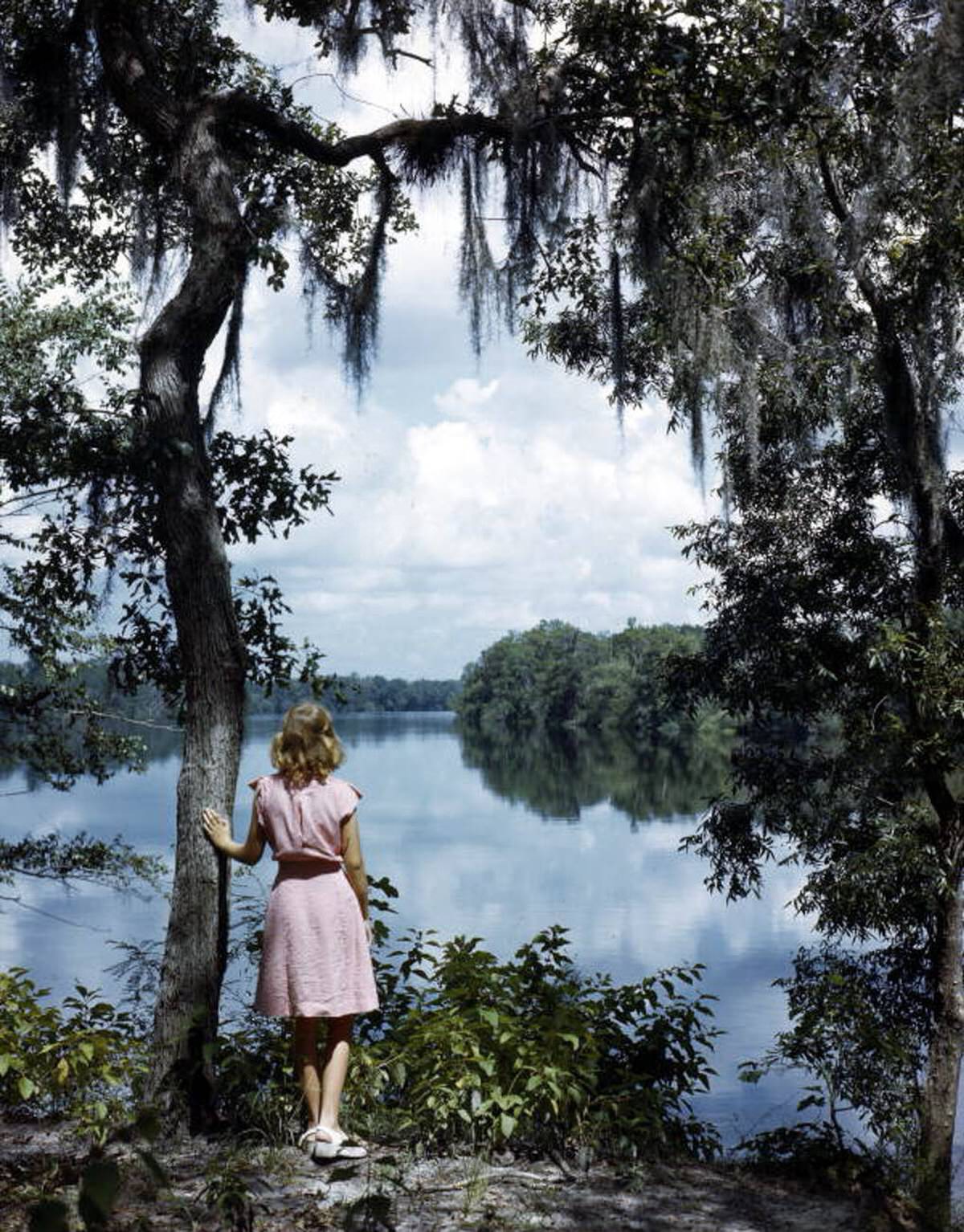
Lois Duncan Steinmetz gazing at the Suwannee River, 1940s
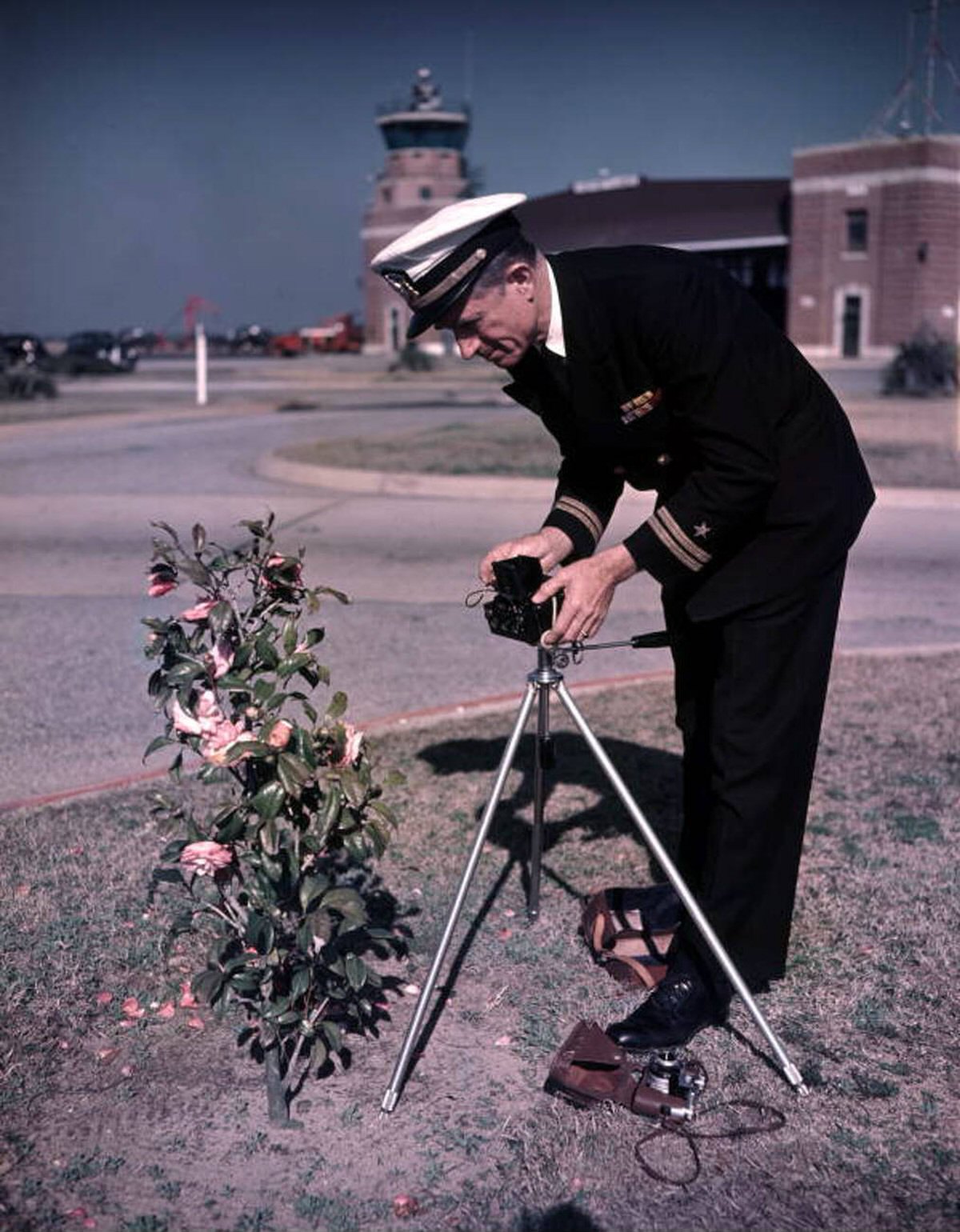
Lieutenant Joe Steinmetz photographing a camellia bush at NAS Pensacola, 1940s
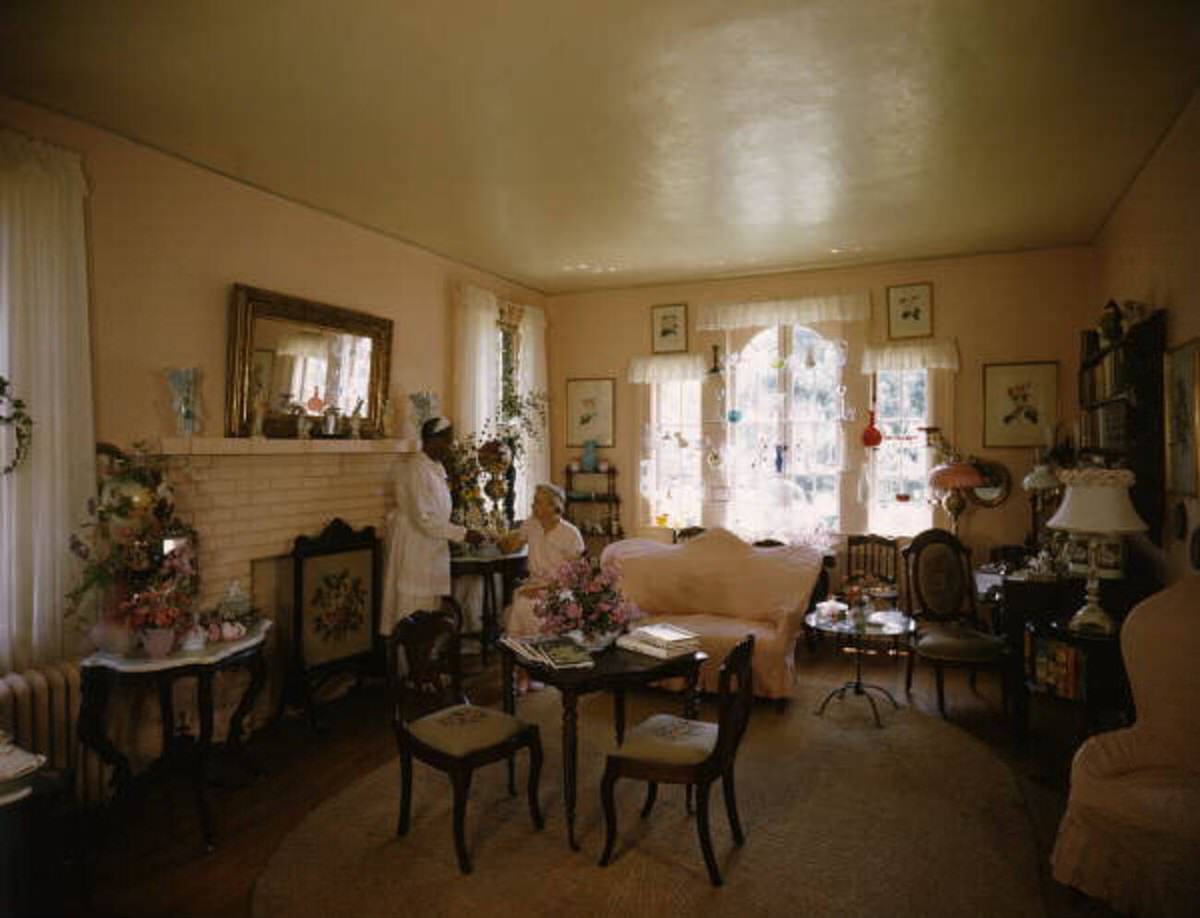
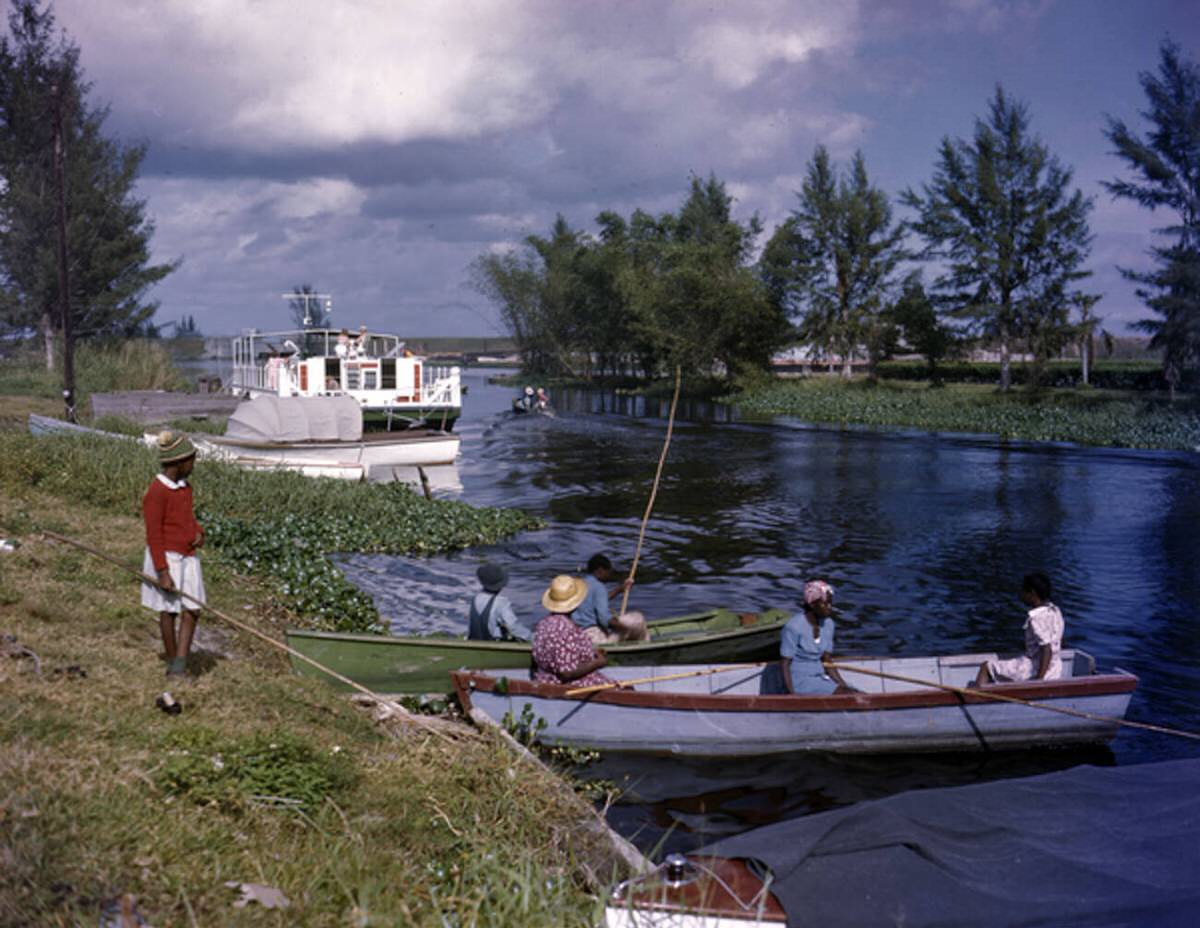
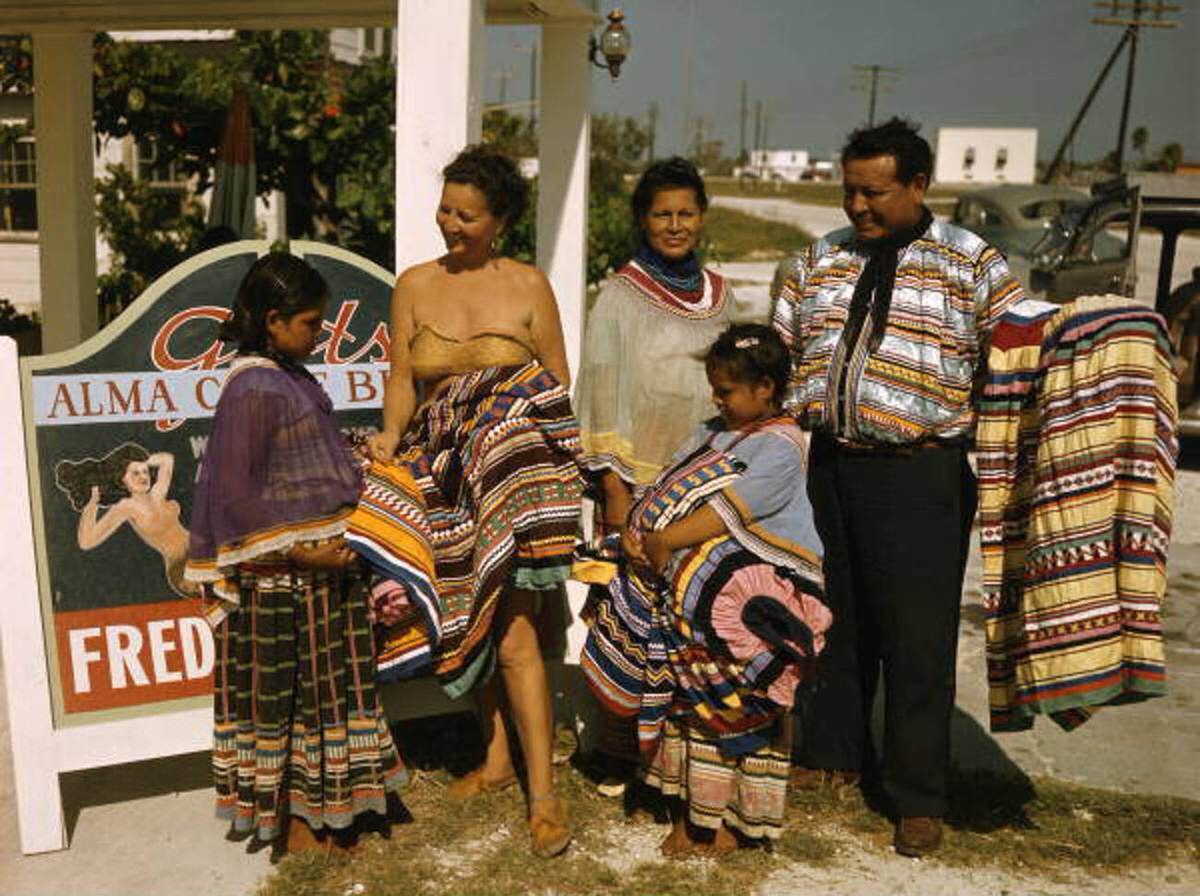
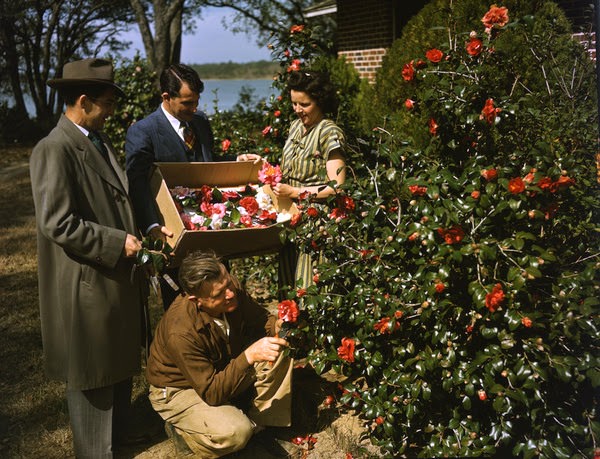
African American women serving tea in a parlor in Pass Christian, Mississippi, 1940sDrive-in church service at Pasadena Community in St. Petersburg, Florida, 1940sSarasota Sun-Debs training at Lido Beach, Florida.Royal Poinciana tree blooming in Key West, Florida, 1940sFishing on the Caloosahatchee River.Seminole family selling patchwork clothing near the Brighton Reservation, 1940sJohn M. Gonatos and assistant Niki Vasilikis in their curio shop in Tarpon Springs, 1940sSeminole mother and children at the Brighton Seminole Indian Reservation, 1940sChildren at the government school on the Brighton Reservation, 1948Handing out copies of The Evening Independent in St. Petersburg, Florida, 1947Picking camellias, 1945Young woman picking cotton, 1945
Michael Rodriguez is a content creator and historian who specializes in creating viral listicles and other engaging content about historical photos and events. He has a passion for history in a fun and accessible way, curating interesting and informative lists that showcase the lesser-known stories and significance behind famous historical events and figures.
I worked in fla in the late 50’s n early 60’s land advertising all over Land high and dry even thought we would drive in water up to our headlights And if u were black u were discriminated against not only getting a job but going into a restaurant and even a bathroom Had to go back to Philly but should had bought some land b4 I left





I worked in fla in the late 50’s n early 60’s land advertising all over Land high and dry even thought we would drive in water up to our headlights And if u were black u were discriminated against not only getting a job but going into a restaurant and even a bathroom Had to go back to Philly but should had bought some land b4 I left
I smoked hash with Jon Hopkins and the dude in #9