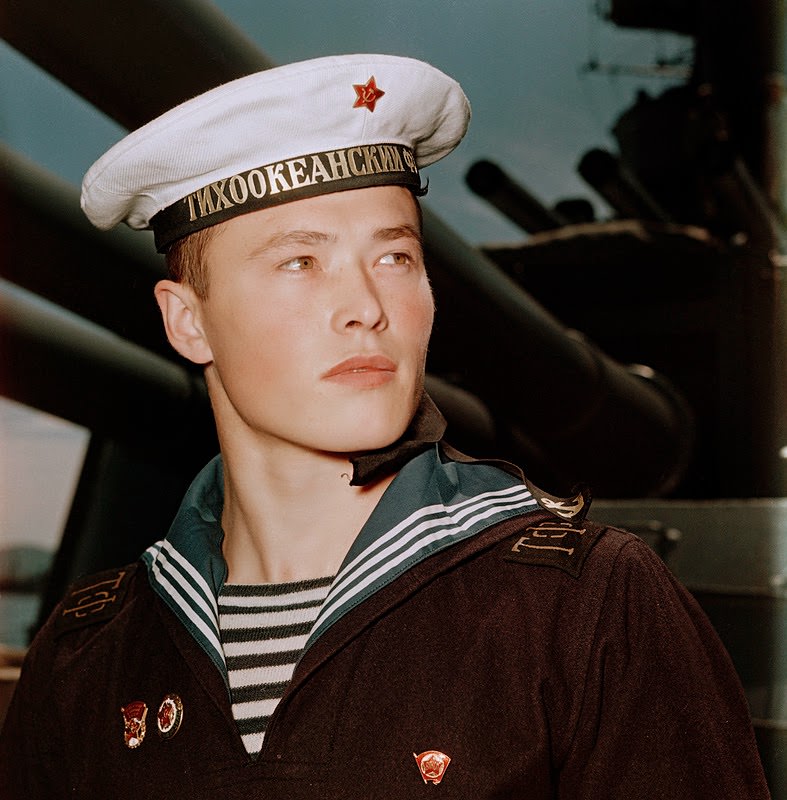
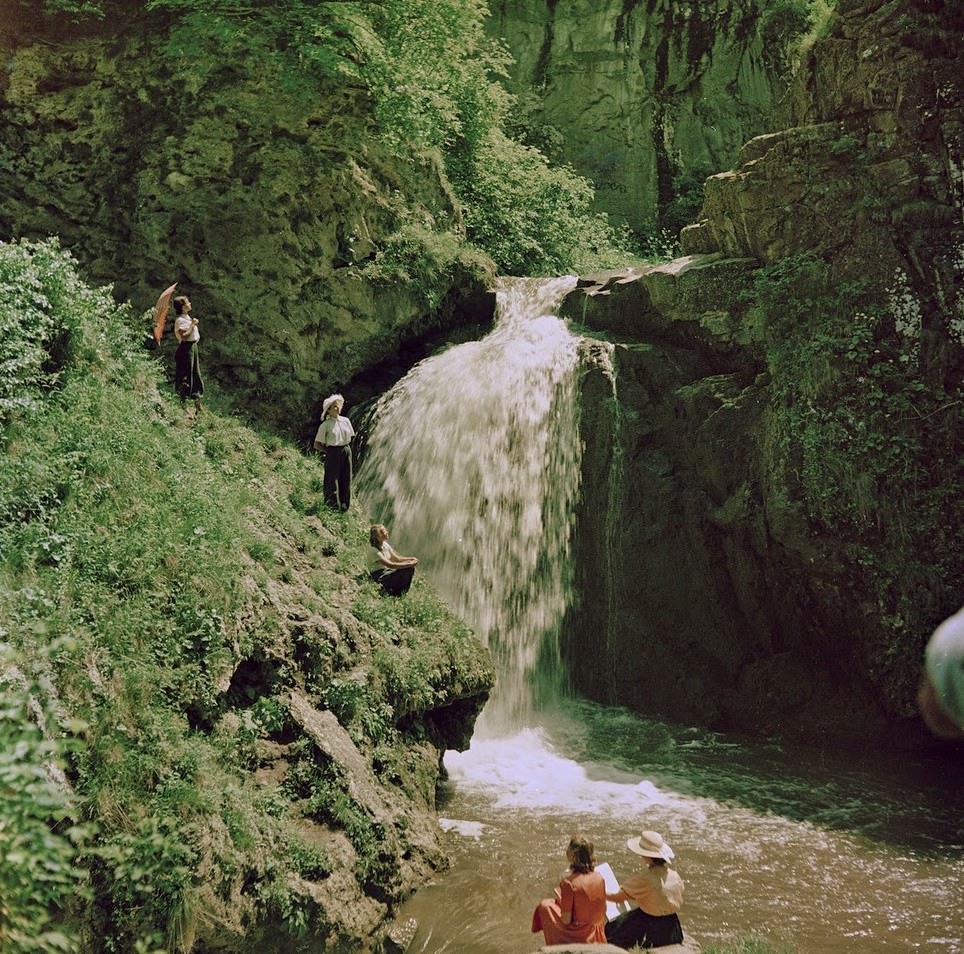
When most photographers in the 1950s were still shooting in black and white, Semyon Fridland was capturing the Soviet Union in full color. Working as a photographer for Ogonyok magazine, he traveled thousands of miles across the USSR to document its people, landscapes, and daily life. The result is a rare, high-definition record of an era that most archives show only in grey tones.
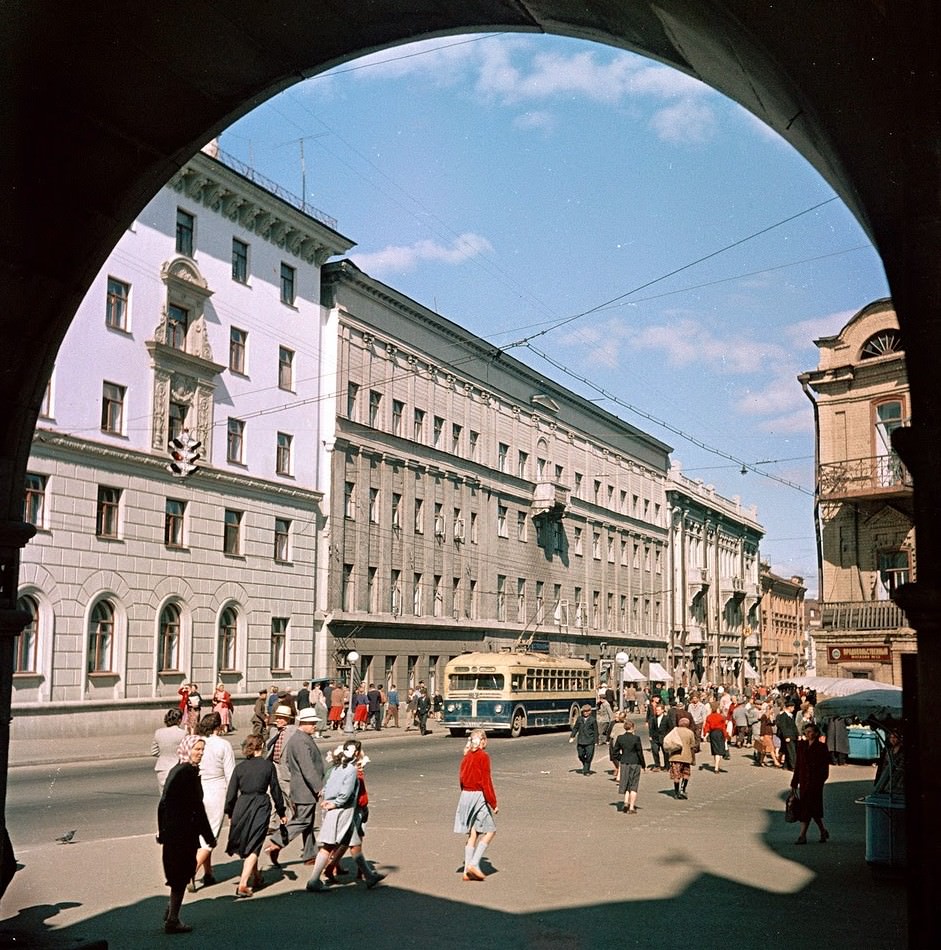
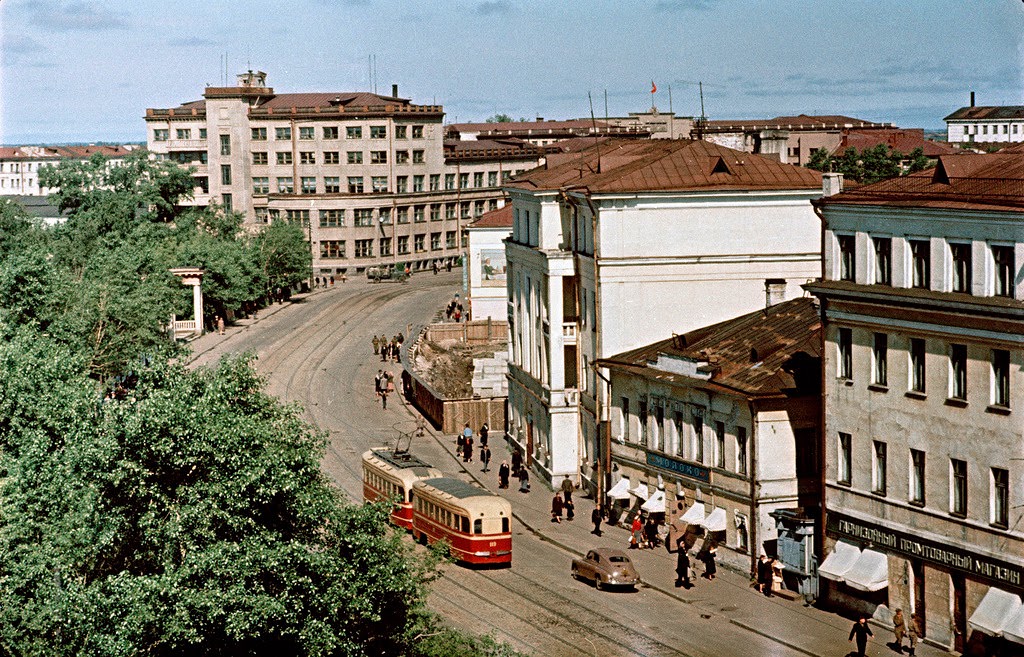
His Moscow street scenes are packed with detail. Classic Soviet vehicles — the Pobeda and the ZIM limousine — roll down wide avenues flanked by massive Empire-style buildings. Red banners hang from stone facades, cutting a sharp contrast against the beige, grey, and black paintwork of the cars below.
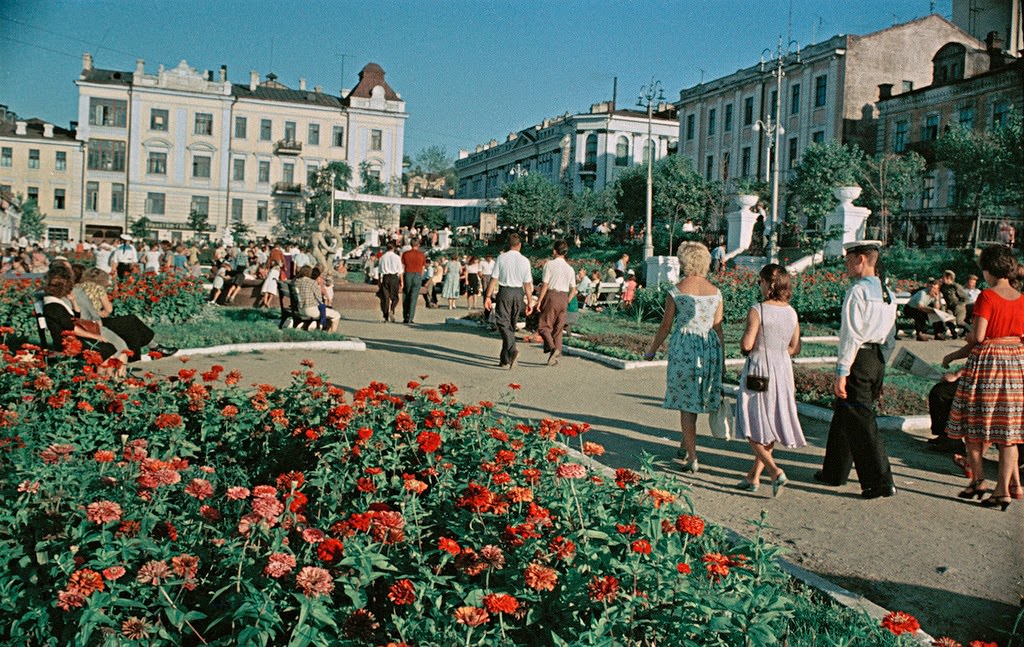
Pedestrians on the sidewalks show the decade’s specific fashion. Men wear wide-legged trousers and flat caps. Women appear in floral print dresses and colorful headscarves. The color film captures the texture of fabrics in a way no monochrome image could.
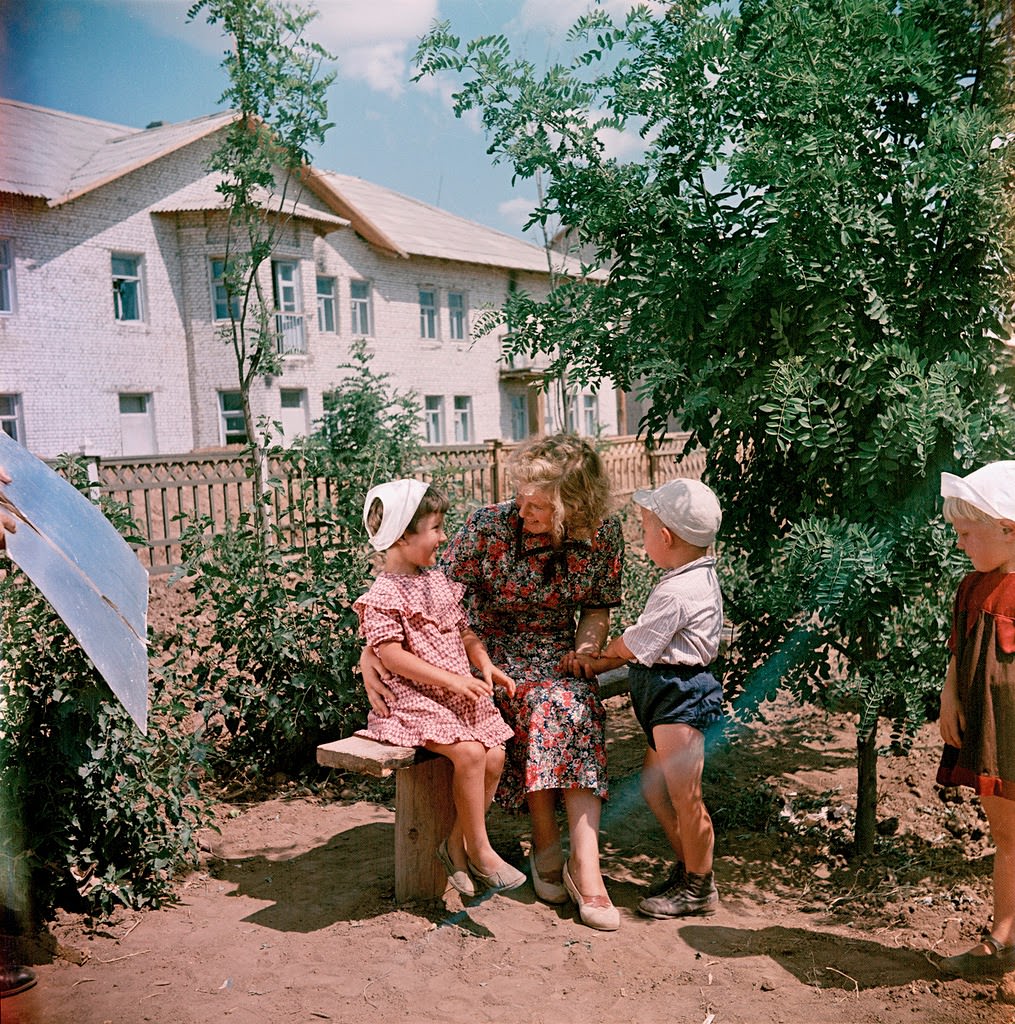
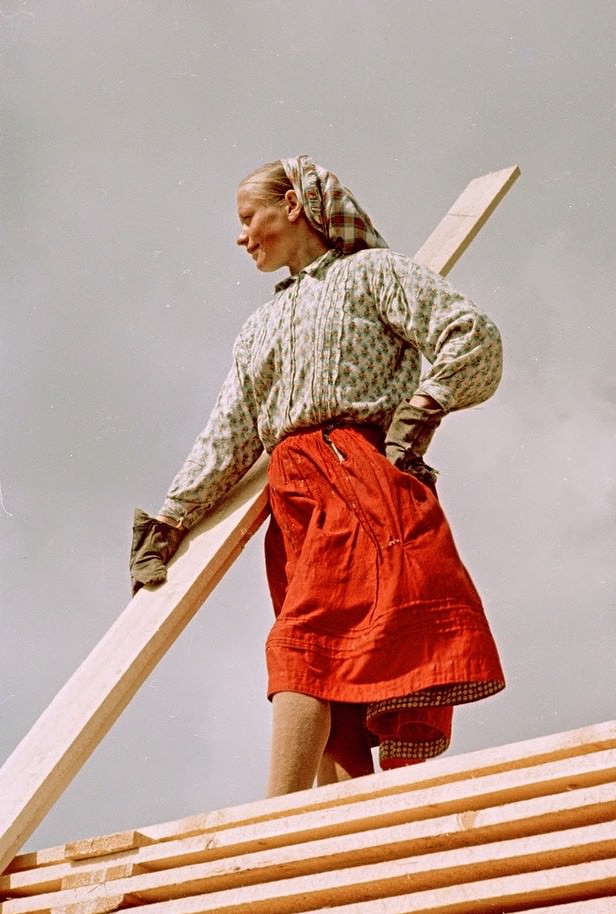
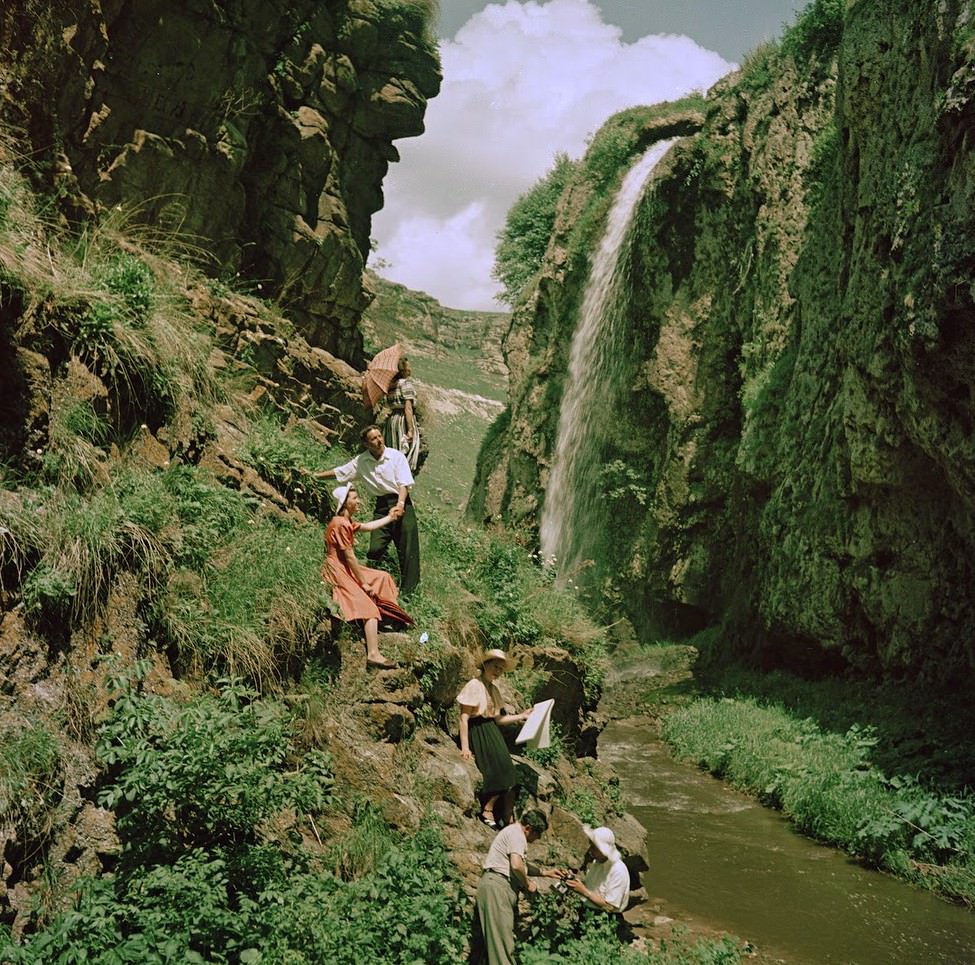
Fridland’s assignments also took him deep into the southern republics. In the Caucasus, he photographed shepherds guiding flocks across green mountain passes, dressed in heavy wool cloaks and fur hats, with jagged, snow-covered peaks rising behind them.
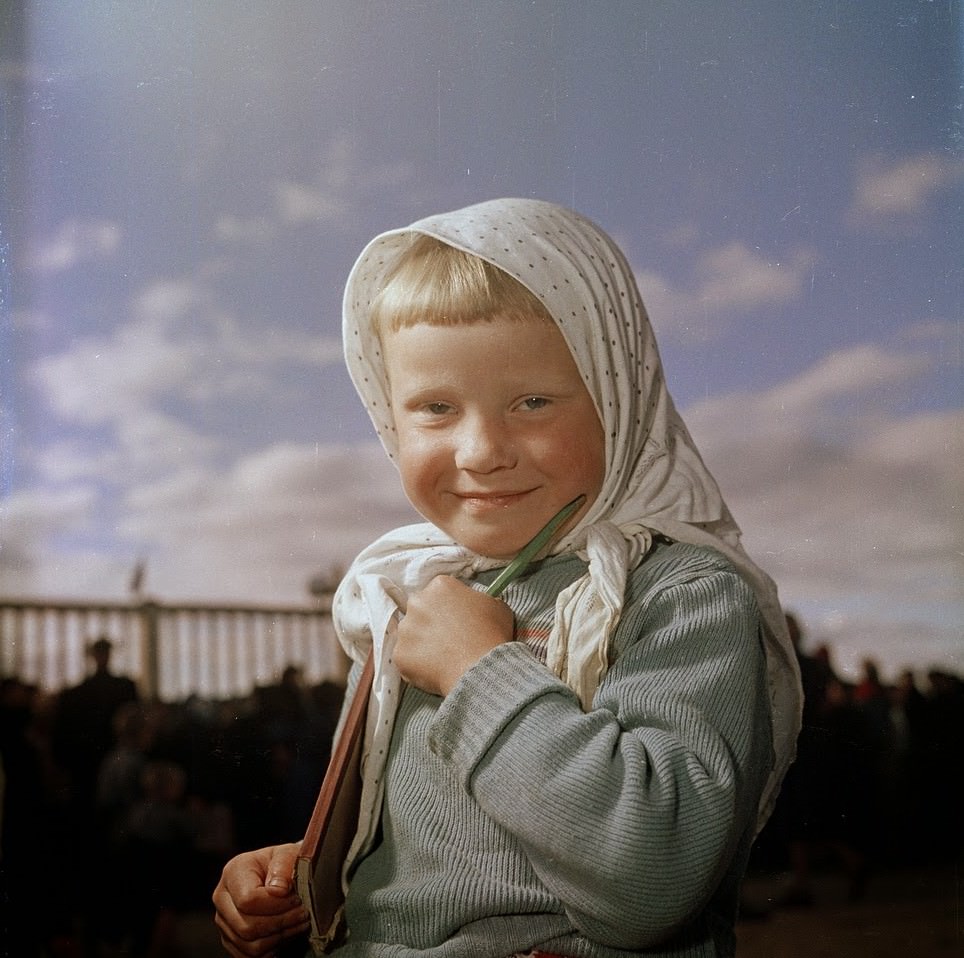
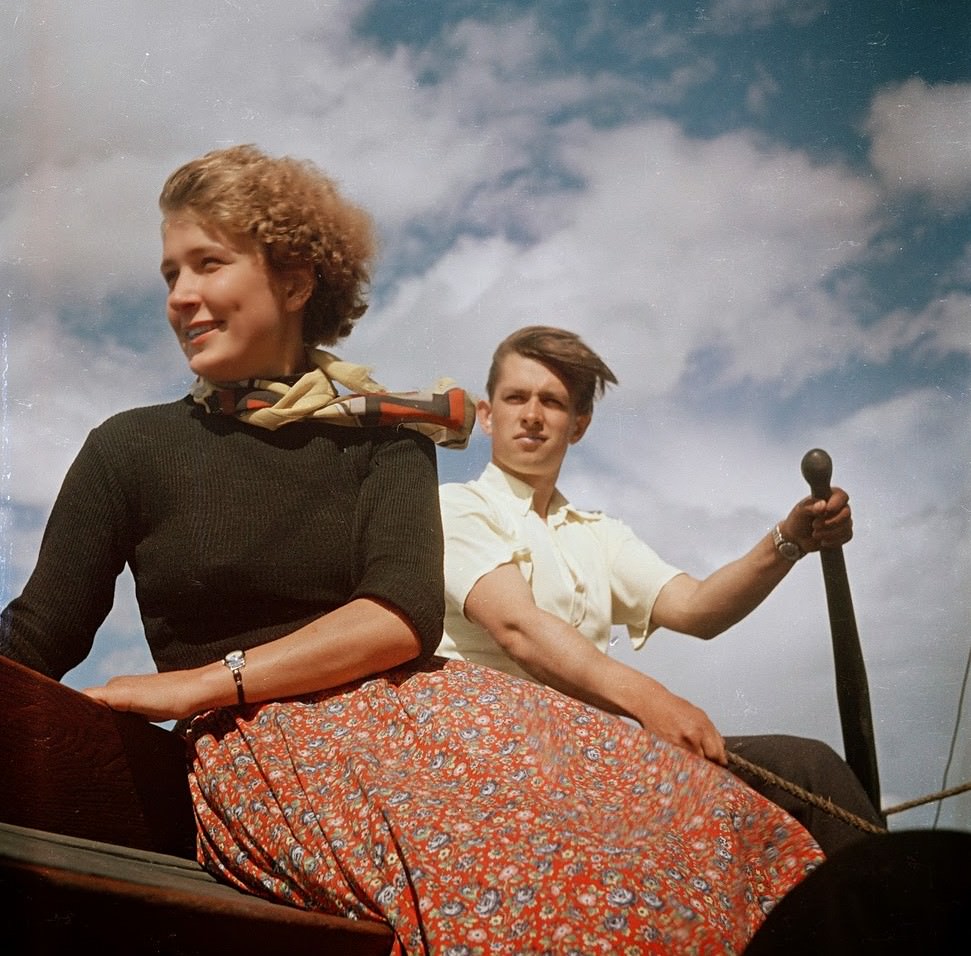
Along the Crimean coast, the mood shifts entirely. Holidaymakers stroll white stone promenades next to the Black Sea, whose water appears a deep turquoise dotted with white steamships and small sailing vessels.
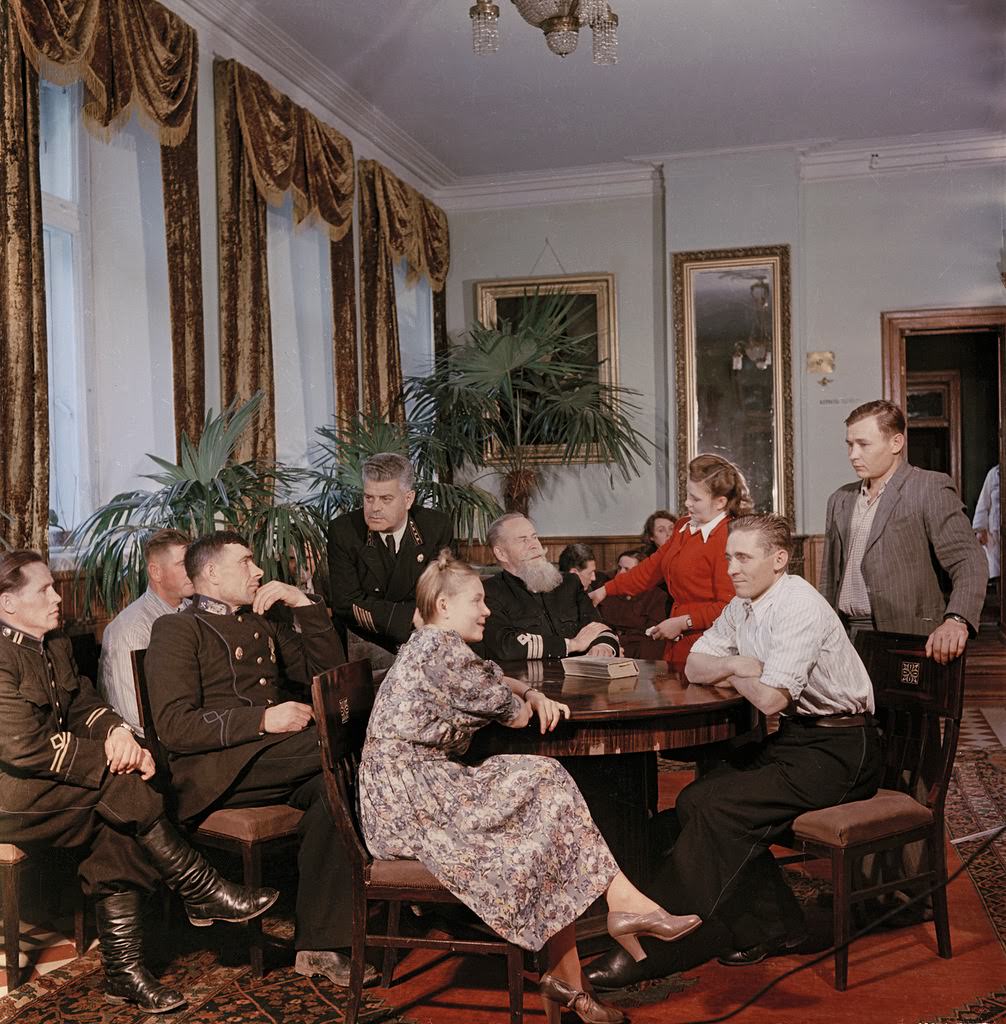
Inside public spaces, Fridland documented university libraries with heavy wooden tables and green reading lamps. Students sat in rows, writing with fountain pens, surrounded by tall shelves of books. These interior shots preserve the atmosphere of Soviet intellectual life in a way that only color could convey.
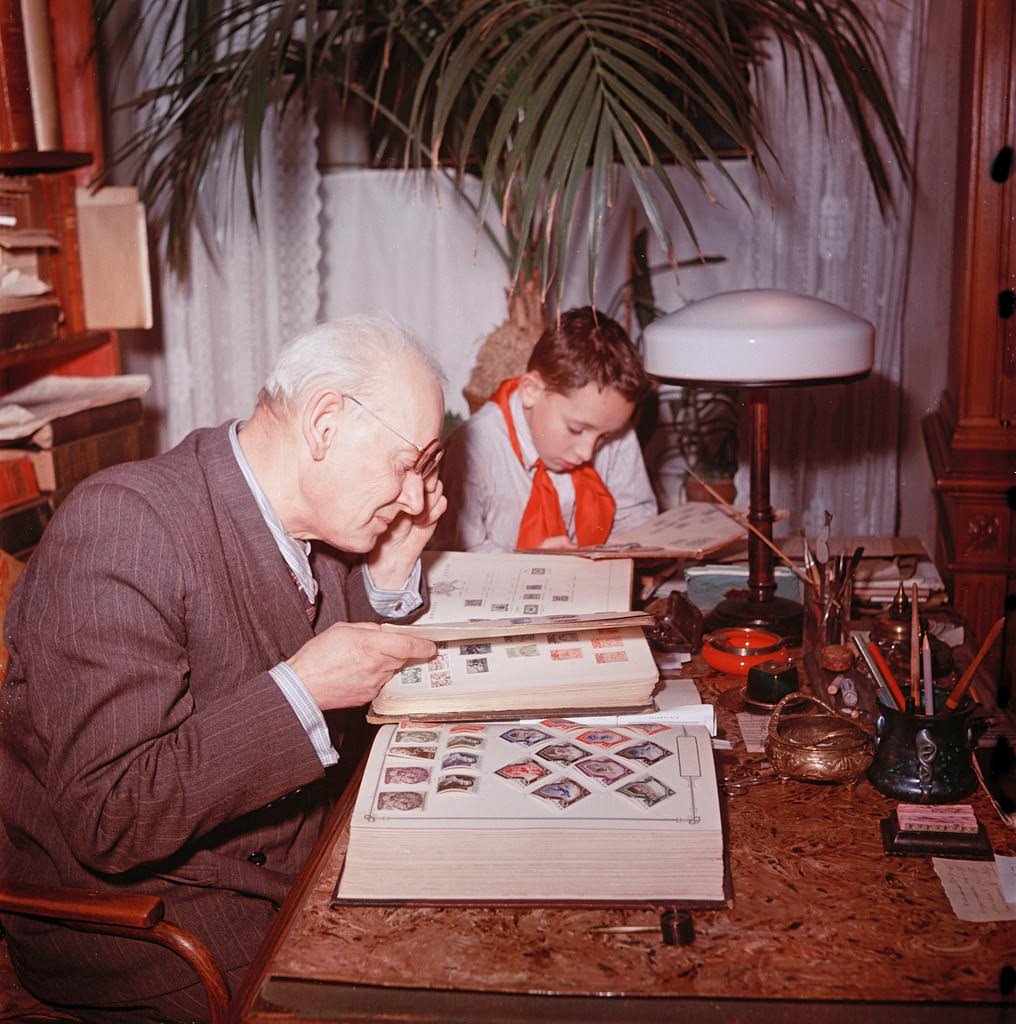
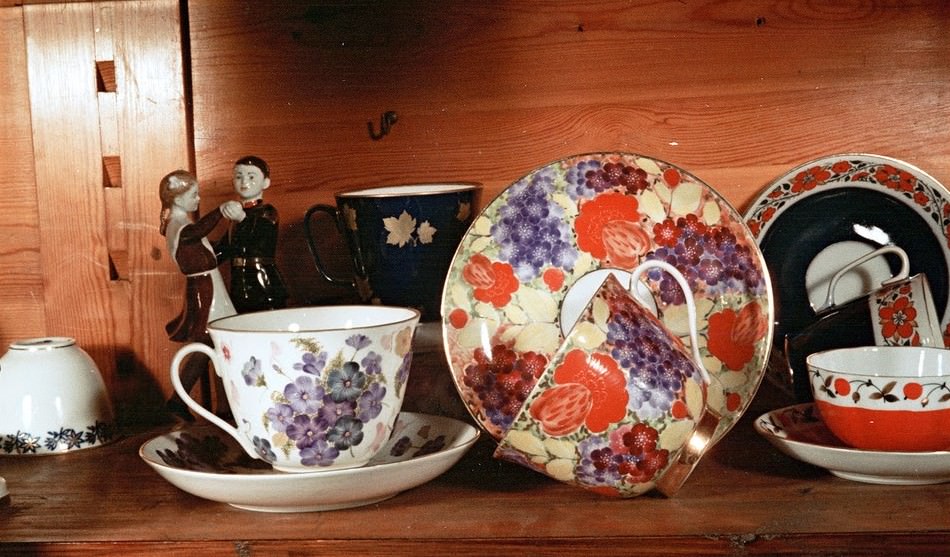
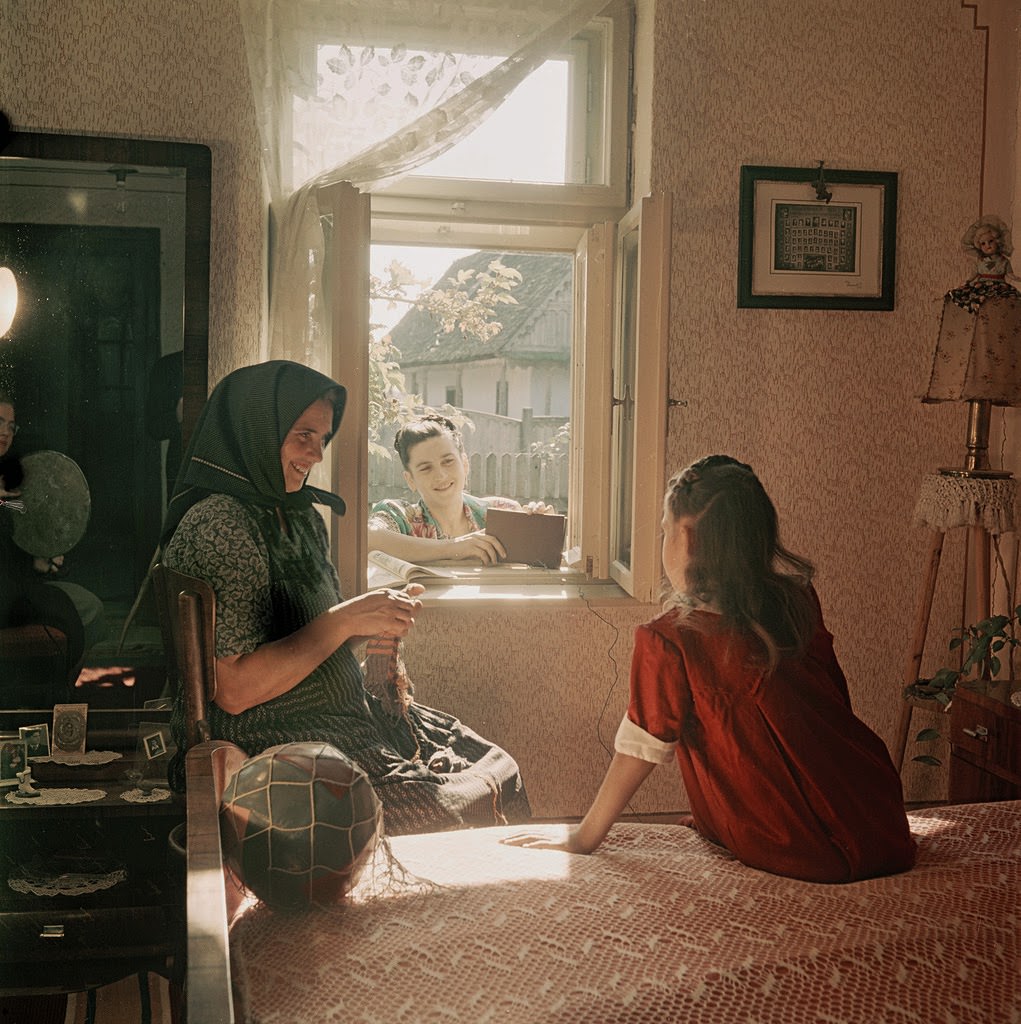
Schools and nurseries appear in soft pastel walls. Children in crisp white aprons and uniforms play with wooden toys and dolls. Small details — the pattern on a tea set, the grain of wood paneling — stand out clearly in his high-quality color film.