During World War I, the U.S. military wanted powerful ways to boost patriotism and recruitment. They commissioned English-born photographer Arthur Mole and his assistant John Thomas to produce what Mole called “living photographs” — massive images made entirely of thousands of soldiers standing in precise formations. Between 1915 and 1921, the two men created about thirty of these extraordinary images.
Each project took a week or more to plan before a single soldier stepped onto the field. Mole started by tracing the target image onto a glass plate mounted on his camera. He then climbed an 80-foot viewing tower, using a megaphone and a long pointing stick to direct his ground crew. Assistants spent days nailing miles of white lace edging into the grass to outline the design. Once the pattern was set, thousands of servicemen filled the spaces and held perfectly still while the photograph was taken.
The entire process relied on anamorphic perspective — a technique where the image only looks correct from one specific angle. From Mole’s tower, the camera captured a distorted field in a way that made everything appear proportional in the final photo. Soldiers farther from the tower had to appear smaller in the scene, so far more men were placed at the distant end of the design to compensate.
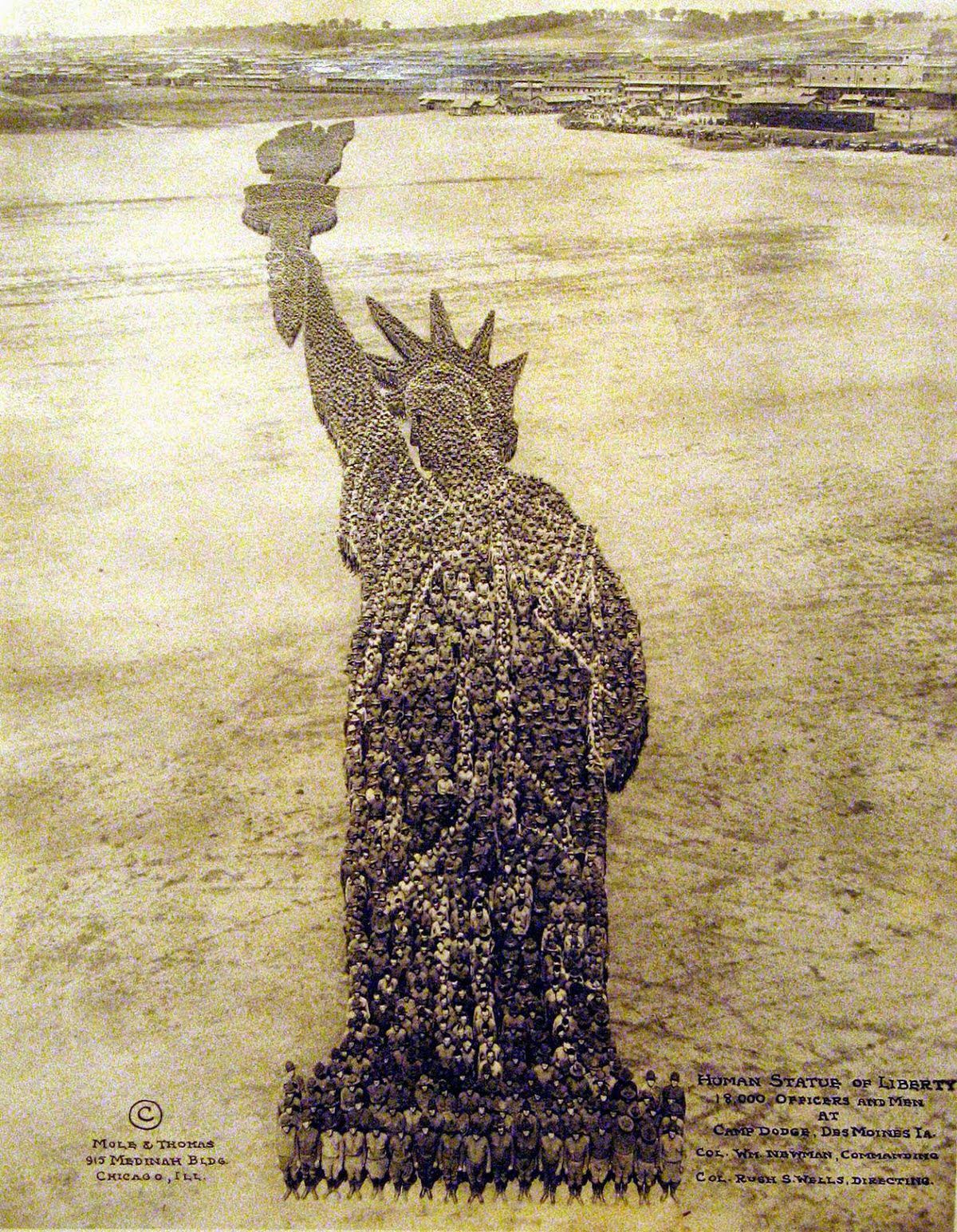
The Human Statue of Liberty at Camp Dodge in Iowa is the clearest example of this distortion in action. The base of the statue, close to the camera, needed just 17 men. The torch, more than half a mile away, required 12,000 men on its own to appear correctly scaled. In total, 18,000 officers and men took part in that single photograph. Anyone flying over the field during the shoot would have seen a massive, bulging torch and tiny feet — not a recognizable statue.
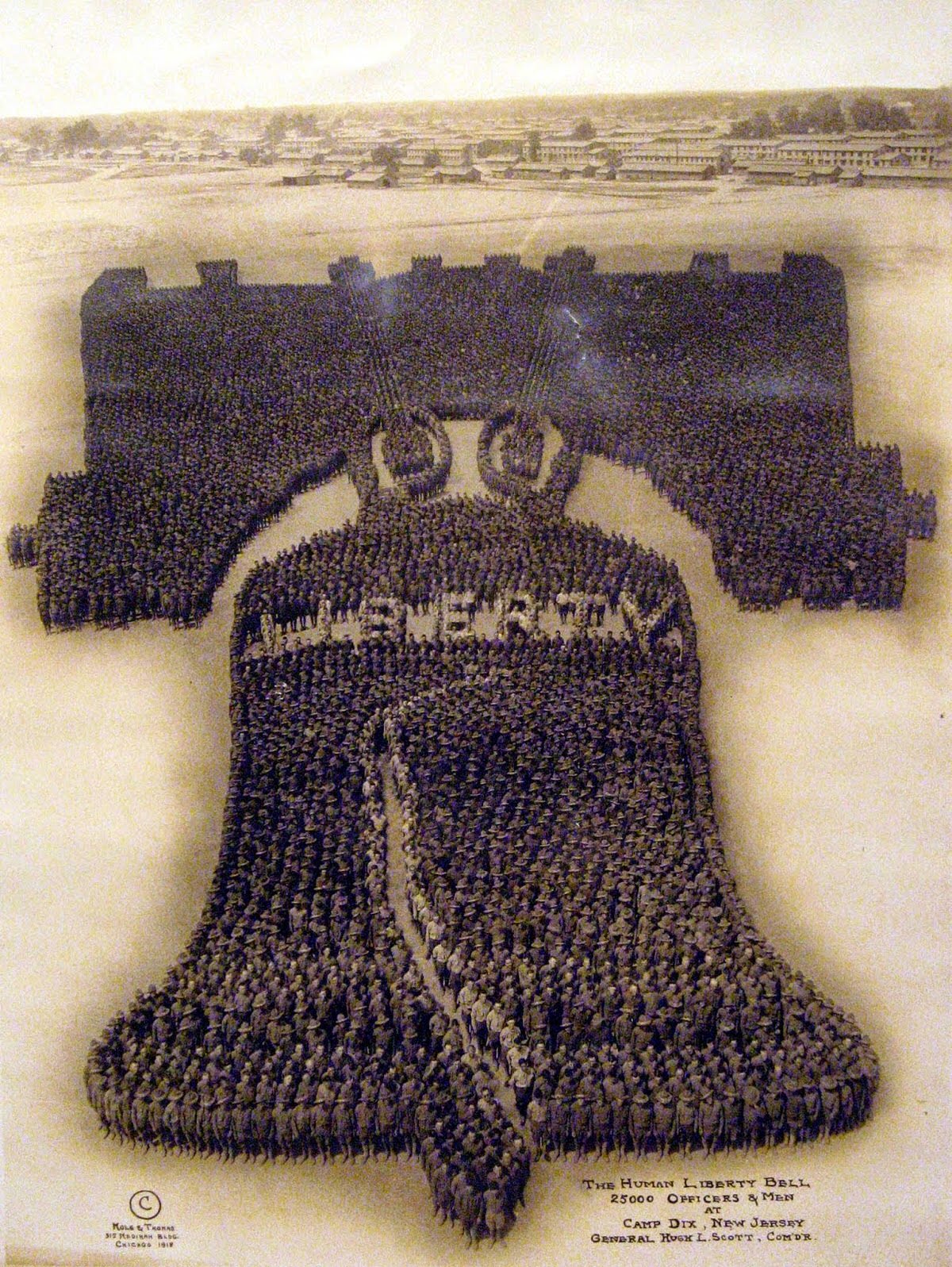
At Camp Dix in New Jersey, 25,000 officers and men formed the Human Liberty Bell. Soldiers stood in rows to replicate the bell’s shape, including its famous crack and the wooden beam at the top. The density of the crowd shifted throughout to create the illusion of shadows and three-dimensional depth.
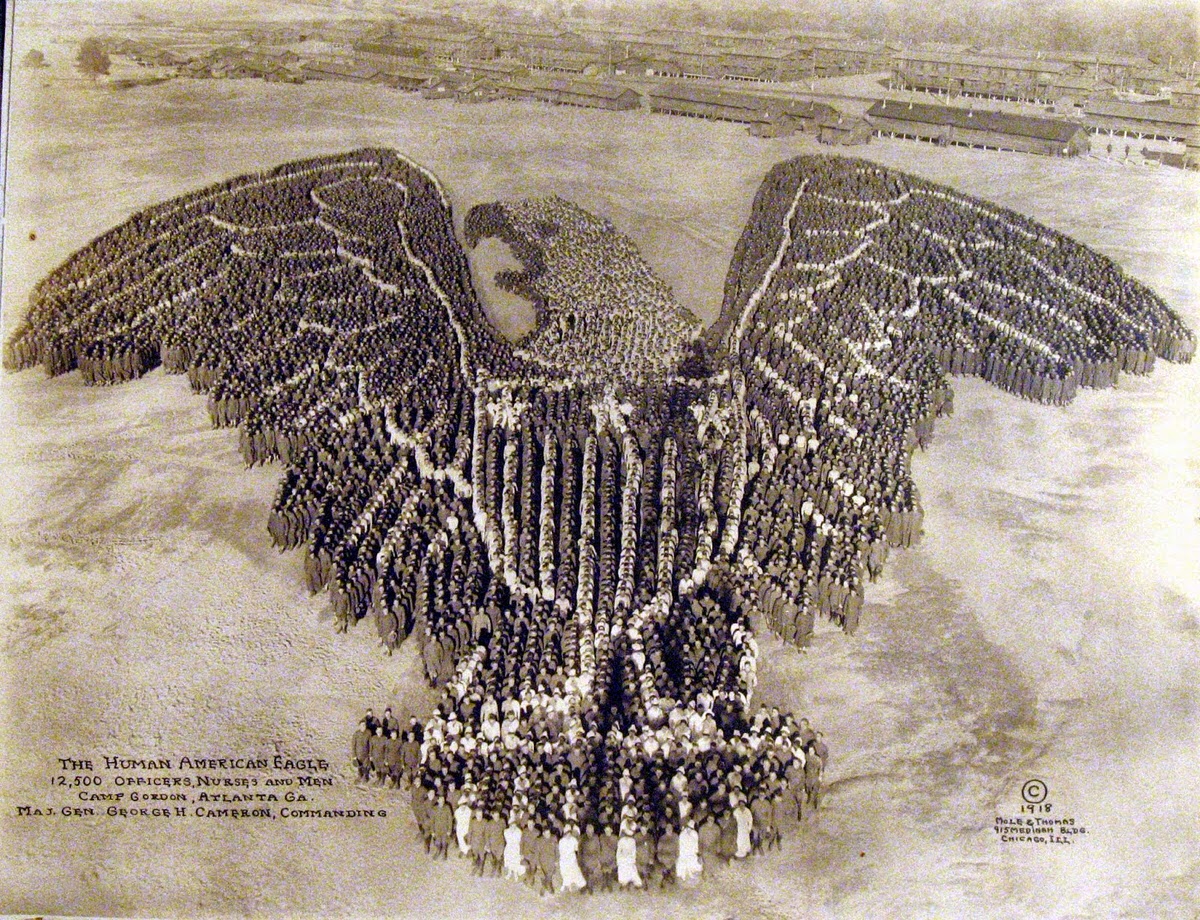
At Camp Gordon in Atlanta, 12,500 people — officers, enlisted men, and nurses — formed a Human American Eagle. The inclusion of nurses reflected the broad range of roles filled during the war effort. Different military branches also created their own living emblems.
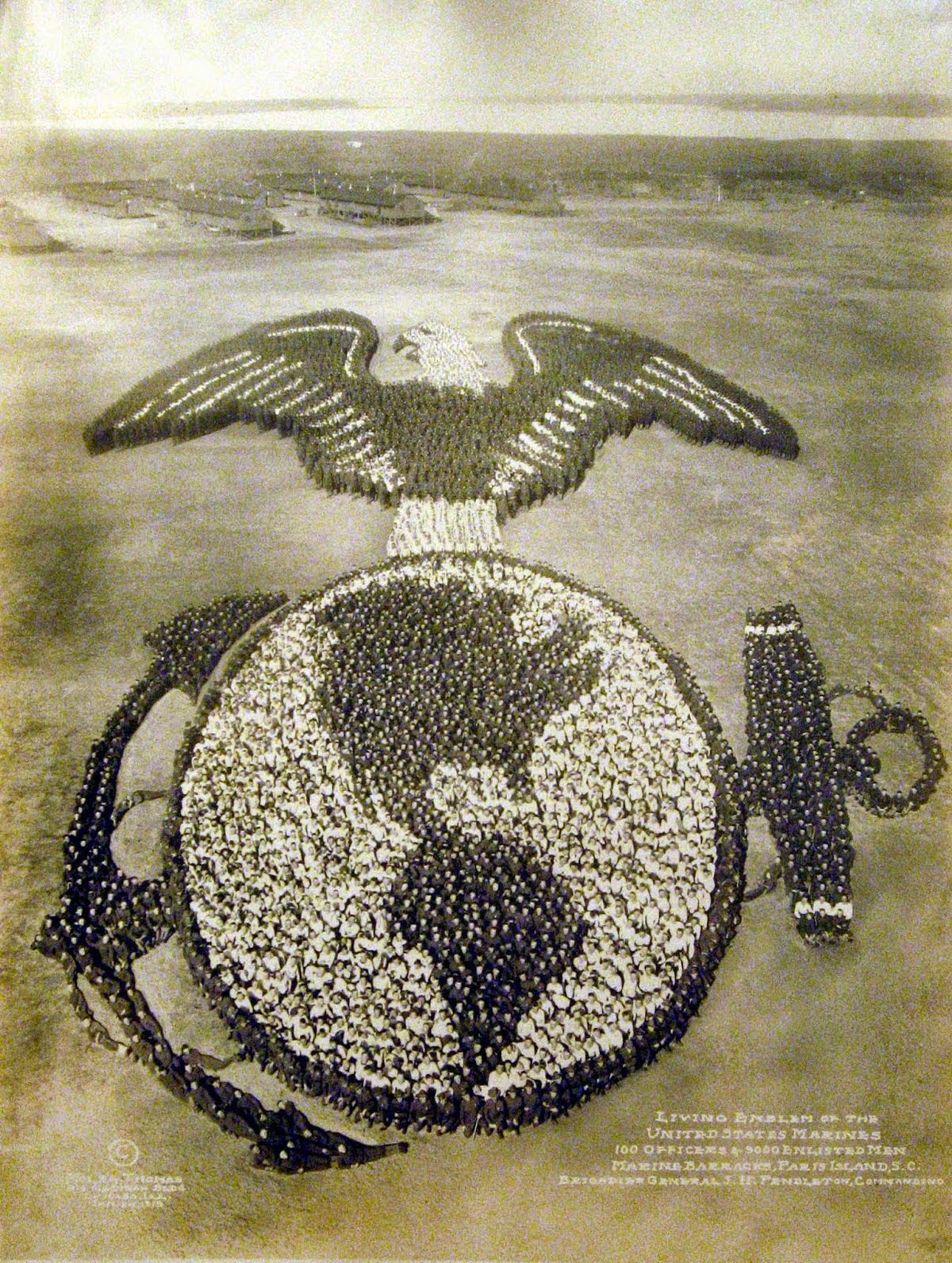
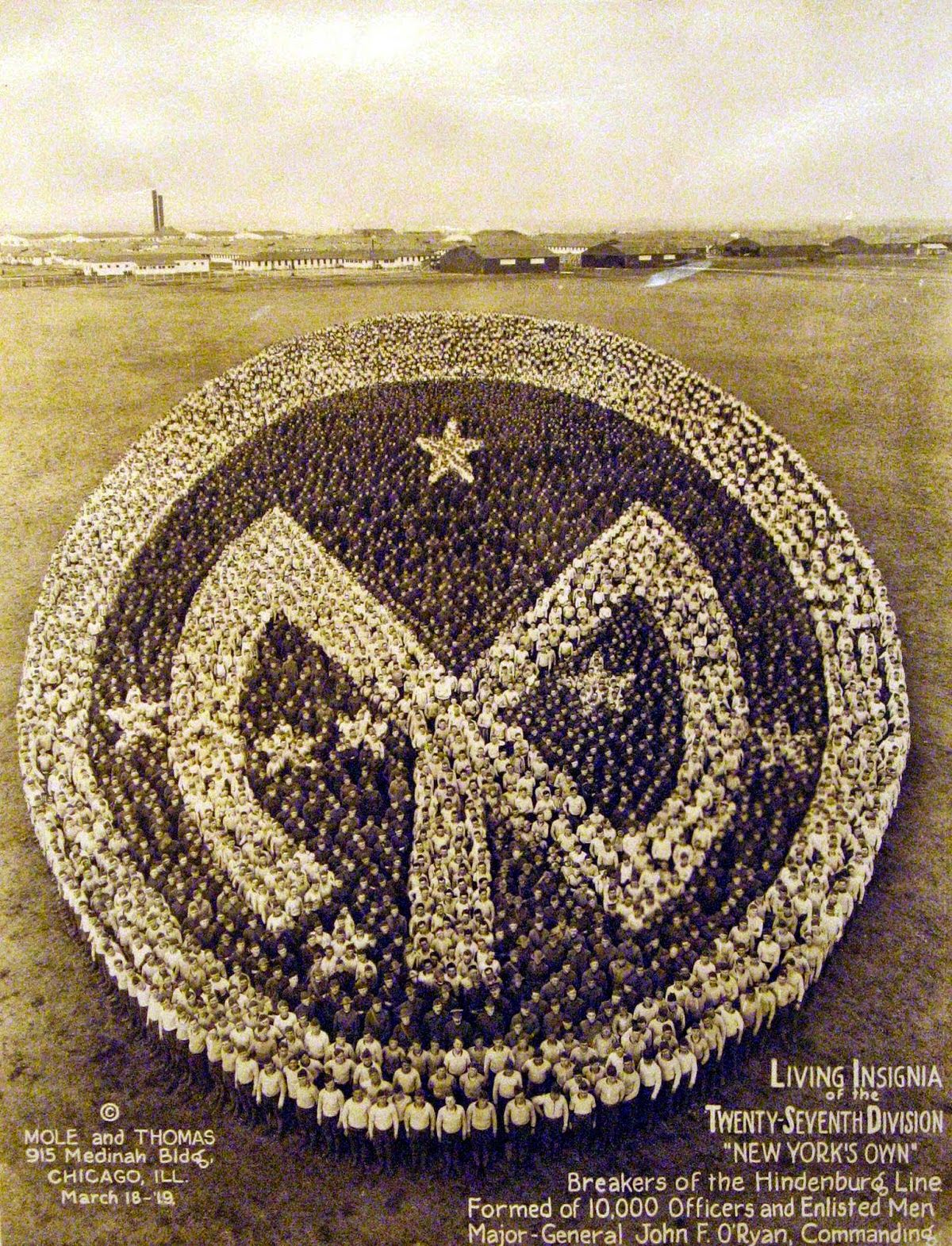
At the Marine Barracks on Parris Island, 100 officers and 9,000 enlisted men arranged themselves into the globe, anchor, and eagle of the Marine Corps emblem. Some portraits were tied directly to specific units. The 27th Division produced a living insignia titled “New York’s Own,” featuring 10,000 men known for breaking the Hindenburg Line. These images were used as recruitment posters to showcase the strength of U.S. Army divisions.
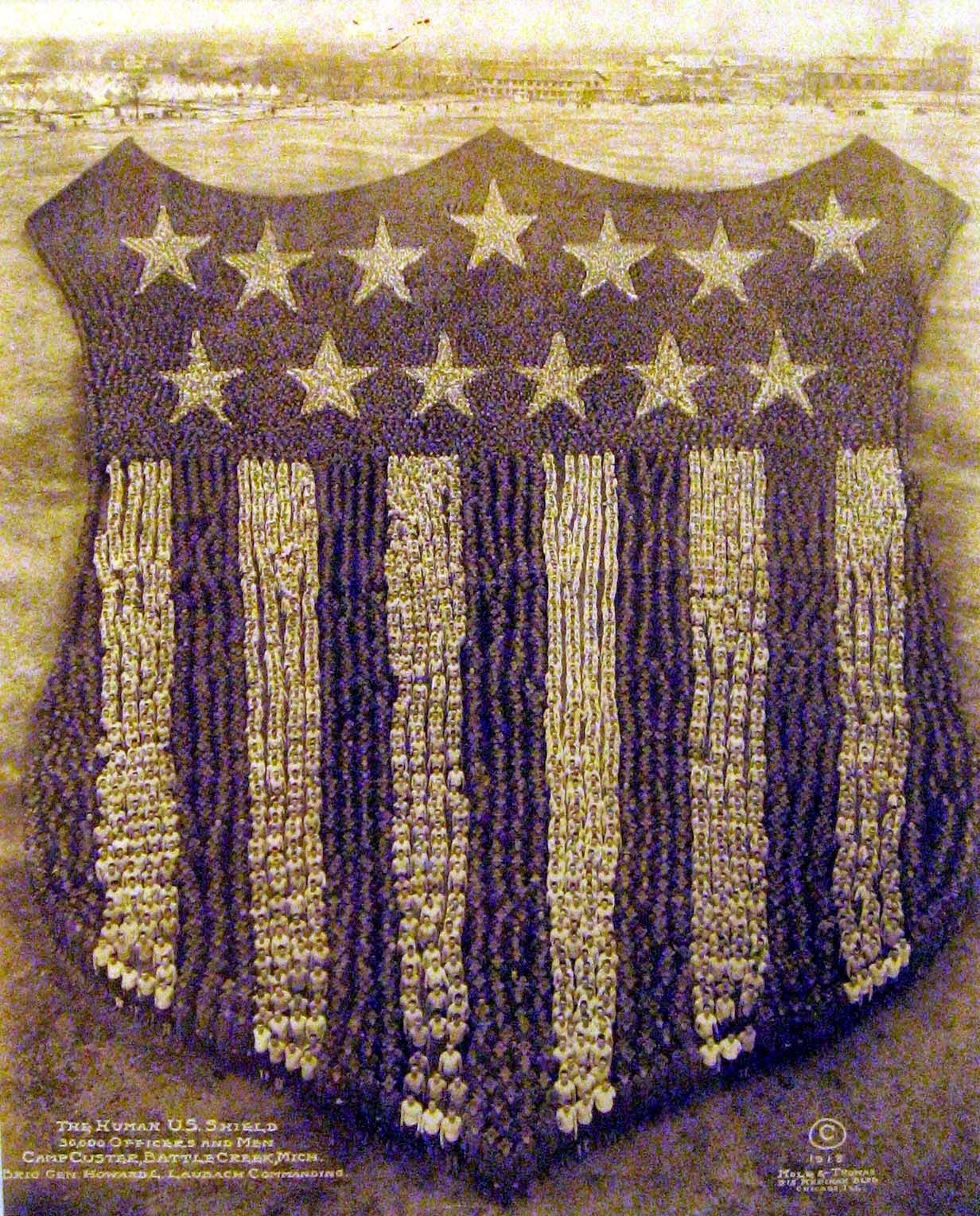
The largest project in the entire series was the Human U.S. Shield at Camp Custer in Michigan. It required 30,000 officers and men, who wore different colored uniforms or stood in specific patterns to represent the stars and stripes. Managing that many individuals on one field demanded extreme discipline — every man had to hold his position until the shutter of Mole’s 11×14-inch view camera closed.
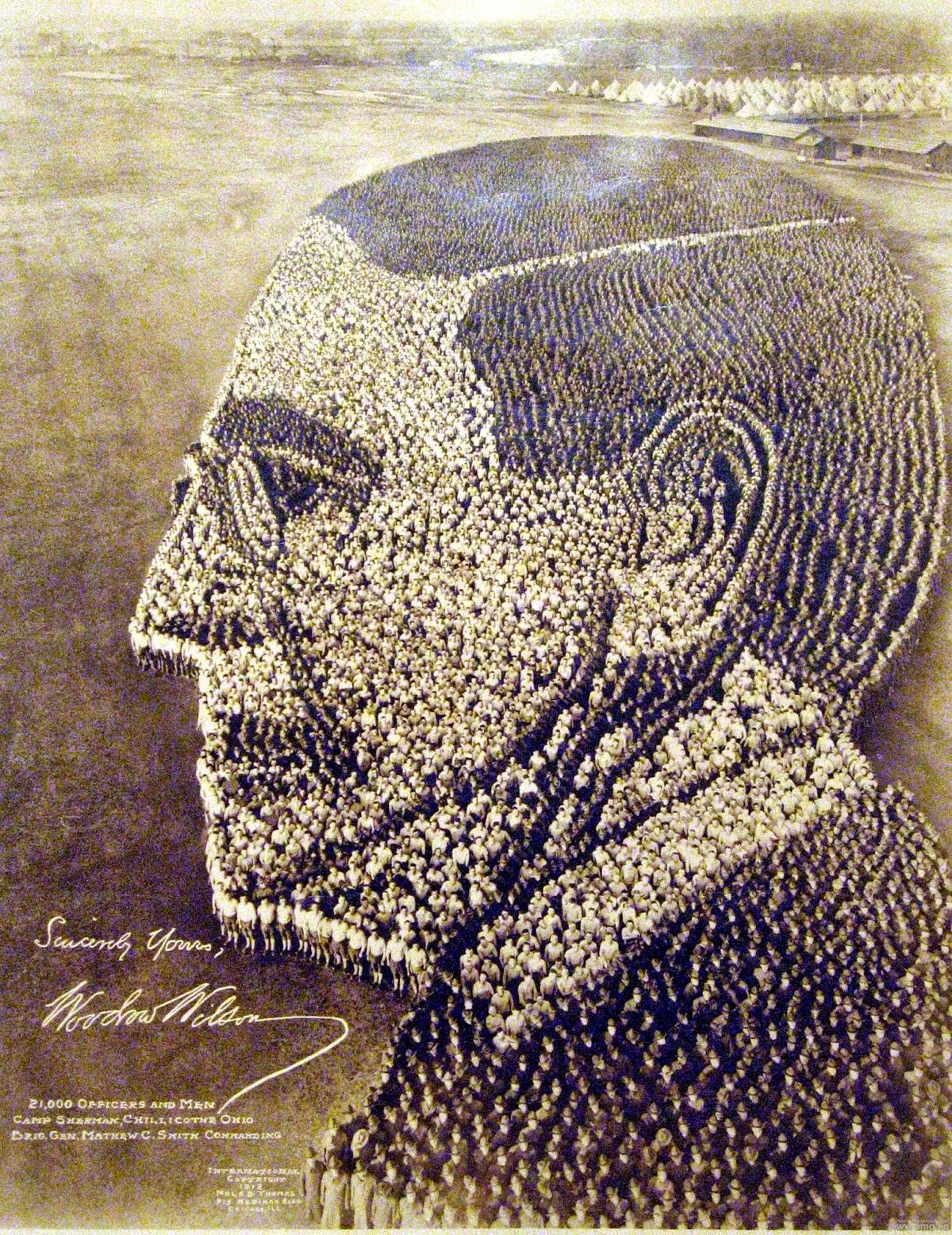
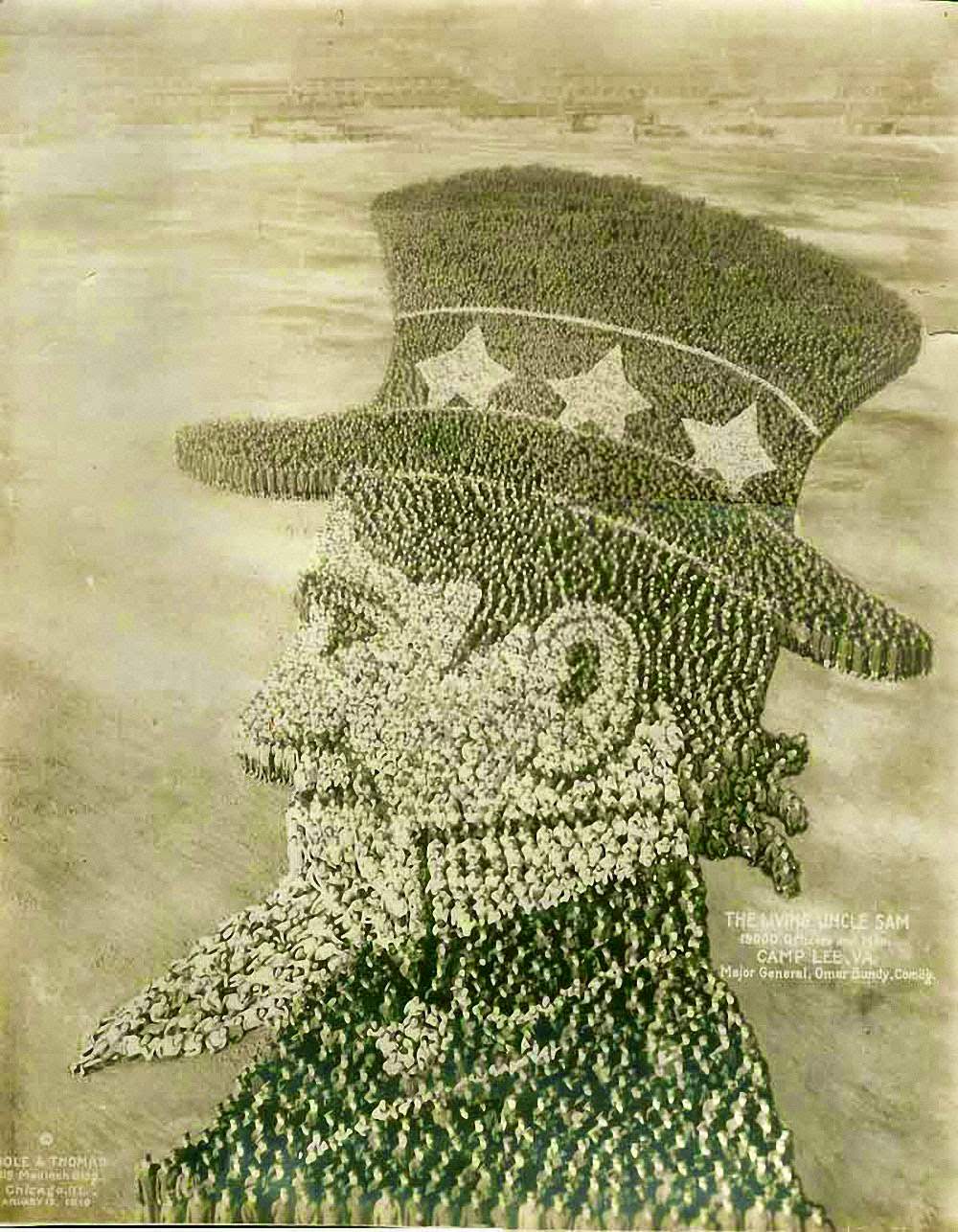
Mole and Thomas also recreated famous figures. At Camp Sherman in Ohio, 21,000 officers and men formed the cursive signature of President Woodrow Wilson, titled “Sincerely yours, Woodrow Wilson.” The tail of the “y” and the loops of the “W” stretched across hundreds of yards. At Camp Lee in Virginia, 19,000 men formed the Living Uncle Sam, wearing different hats and coats to define the beard, hat, and bow tie.
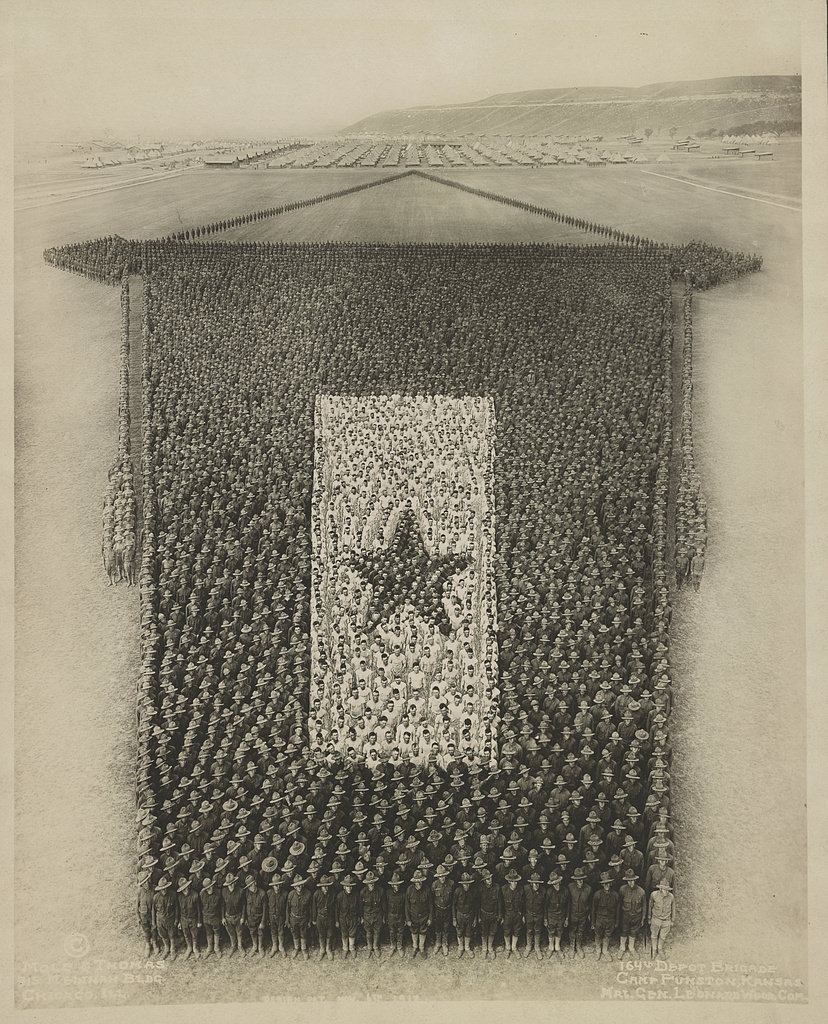
In 1918, soldiers of the 164th Depot Brigade at Camp Funston in Kansas arranged themselves into the shape of the U.S. Armed Forces service flag — a symbol representing the men deployed overseas.
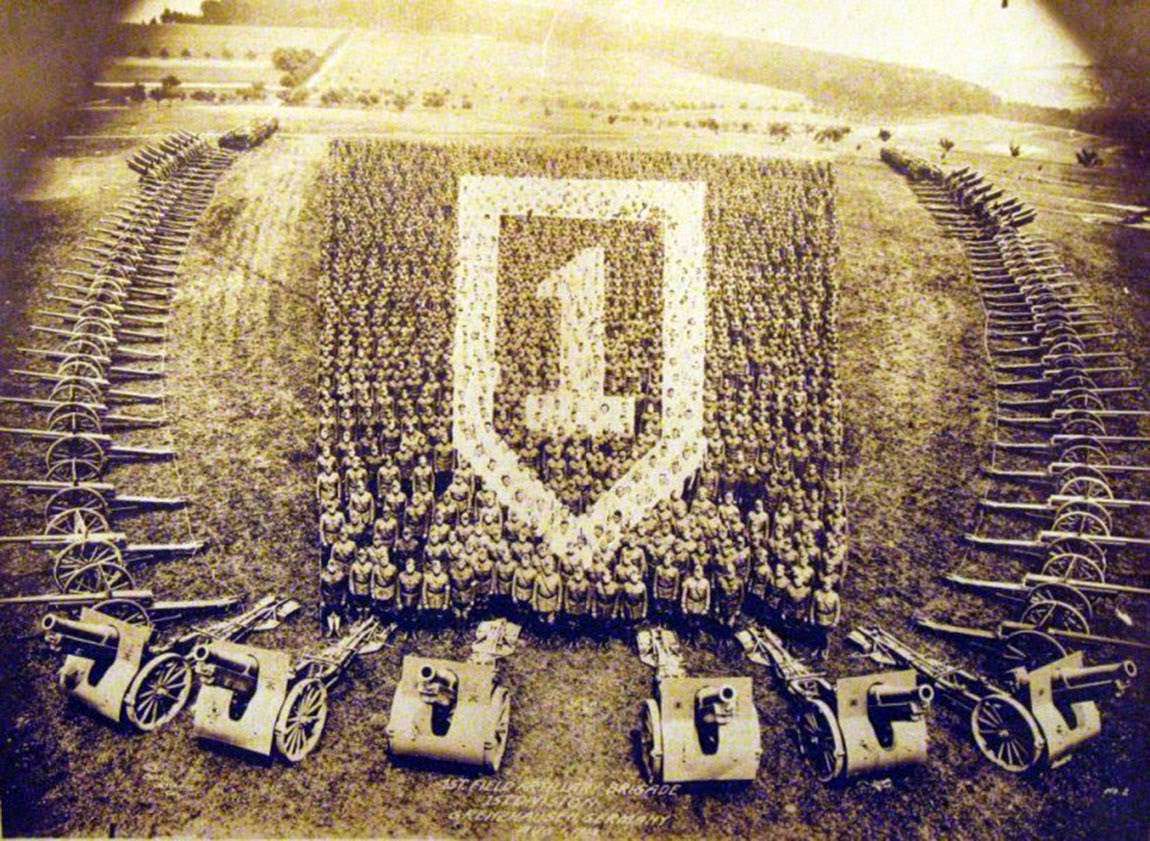
Even after the armistice, Mole and Thomas kept working. In 1919, they traveled to Grenzhausen, Germany, to photograph the 1st Field Artillery Brigade of the 1st Division. Those photos were sent back to families in the United States as a testament to the unity of troops still stationed abroad.