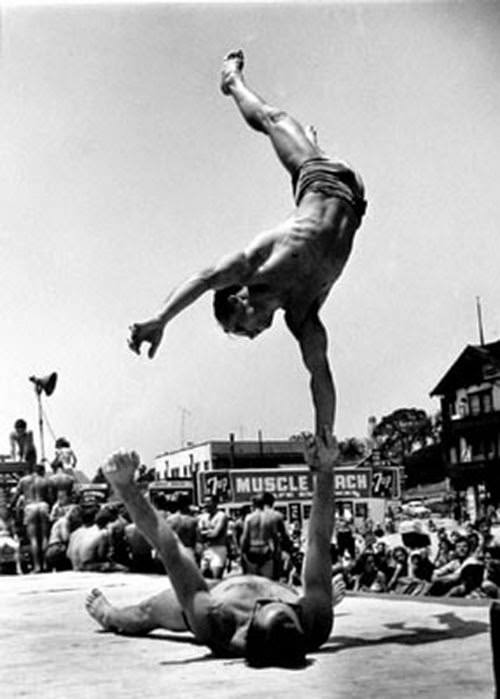
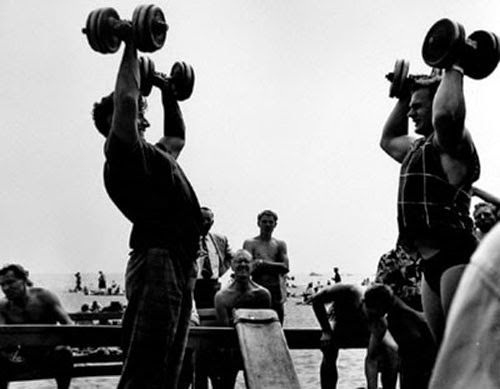
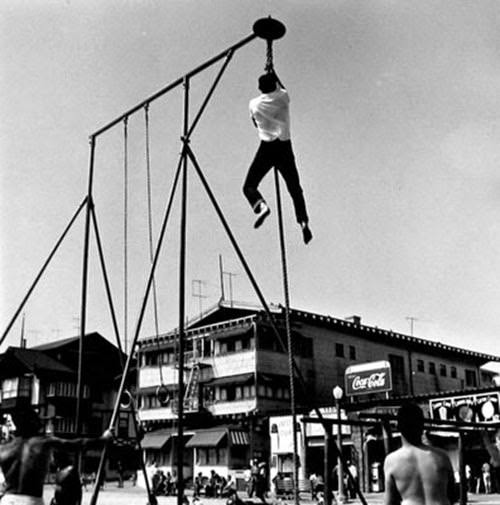
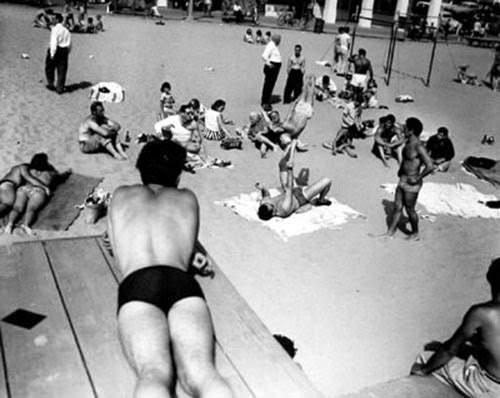
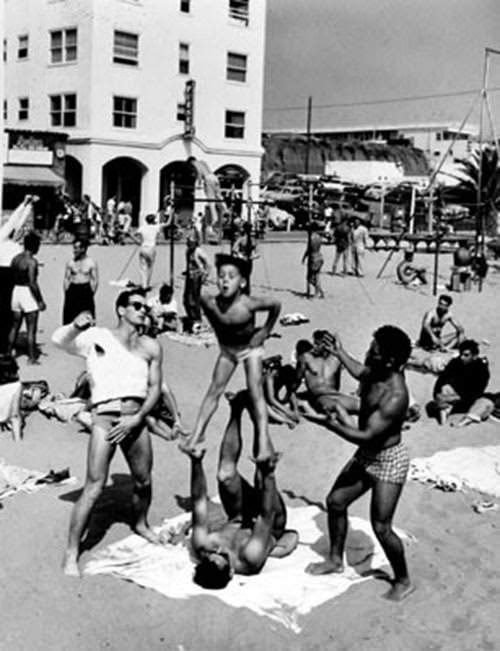
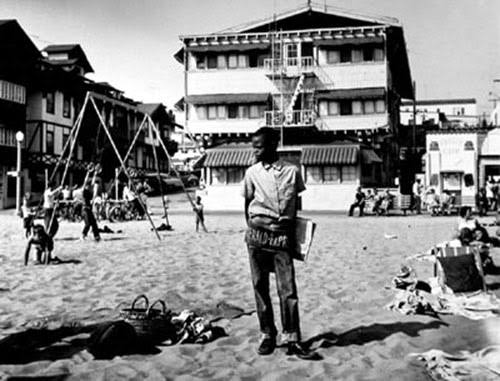
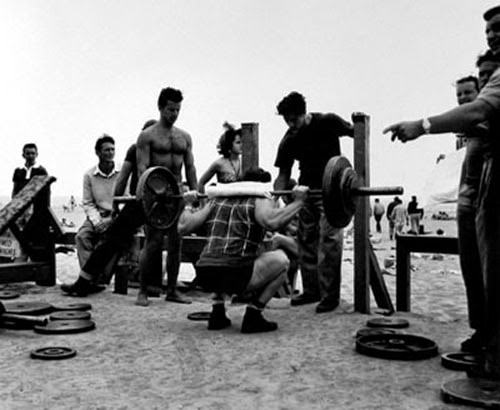
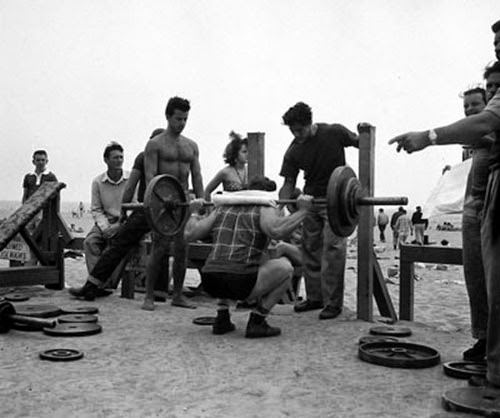
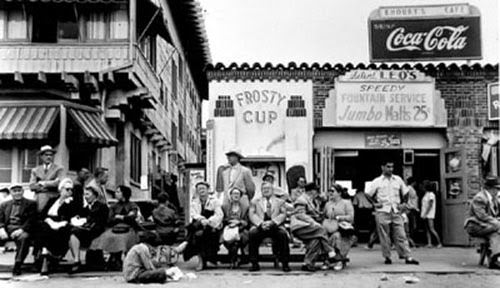
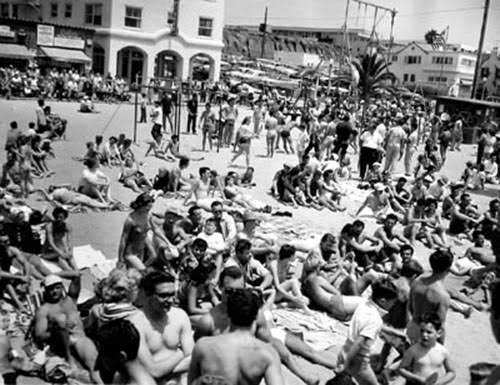
Just south of the Santa Monica Pier in the summer of 1954, a small strip of California sand operated as one of the most remarkable public spaces in America. Known as Muscle Beach, it was an open-air gymnasium where gymnastics, partner acrobatics, and raw strength put on a daily show for anyone who walked by.
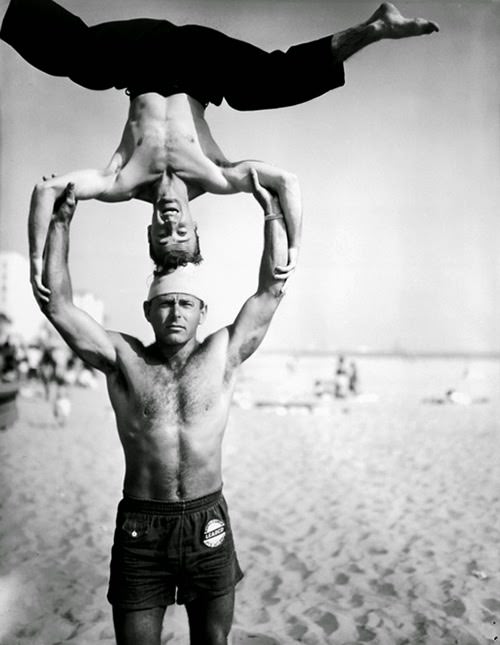
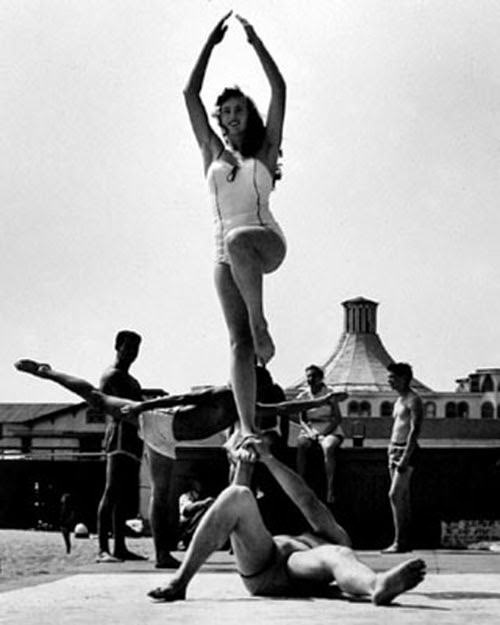
The name suggested simple posing, but the reality was far more athletic. Muscle Beach in 1954 ran on a discipline called adagio — a demanding form of partner acrobatics blending ballet-style lifts with sheer power. Teams built human pyramids, sometimes five people tall, topped by a gymnast balancing on one hand. Men and women practiced iron crosses on rings and performed high-bar routines on equipment the city of Santa Monica had installed directly on the sand.
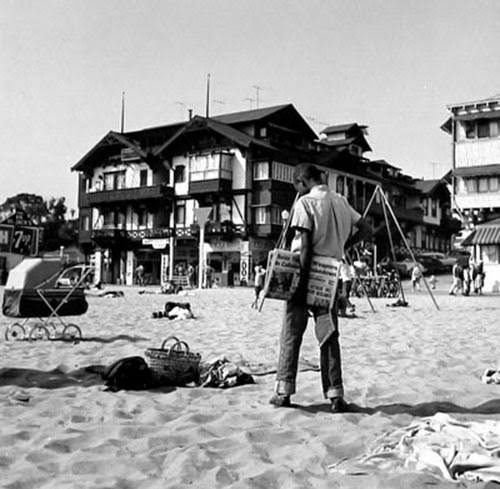
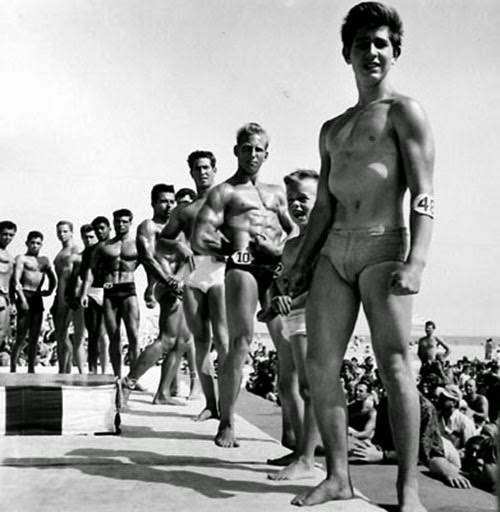
Crowds gathered in the hundreds — sometimes thousands. There were no fences, no tickets, and no VIP sections. A tourist from the Midwest stood alongside Hollywood names like Kirk Douglas or Jane Russell, all watching the same scene: a 190-pound man squatting with a 120-pound woman balanced on his shoulders.
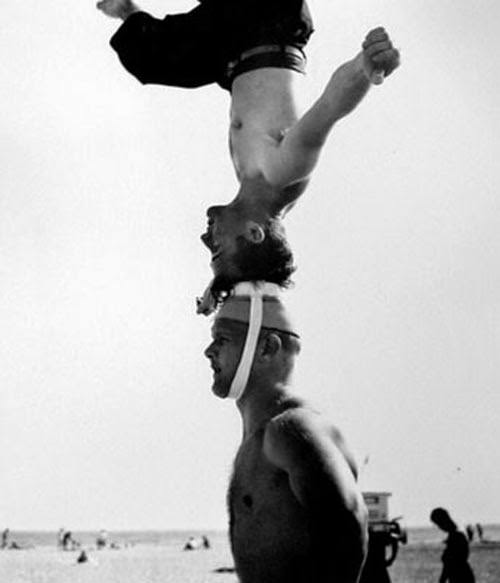
Two figures stood out among the regulars. Jack LaLanne — later called the Godfather of Fitness — challenged beachgoers to push-up contests and promoted exercise routines that were considered radical at the time. Equally significant was Abbye “Pudgy” Stockton, crowned the Queen of Muscle Beach.
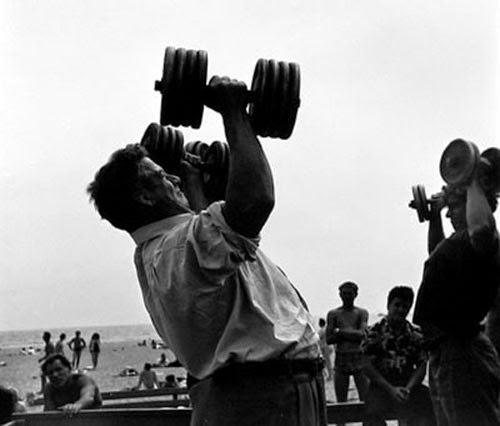
In 1954, women were routinely discouraged from intense physical training. Stockton ignored that entirely. She lifted heavy, performed acrobatics, and demonstrated publicly that strength and femininity were not in conflict. Her presence on the sand drew women into weightlifting and gymnastics at a time when the broader culture actively pushed them away from it.
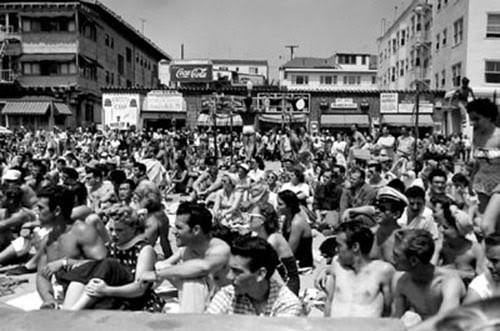
Muscle Beach treated the human body as something to be tested, not just displayed. The regulars used the sand the way scientists use a lab — experimenting with what strength, balance, and coordination could produce together.