In the early 1870s, Japan was in the middle of one of the most rapid national transformations in modern history. The Meiji government had taken full control, and it wasted no time dismantling the old order. In 1871, over 260 feudal domains were abolished. The local lords who had ruled these territories for generations were ordered to move to Tokyo and surrender their land. In their place, the government installed prefectures under direct central control—a move that allowed Tokyo to collect taxes from every corner of the country for the first time.
Road in Mita, Tokyo, 1870
Also in December 1871, a delegation of roughly 100 Japanese officials and students boarded ships and set off on what became known as the Iwakura Mission. Led by senior statesman Iwakura Tomomi, the group spent 18 months traveling through the United States and Europe. They studied factories, legal systems, schools, and military structures. They also attempted—unsuccessfully at the time—to renegotiate the unequal treaties that foreign powers had imposed on Japan. When they returned, they brought back detailed blueprints for building a modern state.
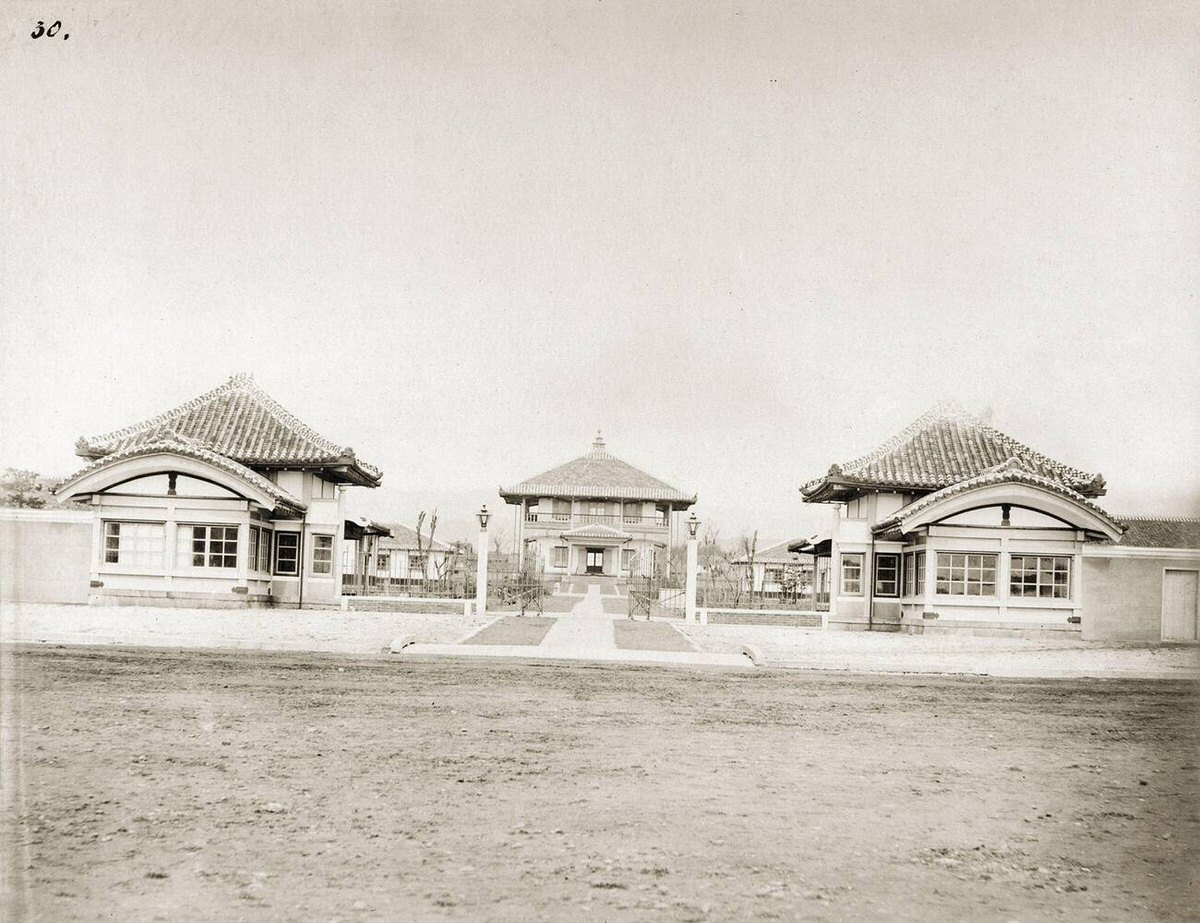
Daiichi Chugakko, Japan’s first middle school, in Kyoto, 1870
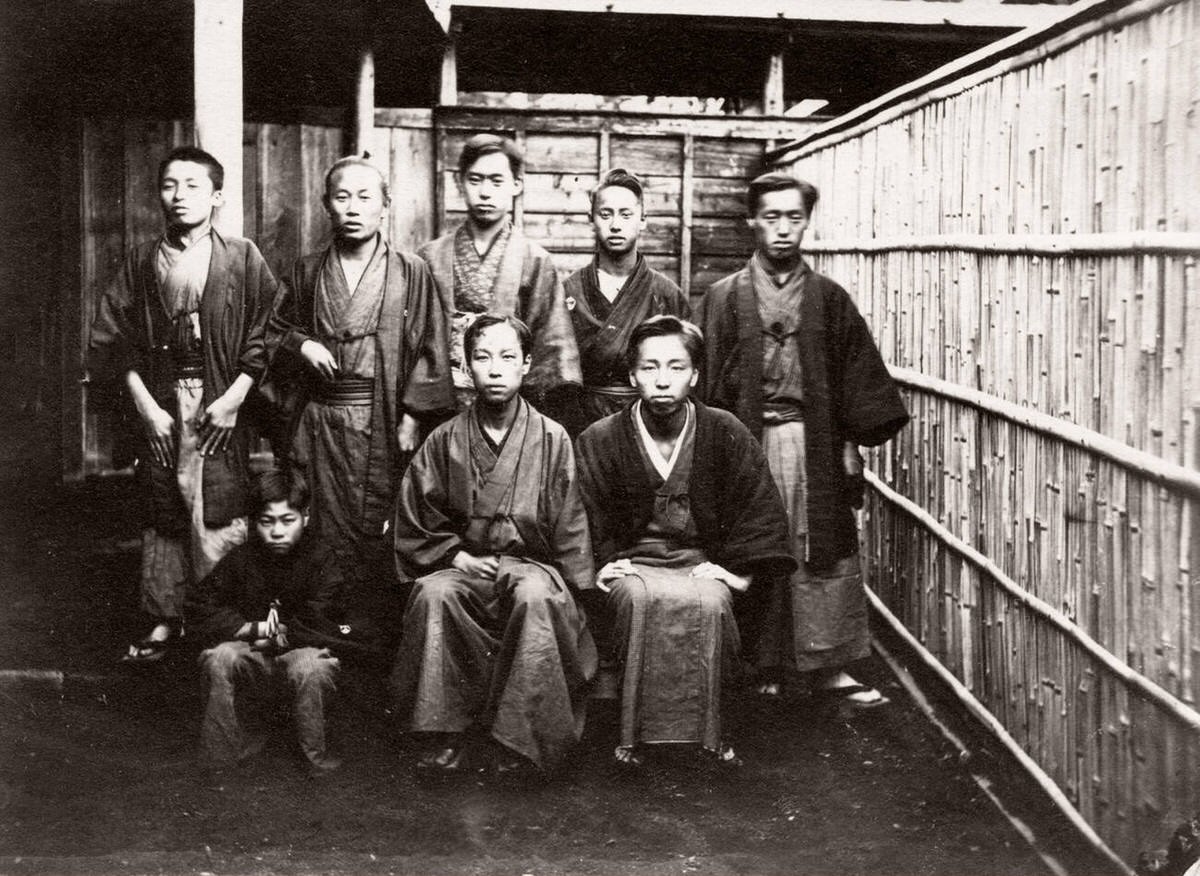
Education was one of the first systems to be overhauled. In 1872, the government passed the Gakusei—a national education law that called for the construction of 54,000 elementary schools across the country. For the first time in Japanese history, schooling was made mandatory for both boys and girls, regardless of their social class. Many farm families resisted because they depended on their children’s labor, but the number of operating schools grew year by year.
Students in Numazu, 1871
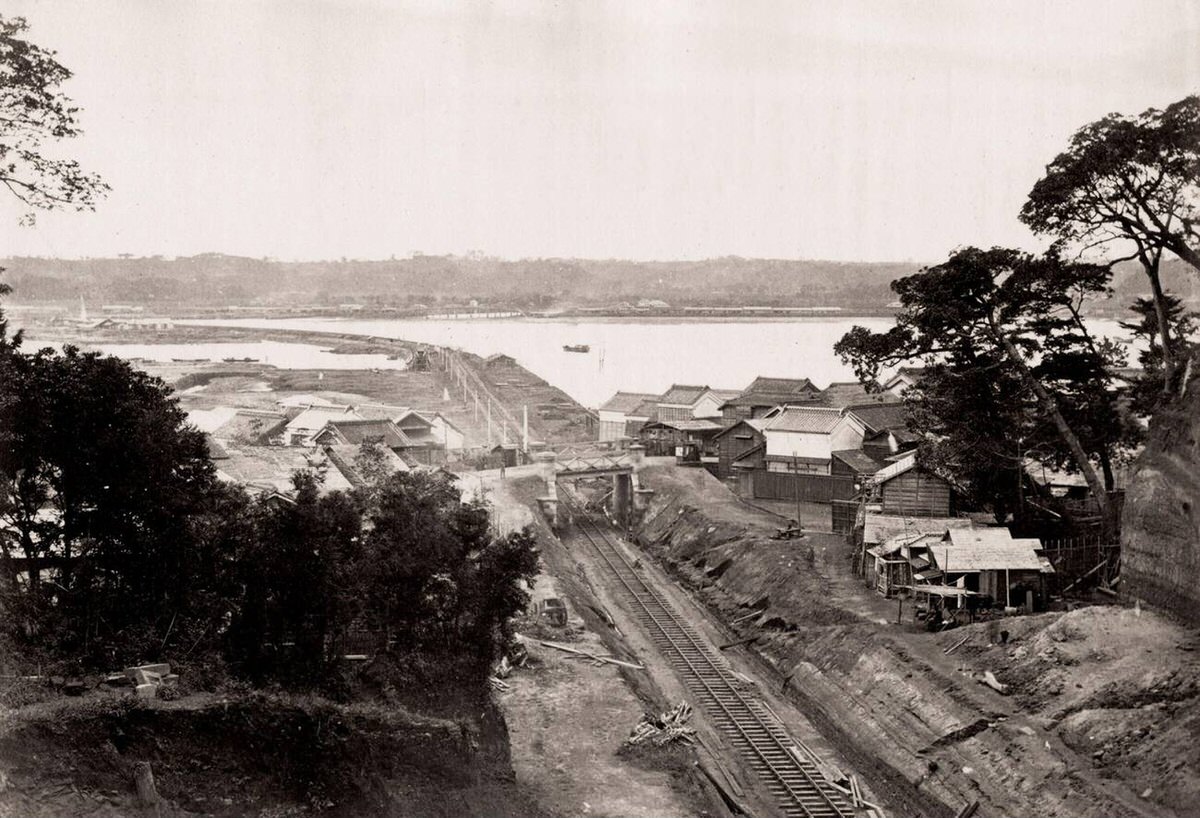
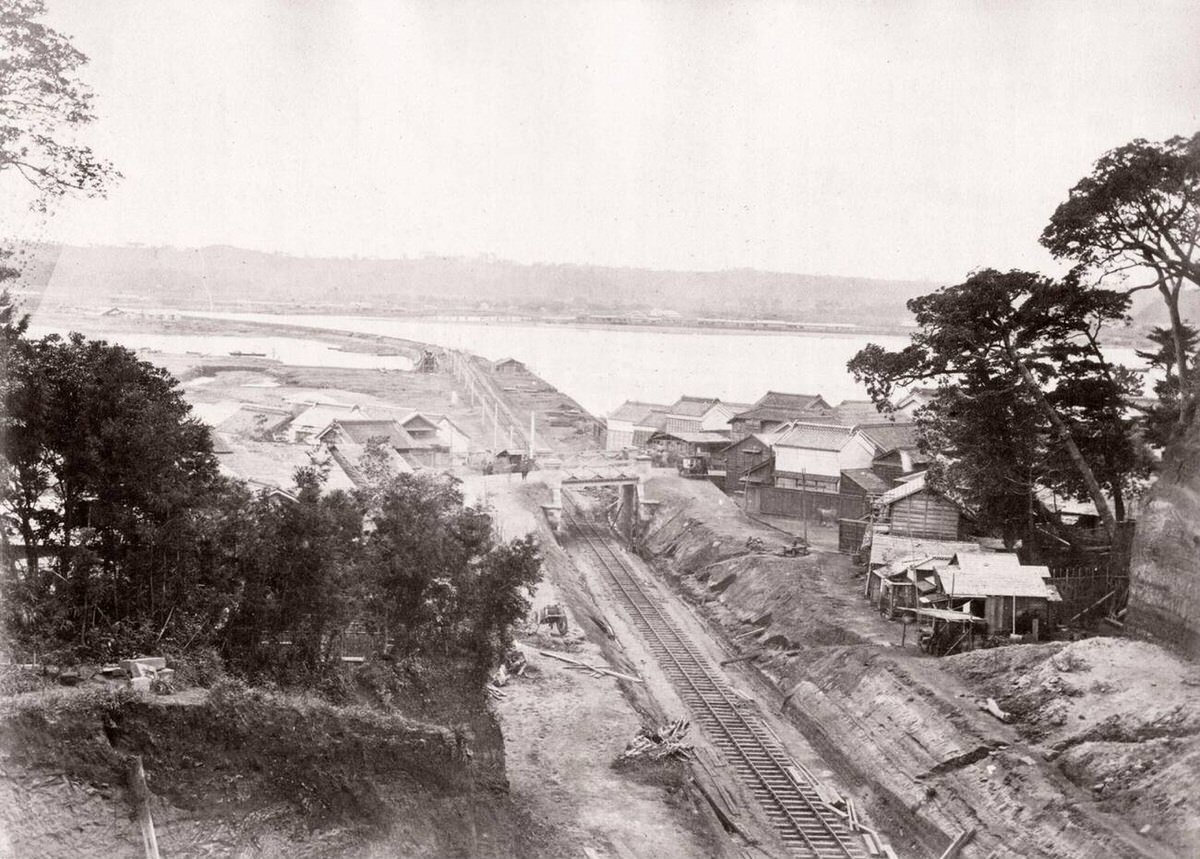
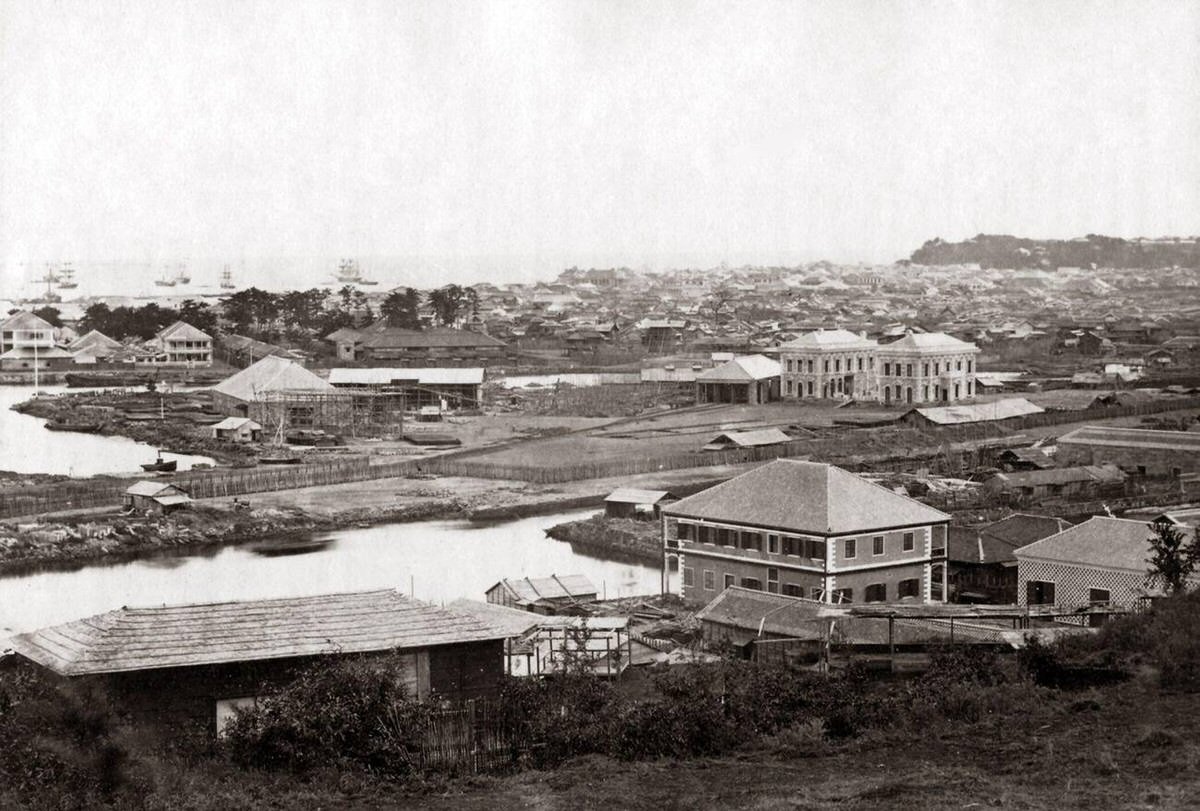
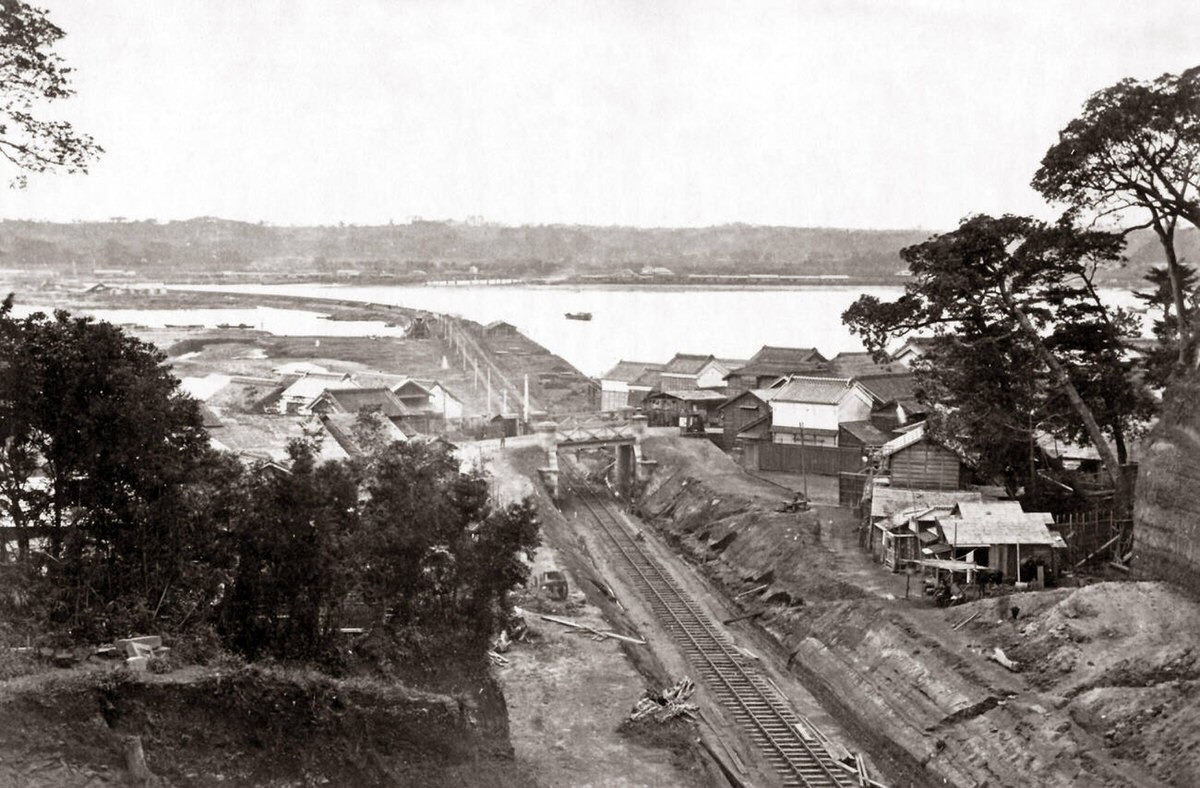
Industry moved just as fast. In 1872, Japan opened its first railway line, connecting Tokyo to Yokohama. A journey that previously took a full day now took less than an hour. That same year, the Tomioka Silk Mill opened in Gunma Prefecture, powered by machinery imported from France. The government used it as a model factory. Hundreds of young women traveled from across Japan to Tomioka, learned to operate the machines, and carried those skills back to their home regions.
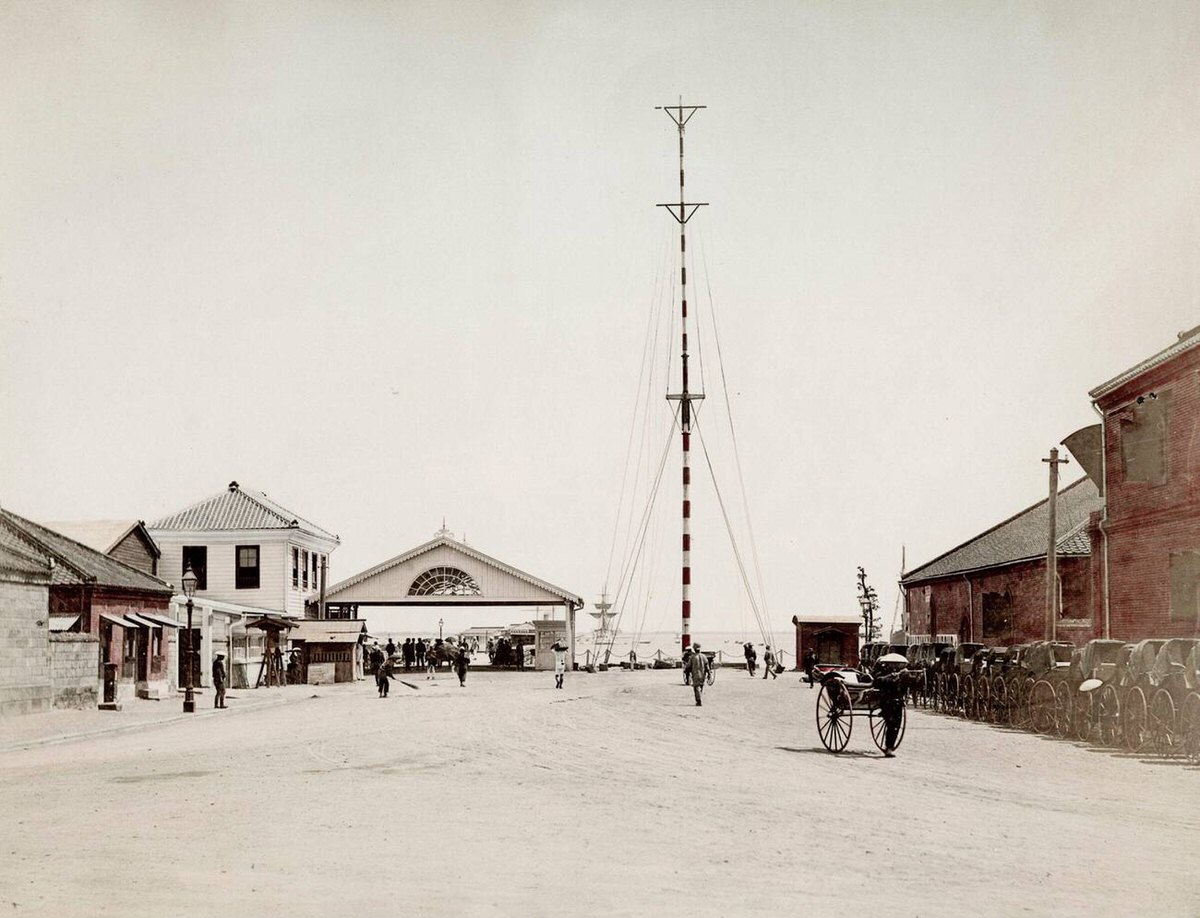
Railway station in Yokohama, Japan, 1870sRailway line in Kanagawa, Yokohama, 1870s
The government restructured how it collected money in 1873 with the Land Tax Reform. Farmers had previously paid their taxes in rice, but the new system required cash payments set at a fixed 3% of the land’s assessed value. This gave the central government a stable and predictable budget. For farmers, however, the shift was punishing in years when crop prices fell, since the tax rate stayed the same regardless of what their harvest was worth. The resulting financial strain triggered multiple violent peasant uprisings across rural Japan.
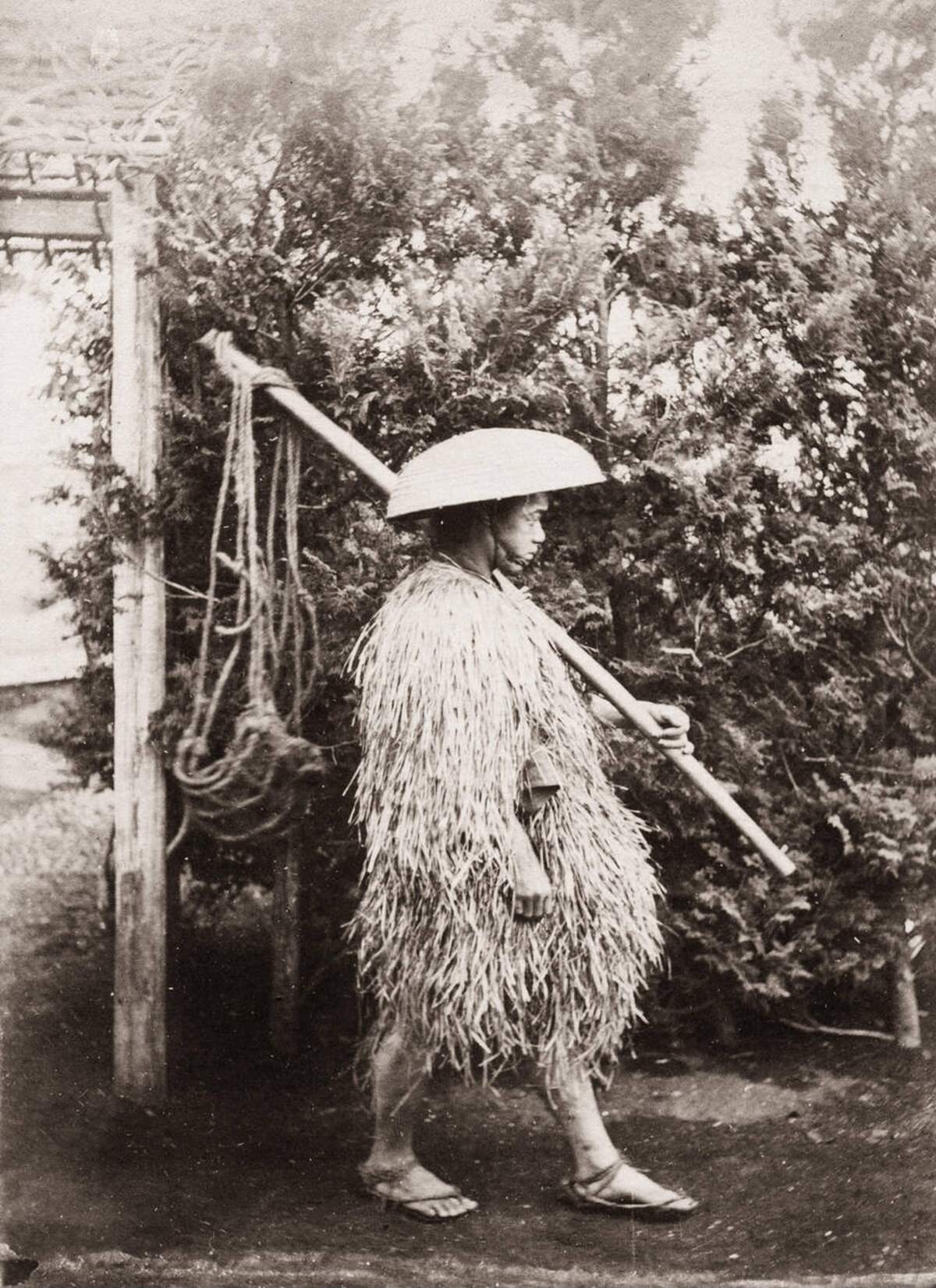
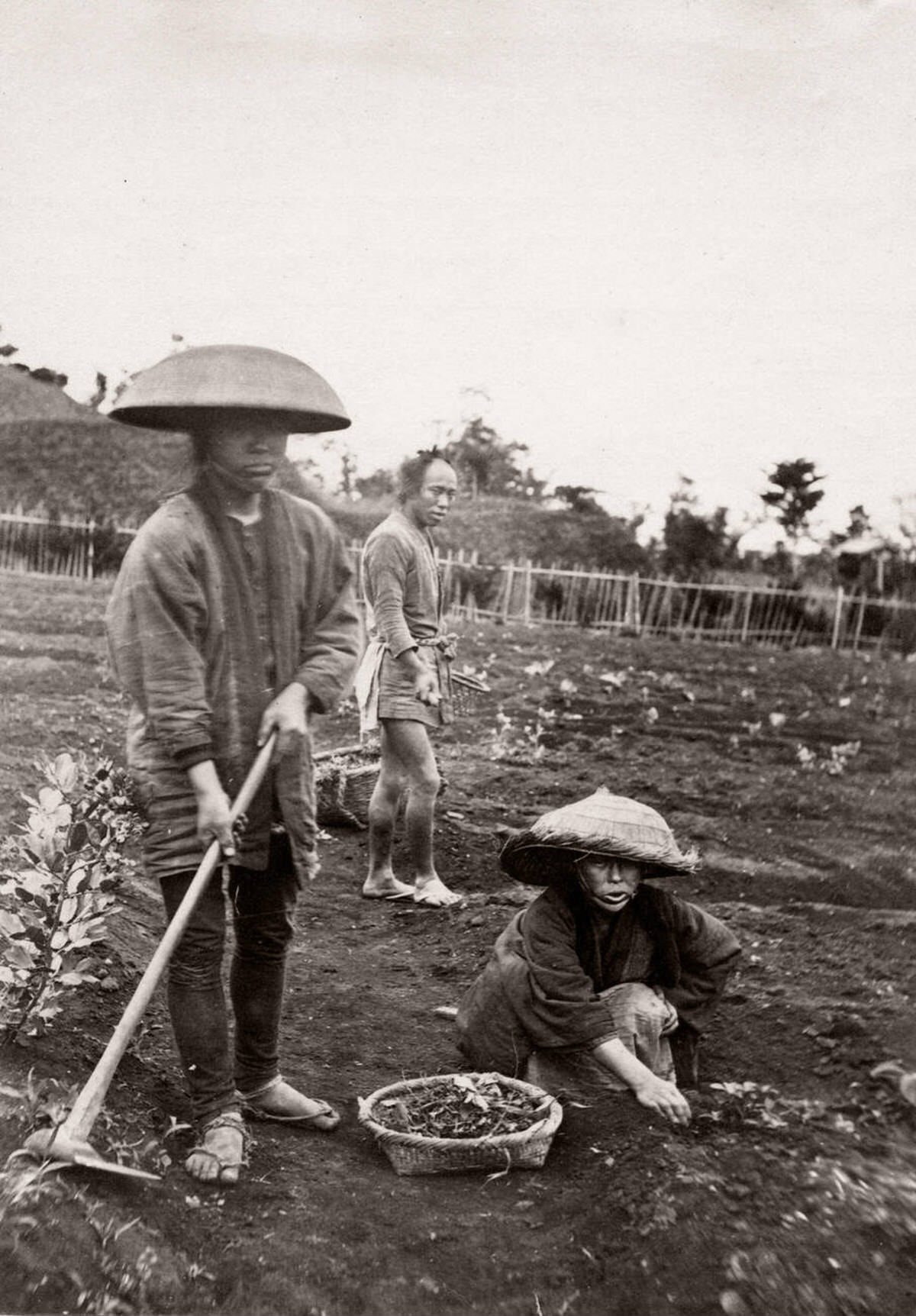
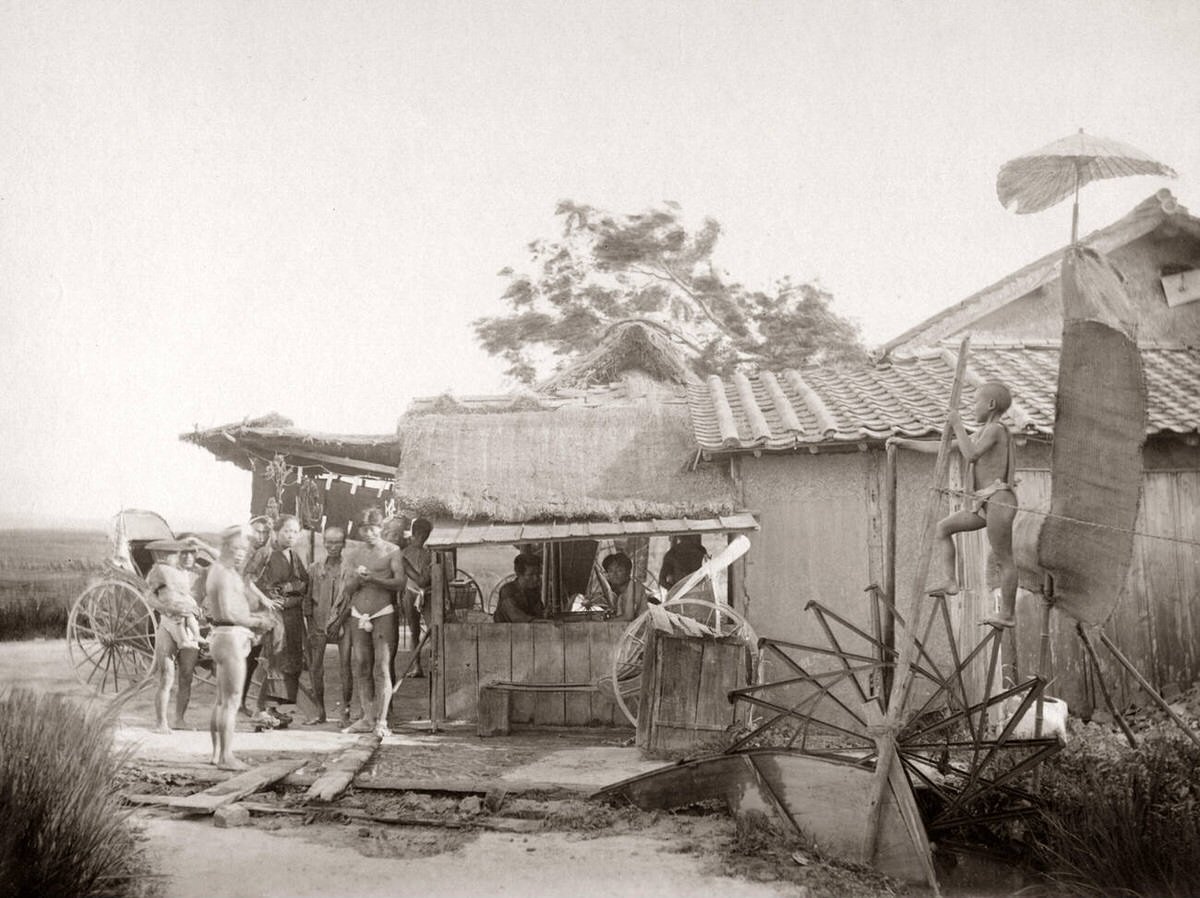
Japanese gardeners or farm workers, 1871Water wheel irrigation and a roadside food stall in Japan, 1870s
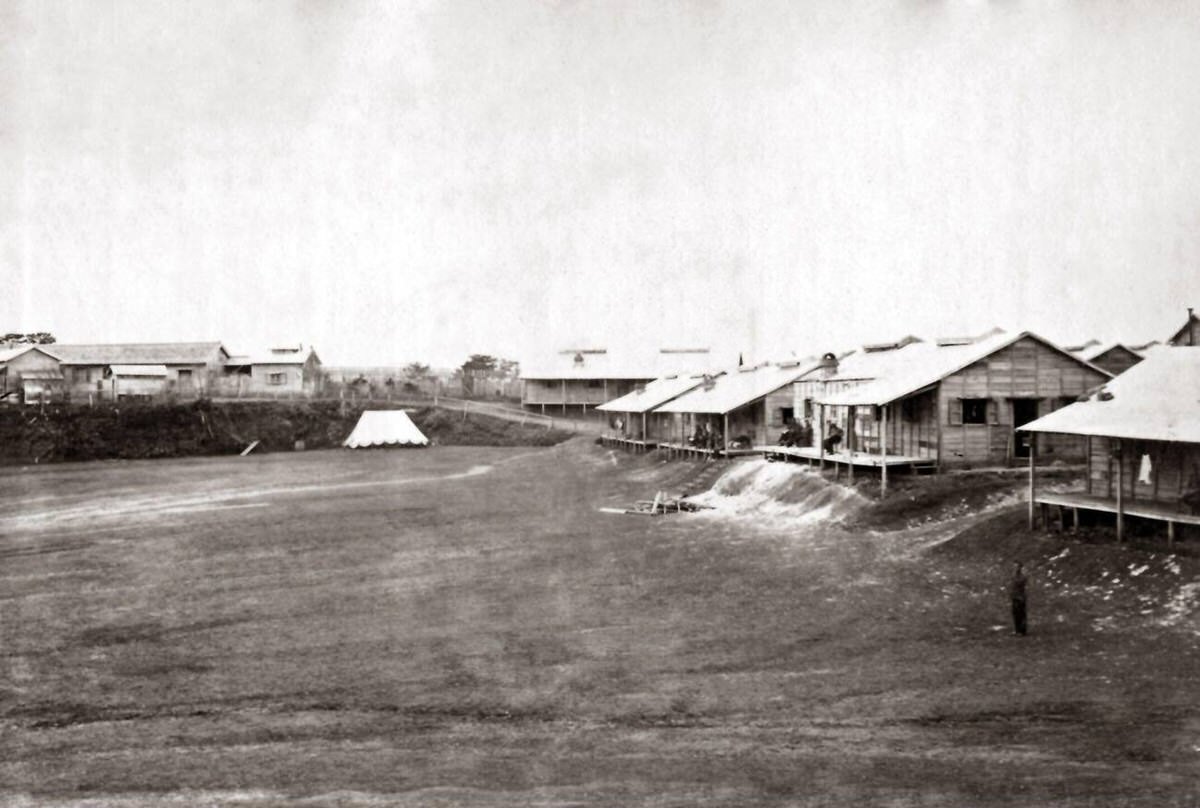
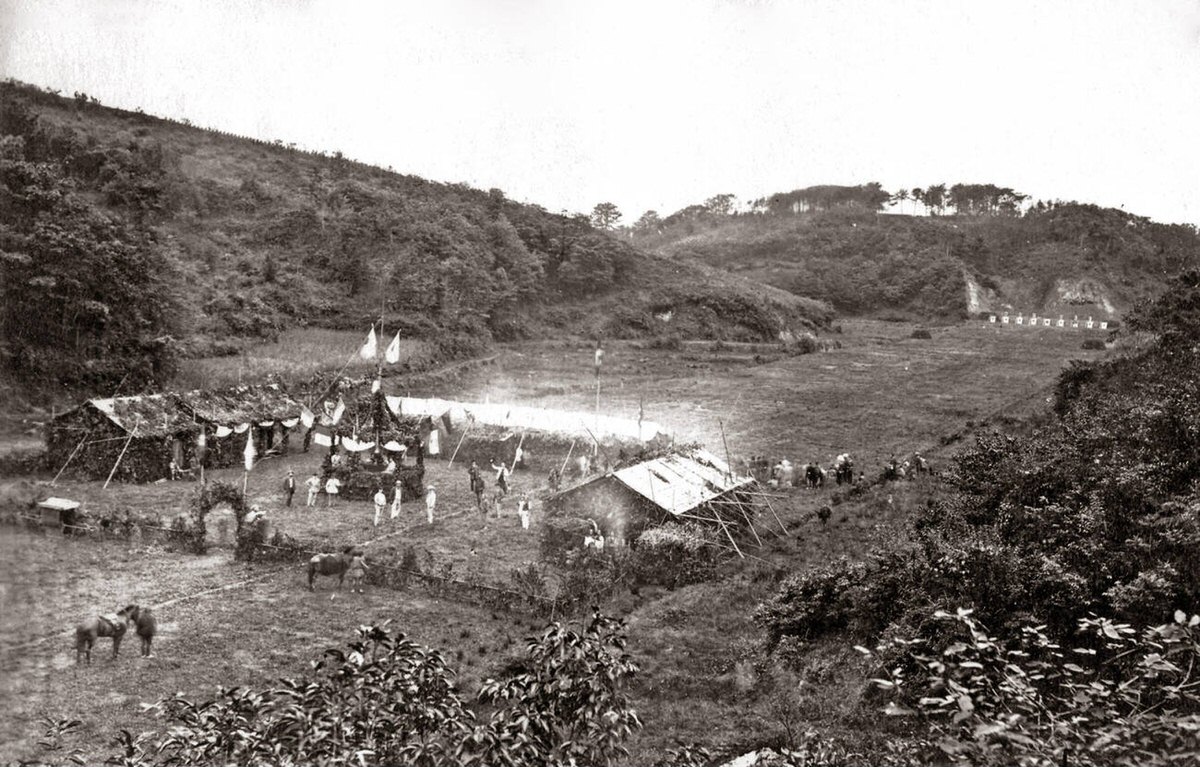
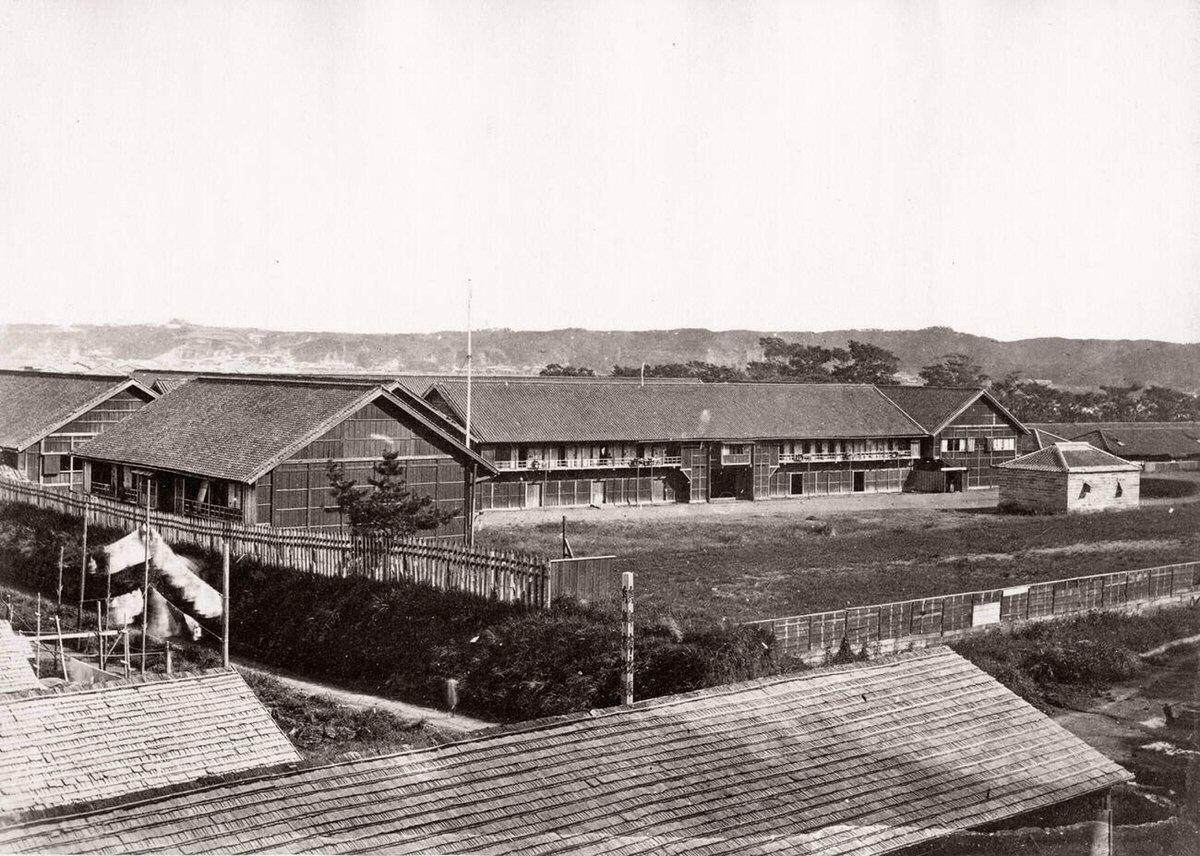
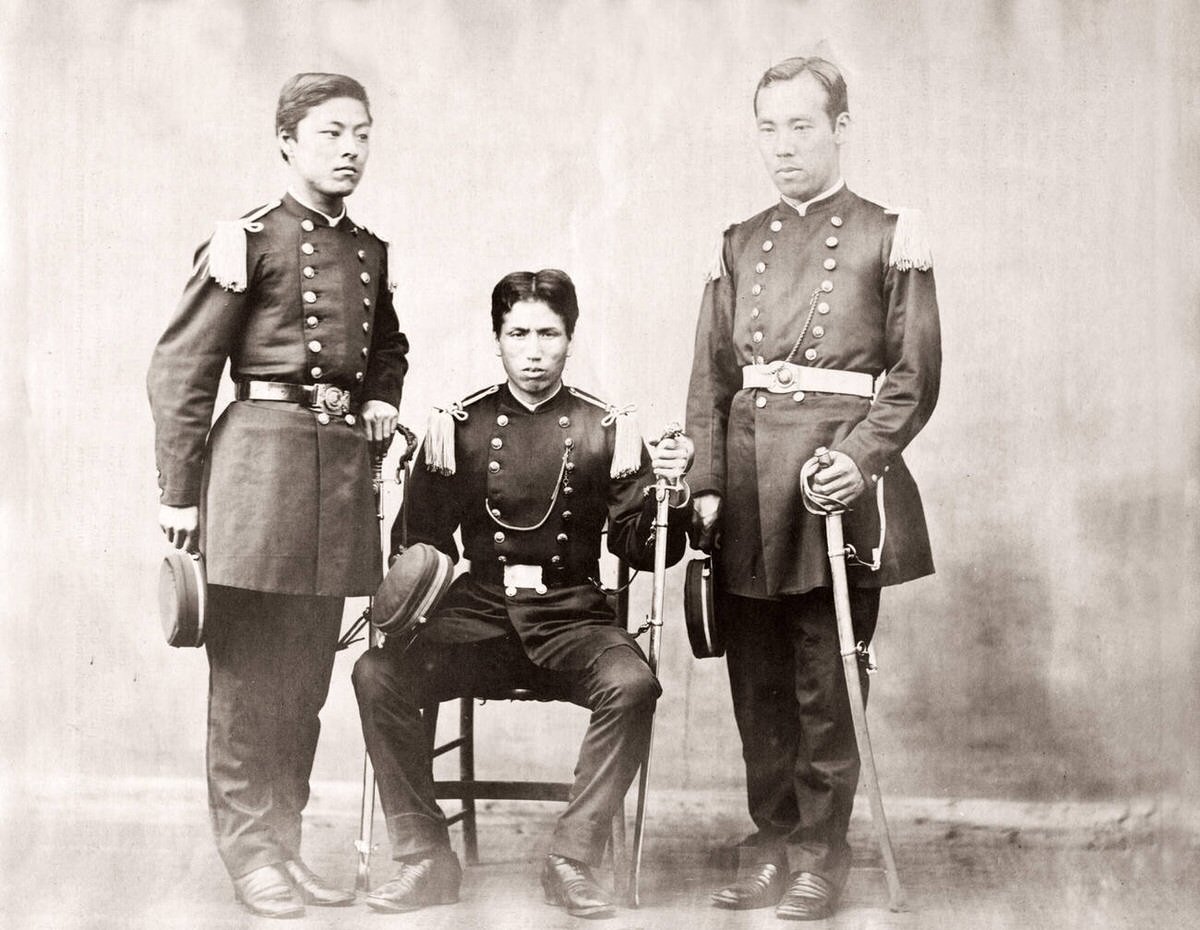
The military changed permanently in 1873 when the Conscription Law took effect. Every Japanese male who turned 21 was required to serve three years in the regular army. For centuries, only the samurai class had the legal right to carry weapons and fight in wars. This law ended that monopoly entirely. Commoners were now trained to use rifles and artillery. Many samurai viewed this as a deep insult, refusing to accept that peasant soldiers could ever be worthy fighters.
Rifle range in Japan, 1870sJapanese army barracks at Noge, 1871
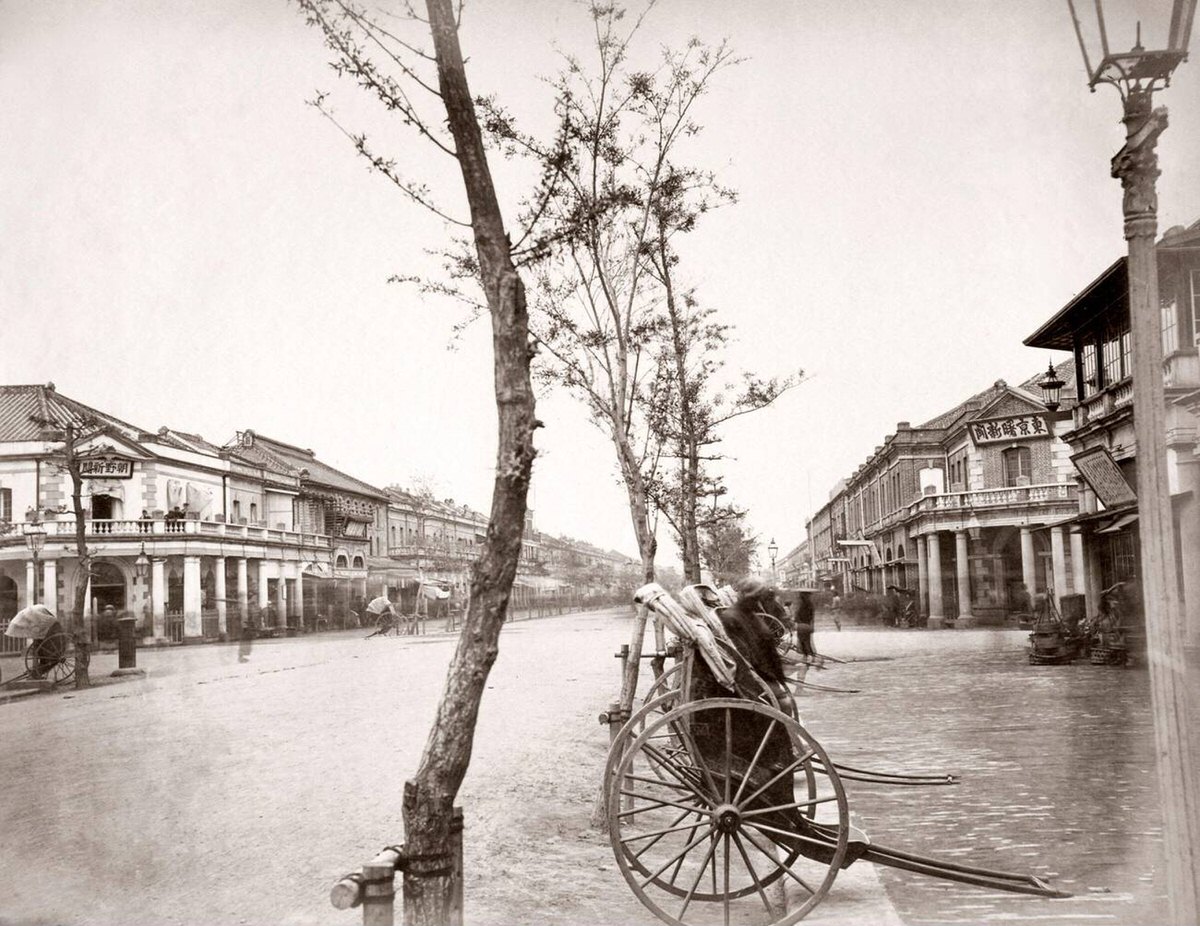
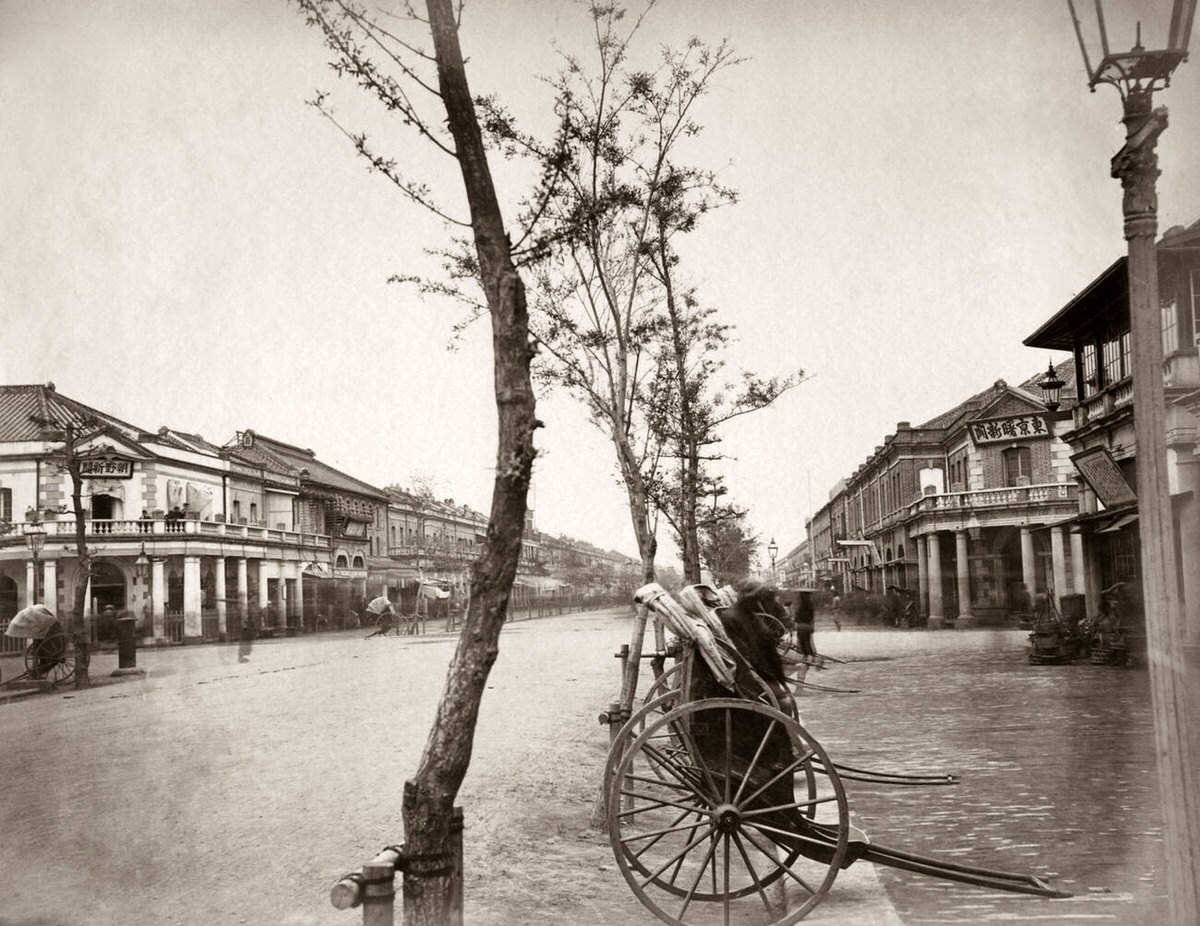
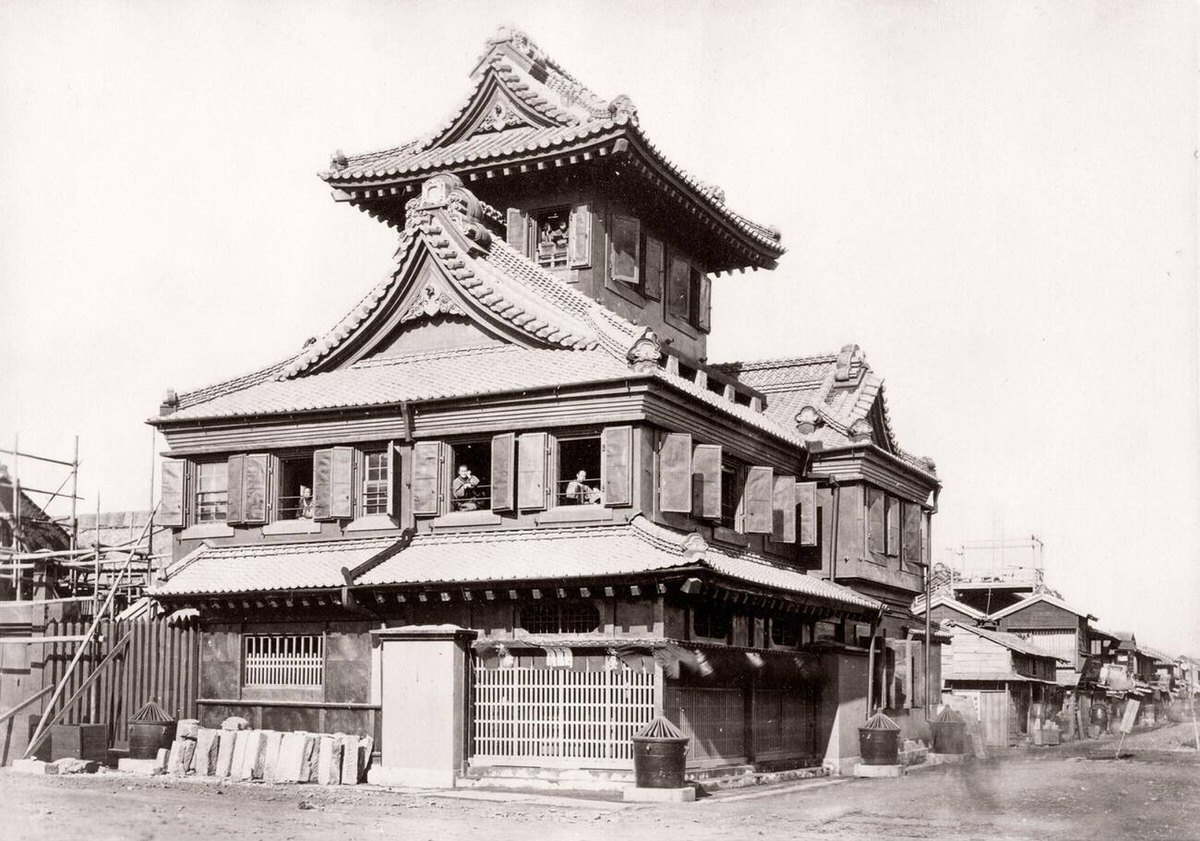
Cities were changing in appearance and in habit. Tokyo’s Ginza district saw Western-style brick buildings replace traditional wooden storefronts. The Gregorian calendar replaced Japan’s lunar calendar in 1873, aligning the country’s dates with international standards. Men cut off their traditional topknots and adopted Western hairstyles. Beef, which had been largely off the table for centuries due to Buddhist dietary customs, became fashionable. Sukiyaki restaurants appeared and attracted steady crowds.
Main street in Ginza, Tokyo, 1870sMain street in Ginza, Tokyo, 1870s
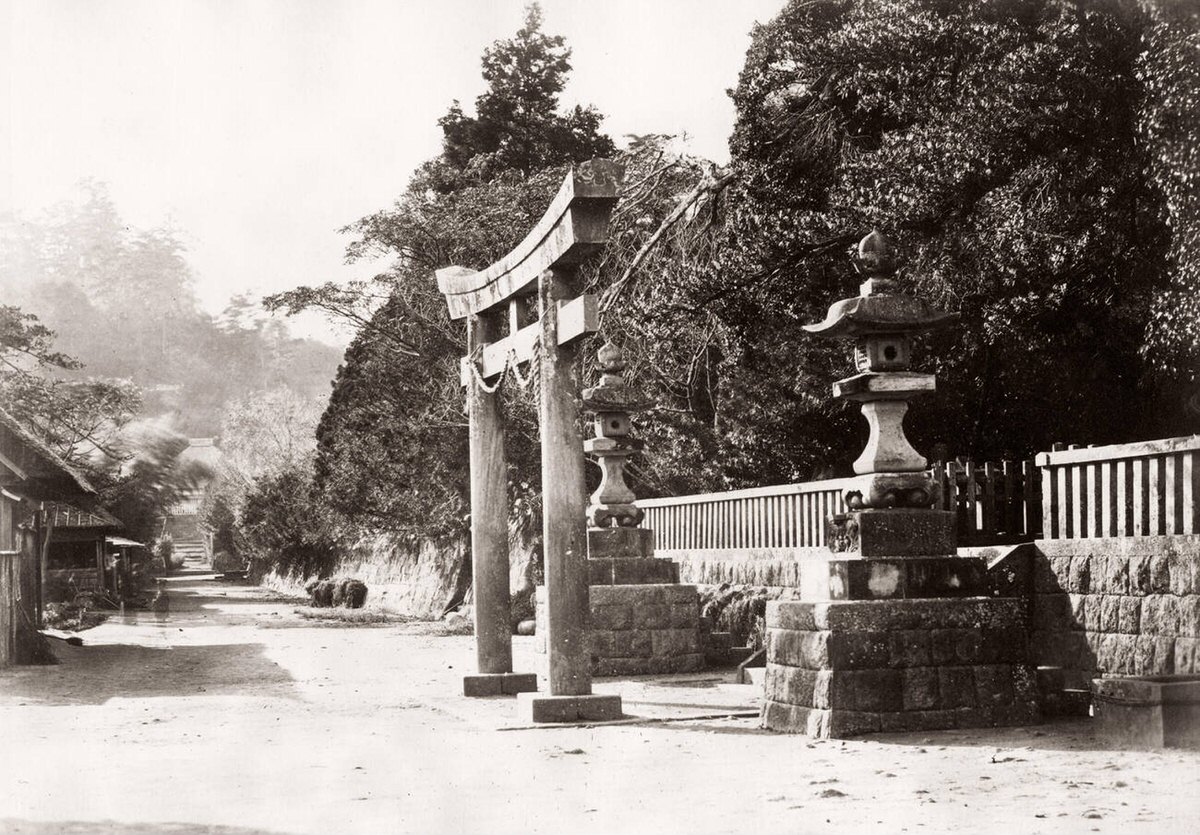
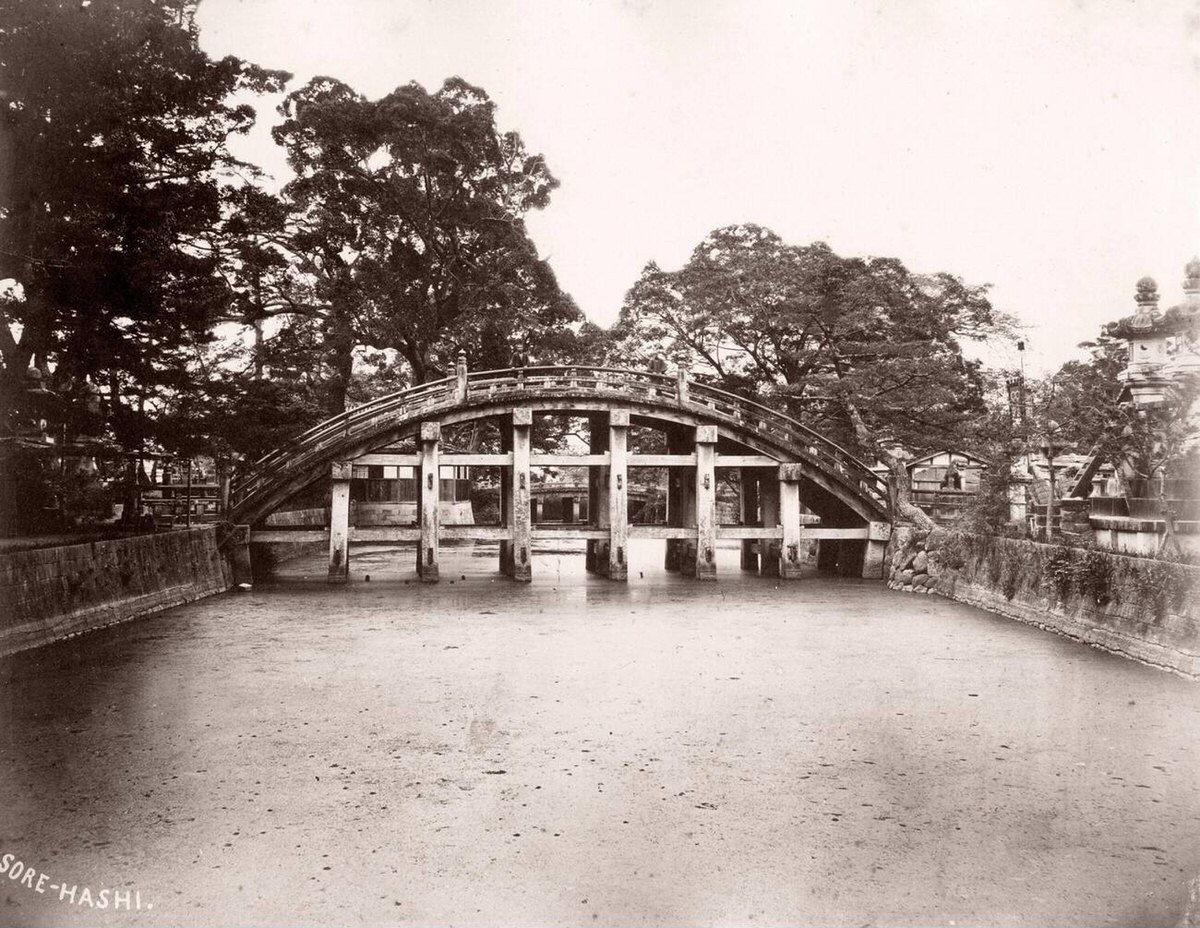
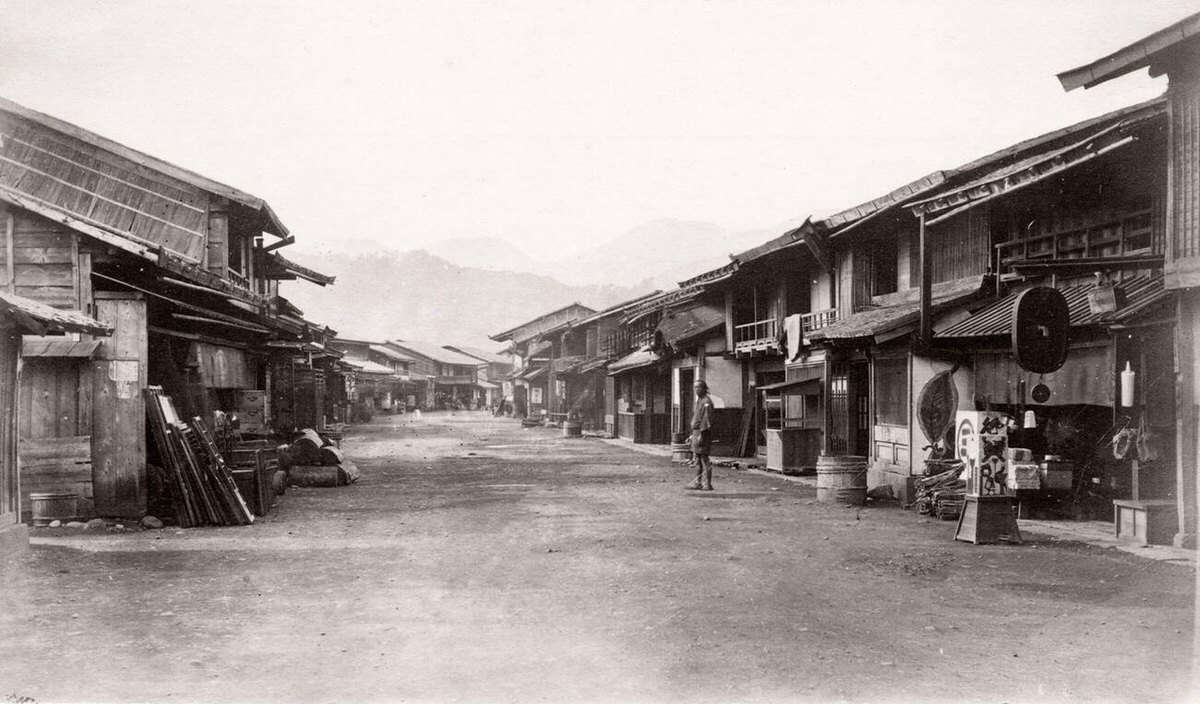
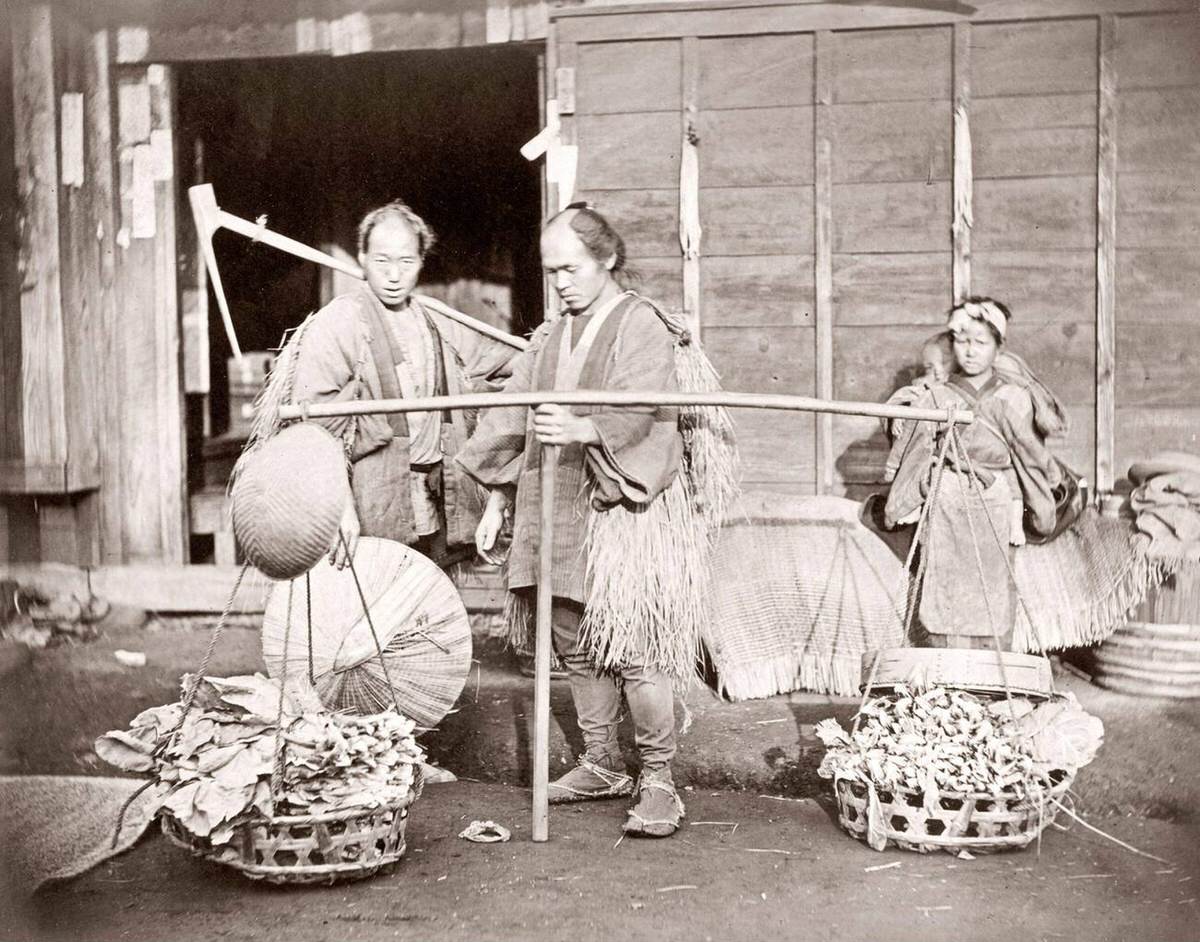
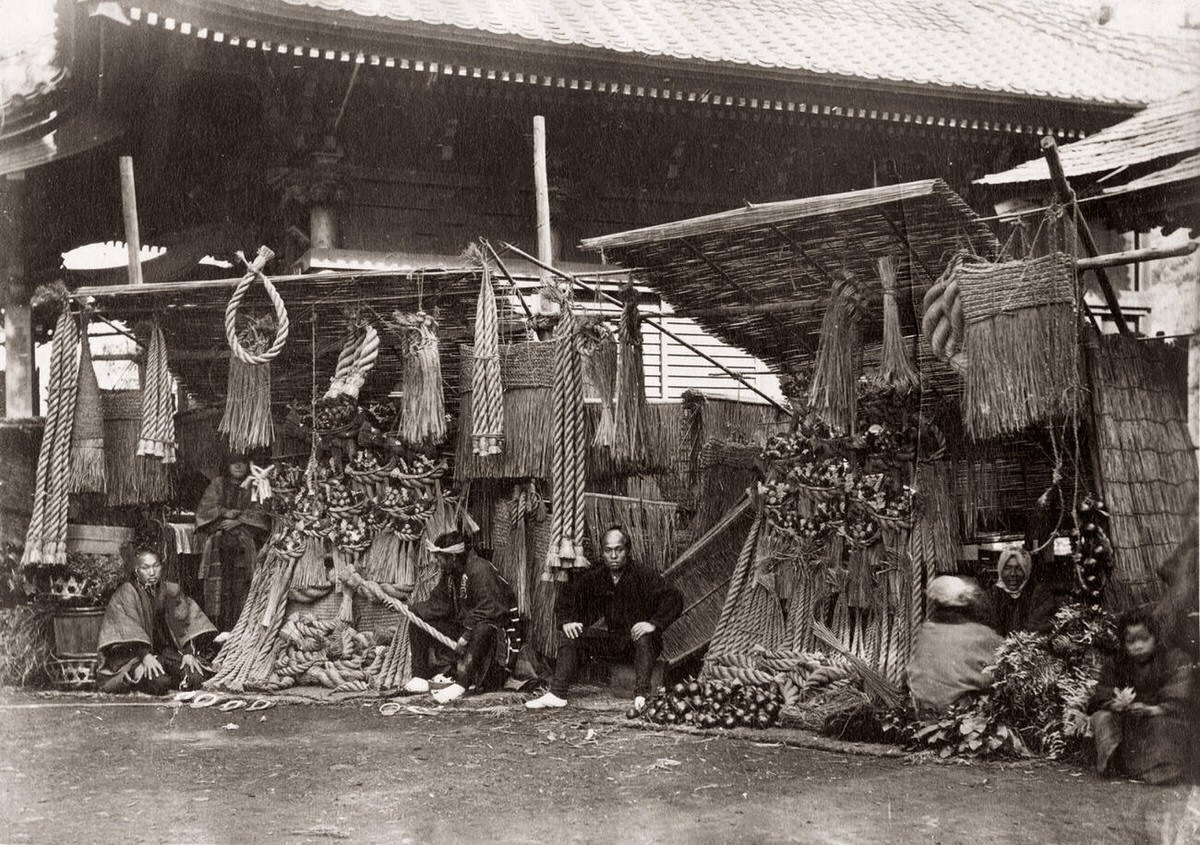
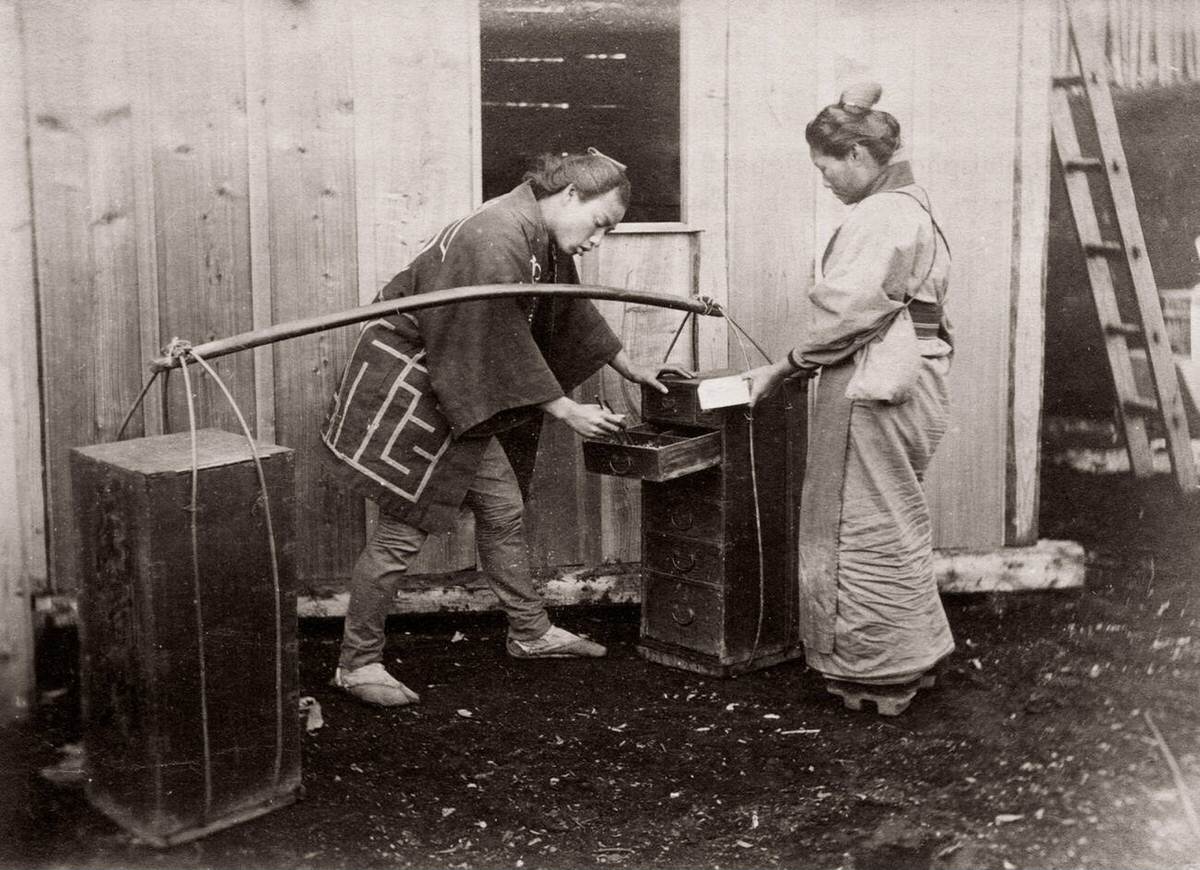
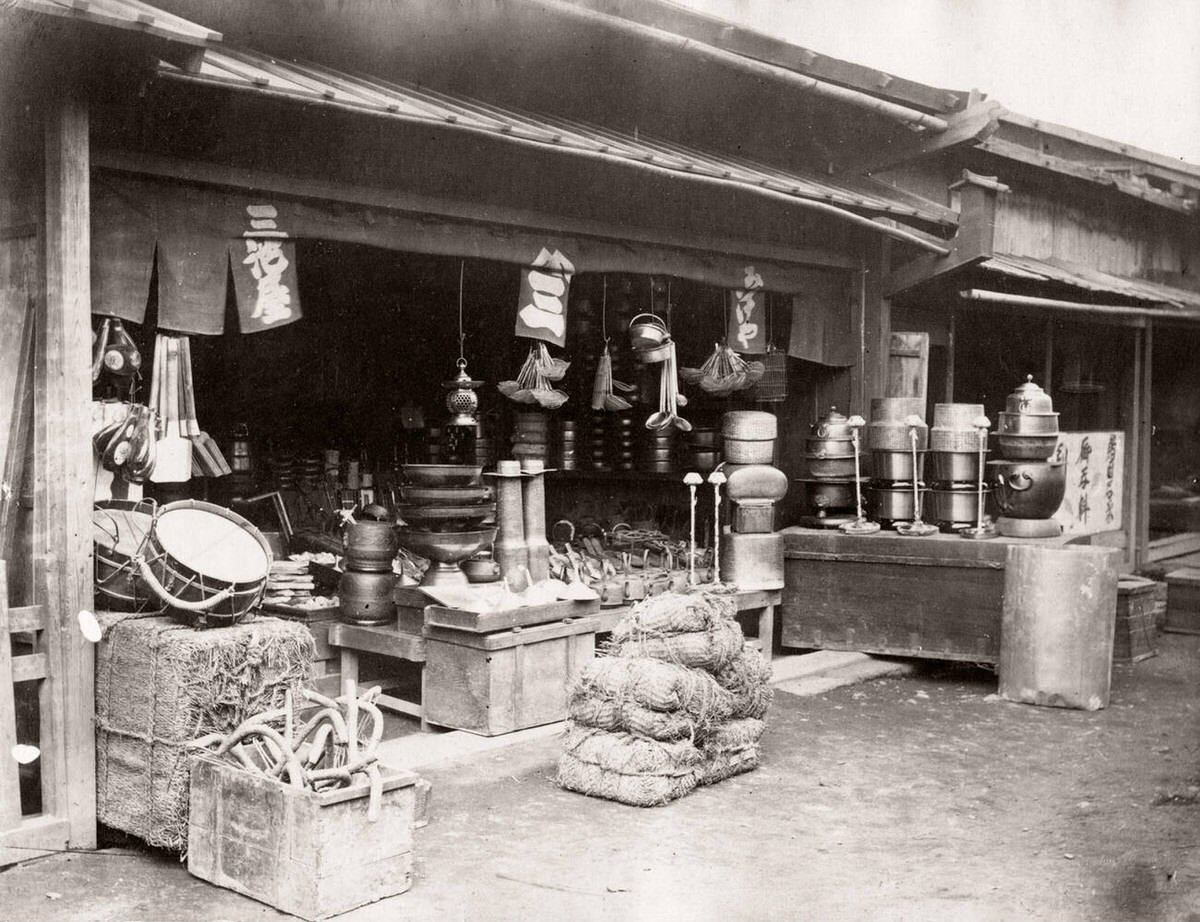
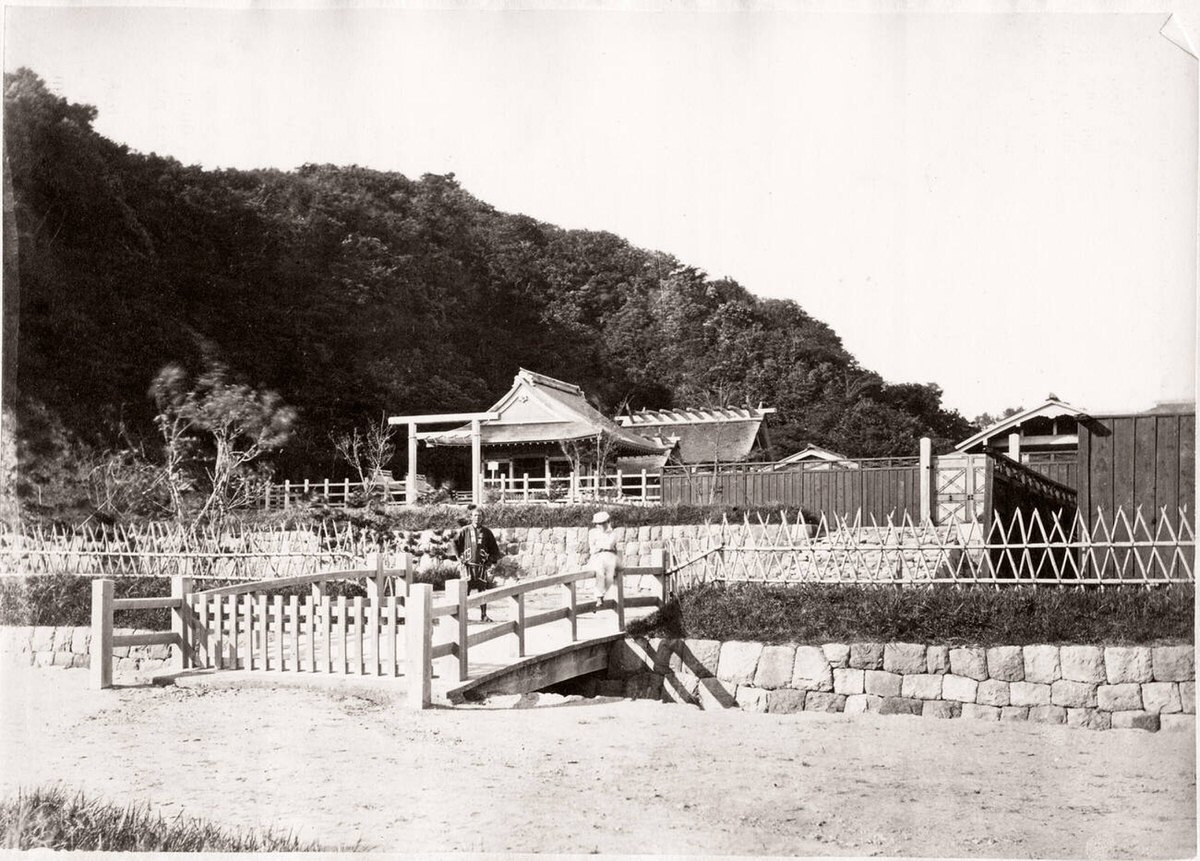
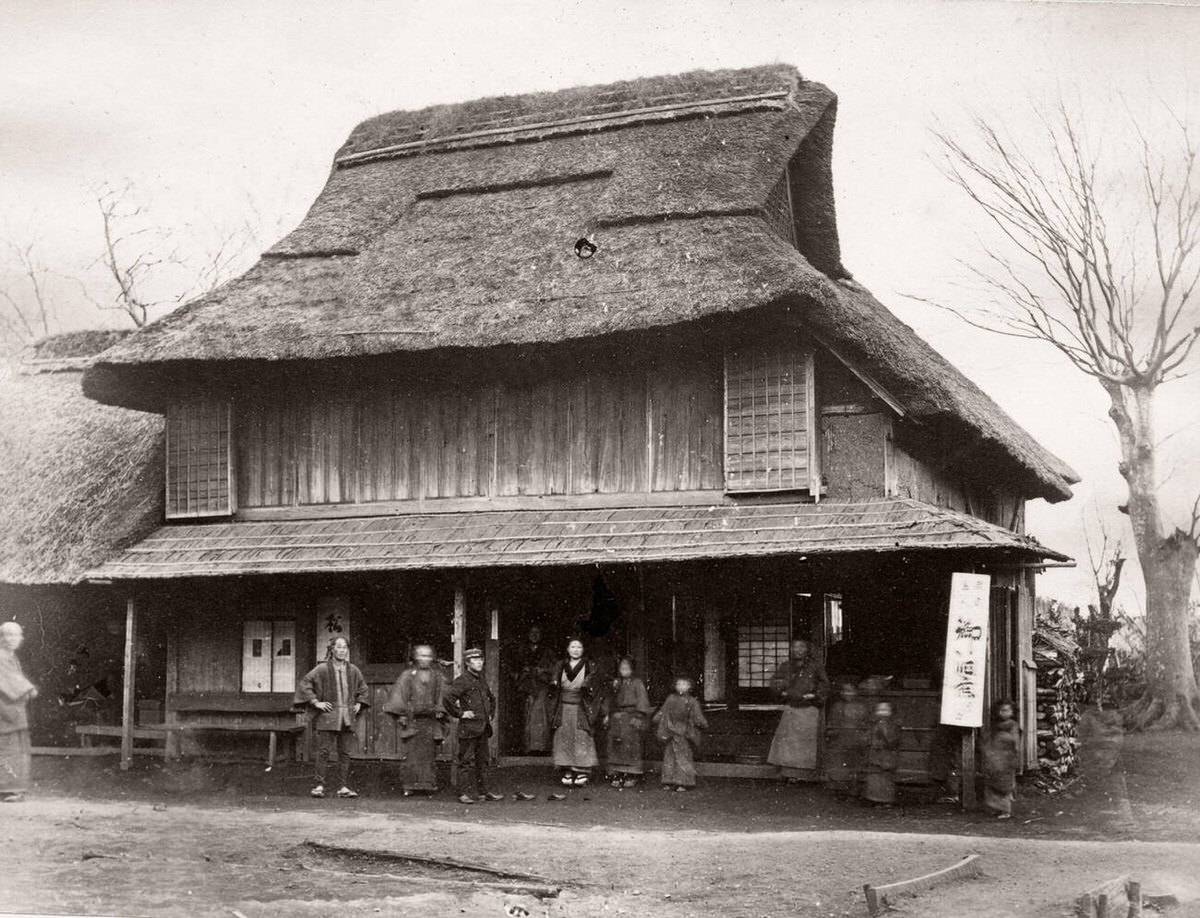
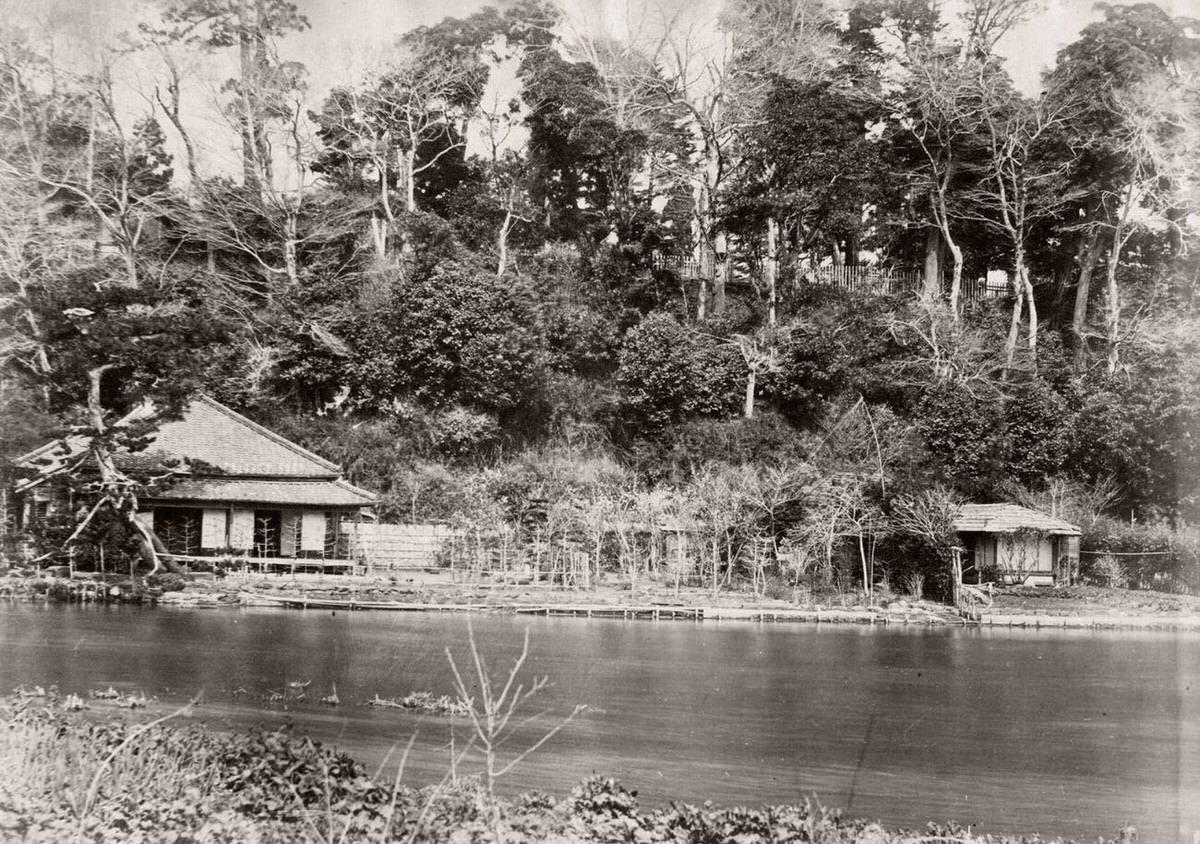
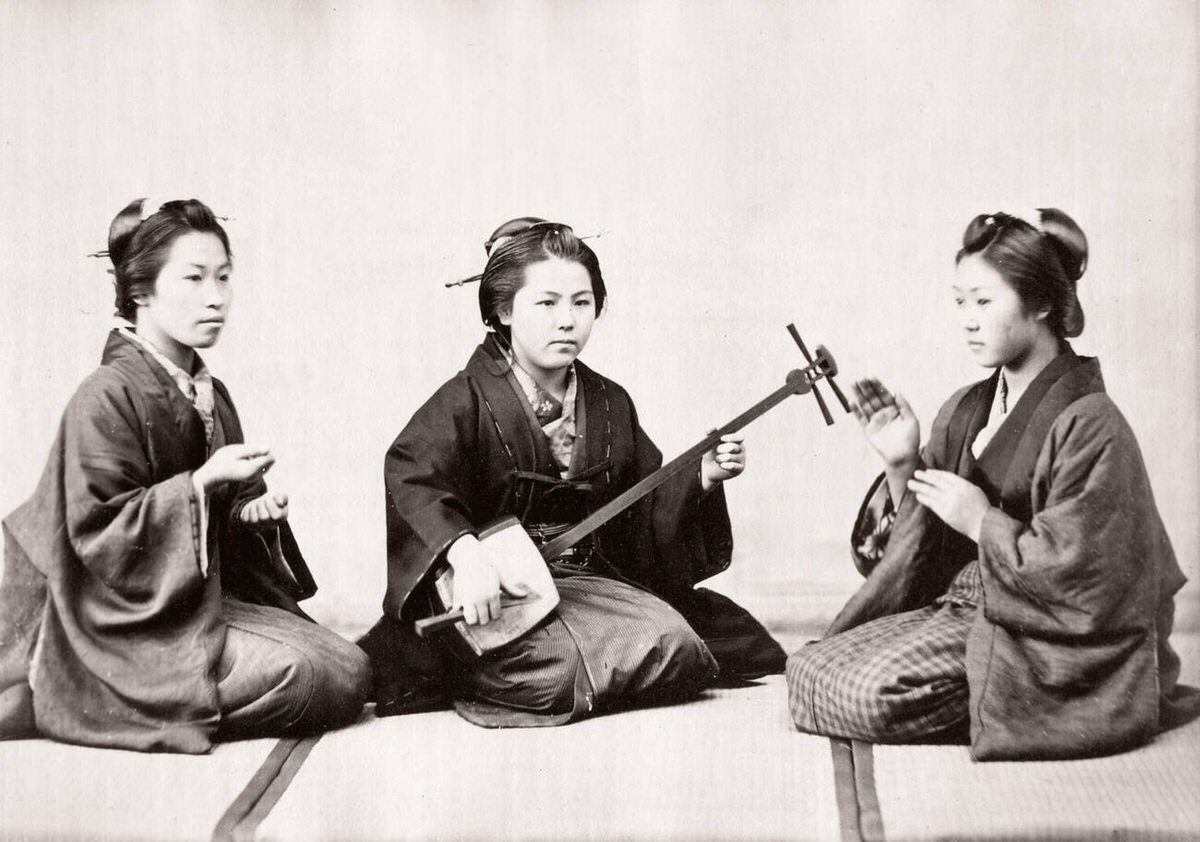
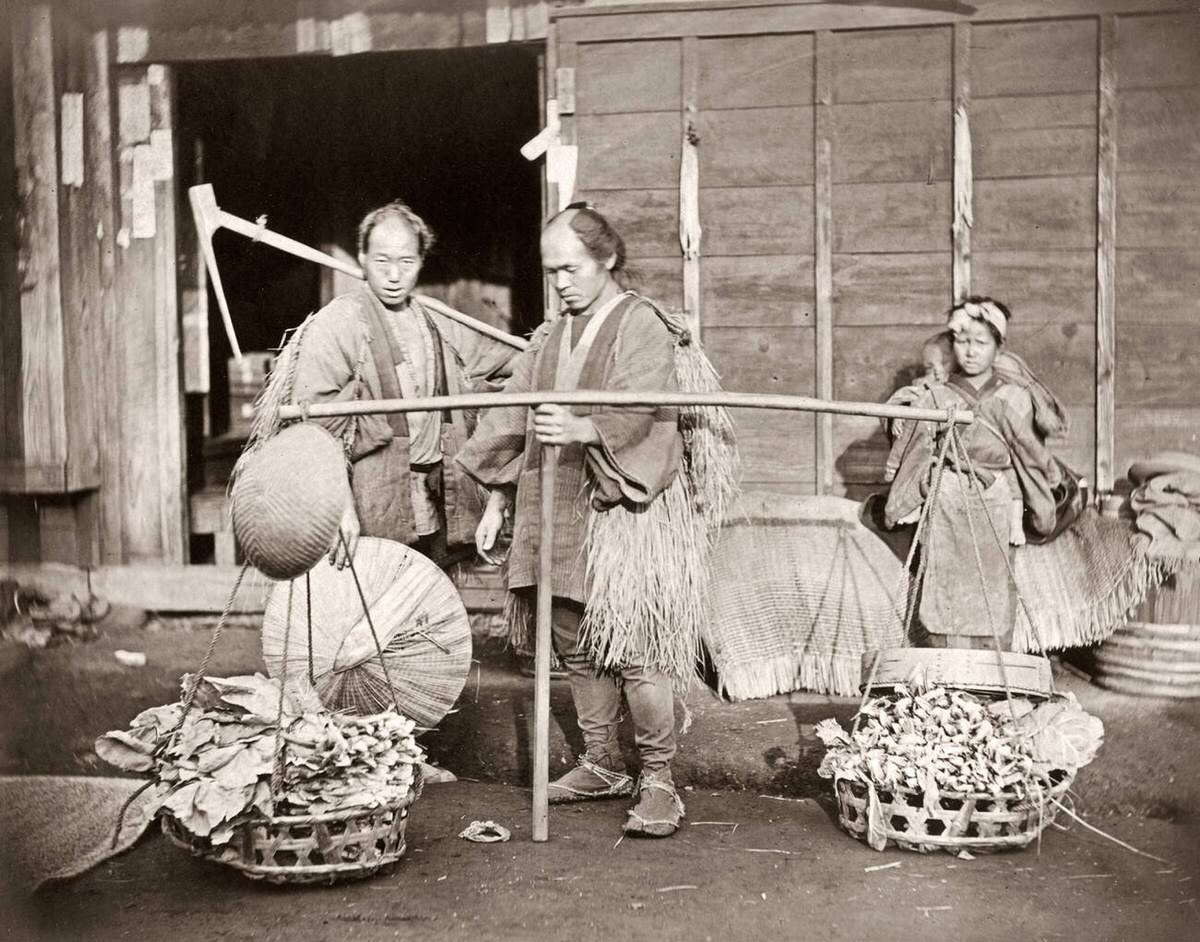
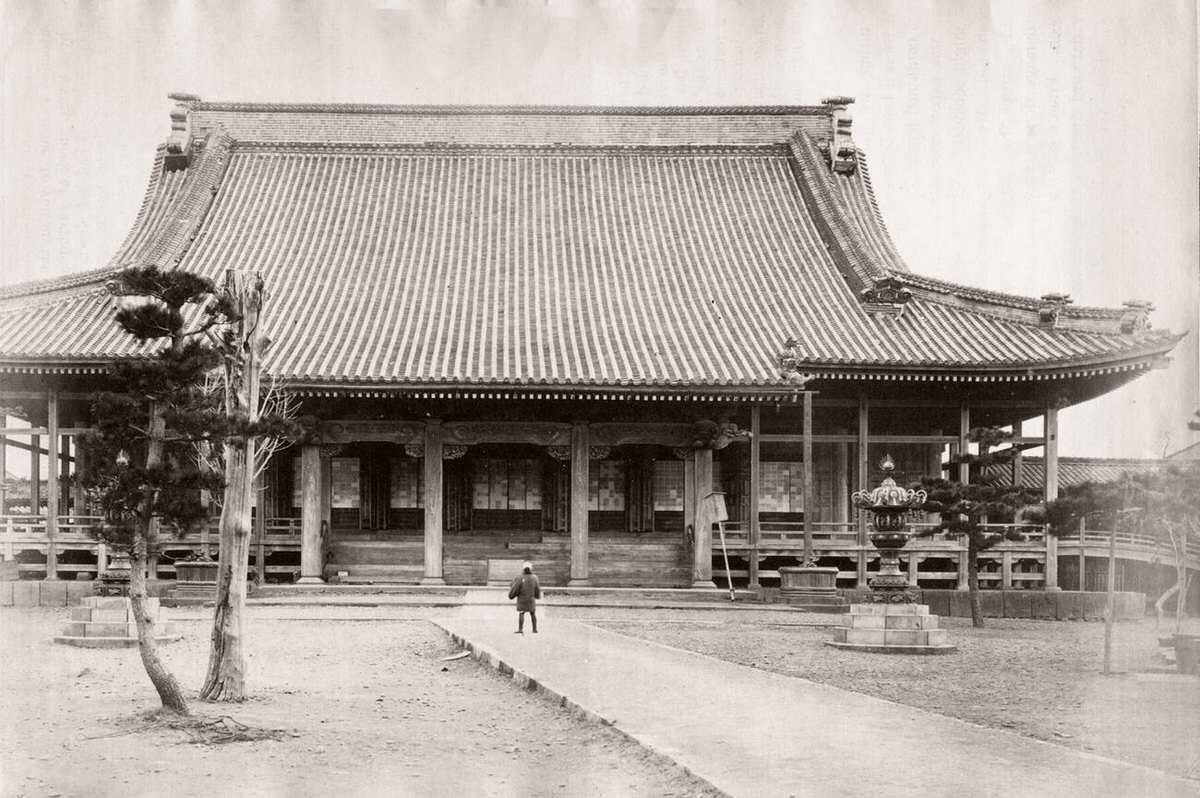
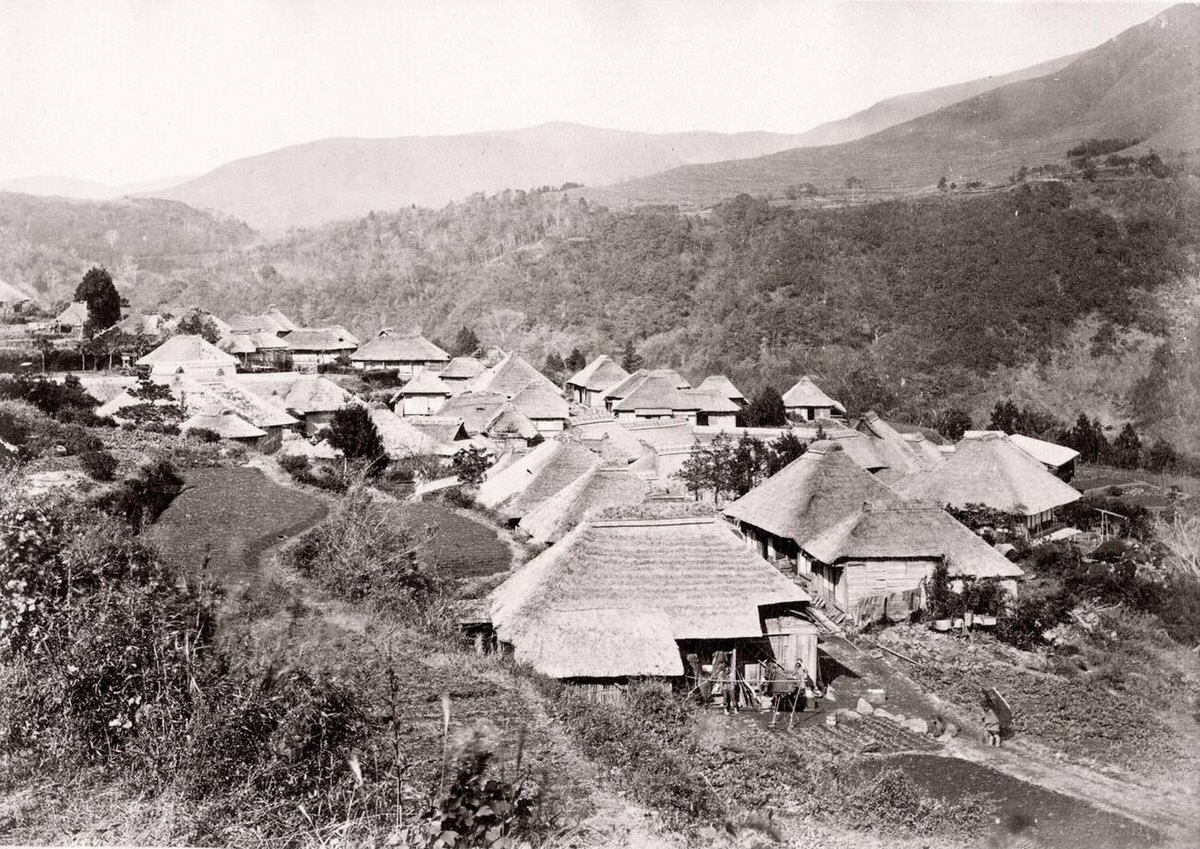
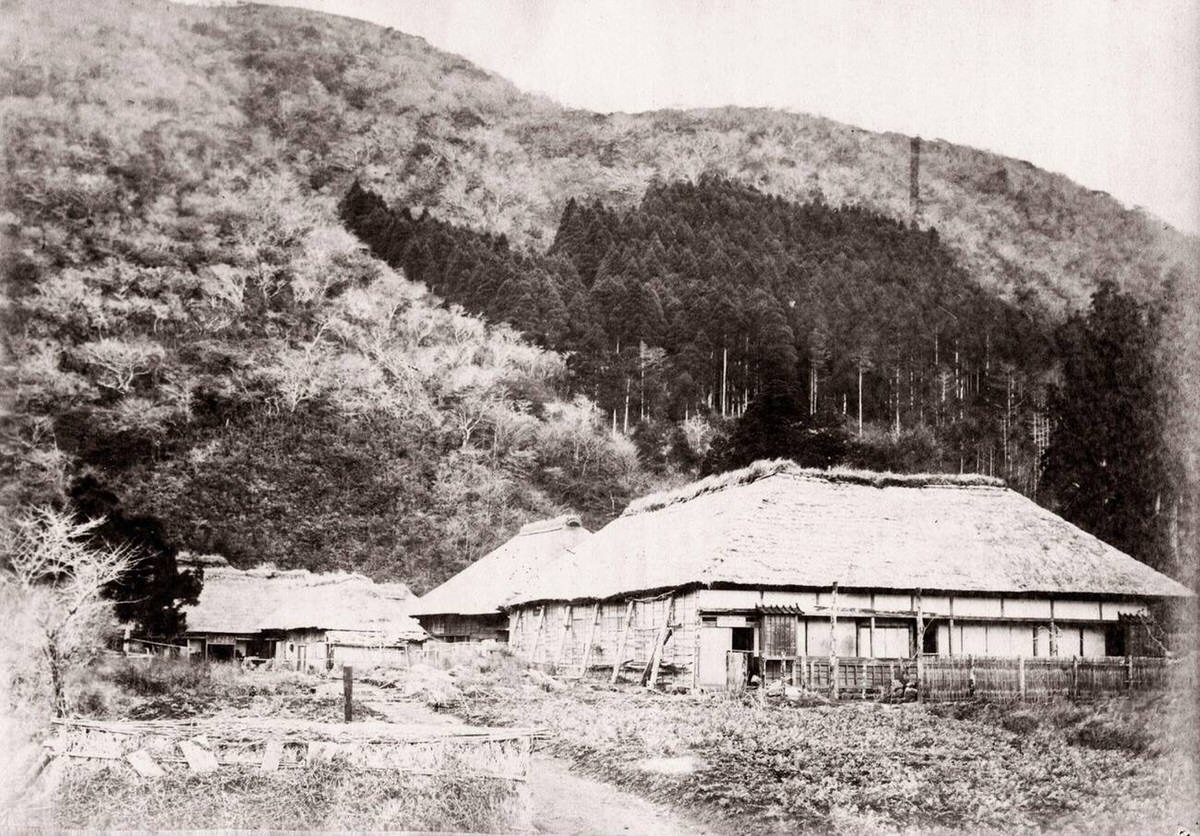
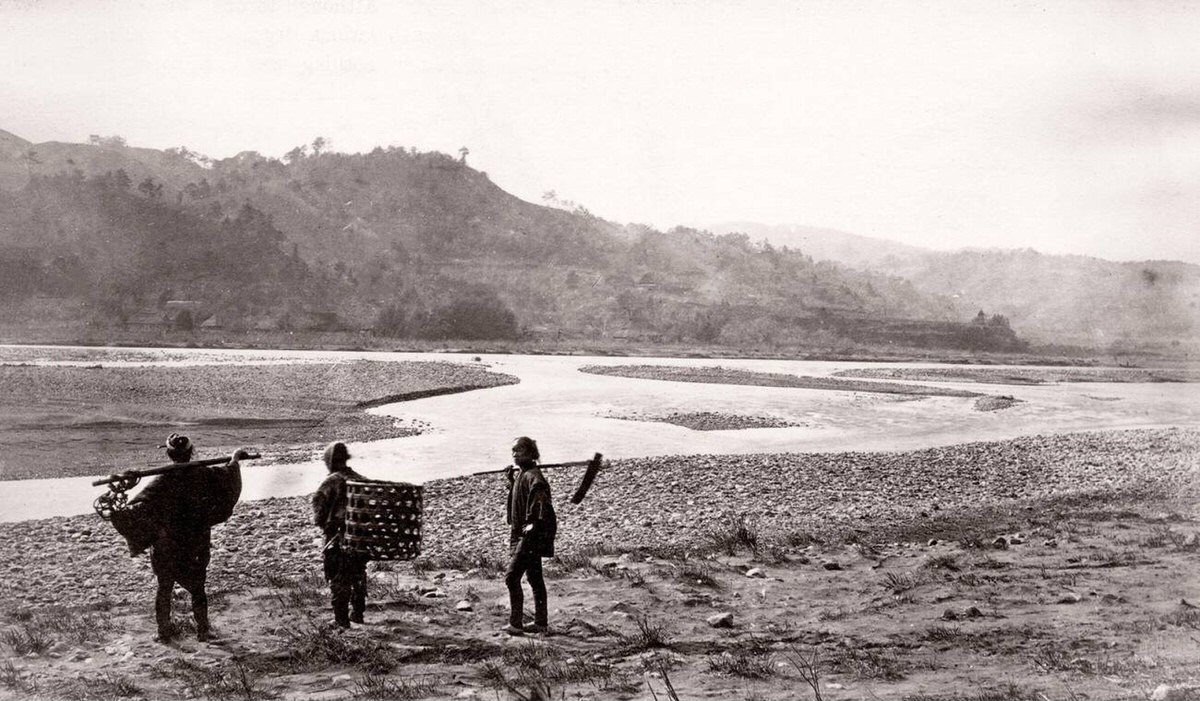
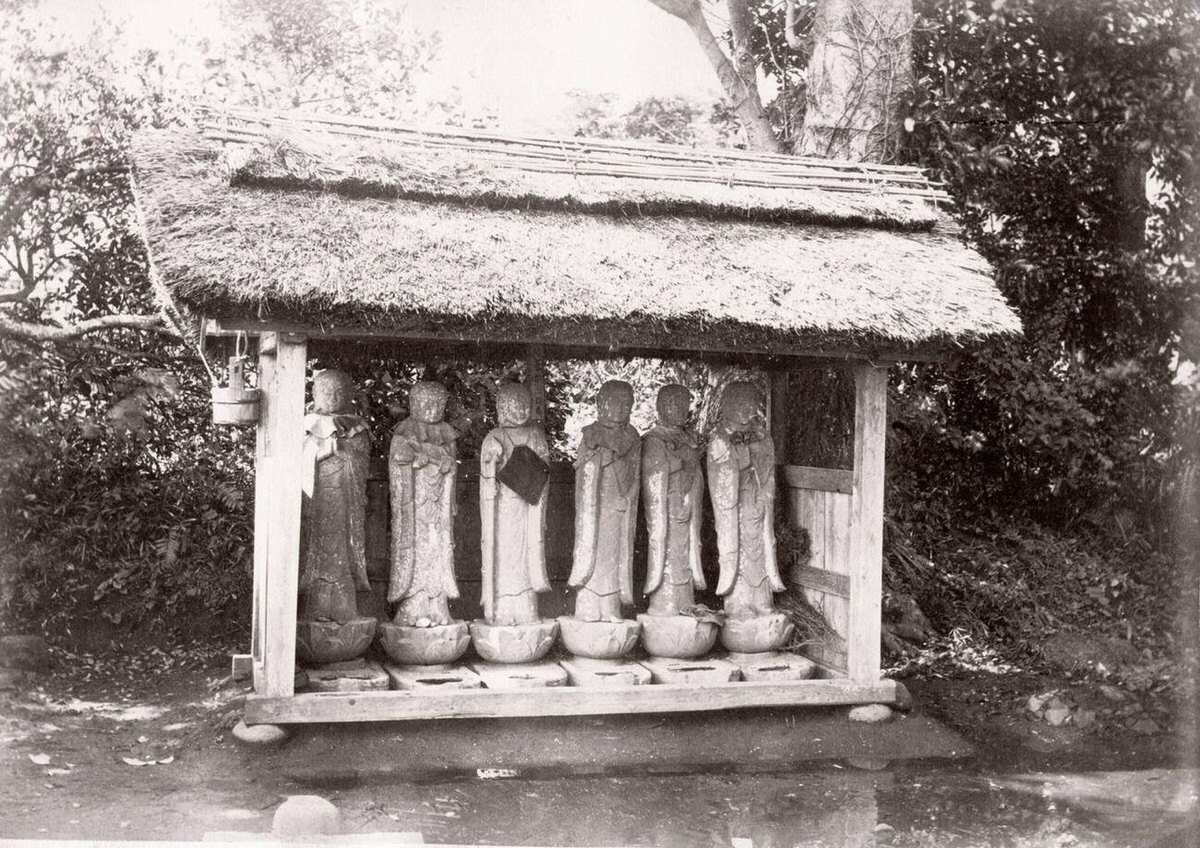
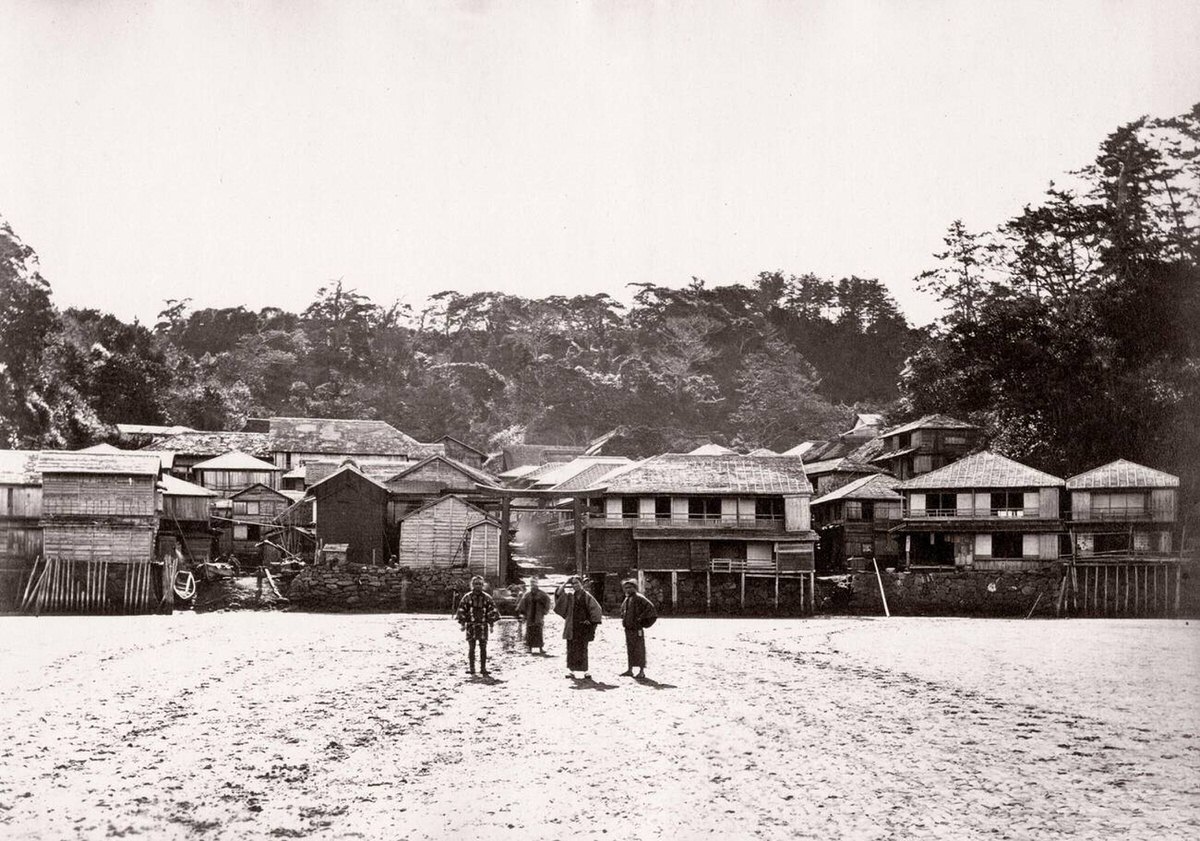
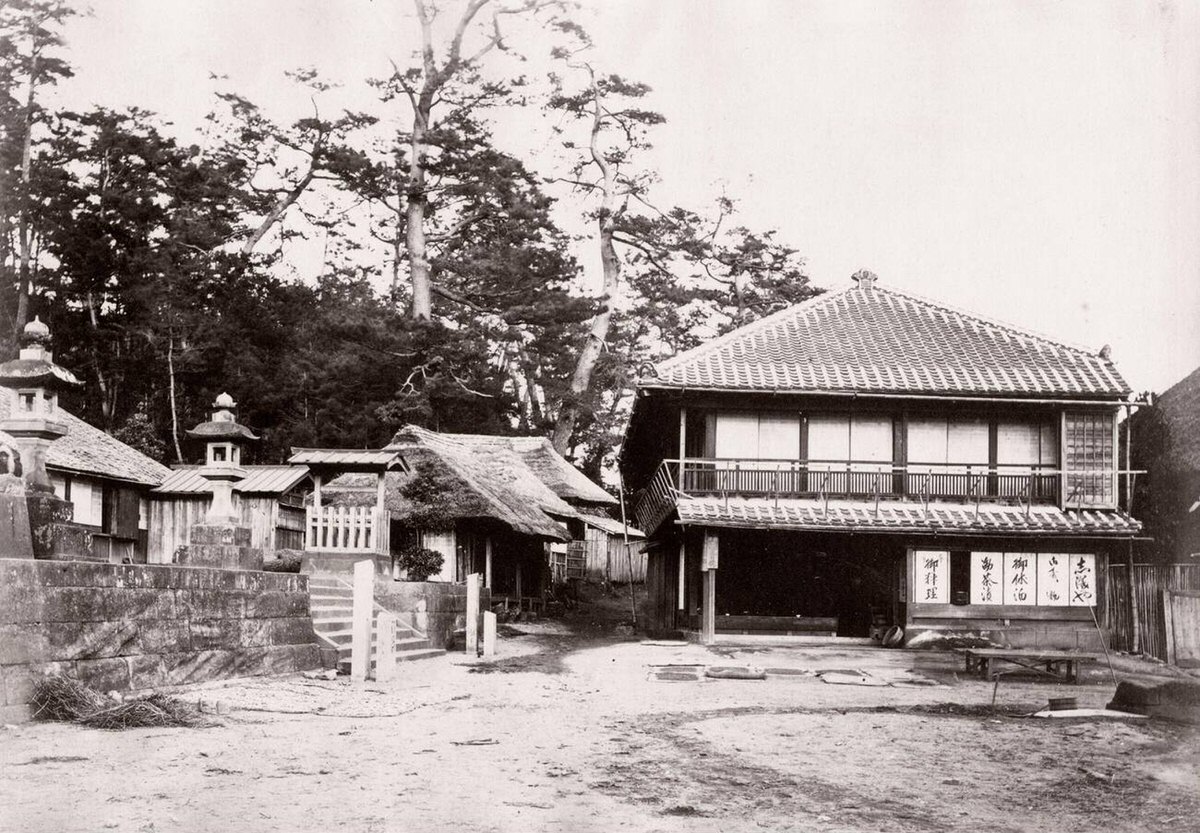
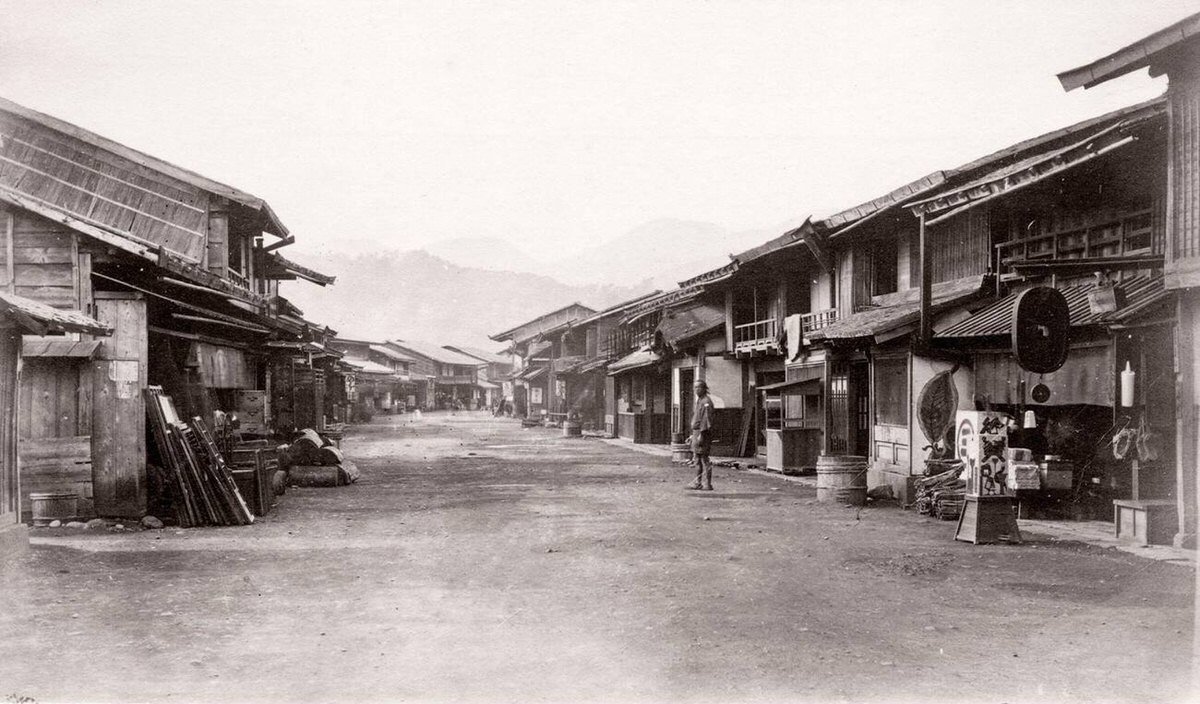
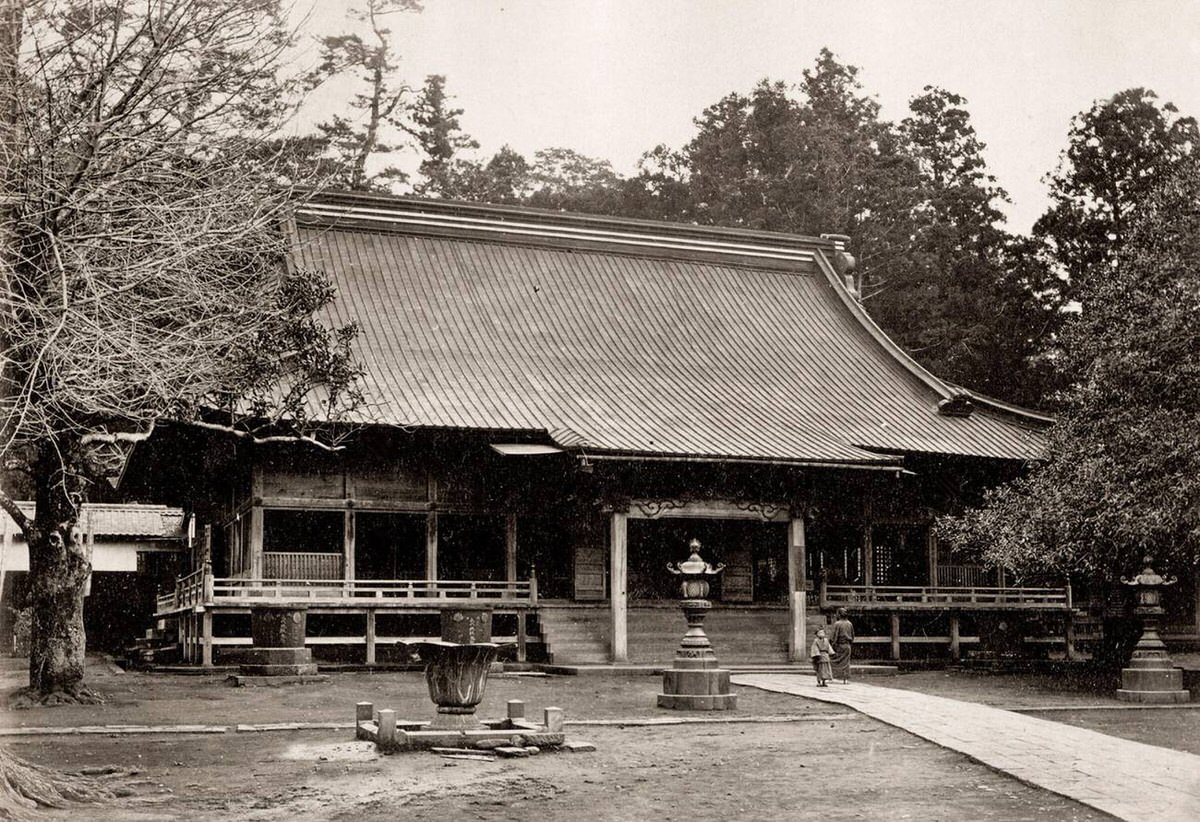
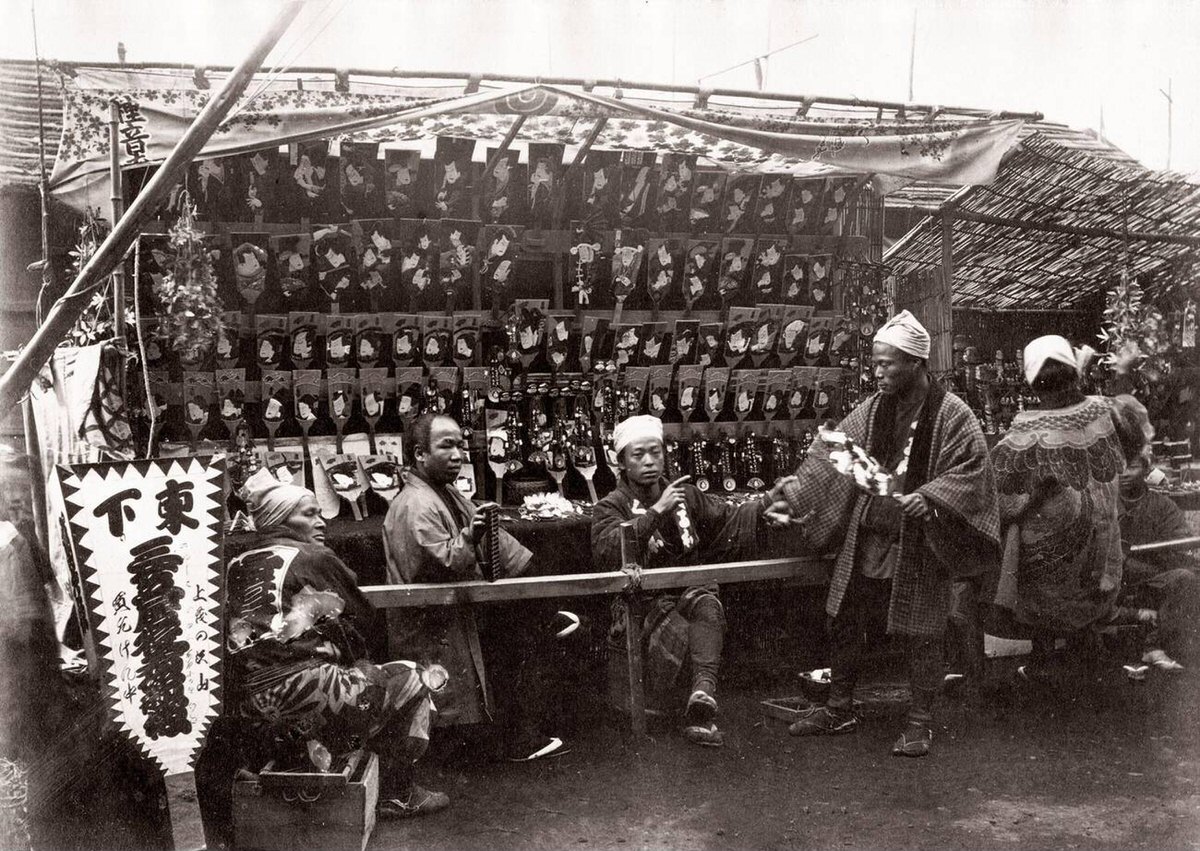
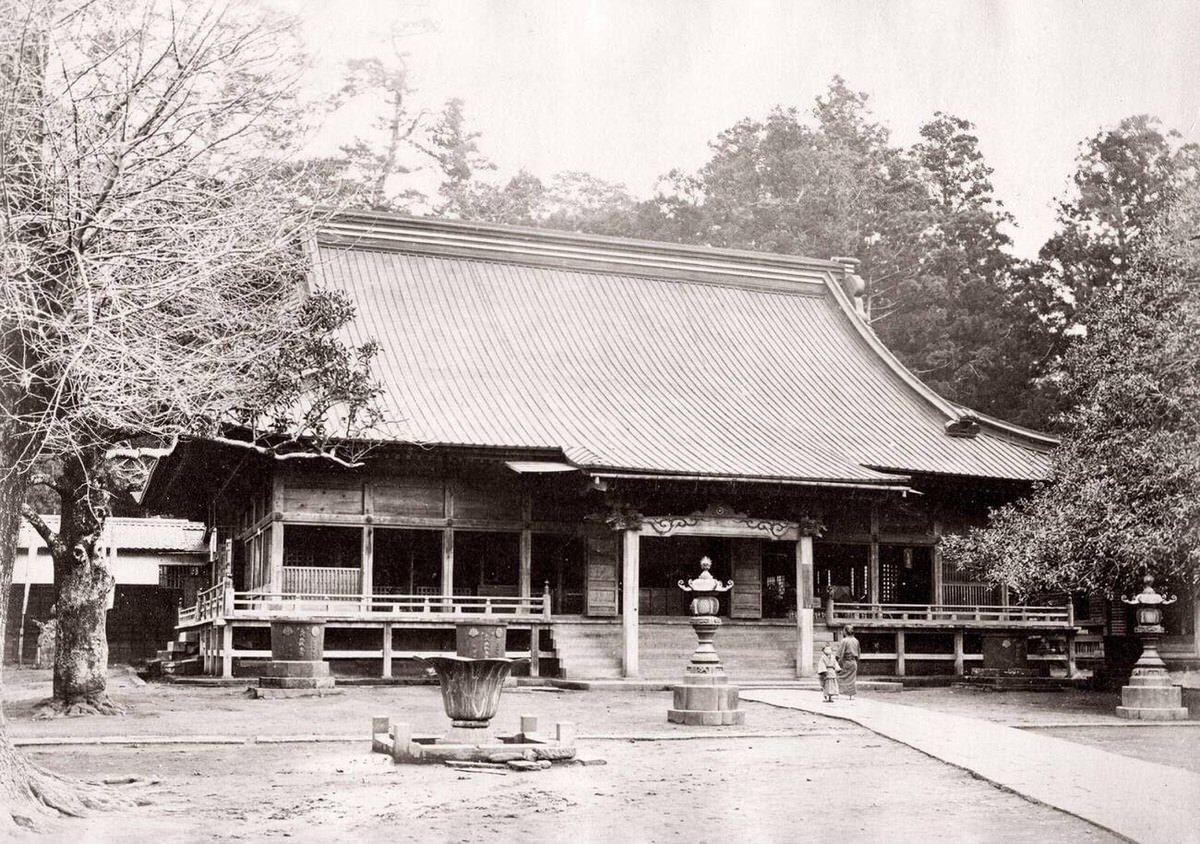
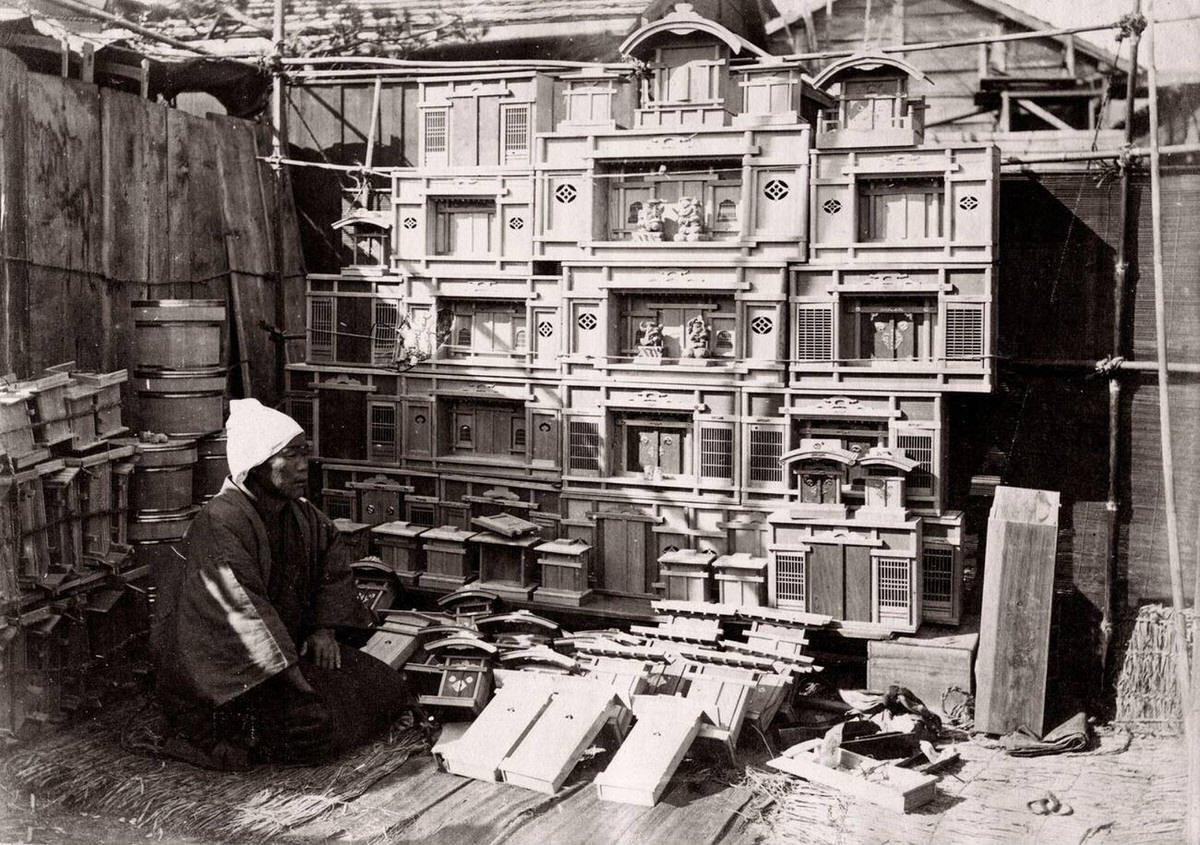
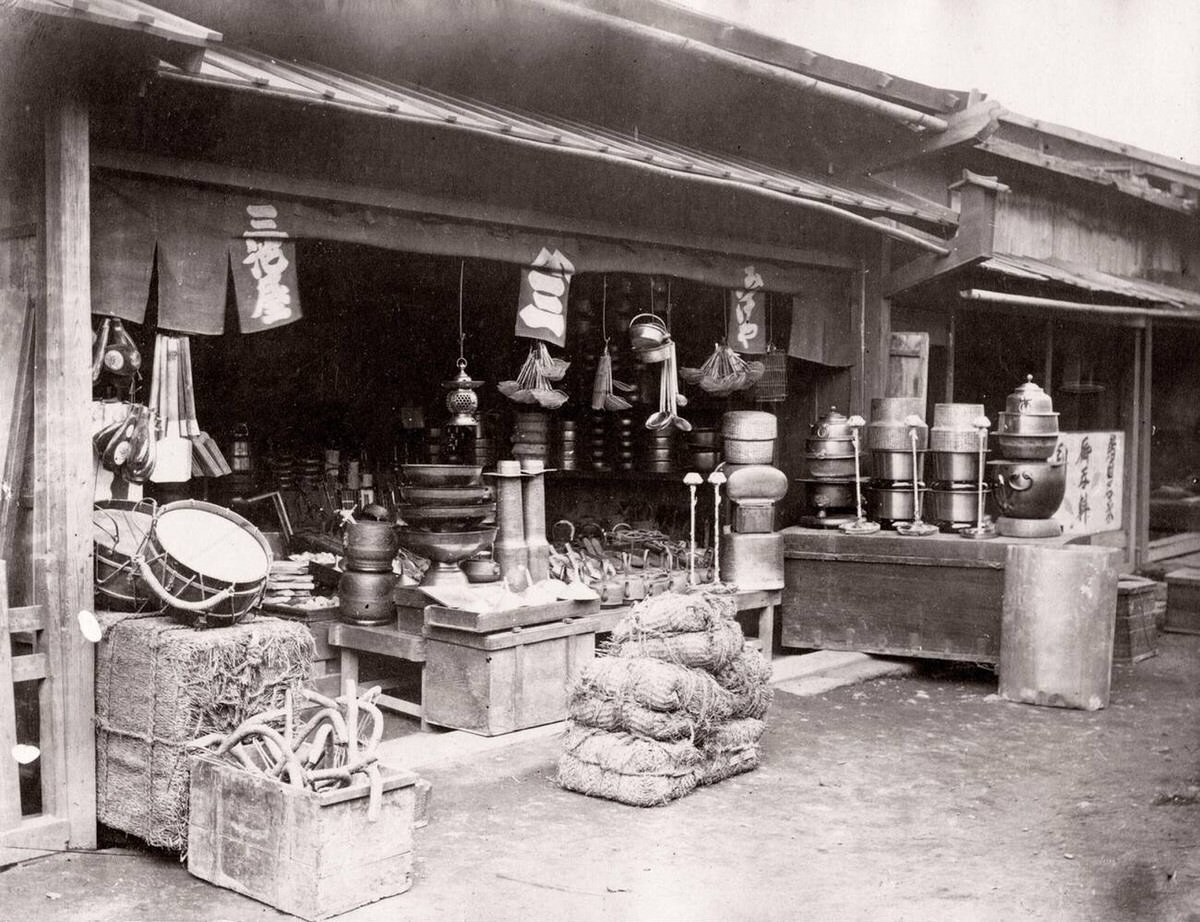
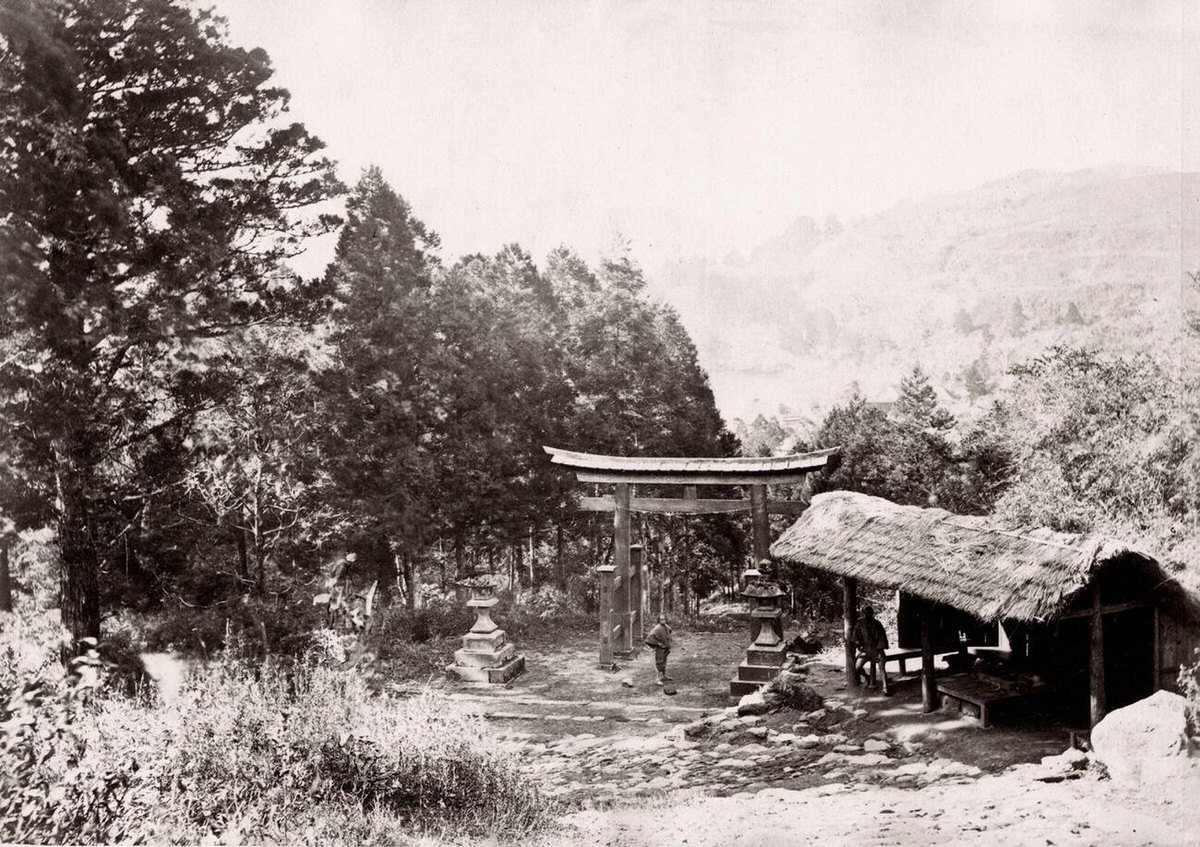
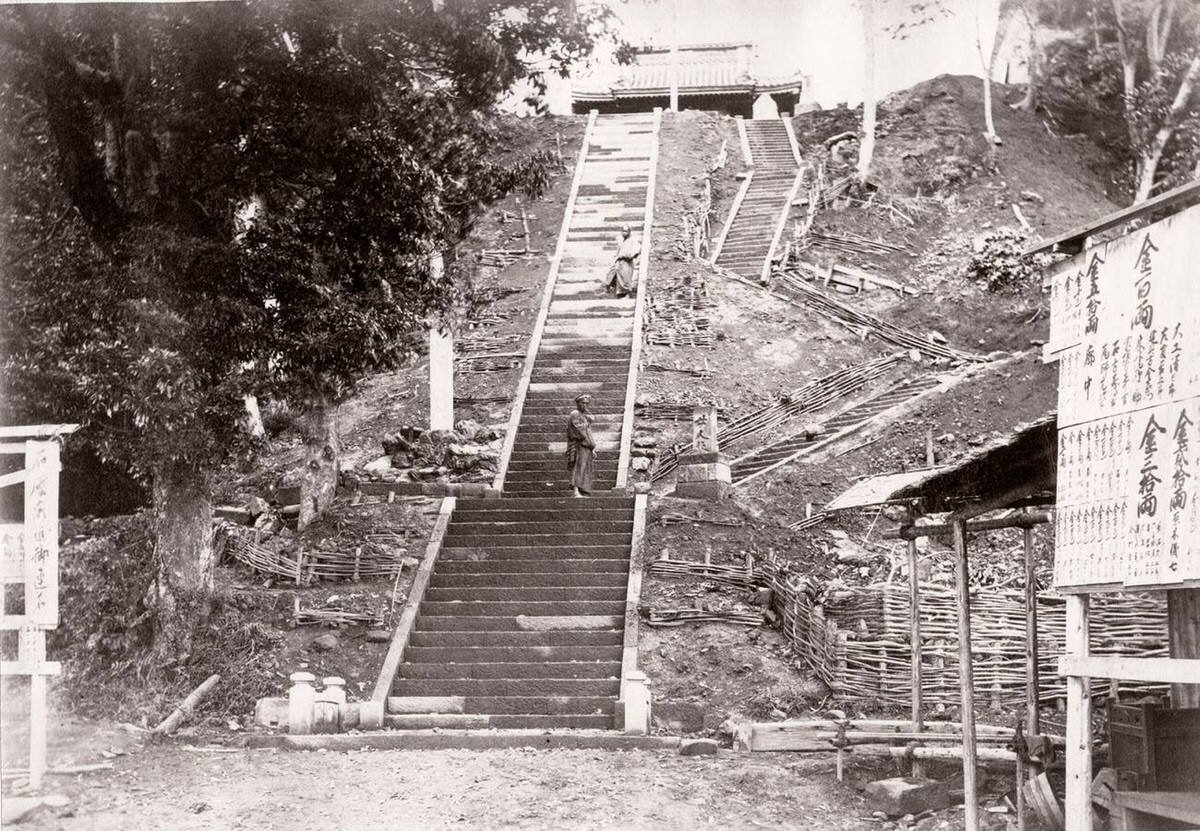
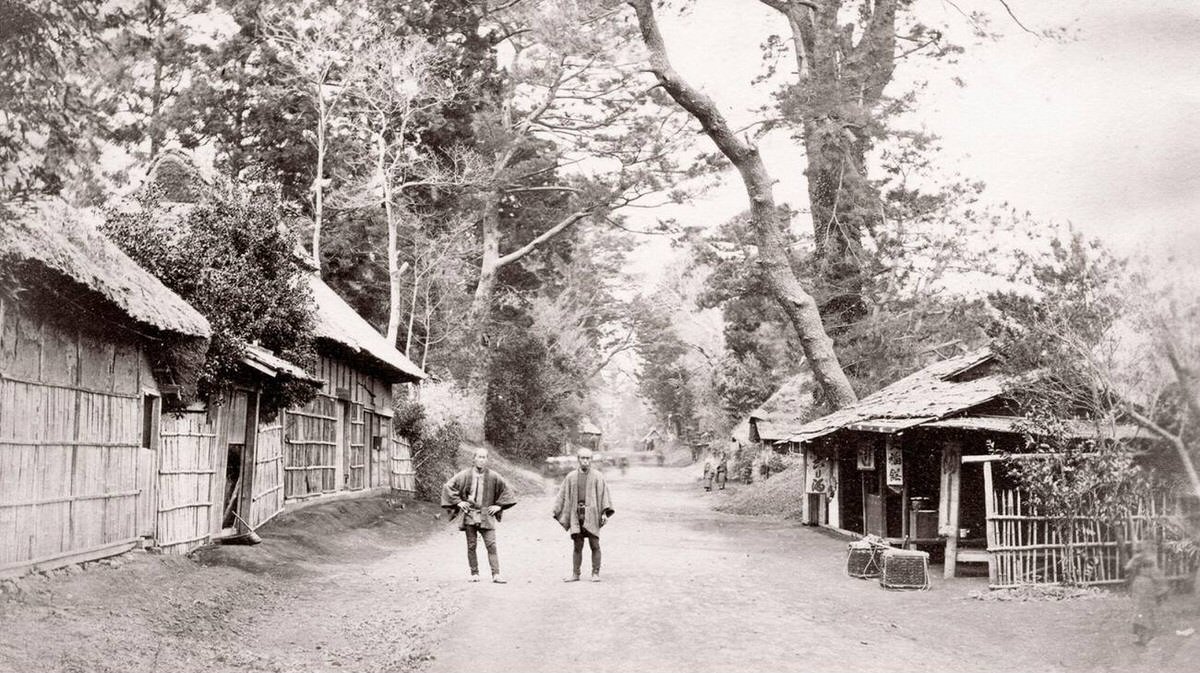
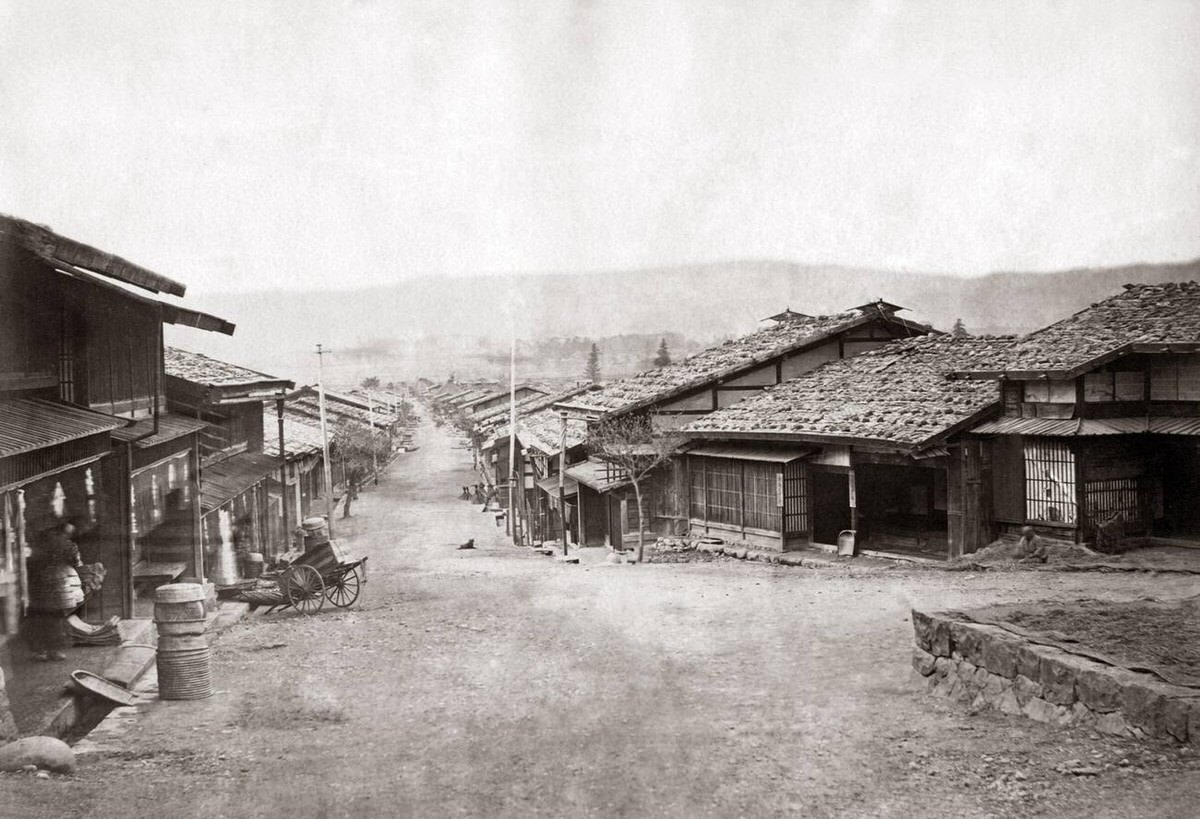
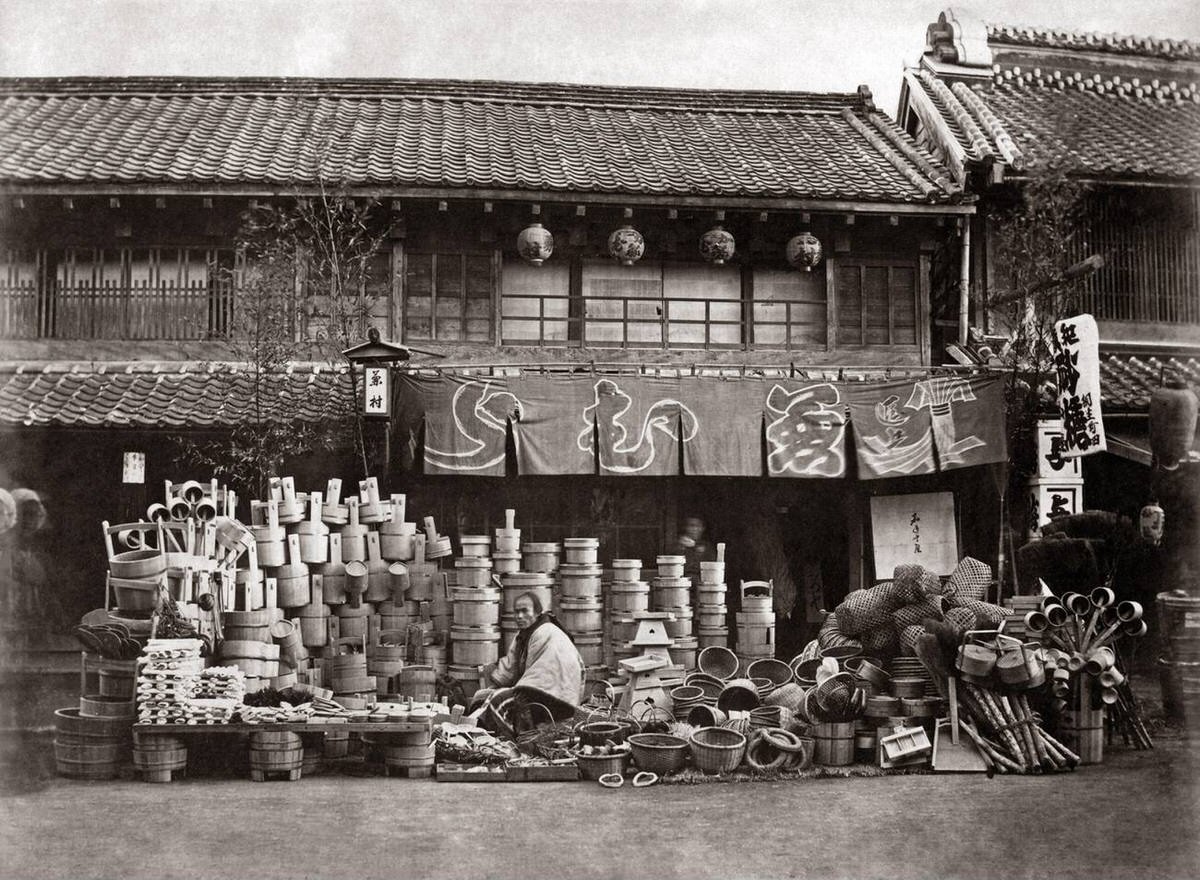
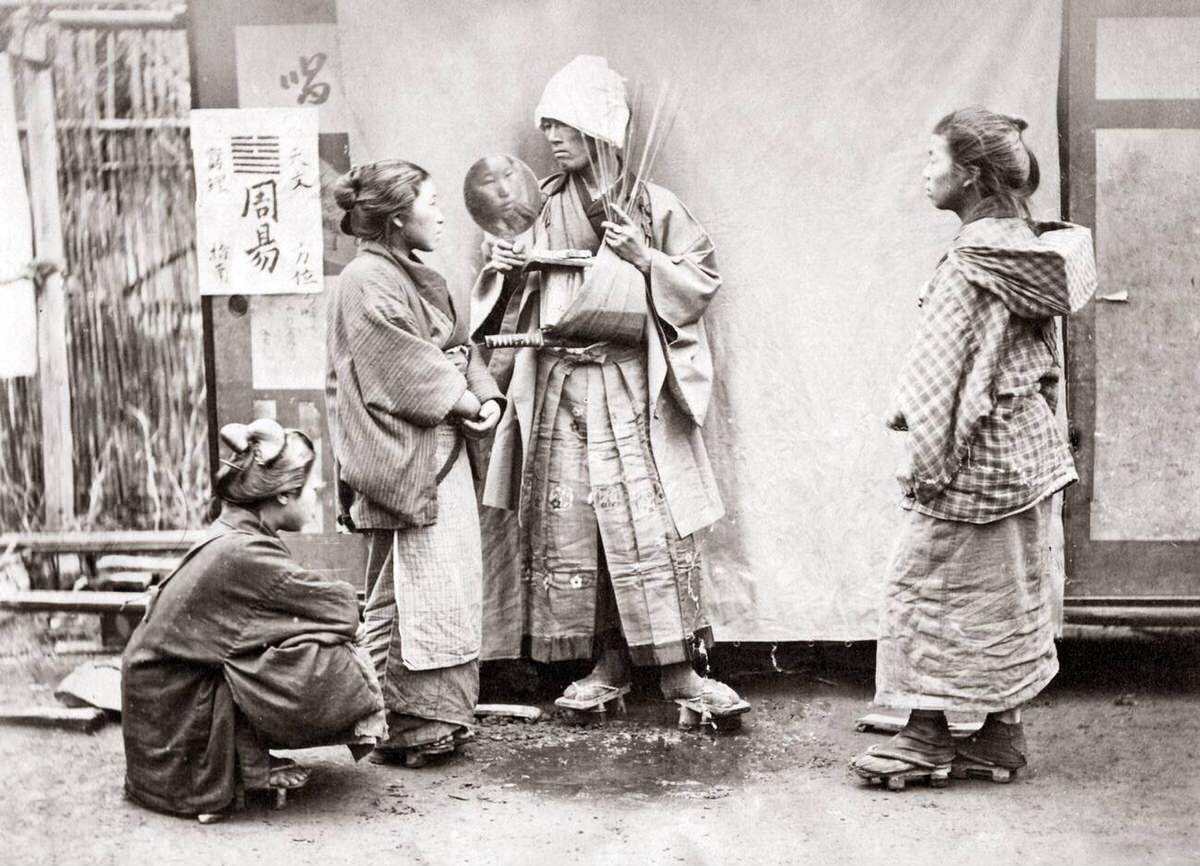
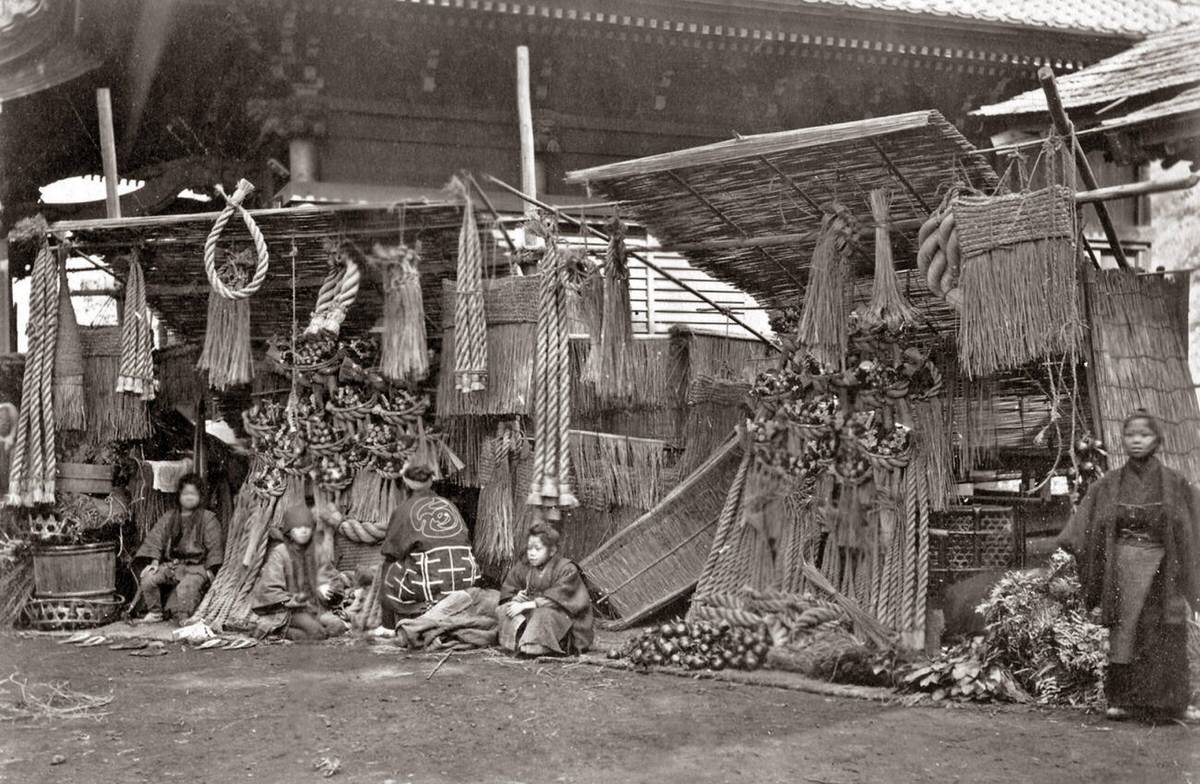
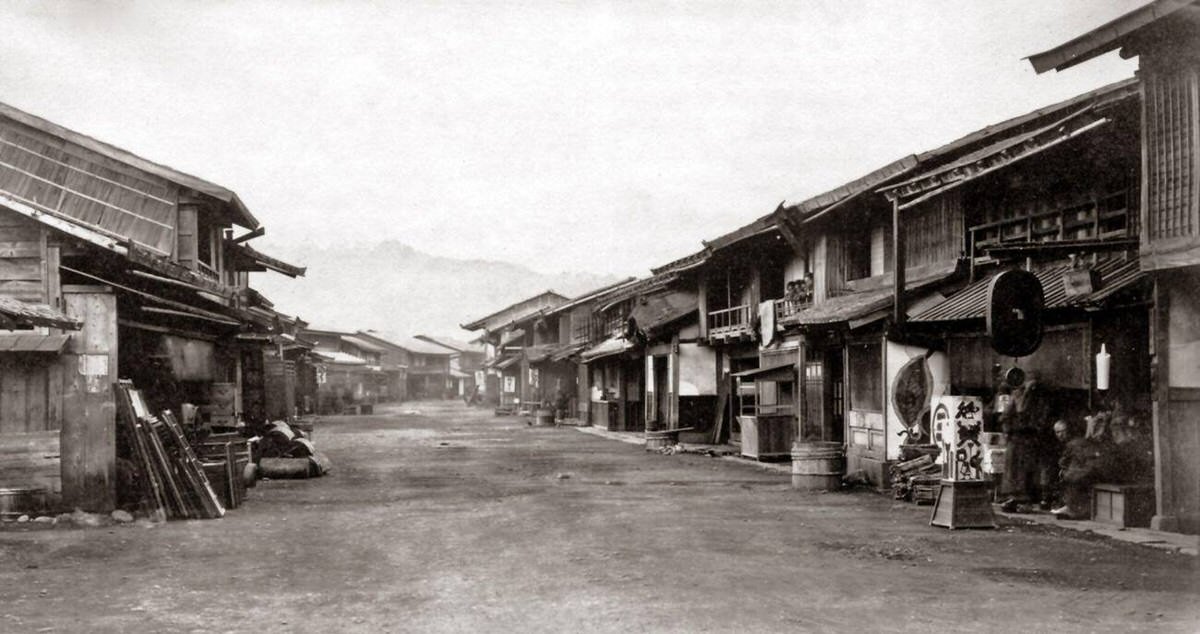
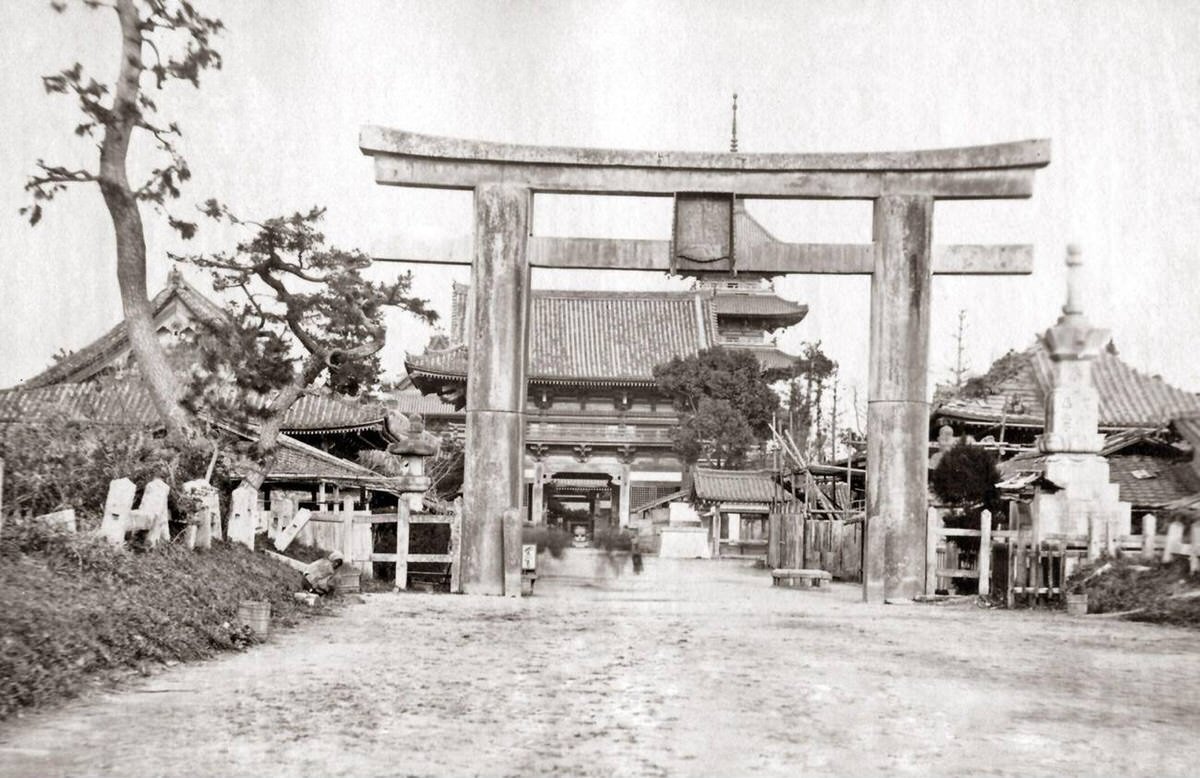
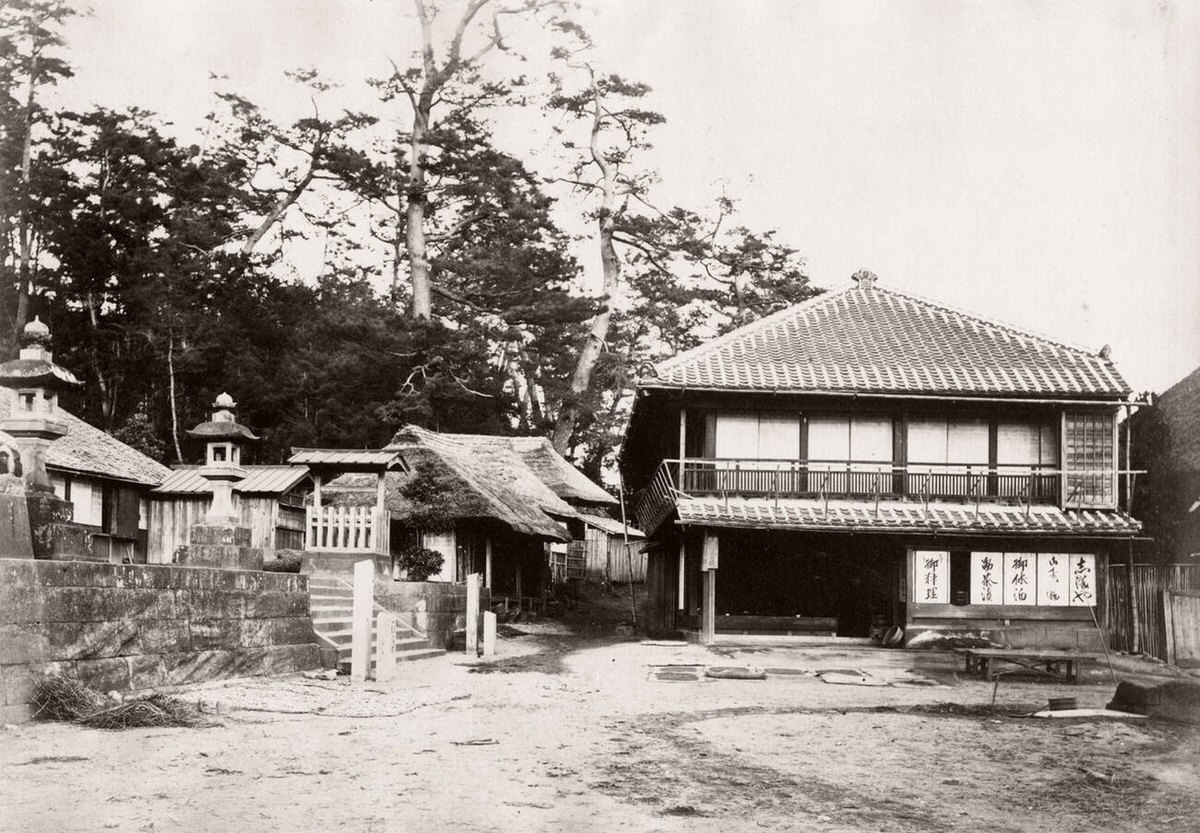
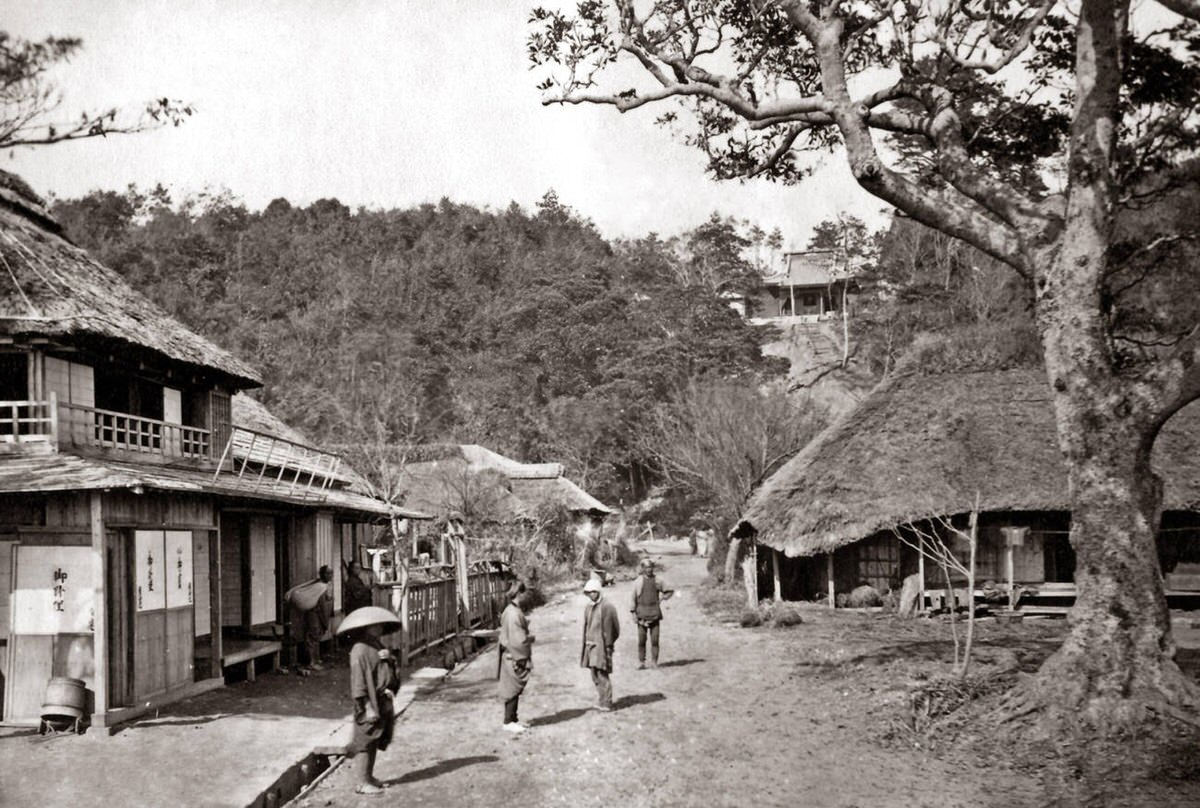
Outside the cities, daily life in towns and villages carried on through a mix of old trades and slow-moving change. Street vendors, rope makers, fortune tellers, and porters were fixtures of everyday commerce. Temples and shrines remained central to community life even as the government pushed new secular institutions. These photographs capture a Japan that was simultaneously ancient and in the process of becoming something entirely different.
Street scene in Japan, 1870sVendor of pots and brooms in Japan, 1870sFortune tellers in Japan, 1870sRope maker in Japan, 1870s
The samurai’s final legal protections were stripped away in 1876. The Sword Abolition Edict banned samurai from carrying their two swords in public—the most visible symbol of their class. On top of that, the government ended the hereditary stipends that samurai families had relied on for generations. With no income and no status, many samurai found themselves unable to adapt to ordinary civilian life as farmers or tradespeople.
Residence of a daimyo in Geshiyu, 1870s
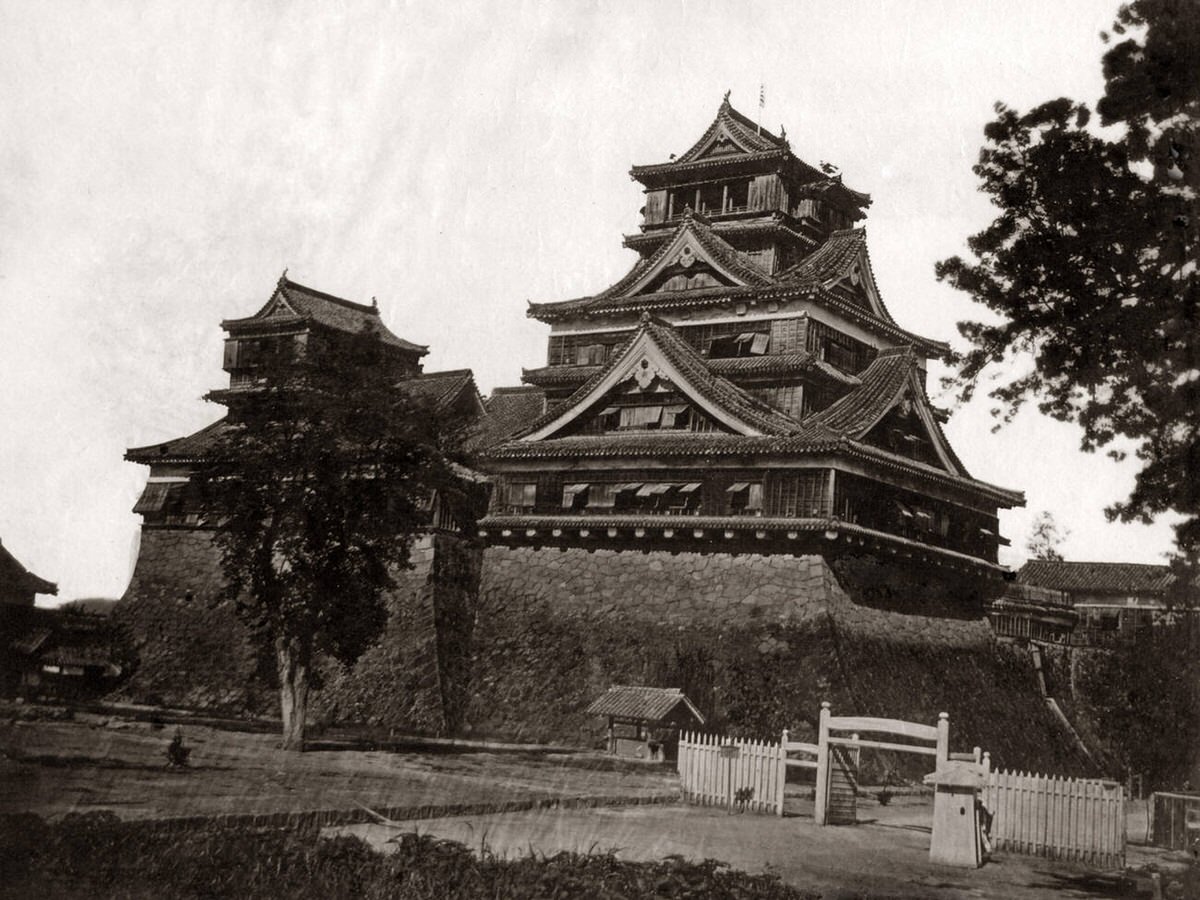
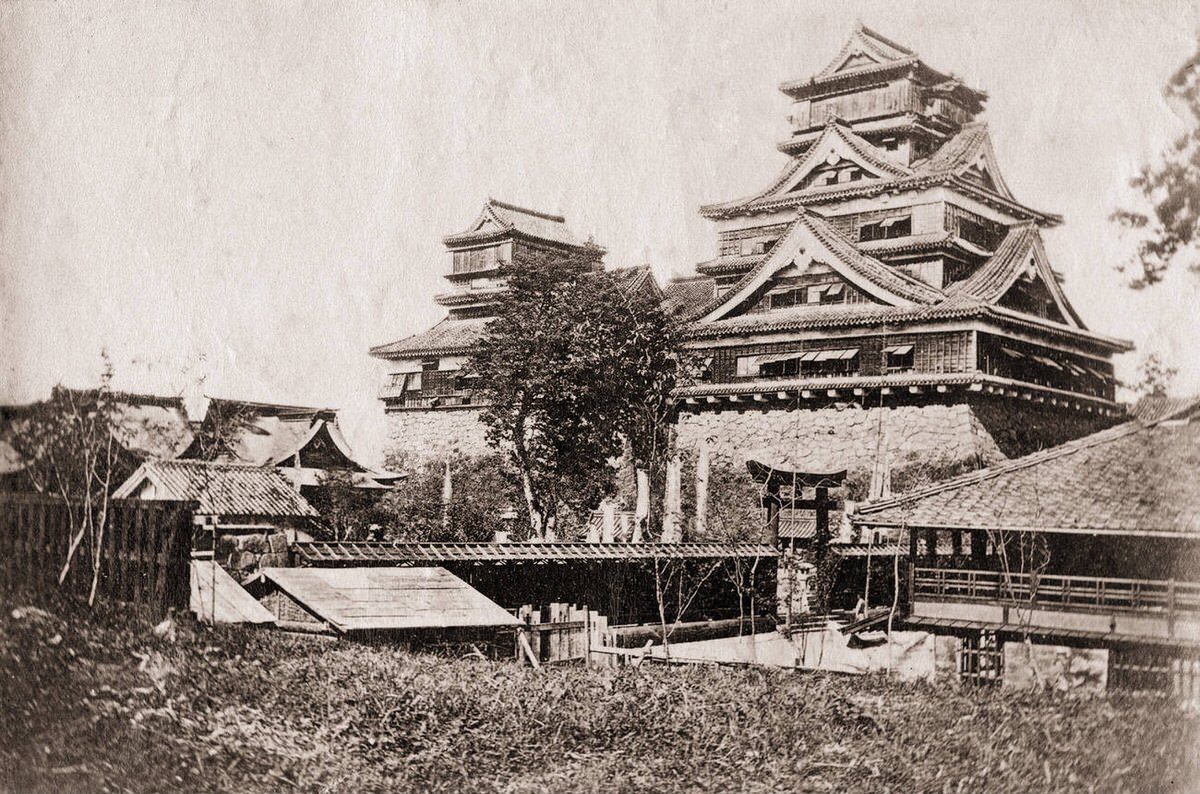
The frustration boiled over in 1877 with the Satsuma Rebellion. Former Meiji hero Saigo Takamori led an army of 30,000 samurai from the south of Japan against the imperial government he had once helped bring to power. The fighting was intense. The most significant engagement—the Battle of Tabaruzaka—lasted 17 days. The government’s army, made up largely of conscripted commoners, used telegraphs to coordinate troop movements and steamships to deliver supplies. They had Gatling guns and heavy artillery. The samurai had swords and rifles but were badly outmatched in both numbers and firepower.
Kumamoto Castle, 1870sKumamoto Castle, 1880
The rebellion ended at the Battle of Shiroyama in September 1877. Saigo Takamori died in the fighting. His defeat closed the door permanently on the samurai as a military class. The government that survived the rebellion was stronger than ever, its new conscript army proven in battle against the most formidable warriors Japan had ever produced.
Officers of the new police in Yokohama, 1871
Japan also pushed its borders outward during this decade. In 1875, a treaty with Russia gave Japan control of the Kuril Islands. In 1879, the government formally annexed the Ryukyu Islands and renamed them Okinawa Prefecture. The king of Ryukyu was removed from power and relocated to Tokyo. These moves extended Meiji authority well beyond the main islands, rounding out the territorial claims of a government that had, within a single decade, dismantled feudalism, built railways and factories, conscripted a national army, crushed an armed rebellion, and redrawn its own map.
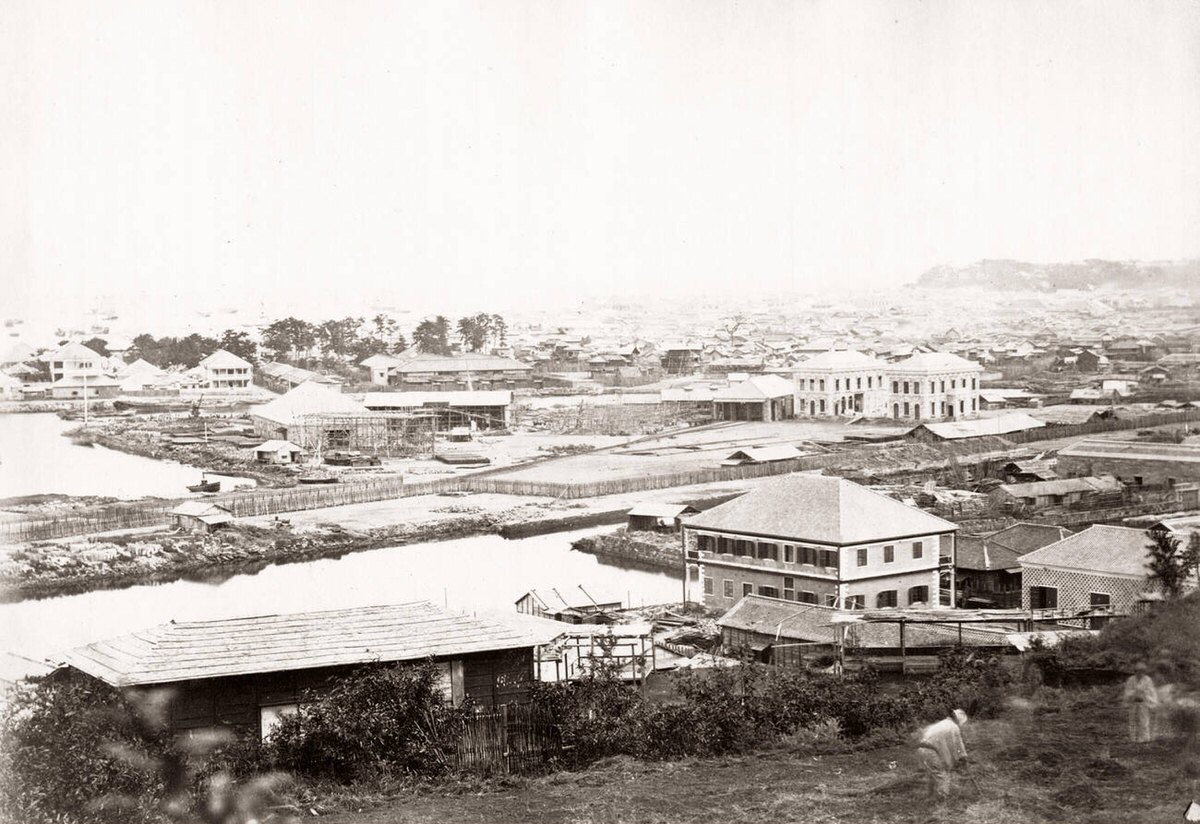
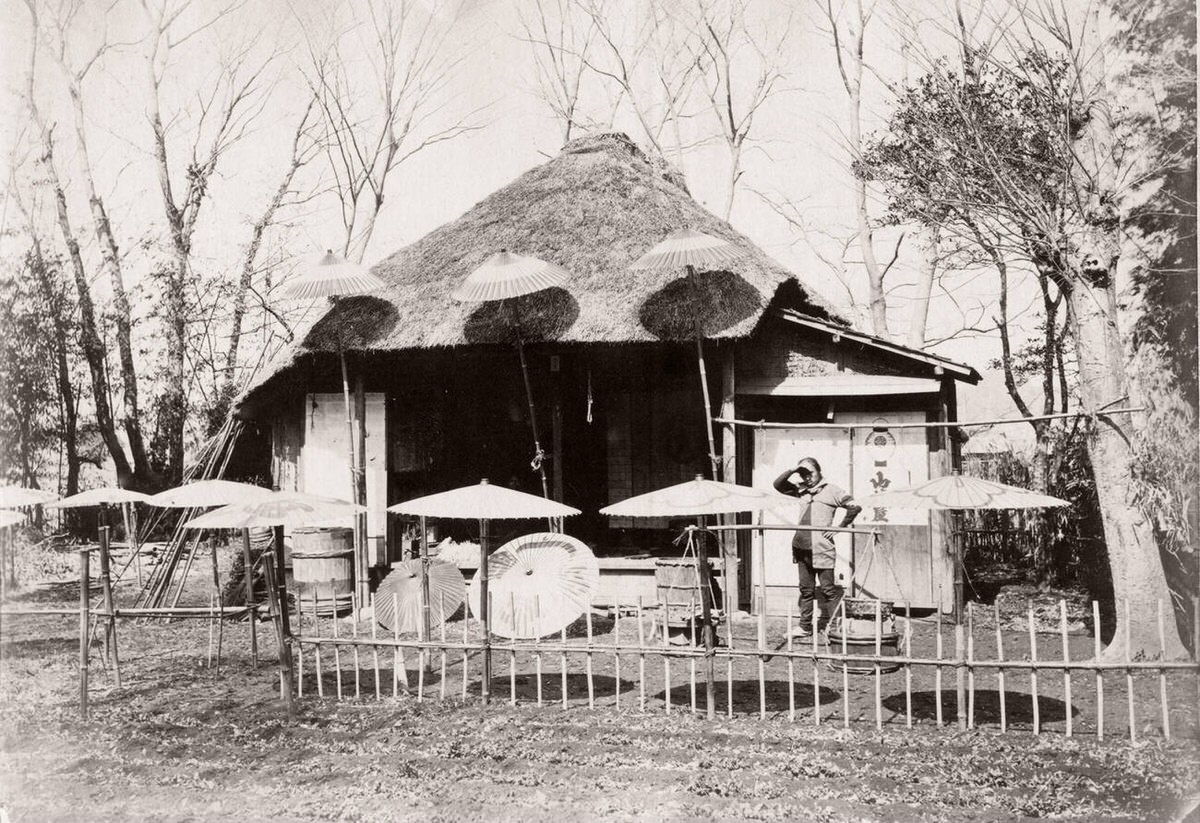
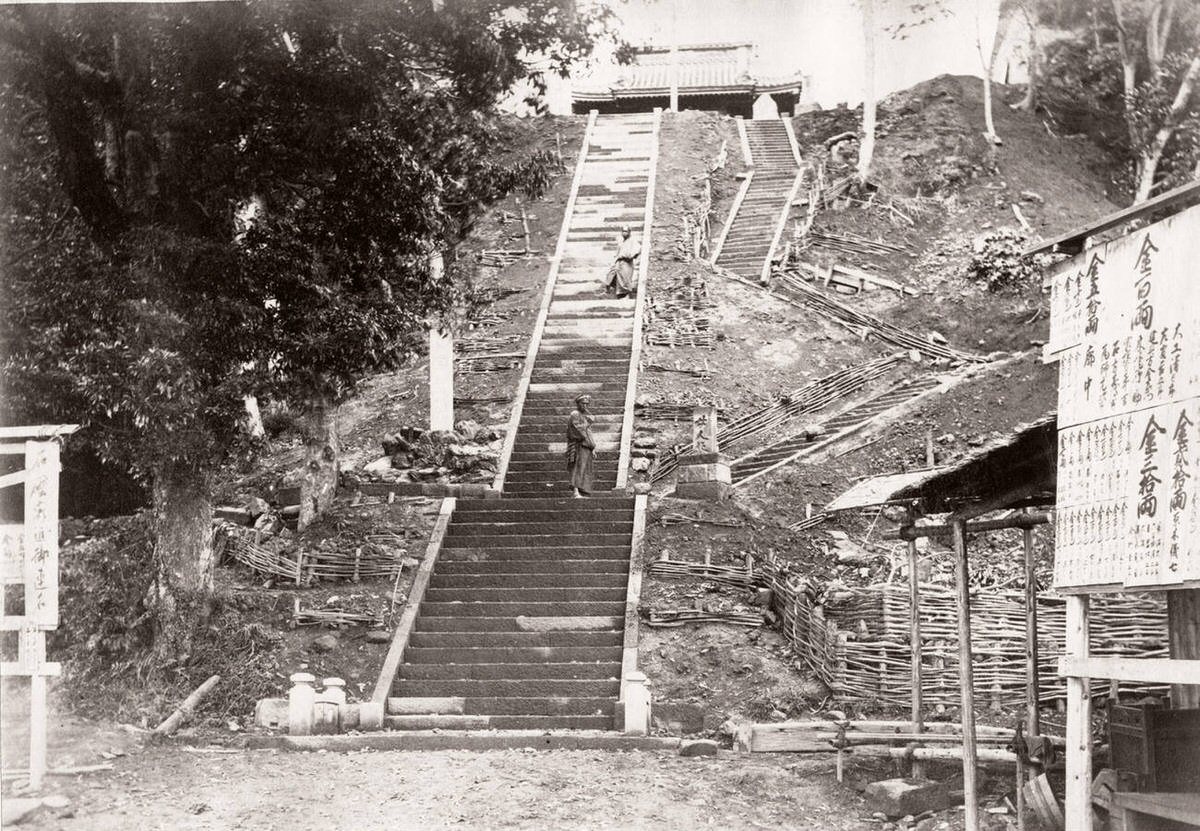
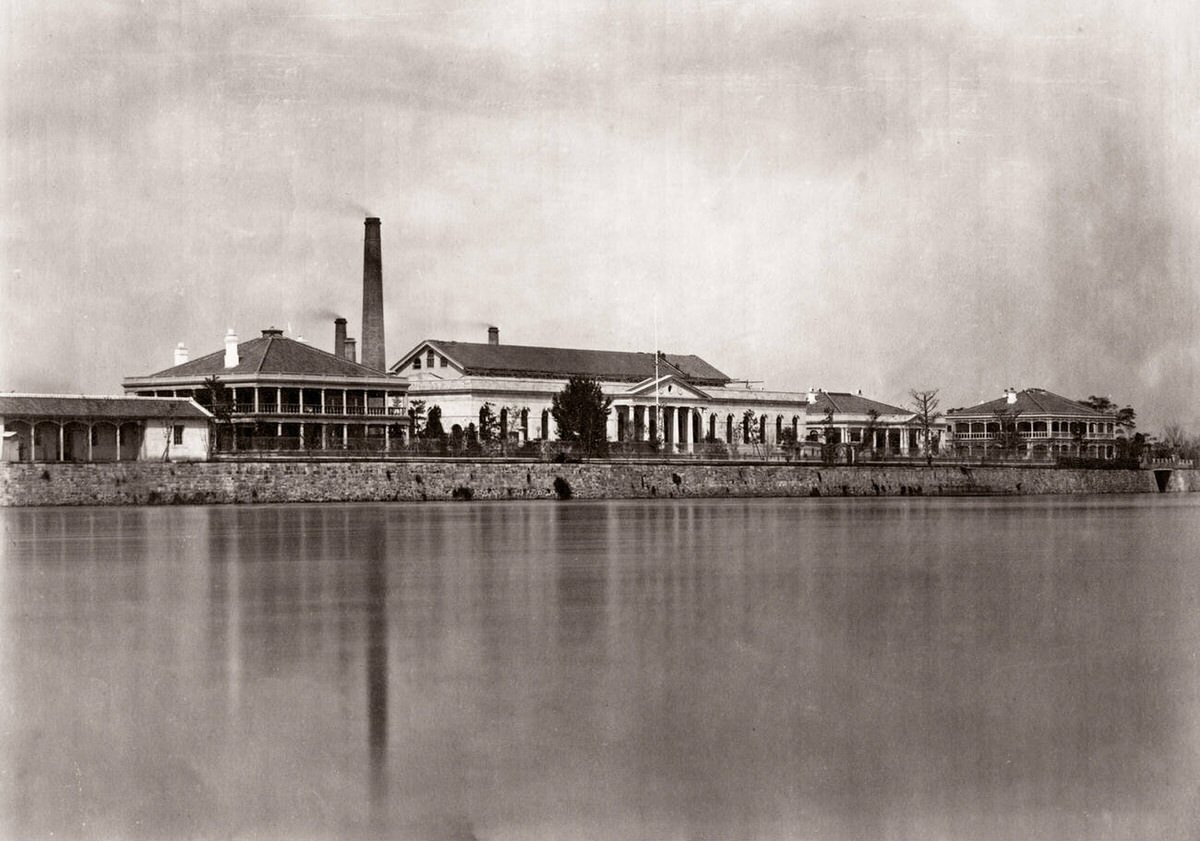
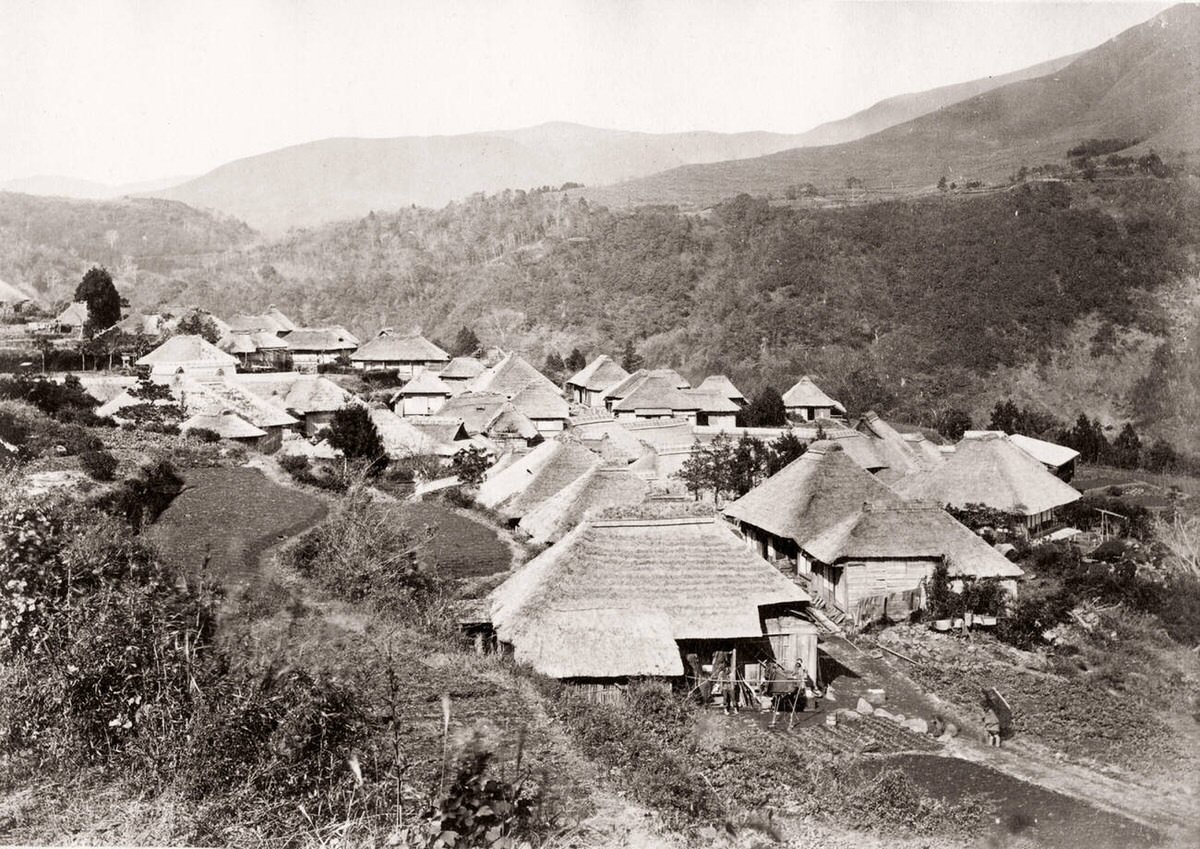
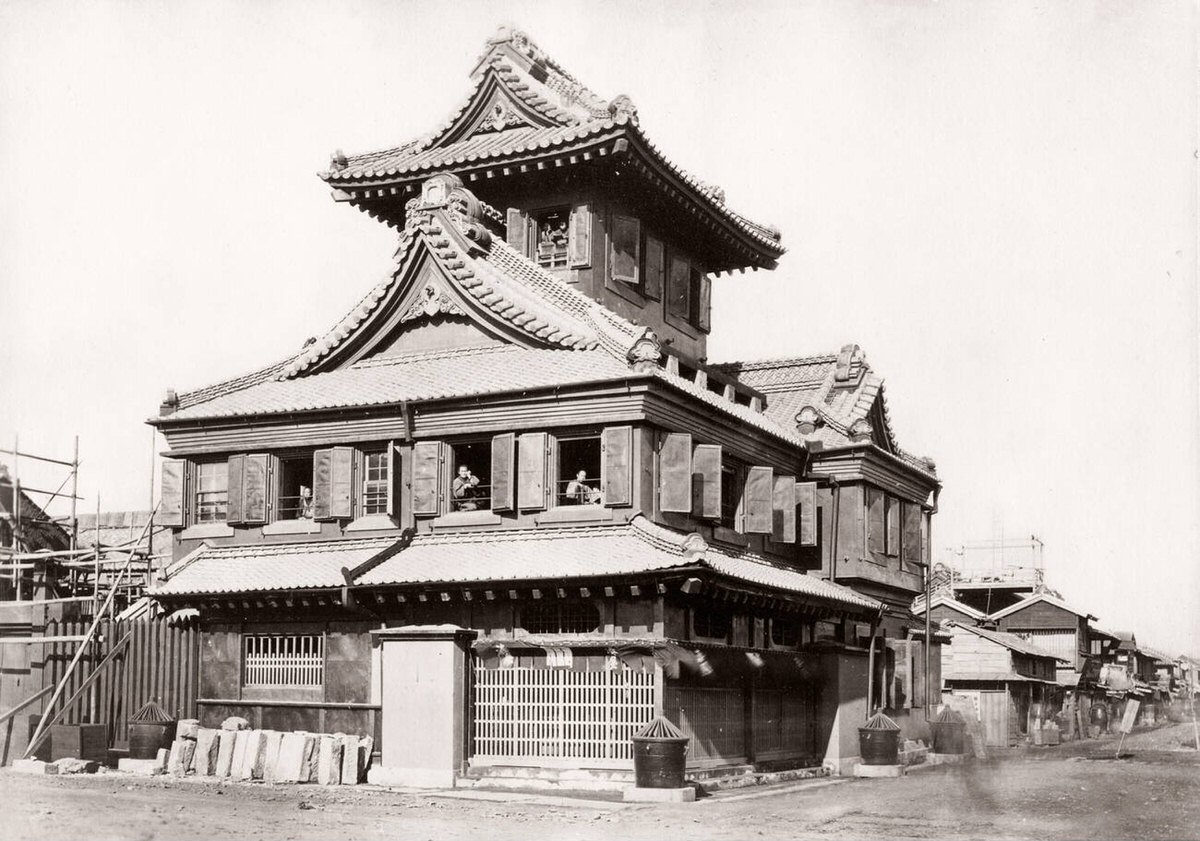
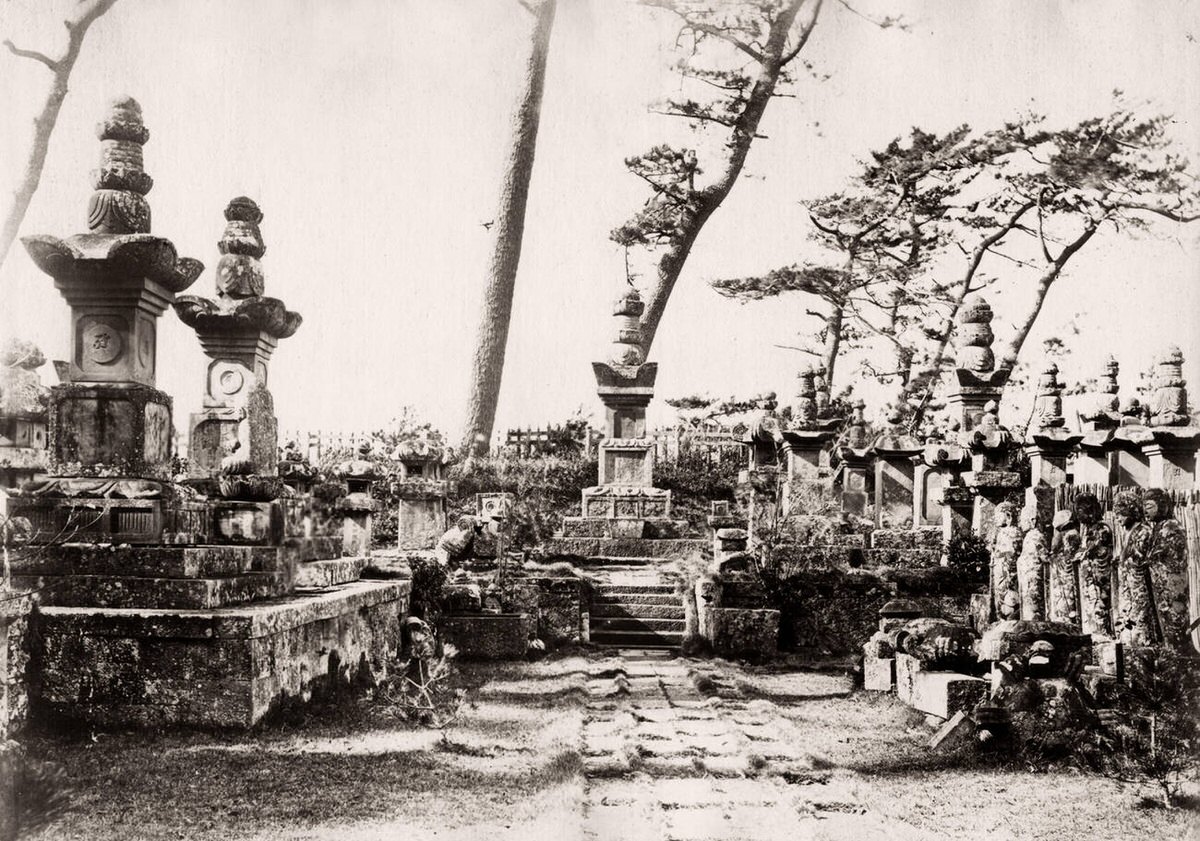
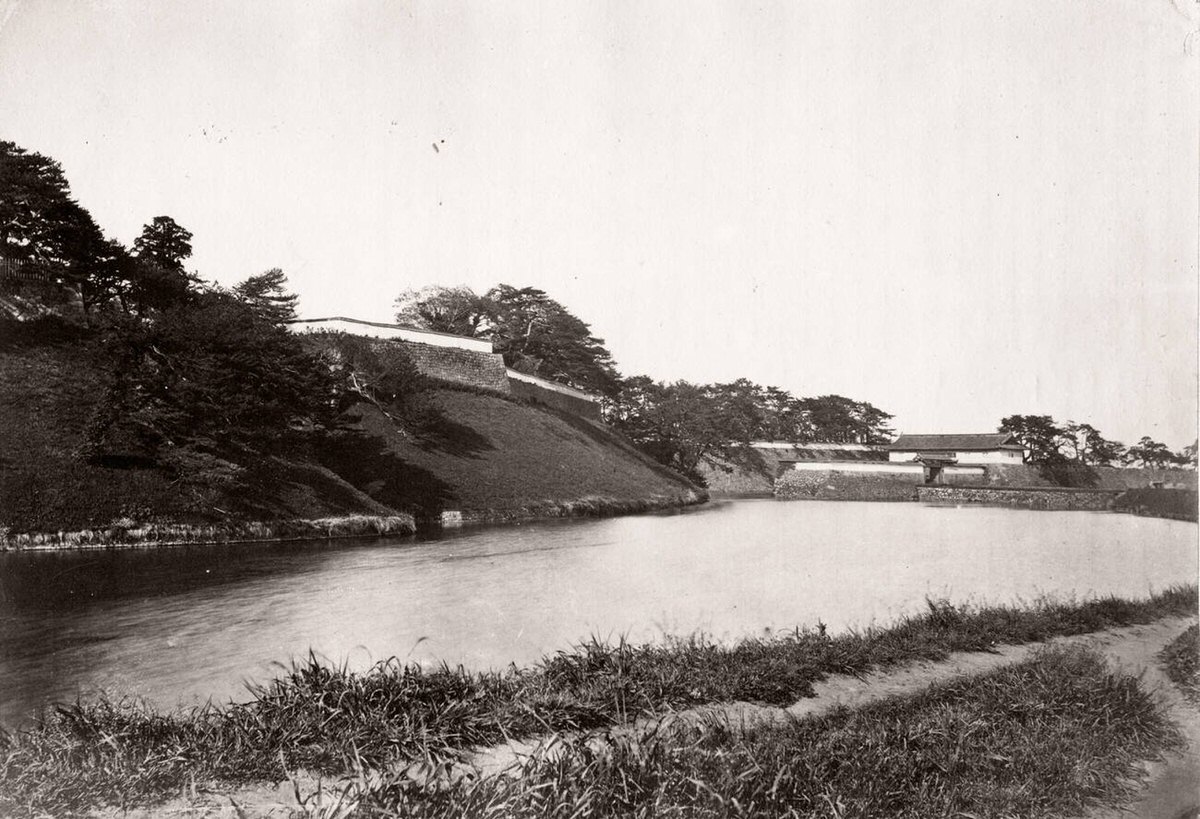
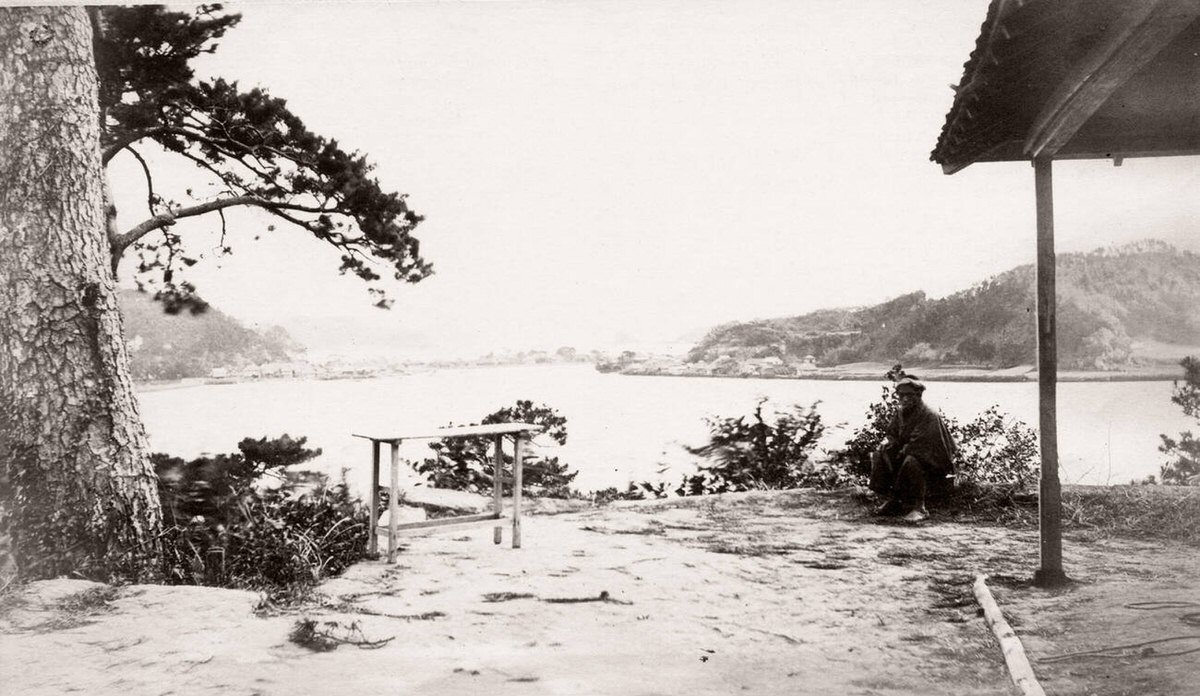
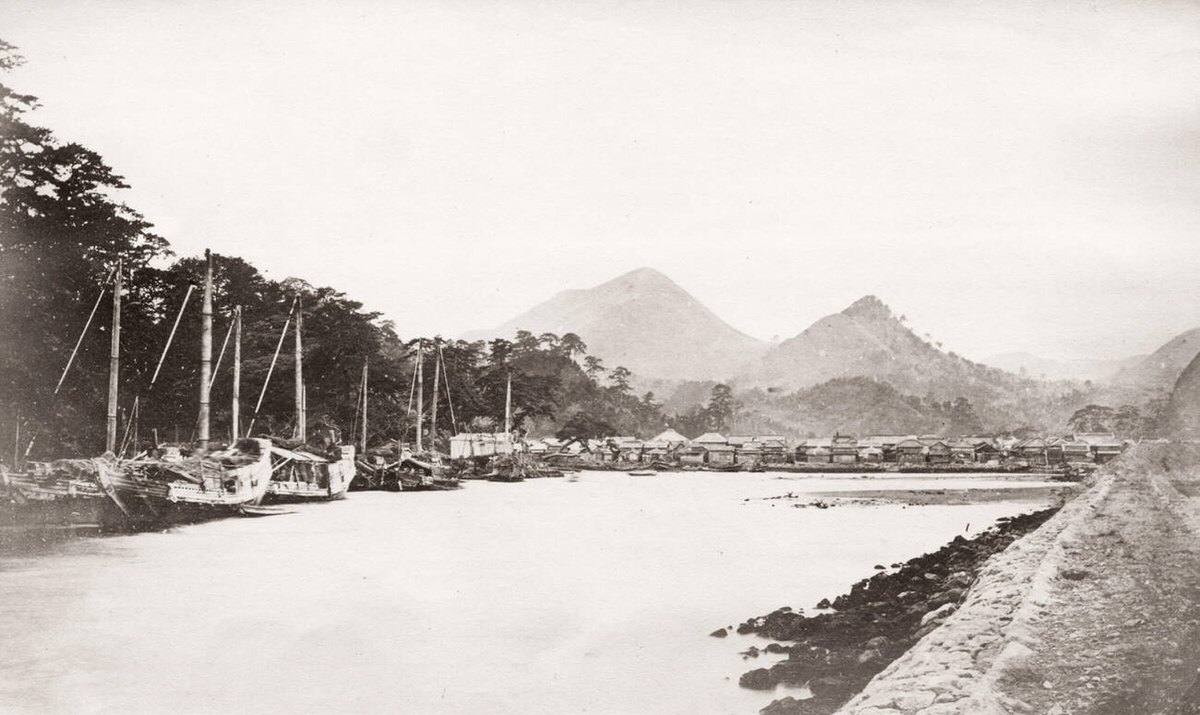
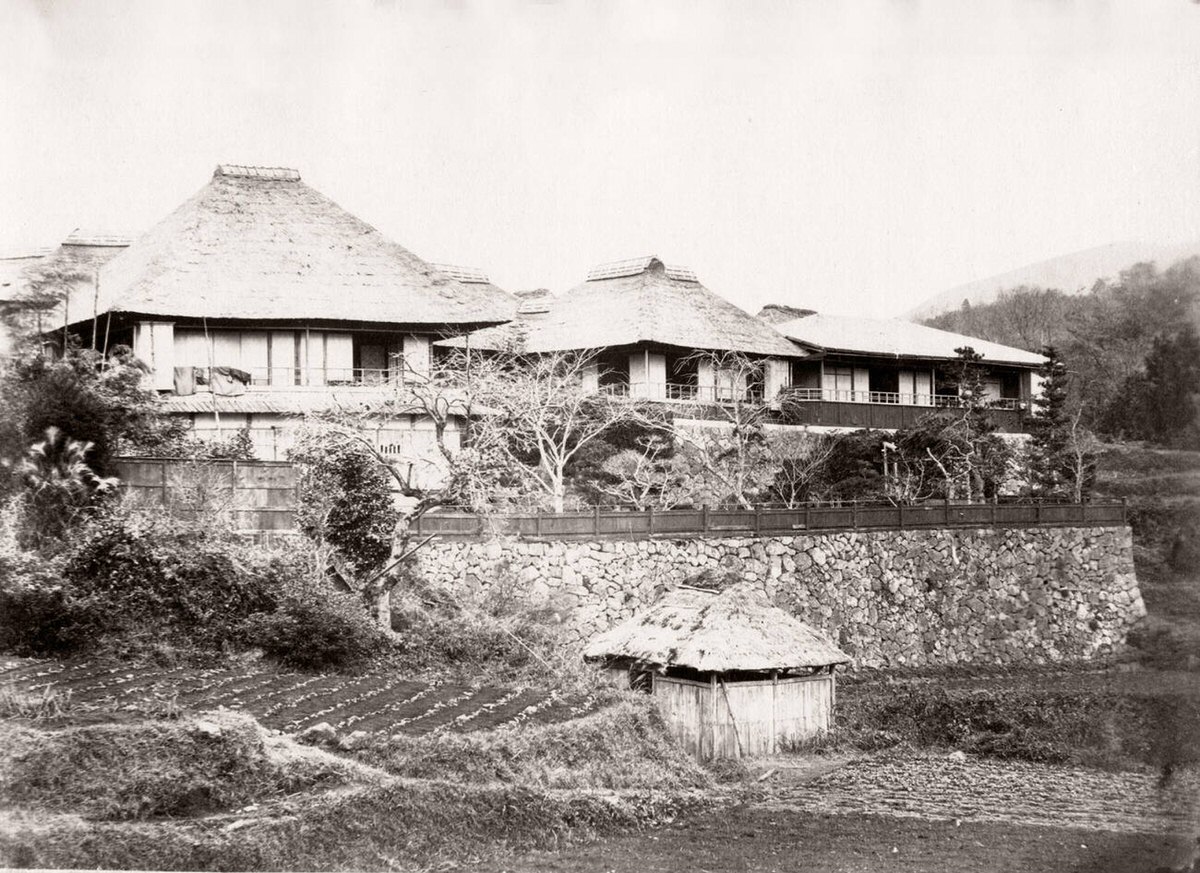
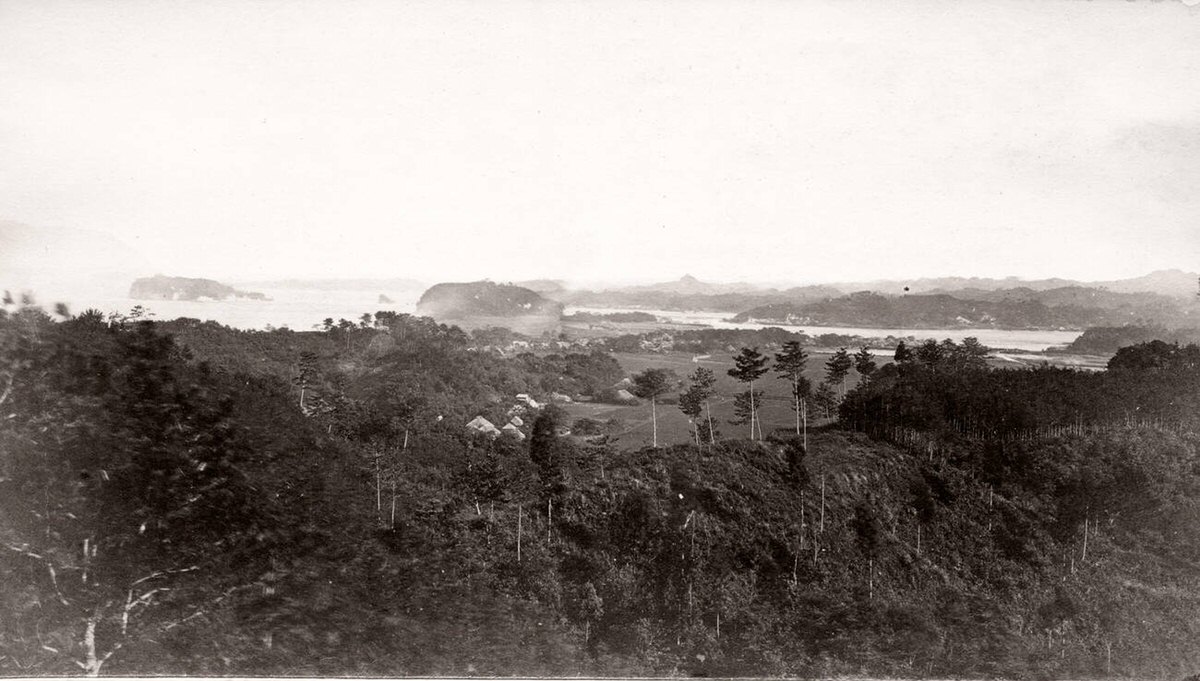
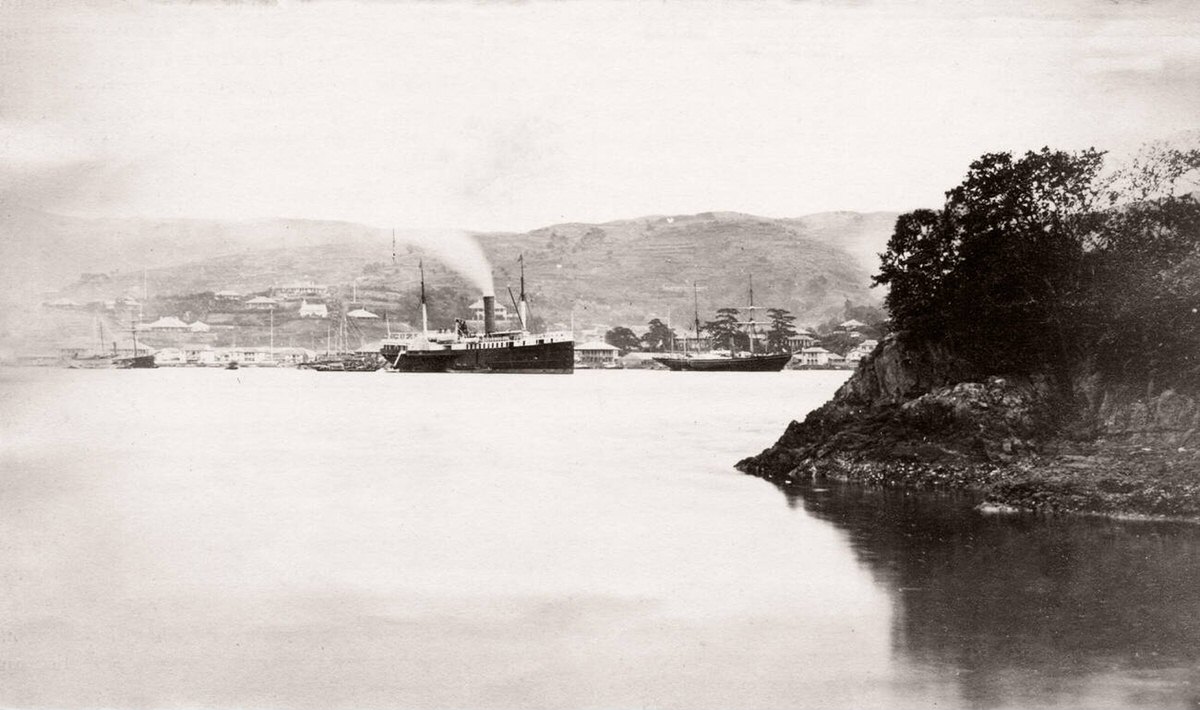
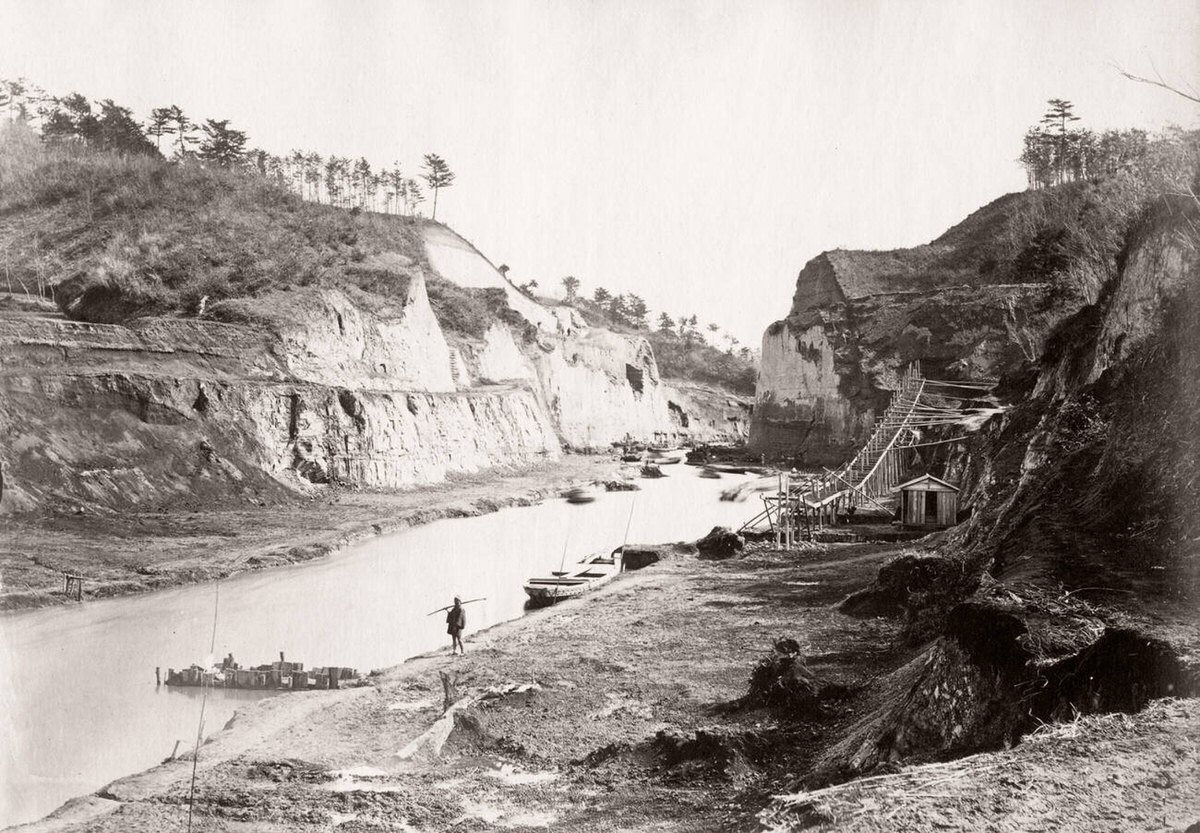
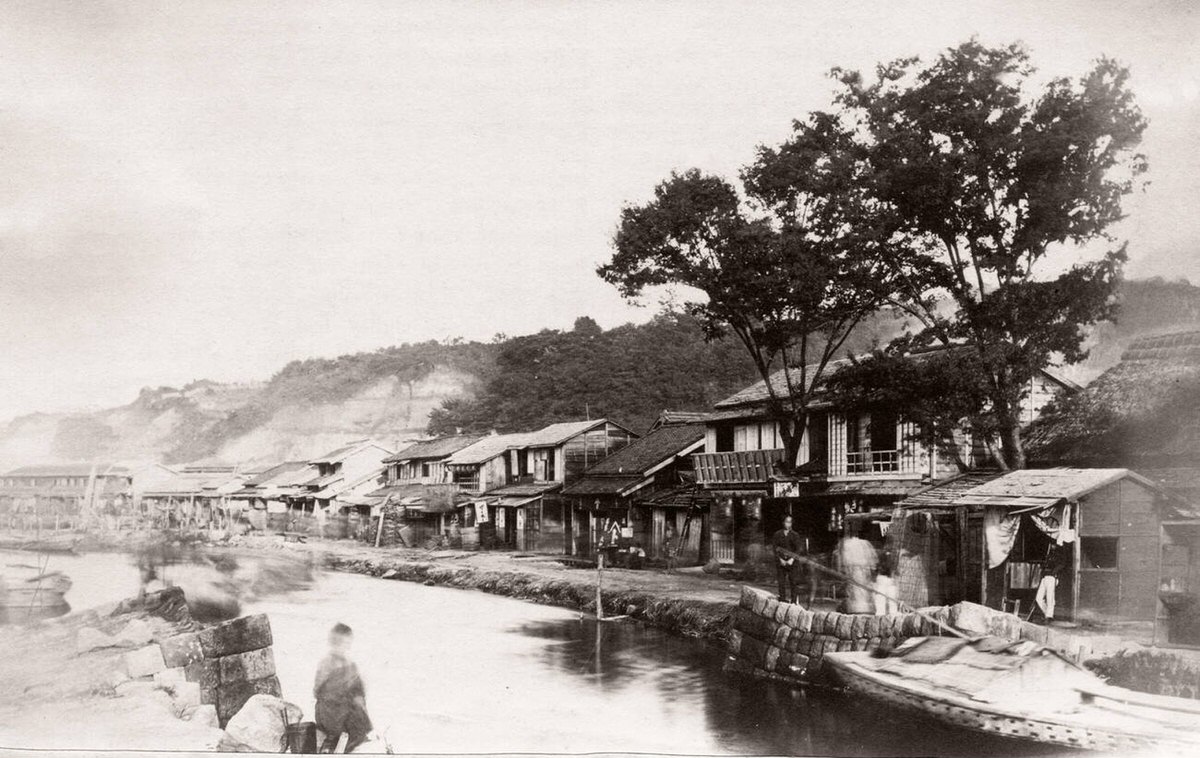
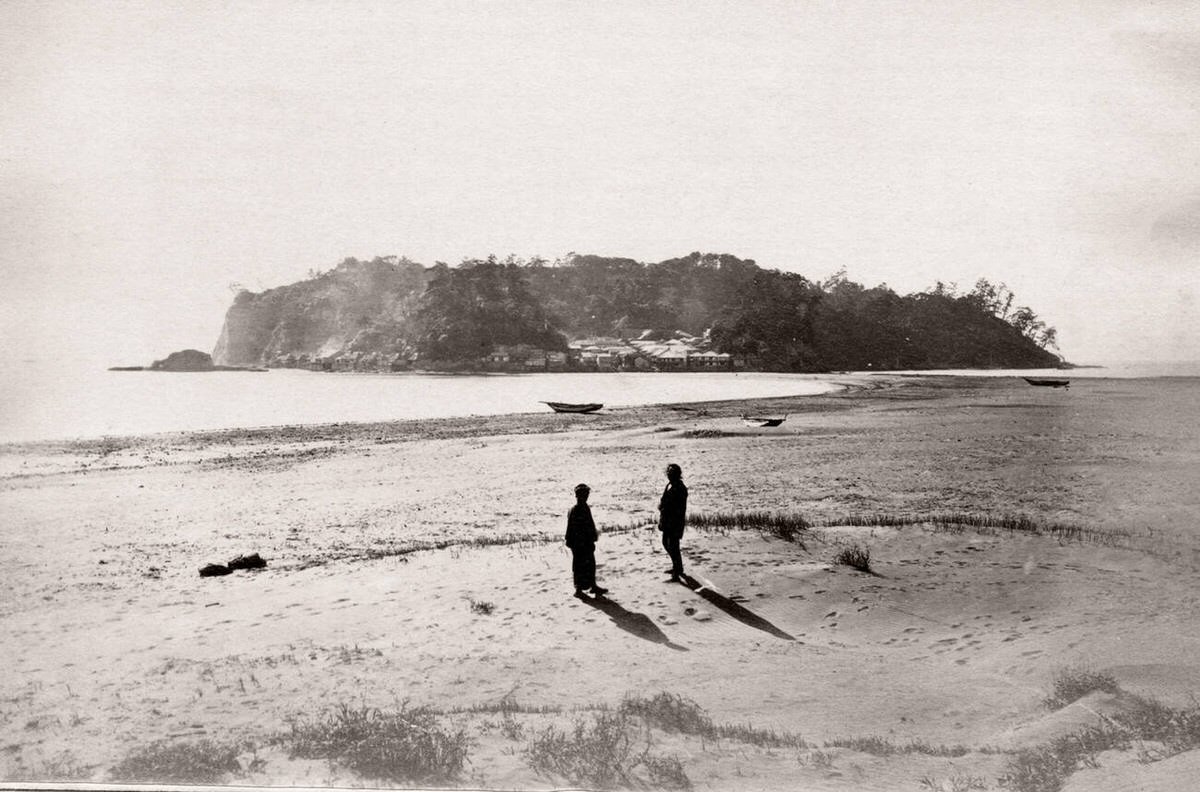
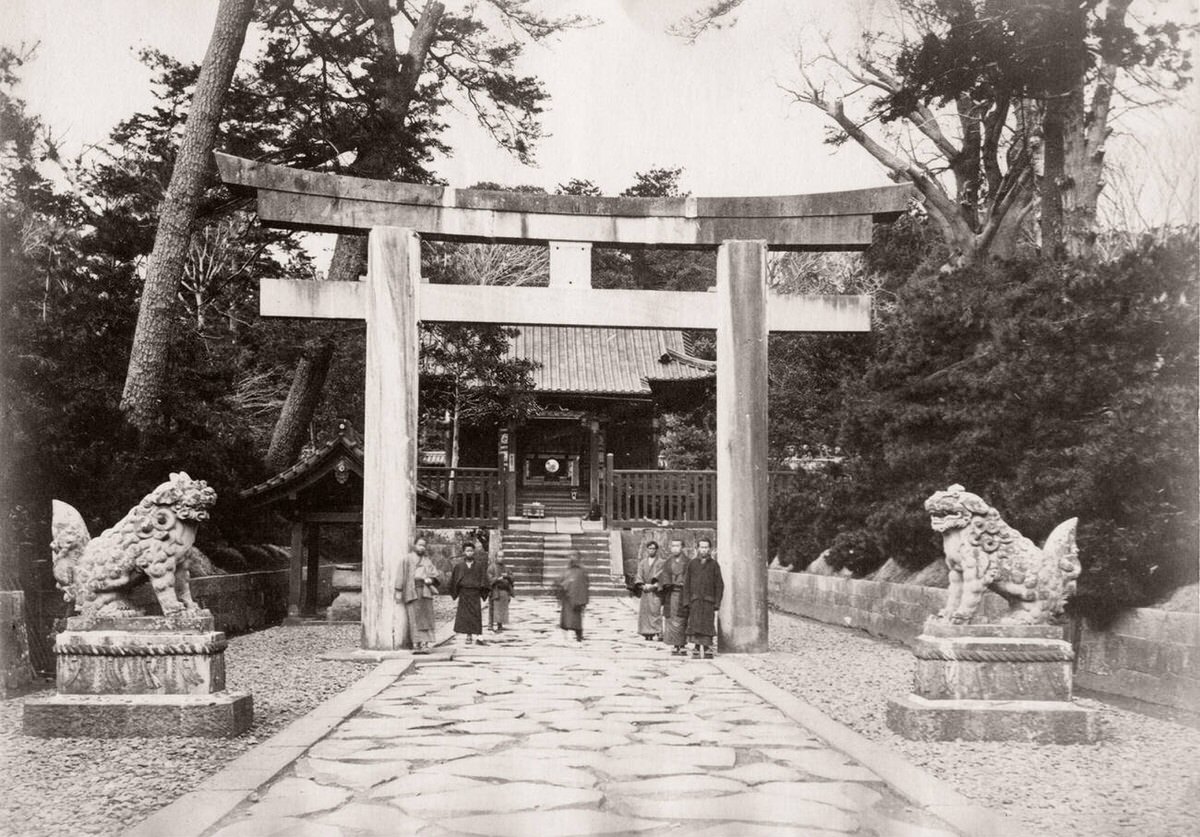
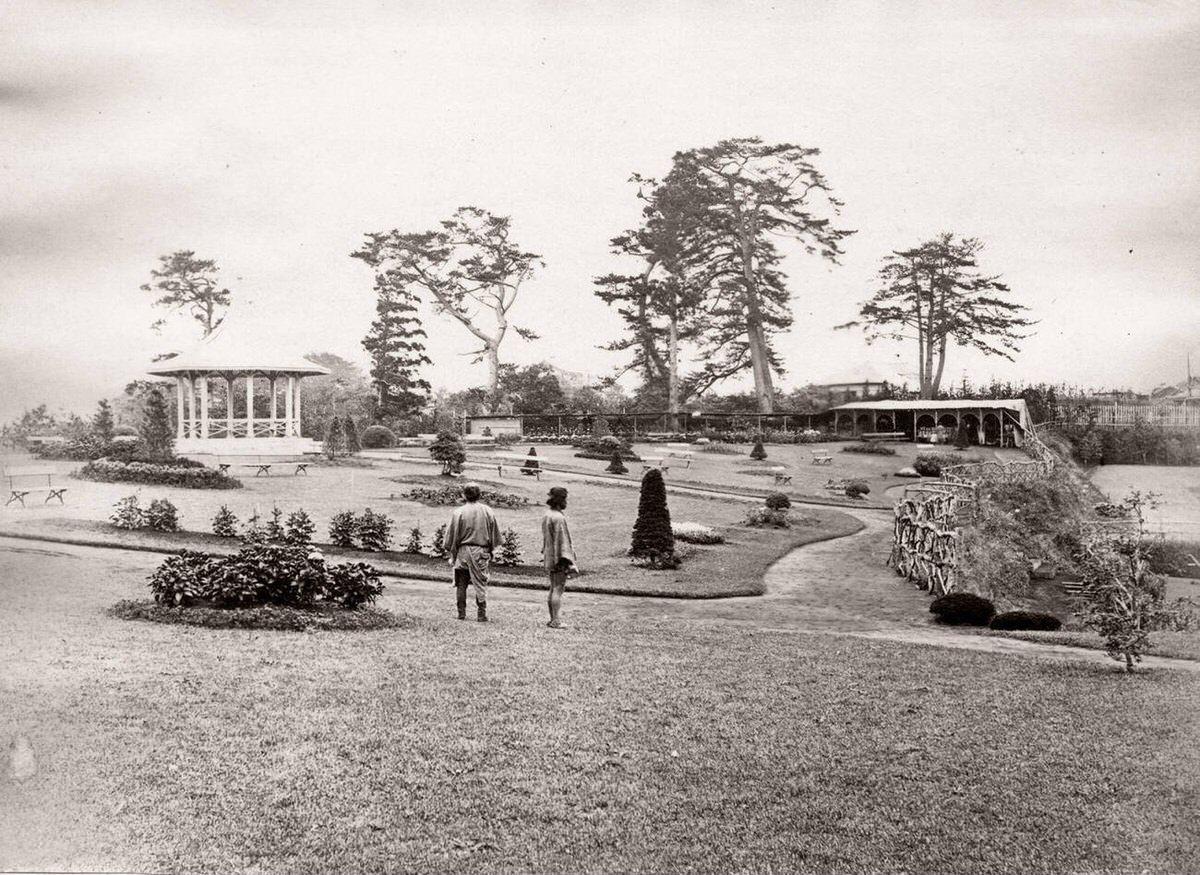
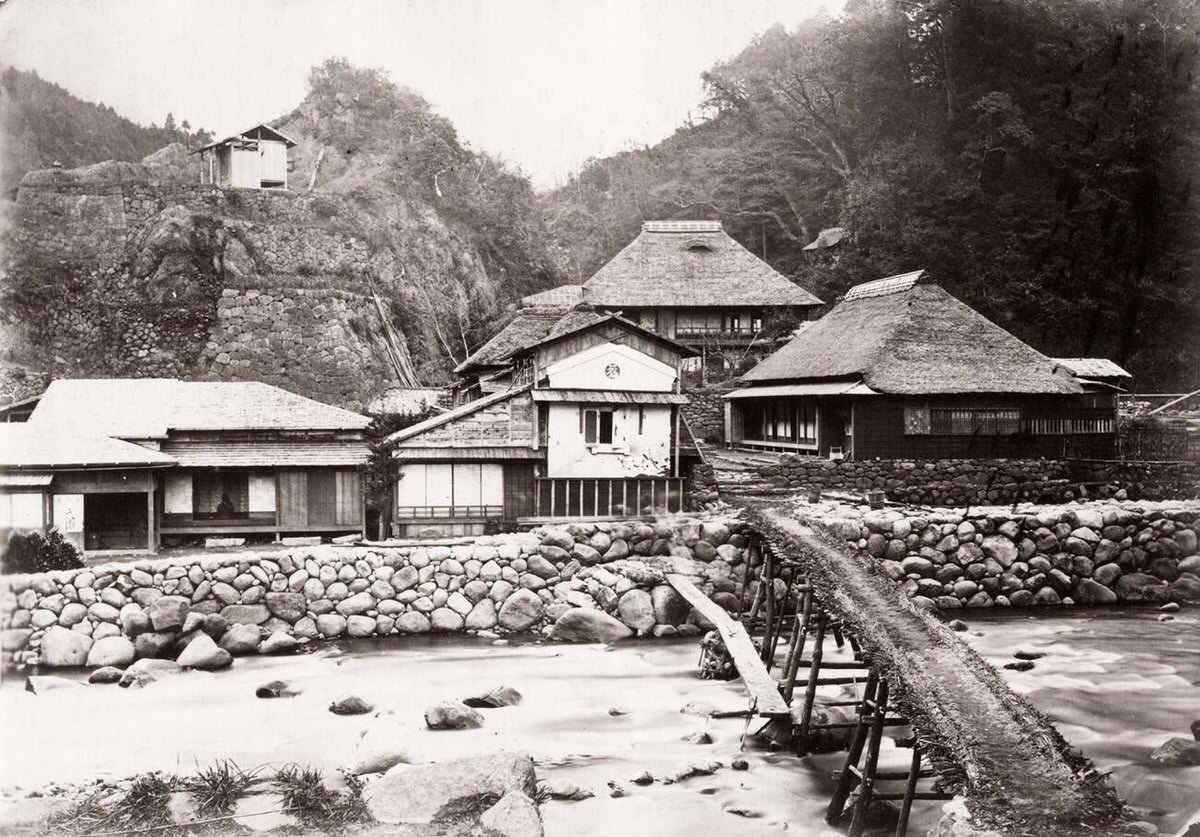
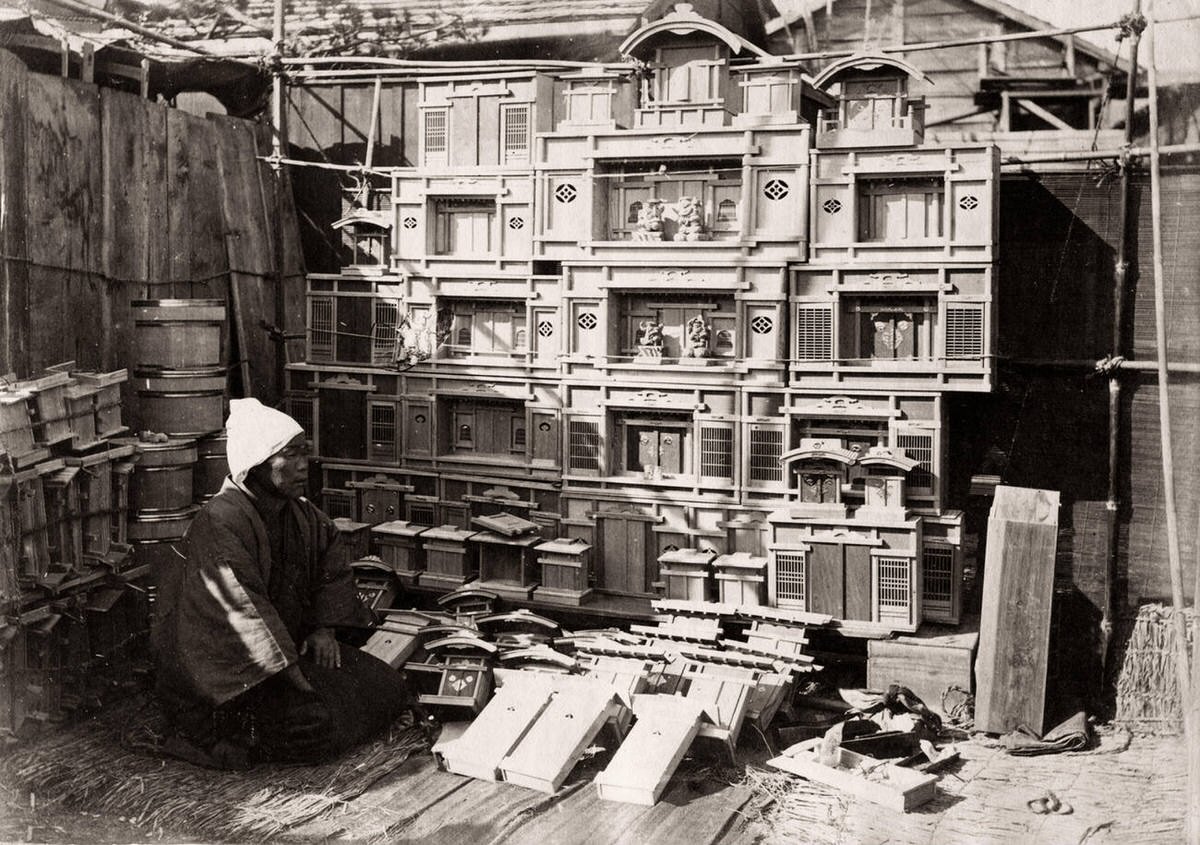
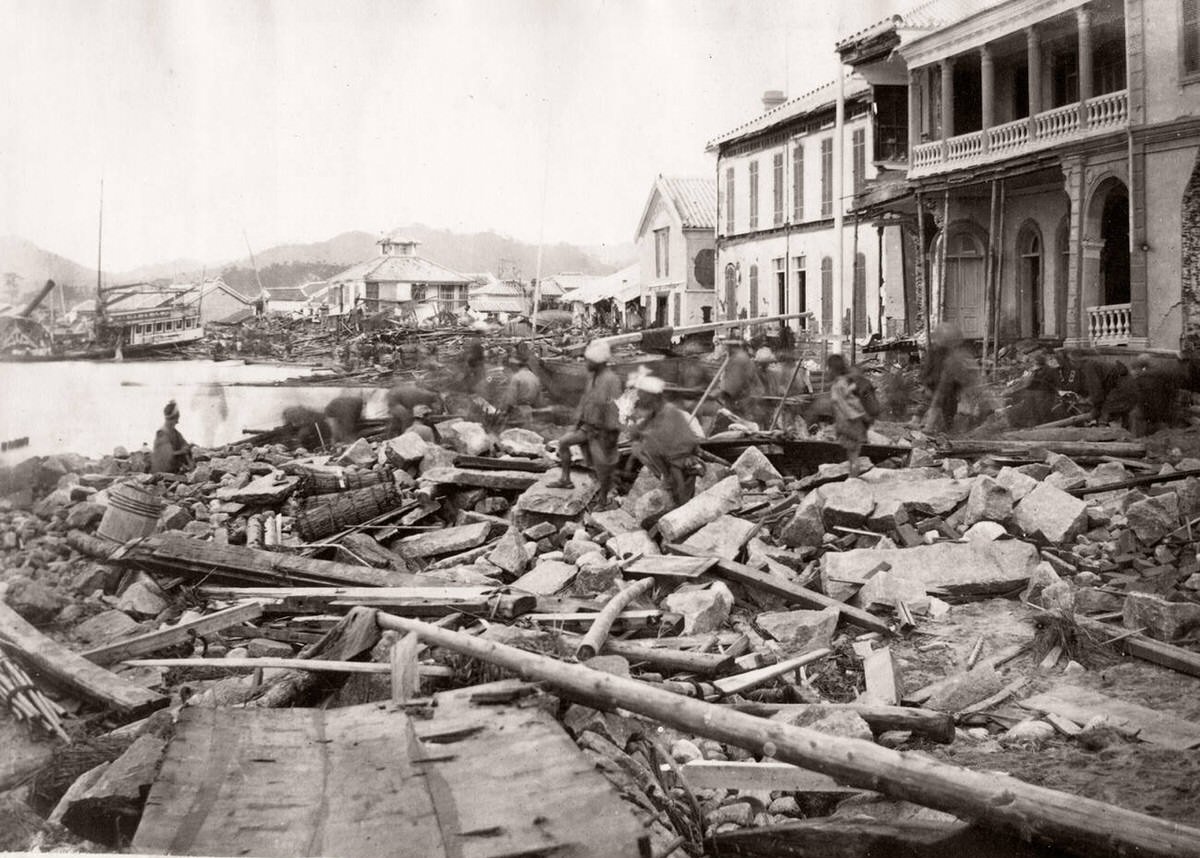
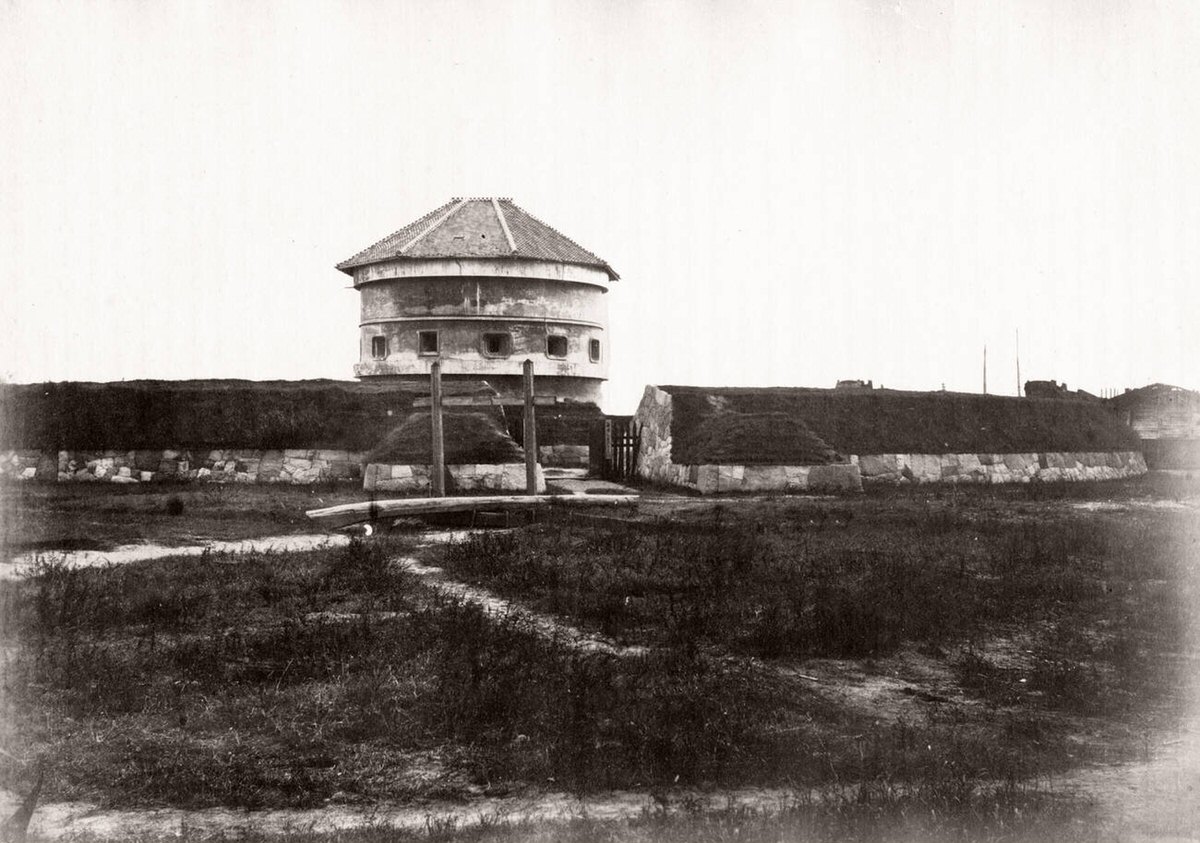
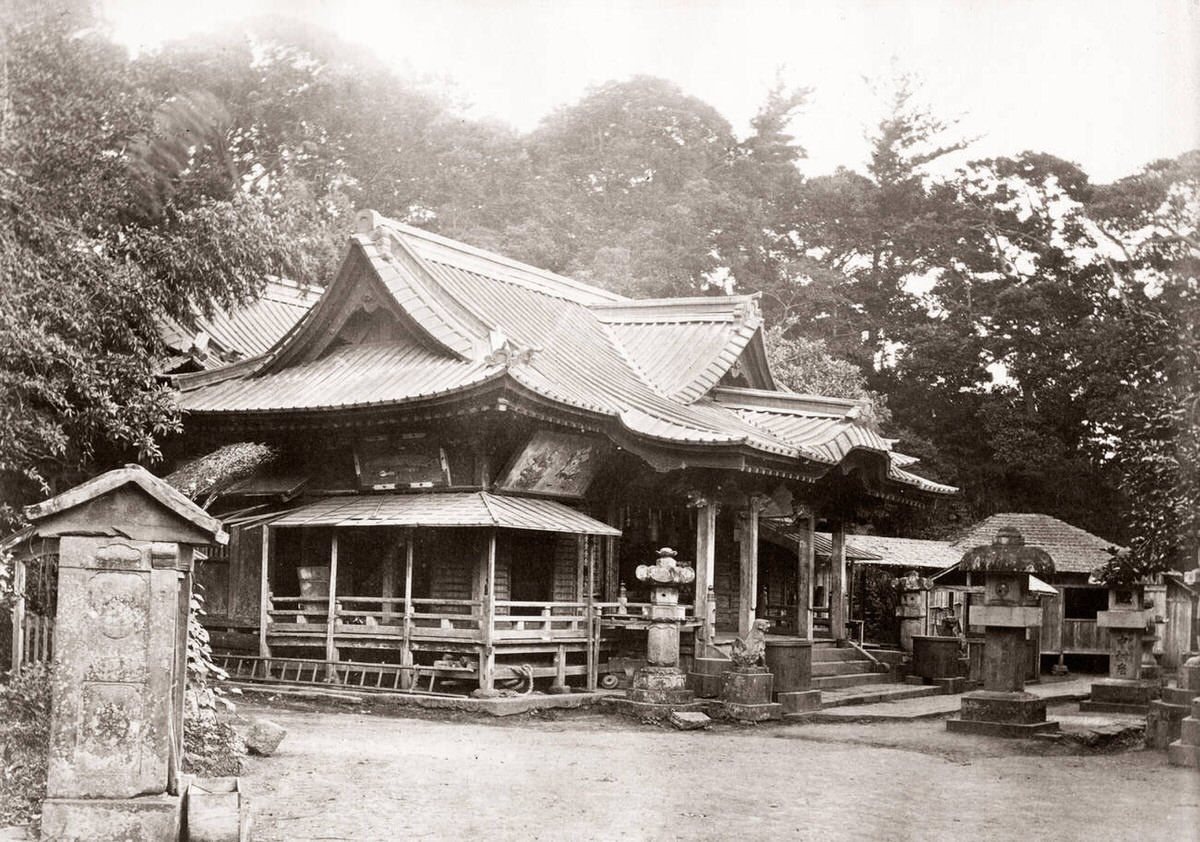
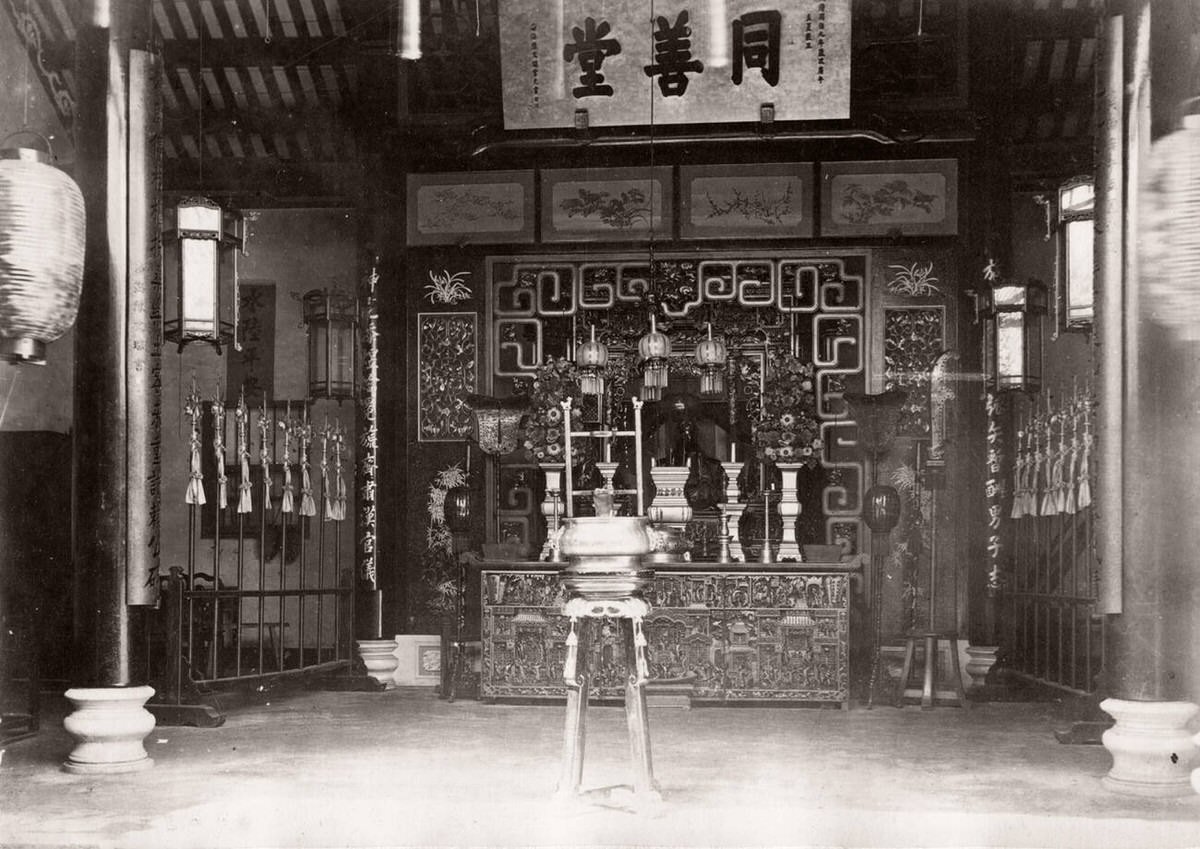
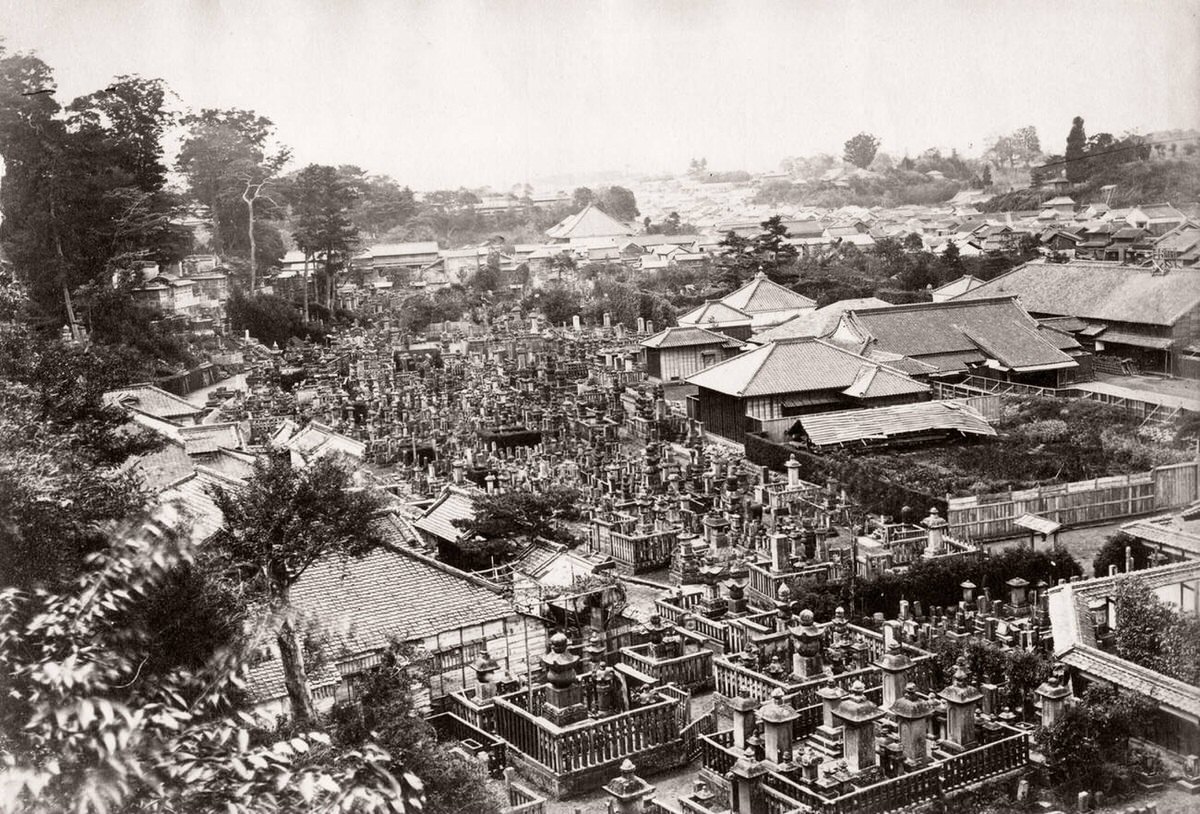
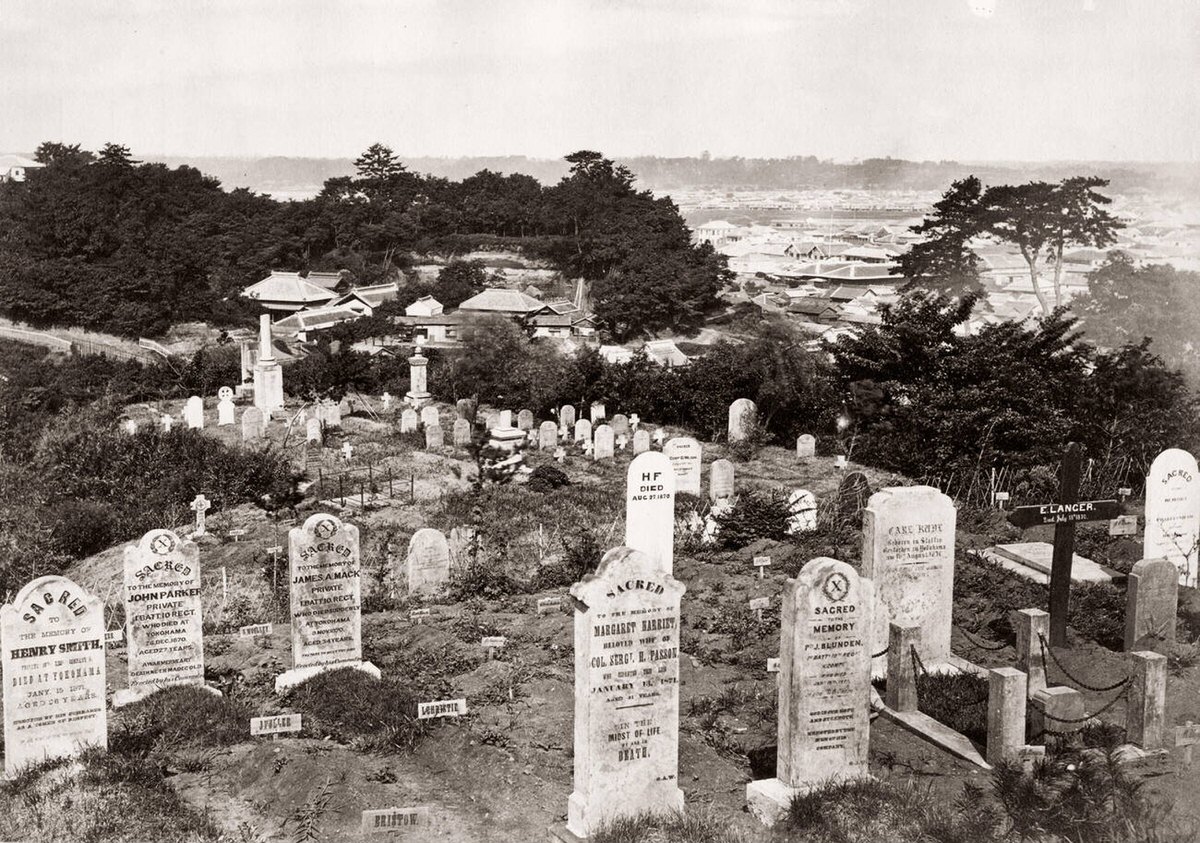
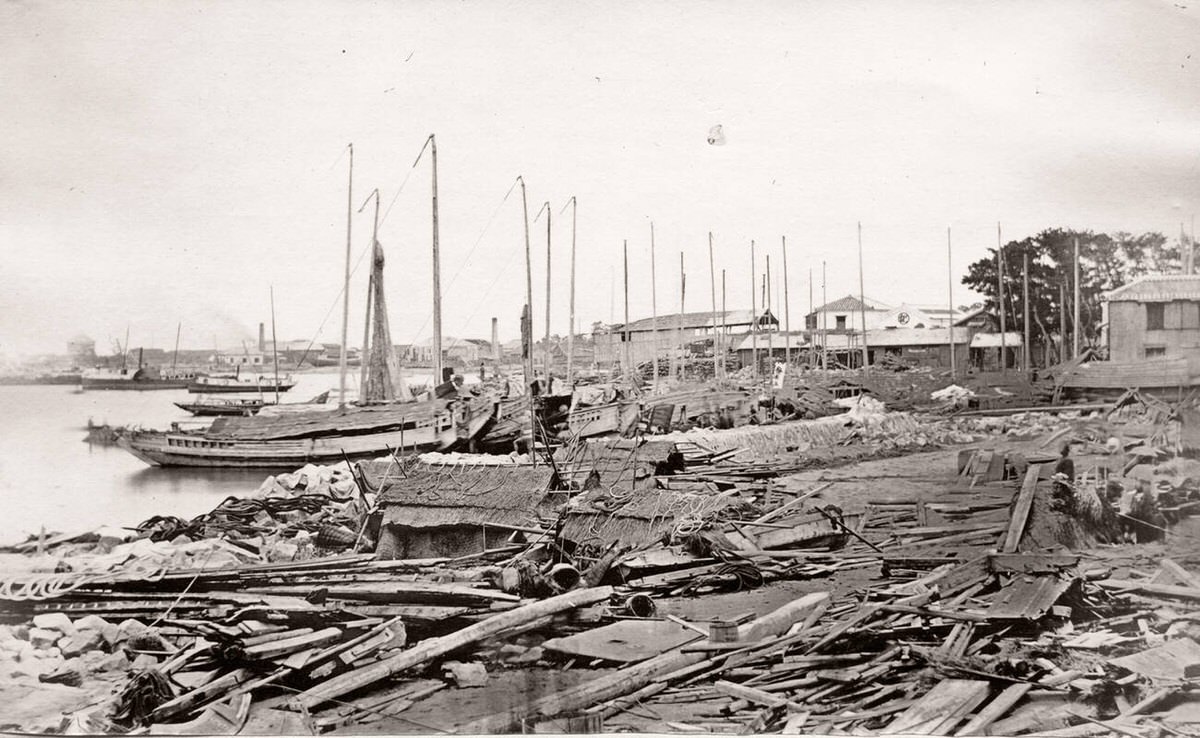
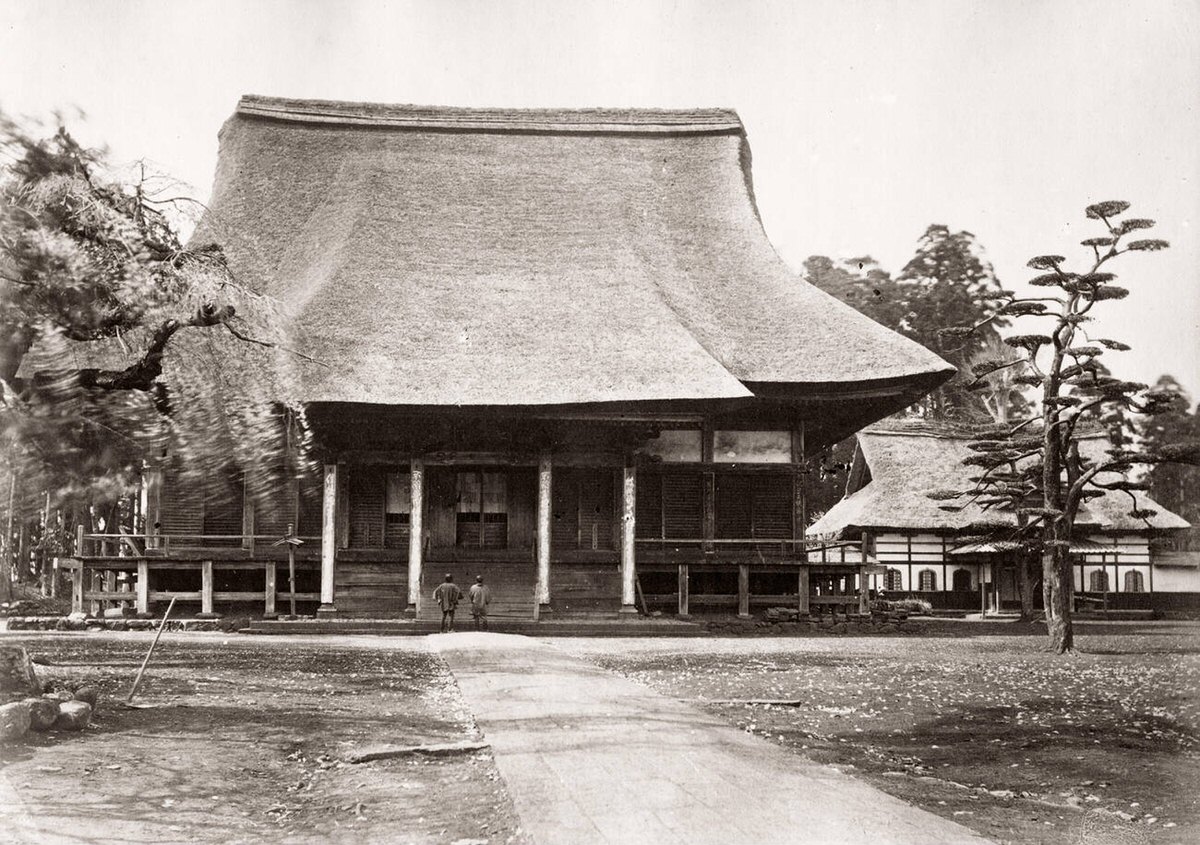
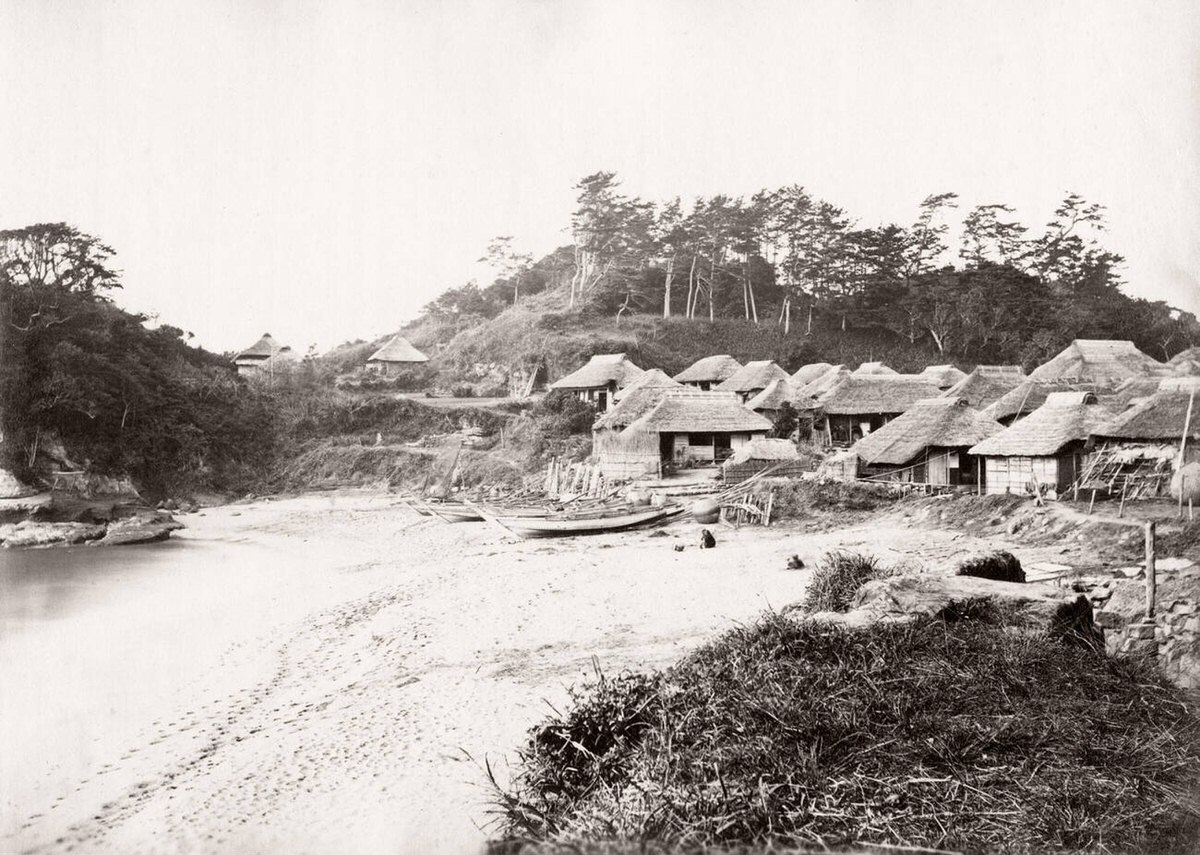
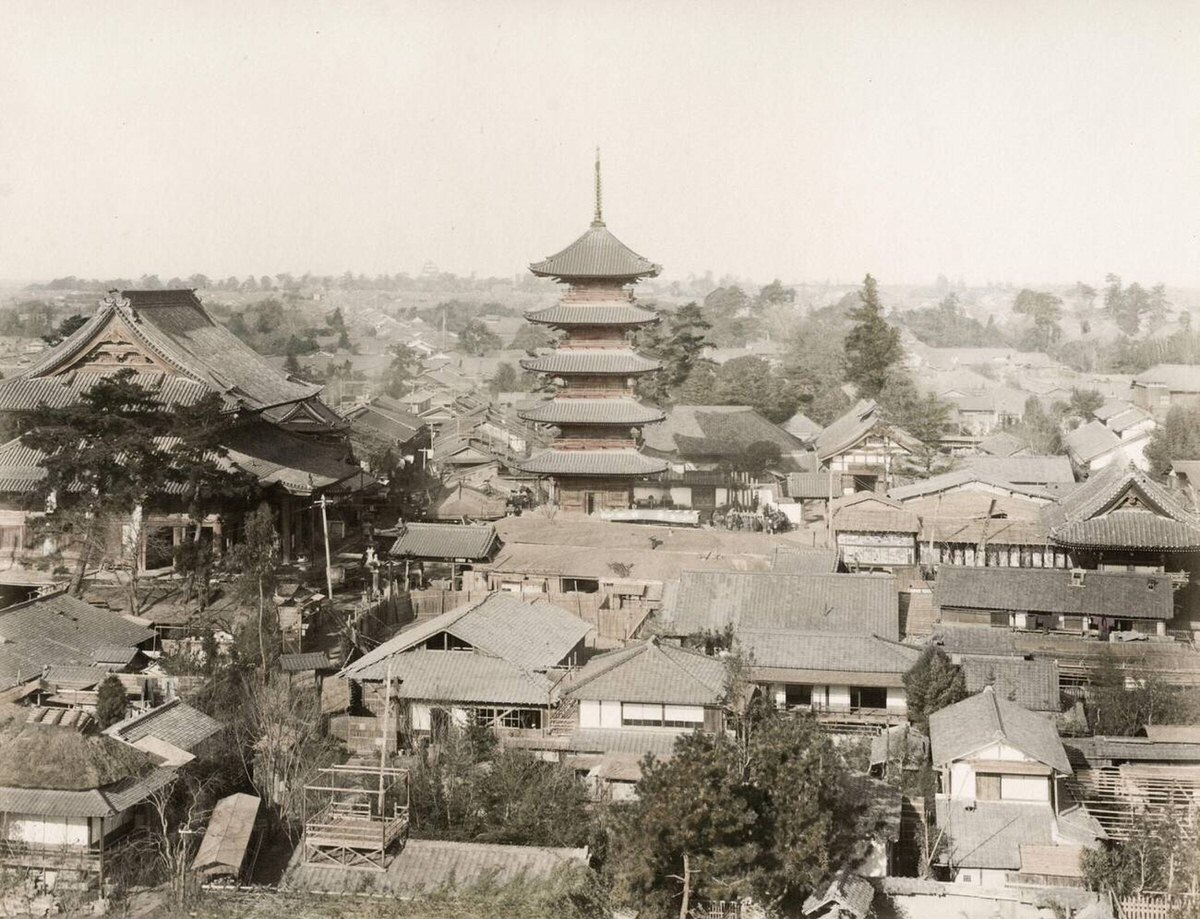
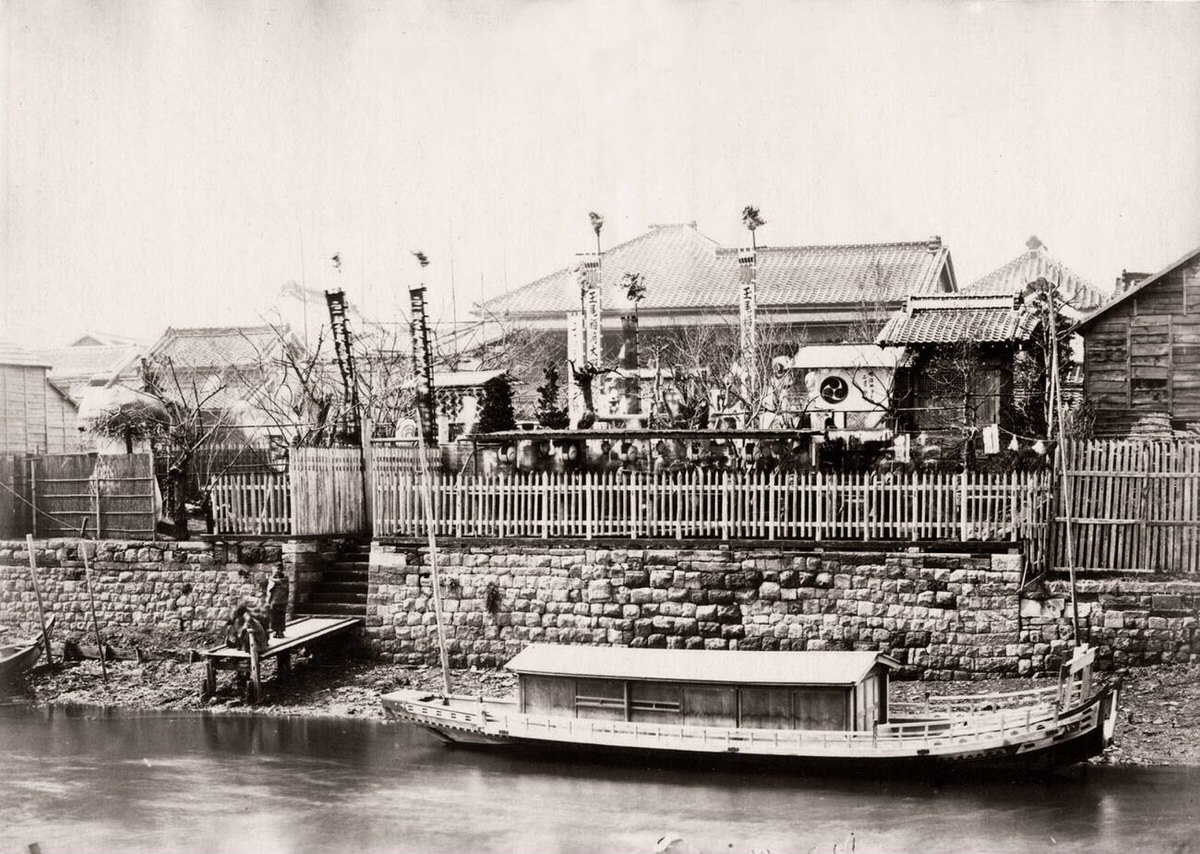
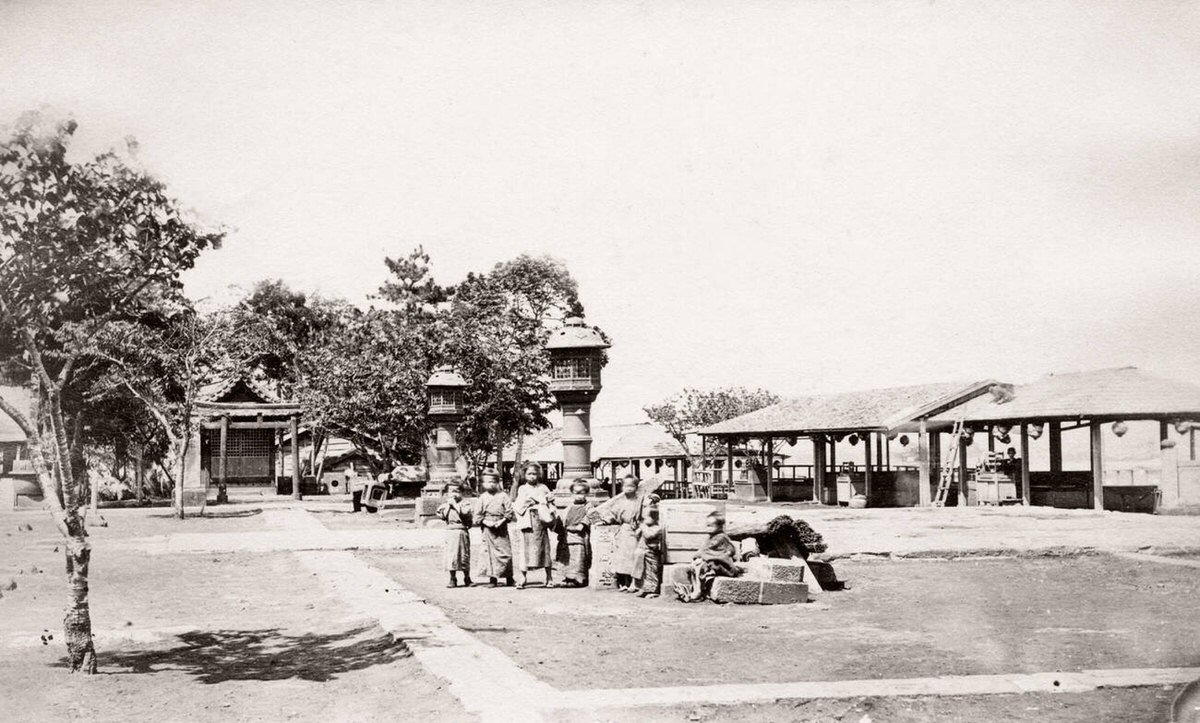
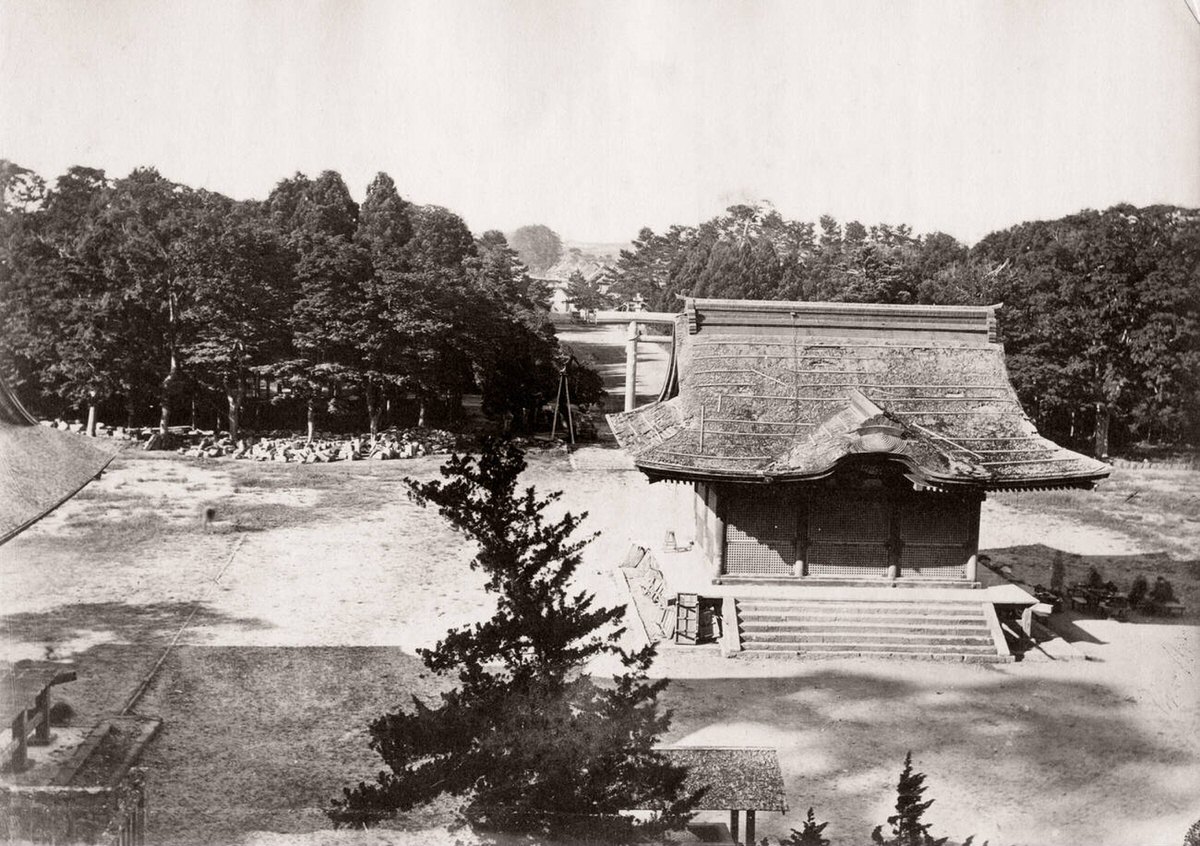
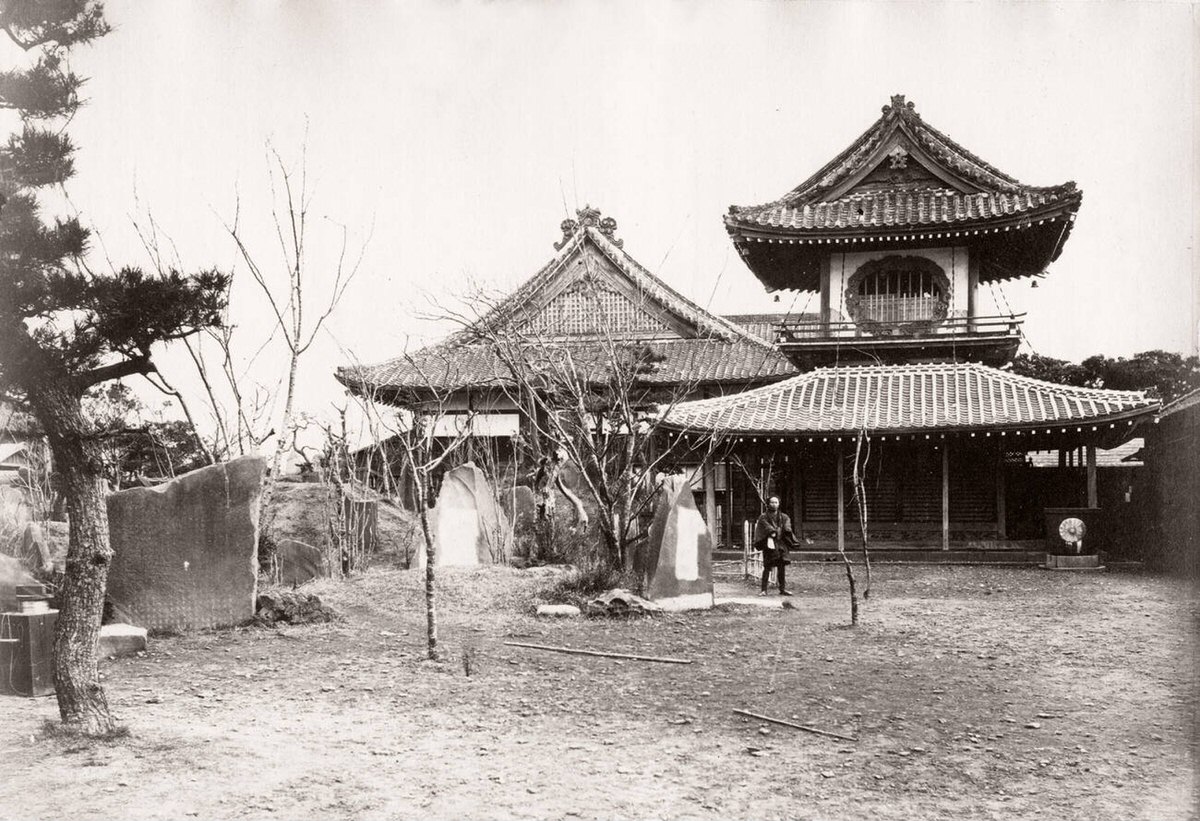
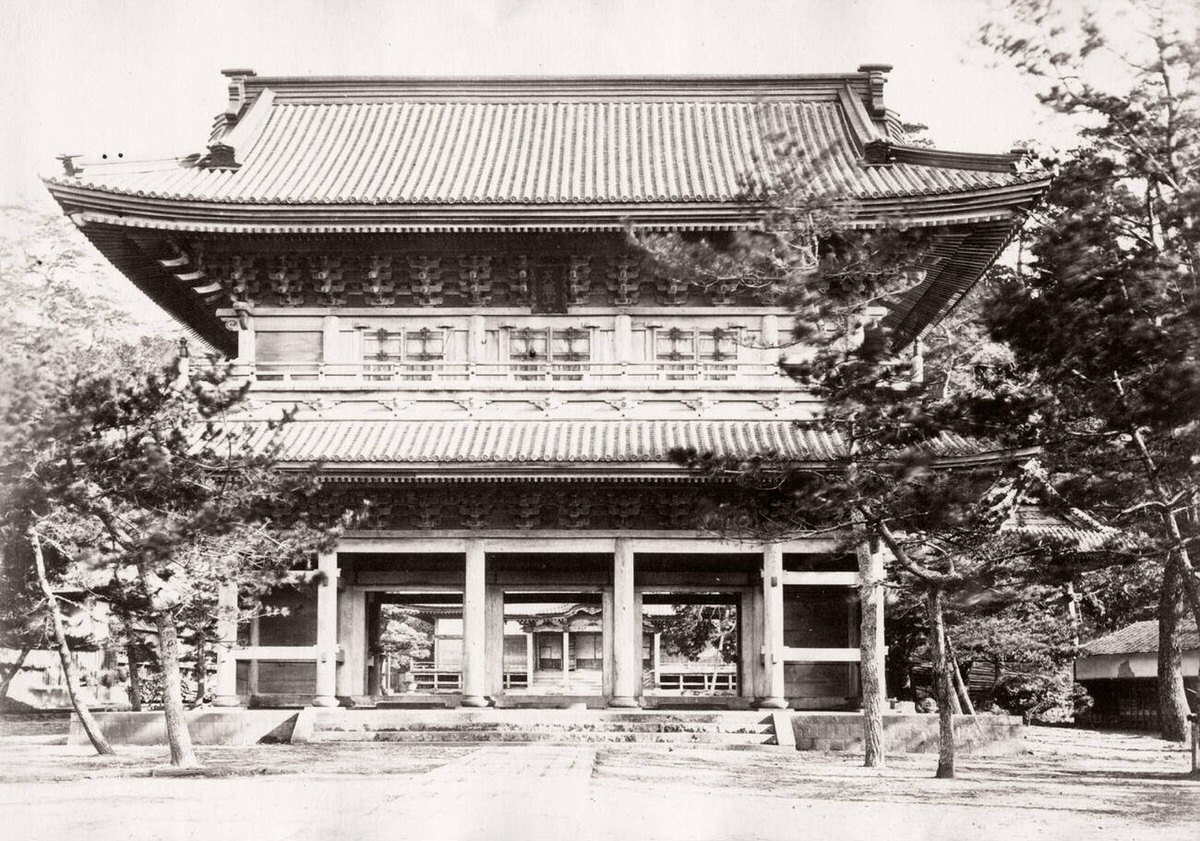
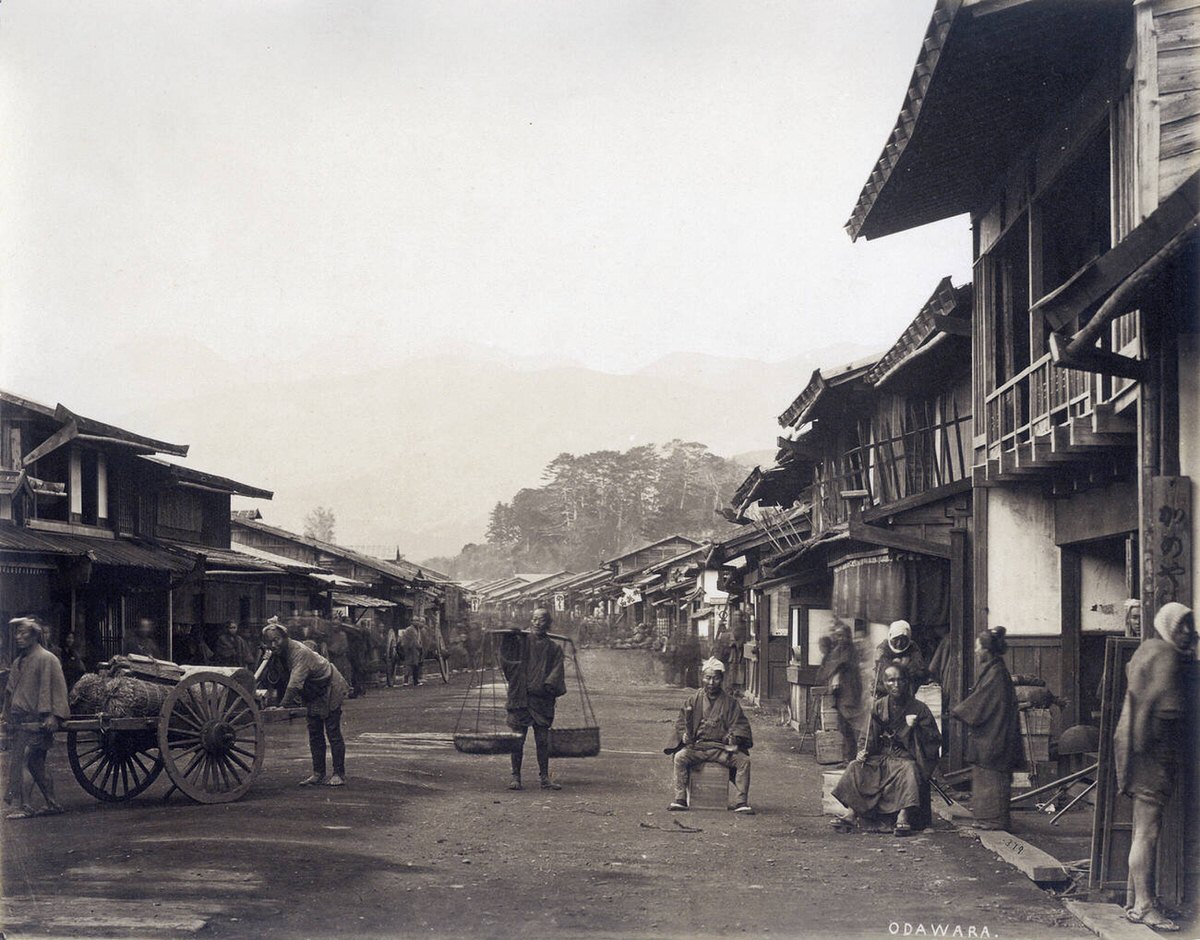
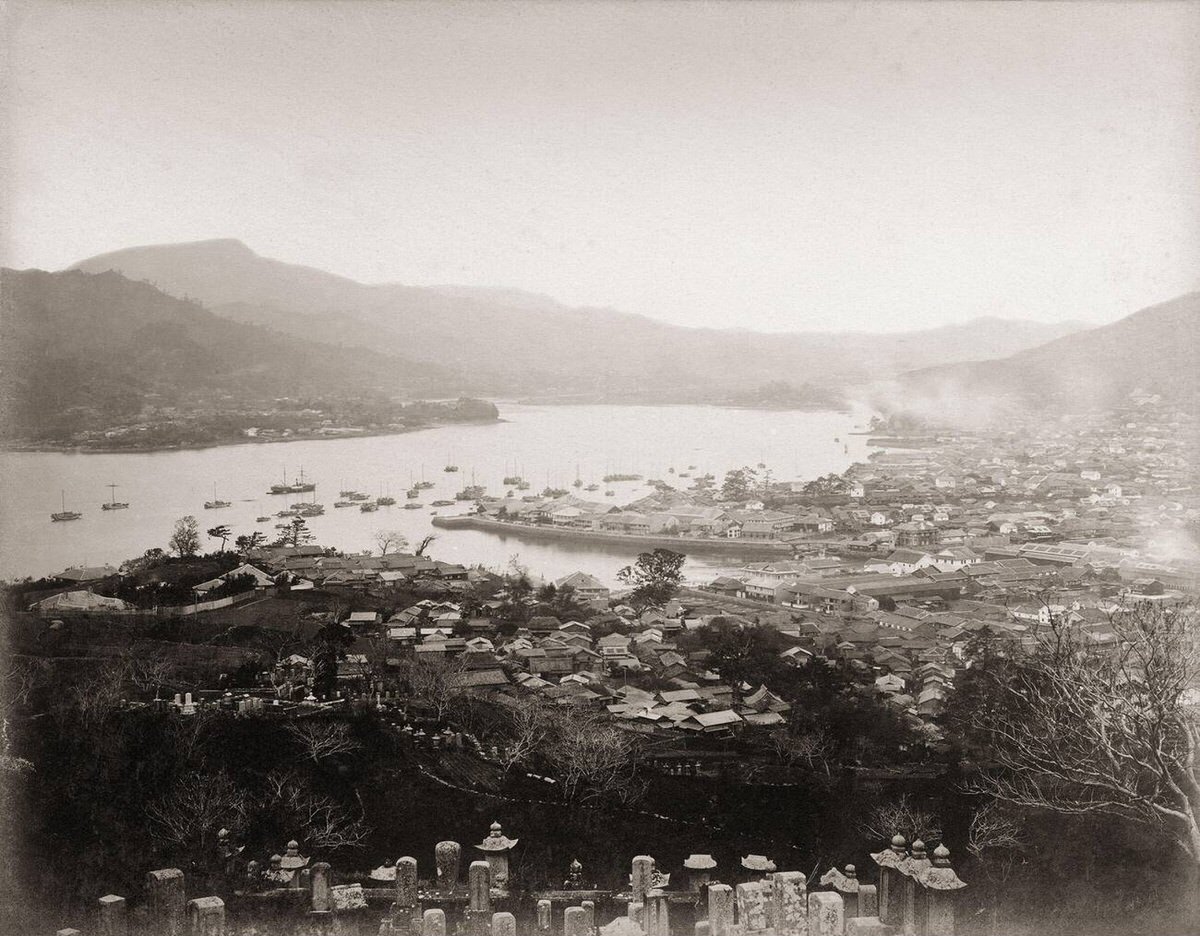
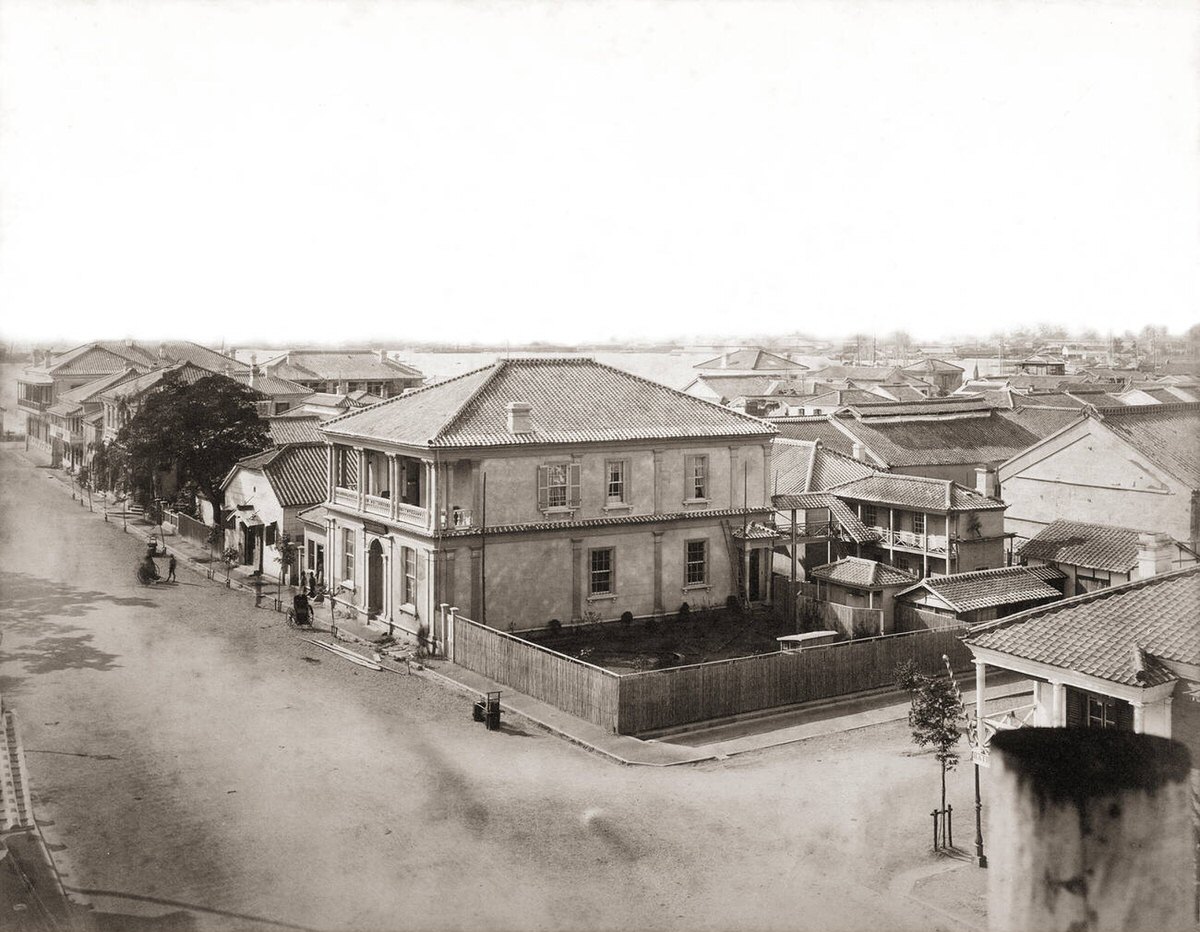
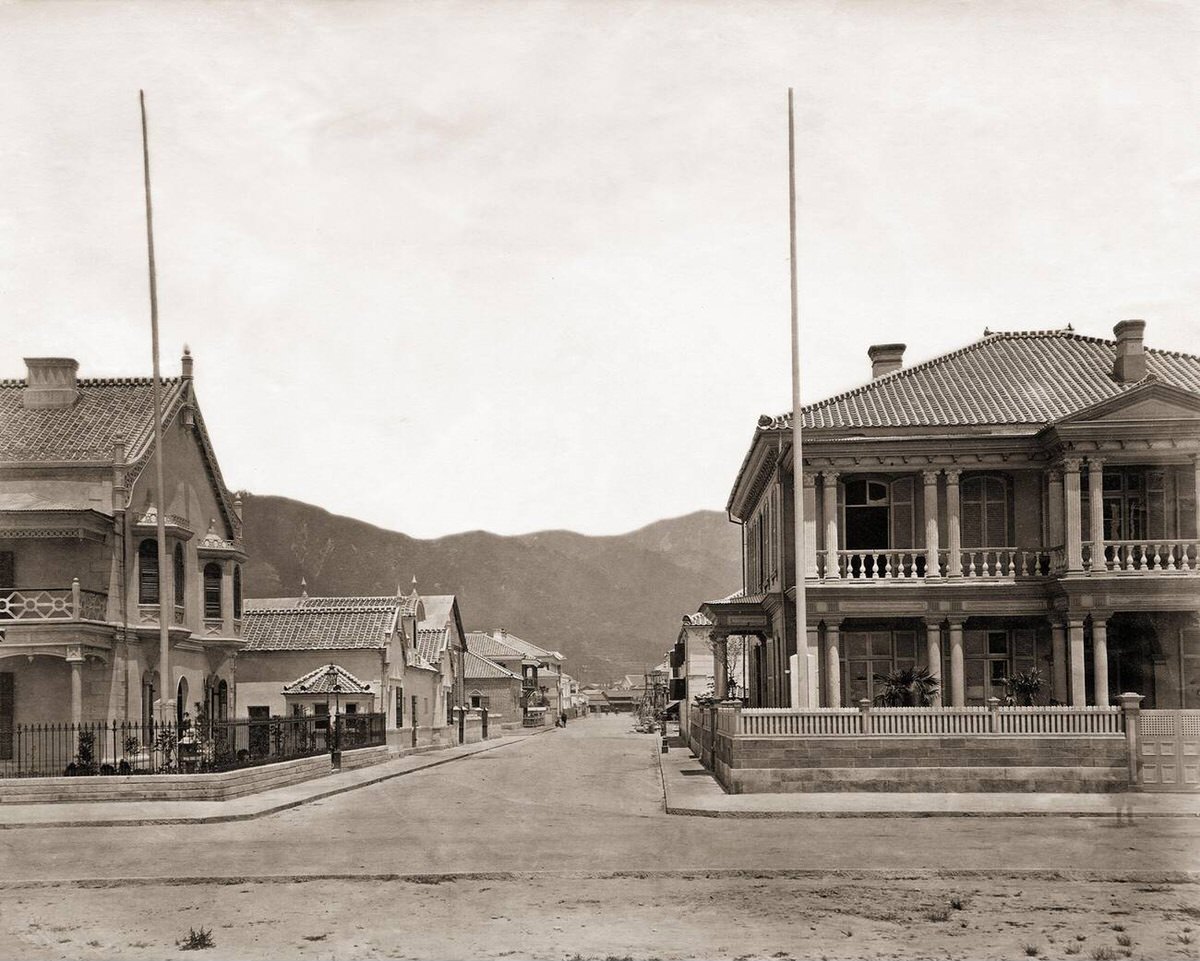
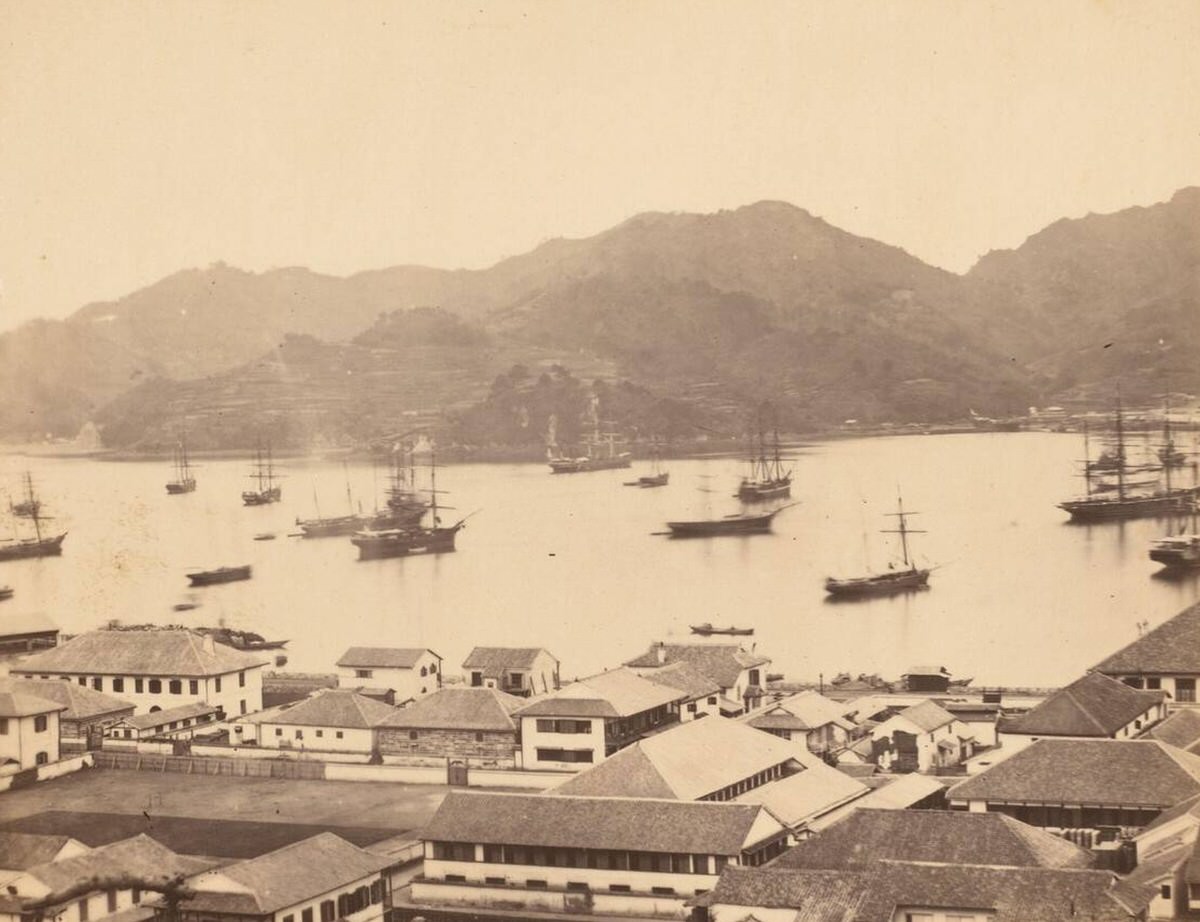
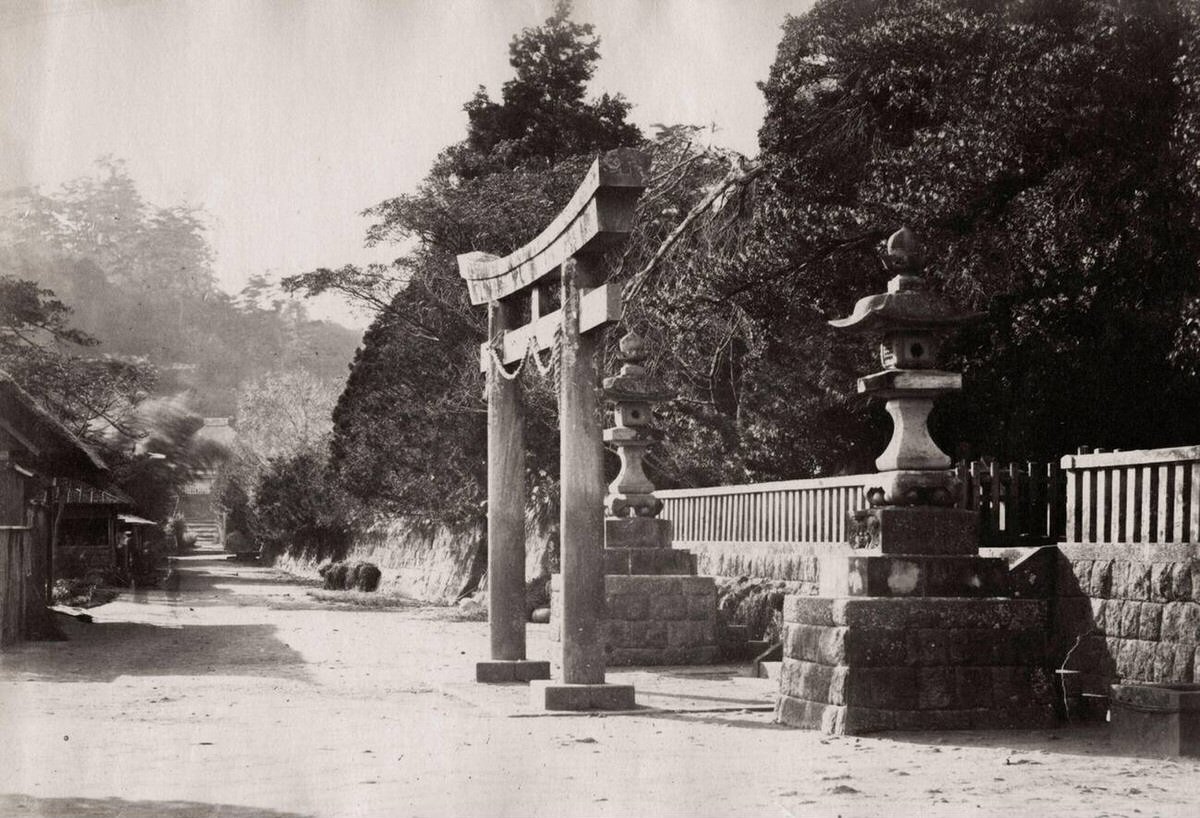
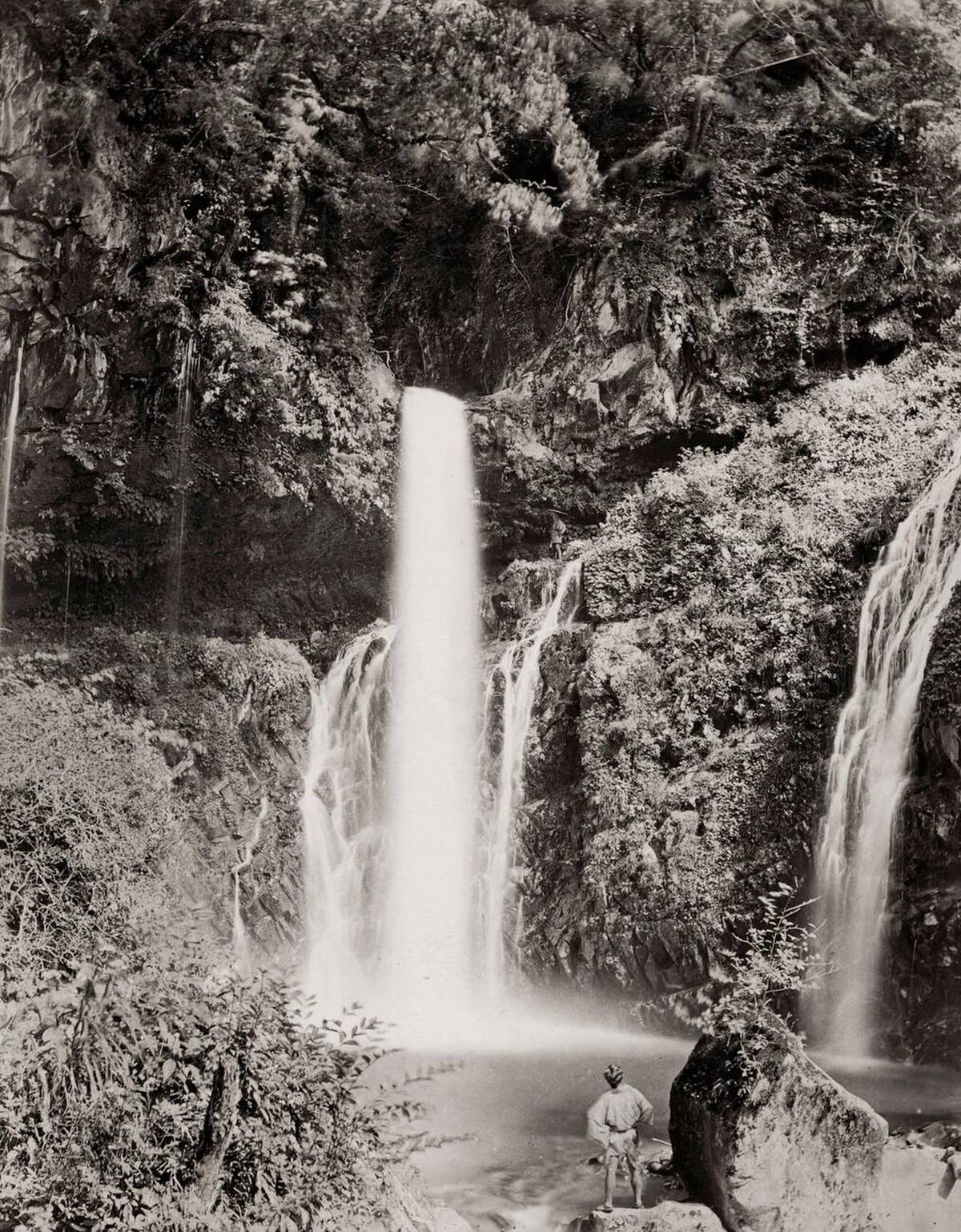
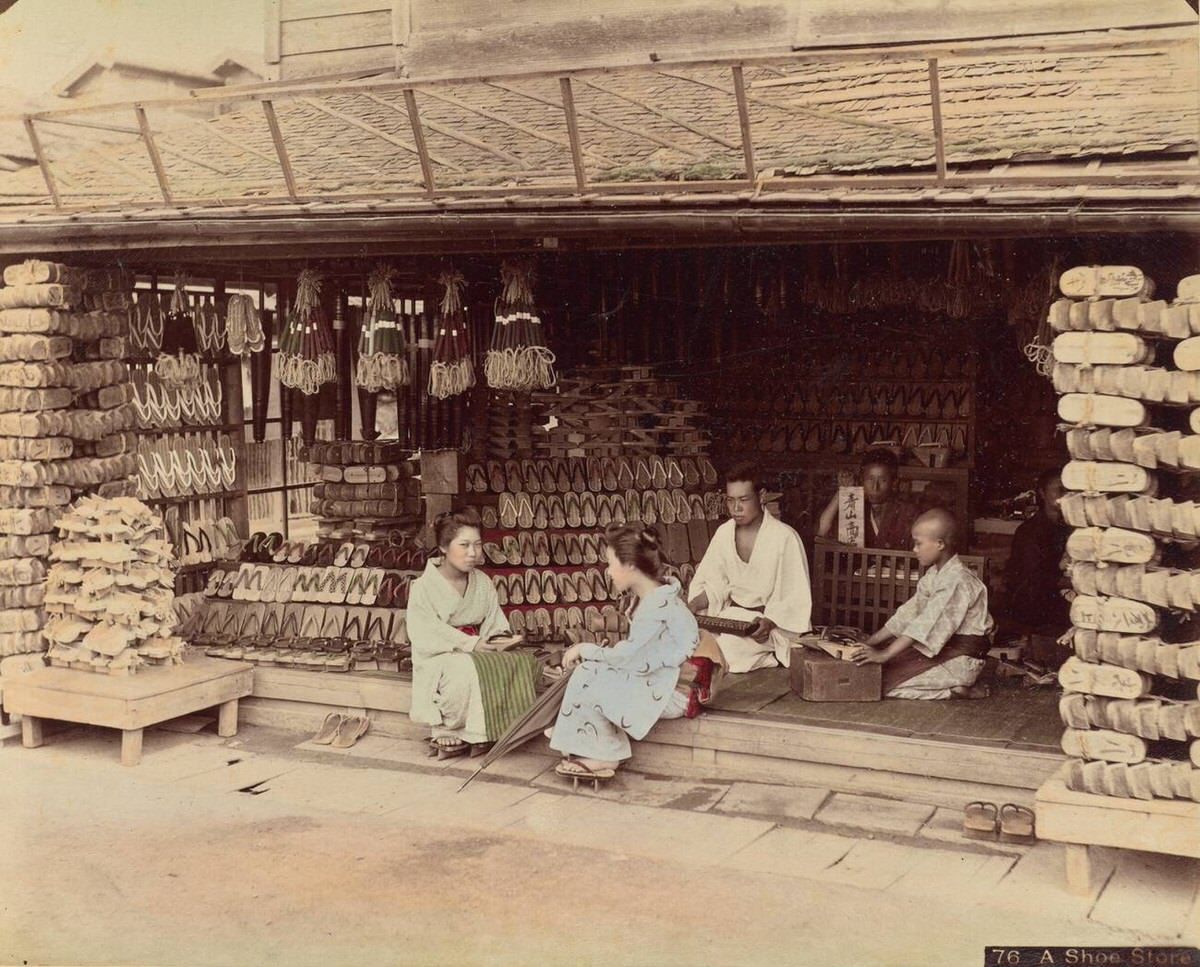
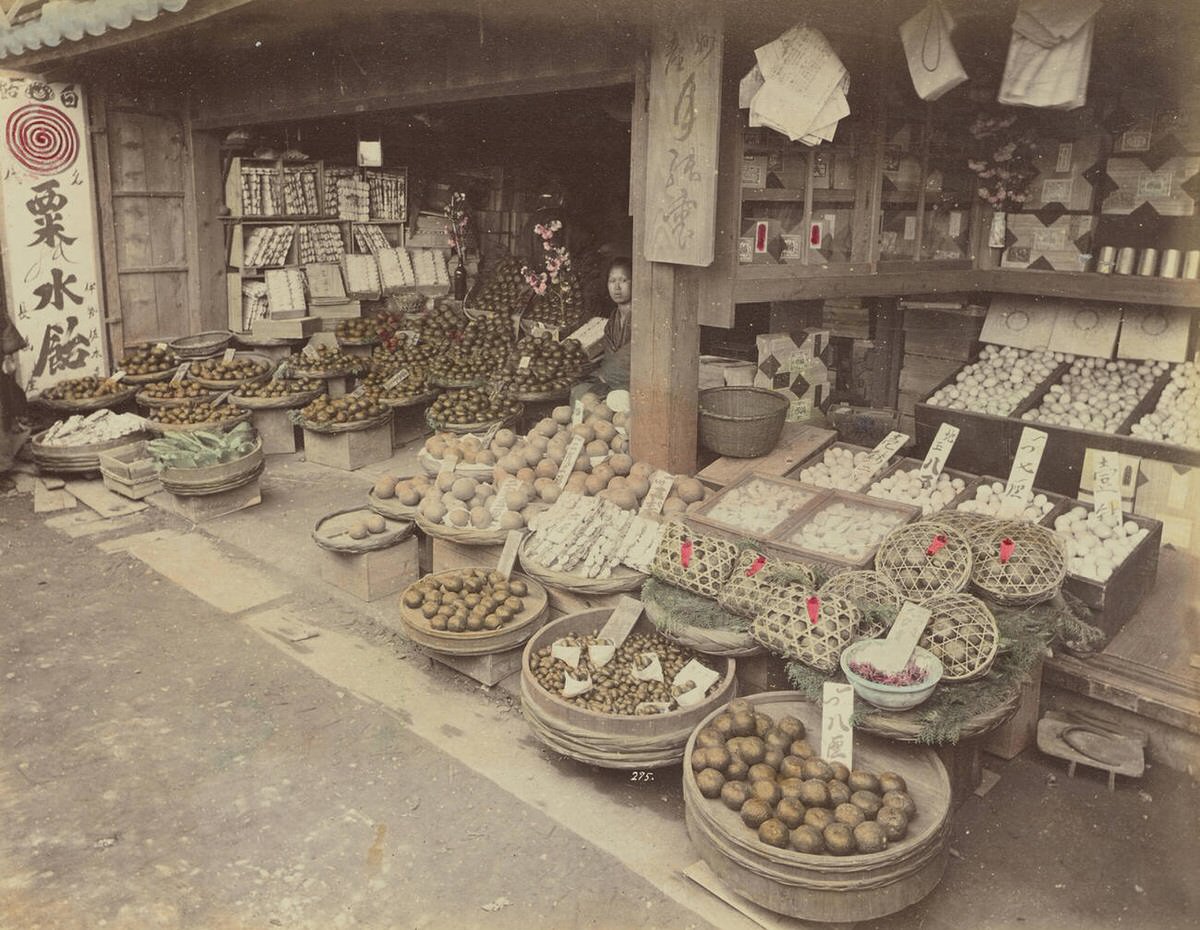
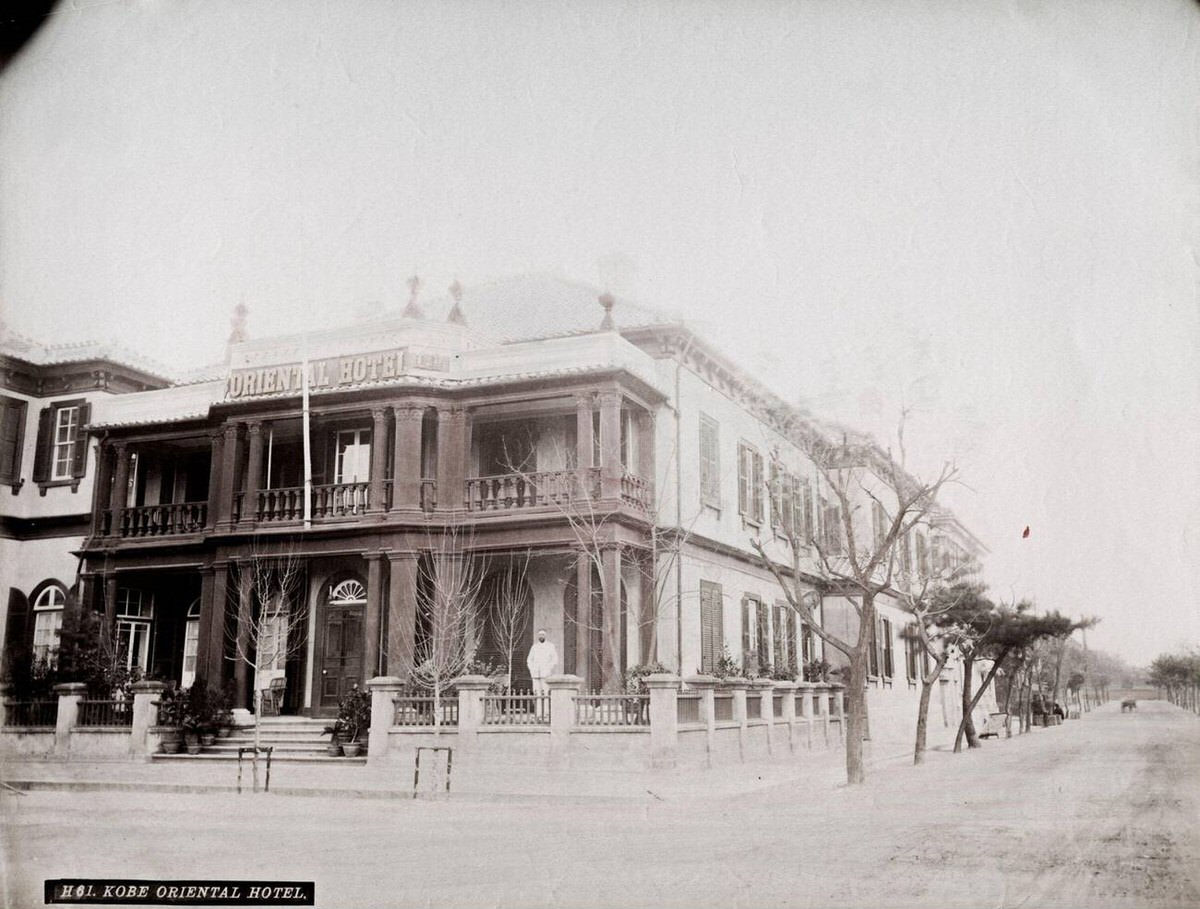
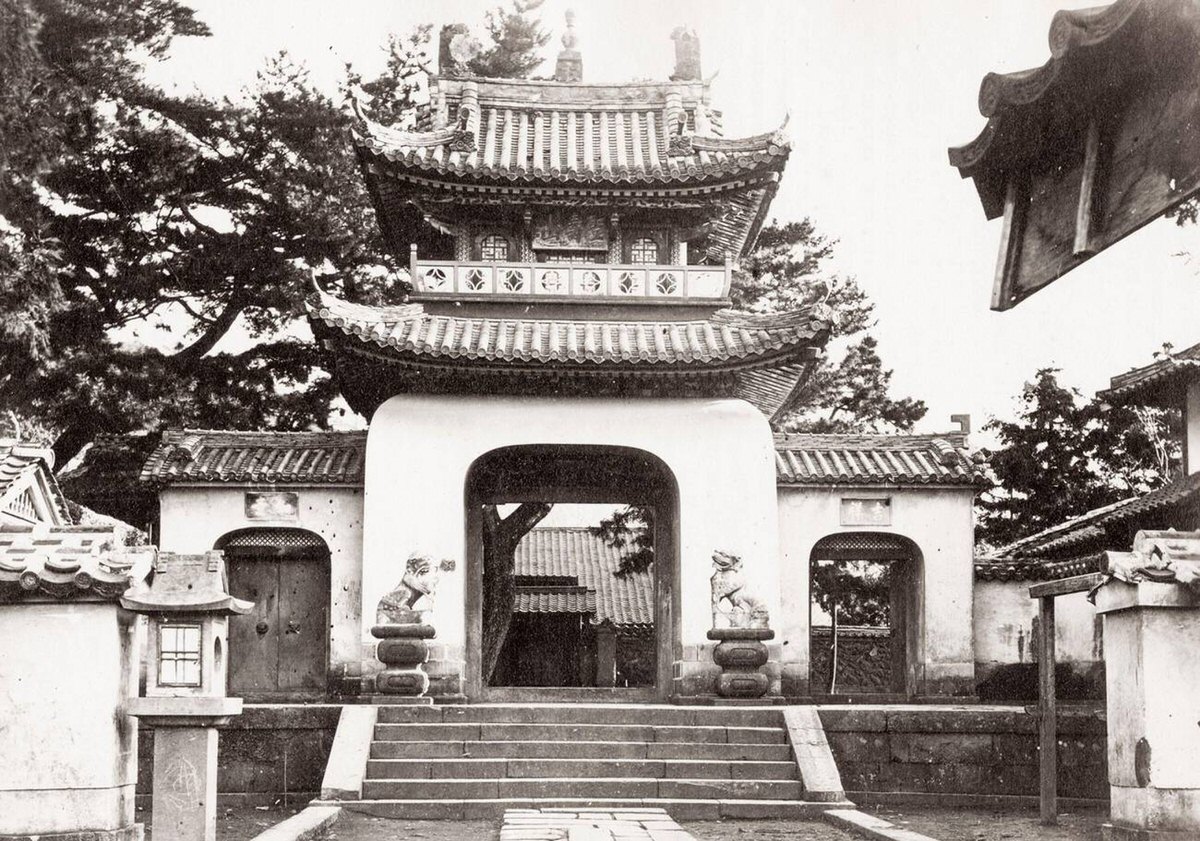
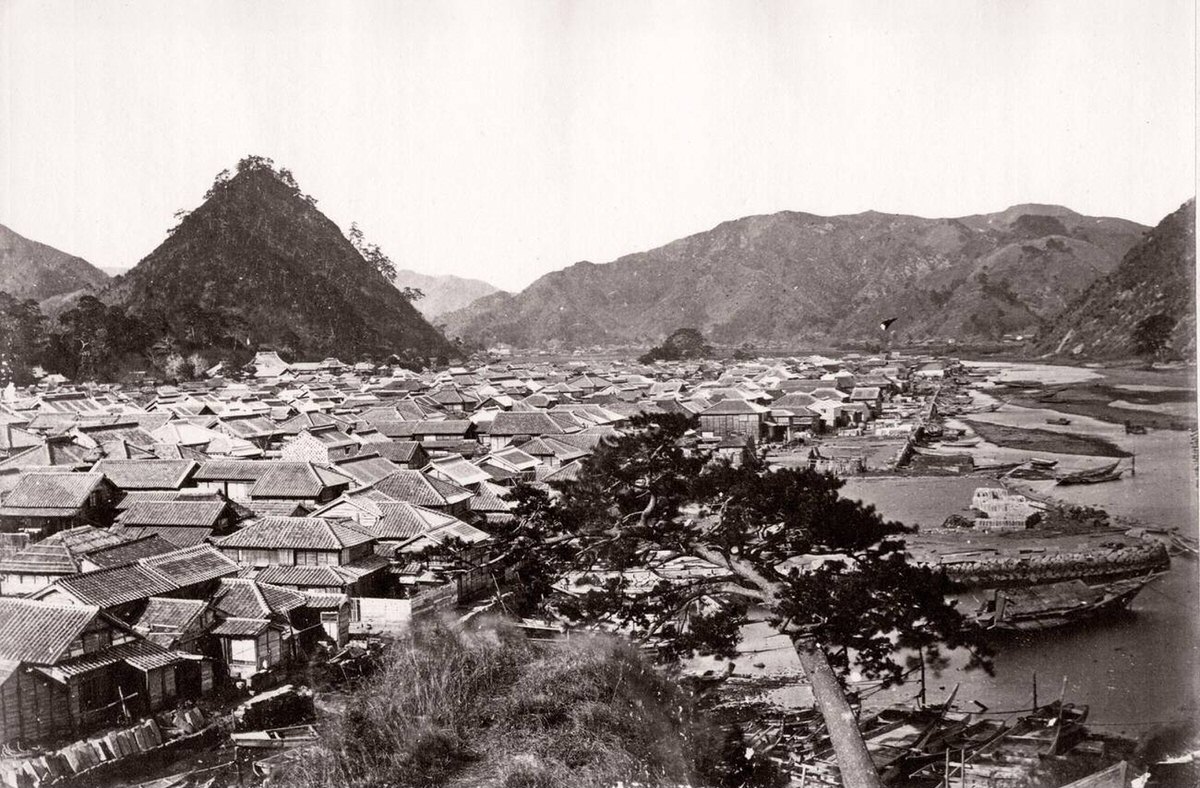
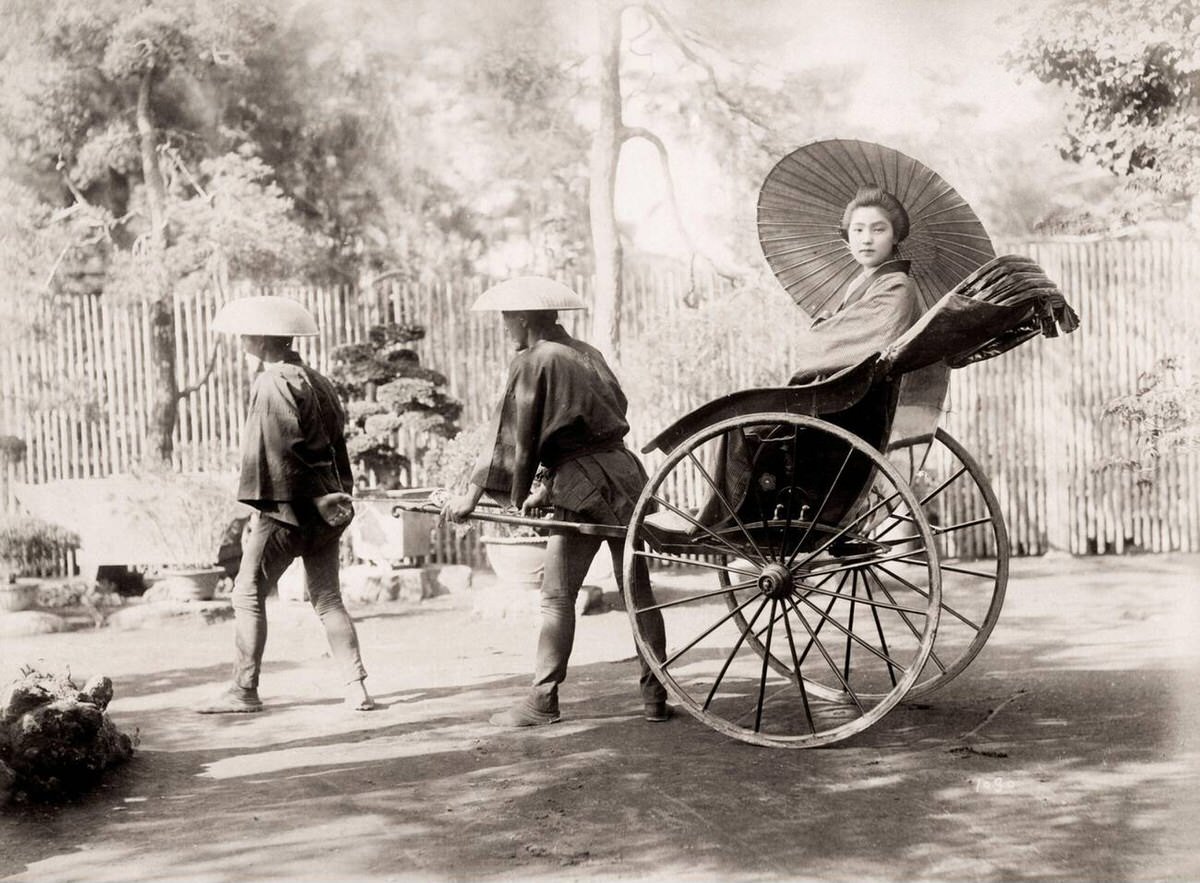
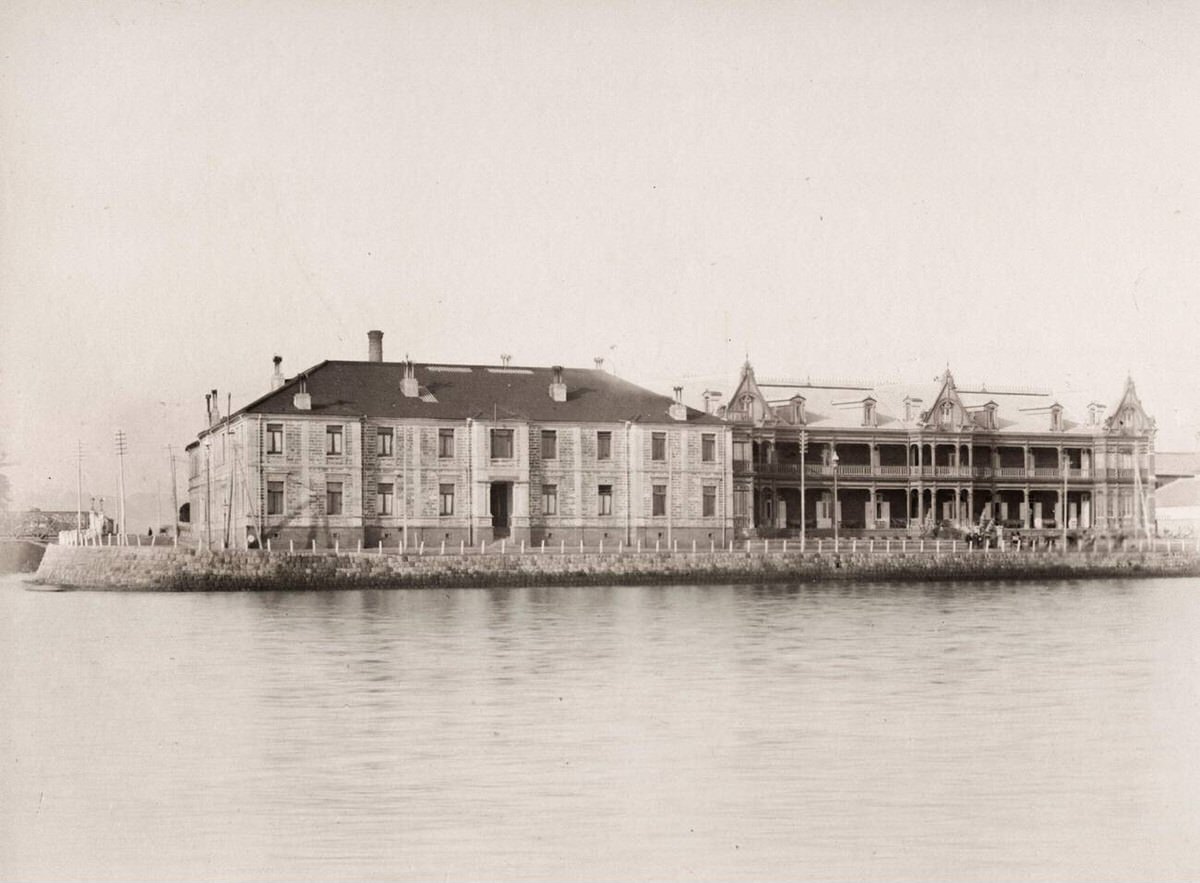
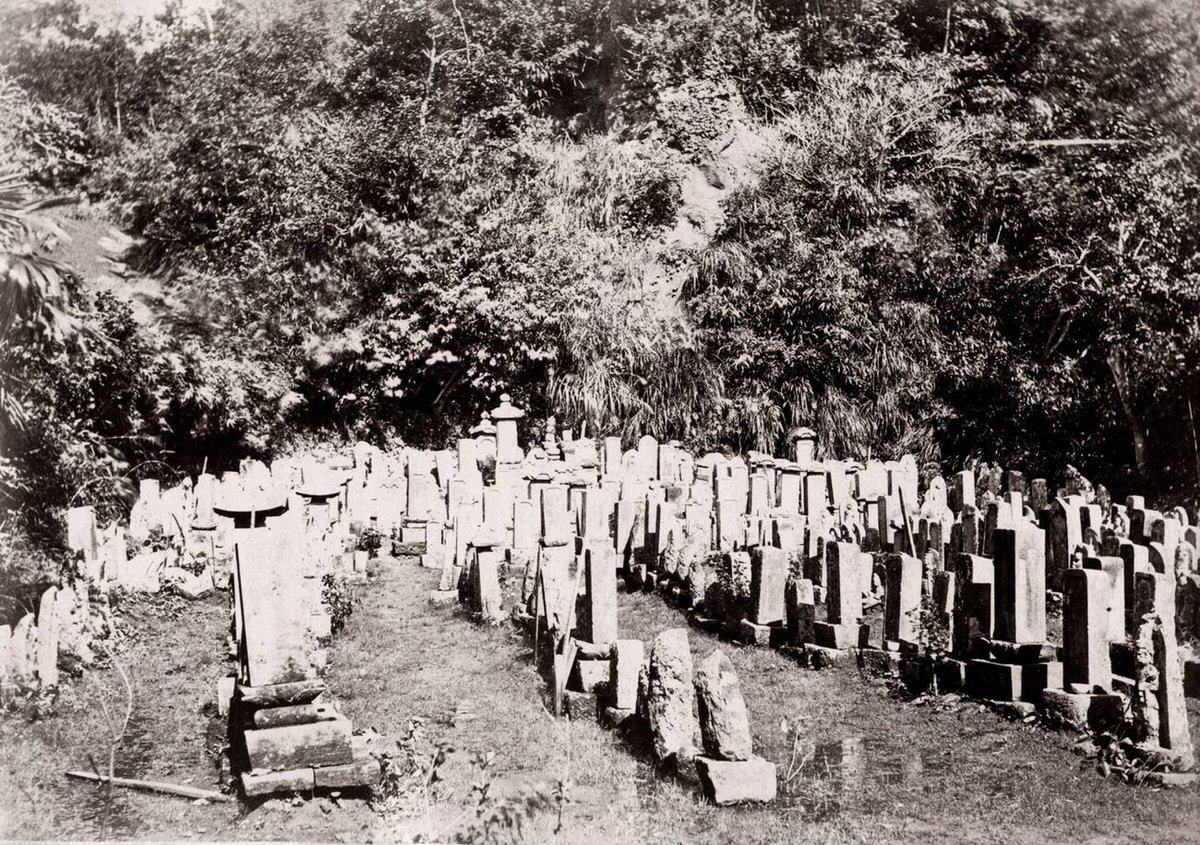
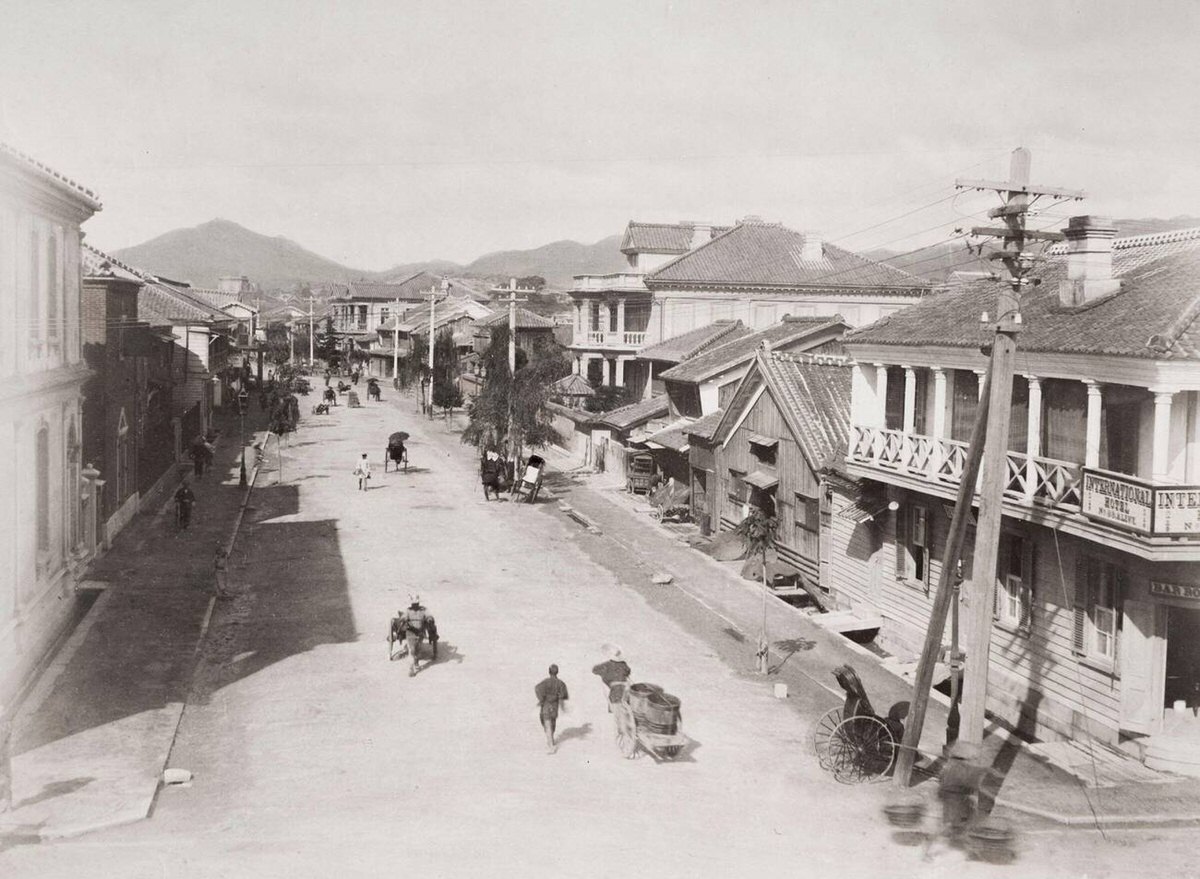
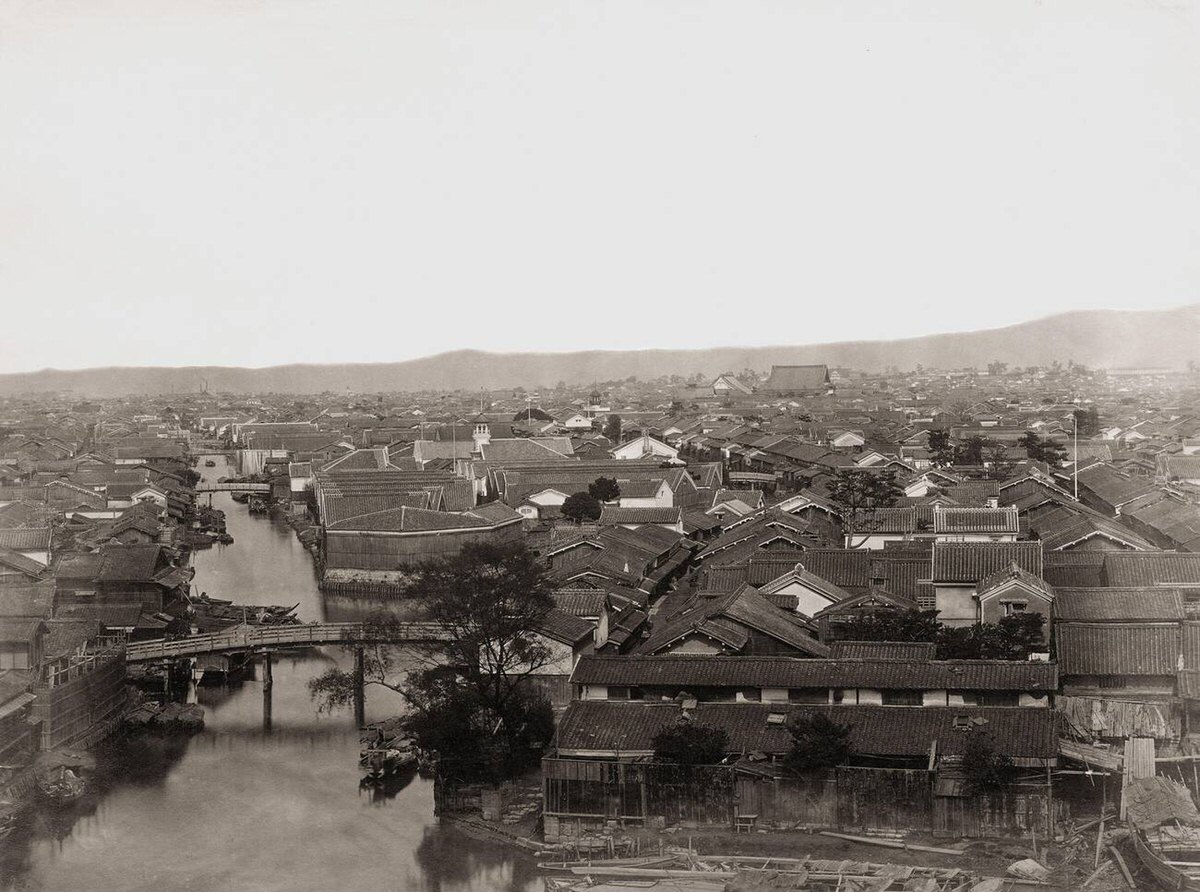
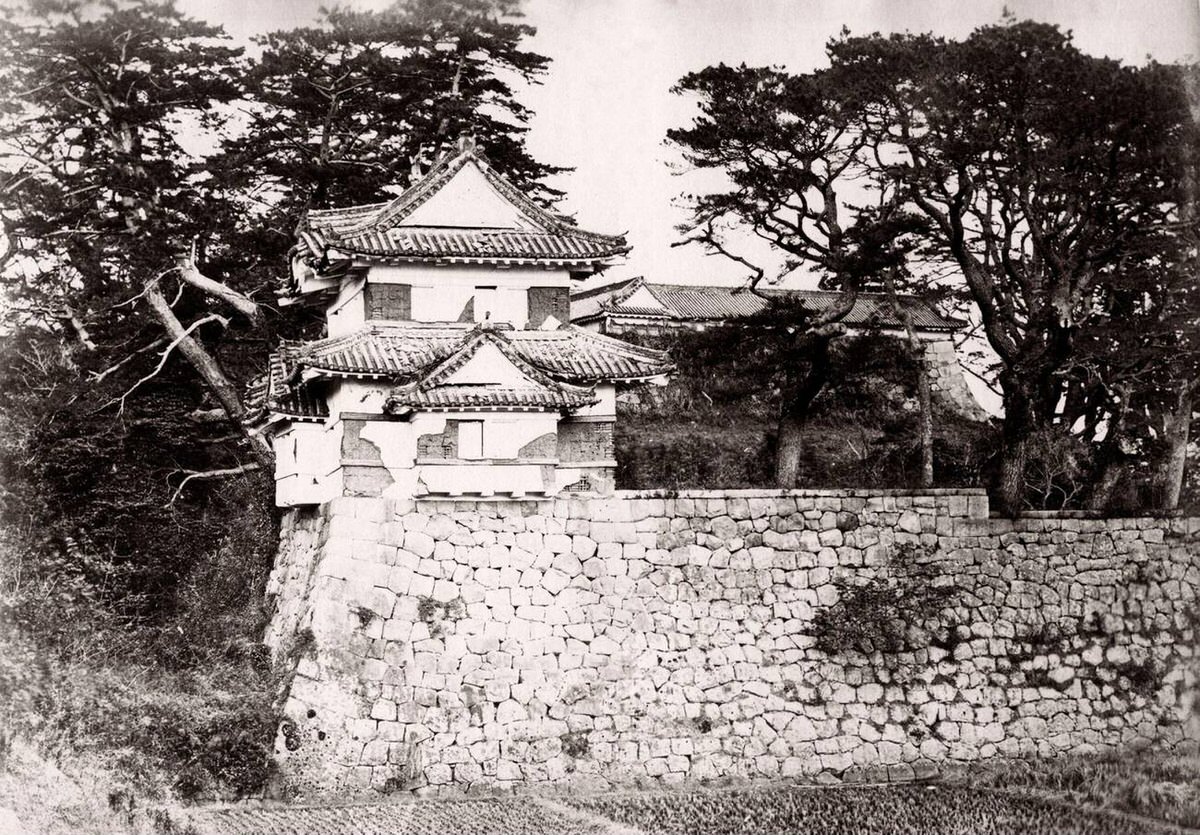
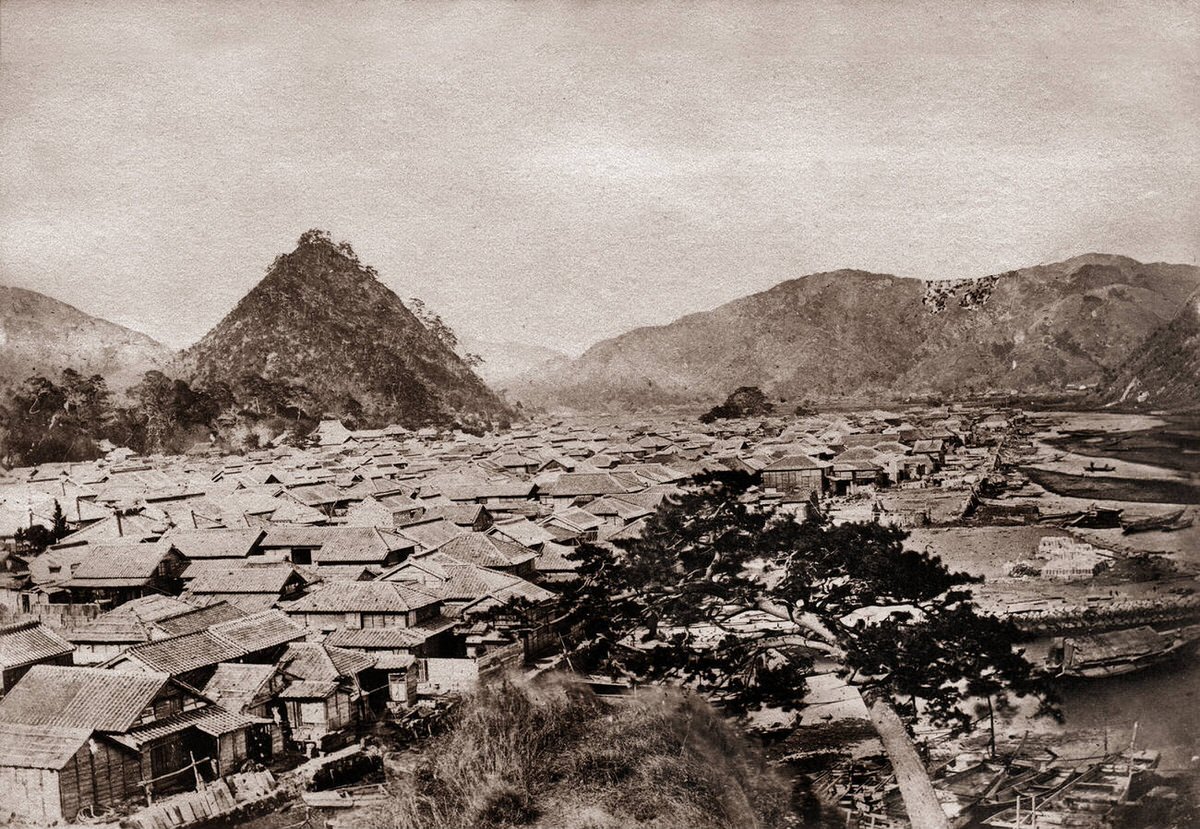
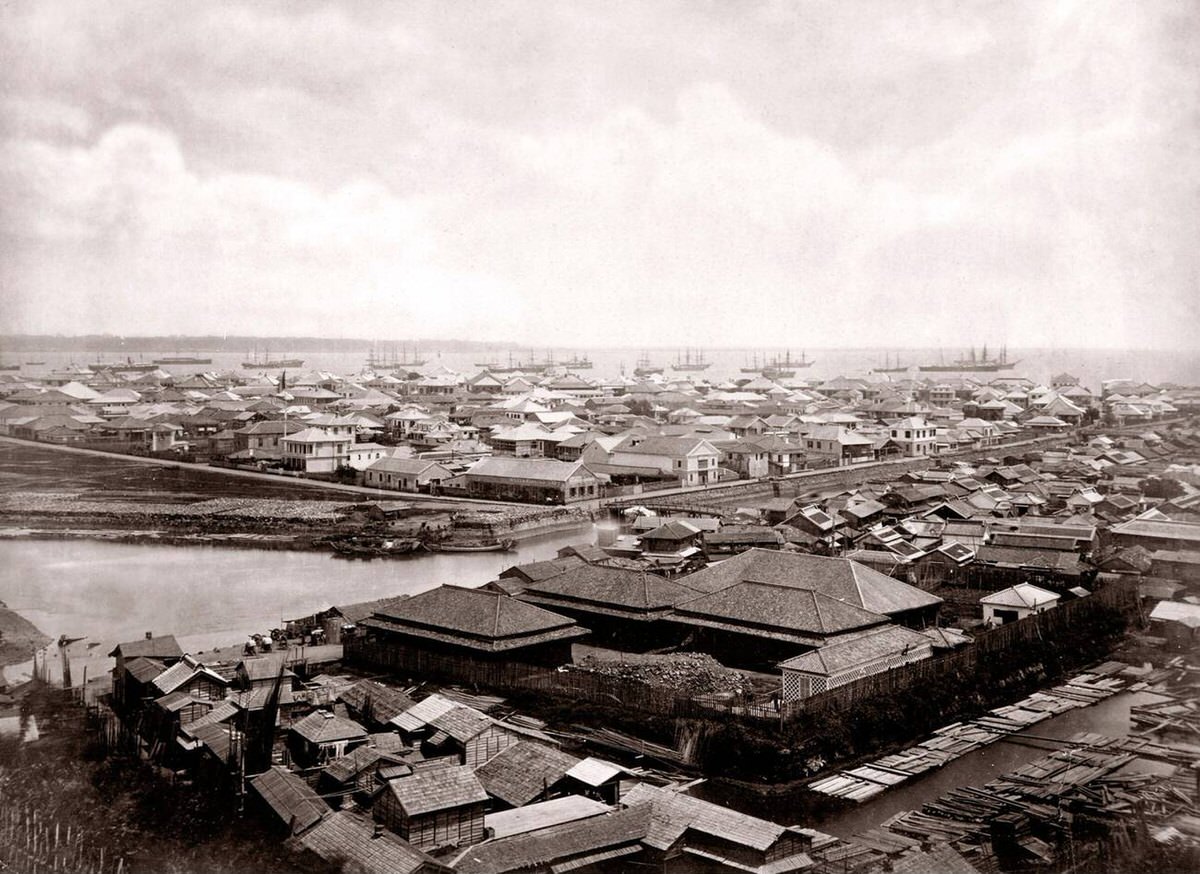
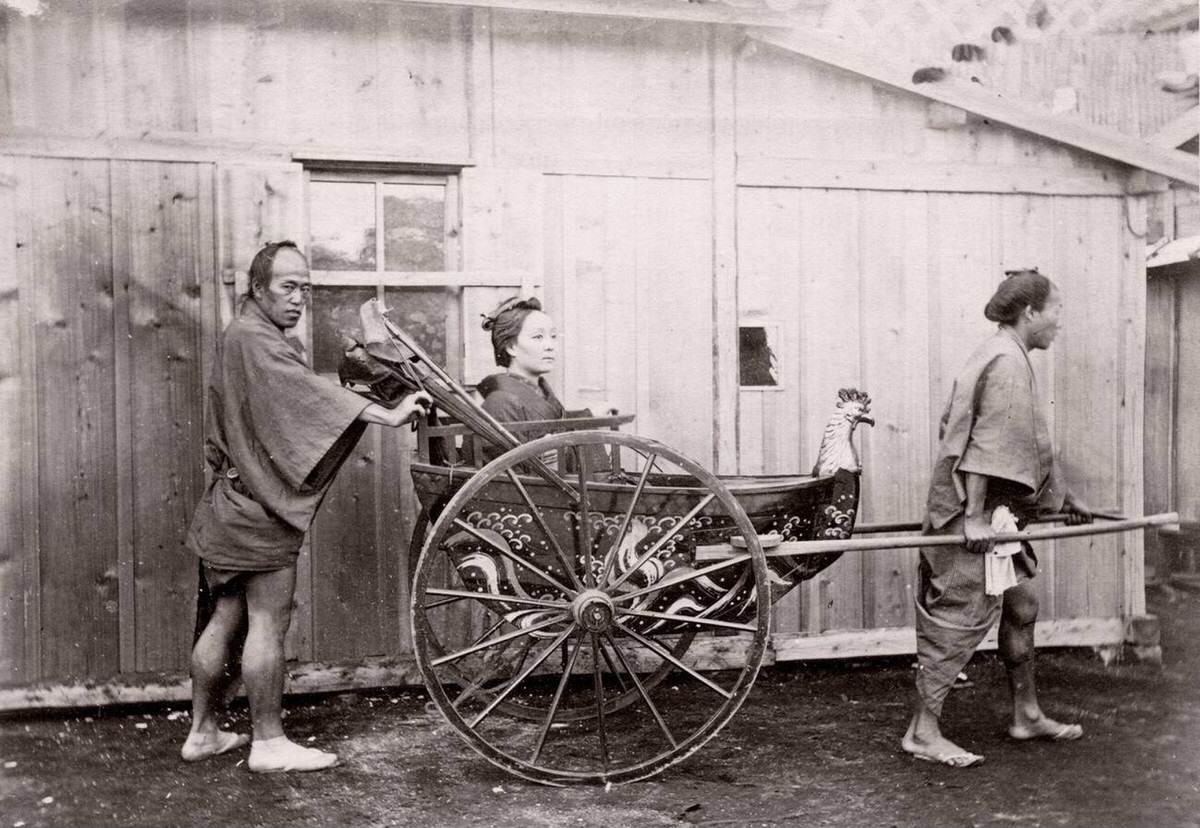
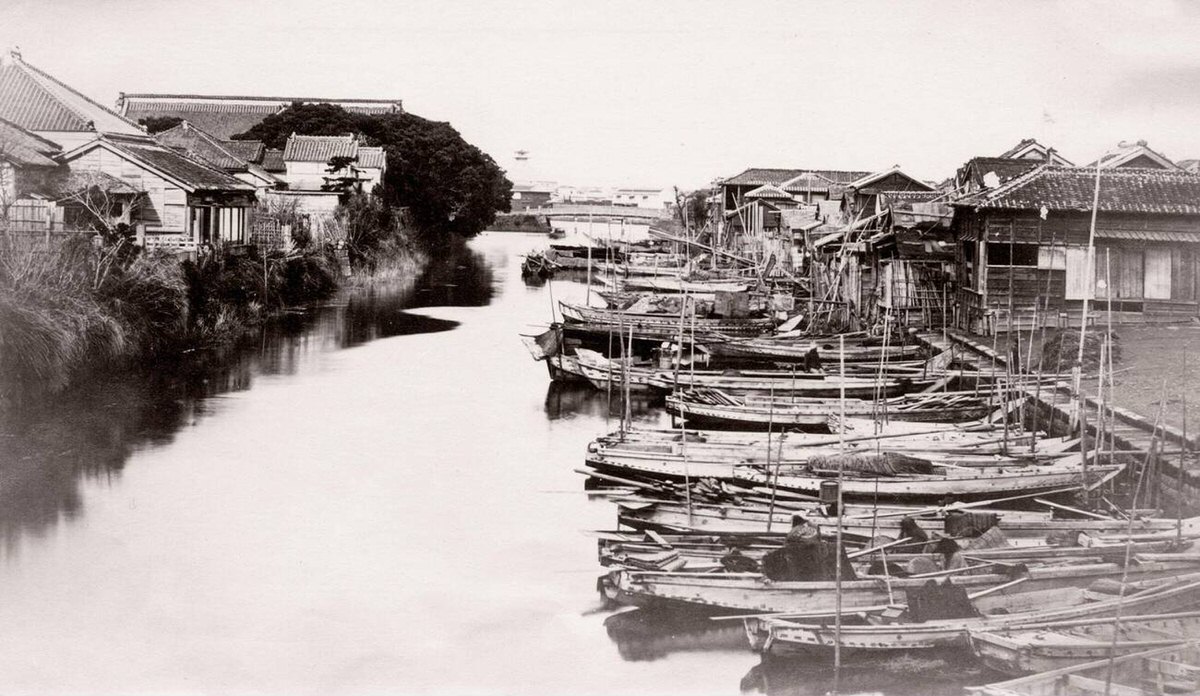
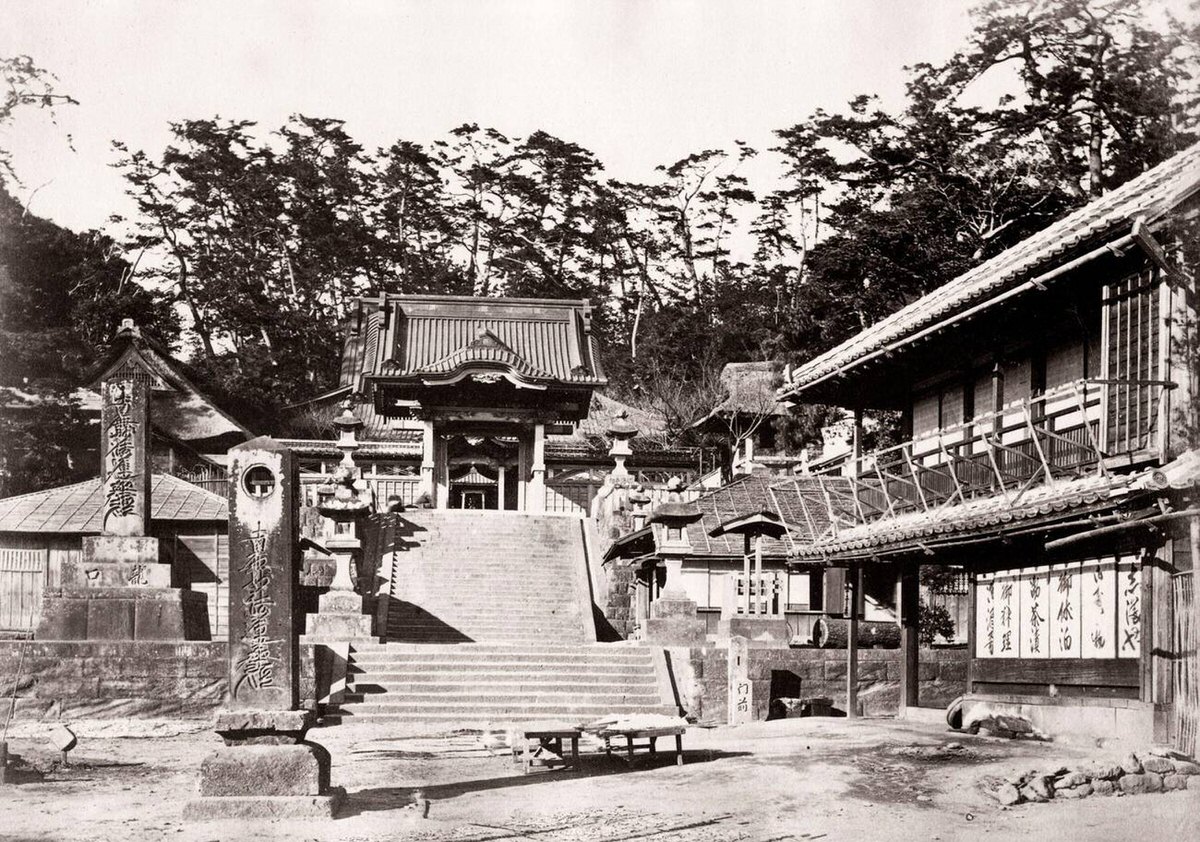
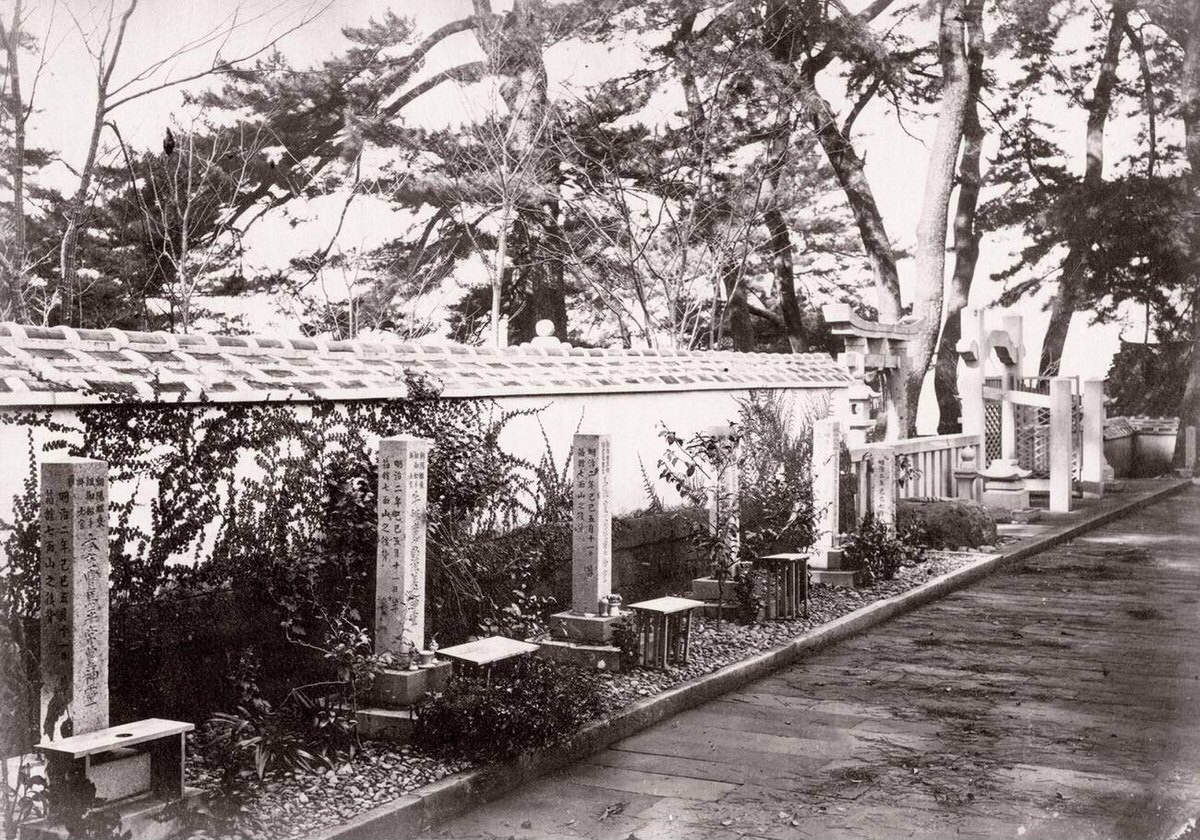
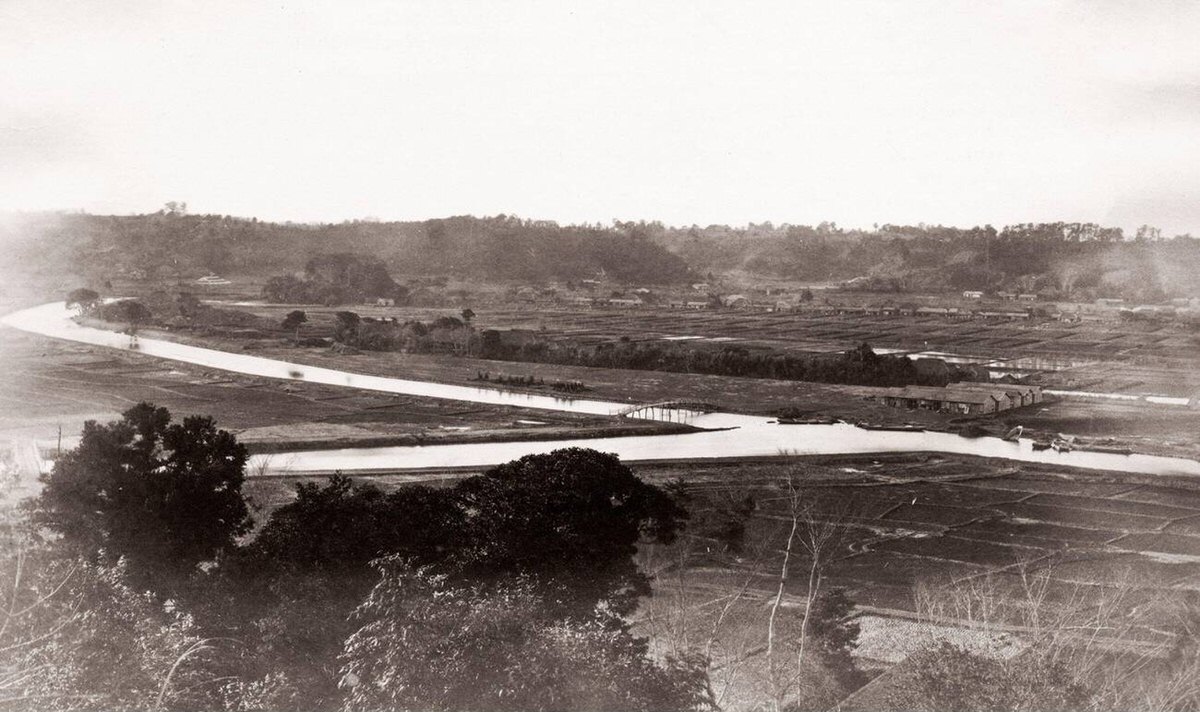
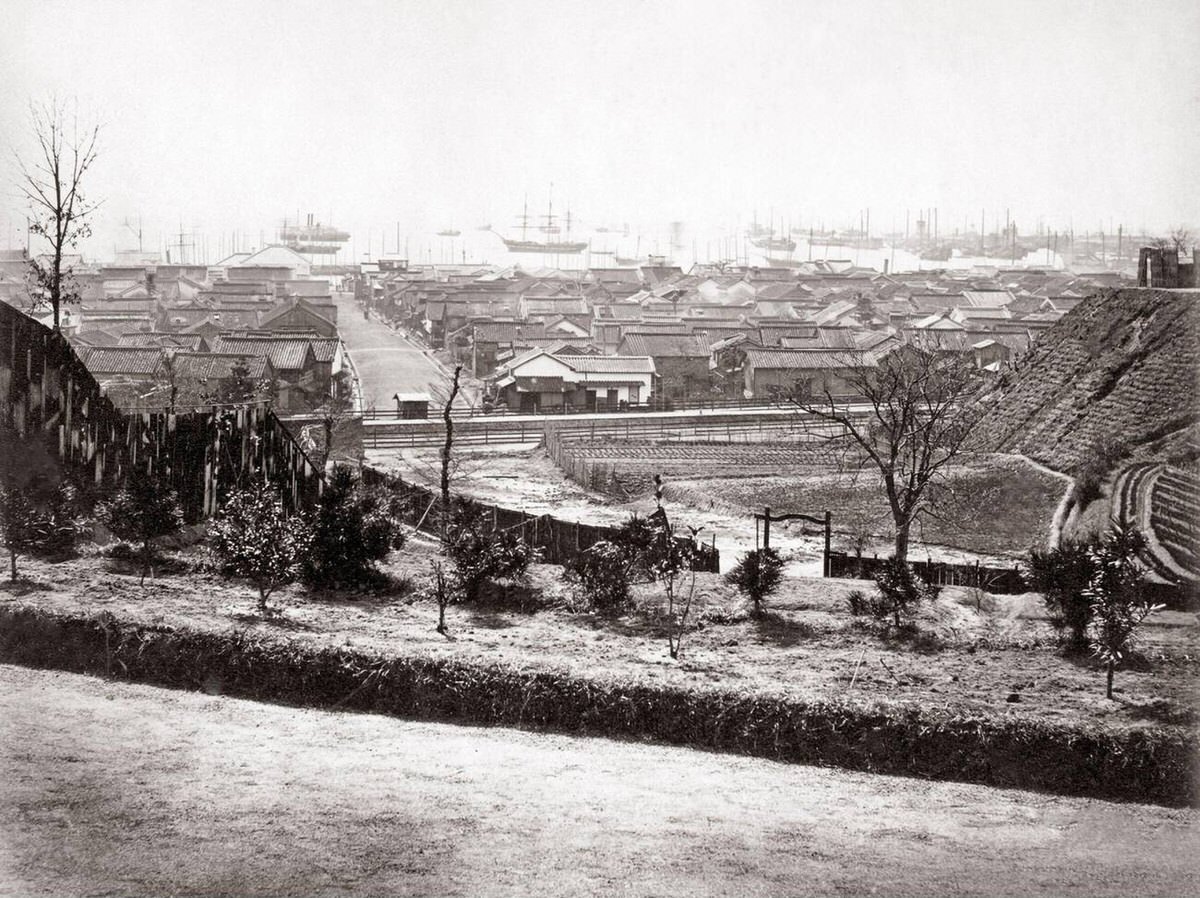
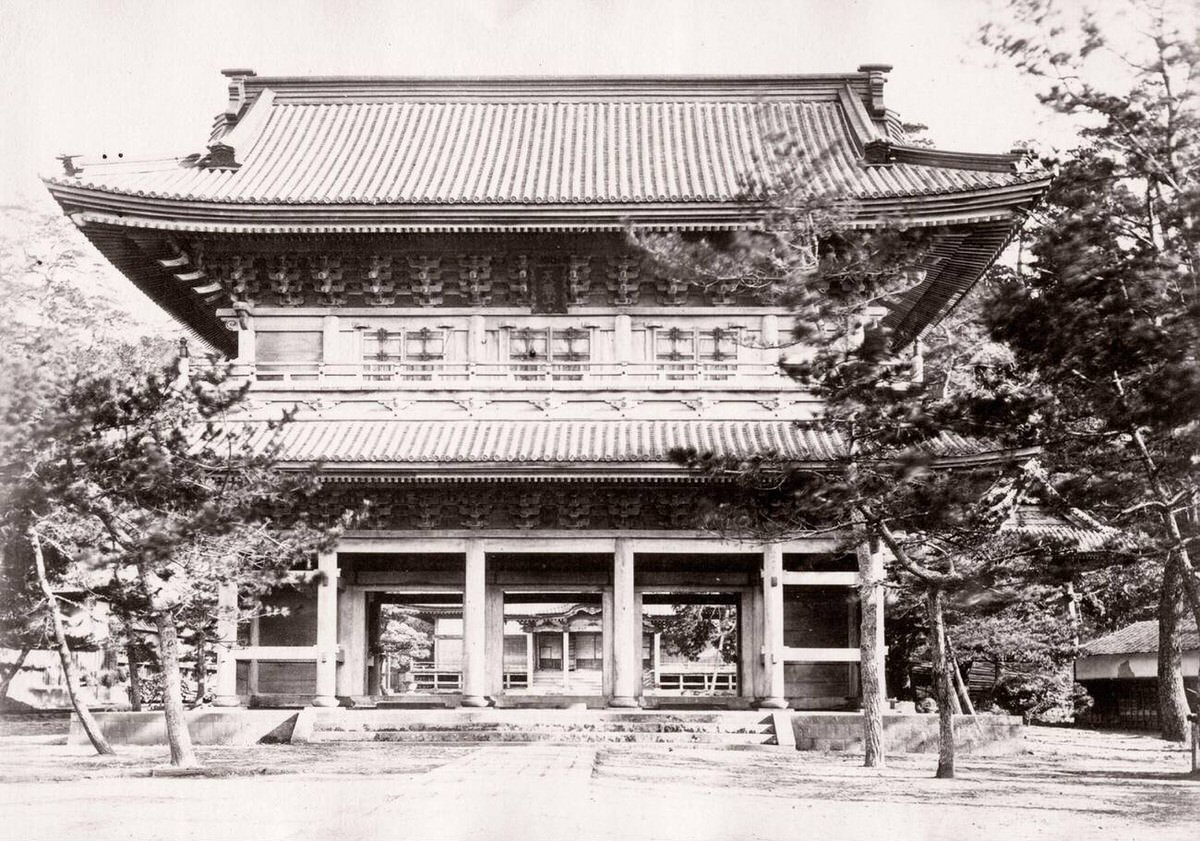
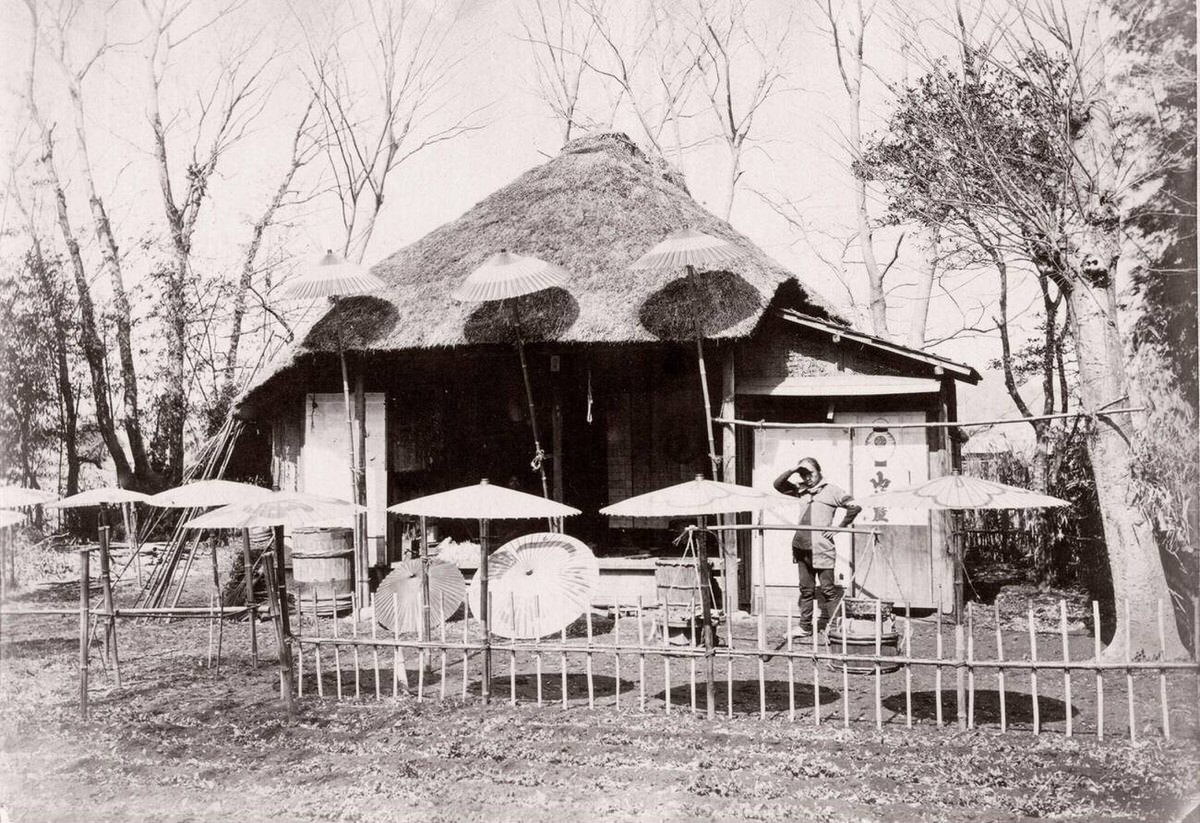
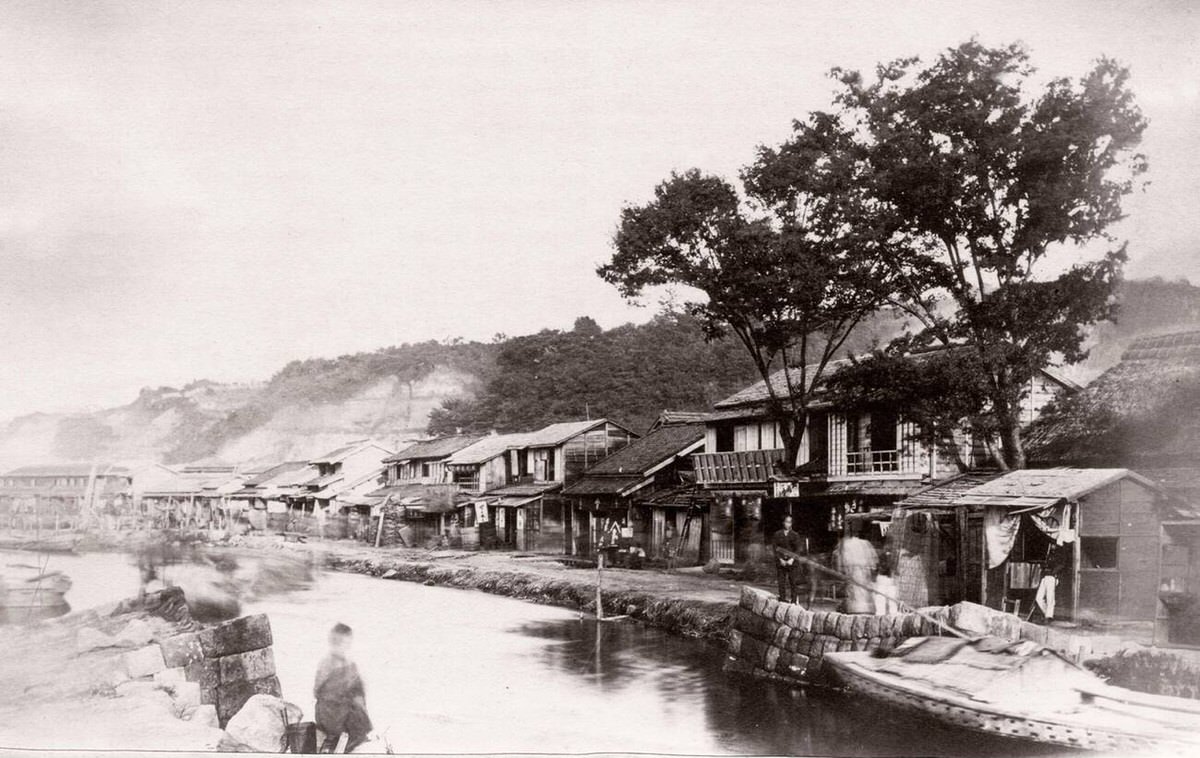
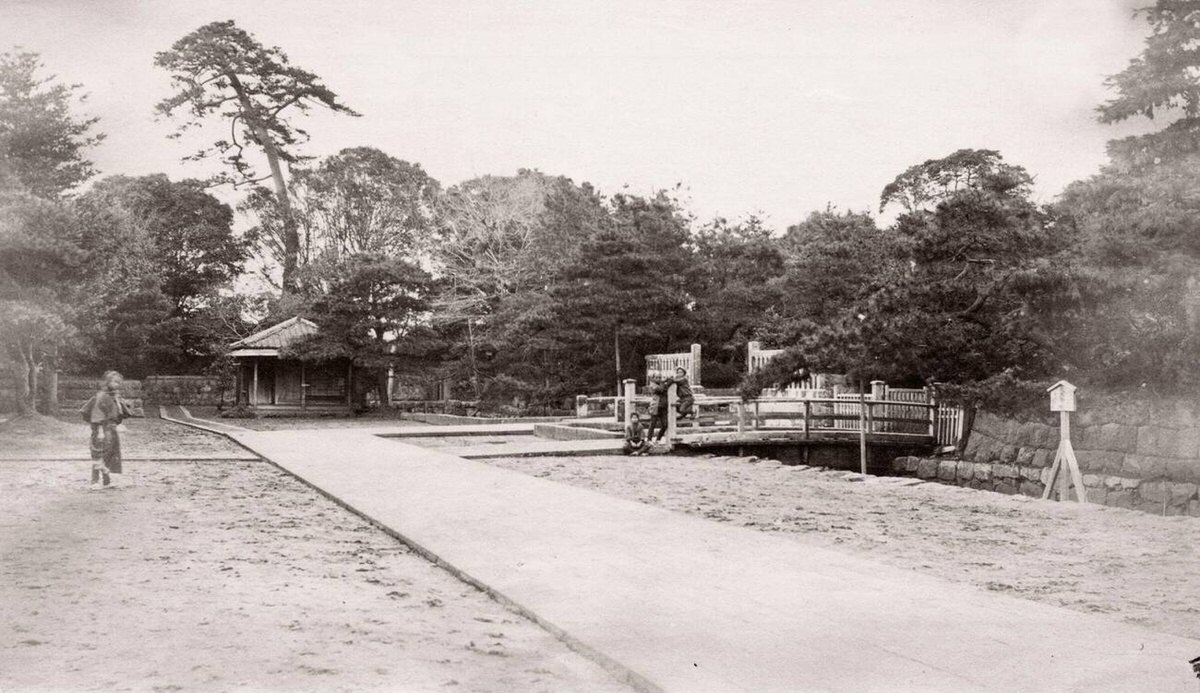
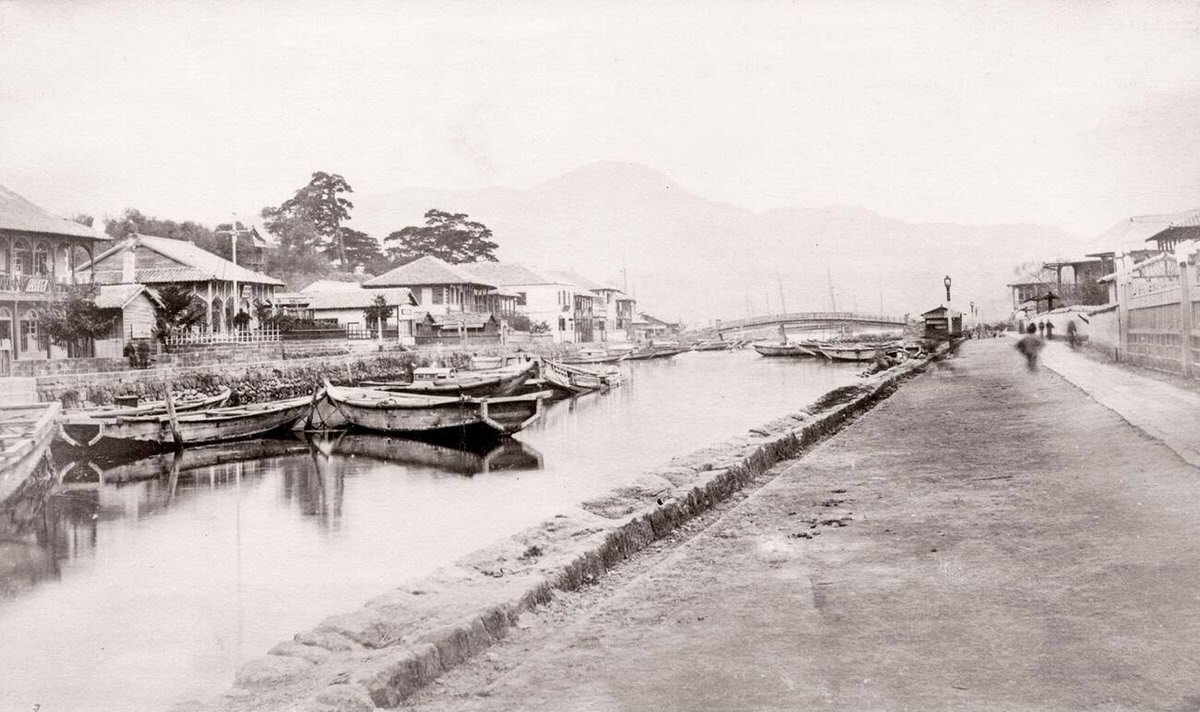
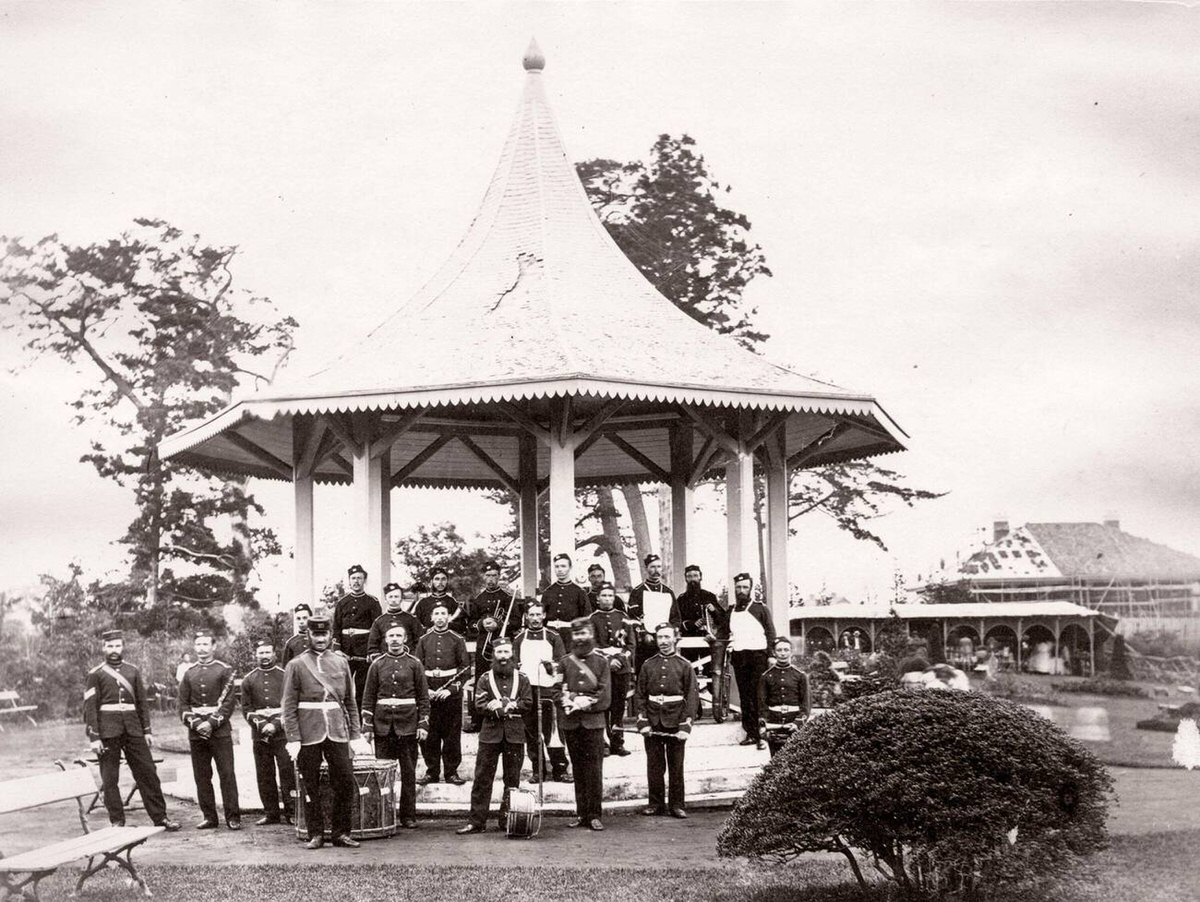
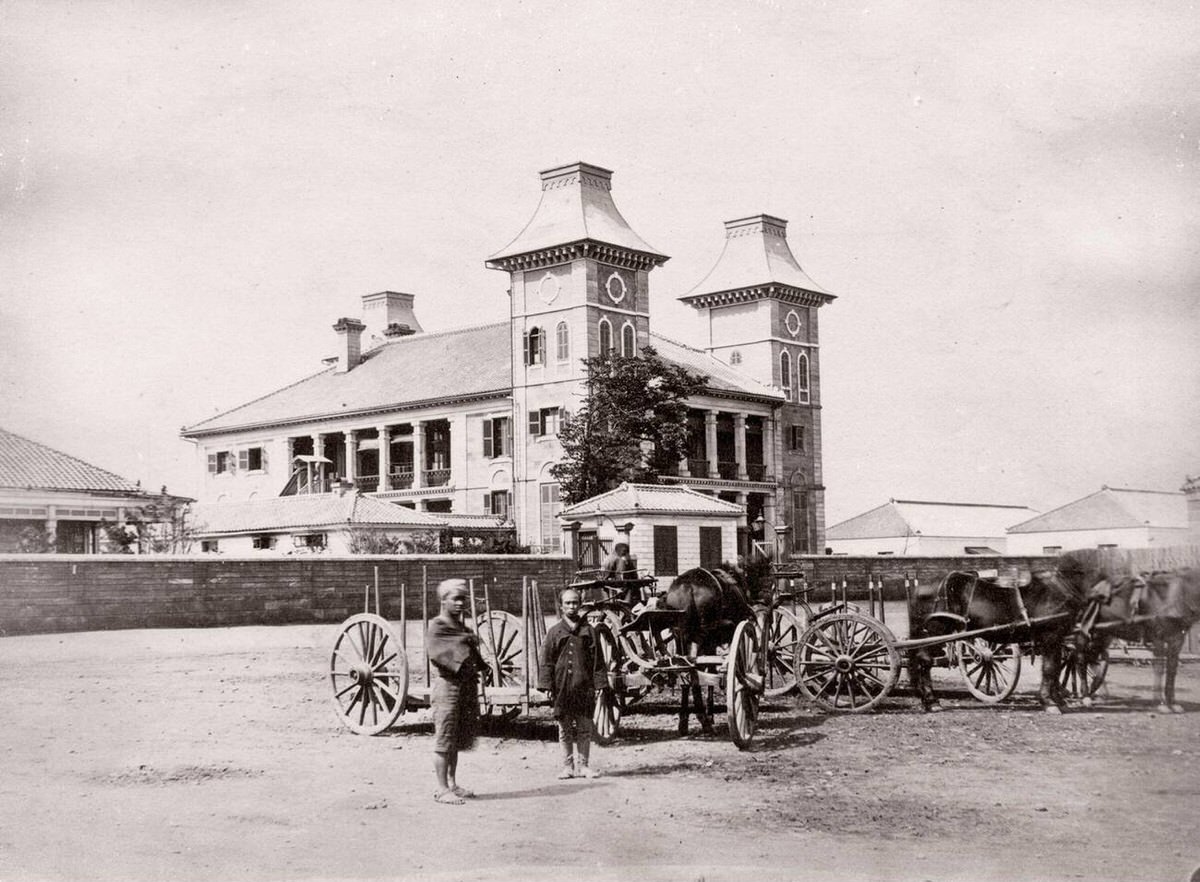
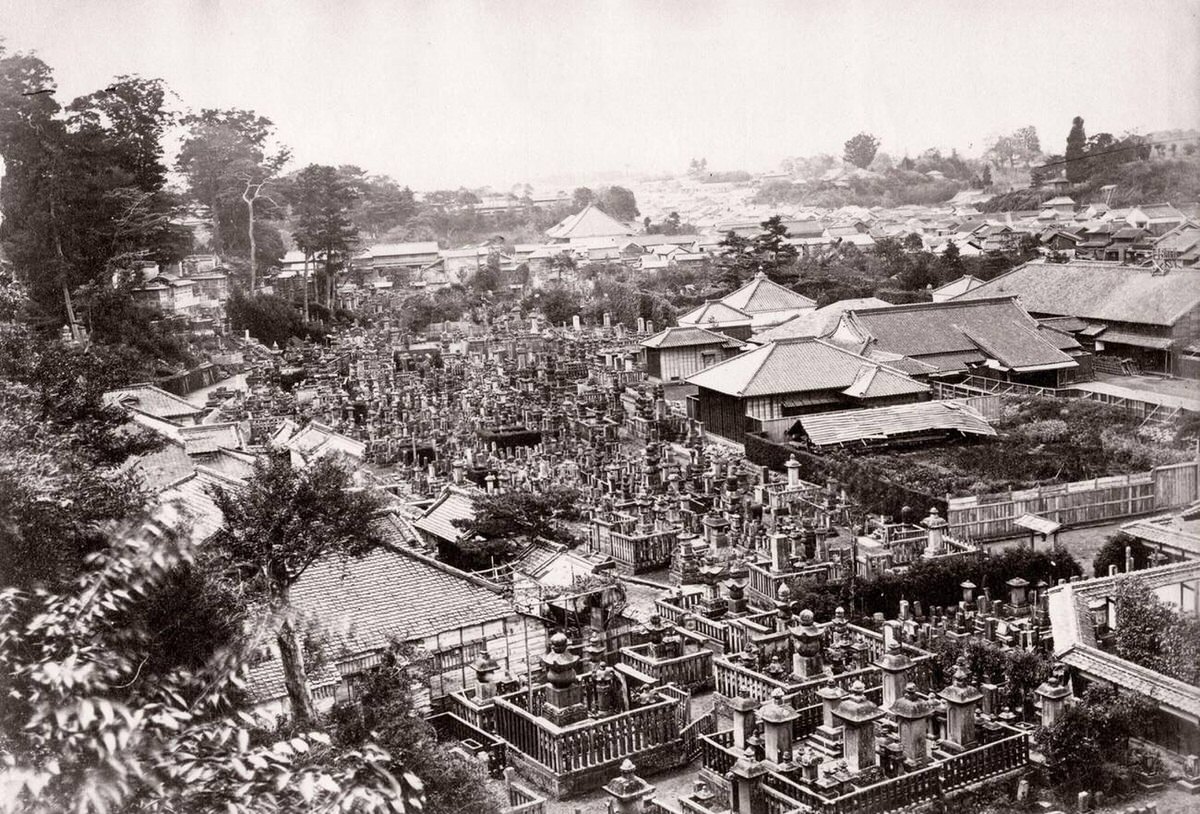
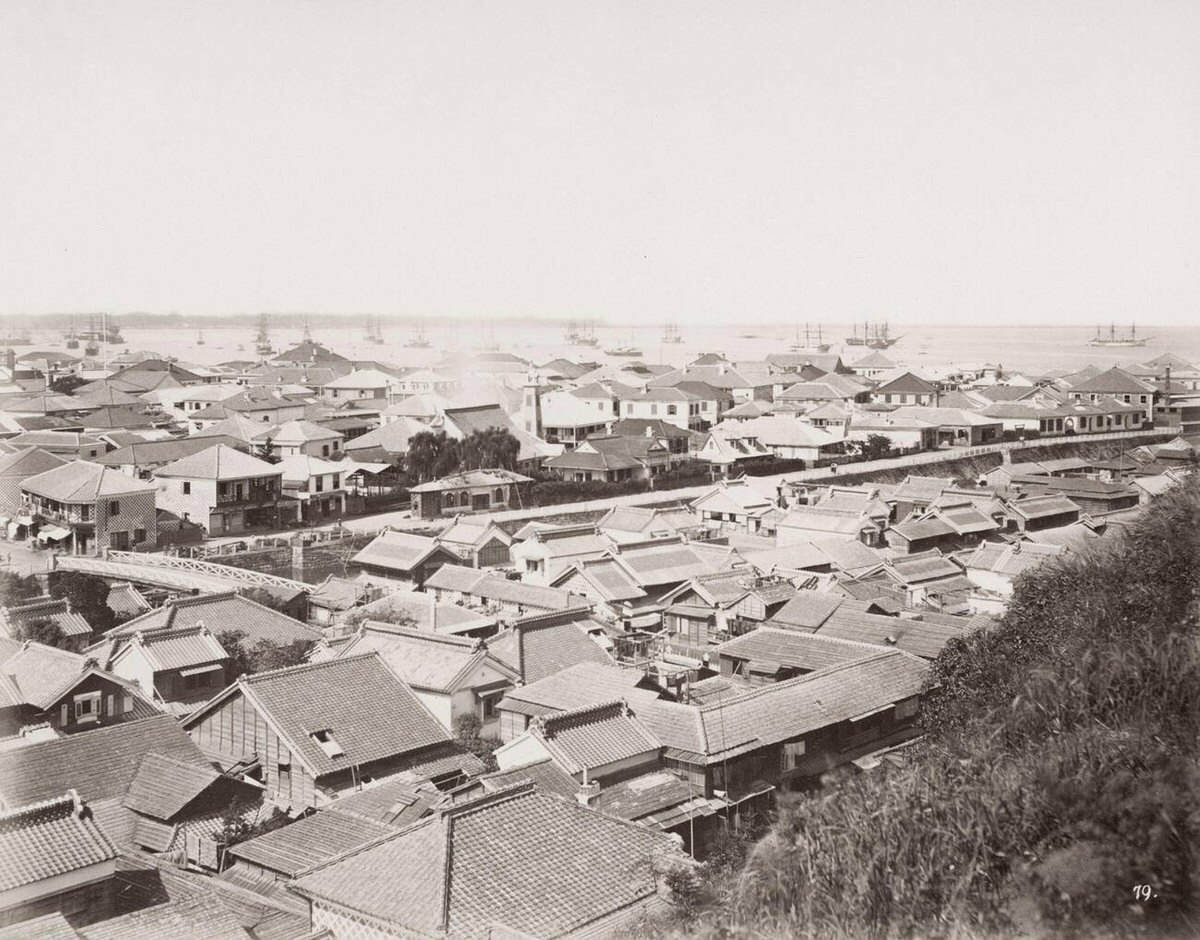
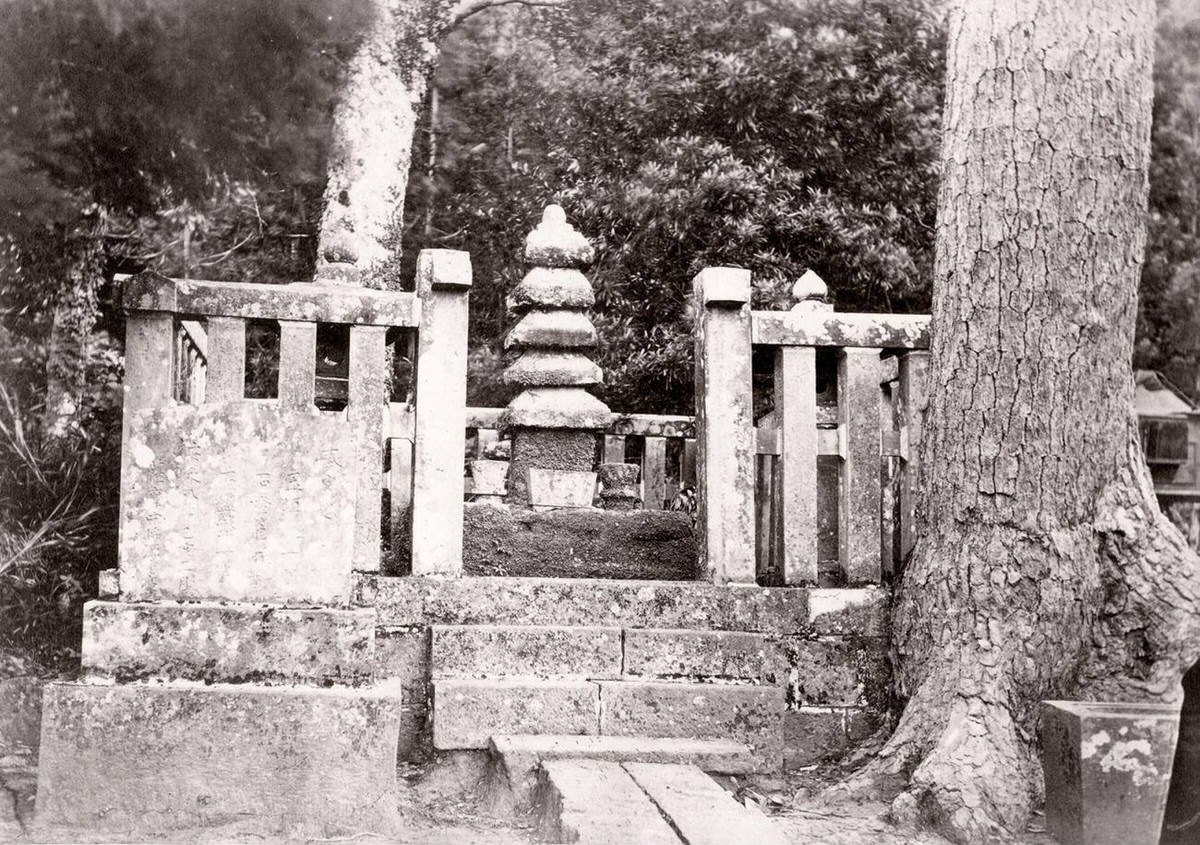
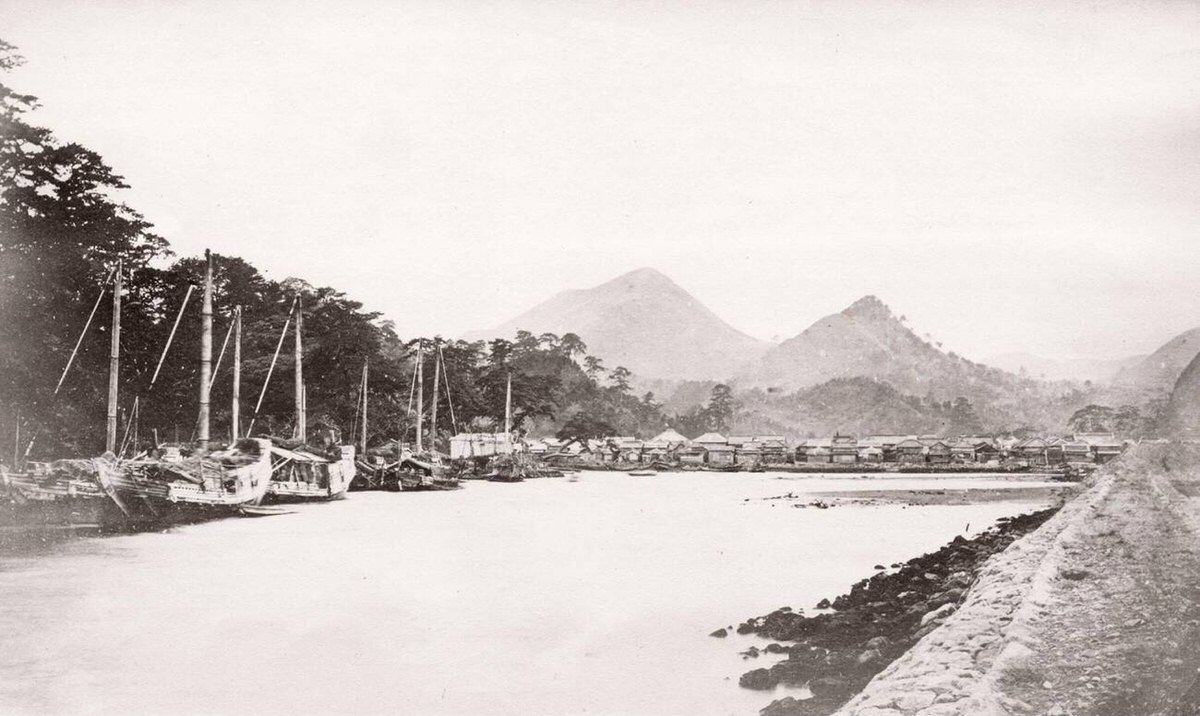
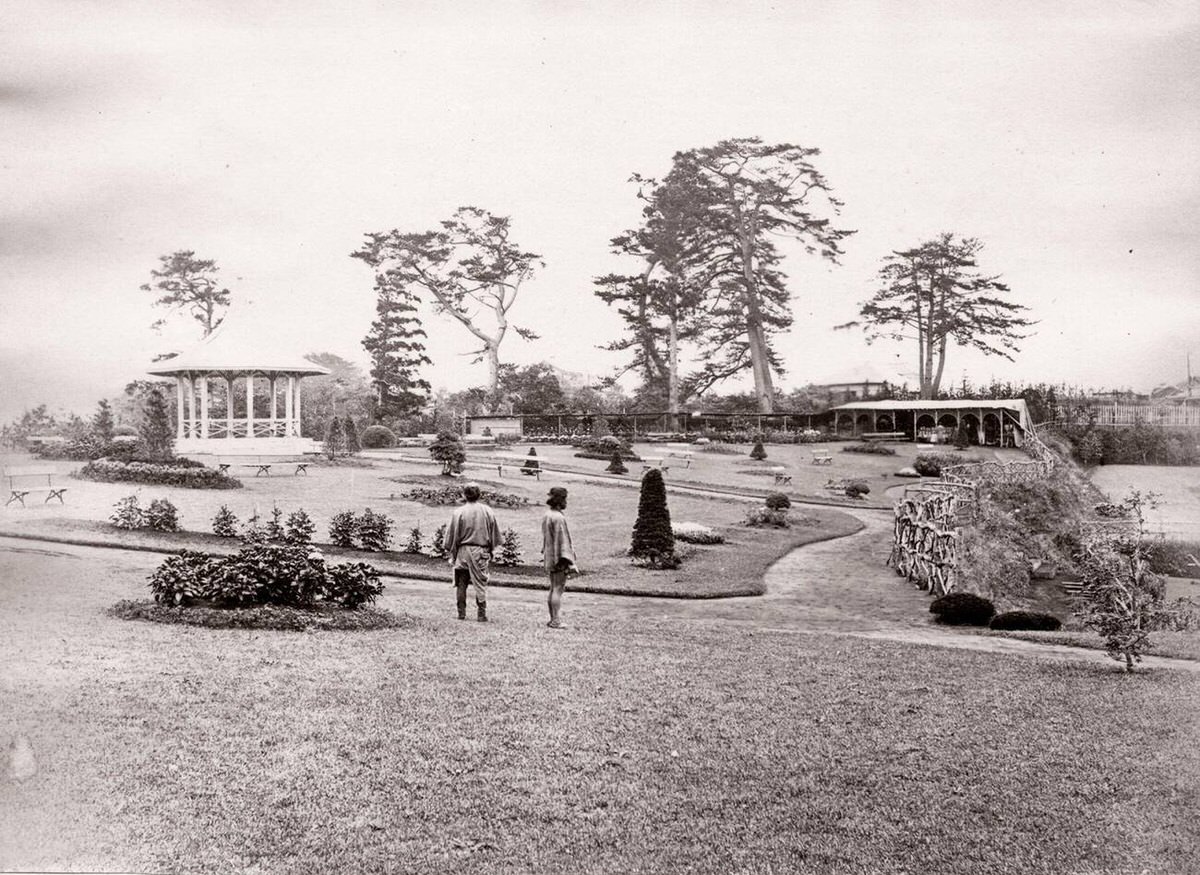
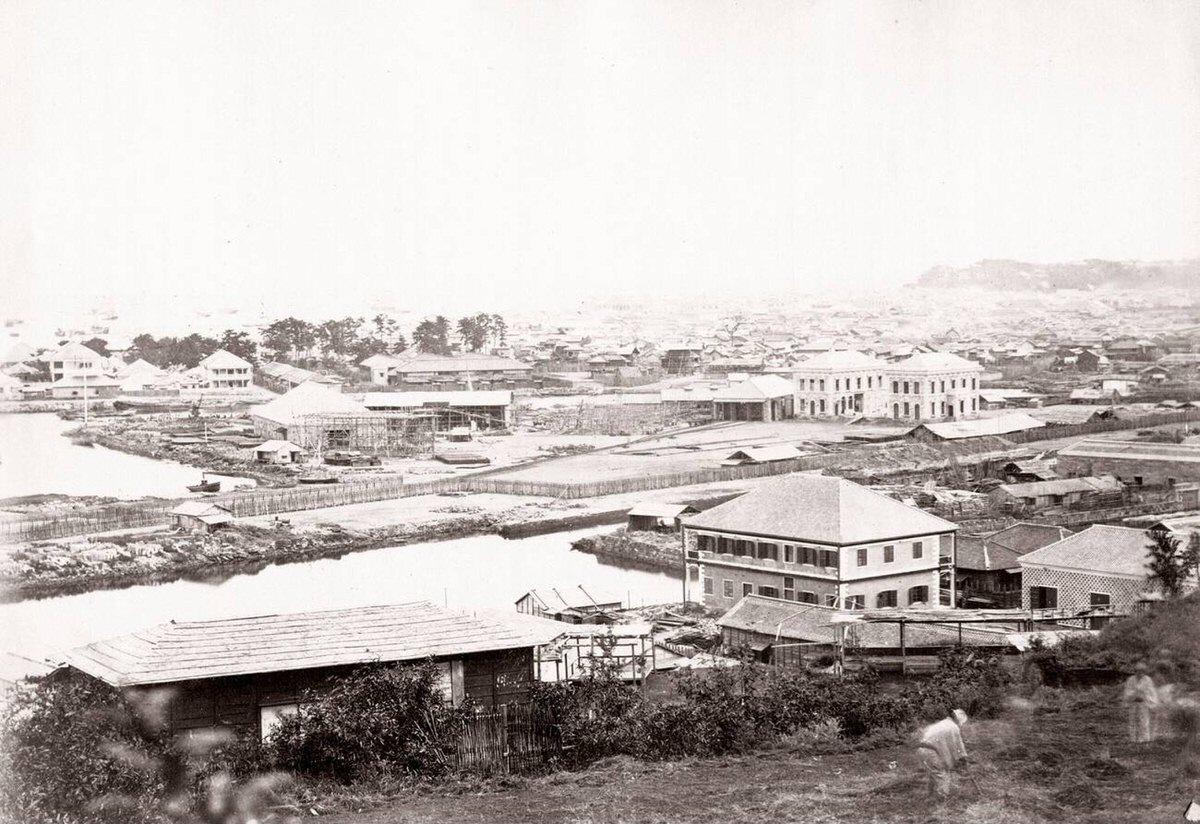
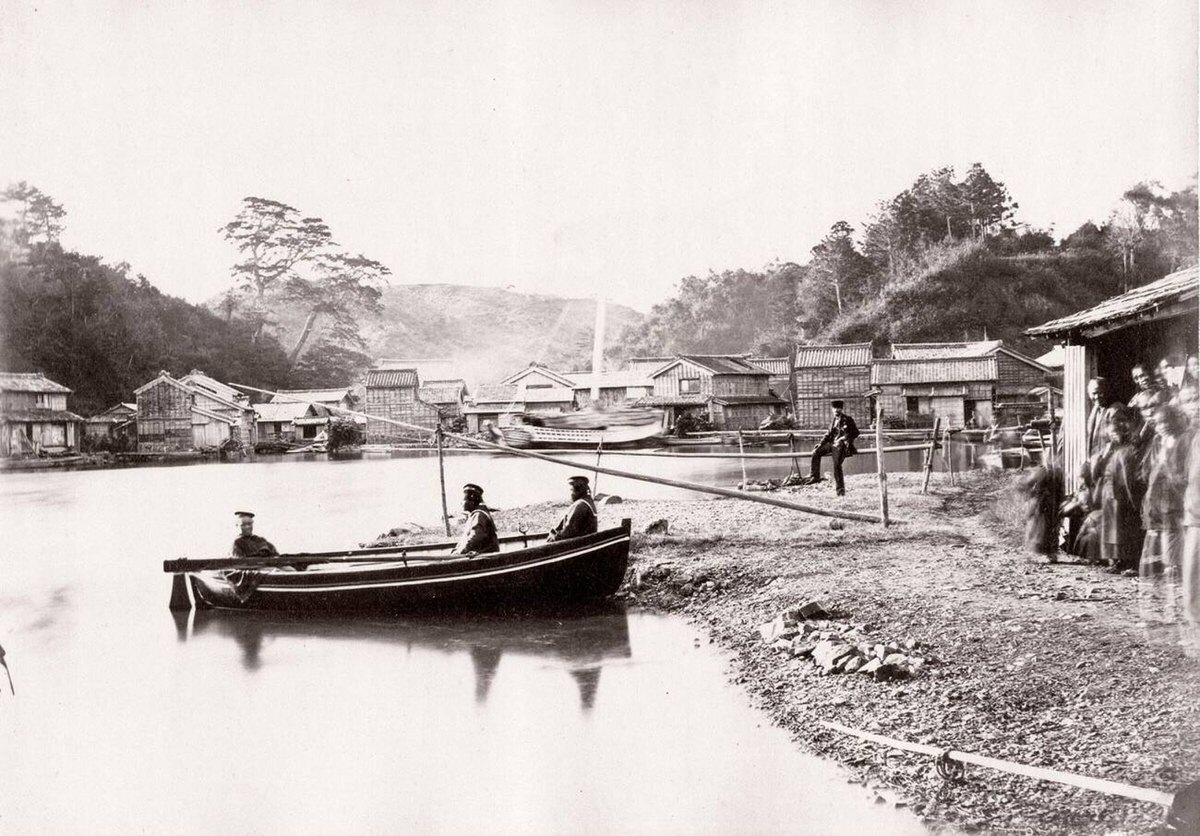
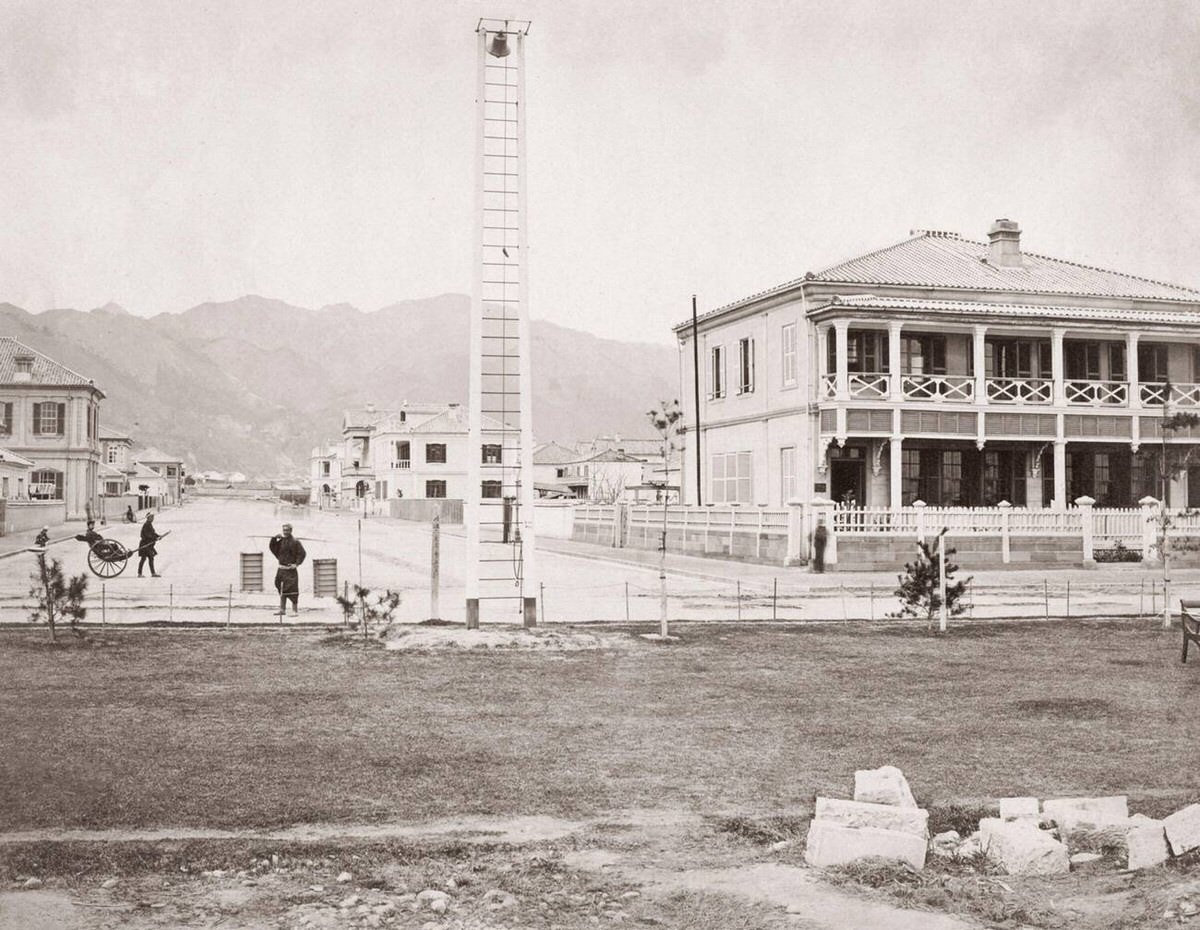
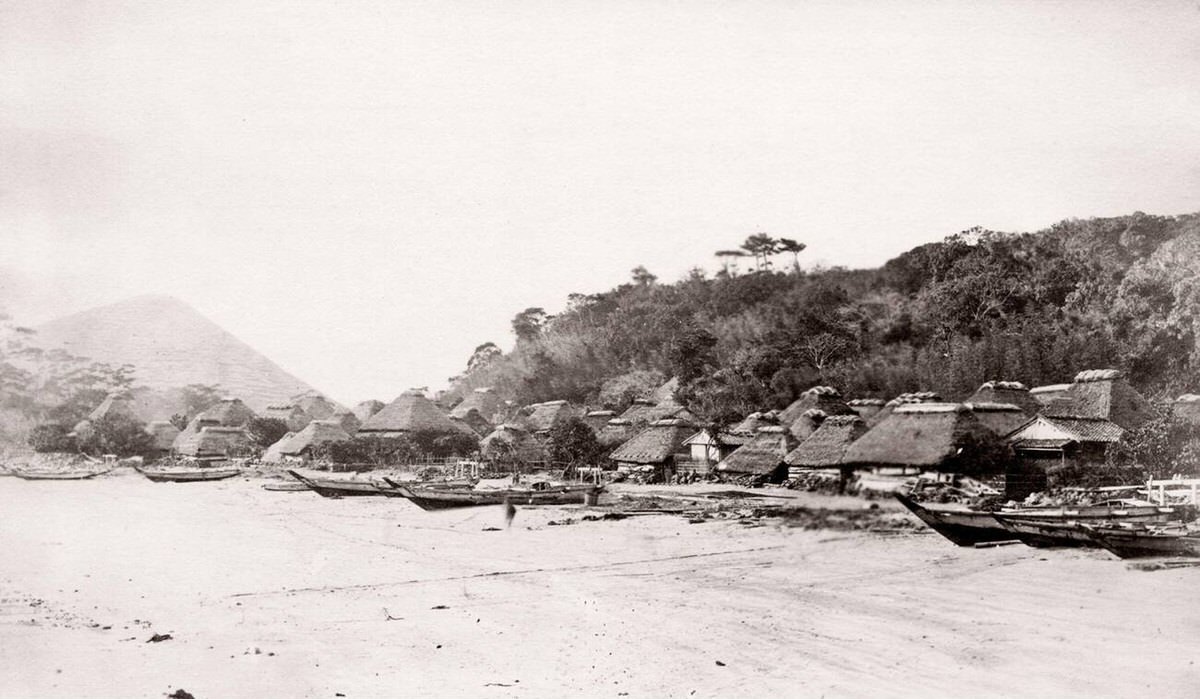
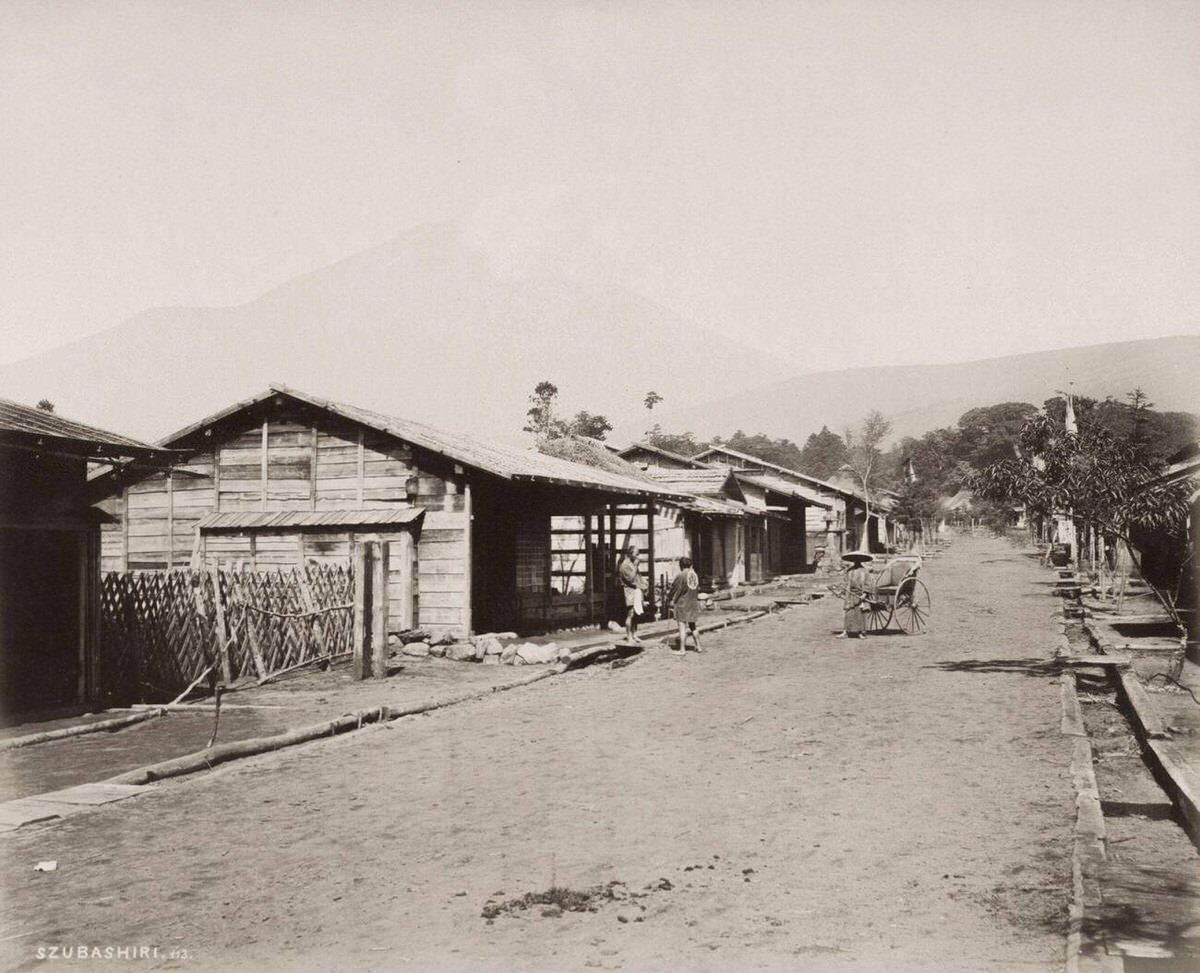
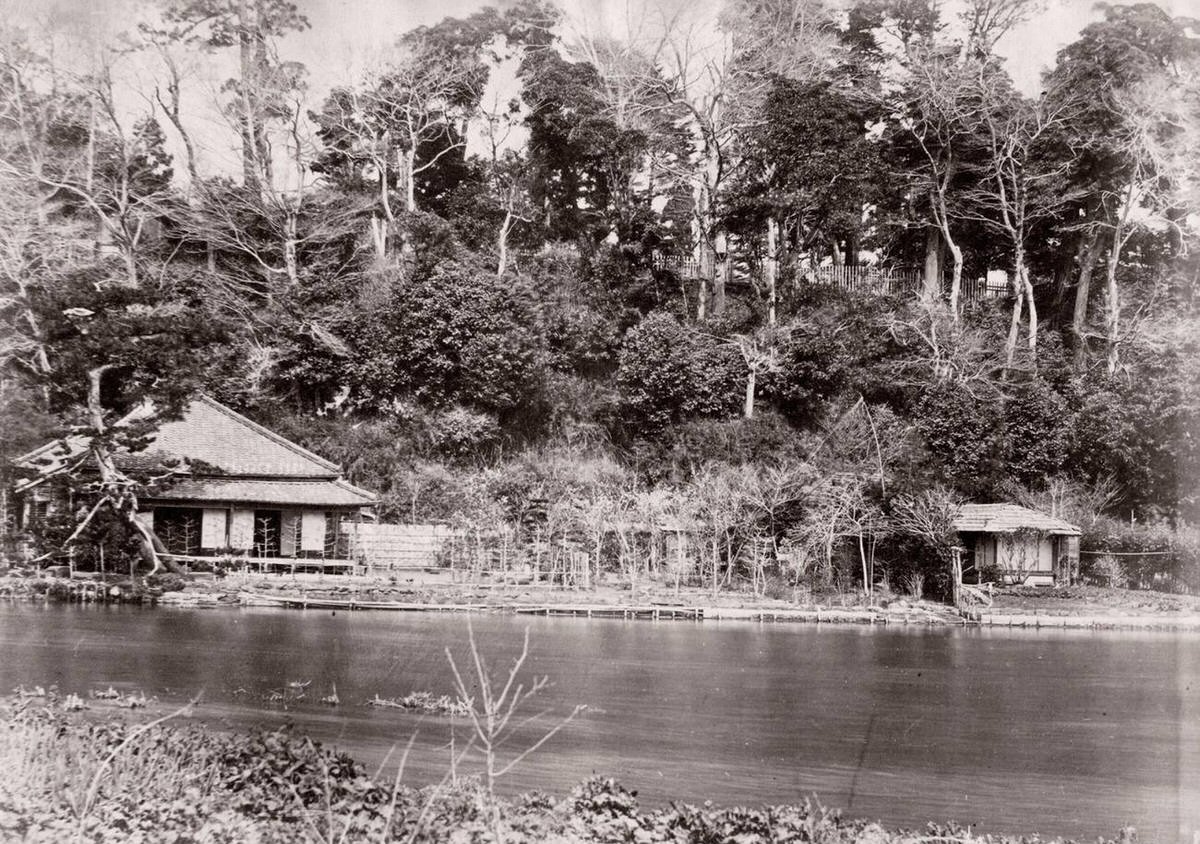
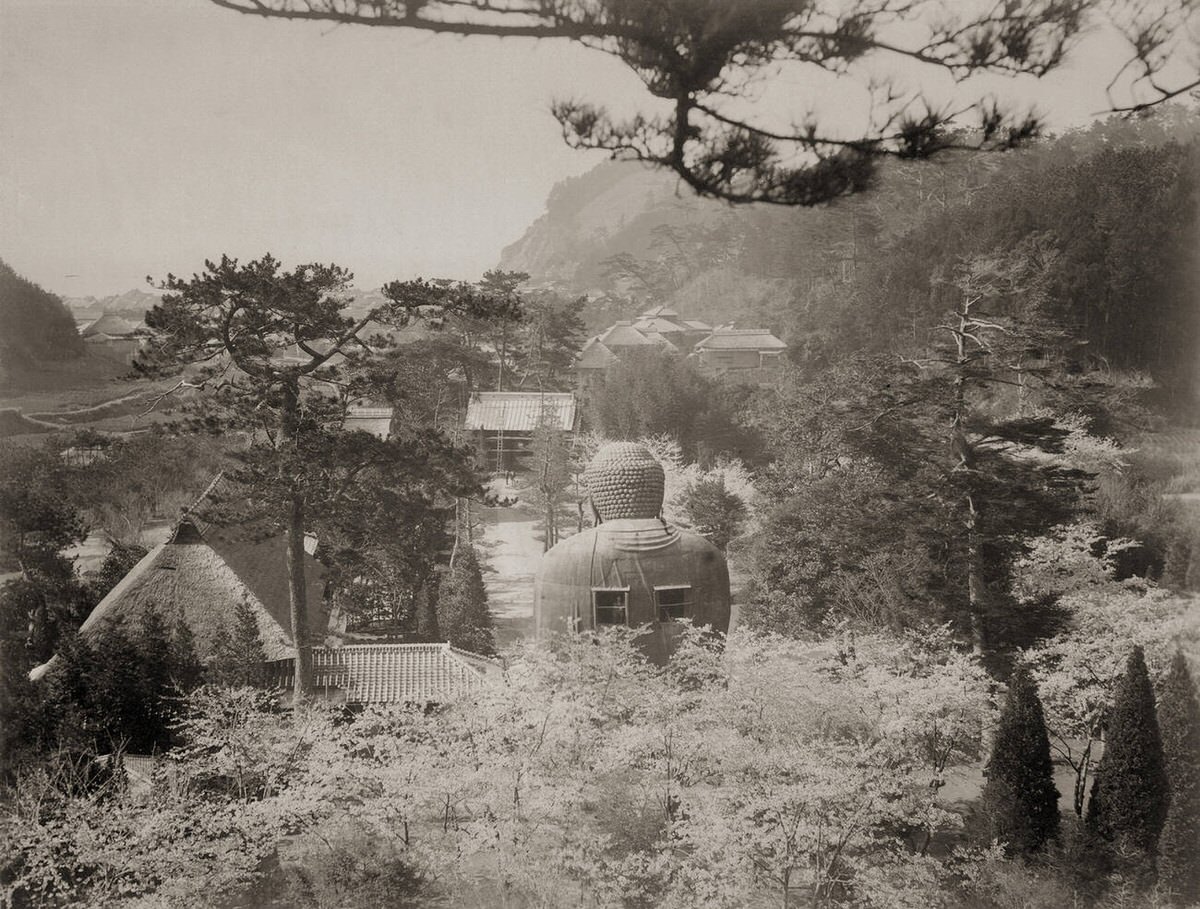
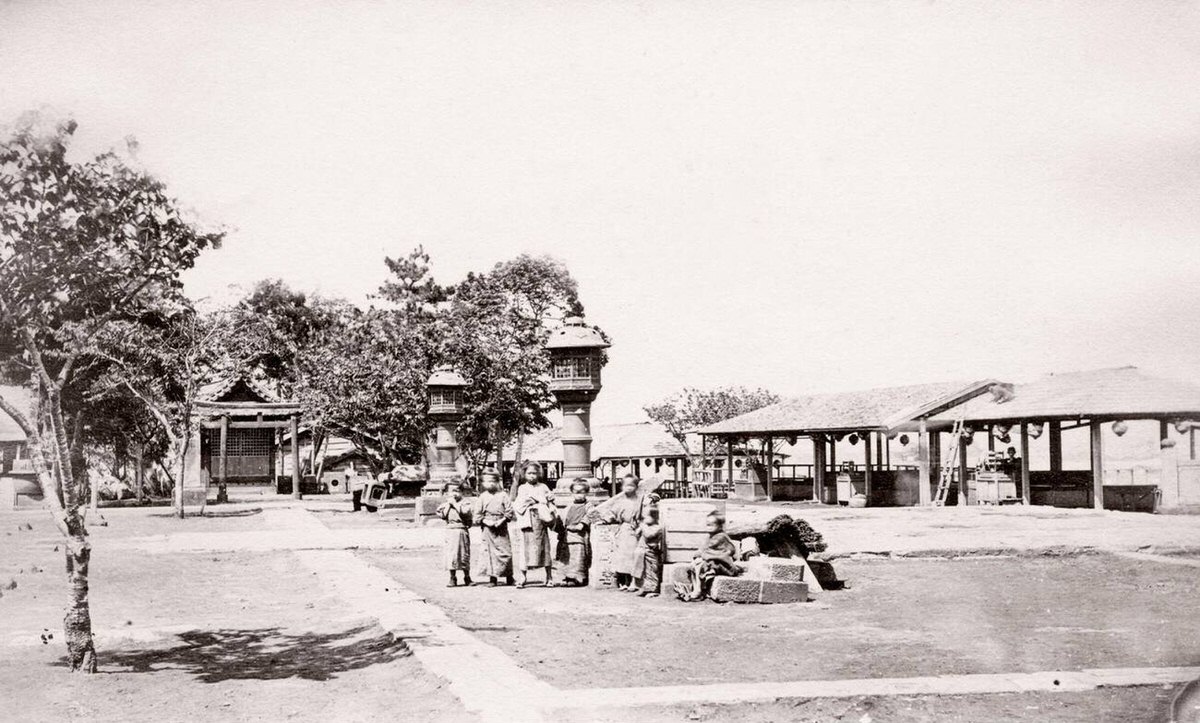
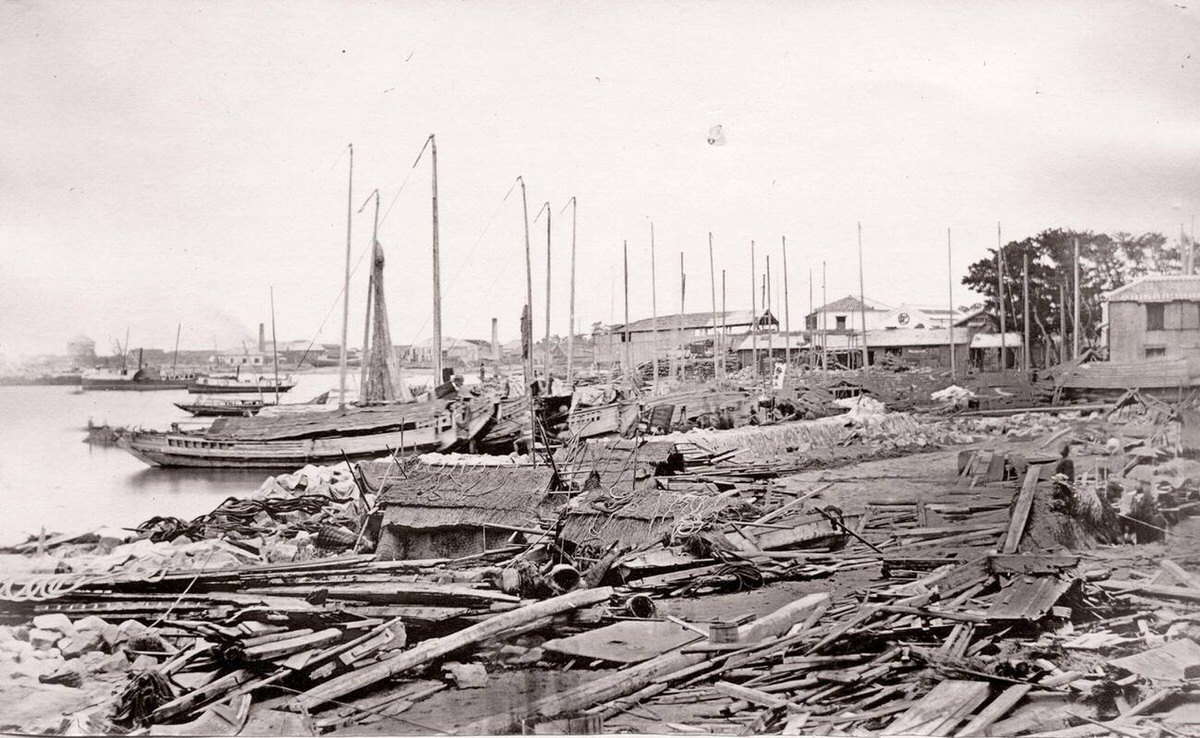
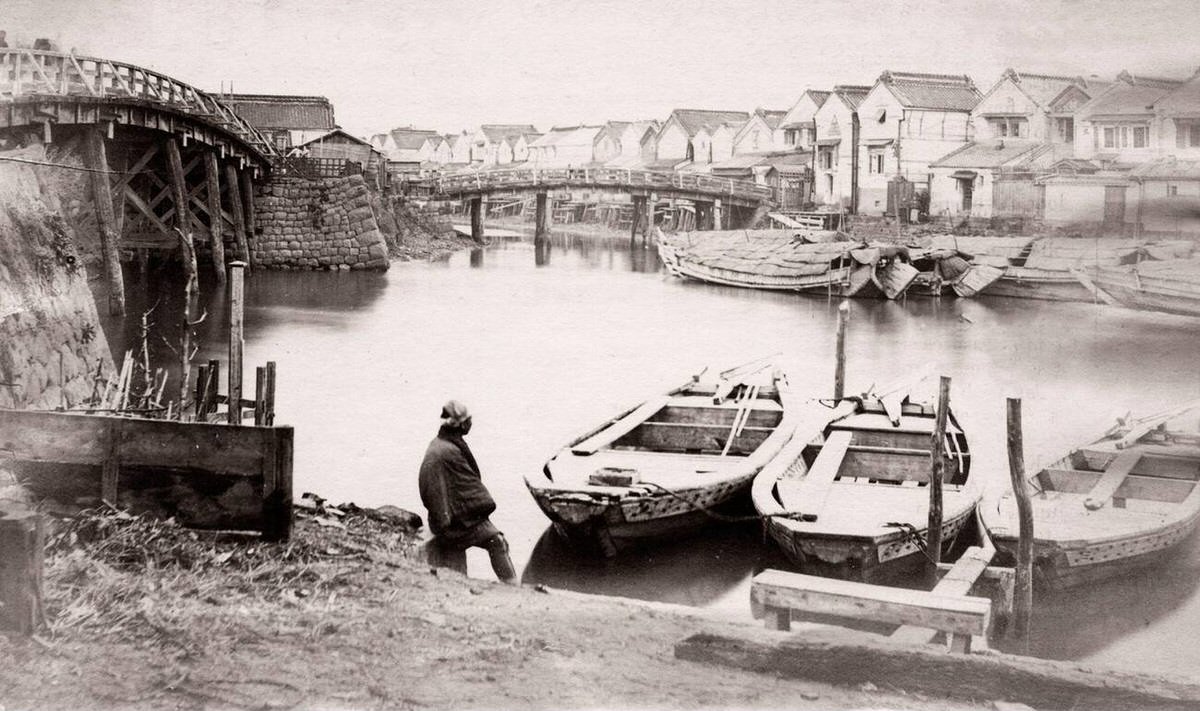
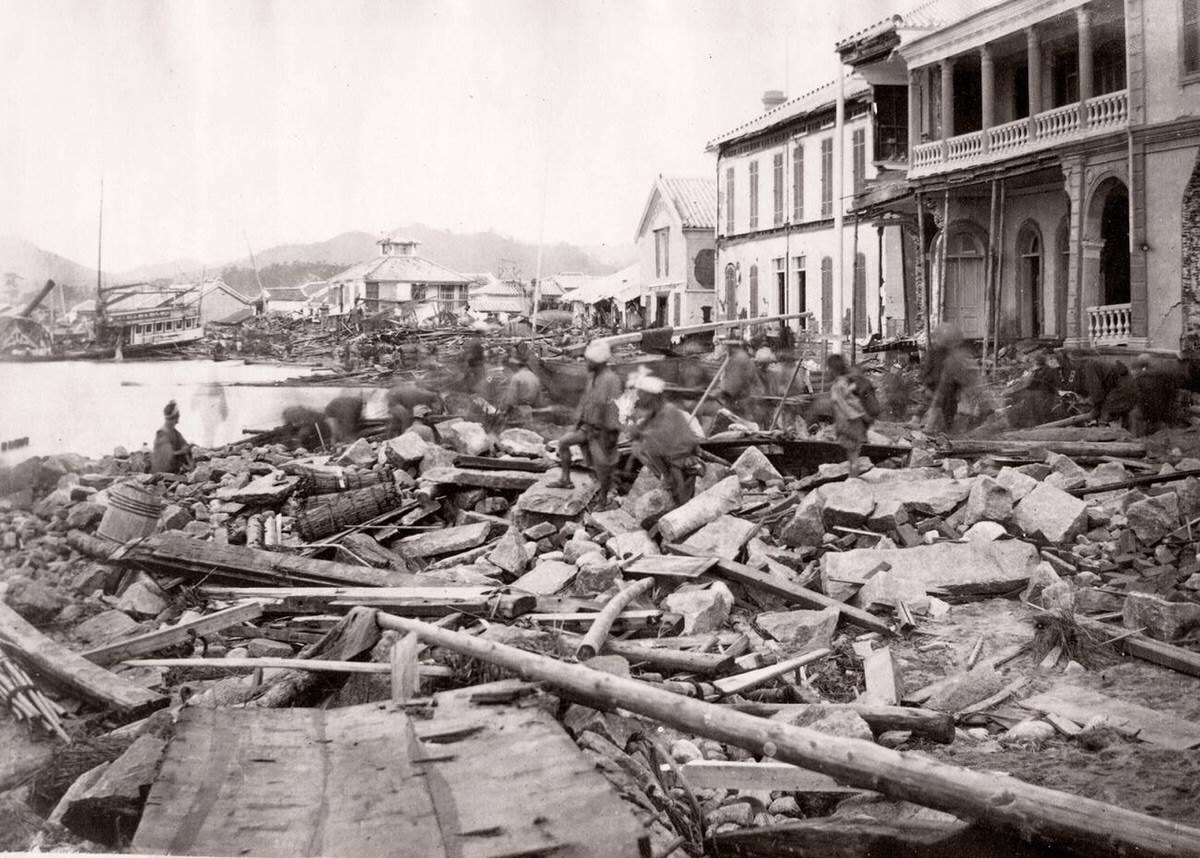
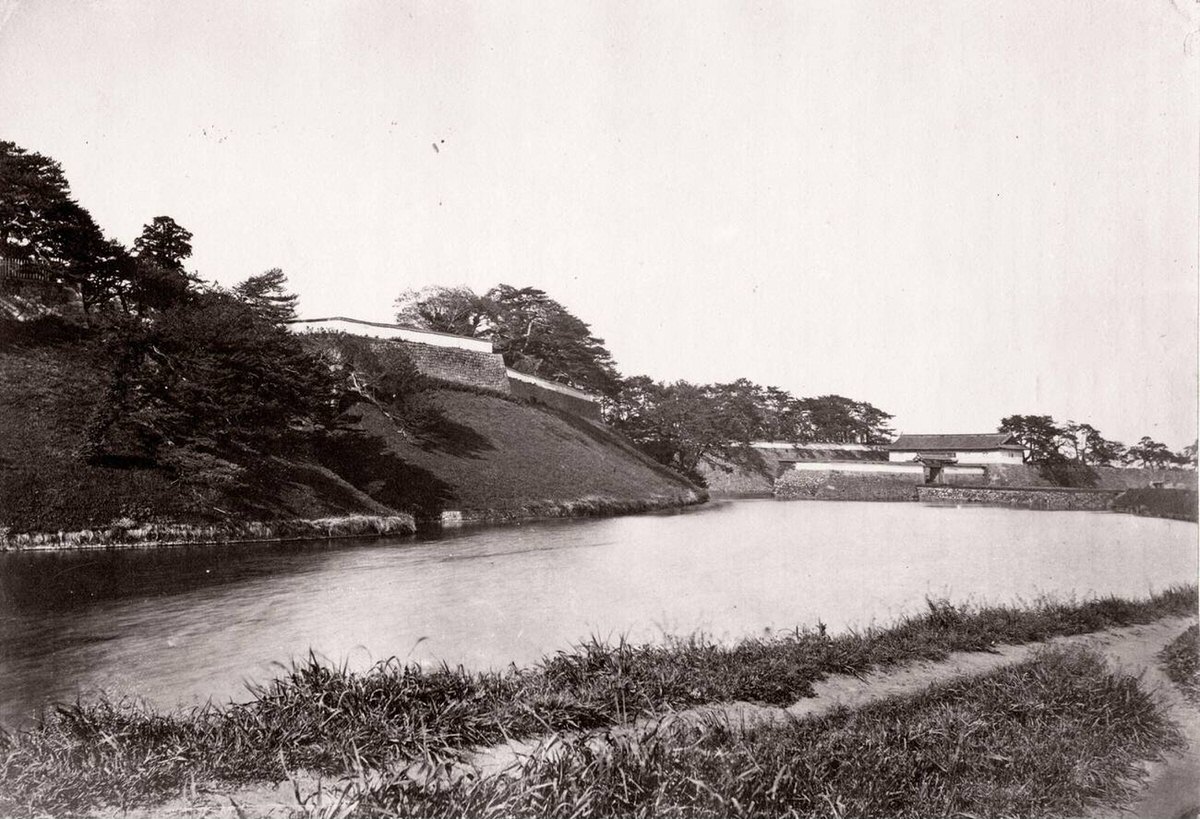
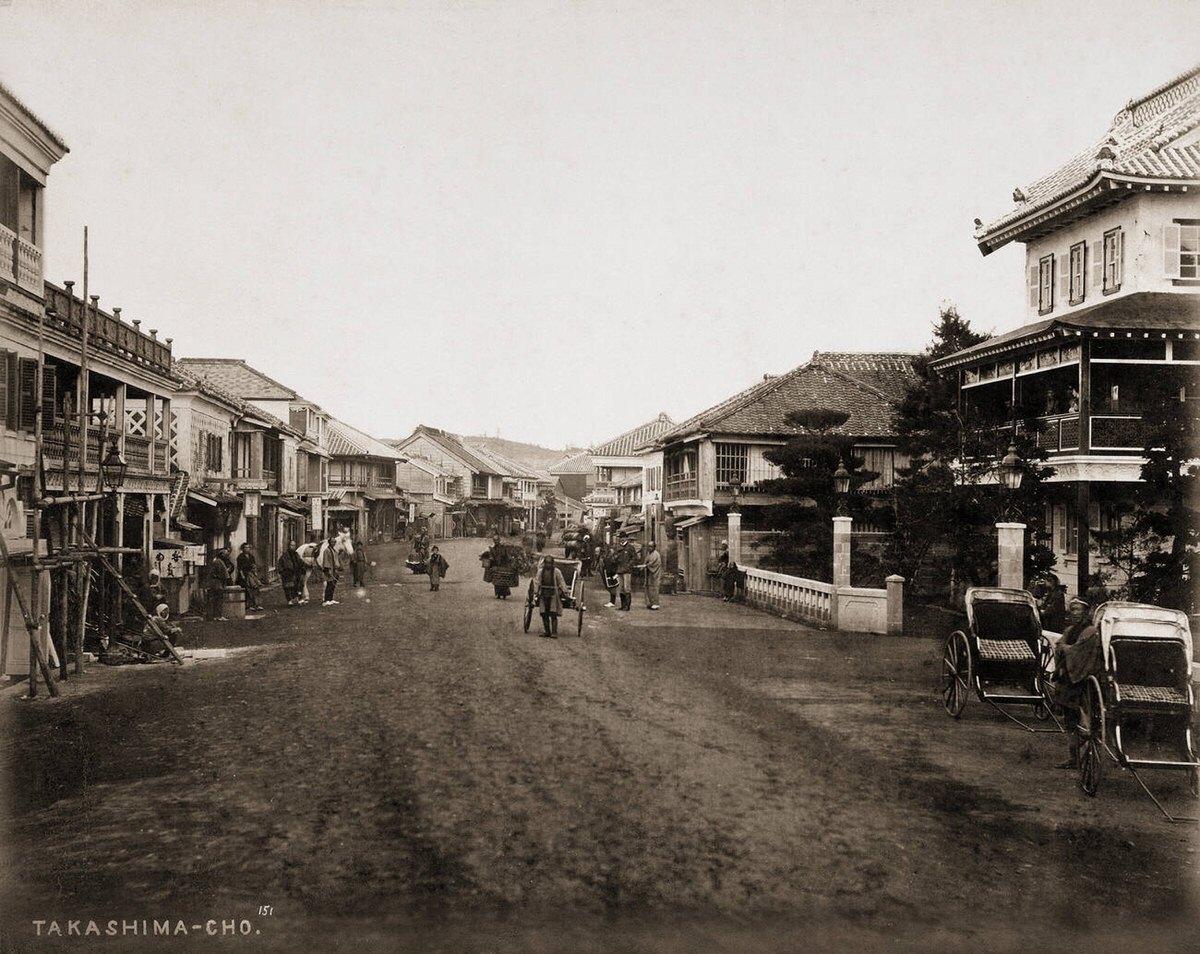
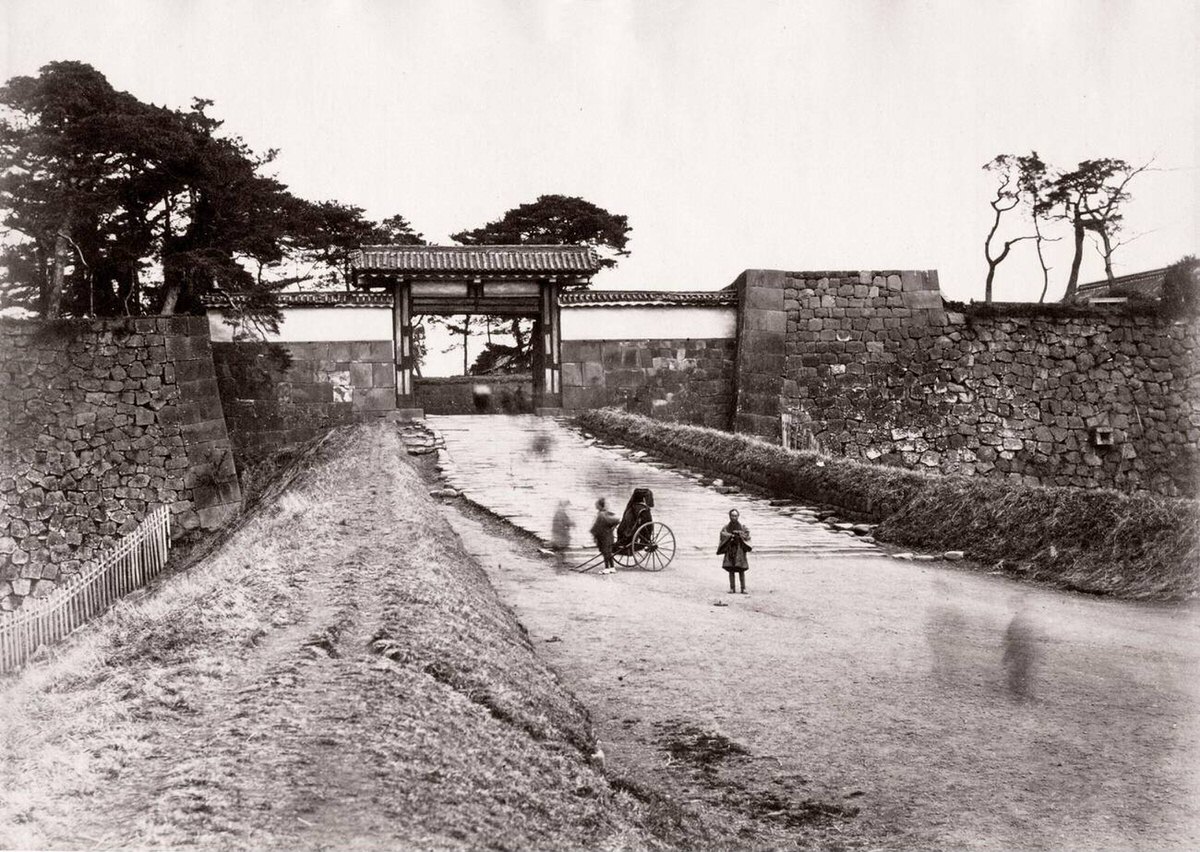
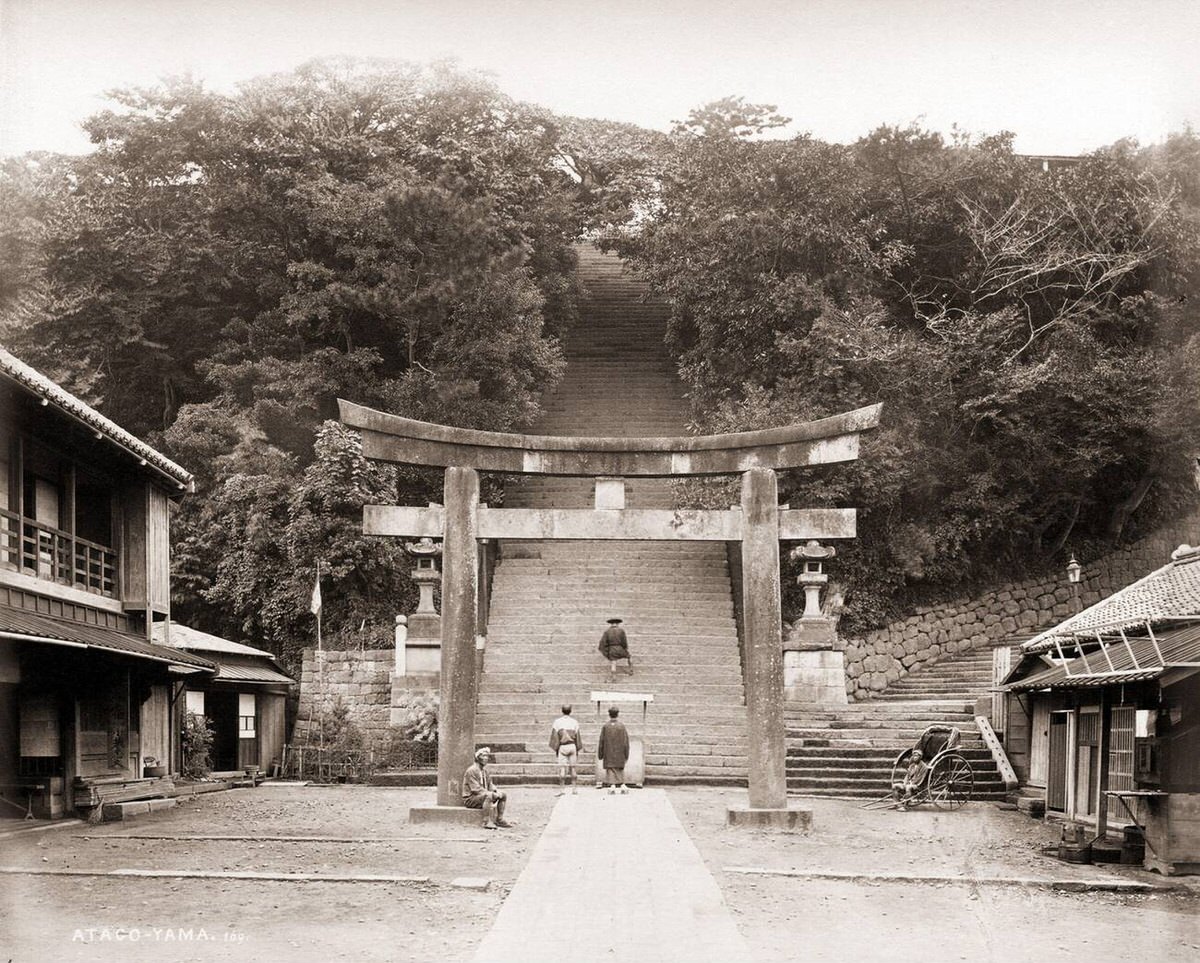
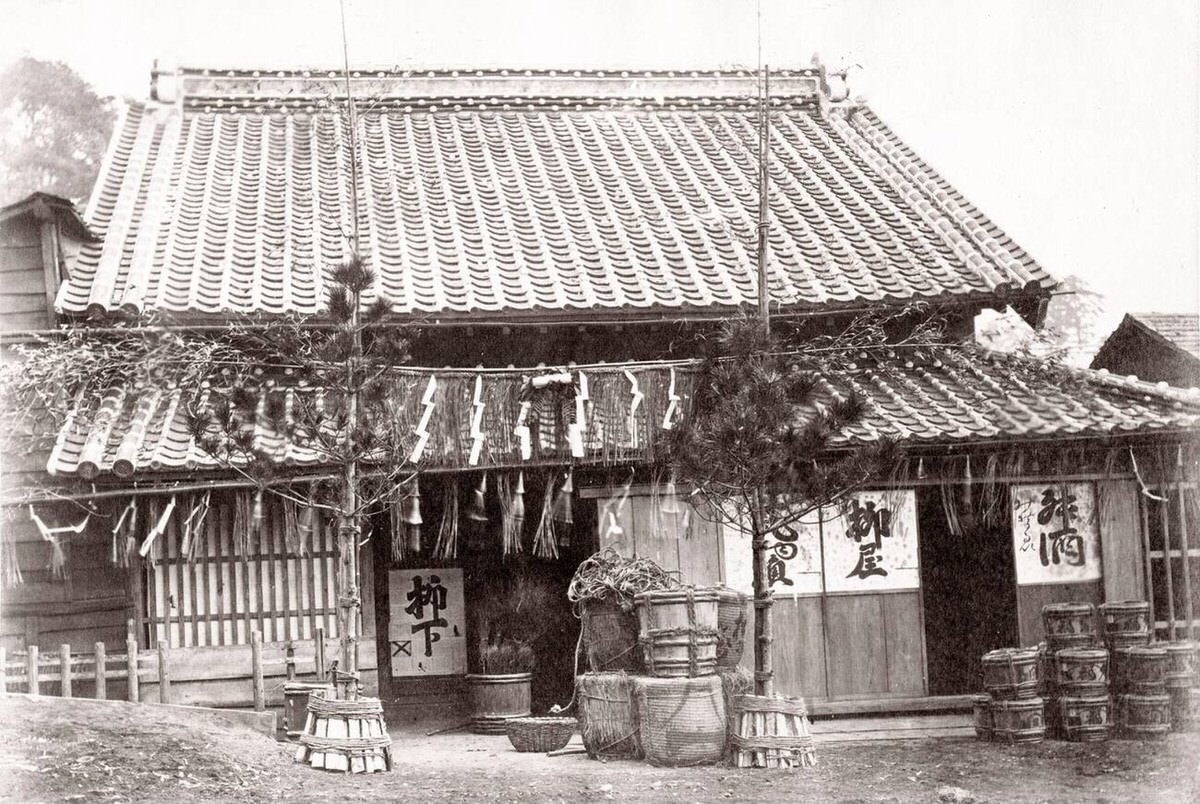
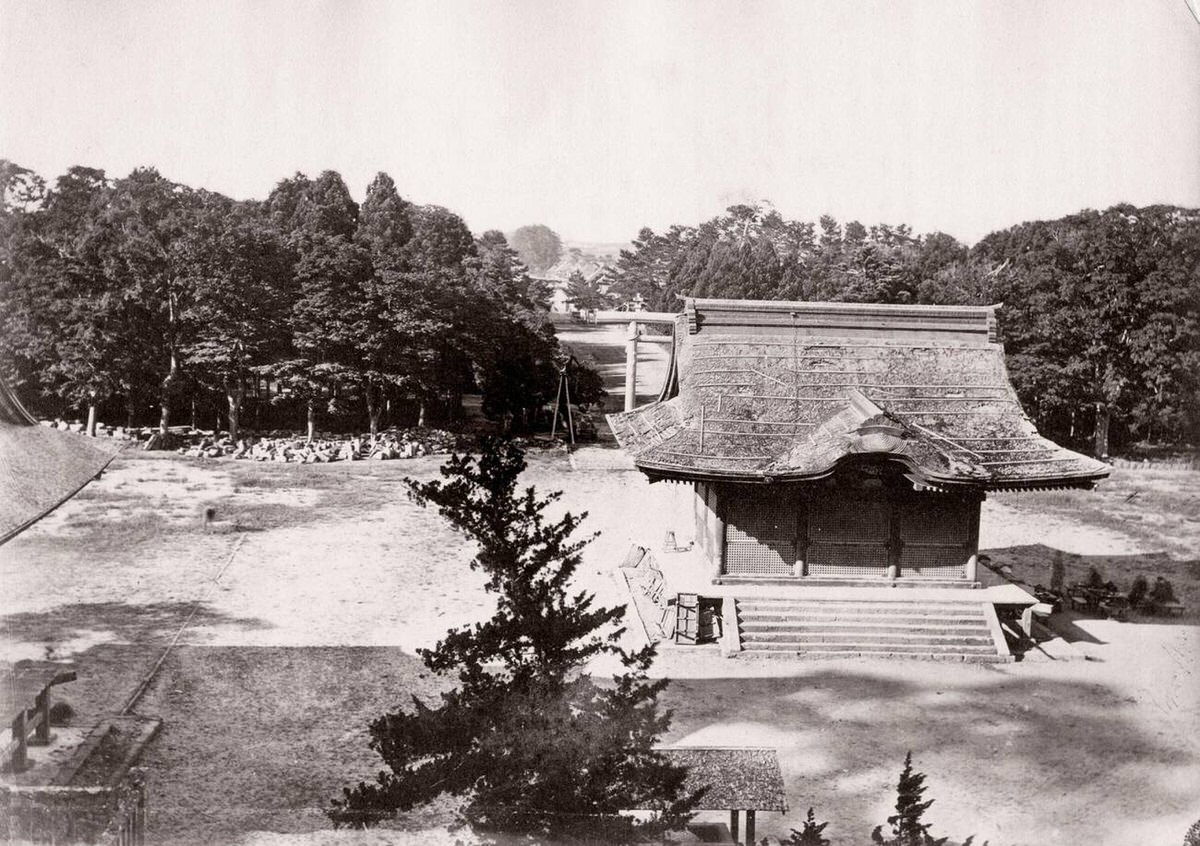
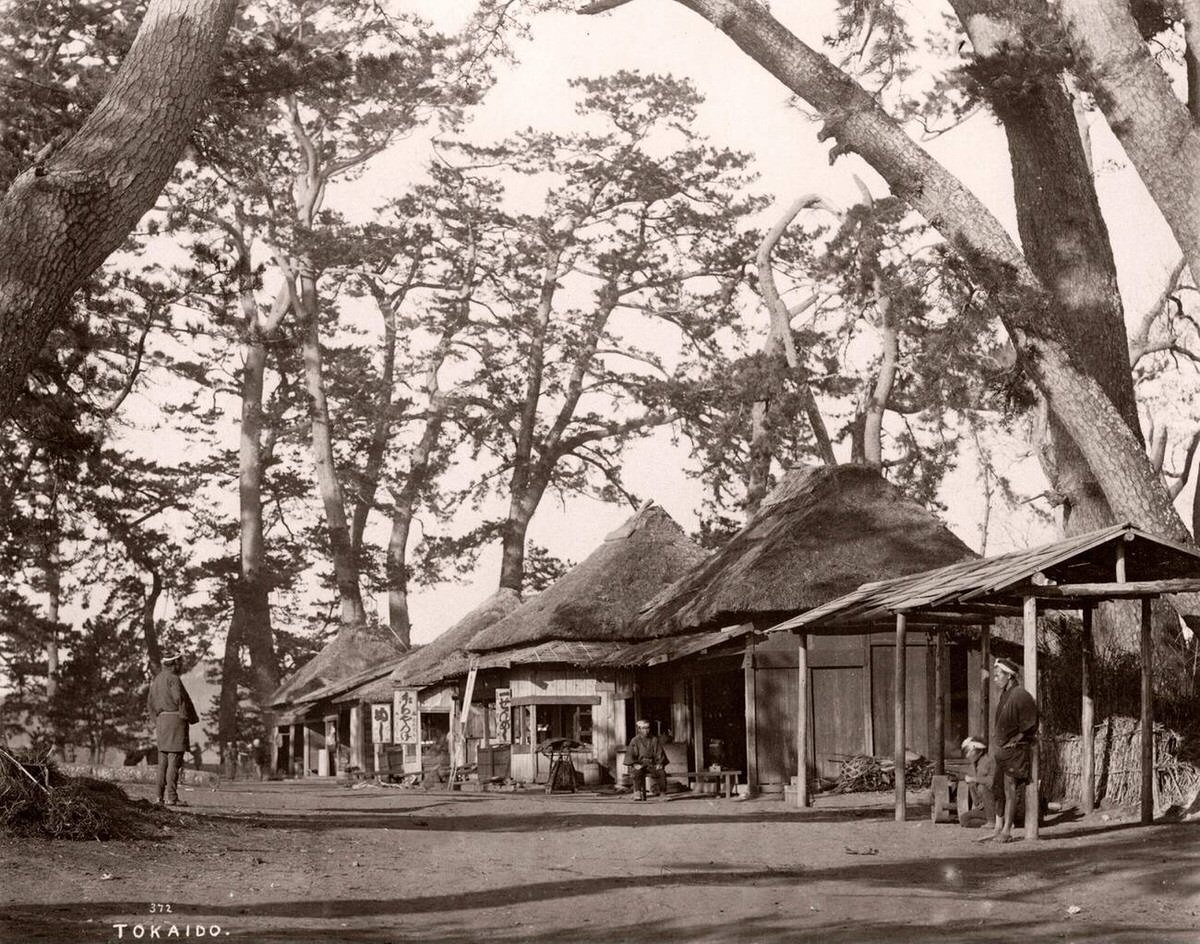
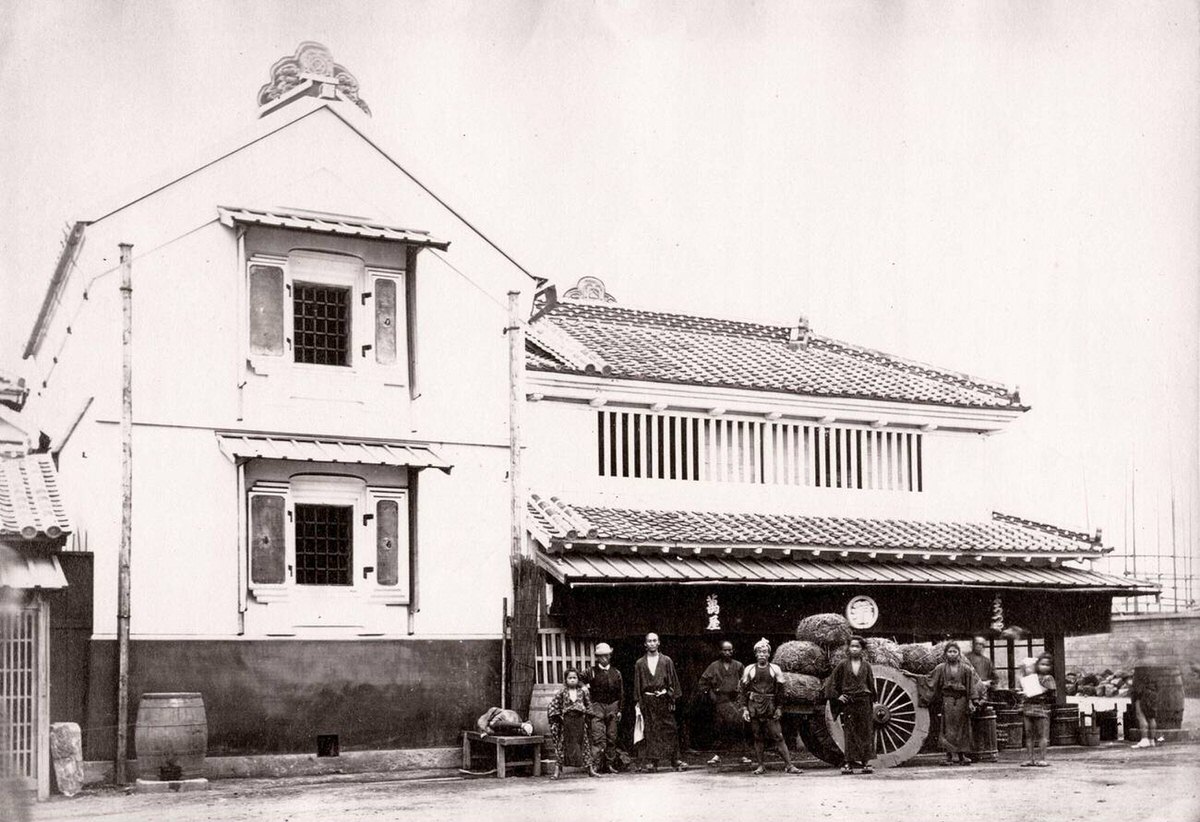
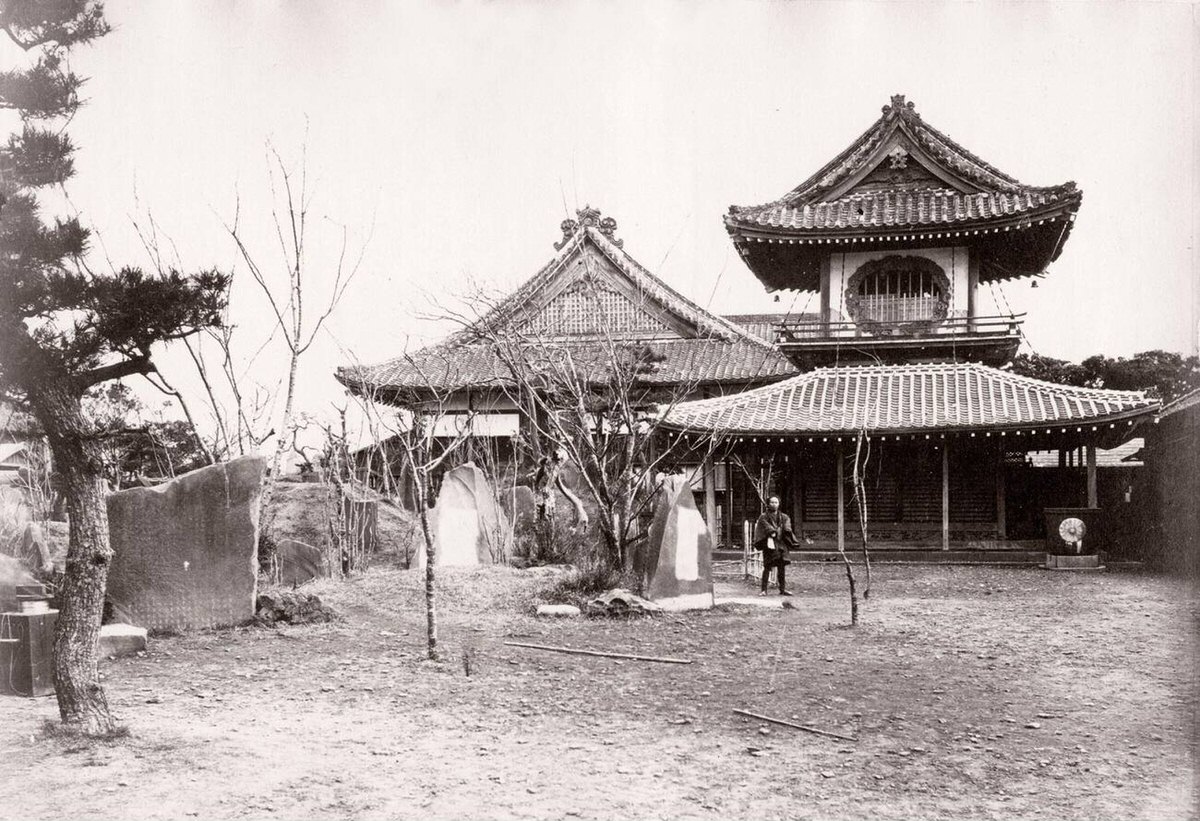
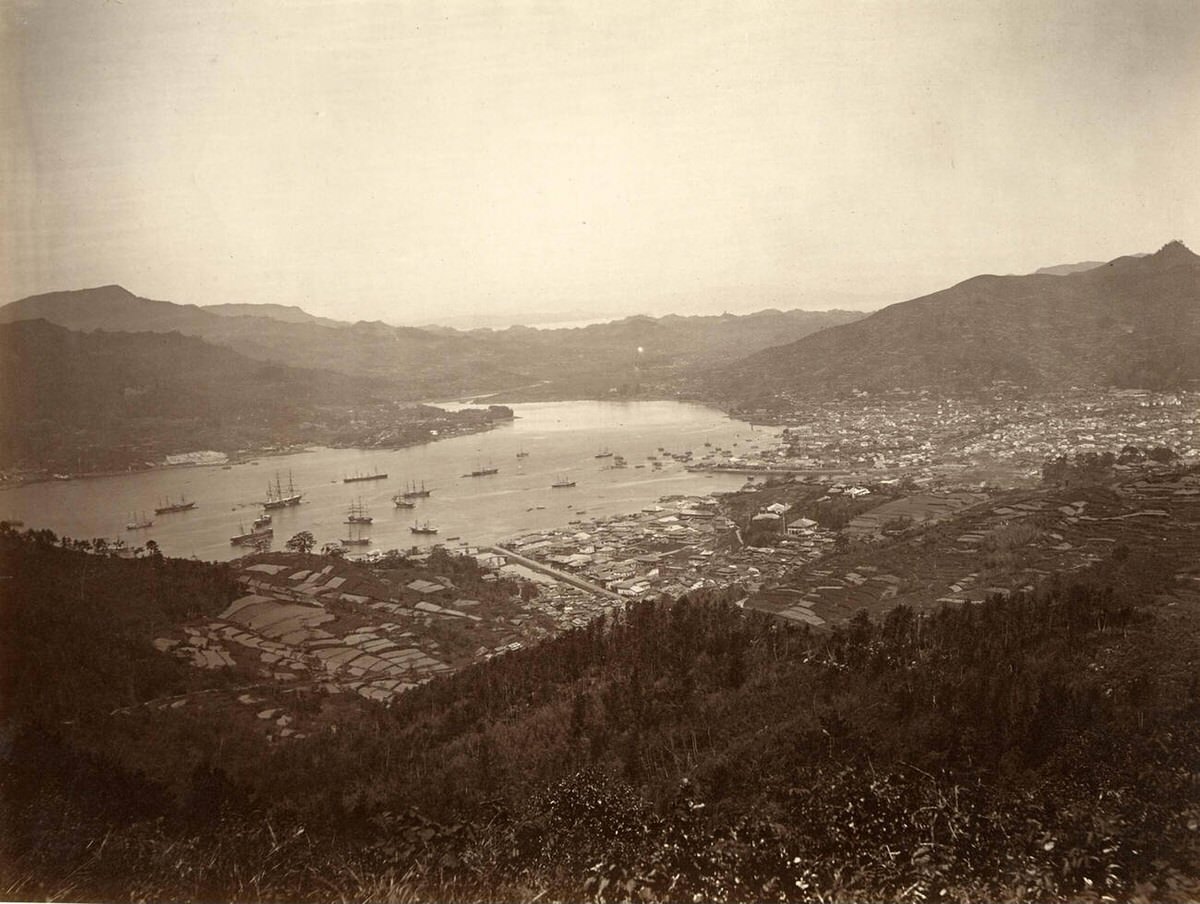
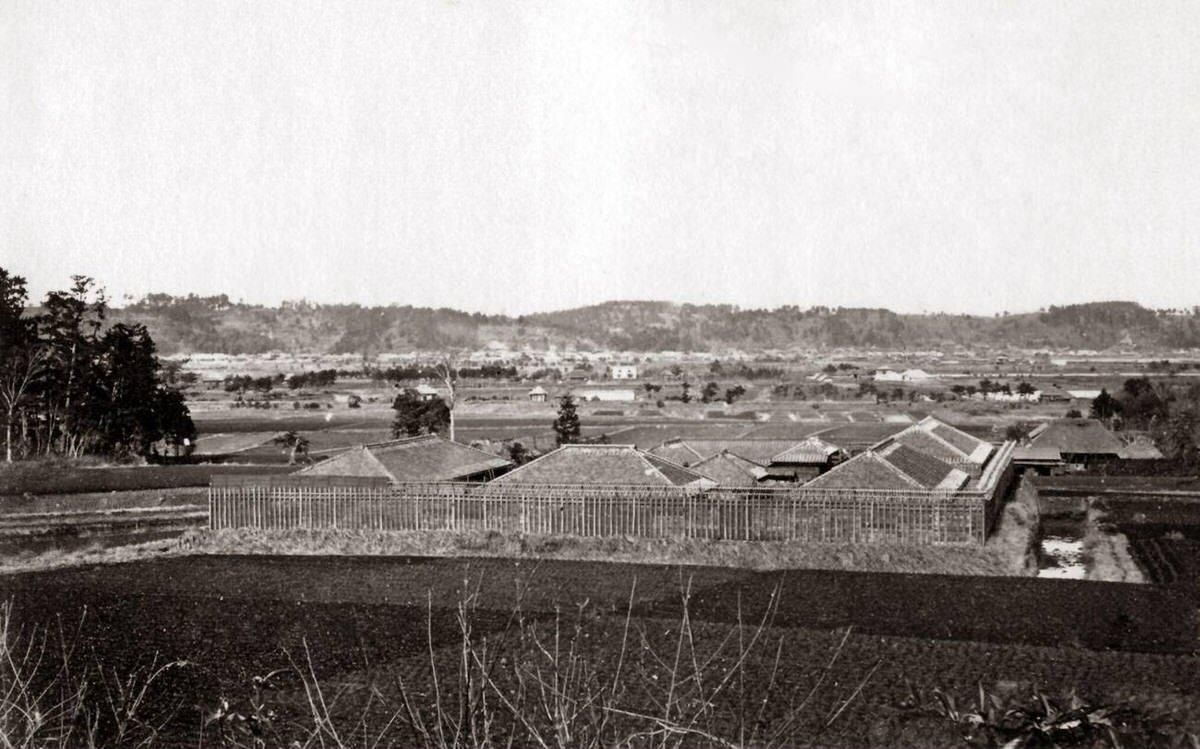
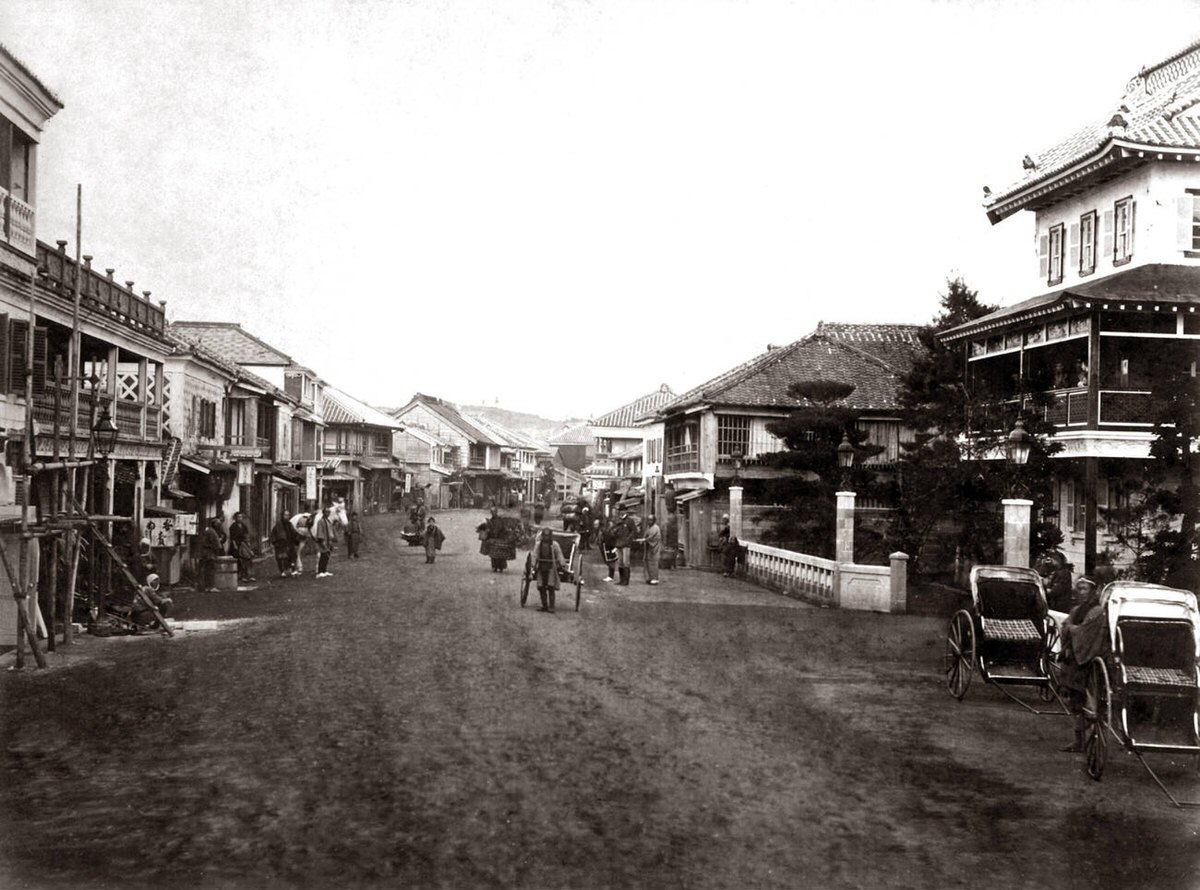
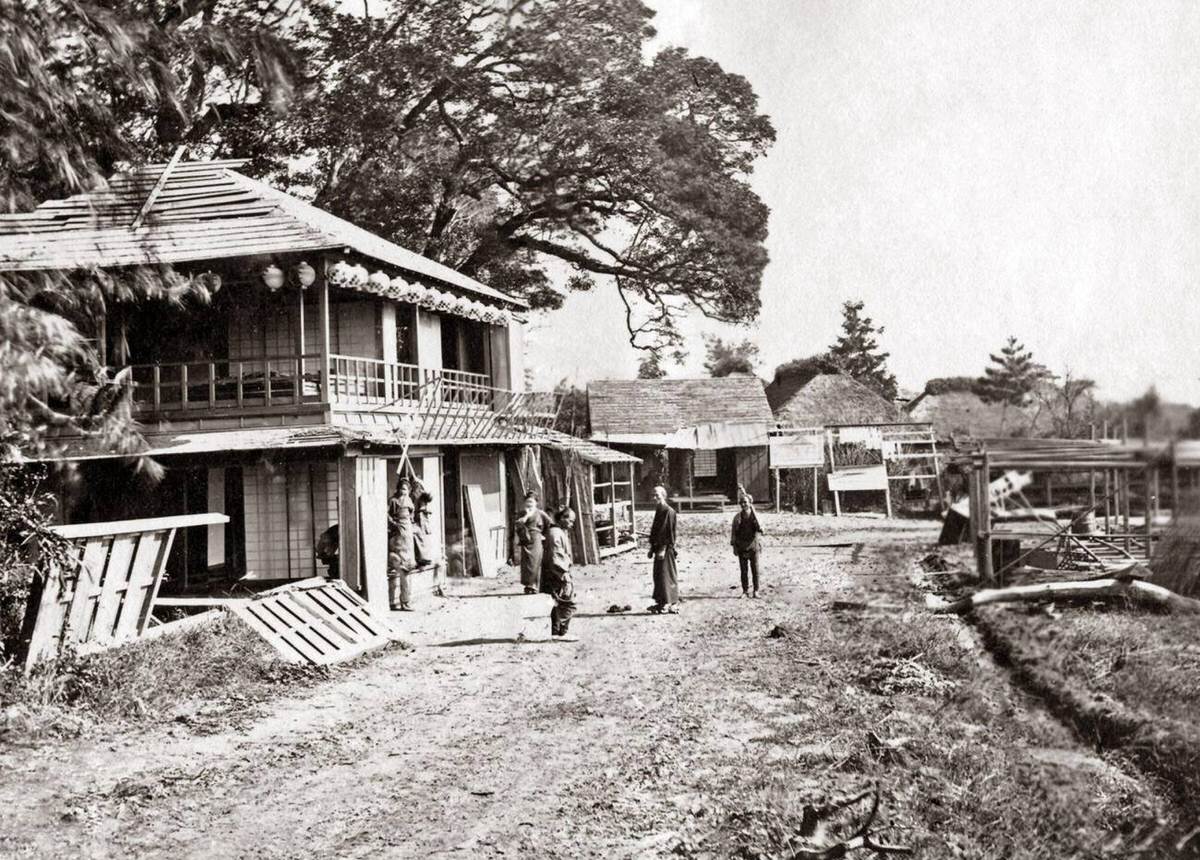
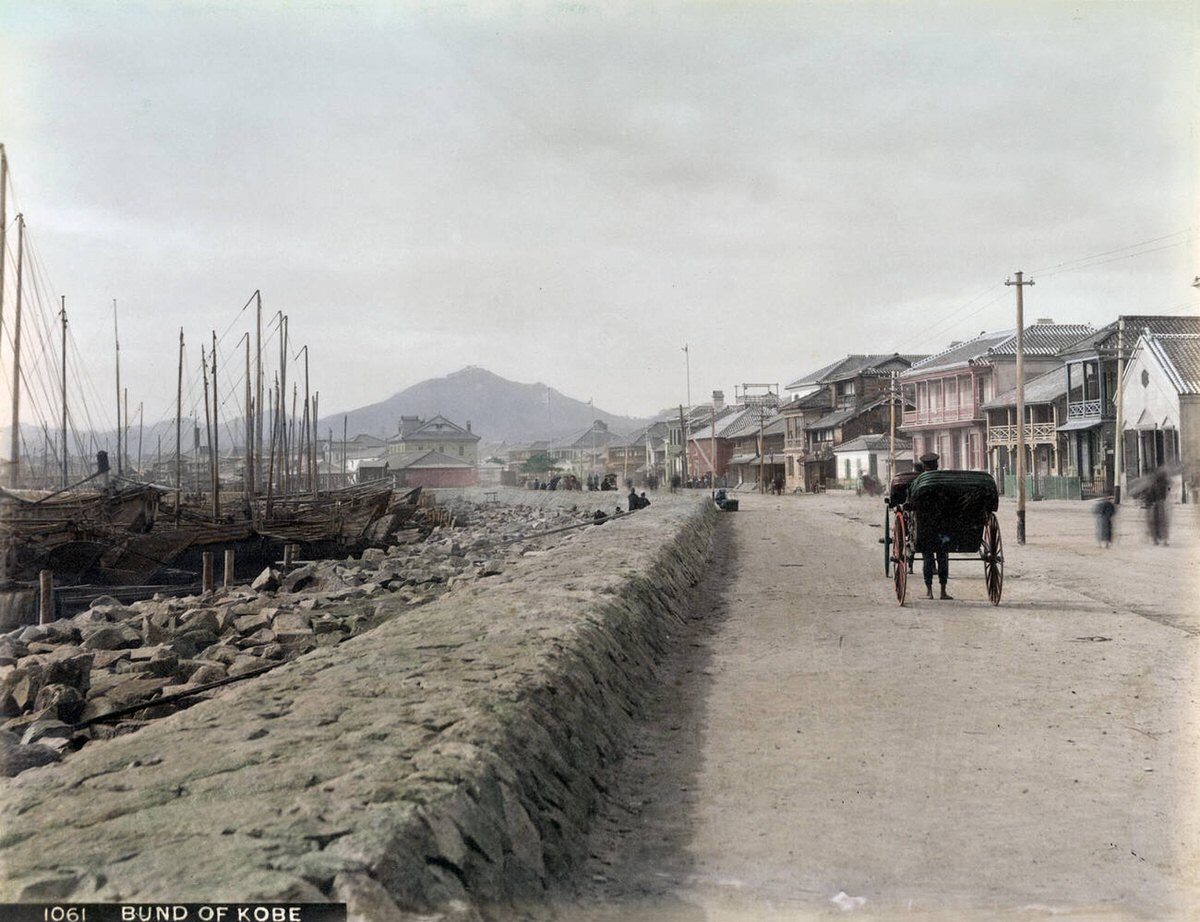
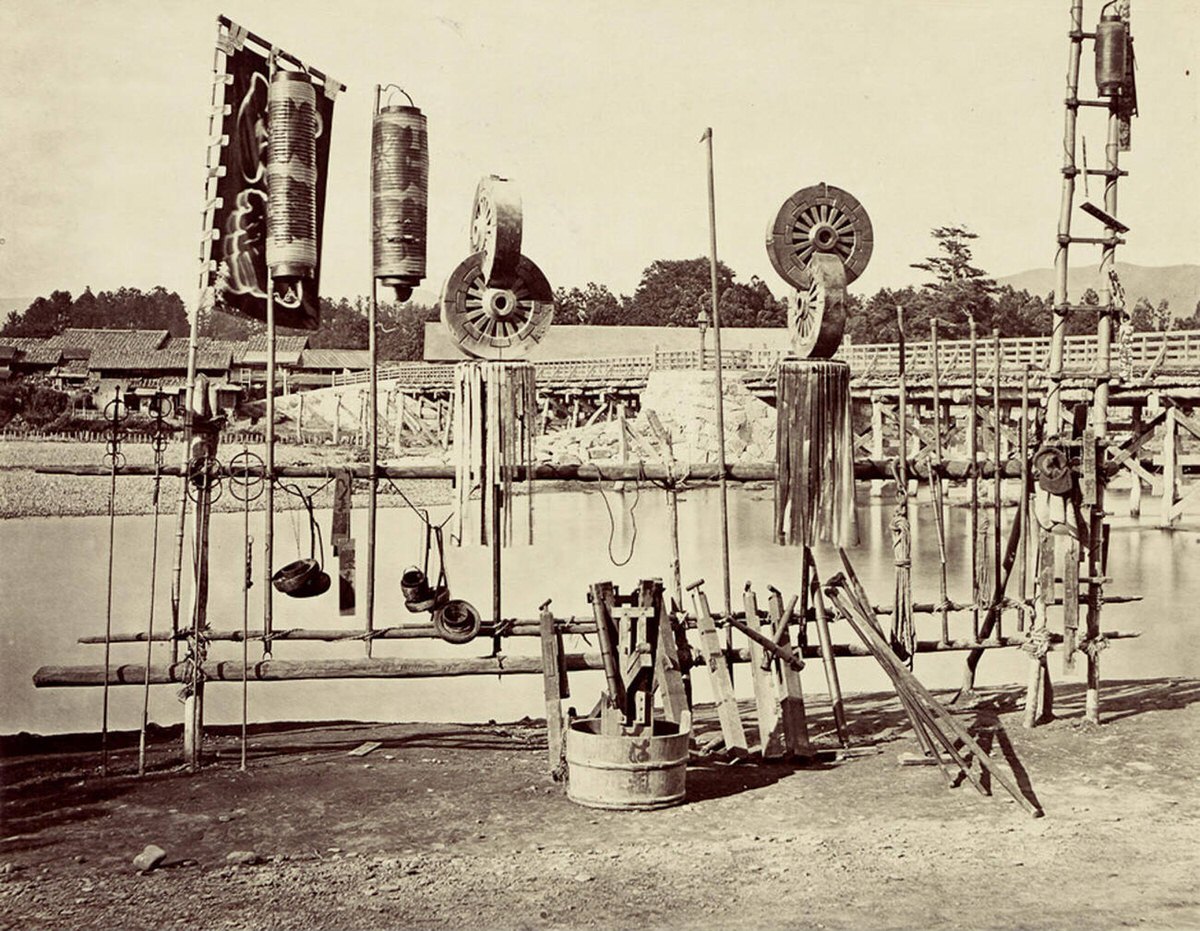
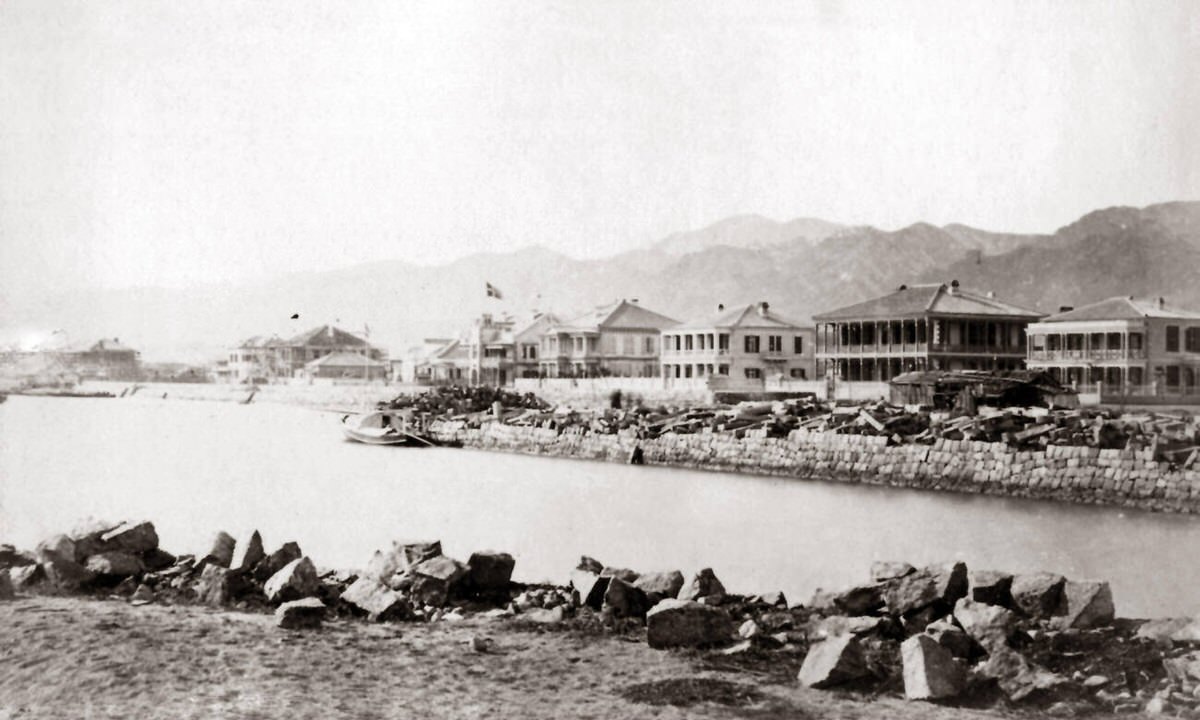
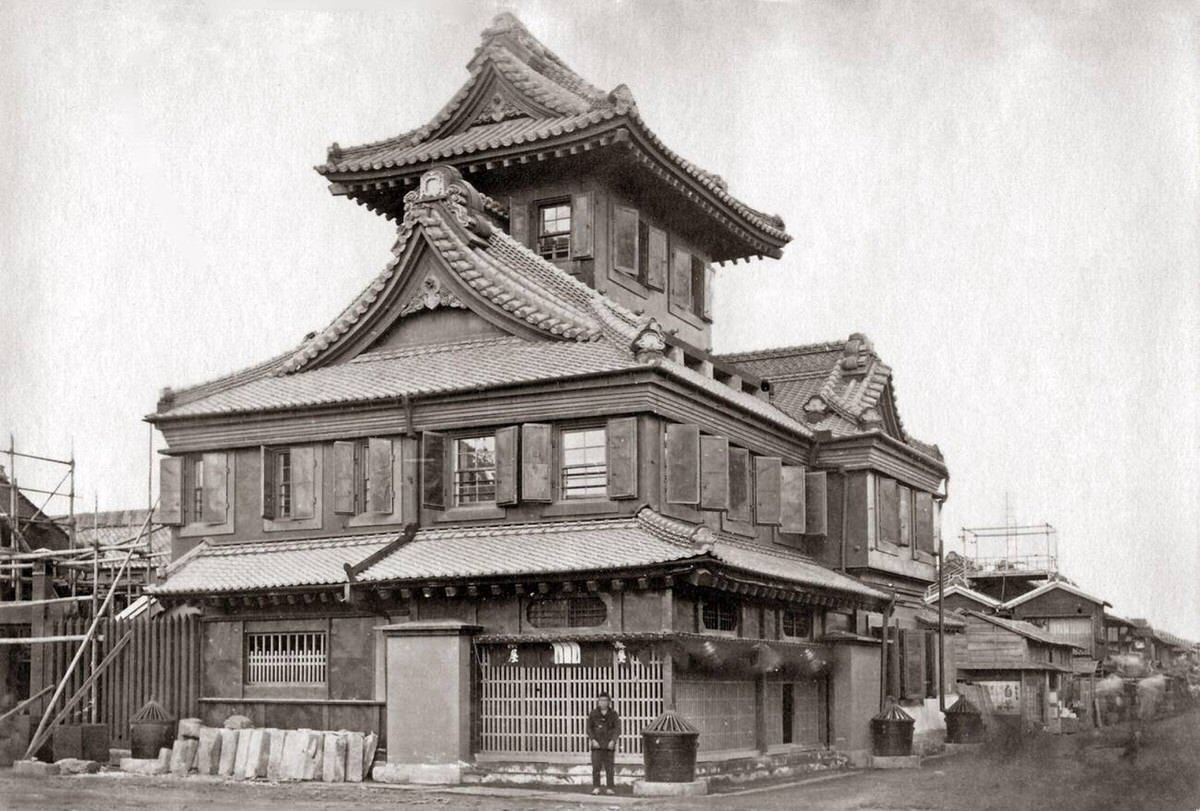
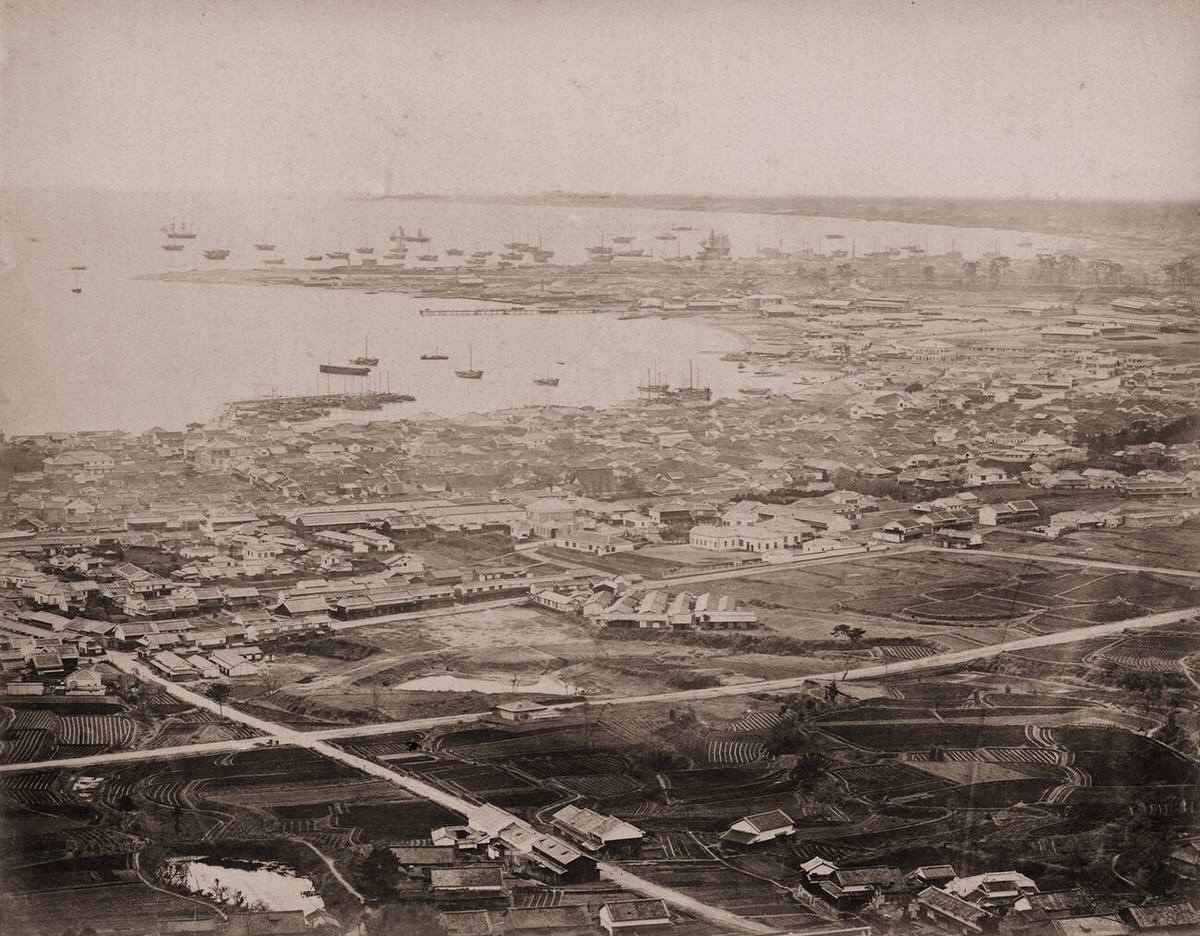
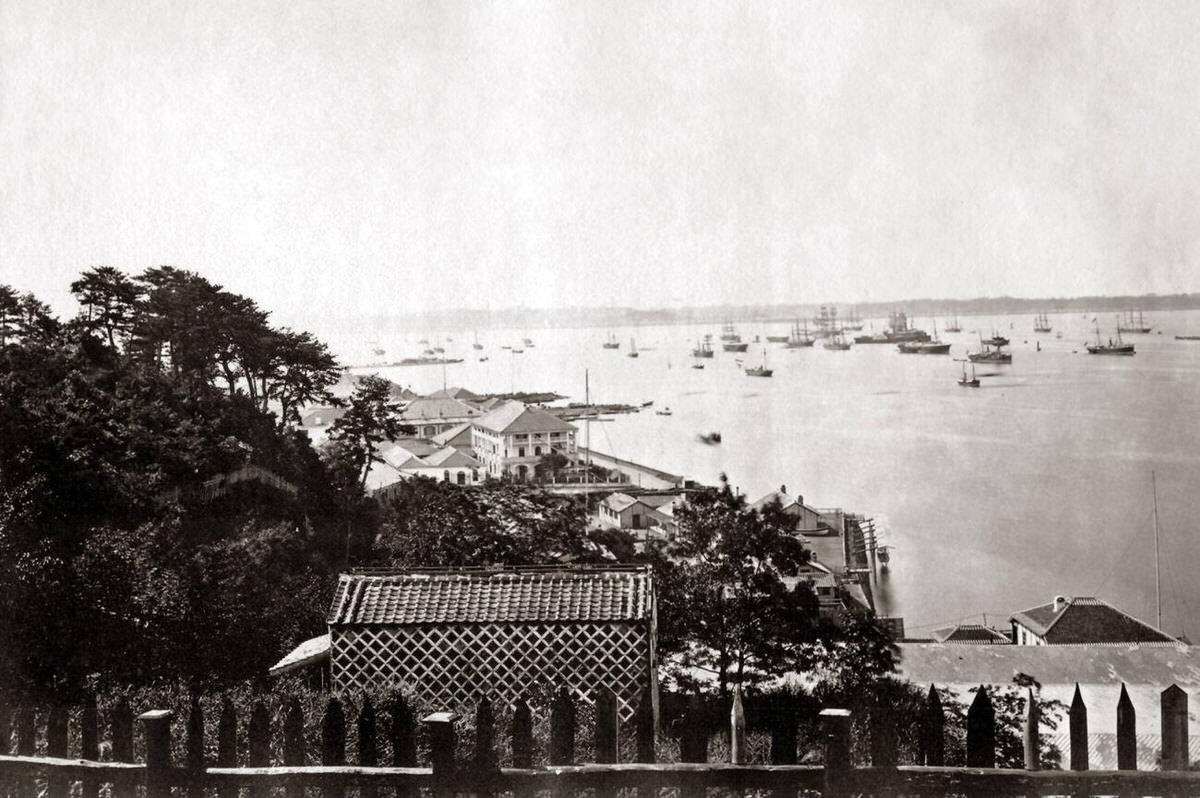
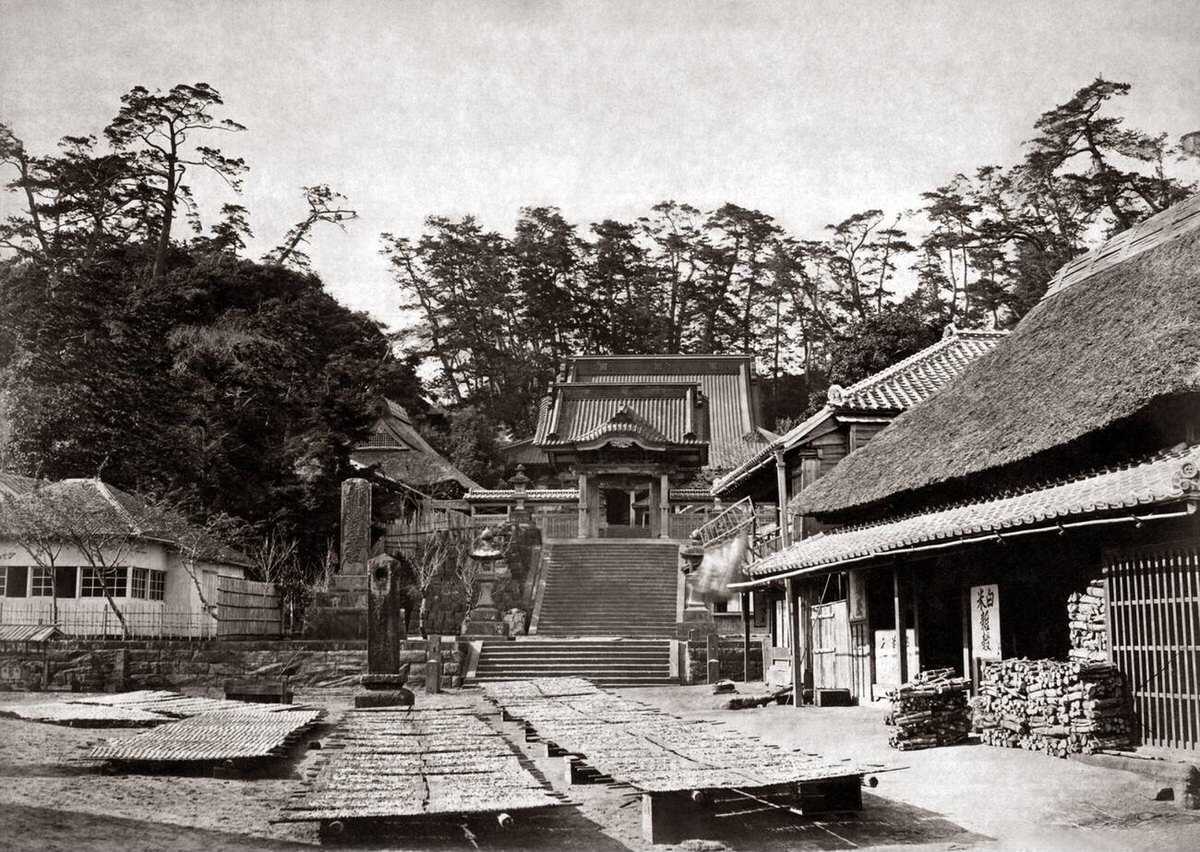
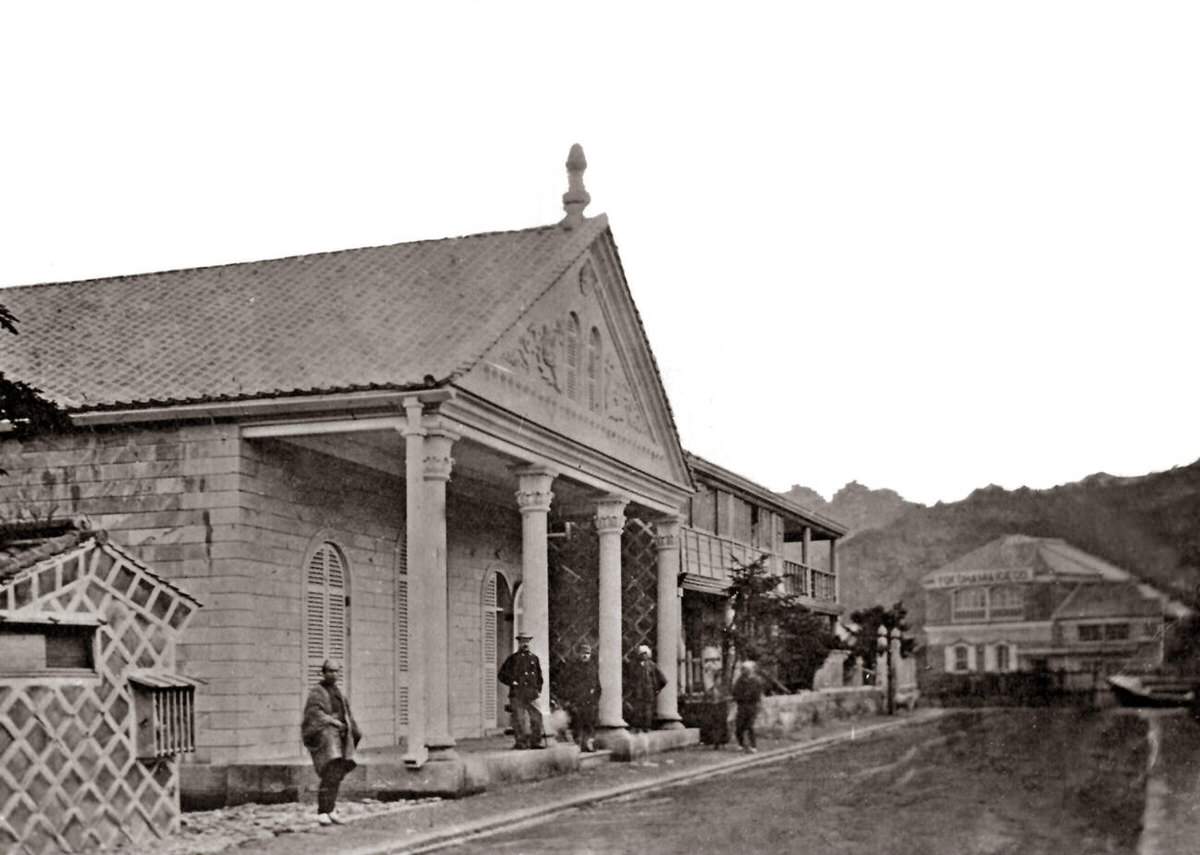
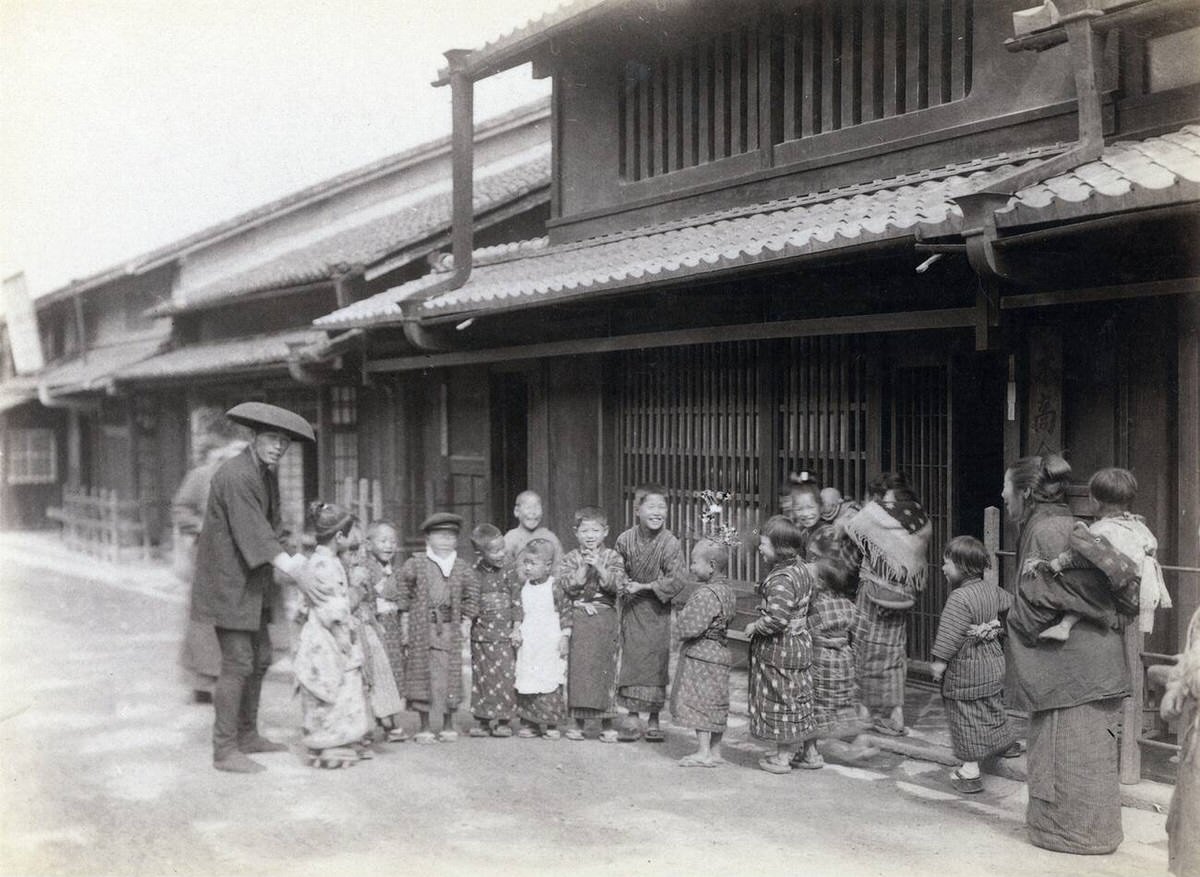
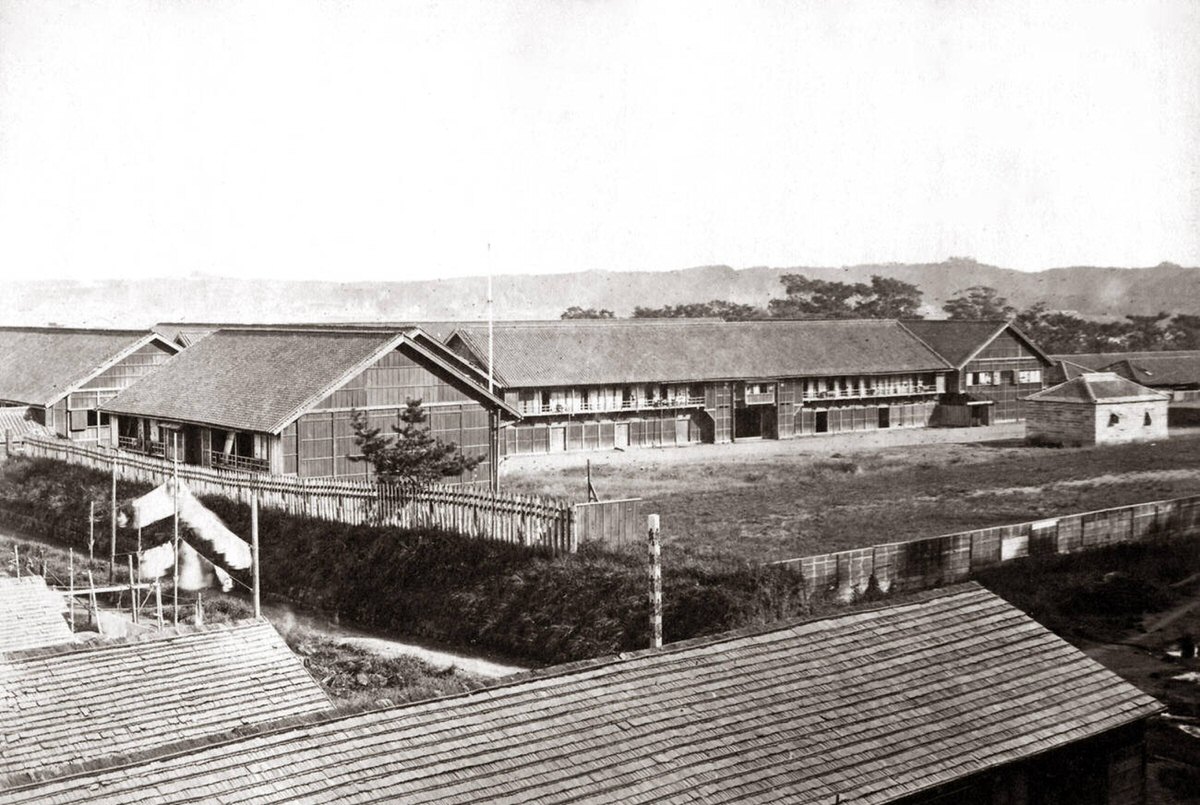
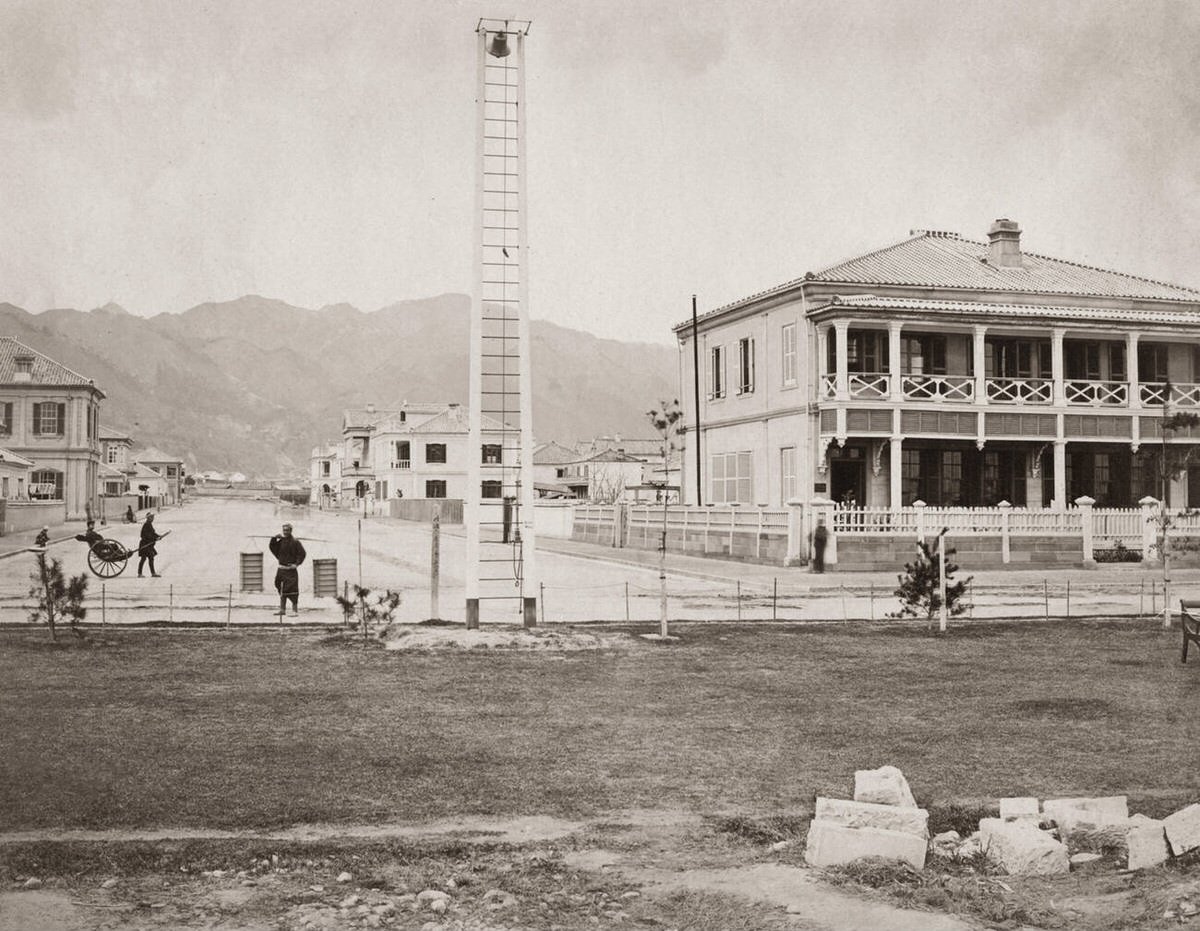
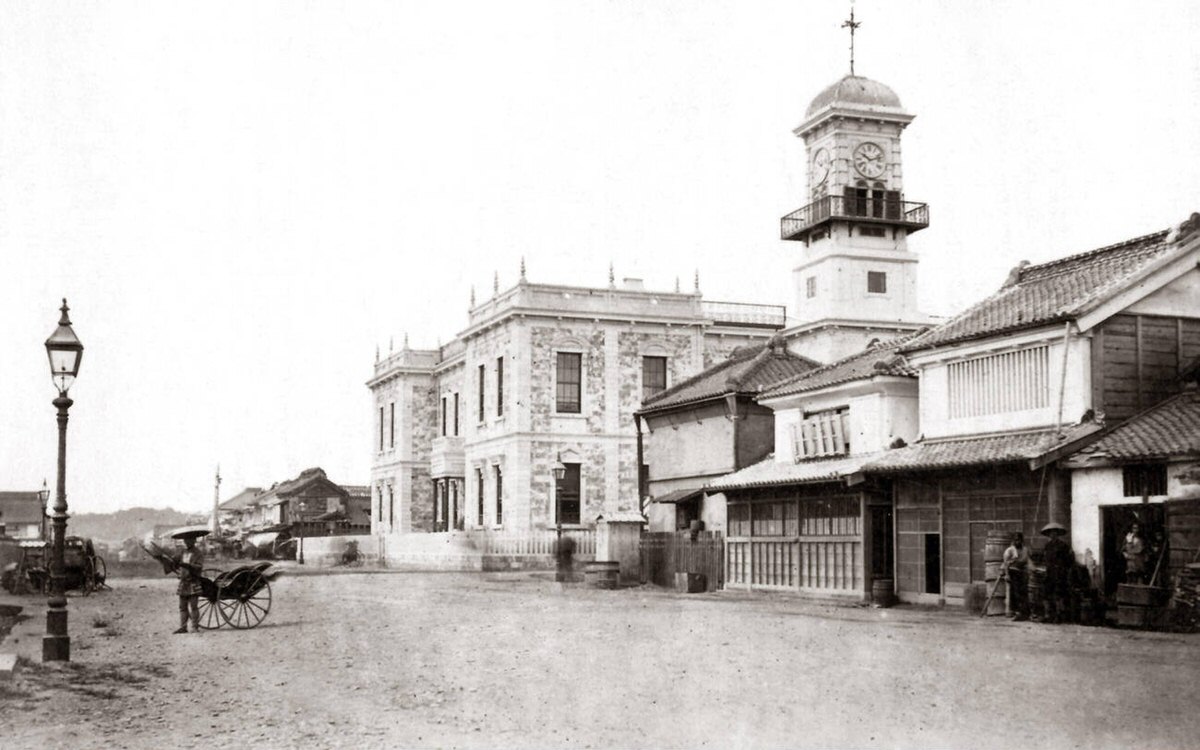
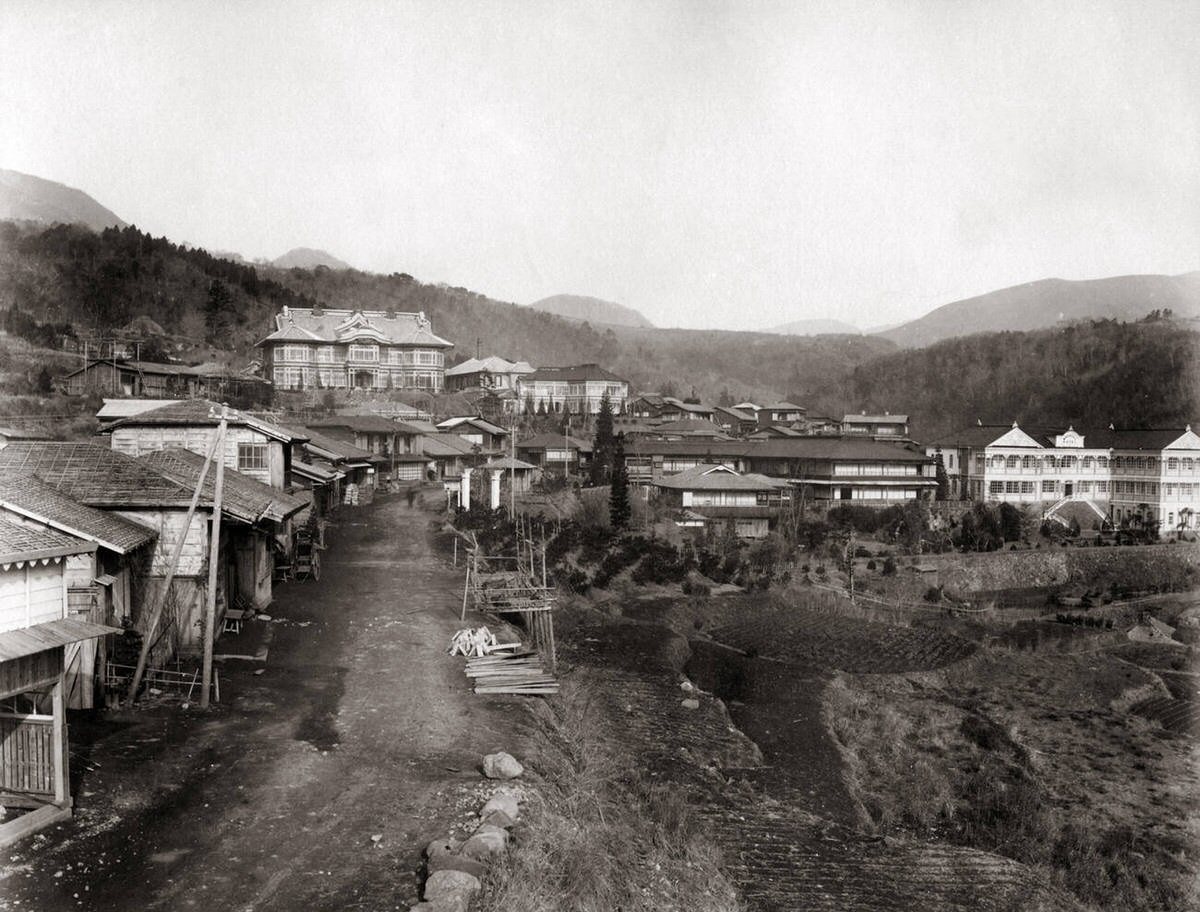
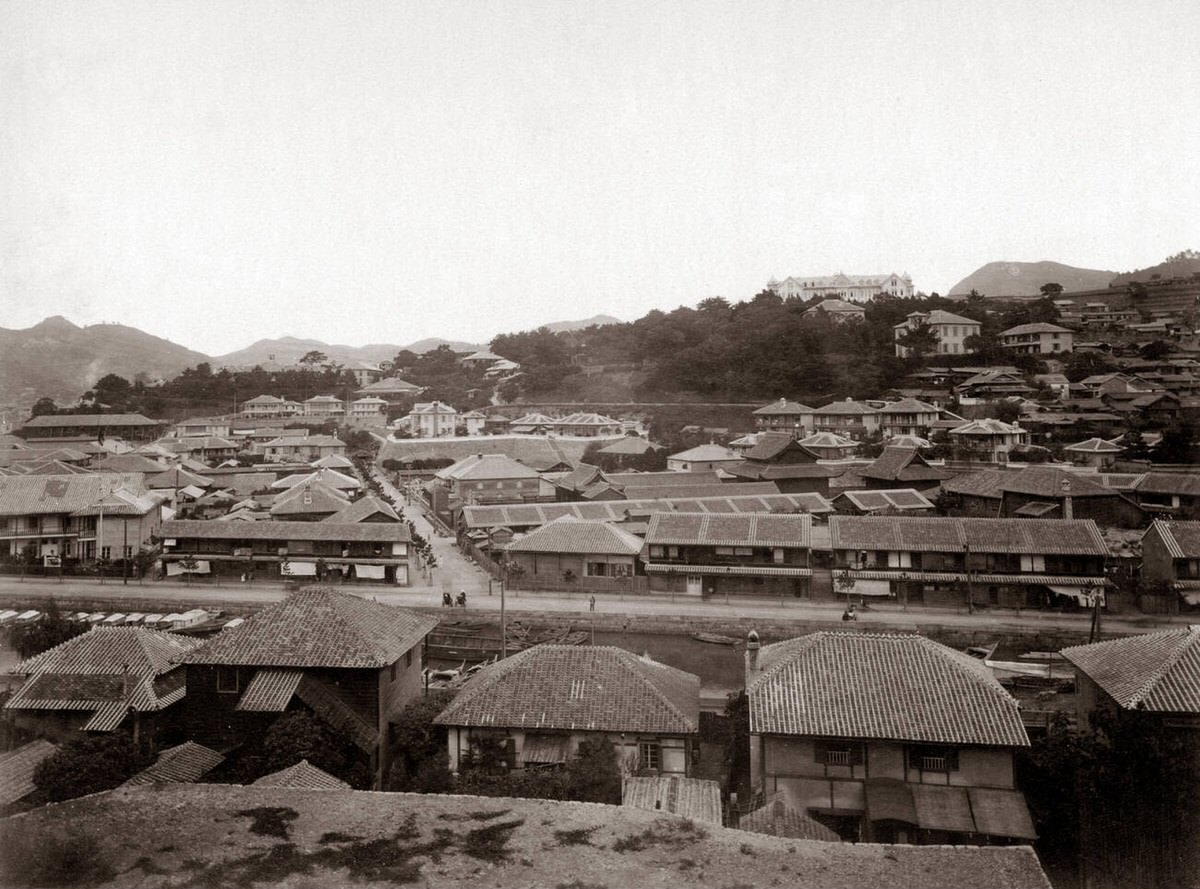
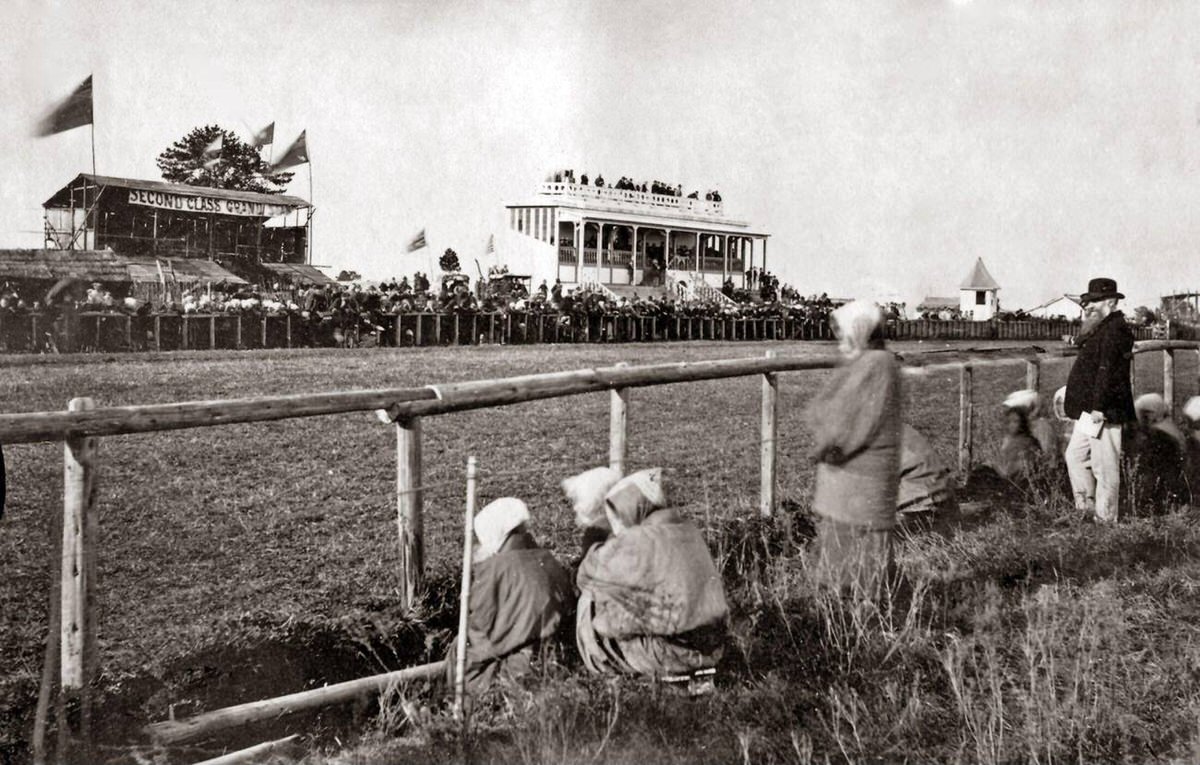
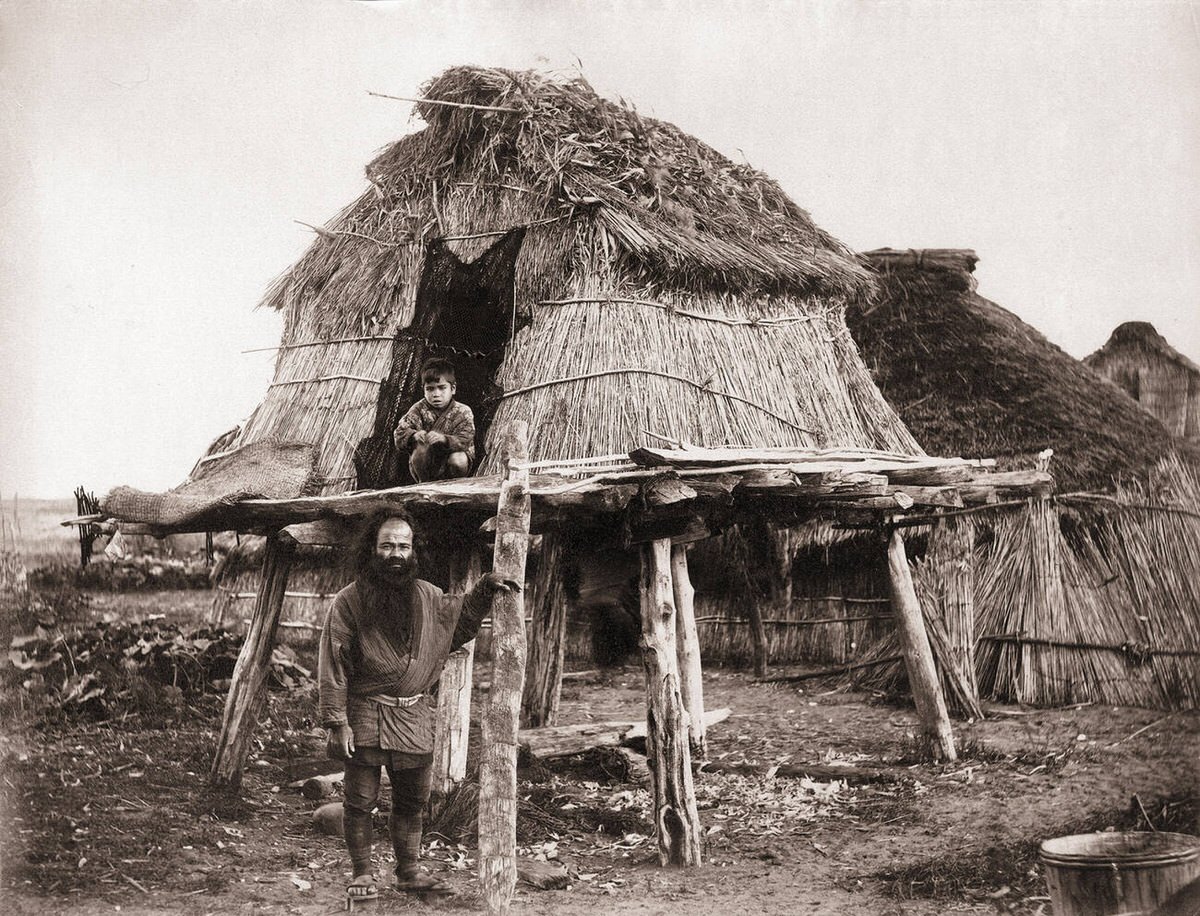
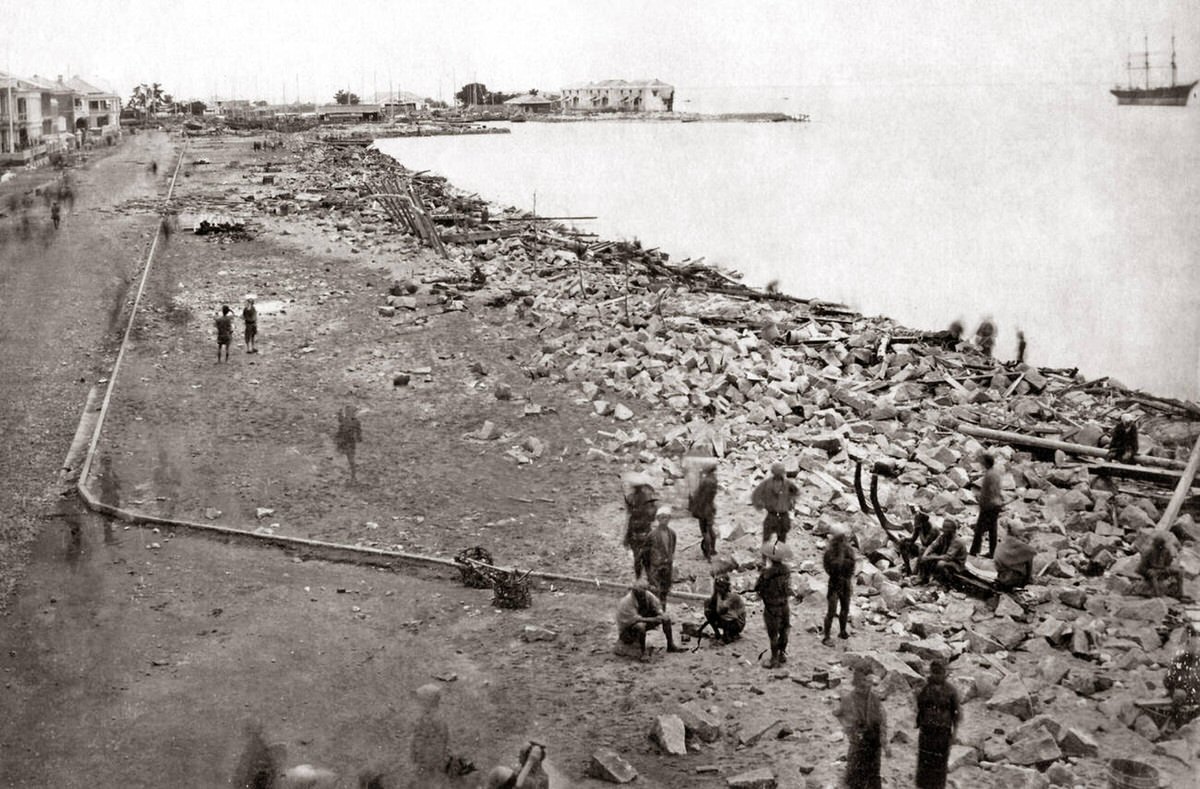
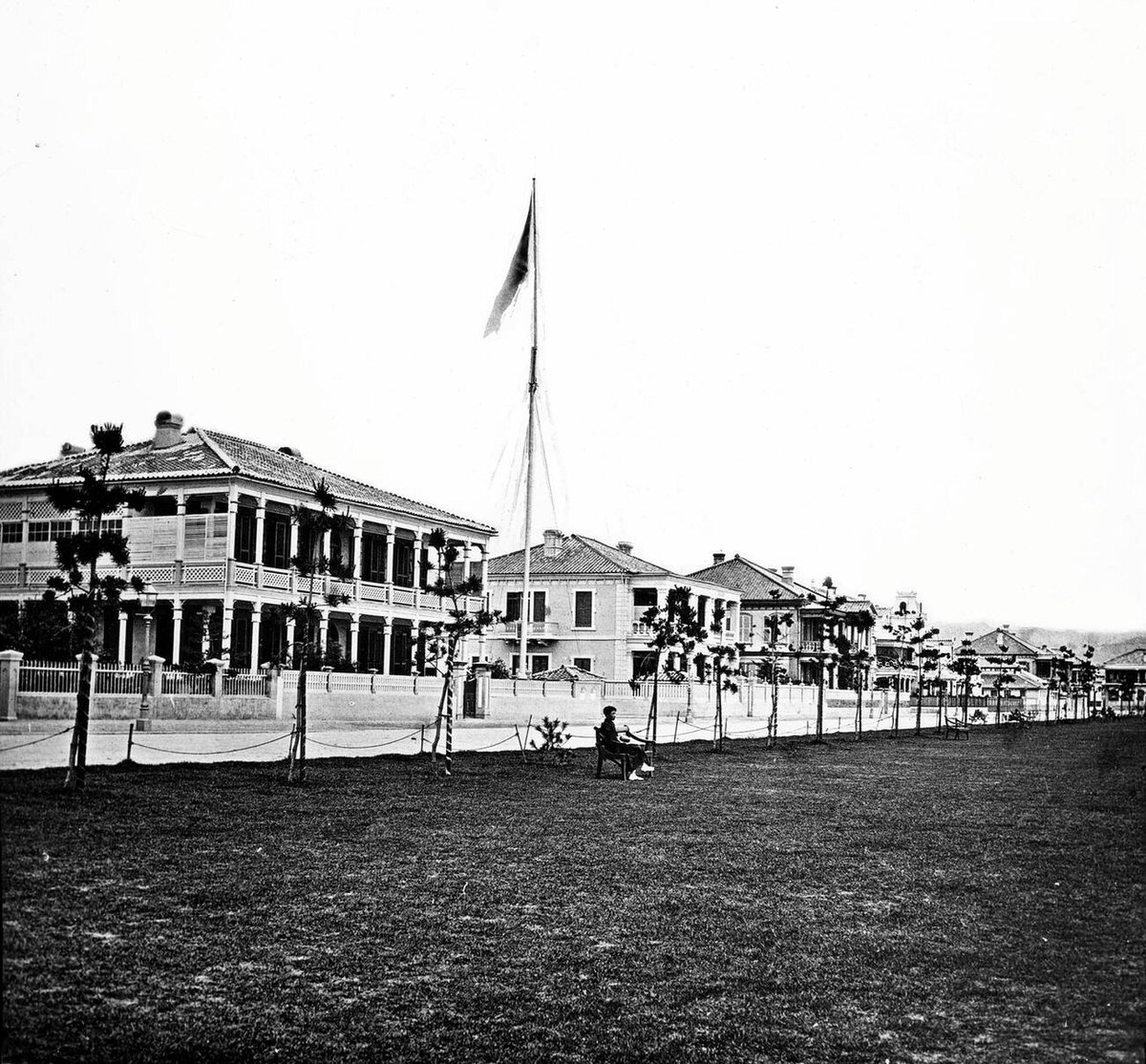
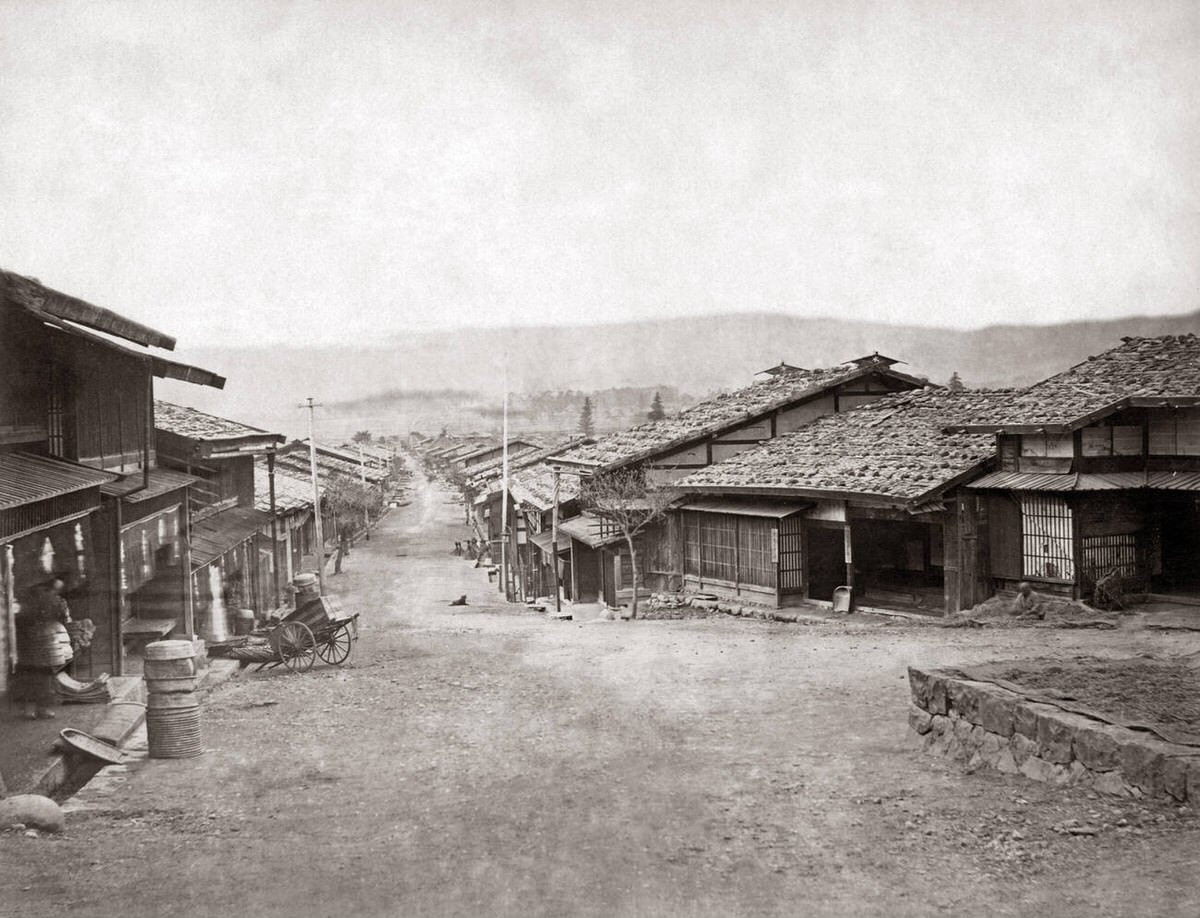
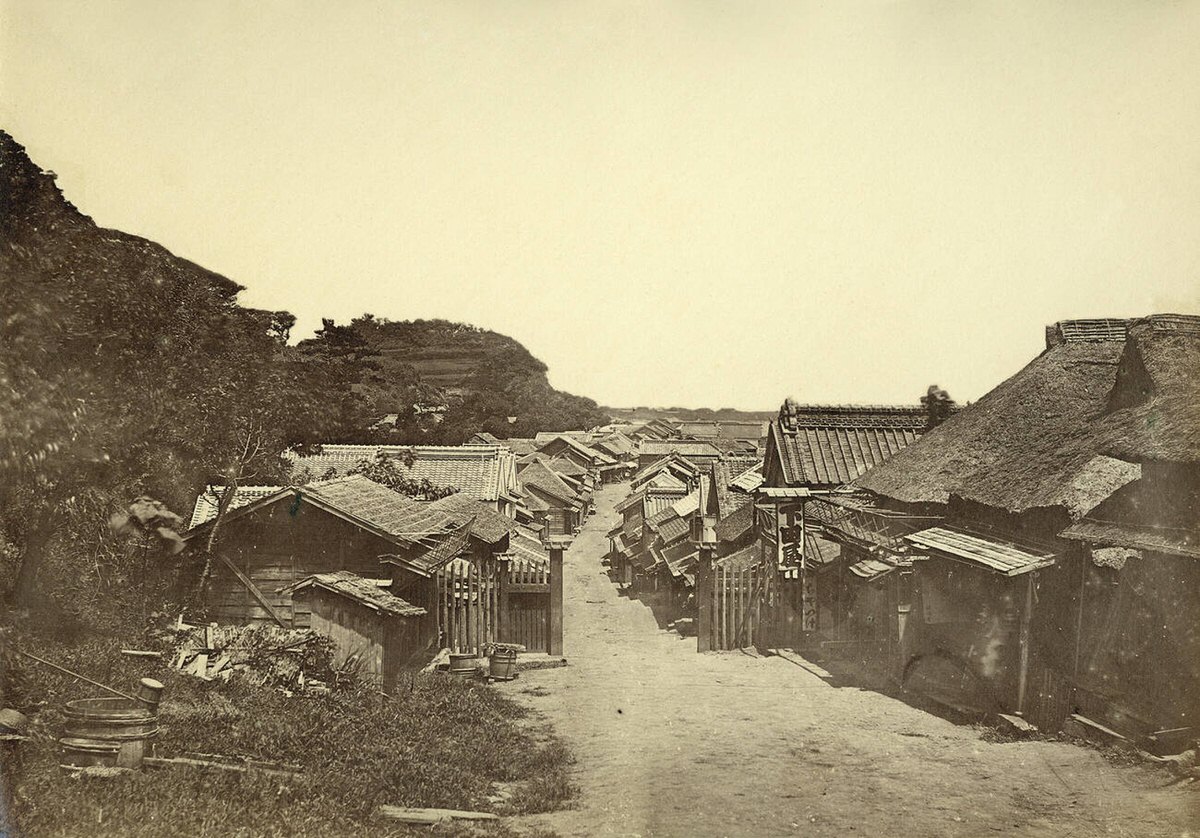
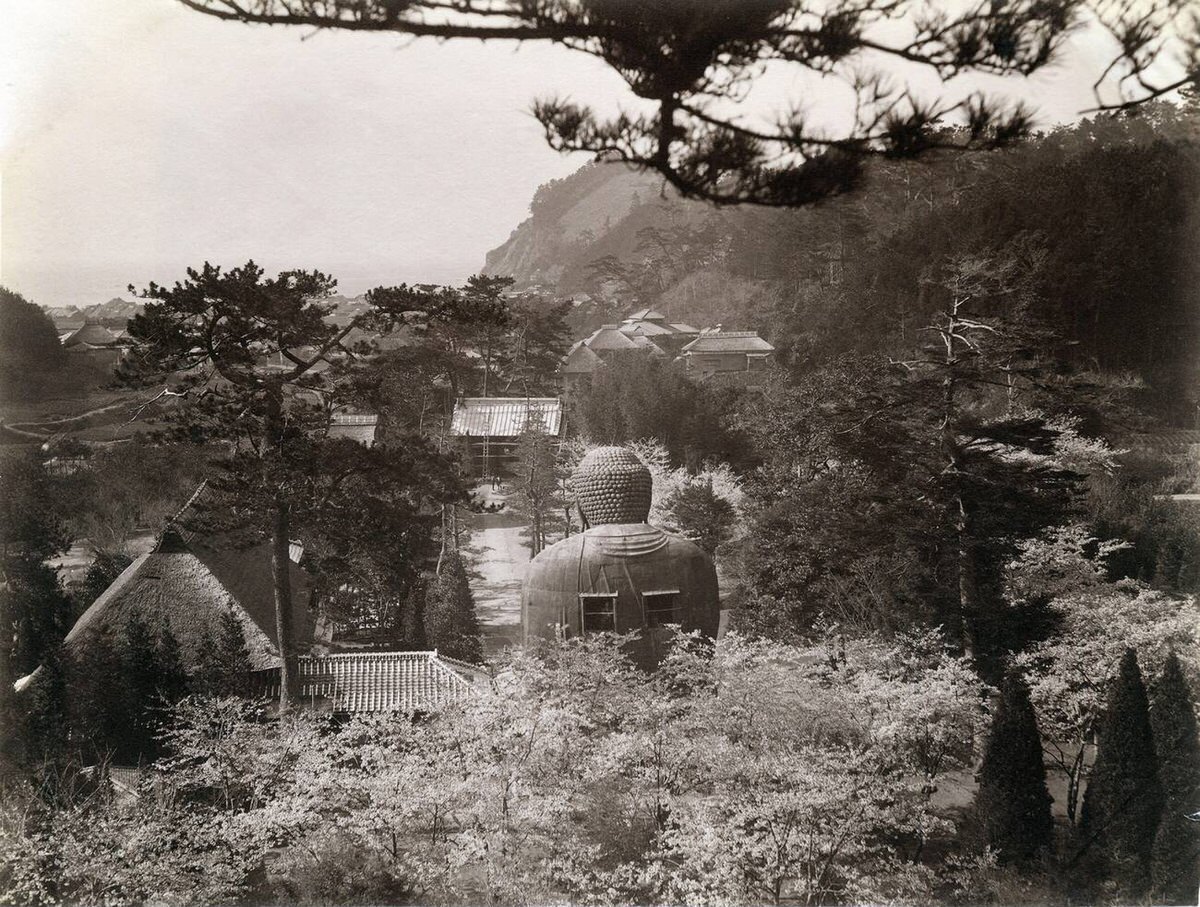
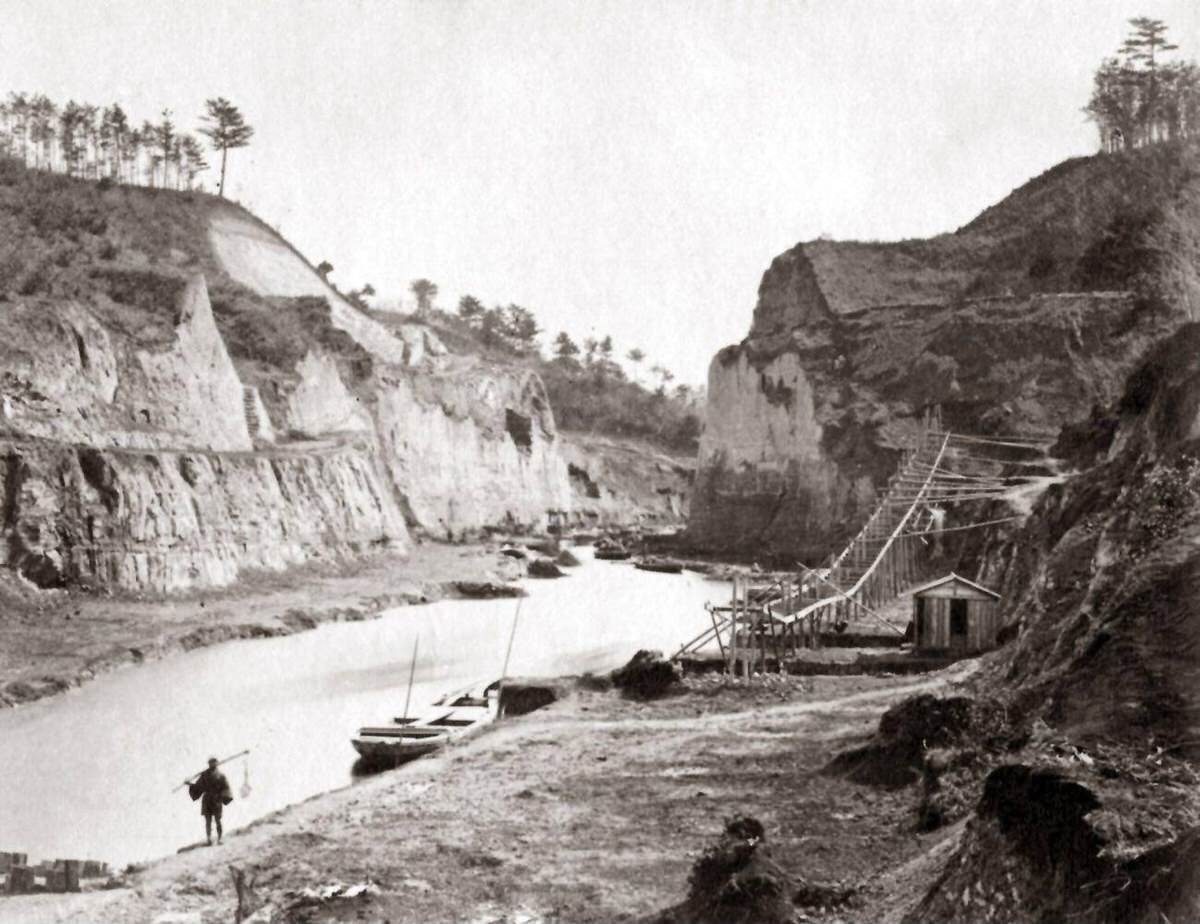
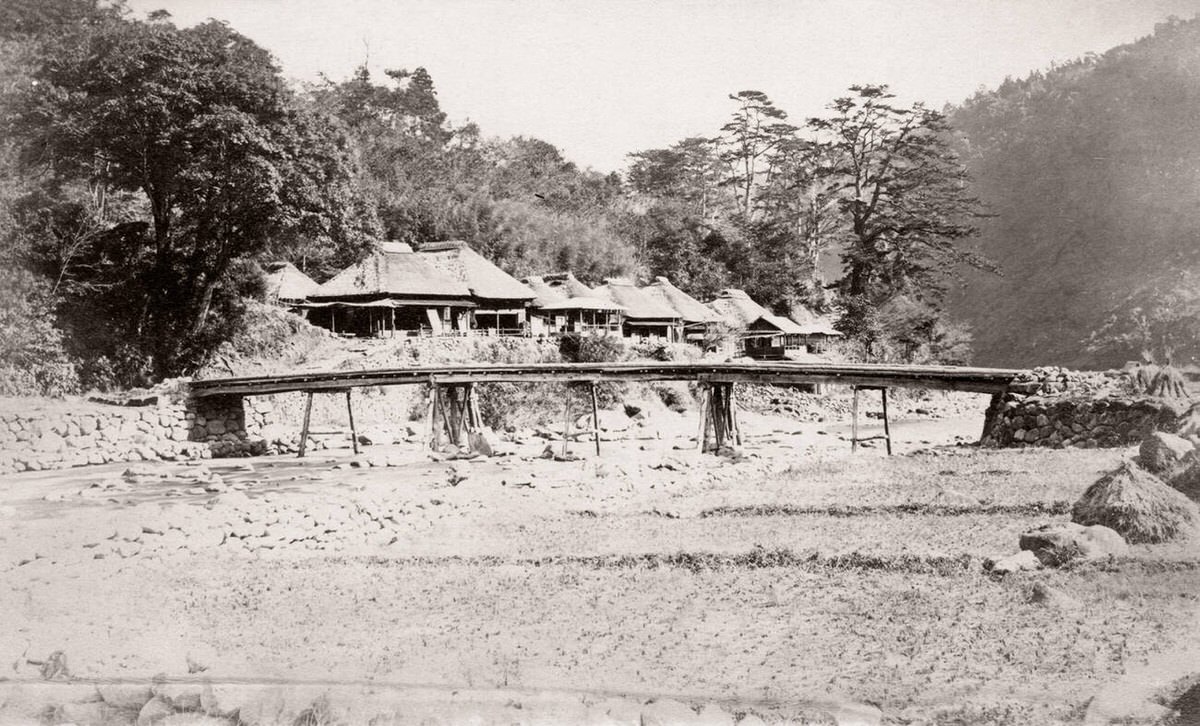
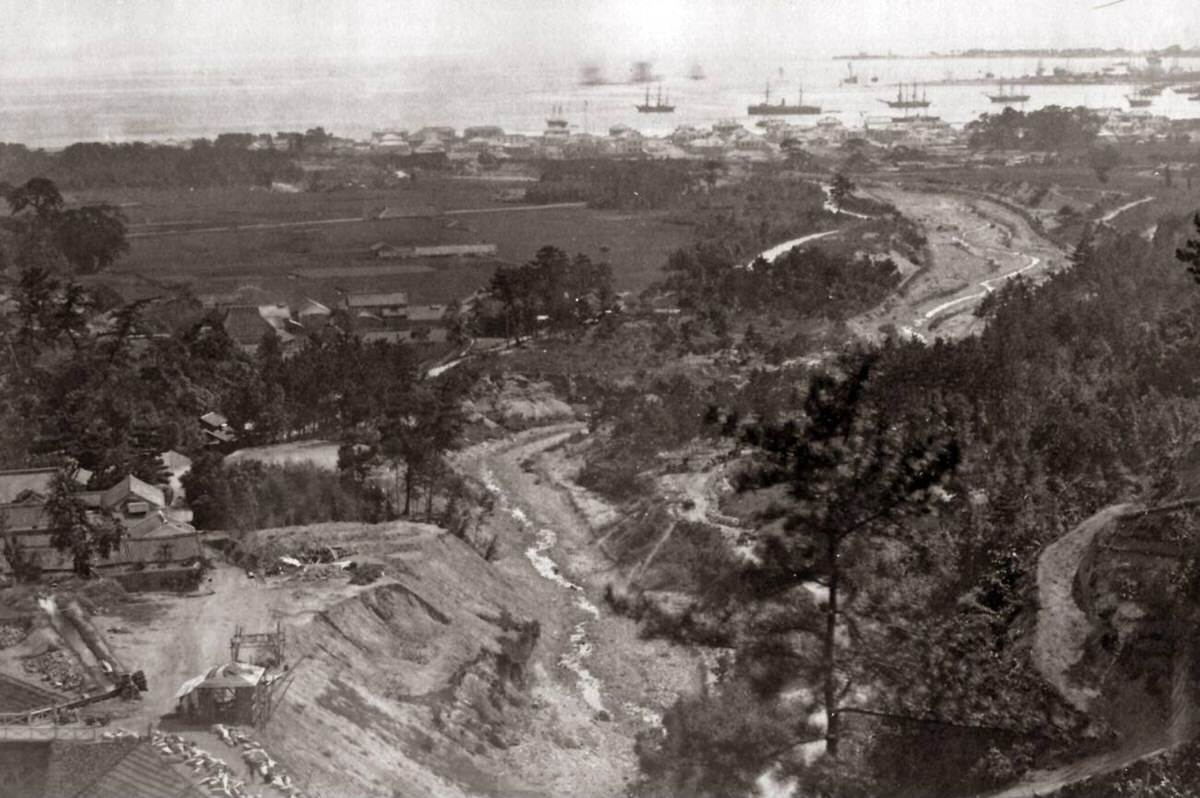
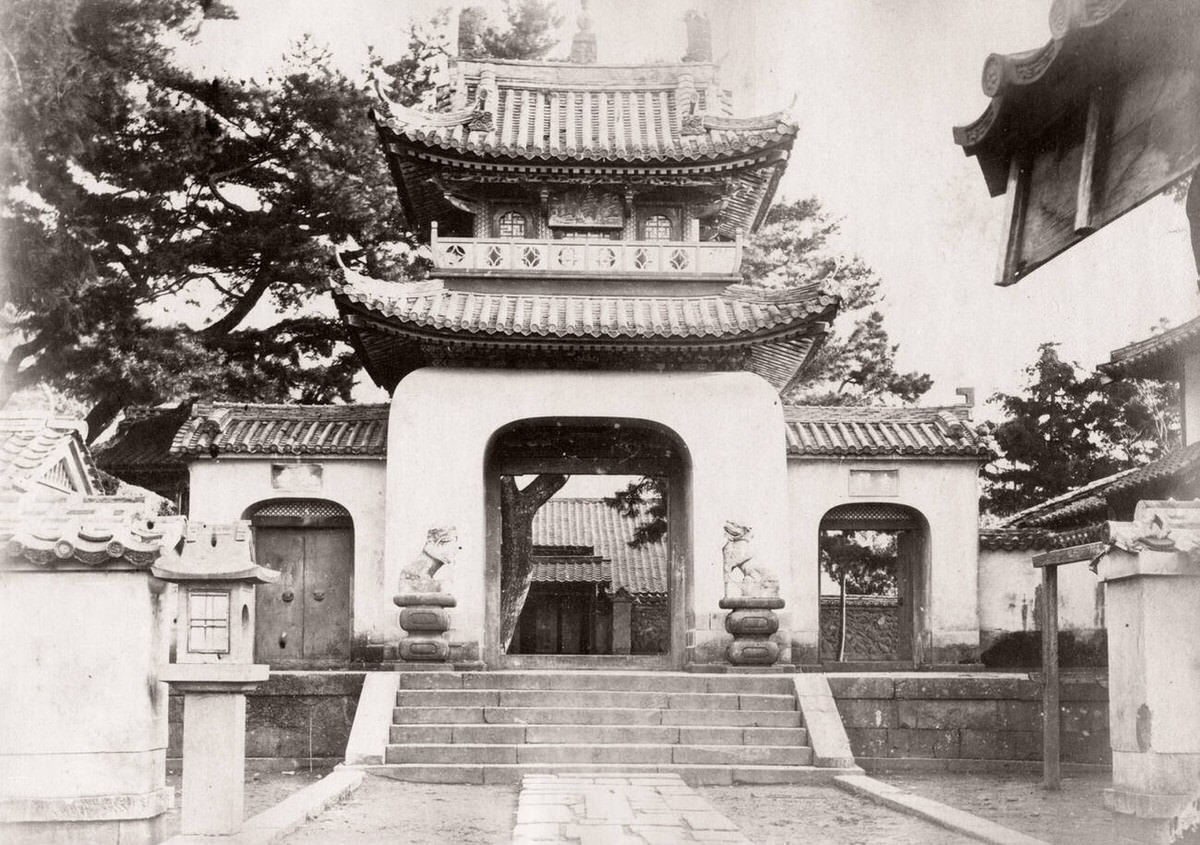
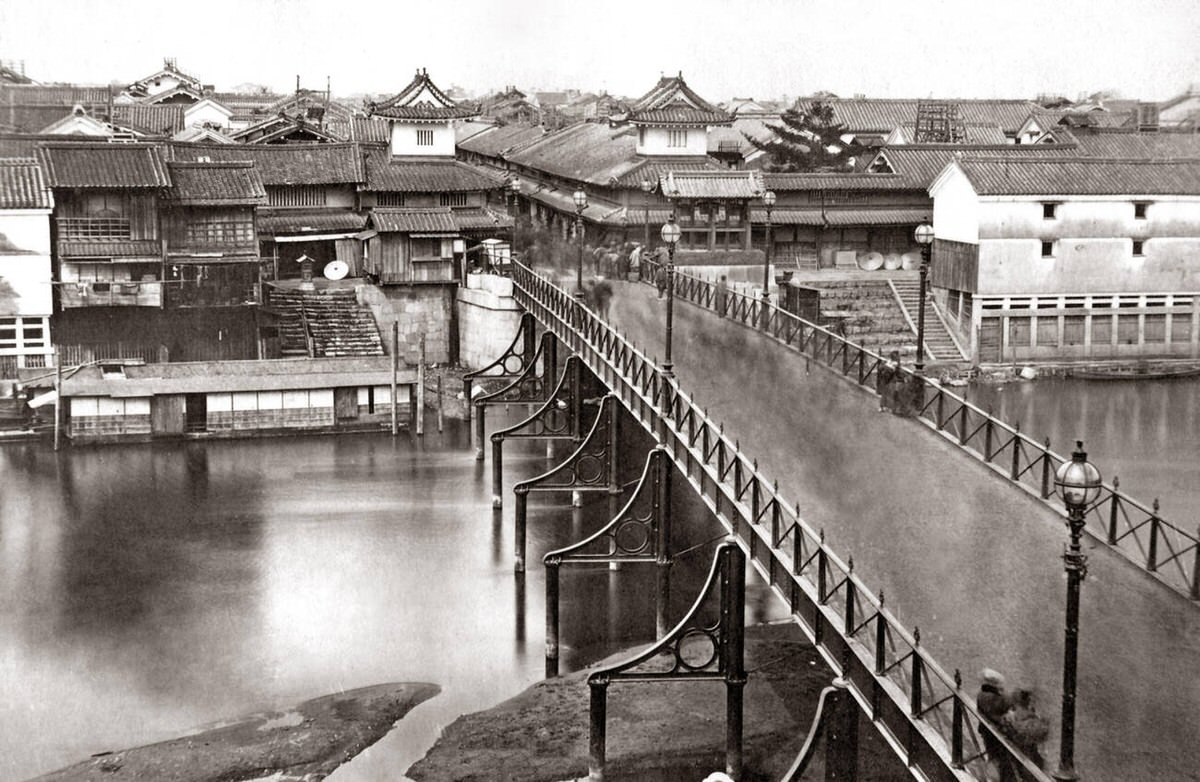
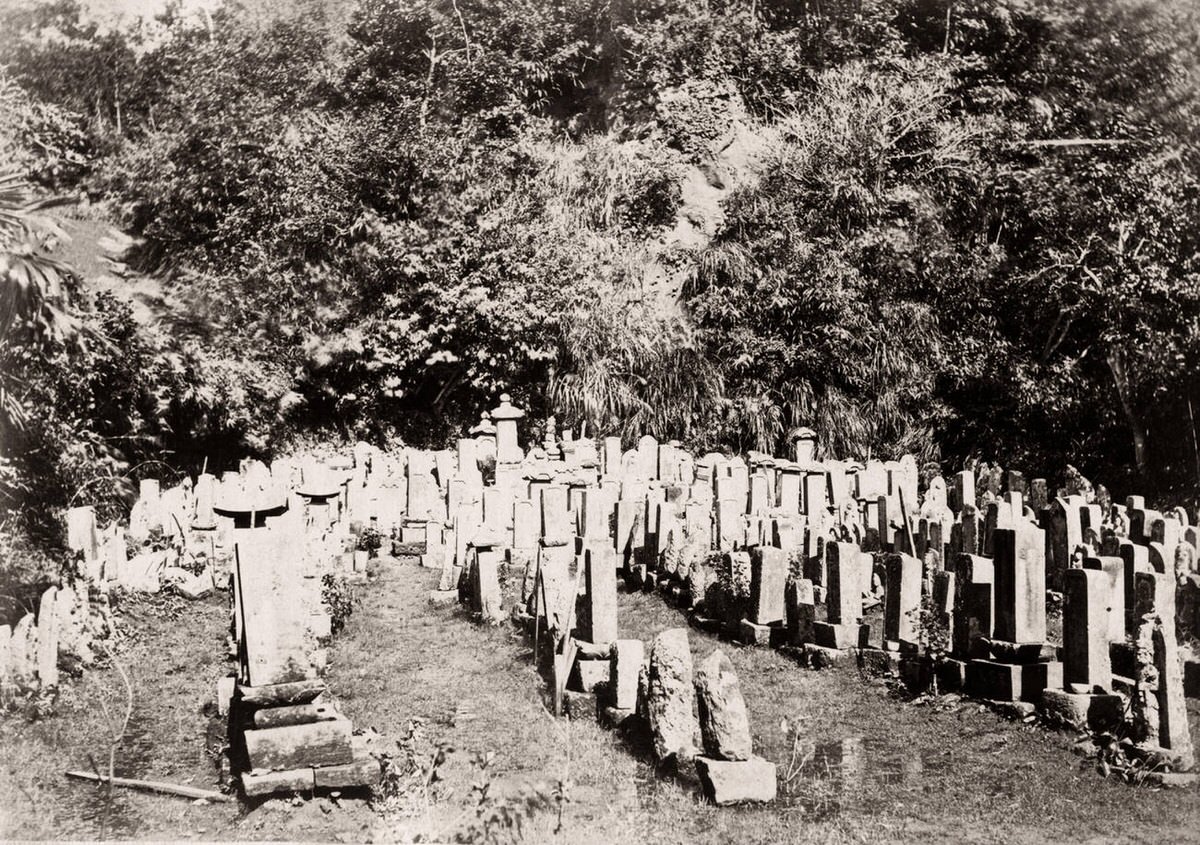
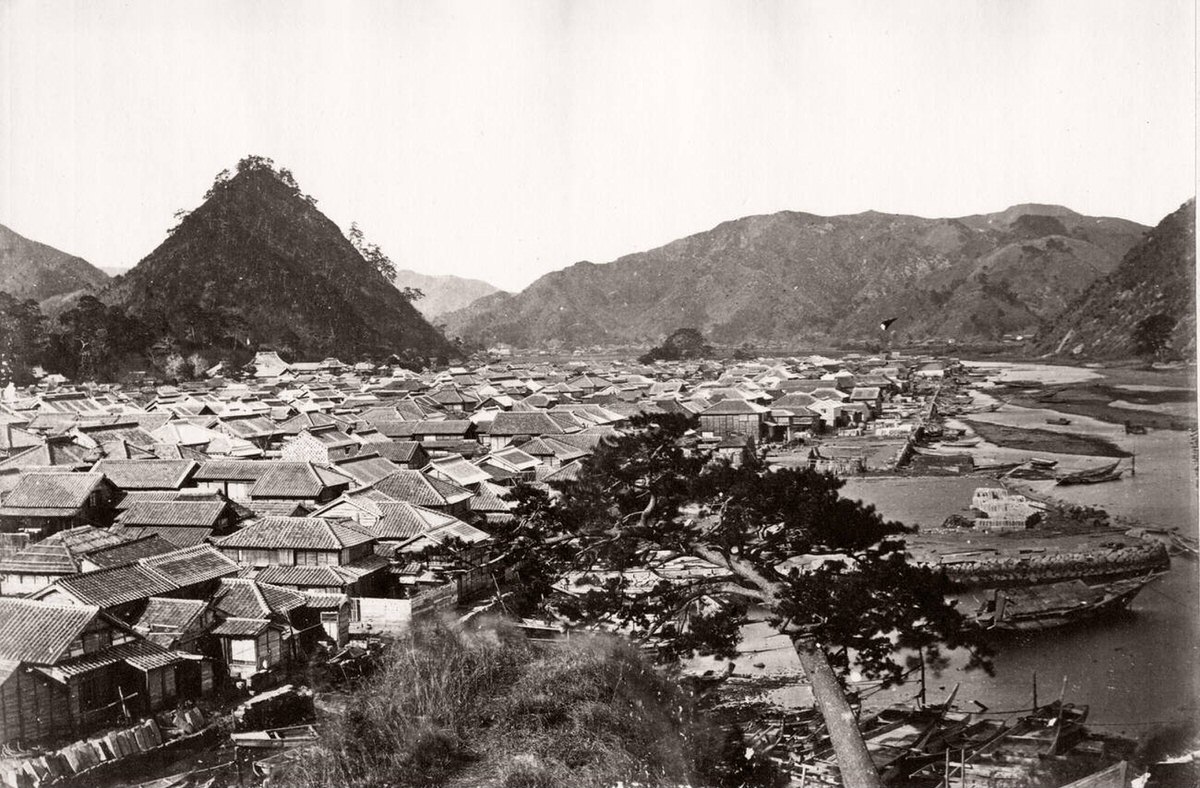
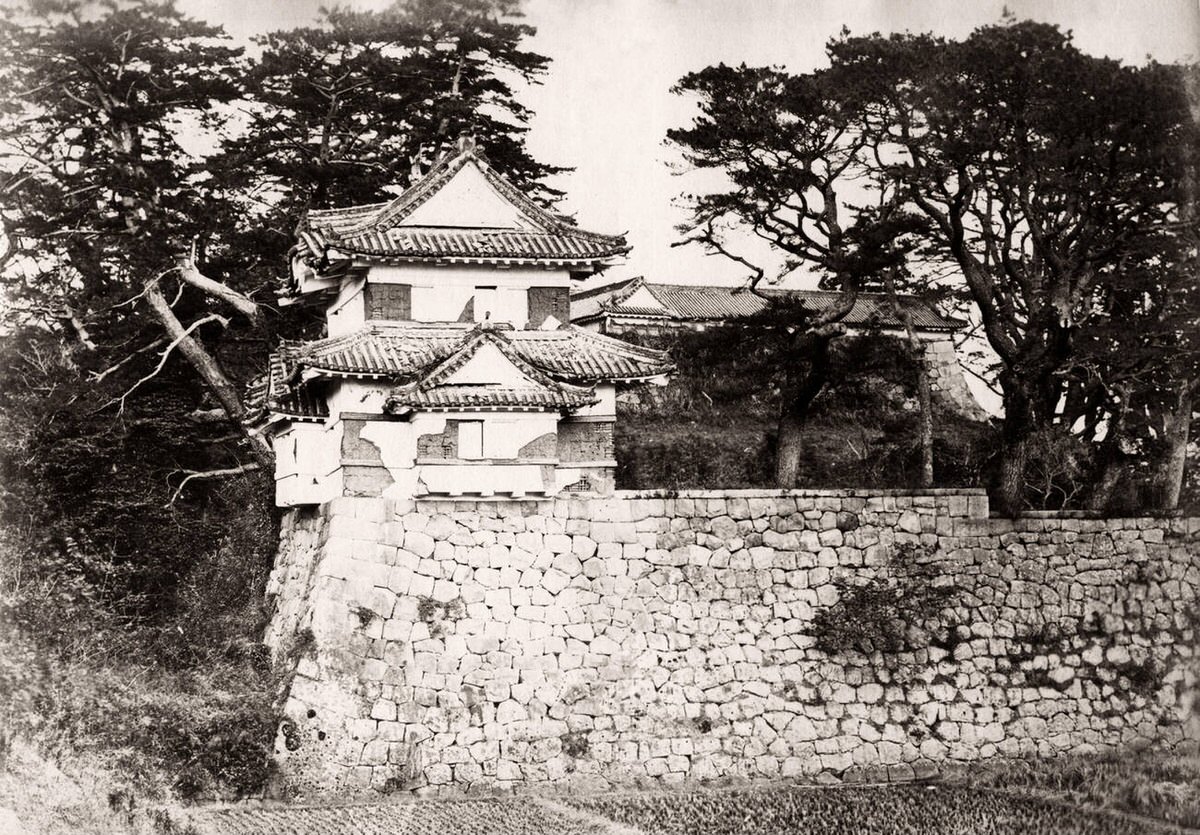
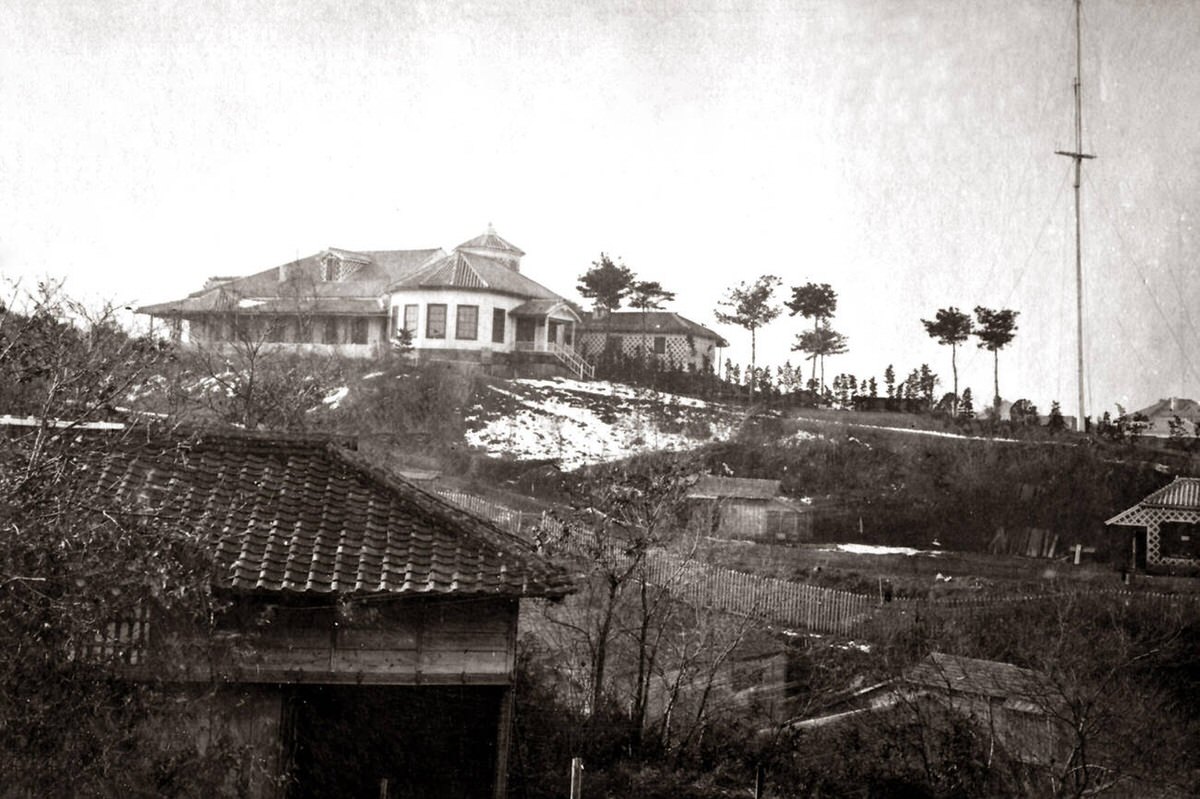
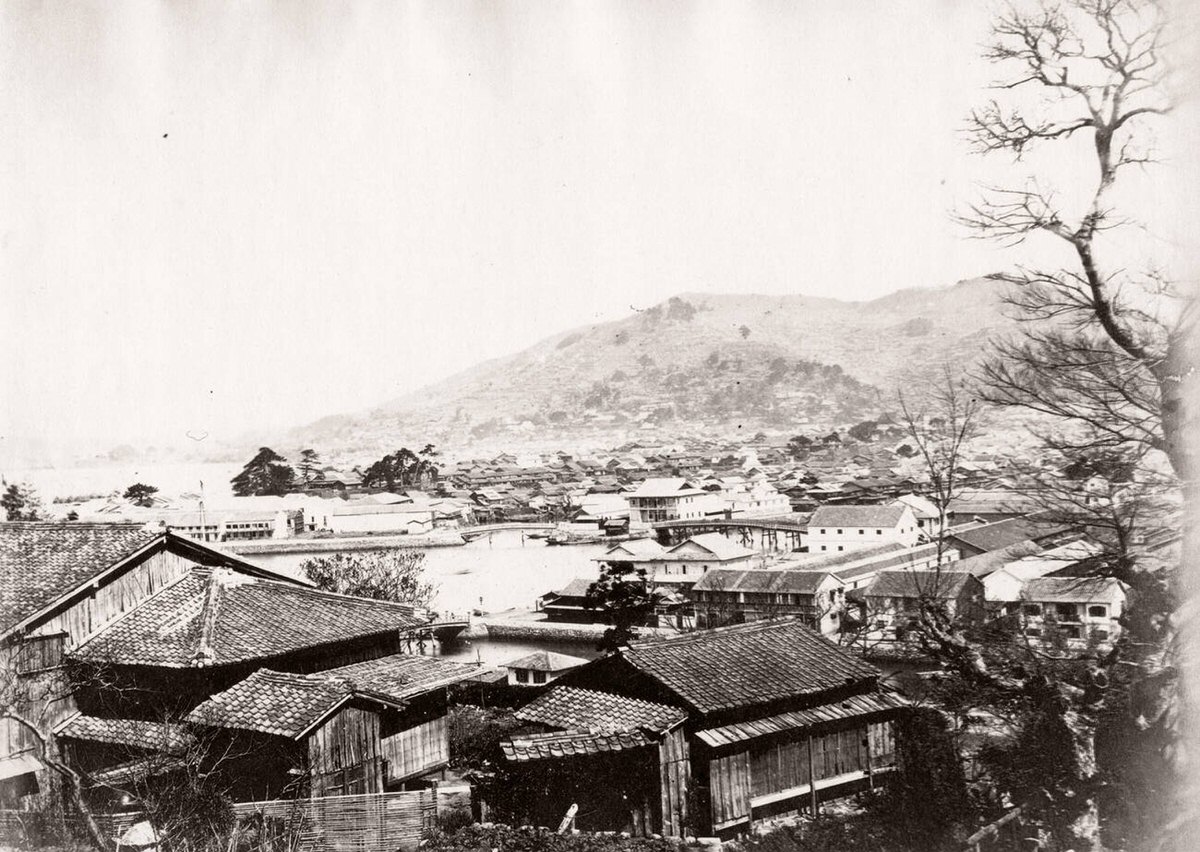
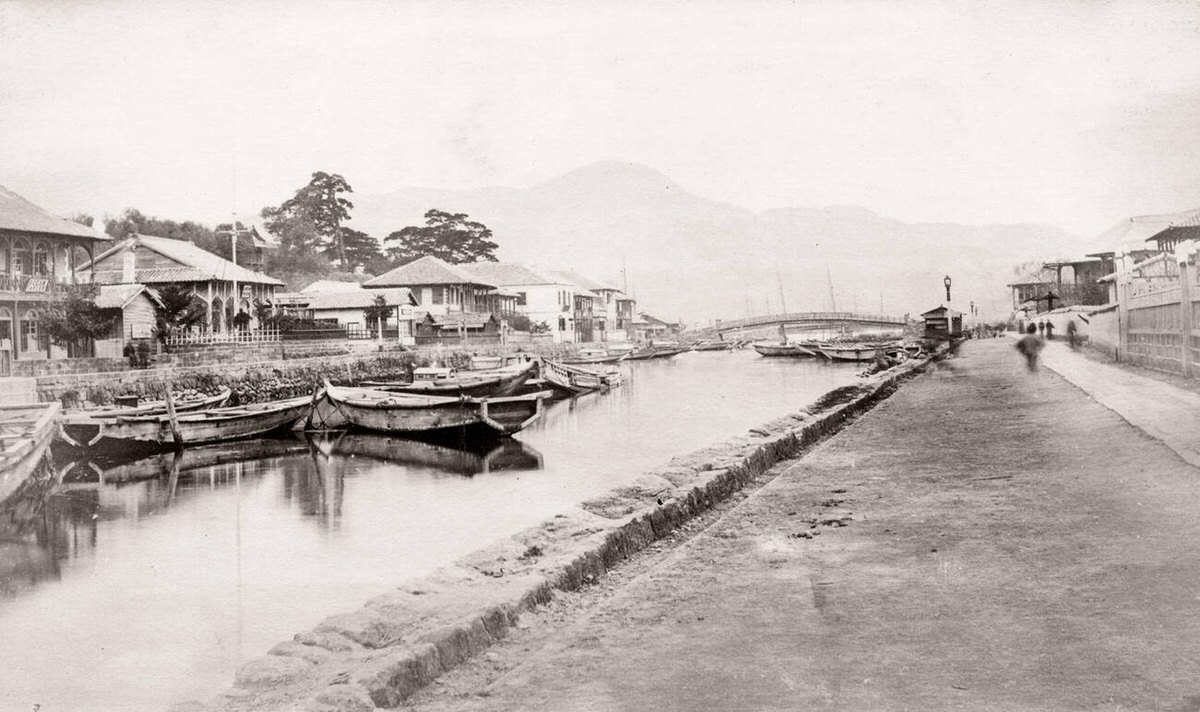
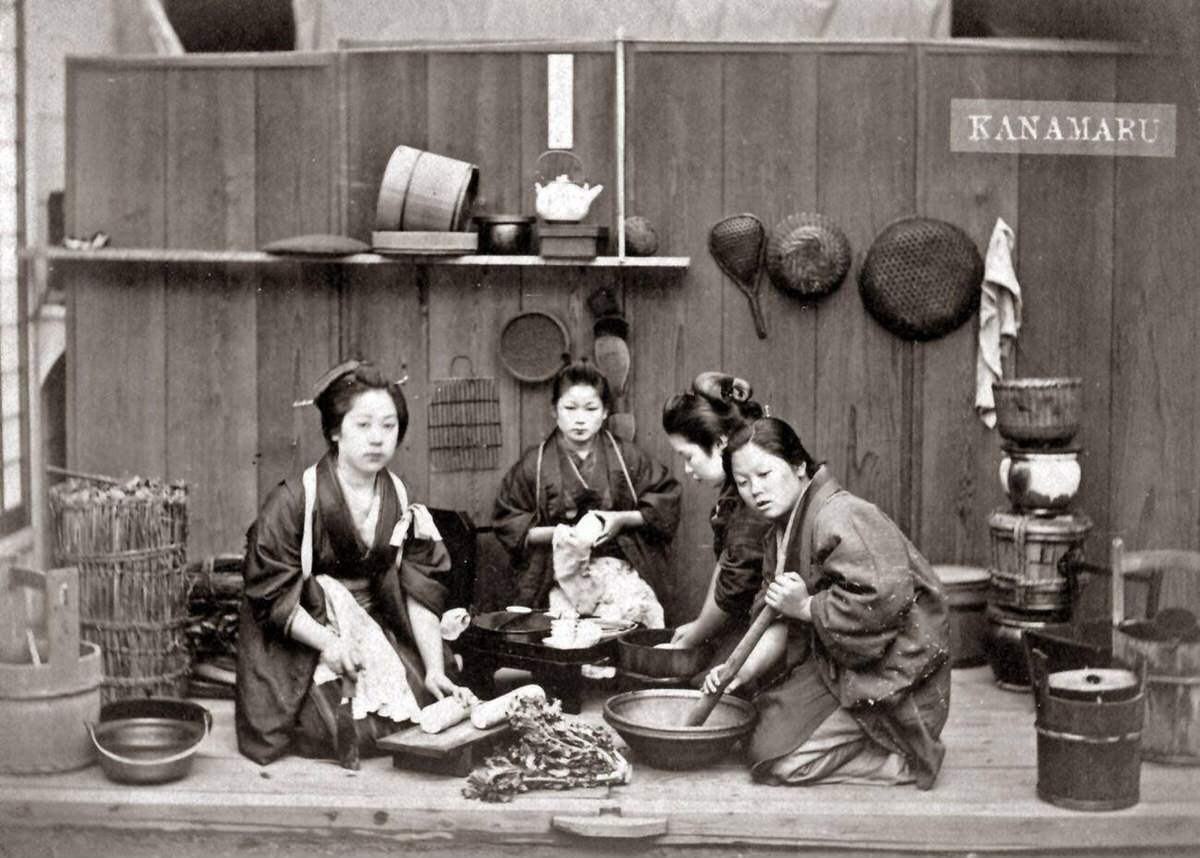
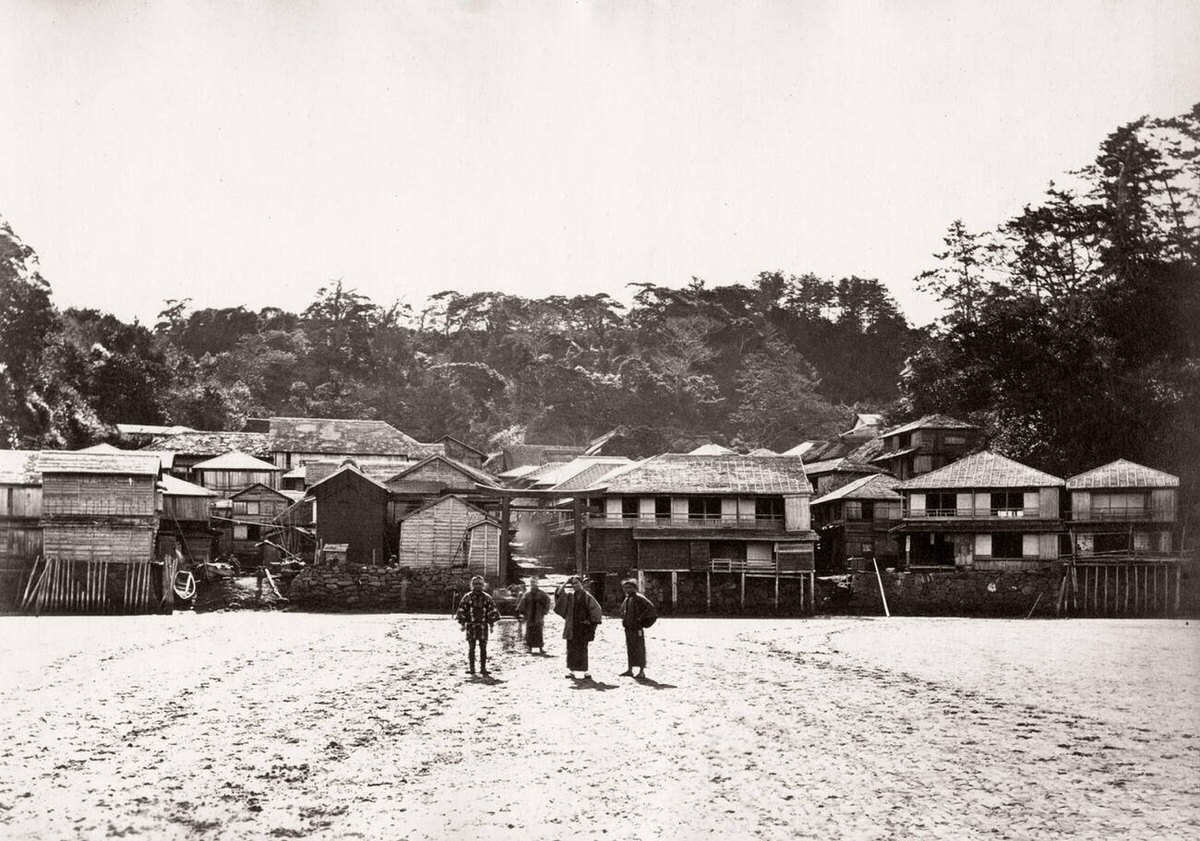
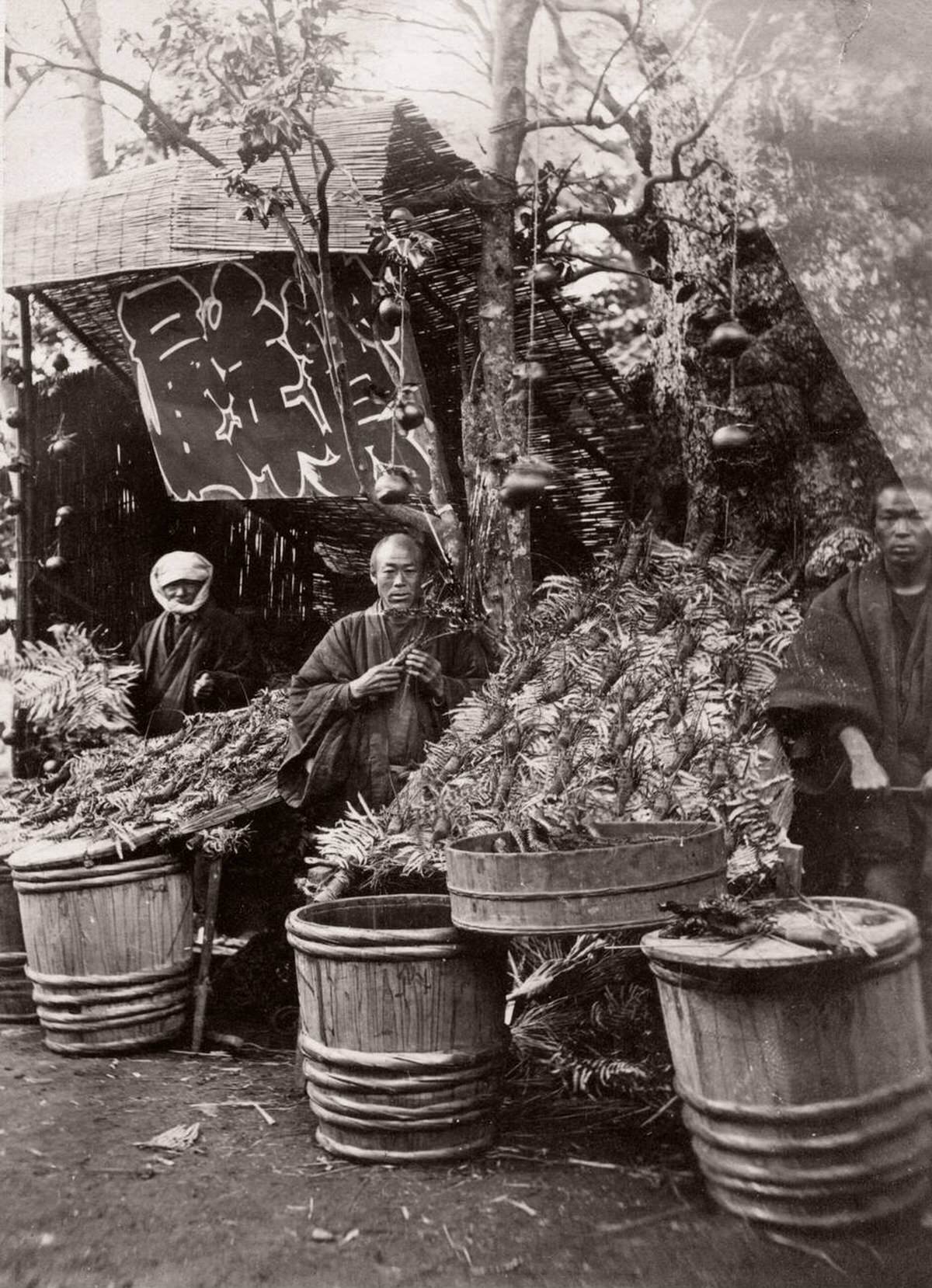
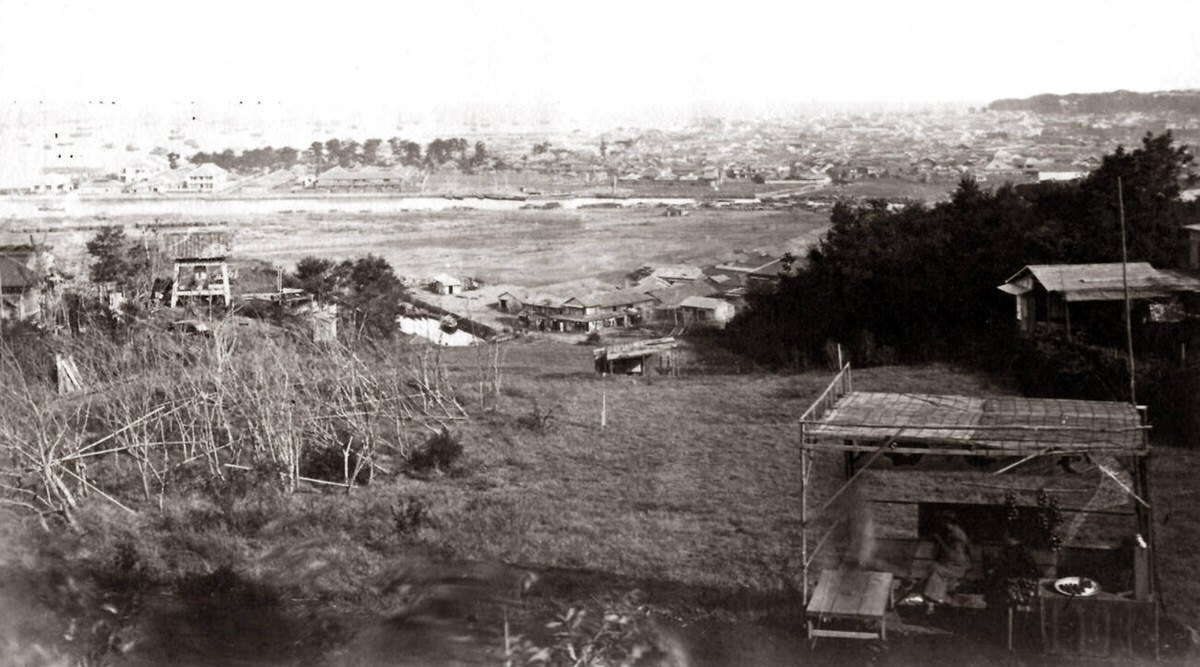
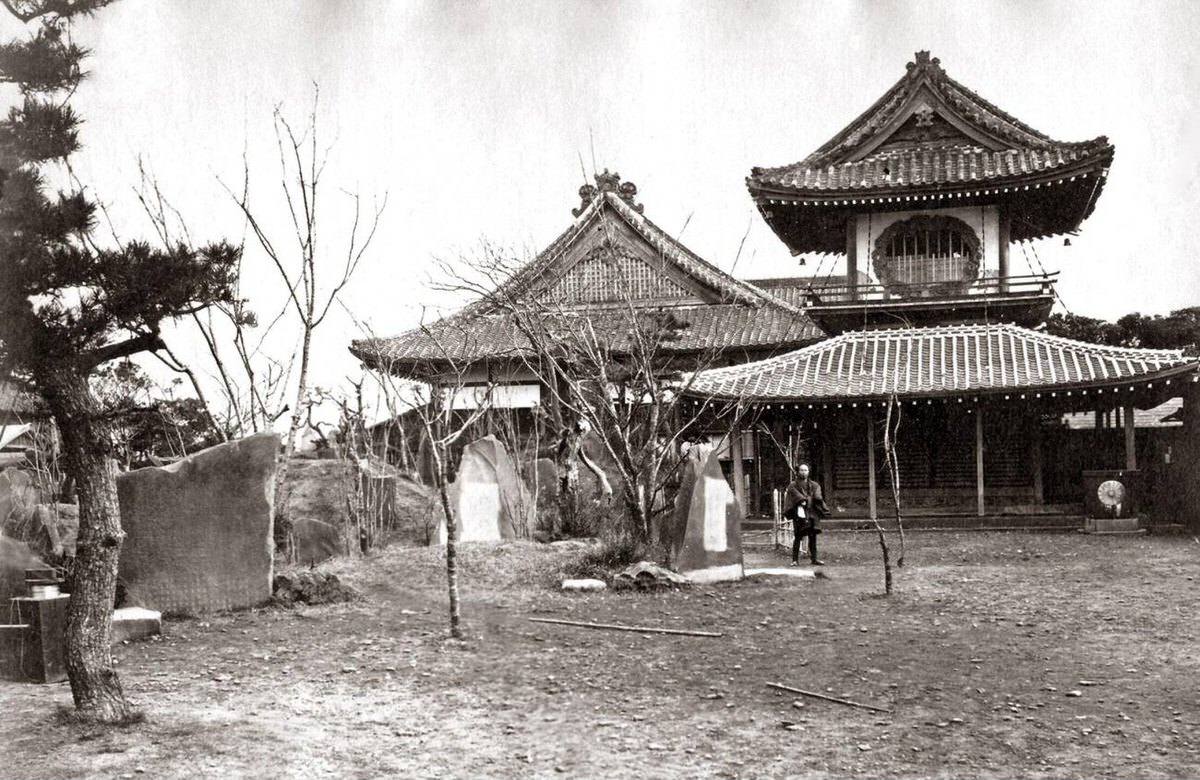
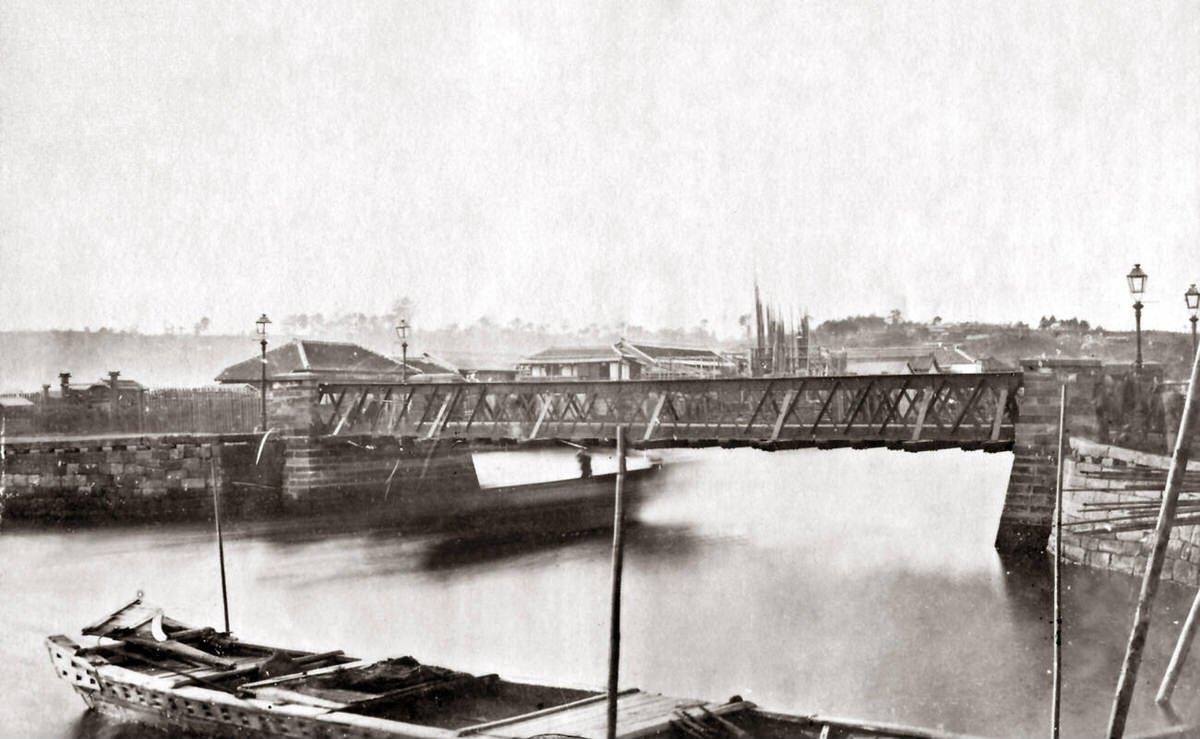
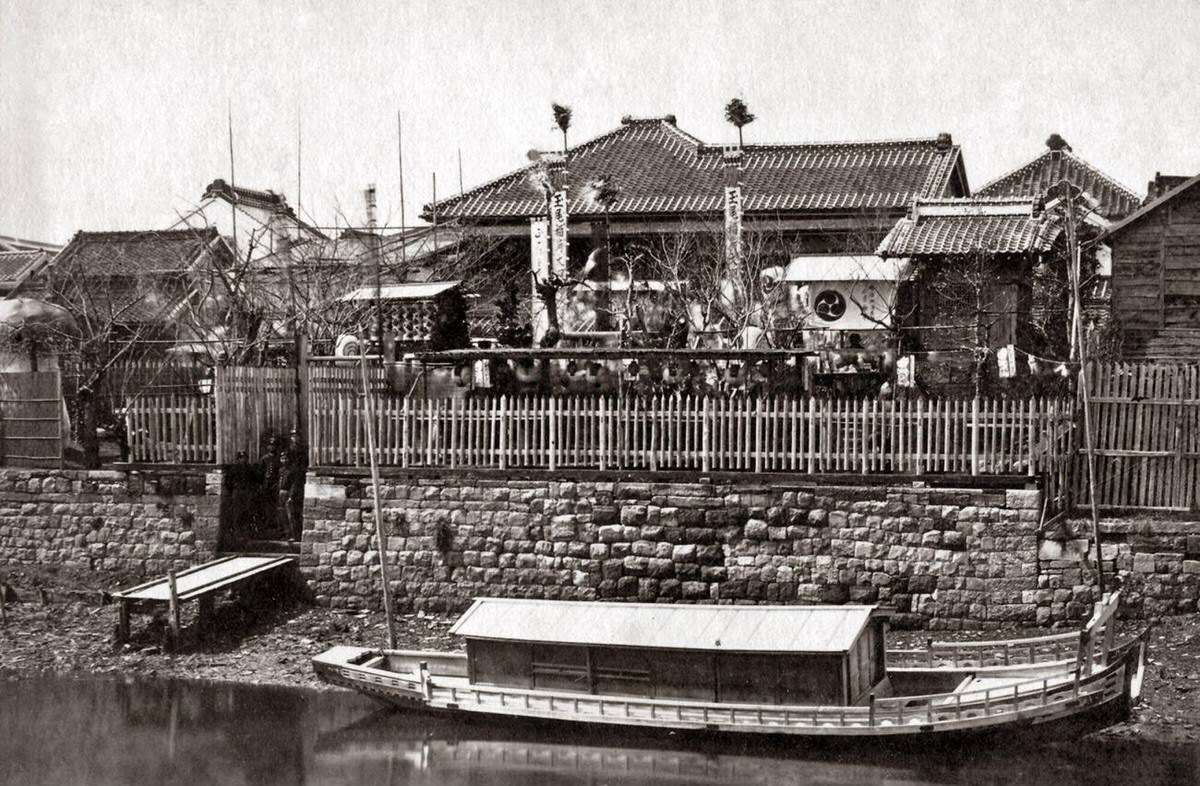
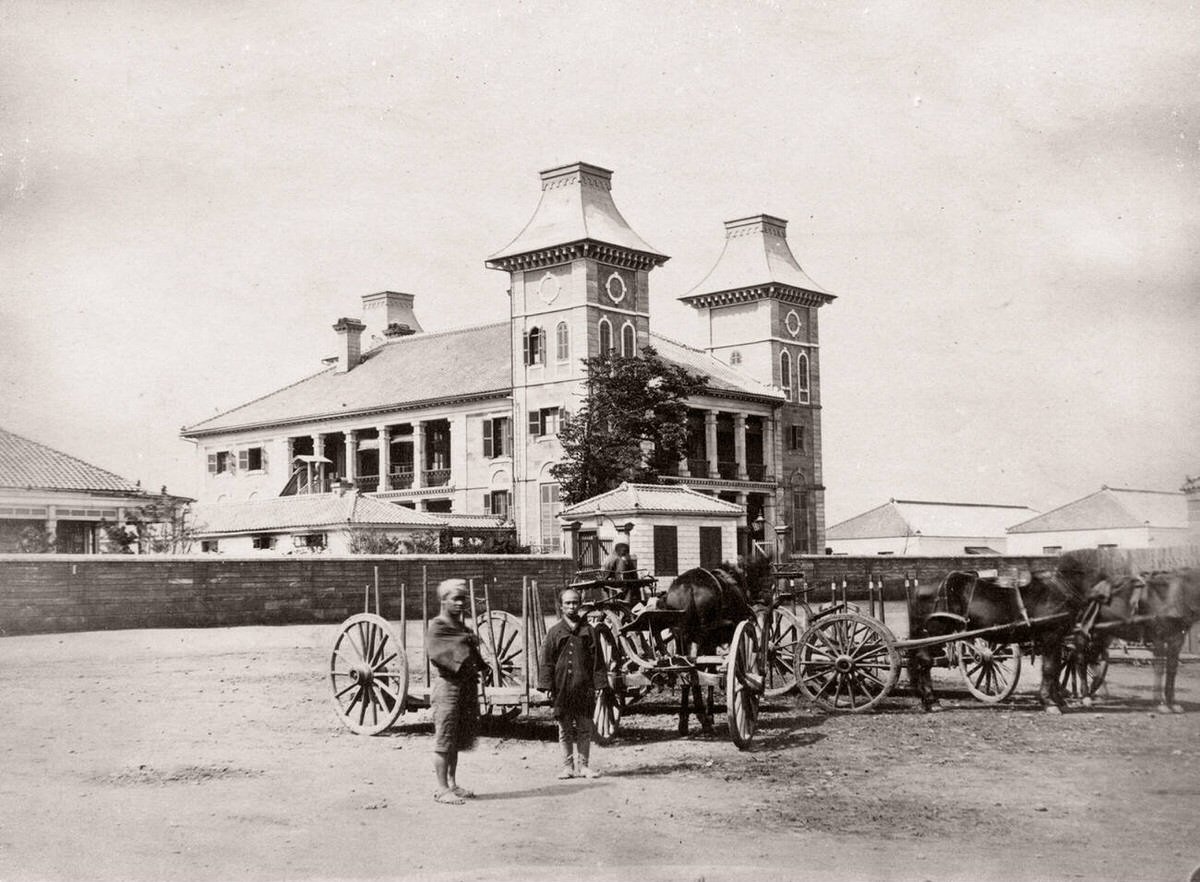
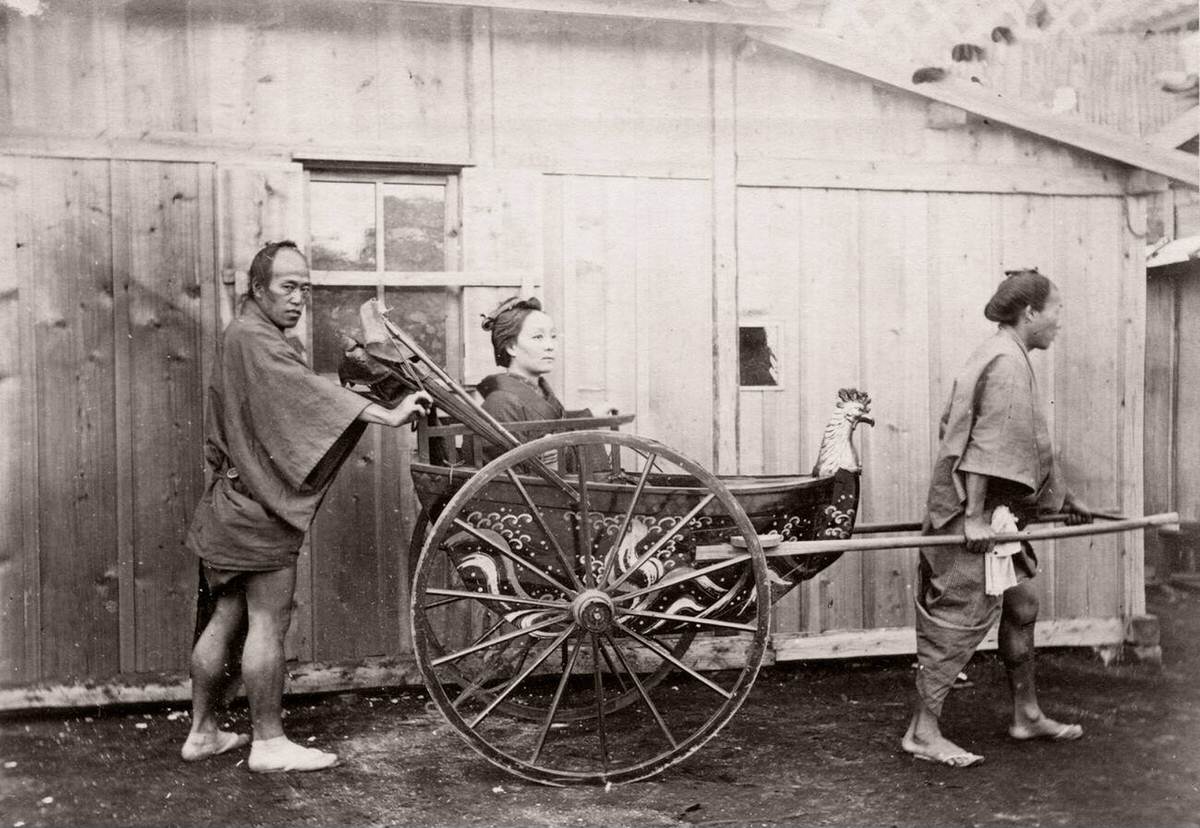
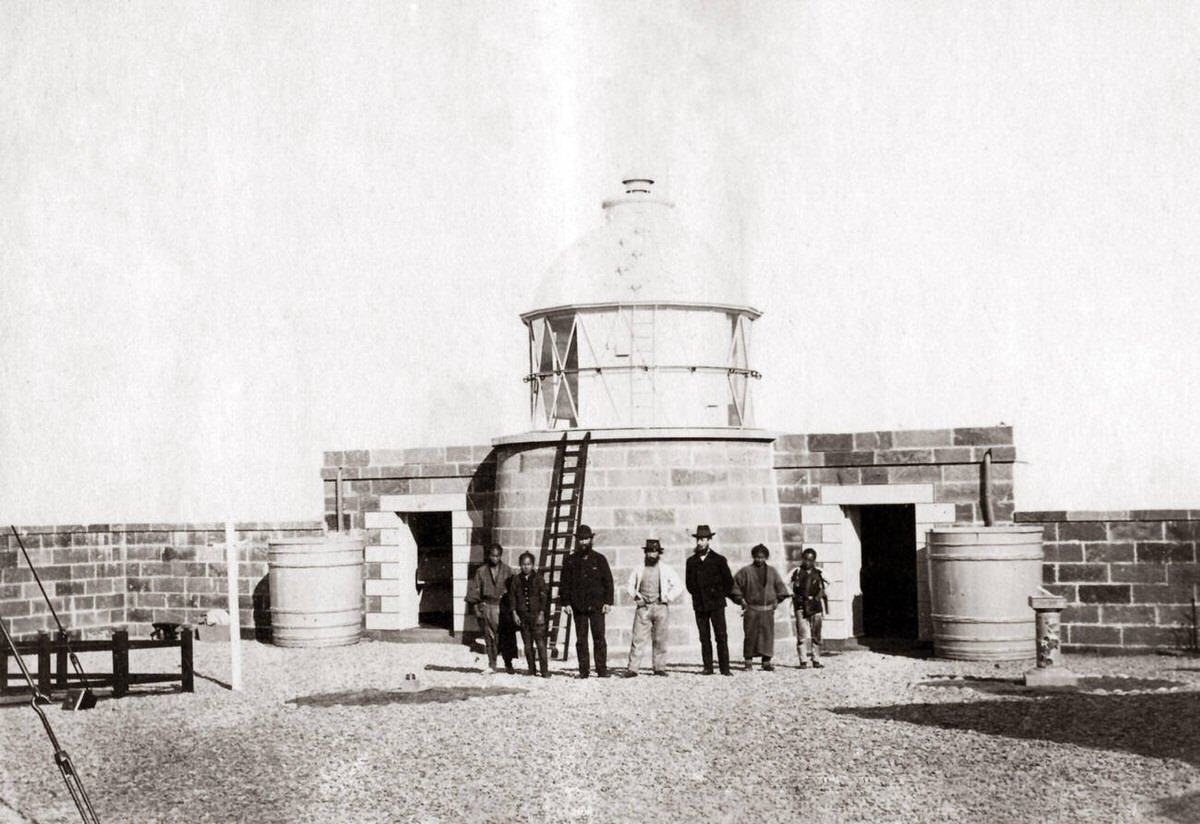
View of Nagasaki, 1870Prison in Tobe, Japan, 1870sTakashima-cho in Yokohama, Japan, 1870sHouse at Negishi, Japan, 1870sThe Bund in Kobe, 1870sEquipment of Japanese firefighters, 1870sOdawara, Japan, 1870sThe Bund in Kobe, Japan, 1870sType of mansion in Yokohama, Japan, 1870sPanoramic view of Kobe with the Hyogo Prefectural Building, 1880Yokohama anchorage, Japan, 1870sMonastery at Enoshima, Japan, 1870sGaiety Theatre in Yokohama, Japan, 1870sJapanese children in kimono posing before a traditional house, 1870Japanese barracks at Noge, Japan, 1870sFire bell on the Kobe Bund, Japan, 1870sClock tower in Yokohama, Japan, 1870sFujiya Hotel in Miyanoshita, Hakone, Japan, 1870sTemple at Kamakura, Japan, 1870sView of Nagasaki, 1880sGrandstand at the Yokohama Racecourse, Japan, 1870sAinu man and his son outside a storehouse in Hokkaido, 1870sWestward view of Kobe, Japan, 1870sForeign consulates on the Bund in the foreign settlement of Kobe, 1870Village scene in Japan, 1870sKanagawa on the Tokaido, 1871Back view of the Great Buddha at Kotoku-in in Kamakura, 1870Canal near Tokyo, Japan, 1870sBridge at Yumoto, 1871Westward view of Kobe, Japan, 1870sYokohama anchorage, Japan, 1870sView of eastern Kobe, Japan, 1870sGateway at Nagasaki, 1871Iron Bridge in Osaka, Japan, 1870sJapanese graveyard, 1871Shimoda, 1871Odawara Castle, 1871United States Minister’s residence in Japan, 1870sView of Nagasaki, 1871Creek in Nagasaki, 1871Women preparing a meal in Japan, 1870sEntrance to Enoshima, 1871Selling lobsters, 1871Yokohama from Noge Hill, Japan, 1870sDrum tower in Tokyo, Japan, 1870sYoshida iron bridge in Yokohama, Japan, 1870sPagoda at Shitenno-ji in Osaka, Japan, 1870sTea house at Katase, 1871Tea house on a fete day in Japan, 1870sNew Road in Negishi, Yokohama, 1870sBritish consulate in Yokohama, 1871Woman in a rickshaw, 1871Oshima Lighthouse on the Kii Peninsula, Japan, 1870s[Factually Corrected] Five-storied pagoda in Japan, 1870sTorii to the temple at Kanazawa, 1871Humpback wooden bridge in Kobe, Japan, 1870sRailway station in Yokohama, 1871Street in the town of Odawara, 1871Porter carrying a load of vegetables in Japan, 1870sRope maker in Kazariya, 1871Widening a canal in Homura, Japan, 1870sBritish Garrison parade ground on the Bluff in Yokohama, 1870sHouse of an umbrella maker, 1871Temple steps at Fudosama in Negishi, 1871Mint at Osaka, 1871Village of Miyanoshita, 1871Martello tower at Hyogo, 1871Graveyard of high-ranking officials, 1871Moat of the castle in Tokyo, 1871Street vendor, 1871View from the Belvedere in Kanazawa, 1871Entrance to the river in Shimoda, 1871Tea house at Miyanoshita, 1871View of the road to Kanazawa, 1871View of Nagasaki harbor with a ship, 1871Canal cutting in Tokyo, 1871Canal at Ishikawa, Kanazawa, 1871Beach at Enoshima, 1871Shiba temple in Tokyo, 1871Bluff Gardens in Yokohama, 1871Tonosawa beyond Odawara, 1871Seller of miyas or temples, 1871Country shop on the Tokaido road, 1871Oto-no-miya shrine in Kamakura, 1871Country tea house, 1871The Bund at Kobe after a typhoon, 1871Laborer in a straw coat, 1871Graves of the Heroes in Nagasaki, 1871Gate and walls at Akasaka in Tokyo, 1871Bell tower in Tokyo, 1871Martello tower at Hyogo, 1871Temple of Shimei Sama in Enoshima, 1871Interior of the Chinese Buddhist temple in Yokohama, 1871Cemetery at Atagoyama in Tokyo, 1871Western military cemetery at Yokohama, 1871The Bund at Kobe after a typhoon, 1871Taima temple near Tana, 1871Kushigoi village on the beach at Enoshima, 1871View of Nagoya, 1890Tea house on a fete day, 1871Top of Atagoyama in Tokyo, 1871View from the temple of Hachiman at Kamakura, 1871View on the moat in Tokyo, 1871Girl playing a shamisen during a game of forfeits, 1871Porter carrying a load of vegetables in Japan, 1870sNishi Monzeki temple in Tokyo before it burned in 1872, 1871Shorodo drum tower at Nishi Monzeki in Tokyo, 1871Tenshozan Renge-in Komyoji Buddhist temple in Kamakura, 1871Main street of Odawara on the Tokaido highway, 1869View of the Oura foreign settlement, Dejima, and Nagasaki harbor from Juzenji temple, 1870Foreign settlement of Kobe, 1869Foreign settlement of Kobe, 1870Oura, Nagasaki, 1865Torii to the temple at Kanazawa, 1890sUrami Waterfall in Nikko, 1890sShoe store in Japan, 1870sOrange shop in Japan, 1870sOriental Hotel in Kobe, 1890sBuddhist temple gateway at Nagasaki, 1890sWharf in Yokohama, 1890sShimoda, 1870sYoung woman in a rickshaw, 1890sGrand Hotel on the Bund in Yokohama, 1890sJapanese graveyard, 1870sSakaimachi street scene in Kobe, 1890sView of Osaka looking east from the Osaka Prefectural Office on Enokojima, 1870Village of Miyanoshita, 1870sView at Ashinoyu, 1870sOdawara Castle, 1870sShimoda in Shizuoka Prefecture, 1870Sagami River, 1870sRokujizo statues, 1870sEntrance to Enoshima, 1870sView of Yokohama, 1870sWoman in a rickshaw, 1870sTsukiji district in Tokyo, 1870sTemple at Katase, 1870sGraves of the Heroes in Nagasaki, 1870sTea house at Katase, 1870sNew canal in Yokohama, 1870sRailway at Kanagawa in Noge, 1870sTown of Kobe, 1870sTenshozan Renge-in Komyoji Buddhist temple in Kamakura, 1870sHouse of an umbrella maker, 1870sCanal at Ishikawa in Kanazawa, 1870sApproach to the Ankokuden temple in Shiba, Tokyo, 1870sCreek in Nagasaki, 1870sBandstand in the park in Yokohama, 1870sBritish consulate in Yokohama, 1870sCemetery at Atagoyama in Tokyo, 1870sStreet in the town of Odawara, 1870sFujisawa temple on the Tokaido road near Yokohama, 1870sSeller of badminton rackets and shuttlecocks, 1870sBay and city of Yokohama, 1870sTomb of Minamoto no Yoritomo in Kamakura, 1870sFujisawa temple on the Tokaido road near Yokohama, 1870sSeller of miyas or temples, 1870sEntrance to the river in Shimoda, 1870sRailway at Kanagawa in Noge, 1870sBluff Gardens in Yokohama, 1870sRailway station in Yokohama, 1870sWaterfront view with a boat at Matoya, 1870sCountry shop on the Tokaido road, 1870sTorii at the approach to Hakone village, 1870sTemple steps at Fudosama in Negishi, 1870sTea house on a fete day, 1870sFire bell on the Kobe Bund, 1870sNear Cape Chichakoff in Misaki, 1870sVillage of Subashiri, 1870sView on the moat in Tokyo, 1870sBack view of the Great Buddha at Kotoku-in in Kamakura, 1870Top of Atagoyama in Tokyo, 1870sThe Bund at Kobe after a typhoon, 1870sYedo-bashi bridge in Tokyo, 1870sThe Bund at Kobe after a typhoon, 1870sMoat of the castle in Tokyo, 1870sJinpuro brothel in the Takashima-cho red light district of Yokohama, 1870Gate and walls at Akasaka in Tokyo, 1870sTorii gate of Atago Shrine at Mt. Atago in Tokyo, 1870Japanese shop with New Year decorations, 1870sView from the temple of Hachiman at Kamakura, 1870sHouses on the Tokaido road between Kyoto and Tokyo, 1870sRice shop and fireproof warehouse, 1870sShorodo drum tower at Nishi Monzeki in Tokyo, 1870sView on the Tokaido road between Kyoto and Tokyo, 1870s
Kevin Clark is a historian and writer who is passionate about sharing the stories and significance behind historical photos. He loves to explore hidden histories and cultural contexts behind the images, providing a unique insight into the past.

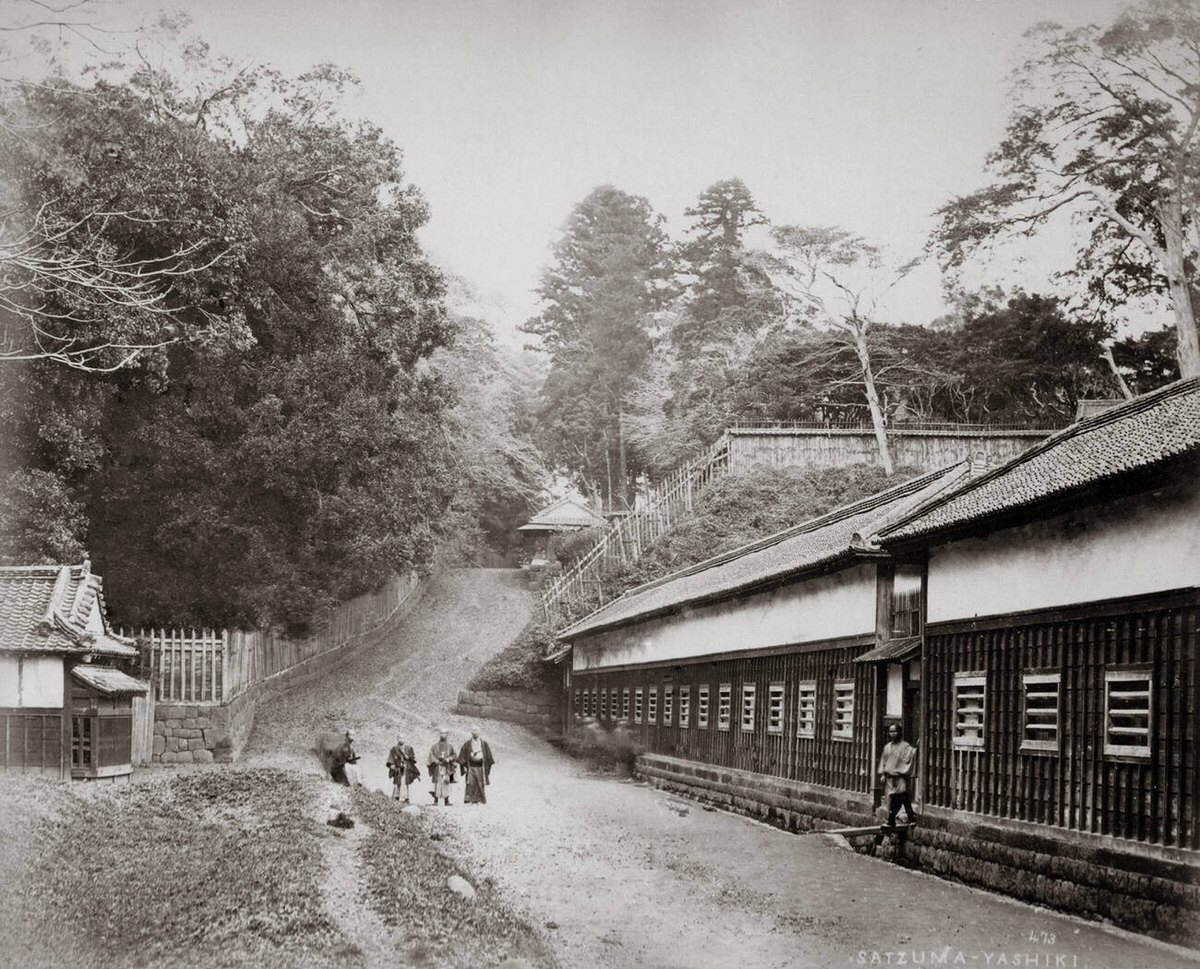
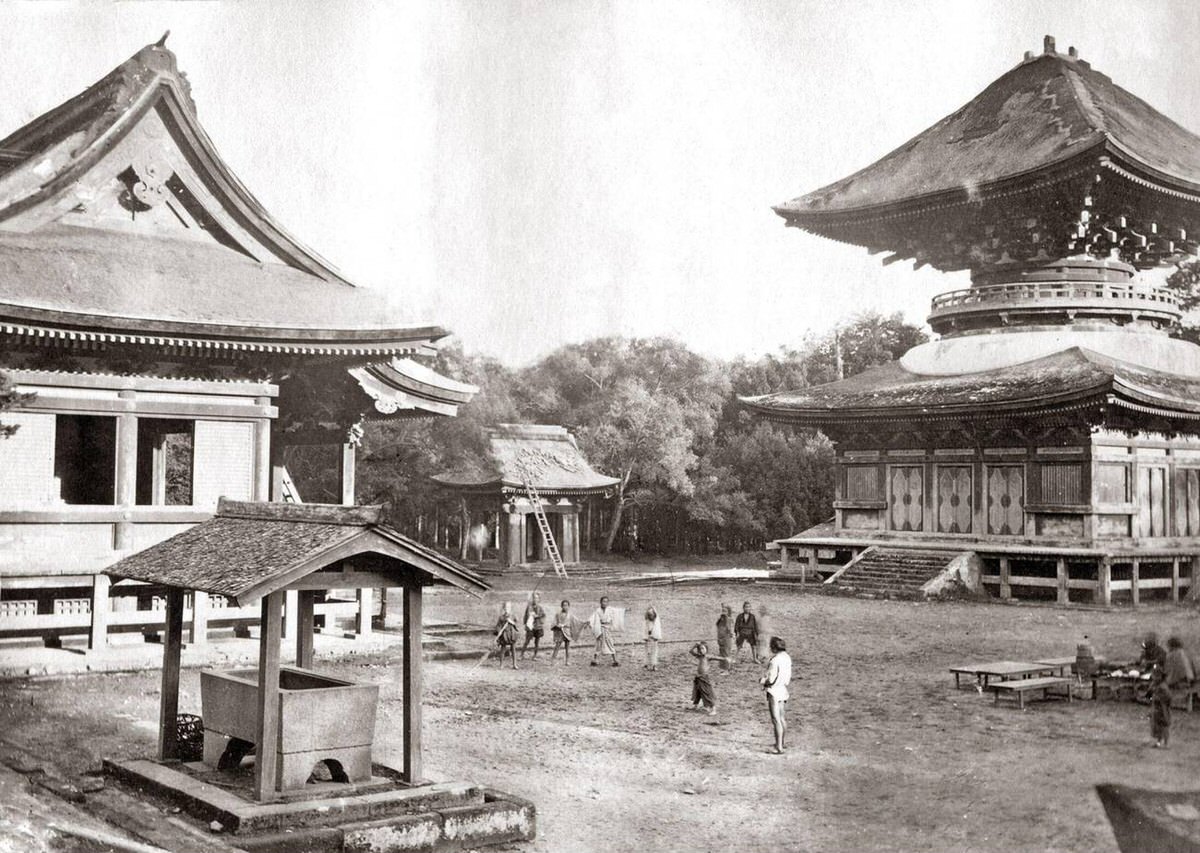
![[Factually Corrected] Five-storied pagoda in Japan, 1870s](https://www.bygonely.com/wp-content/uploads/2026/05/Japan_1870s_65.jpg)