In 1941, Mrs. Olive Day lived in the basement of her home on Drayton Gardens, South Kensington. The Blitz had already left its mark on her street. Windows were blown out, ceilings cracked, and entire floors were too damaged to use. Each morning began not with routine comfort, but with a careful check of what the night had left behind.
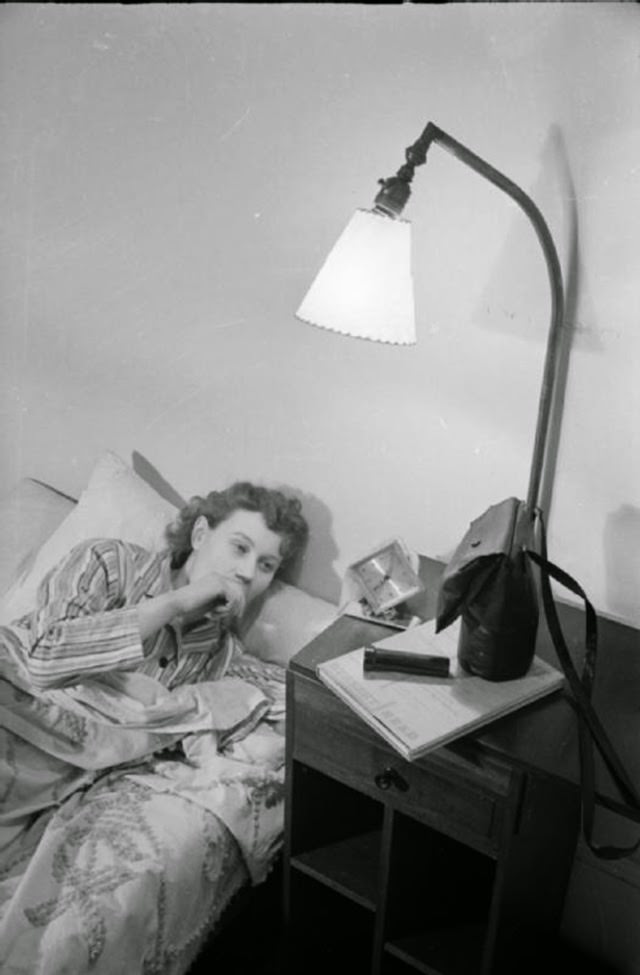
Mrs Day wakes up at 7am at her home in Drayton Gardens, South Kensington. On the bedside cabinet, her gas mask, torch and a book are ready, in case a quick dash to the air raid shelter is required in the night.
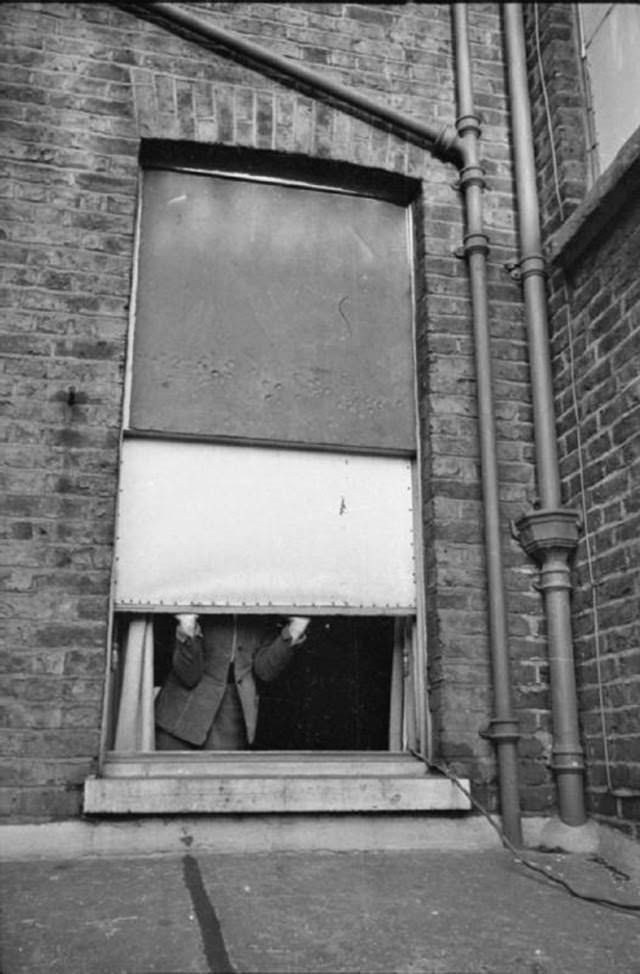
A nearby bomb had knocked the glass clean out of her bedroom windows. In its place, oiled linen was stretched across the frames — thin, dim, and a constant reminder of how close the raids had come.
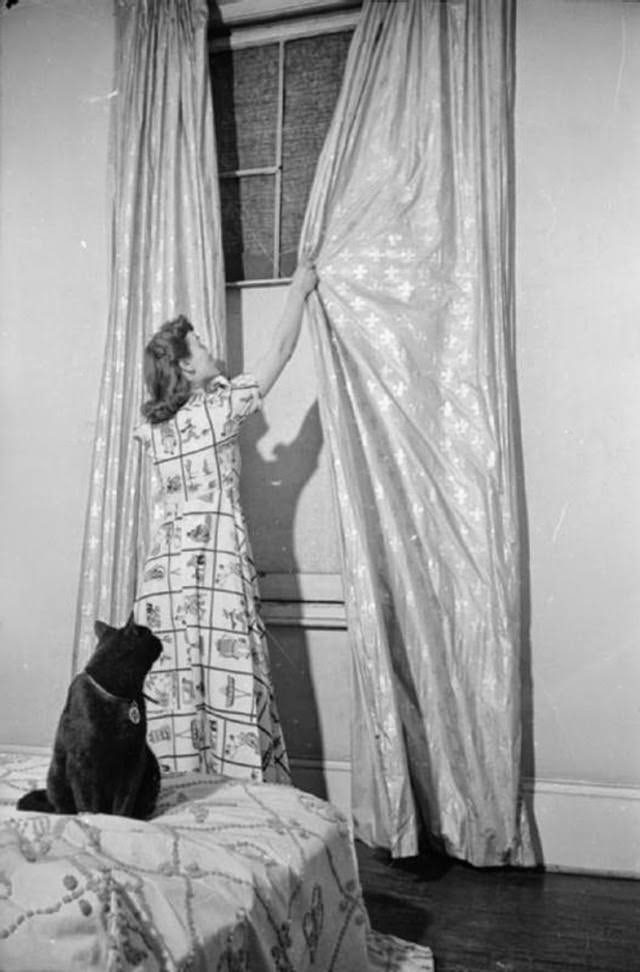
Mrs Day opens the curtains of her bedroom in the basement of her South Kensington home. Unfortunately, as the glass has recently been knocked out of the windows by a nearby air raid, Mrs Day cannot see outside, as oiled linen has been stretched across the windw frame in place of the missing glass. Her cat ‘Little One’ watches her from the bed.
Mrs Day opens her window to let some air, and light, into her South Kensington home. The window panes have been replaced by oiled linen stretched over the frame, as the glass was knocked out by a nearby bomb a short while ago.
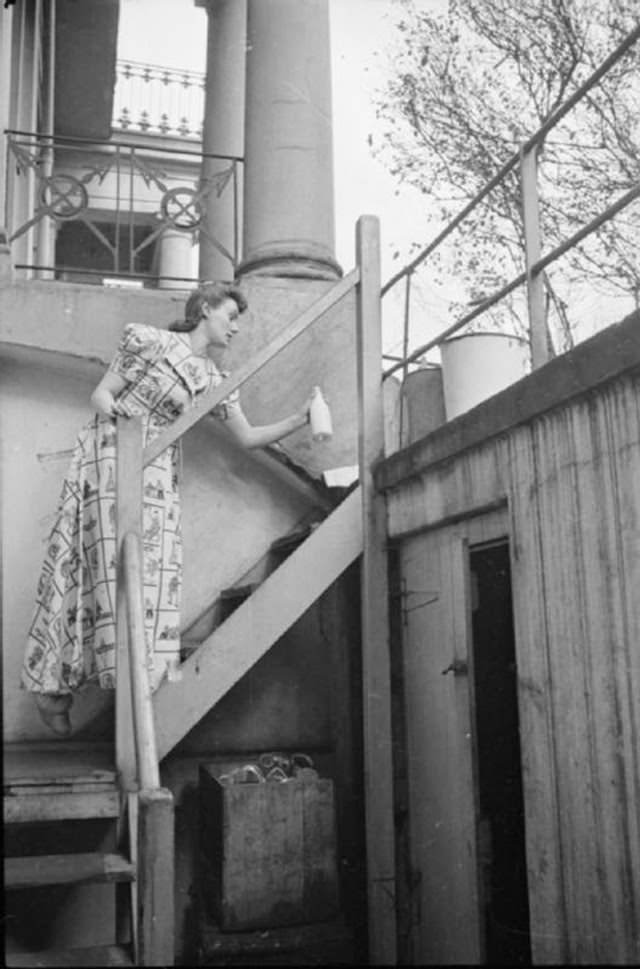
Despite the damage, daily life pressed on. Olive collected the milk and newspapers from the top of the basement steps each morning. Sand and water buckets sat on the street above, placed there in case of fire bombs.
Mrs Day collects the milk and newspapers from the top of the steps leading down to the basement of her South Kensington home. The buckets that can be seen on the street at the top of the steps contain sand and water and are provided in case of fire bombs.
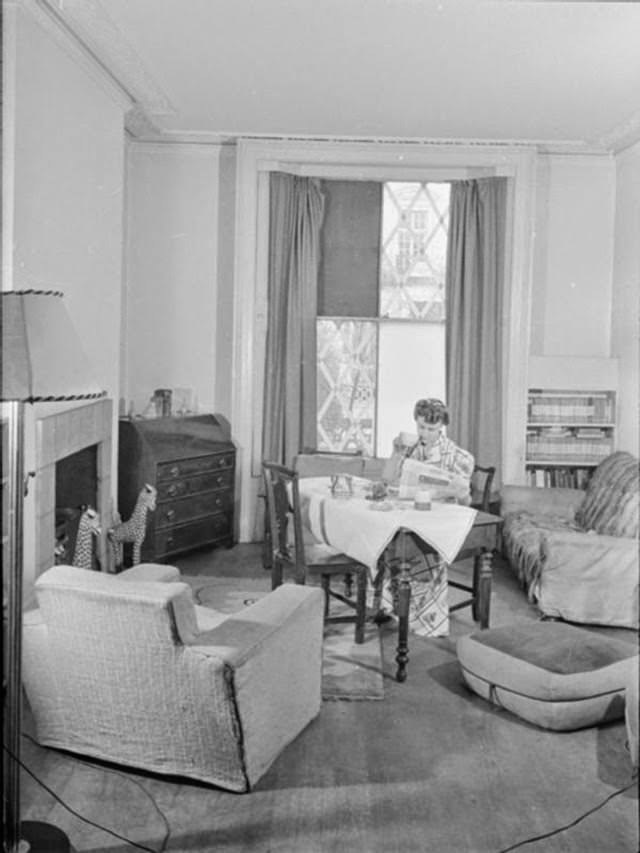
She took her tea and toast at the sitting room table, reading the morning papers. Behind her, boarded windows and tape criss-crossing the remaining glass told the story of recent raids more clearly than any headline.
Mrs Day enjoys tea, toast and the morning papers at the breakfast table in the centre of her South Kensington sitting room. Behind her, evidence of air raids can be seen in that two panes of glass are missing from the window and have been replaced with boards and the other panes have criss-crosses of tape on them to prevent the glass from shattering, should the area suffer another air raid.
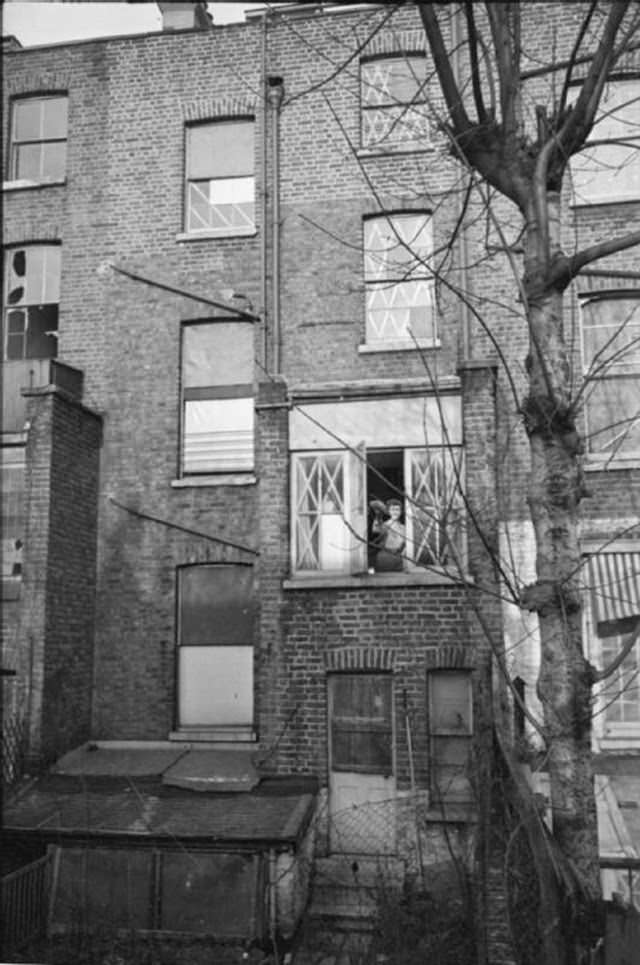
Not one window on her street had been left untouched. Every house bore the same mix of boards, linen, and taped glass. Olive shook out her duster from a back window, the damage visible in every direction.
Mrs Day shakes her duster out of one of the back windows of her South Kensington home. Every visible window of her house, and of the houses alongside, bears witness to the air raids that have occured in the last few weeks. There is not one window that remains unaffected in someway and all are either fully or partly boarded, have had the broken glass replaced by oiled linen, or have existing glass criss-crossed with tape.
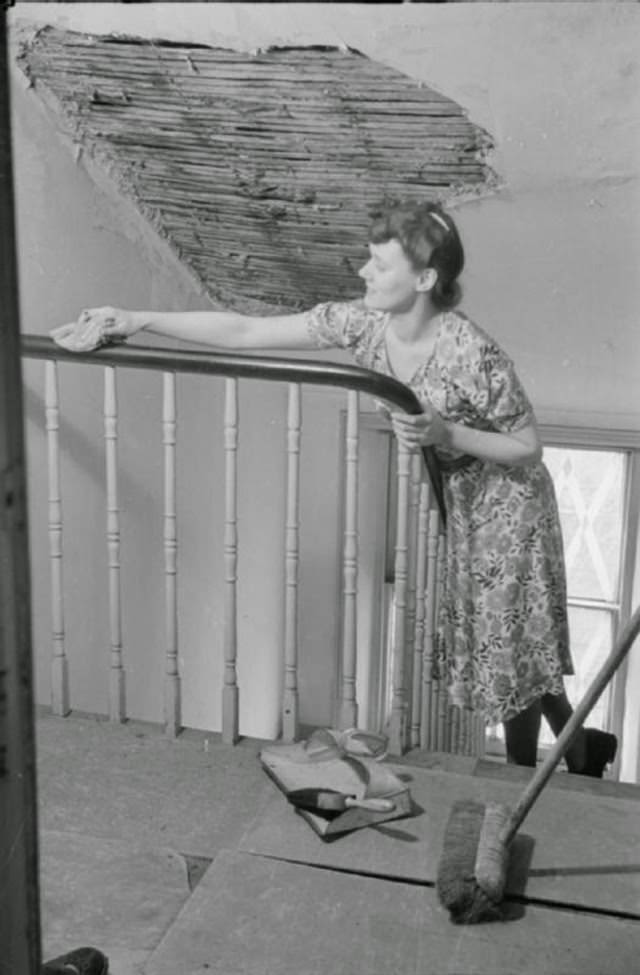
Before leaving for work, Olive spent half an hour on housework. Polishing the banisters, she worked beneath a large patch of ceiling plaster torn away by a nearby blast.
Mrs Day spends half an hour or so on the housework before she leaves for work. Here we see her polishing the bannisters. Above her head, we can see a large patch of missing plaster on the ceiling, caused by a nearby air raid.
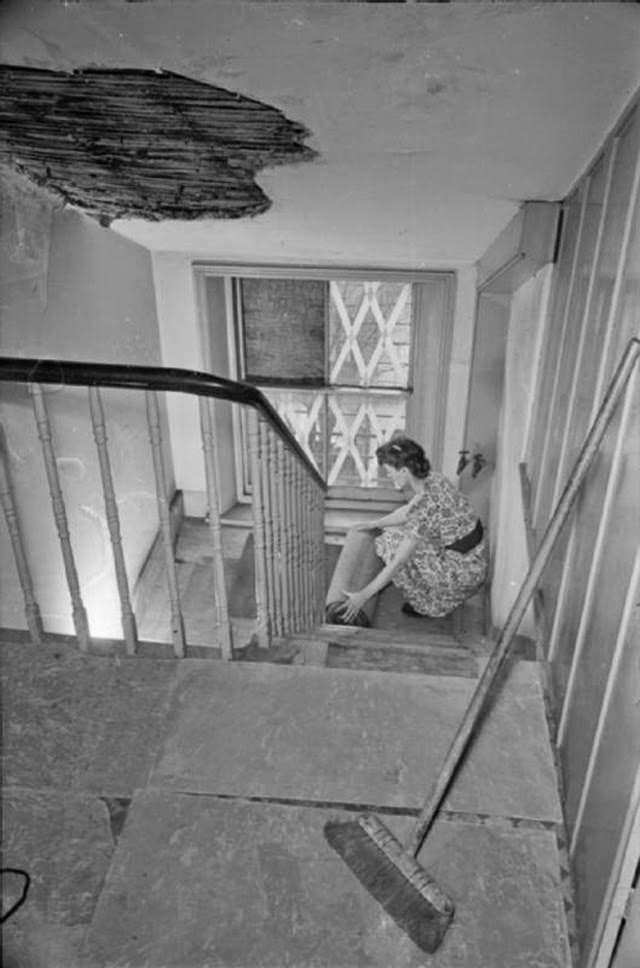
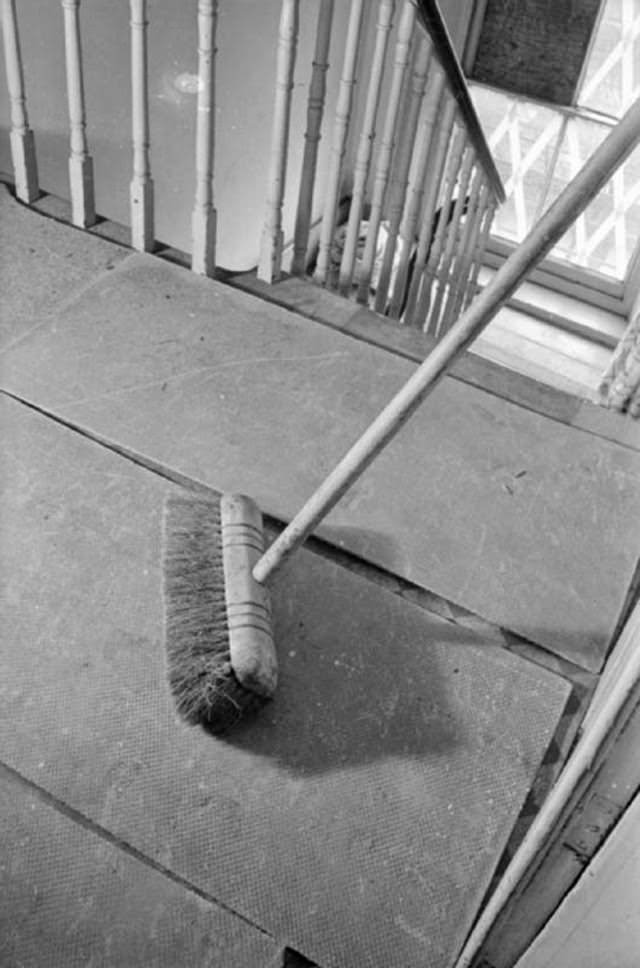
All carpets had been pulled up and replaced with asbestos sheeting to slow the spread of incendiary fires. Olive rolled the rugs away herself, a practical step in a house that had already taken a direct hit from a fire bomb.
Mrs Day rolls away a rug that was on the staircase of her South Kensington home. All carpets have been removed and asbestos laid in their place, in an attempt to combat fire bombs. Behind her, part of the window has been boarded up, with the rest of the panes have criss-crosses of tape across the glass.
This photograph shows how large sheets of asbestos have been laid on the landing at the top of Mrs Day’s home to try to prevent fires from incendiary bombs from spreading to other parts of the house.
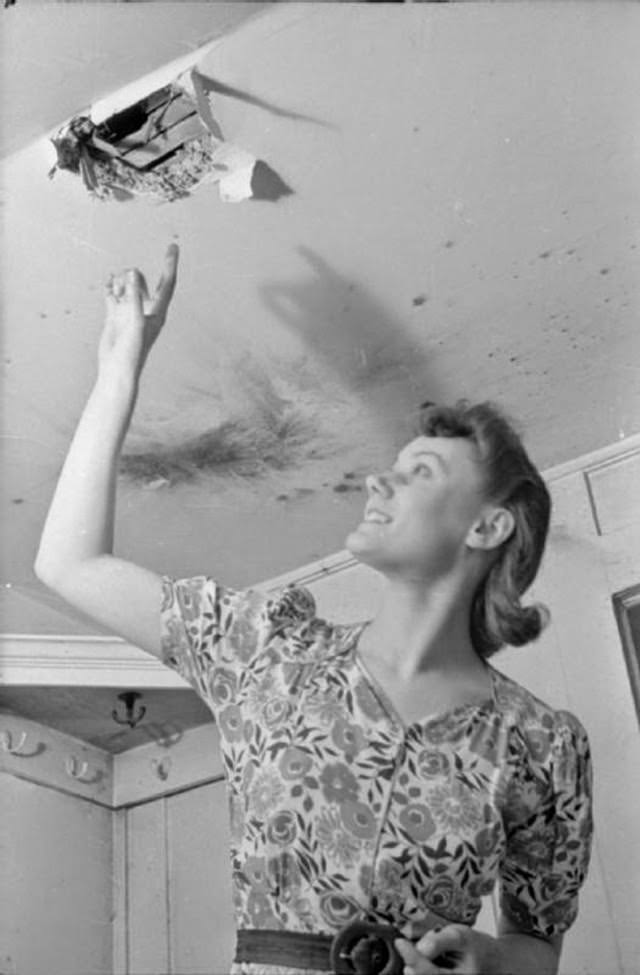
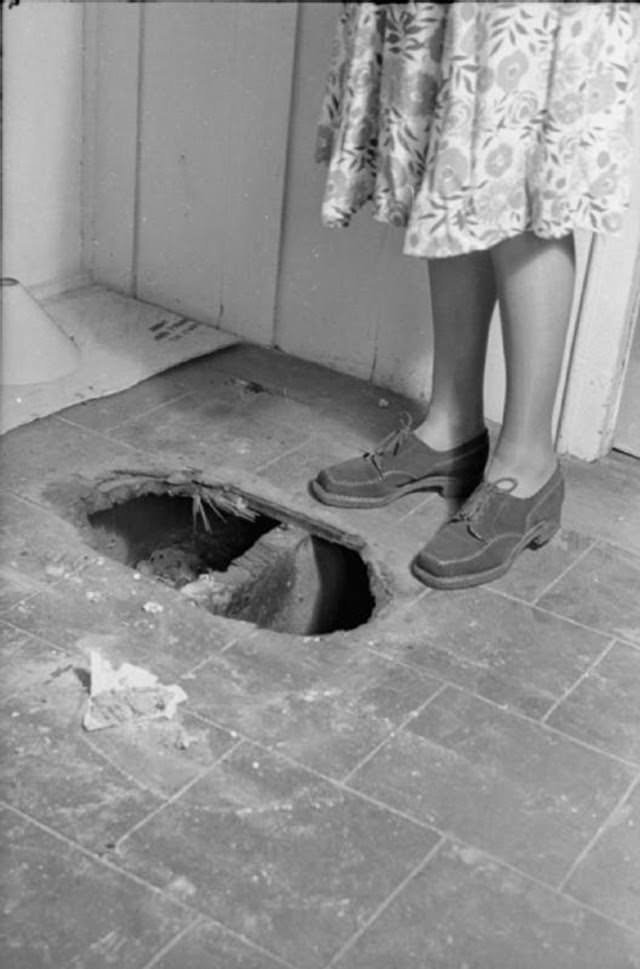
A fire bomb had punched through the ceiling and burned into the floor before it was brought under control. The scorch marks and the holes were left as evidence — repairs were not always possible during wartime.
Mrs Day points to a hole in the ceiling where a fire bomb recently came through into her South Kensington home. Scorch marks can be seen on the ceiling next to the hole.
Mrs Day stands alongside a hole in the floor which was made by a fire bomb before the fire was brought under control. This area of the house does not have asbestos sheeting on the floor.
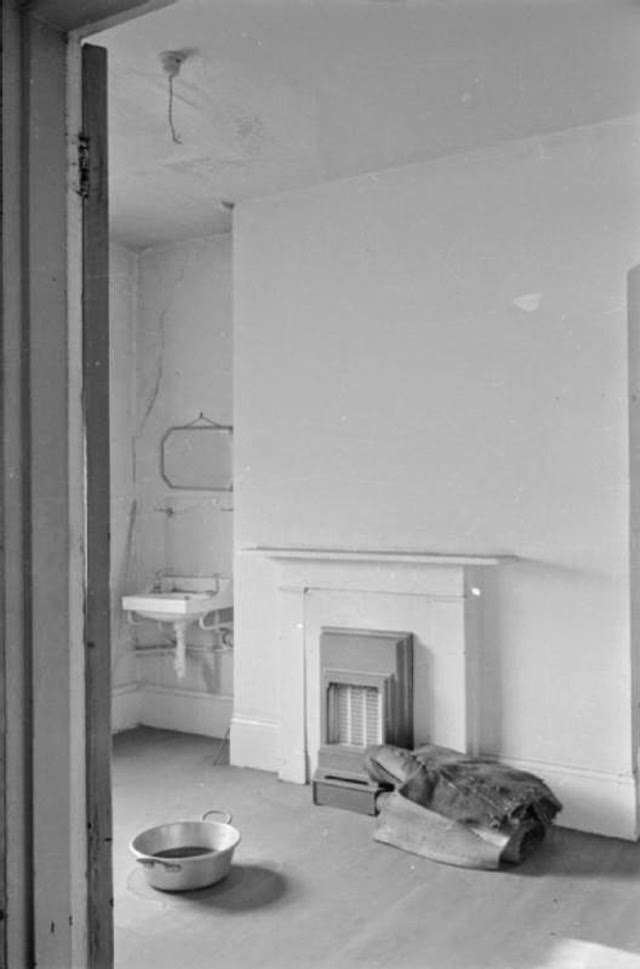
The top floor of the house was abandoned entirely. An empty room sat with just a bowl on the floor to catch rainwater leaking through the bomb-damaged roof.
The top floor of Mrs Day’s South Kensington home is no longer in use. Here we see an empty room with a bowl on the floor to catch any drips of rain water that may come in through the bomb-damaged ceiling.
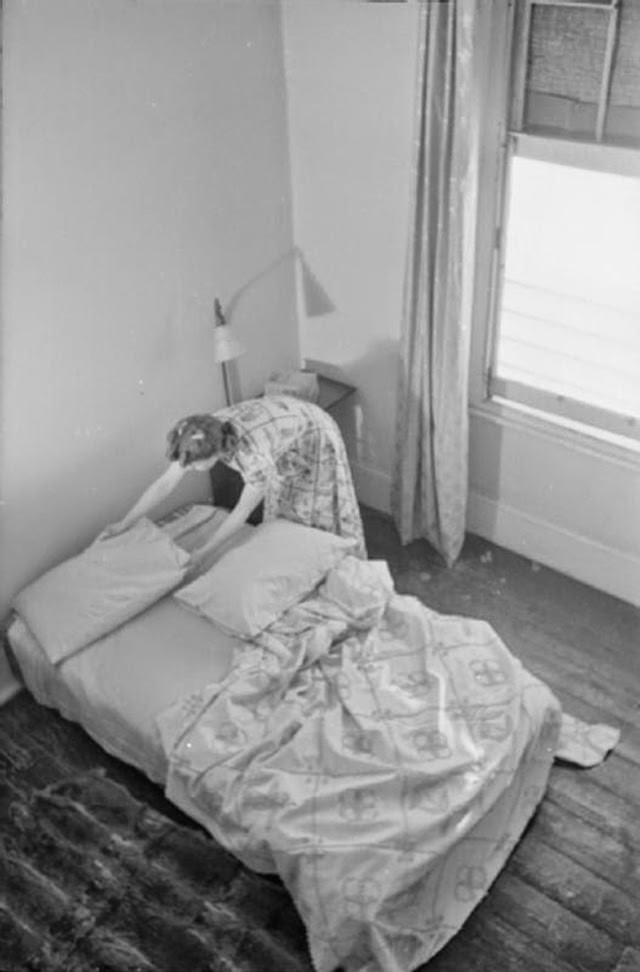
Olive slept and lived in the basement. She made her bed there each morning before work, the safest part of a house that had lost much of its upper structure.
Mrs Day makes her bed in the basement of her South Kensington home before leaving for work. The top floor of her house is no longer in use.
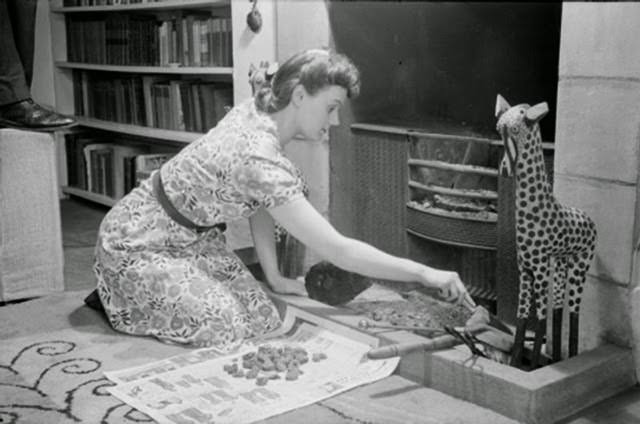
At the sitting room grate, Olive sorted cinders from ash carefully. The cinders went back into the fire; the ash went to the garden as fertiliser. Nothing was wasted.
Mrs Day clears the grate in the sitting room of her South Kensington home. She is careful to sort the cinders from the ash, so that the cinders can be re-used in the grate and so that the ash can be added to the garden as a fertiliser.
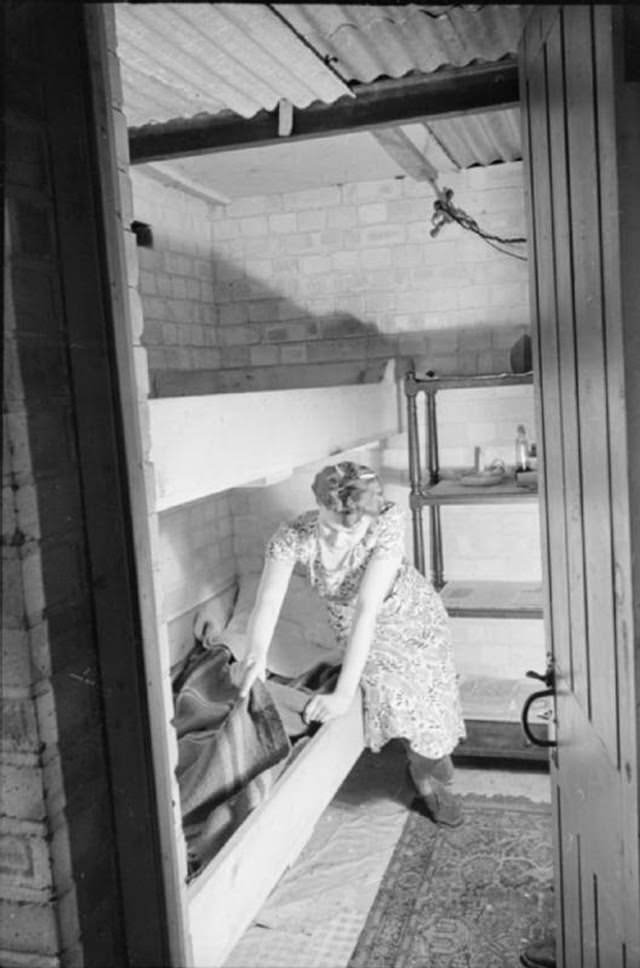
In the cellar, Olive kept a bunk made up in the air raid shelter at all times. If night raids forced her down there, she would at least sleep with some comfort.
Mrs Day makes up a bunk in the air raid shelter in the cellar of her South Kensington home. The bunks are kept ready in case any night raids force her to spend the night in the shelter. The bunk will hopefully mean that she spends the night in some comfort!
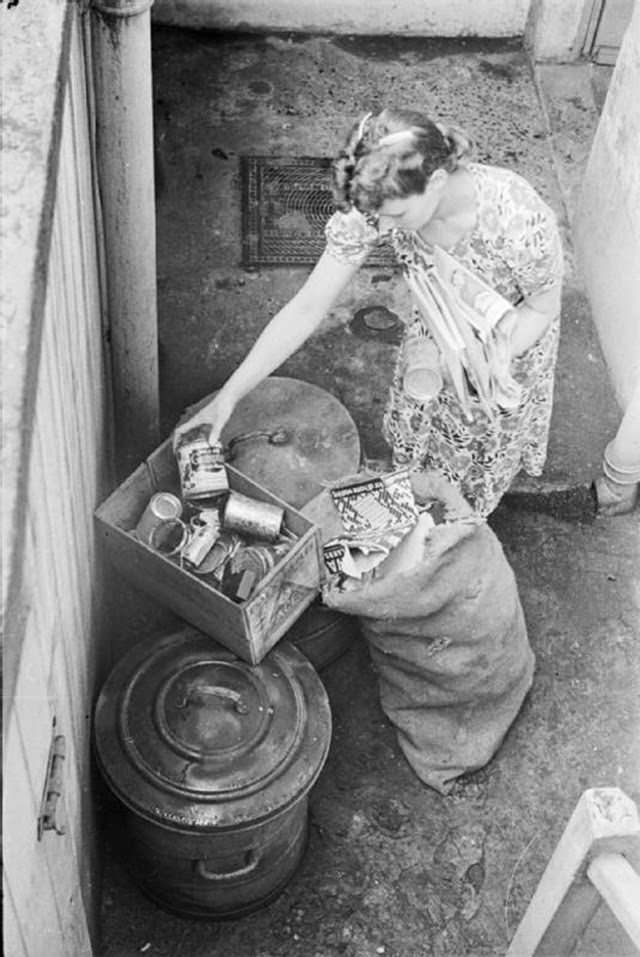
Outside the basement door, Olive sorted cardboard and tin from her household rubbish for salvage collection — one small part of Britain’s wider effort to recycle materials for the war.
Mrs Day separates cardboard and tin from her household rubbish, ready for salvage, outside the basement of her home in South Kensington, London.
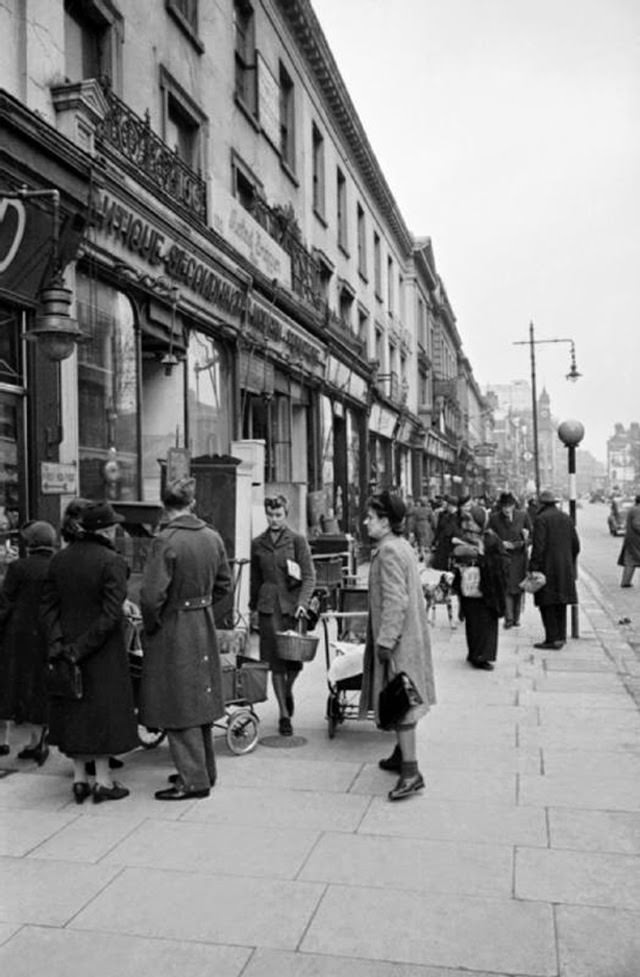
After lunch, Olive walked to the King’s Road in Chelsea for her weekly shop. She passed women with prams and RAF personnel queuing outside shops, the street busy despite visible bomb damage all around.
After lunch, Mrs Day sets out to do her weekly shop on the King’s Road in Chelsea. She walks past several women with prams and a member of the RAF as they queue to the left of a large furniture store. The shop has furniture displayed on the street and the sign on its frontage says ‘Antique, Second-Hand and Modern Furniture’. Just above the heads of this group of people is a small sign directing people to a First Aid Post. In the background, other people go about their daily business and buses and cars are just visible in the distance. This photograph was almost certainly taken from a point on the King’s Road parallel to Walpole Road and is looking towards Sloane Square: the clocktower and spire just visible in the distance is on a building next door to Peter Jones department store.
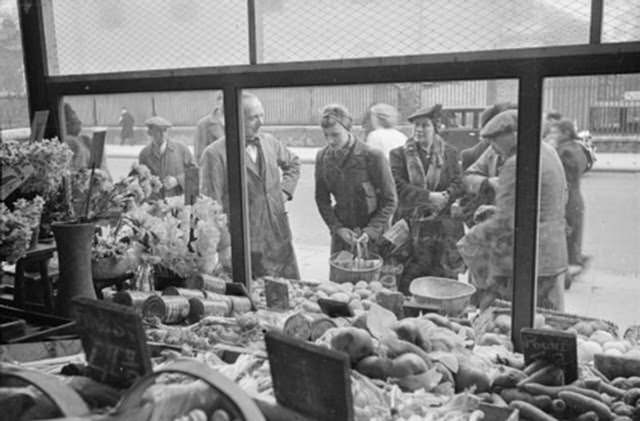
She checked shop windows to see what stock was available that week before stepping inside. Choices were limited, and knowing what was on offer before queuing saved time.
Mrs Day stops to look in the window of a shop to see what is available to her this week. The photograph is taken from inside the shop, and Mrs Day can be seen next to the shopkeeper. A group of other shoppers can also be seen. This photograph was probably taken on the King’s Road in Chelsea.
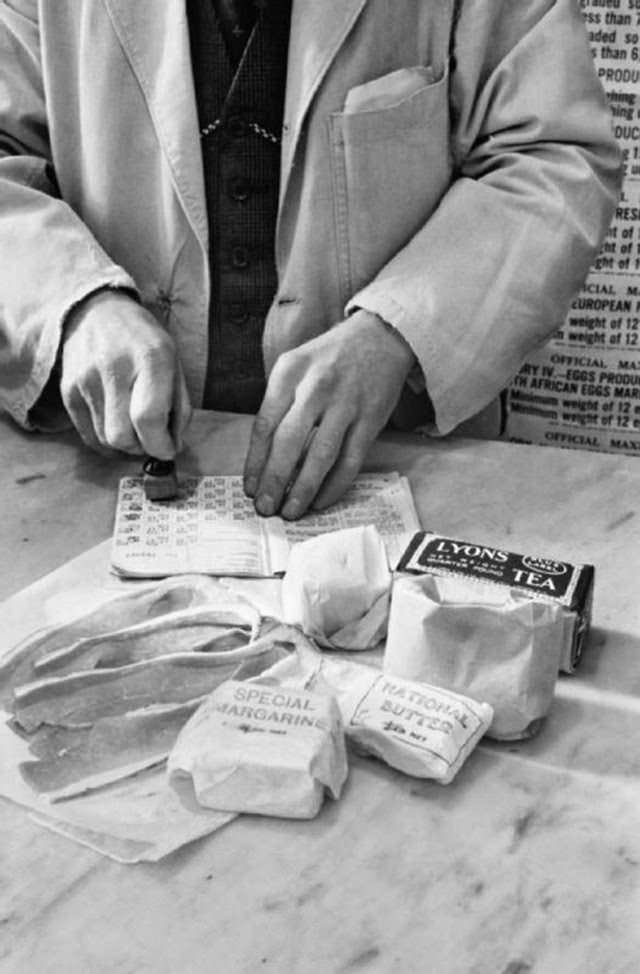
At the counter, the shopkeeper stamped her ration book. Her weekly allowance was laid out in front of her: tea, sugar, national butter, margarine, cooking fats, and bacon — a tightly measured supply for one person.
A shopkeeper stamps Mrs Day’s ration book during her shopping trip on the Kings Road in Chelsea. In the foreground can be seen the tea, sugar, ‘national butter’, margarine, cooking fats and bacon she is allowed for one week.
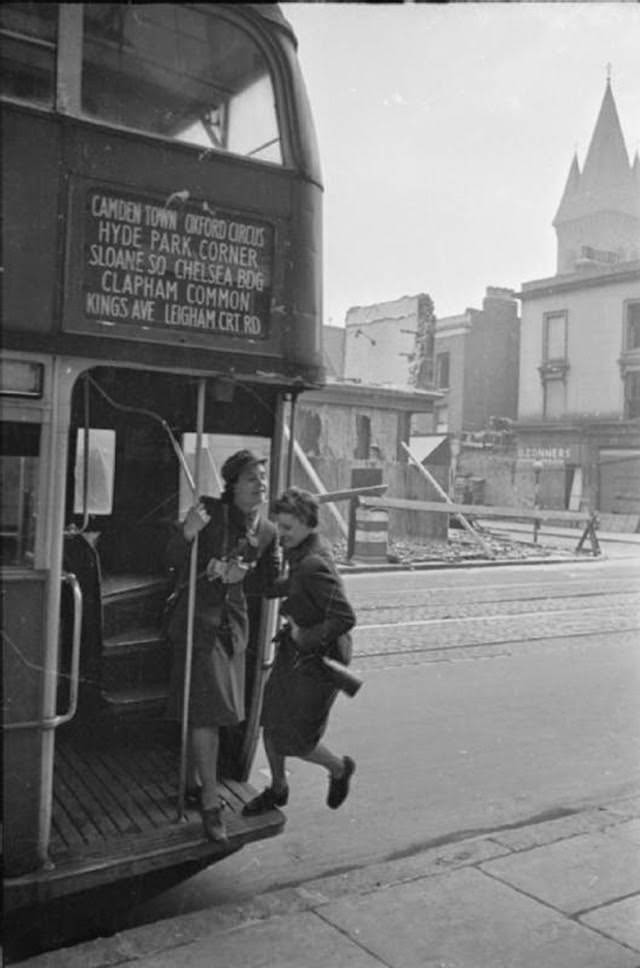
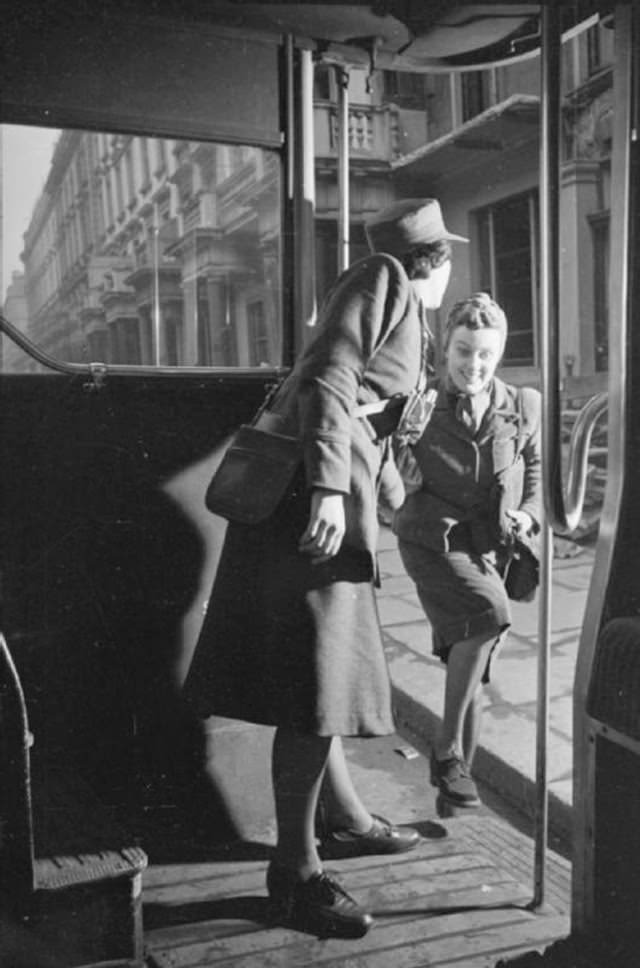
From Chelsea, Olive caught the bus to work, helped aboard by a female conductor. The bus route on Fulham Road ran past St Stephen’s Hospital, its tower rising above streets marked by raid damage.
Mrs Day, helped by the female conductor, jumps on the bus that will take her to work. In the background, it is clear that quite a bit of air raid damage has been sustained. This photograph was probably taken on Fulham Road. The tower visible in the background is part of St Stephen’s Hospital (now the Chelsea and Westminster Hospital), which was built in 1878 as the Fulham Workhouse and St George’s Infirmary.
Mrs Day is helped by a female conductor onto the bus that will take her to work. This photograph was probably taken on Fulham Road.
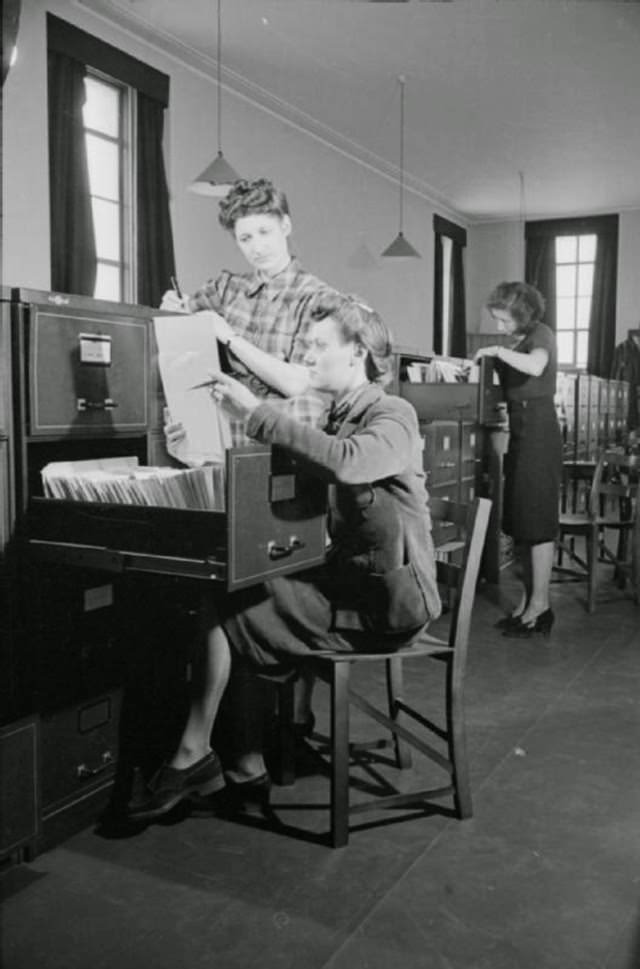
Olive worked as a clerk in a wartime organisation, spending most of her time at the filing cabinets. Her hours were 10am to 6pm, Monday to Friday. On Saturdays she finished at 2pm — and if work was urgent, she came in on Sundays too.
Mrs Day and colleagues work at one of many filing cabinets in the office. According to the original Ministry of Information caption, Mrs Day works as a ‘girl clerk in a war-time organisation’ and that filing takes up most of her time. The caption goes on to say that she works Monday to Friday between 10am and 6pm, but that as this photograph was taken on a Saturday, she would be finished by 2pm. It also states that ‘if there is a rush of work, she will work Sunday as well’.
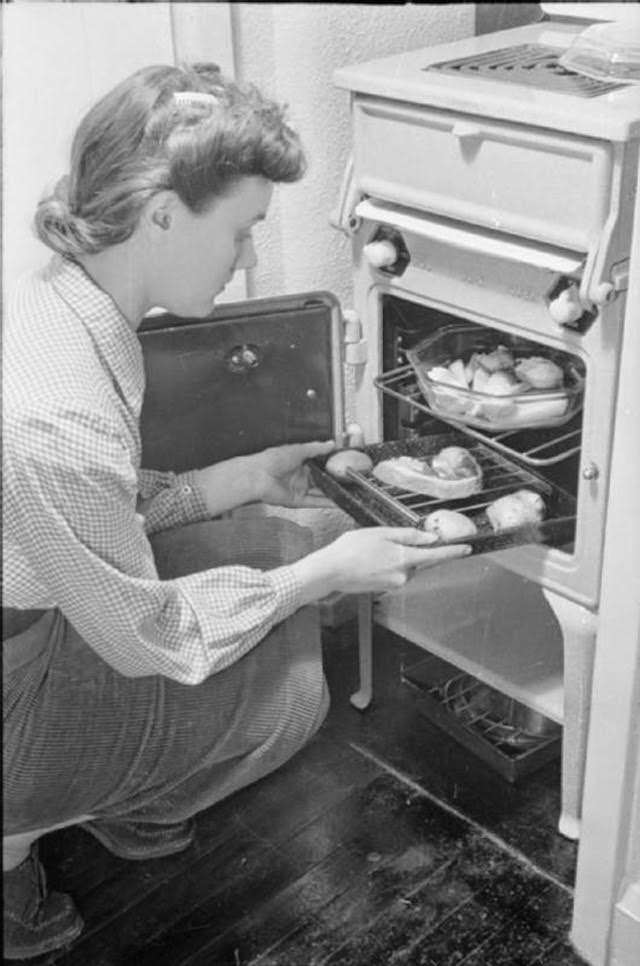
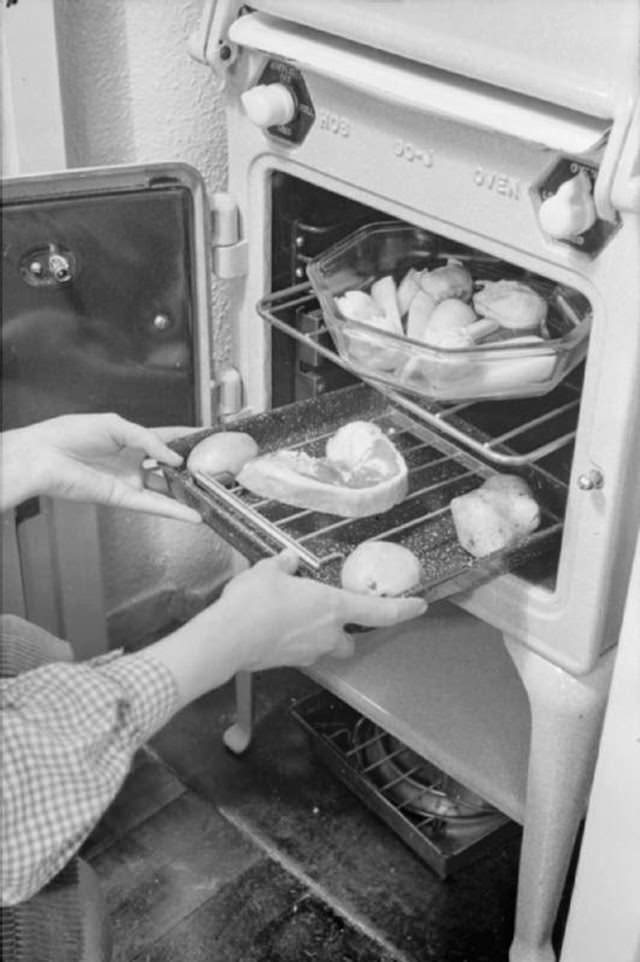
Back home after work, Olive put her dinner into the oven. The Ministry of Food advised cooking everything in the oven at once to save fuel — a small instruction that shaped what and how millions of people ate.
Mrs Day puts her dinner into the oven after a busy day. The Ministry of Food encouraged people to cook their entire meal in the oven as a way to save fuel.
Mrs Day puts her dinner into the oven after a busy day. The Ministry of Food encouraged people to cook their entire meal in the oven as a way to save fuel.
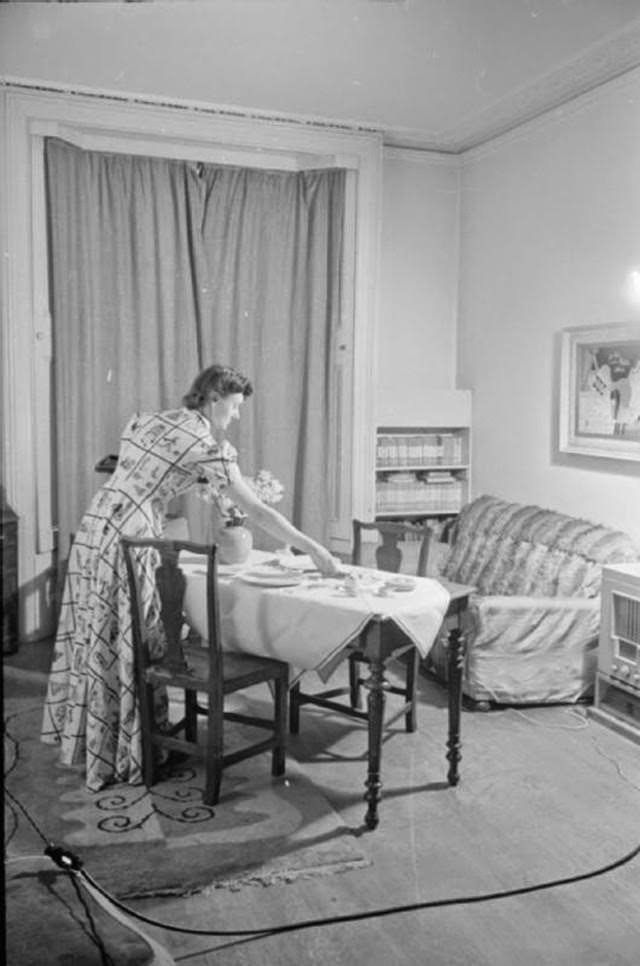
That evening was different. Olive’s husband, Lieutenant Kenneth Day of the Royal Navy, was due home on leave. She set the table for two and placed a vase of flowers at the centre — a small, deliberate act of normalcy.
Mrs Day sets the table in preparation for the evening meal in the sitting room of her South Kensington home. She is expecting her naval husband Lt Kenneth Day to arrive home on leave, so the table is set for two and a vase of flowers has been added.
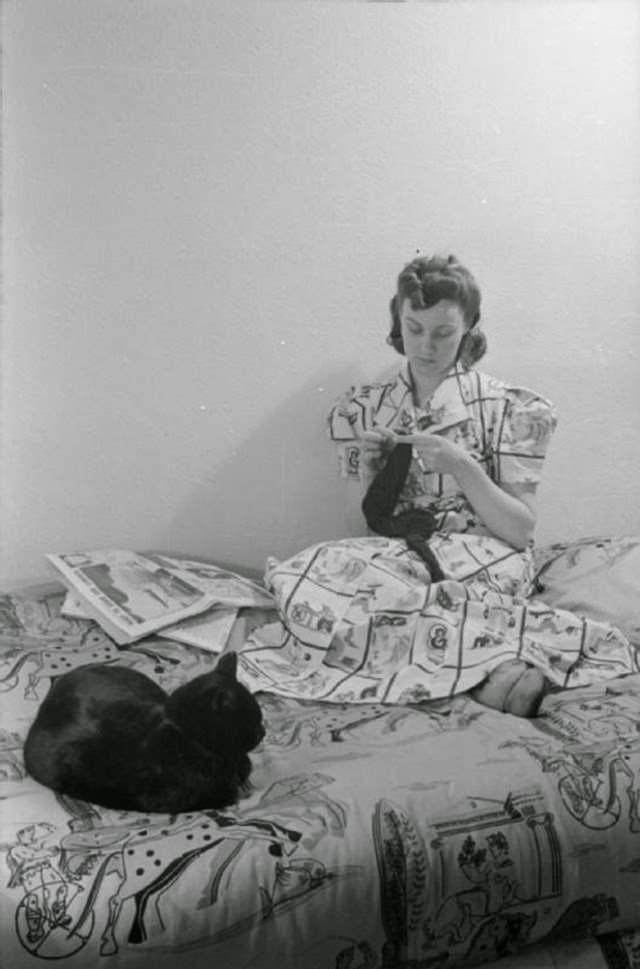
While the meal cooked, she lay on her bed with the evening paper and a balaclava she was knitting, her cat Little One beside her.
While her evening meal is cooking, Mrs Day settles down on her bed with the evening paper and a spot of sewing. She is working on a balaclava and is accompanied by her cat ‘Little One’.
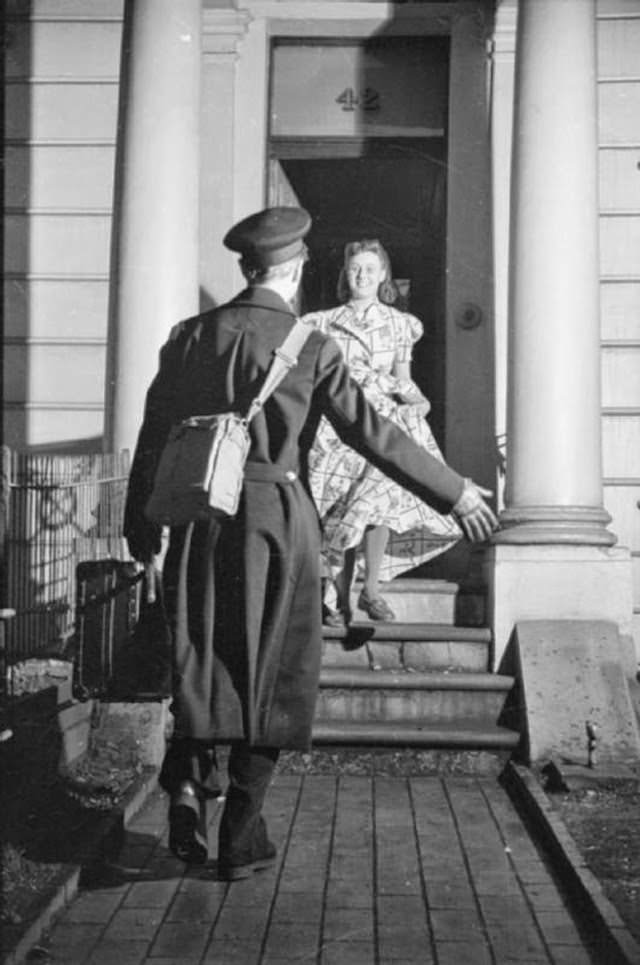
When the knock came at the door, Olive ran to greet him. After a day of rationing, bomb damage, and wartime work, Kenneth’s arrival home on leave was the moment the whole day had been building toward.
Mrs Day runs to greet her husband Lieutenant Kenneth Day at the door of her South Kensington home as he arrives home on leave.
Andrew Thompson is an archaeologist and historian who specializes in the study of war and conflict. He writes about the brutal history of warfare, including the World Wars and other significant conflicts. Through his work, he aims to deepen our understanding of the human cost of conflict and inspire us to work towards a more peaceful future.