In the 1970s, Soho was the most densely packed square mile in London. The streets smelled of diesel fumes and roasted Italian coffee. Neon signs in pink and yellow burned through the narrow alleys even at midday. Crowds pushed past each other on Old Compton Street’s narrow pavements, and music spilled out of every basement doorway. No other neighbourhood in the city packed so much noise, commerce, and chaos into such a small space.
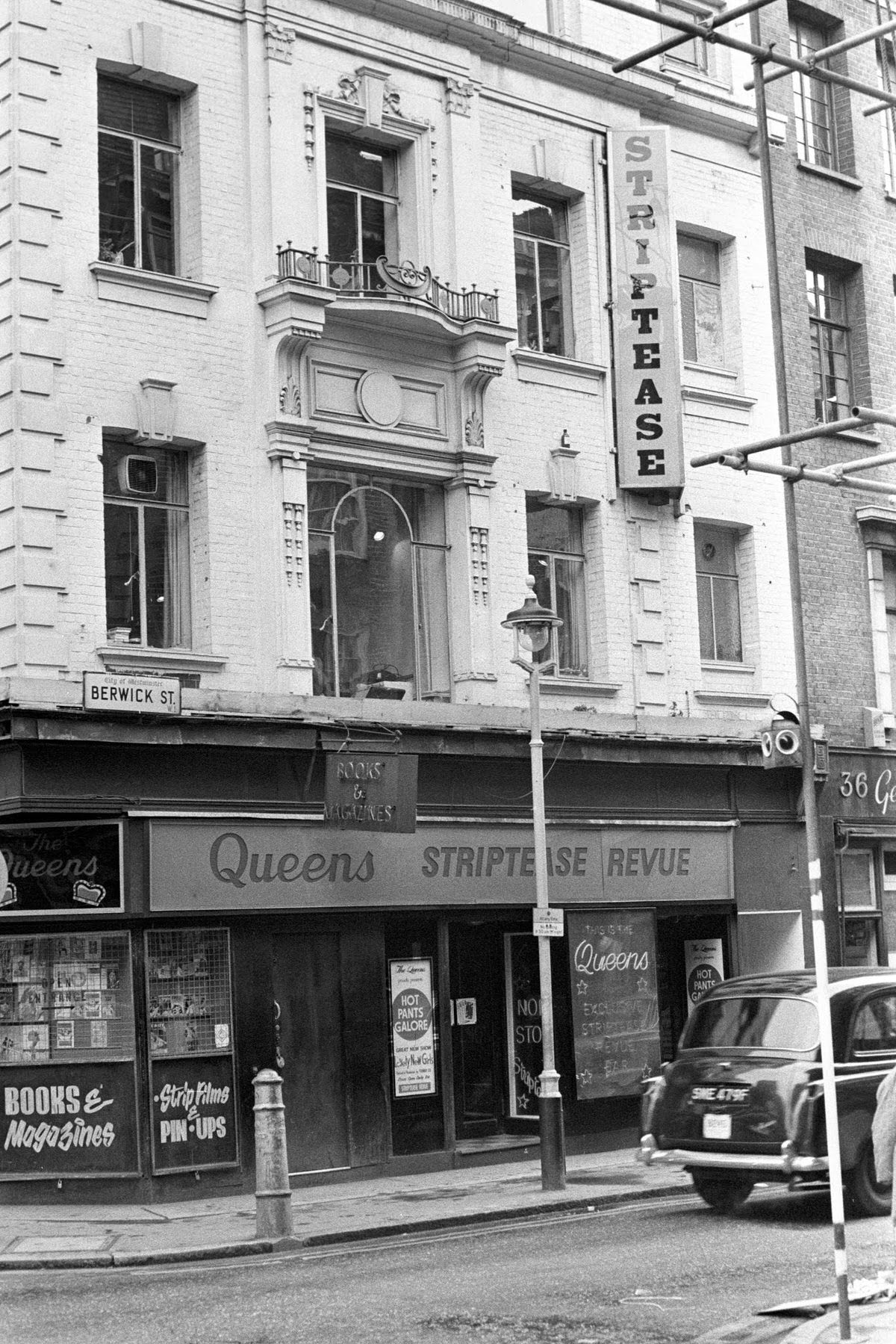
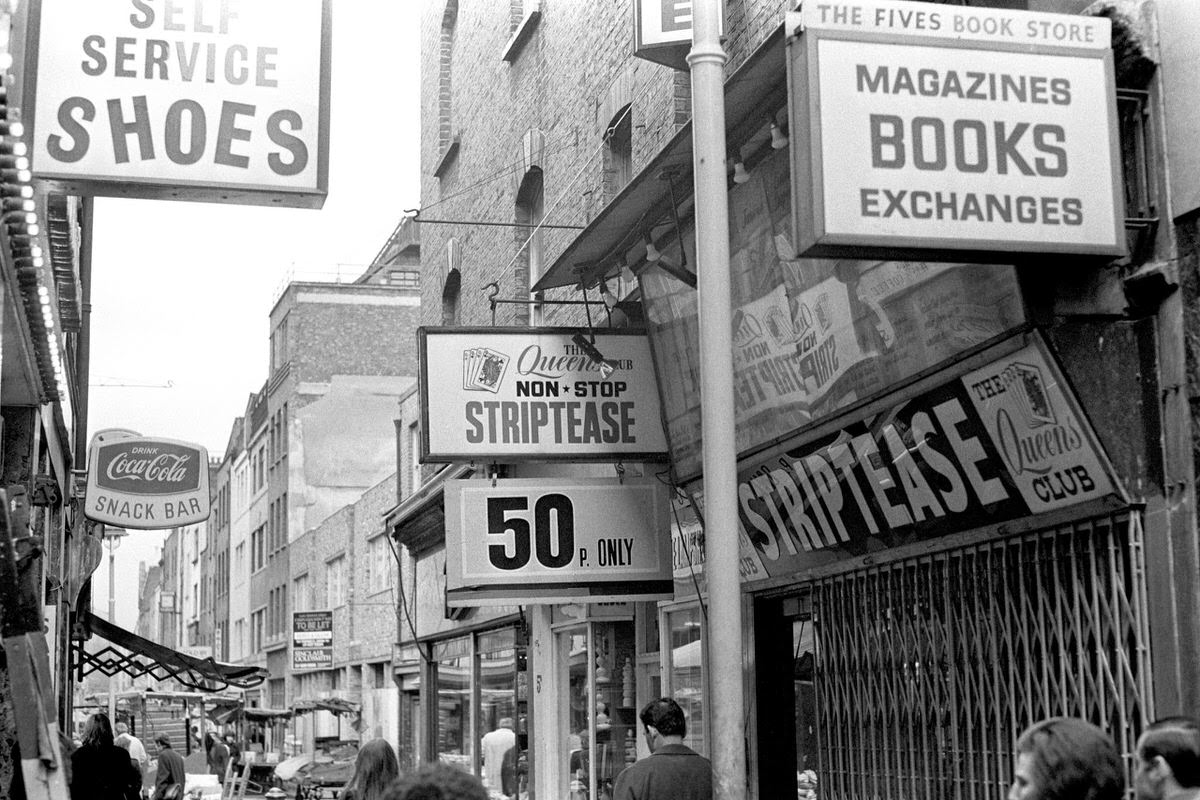
The red-light district was the neighbourhood’s most notorious feature. Paul Raymond ran the Revuebar, the anchor of Soho’s nightlife. Red bulbs glowed in shop windows selling adult magazines and films. Large promotional posters lined the entrances to theaters and clubs. Police officers walked their beats in pairs, keeping a close eye on the basement venues along every block.
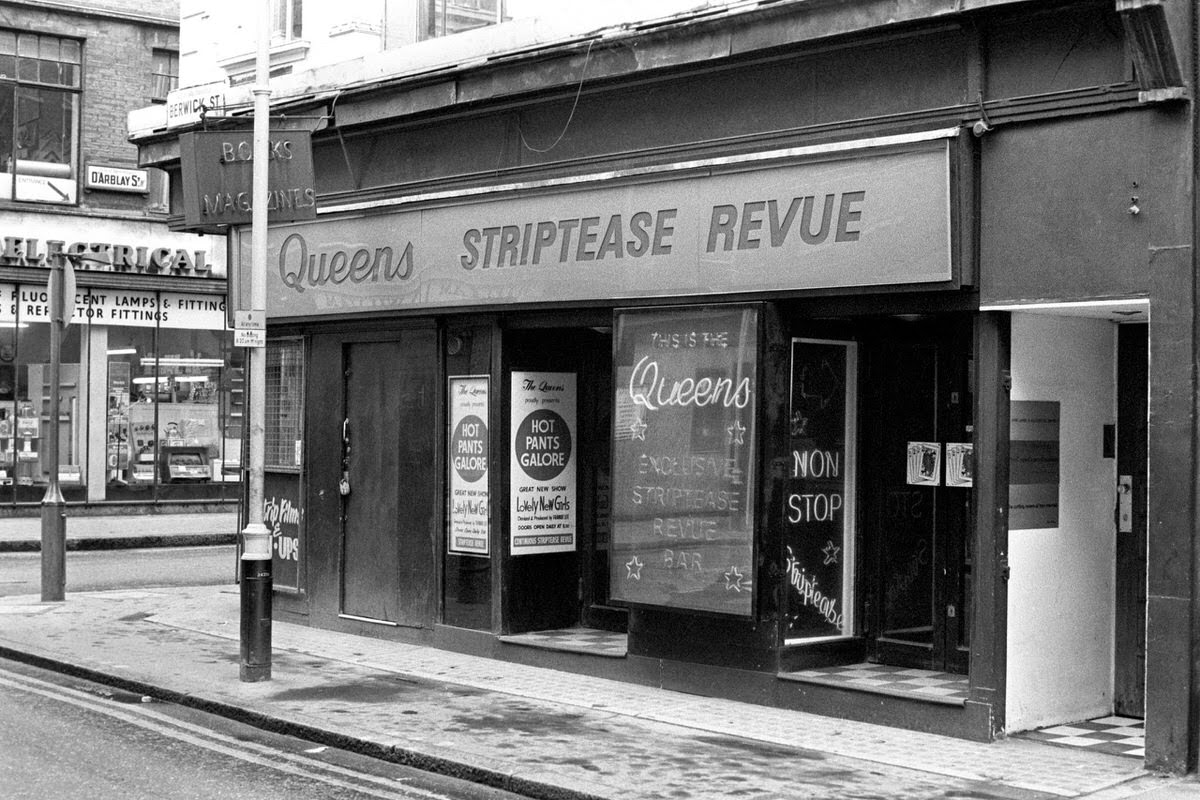
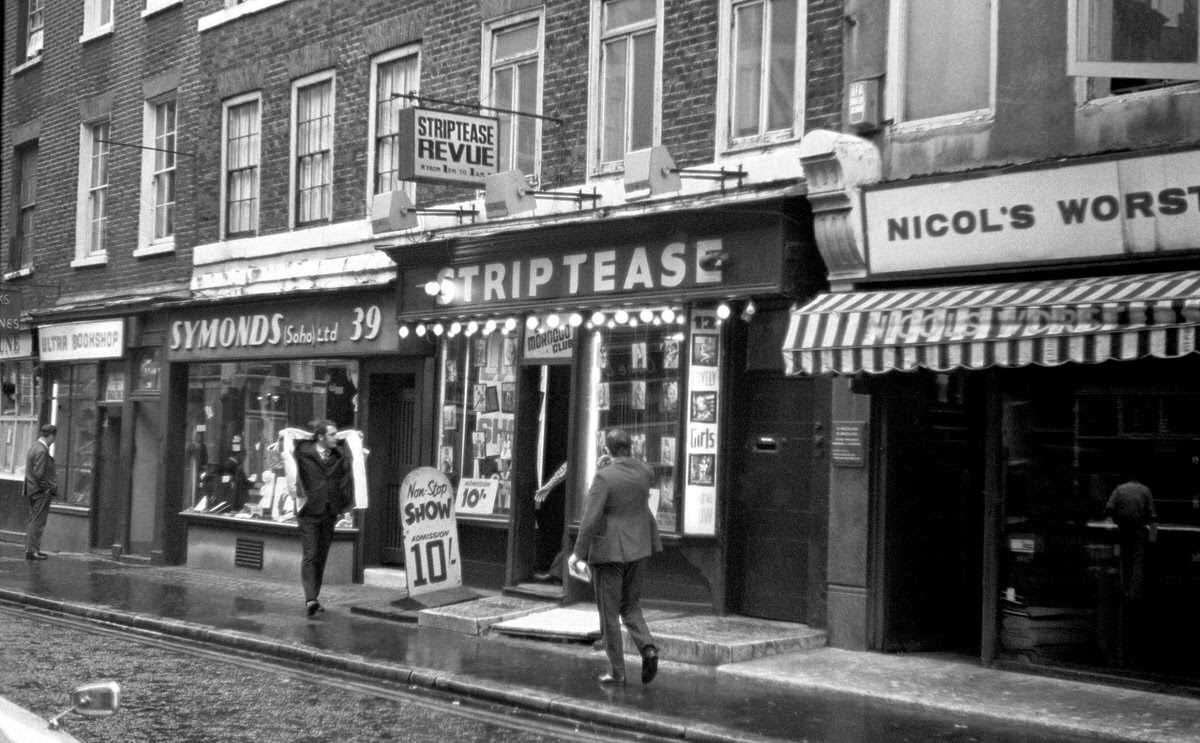
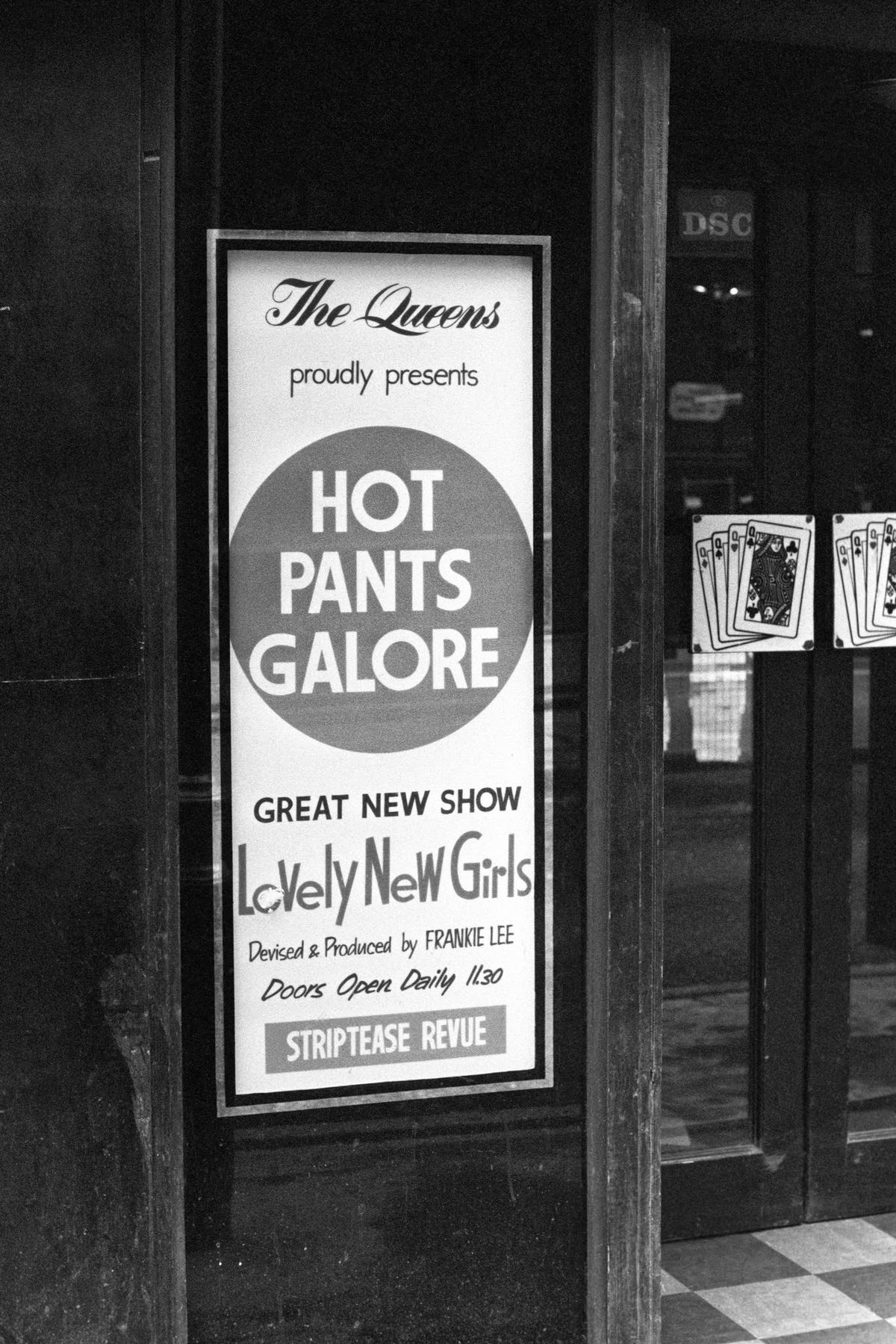
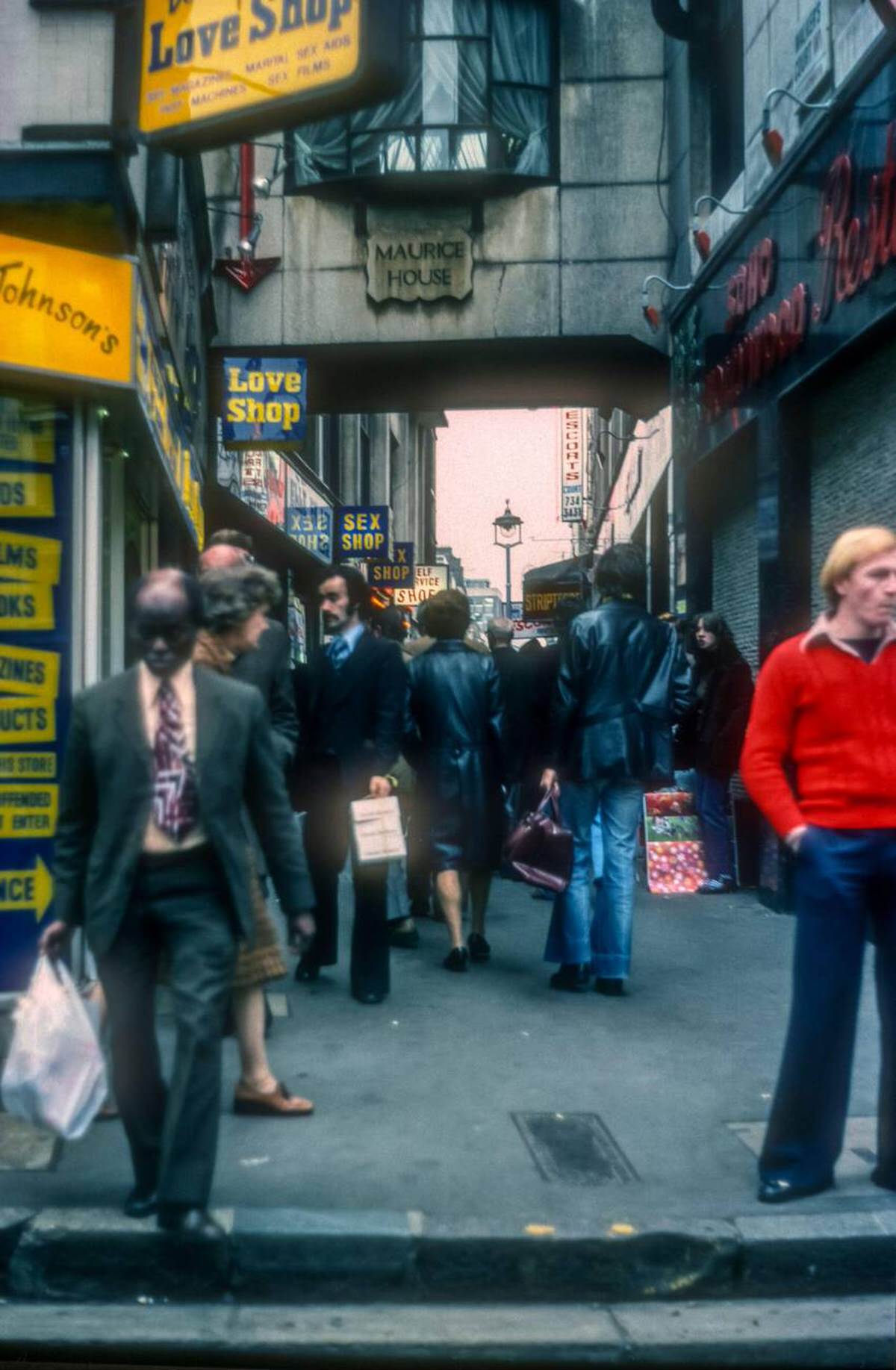
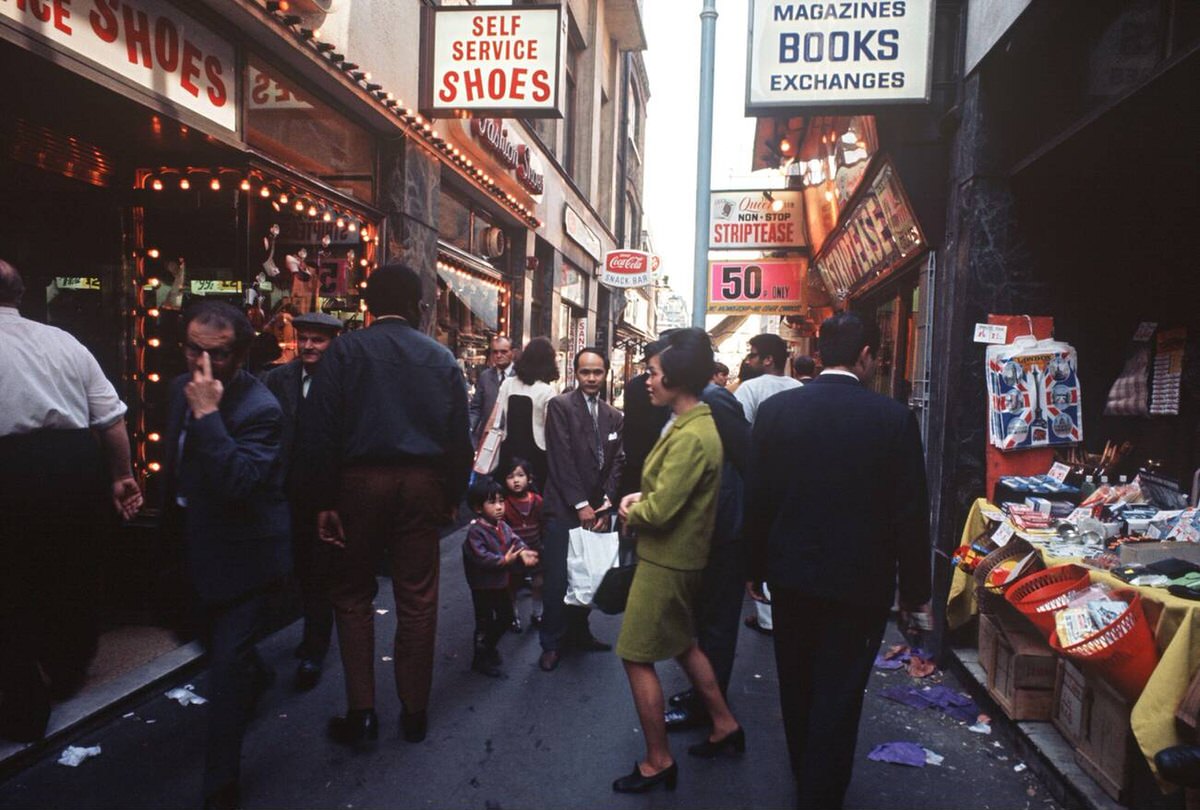
Walker’s Court was one of the most recognisable passages in the whole district. Sandwiched between Brewer Street and Berwick Street, it was lined with adult entertainment venues and brightly lit signage. It served as an unofficial gateway between Soho’s commercial streets and its seedier interior, and pedestrians passed through it at all hours.
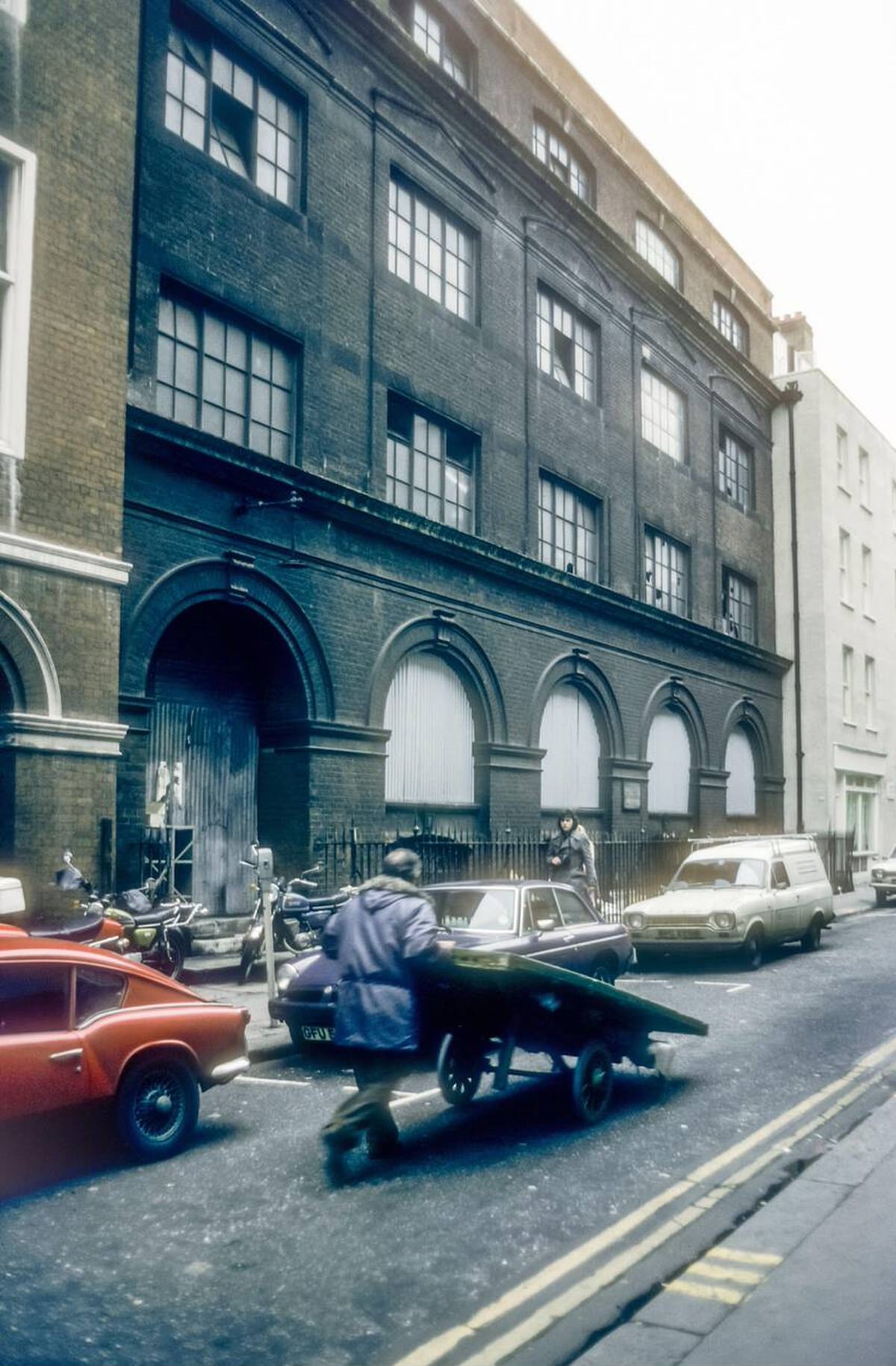
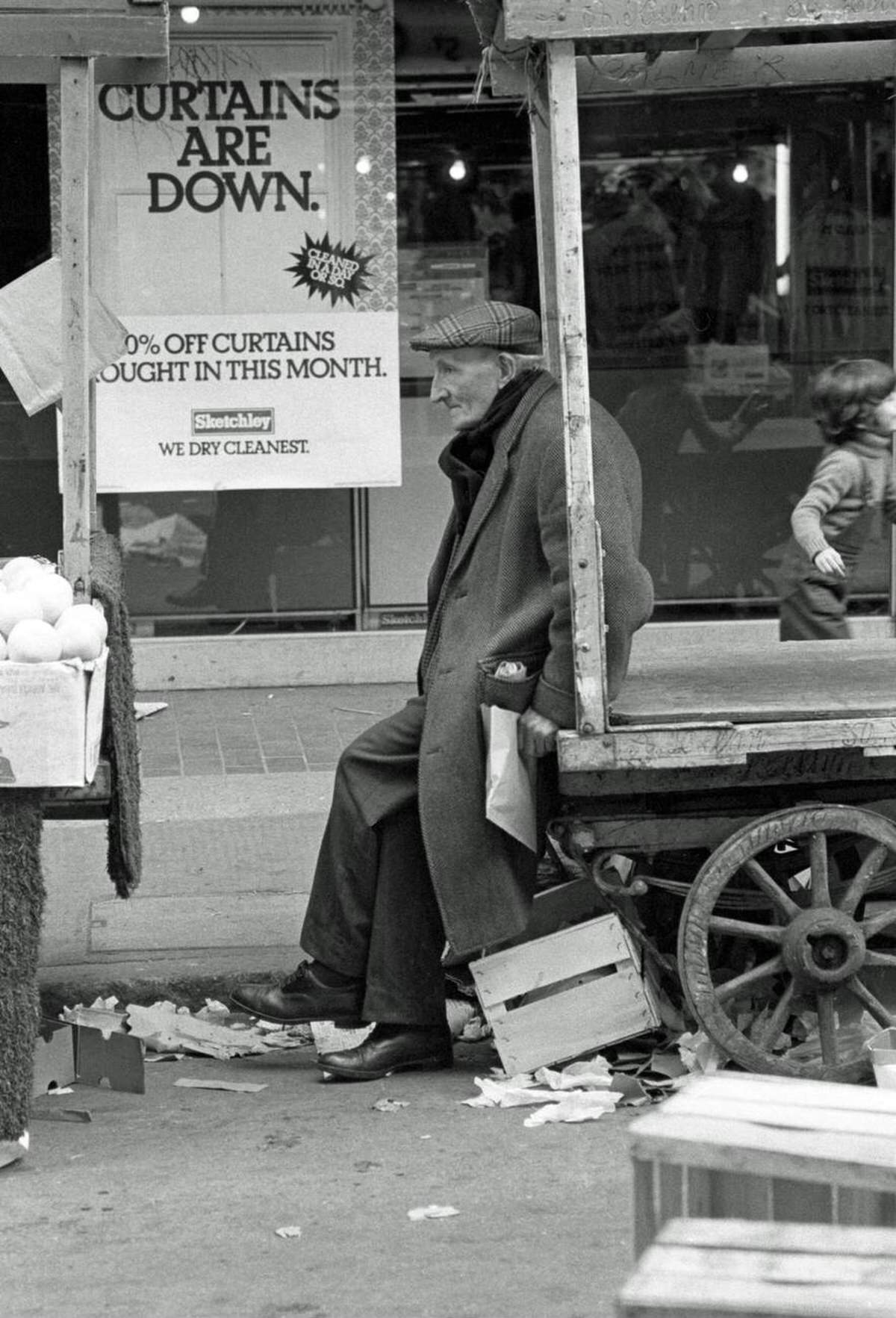
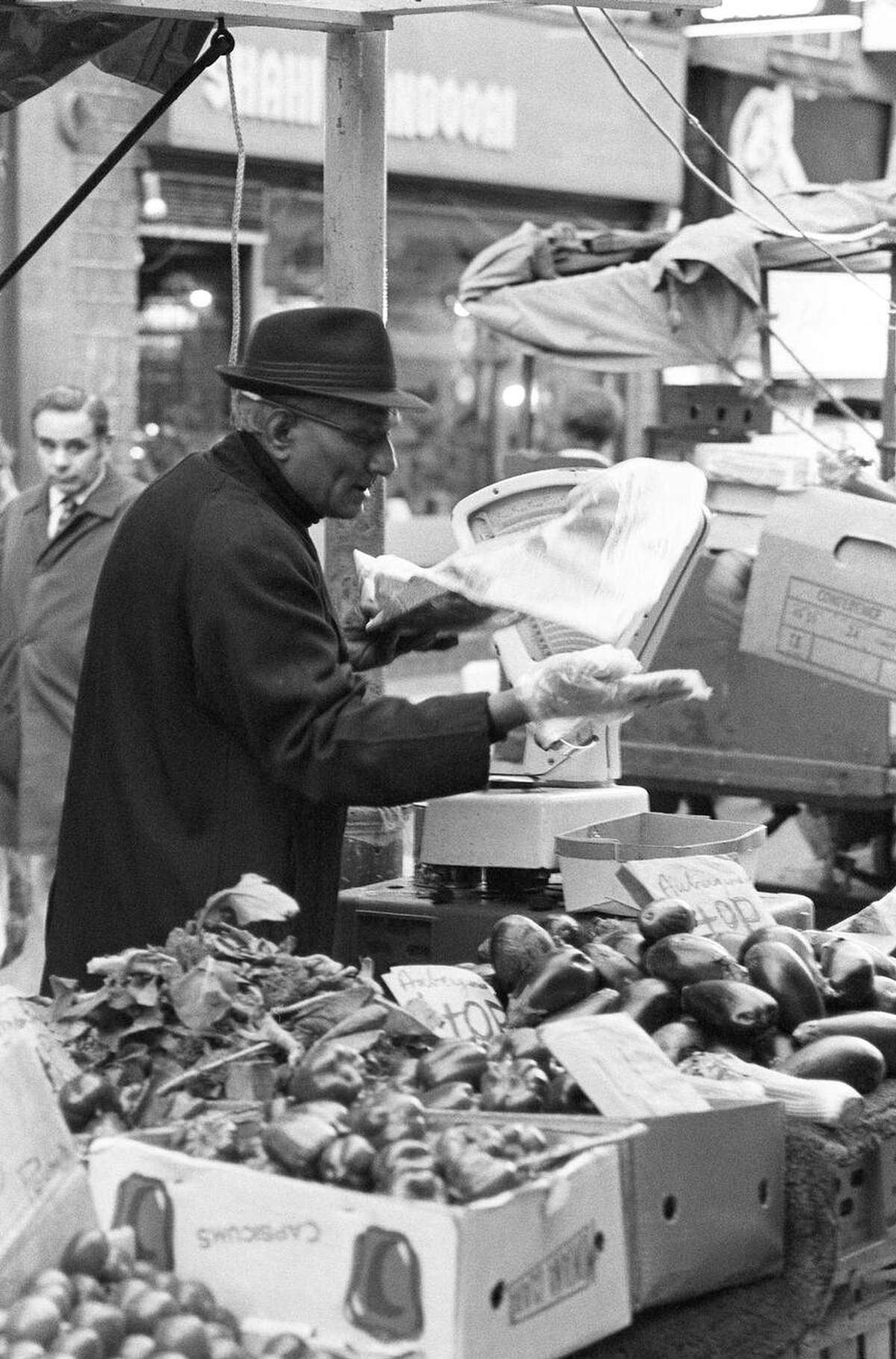
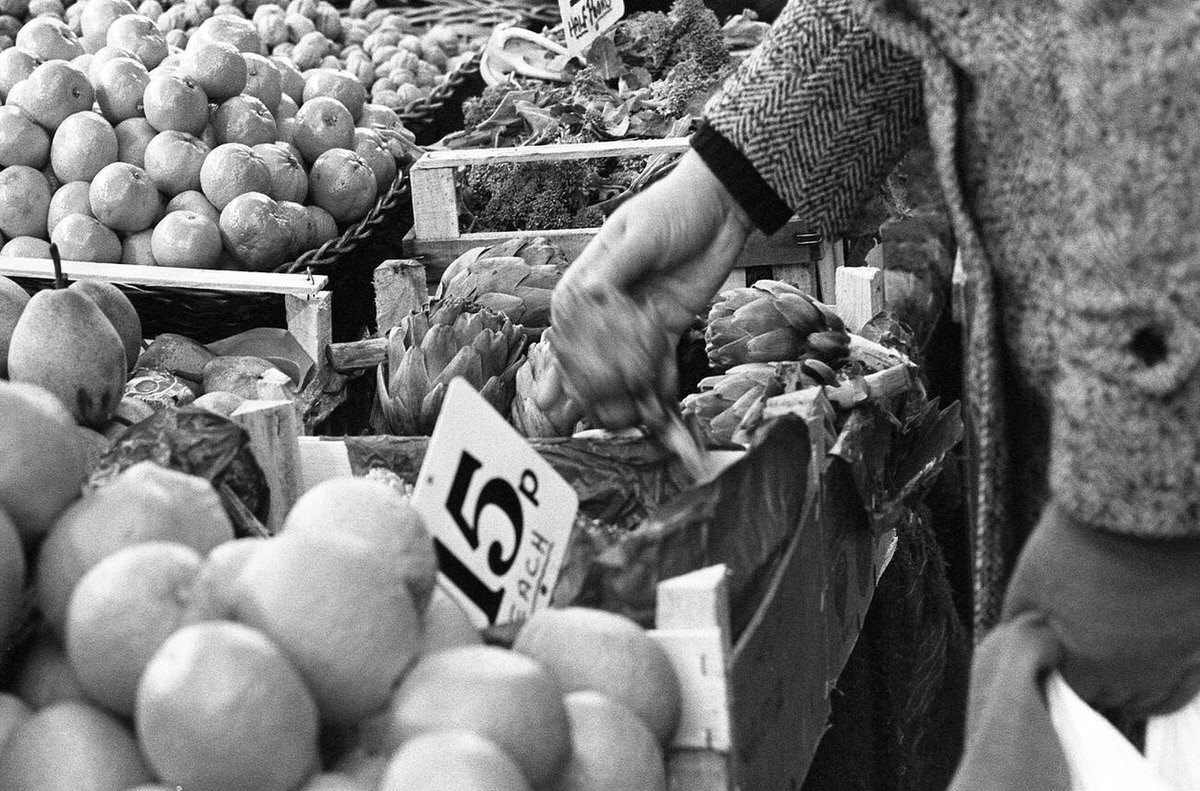
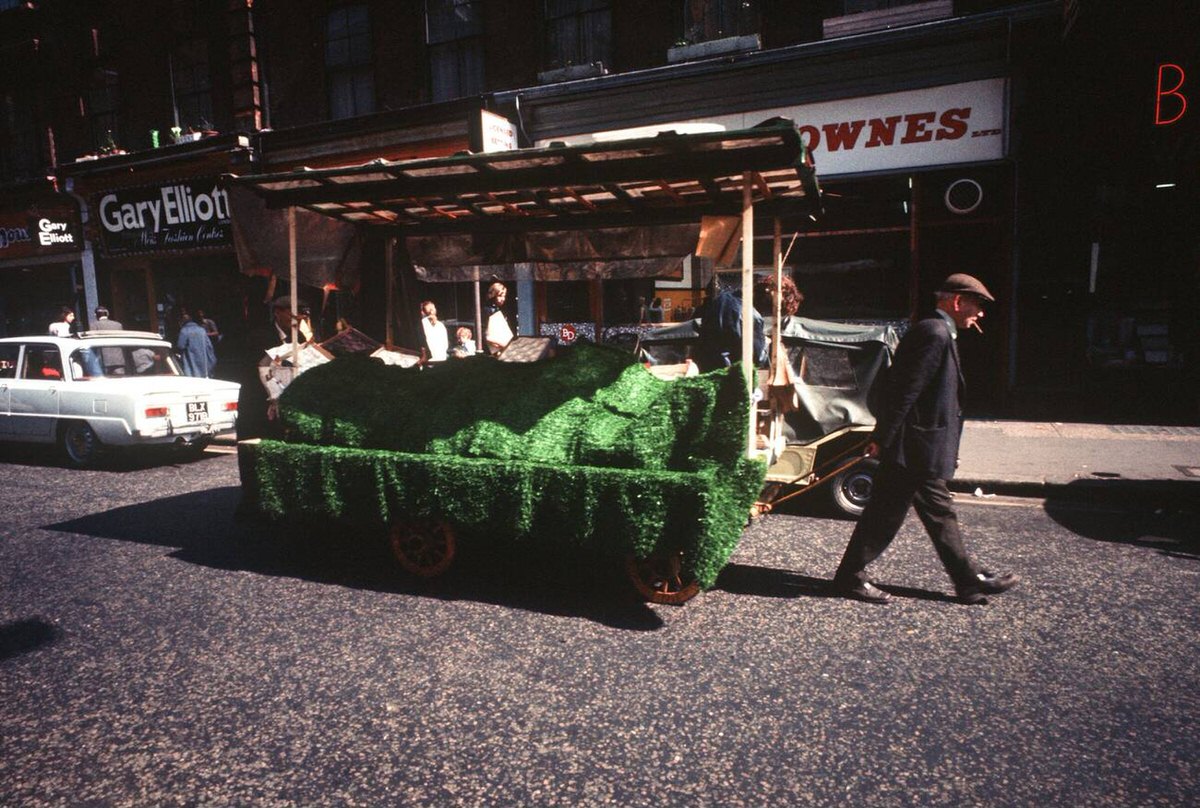
Daytime Soho operated on a completely different rhythm. Traders pushed barrows loaded with produce through streets already thick with foot traffic. Italian families ran small grocery stores and cafes, and at Bar Italia, workers drank strong espresso standing at the counter. The Berwick Street Market was a maze of fruit stalls and vegetable carts, and stallholders shouted their prices above the roar of passing traffic.
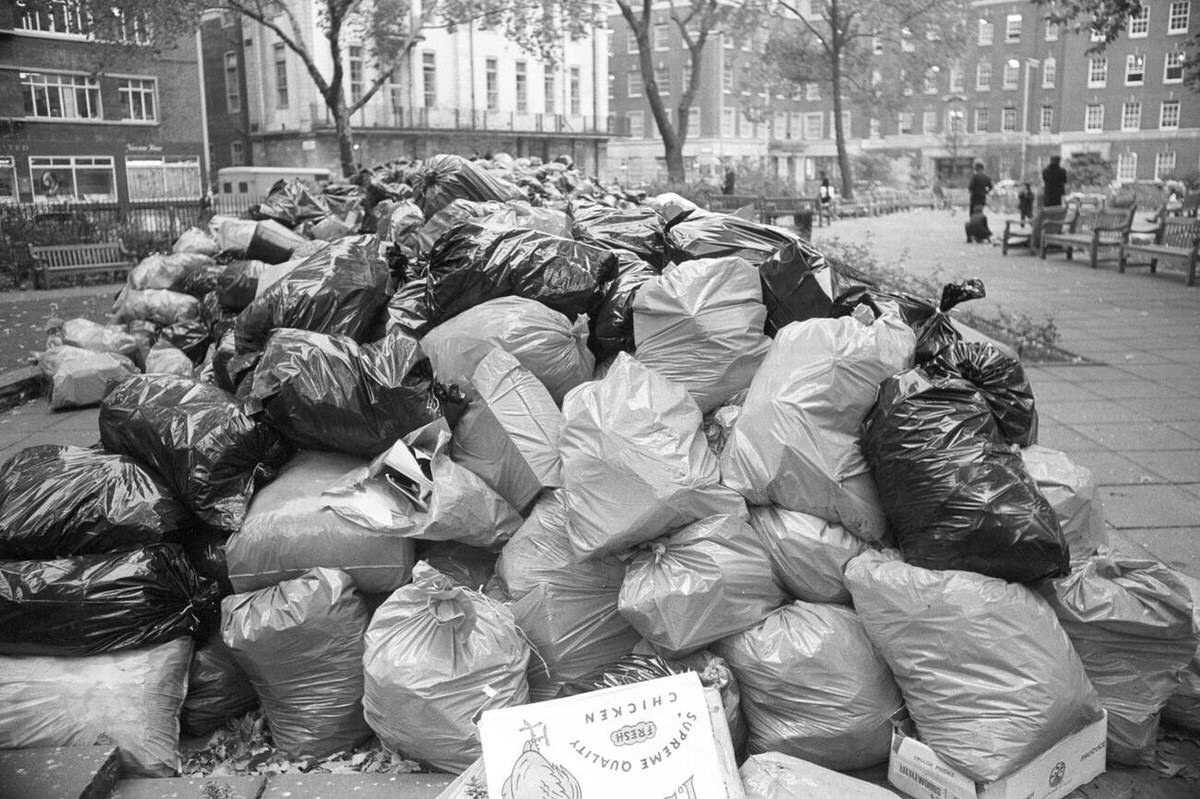
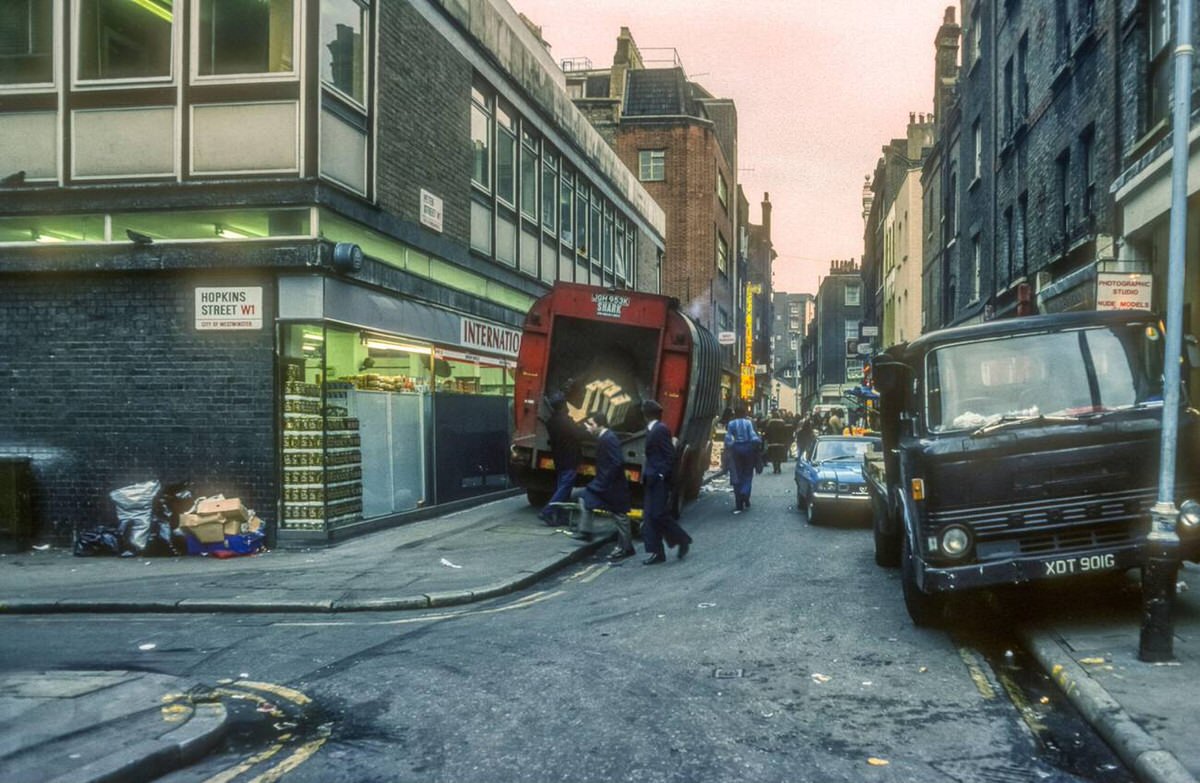
The decade brought serious disruptions to daily life across the city. During council workers’ strikes, rubbish bags piled up on street corners across Soho. Residents stepped around the mounting heaps without breaking stride. The strikes were part of the wider industrial unrest that defined Britain in the 1970s, and Soho’s narrow streets made the build-up of waste particularly visible.
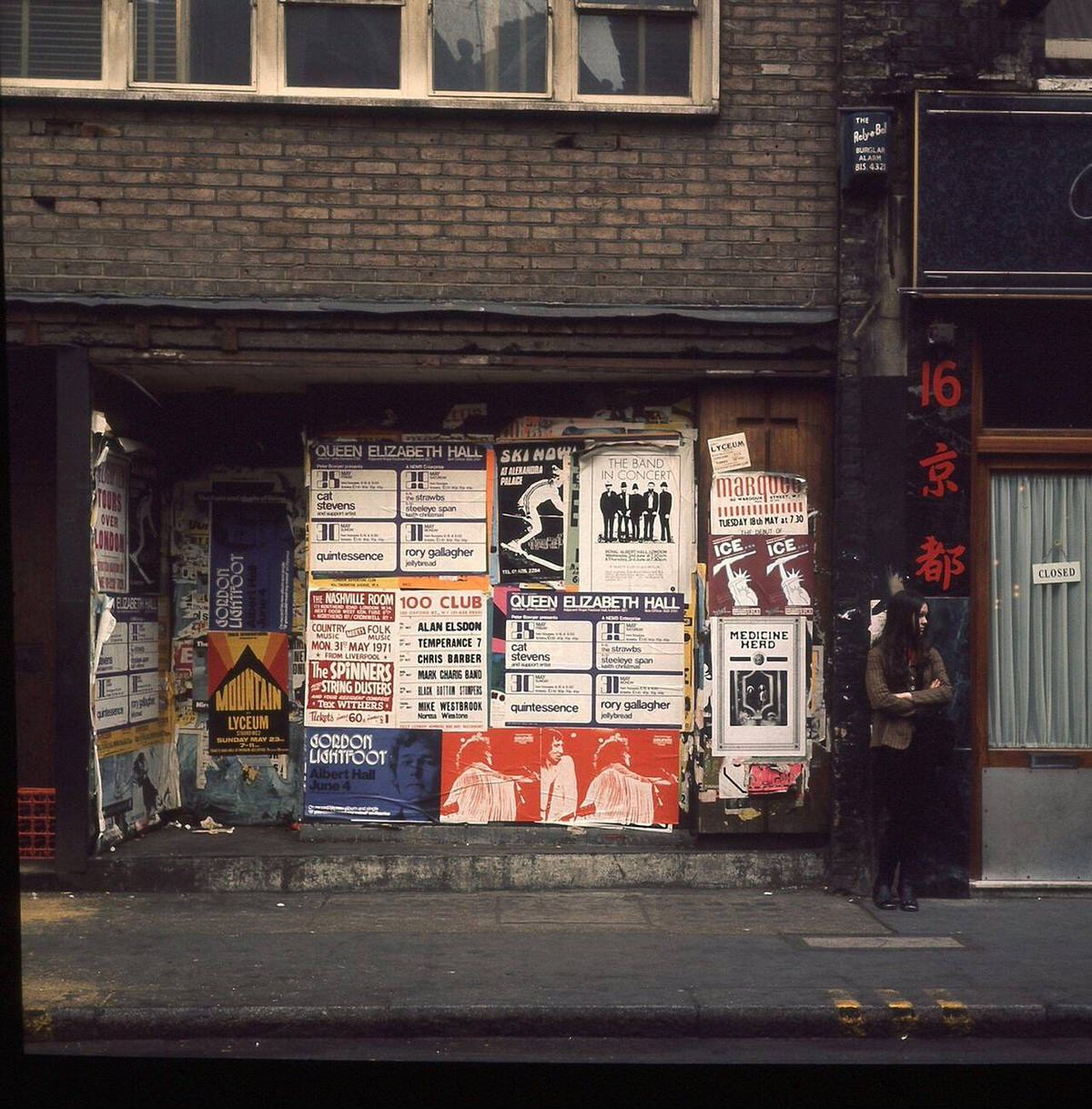
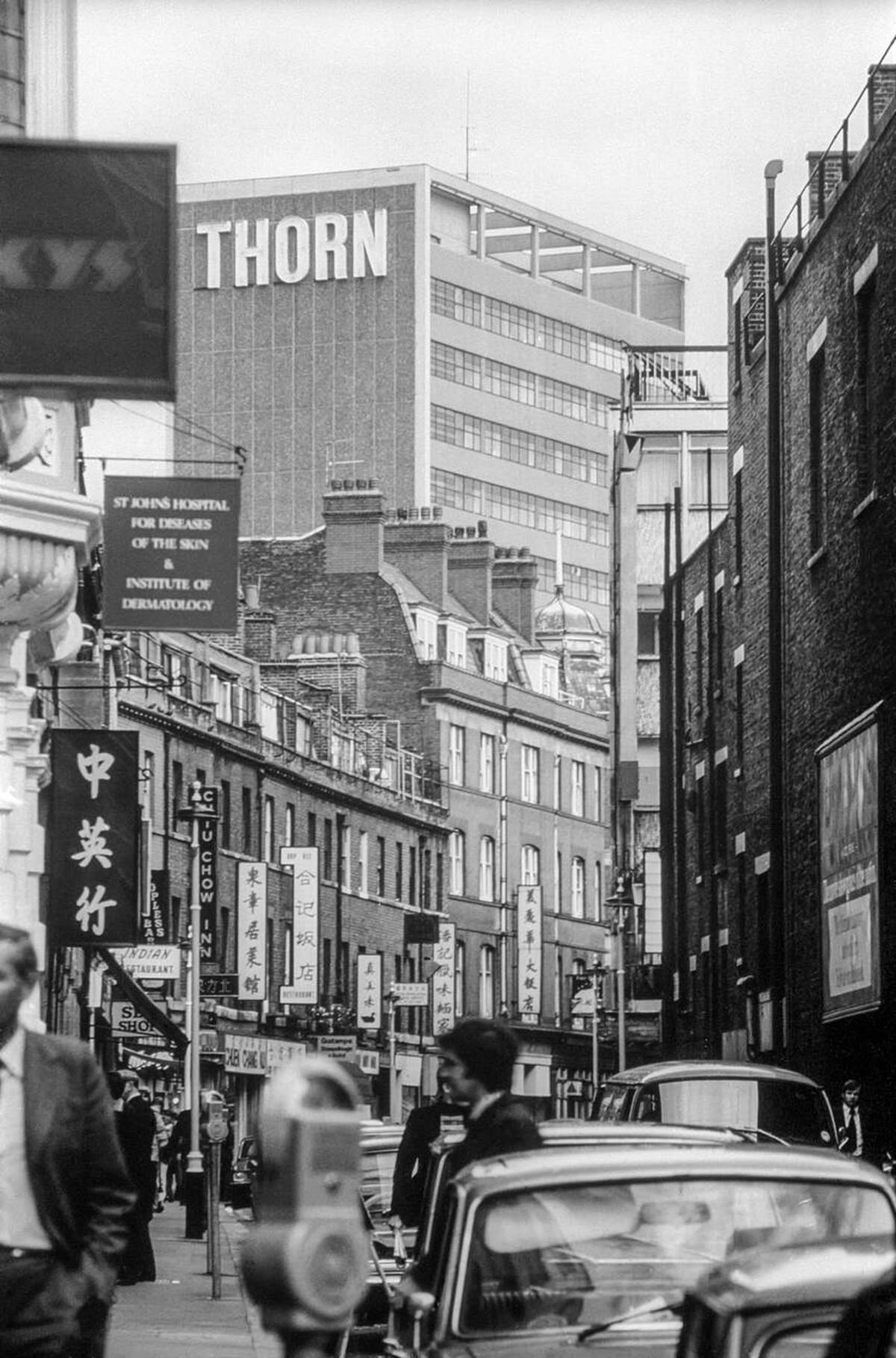
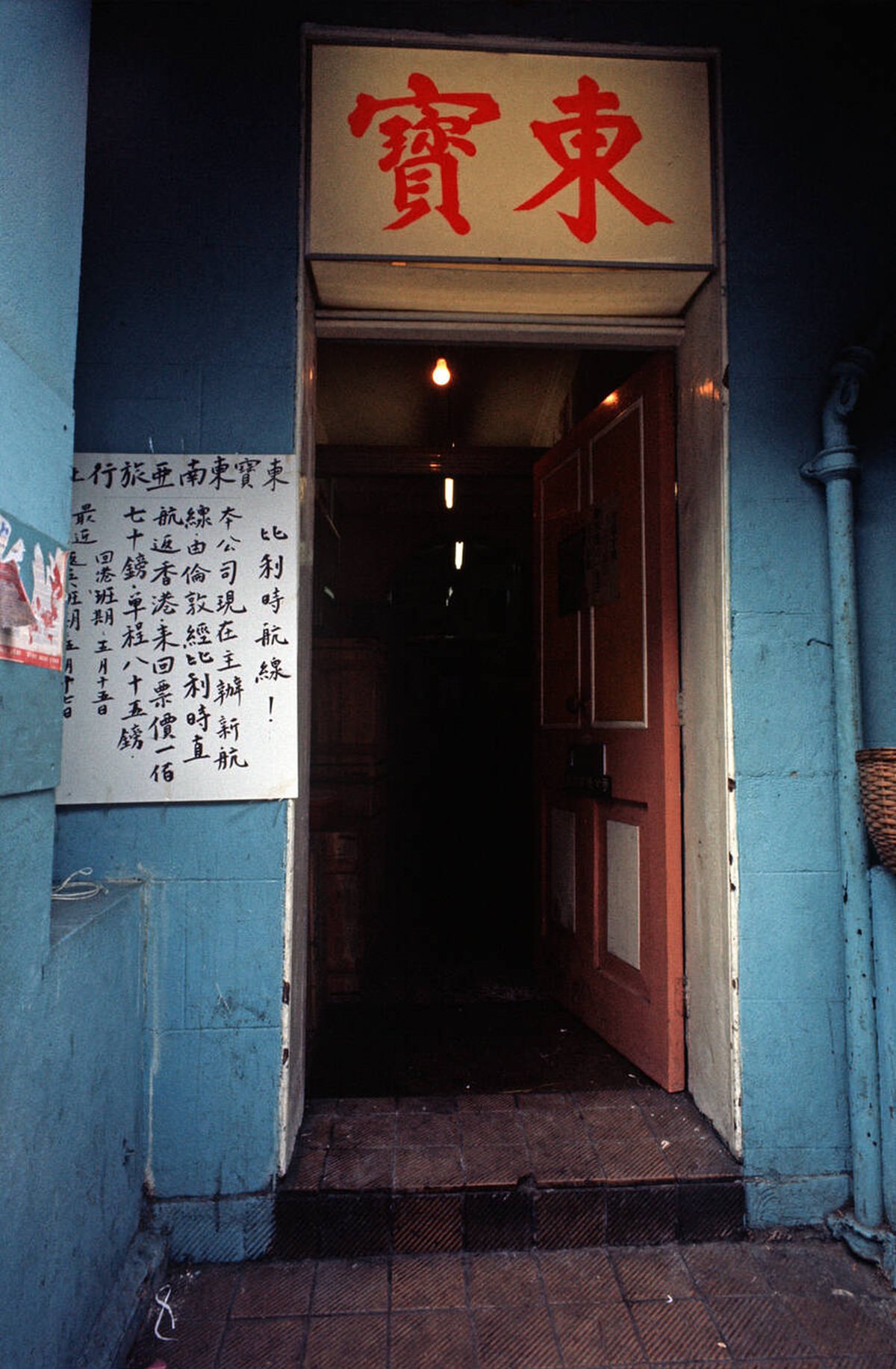
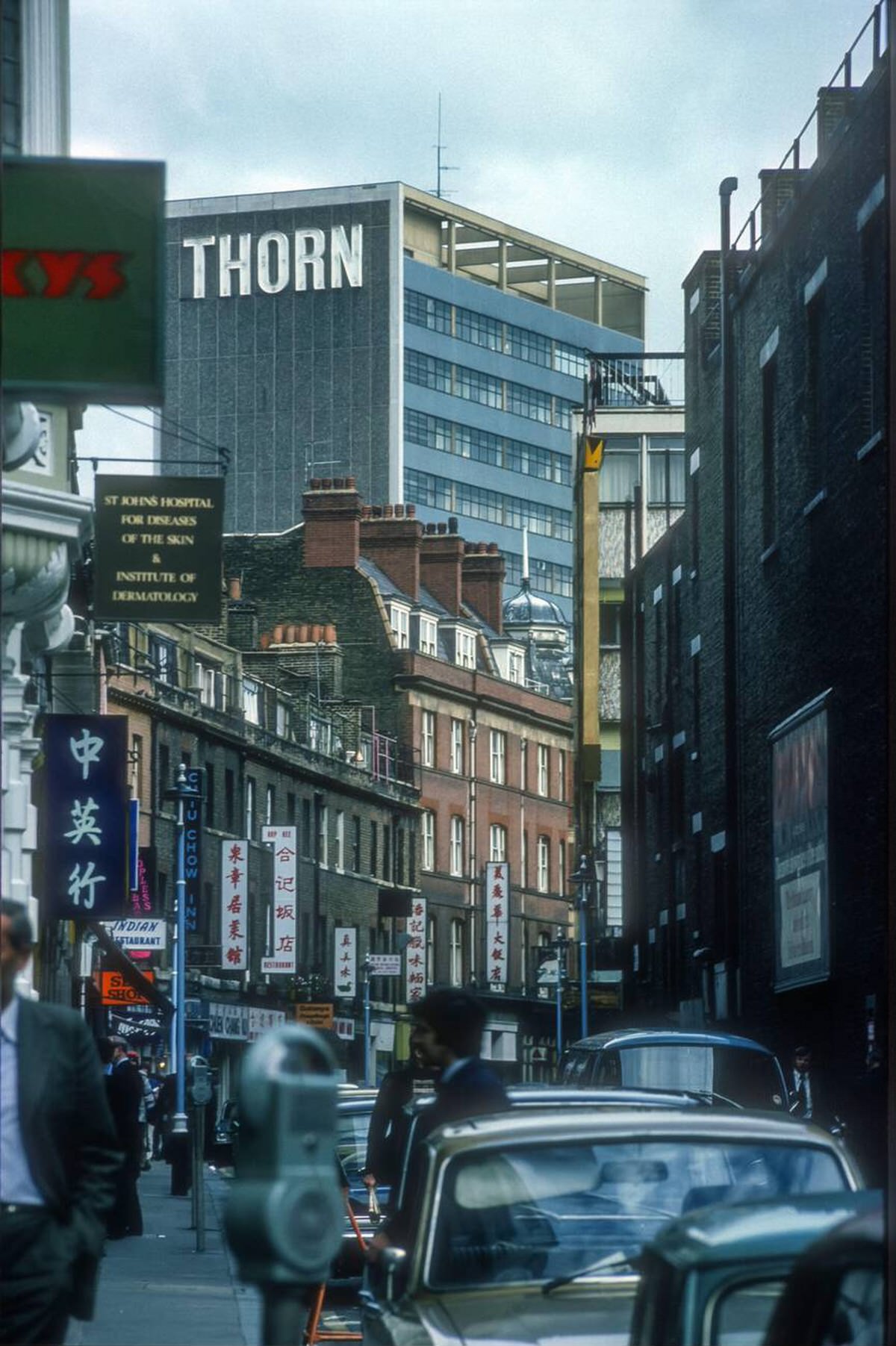
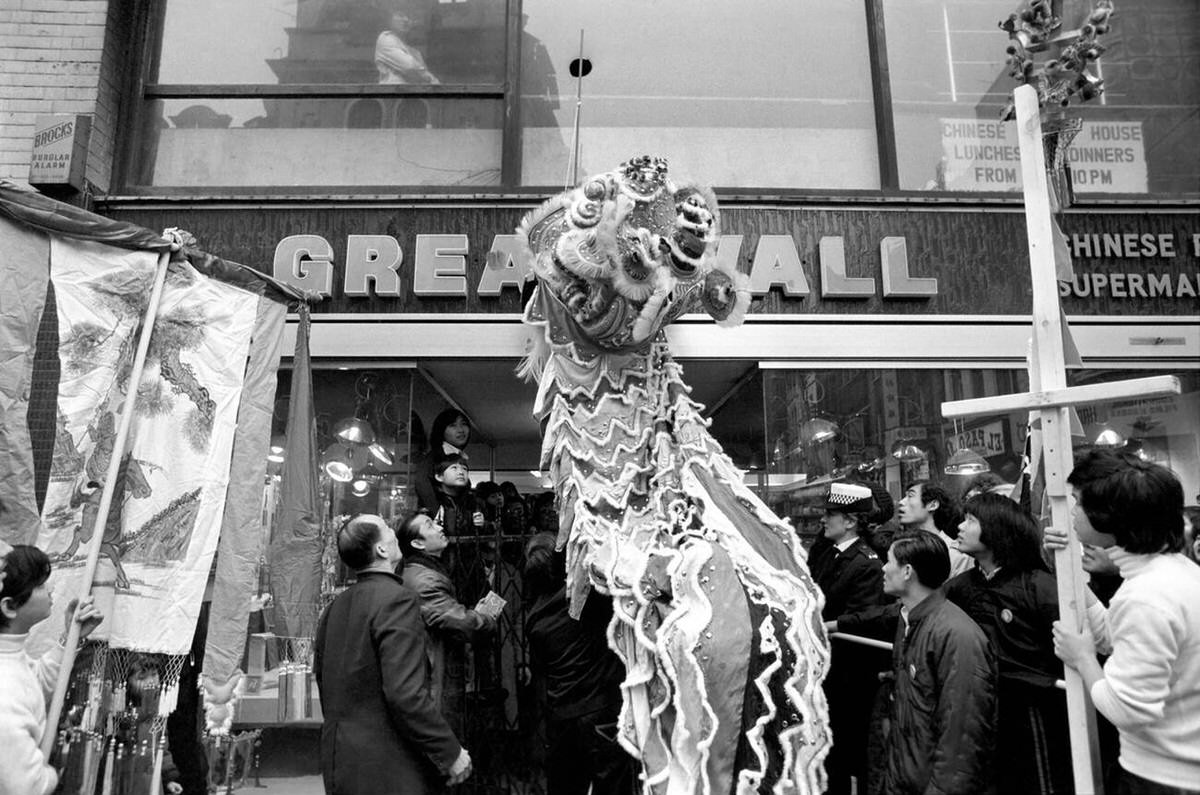
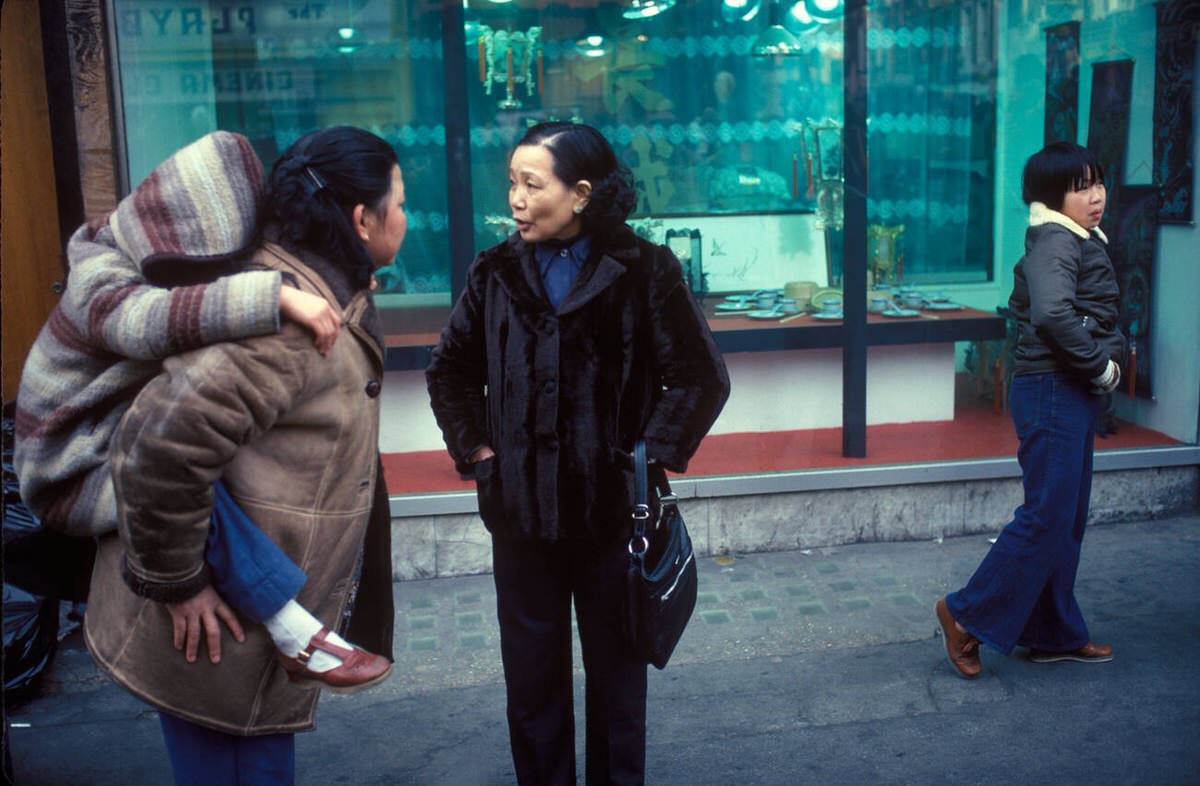
Soho’s boundaries overlapped with one of London’s most vibrant immigrant communities. Gerrard Street and Lisle Street formed the core of Chinatown, home to Chinese-owned restaurants, grocers, and social clubs. The community had been established in the area since the post-war years, and by the mid-1970s the streets had a distinct character entirely separate from the rest of Soho.
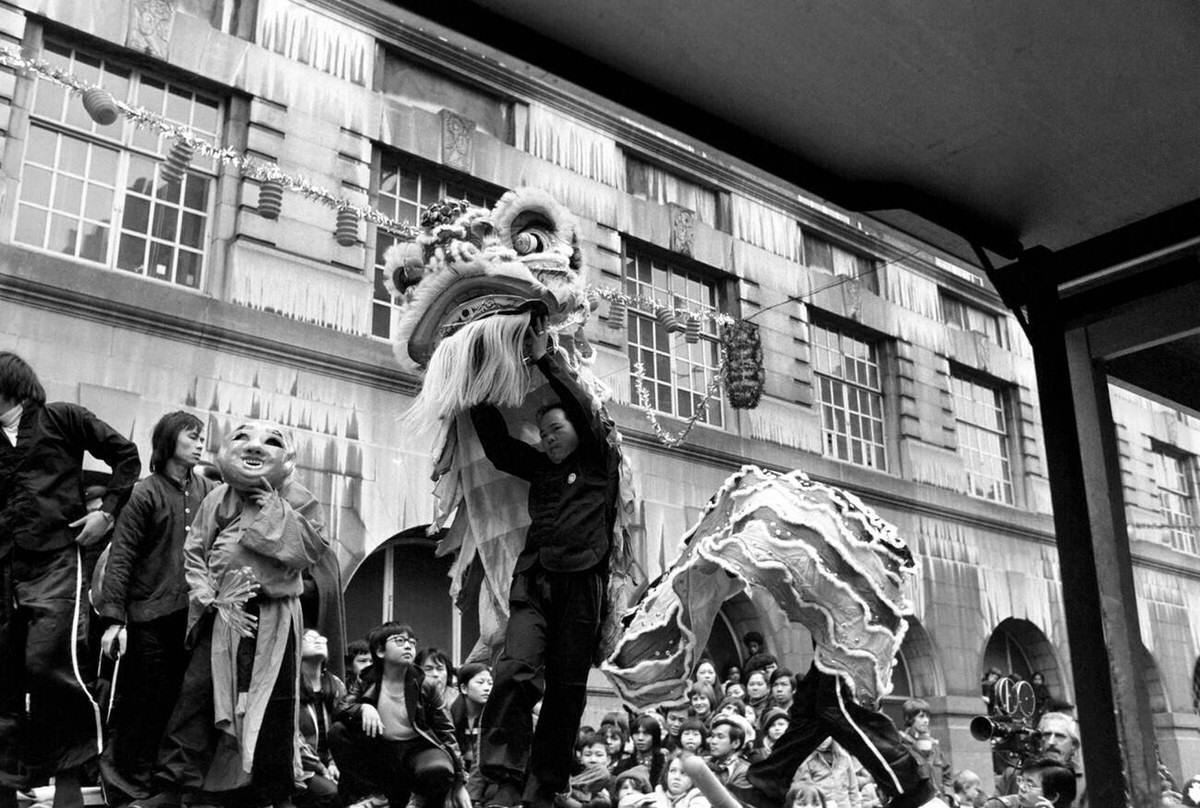
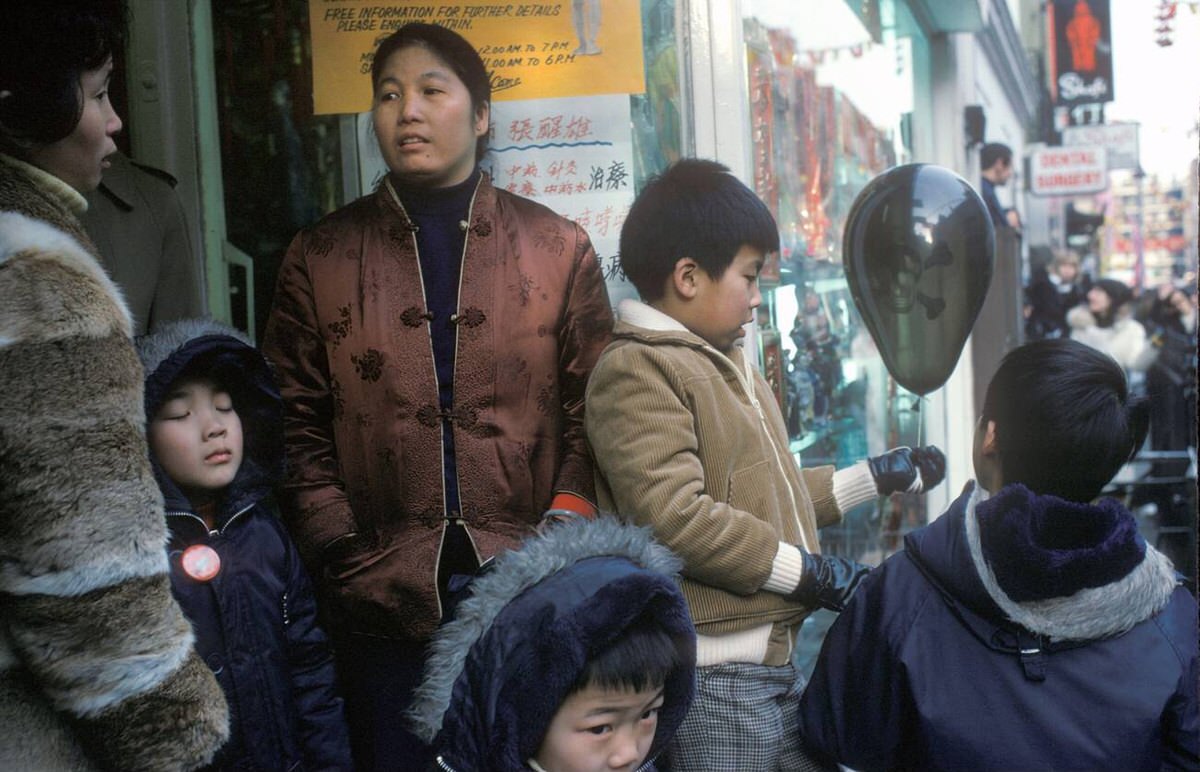
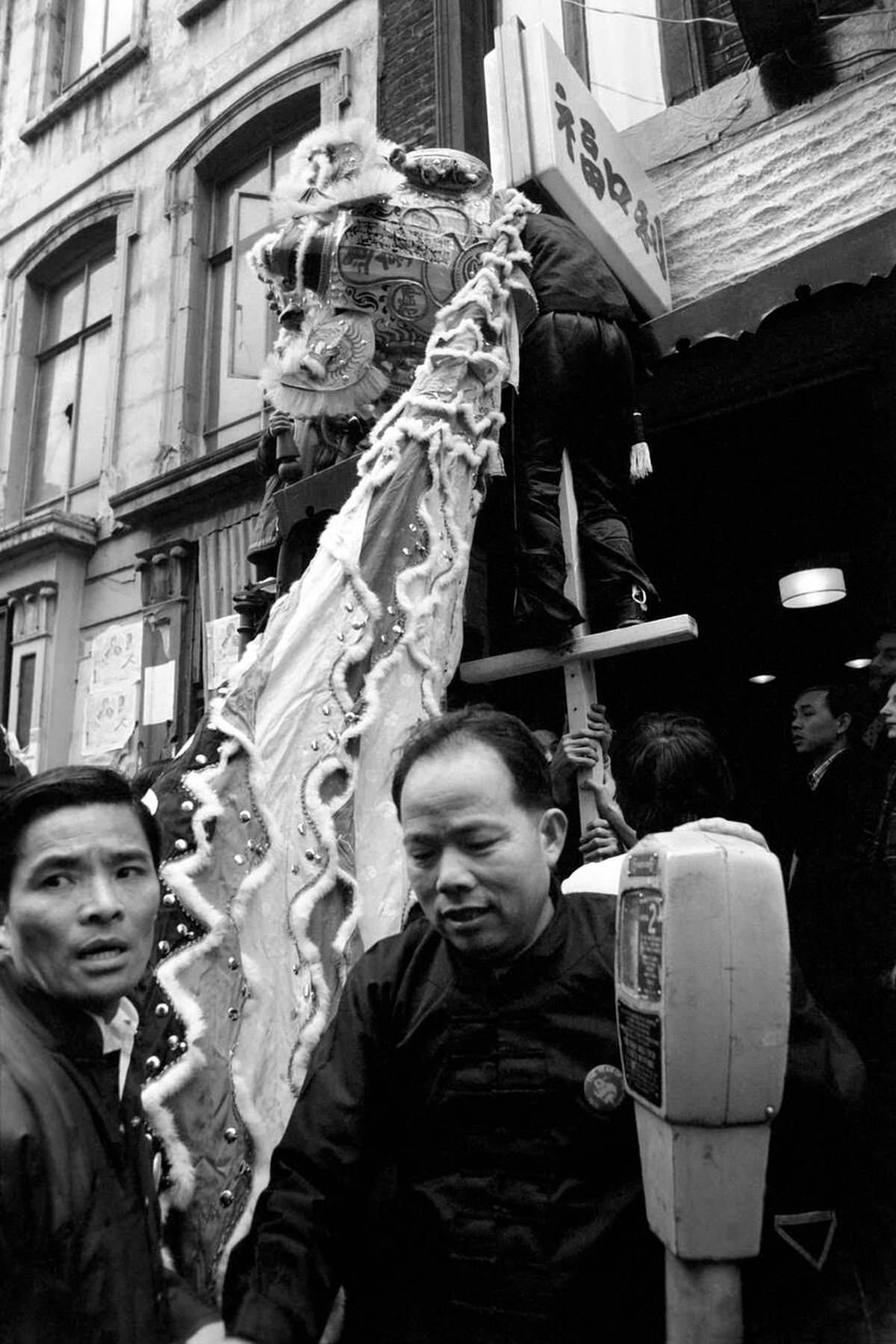
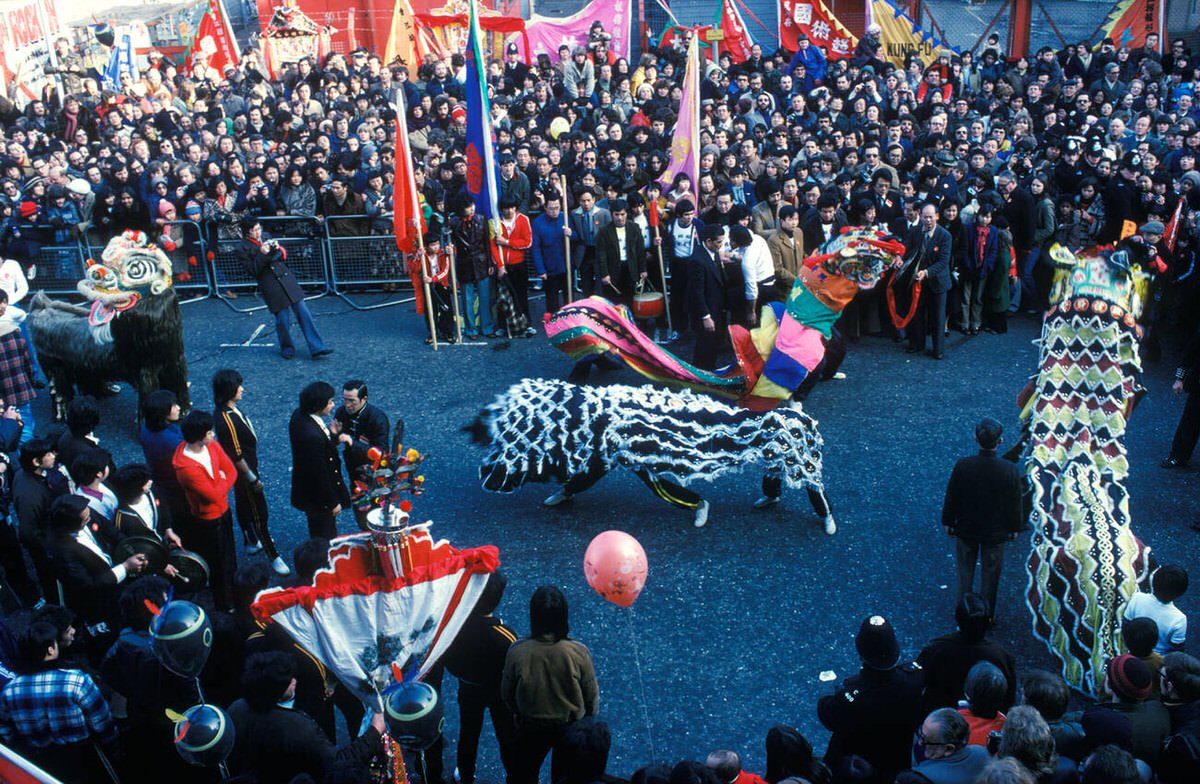
Chinese New Year brought the largest public gatherings Chinatown saw all year. In 1975, the celebrations drew crowds onto Gerrard Street and surrounding blocks. Families, children, and community members filled the pavements as the festivities spilled out from the restaurants and into the open air.
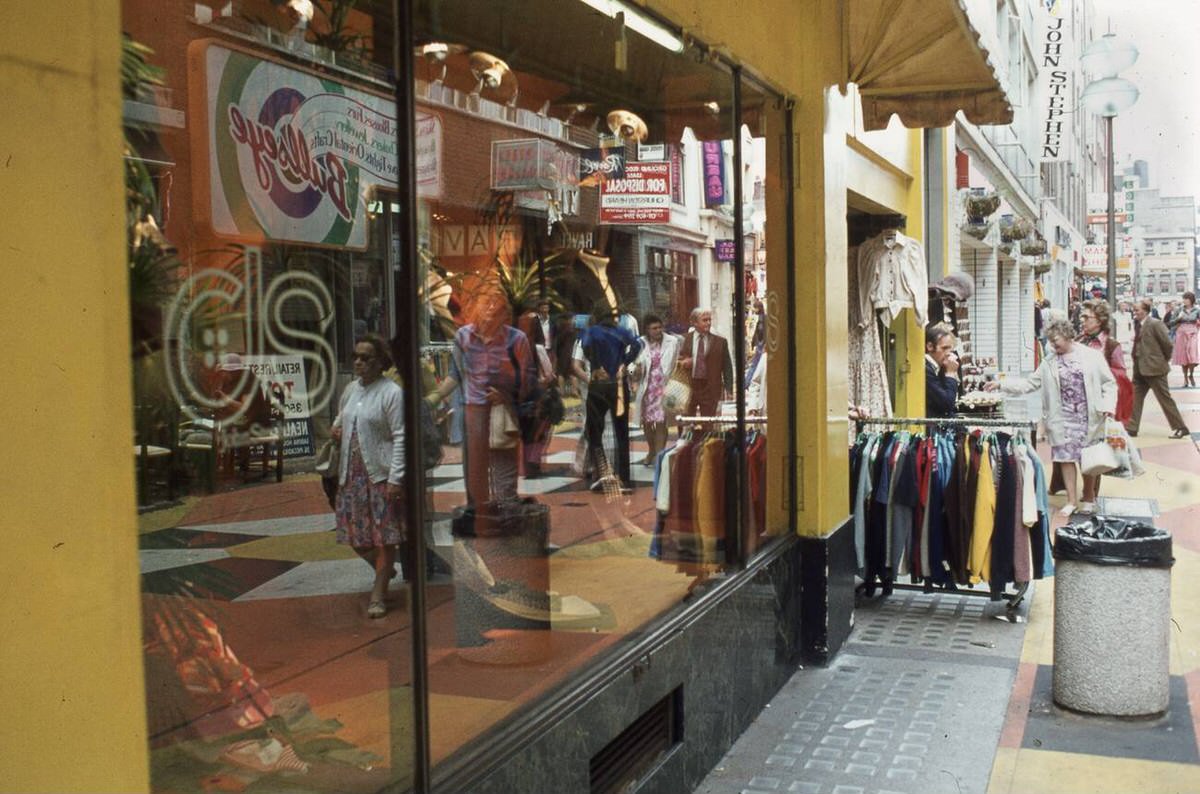
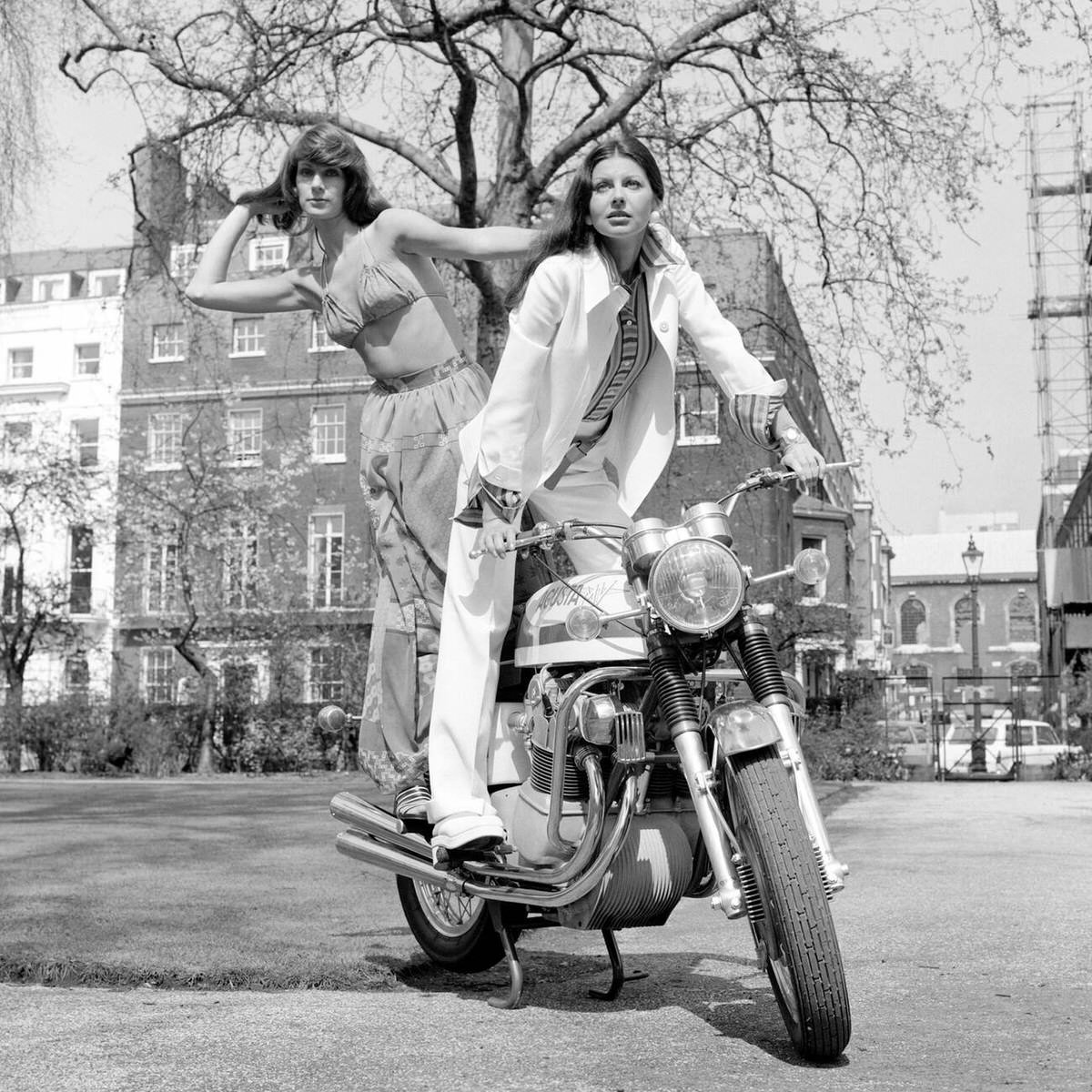
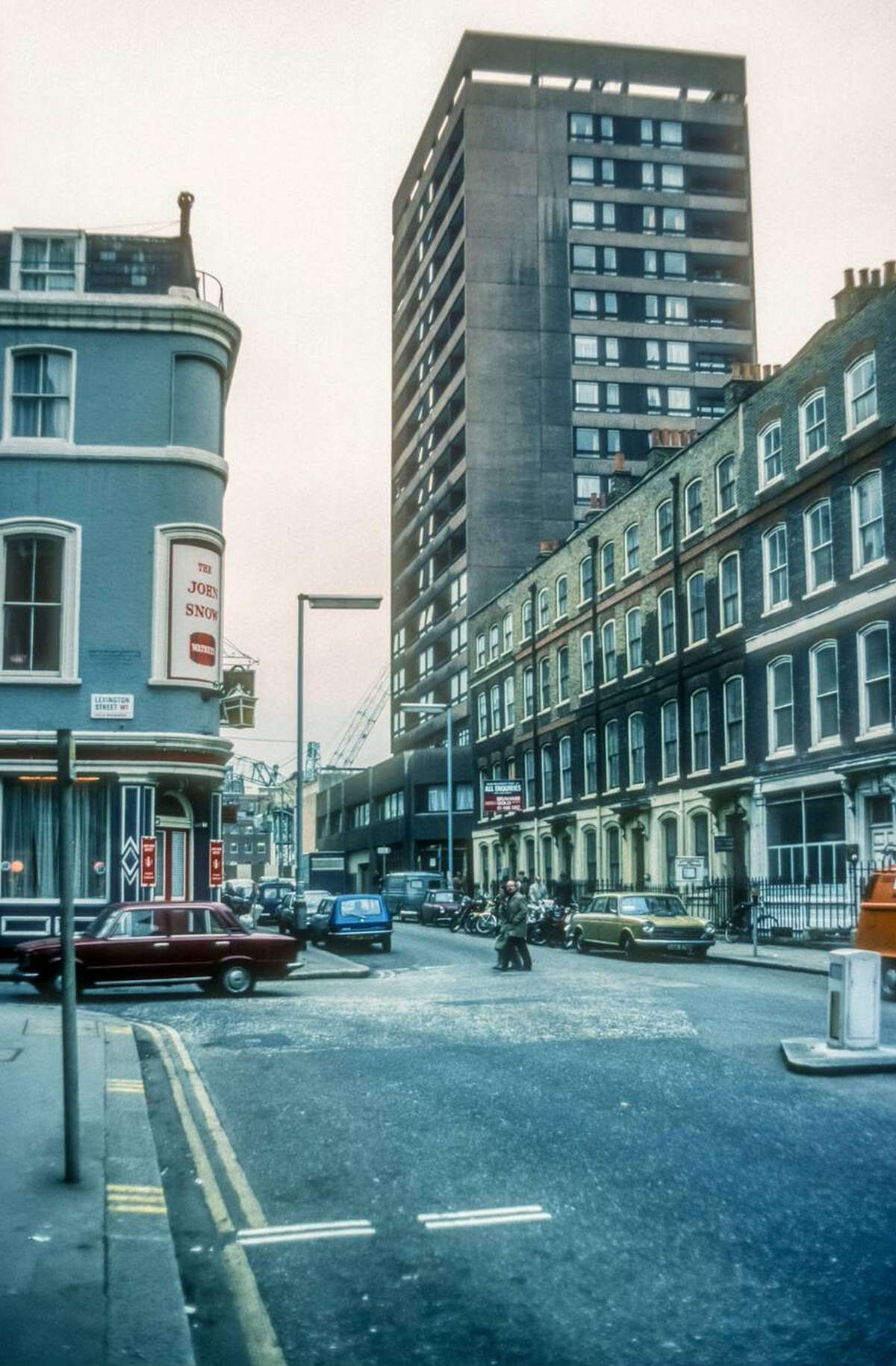
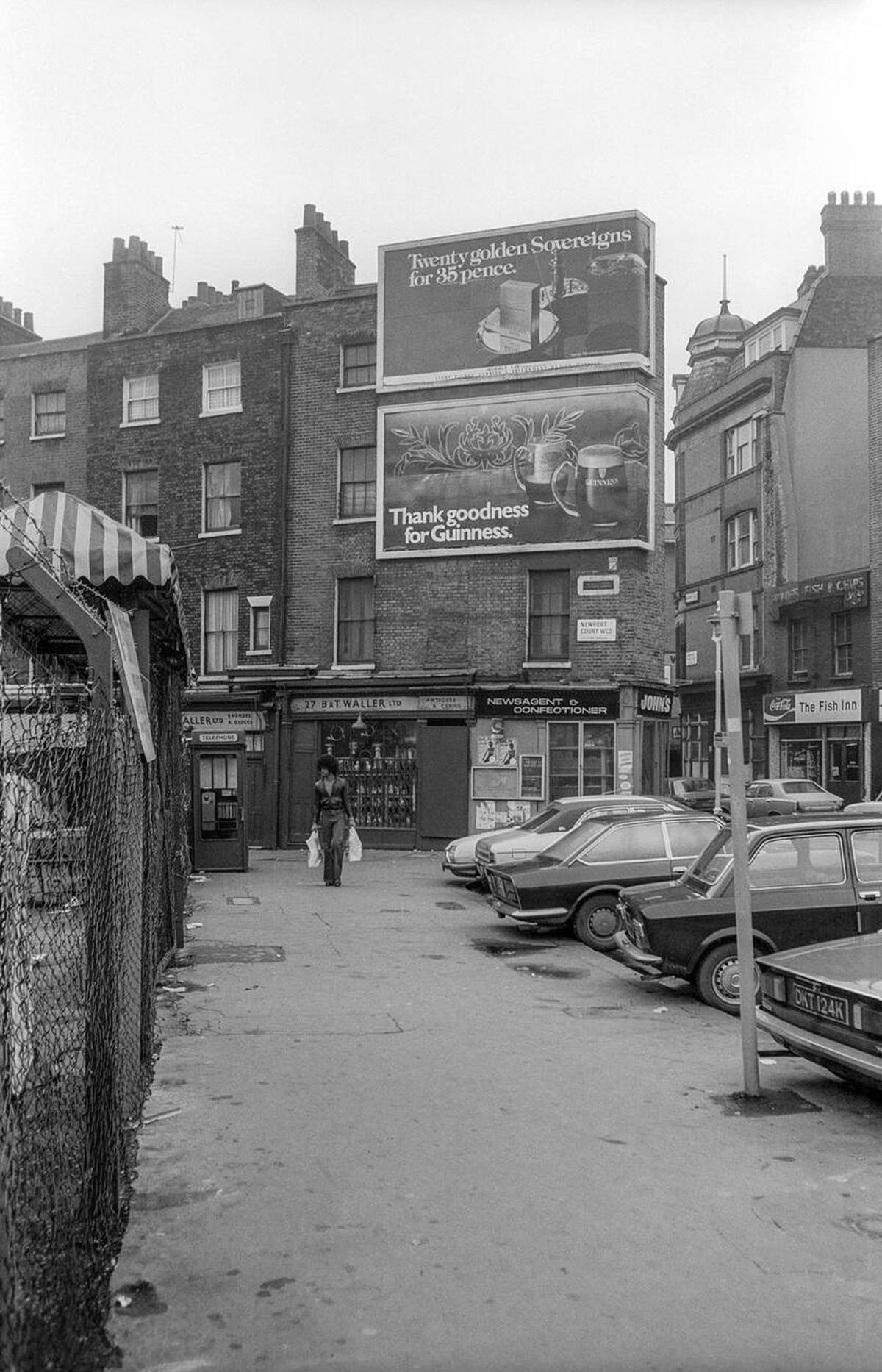
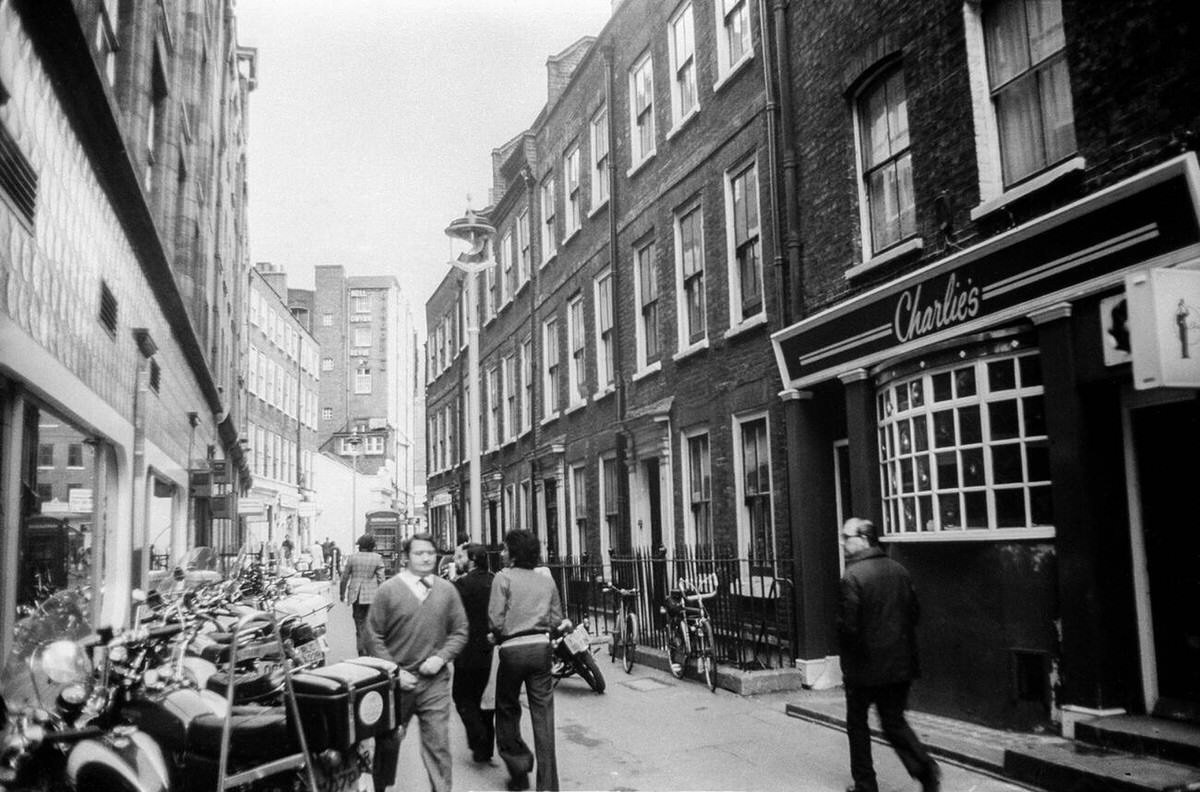
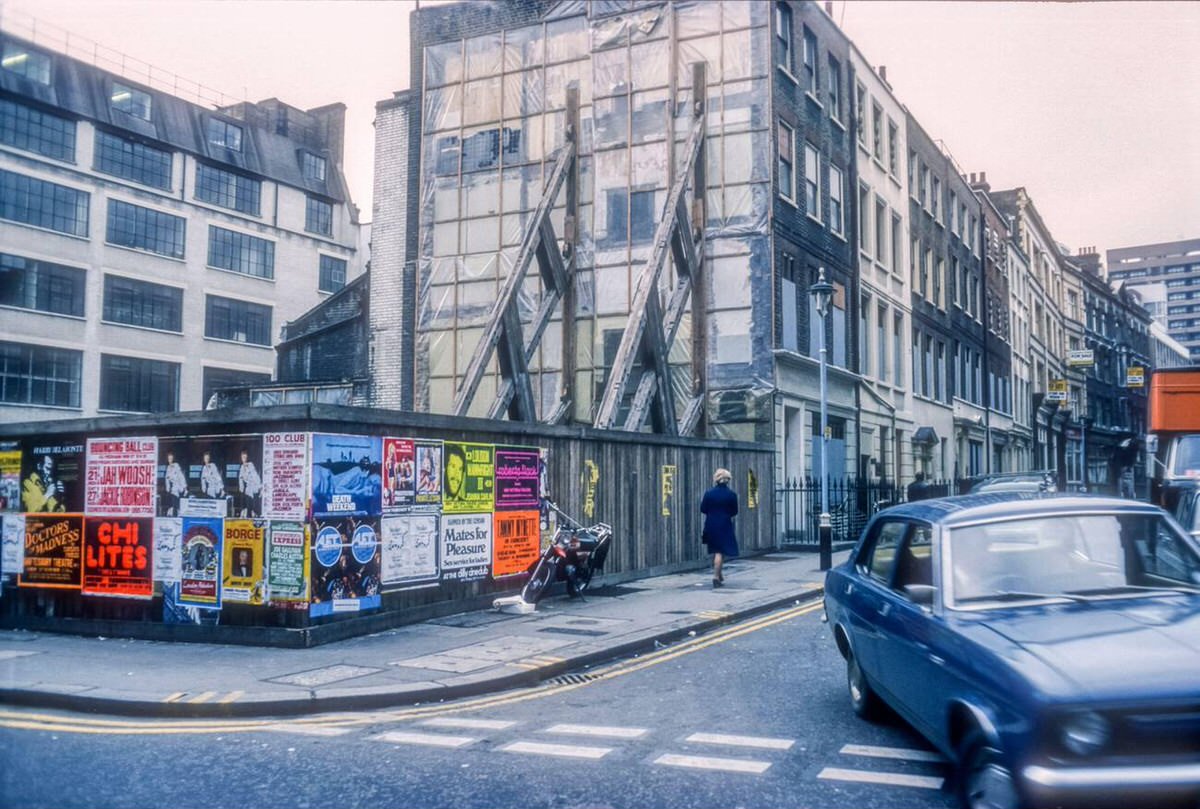
The streets reflected every layer of Soho’s identity back at the people walking through them. Shop windows caught the reflections of passersby alongside advertising hoardings and building facades. Motorcycles were a common sight, ridden by the kind of people who made Soho their social world as much as their workplace.
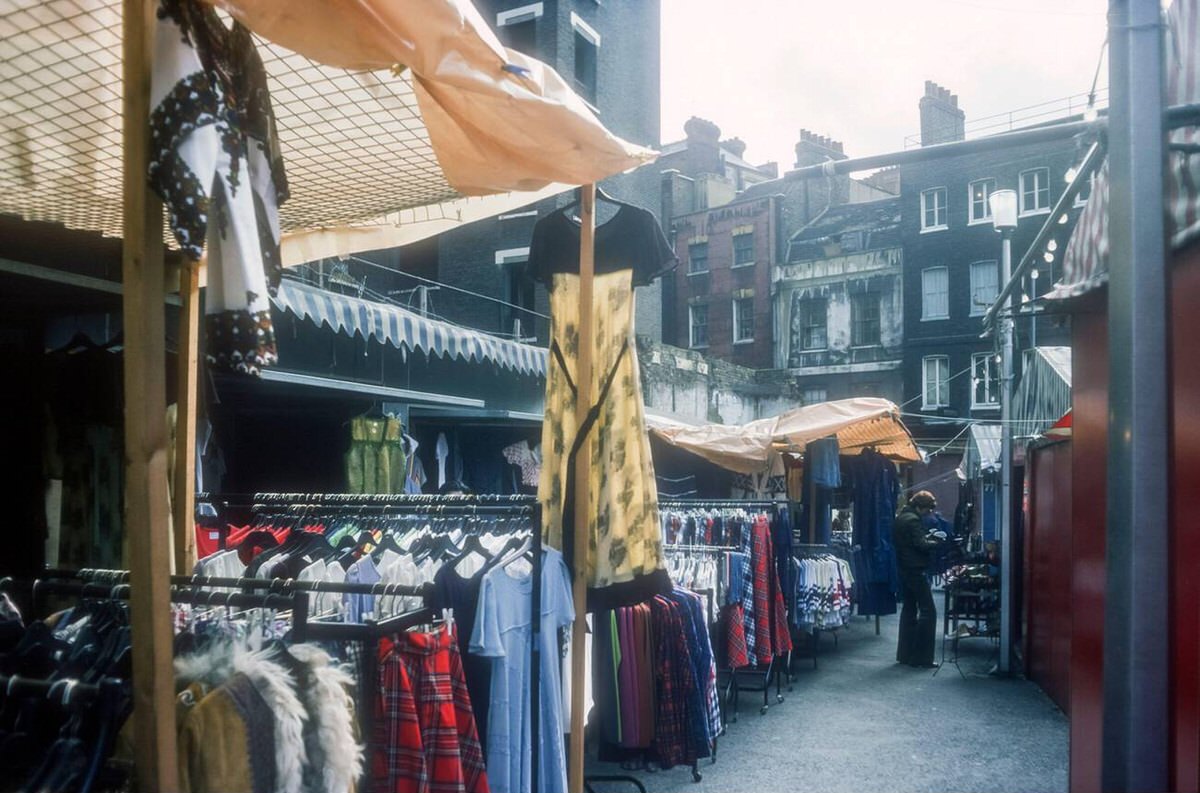
Berwick Street Market was a constant in Soho’s daily life. Traders set up their stalls six days a week, selling fruit, vegetables, and fabrics to locals who had shopped there for generations. By the late 1970s the market was a reliable anchor in a neighbourhood that was always changing around it.
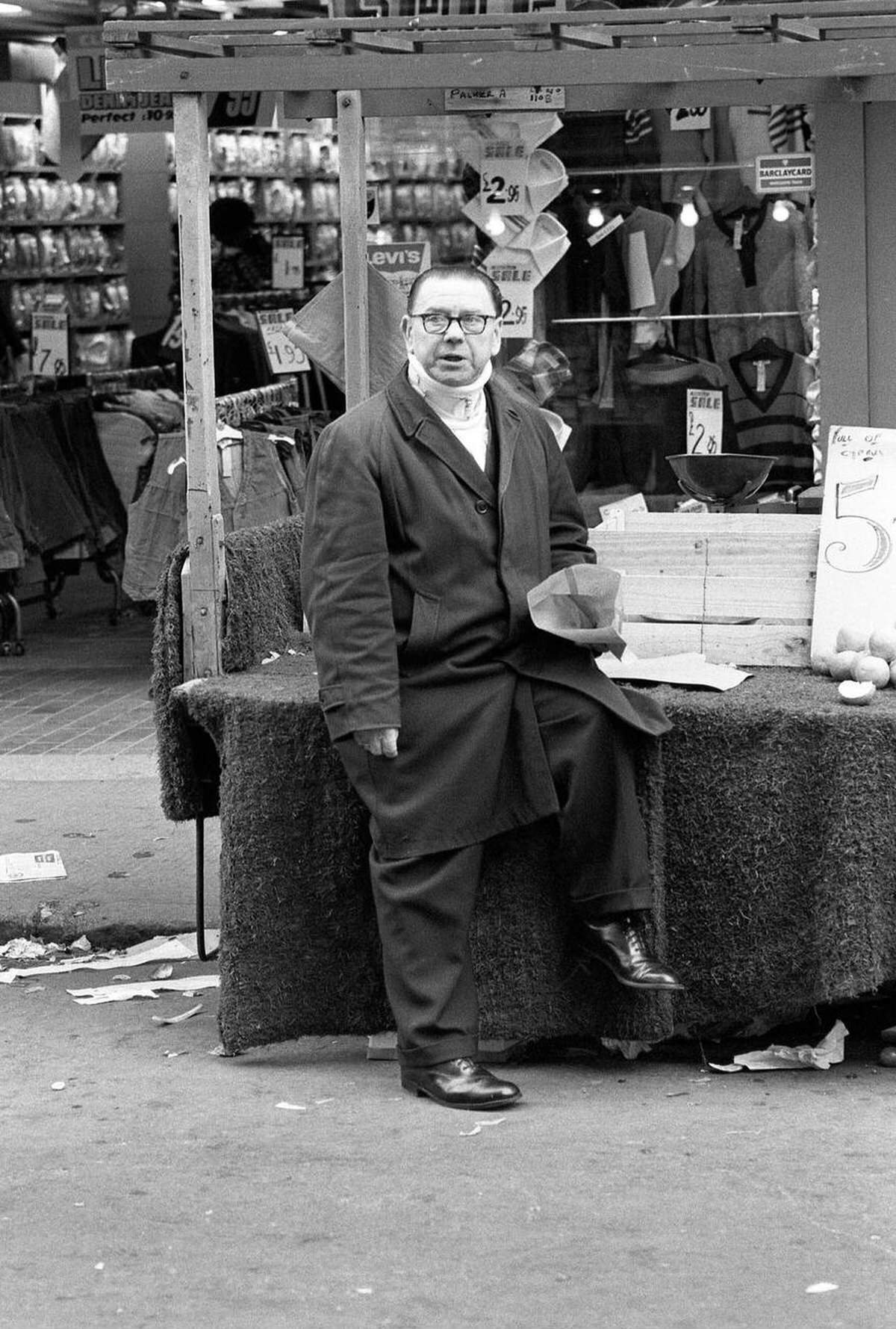
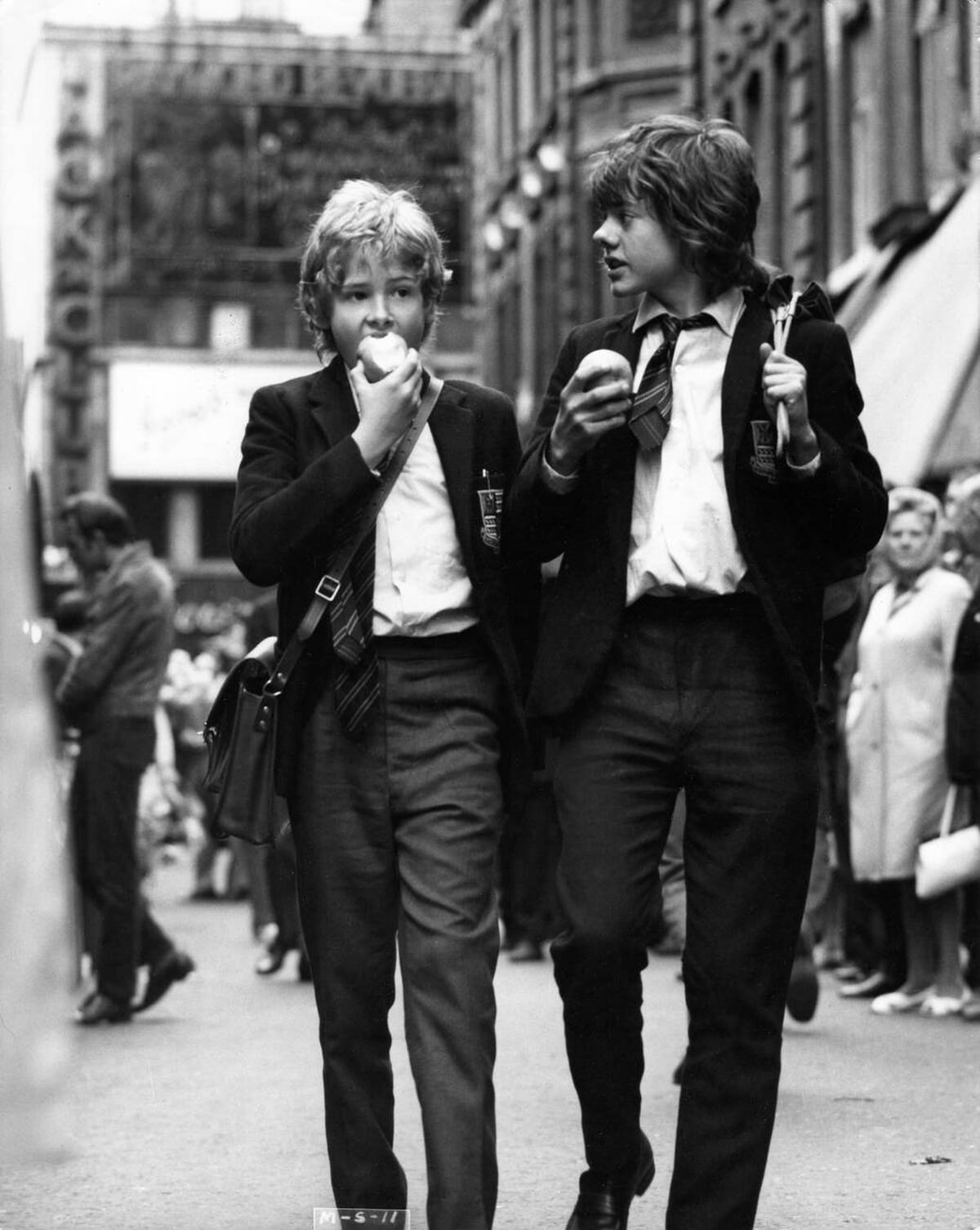
Berwick Street Market also attracted film productions using Soho as a backdrop. In 1971, actors Mark Lester and Jack Wild were photographed at the market during filming for the musical Melody. The neighbourhood’s authentic street life made it a natural location for productions that needed London to look lived-in and real.
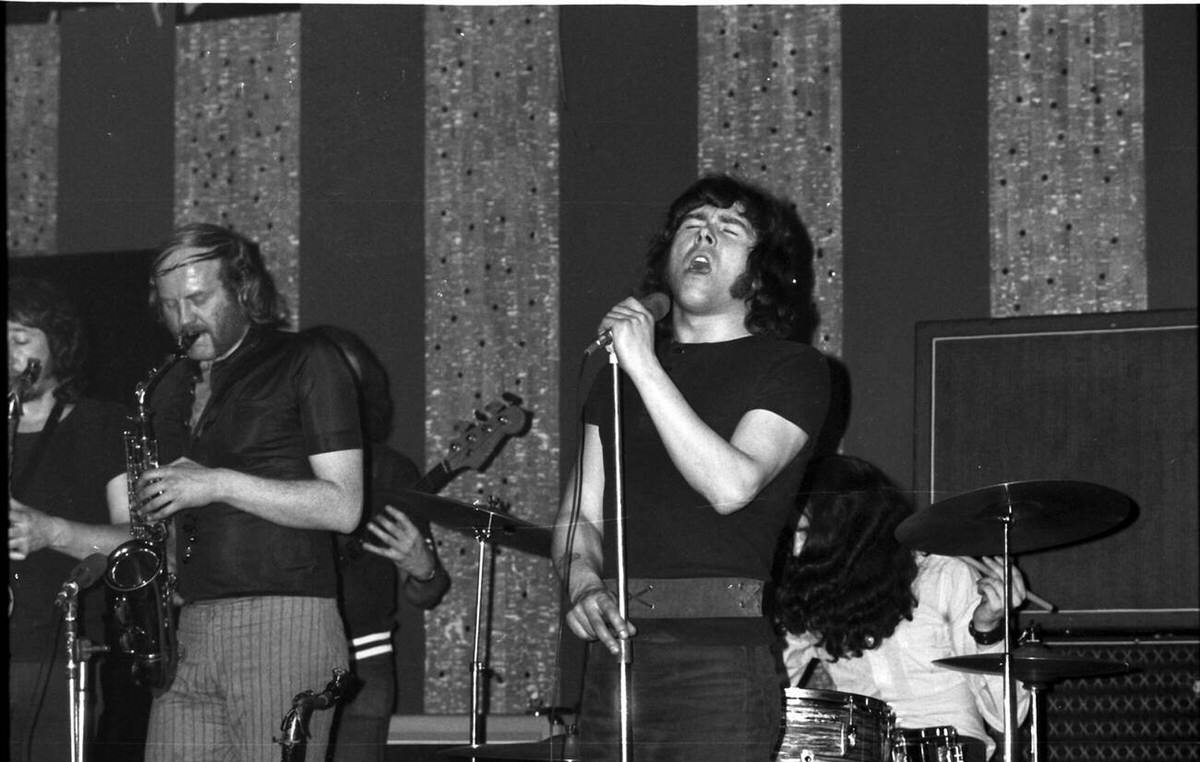
Wardour Street was the geographic heart of the British film industry. Film reels travelled between offices in heavy metal cans, carried by messengers on motorbikes who threaded through the gridlocked traffic. Preview theatres and editing suites occupied the upper floors of buildings that, at street level, looked like any other Soho address. The Marquee Club was also on Wardour Street, and on any given night it hosted rock bands playing to packed crowds. Young people in punk clothing queued outside for hours.
Walker’s Court remained one of the most photographed corners of the whole neighbourhood well into the mid-1970s. Its concentration of entertainment venues made it a focal point for anyone documenting what Soho had become. The passage was short, but it said more about the area’s reputation than almost anywhere else.
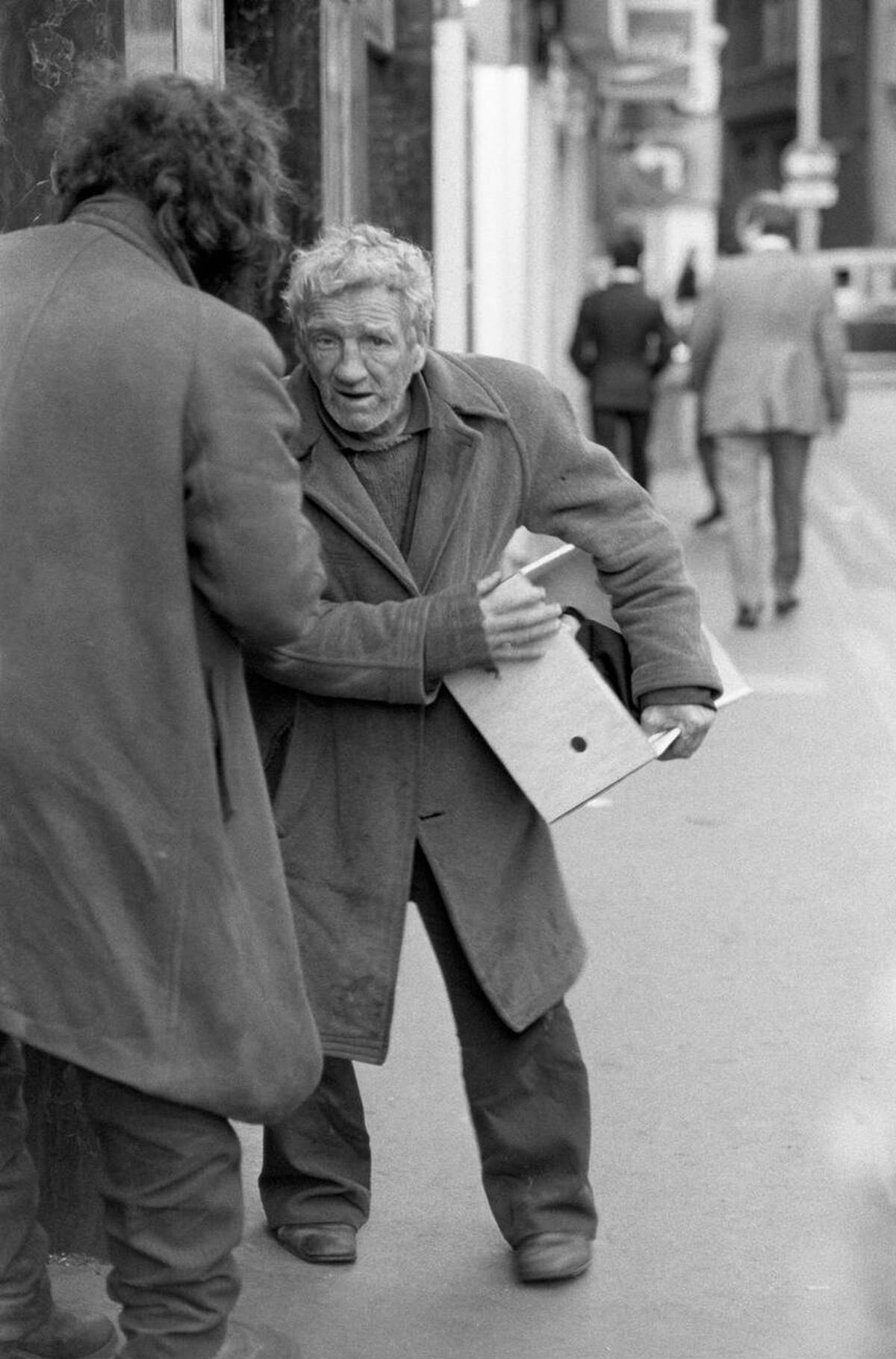
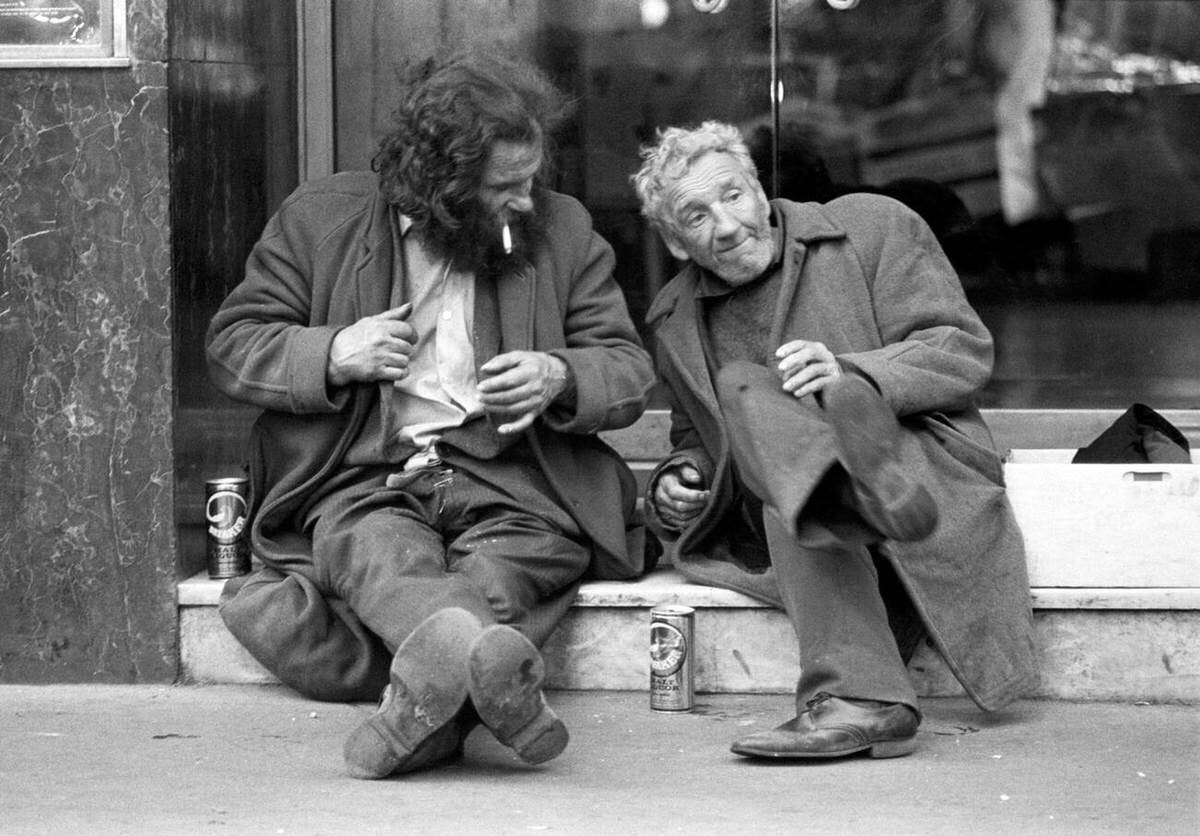
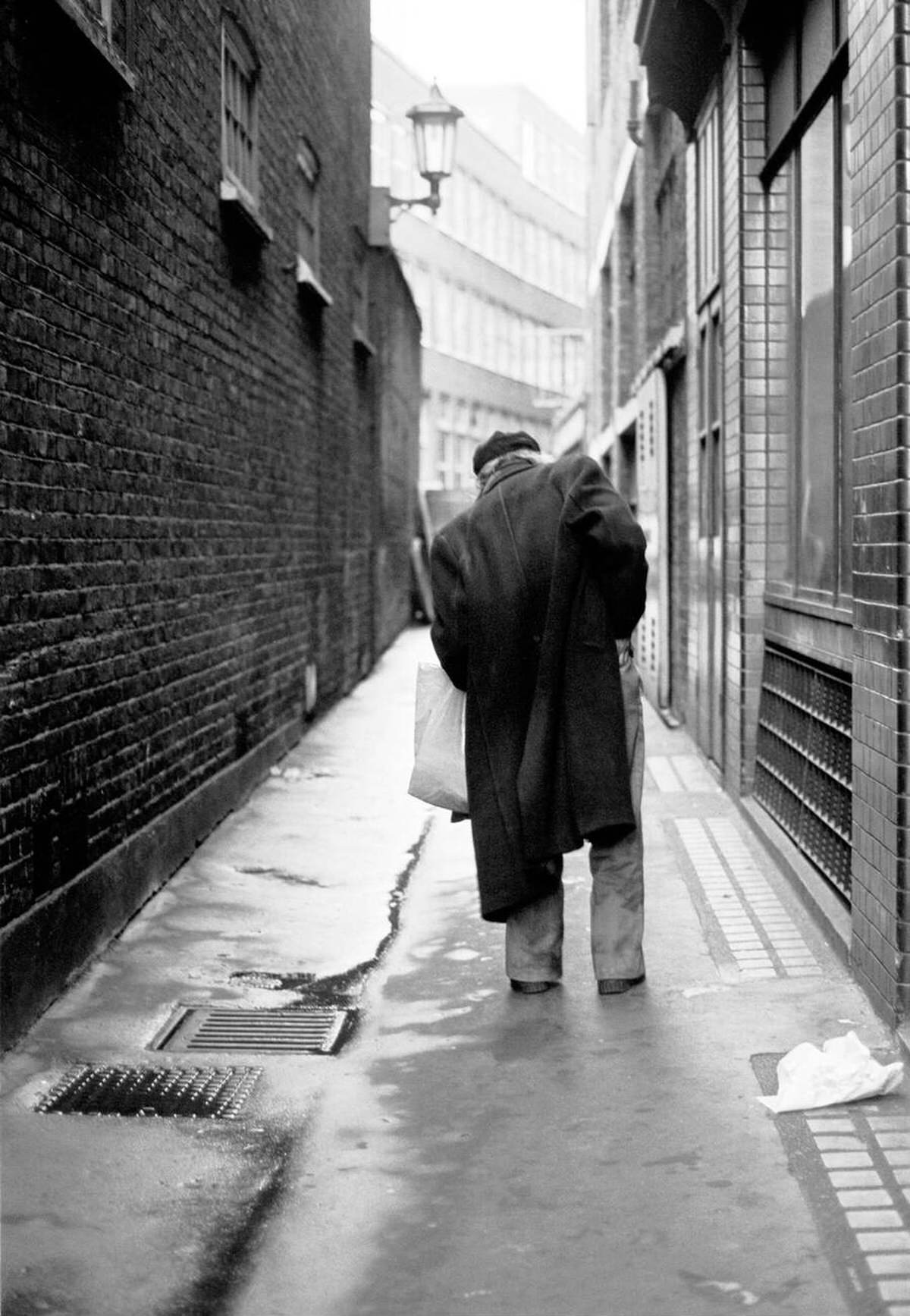
Not everyone in Soho was part of the entertainment industry or the market trade. The neighbourhood was also home to people with nowhere else to go. Rough sleepers and homeless men were a regular presence on its steps and in its alleys, particularly by the late 1970s. They were part of the street landscape as much as the neon signs and the record shops.
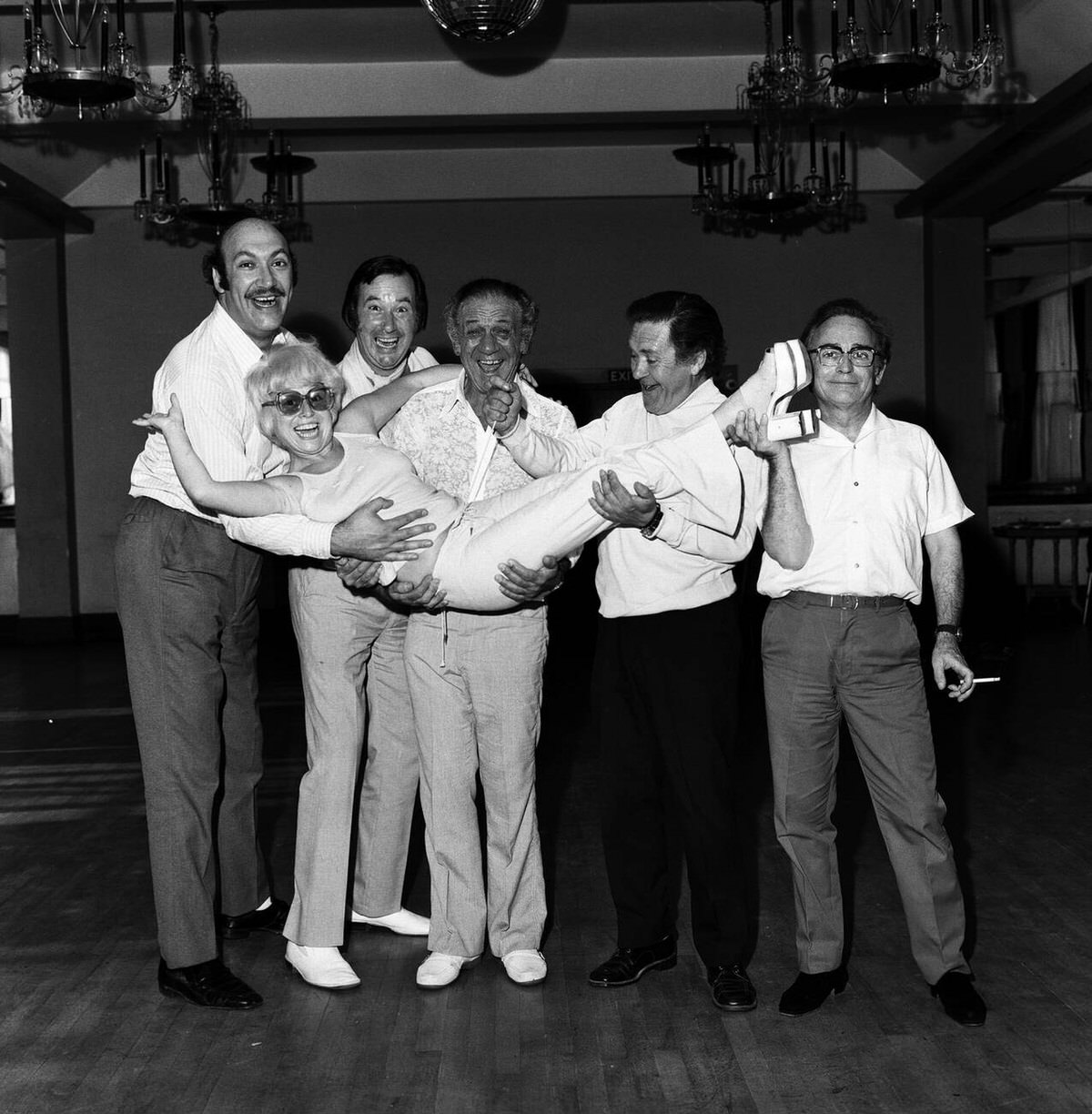
Soho’s entertainment connections extended to mainstream British culture. The cast of Carry On London rehearsed in the neighbourhood in 1973, adding to the long list of film and television productions that used Soho as their base. The area’s pubs served as the real social glue. Writers and artists gathered at The French House on Dean Street to drink wine and argue about books. At The Coach and Horses, cigarette smoke hung thick in the air, and the regulars swapped stories about actors they had spotted near the West End theatres.
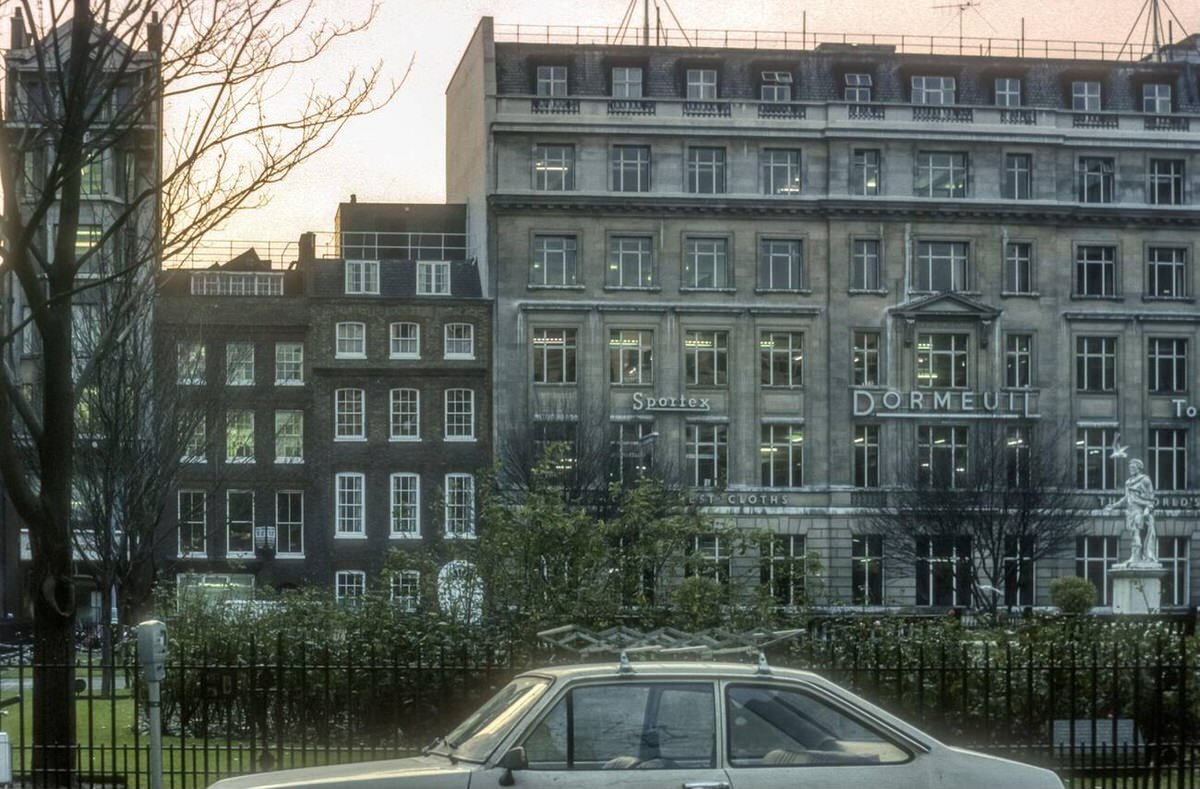
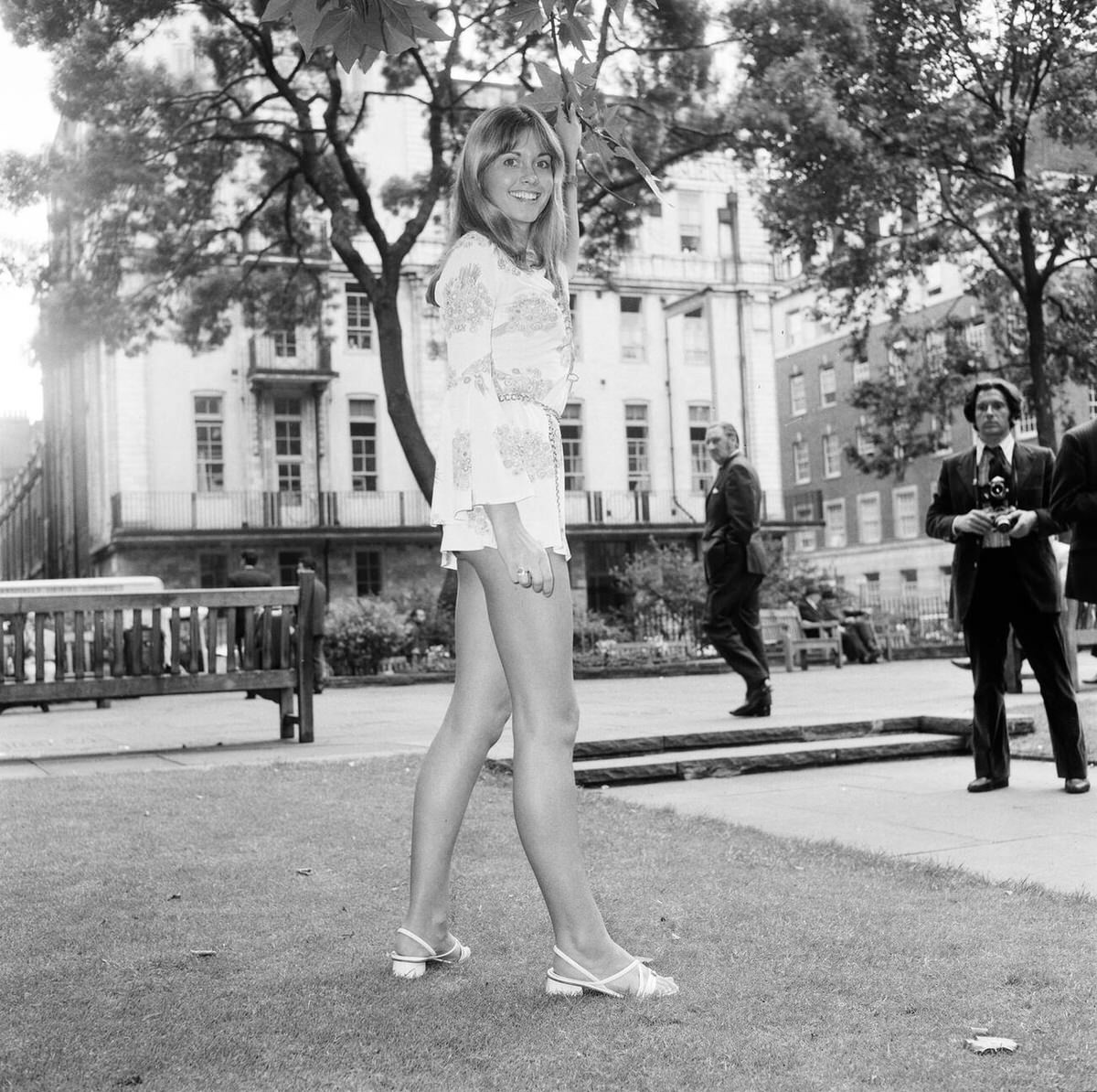
Even before her global fame, Olivia Newton-John was photographed in Soho Square in 1970 as a member of the pop group Toomorrow. The square served as a public green space in the middle of the neighbourhood’s density, and it appeared in photographs and film productions throughout the decade. Gerrard Street, running through Chinatown, was another address that photographers returned to repeatedly.
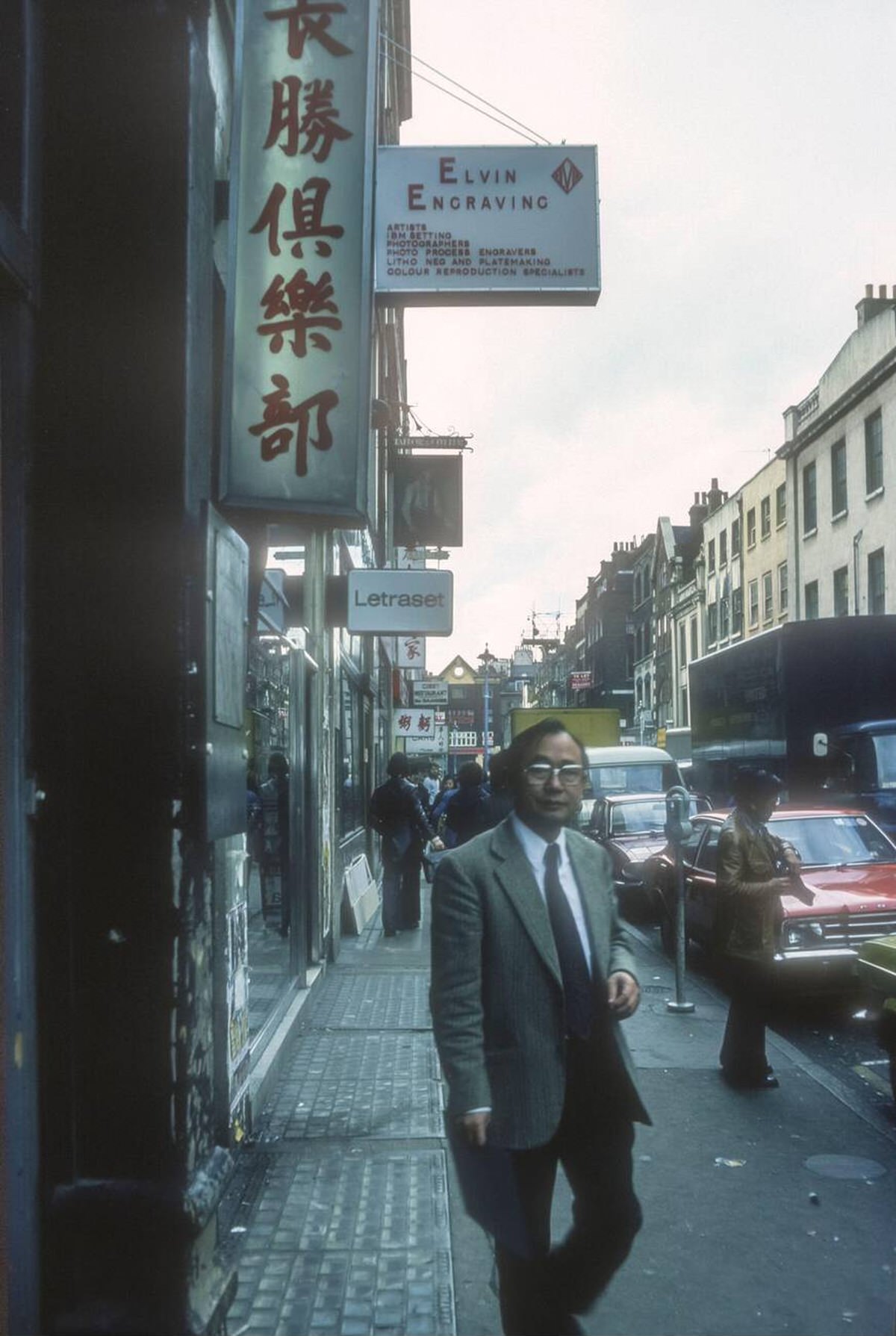
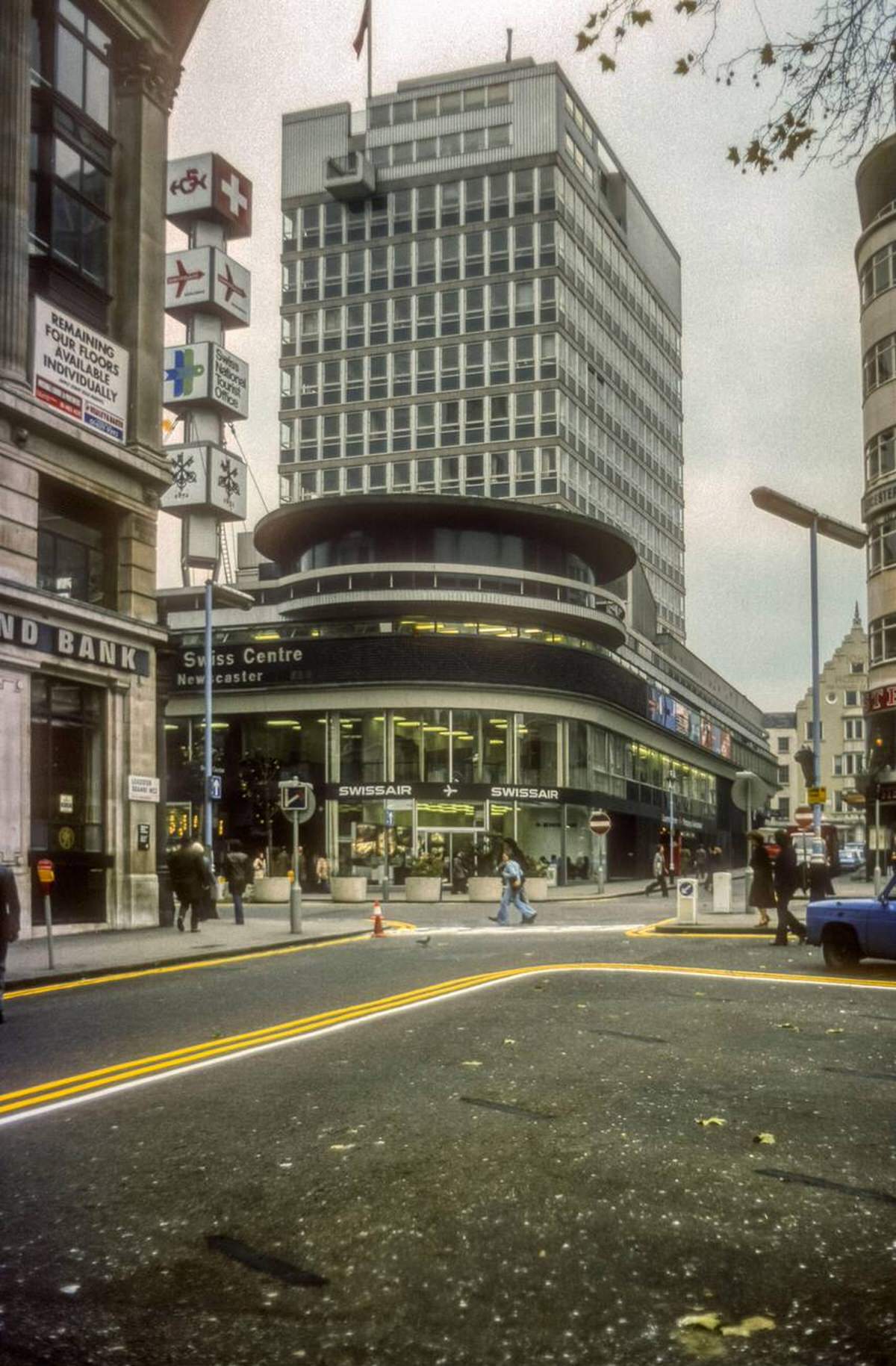
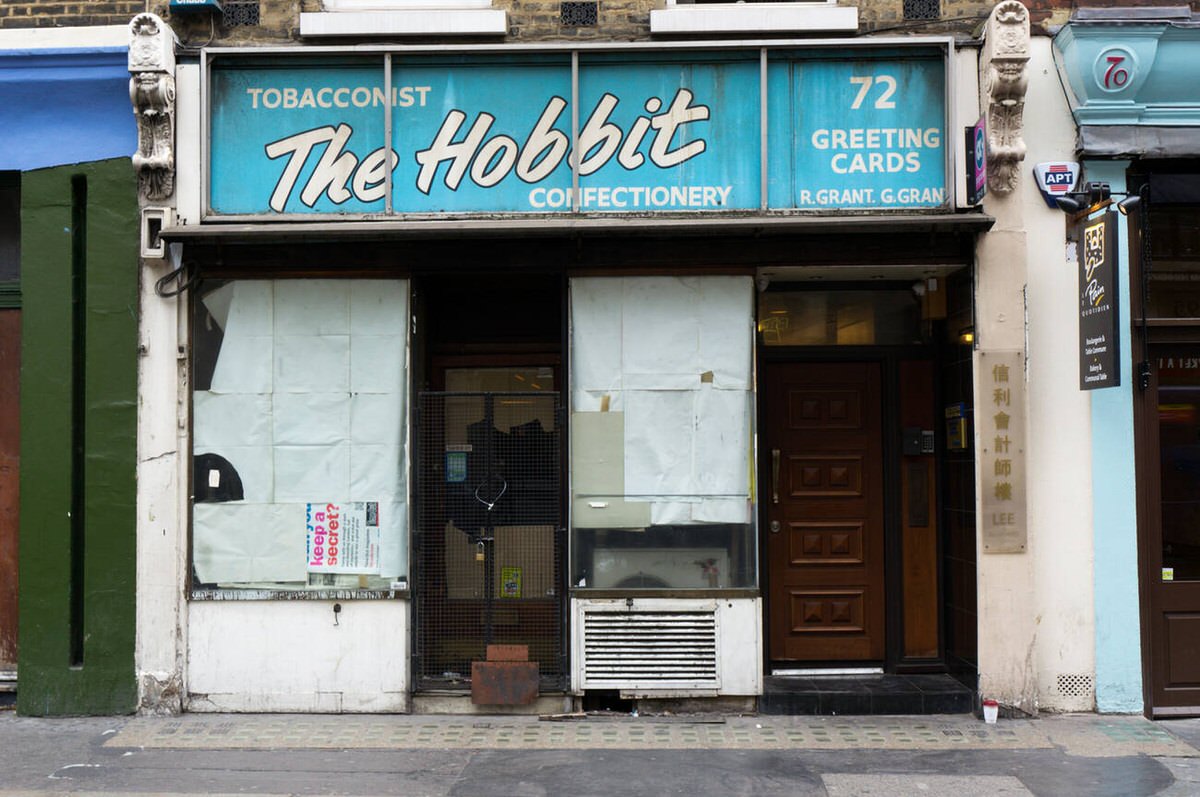
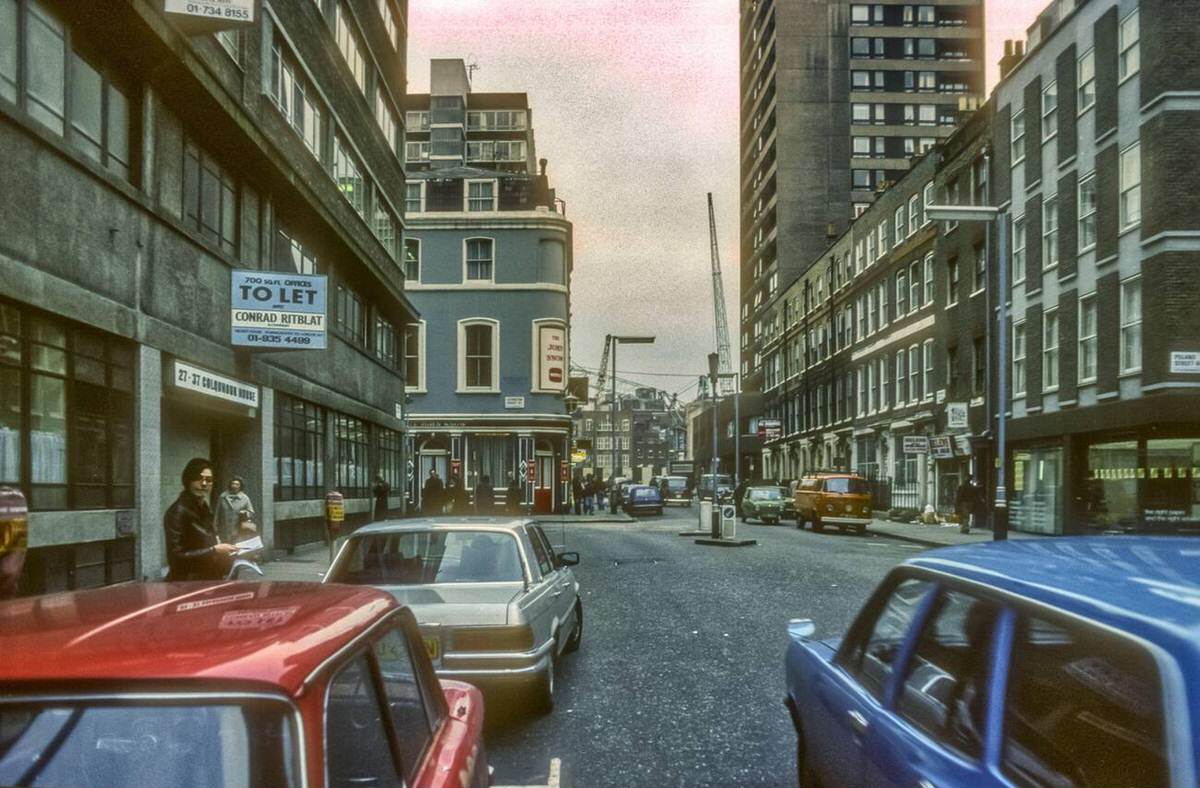
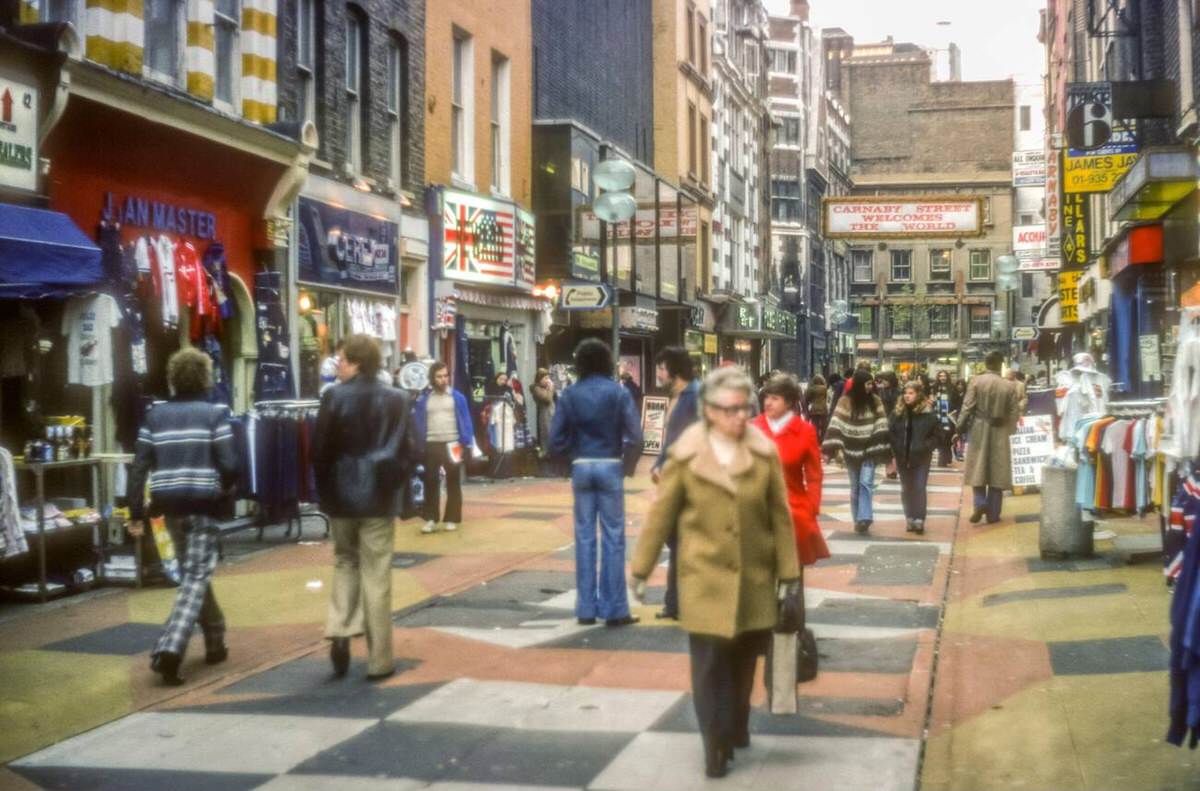
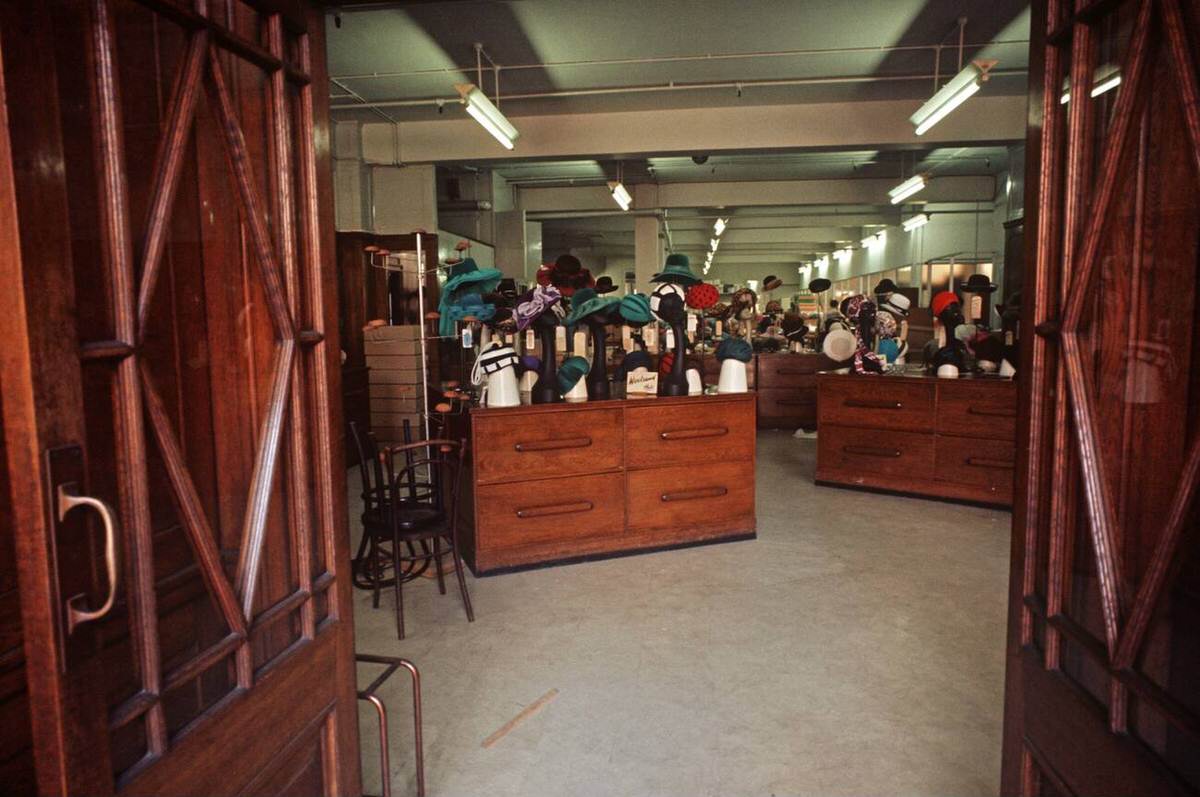
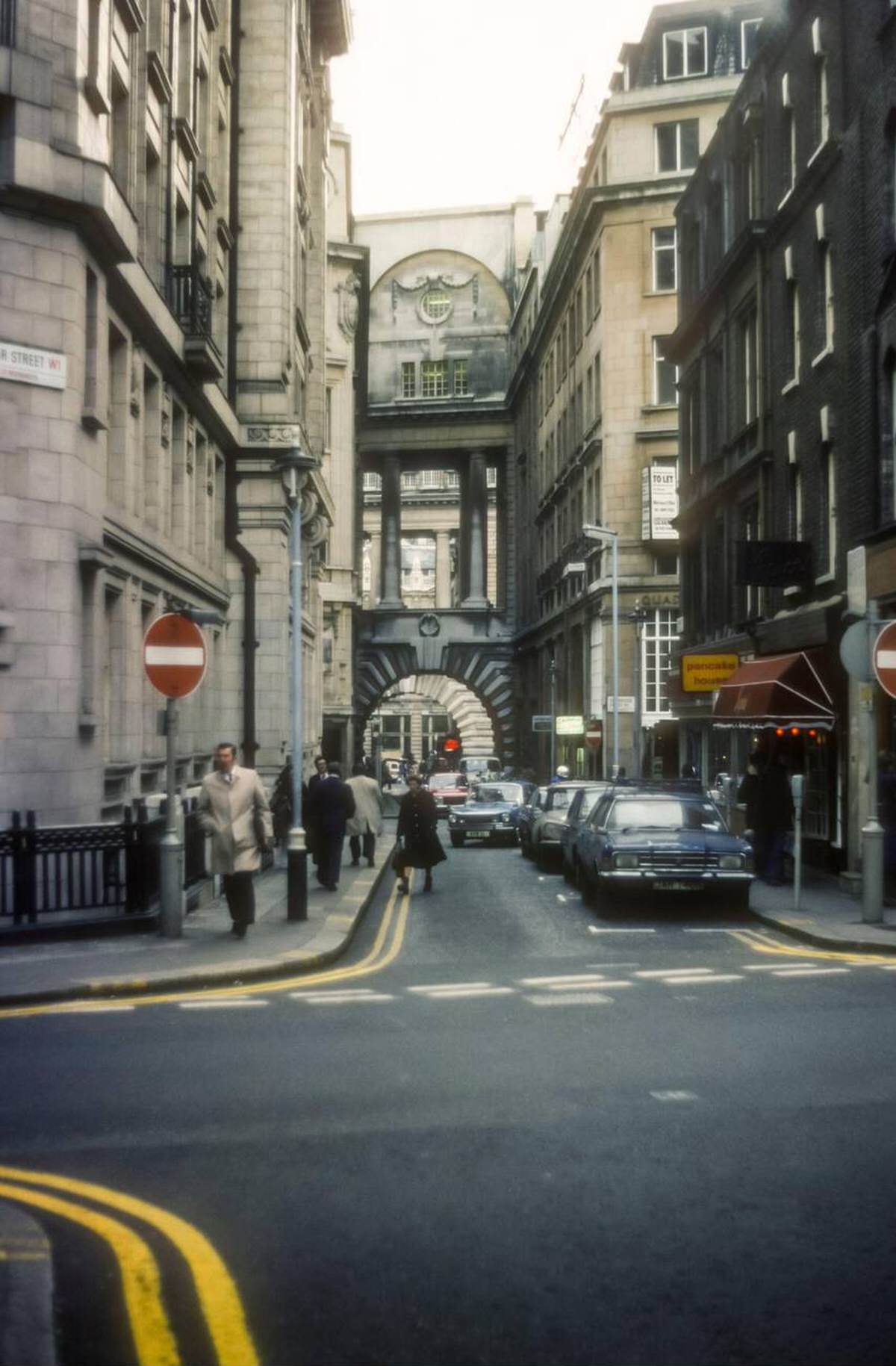
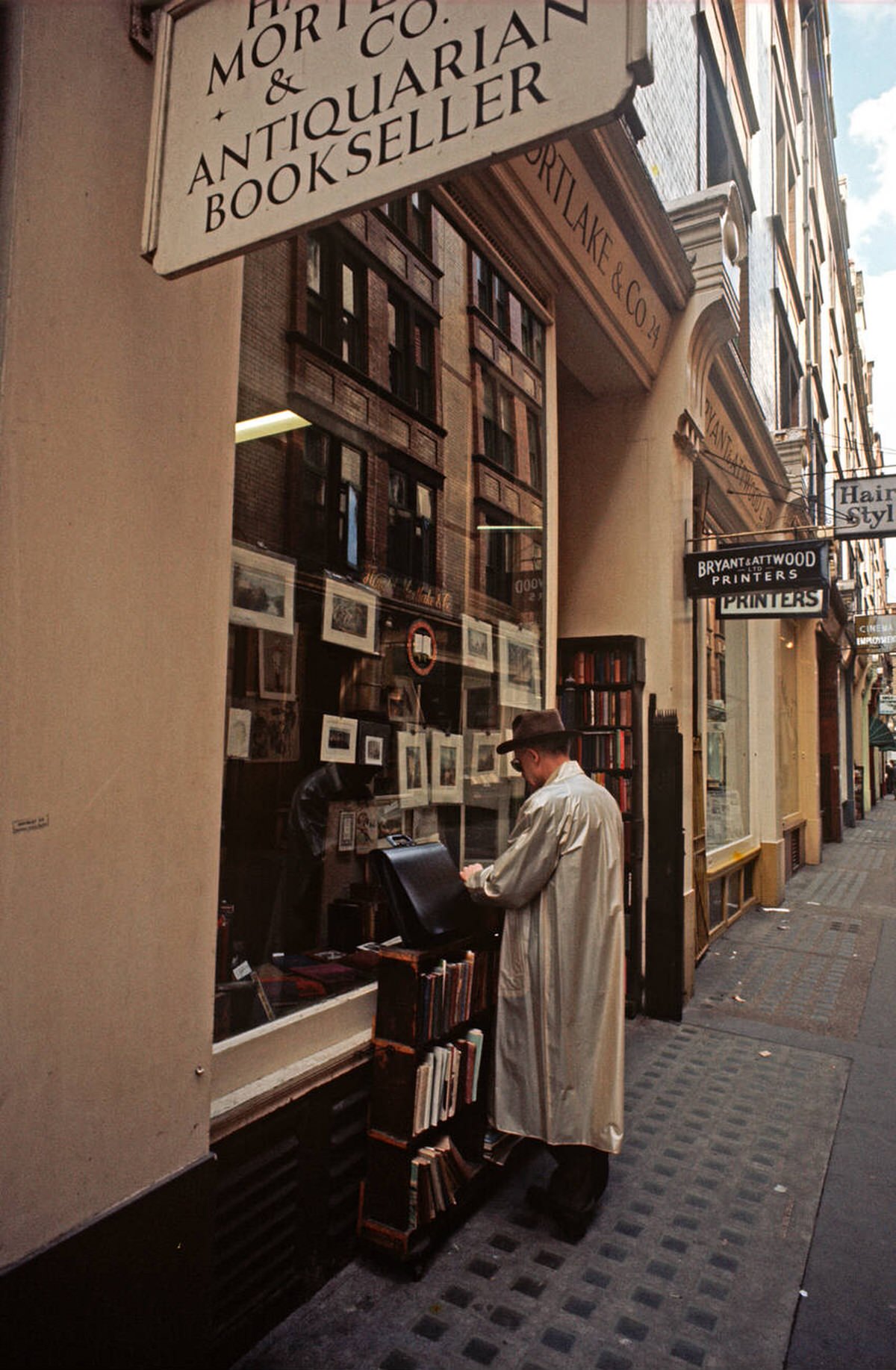
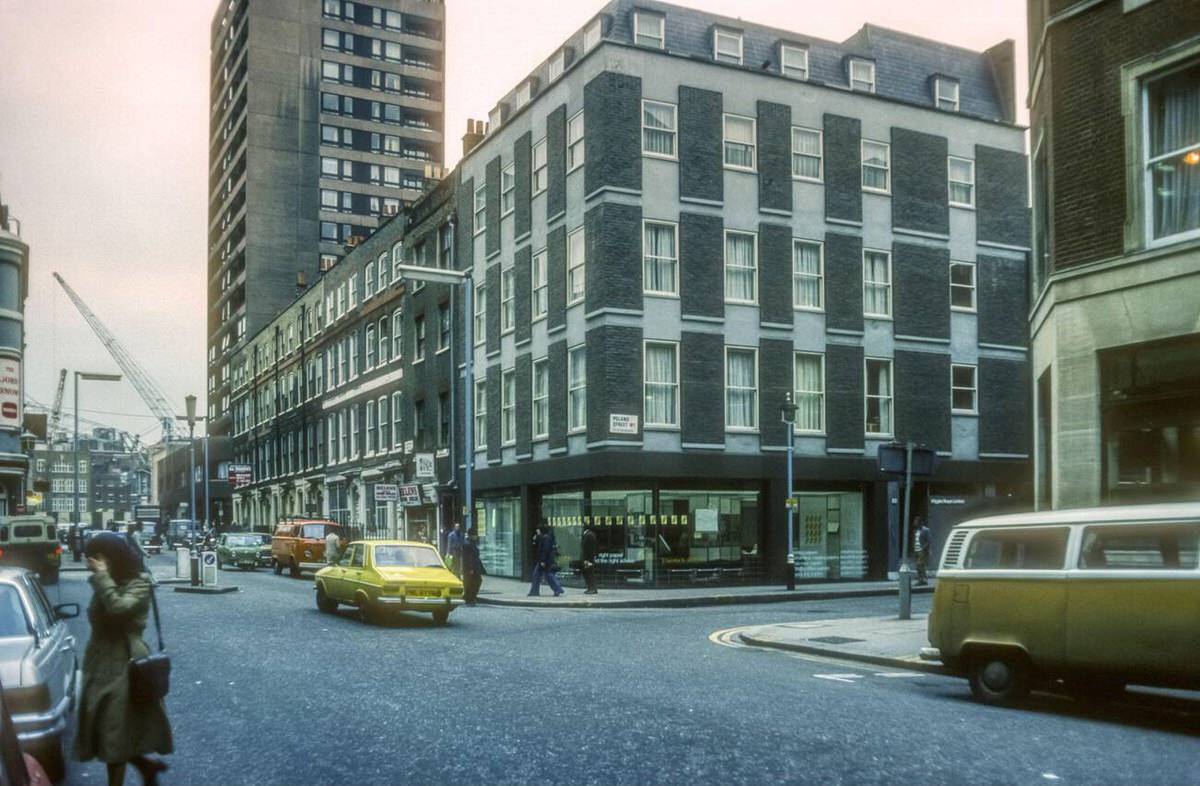
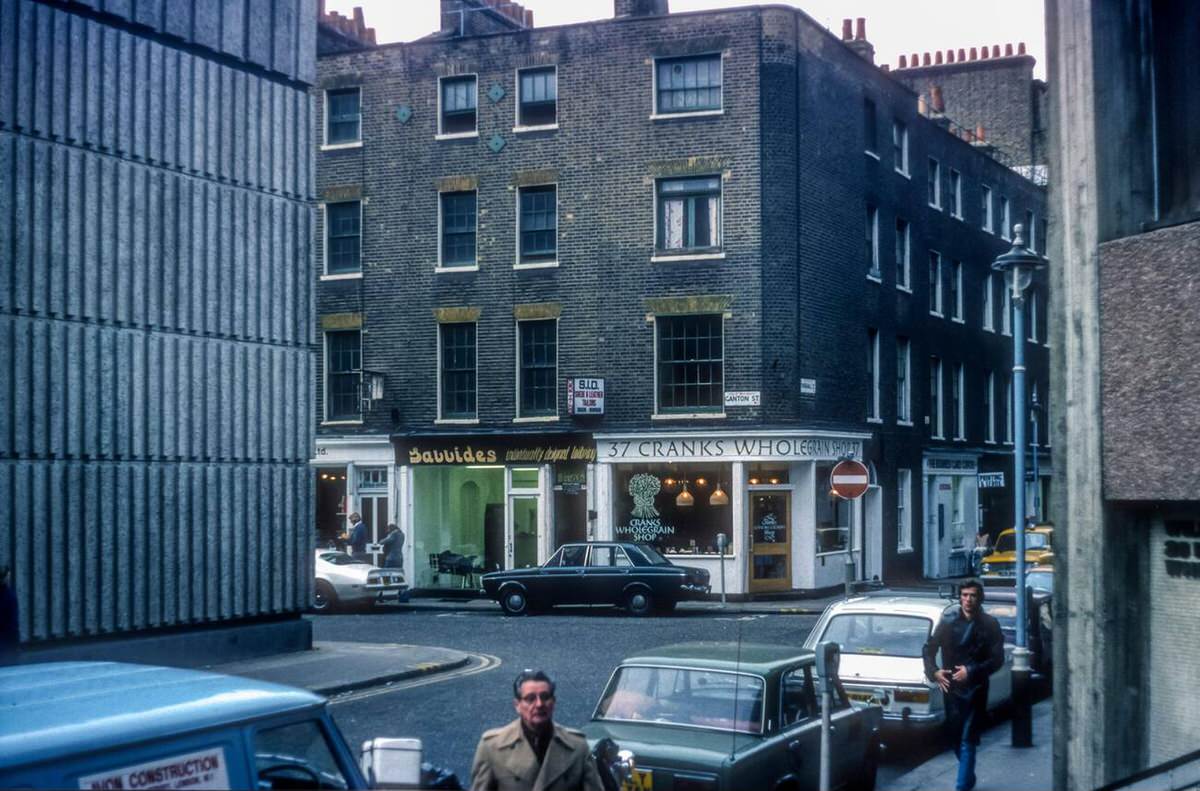
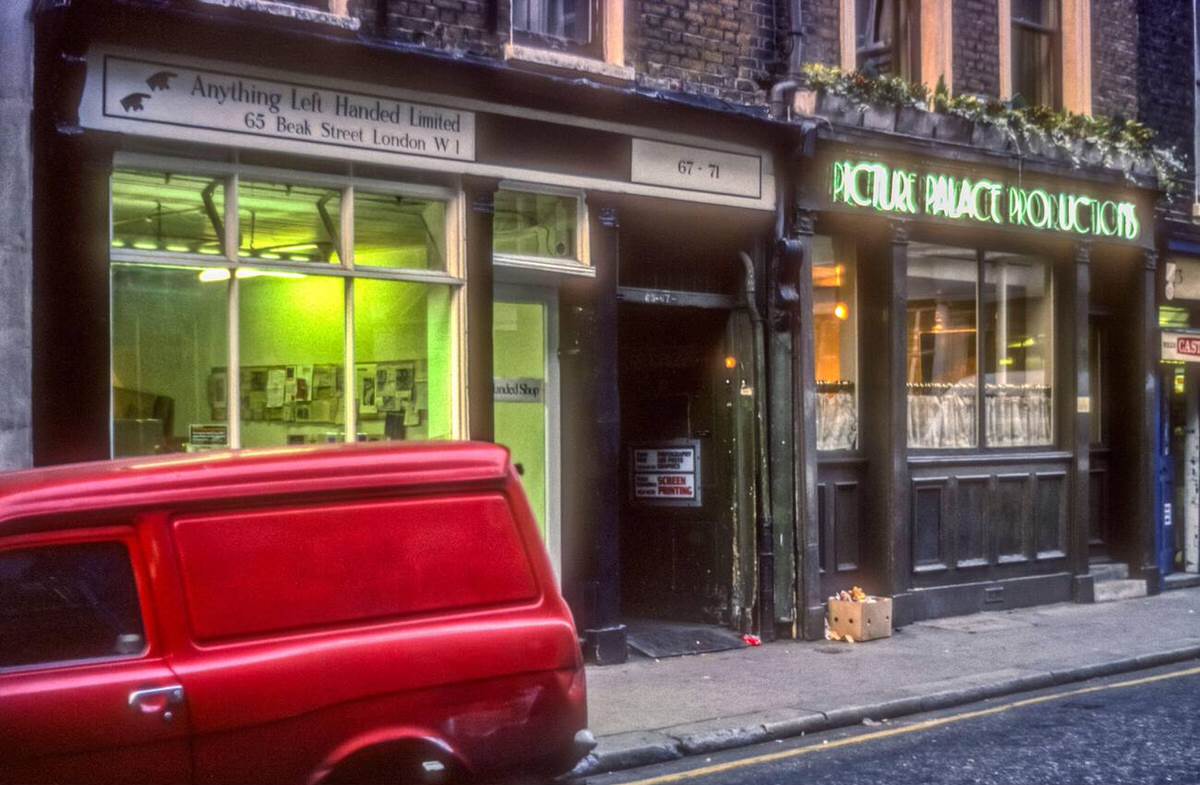
Carnaby Street had defined London’s fashion scene in the 1960s, and by the mid-1970s it was still a recognisable landmark, though its cultural peak had passed. The shops along it had shifted with the times, and the street remained busy without recapturing its earlier intensity. Nearby, small specialist shops occupied ground-floor units throughout the neighbourhood — a millinery shop, an antiquarian bookshop, a left-handed goods store, and a wholegrain food shop all operated within a few blocks of each other.
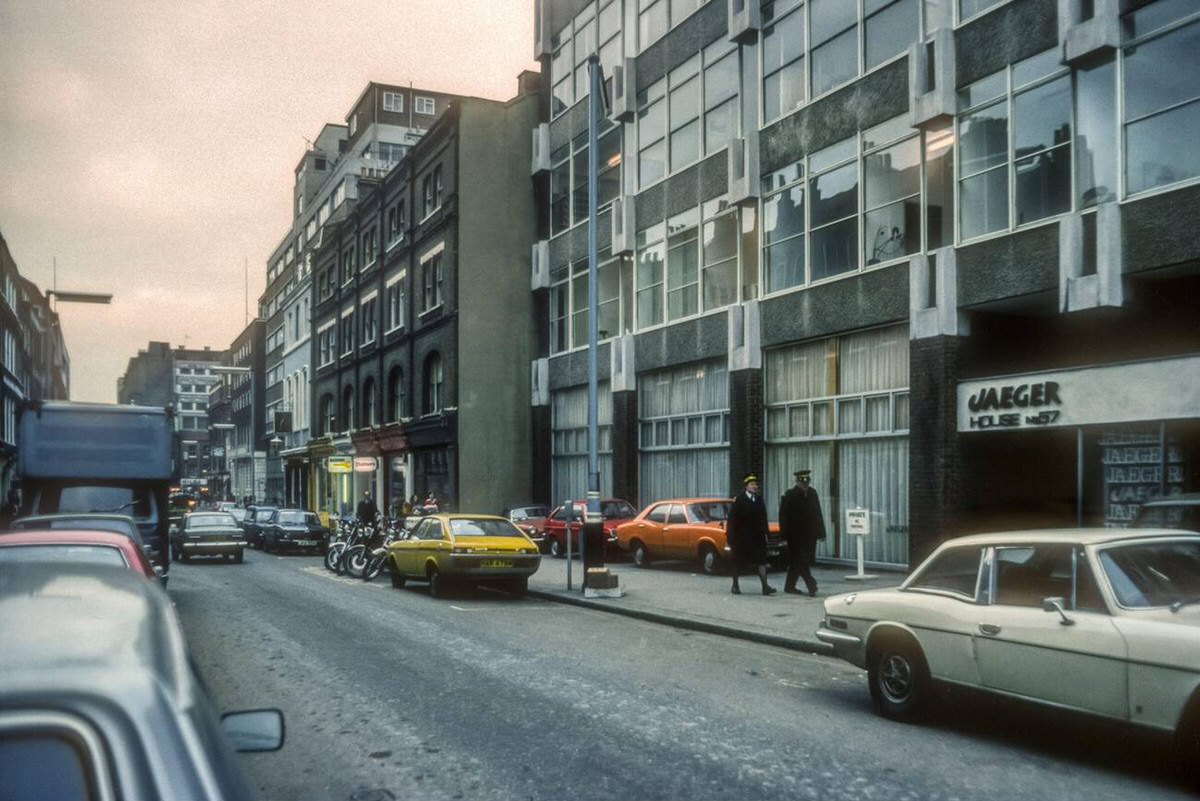
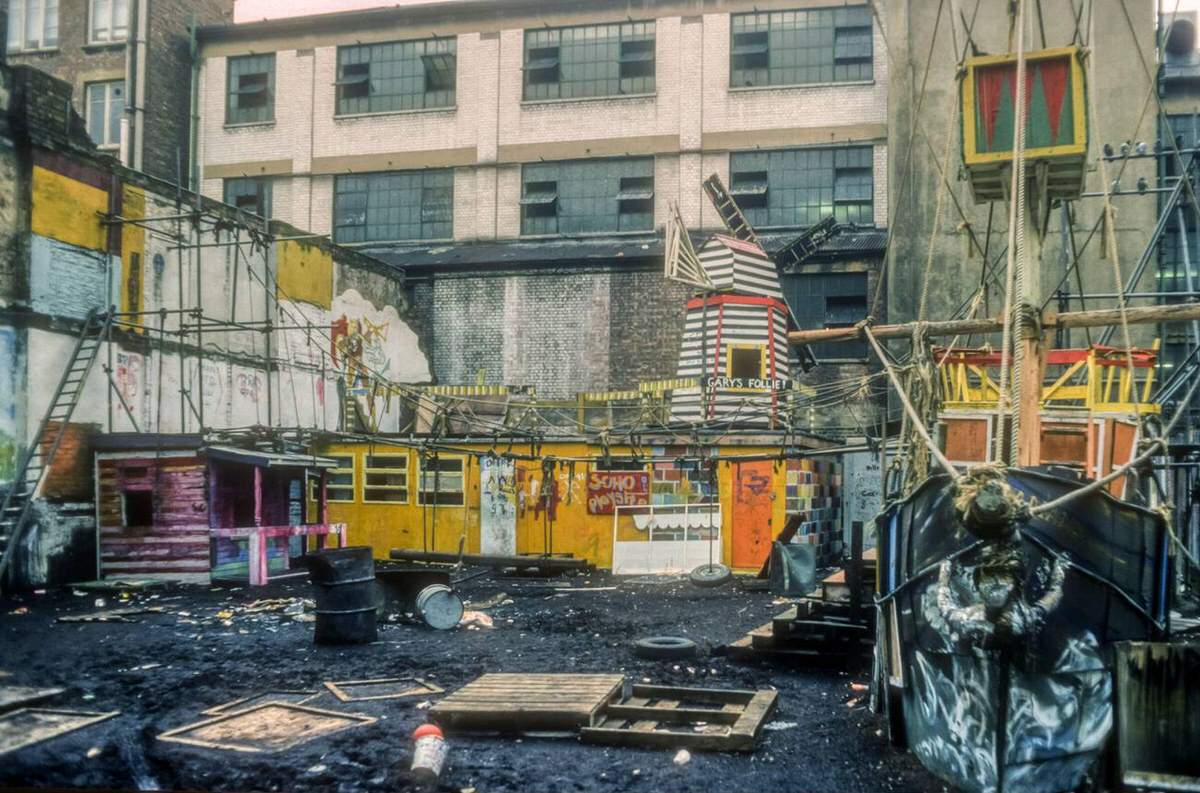
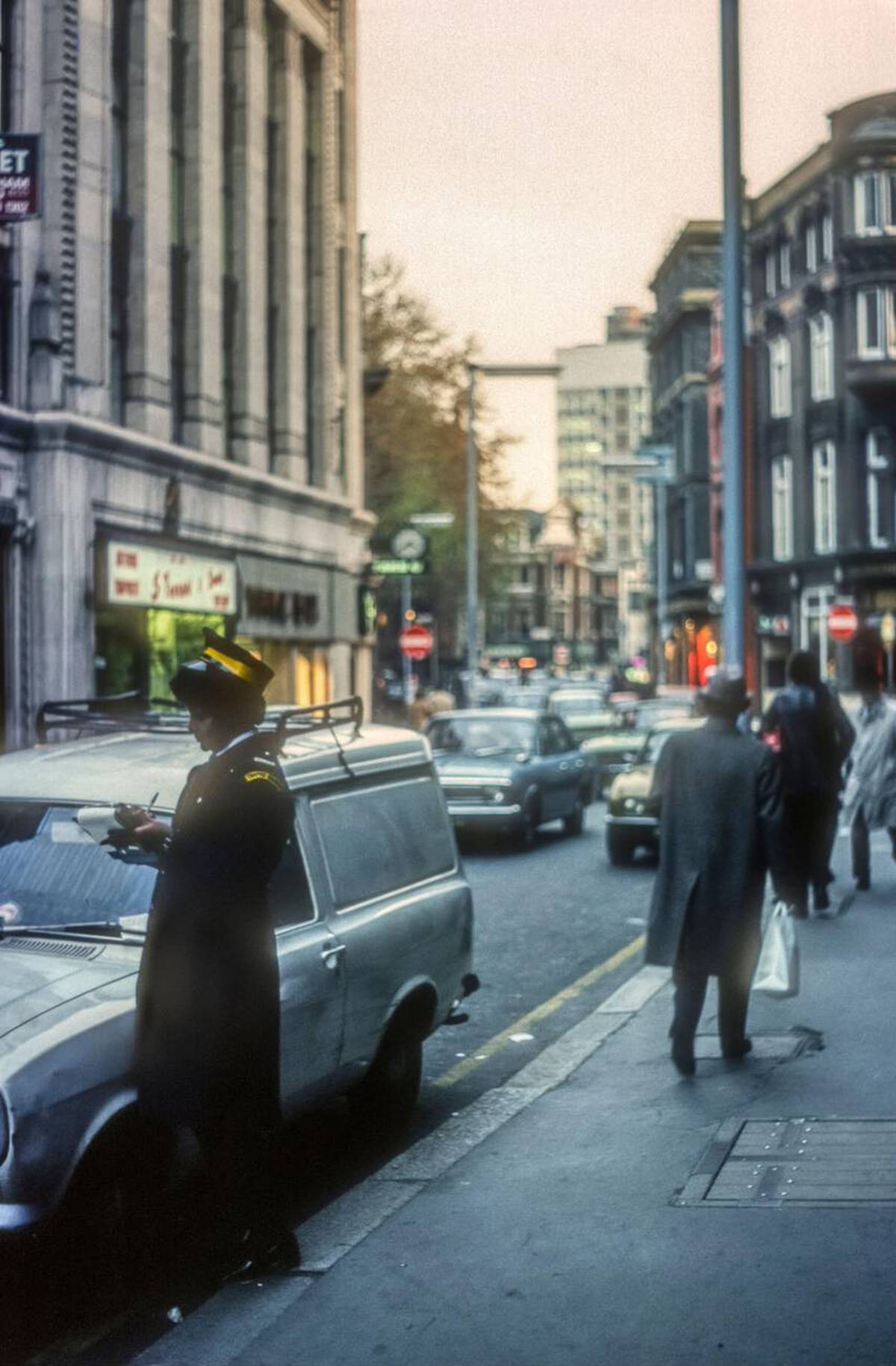
Peter Street had a playground tucked between its buildings, a reminder that families lived in the neighbourhood alongside the clubs and the market traders. Children from the surrounding streets used it daily. A few blocks away, a traffic warden wrote tickets on Wardour Street, enforcing the kind of routine order that Soho’s reputation made easy to overlook.
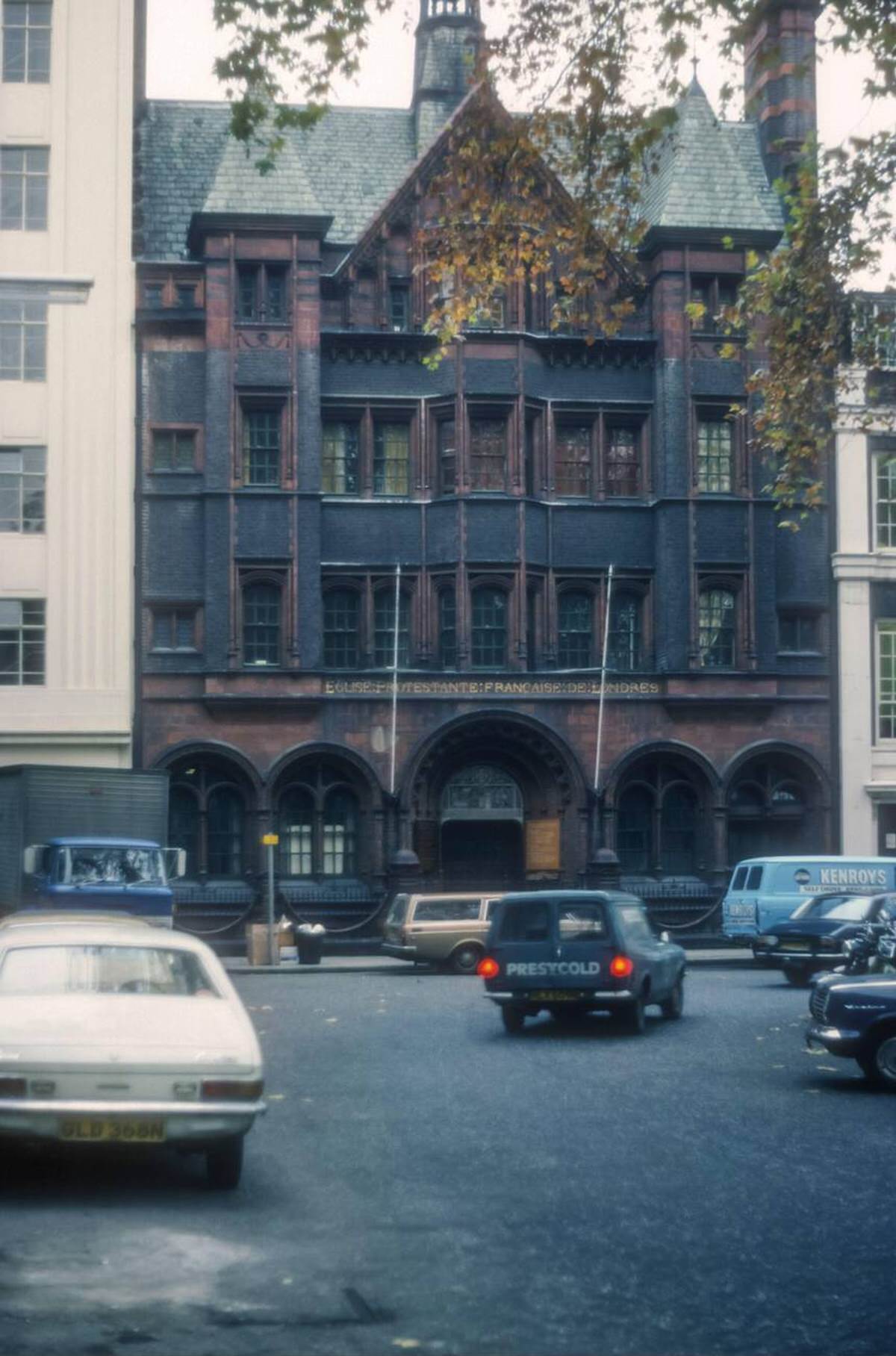
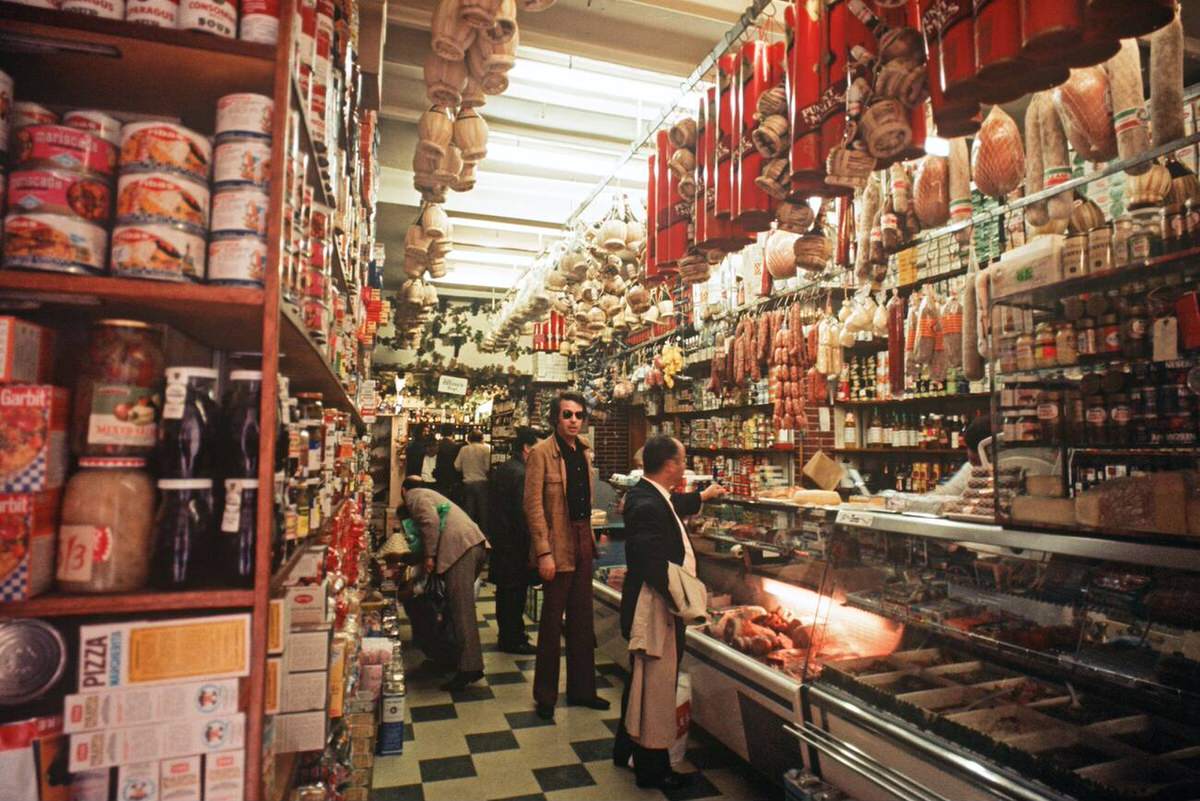
Italian delis were a fixture of Soho’s food landscape throughout the decade. The community had been present in the neighbourhood since the late nineteenth century, and by the 1970s the grocery stores and cafes they ran were as much a part of Soho’s identity as any of its more notorious businesses. Berwick Street Market continued to draw traders and customers in equal measure, with stallholders who had worked the same pitches for years.
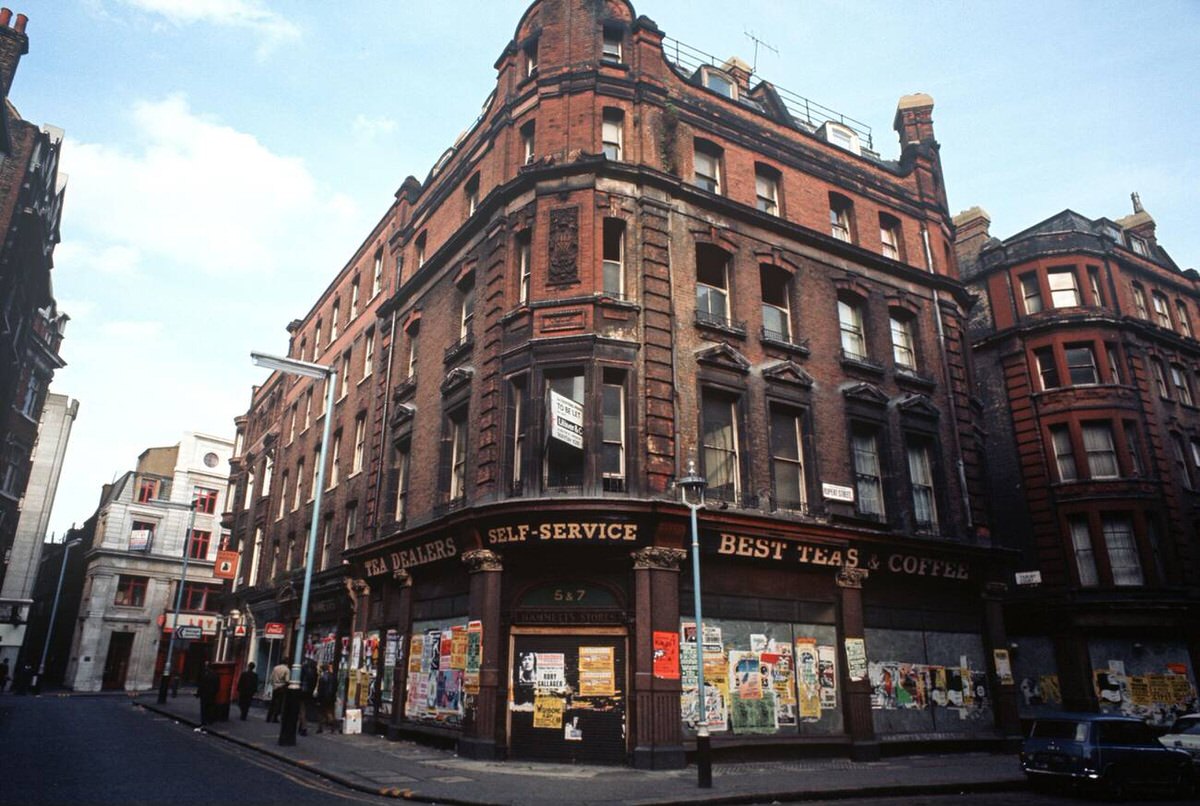
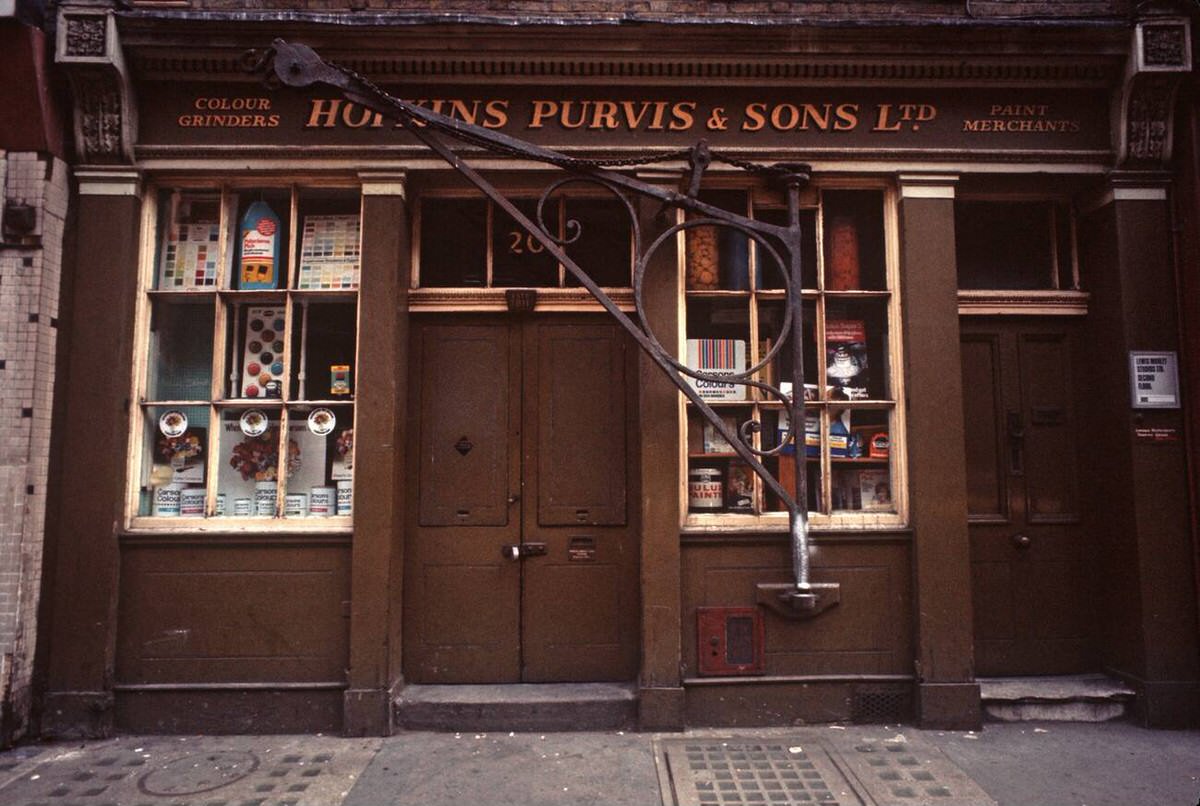
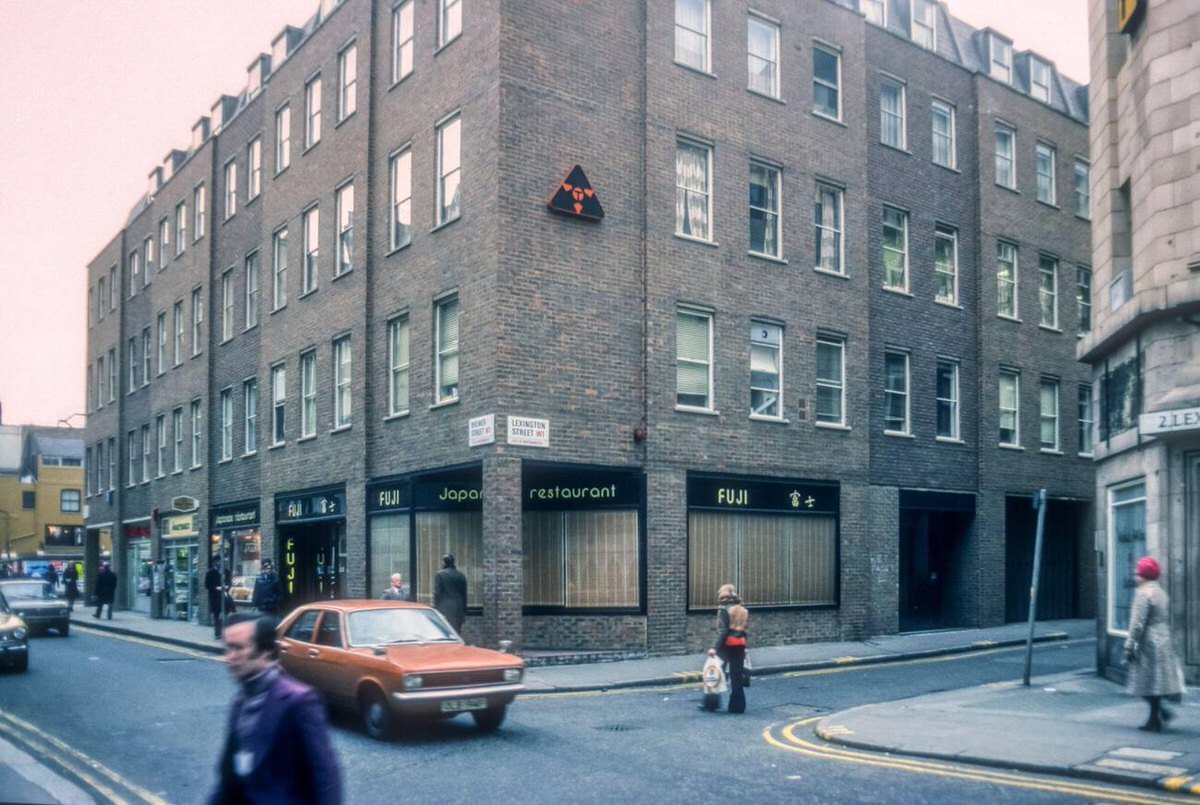
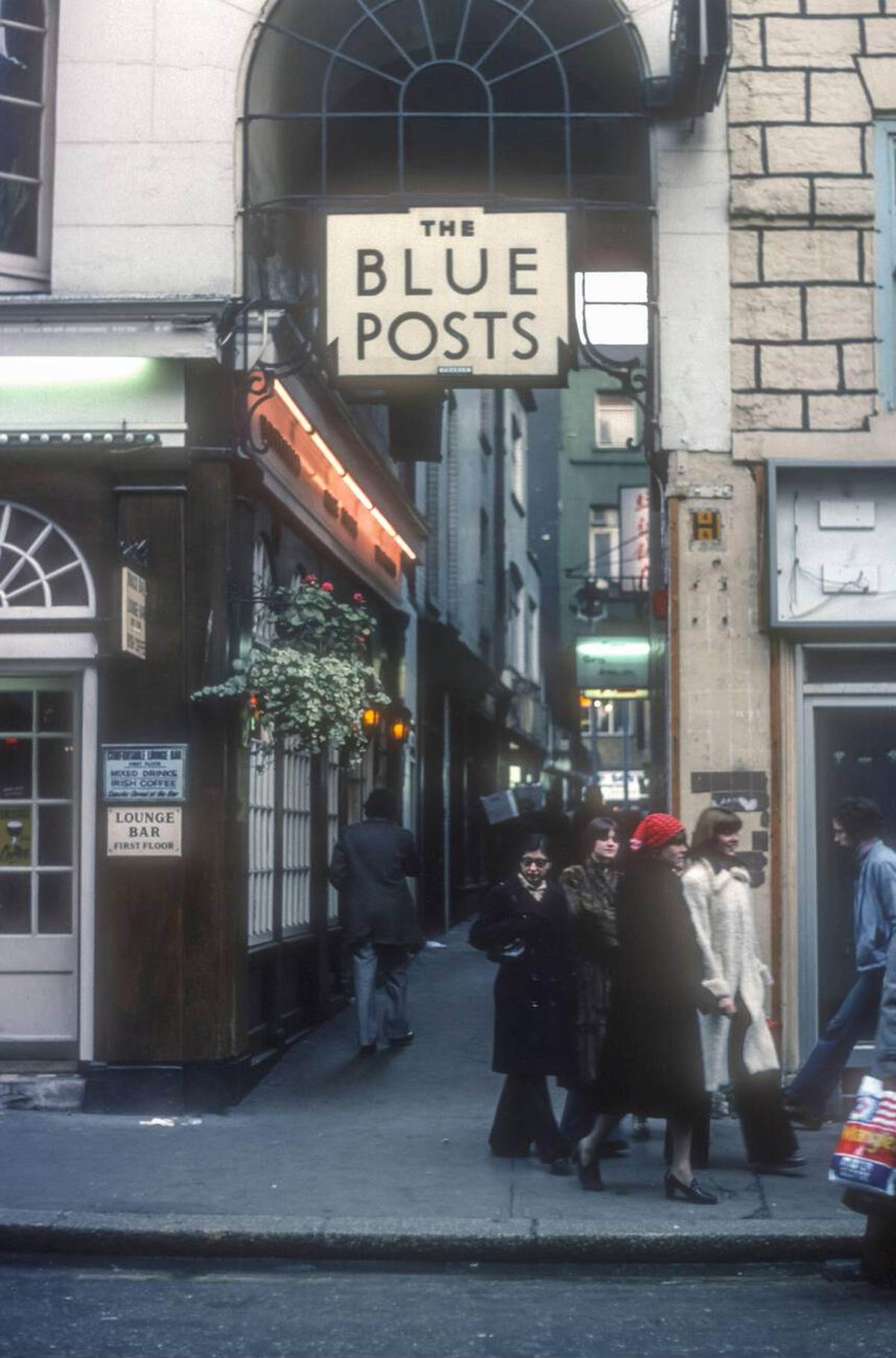
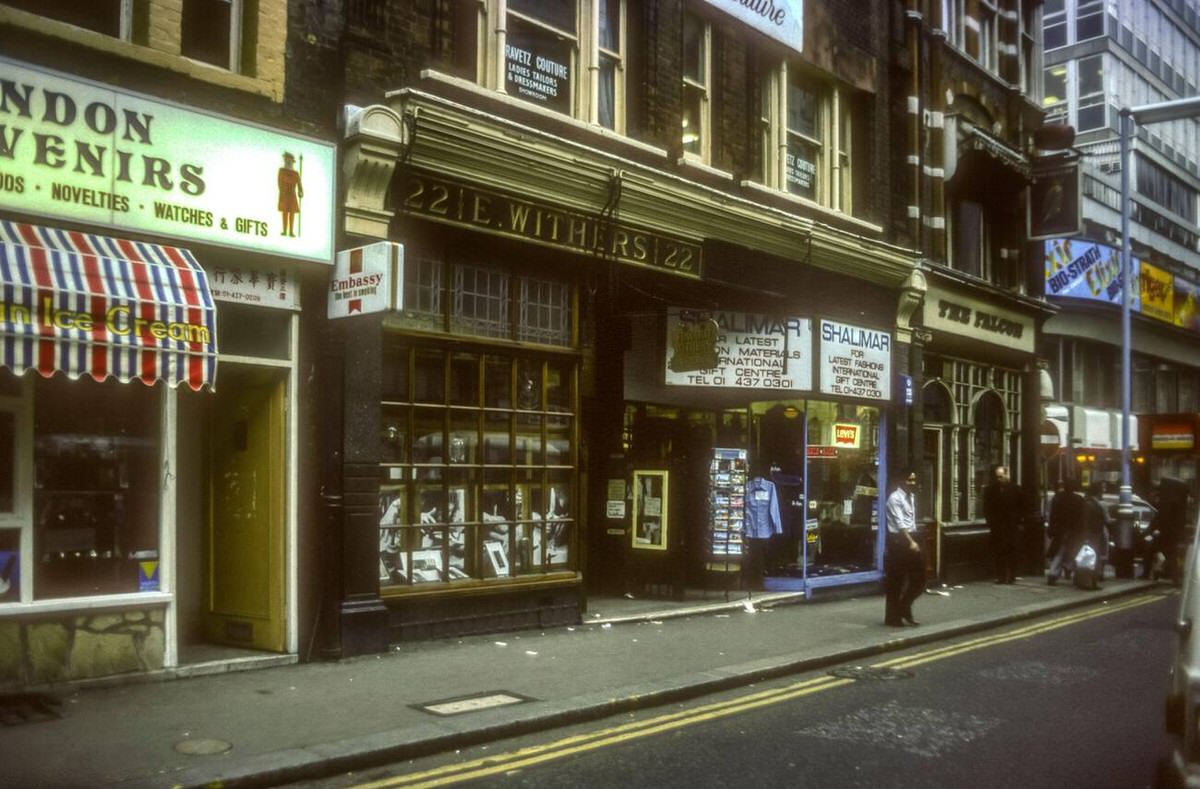
Wardour Street was home to more than just the film industry. E. Withers, a violin maker, operated a workshop there, sitting next door to The Falcon public house. The coexistence of a craft instrument maker and a pub on one of Soho’s busiest commercial streets captures exactly the kind of collision the neighbourhood was built on — industry, music, and drinking all occupying the same block. Ronnie Scott’s Jazz Club, just off the street on Frith Street, ran until dawn most nights of the week.