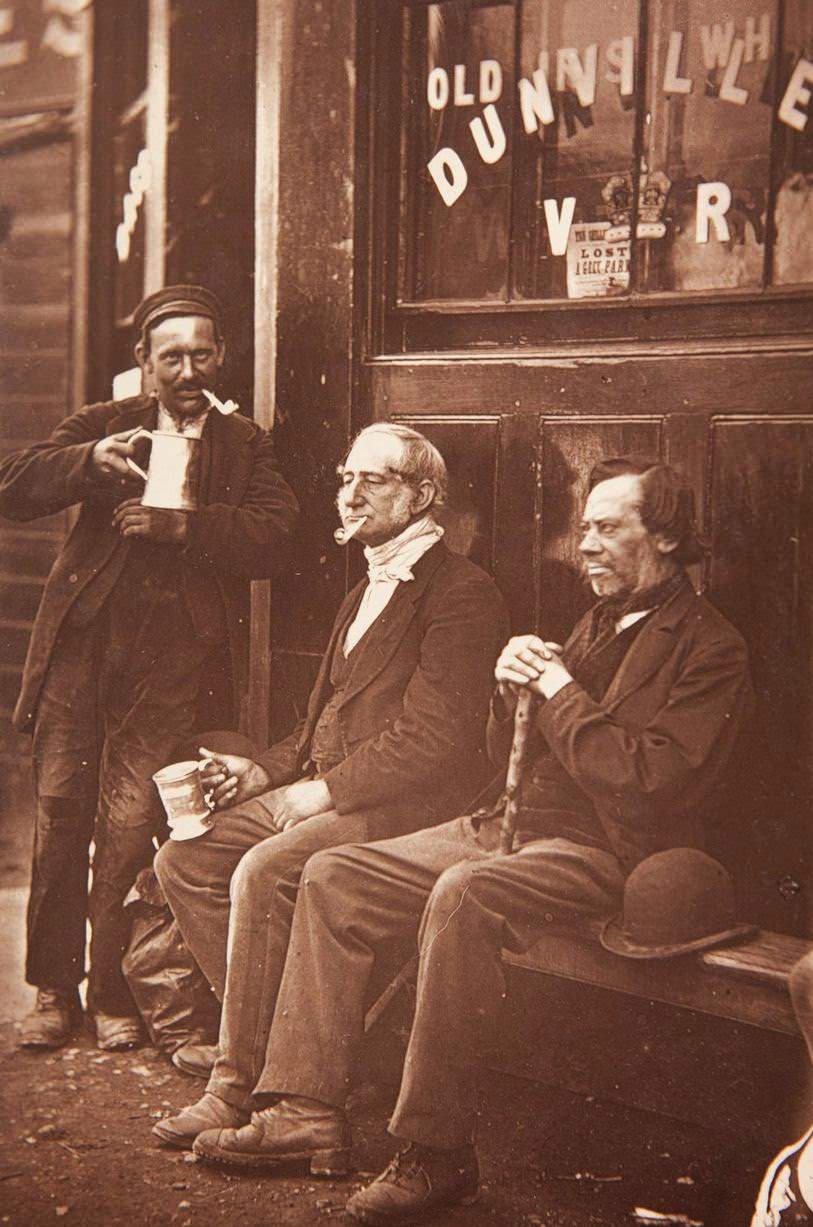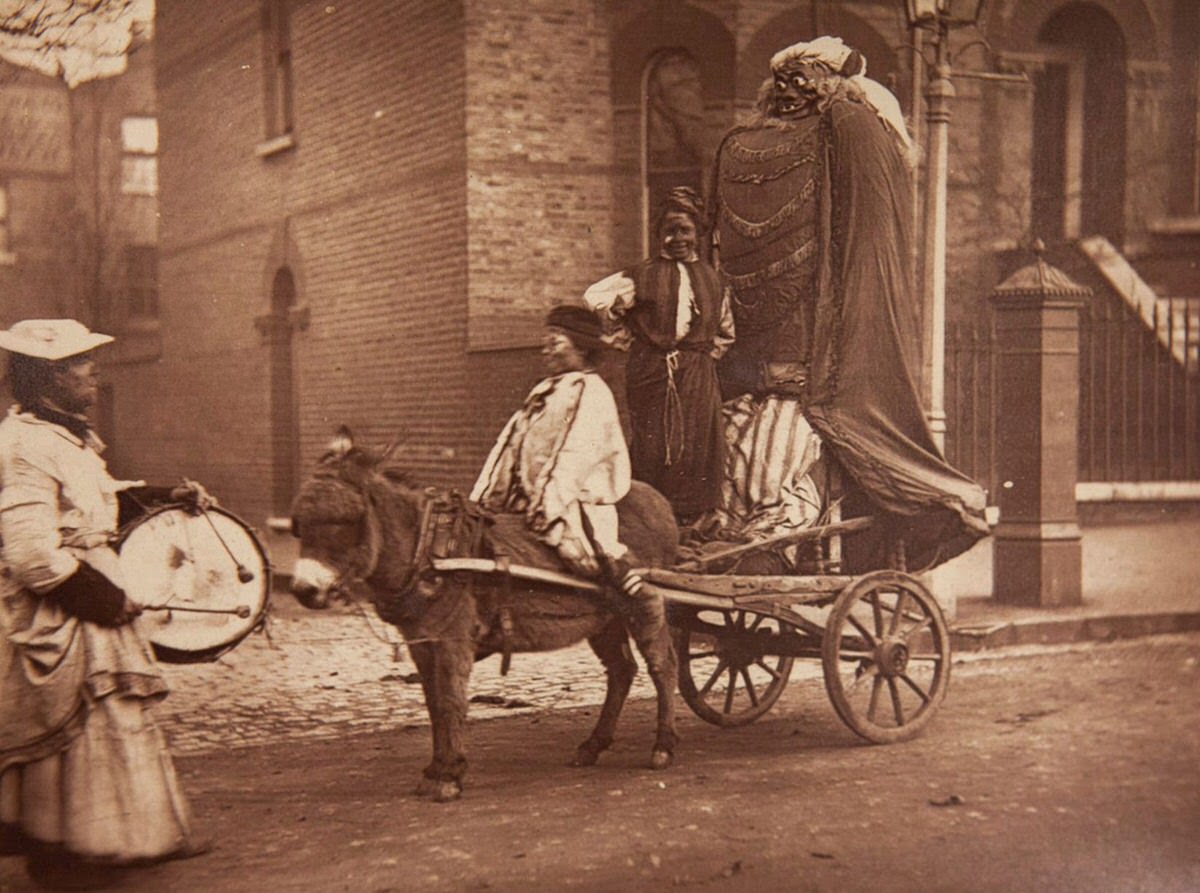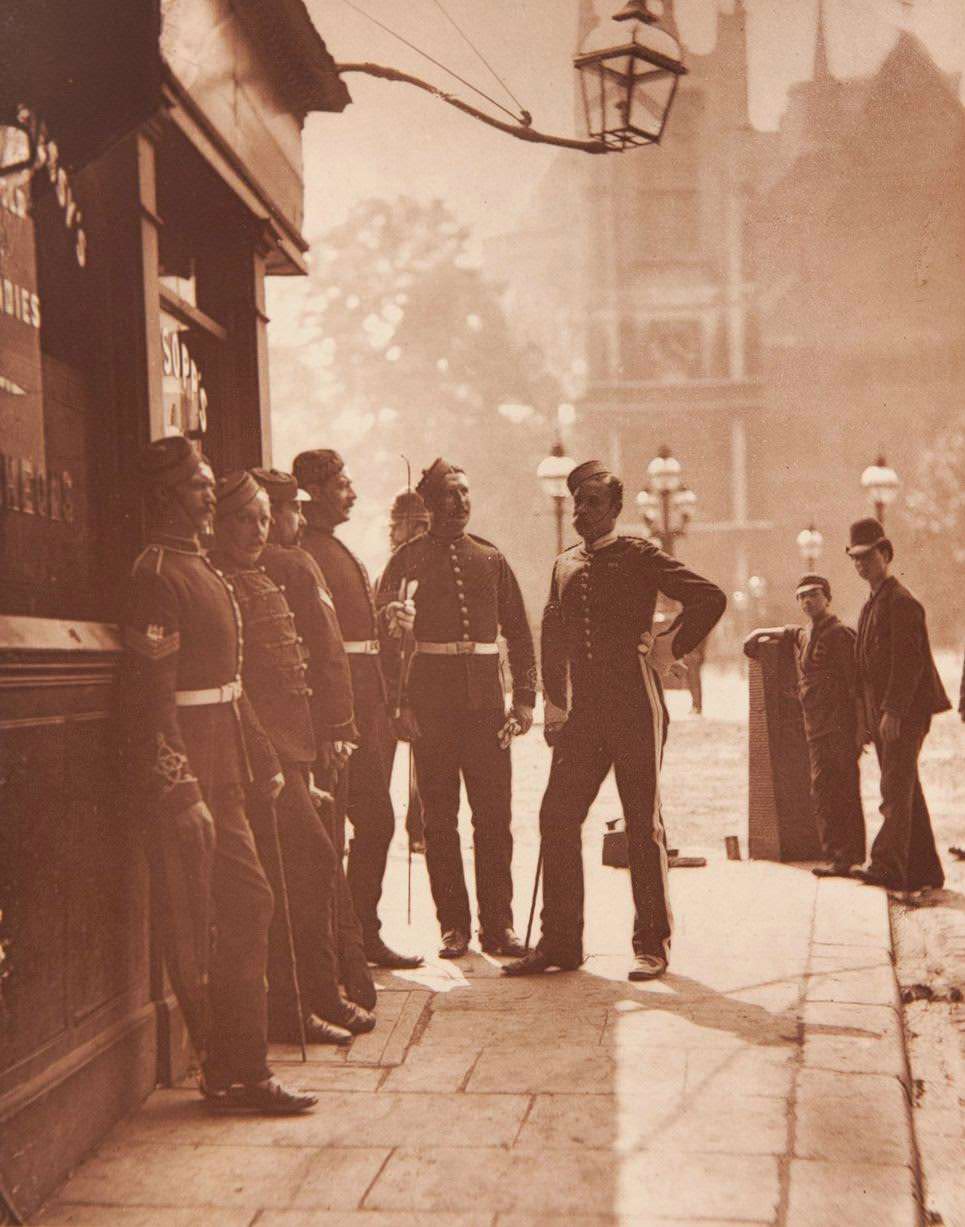

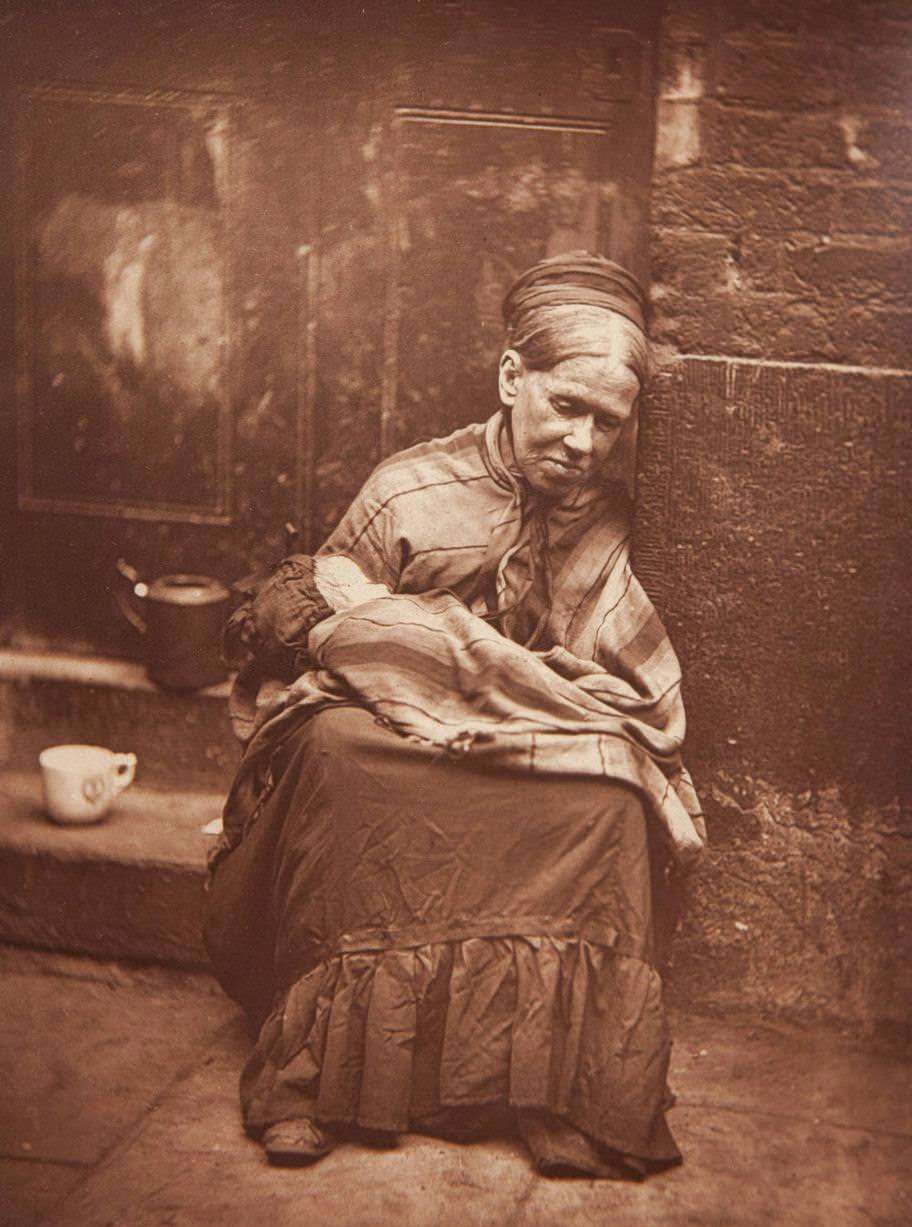
Between 1876 and 1877, photojournalist John Thomson and journalist Adolphe Smith set out to document the lives of London’s working poor. They published their findings in monthly volumes titled Street Life in London — one of the earliest uses of photography as a tool for social documentary. Thomson had spent a decade traveling through the Far East before turning his camera on his home city. What he recorded was not polished or posed. It was the raw, Dickensian reality of a crowded industrial city where thousands of people lived and worked on the streets.
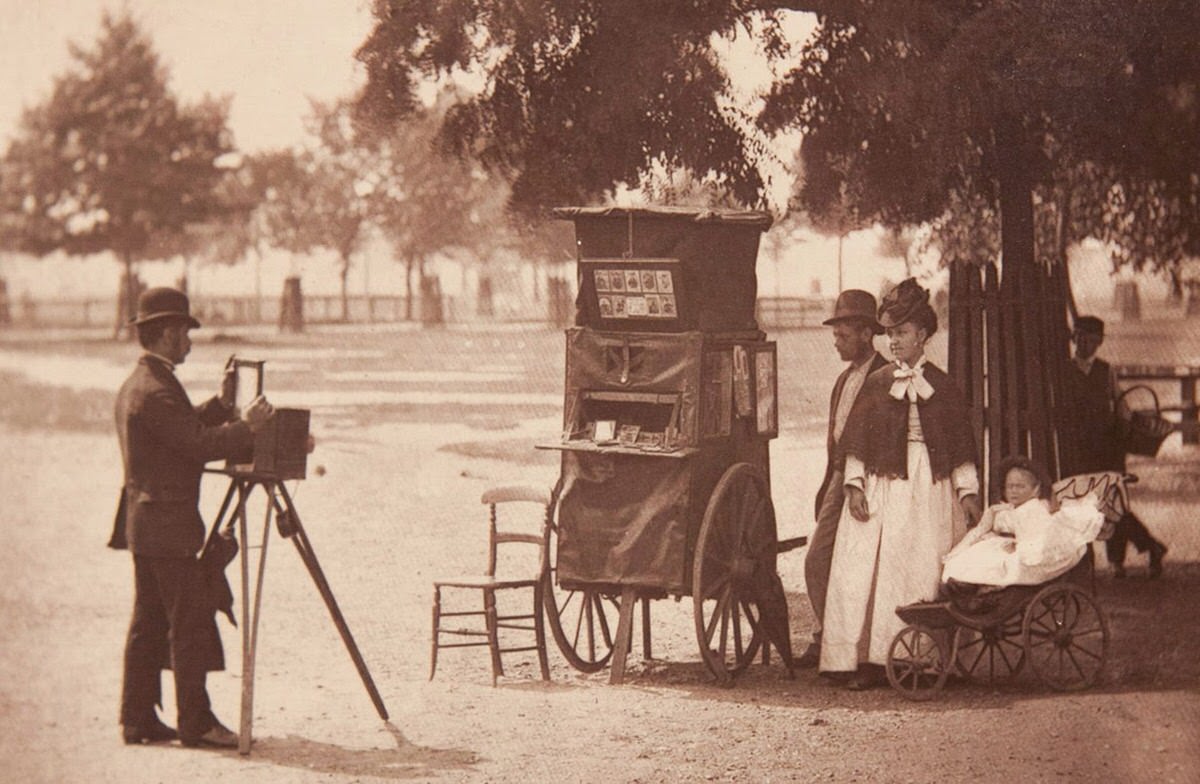
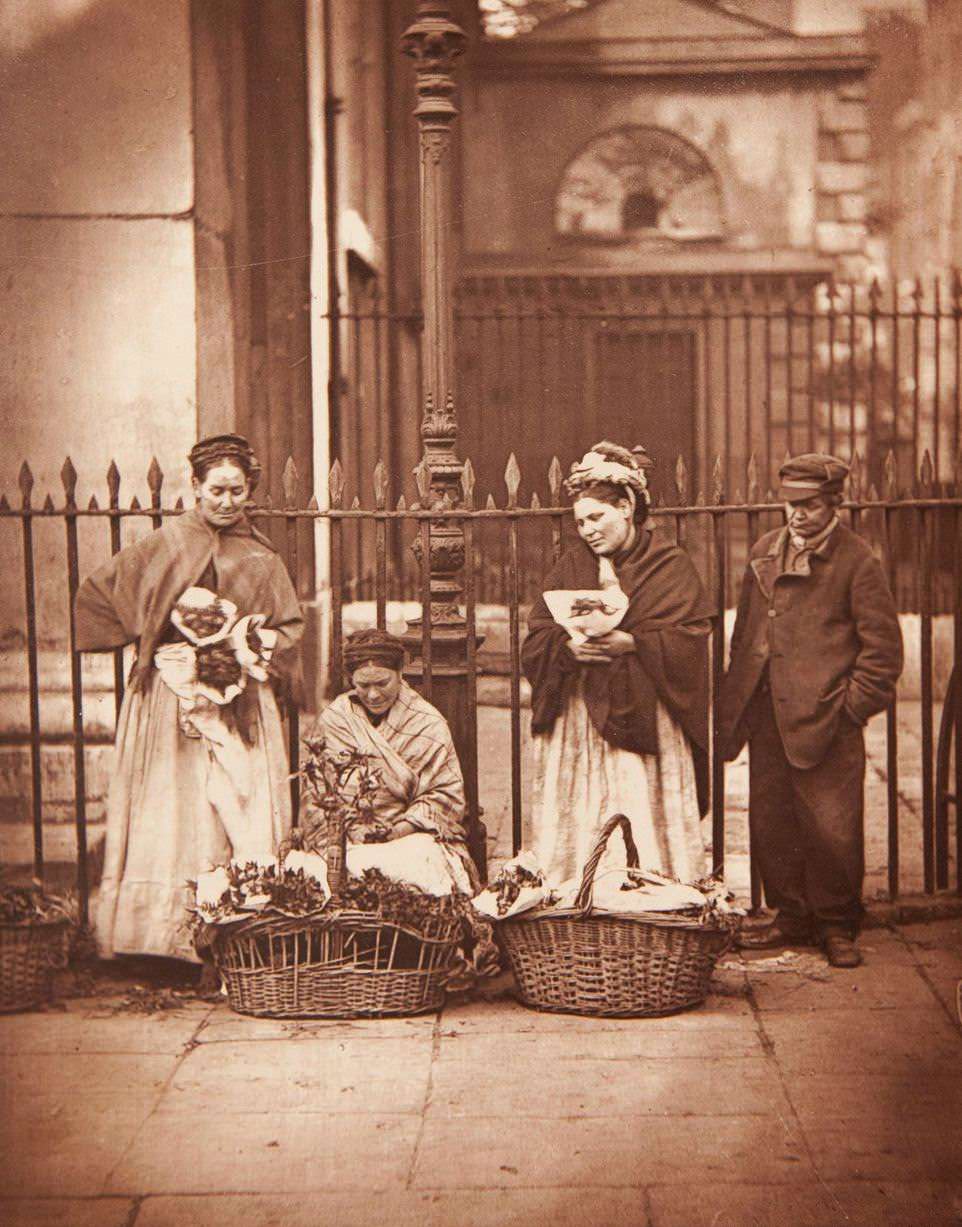
The streets of Victorian London were filled with people known as “street folk” — individuals who sold goods or services directly on the pavement because renting a shop was far beyond their means. Flower women bought blooms early each morning and spent the full day hawking them at busy intersections, carrying heavy baskets for miles in rain and cold to earn enough to buy bread.
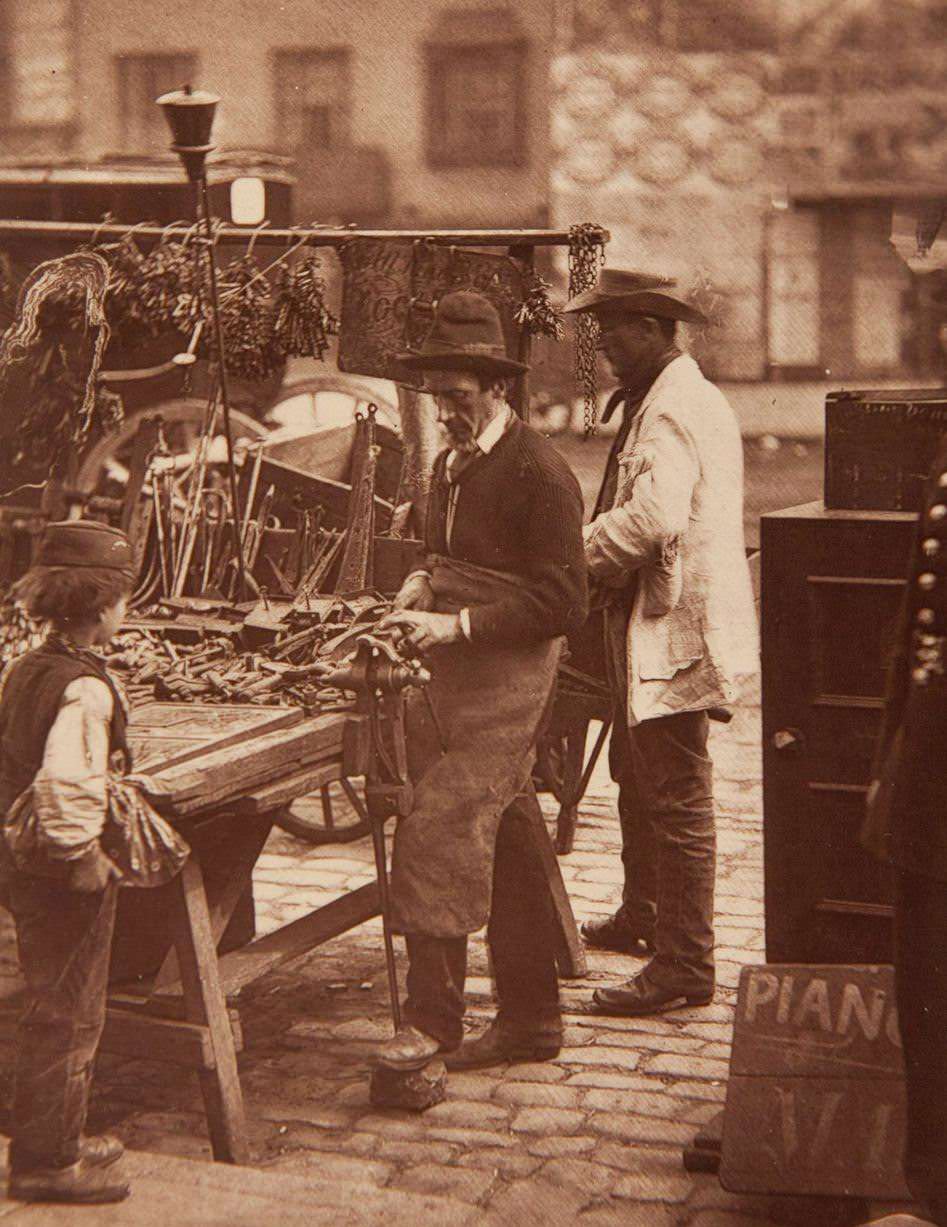
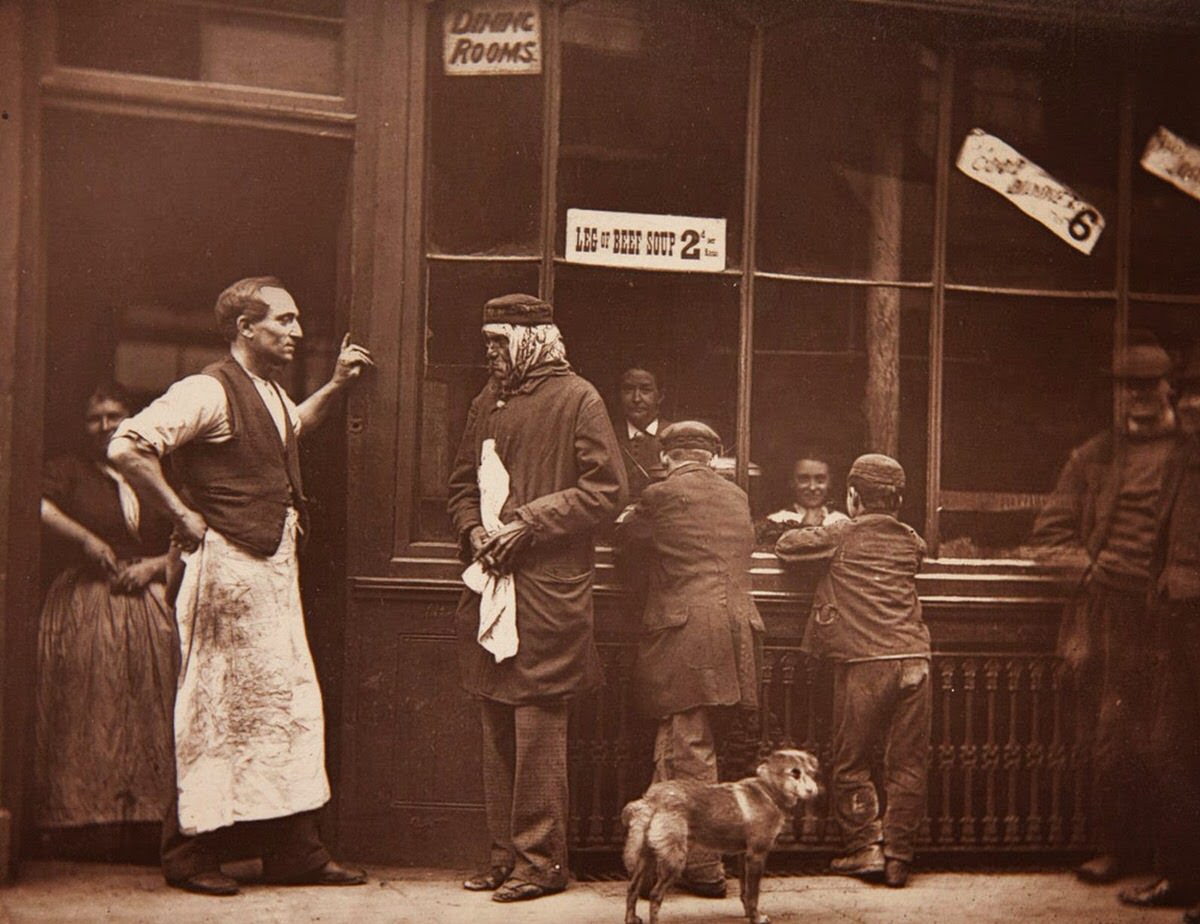
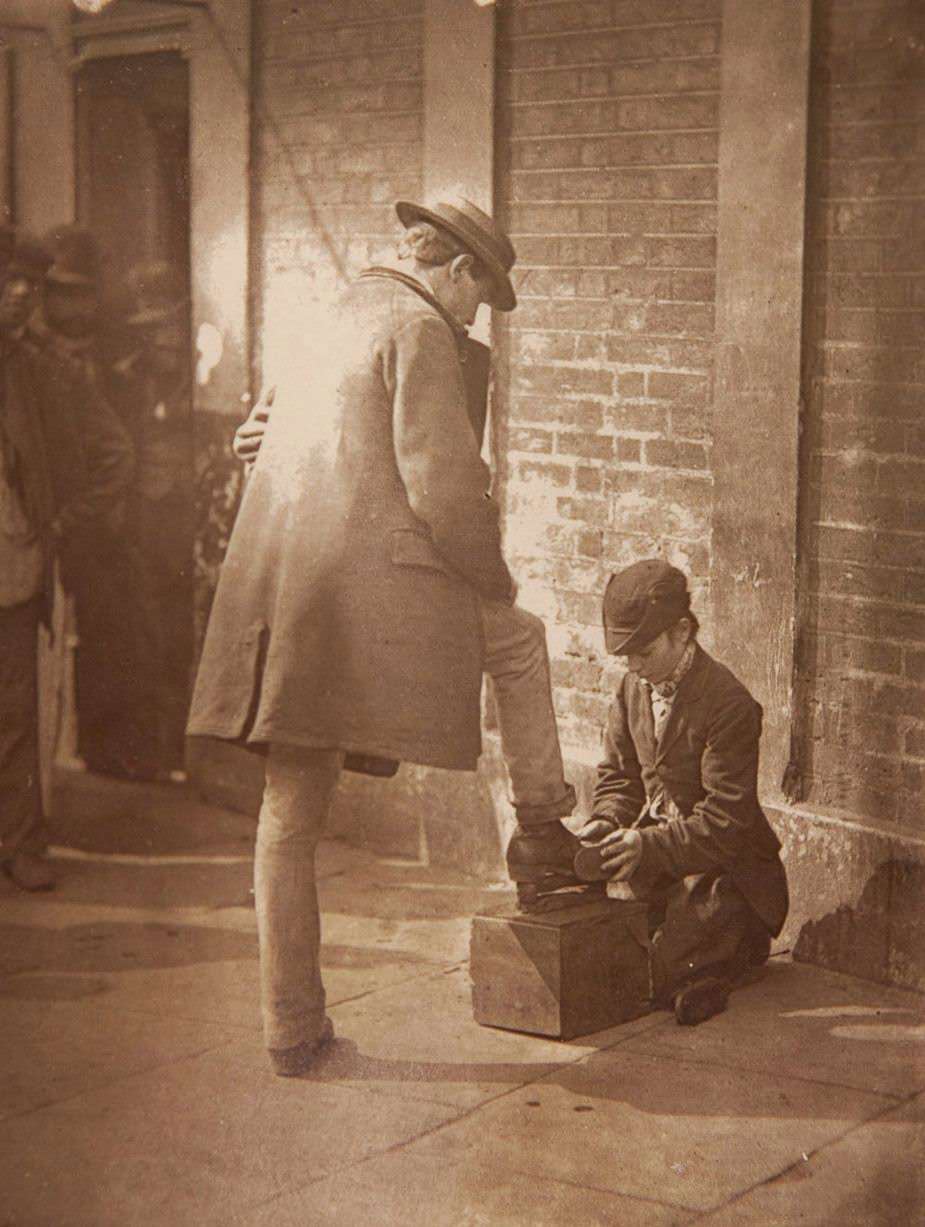
Children were deeply embedded in the street economy. Young boys worked as shoe-blacks, standing at corners with a wooden box and brushes, cleaning the mud from businessmen’s boots for a few pennies. Others worked as crossing sweeps, clearing paths through horse manure and filth so that wealthier pedestrians could cross the road without soiling their clothes.
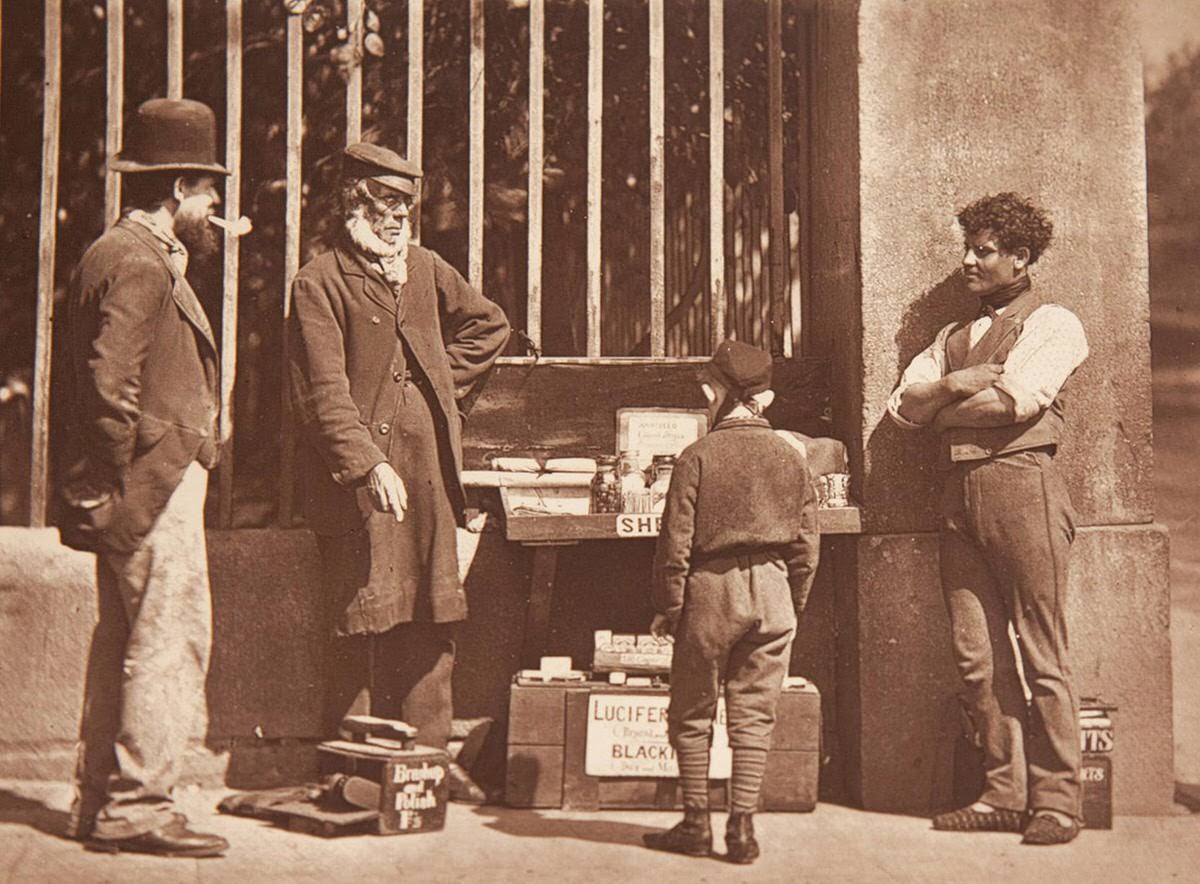
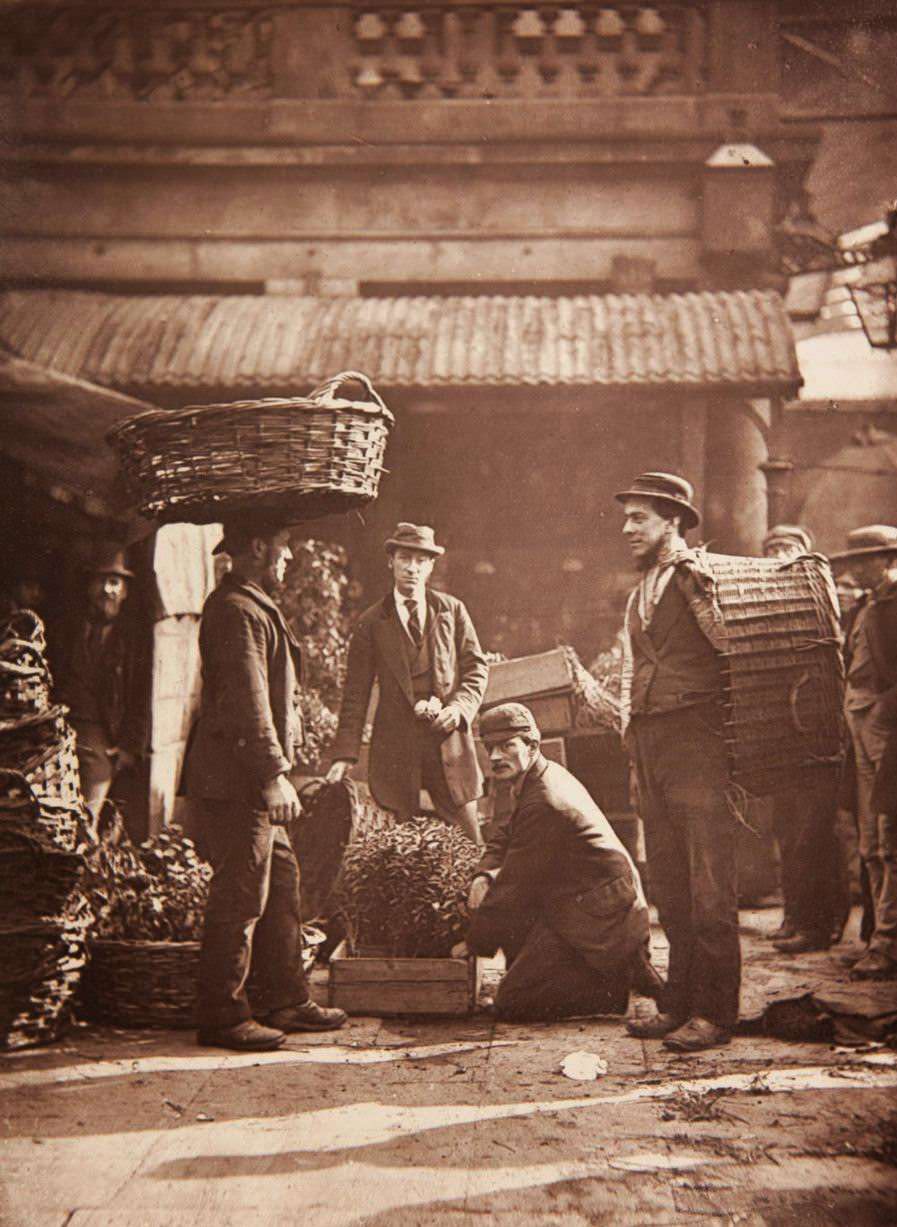
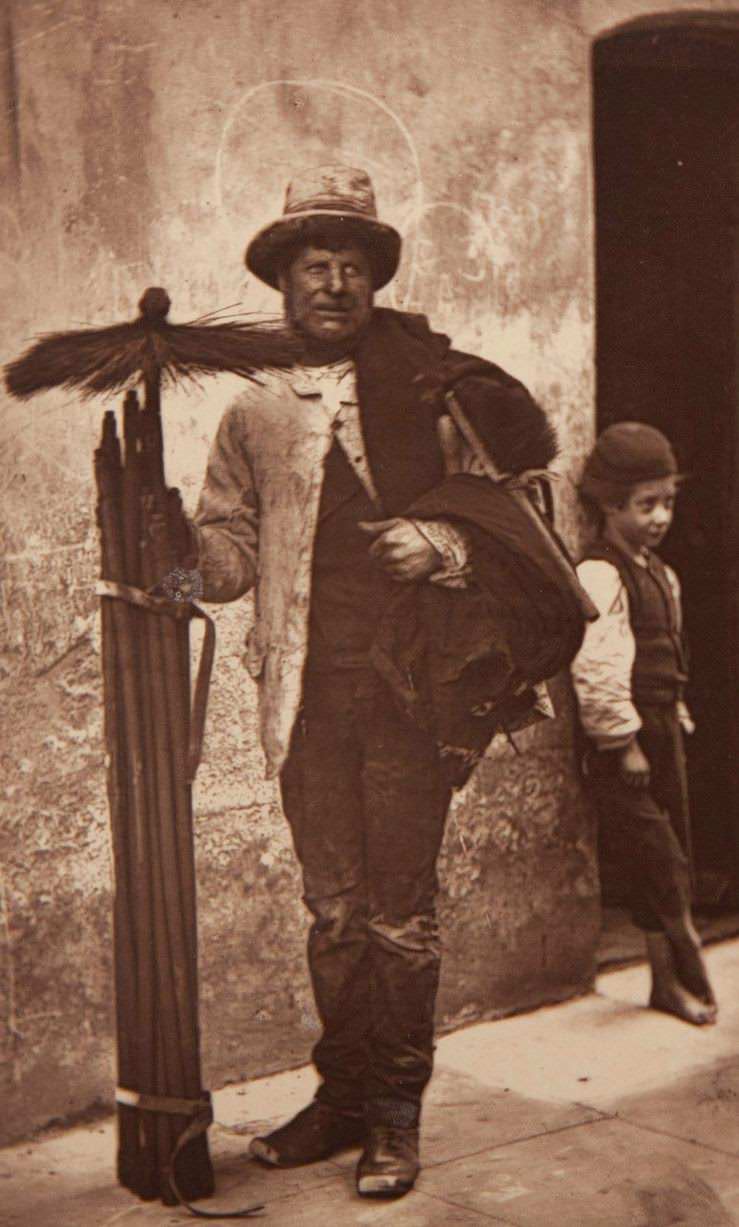
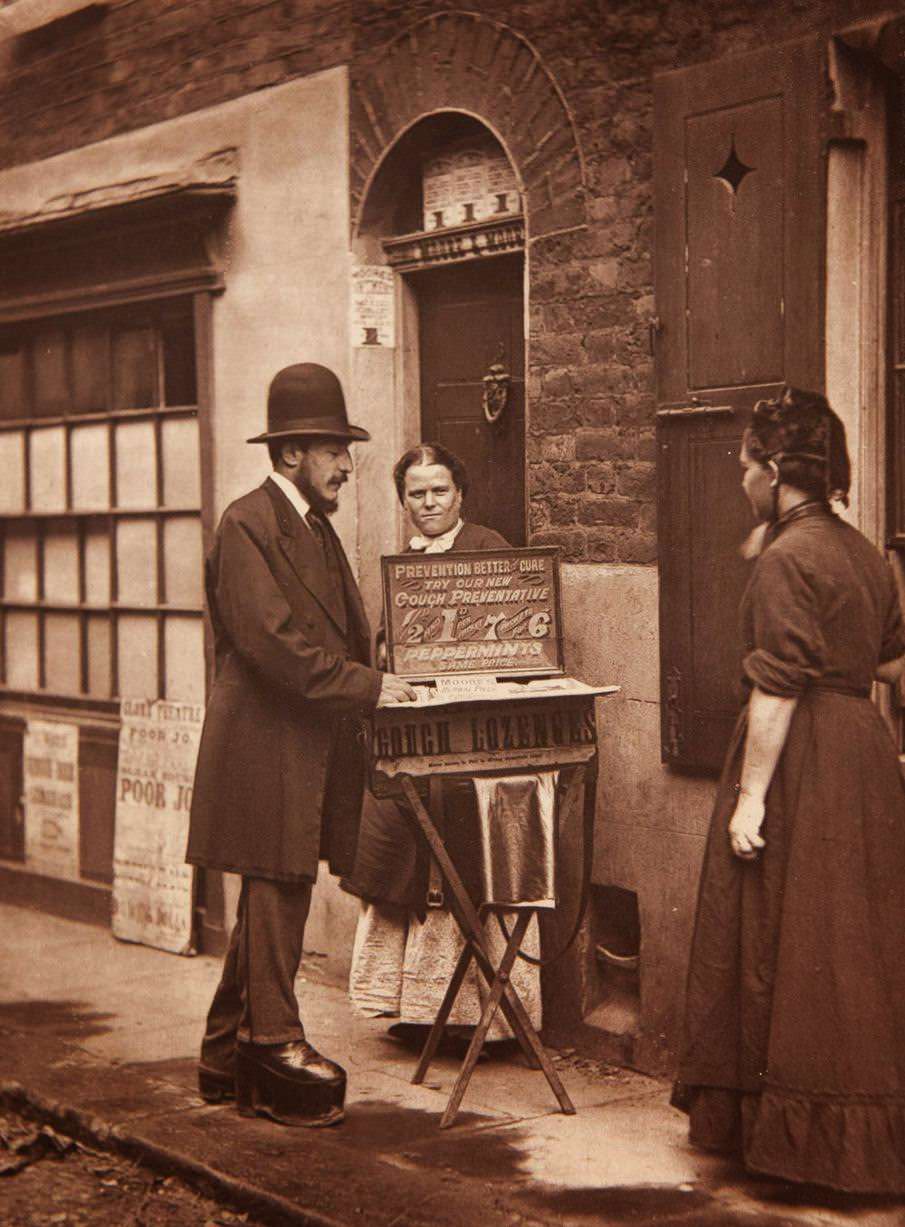
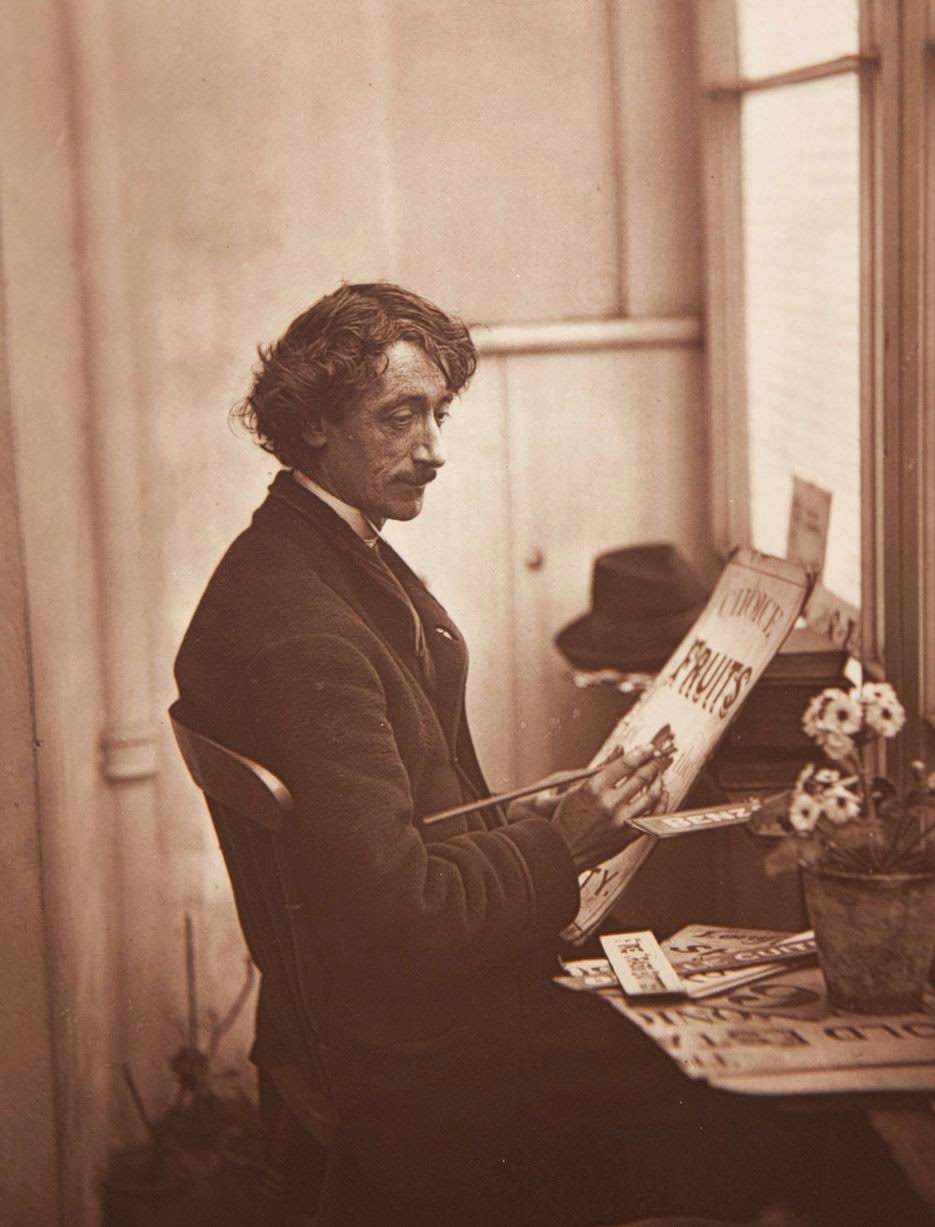
Street doctors, advertisers, and tradespeople of all kinds competed for space on the same overcrowded pavements. The physical condition of those streets was grim. There was no organized trash collection. Horse-drawn carriages left constant waste behind, and the air hung heavy with “London Fog” — a thick blend of coal smoke and mist that blackened buildings and made breathing difficult.
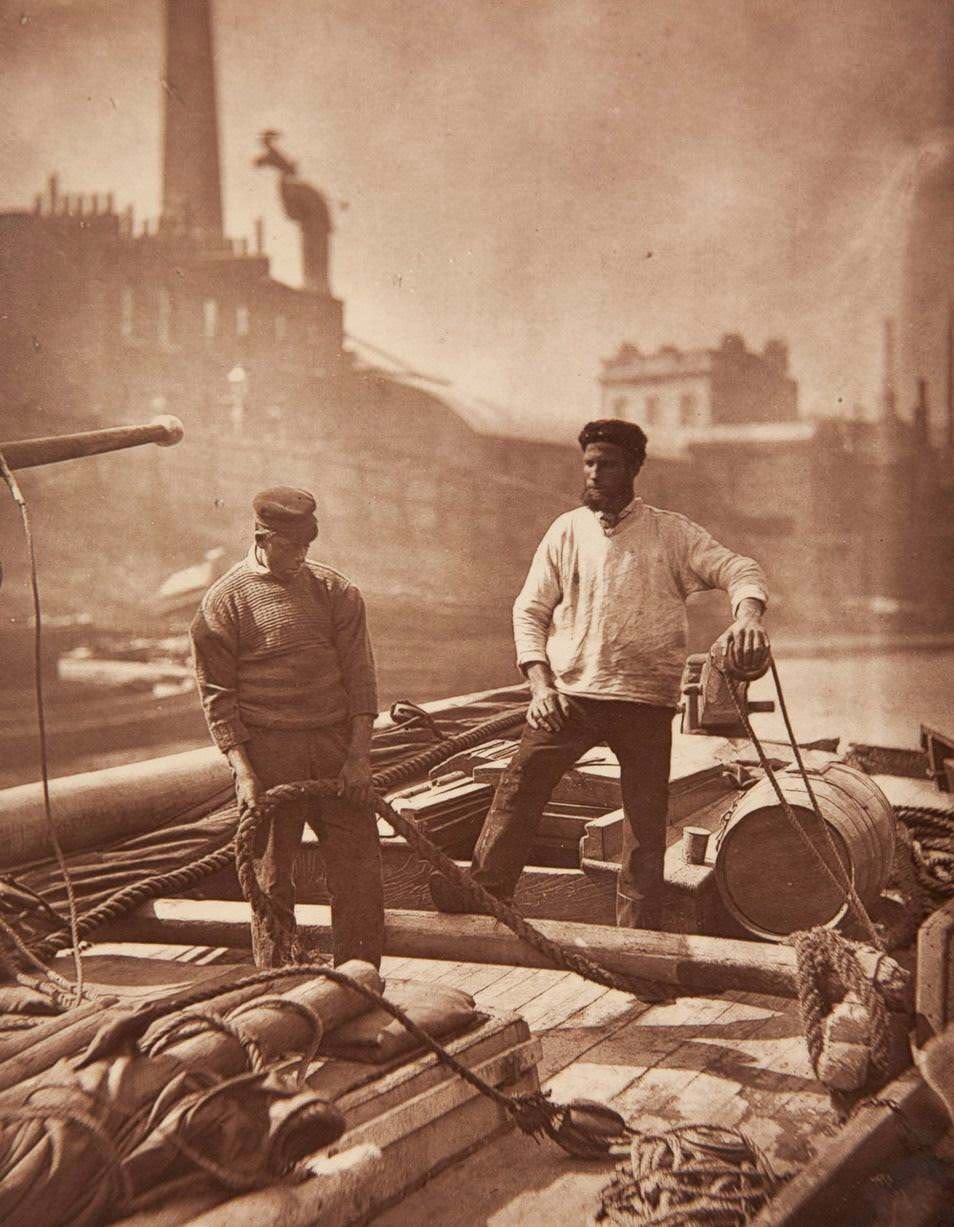
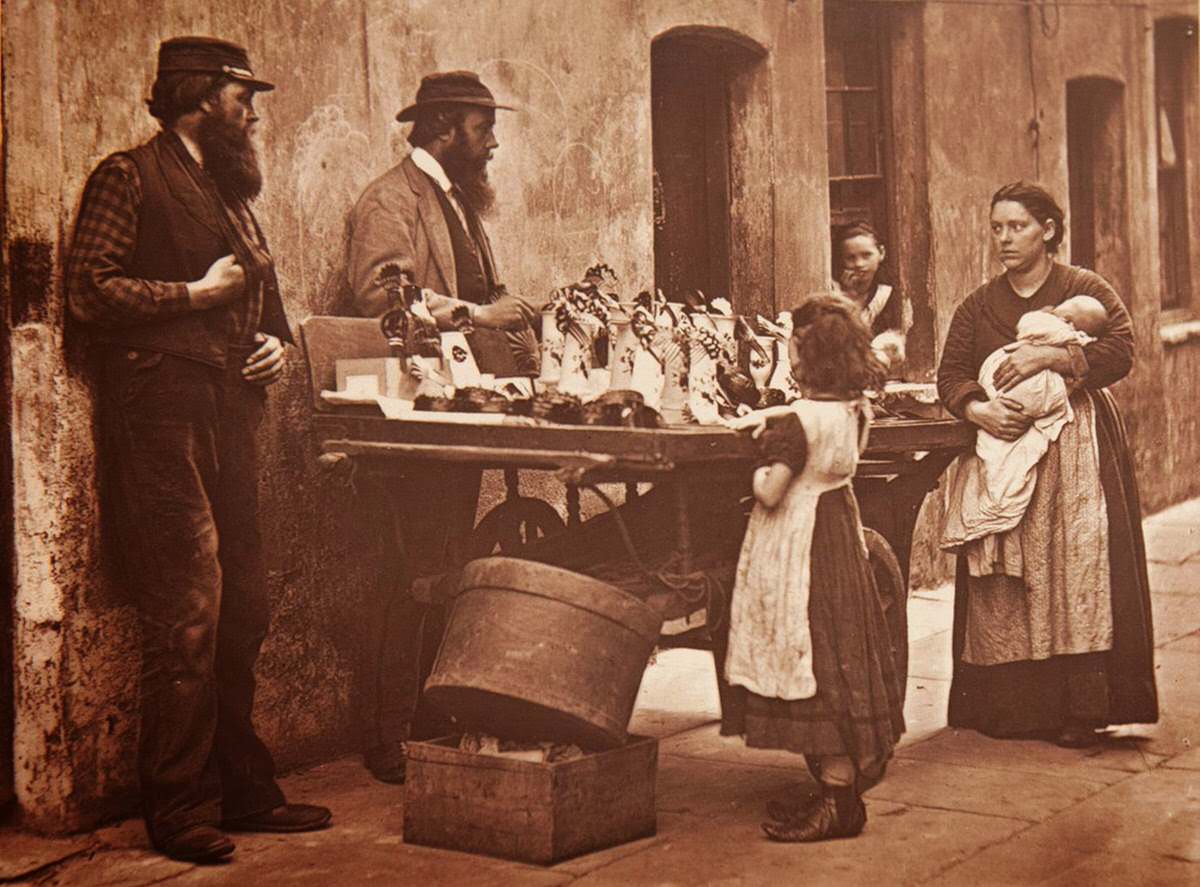
The Thames was just as busy as the streets above it. Boatmen worked the river as a daily livelihood, navigating what locals called the “silent highway.” Alongside them, dealers in imitation jewelry, card sellers, and traders like “Hookey Alf” of Whitechapel each carved out a specific niche in the street economy.
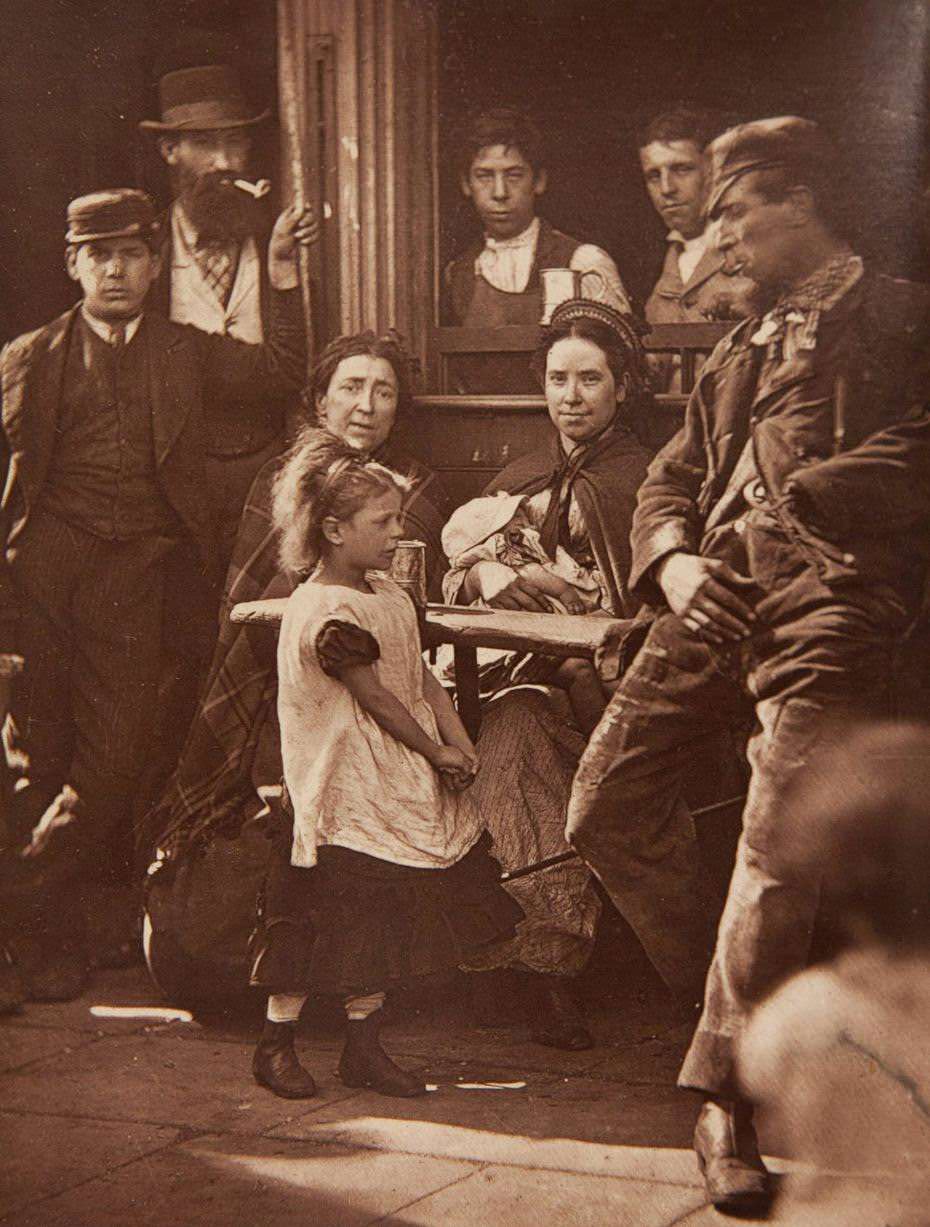
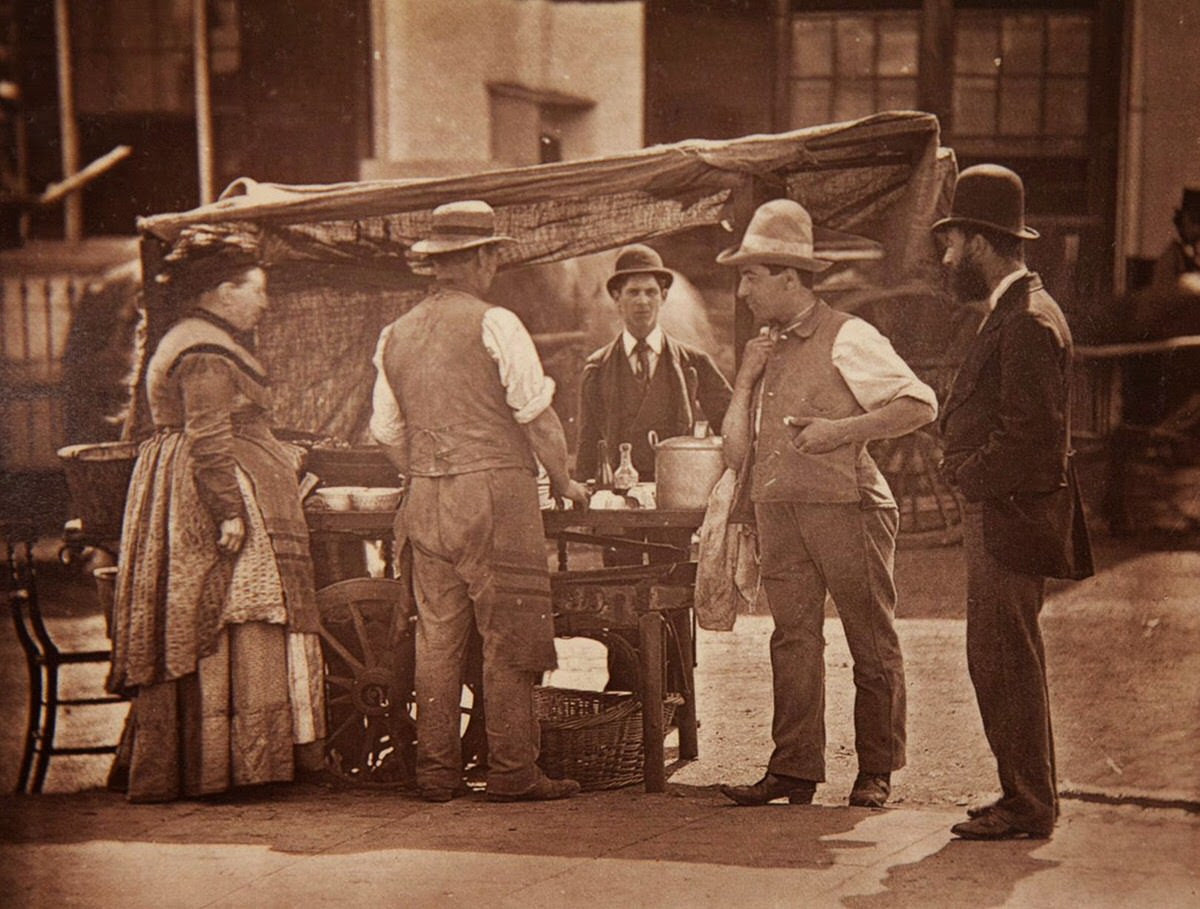
Food vendors were a constant presence near factories and docks. Pie-men and hot-pea sellers used portable stoves to keep their meals warm, serving workers who had no kitchens at home. Fish sellers and others offering cheap provisions filled in the gaps, ensuring that even the poorest Londoners had access to food on the street.
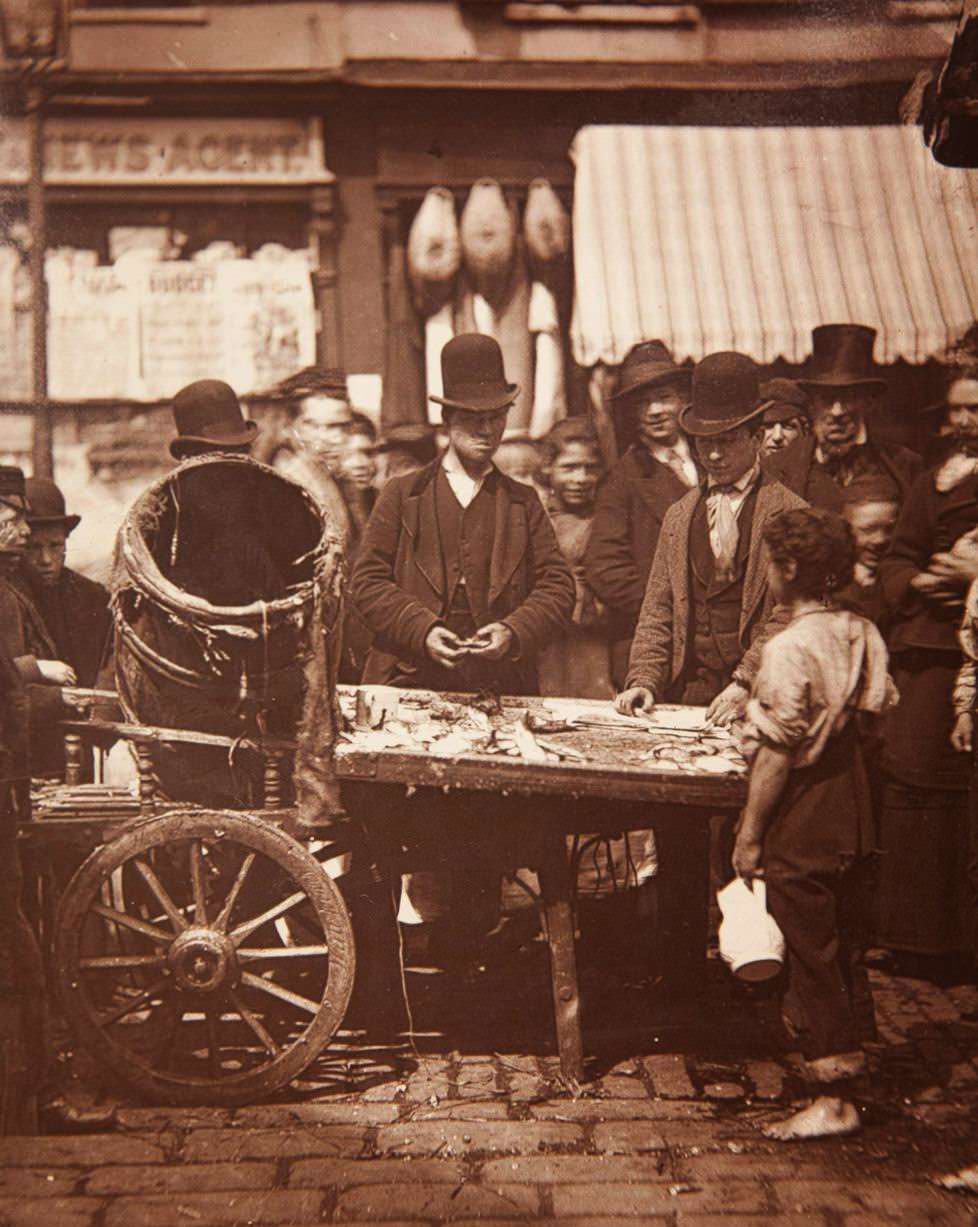
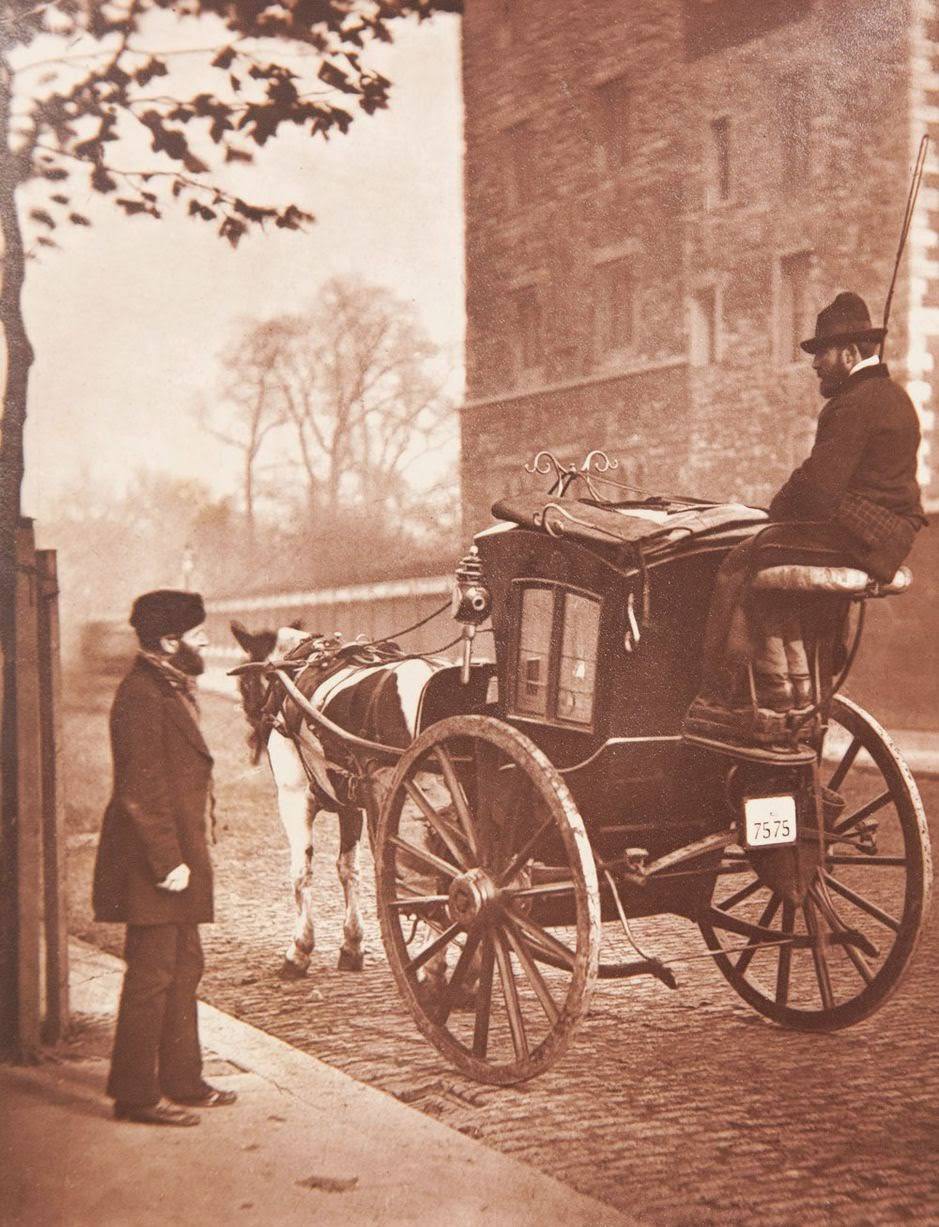
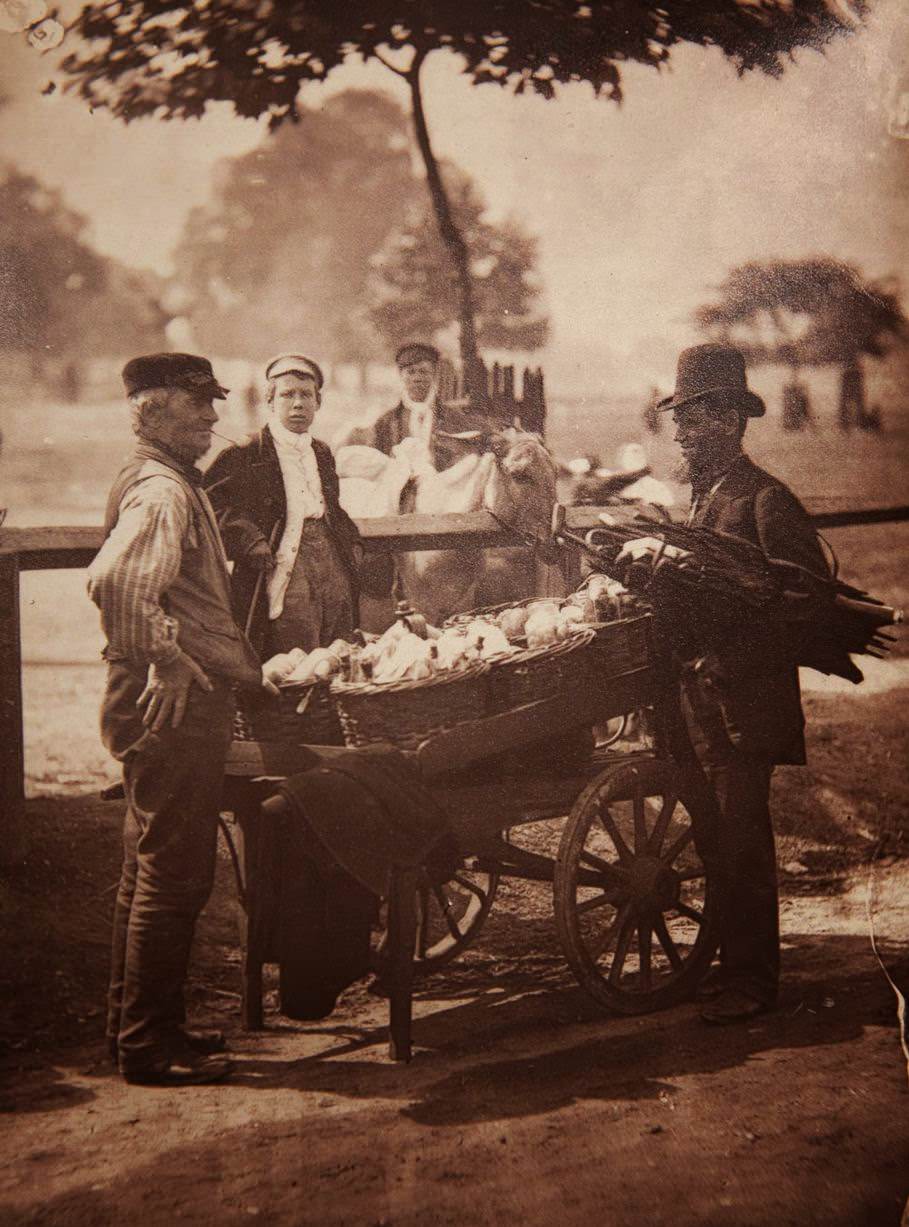
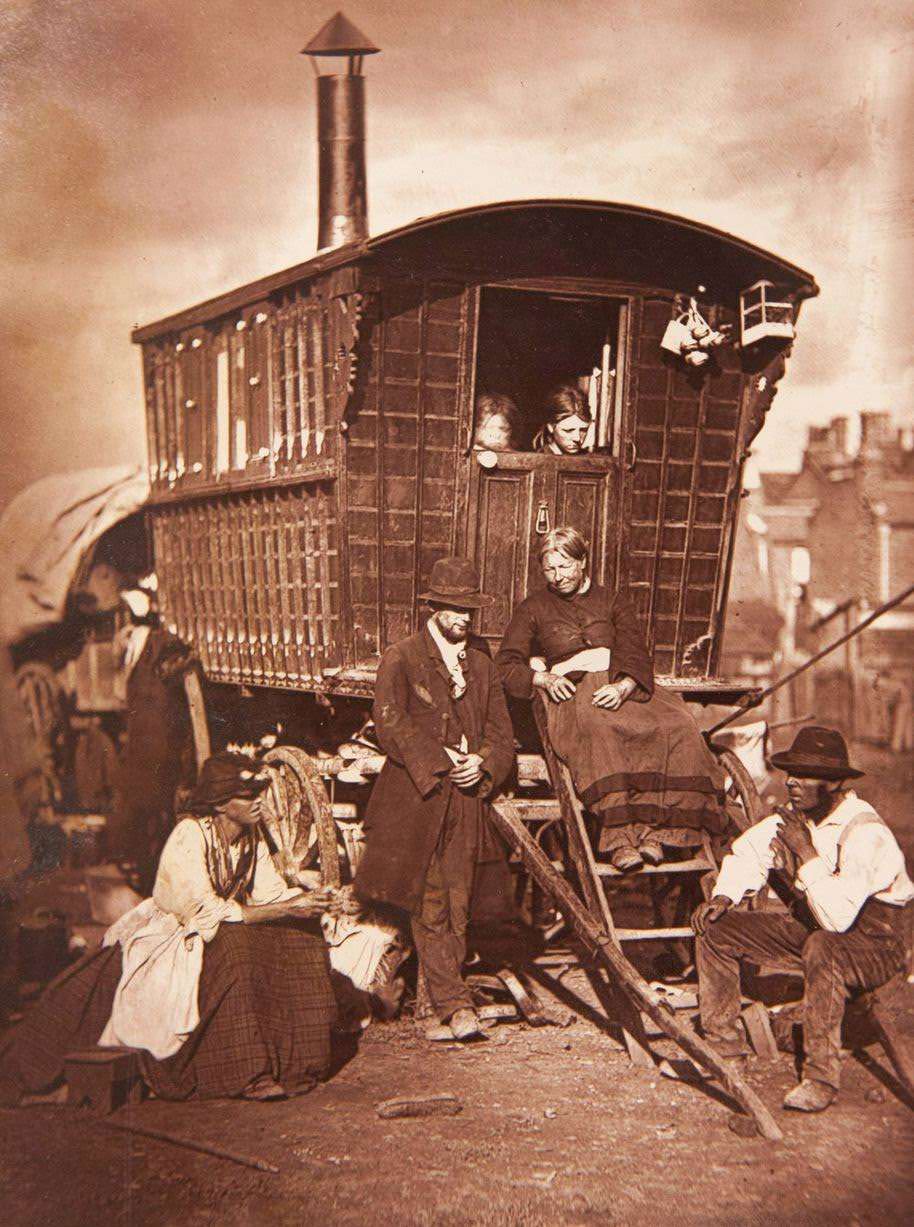
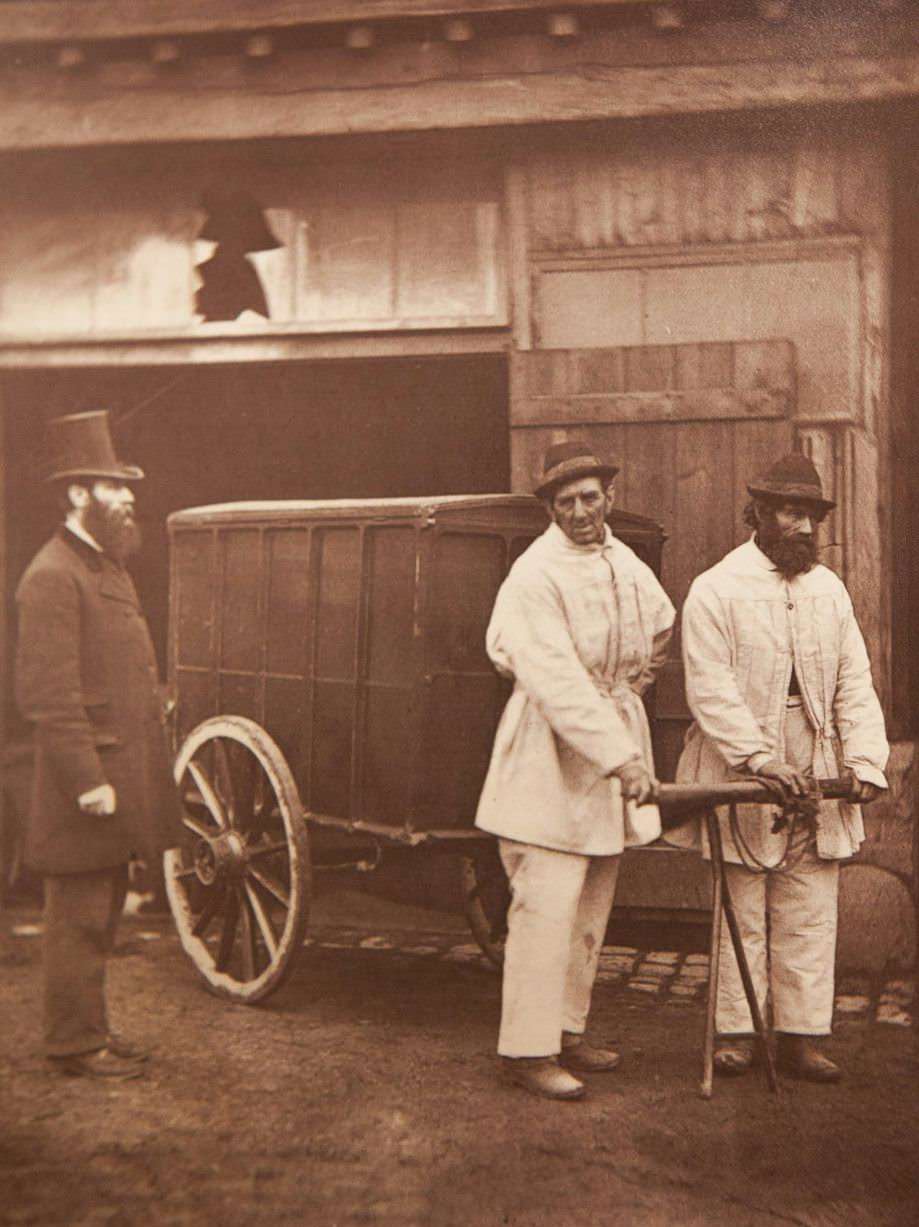
Covent Garden’s flower women were among the most recognizable figures Thomson photographed. Their worn clothing and weathered faces told the story of long hours in harsh conditions. Nearby, public disinfectors worked to slow the spread of disease in some of the city’s most densely populated areas.
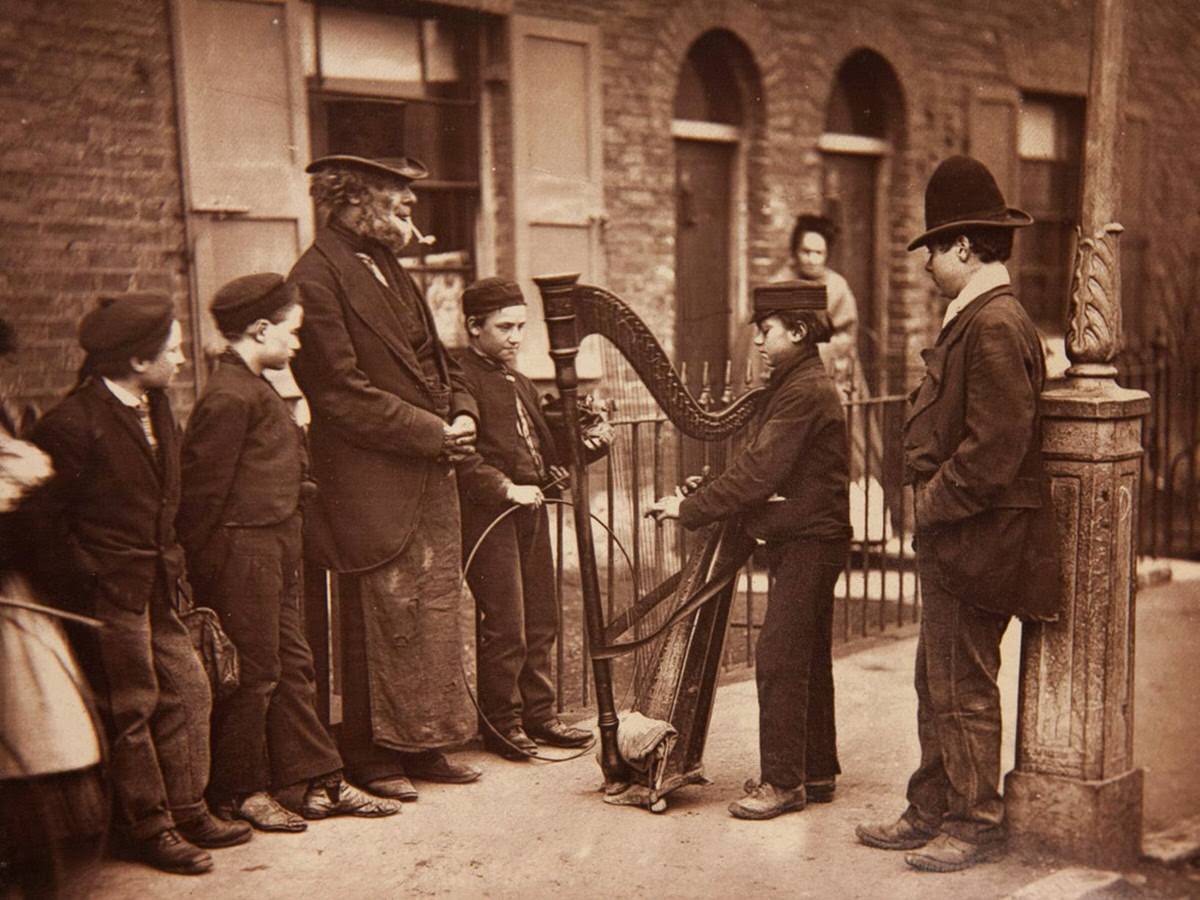
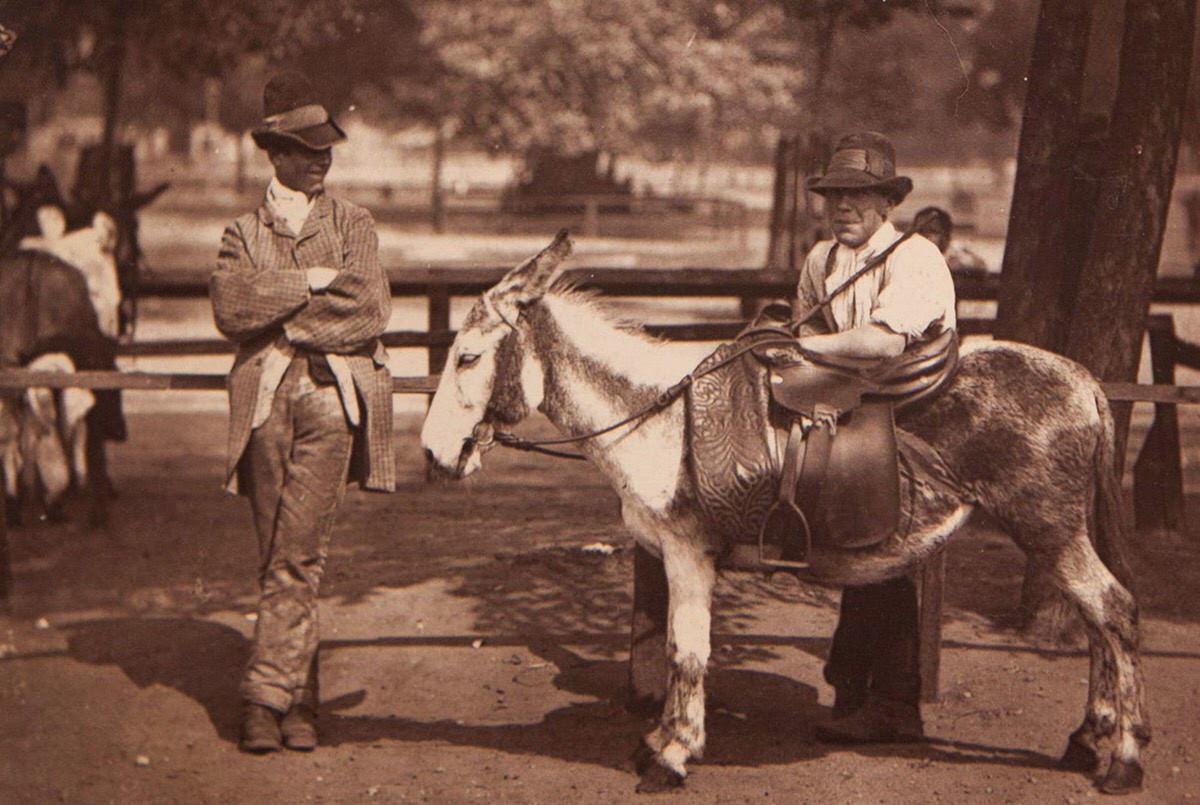
Street performers brought a rare flash of entertainment to the slums. Italian organ grinders hauled heavy mechanical instruments through the city, playing for coins tossed from windows. Clowns and other performers used trained animals to draw crowds. These acts moved from neighborhood to neighborhood in search of new audiences.
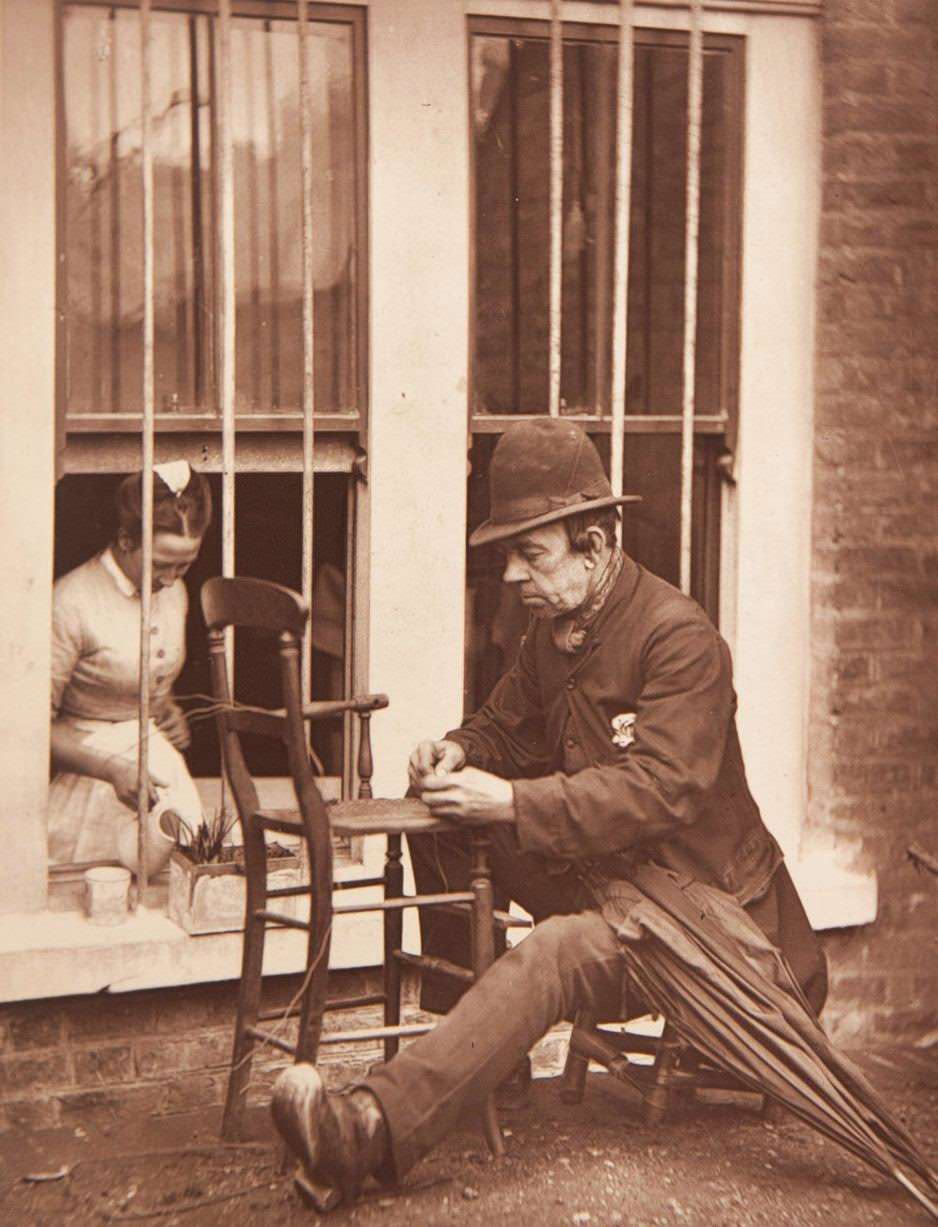
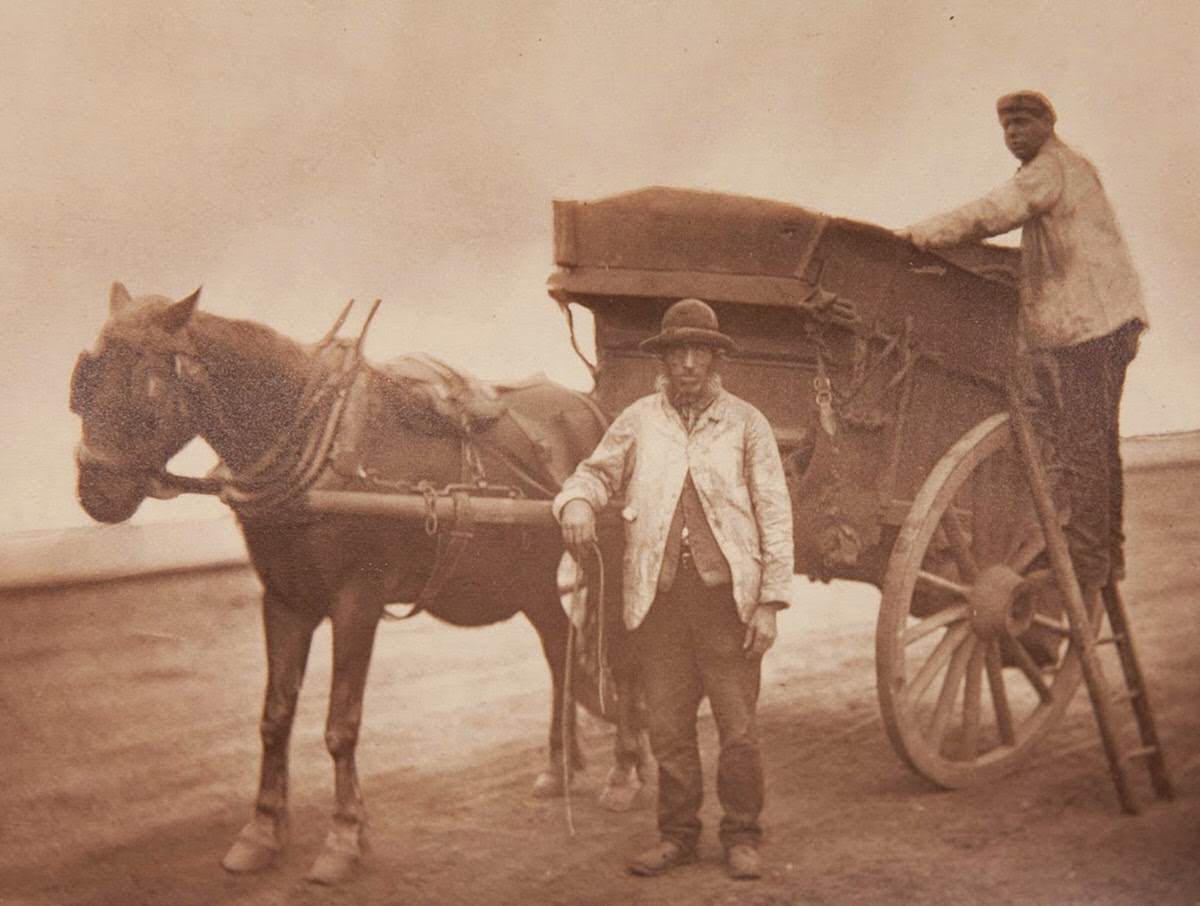
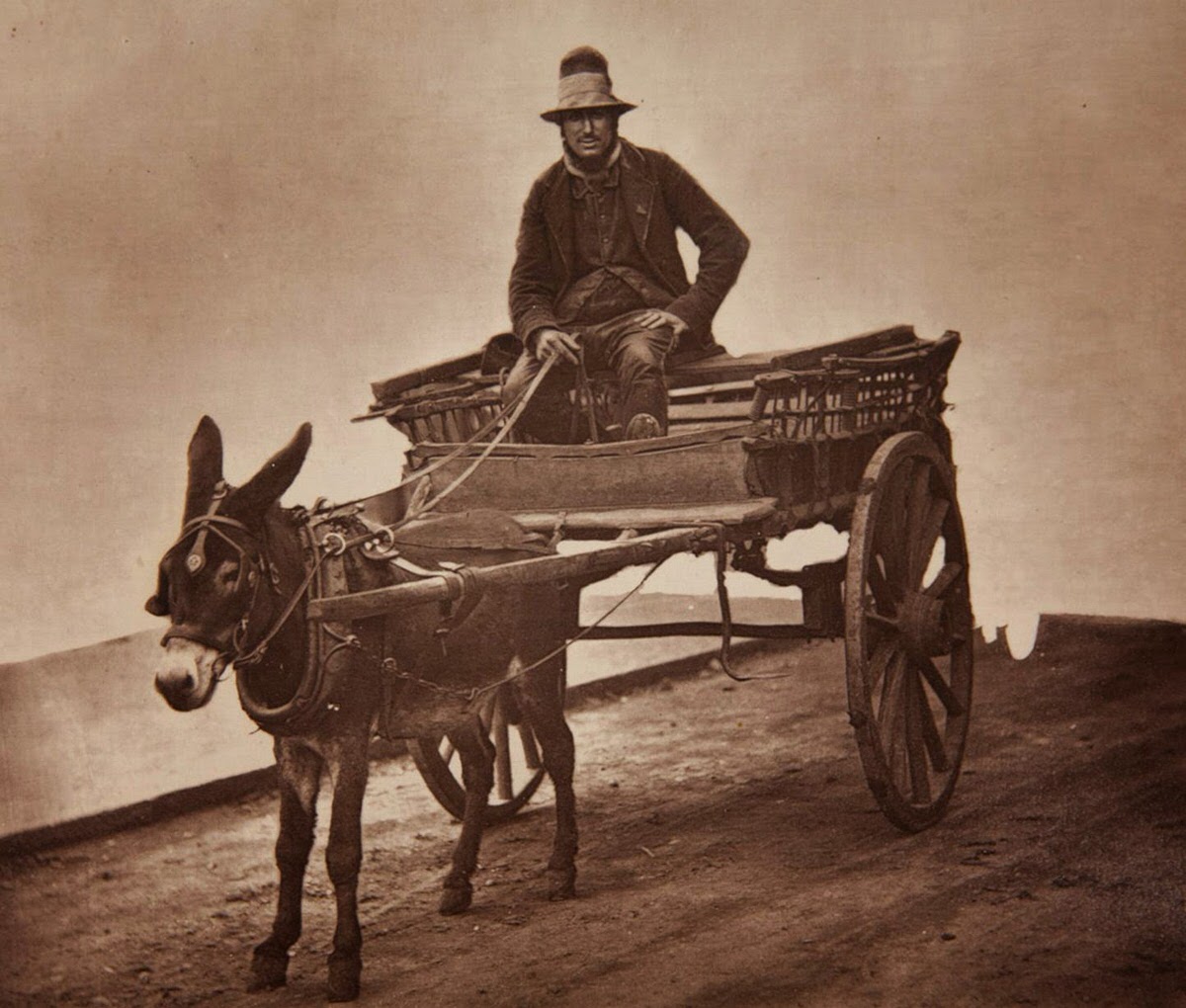
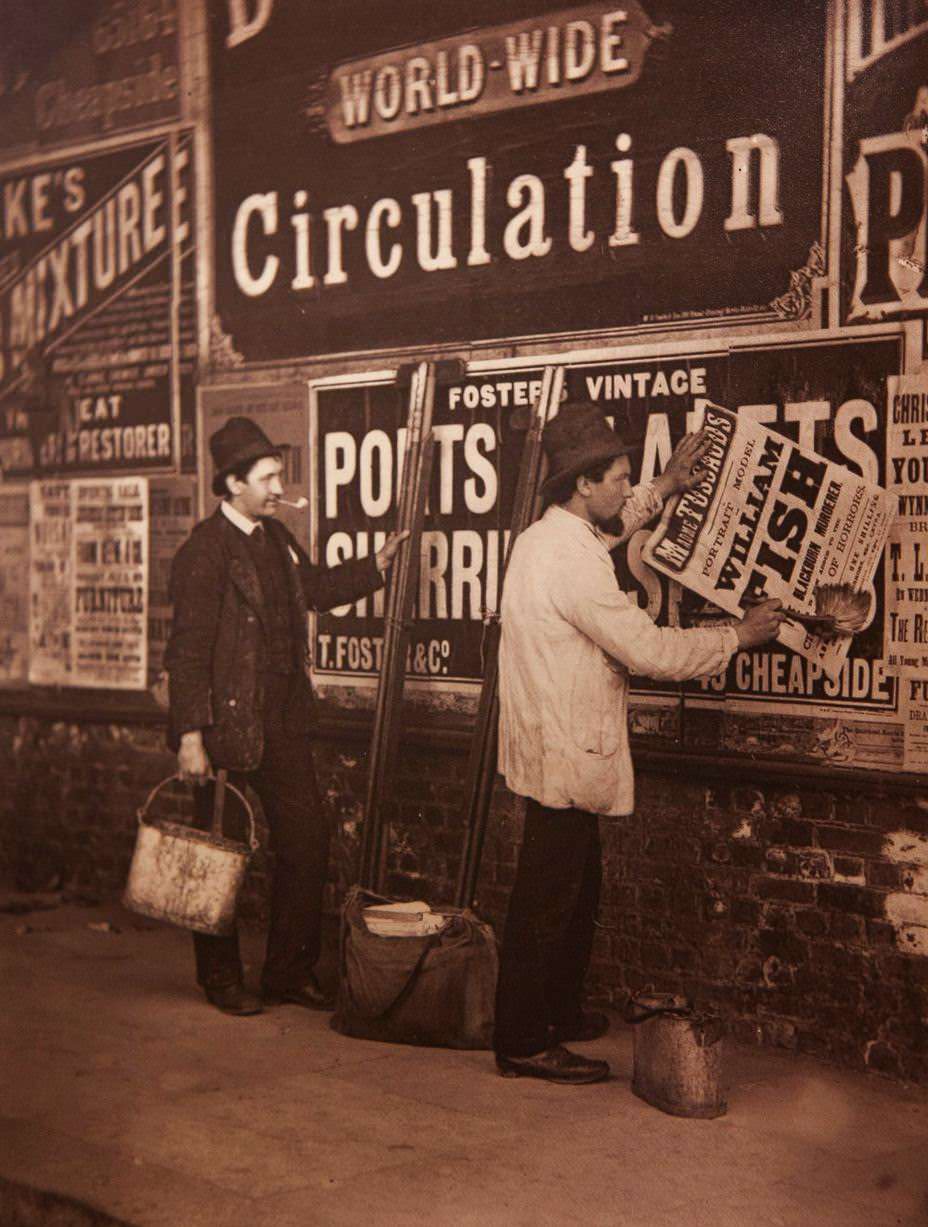
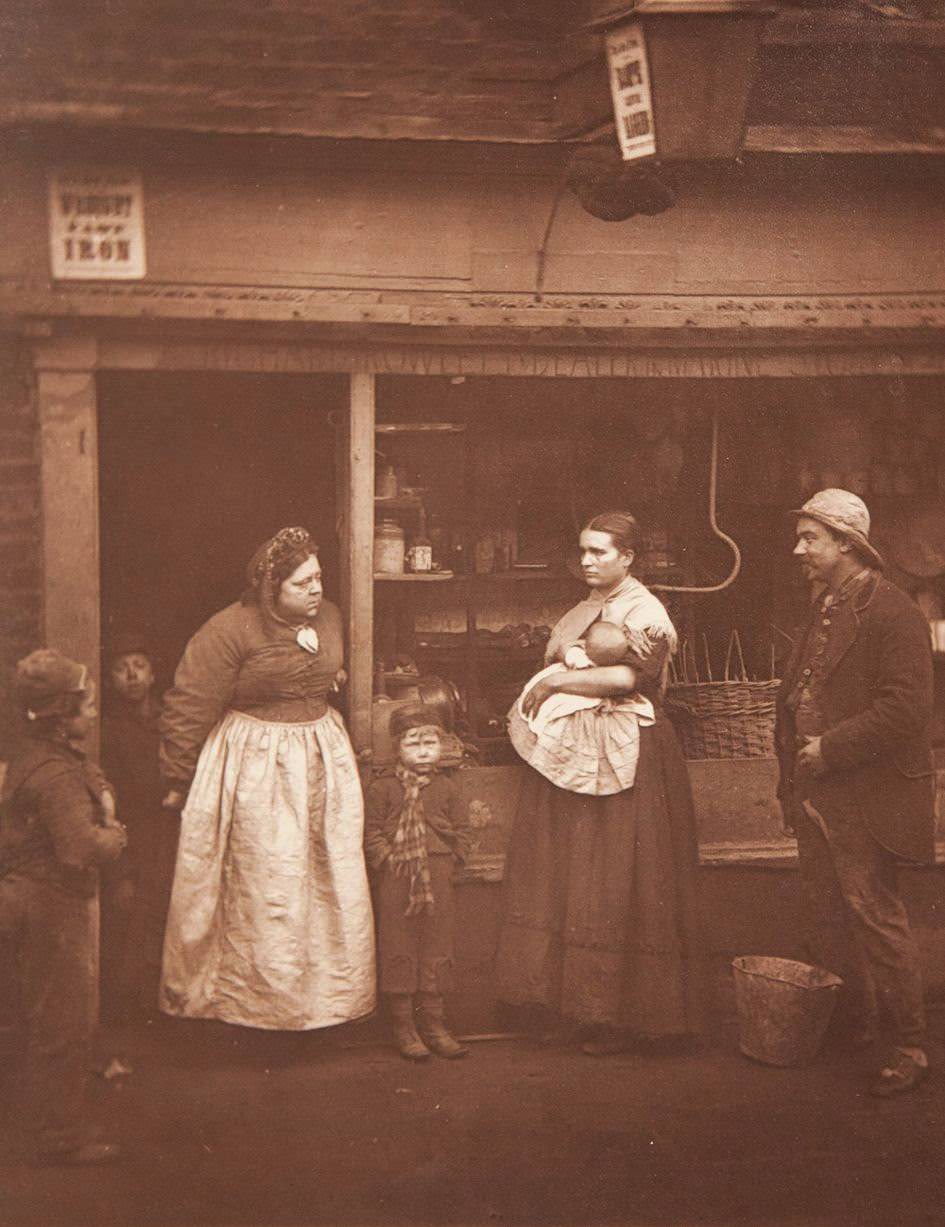
Cab drivers, water-cart operators, and boardmen carrying advertising signs were all part of the same sprawling street system. Old clothes shops in areas like Seven Dials served those who could not afford new garments. Every worker Thomson photographed was an active, functioning member of the city — not a bystander to it.
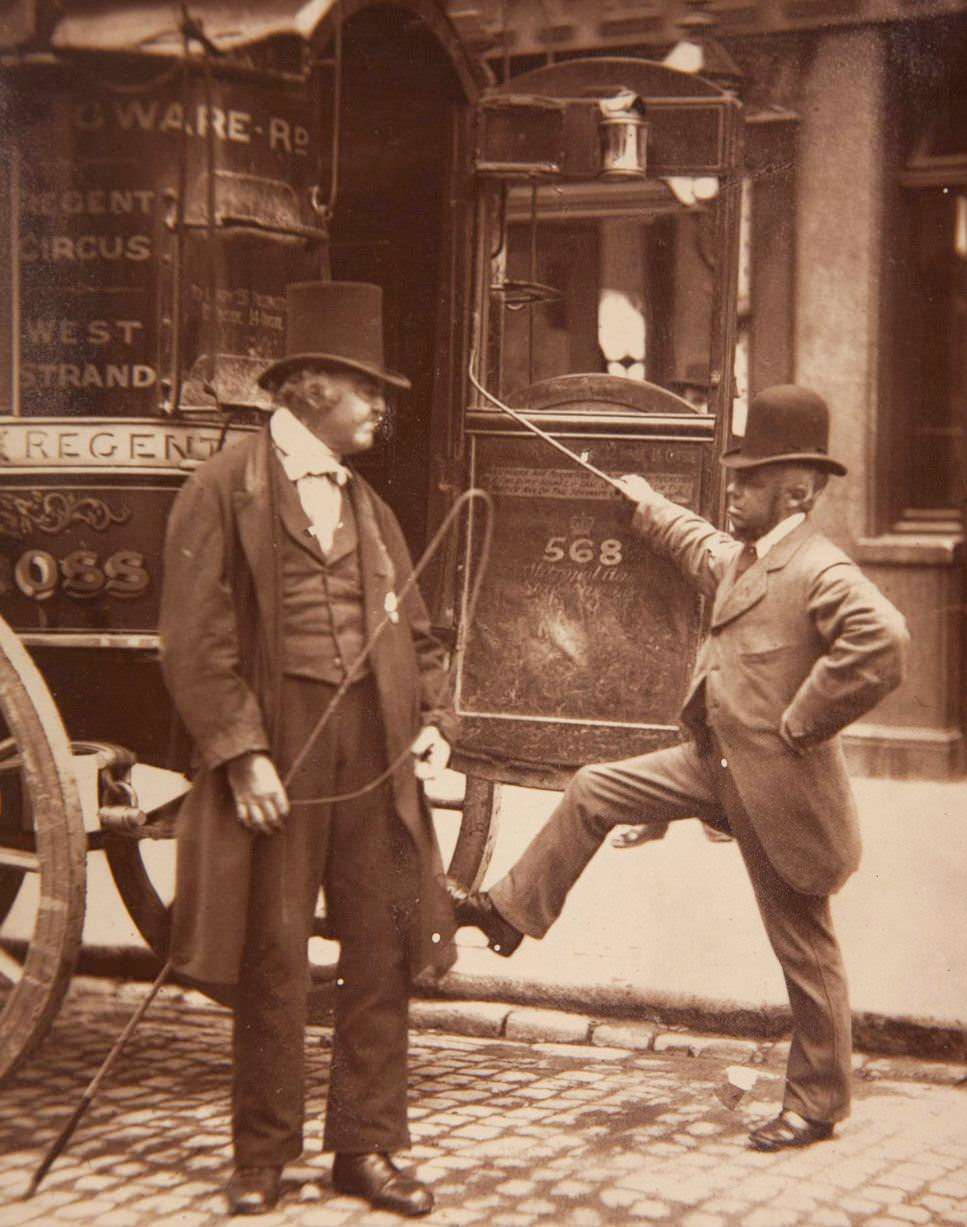
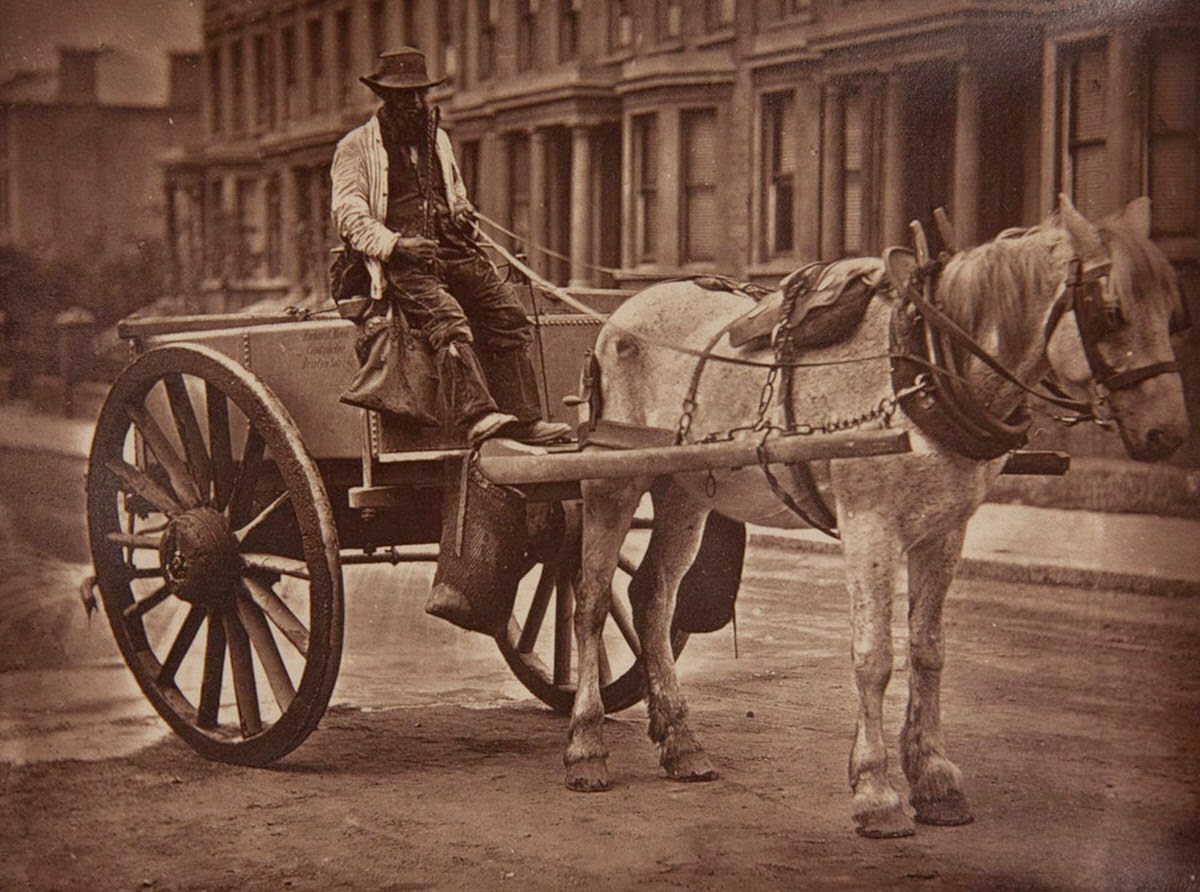
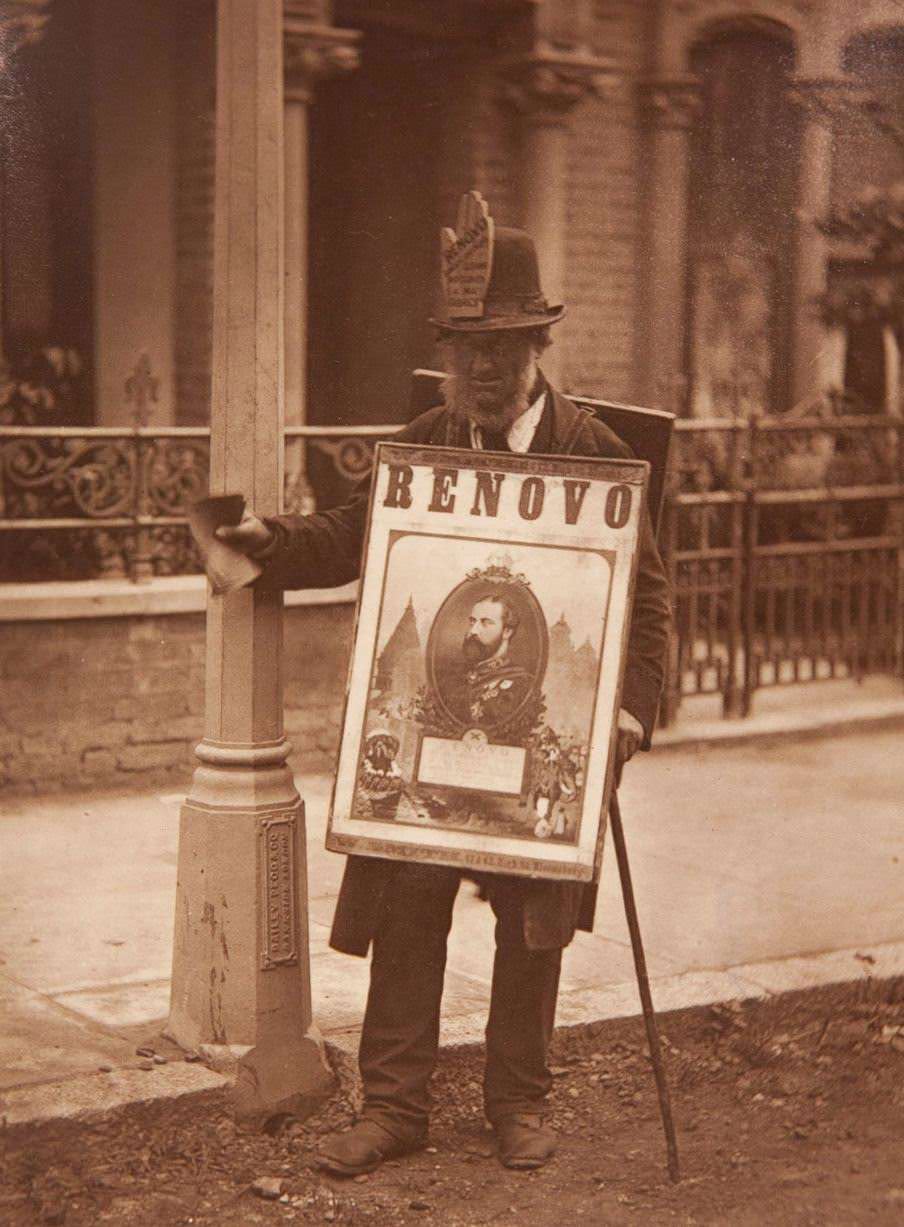
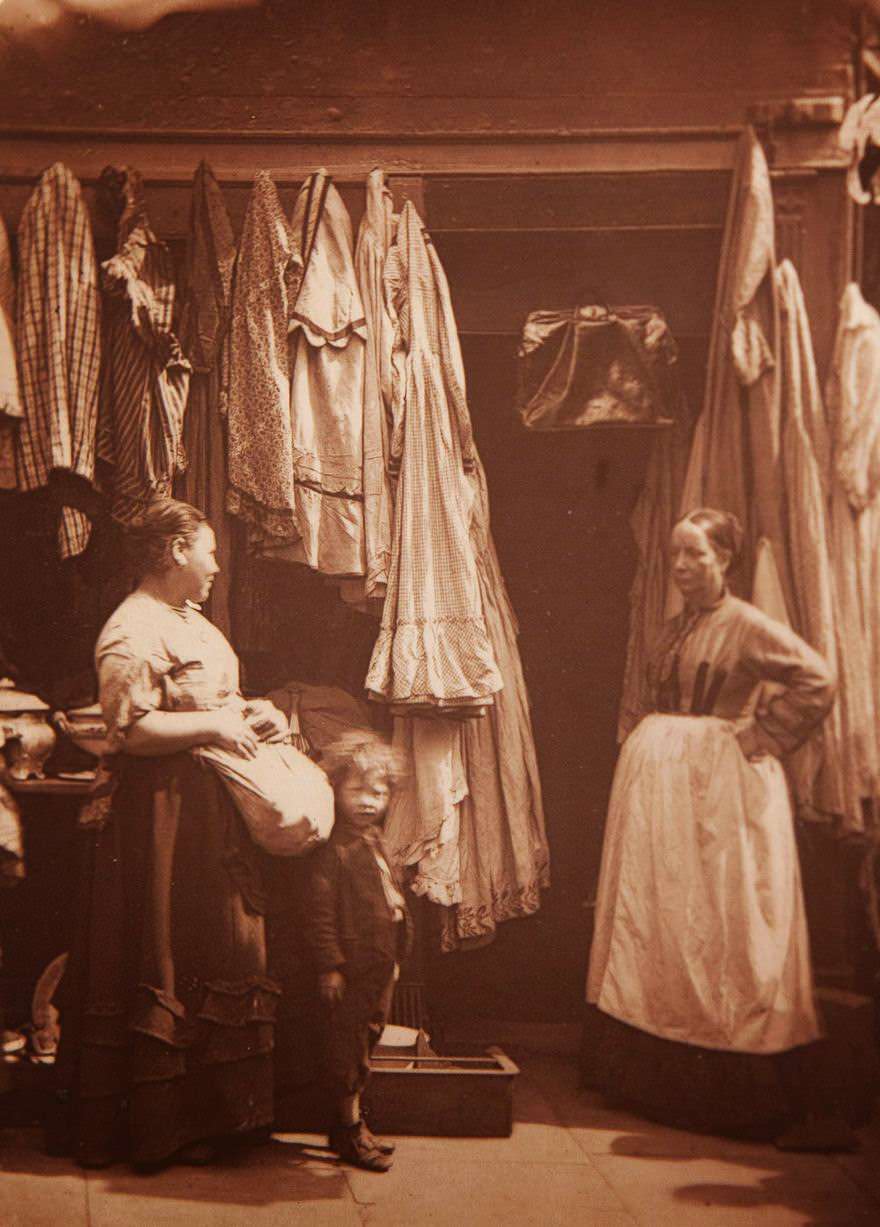
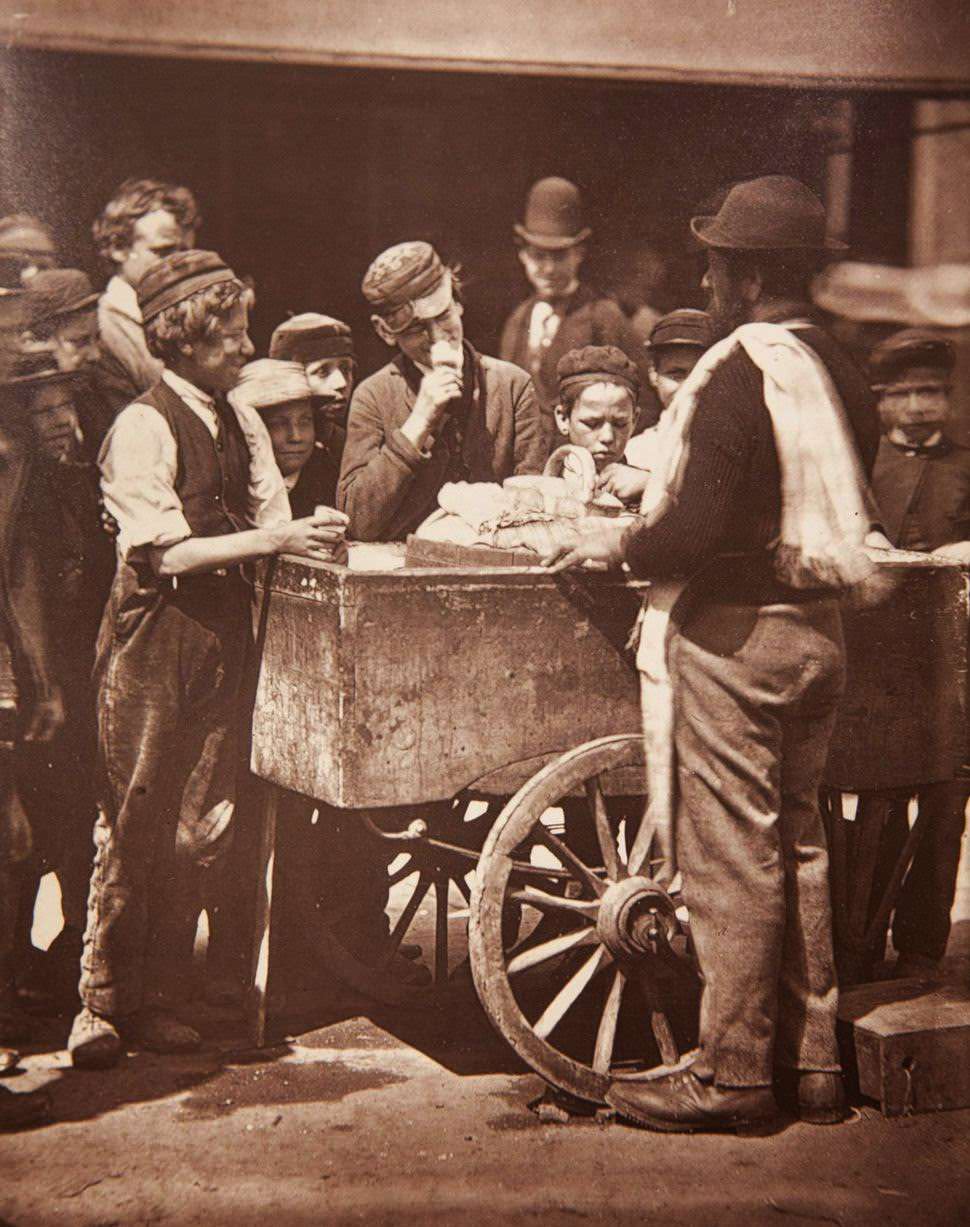
Italian street musicians, wall-workers, shellfish sellers, and ice vendors all appear across Thomson’s photographs. Seasonal figures like November effigy sellers and military recruiting sergeants at Westminster show just how varied street life truly was. Each image is a precise record of people whose work kept the city running, even as they were largely ignored by it.