
When Queen Victoria married Prince Albert on February 10, 1840, she chose a white gown. That single decision changed weddings forever. White became the standard color for bridal gowns across the Western world, and it stayed that way well into the twentieth century. But the style of those white dresses shifted dramatically across the decades that followed. From the fitted silhouettes of the 1850s to the puffed sleeves of the 1890s, Victorian wedding fashion was anything but static.
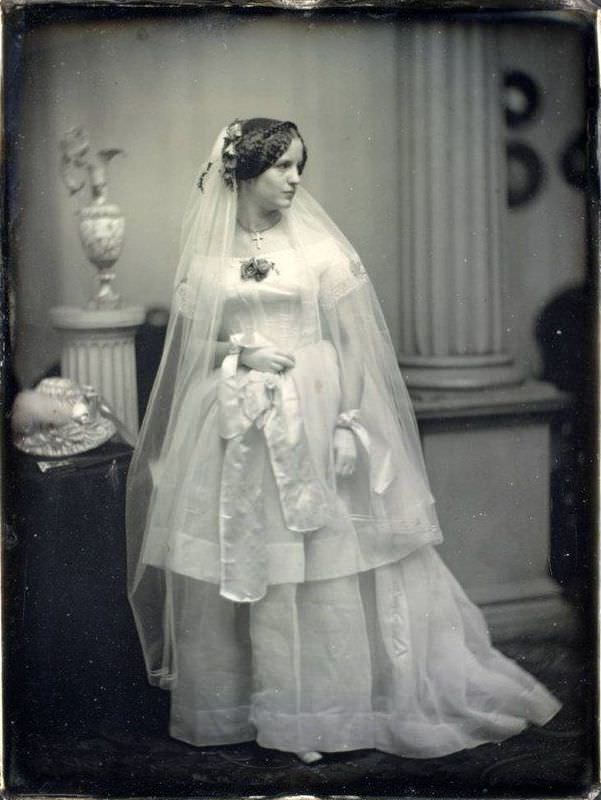
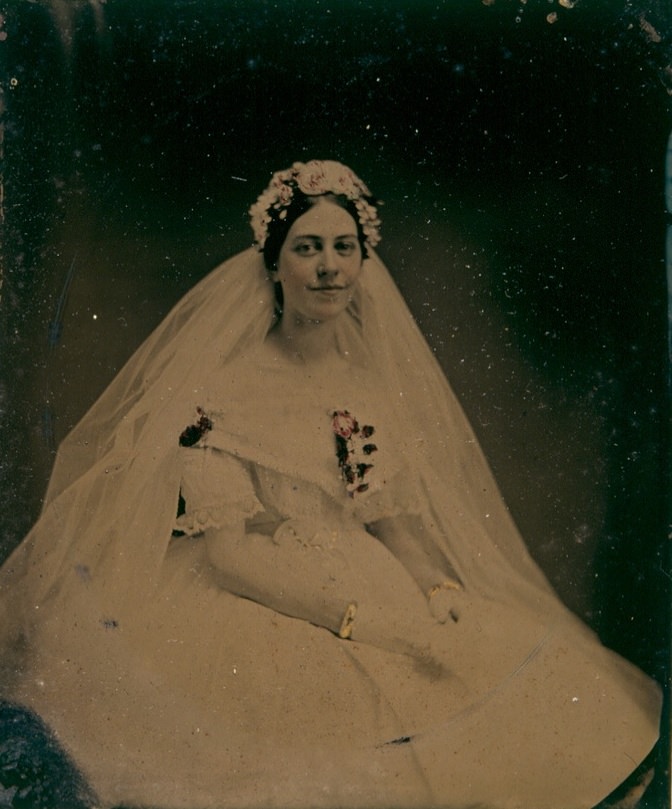
In the early Victorian era — roughly the 1850s and into the 1860s — the bridal gown followed the fitted lines that defined the period’s fashion overall. The bodice was snug, the waist was cinched, and the skirt was structured. Petticoats and hoops were sometimes worn underneath, but they were not required. The fabrics used for these gowns included organdy, tulle, gauze, lace, silk, linen, and cashmere — materials that gave the dress both softness and a sense of occasion. The veil was typically made from gauze, sheer cotton, or lace, and it covered the bride’s face completely. That face covering stayed in place until after the church ceremony.
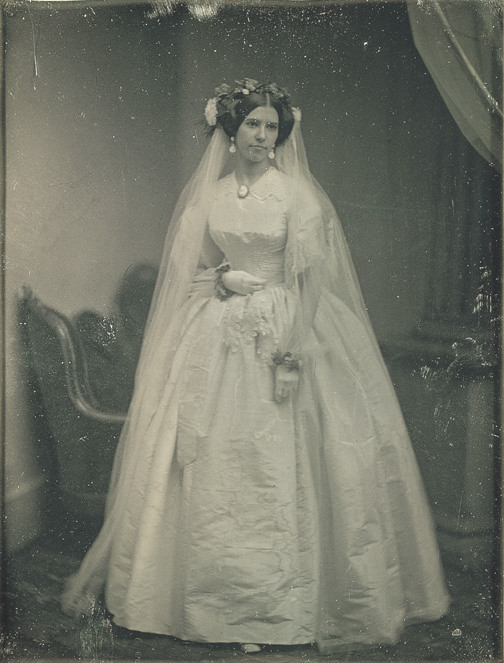
Flower coronets were the traditional headpiece for veiled brides. Orange blossoms were the flower of choice for the bride herself, carrying a long-standing association with purity and fertility. Bridesmaids wore roses or whatever flowers happened to be in season. Everything the wedding party wore — gowns and veils alike — was white. There was no mixing of colors among the attendants during this early period.
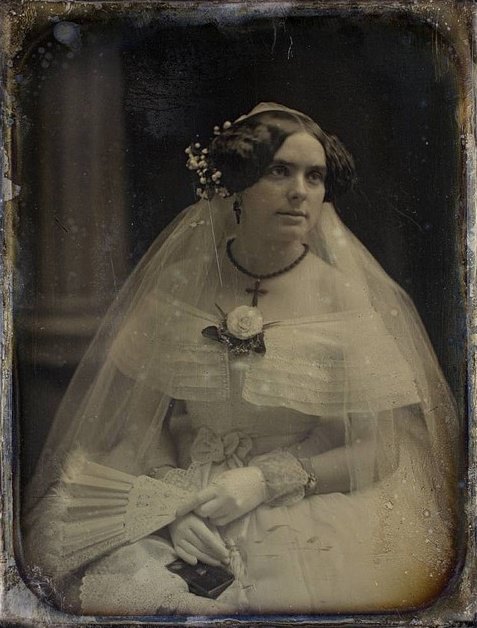
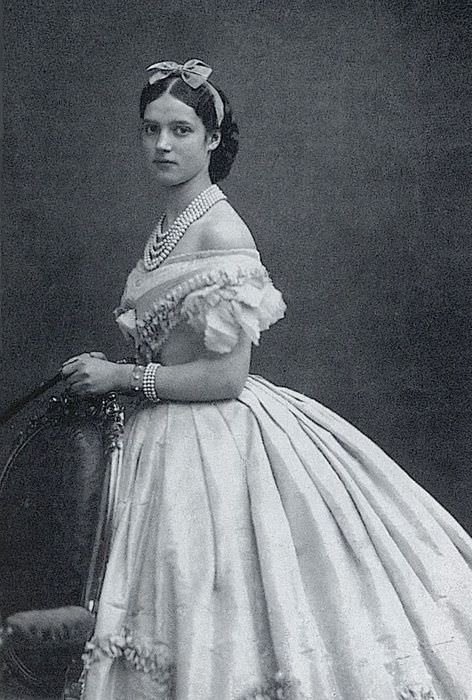
After the ceremony, practicality took over. The bride did not simply retire her wedding gown — she repurposed it. A different bodice, cut lower for formal occasions, was swapped onto the skirt for events like Court Presentations. This gave the dress a second life as eveningwear. Two bodices — one modest, one more formal — became a standard feature of a well-appointed Victorian bridal wardrobe.
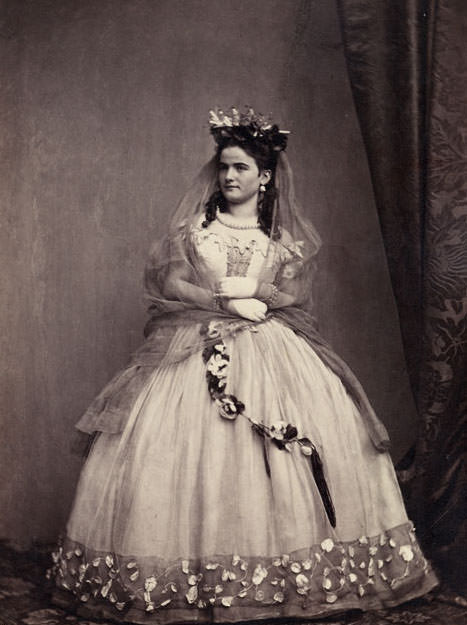
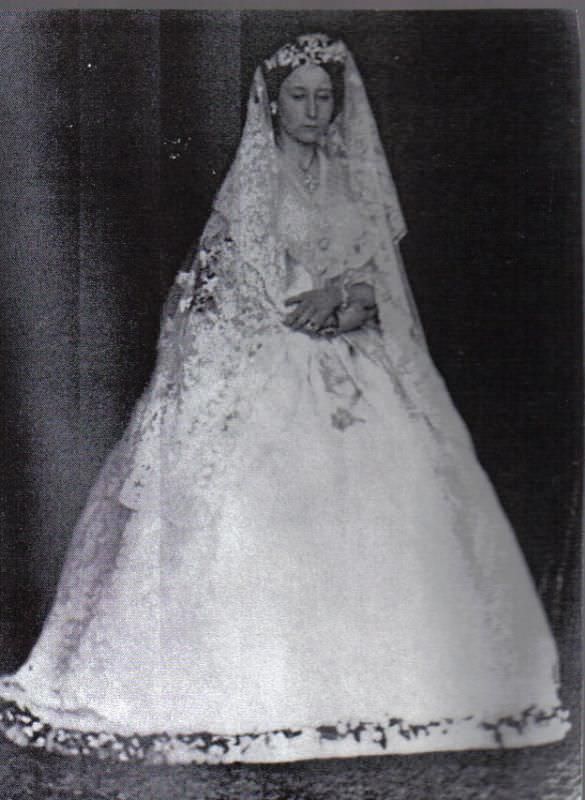
By the 1860s, brides like Princess Alice and everyday women across Europe were photographed in gowns that reflected the full-skirted styles of the mid-Victorian period. The camera was becoming a more common tool for preserving the wedding day, and these portraits offer a clear record of how fashions were evolving in real time.
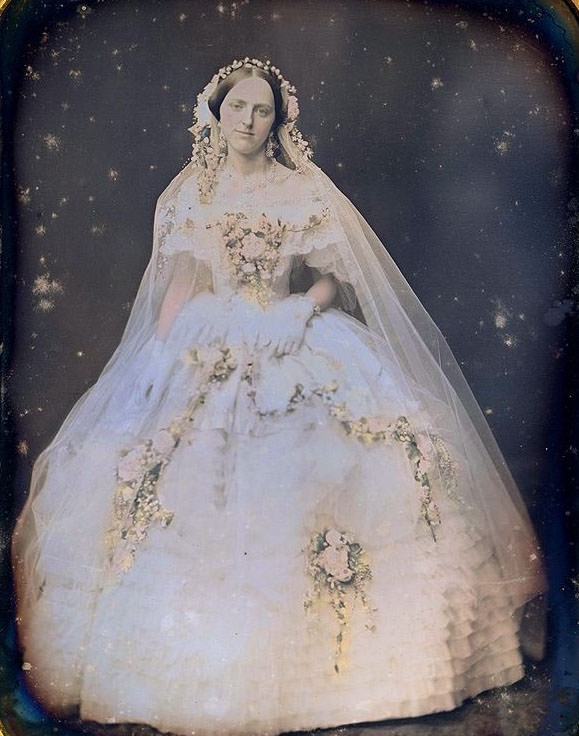
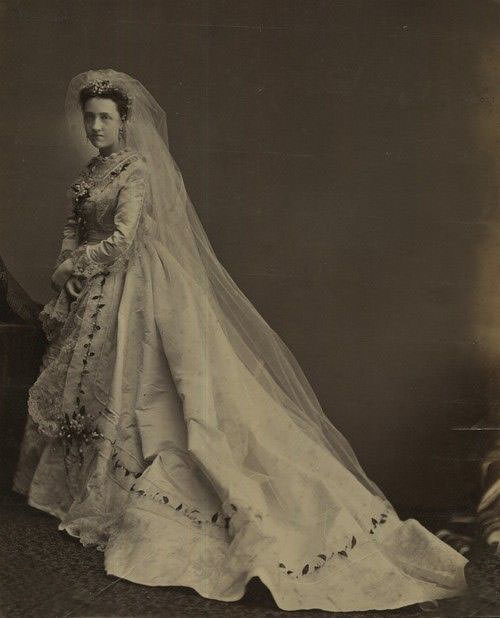
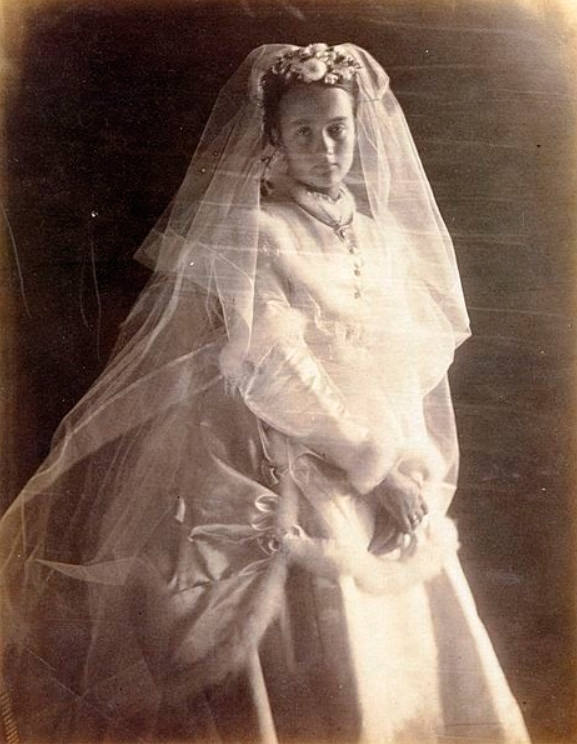
The 1870s brought a significant shift in who was getting married in elaborate gowns — and why. A growing middle class had new money to spend, and weddings became one of the most visible ways to display it. At the top of the status ladder sat gowns from Parisian fashion houses, most famously the House of Worth. A Worth wedding gown was the ultimate symbol of wealth and taste. Women who could not afford an original had copies made, often down to the last detail.
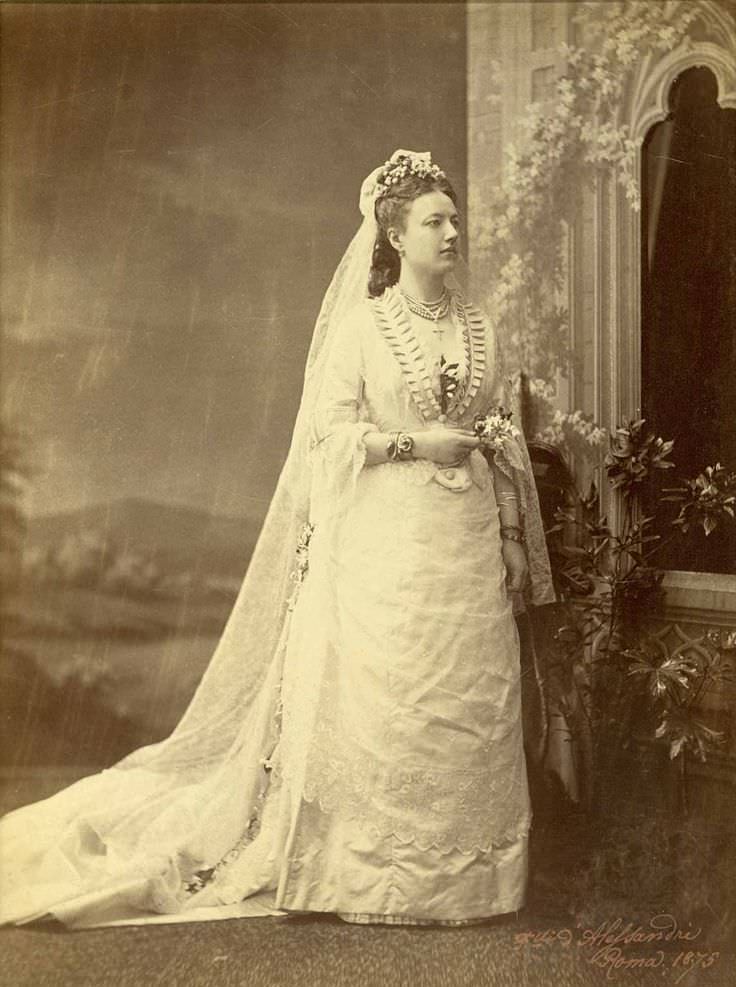
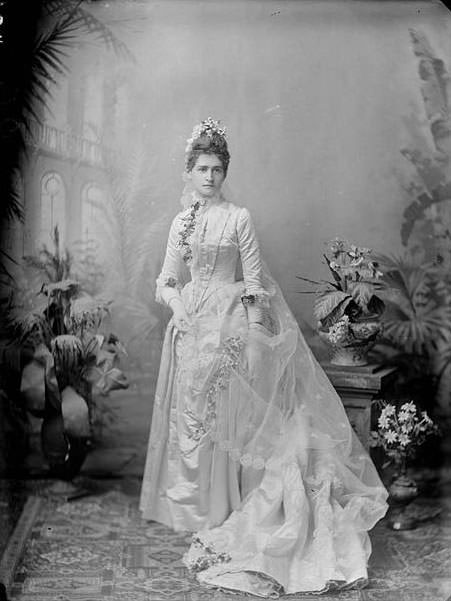
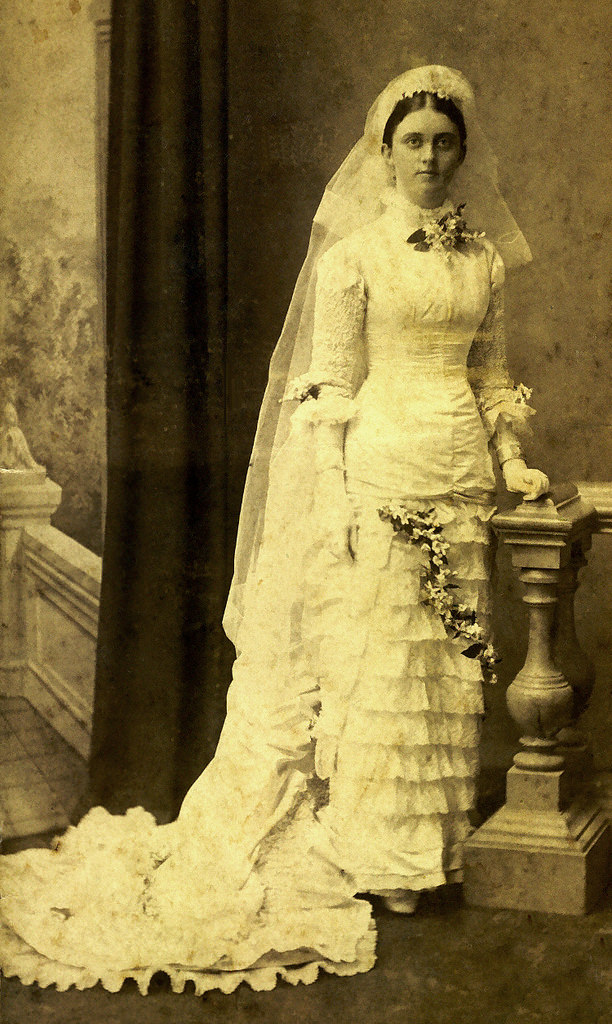
Mid-Victorian gowns from this decade featured full-court trains, long veils, and a bustle at the back that gave the silhouette a dramatic, sweeping shape. Elegant finishing details — intricate trim, fine lacework, layered fabric — set these dresses apart from the simpler styles of the previous decade. The two-bodice system remained in use: one high-necked bodice for the church, and a lower-cut one for post-wedding receptions and formal events.
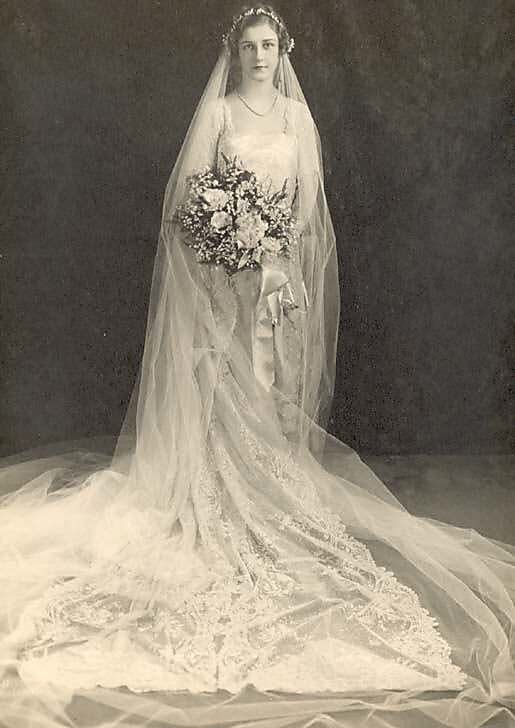
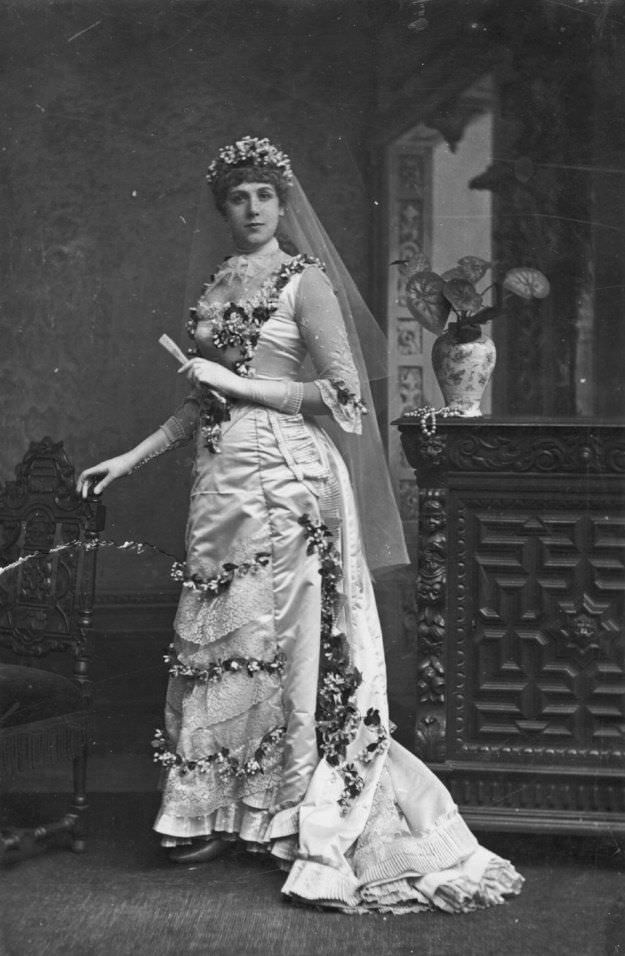
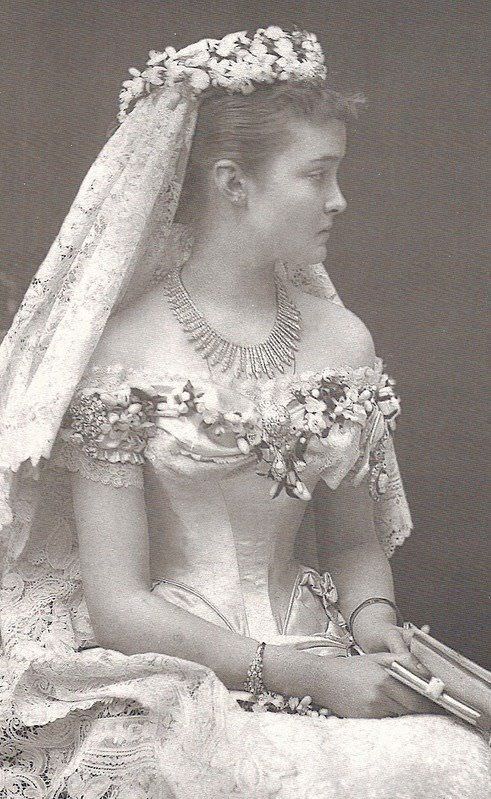
The 1880s saw the bustle reach its most exaggerated form before gradually receding. Wedding portraits from this decade show brides in heavily structured gowns with elaborately draped skirts and long trains. Gloves were a required part of the bridal look. White kid gloves extended long enough to tuck under the sleeves, and a slit was cut in one finger so the ring could be slipped on without the bride needing to remove the glove entirely.
Bridal shoes followed strict conventions as well. Slippers were made from white kid leather, satin, or brocade. The heel measured exactly one inch — low enough for the long walk down the aisle, elegant enough to suit the occasion.
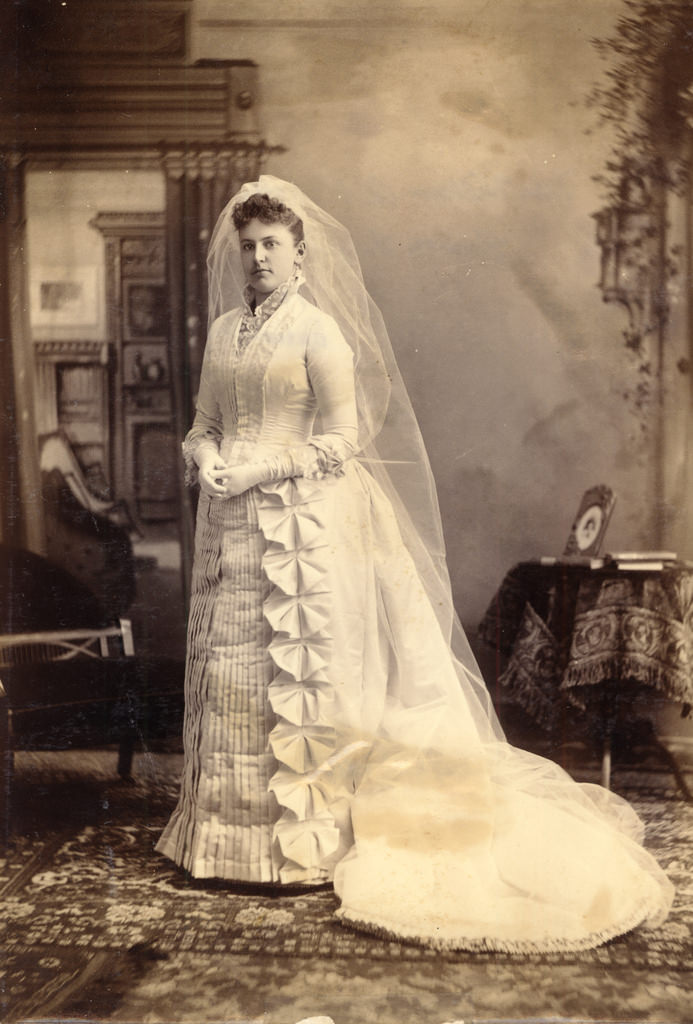
By the late 1880s, the New Orleans bride and her counterparts across the country were still firmly committed to white, but the silhouette was beginning to change. The bustle was on its way out, and a new shape was on the horizon.
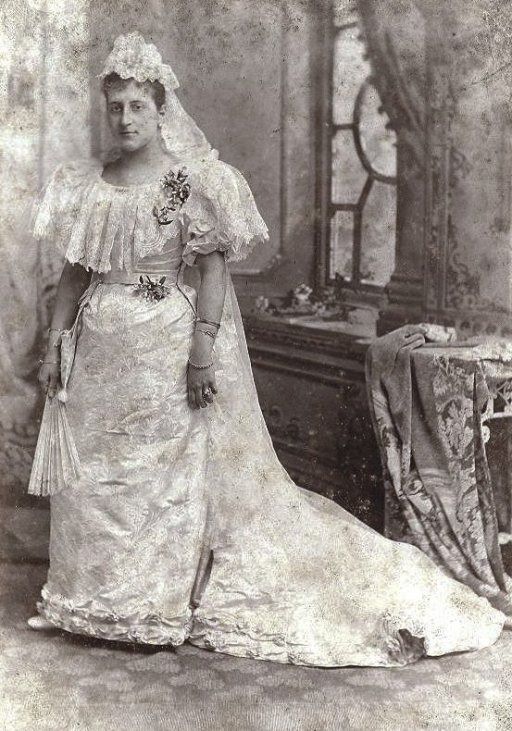
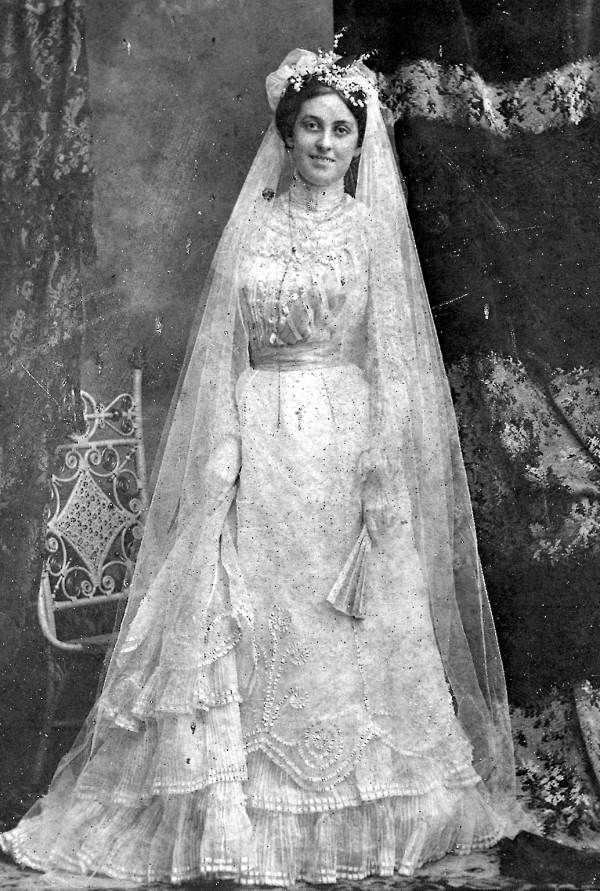
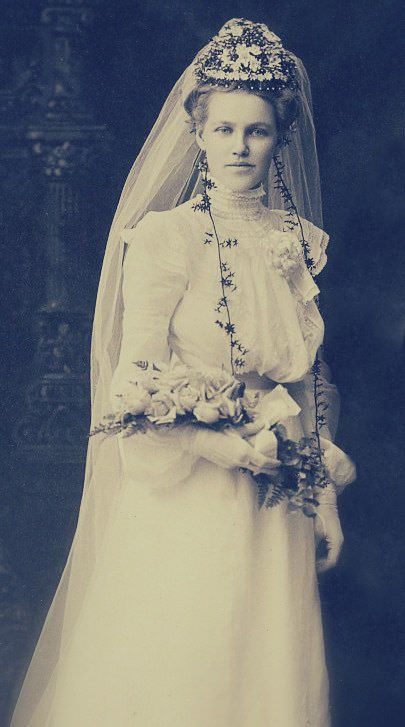
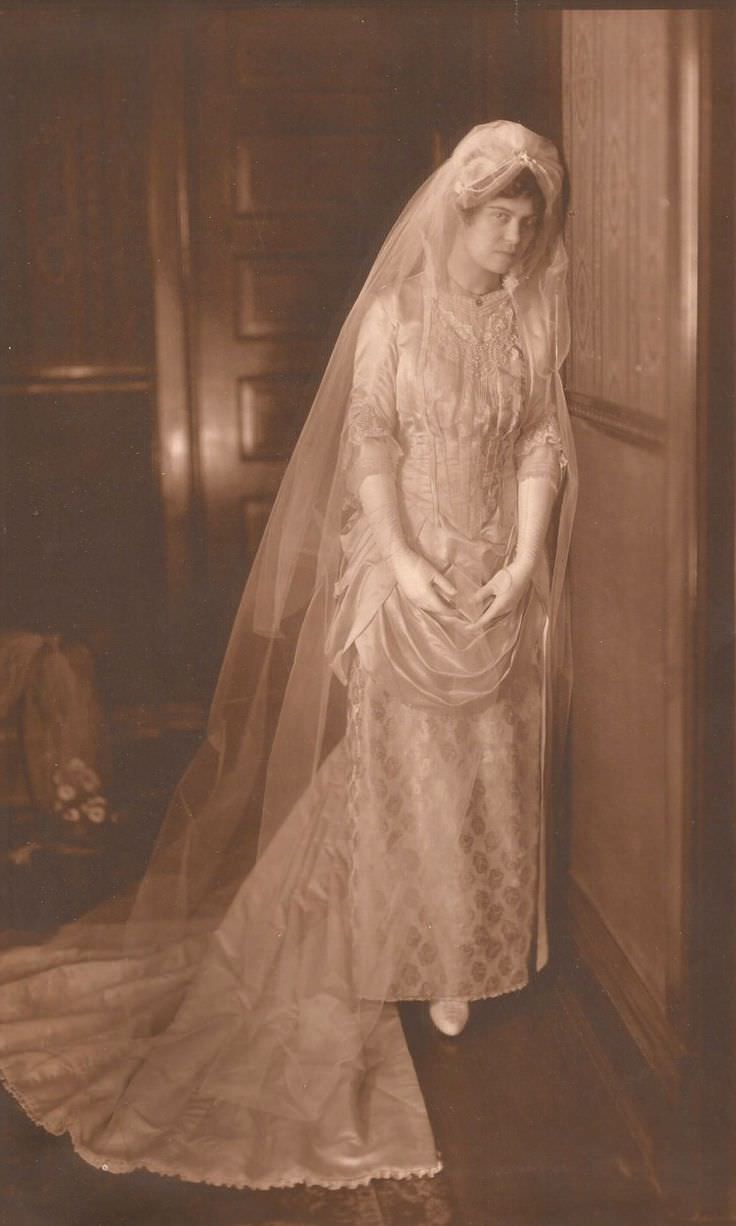
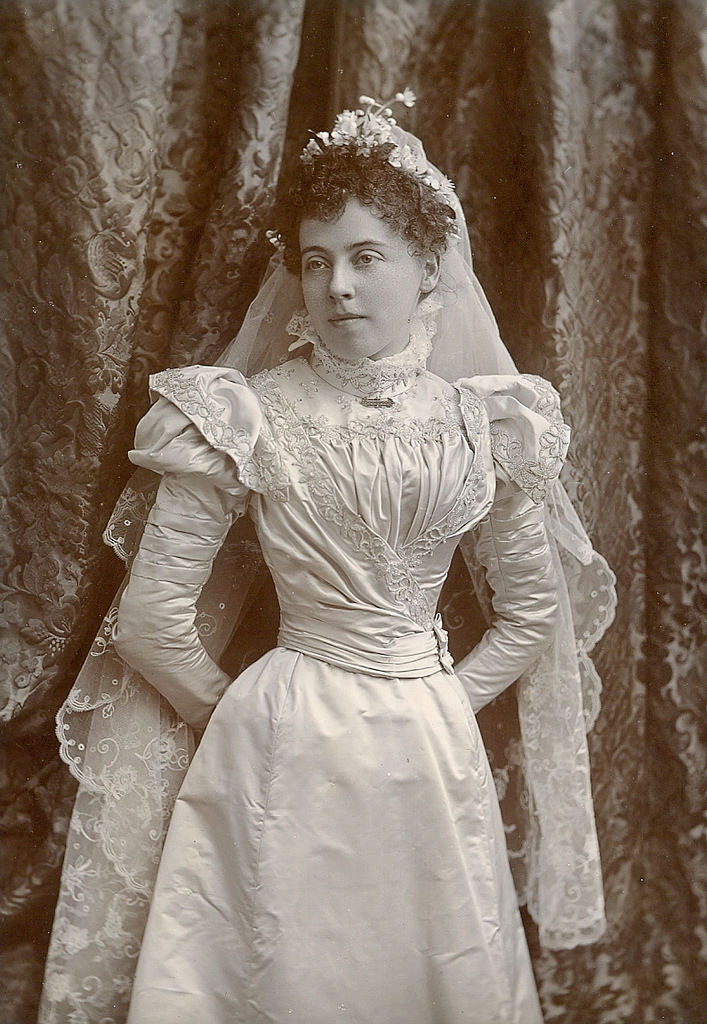
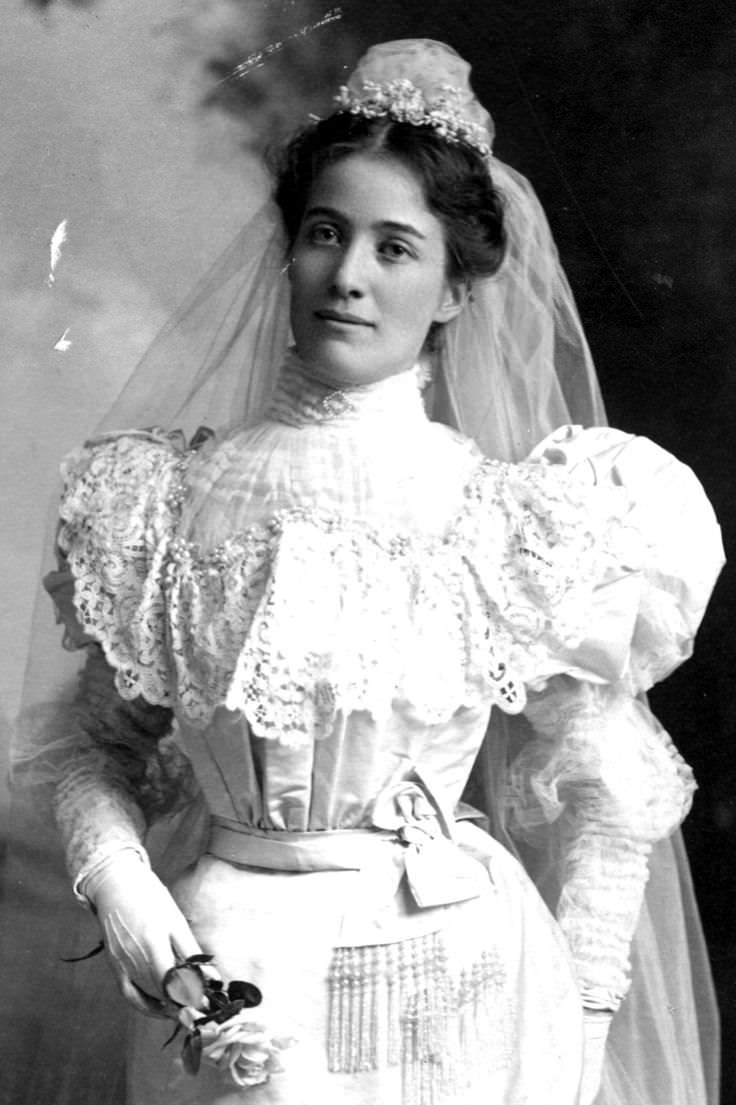
The 1890s completed that transformation. The bustle disappeared entirely, replaced by a demi-train and sleeves that grew dramatically large at the shoulder — a defining feature of the decade’s fashion. For church weddings, a train was required, and the veil had to match it in length. The veil itself was made from silk tulle or lace. One notable change: the veil was no longer draped over the bride’s face after the wedding as a kind of shawl. Its role ended when the ceremony did.
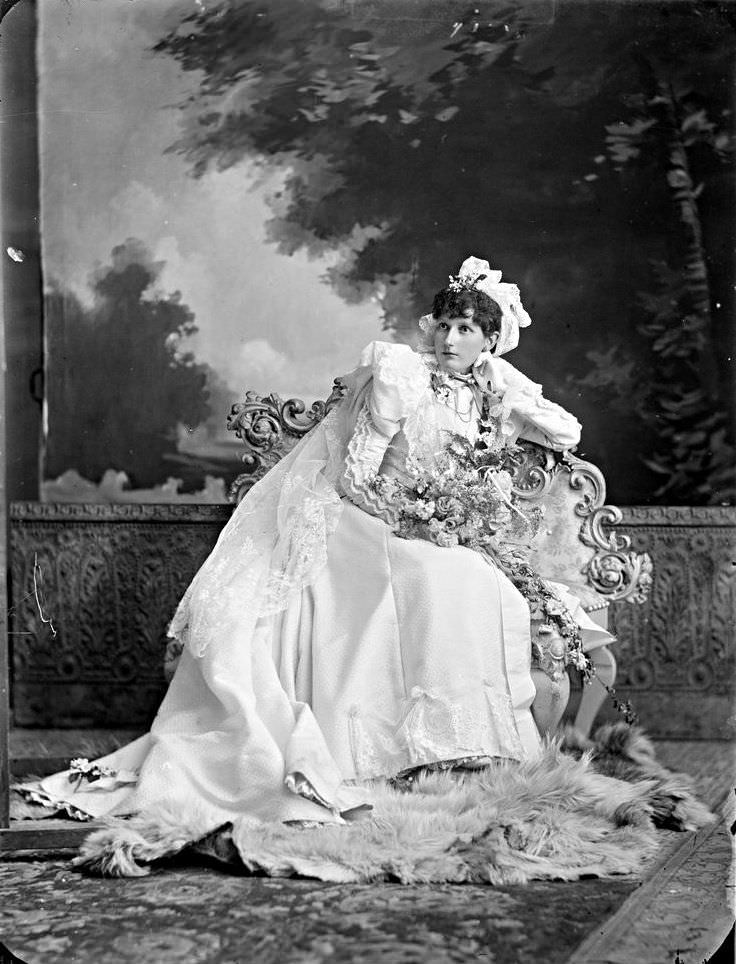
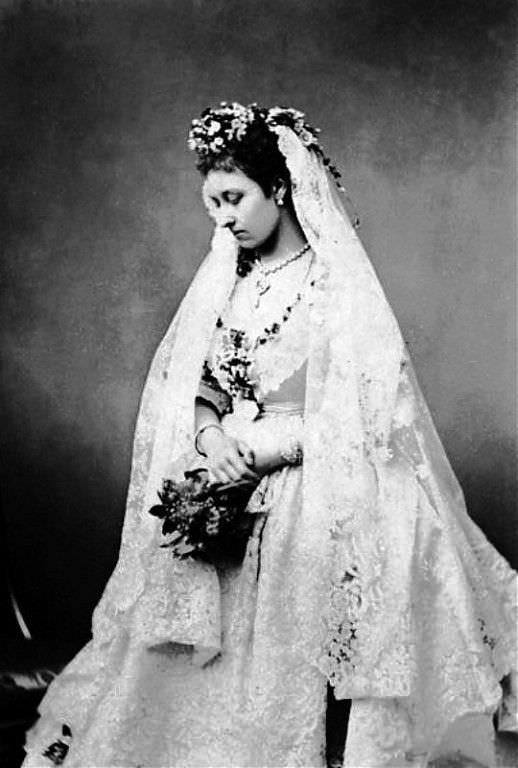
Not every Victorian bride wore white. Widows who remarried in the early and mid-Victorian eras followed a distinct set of unwritten rules. White was off the table — it carried too strong an association with purity and a first marriage. Orange blossoms were avoided for the same reason. Instead, widows tended to choose pearl or lavender satin gowns trimmed with ostrich feathers. They also skipped the bridesmaids and the veil entirely. As the century progressed, the rules for widows loosened somewhat. By the later Victorian decades, a remarrying widow could have attendants and even pages at her wedding — but no veil of orange blossoms. If she chose a color other than white, rose, salmon, ivory, and violet were all acceptable options.
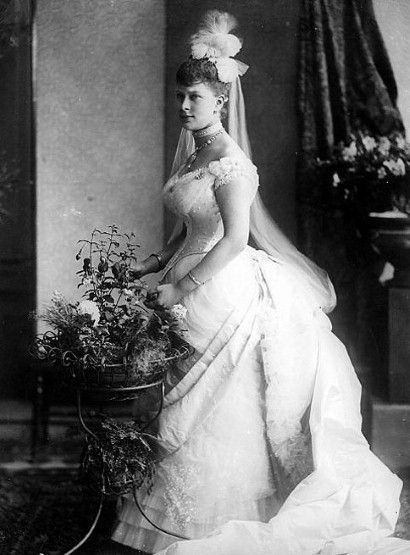
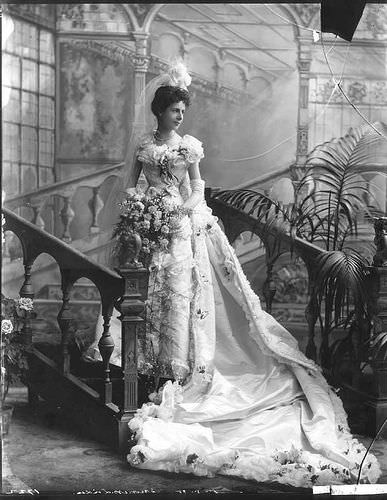


These brides would have been even more beautiful and radiant had they been allowed to smile! Most of them look so sad and a couple look downright pissed! Either way the wedding dresses are gorgeous – I love the fitted ones and the ones with the massive veils and long trains.
Absolutely beautiful and awesome 👌