By the late 1960s, Japanese women’s fashion had shifted dramatically from what it looked like just two decades earlier. The end of World War II opened Japan to strong American and European cultural influences, and clothing was one of the first areas to change.
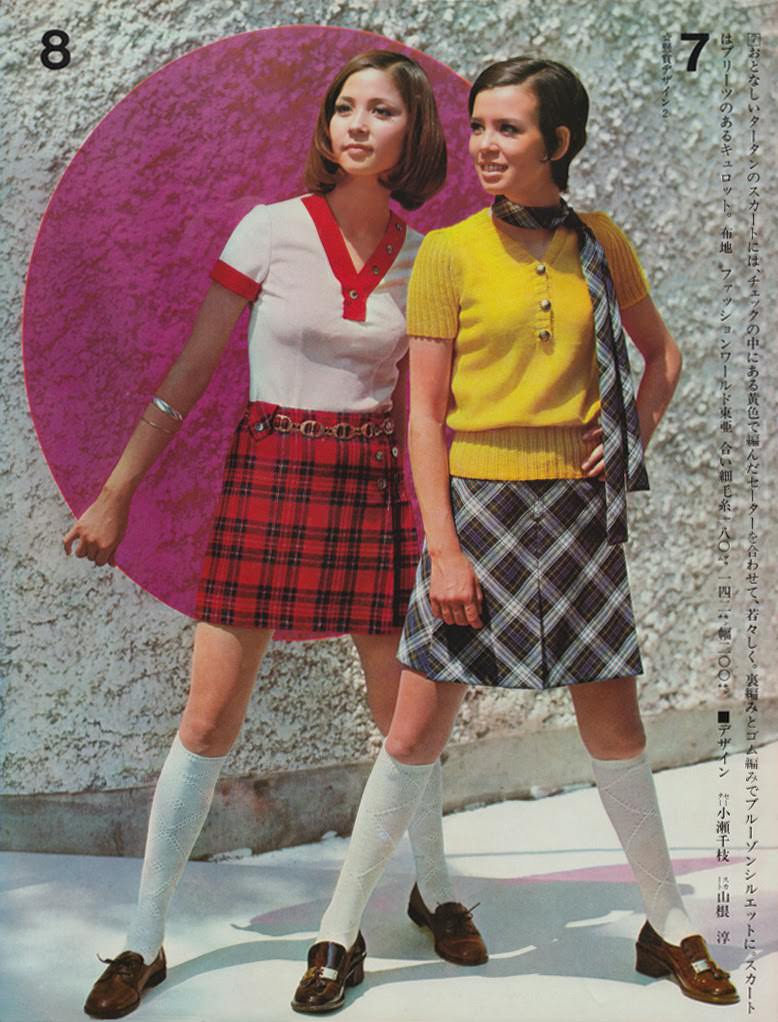
During the war years, practical garments like monpe — loose-fitting trousers worn for wartime labor — were standard dress for Japanese women. As Japan rebuilt after the war, those functional styles gave way to Western-inspired designs. Skirts, dresses, and tailored silhouettes replaced the older wartime wardrobe.
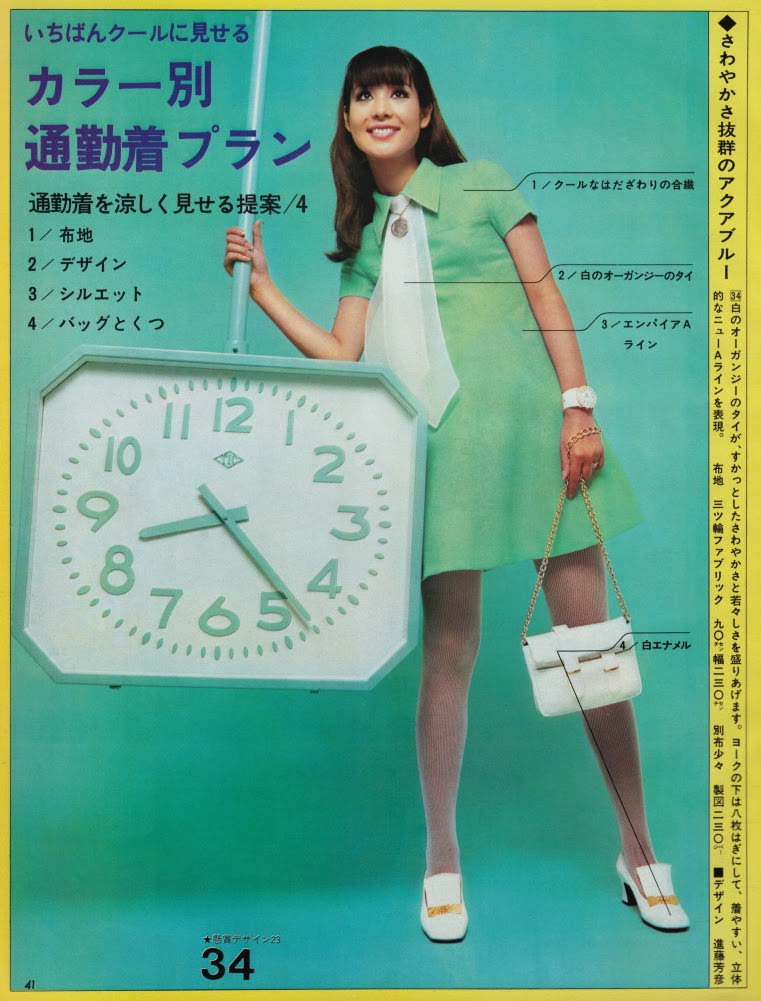
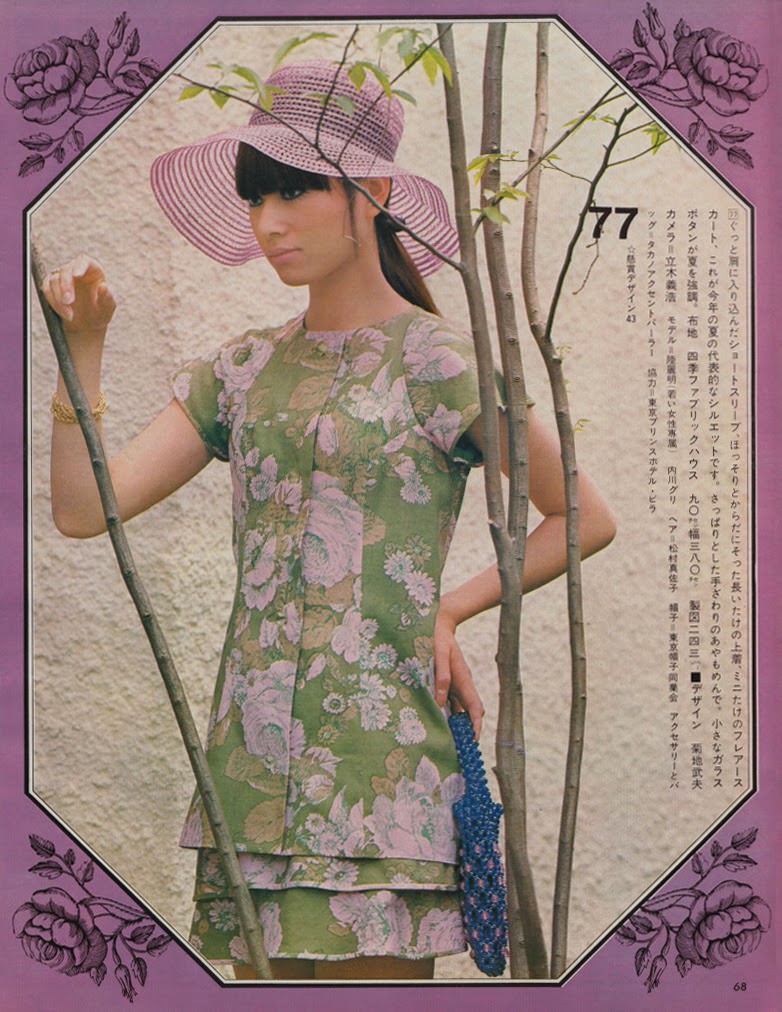
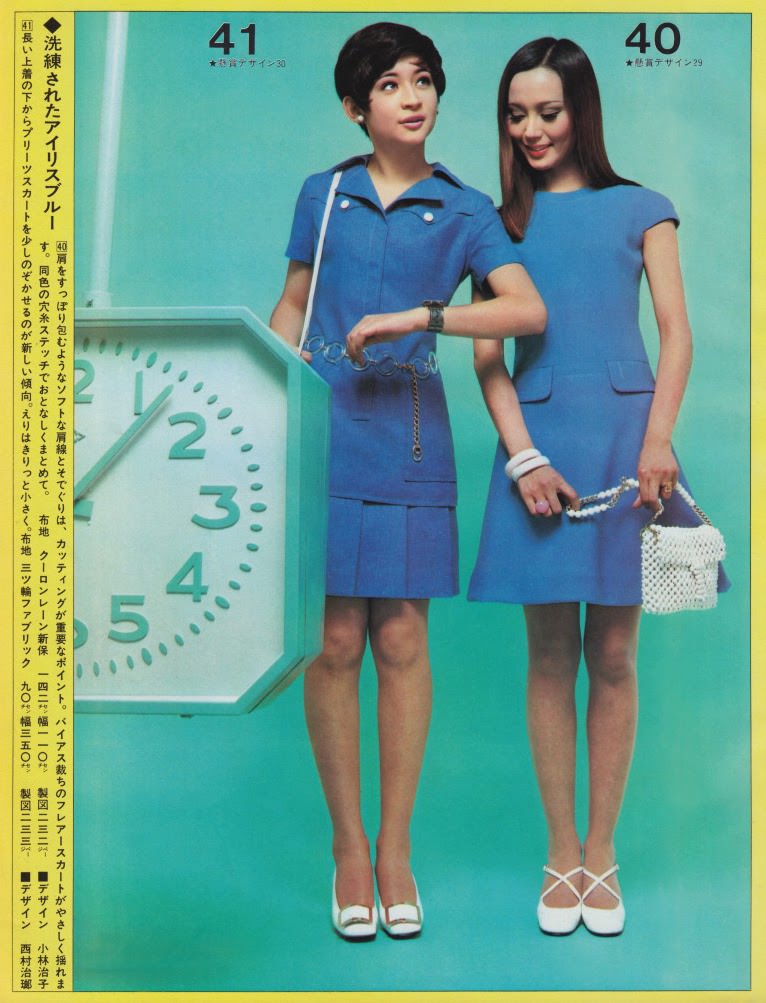
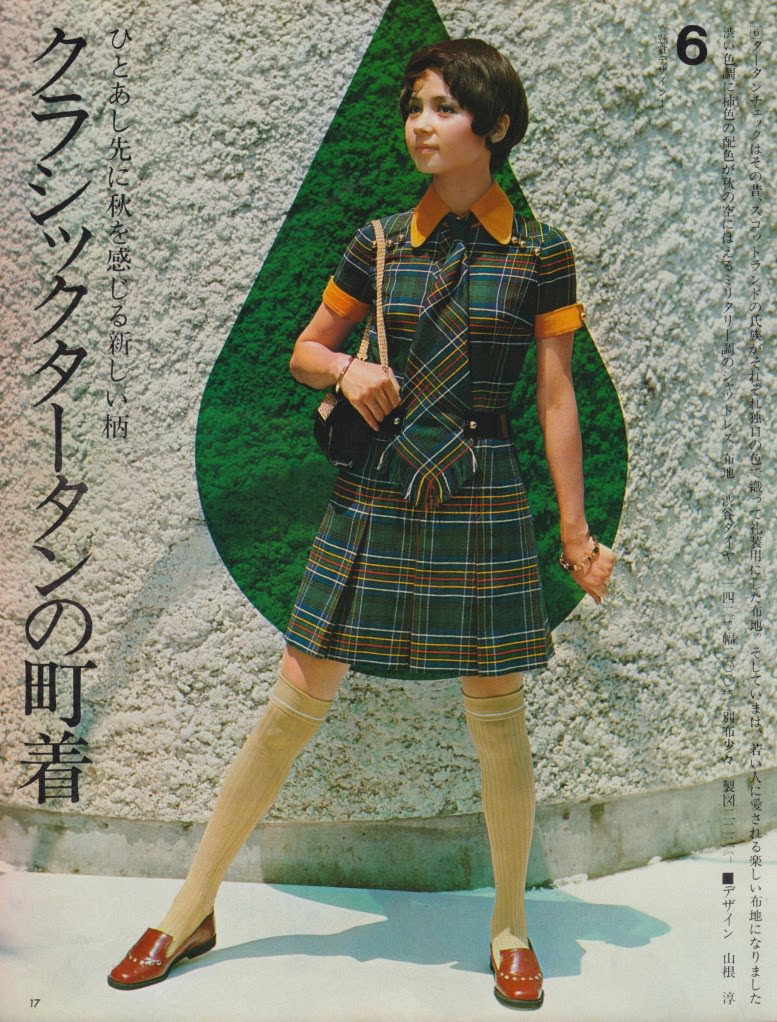
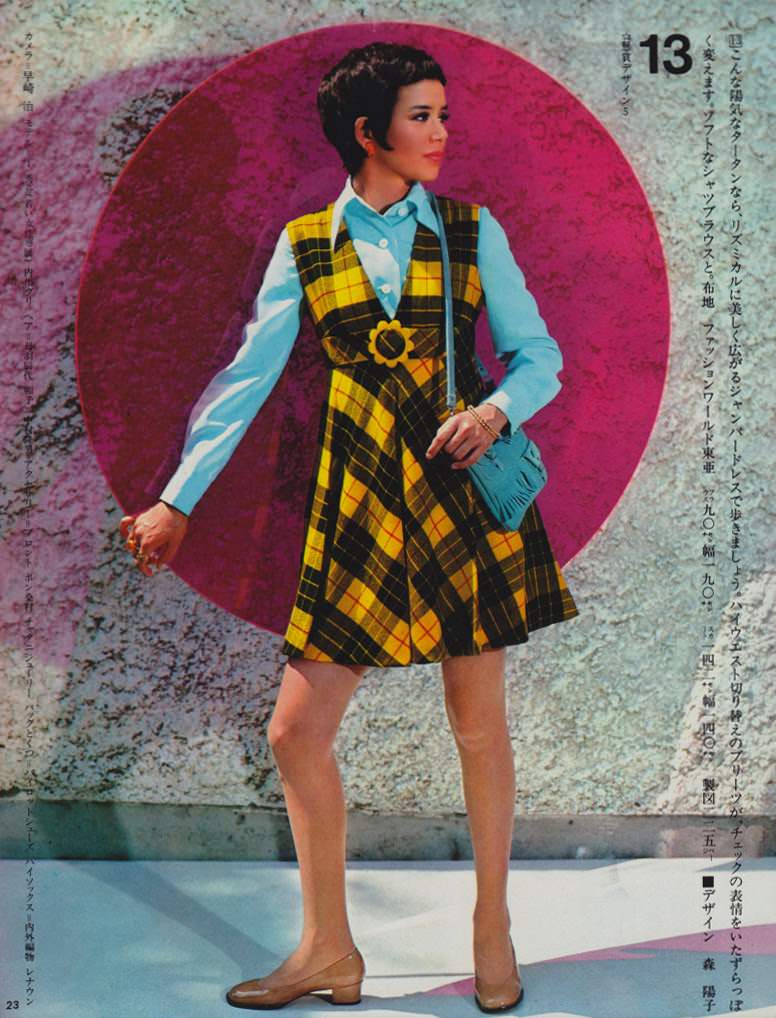
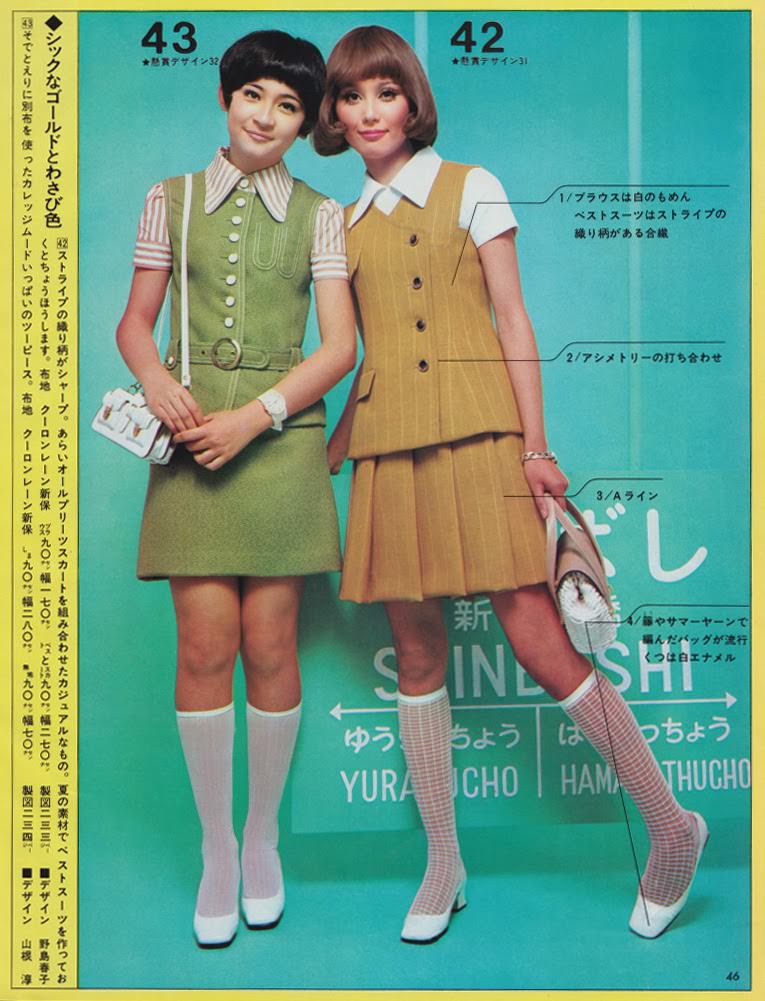
Fashion trends flowing in from Paris, London, and New York were adapted for the Japanese market throughout the 1960s. One of the most defining shapes of this era was the A-line cut — narrow at the shoulders or waist and flaring gradually downward, like the letter A.
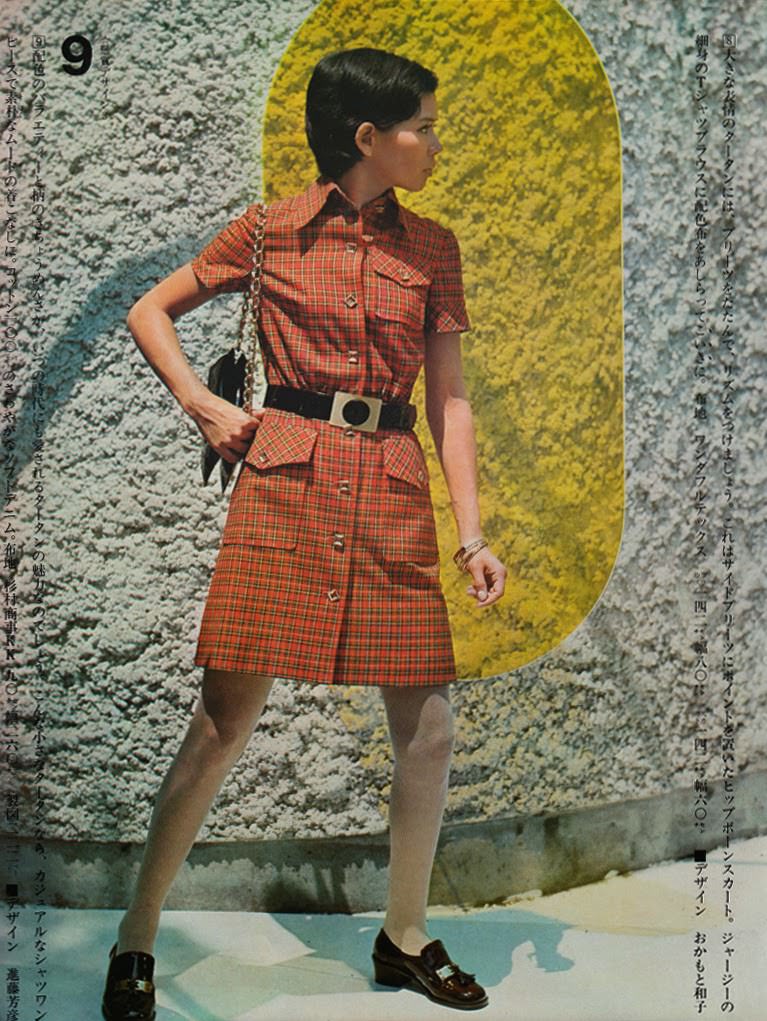
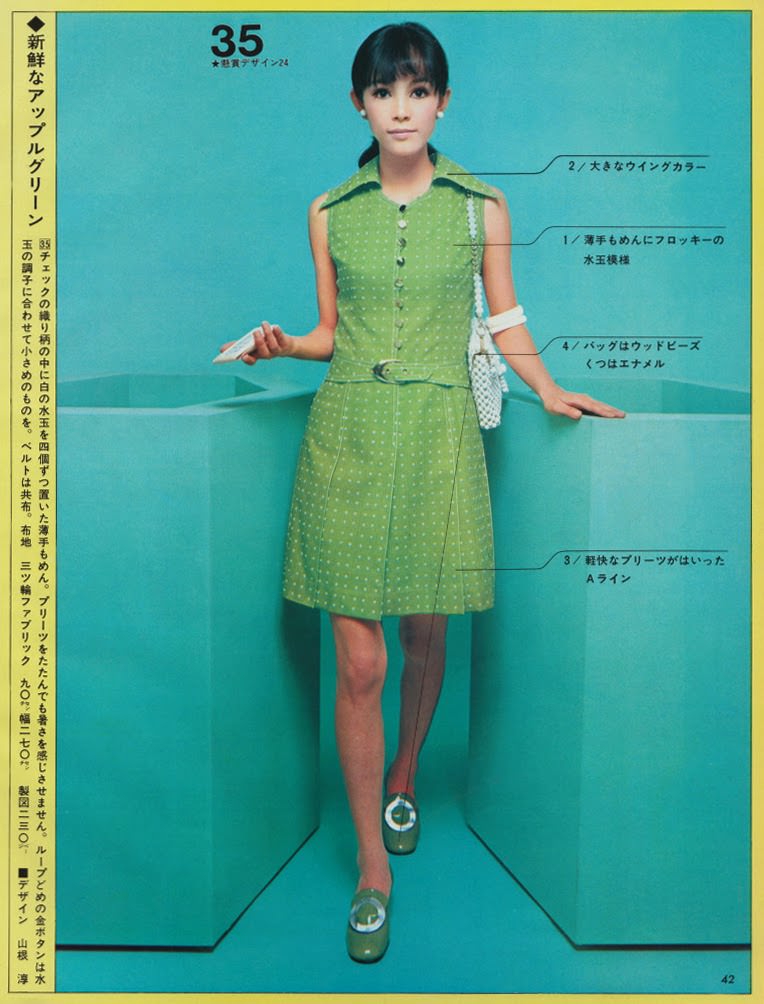
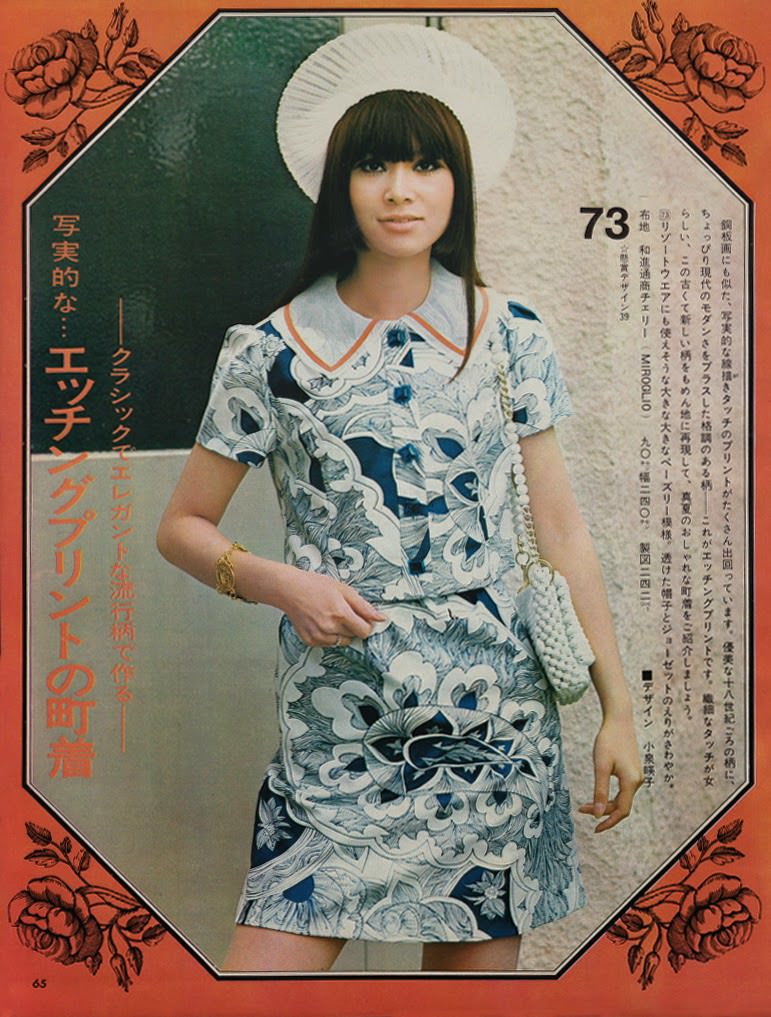
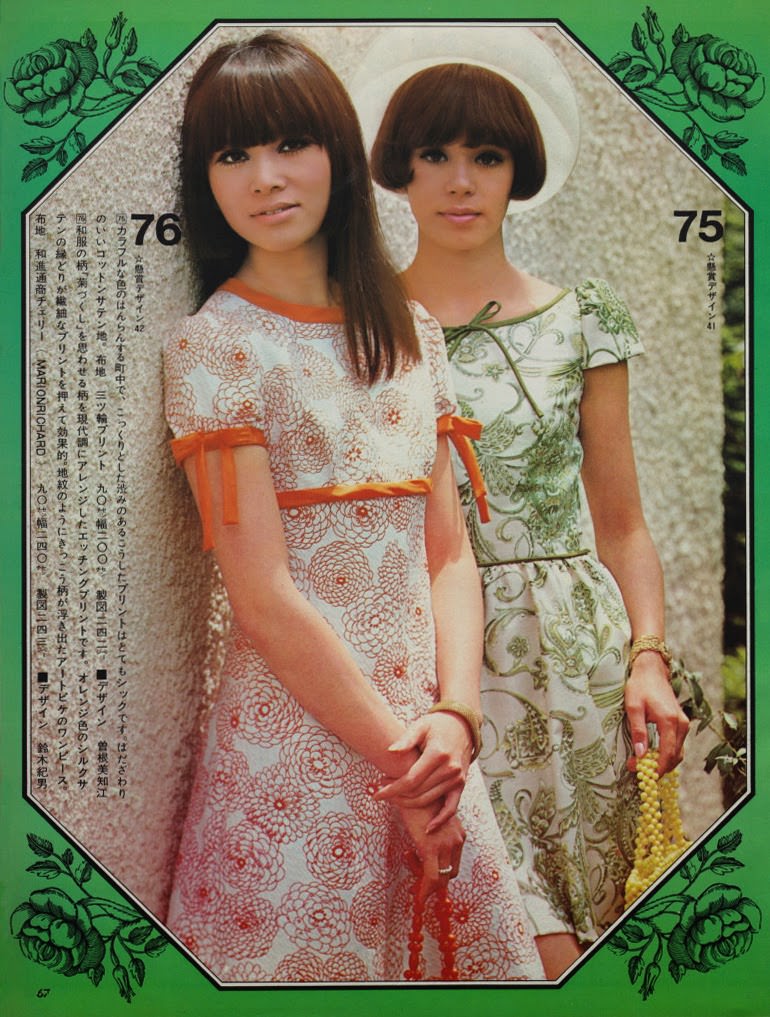
The A-line appeared in both dresses and skirts, offering a clean, structured look that felt modern and fresh. Japanese designers and manufacturers embraced this silhouette and often paired it with decorative floral patterns, blending Western structure with local aesthetic sensibilities.
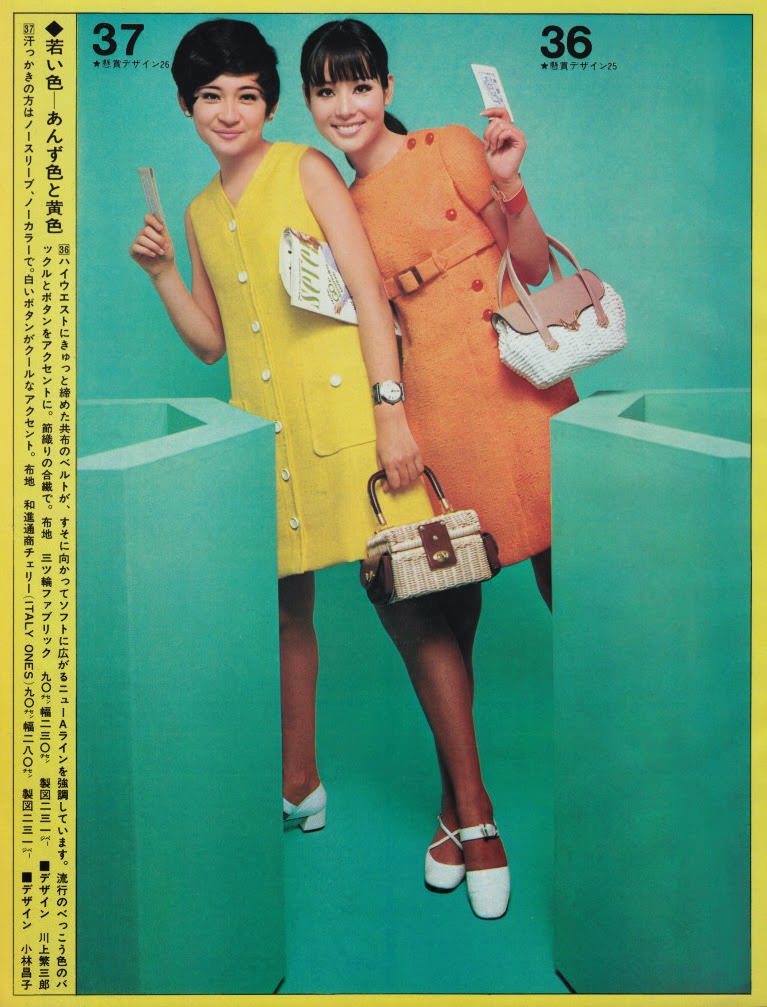
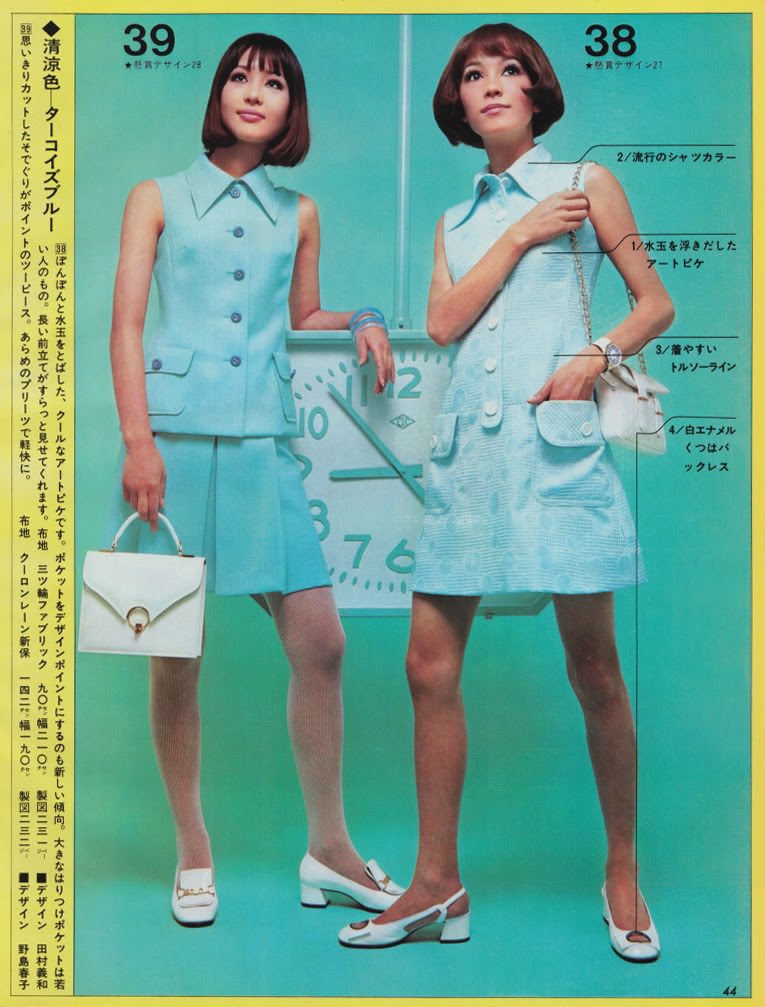
Fashion magazines of the period documented these styles in detail. Their pages featured models dressed in A-line dresses and skirts, showing Japanese readers exactly how to wear the looks that were trending internationally.
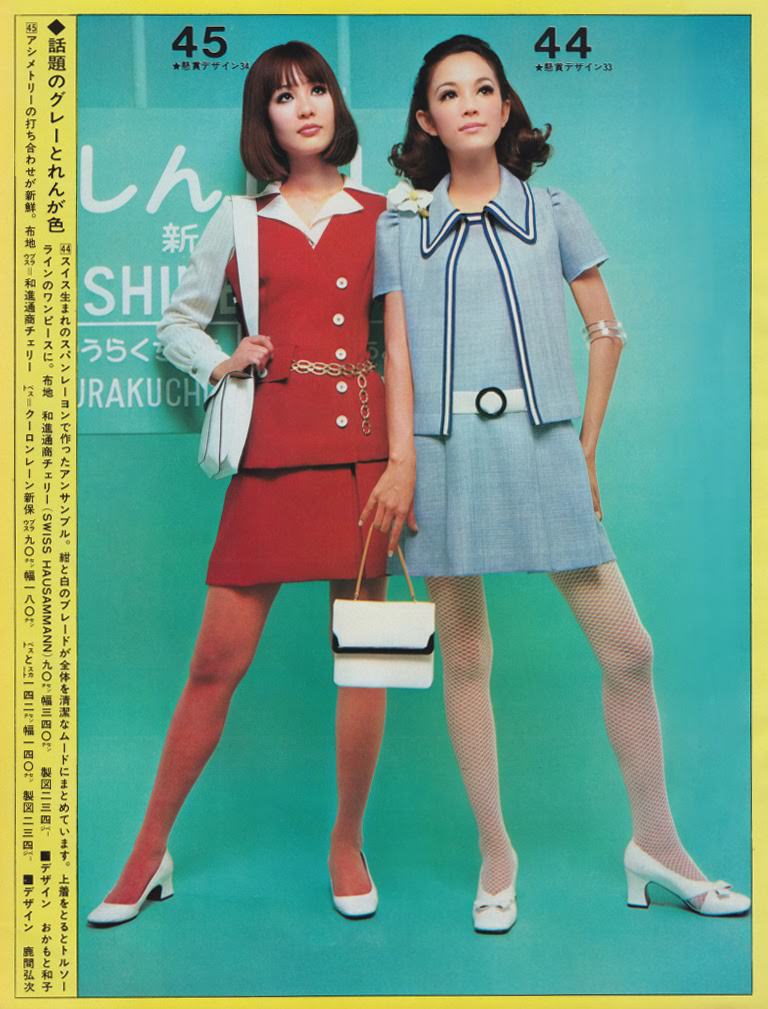
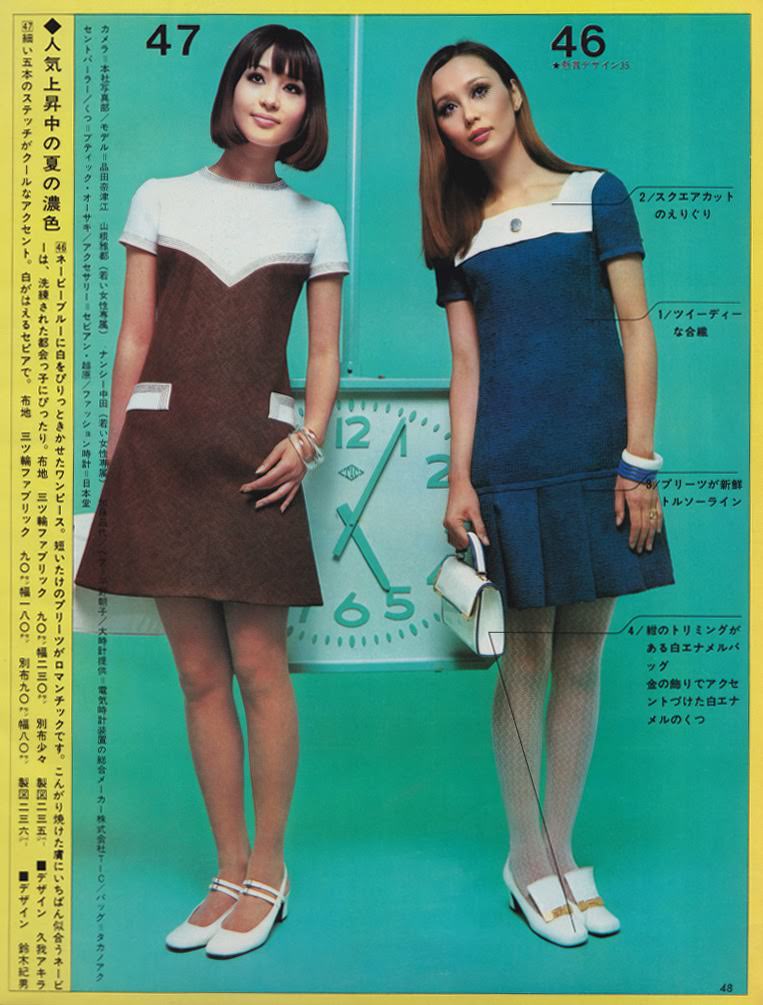
The magazine spreads reveal a careful balance — structured Western silhouettes styled with patterns and details that felt distinctly Japanese. This was not simple imitation. It was a deliberate fusion that defined the look of young Japanese women during this era.