
Taiwan in the 1960s was a place caught between hardship and transformation. Unemployment was high, inflation ate into household budgets, and the island exported very little to the outside world. The economy had struggled through much of the mid-20th century, and ordinary Taiwanese people felt that strain in their daily lives. But change was coming, and these photographs capture the island right at that turning point.
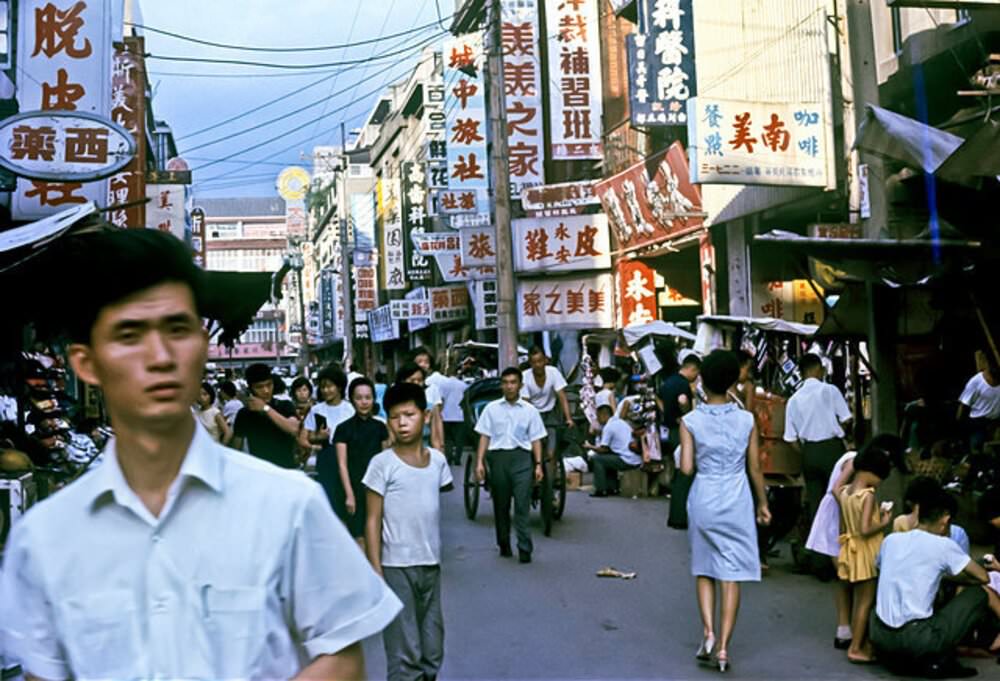
Taipei, the capital, was the beating heart of the island. Its streets mixed old architecture with the energy of a city slowly modernizing. Bicycles, pedestrians, and early motor vehicles shared the same roads, and vendors set up stalls wherever foot traffic gathered. Life was dense and lively, even as many residents faced economic pressure.
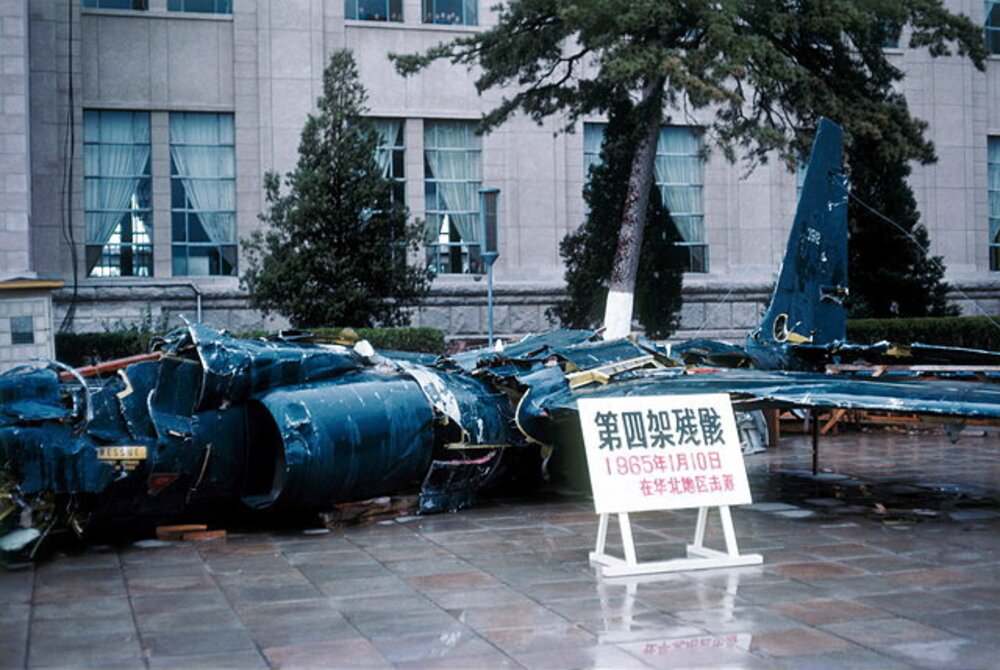
The political situation added another layer of tension to everyday life. Taiwan’s government, led by the Nationalist party under President Chiang Kai-shek, remained in a state of hostility with mainland China. That conflict was not just political — it had real military consequences. In 1965, a Taiwanese U-2 reconnaissance aircraft was shot down by Chinese air defense systems, a stark reminder of how dangerous the standoff across the strait had become.
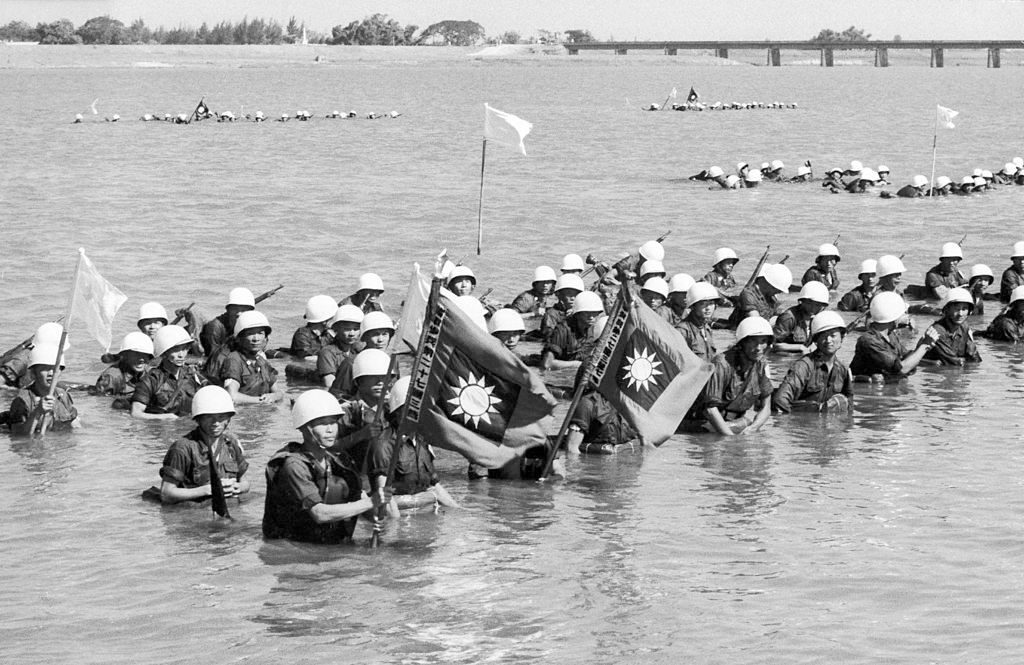
The military was a constant presence in Taiwanese public life. Parades, drills, and commemorative events were held regularly, reinforcing both national pride and the government’s authority. The Republic of China Air Force held formal parades, and Nationalist troops conducted visible military operations across the island. These events were not just for show — they reflected a government preparing for a conflict it believed was never truly over.
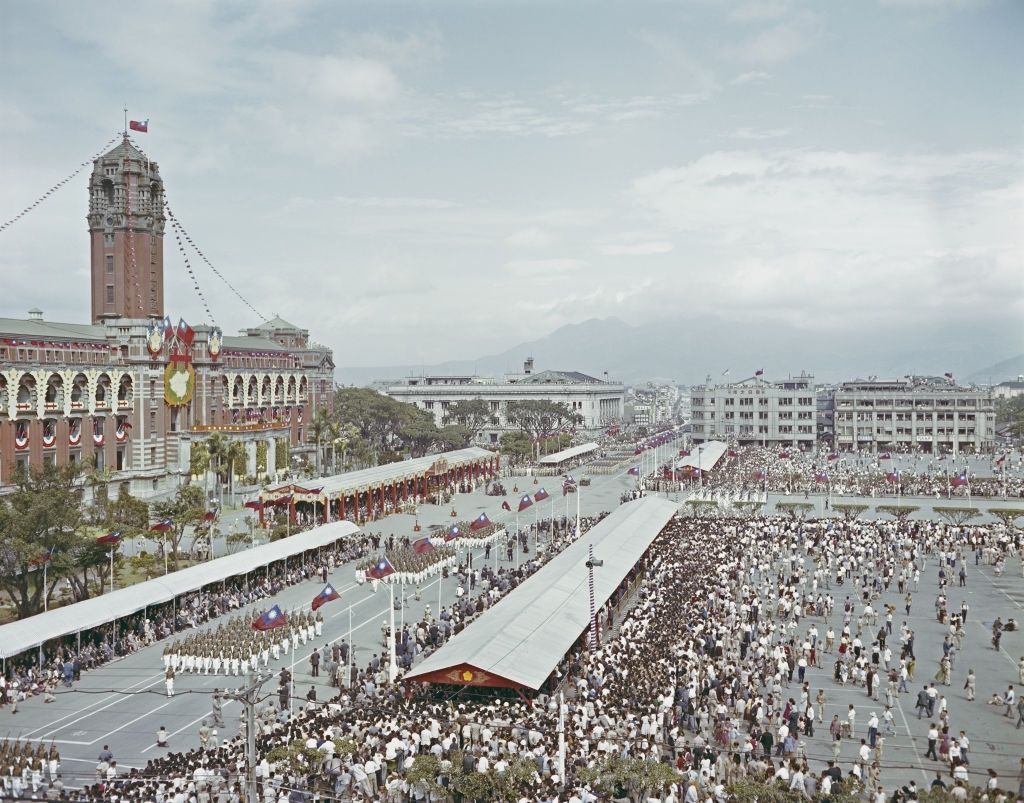
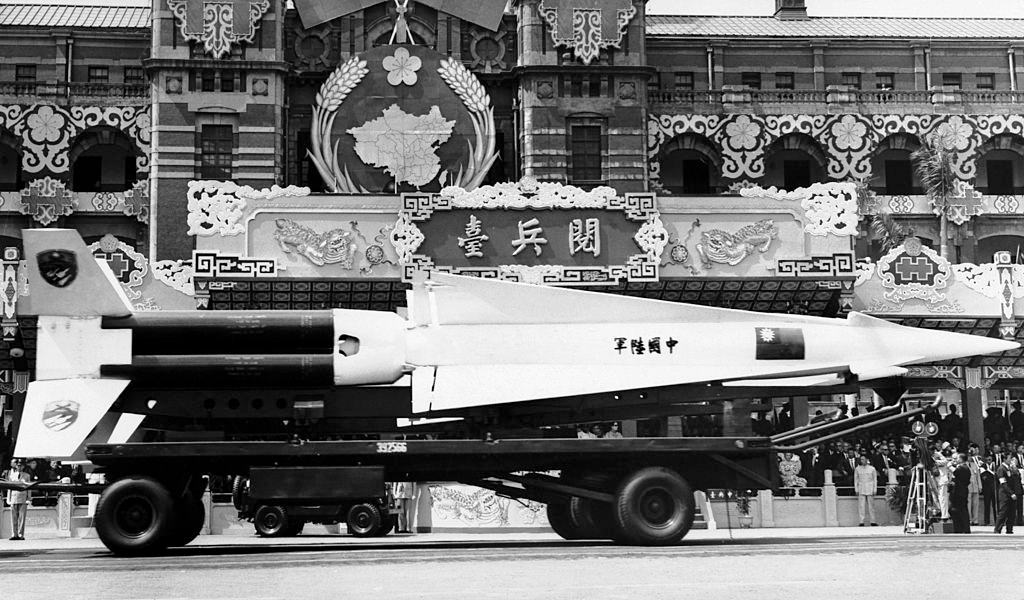
Double Tenth Day — October 10th — was the most important national holiday, marking the anniversary of the 1911 revolution that toppled China’s last imperial dynasty. Every year, large-scale military parades took place in Taipei, drawing crowds and projecting strength. In 1969, Chiang Kai-shek appeared alongside his Vice President Yen Chia-kan to greet the crowds during the celebration.
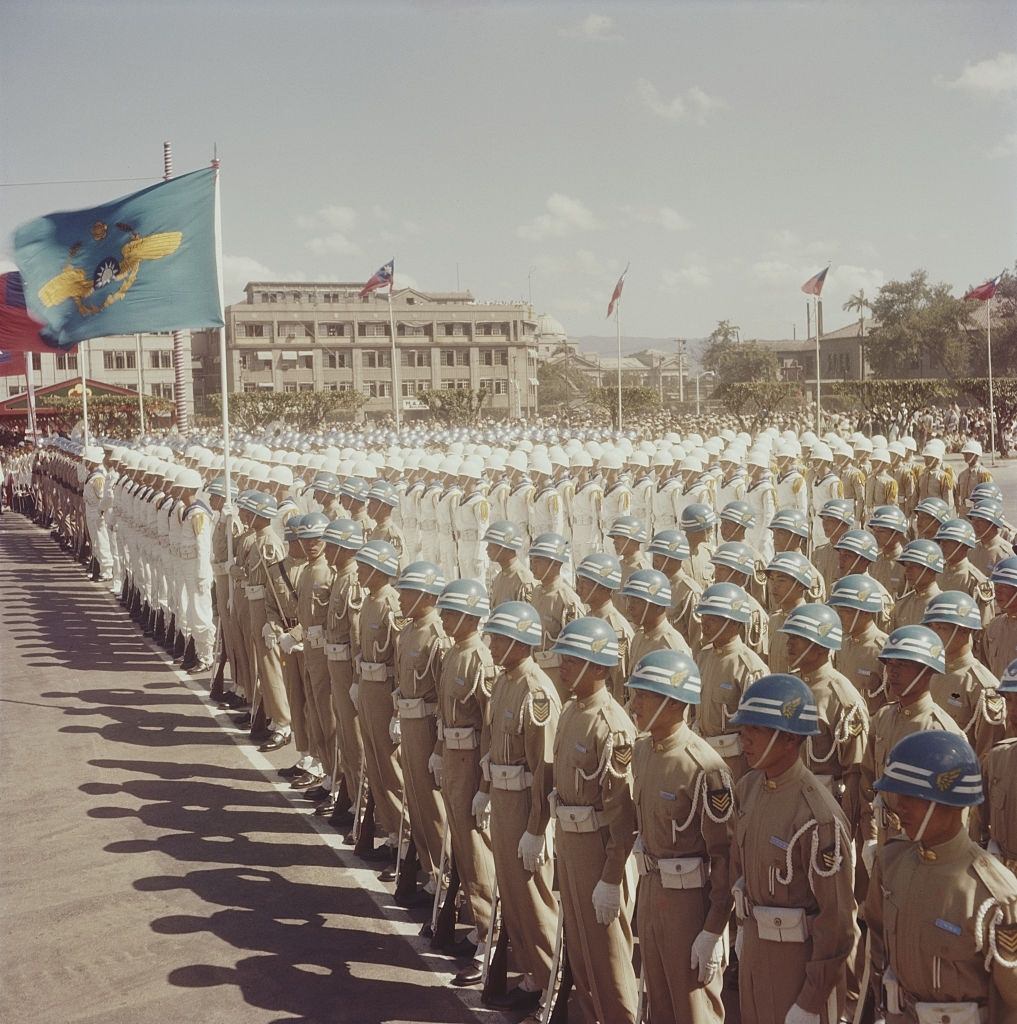
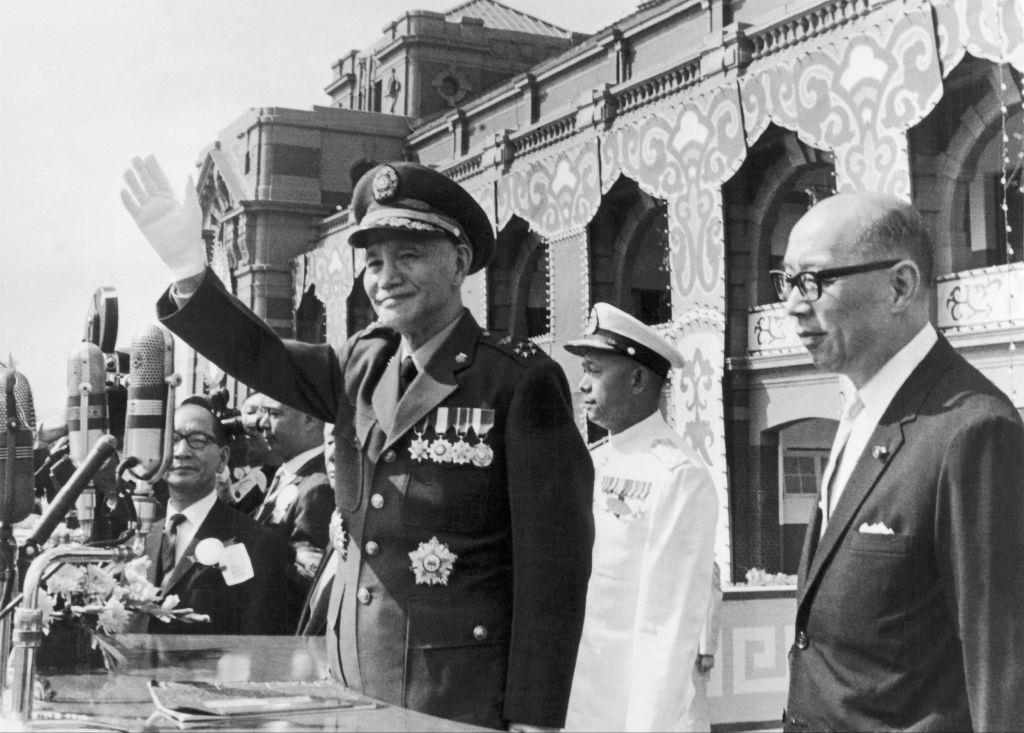
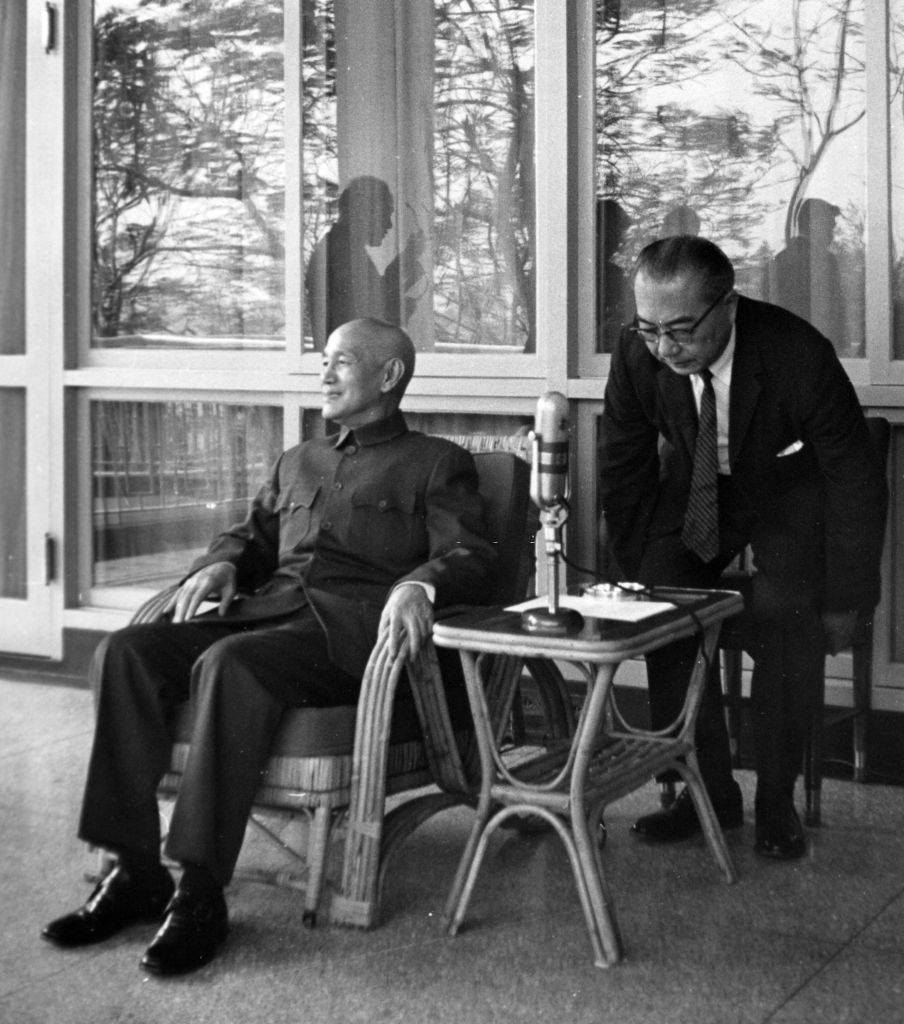
Chiang Kai-shek remained a dominant figure throughout the decade. In March 1964, he held a press conference in Kaohsiung with Japanese media, maintaining Taiwan’s international relationships even as its diplomatic standing was complicated by the ongoing question of which government — Taipei or Beijing — held the legitimate claim to China.
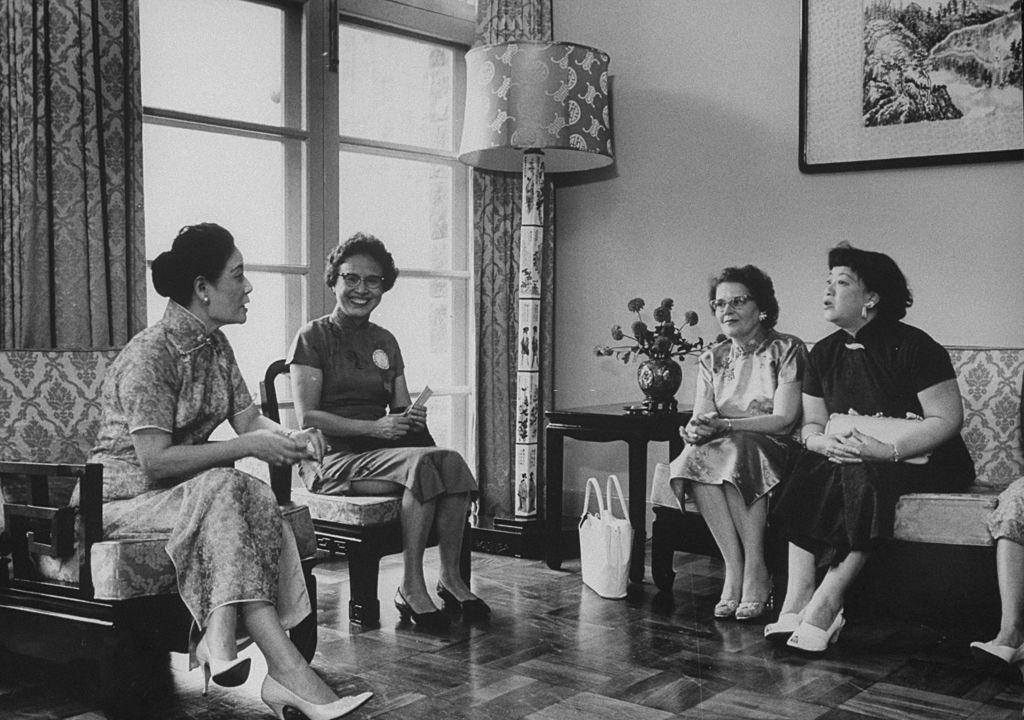
His wife, Madame Chiang Kai-shek, was also an active public figure. Well-known internationally from her wartime diplomacy, she continued to engage with civic and political forums during the 1960s, meeting with delegates and representing the Nationalist government’s softer public face.
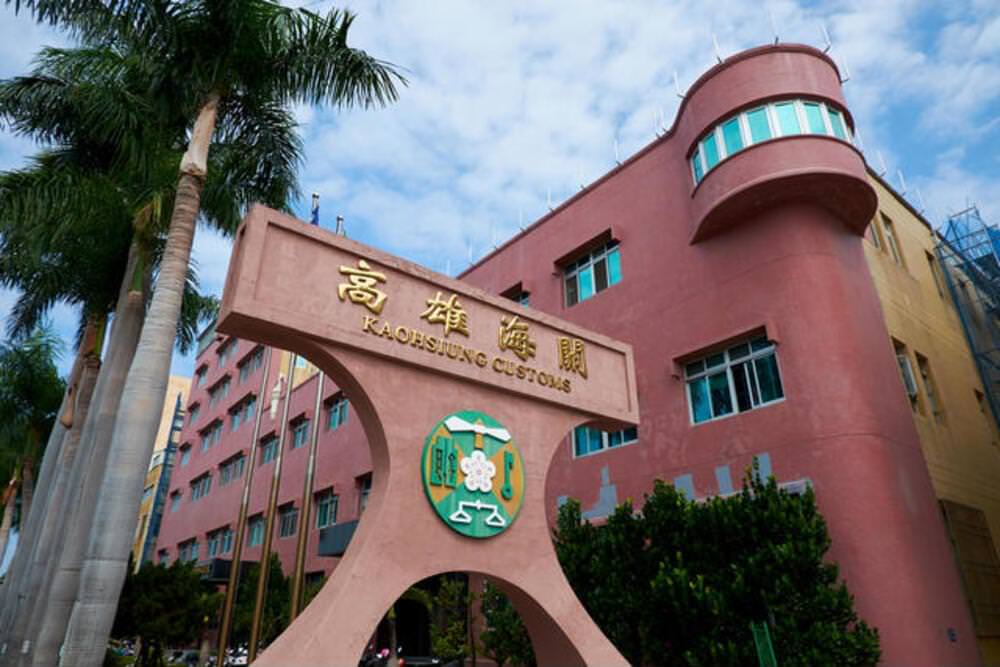
One of the most significant economic moves of the decade came in 1966, when the government established the Kaohsiung Export Processing Zone — the first of its kind in Asia. The zone was designed to attract foreign investment and grow Taiwan’s manufacturing output for export. It worked. The industrial sector began to overtake agriculture as the backbone of the economy, setting Taiwan on a path toward rapid growth in the following decades. The port city of Kaohsiung, already a major hub, took on even greater importance.
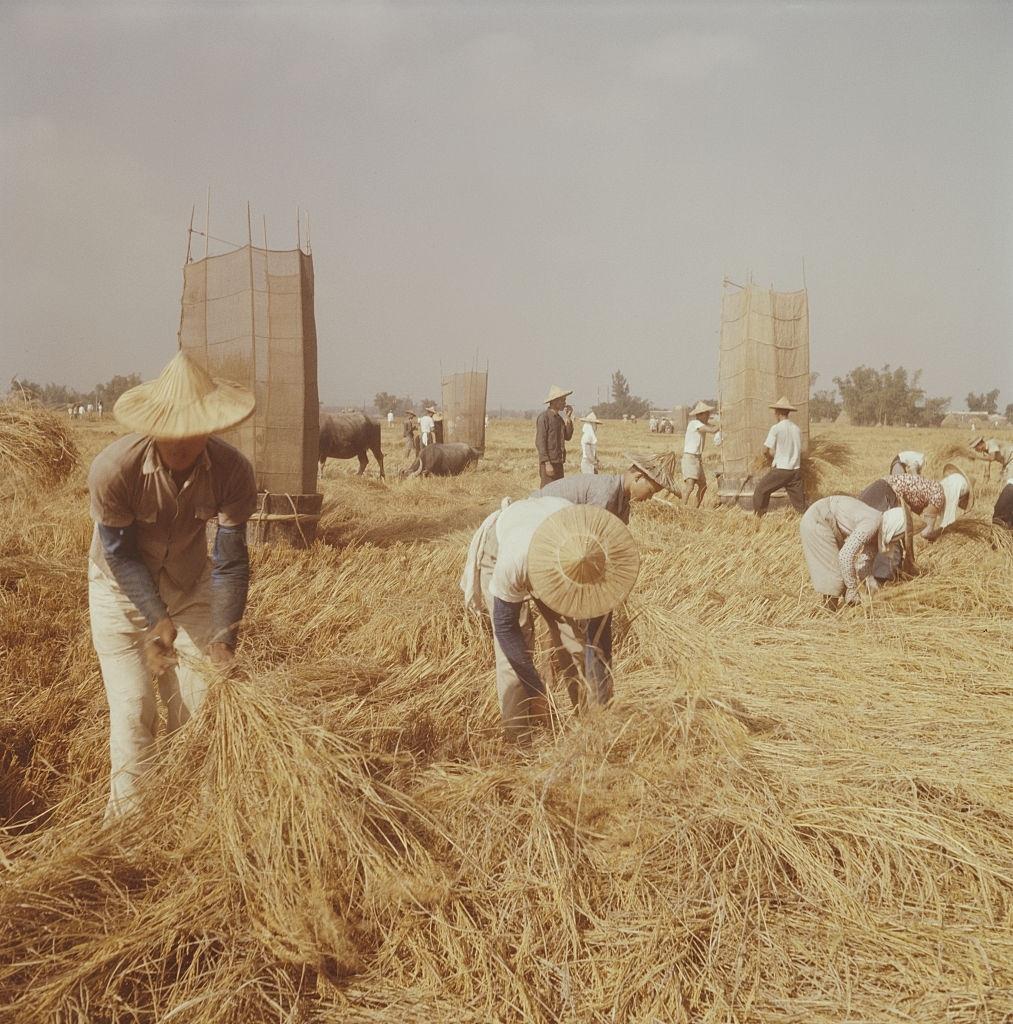
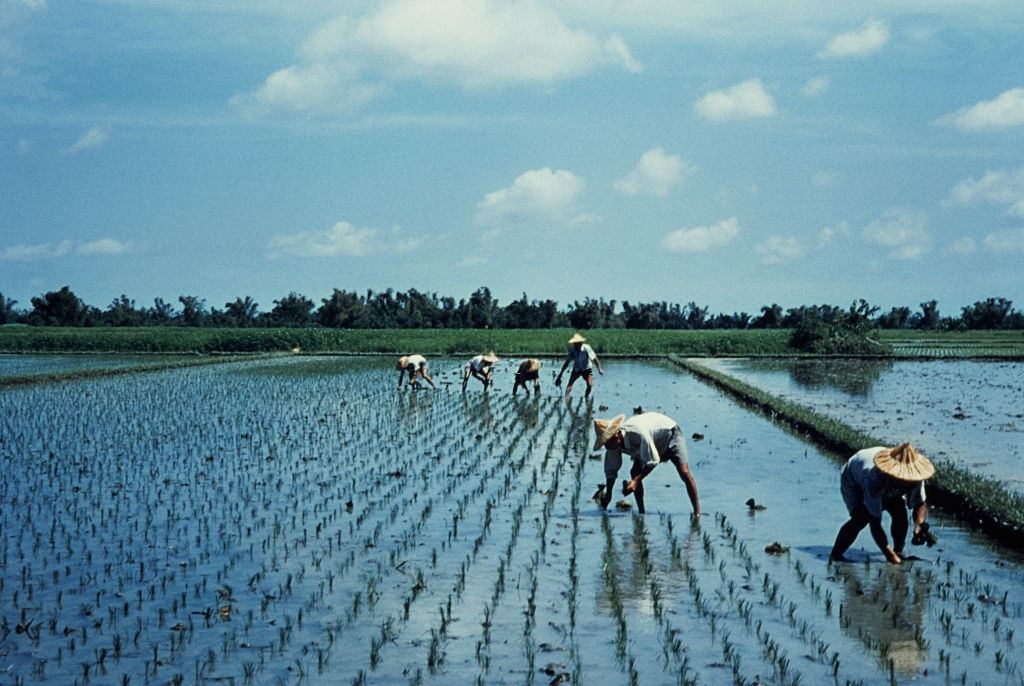
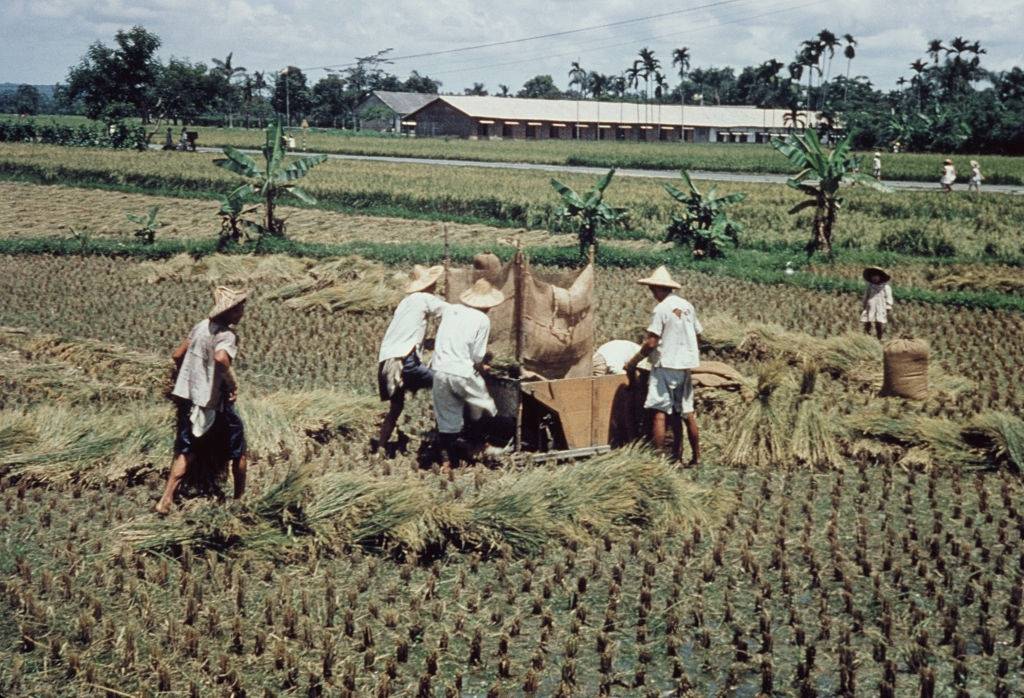
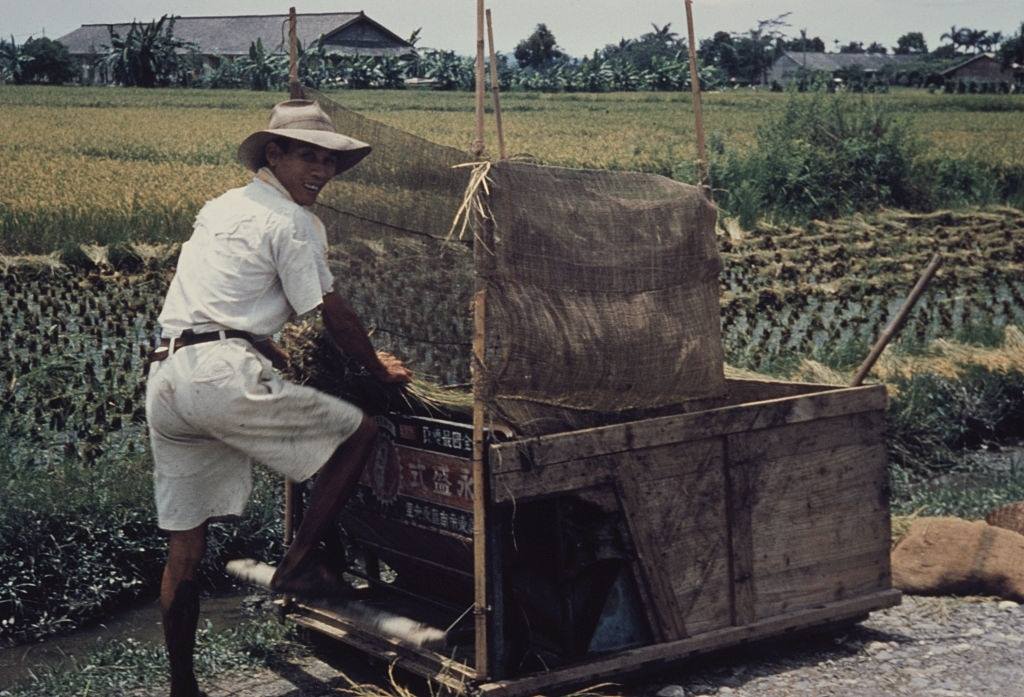
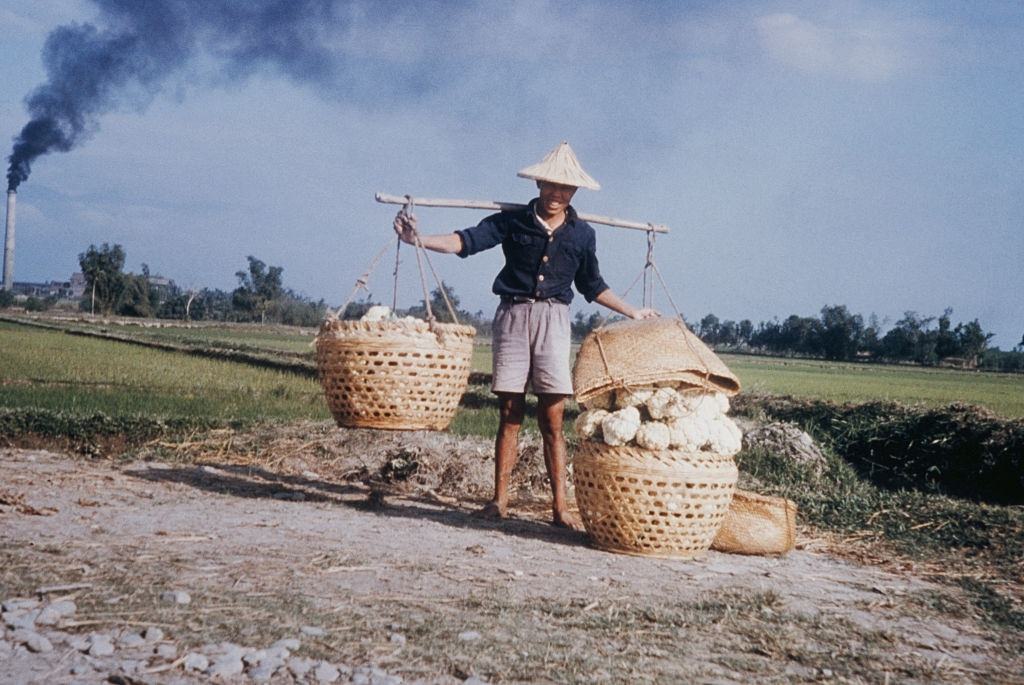
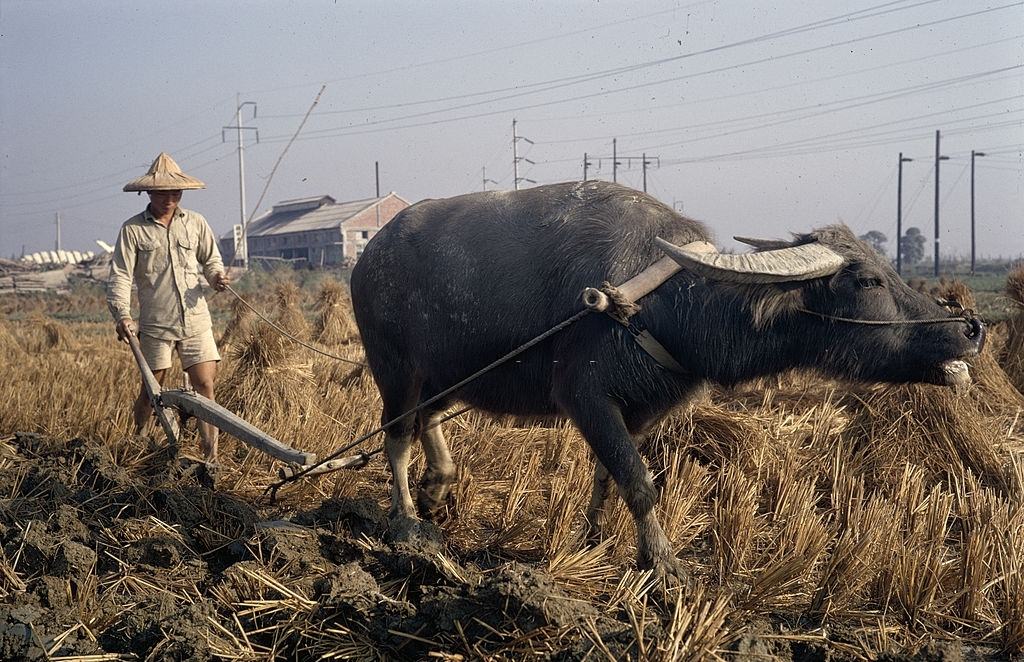
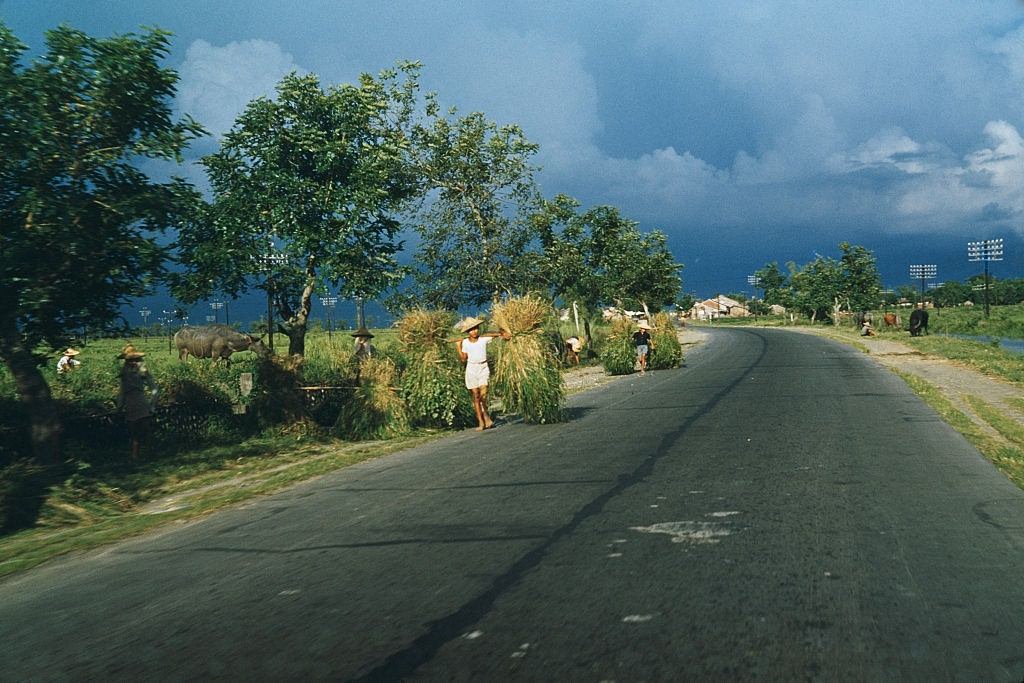
While industry was rising, agriculture still defined life for a large portion of the population. Rice farming was especially central to rural Taiwan. In Pingtung County — a flat, fertile region in the south — farmers worked paddy fields by hand, planting and harvesting in cycles that had changed little for generations. Oxen were still used to plow fields in 1969, and workers carried their harvests with wooden yokes across their shoulders.
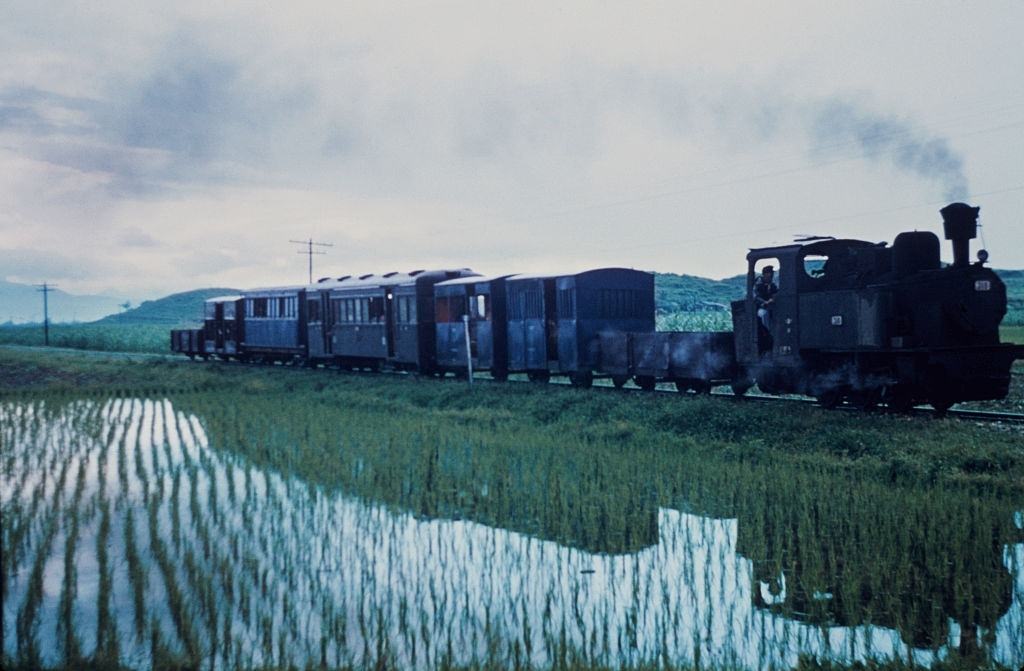
Railways were critical for connecting Taiwan’s agricultural south to its urban north. Trains cut through the countryside, passing right alongside rice paddies — a striking image of two worlds sharing the same landscape. Rural roads like the Pingtung Highway linked farming communities to larger towns, carrying goods and people along routes that were often narrow and unpaved.
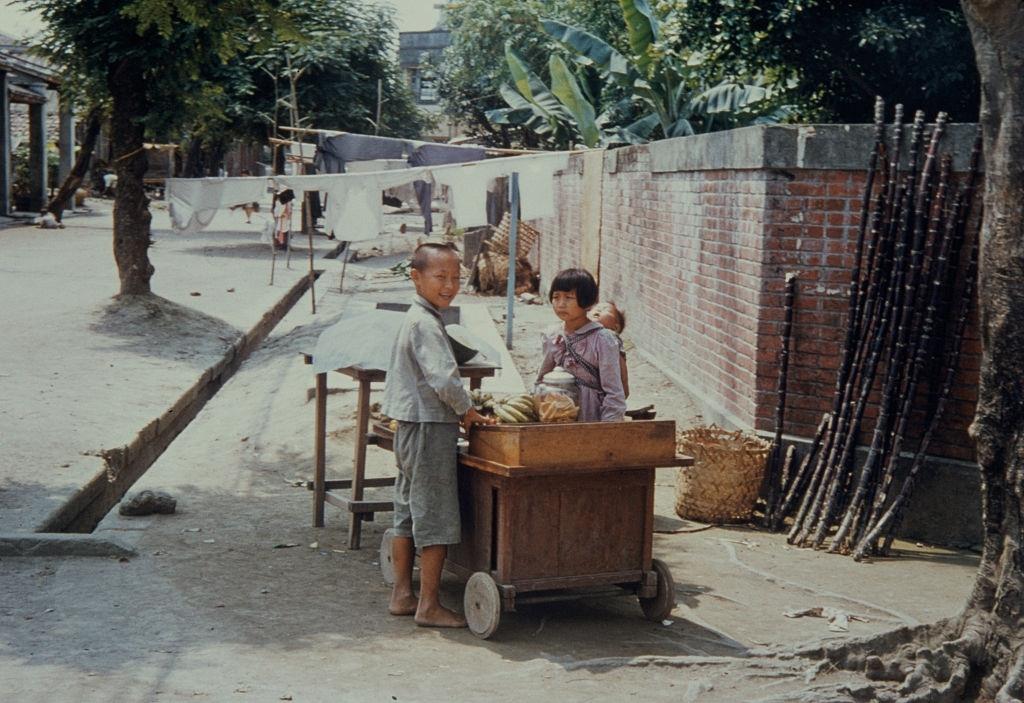
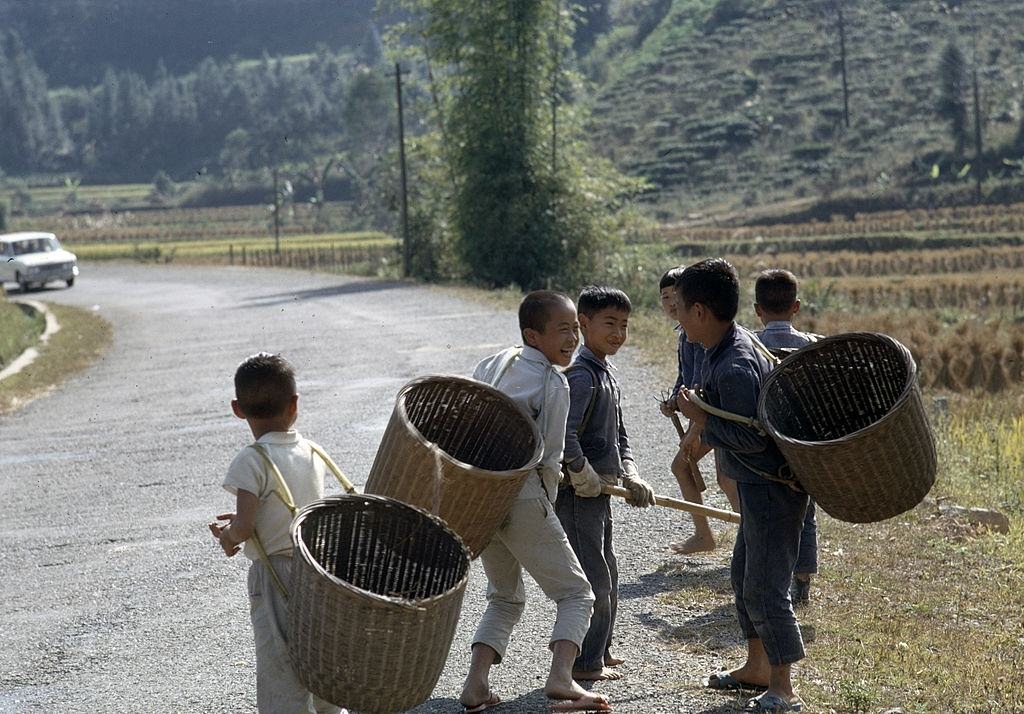
Street vendors were a fixture of Taiwanese commercial life, particularly in smaller towns and counties. In Pingtung, a young girl sold bananas from a sidewalk stall — a common sight that reflected how much of the local economy ran on informal, small-scale trade. Children also appeared regularly in street scenes, carrying baskets and taking part in the daily rhythms of rural and semi-urban life.
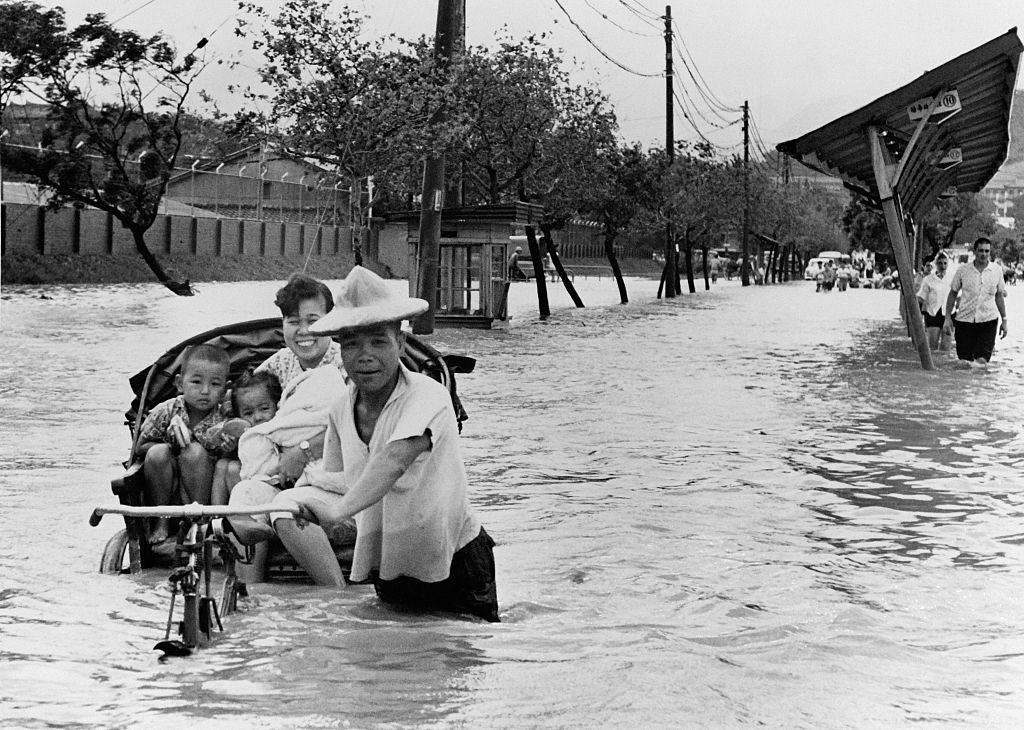
Natural disasters also tested Taiwanese communities during this period. In September 1962, severe flooding hit Taipei, forcing residents to navigate flooded streets. One photograph shows a mother placing her children into an amphibious rickshaw — a practical solution born out of necessity in a city overwhelmed by water.
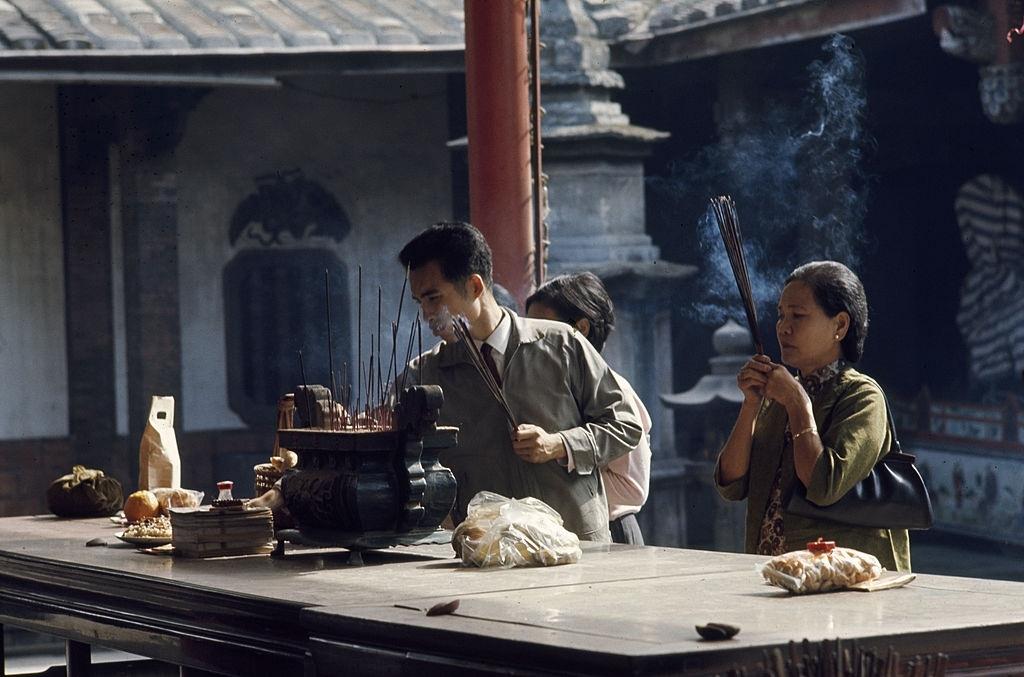
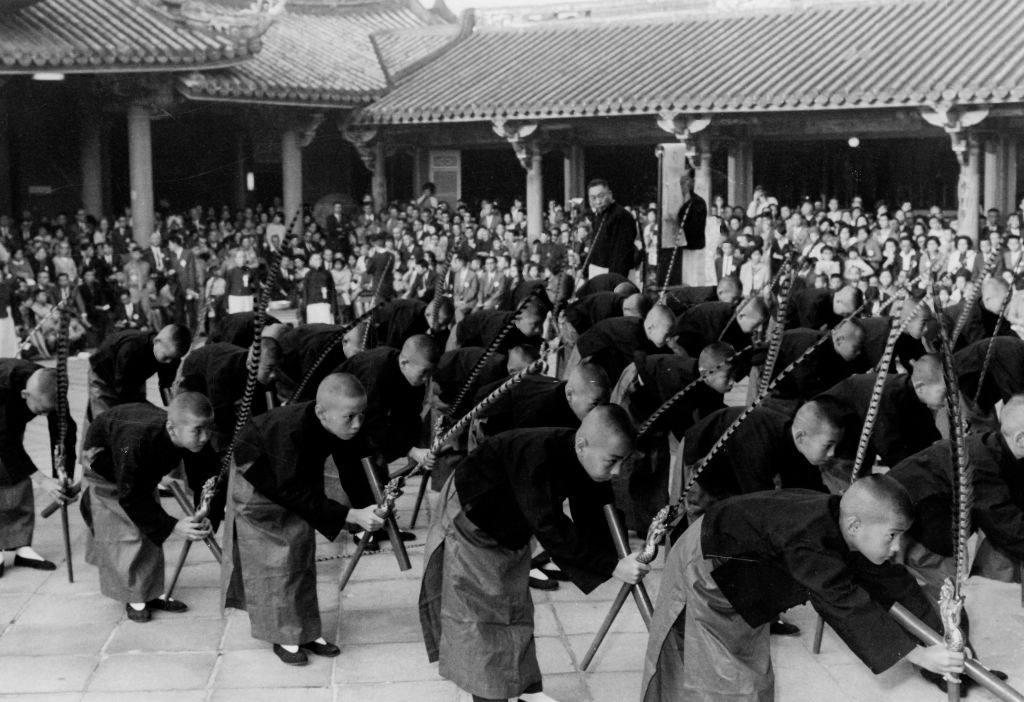
Religion and tradition ran deep in Taiwanese society. Incense rituals remained an important part of spiritual life, performed at temples and in homes alike. In February 1969, a ritual with burning incense was photographed — a practice tied to ancestor veneration and Taoist and Buddhist customs that had endured for centuries. In September 1966, Taipei’s Confucian Temple hosted celebrations marking the 2,516th anniversary of Confucius, drawing participants who honored one of Chinese civilization’s most foundational thinkers.
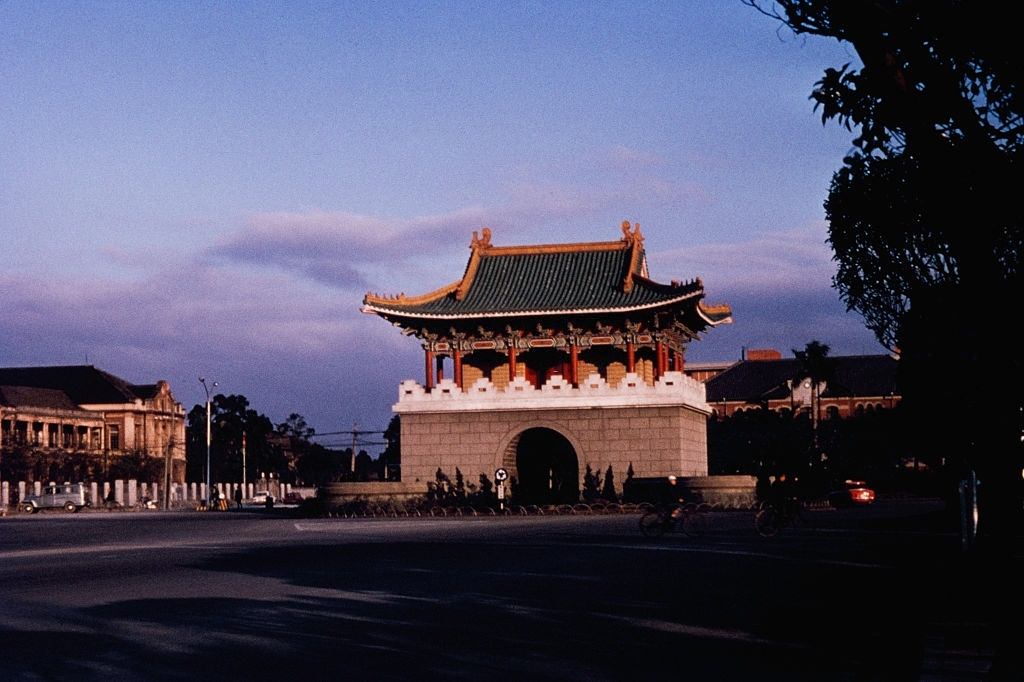
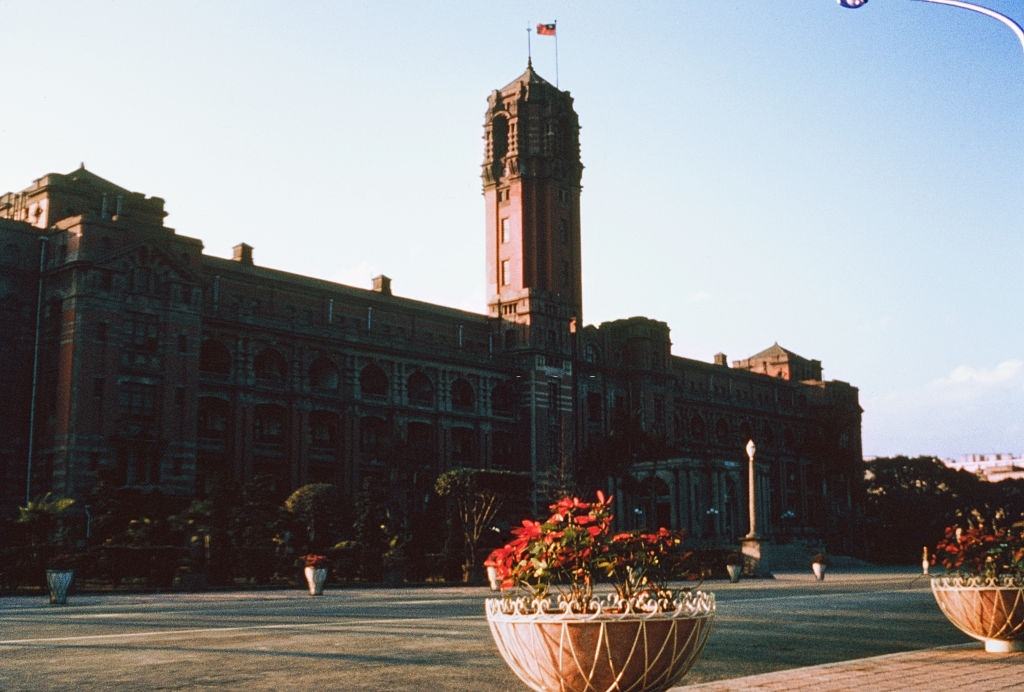
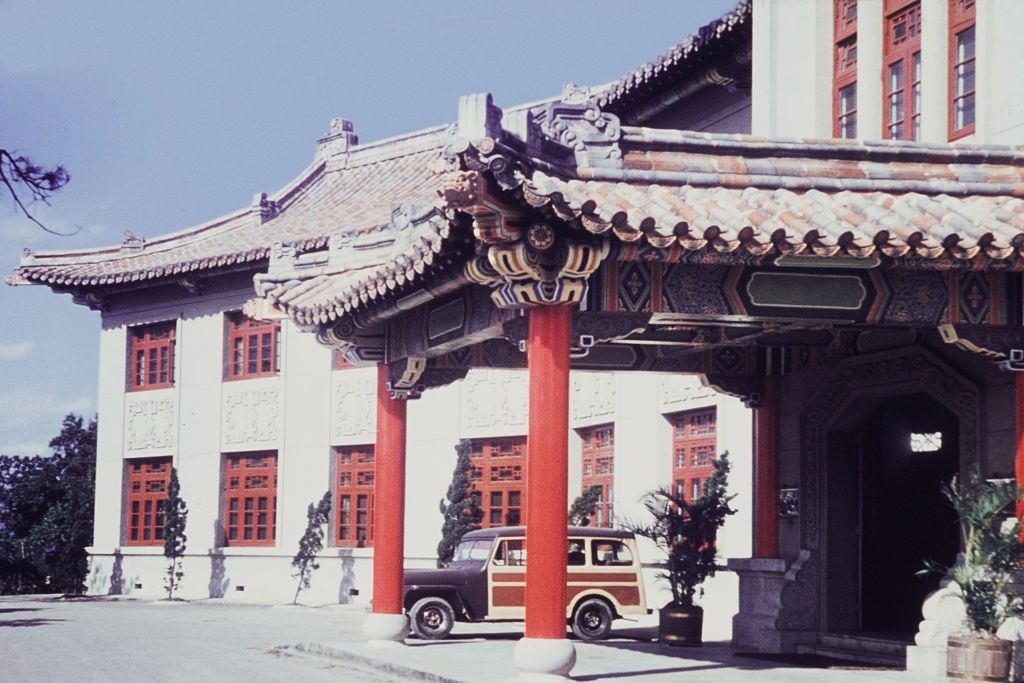
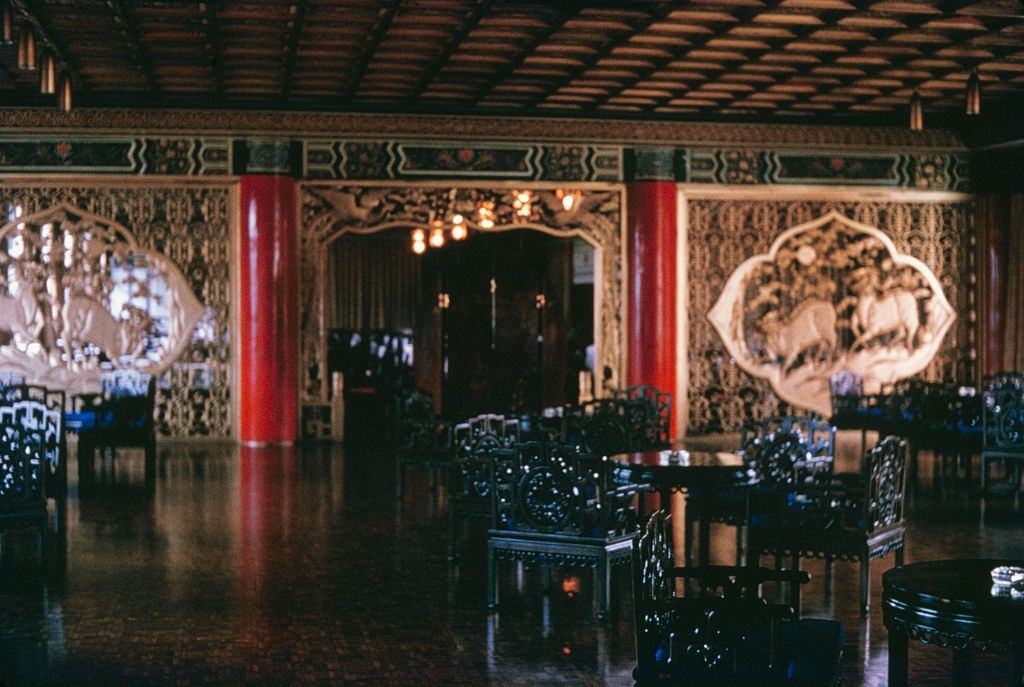
Taipei’s landmarks told a story of competing identities — an ancient city gate still standing at the edge of a modernizing metropolis. The Presidential Office Building, a grand structure built during the Japanese colonial period, continued to serve as the seat of government. The Grand Hotel, with its dramatic Chinese imperial-style architecture, offered a different kind of statement, presenting Chinese cultural heritage to foreign visitors in an unmistakably bold way.
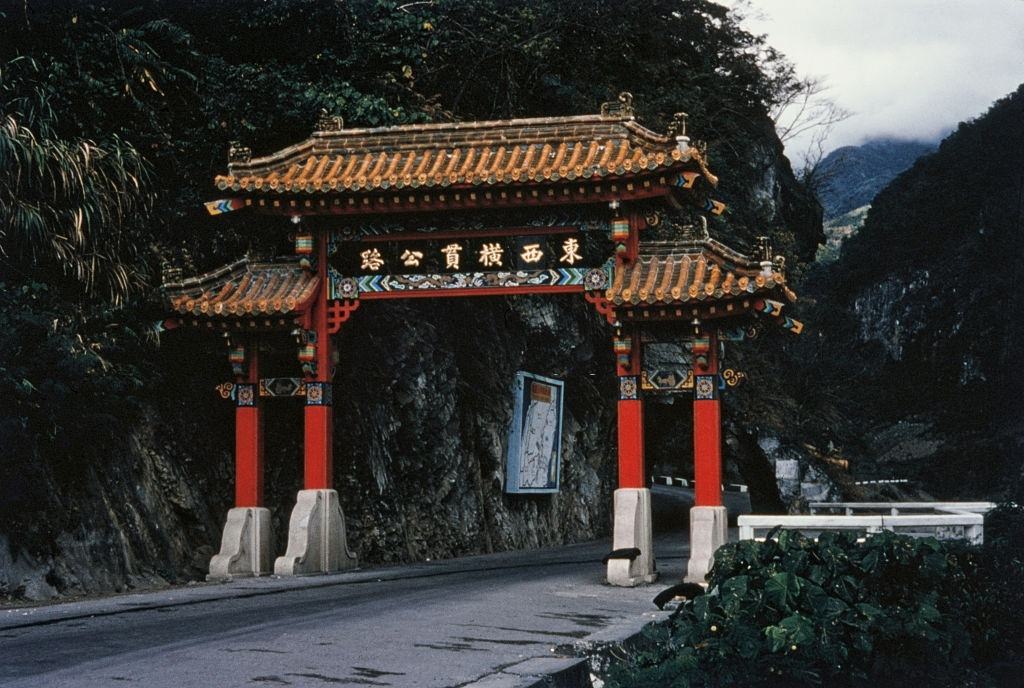
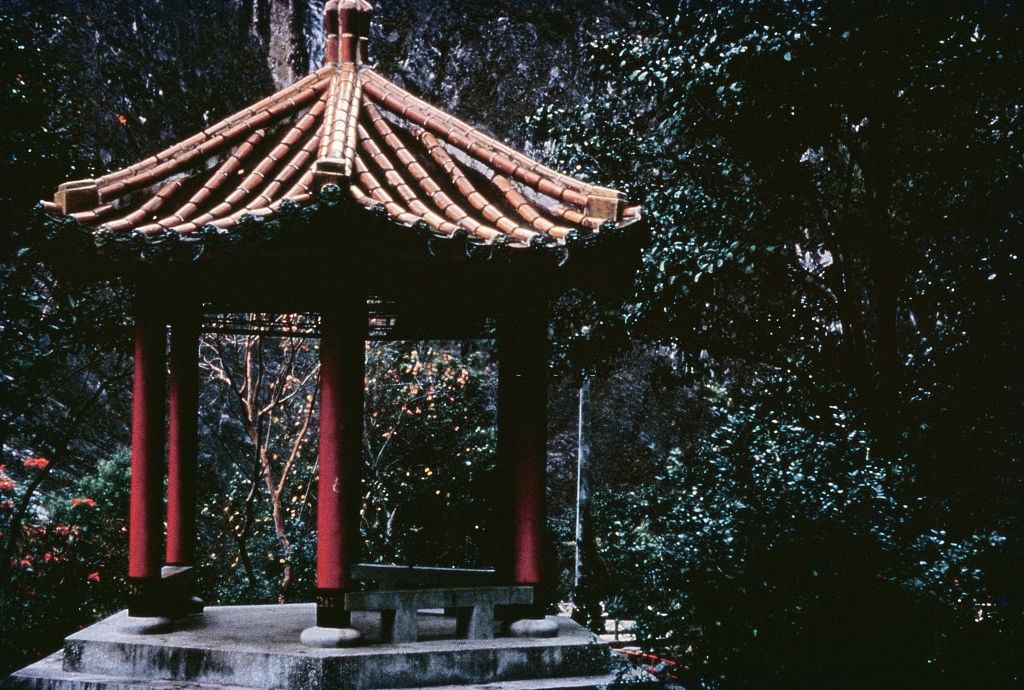
Beyond the cities, Taiwan’s natural landscape was equally striking. The Taroko Gorge in the island’s central east — a dramatic canyon carved by the Liwu River through marble cliffs — was already a notable destination. The Central Cross-Island Highway ran through it, and a gate at its entrance marked the passage into one of Taiwan’s most impressive natural environments. Small pavilions near the Changuang Temple offered quiet resting spots within the gorge.
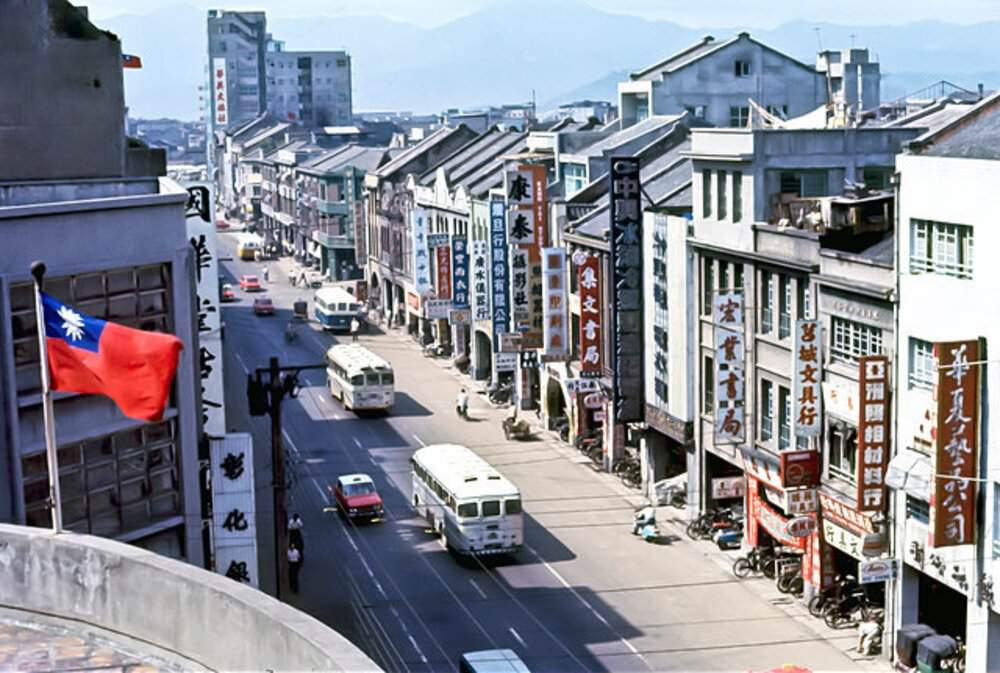
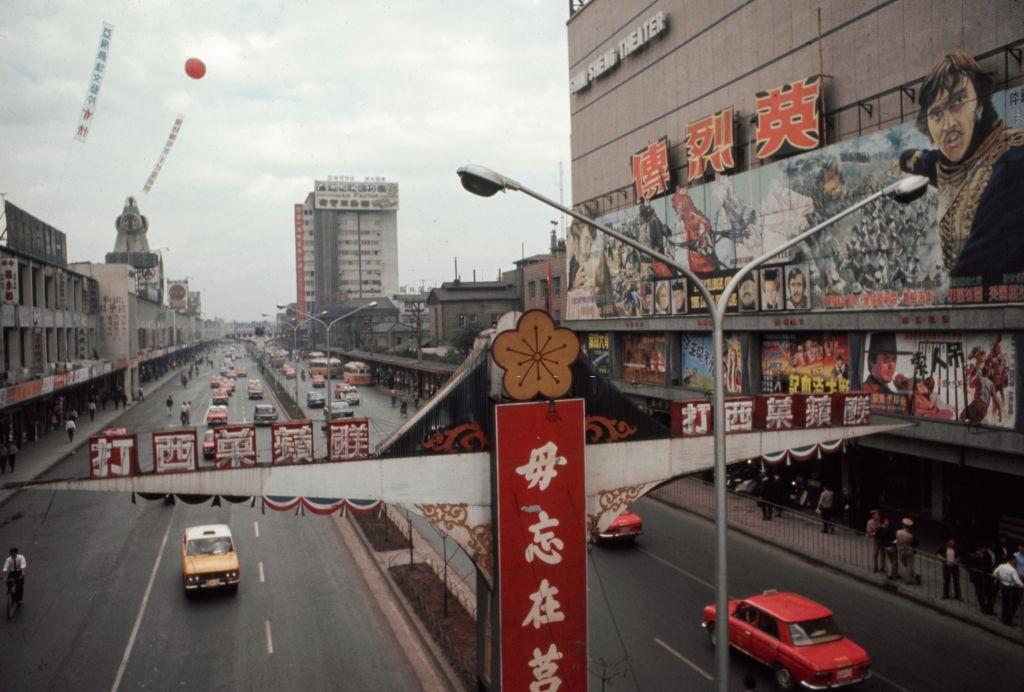
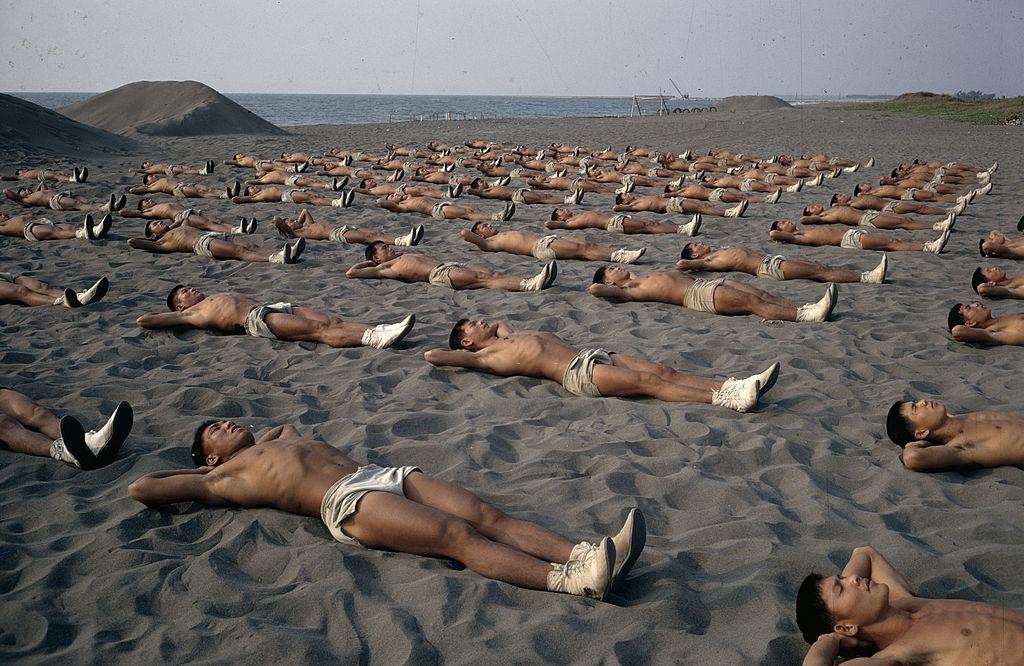
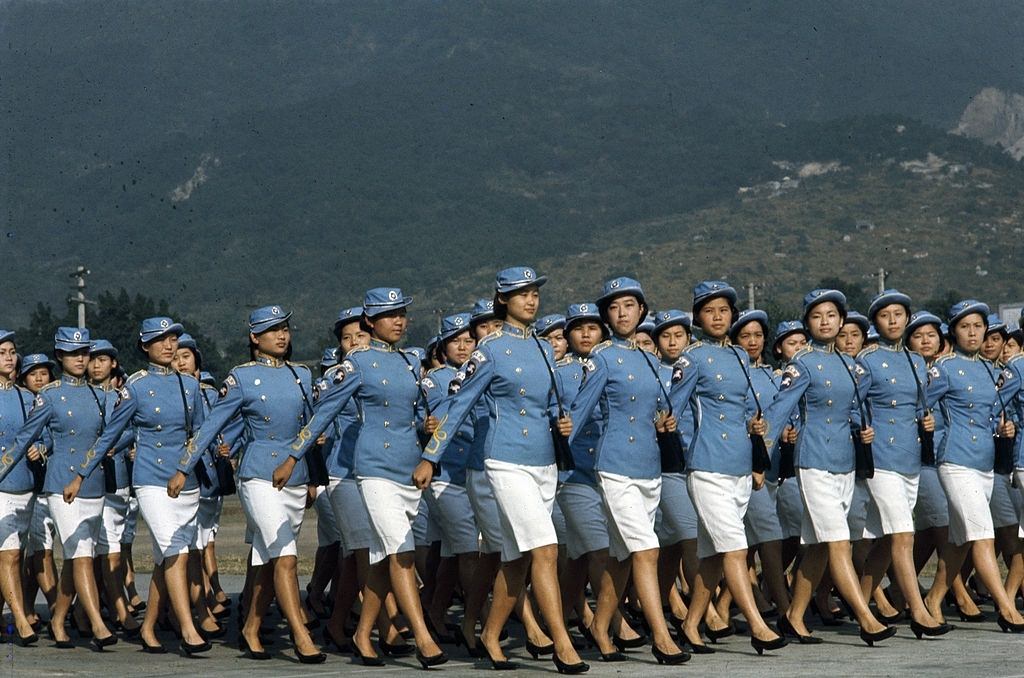
By the late 1960s, Taipei’s streets were noticeably busier. Traffic on Chung Hwa Road in December 1968 showed a city with more vehicles, more commerce, and more movement. Military preparedness remained high — soldiers from the Kaohsiung base conducted early morning exercises in 1969, and parades of young women soldiers in blue uniforms marched through the streets that same year, a sign of how deeply militarized Taiwanese public life remained.





Grandad kept the buffalo pulled cart (the cart not the buffalo) well into the 90s.
Buffalo pulling cart was still a sight (though was rare enough that grandad or older relatives will beckon us city kids to come and watch) to be seen in 90s when i spend summers in seaside Chiayi. Like there was one or two buffalo in the village well into late 90s. Then they must had all died off.
Also people carrying things using the 扁擔 carrying pole. Was common in 90s. Like you would still see it being done in construction sites even in Taipei. Labourers carrying the brick or heavy stuff up that way. Some street vendor still carry their stuff. Now all but gone. But heard some old hardware store 五金行 still stock the carrying stick as a product.
My friend from pingtung says their family don’t eat beef because their ancestors used ox for their livelihood, and they treat them as family members. Although they no longer have a living ox with them, they still respect the animal and don’t eat that type of meat.
I think this was done sometimes for personal fortune reasons too , the tradition is also more common for Hokkien people. My grandad as a Hokkien did not impose this (there are families who claim they all should not eat beef etc.) Instead it was up to individual to decide. Some of my cousins do not eat beef some do.
My Hakka side of family does not practice this either. Despite originally worked as farmer and labourer (for the local land owners) before immigrating to TW in 1948. Relatives joked because as Hakka they were dirt poor and they ain’t saying no to beef if there is some.