Hey There! Before You Go. 😧
Get the best vintage content straight into your inbox!

Don't worry, we don't spam

Before the Startups and Billions: What Silicon Valley Was Like Before It Became the World’s Tech Capital

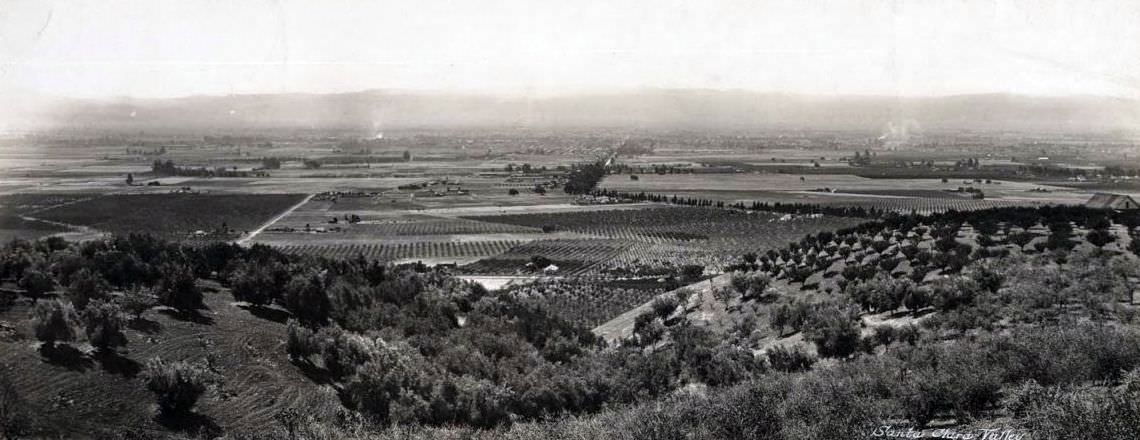
Today, Silicon Valley is synonymous with billion-dollar companies, cutting-edge technology, and some of the most valuable real estate in the world. But before any of that, it was simply the Santa Clara Valley — a quiet stretch of flat, fertile land south of San Francisco where the biggest industry wasn’t software. It was fruit.

The Santa Clara Valley in 1914, from the top of Mount Hamilton

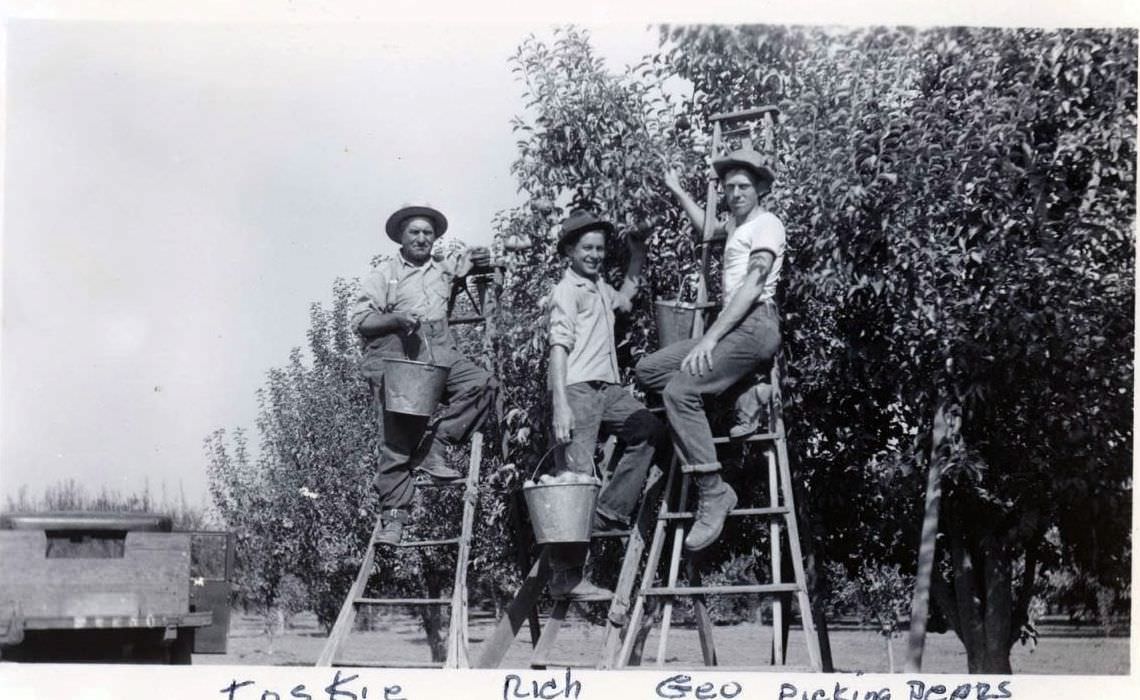
For decades, the valley floor was blanketed in orchards. Apricots, cherries, and plums grew in abundance, earning the region the nickname the “Valley of Heart’s Delight.” Farming shaped everything — local jobs, community life, and the economy. Small towns dotted the landscape. San Jose was the largest city, but it ran at a slow, unhurried pace. Streets were lined with family homes, barns, and packing plants. Railroads hauled crops, not computers.

Early 20th-century farms in the Santa Clara Valley, known as the "Valley of Heart's Delight"
Early 20th-century farms in the Santa Clara Valley, known as the “Valley of Heart’s Delight”

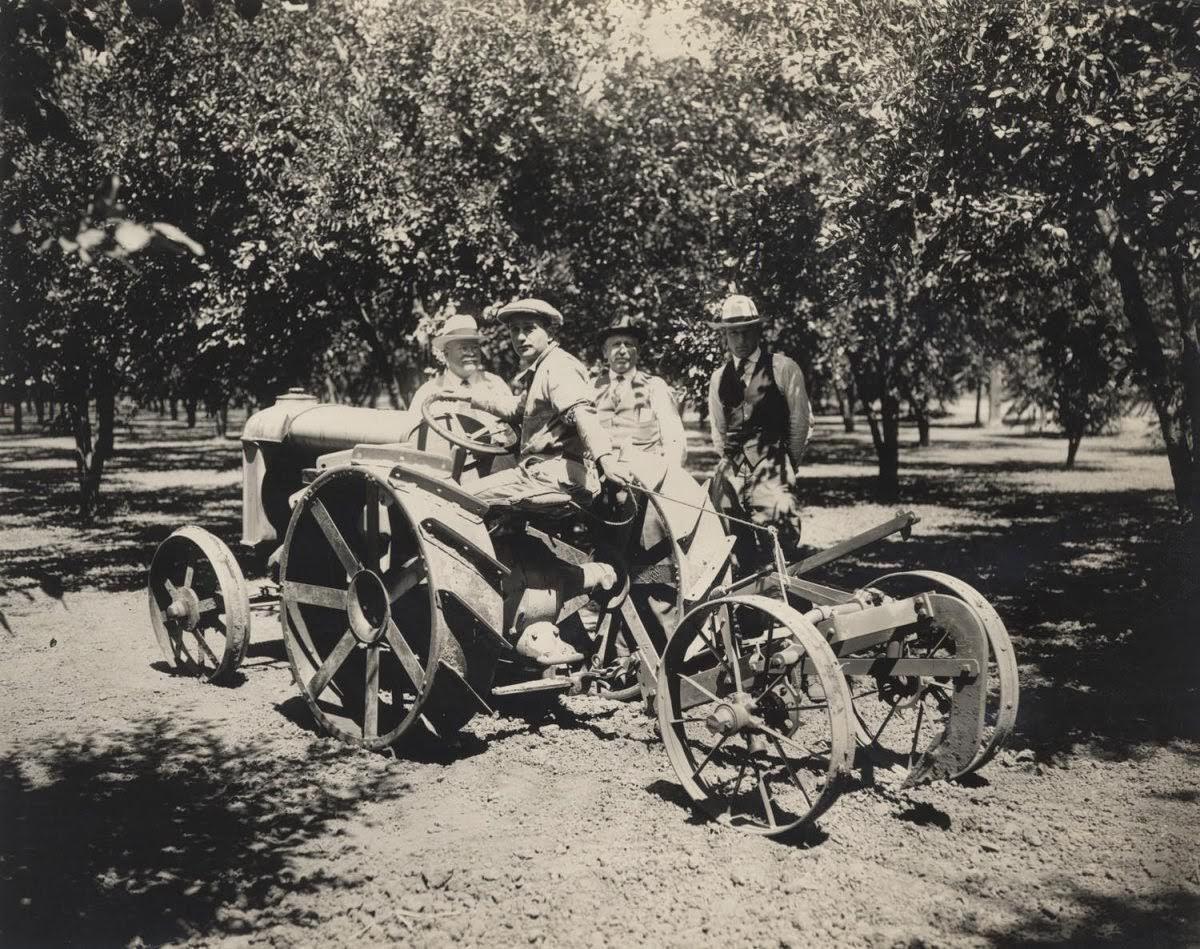
Agriculture wasn’t just a way of life — it was a well-organized industry. Specialized machinery helped farmers work the land more efficiently, and the infrastructure around food production grew steadily through the early 1900s.

Men posed with a trenching machine made by the Knapp Plow Company

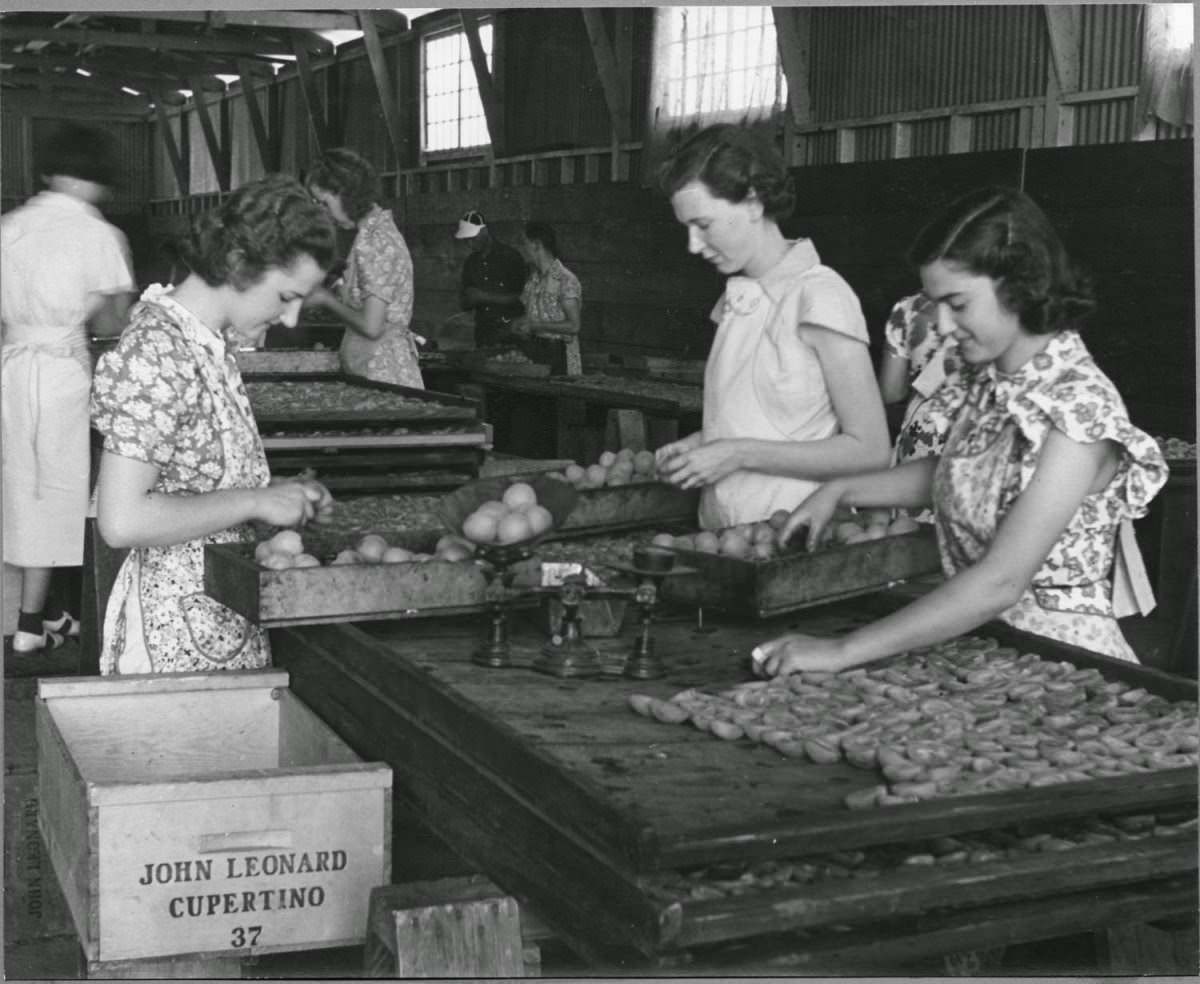
By 1939, the valley was home to 18 canneries, 13 dried-fruit packing houses, and 12 fresh-fruit and vegetable shipping firms. These weren’t small side operations — they were the economic backbone of the entire region.

The region by 1939 had 18 canneries, 13 dried-fruit packing houses, and 12 fresh-fruit and vegetable shipping firms

Improved railway networks transformed the valley into the world’s largest center for canned goods and fruit processing. Goods produced here reached tables across the entire country, and the region’s agricultural reputation was known far beyond California.

The Santa Clara Valley became the world's largest center for canned goods and fruit processing due to improved railway networks
The Santa Clara Valley became the world’s largest center for canned goods and fruit processing due to improved railway networks

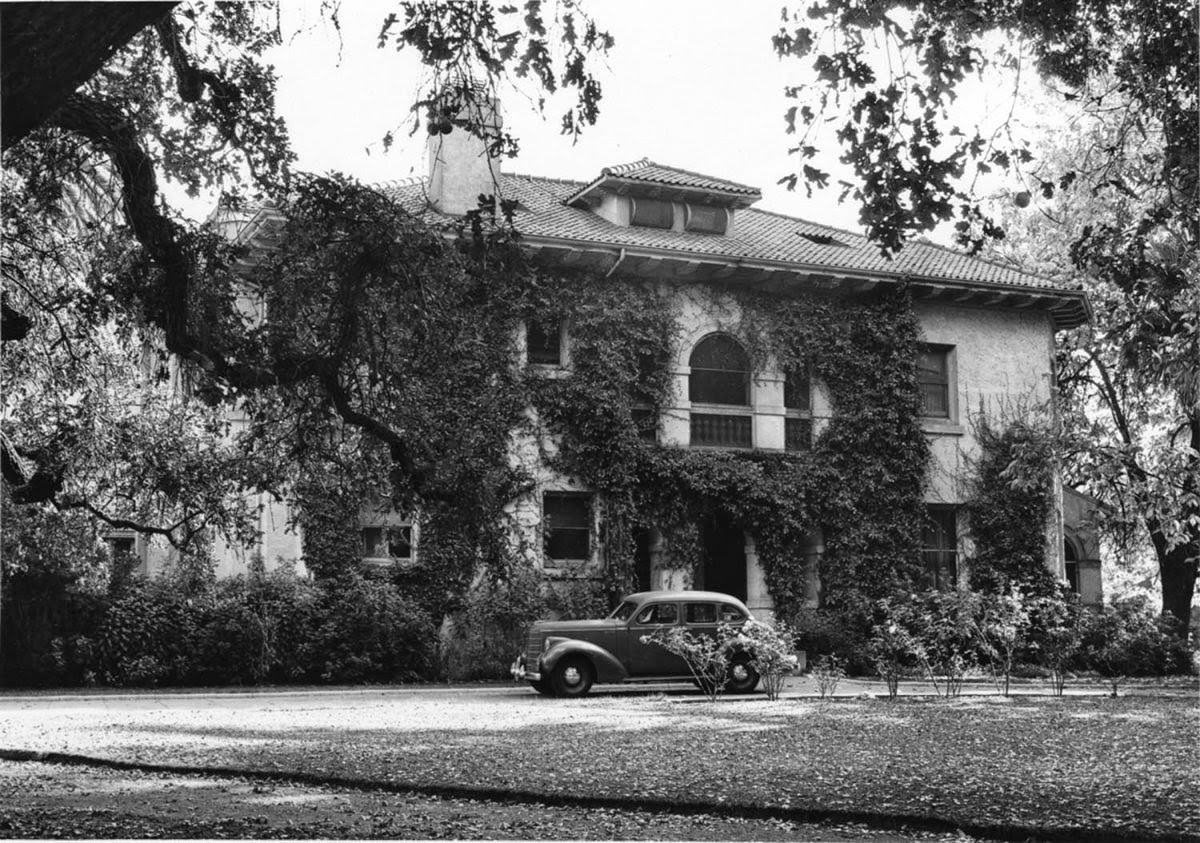
The valley’s growth also attracted wealthy settlers. Some of the earliest prominent families established grand estates across the region, building homes that reflected both their fortunes and the era’s architectural ambitions.

Wealthy families were some of the earliest settlers in the Santa Clara Valley

The Hayes Mansion is one example of the wealth that took root in the valley. Once belonging to a prominent local family, the property is now a hotel and conference center — one of several historic structures that still stand today.

The Hayes Mansion, once belonging to a prominent Valley family, now serves as a hotel and conference center

Another well-known relic from this era is the Winchester family’s sprawling Victorian home, built in the 19th century. It draws tourists to this day, a reminder that the valley’s story stretches well before any semiconductor was ever made.

The Winchester family's 19th-century Victorian home, now a popular tourist destination
The Winchester family’s 19th-century Victorian home, now a popular tourist destination

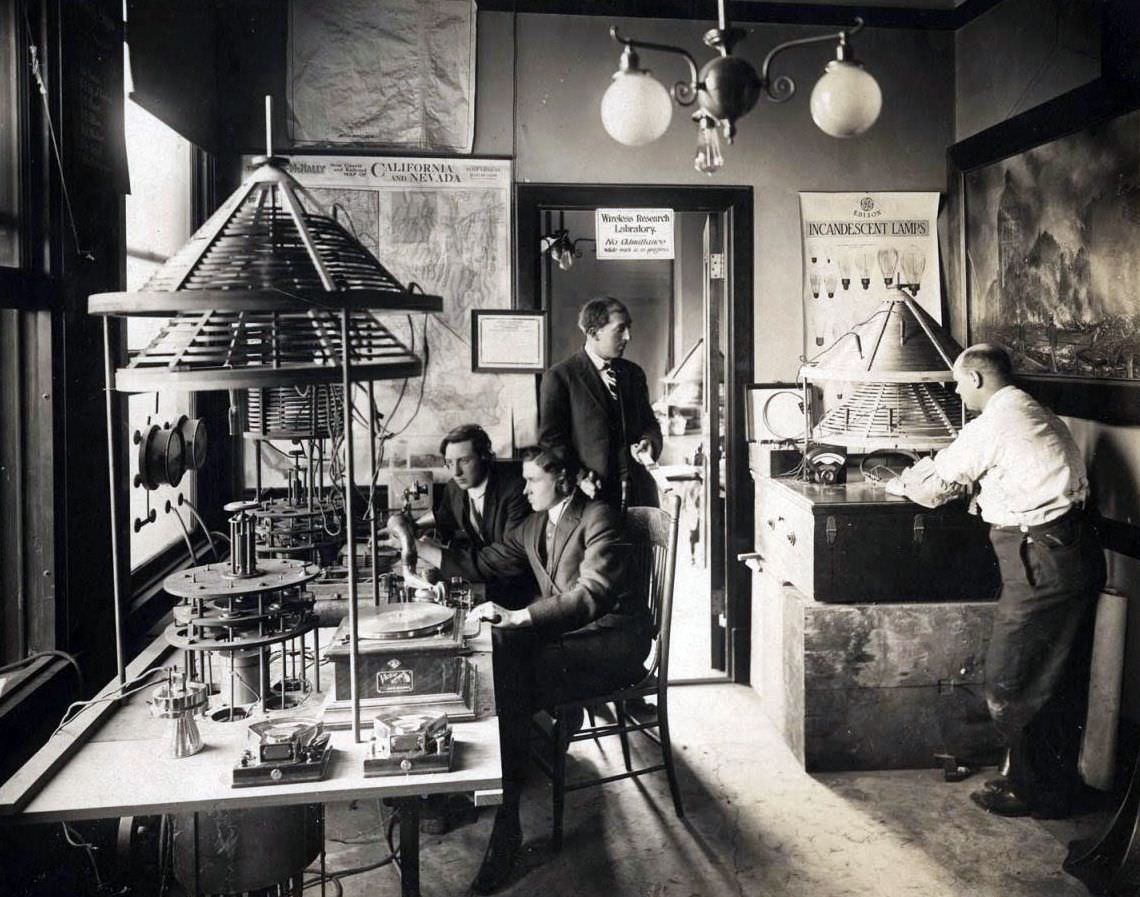
Even as farming dominated the valley, early sparks of innovation were already appearing. In 1909, a Palo Alto-based team led by Cyril Ewell developed the first American-built arc transmitter — a milestone in early communications technology.

Cyril Ewell led a Palo Alto-based team that developed the first American-built arc transmitter in 1909

That same year, Charles Herrold established the first wireless telephone station in the Garden City Bank Building in downtown San Jose — one of the earliest radio broadcasting operations in the United States.

The Garden City Bank Building in downtown San Jose was the site of the first wireless telephone station established by Charles Herrold in 1909

By 1912, the Federal Telegraph Company — working with inventor Lee de Forest — developed the first global radio communications system right in the valley. These early breakthroughs were quiet but significant, planting seeds that would grow into a full-scale technology revolution decades later.

Lee de Forest worked with the Federal Telegraph Company to develop the first global radio communications system in 1912

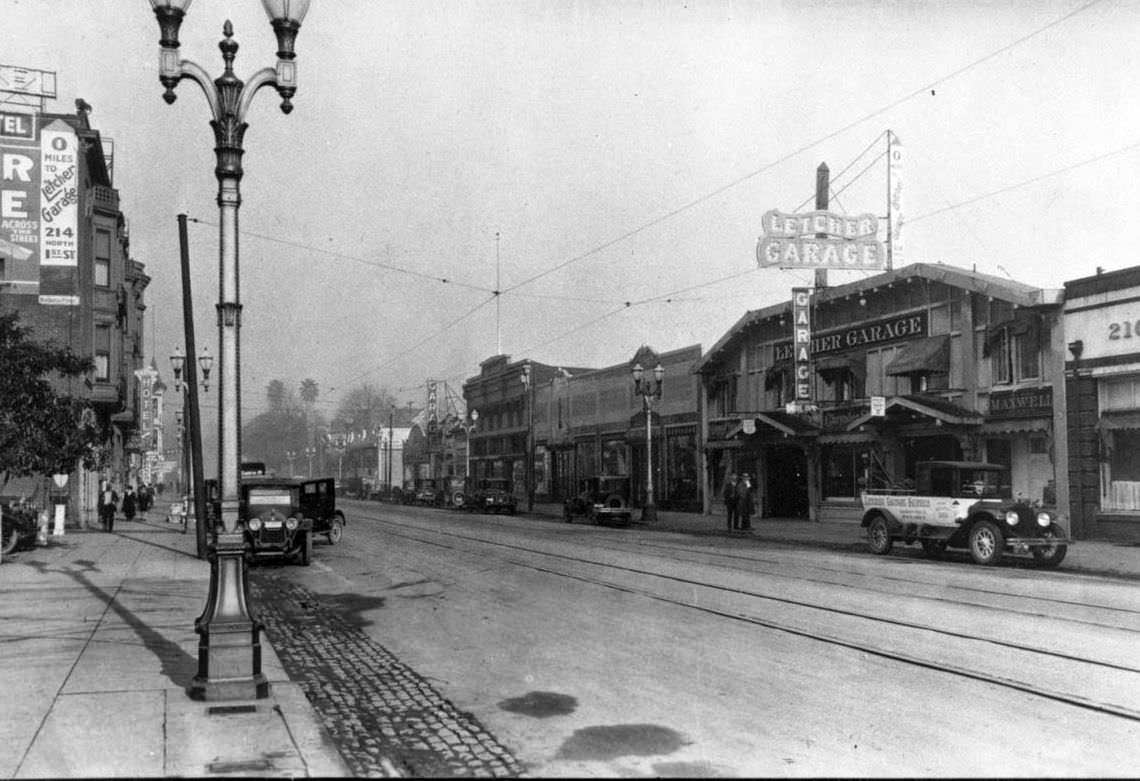
Life in the valley during the early 20th century remained grounded and modest. Consumer culture was growing slowly, and local businesses catered to everyday needs. A garage in San Jose selling Cadillacs and Packards was as much a sign of the times as any orchard or cannery.

Letcher Garage in San Jose, where local residents could buy Cadillacs and Packards

By 1940, the Santa Clara Valley’s population had grown to nearly 175,000. The region was expanding, but it still looked and felt far more like an agricultural community than any kind of technology hub.

The Santa Clara Valley had a population of nearly 175,000 people by 1940

World War II pushed the valley in a new direction. The U.S. military poured money into electronics and communications research, and local institutions rose to meet the demand. At Stanford University in the early 1940s, professors William W. Hanson, Russell Varian, and Sigard Varian developed early versions of the Doppler radar system — research with direct military applications.

Professors William W. Hanson and Russell and Sigard Varian developed early versions of the Doppler radar system at Stanford University in the early 1940s

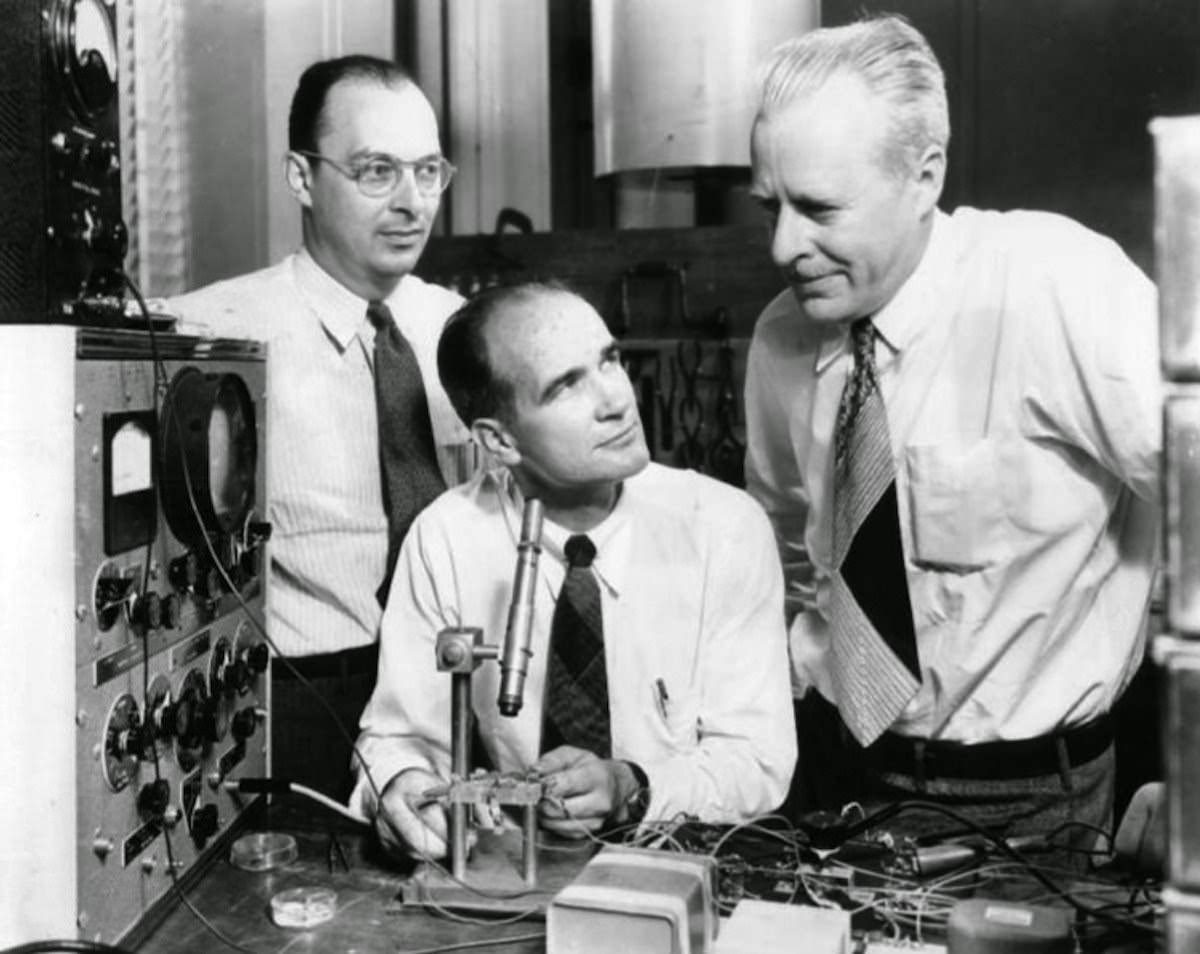
Stanford’s role in the valley’s transformation cannot be overstated. From the early 1900s, the university had pushed engineering and applied science, encouraging students to build practical tools rather than just study theory. In 1951, Stanford leased its land to technology companies, creating the Stanford Industrial Park — a direct link between academic research and private industry that was entirely new at the time. Then, in 1947, William Shockley led a Palo Alto-based team at Bell Labs that invented the world’s first amplifying semiconductor: the transistor. It was one of the most consequential inventions of the 20th century.

William Shockley led a Palo Alto-based team at Bell Labs that invented the world's first amplifying semiconductor, the transistor, in 1947
William Shockley led a Palo Alto-based team at Bell Labs that invented the world’s first amplifying semiconductor, the transistor, in 1947

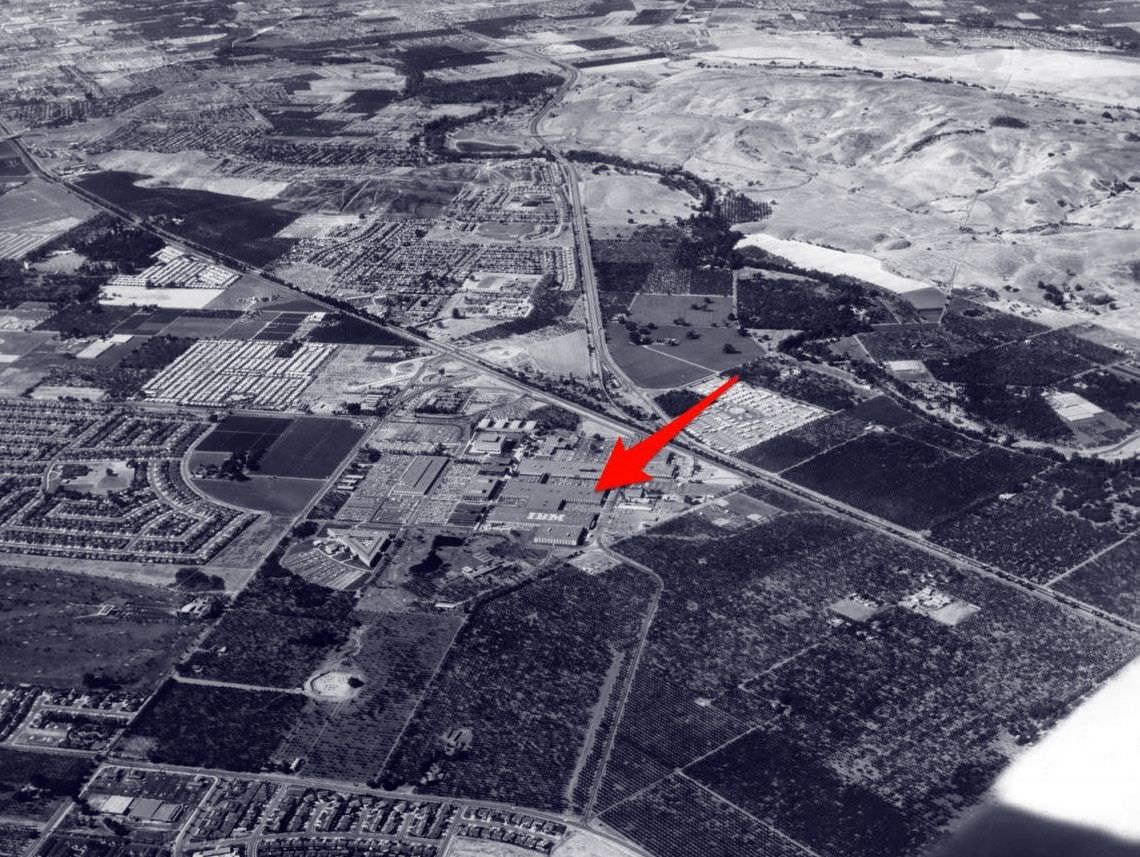
Major corporations began recognizing the valley’s potential early. IBM opened its first plant in San Jose in 1943, marking one of the first major corporate investments in the region beyond defense contracts.

IBM opened its first plant in San Jose in 1943

IBM’s footprint only grew from there. By 1970, the company had multiple research centers, an additional card plant, and a branch office operating in the valley — a sign of how quickly the region was shifting from fruit production to high technology.

IBM's Silicon Valley presence included multiple research centers, another card plant, and a branch office by 1970
IBM’s Silicon Valley presence included multiple research centers, another card plant, and a branch office by 1970

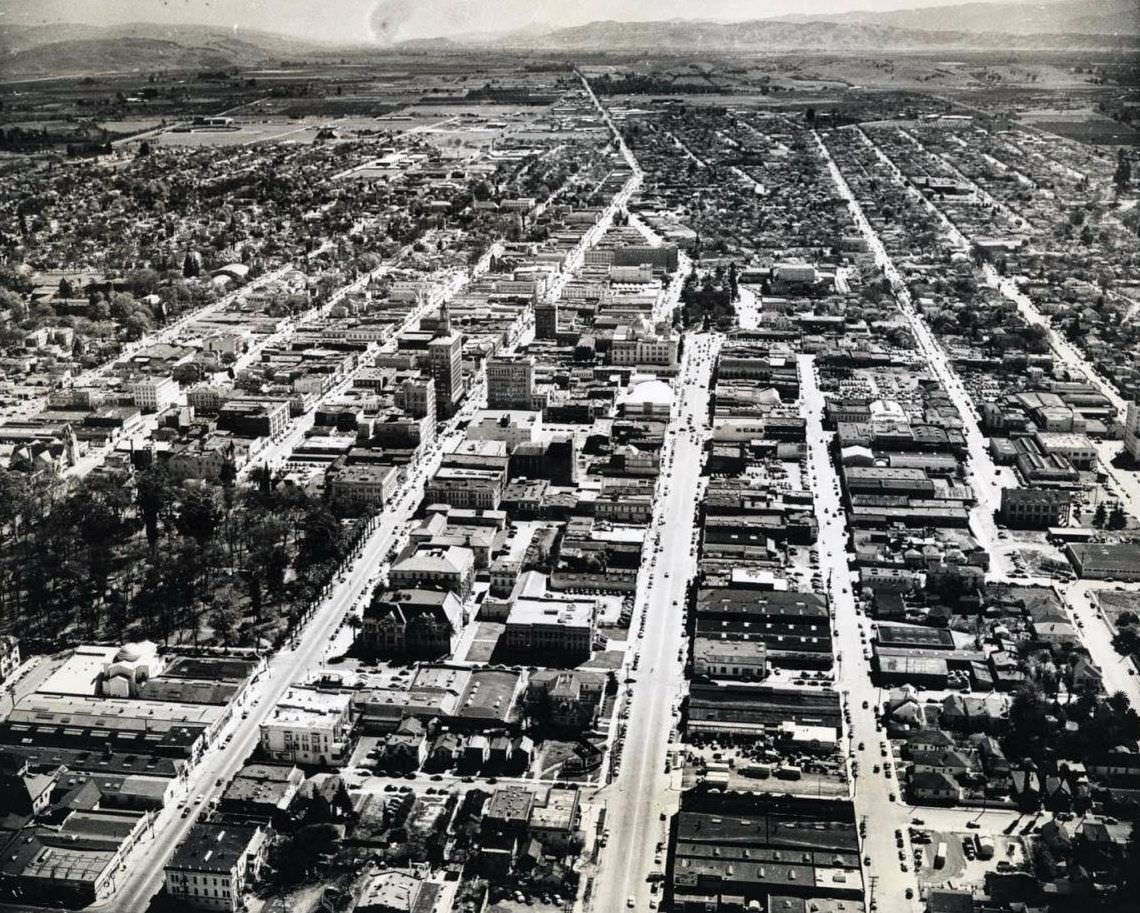
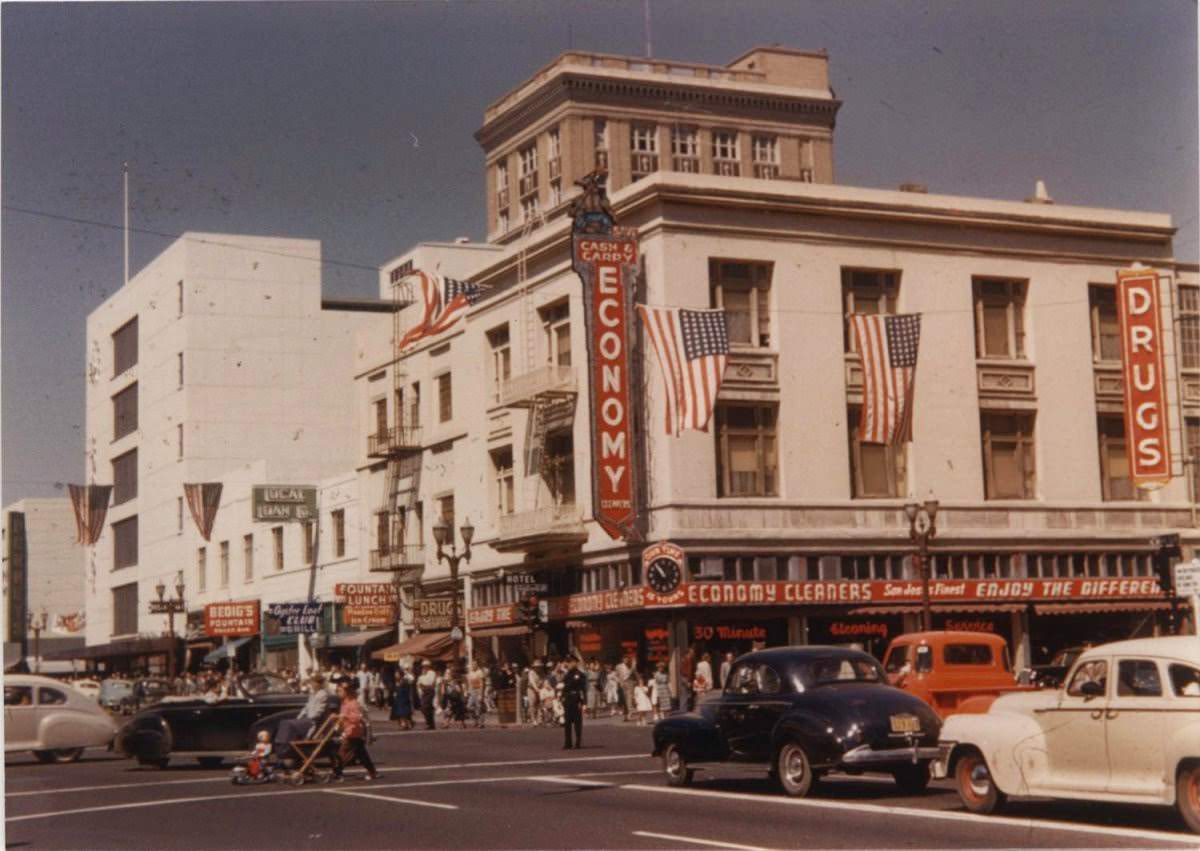
San Jose itself was changing fast. By the 1950s, the once-quiet city had developed into a bustling urban center. Housing developments expanded to support the growing workforce of engineers, scientists, and technical workers moving into the area.

San Jose was a bustling city by the 1950s

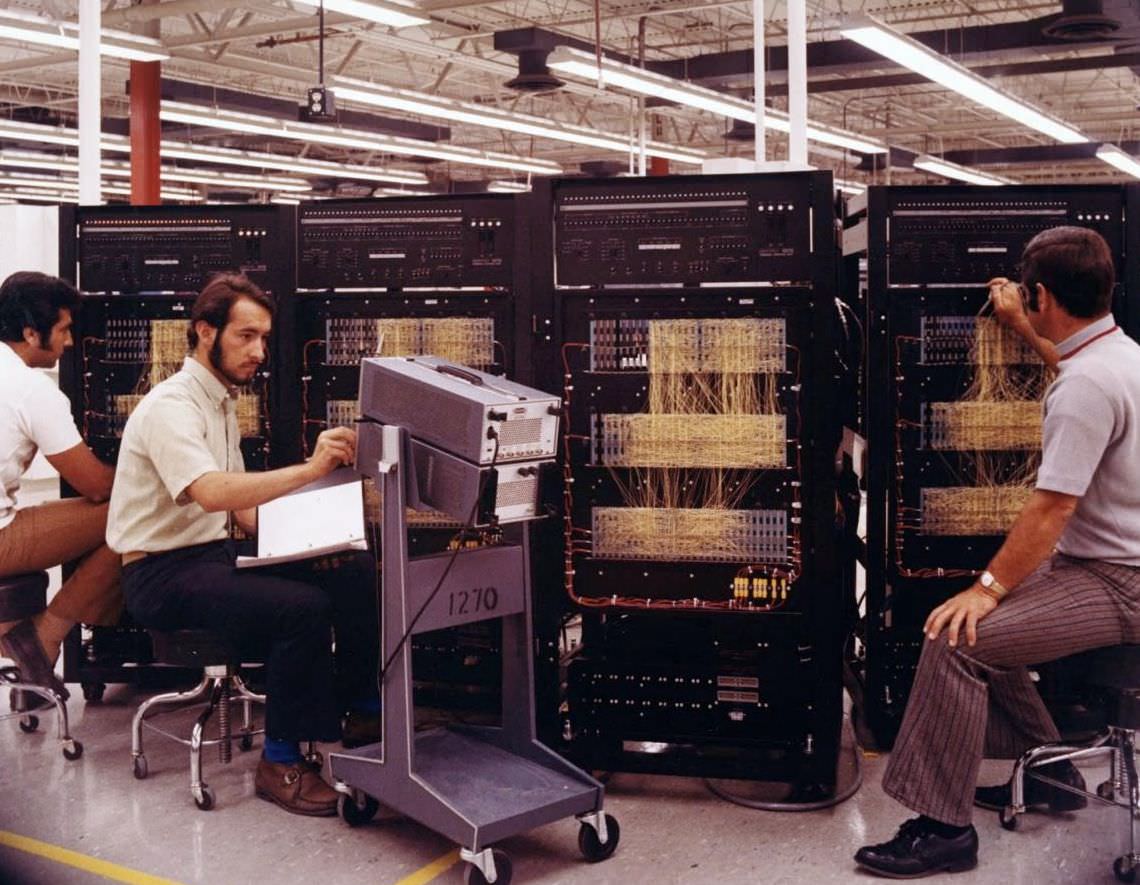
Inside the region’s labs and offices, a new kind of work was underway. Electronics was becoming more sophisticated, and hands-on technical labor was now at the center of the valley’s economy. Companies like Hewlett-Packard — founded by Bill Hewlett and Dave Packard in a small Palo Alto garage — set the tone with a culture built on teamwork and practical problem-solving.

Three men working on circuit panels, 1965

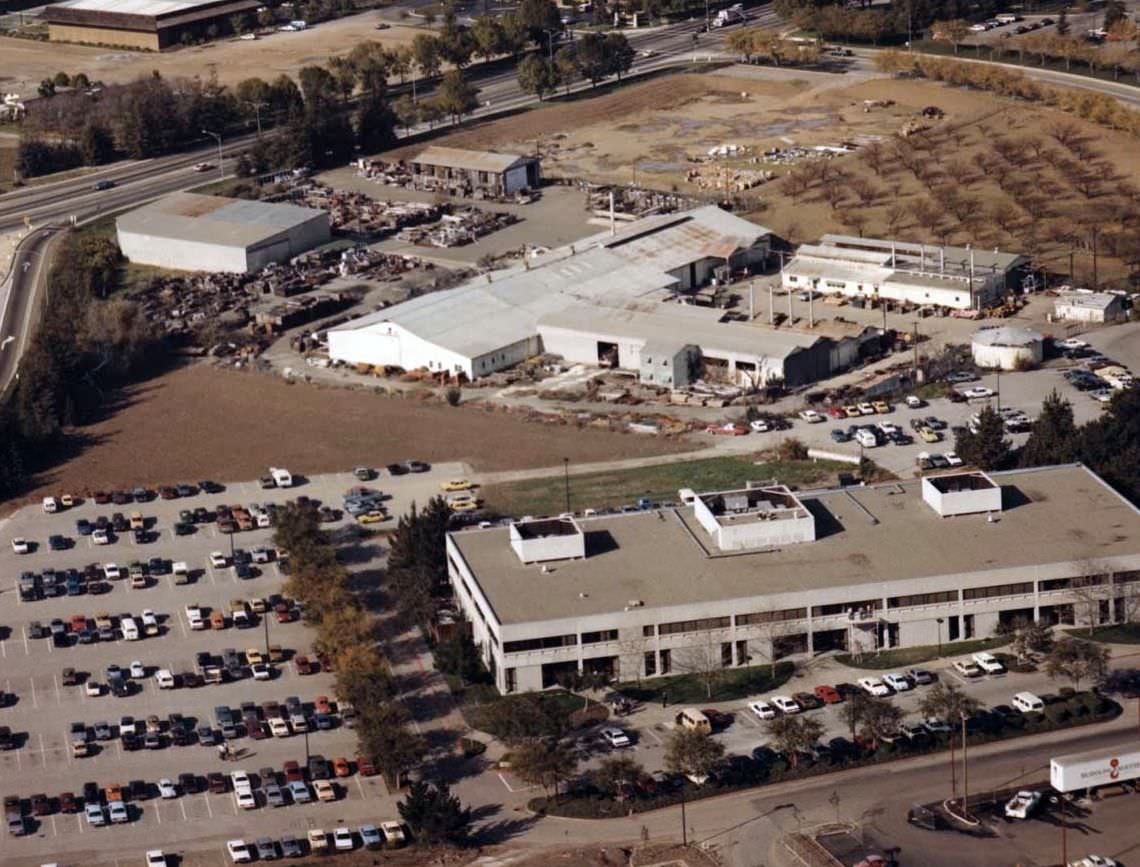
Hewlett-Packard grew from that garage into one of the valley’s most recognizable companies. Its facilities expanded significantly over the decades, reflecting just how far the region had come from its farming roots.

Hewlett-Packard's Wolfe Road facility, 1983
Hewlett-Packard’s Wolfe Road facility, 1983

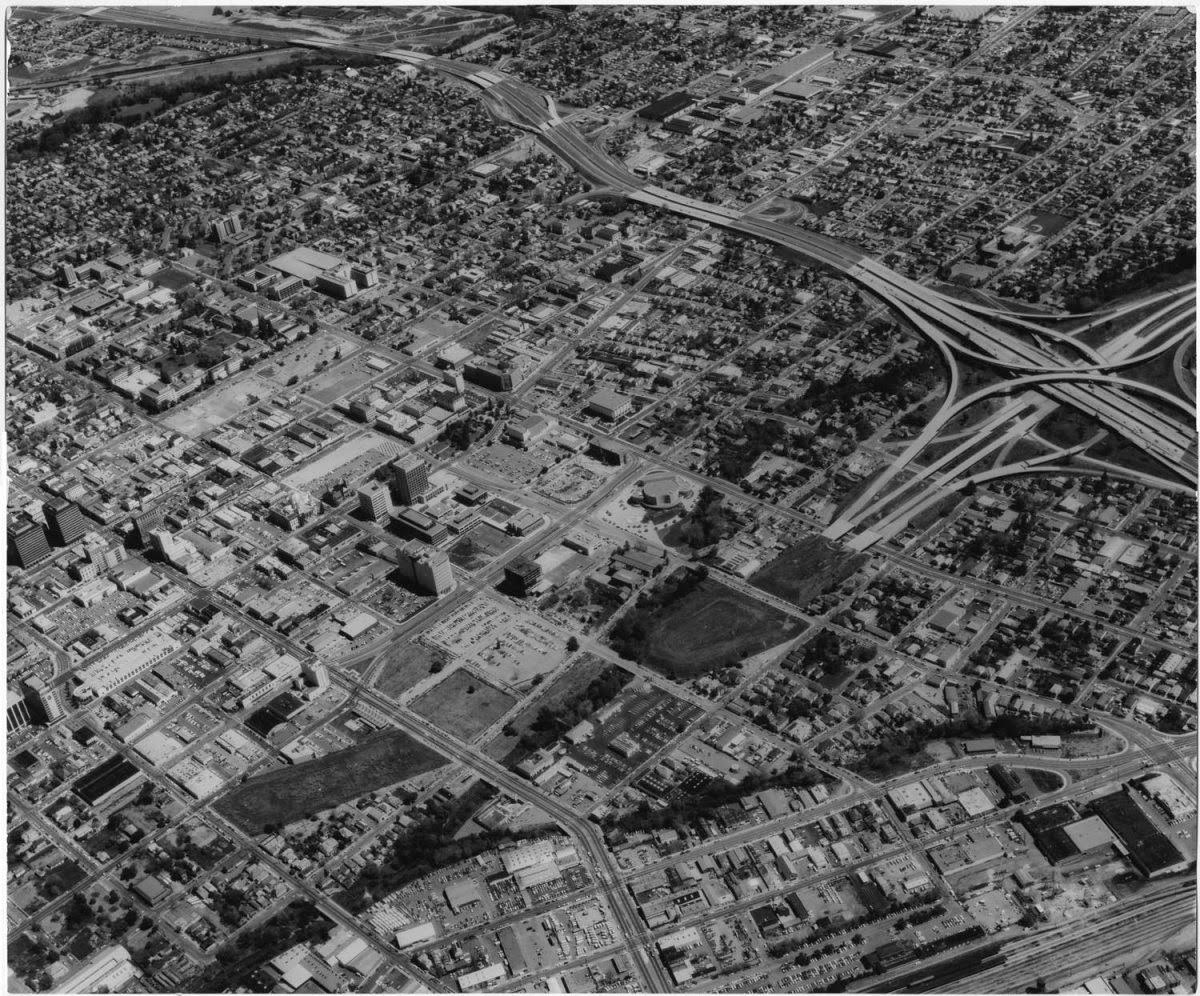
The valley that had once been defined by orchards and canneries was now defined by office parks, research labs, and an ever-growing roster of technology firms. San Jose, once a small agricultural hub, had grown into a thriving metropolis by the 1970s and 1980s.

San Jose developed into a thriving metropolis by the 1970s and 1980s

The physical landscape changed just as dramatically as the economy. Farms gave way to freeways, suburban housing tracts, and sprawling corporate campuses. The transformation was total — and visible from the air.

Aerial shot of Cupertino showing freeways, parking lots, and suburban developments
Enjoyed this post? Get new ones in your inbox.

Leave a Comment

Your email address will not be published. Required fields are marked *

Share this Post 🥺

Please take a moment to share this content. Your support is greatly appreciated! 🙌🙏

Share this Post 🥺

Please take a moment to share this content. Your support is greatly appreciated! 🙌🙏
Scroll to Top
 
Hey Friend, Before You Go.. Please like & follow for more interesting content