
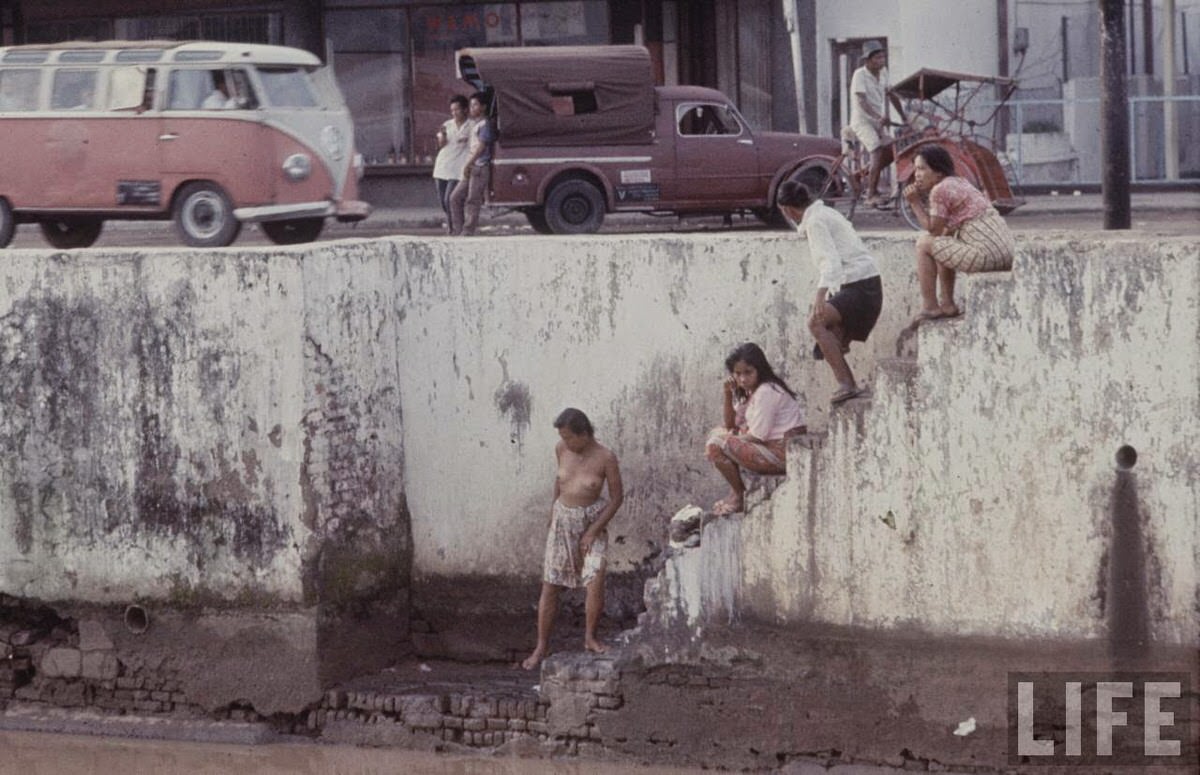
In 1972, Jakarta moved at the pace of the becak. These three-wheeled pedicabs dominated the city’s roads, threading between trucks and the occasional car. Drivers pedaled heavy loads of passengers and goods through the humid heat, their legs powering through the congestion.
On the sidewalks, street vendors ran portable kitchens called warungs. They cooked fried rice and noodle dishes over open charcoal fires, feeding laborers and office workers alike. Above the red-tile roofs of kampong neighborhoods, large billboards advertised American sodas and Japanese electronics.
Outside the cities, life followed the farming calendar. In Java and Bali, farmers worked knee-deep in muddy rice paddies, guiding water buffalo pulling wooden plows through wet soil. The fields stretched in bright green rows toward distant volcanic mountains.
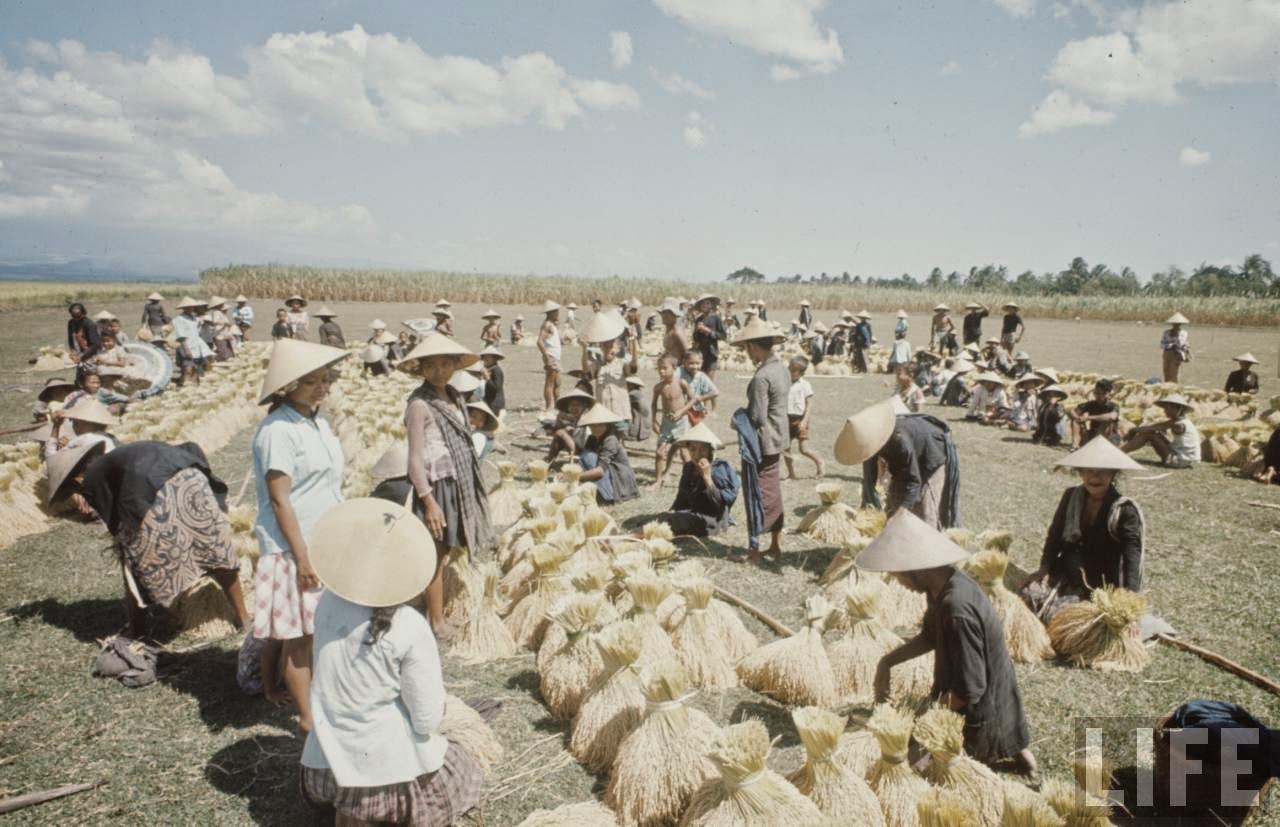
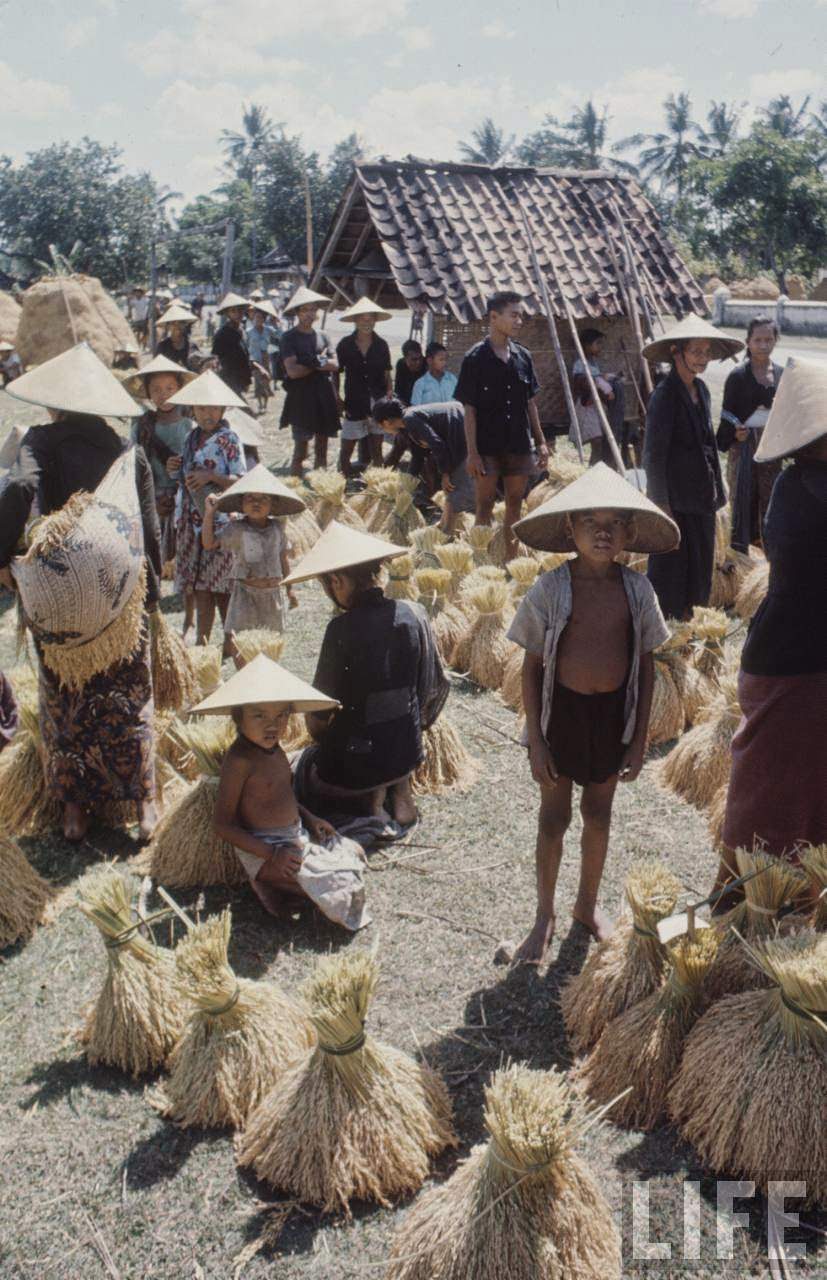
Women wore wide conical hats woven from bamboo to block the intense sun. They planted young rice shoots by hand, bending along long rows in the fields. Every motion was deliberate and practiced.
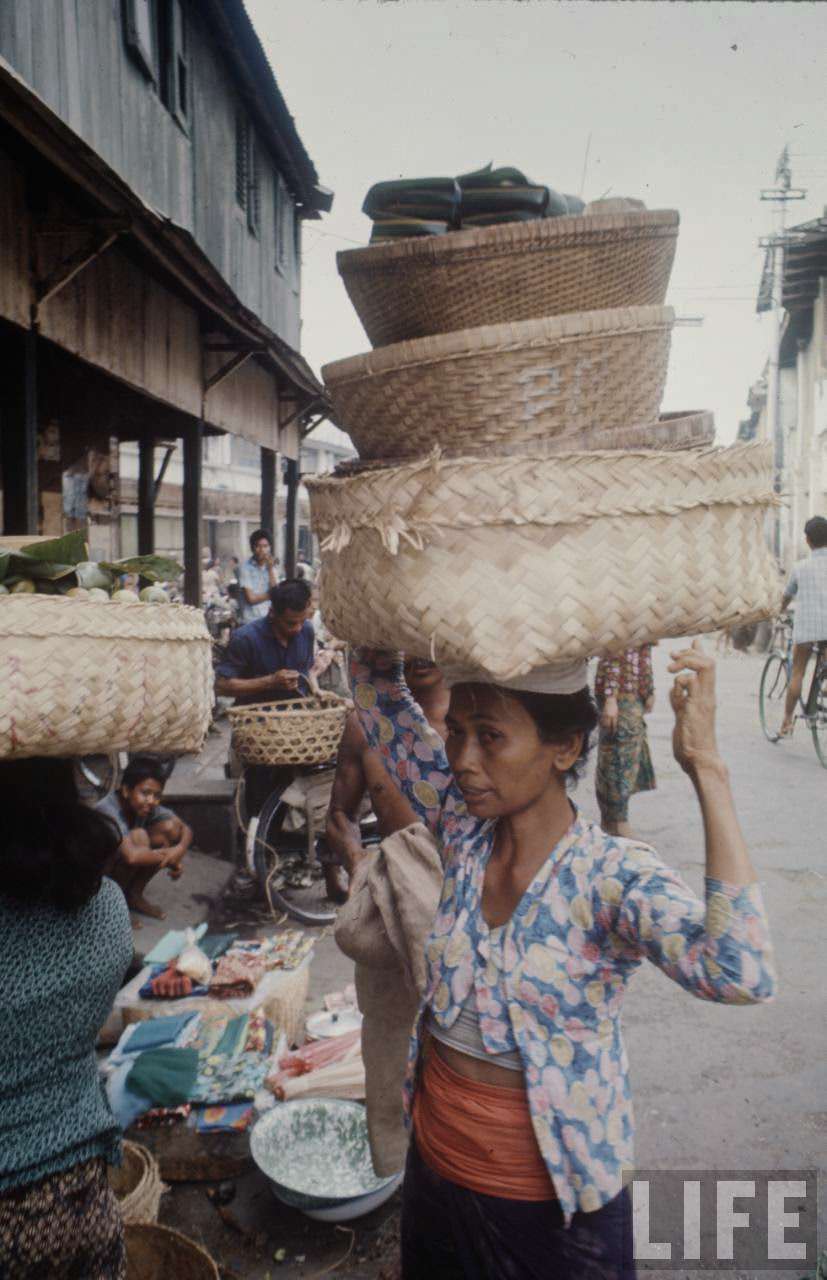
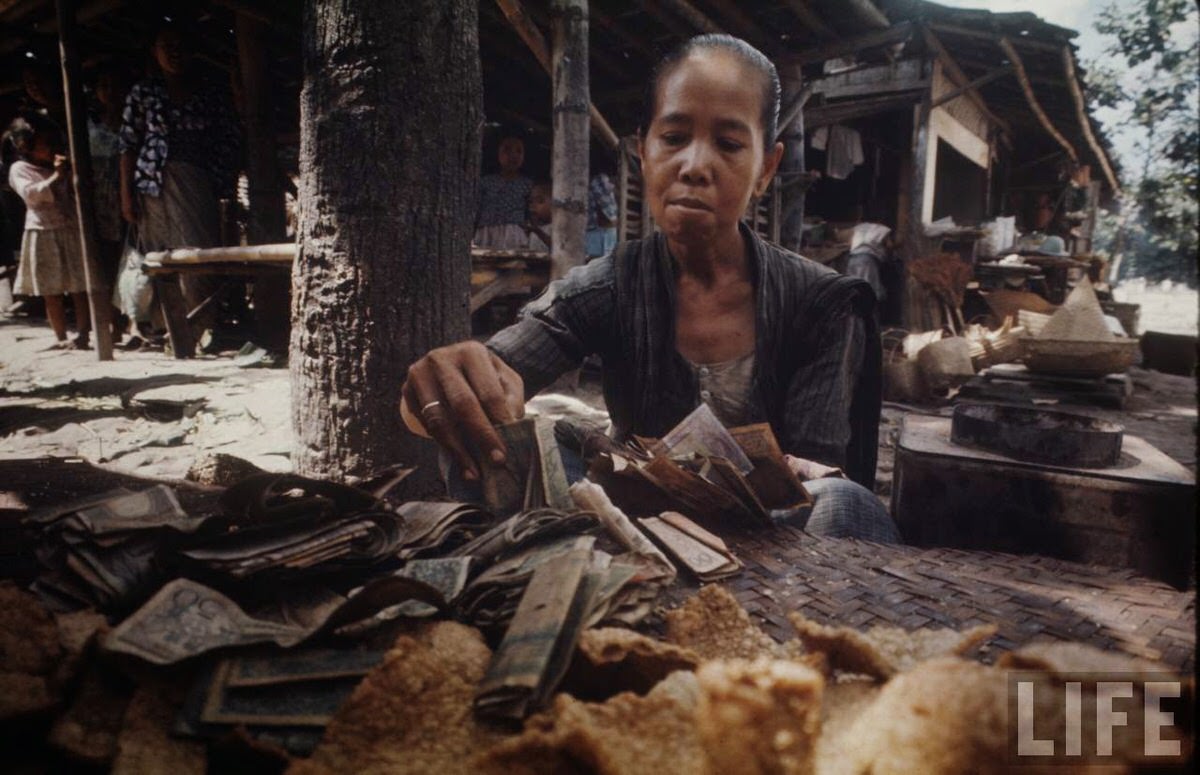
The open-air market was the economic center of every village. Sellers spread their goods directly on the ground, using banana leaves as natural plates. Mounds of red chili peppers sat alongside piles of dried salted fish and baskets of white rice.
Bargaining was not optional — it was expected. Buyers and sellers argued loudly over the price of a chicken or a kilogram of fruit before agreeing on a number. Women carried their purchases home in batik cloth slings tied over their shoulders.
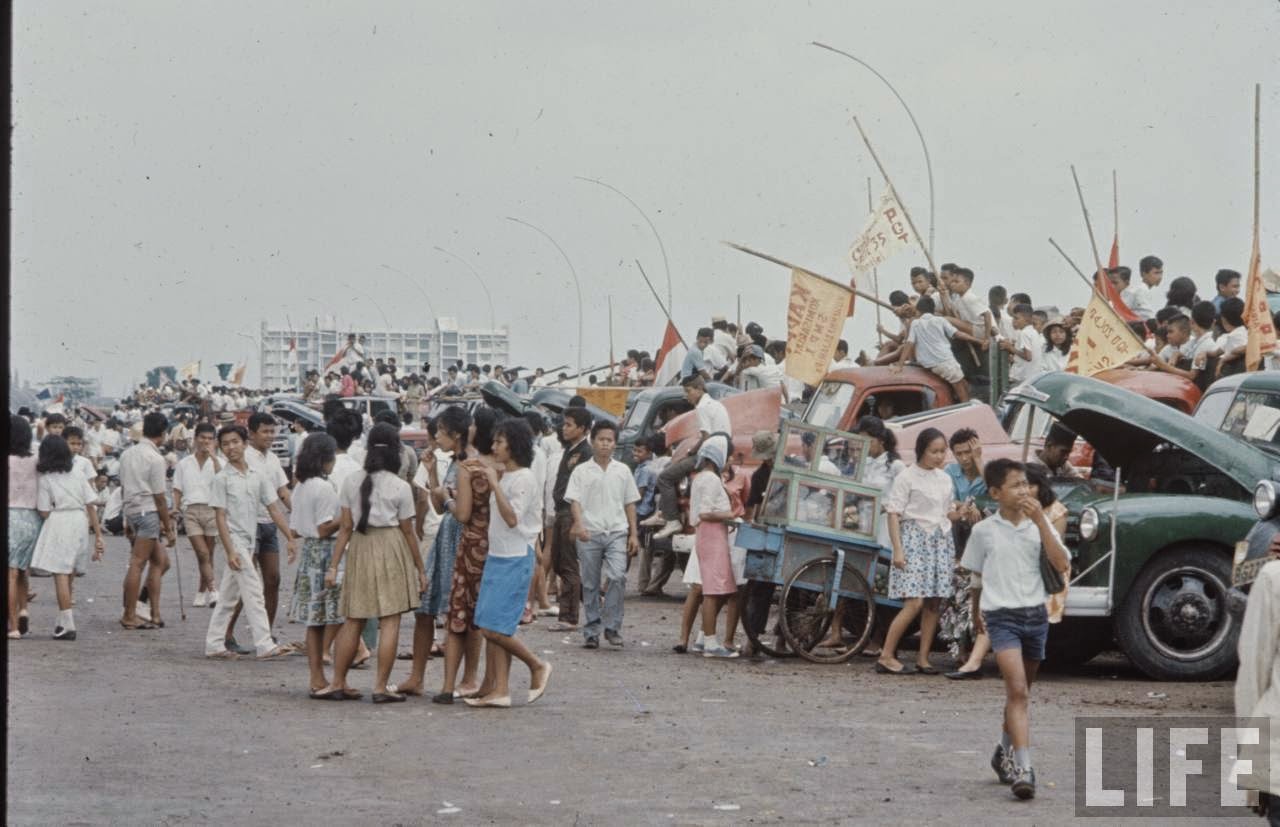
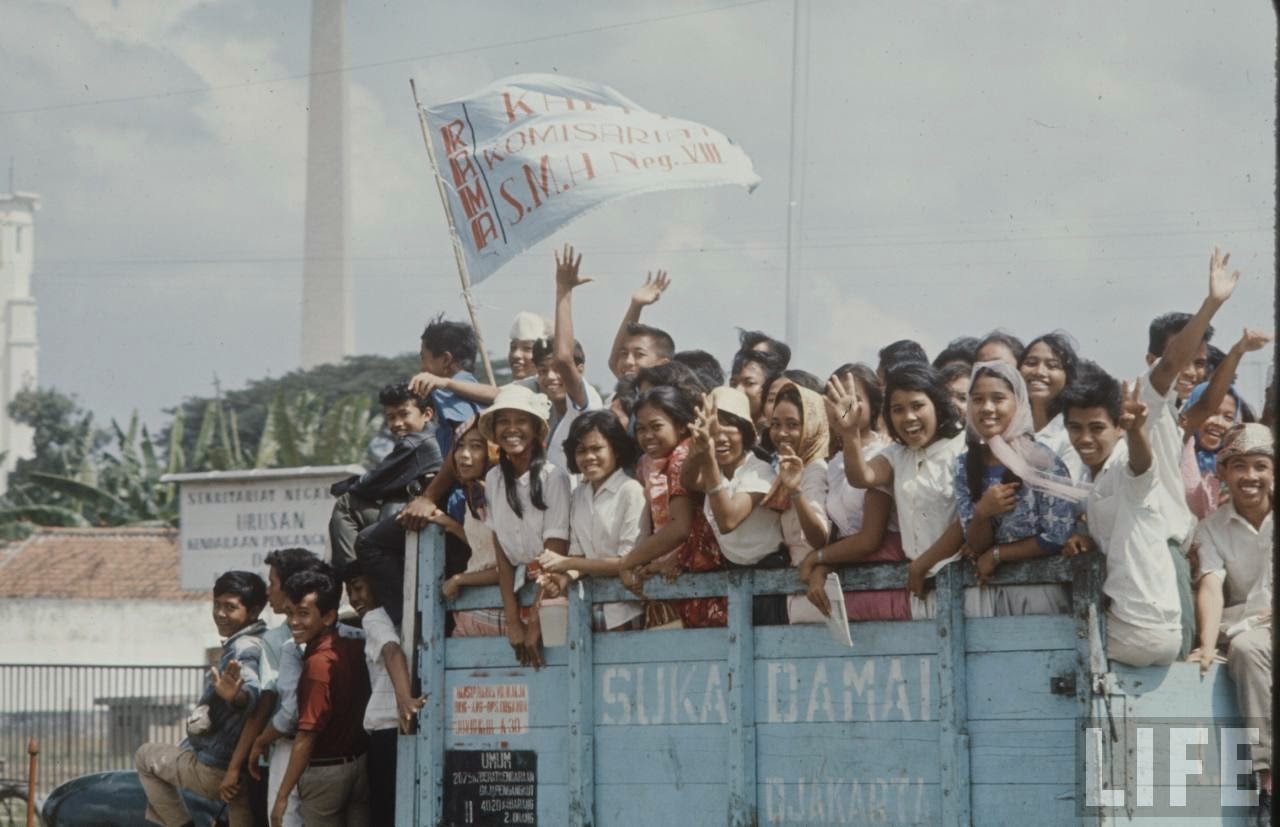
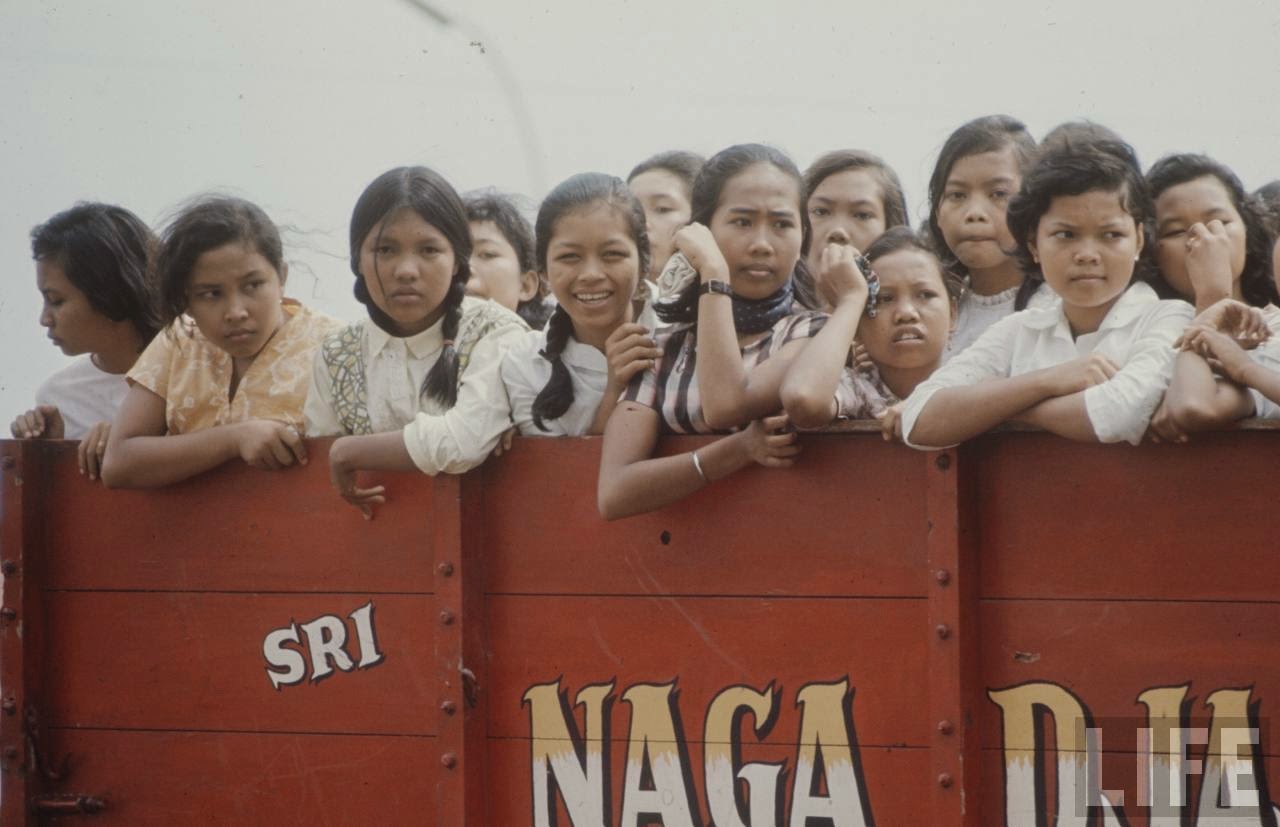
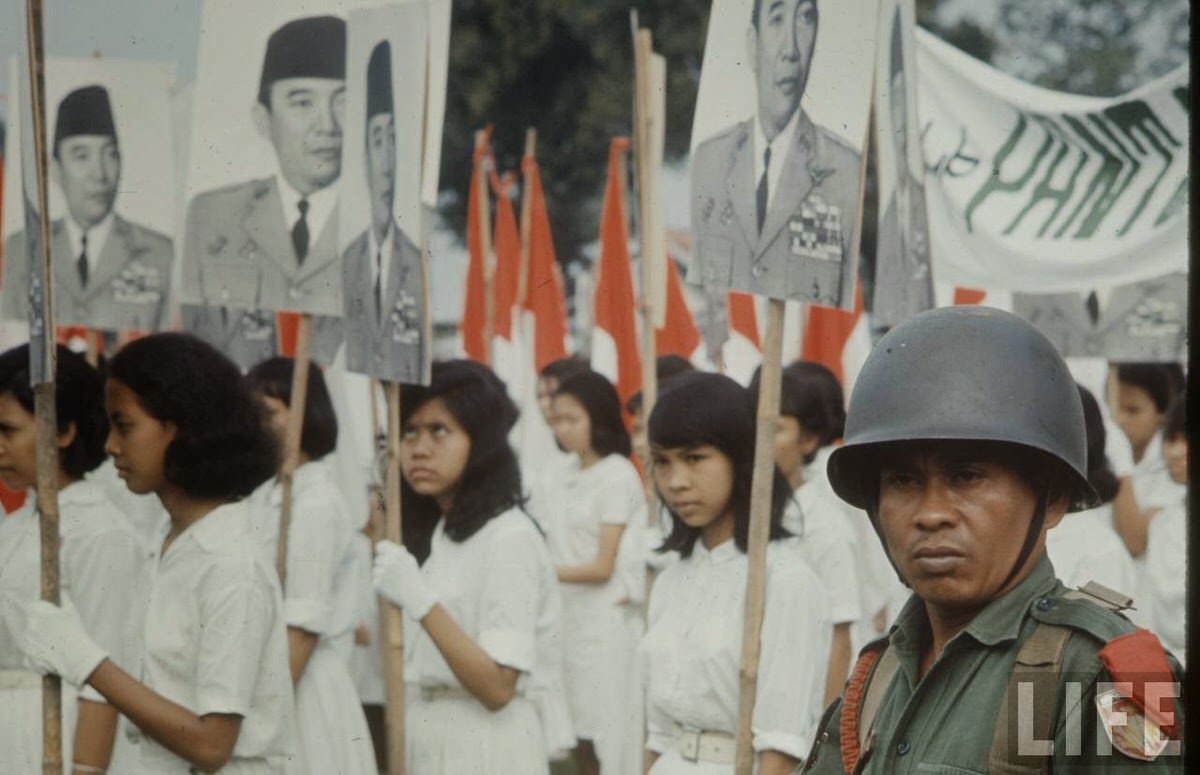
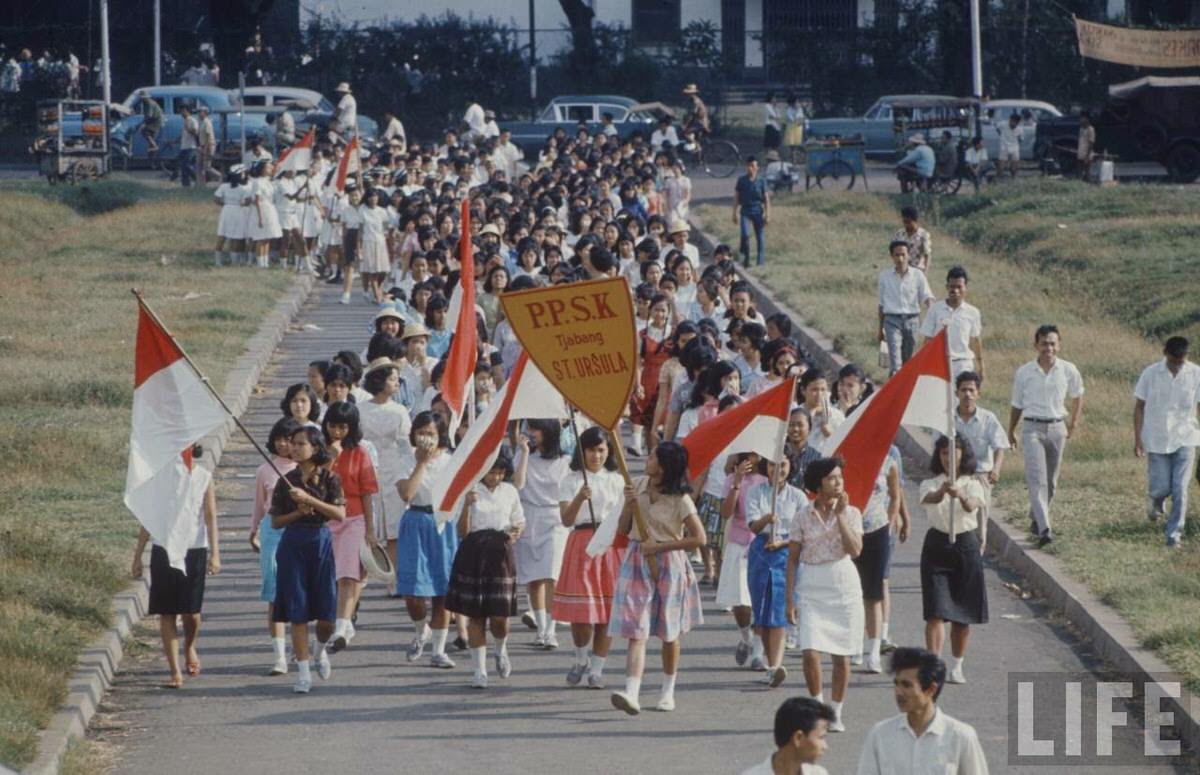
School children stood out in the dusty streets wearing pressed uniforms — boys in white shirts and shorts, girls in white blouses and skirts. In rural areas, students walked miles along dirt paths to school, some barefoot, books tucked in simple cloth bags.
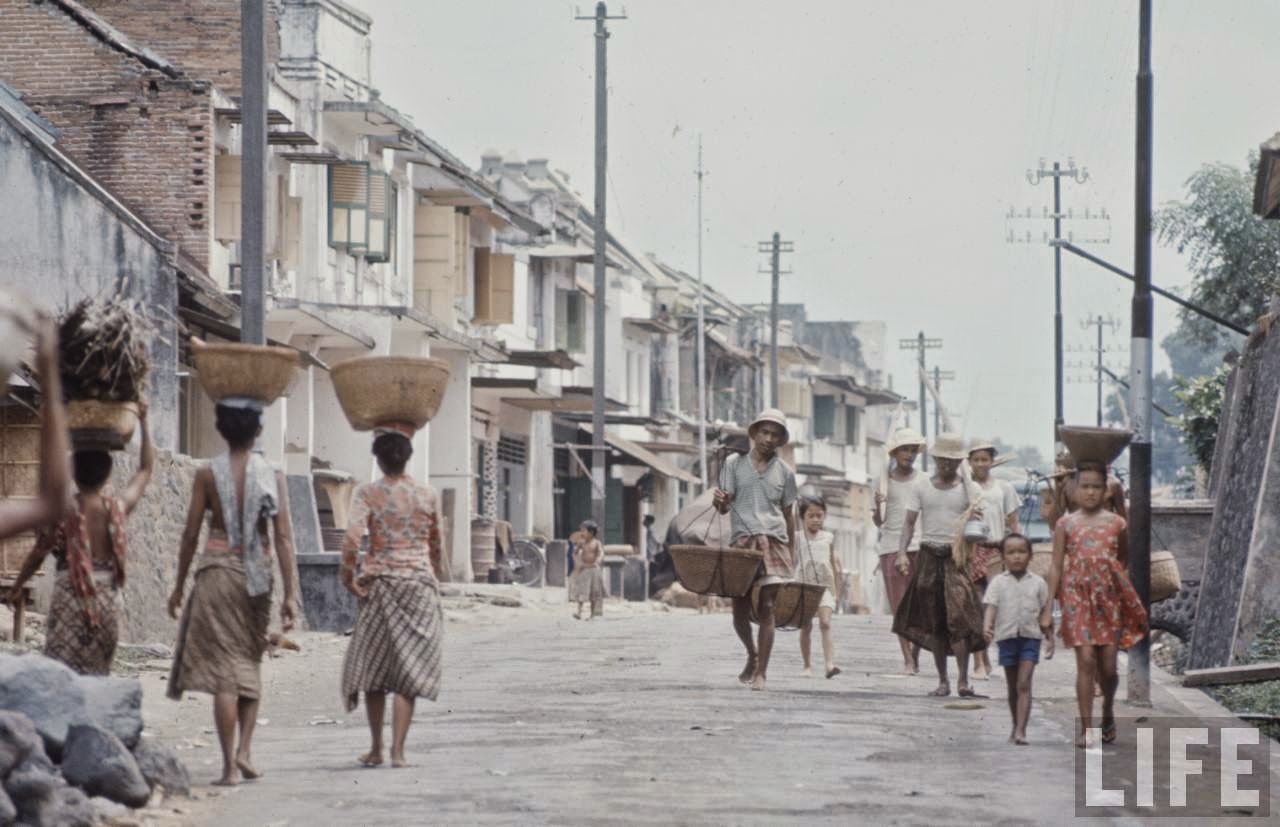
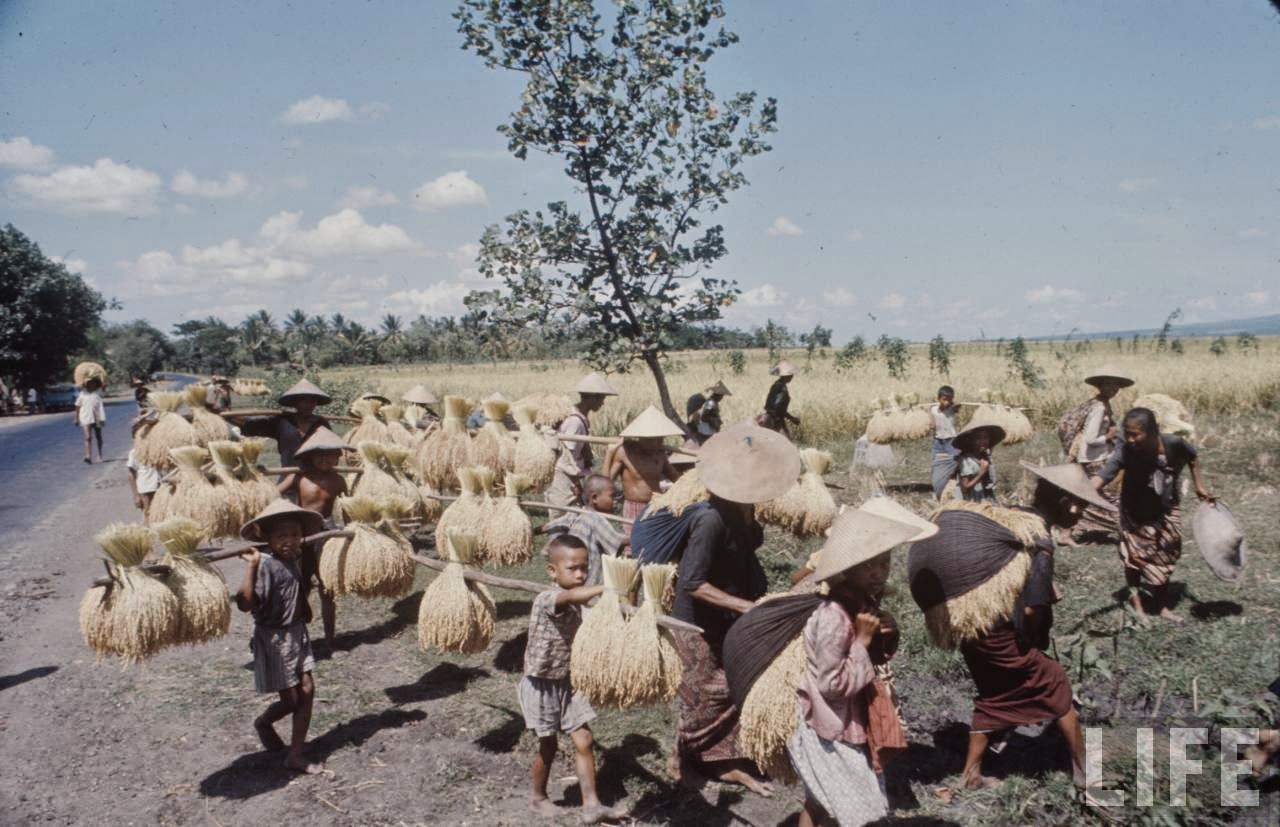
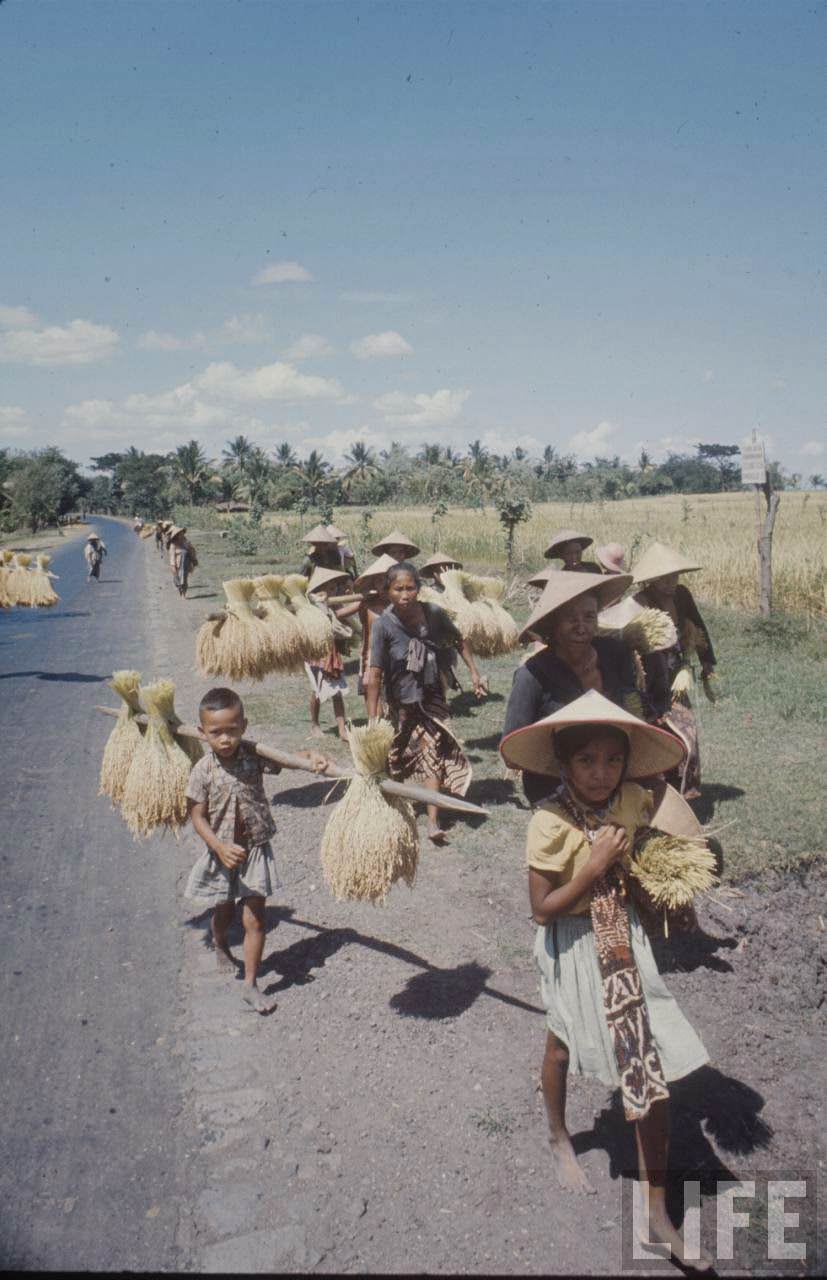
They shared those paths with porters balancing heavy loads on bamboo poles across their shoulders. These men transported everything from stacks of bricks to bunches of coconuts, covering long distances on foot.
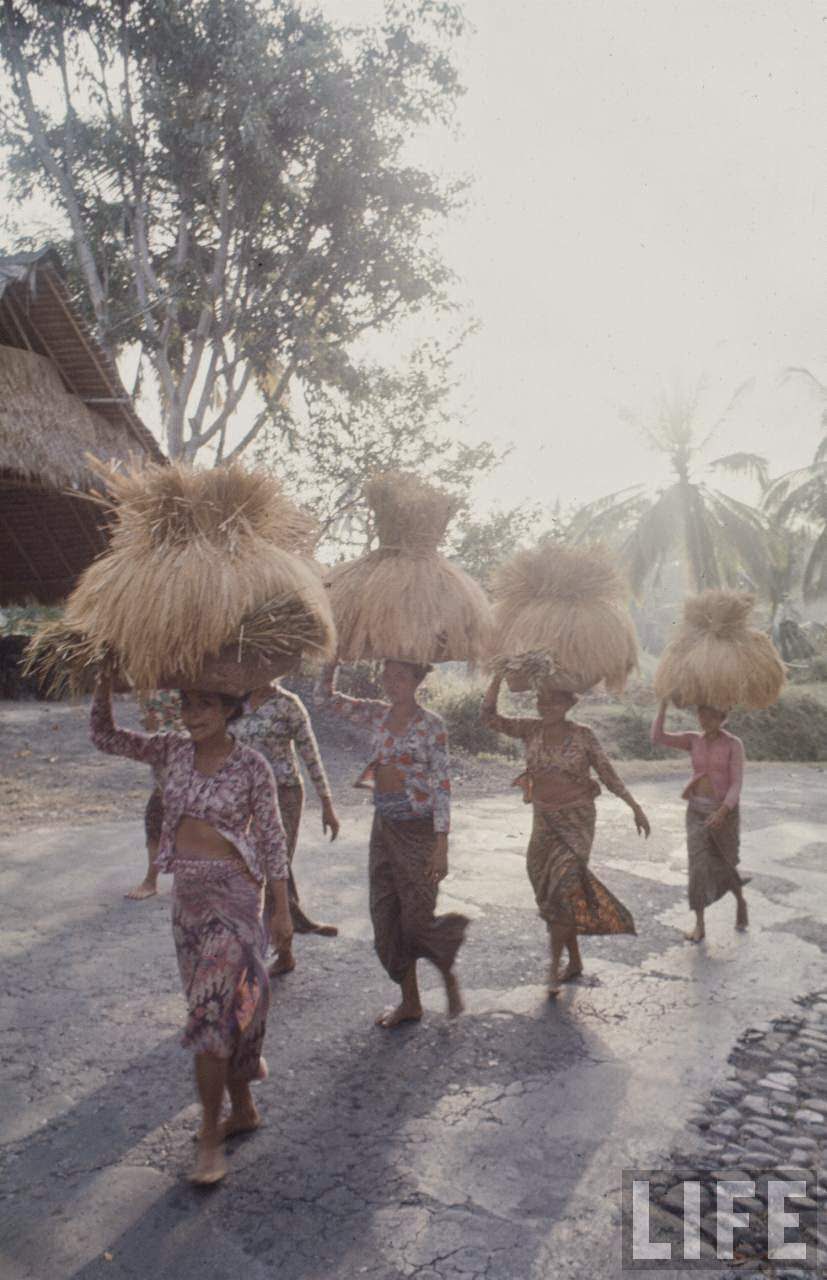
In Bali, religion was woven into the daily routine. Women walked in single-file lines to local temples, balancing tall pyramids of fruit and flowers on their heads. They kept perfect posture and steady balance, hands free at their sides.
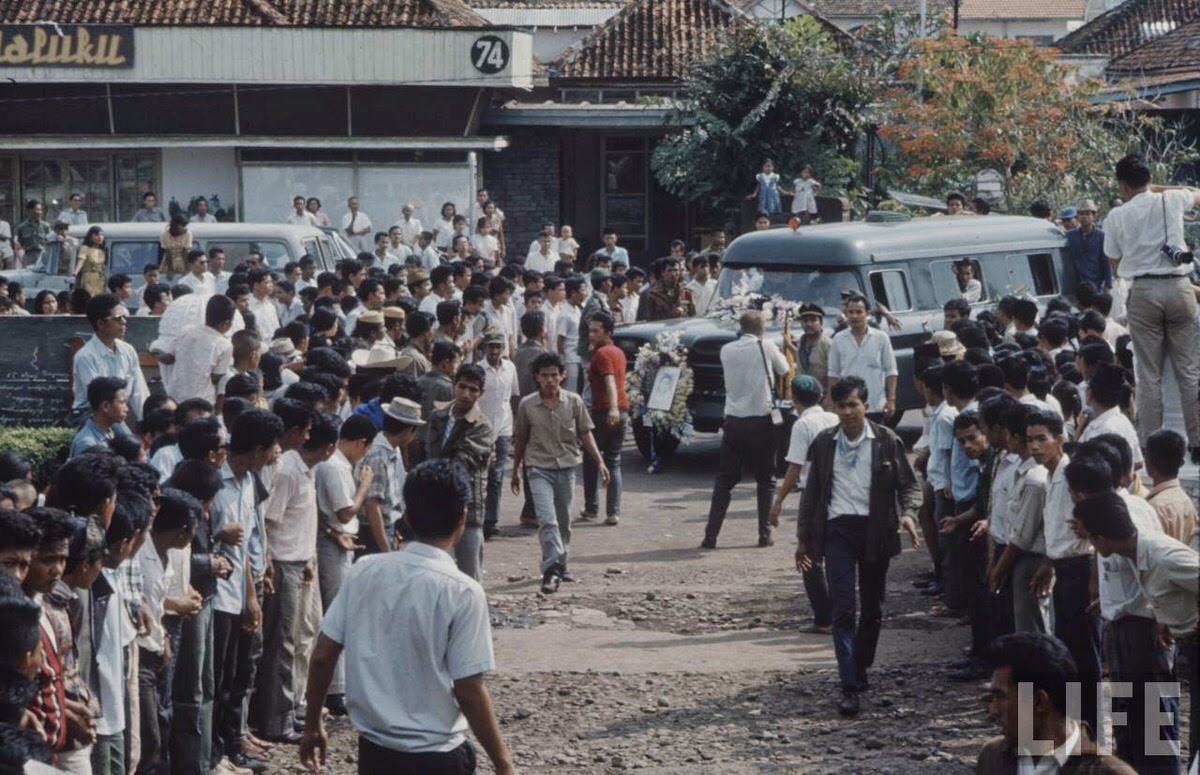
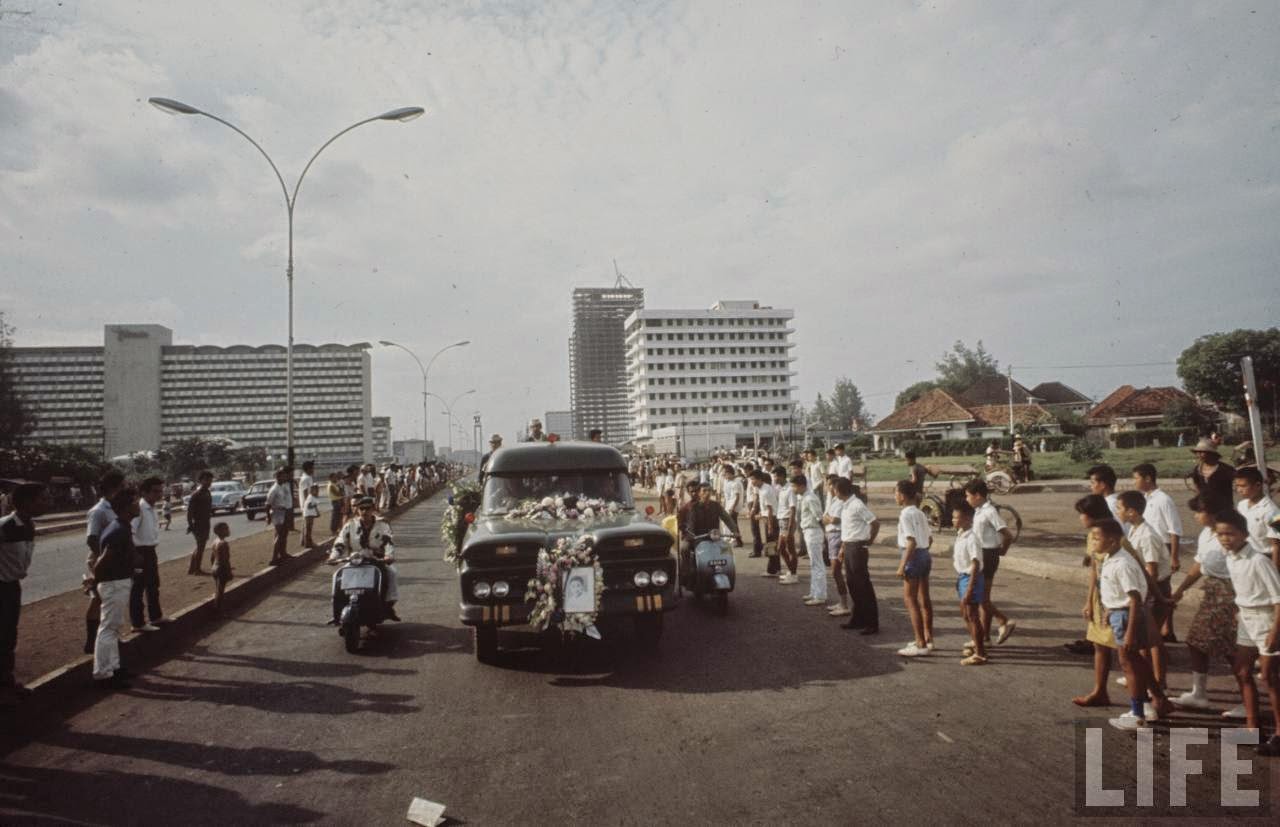
In temple courtyards, men gathered for cockfights — a pastime that served as both sport and social event. Nearby, performers prepared for evening dance shows, applying thick makeup and fastening gold headdresses that caught the light.
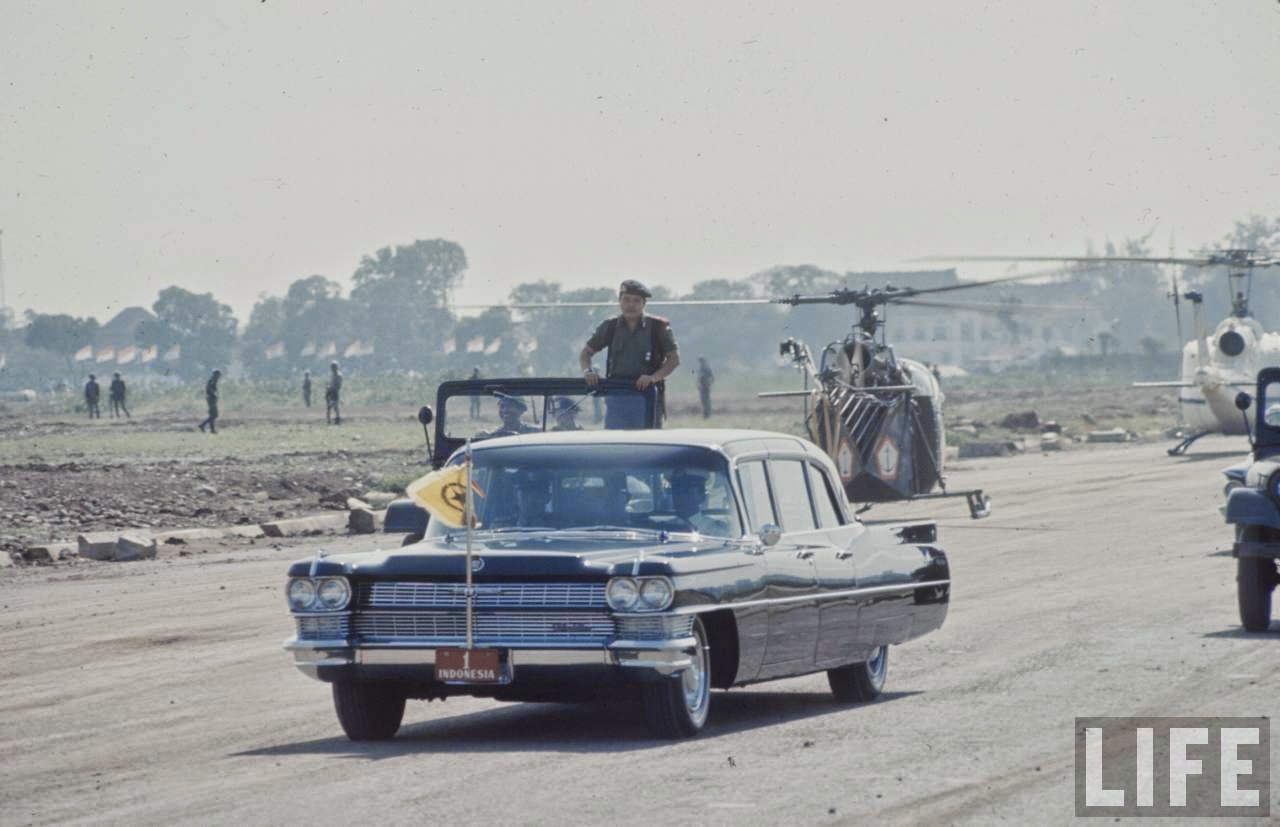
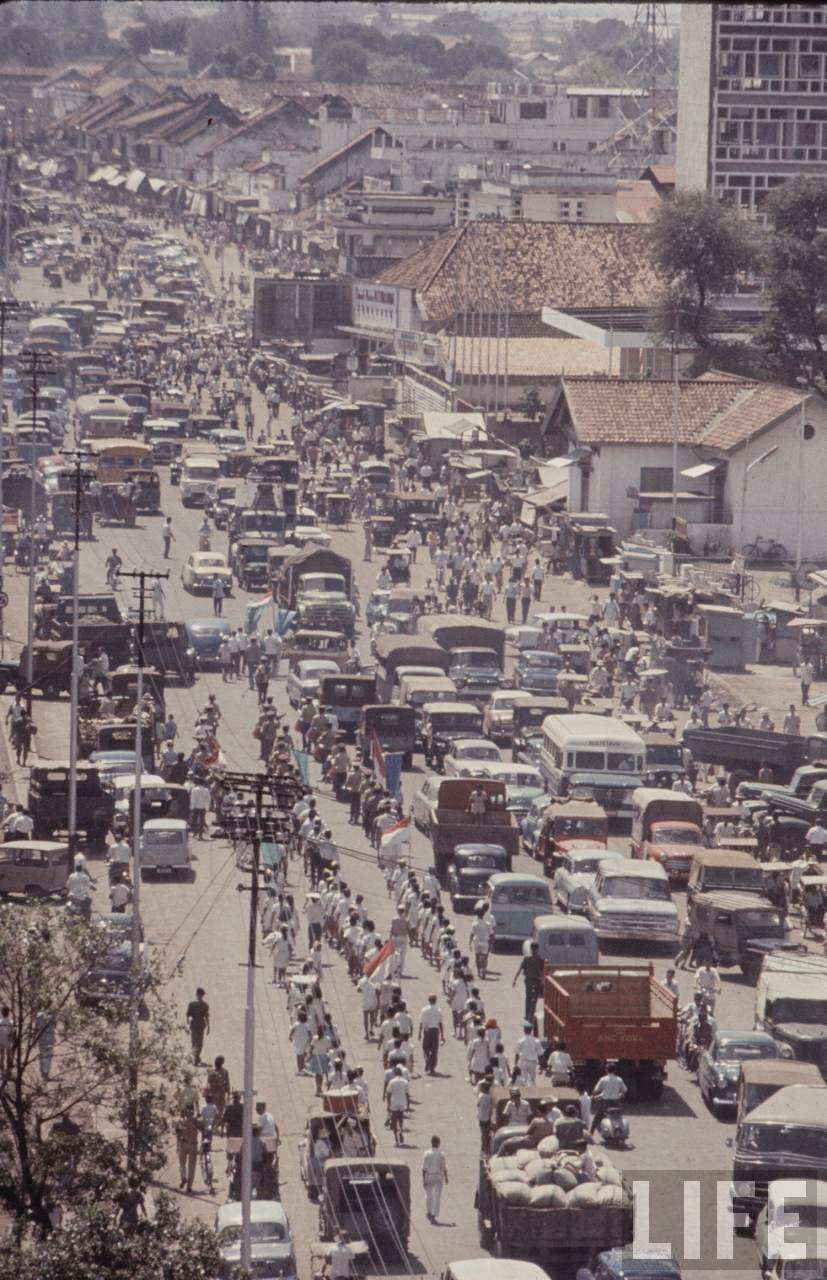
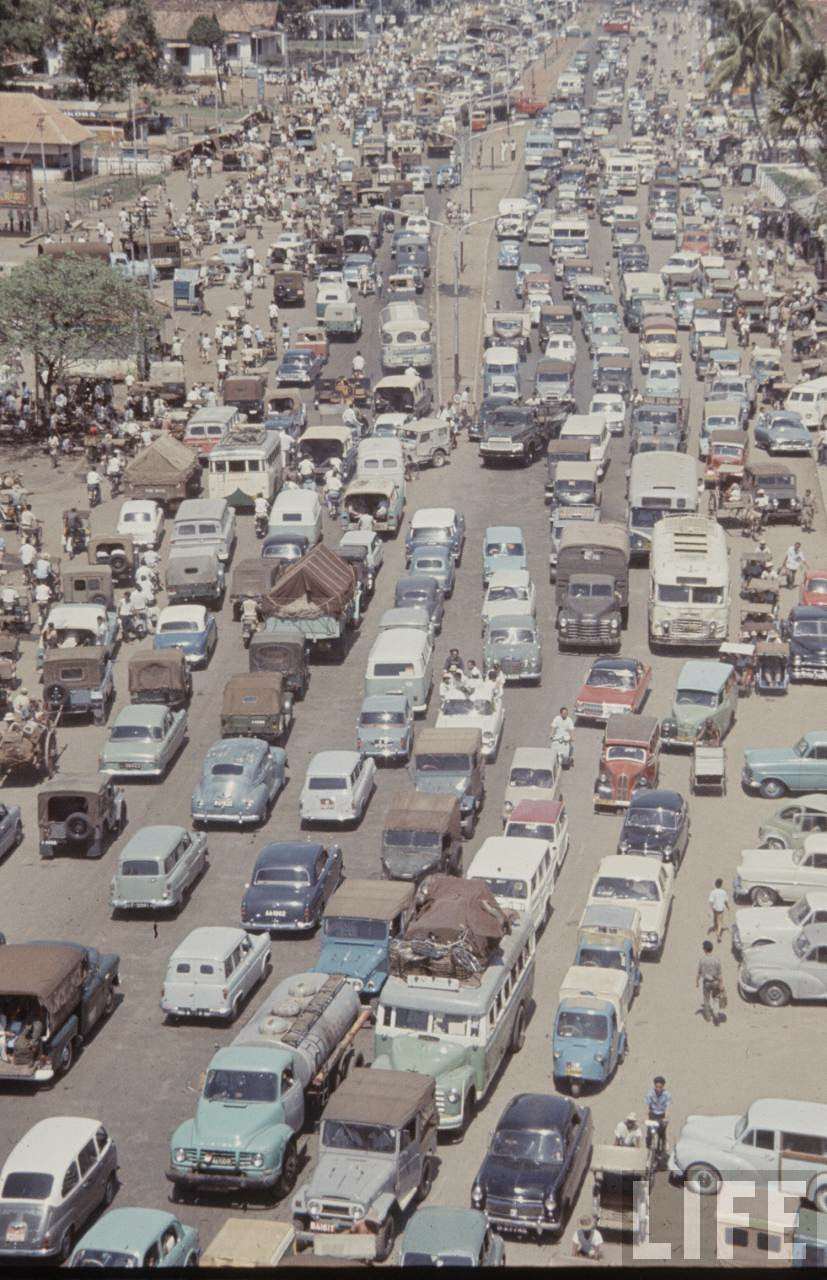
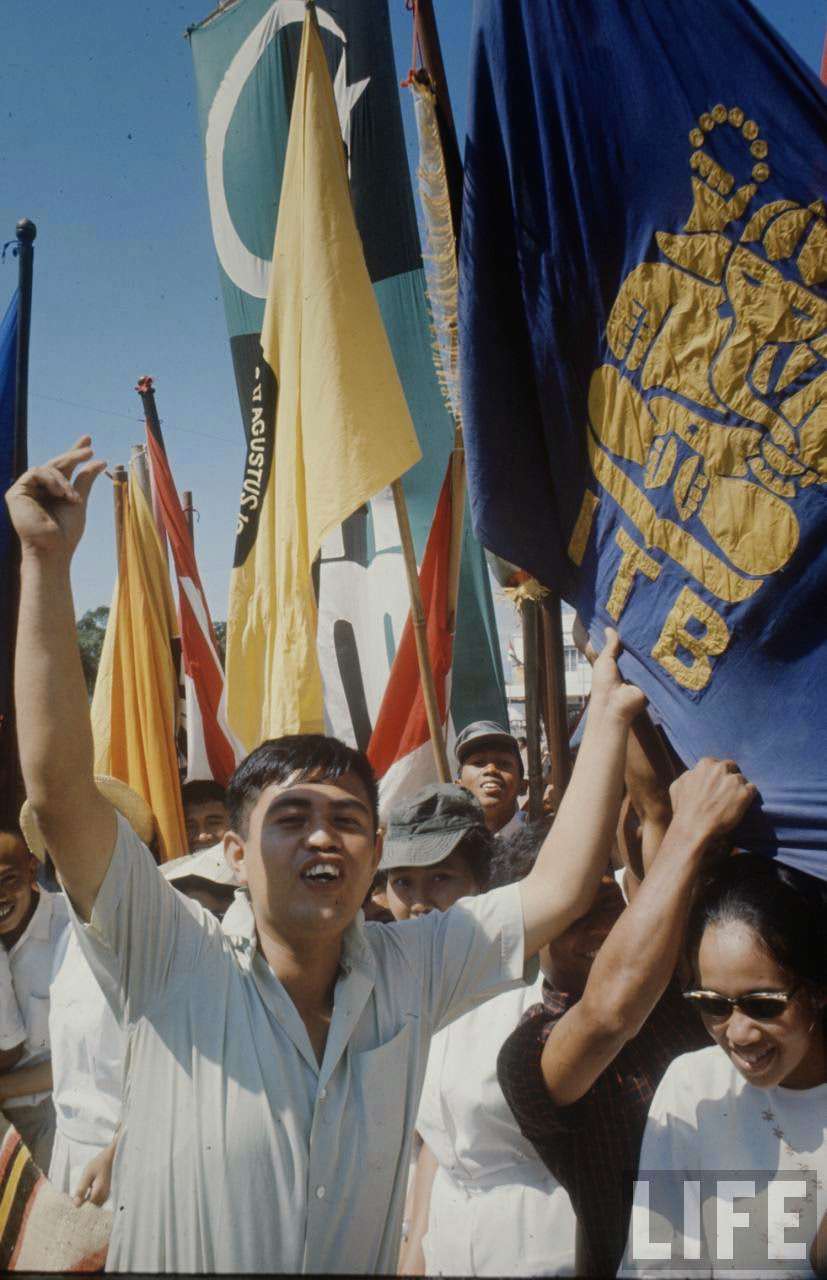
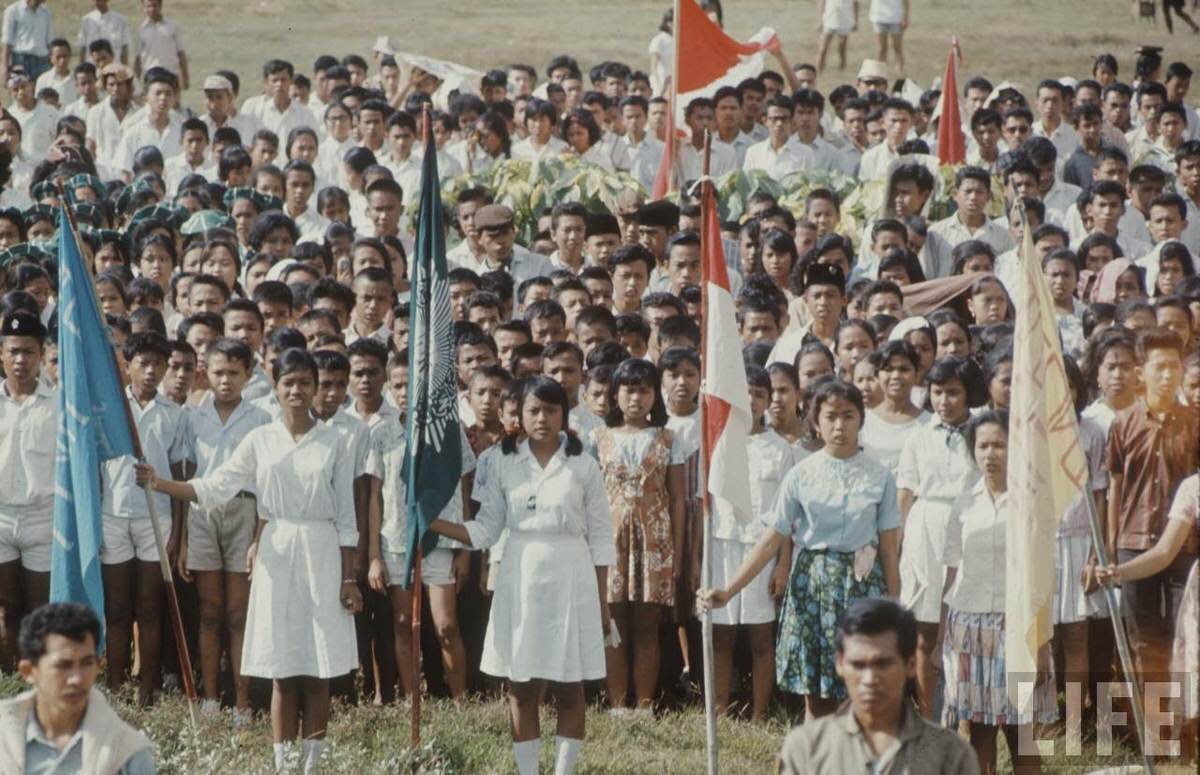
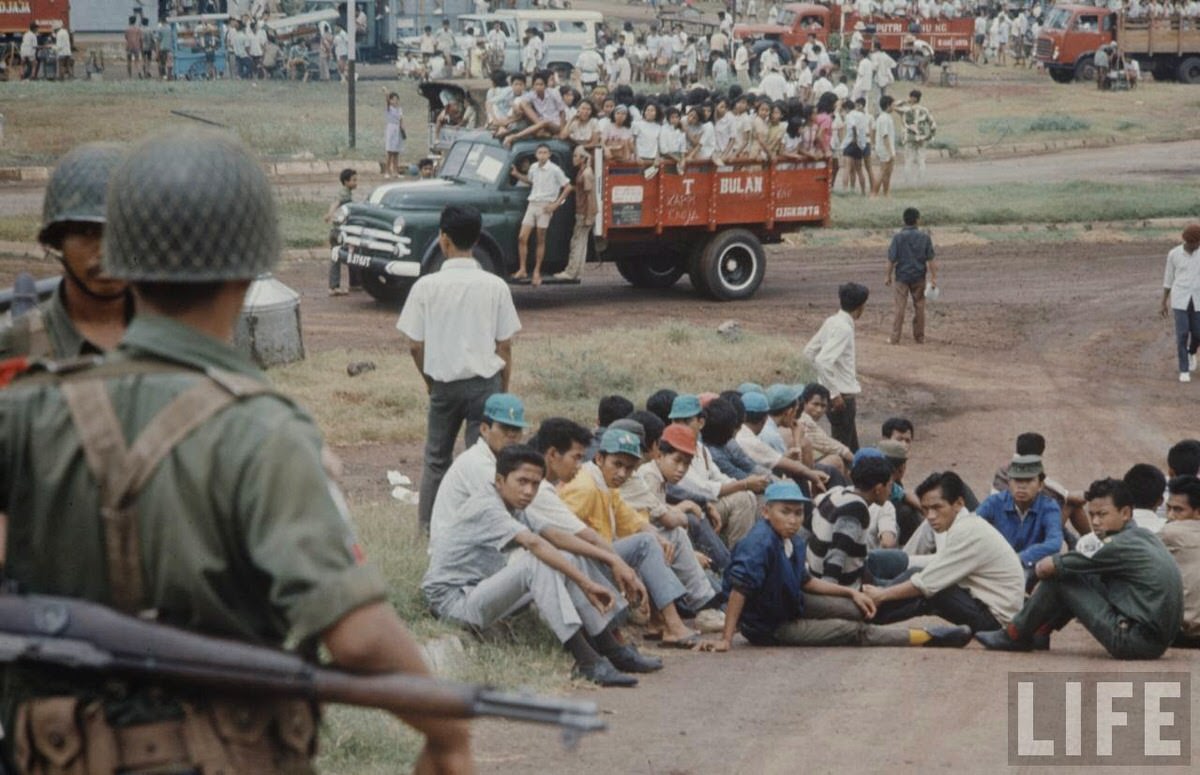





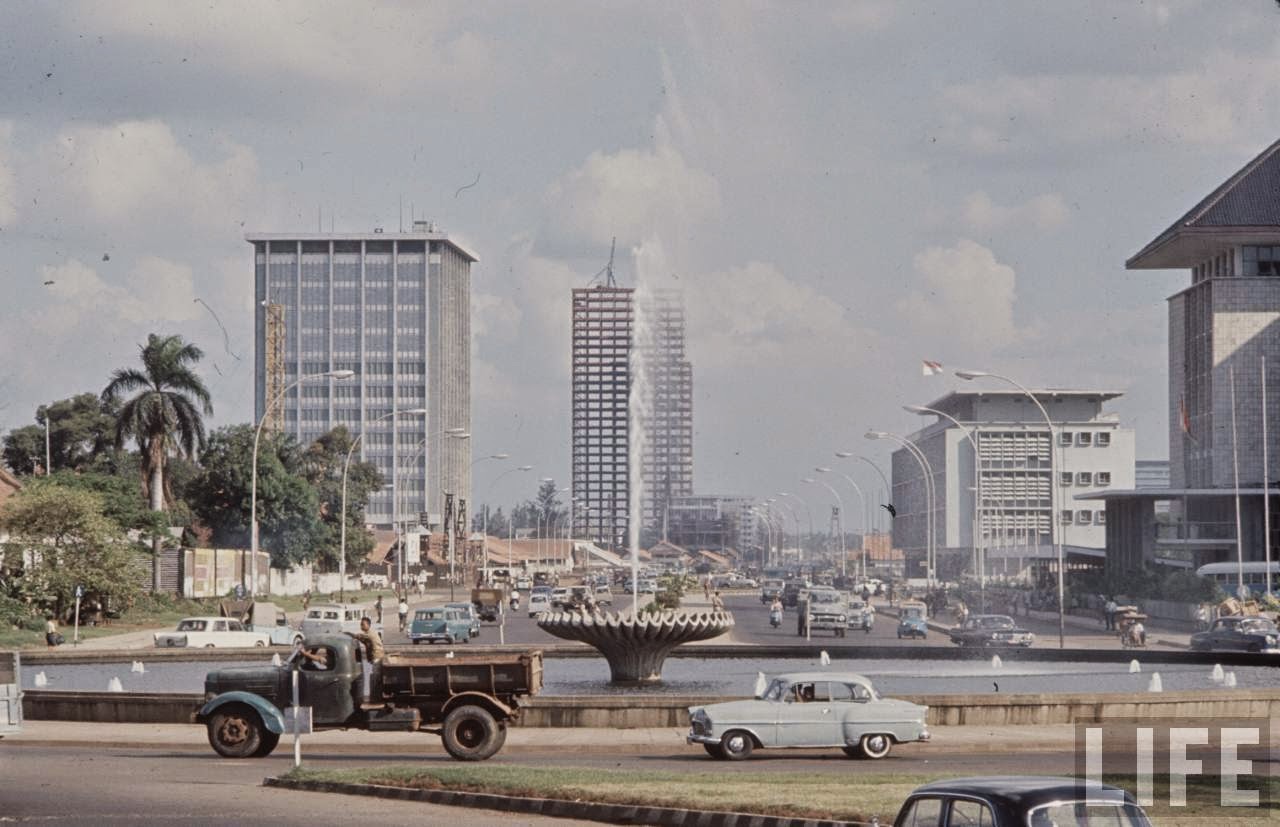
“These three-wheeled pedicabs ruled the chaotic roadways, weaving between the few motorized cars and trucks.”
Pictures show many more vehicles than three wheeled pedicabs.