
When World War II ended, much of Eastern Europe lay in ruins. Governments across the Communist bloc faced the enormous task of rebuilding cities from the ground up — and they did not plan to rebuild them the same way. A new architectural movement took hold: Socialist Modernism. It was not simply a style. It was a physical statement of ideology, stamped in concrete across entire city skylines.
The movement drew from the International Style and broader Modernism, both of which valued clean lines, rational layouts, and surfaces stripped of decoration. Architects in the Eastern Bloc took those principles and reshaped them around socialist goals. Buildings were meant to express collective identity, not individual wealth. They celebrated industrial production, rejected the ornate styles tied to monarchies and aristocracies, and pushed back against Western capitalist culture.
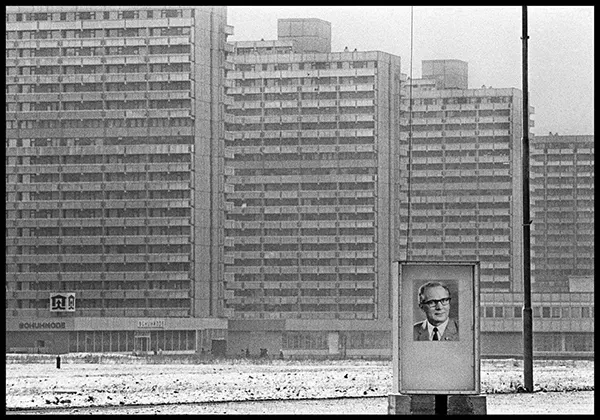
Within Socialist Modernism, Brutalism became the defining visual language. The word comes from the French “béton brut,” meaning raw concrete. Brutalist buildings featured massive, heavy forms, exposed structural materials, and sharp geometric angles. Concrete was the material of choice — cheap, widely available, and easy to produce at scale. It also carried symbolic weight. Concrete had no connection to gilded palace halls or bourgeois decoration. It was modern, utilitarian, and uncompromising.
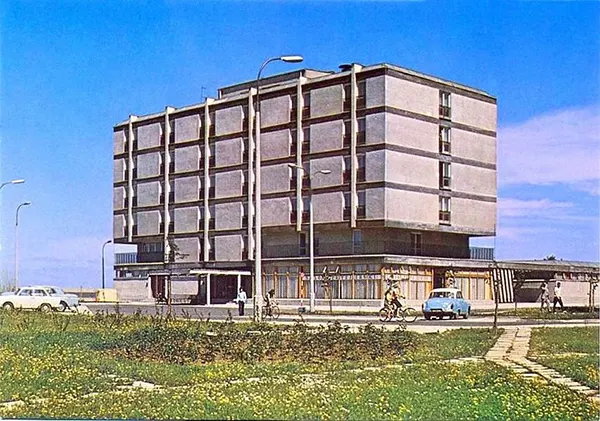
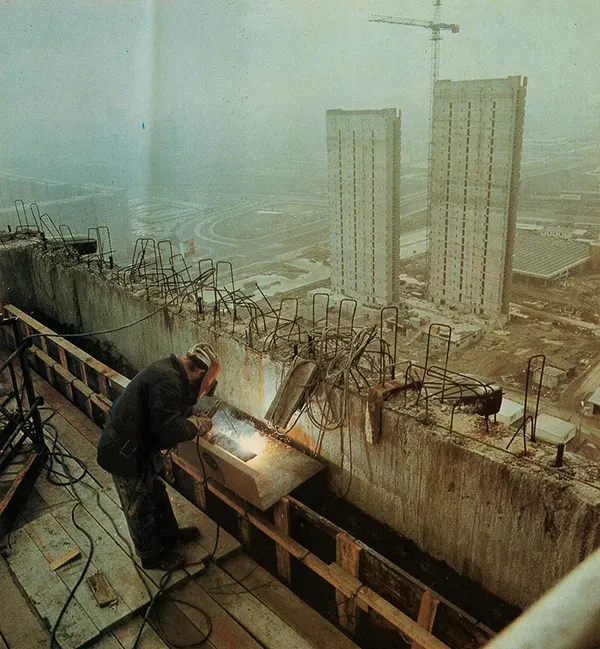
State planners held tight control over what got built and how. Architects worked within systems that prioritized standardization and speed. Across the bloc, prefabricated concrete slabs were manufactured in factories and assembled on-site using shared Soviet blueprints. This method allowed entire neighborhoods to rise in a matter of years. These were not just apartment towers — they were microrayons, self-contained living zones that included schools, health clinics, and communal gathering areas, all laid out to support organized socialist daily life.
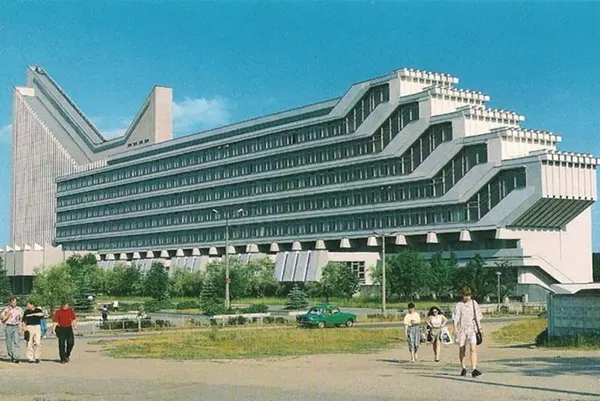
Despite rigid state control, local character found ways to surface. Architects in different countries worked folk-inspired details into panel joints, carved patterns into concrete facades, or designed bold structural supports that nodded to regional traditions. The result was a movement that looked similar across the bloc but was never completely uniform. A tower in Sofia carried different visual traces than one in Kyiv or East Berlin.
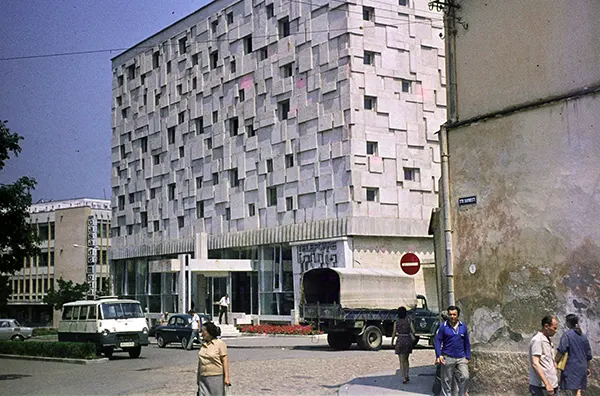
The reach of this architectural movement extended far beyond Eastern Europe’s borders. Socialist Modernism spread to Cuba, Central Asia, the Caucasus, and parts of Africa where Soviet influence ran deep. From Havana to Tashkent, governments allied with Moscow built in the same bold, concrete-heavy style — each adapting it to local climate and culture while maintaining the core visual vocabulary of mass, repetition, and raw materiality.
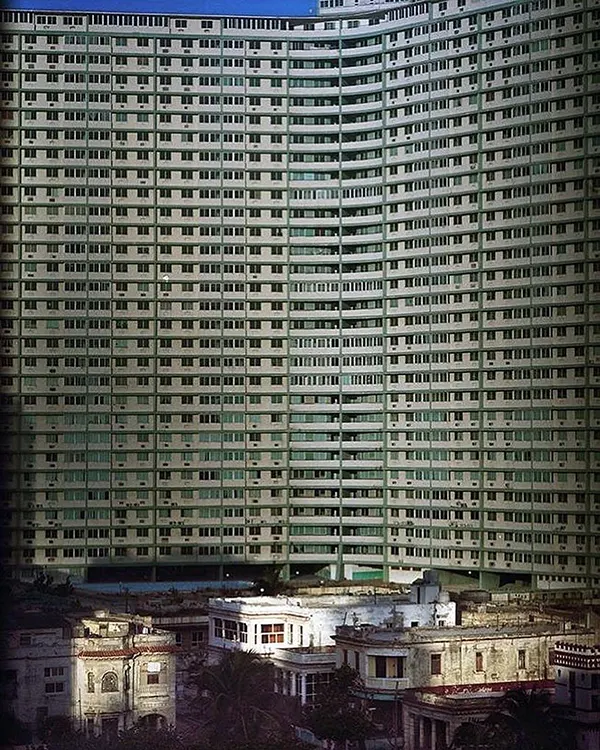
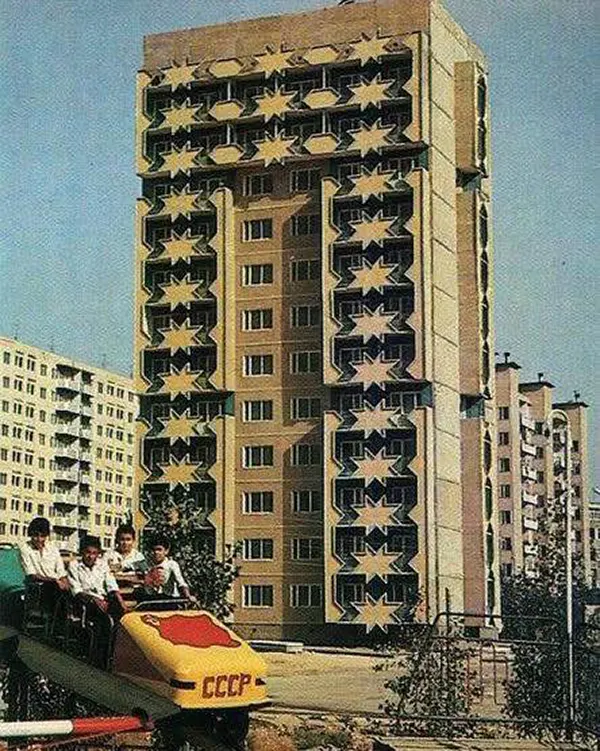
Public buildings carried the heaviest ideological load. Theatres, government offices, museums, and monuments were designed on an oversized scale. Their bulk was intentional — meant to project the permanence and authority of the socialist state. Wide plazas were laid out in front of them, creating open spaces where citizens could gather for state ceremonies and public events. The architecture did not invite quiet contemplation. It demanded attention.
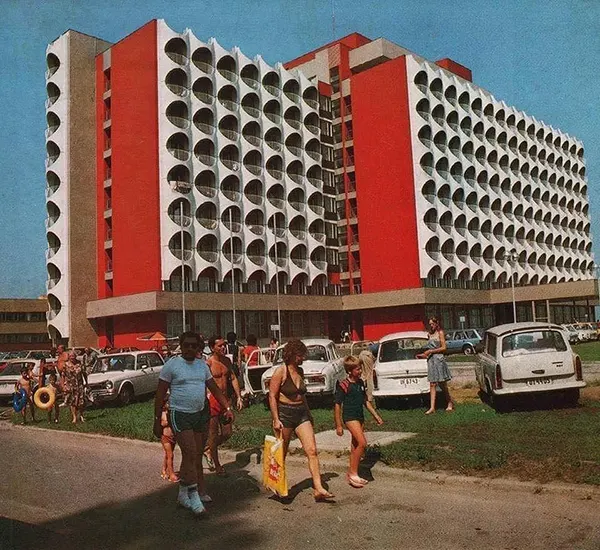
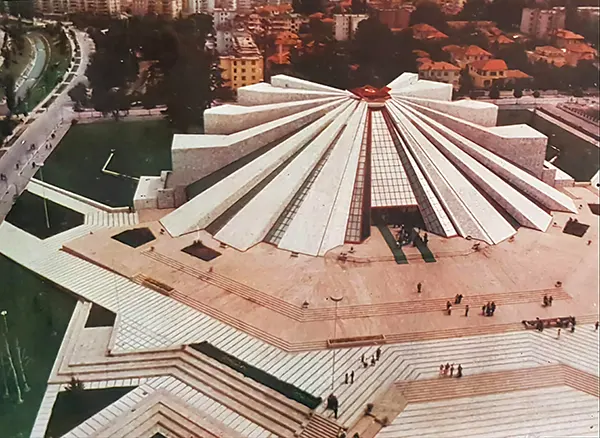
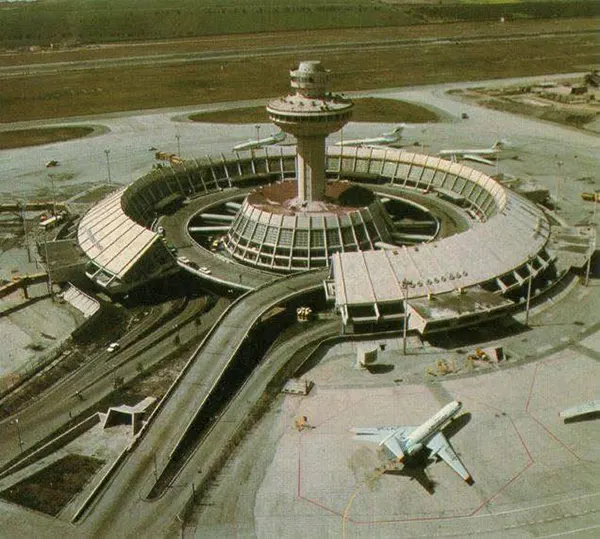
Infrastructure was not exempt from this architectural ambition. Airports, bus terminals, post offices, and markets received the same monumental treatment as cultural buildings. The Zvartnots Airport in Yerevan, completed between 1975 and 1980, is a striking example — a circular structure with a tiered concrete crown that reads more like a spacecraft than a transit hub. Functional buildings were expected to make a statement just as loudly as any civic monument.
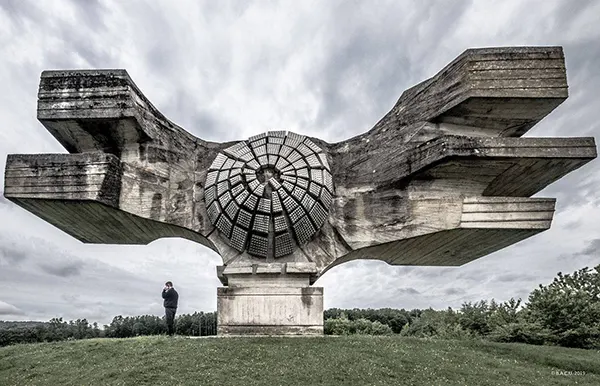
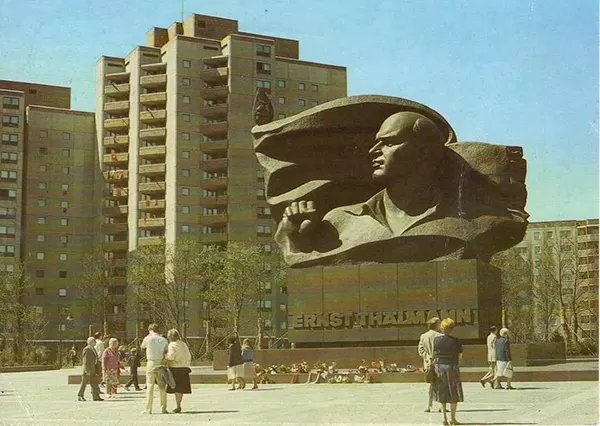
Monuments and memorials were a category of their own. Across Yugoslavia, massive abstract concrete sculptures rose on hillsides and in town squares to mark sites of World War II battles and partisan resistance. Known as Spomeniks, these structures rejected traditional figurative sculpture in favor of abstract geometry — giant concrete stars, fractured wings, or interlocking arcs that loomed over the landscape. The Monument to the Revolution of the People of Moslavina in Podgarić, Croatia, designed in 1967, is one of the most photographed examples of this form.
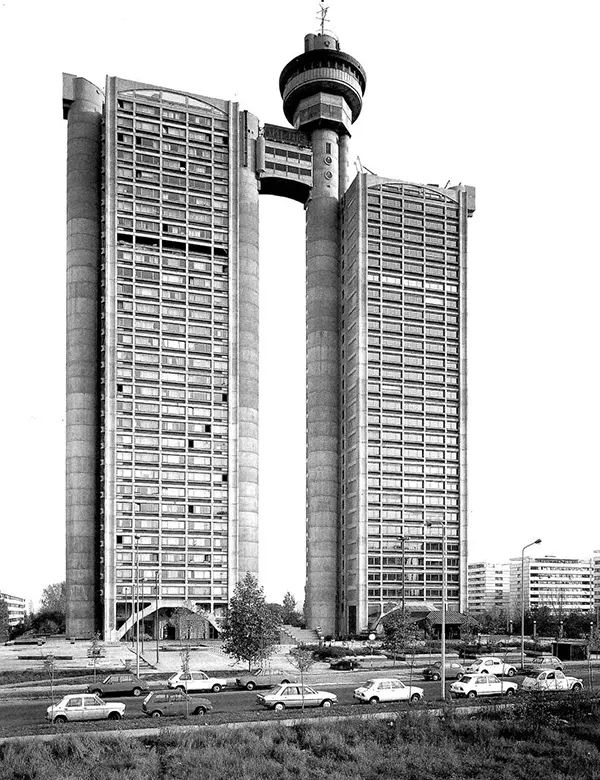
Belgrade became one of the most concentrated showcases of brutalist design in the entire region. The Genex Tower — also called the Western City Gate — was completed in 1979 and consists of two tall concrete pillars linked by a bridge and topped by a rotating restaurant. It rises above one of the main road entrances to the city and remains one of the most recognizable brutalist structures in Europe. Its split form and exposed concrete beams exemplify the era’s blend of engineering ambition and political symbolism.
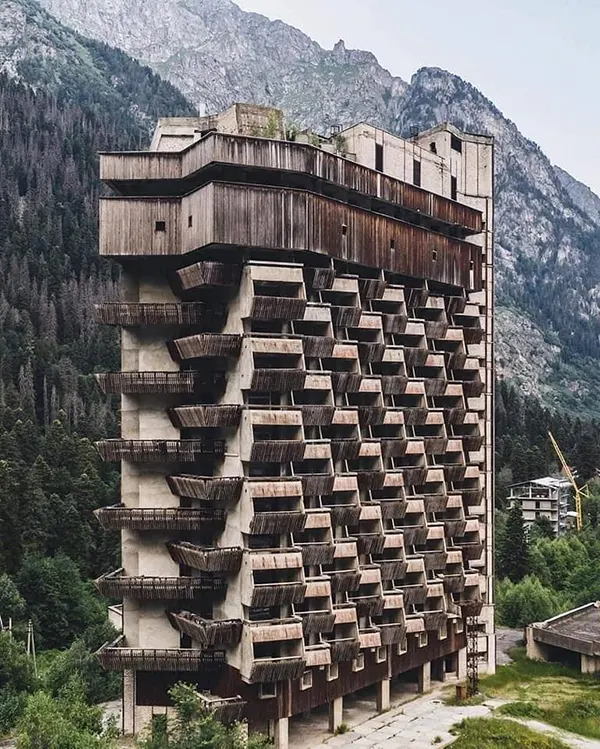
Not every project from this period still stands in active use. Some of the boldest experiments now sit empty, slowly being reclaimed by weather and vegetation. The Ammanauz Hotel in Dombai, built between 1982 and 1985 in the Caucasus Mountains of Russia, is one of the most striking abandoned examples — a stepped concrete structure that once served mountain resort guests and now stands silent against the surrounding peaks.
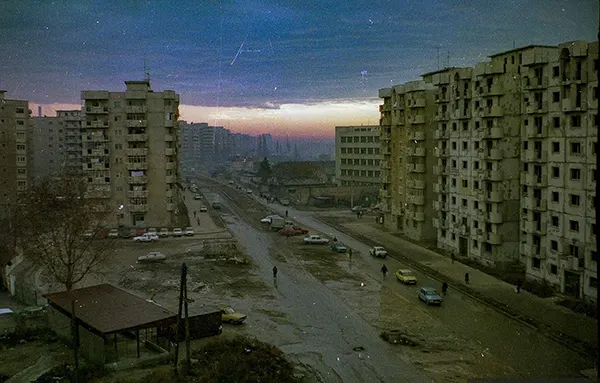
Housing at mass scale was the central challenge of the entire movement. Millions of people needed homes, and they needed them fast. Romania’s cities, like much of the bloc, filled with high-rise slab blocks arranged in dense clusters. The Vitan neighborhood in Bucharest shows how these developments looked in practice — row after row of tower blocks with repetitive window grids, balconies stacked in long horizontal bands, and wide roads cutting between them.
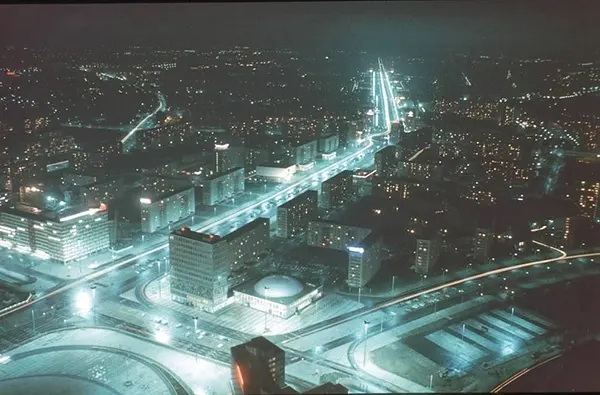
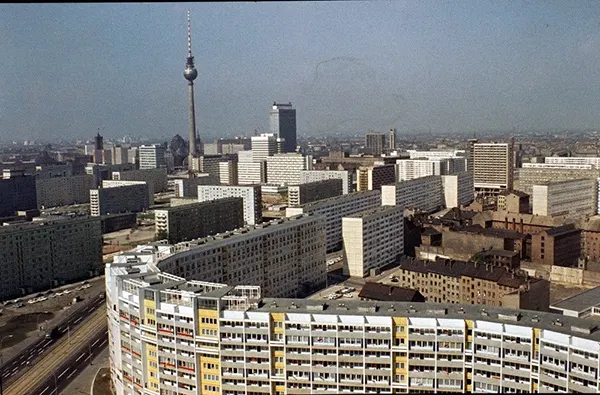
East Berlin was perhaps the most ideologically charged city in the entire bloc. Every building project there carried the weight of Cold War competition. The East German government used architecture to prove the superiority of socialism, and no location made that statement more visibly than Alexanderplatz and Karl-Marx-Allee. The TV Tower rising above the square became the defining image of the East German capital — visible from across the divided city and impossible to ignore.
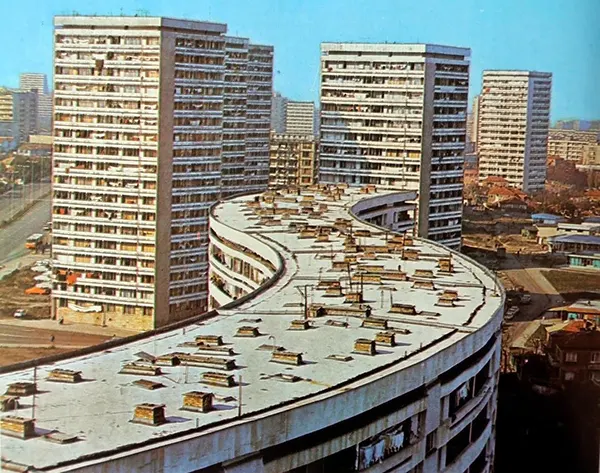
Across the bloc, buildings acquired nicknames that reflected how ordinary people related to them. Structures too large or strange to be reduced to a simple function got tagged with informal labels — the Toblerone, the Ship, the Cucumber. These names showed that people engaged with the architecture on their own terms, regardless of what planners intended. The buildings became landmarks in the most human sense: points of reference in daily life.
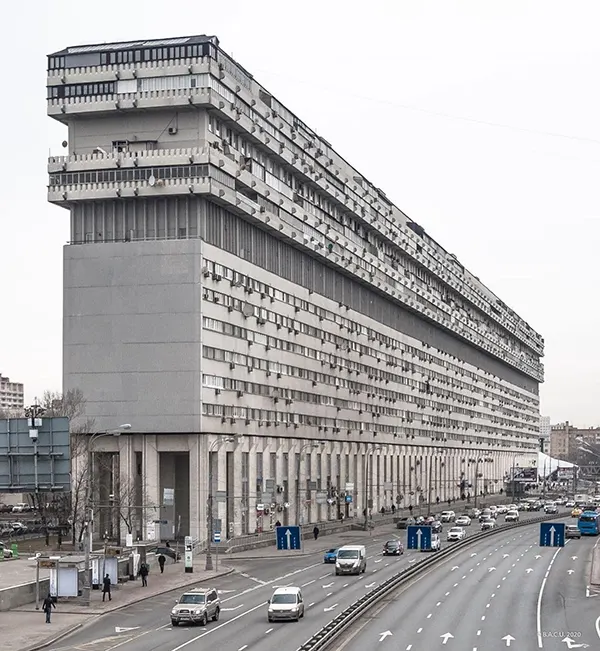
Moscow produced some of the most experimental brutalist forms of the entire period. The Residential Building on Bolshaya Tulskaya Street, known as the House of Atomists or simply The Ship, was designed and built between 1970 and 1986. The structure forms a complete ring, enclosing a central courtyard filled with greenery. From inside the circle, the curved concrete walls rise on all sides, creating an entirely self-contained world — a literal architectural expression of the collective over the individual.
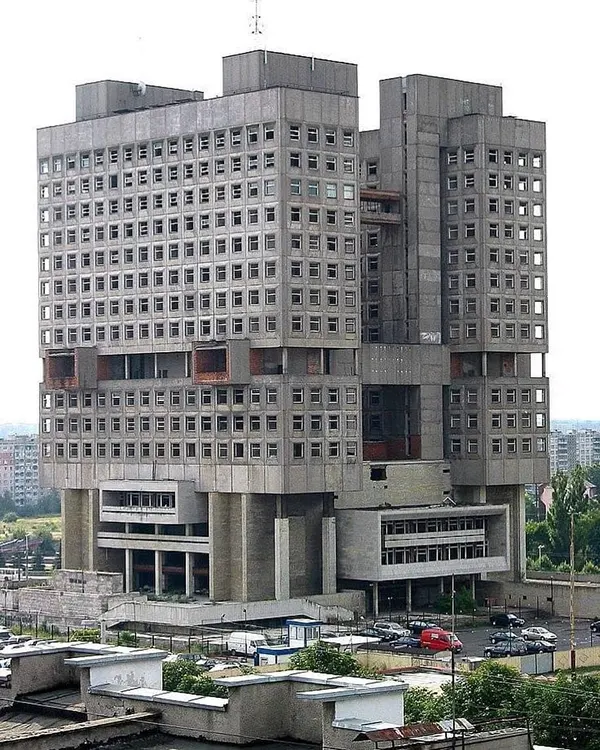
Kaliningrad — the Russian exclave on the Baltic Sea, once the German city of Königsberg — received one of the most ambitious and troubled brutalist projects of the era. The House of Soviets was planned as a massive administrative complex to replace the ruins of the old Prussian royal castle. Construction began in 1970 but was never completed. The unfinished concrete hulk sat empty for decades, earning the nickname “The Buried Robot” from local residents.
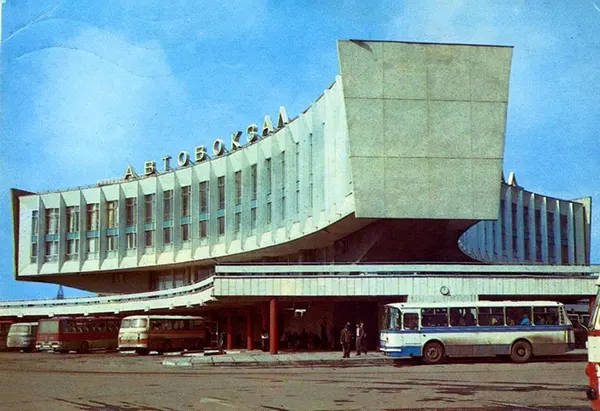
East Berlin’s streets in the 1980s captured the full texture of life inside Socialist Modernism. The architecture formed the backdrop for everyday routines — people walking past slab facades, tram lines running beside prefab housing blocks, state buildings looming over intersections. The built environment was inescapable, designed to make the socialist order feel permanent and natural.
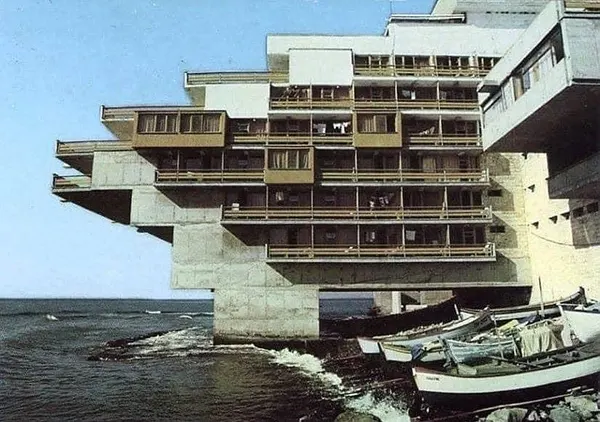
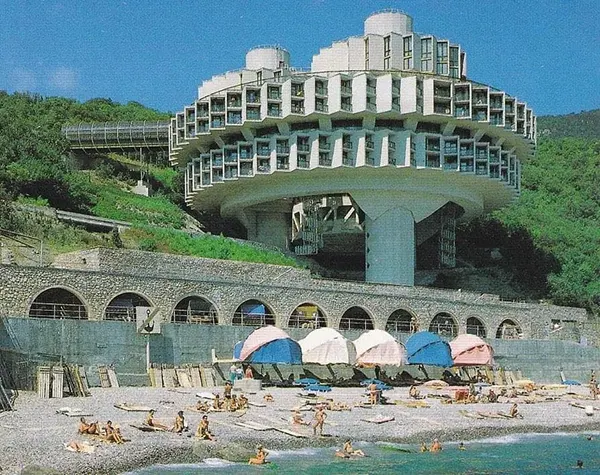
Coastal and resort architecture brought brutalism to leisure spaces as well. The Sanatorium Druzhba in Yalta, completed in 1985, is one of the most visually striking examples — a circular structure mounted on massive concrete pillars above a hillside overlooking the Black Sea. It was built to house Soviet workers on state-approved rest cures, combining modernist ambition with a distinctly Soviet approach to organized recreation.
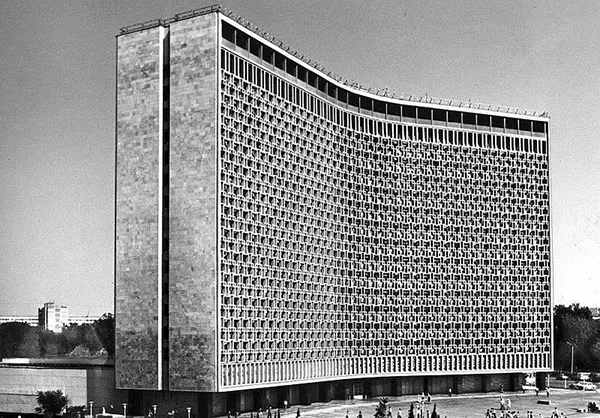
Central Asia received the full force of Soviet architectural investment. Hotel Uzbekistan in Tashkent, built in 1974, blends brutalist massing with decorative screen patterns that draw from Islamic geometric traditions. The result is one of the most sophisticated examples of how Soviet architects navigated the tension between Moscow’s standardizing drive and the deep visual cultures of the republics they were building in.
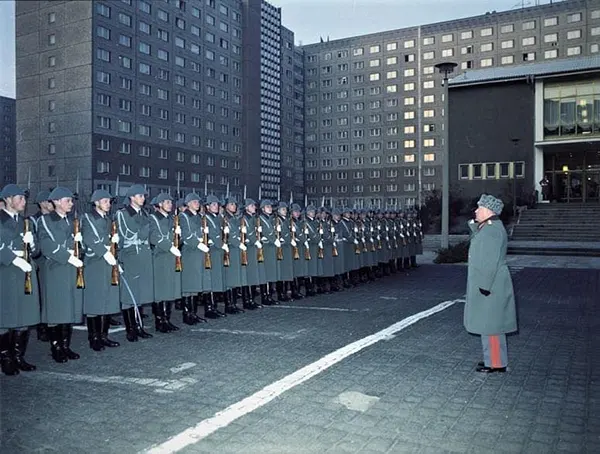
The state apparatus itself was housed in brutalist structures that reflected its character. The East Berlin headquarters of the Stasi — the East German secret police — was a vast institutional complex. Erich Mielke, who led the Stasi for over three decades, reviewed his guard regiment in its courtyard. The architecture of such places was deliberately austere and fortress-like, designed to project control.
Rural and small-town Bulgaria also bears marks of the period. Villages and smaller cities received their own scaled-down versions of the brutalist vocabulary — community centers, cultural halls, and apartment buildings that brought the same concrete aesthetic to settings far removed from major urban centers.
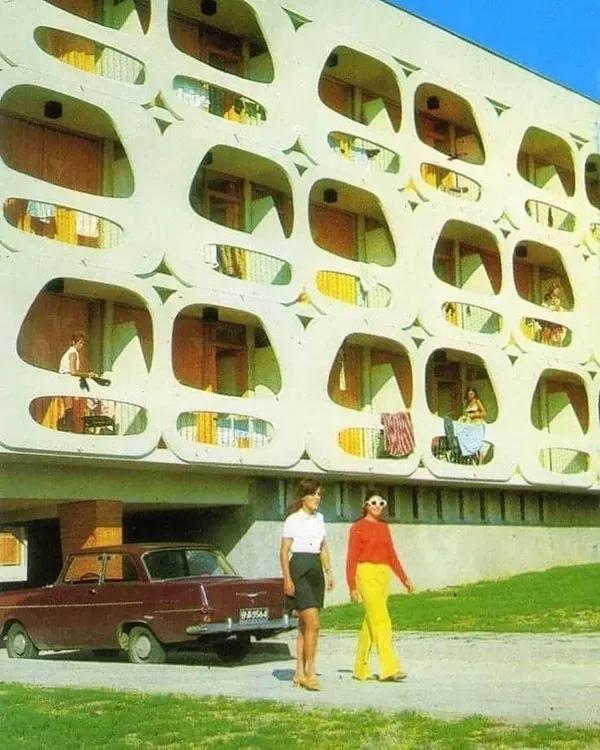
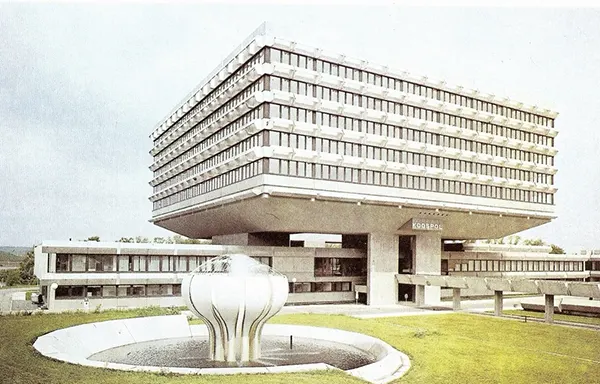
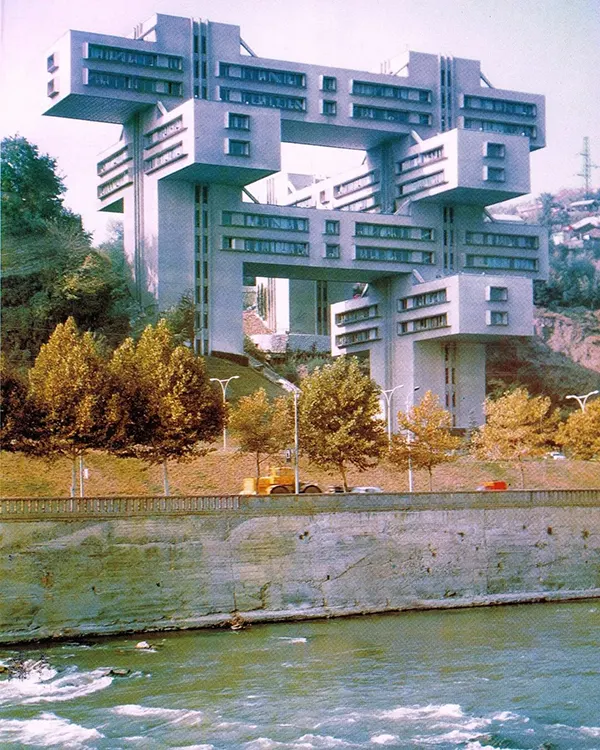
The Georgian SSR produced some of the most inventive structural engineering of the entire movement. The Engineering Building of the Georgian Ministry of Highways in Tbilisi, completed in 1974, is a dramatic example — a multi-story structure where each floor cantilevers outward from a central core, stacking like a series of protruding drawers. It was a genuine feat of engineering wrapped in the brutalist aesthetic, and it remains one of the most distinctive buildings from the Soviet period.
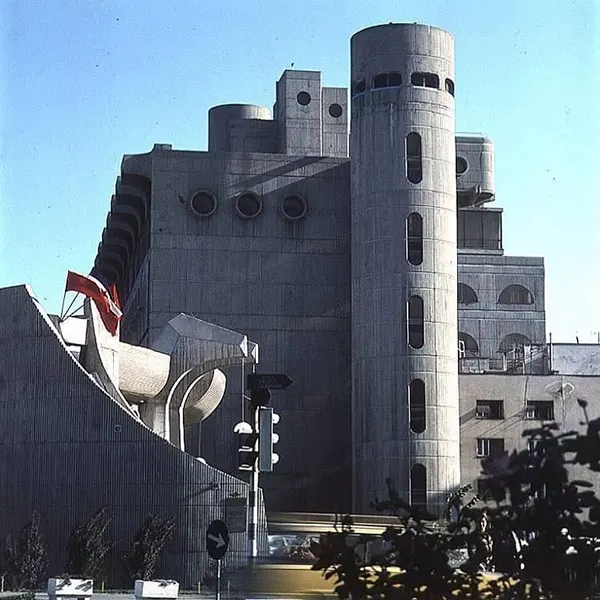
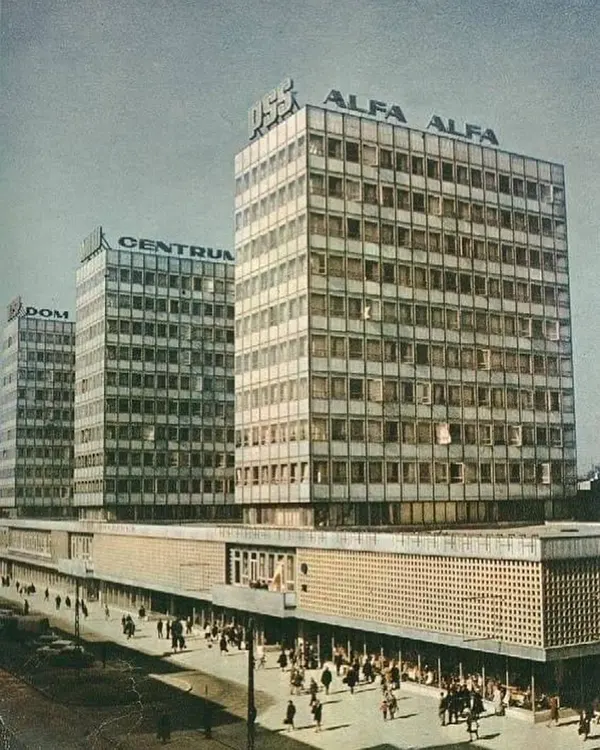
Poland developed its own strong tradition within Socialist Modernism, producing commercial and civic buildings that matched the boldness of anything built further east. The Alfa office and department store complex in Poznań, built between 1968 and 1971, brought brutalist massing to retail space — a reminder that the movement shaped not just housing and government buildings but the full range of urban life under socialism.





A former presidents library in Illinois looks like it will fit right in.
Commie urban planning differed vastly in theory and practice.
While some praise the concept, the reality of living in these large housing estates, like those I experienced, was far from the “ultimate urban planning scenario.”
Good public transit was a necessity, not a luxury, due to low car ownership. But even this transit was often overcrowded, forcing long walks and wait times, especially at the twilight of communism as the economy of my country and most of the Soviet Bloc was collapsing.
Living in a massive, quickly-built prefab estate meant growing up in a “moonscape” of mud and construction, sometimes literally having dirt spray-painted green for official party visits. The buildings themselves were shoddy. I remember rainstorms would usually cause our roof to leak, as we lived on the top floor.
These estates, often built on city outskirts, failed to provide nearby jobs, remaining monolithic, isolated suburbs. The ironically same critiques that many have for Western suburbs.
After the fall of communism, they quickly deteriorated, becoming unsafe centers for crime and drug use after dark. My estate was home to a pretty violent football hooligan group.
Older housing types, like the Khrushchovkas my parents lived in, weren’t much better. Despite housing a mix of classes, they suffered from high crime, fueled by issues like rampant alcoholism.
The pervasive atmosphere of distrust, where any neighbour could be an informant, created a deep sense of loneliness among adults.
Even the idea of having informants and members of the security service in those places didn’t actually mean safer environs. Inspite of officially going after illegal alcohol production, at my parents estate, the local alcoholics would peddle booze openly even to the knowledge of the local secret police snitch.
Ultimately, my memories of growing up in a “commie block” are of an unsafe, dehumanizing, and inaccessible environment—many buildings, with their central staircases, lacked basic accessibility for things like wheelchairs or even baby strollers.
Crime was rampant, substance abuse often in full view of everyone.
Seems quite similar to the housing projects we built in the states during the same time. They built them in every medium to large city. I guess the main difference being in the urban core for the most part. But while the idea of creating a bunch of housing is good, it didn’t seem like there was a thoughtful effort to support the environment in the building nor properly maintain the structures
On a more fun note, the Alfa buildings shown are from my hometown and are personally one of my favourite brutalist buildings in the city.