Deep in southern Egypt, carved directly into a sandstone cliff along the Nile’s west bank, the temples of Abu Simbel had stood for more than 3,000 years. Pharaoh Ramesses II ordered their construction in the 13th century BC, and for three millennia, the desert kept them largely untouched. Then, in the early 1960s, a massive engineering project threatened to put them underwater forever.
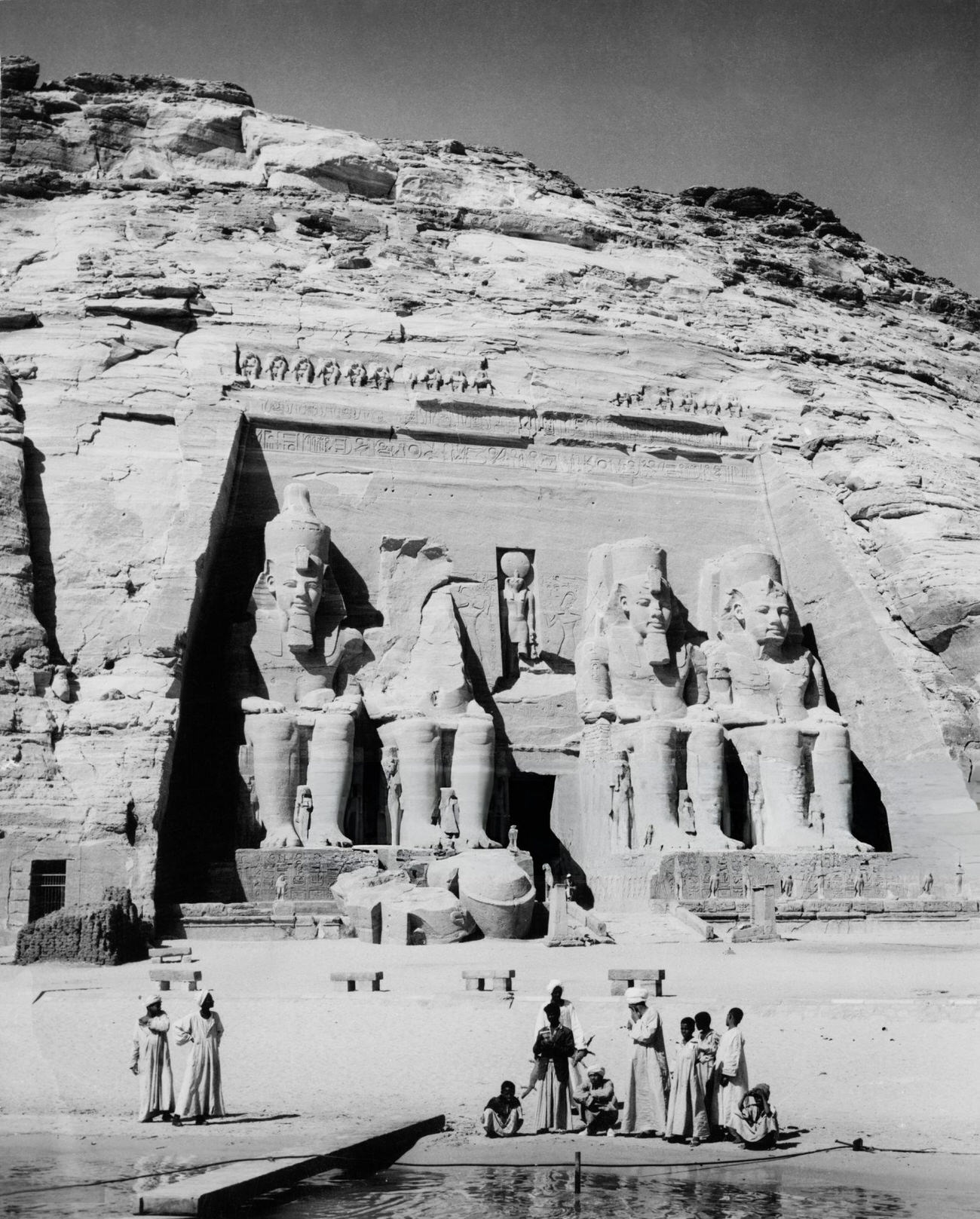
Egypt’s government began construction of the Aswan High Dam in the early 1960s. The dam was built to control the Nile’s annual flooding, generate hydroelectric power, and store water for farming across a dry and growing nation. It was a necessary project, but it came with a steep cost. The dam’s reservoir, Lake Nasser, would flood hundreds of miles of the Nile Valley. Abu Simbel sat directly in its path. Without intervention, both temples would be fully submerged once the dam was complete.
UNESCO sounded the alarm in 1960, issuing a global appeal for funds and expertise to save the temples. It was one of the earliest times the international community rallied together specifically to protect a cultural heritage site. Governments, engineers, archaeologists, and institutions from dozens of countries responded. The campaign raised the money and assembled the talent needed to attempt something that had never been done on this scale before: physically move two ancient temples, piece by piece, to higher ground.
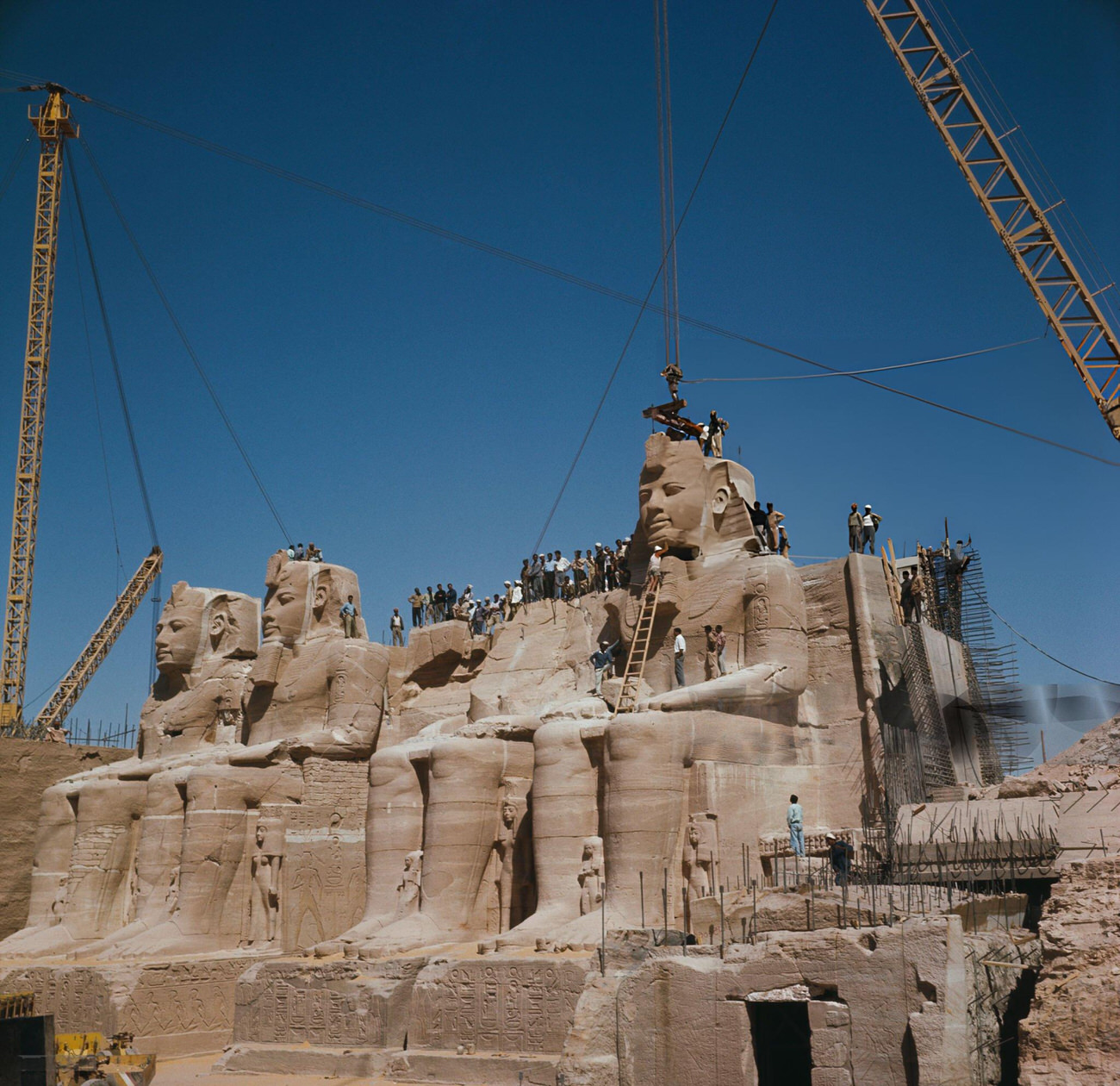
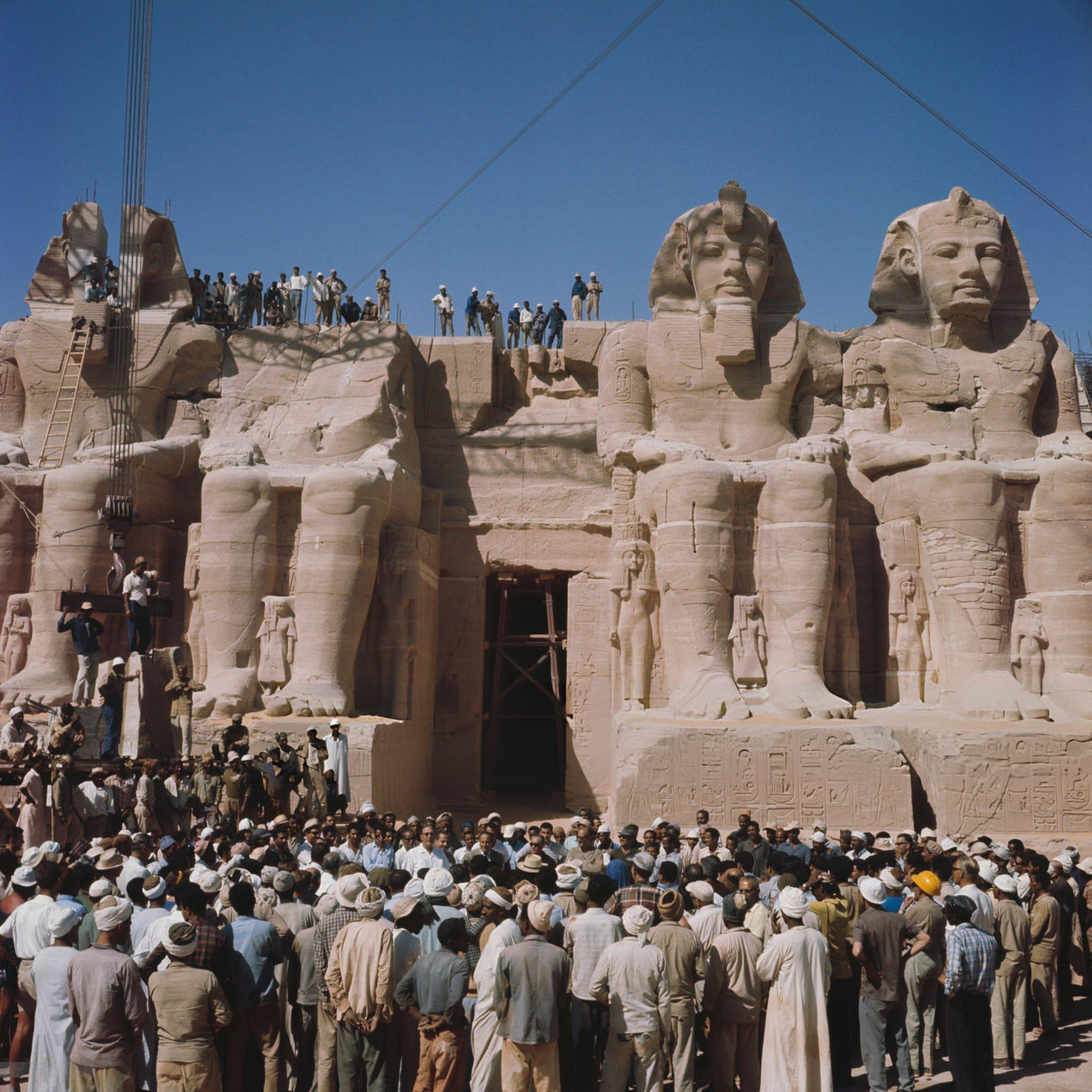
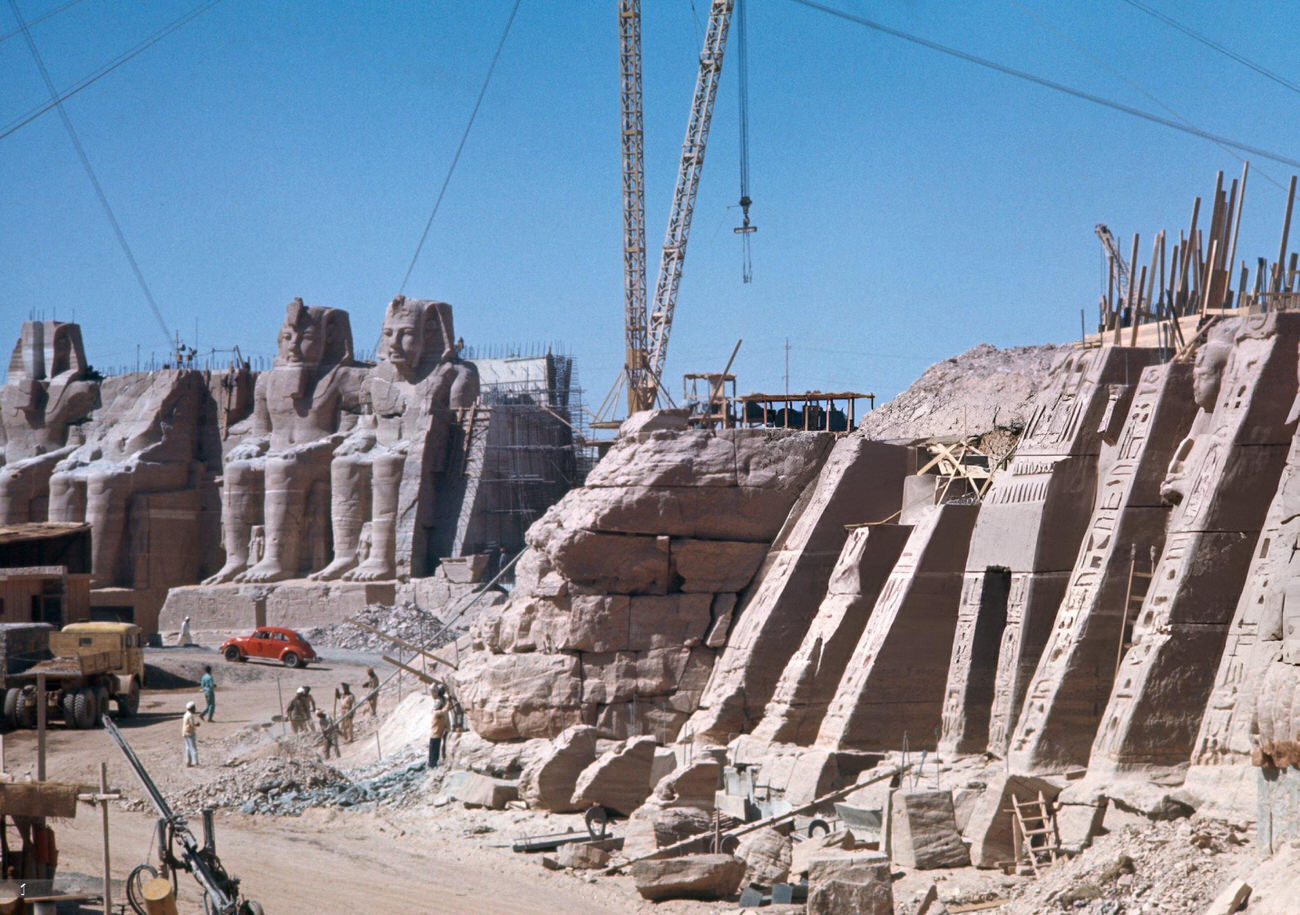
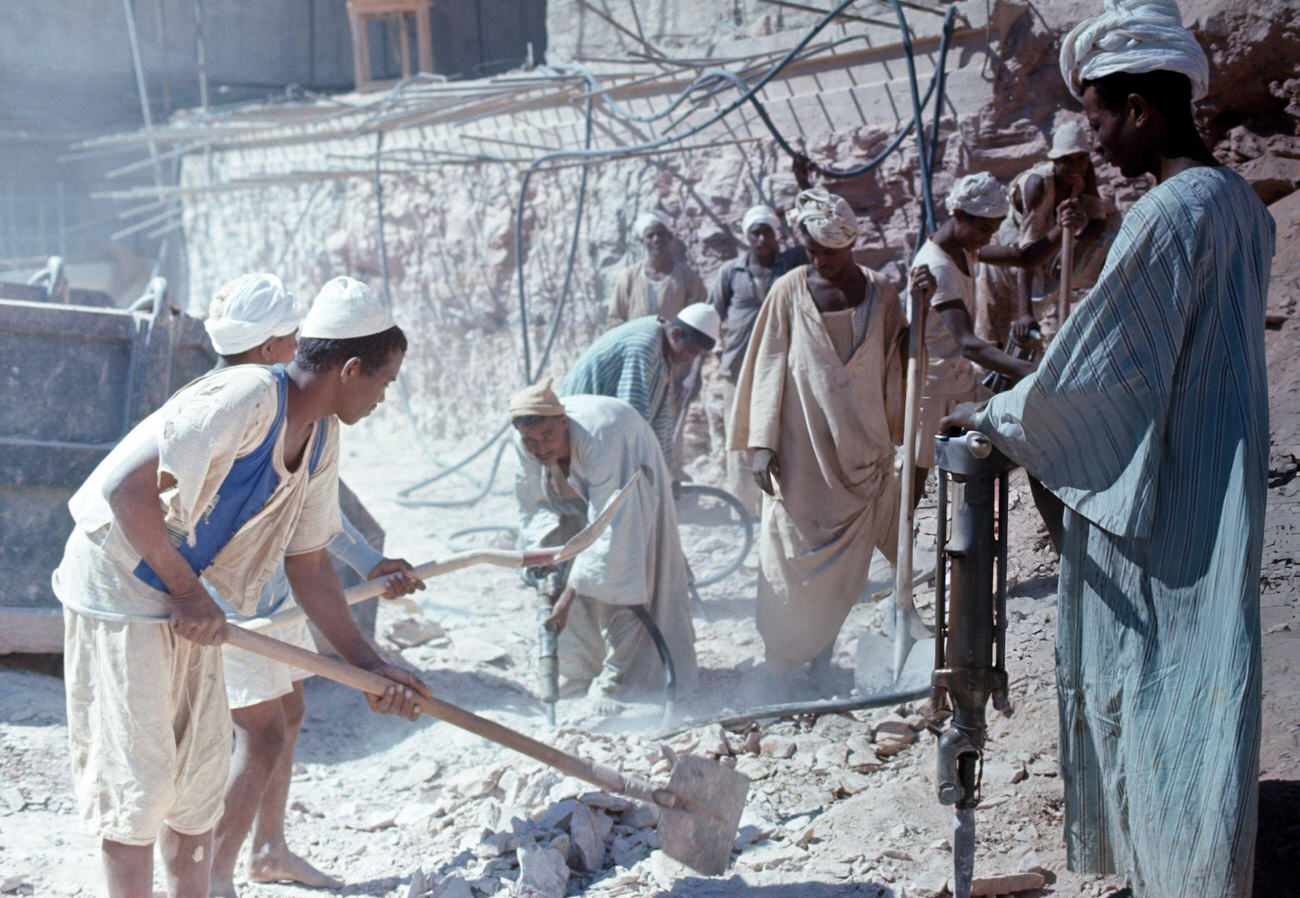
The relocation work began in 1964. Engineers and workers started by cutting the temples into individual blocks. Each block was carefully measured and marked so that every piece could be reassembled in exactly the right position. Some blocks weighed as much as 30 tons. The cutting had to be precise — one wrong saw line through a carved face or a painted wall could destroy something irreplaceable.
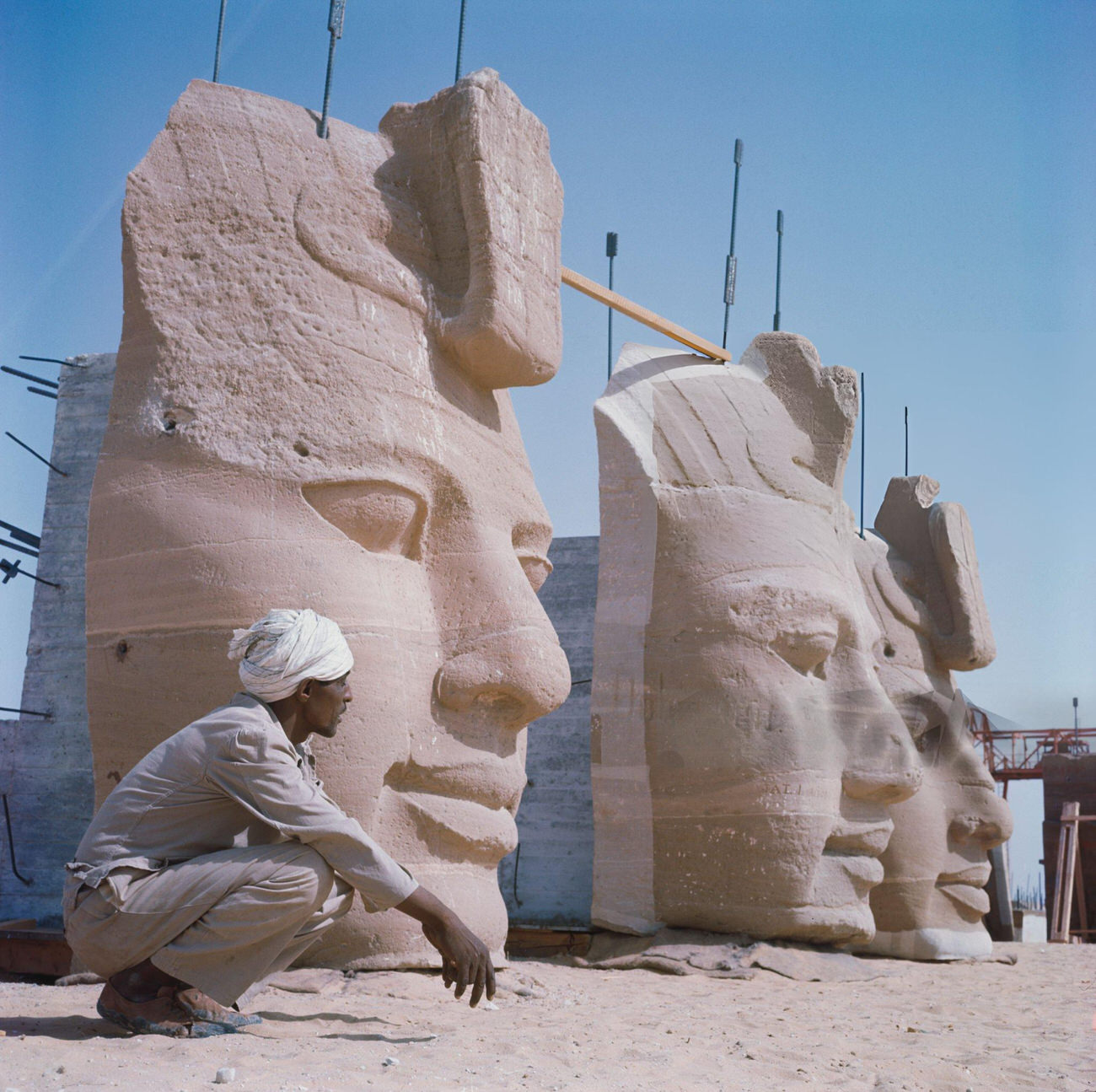
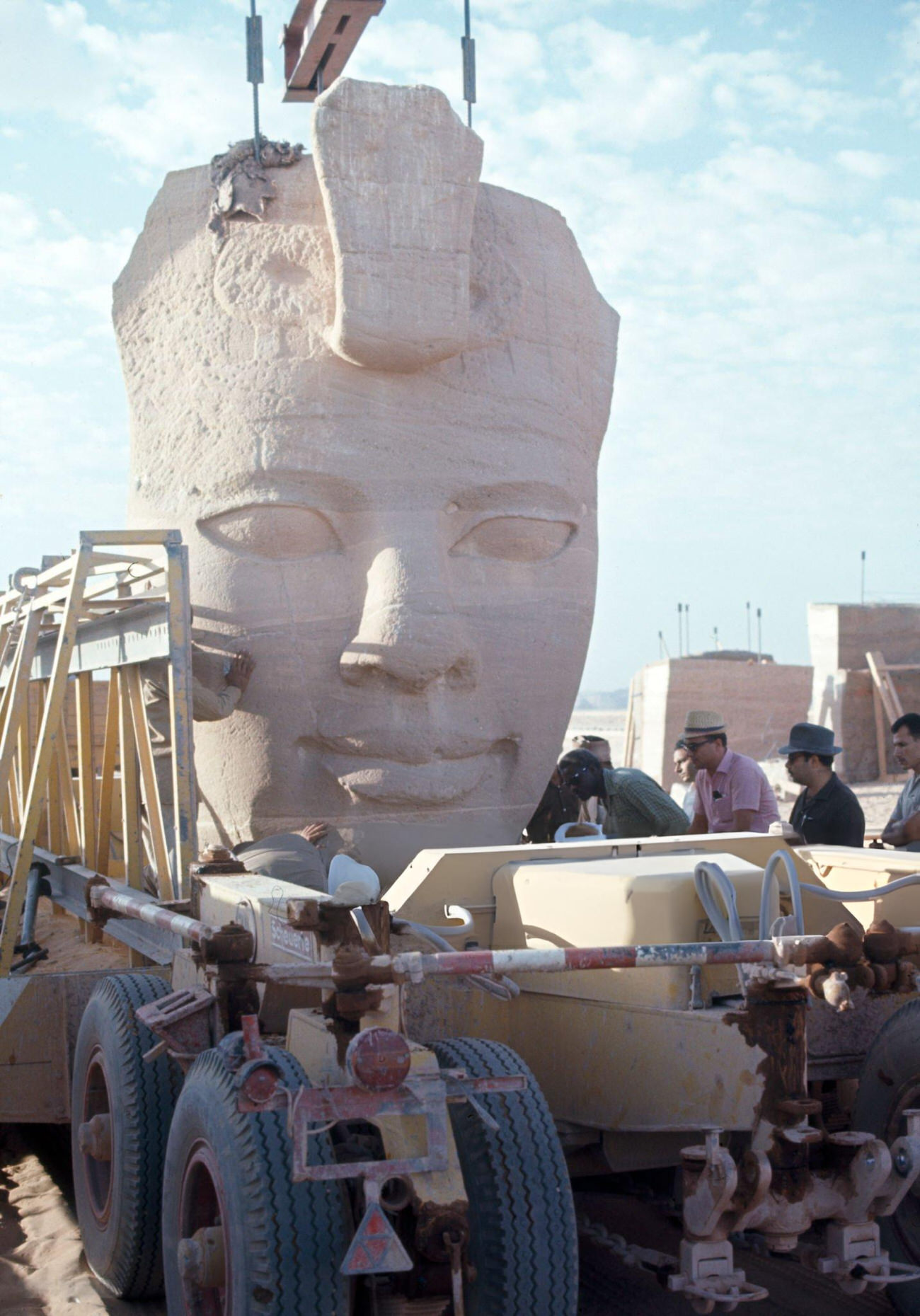
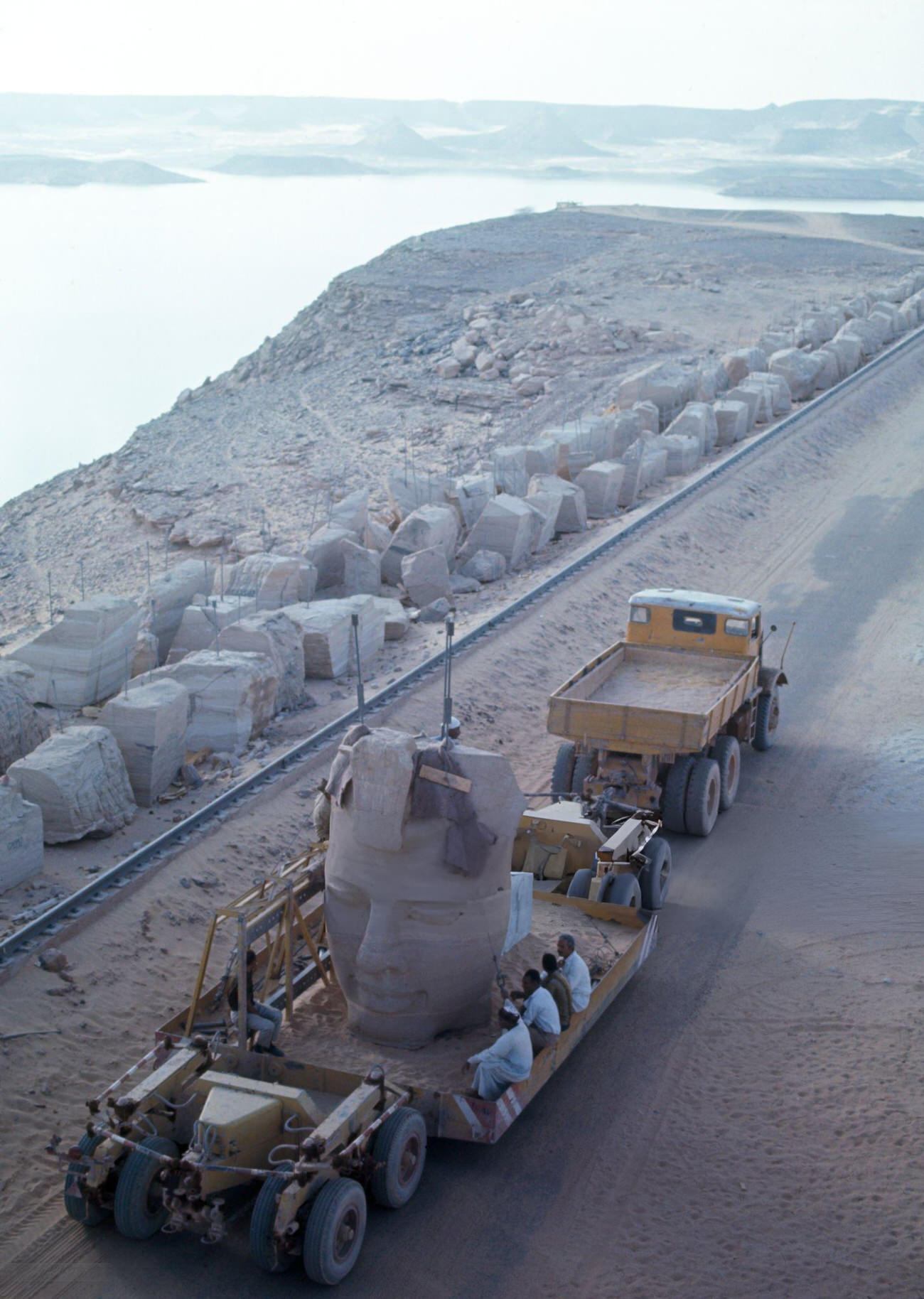
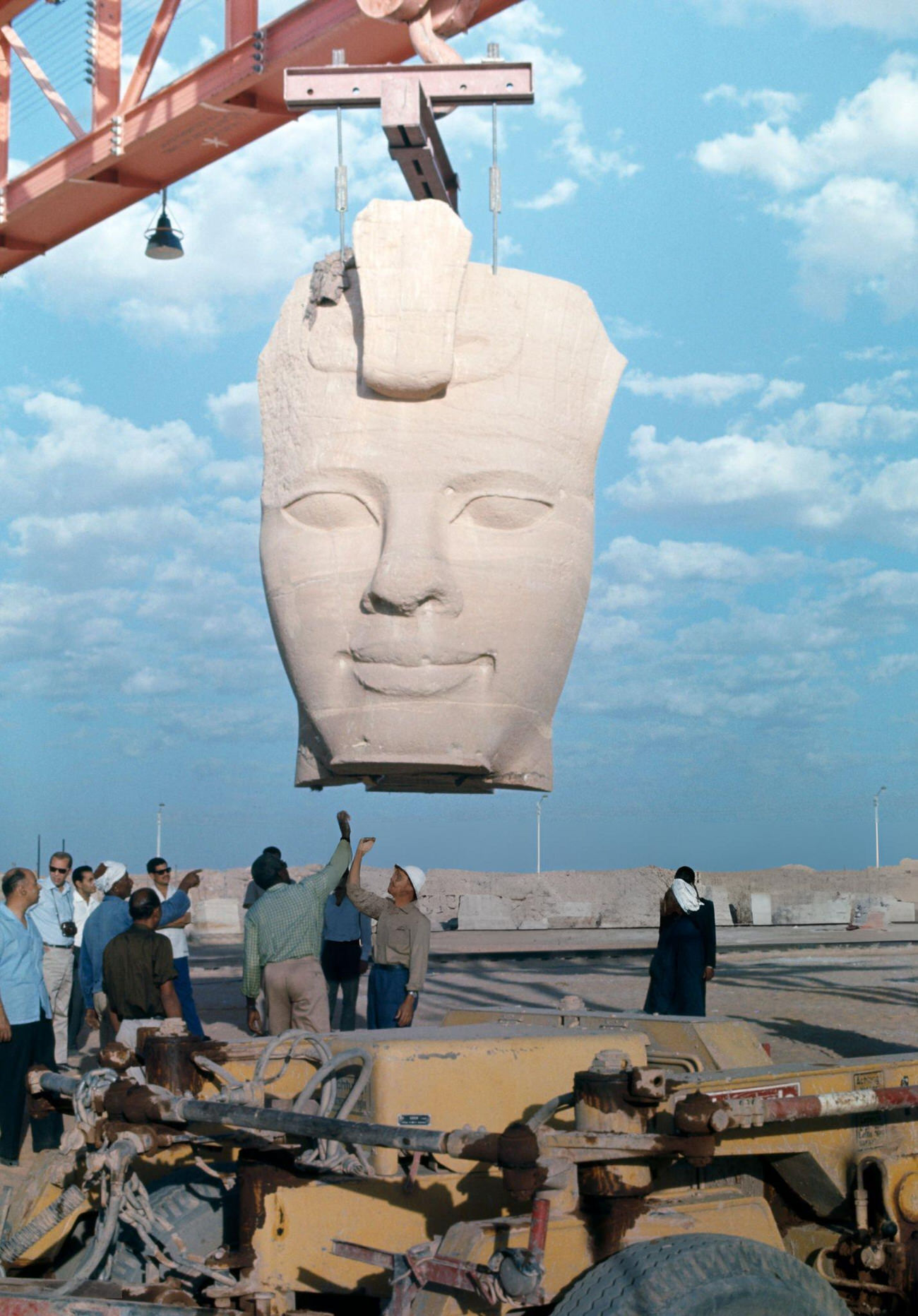
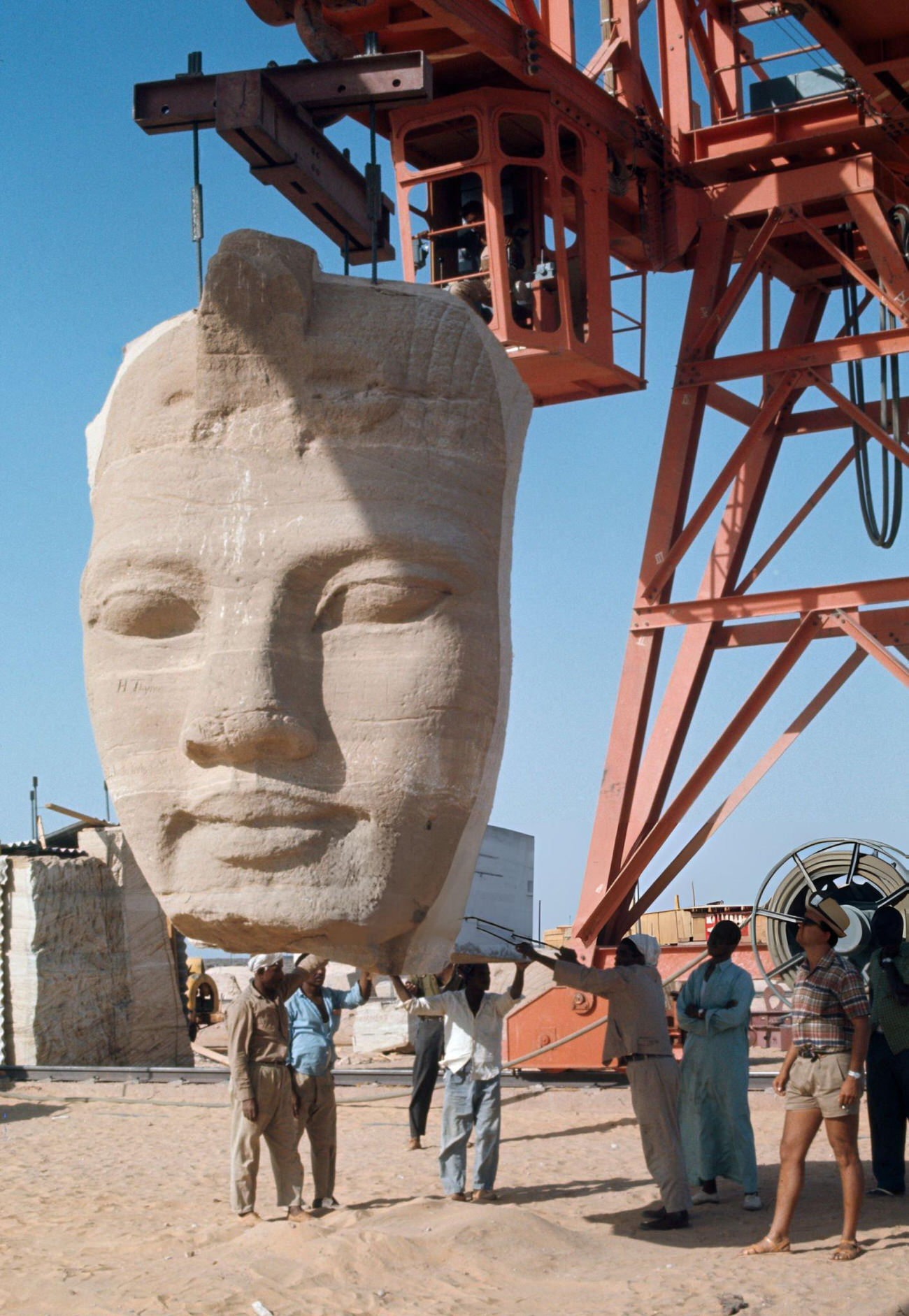
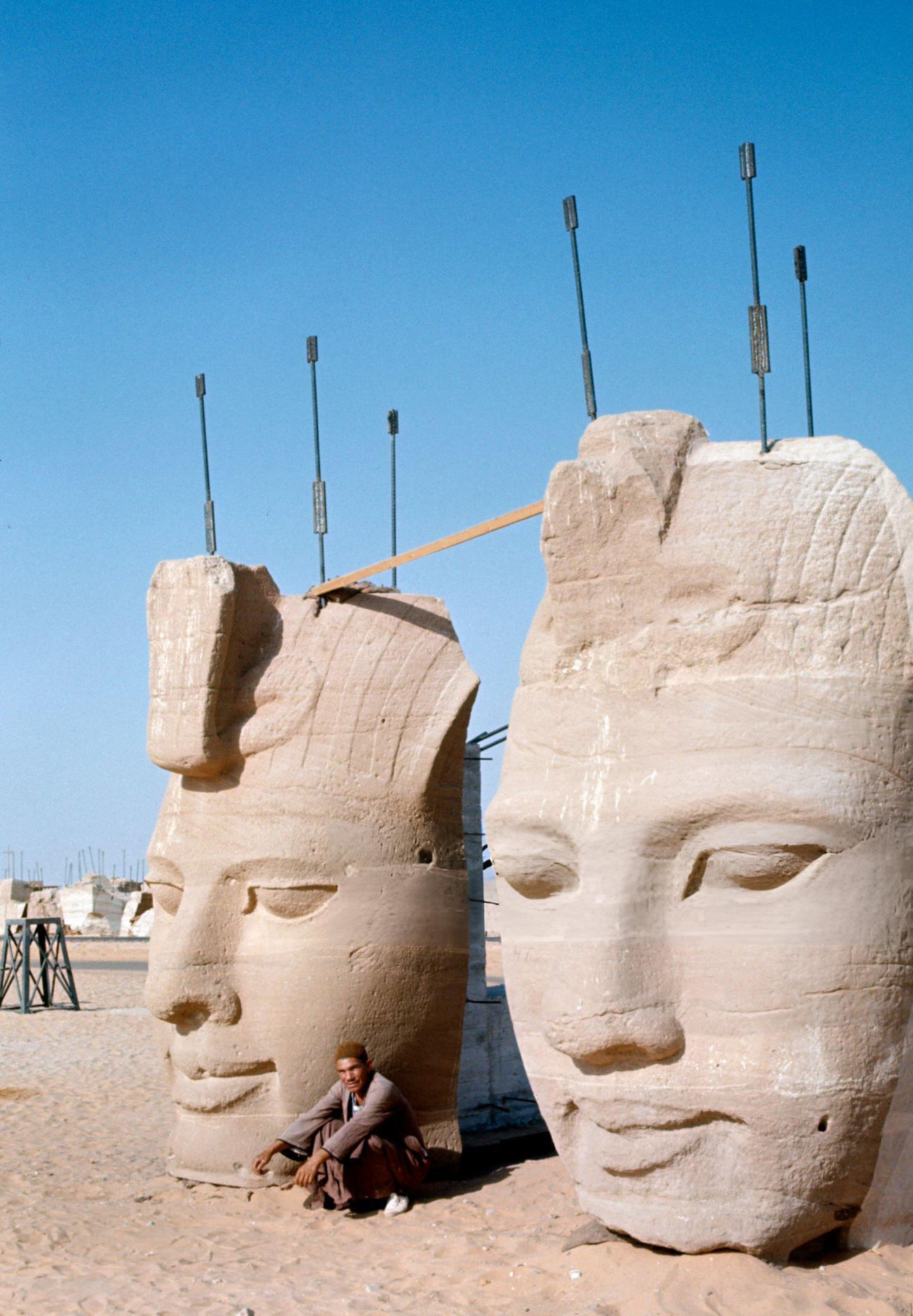
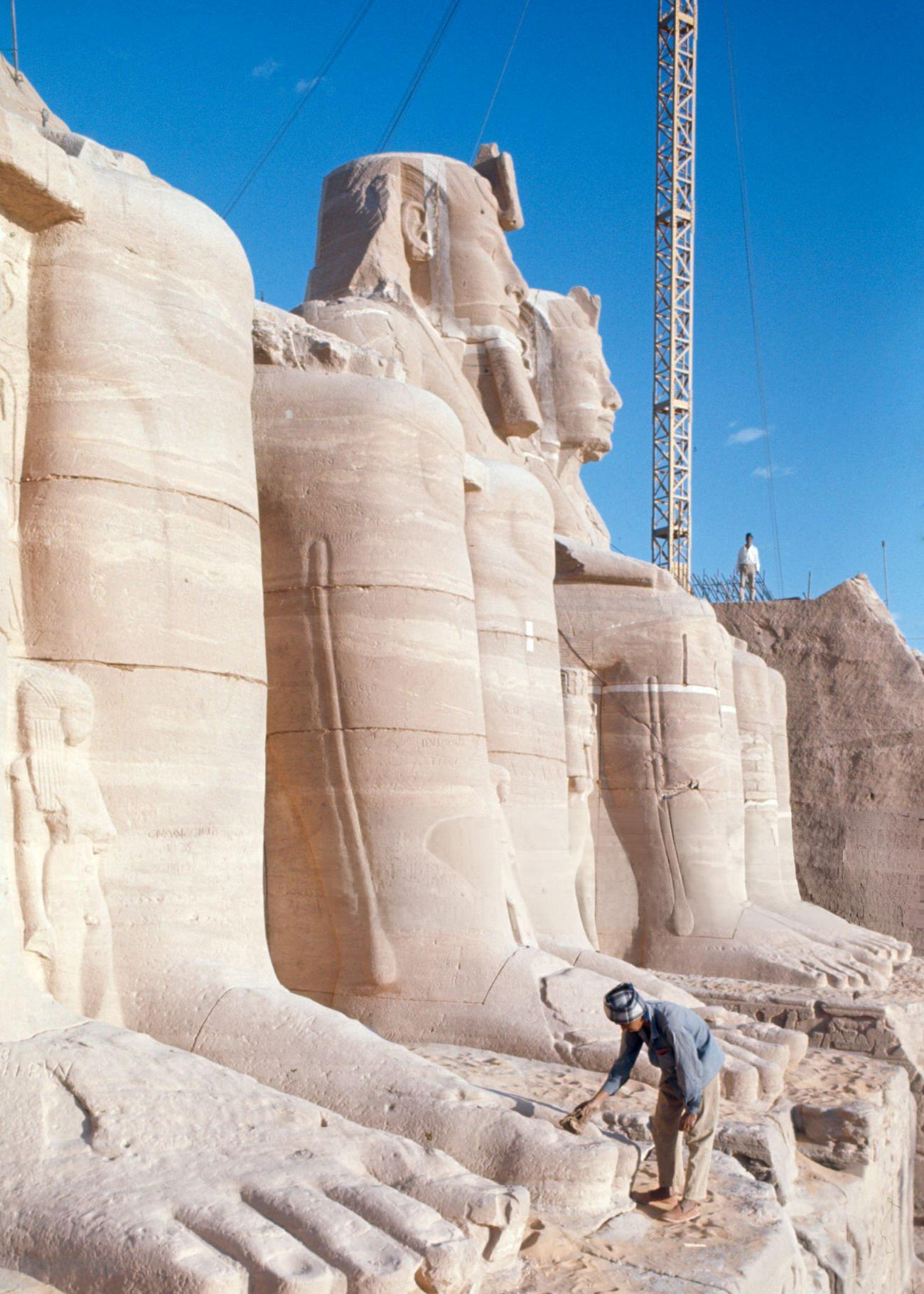
The four colossal seated statues of Ramesses II that guard the Great Temple’s entrance were among the most challenging pieces to handle. Each statue stands 20 meters tall. Cutting through them was not a decision taken lightly. The heads were separated from the bodies, wrapped, and transported with equipment built specifically for the job. Workers treated every carved surface as the artifact it was.
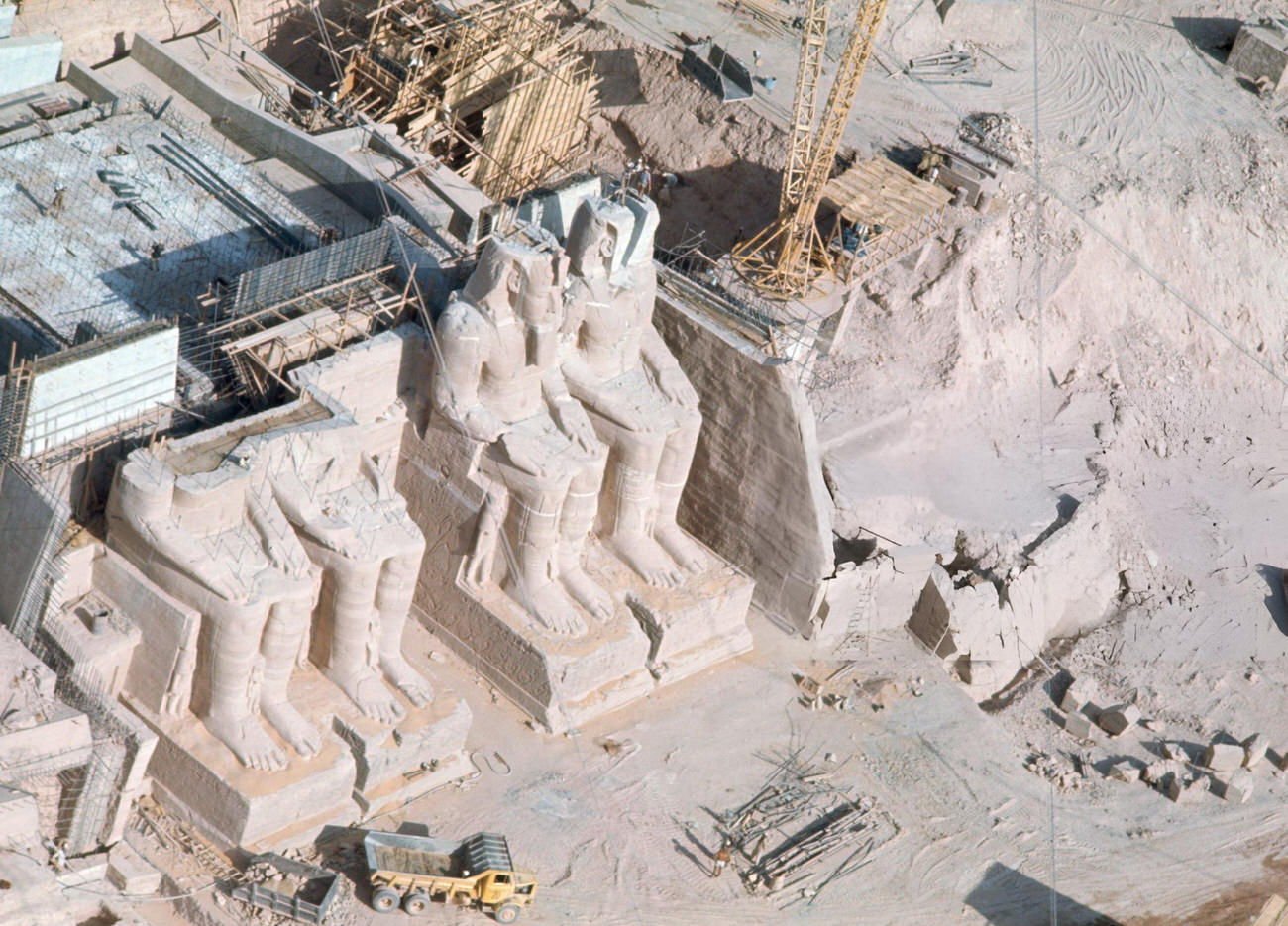
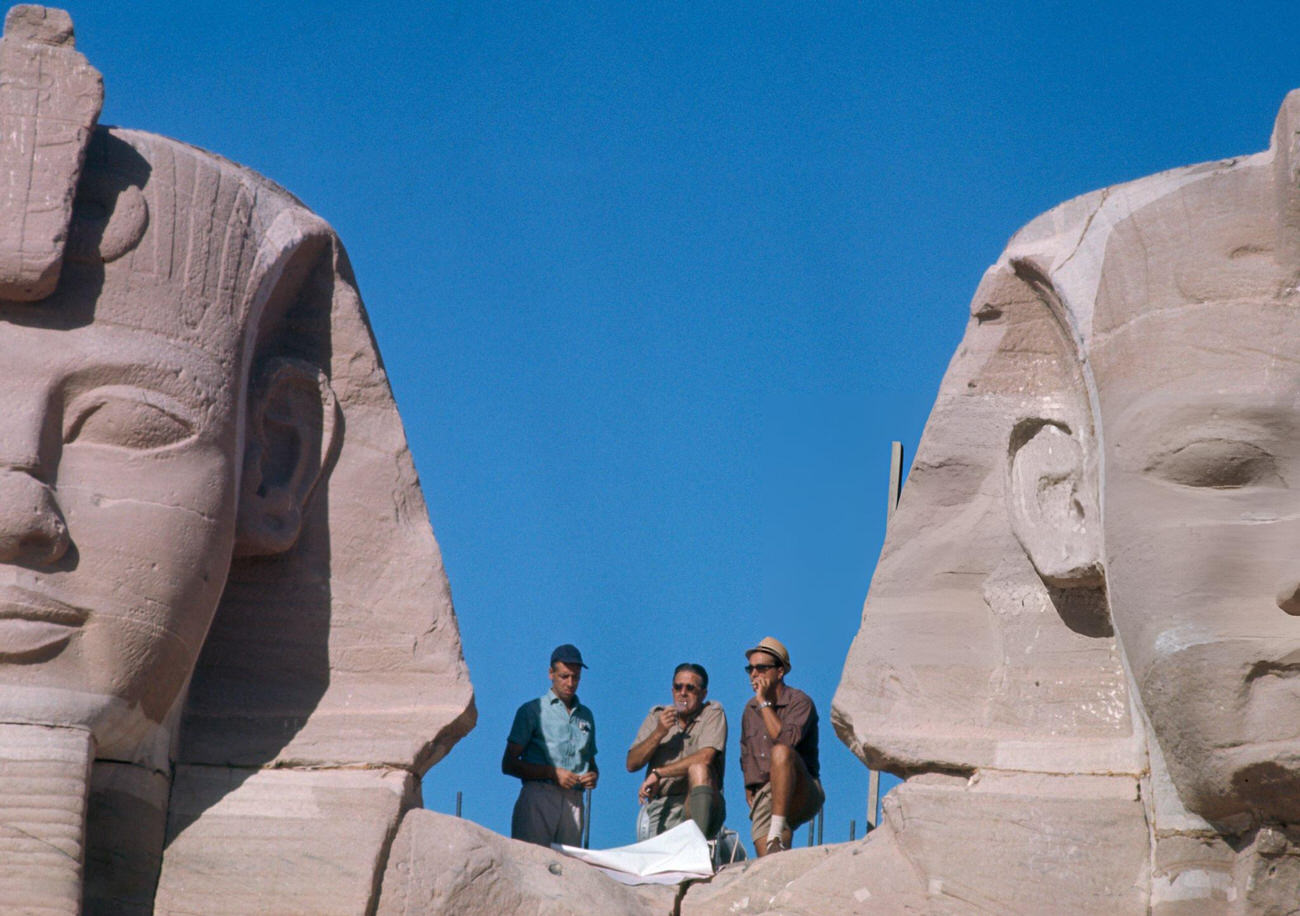
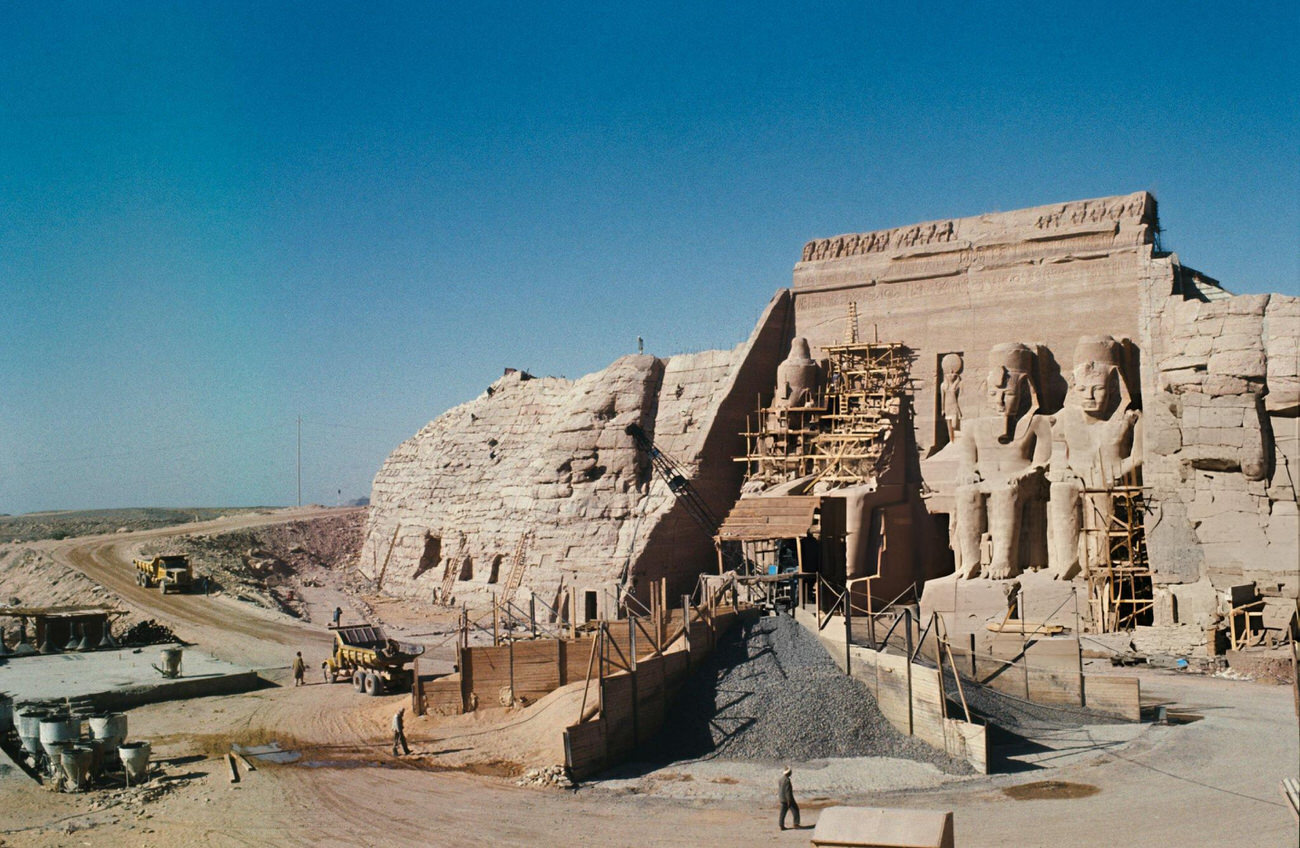
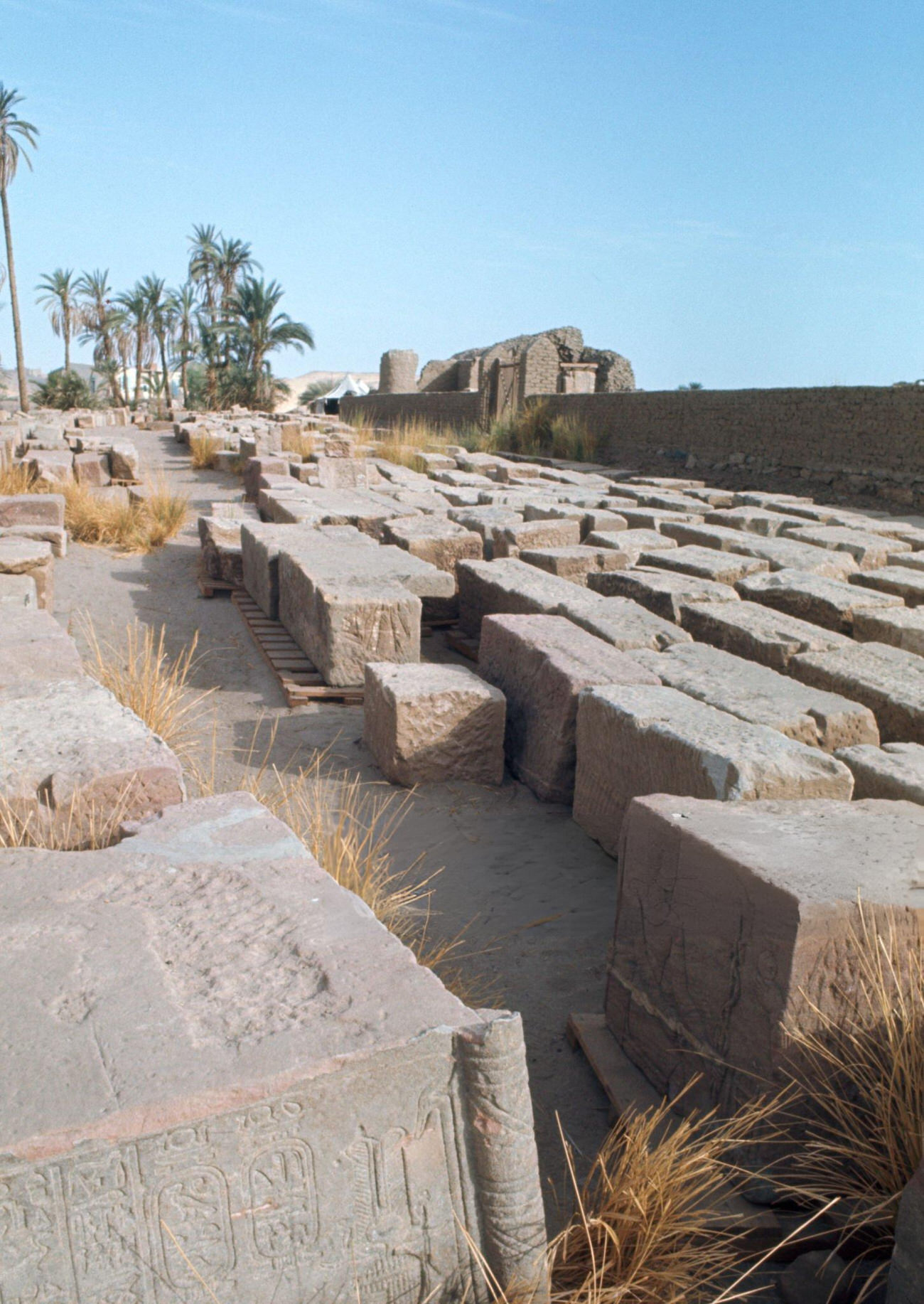
Once the blocks were removed from the cliff face, they were transported to a storage area while the new site was prepared. Engineers constructed an artificial hill about 65 meters higher than the original location and roughly 200 meters further back from the Nile’s edge. Inside this hill, they built a domed steel structure to support the temples and replicate the feeling of the original rock face. The new site had to match the old one in more than just appearance — the orientation of the temples relative to the sun had to be preserved exactly.
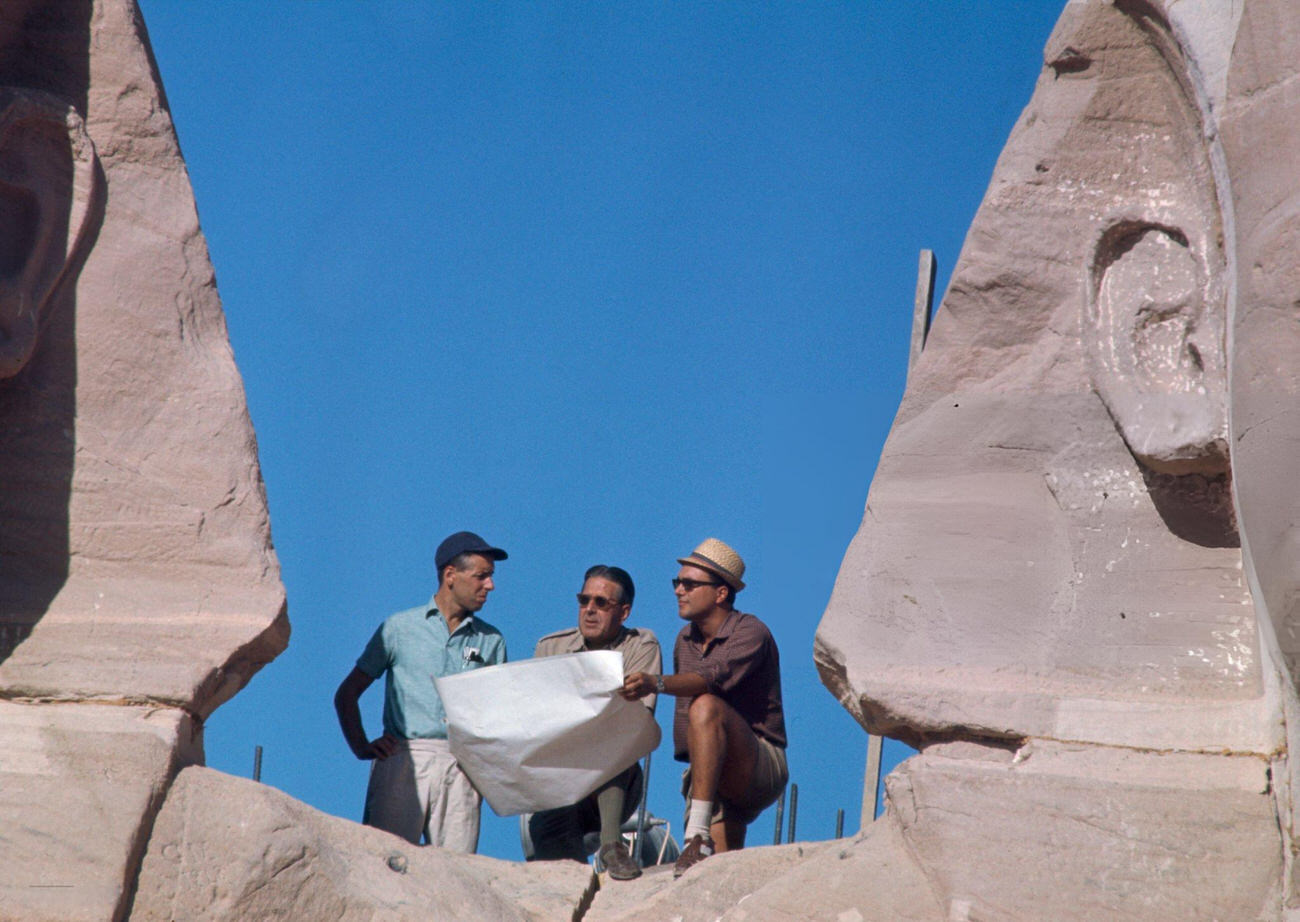
The orientation detail mattered deeply. Ramesses II designed the Great Temple so that twice a year — on February 22 and October 22 — sunlight would travel through the entrance corridor and illuminate the statues of the gods inside. Engineers on the relocation project calculated the new site’s angles carefully to keep that alignment intact. The twice-yearly solar event continues to occur at the rebuilt site, just one day off from the original schedule.
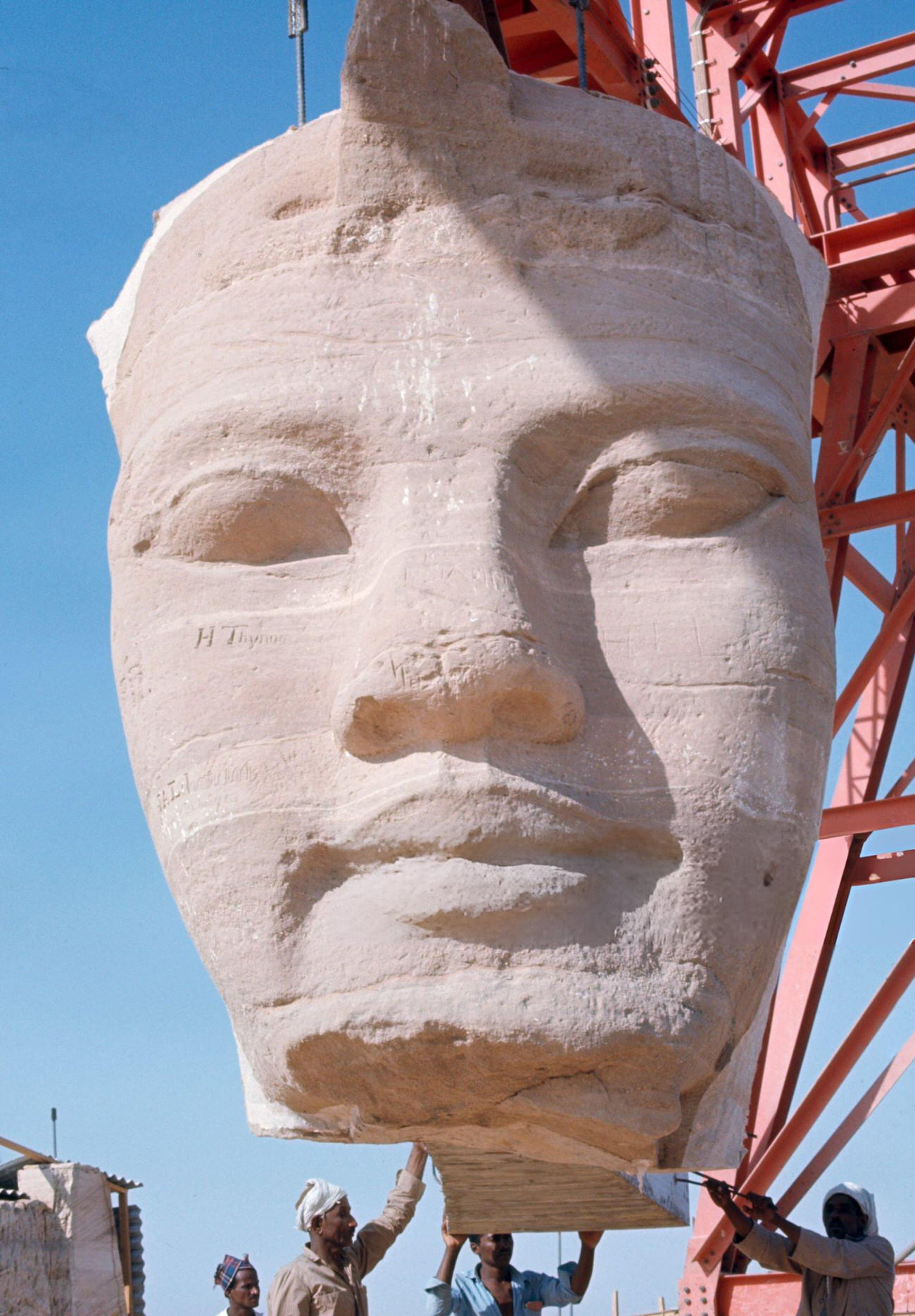
The reassembly process was just as demanding as the dismantling. Archaeologists worked alongside construction crews, consulting detailed records, photographs, and drawings made before the first cut. Every block had a number, a position code, and a reference document. The inner chambers, painted walls, and carved reliefs all had to go back together in the right sequence. There was no tolerance for guesswork.
The smaller of the two temples, the Temple of Hathor, was built by Ramesses II to honor his wife, Queen Nefertari. It stood beside the Great Temple at the original site and was moved through the same process. Both temples had to be relocated in a way that preserved their spatial relationship to each other, not just their individual structures. The distance and angle between them at the new site mirrors the original.
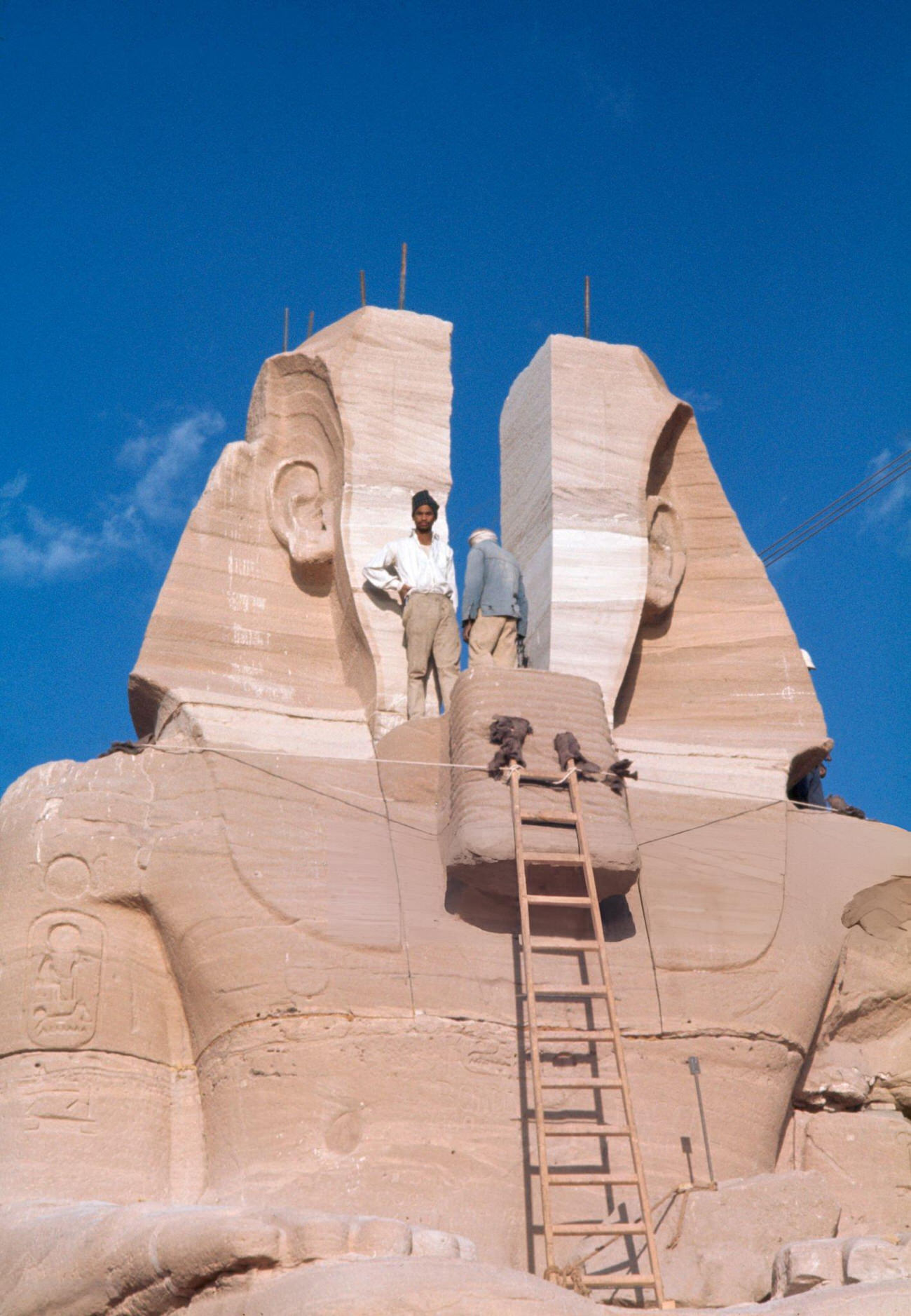
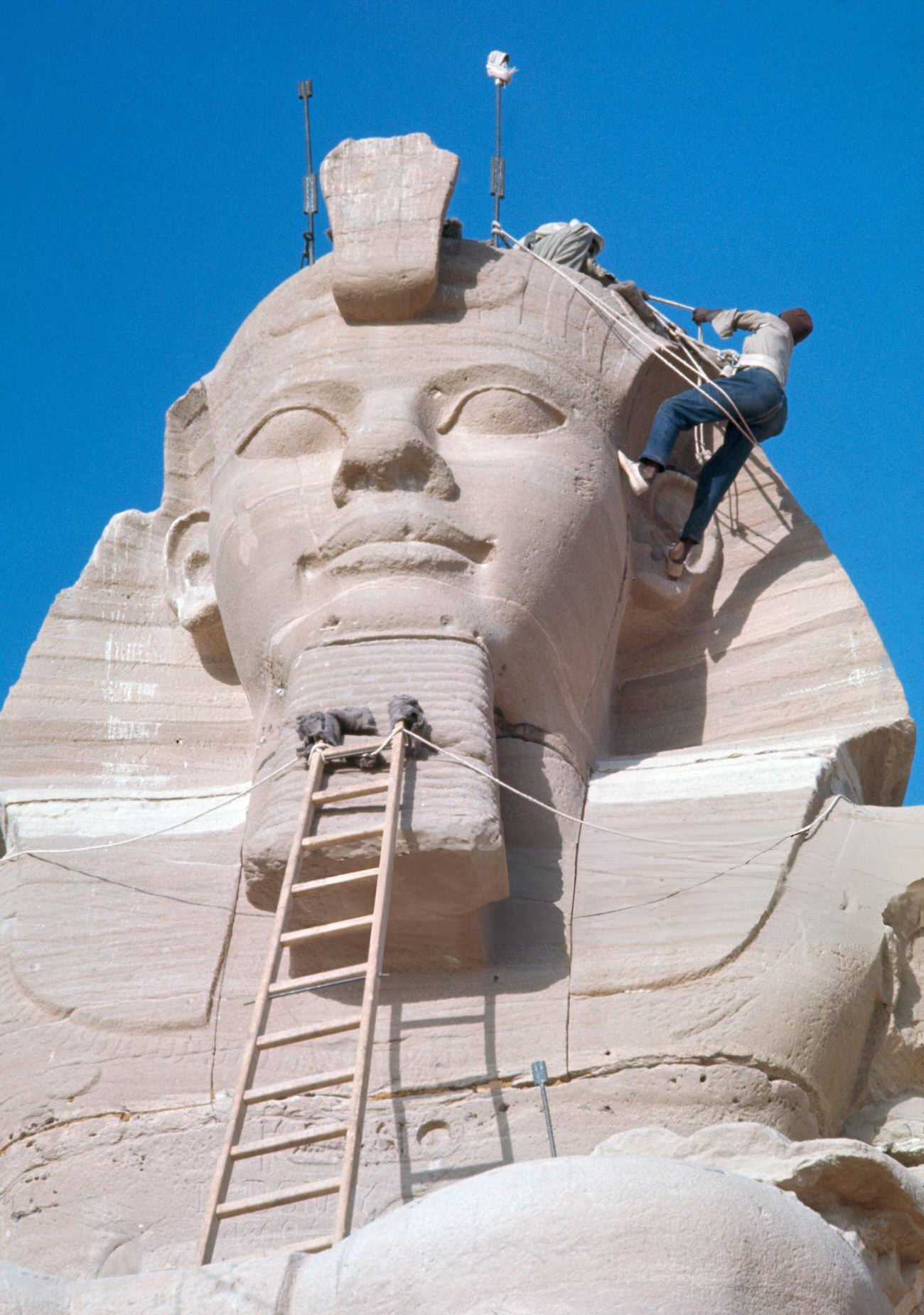
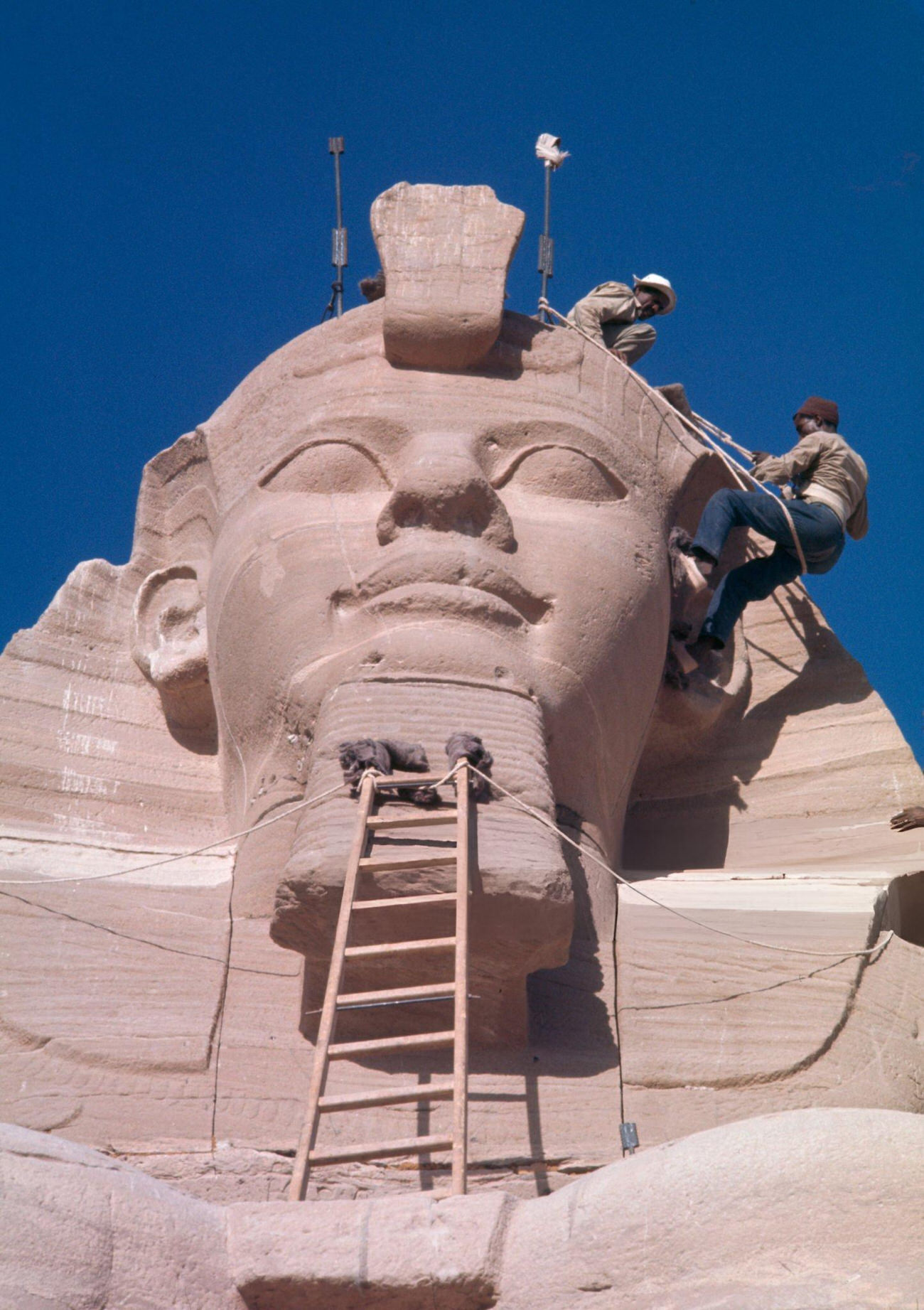
Workers on the project came from Egypt and from many of the countries that contributed to the UNESCO campaign. The site operated through intense heat, with crews working in shifts to keep progress moving. The blocks were heavy, the deadlines were fixed by the rising lake, and the margin for error was essentially zero. By 1967, the bulk of the reassembly work was underway, and the temples were taking visible shape at their new home.
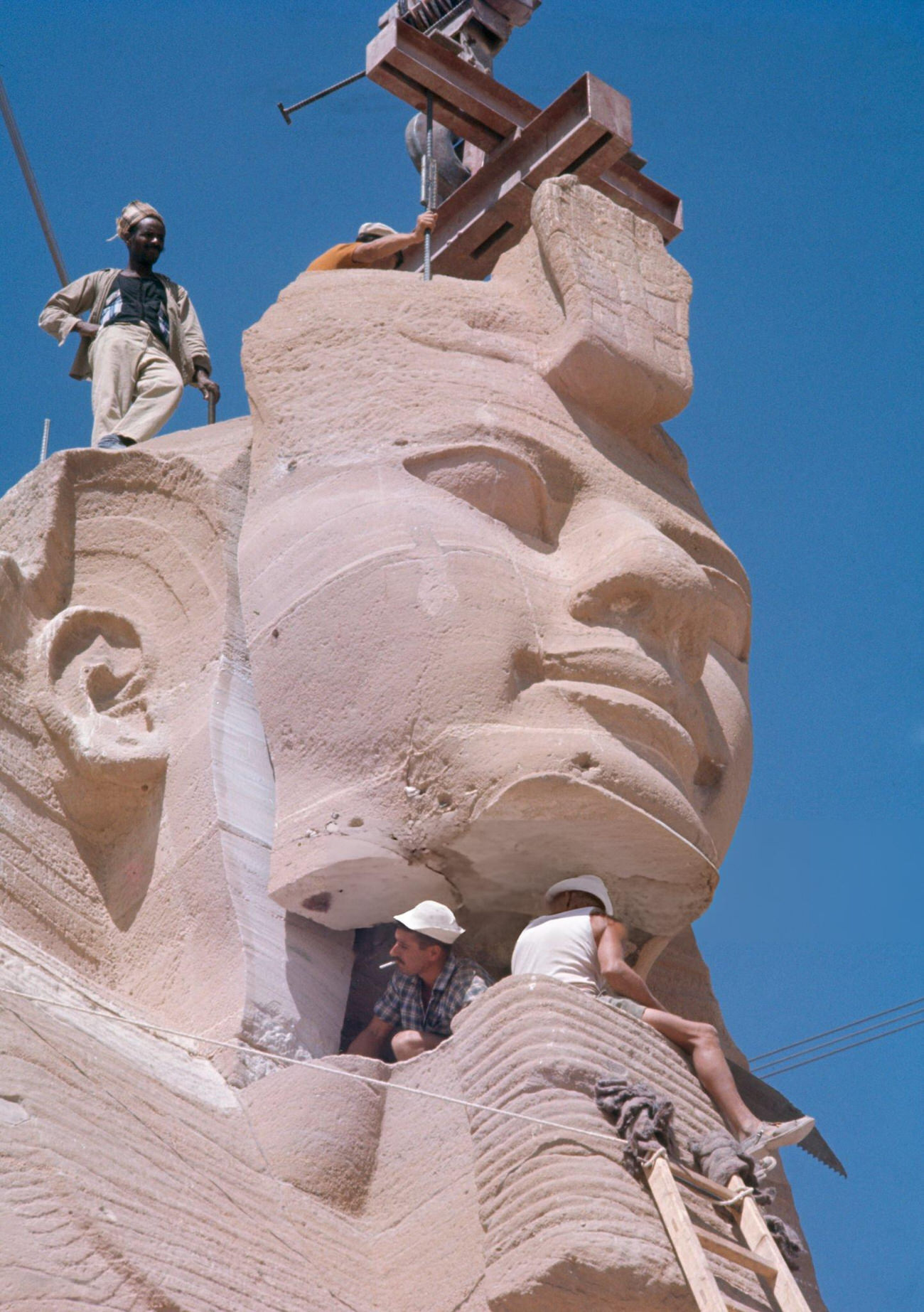
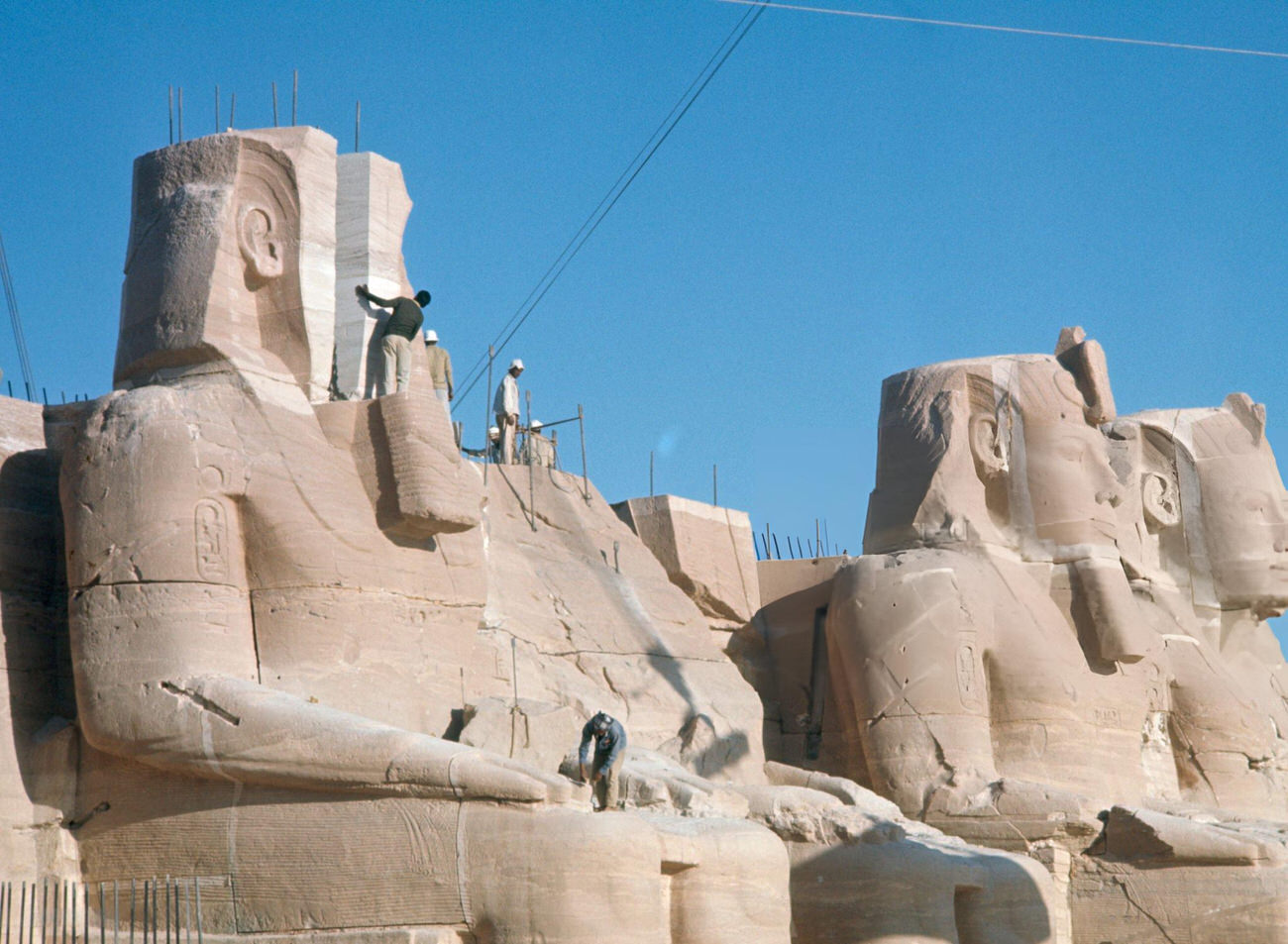
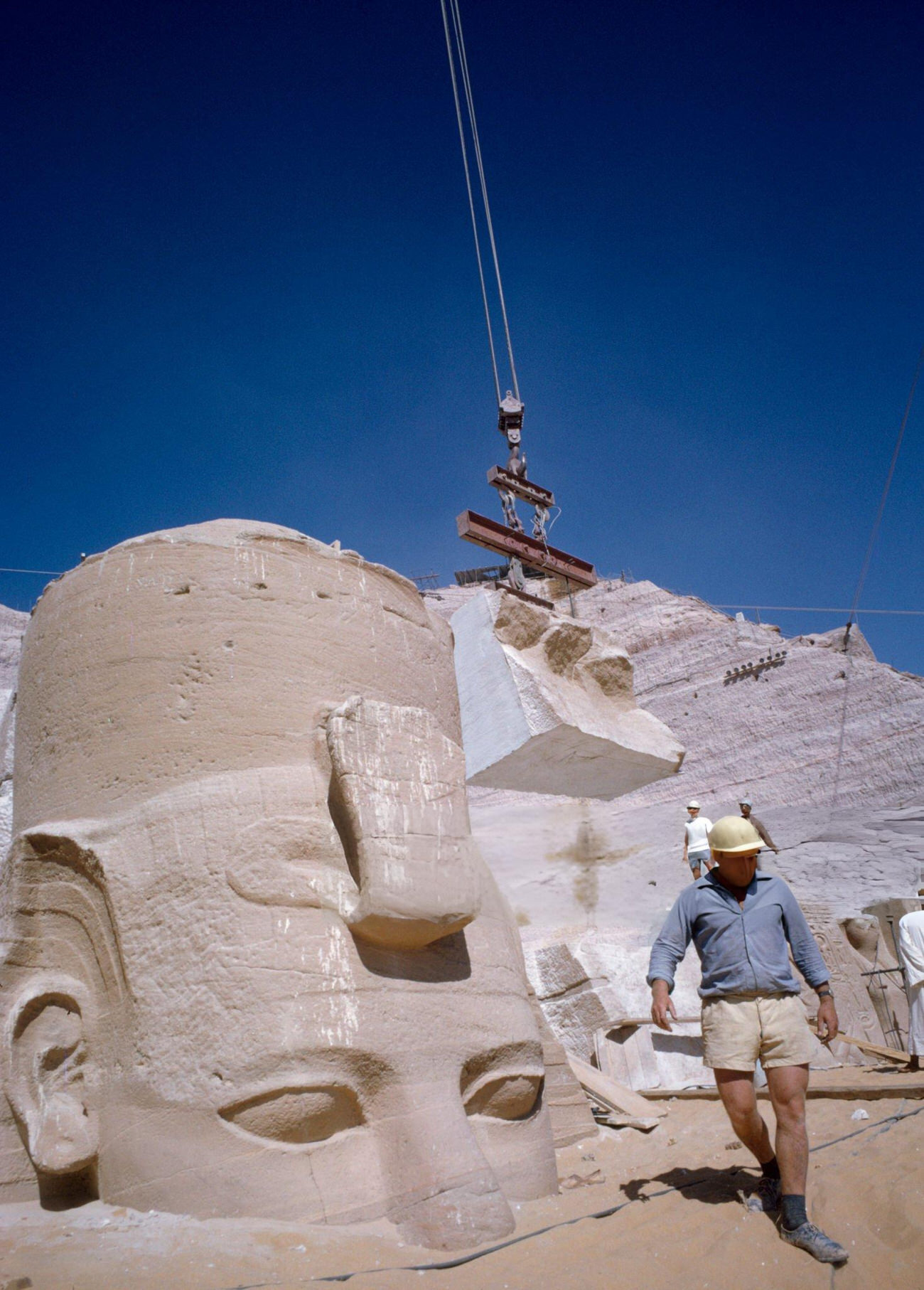
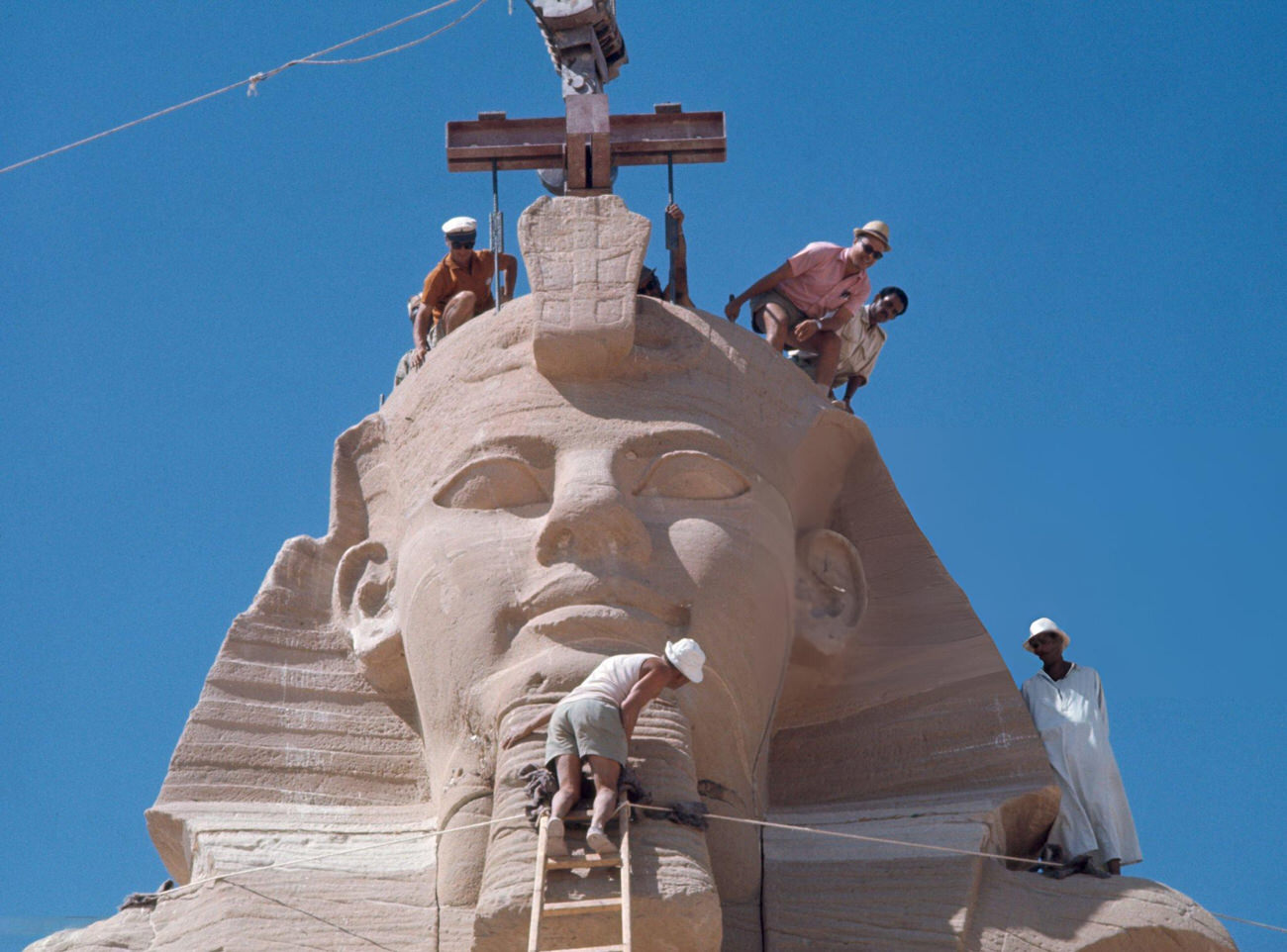
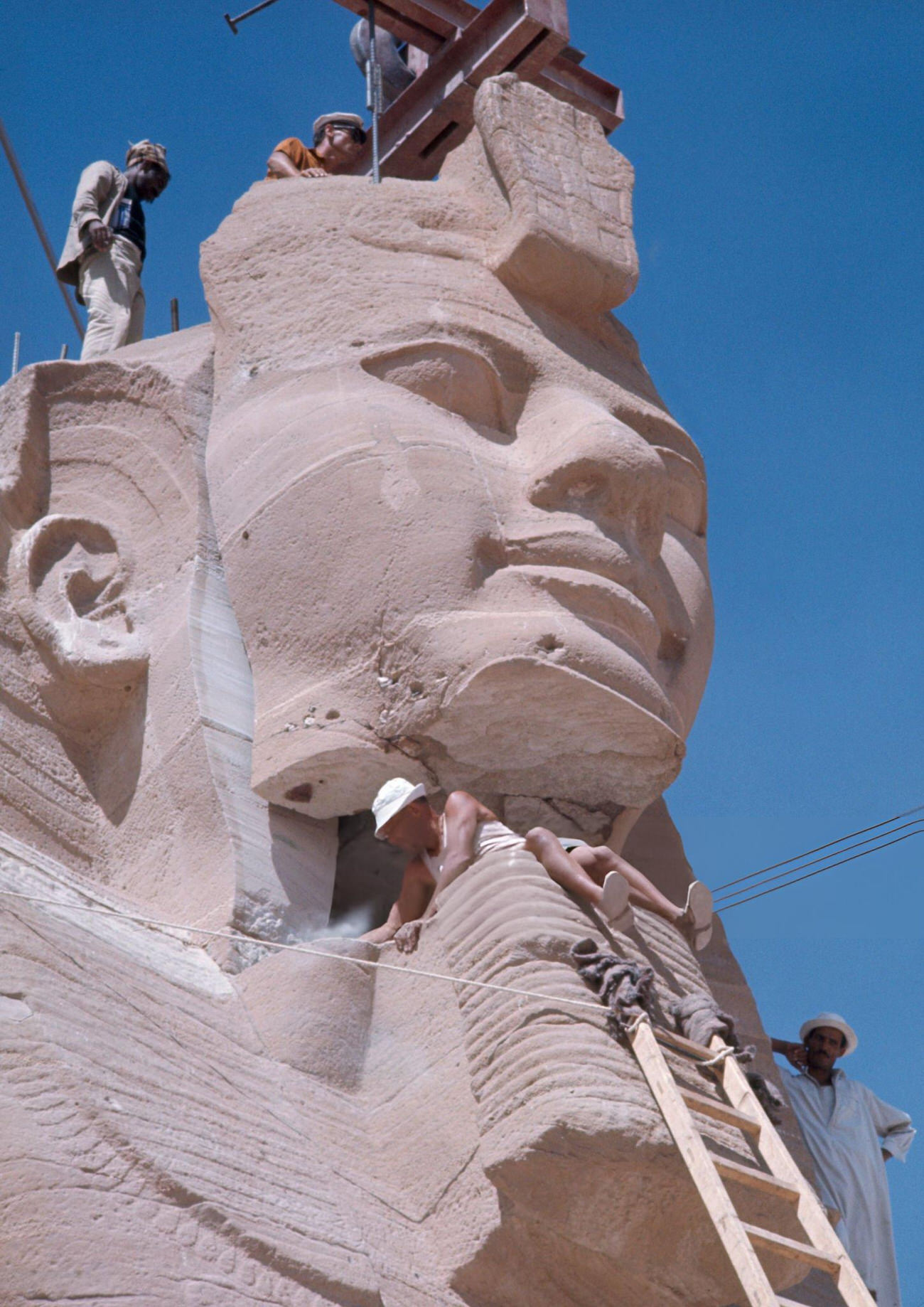
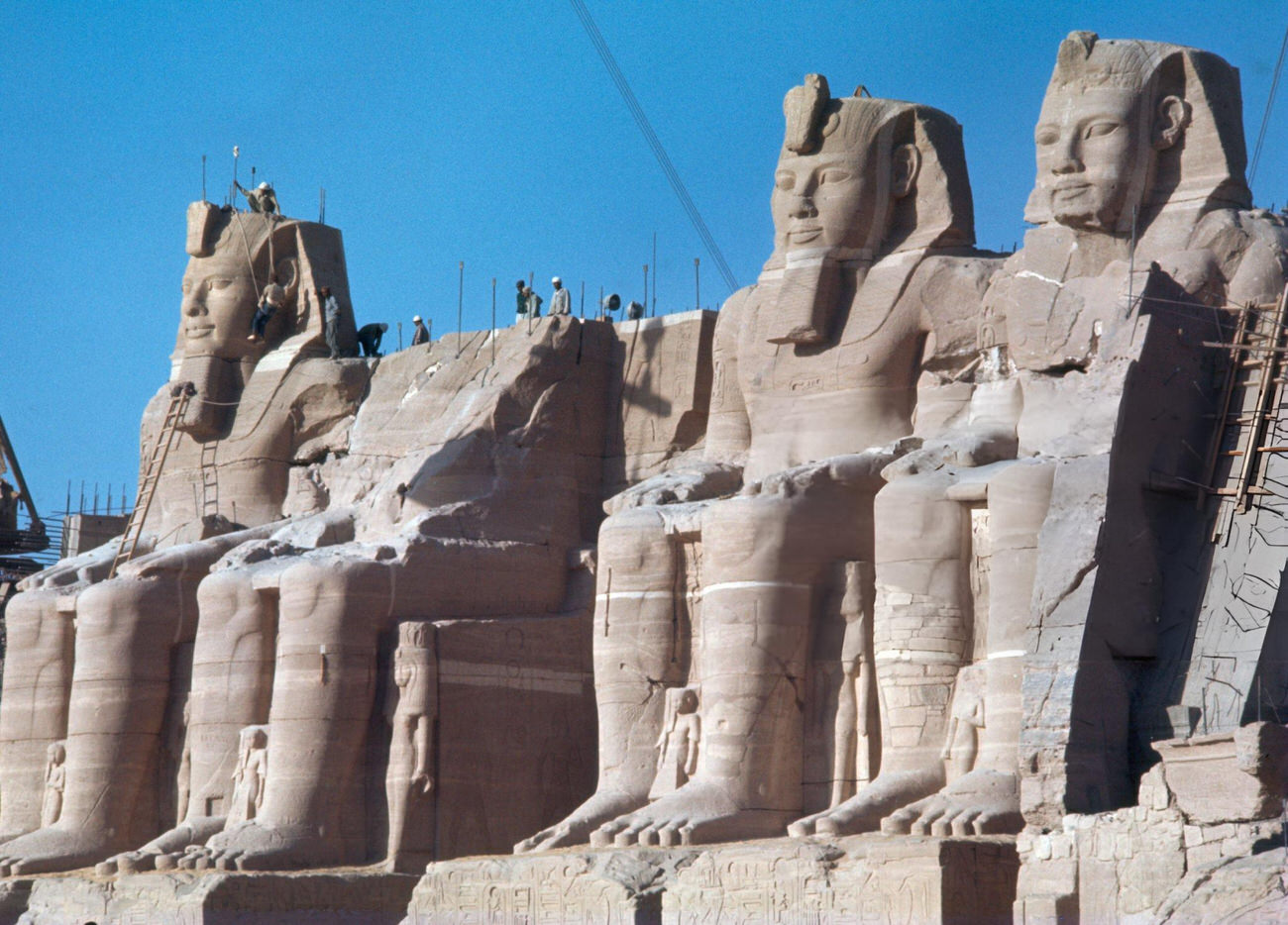
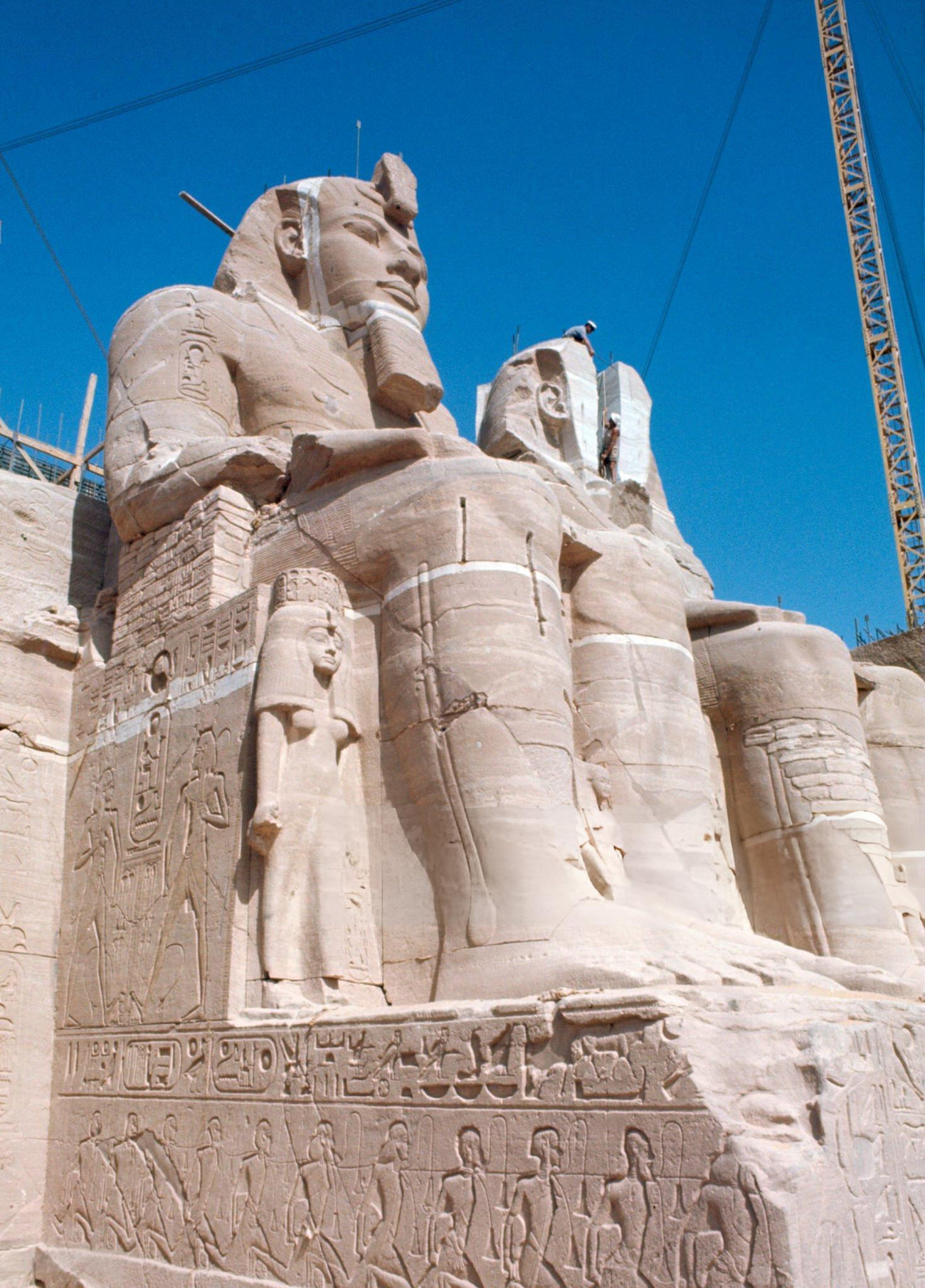
The scale of the physical labor involved is hard to overstate. Thousands of workers moved millions of tons of material. Heavy machinery shared the site with hand tools used for the most delicate carved surfaces. Storage areas held numbered blocks in organized rows, waiting for their turn in the reassembly sequence.
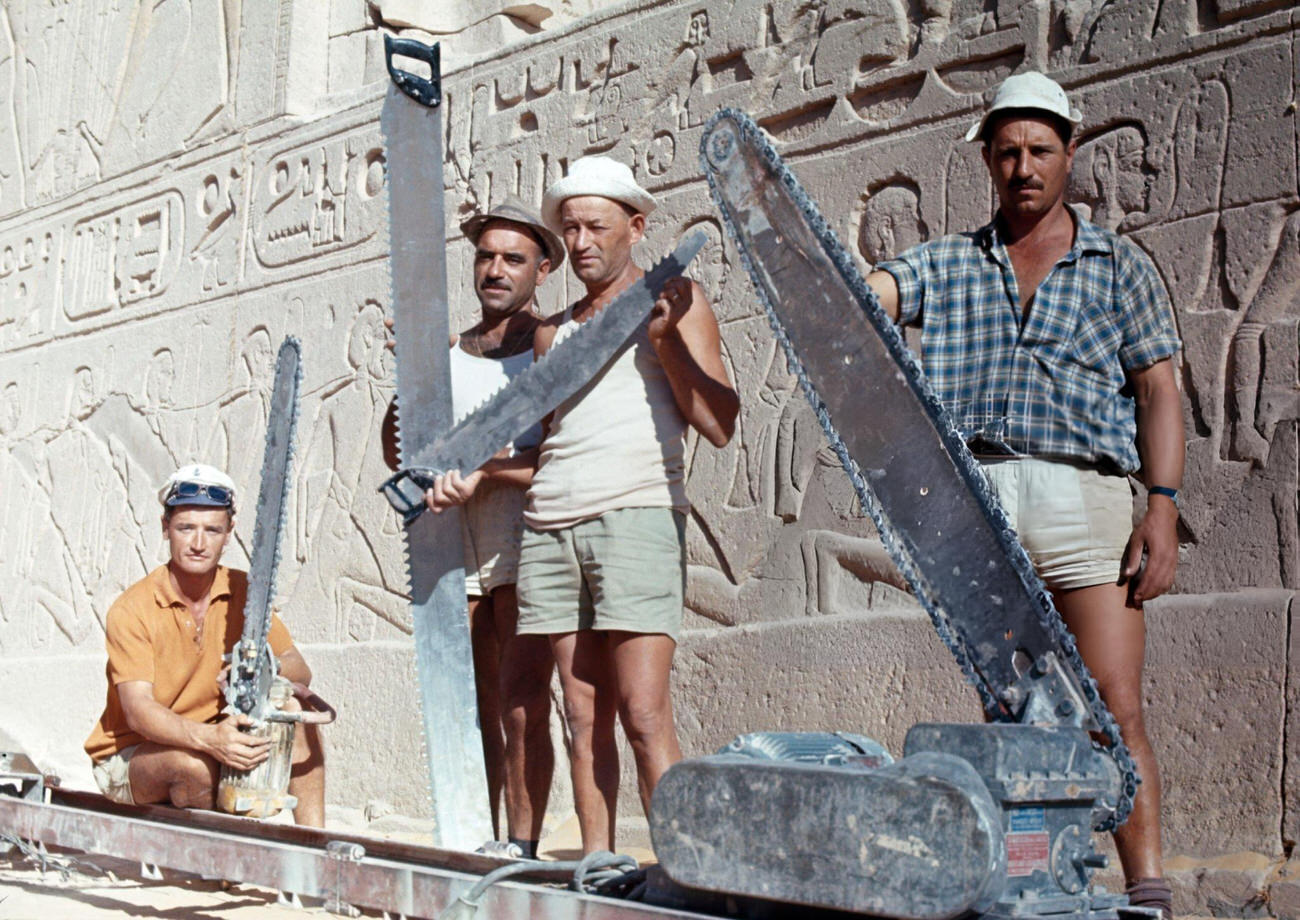
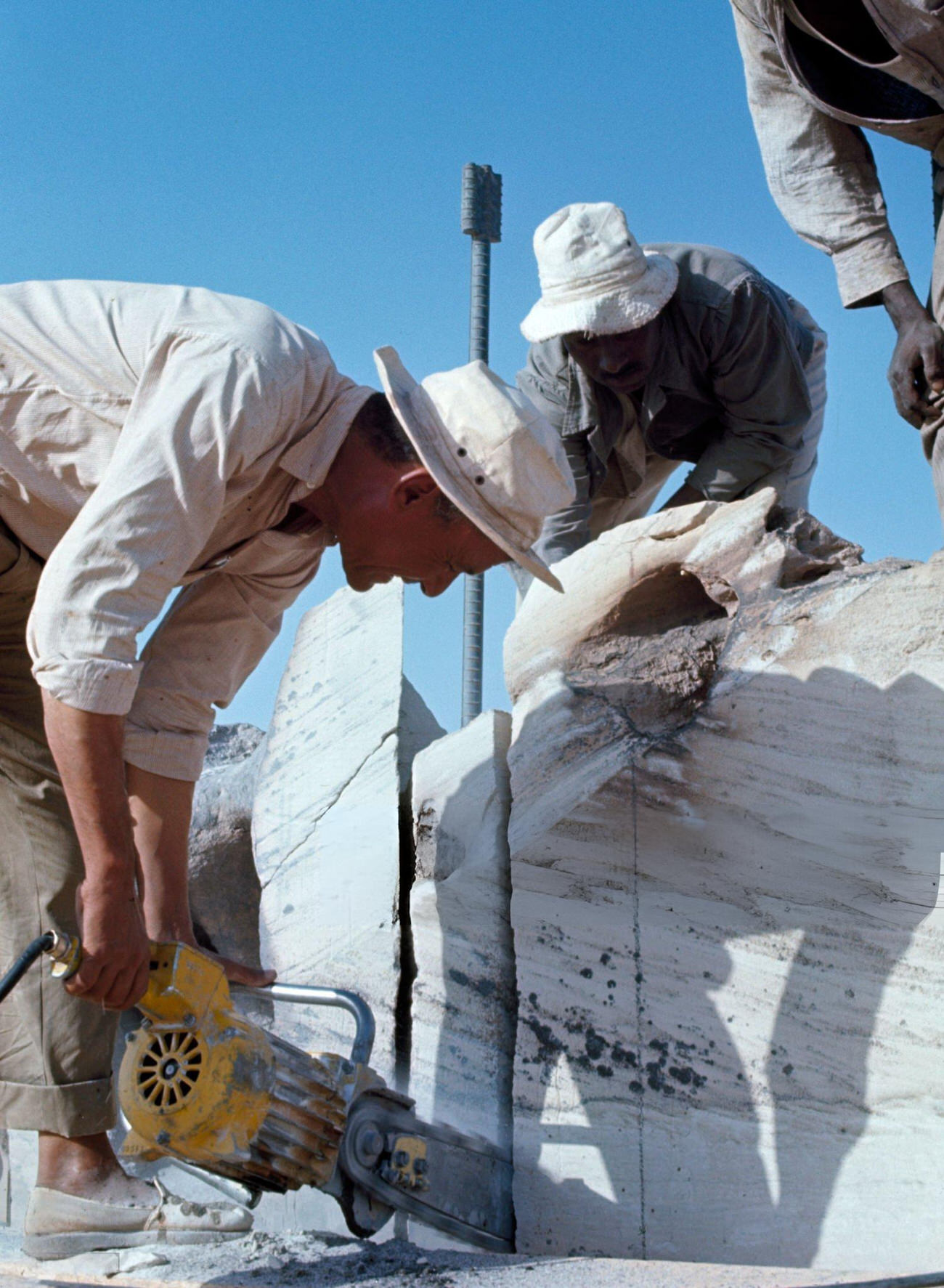
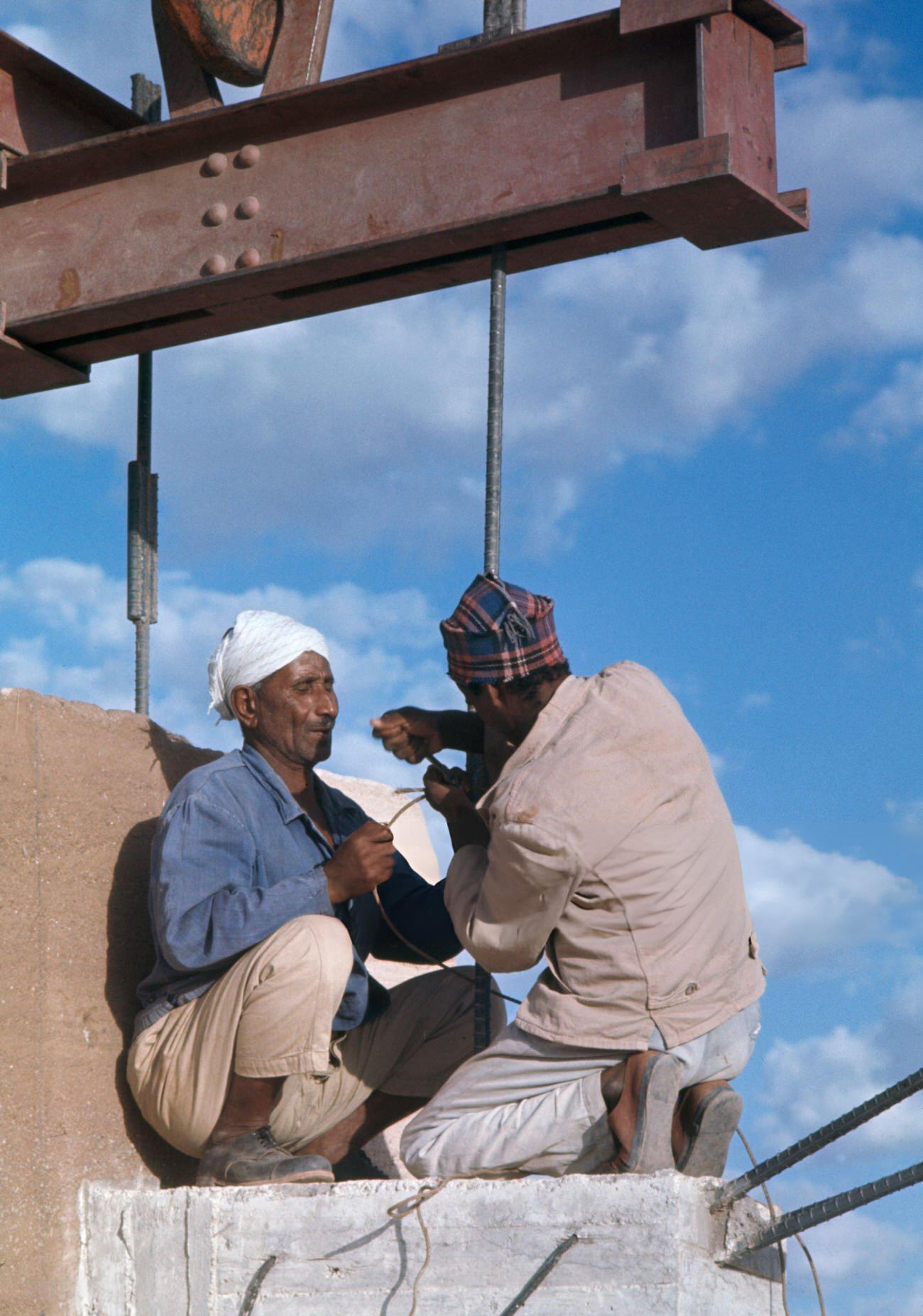
As the reconstruction neared completion in 1968, the project team conducted thorough inspections of every chamber and exterior surface. Joins between blocks were treated to reduce visibility while still being structurally sound. The artificial mountain surrounding the temples was finished to blend with the desert landscape, creating the visual impression that the temples had always been where they now stand.
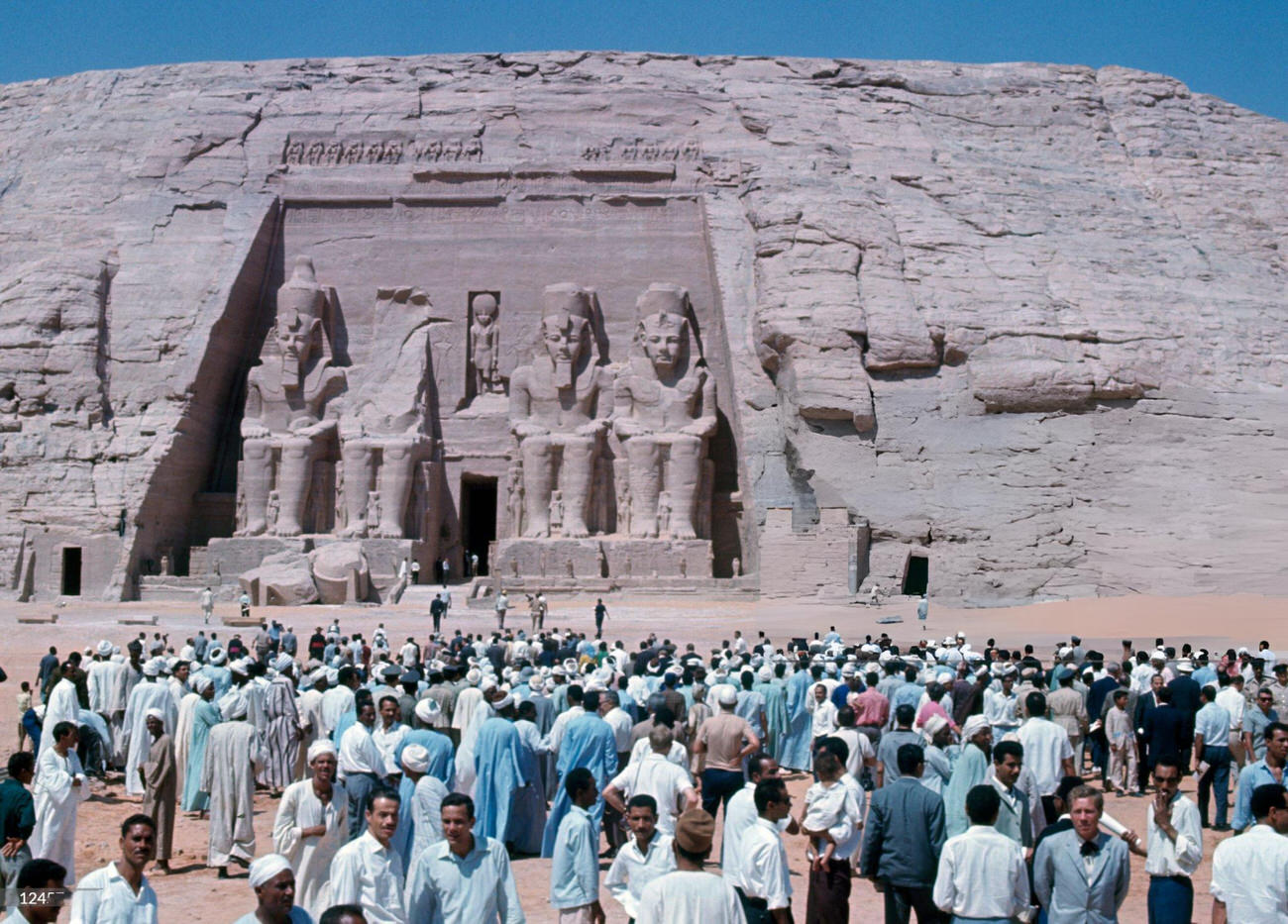
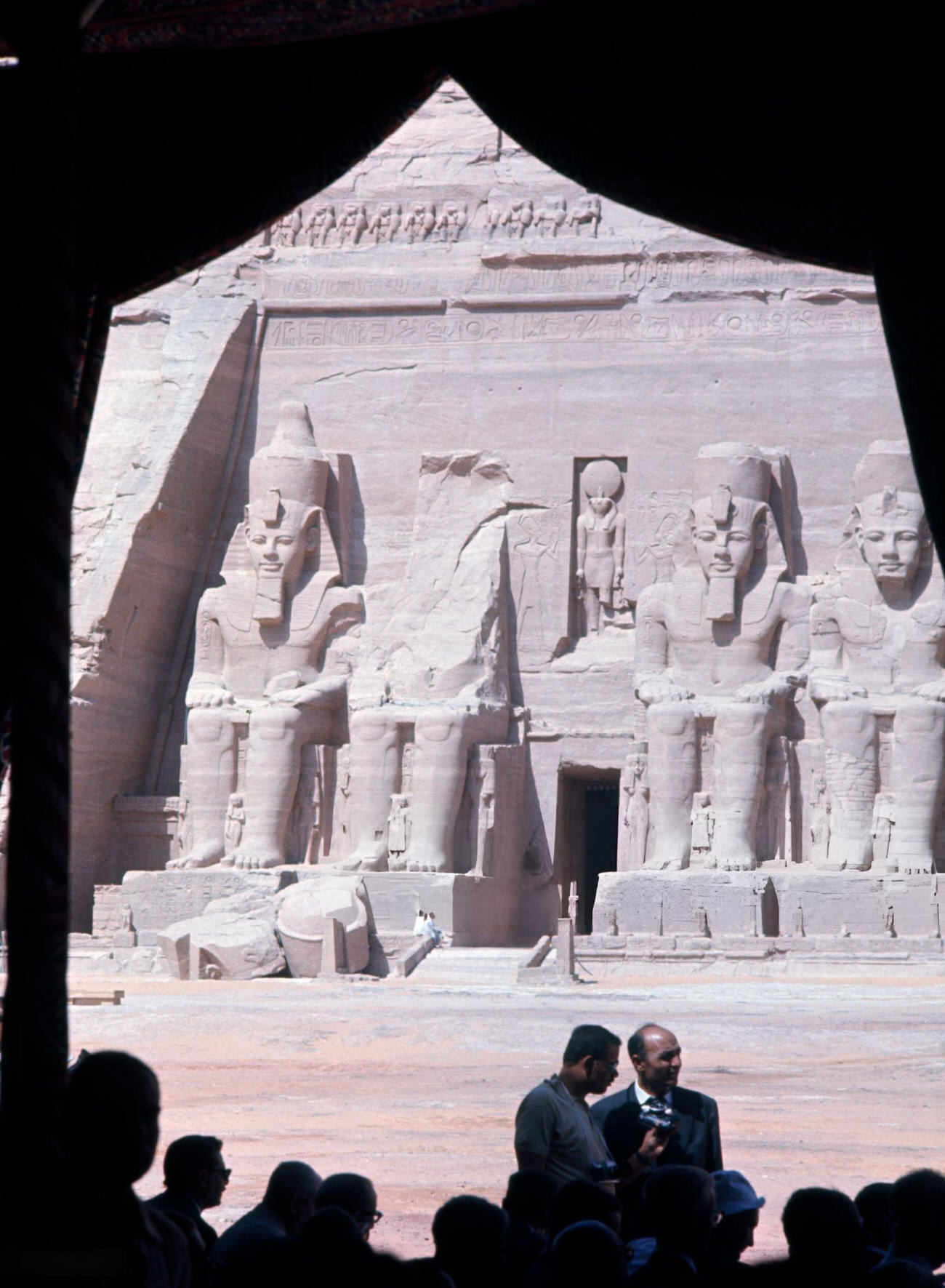
The completion of the move was formally celebrated in 1968. Officials, engineers, archaeologists, and dignitaries gathered at the site to mark the end of a four-year operation that had saved two of the ancient world’s most significant monuments. Back at the original cliff site, the rising waters of Lake Nasser covered the ground where Abu Simbel had stood for over three thousand years.