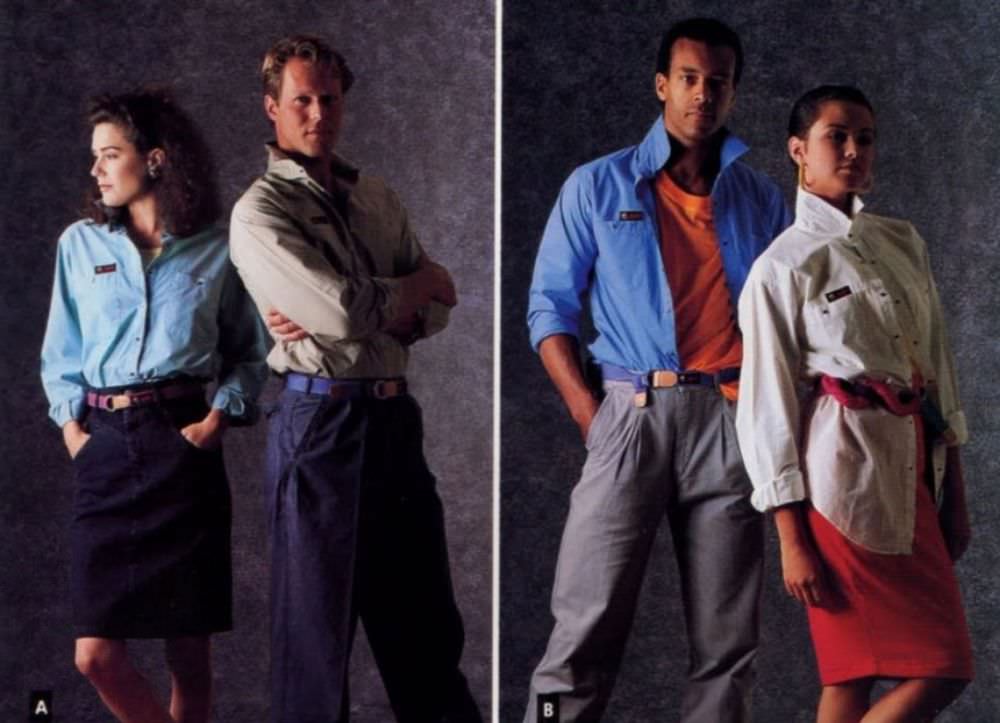
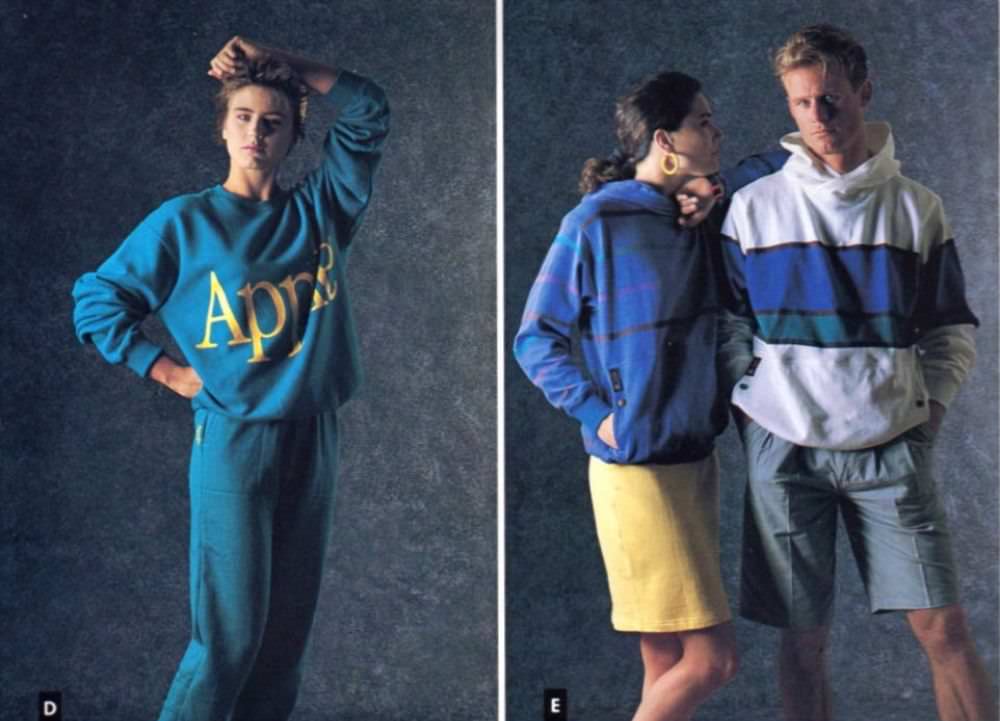
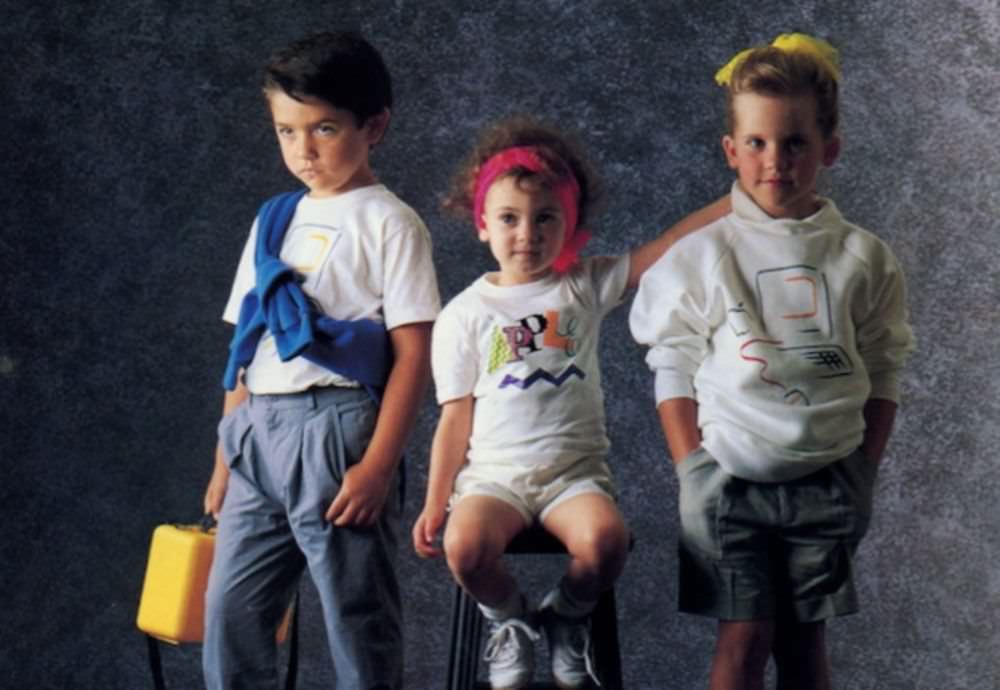
In 1986, one year after Steve Jobs left Apple Computer, the company made a decision that had nothing to do with computers. It launched a full fashion catalog called “The Apple Collection.” The goal was to turn a tech company into a lifestyle brand — and the result was one of the strangest chapters in corporate history.
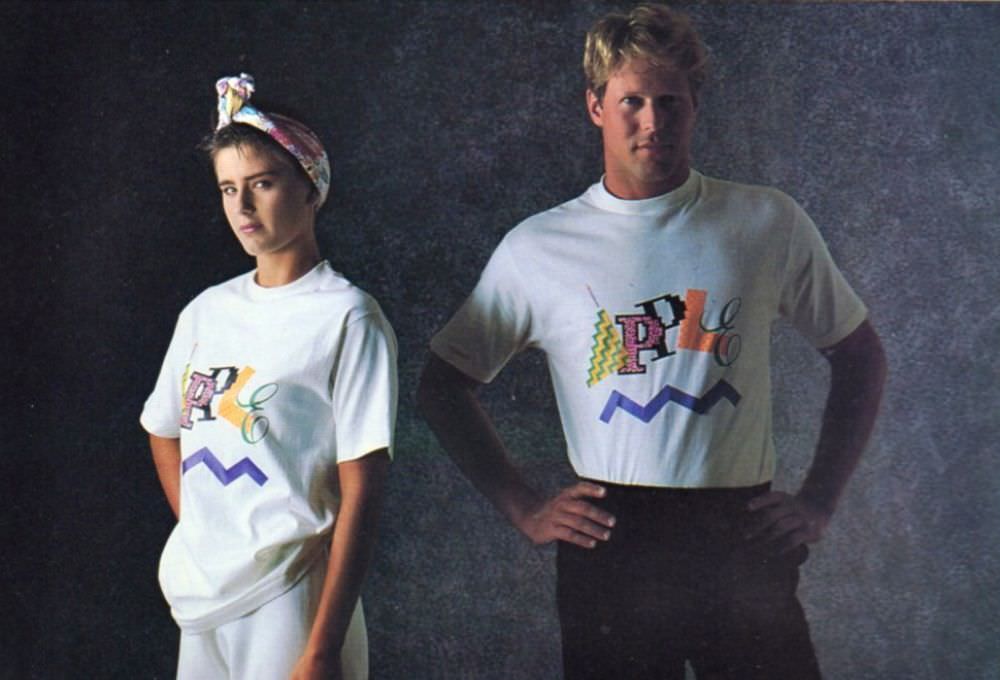
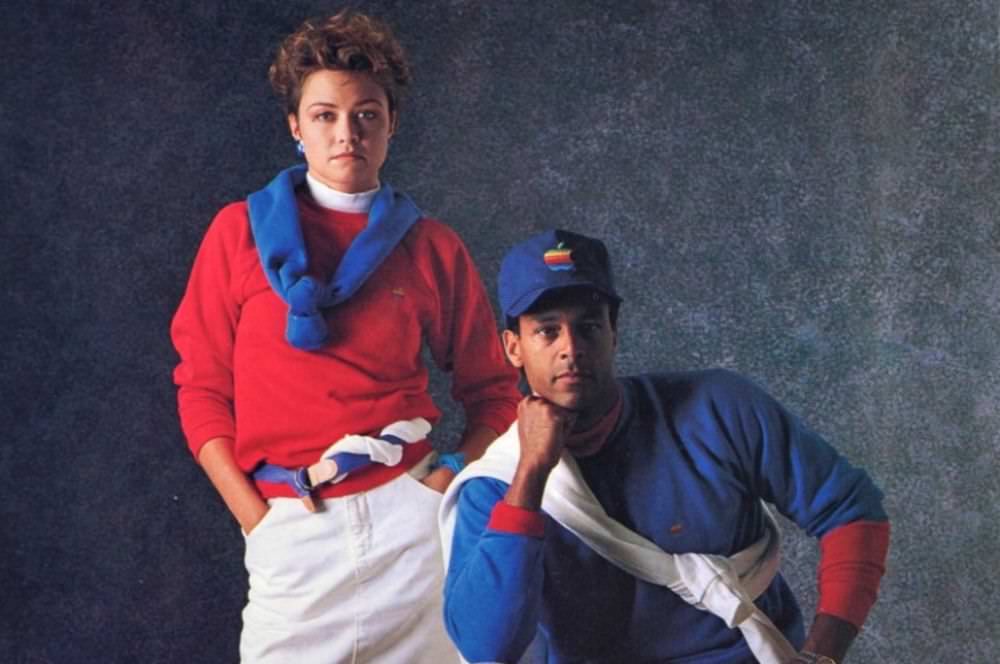
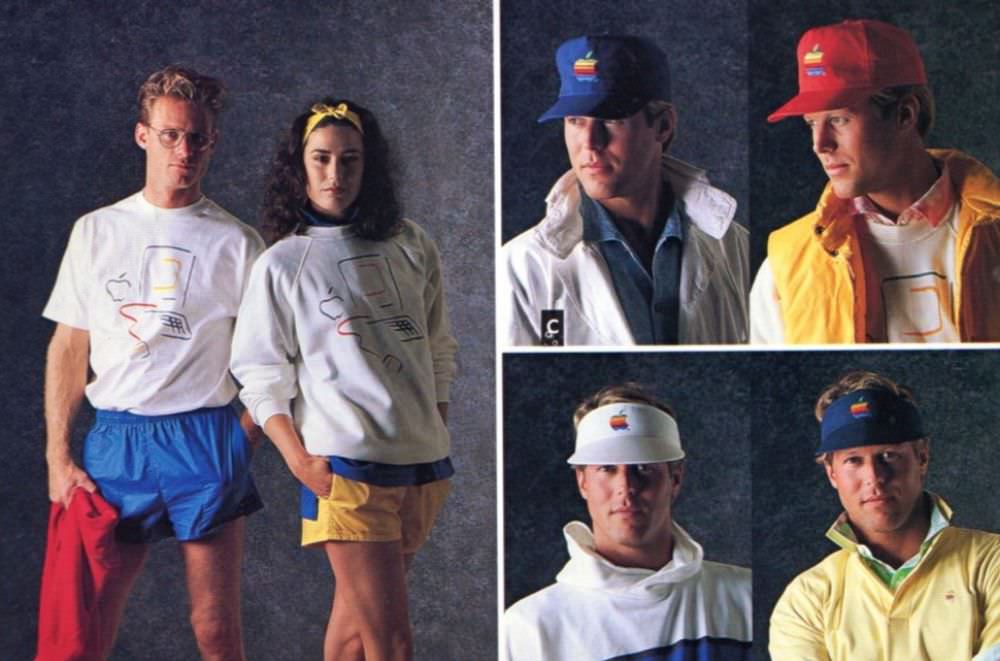
The catalog did not lead with monitors or keyboards. Instead, it featured men, women, and children dressed head to toe in Apple-branded apparel. The clothing leaned hard into the fashion trends of the mid-1980s. Models wore baggy sweatshirts with “Apple” printed across the chest in large, puffy letters. Collared polo shirts came in bright primary colors — red, blue, and yellow — with collars popped. Loose-fitting tops were paired with white shorts or sweatpants, producing a casual, preppy look that had no connection to office work.
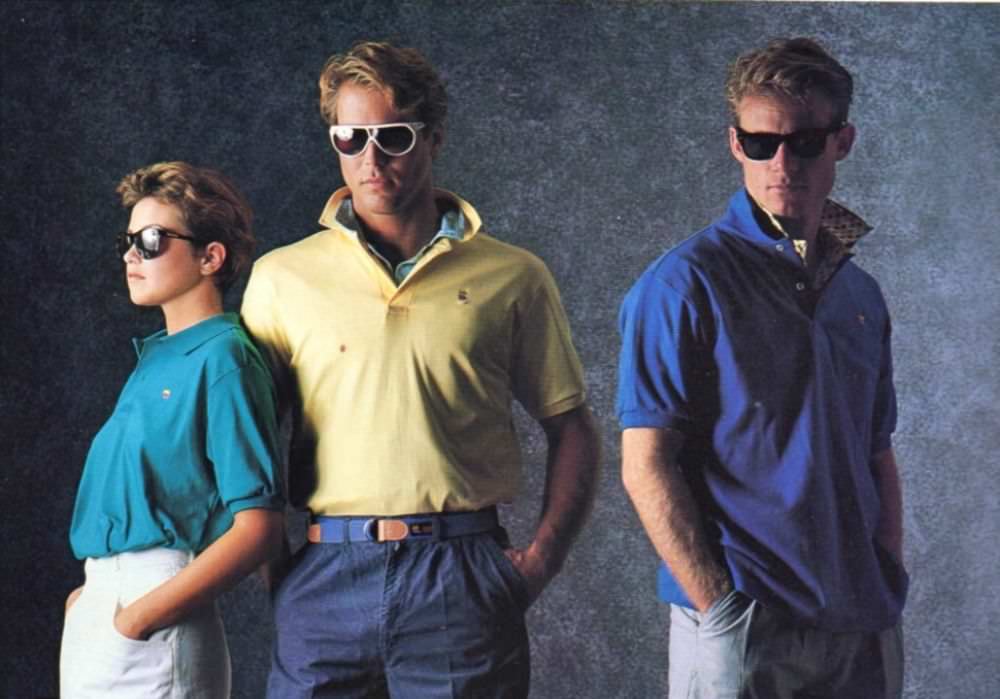
Every item in the collection carried the classic six-color rainbow Apple logo. It appeared on t-shirts, hats, and pocket squares. This was not subtle branding. The logo was large and proud, treated as a status symbol for Apple fans. The six-color palette also dictated the entire color scheme of the clothing line, tying each piece directly to the company’s corporate identity.
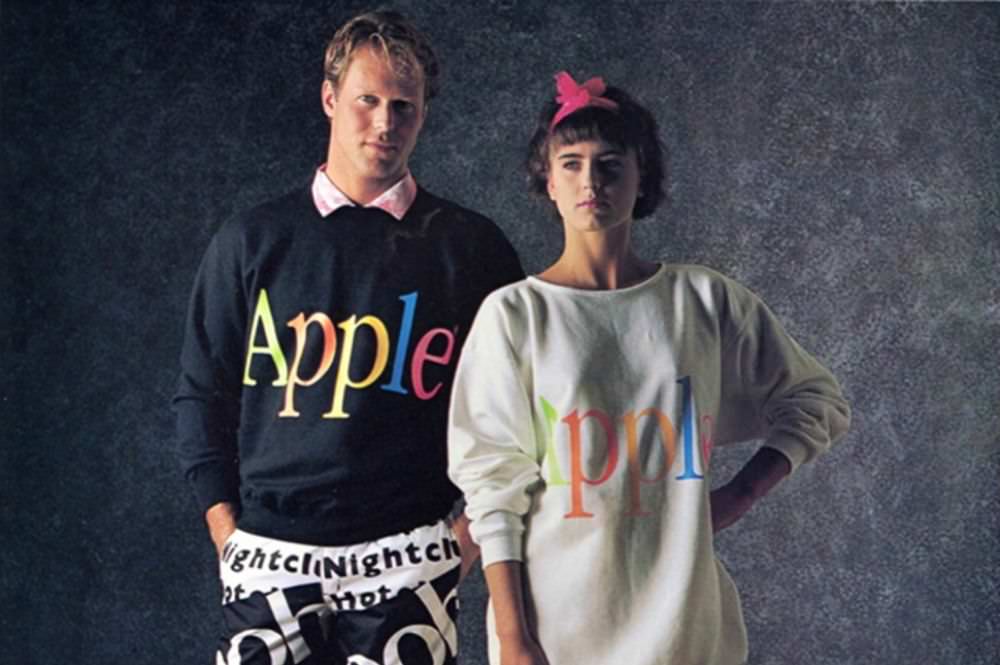
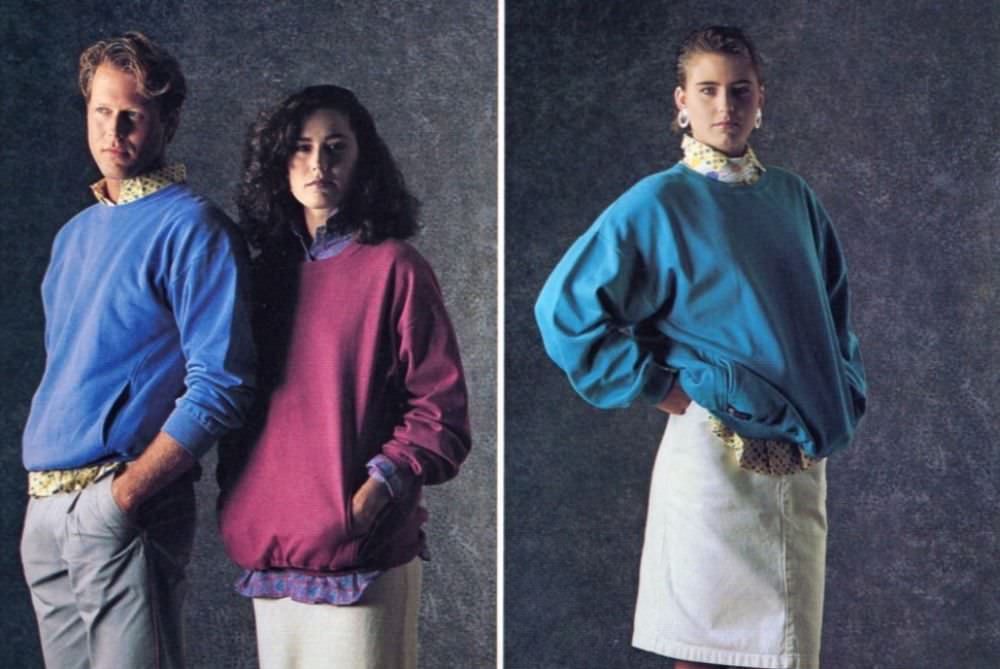
The graphic design on the apparel used Apple Garamond, the company’s official typeface at the time. This font appeared on sweatshirt fronts and on the catalog cover, giving the clothing a collegiate feel — similar to university merchandise. Designers mixed this traditional typeface with abstract shapes and squiggly lines drawn from the “Memphis Group” design movement, a bold Italian style that defined the visual culture of the decade.
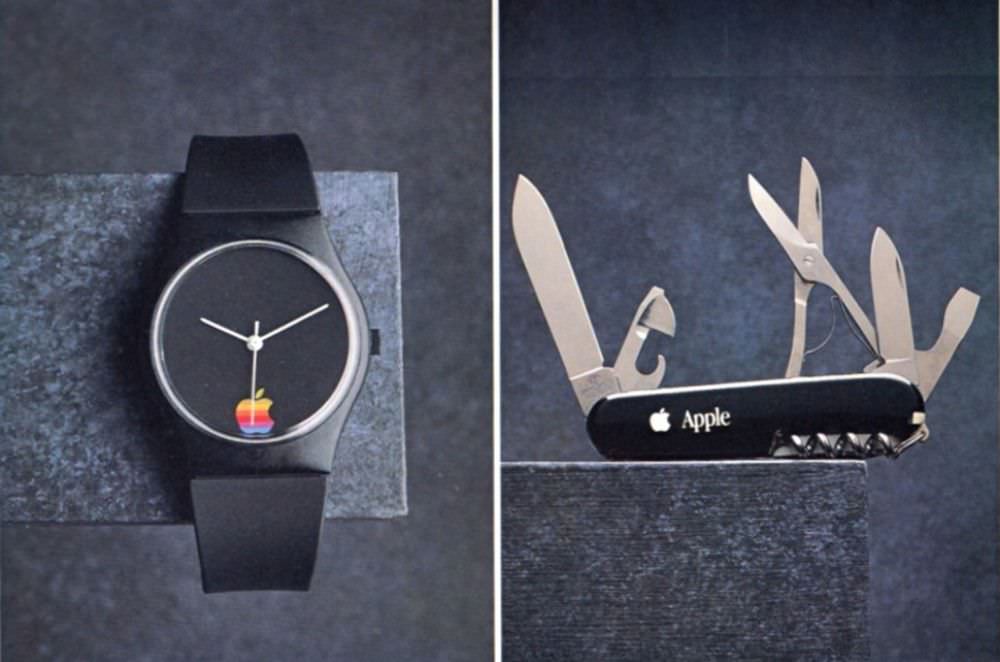
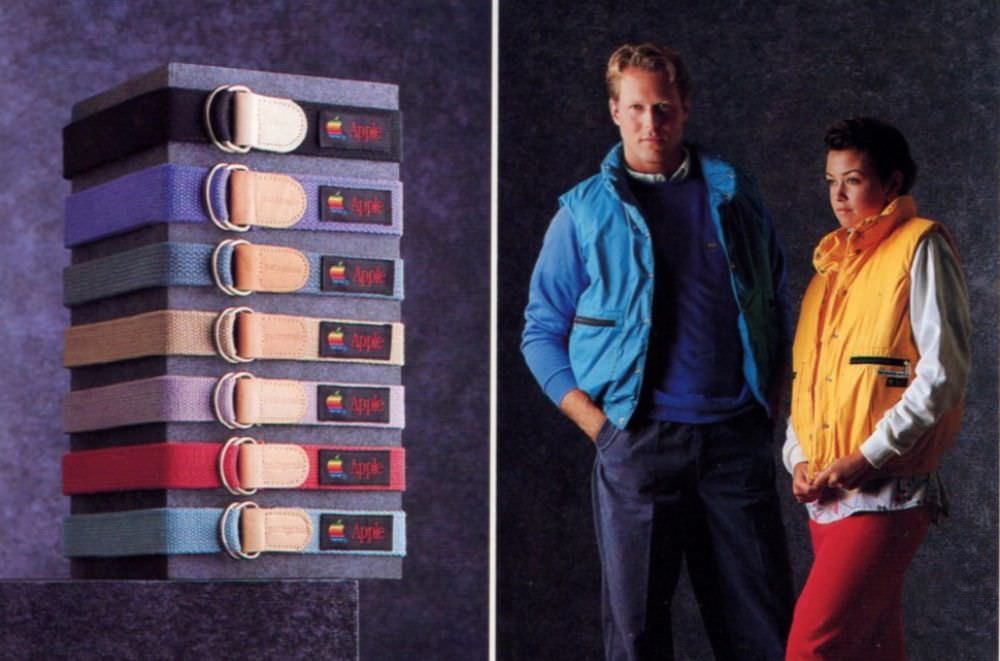
The catalog went well beyond clothing. Apple sold branded watches, umbrellas, and bags. Customers could also buy a windsurf board with the Apple logo printed on the sail. For children, the catalog offered toy trucks and school supplies. Apple’s executives wanted the brand present at the beach, in the classroom, and on the street — not just on a desk.
The Apple Collection was a product of its moment. The loud colors, oversized fits, and lifestyle-brand thinking all reflected a specific corporate confidence that existed in the mid-1980s. Apple believed its name alone could sell shorts and sail boards just as well as it sold personal computers.