Ry-Krisp began as a humble immigrant food. Swedish brothers Arvid and Erik Peterson brought a recipe for traditional Scandinavian crisp bread — known as knäckebröd — with them when they settled in the United States. The bread was made from rye, required no yeast, and was extraordinarily durable. Back in Scandinavia, crisp bread was a dietary staple throughout the 19th century. It was baked only twice a year and shaped with a hole in the center so loaves could be stored on a single hanging rod. The Peterson brothers turned that old-world tradition into an American brand: Ry-Krisp.
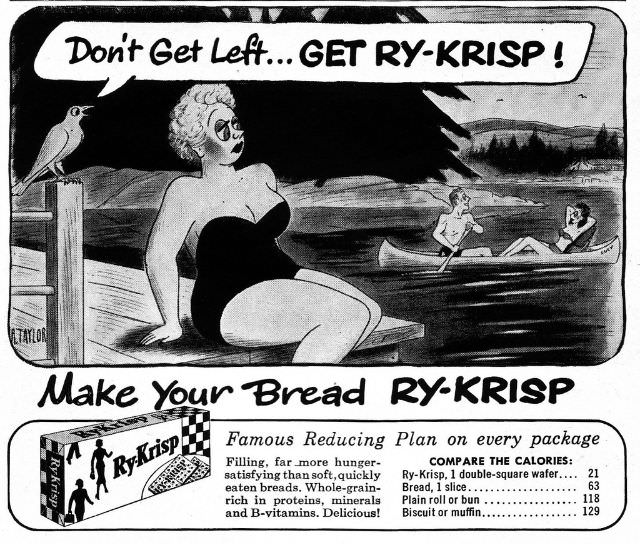
The brand initially found its audience among Scandinavian immigrants who recognized the familiar taste of rye crackers from home. That changed in 1926, when the Purina company acquired Ry-Krisp. Under new ownership, the marketing strategy shifted away from cultural nostalgia and toward something far more aggressive — weight loss advertising aimed squarely at American women and girls.
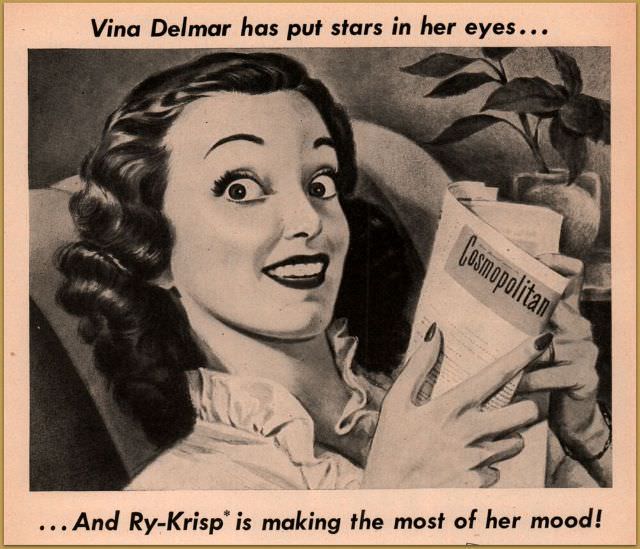
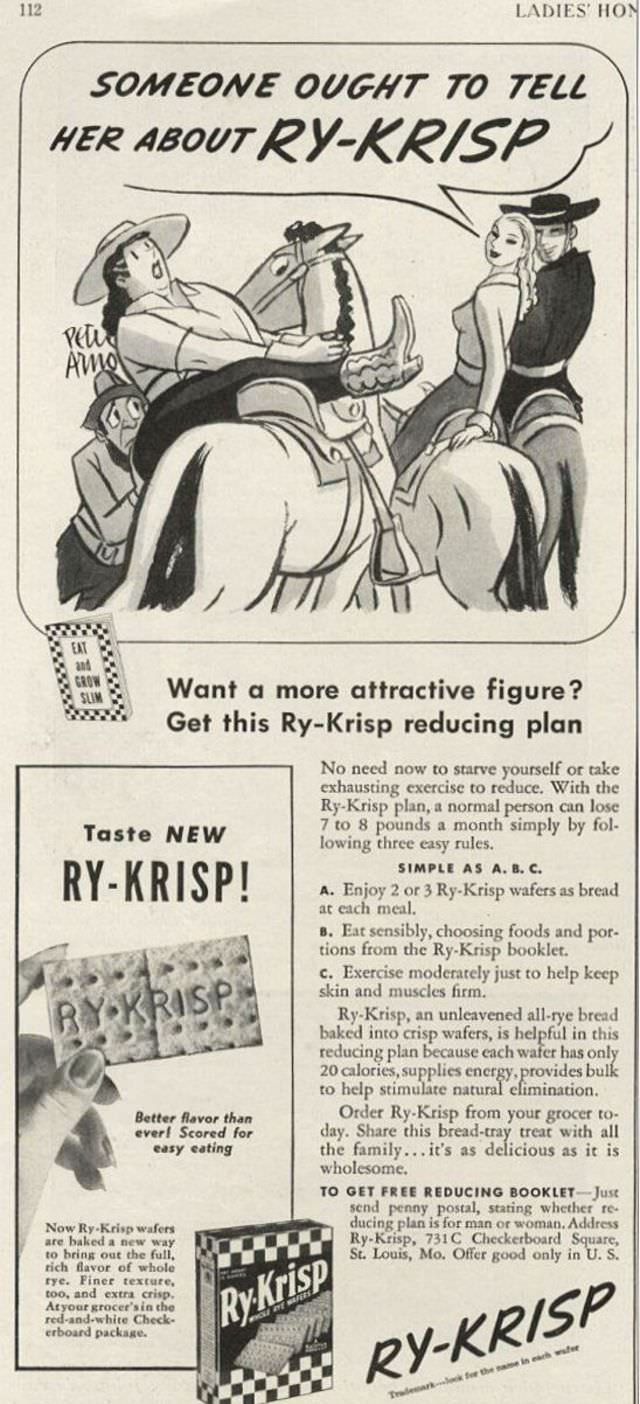
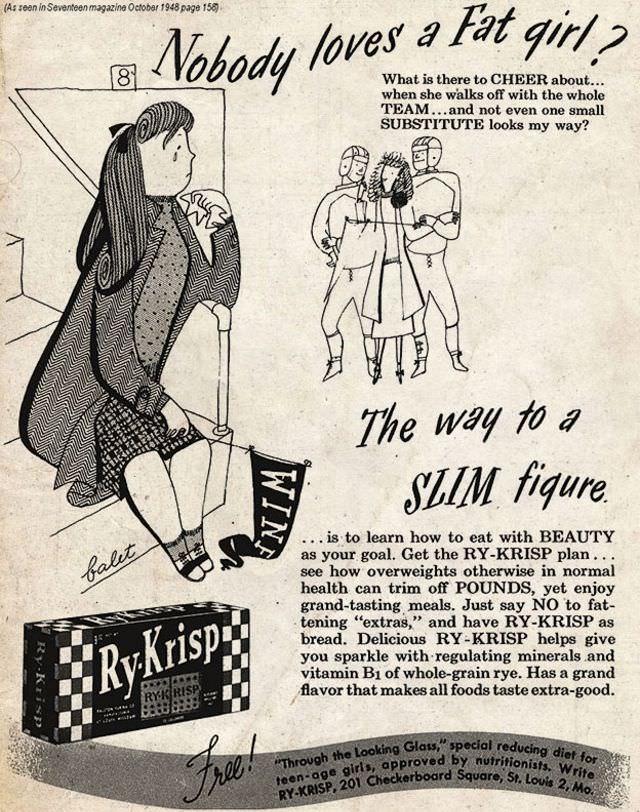
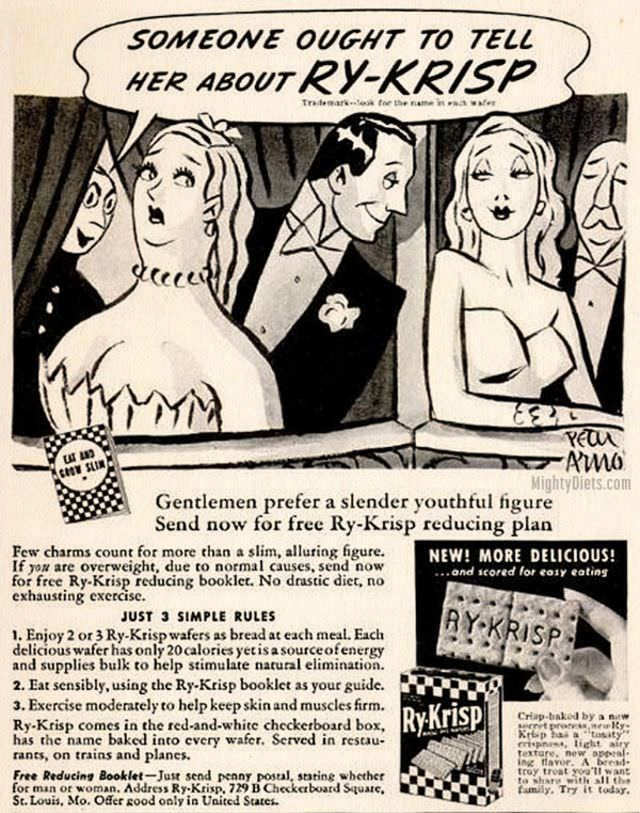
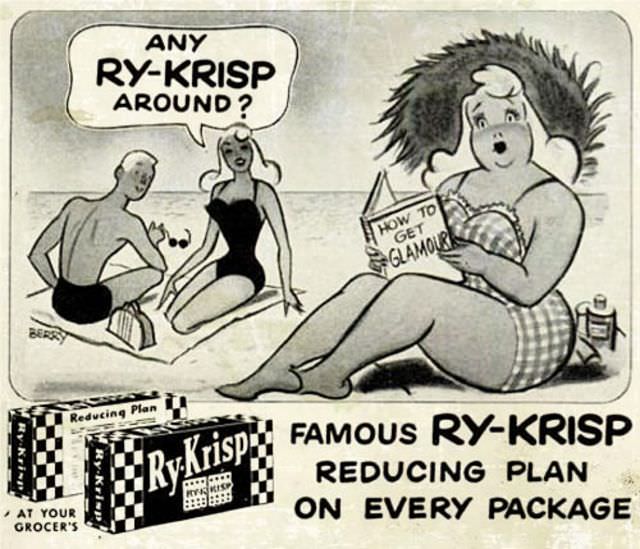
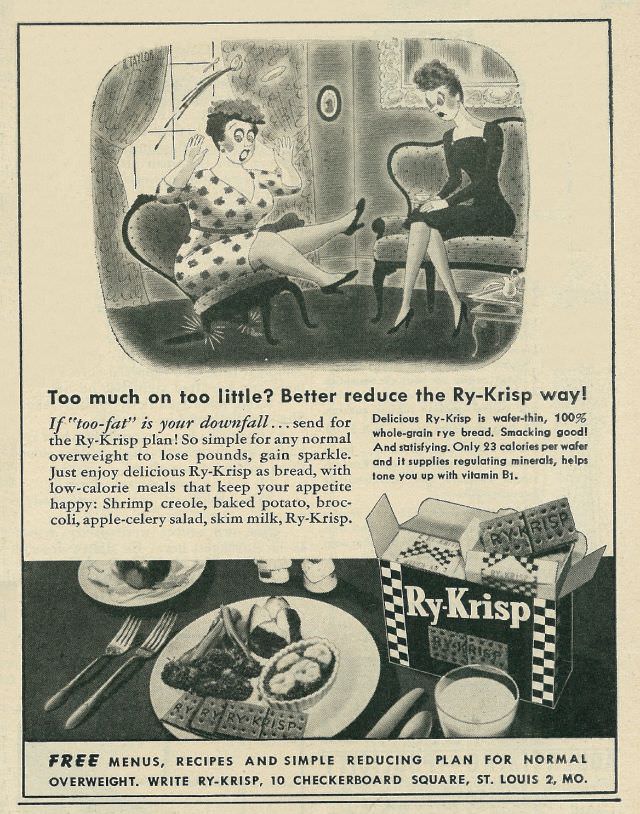
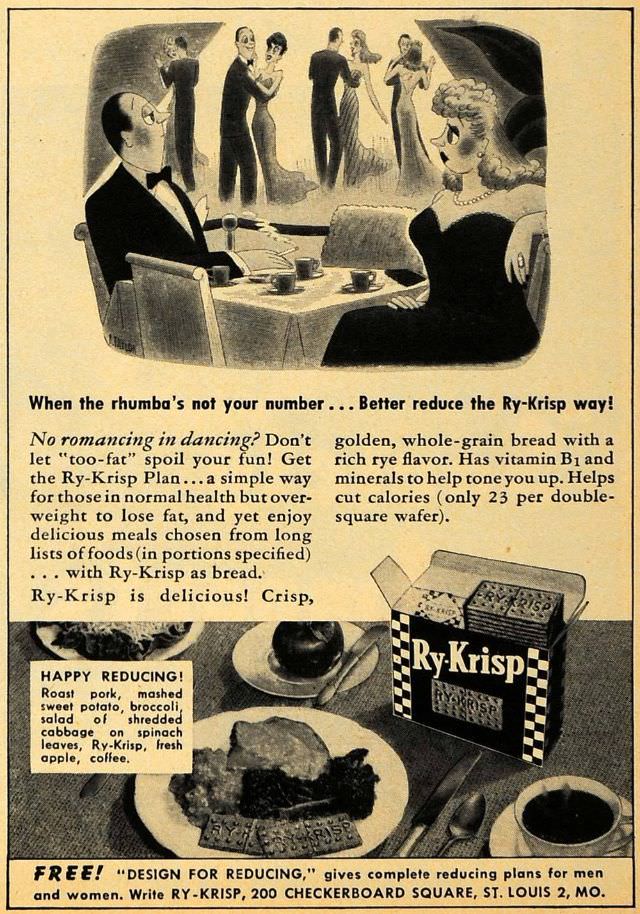
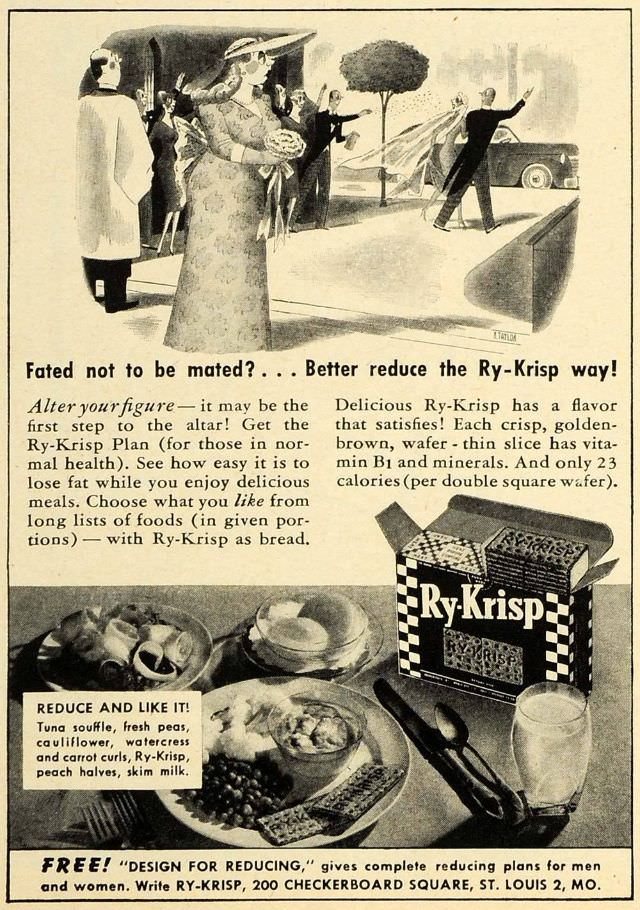
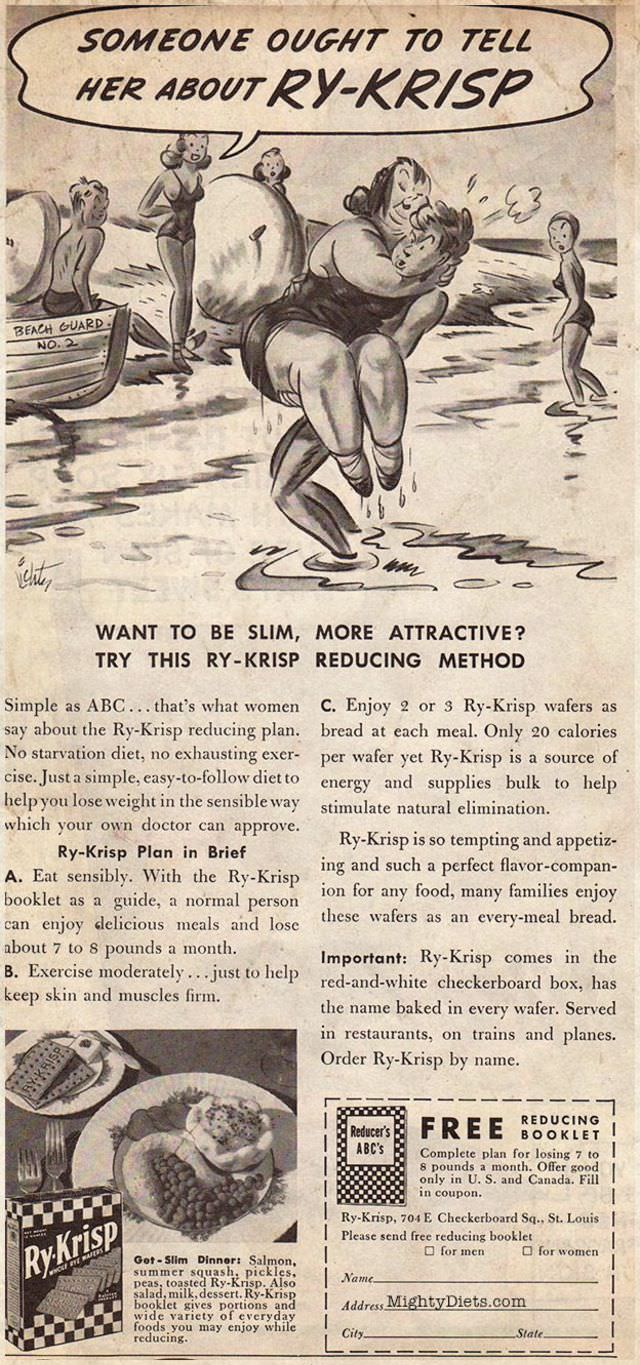
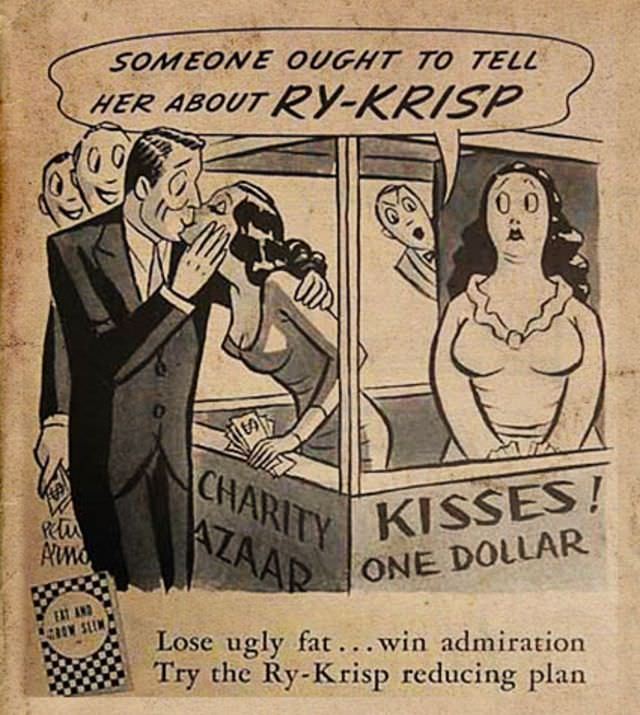
Starting in the 1930s, Ry-Krisp placed ads in women’s and girls’ magazines, promoting the crackers as a “reducing” product — the period term for weight loss. The ads used shame as their primary selling tool. Themes centered on fear: fear of being rejected, fear of being mocked, fear of being left behind by a husband or excluded by peers. One recurring ad told readers outright that “Nobody loves a fat girl.” This line ran in Seventeen magazine for years, targeting teenage girls.
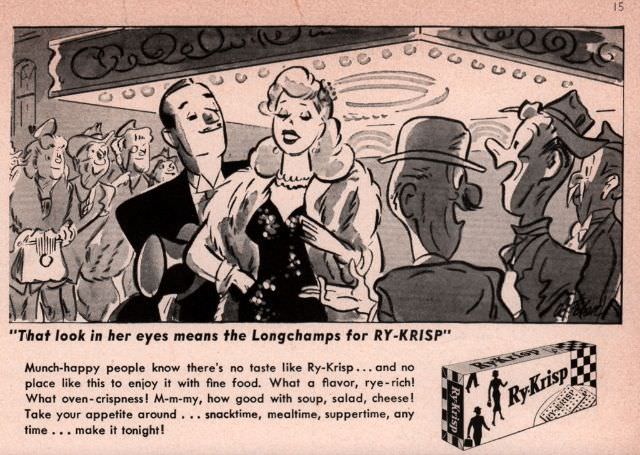
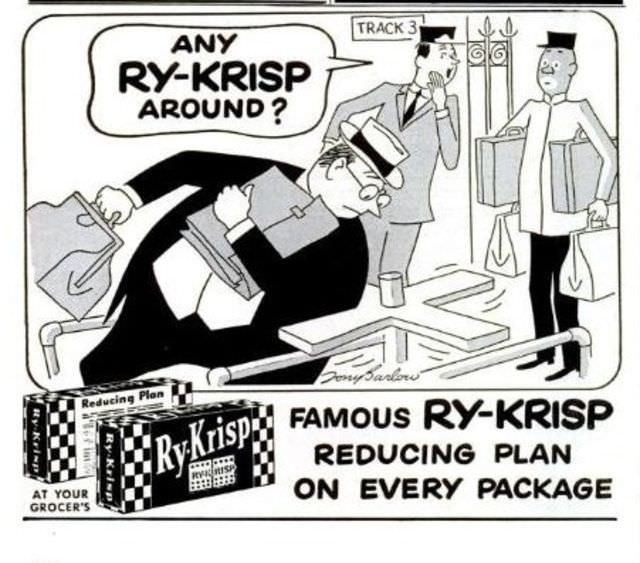
Other ads warned women that their husbands would leave them for thinner women, or that they would be laughed at in public spaces. These were not subtle suggestions — they were direct, blunt statements designed to make women feel inadequate unless they bought and ate Ry-Krisp crackers. This style of advertising was not unique to Ry-Krisp in that era, but the brand leaned into it more aggressively and more consistently than most.
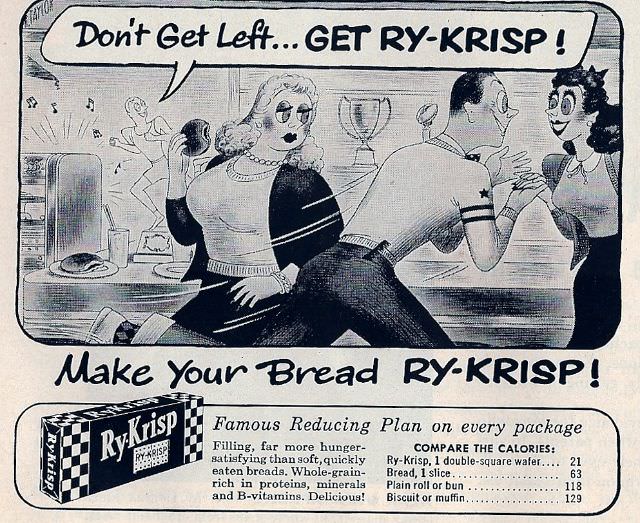
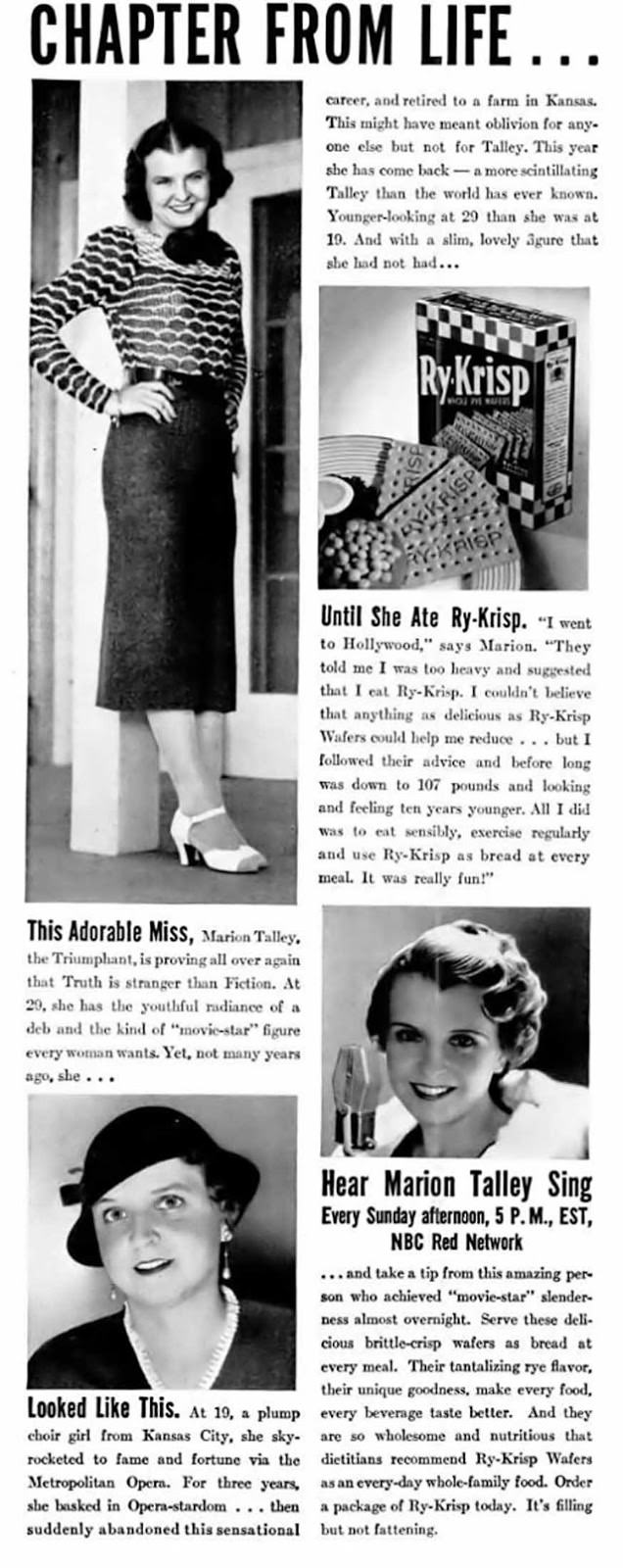
By the 1940s, Ry-Krisp had expanded into radio. The brand sponsored radio programs featuring New York socialite and hostess Elsa Maxwell and opera star Marion Talley. Both women were public figures with large female followings, making them natural pitchwomen for a product sold almost exclusively to women. Meanwhile, the brand’s print ads were also appearing in The New Yorker, with cartoonists illustrating the weight-loss messaging in a lighter, wry style suited to the magazine’s tone.
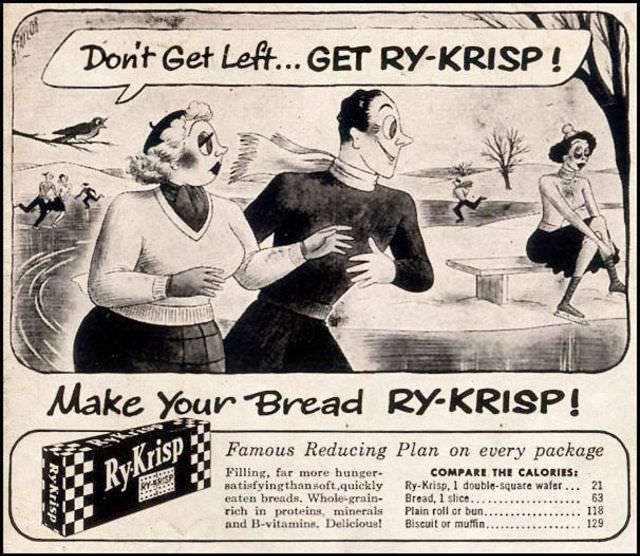
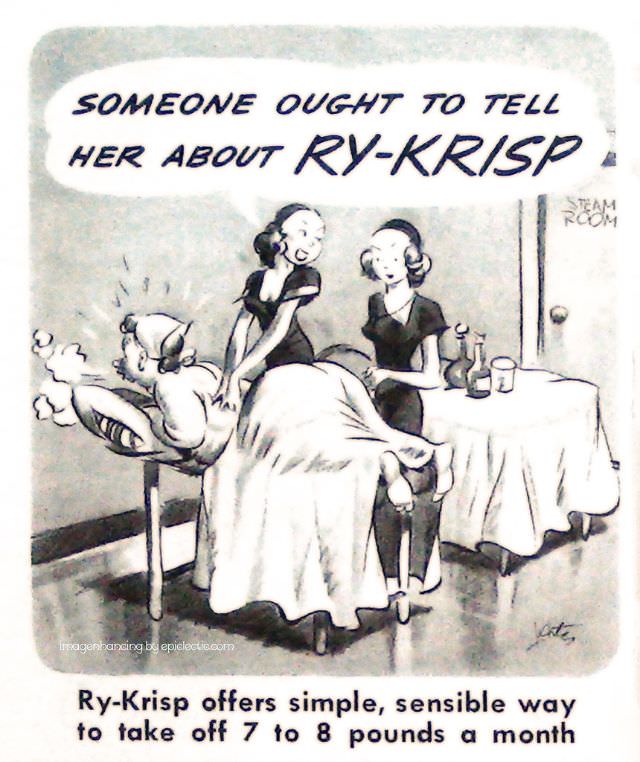
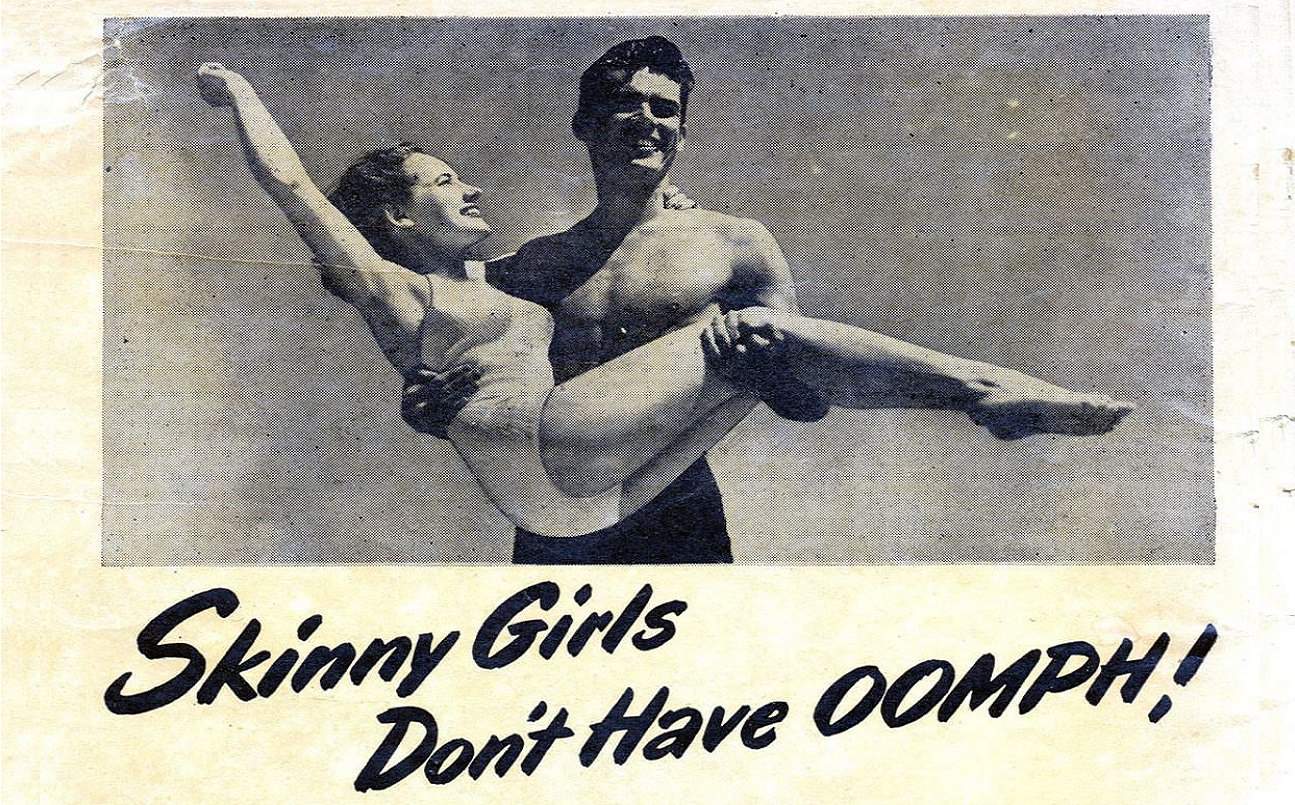
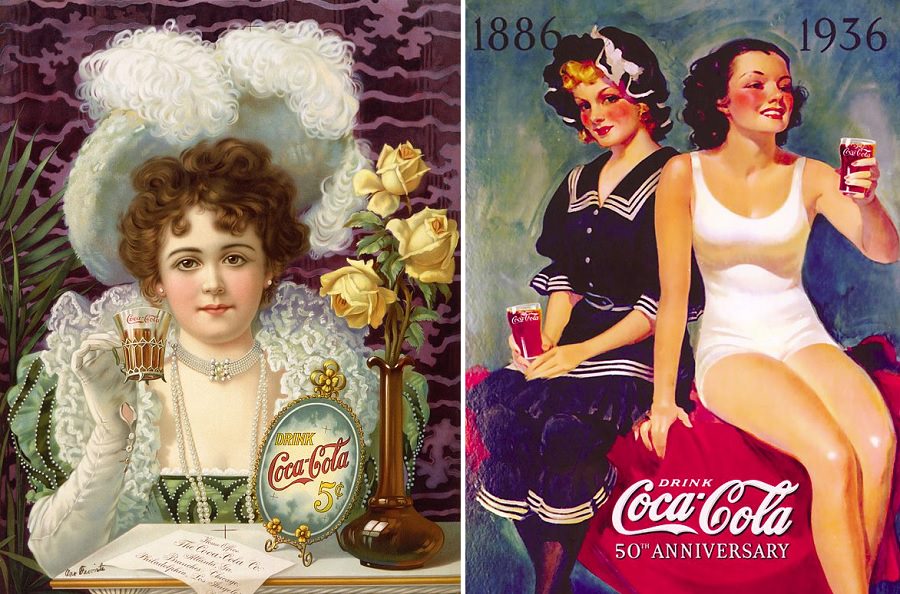
The ads from the 1930s through the 1950s document just how normalized body shaming was in mainstream American advertising. Women were told their bodies were problems to be solved, and consumer products were the solution. Ry-Krisp crackers, low in calories and filling due to their dense rye content, were easy to position as a diet food. The marketing made sure that any woman who picked up a magazine understood exactly what was at stake if she didn’t reach for the box.
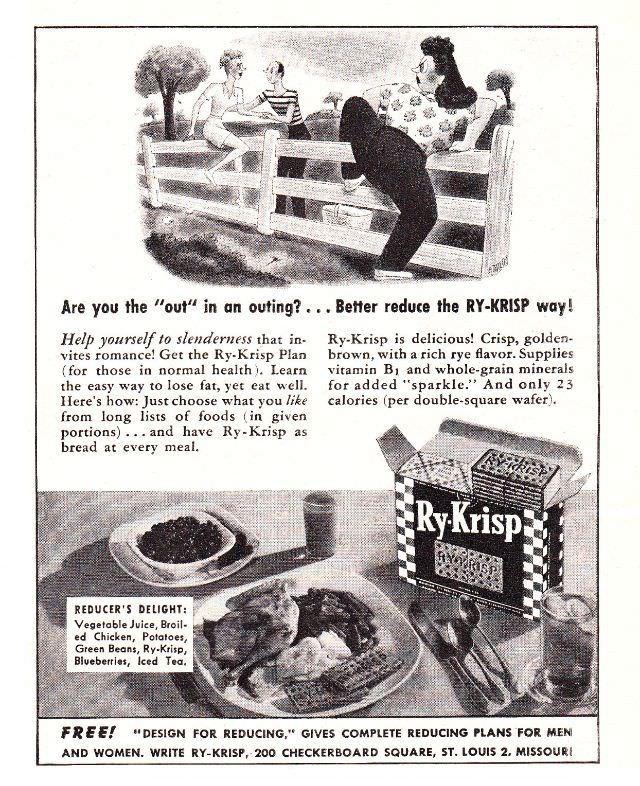
Below are more examples from this decades-long advertising campaign. These images span the 1930s, 1940s, and 1950s and reflect the consistent messaging Ry-Krisp used across different publications and audiences.
The Ry-Krisp brand eventually passed through several corporate hands. When Ralston Purina spun off its Ralston division in 1994, Ry-Krisp became part of the newly formed Ralcorp Holdings. ConAgra Foods then acquired Ralcorp in 2013, bringing Ry-Krisp under yet another corporate umbrella. In January 2015, ConAgra announced that Ry-Krisp would be discontinued due to declining consumer demand. The final batch of crackers rolled off the line at the Minneapolis factory in March 2015, ending nearly a century of production.
A month later, in April 2015, a new company called RyKrisp Inc. purchased the brand with plans to revive it once a manufacturing partner was secured. By October 2015, the company announced plans for larger-scale commercialization. Commercial production, however, never followed. RyKrisp Inc. later cited ongoing legal issues as the reason production never got off the ground. The brand has remained dormant since.