
London in the mid-1970s was a city living through real pressure. Inflation was biting hard, political power was shifting, and the streets themselves were crackling with energy. Photographer David Rostance walked those streets with a Pentax Spotmatic camera and came back with something remarkable — a ground-level record of a capital in motion. His photographs span 1975 to 1977, catching everything from the quiet residential corners of Crouch End to the roaring traffic of Trafalgar Square.
By March 1977, inflation had driven prices up by nearly 70% in just three years. That kind of squeeze touched every part of daily life. It also had political consequences. The Conservatives began making gains at local council elections across England, including taking control of the Greater London Council away from Labour. Harold Wilson, who had led the Labour government, resigned as Prime Minister in March 1976 — a surprise move that left many in the country stunned. James Callaghan stepped in to lead, inheriting a government already under strain.
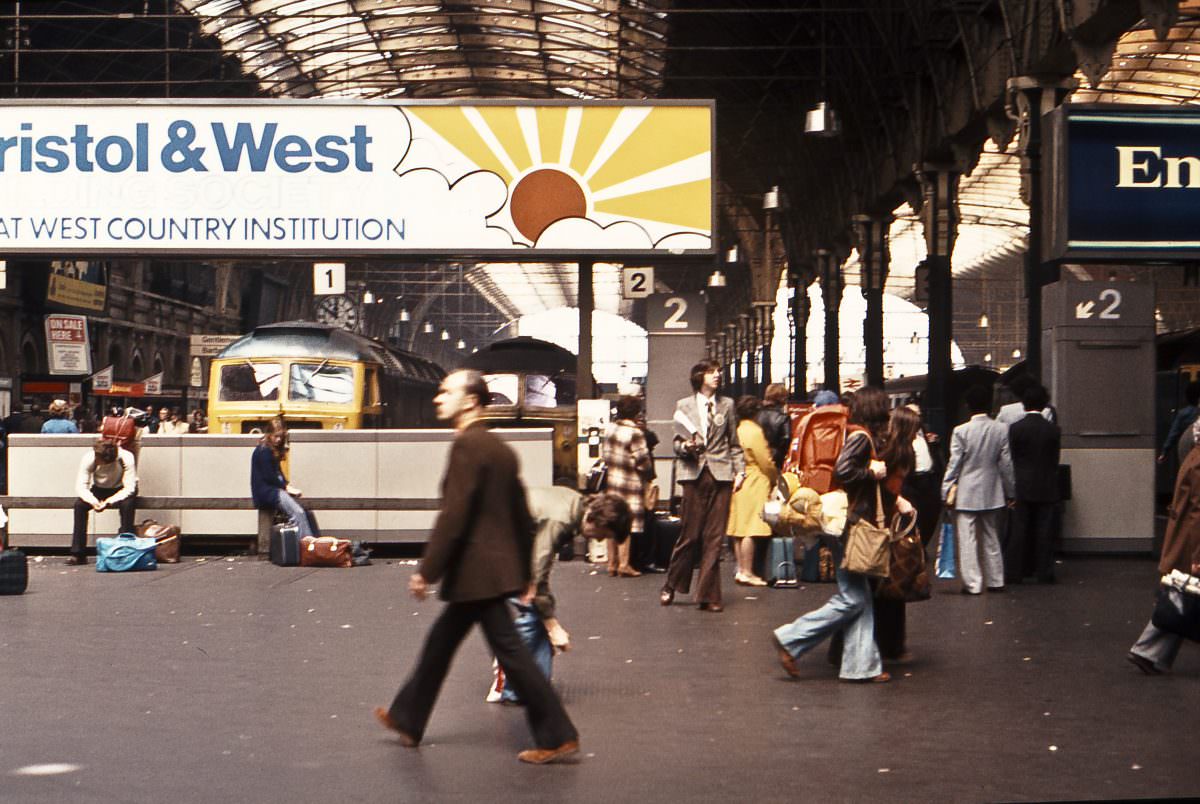
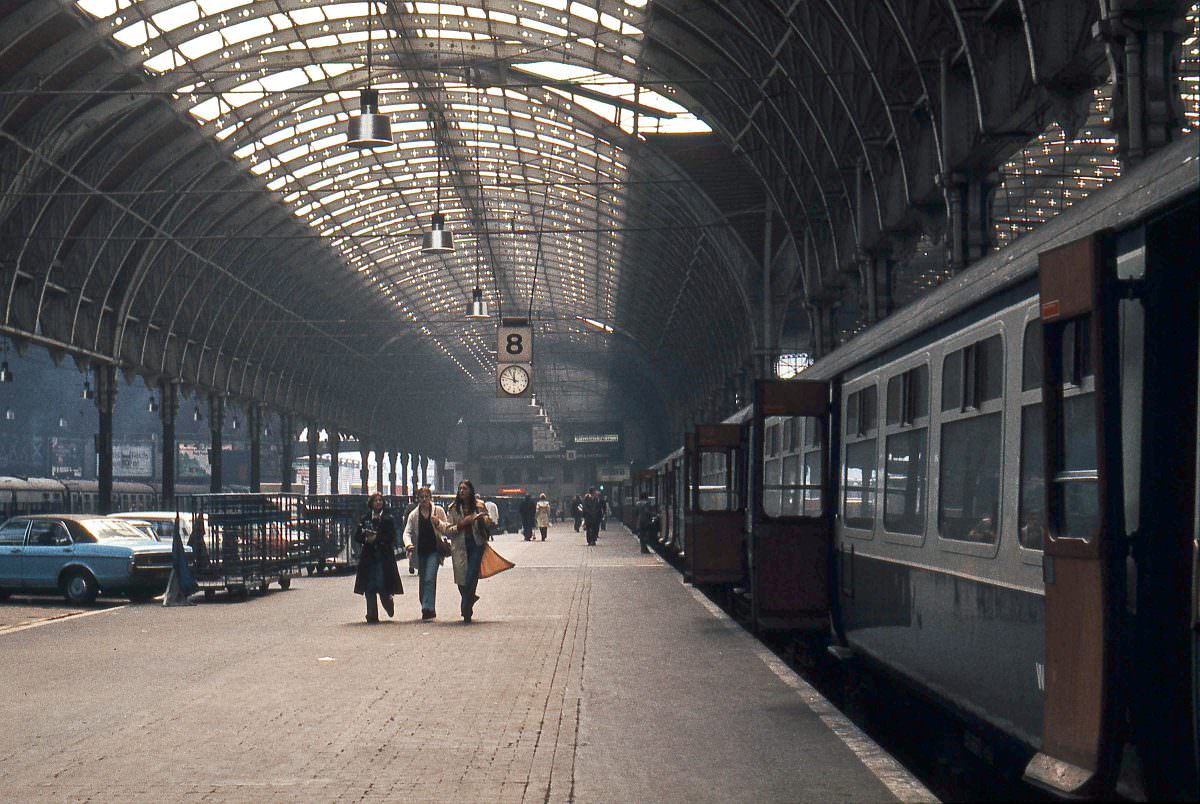
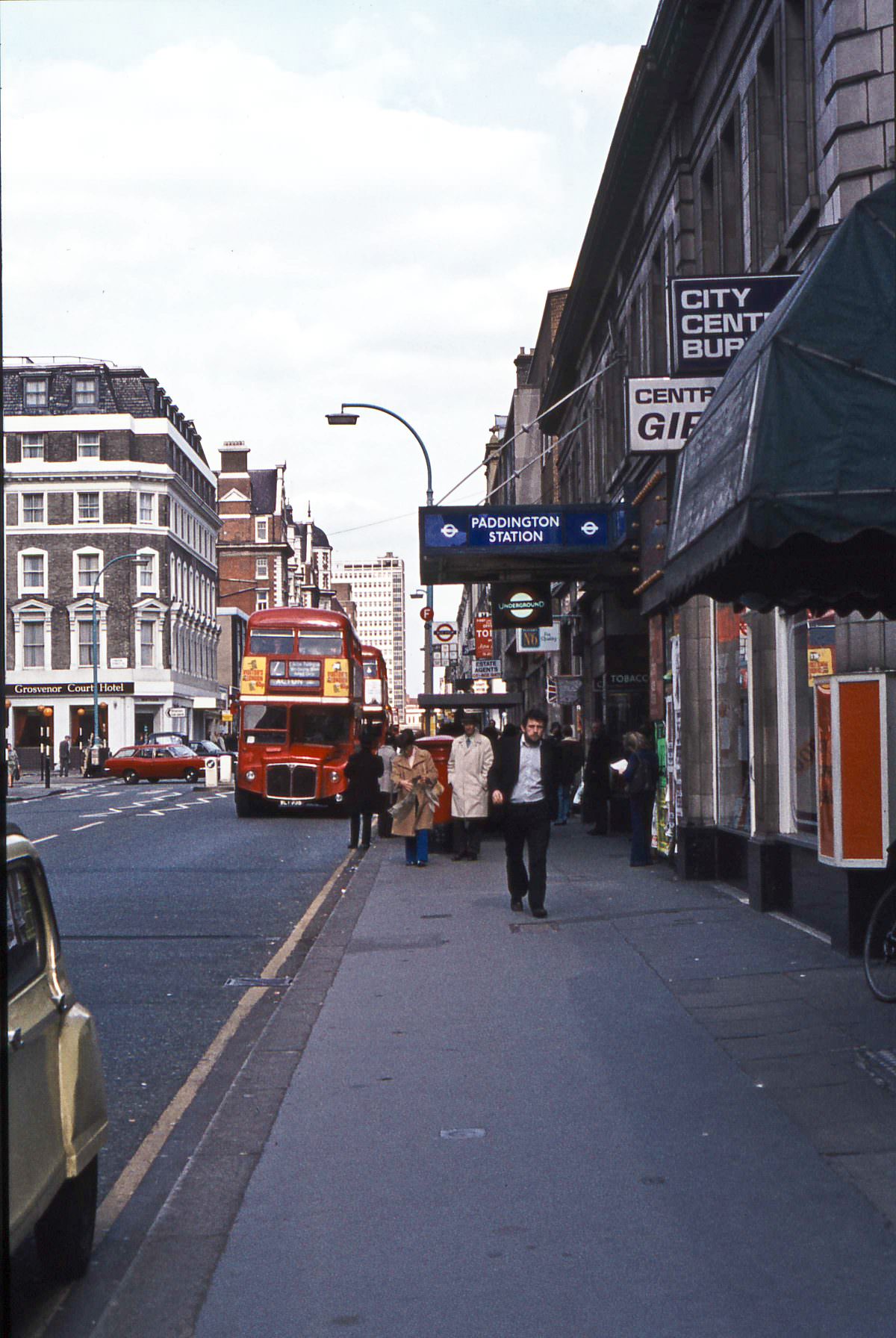
One of the year’s more practical milestones came in October 1976, when British Rail introduced the InterCity 125 into passenger service. The high-speed train connected London Paddington with Bristol and South Wales, cutting journey times and modernising a rail network that had long been in need of investment. Paddington station, already one of London’s great transport hubs, became the gateway for this new era of faster rail travel.
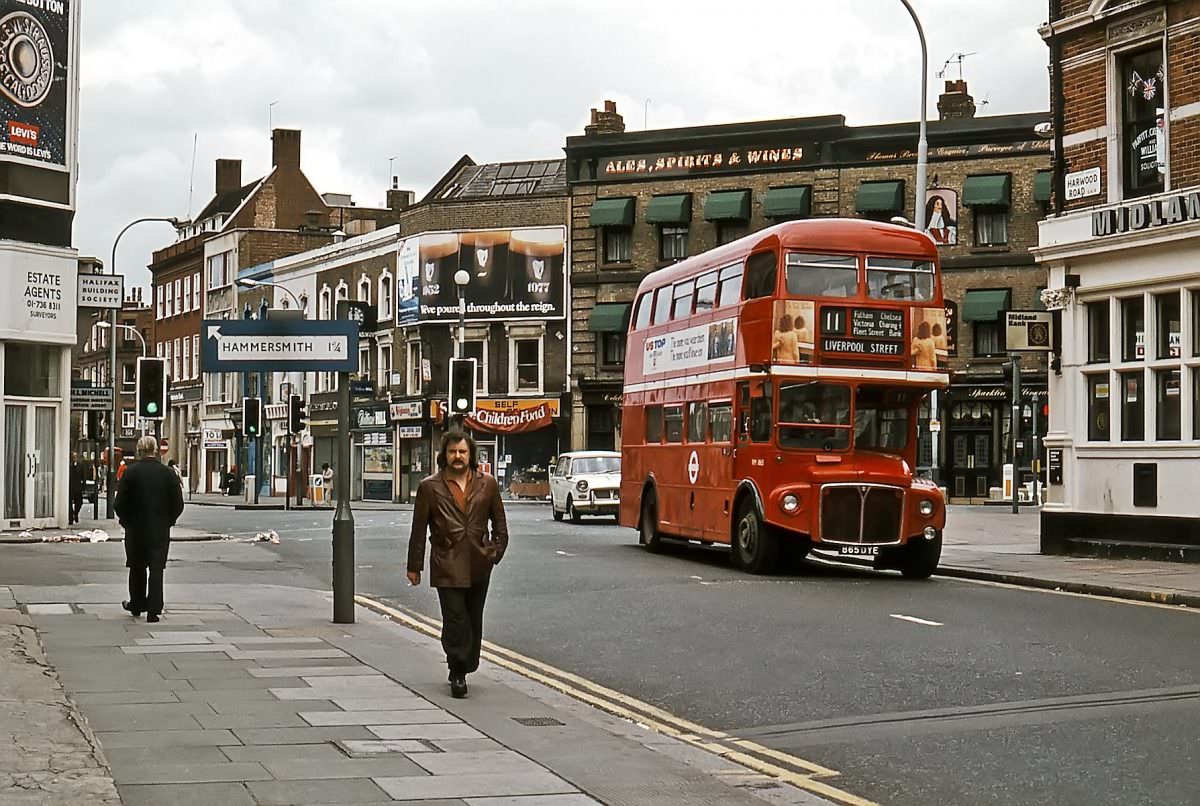
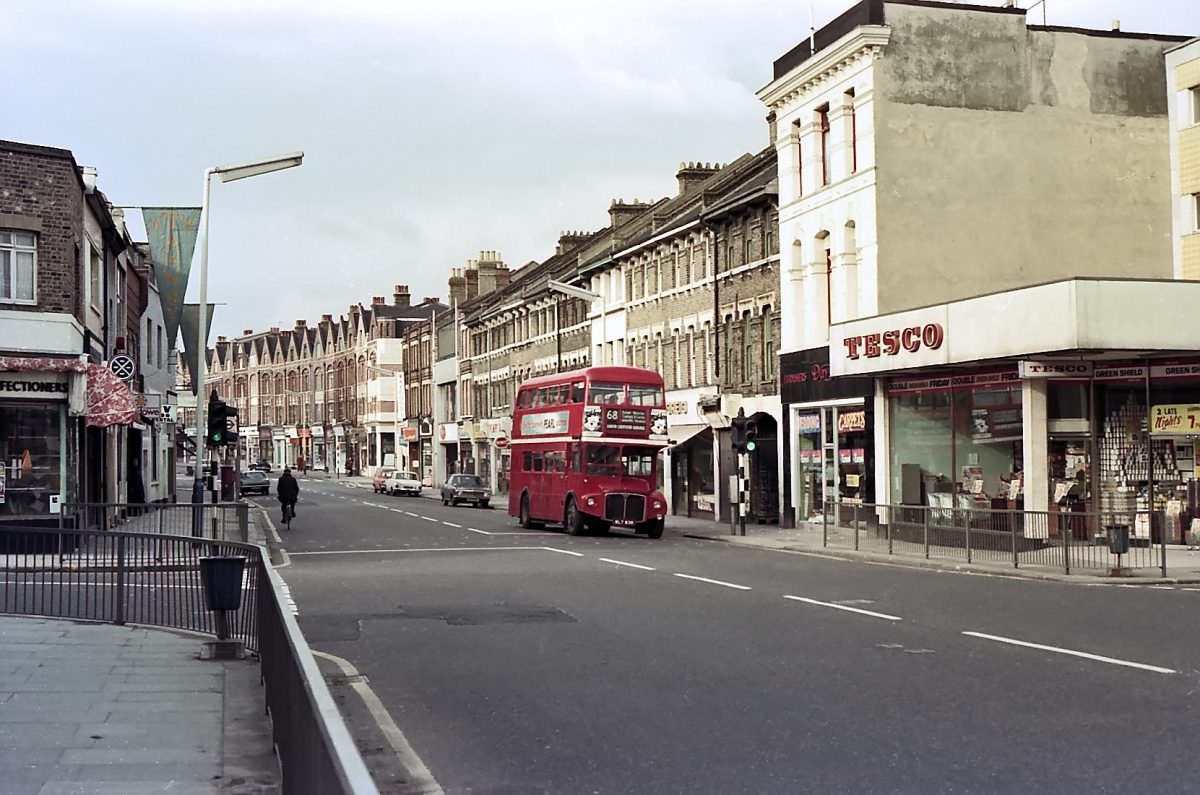
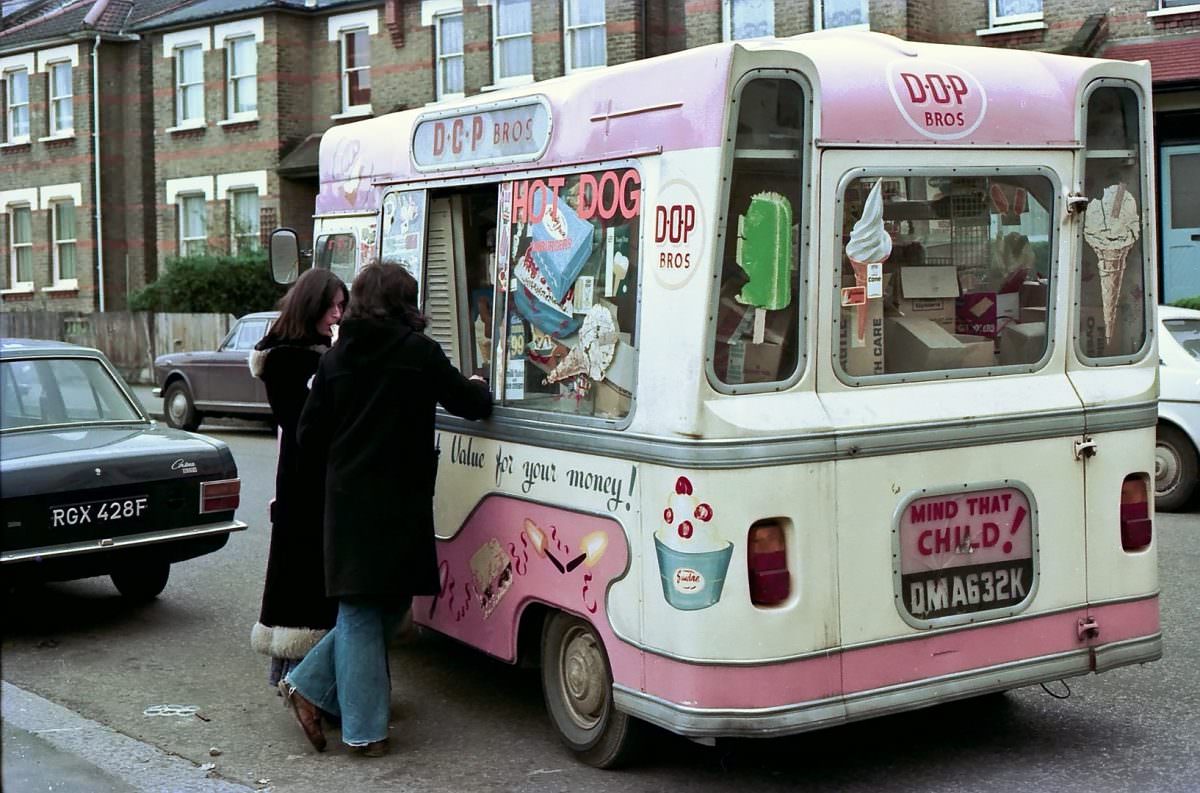
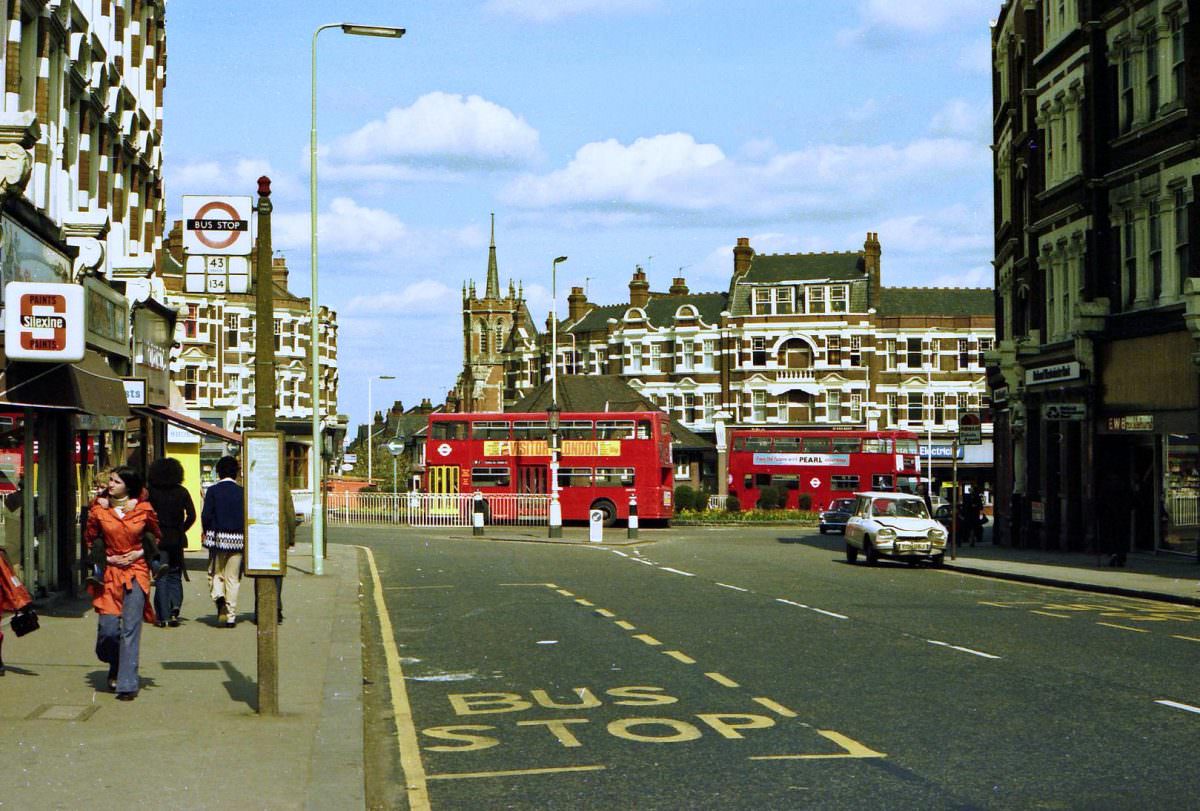
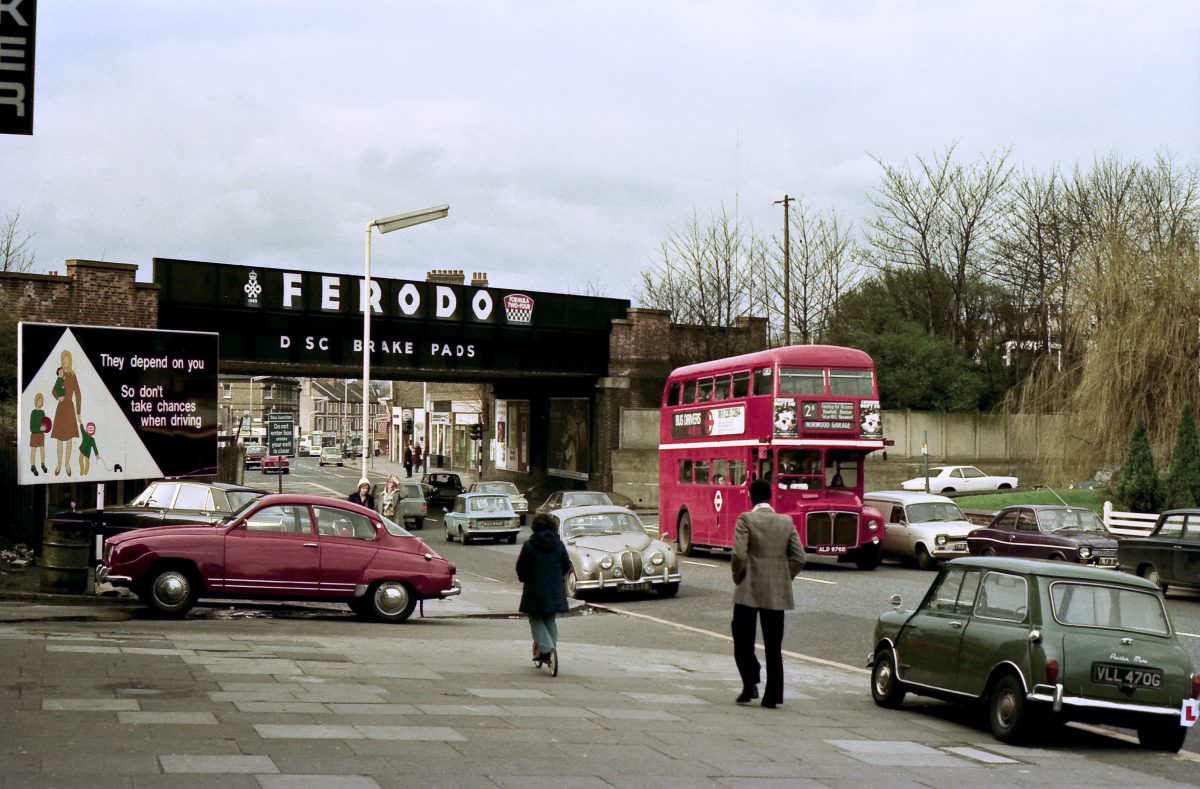
Rostance’s eye for the everyday is clear in his shots of the capital’s neighbourhoods. Areas like West Norwood, Fulham, and Muswell Hill appear not as landmarks, but as lived-in places — streets lined with shopfronts, double-decker buses navigating tight junctions, and ordinary Londoners going about their day.
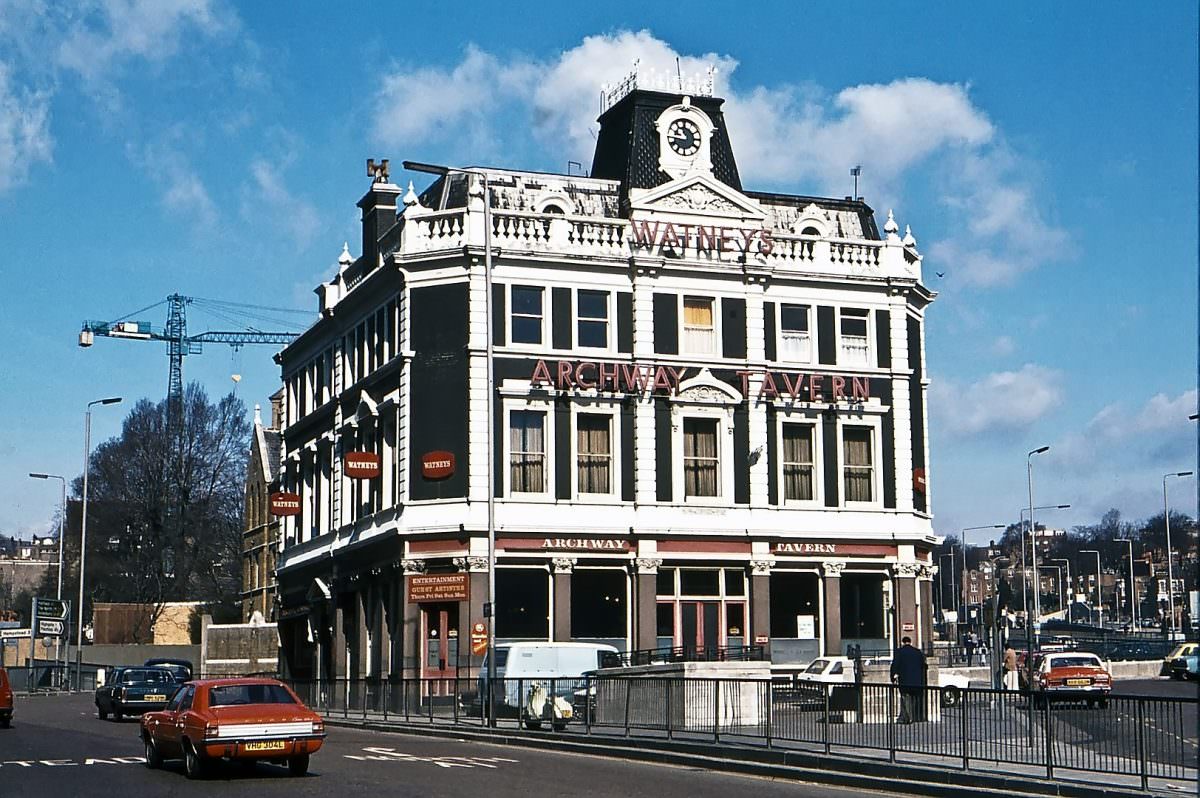
North London’s Crouch End shows up in several of Rostance’s frames from early 1976. The neighbourhood had a distinct character — slightly removed from the centre, with its own rhythm. Christ Church stood over the area, and the streets around it carried the feel of a community that hadn’t yet been swallowed by the rapid commercial development that would come later.
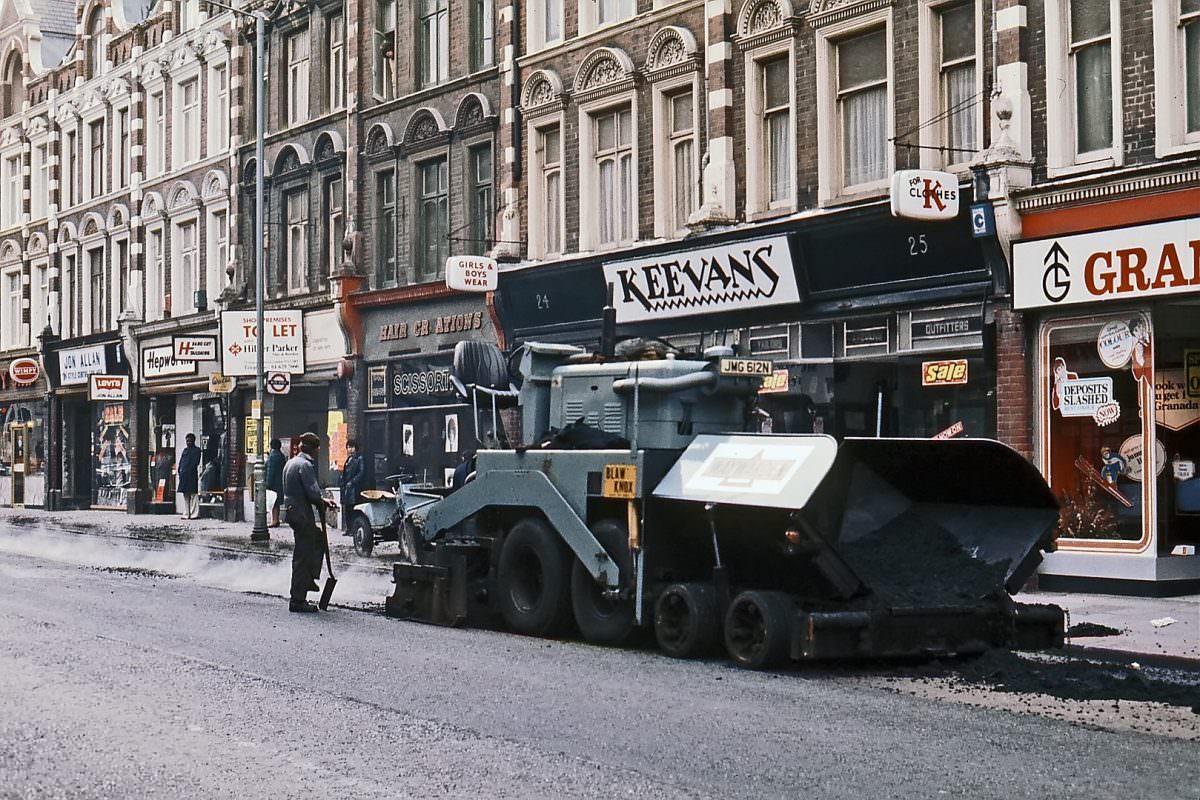
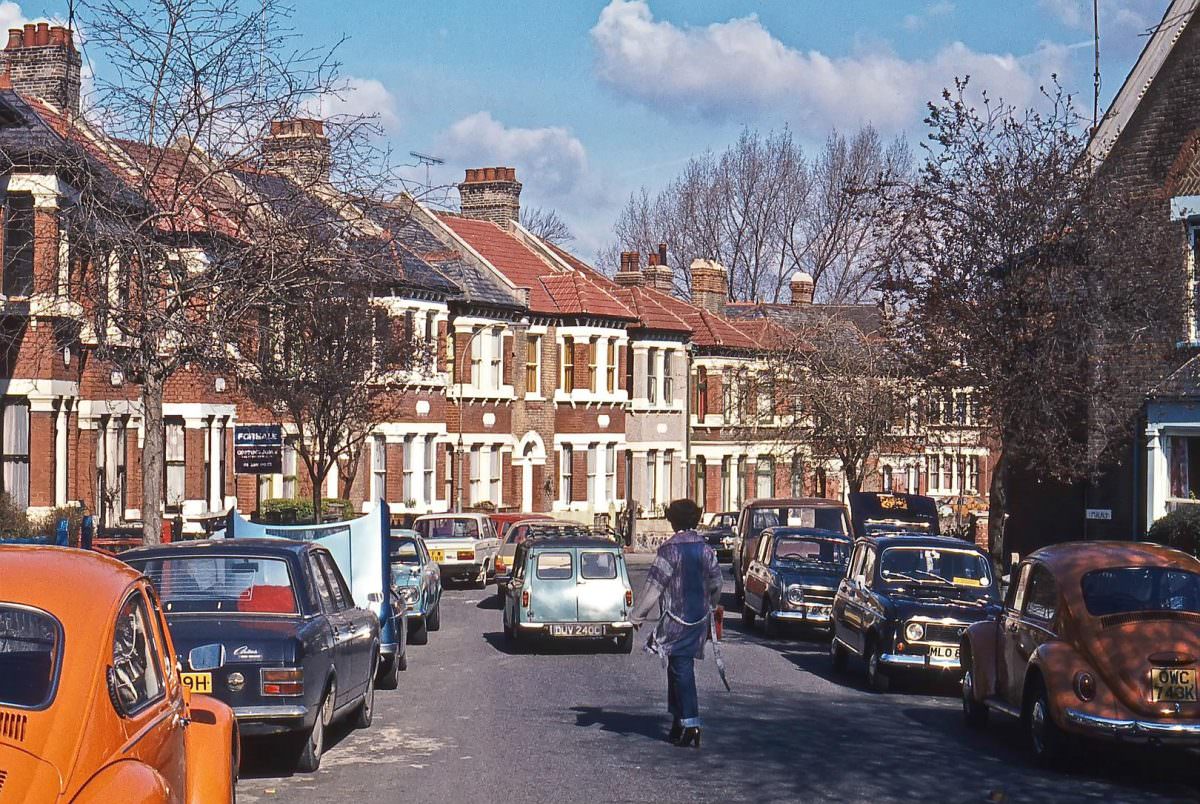
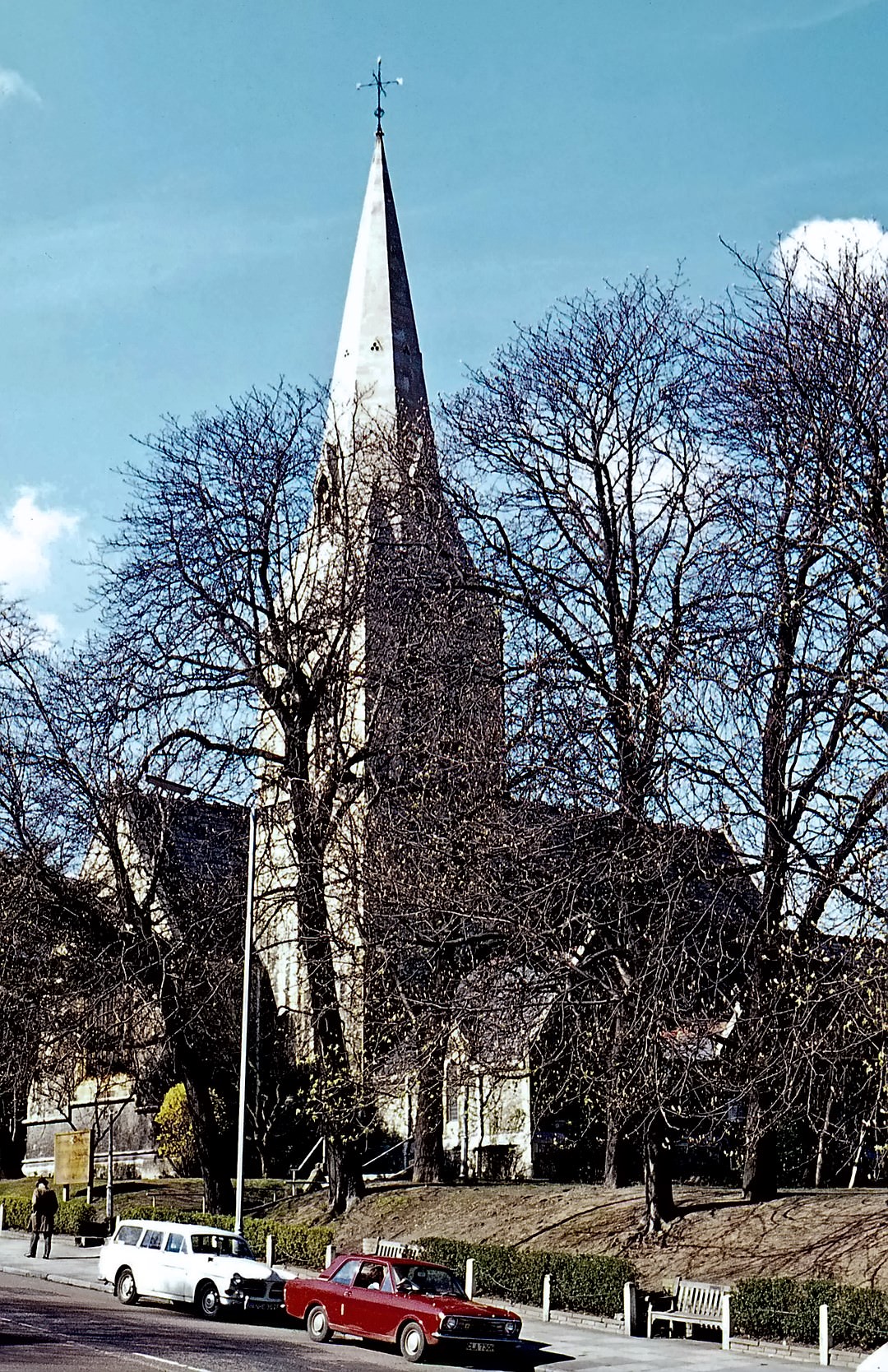
The summer of 1976 brought an extraordinary heatwave that gripped Britain for weeks. Standpipes appeared in the streets. Reservoirs ran low. The government appointed a Minister for Drought. London sweltered, and the heatwave became one of the most talked-about events of the decade. It followed a spring that had already seen political turbulence, and it burned itself into the memory of everyone who lived through it.
September 1976 marked a turning point in British music. The 100 Club on Oxford Street hosted the first punk festival, bringing together bands that were about to tear apart the mainstream music scene. The Sex Pistols, The Clash, and Siouxsie and the Banshees all played. Punk wasn’t just a musical style — it was a direct reaction to the economic gloom and political stagnation that defined the mid-seventies. The streets Rostance was photographing were the same streets that were producing this explosion of raw, angry energy.
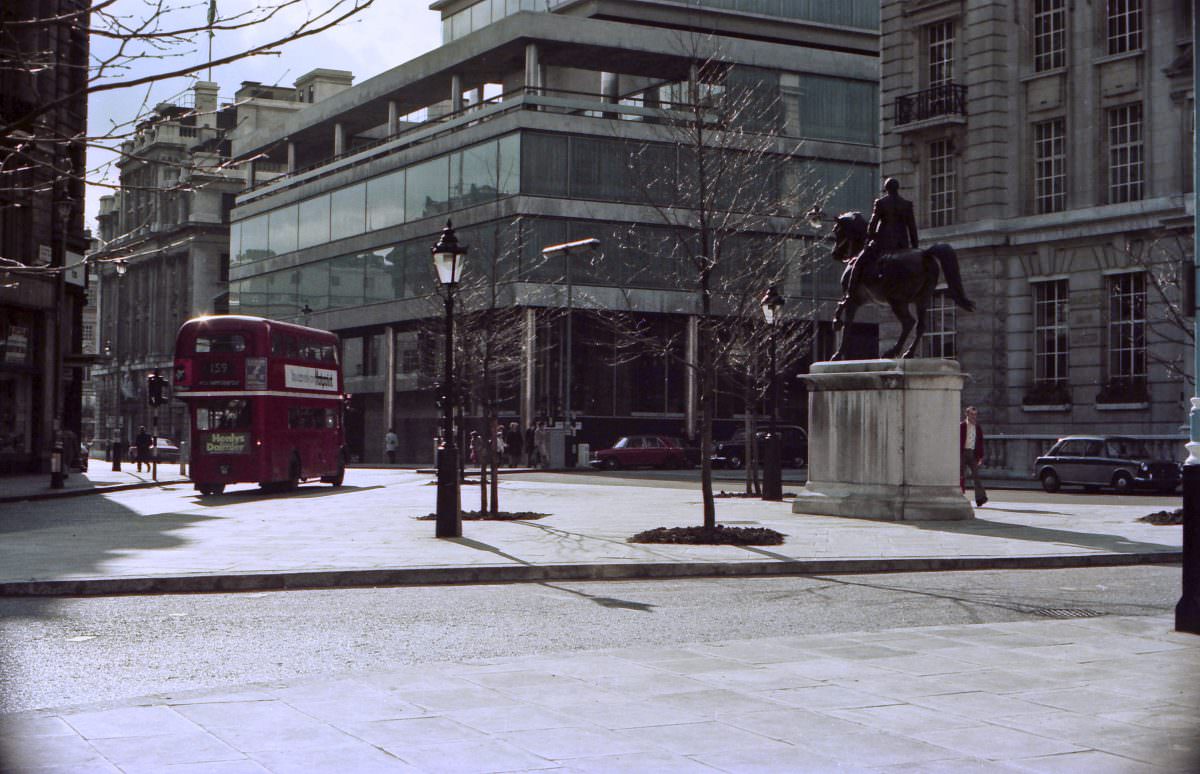
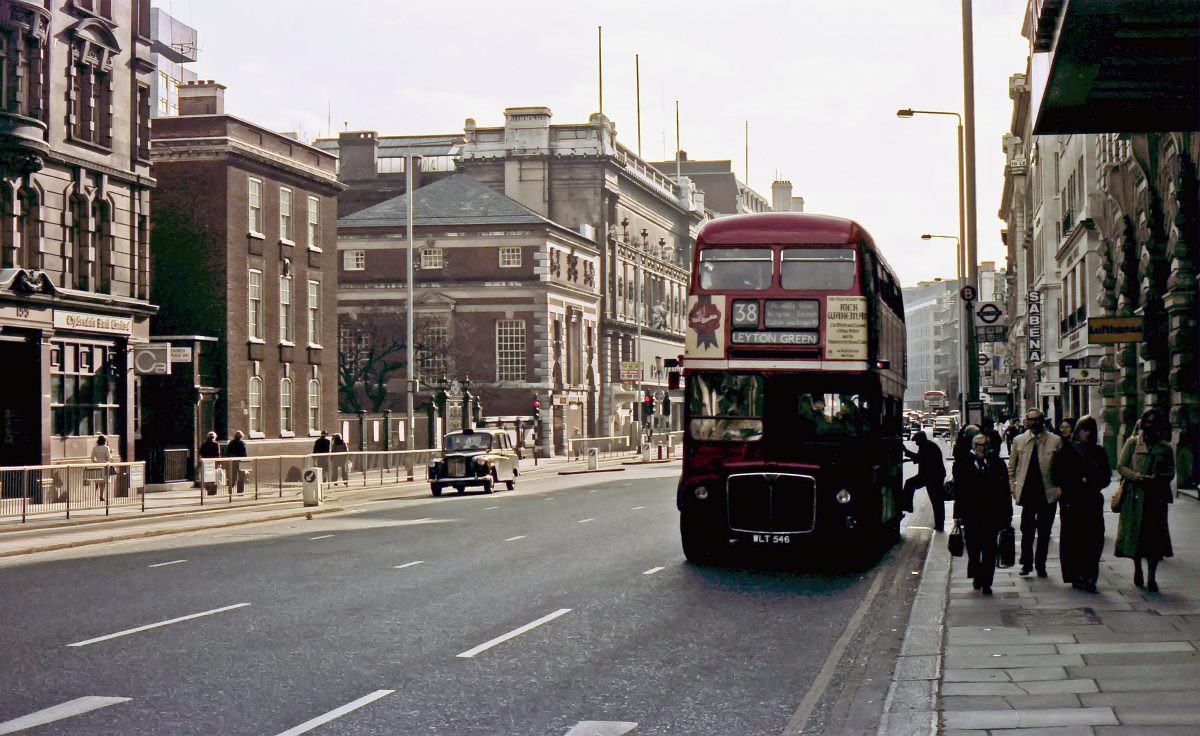
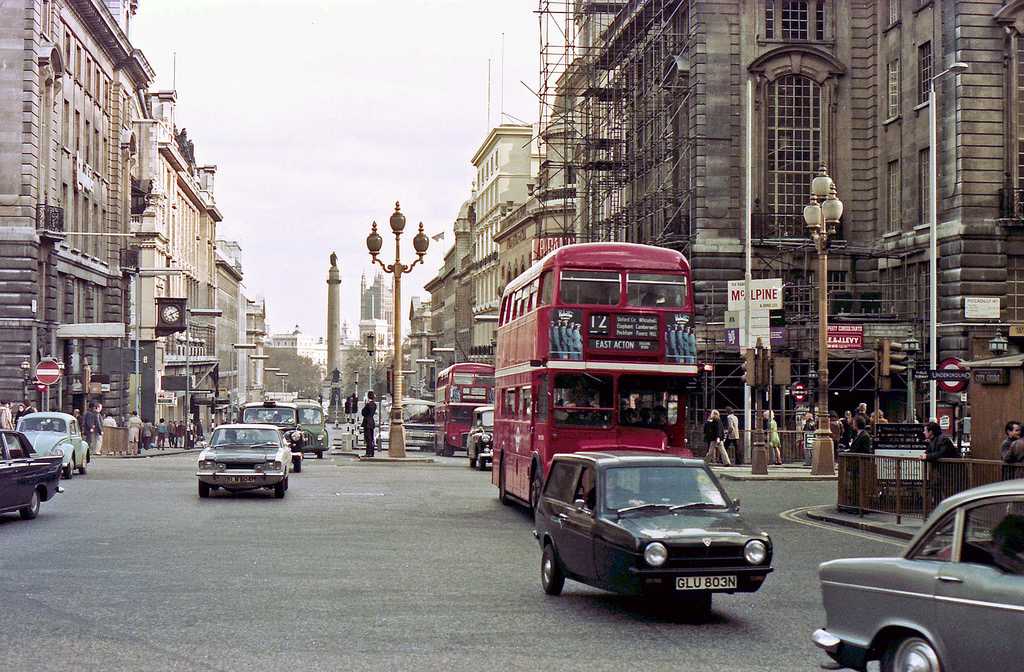
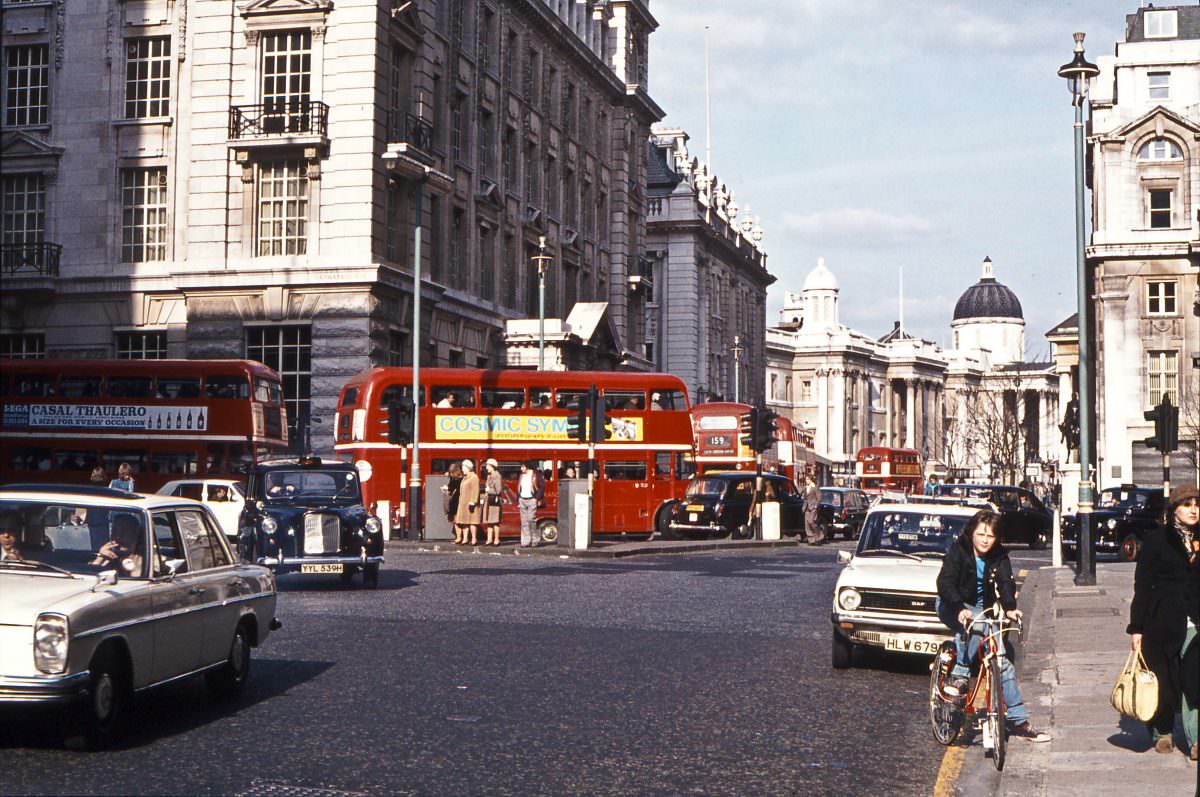
Piccadilly and the West End appear repeatedly in Rostance’s work from 1975 and 1976. These were among London’s busiest corridors, thick with traffic and crowds. The junction of Regent Street and Piccadilly Circus was one of the most congested points in the entire city, and the photographs show it as a tangle of buses, cars, and pedestrians all competing for space.
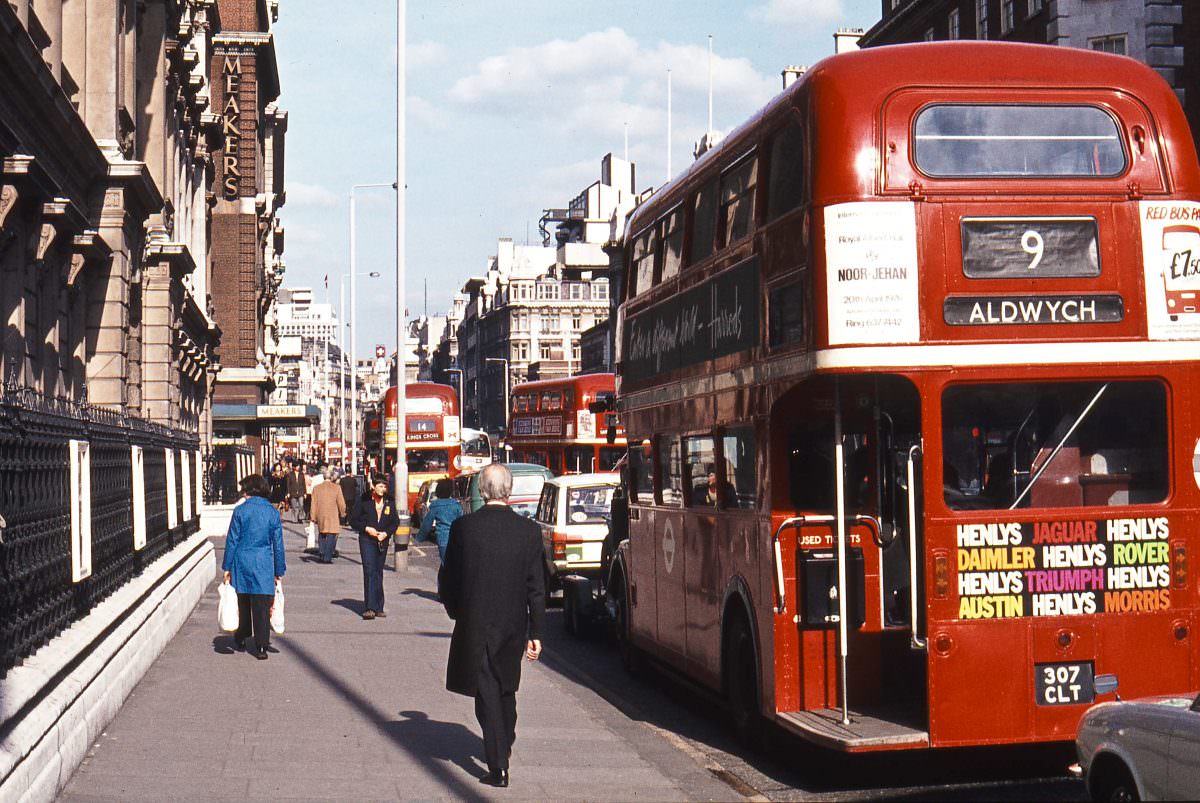
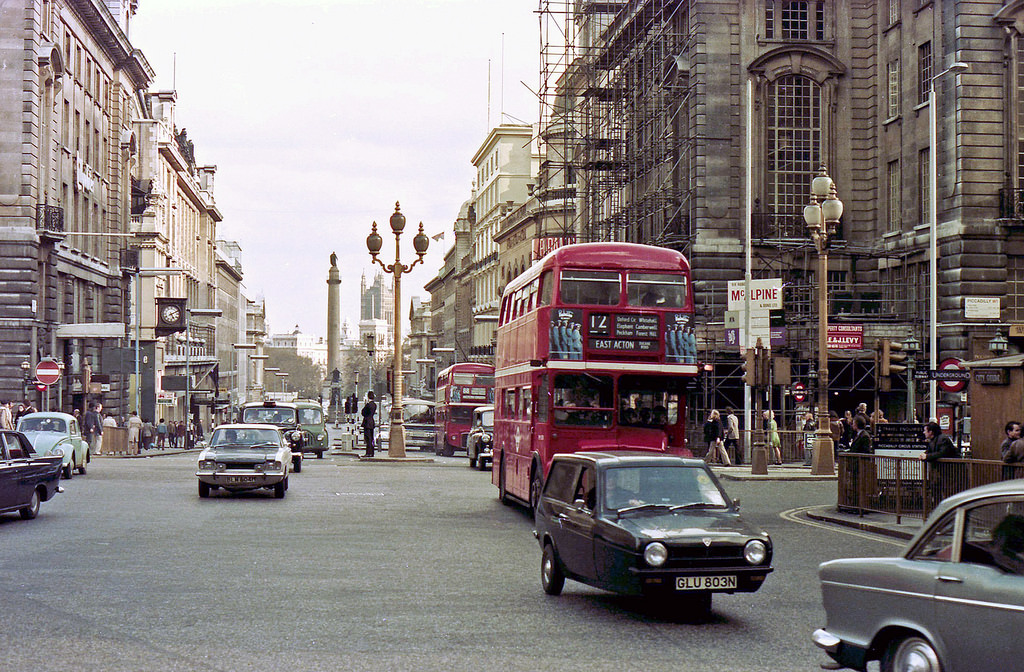
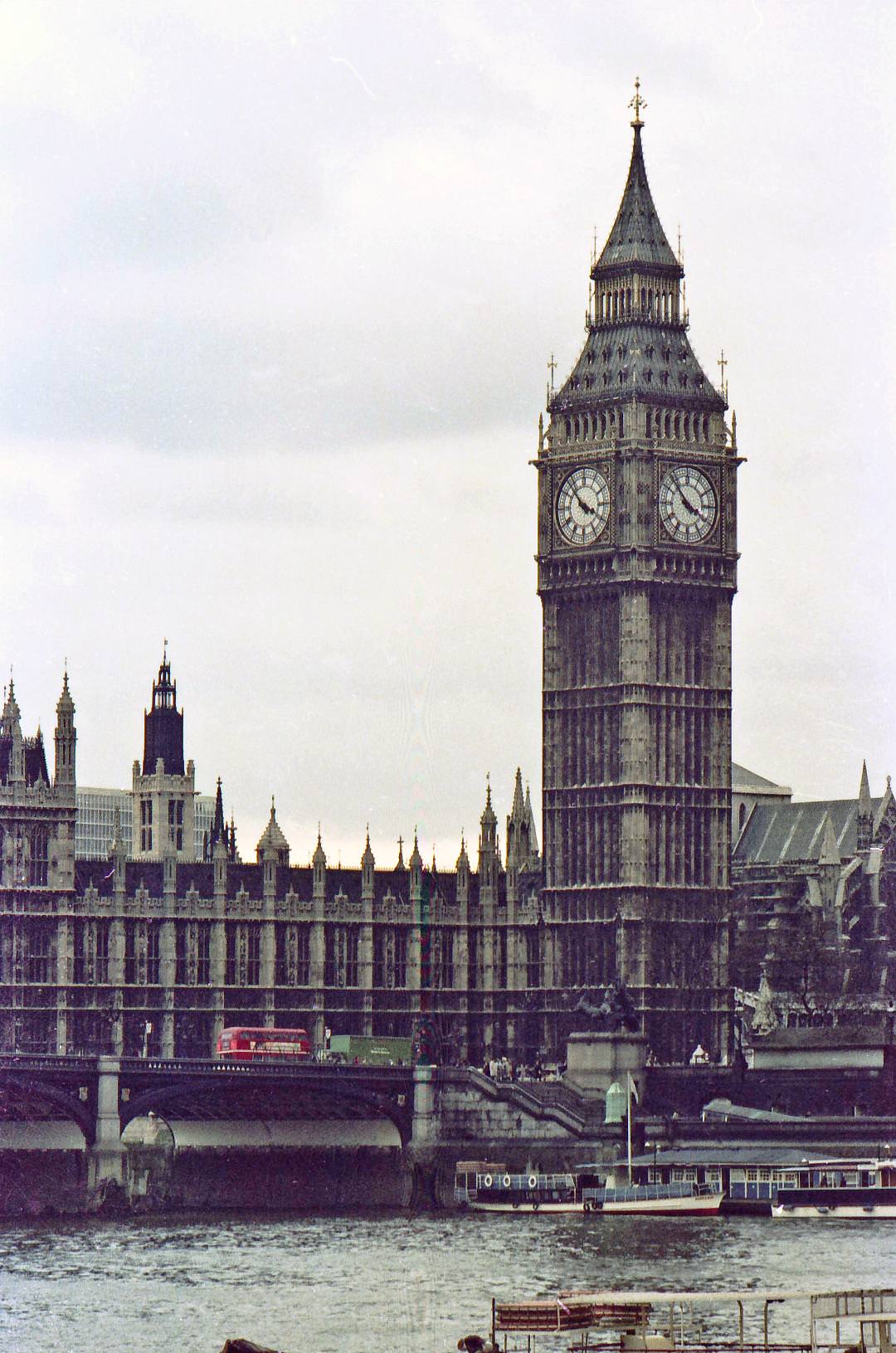
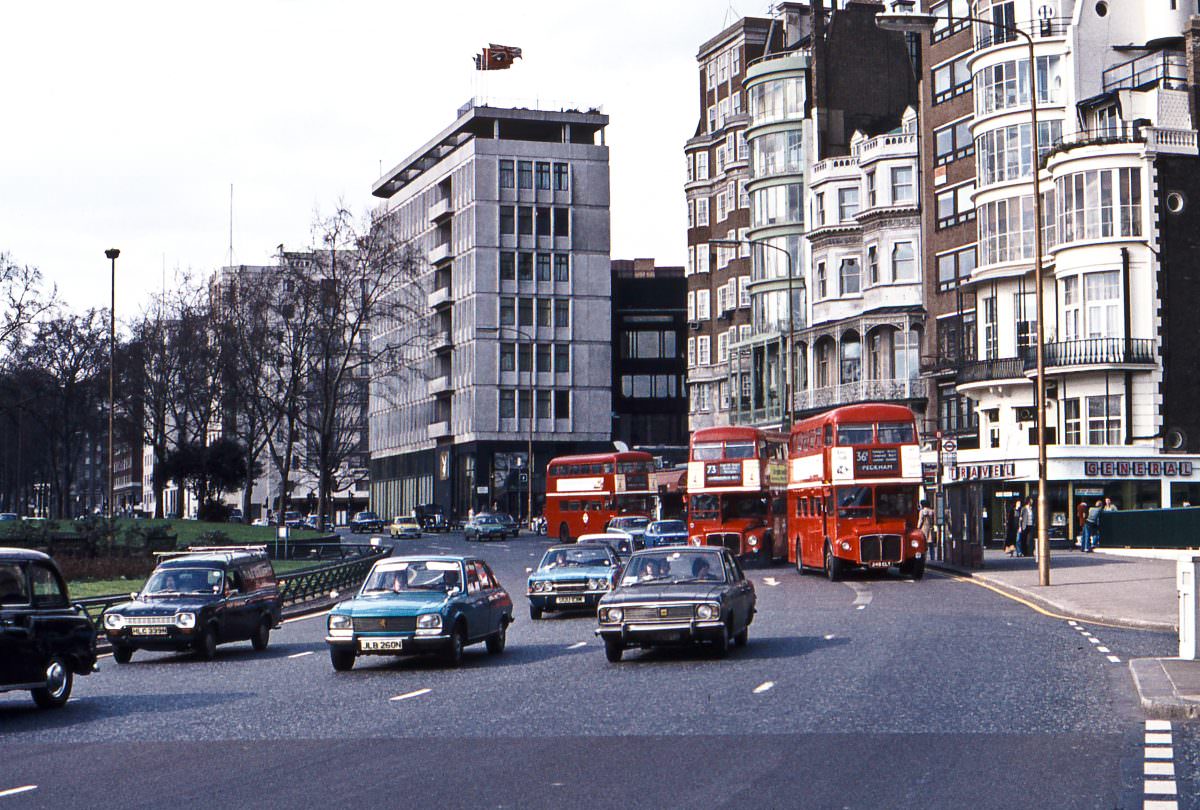
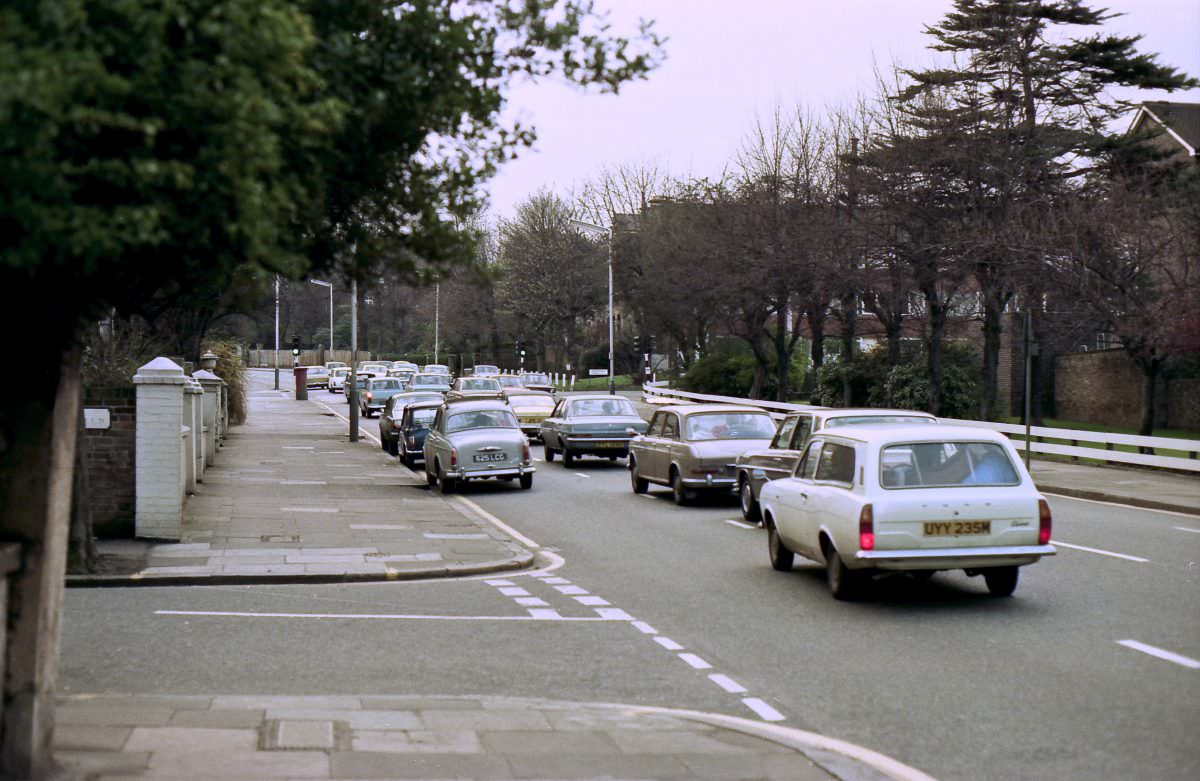
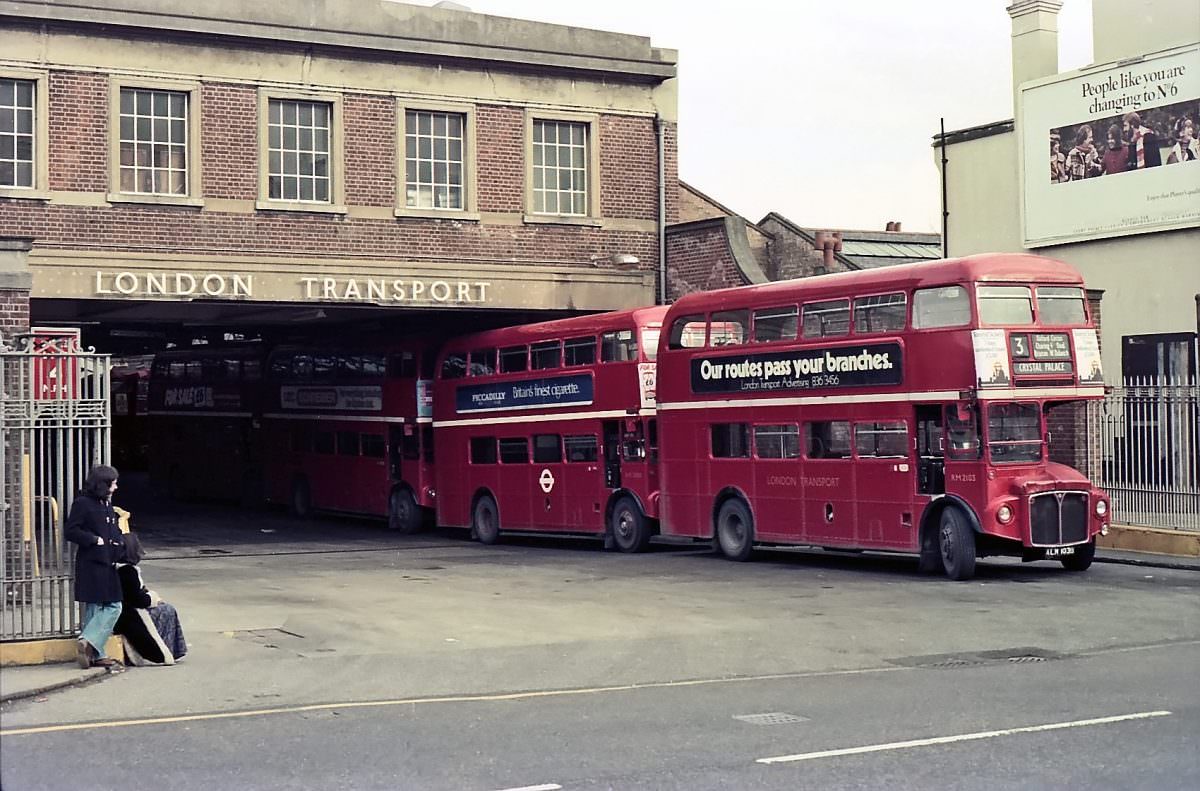
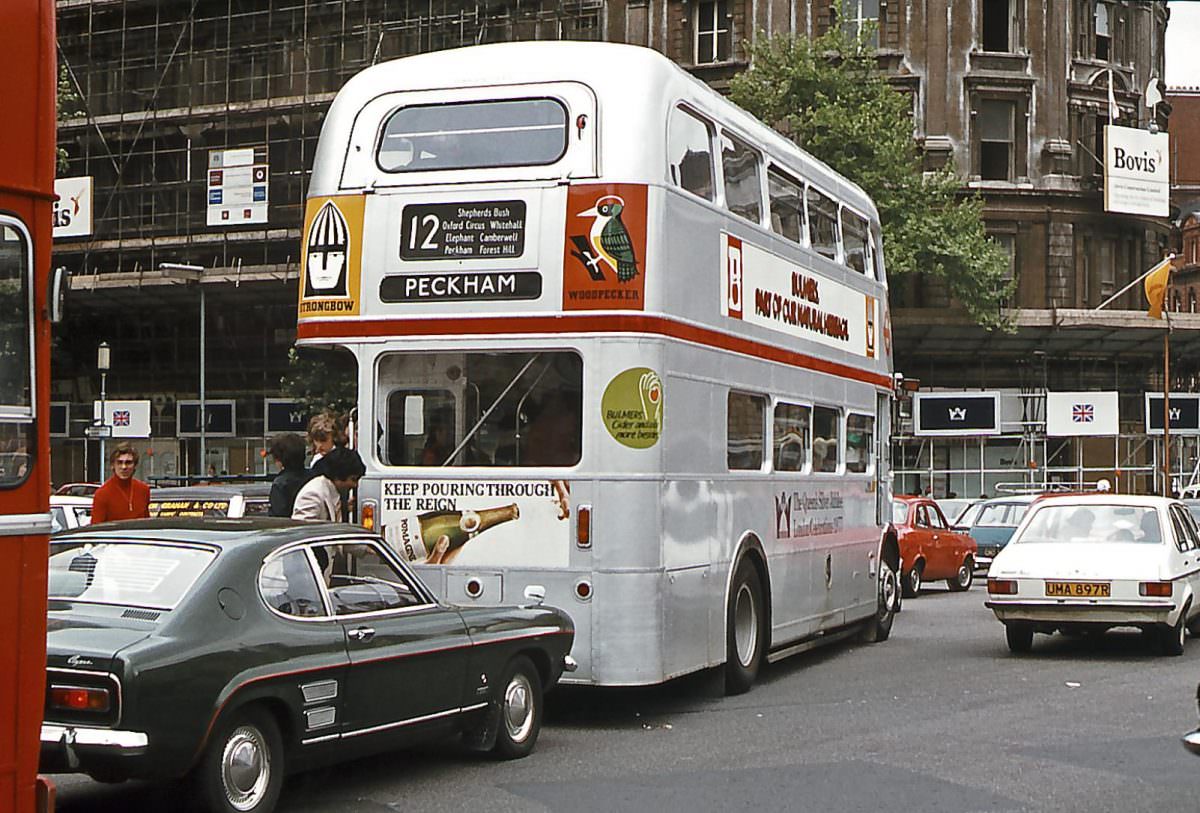
The Routemaster bus was the defining vehicle of the London streets Rostance documented. These red double-deckers were everywhere — crossing Westminster Bridge, rolling through West Norwood, lining up in Park Lane, and turning from Haymarket into Pall Mall. They were as much a part of the city’s visual identity as Big Ben or the Thames itself.
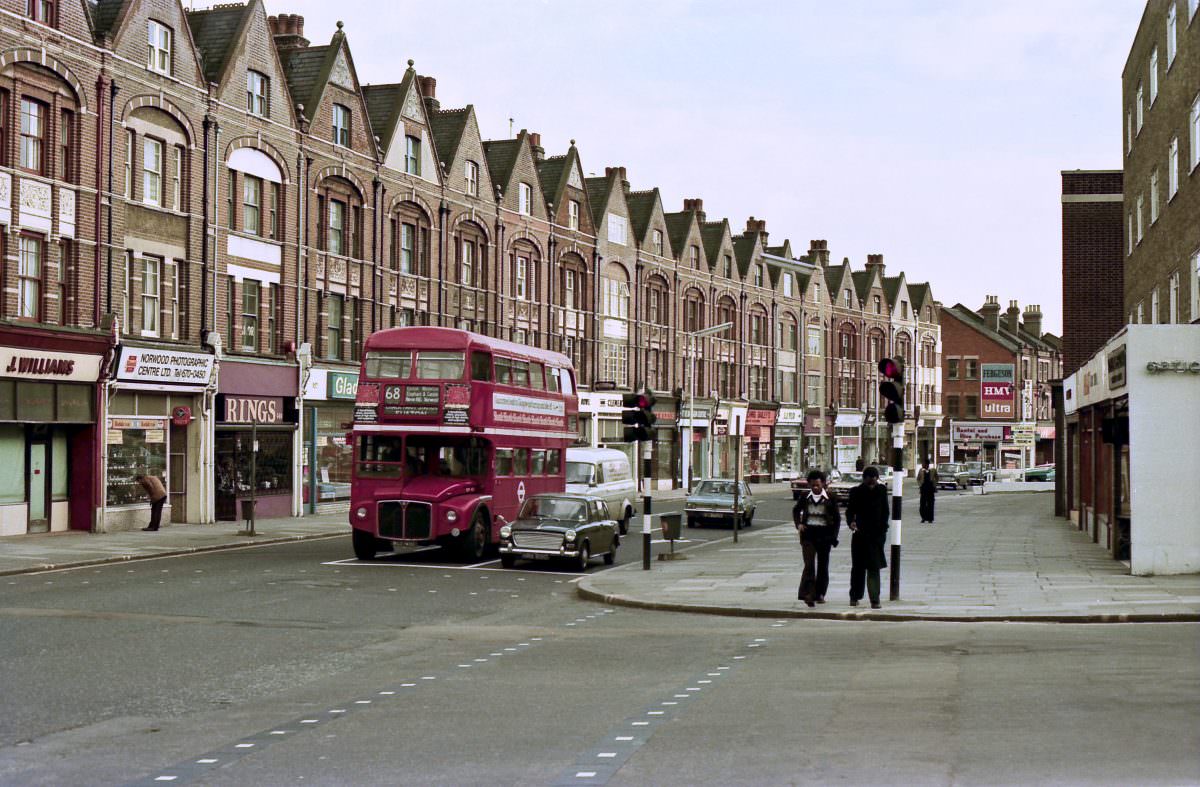
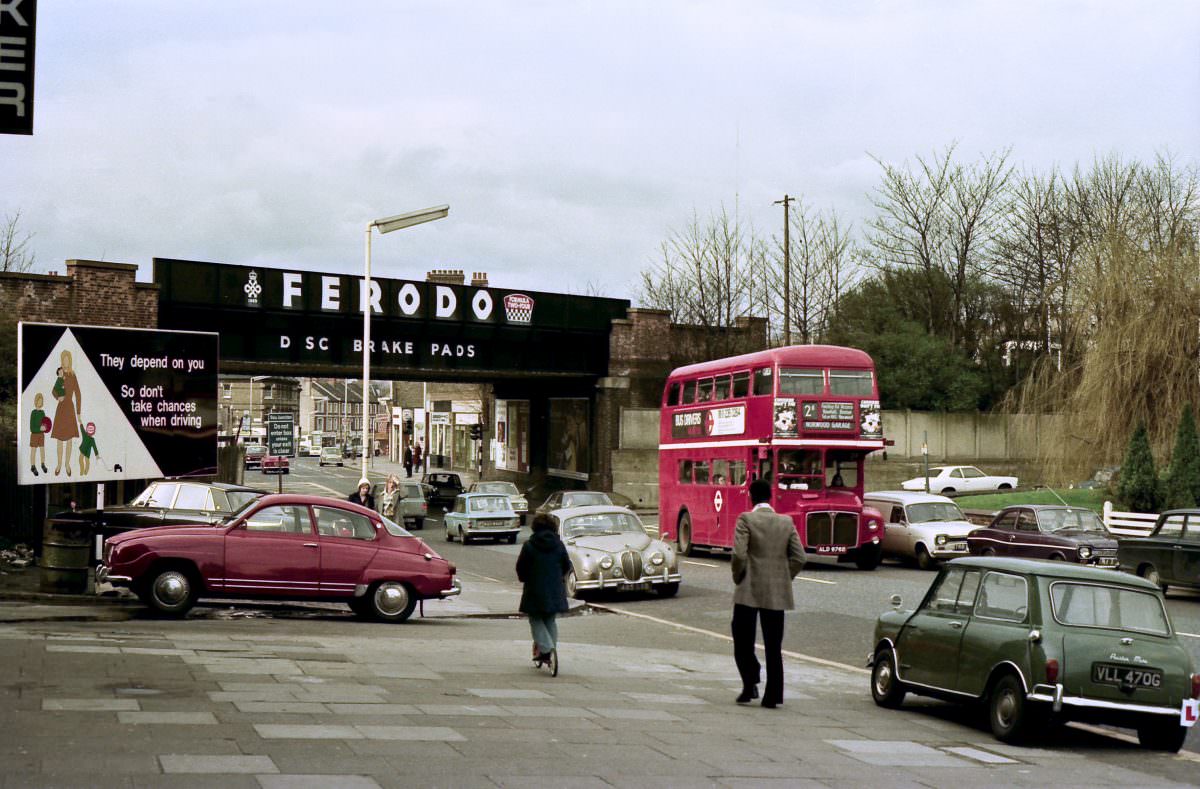
Away from the major thoroughfares, London’s quieter roads had their own story to tell. The South Circular at Dulwich Common, Knights Hill Road in West Norwood, and the residential streets of south London appear in Rostance’s frames as places where the city slowed down — tree-lined and comparatively calm against the chaos of the centre.
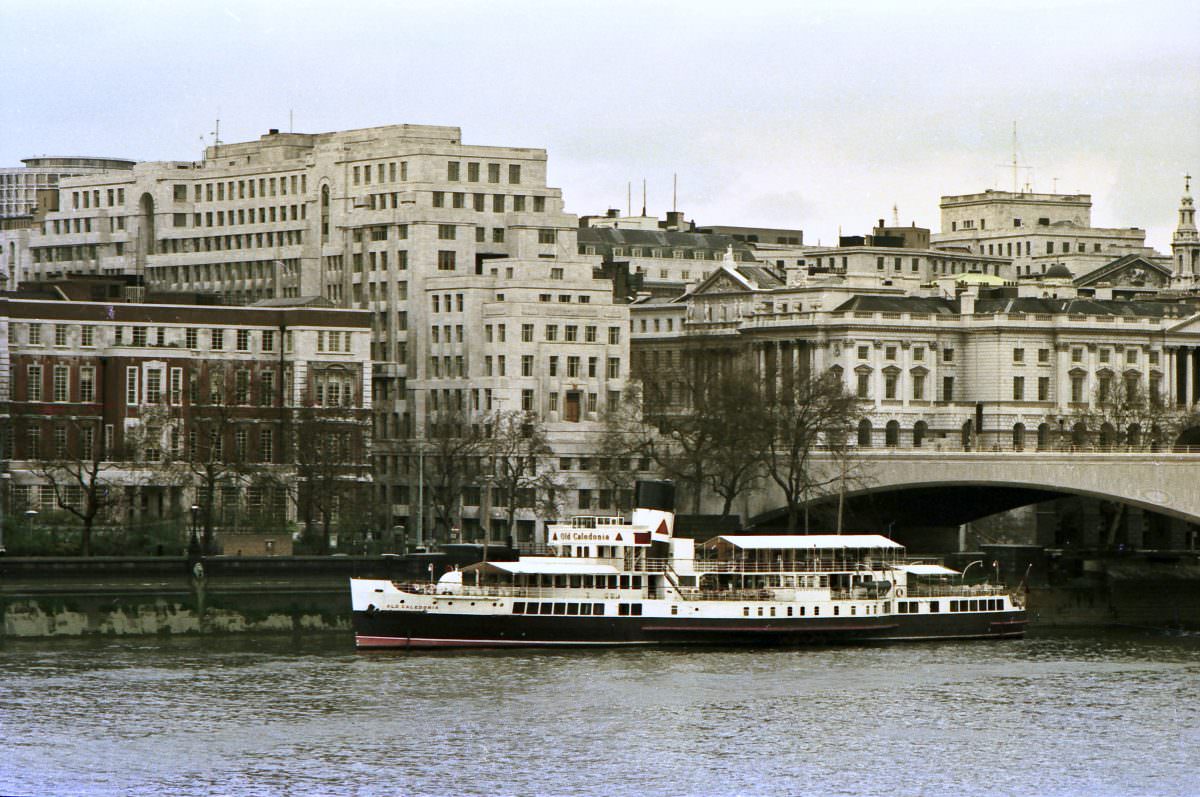
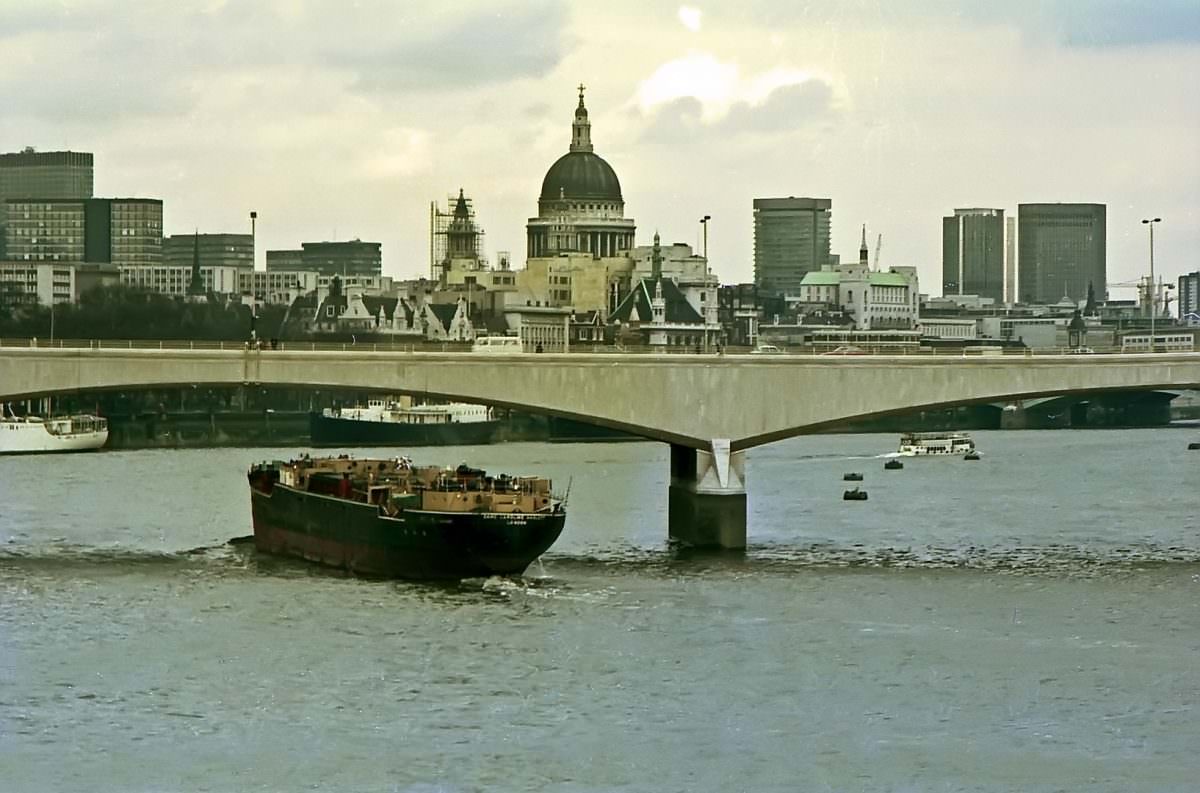
The Thames Embankment gave Rostance some of his most atmospheric shots. On 19th April 1975, the paddle steamer Old Caledonia sat moored beside the Embankment, adjacent to Waterloo Bridge. A working barge passed beneath that same bridge on the same day. These weren’t tourist-brochure images — they were working waterways, and the river was still very much part of how the city functioned.
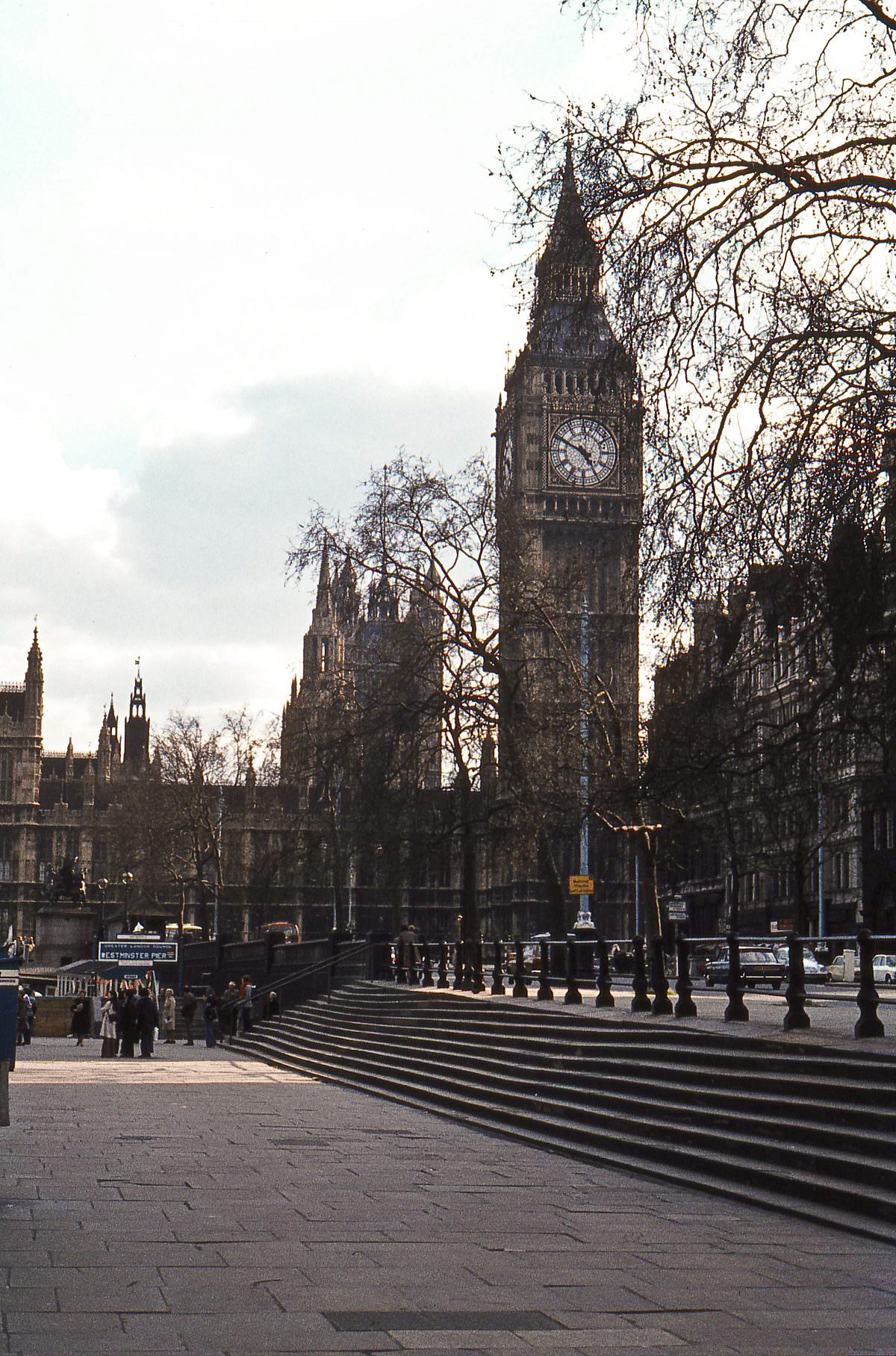
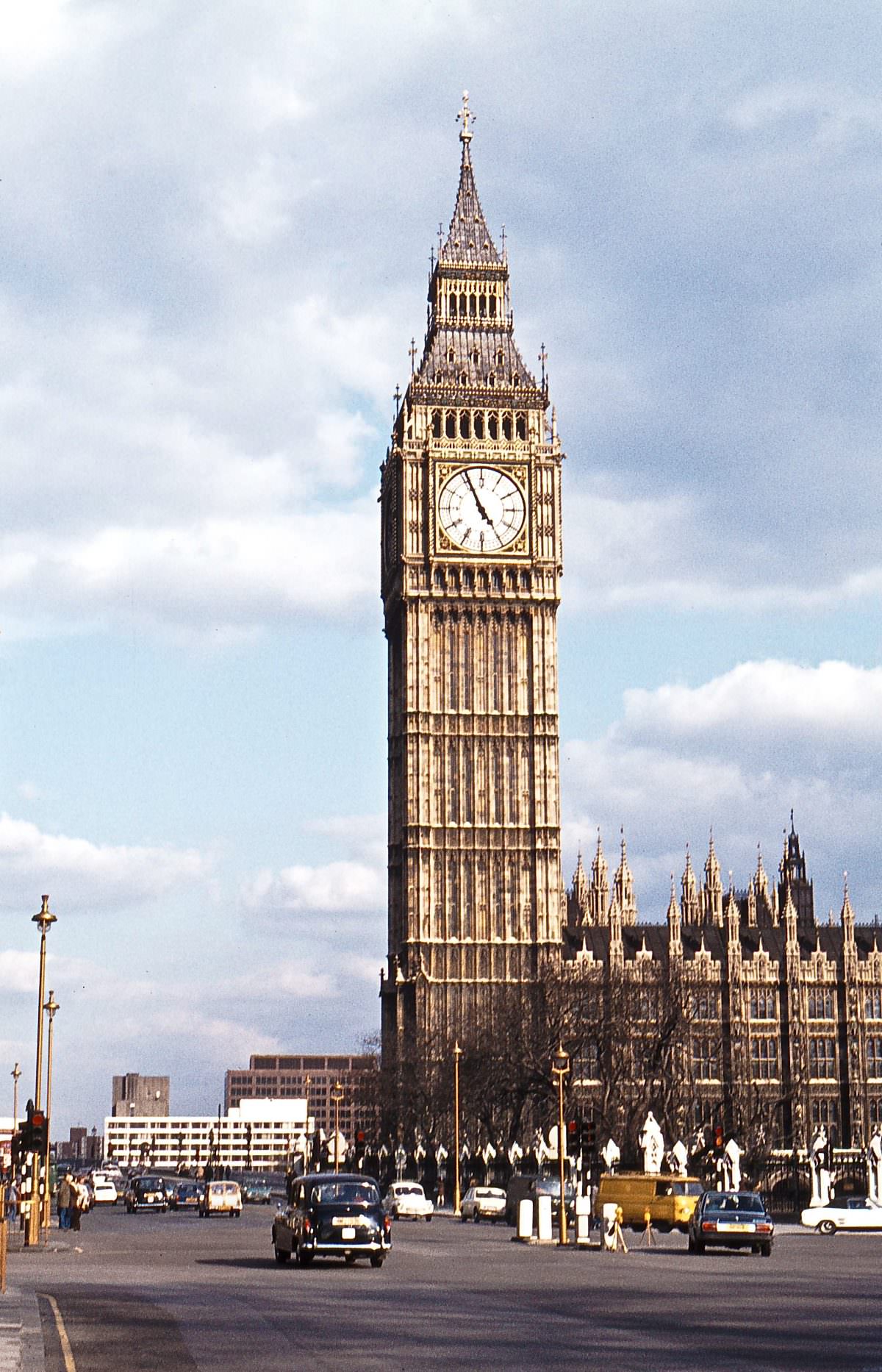
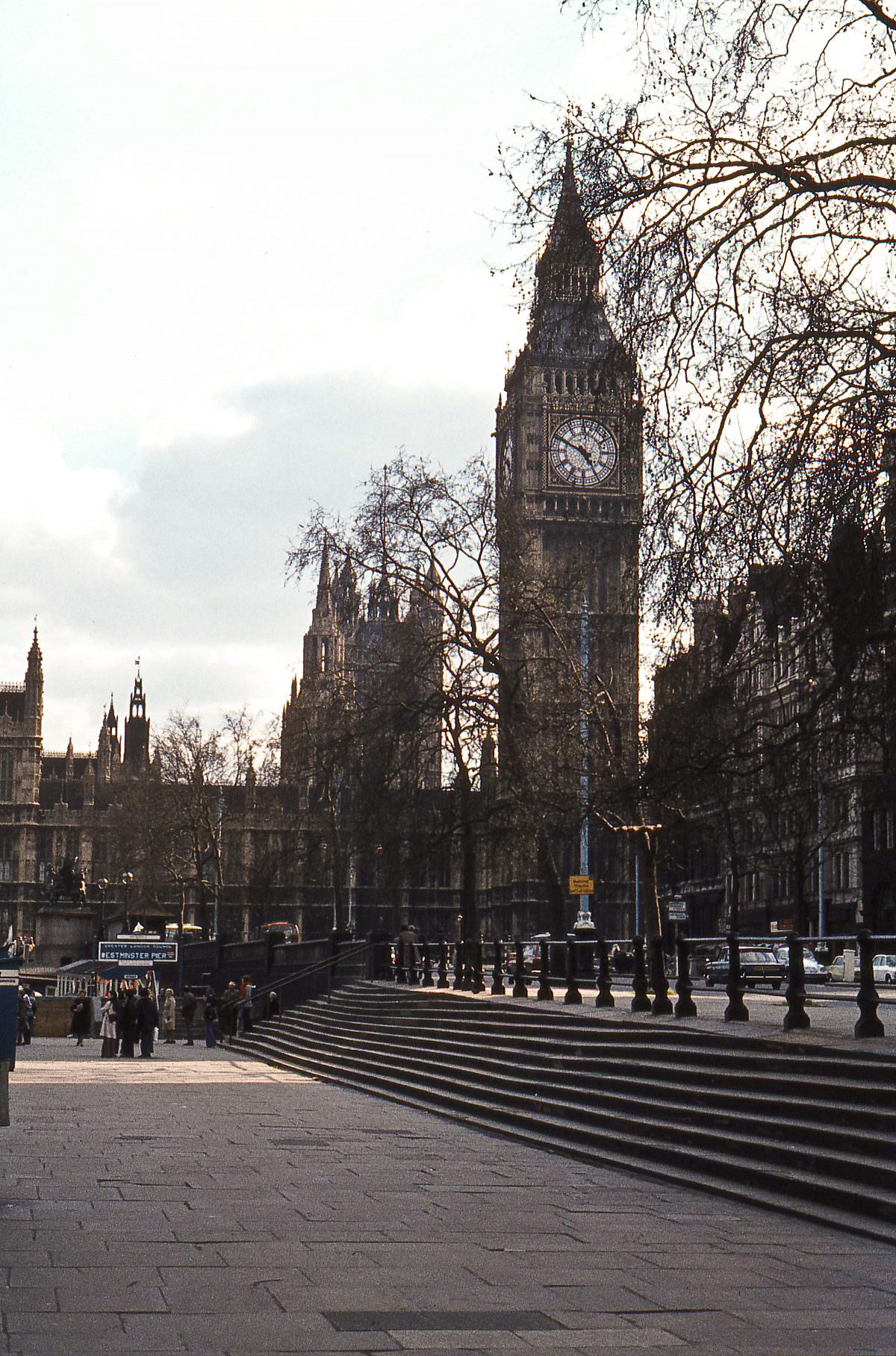
Big Ben appears in Rostance’s April 1976 photographs looking as solid and permanent as ever. What the photographs couldn’t predict was that just a few months later, in August 1976, the clock mechanism broke down and Big Ben was taken out of service for nine months — the longest silence in its modern history.
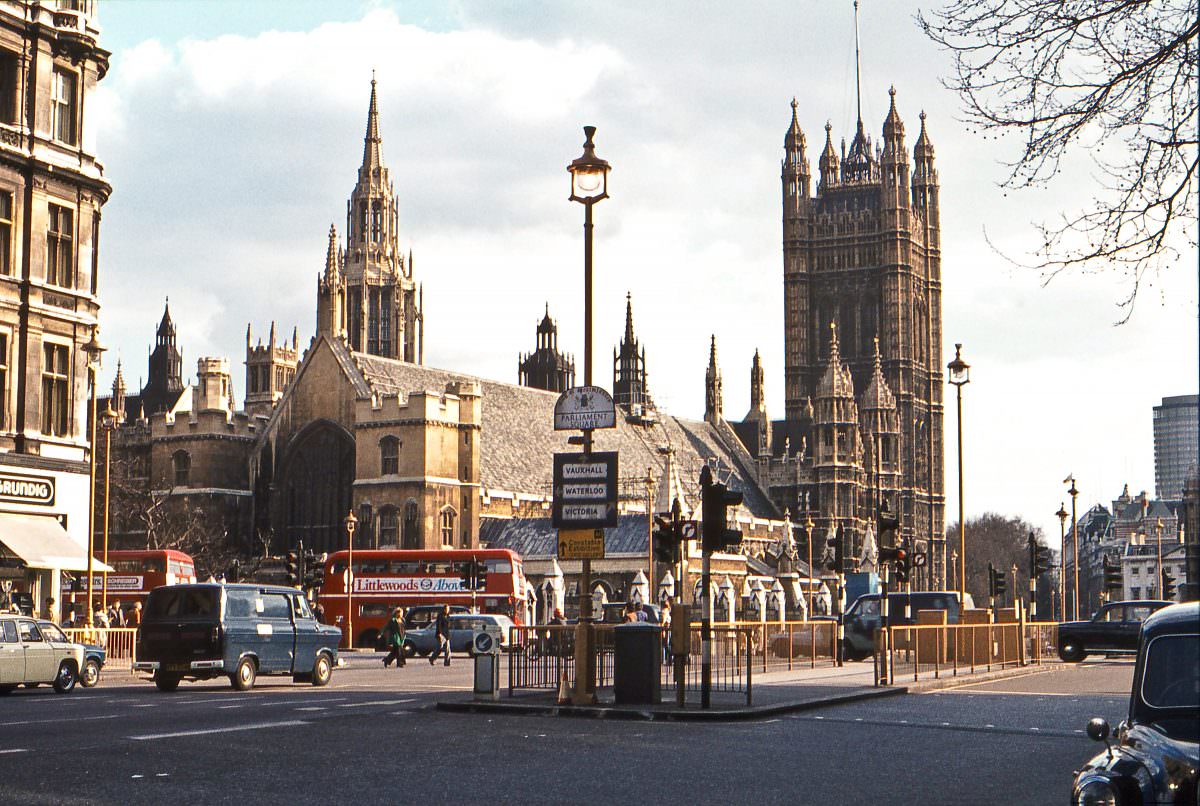
Muswell Hill, Praed Street, and the broader sweep of north and west London also feature in these photographs. Each location captures a slightly different side of the city — the commercial bustle of Muswell Hill Broadway, the residential density of Praed Street near Paddington, and the garage forecourts and local shops that served working-class and middle-class Londoners alike.
By 1977, the city had something to celebrate. Queen Elizabeth II’s Silver Jubilee marked 25 years on the throne, and more than a million Londoners lined the streets to take part. Trafalgar Square became one of the focal points of the celebrations. Rostance was there on 6th June 1977, capturing the Silver Jubilee bus, the crowds on the Strand, and a square buzzing with national celebration. It was a sharp contrast to the economic hardship that had defined so much of the preceding years.
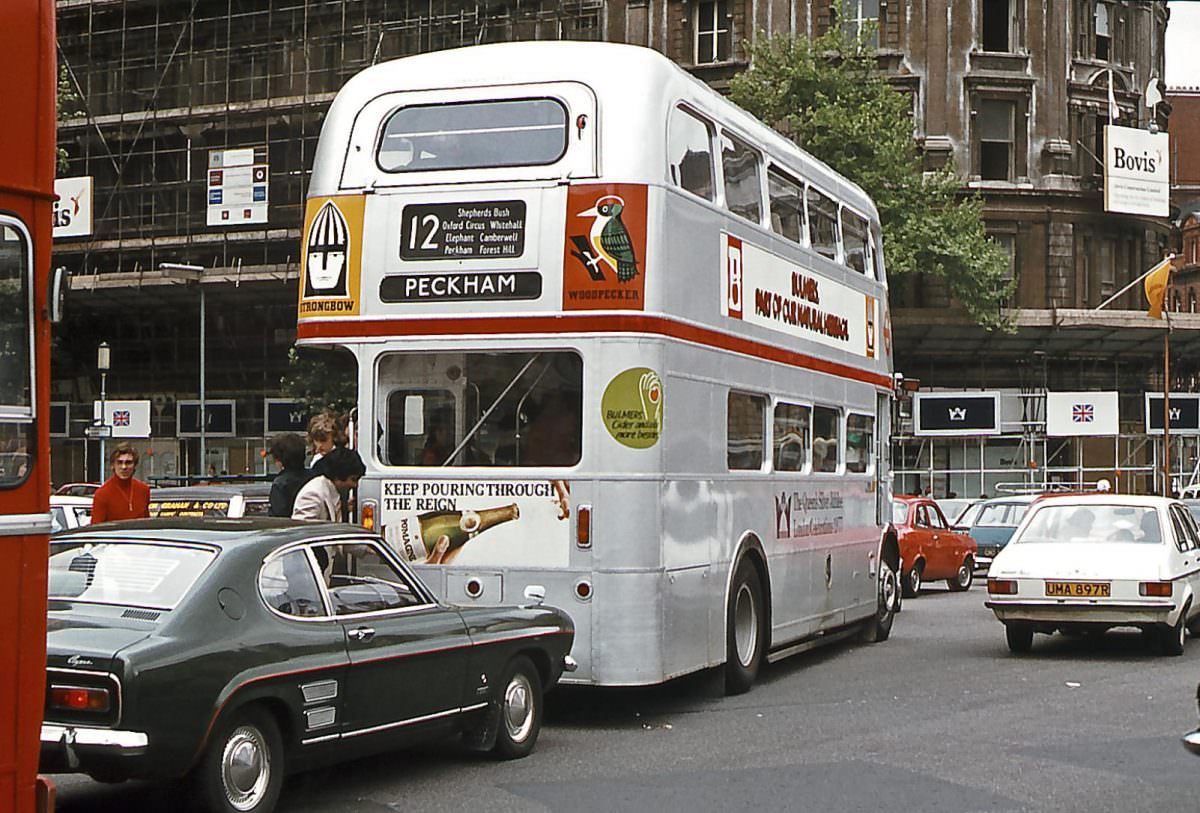
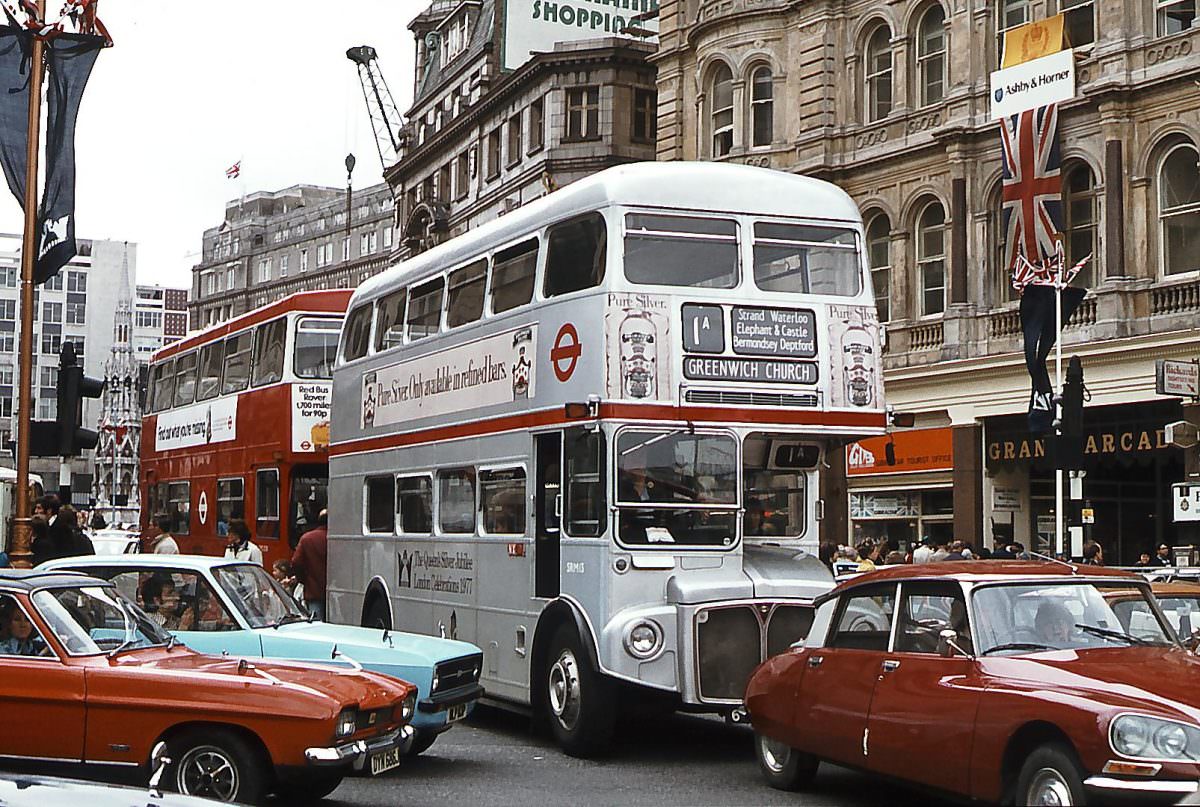
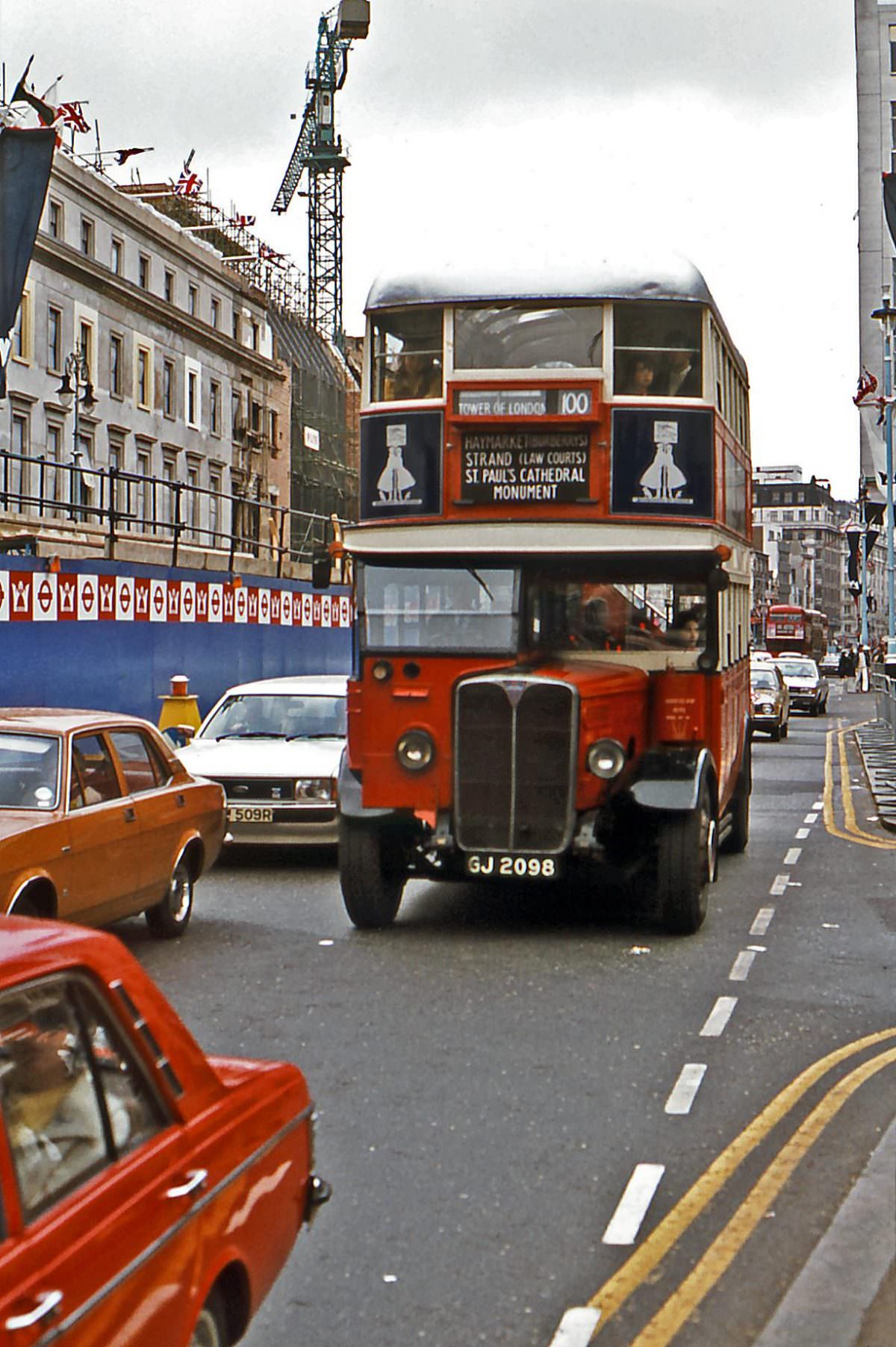
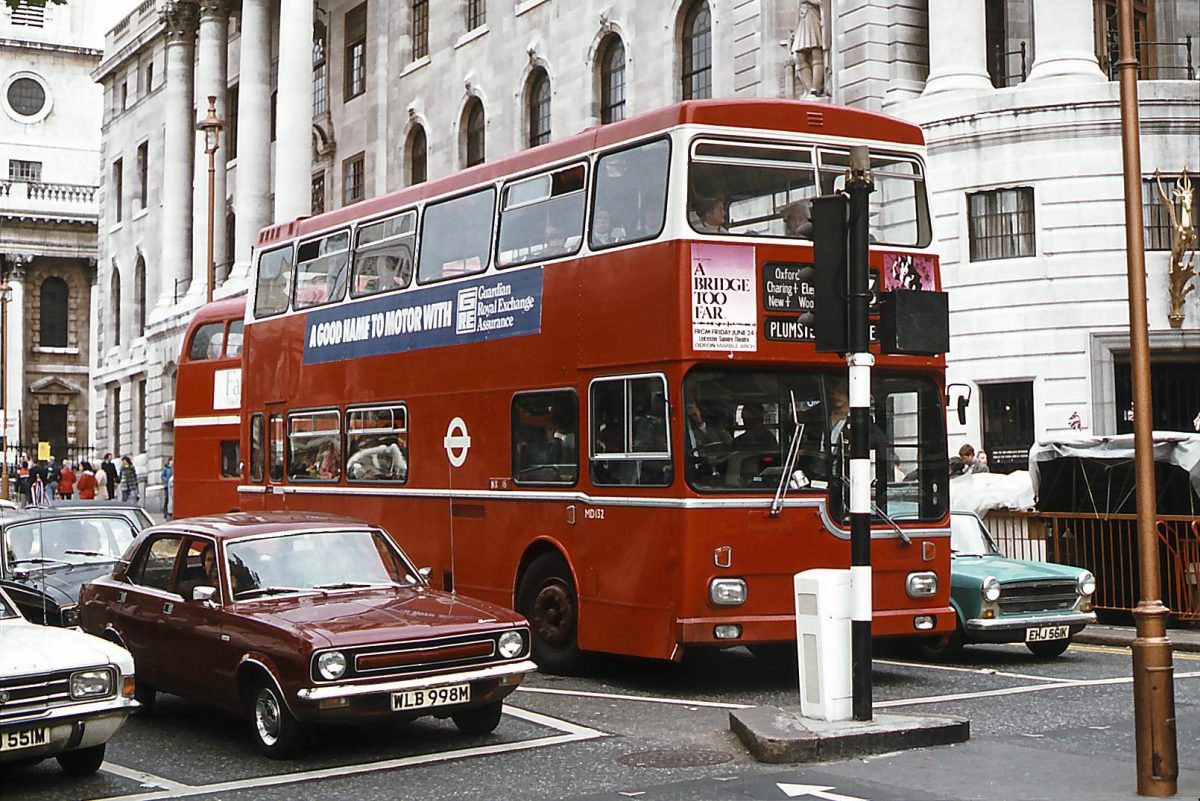
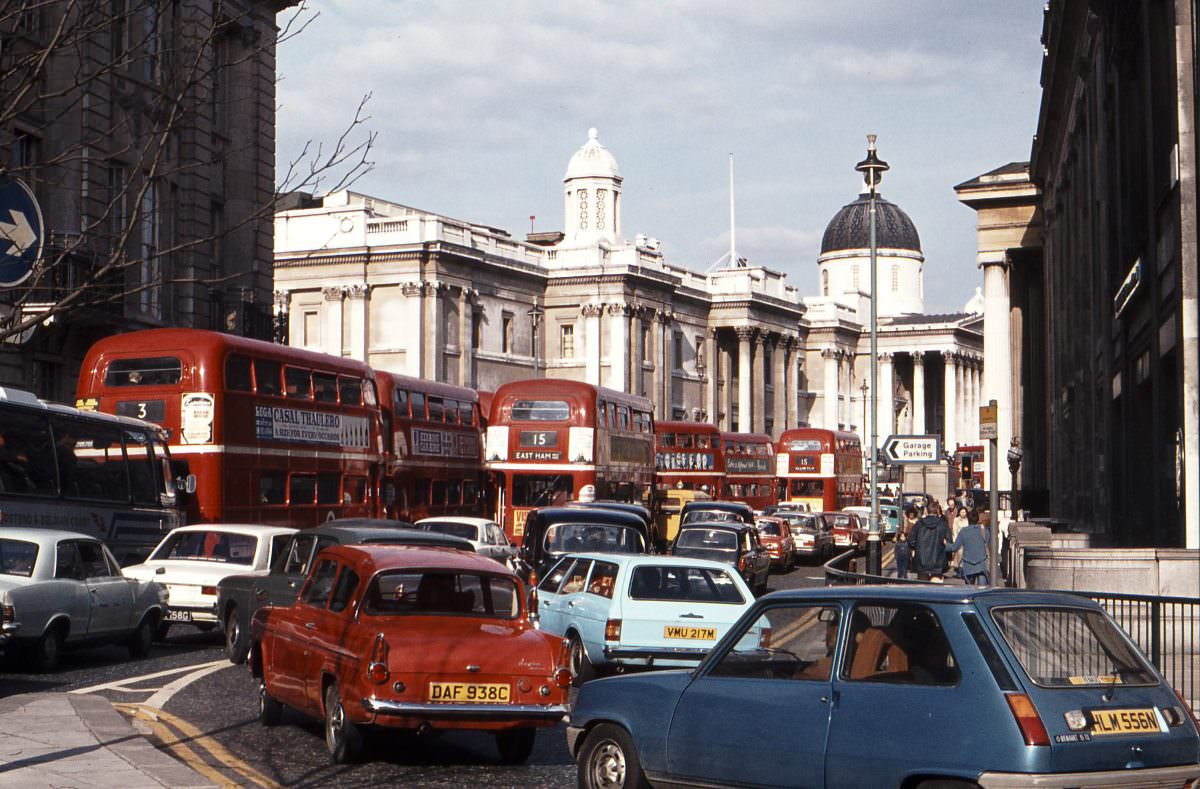
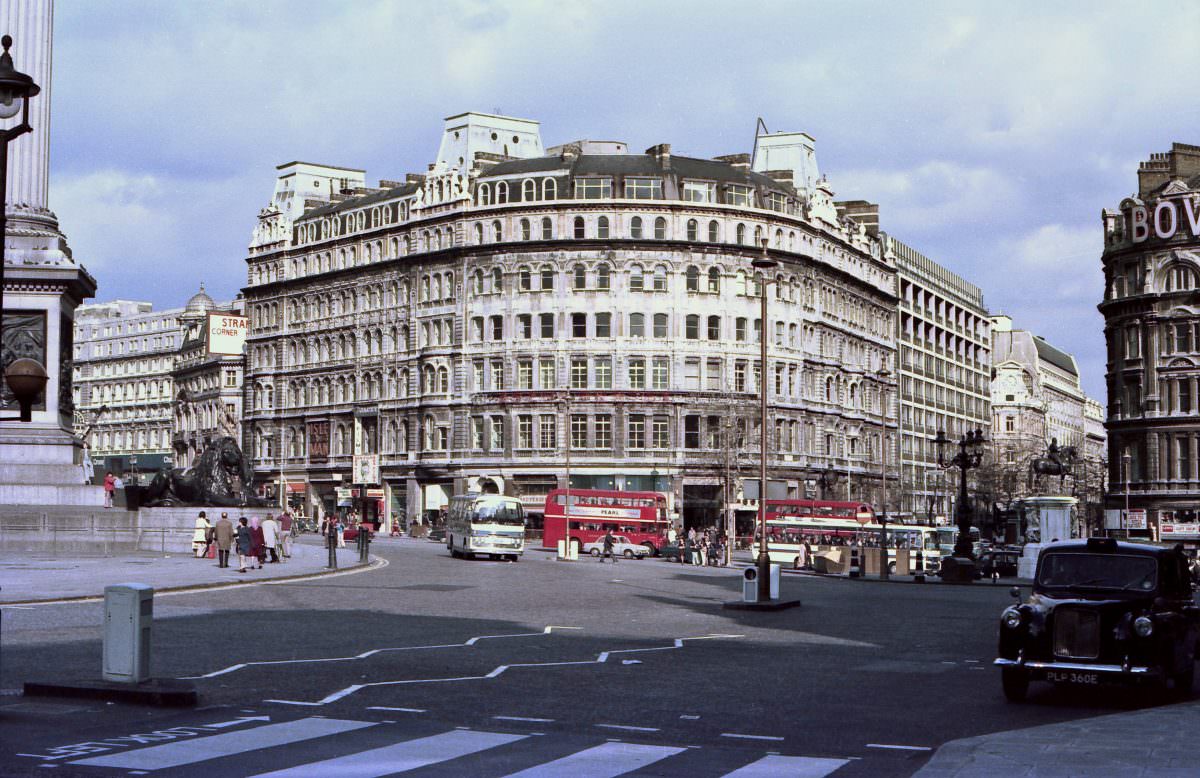
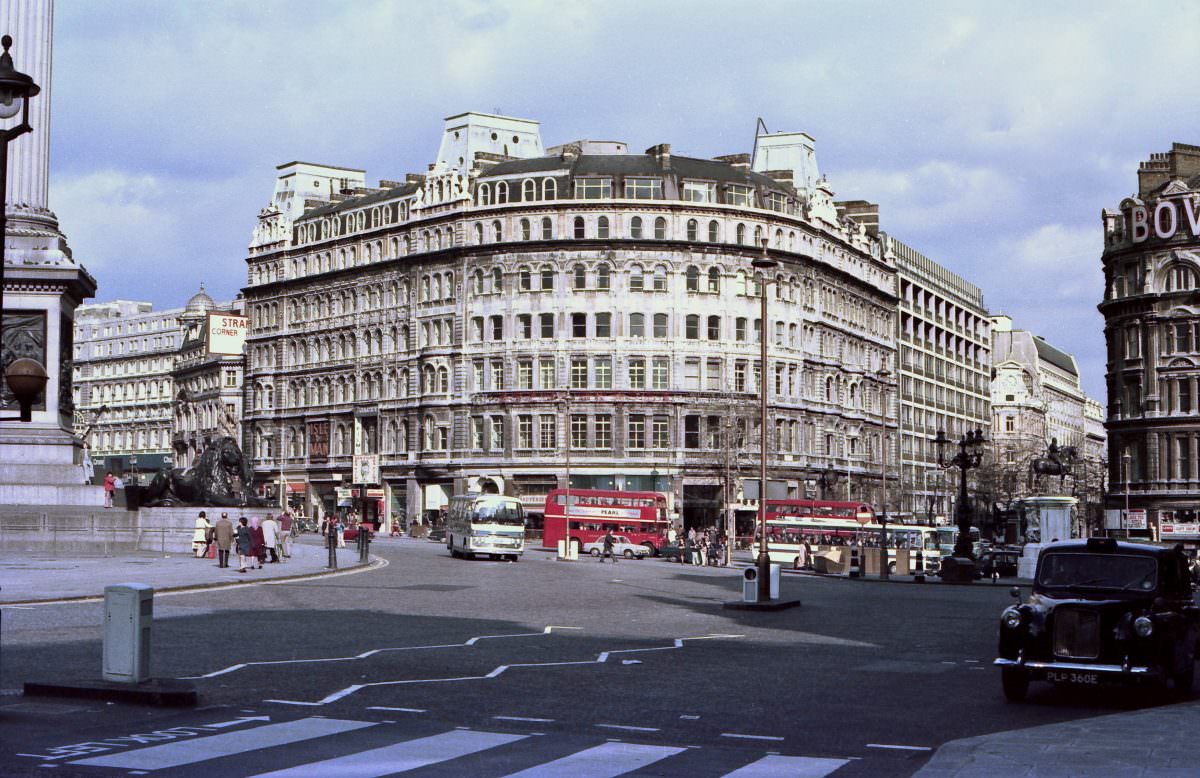
Trafalgar Square appears across multiple years in Rostance’s collection — gridlocked in April 1976, alive with celebration in June 1977. Few locations in London showed the decade’s contrasts more clearly. One frame shows a traffic jam choking the square; another shows it transformed into a gathering point for a nation marking a milestone.
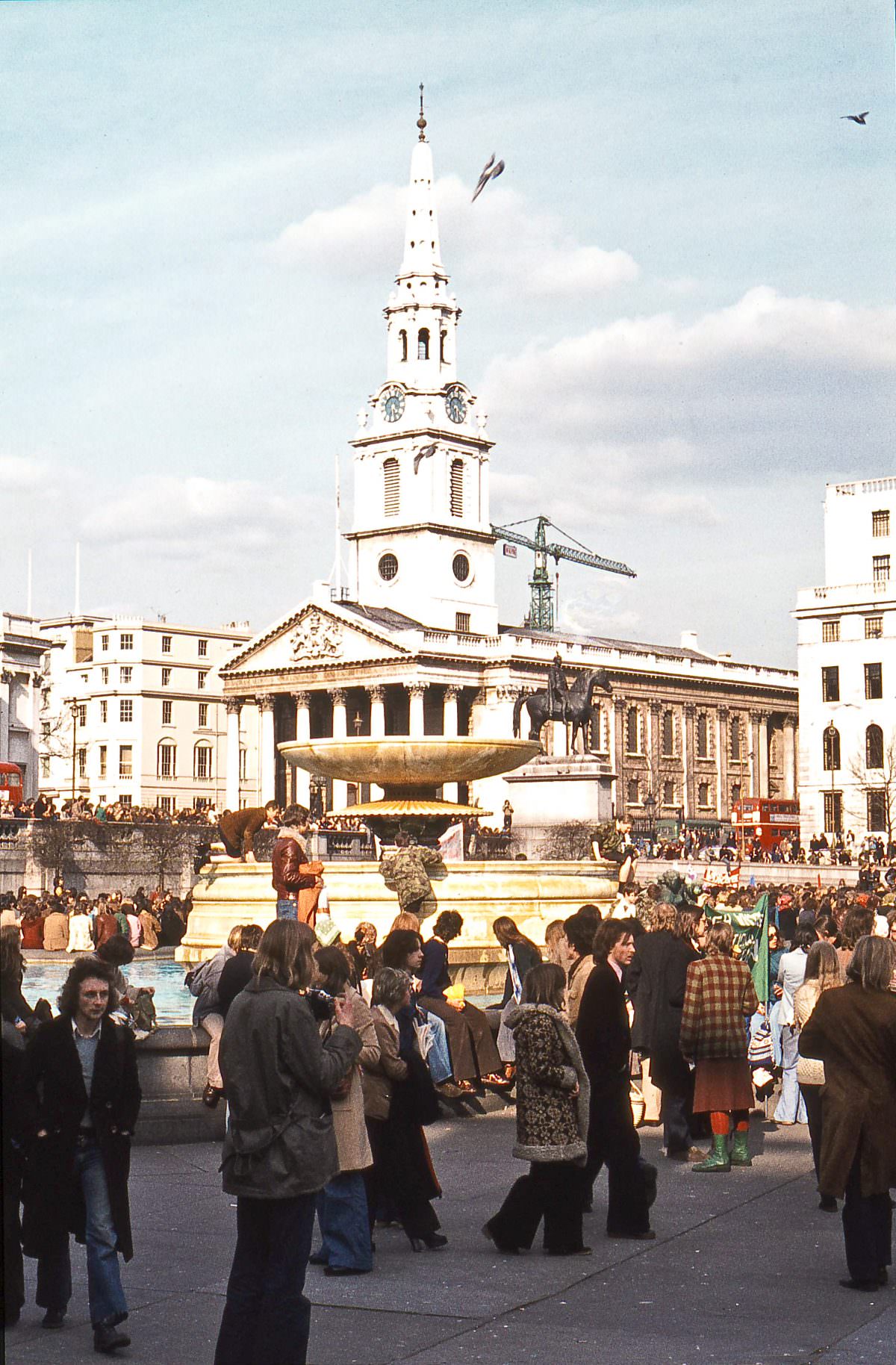
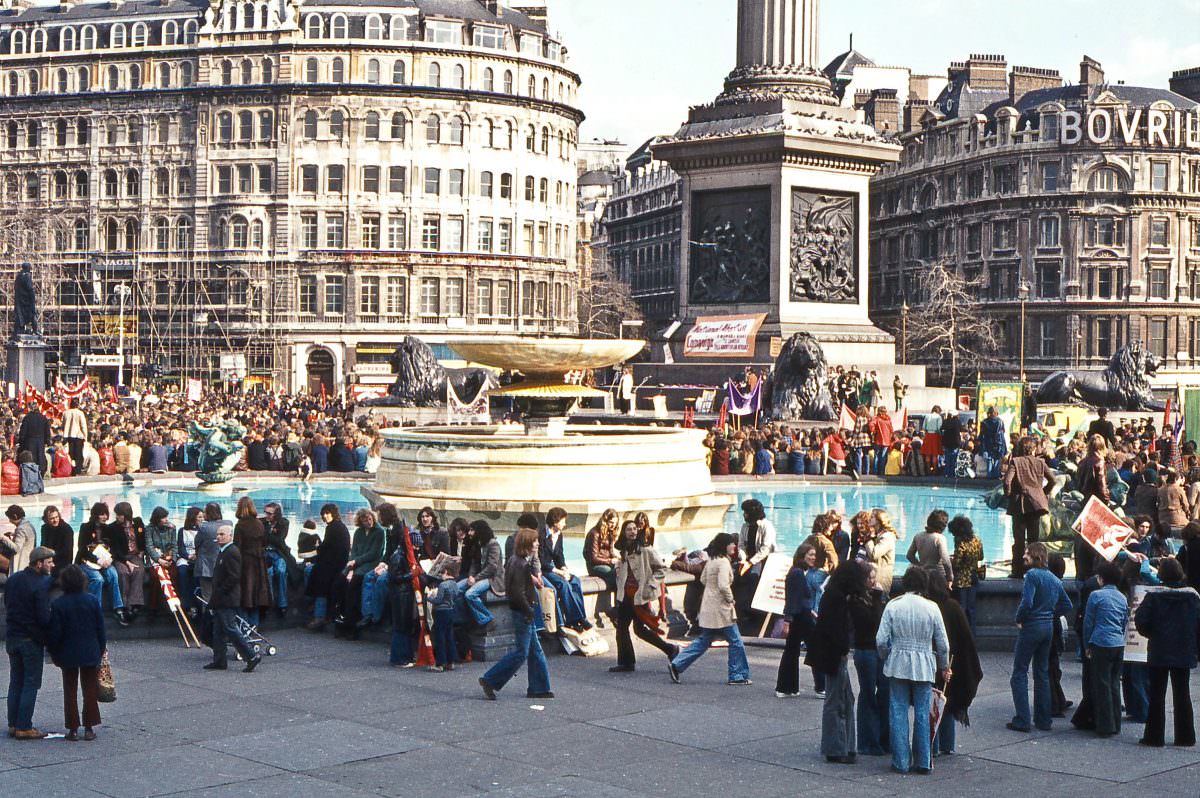
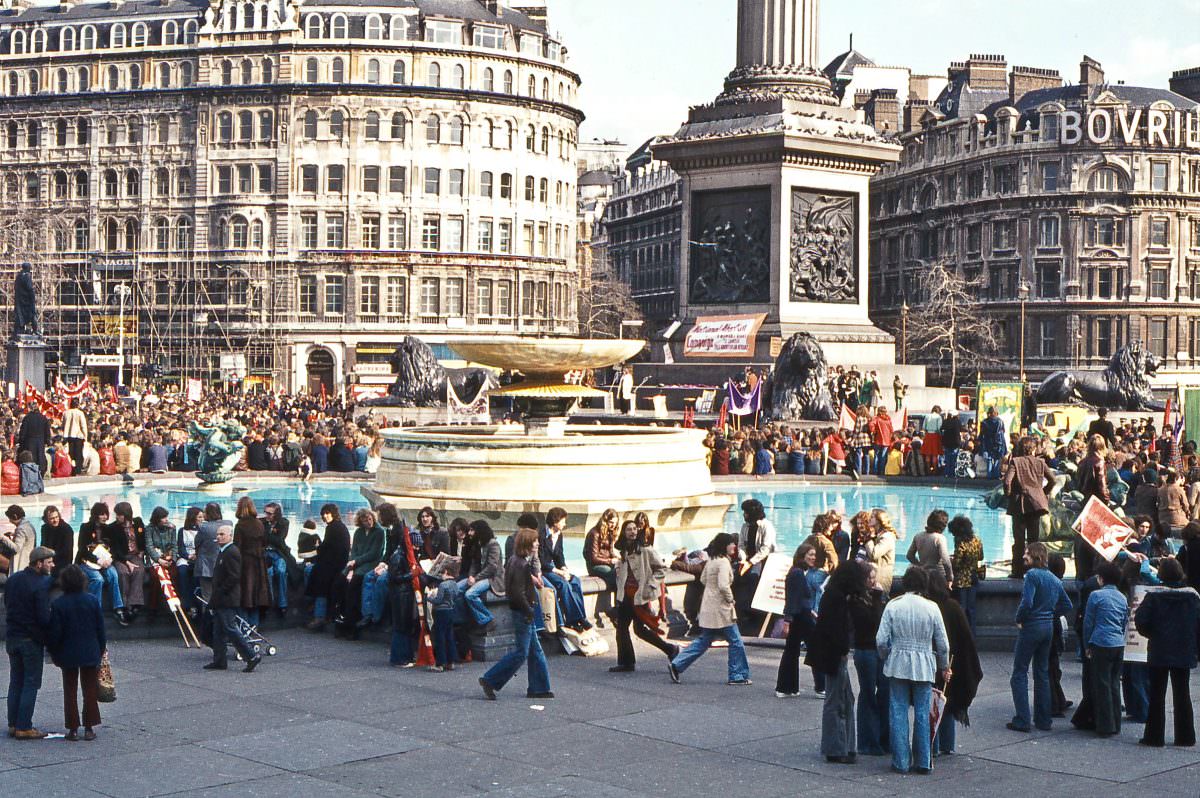





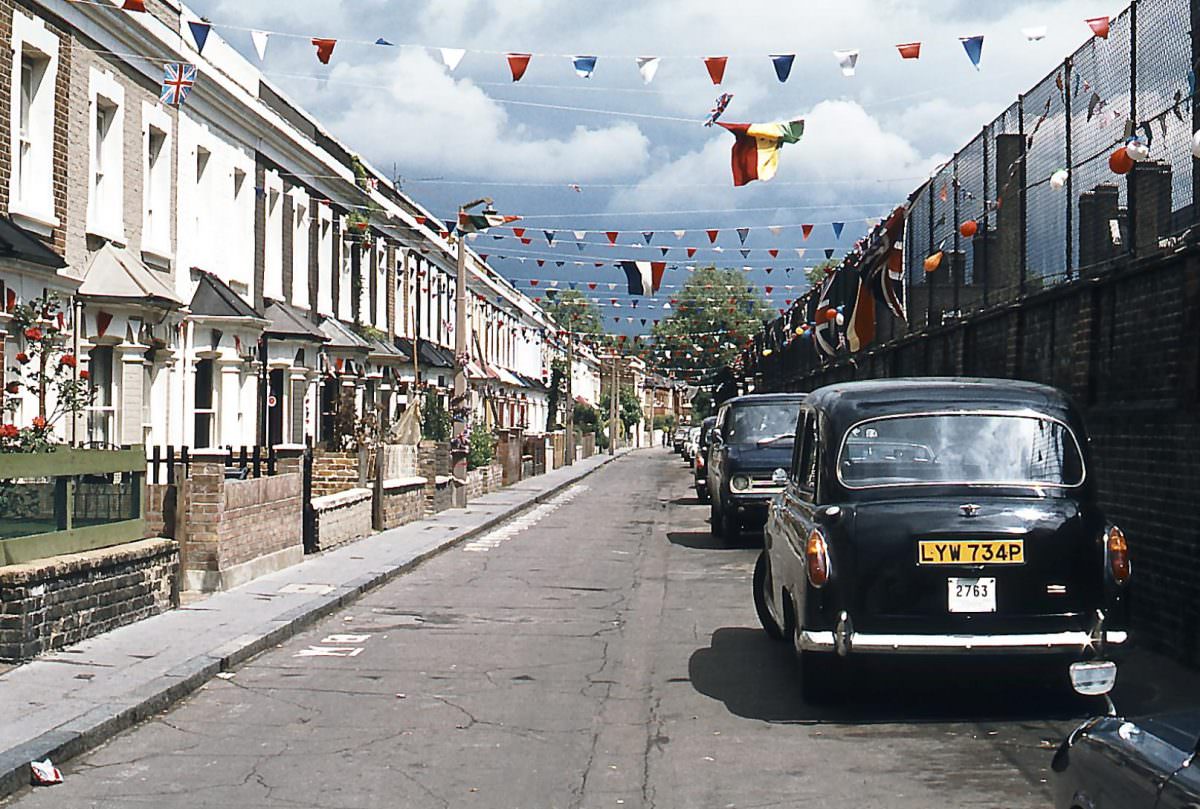
I am curious to know why the Trafalgar Square demonstration happened and the flags in Fulham. The data suggests it was for the silver jubilee, but I cannot figure out what France (or the Netherlands/Yugoslavia) and Ghana(?) have to do with it.
Around that time, there were protests against cuts to the NHS.
The fashion on display is impressive