Afghanistan in the 1950s looked nothing like the country the world would come to know in later decades. Under King Zahir Shah, who ruled from 1933 to 1973, the country was in the middle of a real push toward modernization. Roads were being paved, schools were being built, and foreign diplomats were arriving in Kabul. It was a decade of genuine change — one where centuries-old traditions and new outside influences existed side by side.

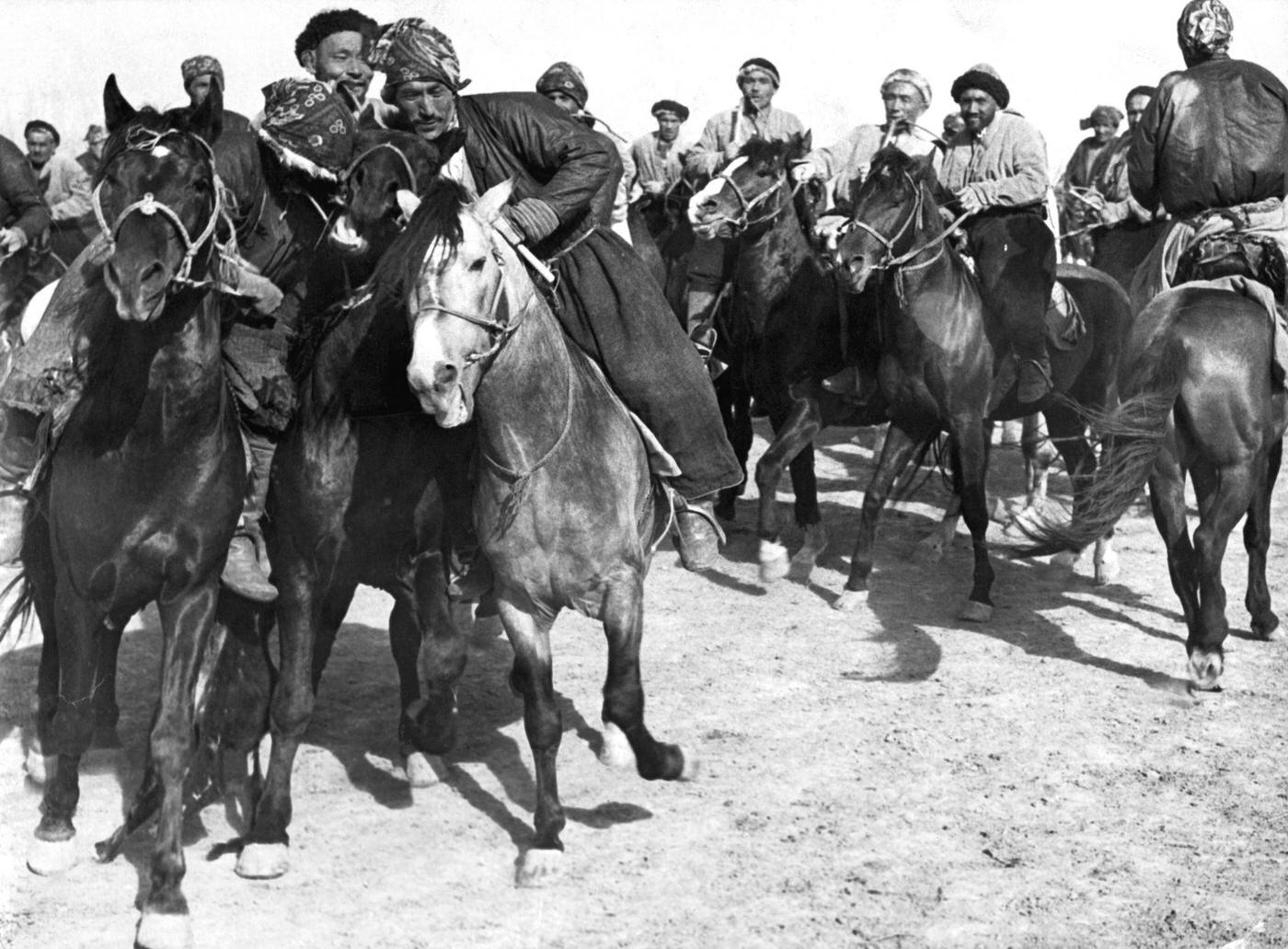
Traditional Afghan culture remained very much alive throughout this period. Buzkashi, the country’s national sport in which horse-mounted players compete to drag a goat carcass across a goal line, continued to draw large crowds. It was one of many customs that modernization never touched. Outside the cities, life moved at a pace set by seasons and trade routes, not by government reform programs.

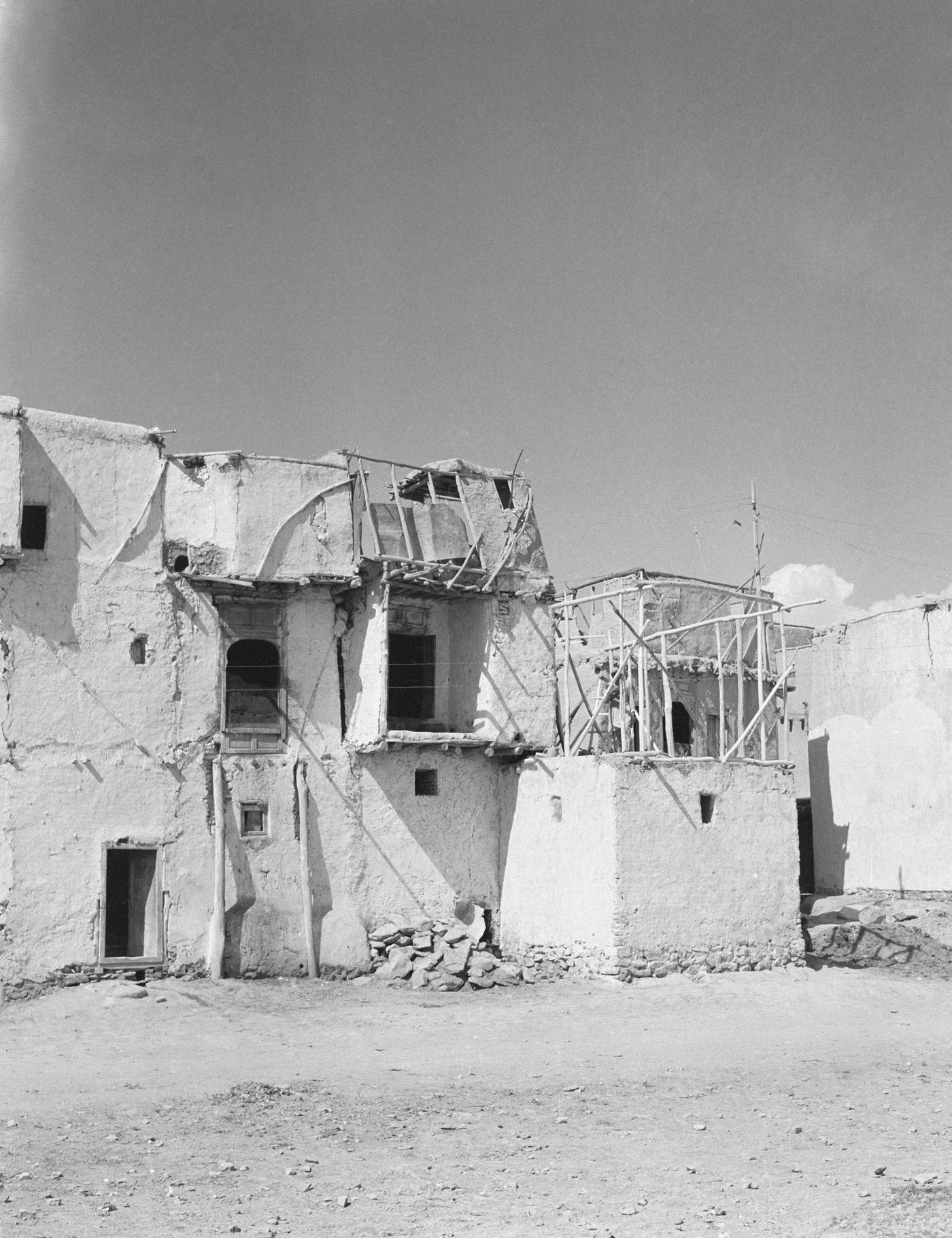
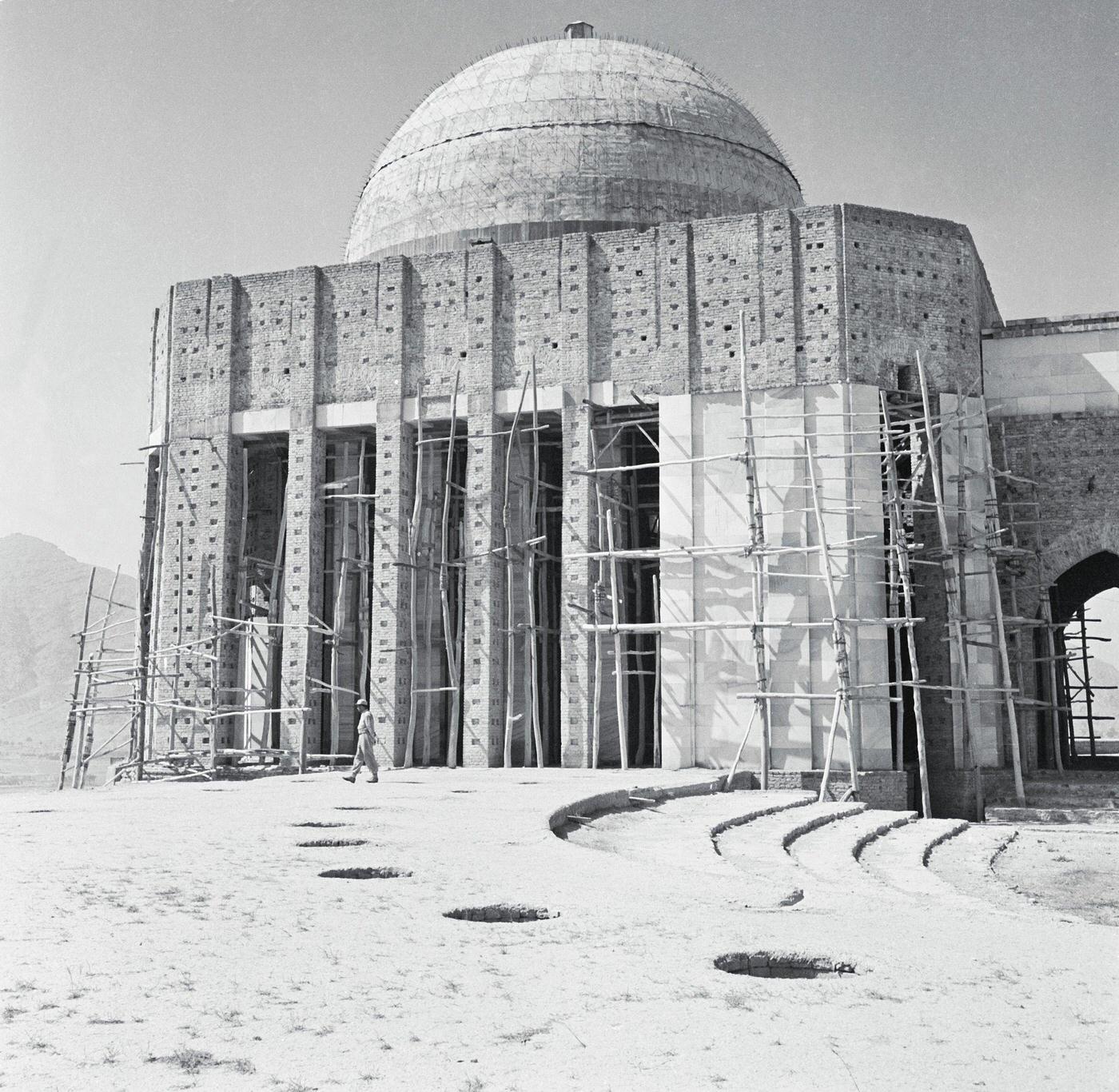
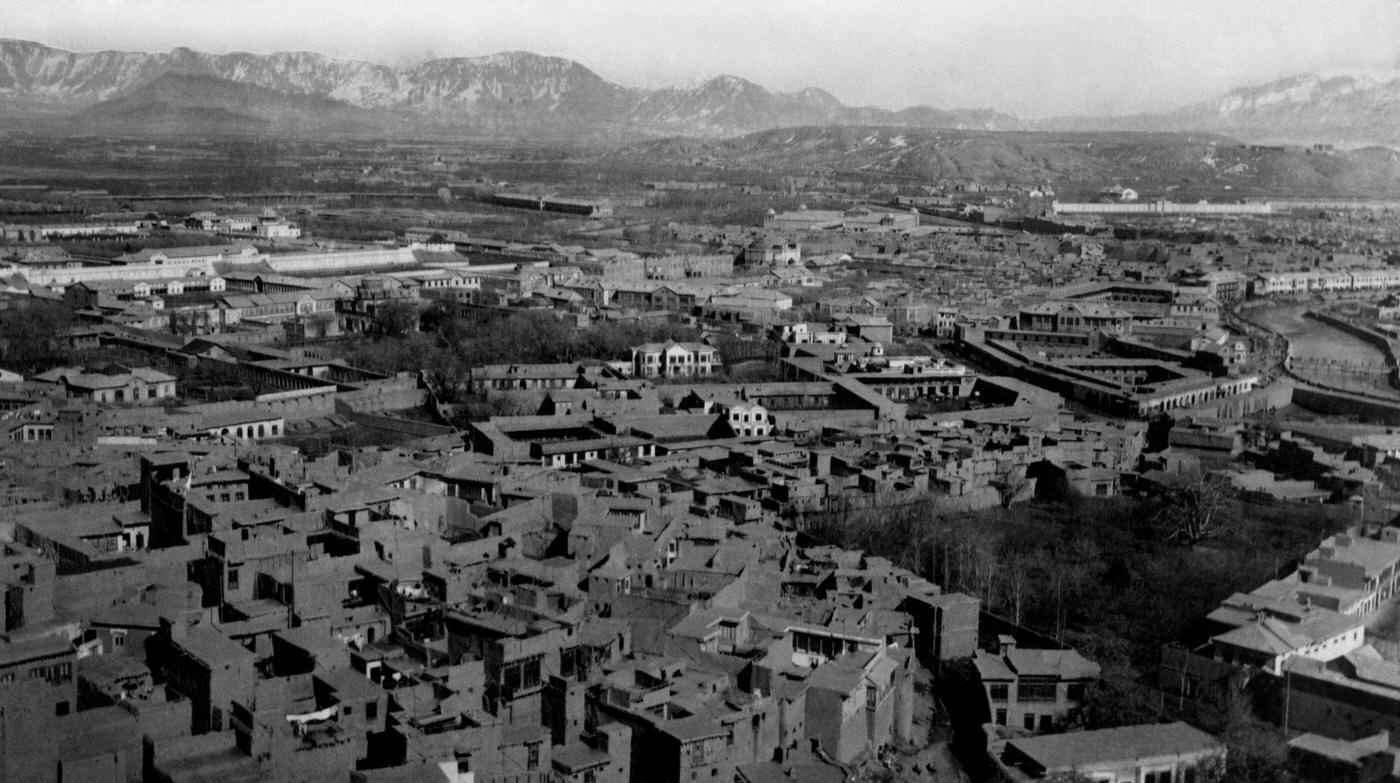
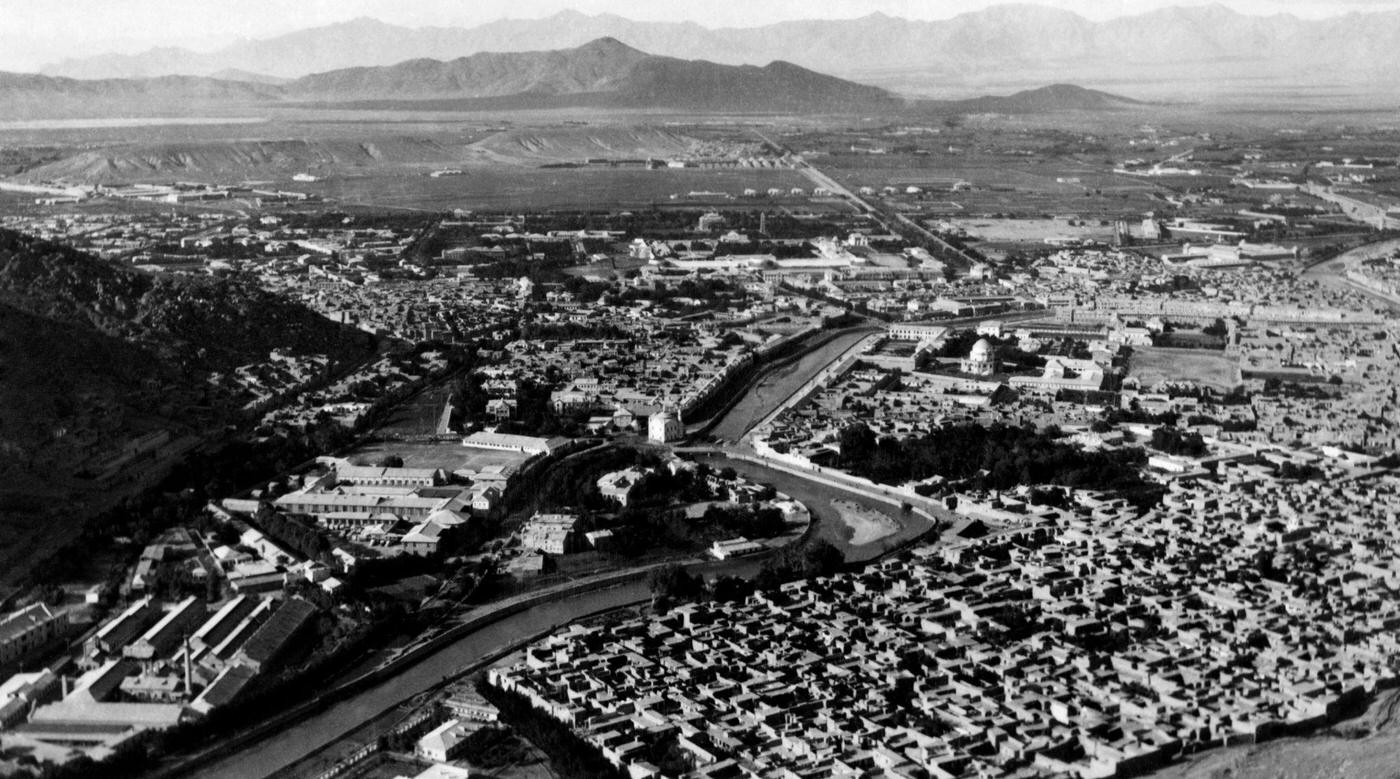
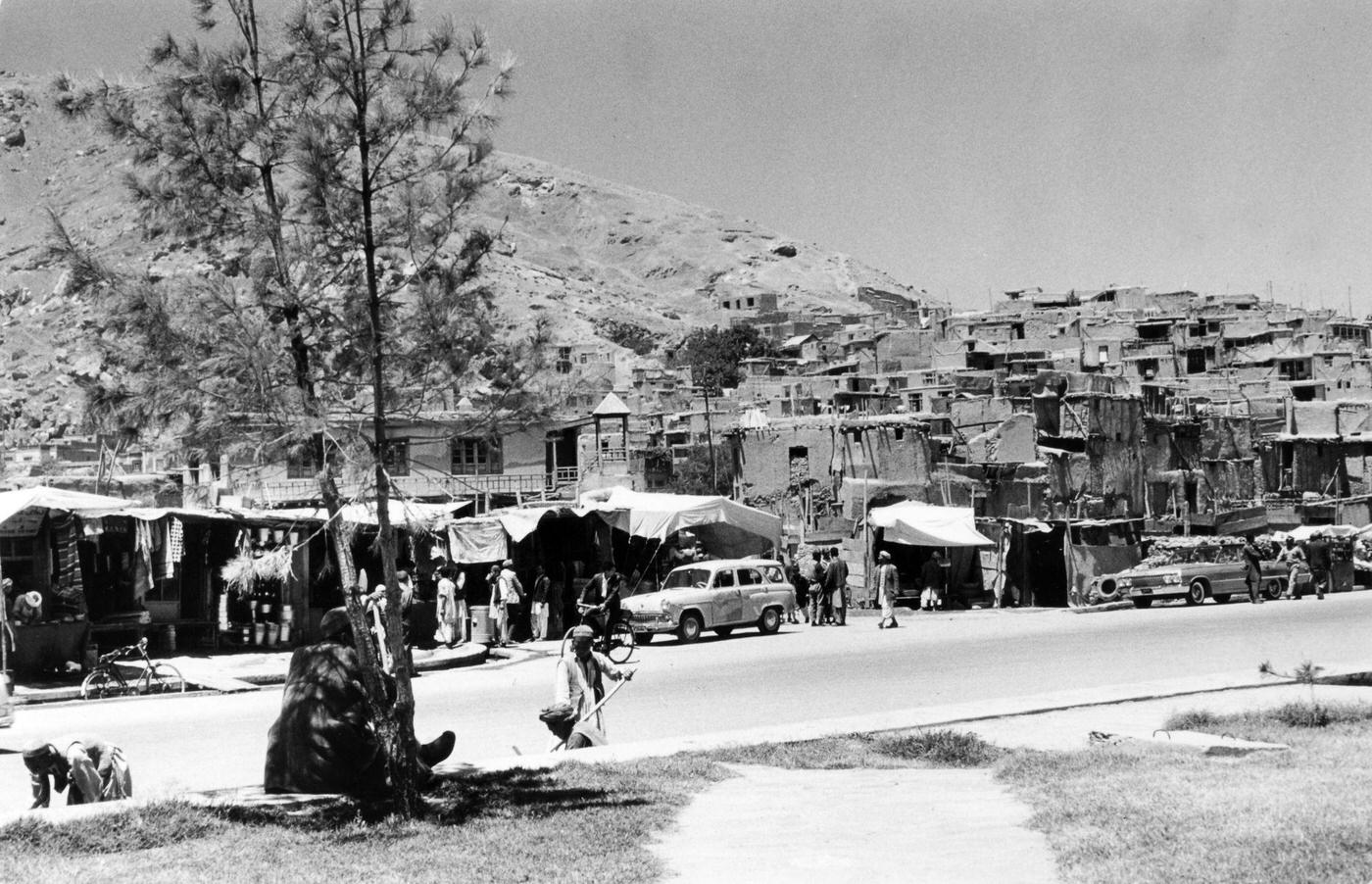
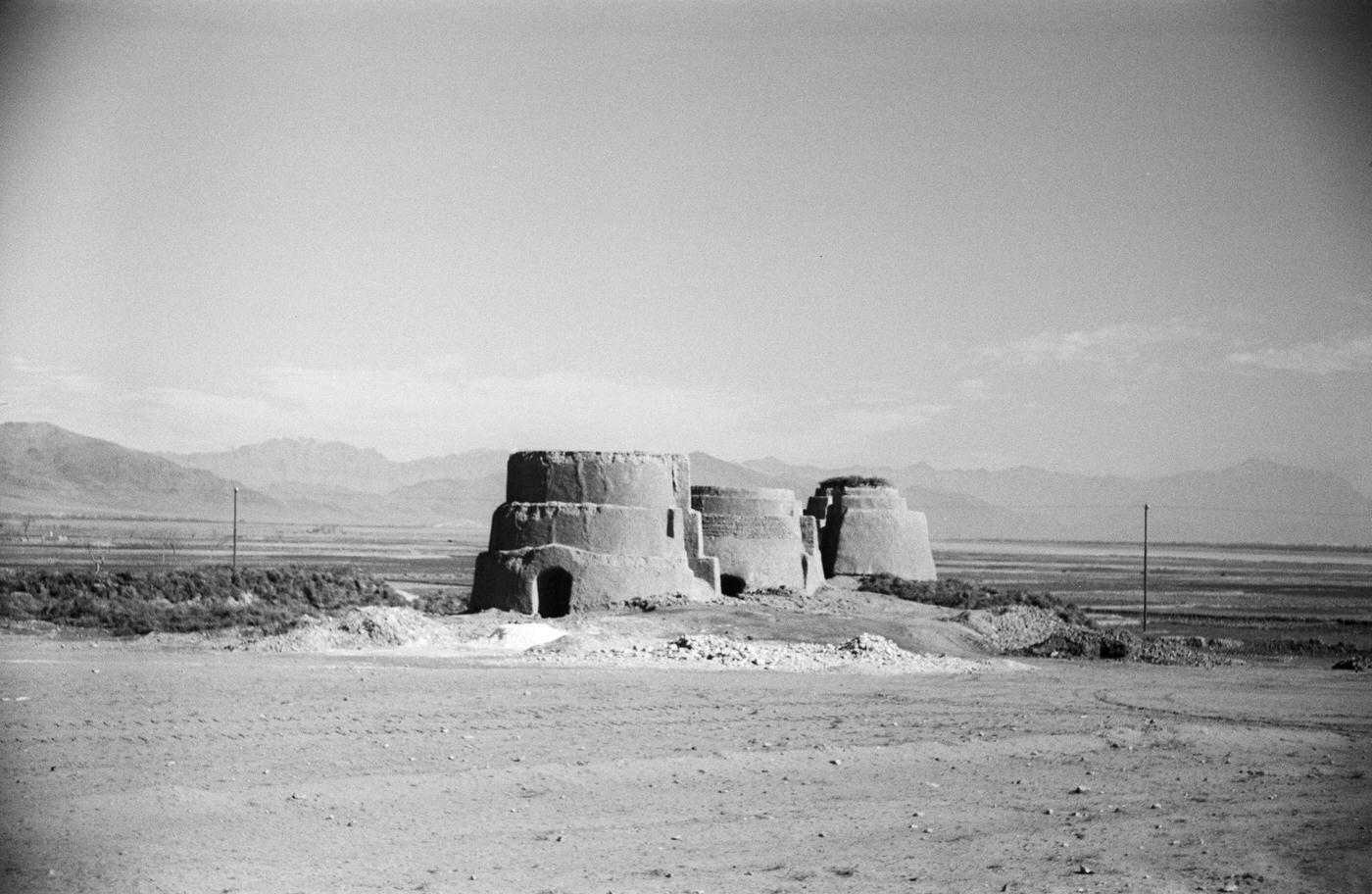
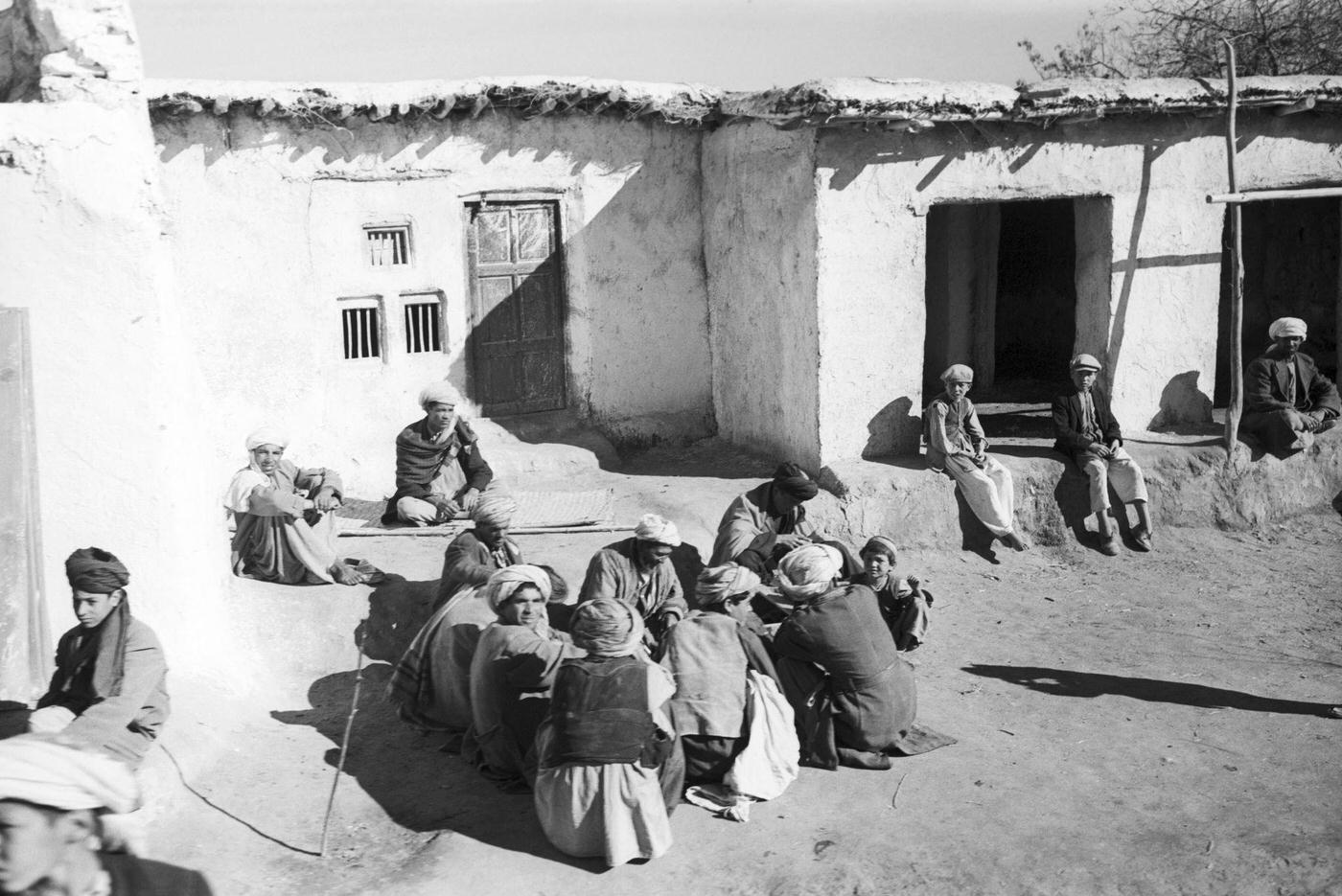
Kabul’s architecture in the 1950s reflected the city’s layered history. Mud-brick homes and older structures sat alongside newer construction funded partly by foreign aid. Both the United States and the Soviet Union poured money into Afghan infrastructure during this period, each trying to win influence in the region during the Cold War. The result was a capital city that was visibly growing, with new buildings appearing in neighborhoods that had changed little for generations.


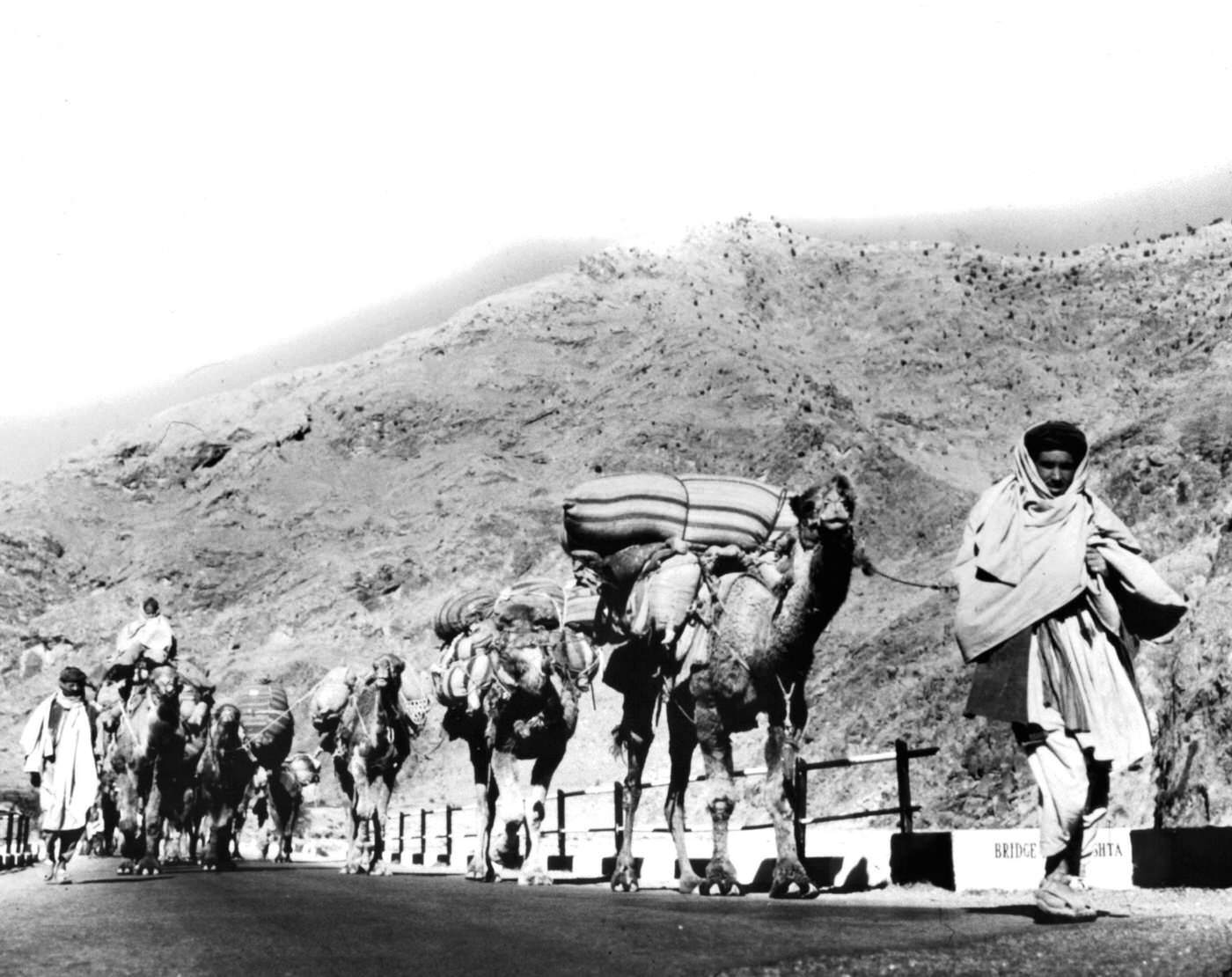
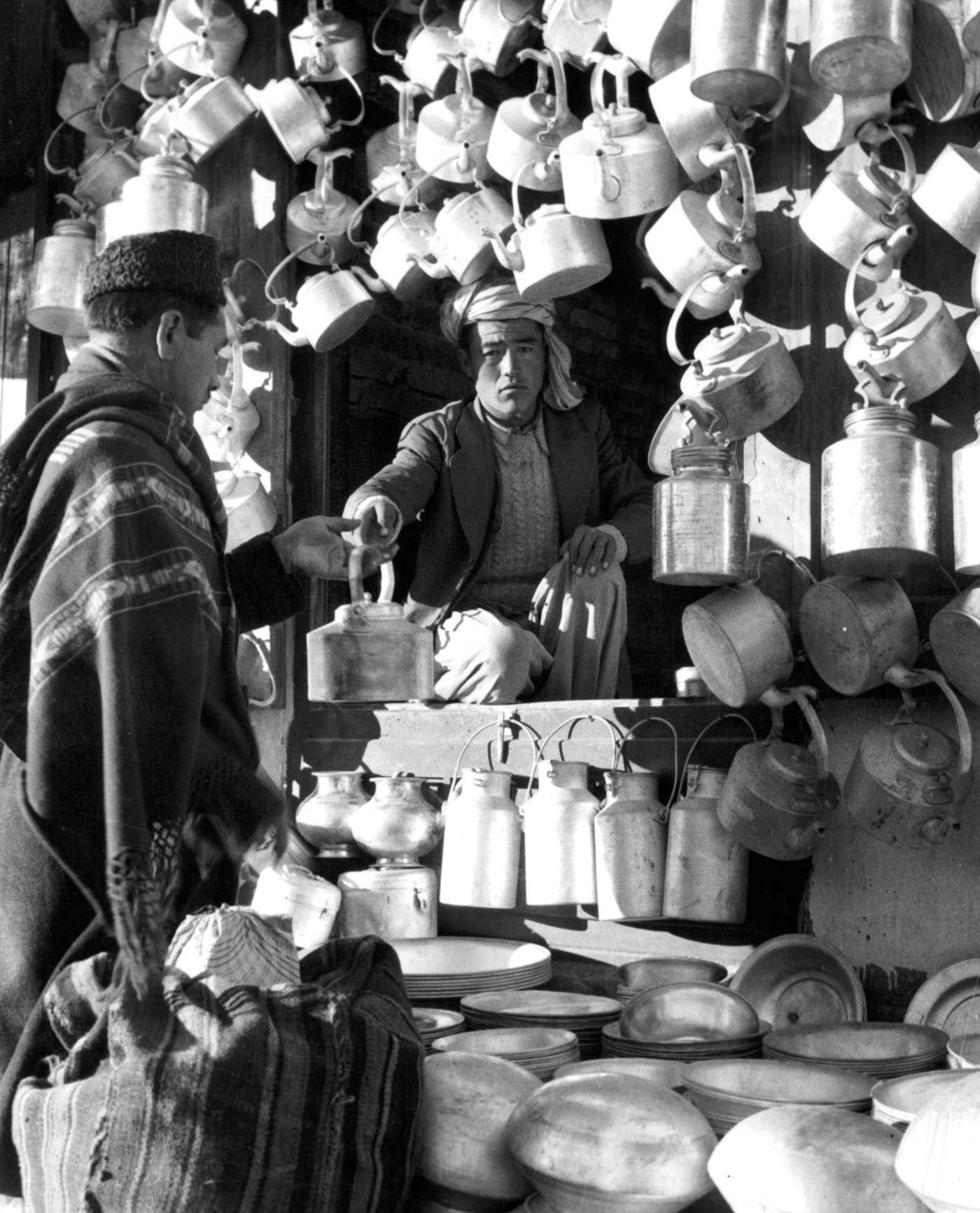
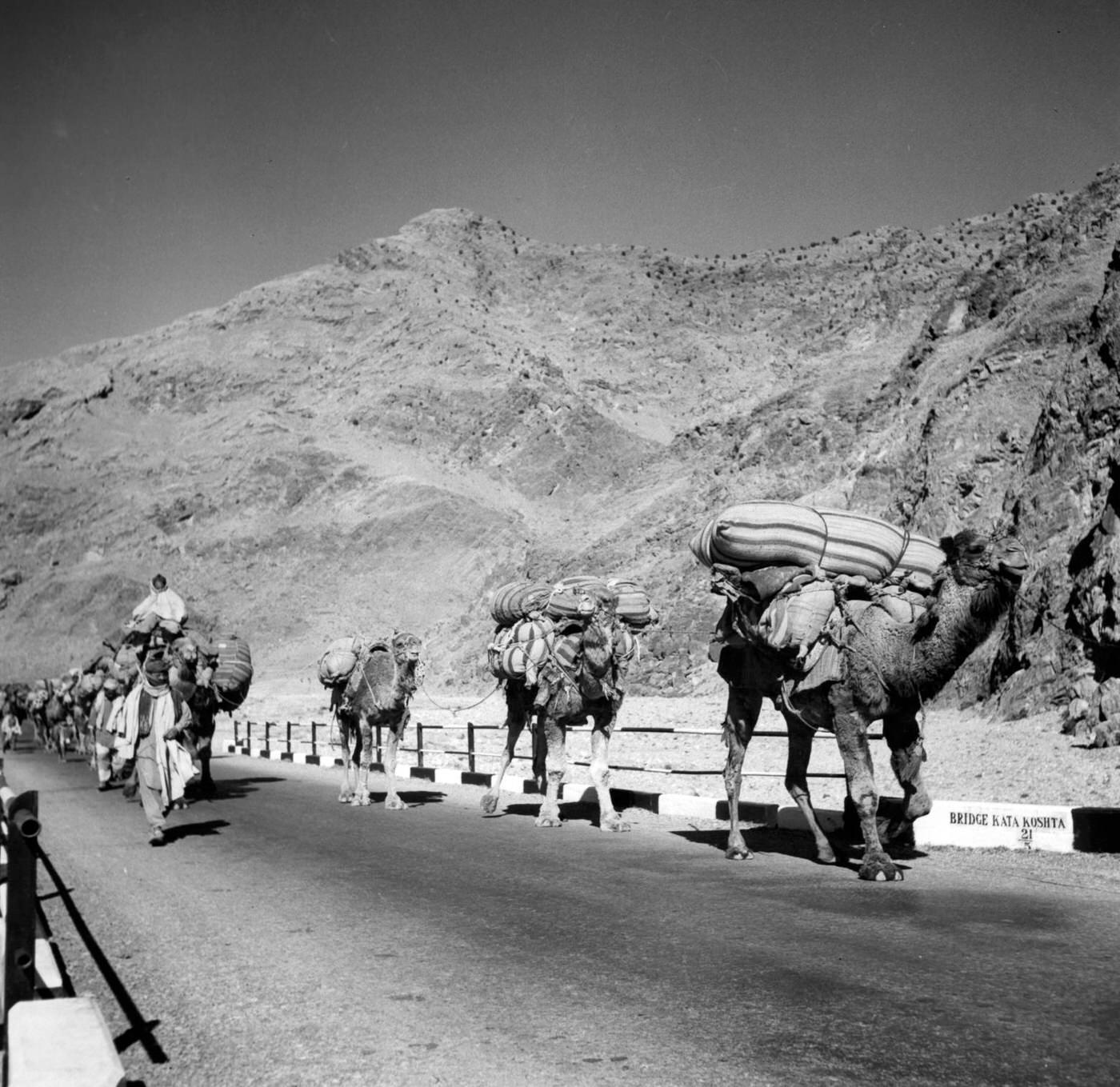
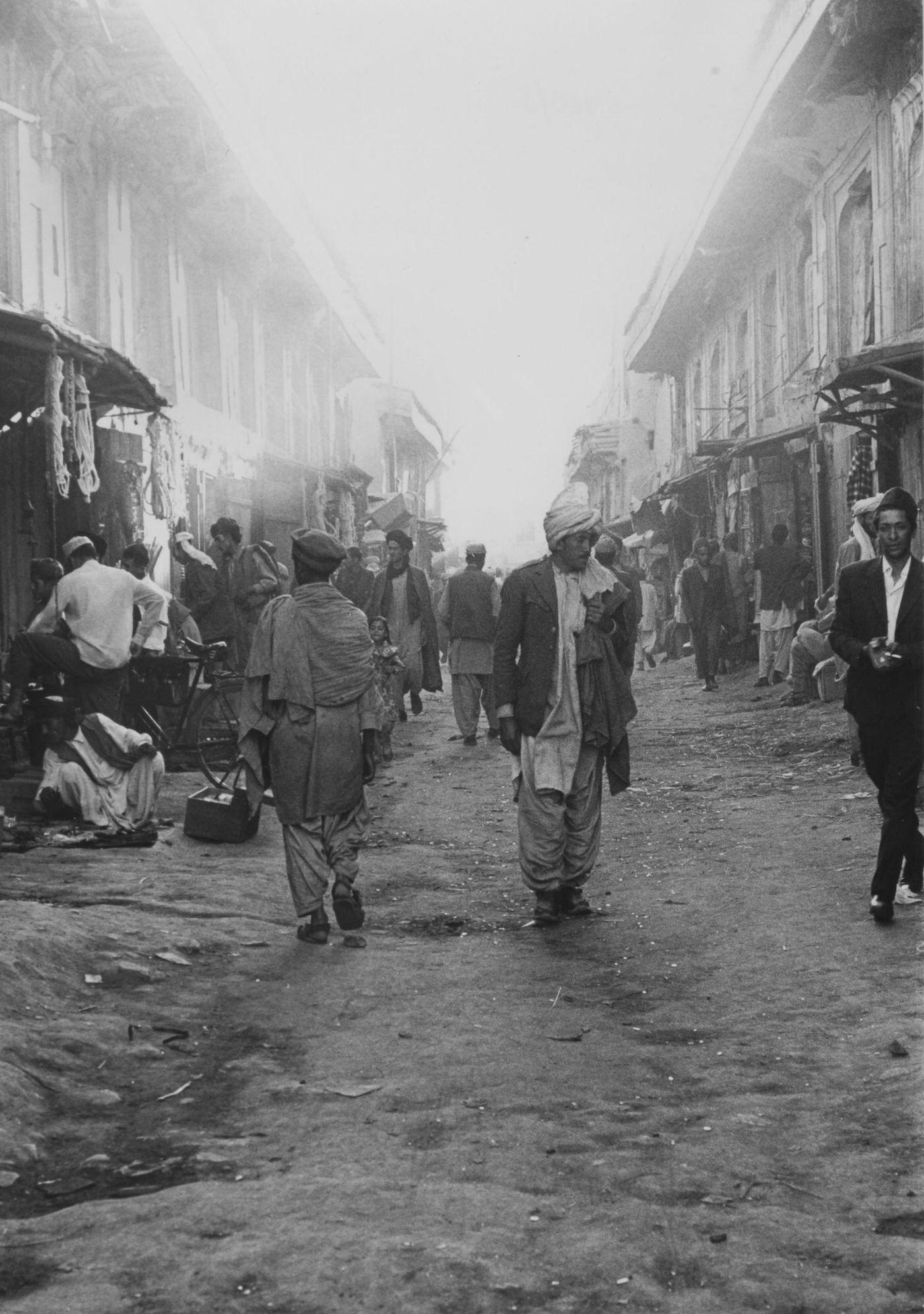
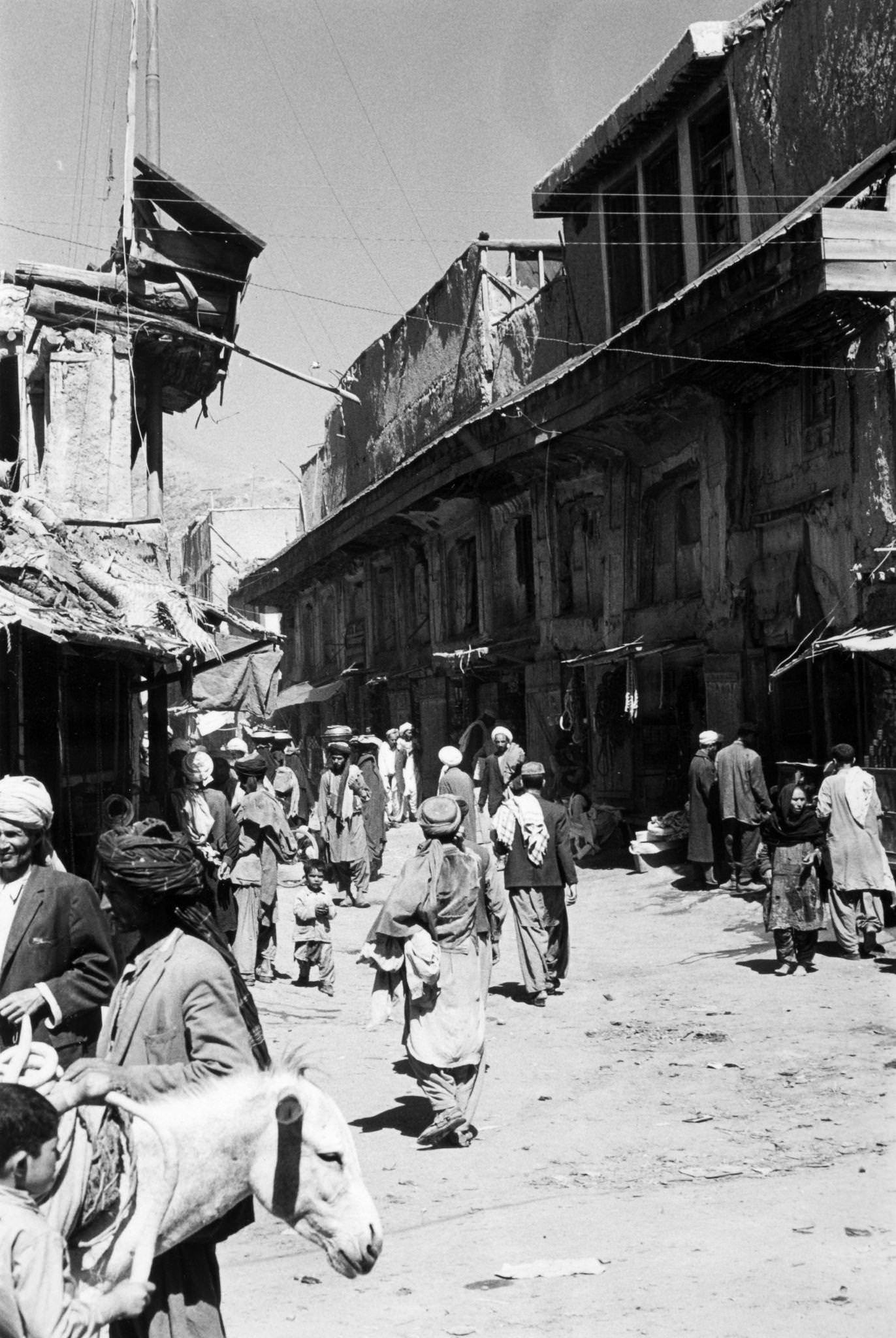
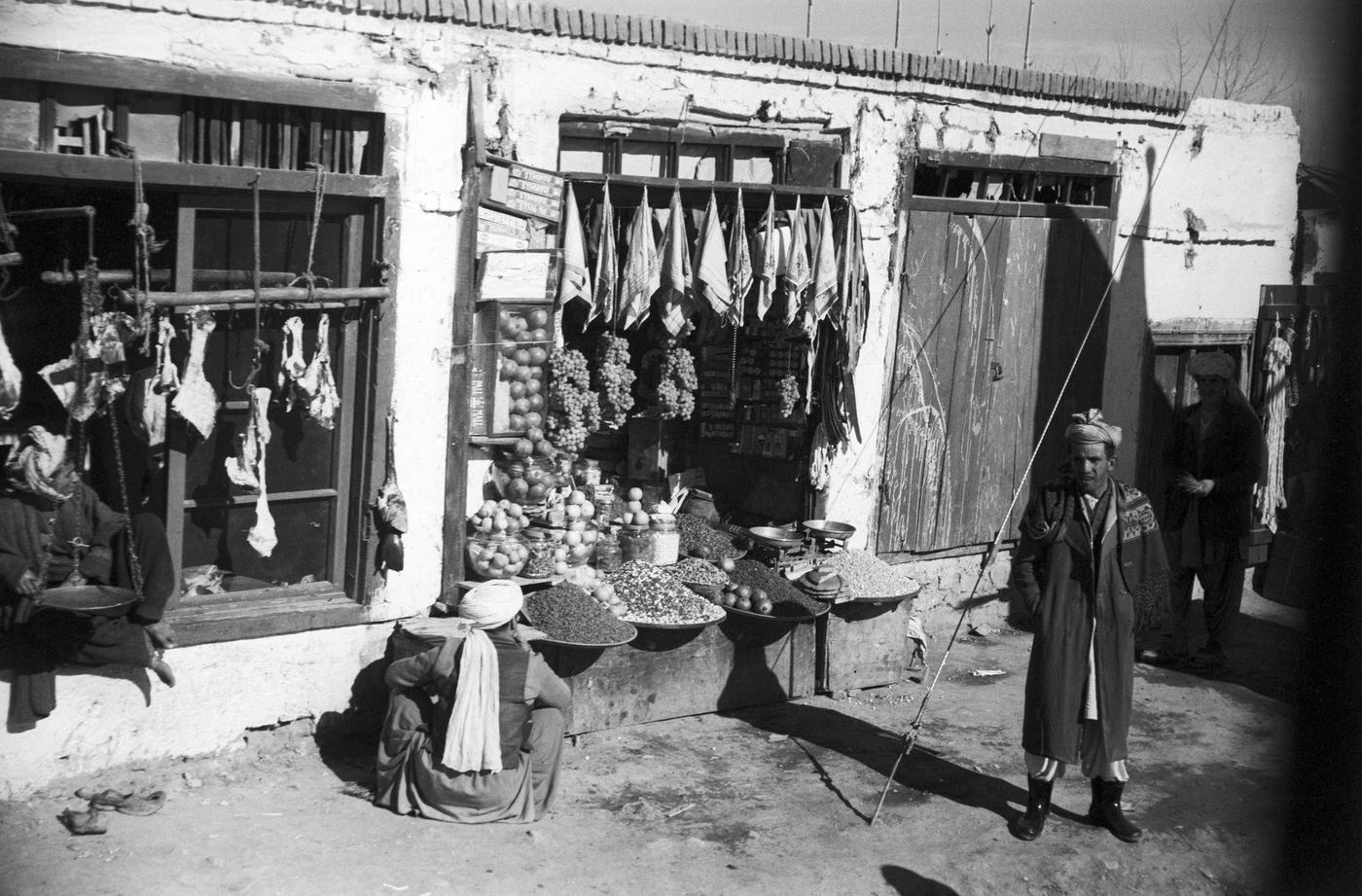
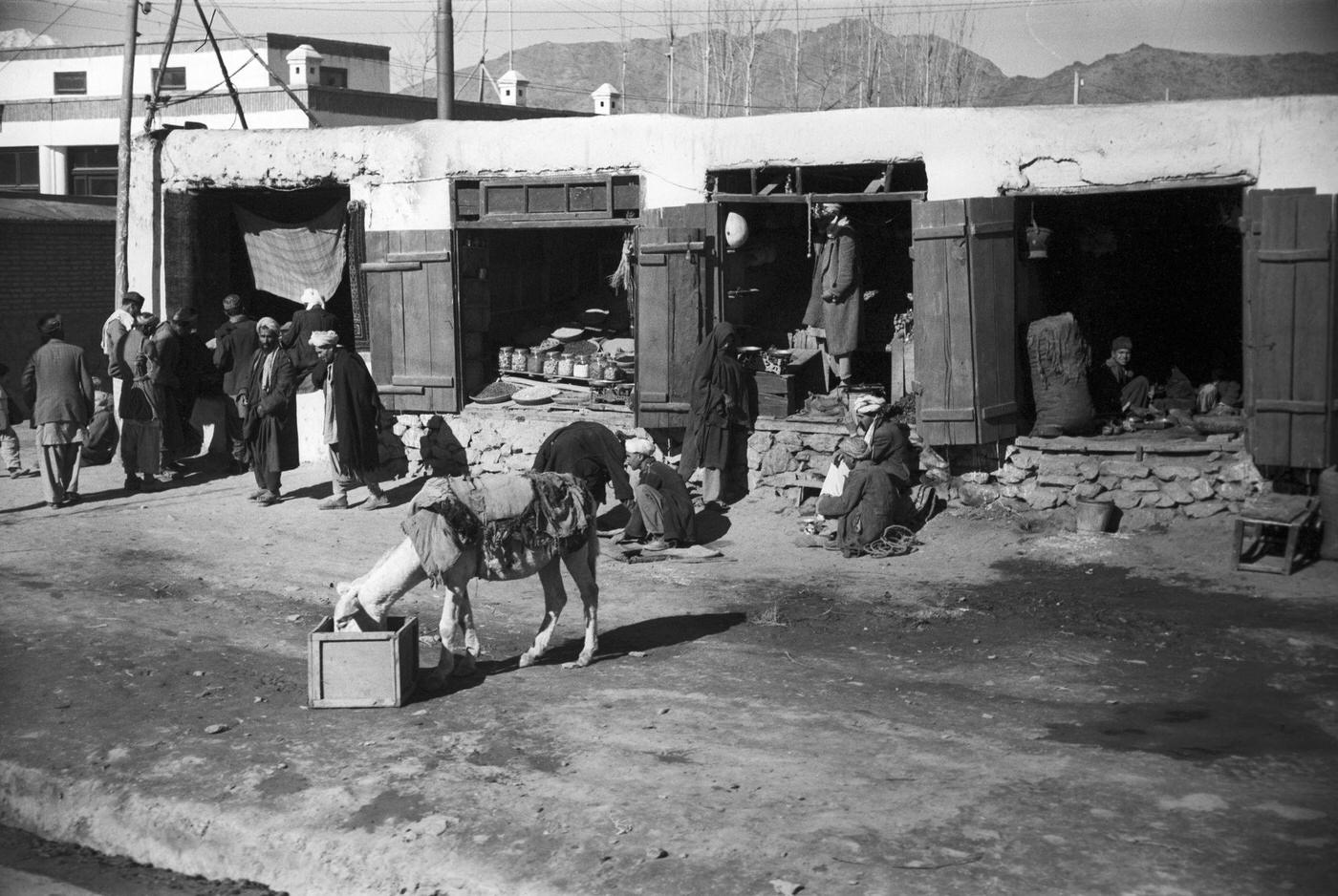
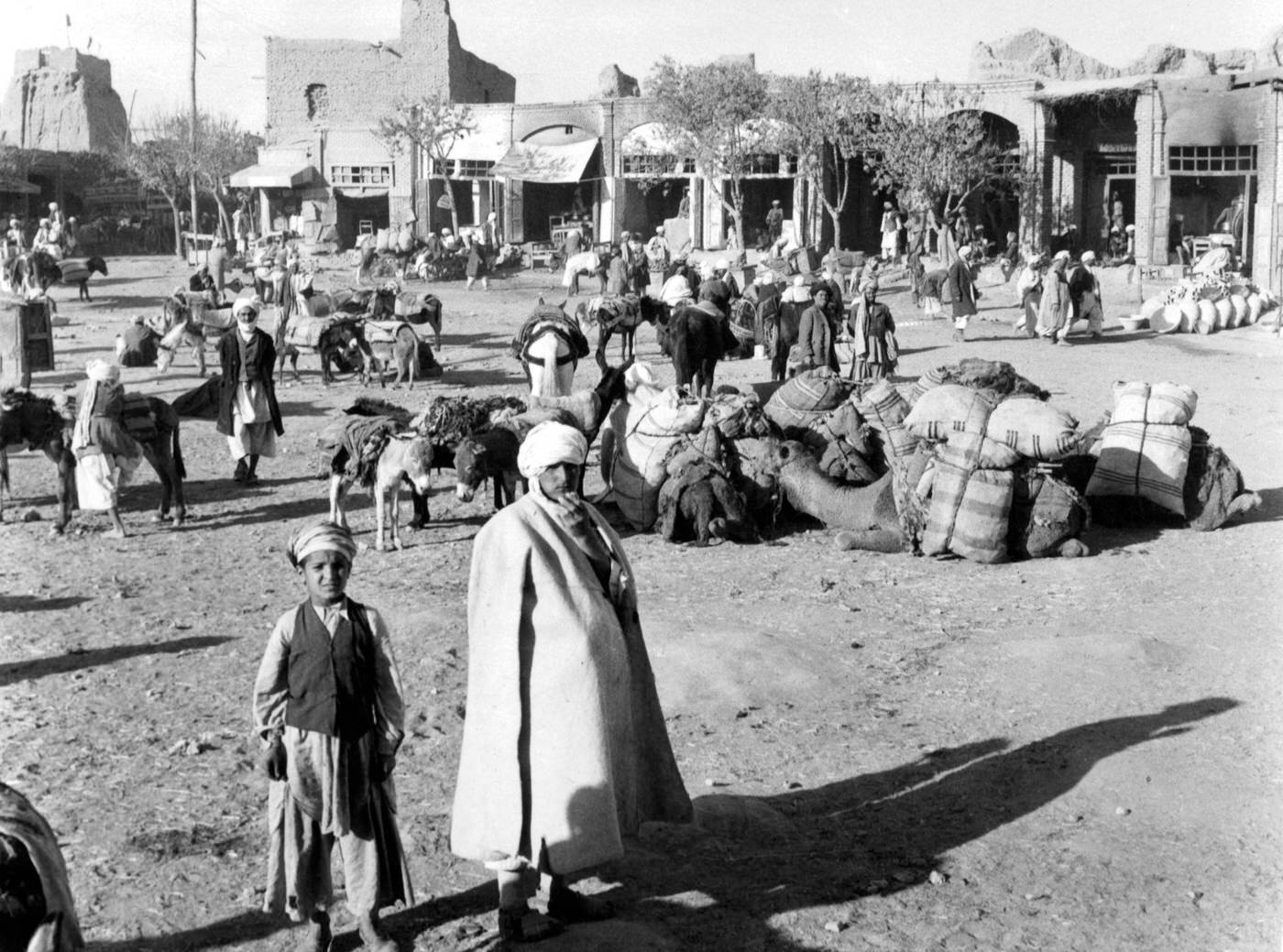
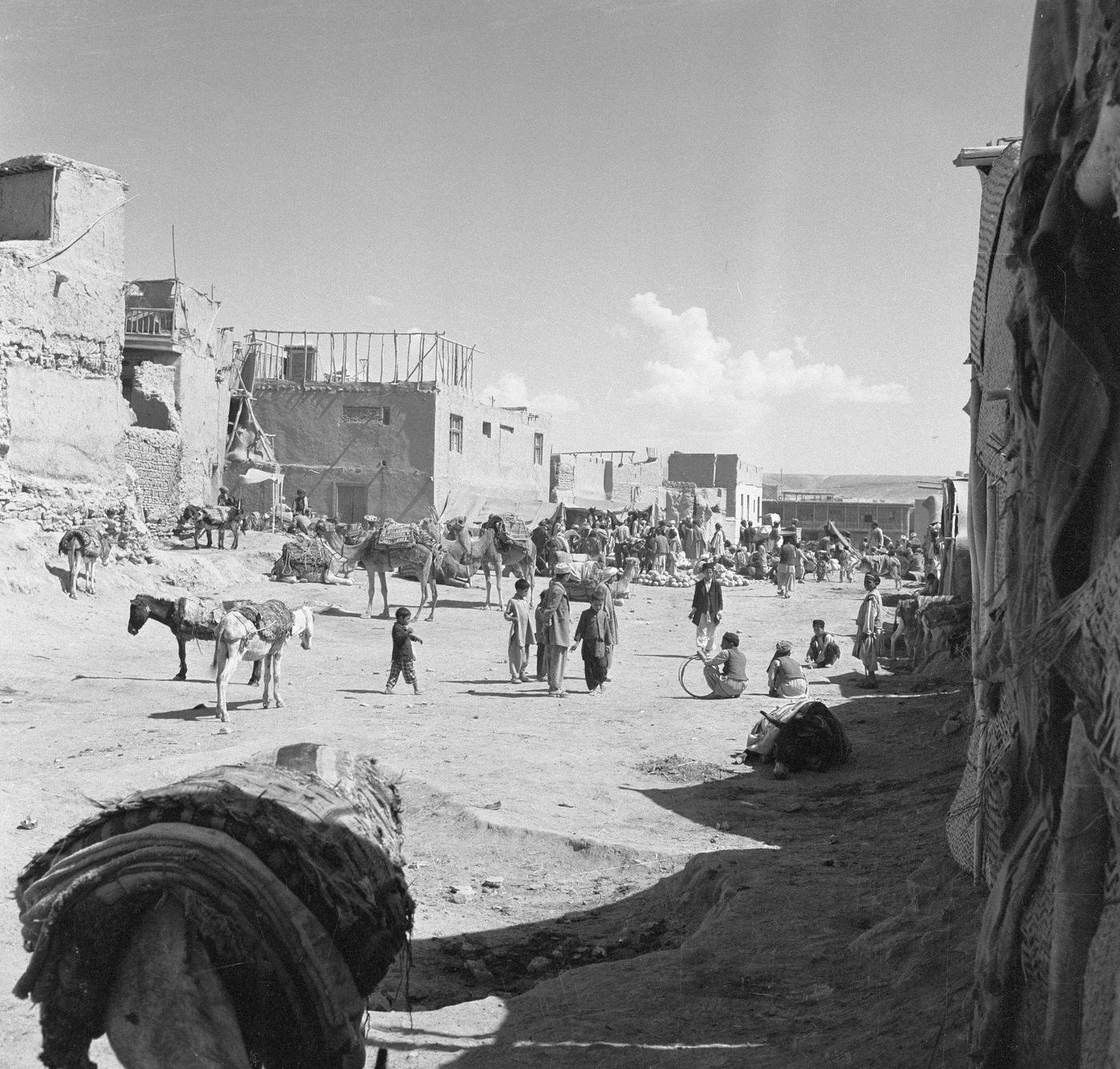
Trade routes through the Khyber Pass had been active for thousands of years, and in 1955 they were still busy. Camel caravans moved goods between Afghanistan and neighboring regions just as they had for centuries. Outdoor markets in Afghan towns sold everything from spices and fabric to livestock. These markets were the economic heartbeat of local communities, drawing traders and buyers from surrounding villages and rural areas.


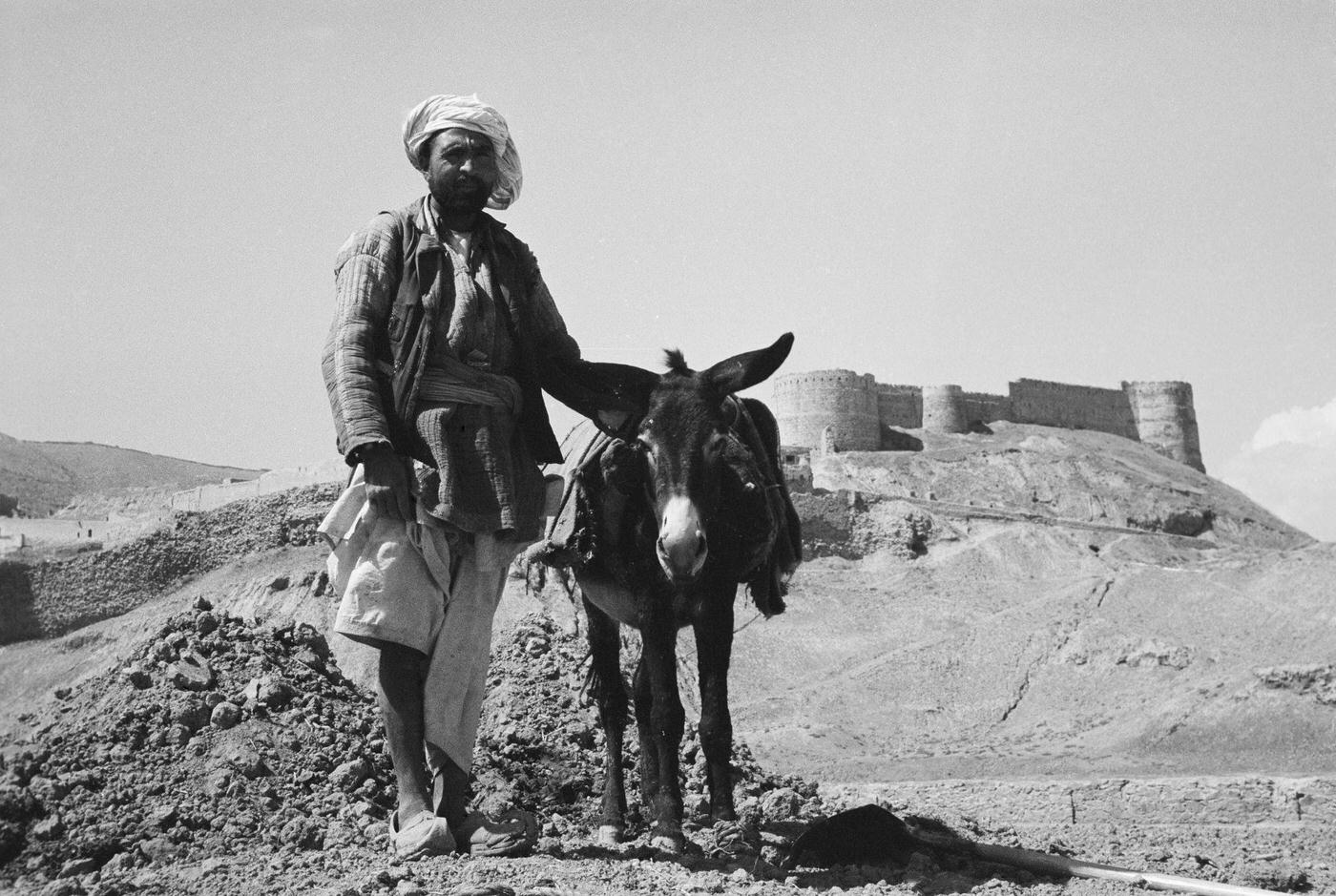
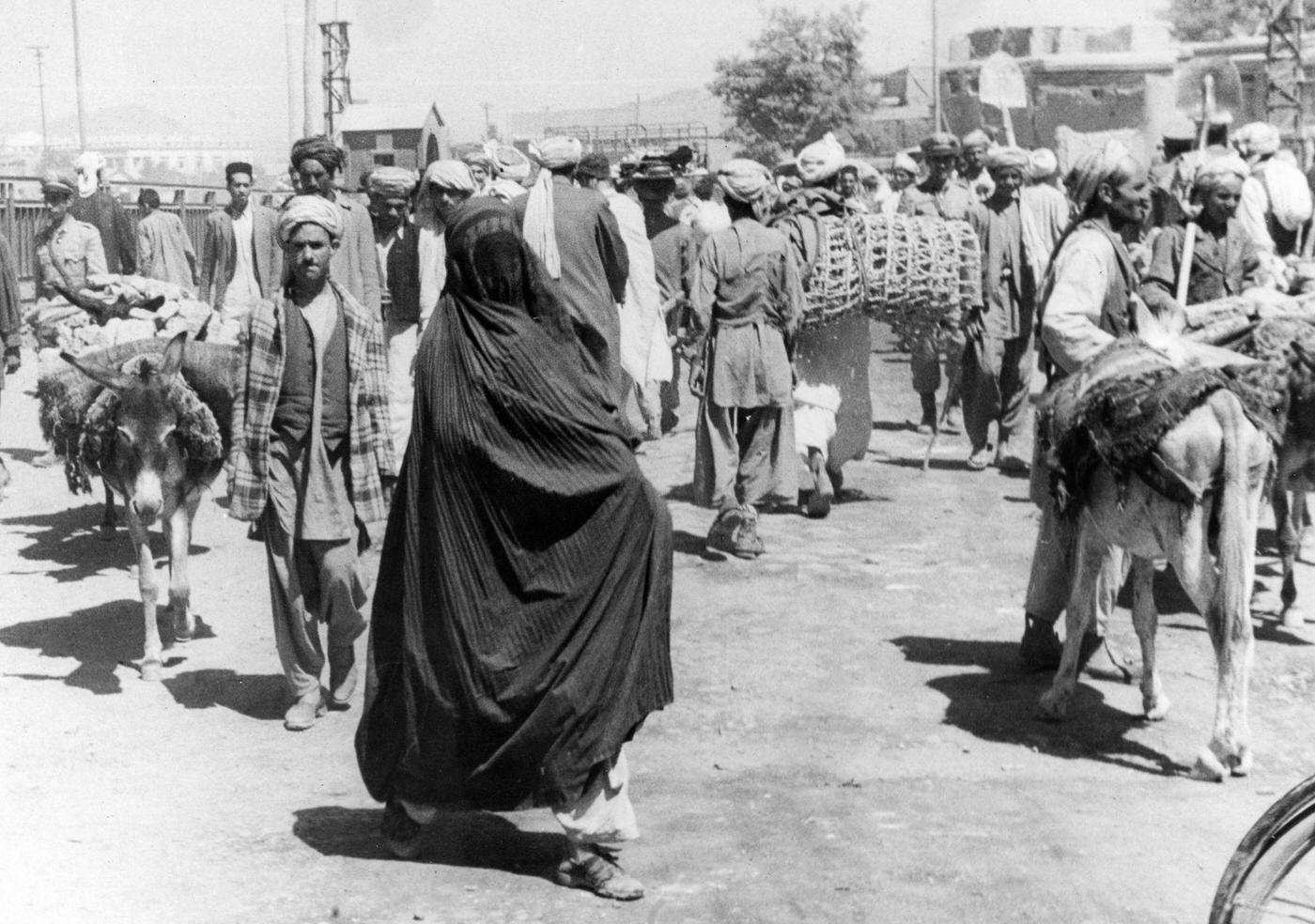
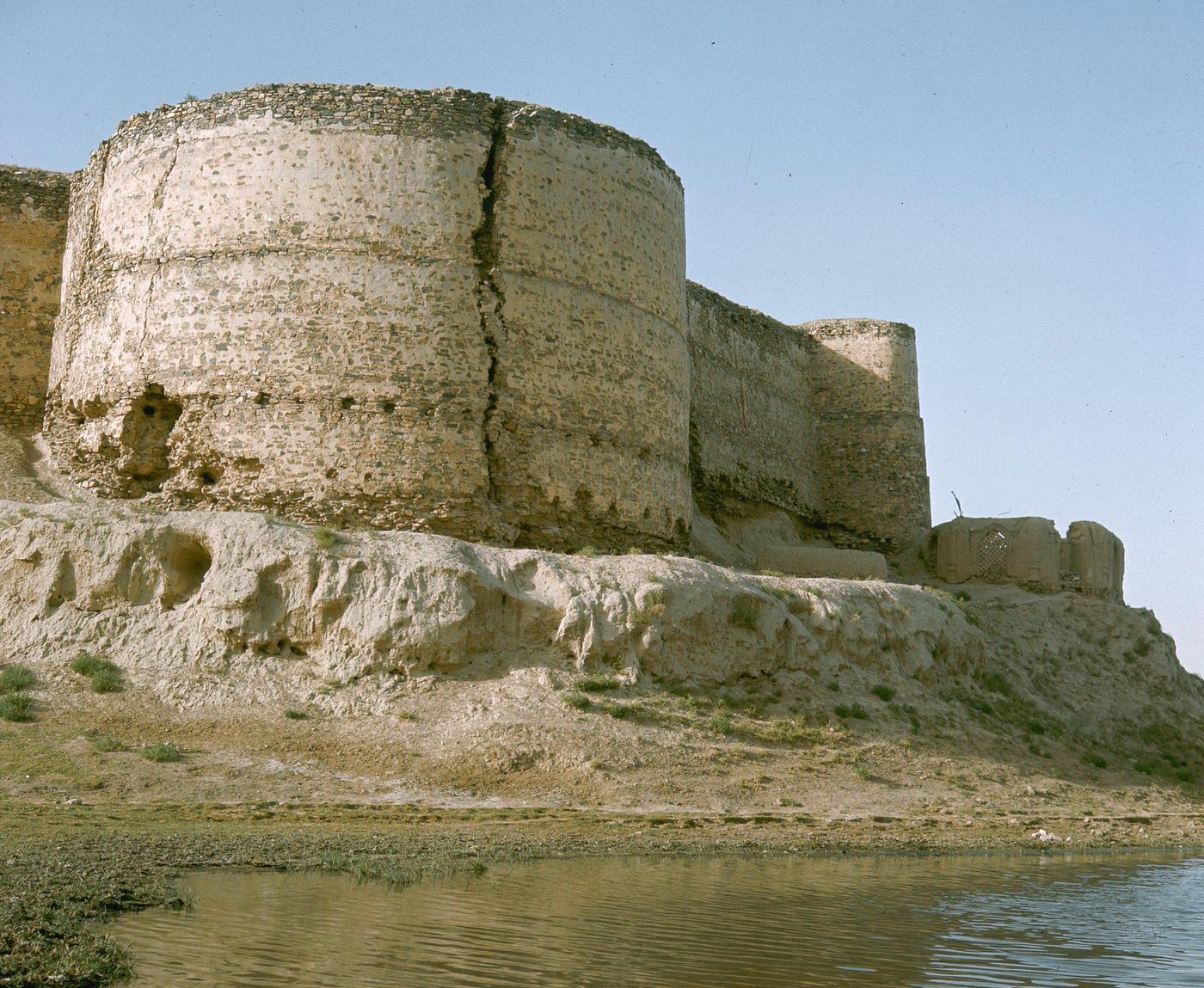
Outside Kabul’s growing urban core, farming life dominated. Donkeys were essential working animals, used to transport goods and carry loads across terrain that wheeled vehicles could not easily manage. The Bala Hissar fortress — a centuries-old structure overlooking Kabul — served as a backdrop to everyday rural life, a constant reminder of the country’s deep history even as construction crews worked nearby.


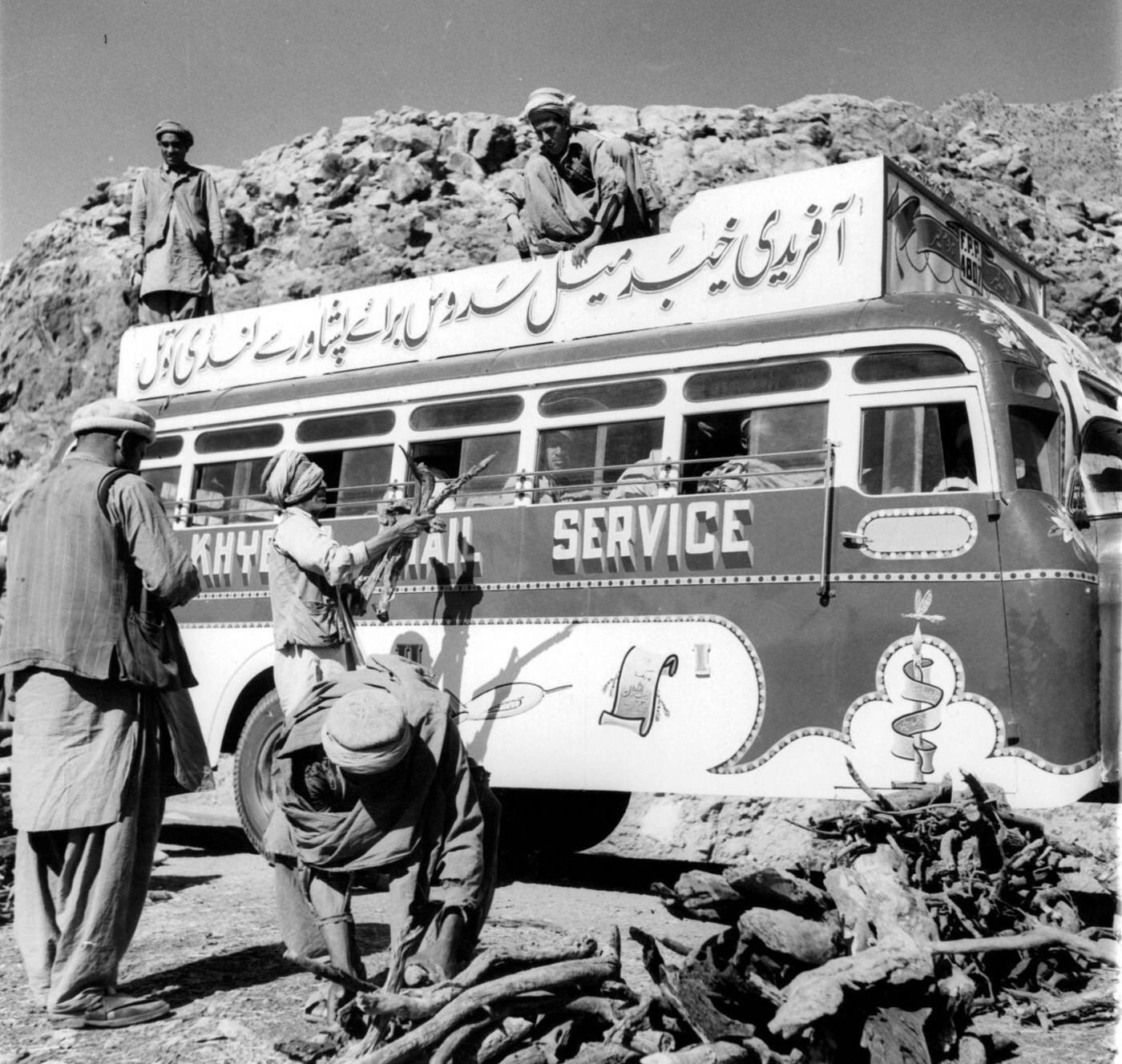
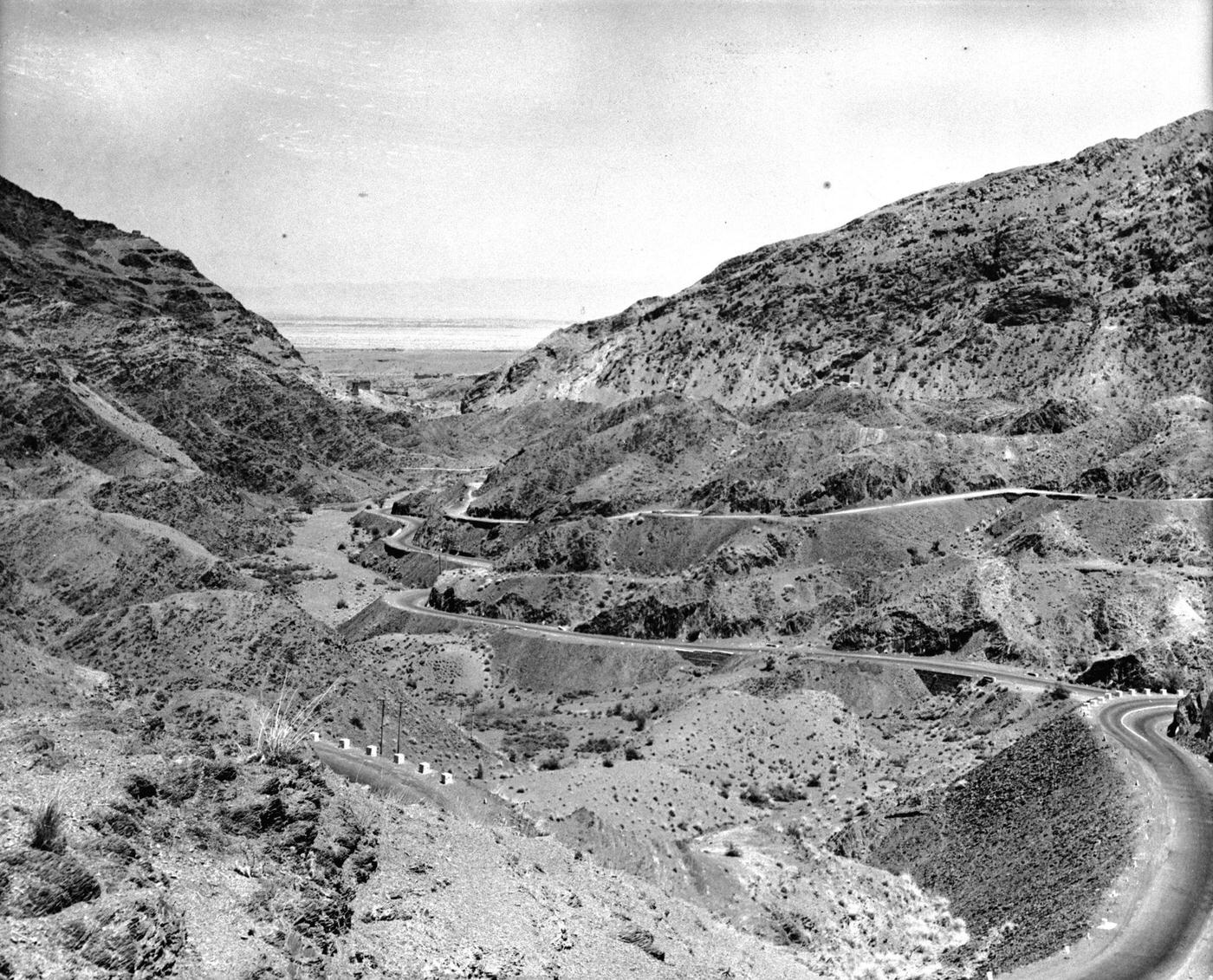
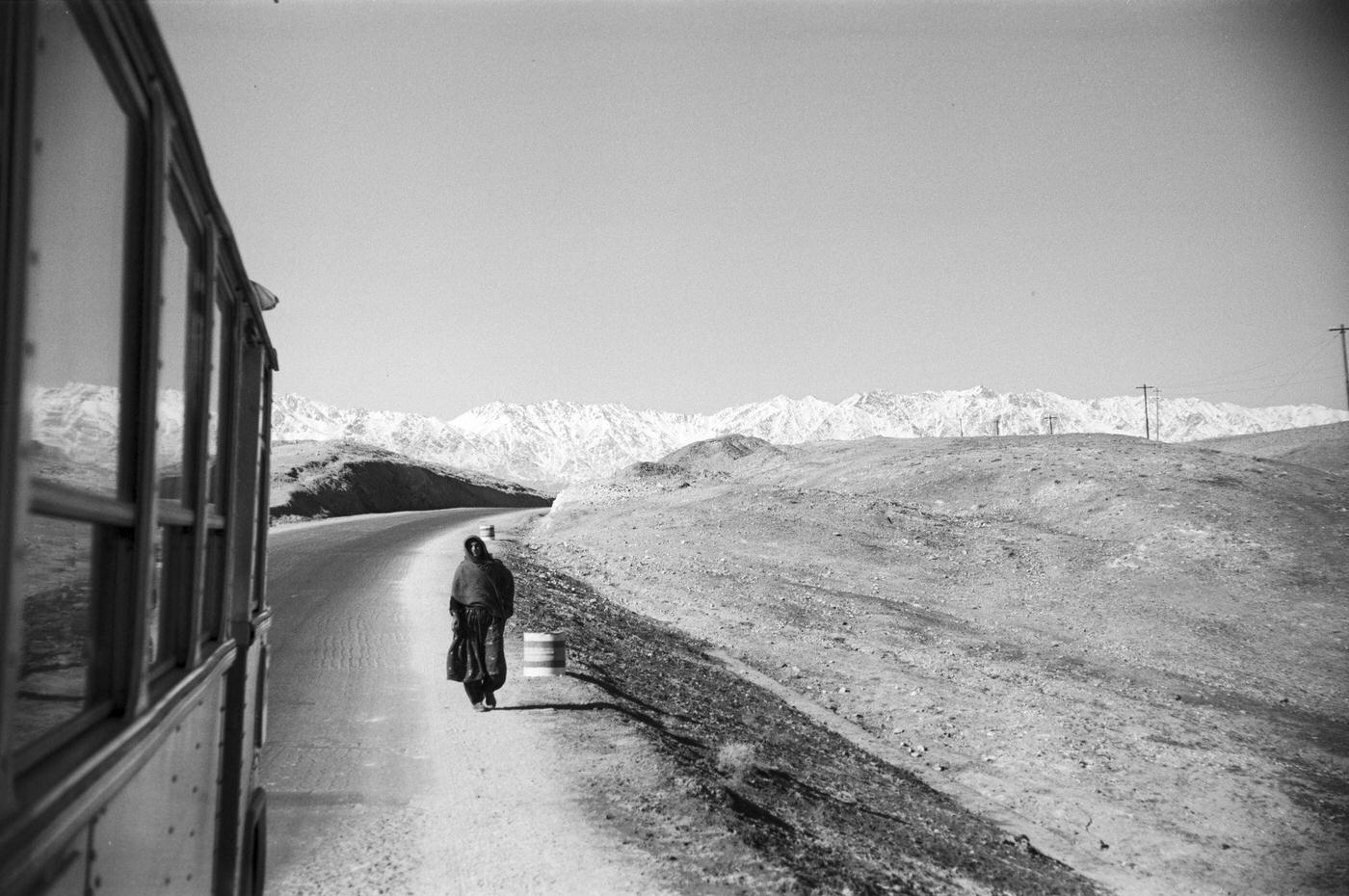
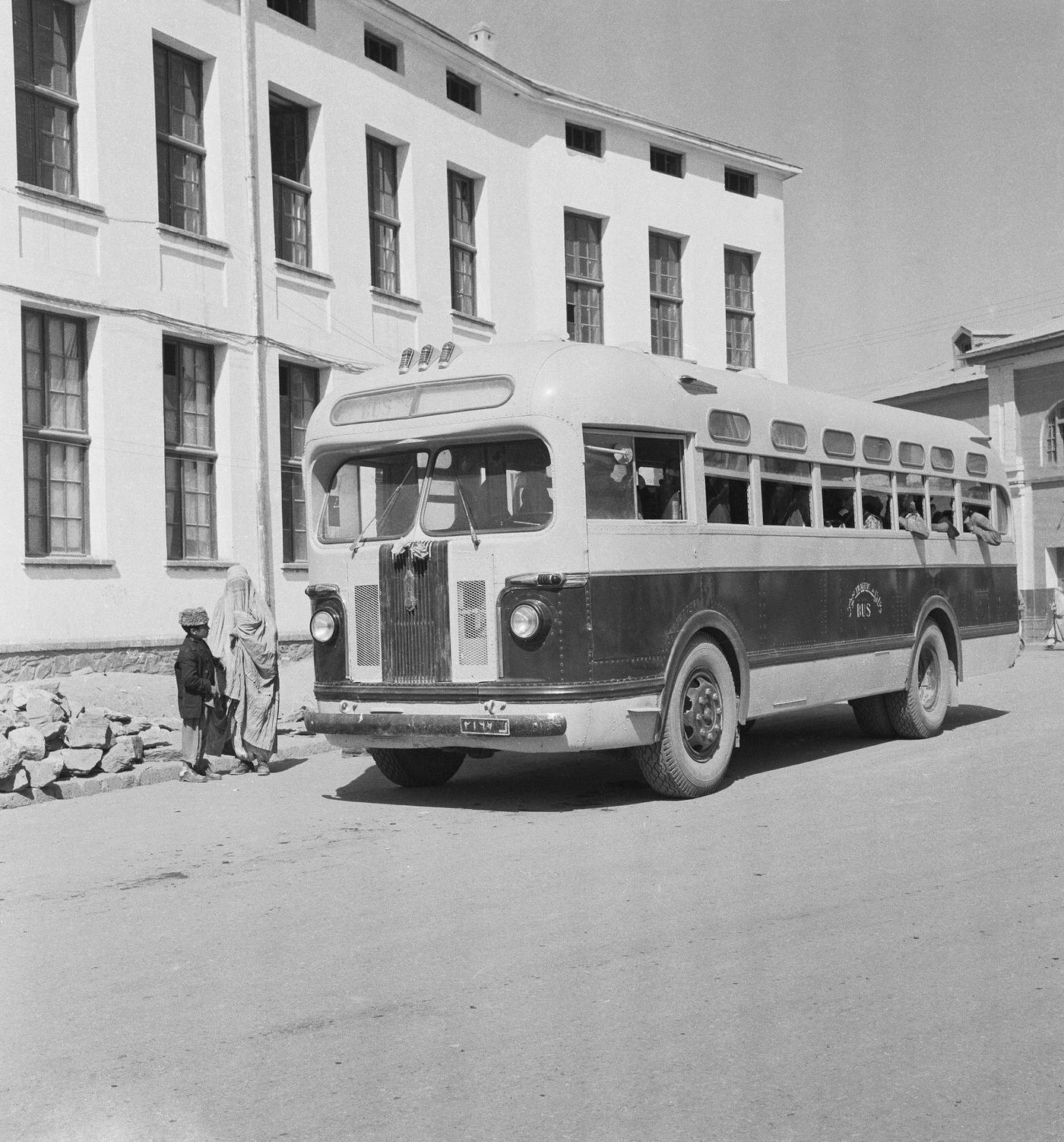
The Khyber Pass was one of the most strategically important corridors in the region. It connected Afghanistan to what is now Pakistan, serving as a gateway for traders, travelers, and armies for millennia. By the 1950s, motorized buses had begun making the journey alongside camel caravans, a scene that captured the decade’s broader tension between old and new ways of moving through the world.

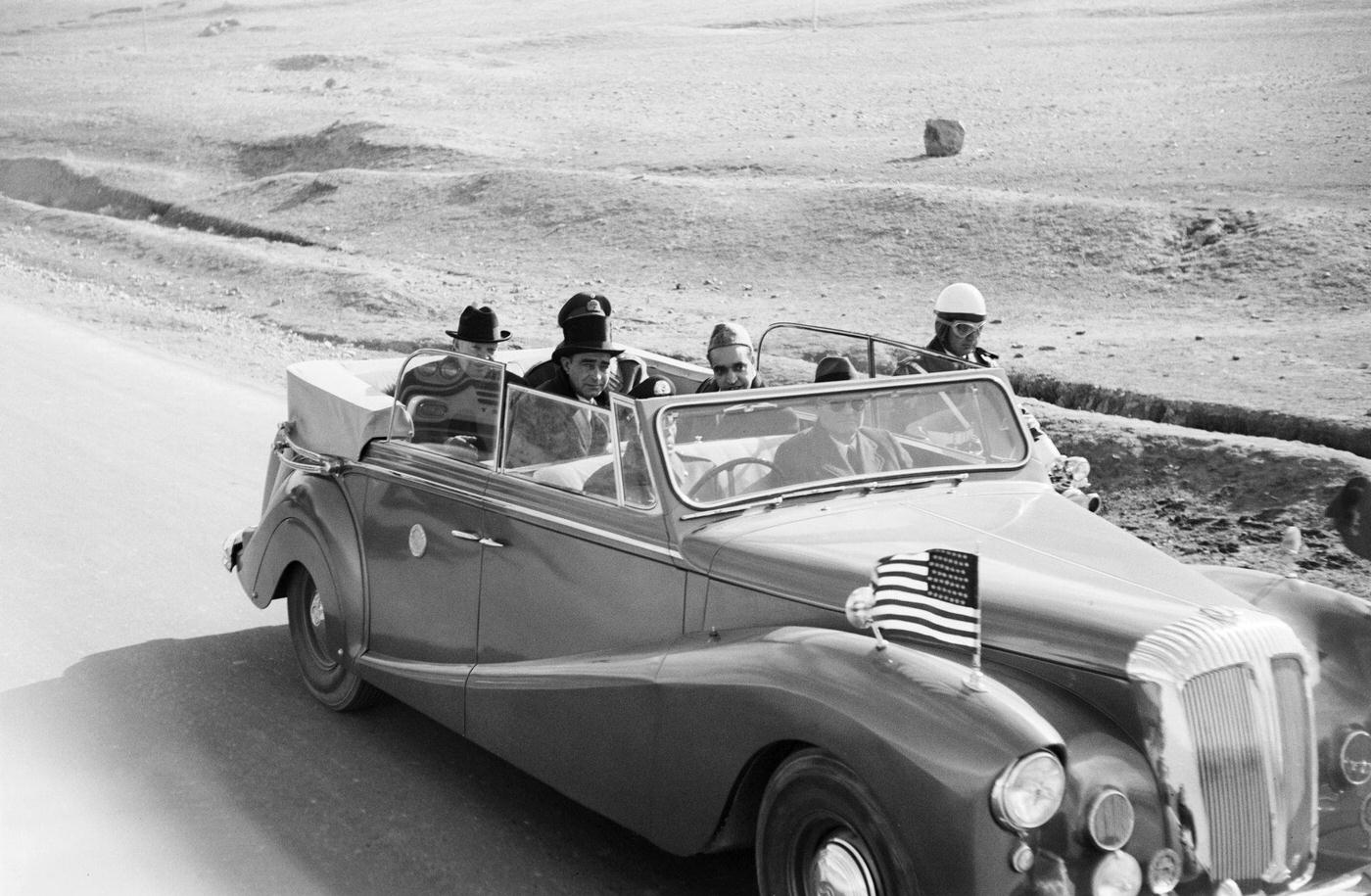
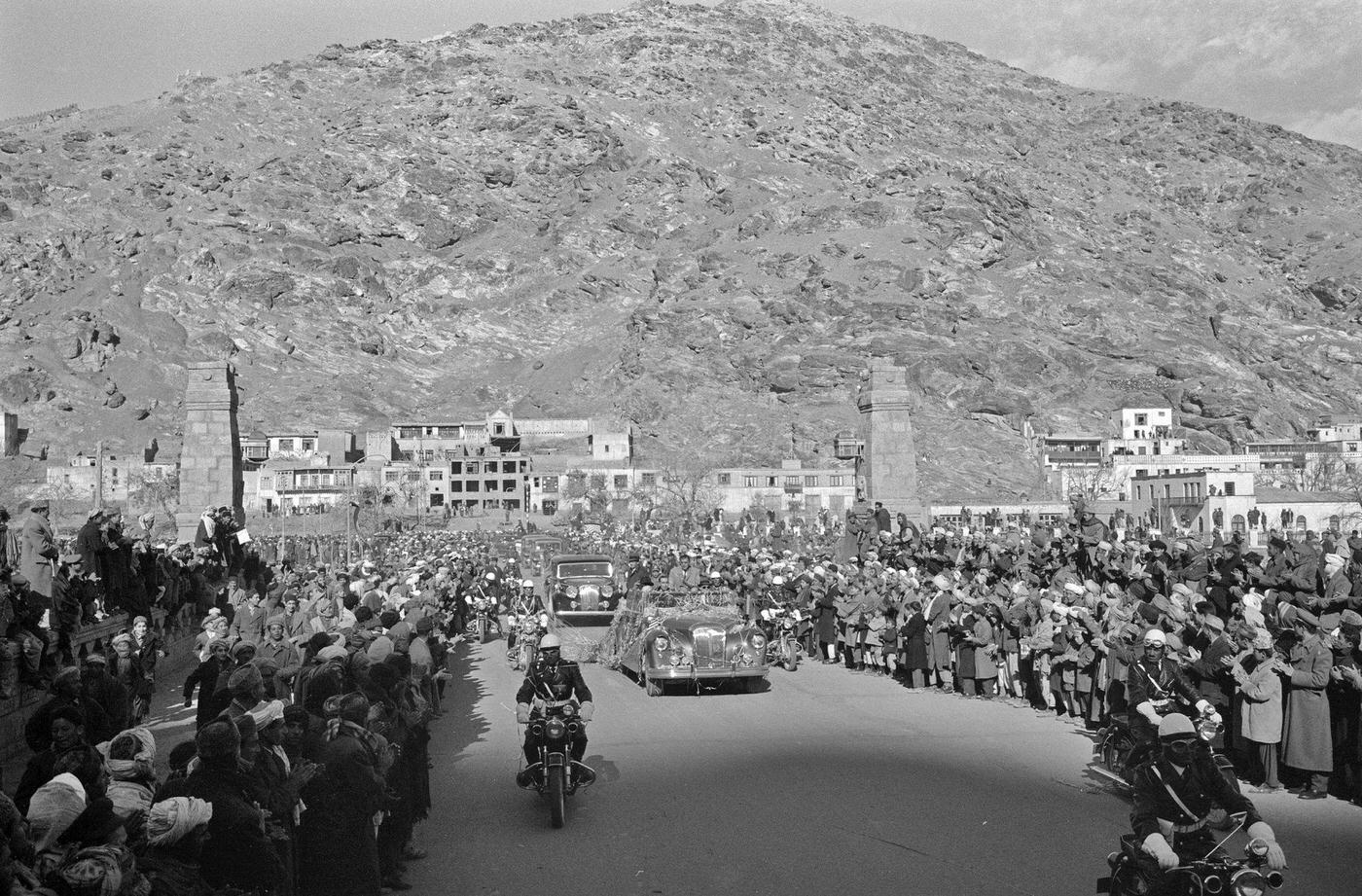
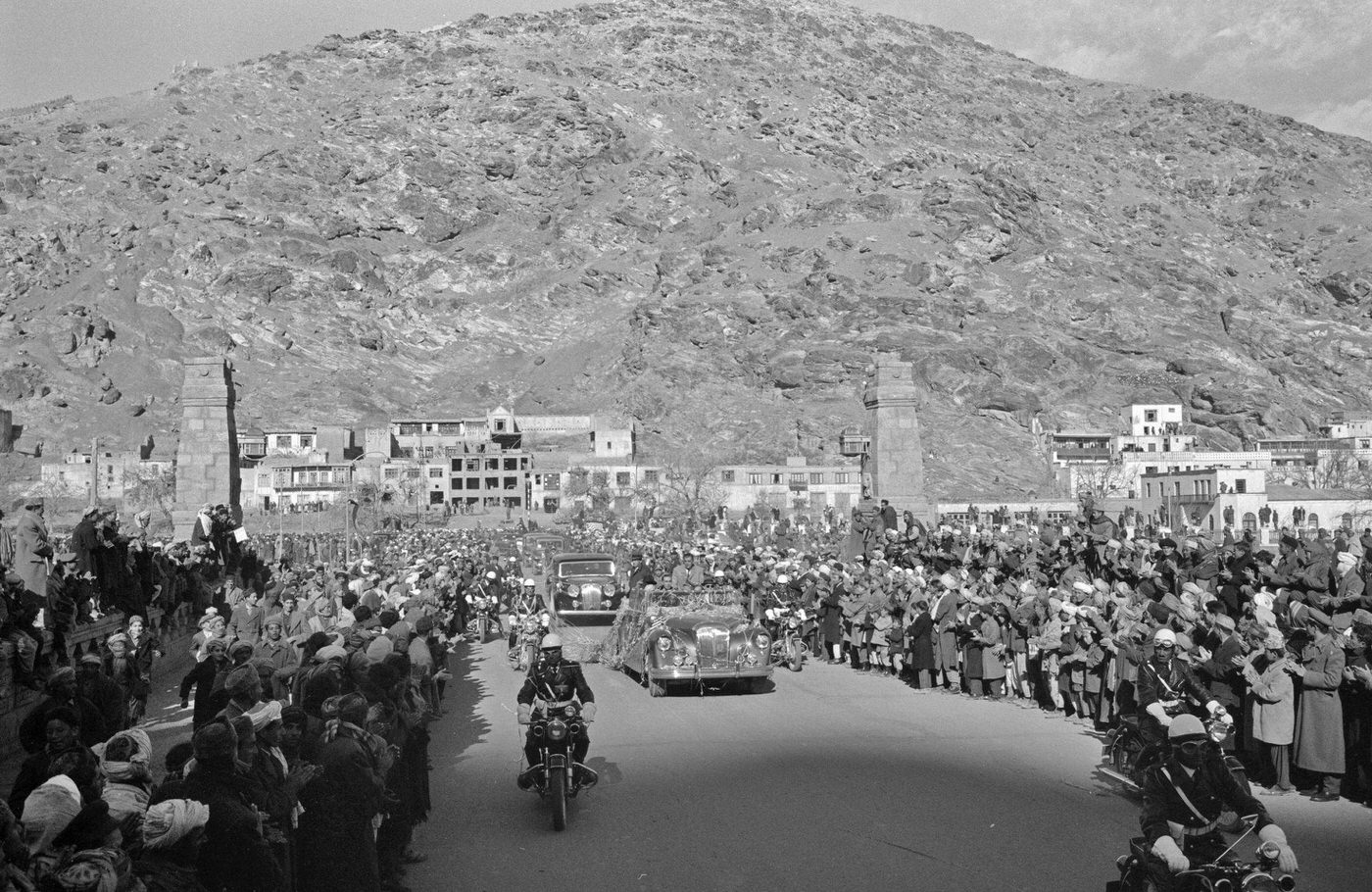
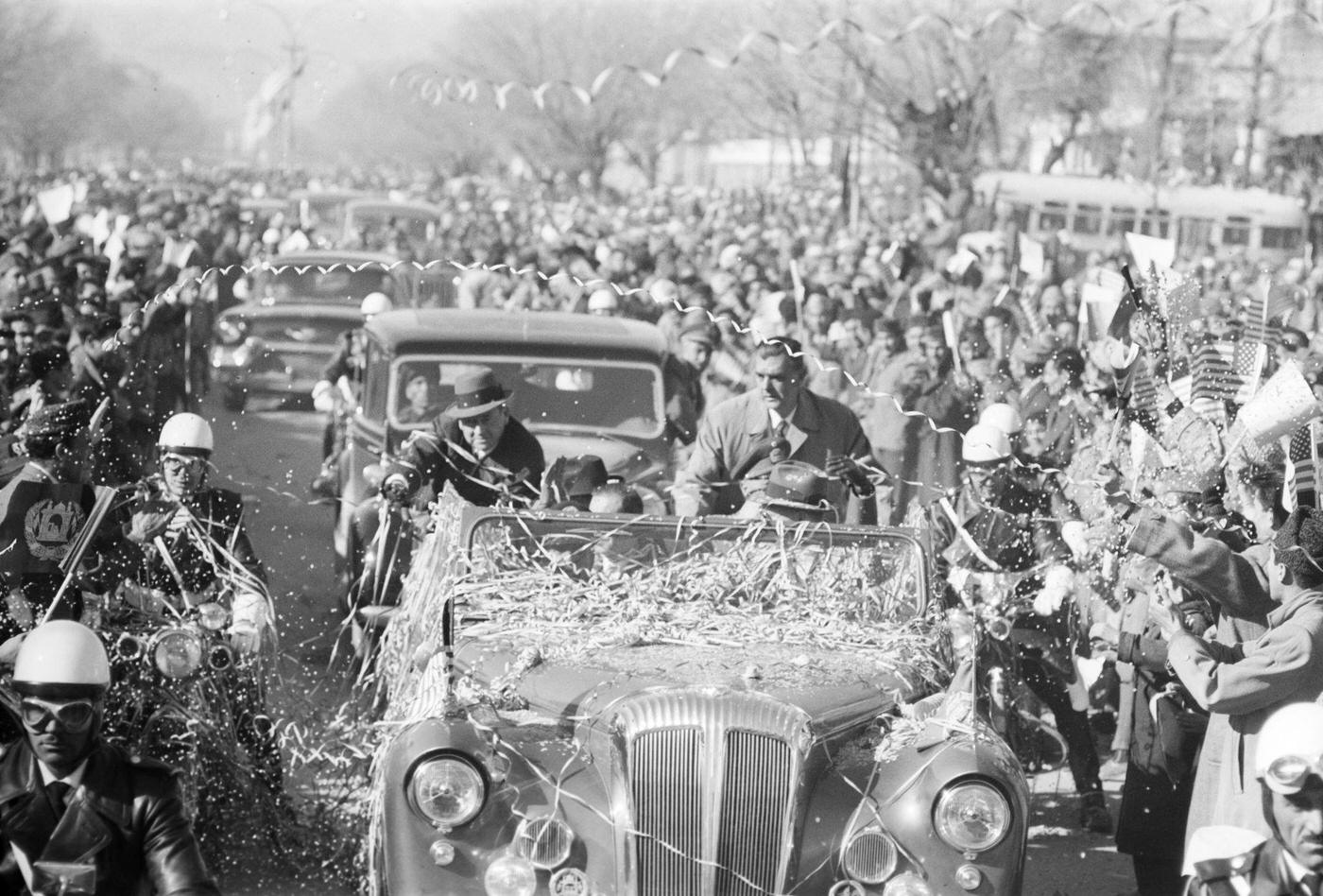
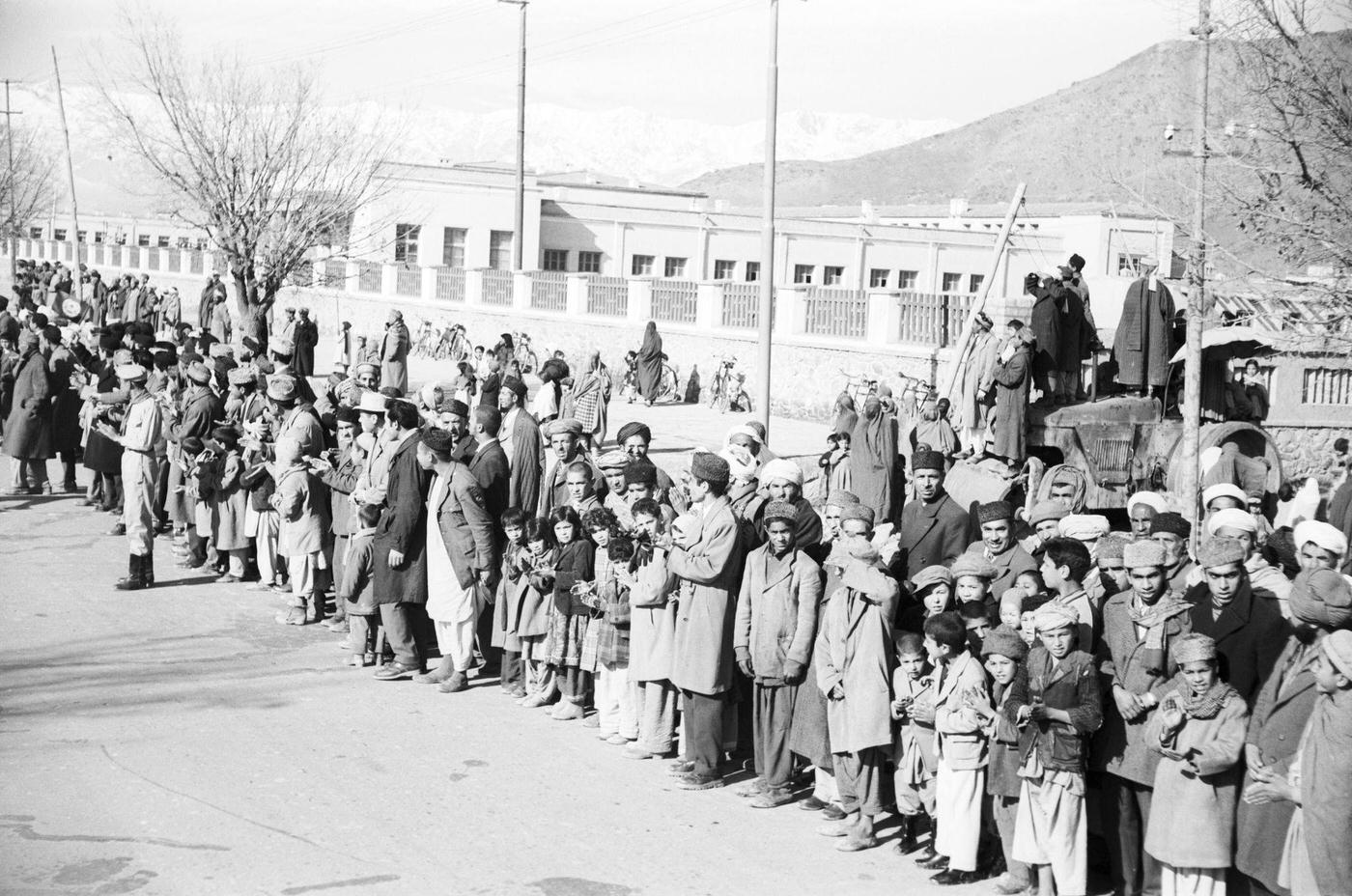
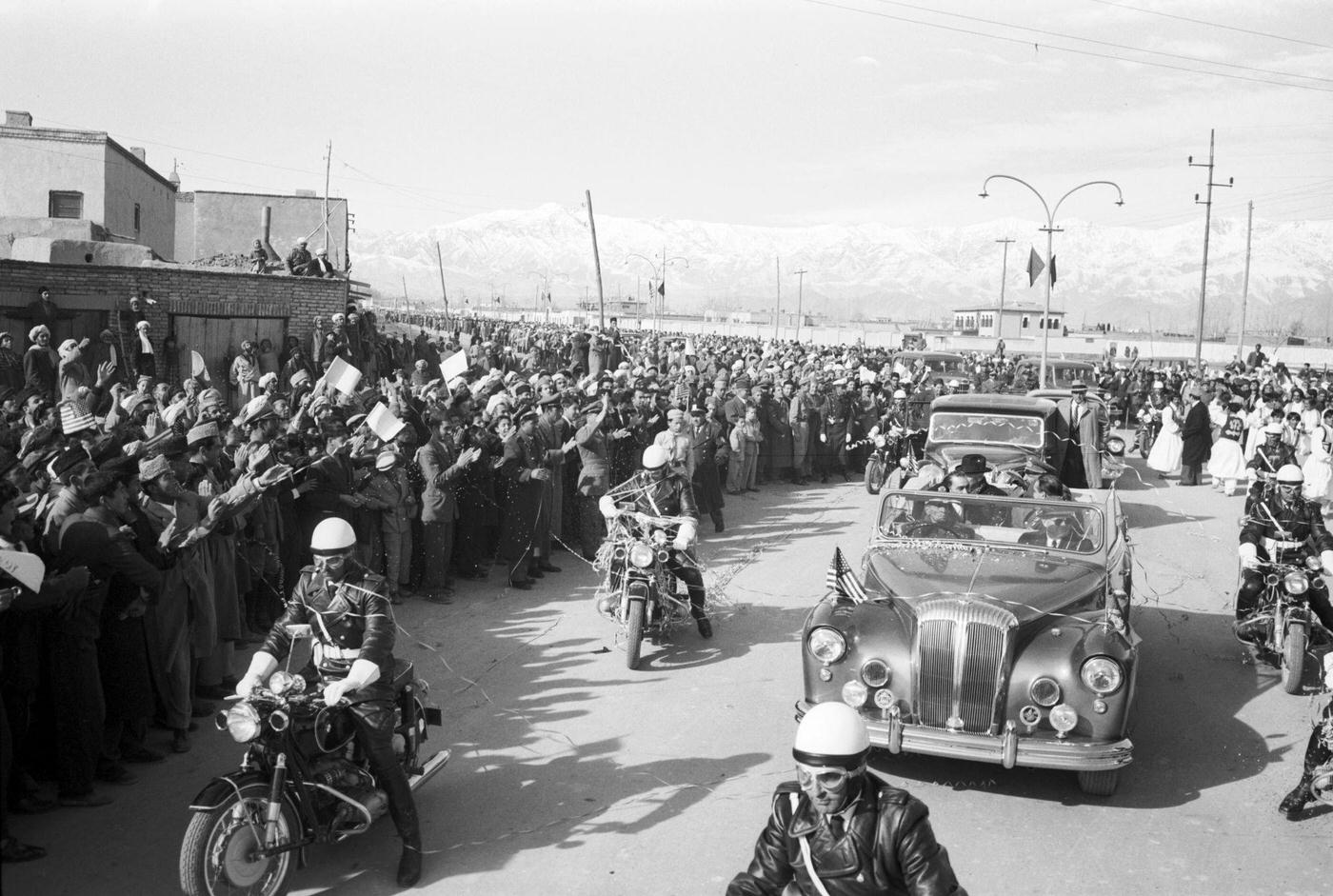
In December 1959, U.S. President Dwight D. Eisenhower visited Kabul, making him the first sitting American president to set foot in Afghanistan. The visit was part of a broader diplomatic tour of Asia and the Middle East. Massive crowds lined the streets of Kabul for his motorcade, and the Afghan government treated the occasion as a major diplomatic milestone. The visit underscored just how central Afghanistan had become in Cold War geopolitics.


Eisenhower’s motorcade through Kabul drew enormous crowds. Afghans turned out in large numbers along the route, many of them waving as his vehicle passed through the city’s main streets. The event was heavily photographed and reported on internationally, projecting an image of Afghanistan as a stable, welcoming nation open to engagement with the Western world.


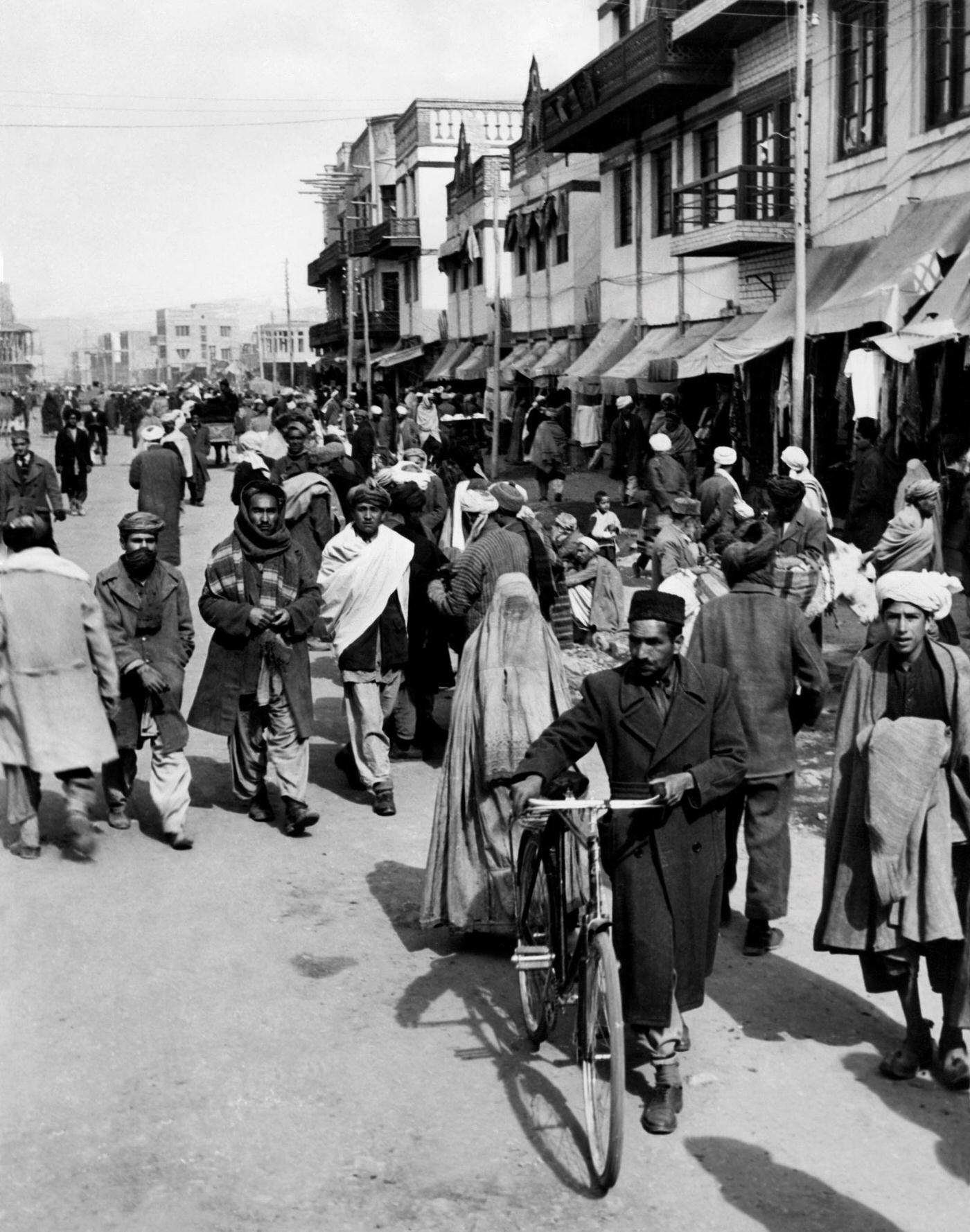
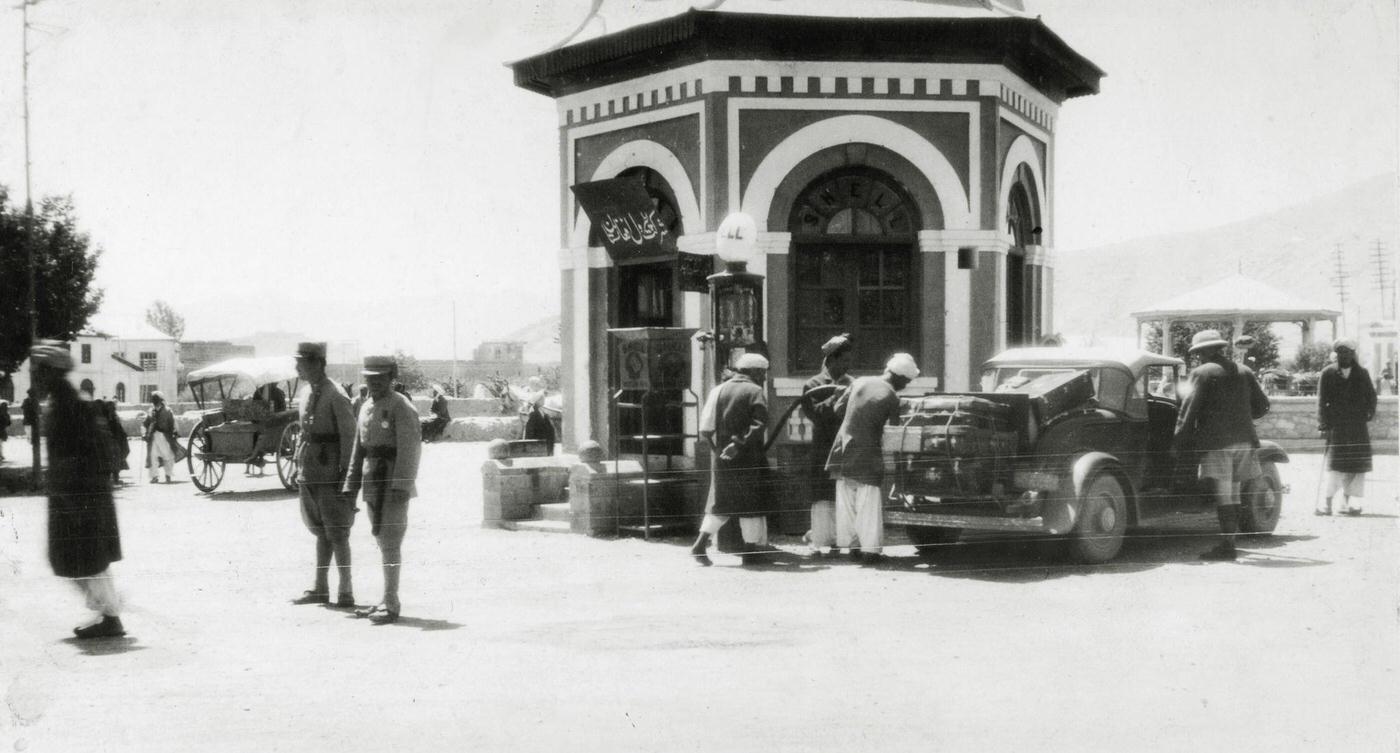
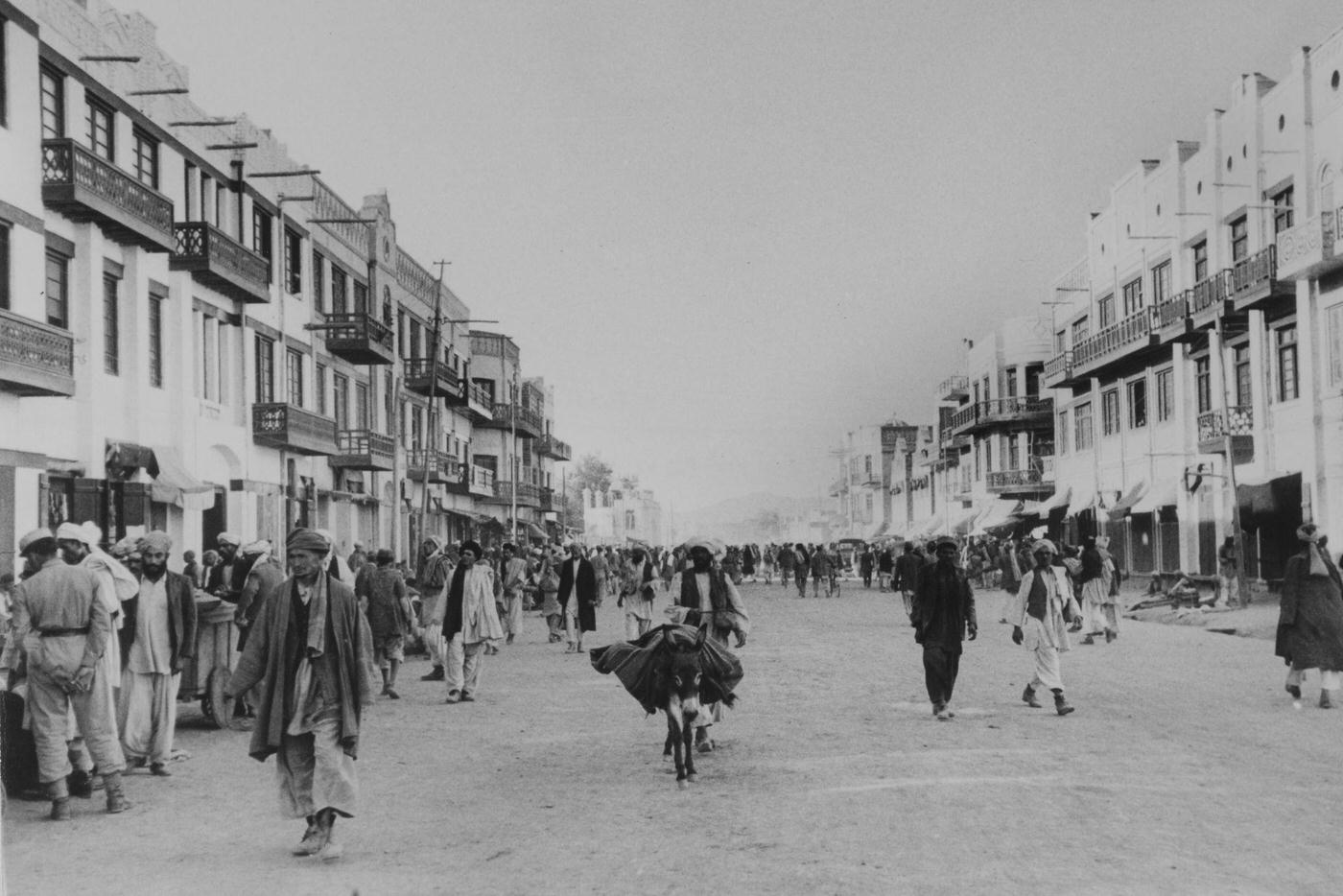
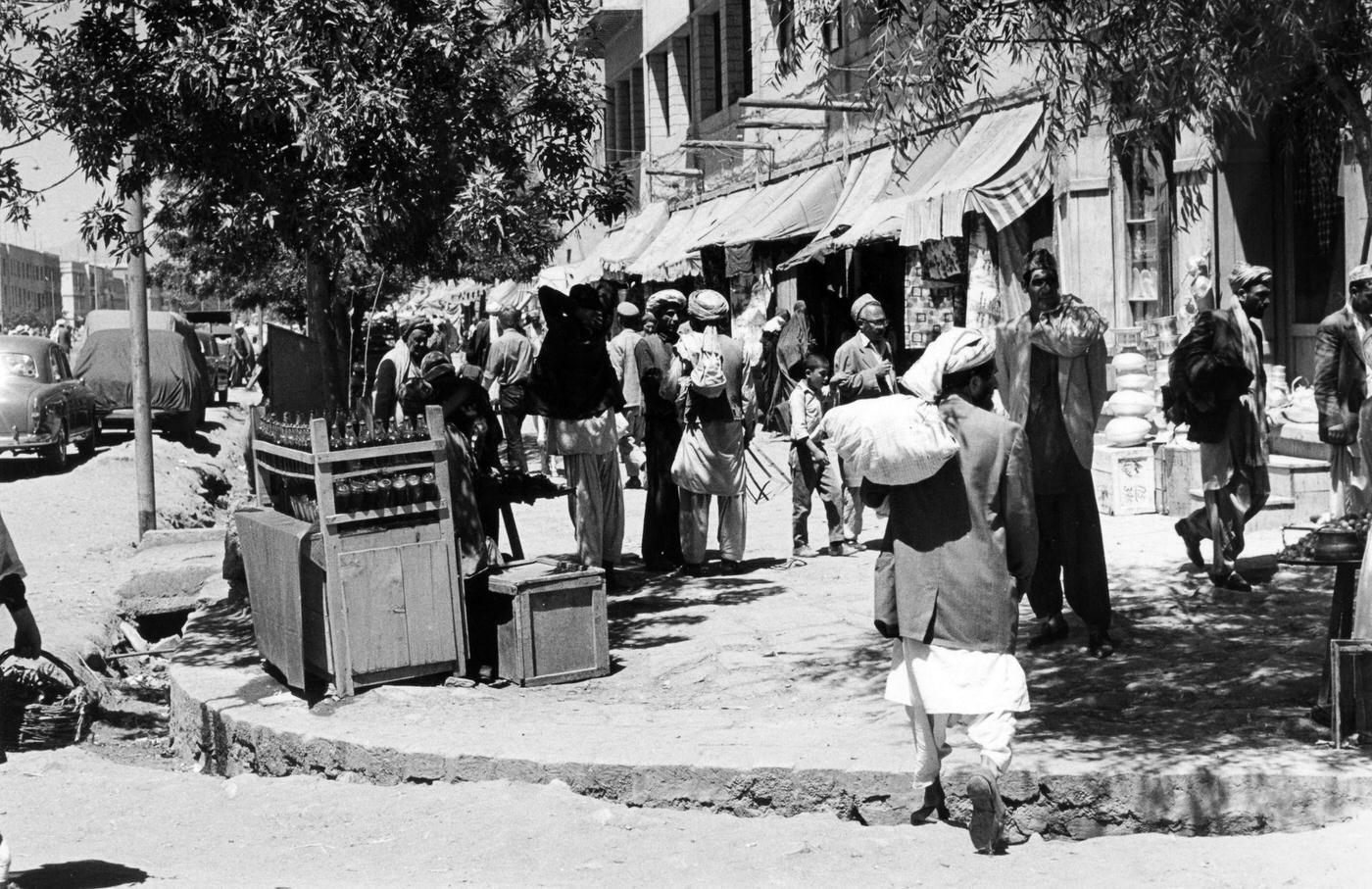
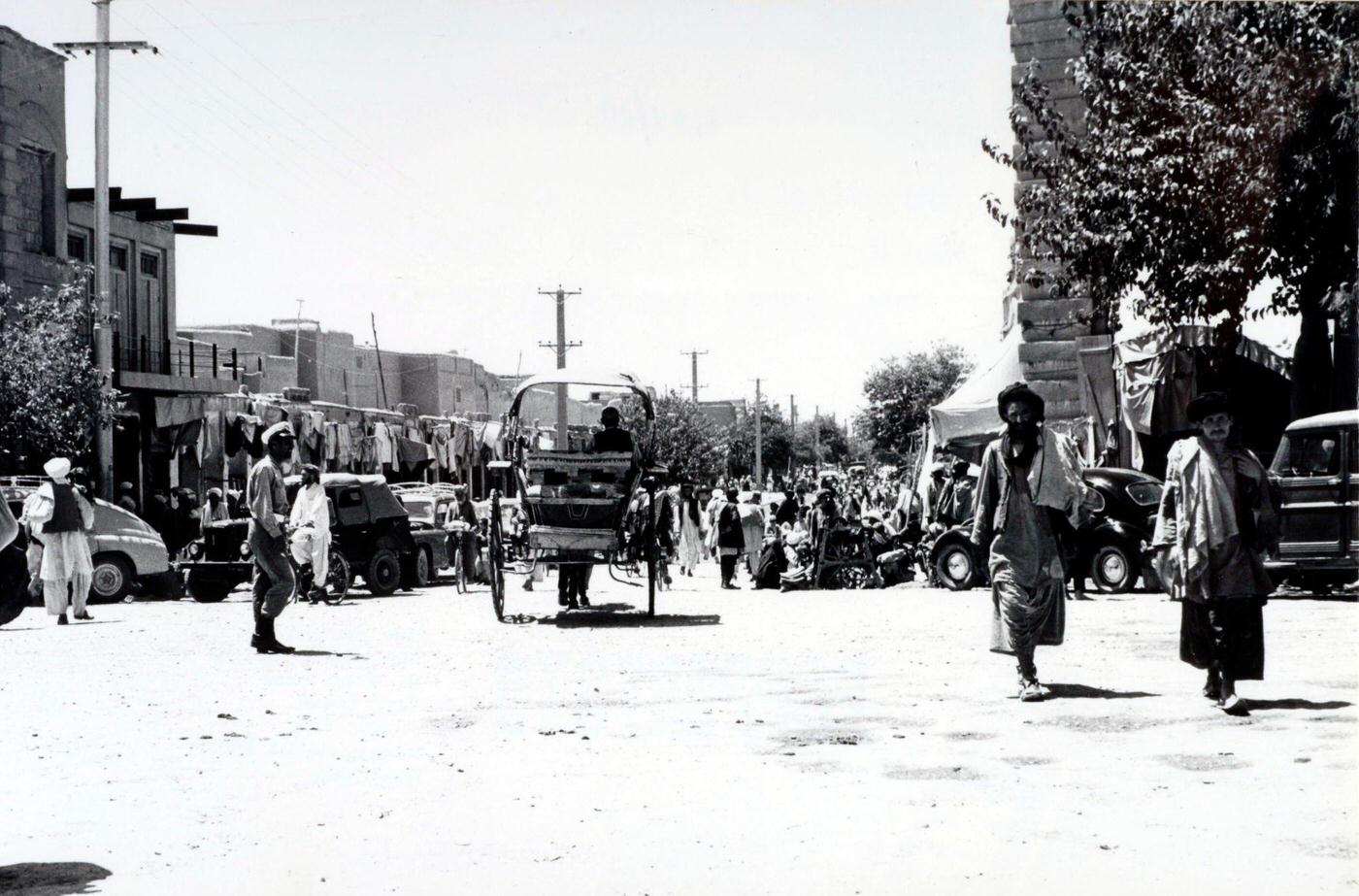
Kabul’s streets in the mid-1950s were crowded and busy. Cars had arrived in meaningful numbers in the capital, and petrol stations were now a fixture on city streets. Pedestrians, animals, and motor vehicles all shared the same roads. Western-style clothing appeared more frequently among urban men, though traditional dress remained the norm for most of the population.

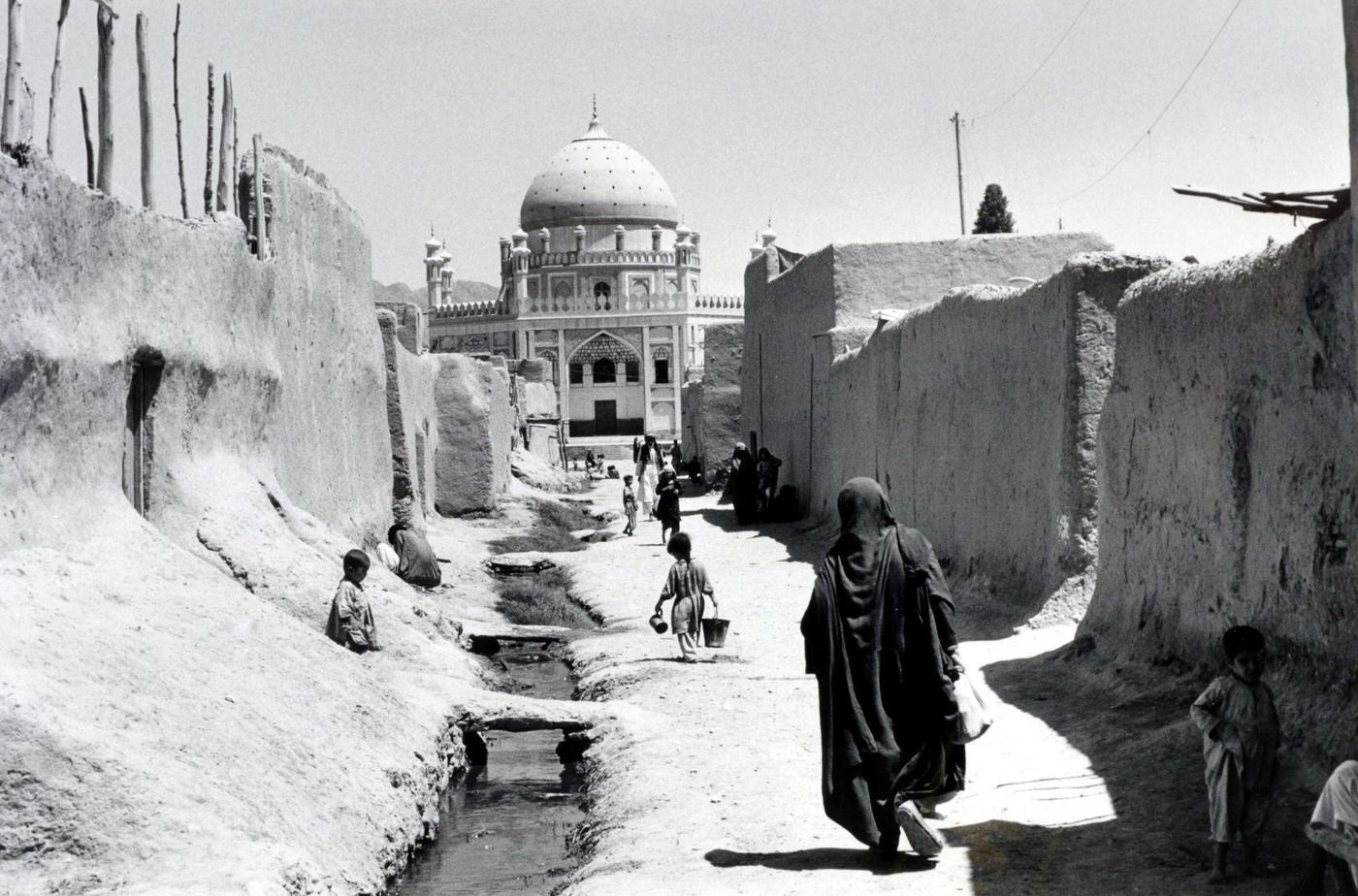
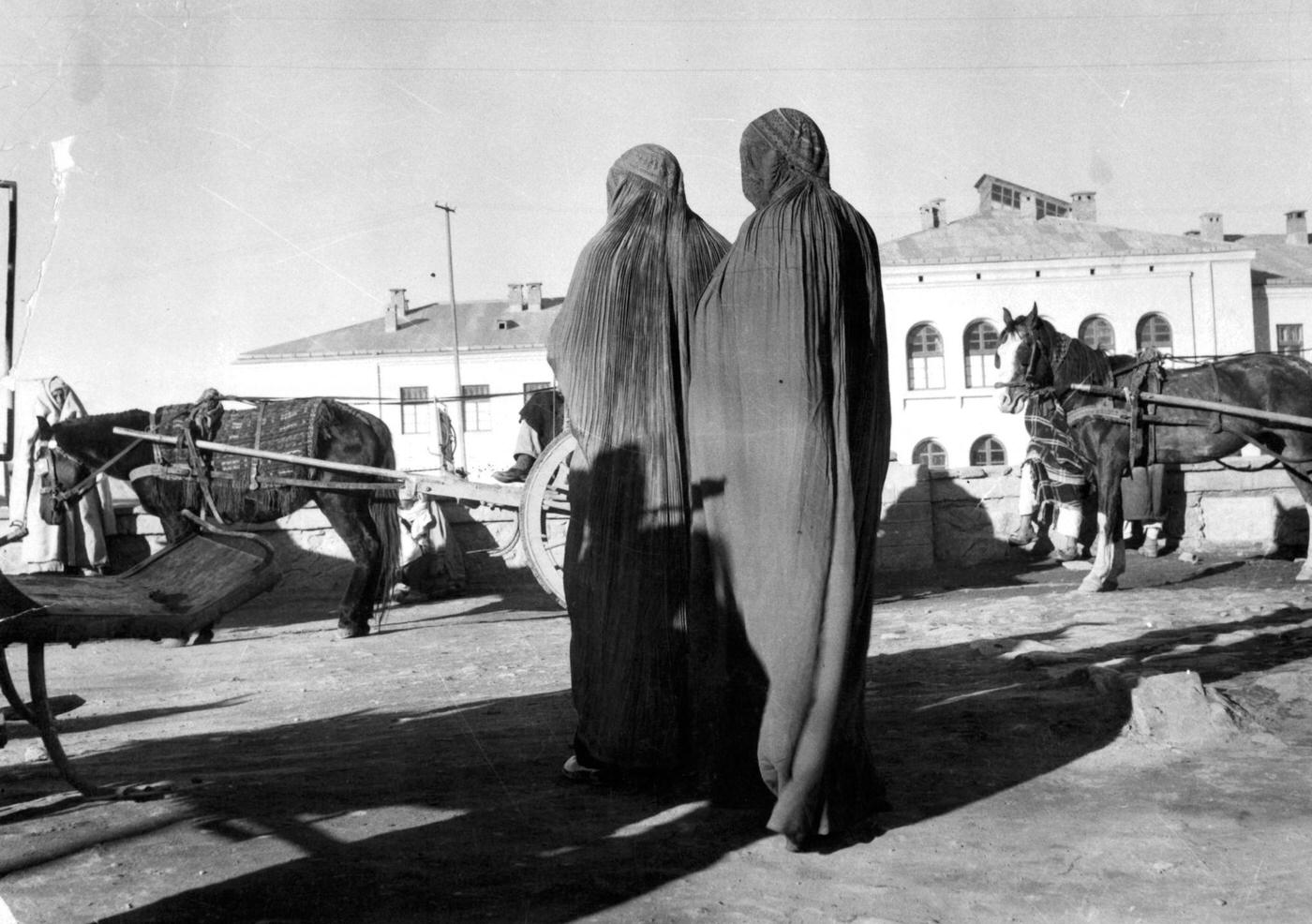
While women in Afghanistan gained the right to attend university during this decade — a first in the country’s history — public life on the streets was still overwhelmingly male. Women who did appear in urban public spaces were typically fully veiled. The burkah was standard dress for women outside the home, reflecting the strong hold of conservative Islamic practice even in a modernizing city.


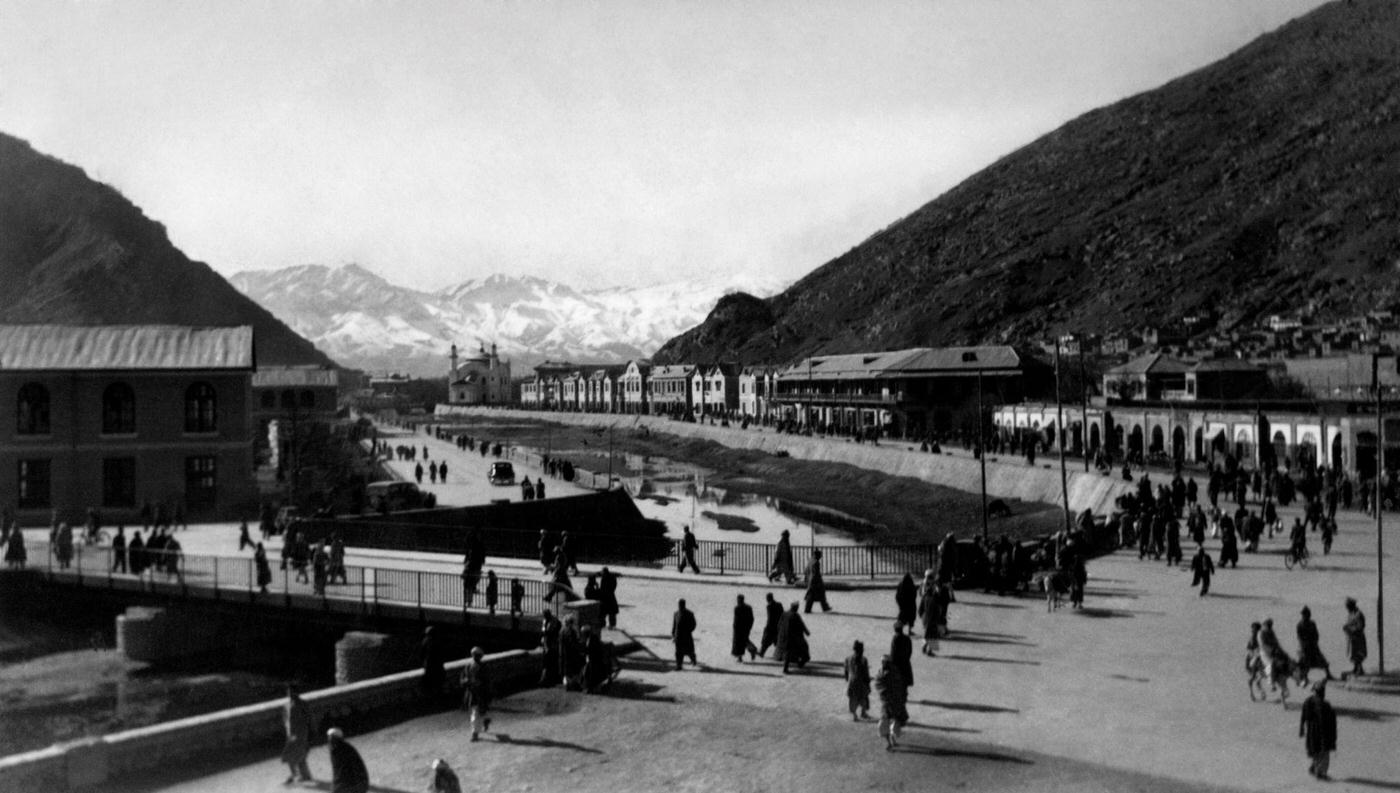
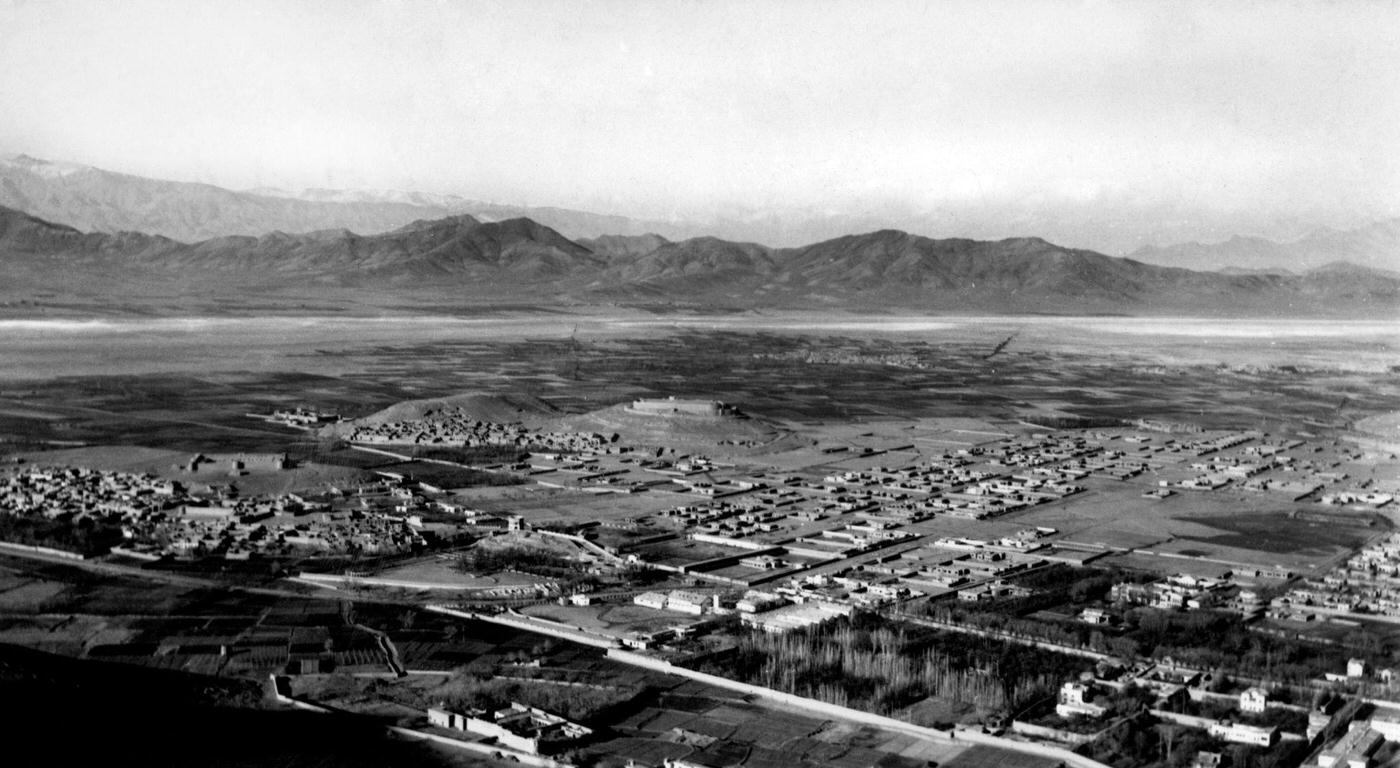
By 1951, parts of Kabul’s riverfront had been developed and modernized, offering a clear contrast to the older sections of the city visible from the same vantage point. Old Kabul featured tightly packed mud-brick buildings climbing up hillsides, while newer developments along the river showed wider roads and more formal construction. The city’s two faces — ancient and modern — were visible from a single viewpoint.


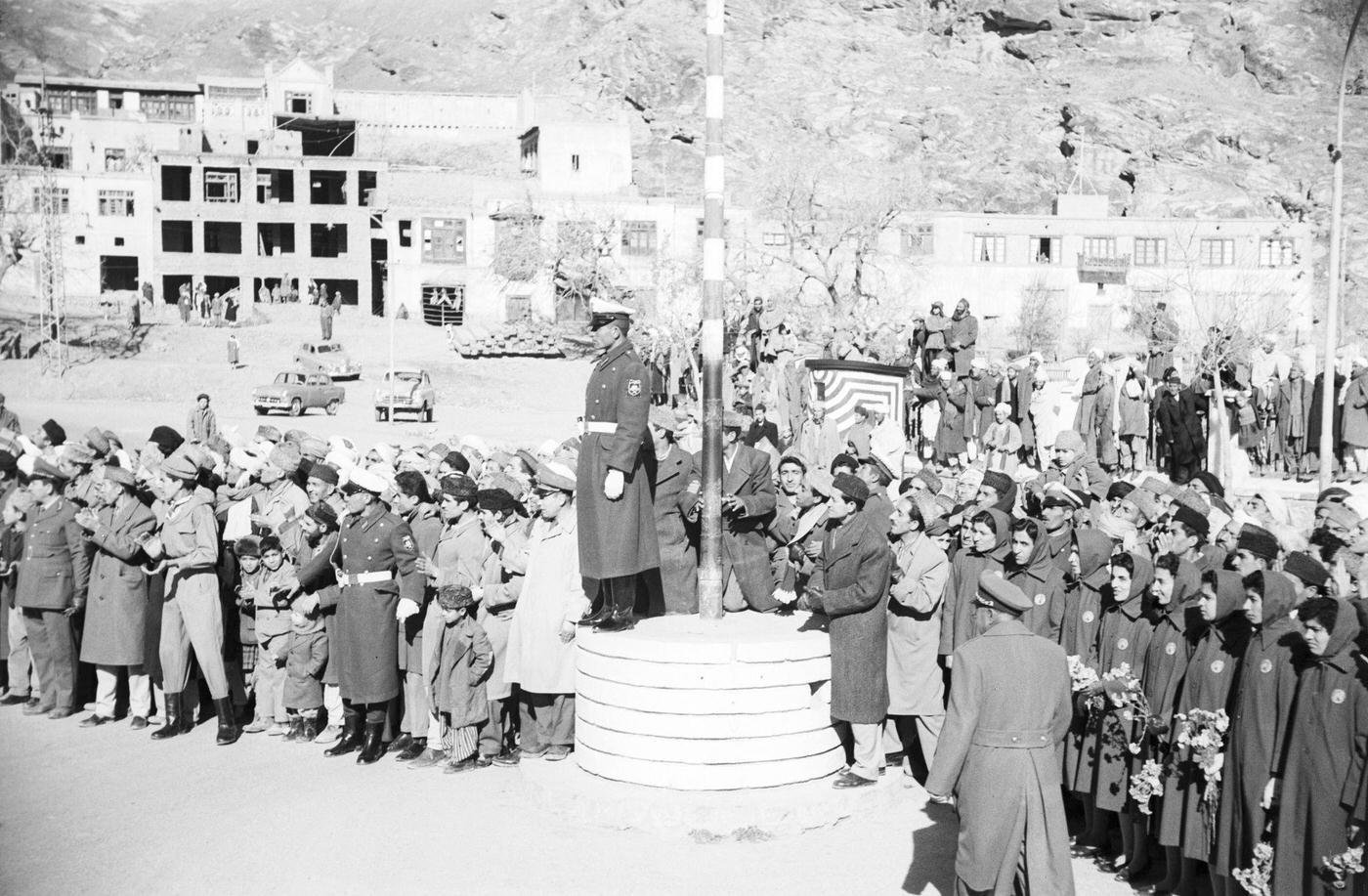
The crowds that gathered for Eisenhower’s 1959 visit came from all walks of Afghan life. Street vendors, civil servants, and ordinary residents packed the roadsides. Photographs from the event show a city animated by the occasion — people climbing walls and rooftops just to catch a glimpse of the motorcade. It was the most high-profile foreign visit Kabul had seen in years.


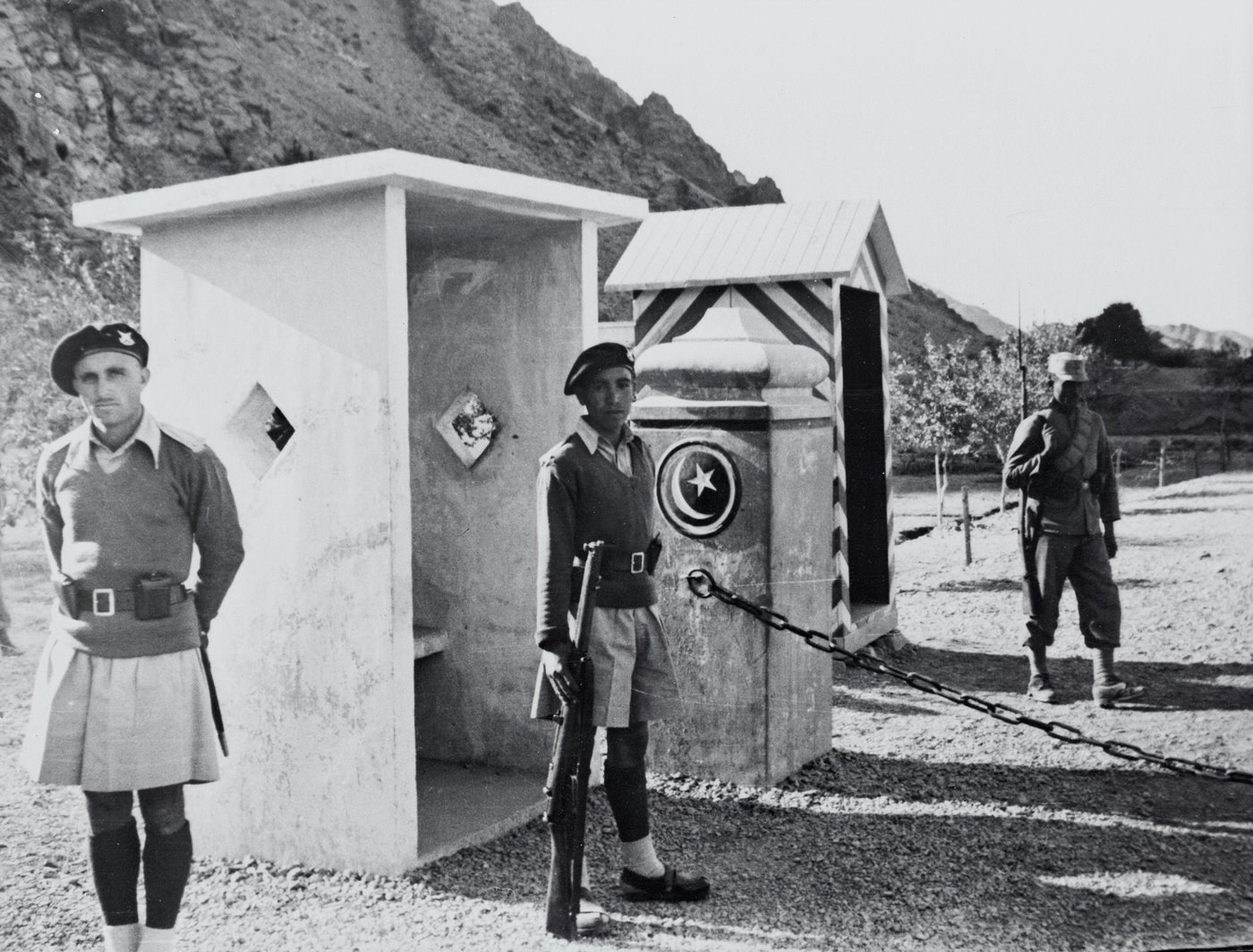
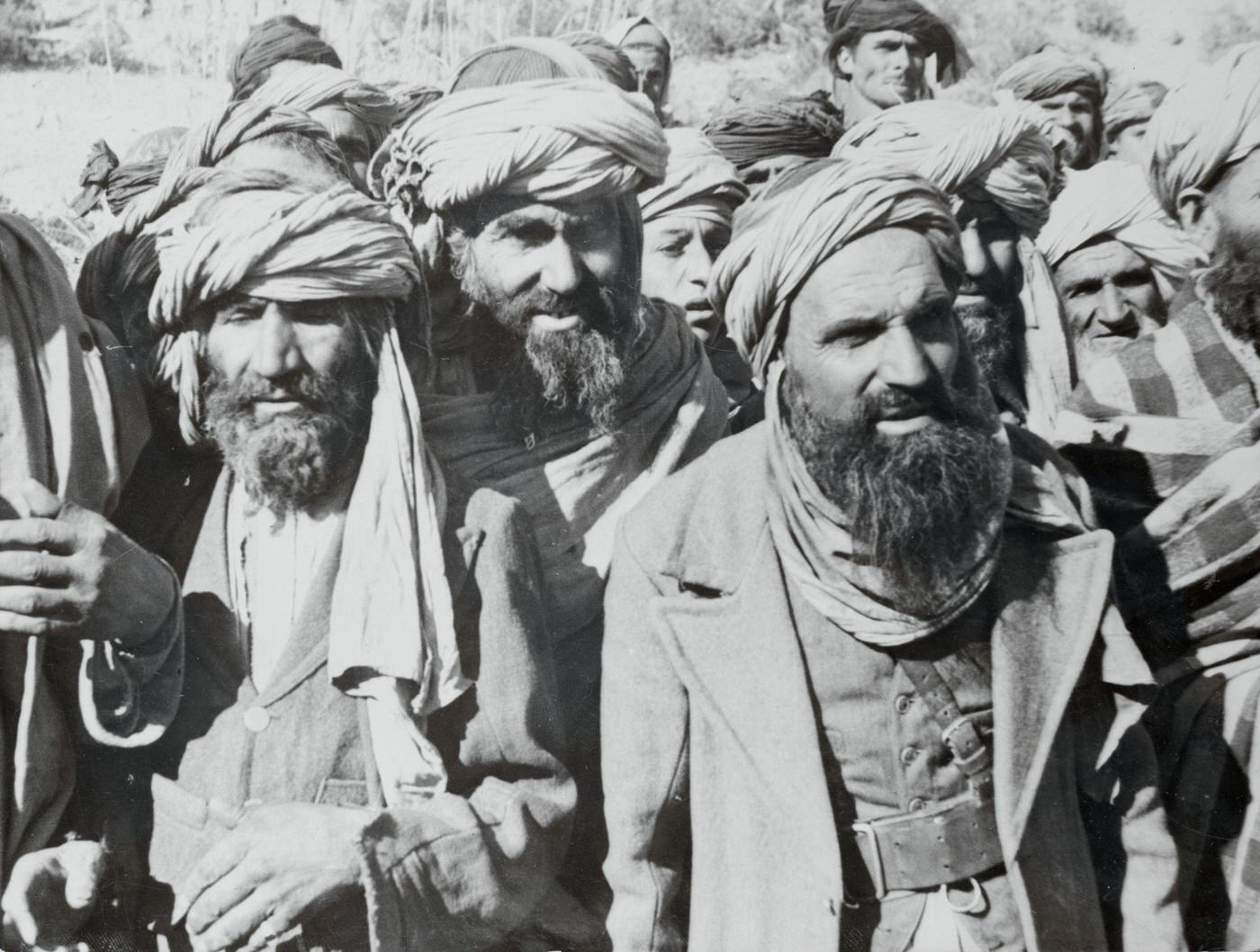
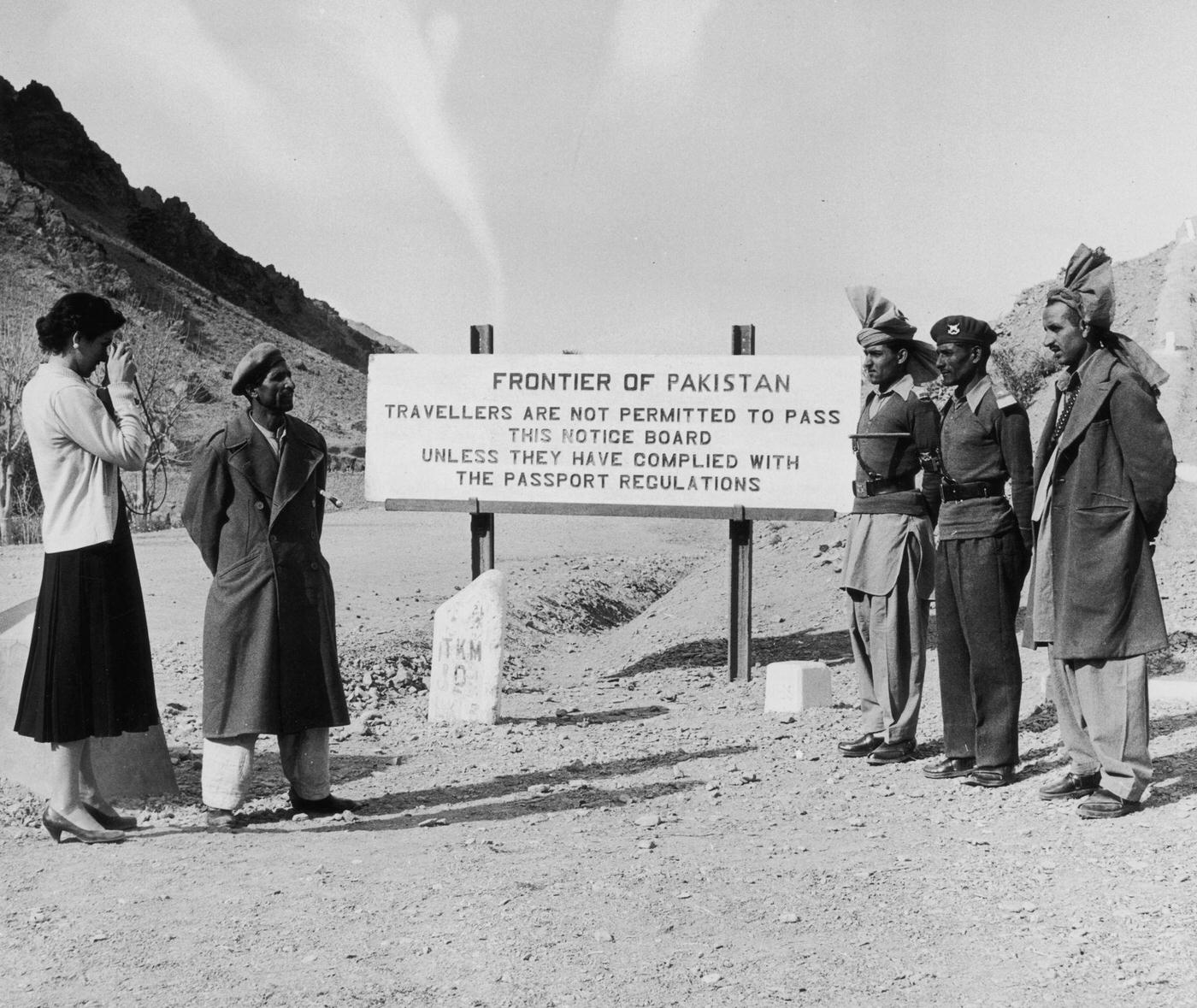
The Khyber Pass border area was carefully watched in 1955. Pakistani border guards were stationed at crossing points, managing the flow of people and goods through one of history’s most contested mountain corridors. Tribal elders from the Afghan side held significant authority in the region, often operating under their own customary laws that predated any modern border arrangement.


Not all of Kabul shared in the decade’s prosperity. Shanty towns on the edges of the capital housed people who had migrated from rural areas seeking work. These neighborhoods had little formal infrastructure and stood in sharp contrast to the modernized riverfront and government buildings a few kilometers away. Rapid urban growth had outpaced the government’s ability to provide housing for everyone arriving in the city.

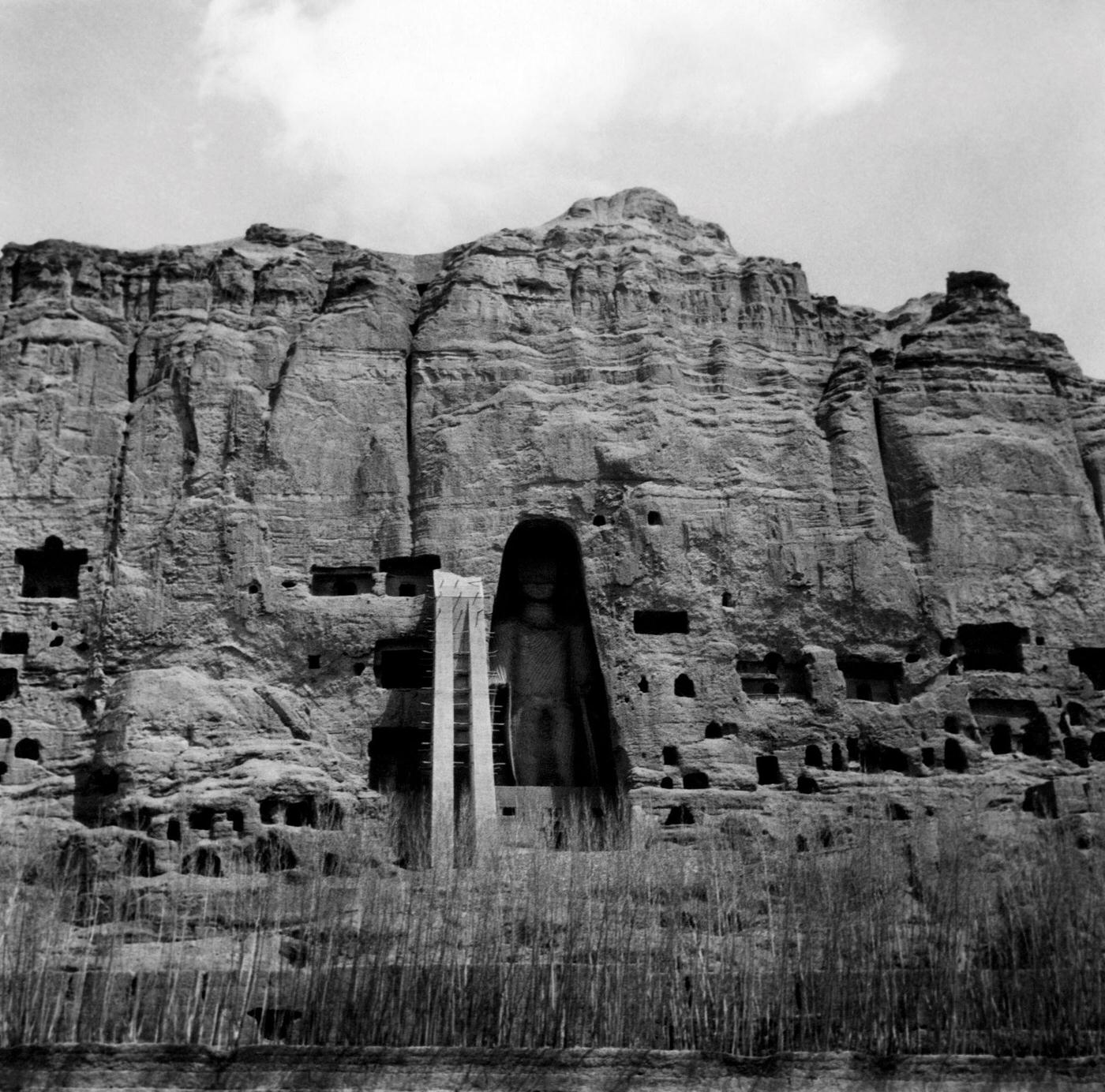
The Buddhas of Bamiyan — two massive figures carved directly into sandstone cliffs in central Afghanistan — were standing intact in 1956. The larger of the two statues stood 53 meters tall and dated back to the 6th century. They were among the largest examples of standing Buddha carvings in the world and drew visitors and researchers from many countries during this period.


Kandahar, Afghanistan’s second-largest city, had a noticeably different character from Kabul. Its streets were less affected by the modernization programs concentrated in the capital and retained a more traditional pace and appearance. The Bala Hissar fortress in Kabul, meanwhile, was one of the city’s most enduring landmarks — an ancient structure that had survived centuries of invasions and political upheaval.


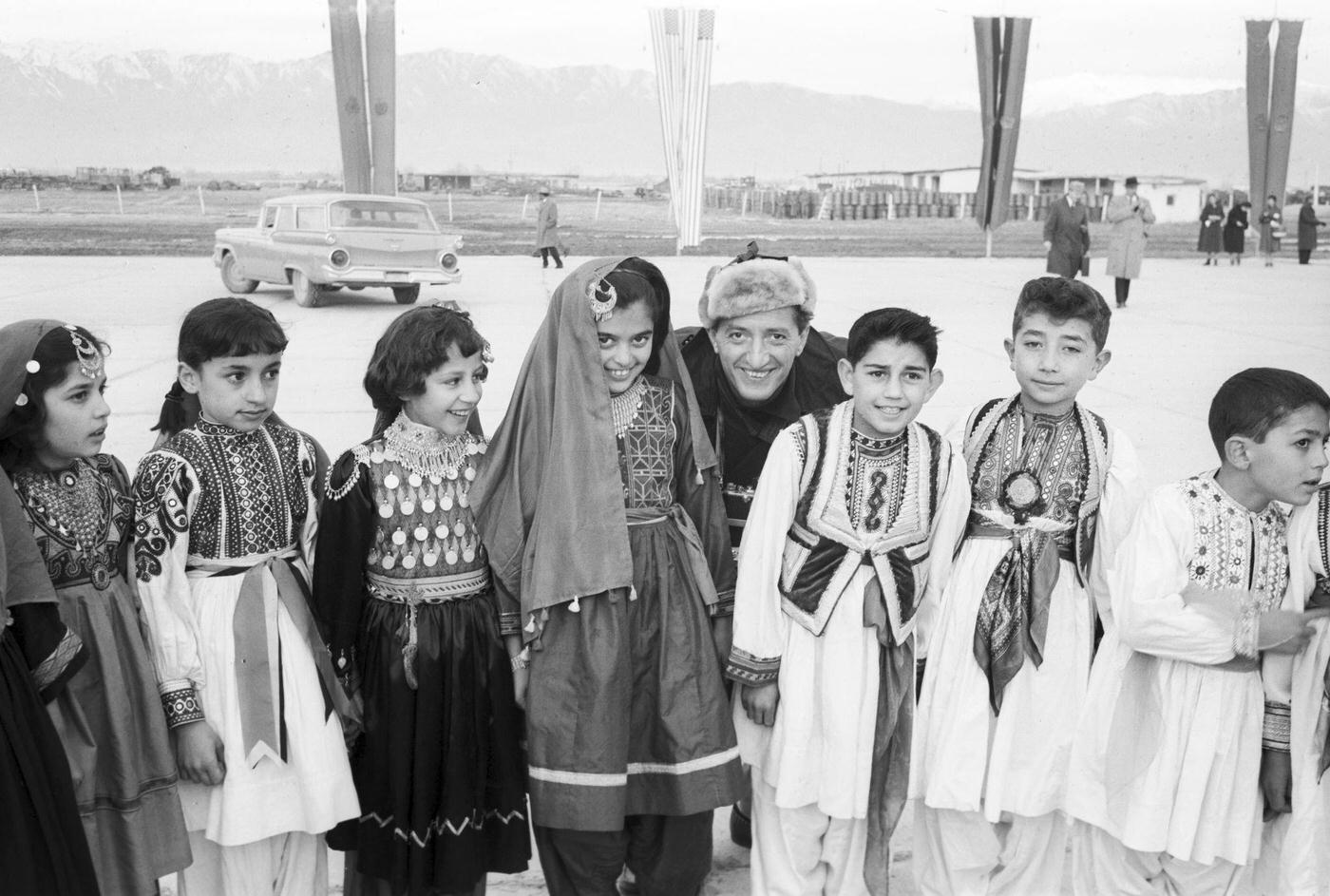
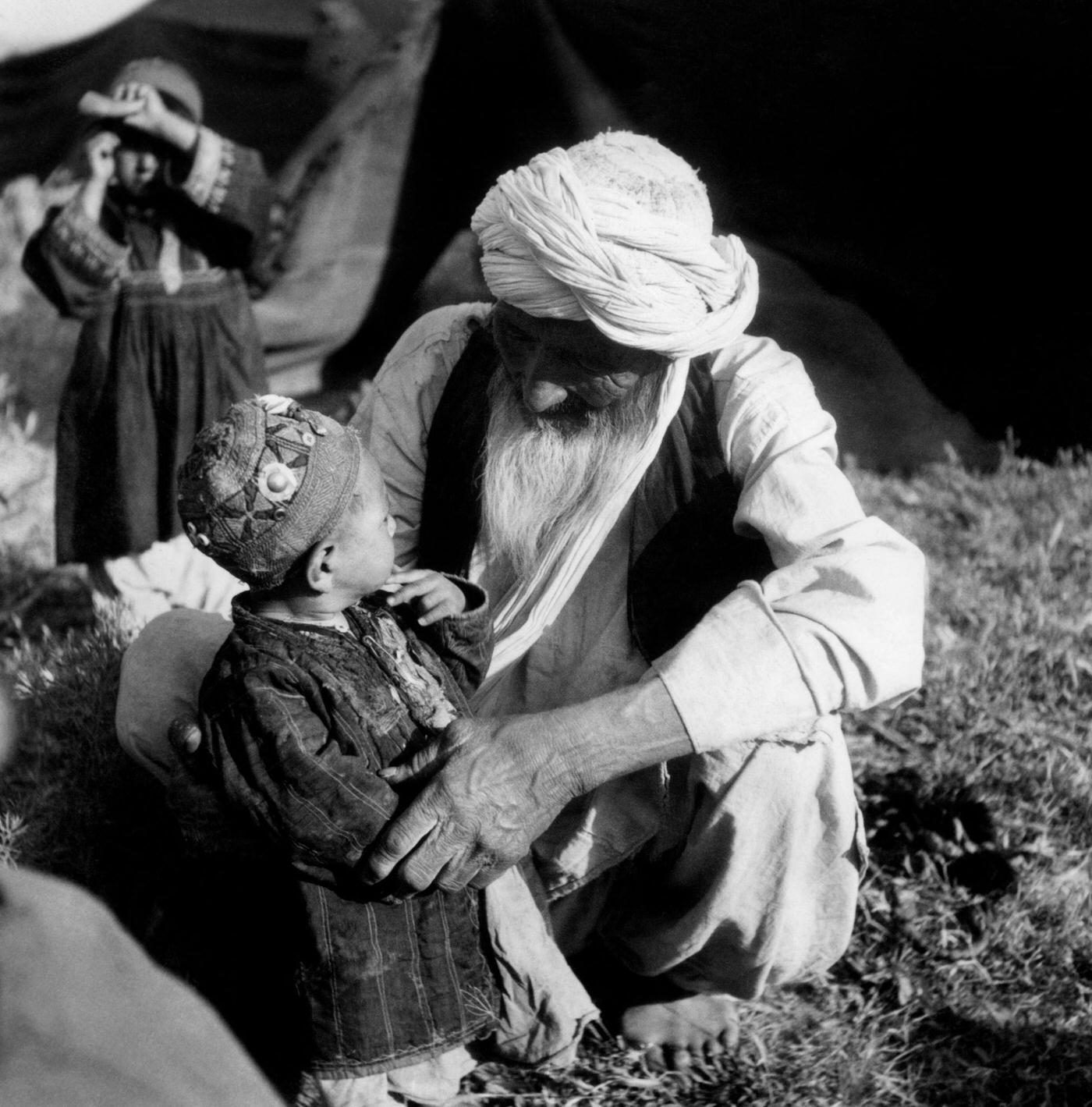
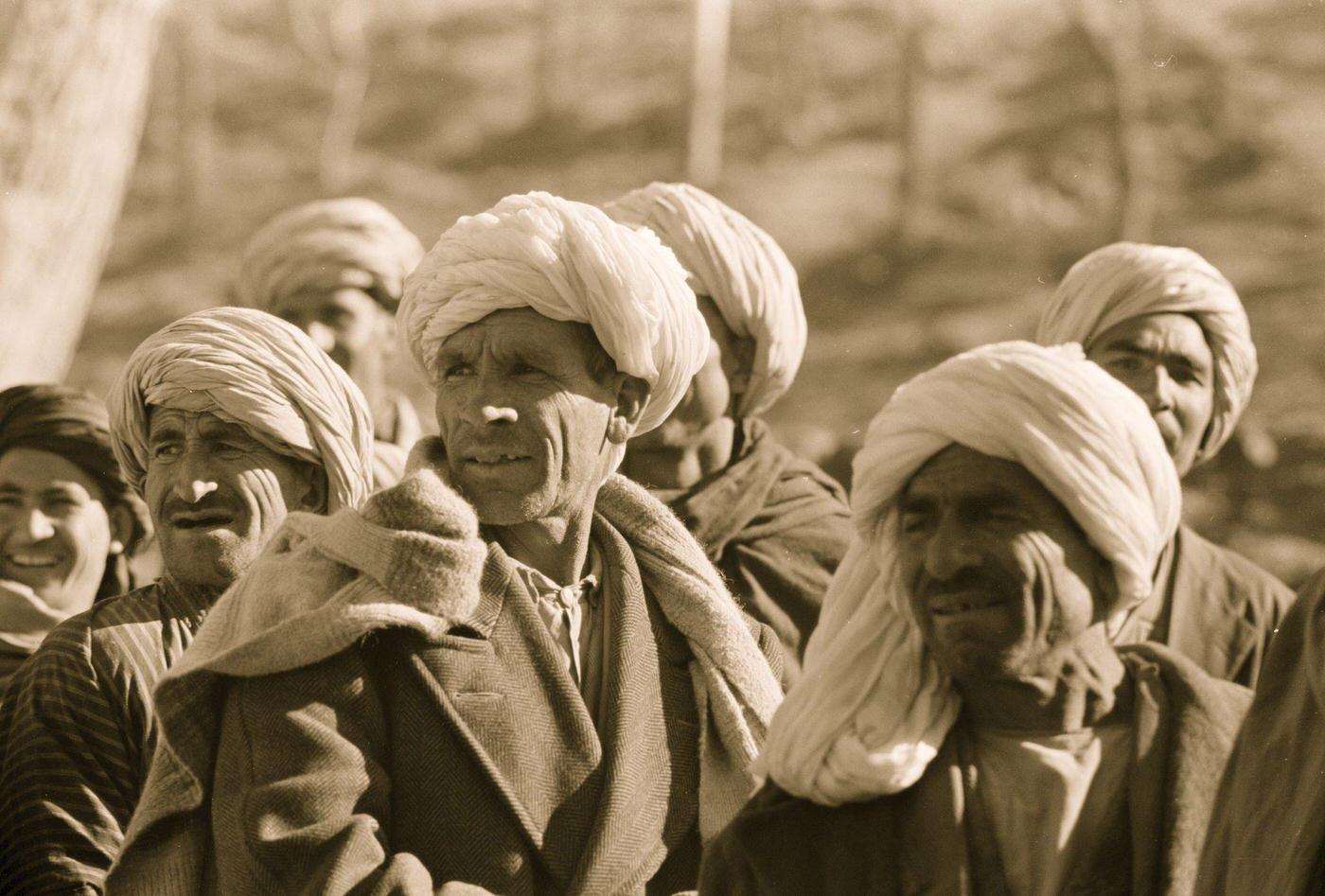
Afghanistan’s population was ethnically diverse, made up of Pashtuns, Tajiks, Hazaras, Uzbeks, and many smaller groups. Nomadic communities like the Uzbeks pictured in 1956 moved seasonally with their livestock across vast stretches of the country. These groups had their own languages, customs, and social structures, and their way of life was largely untouched by the reforms being rolled out in Kabul.


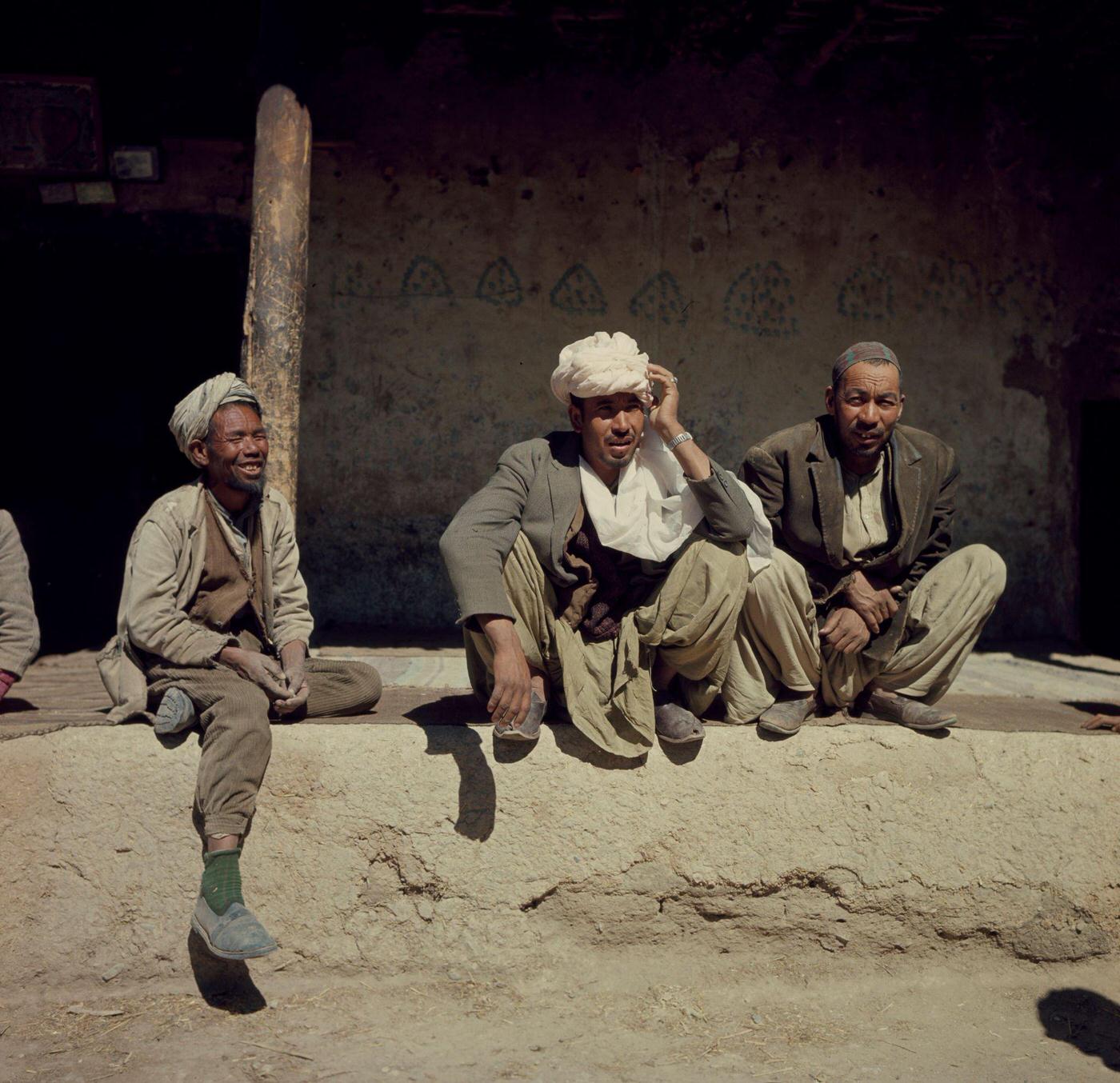
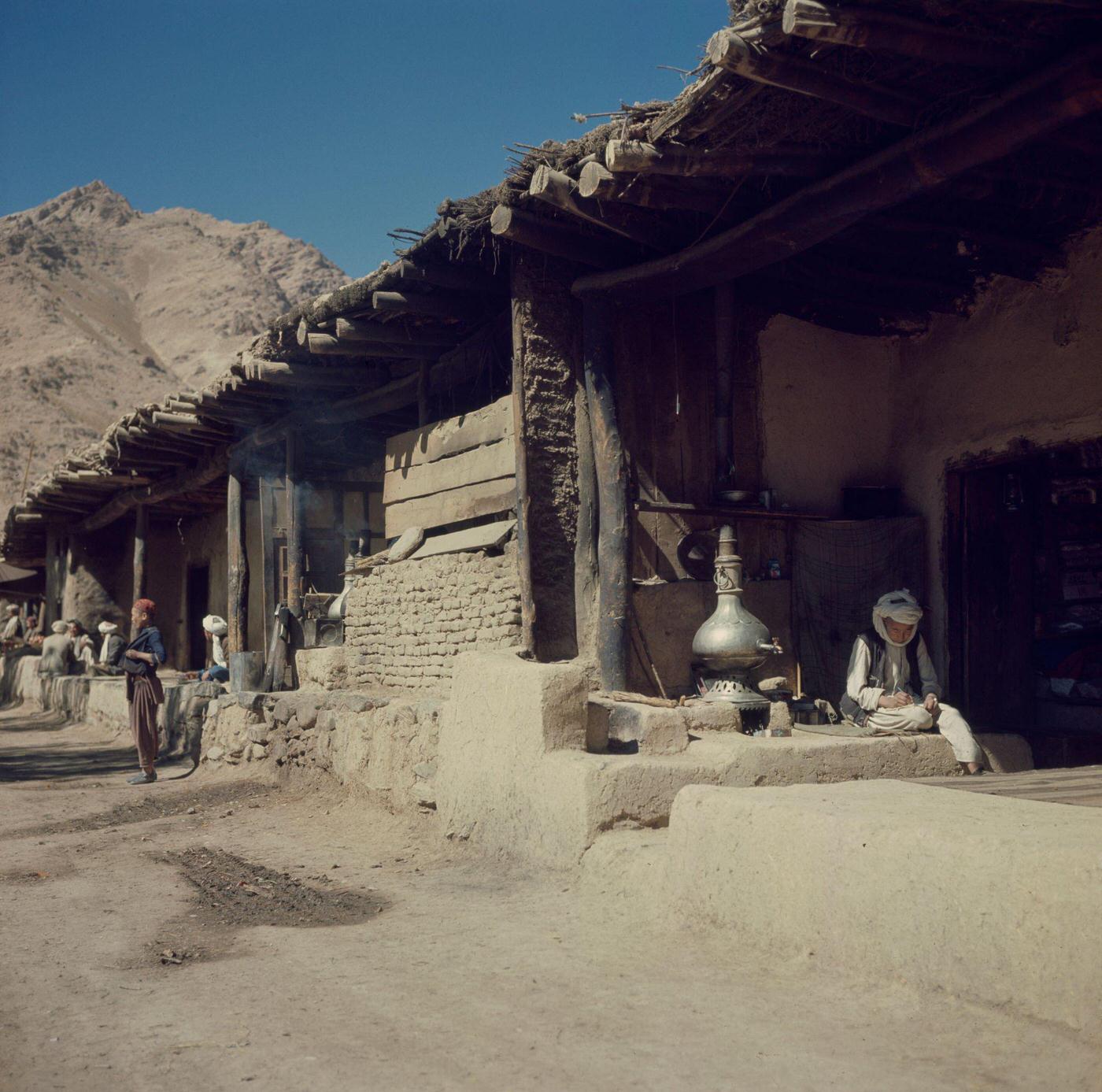
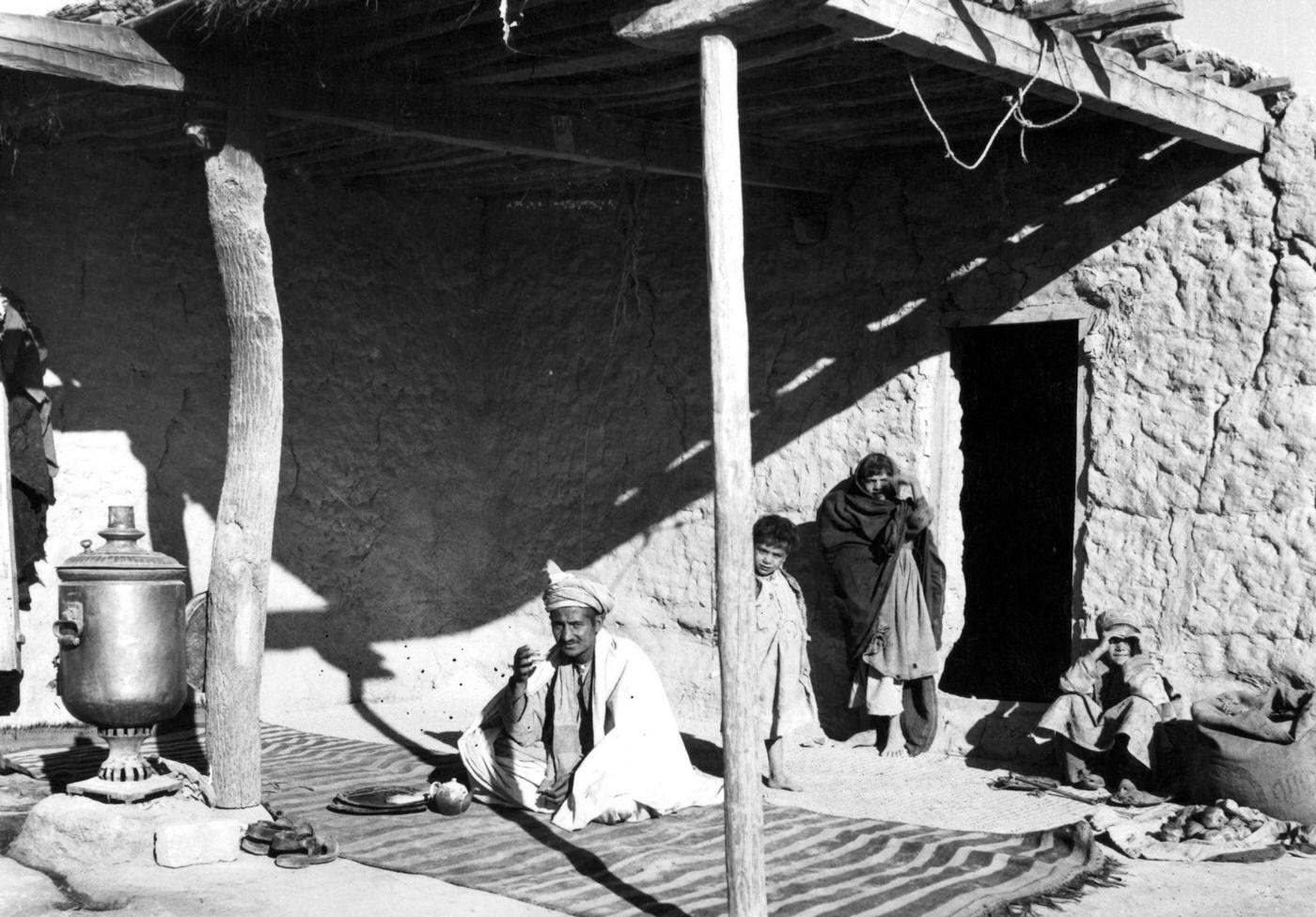
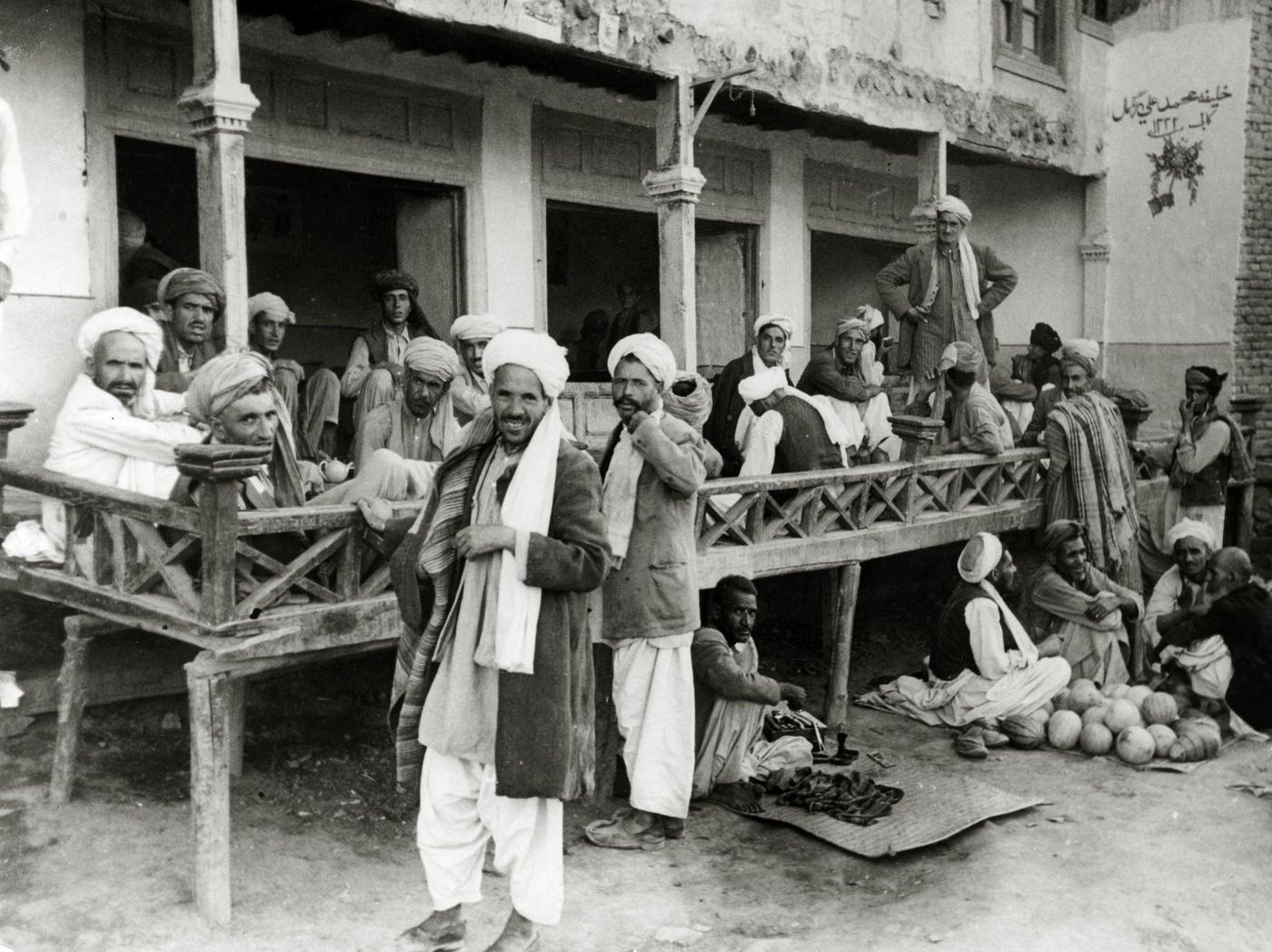
Daily social life in Kabul in the early 1950s still moved at an unhurried pace. Men gathered on verandahs to talk, drink tea, and watch the street activity below. The samovar — a metal urn used to heat water for tea — was a constant presence in Afghan social life, appearing on sidewalks, in shops, and outside homes throughout the country. Tea was the center of hospitality in Afghan culture.


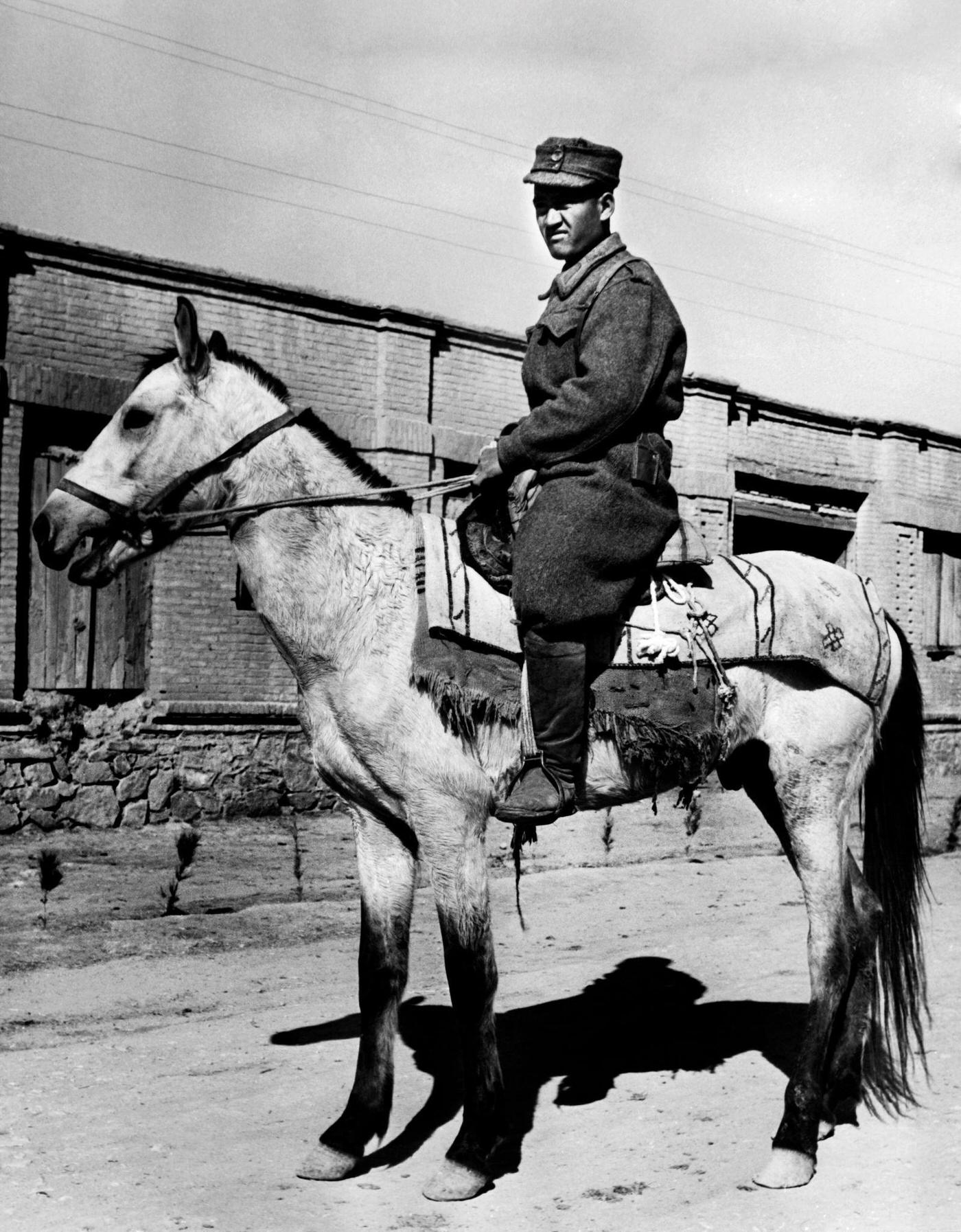
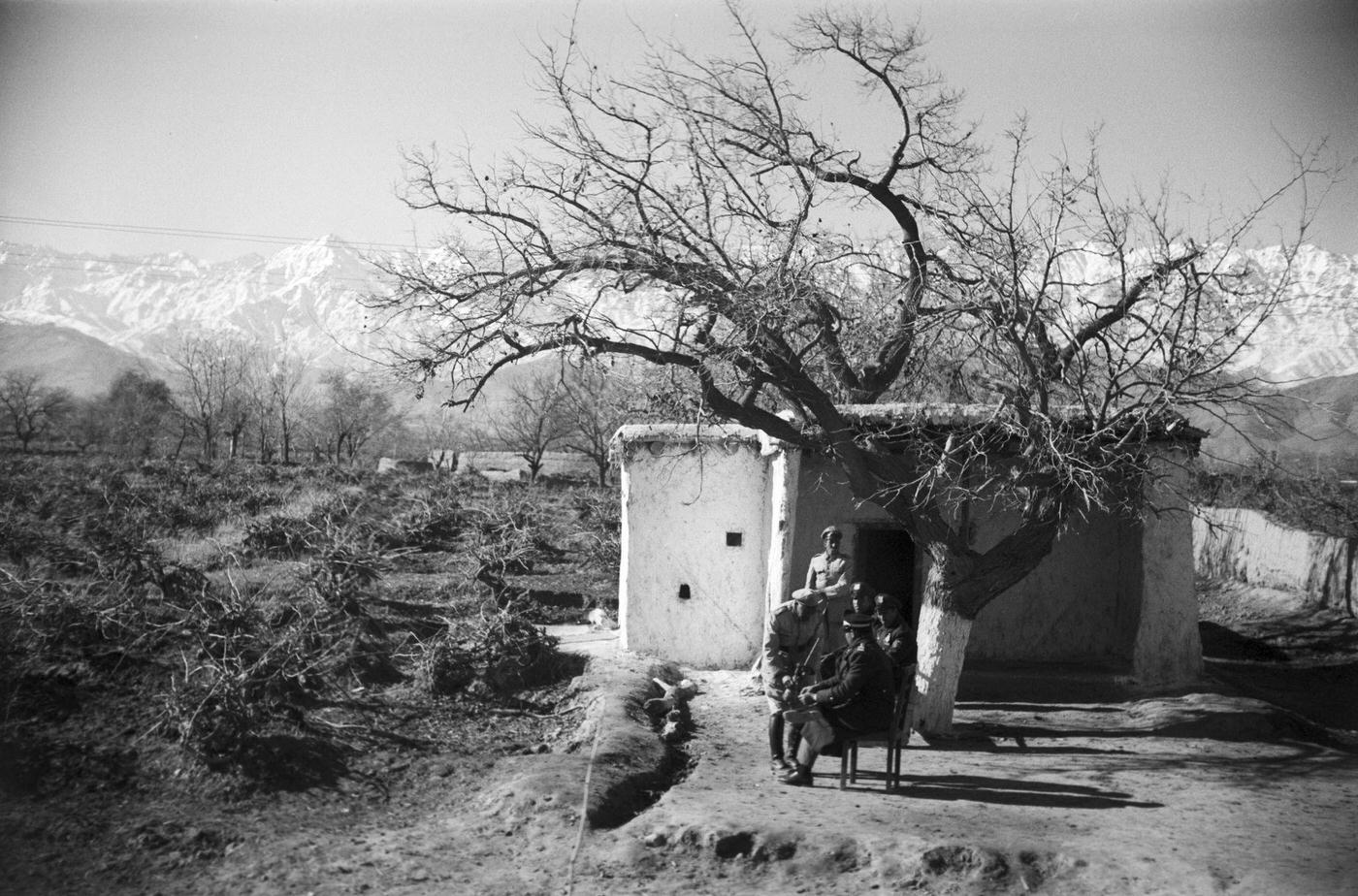
Along the roads leading into Kabul, Afghan soldiers were a regular sight. Military presence along major routes was both a security measure and a show of state authority in a country where central government control thinned out considerably beyond the capital. The Afghan army of the 1950s was being trained and equipped with outside help, as both superpowers competed to build relationships with Kabul’s military leadership.


Construction activity on the routes into Kabul was visible throughout the decade. Foreign-funded projects broke ground on new roads and public buildings, many of them appearing on land that had previously been undeveloped. Small roadside stalls lined the approaches to the city, selling food, goods, and services to travelers making the journey into the capital by bus or on foot.


Village life in Afghanistan in the 1950s was defined by tight-knit communities, subsistence farming, and Islamic religious practice. Most Afghans outside the major cities had little access to the schools, clinics, and infrastructure projects that were changing life in Kabul. The gap between the capital and the countryside was wide, and the government’s modernization programs reached rural areas slowly, if at all.


In 1955 Kabul, pony-drawn carts served as taxis for women moving through the city. While men walked openly or rode in motor vehicles, women typically traveled in covered carts that shielded them from public view. This was the transportation reality for most Kabuli women despite the government’s stated push for women’s rights. The university doors had opened, but daily life on the streets still operated under strict gender norms.


In Herat, Afghanistan’s western city and a major stop on ancient Silk Road routes, mules and camels still gathered in the marketplace in 1955. Herat was an important regional trading hub, and its markets handled goods moving between Afghanistan, Iran, and Central Asia. Back in Kabul, city buses had become a standard feature of the streets, running fixed routes and carrying workers and residents across an expanding city.


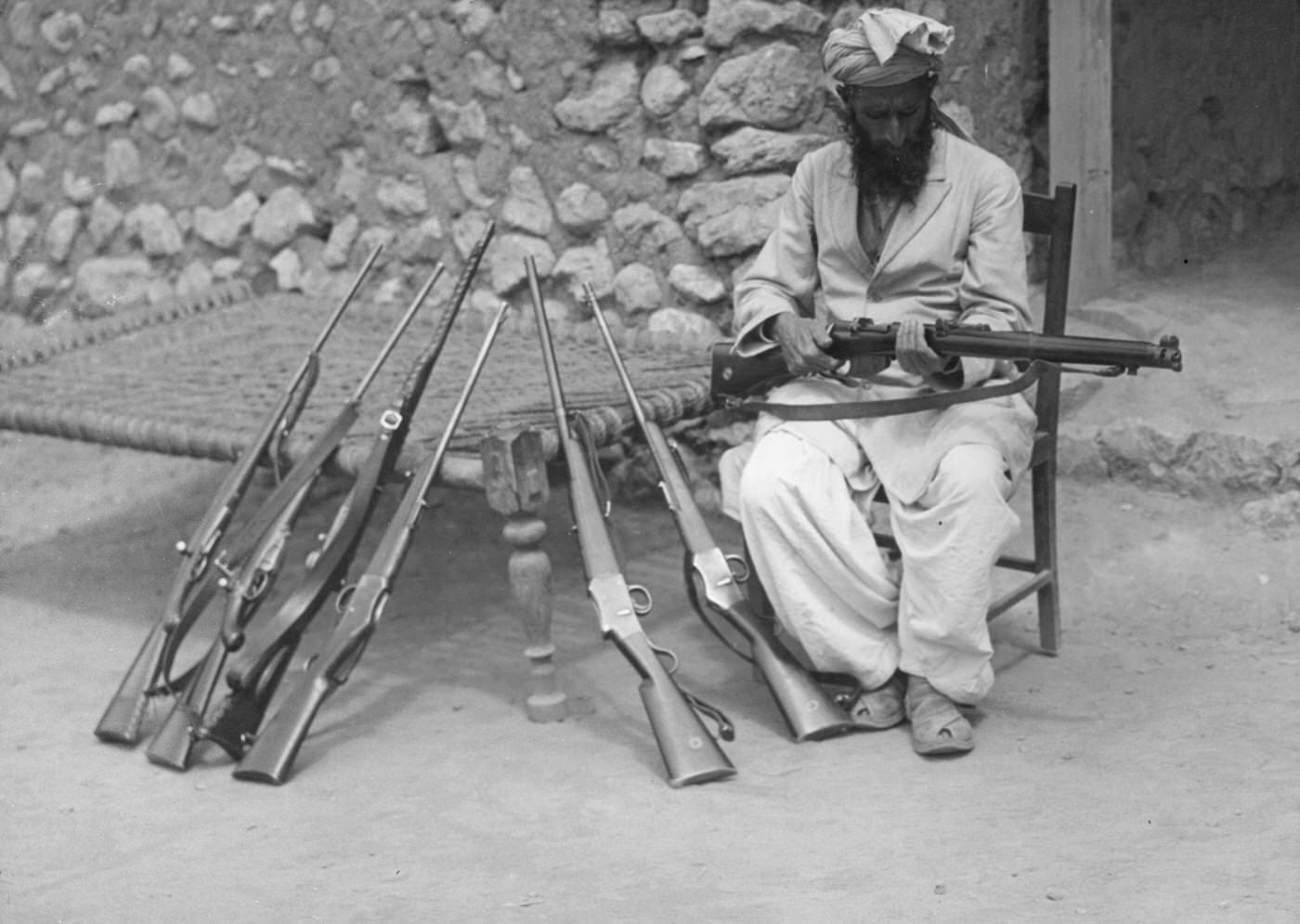
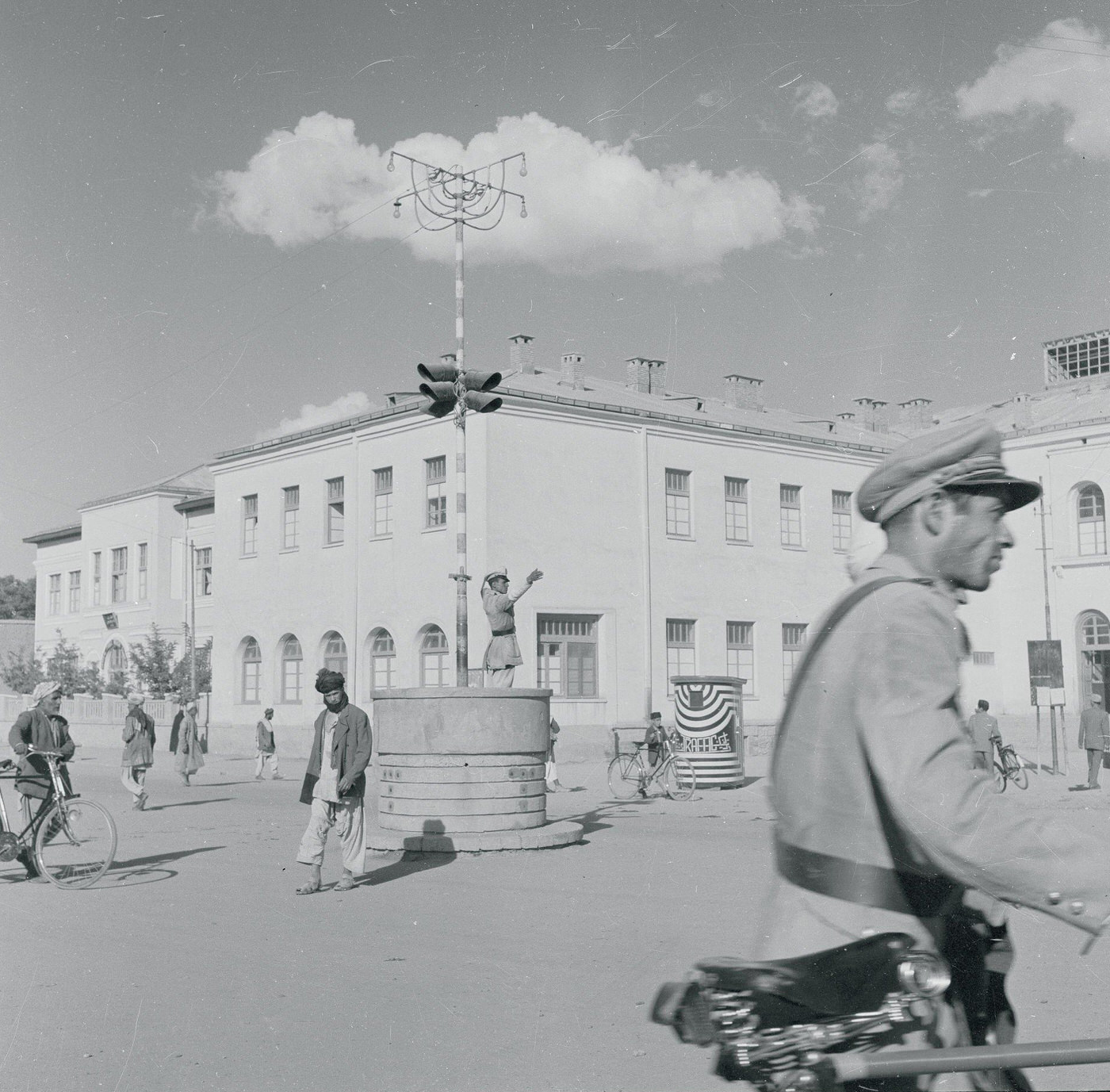
Traffic police directing vehicles and pedestrians at busy Kabul intersections were a new feature of city life in the 1950s. The growth in car ownership and bus routes made human traffic control necessary in a way it hadn’t been before. At the same time, just a few hours away on the Kohat Pass near the Indian border, rifle factories continued operating — a reminder that arms production was deeply embedded in the tribal economy of the border regions.


Even in Kabul, camels shared the road with pedestrians and motor vehicles well into the 1950s. The city had not fully transitioned to motorized transport, and pack animals remained a practical necessity for moving heavy loads through narrow older streets. This mix of the ancient and the modern — camels beside cars, horse carts next to buses — was one of the defining visual features of Kabul in that decade.