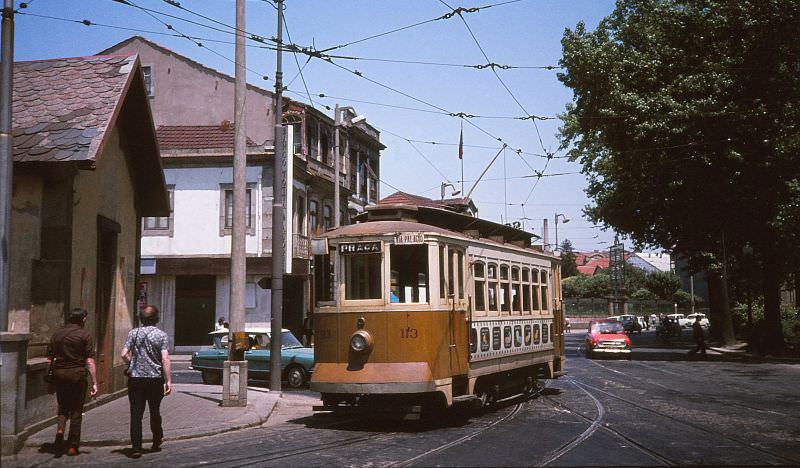
London in the early 1900s was in the middle of a dramatic shift. For centuries, traffic meant horses, carts, bicycles, and pedestrians. Then the automobile arrived — loud, unfamiliar, and poorly suited to streets that had been designed for slow-moving horse traffic. The rules governing these new machines were basic at best, and in many cases, they simply did not exist.
Horses were easily startled by the noise and appearance of motor cars, causing unpredictable collisions. Cyclists shared the same roads. Pedestrians, accustomed to slow-moving traffic, regularly misjudged the speed of oncoming vehicles. Even fixed objects — lampposts, buildings, railings — became targets as drivers struggled to control unfamiliar technology.
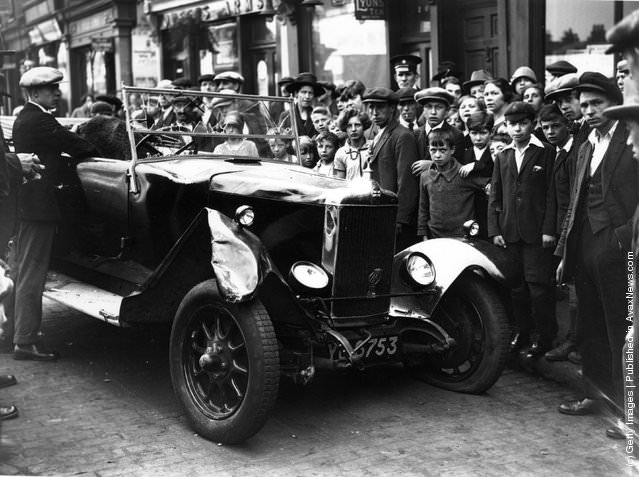
Early cars offered almost no protection in a crash. They had open tops, simple frames, no seat belts, and no airbags. Occupants were fully exposed to impact. Even at speeds of 20 to 25 miles per hour — fast by horse-drawn standards — collisions caused serious damage to both vehicles and people.
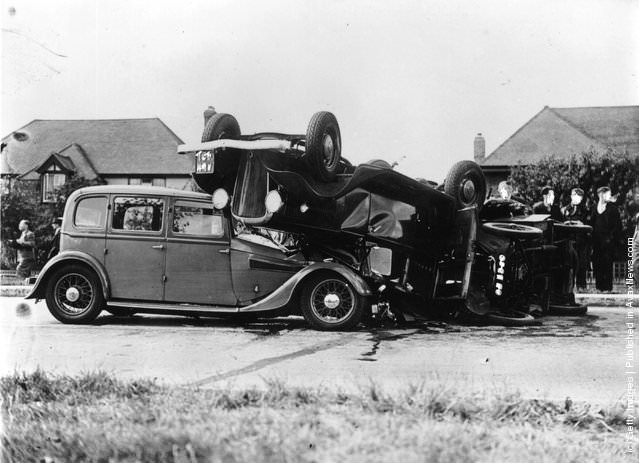
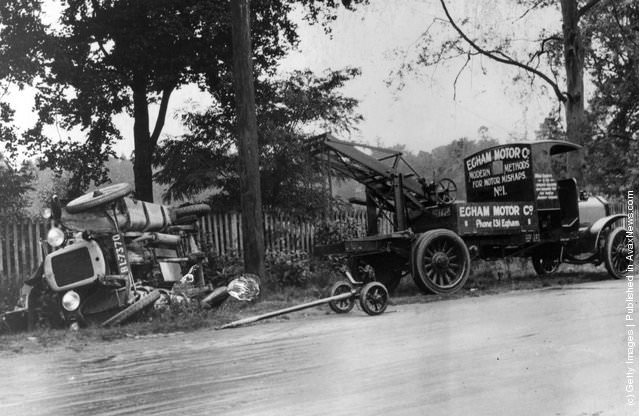
As car ownership grew through the 1920s and 1930s, multi-vehicle crashes became more common on London’s roads. Overturned cars, pile-ups, and collisions at junctions were increasingly captured by press photographers, creating a vivid visual record of the dangers of early motoring.
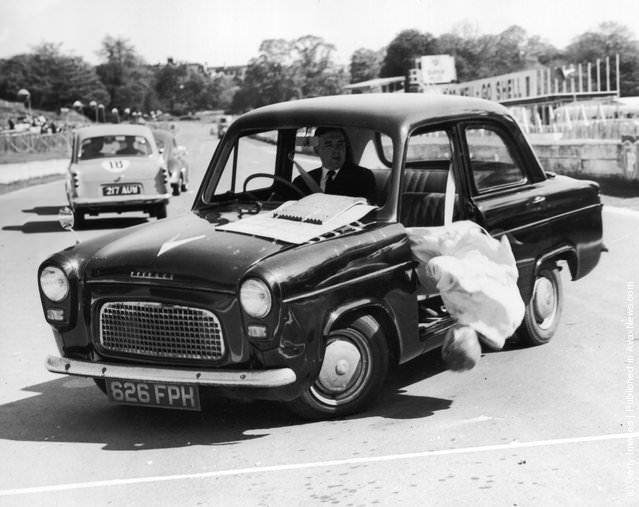
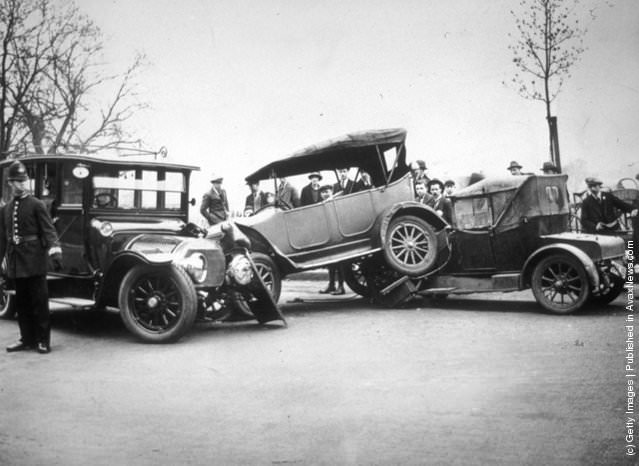
North London’s Finchley Road and east London’s busier thoroughfares were frequent crash sites. Roads were often uneven and narrow, originally built for much slower traffic. These conditions made multi-car incidents almost inevitable as vehicle numbers climbed.
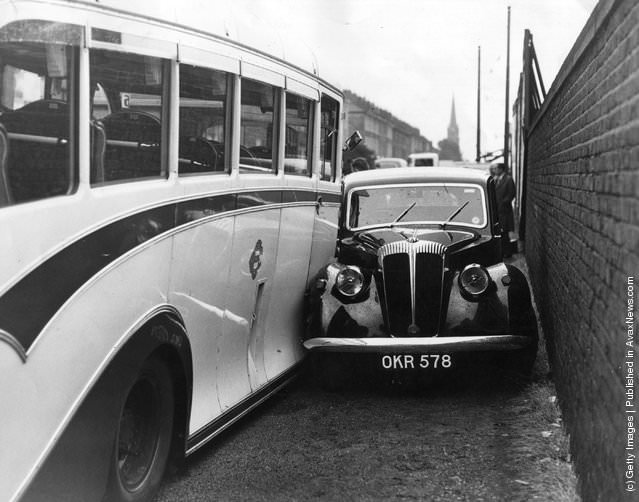
Crashes did not only involve private cars. Buses, coaches, and commercial vehicles shared London’s streets, and when they collided, the results were serious. A triple crash in Islington in 1952 injured several people, reflecting how dangerous mixed traffic could be even decades after the car’s introduction.
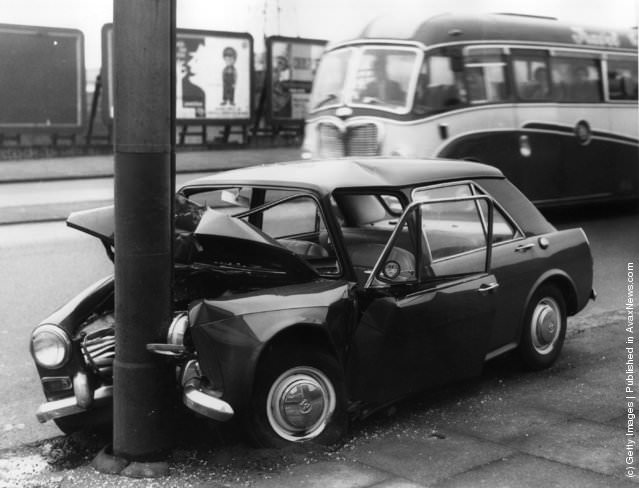
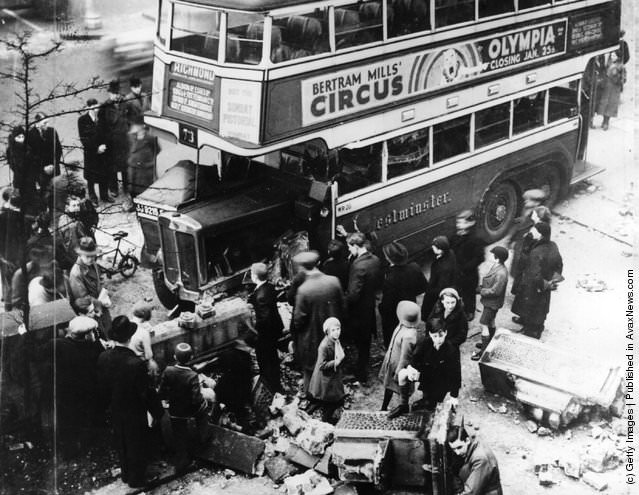
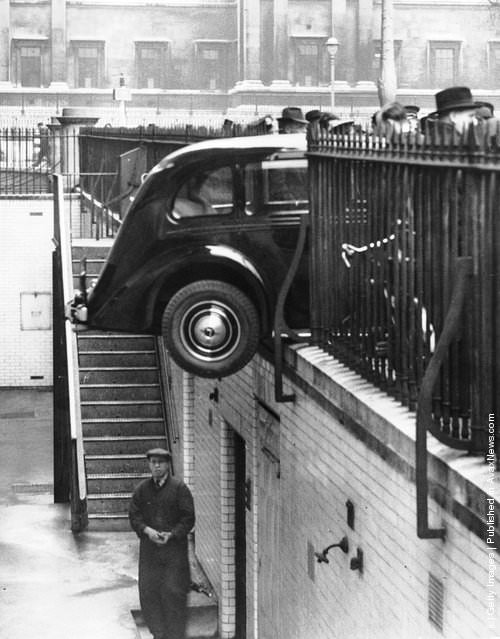
Some of London’s most dramatic crashes involved vehicles leaving the road entirely and striking buildings or landmarks. In 1934, a bus swerved to avoid a car and ploughed directly into the Hyde Park Hotel. The following year, a car broke through railings and hung suspended over a basement area at Trafalgar Square.
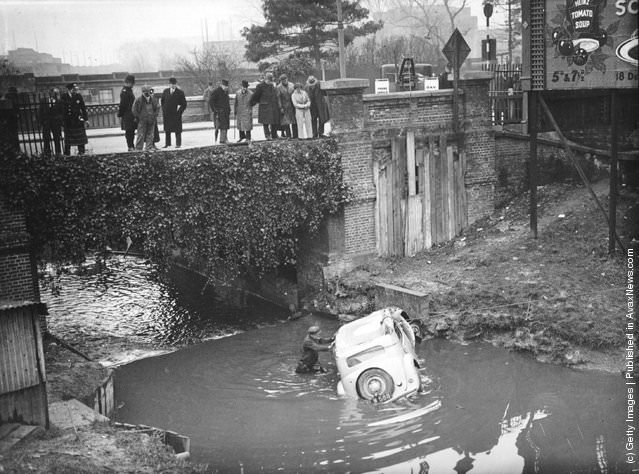
Water presented another fatal hazard. A car plunging into Wealdstone Brook in 1936 showed how quickly an accident could become a life-threatening situation, with no barriers or safety infrastructure to prevent vehicles from leaving the road.
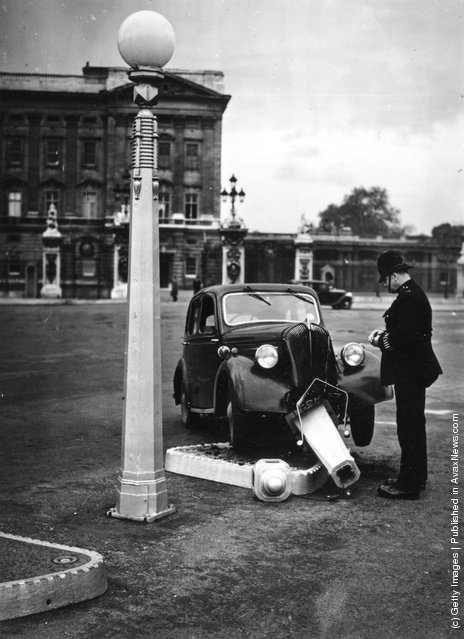
No part of London was immune. Even the area directly outside Buckingham Palace was the scene of a serious crash in 1939. Emergency responders of the era arrived quickly, but the tools and medical knowledge available to them were limited compared to modern standards.